
A semi naked cake is a full cake with most of its coat scraped back off. I spread buttercream over the tiers, then pull a bench scraper around until the sponge shows through in uneven bands, so it looks homemade even though the stacking underneath is anything but casual. That half-finished look suits barns, gardens, backyards and plain modern rooms with wooden tables. It also takes decoration well: berries, flowers, greenery, citrus, figs, a touch of gold or nothing at all. Below are twenty ways I’d dress one, plus what that thin coat changes about timing, heat and toppings.
The Thin Coat Leaves Less Room for Error
A fully frosted cake hides a lot. A semi naked one shows every layer, so the work happens before the scraper ever touches it. I bake the sponges a day ahead, wrap them, and brush each layer with a light syrup, because exposed sponge dries out much faster than sponge sealed under a thick coat.
Then each tier gets a crumb coat and a proper chill before the final thin layer goes on. Skip that and loose crumbs drag through the buttercream and turn the scraped bands grey.
- Ask how far ahead the cake is assembled. For this style, the same day or the day before is what you want to hear.
- Ask what the tiers are stacked on. Every tier above the base should sit on its own board with dowels underneath.
- Ask what the buttercream is. Swiss meringue scrapes smoothly; a very soft American buttercream shows every scrape line and softens sooner in heat.
If you’re comparing quotes, a semi naked cake isn’t automatically cheaper than a frosted one. It uses less buttercream, but the leveling and stacking take the same time, and sometimes longer.
1. Semi Naked Wedding Cake With Fresh Flowers
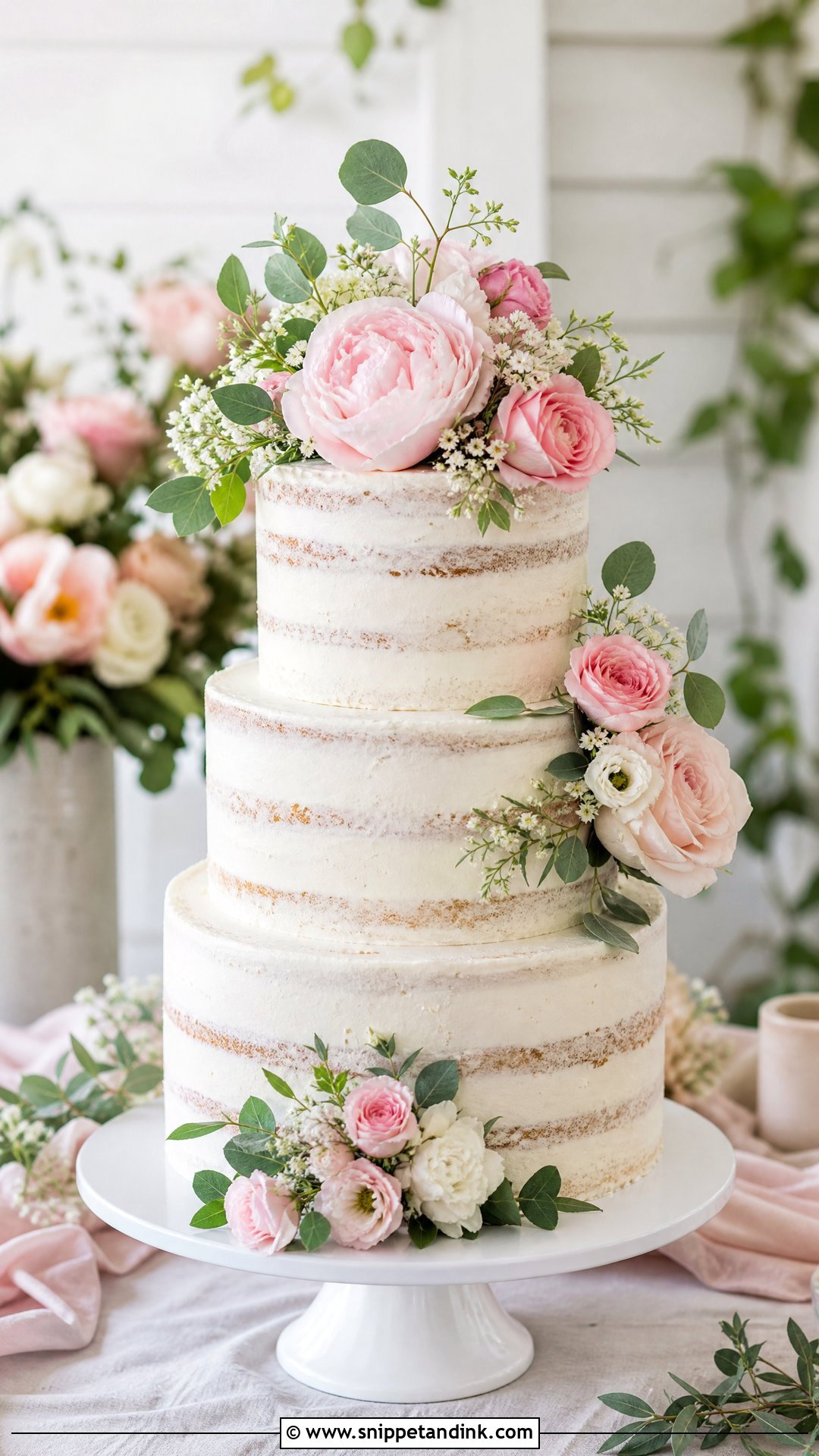
Flowers are the classic finish, and the one I’m asked for most. I scrape the coat thin enough that a little sponge shows at every edge, then set roses, peonies, ranunculus or small garden blooms in clusters on each tier or in a slow cascade down one side. Stems never go straight into the cake. I wrap them in floral tape or sit them in food-safe picks, and I want the flowers from a grower who hasn’t sprayed them. Ask your florist for a few extra stems from the bouquet run, so the cake and the bouquet read as one palette.
2. Semi Naked Wedding Cake With Berries
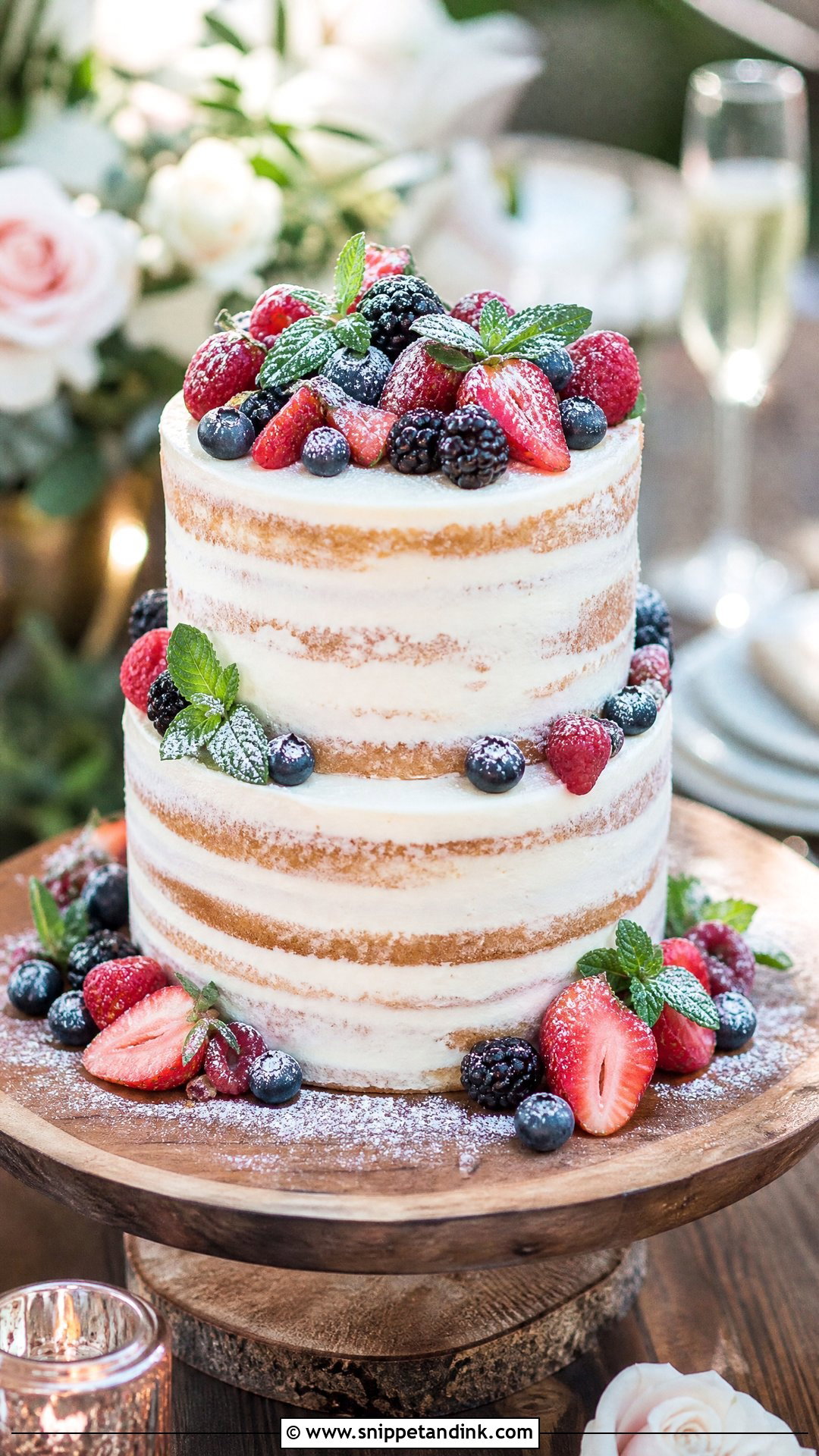
Berries are the easiest way to add color, and they’re honest about the season. Strawberries, raspberries, blueberries and blackberries sit well against pale buttercream and a soft vanilla sponge. I pile them where the tiers meet, around the base and over the top, and dust them with powdered sugar right before the cake goes out. Cut strawberries weep, so I use them whole or halved at the last minute. I also keep wet fillings like loose compote away from the outer edge, because they bleed pink through a thin coat within an hour.
3. Semi Naked Wedding Cake With Greenery
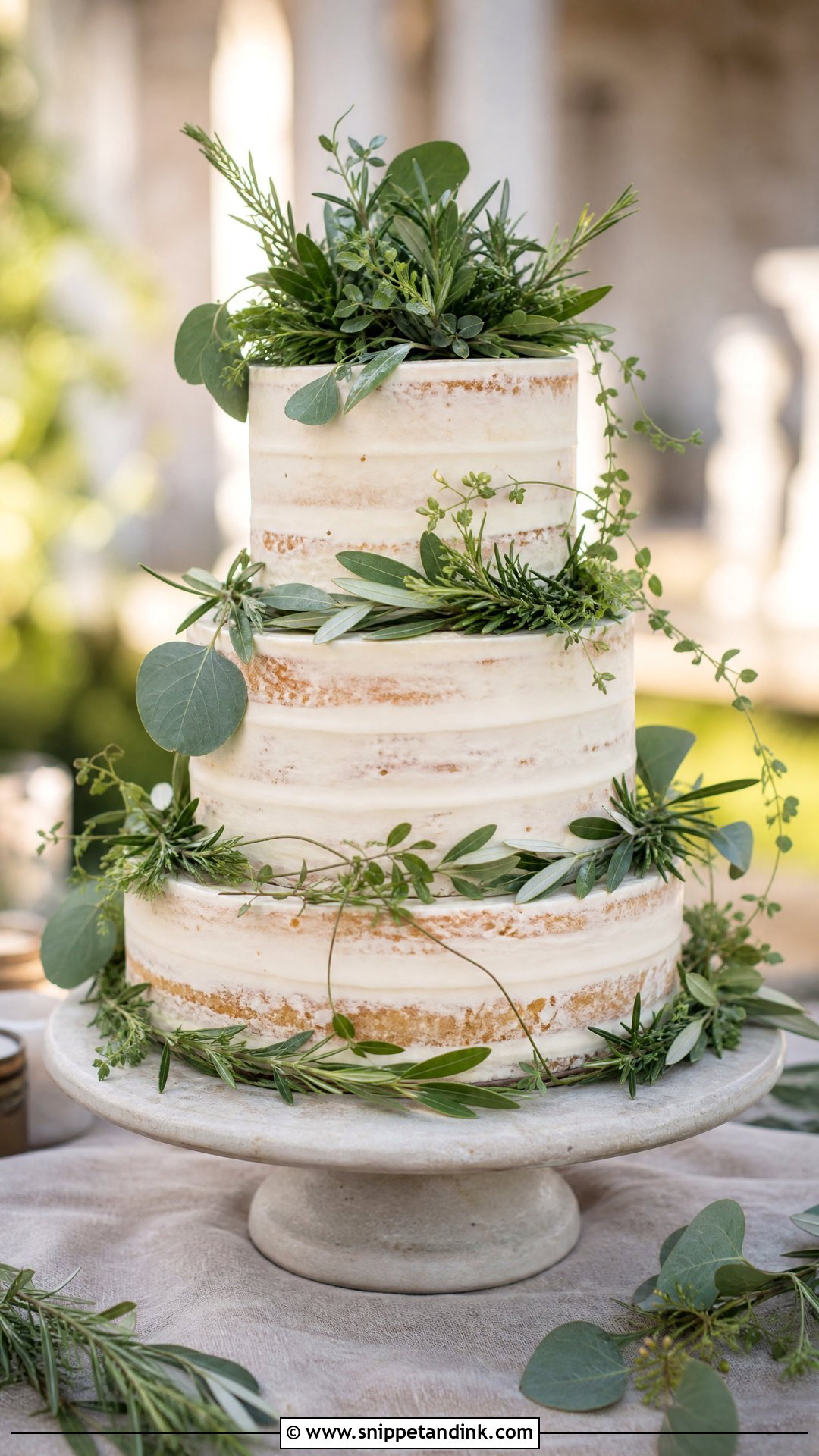
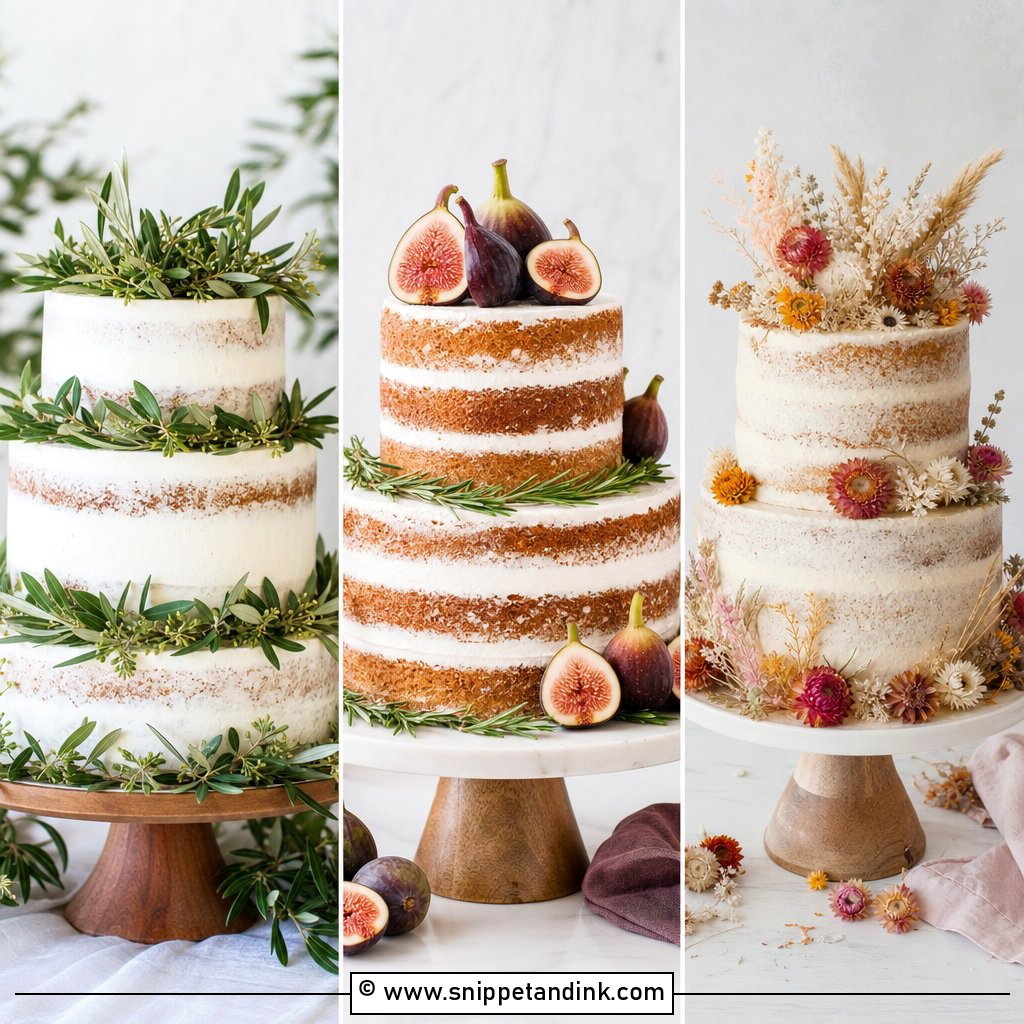
Greenery suits almost any rustic or outdoor wedding, and it’s the option I’d pick for a couple who doesn’t want much color. Eucalyptus, olive, rosemary and short trailing vines frame the tiers without crowding them. Eucalyptus isn’t edible, so it goes on with a barrier like any other non-food decoration. It pairs with white buttercream and vanilla, almond, lemon or carrot sponge, and sits naturally on wood cake stands beside linen runners. Use less than you think. Three sprigs placed with intent look finished, while ten look like a hedge.
4. Semi Naked Wedding Cake With Roses
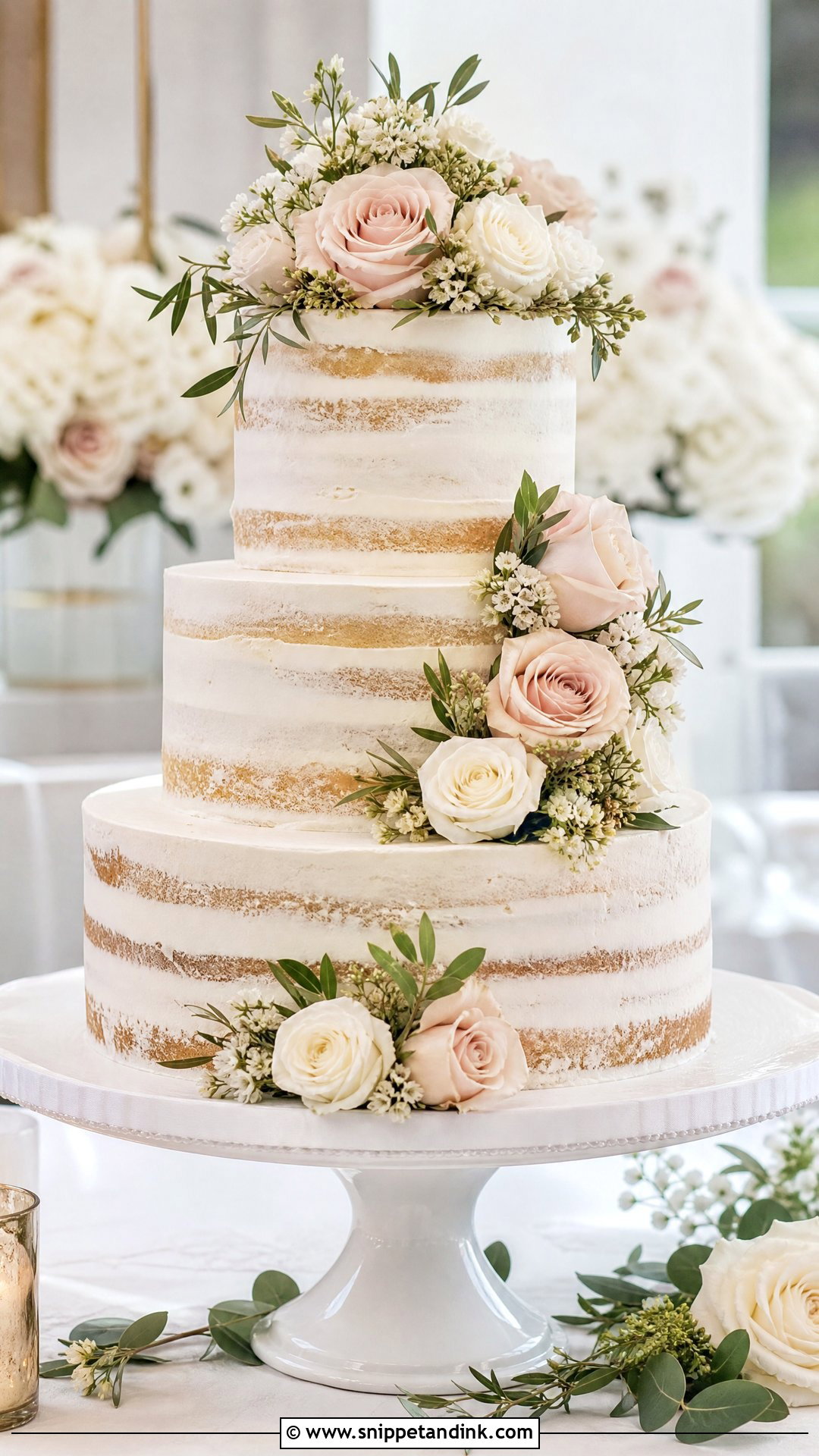
Roses give the style a classic face. Blush, ivory, dusty pink, peach and mauve all work against lightly scraped buttercream. A few large heads keep it minimal, and a fuller cascade turns it romantic. I choose garden roses with open petals over tight florist roses when I can, since they sit flatter against the tier and look less stiff in close-up photos. Tuck in a little filler or greenery for movement, and leave gaps so the sponge still shows.
5. Semi Naked Wedding Cake With Gold Leaf
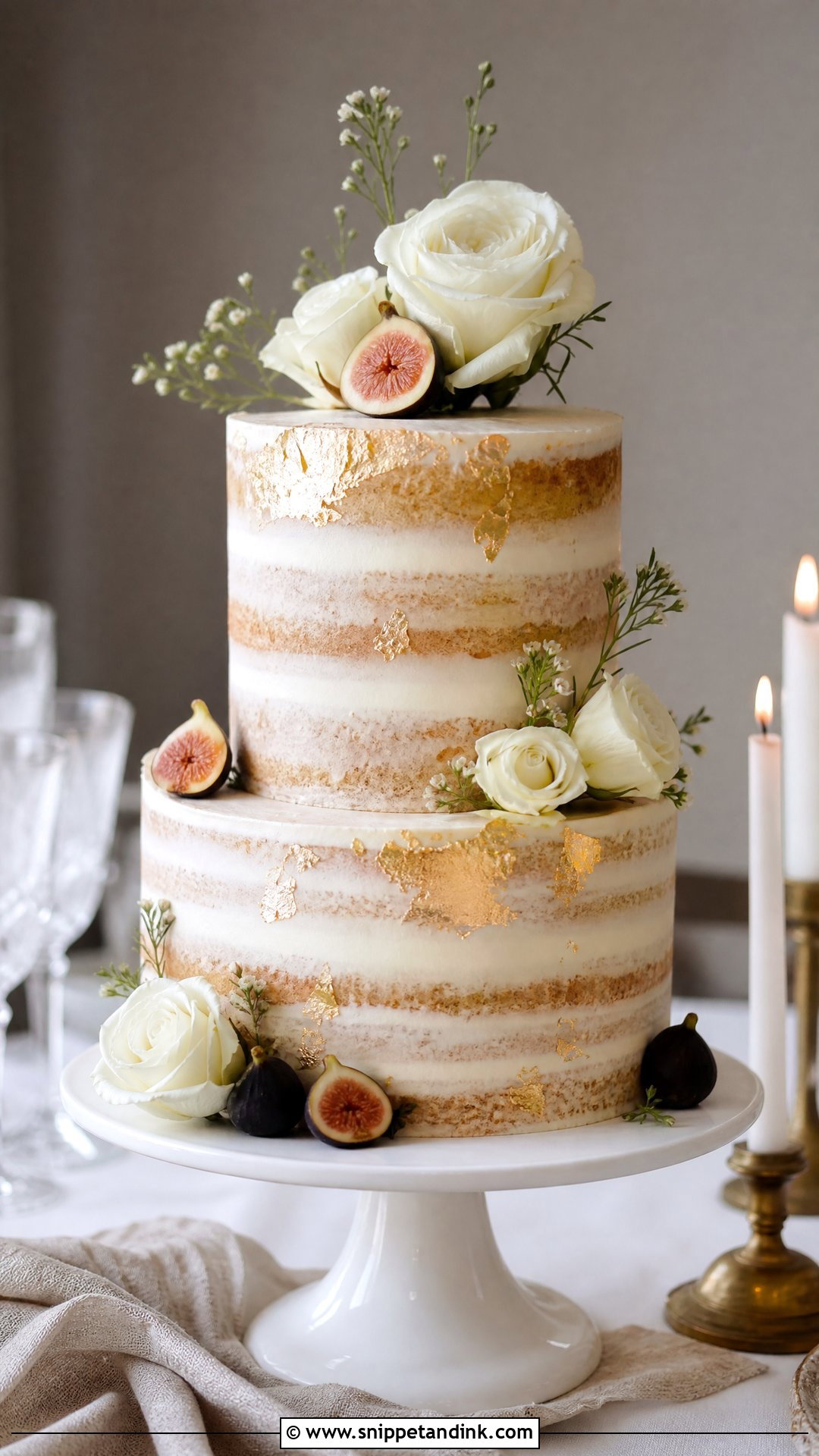
Gold leaf is easy to overdo. On a semi naked cake I apply small torn flakes with a dry brush on the scraped edges, where buttercream meets sponge, because the contrast with the exposed crumb is what makes it catch the light. A whole gilded tier hides the texture you chose this style for. Pair it with ivory flowers, figs, berries or soft greenery, and it looks richer once it’s on a table with candles and neutral linen. Edible gold leaf is sold specifically for food, so check the label rather than buying craft leaf.
6. Semi Naked Wedding Cake With Drip
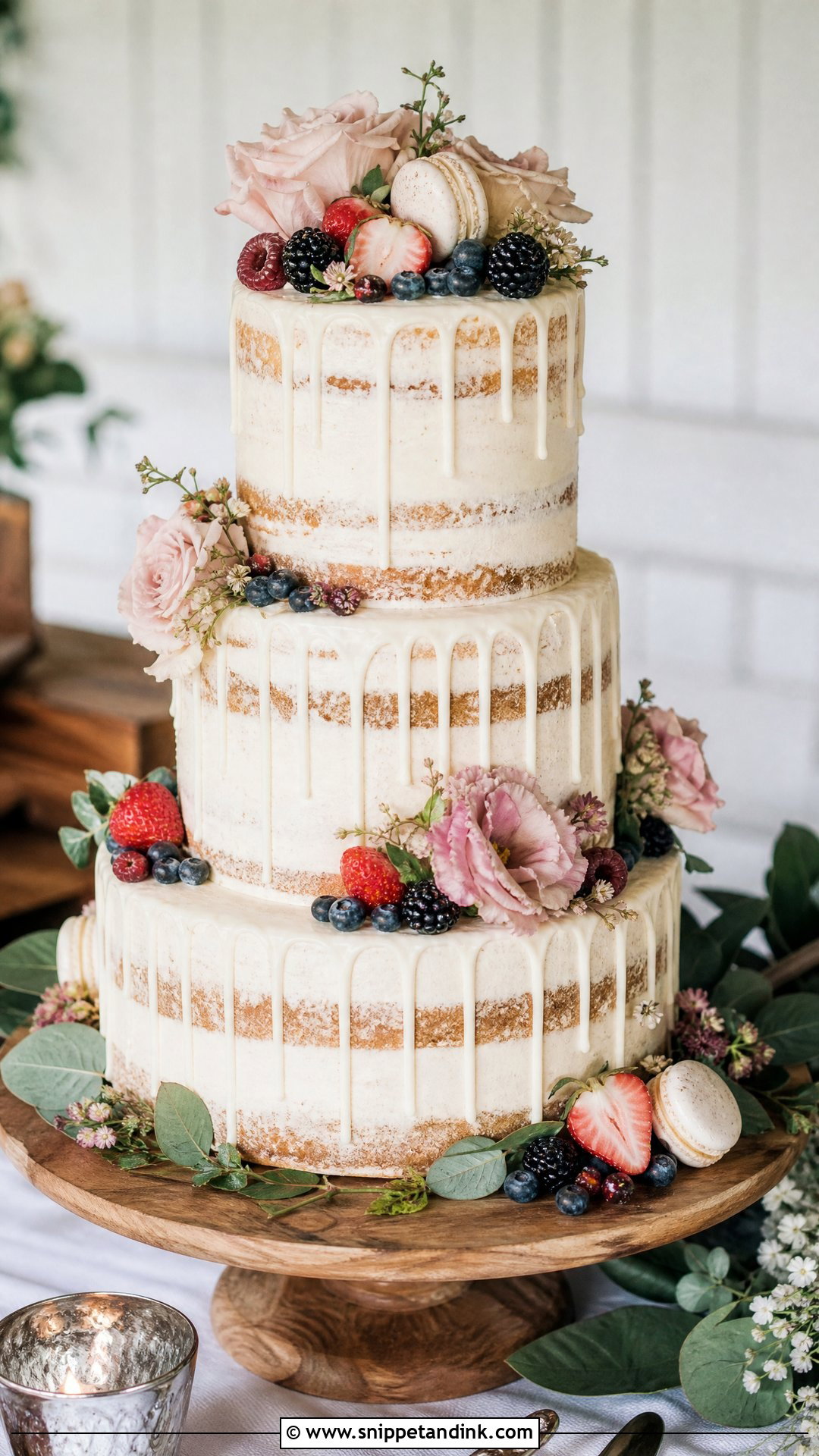
A drip adds movement without covering the texture. White chocolate, caramel, berry glaze or dark chocolate ganache runs from the top tier in thin lines. Temperature is the whole trick: I chill the cake first and use ganache that’s just warm enough to pour, so it stops a third of the way down instead of pooling on the board. Too hot and it runs straight off the scraped sides, since there’s less buttercream for it to grip. Finish the top with flowers, berries, macarons or fruit.
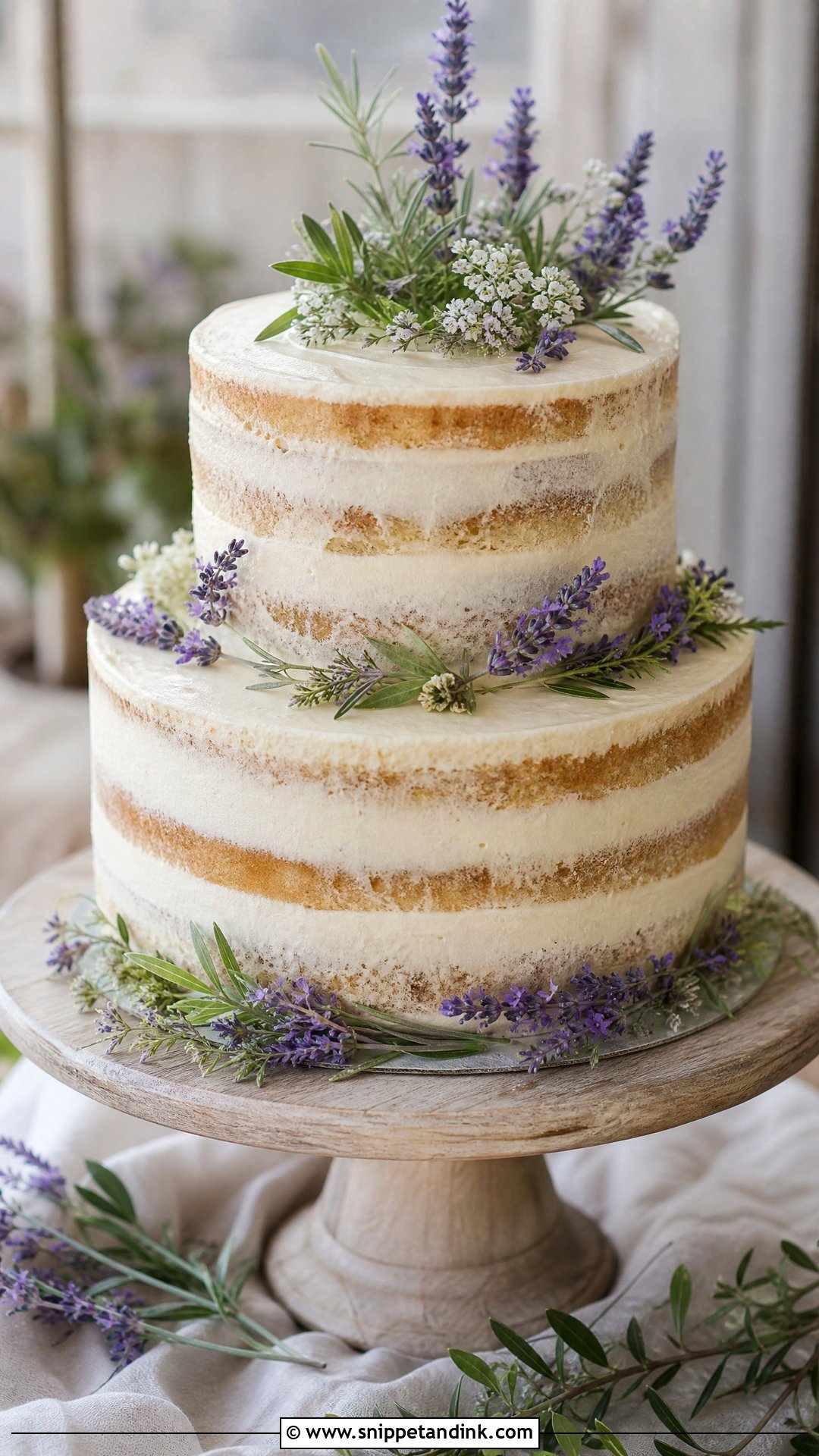
7. Semi Naked Wedding Cake With Lavender
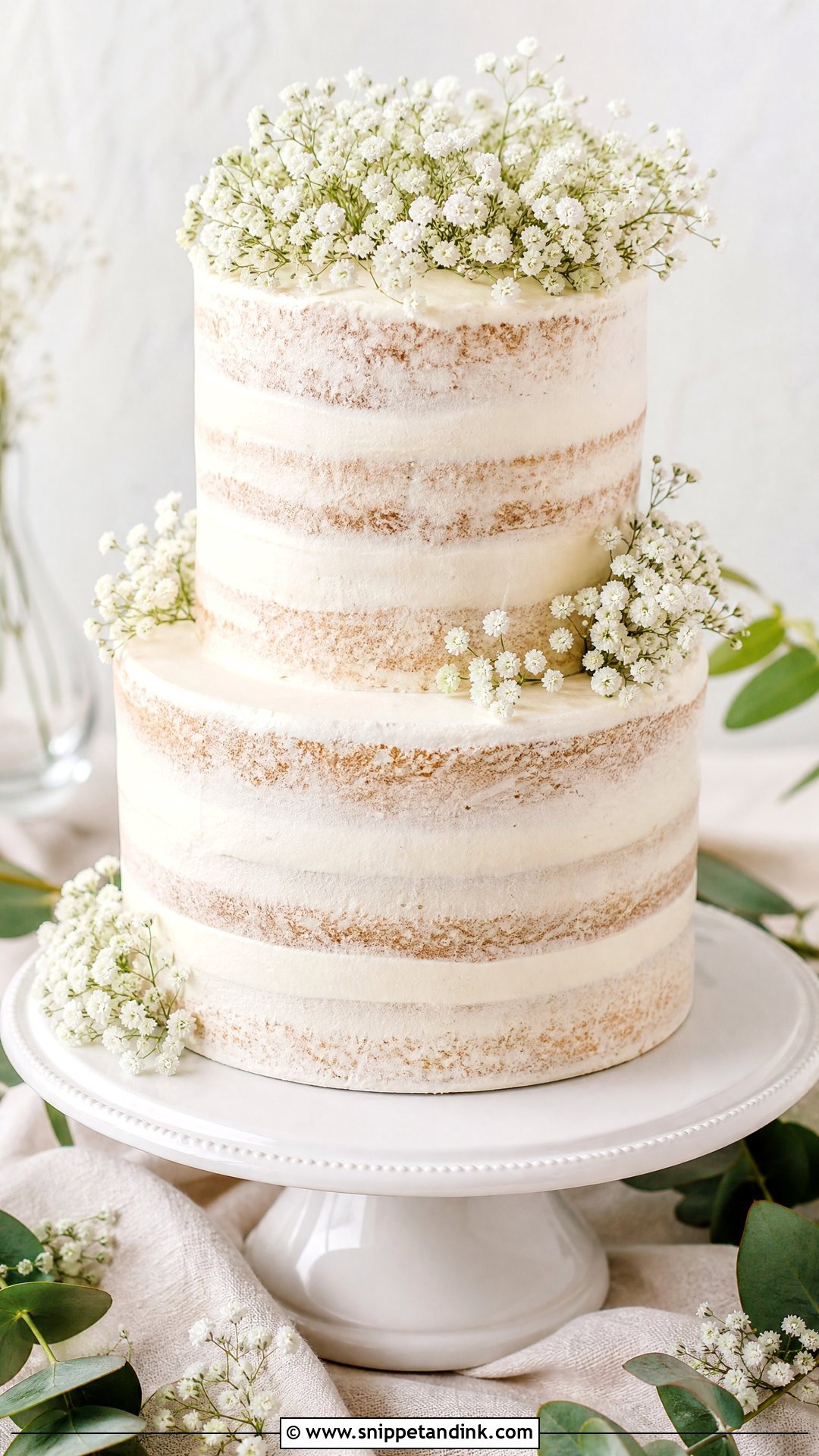
Lavender gives a calm country feel, but it’s strong. I use culinary lavender and keep it to a few sprigs tucked around the tiers or a small crown on top, because too much makes the whole cake smell and taste like soap. It sits well with pale buttercream and vanilla, honey, lemon or almond sponge. If you’d like lavender in the flavor, I prefer a light infusion in a syrup or the buttercream rather than buds in the crumb. White flowers, herbs and a wooden stand finish it quietly.
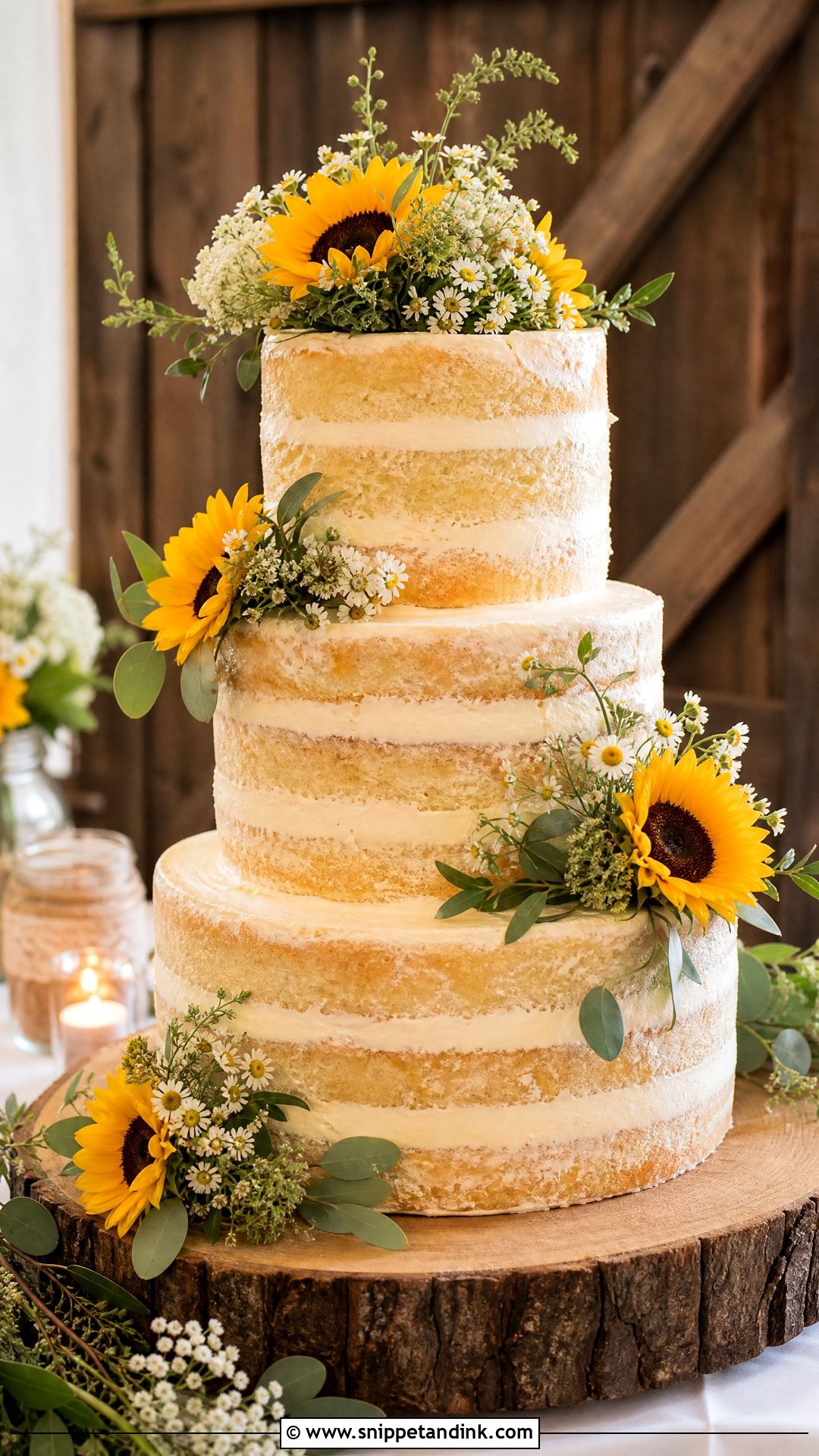
8. Semi Naked Wedding Cake With Sunflowers
Sunflowers belong to late summer and early fall, and they’re bold. The yellow petals stand out against soft buttercream, so one or two heads with greenery do more than a tier covered edge to edge. They’re heavy for their size, which means I wire them onto a pick and set them where the tier below can take the weight. Vanilla, honey, lemon or spice sponge suits the mood. Pair it with wood, linen and loose wildflowers on the table.
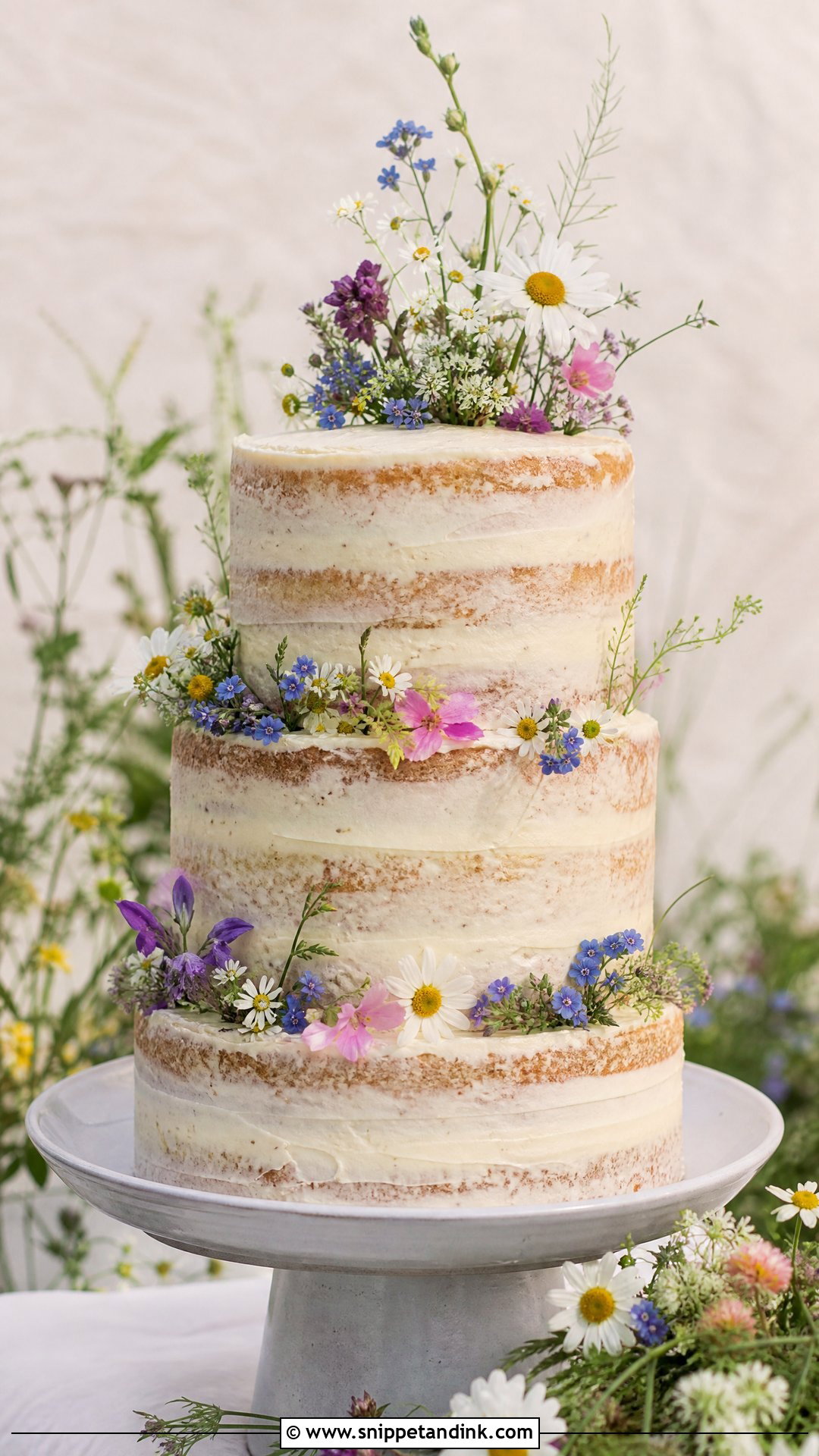
9. Semi Naked Wedding Cake With Wildflowers
Wildflowers give the cake a meadow look rather than a tight arrangement. Tiny daisies, chamomile, cornflowers, pansies and small seasonal blooms scatter around the tiers or gather in loose clusters at different heights. Pansies and cornflowers are among the edible ones, but many meadow flowers aren’t, so I check every variety before it touches buttercream. Delicate stems wilt faster than roses on a warm day, which is why I add these as late as possible at the venue. Keep the colors close to your palette so the scatter looks deliberate.
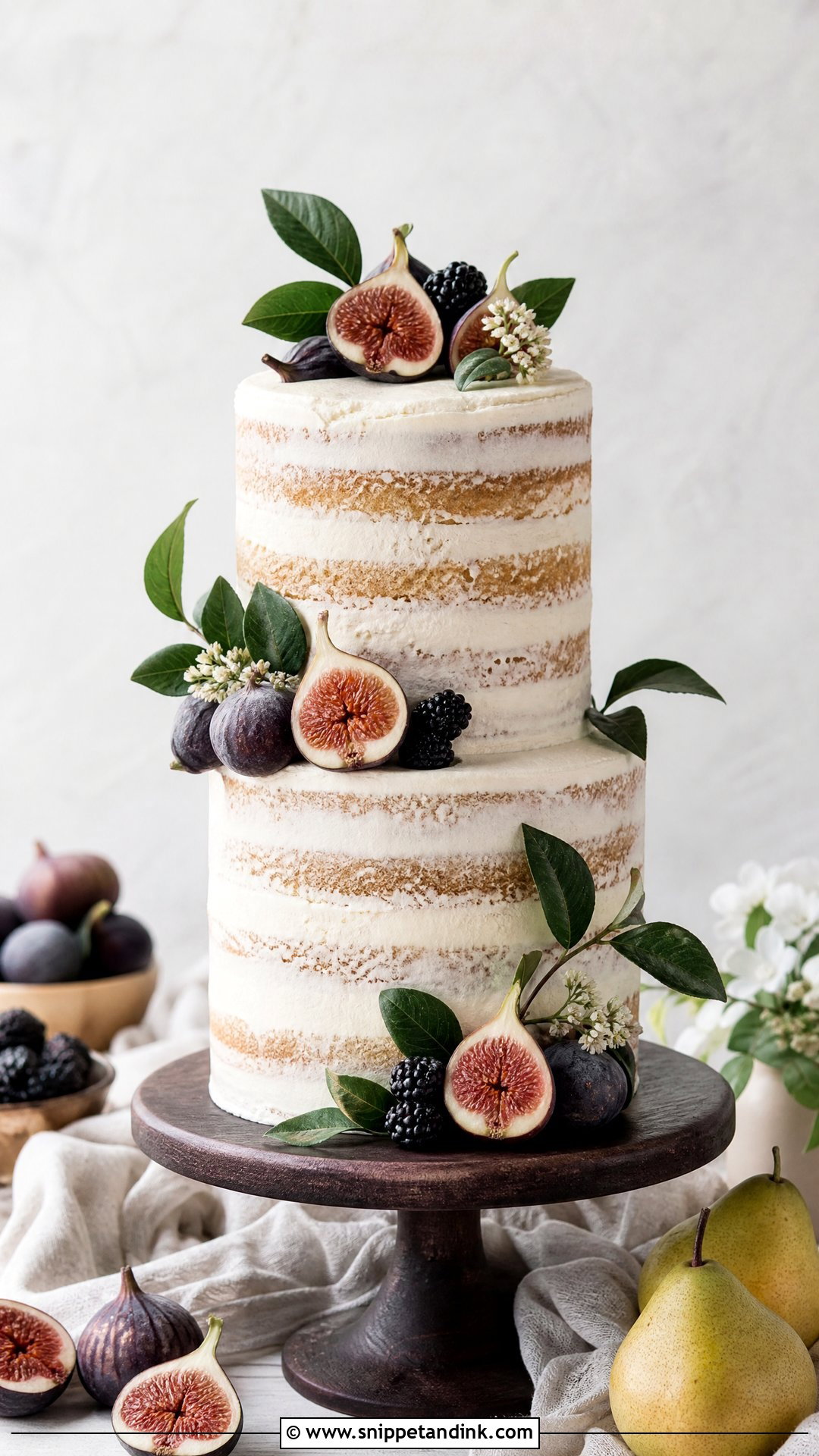
10. Semi Naked Wedding Cake With Figs
Figs are a late summer and fall fruit, and they look expensive. Deep purple skin and the pink inside sit well against ivory buttercream and warm sponge. I halve or quarter them on the morning of the event, since a cut fig browns and softens within hours, and I pair them with blackberries, grapes or greenery for a vineyard feel without any wine theme at all. Almond, honey, vanilla, spice and olive oil sponge all suit figs. Don’t add much else.
11. Semi Naked Wedding Cake With Citrus
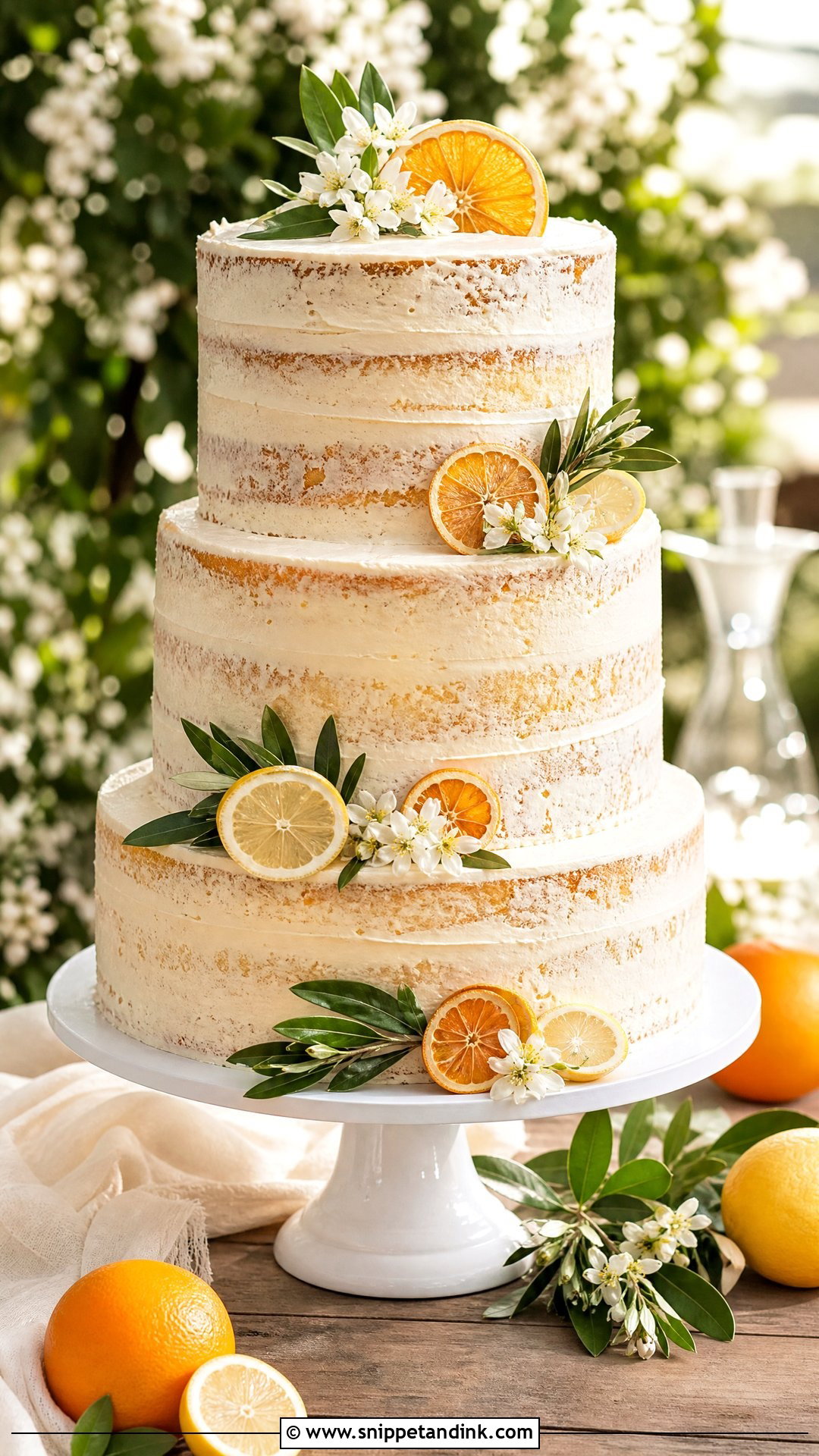
Citrus wheels make the cake bright and a little unexpected. Orange, lemon, grapefruit or dried citrus adds color and texture, and it suits warm-weather and coastal weddings. Fresh slices release juice against buttercream, so I blot them and place them close to serving time. Dried wheels are easier: they hold their shape all day and don’t weep, which makes them my choice for a long reception. Lemon, vanilla, orange blossom or almond sponge works, finished with small white flowers or herbs.
12. Semi Naked Wedding Cake With Peonies
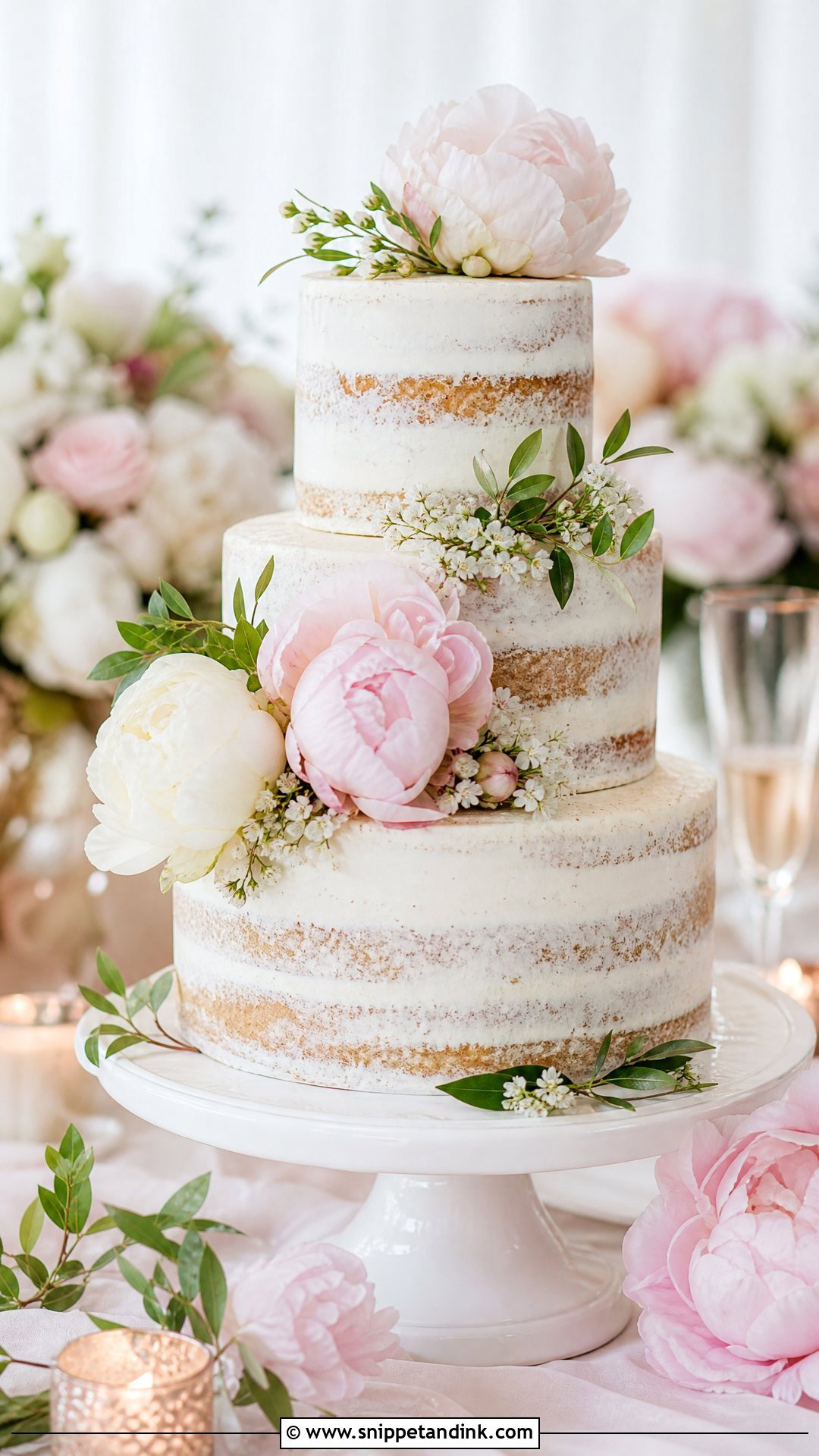
Peonies are big, so a few blooms make the whole cake. Blush, cream, coral and pale pink sit softly against vanilla buttercream and light sponge, and they’re at their best in late spring. The risk is that they cover the semi naked finish entirely. I place them off-center, one cluster per tier at most, and let the scraped sides show between them. A little greenery or delicate filler balances the weight. Fully open peonies drop petals as the room warms, so I like them just short of full bloom.
13. Semi Naked Wedding Cake With Baby’s Breath
Baby’s breath suits a couple who wants almost no color. Tiny white sprays read as airy against soft buttercream and the visible layers, and a small crown on top or a thin ring at each tier is enough. Baby’s breath isn’t edible, so it goes on with tape or picks and is lifted off before cutting. It sits well with ivory roses or eucalyptus, or on its own for the cleanest finish.
14. Semi Naked Wedding Cake With Succulents
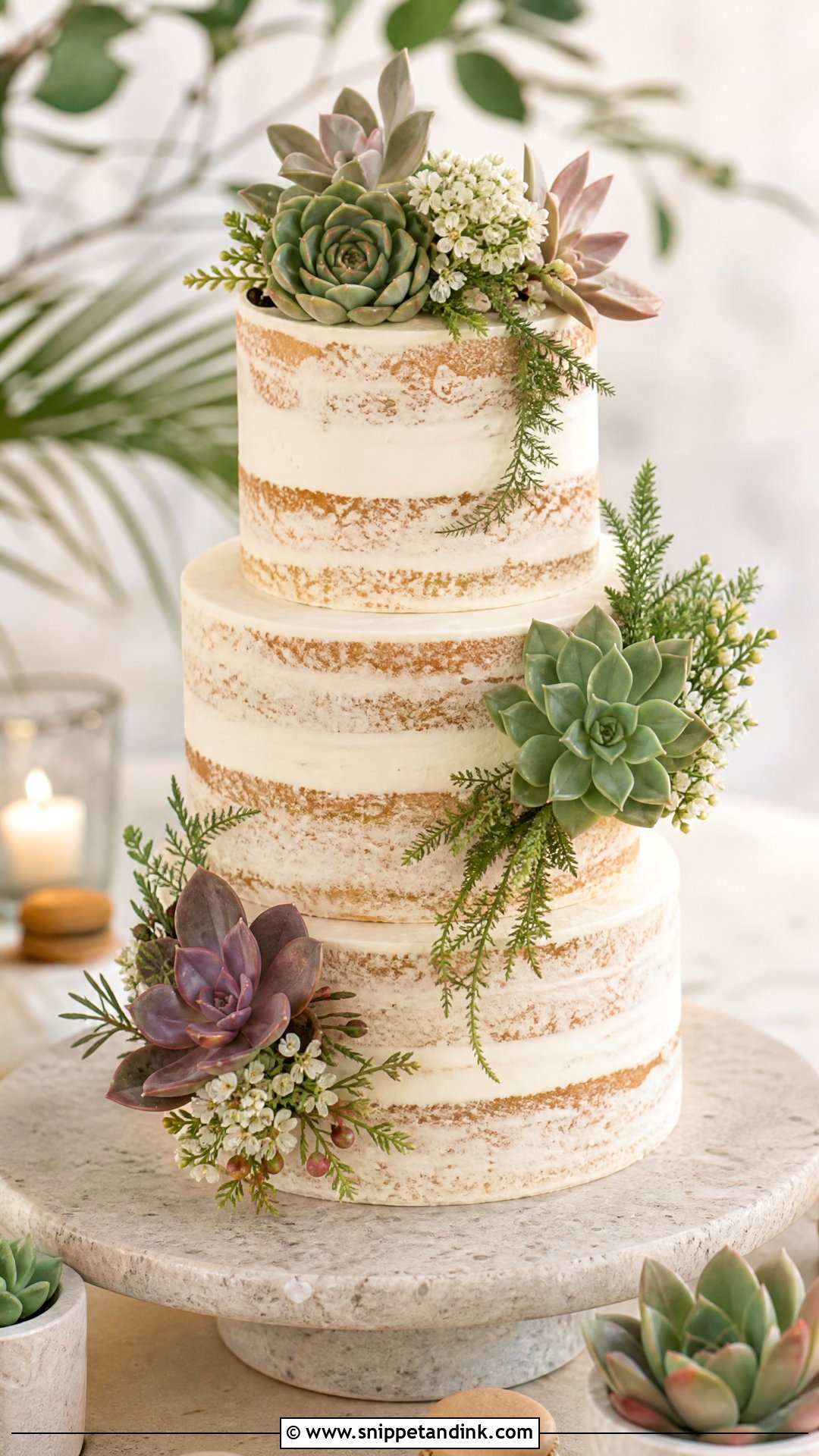
Succulents give a modern rustic twist. Their green, blue and dusty purple tones are striking against ivory buttercream, and they suit desert venues or couples who’d rather skip roses. They aren’t eaten, so each one sits on a small disc or pick rather than straight on the cake. They’re also heavier than they look, so I keep large rosettes on the bottom tiers. Add a couple as focal points with greenery or edible flowers around them. Vanilla, almond, honey or chocolate sponge all suit the design.


15. Semi Naked Wedding Cake With Macarons
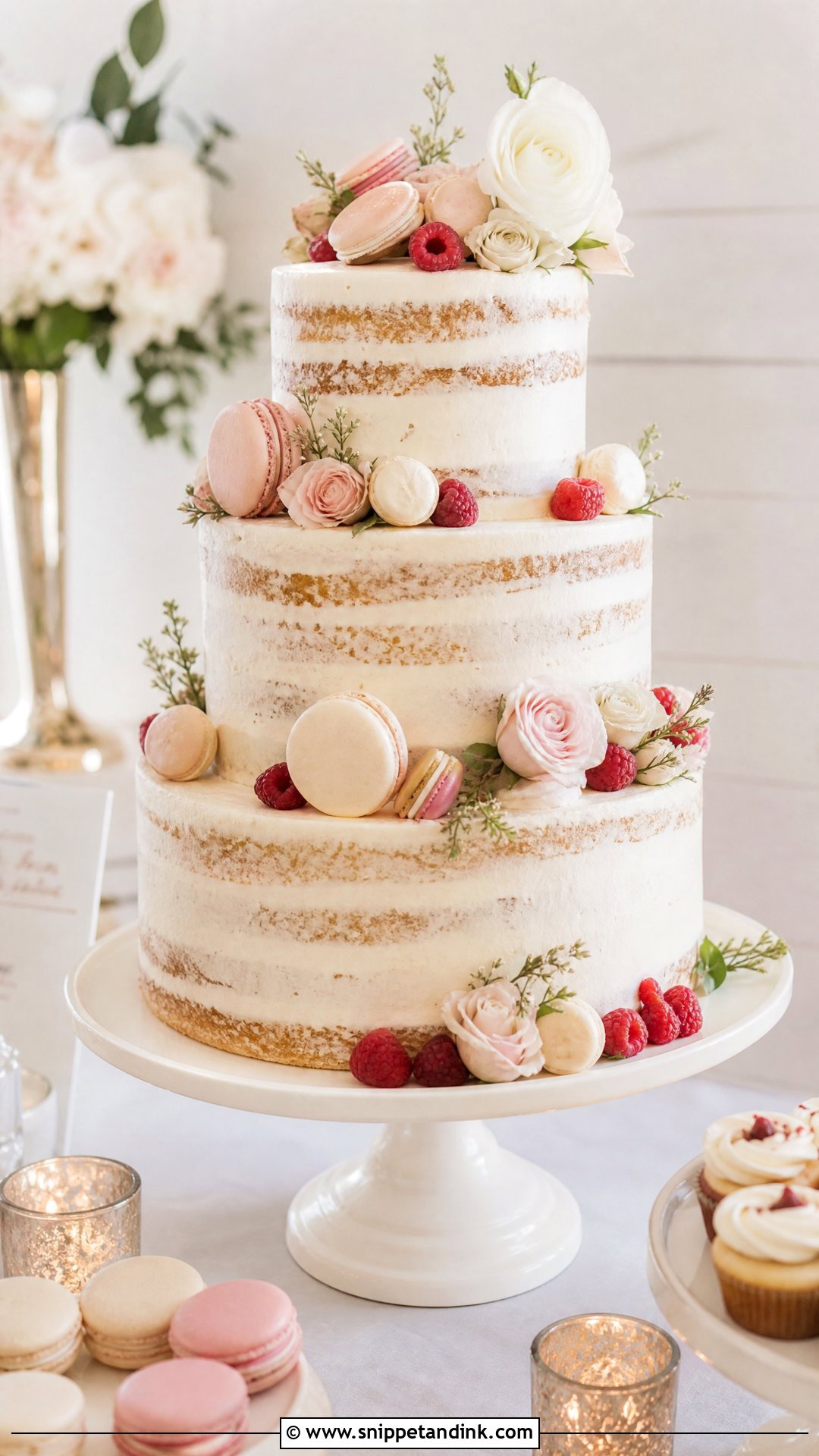
Macarons add a dessert-table feel with real detail. Their smooth shells contrast with the scraped sides and exposed sponge, and I can tint them blush, ivory, sage, lavender or soft blue to match the wedding. I attach them with a dab of buttercream and add them late, because macarons pick up moisture from the cake and soften if they sit on it overnight. Stack a few on top, set a ring at the base or mix them with flowers and berries. Vanilla, almond, raspberry or lemon sponge suits them.
16. Semi Naked Wedding Cake With Caramel Drip
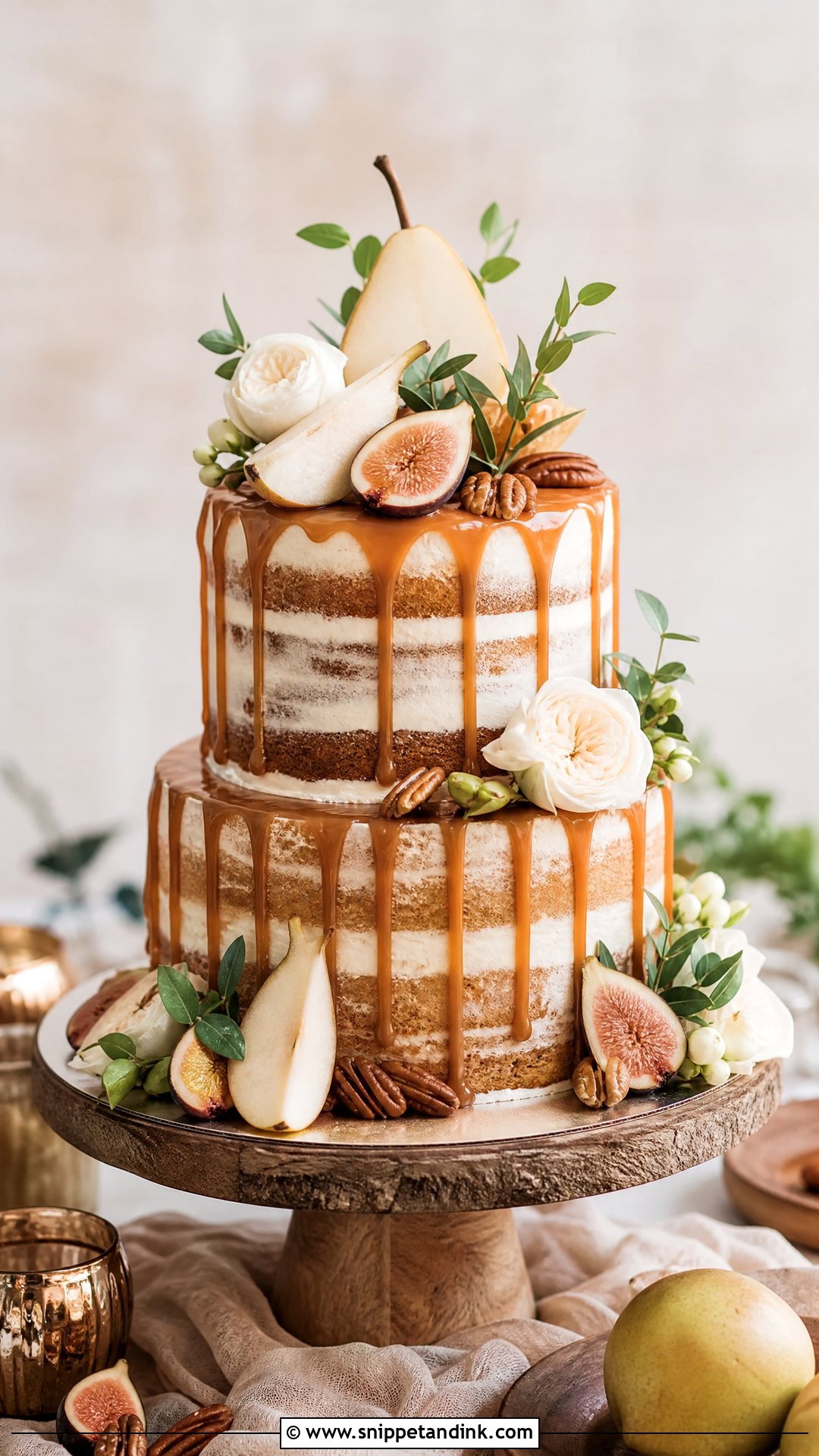
Caramel is the drip I reach for in autumn, especially for cozy rustic venues. It runs golden over light buttercream and vanilla, spice, apple or almond sponge. A caramel that’s too thin slides right off the scraped sides, so I cook it a little thicker than a sauce and test one drip on a chilled tier before doing the rest. Pears, figs, pecans, berries or a few cream flowers finish it, and a wood stand with greenery around the base suits it.
17. Semi Naked Wedding Cake With Chocolate Layers
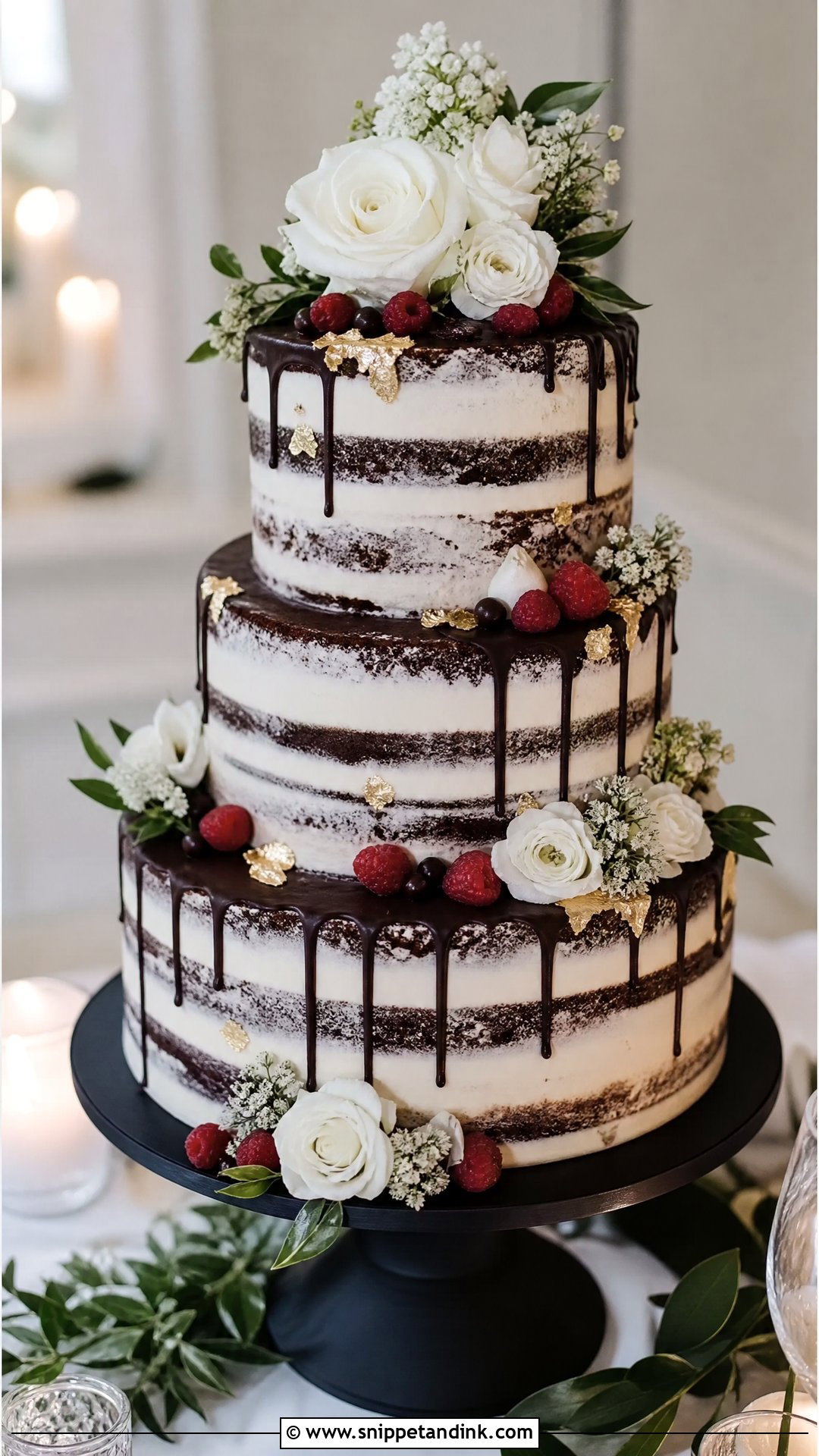
Chocolate sponge gives the boldest contrast, with dark layers showing through pale buttercream. That contrast is also unforgiving: any uneven filling or crooked stacking shows clearly, so I level every layer and pipe a dam of buttercream before filling. Raspberry, vanilla, espresso or salted caramel fillings all suit chocolate. Dress it with white flowers, berries, a chocolate drip or gold leaf. I’d steer you to this one if most of your guests prefer chocolate and you still want a pale, wedding-looking cake.
18. Semi Naked Wedding Cake With Red Velvet
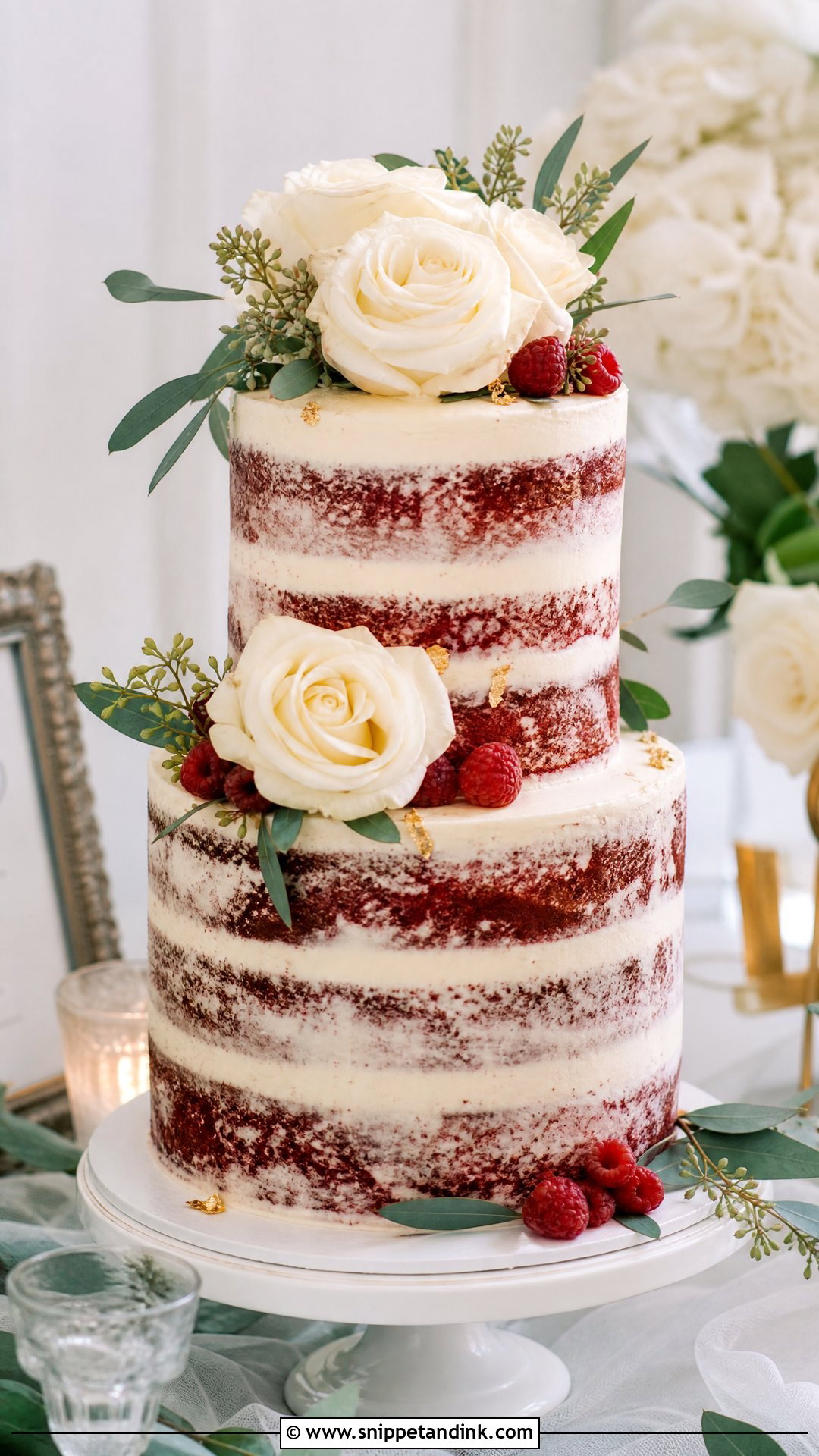
Red velvet shows a flash of deep red under a thin coat, which is the whole point of choosing it here. Cream cheese frosting is the classic pairing, but it’s softer than buttercream, so I stabilize it and keep the cake cool until it’s set out. I scrape it a little thicker than usual, since crumbs from red sponge streak pink through frosting that’s too thin. Ivory flowers, greenery, berries or a few gold touches finish it. It suits a couple who wants a traditional flavor in a more modern presentation.
19. Semi Naked Wedding Cake With Lemon
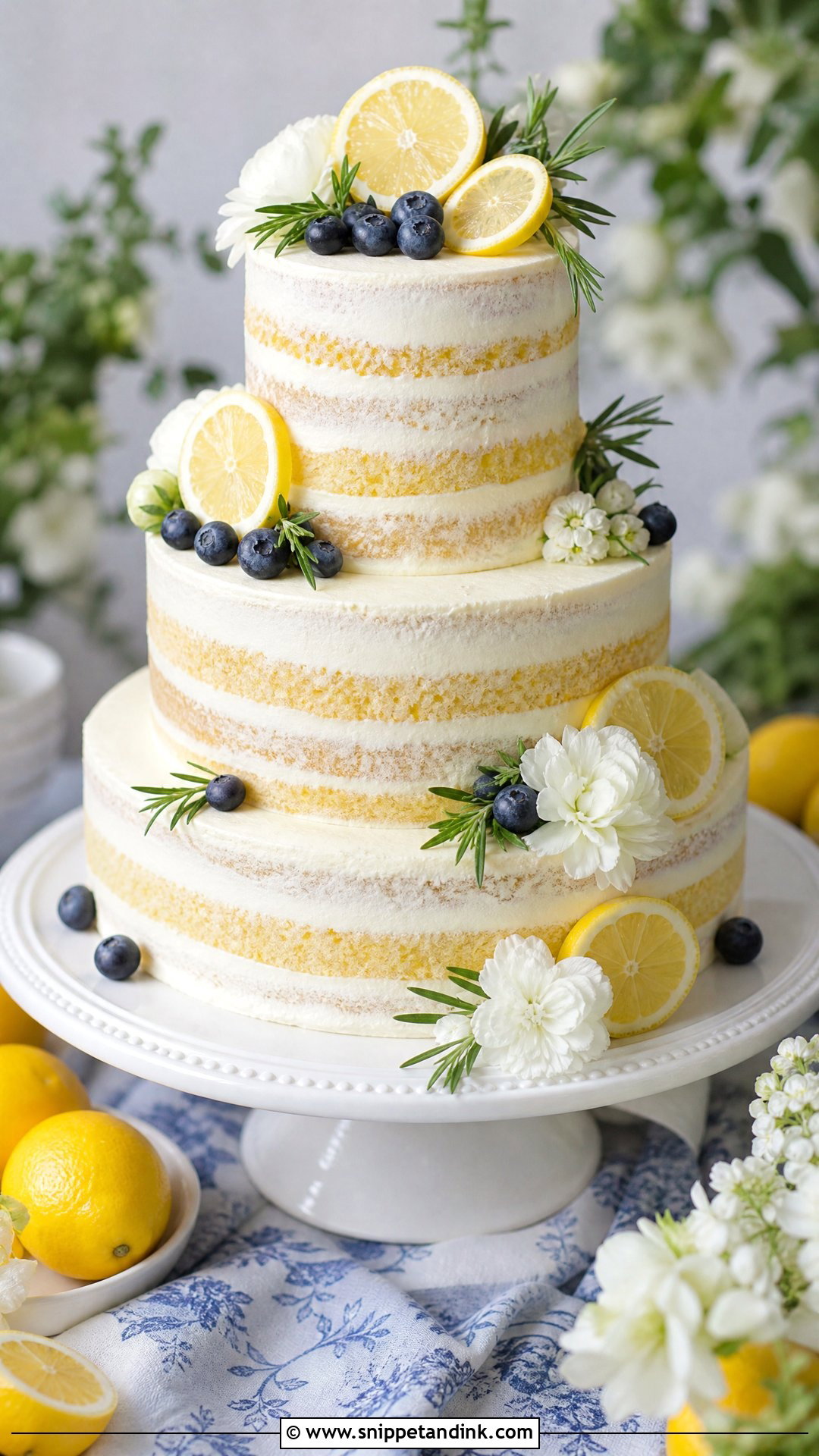
A lemon semi naked wedding cake is the freshest-tasting option on this list. Pale yellow sponge, lemon curd filling and a thin vanilla or lemon buttercream keep it light. Curd is soft, so I pipe a firm buttercream ring inside each layer to hold it in place, or it squeezes out under the weight of the tiers. Lemon slices, white flowers, herbs or small berries decorate it. It suits a brunch reception or a garden wedding. Keep the decoration spare and let the color of the sponge do its job.



20. Semi Naked Wedding Cake With Rustic Wood Stand
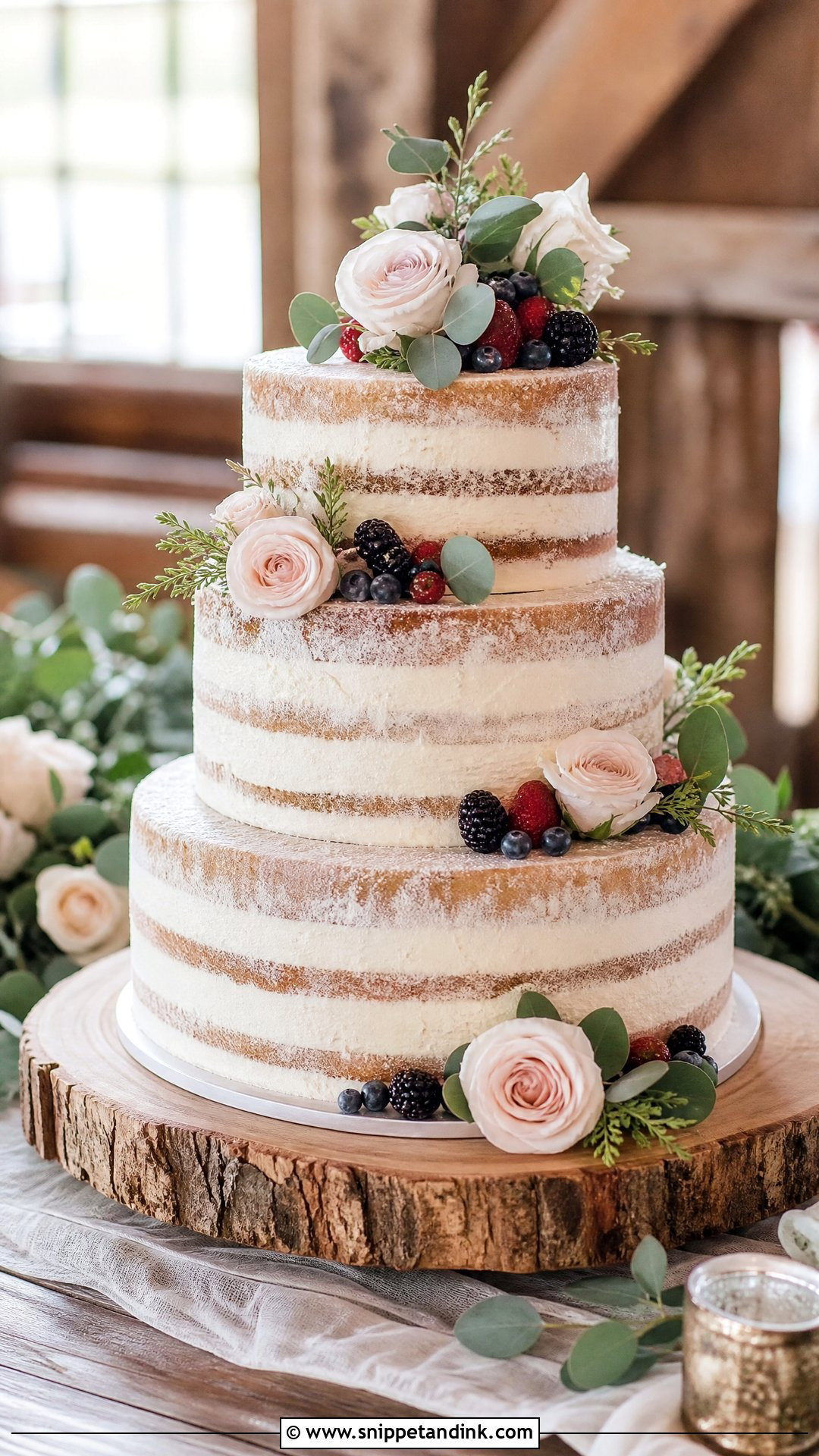
A wood stand changes how the whole cake reads. On a slice of oak or walnut, a plain semi naked cake with vanilla buttercream and a few flowers suddenly fits a barn or woodland reception. The wood adds texture, so the cake can stay simple. Check three things before the day: it’s level, it’s sealed with a food-safe finish, and it’s wide enough to leave a couple of inches clear around the bottom tier. A sloping stump slice will tilt a three-tier cake within the hour.
Food Safety for Anything Resting on Bare Sponge
With almost no frosting between the decoration and the cake, whatever sits on it is closer to what your guests eat. My rule is simple: if it isn’t food, it never touches the cake directly.
Flowers and leaves
Florist flowers are usually sprayed, and several common wedding flowers and foliage types aren’t edible at all. I wrap every stem in floral tape or set it in a food-safe pick, and I lift all non-edible decoration off before the cake is cut. If you want flowers guests can actually eat, ask your baker for edible varieties grown for food use.
Fruit
Fruit should be washed, dried completely and added close to display time. Water left on berries runs into the buttercream and leaves streaks. Cut fruit browns and weeps, so whole berries and dried citrus last the longest.
Outdoor Heat and an Uncovered Sponge
Buttercream softens quickly in a warm tent, and a thin coat has less to lose before the sponge starts to show cracks. For a summer garden wedding, I ask the planner for a shaded table away from glass walls and heaters, and I keep the cake in a cool room until about an hour before the cutting.
On a very hot day, I’d plan a shorter display window or a smaller cake on show with a kitchen cake to serve. It isn’t romantic, but nobody wants to watch the top tier lean.
Let the Month of Your Wedding Pick the Topping
A semi naked cake doesn’t need fondant or a lot of decoration to look finished. A thin coat, clean layers and a handful of toppings do the work. Flowers are classic, berries are cheerful, citrus is bright, figs feel rich and greenery stays quiet. The right one is mostly decided by your season and how long the cake will sit out. Tell your baker the venue, the month and the time of the cutting, and the decoration choice usually narrows itself.
You'll Like These Ideas:










Leave a Reply