
Couples often come to me apologising for wanting a small cake, as if one tier were the budget option. It isn’t. A single tier is quicker to serve and simpler to move, and it sits comfortably beside cookies, pies or a dessert bar. It also forces a decision, because one detail has to carry the whole cake: a pressed-flower pattern, a ring of pearls, a glossy chocolate finish or an unusual shape such as an oval. The twenty below cover finishes, shapes and flavours, with notes on how each one behaves once it leaves my kitchen.
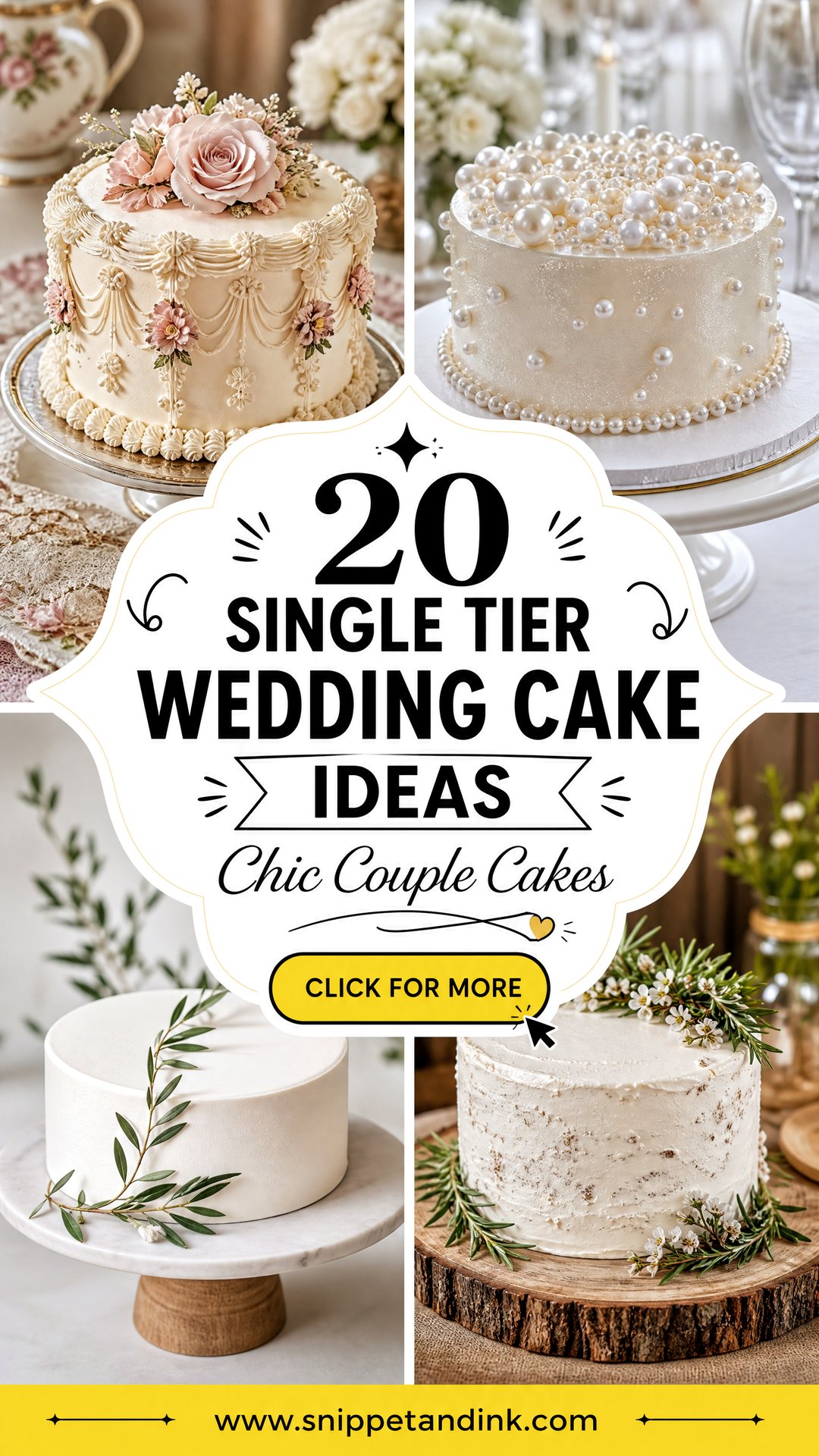
Where the Money Goes on a One Tier Cake
A single tier usually costs less than a stacked cake, but not always by as much as couples expect, because the price is driven by labour and logistics more than by sponge. Every baker prices differently and costs vary a lot by region, so treat this as a map of what moves the number rather than a quote.
- Decoration hours. Hand-made sugar flowers, Lambeth overpiping and hand painting can take longer than baking the cake itself. A plain buttercream tier with fresh flowers is far cheaper than the same size with sugar peonies.
- Delivery and setup. Most bakers charge for a delivery window and setup at the venue, and that fee barely changes with cake size.
- Minimum orders. Some studios have a minimum wedding order in peak months, which can make a very small cake cost the same as a larger one.
- Stands and hire items. A pedestal, a cake knife or a separate cutting board may be extra or need a deposit.
If you want to save, I’d spend on the finish and keep the decoration modest, since a well-made plain cake looks expensive and a cheaply finished cake looks cheap however many flowers it carries. Ask for a sheet cake in the same flavour for the kitchen if your guest count outgrows the display tier.
1. Single Tier Buttercream Wedding Cake
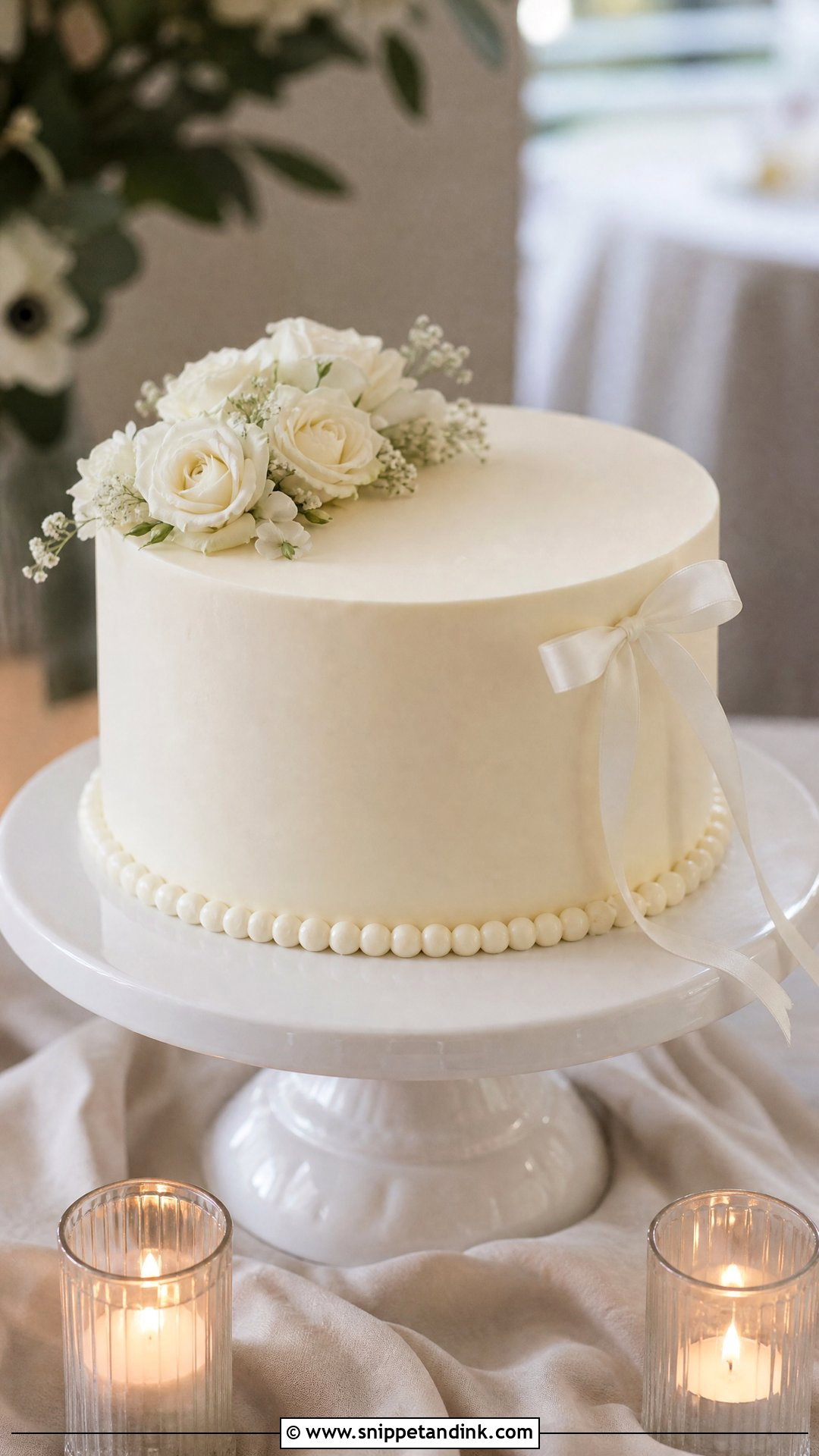
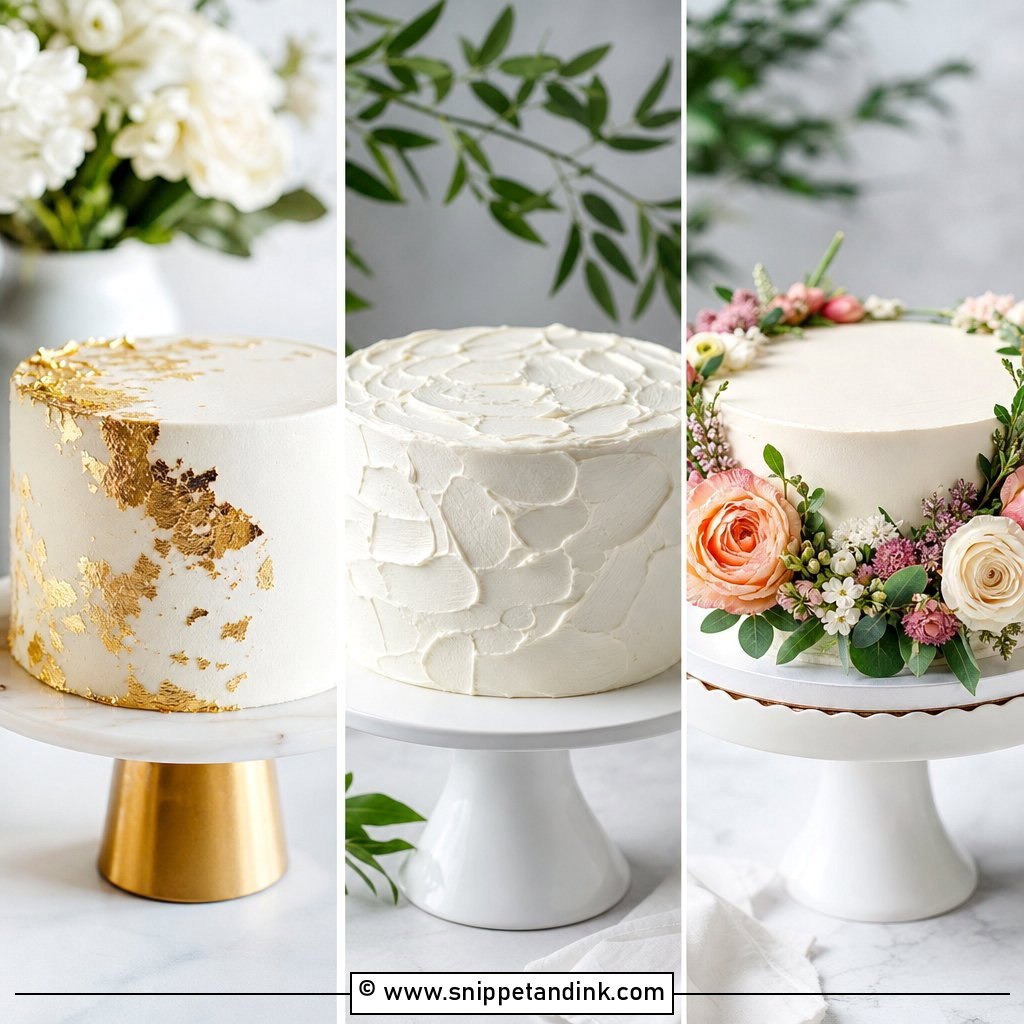
Smooth ivory buttercream is where I’d start if you’re unsure, since it suits a garden lunch as easily as a hotel dinner. The finish lives or dies on the edge: a sharp, clean rim at the top reads professional, a rounded one reads homemade. If you prefer something looser, a palette knife can drag soft lines through the coat instead. White chocolate and almond are two flavours that suit the ivory colour particularly well. A slim ribbon or a short line of pearl piping is all the extra it needs.
2. Single Tier Floral Wedding Cake
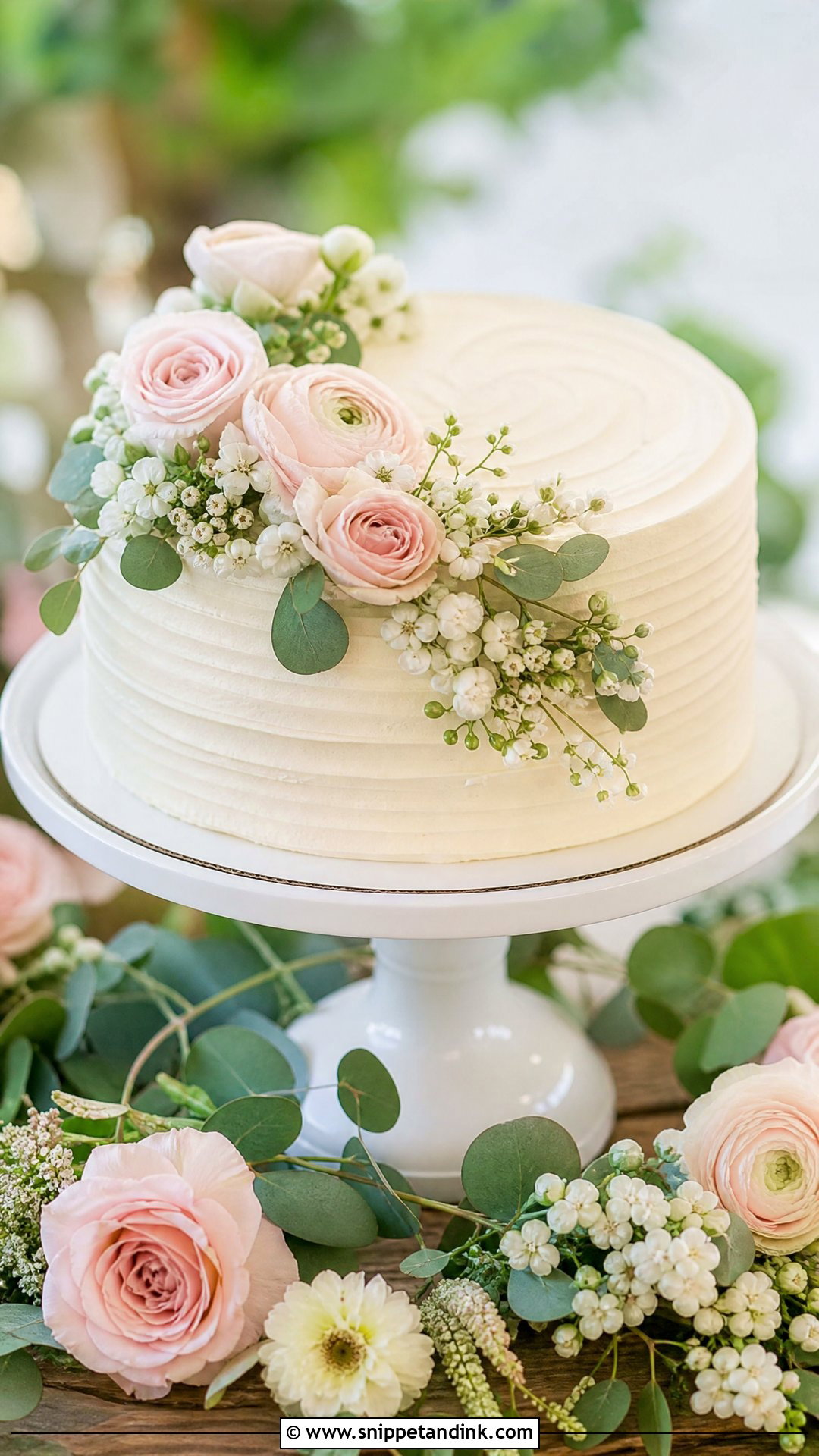
The cakes in this style that look best tend to use fewer flowers than you’d guess. A crescent of roses, ranunculus or lisianthus across one part of the top, a little greenery for movement, and plenty of bare frosting around it. Cover the whole tier and it starts to look like a flower arrangement with cake underneath. Pale blush or barely textured buttercream makes a calm backdrop. Before anything goes on, the stems are sealed so no sap or water reaches the frosting.
3. Single Tier Vintage Wedding Cake
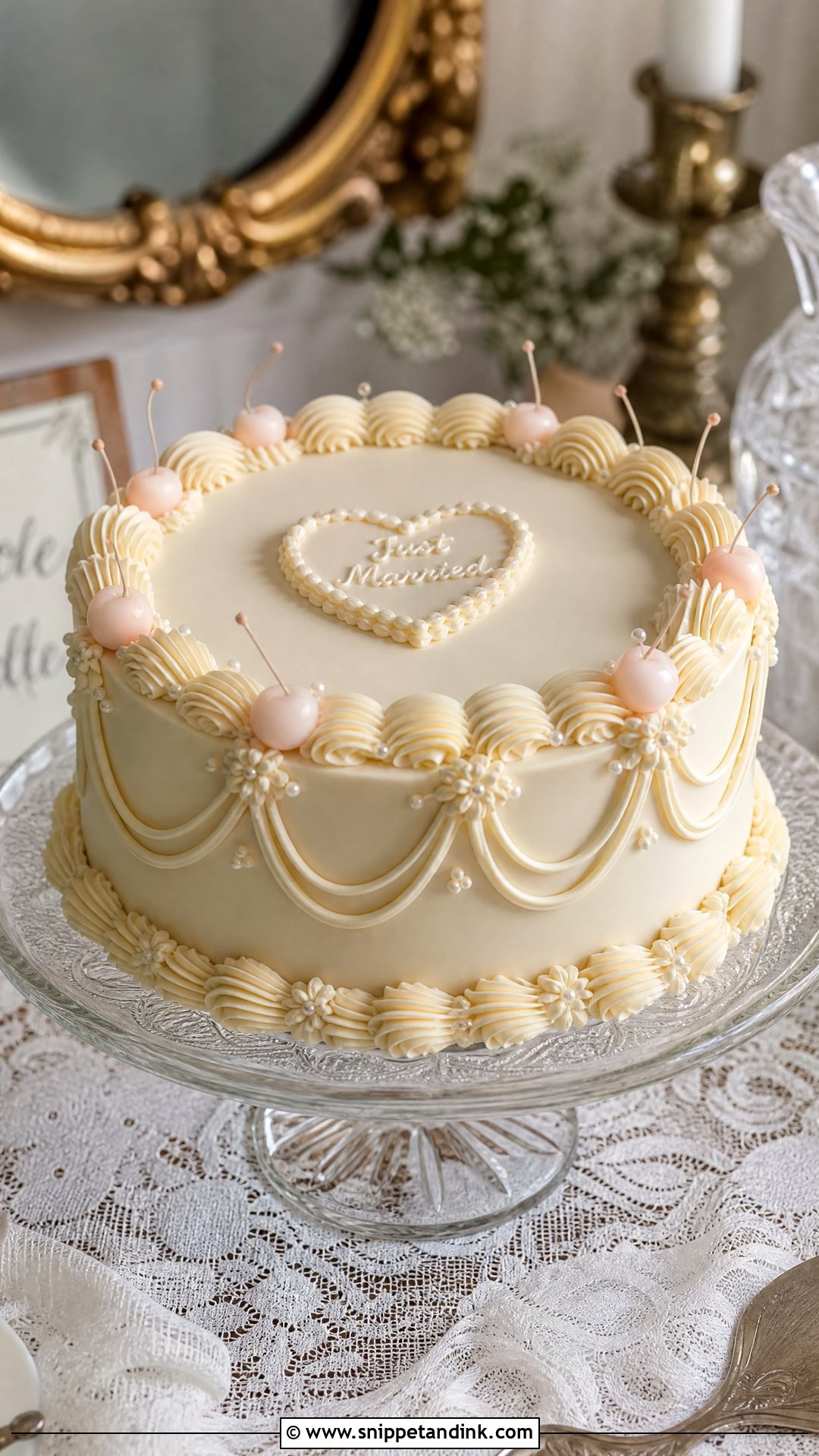
Neat is the word I keep in mind for vintage piping on a single tier. Shells, small pearls and pastel borders around the top and base, evenly spaced and not stacked three deep. That restraint is what stops it looking like a costume. Ivory and pale blue are my favourite pairing. I pipe with a slightly firmer buttercream than usual so the shells keep their ridges through a long reception. Little cherries or a tiny heart topper make it sweeter, and vanilla bean or strawberry sponge suits the mood.
4. Single Tier Lambeth Wedding Cake
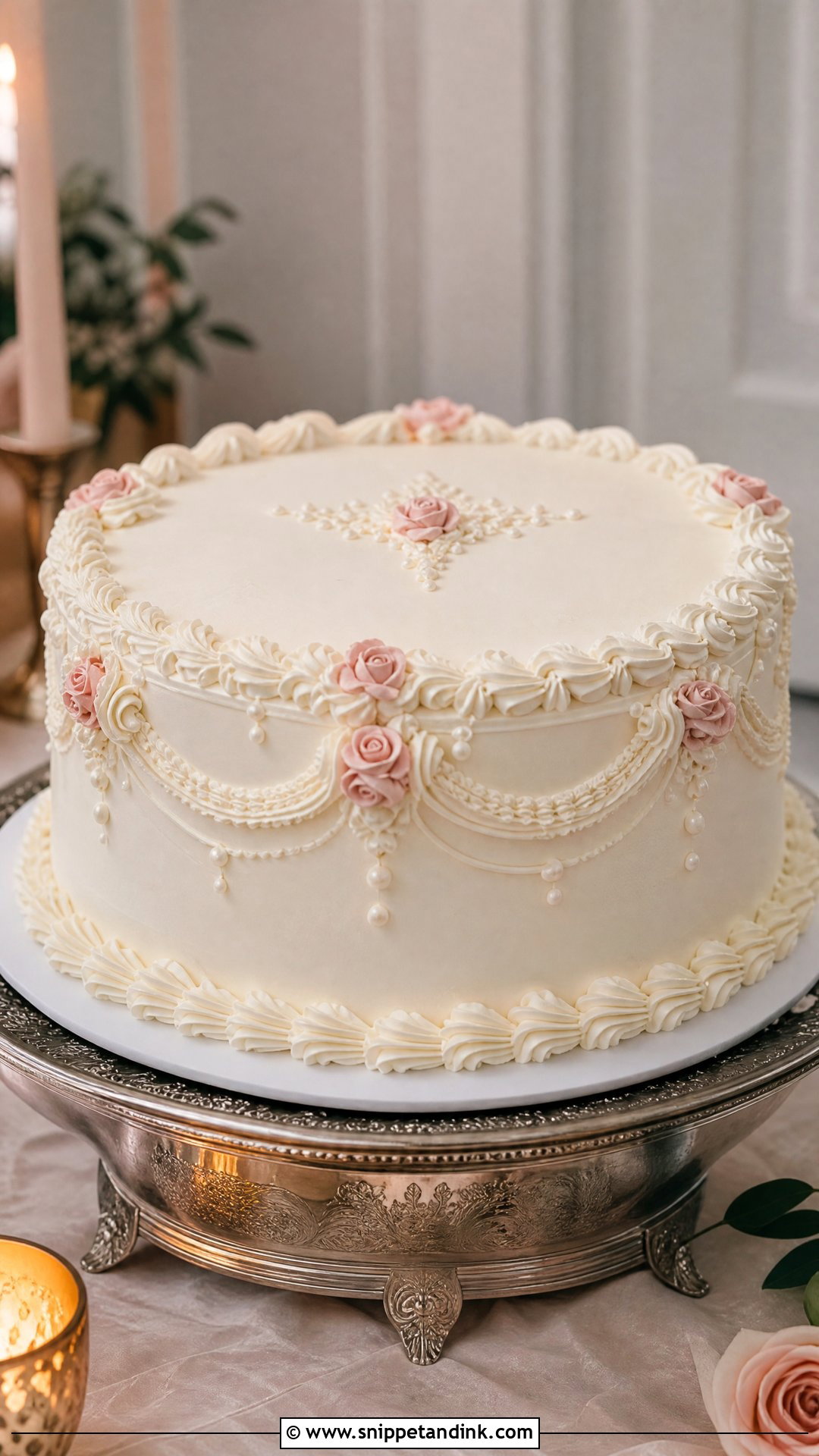
Lambeth is vintage piping turned up to full volume, with swags, scrolls and shells layered over each other until the cake almost looks carved. On one tier, every bit of that work is at eye level instead of being spread across several floors. It is slow to make, which shows up in the price, and it wants a steady room temperature so the overpiping doesn’t sag. White on white is the traditional version; butter yellow feels fresher. Candles, linen and old serving pieces on the table finish the effect.
5. Single Tier Pearl Wedding Cake
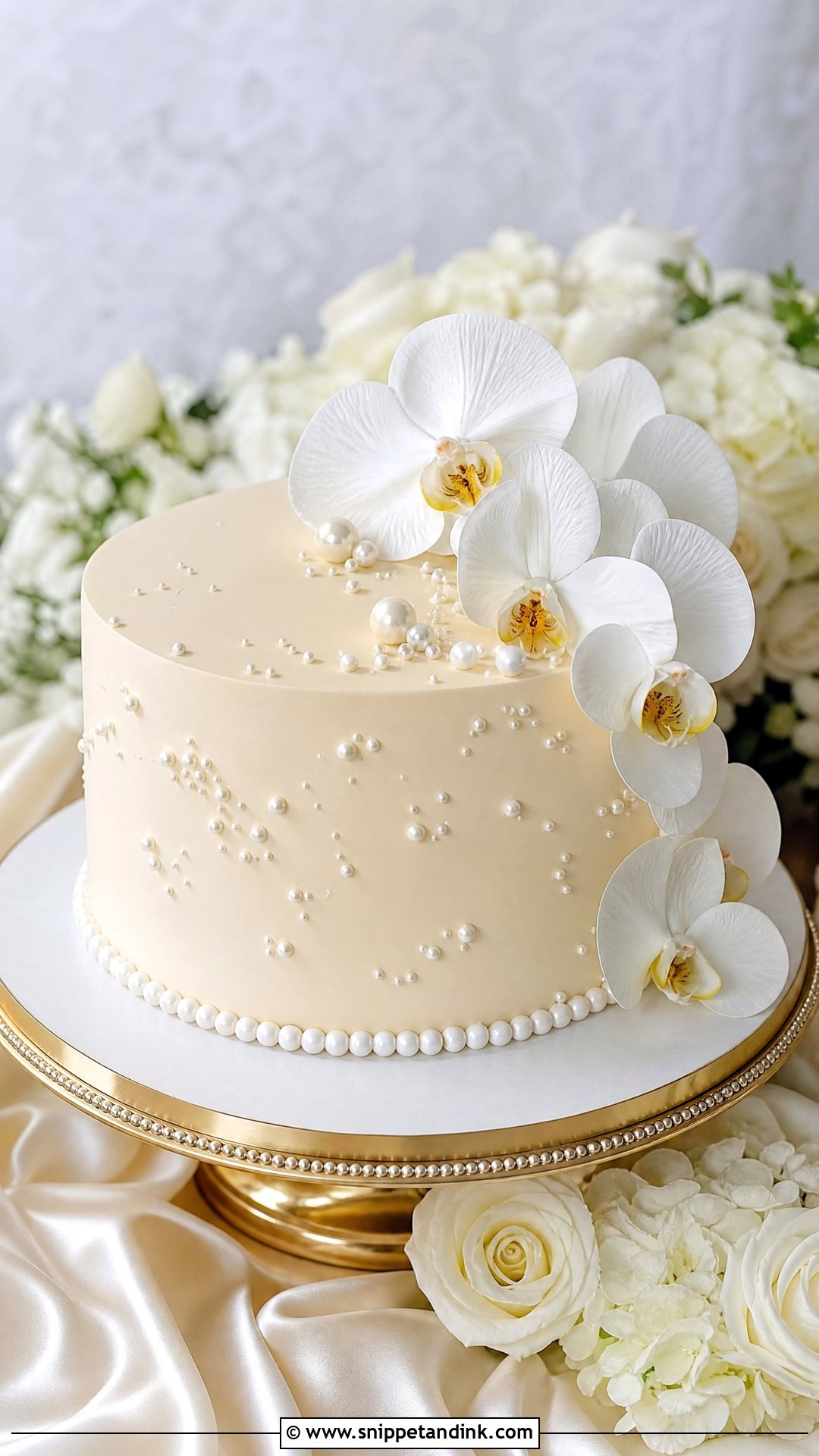
I like mixing pearl sizes on this one. A few larger sugar pearls among lots of tiny ones look far more natural than identical beads in a straight row, and they catch light at different angles. They can be scattered across smooth buttercream, run in neat lines or used as a top and bottom border. Ivory keeps it classic; champagne warms it. Pair it with white roses or orchids and a plain stand. One thing to know: pearls pressed into soft buttercream can slide if the cake gets warm, so I set them once the coat has firmed up.
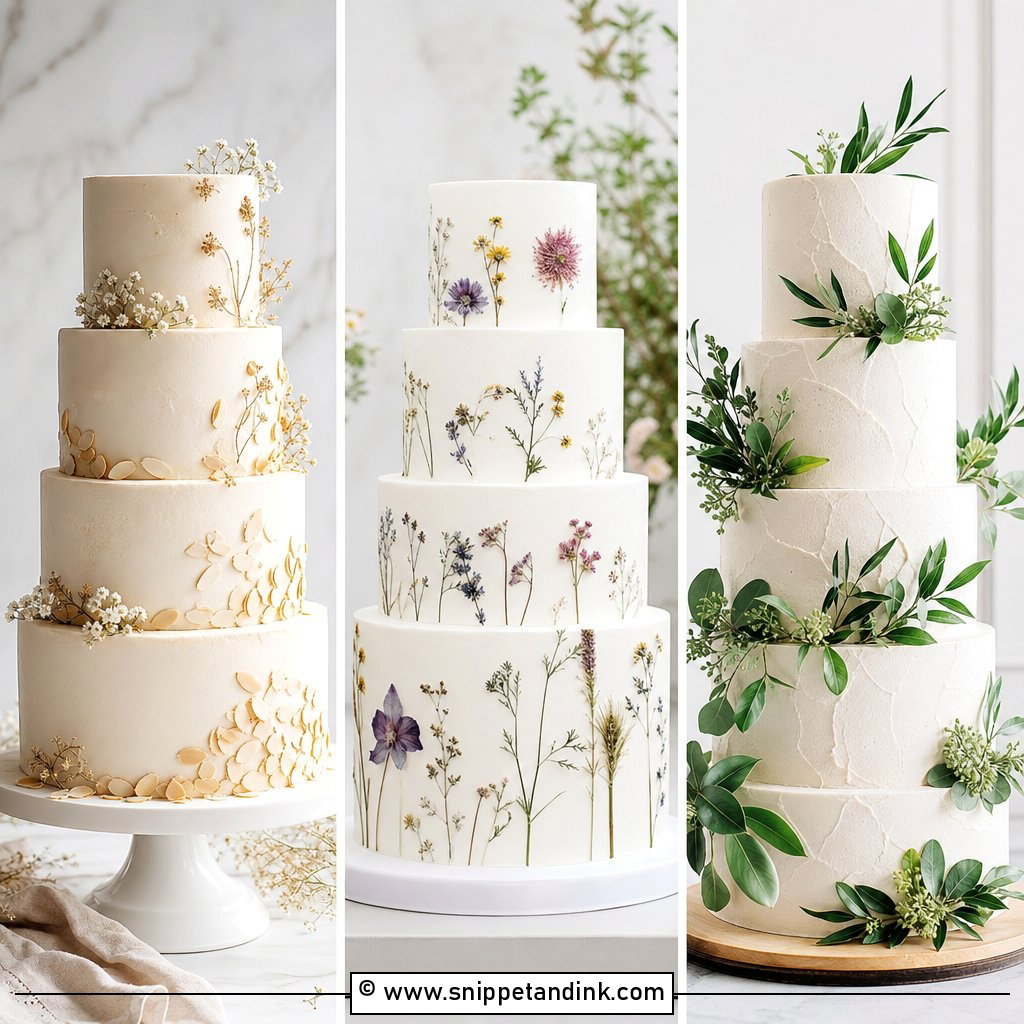
6. Single Tier Pressed Flower Wedding Cake
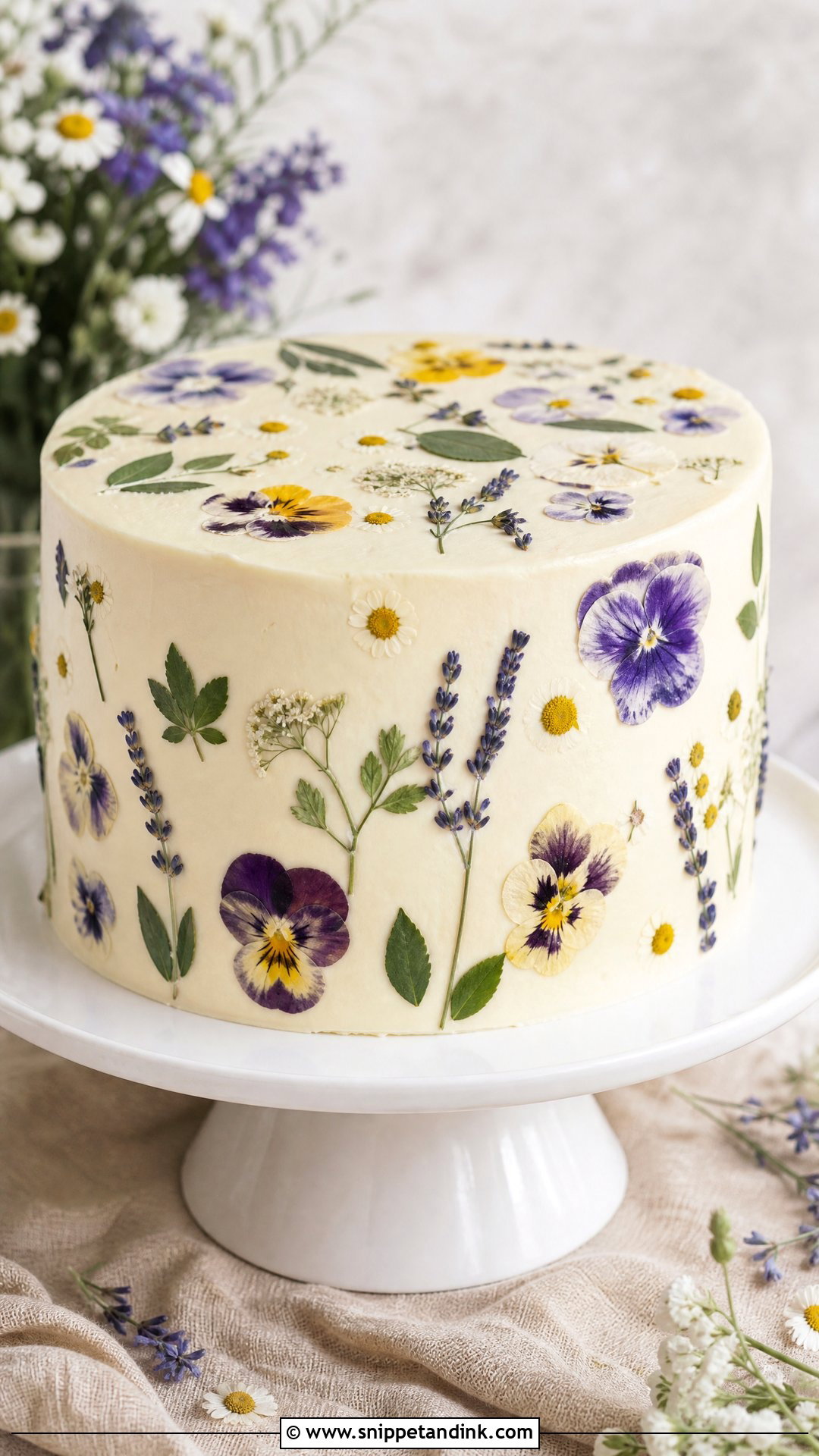
Edible pressed flowers need lead time, since violas, cornflowers and small leaves are pressed and dried for a week or more before I can use them. The base matters as well: smooth white or ivory buttercream lets the thin petals show their veins. I’ll either wrap them around the sides as a botanical band or float a few across the front. Elderflower, lemon and berry flavours suit the garden mood. Skip a big topper; the flowers are already the decoration.
7. Single Tier Minimalist Wedding Cake
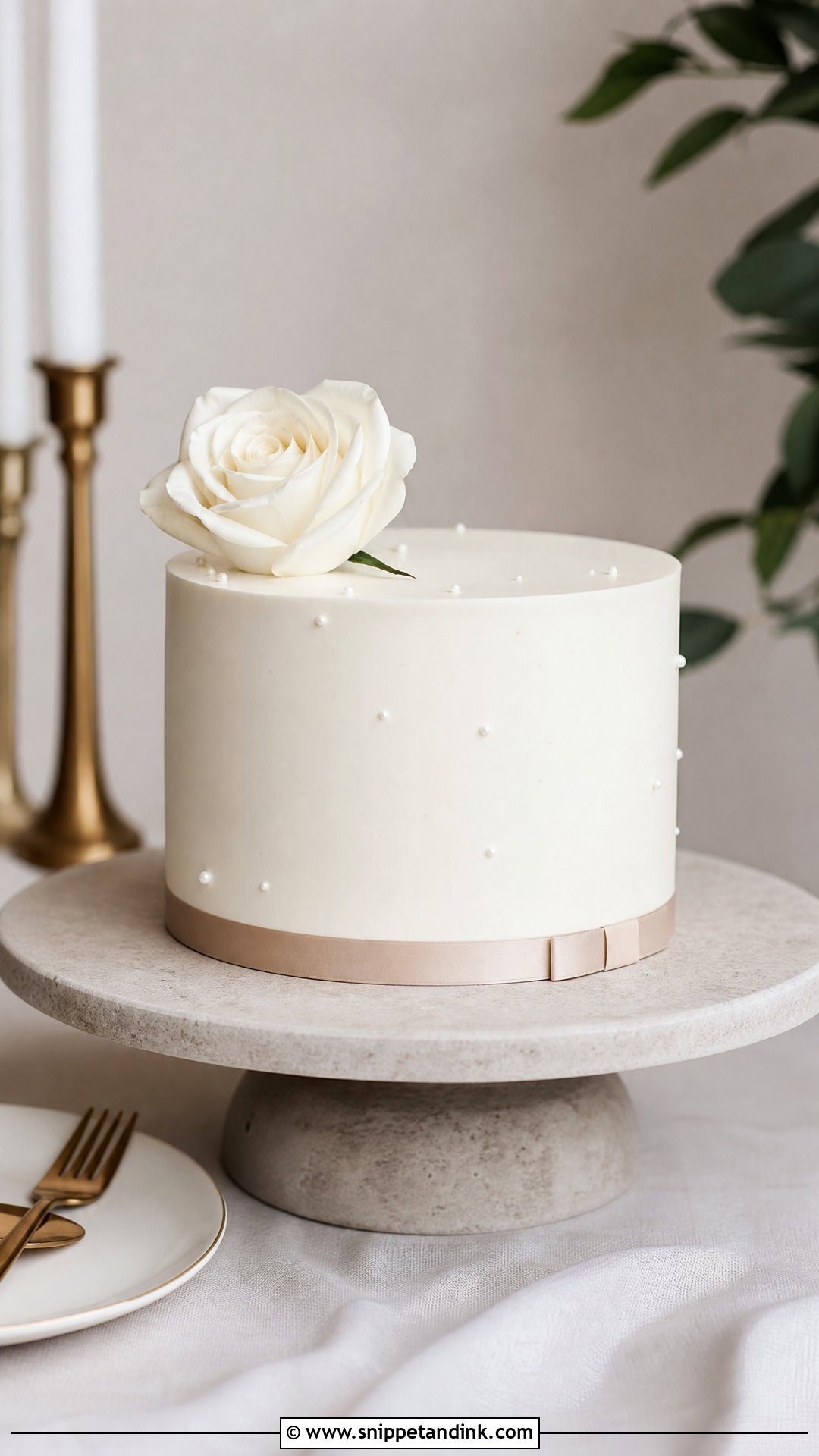
Minimal cakes look easy and are where I’m most careful, because there is nothing to distract from a dent or a smudged edge. One detail, chosen well: a single rose, a silk ribbon, a small monogram or a fine line of pearls. White, beige and soft grey all suit it. The stand matters more than usual here, as an empty-looking cake on a cheap board feels unfinished. A sleek pedestal fixes that. Courthouse lunches and private restaurant dinners are where I see this one most.
8. Single Tier Rustic Wedding Cake
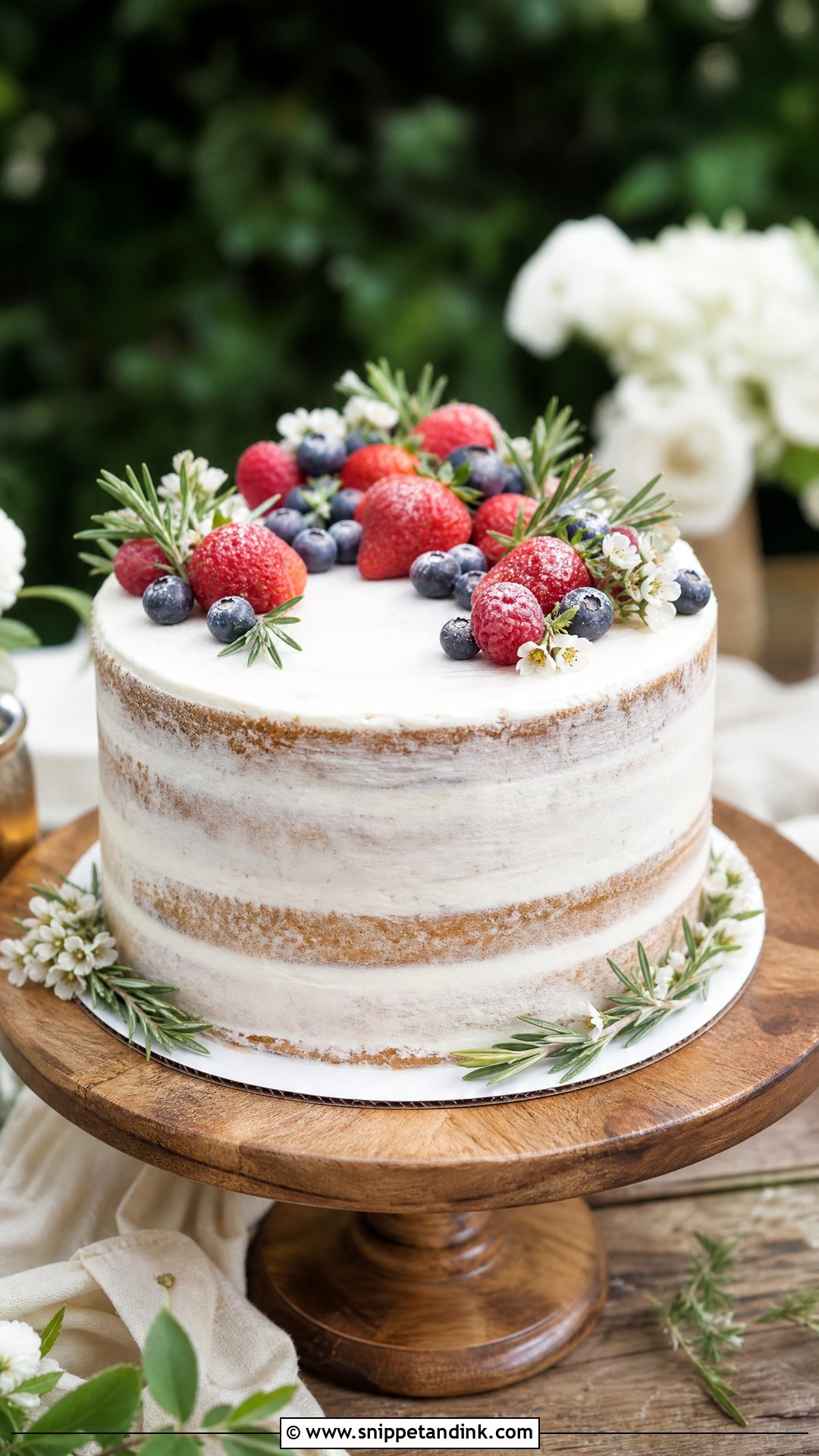
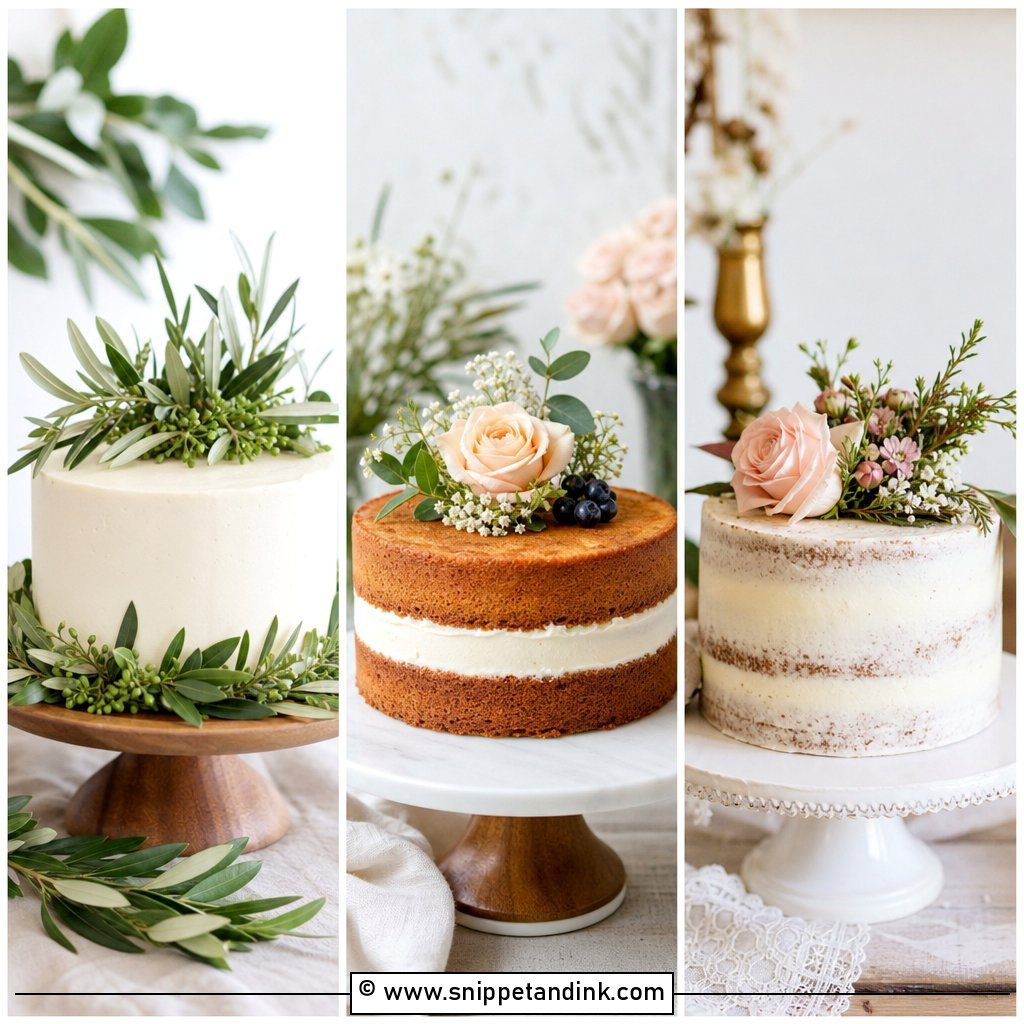
A single tier rustic wedding cake usually wears textured ridges or a semi-naked scrape where the sponge peeks through. That second finish needs the cake to be served the same day, because exposed edges dry quickly. Berries, herbs and small flowers keep it natural; a wooden stand or linen-covered table does the rest. Carrot, honey and spice sponges feel right in a barn or woodland setting. The line between relaxed and messy is thin, so I still level every layer and keep the top edge tidy.
9. Single Tier Square Wedding Cake
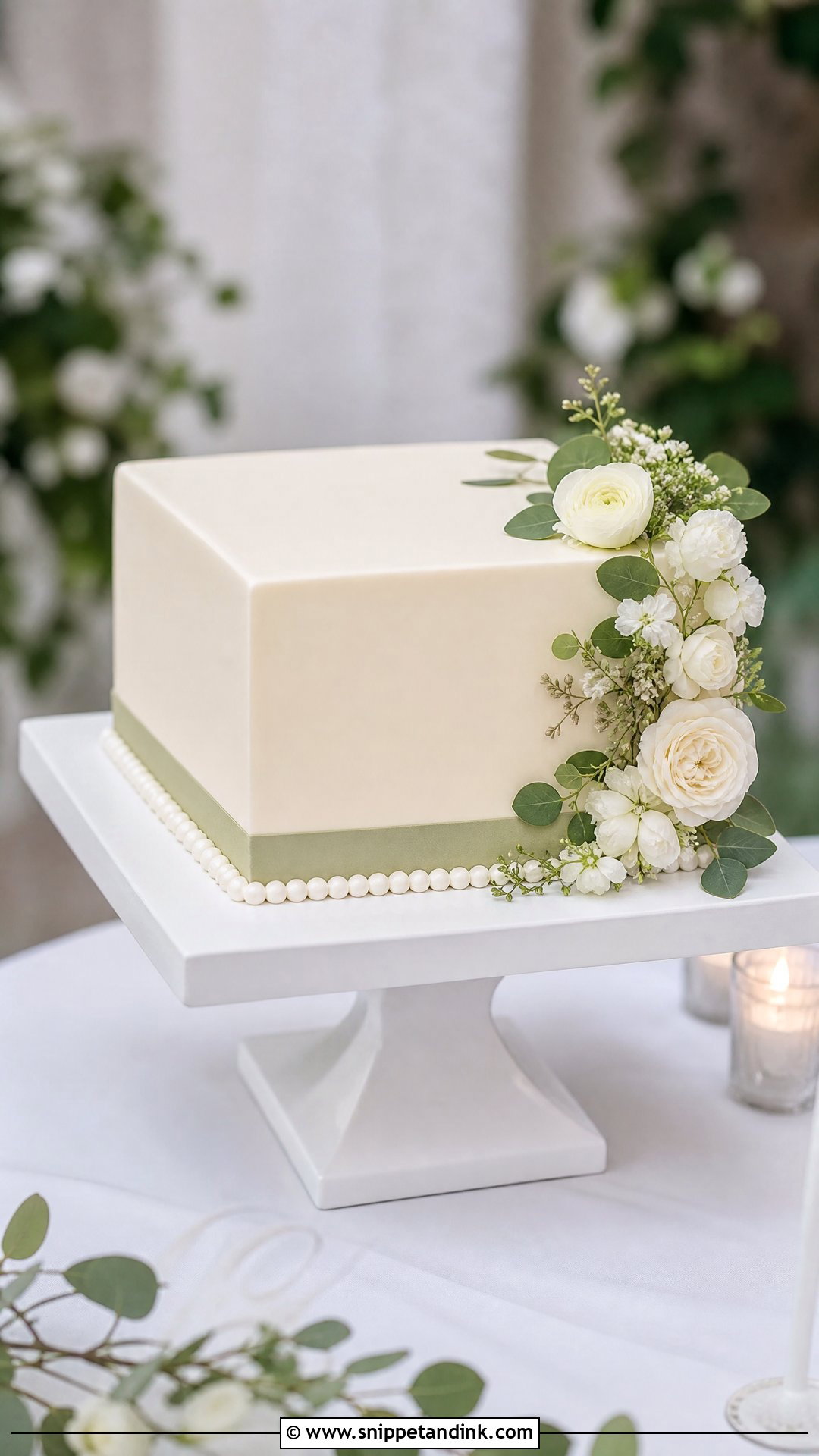
A single tier square wedding cake is all about its corners, and those are the hardest part to finish. I use fondant or very cold, firm buttercream so they stay sharp. Square tiers give slightly more slices than a round of the same width, which helps on a small budget. Soften the shape with one floral cluster, a ribbon or a line of abstract piping. Sage and champagne look smart on it. Gallery venues and city weddings suit the structured outline.
10. Single Tier Oval Wedding Cake
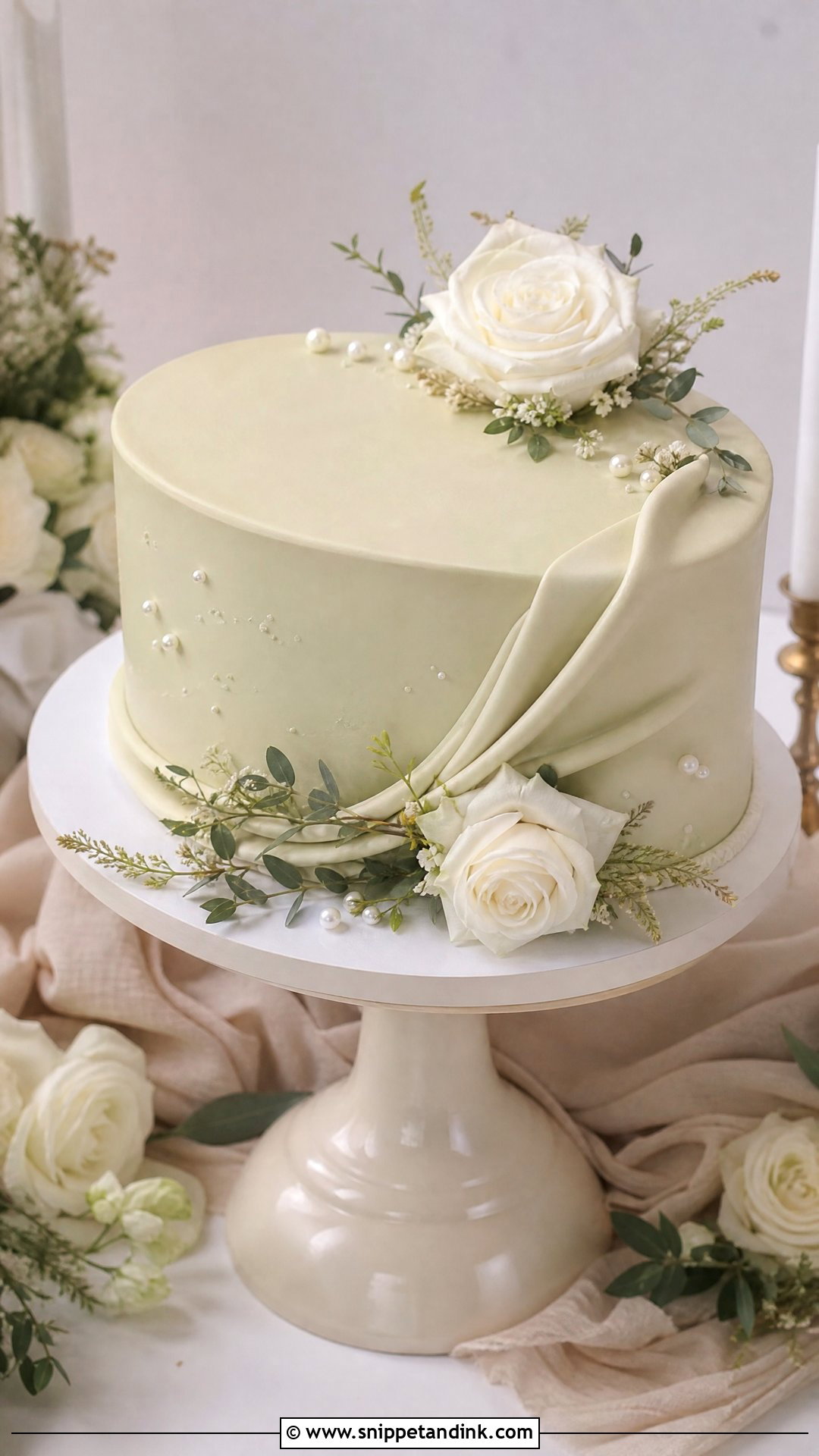
Ovals are my favourite unusual shape, though they are less common, so not every baker has the tins and boards on hand. Ask early. From the front, the long curve looks graceful and gives a wider face for photos than a round of the same serving size. Flowers placed along one side, following the curve, look best. Smooth buttercream or draped fondant both work. Pistachio and almond suit the slightly fashion-forward feel of it.
11. Single Tier Heart Wedding Cake
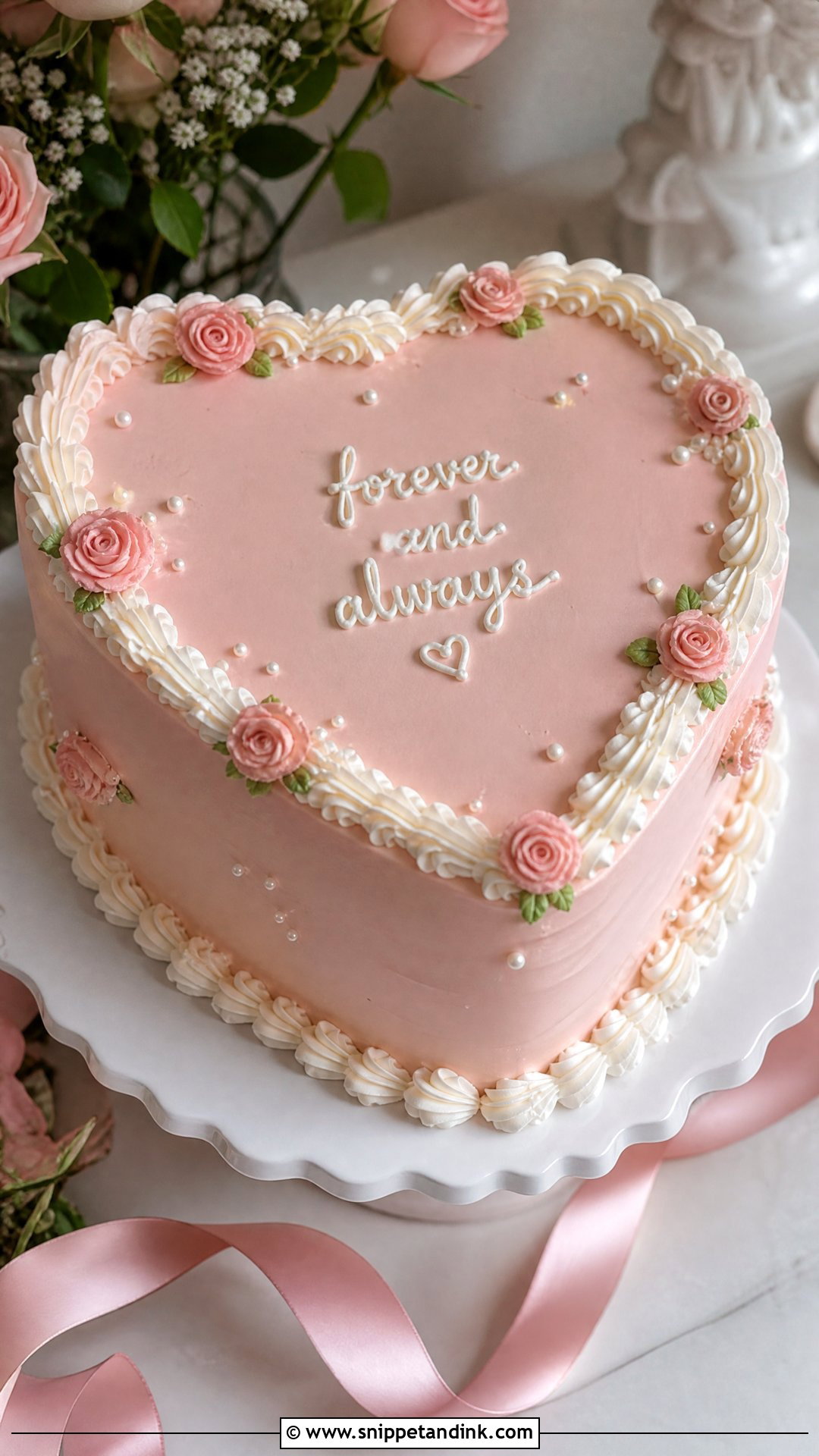
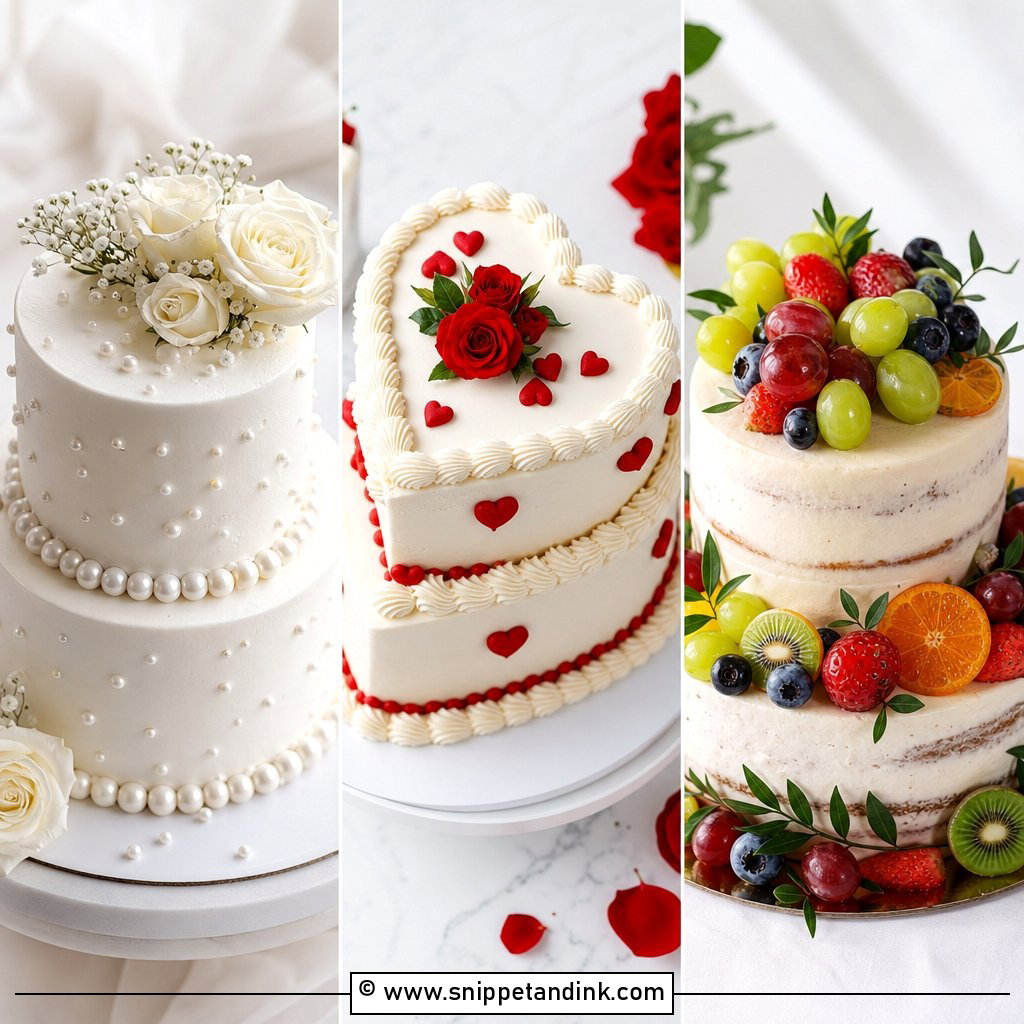
A heart needs very little help. White or blush buttercream with vintage piping traced round the outline goes romantic; smooth ivory with a scatter of pearls goes modern. A short message, a few tiny flowers or a ribbon bow adds something personal. Hearts are carved or baked in a heart tin, and I prefer the tin because the dip at the top stays crisp. Strawberry and raspberry fillings suit the shape, and it is the one I’m asked for most for elopements.
12. Single Tier Chocolate Wedding Cake
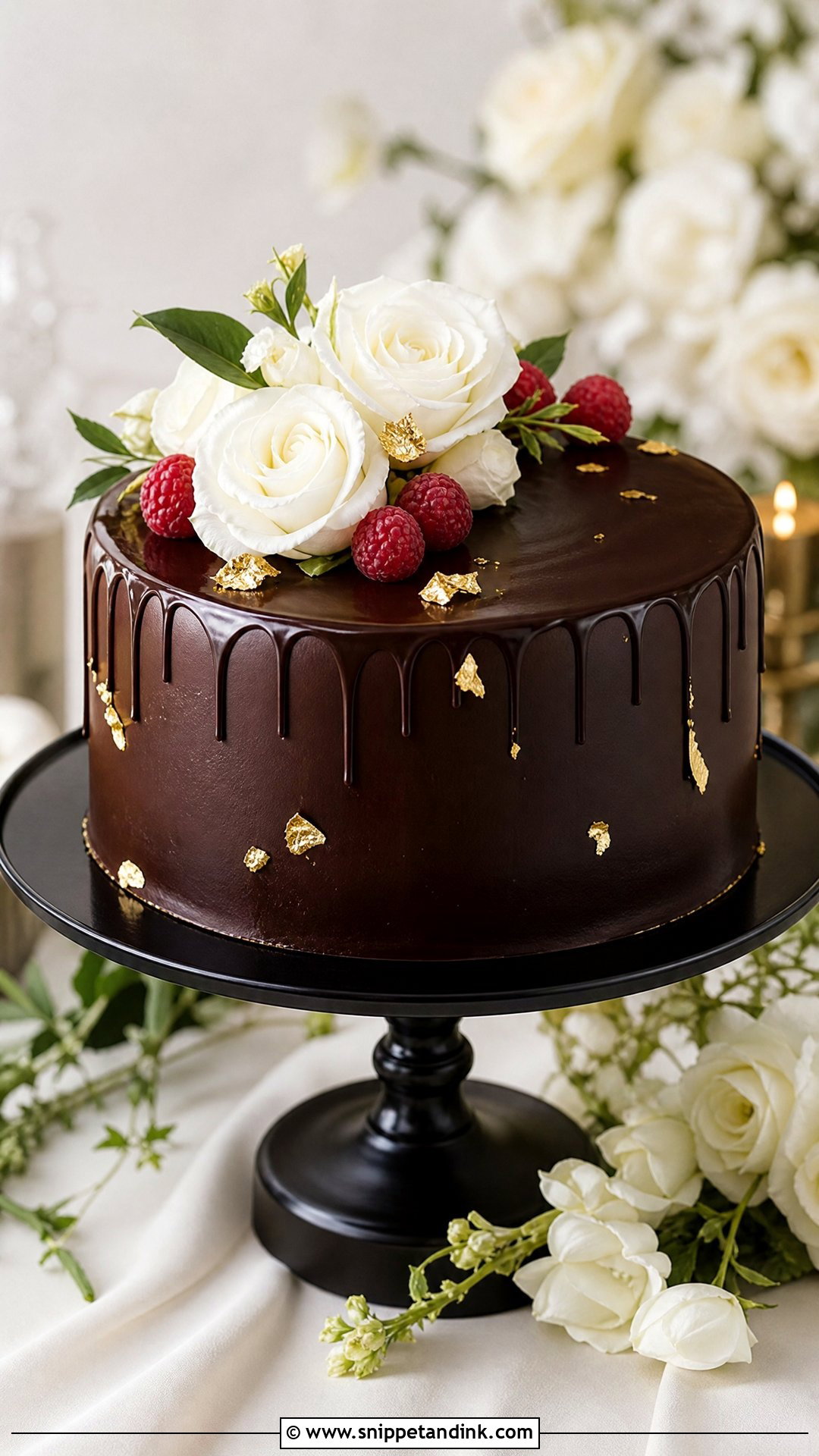
A single tier chocolate wedding cake covered in dark ganache is one of the more practical choices on this list. Ganache sets firm and copes with a warm room better than buttercream, and it takes a glossy or smooth finish well. It does show fingerprints, so I box it carefully and ask that nobody adjusts it by hand at the venue. White flowers, gold leaf or raspberries against the dark surface give strong contrast. Espresso, salted caramel and hazelnut fillings all pair well, and it suits a moody autumn evening.
13. Single Tier Lemon Wedding Cake
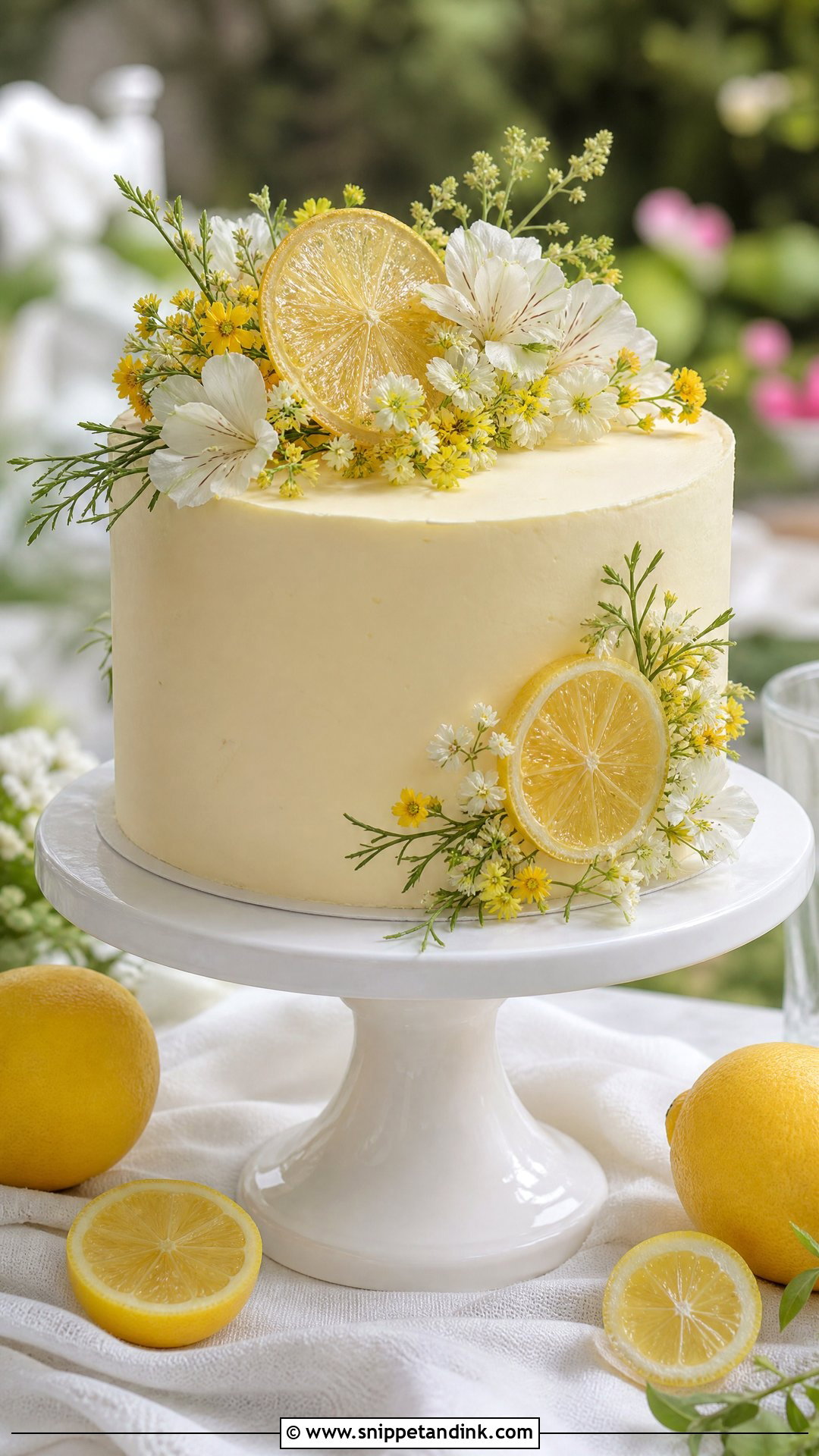
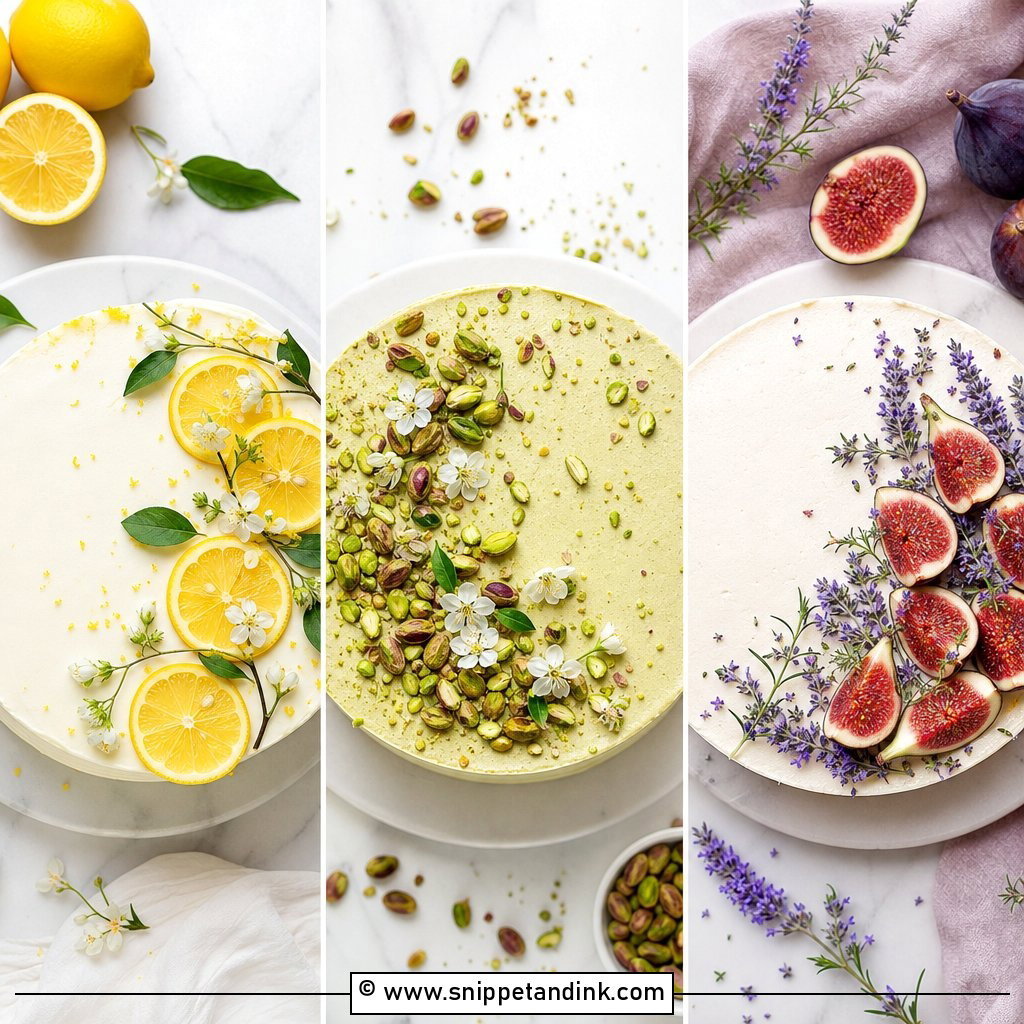
Lemon is light enough to enjoy after a full dinner. Pale yellow sponge with lemon curd filling and a soft buttercream is a sunny combination, and I keep the outside ivory with candied lemon slices or a few small yellow flowers. Candied slices hold their shape on a cake far better than fresh ones, which weep. For a quieter look, white flowers and greenery instead. Blueberry, elderflower and cream cheese frosting all pair well with lemon.
14. Single Tier Berry Wedding Cake
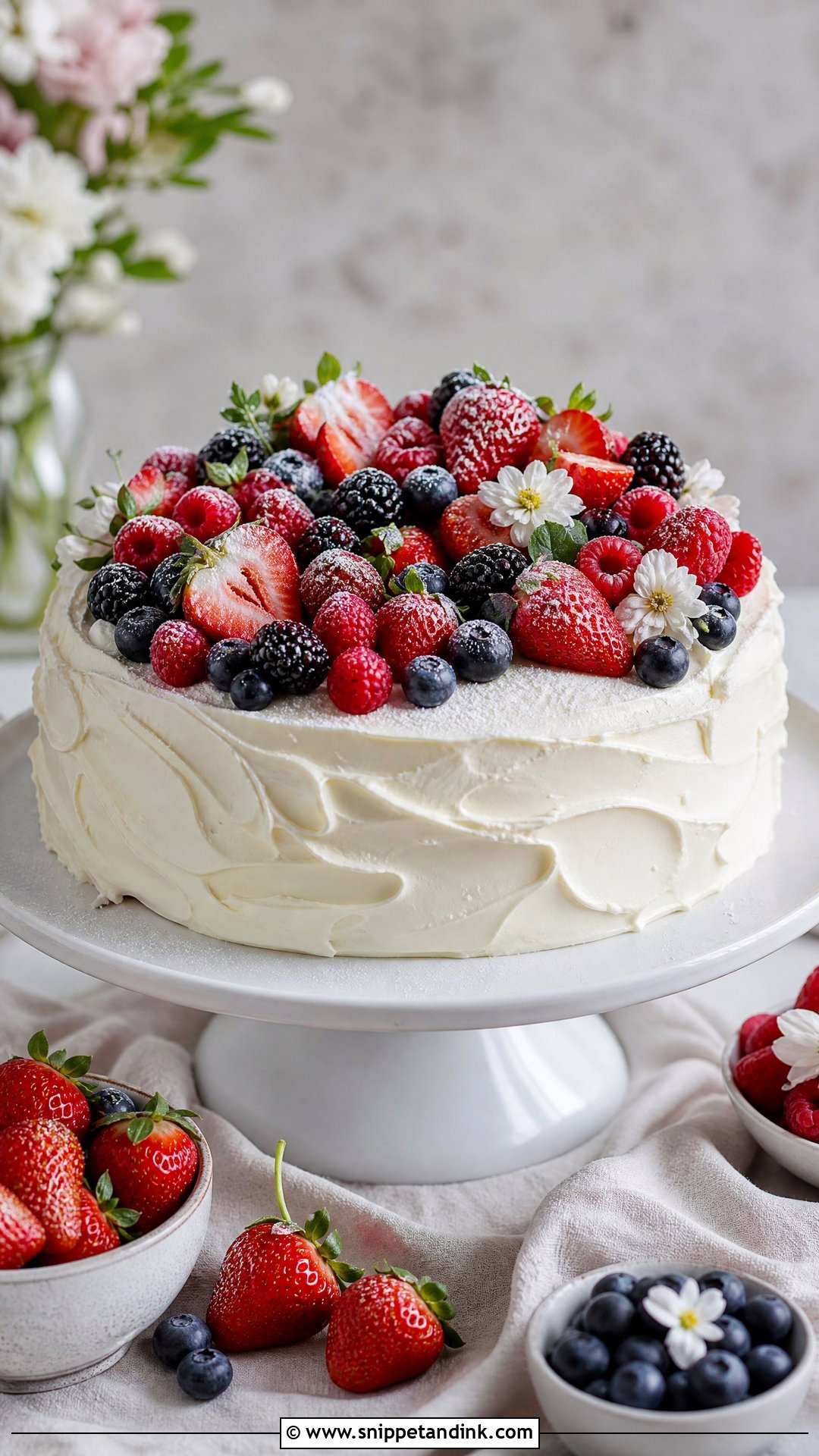
Berries make a small cake look generous for very little money. A loose mound on top or a ring around the base, over white buttercream so the colours stay bright. Whipped frosting looks pretty but softens quickly in summer heat, so for an outdoor reception I’d stick with buttercream. I dry every berry thoroughly before it goes on; water marks on frosting are the usual giveaway of a rushed job. A light dusting of icing sugar or a few tiny flowers finishes it.

15. Single Tier Carrot Wedding Cake
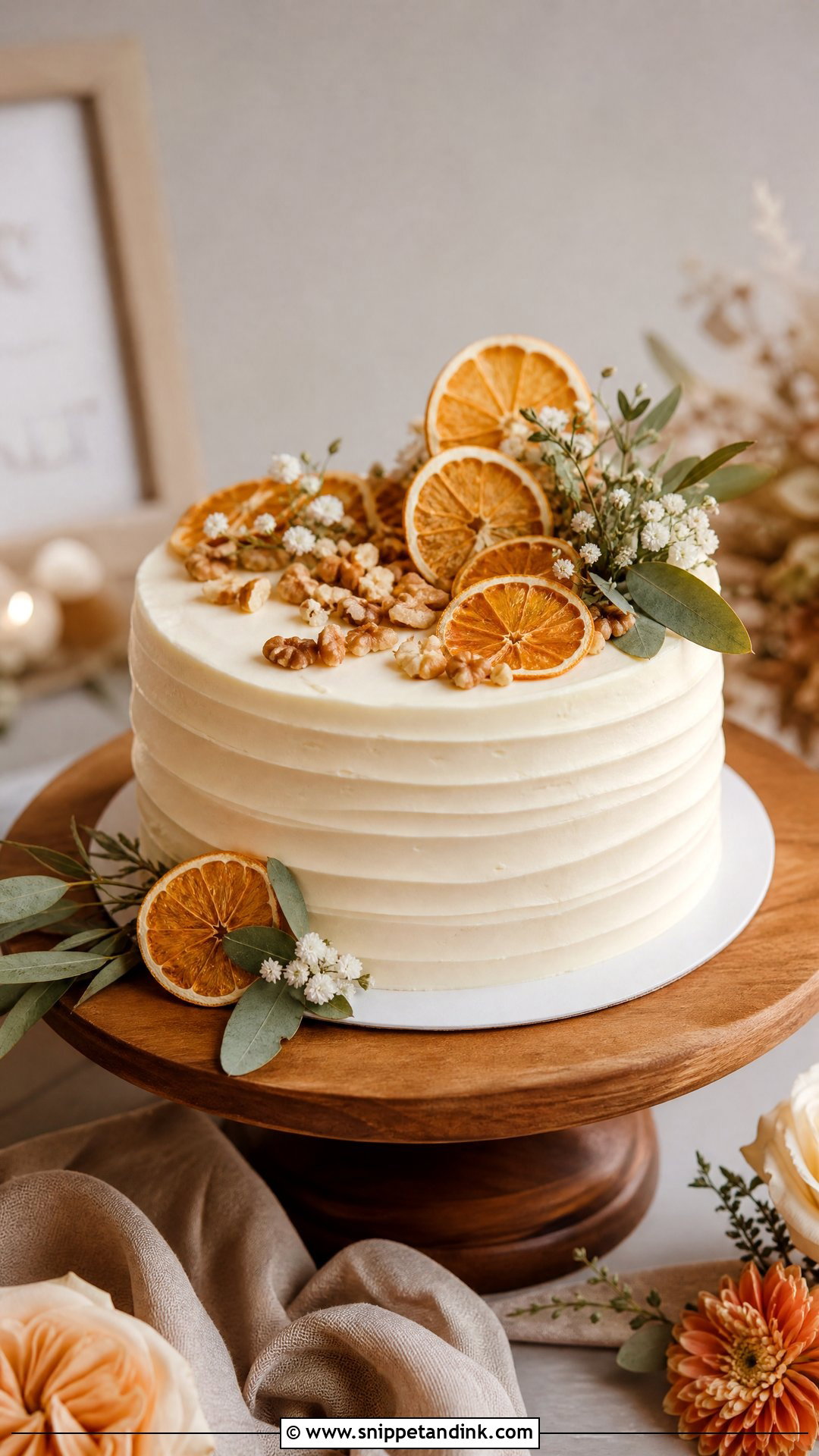
Carrot cake is the flavour I suggest to couples who care more about the slice than the spectacle. The spiced, moist crumb is lovely, but traditional cream cheese frosting is soft and needs to stay cool, so for a wedding I make a firmer cream cheese buttercream that can sit out for a few hours. Finish it smooth or lightly textured, with walnuts, dried orange slices or a few sugar flowers. Keep the outside tidy and it still reads as a wedding cake, even in a backyard in October.
16. Single Tier Red Velvet Wedding Cake
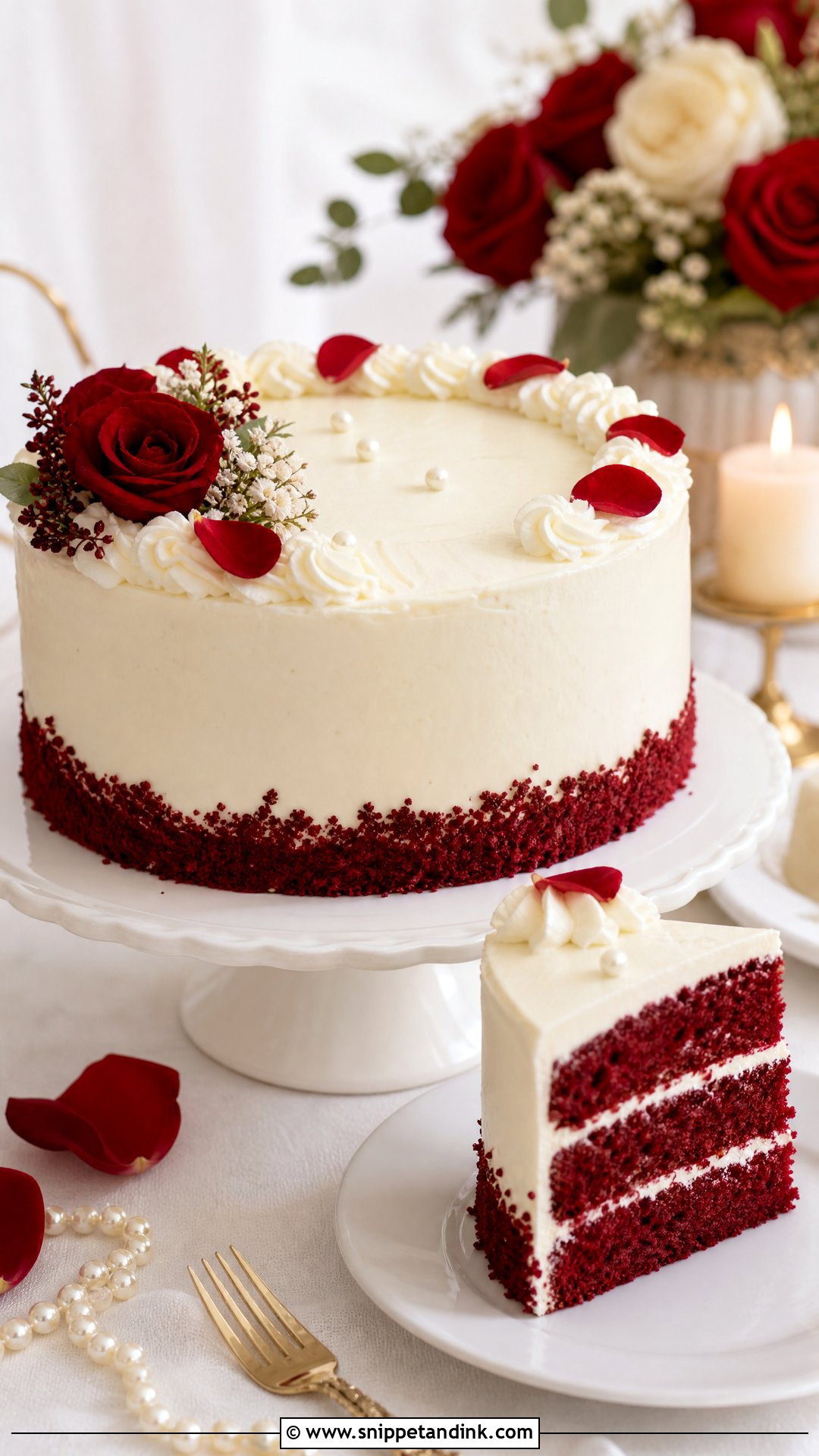
Red velvet looks plain outside and surprises everyone at the first cut. The challenge for me is crumbs: red crumbs stain white frosting, so a thorough crumb coat and a chill before the final layer is essential. Cream cheese buttercream is the traditional partner. Decorate with white piping, pearls or a single floral cluster and keep it restrained, so the colour inside stays the reveal. It suits a formal winter wedding that wants to avoid looking festive.
17. Single Tier Marble Wedding Cake
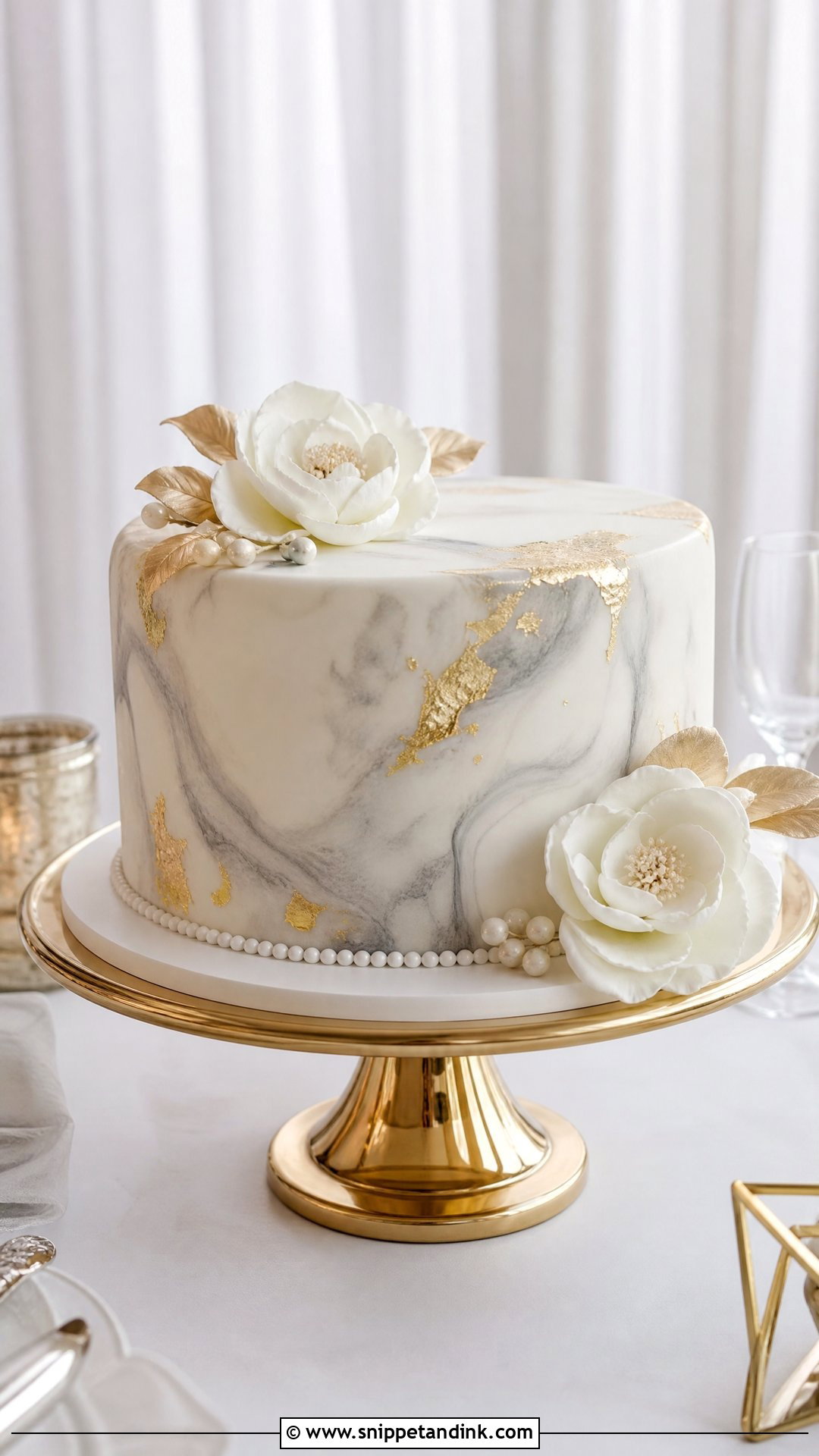
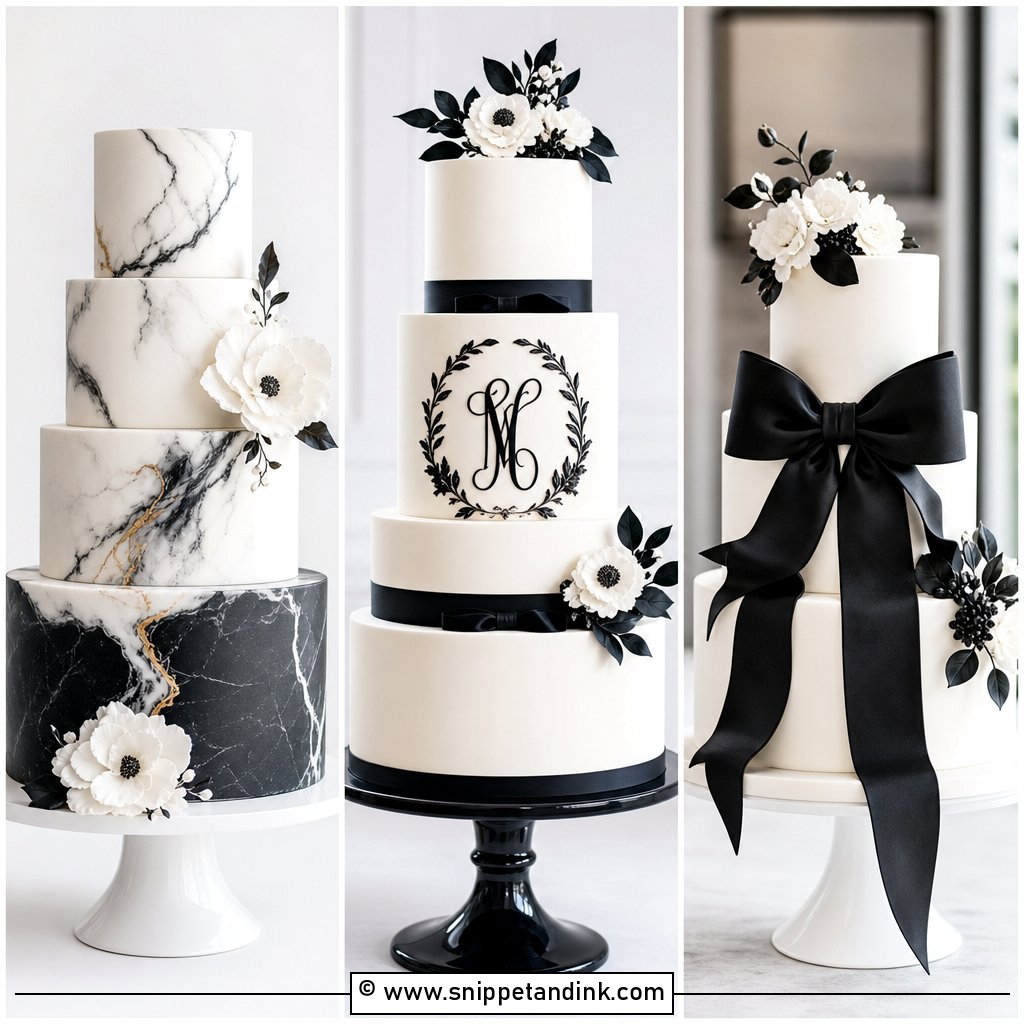
A single tier marble wedding cake in fondant is made by twisting a little coloured paste through white and rolling it out before it fully mixes, which gives those natural-looking veins. Buttercream can marble too, with a softer and less stone-like result. Grey and ivory look like real stone; blush and pale blue feel lighter. One orchid or a touch of gold leaf is enough. Museum and hotel venues suit it well.
18. Single Tier Watercolor Wedding Cake
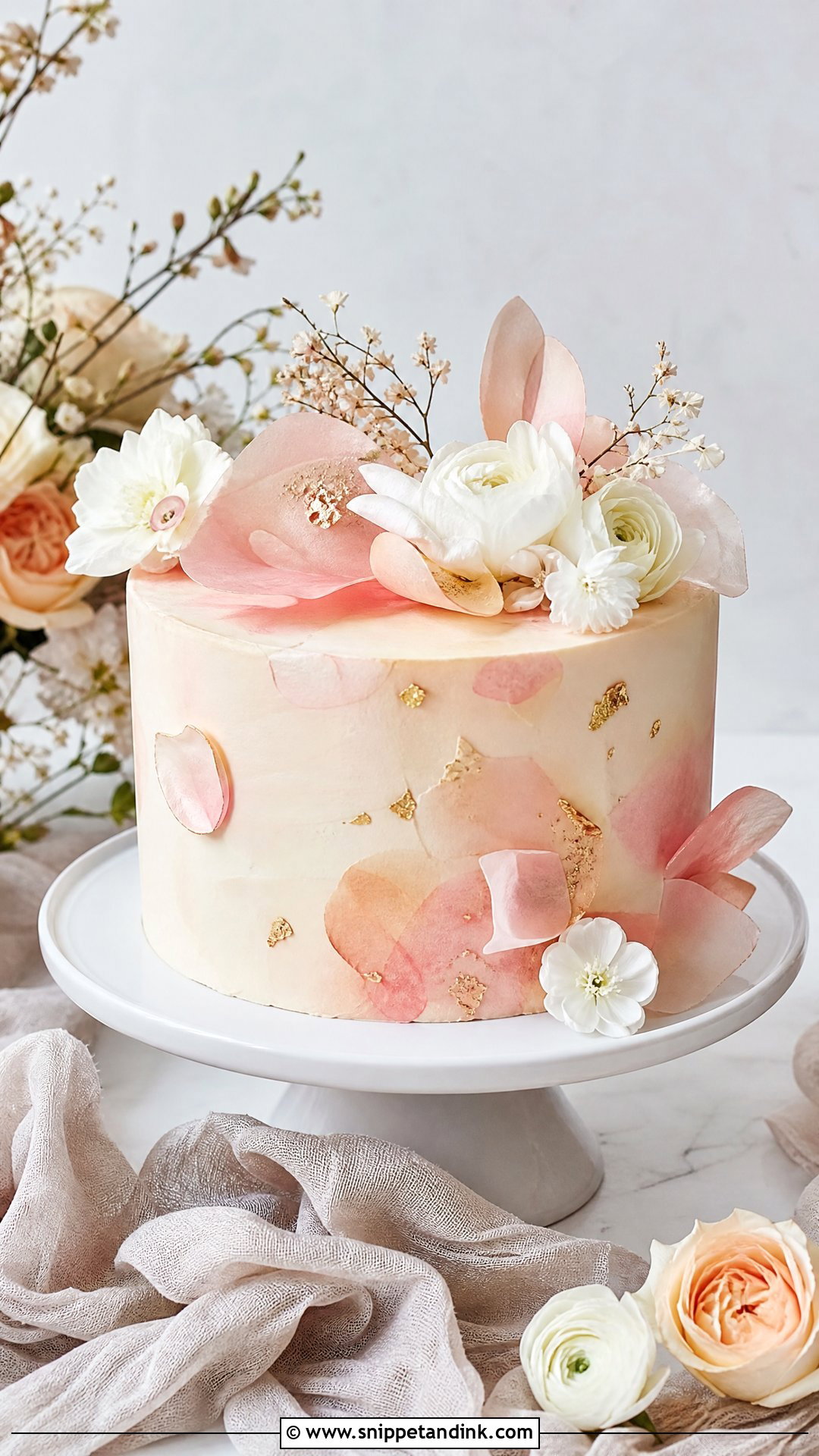
For watercolour finishes, the colour should fade, not stripe. I spread two or three shades on a cold crumb coat and blend them with one pass of the scraper, stopping before they turn muddy. Wafer paper petals look delicate on top, but wafer paper softens and curls in humid air, so on a beach or in a damp tent I’d use fresh flowers or sugar ones instead. Blush, peach and lavender are popular shades. A plain stand keeps attention on the colour.
19. Single Tier Bow Wedding Cake
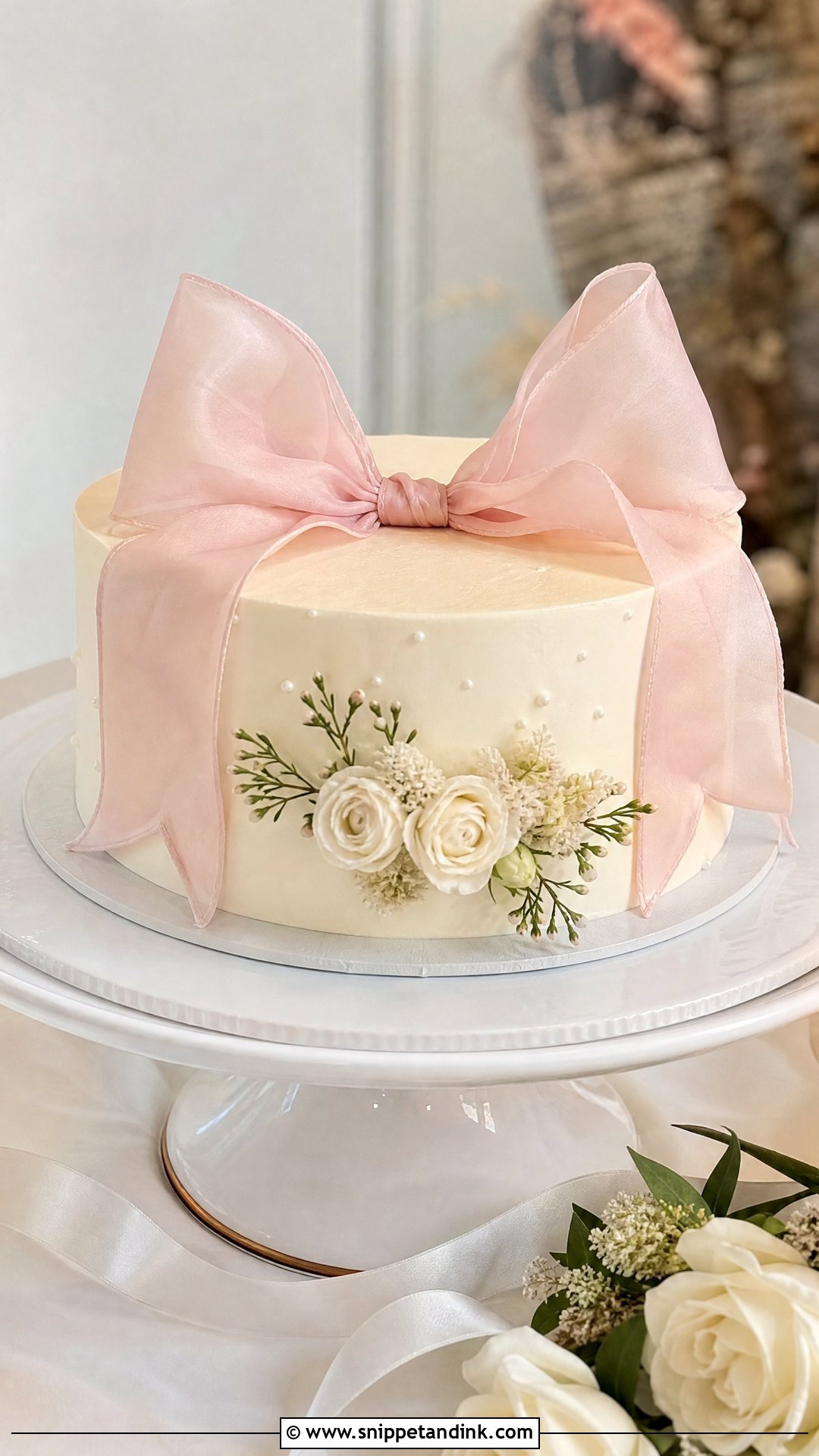
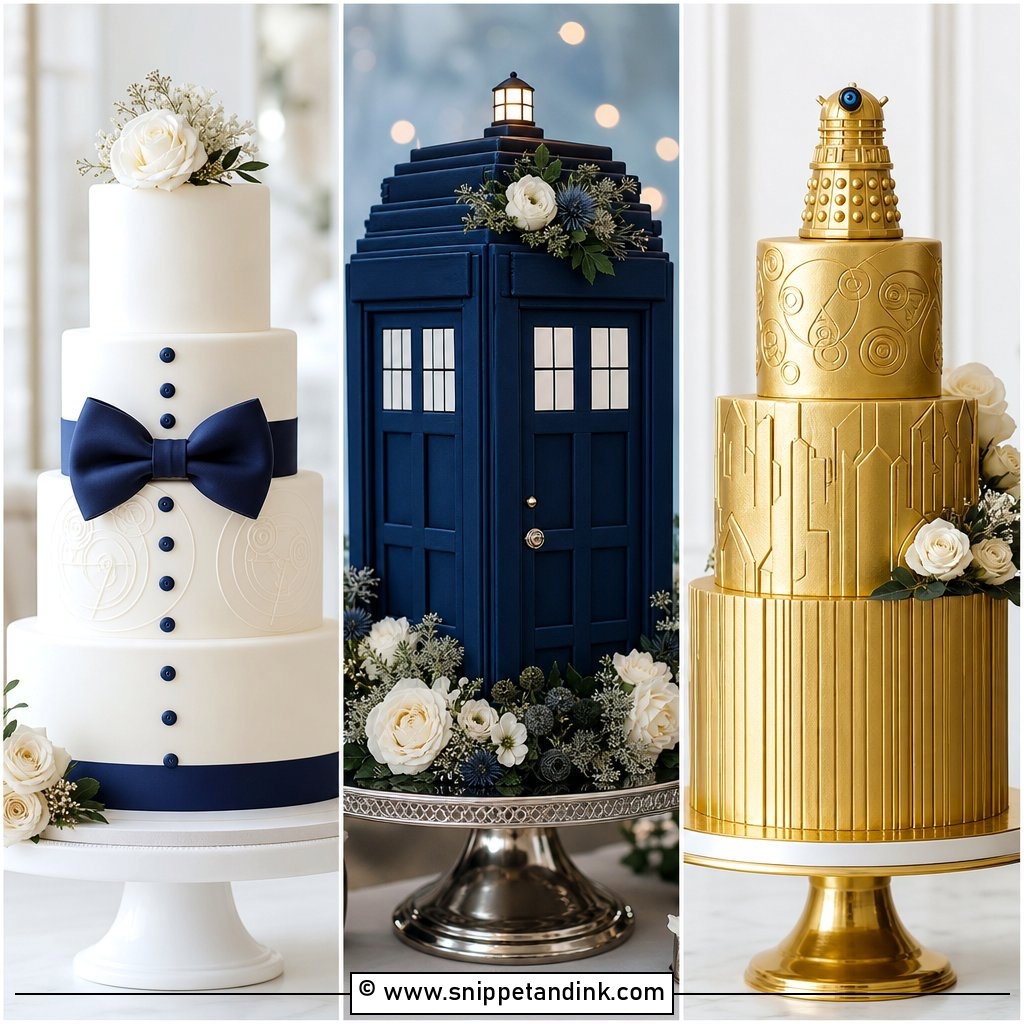
Bows are everywhere at the moment, and the material changes the mood. A thin silk ribbon tied around the base looks classic; a big sculpted fondant bow on the front looks editorial. Fondant and gum paste loops dry stiff and keep their shape; buttercream bows are softer and better for a cool room. Wafer paper bows look airy but dislike humidity. Ivory, blush or champagne keep it bridal. Strawberry or champagne sponge fits the feminine style.

20. Single Tier Orchid Wedding Cake
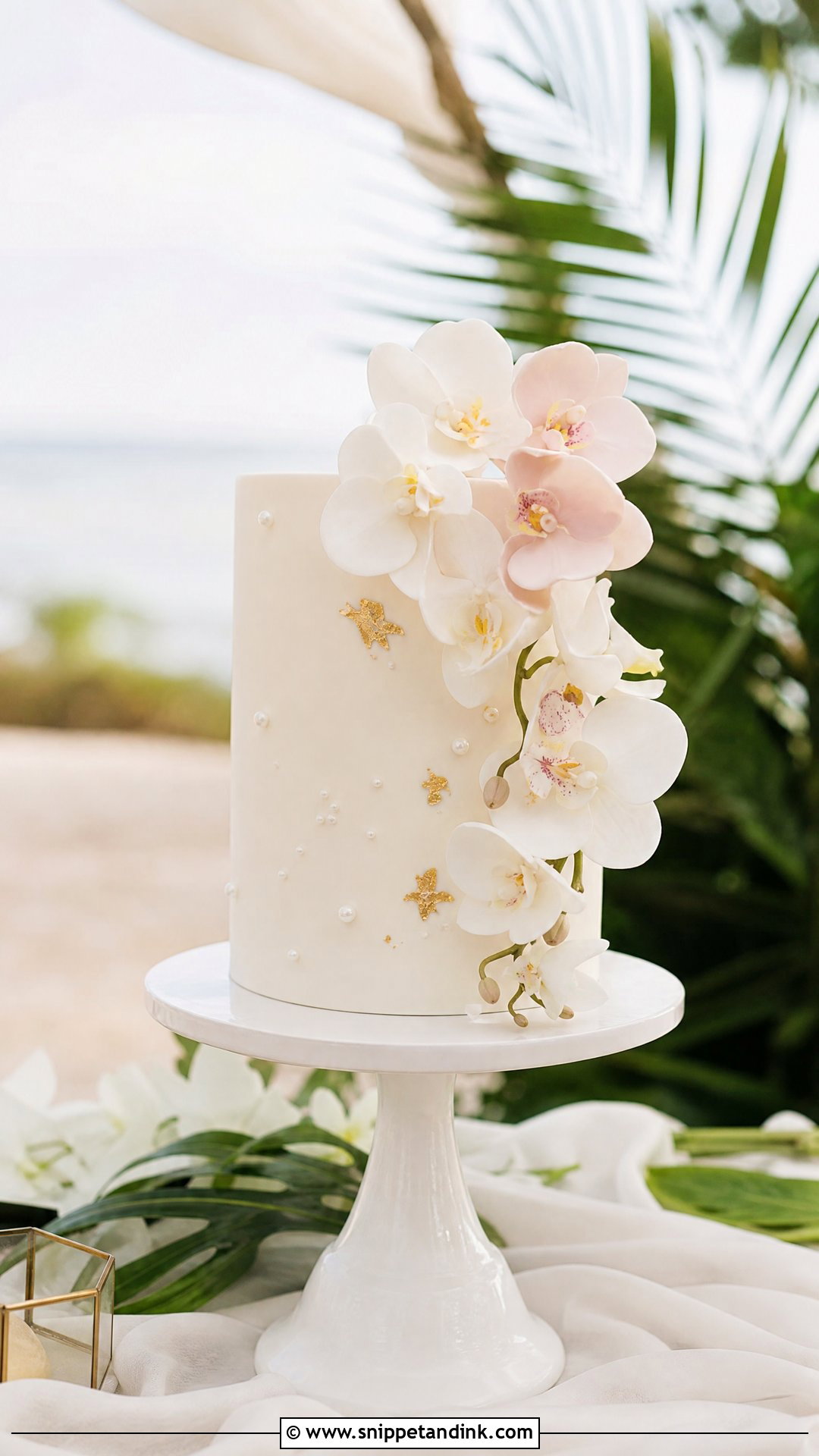
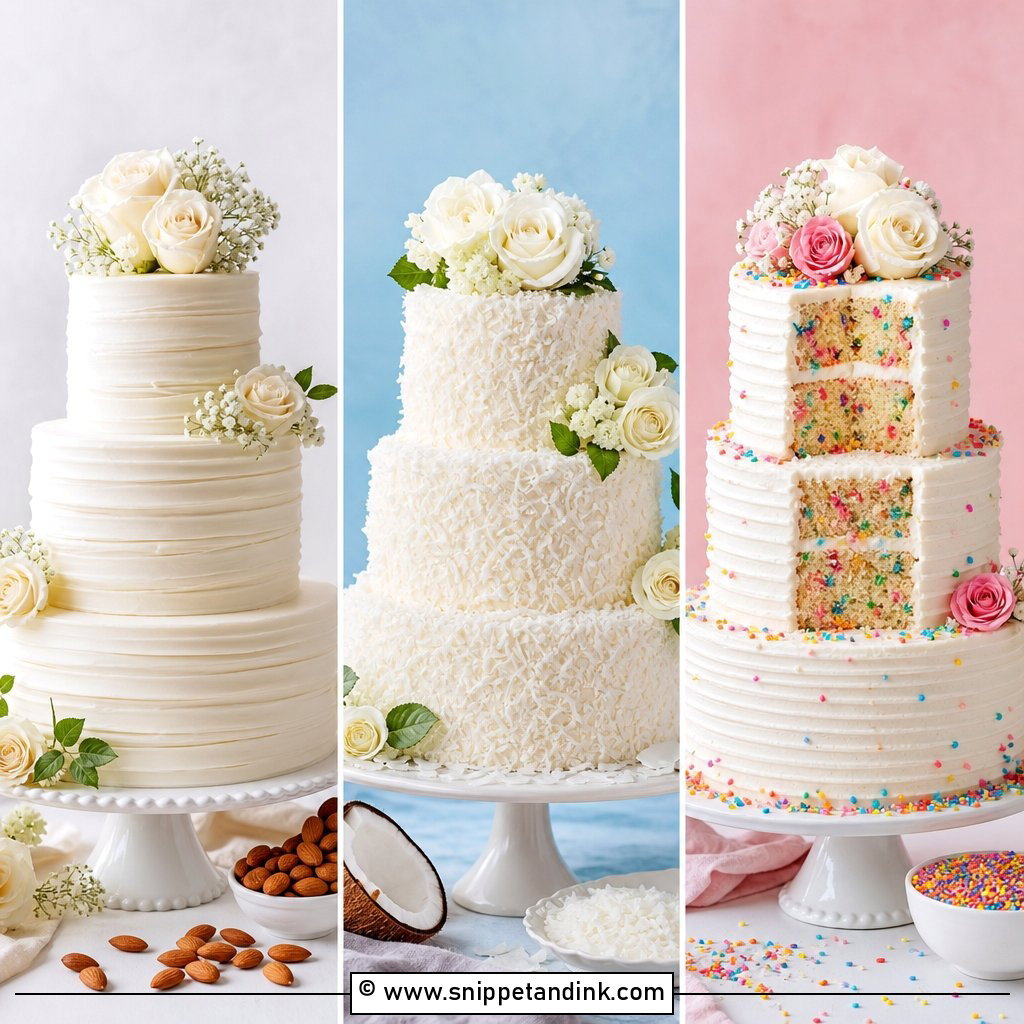
A single tier orchid wedding cake works because orchids are sculptural; one or two sprays look complete. Phalaenopsis is the usual choice, and the stems are wrapped and inserted into a pick or straw before they go anywhere near the cake. They come off before serving, as they are decoration rather than food. White orchids read classic and pale purple more modern. A tall tier adds drama. Coconut, passion fruit and white chocolate flavours suit a destination wedding.
A Working Timeline From First Enquiry to Cake Table
Small cakes are quick to bake, but good bakers book out, and some of these finishes need days of preparation. This is roughly how I’d like a couple to plan with me.
- Four to six months out: enquire and book. Spring and early autumn Saturdays fill first, so earlier is safer then.
- Two to three months out: tasting and design. Bring your venue details, colours and a few reference photos.
- Four to six weeks out: confirm guest numbers, flavour and final design. Sugar flowers and pressed flowers are made around now.
- The week of the wedding: baking, filling and finishing happen over the last two or three days so the sponge is fresh.
- The day: delivery and setup, then the cake waits somewhere cool until it’s time to cut.
Saving a piece for your anniversary
If you want to freeze some for your first anniversary, take it before the cake is cut for guests. Remove any flowers, wires or fruit, chill the slice until firm, then wrap it tightly in several layers of cling film, put it in an airtight box and freeze. Buttercream, ganache and carrot cake with cream cheese frosting all freeze reasonably well; whipped cream and fresh fruit don’t. Honestly, a year is a long time in a freezer, so plenty of couples ask their baker to make a small fresh cake in the same flavour instead, and that tastes better.
Small Cake, Clear Idea, Good Slice
Every cake here works on one tier because nothing gets lost; the frosting, the flowers and the shape are all in plain view. What suits you depends on the venue, the guest count, your colours and how you want the dessert table to feel. For something simple, put your money into a clean finish and one decoration. For something bolder, pick an unusual shape, a deep colour or a dramatic flower placement. Then make sure it tastes as good as it looks, because a small cake gets eaten to the last crumb.
You'll Like These Ideas:






Leave a Reply