
On most wedding days I’m the person crouched behind the bride between portraits and the grand entrance, hooking her train up. So I’ve seen what a good bustle does and what a rushed one does. It decides how the gown looks for the whole reception, how freely you move, and whether your dance photos show a neat back or a dragging hem. The right type depends on train length, fabric weight, silhouette and the detail you want to protect; a lace fit-and-flare and a satin ball gown rarely want the same answer, and a cathedral train needs more support than either. Here are 25 bustle styles to talk through with your seamstress before the final fitting.
A Bustle Is Sewn Last, After the Hem Is Set
Brides often ask about the bustle at their first fitting. It almost always comes at the end, because the points are placed relative to the finished hem, and the hem can’t be set until the bodice and waist fit. Sew it too early and every later change throws the lift off.
- First fitting: bodice and side seams. Wear your real shoes and underwear.
- Middle fitting: hem length, then the seamstress pins bustle options so you can see two or three styles on your gown.
- Final fitting: the bustle is finished. Your helper attends, fastens it, and you walk, sit and dance a few steps in it.
Alteration prices vary a lot by region and shop, and a bustle is usually priced by the number of points and the fabric. A one-point bustle on crepe is a small job; a royal bustle on a beaded cathedral train is a long one. Ask for the bustle to be included in your alterations quote so it isn’t a surprise.
1. American Bustle Wedding Dress
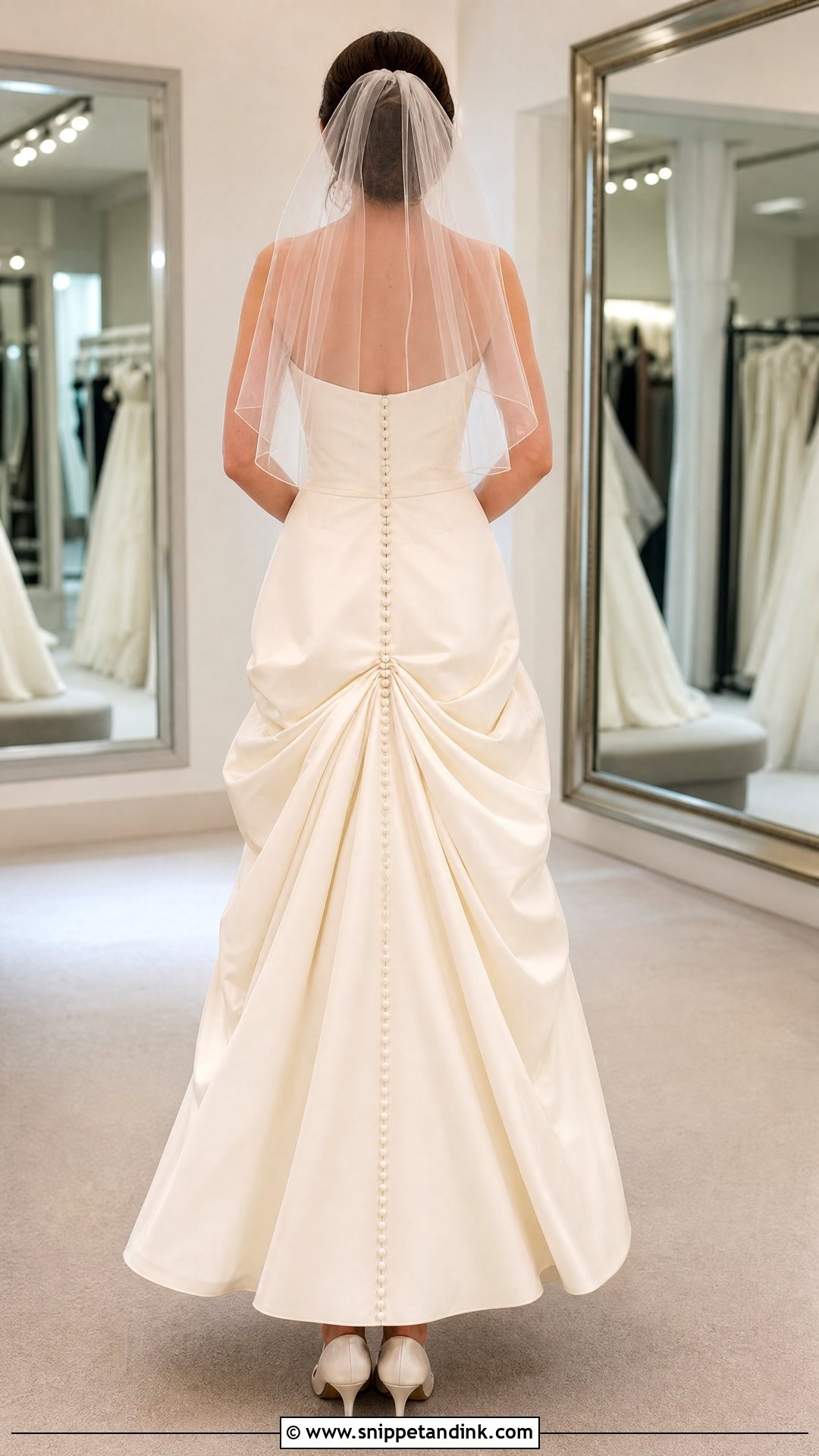
The American bustle lifts the train up and over the outside of the skirt, fastening with buttons, loops, hooks or hidden snaps near the waist or back seam. It’s the one I fasten most often, on A-lines, ball gowns and chapel trains. You get soft gathered folds on the outside, so some of the train still shows. On a heavy skirt, ask for several points rather than one so the weight is shared and nothing tears when you sit.
2. French Bustle Wedding Dress
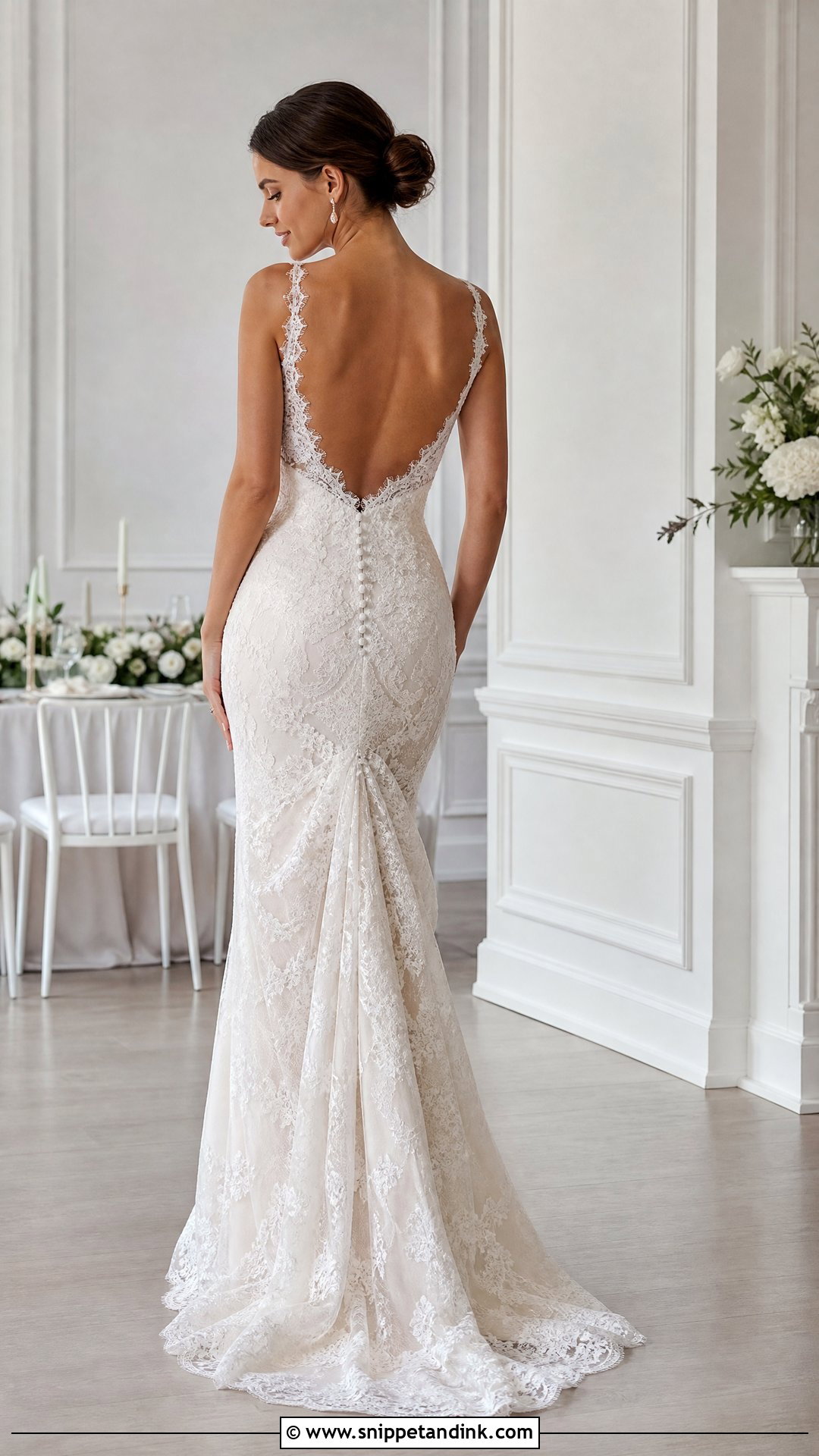
Here the train is tucked under the skirt and tied from the inside, so the outside stays smooth and lace or beading on the back remains visible. That’s why fitted gowns, trumpets and mermaids often get a French bustle. It leaves soft folds low on the back or at the hip. The catch: the ribbons are hidden and numbered, and fumbling under a skirt in a dim hallway is slow. Bring your helper to the final fitting to learn the order of ties.
3. Ballroom Bustle Wedding Dress
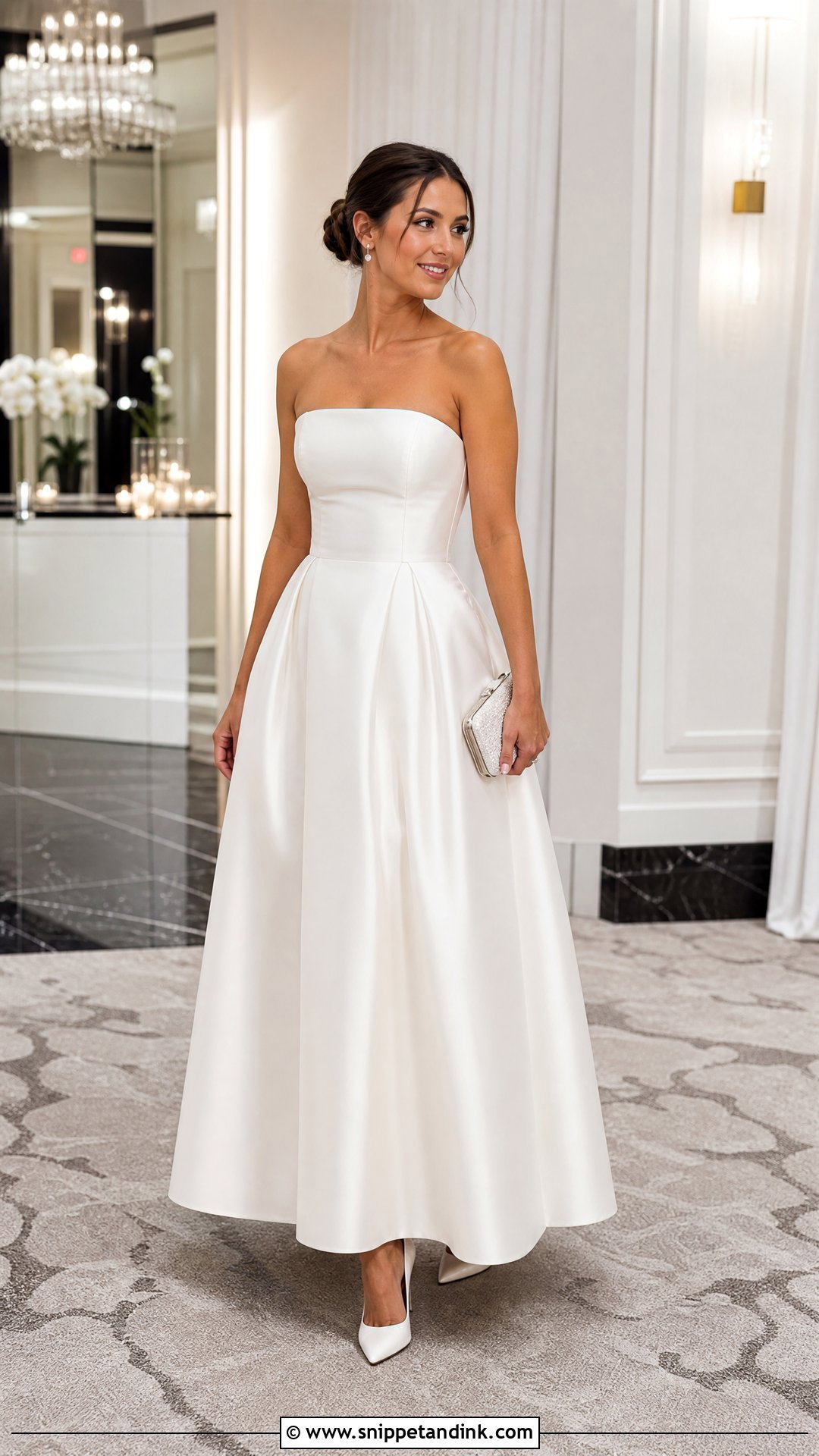
With a ballroom bustle the train nearly vanishes. It is tucked up and secured at several hidden points so the gown hangs close to floor length all the way round, which makes it the most dance-friendly option here. Balancing the hem so it doesn’t dip takes the seamstress real time, so expect it to cost more in alterations. Brides who want a clean reception silhouette tend to love it once it’s done.
4. Austrian Bustle Wedding Dress
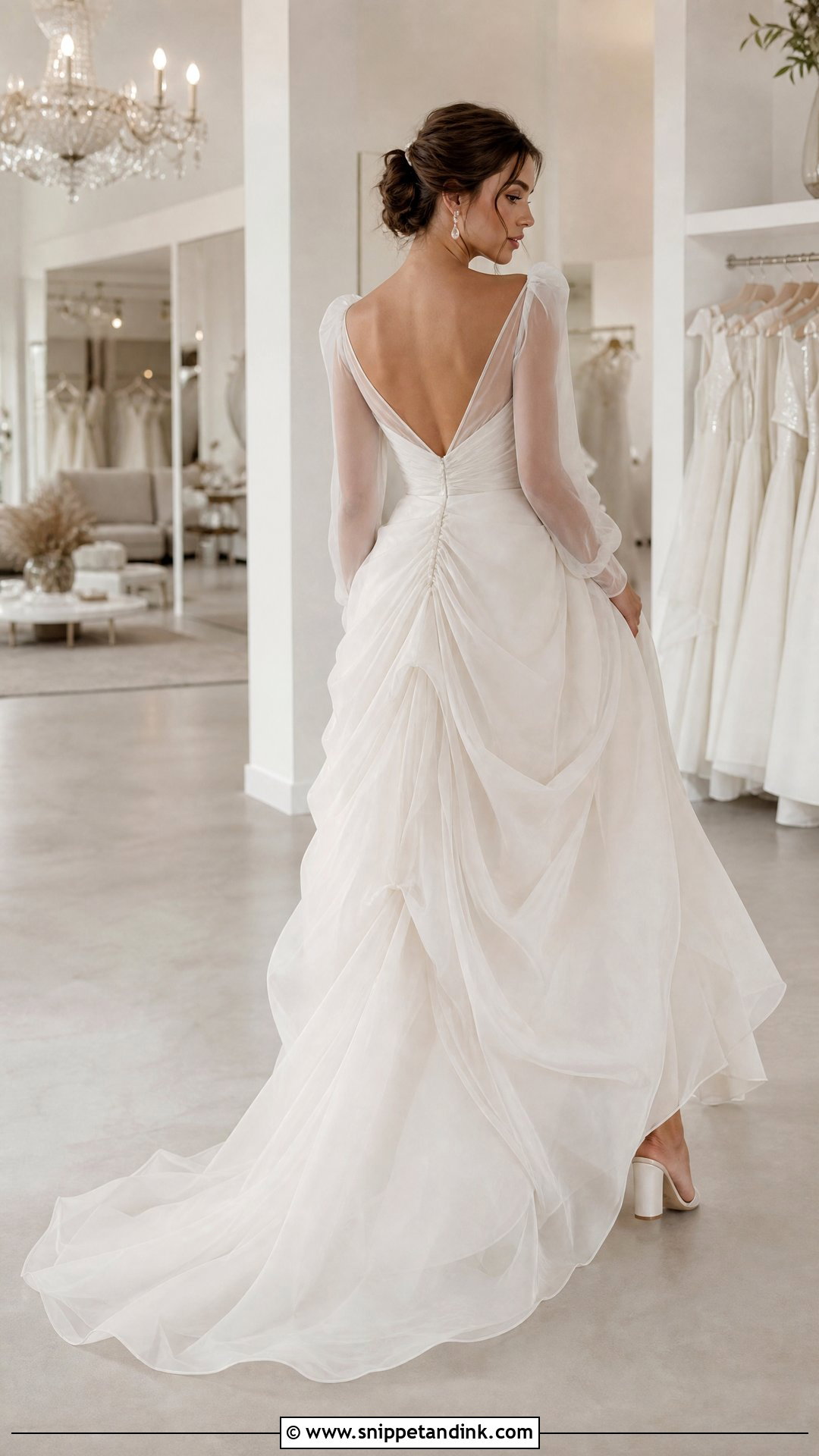
An Austrian bustle wedding dress uses a drawstring-style cord to gather the train upward into vertical ruching, a bit like a theatre curtain. Tulle, organza, chiffon and other soft layers gather into it nicely; heavy satin and brocade bunch up and look bulky, so I’d skip it there. Ask whether the ruching can follow the gown’s existing seams. It’s quick for a helper to pull up, which I appreciate on a tight timeline.
5. Royal Bustle Wedding Dress
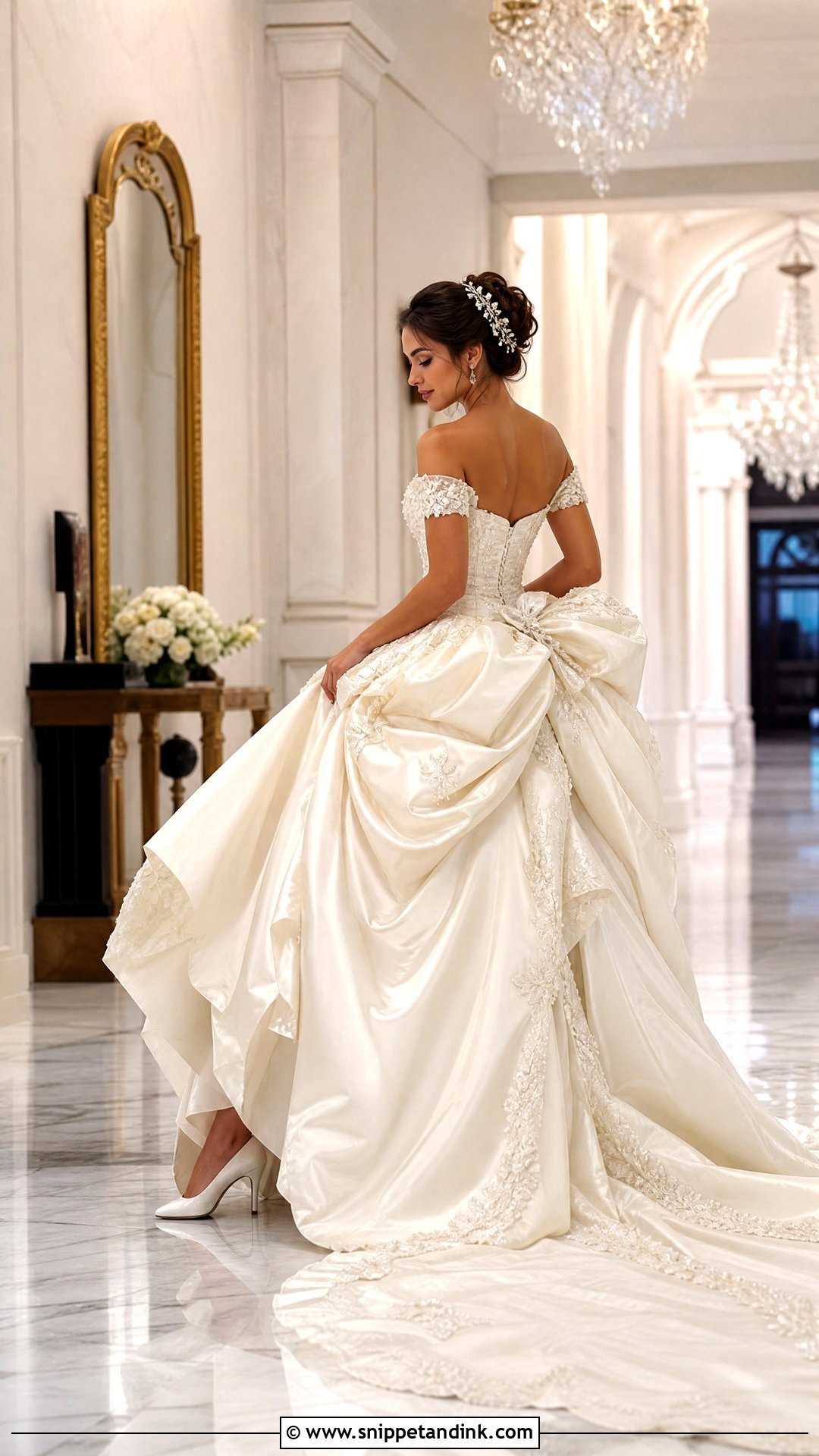
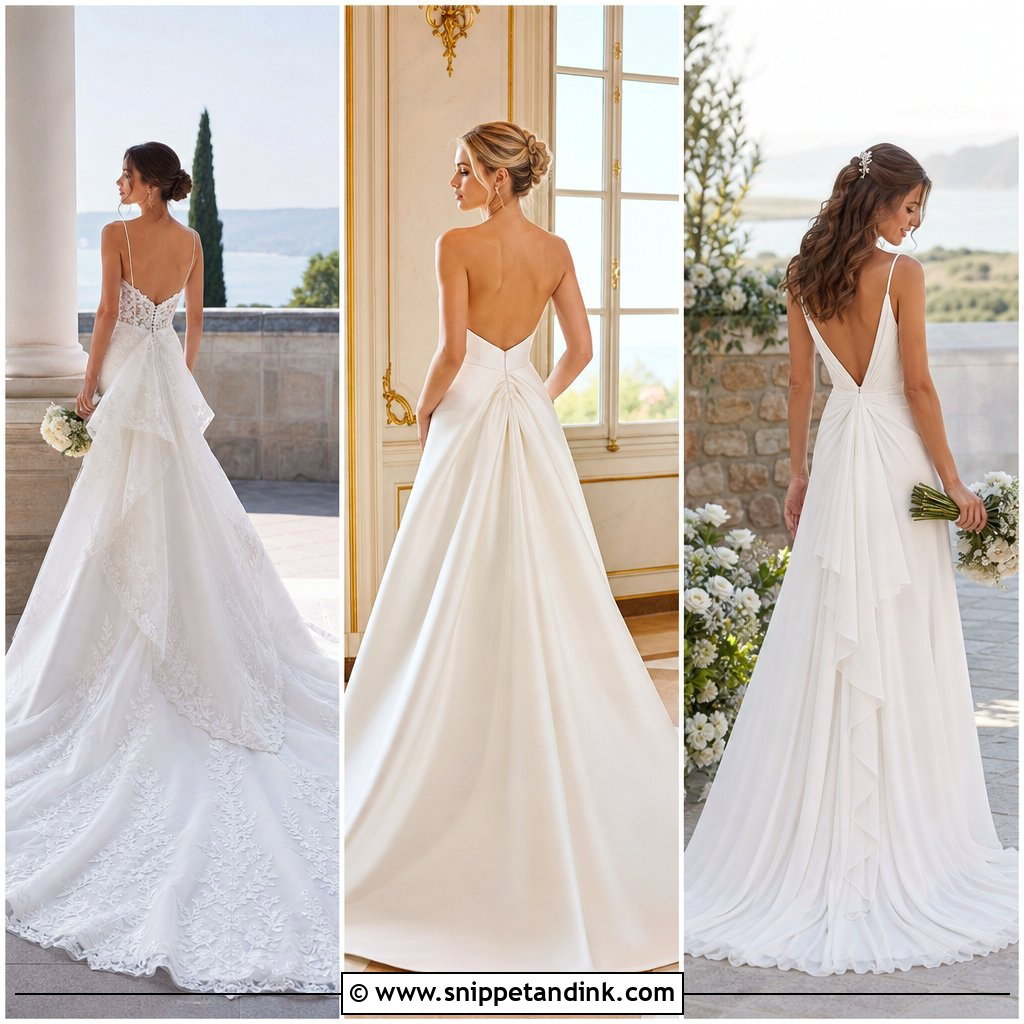
Grand trains need more than a simple loop. A royal bustle spreads the lift across several points so a cathedral train, layered skirt or heavily embellished hem rises into a balanced, sculptural shape without dragging. It looks natural on ball gowns and formal A-lines because the volume matches the skirt. In the fitting, walk in it and turn slowly so your seamstress can see if any layer drops.
6. One Point Bustle Wedding Dress
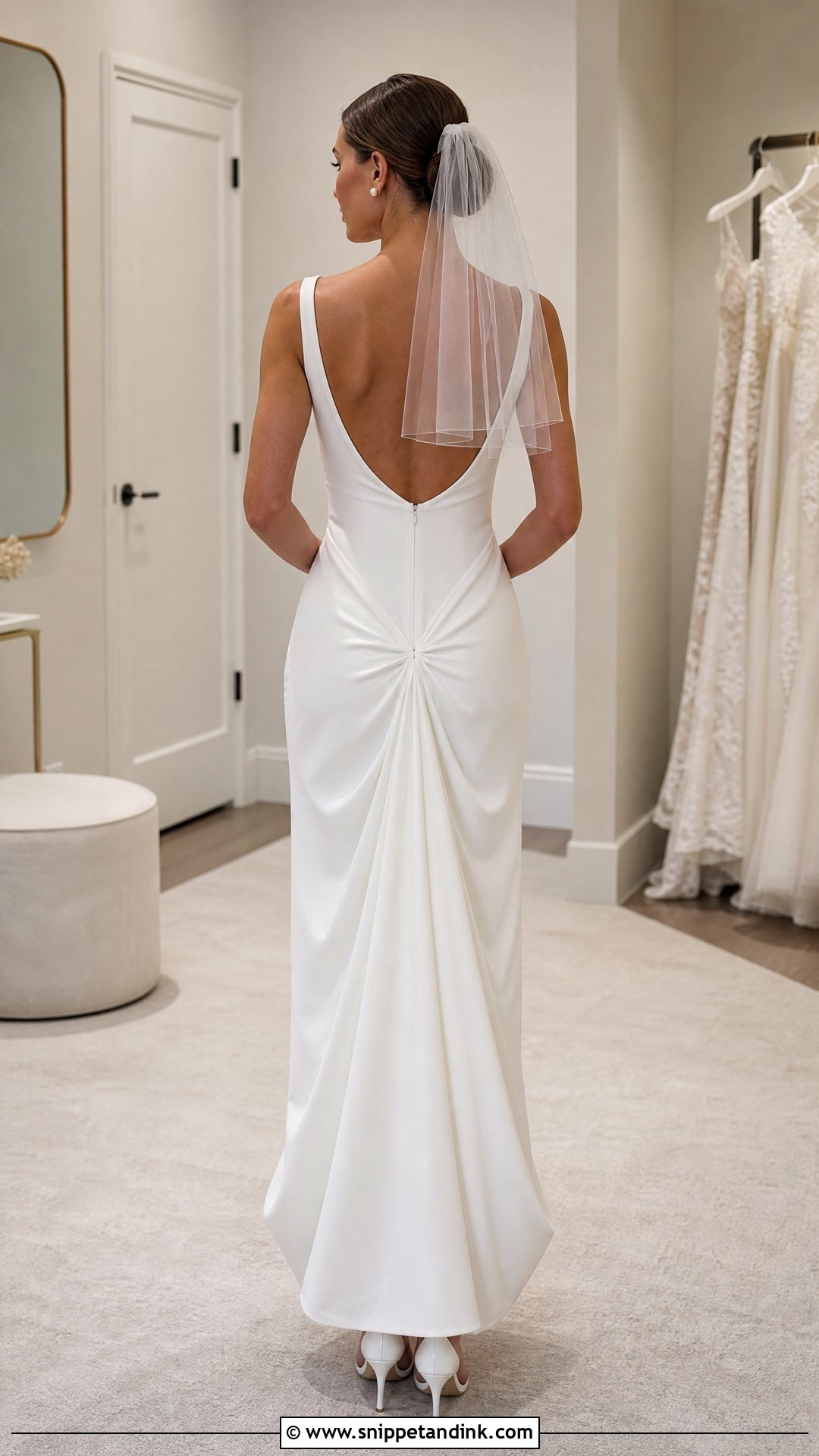
One point bustles are the fastest on the day: one hook, usually at center back, lifts the train off the floor. That suits sweep trains, soft crepe, minimalist gowns and light A-lines, and any bridesmaid can manage it. It isn’t strong enough for heavy fabric or a long train. If you see the fabric pulling into a sharp V from that single spot at your fitting, ask for extra points before it sags or stresses the seam.
7. Three Point Bustle Wedding Dress
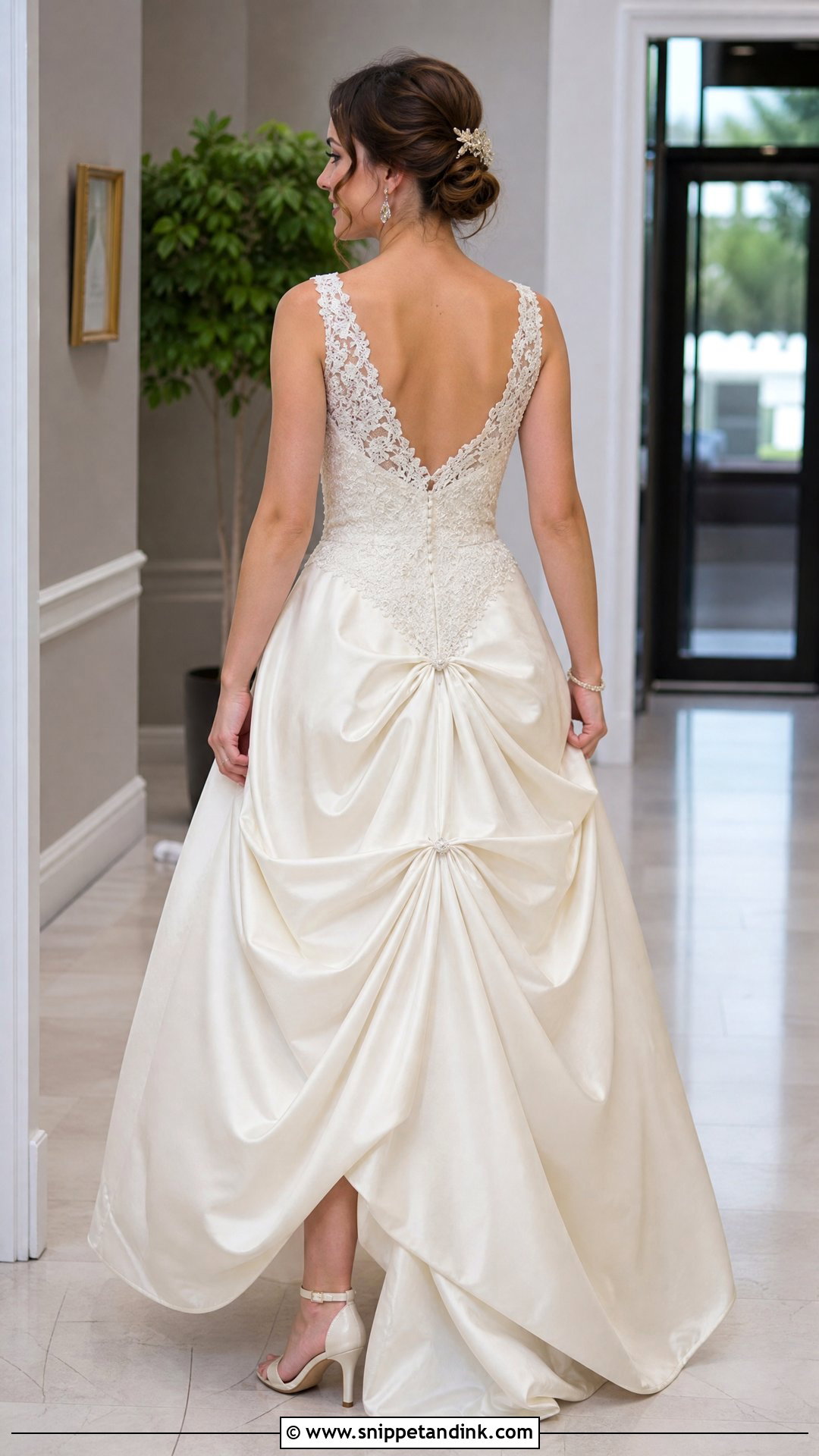
Three points across the back of the skirt lift the train evenly and still stay simple. It works for many chapel trains, A-line gowns and moderately full skirts, with soft folds that don’t look busy. My one request to every seamstress: mark the points. Colored thread, small fabric tags or numbered loops cut bustling time in half when the photographer is waiting for the grand entrance.
8. Five Point Bustle Wedding Dress
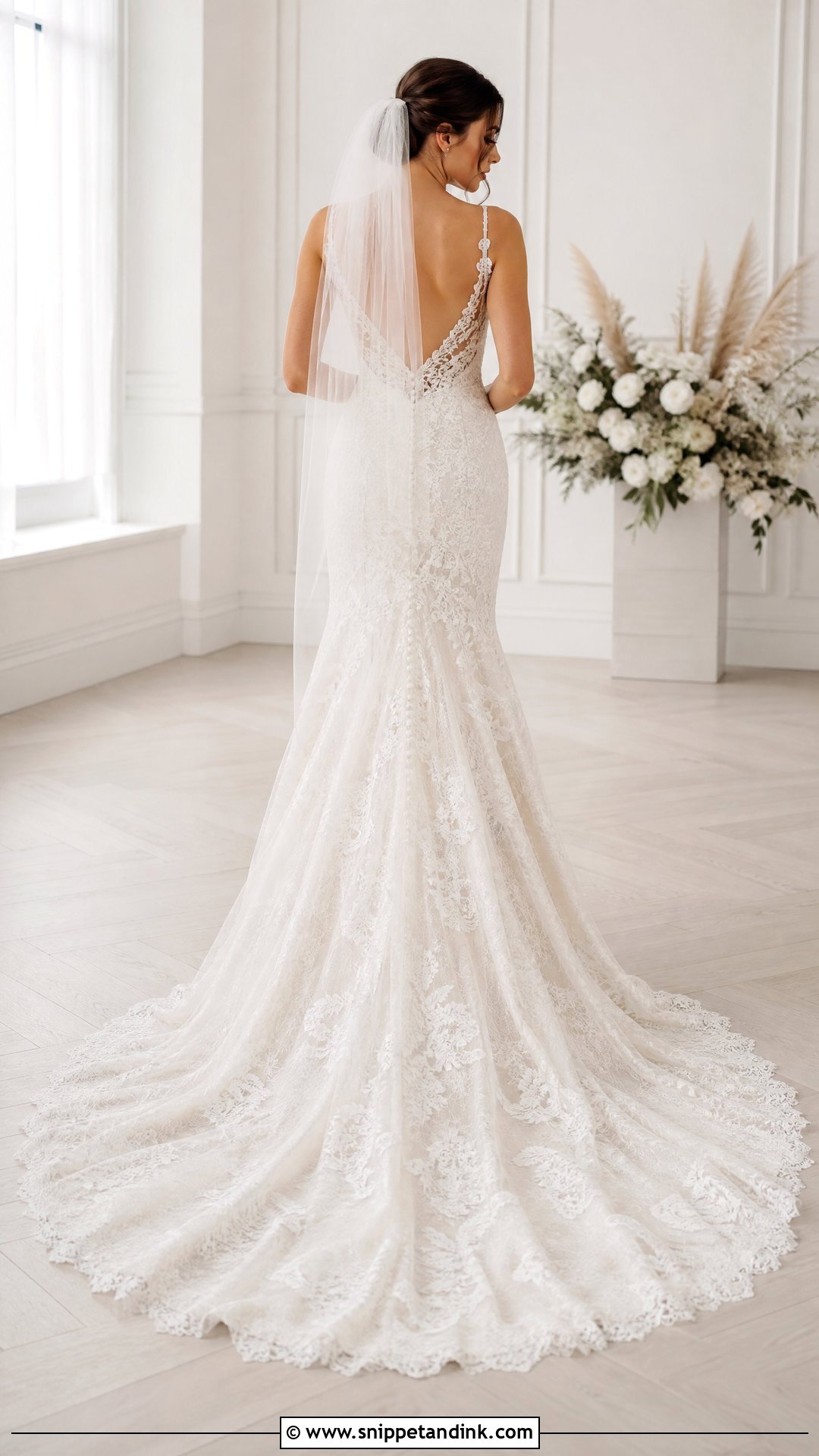
Five points share the weight across the whole back of the gown, which keeps lace overlays lined up and long or full skirts lifted. It can give cascading folds as an American bustle or a neat tuck as an under-bustle. It’s more secure than three points through a busy reception. It also has more chances for a mismatched loop, so practice, and ask your seamstress to photograph the finished bustle from behind for your helper’s phone.
9. Cathedral Train Bustle Wedding Dress
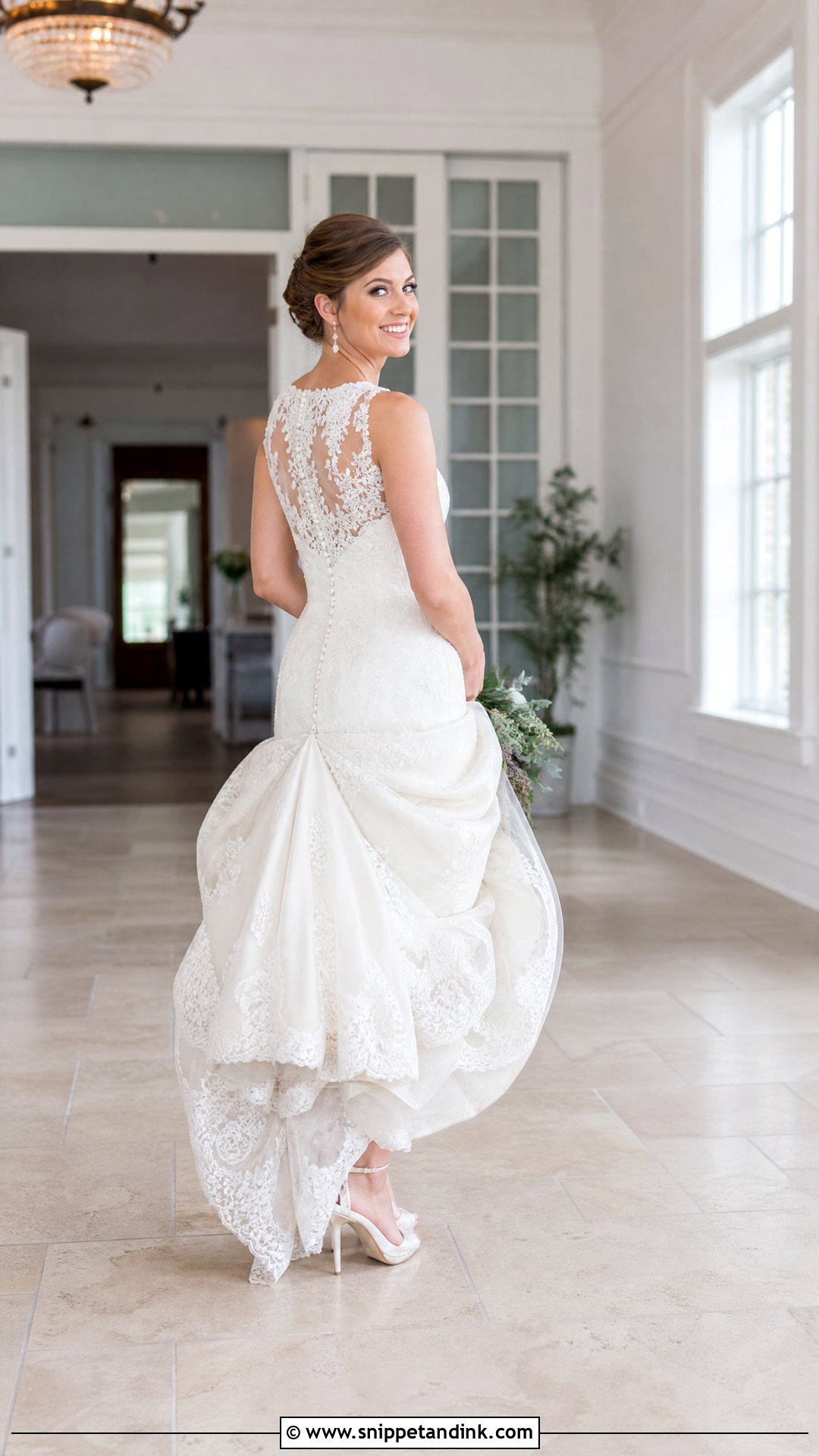
Cathedral trains are long, heavy and the centerpiece of the ceremony, so the bustle has to lift a lot of fabric without looking lumpy. Many need multiple points, and some combine techniques across layers: an American or royal bustle on a ball gown, a French bustle on a fitted lace dress. Bring your wedding shoes to the fitting, because heel height changes how the hem sits once lifted. Walk, turn and sit before you approve it. On the day, allow extra minutes; this is never a thirty-second job.
10. Chapel Train Bustle Wedding Dress
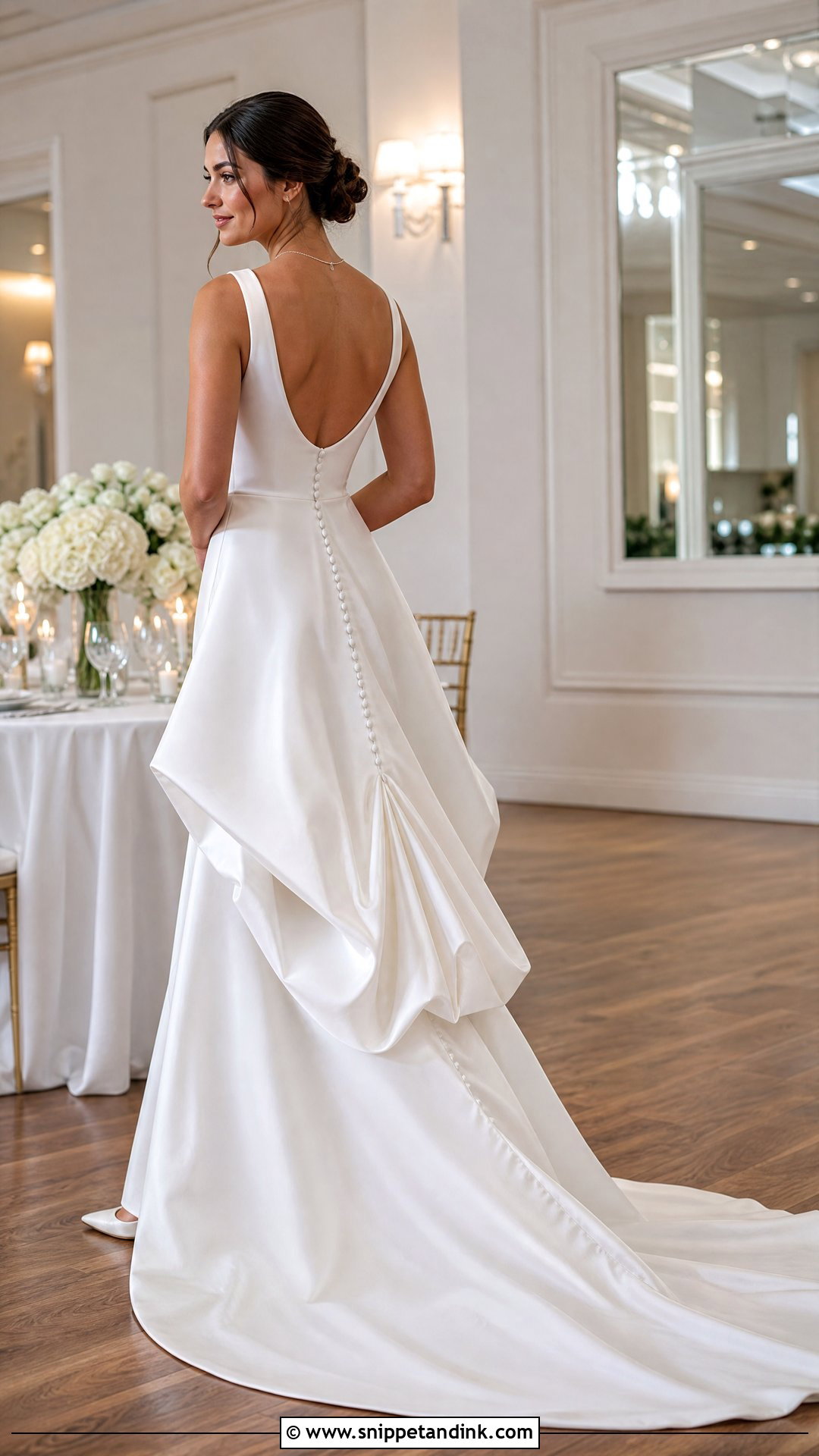
A chapel train is long enough to feel formal and short enough that one, three or five points can work. It pairs with American, French, and ballroom bustles depending on the gown. On a lace edge, the seamstress places points so the pattern stays smooth when lifted. On satin or mikado, spacing has to be even, because uneven folds show in every photo. You want enough lift to dance and nothing stiff.
11. Sweep Train Bustle Wedding Dress
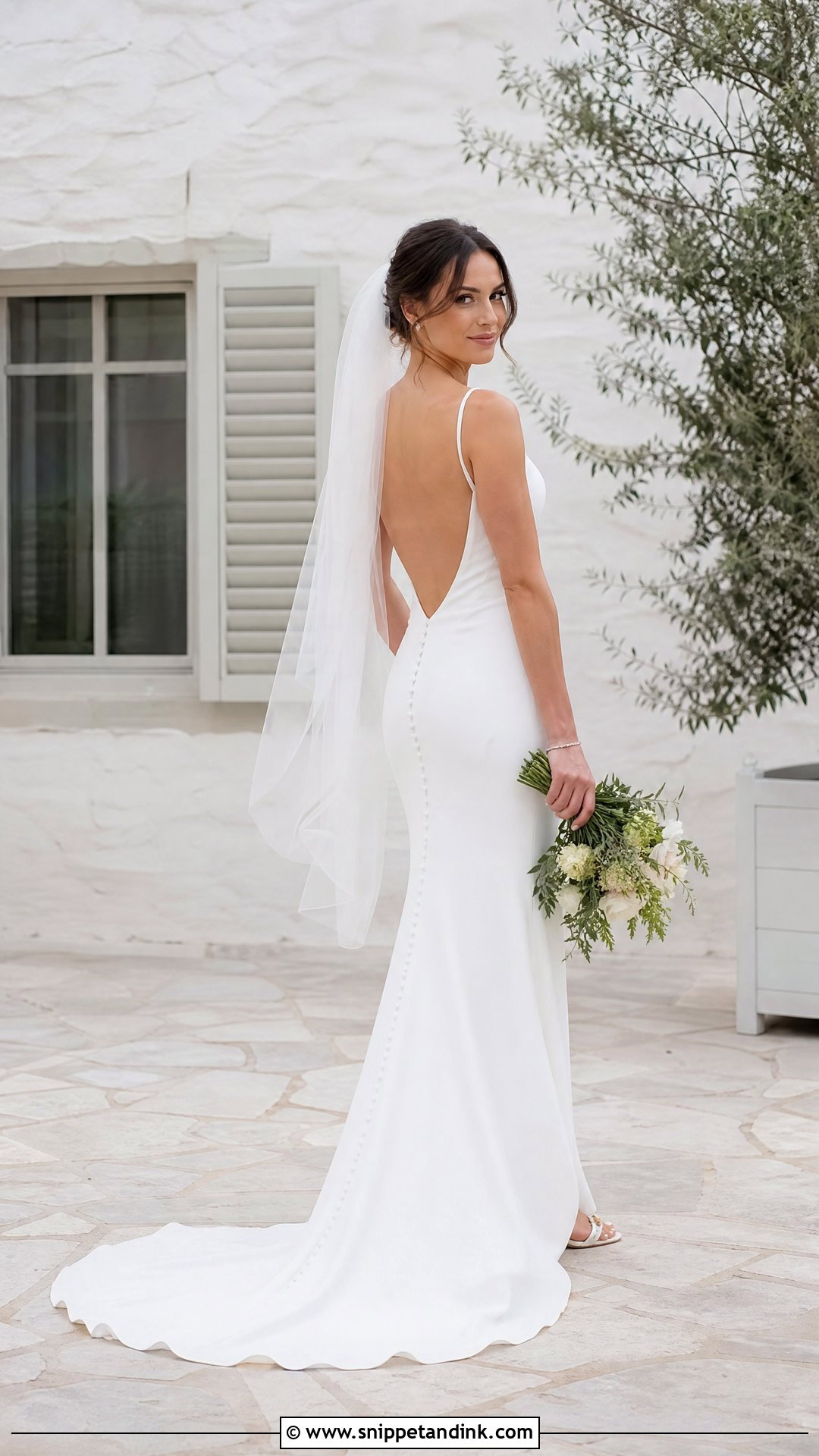
Sweep trains barely brush the floor, so many only need one point, a wrist loop or a small hidden hook. I like a wrist loop for destination and garden weddings because the bride can lift the hem herself on uneven ground. Crepe, chiffon and charmeuse handle this length well. Ask for buttons or loops dyed to match your gown so the bustle all but disappears.
12. Lace Wedding Dress Bustle
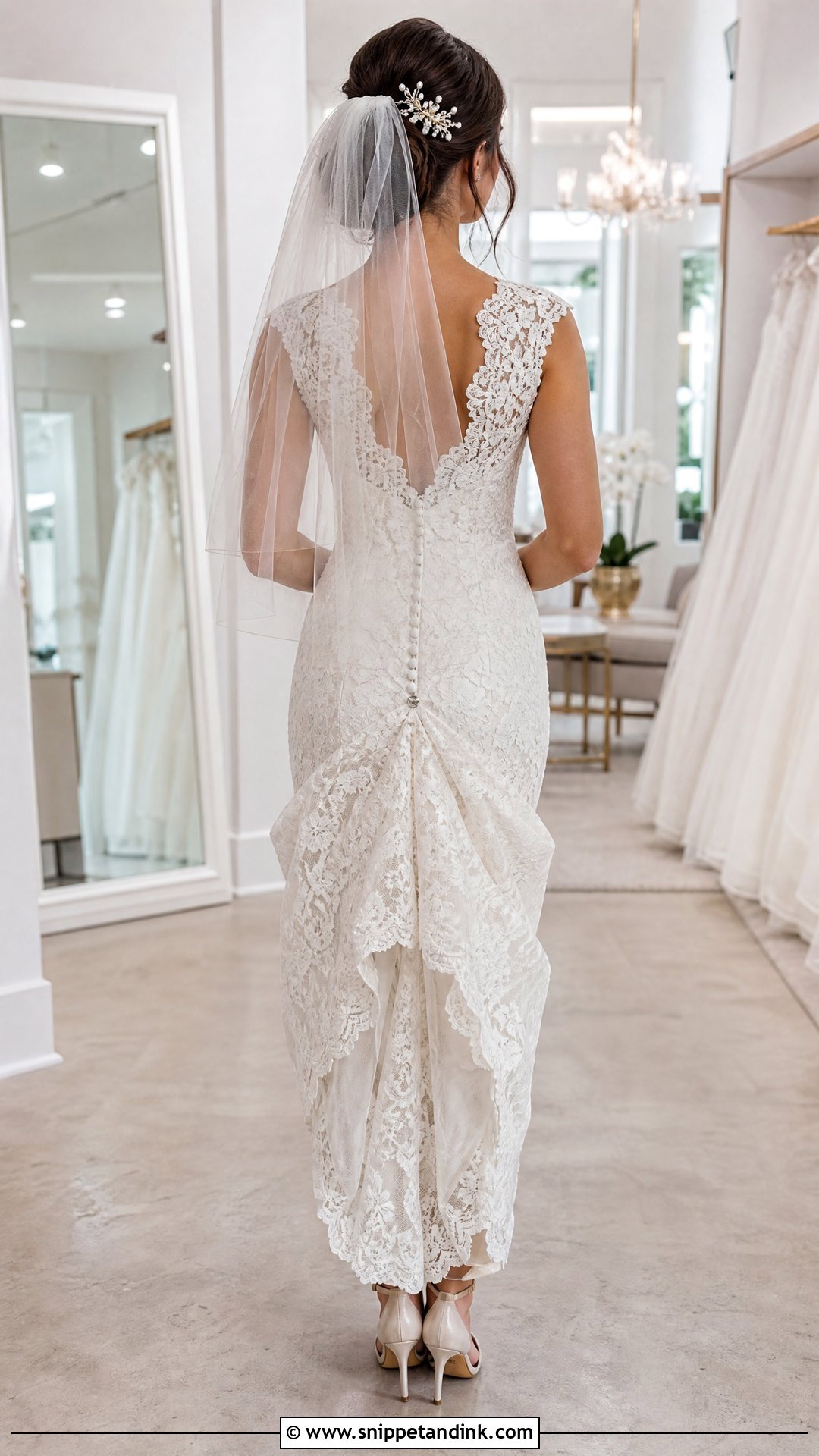
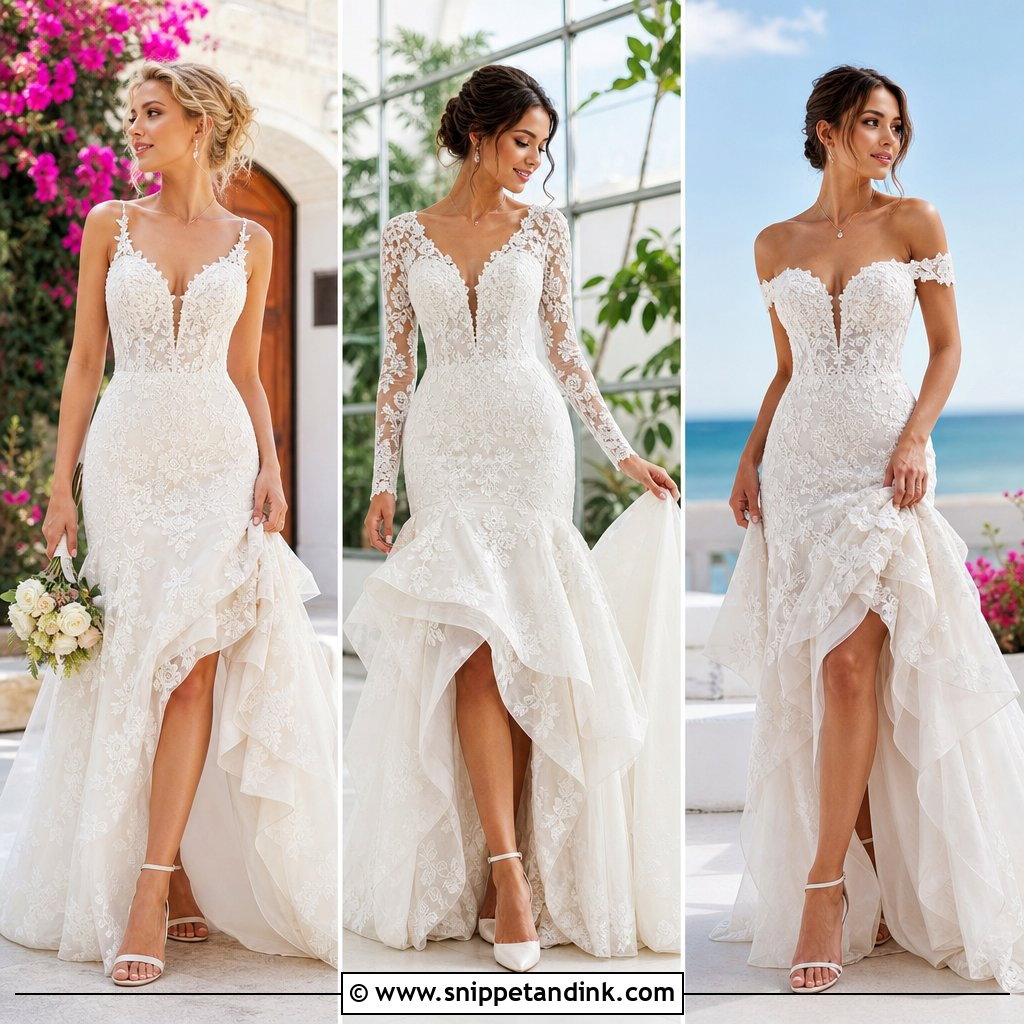
Lace is delicate, so bustle points must sit where the fabric is strong enough, usually along a seam or under an appliqué rather than in open lace. If the train has scalloped edges or a motif, a French or ballroom bustle keeps the outside pattern clear; an American bustle can work if the folds are arranged to show the lace. Check it from the back and the side. Take photos in natural standing poses so you can see how the lace reads during real reception moments.
13. Satin Wedding Dress Bustle
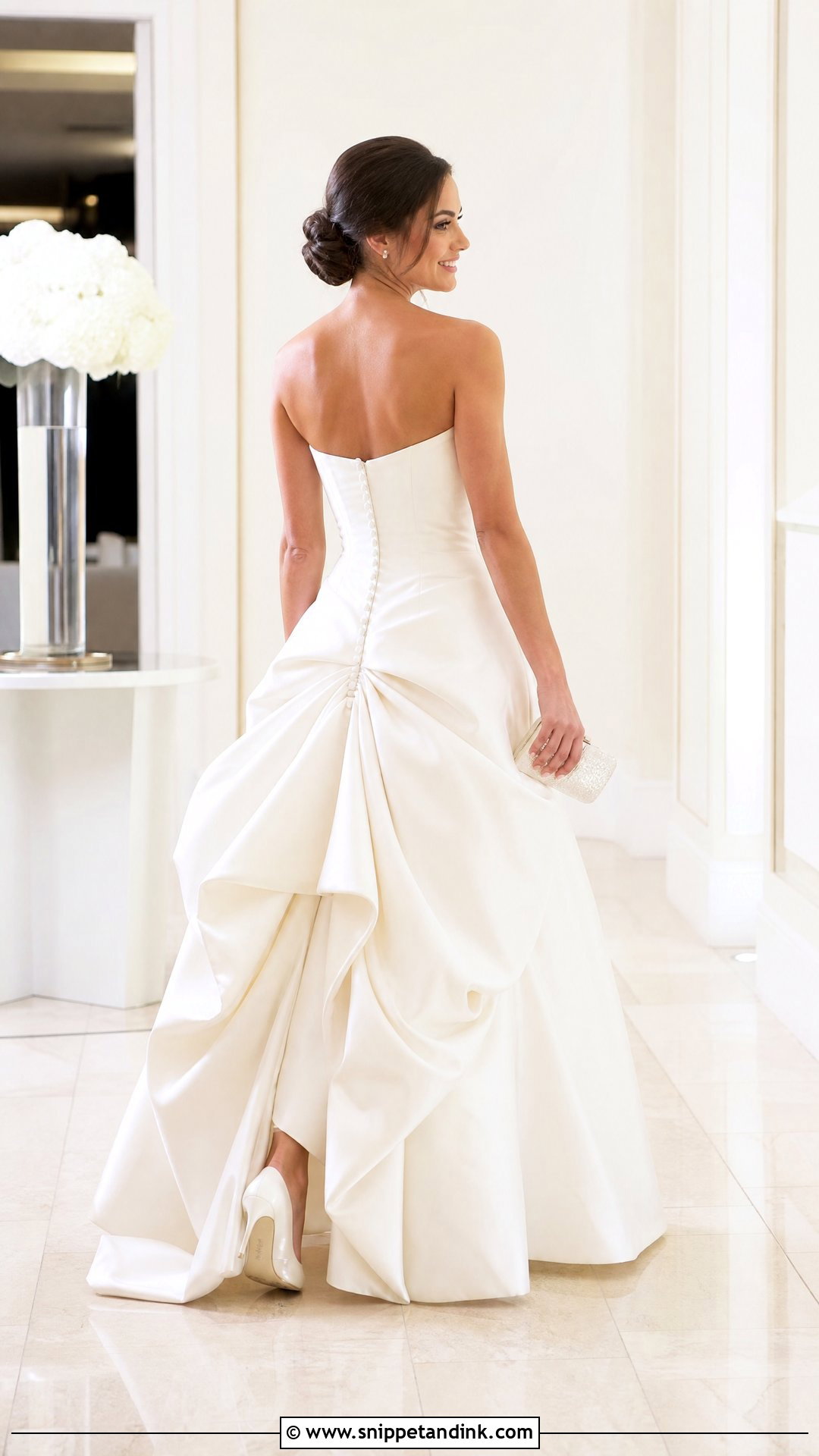
Satin reflects light, so every pucker and pull shows. A ballroom bustle gives satin a smooth reception shape, and an American bustle on satin makes structured folds that catch the light. Satin is heavier than tulle or chiffon, so expect several secure points. Covered buttons blend into the fabric best. I’d test it under bright light, like the lighting in your reception room, and from a few angles.
14. Tulle Wedding Dress Bustle
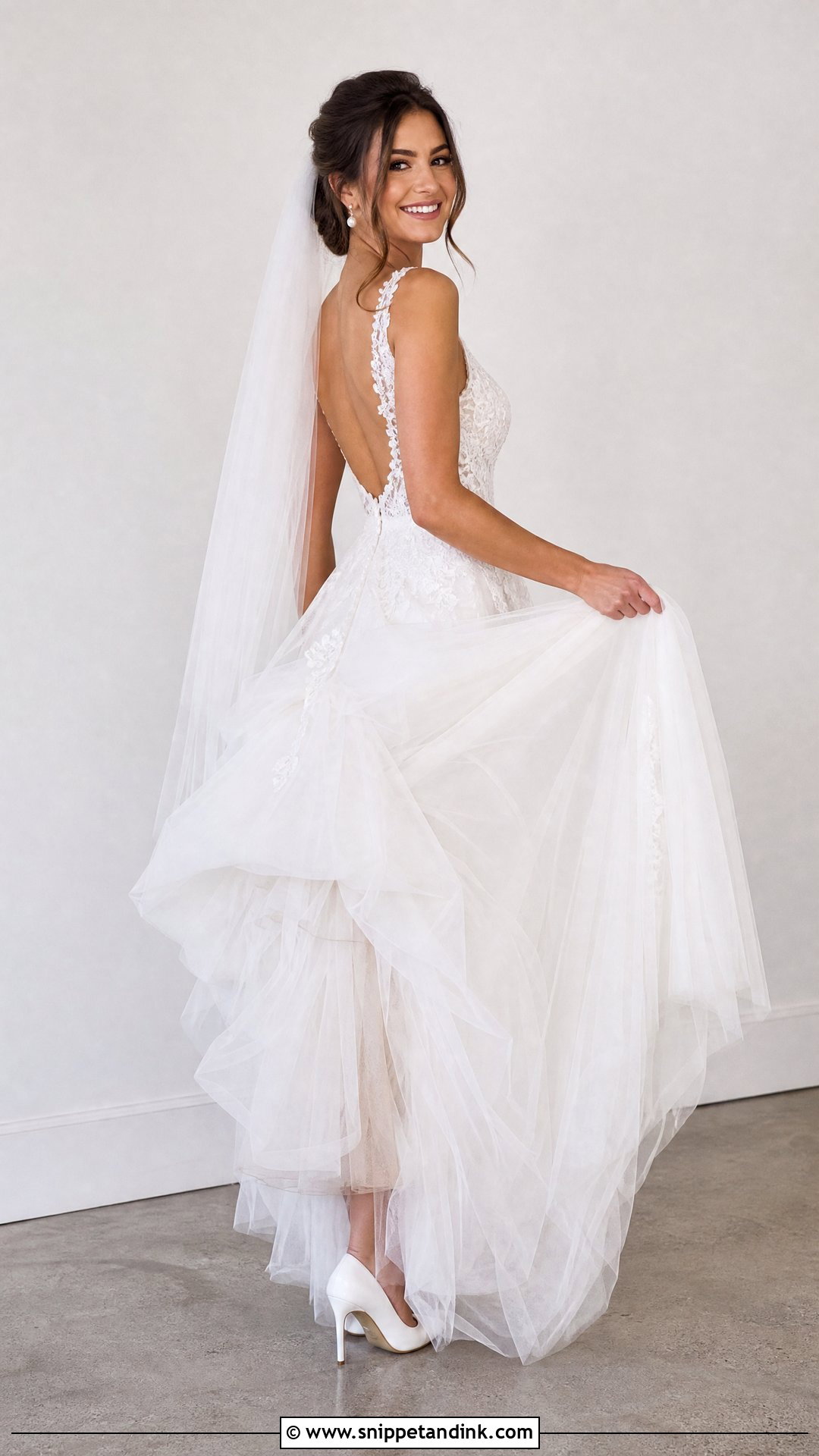
Tulle is light but usually layered, and the classic problem is one layer hanging lower than the rest after it’s lifted. Ball gowns in tulle suit American, ballroom or royal bustles; softer tulle A-lines may only need a three point or five point bustle. Ask whether all layers bustle together or are lifted separately. Done right, the skirt stays full without a messy cloud of tulle at the back.
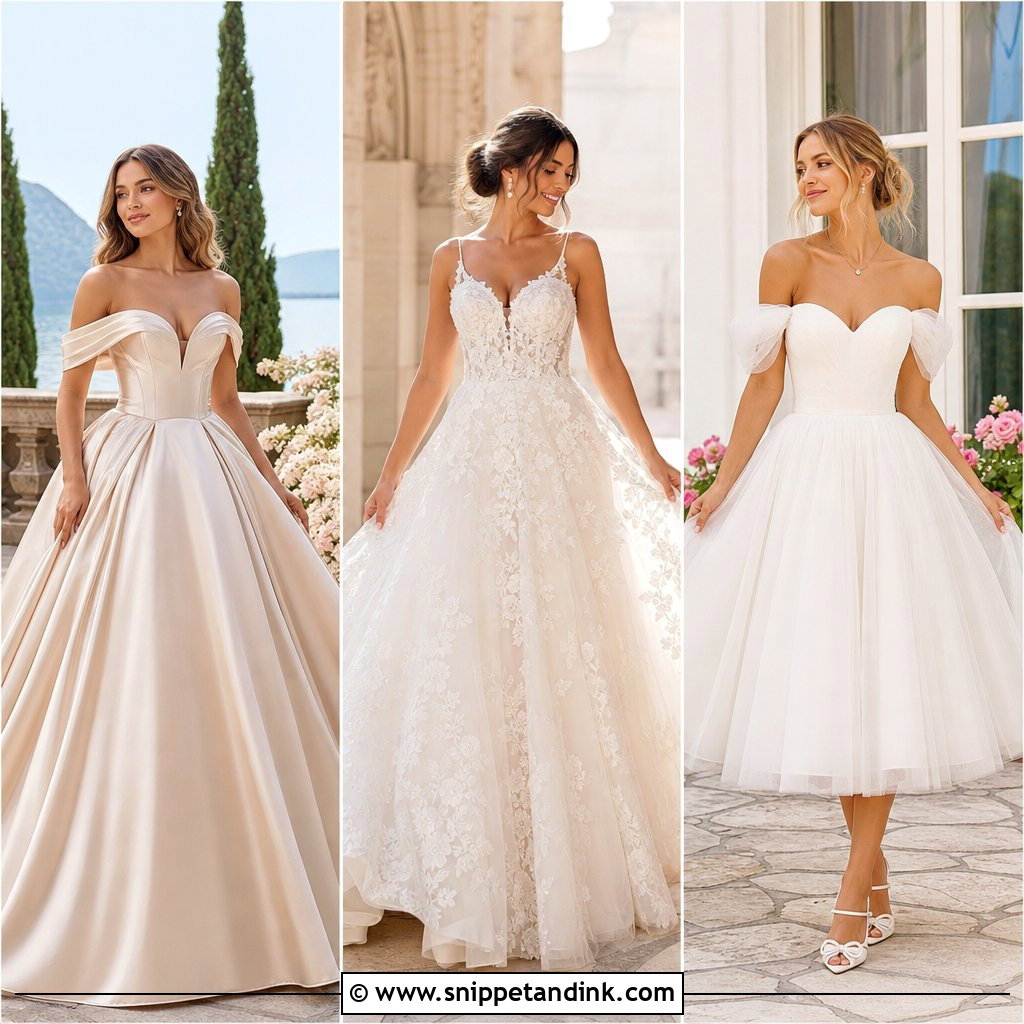
15. Chiffon Wedding Dress Bustle
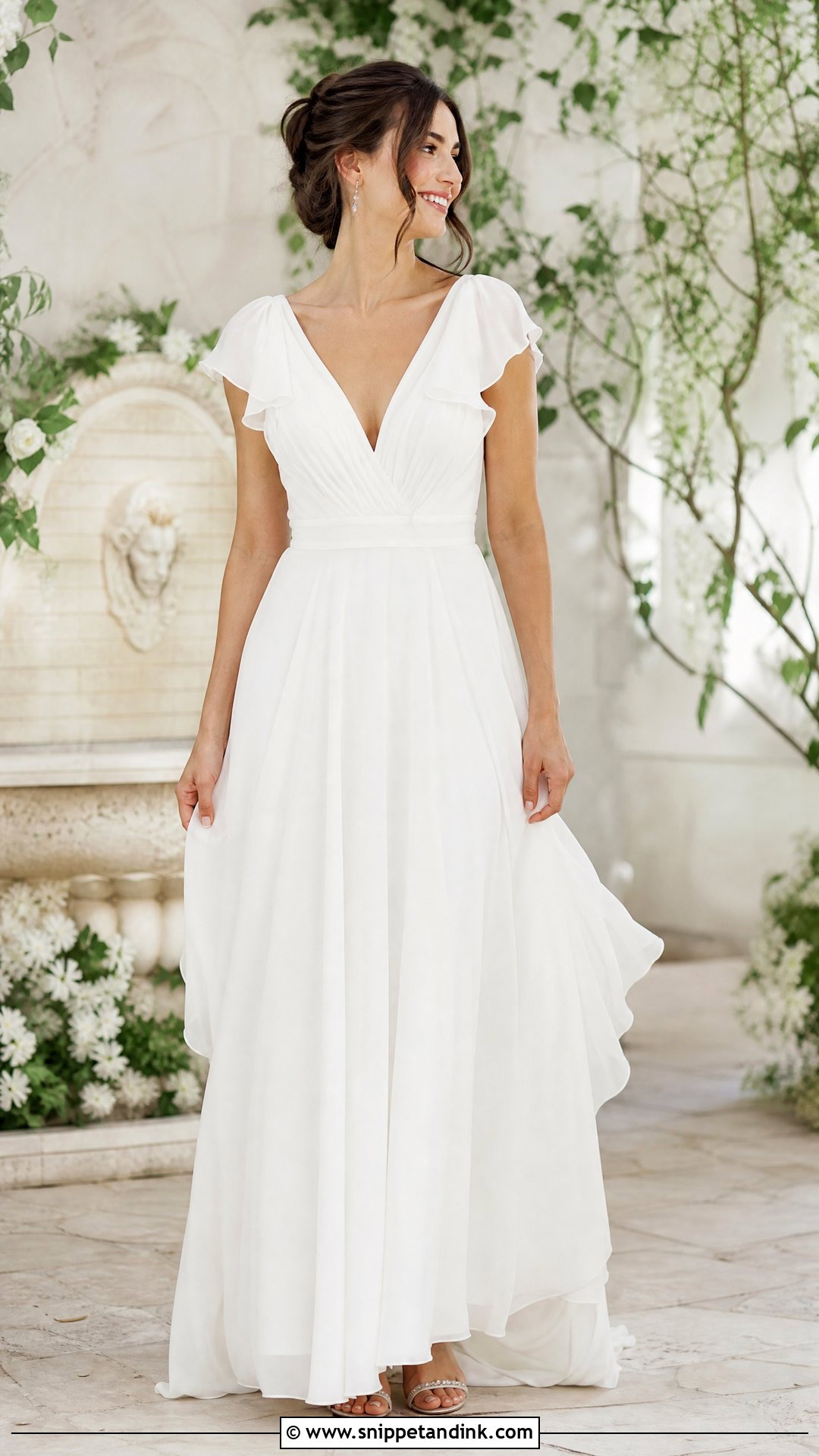
Chiffon moves with every step, so a bustle that fights the drape looks stiff. A French bustle gives graceful under-folds; a light American bustle adds a gentle cascade. Because chiffon frays and tears easily, the attachment points need small reinforcement patches inside. It’s the fabric I see most at beach and warm-weather weddings. With multiple layers, make sure each one lifts or the inner layer drags through sand and grass.
16. Crepe Wedding Dress Bustle
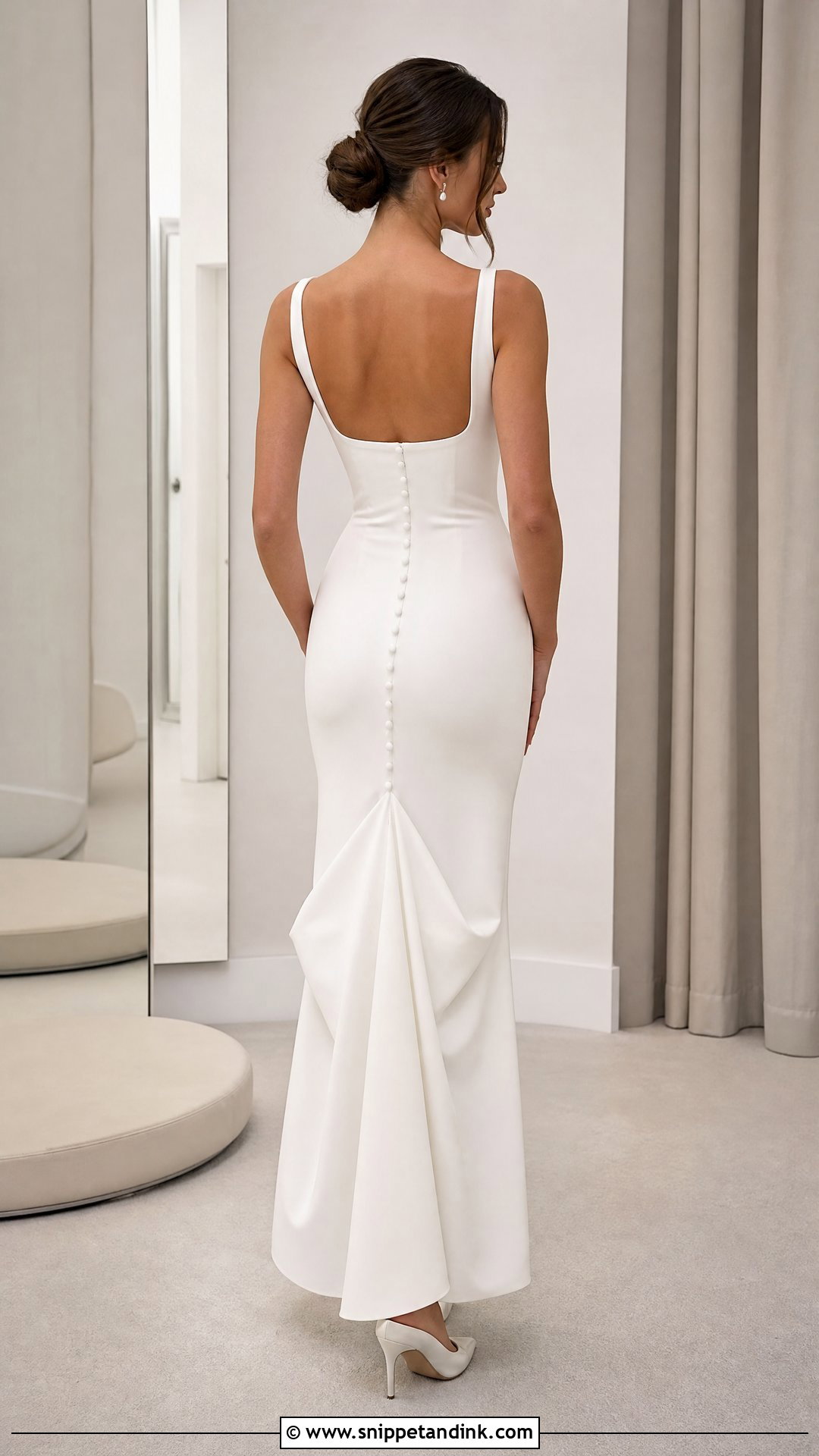
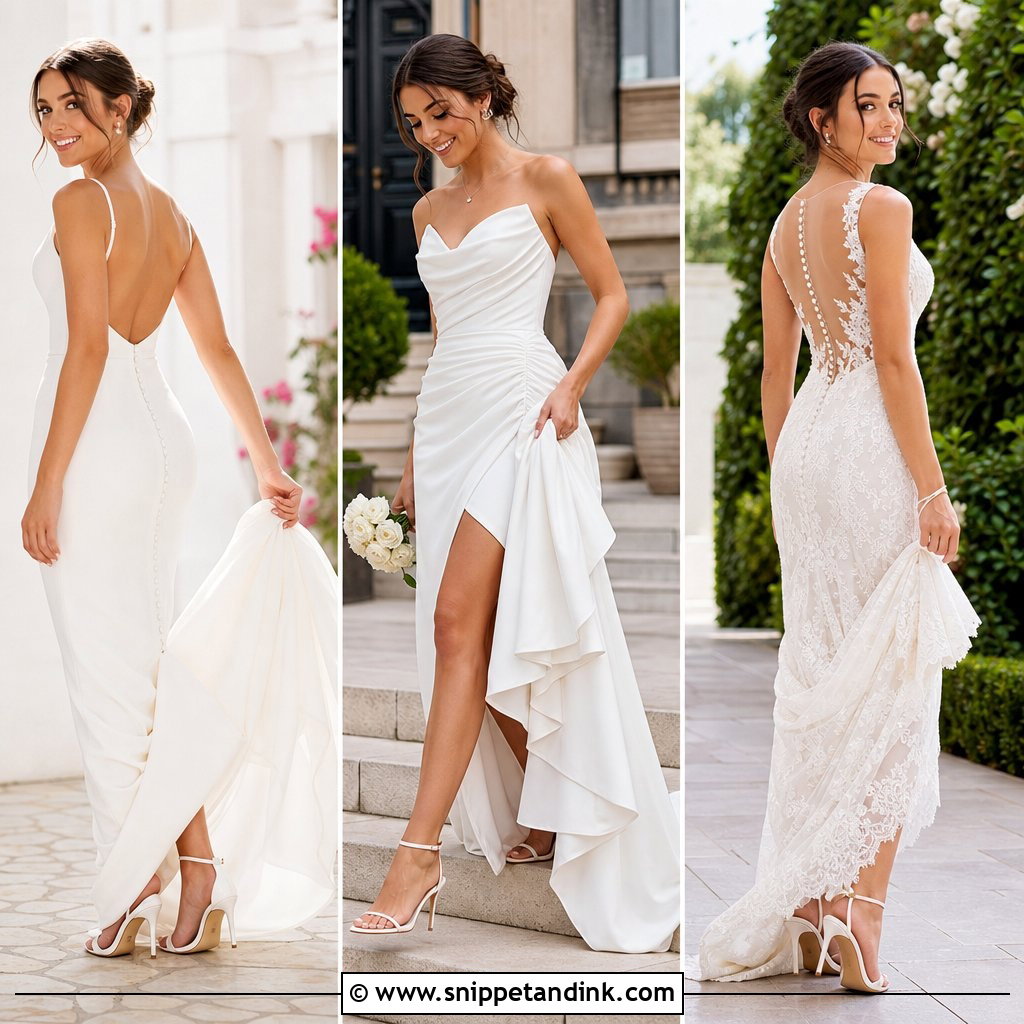
Crepe gowns are usually sleek and minimal, so bulky folds look out of place. A French bustle, a ballroom bustle or a carefully placed low bustle keeps the back line smooth. Crepe also shows tension marks, and a single point can pull a visible crease. Multiple hidden points spread the strain. At the fitting, look at your side profile in the mirror, not just the back.
17. Mermaid Wedding Dress Bustle
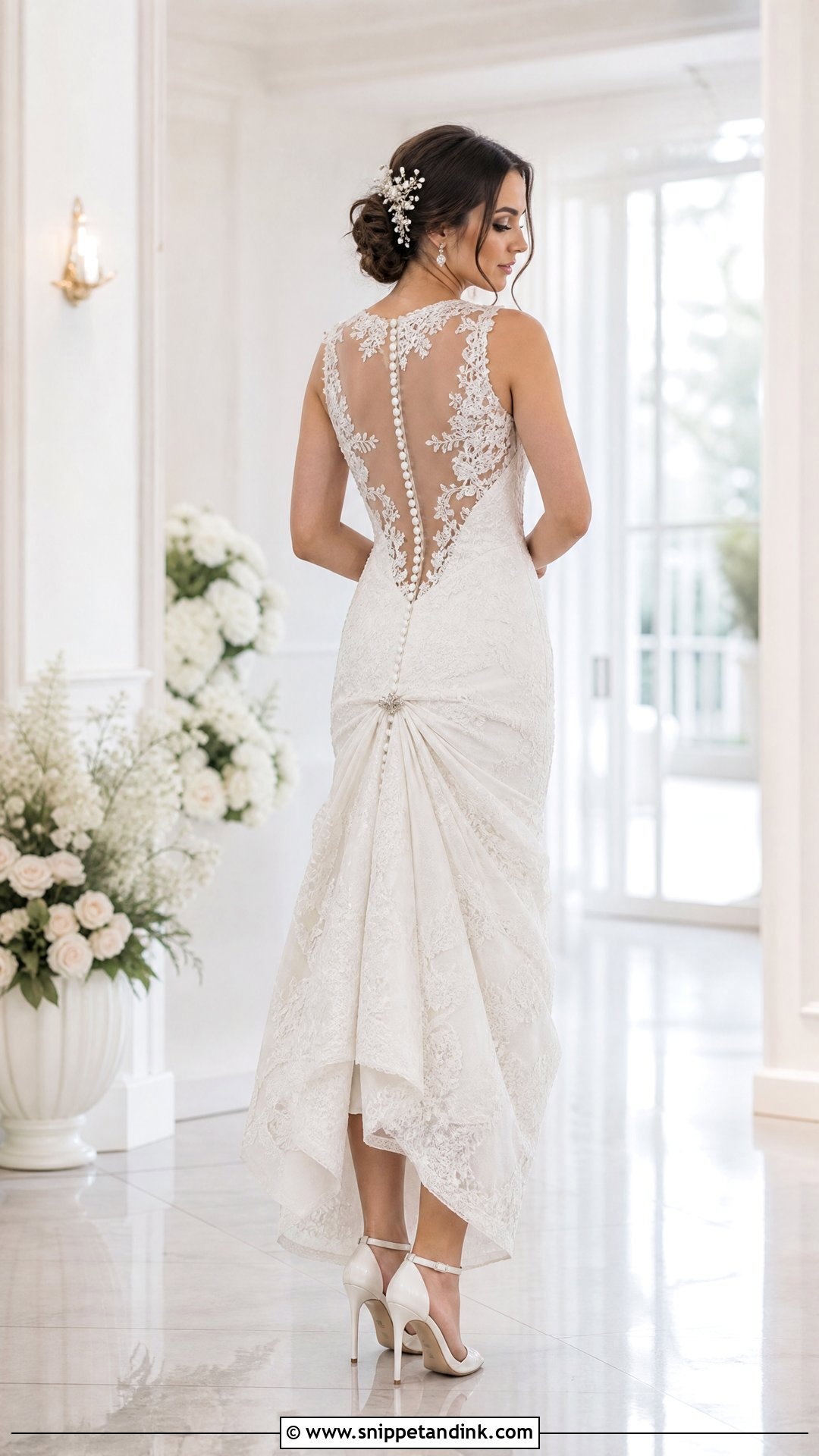
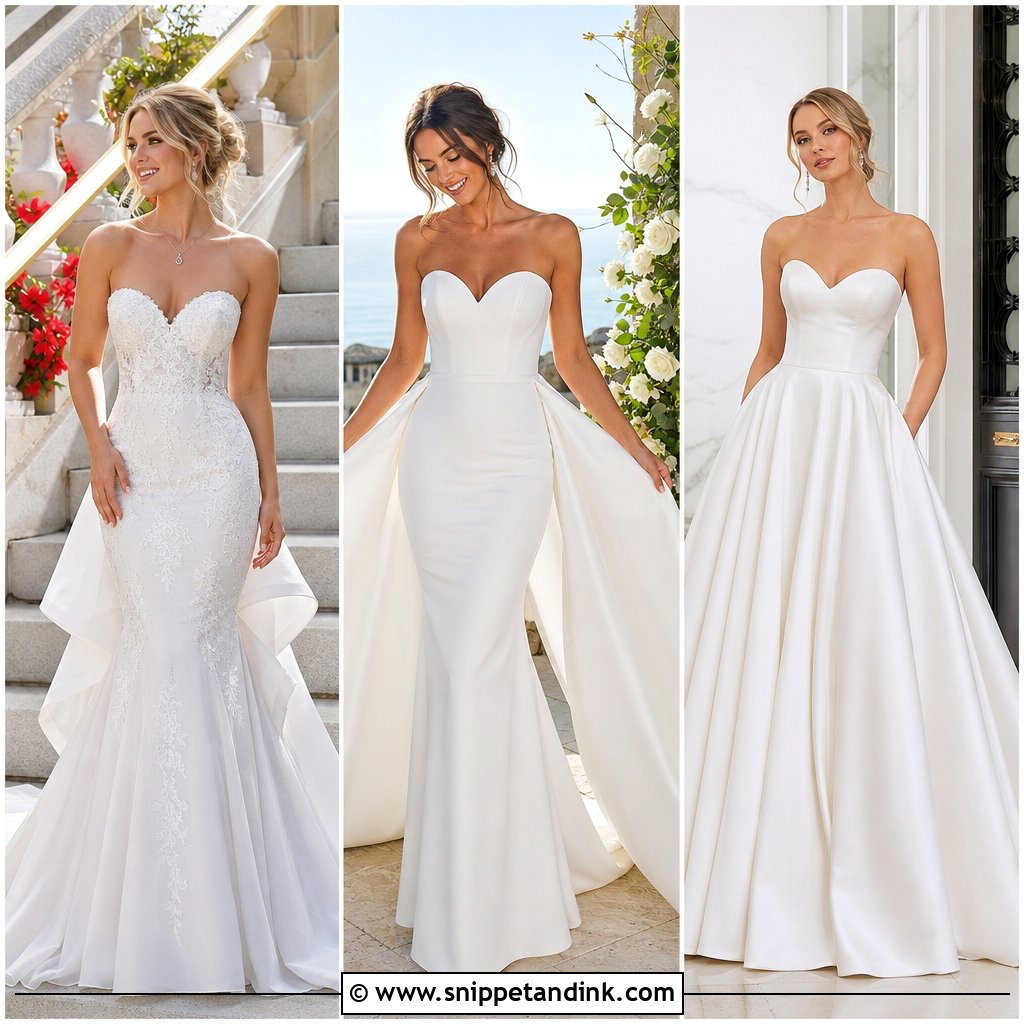
The fitted hip line is what makes a mermaid, and too much gathering at the back distorts it. A French bustle lifting from underneath keeps the outside cleaner, and some mermaids suit a low American bustle if the train begins below the knee. Ask your seamstress to set the points where the skirt naturally flares. Higher than that, and the bustle pulls across the hips and adds volume in the wrong place.
18. Ball Gown Wedding Dress Bustle
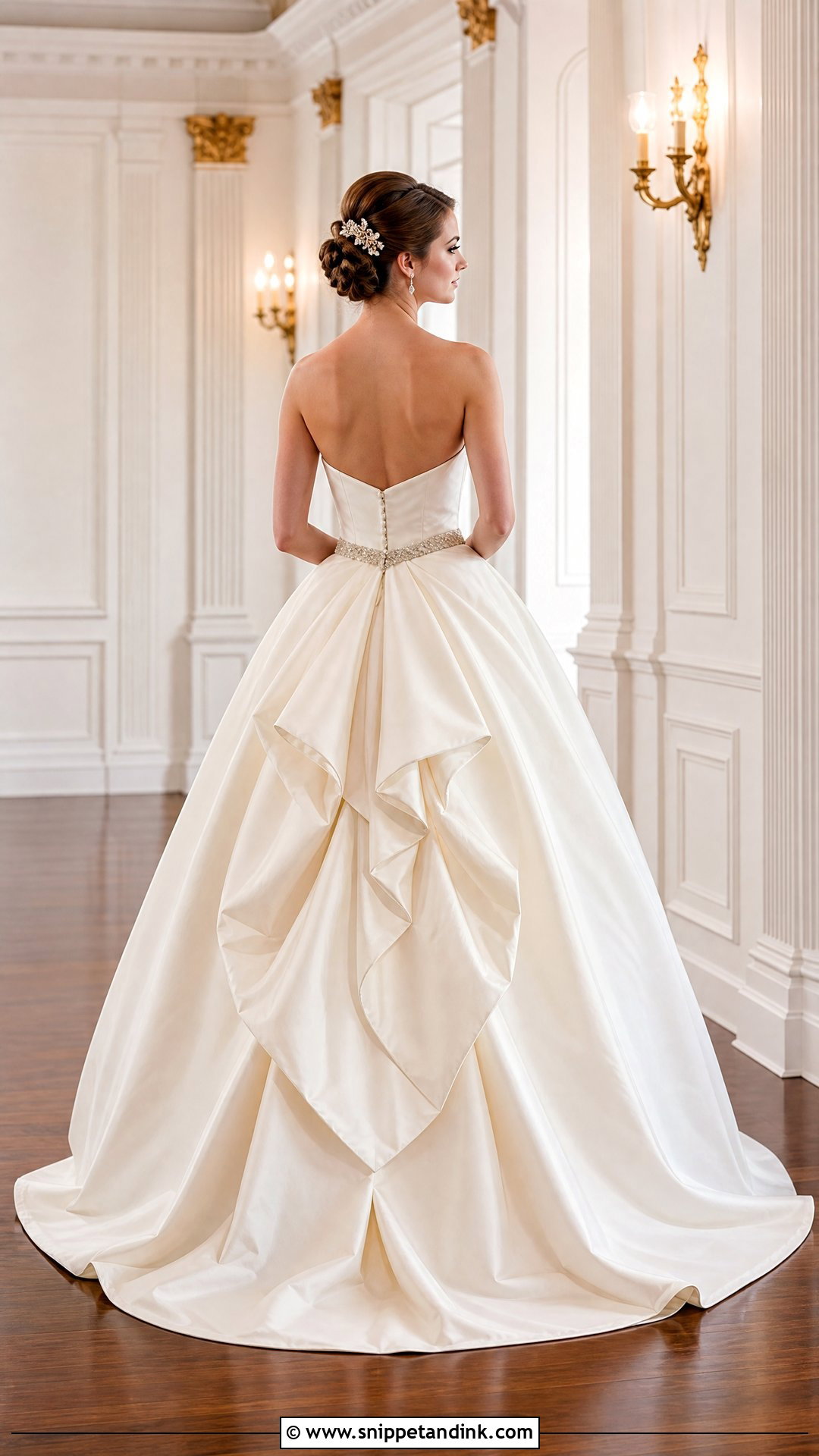
A ball gown wedding dress bustle can take visible folds because the skirt already has volume. American, ballroom and royal bustles all suit it: ballroom hides the train, American gathers it into layers. Satin, tulle and crinoline layers get heavy, so expect extra points. Your helper should practise on the real gown at least once, since lifting a heavy skirt and finding loops at the same time takes two hands and a bit of strength.
19. A Line Wedding Dress Bustle
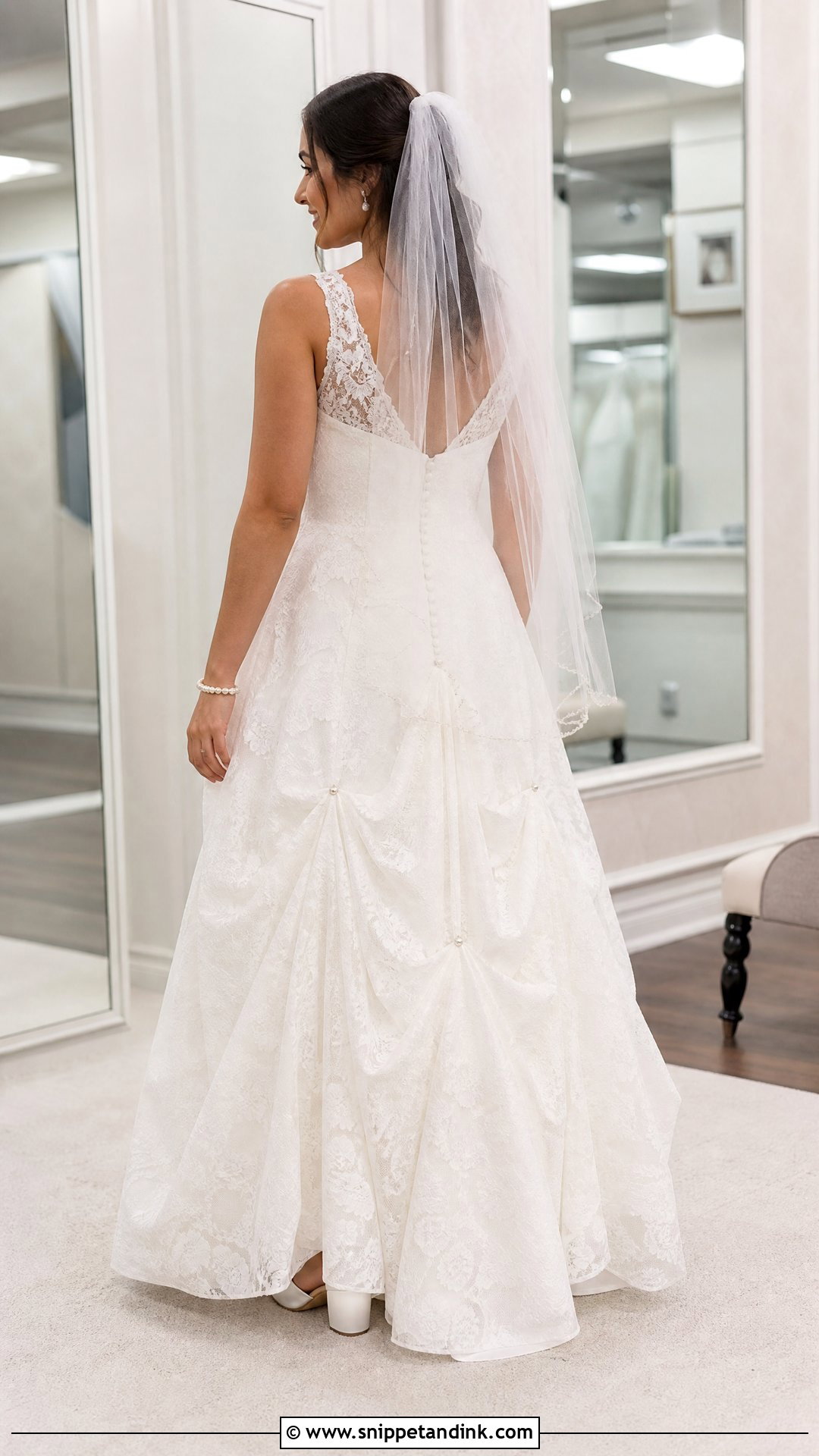
A-lines are the easiest silhouette to bustle because the skirt widens from the waist and can take American, French, ballroom or multi-point systems. A plain A-line looks best with clean folds; a lace one needs points placed to protect the pattern. The extra fabric in the skirt also hides attachment points well. For a medium train, three or five points is usually plenty. Check that the hem lifts evenly all round the back.
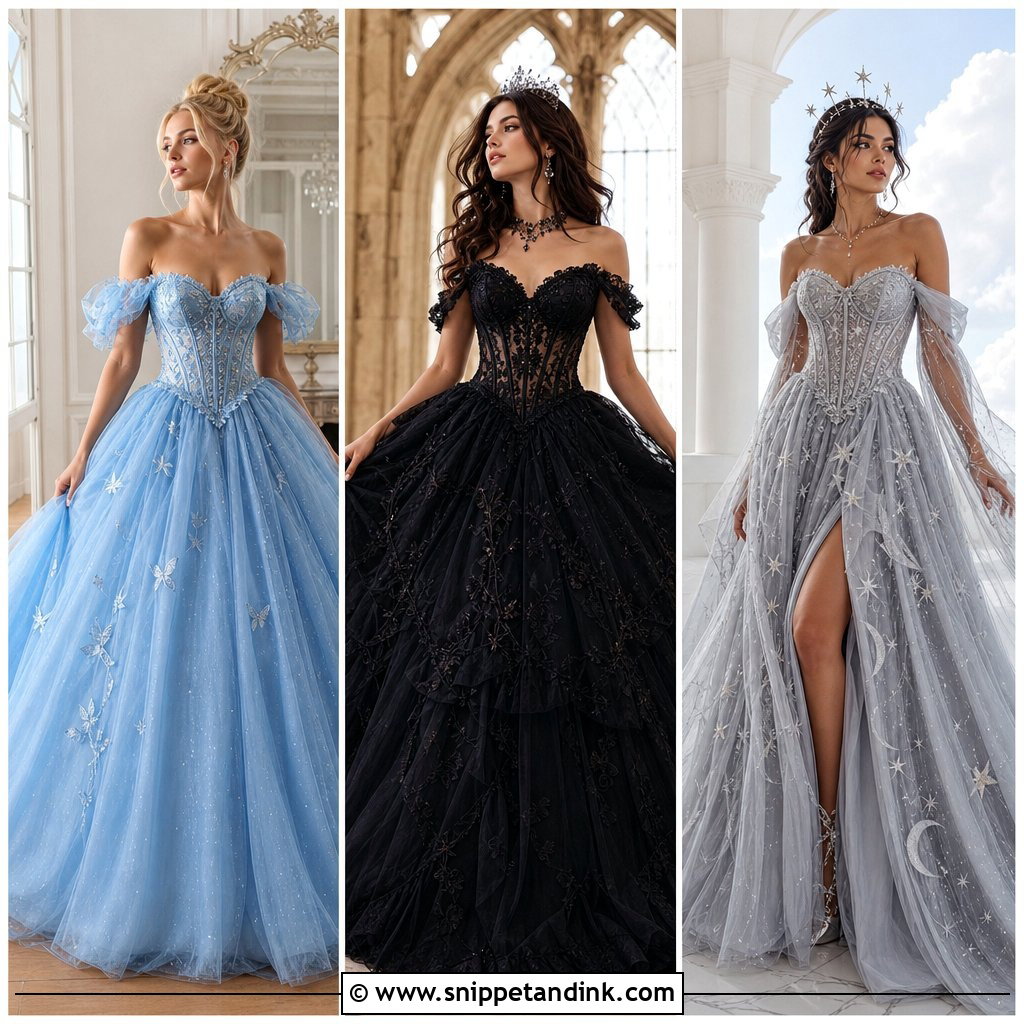
20. Fit And Flare Wedding Dress Bustle
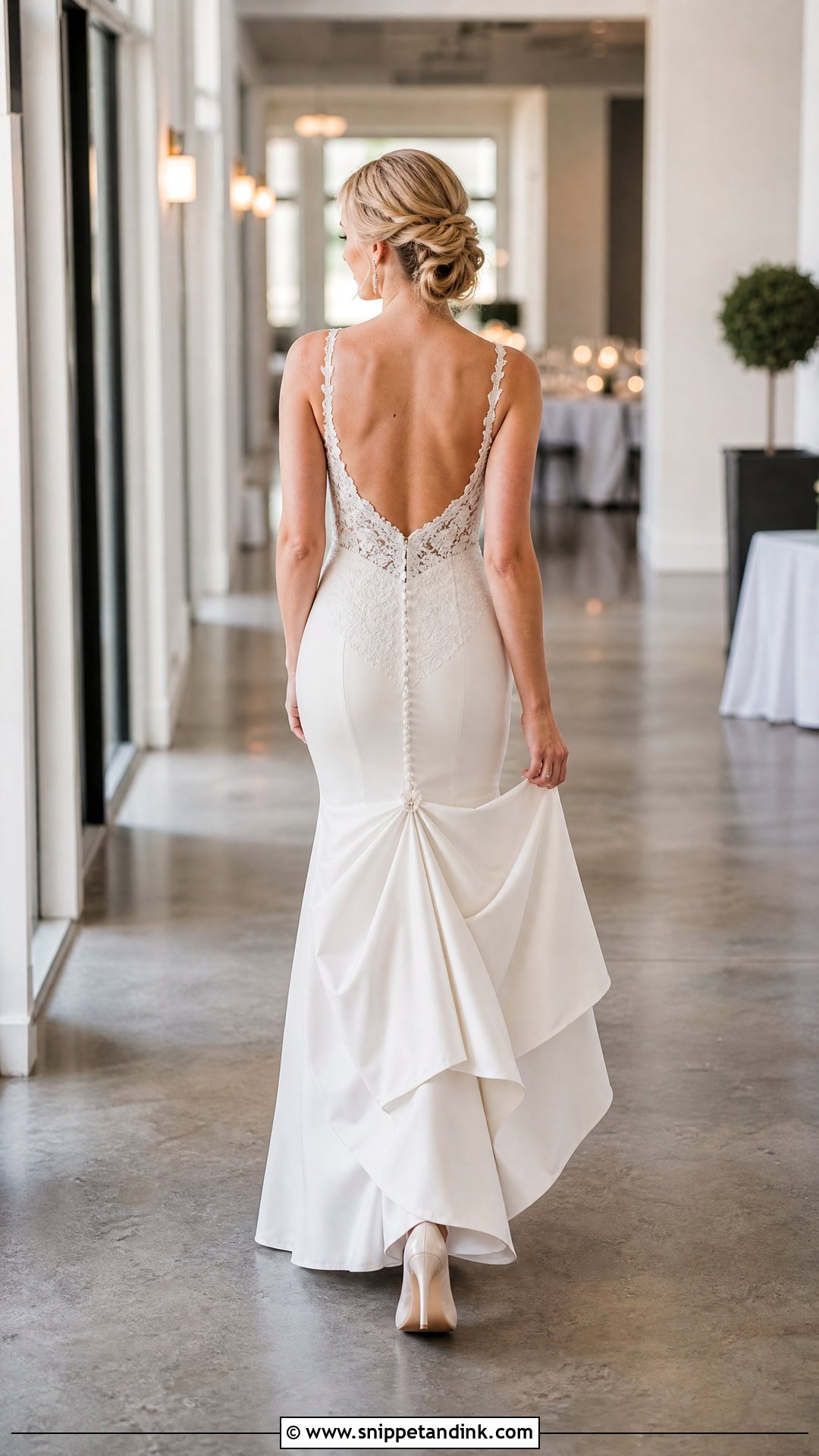
Fit and flare sits between mermaid and A-line, so placement decides everything. When the train starts around the thigh or knee, a French bustle tucks it neatly; when the skirt is fuller, an American bustle adds soft folds. The most common error is points set too high, which bunches fabric at the hips. Ask your seamstress to pin a few heights before she sews the final points.
21. Beaded Wedding Dress Bustle
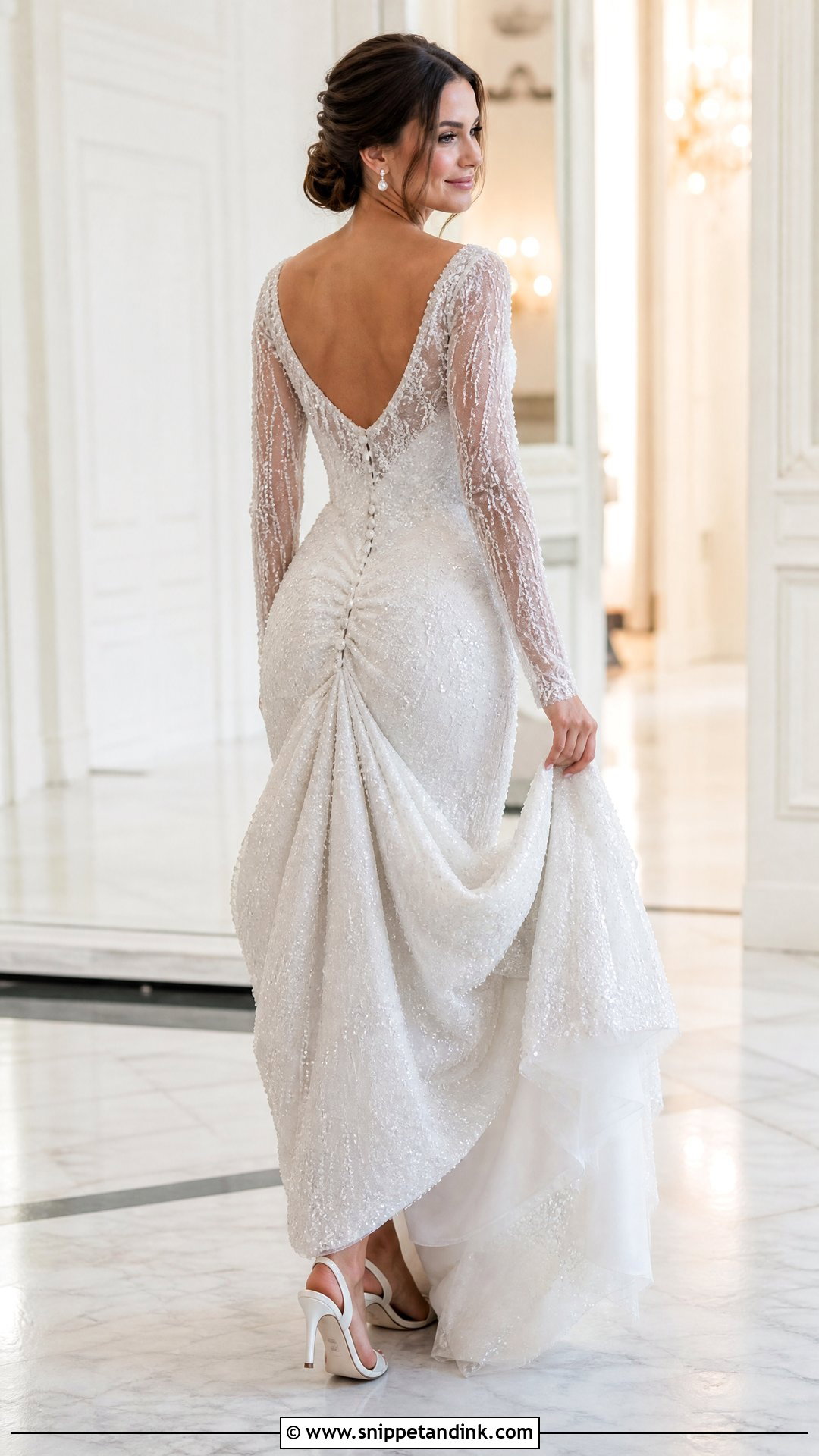
Beads, pearls, crystals and sequins make a train much heavier than it looks on the hanger. A multi-point American or French bustle shares that weight better than a single hook, and loops can be hidden under appliqués or replaced with stronger internal ribbons. Points must never pull on beaded mesh. Fasten slowly on the day; I’ve seen beads snag on a loop and snap a thread when a helper rushed.
22. Detachable Train Wedding Dress Bustle
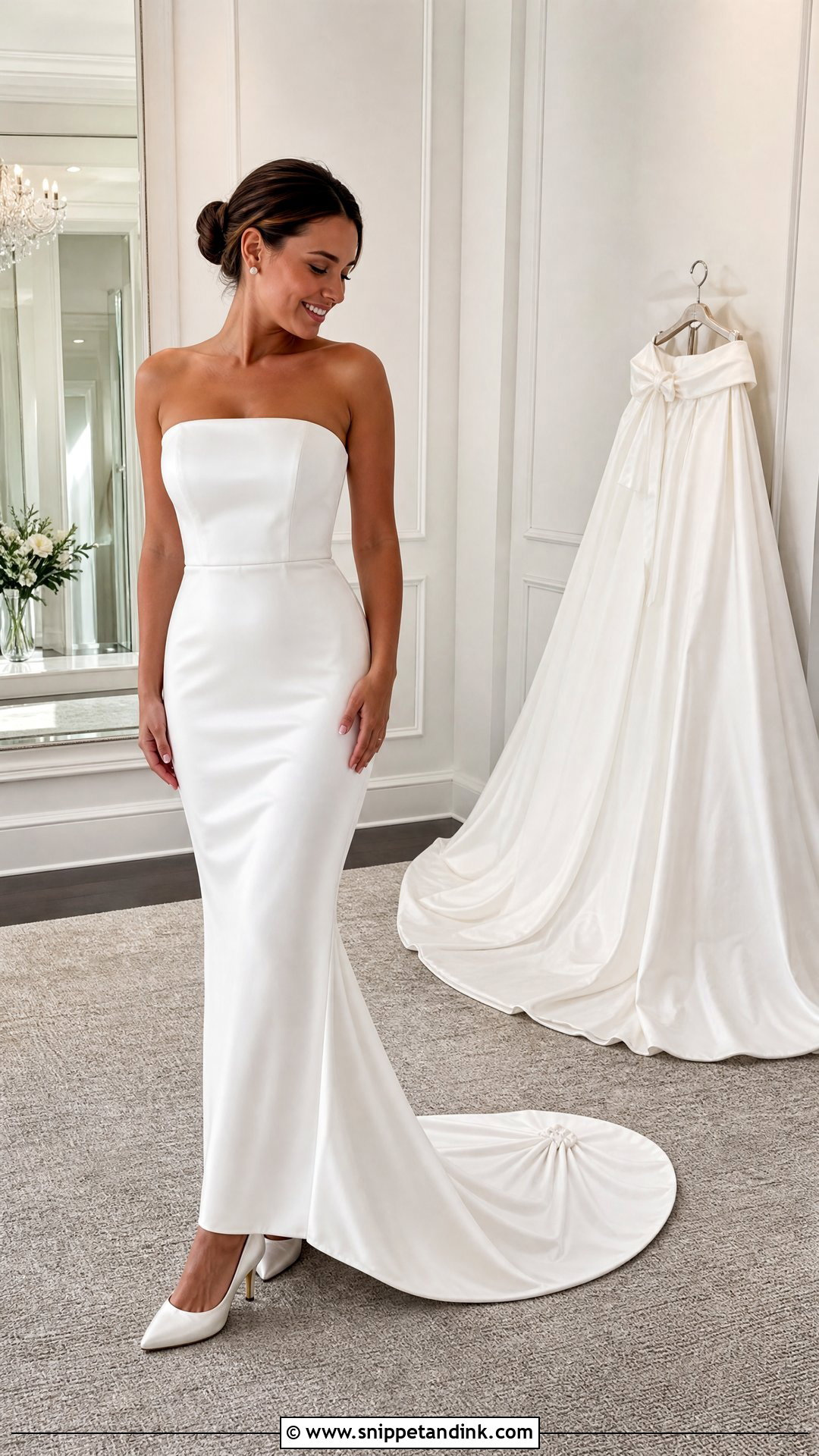
A detachable train lets you take the whole train off for the reception, but if the gown underneath has its own train, you still need a small bustle too. It’s an easy transformation without a second dress. Attachment points should be secure and hidden. Practice the removal before the day, especially if the snaps are tiny, and decide who will carry the train away; it’s bulky and someone needs to hang it somewhere clean.
23. Low Bustle Wedding Dress
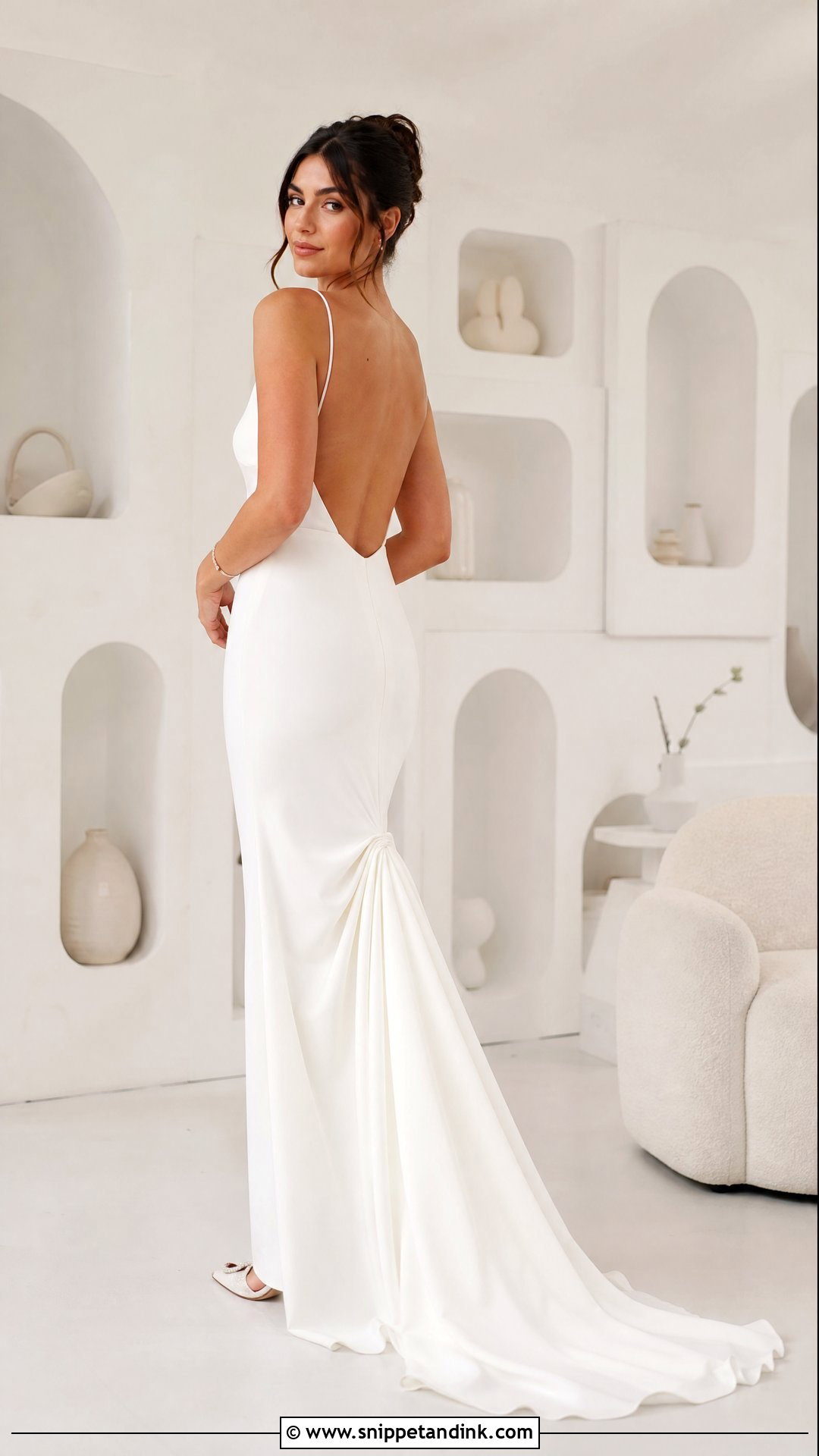
A low bustle gathers the train near the lower skirt rather than up at the waist, so the hip area stays smooth and the back keeps a long vertical line. It flatters fitted gowns, minimalist dresses and trains that start low. On crepe, satin or lace, low placement often preserves the original silhouette best. Ask to see it both standing and walking, because low bustles can swing when you move.
24. Invisible Bustle Wedding Dress
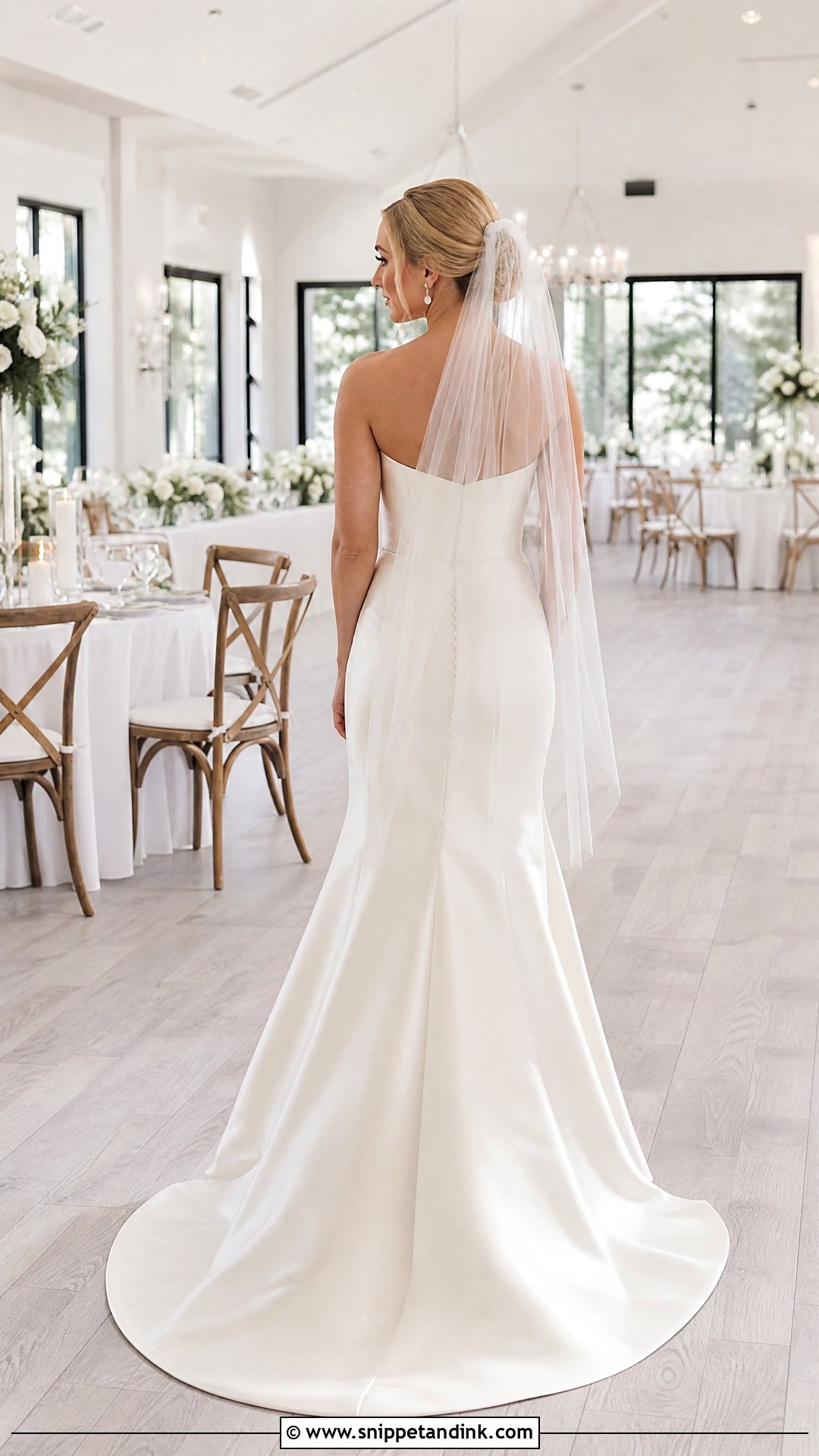
No bustle is truly invisible on every gown. What a skilled seamstress can do is make it very discreet with a ballroom bustle, a hidden under-bustle and buttons matched to the fabric. Minimalist gowns are the hardest because there is no detail to hide hardware behind; lace and appliqué give more camouflage. If discretion is your priority, say so at your first alterations appointment so it’s planned from the start.
25. Reception Bustle Wedding Dress
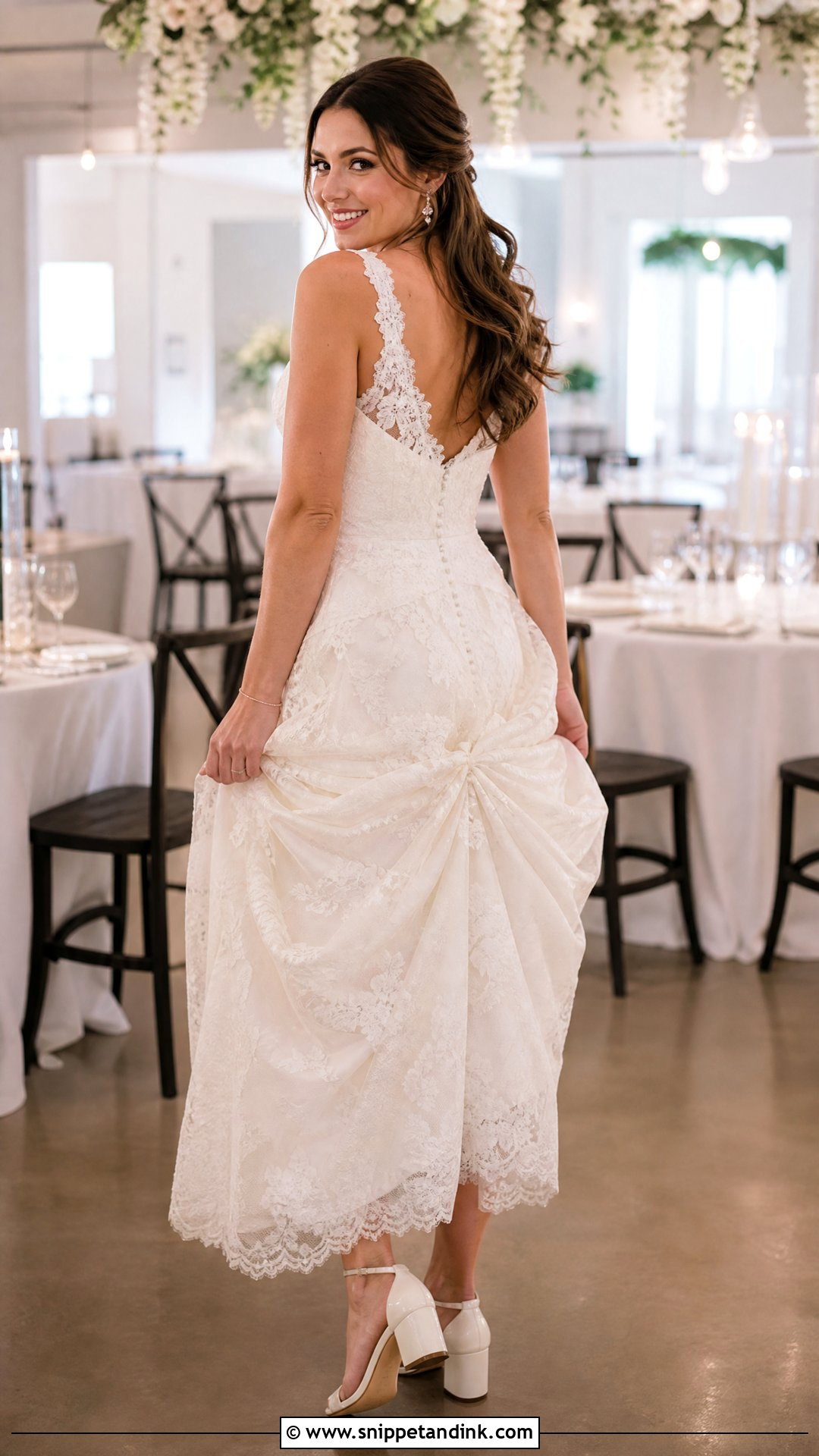
After the formal photos, you’ll walk between tables, hug relatives, sit and dance, and the bustle has to survive all of it. The most dramatic option isn’t always the right one; the right one stays secure on your fabric and shape. Have your seamstress teach your helper directly, then film a short video of the process. Check it with your actual shoes and think about the reception floor too, since a polished dance floor and a grass lawn treat a hem very differently.
On the Day: Who Bustles You, and When
I put the bustle in the timeline as its own line, right after family photos and before the grand entrance. Give it ten to fifteen minutes in a quiet room with good light. Trying to do it in a corridor while guests file past is how loops get missed.
Pick one helper and one backup who both attended the final fitting. The maid of honor is the usual choice, but the person who is least likely to be pulled away for a speech or toast is a better one. Make sure the bustle video is downloaded to their phone, since venue wifi is unreliable.
When a Loop Snaps on the Dance Floor
It happens, usually from someone stepping on the bustled hem or from a heavy train swinging during a fast song. My kit always carries white and ivory thread, a needle, small safety pins and a couple of spare ribbon loops for exactly this.
- Take the bride somewhere private, lift the train and find the broken point first; the others may still hold.
- A safety pin through the lining, hidden under a fold, holds a light train for the rest of the night.
- For a heavy train, re-pin to the nearest strong seam rather than the original spot, which is now weakened.
- If nothing holds, a dress strap or ribbon tied as a wrist loop lets you carry the train yourself.
Your Seamstress Has the Final Say on Points and Placement
A well-made bustle protects your train, keeps the hem cleaner and lets you move without thinking about the dress. Some brides love the visible folds of an American bustle; others want the smooth back of a French or ballroom bustle. Fabric, train length, silhouette and embellishment all feed into the decision, and your seamstress will know what your gown can carry. Bring your shoes, take photos, and have your helper practice before the day.
You'll Like These Ideas:


Leave a Reply