
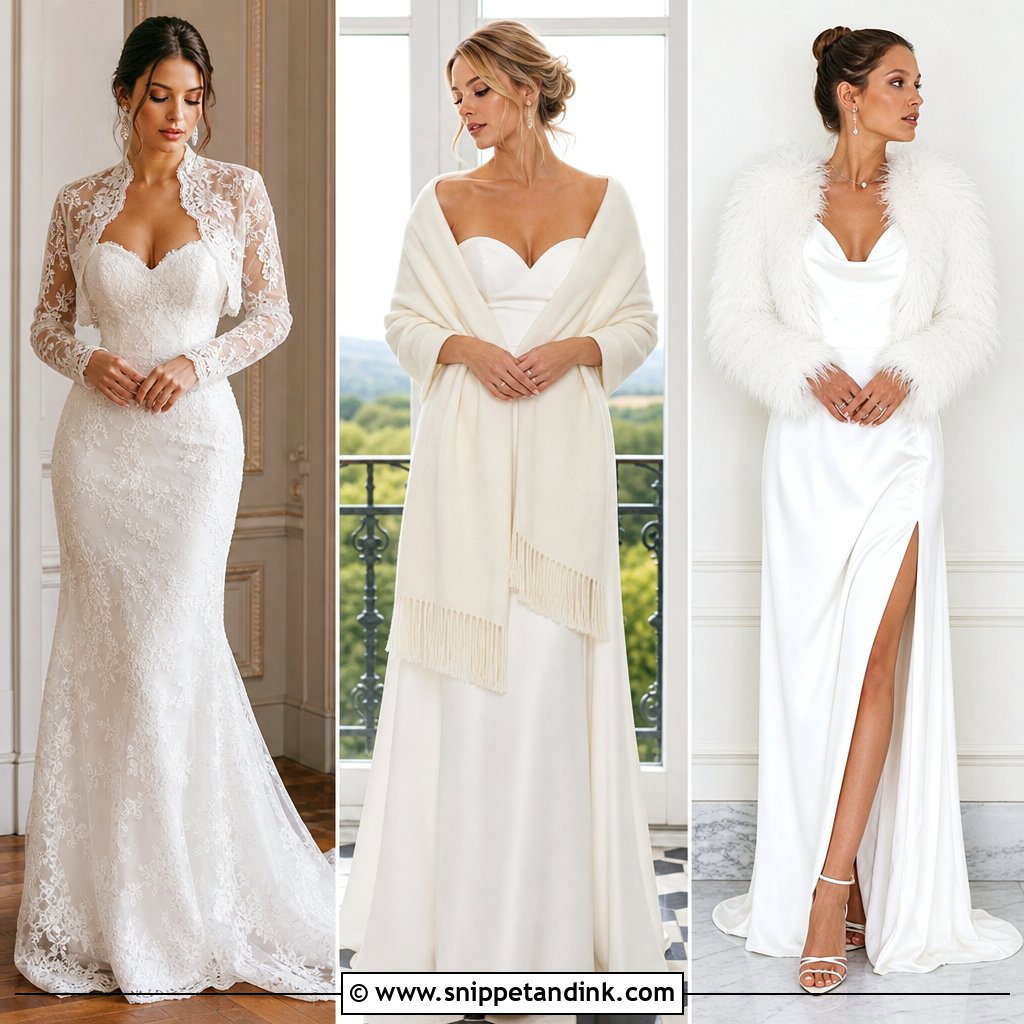
A removable topper is the cheapest way I know to get two bridal looks out of one gown. Long sleeves give you ceremony coverage for a church or a cold venue, and then the layer comes off and the strapless or sleeveless neckline you fell in love with is back for dinner and dancing. The fabric does most of the talking: lace adds pattern, sheer tulle almost disappears, and satin or crepe reads as tailoring. What decides whether it looks like part of the dress or like a cardigan thrown on top is fit, shade and where the hem lands on your bodice. Below are twenty pairings I’d actually put in front of a bride, with the details I check on each one.
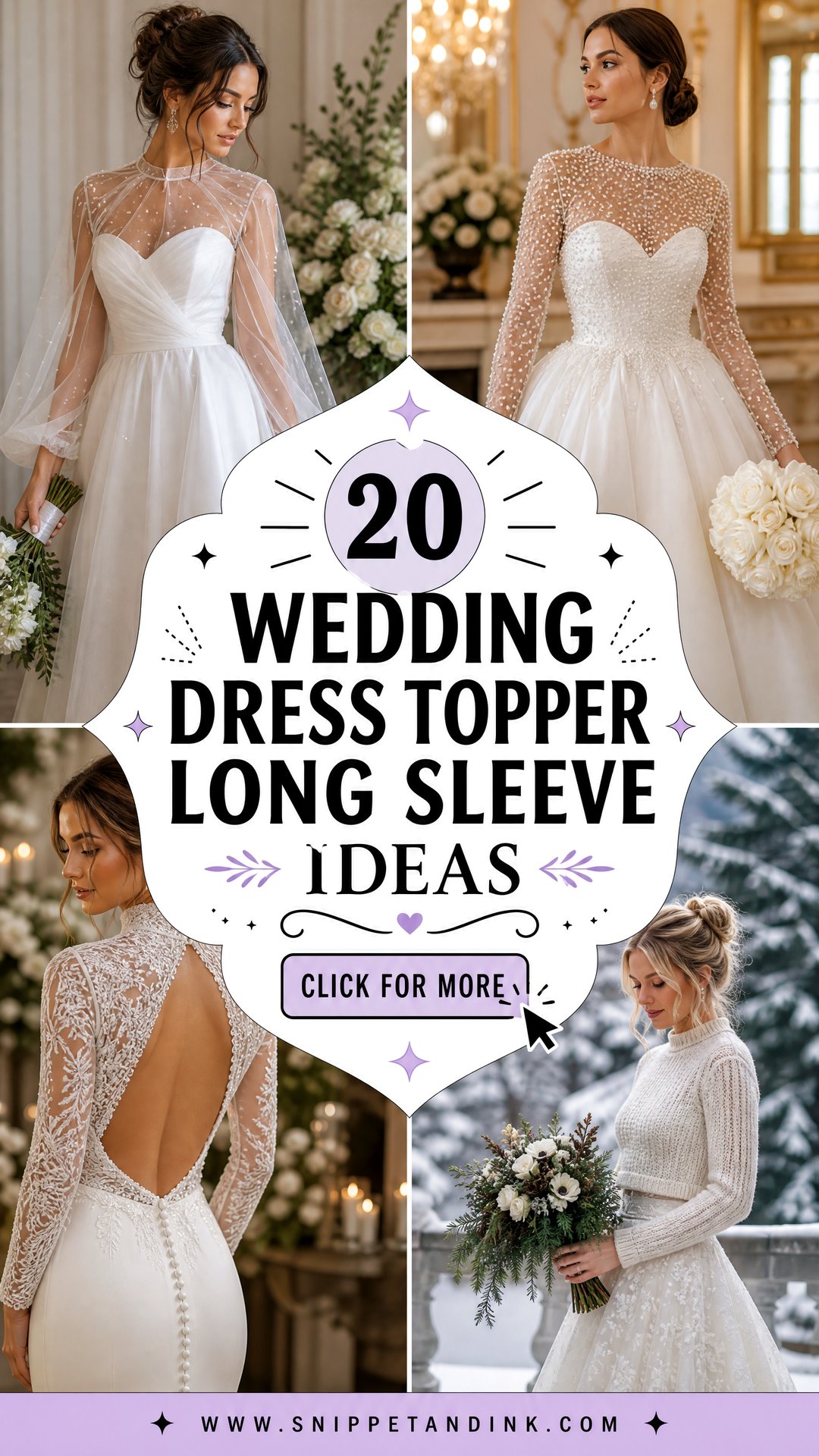
Matching a Topper to a Gown That Is Already Bought
Most brides come to me with the dress settled and the topper as an afterthought, which is the harder order to work in. The gown sets every rule. Its fabric decides the shade the topper has to match, its waist seam decides where the hem must stop, and its neckline decides which topper necklines will sit flat over it.
- Bring the actual gown, or at least a cutting from the hem allowance, to every topper appointment. Photos on a phone screen are useless for matching ivory.
- Check shade by a window, then under warm indoor light. Silk ivory and polyester ivory can agree in one light and split apart in the other.
- Pin the topper hem to the gown’s waist seam before deciding on length. A finished hem that misses the seam by even a little looks like a mistake from the side.
- Wear your wedding shoes and underwear at fittings so the posture and the bra line are real.
- Book the topper alteration after the gown’s final fitting, not before. If the bodice is taken in later, the topper has to follow it.
On timing, I’d have the topper in hand at least six to eight weeks before the wedding if it is ready-made, and much earlier for custom lace work, which can take several months. That leaves room for one fitting of its own. Lace and tulle toppers are usually shaped with small darts at the bust and a sleeve taper, and those are quick jobs for a good seamstress as long as nobody is panicking about the date.
1. Lace Mock Neck Wedding Dress Topper With Satin Gown
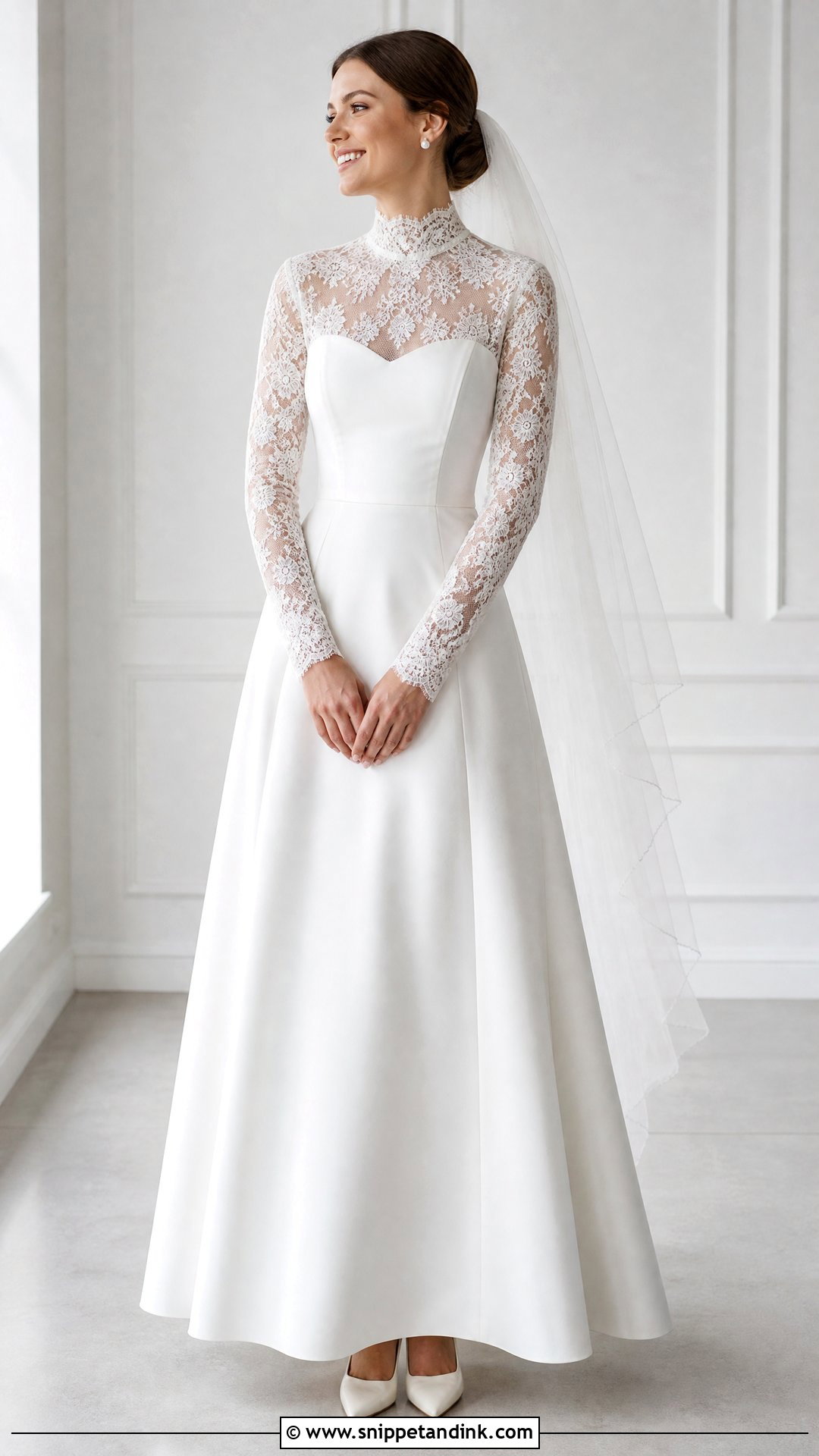
A lace mock neck topper over strapless satin is the pairing I reach for when a bride wants a traditional ceremony look without giving up her silhouette. Fitted illusion sleeves and floral lace that runs unbroken across the collar matter here; if the lace motif is chopped at the neckline seam, it looks bought separately. Covered buttons down the back finish it. With that much going on at the throat, I skip the necklace and go to pearl studs or slim drops, plus a smooth low bun, a fingertip veil and pointed ivory pumps. The one thing I measure twice is length: the topper should stop at the natural waist so it sits over the bodice, never bunching where the skirt begins.
2. Sheer Tulle Wedding Dress Topper With Strapless Gown
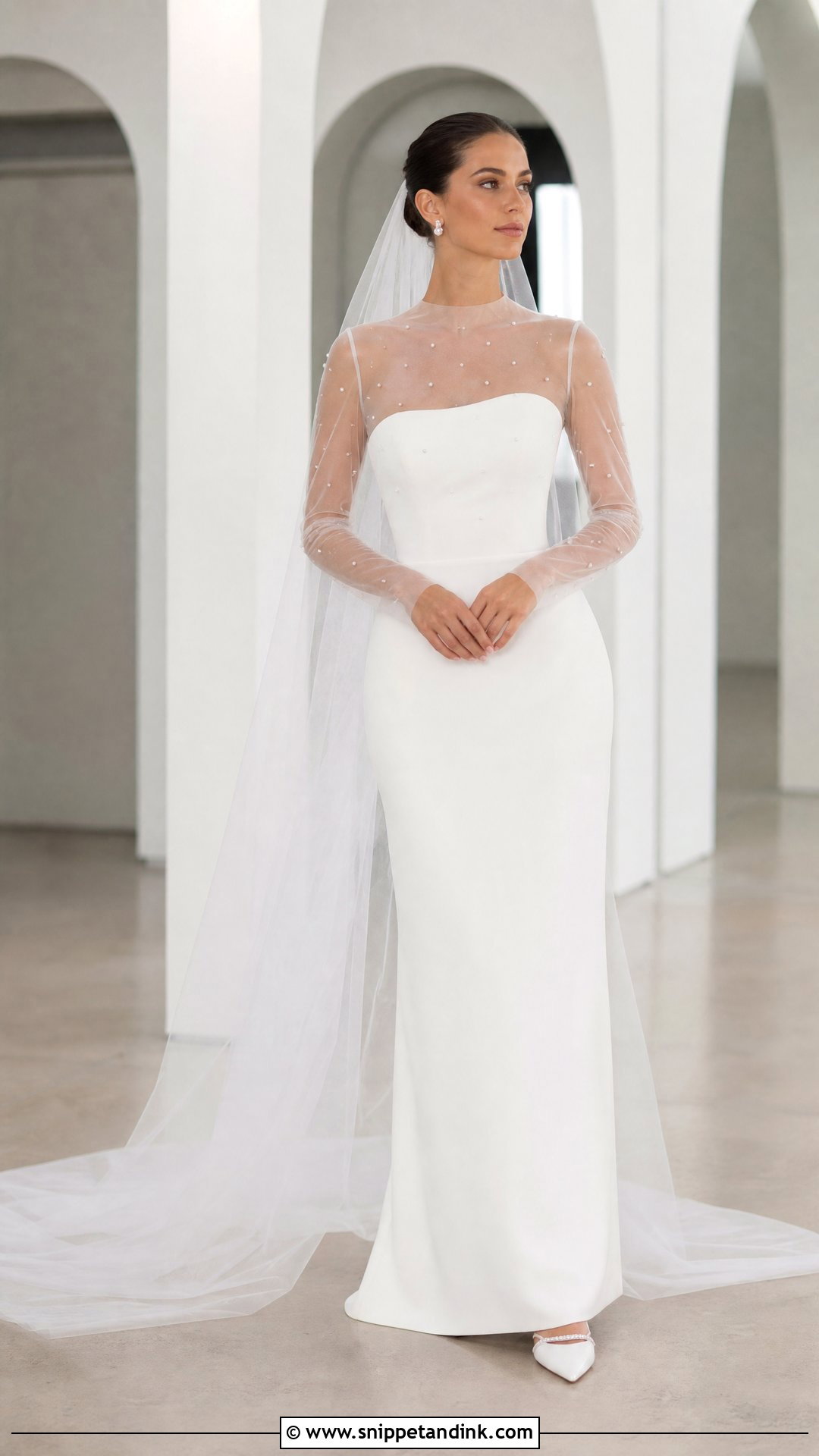
Tulle that nearly vanishes against the skin gives you sleeves while the strapless neckline stays the focal point. It suits a plain crepe, satin or mikado gown with little or no embellishment. I hold swatches against the inside of the bride’s wrist, because tulle labelled “nude” comes in several undertones and the wrong one looks grey in daylight. A tiny back tie or covered buttons is all the detail it needs, with crystal studs, a sleek bun, pointed pumps and a long plain veil. Get it fitted at the bust and upper arm: loose tulle wrinkles into lines, and sleeves cut too tight stop you hugging anyone.
3. Floral Lace Wedding Dress Topper With A-Line Gown
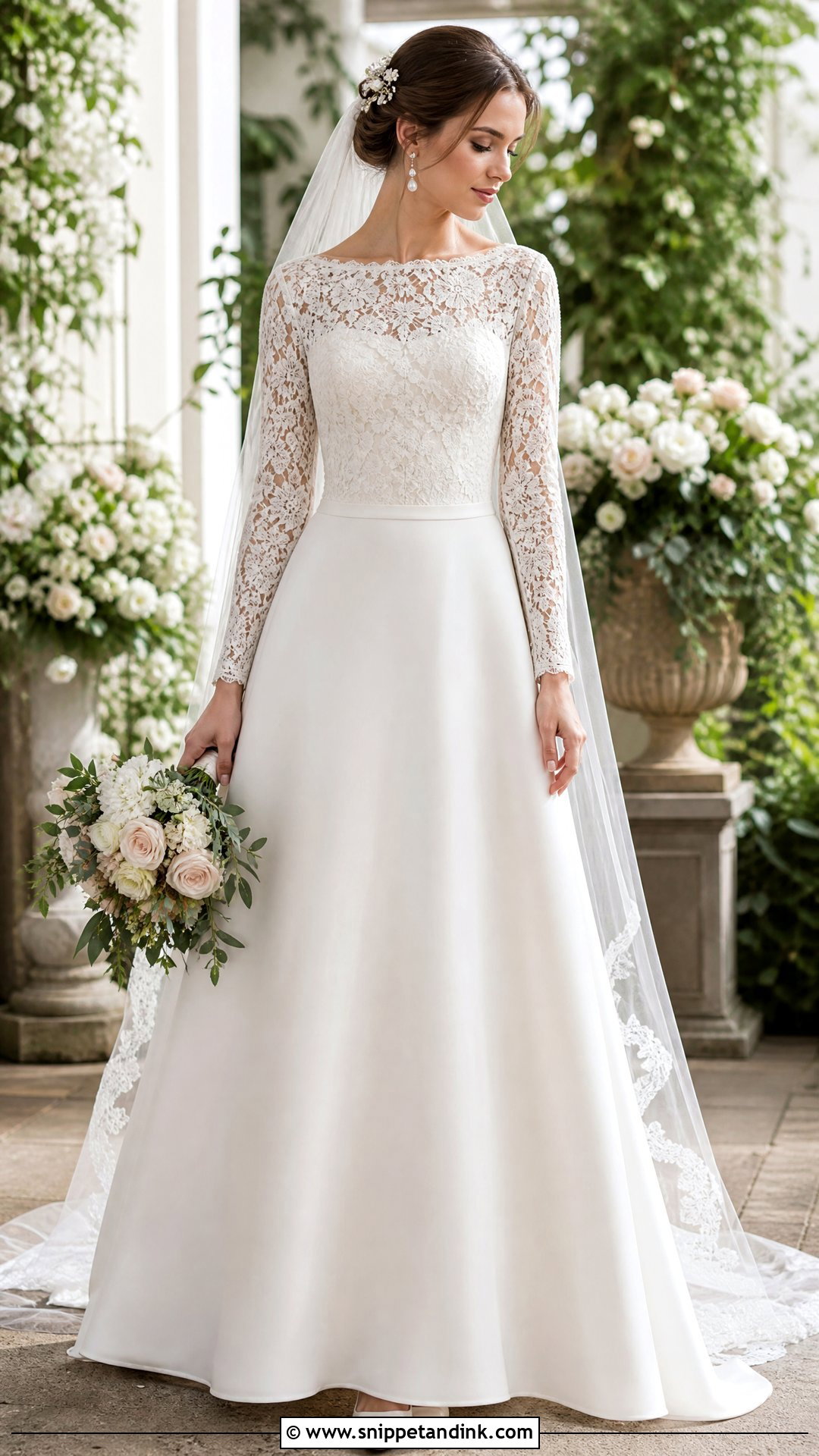
Floral lace gives a plain A-line gown the dimension it was missing. Medium-scale flowers are the safe choice, since tiny motifs disappear at a distance and huge ones swamp a simple skirt. A bateau or softly rounded neckline with fitted sleeves balances the fuller skirt below. Pearl drops, a small comb, closed-toe ivory heels and a plain-edged chapel veil keep the lace as the only pattern. Shade is where this goes wrong: two ivories that look identical in a boutique can split apart in flash photos, so I always check them side by side by a window. The lace should finish cleanly at the waistband rather than trailing onto the skirt.
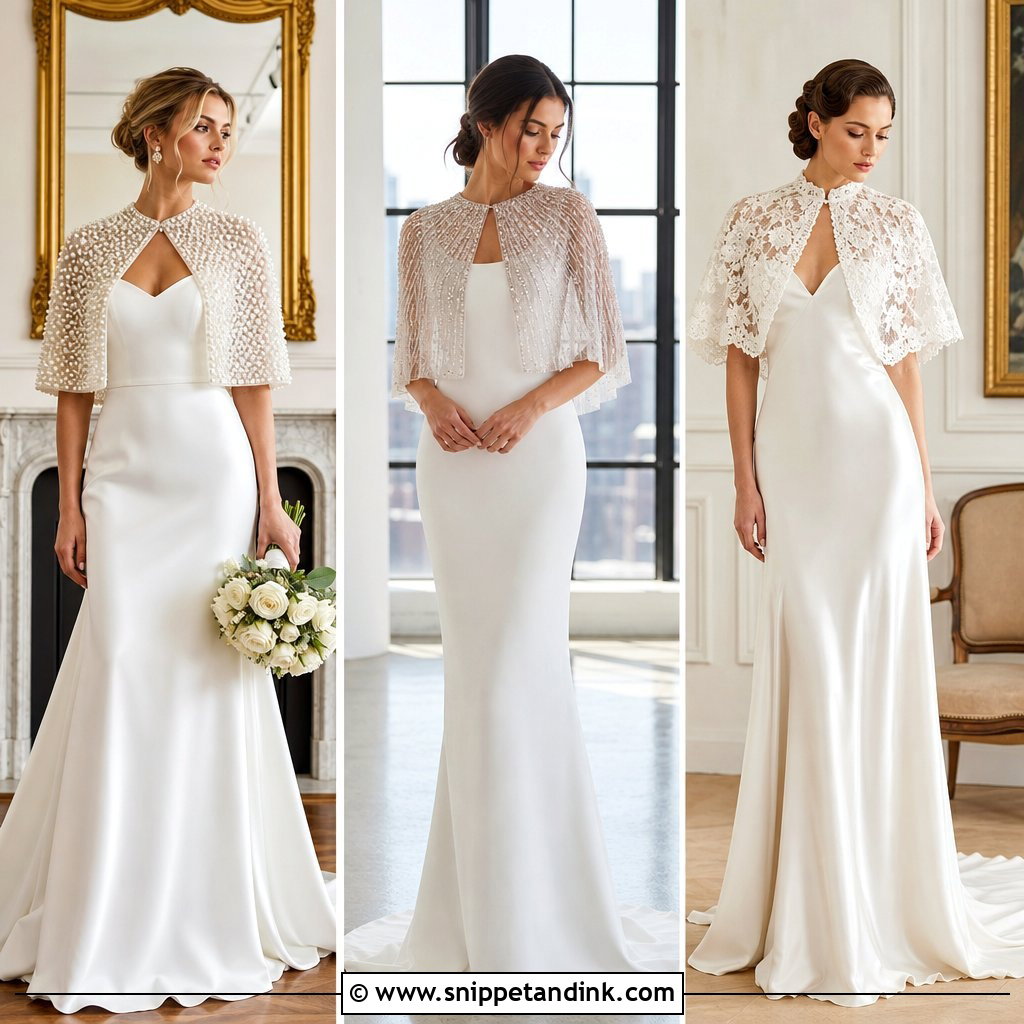
4. Beaded Wedding Dress Topper With Column Gown
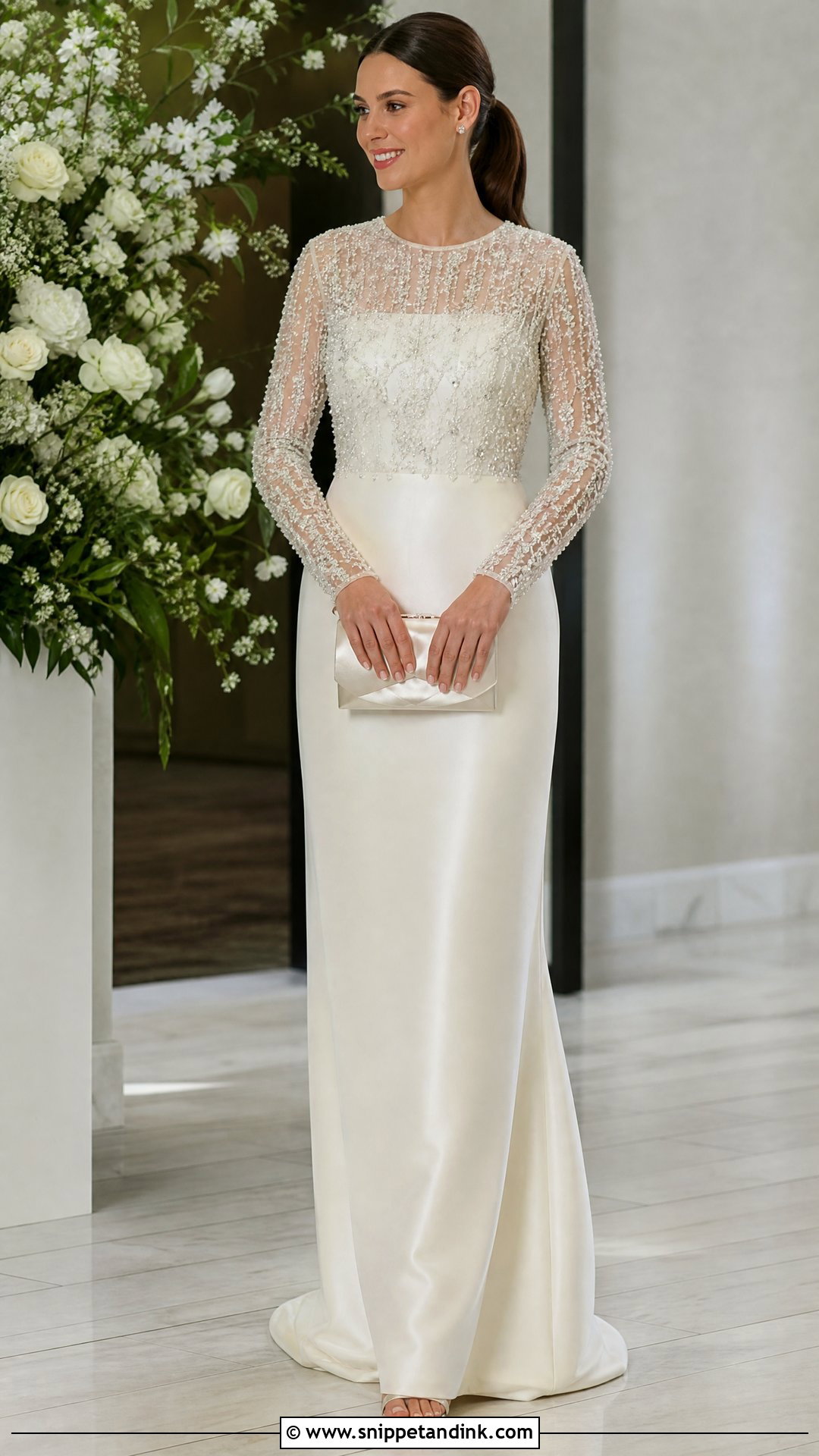
Beading on a long-sleeve topper puts sparkle on a column gown without breaking up its straight line. I prefer fine pearl, crystal or sequin work stitched onto light mesh; heavily encrusted fabric drags the shoulders forward and spoils the posture a column depends on. A high neck reads formal, a V-neck lighter. Keep the rest simple with studs, metallic or ivory heels and a small satin clutch. Necklaces are a bad idea here, as they snag the mesh and fight the beadwork. A low ponytail or neat chignon shows the shoulders so the beads catch light when you turn.
5. Chantilly Lace Wedding Dress Topper With Slip Gown
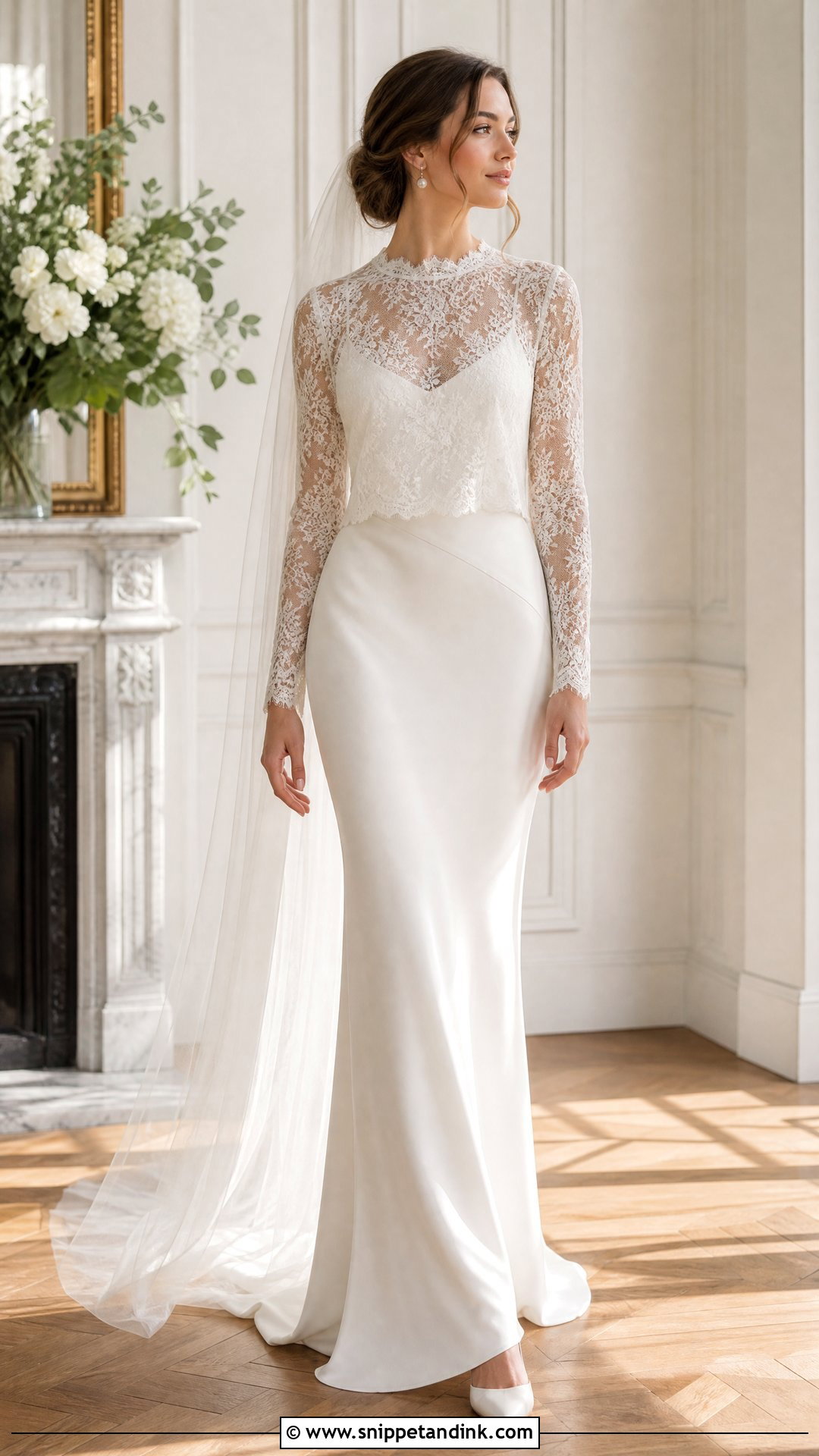
Chantilly is the fine, flat lace with a hairline outline thread, and it softens a slip gown without adding weight. A scalloped neckline, slim sleeves and a hem cropped to the gown’s waist is the cut I like best over silk or satin, where the plain sheen sets off the pattern. Pearl earrings, low satin heels and a loose chignon with a few face-framing pieces suit it, and a simple tulle veil tucks underneath the bun. Slip gowns have no structure to hold a layer in place, so I ask the seamstress for a hidden thread chain or snap at the shoulders. Otherwise the topper slides sideways every time you hug a guest.
6. Crepe Wedding Dress Topper With Mermaid Gown
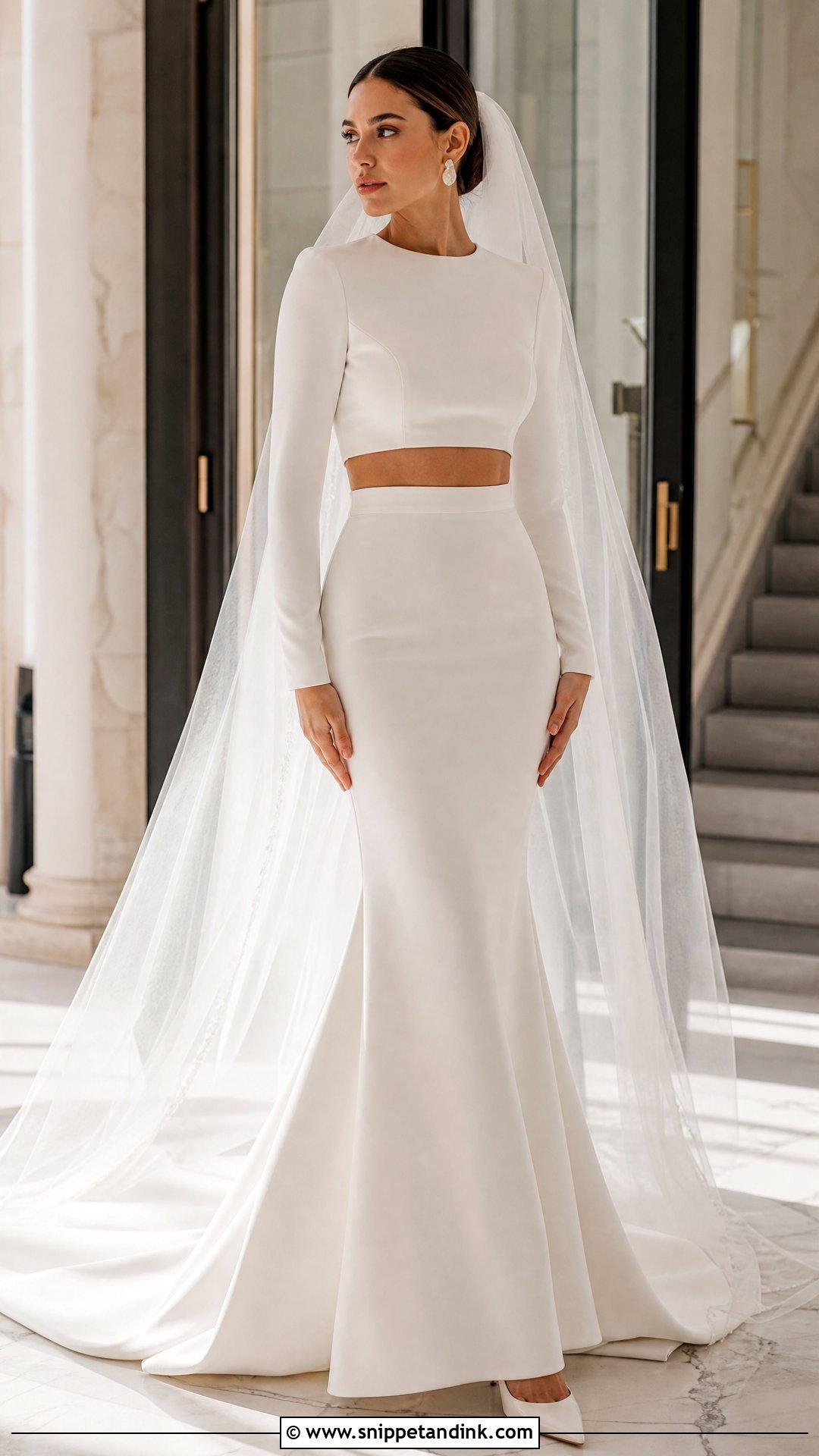
Crepe is my first suggestion over a mermaid gown because it has enough body to look tailored but stays thin at the seams. A cropped topper with fitted sleeves, a clean V-neck and very little seaming looks like it was designed with the dress. Match weight as carefully as colour; a heavier crepe over a lighter one pulls and dimples. Pointed pumps, sculptural earrings and a sleek centre-parted bun keep it modern, and a cathedral veil supplies the drama. Mermaid shapes depend on the waist and hips, so the topper must stop above the waistline. Even an inch too long creates a ridge of fabric right where the fitted skirt starts.
7. Pearl Wedding Dress Topper With Strapless Ball Gown
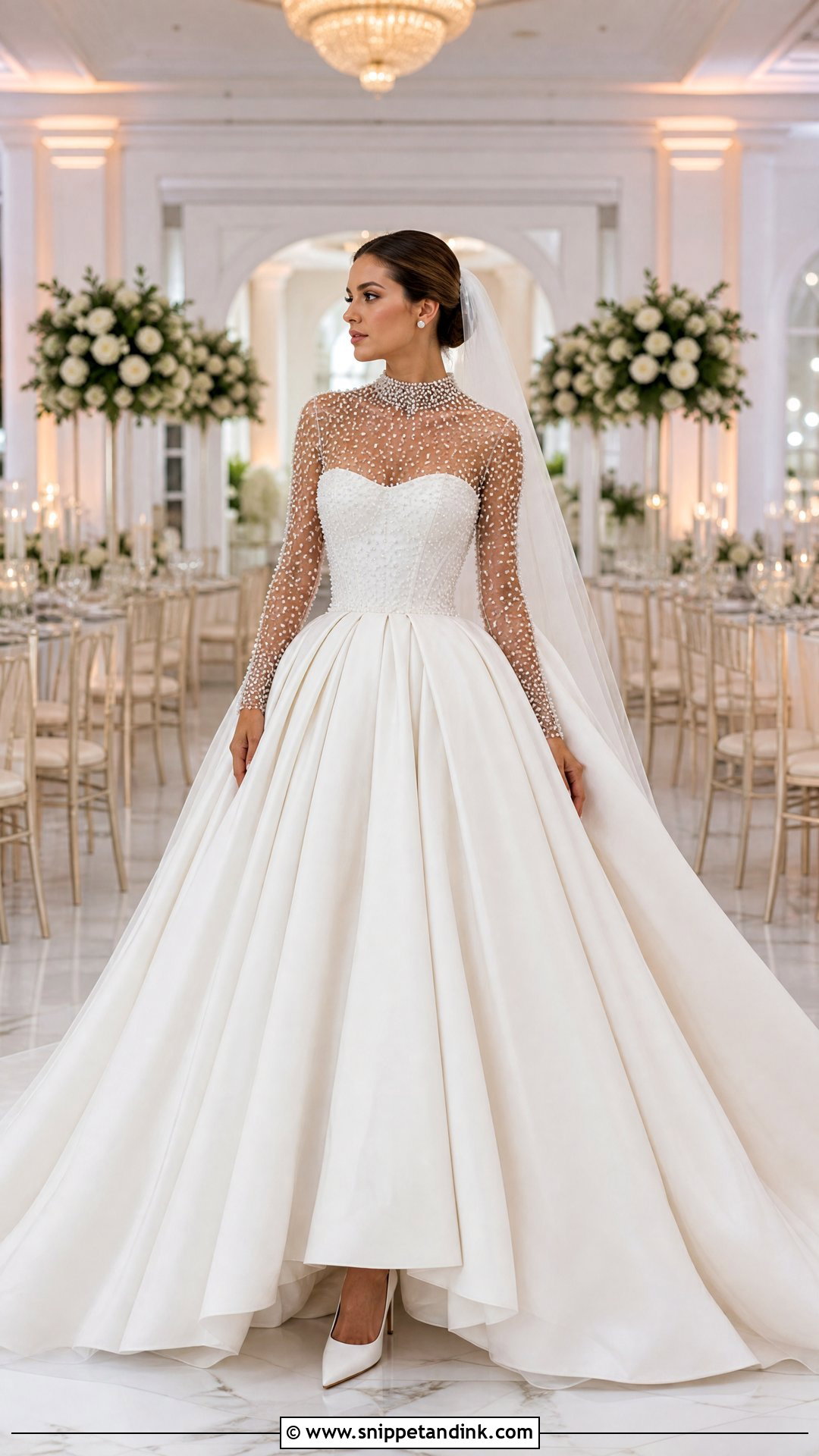
Scattered seed pearls on sheer mesh give a strapless ball gown a soft glow up close. Fitted sleeves balance the big skirt, and an illusion neckline covers without adding visual weight to the upper body. I look for pearls in two or three small sizes, which gives depth instead of a flat dotted surface. If the topper is densely decorated, pearl studs or bare ears are enough, with a smooth bun, satin pumps and a plain-edged veil. Before the day, run your hand along the inside of the sleeves: loose pearls catch on the bodice and leave pulls in satin. Leave room at the shoulders and elbows so you can raise your arms for the first dance.
8. Bell Sleeve Wedding Dress Topper With Boho Gown
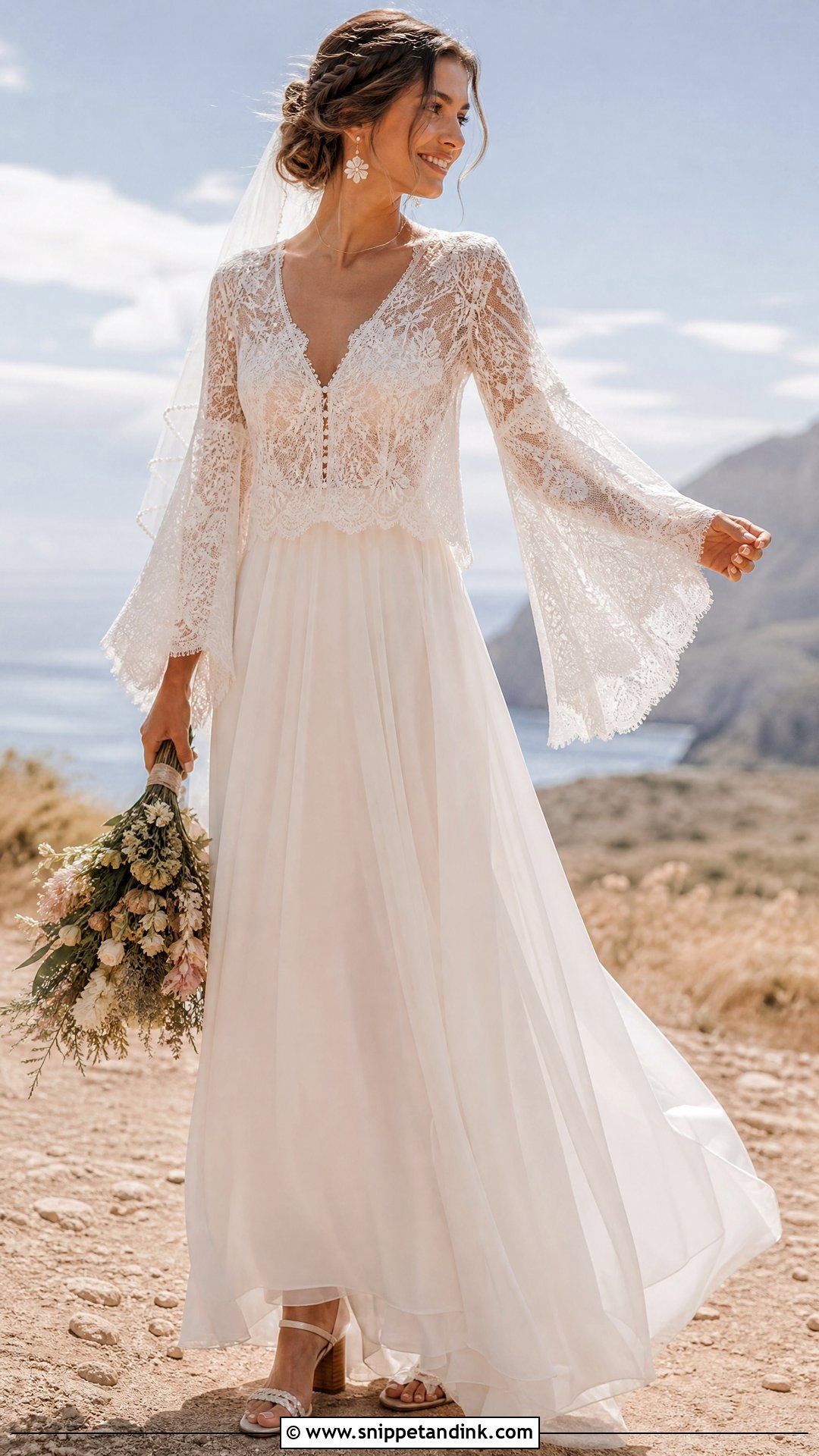
Bell sleeves bring movement to a relaxed boho gown, and they only work in light lace or embroidered tulle; stiff fabric flares out like a costume. The bodice should stay fitted, with the bell opening below the elbow. A chiffon A-line or slim sheath, low block-heel sandals and small floral earrings suit it, with a loose braided updo to keep the neckline clear. Skip the heavy veil and choose a fingertip veil or a delicate hair vine. At the fitting I have the bride hold her bouquet, because a wide cuff that falls past the wrist drags through the flowers and ends up stained with stem water.
9. Puff Sleeve Wedding Dress Topper With Simple Gown
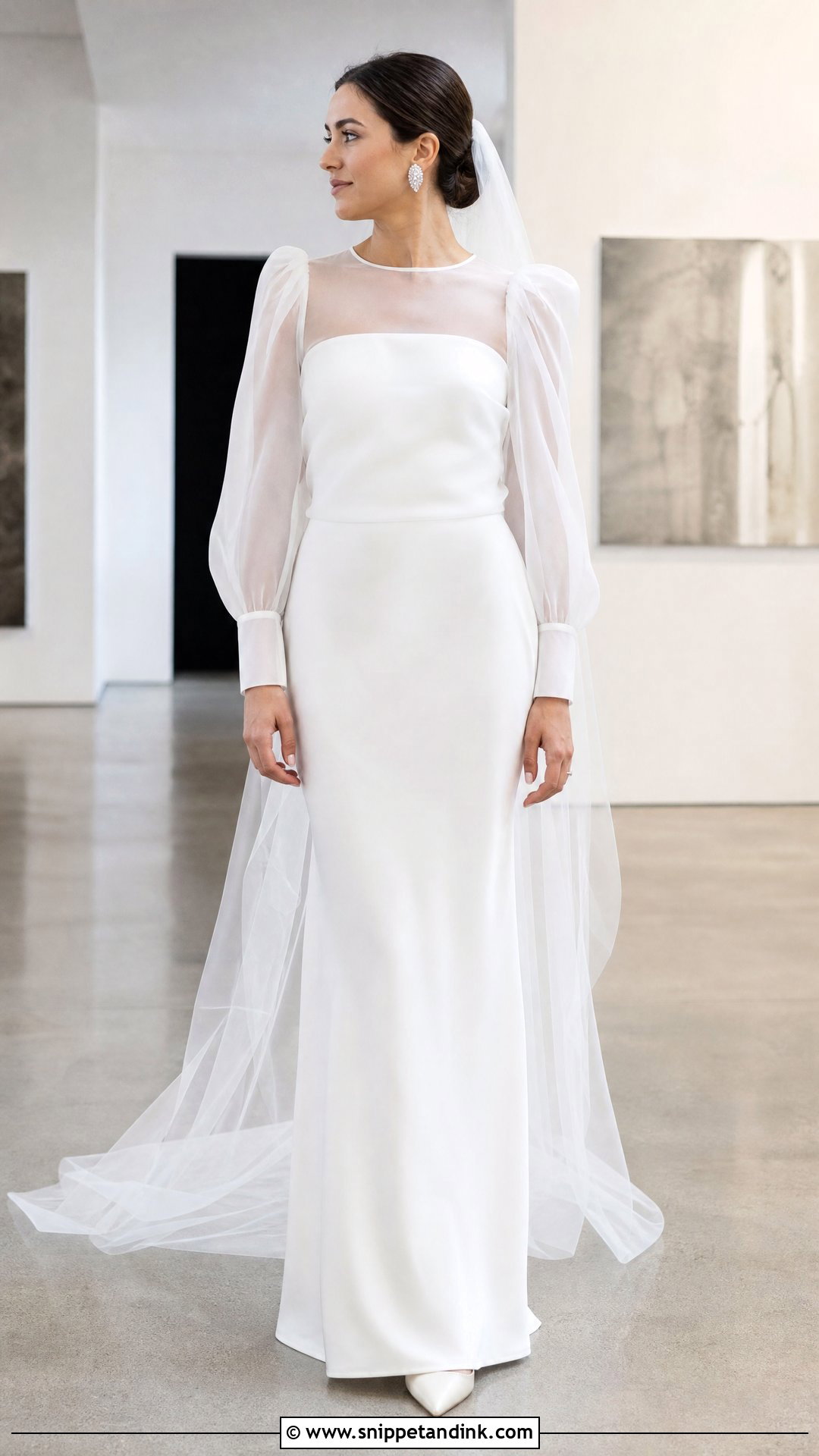
Puff sleeves add fashion to a minimal gown, but the version I recommend keeps the volume at the shoulder and fits closely from elbow to wrist. Sheer organza holds the puff best; tulle and light lace give a softer shape. Wear it over a strapless column or A-line with a defined waist, plus pointed ivory heels, small crystal earrings, a low bun and a plain veil. Proportion matters more with this cut than any other on the list: a petite bride looks swallowed by a big puff, while a taller frame carries it easily. Raise both arms at the fitting. If the neckline pulls down when you do, the armholes are cut too low.
10. Embroidered Tulle Wedding Dress Topper With Fit And Flare Gown
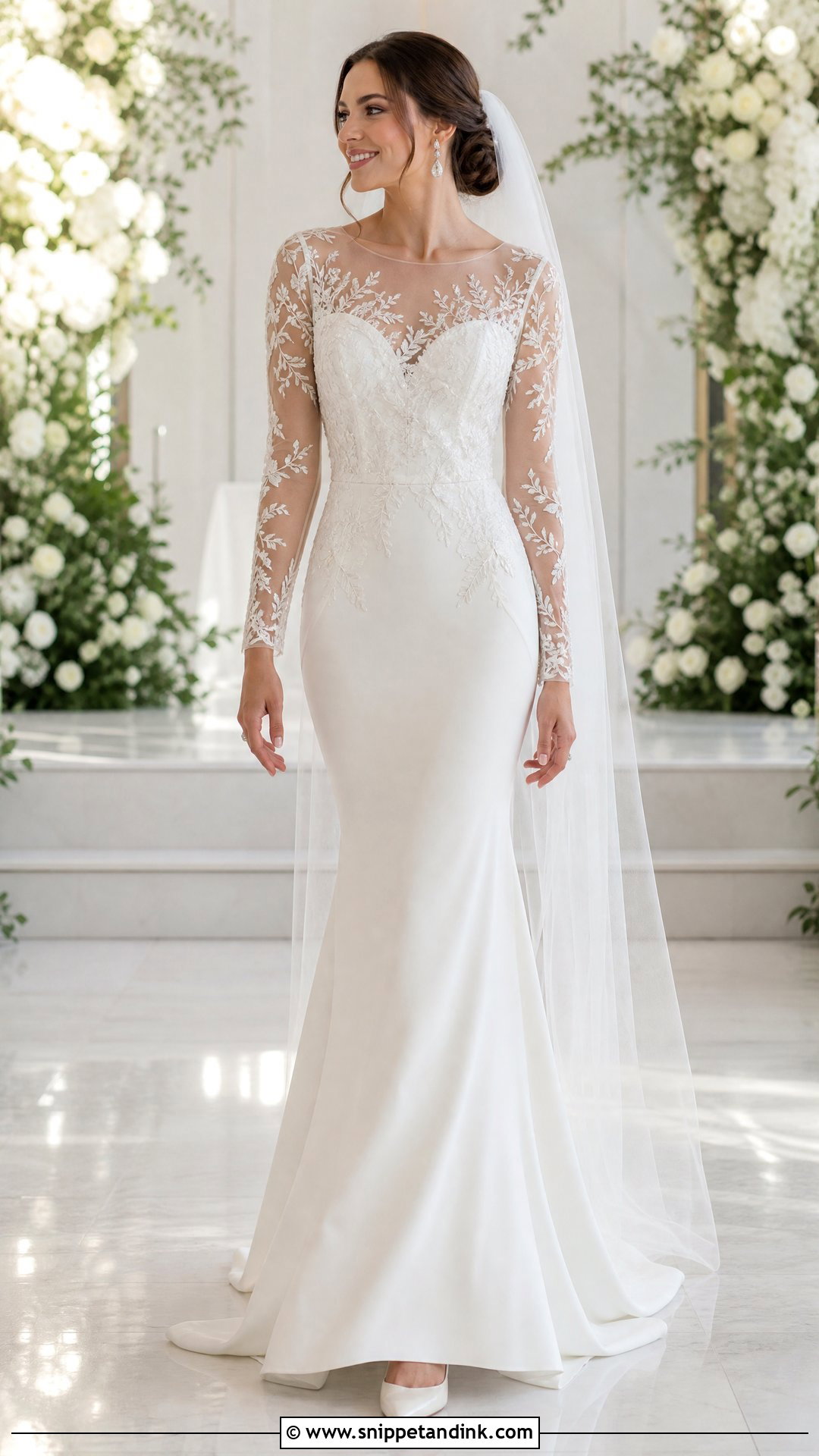
Embroidered tulle puts artwork on a fit-and-flare gown without making it heavy. Vines, small flowers or scattered leaves can frame the neckline and trail down the sleeves, and I like embroidery that thins out toward the wrist so the eye travels back up to the face. Crystal drops, a twisted low bun and classic pumps keep the styling quiet, with the veil pinned below the bun so the back embroidery shows. If your gown already has lace, bring it to the topper appointment. Two unrelated motifs layered together look accidental, while a shared leaf or petal shape ties them into one design.
11. High Neck Wedding Dress Topper With Backless Gown
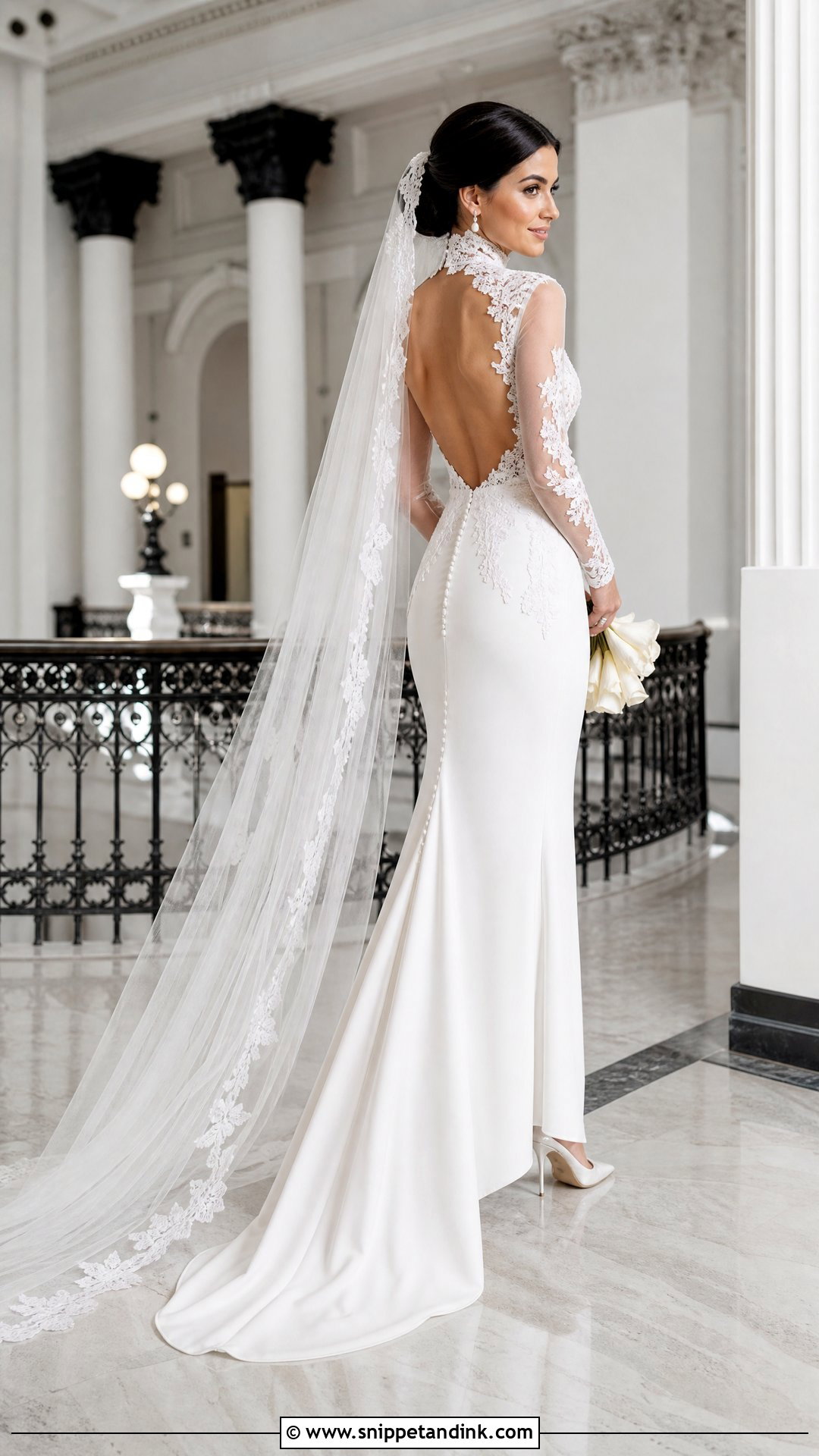
A high-neck topper gives you a modest front view and still leaves the open back of the gown on show. I like illusion mesh with lace appliqués placed at the neckline, shoulders and wrists, with a line of covered buttons down the spine. An updo is almost compulsory here so both the collar and the back stay visible, paired with slim drops, pointed heels and a light cathedral veil set low under the bun. Leave the necklace off. Try the topper over the real gown before any alteration starts, wearing the actual bra or cups you’ll use, because a strap showing through sheer mesh is the most common thing I end up fixing on the morning.
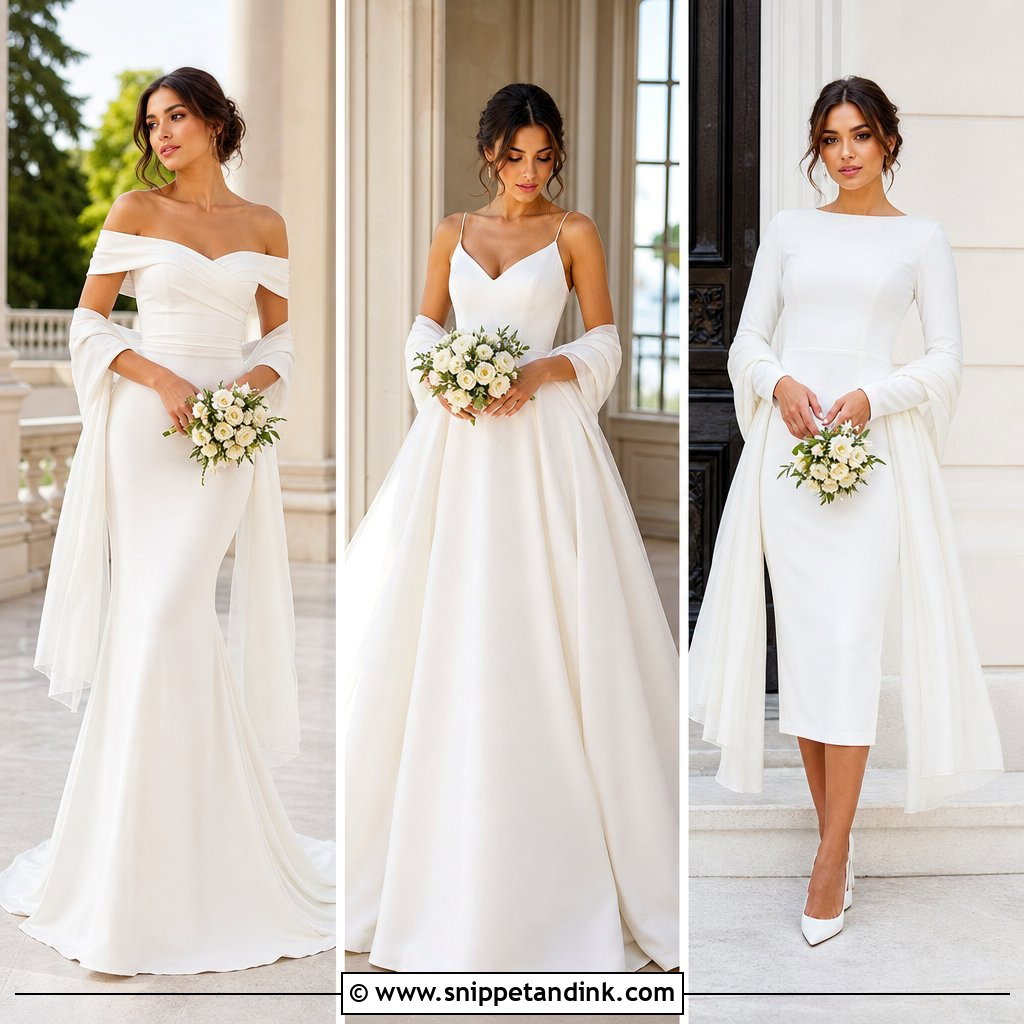
12. Off Shoulder Wedding Dress Topper With Satin Gown
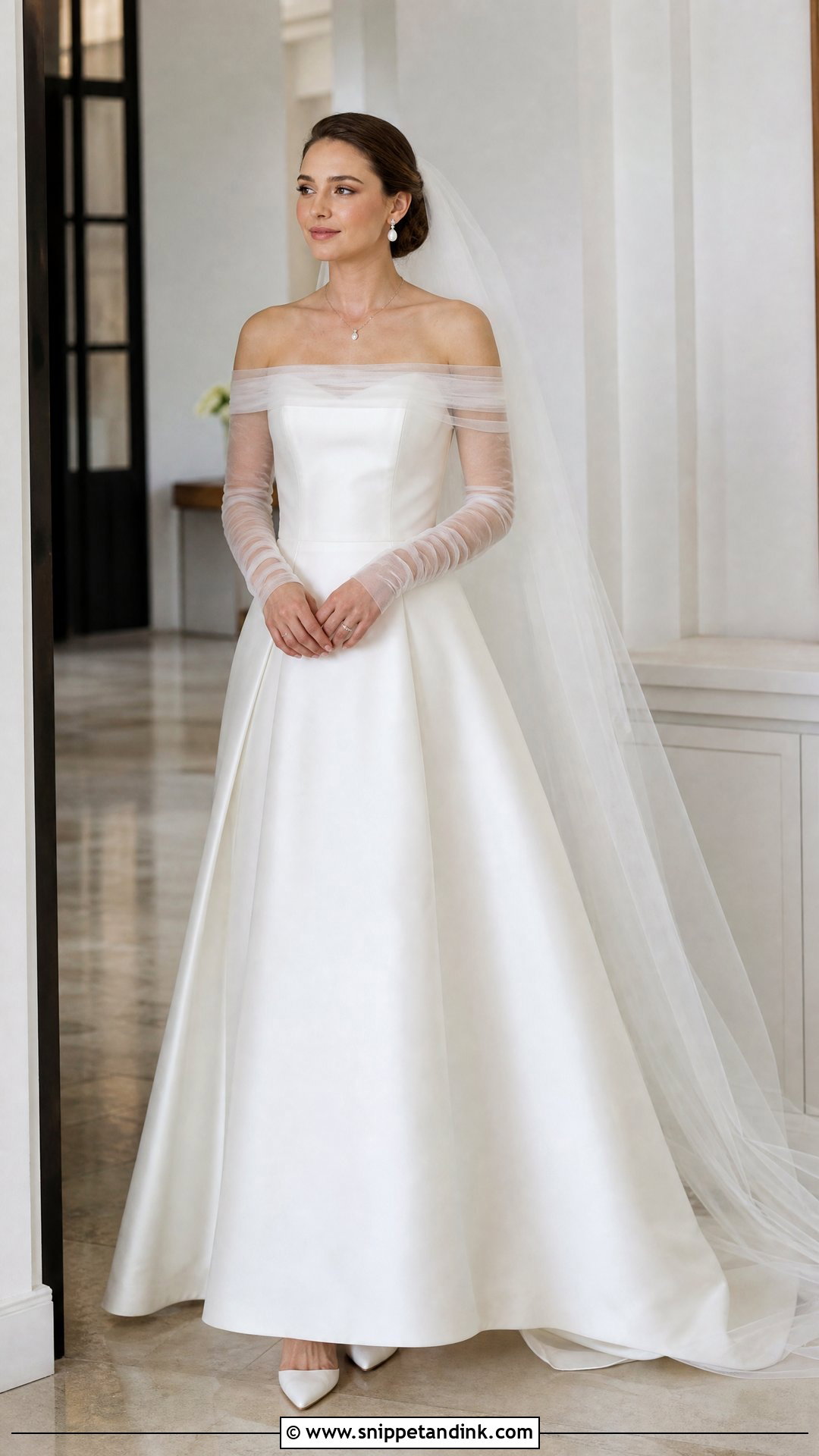
An off-shoulder topper gives you sleeves and still shows the collarbones above a satin gown. Draped tulle, lace or stretch crepe all work for the sleeves, but the band across the arms is where these succeed or fail. Without some grip, the neckline creeps up toward the shoulders every time you lift a glass. I ask for hidden elastic or silicone tape inside the band, plus small loops or snaps that anchor it to the bodice. Style it with a fine pendant, pearl drops, a swept-back hairstyle, pointed satin pumps and a plain cathedral veil. It pairs best with a fitted strapless dress or structured A-line.
13. Button Back Wedding Dress Topper With Minimalist Gown
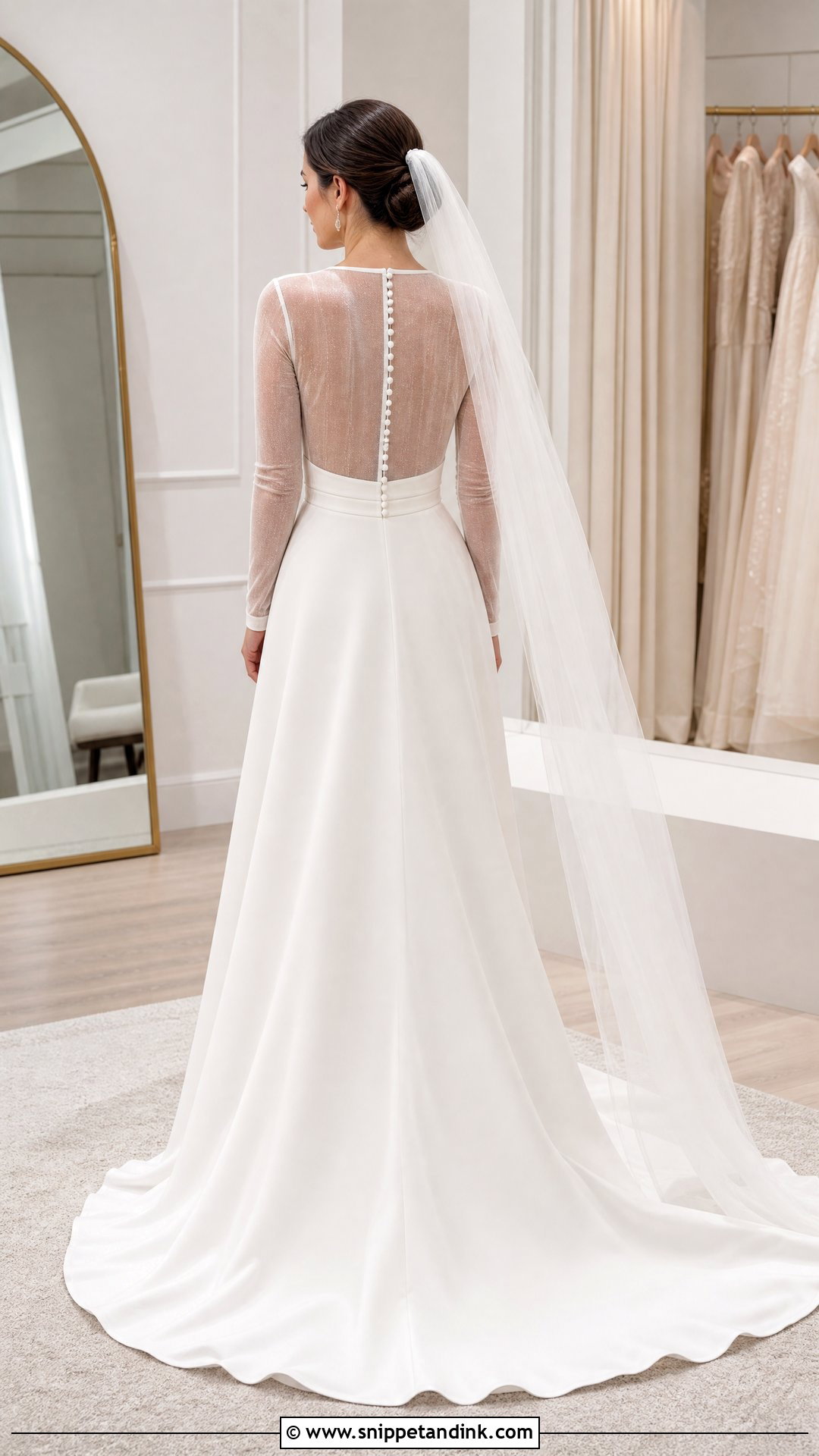
Covered buttons from neckline to waist turn a plain long-sleeve topper into something that looks custom-made. The base can be tulle, lace or smooth crepe, depending on how much texture the gown already has; over a minimal column or A-line the button line becomes the back’s main feature. A low side bun or polished updo keeps it in view, with understated earrings, closed-toe pumps and a plain tulle veil. Practically, assign one person to do up the buttons and give them a crochet hook to pull the loops over. Elastic loops are kinder than fabric ones because they don’t stretch out by evening, and the hem must line up exactly with the gown’s waist seam.
14. Scalloped Lace Wedding Dress Topper With Tea Length Gown
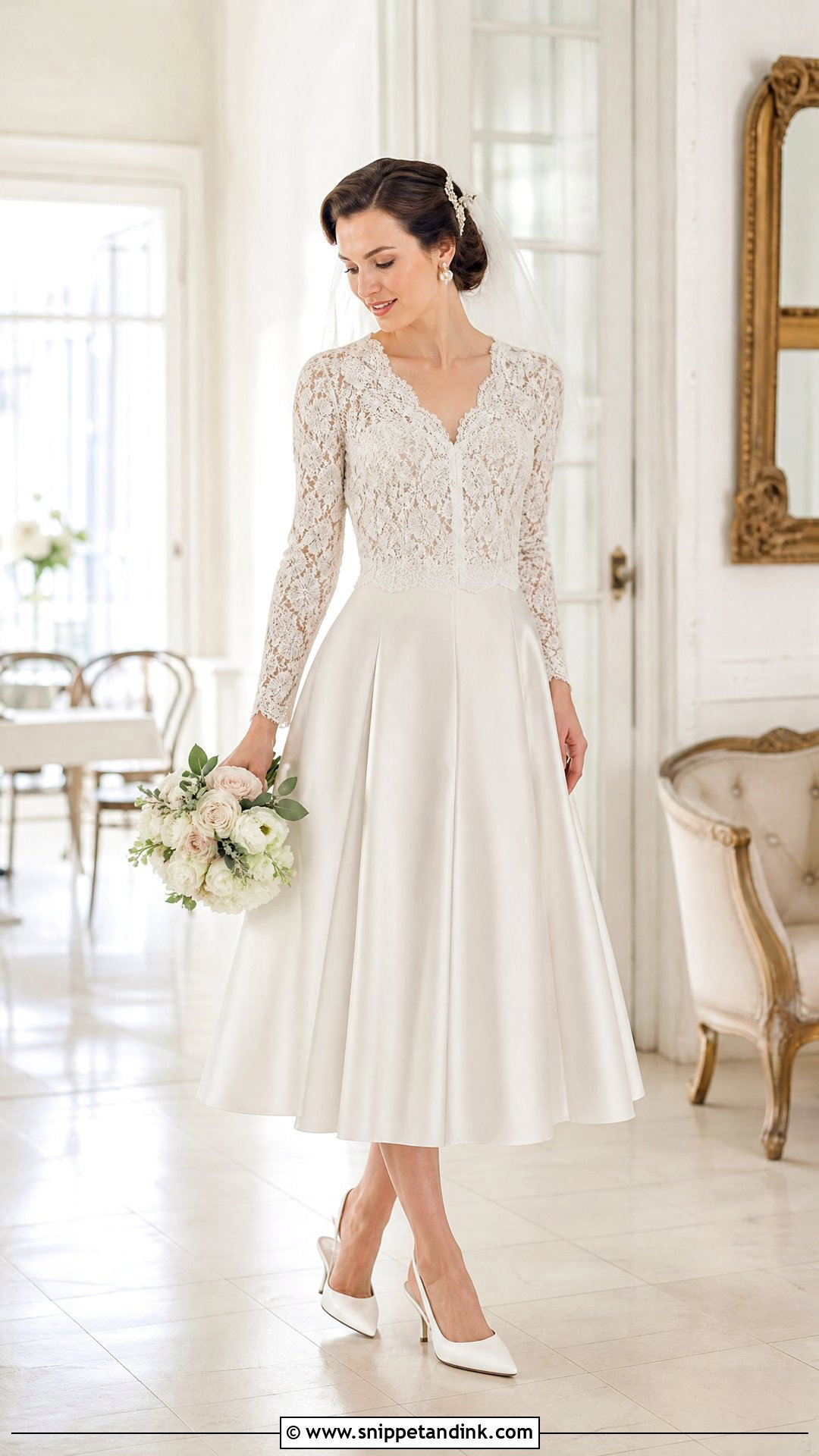
Scalloped lace gives a tea-length gown a vintage character, and the scallops at wrist and waist do a lot of the work. Pair it with a structured satin or tulle-skirted dress that ends between knee and ankle. Shoes are fully on show at this length, so slingback pumps, embellished flats or low block heels deserve real thought. Pearl studs, a small comb and a short veil are plenty. I keep the lace scale small here, since a big repeat on a short dress looks top-heavy. The topper stops at the natural waist so the skirt can flare out cleanly.
15. Chiffon Wedding Dress Topper With Beach Gown
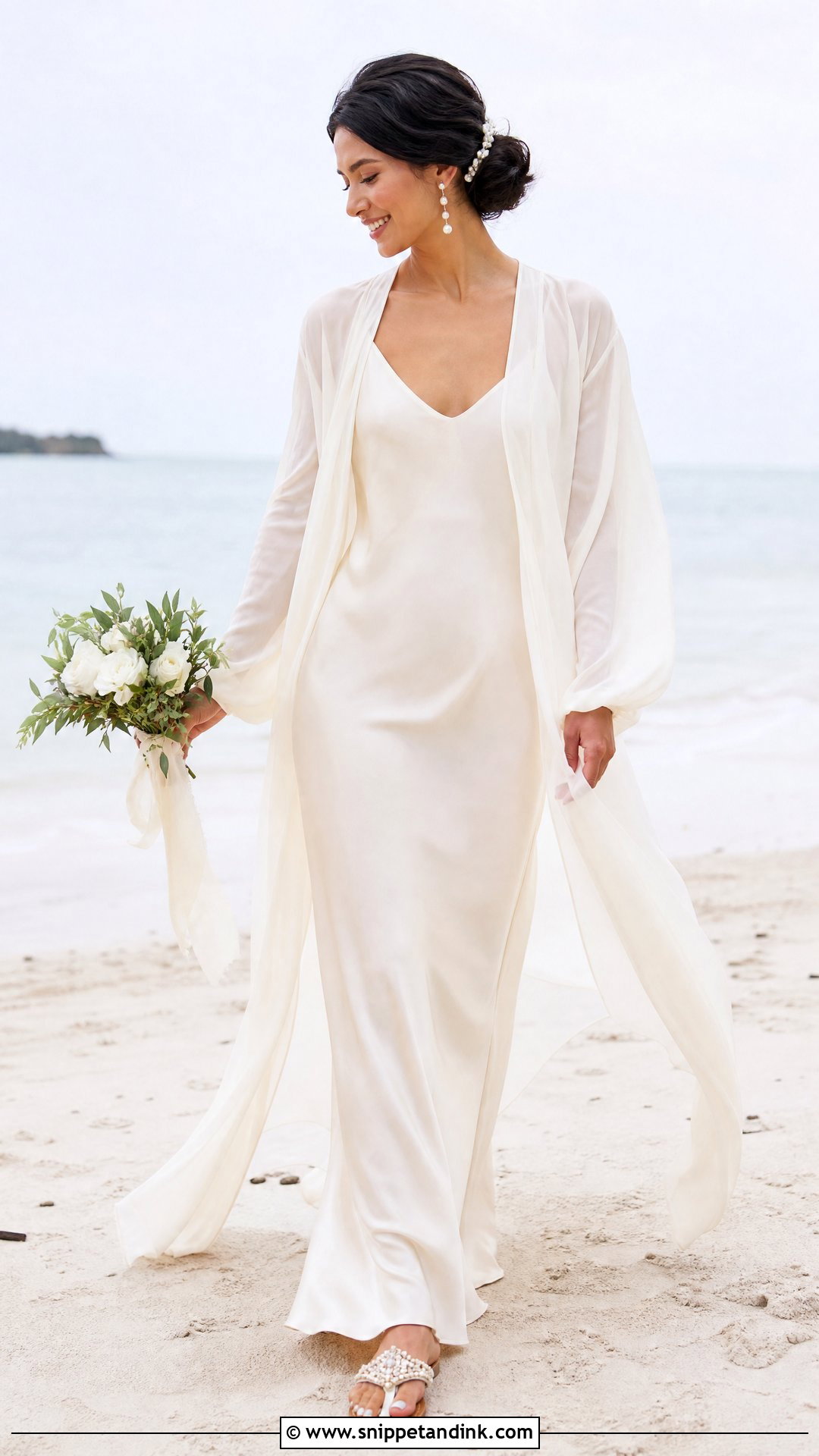
Chiffon is the fabric I recommend for beach weddings because it gives sleeves without trapping heat or weighing down a relaxed gown. A wrap front or a fine tie at the waist suits it, layered over a slip, a flowing A-line or a simple sheath. Wear flat embellished sandals, pearl earrings and a low textured bun. Wind is the thing to plan for: a light veil needs firm pinning into a braided base, or swap it for a small comb on breezy days. Chiffon shows undertone clearly against ivory, so match carefully. Extremely wide sleeves blow around and get sandy, while a gentle cuff keeps the movement but holds the fabric near the wrist.
16. Satin Bridal Jacket With Strapless Wedding Dress
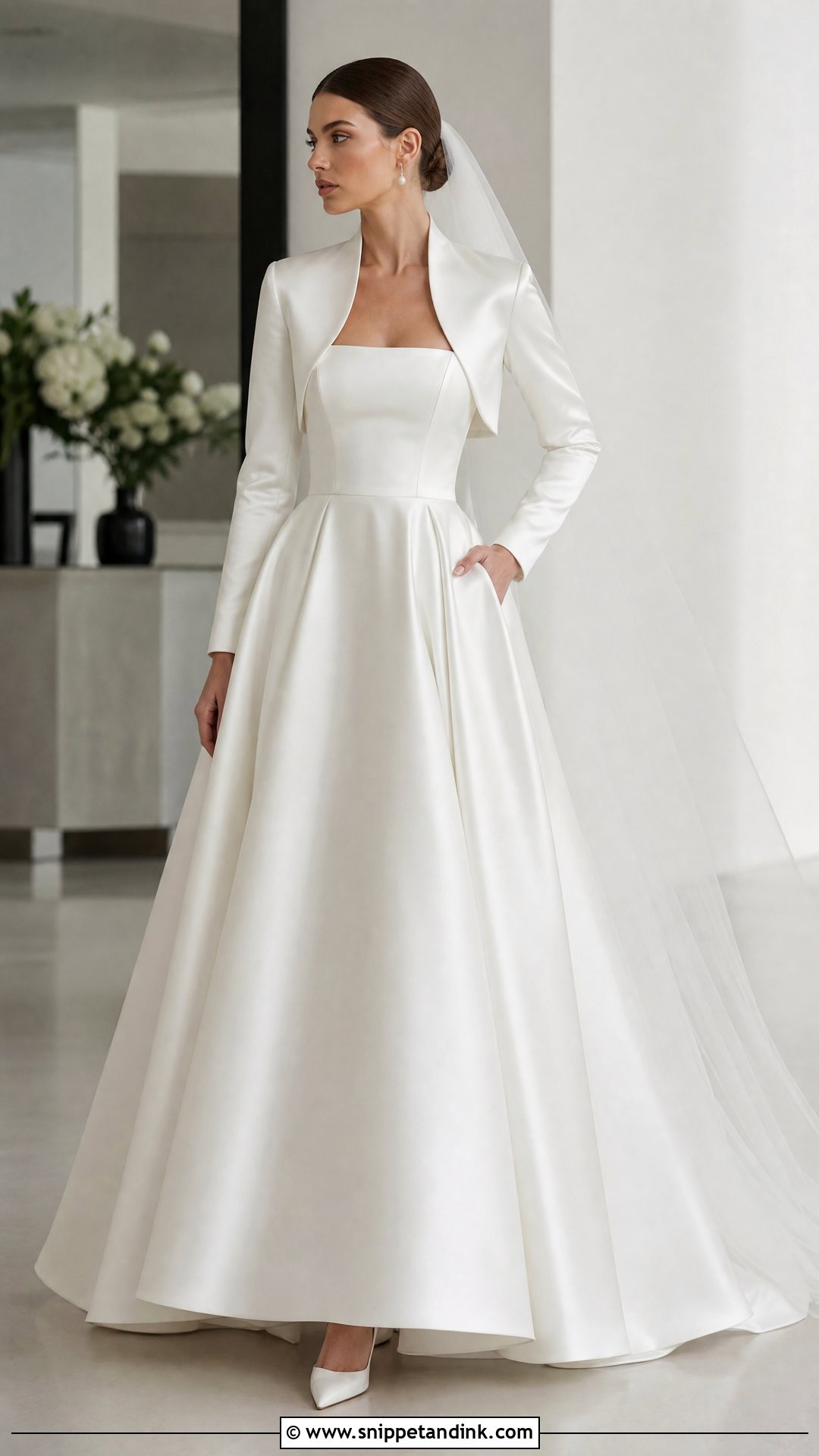
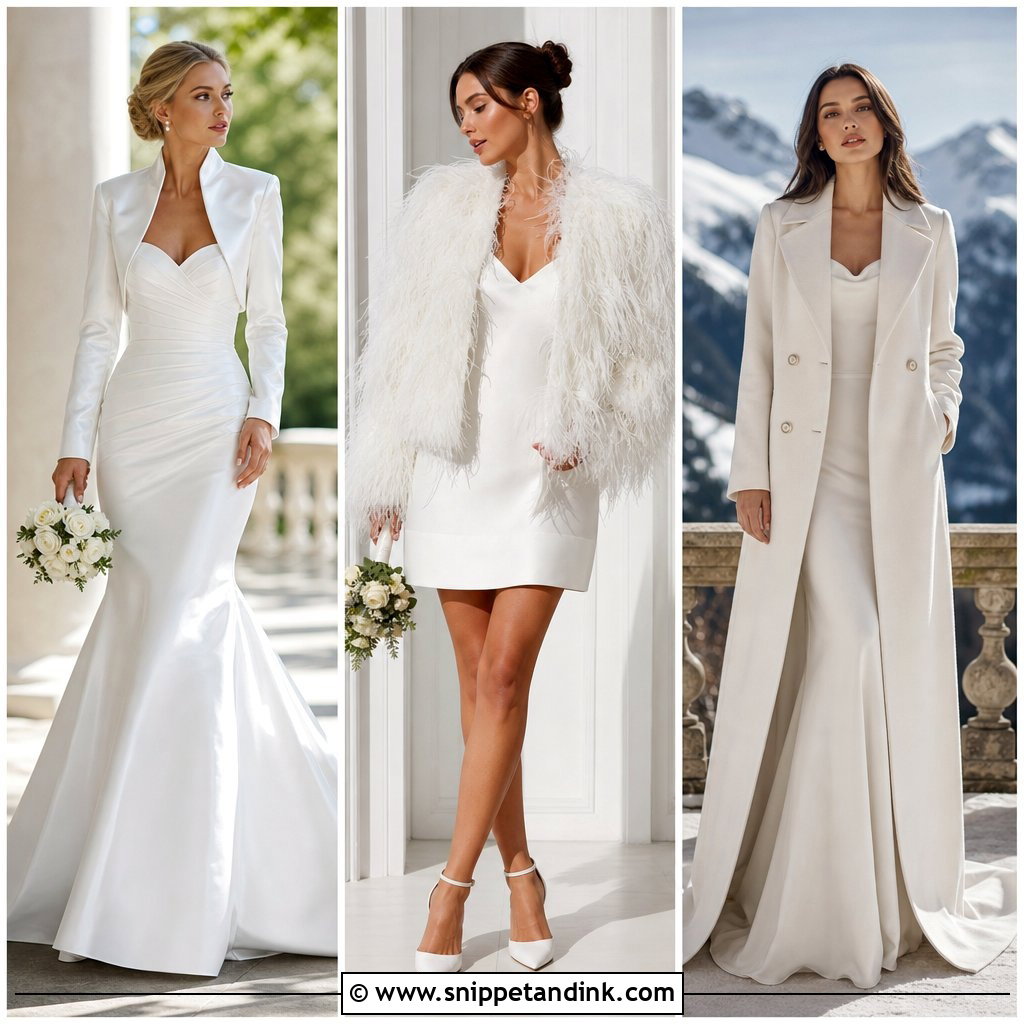
A cropped satin jacket gives a strapless gown a structured, almost couture second look. Look for long fitted sleeves, a rounded neckline and covered buttons or a hidden front closure, and match the sheen as well as the colour: duchess satin next to a softer charmeuse looks mismatched in every photo. A clean ball gown or A-line, pointed pumps, pearl earrings and a sleek chignon finish it, with a long veil to soften the tailoring. The jacket should end at the natural waist or just above the waistband. Avoid big lapels and bulky shoulder seams. Taking it off at the reception reveals the bare neckline, and guests really do notice the change.
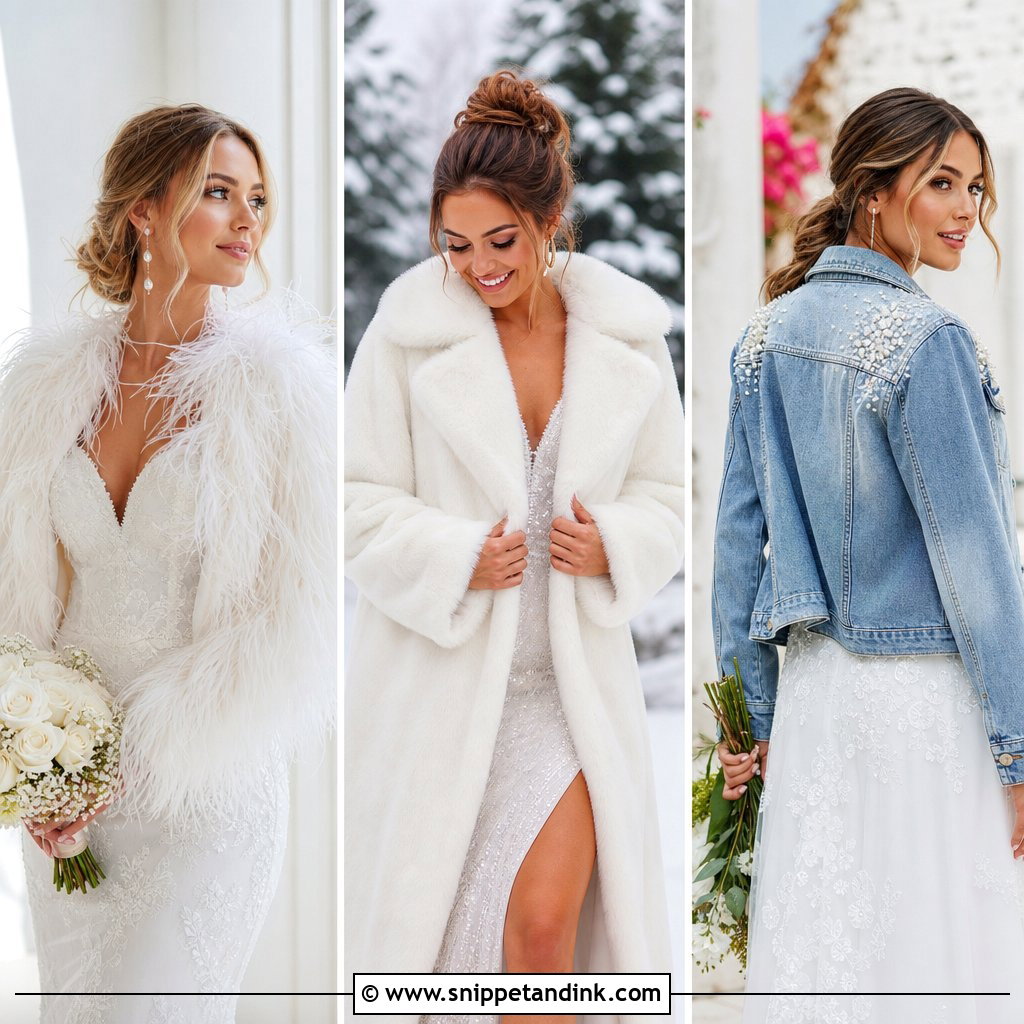
17. Feather Trim Wedding Dress Topper With Slip Gown
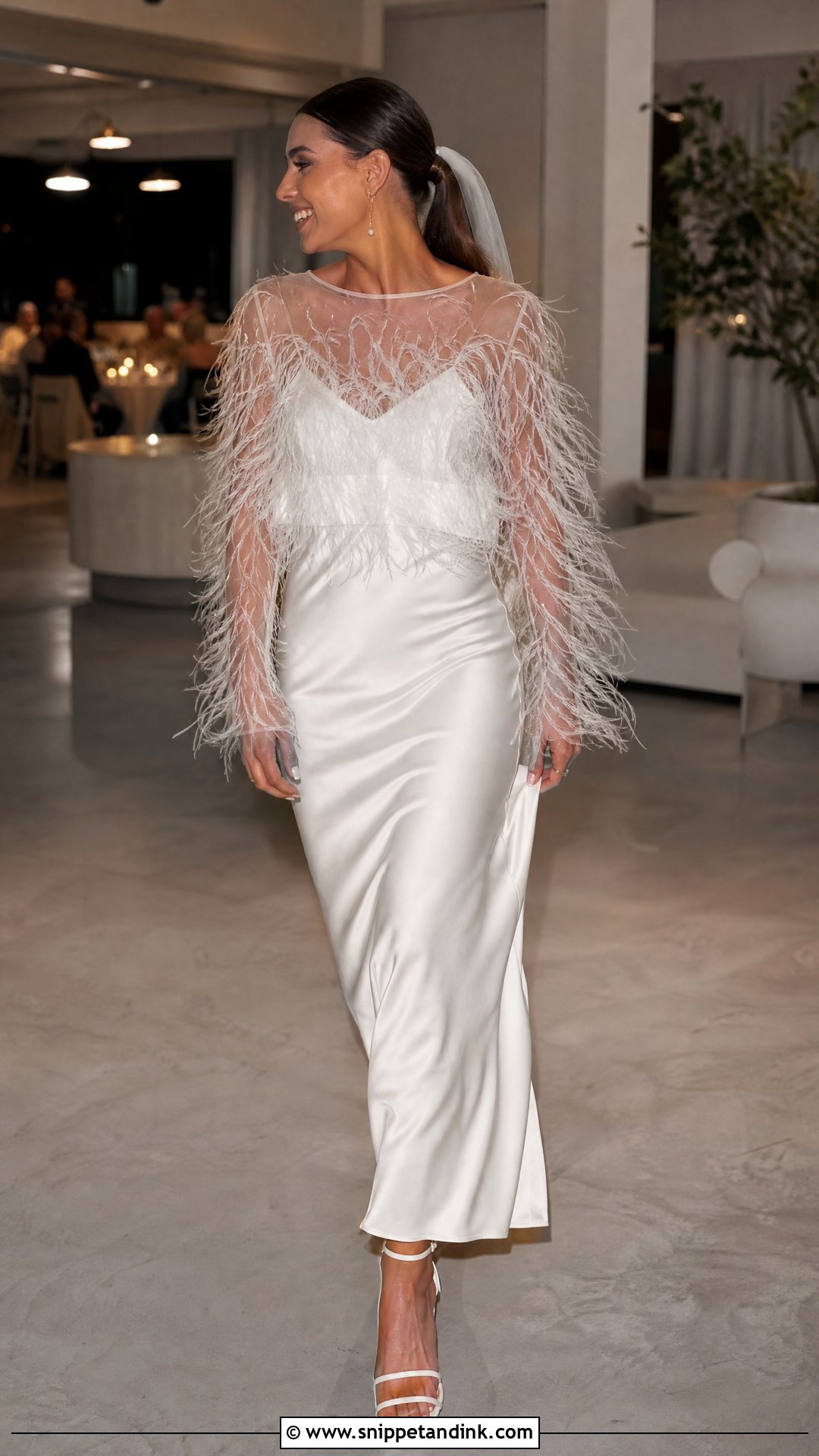
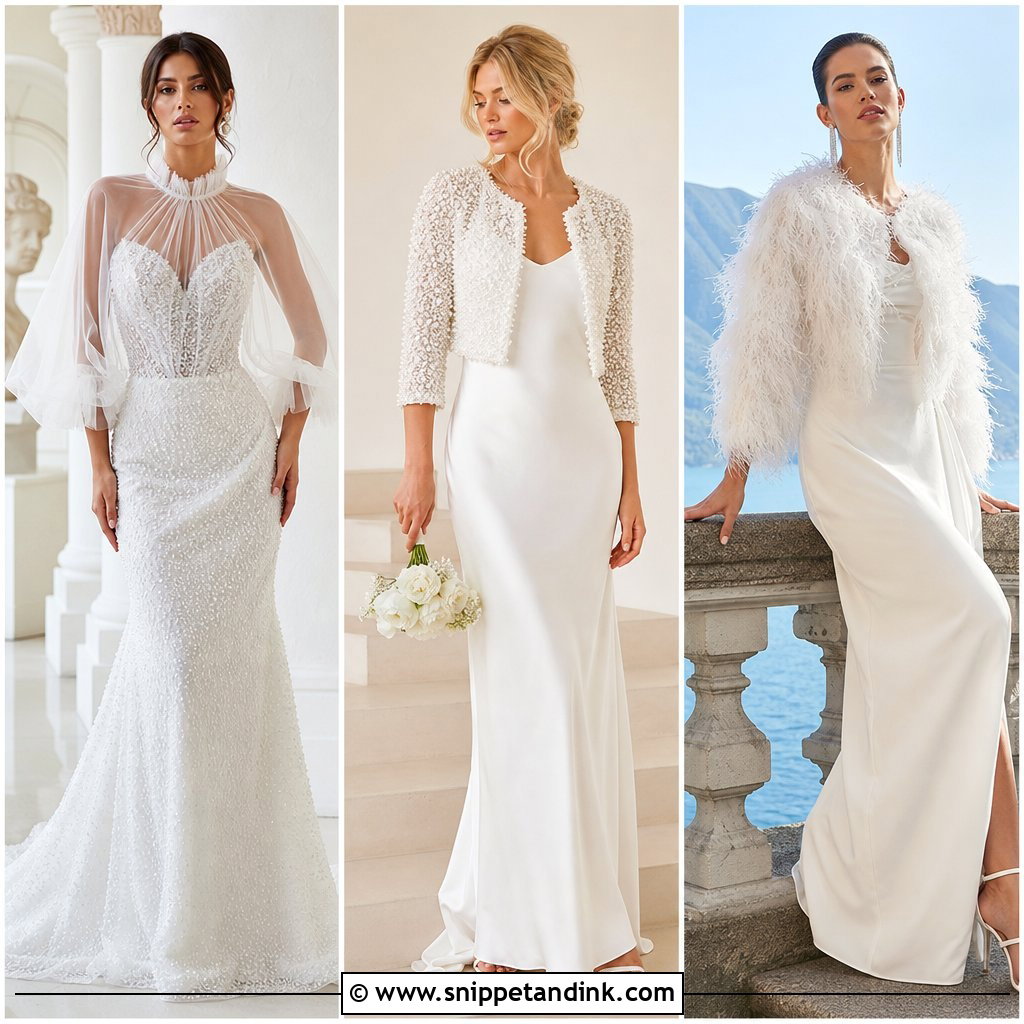
A feather-trimmed topper adds playful texture to a sleek slip gown. I keep the feathers to the cuffs, neckline or hem; spread across the whole body, they look like a costume. A sheer mesh or fine lace base keeps the sleeves light. Minimal drop earrings, strappy ivory heels and a smooth low ponytail suit it, and a short plain veil or a sculptural hair piece works better than ornate lace. Feathers shed and they hate rain, so I pack a lint roller for the slip underneath and suggest saving this layer for indoor portraits or the reception.
18. Cropped Knit Wedding Dress Topper With Winter Gown
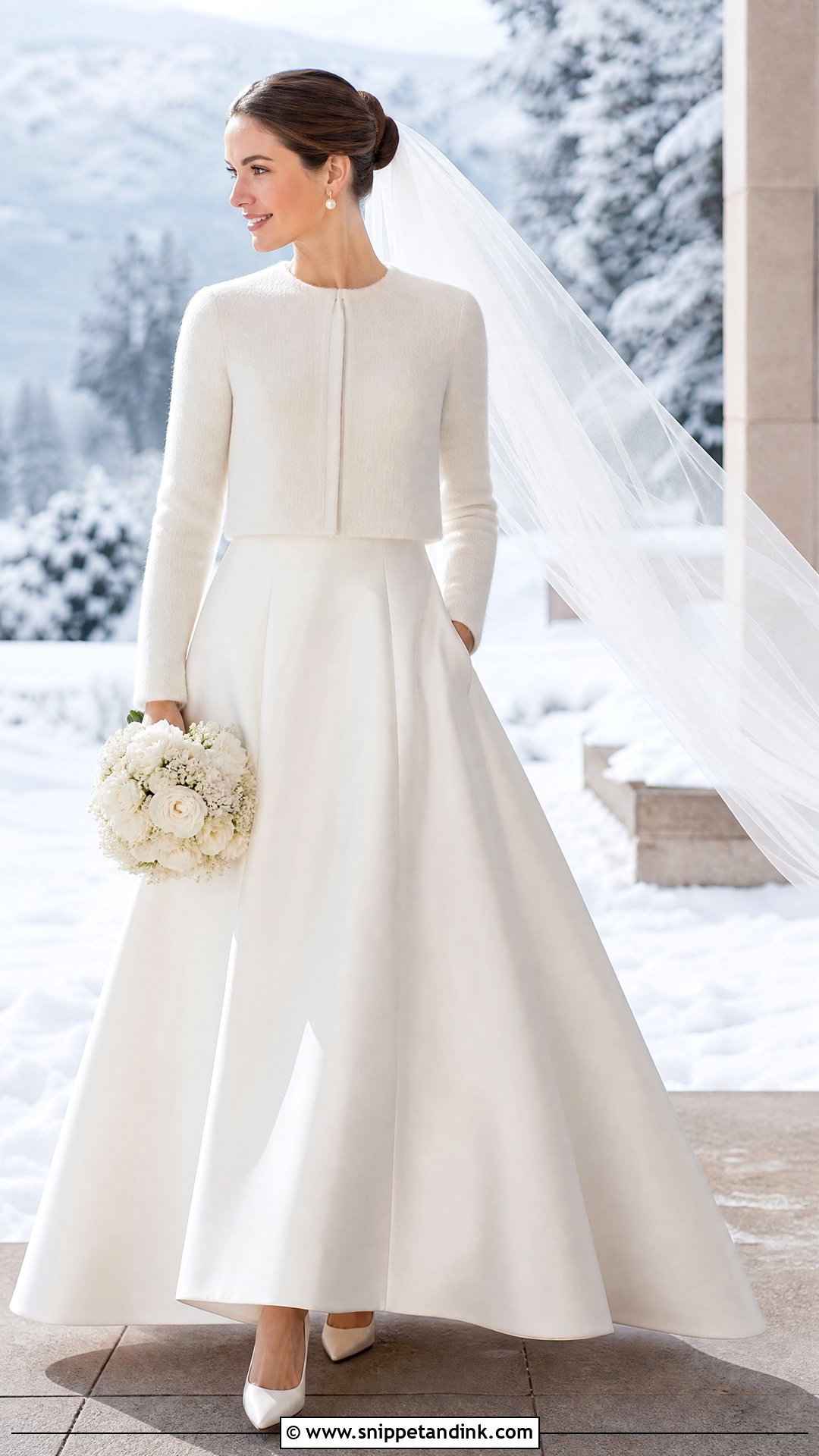
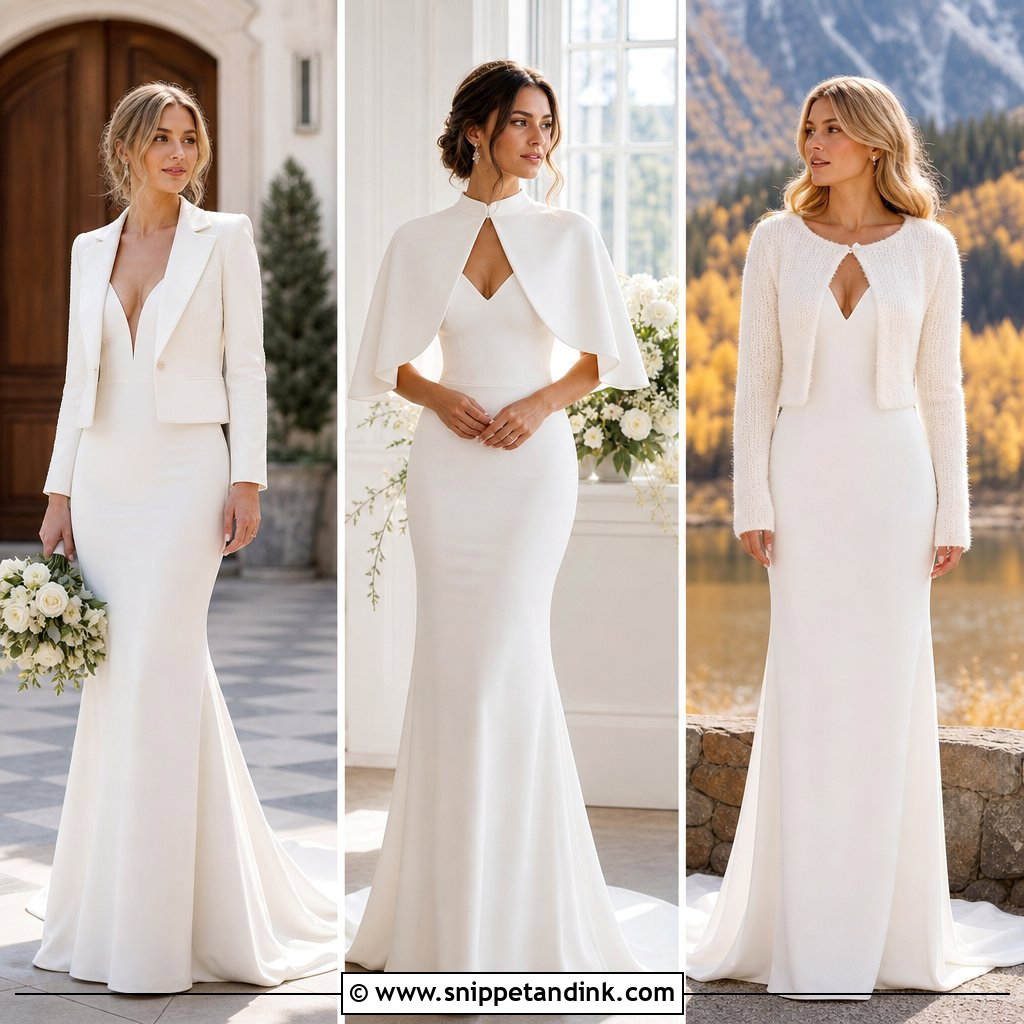
A fine knit topper is the honest answer for a cold-season wedding with outdoor portraits. Cashmere, merino or a fine knit blend in the dress shade, cut cropped with fitted sleeves and a plain neckline, looks bridal rather than like a weekend sweater. Wear it over a satin A-line or minimal ball gown with closed-toe pumps, pearl earrings, a neat bun and a long veil. Thick ribbing and chunky cuffs distort the gown’s shape. Bring a cutting of the dress fabric when you shop, because knitted wool takes dye differently from satin and winter whites vary more than you’d expect.
19. Keyhole Back Wedding Dress Topper With Crepe Gown
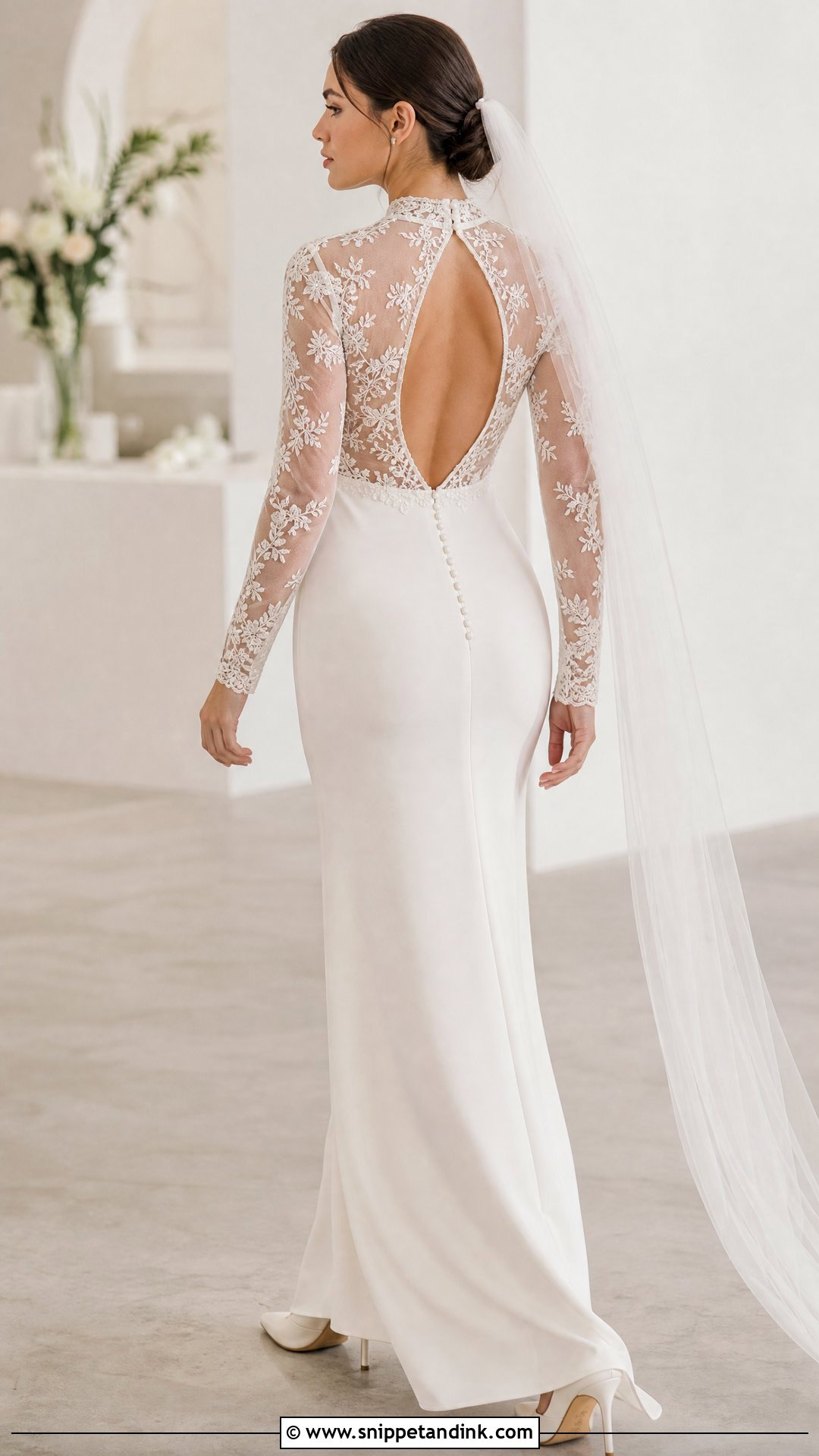
A keyhole back keeps one open detail while the rest of the topper covers you. Fine lace or embroidered mesh over a plain crepe gown lets the contrast show clearly. Fitted sleeves and a single small button at the top of the keyhole are all the closure it needs. The opening must sit above the gown’s back neckline; if the two edges overlap, you get a double ridge that photographs badly from behind. Style it with a low bun, crystal studs, pointed heels and a plain veil set under the hair, and skip back jewellery. Sit down at your fitting, since the keyhole gapes most when you lean forward at the table.
20. Three Dimensional Floral Wedding Dress Topper With Ball Gown
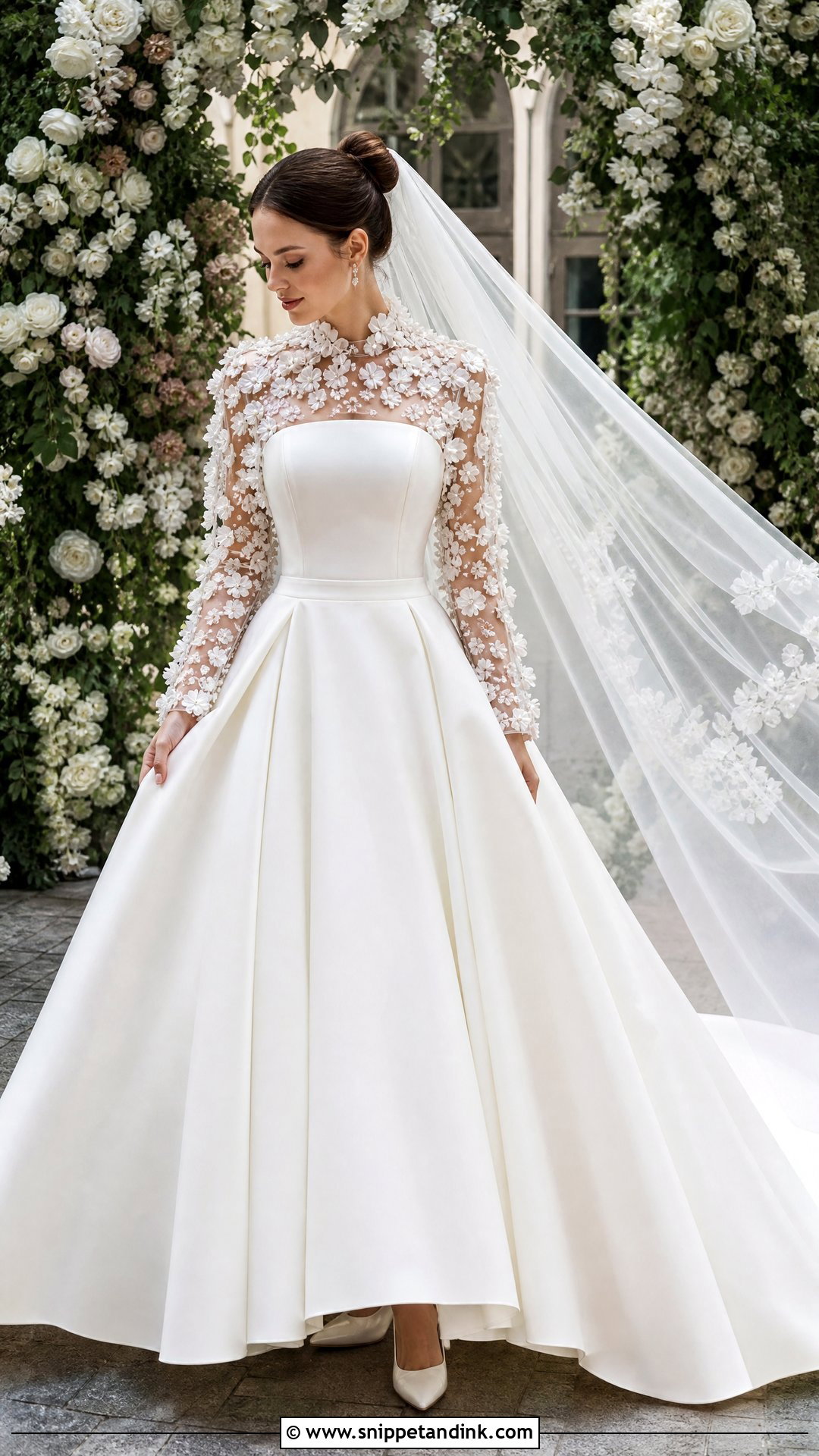
Three-dimensional flowers turn a simple ball gown into the romantic option of the list. On a sheer long-sleeve topper, small fabric petals, embroidered leaves or pearl centres look best grouped at the shoulders, bodice and cuffs, leaving bare mesh between them for contrast. A clean strapless gown underneath gives them space. Simple pearl earrings, satin pumps, a smooth updo and a plain cathedral veil finish it. I check the underarms and waist closely, because raised appliqués there rub and flatten within an hour. The topper needs to fit close so the flowers look attached to the gown rather than hovering on a loose layer.
The Reception Reveal Takes Two Minutes If You Plan It
Taking the topper off is a small moment that can go wrong in silly ways. Hidden snaps and thread chains holding it to the gown have to be undone in the right order, and a bride in a ball gown cannot reach the back buttons herself. I write the removal steps on a card for whoever helps you, usually a bridesmaid or the planner, and I walk them through it once at the final fitting.
- Pick the moment ahead of time: after the photos, before the entrance or between dinner and dancing. Tell the photographer so the change isn’t missed.
- Do it somewhere private with a mirror. Lifting a fitted sleeve over a pinned updo can catch the veil comb.
- Have a padded hanger and a breathable garment bag waiting. Thrown over a chair, lace collects red wine and wax within minutes.
- Check the gown’s neckline once the layer is off. Snaps and loops sometimes leave a mark that a quick press with your fingers will settle.
Afterwards
A topper usually goes to the cleaner along with the gown, and I’d keep the two together. If you plan to wear it again over a dress for an anniversary dinner, ask the cleaner to treat any makeup on the inside of the collar first; foundation on lace is the stain that sets fastest. Store it folded in acid-free tissue, not on a hanger, because the weight of beading or appliqués will slowly stretch the shoulders out of shape.
Ceremony Sleeves, Reception Shoulders
Every one of these comes back to the same three questions: how much coverage you need for the ceremony, how comfortable the layer is for hours of hugging and sitting, and how well it agrees with the gown you already own. Lace suits romantic dresses, tulle keeps a minimal look light, and crepe, satin or knit add structure or warmth. Compare shades by a window, try the topper on with the real dress before alterations, and check the neckline, waist and closures from the back as well as the front. Once your hair, jewellery and veil support the layer instead of competing with it, one gown really can carry two looks.
You'll Like These Ideas:


Leave a Reply