
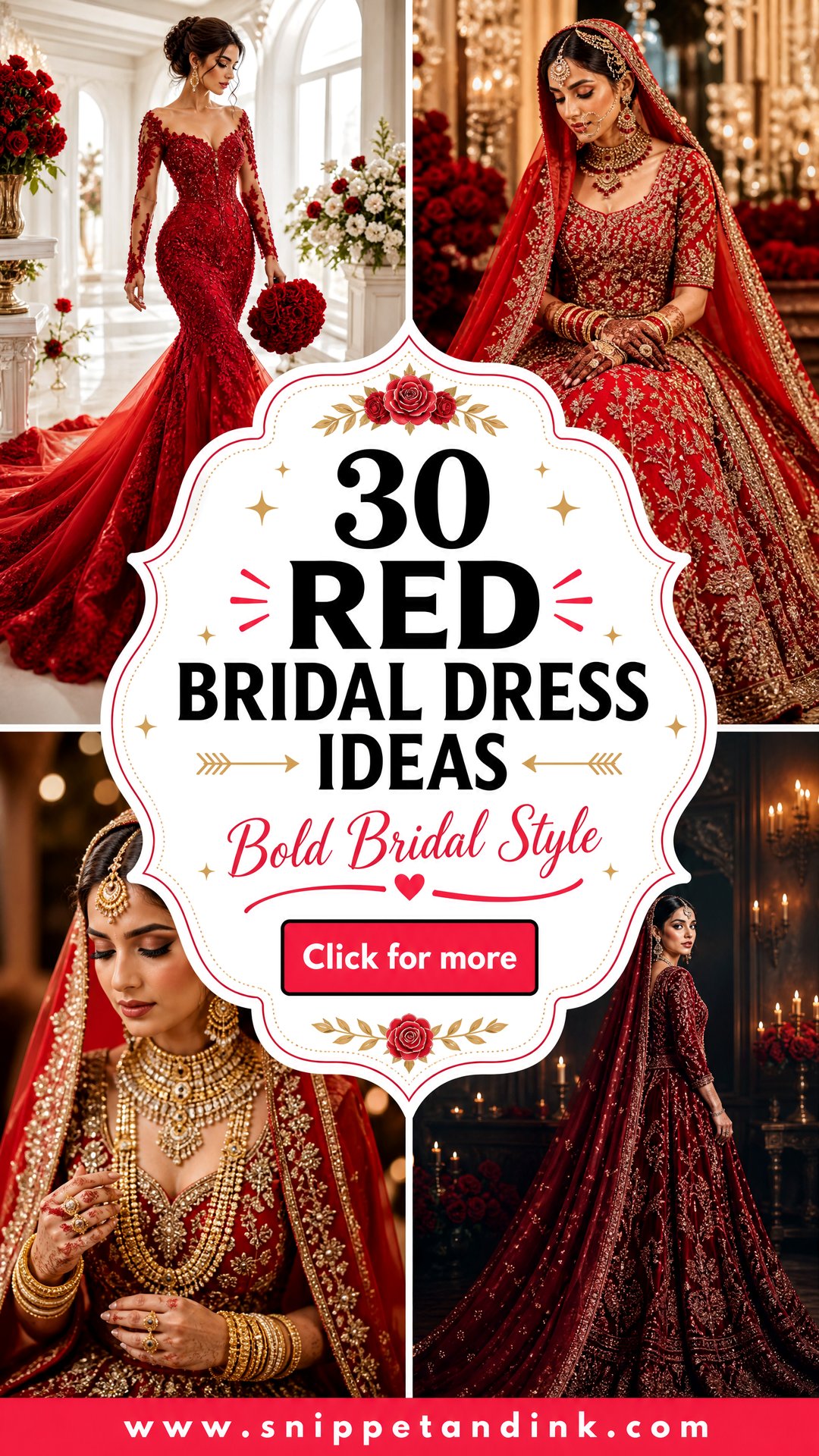
Red is the oldest bridal colour in much of the world and the boldest one in the West, and a red wedding dress asks more decisions of you than white does. The shade, the fabric and the silhouette all change how red behaves on your skin and in photos. A scarlet satin ball gown looks nothing like the burgundy, wine-red alternatives once they leave the rack, especially cut in velvet. Below are thirty red bridal looks, from crimson and cherry to ruby and red-and-gold, each with what I’d look at closely in the fitting room.
Finding Your Red Under Daylight, Not Boutique Bulbs
Red is not one colour. Some reds lean blue (cherry, crimson, raspberry), some lean orange (scarlet, tomato, poppy), and the difference shows instantly against your skin. Boutique lighting is usually warm and flattering, so the first thing I do with a red gown is take the bride to a window.
- Hold the fabric under your chin in daylight with no makeup. If your skin looks sallow or the under-eye area darkens, try the other direction of red.
- As a rough guide, cooler skin often suits blue-reds and warmer skin often suits orange-reds, but trust what you see over any rule.
- Ask for a swatch and look at it at the time of day your ceremony happens. Evening candlelight warms red; overcast daylight cools it.
- Photograph the swatch on your phone. If the camera turns it neon or flat, that red will need careful editing in the final album.
Deep reds such as wine and garnet are the safest for anyone unsure, which is why they appear so often as a first step away from white.
1. Red Ball Gown Bridal Dress
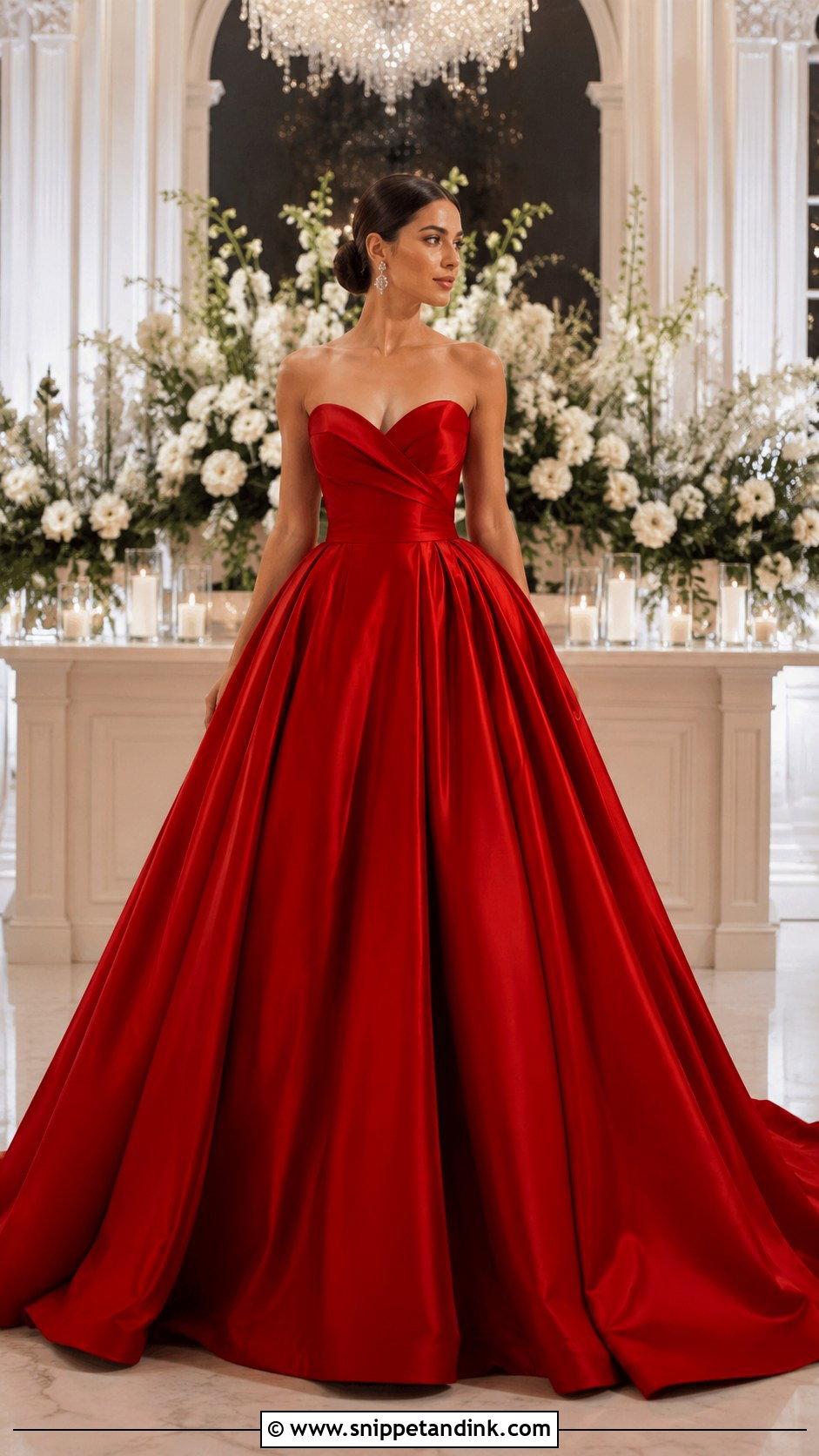
A ball gown in red is pure entrance. The full skirt gives the classic bridal outline, and the colour makes it impossible to miss. Satin gives polish, tulle softens it, organza adds air without weight. I’d always pair a skirt this size with a properly boned bodice, sweetheart or off-shoulder, because the skirt’s weight drags on the waist seam all day. Sleek bun, crystal drops, and heels you can stand in, since nobody sees them anyway. A plain veil or a red-toned cape adds ceremony without clutter.
2. Red Satin Bridal Dress
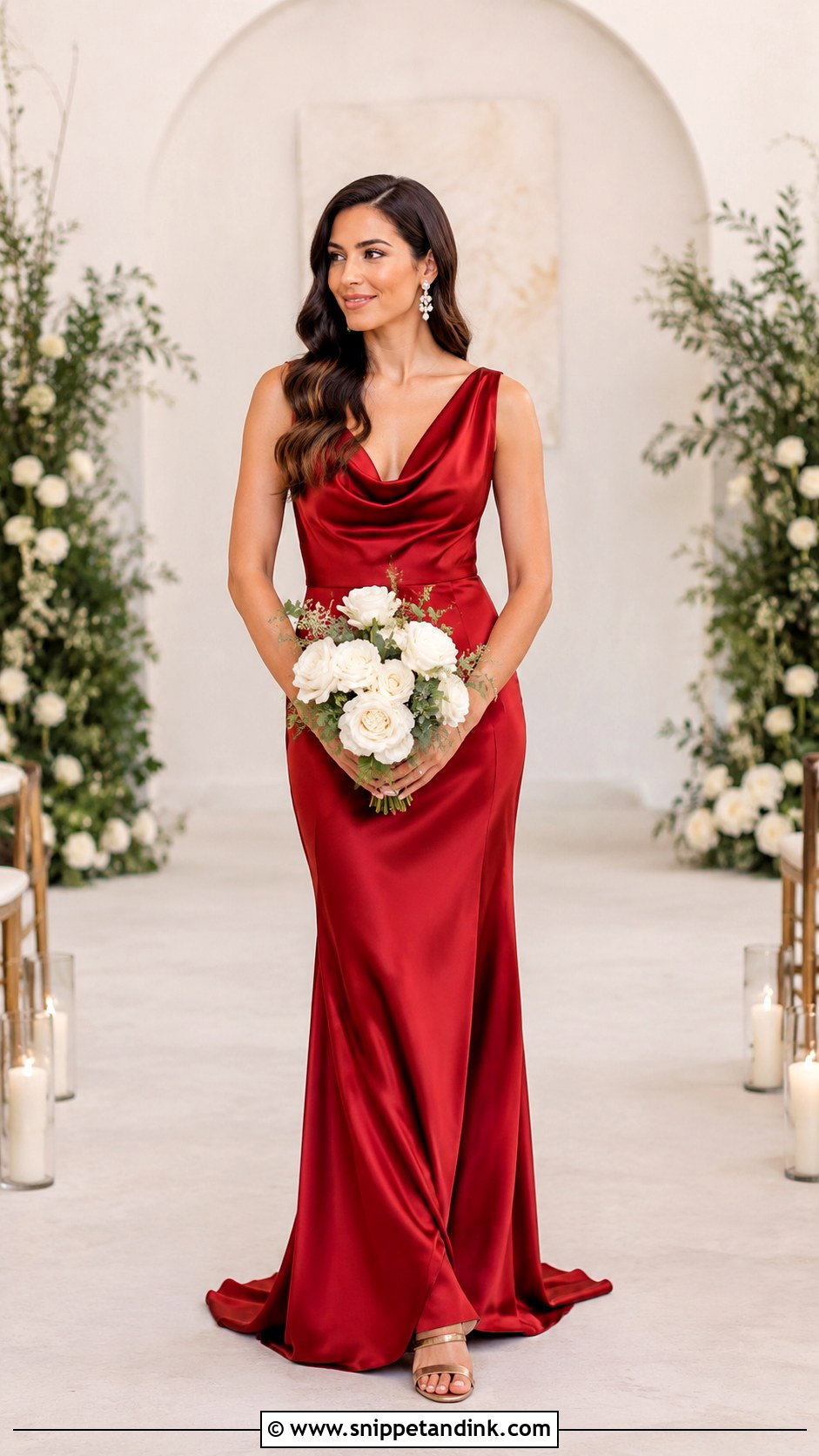
Satin carries red better than almost any fabric because the sheen gives the colour depth. A fitted bodice with a flowing skirt reads classic; a bias-cut slip reads relaxed and modern. The catch is that satin shows everything: creases from sitting in the car, water spots, and any line from underwear. I steam satin gowns on the morning, never iron them, and keep the bride standing until photos are done. With a low back or cowl neckline, jewelry should be close to nothing.
3. Red Lace Bridal Dress
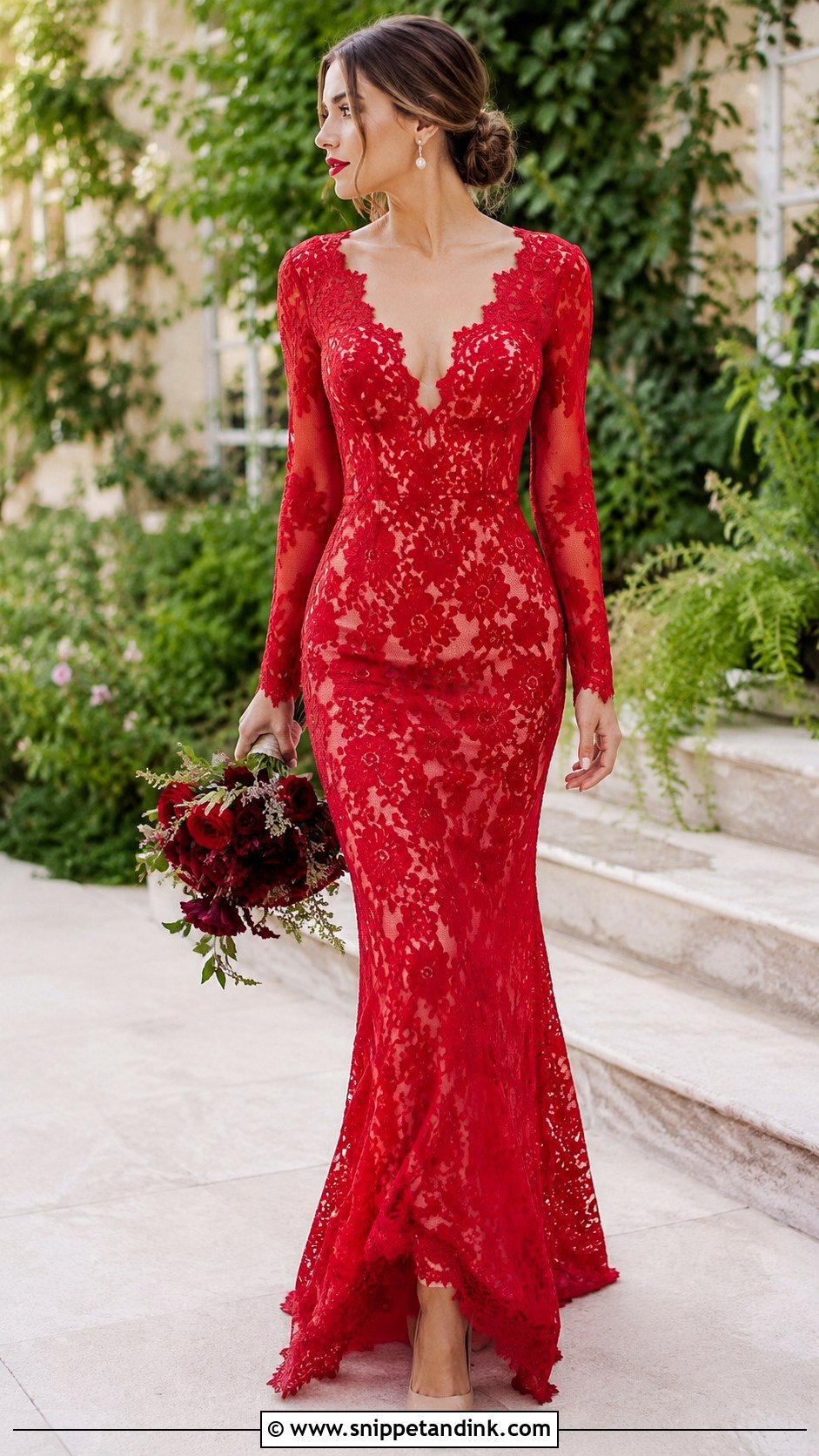
Lace over red works best when the lace and the base are dyed together or chosen to match closely; red lace over a slightly different red lining looks patchy in daylight. Sheer lace sleeves, scalloped edges and an illusion neckline keep the gown delicate. Fitted, A-line or softly flared all suit lace. Pearl earrings, a low chignon and heels in red, nude or metallic finish it. Keep the bouquet plain, because a busy bouquet against busy lace turns into noise.
4. Red Mermaid Bridal Dress
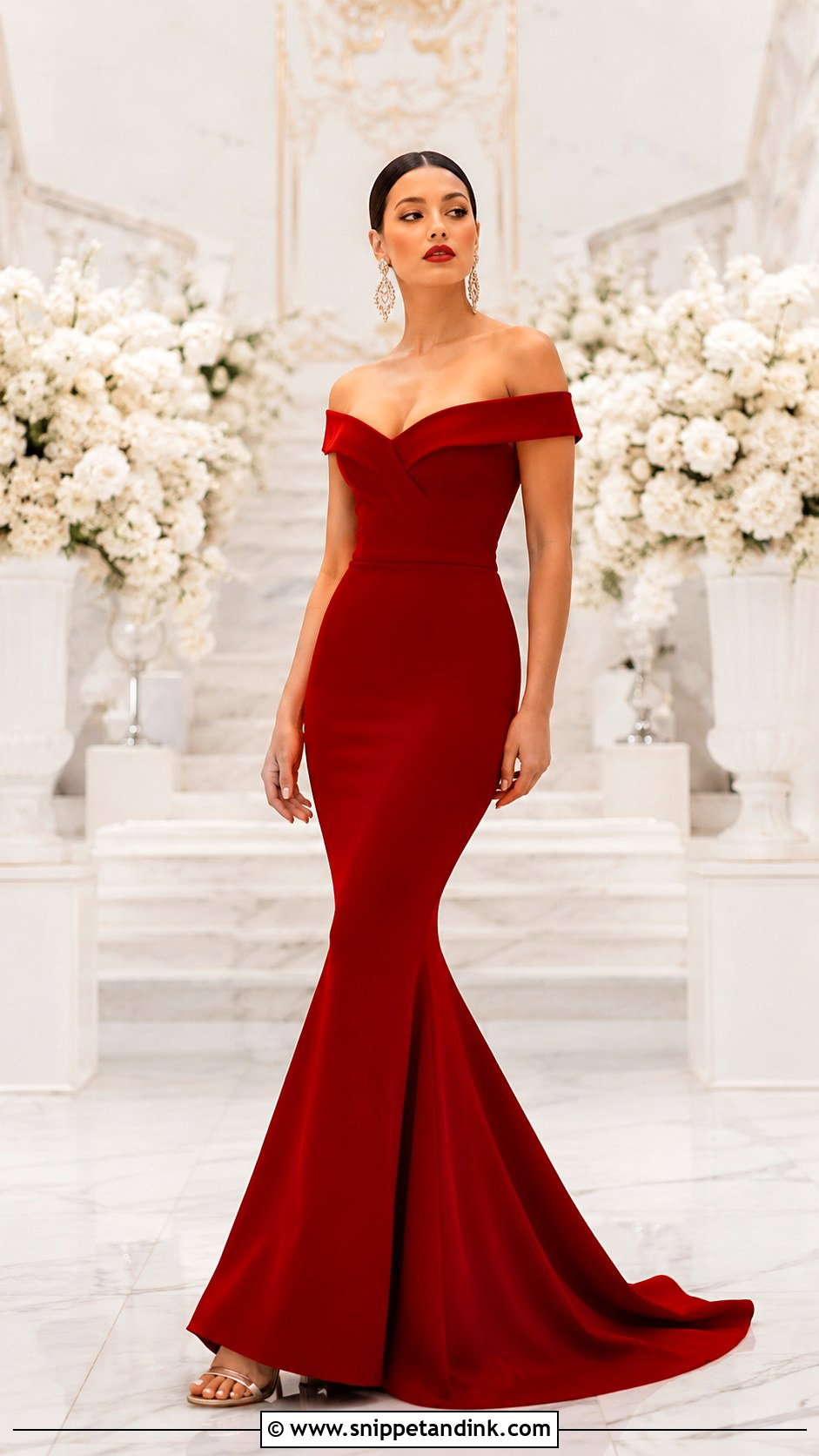
The mermaid is the most fitted shape on this list, hugging bodice, waist and hips before flaring near the knee. Stretch crepe, mikado and satin all sculpt well. Here is my honest test: in the fitting, sit down, climb two steps and do a slow dance turn. If you can’t, the flare point needs moving lower or the skirt needs more ease, and it’s far better to find that out now. Strapless, off-shoulder or long sleeves change the mood completely. Pick one standout accessory, not several.
5. Red A Line Bridal Dress
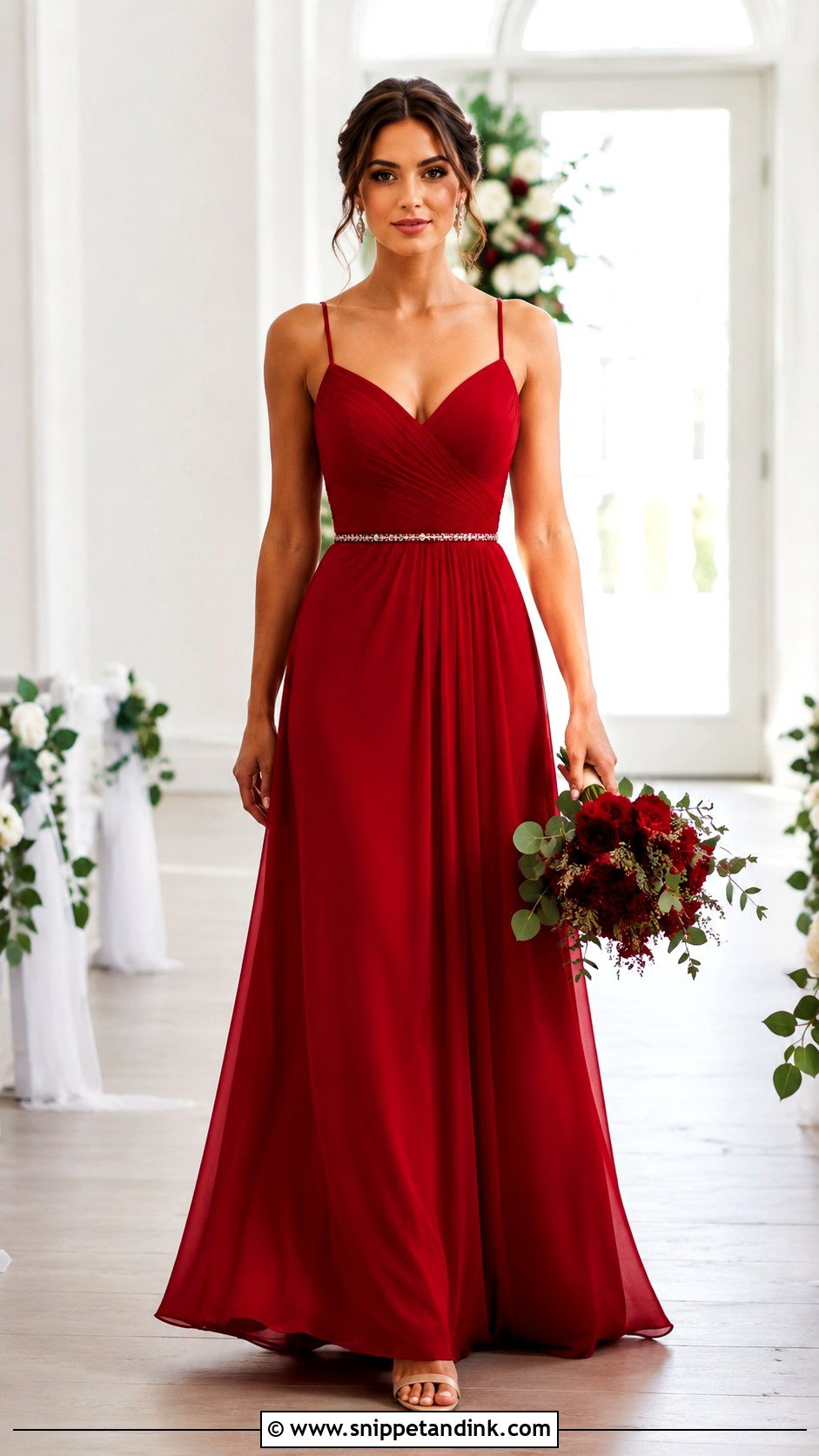
If I had to put one red gown on the widest range of brides, it would be an A-line. It fits through the bodice and widens gently from the waist, so you get movement without bulk, and it works in satin, chiffon, lace or tulle. A thin belt marks the waist if your torso is long. You’ll walk, sit and dance in it without thinking. Delicate earrings and soft curls keep it classic.
6. Red Off Shoulder Bridal Dress
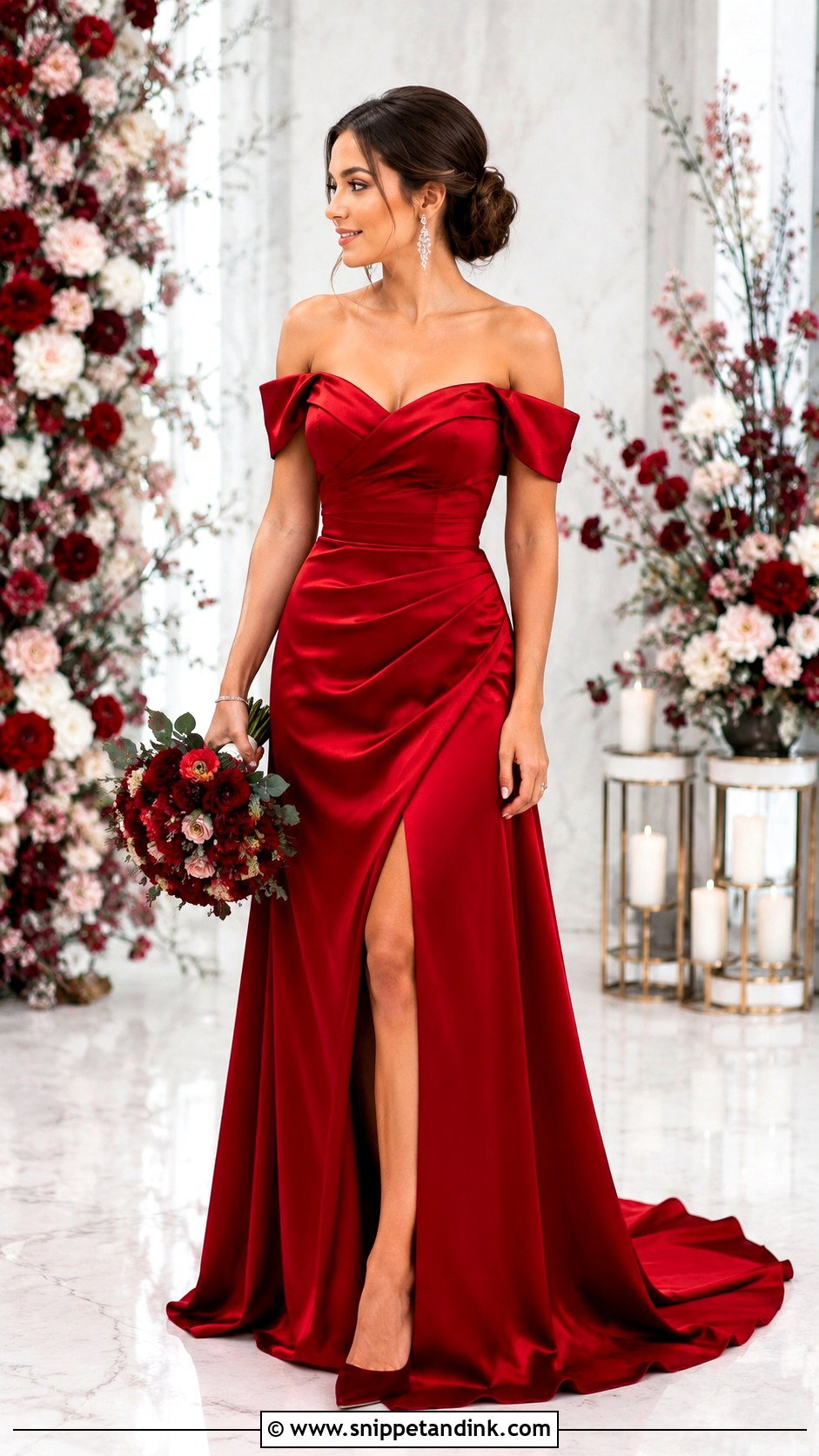
An off-shoulder neckline frames the collarbones and softens a strong colour. On a structured satin gown with a long train it feels formal; in red tulle or lace with draped sleeves it feels gentle. The part to check is the band itself: if it isn’t anchored to the bodice boning, it slides up every time you raise your arms to hug someone. Choose either a delicate necklace or chandelier earrings, not both. A low bun keeps the shoulder line clear.
7. Red Long Sleeve Bridal Dress
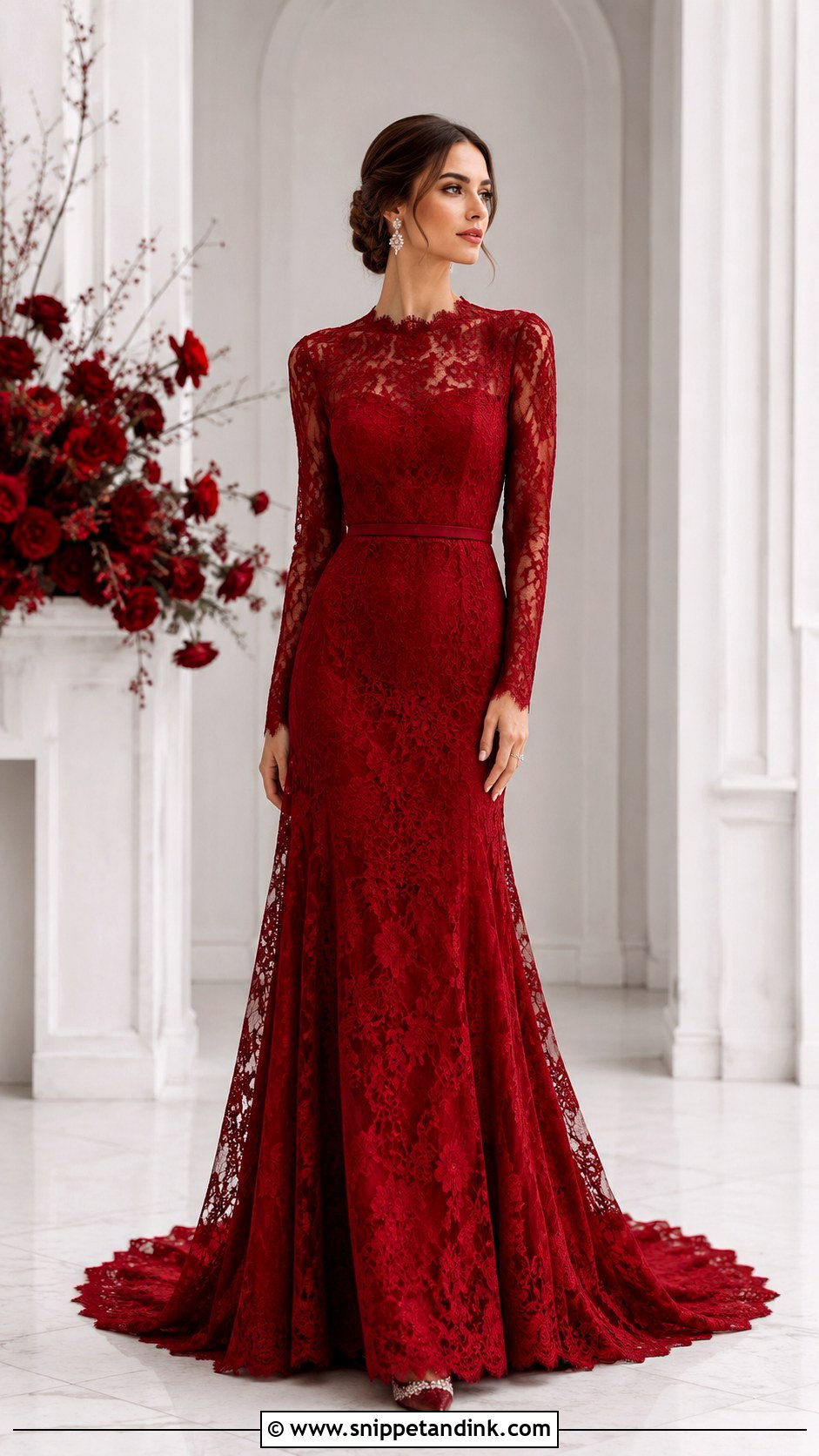
Long sleeves suit cooler weather and formal venues, and they change the gown’s mood by fabric alone. Sheer embroidered sleeves look delicate; fitted satin ones look sleek. A high neck feels regal, a V-neck balances the coverage. When you try it on, cross your arms and reach forward as if hugging: fitted satin sleeves with no stretch can pull at the armhole. Smooth updo, refined earrings, closed-toe heels, and skip bracelets if the cuffs are detailed.
8. Red Tulle Bridal Dress
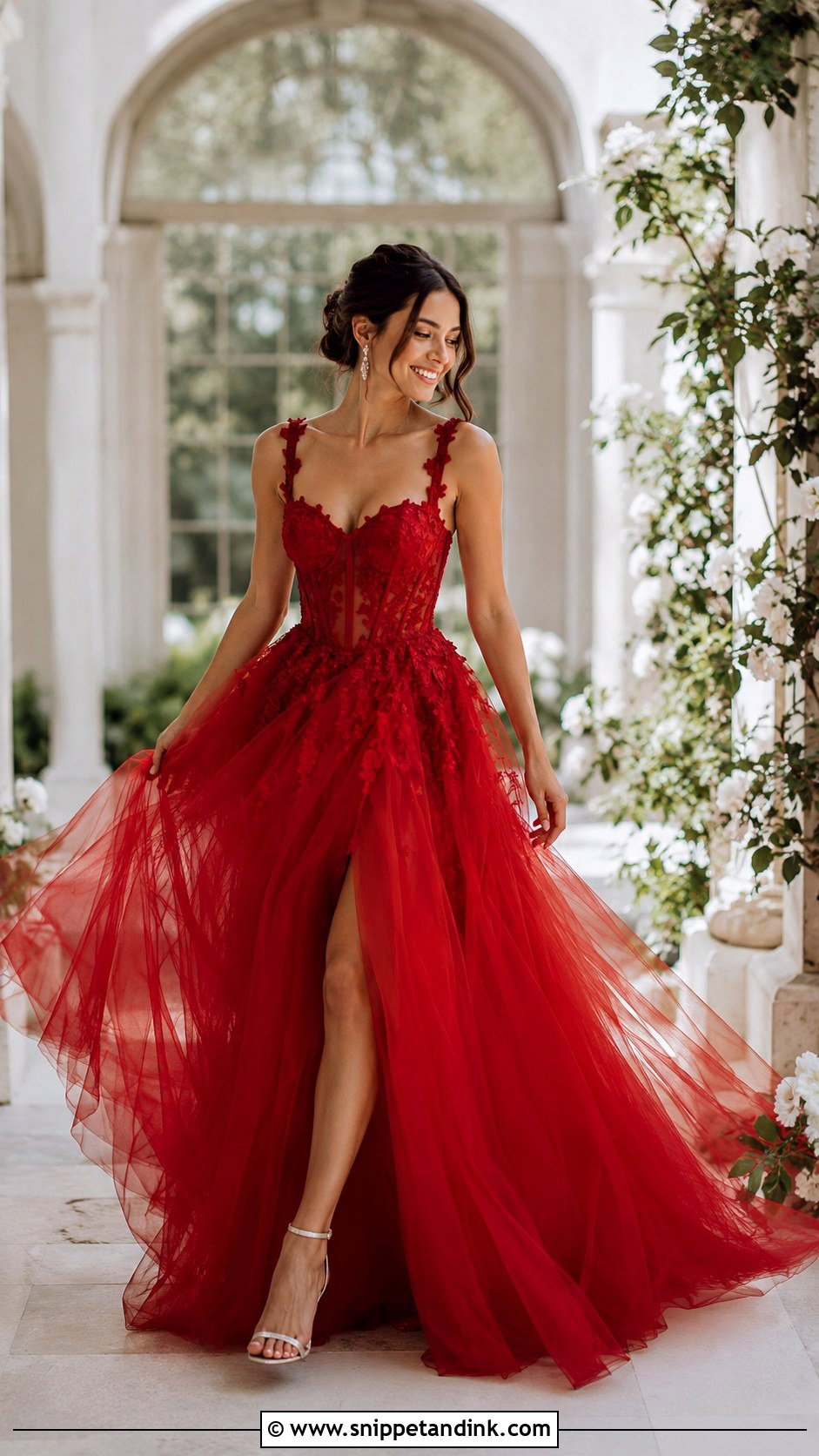
Tulle takes the edge off red. Many layers of it scatter the light, so the colour looks softer and moves as you walk. Go dramatic with a full princess skirt or modern with a sheer overlay over a simple bodice. One practical thing: red tulle shows lint, glitter and petals from the aisle very clearly, so keep a lint roller with your bridesmaid. A corset top adds structure, delicate straps keep it light, and a fingertip veil or sheer red cape adds depth. Garden and ballroom settings both suit it.
9. Red Corset Bridal Dress
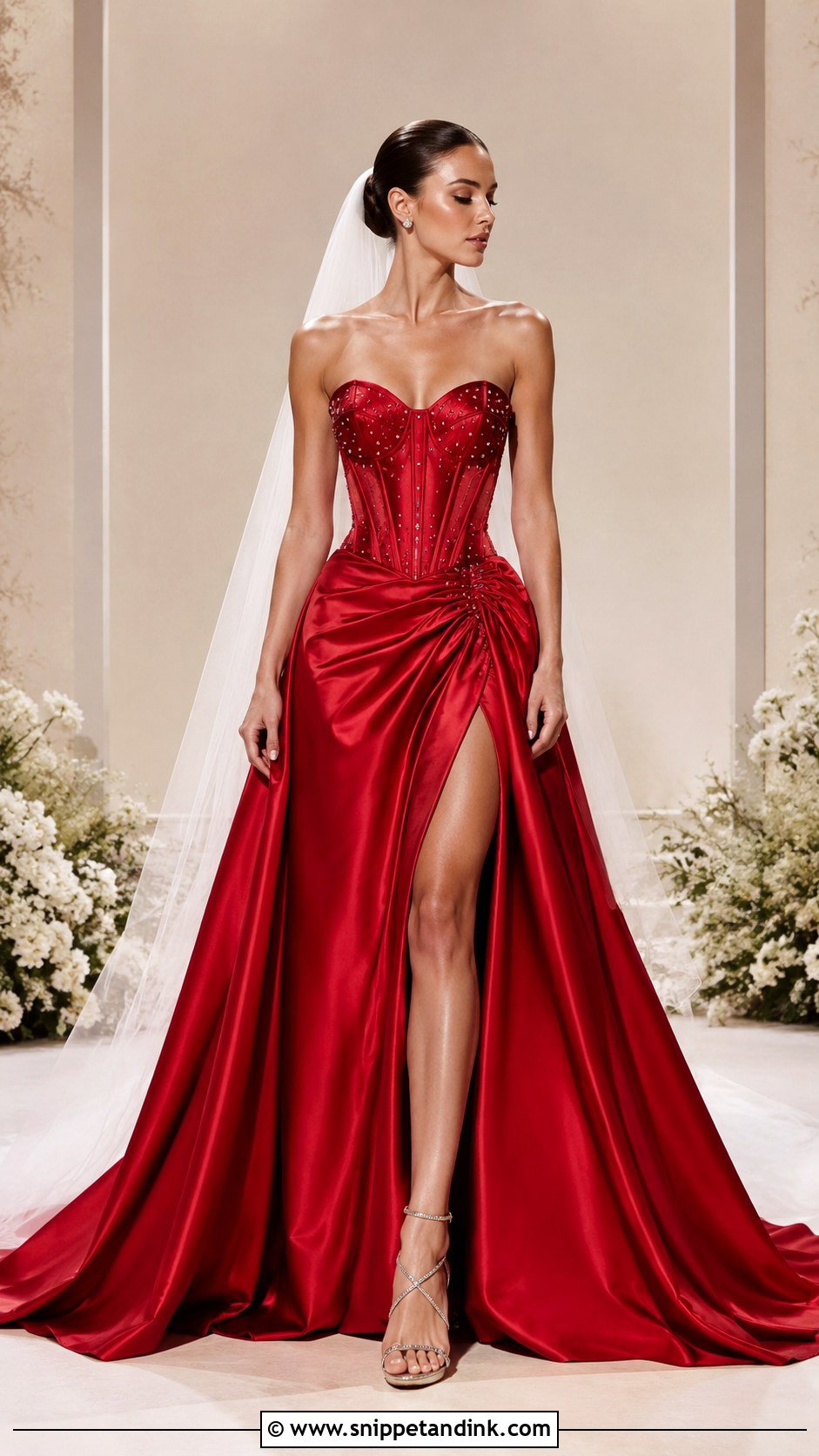
A proper corset bodice does real work: it shapes the waist, supports the bust without straps and lets a heavy skirt hang well. Pair it with a full skirt for ceremony drama or a slim one for a fashion edge, in satin, tulle or lace. Breathe and sit at your fittings. A corset laced for standing photos can be tight at dinner, which is why I ask the person dressing you to loosen it one notch before the meal. Crystal studs, a sleek veil and strappy heels are enough.
10. Red Beaded Bridal Dress
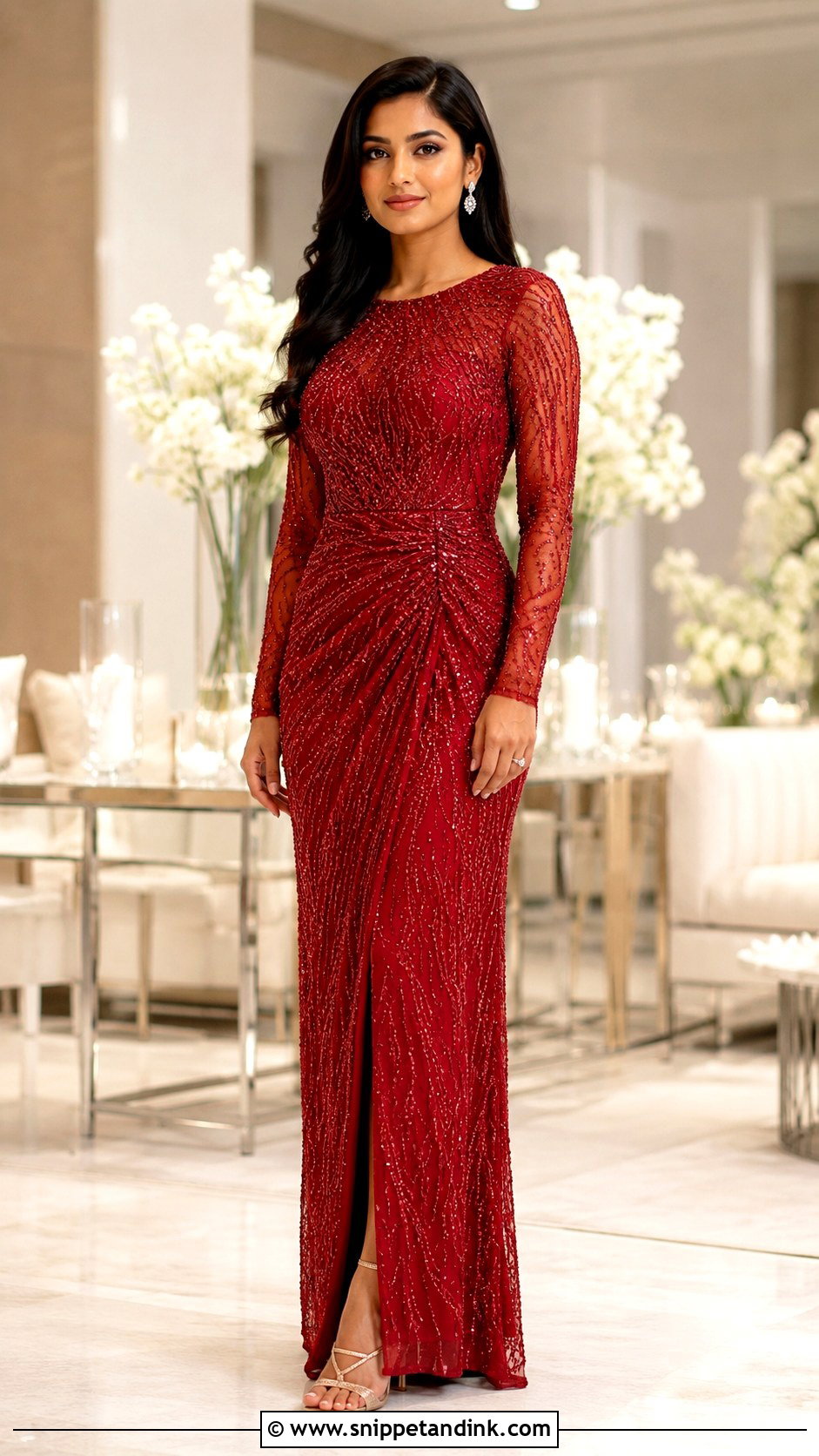
Beading on red catches light in a different way from beading on white, it glows rather than glitters. Fine beadwork reads refined; larger crystals read dramatic. Beaded gowns are heavy and the beads snag on lace veils and on a partner’s jacket buttons, so I always check where the veil falls against the bodice. Simple jewelry, smooth hair or soft waves, metallic heels and a small clutch. Evening receptions and formal rooms are where it shines most.
11. Red Embroidered Bridal Dress
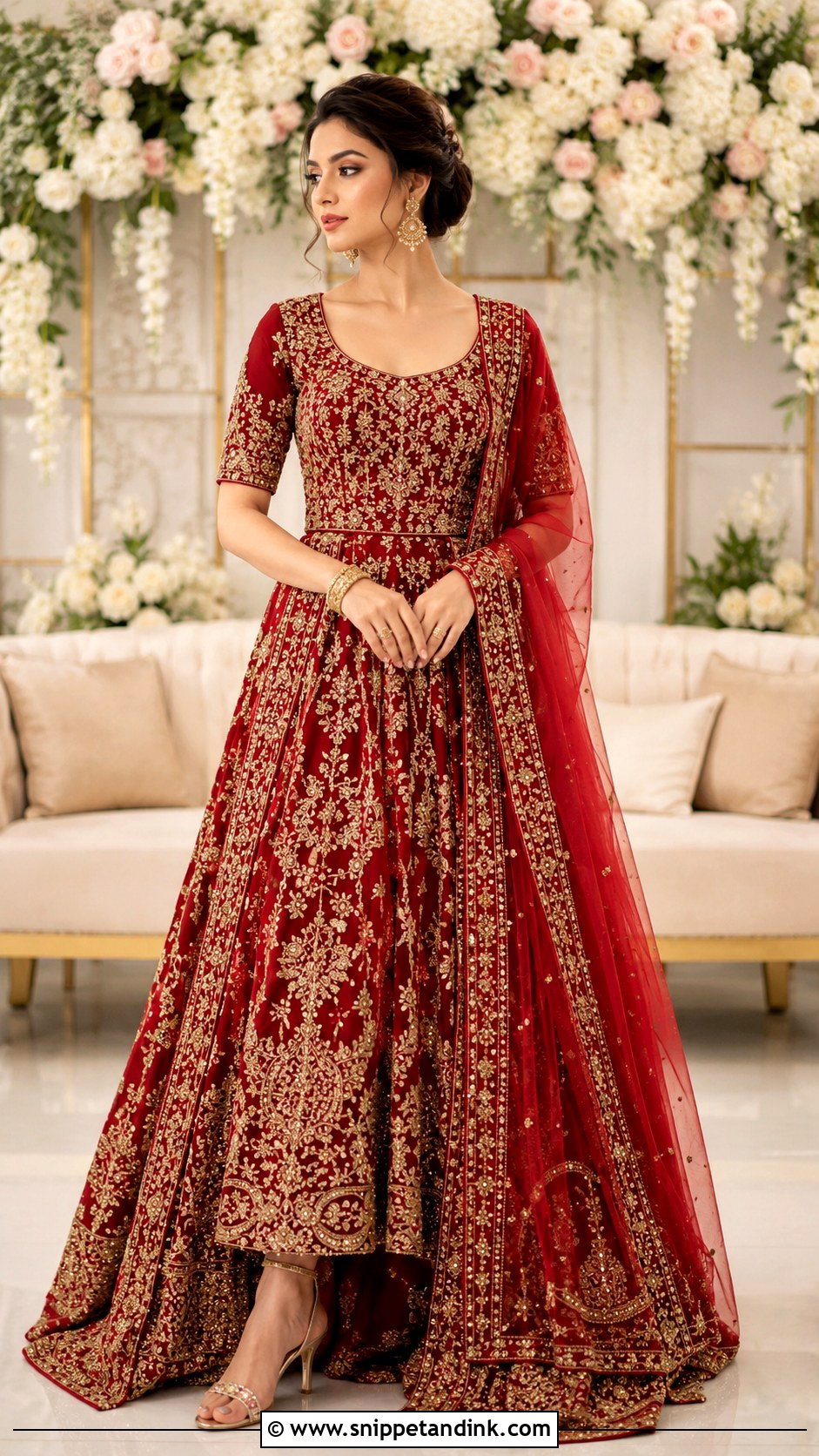
A red embroidered bridal dress is about the handwork. Embroidery may be floral, geometric, gold thread, tonal red, or drawn from a cultural bridal tradition. Red with gold feels regal; red-on-red feels quieter and more modern. Ask how the embroidery is backed: heavy metallic thread on a light base can pucker after one wear if it isn’t stabilised. Match heels to the thread colour, wear gold jewelry, and with a heavily worked gown use a plain veil or none.
12. Red Velvet Bridal Dress
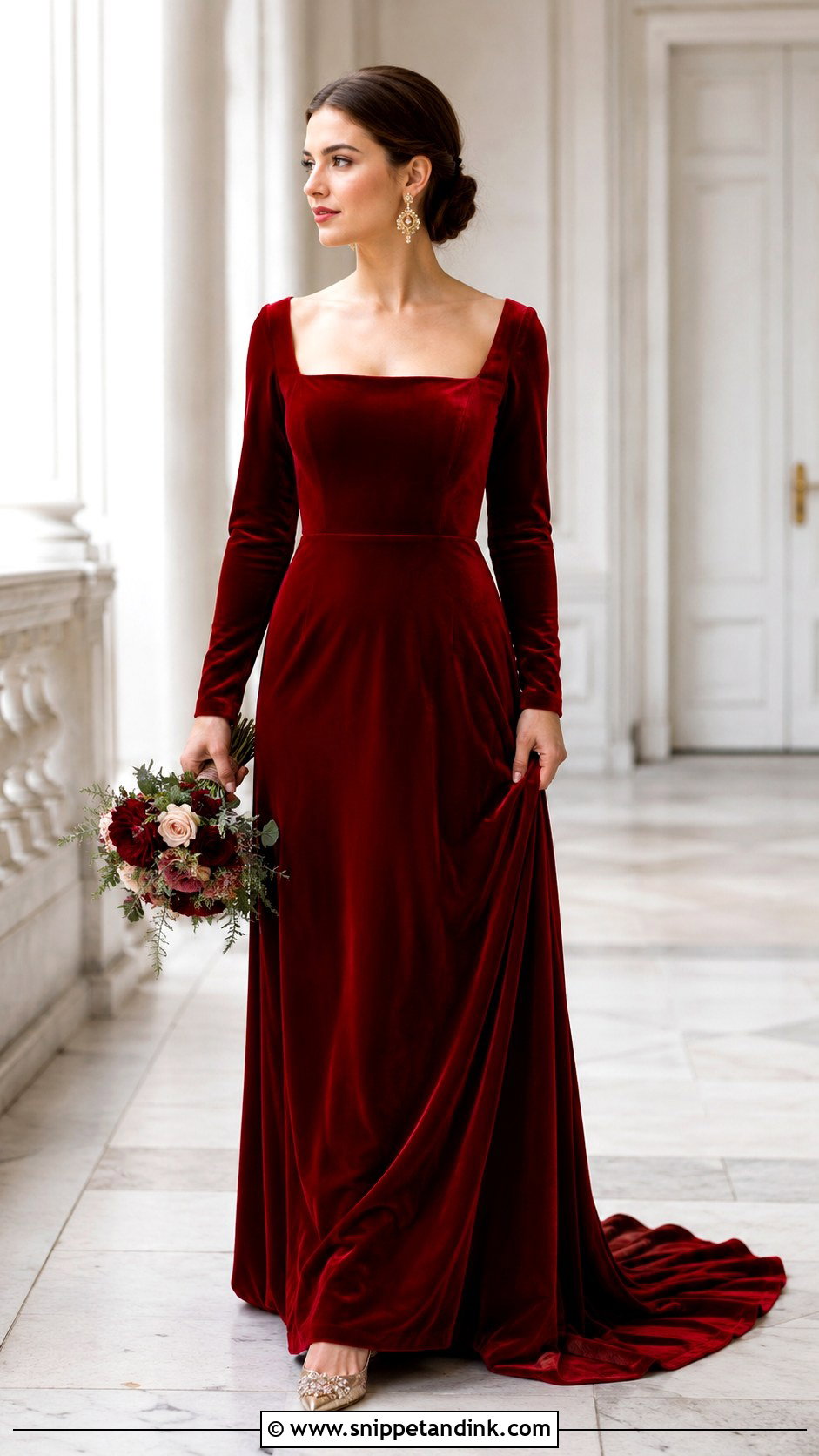
Velvet gives red its deepest version. Ruby, garnet and burgundy look rich in velvet for an autumn or winter wedding. A long-sleeve velvet dress with a fitted waist feels regal; a sleeveless one with a flowing skirt feels modern. Velvet is warm, though, and the pile marks where you sit or where a hand rests, so it suits cool indoor venues far better than a summer garden. Gold earrings, a smooth bun, classic heels, and keep shiny accessories to a minimum.
13. Red Sequin Bridal Dress
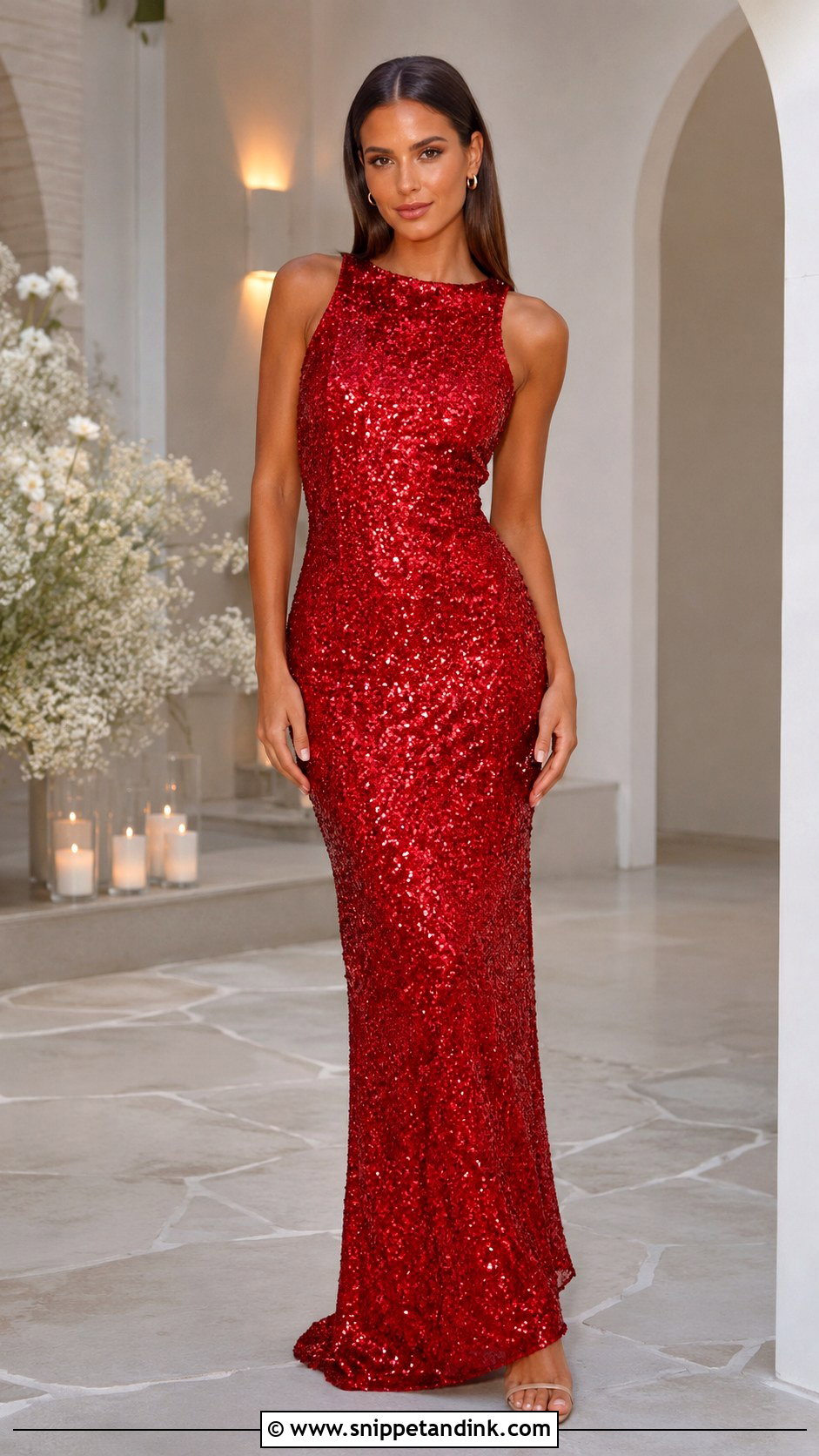
A sequin gown is the party version of a red wedding dress, best for evening ceremonies and reception entrances. Fitted sequins look glamorous; a sequin A-line sparkles with more movement. Sequins can scratch the inner arms and the partner’s hands during a long first dance, so ask whether the inside seams are lined. Keep the neckline simple and the accessories clean: small hoops, a sleek clutch, minimal heels. A soft updo or straight hair finishes it.
14. Red Floral Bridal Dress
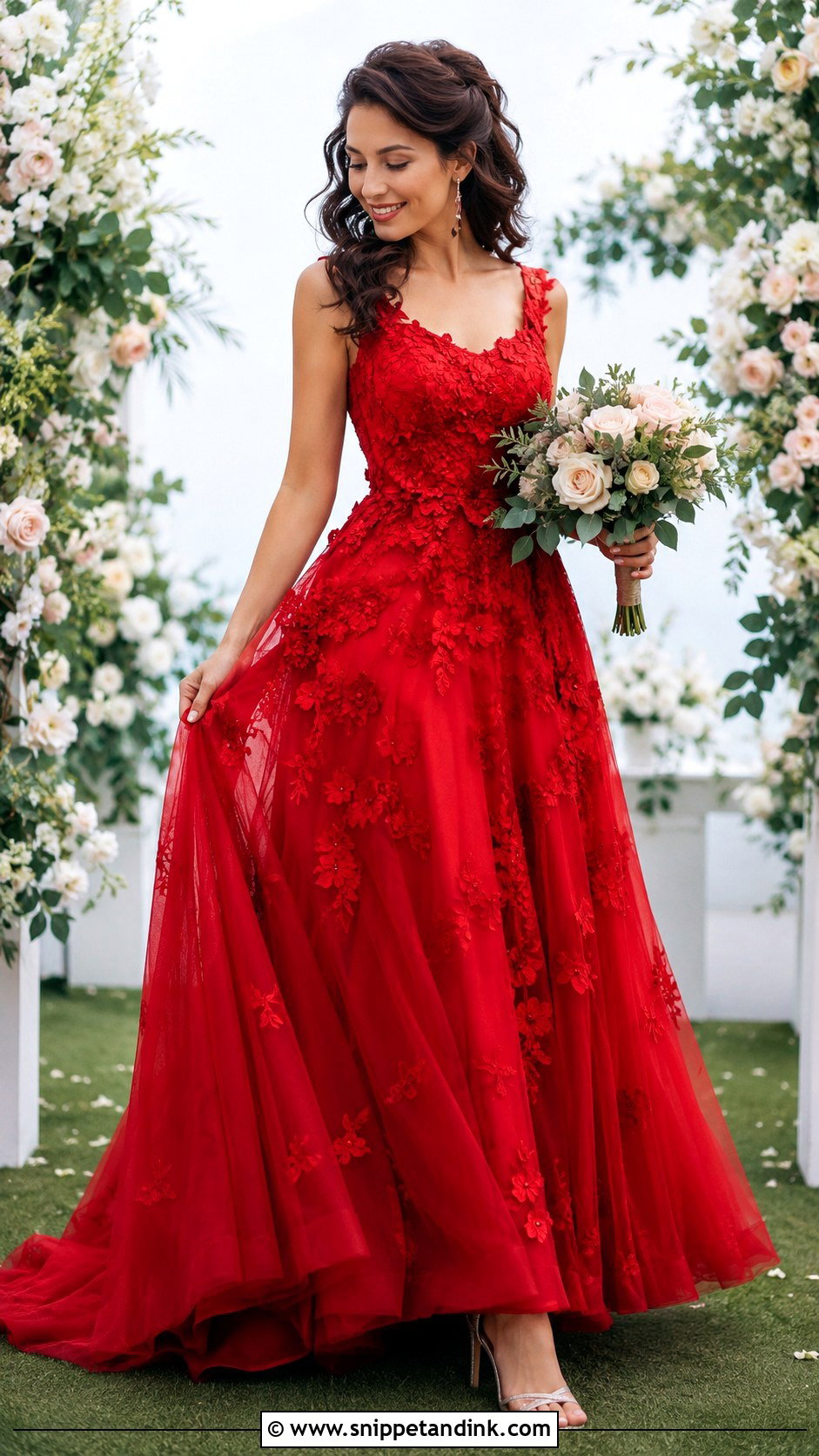
Florals take the intensity out of red. They can be lace appliqués, embroidery, printed fabric or three-dimensional petals. Tonal red flowers look elegant; blush, ivory or gold flowers on red add contrast. 3D petals crush when you hug, sit or are lifted, so I’d keep them off the front of the bodice. Pick up one accent colour from the dress in the bouquet, skip heavy necklaces and wear soft curls. Spring and garden weddings suit it best.
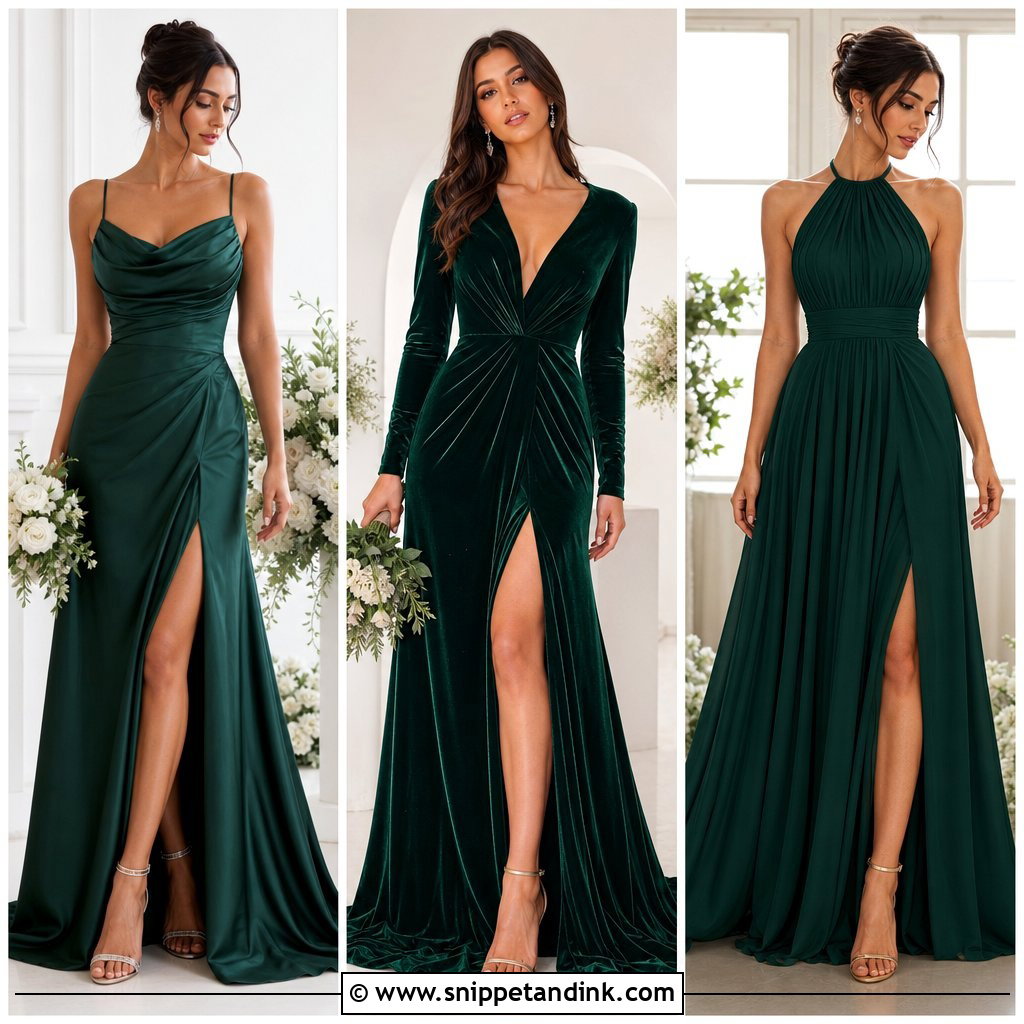
15. Red High Neck Bridal Dress
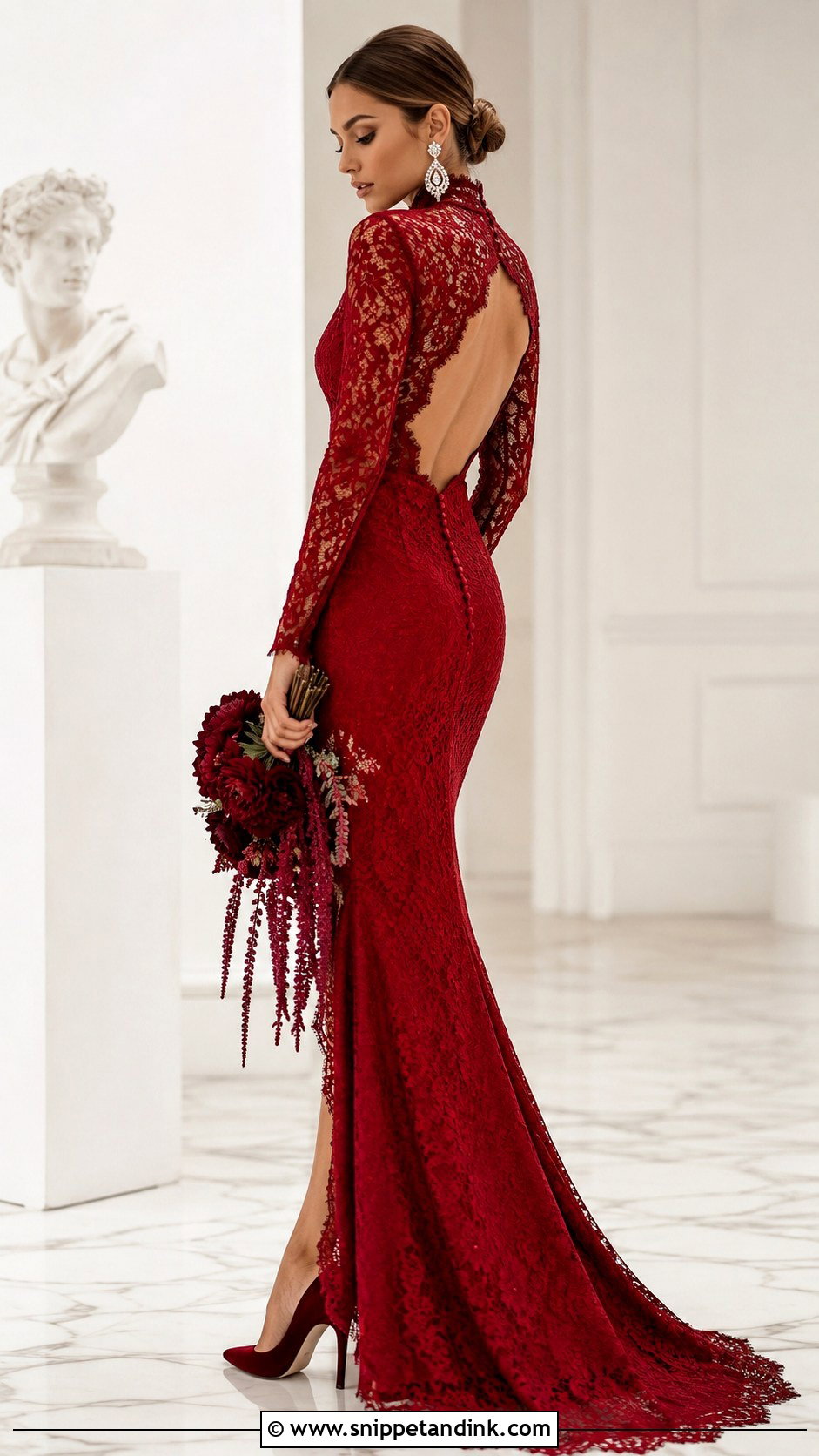
A high neck makes red look composed and polished rather than loud. It suits lace sleeves, sleek satin and fitted crepe. An open back gives it a modern surprise; full coverage feels more classic. With a closed neckline, skip the necklace and let your hair and earrings carry the styling. A neat bun and statement earrings is my default here. Check that the collar doesn’t press under your chin when you look down at your vows.
16. Red Strapless Bridal Dress
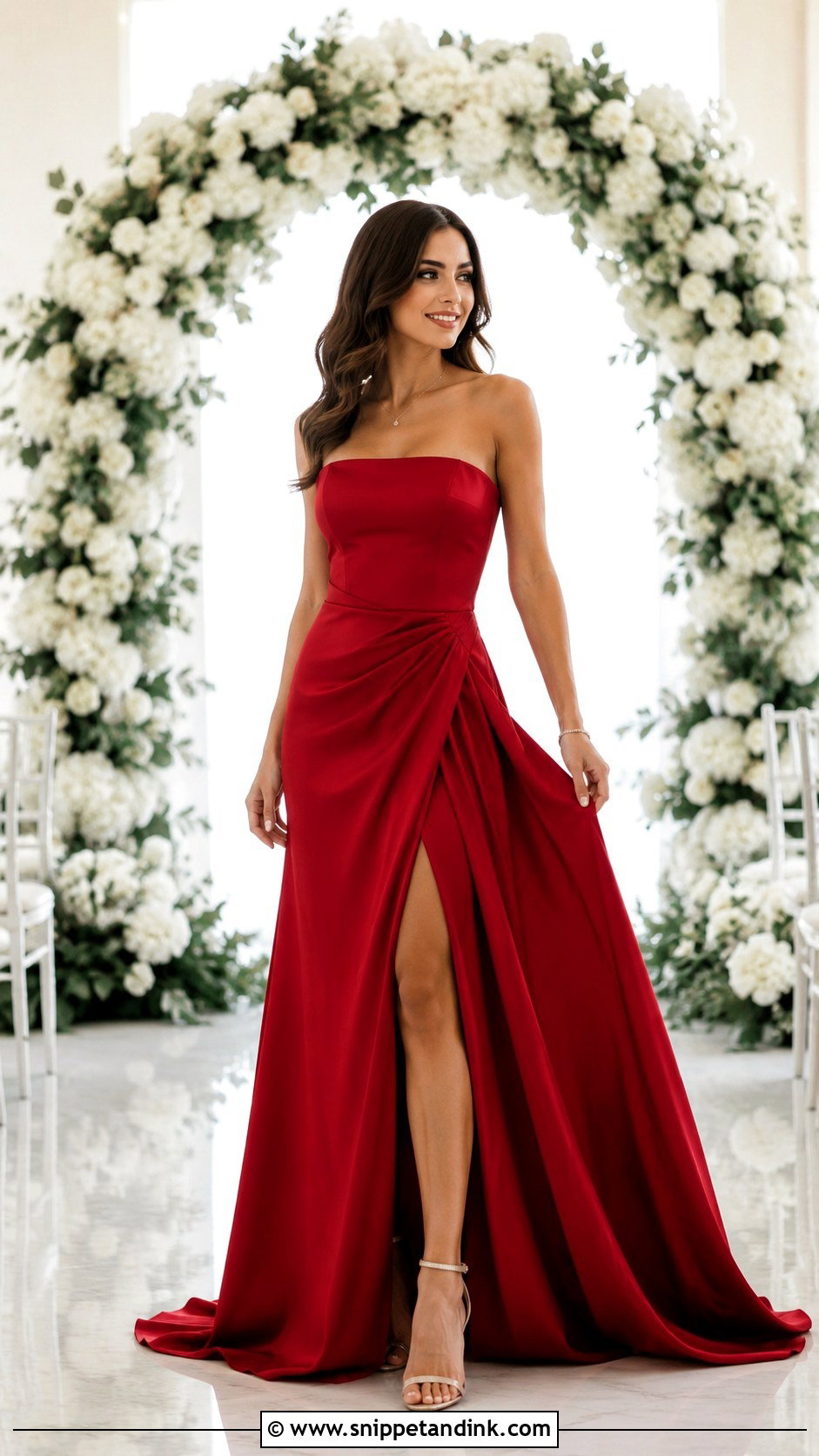
Strapless is the most flexible neckline for accessories, from a fine necklace to bold earrings or long gloves. A strapless ball gown feels dramatic; a strapless column feels sleek. The fit of the bodice decides everything: it should grip at the ribs, not at the bust, so you aren’t hitching it up all evening. That matters most when the skirt is heavy. Soft waves and elegant heels finish it.
17. Red Square Neck Bridal Dress
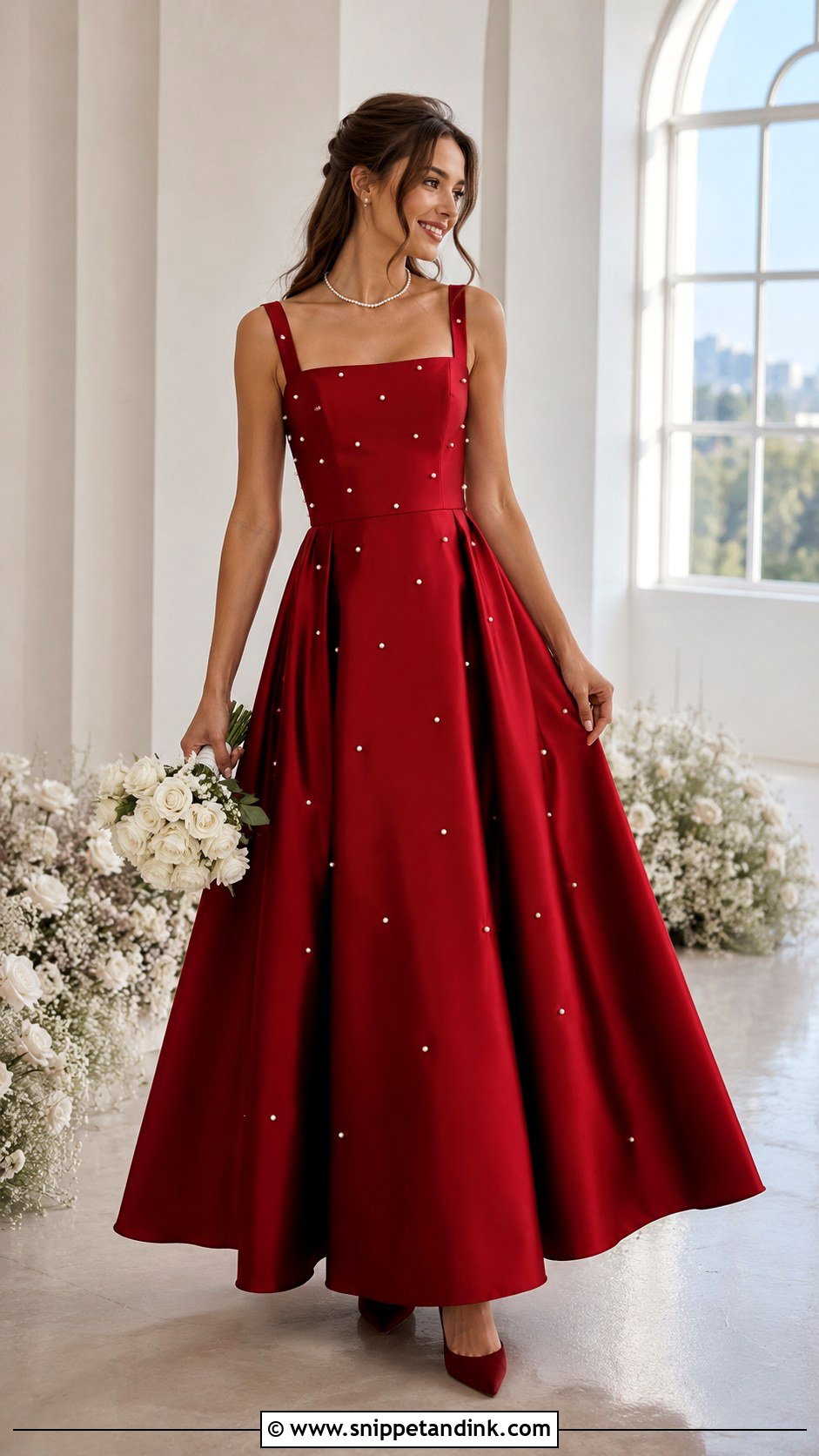
A square neckline frames the shoulders and lengthens the neck, and it suits both fitted bodices and full skirts. In satin it reads simple; in lace or brocade it carries more detail. Look at where the straps sit: too wide and they slip off, too narrow and the square loses its shape. Pair it with a short necklace, pearl studs or drop earrings depending on the gown. A soft bun or half-up hairstyle keeps the neckline clear.
18. Red Cape Bridal Dress
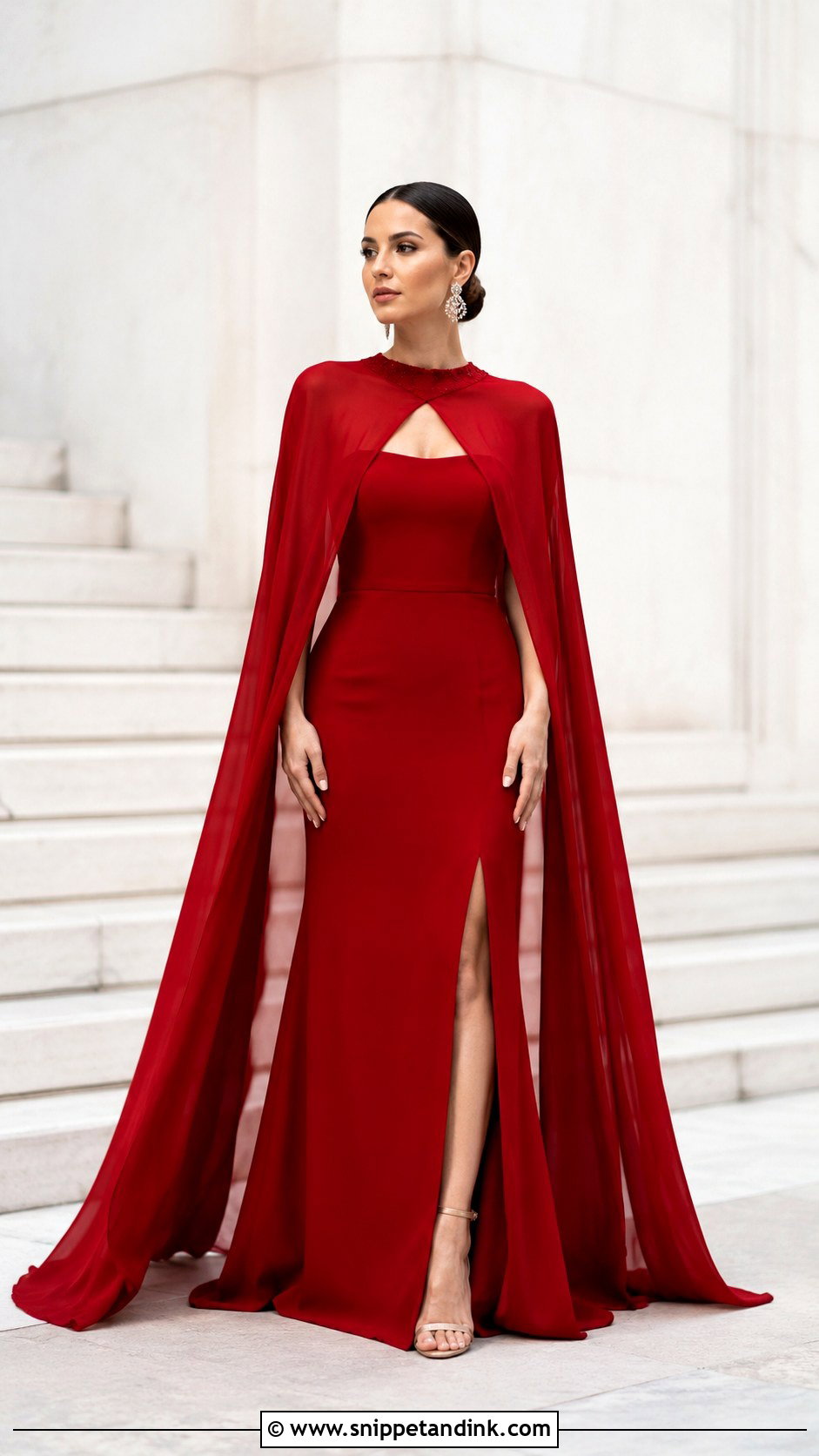
A cape is a strong alternative to a veil. It can be sheer, embroidered, beaded or cut from the gown fabric, and it moves behind you in every ceremony photo. On a fitted red dress it feels powerful; on an A-line it feels romantic. Capes need clean lines underneath, so I’d avoid one on a heavily embellished bodice. Make sure it’s attached with hooks or snaps at the shoulder so it doesn’t pull the neckline back. Sleek hair, refined earrings, elegant heels.
19. Red Bridal Dress With Train
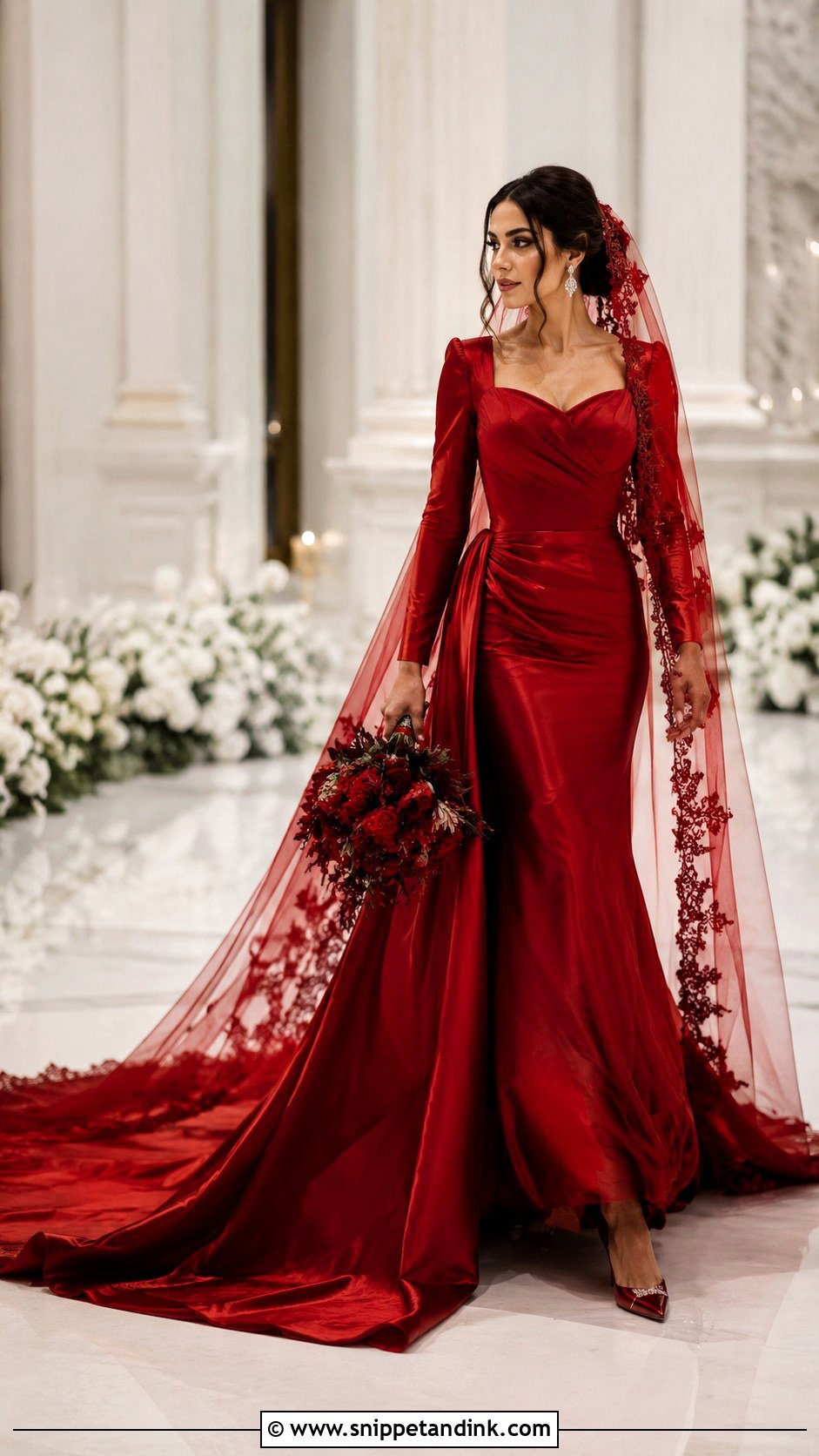
A train makes the aisle walk. It can be short, chapel length or a full cathedral sweep for a grand venue. Satin and mikado trains hold their shape; tulle and organza ripple. Ask your seamstress to add a bustle and practise it with your maid of honour before the day, since a red train dragged across a dance floor collects every mark. Choose a veil length that complements the train instead of matching it exactly, and wear heels you can carry the extra weight in.
20. Red Bridal Dress With Gold Jewelry
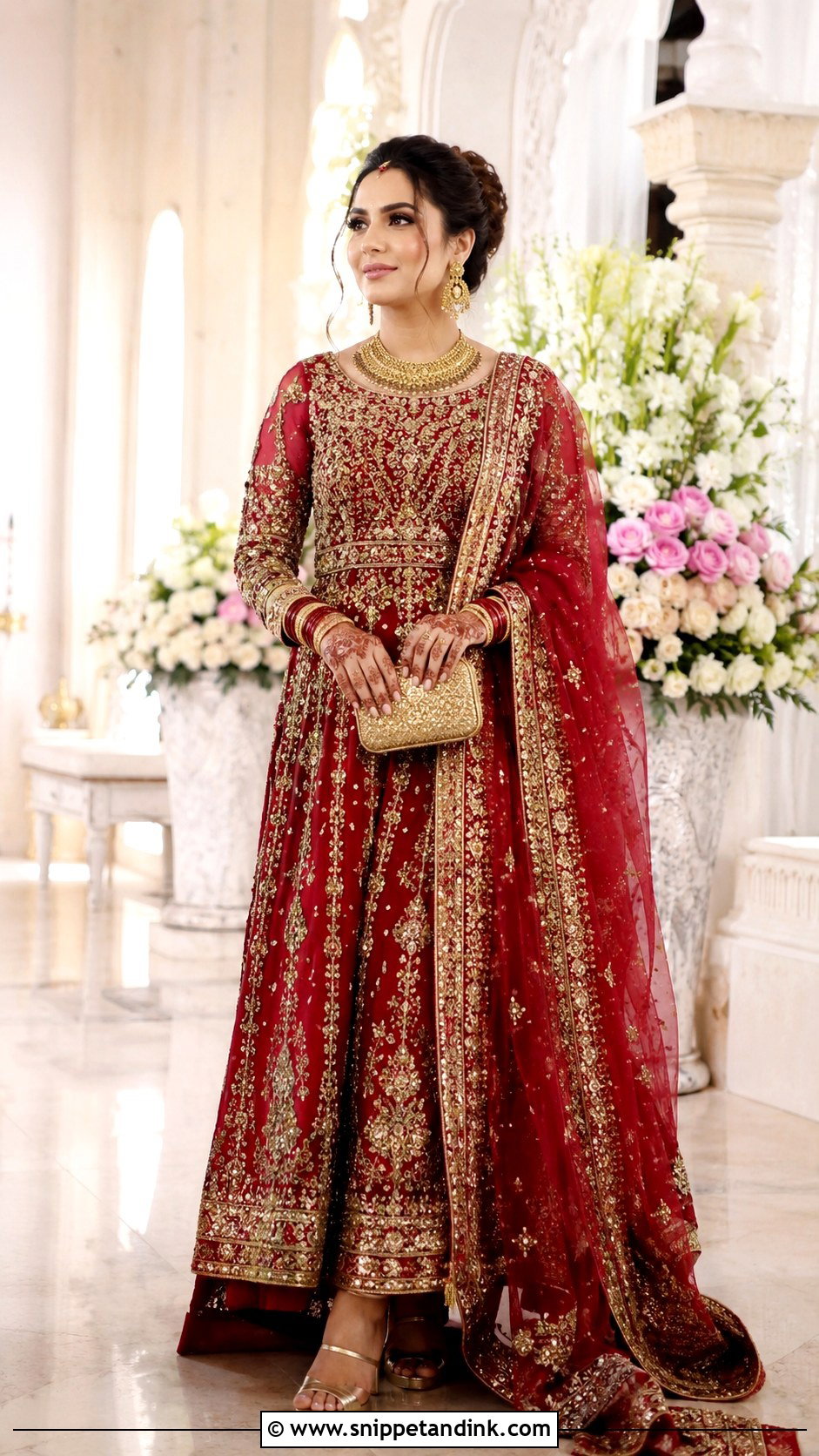
Red and gold is warm and festive, and it suits embroidered, beaded, brocade and plain satin gowns alike. Gold drop earrings, bangles, a hairpiece or a fine necklace, chosen by the neckline. The rule I follow: the more detail on the gown, the fewer gold pieces. Yellow gold flatters warm reds such as scarlet and tomato; a rosier gold sits better against blue-reds like cherry and crimson. Gold heels or a metallic clutch finish it.
21. Red Bridal Lehenga
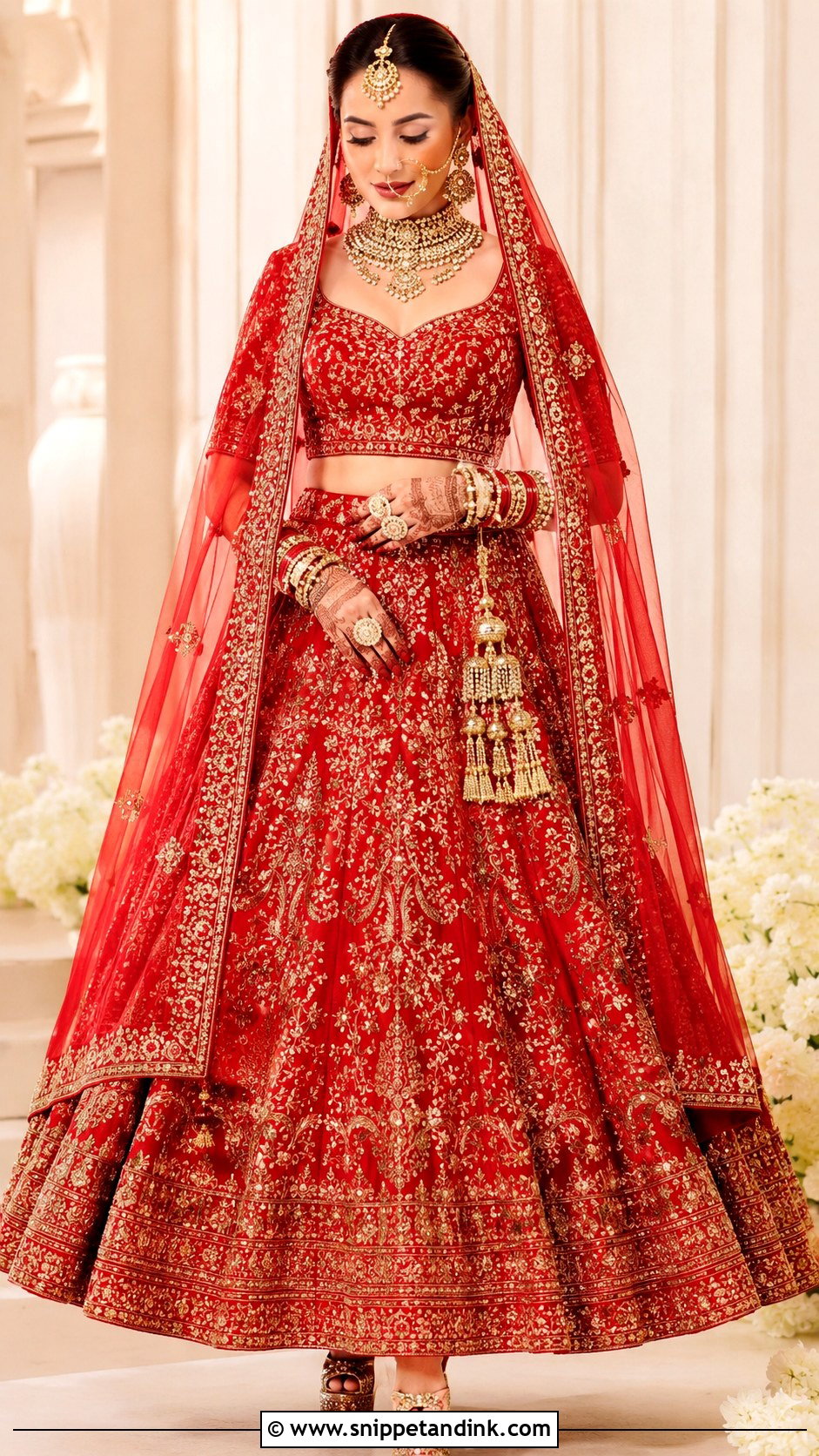
A red bridal lehenga carries the full weight of tradition for many South Asian brides. Skirt, fitted blouse and dupatta together give movement and detail. Gold embroidery feels regal, tonal red feels modern, mirror accents add sparkle. Heavily worked bridal lehengas can be very heavy, so ask for a padded or canvas waistband and wear the skirt for an hour at home before the day. Balance the blouse, skirt and jewelry so nothing fights, and plan the dupatta drape with the person dressing you.
22. Red Bridal Saree
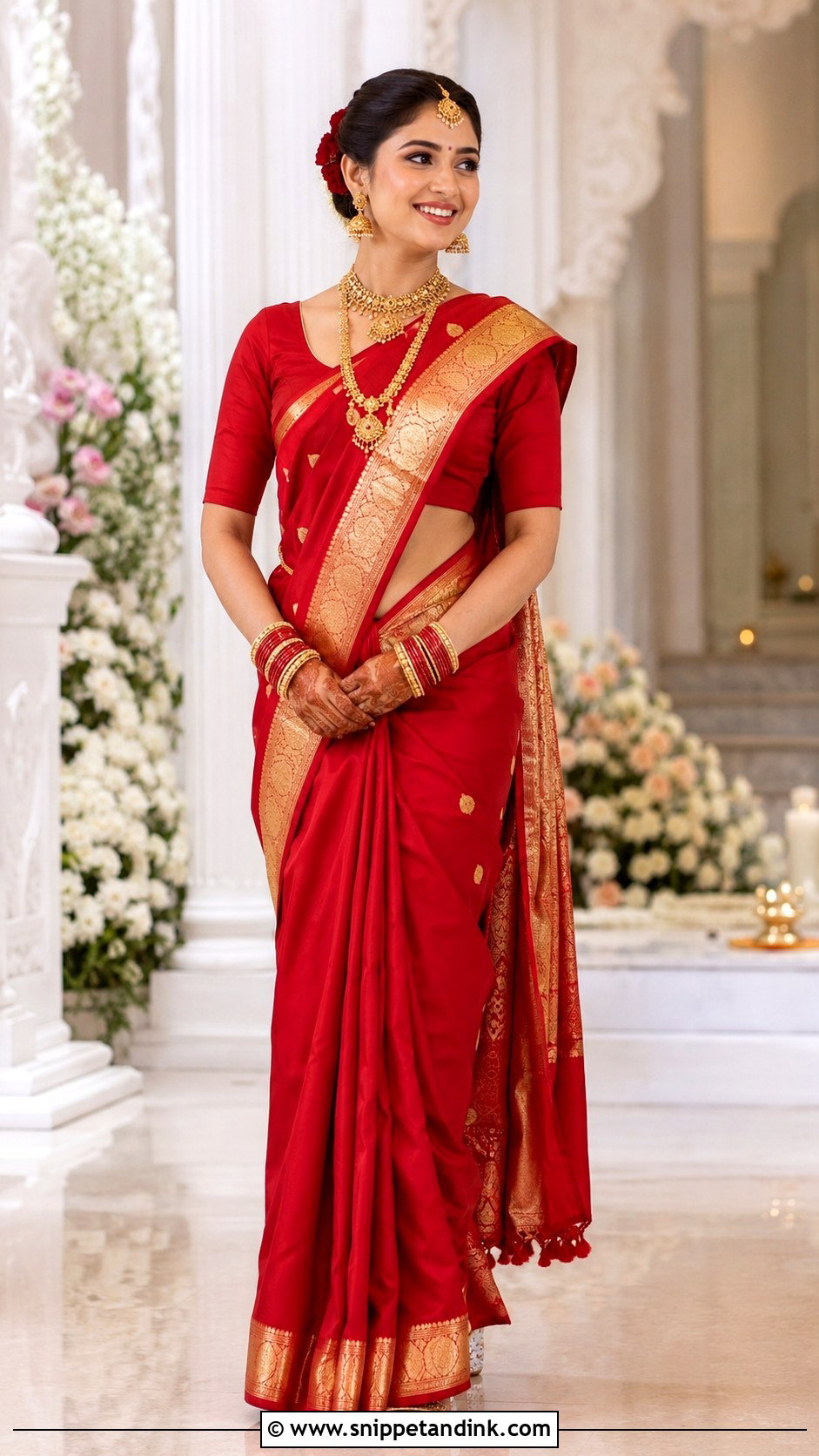
Each fabric gives a red saree a different temperament: silk and brocade feel ceremonial, chiffon and embroidered georgette feel light. A red silk saree with gold borders is the classic. The drape matters as much as the saree, so book someone who can pin it to hold through the pheras and the walk around the fire; a loose pallu is the most common problem I fix on the day. Fitted blouse, gold jewelry, embellished sandals and a polished hairstyle. A matching or contrast veil adds presence.
23. Red Chinese Bridal Dress
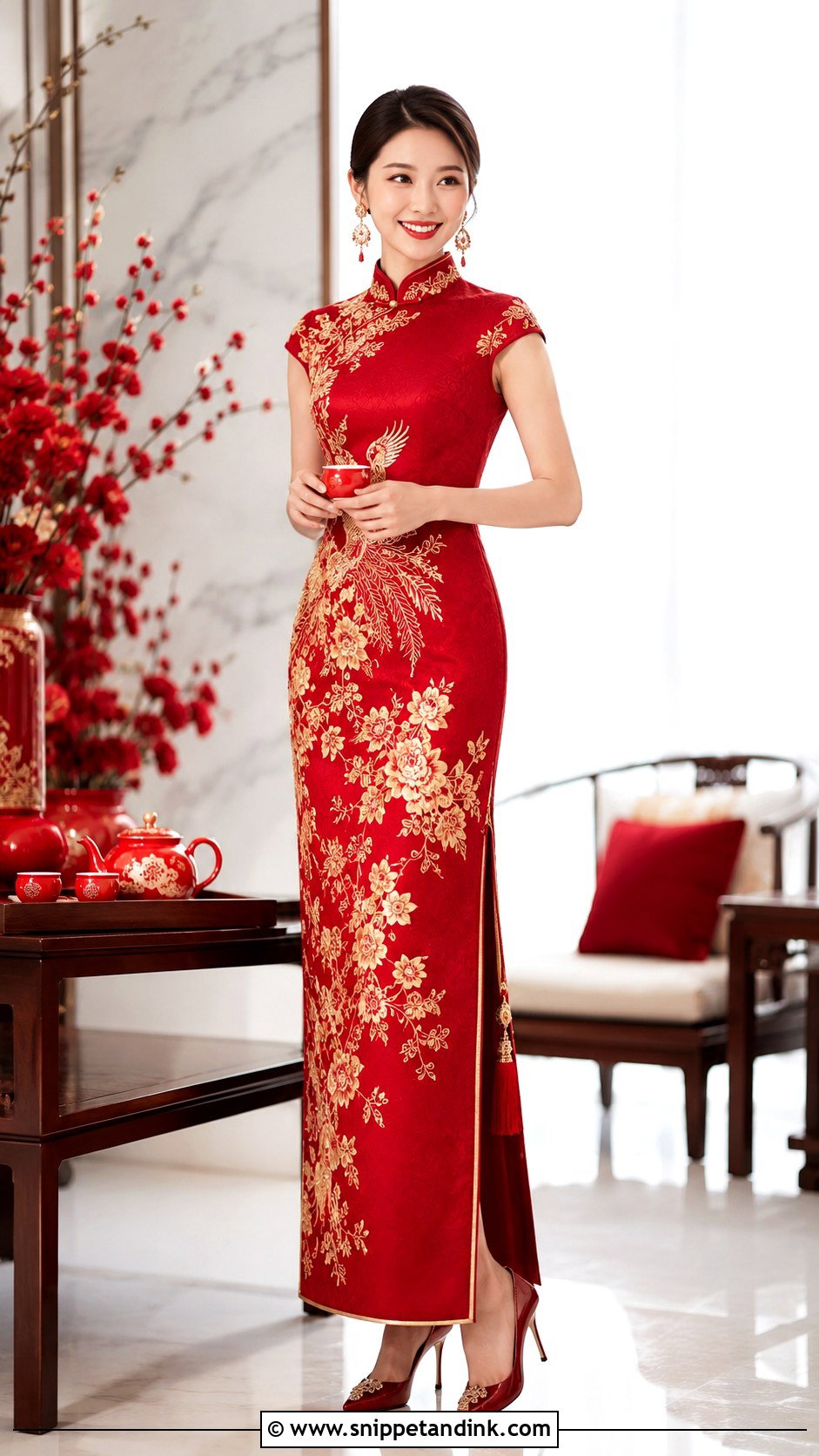
A red Chinese bridal dress, often inspired by qipao or modern cheongsam designs, has a fitted line, a high collar and fine embroidery. Gold thread, florals and dragon or phoenix motifs carry traditional meaning. Because the cut is close, the side slit height matters for walking and for the tea ceremony, when you’ll kneel or bow; test both at the fitting. A full-length qipao feels formal; tea length suits a reception or outfit change. Gold earrings, smooth hair and elegant heels complete it.
24. Red Tea Length Bridal Dress
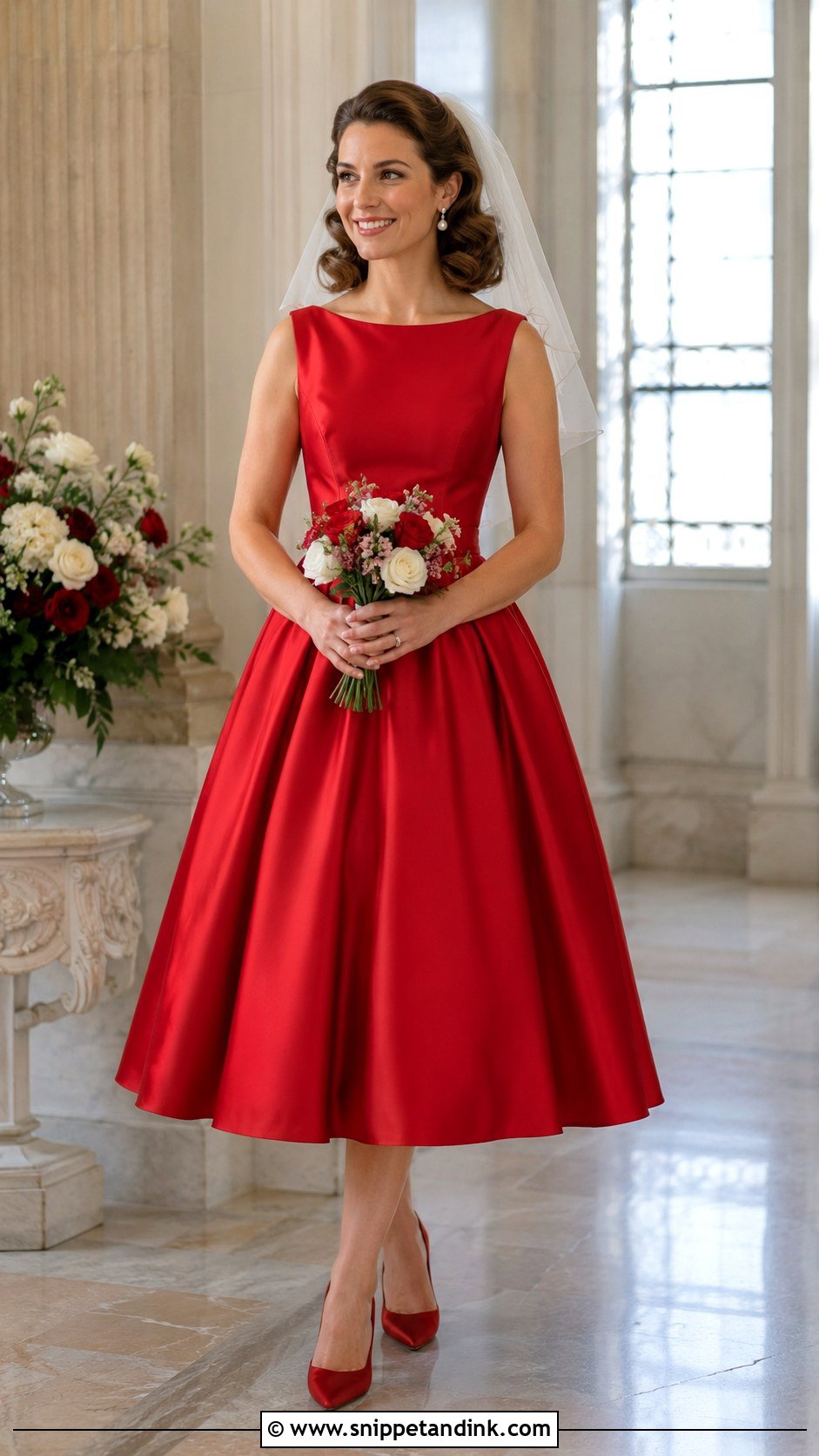
Tea length sits between knee and ankle, so you can walk, dance and show your shoes. A fitted bodice with a flared skirt gives the classic shape, and lace or satin keeps it formal. Pointed pumps, pearl earrings and a short veil or hair bow make it feel vintage. Hem length is everything here: take it up with your exact shoes on, because a centimetre too long looks like an alteration error. Courthouse weddings and intimate ceremonies suit it well.

25. Red Mini Bridal Dress
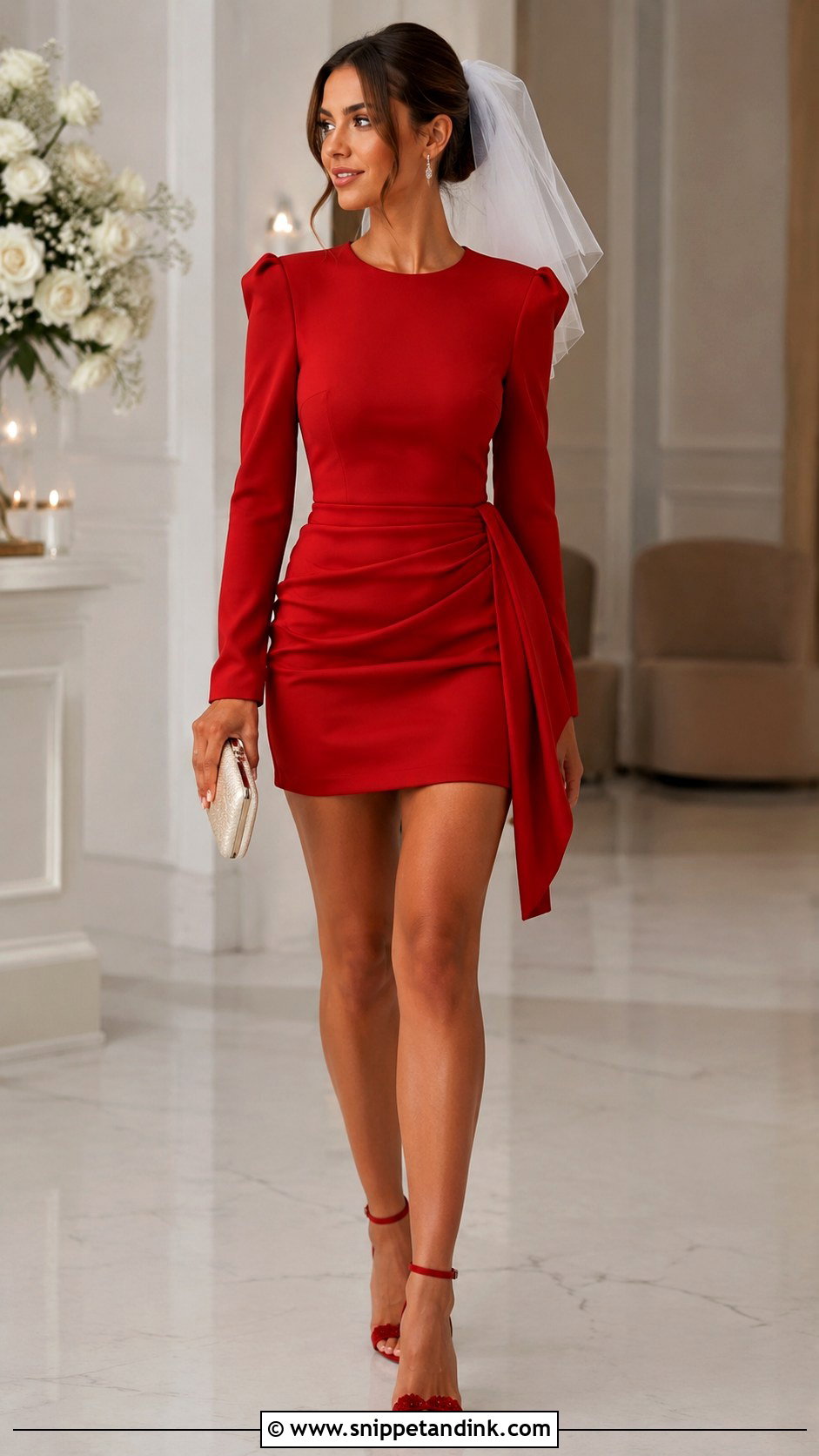
A red mini works for a civil ceremony, a reception change or the after-party. Long sleeves and a structured cut feel chic; satin with a bow feels playful. Since the hem is short, polished styling stops it looking like a party dress: statement heels, a small clutch, clean jewelry. Add a short veil, a capelet or a detachable overskirt for photos if you want more bridal drama. Practise sitting in it, since minis ride up more than you expect.
26. Red Two Piece Bridal Dress
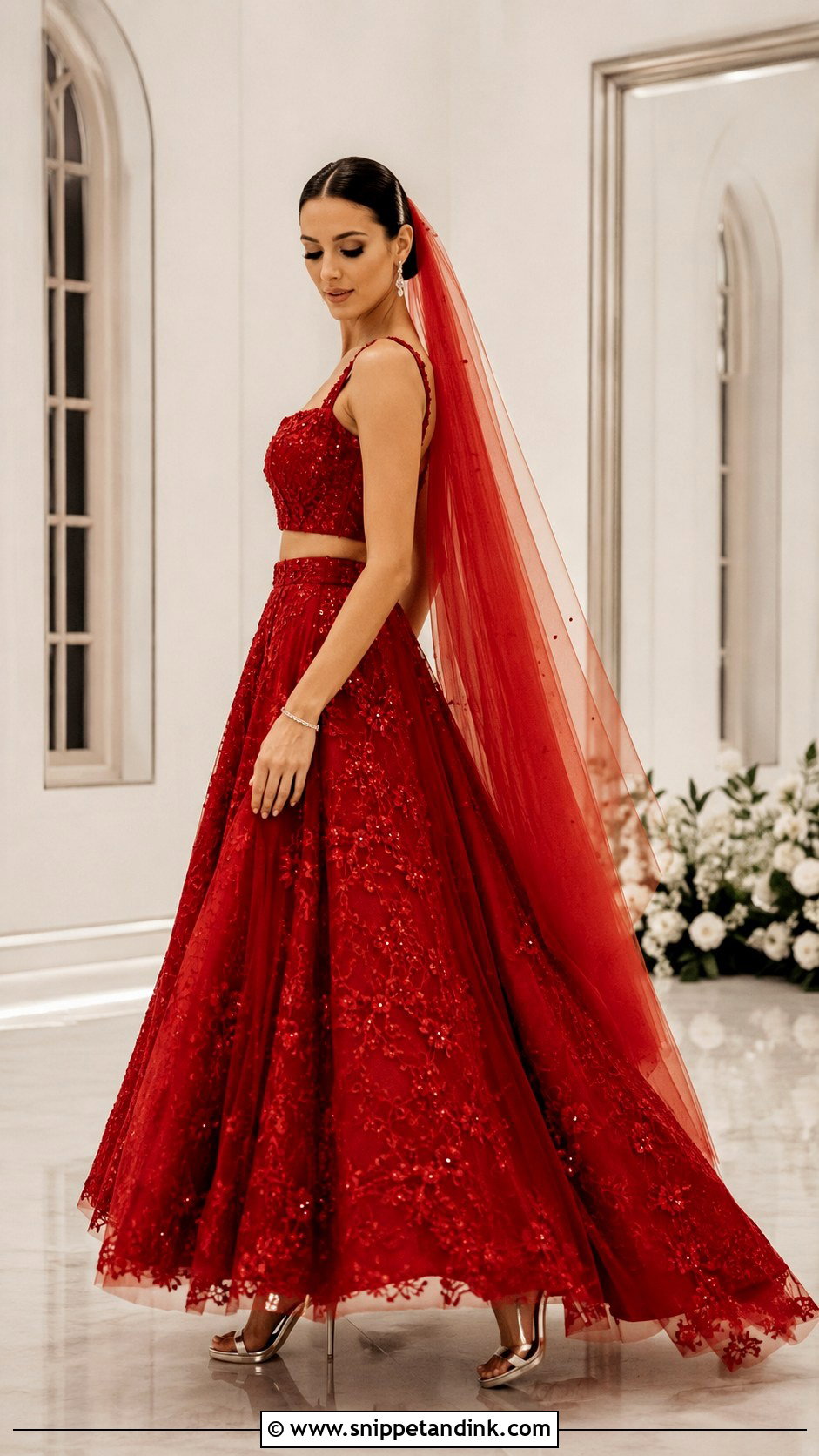
Two pieces give you options: a crop top with a full skirt, a structured bodice with a detachable skirt, or a blouse and matching skirt. Matching fabrics feel continuous; satin with tulle adds texture. The gap between top and skirt should be planned, not accidental, so ask for a high-waisted skirt if you don’t want skin showing when you lift your arms. Coordinated heels, refined earrings and sleek hair. Two pieces also make outfit changes quicker.
27. Red Bridal Jumpsuit
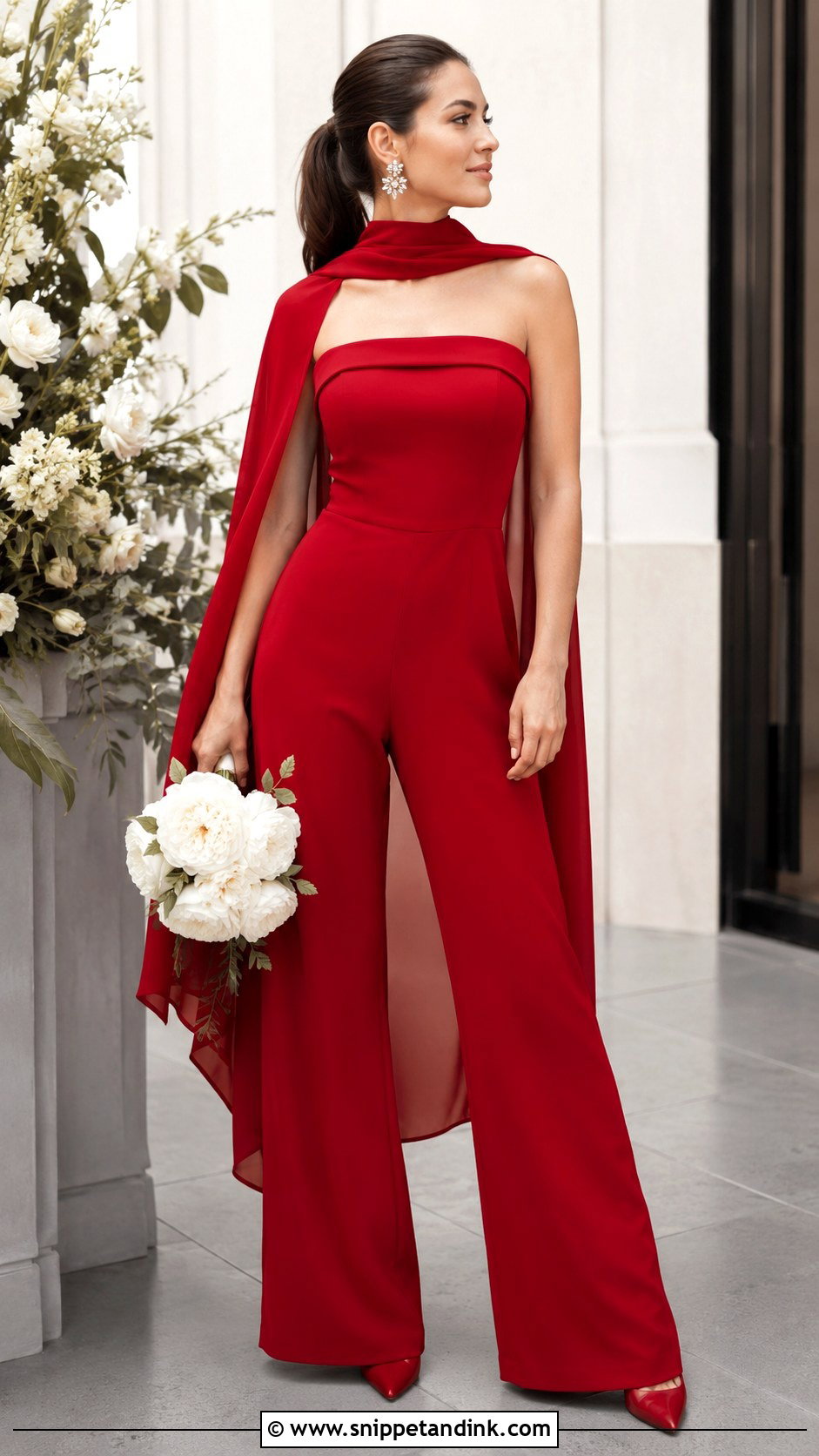
A red bridal jumpsuit is my suggestion for brides who don’t want a gown at all. A wide-leg cut with a fitted bodice gives long proportions, and a cape, train or overskirt can add ceremony drama. Crepe, satin and tailored suiting all hold the line. The one fitting point people forget is the bathroom: ask for a back zip that you can manage alone, or plan for help. Pointed heels, statement earrings, a structured clutch and a sleek ponytail or low bun.
28. Red Bridal Suit
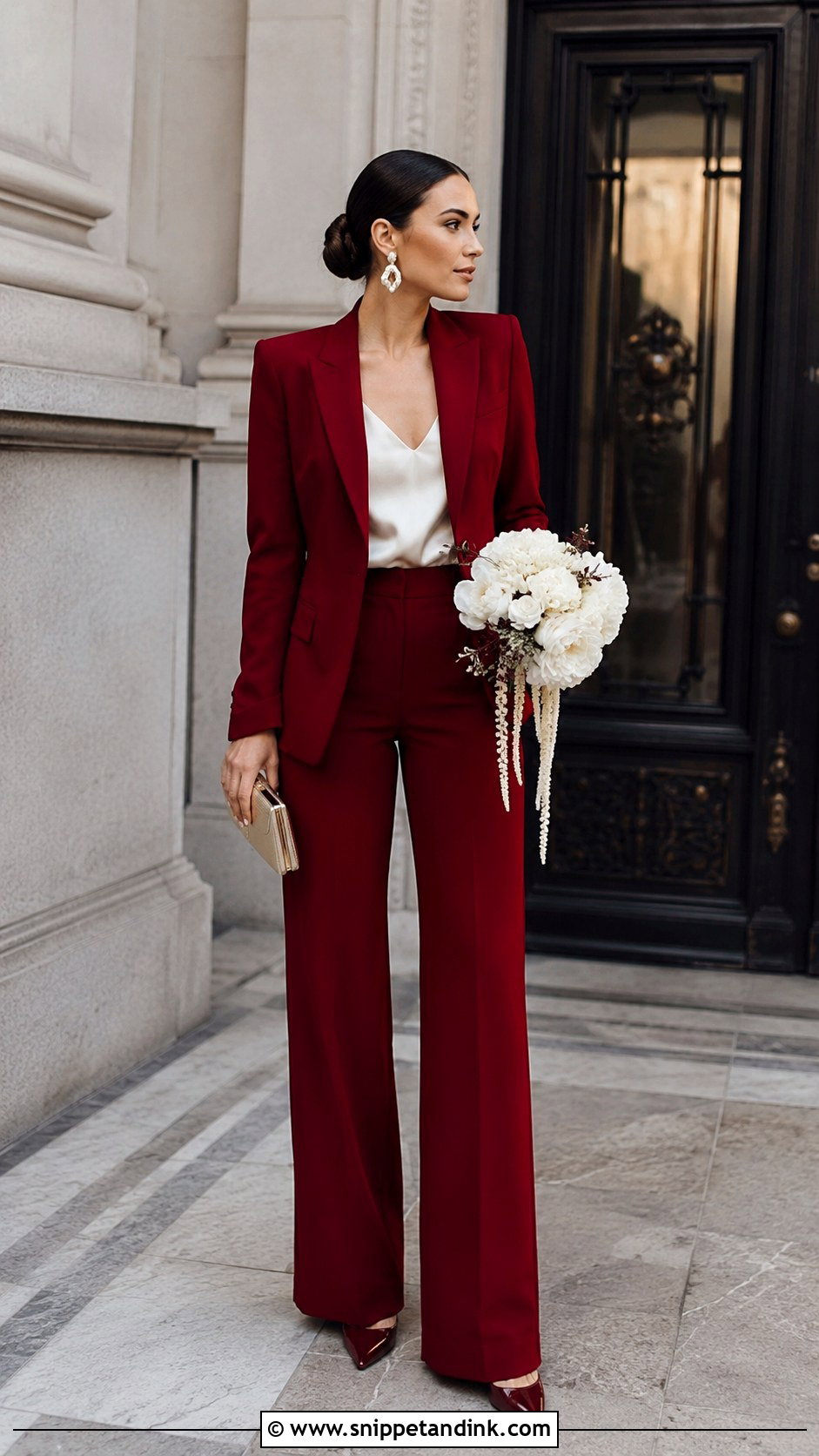
A red bridal suit is tailoring with a sense of occasion. A fitted blazer and wide-leg trousers in satin, crepe or velvet make a strong wedding look. Under the blazer, wear a lace camisole, a silk blouse or nothing if the cut is secure. Get the blazer fitted at the shoulders first; everything else can be taken in, shoulders can’t. Pointed heels, sculptural earrings and a clutch, and a short veil or pearl hair piece for bridal contrast.
29. Red And White Bridal Dress
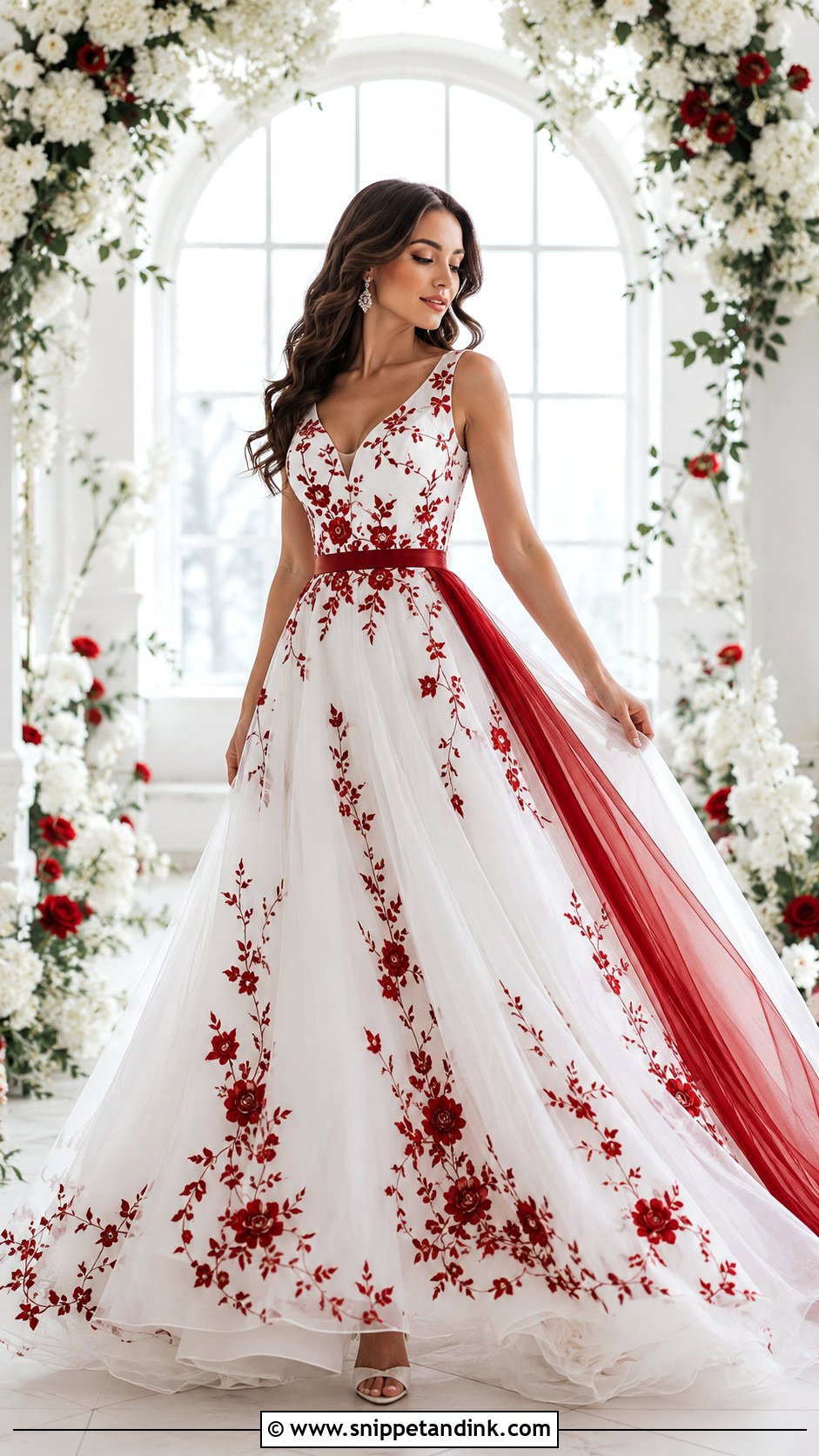
Red and white keeps one foot in tradition. The red can come in as embroidery, a sash, floral appliqué, an ombre skirt or a red bodice over a white skirt, and the white softens the intensity. Ask the maker whether the red dye has been colourfast tested against the white: a two-tone gown that gets damp can bleed pink into the white. Neutral heels, delicate earrings and a bouquet using both shades. Keep accessories simple so the two-tone design reads clearly.
30. Dark Red Bridal Dress
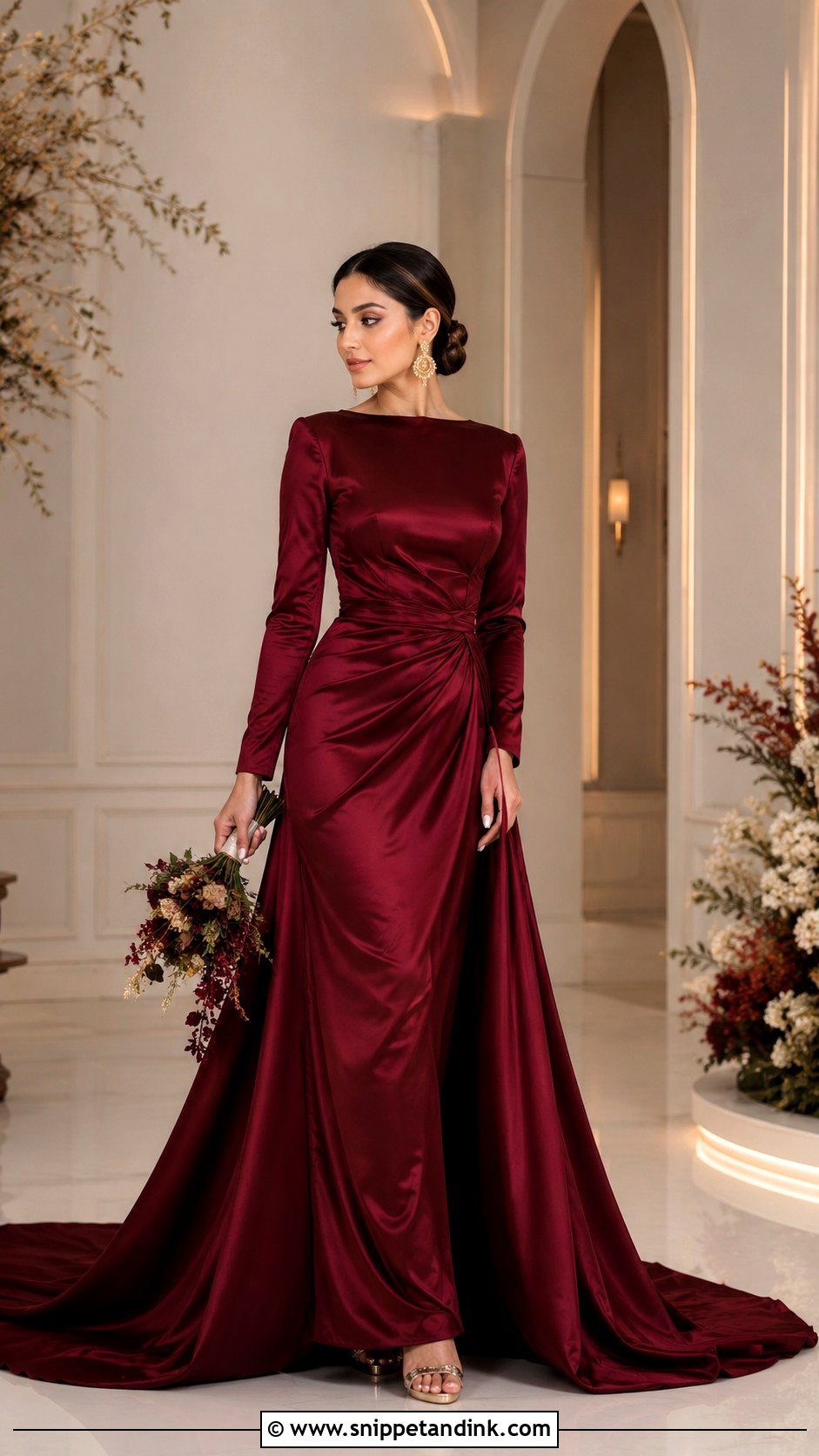
Burgundy, oxblood, garnet and deep ruby are softer than scarlet and more forgiving on many skin tones. They work in velvet, satin, lace or crepe. A long-sleeved dark red gown feels regal; a deep red slip feels sleek. Dark reds lose detail in dim rooms, so tell your photographer, who may want more light for the ceremony. Gold or rose-gold jewelry, soft makeup and heels in red, nude or metallic finish it, especially for autumn and evening weddings.
Things a Red Gown Does That a White One Doesn’t
I’ve handled enough red silk to know the colour comes with its own habits. None of them are reasons not to wear red, but you want to plan for them.
Dye can rub off
Strong red dyes, especially on silk and velvet, can transfer onto skin, a white lining or a partner’s shirt cuff when damp. Wear the gown with a pale underlayer during a fitting on a warm day and check for any pink. Ask the shop about colourfastness before alterations begin.
Sweat shows darker
Red fabric darkens visibly where it gets damp. Dress shields sewn into the bodice and a breathable lining help more than any spray. Avoid tight synthetic linings for summer weddings.
Cameras push red
Bright reds can lose their fine detail in photos, so lace and embroidery may flatten out. Mention the colour to your photographer early so they can expose for it, and favour gowns where texture comes from shape as well as surface.
Lipstick, Flowers and the Bridal Party Around a Red Dress
Match your lipstick to the undertone of the dress, not its exact shade, or go a step softer; an identical red lip can look like a costume. For flowers, ivory, blush and greenery give red room to breathe, while an all-red bouquet disappears against the bodice. If your bridesmaids wear colour, keep them away from pinks that sit close to your red, which can make your gown look faded beside them. Neutrals, deep greens, navy and gold all frame a red bride well.
The Shade Comes First, the Silhouette Second
A red wedding dress can be traditional, glamorous, romantic or minimal, and the right one depends on your venue, the season, your comfort and the story you want to tell. A ball gown is grand, satin is sleek, a lehenga is ceremonial, a jumpsuit is sharp. Because red already says so much, every accessory should support the dress rather than compete. Settle the exact shade first, test it in real light, and build the hair, makeup, shoes and jewelry around it.
You'll Like These Ideas:




Leave a Reply