
Most brides who ask me for their hair down have the same quiet worry: will it still look like this at ten o’clock tonight? It’s a fair question. A down style shows off your length and color better than any updo, but it also takes the full force of humidity, hugs and a veil tugging at the crown. Below are 25 down looks I’d genuinely put on a bride, from Hollywood waves to a sleek tucked finish, with notes on how each one behaves over a long day and which hair it really suits.
What a Down Style Needs Before the Iron Goes On
When hair is worn down, nothing holds it up except the prep. An updo is pinned into shape; loose waves depend entirely on how the hair was washed, dried and set. That’s where most of my work on a down style happens, long before the curling iron is switched on.
When to wash
I prefer hair washed the night before or early that morning, dried completely, with no heavy conditioner left at the roots. Squeaky-clean hair can be too slippery for curls to grip, while hair washed three days earlier is usually too oily for volume. If your hair is fine, a root-lift product applied on damp hair does more than anything sprayed on later.
Letting curls cool
A curl only holds once it has cooled in its shape. I pin each section while it’s still warm and leave it pinned while your makeup is done, then brush out at the very end. Rushing this step is the most common reason a down style has fallen flat by the reception.
When you book, tell your stylist:
- Your current length, and whether you’ve had layers or bangs cut recently
- Whether your veil attaches with a comb or a clip, and how long it is
- Any extensions you plan to wear on the day
- Whether the ceremony is outdoors, since humidity changes which products I bring
1. Hollywood Waves for Brides
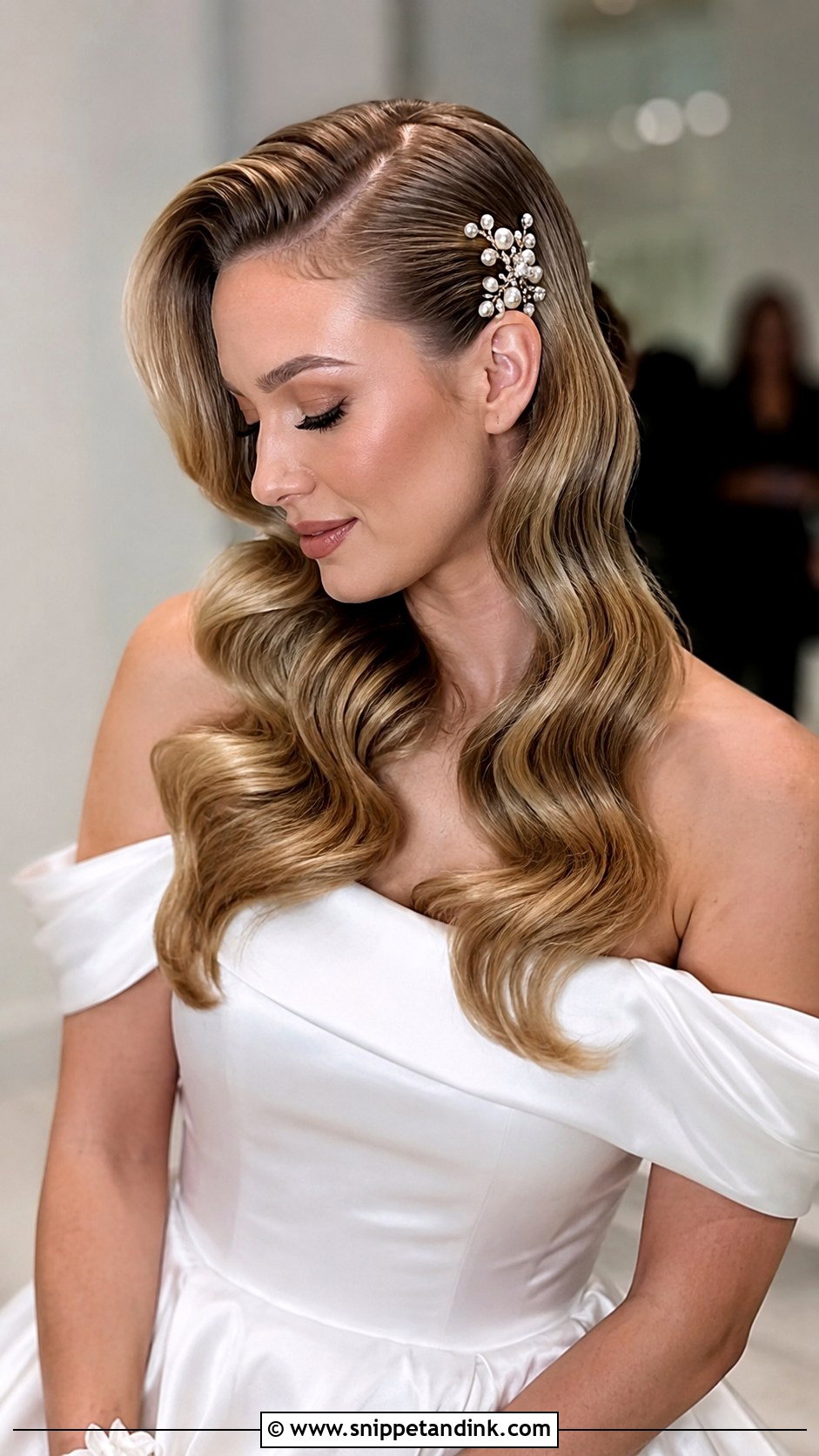
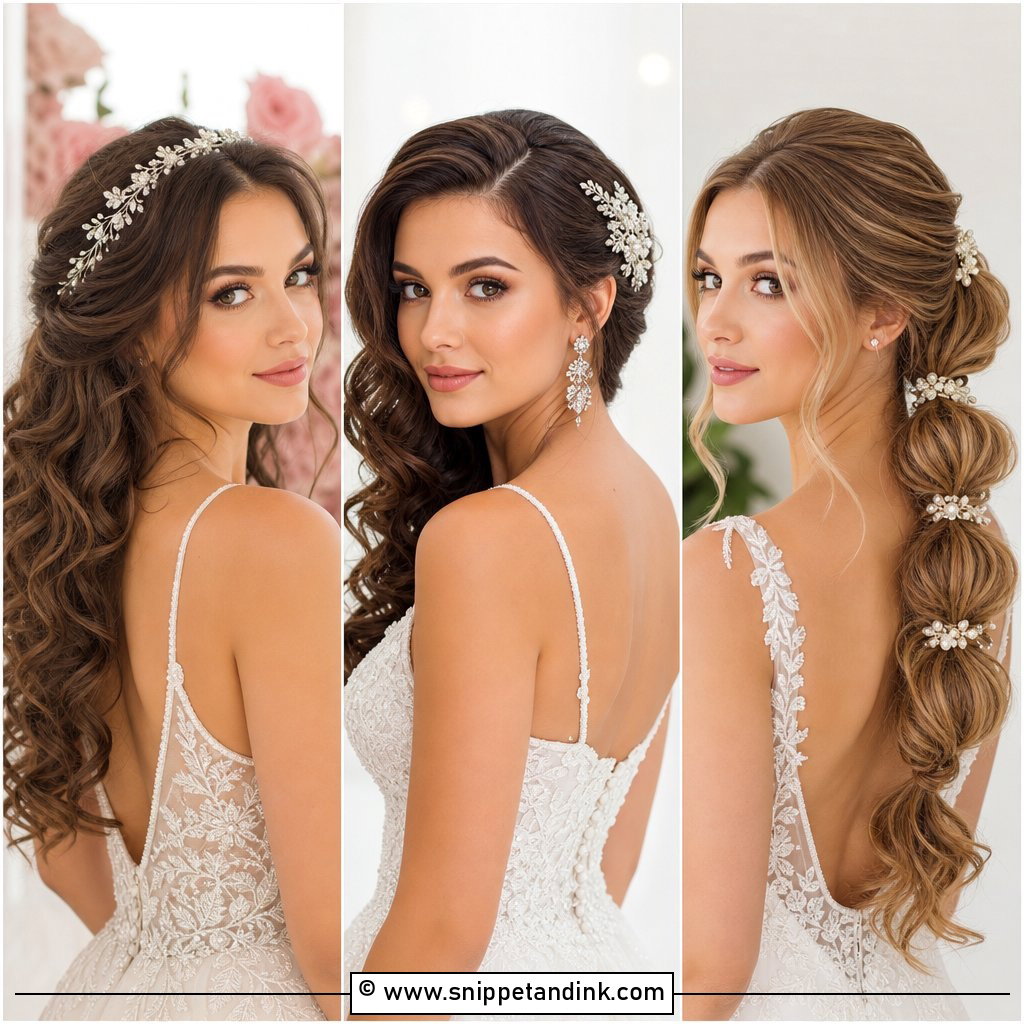
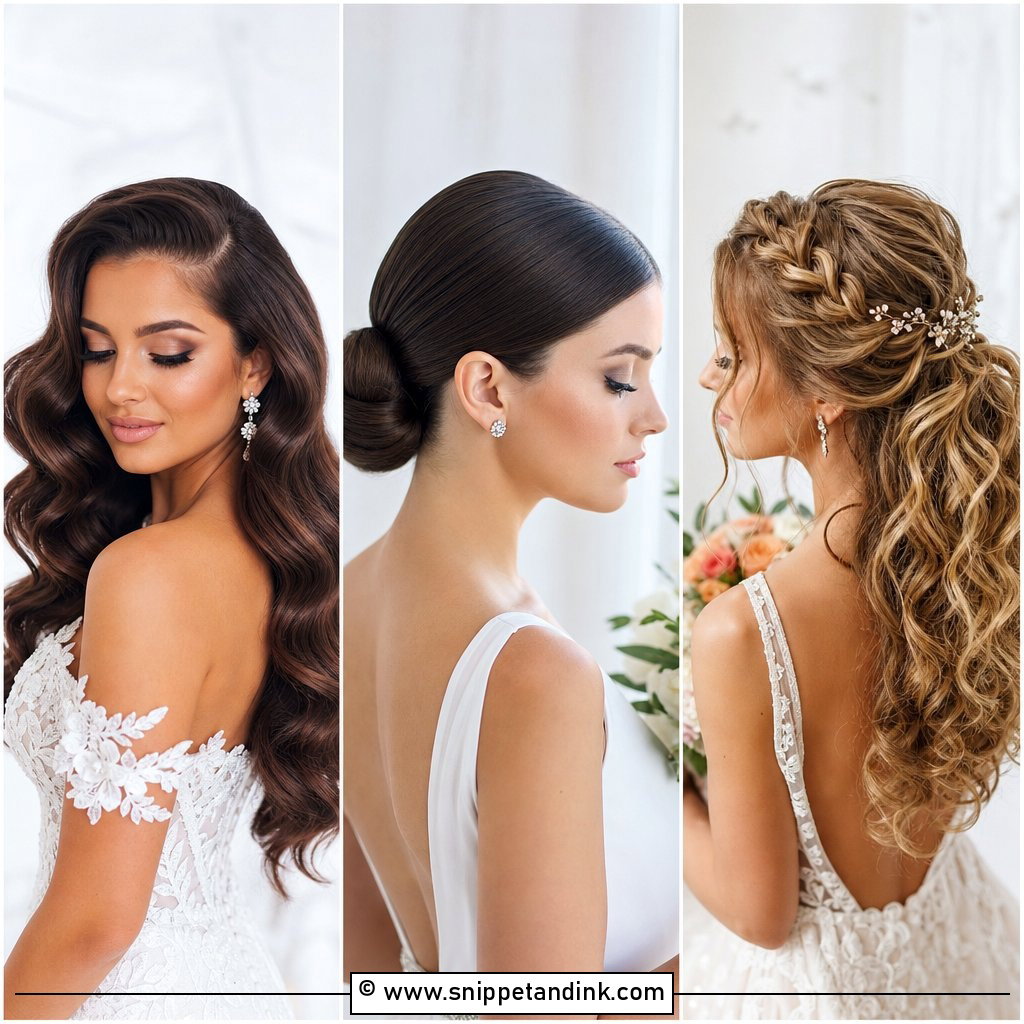
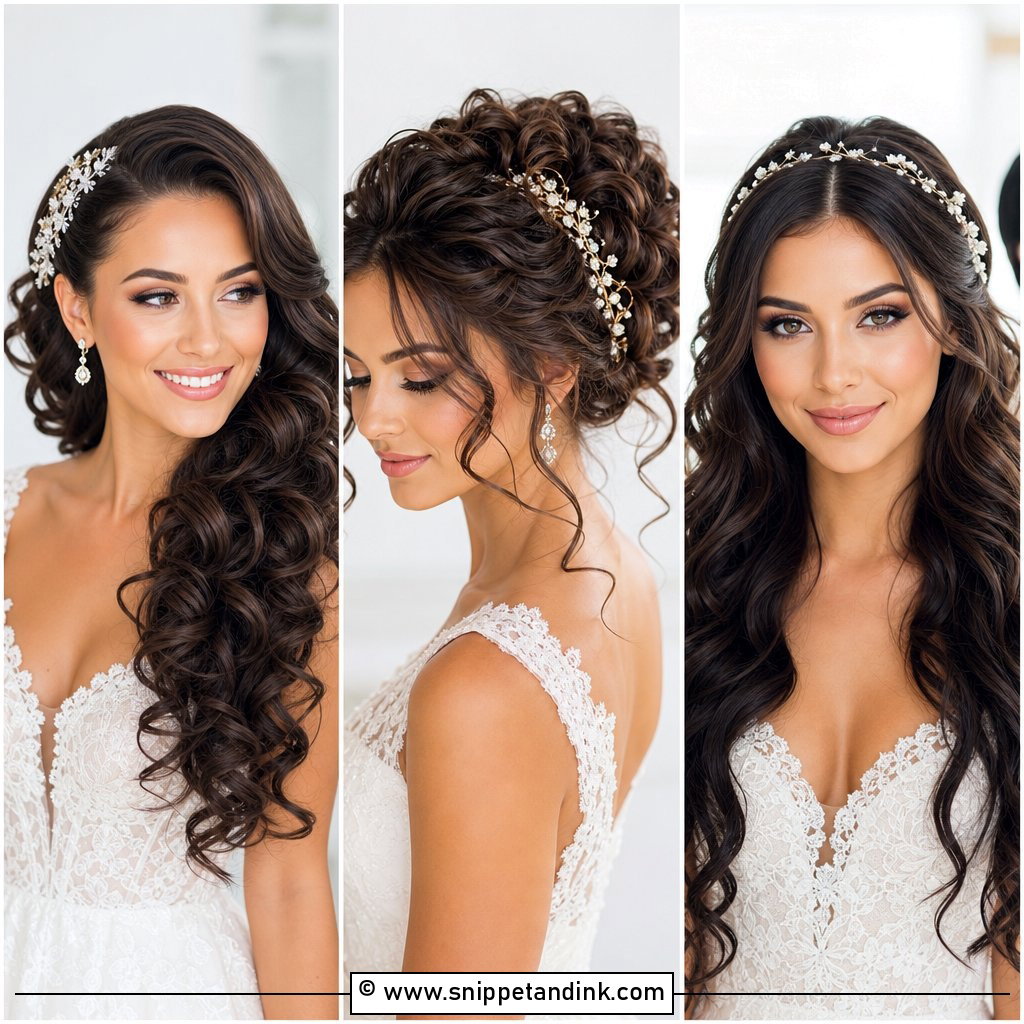
This is the most technical down style on the list, and it rewards patience. I set every curl in the same direction, let them cool completely in pins, then brush them out into one continuous ripple with a boar bristle brush. The deep side part matters because it gives the wave a place to start. A sleek satin gown or a vintage dress suits it, with a small comb or a couple of pearl pins at the part. It holds best on medium to long hair with some weight; heavily layered cuts break the ripple into separate pieces.
2. Loose Beachy Waves for Brides
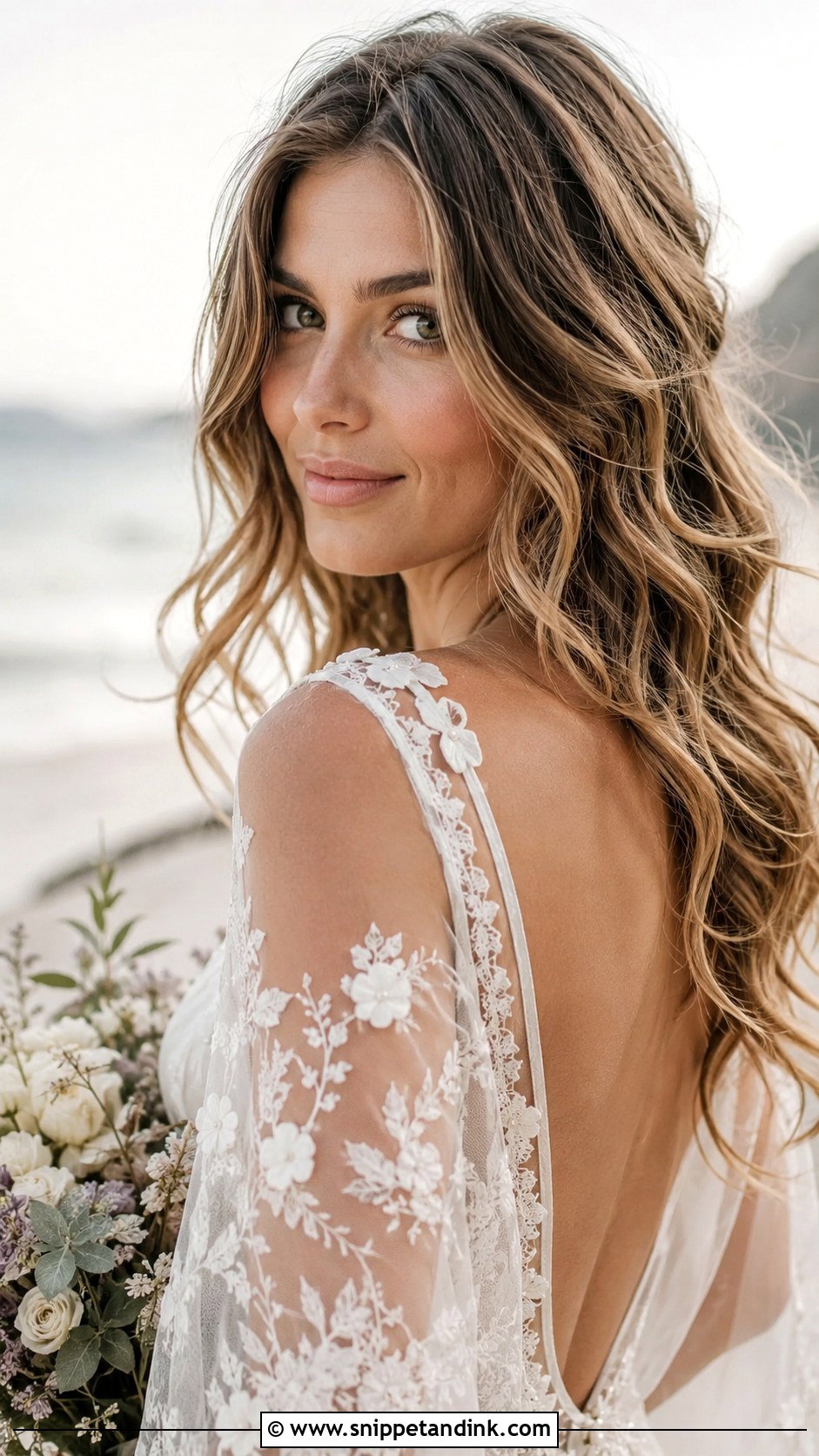
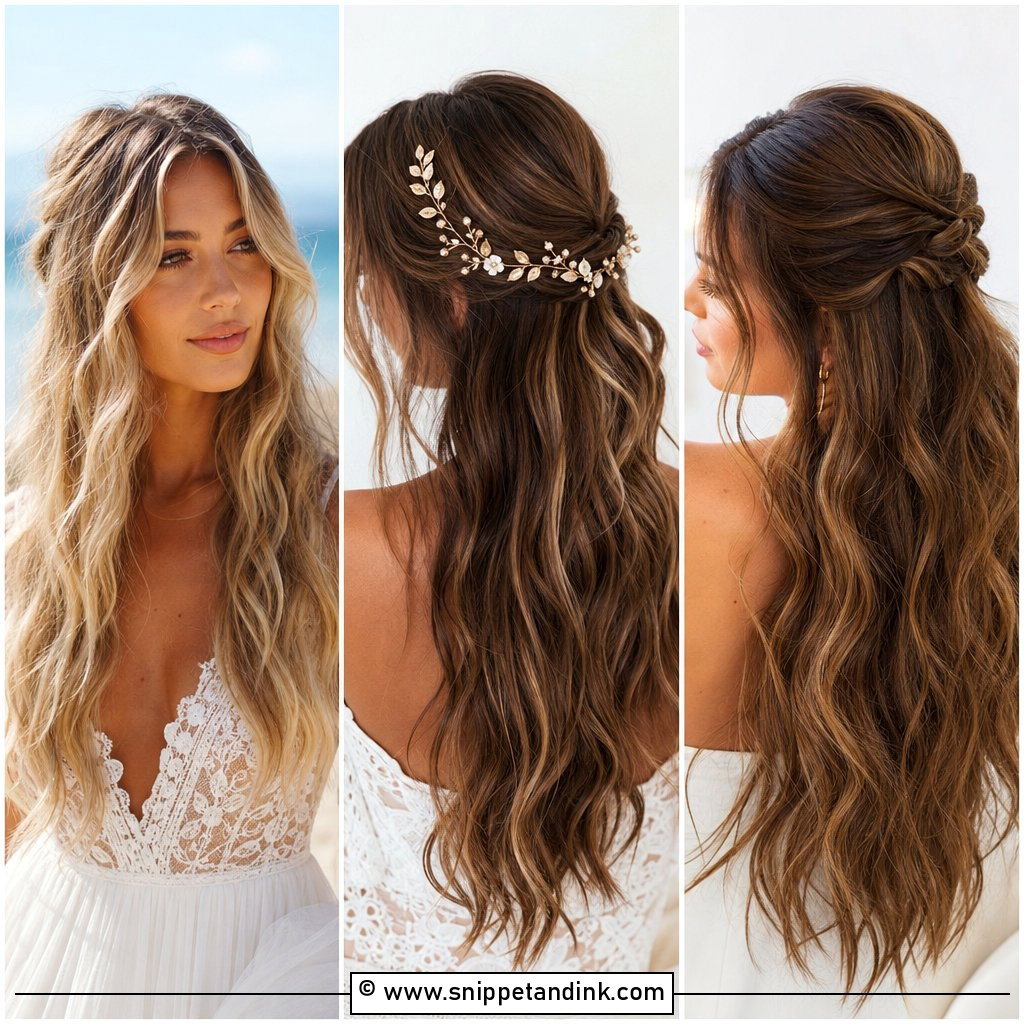
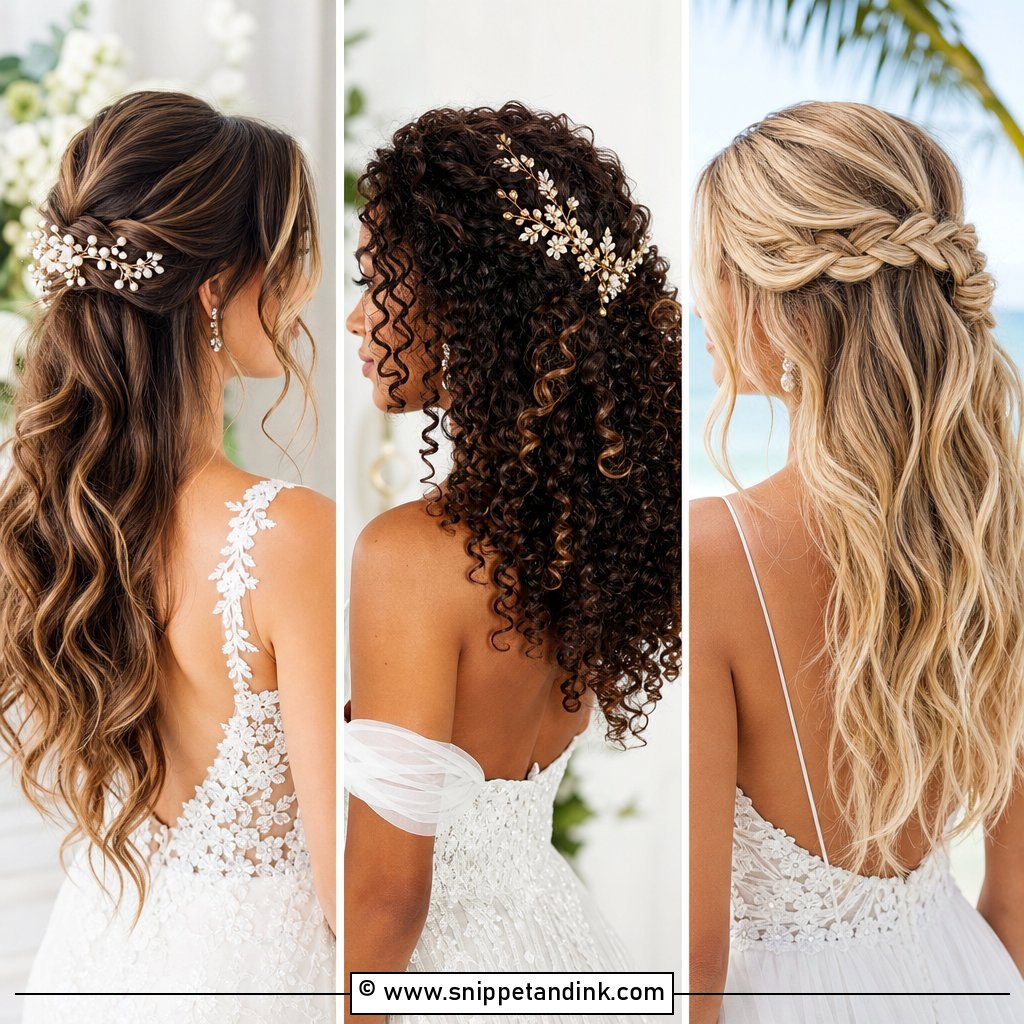
Beachy waves are the style I see collapse fastest when they’re done casually. The finish should read as soft, tousled waves, but underneath it needs real structure: texture spray on dry hair, a flat iron bend through the mid-lengths, ends left straight. Sea salt spray adds grip, though on dry or curly hair it can feel crunchy and dull the shine, so I test it at the trial first. A breeze at an outdoor or destination ceremony only helps this look. Tuck one side behind your ear with a hidden pin if you’re worried about strands blowing across your face during the vows.
3. Sleek Straight Wedding Hair
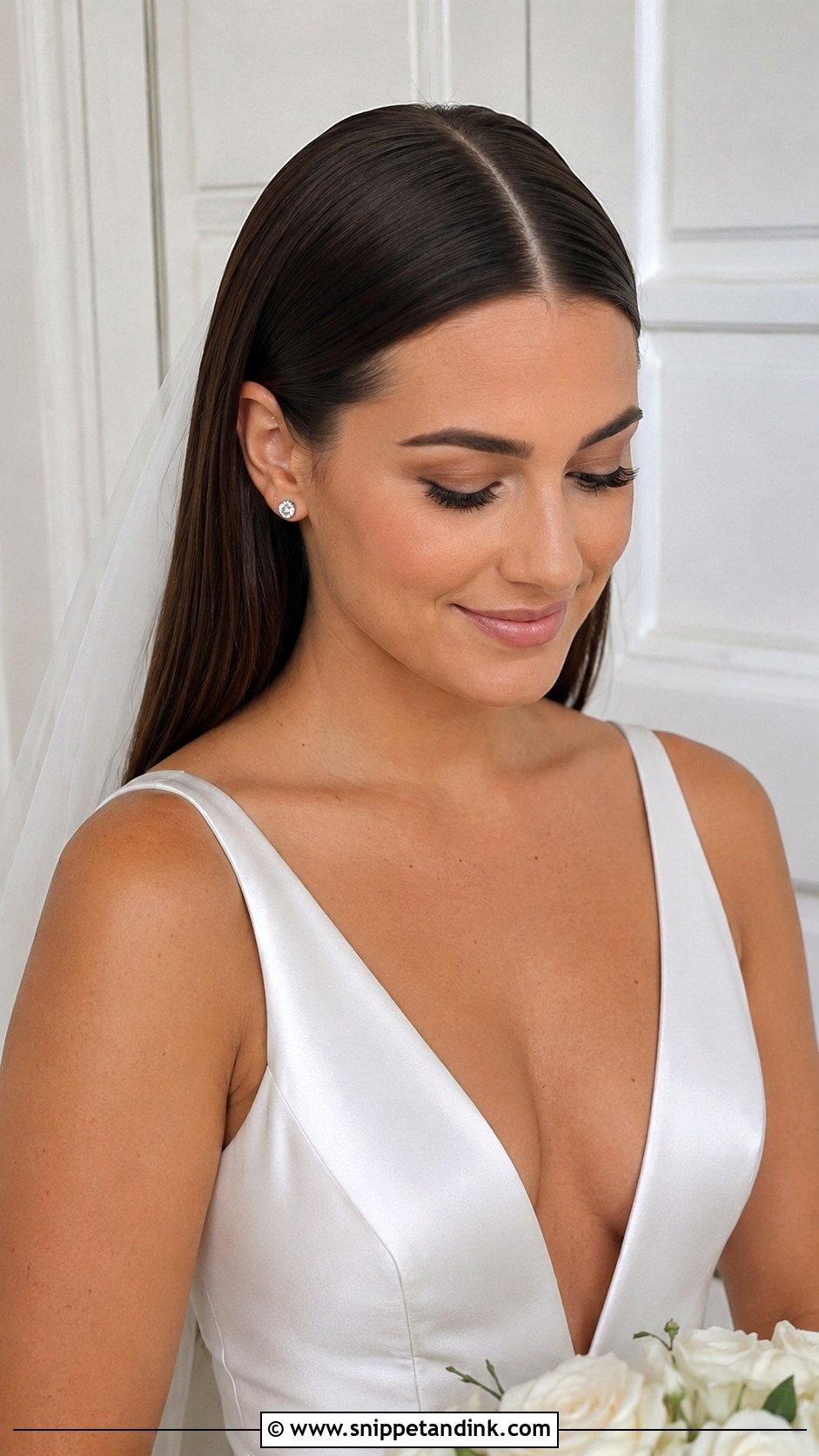
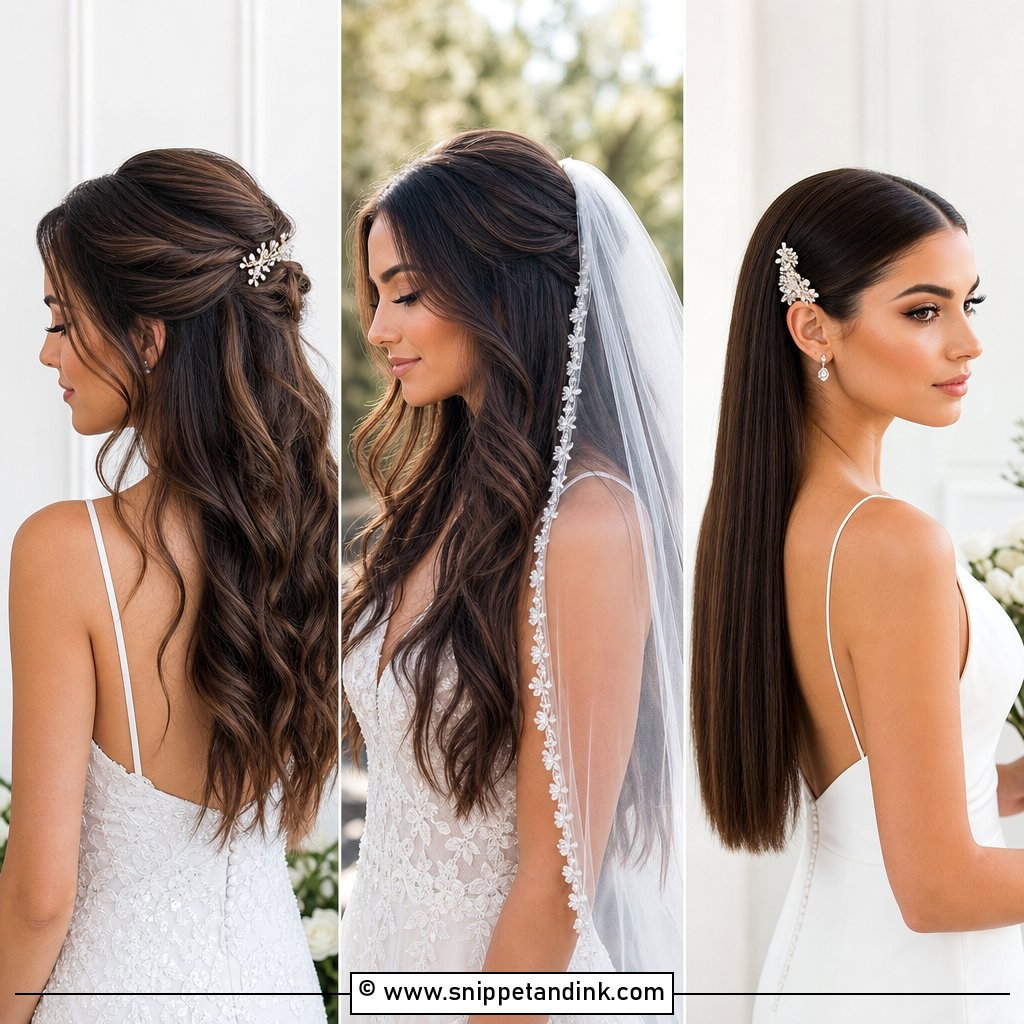
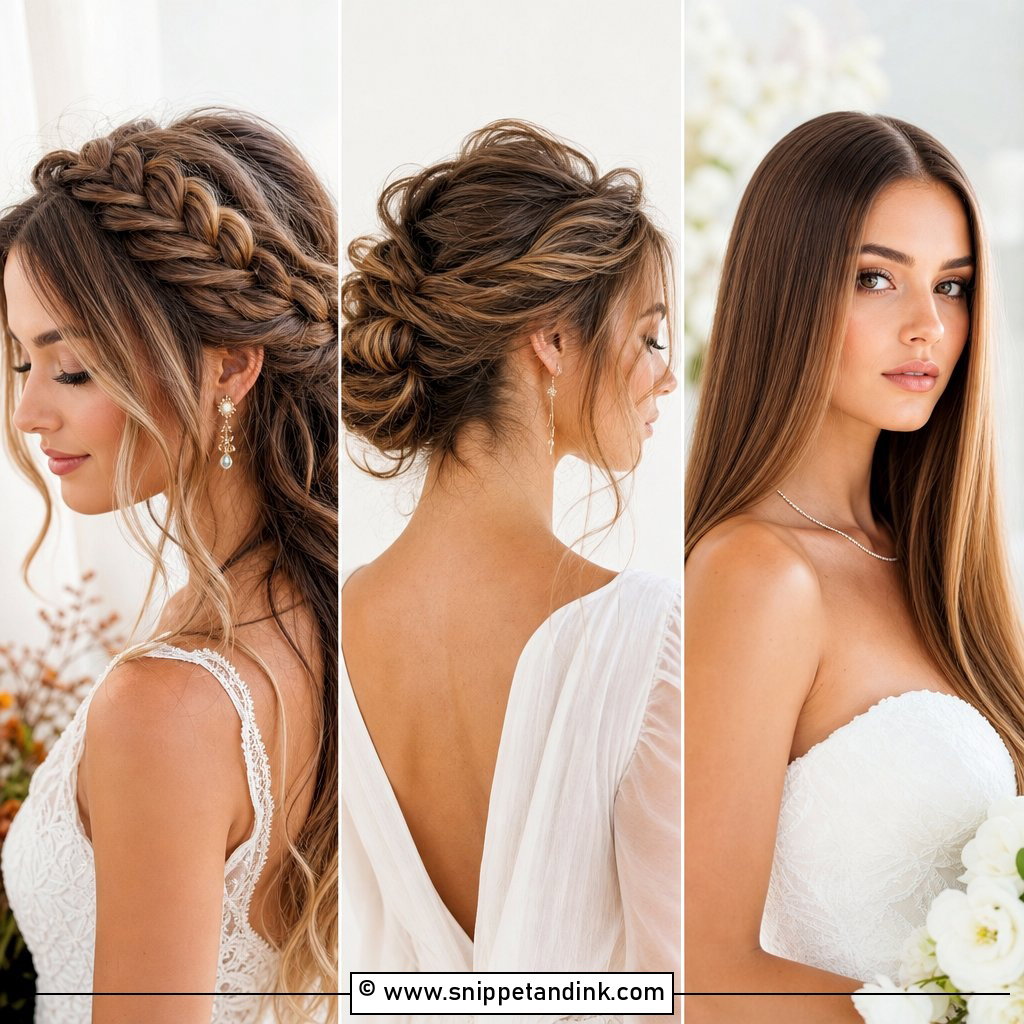
Sleek straight hair hides nothing, which is why I only suggest it when the ends are in good condition. A frayed tip shows instantly once hair is pressed flat and glossy. I blow it out smooth with a paddle brush, flat iron it in thin sections, and finish with a drop of shine serum on the lengths, never the roots. A sharp middle part and a structured, contemporary gown make the most of it. Humid weather will soften the polish, and an anti-humidity spray before the iron helps far more than anything sprayed afterwards.
4. Half-Up Half-Down Bridal Style
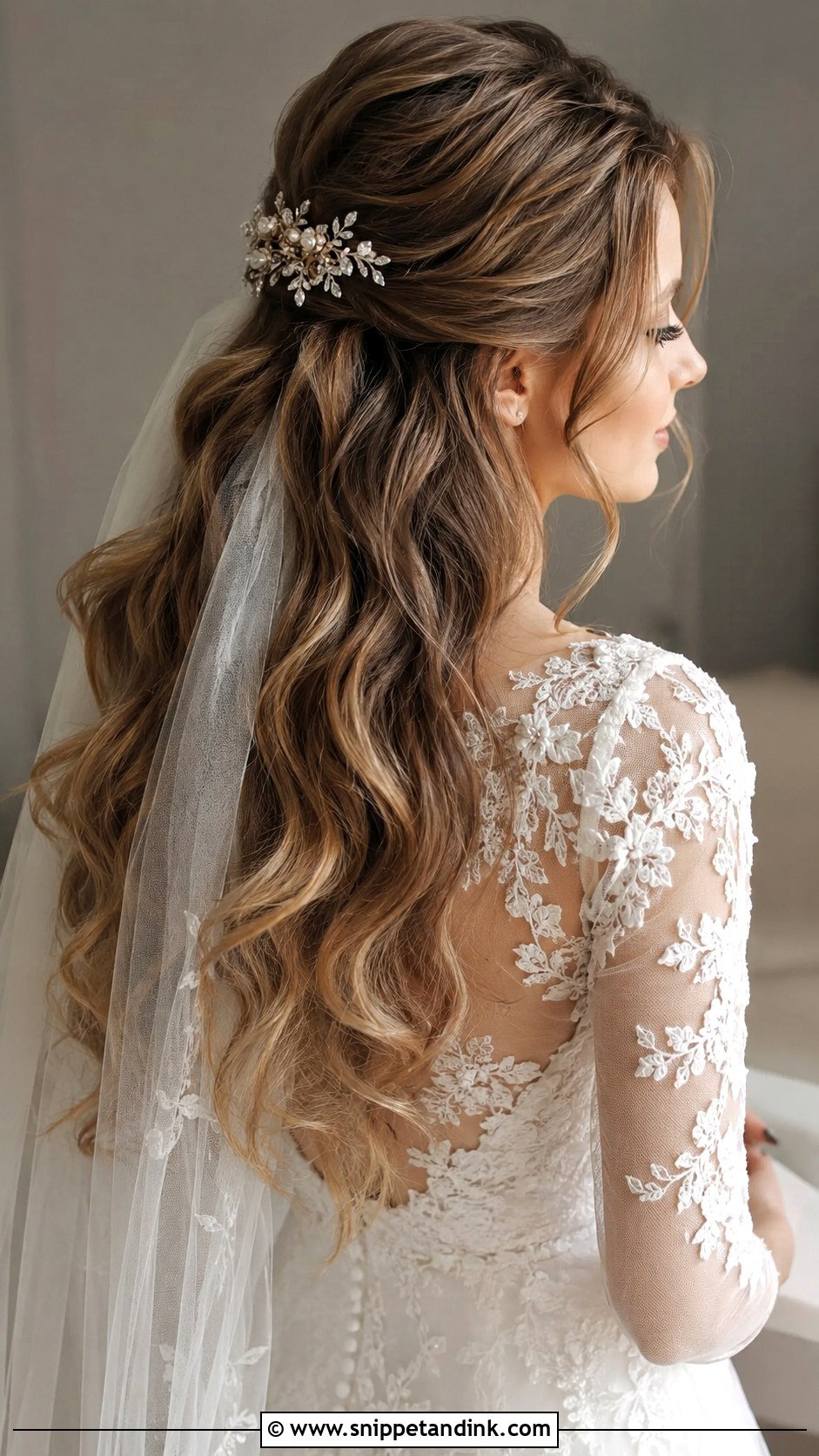
Half-up, half-down is the compromise I get asked for most, and it’s a practical one. Pulling the top sections back keeps hair out of your eyes and gives a veil comb something solid to grip, because I anchor the comb into the secured section rather than loose hair. Waves or natural texture both sit well underneath. On shorter or fine hair I add a little backcombing at the base of the pinned section so the crown doesn’t look flat by evening. A decorative clip over the pins means you won’t be fiddling with it all day.
5. Boho Braids with Hair Down
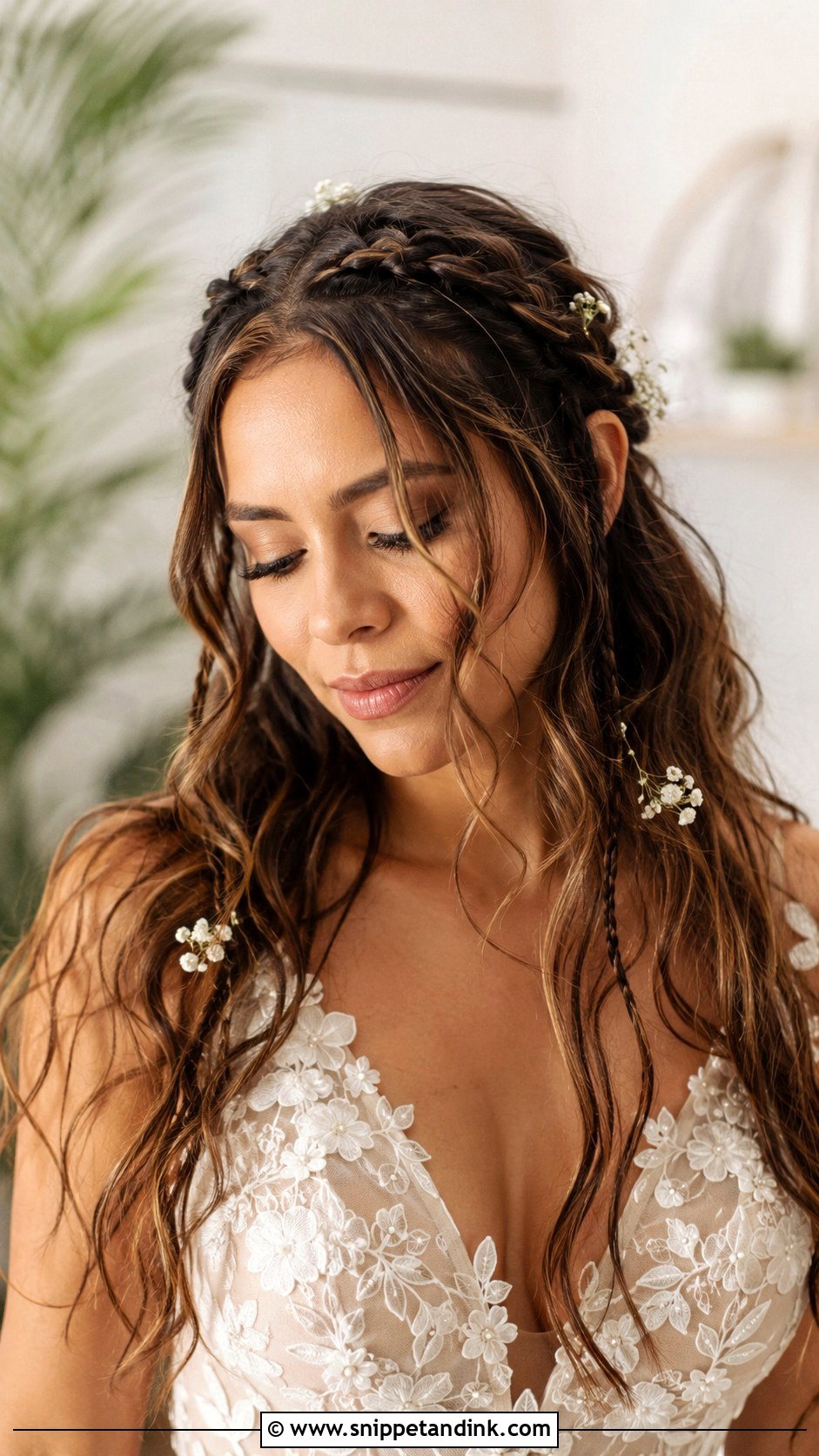
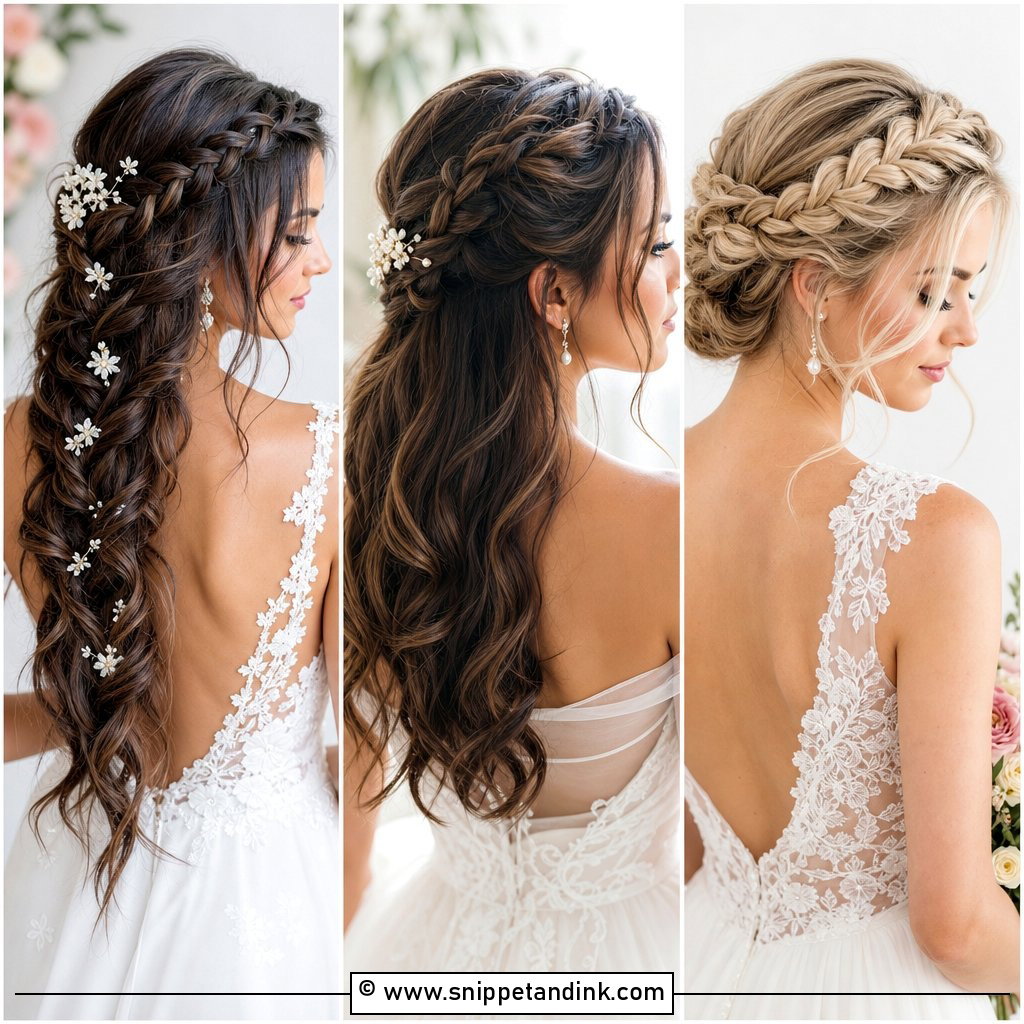
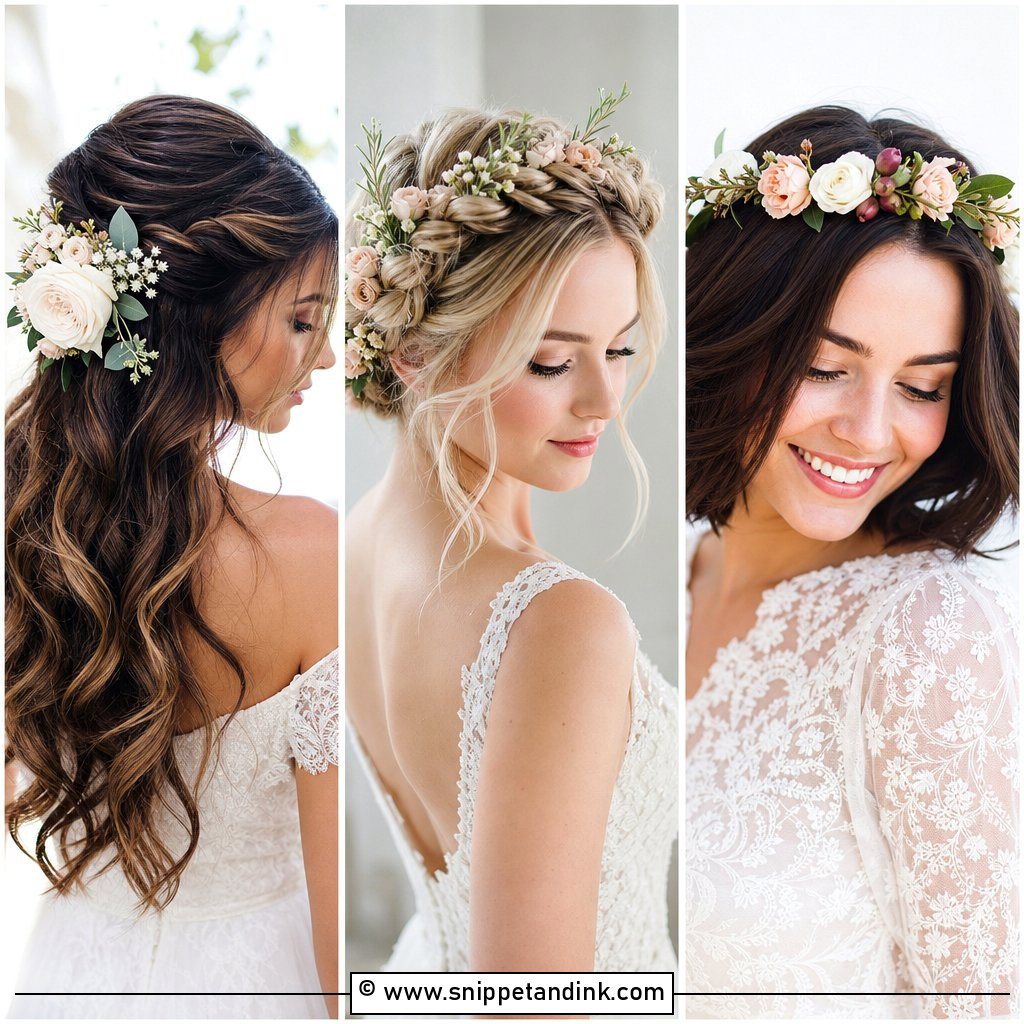
Loose braids woven through waves give an effortless bohemian aesthetic, and they do a practical job too. A braided band across the front, or two thin braids from the temples, keeps your face clear without a single visible pin. I pull the edges of each braid out gently so they look soft rather than schoolgirl neat. The thing to watch is fresh flowers. Tucked into braids, they sit against the warmth of your scalp and wilt sooner, so I use hardy small blooms or add them just before photos. Rustic and garden weddings are the natural home for this one.
6. Voluminous Curls for Brides
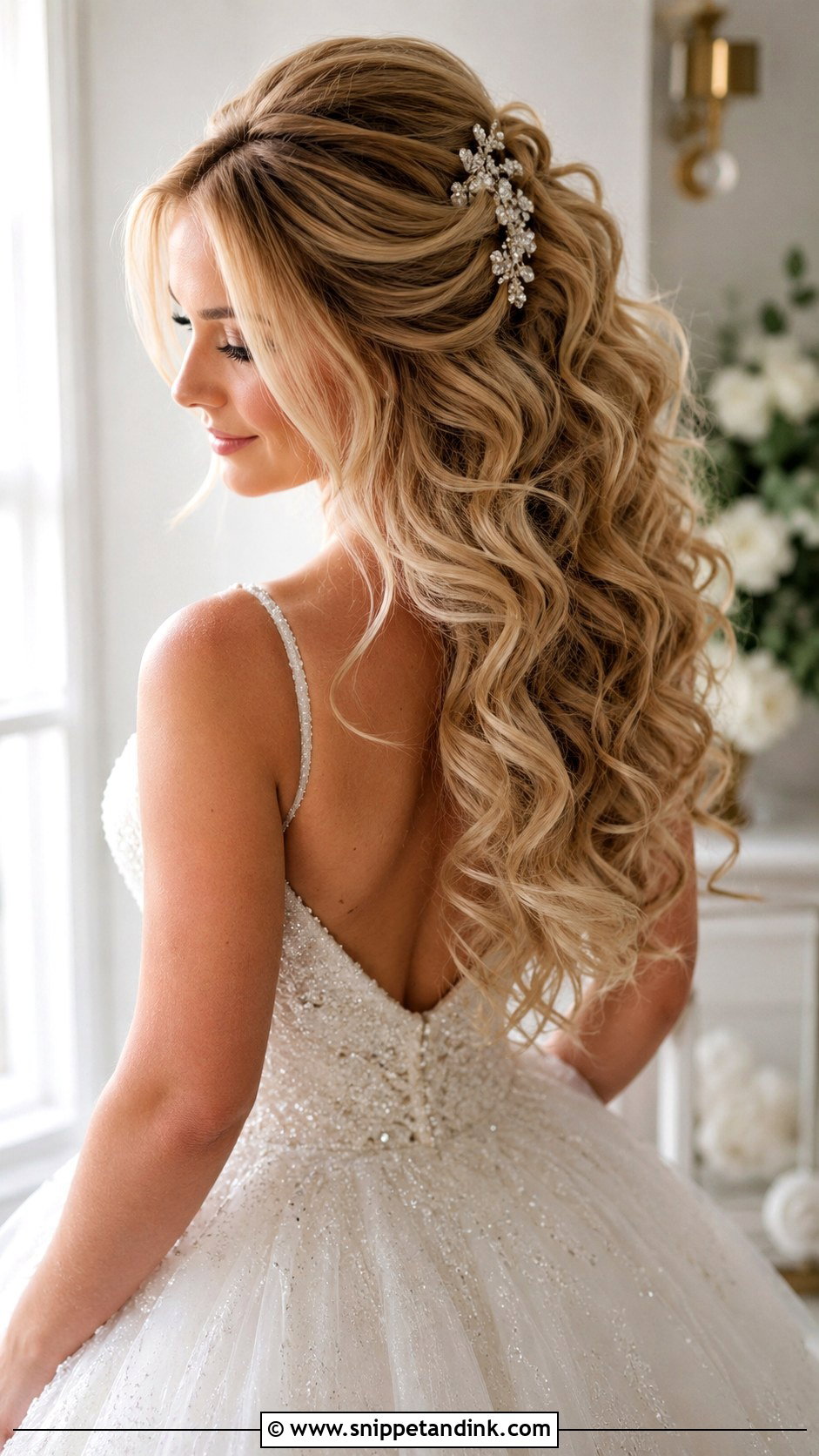
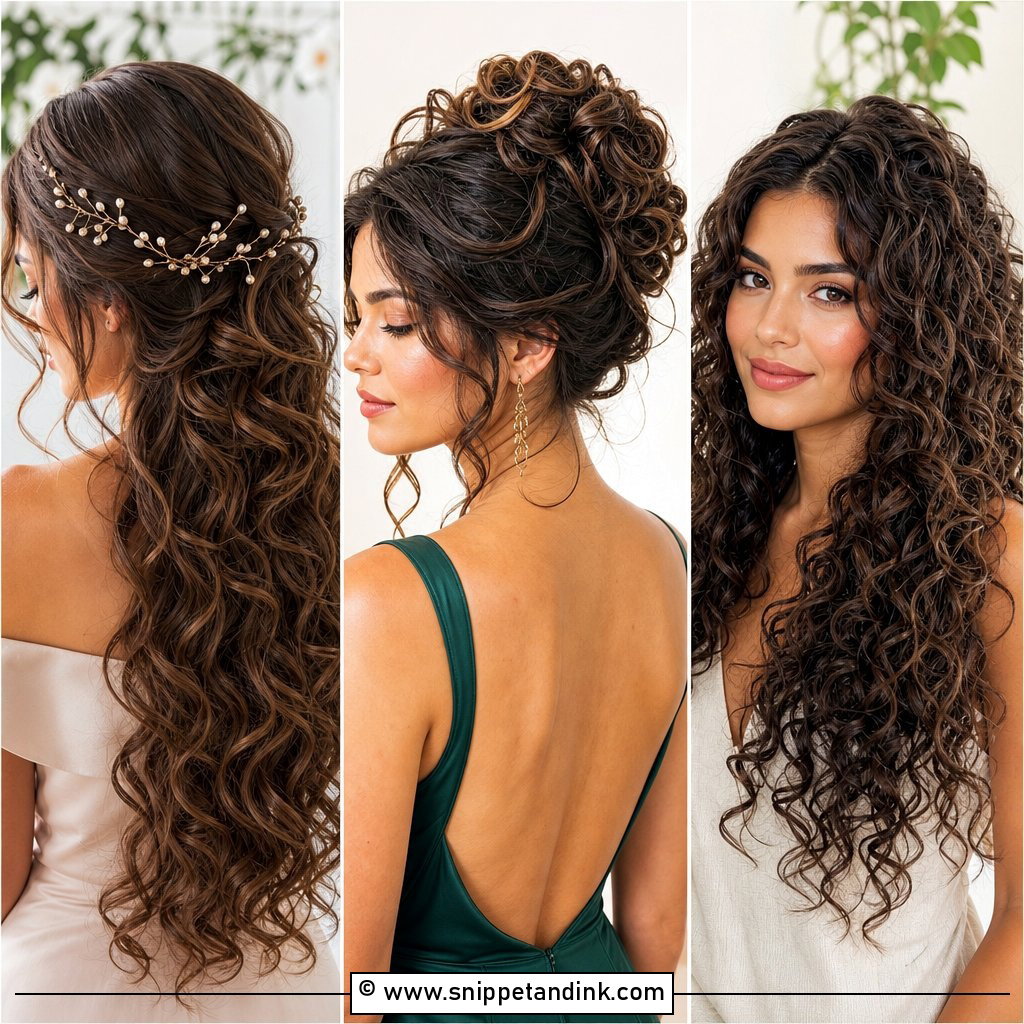
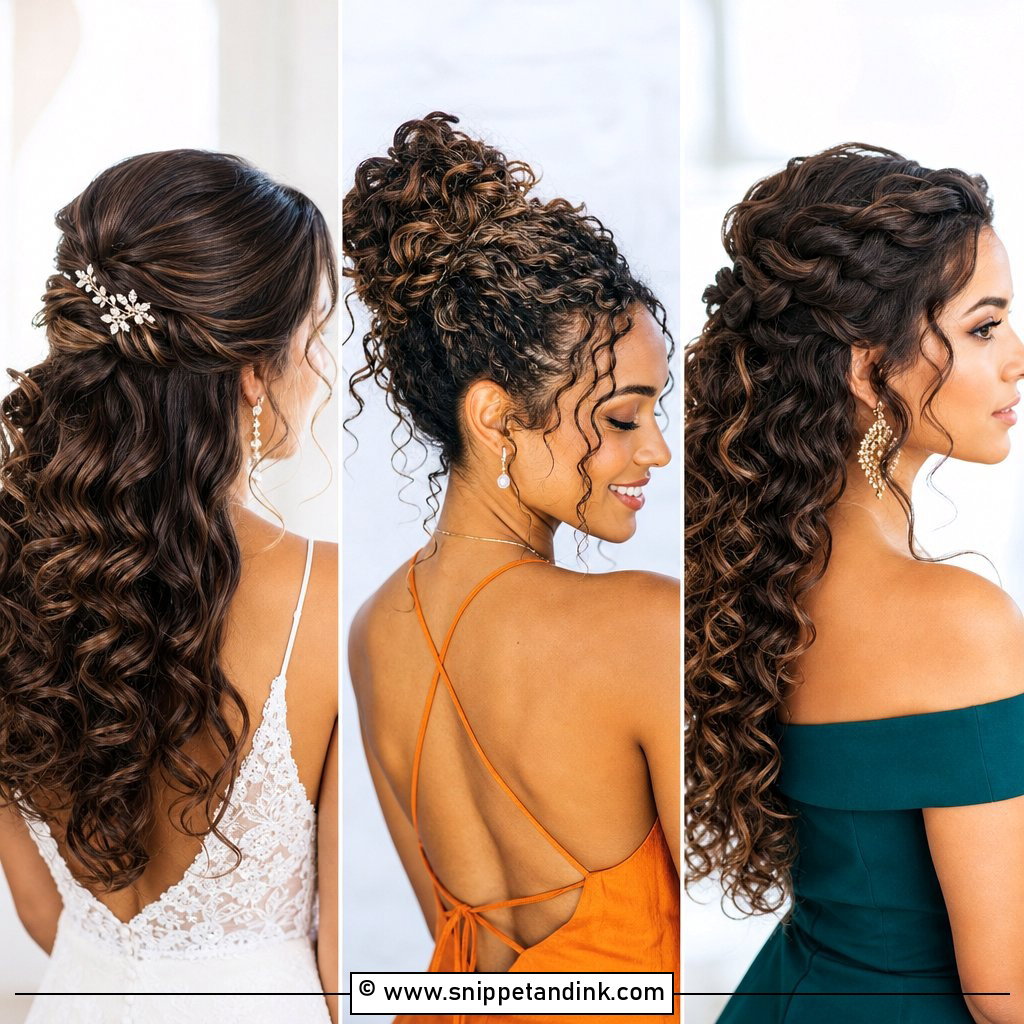
Full curls depend on what happens right after the iron. I use a large barrel, pin each curl while it’s warm and let it cool before touching it, because a curl brushed out hot falls within the hour. Then I brush through gently for body rather than ringlets. Fine hair gains the most here, but it’s also the hair that drops fastest, so I prep it with mousse at the root while it’s still damp. Ballgowns and lighter boho dresses both suit it, and it copes with dancing better than sleek styles because a little looseness reads as intended.
7. Face-Framing Waves for Brides
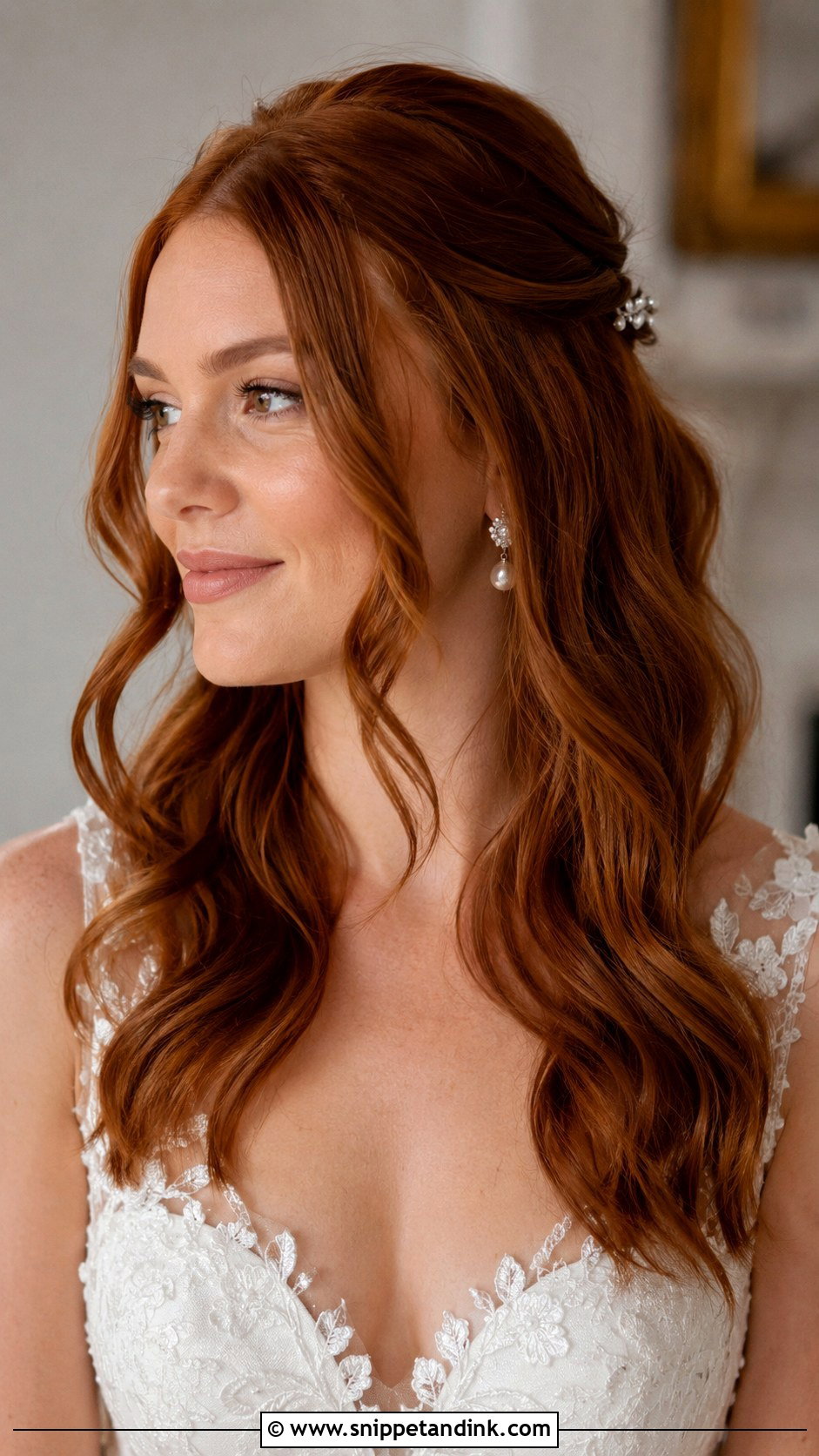
Sweeping the front pieces softly back draws attention to your eyes and cheekbones while the rest of the hair falls in loose waves. Everything depends on where the pins go. I cross two small bobby pins behind each ear, under a top layer, so nothing shows from the front or in profile. Mention glasses or a strong cowlick at the hairline during your trial, since both change how those front sections sit. Nearly every face shape and texture can wear it.
8. Bridal Hair with Flower Crown
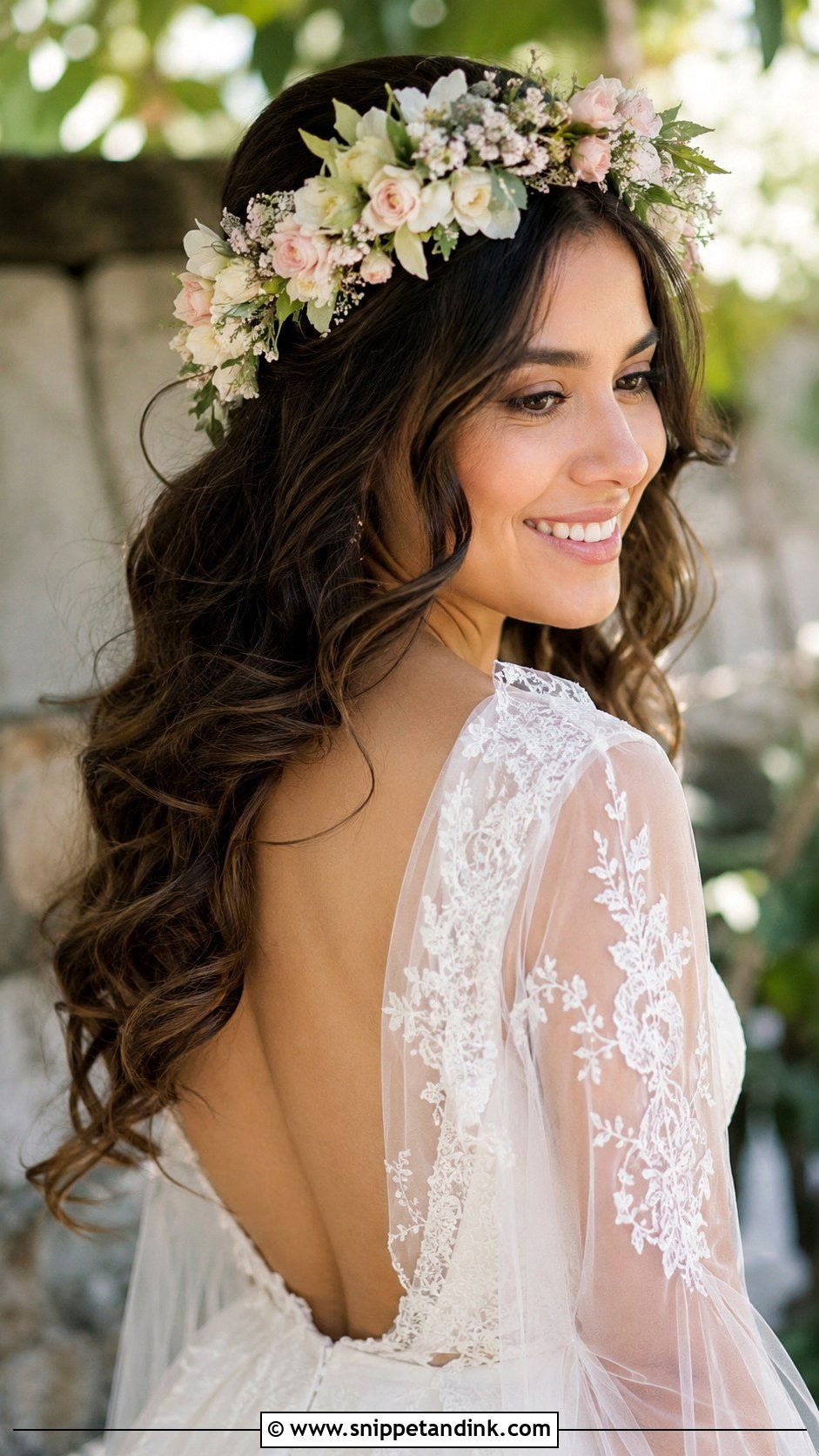
A flower crown sits right on the hairline, so the hair beneath it has to grip. I give it something to hold: small bobby pins crossed under the crown at each side and a little backcombing at the top so it doesn’t slide forward. It’s kind to thinner hair, because the crown follows the curve of the head and adds visual fullness. Match the blooms to your bouquet with your florist. Fresh flowers look alive in close-ups but can droop by evening in heat, while good silk stems last all day. Soft waves or boho braids underneath suit it best at summer and outdoor ceremonies.
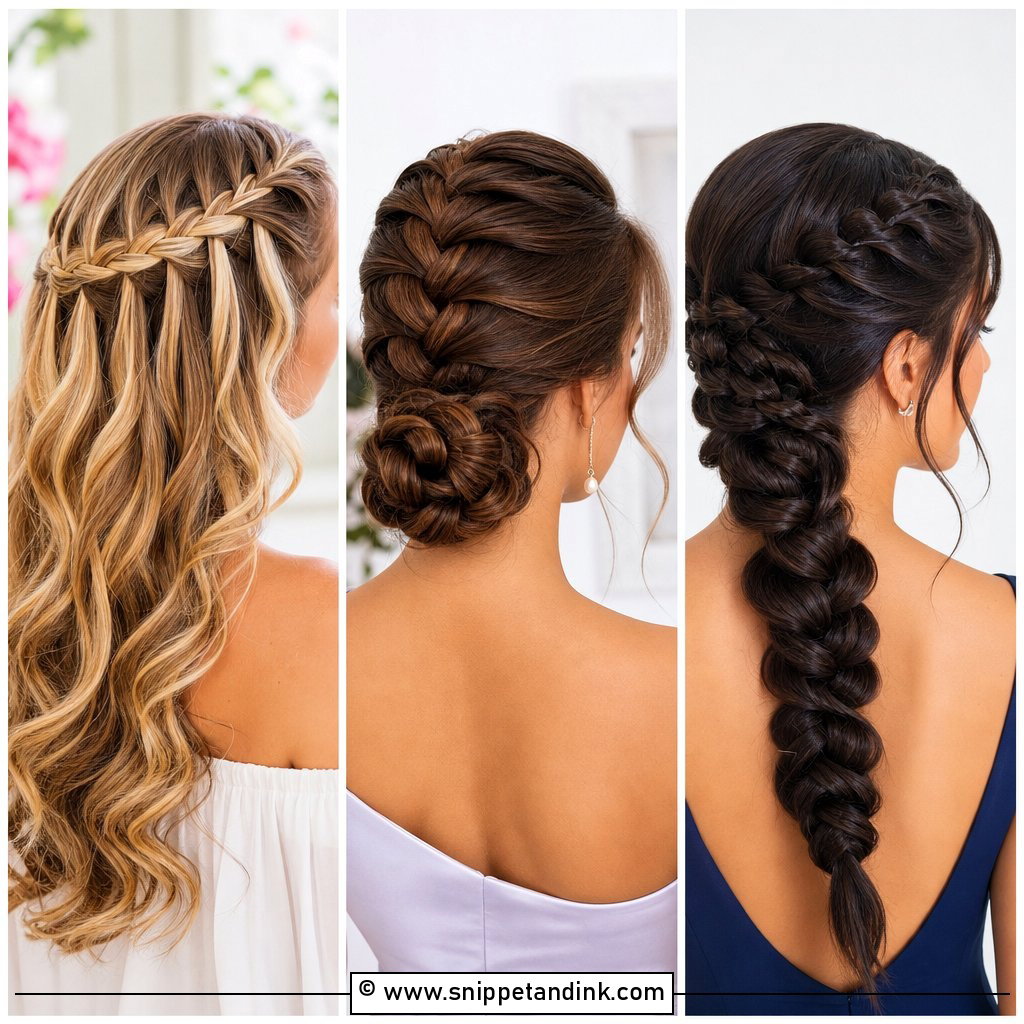
9. Waterfall Braid Wedding Hair
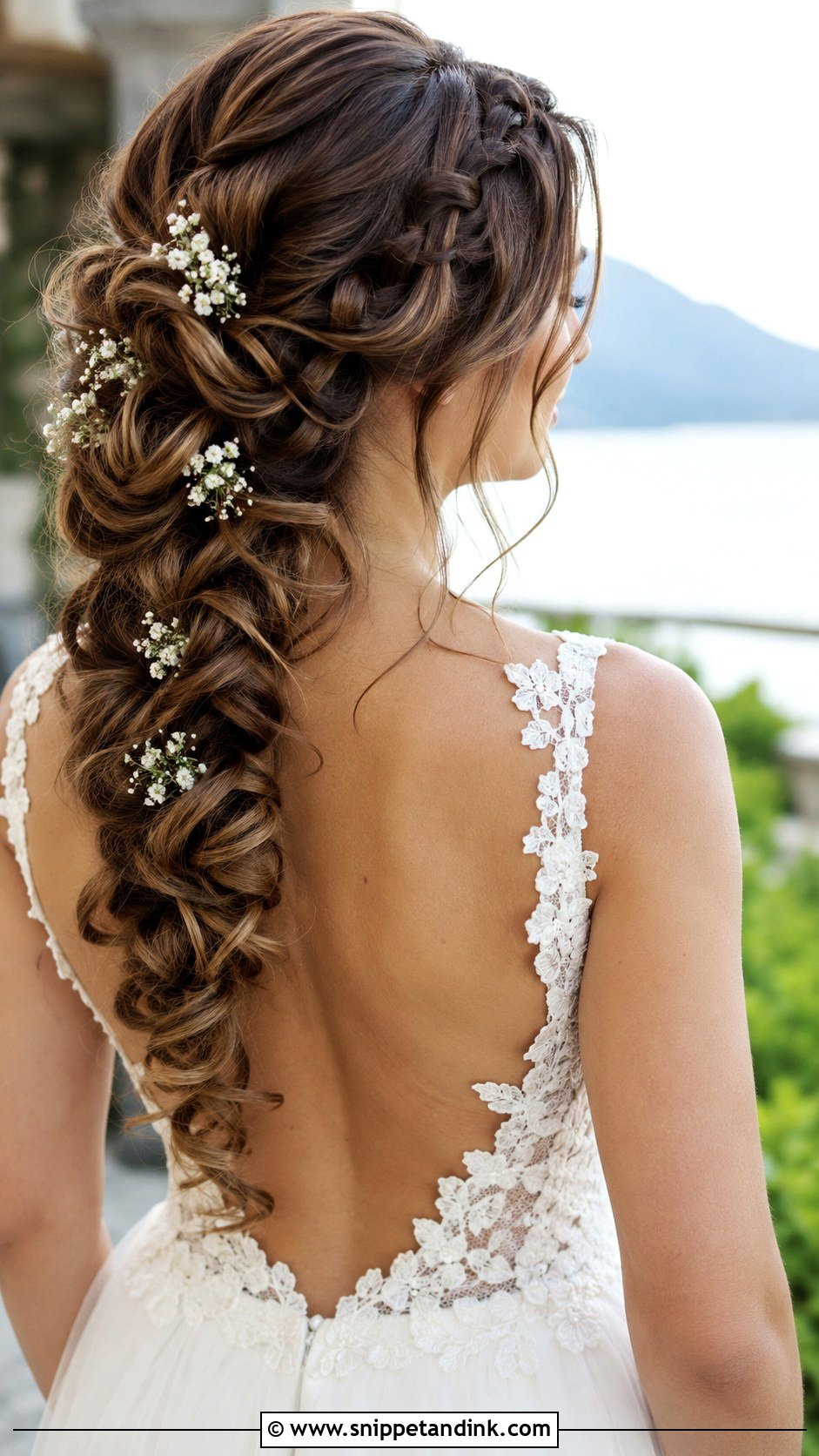
A waterfall braid runs diagonally across the head and drops one strand each time it crosses, so the hair looks as if it’s spilling through. It’s harder to keep neat than it looks. Those dropped strands need curls or waves under them; left straight, they hang limp and the effect disappears. I finish the braid behind one ear with a hidden elastic and two pins, and that’s the spot for a few larger flowers. Medium to long hair works. Shoulder-length hair rarely has enough length to make the drop visible.
10. Vintage Curls for Brides
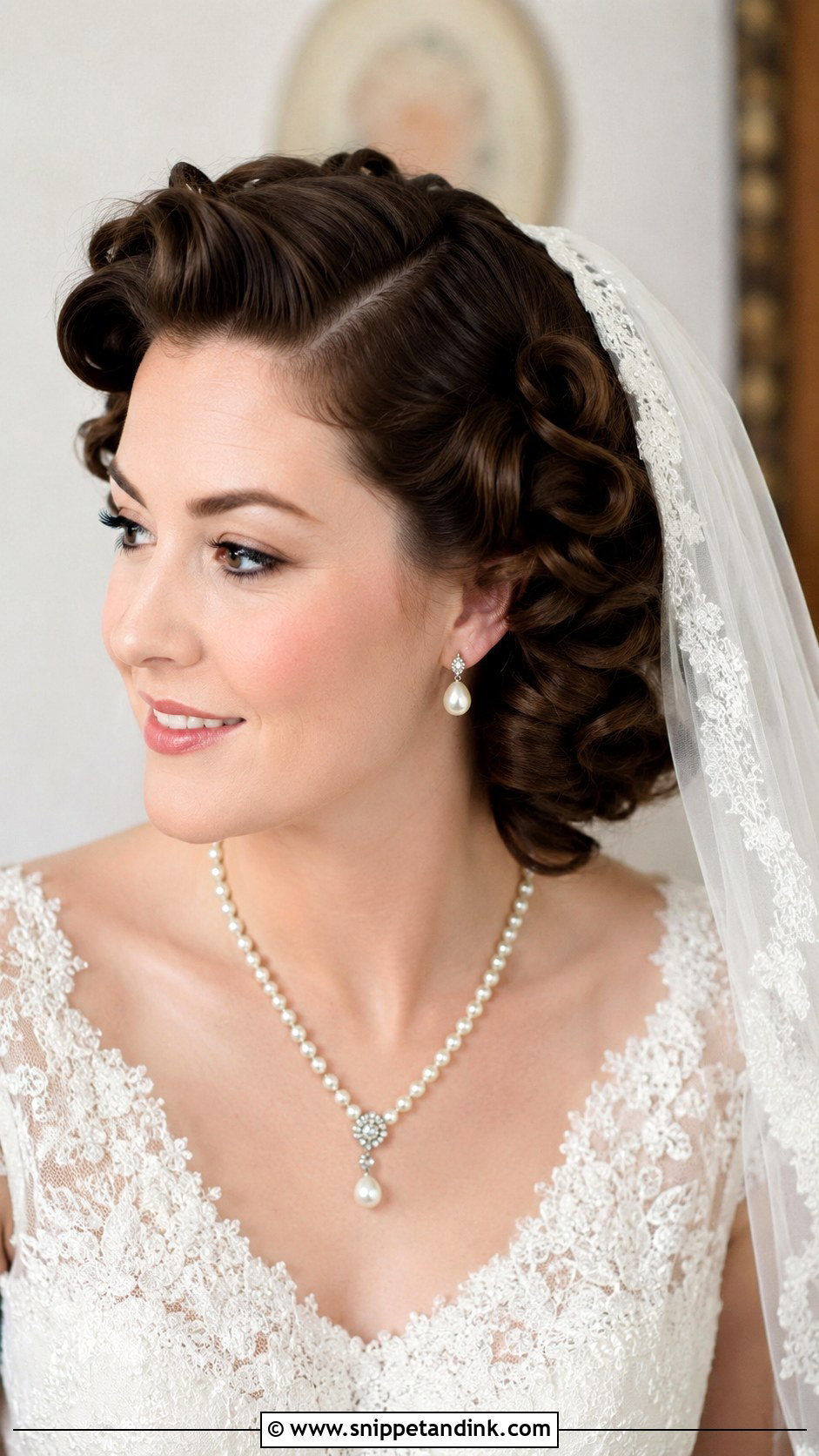
Think 1940s and 1950s screen sirens and their sculpted, set curls. These are tighter and more defined than beachy waves, and they’re built differently: hot rollers or a small iron, set in pin curls, then brushed only slightly so the pattern stays. A strong-hold spray locks the shape. Wear them fully down or with one side swept back, alongside lace, a vintage veil and pearls. Because the set is firm they hold up well, but brushing them again later turns them to frizz, so leave them alone once your stylist is finished.
11. Wavy Hair with Side Part
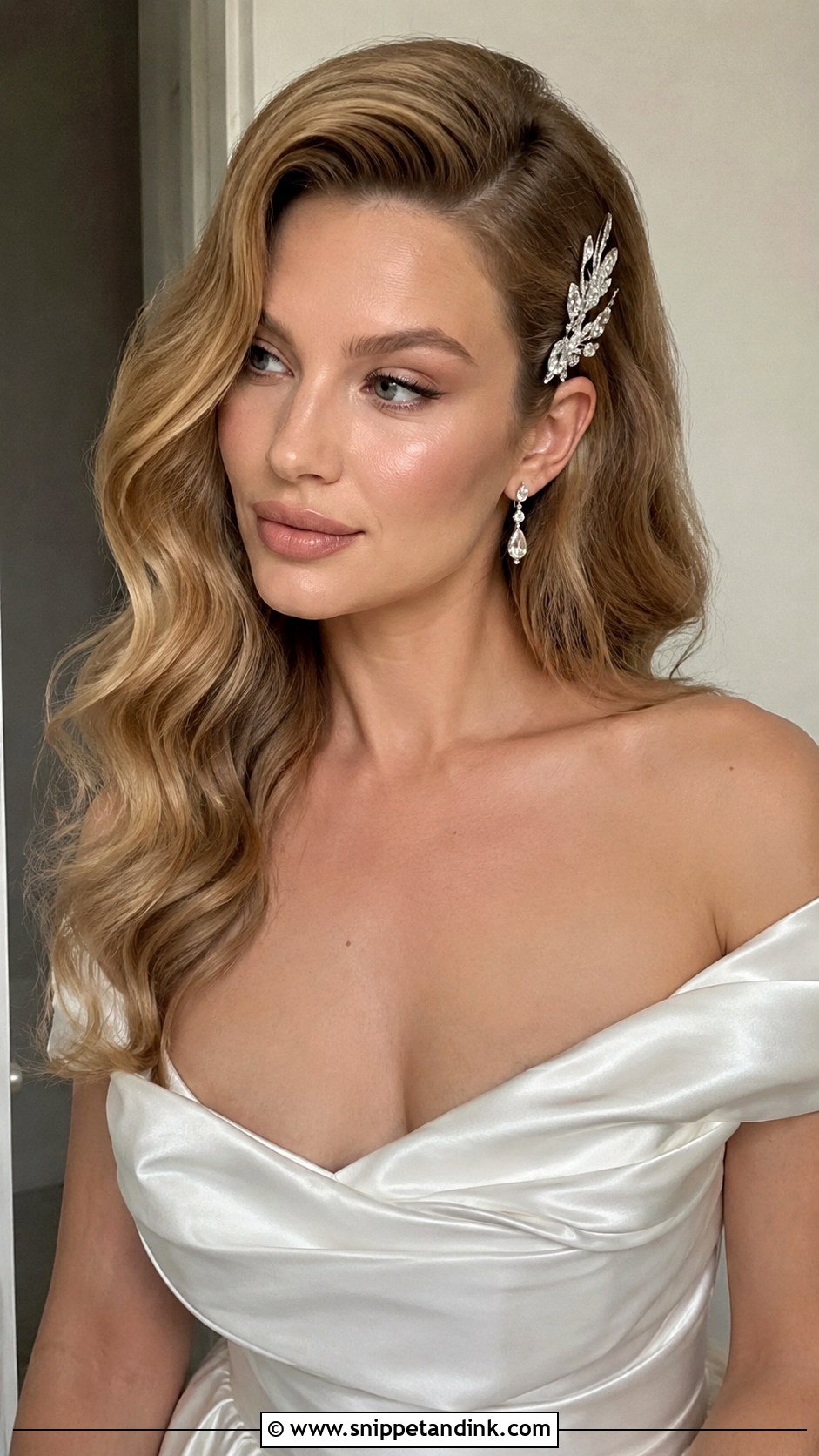
Moving your part changes more than you’d expect. A deep side part creates asymmetry, lift near the part and a softer frame on the heavier side. I find your natural part first, because hair forced against its growth direction springs back by the reception. A small sparkly clip on the heavier side keeps the sweep in place. It sits comfortably in a ballroom or outdoors, on medium to long hair.
12. Bridal Hair with Pearl Pins
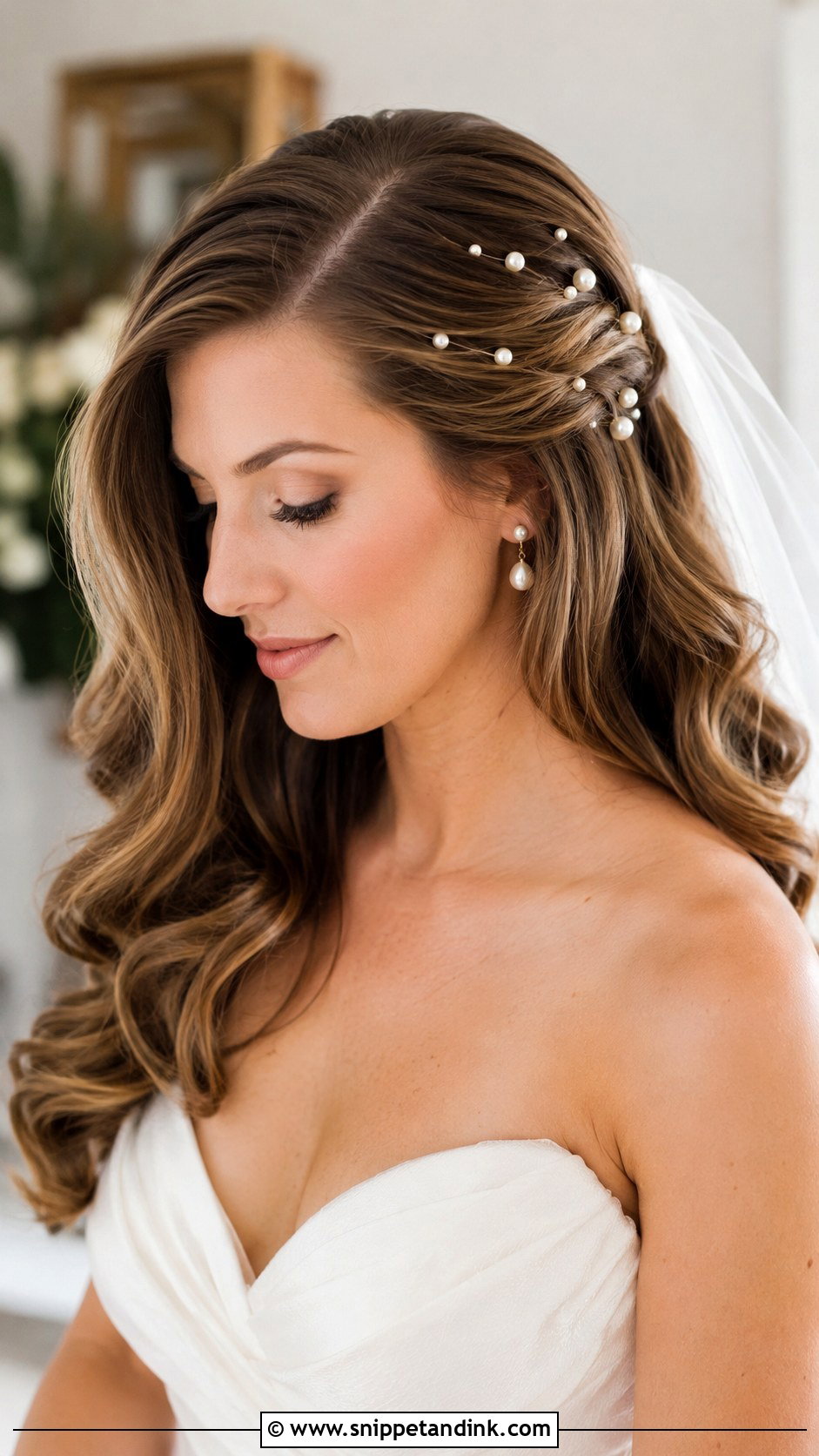
I like pearl pins on down hair because they’re light and won’t drag a style the way a heavy comb can. I place them where the hair is already secured, along a part, a twist or a pinned section, since pins pushed into loose waves tend to slide out by the first dance. Use them sparingly. Past a dozen or so, they start to look busy in close-ups. Sleek straight hair and soft waves both take them well, and they’re a quiet way to make a down style read as bridal.
13. Soft Curls with Veil
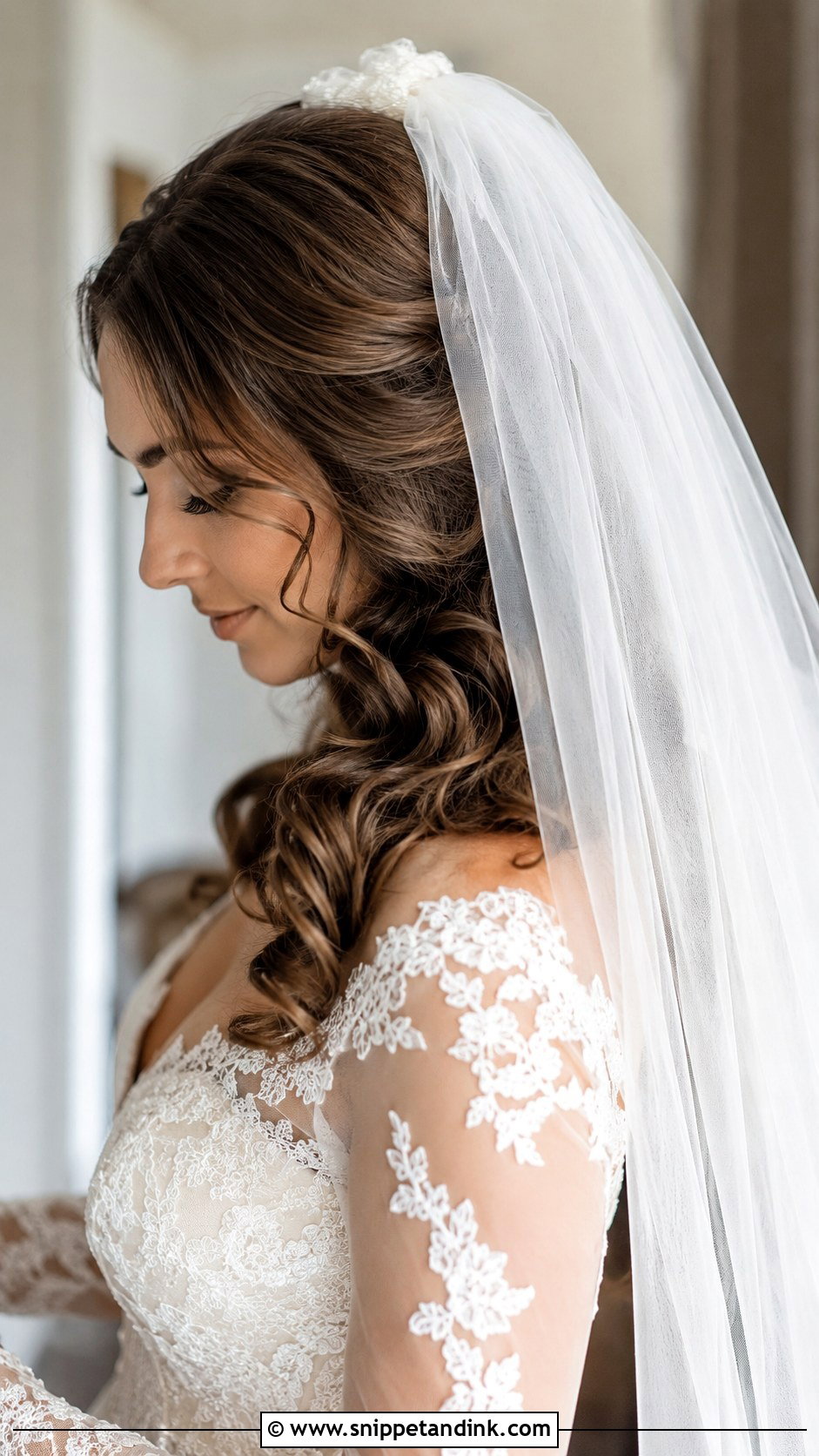
Down hair and a veil need a plan, because a veil comb has nothing to grip in loose curls. I build a small secured base at the crown, either a soft bump or a hidden cluster of crossed pins, and slide the comb into that. The curls fall loose underneath. When the veil comes off later, the base stays put and the curls aren’t disturbed. A cathedral veil is heavier and pulls harder, so tell your stylist its length before the trial; a fingertip veil is far easier on a down style.
14. Fishtail Braid with Hair Down
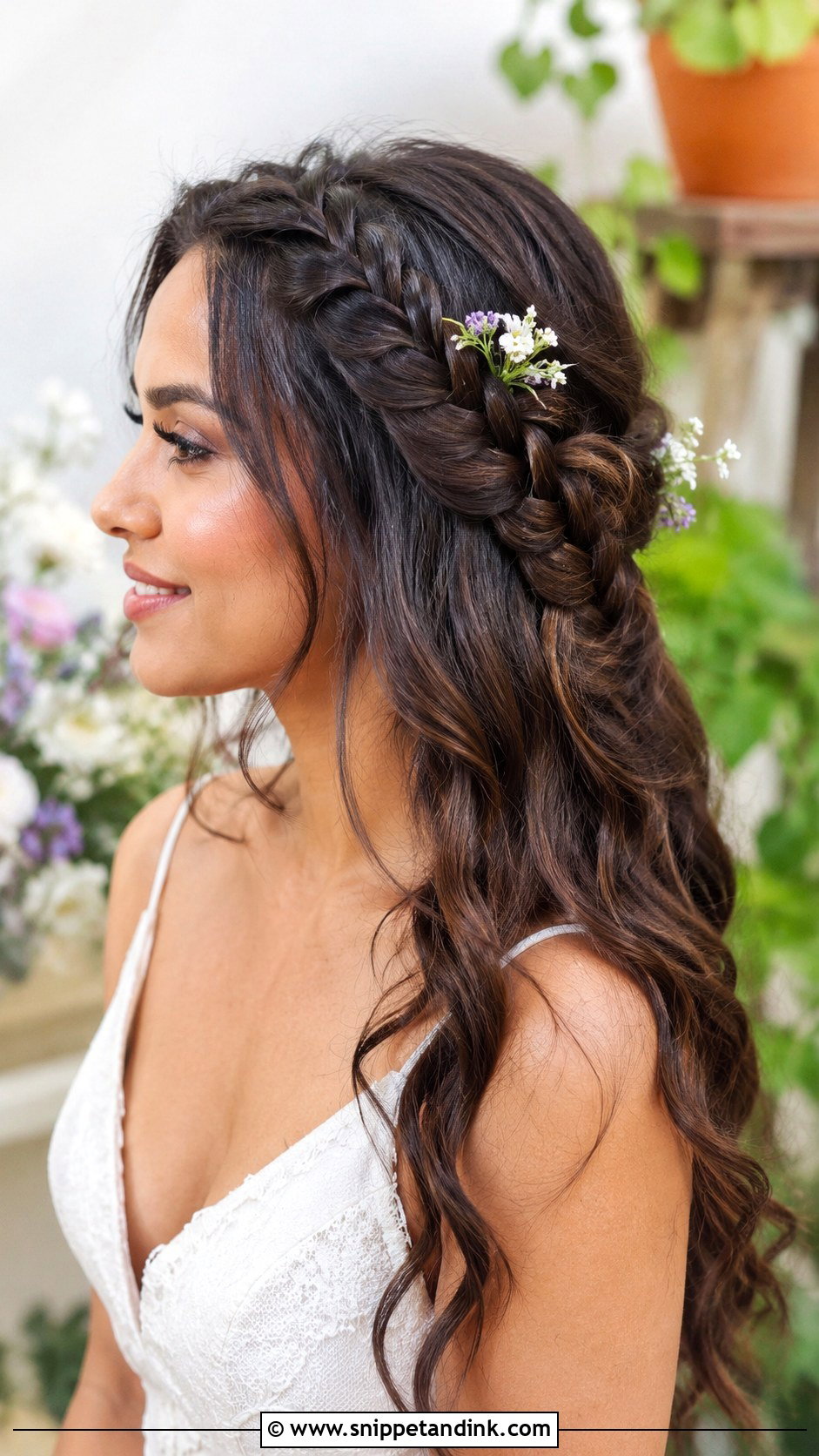
If you’d like braided detail without pulling everything up, a fishtail woven along one side does it, with the rest left in waves. It also keeps that front section off your face. Fishtails take longer than three-strand braids because the sections are tiny, so allow extra time on the morning schedule. Long hair suits it best. With lots of layers, short ends poke out along the braid, which can look pretty and undone but never polished. Soft waves and a few flowers fit a relaxed garden wedding.
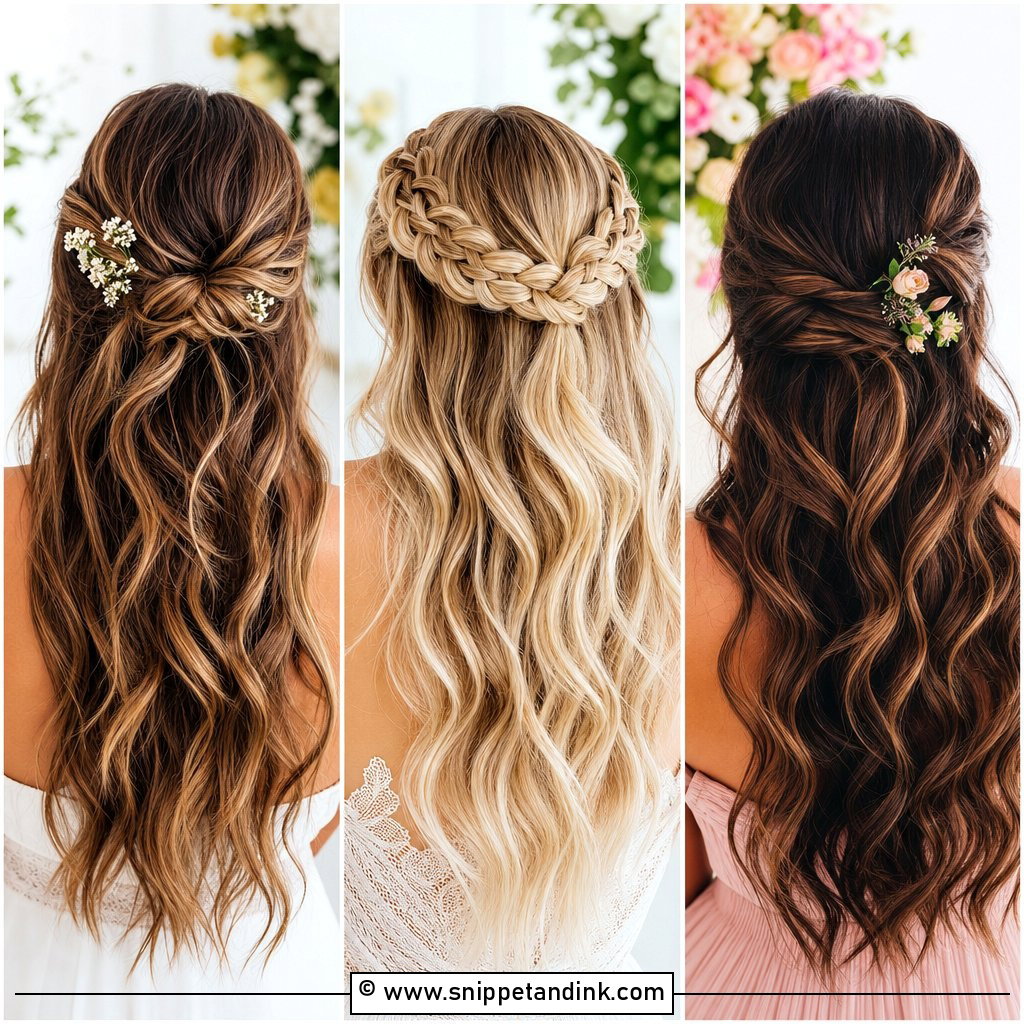
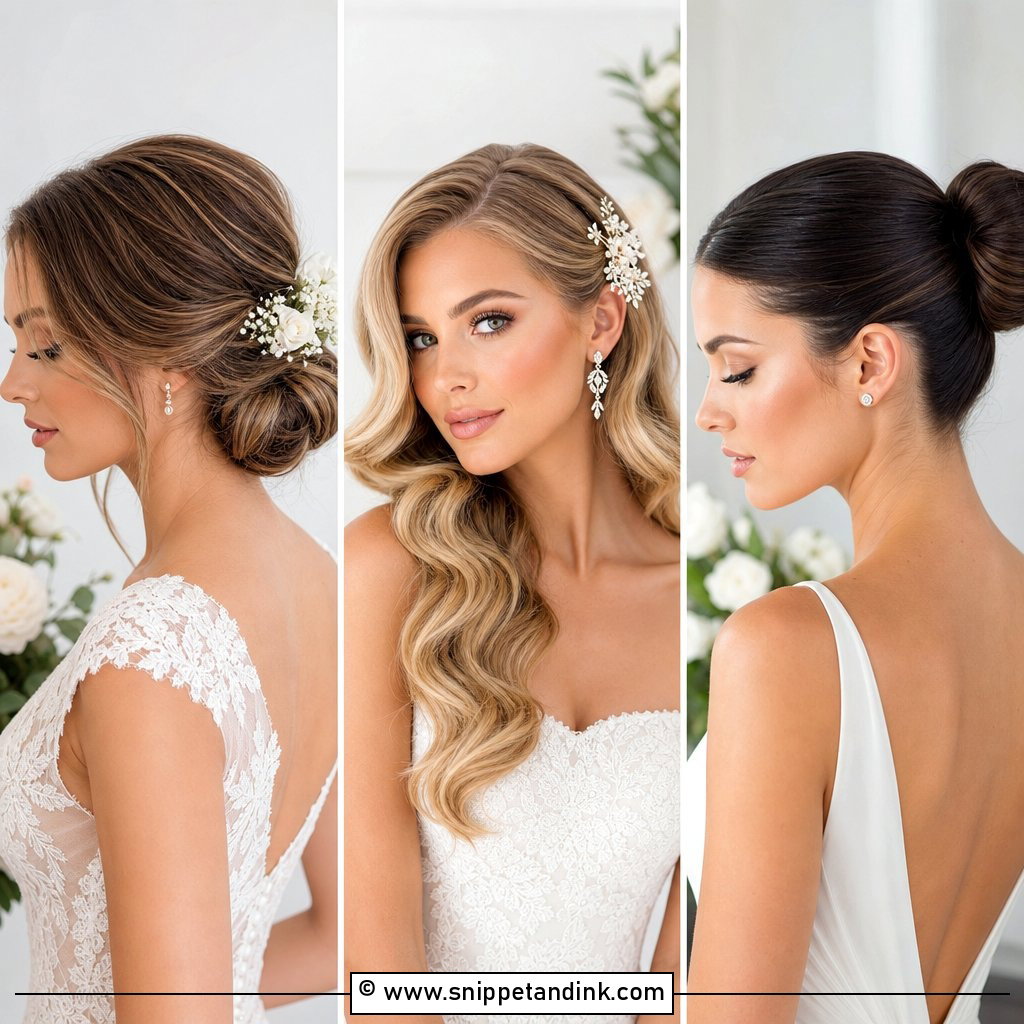
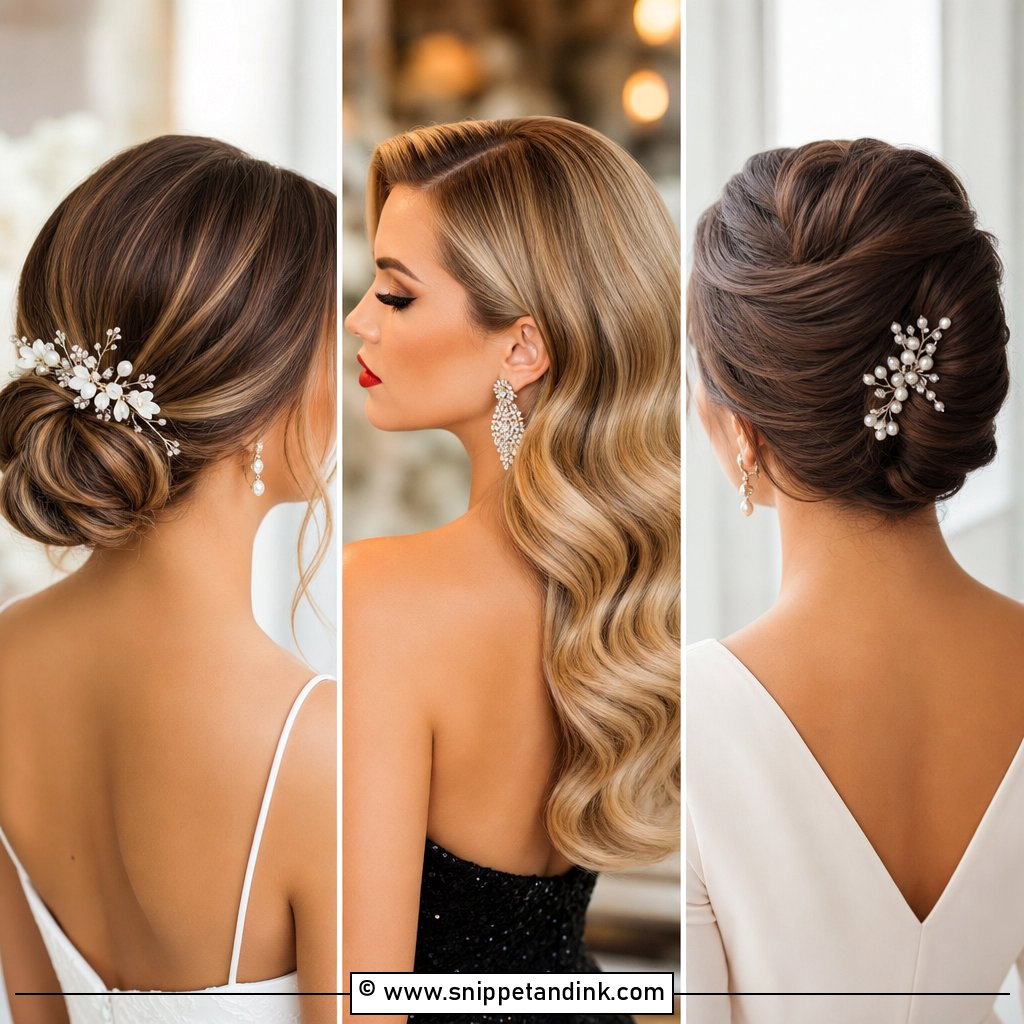
15. Long Layered Bridal Waves
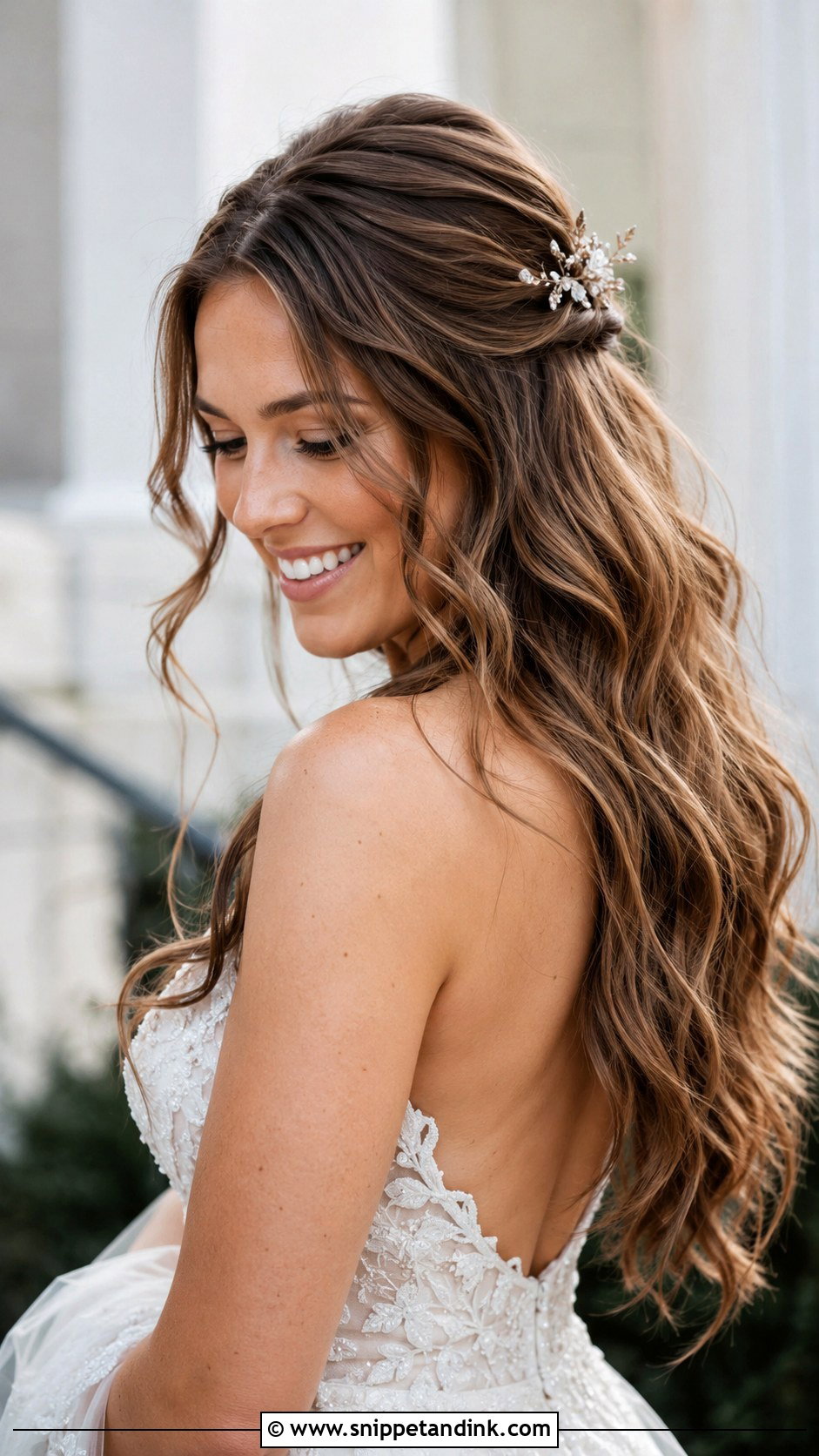
Layers give down hair movement, but they need planning on the calendar. If you’re cutting layers for the wedding, do it four to six weeks ahead so the ends have settled and any blunt lines have softened. Face-framing pieces soften the jaw and catch the curl easily. I style layered hair with loose waves rather than tight curls, since tight curls on heavy layering can look choppy. A hairpin or a single flower on one side finishes it, and it looks as at home in a barn as in a ballroom.
16. Bridal Hair with Hair Vine
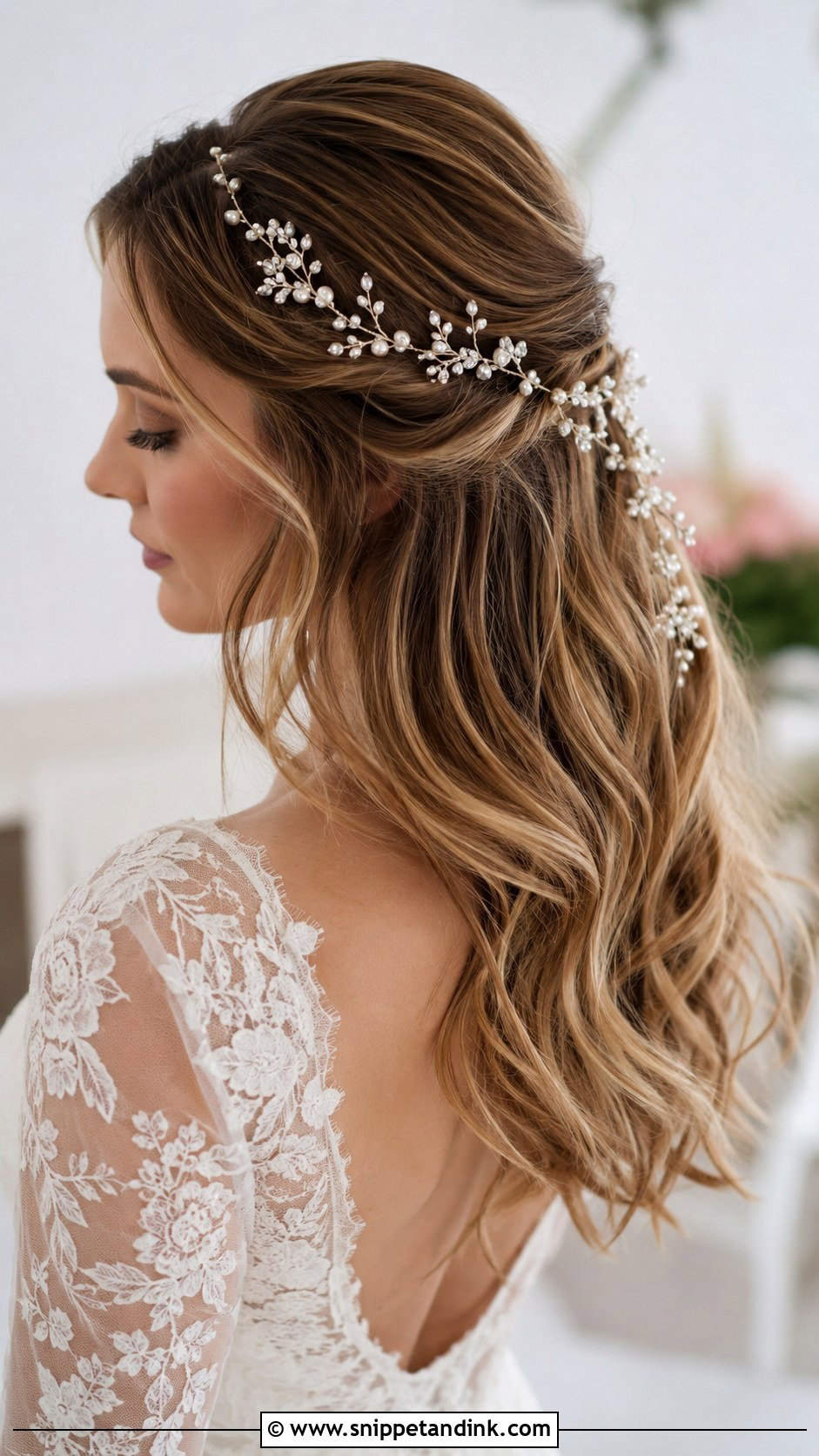
A hair vine is a flexible wire trailing pearls or small crystals, and it gives sparkle without the formality of a tiara. I weave it through a side section or across the crown and secure it with small pins at each end and one or two in the middle. Wrapped too tightly through loose waves, a vine pulls and puckers the hair, so I leave it slightly slack and let the waves hold it. Most lengths and textures can wear one. Bring it to your trial, because the wire shape is much easier to test than to guess.
17. Curtain Bangs Bridal Hair
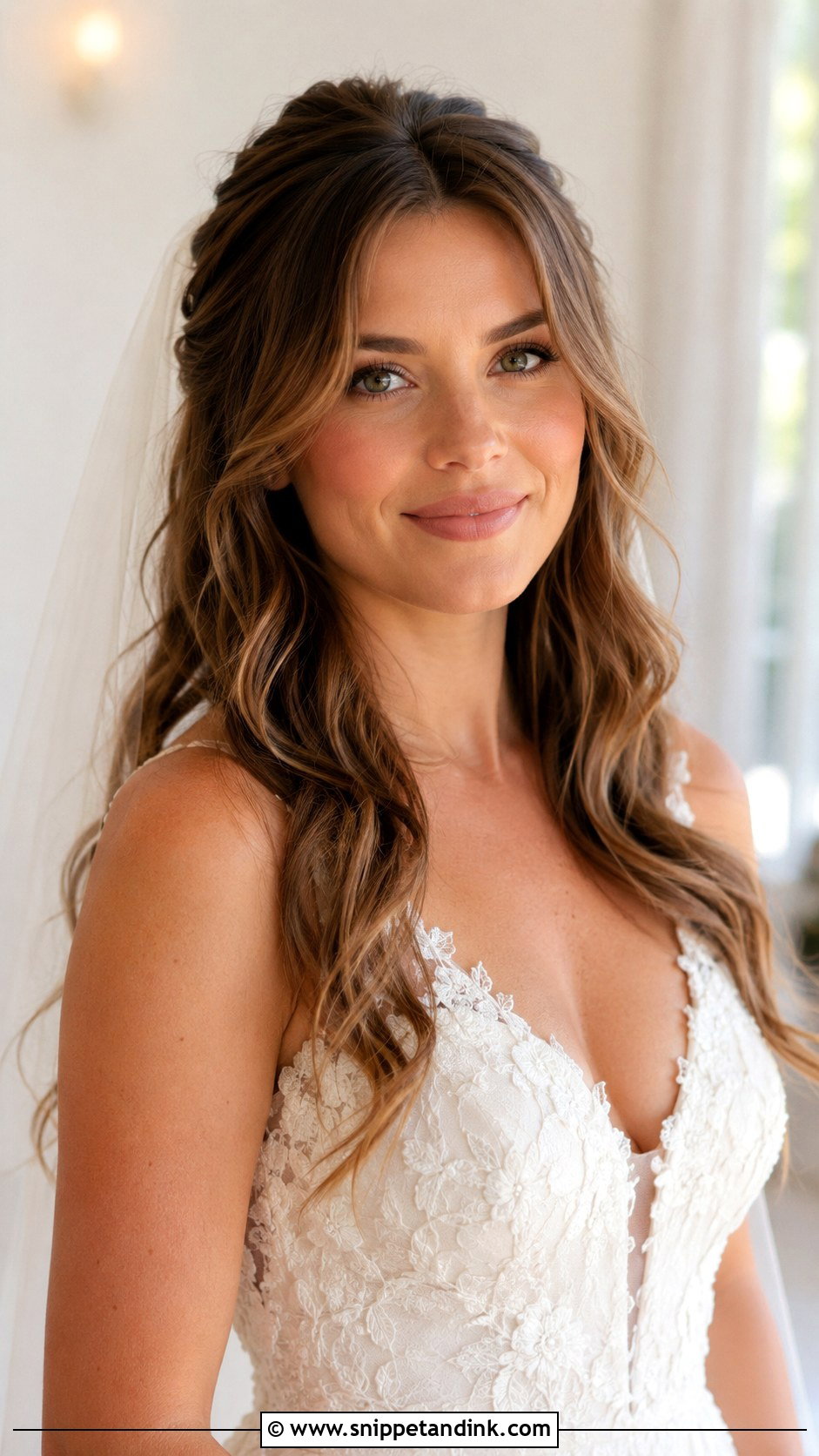
Curtain bangs part at the center and sweep outward into the length, framing your eyes and cheekbones. The risk is cutting them too close to the wedding. Give them at least a few weeks so they settle into a length you’re used to styling. On the morning, I set them with a round brush and a slight bend, then clip them back while makeup is applied so they don’t pick up foundation. Loose waves or sleek straight hair both pair well. Very tight curls or a strong cowlick make them much harder to control.
18. Bohemian Waves with Headband
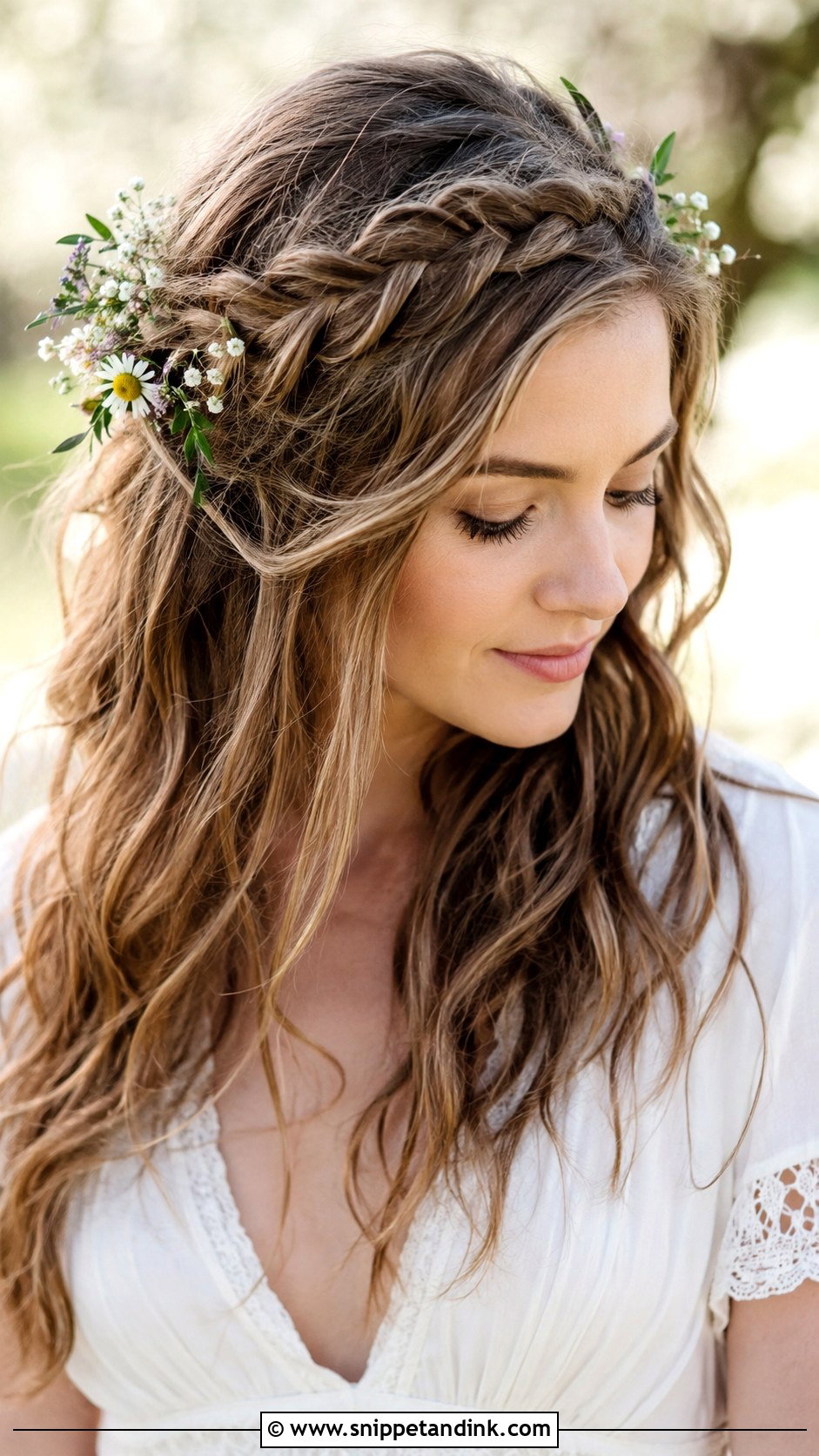
A braid running across the front like a headband keeps your face clear while the waves fall loose behind. I start it just behind the hairline on one side and pin the end behind the opposite ear, hiding the elastic under the hair. Outdoor, garden and festival-inspired weddings suit it, and small wildflowers tuck into the braid easily. Bohemian waves with a headband work on long and medium hair. On very fine hair the braid can look thin, so I sometimes add a clip-in strip underneath for thickness.
19. Glossy Blowout for Brides
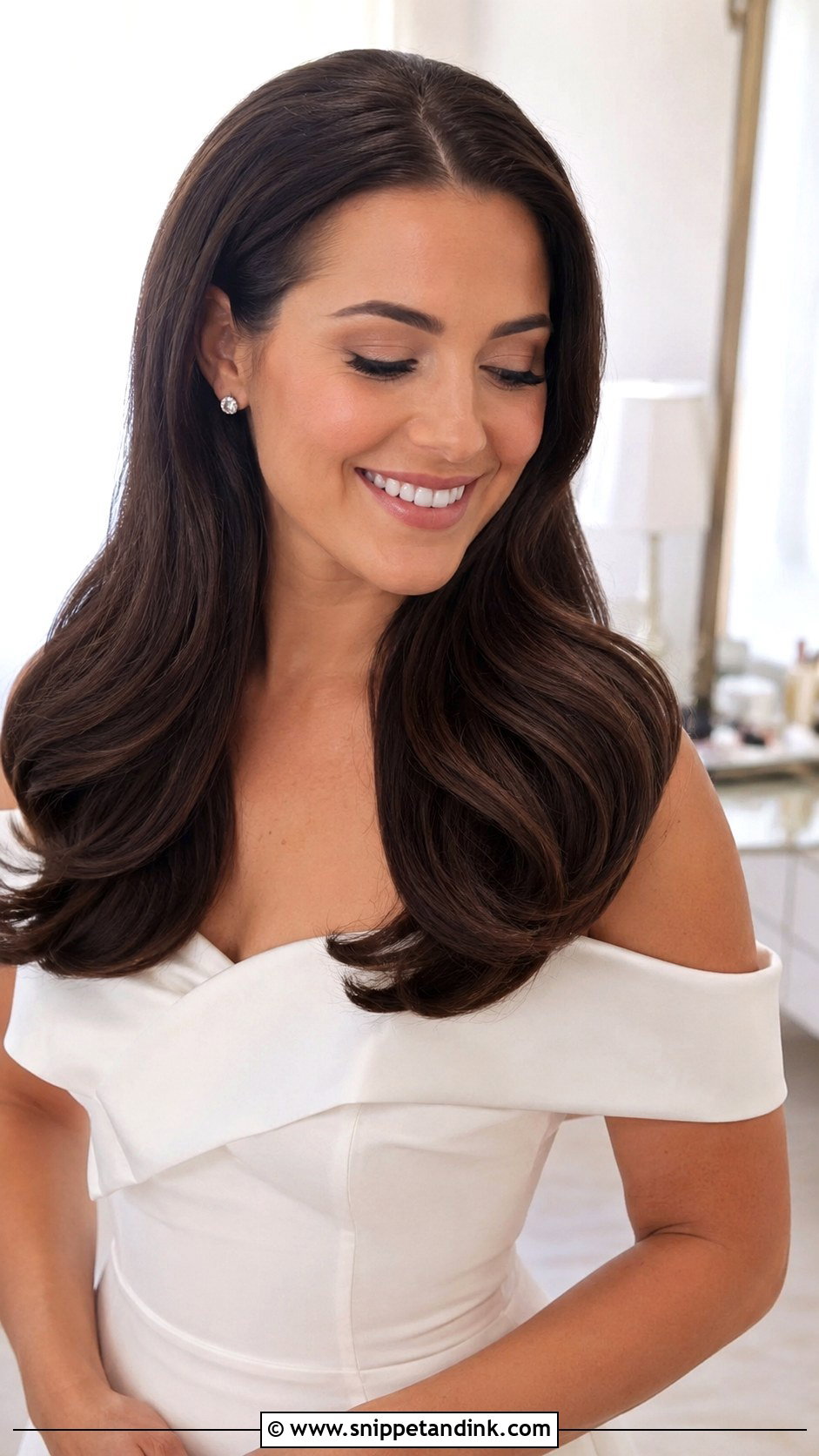
A good blowout is the least fussy style here, and that’s its appeal. I rough dry the hair, then use a large round brush section by section to lift at the root and bend the ends under, finishing with a light serum. It should look healthy and bouncy rather than set. Classic and modern gowns both suit it. Its weak spot is humidity, which flattens the volume, so in summer I lock each section with a cool shot from the dryer and an anti-humidity spray.
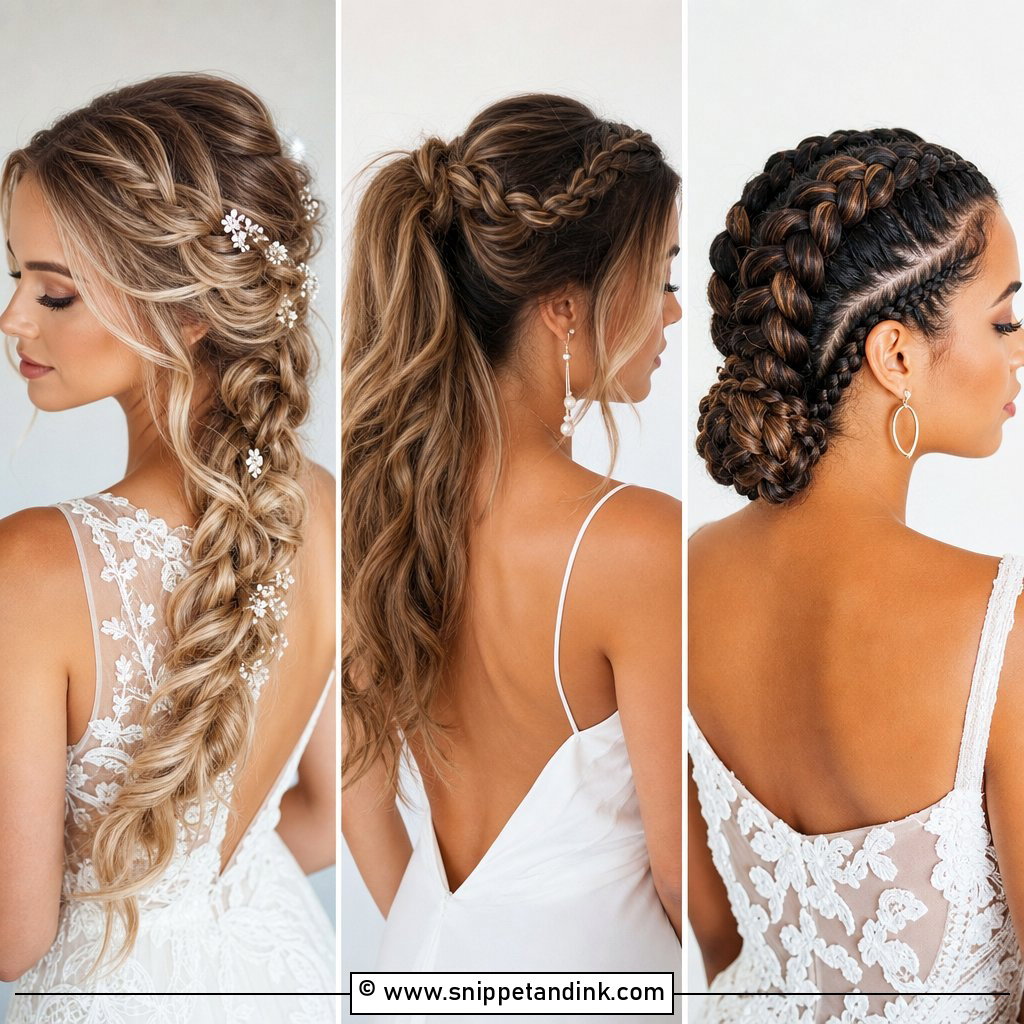
20. Bridal Hair with Tiara
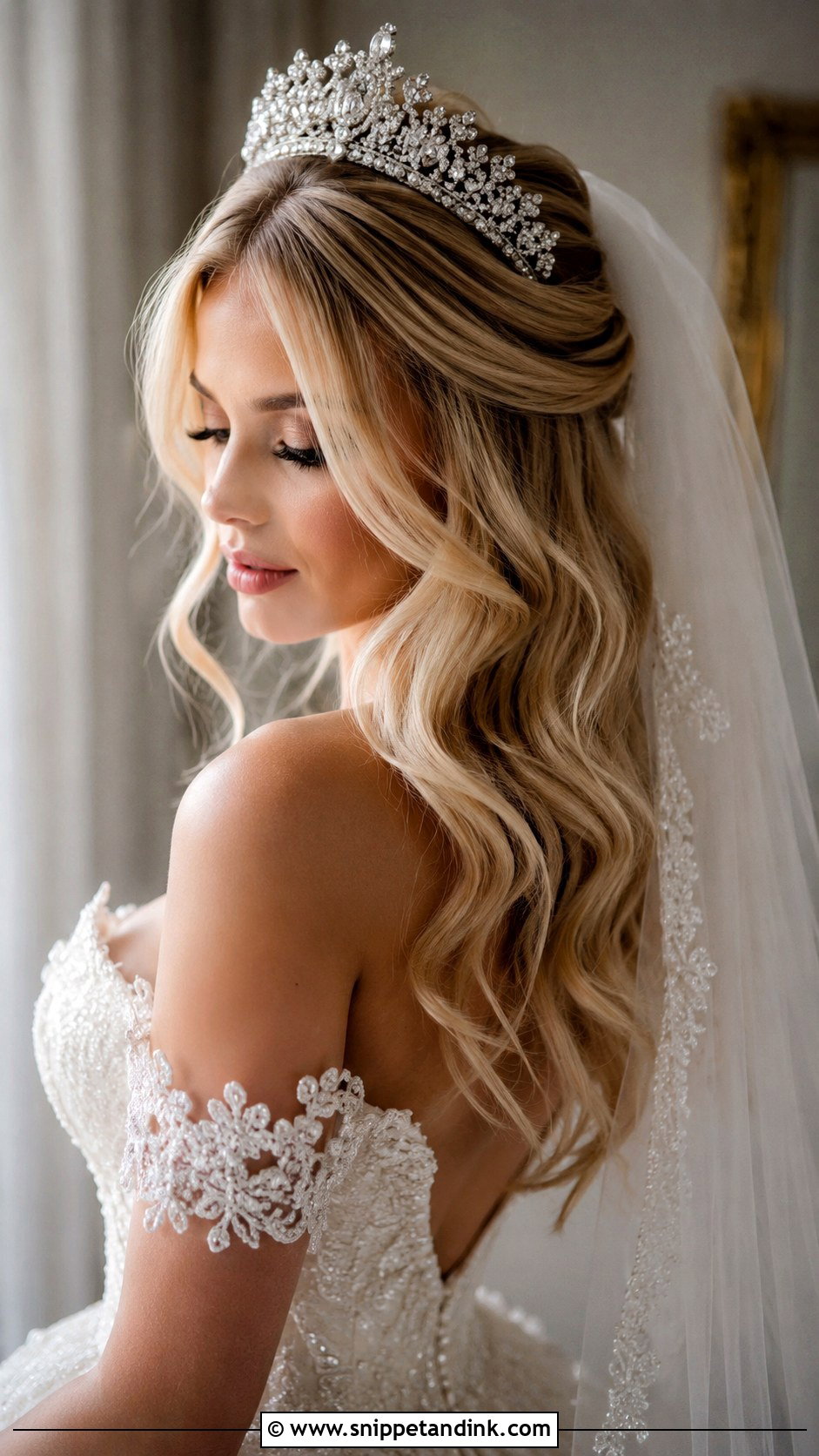
A tiara turns a down style regal, but it’s heavy and needs a foundation. Set on loose hair, it slides back within the first hour. I tease a narrow band at the crown, smooth a layer over it, and push the tiara combs into that teased base, with bobby pins crossed through the side loops. Placed at the crown it reads classic; further back it feels softer. It pairs with cathedral veils and ballgown dresses at formal and traditional weddings. Wear it at home for an hour before the wedding to check whether it pinches behind the ears.
21. Twisted Crown with Hair Down
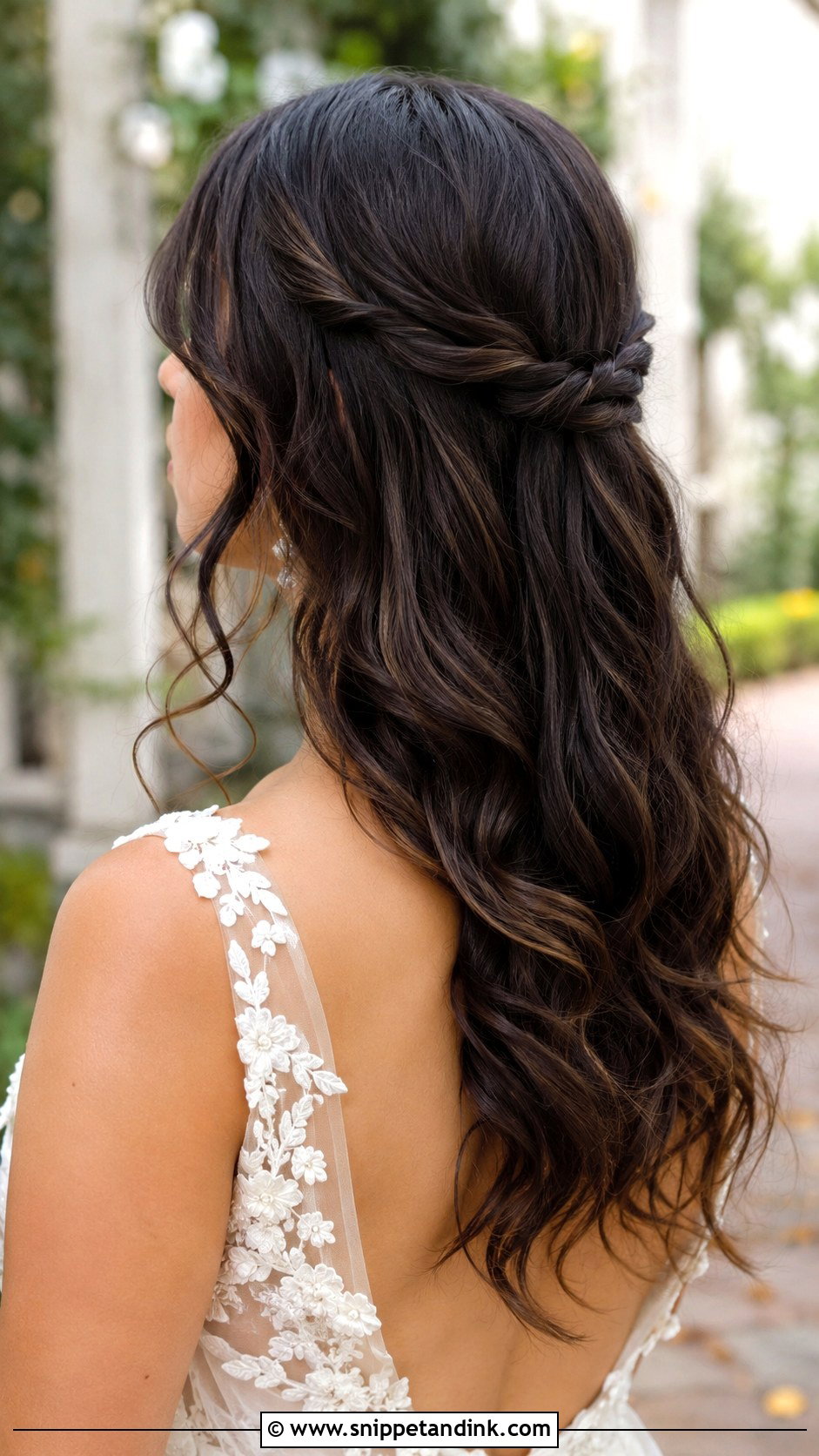
Two small sections twisted from each temple and joined at the back give a delicate halo effect, with everything else left down. I twist away from the face and loosen the twists a little before pinning, which makes them look fuller. A few tendrils left at the front soften it. Waves or curls underneath and tiny flowers at the join suit garden and boho weddings. It’s also one of the kindest options for a veil, since the joined twists make a natural anchor point.
22. Deep Side-Swept Waves
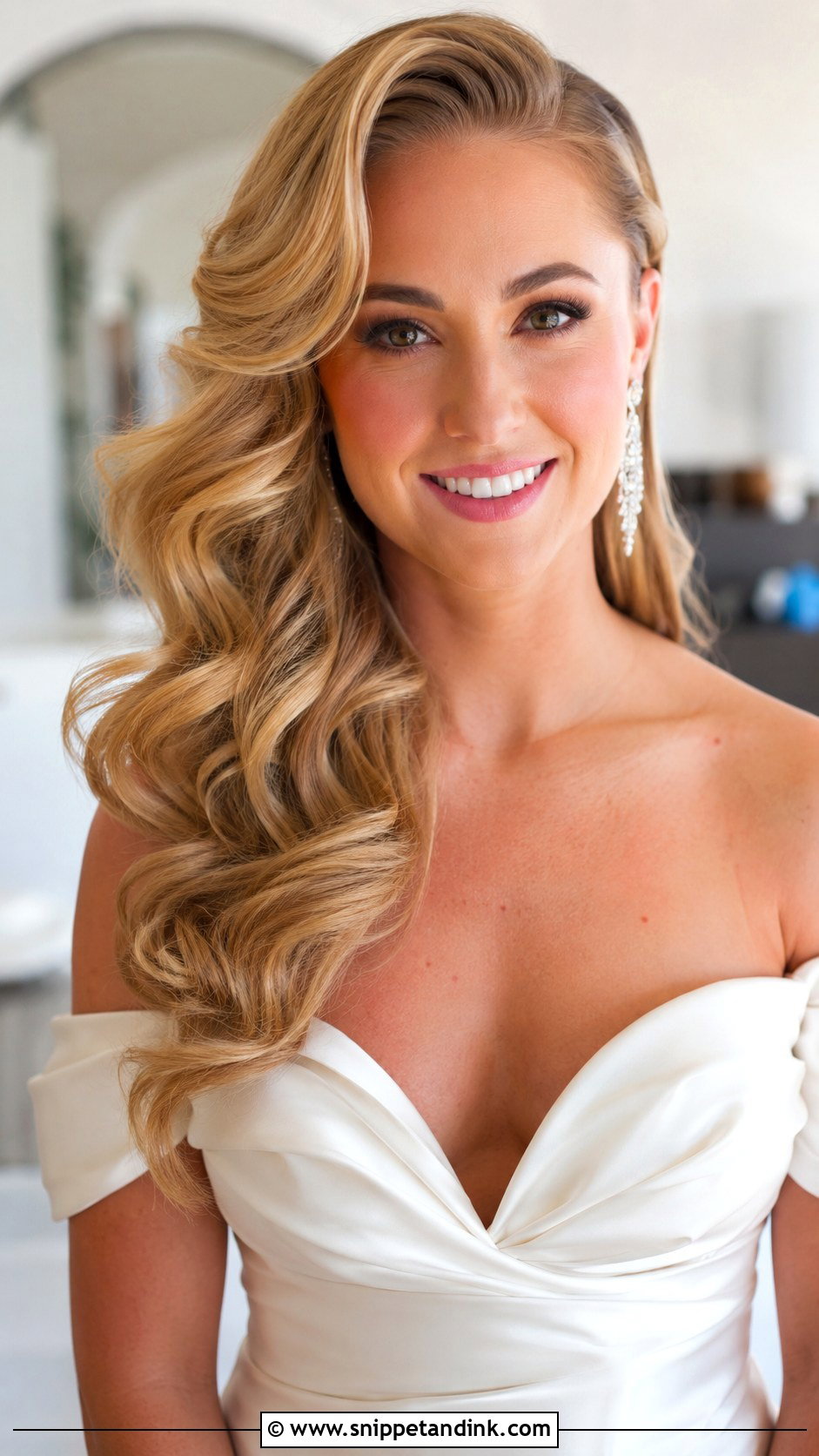
Gathering all the hair over one shoulder is dramatic, and the hard part is keeping the back from splitting open to show the nape. I pin the hair at the back of the head toward the swept side with crossed bobby pins hidden under a top layer. That anchor is what stops it drifting back to the middle on the dance floor. A statement earring on the bare side balances it. Structured gowns suit it; with a one-shoulder neckline, I sweep the hair to the opposite side so the strap stays visible.
23. Natural Curls for Brides
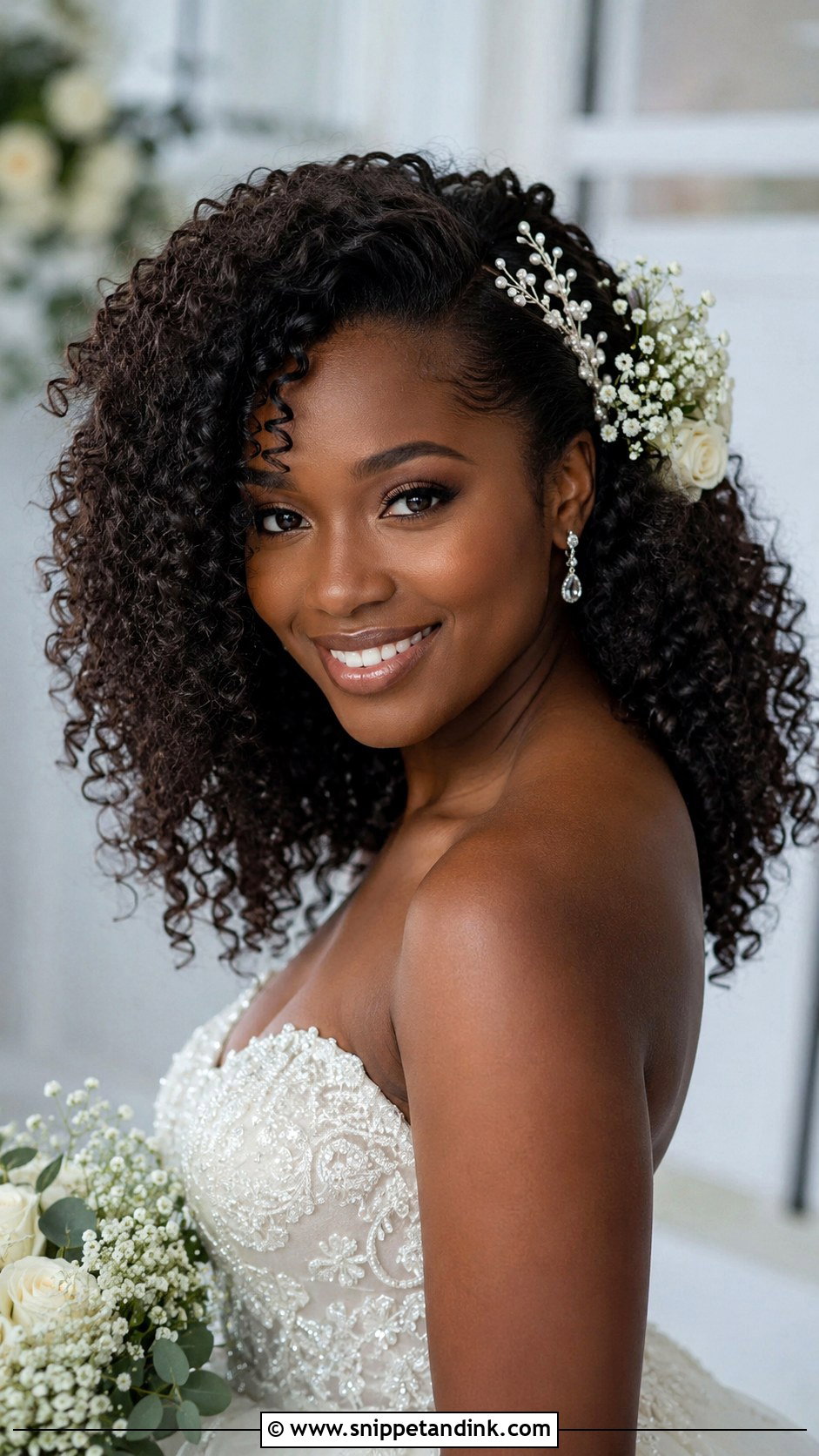
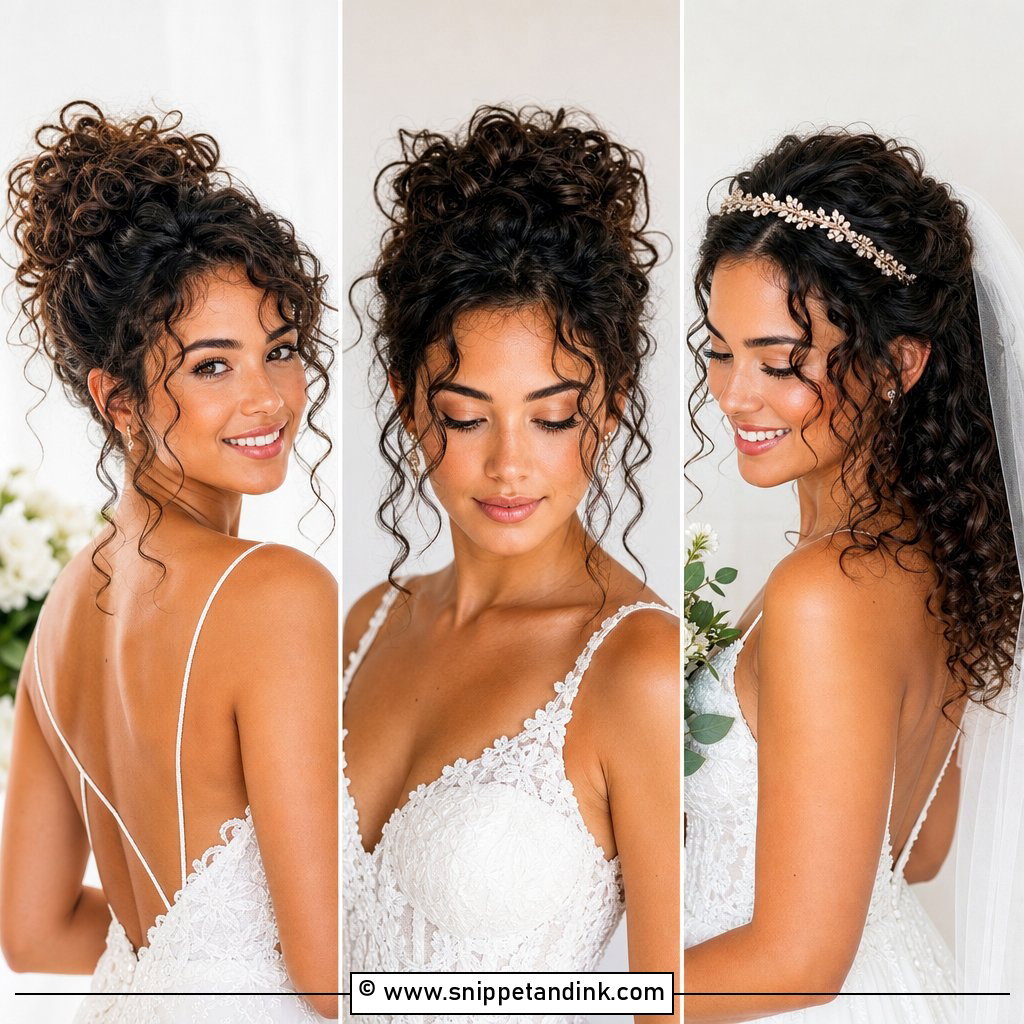
Natural texture is the style I’m happiest to protect rather than change. For coils and curls, I work on freshly washed, conditioned hair, apply a defining cream or gel while it’s wet, then let it dry under a diffuser or in the air, depending on the curl pattern. Never brush it out once dry. Wear it fully down or pull one side back with a pin. Flowers and pearls sit well in curly hair because the texture grips them. Humidity can bring frizz, so a small refresher of gel or light oil in your touch-up bag is worth bringing.
24. Wavy Hair with Side Braid
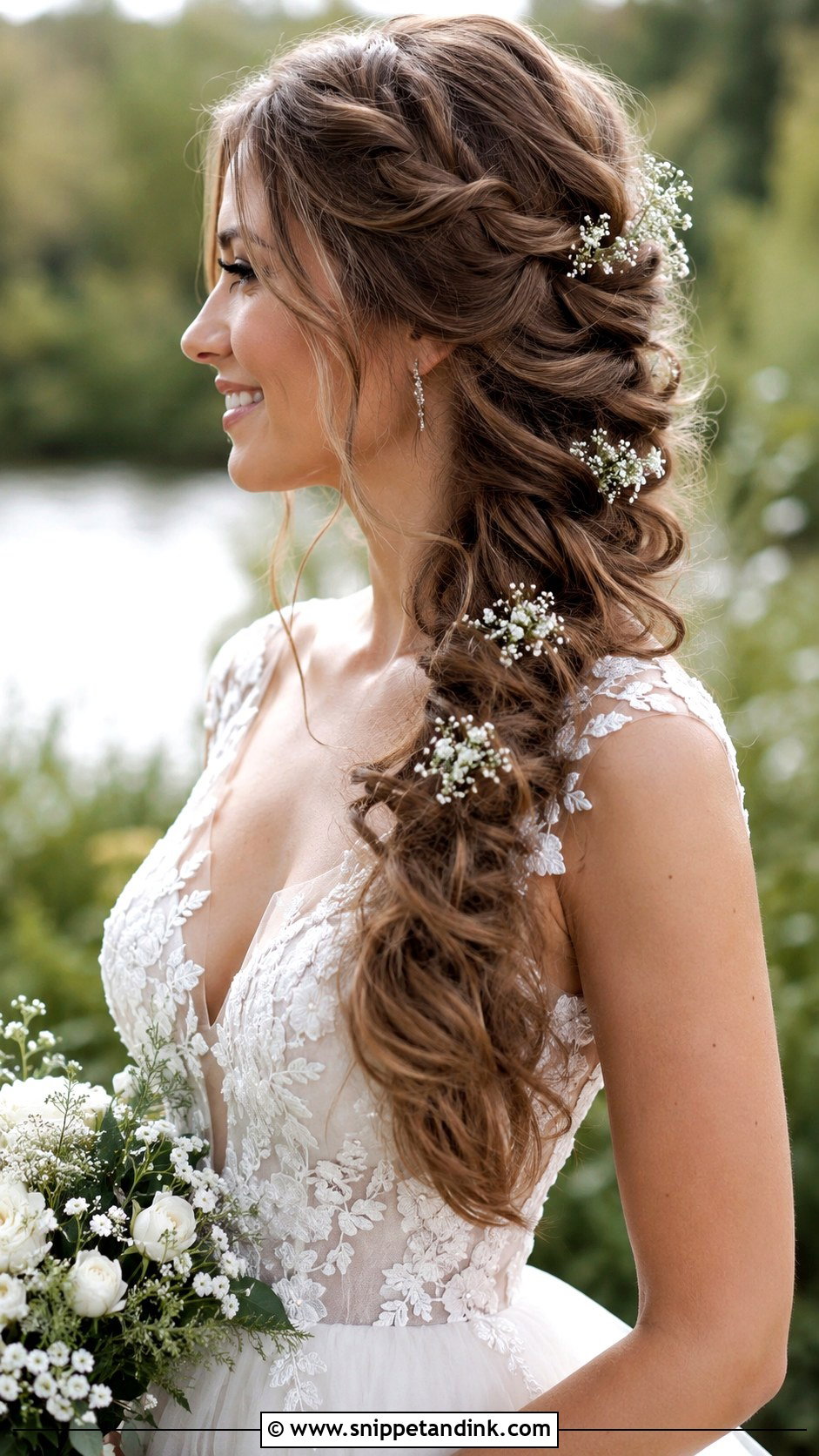
A loose side braid holds the front pieces in place while the waves stay down. I use a three-strand braid when time is short and a fishtail for finer texture, and I always braid slightly loose so the waves around it look connected. Small flowers can be tucked in. Medium and long hair suit it. On very thick hair the braid can look heavy against the waves, so I keep it smaller than you’d expect.
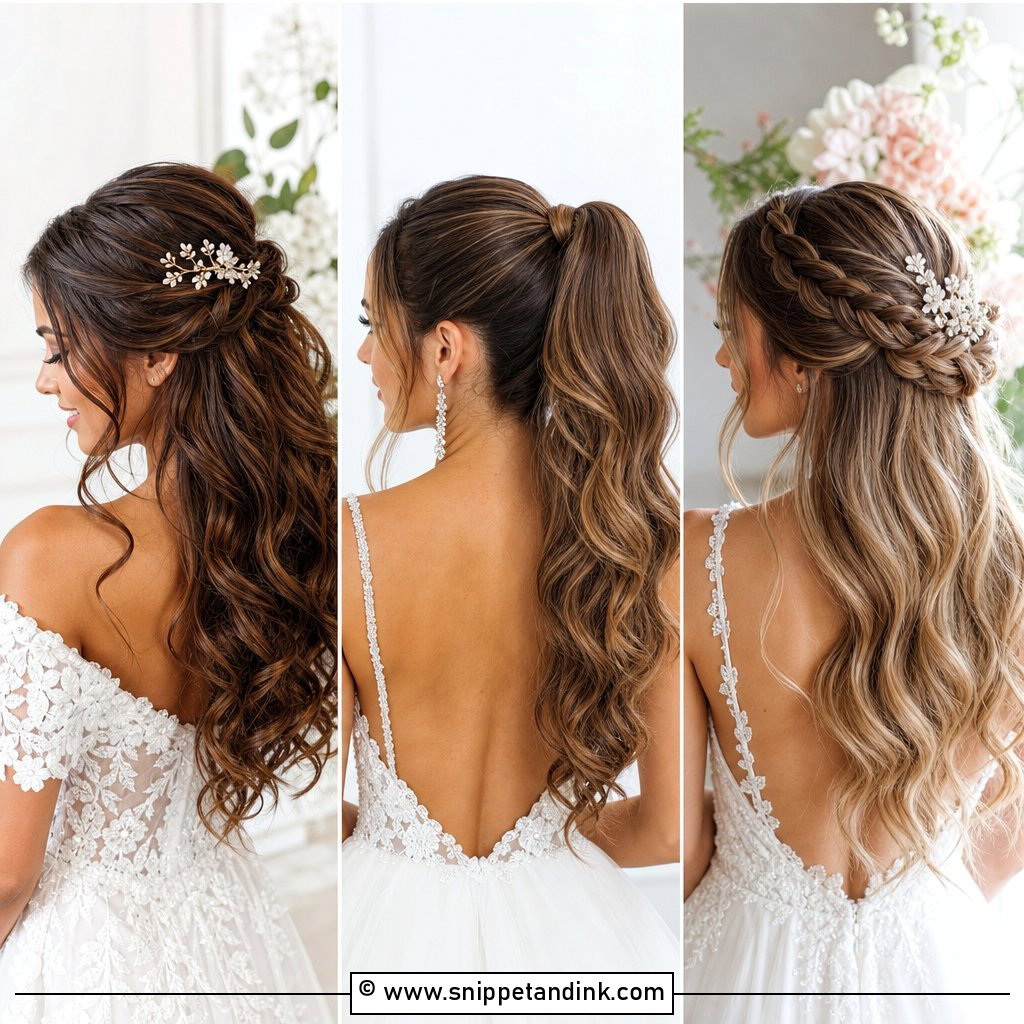
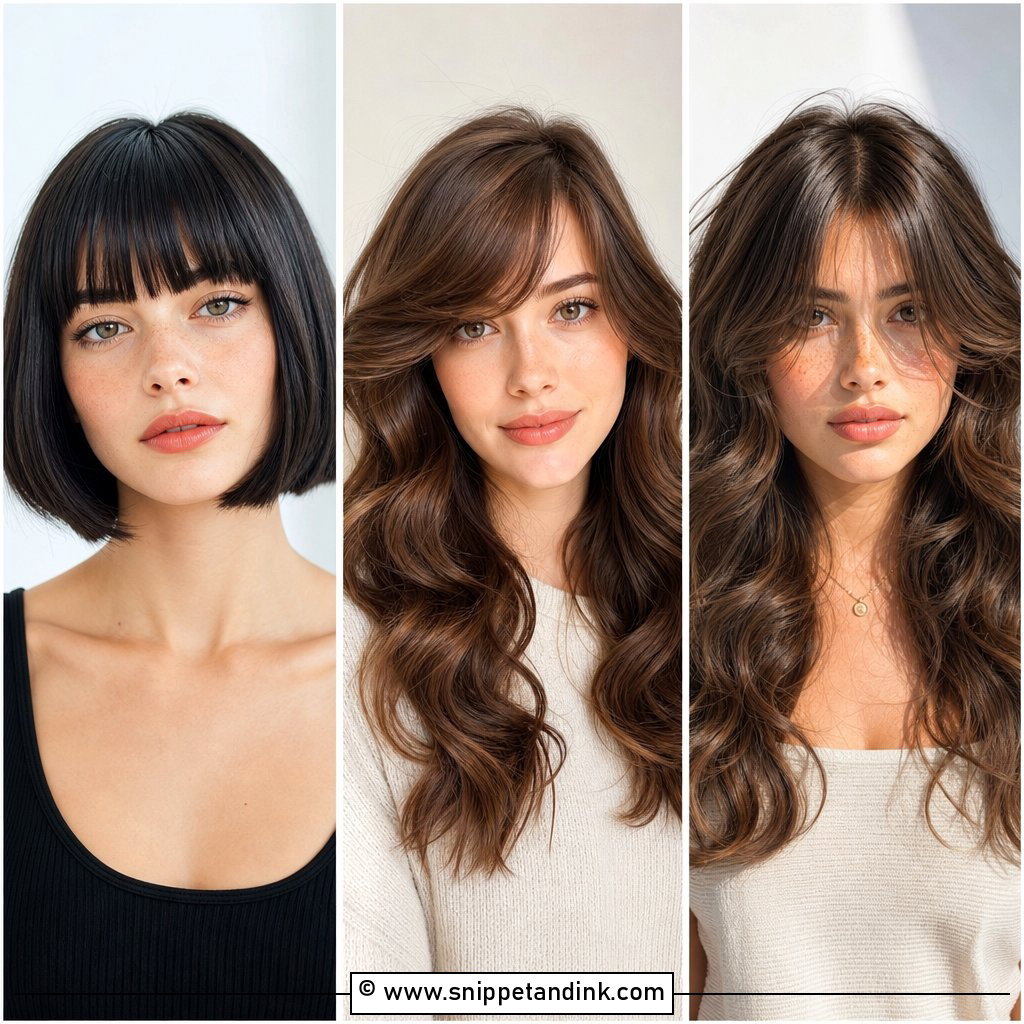
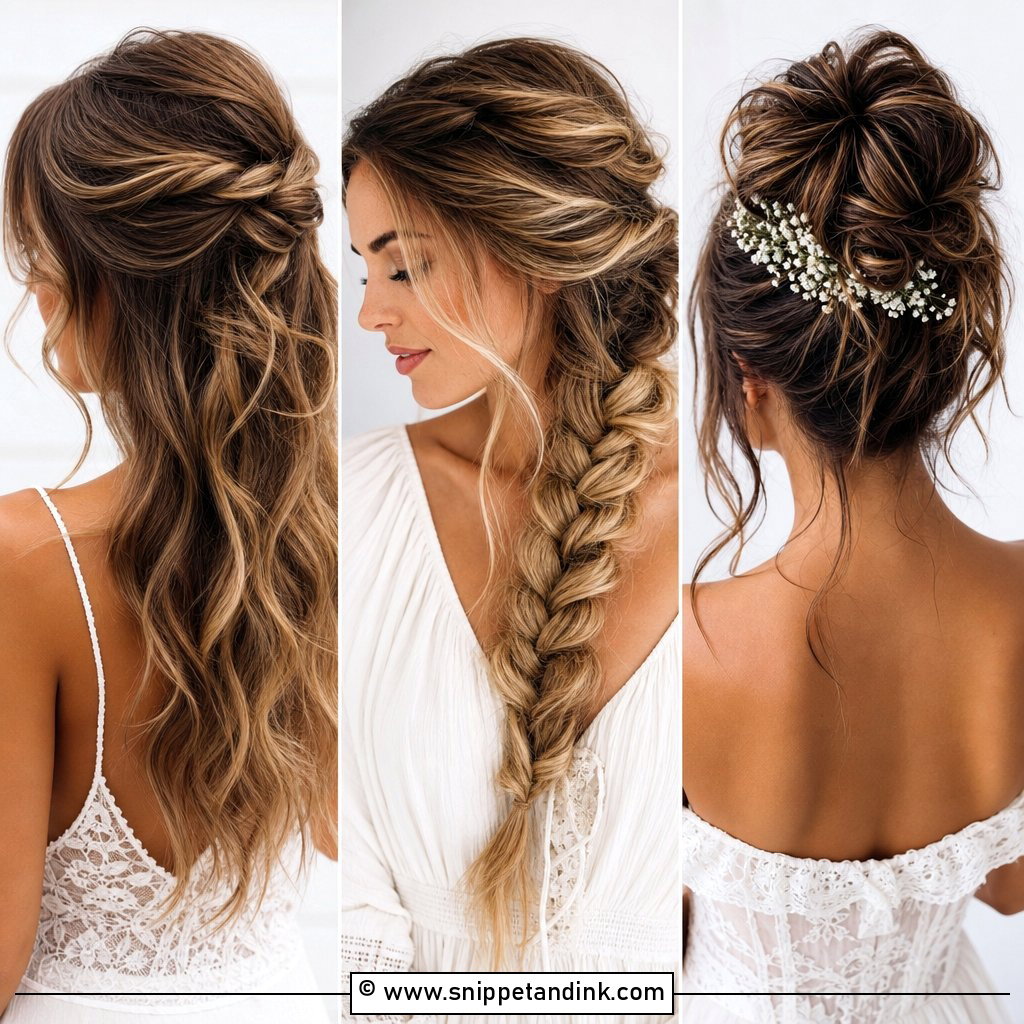
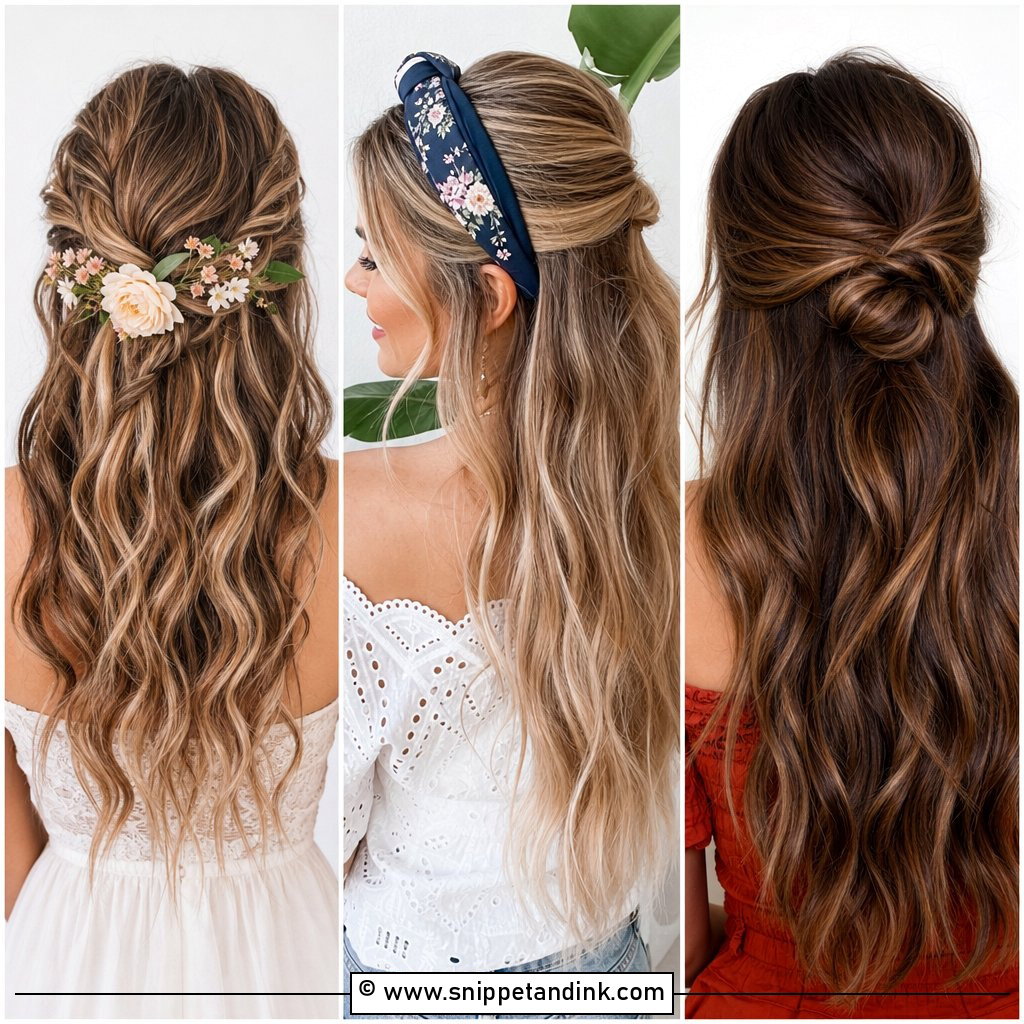
25. Sleek Tucked Bridal Hair
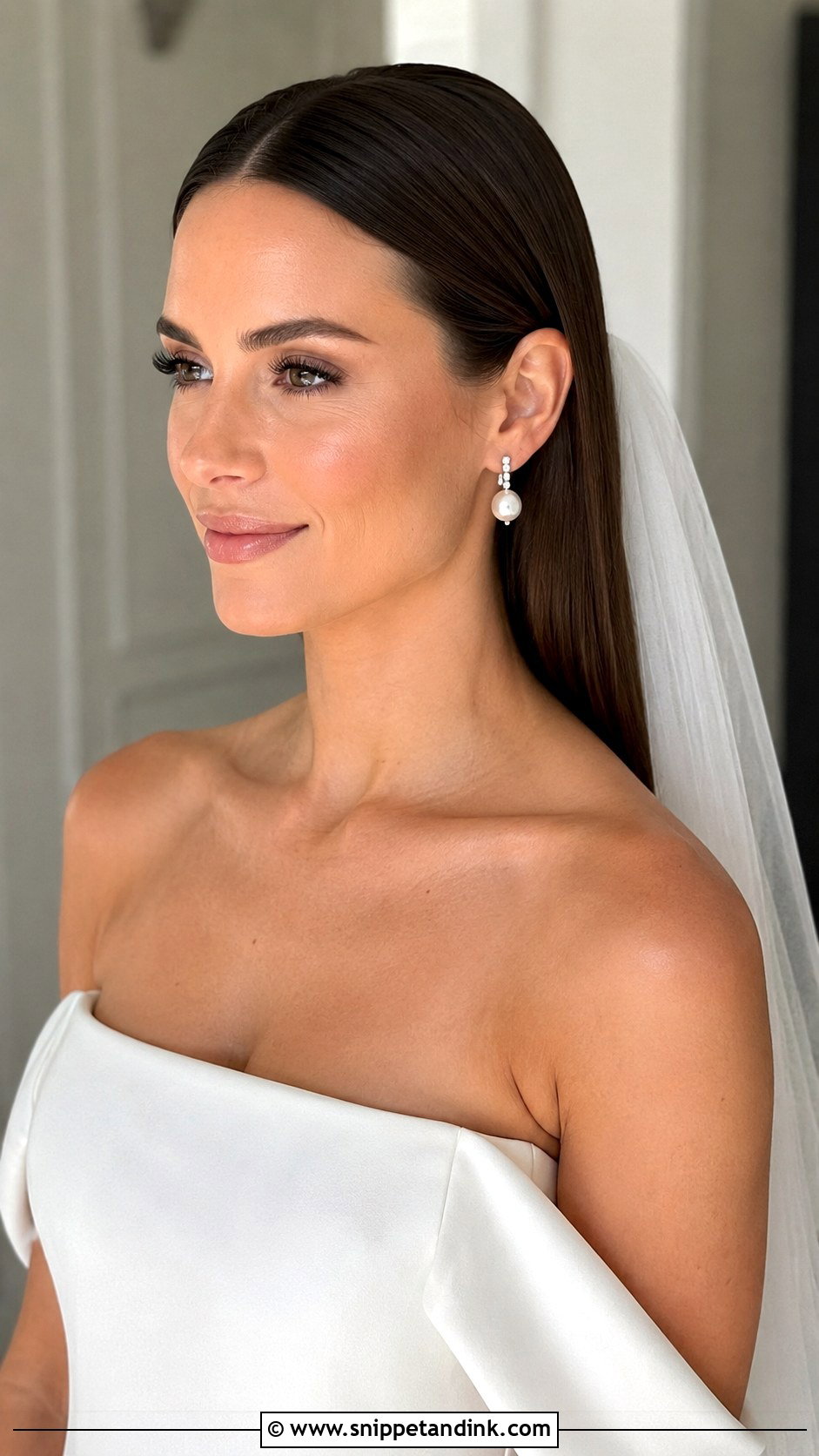
Sleek and tucked is one of the more modern looks: glossy straight hair, the sides tucked neatly behind the ears, the jawline on show. It’s simple to wear and surprisingly hard to keep, because the tucked pieces slip forward every time you talk and laugh. I hold them with one flat pin behind each ear and a light finishing cream to stop flyaways. Small pearl earrings and a structured gown complete it. Straight and lightly waved hair suit it; curly hair would need a silk press, which is a decision to make well ahead of the wedding.
What Happens to Down Hair Between the Vows and the Last Dance
Down hair takes more wear than any updo. Sitting back in a chair through dinner flattens the back. Long hugs push waves out of shape. A veil worn for hours leaves a dent at the crown. None of this is a disaster, and most of it can be fixed in five minutes if you plan for it.
A touch-up bag for a bridesmaid to carry
- A travel-size flexible hairspray, not a stiff one
- Six or eight bobby pins in your hair color
- A wide-tooth comb, never a fine brush on set curls
- A little smoothing cream or oil for flyaways
- A mini curling wand, if the venue has a room where you can plug it in
The best moment for a touch-up is right before the reception entrance, after formal photos, when the veil comes off and the crown can be lifted back up with fingers and a little spray.
If the forecast says humid
Humidity defeats down styles more often than anything else. Curls relax, sleek hair puffs and fine hair goes flat. On a muggy day I’d rather move you toward a half-up or side-swept version than promise loose waves that drop before the first dance. Have that conversation at the trial, while there’s still time to change plans.
Start With What Your Hair Already Does Well
Hair worn down depends on your texture, your dress and the weather far more than an updo does. Start with what your hair naturally does, then pick the down style that works with it rather than against it. Book a trial and bring your veil, your accessories and a photo of your neckline. Then trust what held up at that trial, not just what looked good on someone else’s hair.
You'll Like These Ideas:


Leave a Reply