
A ballgown is the silhouette I reach for when a bride tells me she wants to feel the dress before anyone sees it. The recipe is simple on paper: a fitted bodice, a clearly marked waist and a skirt that stands away from the body. Inside that recipe there is a lot of room. Some are plain satin, some carry floral lace, others are built around modern corset bodices, color, sleeves, bows or sparkle. What decides the right one is mostly practical: the size of your venue, how long you’ll be on your feet and how much skirt you can honestly carry all day. Below are 35 versions, with what I’d check on each before you commit.
What I Test in a Ballgown Before It Leaves the Fitting Room
A ballgown looks one way on a hanger and another after an hour on your body. When a bride tries one on, I run through the same checks every time, because the problems show up in movement, not in the mirror.
- Sit in an ordinary chair. The bodice shouldn’t dig into your ribs or push up at the bust, and the skirt should fold without the front flipping up.
- Raise both arms as if hugging someone taller. If the bodice rides up or the neckline gaps, ask for it to be fixed now.
- Walk forward, then step backward. A full skirt needs a small kick of the foot to move ahead of you; if you keep catching the front hem, it’s too long or the underskirt is wrong.
- Take the stairs if the salon has any, lifting the skirt at the front sides rather than the center.
Underneath most ballgowns sits either a built-in petticoat or a separate hoop. A hoop gives the widest, most even shape, but it swings up when you sit and makes cars and narrow doorways harder. Layered petticoats are softer and move better. If the gown can take either, I usually suggest the petticoat for a long reception.
Timing matters more with this silhouette than most. Ballgowns are usually made to order, and many salons ask for somewhere around eight to twelve months from order to delivery, though it varies by designer. Alterations normally begin a couple of months before the wedding and take two or three fittings. Bring your actual shoes and undergarments to every one, since a different heel height changes the hem.
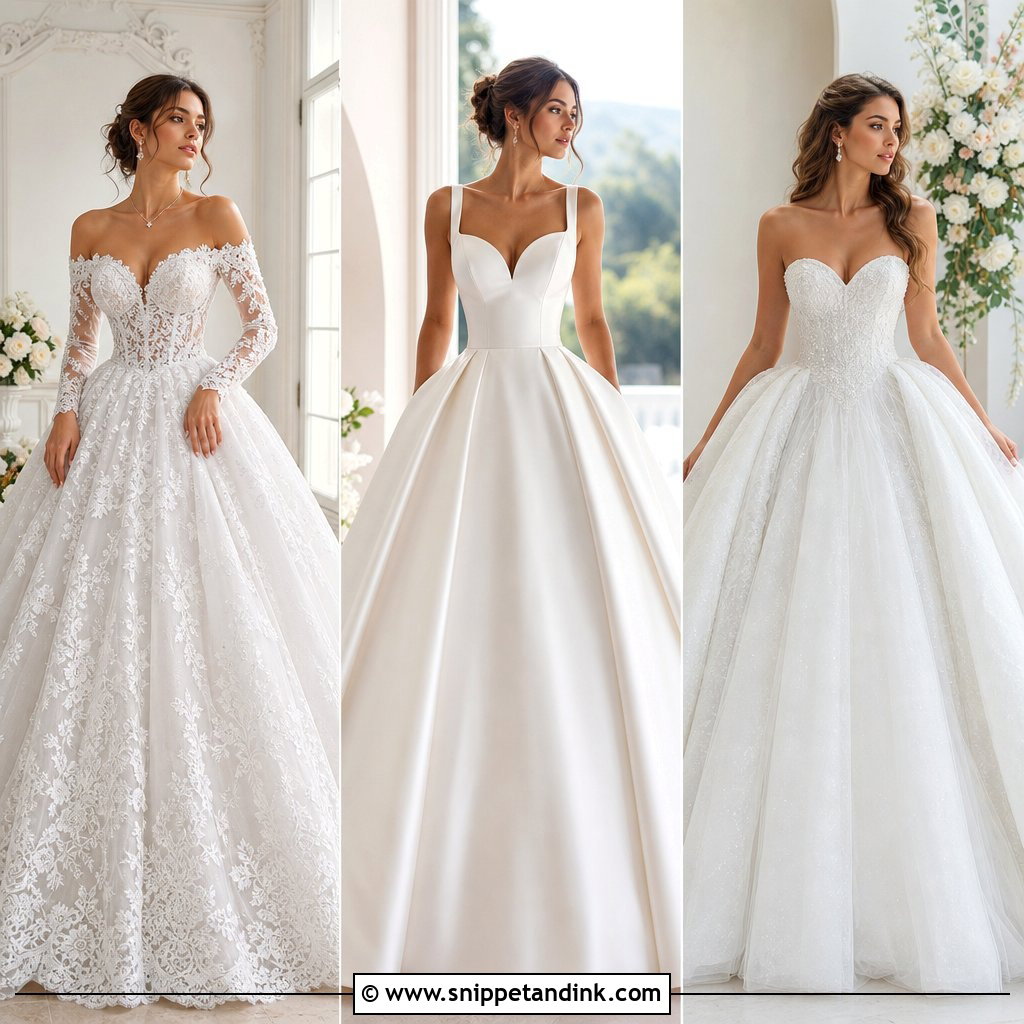
1. Satin Ballgown Wedding Dress
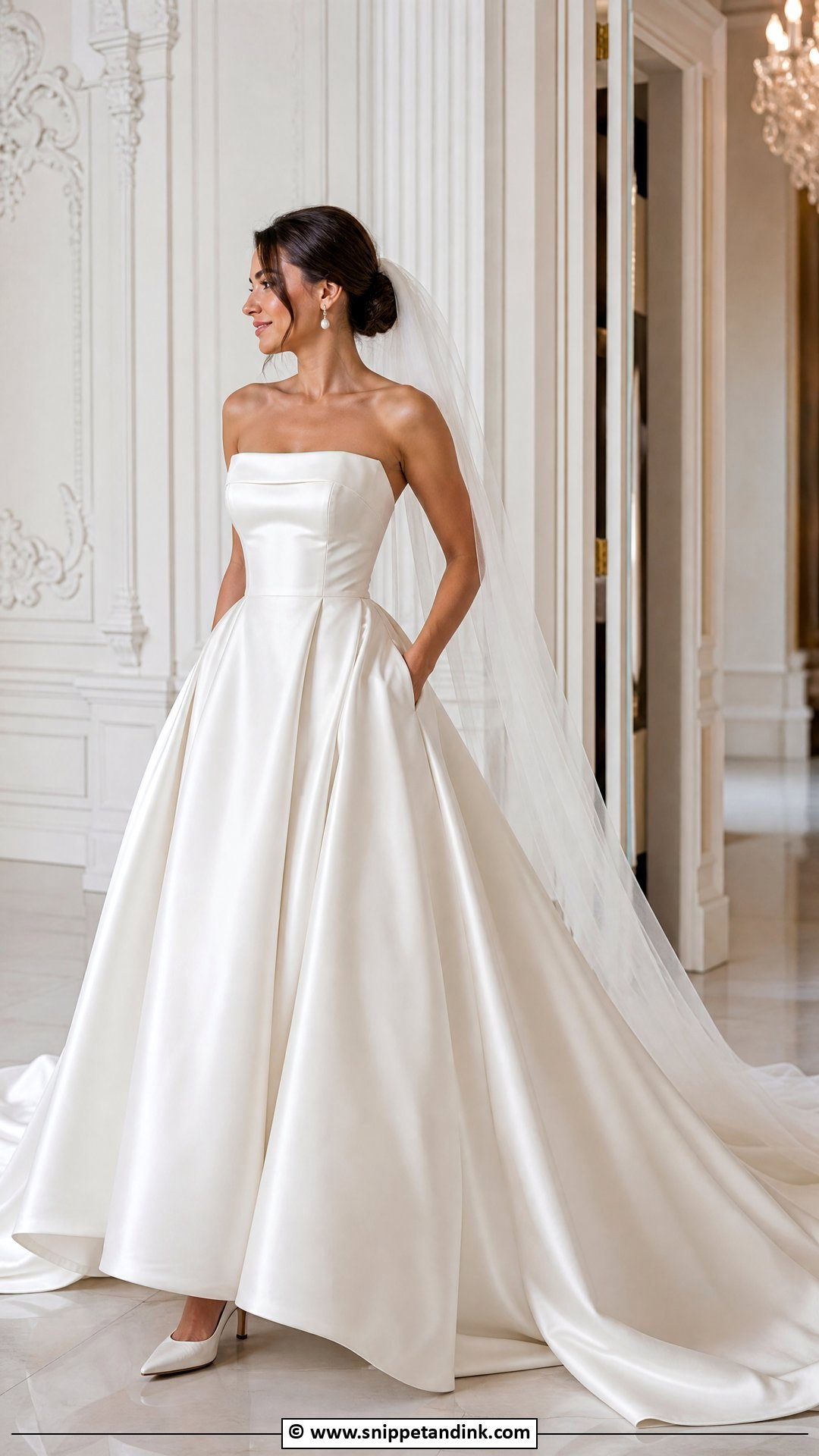
Satin is the fabric I trust most to hold a full skirt without any help from decoration. Its weight lets the skirt fall in deep, slow folds, and the sheen picks up every seam, which is why the tailoring has to be right. The catch is creasing. Silk satin marks the moment you sit, so I tell brides to expect soft lines across the lap by the reception, or to choose a heavier duchess satin if that bothers them. A strapless or square bodice keeps it modern; a long train turns it formal. Pearl studs and a plain veil are all it needs.
2. Lace Ballgown Wedding Dress
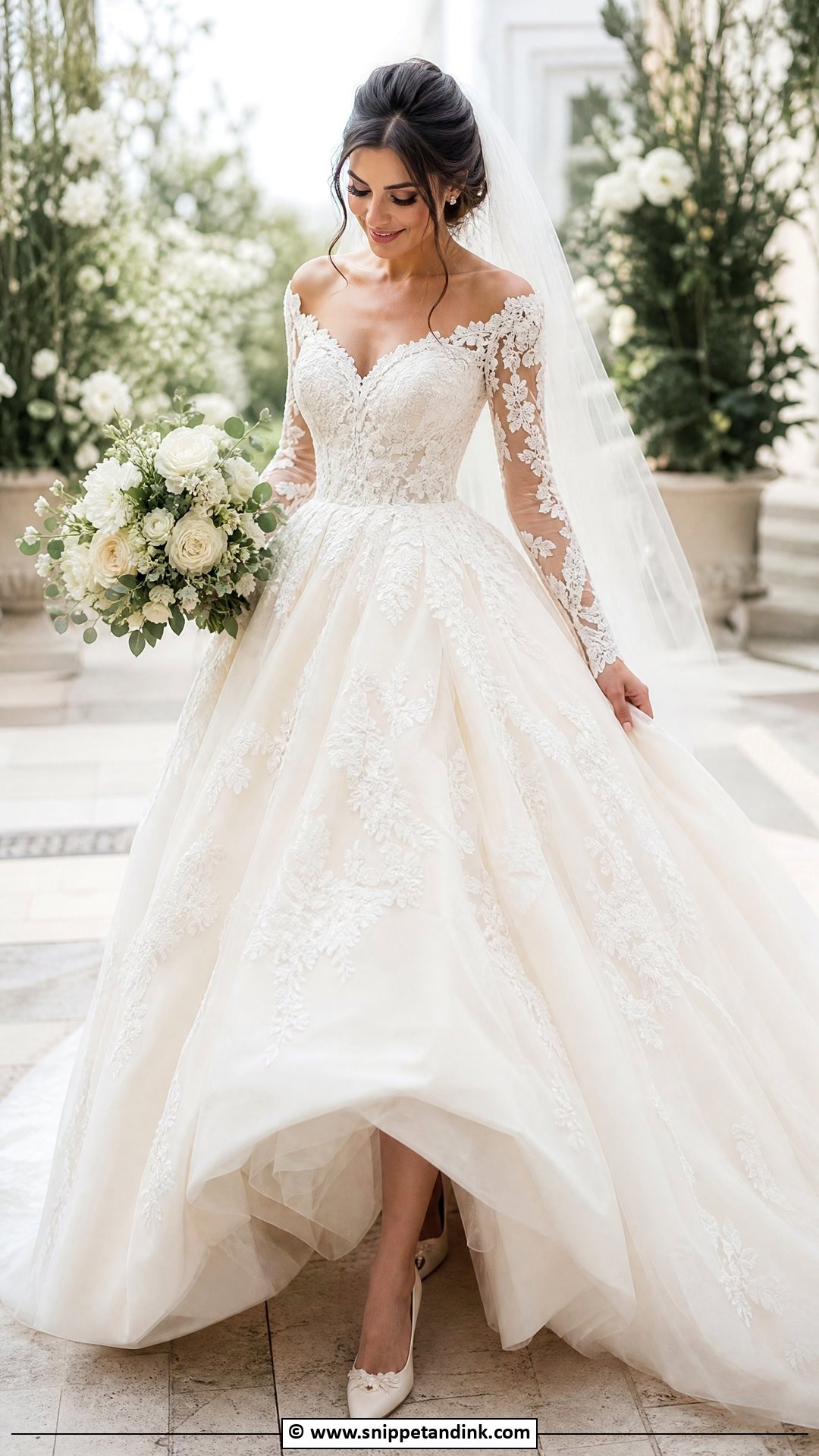
Lace is where I spend the most time with a bride, because two laces that look alike on a hanger behave very differently. Corded lace has a raised outline that reads from across a room; Chantilly is flat and fine and almost disappears at a distance. On a ballgown you can carry lace over the whole gown or keep it to the bodice, sleeves or hem so the skirt stays lighter. I always check where the motifs land on the bodice, since a flower sitting awkwardly on the bust can’t be moved once the lace is cut. Pick a veil with a plain edge so it doesn’t fight the pattern.
3. Tulle Ballgown Wedding Dress
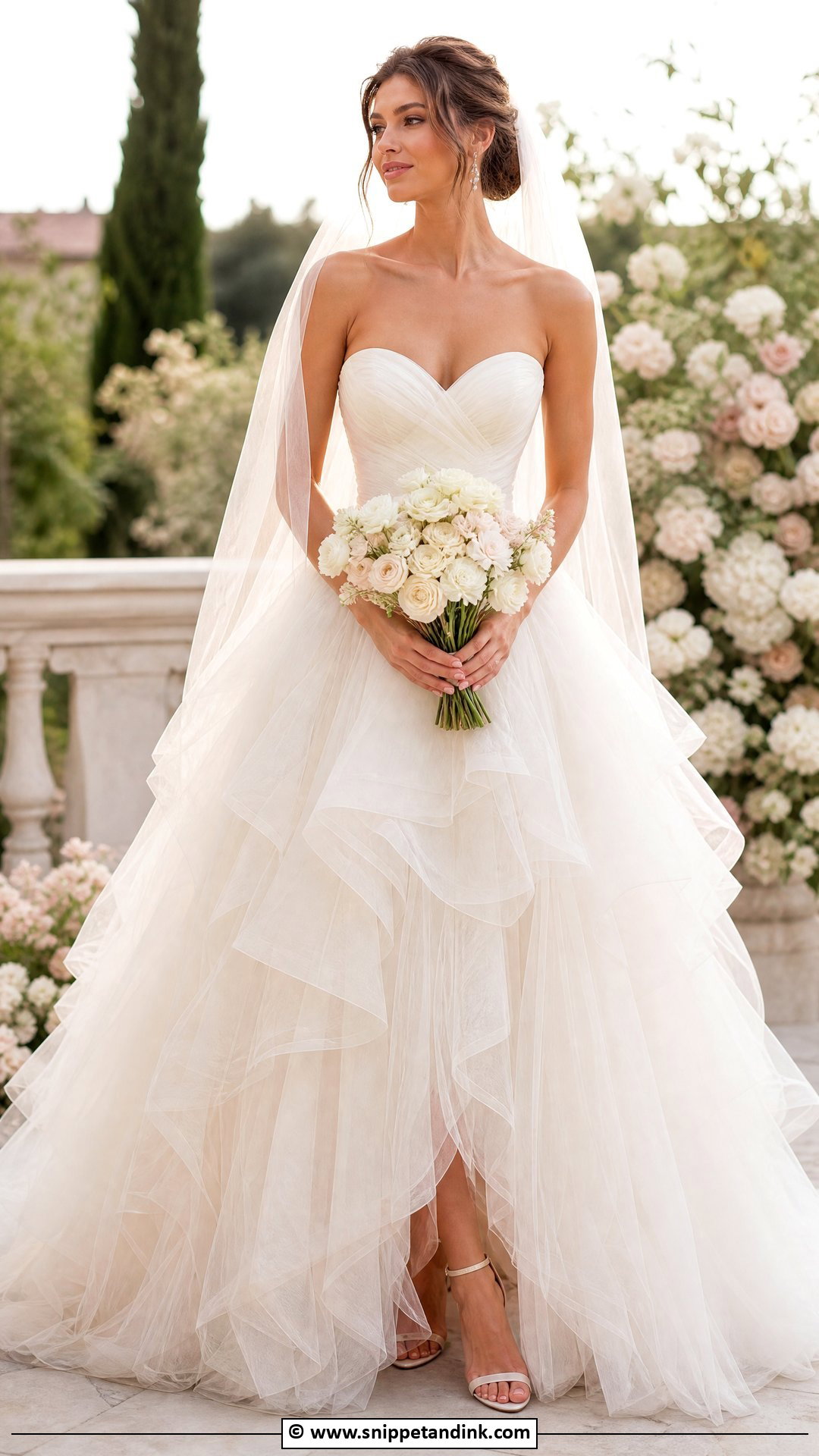
Tulle gives the floating skirt most people picture, and it does it with very little weight because the volume is mostly air between layers. That softness has a cost: tulle flattens in humidity and snags easily, so I check jewelry, shoe buckles and even bouquet wiring for anything that could catch. A plain bodice keeps it modern, and sparkle tulle glints in daylight more than you’d expect. Let the skirt do the moving and keep the rest small, with a fingertip veil and quiet makeup.
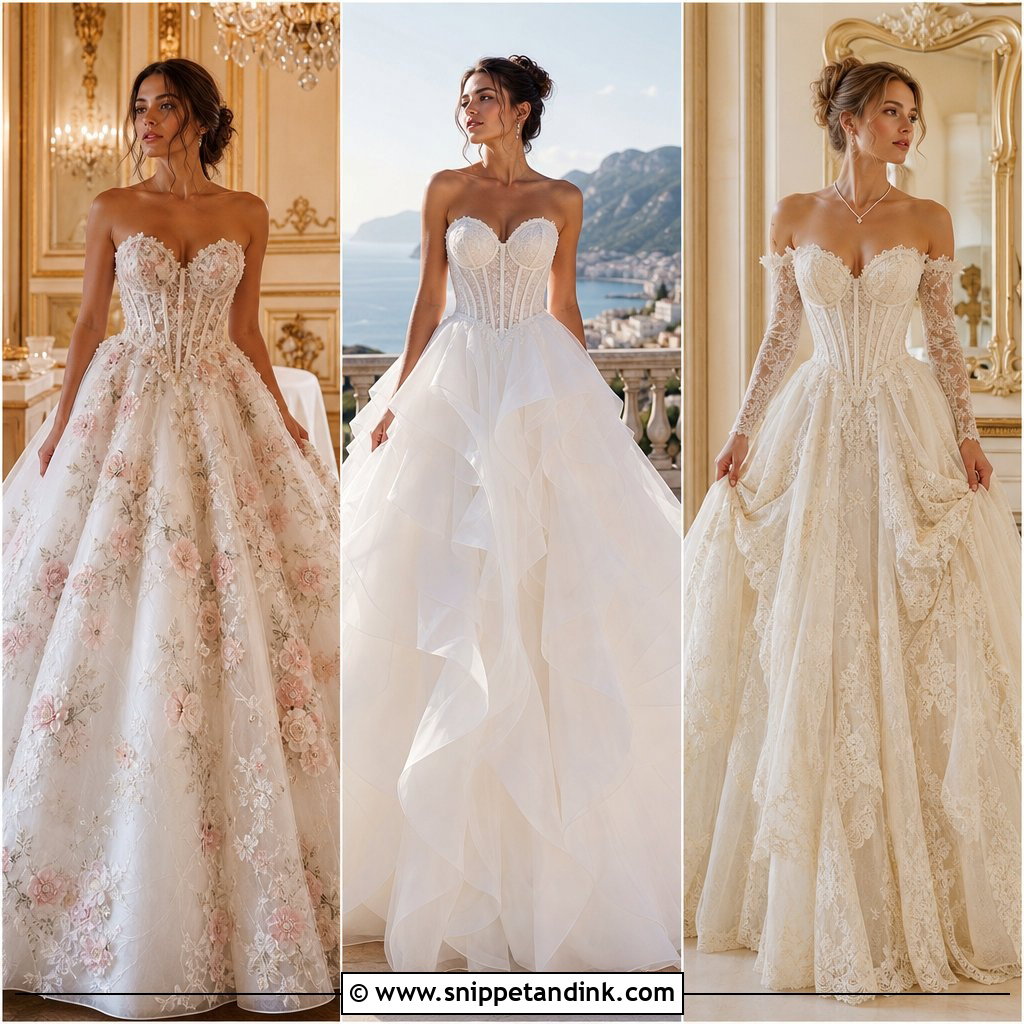
4. Off The Shoulder Ballgown Wedding Dress
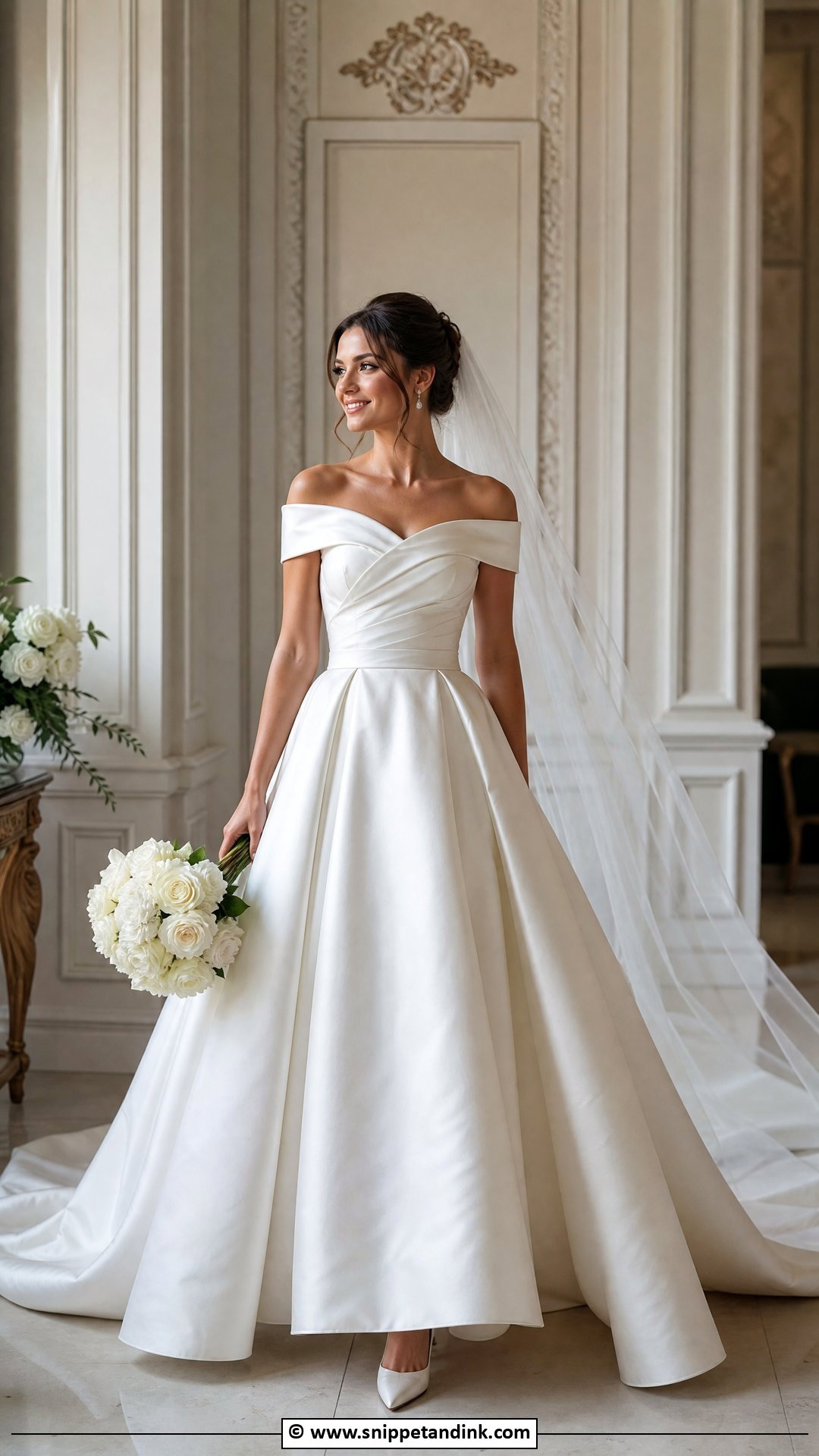
The off-the-shoulder line frames the collarbone and gives a wide skirt something to answer at the top. In satin it reads formal; in lace it softens. My first test at a fitting is arms up. If the bands slide when you raise your hands, they’ll slide during the first dance too, and that gets fixed with boning and grip tape, not hope. Wear your hair low or in waves so the neckline stays visible, and stop at drop earrings.
5. Strapless Ballgown Wedding Dress
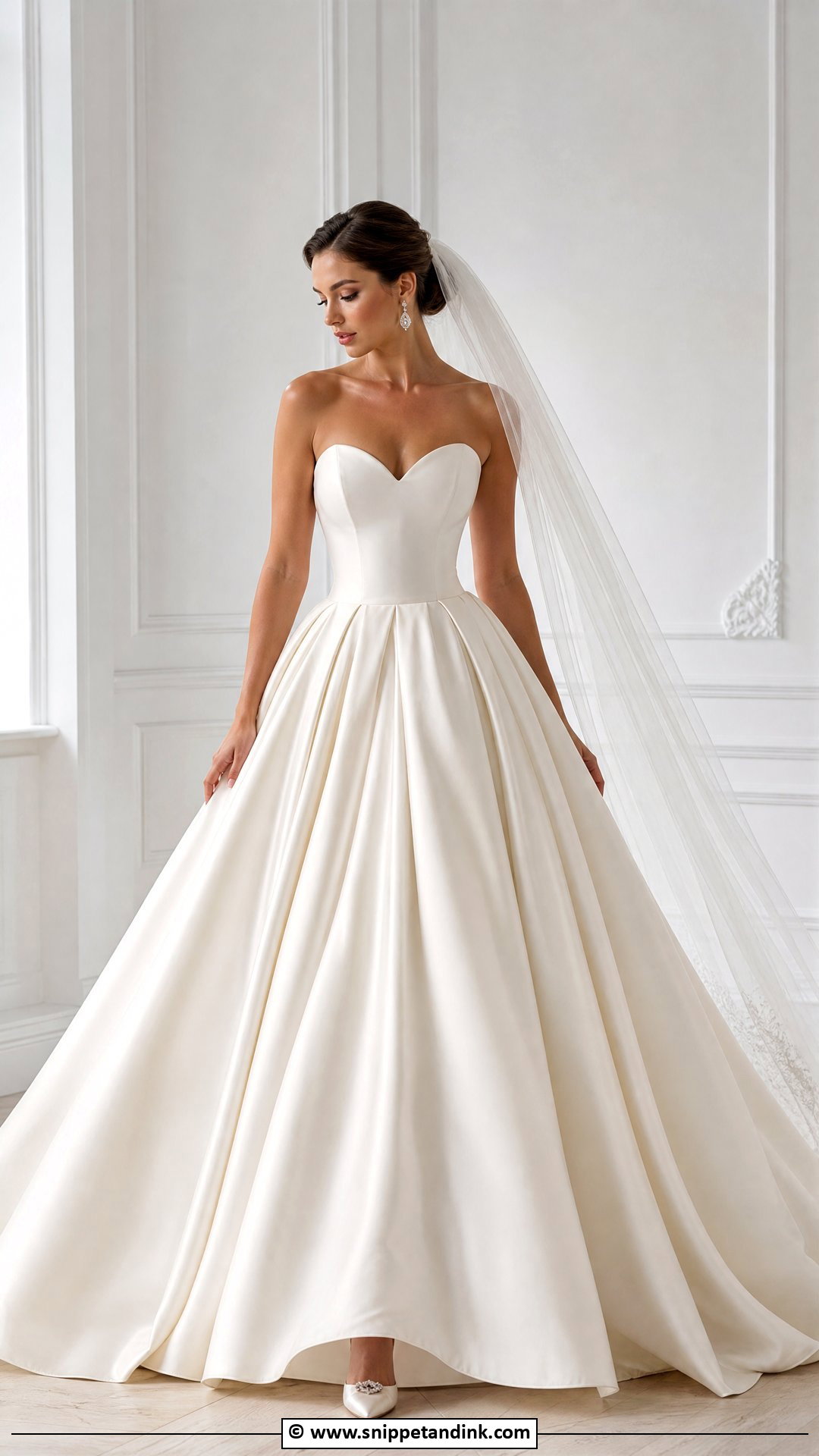
Strapless leaves the shoulders bare and hands all the drama to the skirt. A sweetheart edge softens the face, while a straight edge looks cleaner. Everything rests on fit at the ribcage rather than the bust: I want the bodice snug enough that it won’t sink when you sit, yet easy enough that you can eat dinner. With the upper body open, there’s room for statement earrings, a cathedral veil or a big bouquet.
6. Long Sleeve Ballgown Wedding Dress
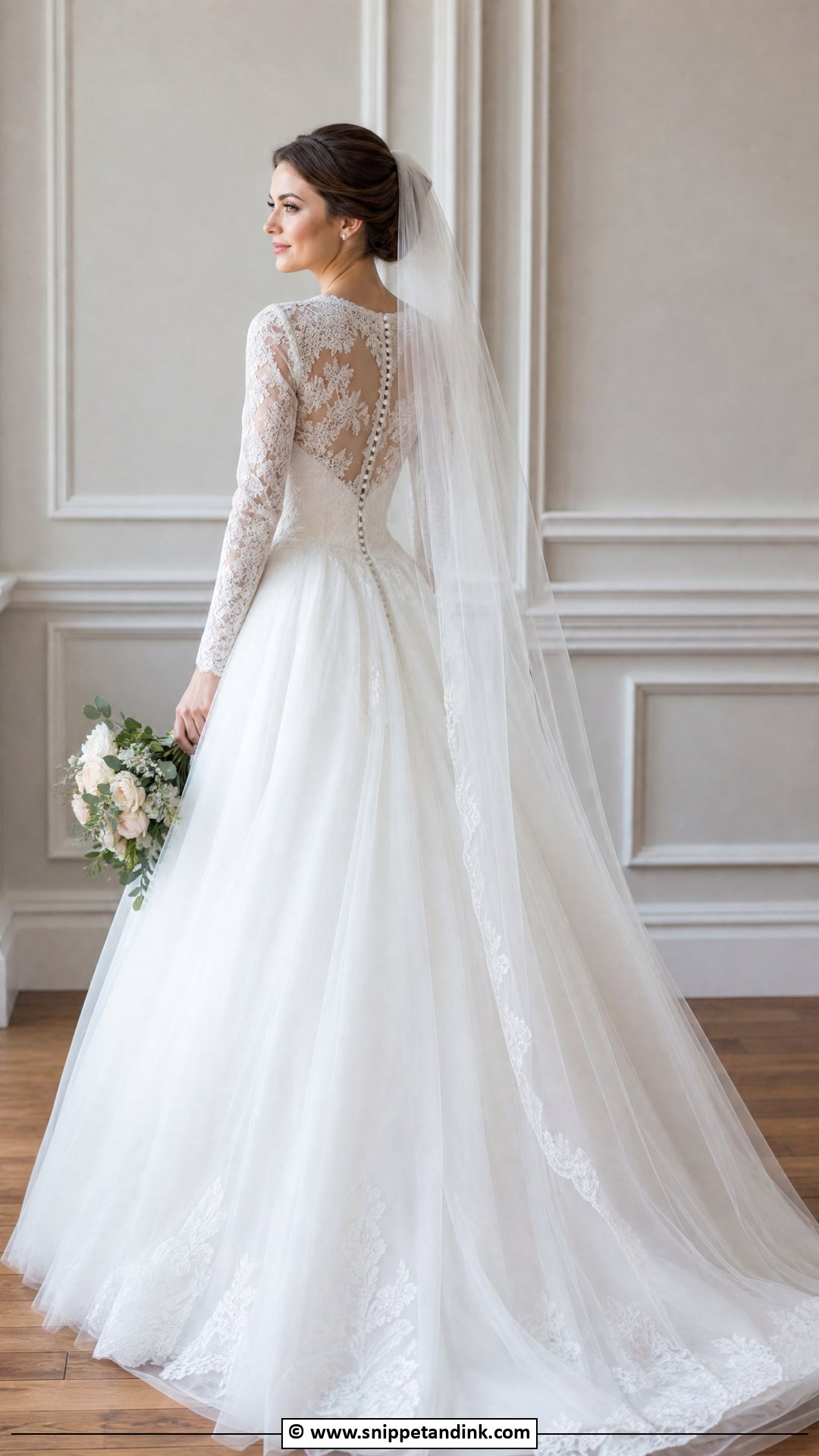
A long sleeve ballgown wedding dress covers the arms without losing any of the skirt’s drama. Lace sleeves look delicate; satin or crepe sleeves look tailored. The detail I check first is the armhole. Bridal sleeves are often cut close, and if the armhole sits low you can’t lift your arms to hug anyone without the whole bodice rising. Ask for a raise-your-arms test well before the final fitting. Illusion sleeves, button cuffs or a slight puff at the shoulder update it, and minimal jewelry keeps the eye on the sleeves.
7. Corset Ballgown Wedding Dress
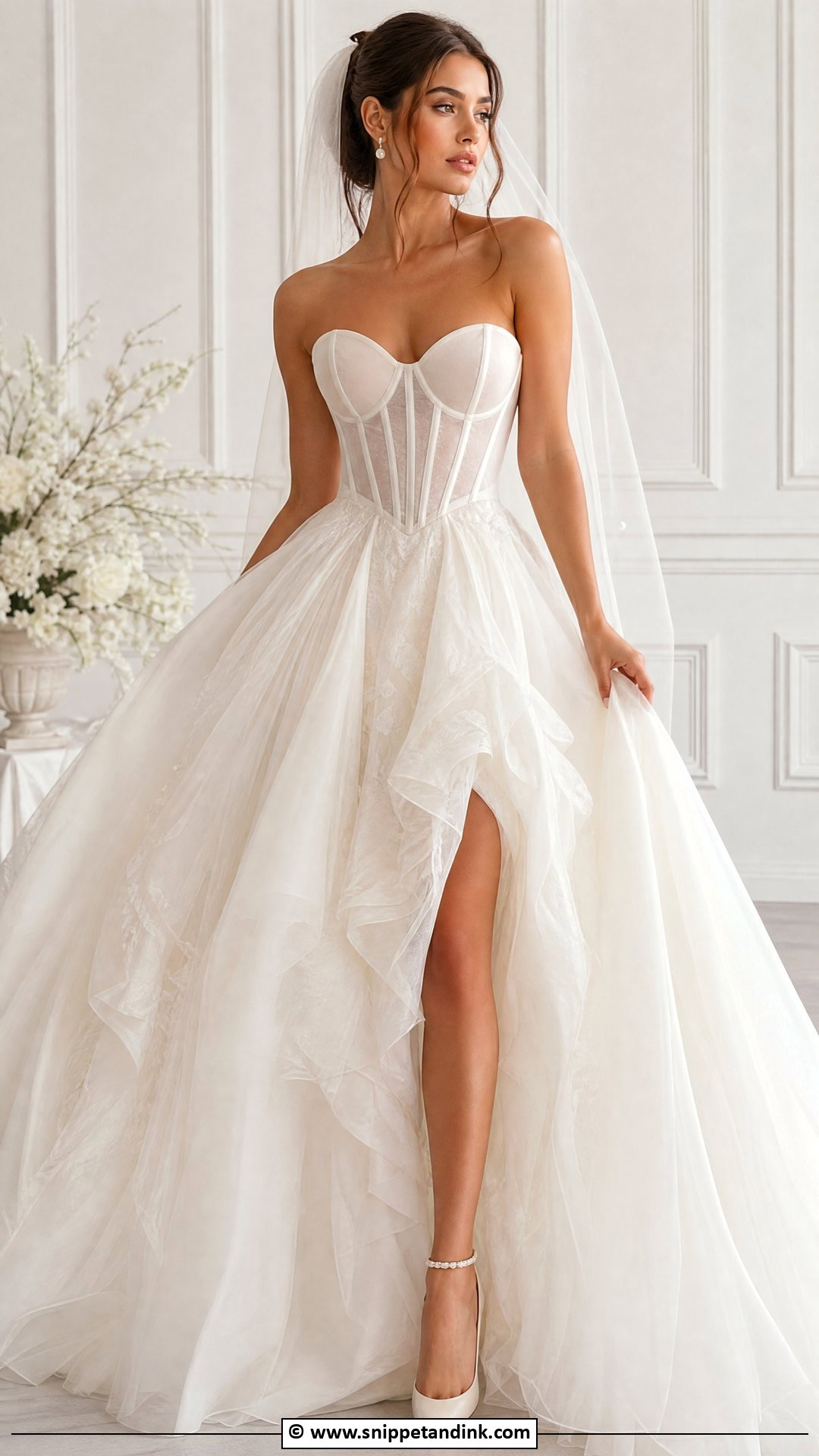
A corset bodice sculpts the waist and gives the skirt a firm base to spring from. The boning can be on show, with lacing or sheer panels, or hidden inside purely for support. I’d steer you away from a corset that is already laced to its limit at the first fitting, because you need room to breathe after the meal. Spiral steel boning bends with your body far more kindly than rigid plastic. Sit, lift your arms and take a deep breath in it before you agree to anything.
8. Sweetheart Ballgown Wedding Dress
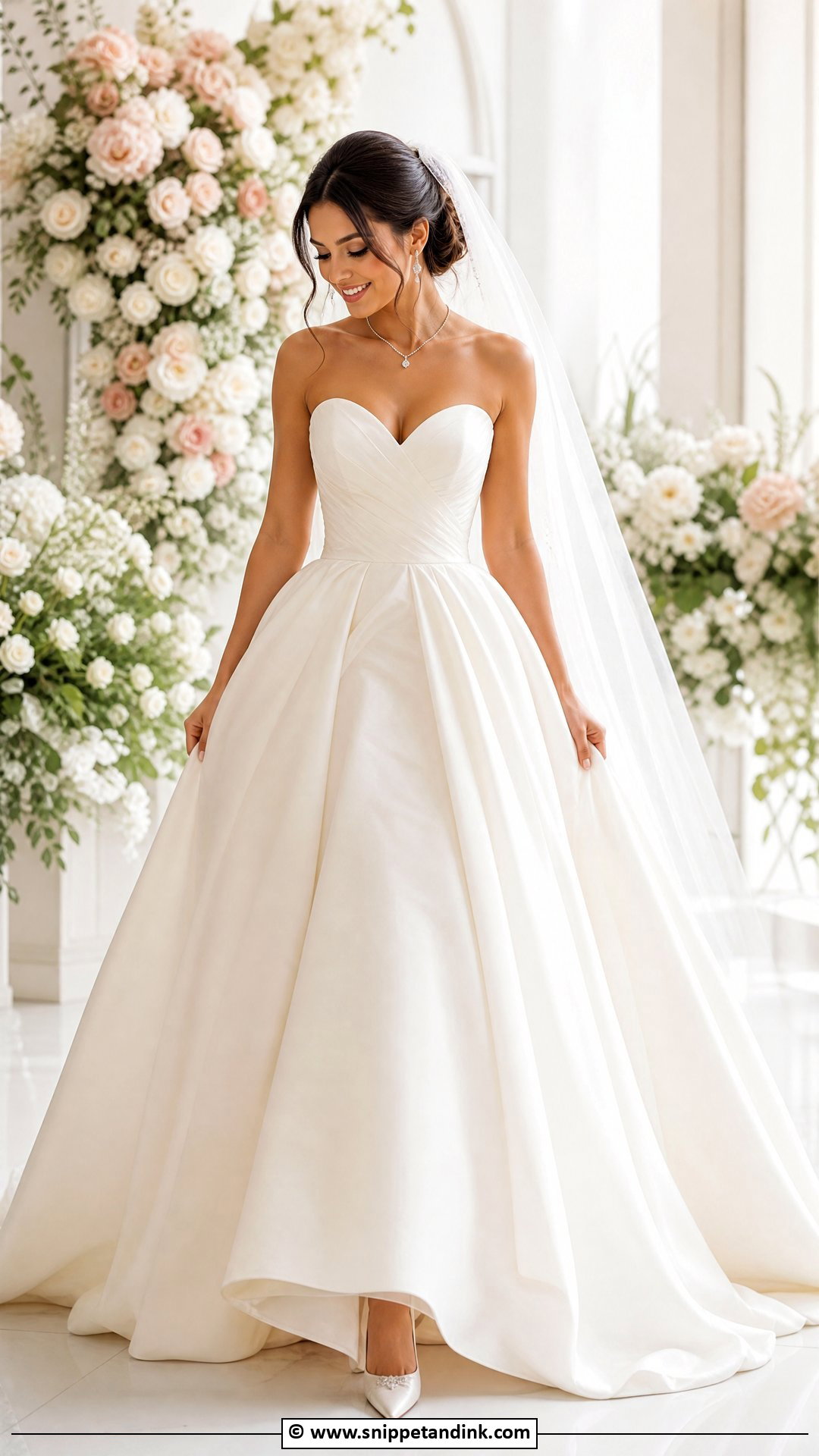
The sweetheart neckline curves over the bust and suits a wide range of figures, which is why it turns up on so many ballgowns. It sits naturally on strapless bodices but can also carry sheer straps, lace sleeves or detachable off-the-shoulder pieces. It can stay plain in satin or carry lace appliqués and beading. Watch the depth of the center dip. On a smaller bust a deep dip can gape when you lean forward, and I’ll often raise it slightly at alterations. A pendant fits neatly into the curve, or skip the necklace and let earrings do the work.
9. Square Neck Ballgown Wedding Dress
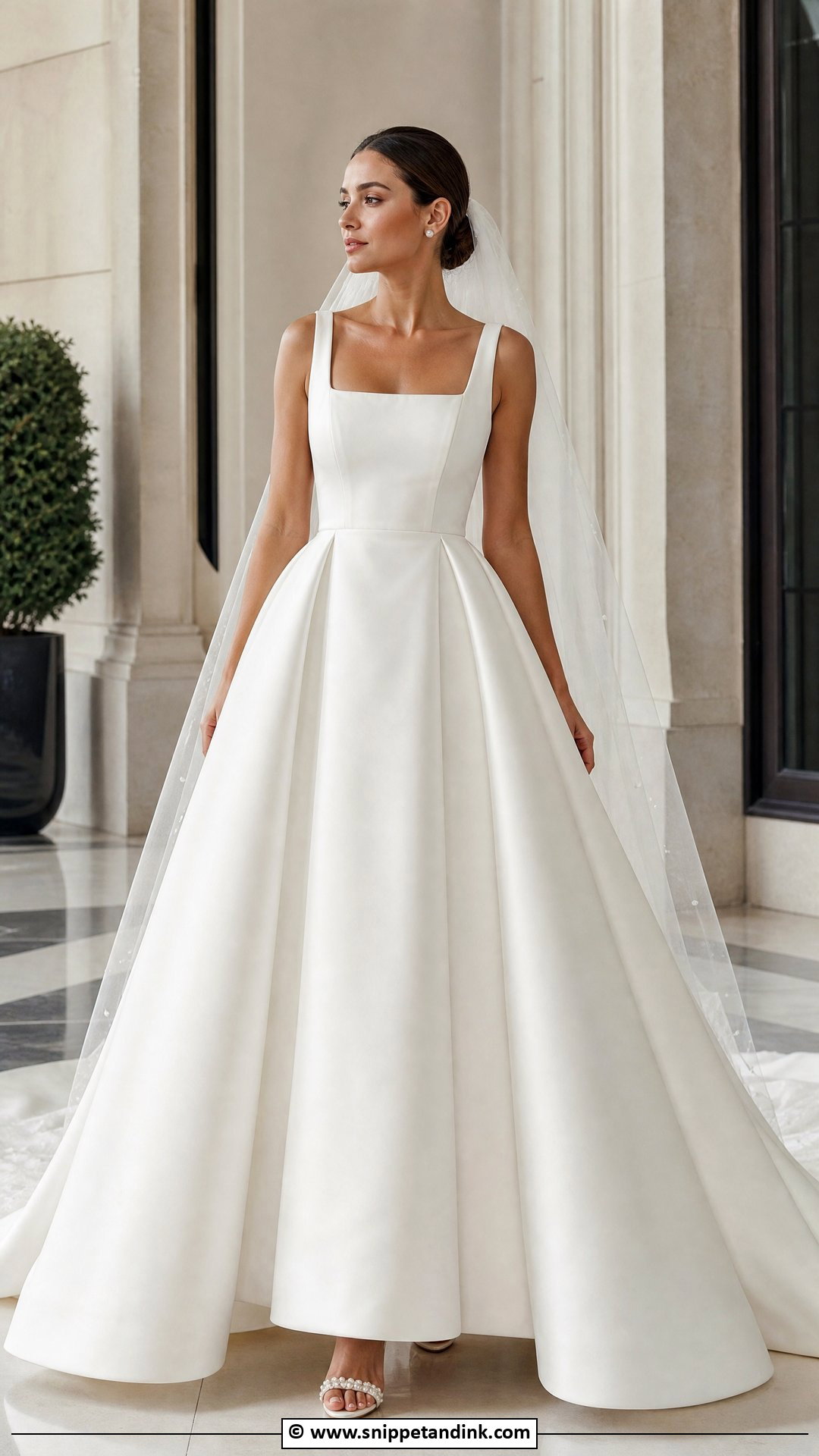
A square neckline brings straight lines into a romantic shape, and the contrast reads fresh rather than fussy. It suits thick straps, long sleeves or a sleeveless bodice equally. The thing to watch is the corners. If they’re cut wider than your shoulders allow, the straps drift outward and the neckline loses its edges, so I pin the corners on the body rather than trusting a size chart. A smooth bun and pearl studs are enough.
10. V Neck Ballgown Wedding Dress
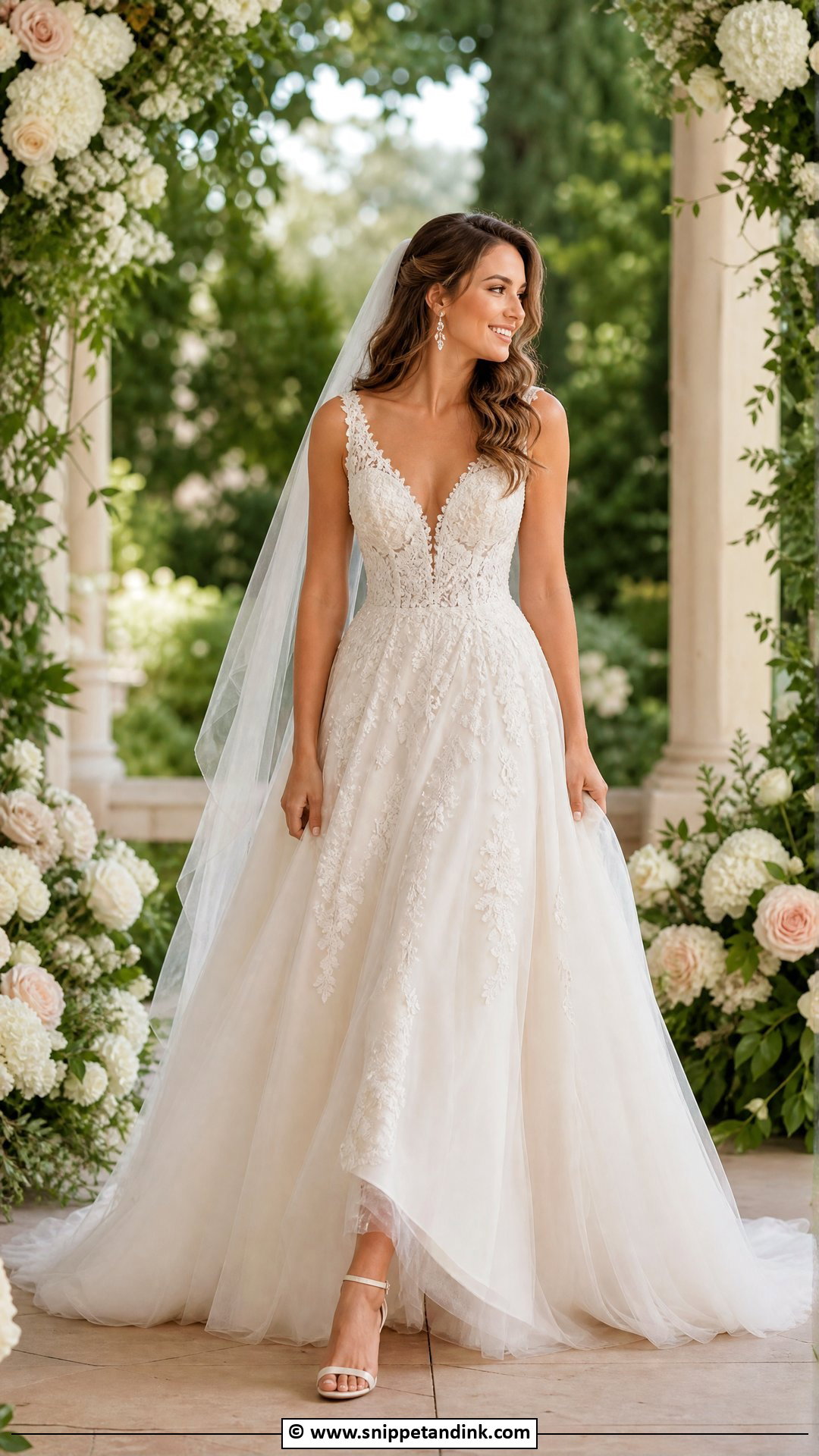
A V neck lengthens the torso and opens up the top of a very full gown so it never looks top-heavy. A soft V is easy to wear for a whole day; a deep plunge needs a plan. If the point drops below where a bra would sit, I want illusion mesh or a fashion-tape strategy agreed at the fitting, not on the morning. Lace, satin and embroidered tulle all suit it. Wear a thin pendant or nothing, then a soft updo so the line stays clear in pictures.
11. Halter Ballgown Wedding Dress
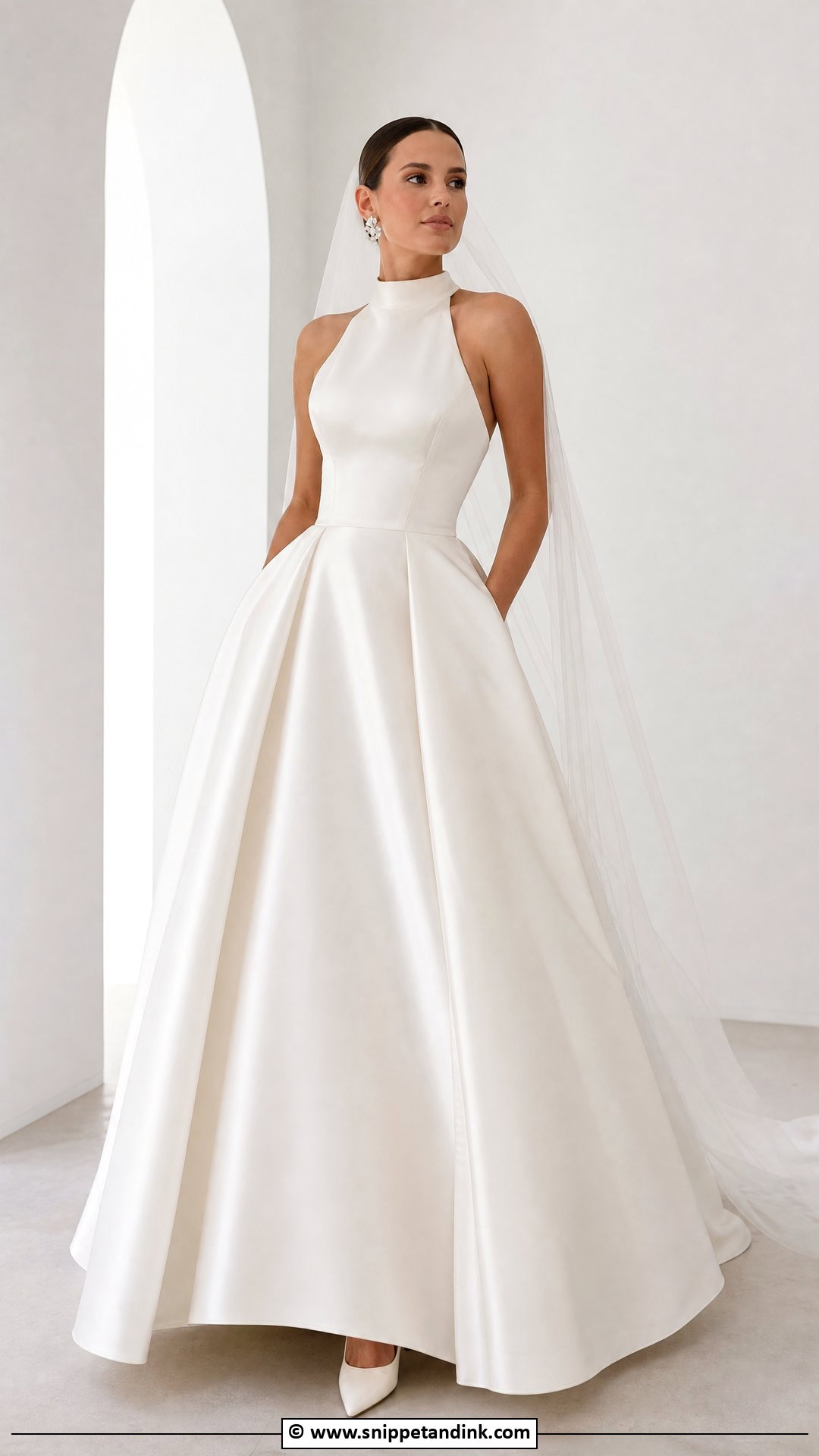
Swap the classic shoulders for a halter and suddenly a full skirt looks current, almost sporty. Smooth fabrics show the cut best, so satin, mikado or crepe rather than lace. It gives more lift than strapless while still baring the shoulders. Part of the skirt’s weight hangs from the neck, though, and on a heavy gown I check that the strap isn’t pulling after an hour of standing. Hair up or swept back, earrings instead of a necklace.
12. High Neck Ballgown Wedding Dress
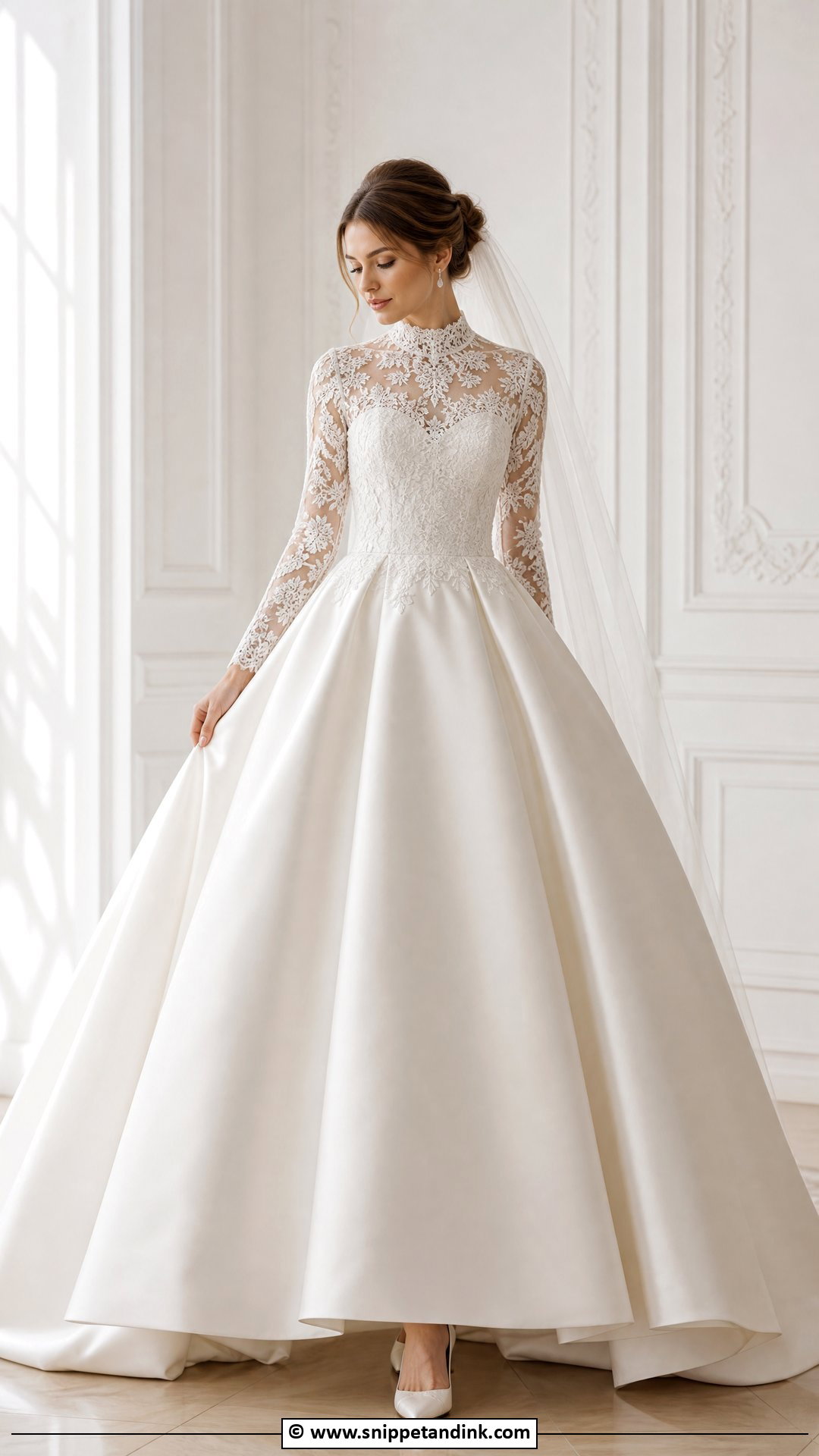
A high neck reads composed and formal, and it’s a common answer for ceremonies that ask for coverage. Lace versions lean vintage; satin looks editorial. Fit around the throat is everything: too snug and you feel it every time you swallow, too loose and it buckles when you turn your head. I’d suggest sheer mesh at the yoke so the coverage stays light. An updo shows the neck detail, and earrings with a little shine finish it.
13. Floral Ballgown Wedding Dress
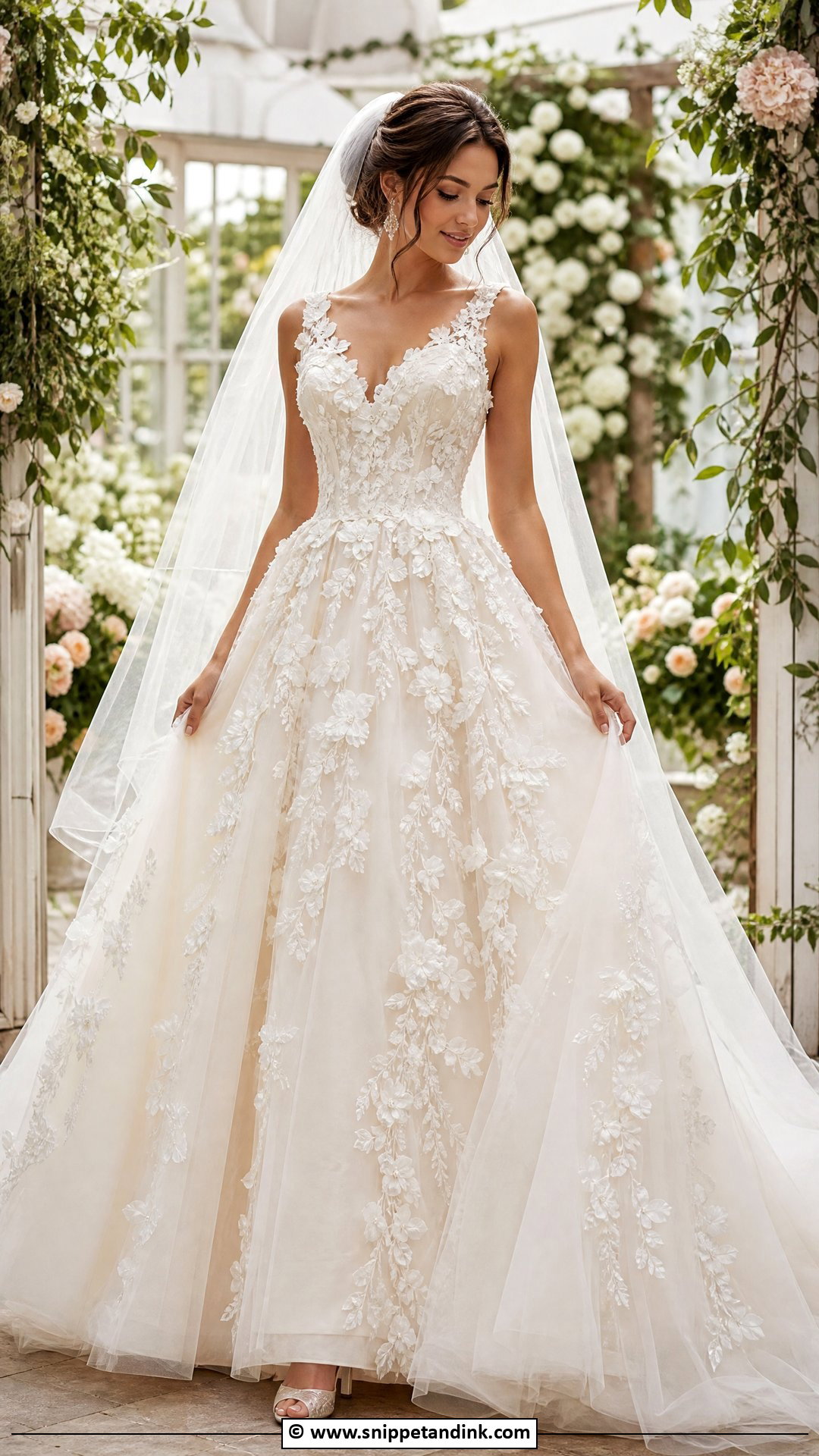
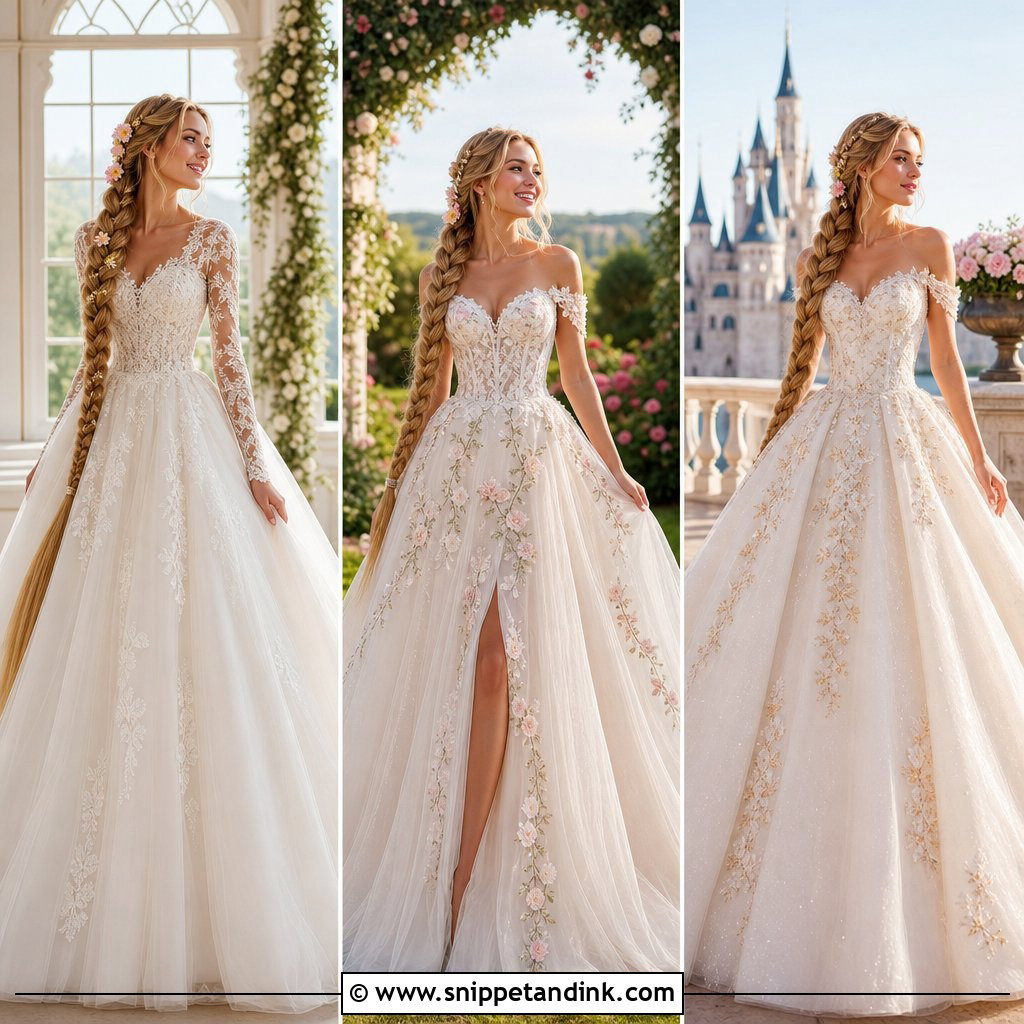
Florals can arrive as lace appliqués, embroidery, three-dimensional petals, printed tulle or tone-on-tone texture, and they suit spring gardens where the setting echoes the gown. Ivory-on-ivory keeps it quiet; pastel embroidery is bolder. Three-dimensional petals are the ones I ask questions about. They crush under a seated bride and against a bouquet, so ask how they’re stitched and keep them off the front of the skirt if you’ll be sitting through a long dinner.
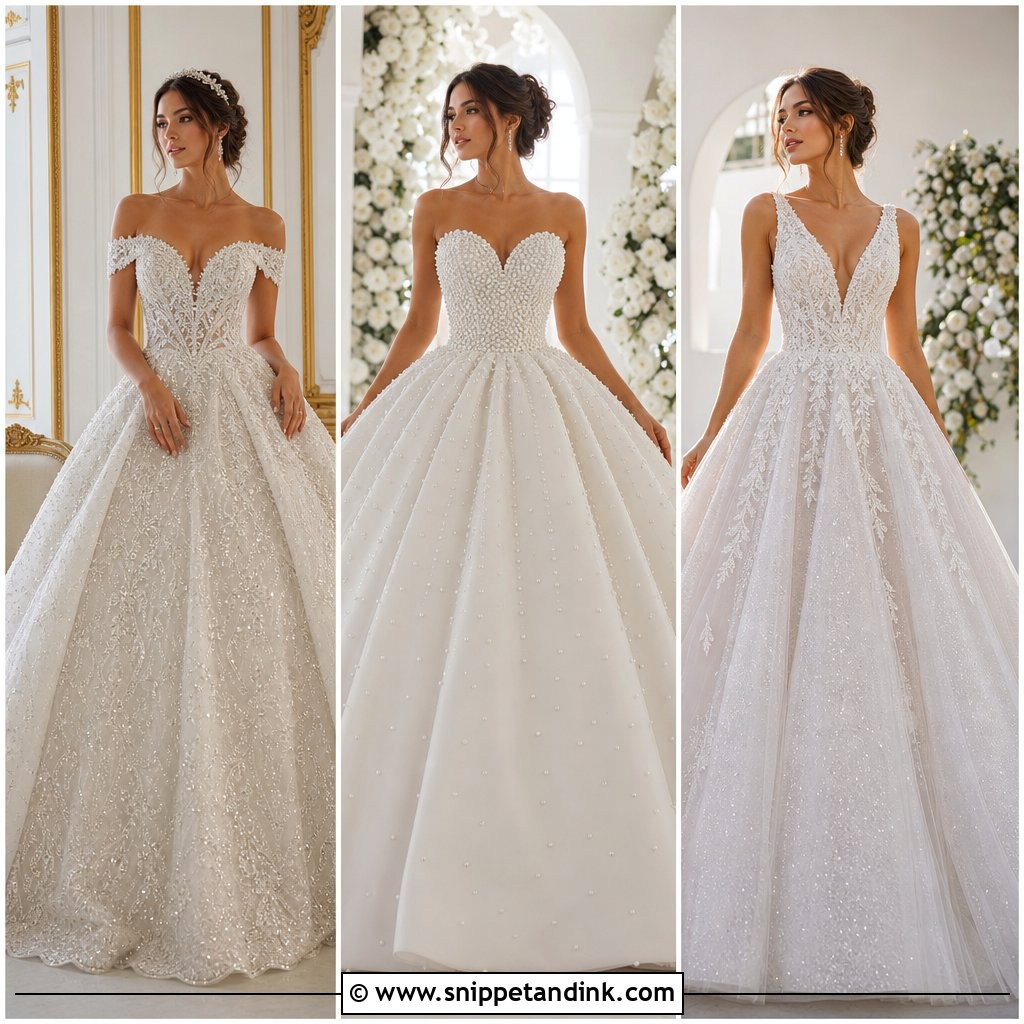
14. Beaded Ballgown Wedding Dress
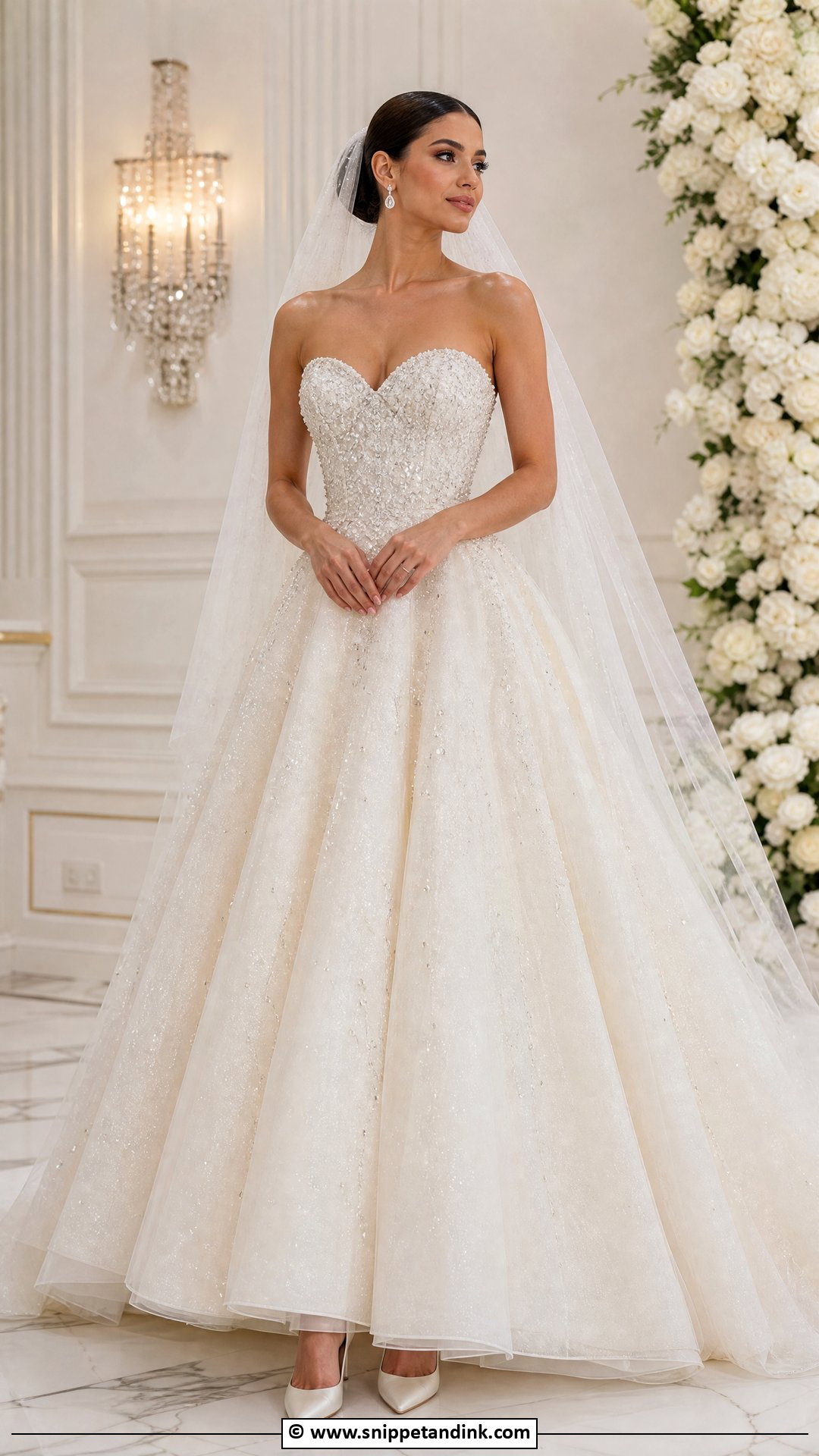
Beading adds shimmer that moves as you do, from a scattered bodice to a fully worked gown, and under evening light it catches every step. The honest trade-off is weight. A heavily beaded ballgown can feel far heavier than a plain one, and I have brides stand in it for twenty minutes at a fitting before deciding, because that’s when the shoulders start telling the truth. Secure straps and a well-boned bodice spread the load. Keep hair polished and earrings small; the gown already carries the sparkle.
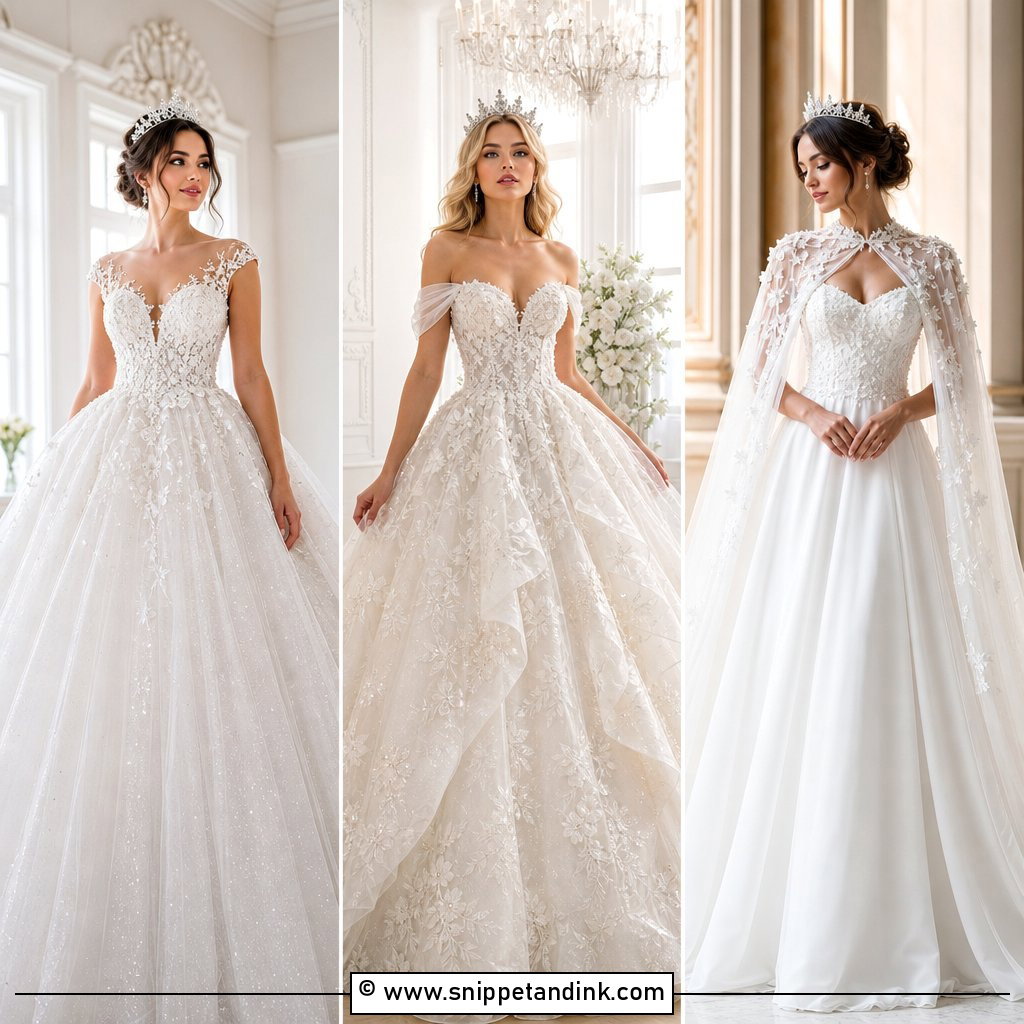
15. Sparkle Ballgown Wedding Dress
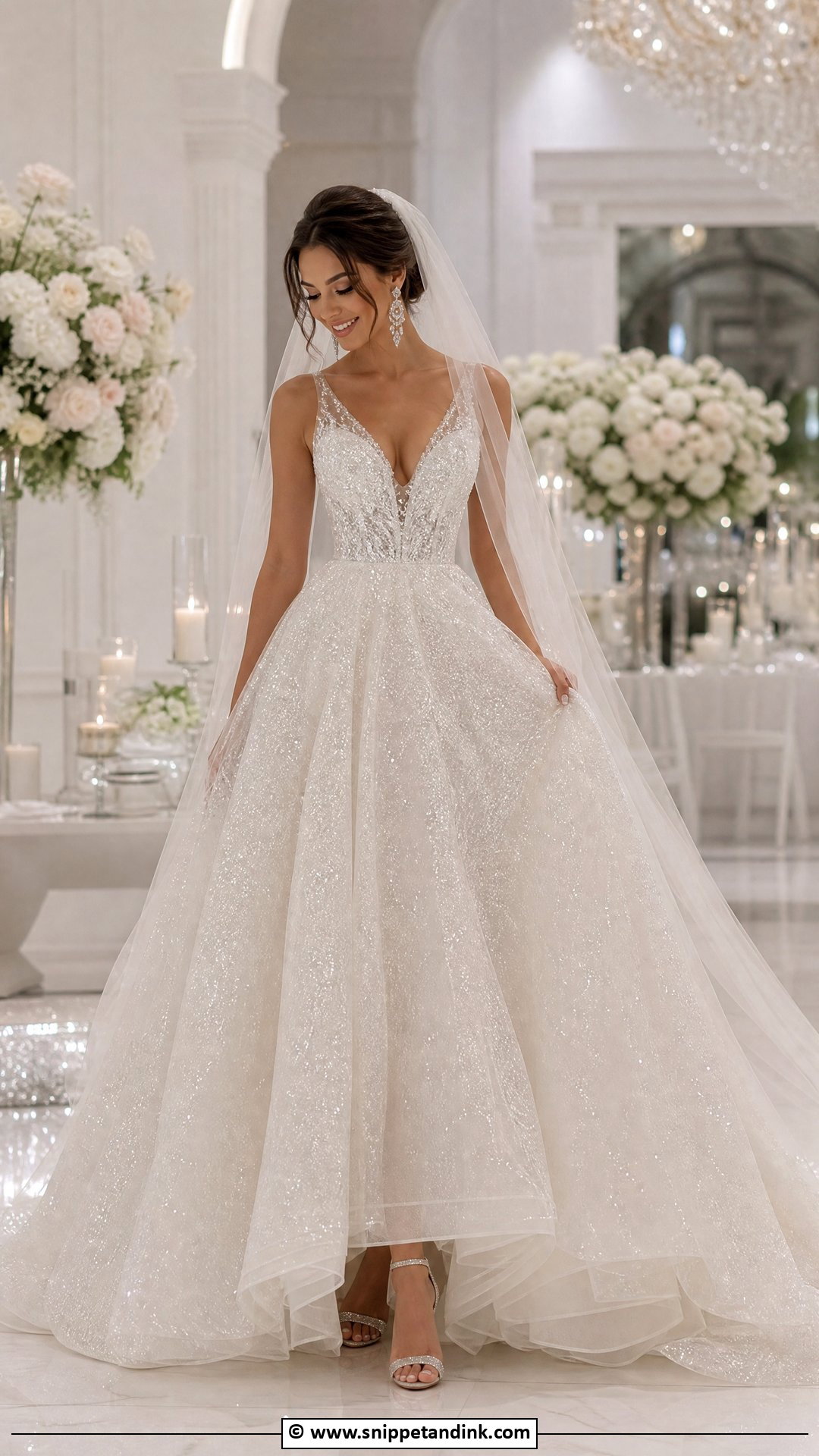
Sparkle tulle, crystals, sequins or a glitter underlayer all make the skirt catch light, especially at evening receptions in big rooms. For something softer, keep the shimmer to the skirt or the bodice only. One practical warning: glitter tulle sheds a little, and you’ll find flecks on your partner’s jacket by midnight. Clean makeup, plain earrings and a veil that doesn’t cover the shine. Wear shoes you can dance in, because this gown invites it.
16. Pearl Ballgown Wedding Dress
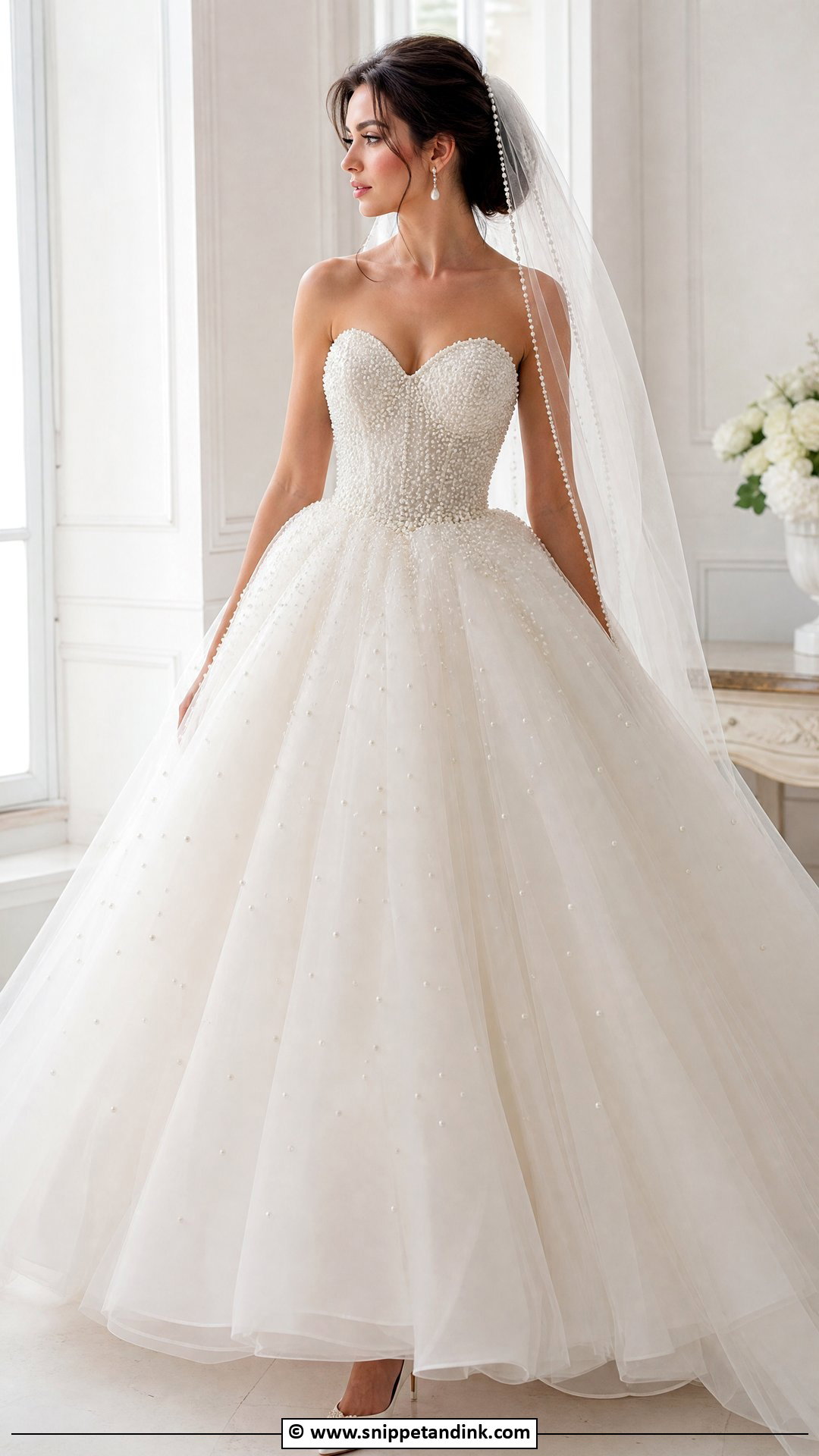
Pearls add texture without flash, scattered across a skirt or clustered on the bodice, sleeves or veil, and they sit happily on satin, tulle and lace. I limit a pearl gown to one or two pearl accents elsewhere. Pearl earrings, a pearl veil, pearl shoes and a pearl bodice together start to look like a costume. Check that the pearls are sewn rather than glued, since glued ones can pop off over a long day.
17. Minimal Ballgown Wedding Dress
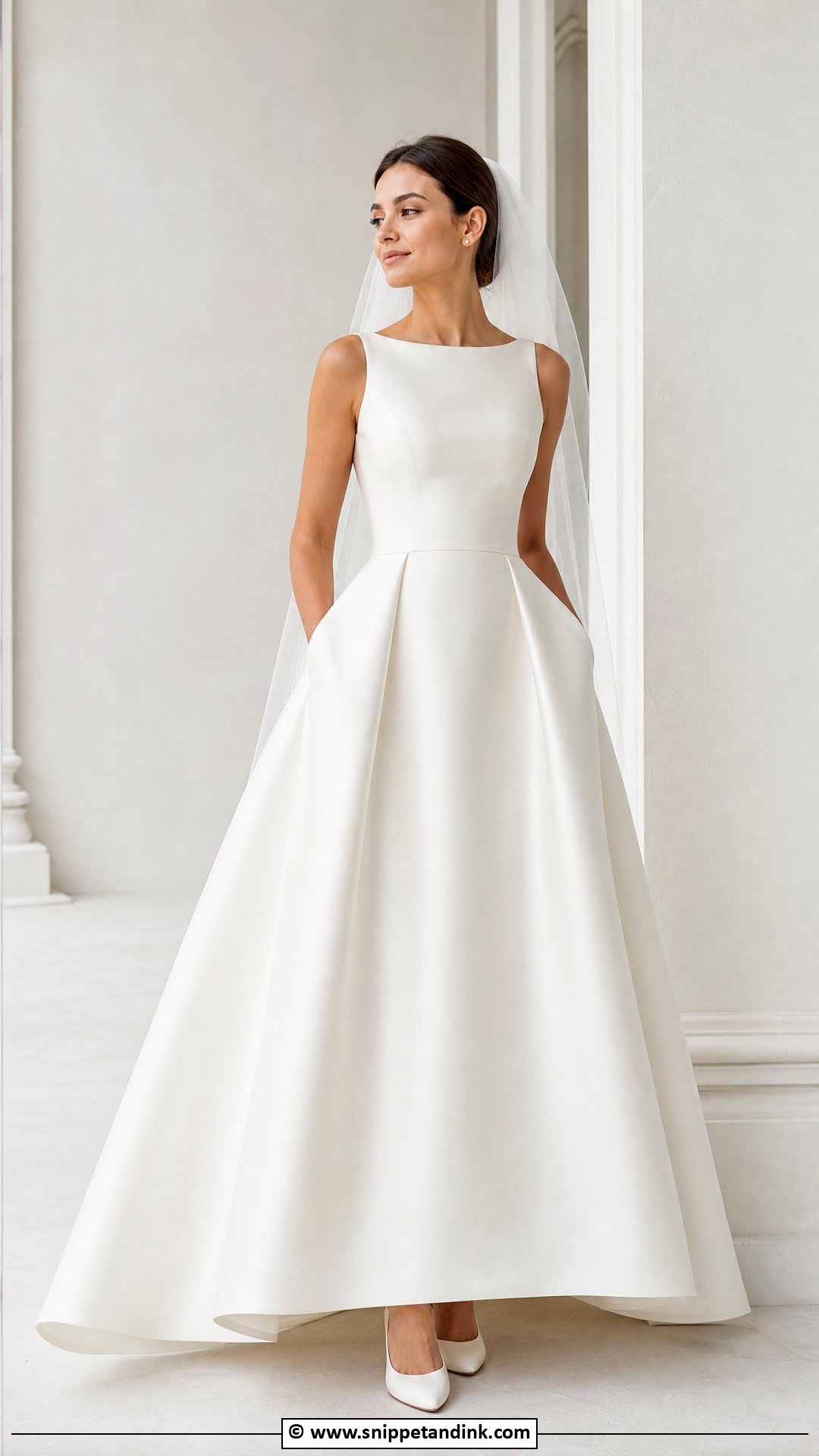
Here the shape carries the gown on its own. Clean satin, mikado or organza does the work, and small details like a sculpted bodice, hidden pockets, covered buttons or a plain train add interest. With nothing to hide behind, fit is fully exposed. Every seam has to lie flat, and I check the side seams and back zip under the kind of light you’ll actually stand in. Pearl studs keep it classic; bolder earrings make it contemporary.
18. Modern Ballgown Wedding Dress
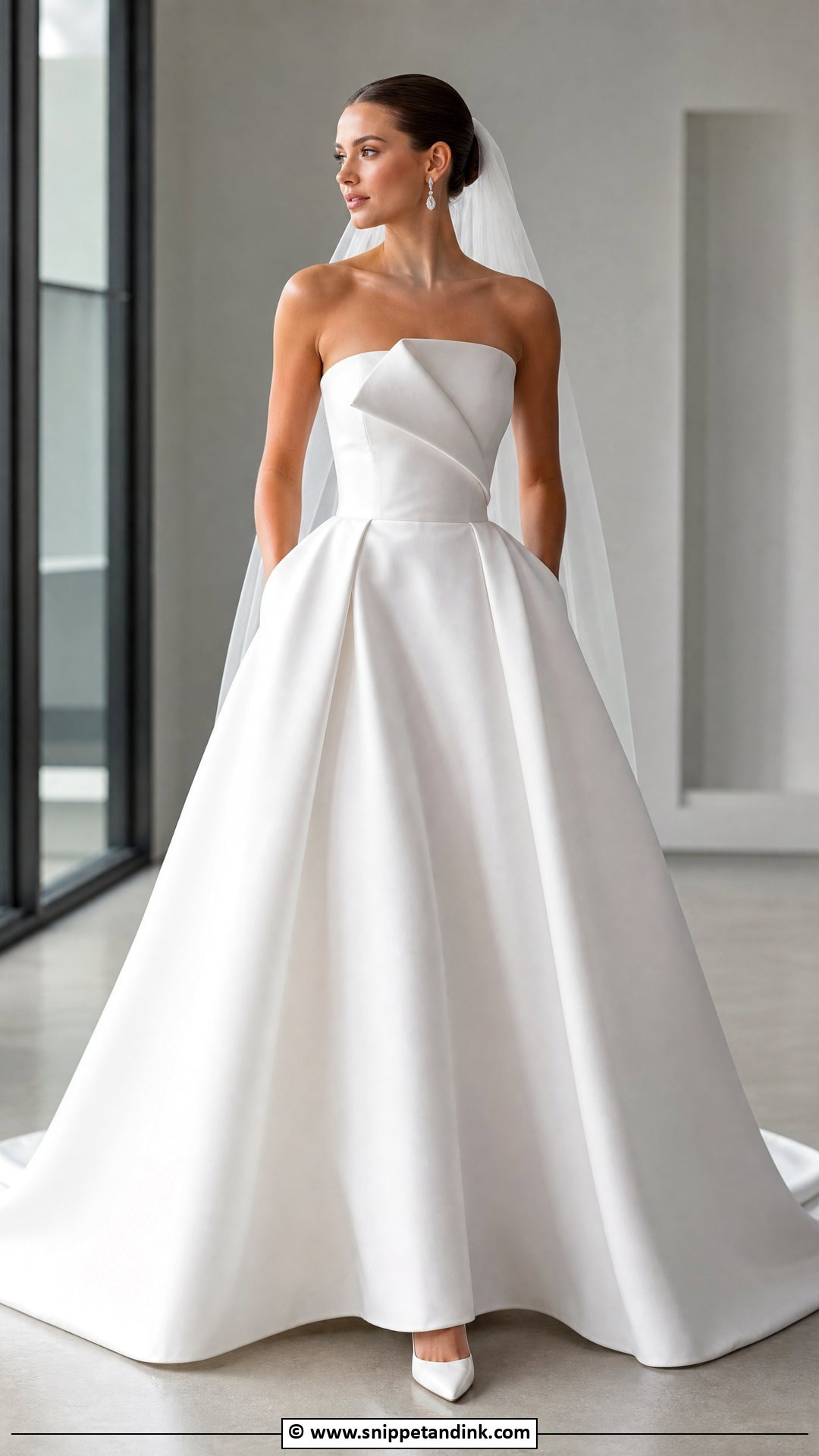
The modern version keeps the volume and changes the details: clean necklines, sculpted bodices, asymmetric folds, unusual backs. Construction does the talking, so embellishment stays light, maybe a high slit in the overskirt or one large architectural bow. These designs depend on fabric with body. A soft fabric cut into a sculpted shape will collapse by evening, so I always ask what’s underneath holding it up. Smooth hair and structured shoes keep the mood sharp rather than sweet.
19. Vintage Ballgown Wedding Dress
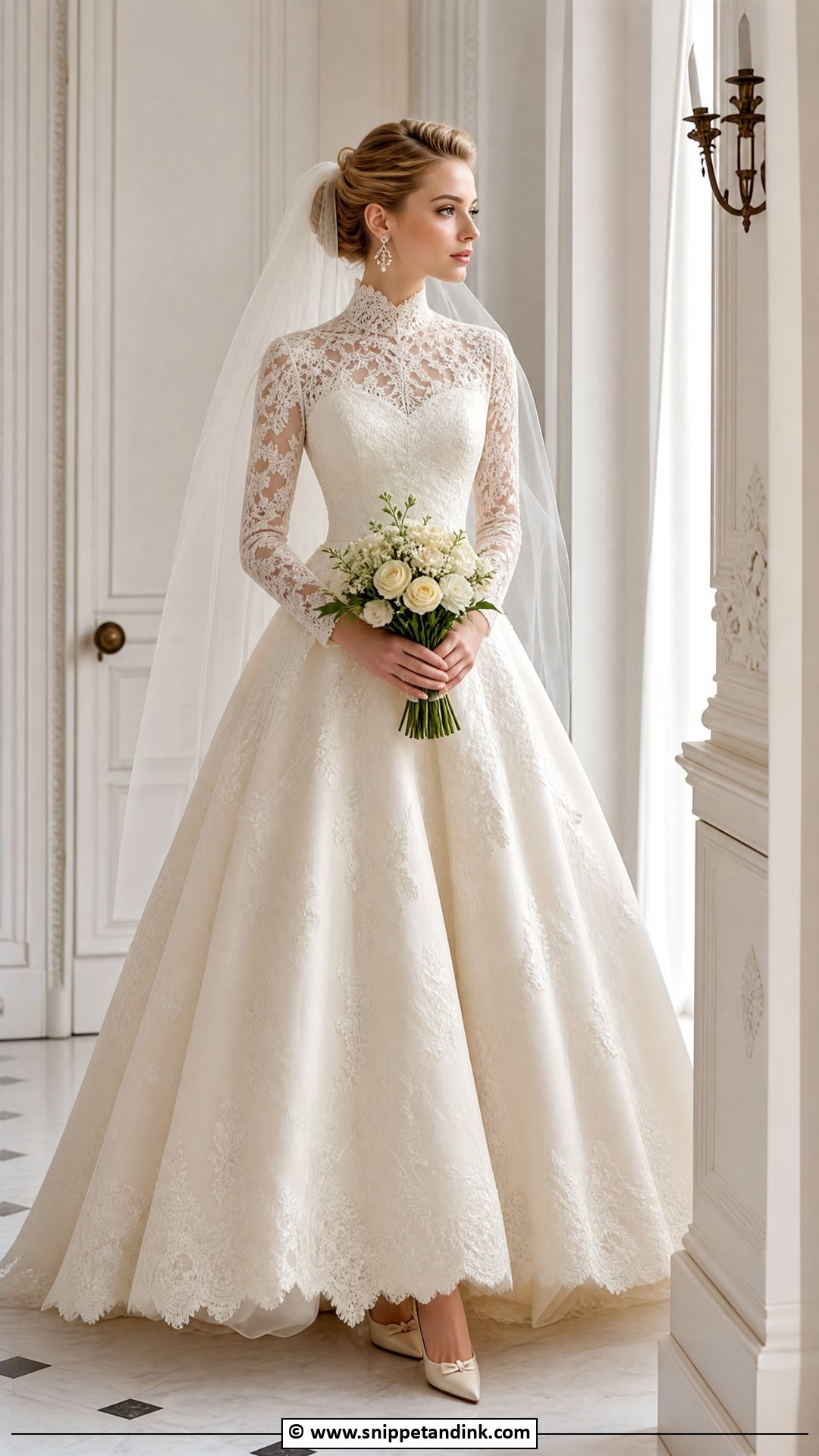
Lace sleeves, a basque waist, covered buttons and fine embroidery bring old-world charm to a full skirt, and historic houses suit them. My rule is one main vintage element, with the rest kept current, so it reads as a wedding and not a period drama. A lace high neck over a plain skirt does it, as does satin with antique-style buttons. Soft waves, heirloom earrings and a long veil finish the mood.
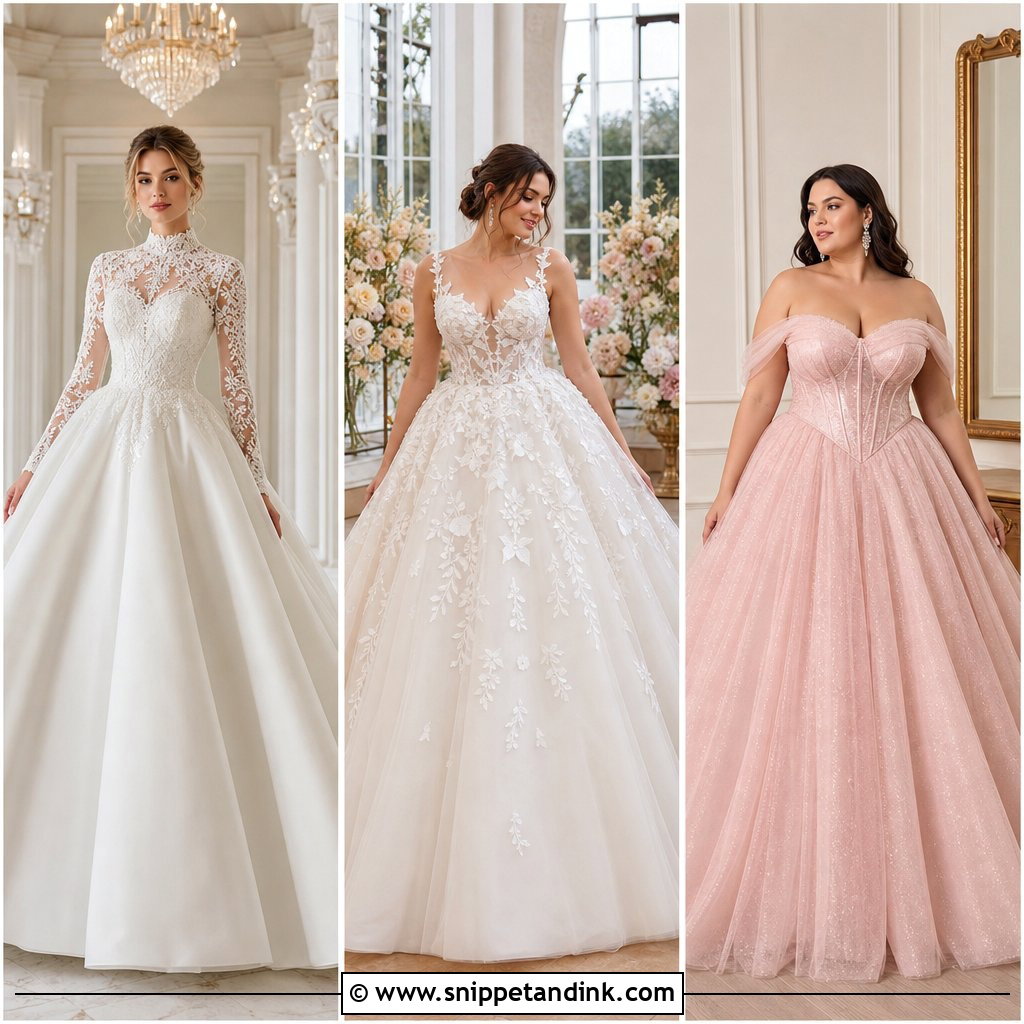
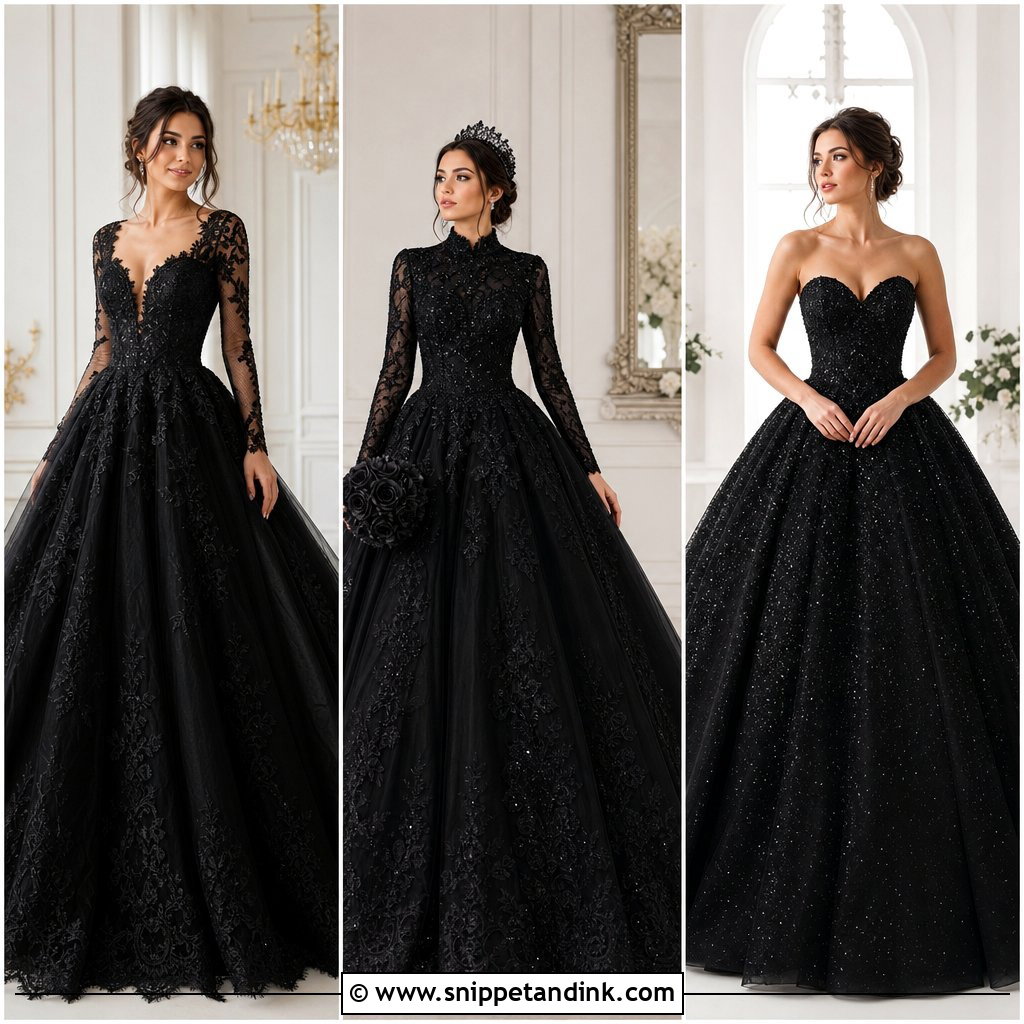
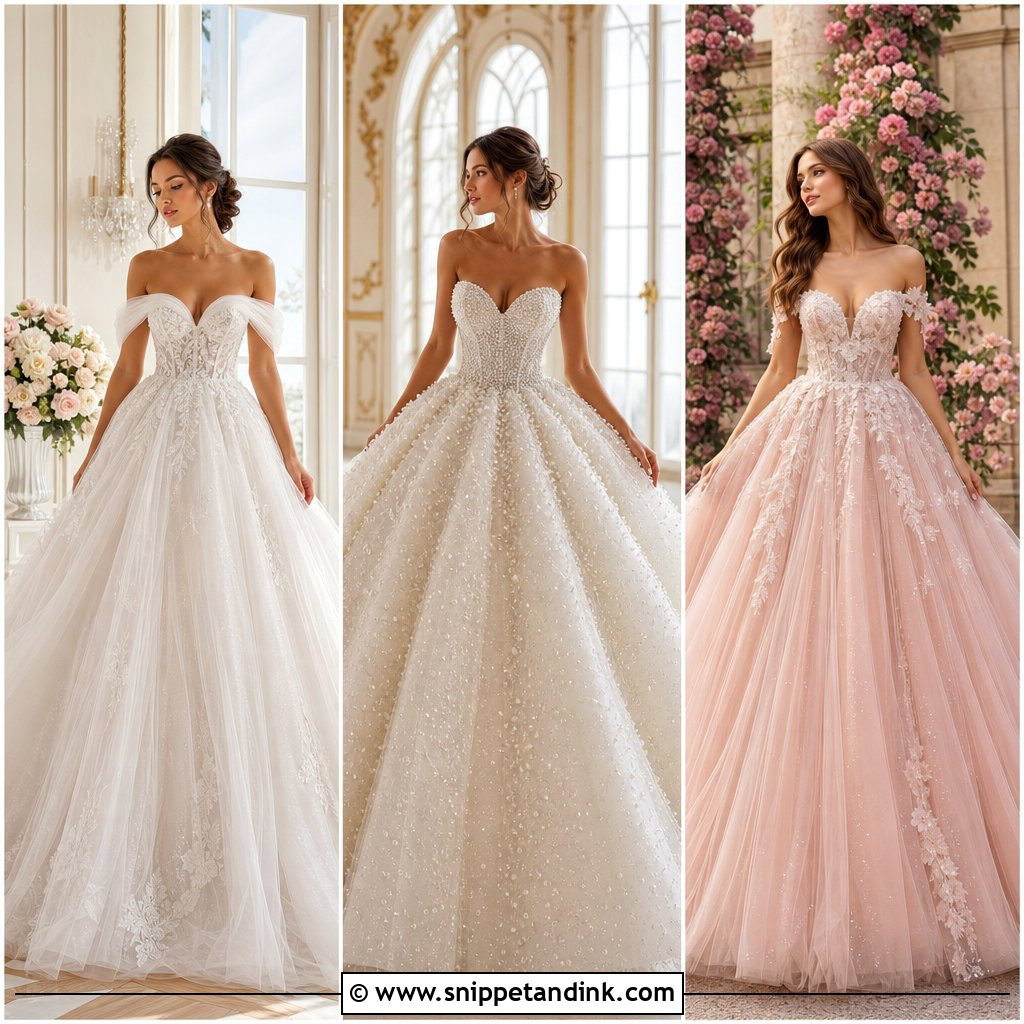
20. Princess Ballgown Wedding Dress
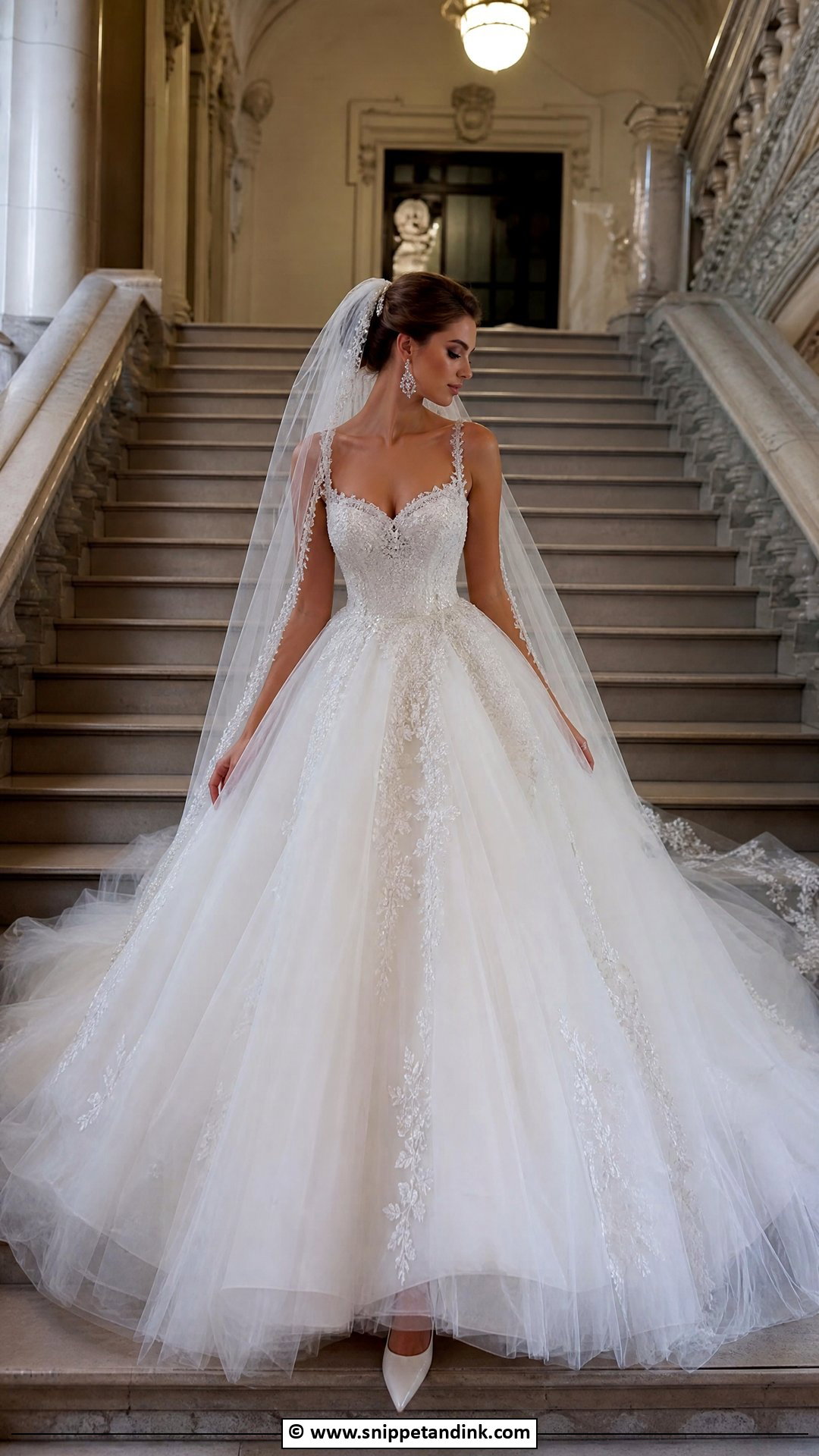
A princess ballgown wedding dress is the full fairytale: fitted bodice, very wide skirt, a train, and tulle, lace or sparkle on top. It needs space. Before a bride orders one I look at the aisle width and doorways, because a skirt this wide catches on pews and car doors. Soft tulle reads dreamy; structured satin reads royal. Match the veil to the scale of the dress and keep jewelry restrained so the gown doesn’t swallow you.
21. Cathedral Train Ballgown Wedding Dress
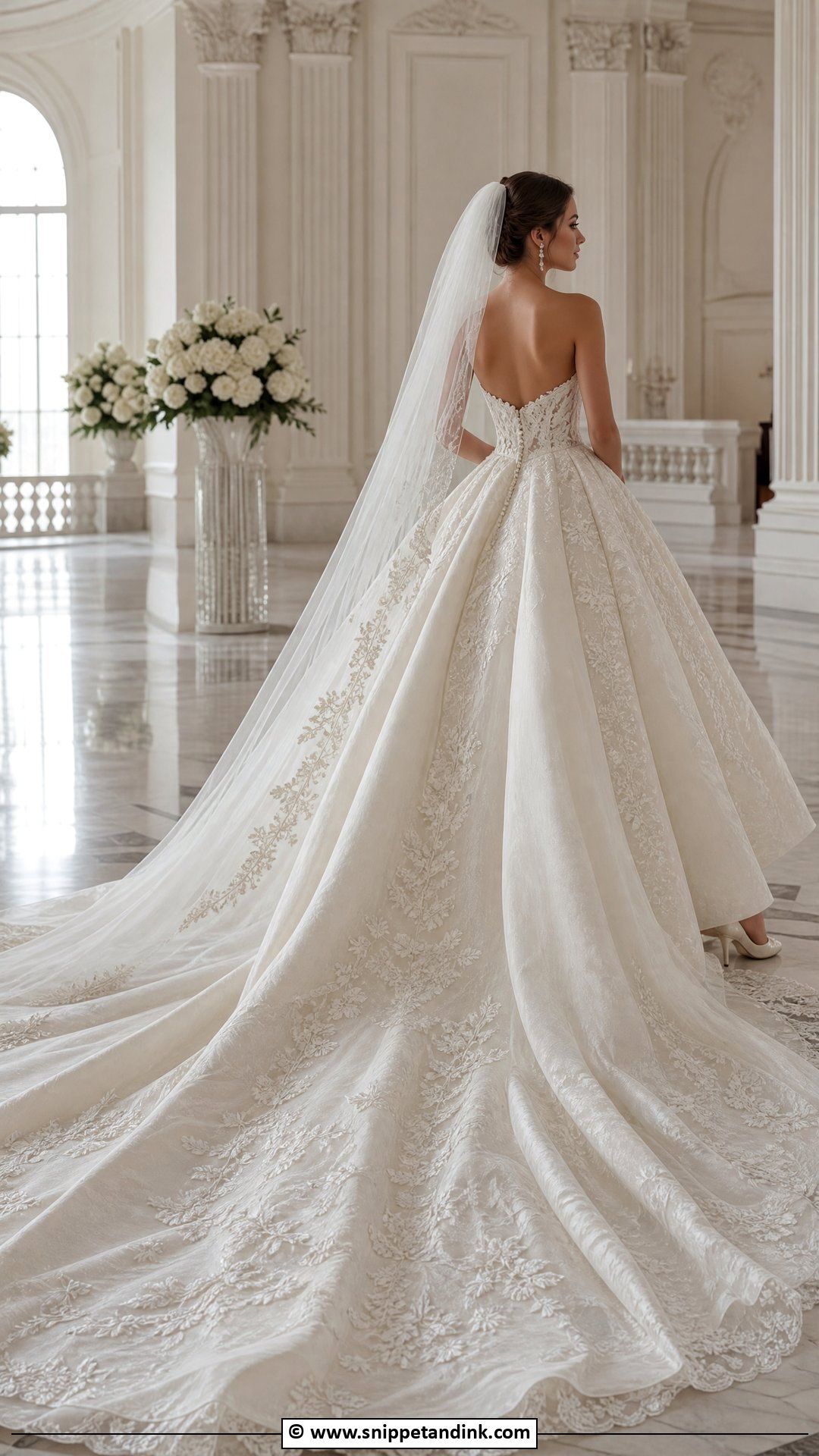
A cathedral train turns the walk down the aisle into an event, adding length and formality to an already full gown. It belongs in large venues with wide aisles. Someone has to manage it all day, so I raise the bustle early: a train this long usually needs several bustle points, and whoever does it on the day should practice at the final fitting. Lace trains feel romantic; satin trains glide. If you add a long veil, have it end clearly shorter or longer than the train so the two don’t tangle.
22. Detachable Skirt Ballgown Wedding Dress
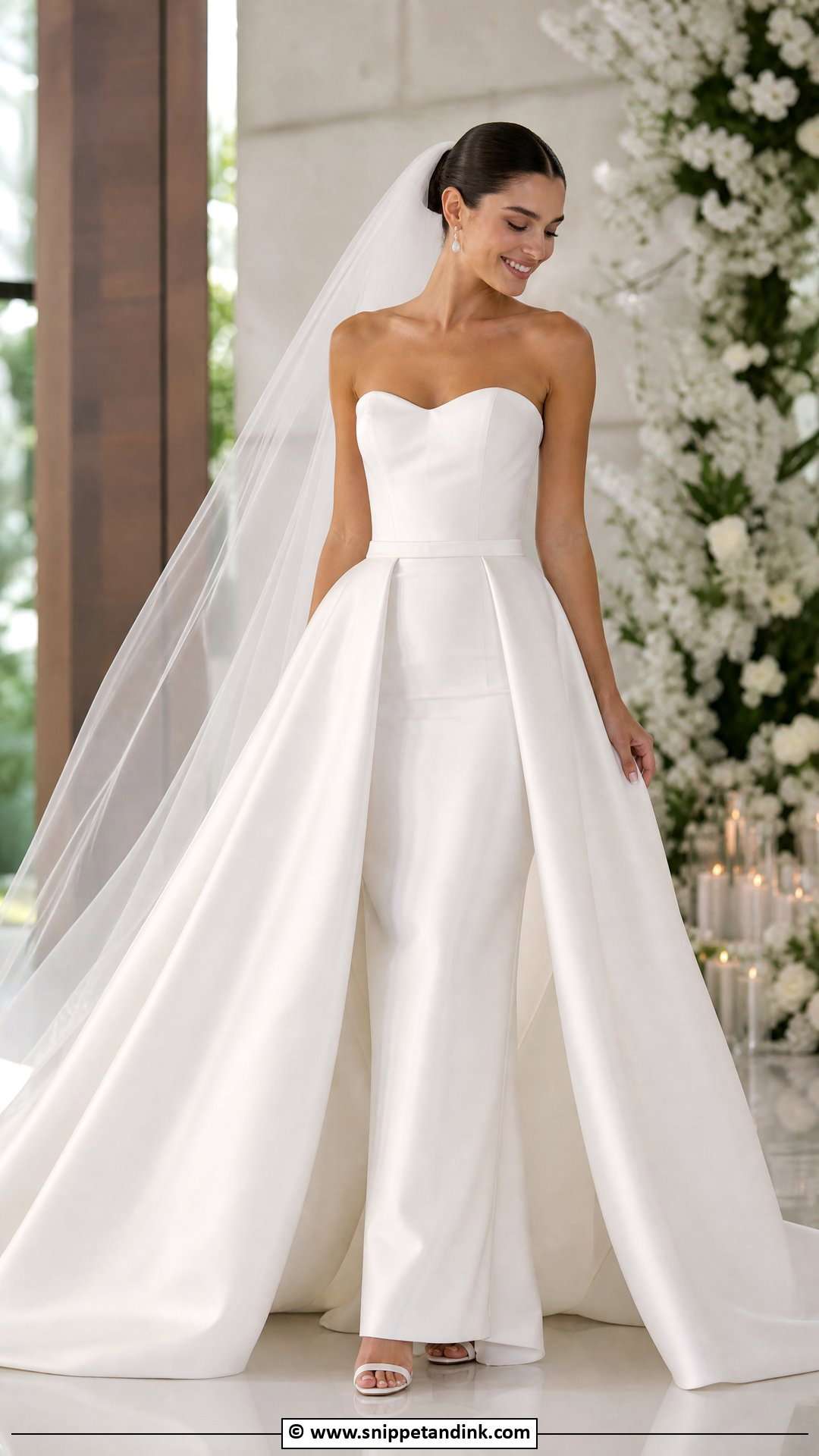
A detachable overskirt gives you a full ballgown for the ceremony and a slimmer dress for the reception. The base dress has to stand on its own, since that’s what most guests will see for most of the night. Look closely at how the overskirt fastens: hooks and snaps hidden under a waistband hold better than a single row of buttons. Practice taking it off with whoever will help you, and pick accessories that suit both looks.
23. Bow Ballgown Wedding Dress
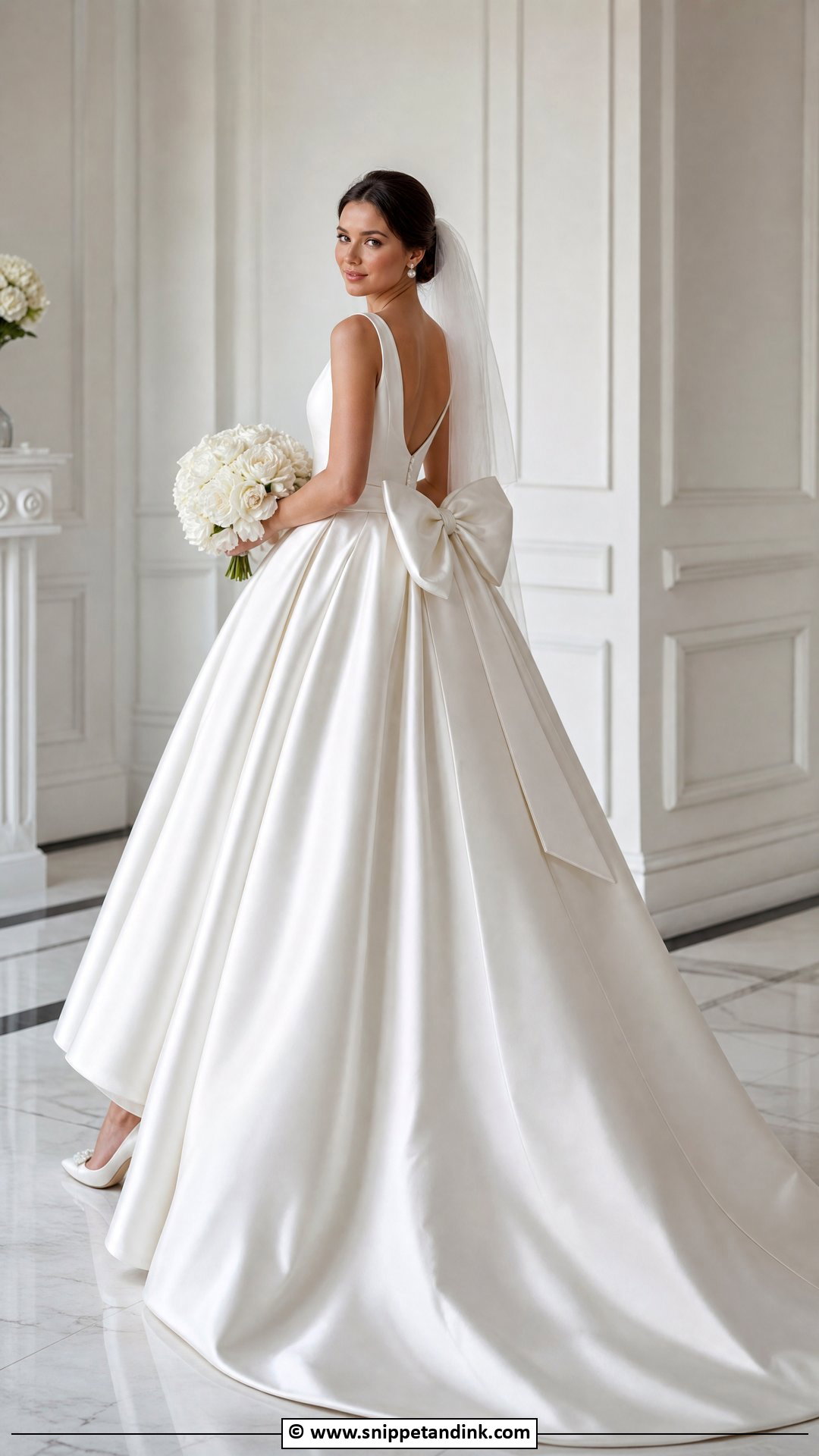
A bow ballgown wedding dress carries its detail at the back waist, shoulder, neckline or train. A big back bow is dramatic; small shoulder bows are lighter. Structured fabrics like satin, mikado and organza keep the loops crisp, while soft fabrics droop by evening. I’d check how a back bow behaves when you sit, because a large one gets crushed against a chair back during dinner. If the bow is oversized, skip any other embellishment.
24. Ruffle Ballgown Wedding Dress
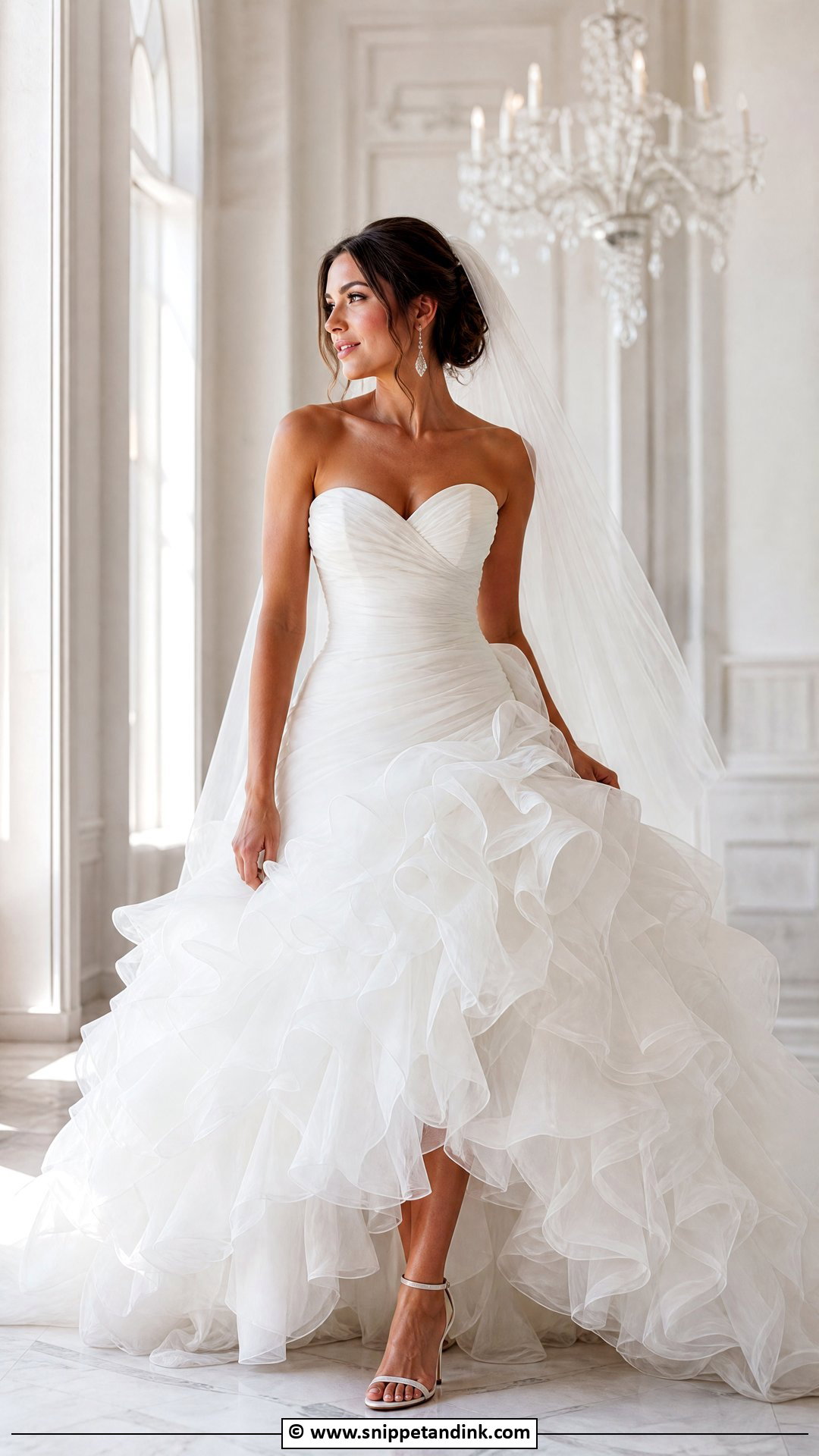
Ruffles give a skirt movement and depth, either soft and layered in tulle or sculpted in organza. They catch light in tiers, so the skirt looks alive as you walk. Heavy ruffles need a simple bodice, and a strapless or corset top gives the eye somewhere calm. Watch the hem: ruffles at floor level drag and pick up dirt faster than a plain hem, so I’d take them a touch shorter for outdoor venues.
25. Organza Ballgown Wedding Dress
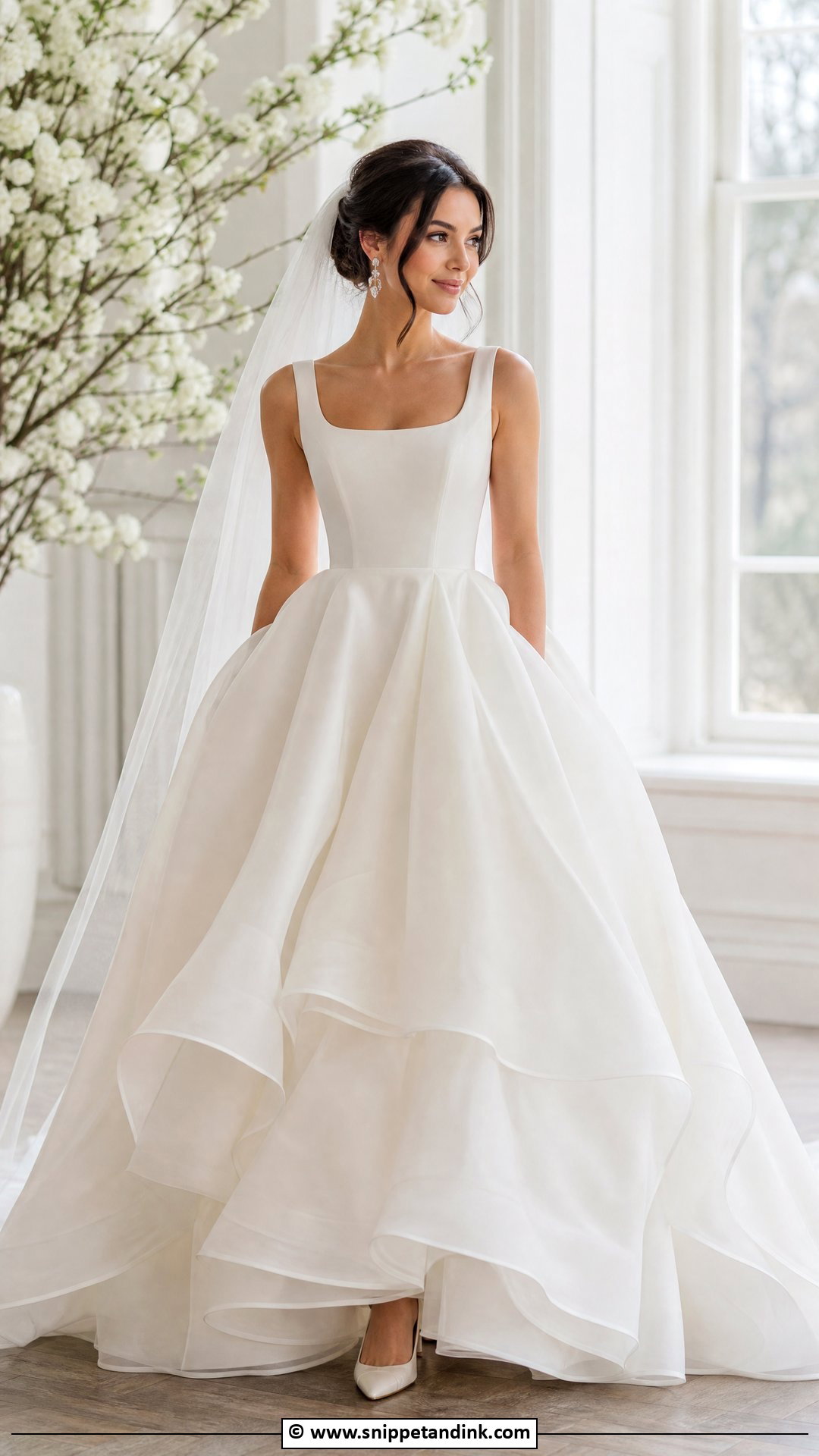
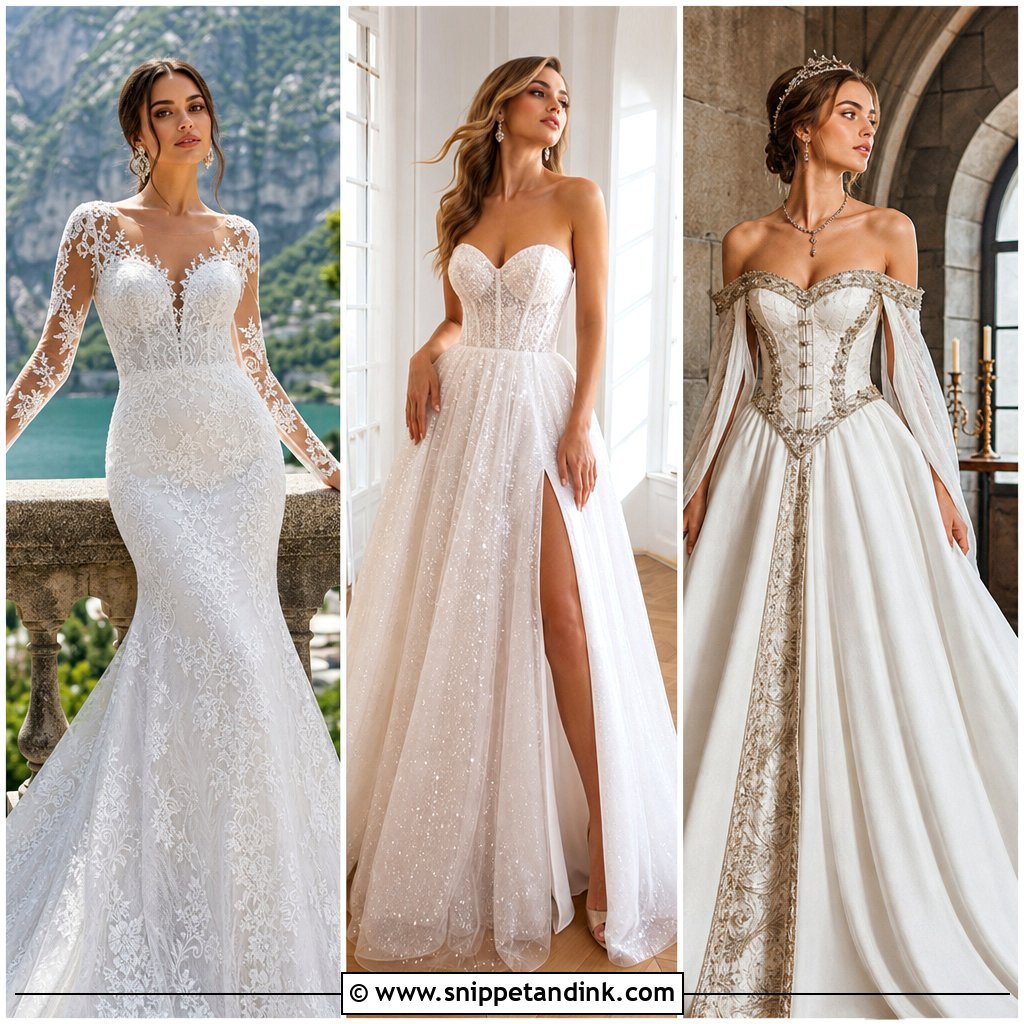
Organza is crisp, with a subtle sheen and more stand-away body than tulle, so the skirt looks full without looking heavy. It also creases sharply and shows every fold. That’s why I ask how the gown will travel to the venue and whether a steamer will be on hand; never iron organza directly. A structured bodice over a plain organza skirt is clean, and floral appliqués soften it.
26. Mikado Ballgown Wedding Dress
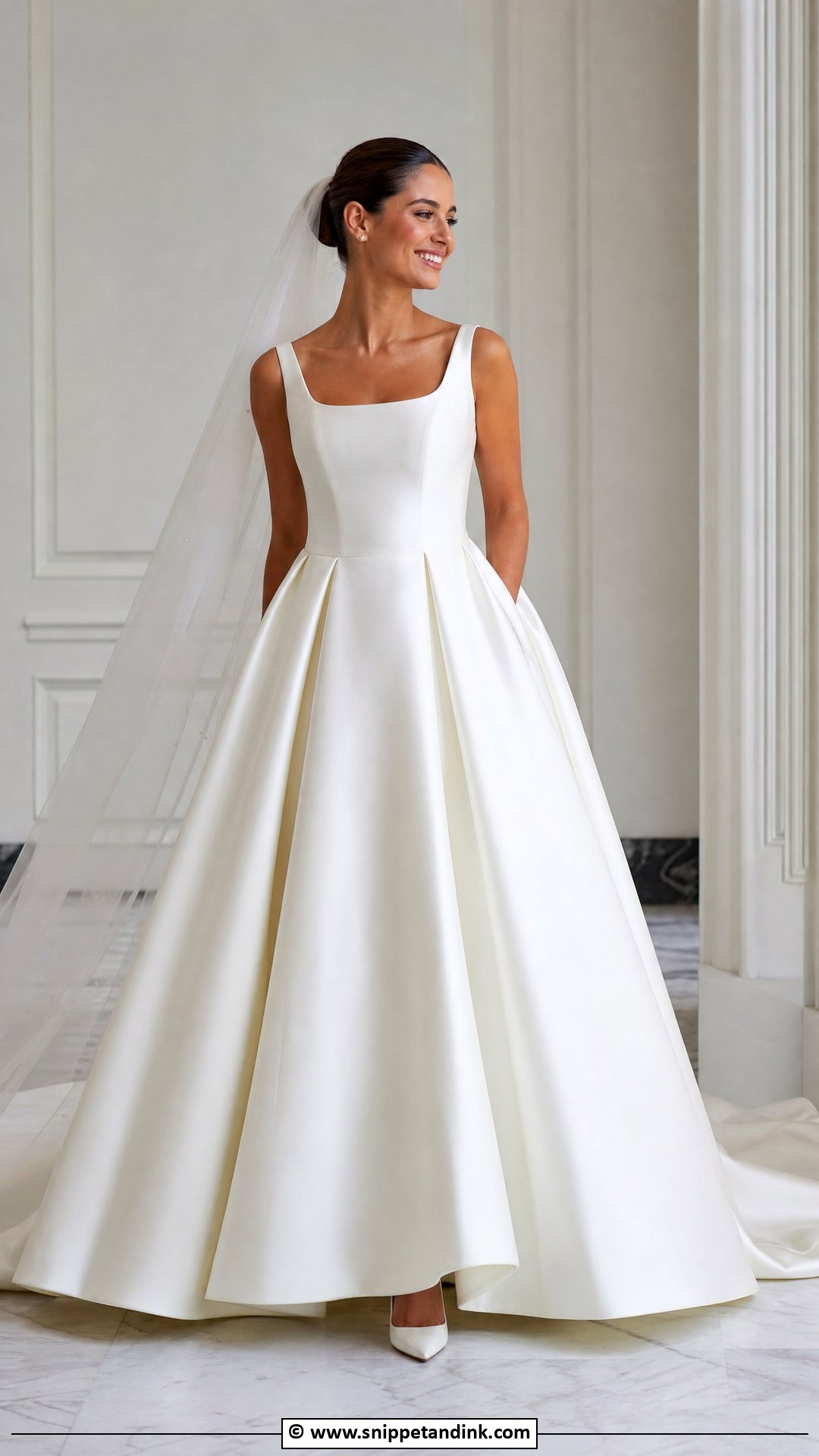
Mikado is a heavy, slightly textured weave, usually silk or a silk blend, that holds sculptural shapes almost on its own. Square necks, strapless bodices and folded details look sharp in it, and it needs little decoration beyond hidden pockets, covered buttons or one bow. The weight is real, though. In summer heat mikado can feel warm by mid-afternoon, so I’d keep it for cooler months or air-conditioned rooms.
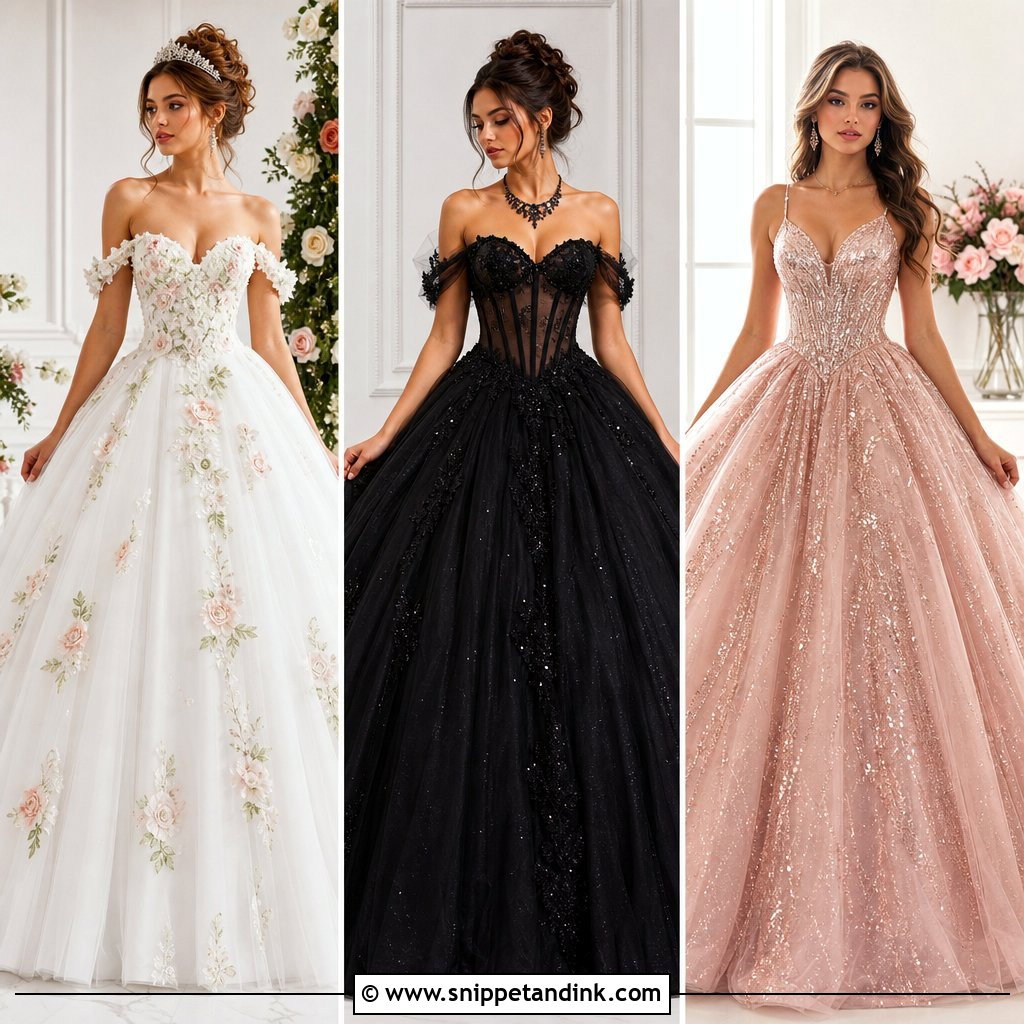
27. Blush Ballgown Wedding Dress
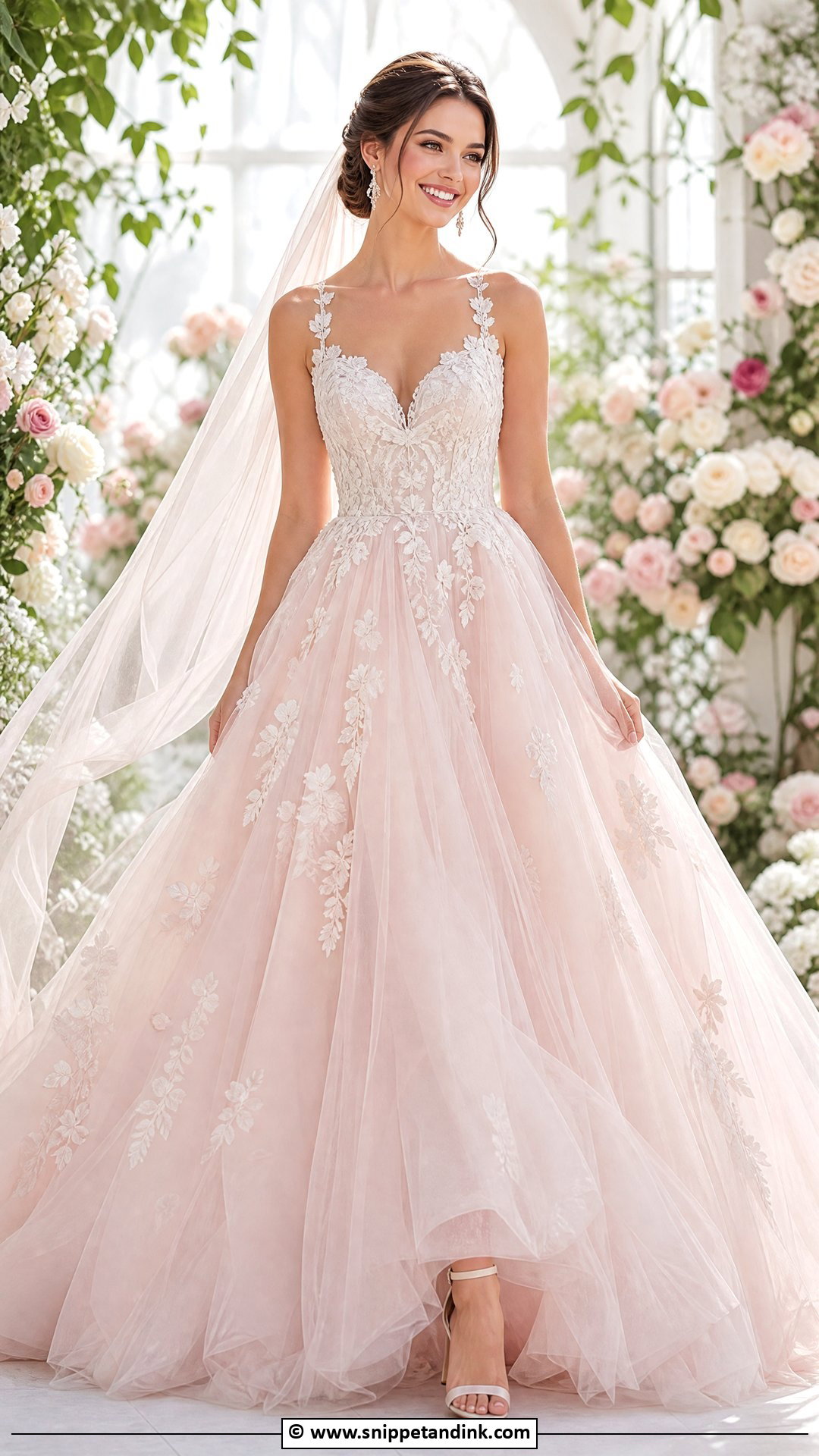
Blush can sit in the lining, the tulle layers, the embroidery or the whole gown, adding color while still reading bridal. The shade is the whole decision. The same pale tulle can look peachy in candlelight and lilac in shade, and warm and cool skin tones react to it differently, so I look at swatches in both kinds of light. A muted blush reads more bridal than bright pink. Ivory accessories and soft makeup keep it gentle.
28. Champagne Ballgown Wedding Dress
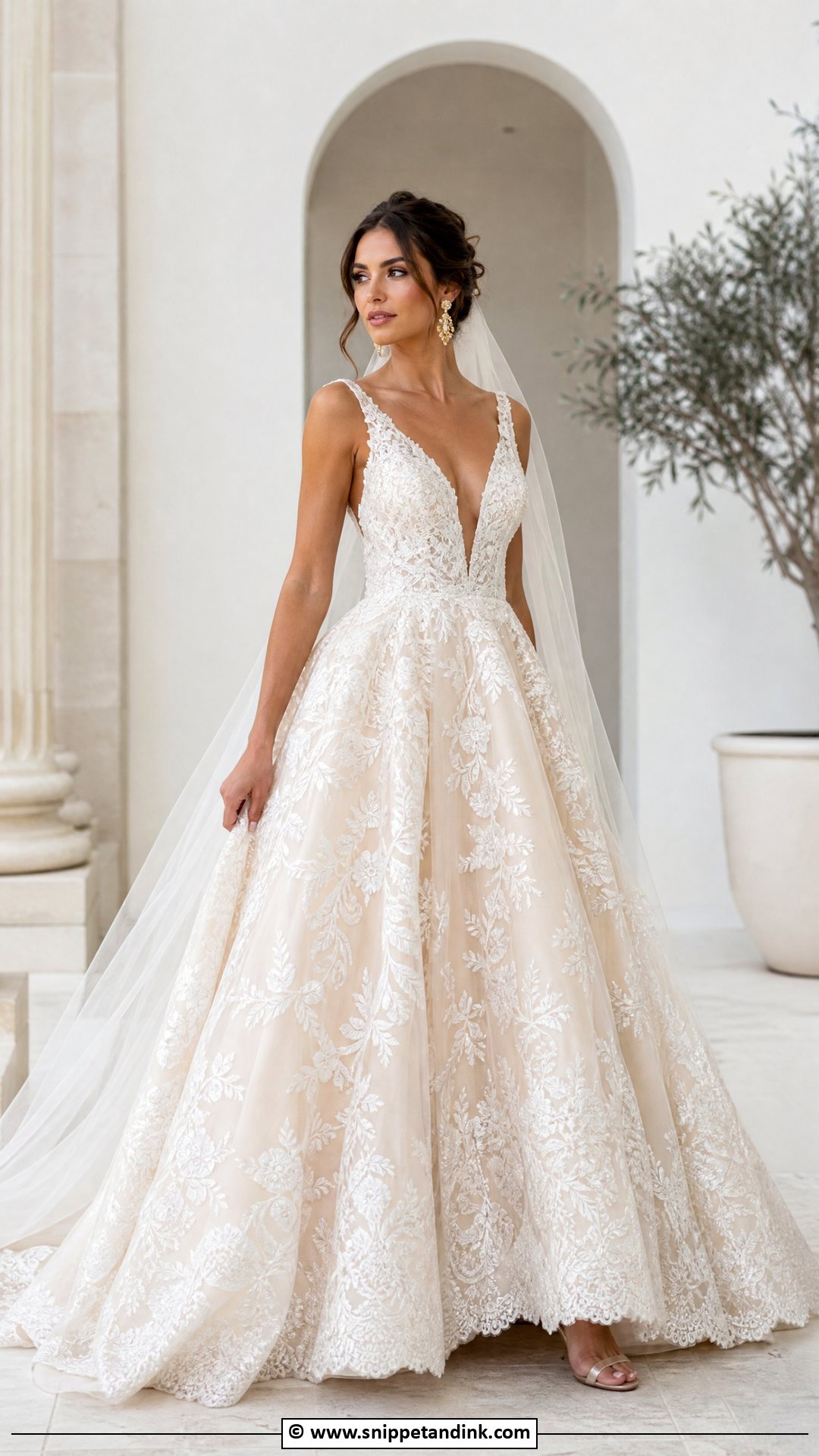
Champagne sits softer against the skin than bright white. A champagne lining under ivory lace is a common pairing because the contrast lifts the lace pattern on camera, and gold accessories, pearls and warm neutral bouquets suit it. The shade ranges from beige to gold, and fitting-room lighting lies about it, so I take the swatch to a window. Match shoes and veil to the actual gown, not to a color name, since one maker’s champagne is another’s latte.
29. Blue Ballgown Wedding Dress
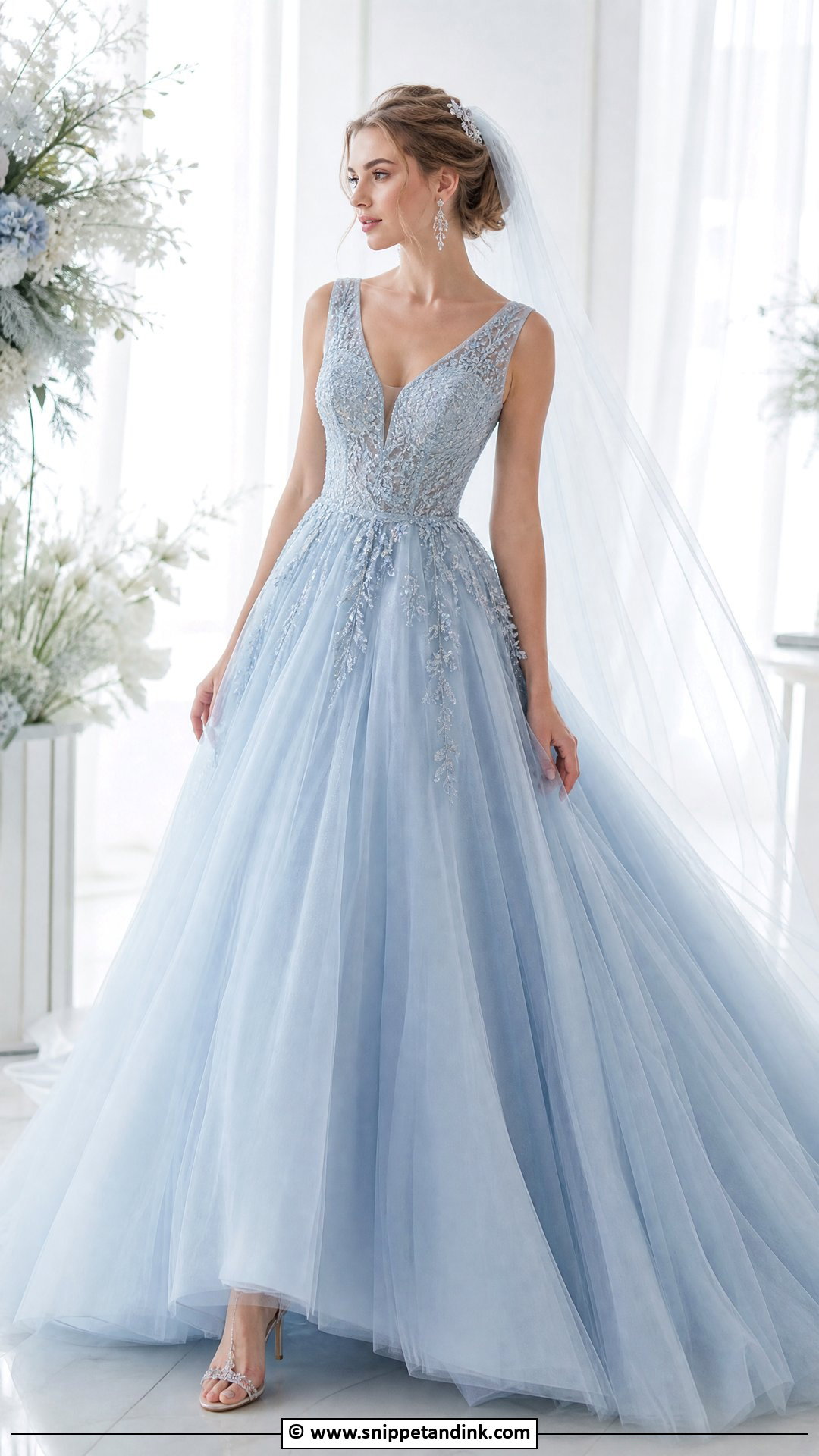
Powder, icy and blue-gray tulle can still read bridal while giving the shape a clear twist, and the color sits well in winter or coastal settings. For a hint, ask for a blue underlayer beneath ivory lace; for real color, go all-over blue. Pale blue can drain fair skin under overcast skies, so test it outside before deciding. Silver, pearl or crystal accessories keep it airy.
30. Black And White Ballgown Wedding Dress
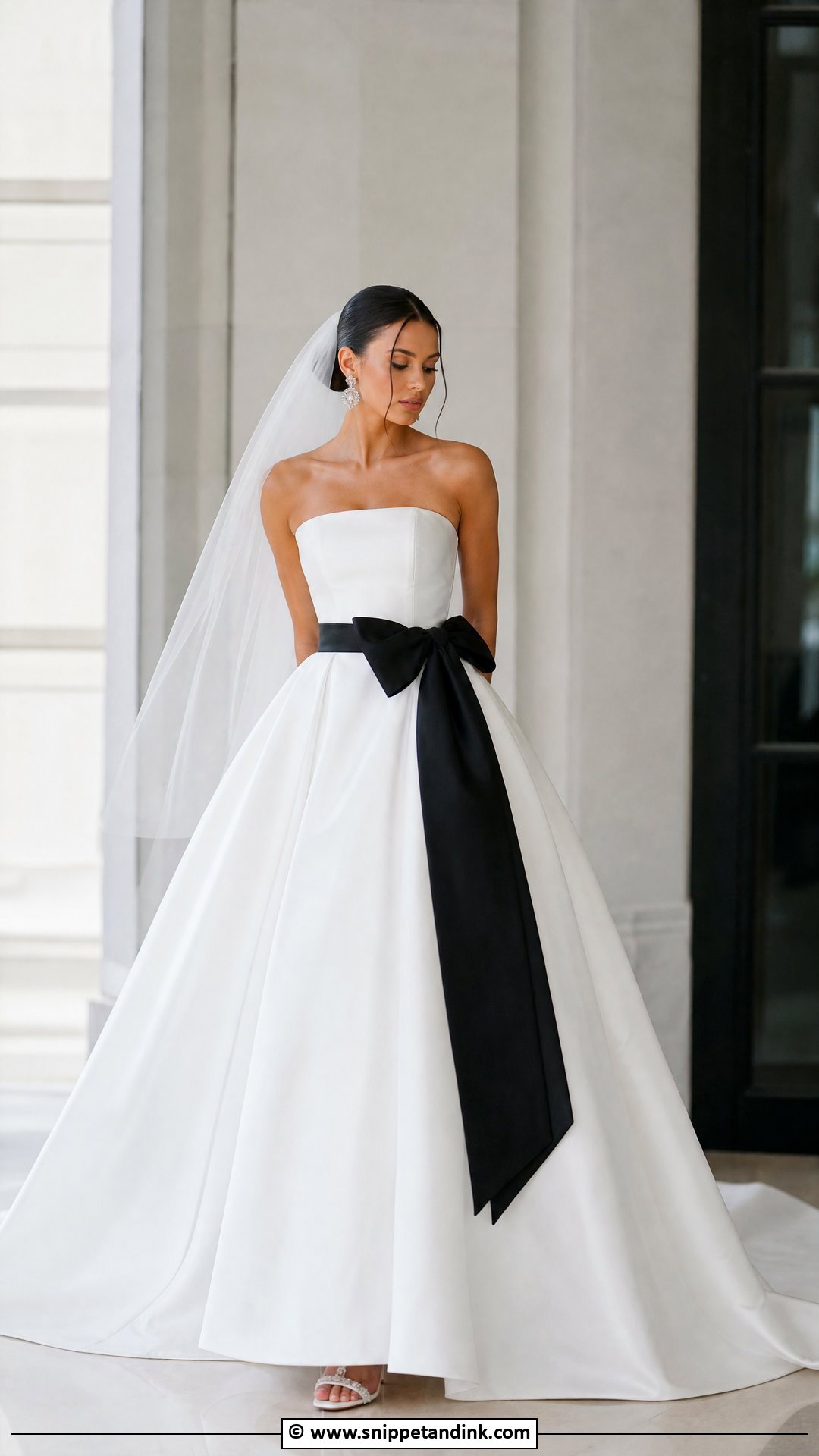
Black accents on white, whether a waistband, a bow, appliqués, gloves or an edged neckline, give a bold graphic look that has to feel deliberate. A white satin gown with one black bow is crisp; black lace over ivory is moodier. One thing I always ask the maker is whether the black trim is colorfast, because rain or a spilled drink can bleed dye into white fabric. Sleek hair, simple earrings and a structured bouquet keep everything else quiet.
31. Plus Size Ballgown Wedding Dress
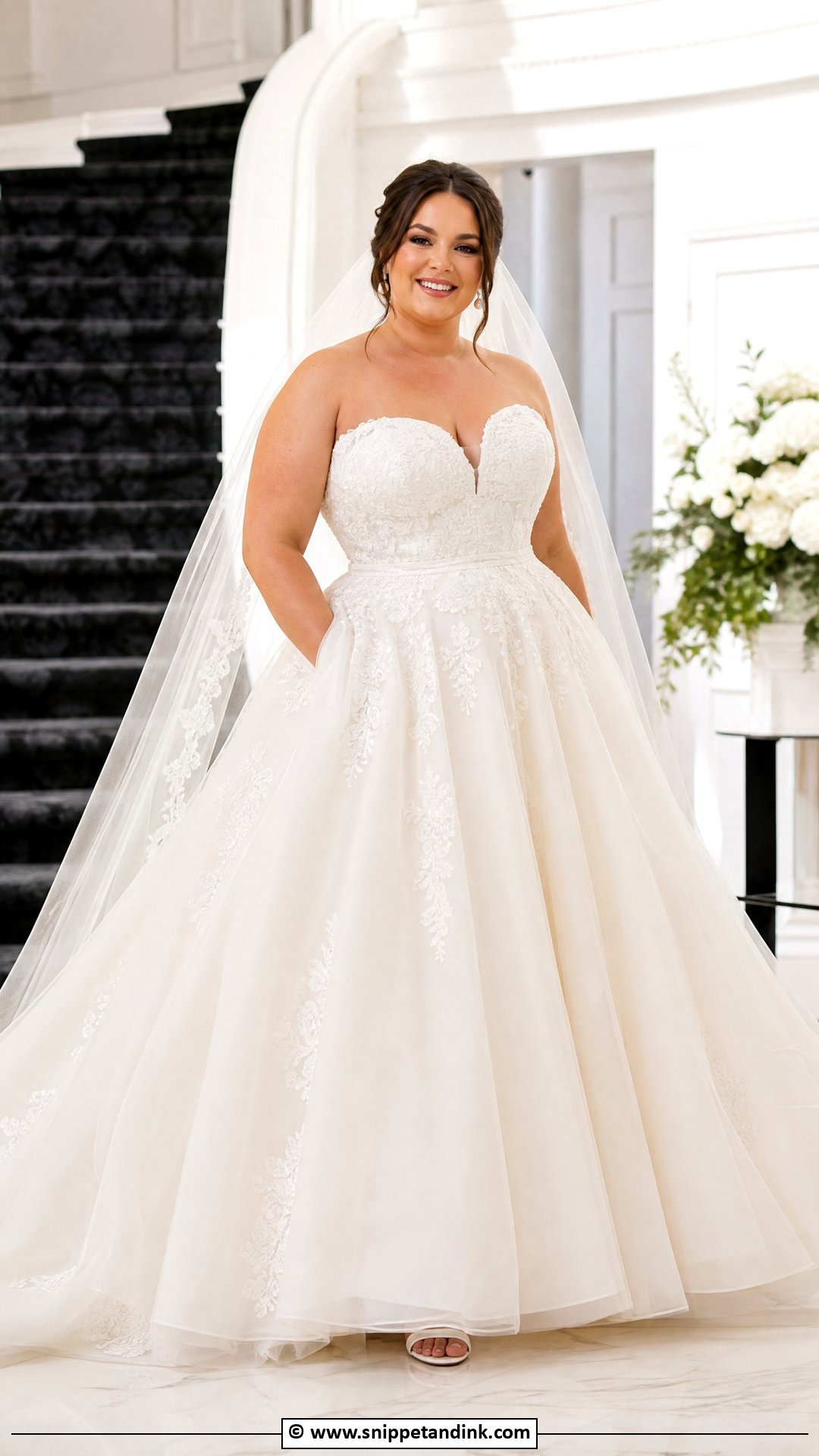
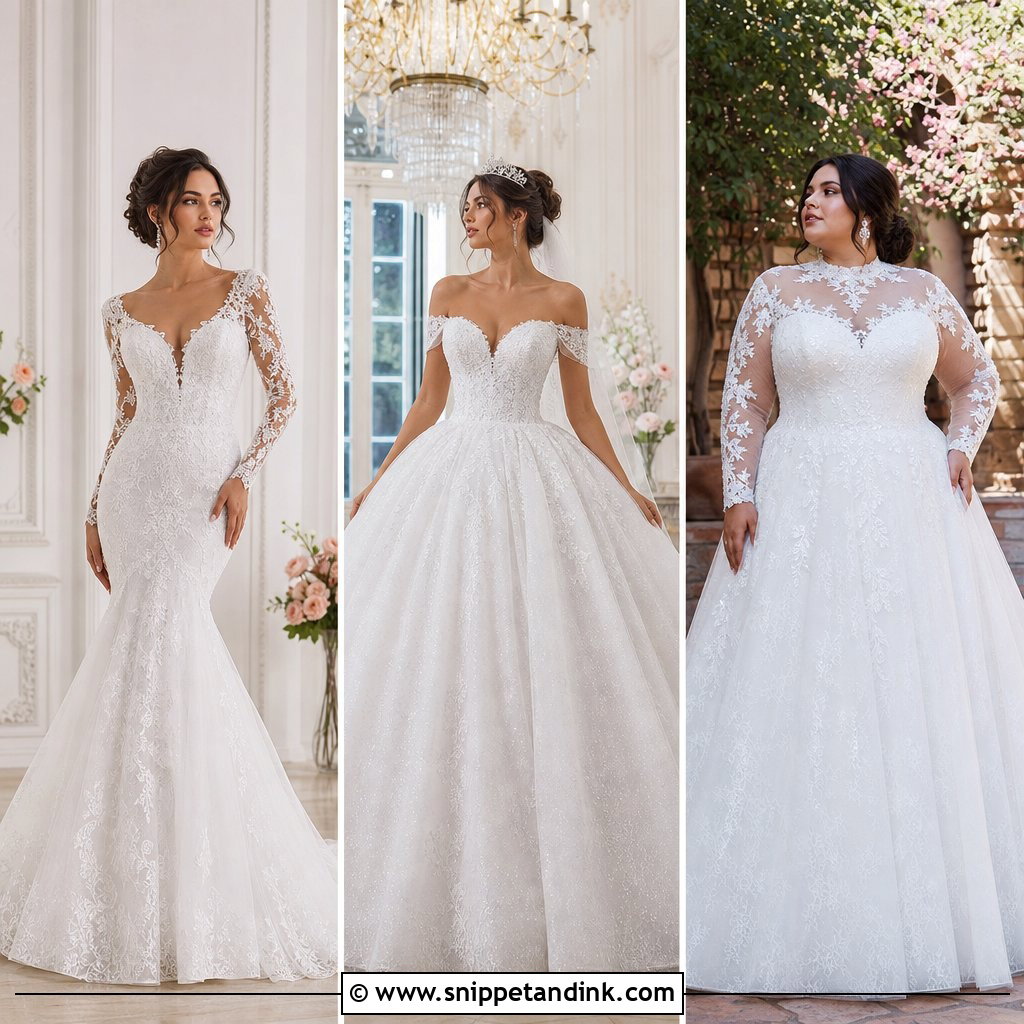
A full skirt can balance a curvier figure well when the bodice, waist and skirt volume are tailored to you. Look for real internal structure, straps if you want them, and a waist seam at your most comfortable point. Sweetheart, V, square and off-shoulder necklines all work; that part is preference. I’d ignore labels like flattering and judge by how secure you feel when you sit and dance. A good seamstress can adjust length, bust support, sleeves and the bustle until the gown feels made for you.
32. Petite Ballgown Wedding Dress
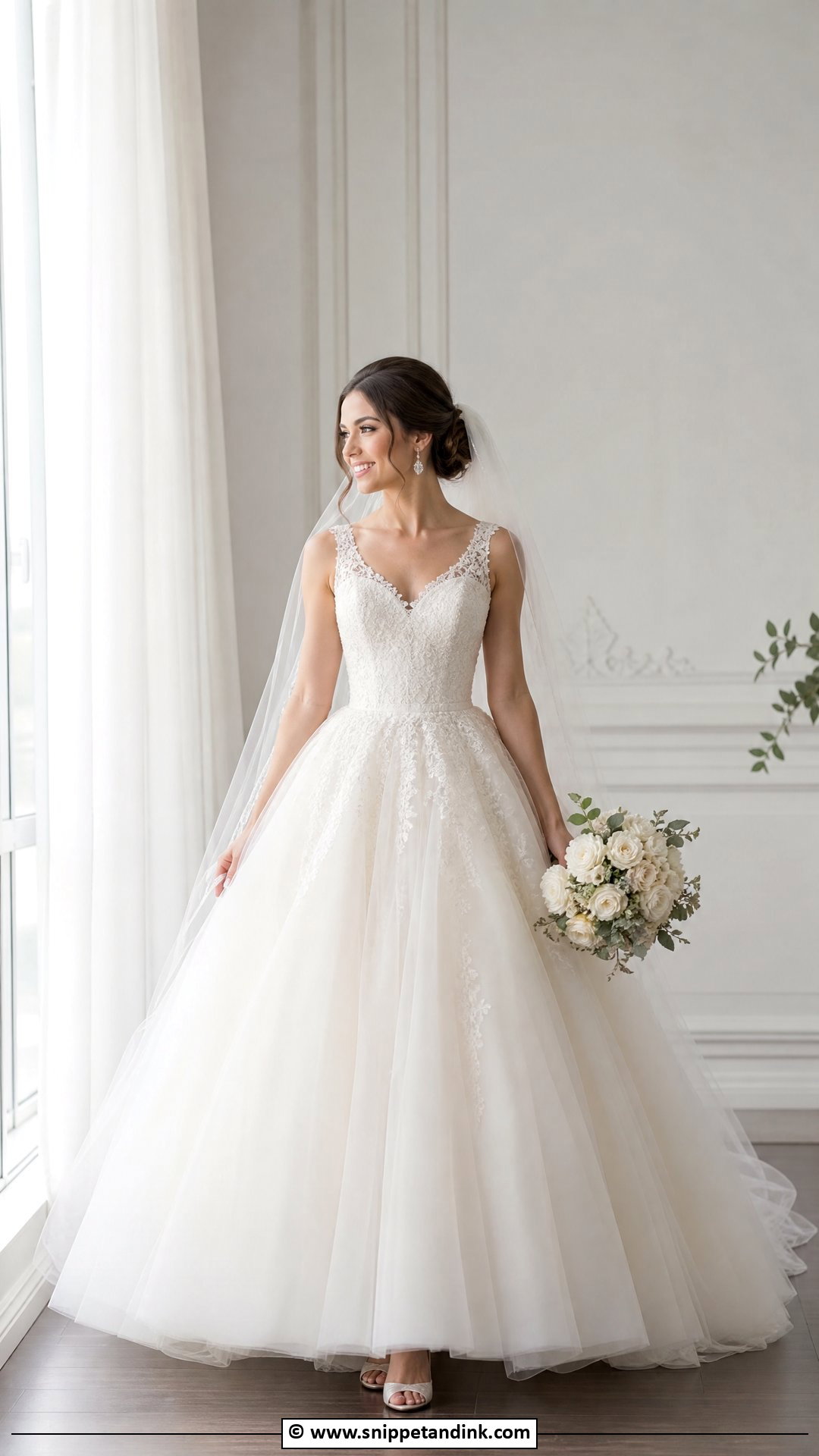
On a smaller frame, proportion decides everything. Too much skirt swamps you, so I look for lighter fabrics, a defined waist and a bodice that doesn’t run long. Raising the waistline slightly makes the legs look longer. Tulle, organza and smooth satin all work once the skirt is scaled down, which is often an alteration rather than a different dress. Avoid long trains unless they bustle neatly.
33. Winter Ballgown Wedding Dress
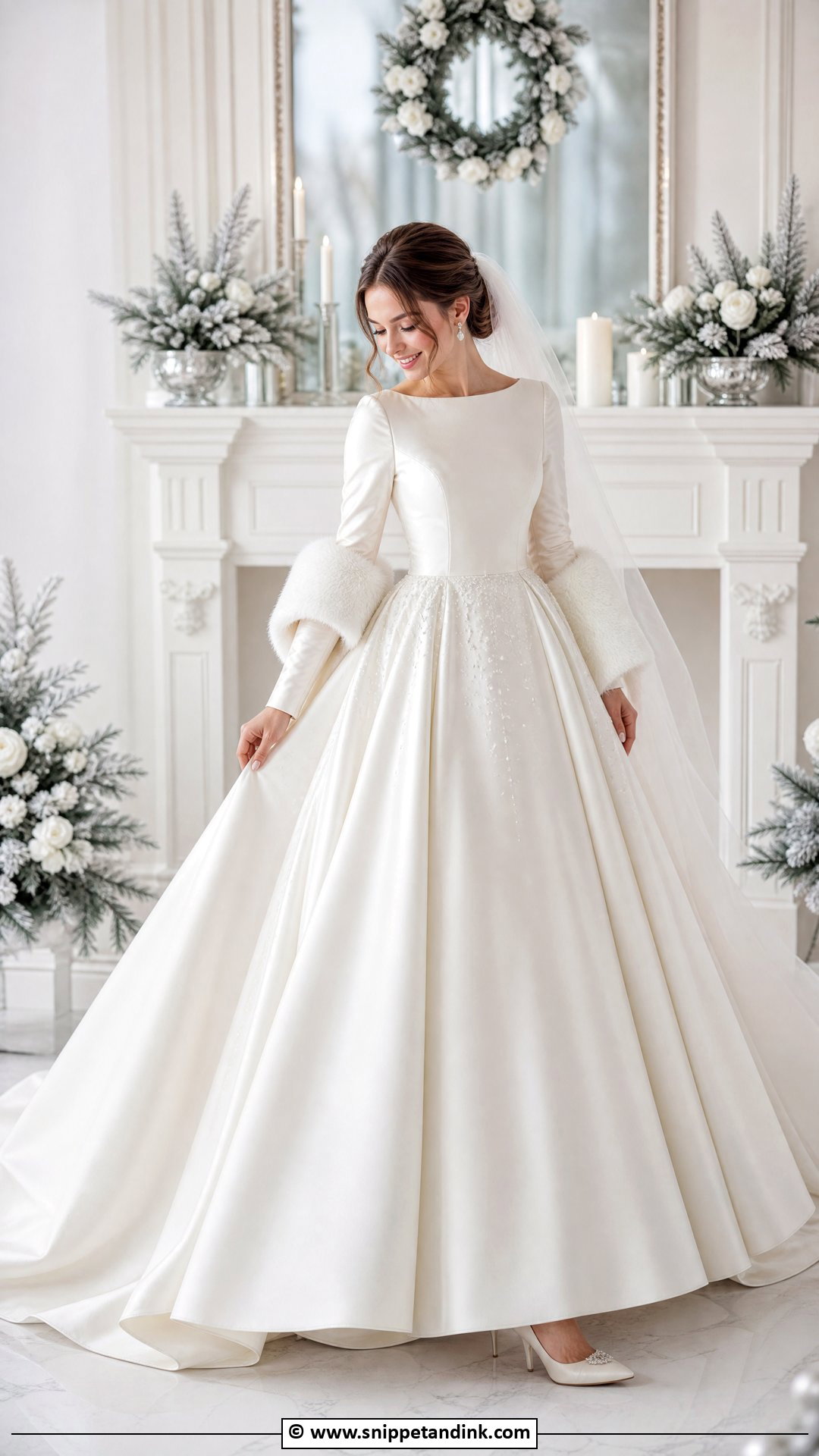
Winter gowns lean on coverage and texture: long sleeves, heavier satin, mikado, lace or soft sparkle, with pearl beading or crystal accents for a seasonal glow that doesn’t need a theme. For outdoor photos, plan a cape, faux-fur wrap or bolero and try it on with the dress at a fitting, because a wrap can flatten an off-shoulder neckline. Closed-toe shoes and a veil that sits over the outer layer complete it.
34. Summer Ballgown Wedding Dress
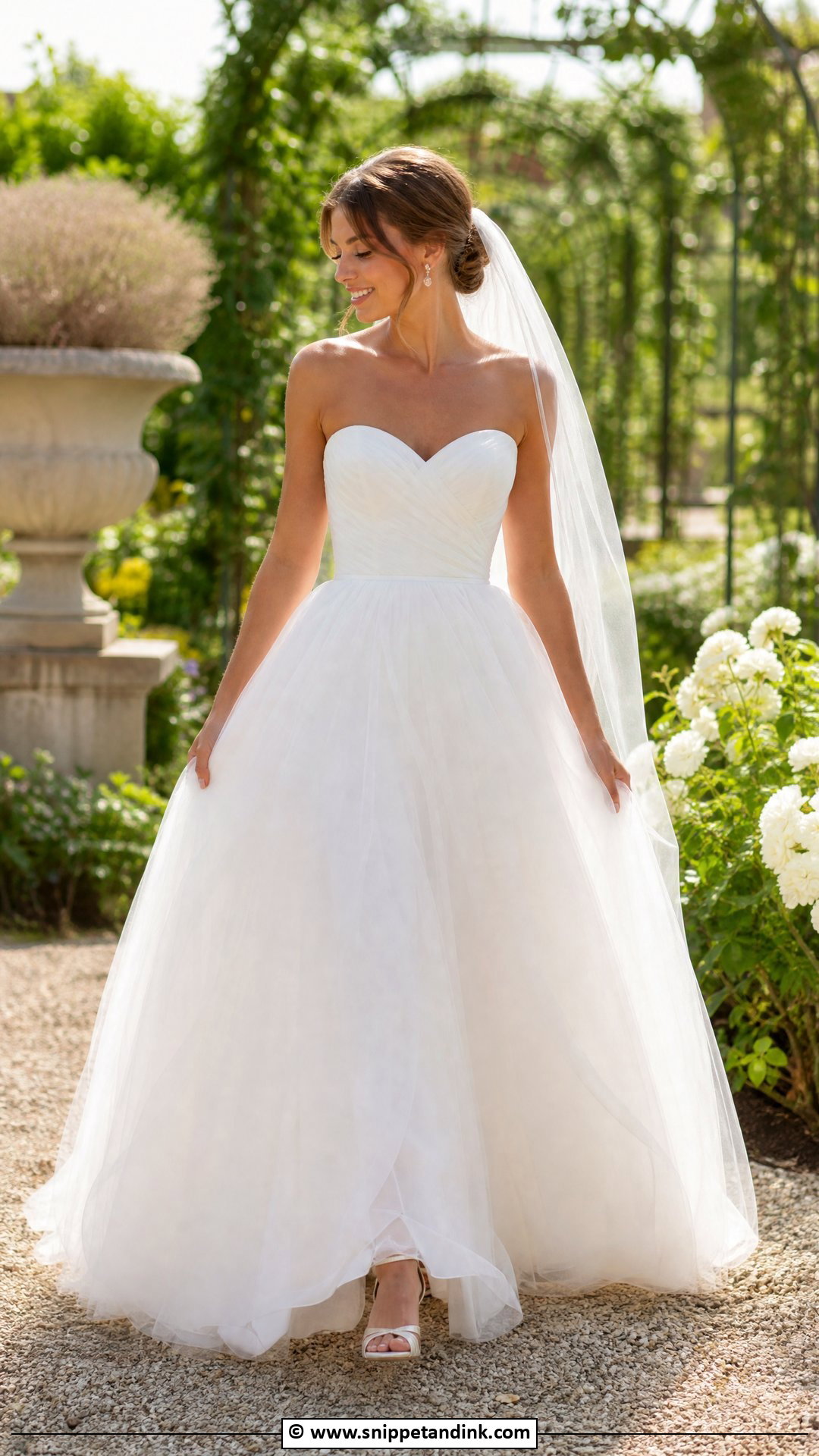
In summer the full shape has to come from lighter materials. Tulle, organza and lightweight lace breathe far better outdoors than heavy satin, and strapless, off-shoulder or thin-strap bodices keep you cooler. Fewer underskirt layers help most of all; many gowns have a petticoat that can be swapped for a lighter one. Plan a shorter train or a quick bustle for grass and patios, and breathable undergarments under everything.
35. Simple Ballgown Wedding Dress
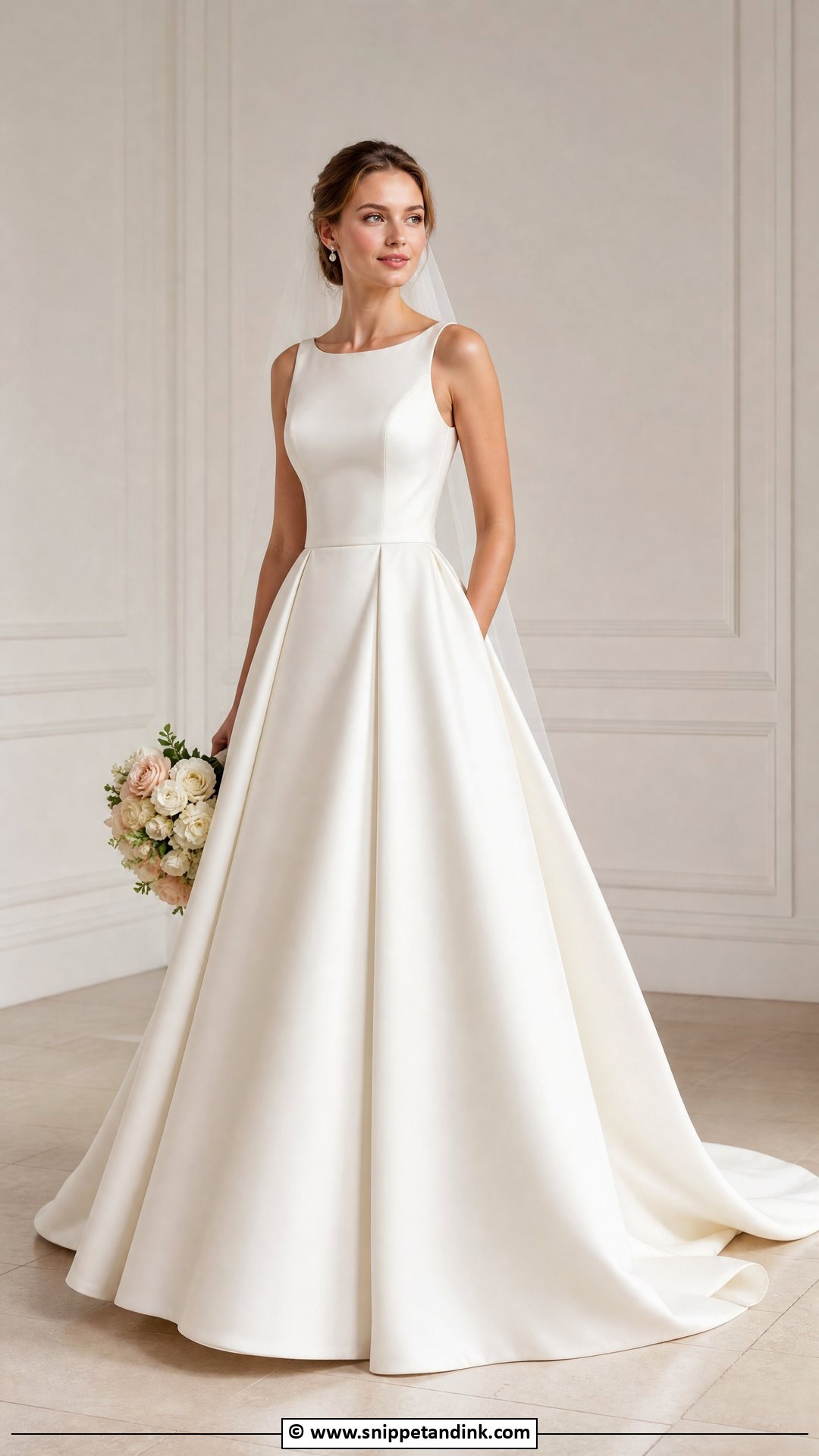
All the drama lives in the shape here: good fabric, a fitted bodice, a full skirt and little else. It changes mood with accessories, classic with pearls, modern with sculpted earrings, romantic with a lace veil. With fewer details, fabric quality and tailoring matter more, and I check the waistline, neckline, hem and bustle points one by one. It won’t date quickly because it doesn’t rely on a trend, so your face and bouquet get the attention.
Living in a Full Skirt From the Car to the Last Dance
The day itself throws up small practical problems nobody mentions in the shop. Most are solved by deciding in advance who helps you and when.
The bustle
An American bustle hooks the train up over the skirt; a French bustle tucks it underneath with ribbon ties, which suits heavier fabrics and leaves a soft pouf at the back. Ask your seamstress which one your gown takes, then have her teach a bridesmaid at the final fitting. Color-coded ribbons save a lot of guessing in a dim corridor.
Cars, chairs and the bathroom
Get into a car backward: sit first, then swing your legs in while someone gathers the skirt in after you. In the bathroom, face the cistern rather than turning away from it, so the skirt can be gathered forward, and take one helper. At dinner, perch nearer the front of the chair and let the skirt drape over the edge instead of bunching behind you.
Sugar Stains, Hems and Proper Storage After the Wedding
Get the gown to a specialist cleaner within a few weeks, even if it looks clean. Champagne and cake leave sugar marks that are invisible at first and turn yellow-brown over the following months as they oxidize, and the hem will be carrying grass and floor dirt. Point out any beading or glued embellishment when you drop it off.
For storage, I’d fold the gown loosely with acid-free tissue in the folds, inside a breathable acid-free box kept somewhere cool and dark, never in an attic or a sealed plastic bag. Avoid long-term hanging for a heavy ballgown. The skirt’s weight slowly stretches the bodice and straps out of shape.
Walk, Sit and Turn Before You Say Yes
The ballgown that suits you fits your venue, your comfort and the way you move. Satin reads polished, lace and tulle read soft, and corsets, detachable skirts, bows, color and sparkle each push the look somewhere new. At the last fitting I watch the bride more than the mirror: how she walks, sits, turns and breathes. Try several fabrics, necklines and skirt widths before deciding, and trust the one you forget you’re wearing.
You'll Like These Ideas:





Leave a Reply