
Brides who come to me wanting a mid-century look usually know which decade they love before they know why. The 1940s were lean and practical: clean crepe, squared shoulders, modest necklines and long, graceful veils, shaped partly by wartime fabric rationing. The 1950s went the other way, with nipped waists, lace bodices and skirts held out by layers of tulle. Both translate well to a modern ceremony as long as you style the whole outfit, not just the dress. Shoes, veil, gloves, hair and underpinnings decide whether it reads as a bride with a sense of history or someone in fancy dress. Here are 25 retro looks from those two decades, with the details that make each one work.
Original From the Era or a Modern Reproduction?
Every retro bride faces this choice. A true 1940s or 1950s dress has a history and construction details you rarely find now, but it comes with real limits. A reproduction gives you the silhouette in fabric that will survive a full day of dancing.
If you are shopping originals, these are the checks I make before a bride falls in love:
- Ignore the size label. Vintage sizing runs much smaller than modern sizing, so compare bust, waist and hip measurements with a tape.
- Look at the seam allowances inside. Some old dresses have generous ones that can be let out; many have almost none.
- Hold the fabric up to daylight. Old silk can shatter, splitting along the weave, and that cannot be repaired.
- Check underarms, hem and neckline for yellowing and old stains. A textile cleaner can sometimes lighten them, but never promise yourself they will vanish.
- Ask what the fabric is. Forties rayon can shrink badly if it gets wet, so it should only ever be cleaned by a specialist.
If the dress fails two or more of those checks, I’d wear it for portraits or keep it as a family piece, and have a reproduction made for the day itself.
1. 1950s Tea Length Wedding Dress
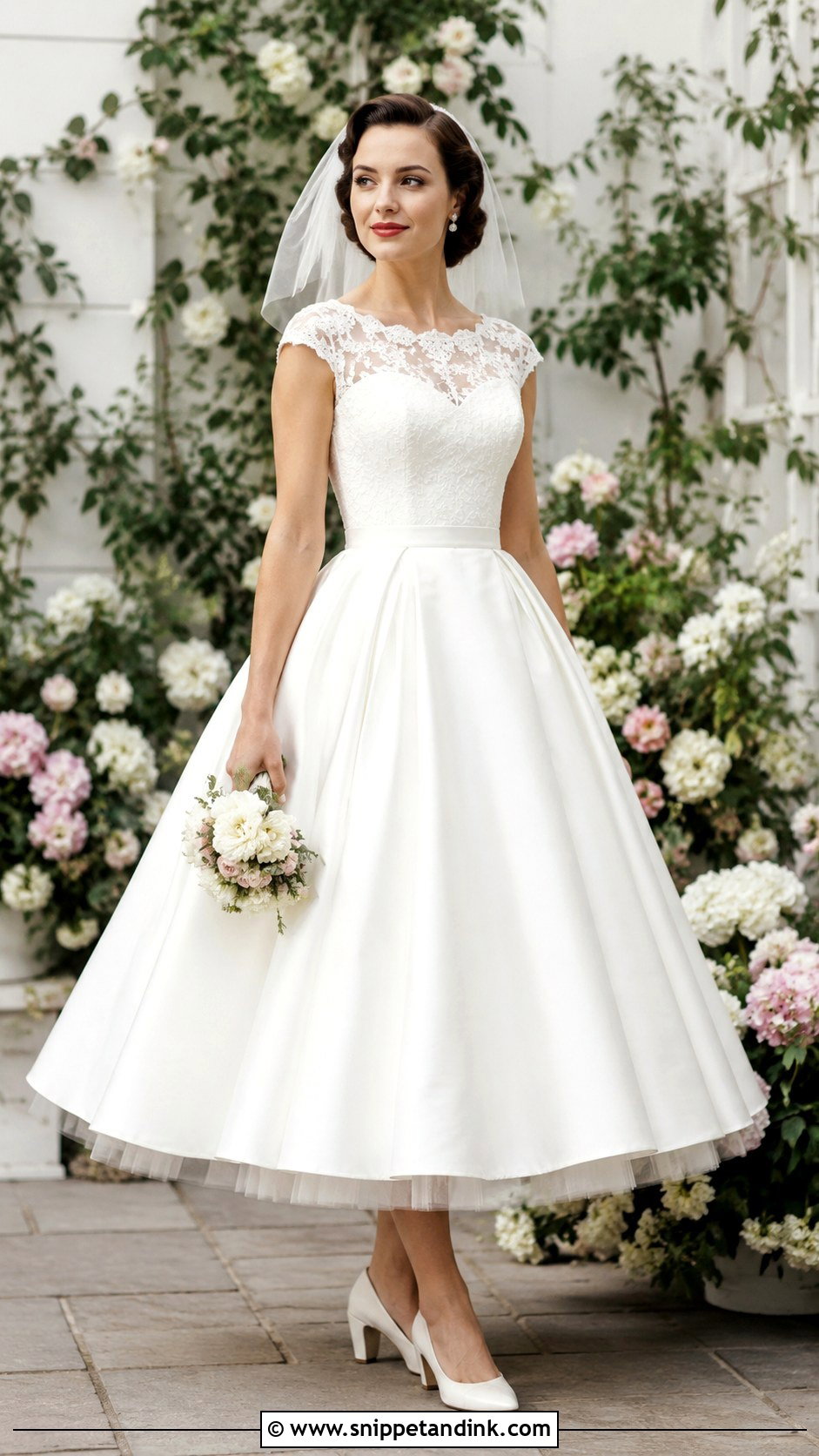
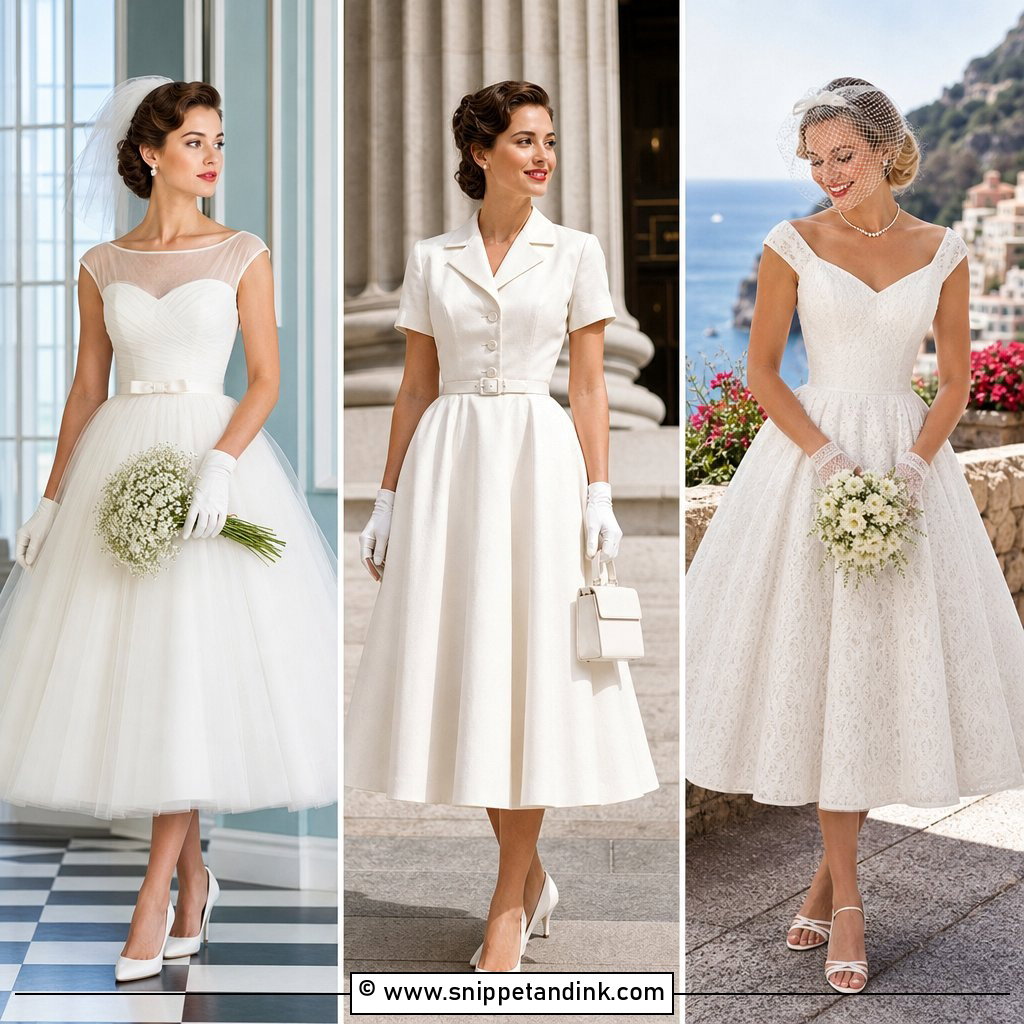
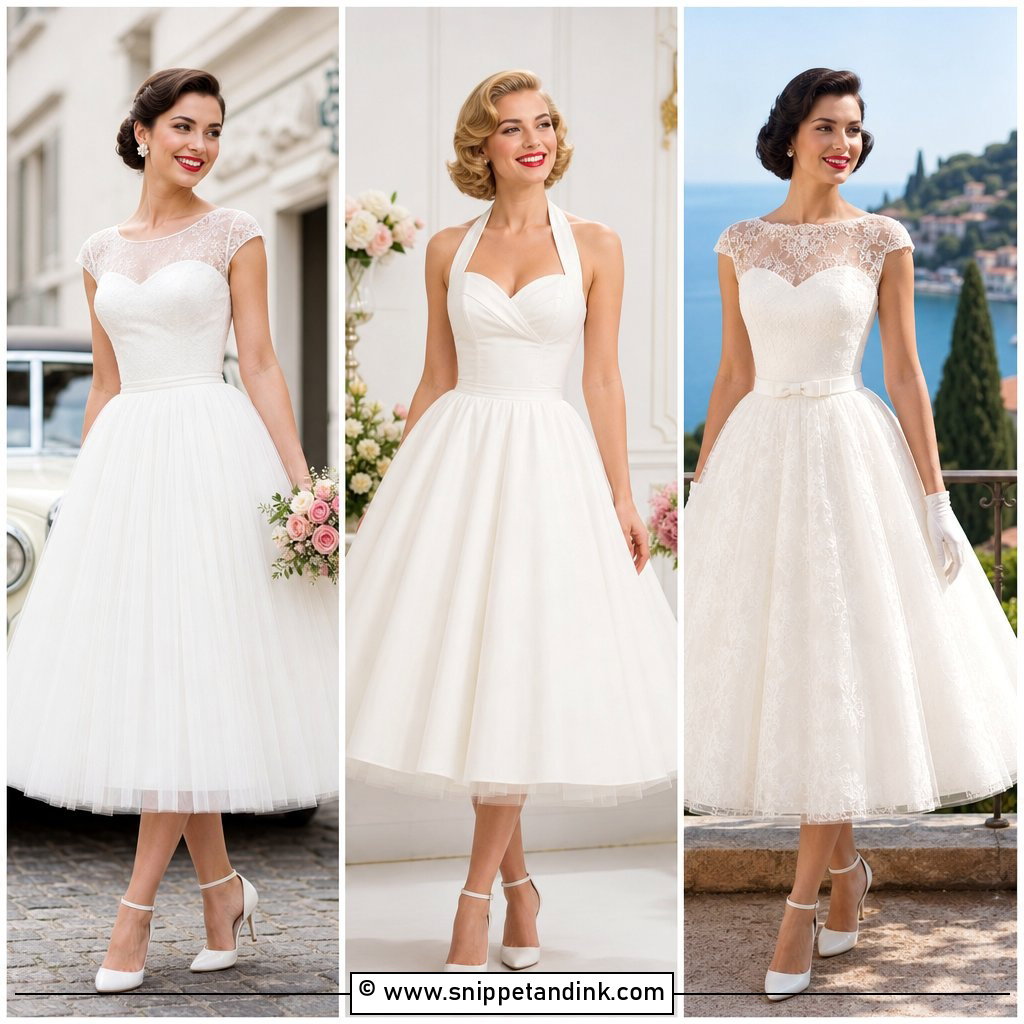
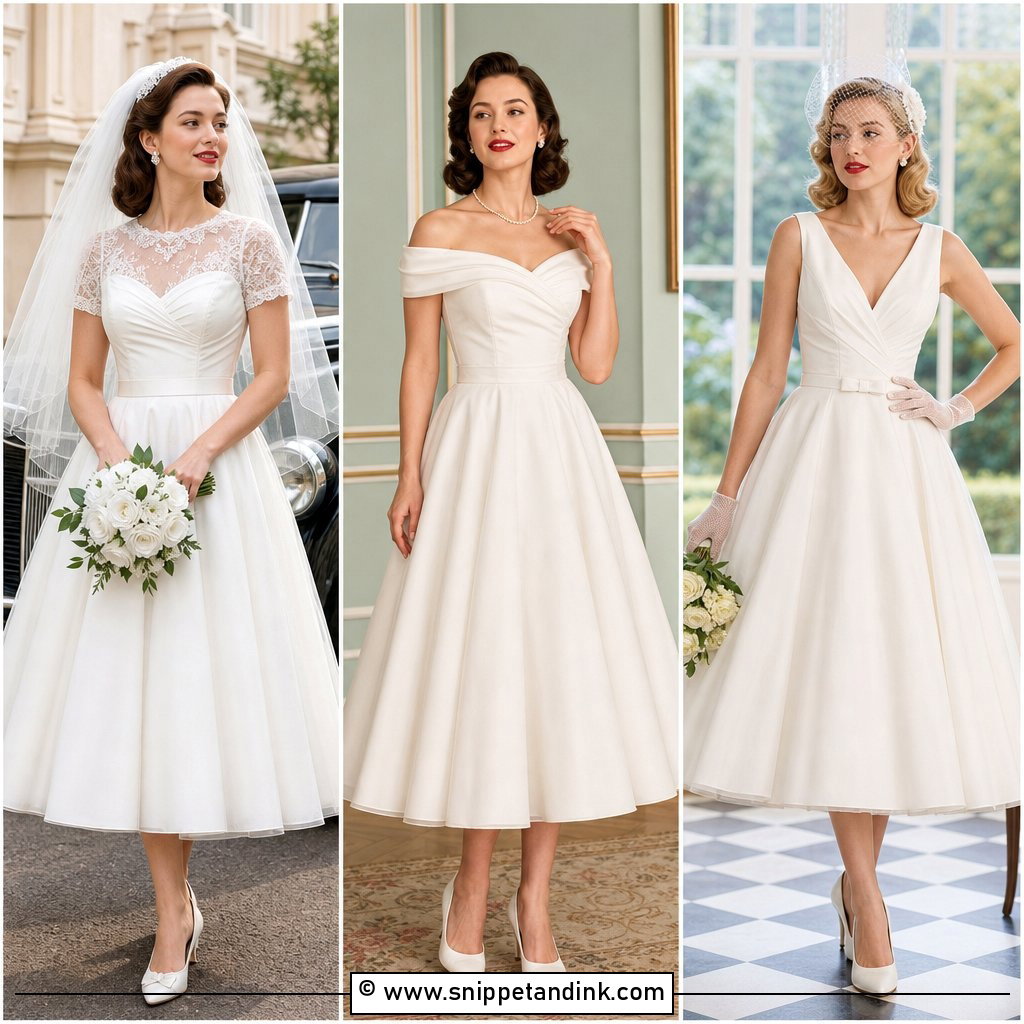
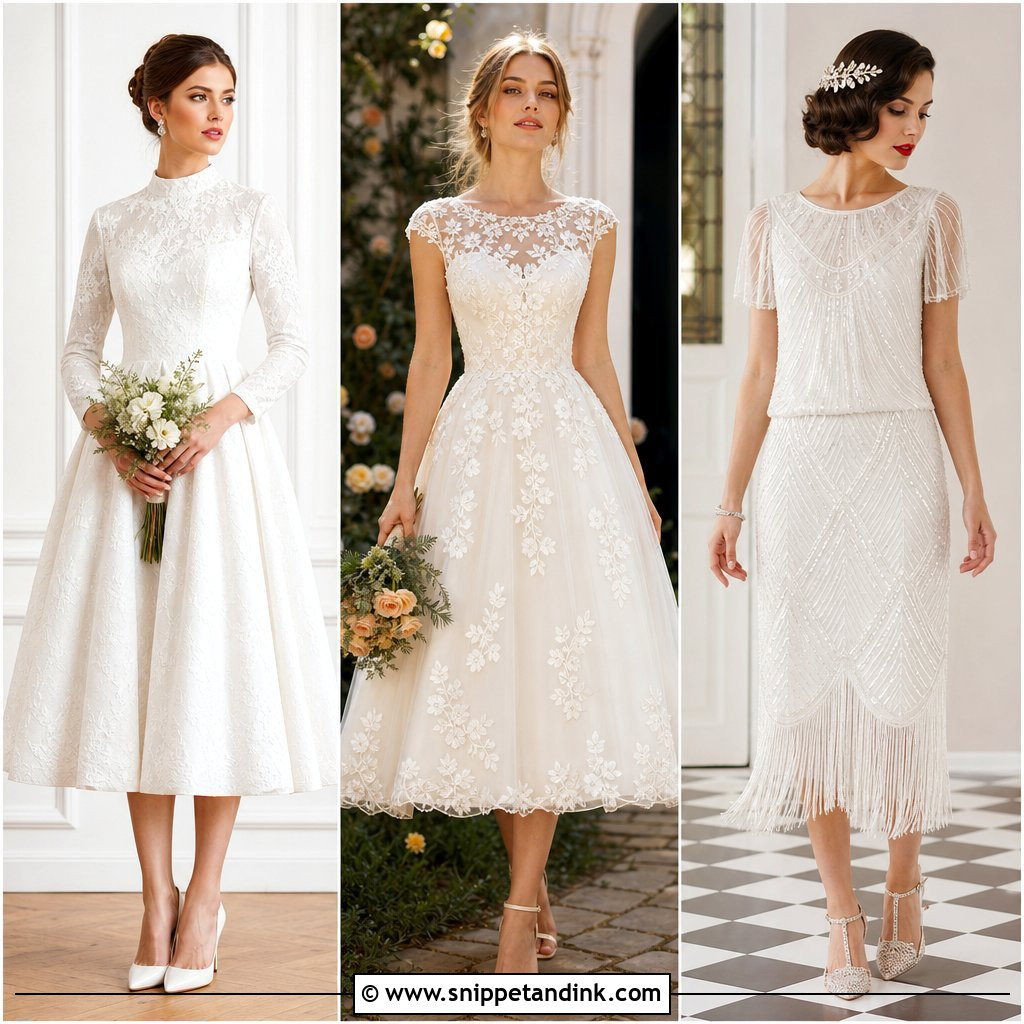
If a bride is new to vintage, I start her with a 1950s tea length wedding dress, because it is the most forgiving shape of the era. The hem lands between knee and ankle, the bodice is fitted, and the skirt in tulle or satin does the rest. A short veil, pearl earrings, gloves and low satin pumps finish it. The volume comes from what is under the skirt, so try it on with a petticoat at your first appointment, not your last. A neat bouquet of white roses keeps attention on the skirt.
2. 1940s Satin Wedding Dress
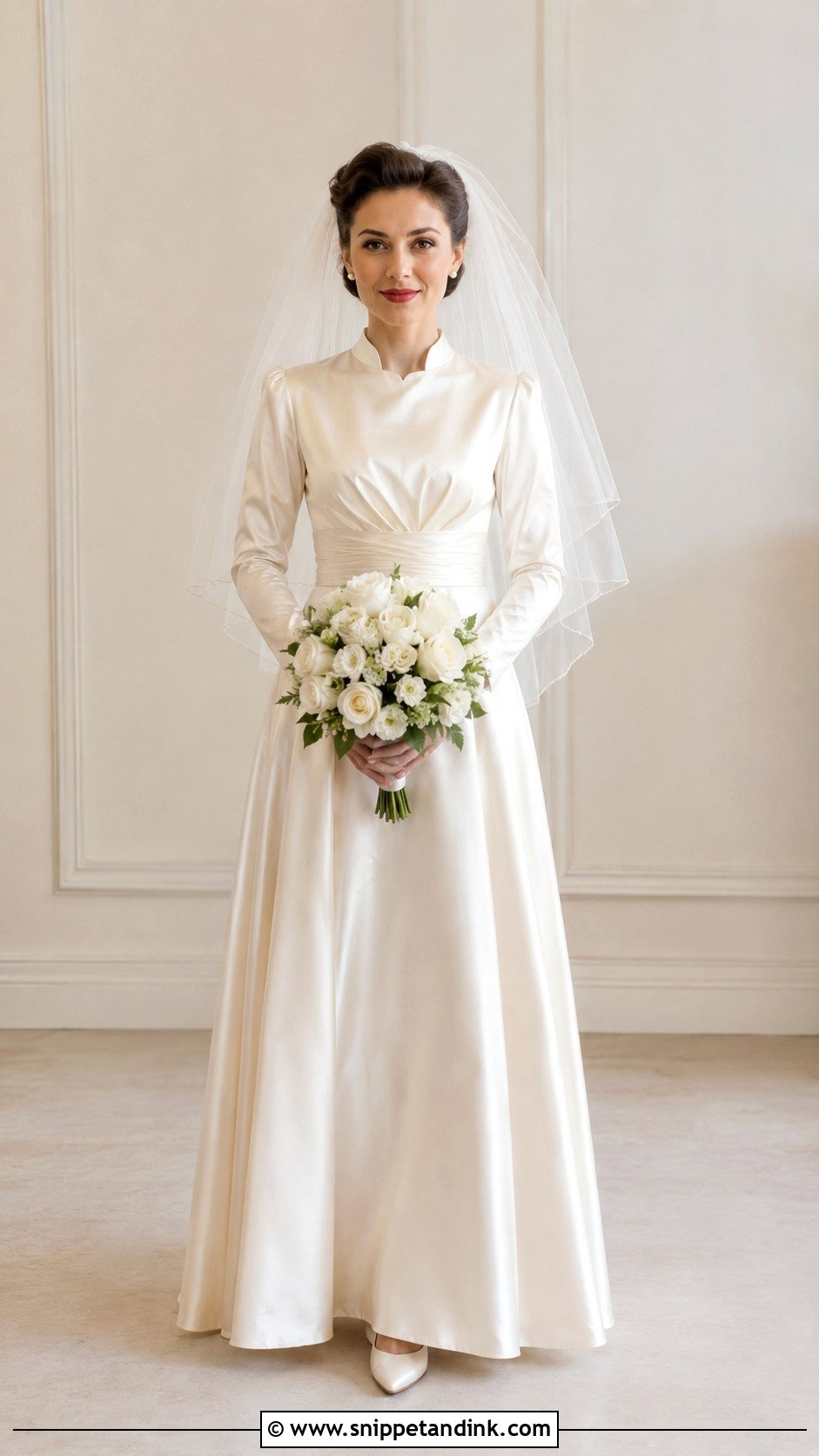
Forties satin is quieter than the satin brides know today. The skirt skims rather than flares, the waist is softly fitted, and sleeves are often long with a modest neckline. Ivory, cream and pale champagne look truer to the period than bright white, which was much less common then. Closed-toe pumps, a waist-length veil and a small structured bouquet keep it in period, and hair set in soft waves does more for the authenticity than any accessory. A single brooch is enough jewellery.
3. 1950s Lace Wedding Dress
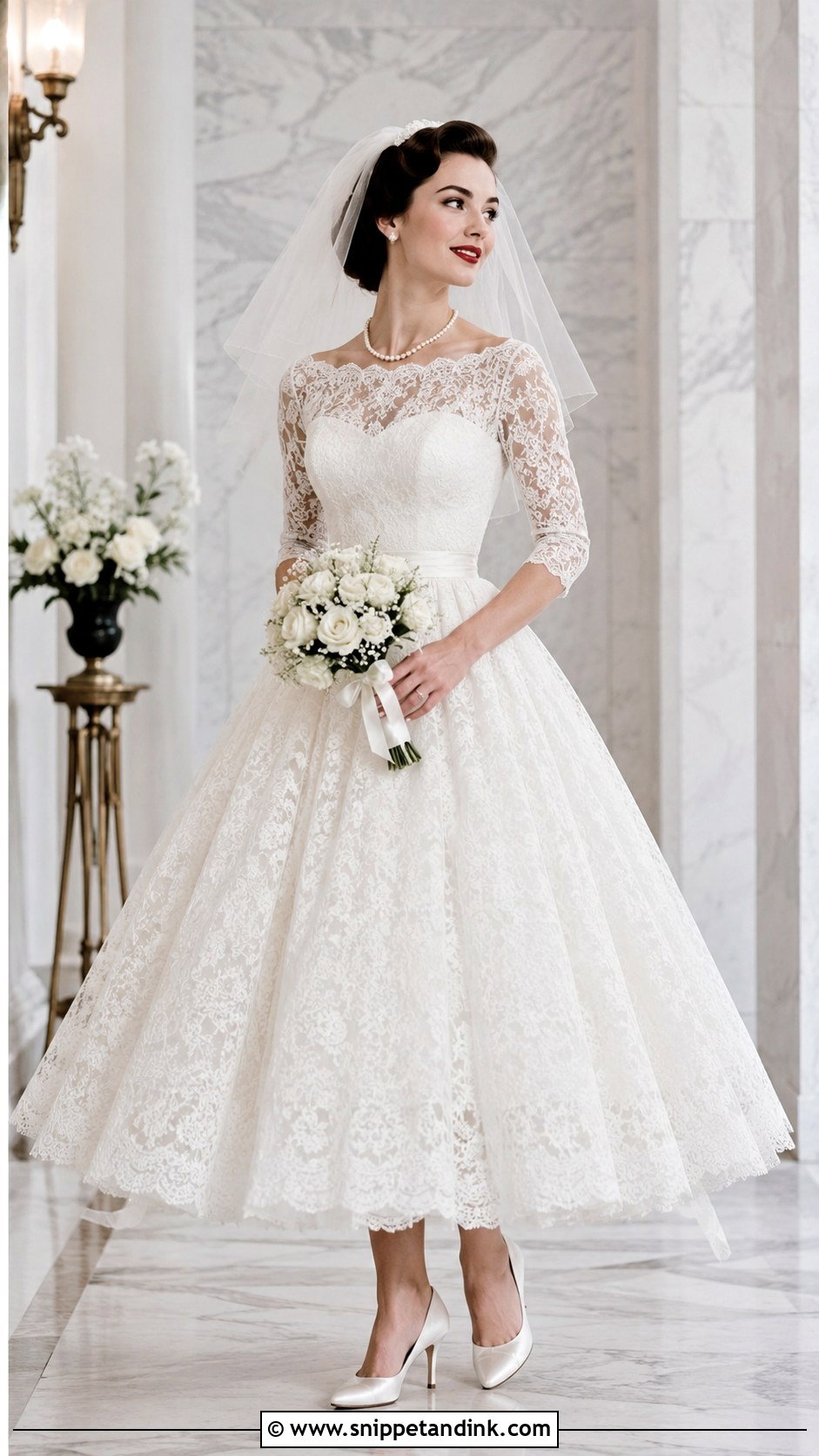
A fitted lace bodice over a full skirt is the image most people have of a fifties bride, and it holds up because the proportions flatter so many figures. Sleeves can be long, cap or three-quarter. What I look at closely is the waist seam: on a vintage-style dress it should sit right at your natural waist, the narrowest point, or the hourglass effect collapses. Pair it with a fingertip veil and satin heels, and keep jewellery minimal if the lace is busy. Hotel ballrooms and formal indoor ceremonies suit it.
4. 1940s Crepe Wedding Dress
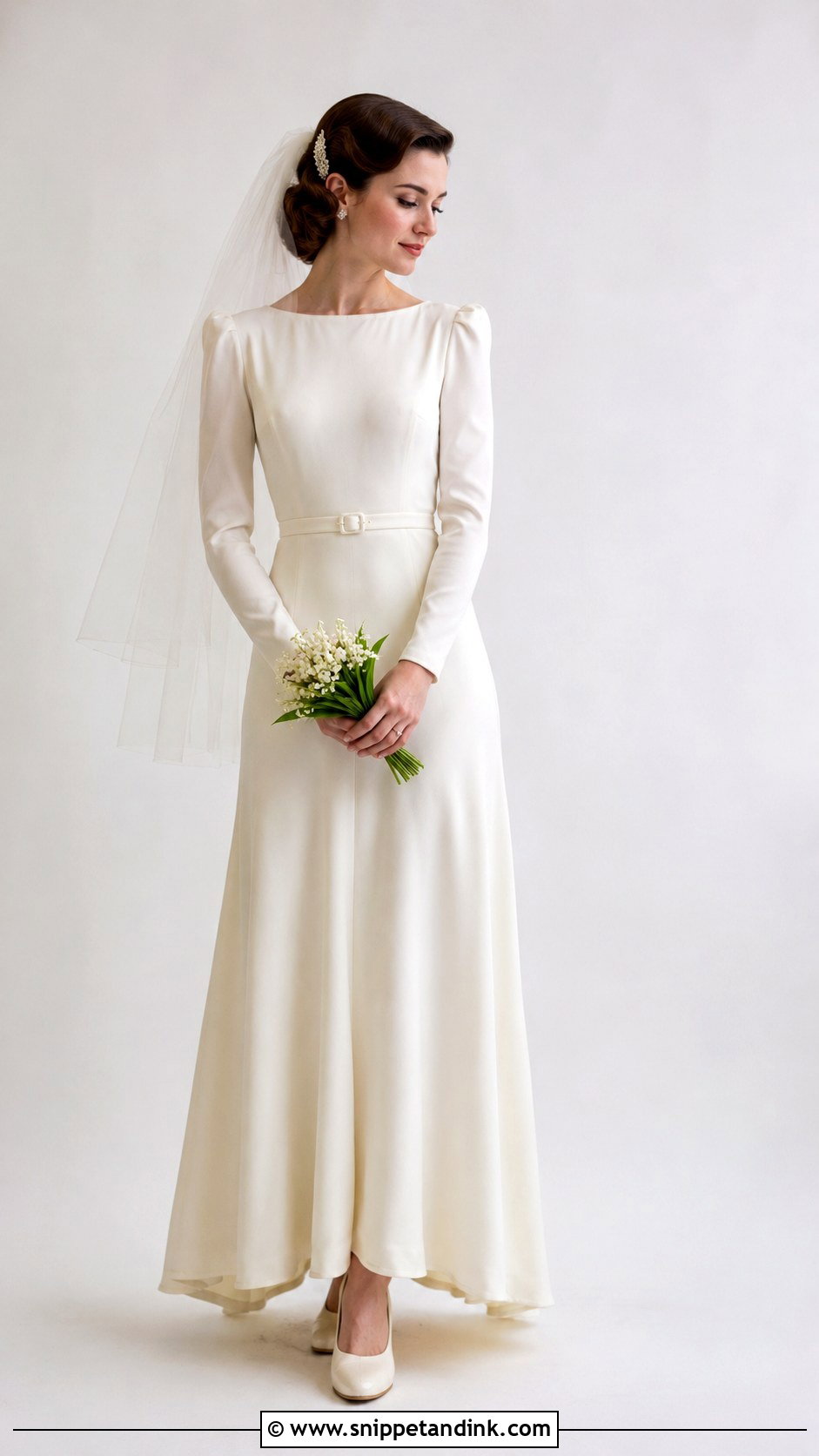
Crepe was everywhere in forties bridalwear because it drapes softly without needing petticoats. The typical dress has long sleeves, a gentle V-neck, a little structure at the shoulder and a narrow waist. It suits brides who would rather have a smooth line than a big skirt. Crepe shows every ridge underneath, so smooth, line-free underwear matters here more than with any other dress on this list. Covered buttons or a slim belt add detail; ivory heels and vintage hair combs complete it.
5. 1950s Ballerina Length Wedding Dress
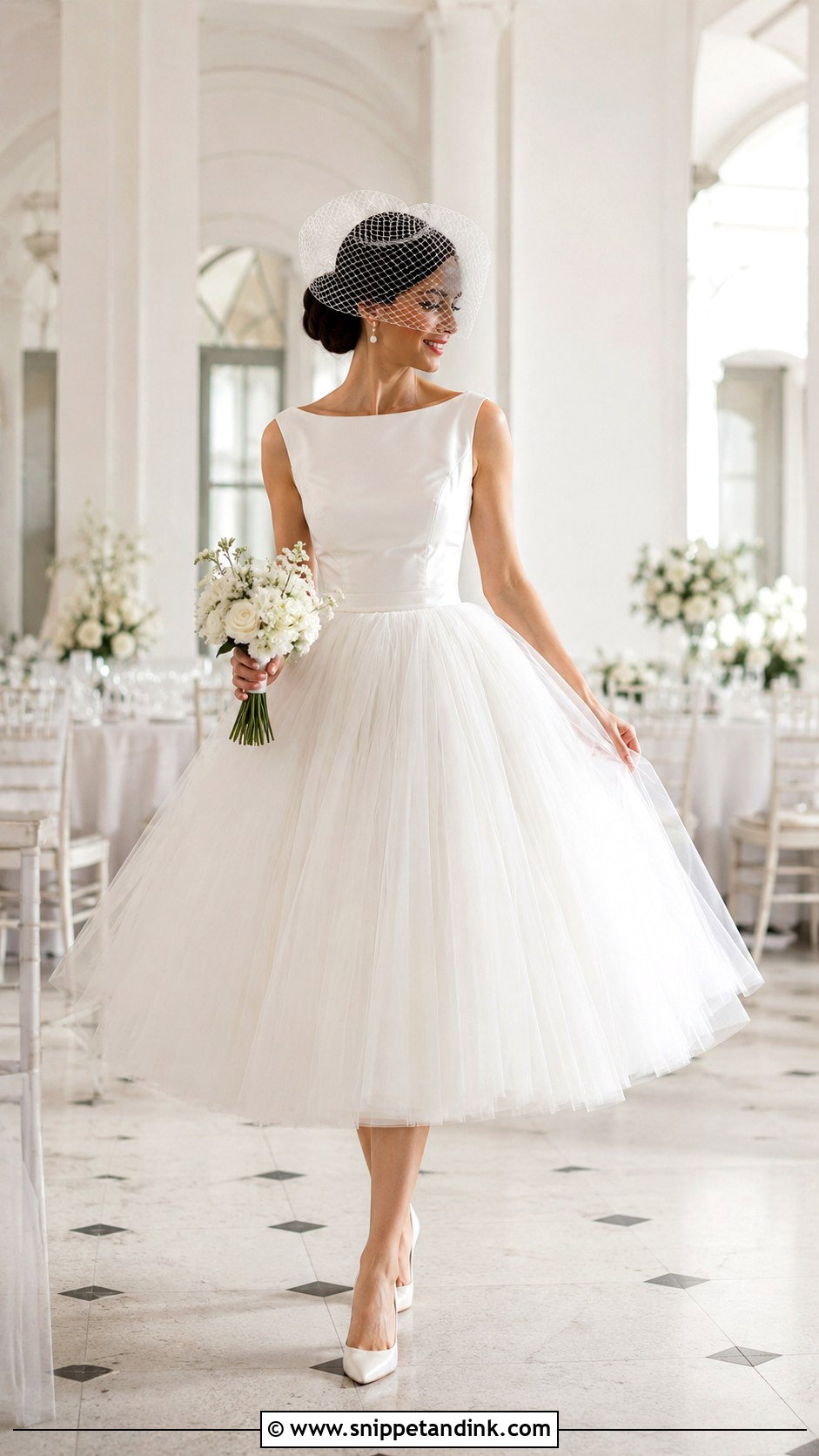
Ballerina length sits lower than tea length, around the lower calf or ankle, so it moves like a dancer’s skirt and feels a touch more formal. Tulle, organza or lace over satin gives the layered look. Pointed pumps, a birdcage veil and pearl drops suit it. I like this length when a bride plans to dance all evening without a floor-length hem under their heels. A fitted bodice and a slim belt keep the volume from swamping a petite frame.
6. 1940s Wedding Suit
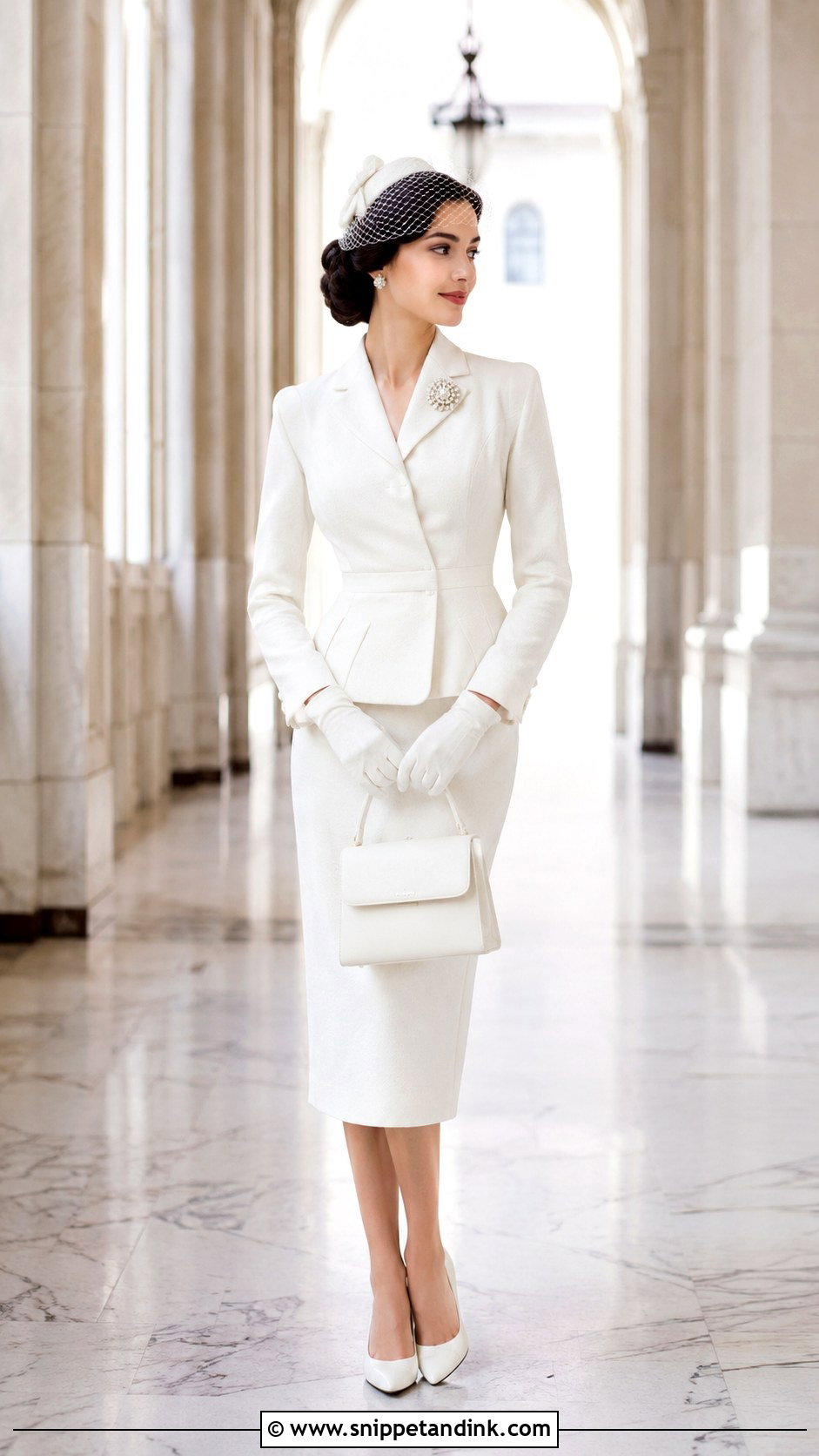
A 1940s wedding suit is historically accurate as well as practical: many brides married in tailored suits when fabric was rationed or the groom was home on short leave. Look for a fitted jacket with a nipped waist, defined shoulders and a slim skirt just below the knee, in ivory, cream, dove grey or soft blue. Gloves, closed-toe pumps, a small hat or short veil and a structured bag complete it. A brooch on the lapel is the detail I’d never leave off. It is my first suggestion for courthouse weddings.
7. 1950s Short Sleeve Wedding Dress
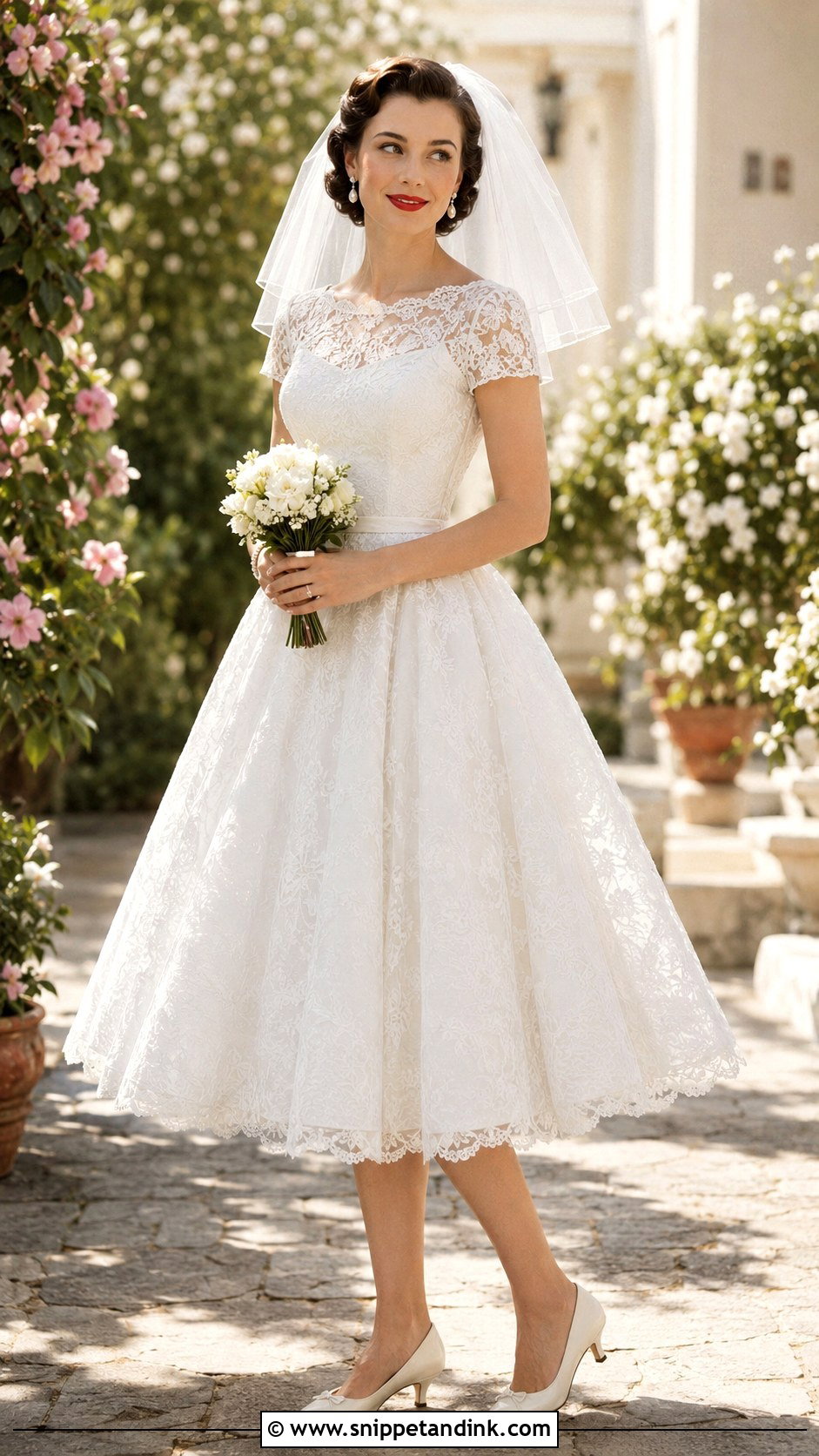
Short lace or satin sleeves on a fitted bodice with a rounded neckline and full skirt make the friendliest fifties dress for a warm day. Kitten heels, pearl earrings and a short veil keep it light, and a petticoat gives it swing. Brunch, backyard and small reception weddings suit it. Ask for covered buttons down the back if you want detail; they are more period than a long zip. A curled bob or low bun completes the look.
8. 1940s Long Sleeve Wedding Dress
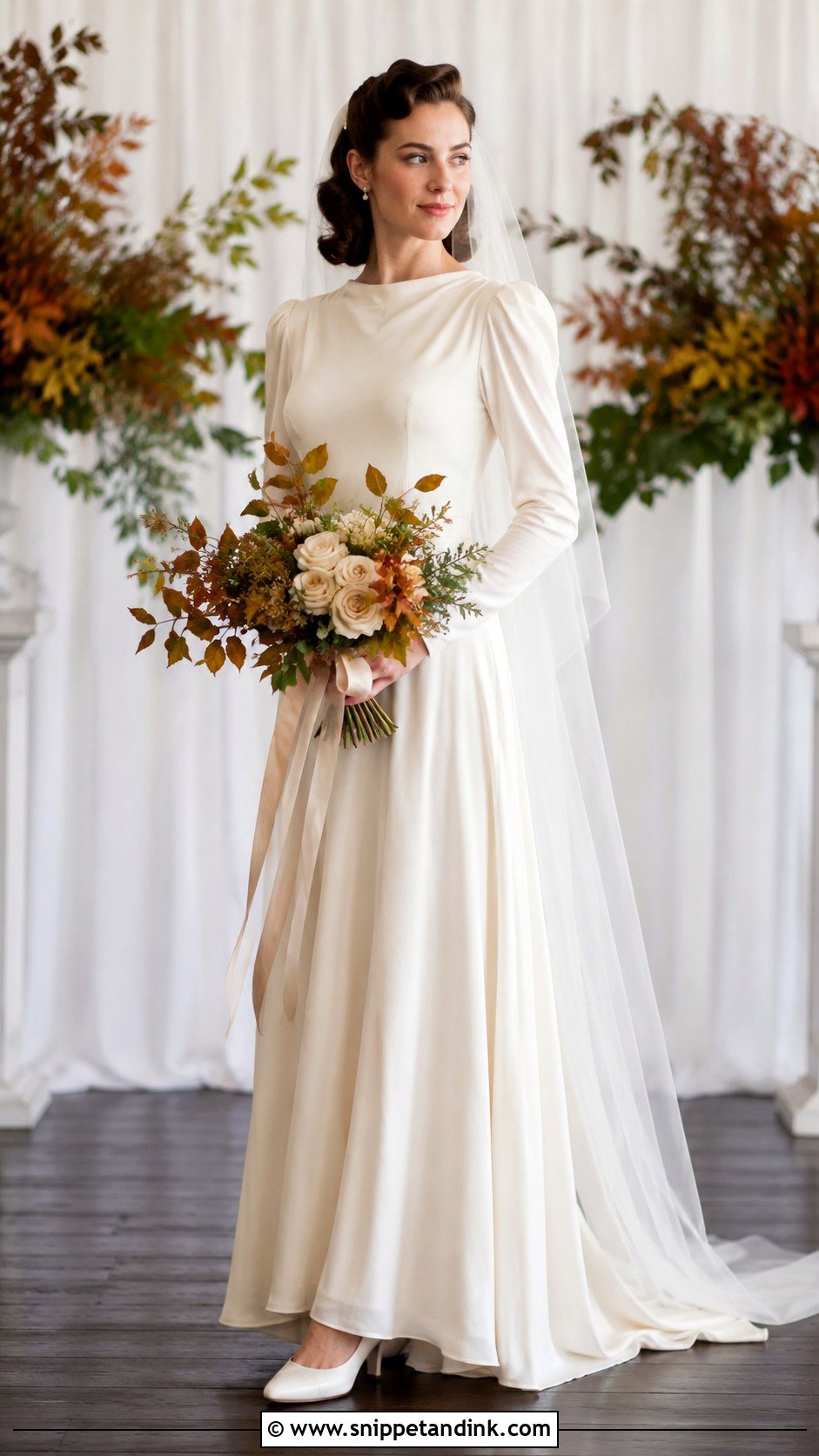
Sleeves in the forties could be slim, slightly puffed or gathered at the head, and a 1940s long sleeve wedding dress often had them tapering to a point over the back of the hand. Satin, crepe, rayon and lace all feel right. A narrow waist and flowing skirt keep it graceful. Ivory pumps, a long veil and a small bouquet tied with ribbon finish it, and pearl earrings are plenty. Autumn and winter suit it best, but in a light crepe it also works in spring.
9. 1950s Sweetheart Wedding Dress
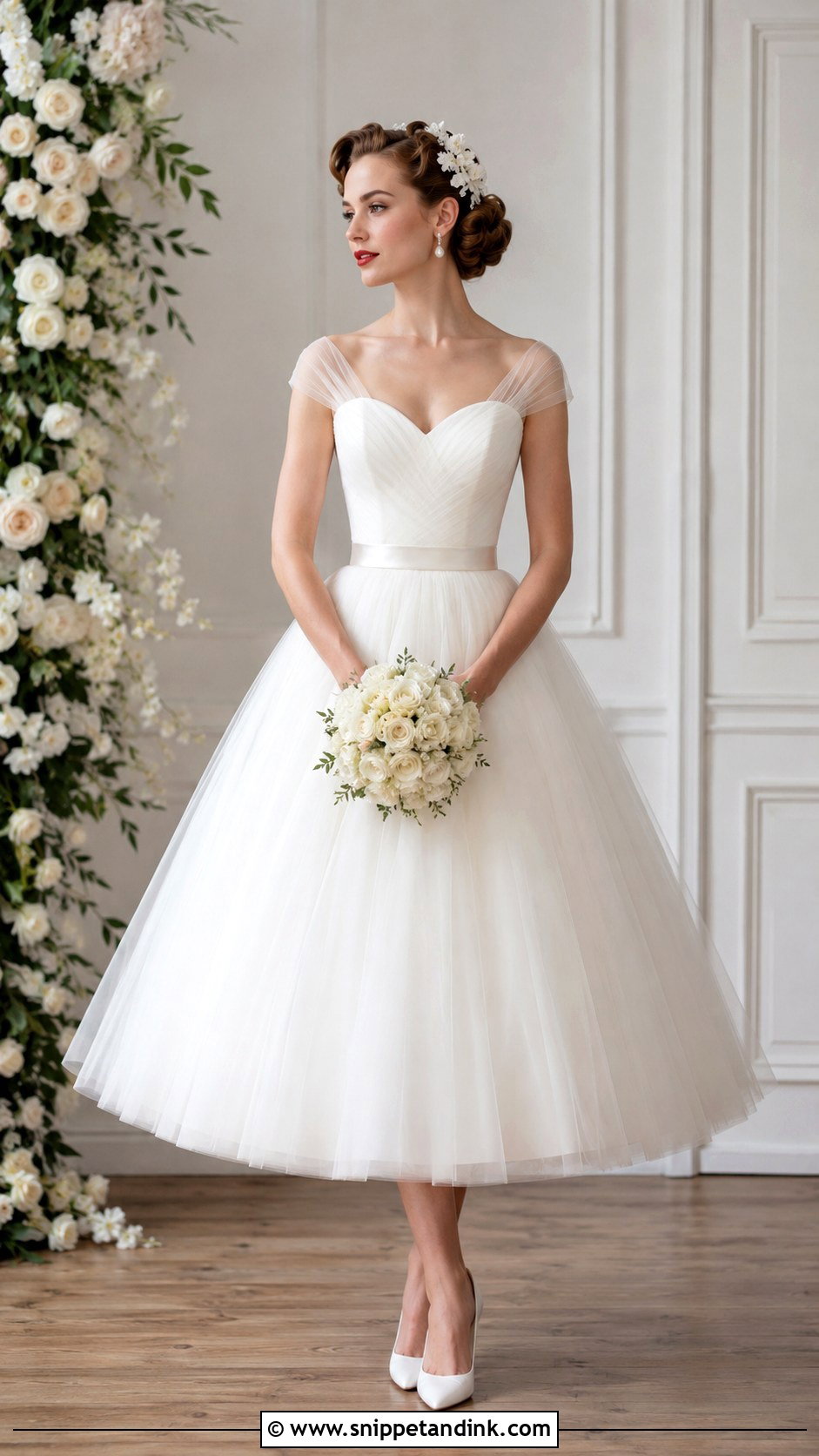
The sweetheart neckline softens a structured bodice and is one of the most recognisable fifties shapes. It pairs with a full skirt or ballerina hem, a tulle underskirt, satin pumps and a short veil or floral comb. The cinched waist depends on a well-built bodice, so I check whether the dress has internal boning or relies on the bride wearing a corselette underneath. Lace or satin suits a formal ceremony; cotton organdy or embroidered tulle is lighter for a relaxed one.
10. 1940s Bias Cut Wedding Dress
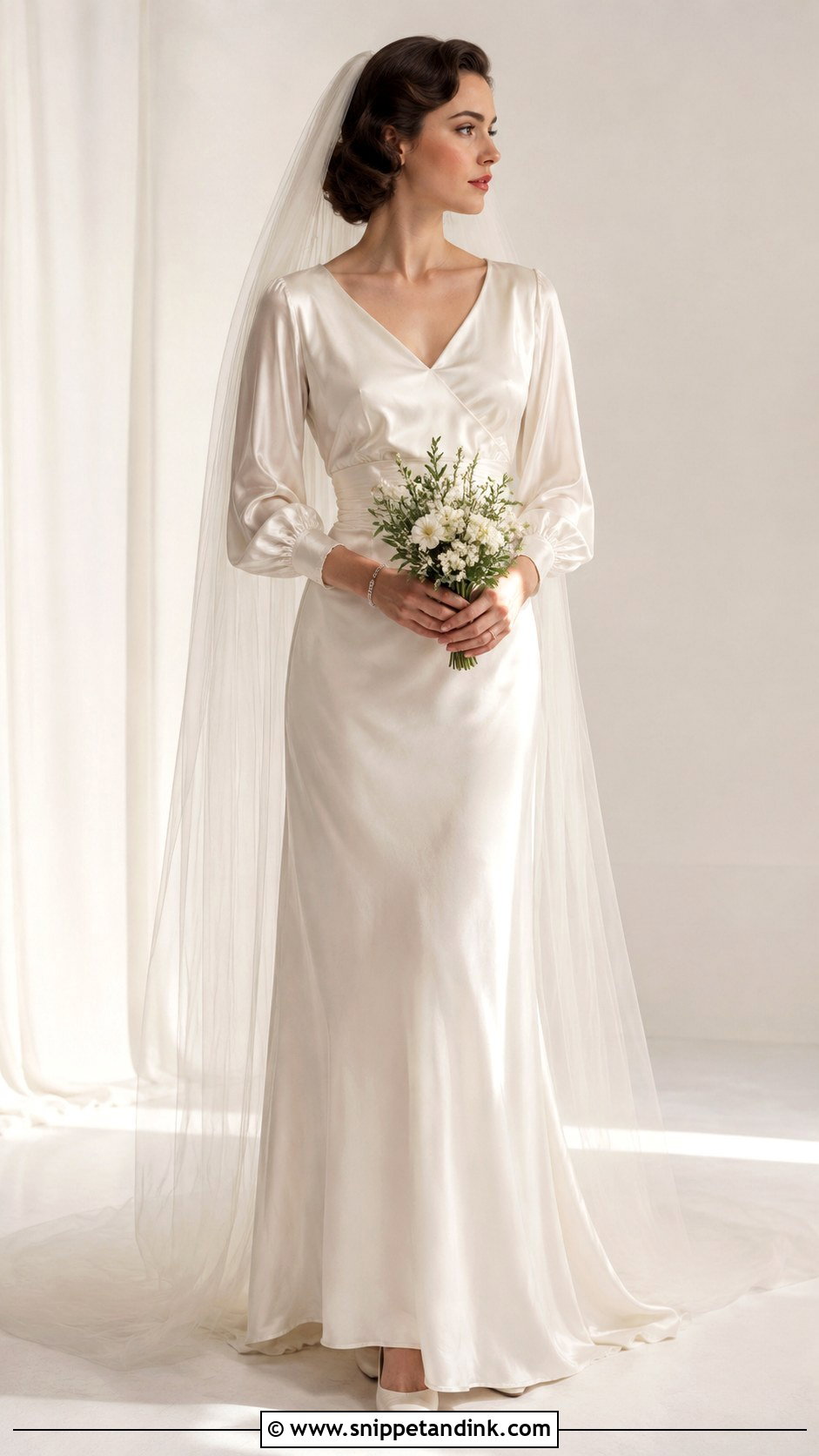
Bias cut means the fabric is cut diagonally across the grain, which lets it stretch slightly and fall in soft ripples over the body. The cut itself is the decoration, so accessories should be minimal: simple pumps, a long veil, a fine bracelet. I’m honest with brides that bias satin is unforgiving; it follows every curve and line, and tailoring has to be done by someone who understands how bias fabric moves. Soft waves and a red-neutral lip suit it.
11. 1950s Tulle Wedding Dress
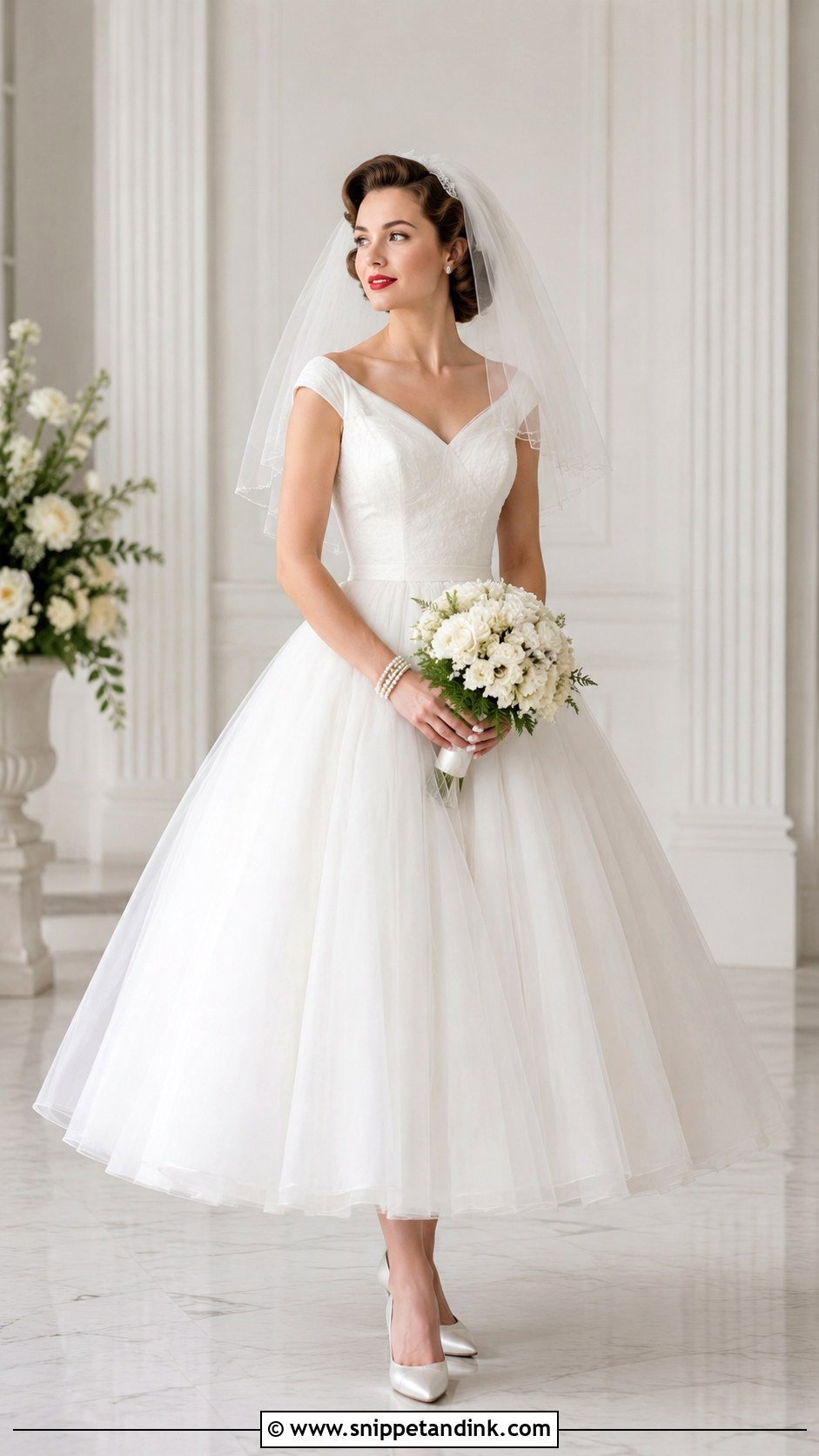
Layers of tulle over satin give fifties volume with softness. The length can be tea, ballerina or floor depending on the venue. If the skirt is very full, keep the bodice clean and structured; two busy halves fight each other. Satin heels, a pearl bracelet and a fingertip veil finish it. Bright daylight and simple ceremony settings show off tulle best. Tulle catches on rough surfaces, so it is worth checking the venue floor and any stone steps.
12. 1940s High Neck Wedding Dress
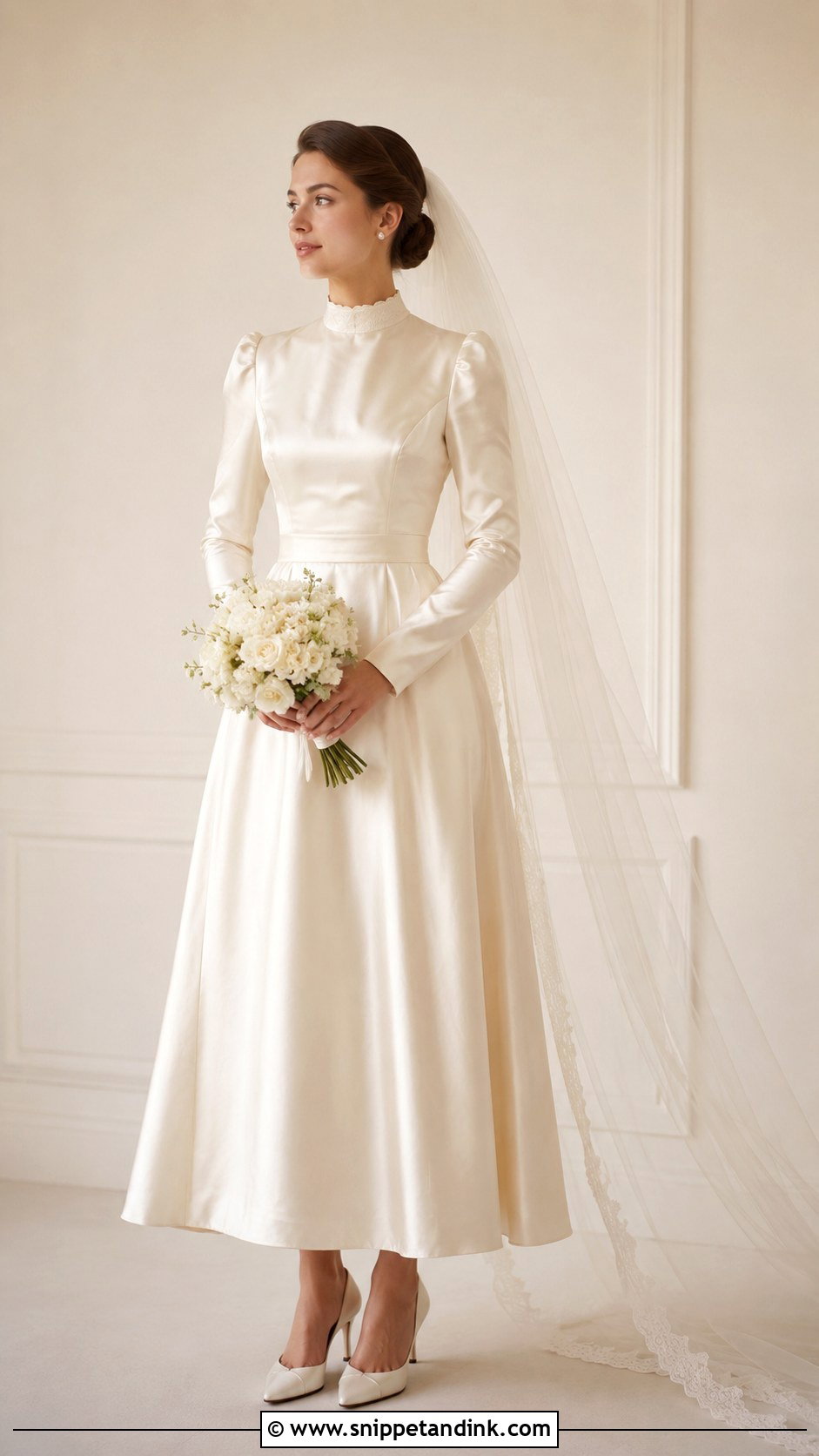
A high neck in crepe or satin draws attention up to the face and the hair, which suits the elaborate rolls and waves of the period. Long sleeves, a defined waist and a soft skirt complete the shape. Lace at the collar or cuffs softens it. I set the veil behind the crown rather than on top, so the collar and hairline stay visible. Pearl studs and a narrow bouquet keep the old-Hollywood restraint.
13. 1950s Off Shoulder Wedding Dress
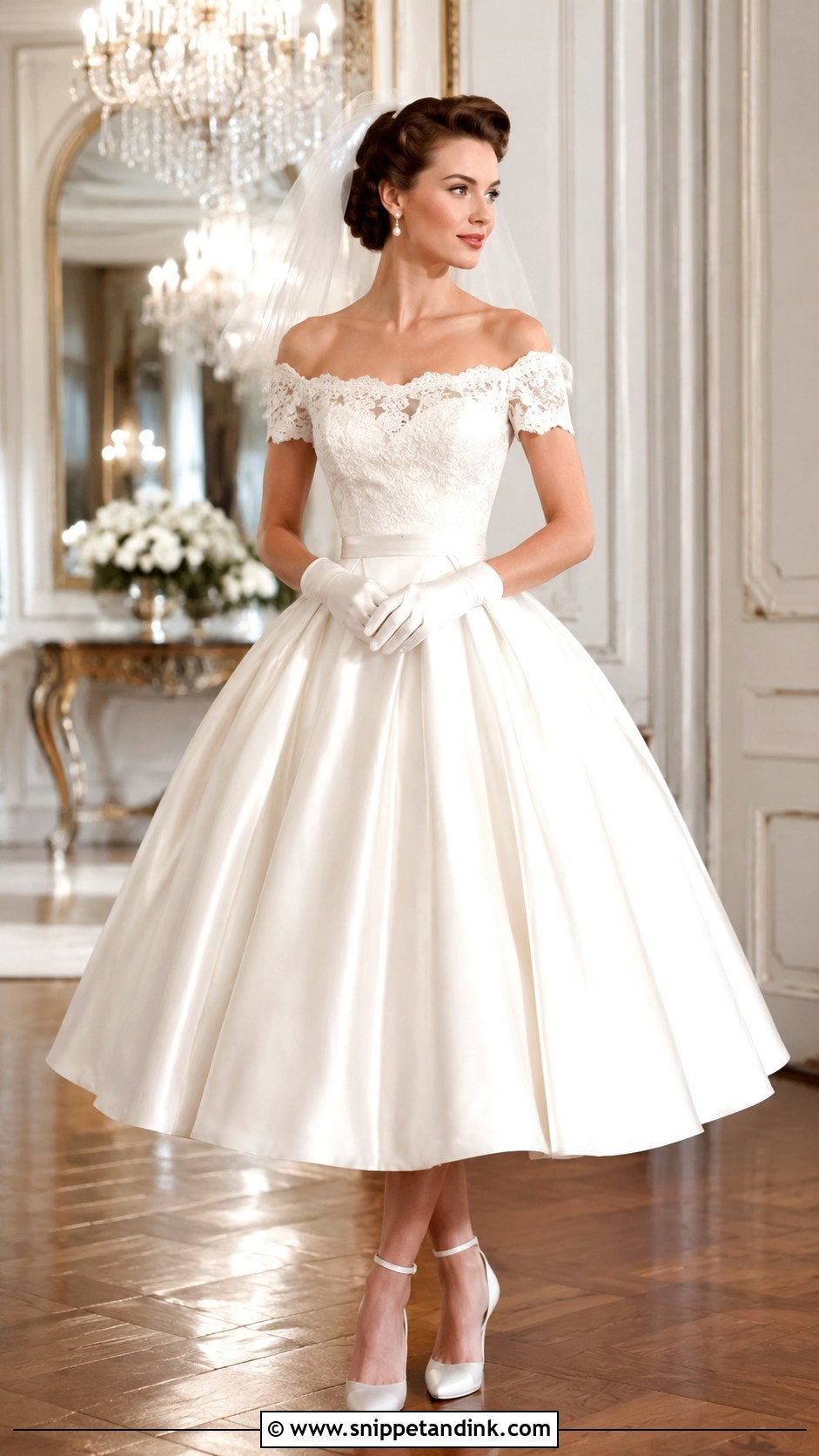
An off-shoulder fifties neckline gives a bit of glamour to a classic fitted bodice and full skirt. Satin and lace both suit it. Short gloves, pearl earrings and a neat updo keep it polished; pointed or ankle-strap pumps finish it. The skirt needs some structure so the bare shoulders and full hem balance each other. Choose a small veil or floral hairpiece rather than a heavy veil, which would drag the neckline down. Ballroom and formal receptions are its home.
14. 1940s Button Front Wedding Dress
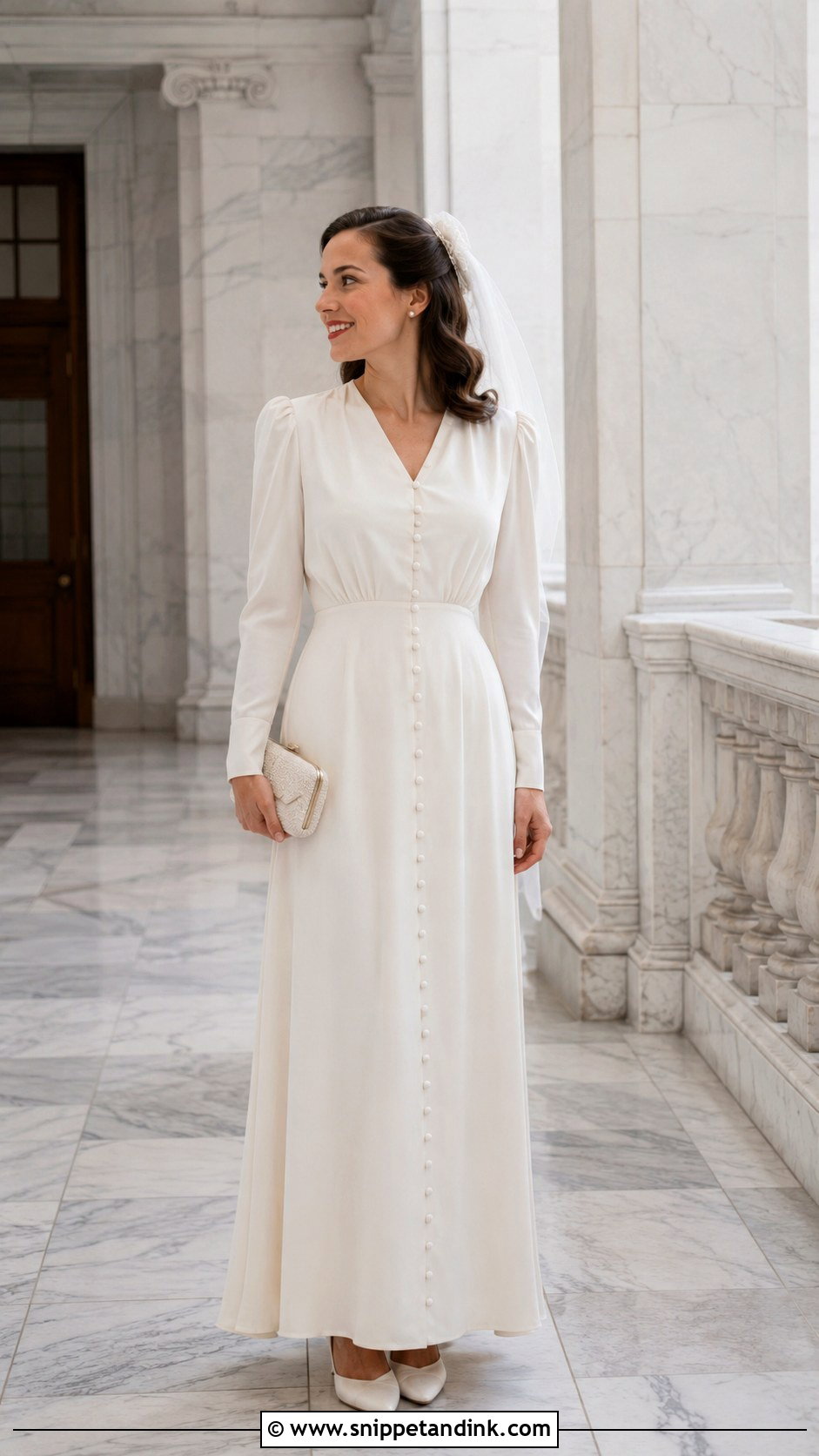
Fabric-covered buttons running down the front of a dress are pure forties: practical, because they meant a dress could be worn again, and a strong vertical line that makes you look taller. Crepe, satin or lightweight rayon with long sleeves and a slightly gathered waist suit it. Pair it with closed-toe shoes, a small veil and a simple clutch. Intimate weddings and elopements suit it best. Make sure the buttons are real and not just decorative over a zip, since gaping between buttons when you sit is the usual fitting problem.
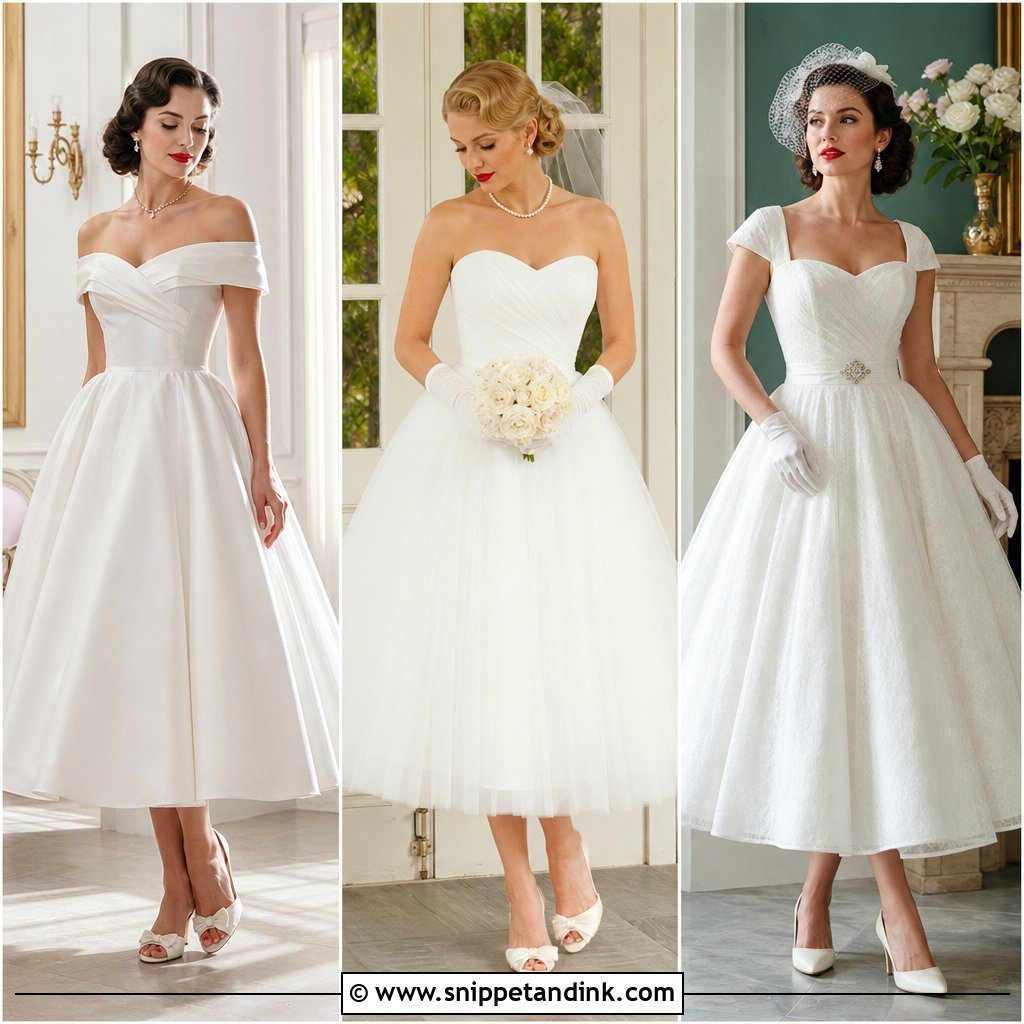

15. 1950s Polka Dot Wedding Dress
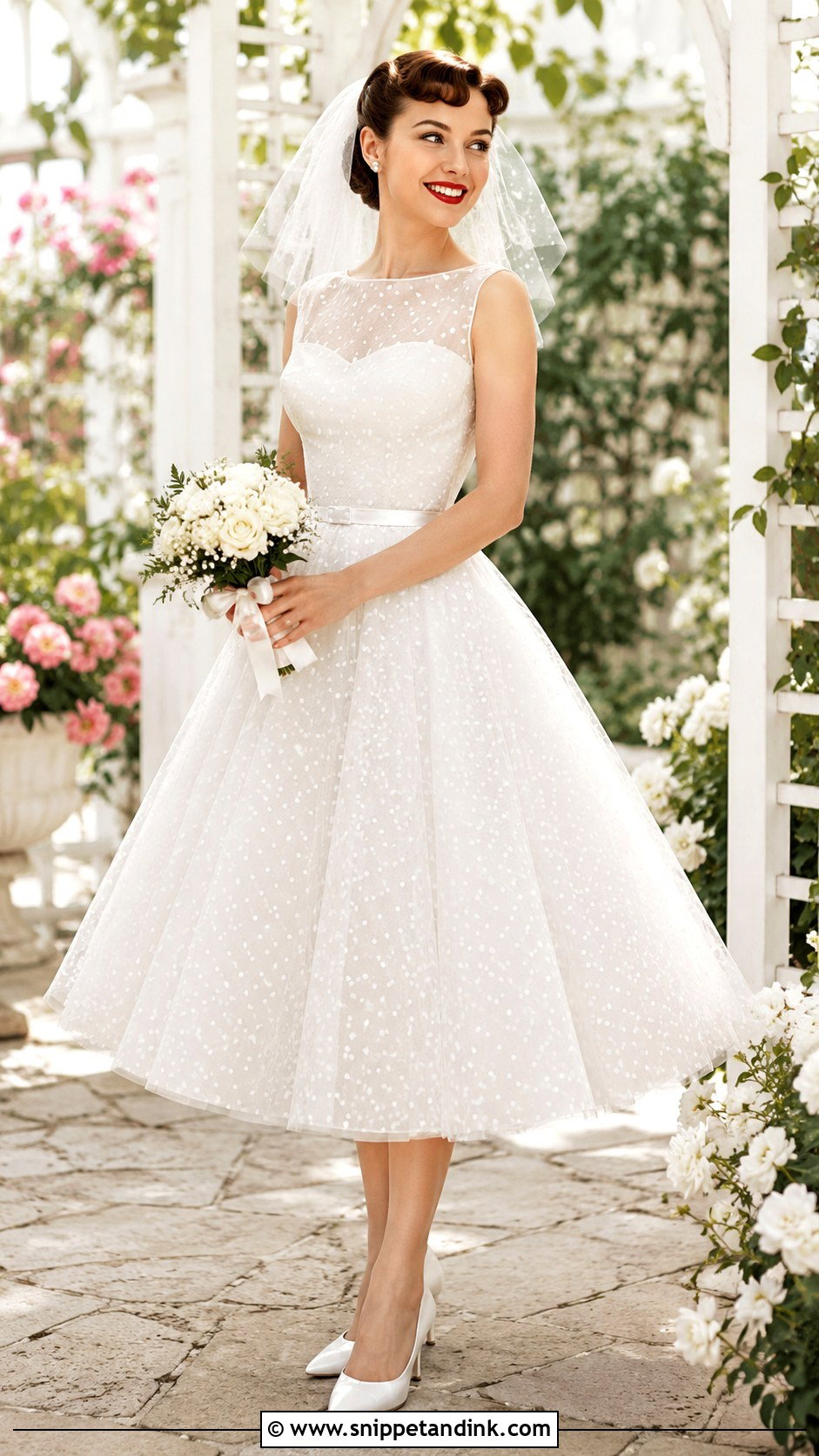
A 1950s polka dot wedding dress stays bridal when the dots are subtle: white on white, dotted tulle or flocked fabric rather than black on white. A fitted bodice and full tea-length skirt keep the shape classic. White pumps, a short veil, pearl earrings and a round bouquet finish it, with a slim satin belt at the waist. It suits informal and retro-themed weddings. Keep makeup clean and hair softly curled, and it looks cheerful rather than costumed.
16. 1940s Lace Sleeve Wedding Dress
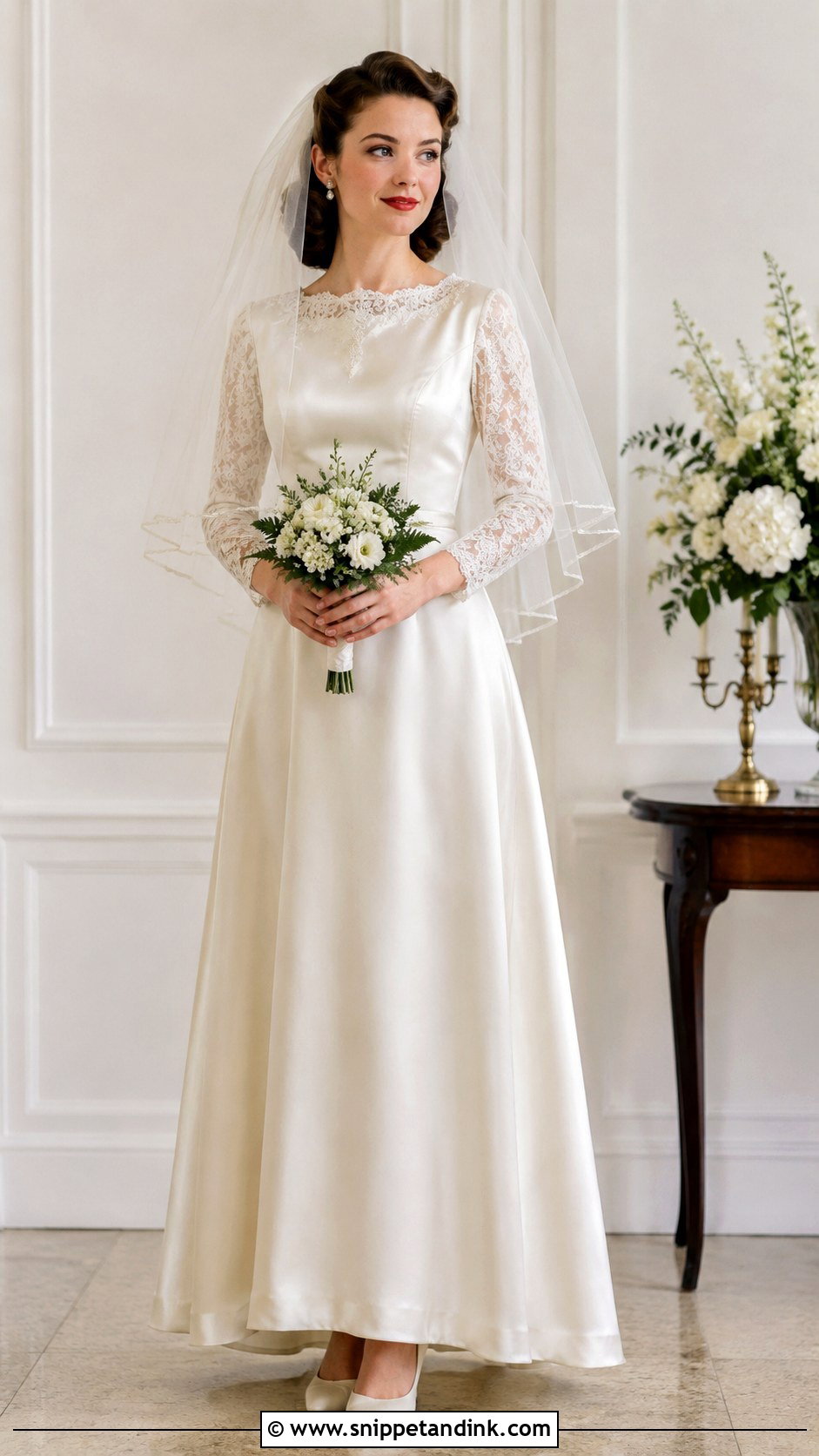
Lace sleeves on a crepe or satin gown add romance around the arms while keeping the body of the dress plain. A modest neckline and a gently shaped waist suit it. Ivory pumps, a waist-length veil, pearl earrings and a small bouquet complete it. If you buy an original, check the lace at the elbows and underarms first, since that is where old lace wears thin. A new lining under the sleeve can make it comfortable and protect the lace.
17. 1950s Full Skirt Wedding Dress
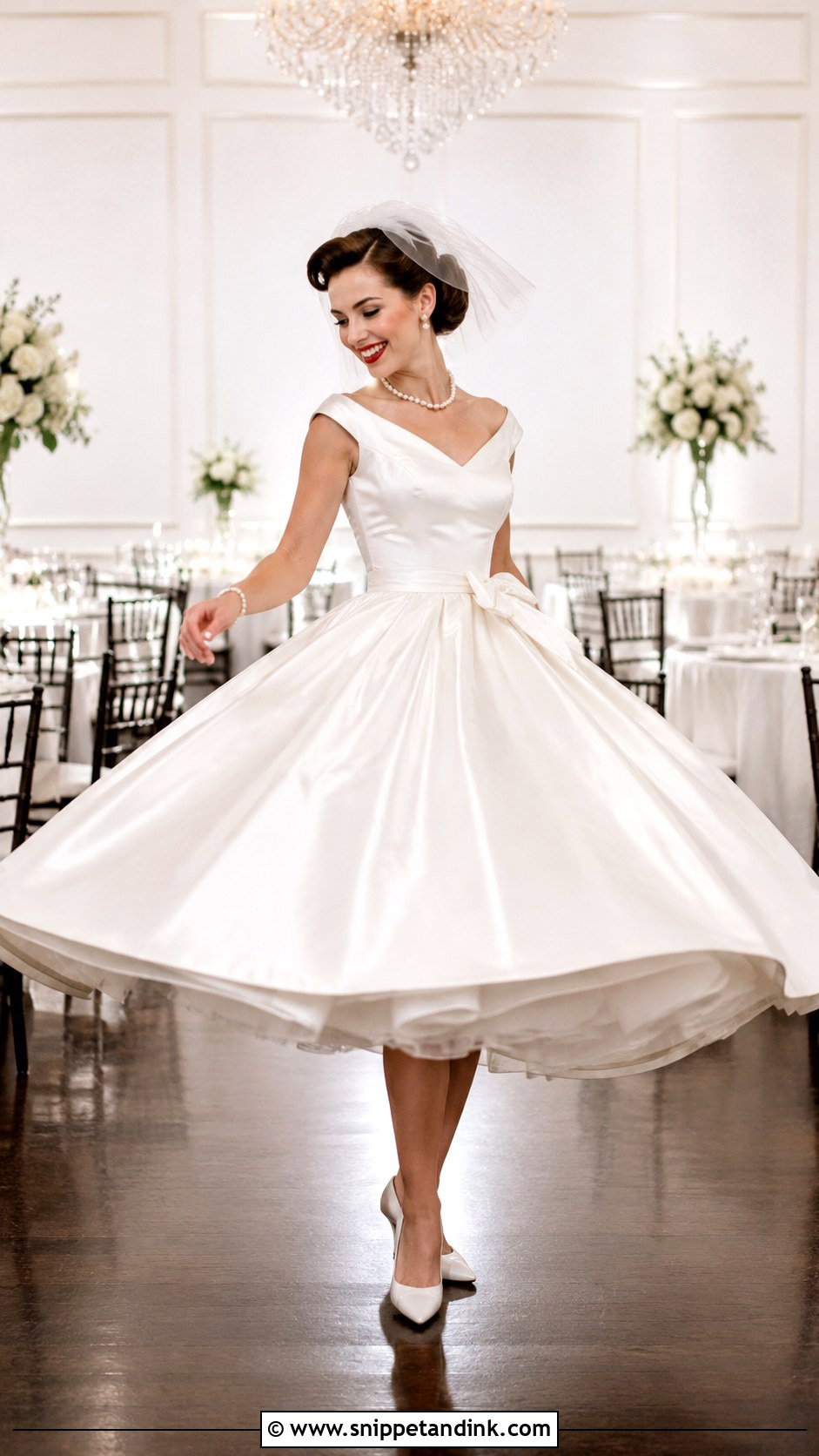
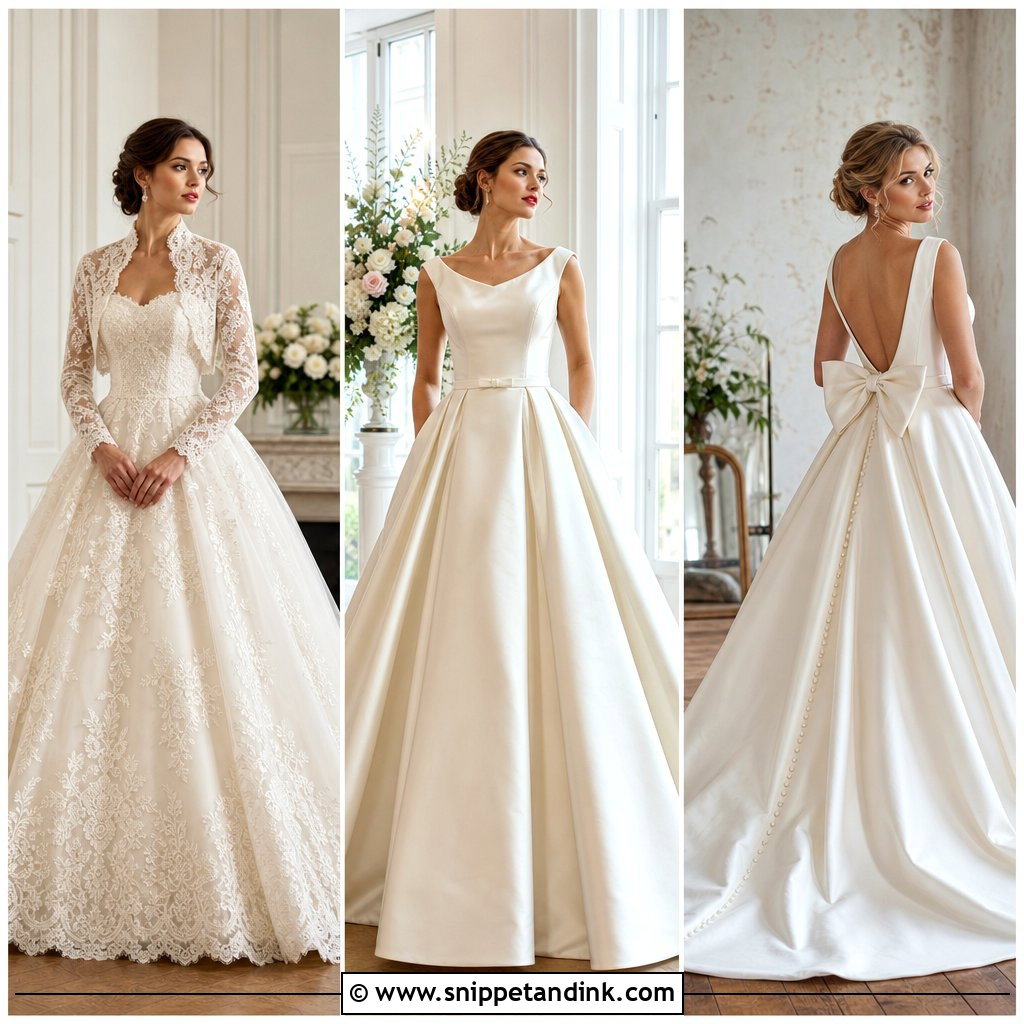
The fitted bodice and very wide skirt of the full-skirted fifties dress give the strongest hourglass on this list. Satin, taffeta, lace and organza all work, with a crinoline for extra lift. Keep the neckline simple when the skirt is this dramatic, and use a waist belt or bow for detail. Classic pumps, a short veil, pearls and a structured bouquet finish it. One practical point I always raise: a very full crinoline takes up a whole car seat and needs planning in the bathroom.
18. 1940s Puff Sleeve Wedding Dress
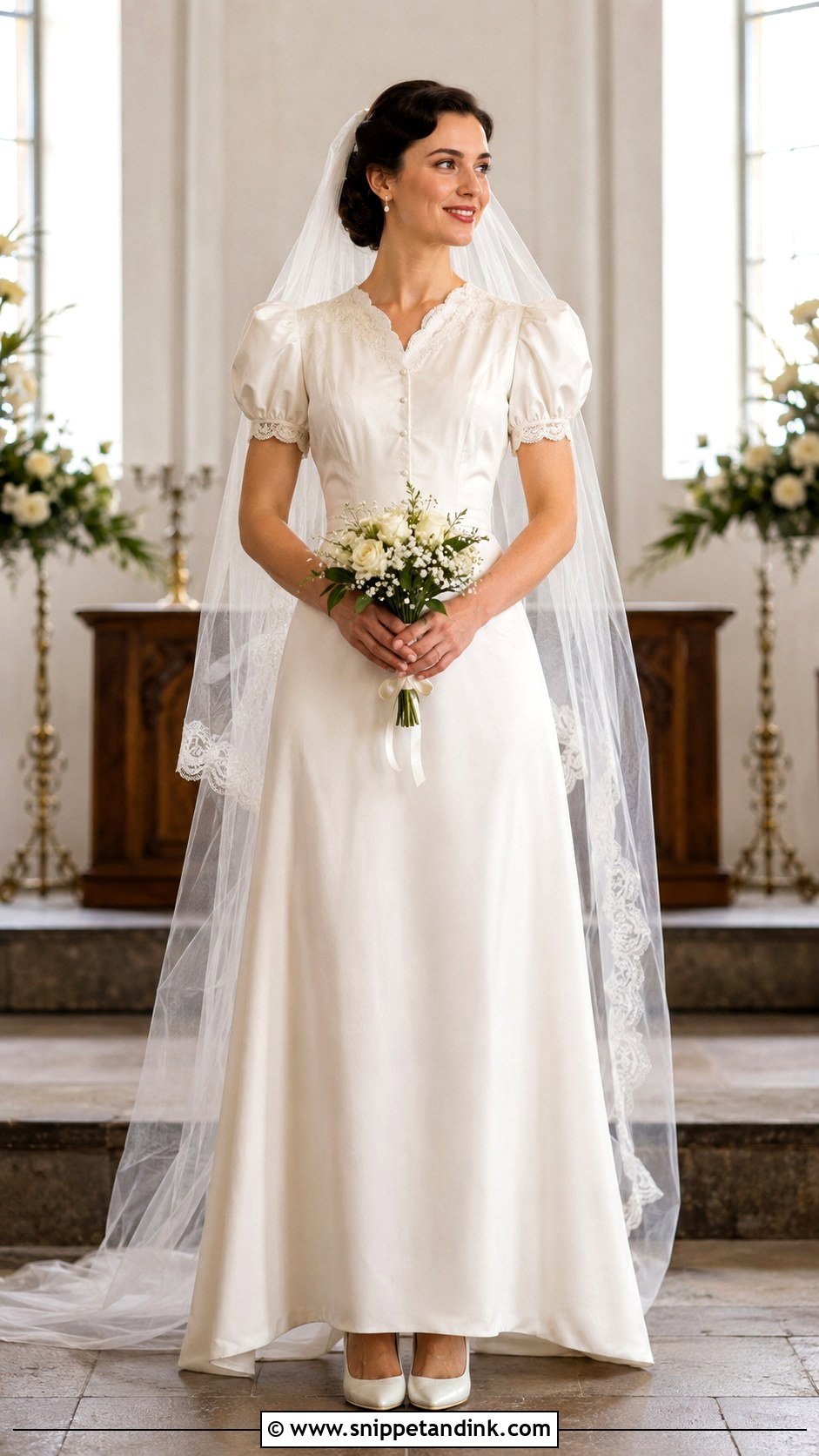
Shoulders were the focus of forties tailoring, and a softly puffed sleeve brings that into bridalwear. Keep the puff modest; oversized sleeves start to look eighties rather than forties. A narrow waist, smooth skirt and modest neckline balance the volume. Simple heels, a long veil and a small bouquet are all it needs, with pearl earrings or a slim bracelet. It suits brides who like historical fashion but want one distinctive feature instead of embellishment.
19. 1950s Halter Wedding Dress
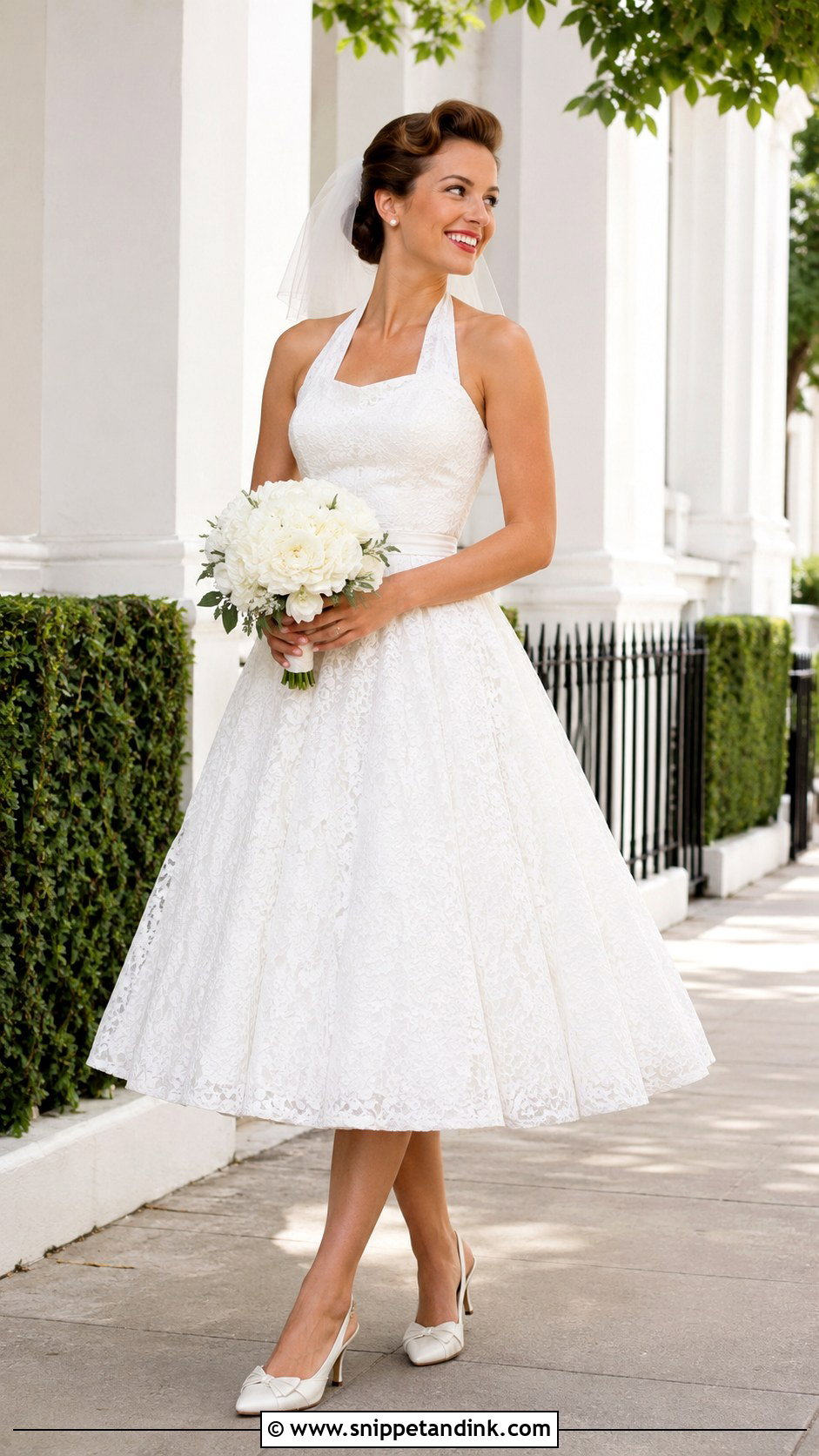
A halter neck gives a clean upper body and suits summer weddings and relaxed receptions. Pair it with a tea-length or full skirt in satin, cotton, eyelet or lace depending on how formal the day is. Slingbacks, pearl studs, a short veil and white blooms complete it. The waist needs definition, so add a sash or narrow belt. Halters put the weight of the dress on the neck, so I check the strap is wide enough to sit comfortably for hours.




20. 1940s Floor Length Wedding Dress
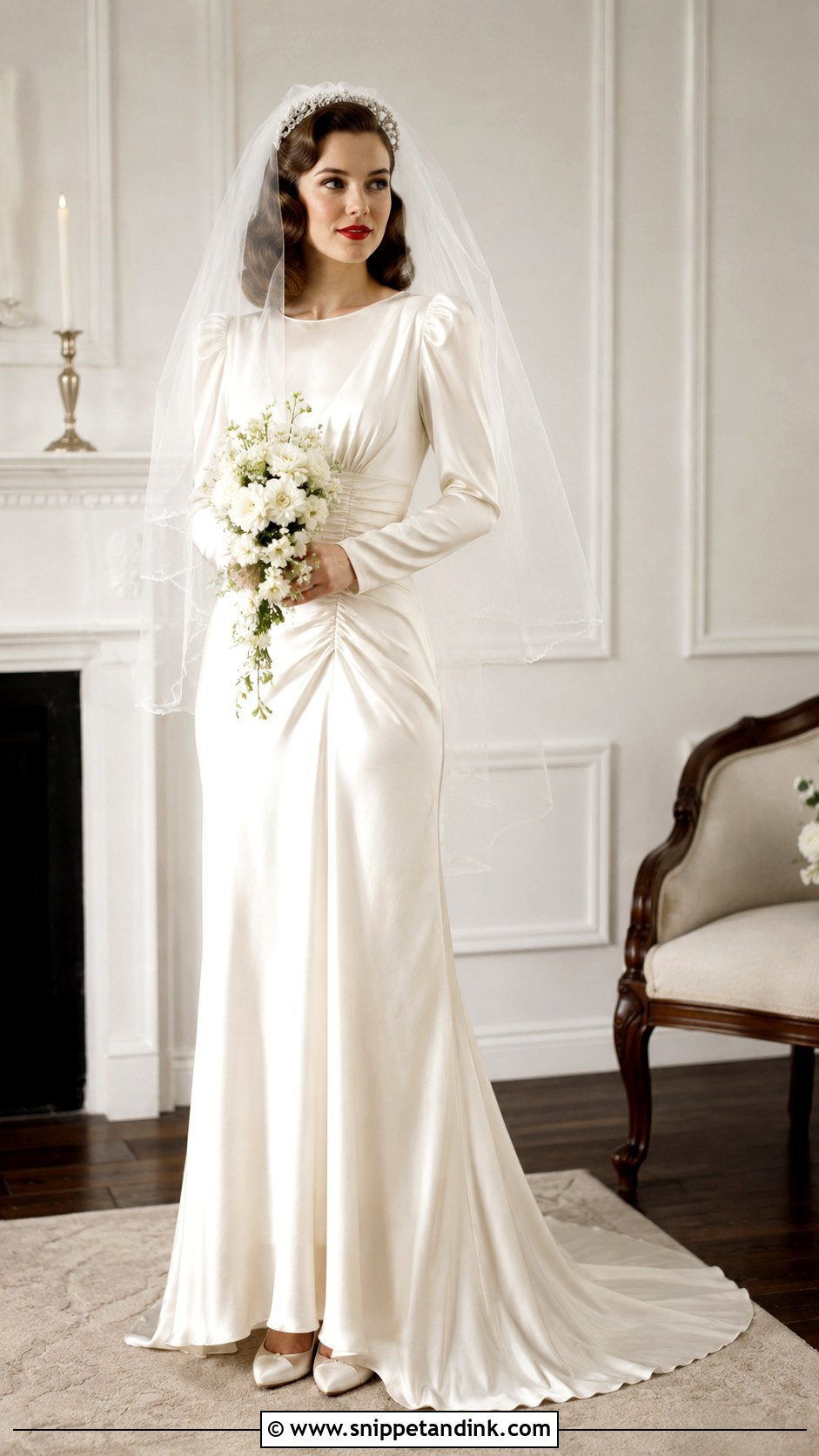
A floor-length forties gown flows rather than puffs: long sleeves, a gentle train, a soft waist, satin or crepe. It is the most traditional look here and suits a formal church or synagogue ceremony. A cathedral or fingertip veil, ivory pumps and a small bouquet complete it. Lace trim, covered buttons or a brooch add interest. Hair in waves or a low roll keeps it in period, and the absence of fifties volume is what makes it read as earlier.
21. 1950s Organza Wedding Dress
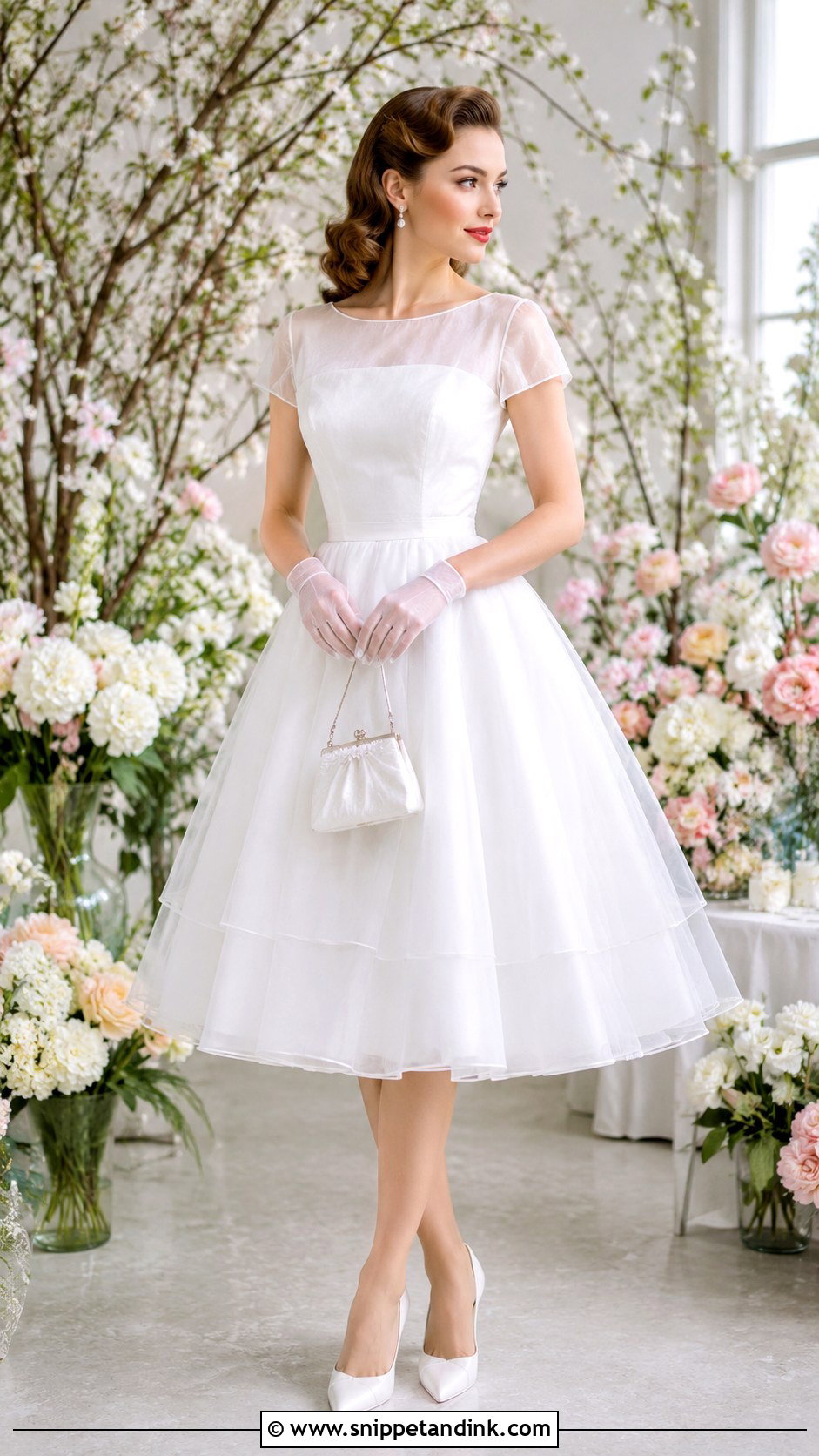
Organza is crisp and slightly sheer, which is why fifties designers used it for full skirts, short sleeves and layers. A fitted bodice with a tea or ballerina hem gives the clearest version. White heels, pearl earrings and a short veil suit it, with a small handbag for the reception. It is airy enough for spring and summer. Embroidered organza or floral appliqué adds texture. Organza creases sharply when crushed, so hang it, don’t fold it, the night before.
22. 1940s Peplum Wedding Dress
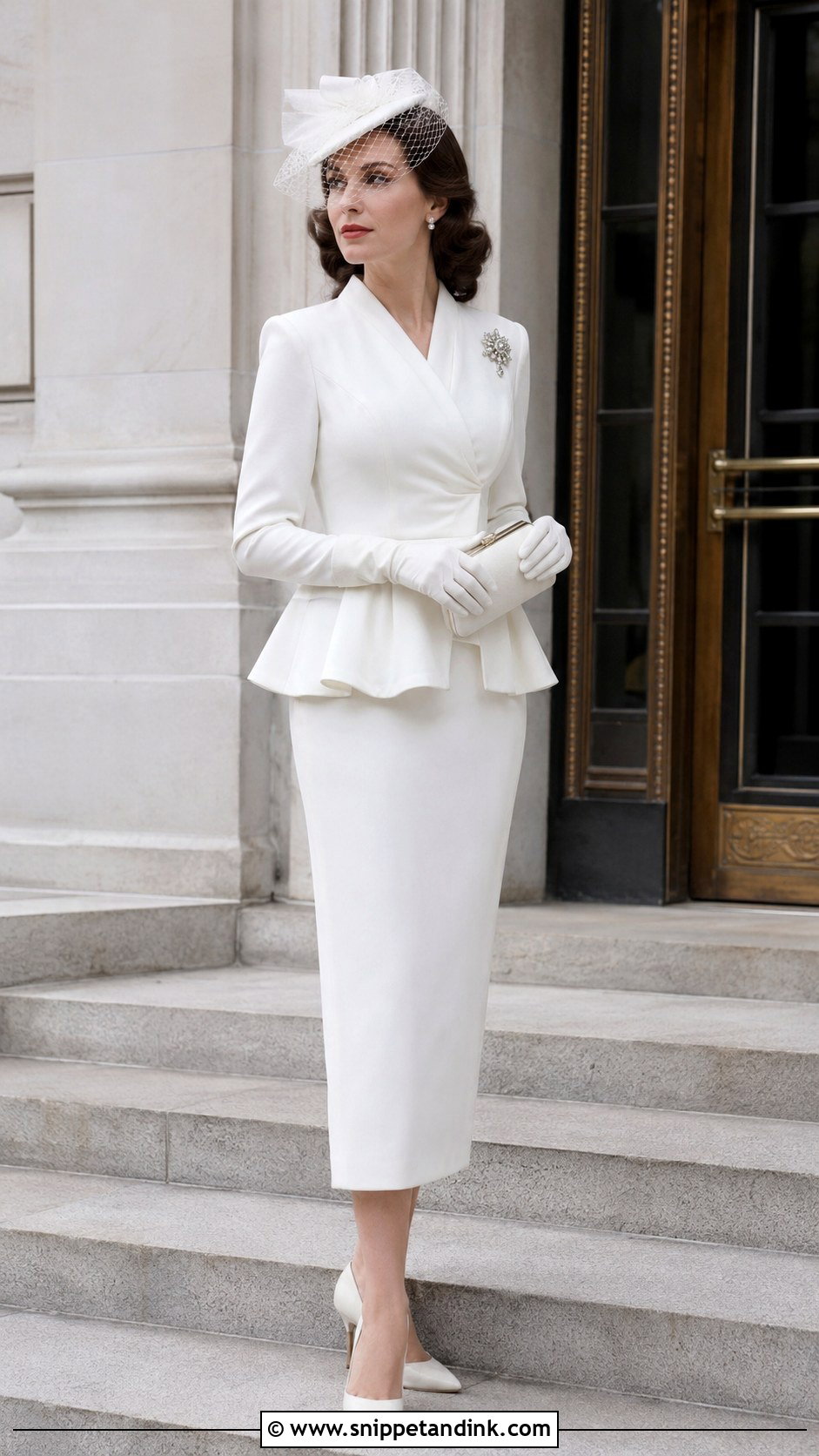
A peplum is a short flared overskirt at the waist, and on a forties dress it defines the waist while the skirt below stays narrow and tailored. Crepe, satin or rayon with long sleeves work best. Pointed pumps, gloves, a small hat or veil and a structured clutch finish it. It suits courthouse weddings and small ceremonies. I find it flatters straighter figures especially well, because the peplum creates hips and a waist. Keep jewellery to pearl studs or a brooch.
23. 1950s Lace Jacket Wedding Dress
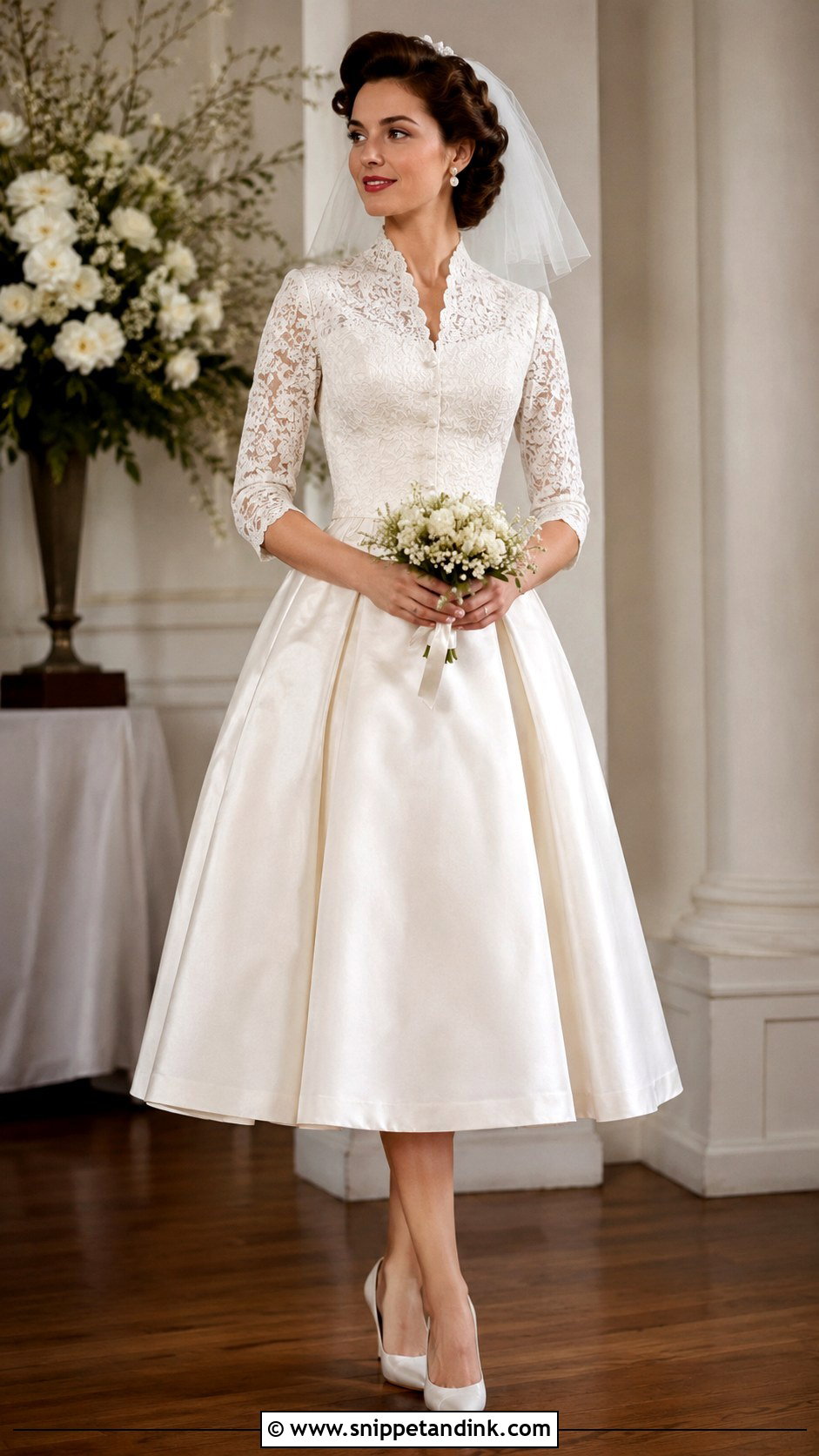
A 1950s lace jacket wedding dress solves the coverage question neatly: a strapless or sleeveless satin dress for the party, with a fitted lace jacket on top for the ceremony. The skirt can be tea, ballerina or full length. Satin pumps, pearl earrings and a short veil suit it. Choose lace that matches the dress or is one shade softer; a slight mismatch in white looks like a mistake. I have the jacket fitted over the dress, not separately, so it closes neatly at the waist.
24. 1940s Embroidered Wedding Dress
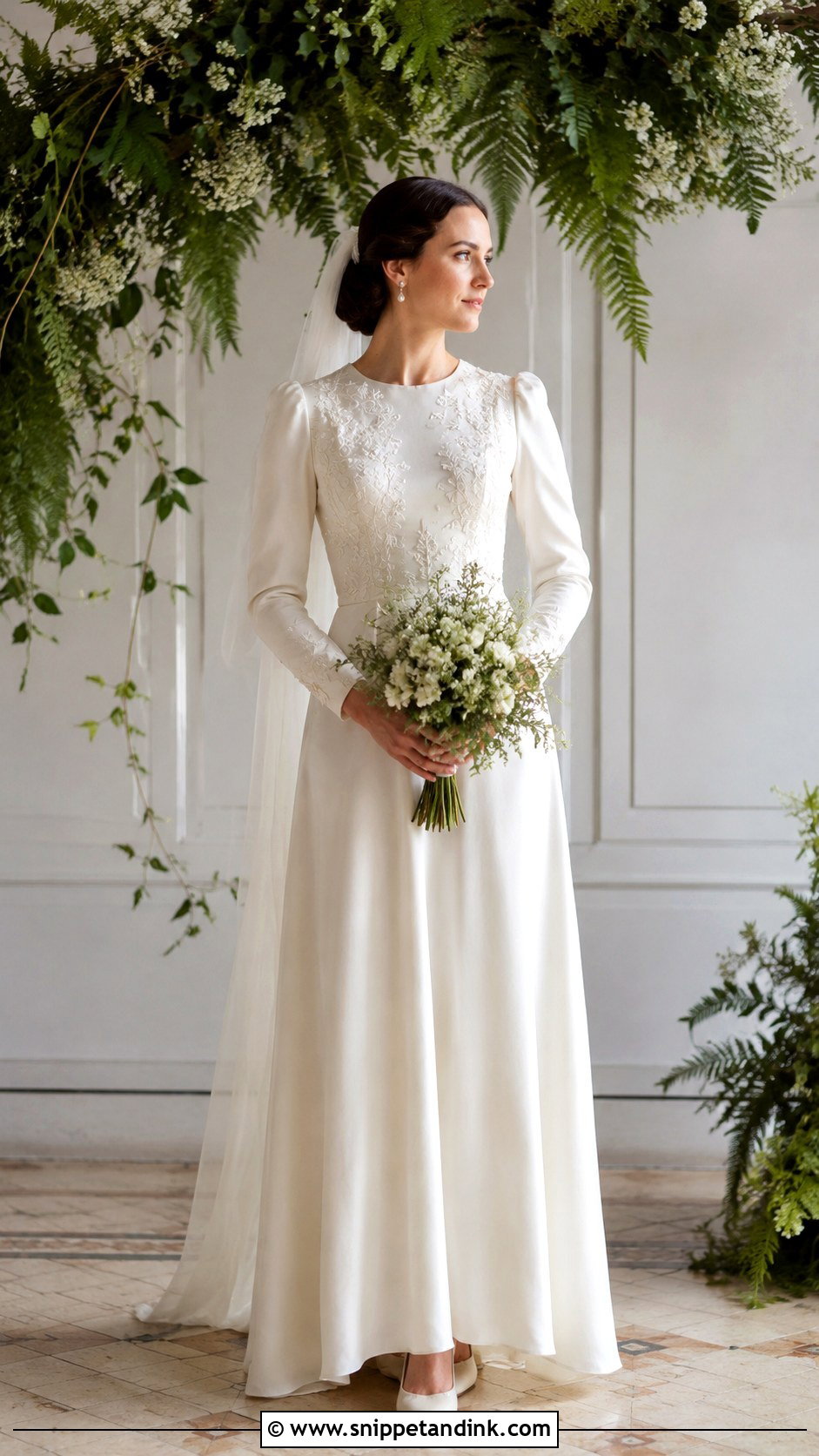
Embroidery on a forties dress was often delicate and floral, placed on the bodice, sleeves, hem or even the veil. The base is usually crepe, satin or light rayon with a modest neckline and softly shaped waist. Simple pumps and pearl earrings let it speak. I like a bouquet that echoes the embroidery without copying it. It suits brides who want detail but dislike beading. A low bun or soft waves completes the mood.
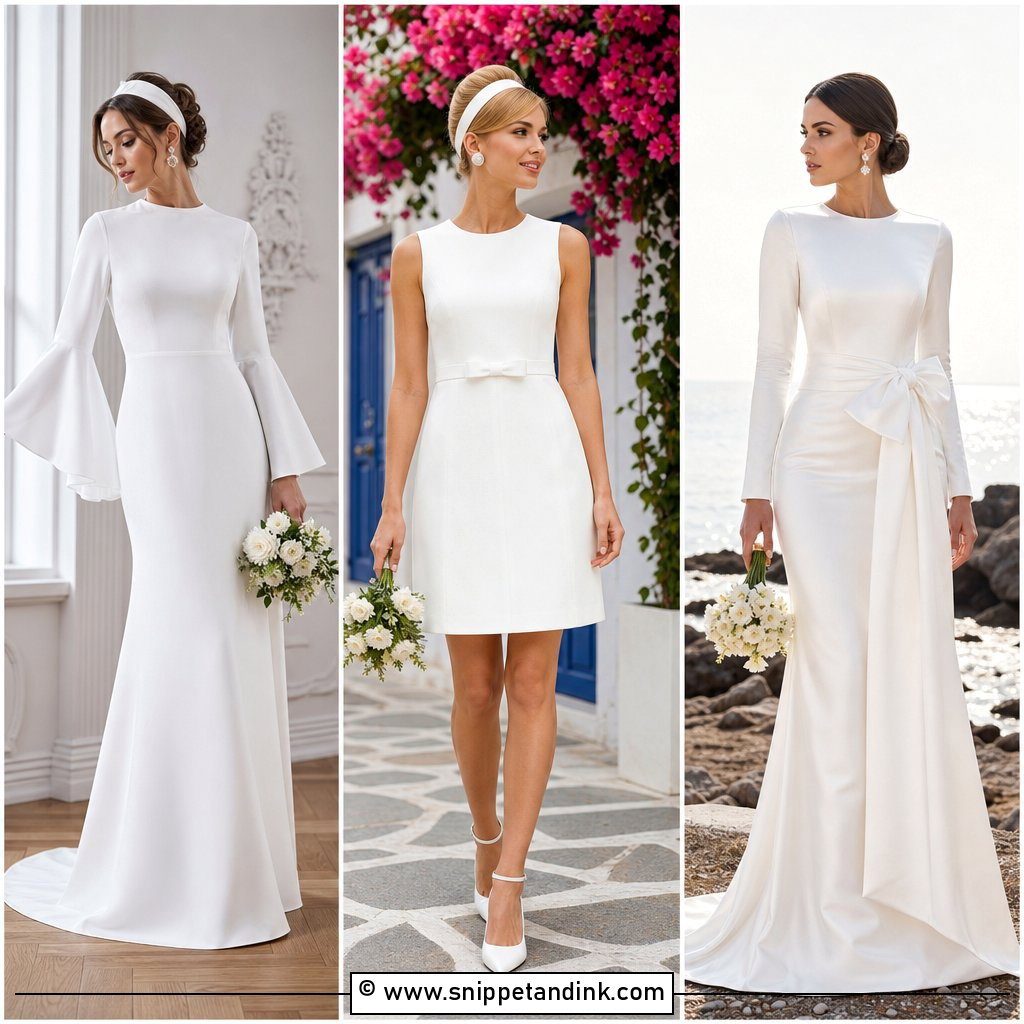
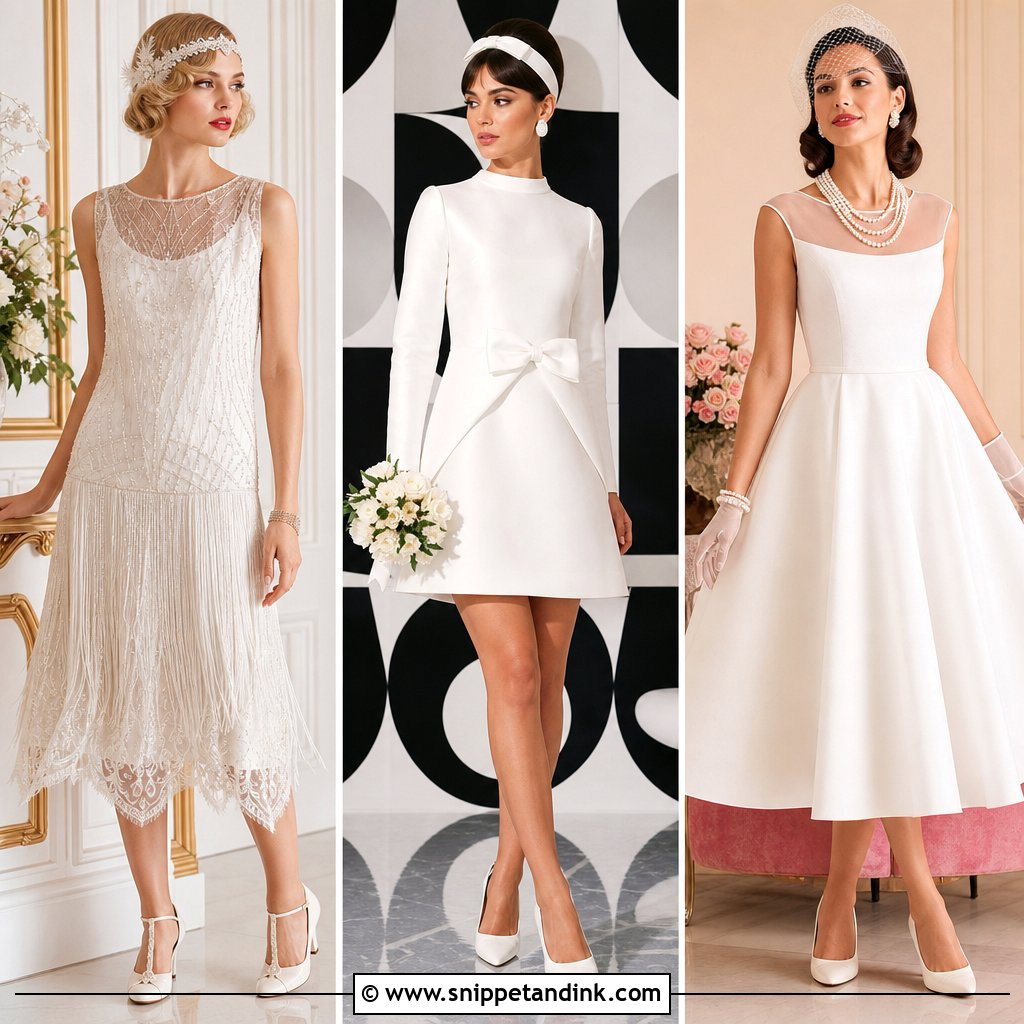


25. 1950s Reception Wedding Dress
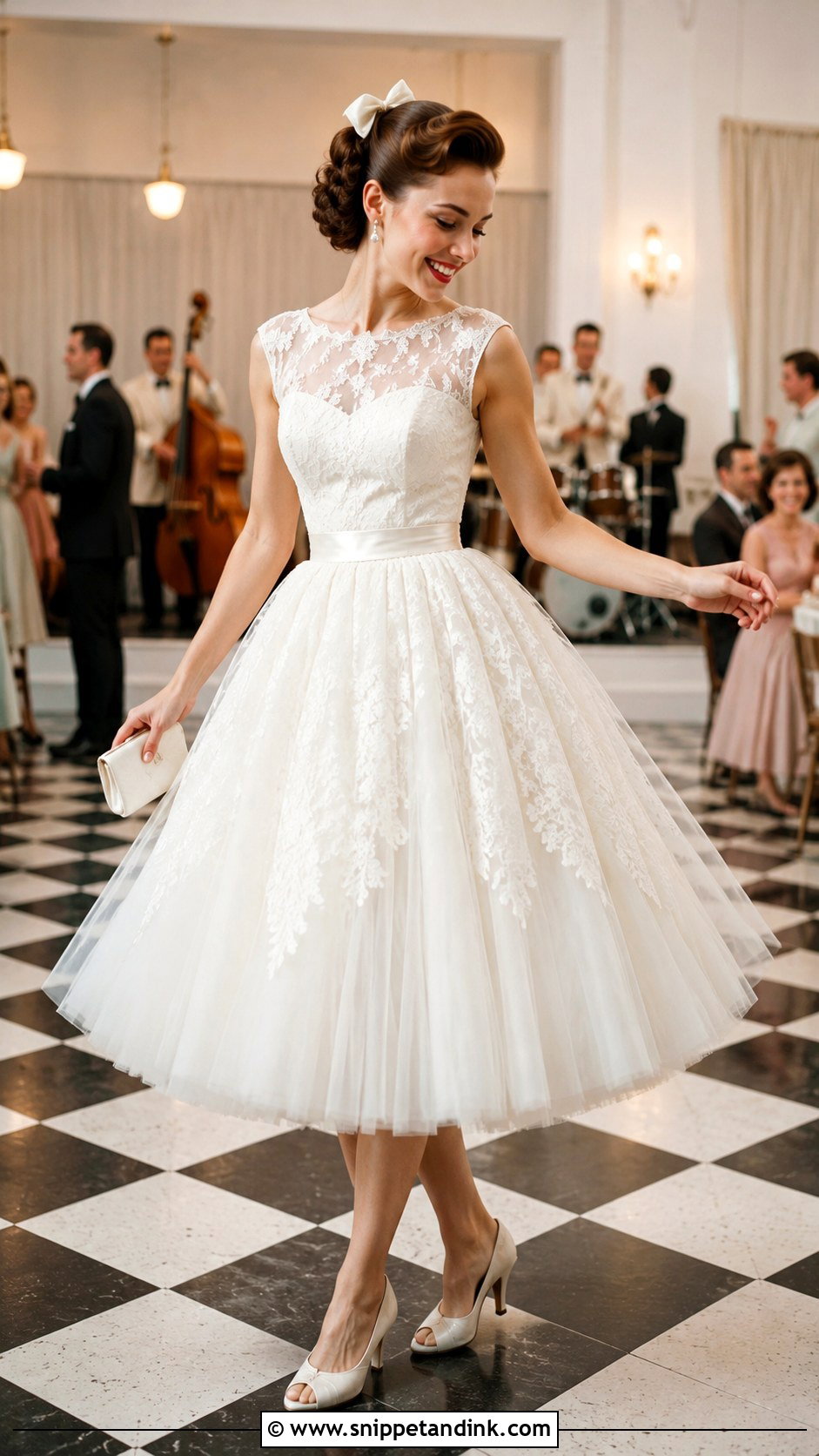
A short or tea-length fifties dress makes a good second look for the reception: fitted bodice, full skirt, light layers of tulle, lace or organza. Comfortable heels, pearl earrings, a small clutch and a short veil or hair bow keep it bridal. A satin sash or bow at the waist adds a classic touch. Change into it after dinner, before the first dance, so your photographer catches both looks while the light is still good.
The Silhouette Starts Underneath the Dress
Mid-century dresses were cut to sit over shaping underwear, and modern brides trying them on in a bra and briefs are often disappointed. The dress is not wrong; the foundation is missing.
For fifties shapes, a petticoat or crinoline is what holds the skirt out, and a longline bra or light waist cincher gives the bodice its smooth line down to the waist. Bring them to every fitting, since the hem length changes once the skirt is lifted by a petticoat. For forties crepe and bias-cut satin, the aim is the opposite: smooth, flat-edged pieces that leave no ridges, sometimes a slip cut on the bias to help the dress glide.
Shoes matter just as much. Period pumps had a lower, sturdier heel than a modern stiletto, and choosing one changes how you walk in the dress. Buy them before the hem is set, and wear them around the house for a week so the leather softens before the wedding.
A Retro Bride Is Built From Head to Hem
What I love about these two decades is their range. A tailored suit, a smooth satin gown, lace sleeves and a full tea-length skirt all sit within the same vintage mood. The dress is only part of it; shoes, veil, gloves, hair, jewellery, underpinnings and bouquet all decide whether the look feels authentic. Start from your venue and how comfortable you want to be, then build outward from the dress. Styled with care, any of these looks will feel nostalgic and still entirely yours.
You'll Like These Ideas:







Leave a Reply