
Lace is the fabric I pull most often in a first appointment, and it is also the one brides misjudge most from photos. The same motif can read vintage, clean or formal depending on what sits under it, how it is cut and the silhouette carrying it. Right now designers are pairing it with corset bodices, Basque waists, raised flowers, detachable sleeves and lighter skirts that let you actually move. Below are twenty lace gowns I’d happily put a bride in, each with the veil, shoes and jewelry I would reach for, plus the fitting checks that save trouble later. Use them to work out which silhouette you want before you start falling for individual dresses.
Chantilly, Alençon or Guipure: Telling Lace Apart in the Fitting Room
Brides often fall for a photo and then feel disappointed by the real dress, and very often the difference is the type of lace. Before you compare silhouettes, it helps to know what you’re touching.
- Chantilly is fine and flat with a delicate outline. It drapes softly and suits sheaths and sleeves, but it snags easily on jewelry.
- Alençon has a corded outline around each motif, which gives it more definition and weight. It photographs crisply and holds its shape on structured bodices.
- Guipure has no net background; the motifs join each other directly. It feels heavier and reads graphic or boho rather than romantic.
- Re-embroidered or beaded lace adds threads, sequins or pearls on top. It catches light, but adds weight and makes alterations slower.
Run your hand over the bodice and ask the consultant what the lace is and what it sits on. A soft lace over a firm lining behaves very differently from the same lace over a stretch base. Then ask whether the motifs are cut and appliquéd or woven as one piece, because appliquéd lace is far easier for a seamstress to take in or move around a seam.
1. A-Line Lace Wedding Dress
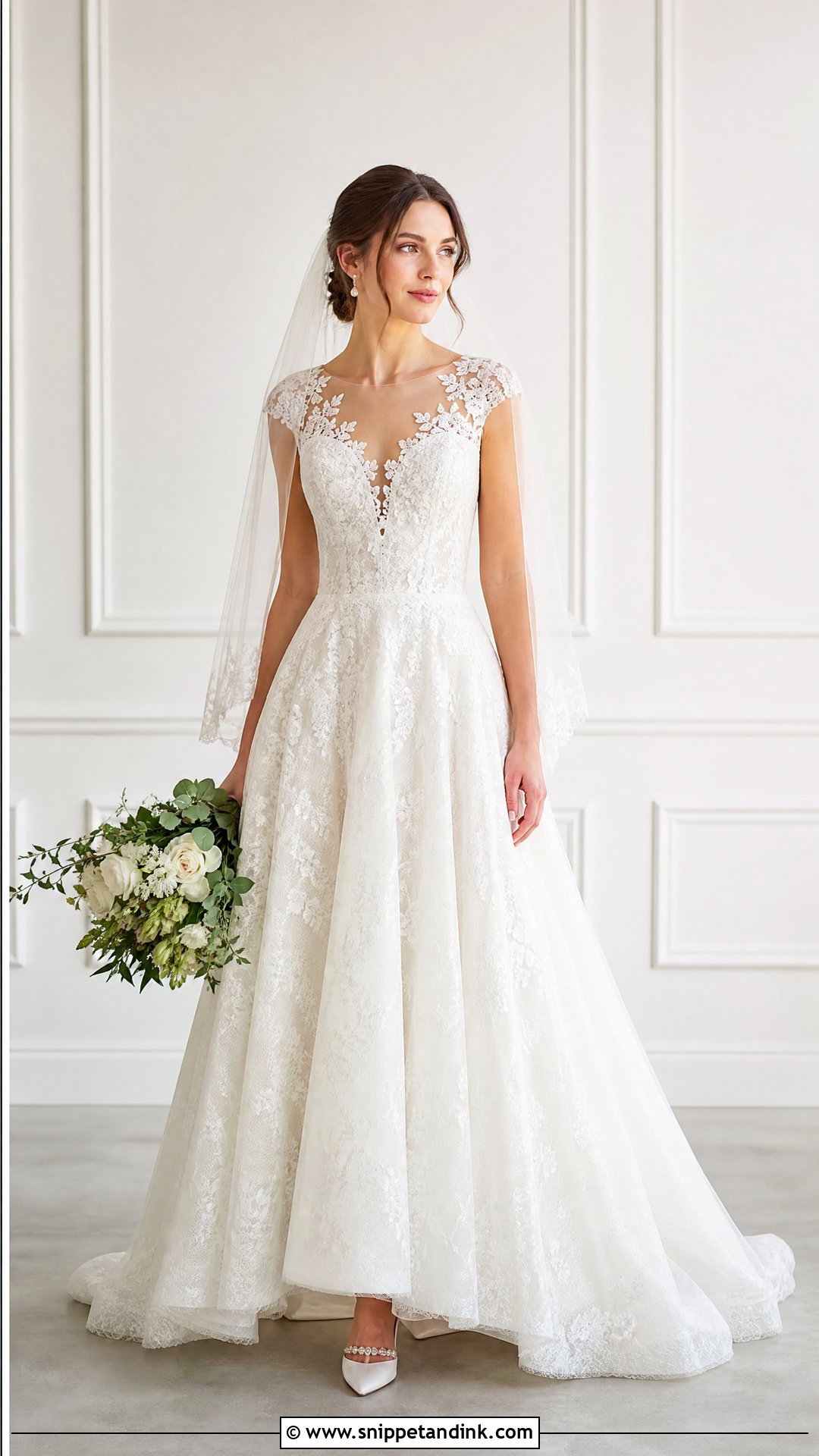
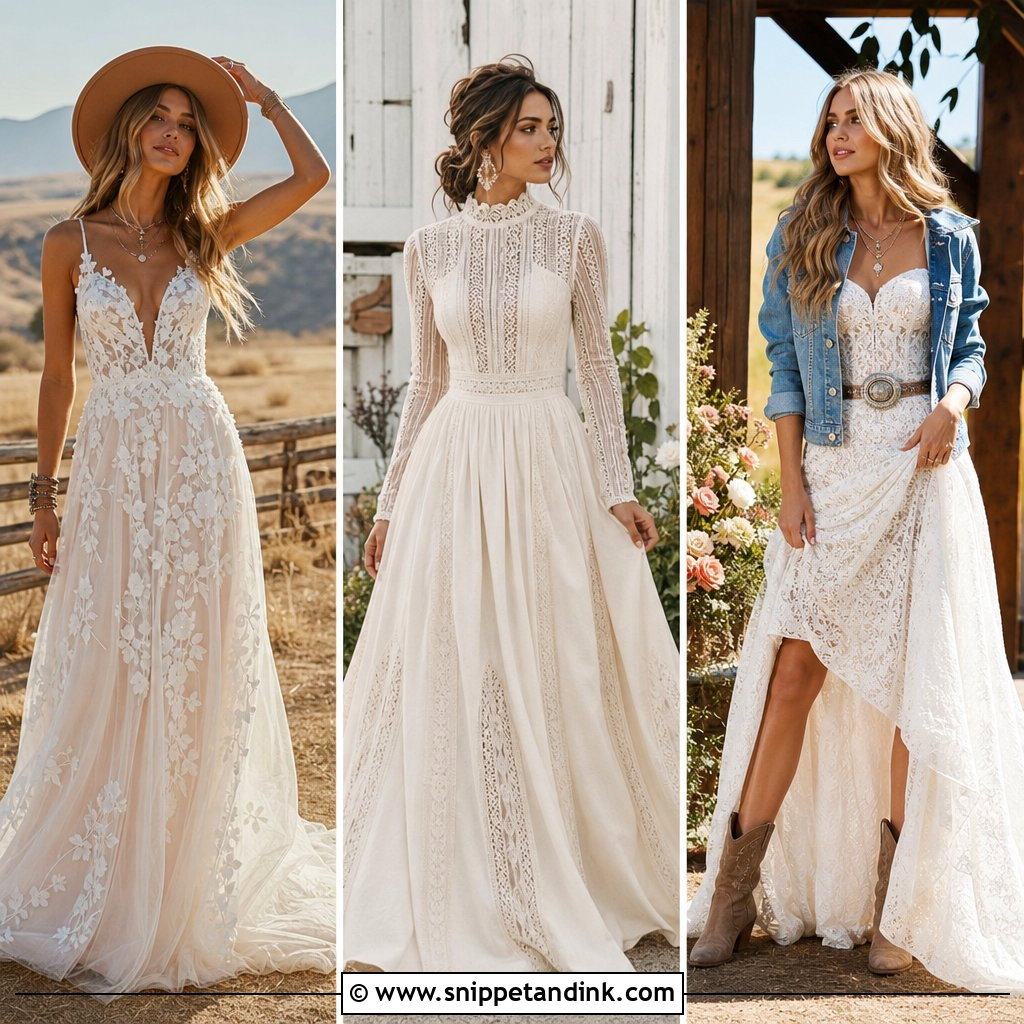
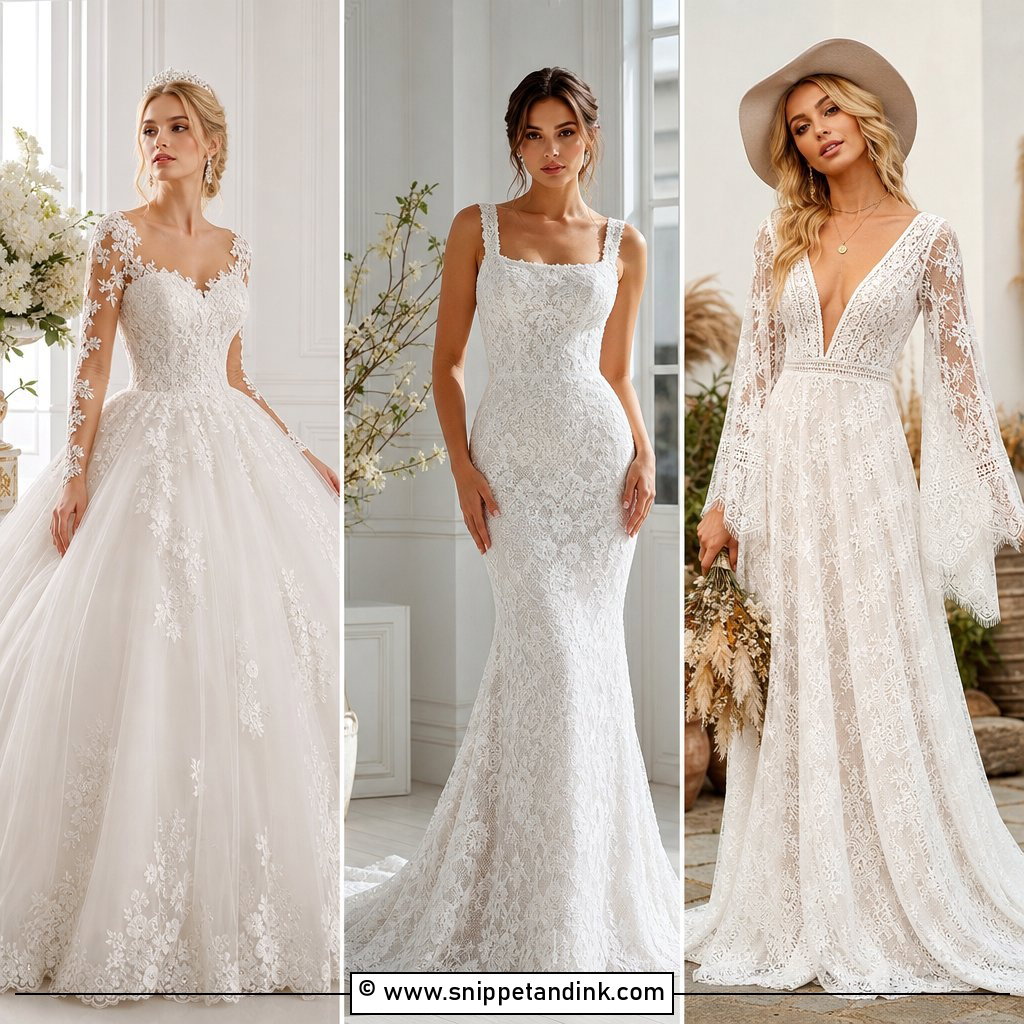
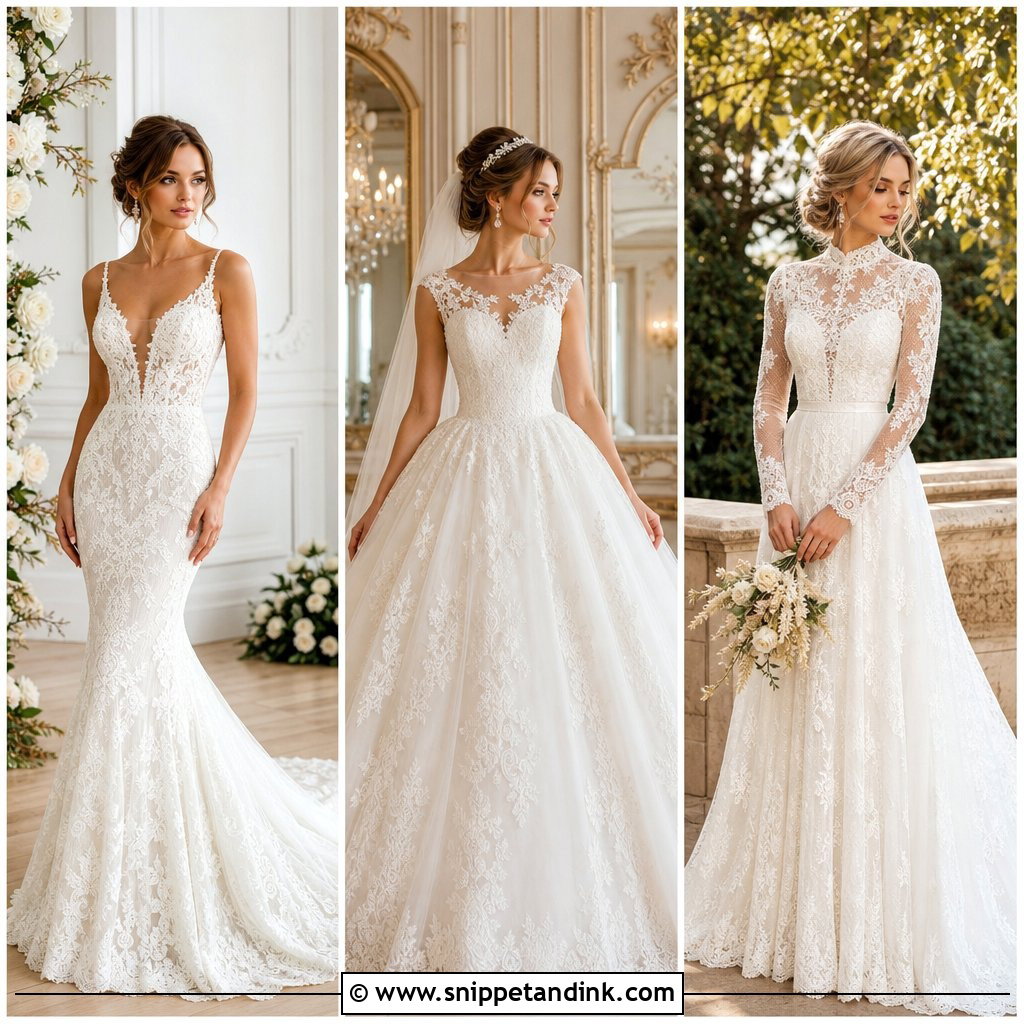
This is the gown I hand a nervous bride first, because almost nobody feels trapped in it. The bodice follows the body and the skirt opens gradually from the waist, so you can sit, walk and dance without hitching anything. Allover floral lace gives a traditional finish; appliqués scattered over plain tulle look lighter and cost less to alter, since the seamstress can lift and reposition motifs instead of cutting through pattern. A soft V-neck lengthens the torso. I’d style it with a fingertip veil, pearl drops and pointed ivory pumps, and keep the bouquet small so the lace is still visible above it.
2. Long Sleeve Lace Wedding Dress
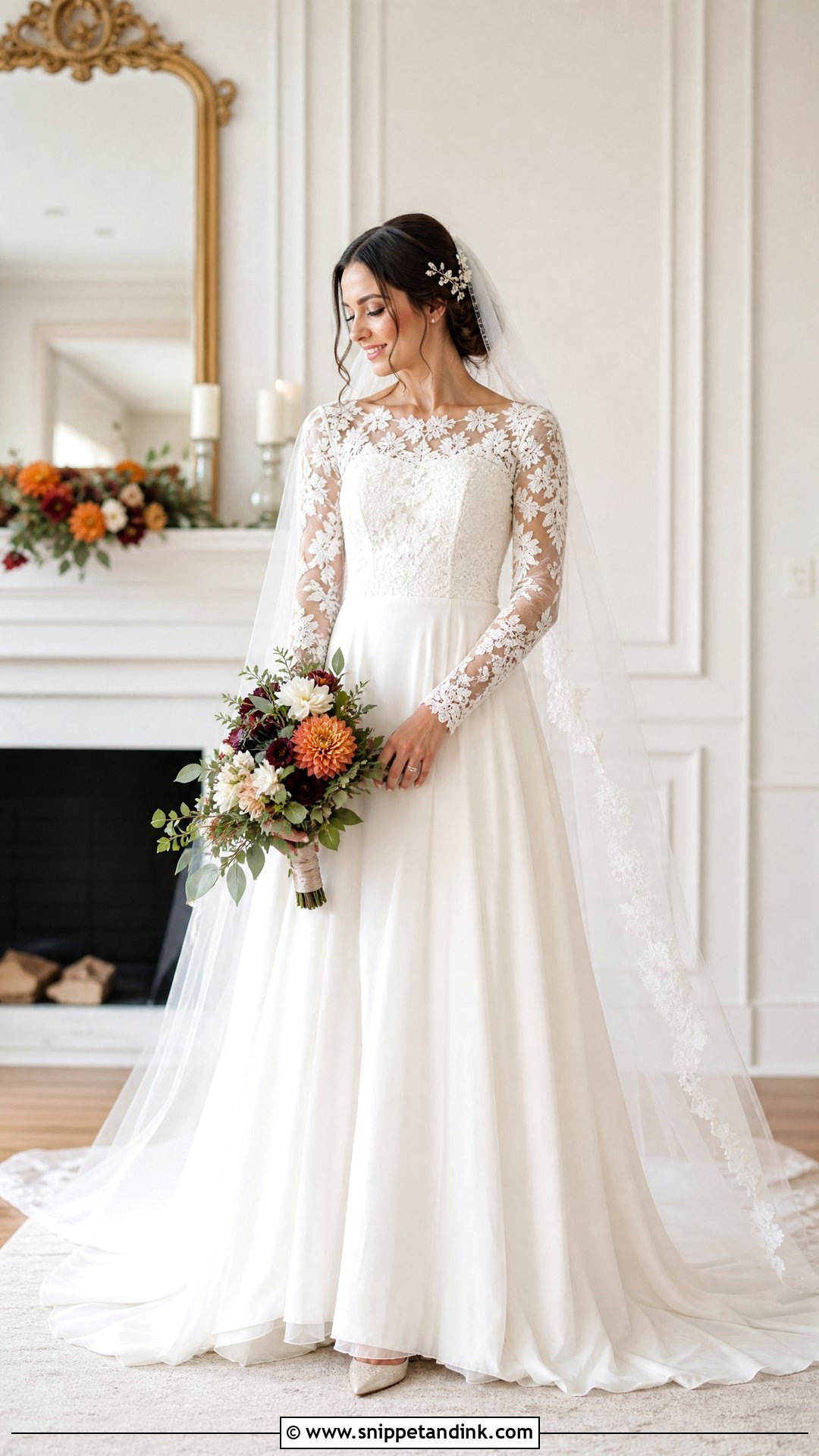
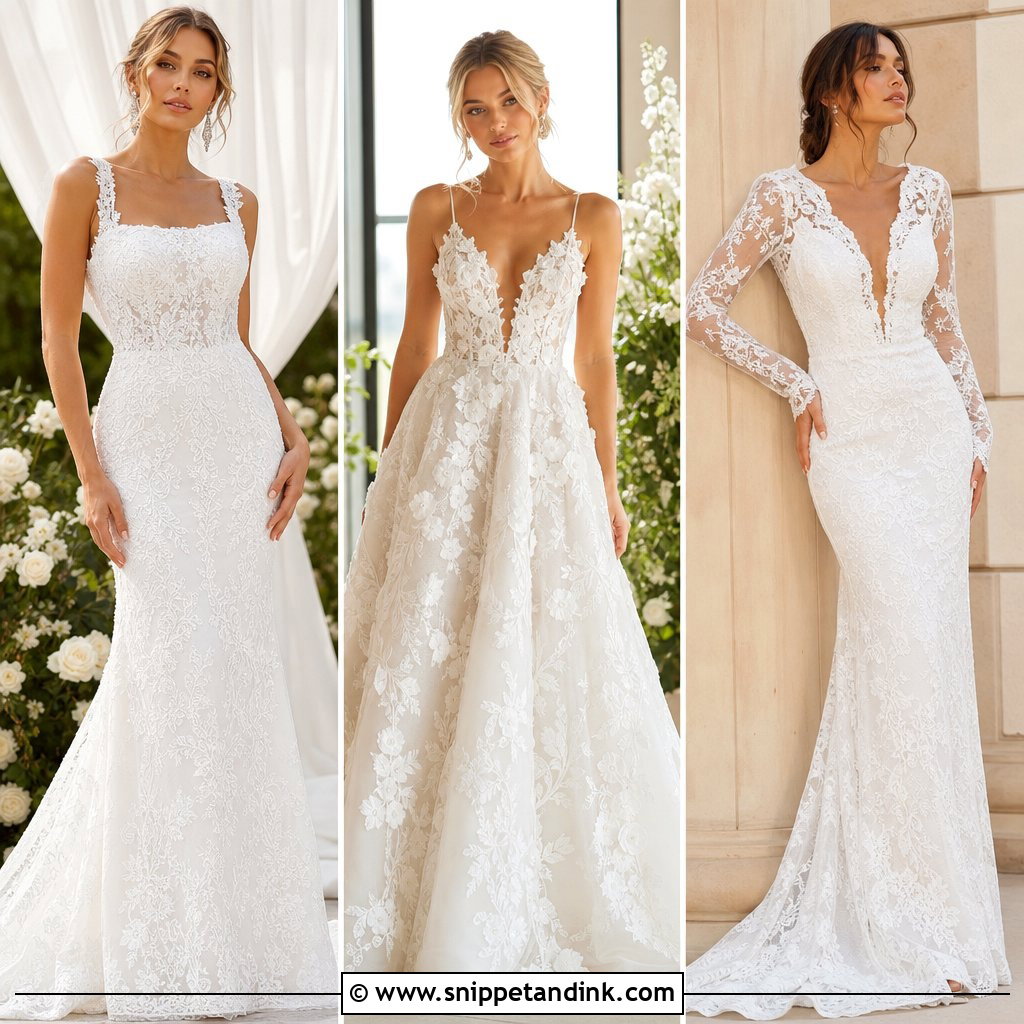
Illusion sleeves are the reason most autumn brides end up in lace. The mesh almost disappears against the skin, so the flowers look as if they are resting on your arms. At a fitting I always ask the bride to hug me, because sleeves that are tight at the bicep will pull the back seam the first time she reaches for anyone. A lined bodice keeps it classic; a lightly sheer neckline modernizes it. Keep the skirt flowing so the sleeves don’t make the gown feel heavy, then add a low bun, crystal pins, simple studs, closed-toe heels and a sheer cathedral veil long enough to pass the train without hiding the back lace.
3. Mermaid Lace Wedding Dress
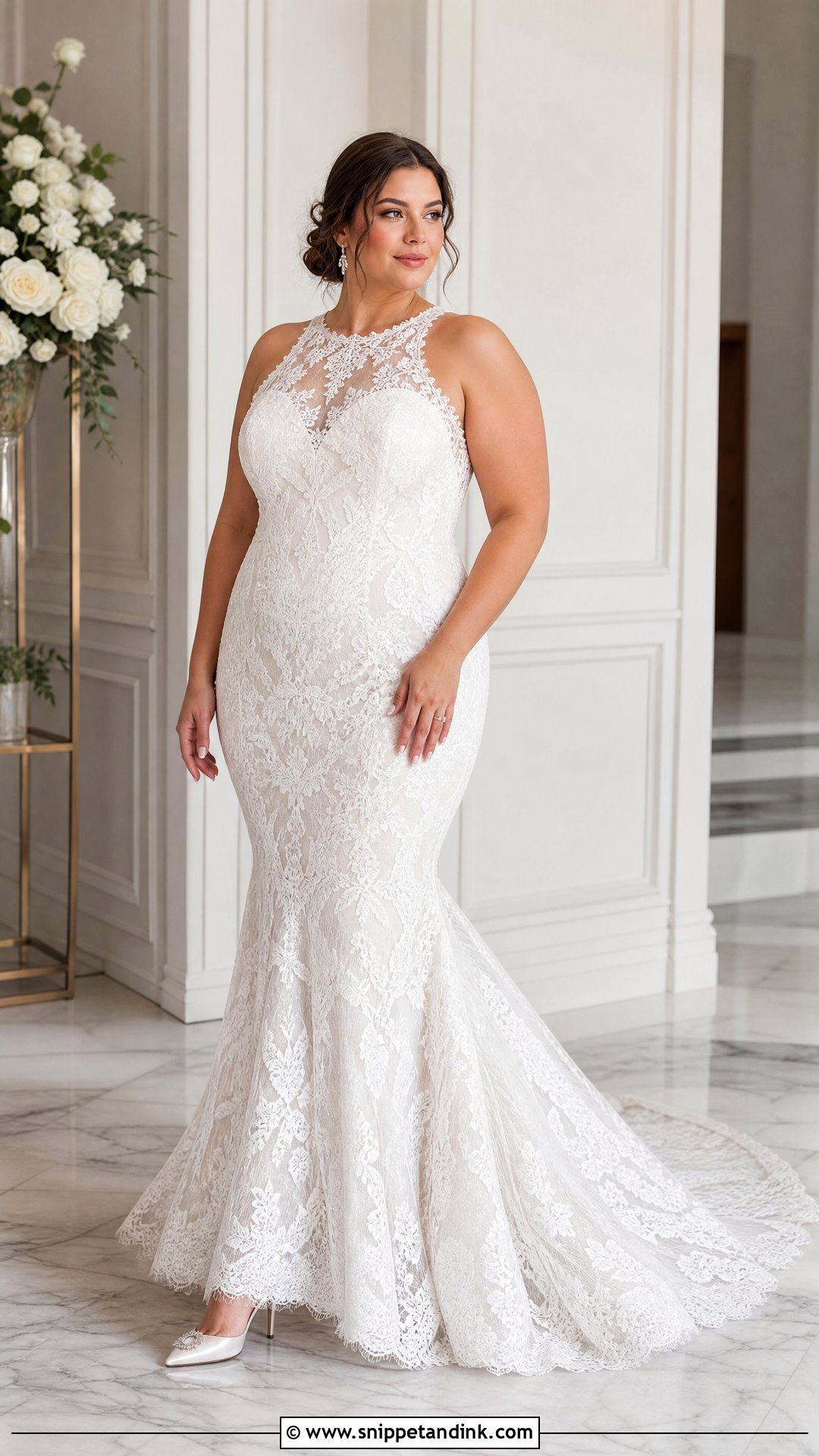
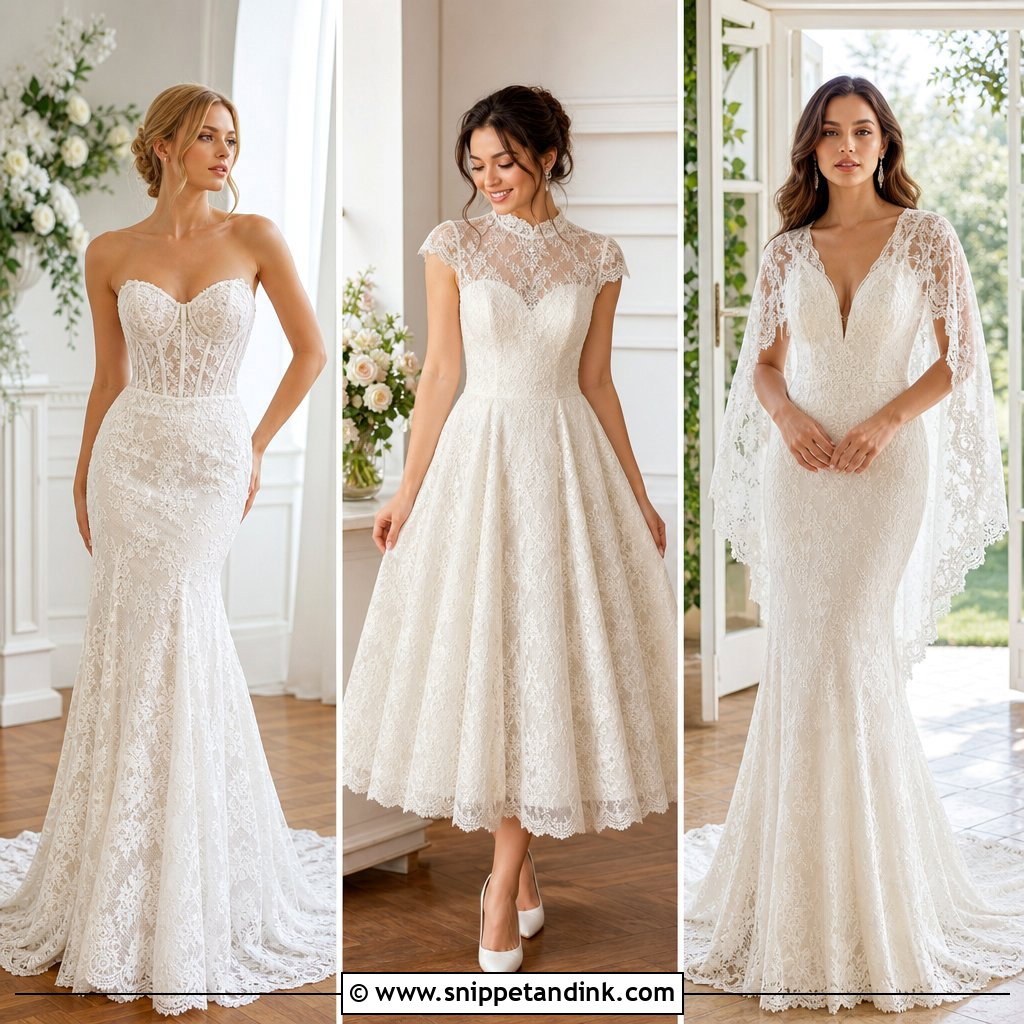
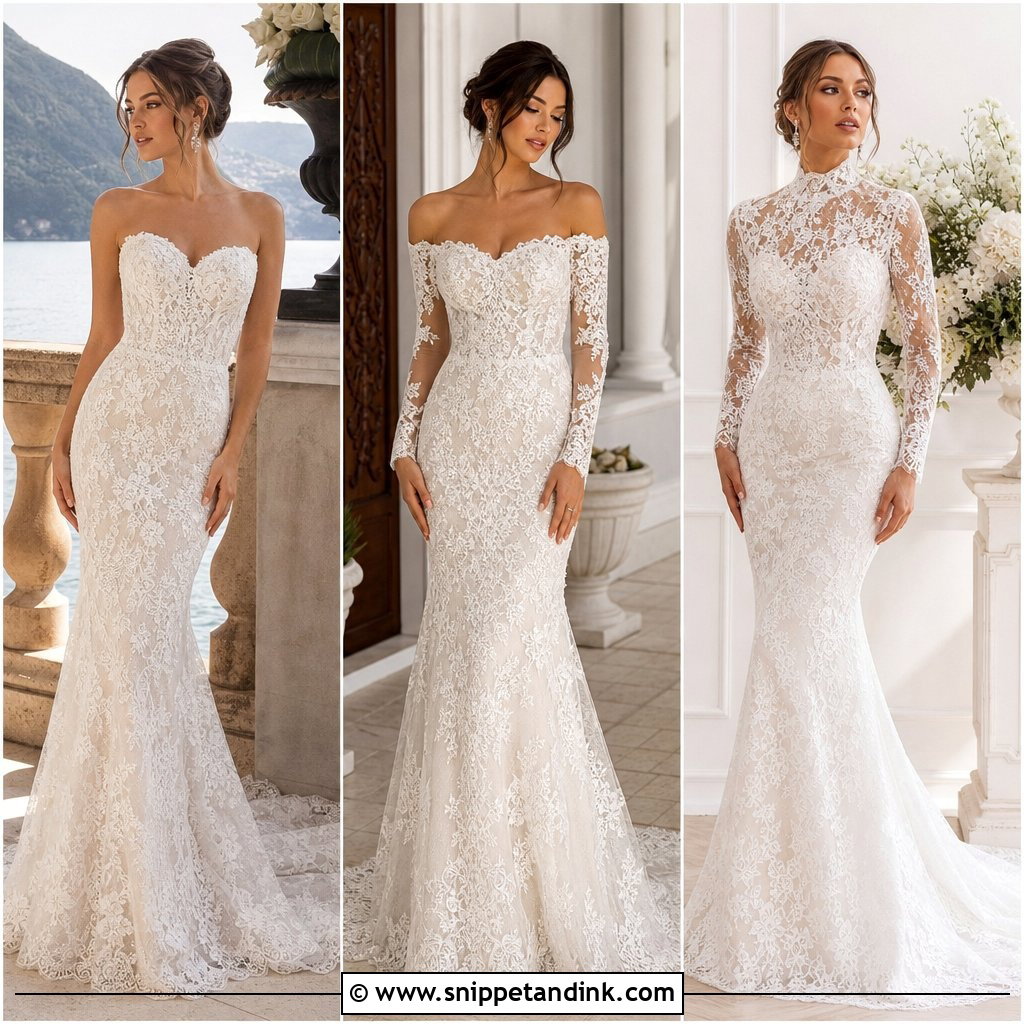
Mermaid gowns follow you through the waist, hips and thighs before flaring at or near the knee, and the fit is less forgiving than it looks on a hanger. Stretch lining and a lace with some give make the difference between dancing and shuffling. A sweetheart neckline softens the shape, and fine straps take strain off the bodice. Sleek pointed heels, a structured clutch and very little jewelry are all it needs; a smooth chapel veil follows the hem without competing. Ask about the bustle at your first alteration, because a mermaid train sits low and needs more points to stay off the floor.
4. Strapless Lace Wedding Dress
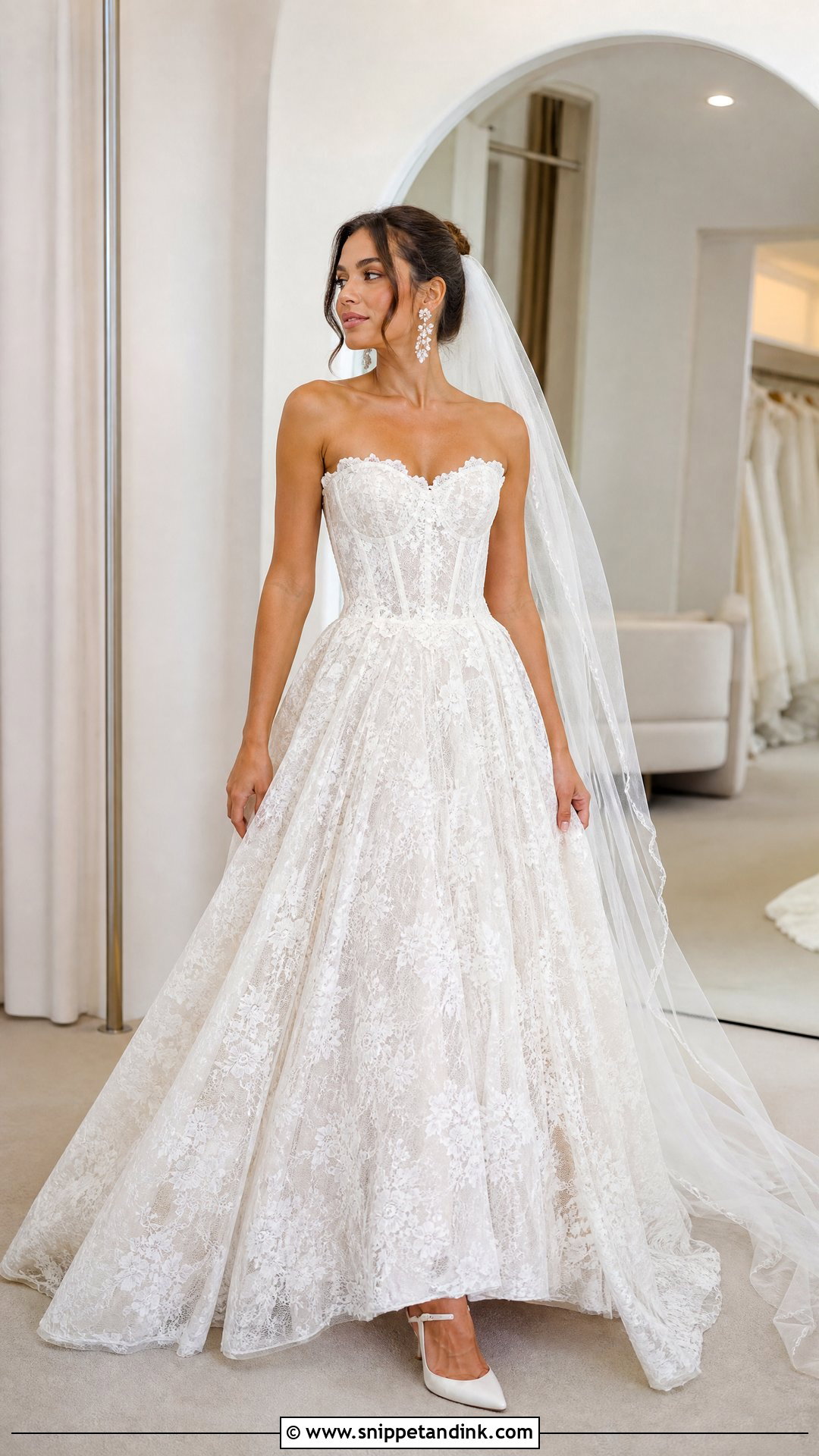
Strapless lace only works when the bodice is doing the holding, not you. I check for internal boning and a waist stay, then have the bride raise both arms; if the neckline slips, it goes back for tailoring at the bust before anything else is touched. A scalloped edge along the top finishes it without extra beading. If you want coverage for the ceremony, a detachable lace bolero or sheer wrap comes off for dancing. Pair it with a classic updo, medium earrings, one bracelet and ivory slingbacks. A raw-edge veil suits it because there is no border to fight the lace.
5. Off-the-Shoulder Lace Wedding Dress
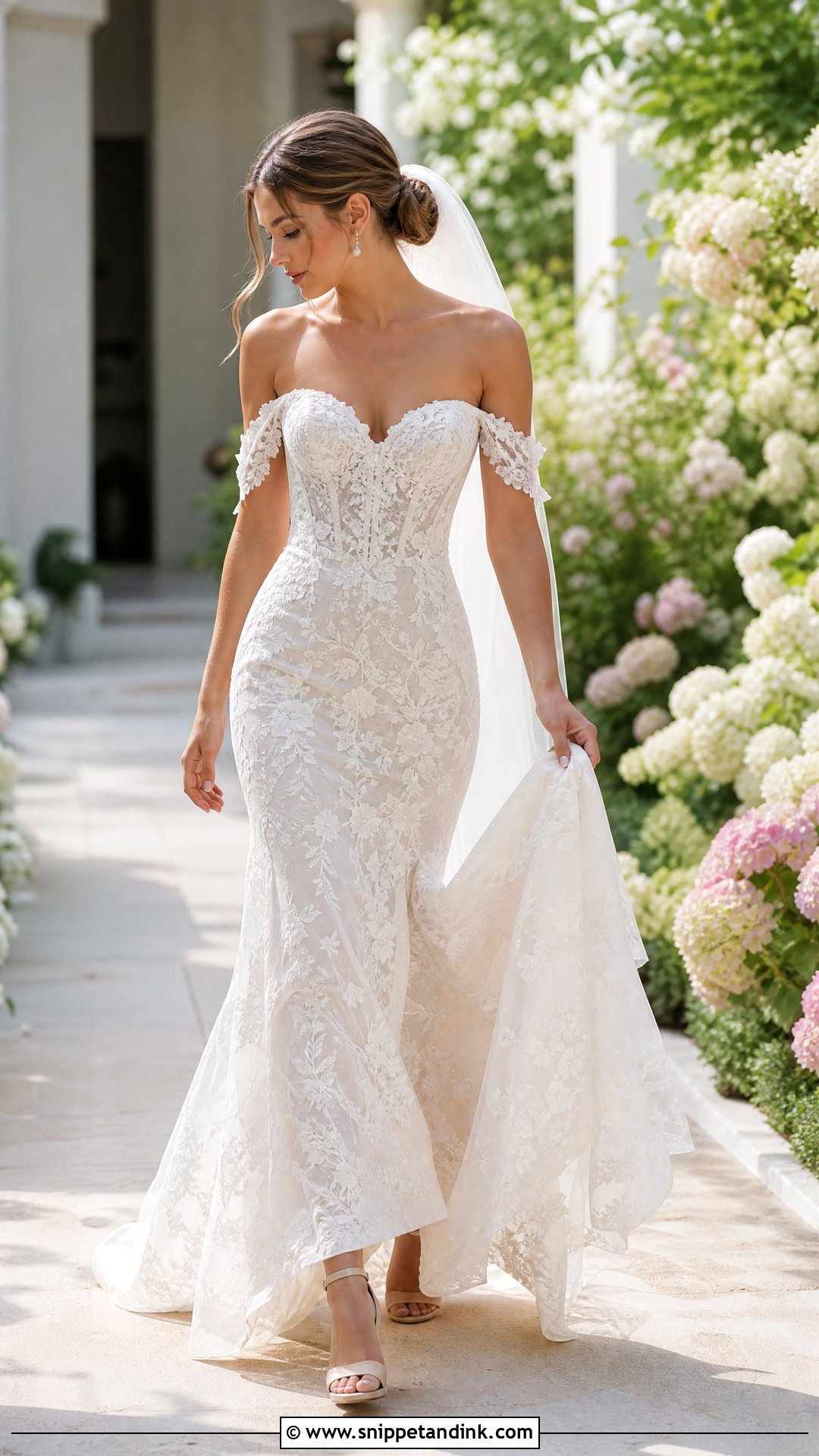
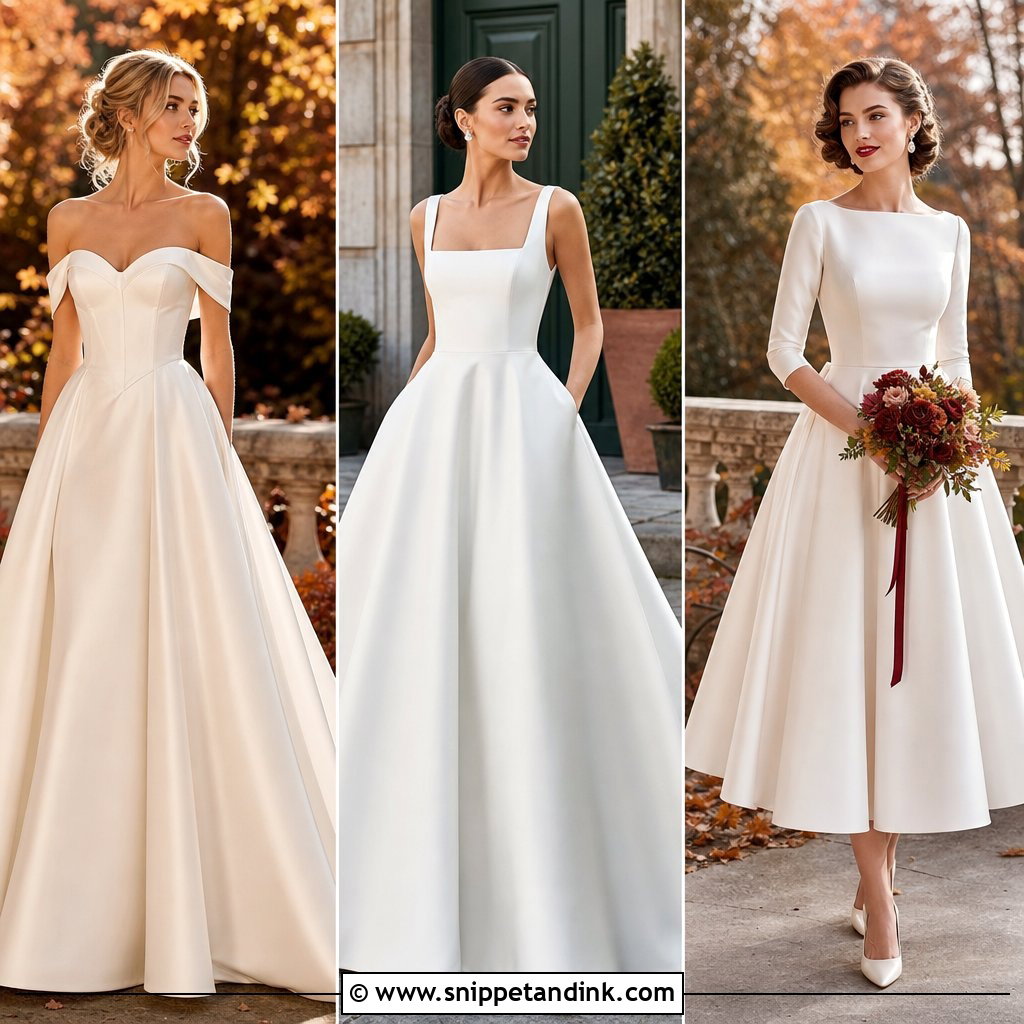
Off-the-shoulder straps sit on the upper arm, so they will always limit how high you can lift your hands. I make every bride wave, sit and reach for an imaginary glass during fittings; if the straps dig, a seamstress can usually add elastic inside or shift them slightly higher. A corset bodice defines the waist, and an A-line or ball gown skirt balances the open neckline. Add a delicate necklace, pearl earrings and a loose low bun. Block heels are steadier than stilettos on lawns or long photo sessions, and a veil fixed below the hairstyle keeps the collarbone on show.
6. Lace Ball Gown Wedding Dress
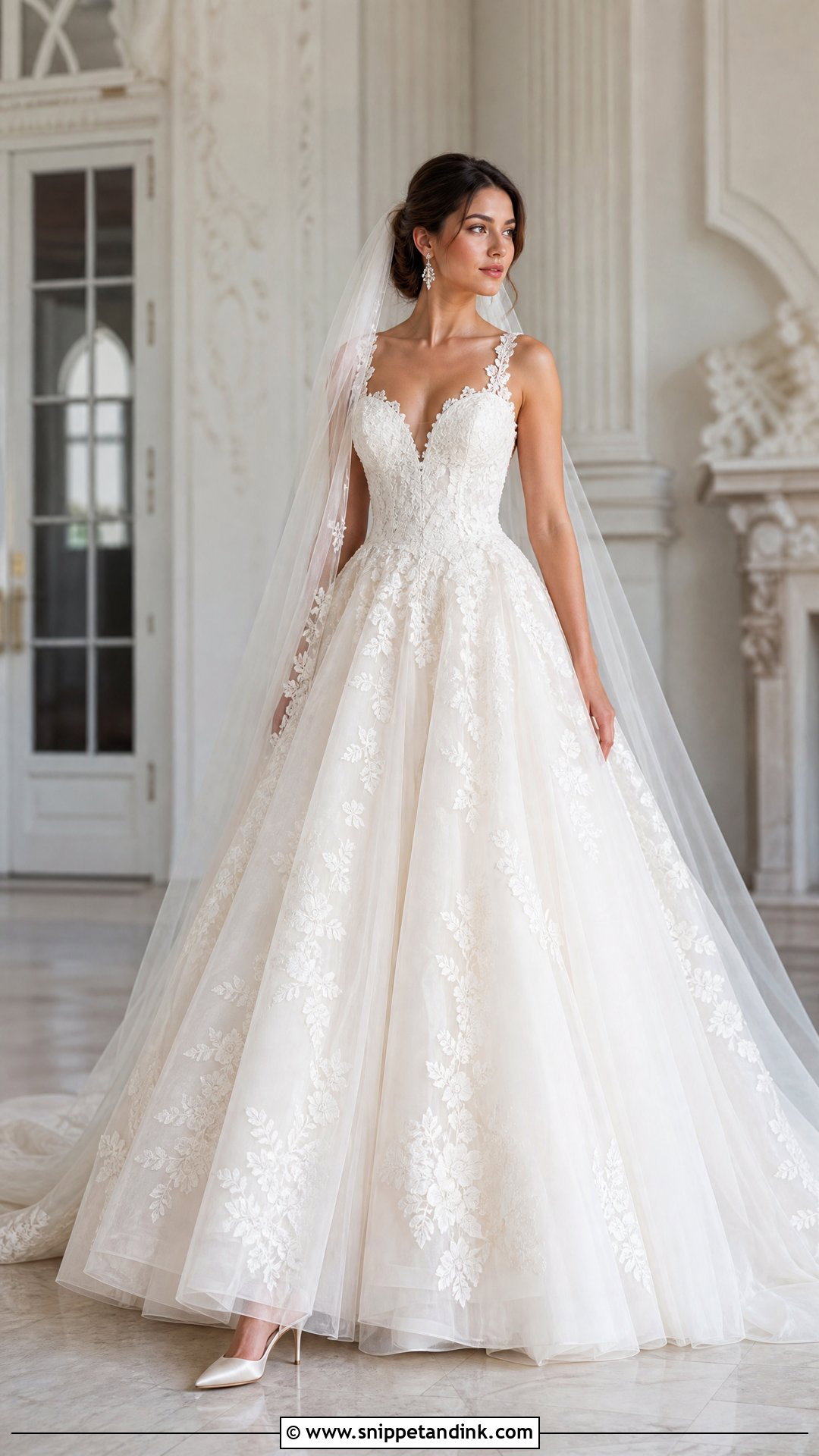
A lace ball gown is a commitment, mostly a logistical one. Before a bride signs, I ask her to measure the aisle, the back seat of the car and the gap between reception tables, because a full skirt with layered tulle can run well over a metre across. The best versions place dense appliqués at the bodice and let them thin toward the hem so the skirt doesn’t look stiff. A cathedral veil, crystal earrings and satin pumps finish it, with a jeweled comb if a tiara feels like too much. Keep the bouquet medium-sized or it disappears against all that volume.
7. Boho Lace Wedding Dress
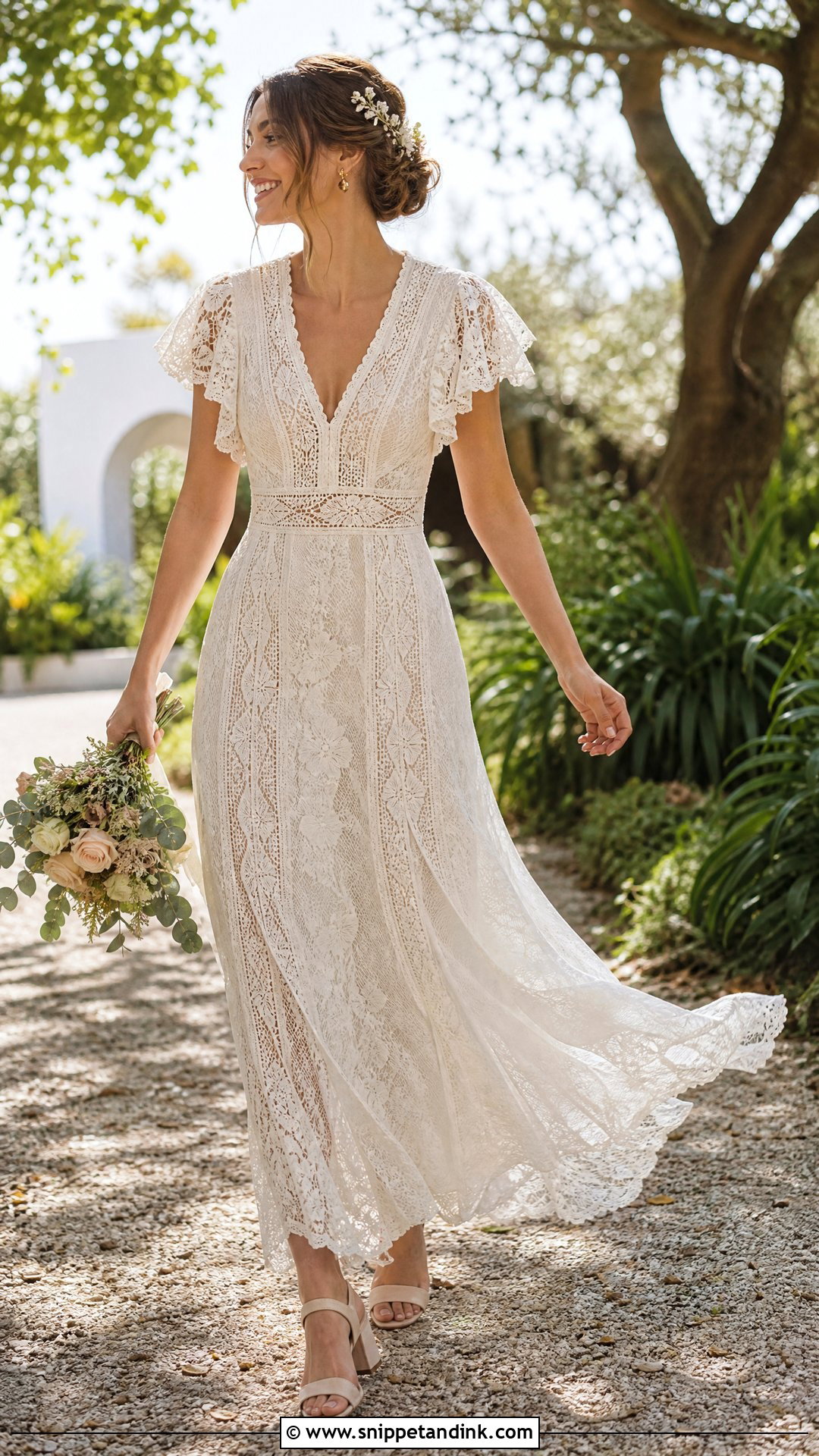
Boho lace is usually a crochet-style or cotton guipure, which is heavier and more open than Chantilly, so it drapes rather than clings. That makes it easy to wear outdoors, but it also snags on bark, chair edges and the clasp of a bridesmaid’s bag, so I keep jewelry smooth. Flutter sleeves, an open back or a modest V-neck add personality to a simple shape. Loose waves, a few small flowers in the hair and understated gold earrings suit it. Block-heel sandals or flats handle grass, a fingertip veil stays manageable in wind, and a woven or softly beaded clutch looks right with the texture.
8. Vintage Lace Wedding Dress
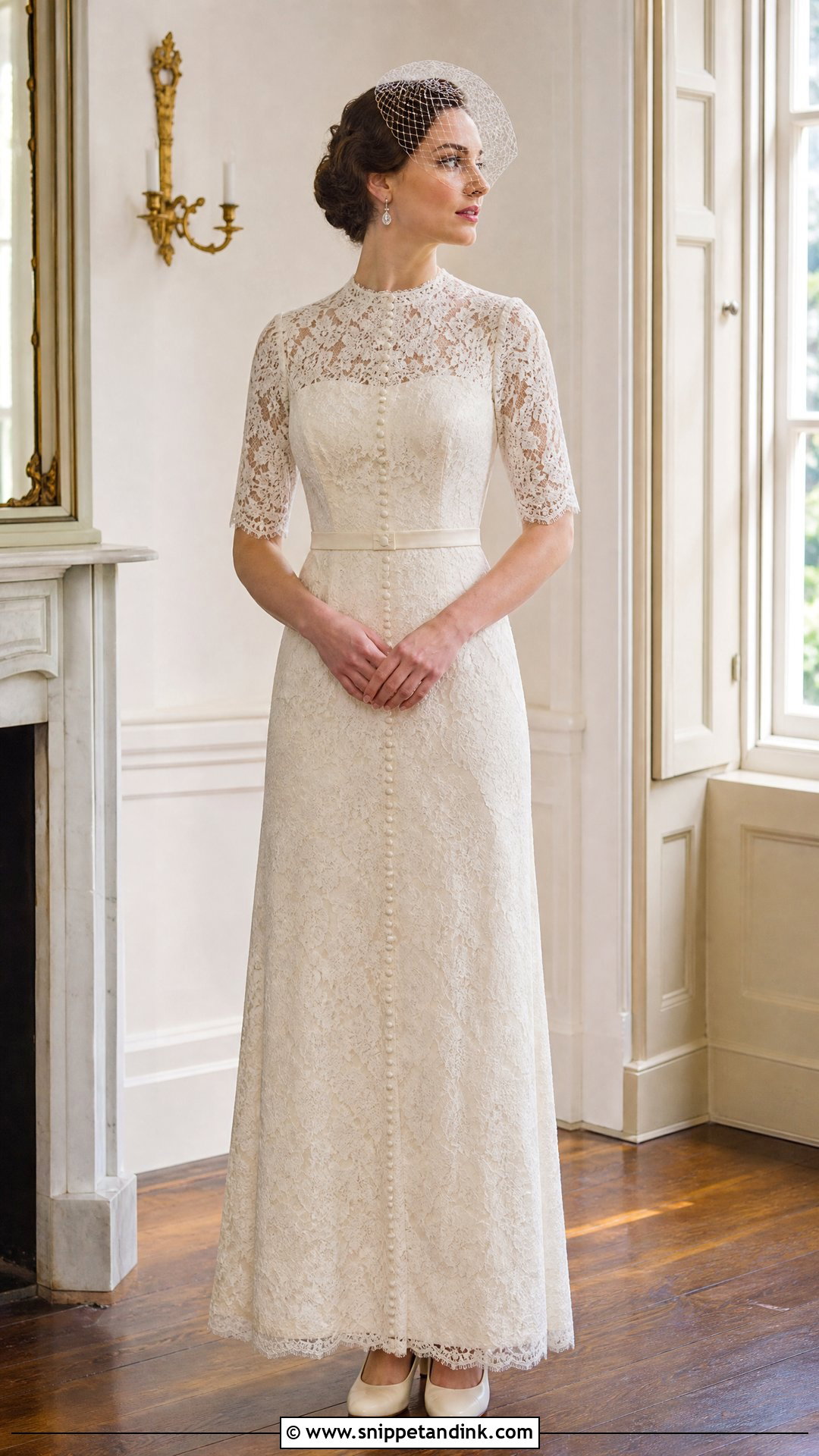
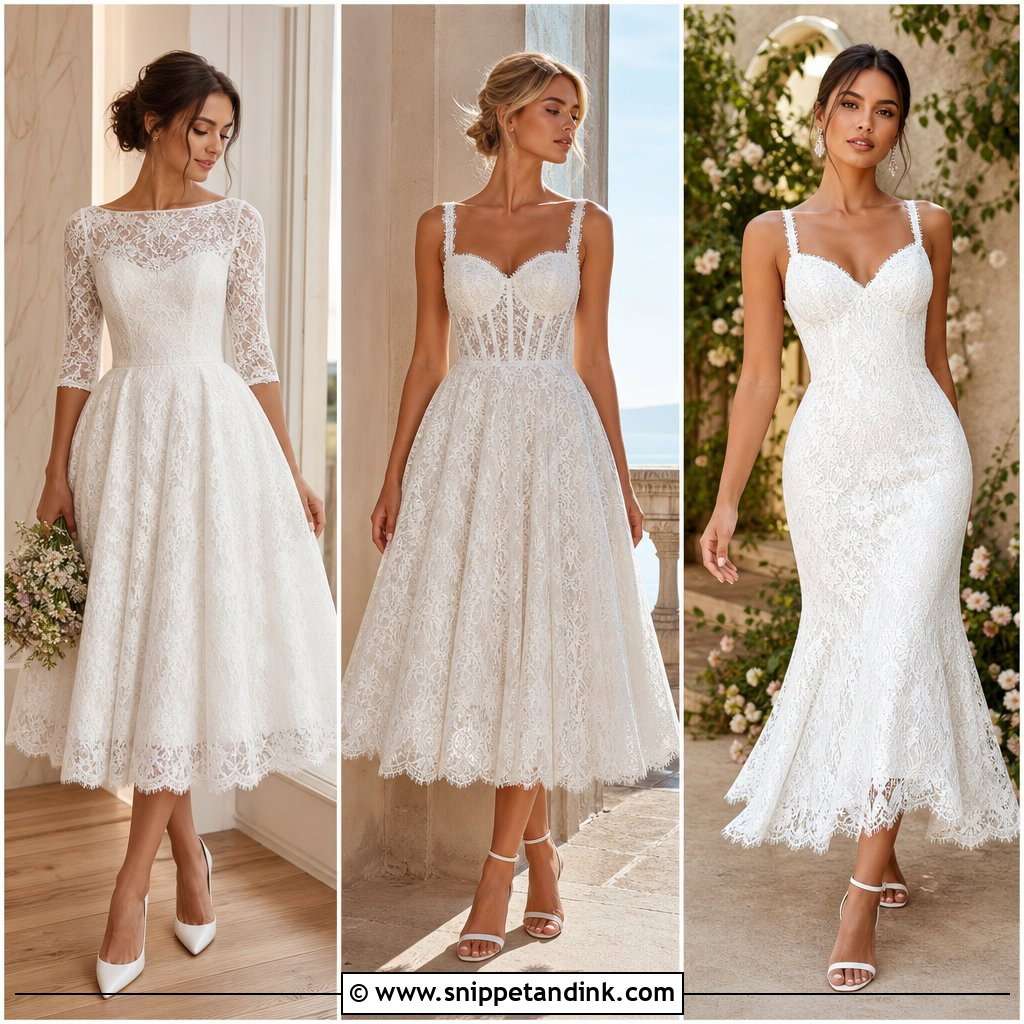
With vintage-inspired lace I tell brides to borrow one or two details from an era, not the whole costume. Chantilly-style lace, covered buttons, delicate sleeves and a soft waist are the usual cues. A tea-length skirt reads mid-century, while a floor-length sheath sits closer to early twentieth-century elegance. Pearl earrings, a birdcage or plain fingertip veil and round-toe shoes complete it. A red lip gives classic contrast; soft rose is gentler. Check the lining too: fine reproduction lace can scratch at the underarm if it sits directly on skin.
9. Lace Wedding Dress With Corset Bodice
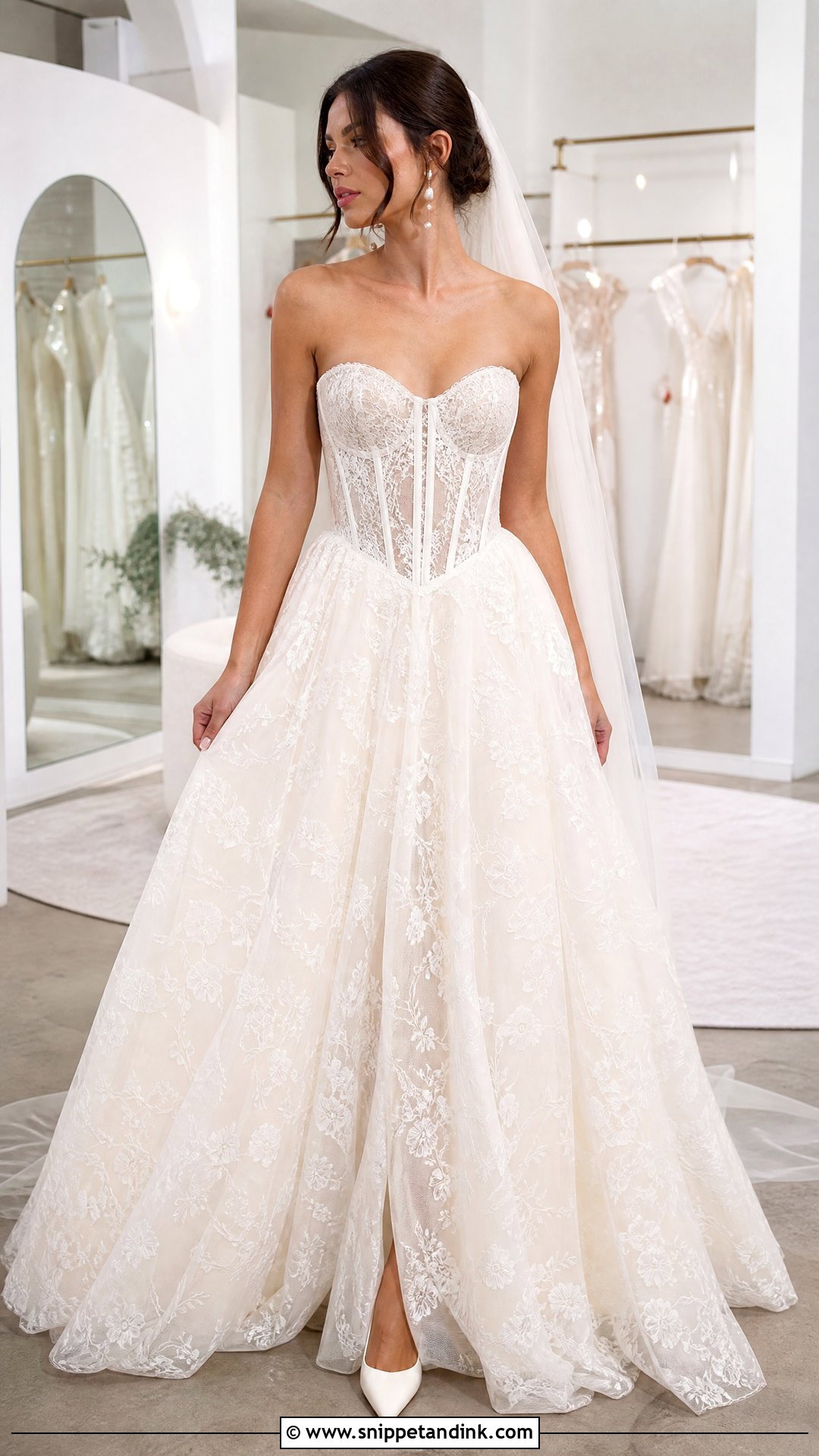
Corset bodices are everywhere in current collections, and lace softens what could otherwise feel severe. Exposed boning reads modern; lace-covered panels look more traditional. A Basque waist dips slightly below your natural waistline and draws the eye down into the skirt. When I fit one, the bride sits on a hard chair for a full minute, because a bone that ends too low will dig into the ribs or hip once she’s seated at dinner. Drop earrings, a smooth veil and clean ivory heels are enough; skip the necklace if the neckline already carries scallops or appliqués.
10. Floral Lace Wedding Dress
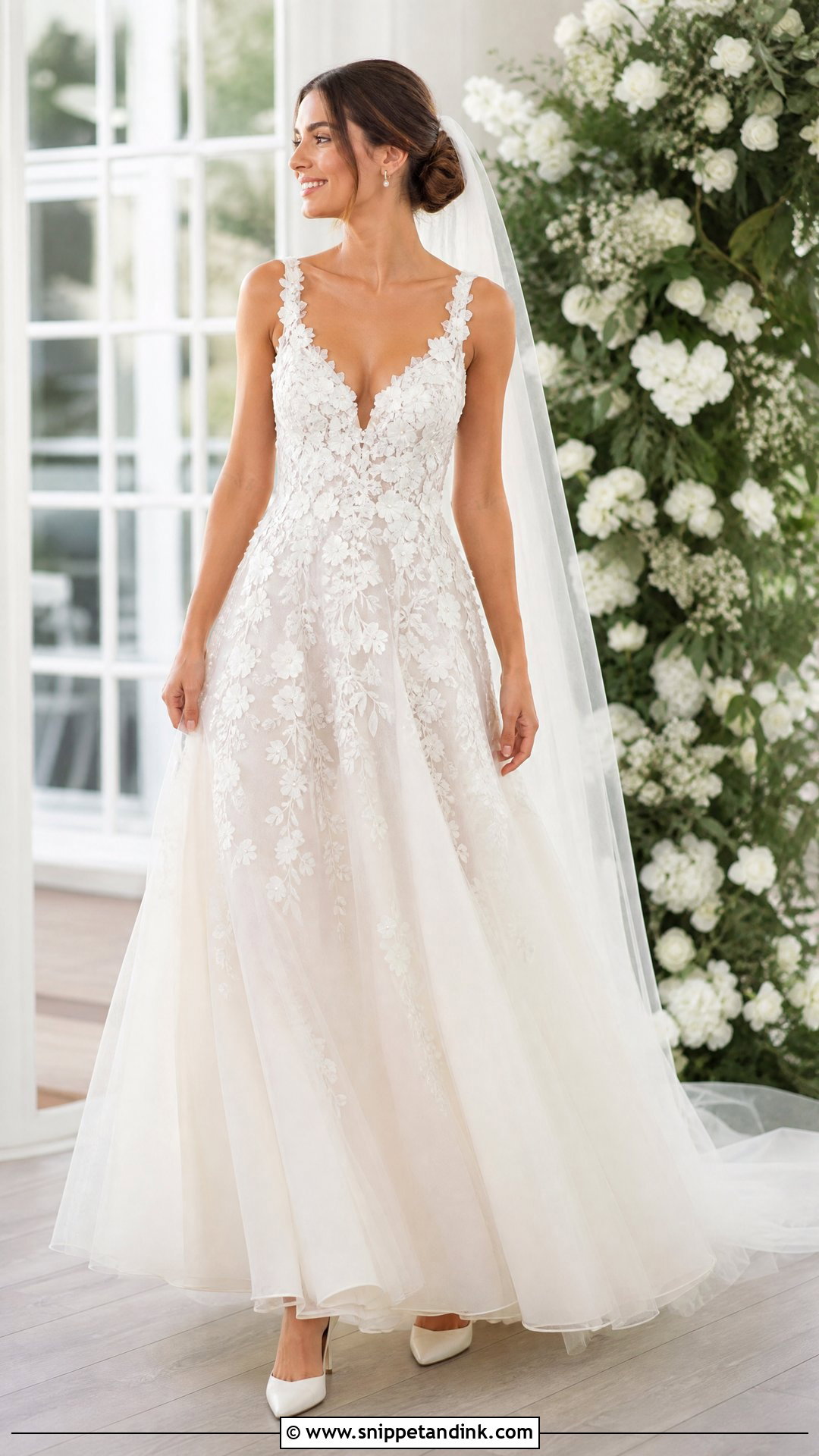
Raised floral appliqués catch light differently from flat lace, which gives the gown depth in person and in pictures. Tonal ivory flowers over matching lining look subtle; three-dimensional petals with pearl or crystal centres add more drama. The catch is care. Those petals crush in a tight garment bag and flatten under a hot iron, so I always ask the shop how they want the dress hung and steamed. Keep the silhouette plain, the bun low, the earrings small and the shoes unembellished. A plain tulle veil and a loose bouquet held low keep the bodice flowers visible.
11. Square Neck Lace Wedding Dress
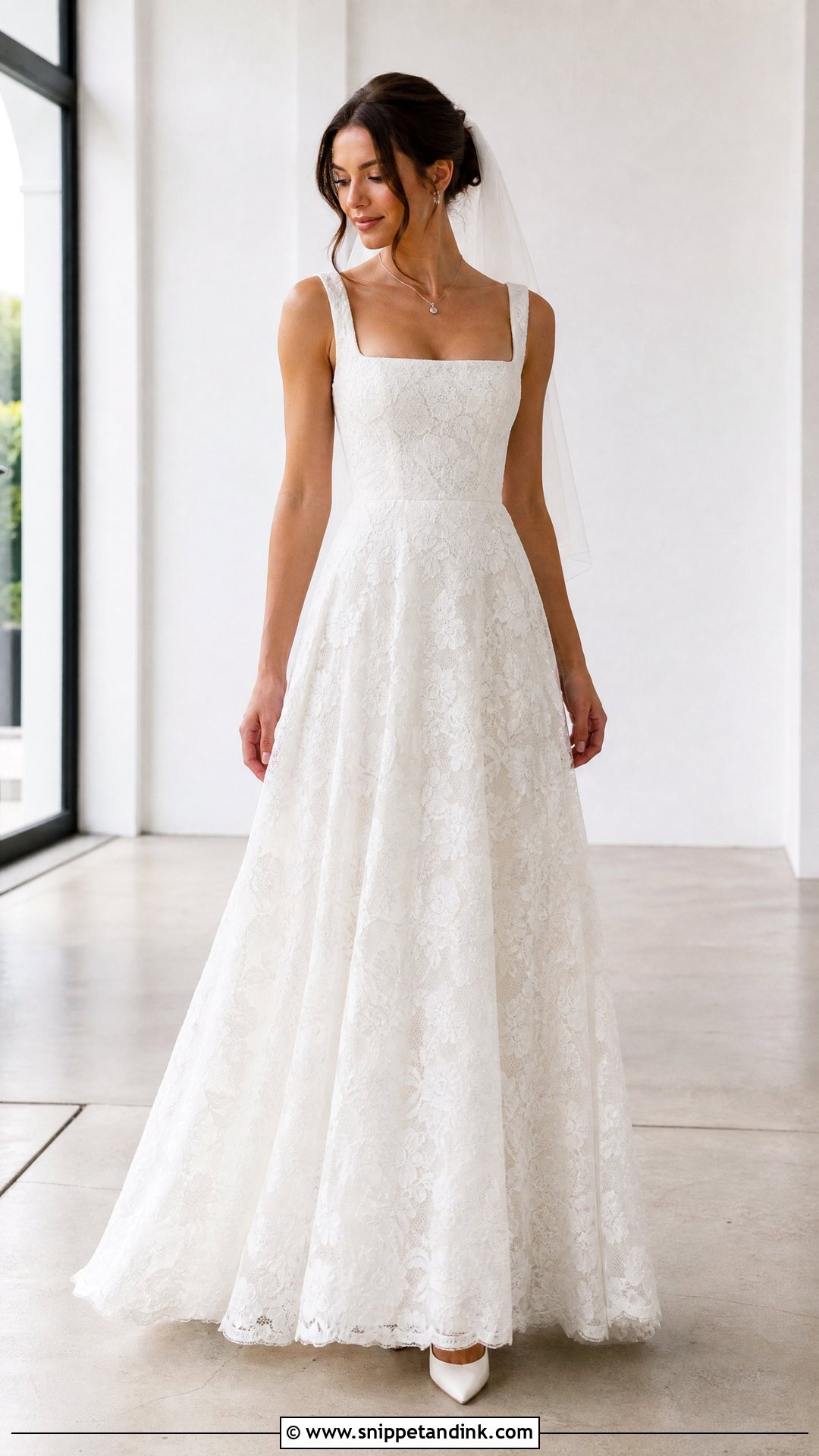
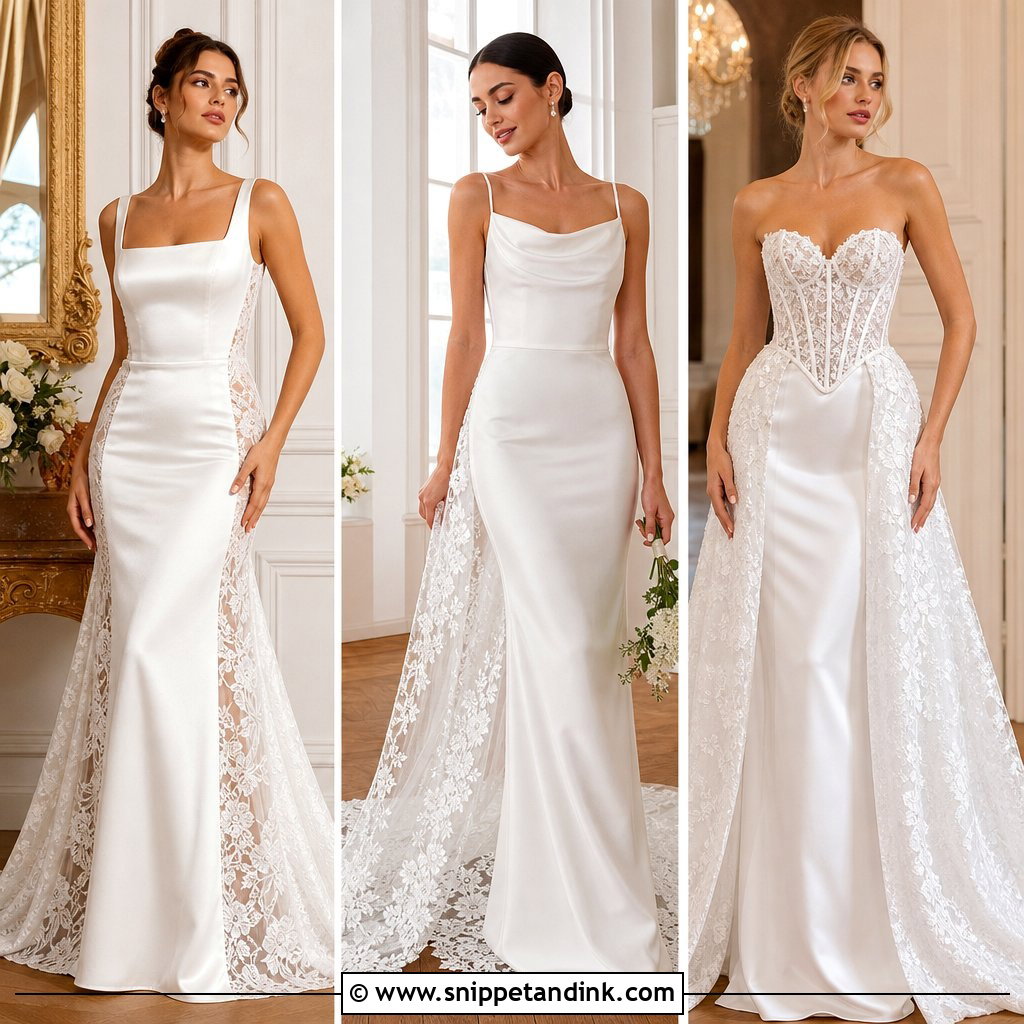
Square necklines are the one shape where lace scale really matters. A big motif gets chopped by the straight edge and looks unfinished, so I steer brides to medium-scale lace that can be trimmed around its flowers. Wide straps or fitted sleeves suit the angular line. An A-line skirt balances it, and a straight sheath keeps it minimal. Style it with a short pendant, a sleek bun and pointed pumps. If you need bust support, look for inner cups and reinforced side seams, and watch the corners of the neckline when you move; they should lie flat, not lift.
12. High Neck Lace Wedding Dress
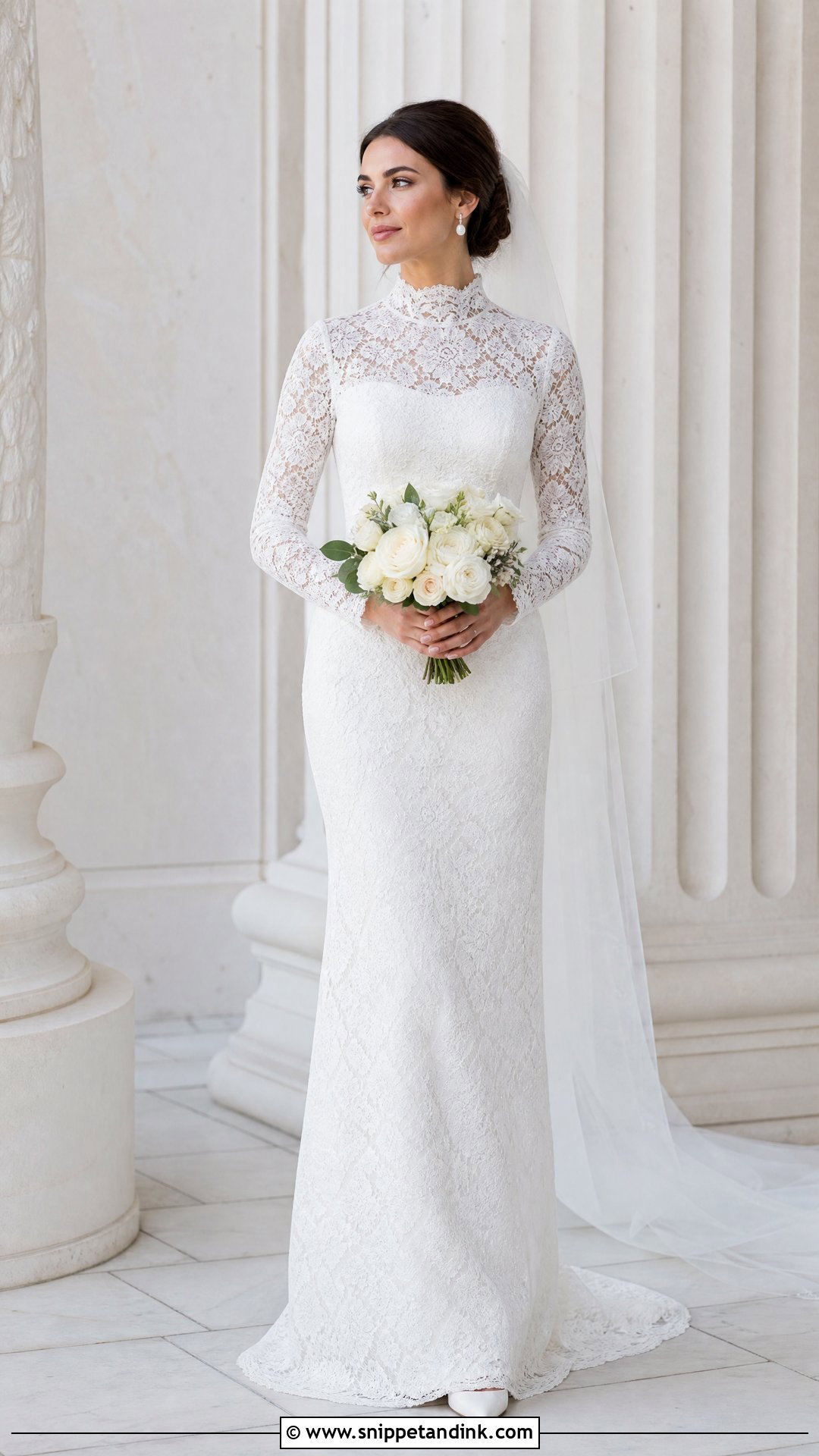
High-neck lace keeps the upper body covered while still looking light, because the collar and shoulders are usually sheer lace over a lined sweetheart or scoop bodice underneath. It sits well with a sheath, fit-and-flare or softly gathered skirt. Wear your hair up so the neckline and covered buttons down the back are seen, skip the necklace, and choose small pearl or crystal earrings with closed-toe pumps. Place the veil under the hairstyle so fabric doesn’t pile at the shoulders. Turn your head both ways at the fitting. If the collar rubs or creases at the side of the neck, it will feel worse by evening.
13. Cap Sleeve Lace Wedding Dress
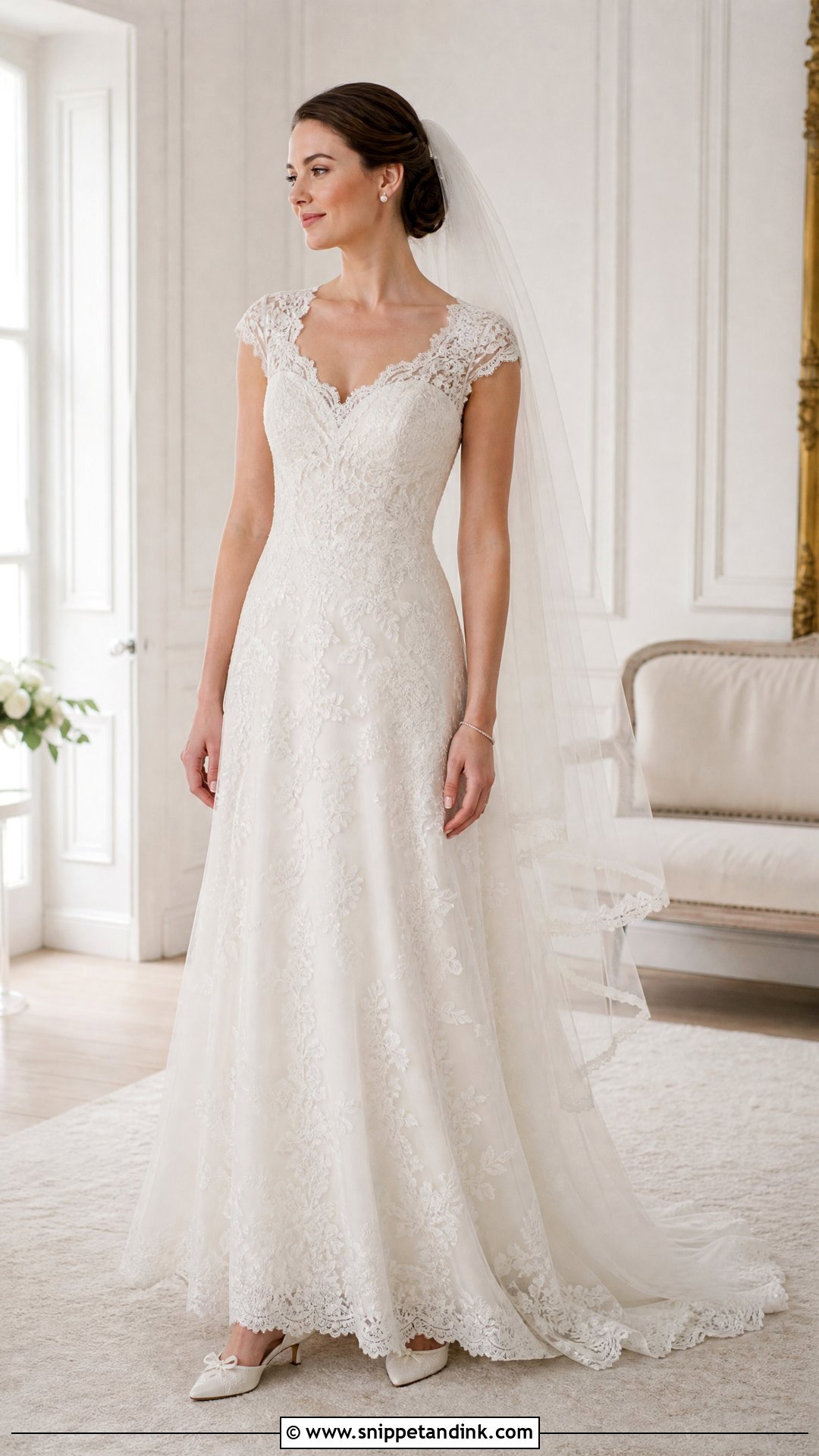
A cap sleeve lace wedding dress gives a little shoulder coverage without the weight of a full sleeve, and scalloped edges finish the line neatly. It works over A-line, sheath and tea-length shapes. My one warning: illusion mesh comes in several skin-tone shades, and the wrong one shows up as a grey or pink band in flash photos, so hold the sleeve against your arm in daylight. The opening should also let you lift your arms without the back pulling. Pearl studs, a fine bracelet, kitten heels and a shoulder or fingertip veil keep the proportions delicate.
14. Lace Sheath Wedding Dress
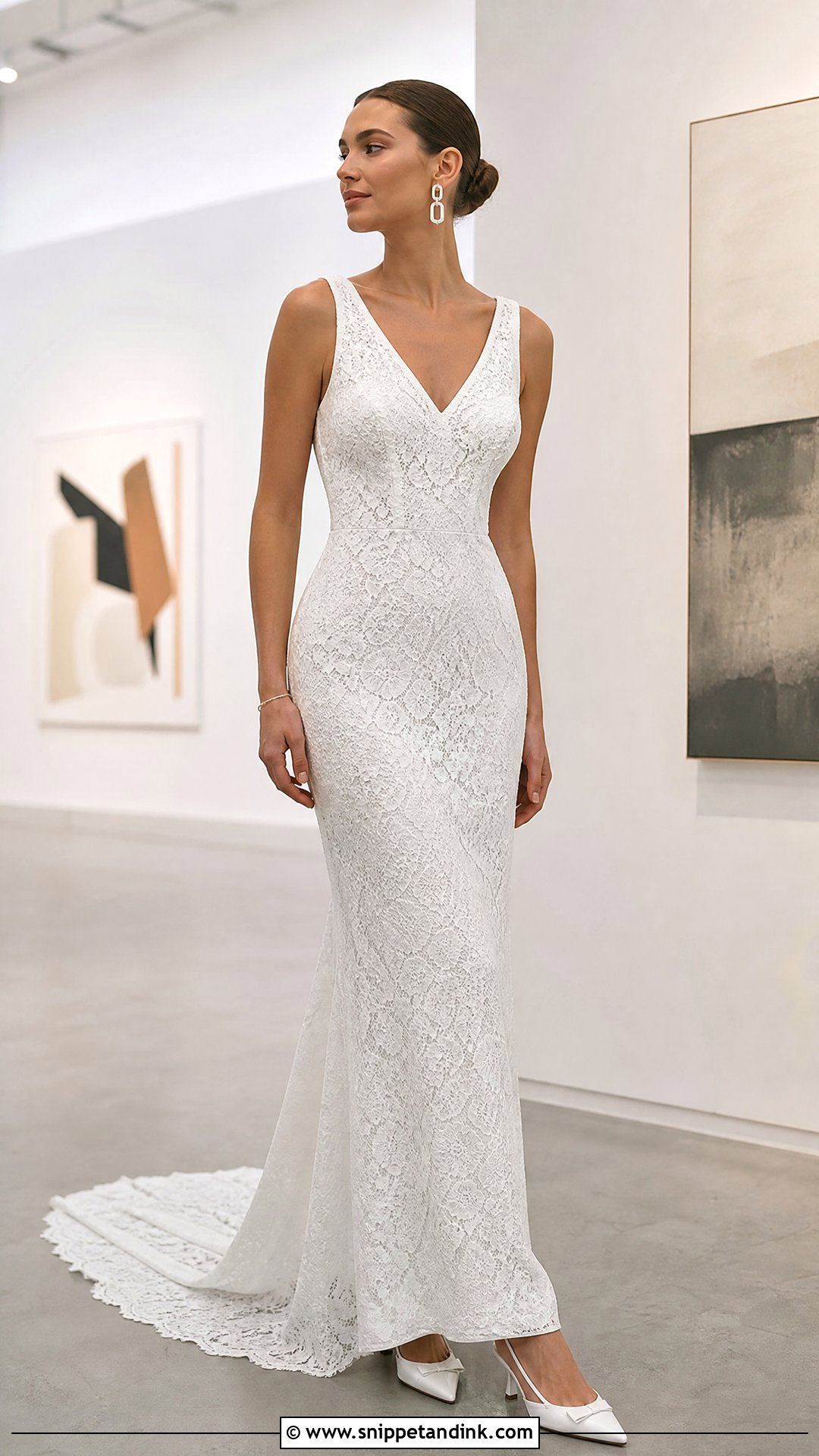
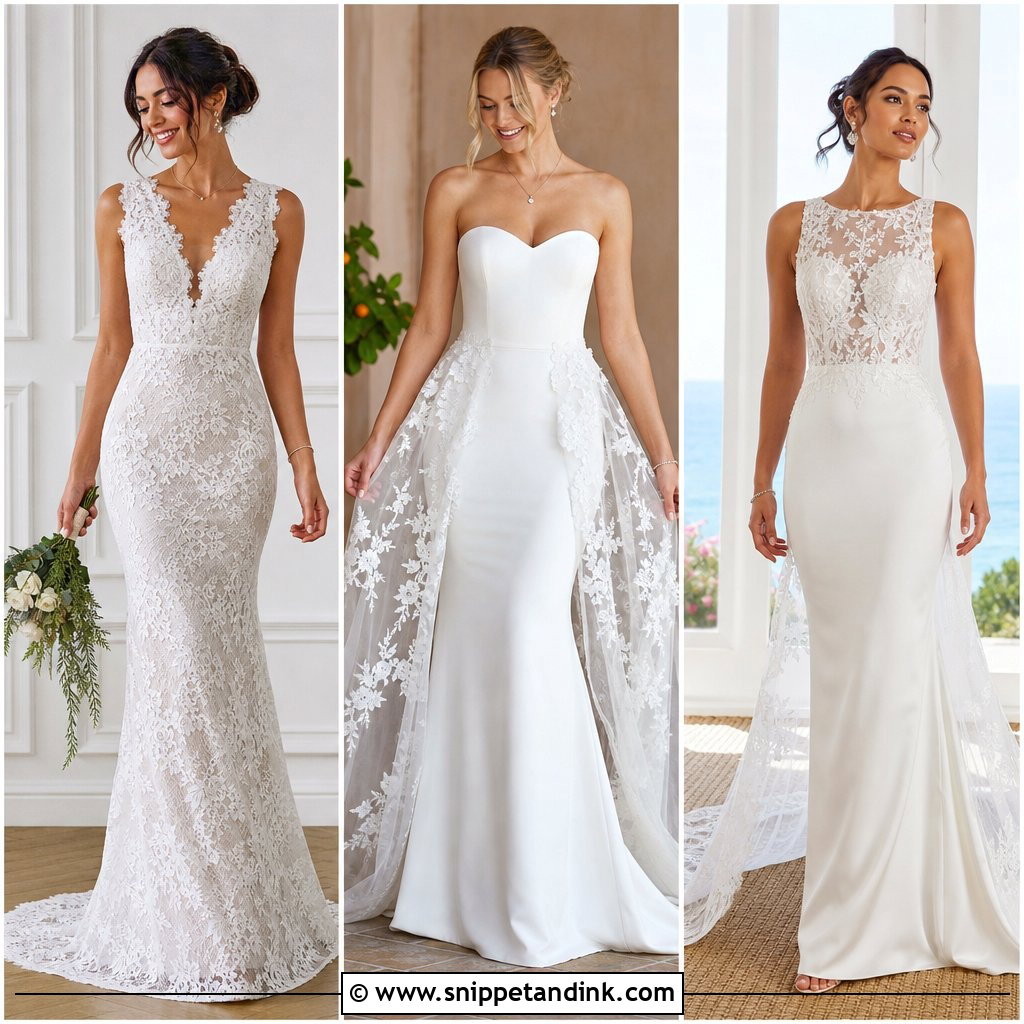
A sheath skims the body without the flare of a mermaid, so it’s easier to walk, sit and climb out of a car in. Because nothing hides the line, I look hard at lining and seam placement: a cheap lining twists and the lace shows every bulge of it. Light lace over soft crepe or stretch lining sits smoothest. A low back, narrow straps or a simple V-neck keep it interesting. Sleek hair, geometric earrings, pointed slingbacks and a chapel veil suit it. View it in daylight from the side and back before final alterations, not just under boutique spotlights.
15. Lace Wedding Dress With Detachable Sleeves
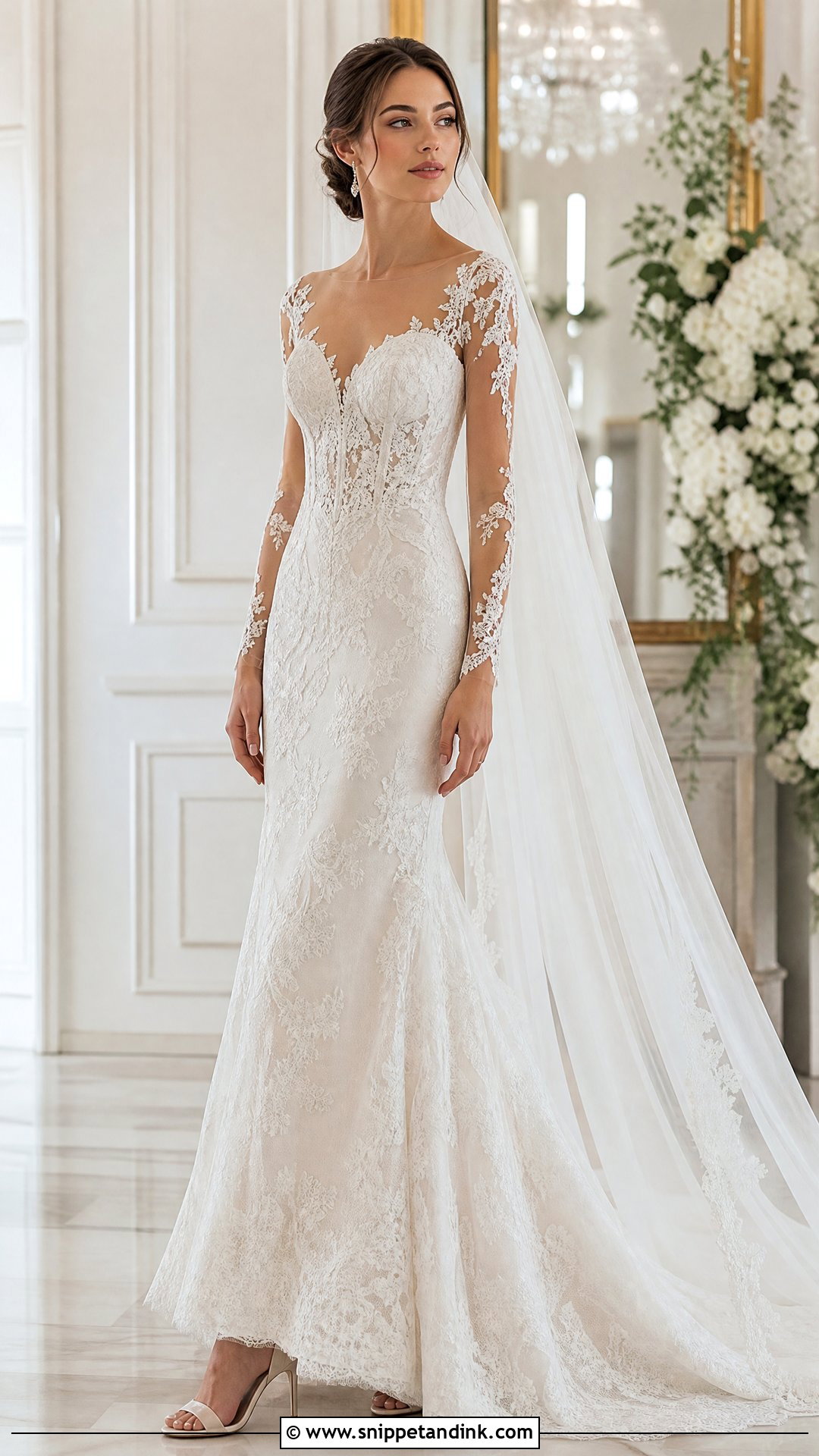
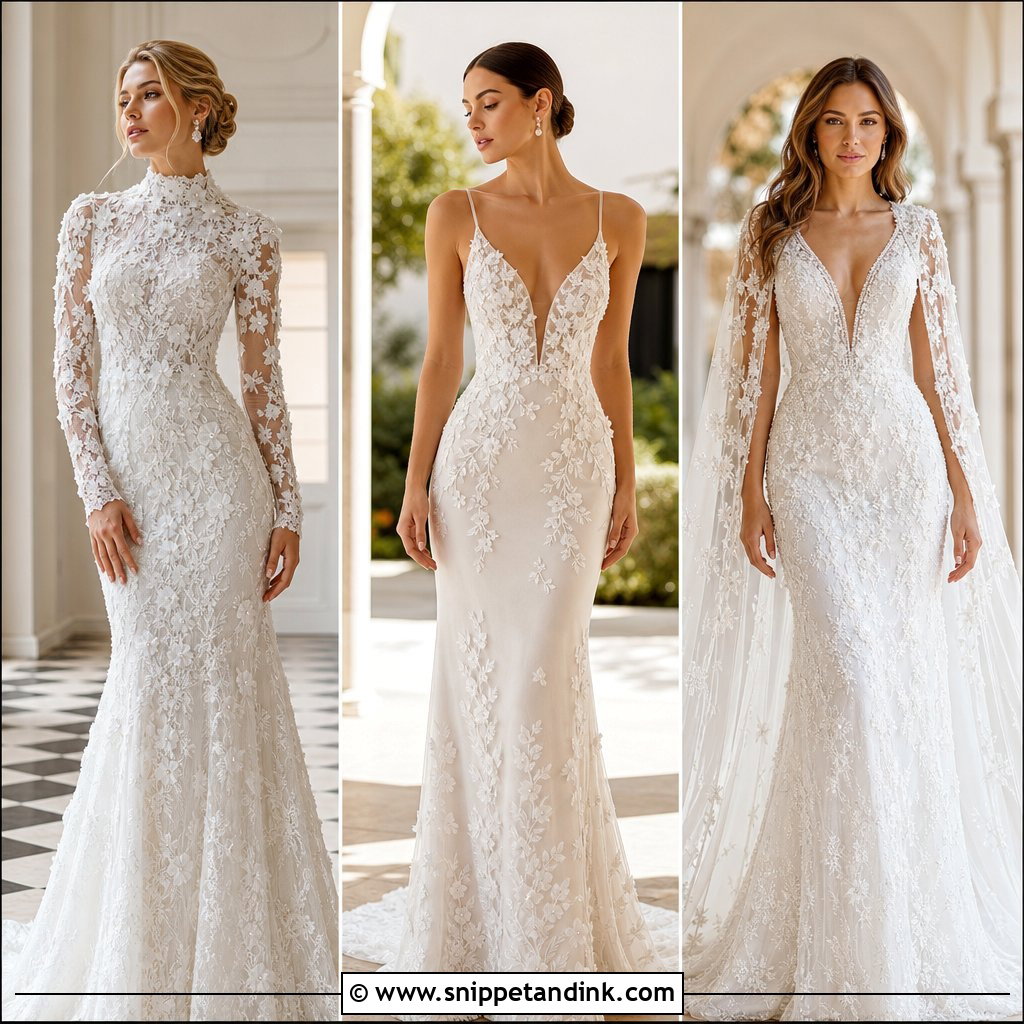
Detachable sleeves give you two looks without a second gown, and I’ve found brides use them far more than they expect. Fitted illusion sleeves look almost built in; soft off-the-shoulder sleeves feel more romantic. The attachment points should hide under straps, appliqués or the bodice edge, so check them from behind. Wear the full version with a long veil, delicate earrings and ivory heels, then switch to bolder earrings or a shorter veil once the sleeves come off. Practise the swap with whoever will help you, and put the sleeves straight into a labelled bag so foundation and buckles don’t snag the lace.
16. Plus Size Lace Wedding Dress
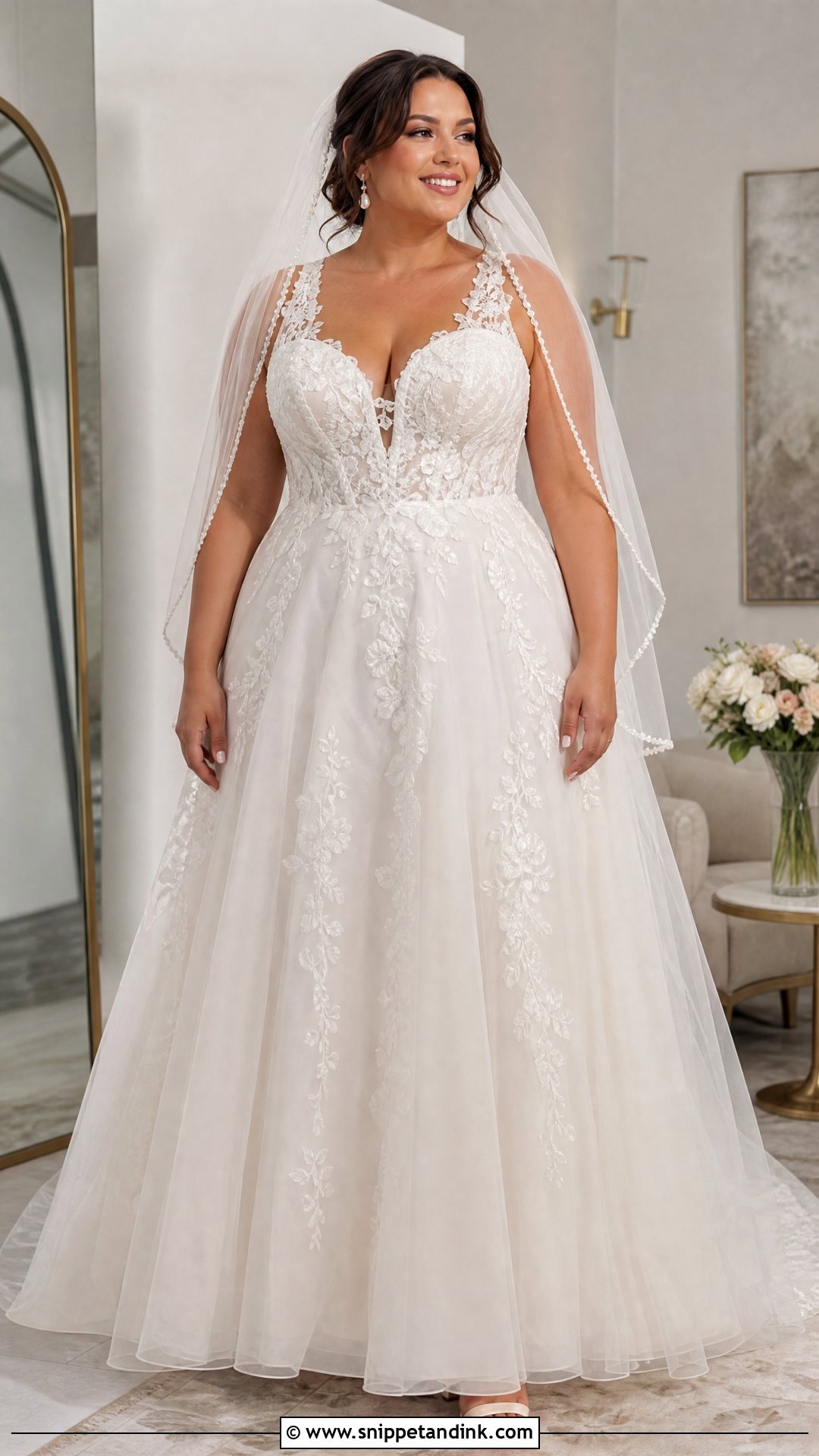
With plus-size brides I start with construction, not rules about silhouettes. Reinforced cups, wide supportive straps, proper boning and a smooth lining matter more than any style label, and once they’re right an A-line moves easily and a mermaid shows off curves. Vertical appliqués lead the eye along the gown. Choose a stable heel, earrings sized to the neckline and a veil that matches the gown’s level of detail. Shop where samples come in a range of sizes, so you are not judging a dress clipped onto your back. Good alterations should add support without removing the details you fell for.
17. Short Lace Wedding Dress
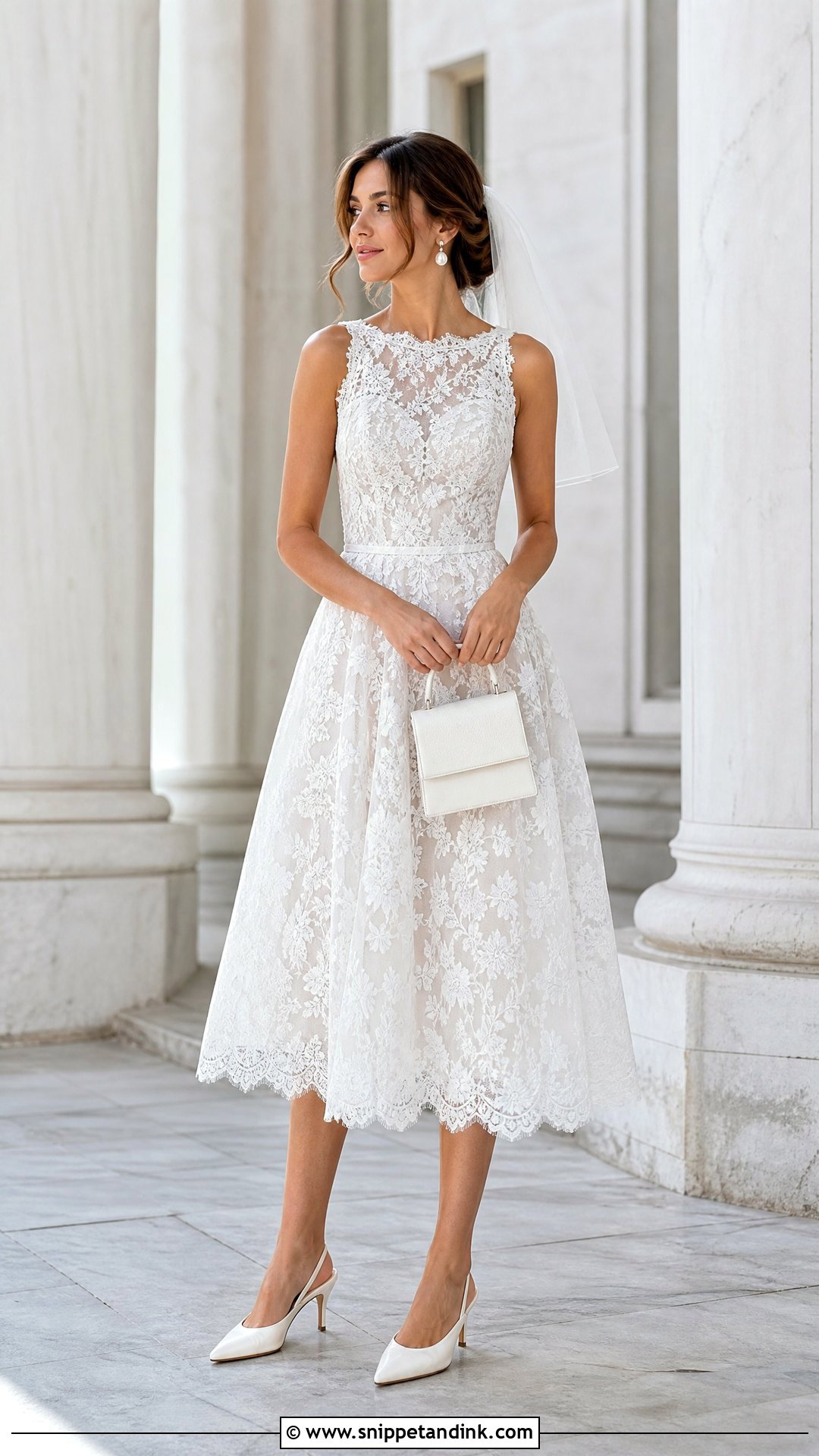
Short lace suits courthouse ceremonies, smaller parties and reception changes. Tea length reads vintage; above the knee feels sharper. A fitted bodice with a gently flared skirt is the easiest shape to walk and dance in. Because your shoes are on show the whole time, they become part of the outfit, so pick pointed pumps, slingbacks or embellished flats deliberately. Pearl earrings, a structured mini bag and a short veil or hair bow finish it. The hem is the key fitting decision: I mark it just above or below the widest part of the calf, never across it, and I check that the lace edge is finished cleanly.
18. Blush Lace Wedding Dress
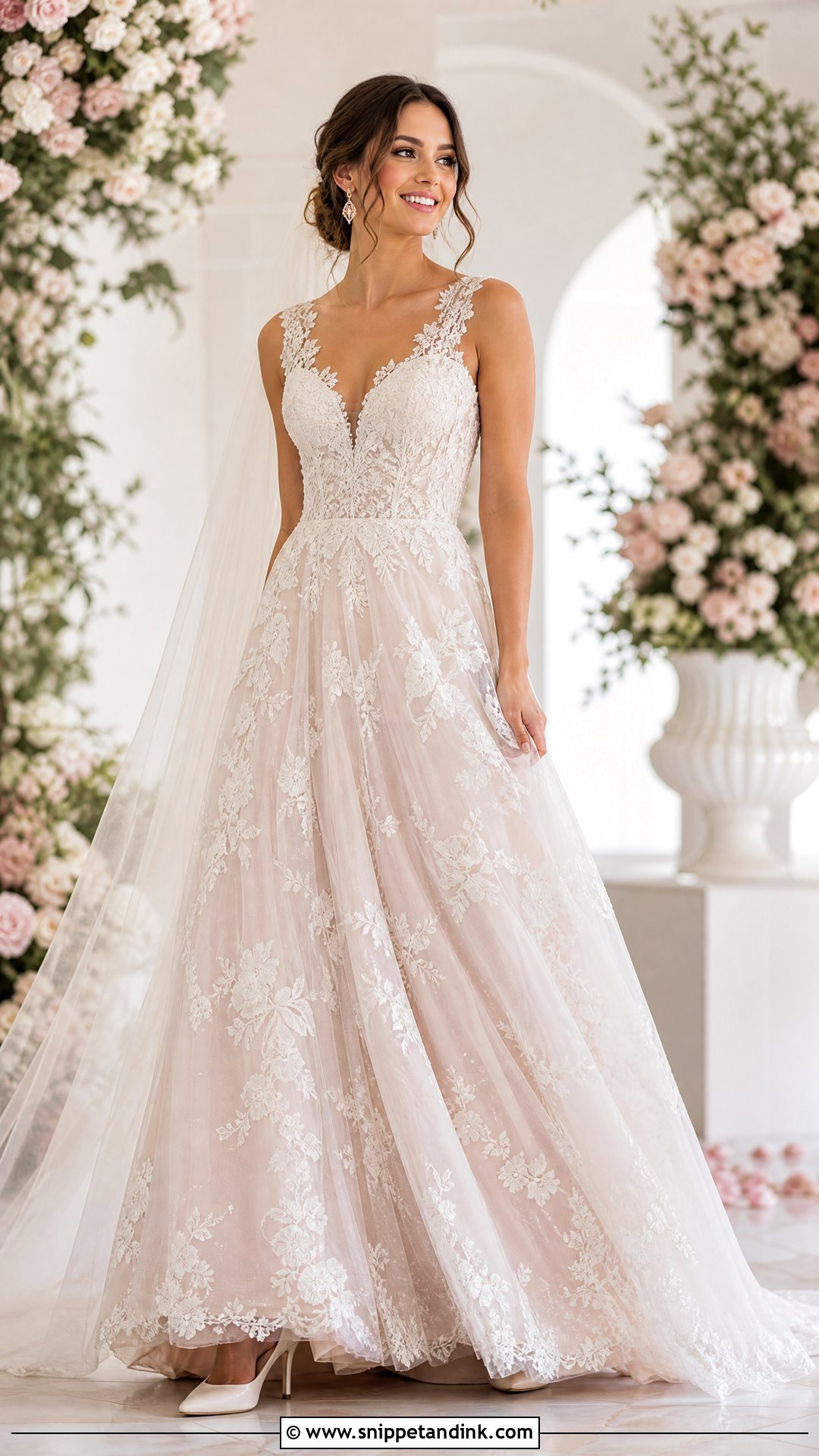
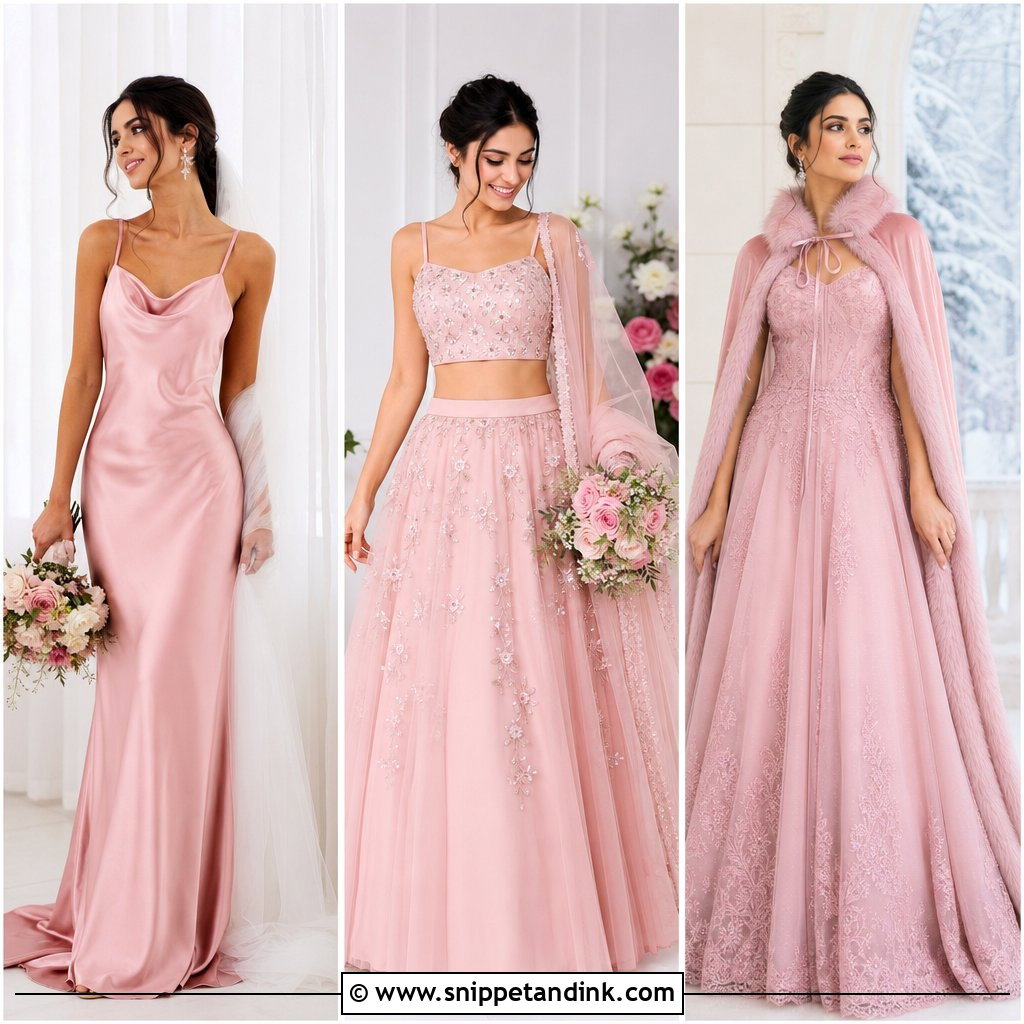
Blush usually comes from the lining, not the lace. Pale pink under ivory lace adds depth and makes the pattern easier to read, and a blush lace wedding dress can lean champagne, nude or soft rose depending on your skin tone. I always take a bride to the shop window and then back under the lights, because a lining that looks warm indoors can turn almost white in daylight or peachy under tungsten. Snap a few phone photos in both. Keep accessories in the same family with ivory shoes, rose-gold earrings and a neutral veil, and add muted pink flowers to tie the palette together.
19. Minimal Lace Wedding Dress
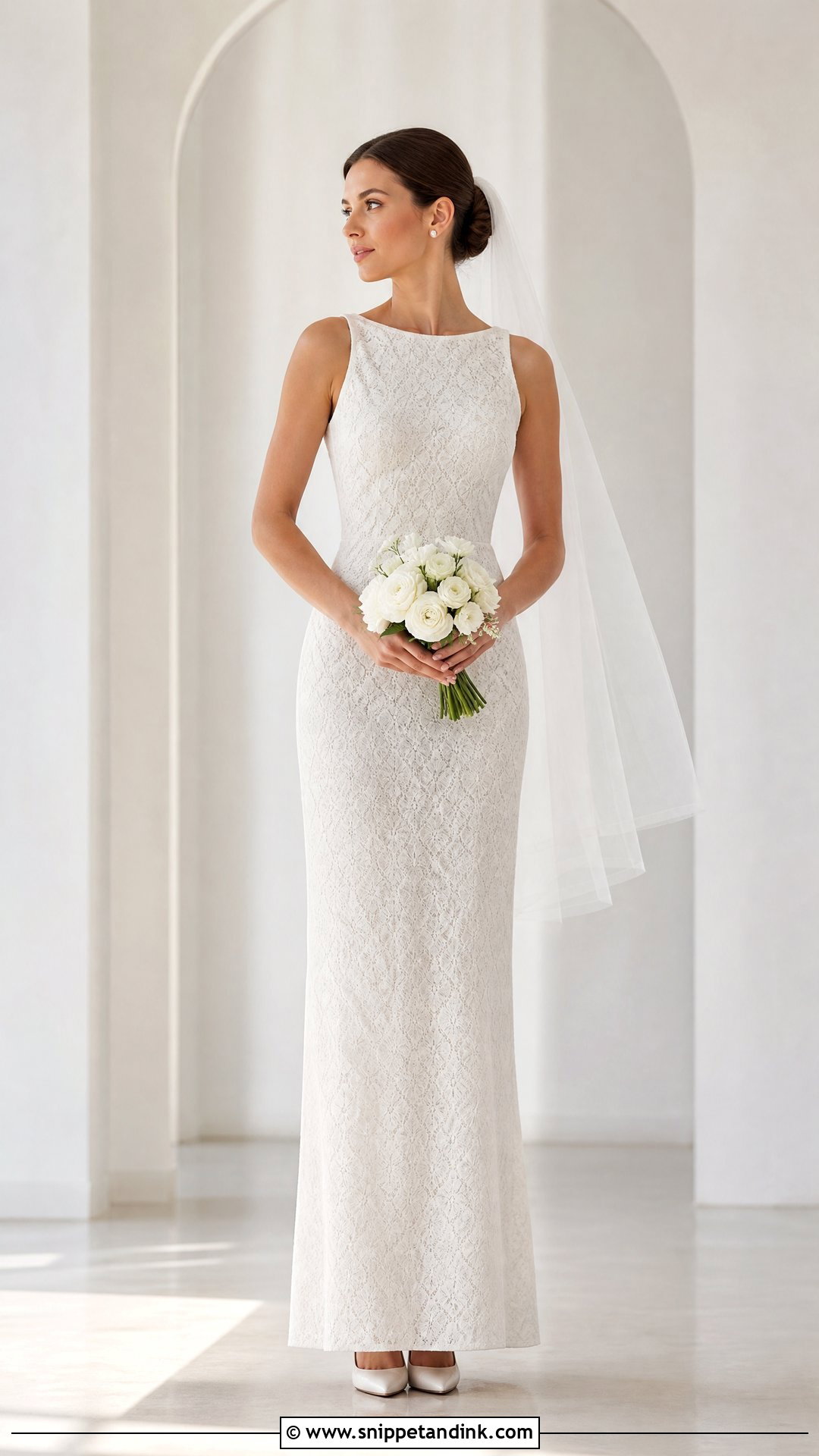
Can lace look minimal? It can, if you choose a fine lace with a small repeat instead of large appliqués, heavy beading or mixed textures. A column, sheath or clean A-line keeps the shape quiet. Because there is so little going on, fit and finishing carry the whole look, so I check that the lace pattern lines up at the side seams and the zip; a mismatch there is obvious on a plain gown. Polished pumps, studs, a single-tier veil and a neat bun or glossy straight hair suit it. Leave off the belt unless the waist genuinely needs definition.
20. Lace Wedding Dress With Cathedral Train
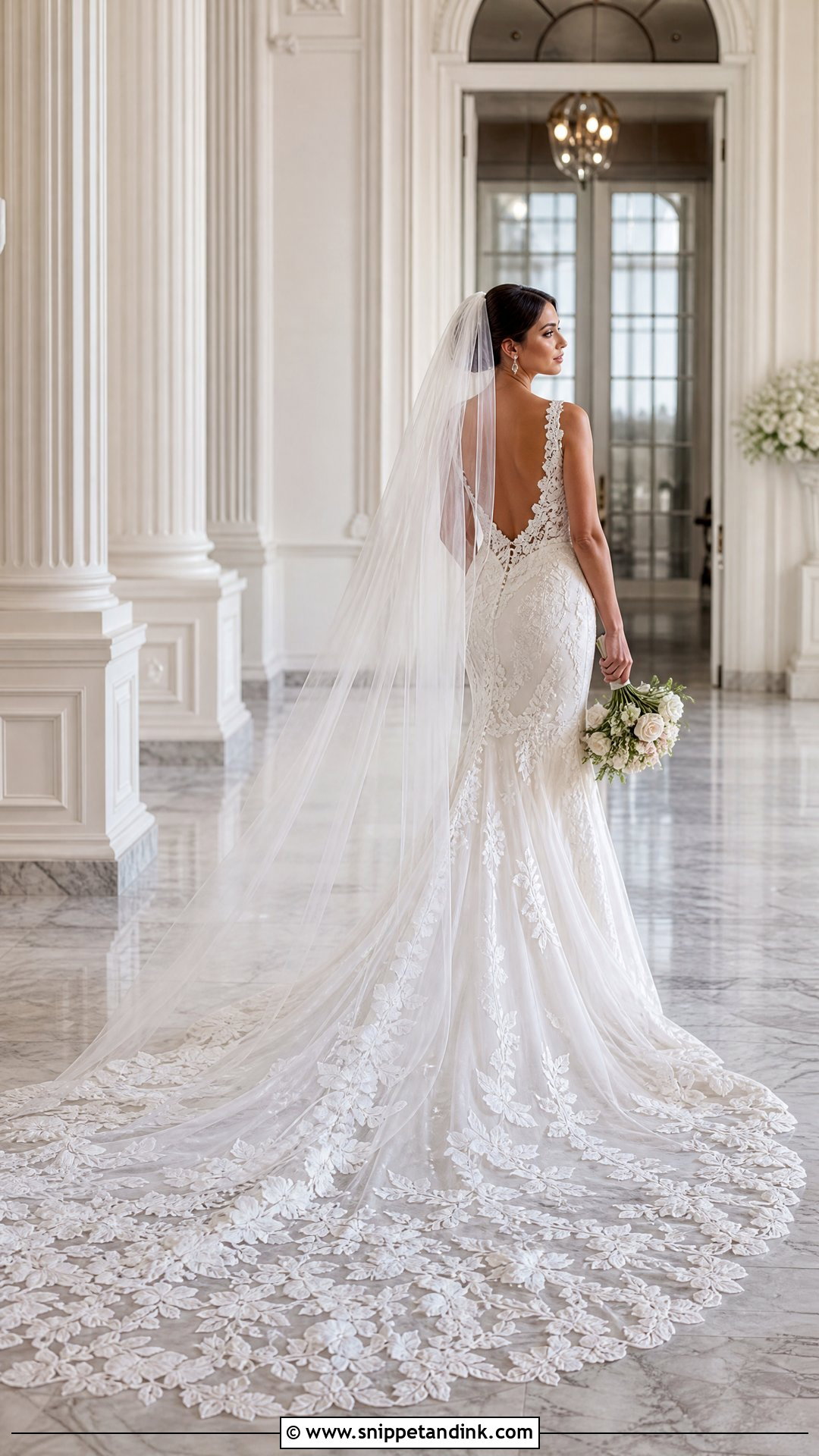
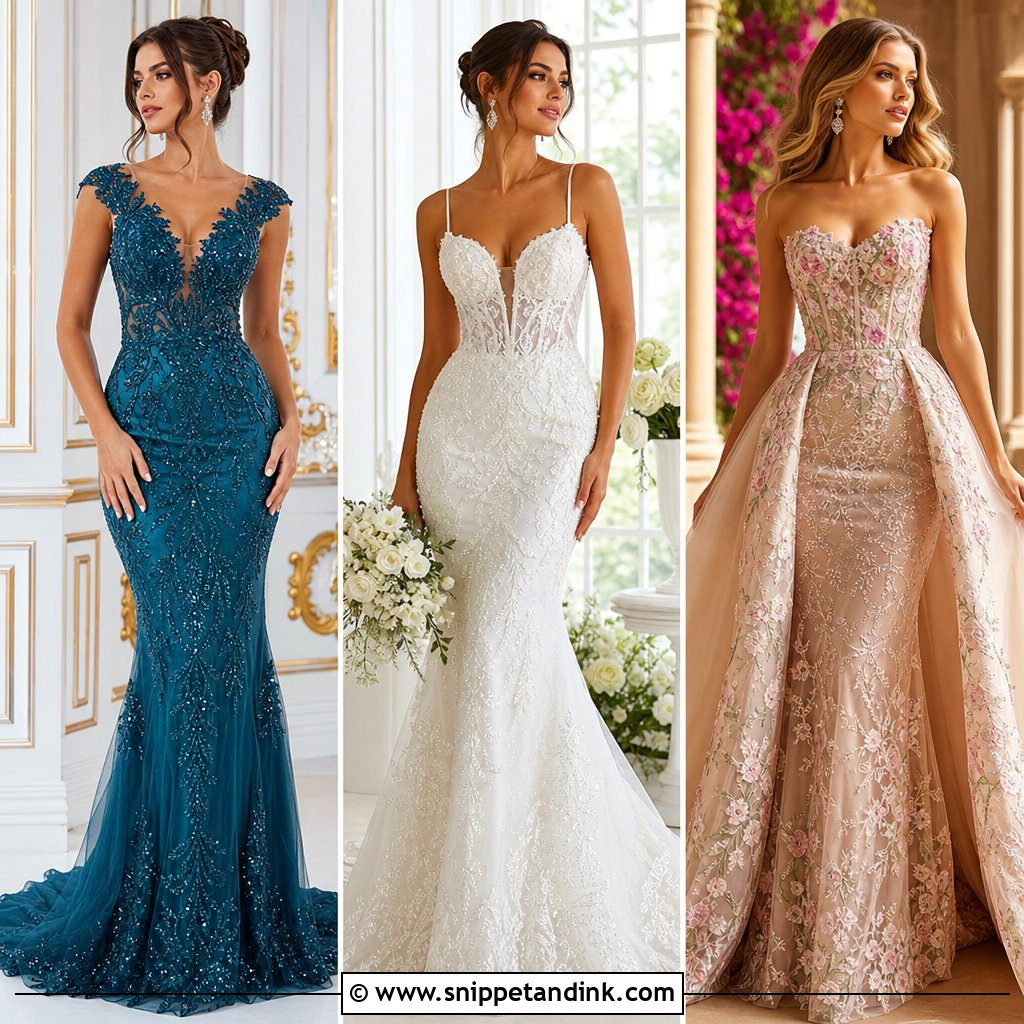
A cathedral train is the view everyone gets as you walk away, so it is worth fitting properly. It suits ball gowns, mermaid shapes and structured A-lines, and the best versions have appliqués that grow denser toward the hem to form a border once the train is spread out. Keep the veil simple and equal to or a touch longer than the train. Supportive heels, understated earrings and hair that shows any back detail finish it. Name one person to arrange the train before the entrance and photos, and have them practise the bustle with you, since lace trains often need several hooks and loops.
Snags, Foundation Marks and Grubby Hems on a Lace Gown
Lace is tougher than it looks, but it fails in predictable places. I pack a small kit for every lace bride and brief one bridesmaid on it, because the fixes are quick if someone knows where to look.
Where it catches
Bracelets, watch clasps, the corners of a clutch and velcro on a groom’s boutonniere holder pull threads. If a loop does pull, don’t cut it. Ease it back to the wrong side with a needle, or leave it until after the wedding for a seamstress.
Makeup and the neckline
Get dressed before the final setting spray and lipstick, and step into the gown rather than pulling it over your head. A silk scarf over the face while dressing keeps foundation off a high neck or sleeve. Blot a fresh mark with a clean dry cloth; rubbing pushes it deeper into the net.
After the day
The hem will pick up grass and dust no matter what. Get the gown to a cleaner who handles bridal lace within a few weeks so marks don’t set, and store it flat in acid-free tissue in a breathable box, not plastic, away from light so ivory lace doesn’t yellow.
Lace Looks Different Once You Sit Down in It
Lace is far more versatile than its reputation, and the right gown depends more on you than on the pattern. Start with the silhouette that lets you breathe and move, then compare lace scale, lining colour, neckline, sleeves and train. Think about your venue and how many hours you’ll be on your feet. Let shoes, veil, jewelry and hair support the lace rather than compete with it. Before you commit, walk, sit and raise your arms in the full outfit. Trends are a useful starting point, but fit and how you feel in the dress will matter far more on the day.
You'll Like These Ideas:




Leave a Reply