
Most brides walk into their first appointment with a screenshot of one gown and leave having fallen for a completely different shape. That’s normal. Silhouette, fabric and neckline behave very differently on a body than on a hanger, so I always start by asking about the whole day: the venue floor, the season, the shoes, the veil, and how long you’ll be standing. Right now I’m seeing brides lean toward personal style over rules, with clean tailoring, pearl work, bows, minis, slip dresses, corsetry, high necklines and nontraditional bridal looks all showing up, especially for small ceremonies. Quiet, unembellished gowns, soft color and a second outfit for the party are popular too. Below are 25 dress styles, each paired with the accessories I’d actually put with it.
The Fitting Room Tests I Make Every Bride Do
Standing still in front of a three-way mirror tells you almost nothing about how a gown will behave at a wedding. You’ll sit, climb into a car, hug a hundred people, raise a glass and dance. So before a bride falls in love with a dress, I put it through the same short routine.
- Sit on a low chair for a full minute. Watch where the bodice digs, how far the skirt rides up and whether the waist seam rolls.
- Raise both arms as if you’re hugging someone taller than you. Straps, sleeves and strapless bodices all show their weak spots here.
- Walk ten paces and turn. A mermaid flare or a tight sheath should let you take a normal stride, not shuffle.
- Bend forward as if picking up your bouquet. If the neckline gapes, it needs taking in at the sides.
- Look at a phone photo from the back and side, in daylight. Mirrors flatter; cameras don’t.
Bring the shoe height you plan to wear, or something close. Hem length, train length and even how the waist sits all change with two inches of heel, and a sample pinned for flats will look wrong on the day.
What to wear underneath at the appointment
Smooth, no-line nude underwear and a strapless bra, or none at all if the gowns have built-in cups. Shapewear is worth bringing if you already know you’ll wear it, because it changes the measurements your seamstress works from.
1. A Line Wedding Dress With Veil
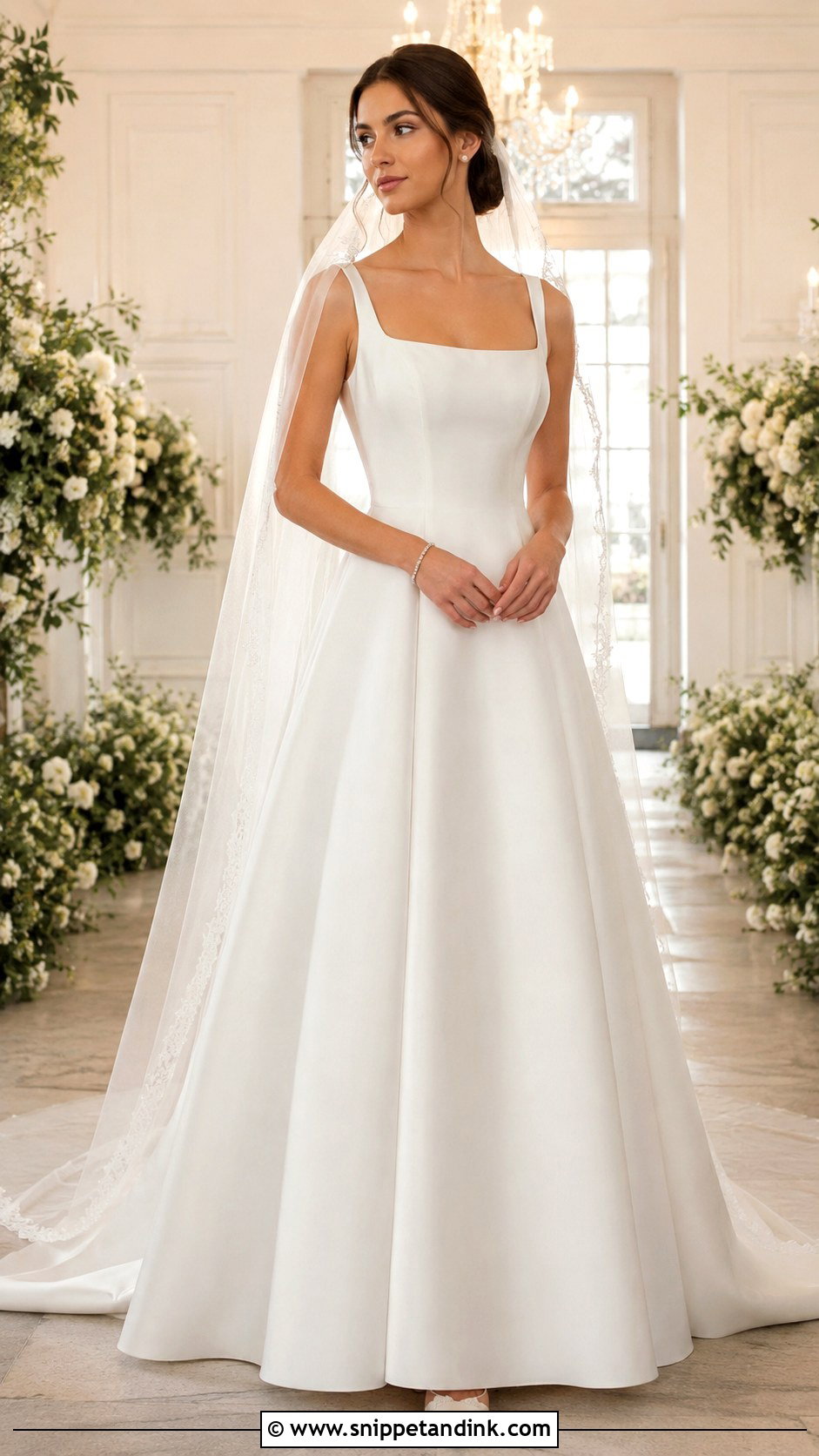
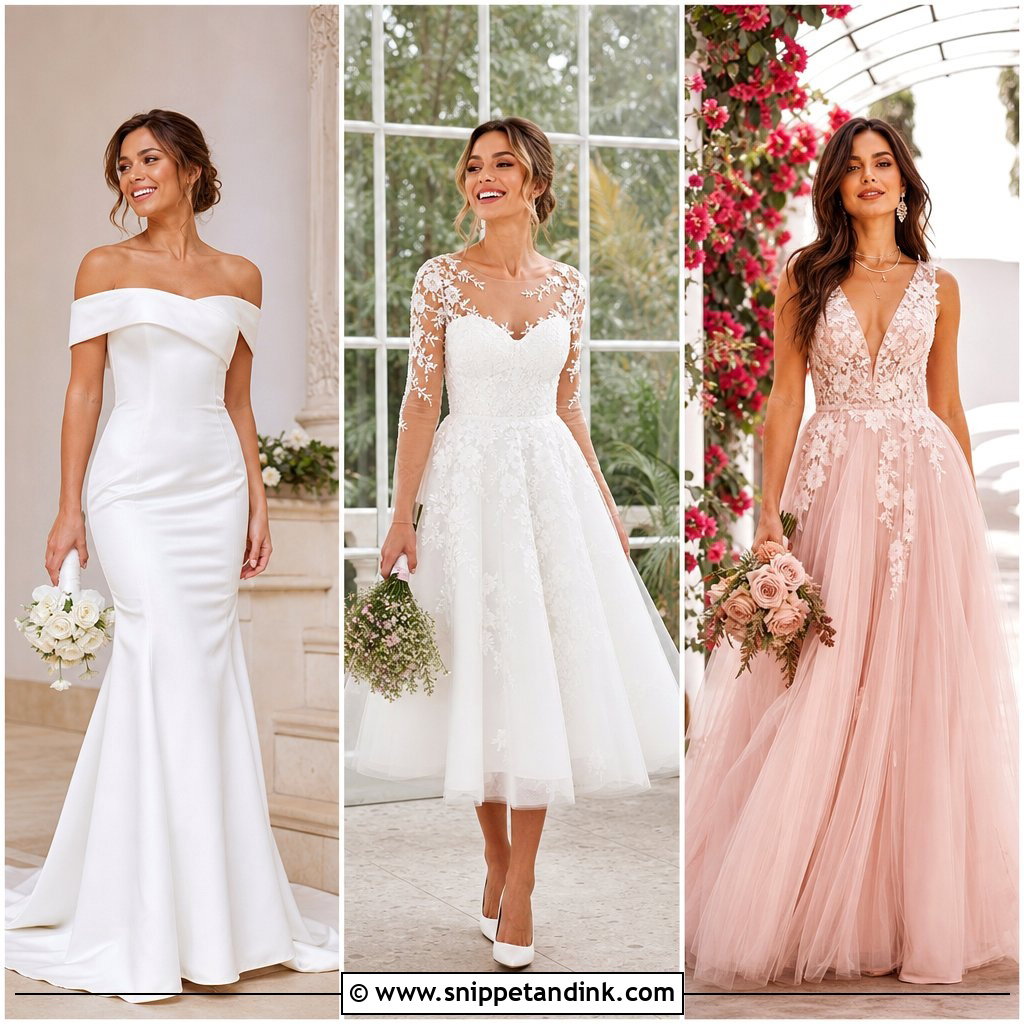
If I had to dress a bride I’d never met, sight unseen, I’d bring an A-line. The bodice holds the waist and the skirt skims away from the hips, so it forgives a lot without hiding the figure. With an ivory A-line I like a fingertip veil, pearl studs, one thin bracelet and pointed satin heels. A sweetheart, scoop, or square neckline changes the mood without changing the fit. The thing I check is where the waist seam lands: an inch too low and the skirt starts to look heavy when you sit for dinner.
2. Ball Gown Wedding Dress With Tiara
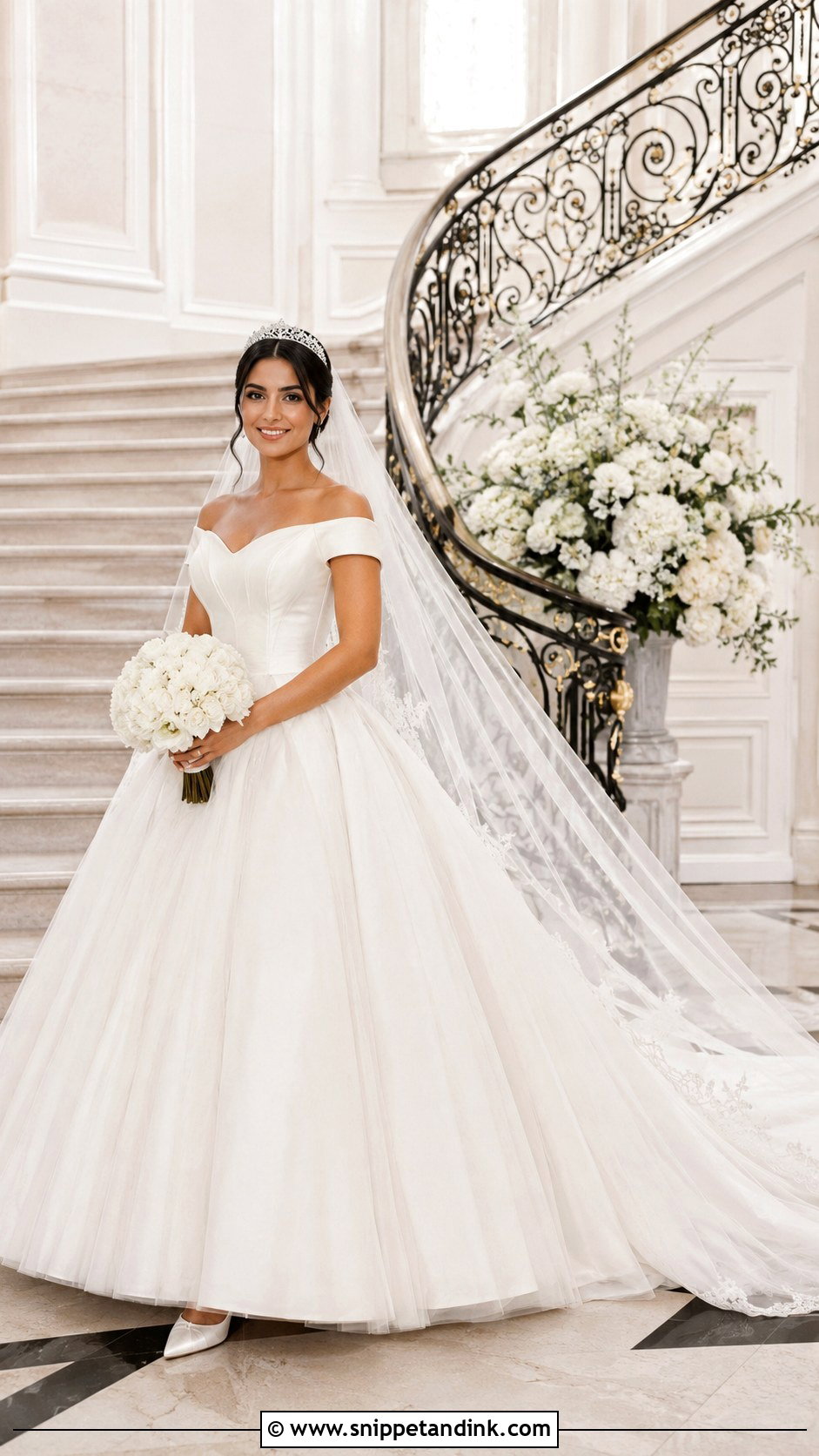
A ball gown does the work for you. The skirt carries the drama, so the styling can stay quiet: a simple tiara, small drop earrings, a cathedral veil and closed-toe heels. Fabric decides the feel here. Satin and mikado hold a firm dome, while tulle and organza float and crush more easily in a car. Keep the bouquet tight and pale, white roses or calla lilies, so it doesn’t fight the skirt. One honest warning: a full crinoline takes up a whole doorway, so walk your venue’s aisle, stairs and bathroom in your head before you commit.
3. Mermaid Wedding Dress With Long Veil
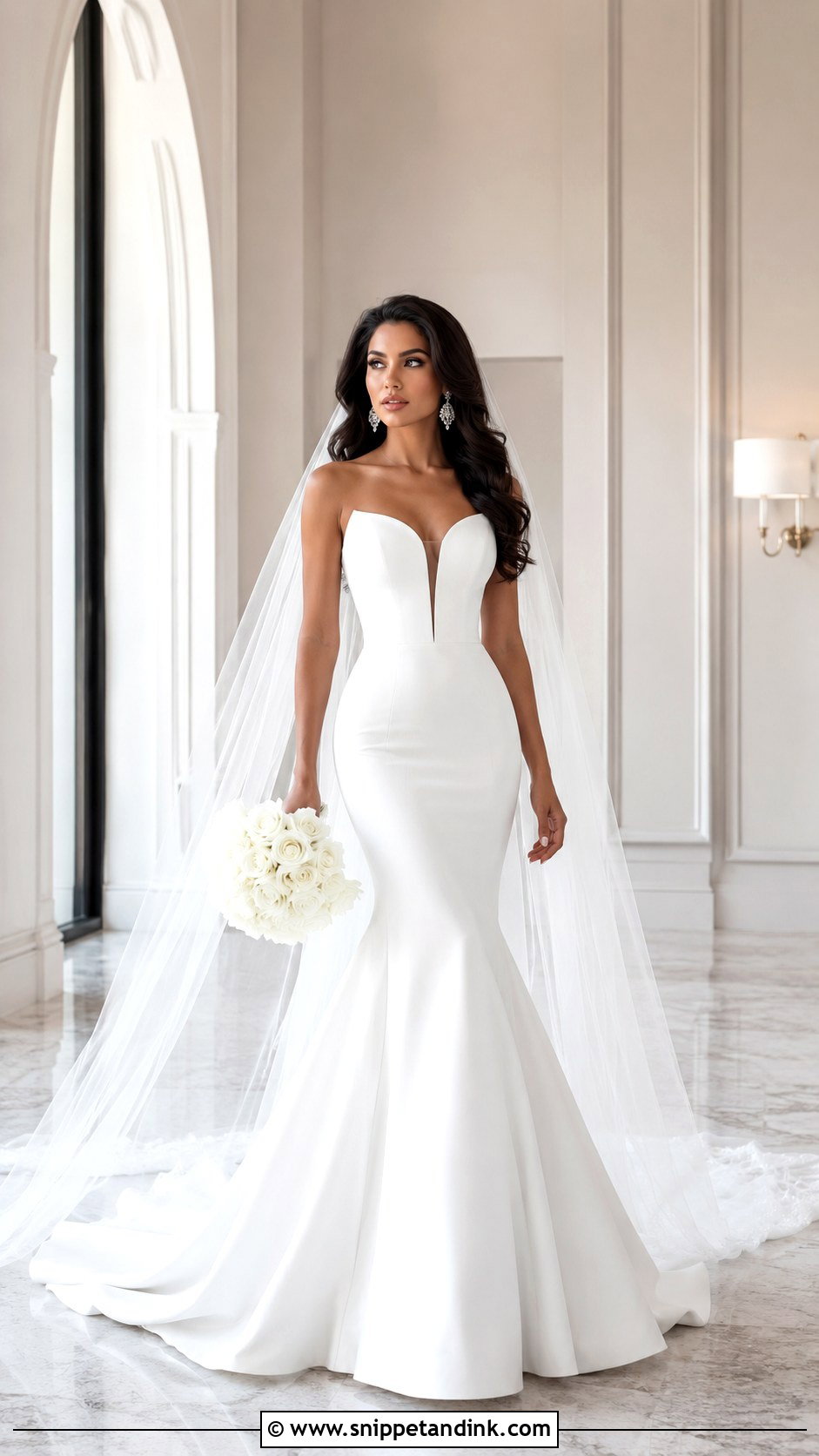
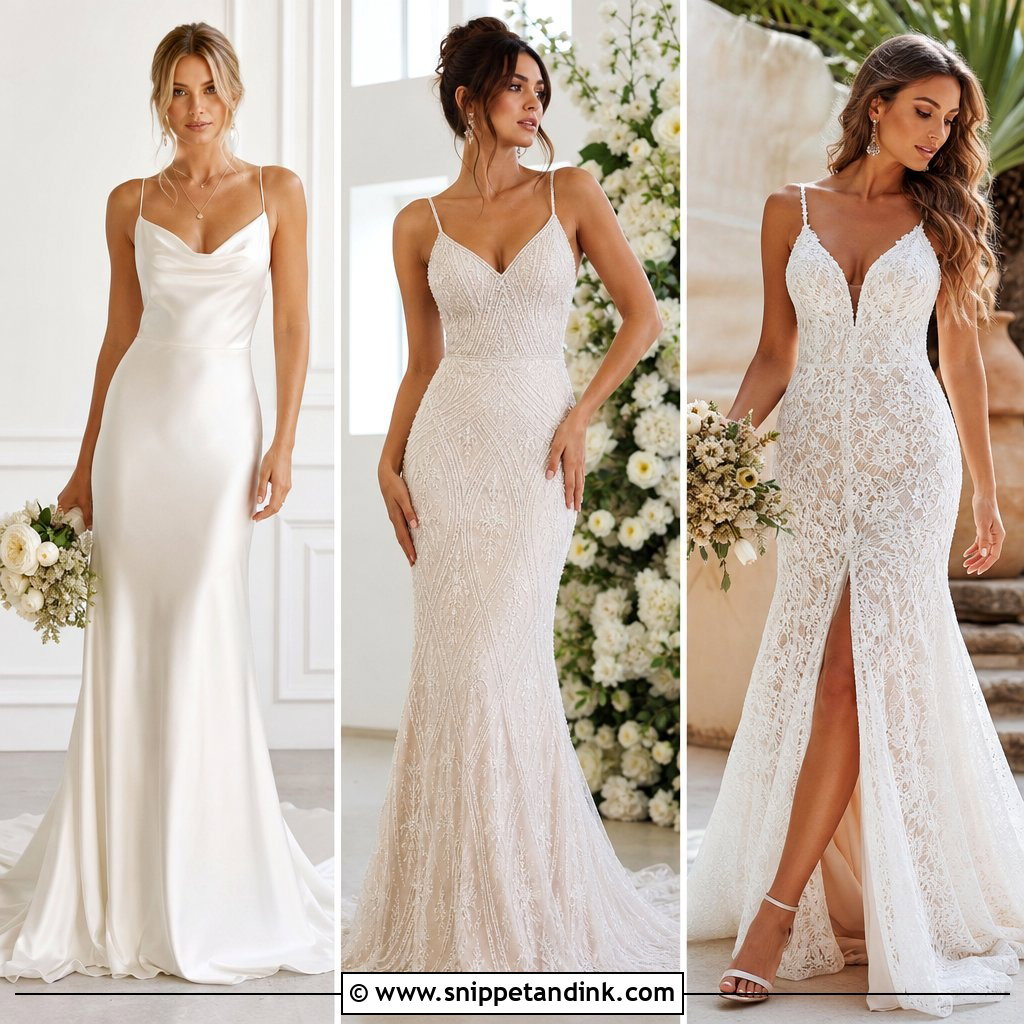
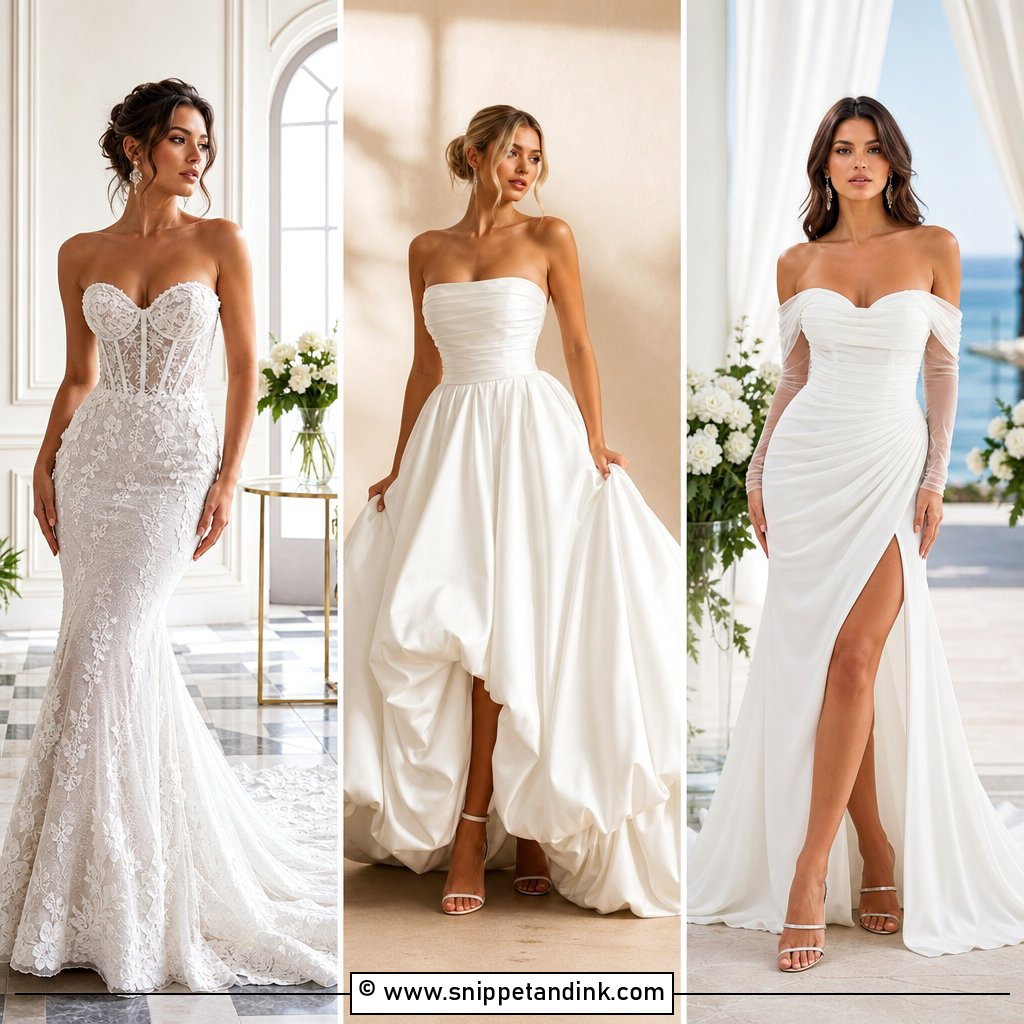
The mermaid is the shape I fit most carefully. It hugs through the bodice, waist and hips and flares near the knee, which means the flare point has to sit exactly right for your height or you’ll walk in tiny steps all night. Crepe, structured lace or mikado fabric supports the body better than thin satin, which shows every seam underneath. I style it with a long veil, crystal earrings, sleek heels and either a smooth updo or soft waves. Strapless reads classic, off-shoulder reads romantic and an illusion neckline reads modern. Ask your consultant to let you climb a step and sit on a stool before you decide.
4. Sheath Wedding Dress With Simple Jewelry
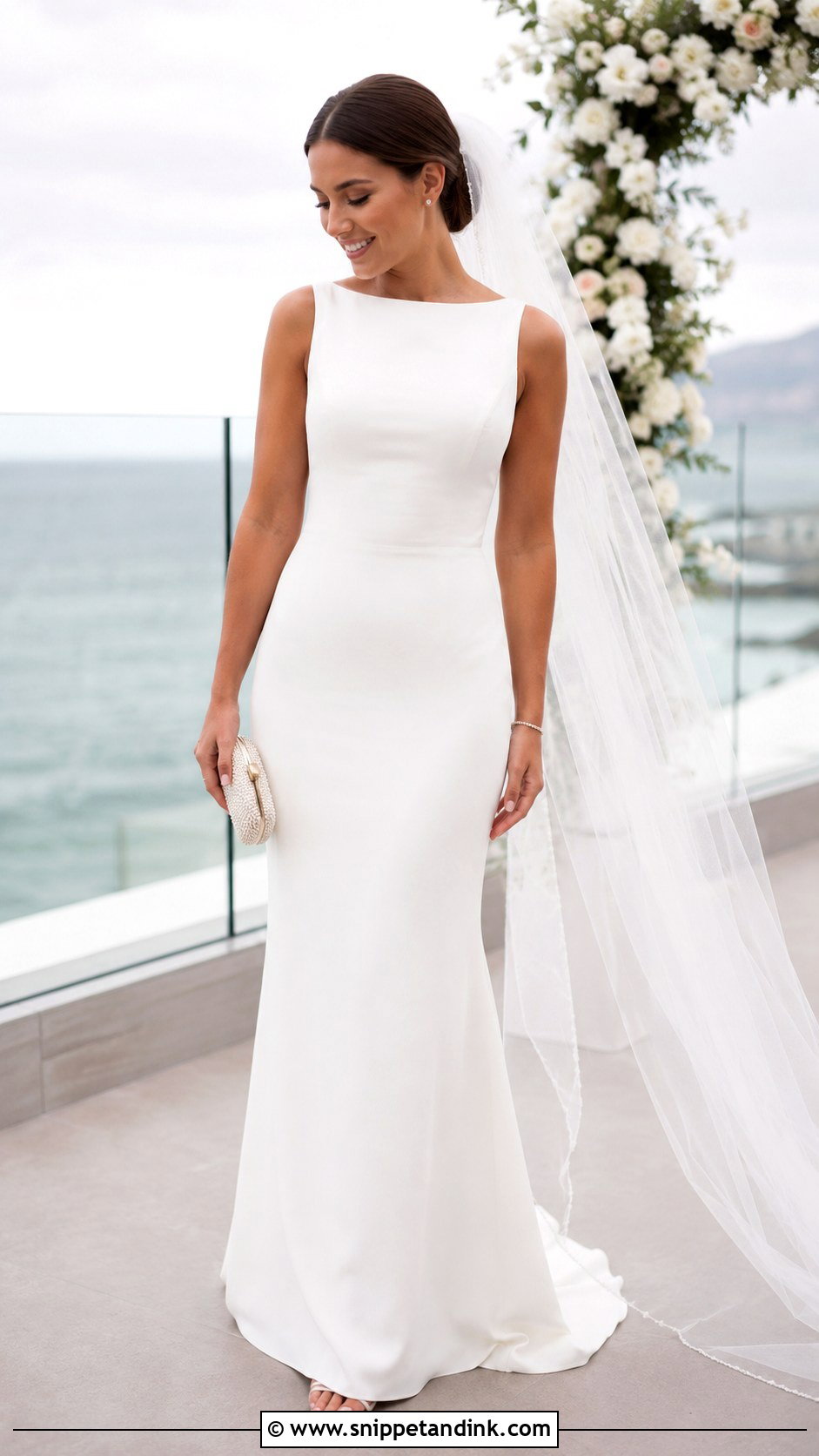
A sheath falls close to the body with no flare and no volume, which is exactly why I reach for it for beach ceremonies, rooftops and city halls. It packs well and moves well. With a white or ivory sheath I keep everything light: barely-there sandals, small diamond studs, a slim clutch and a soft veil. If the dress has a high slit, I balance it with a higher neckline so the look doesn’t tip into evening wear. The catch is that a sheath shows everything underneath, so your undergarments need to be decided before the first fitting, not the last.
5. Satin Wedding Dress With Pearl Earrings
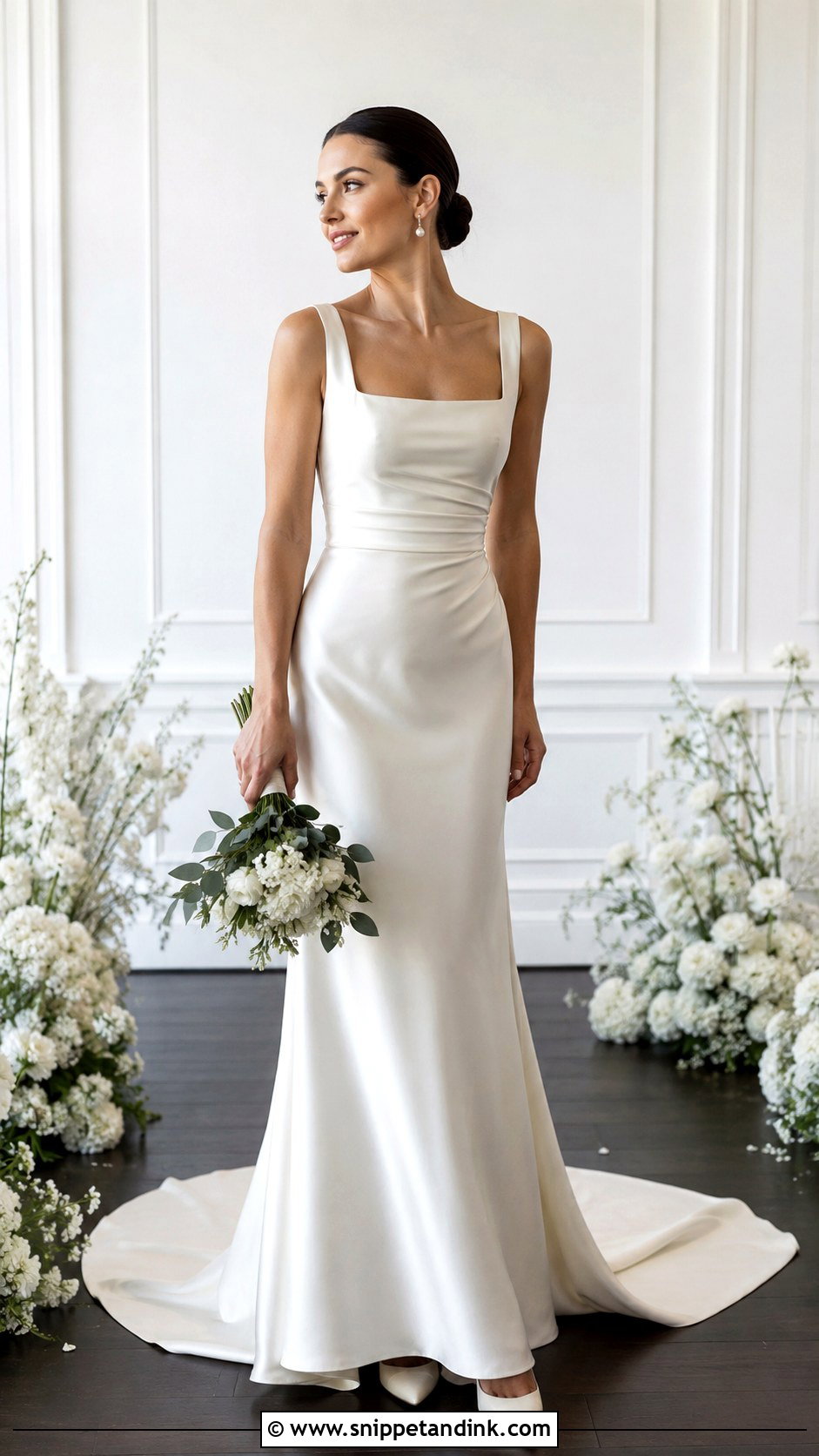
Satin catches light in long, smooth planes, so a plain cut already looks rich. For a refined look I’d pick a clean bodice, a soft train and a structured waist, then add pearl earrings, ivory pumps, a low bun and a small bouquet with greenery. Skip heavy beading; it competes with the sheen. What brides don’t expect is how satin creases. Heavy duchess satin holds up, but lightweight charmeuse wrinkles across the lap the moment you sit in the car, so I steam it on the morning and keep a hand steamer nearby. Fall, winter and indoor formal weddings suit the heavier weights best.
6. Lace Wedding Dress With Soft Curls
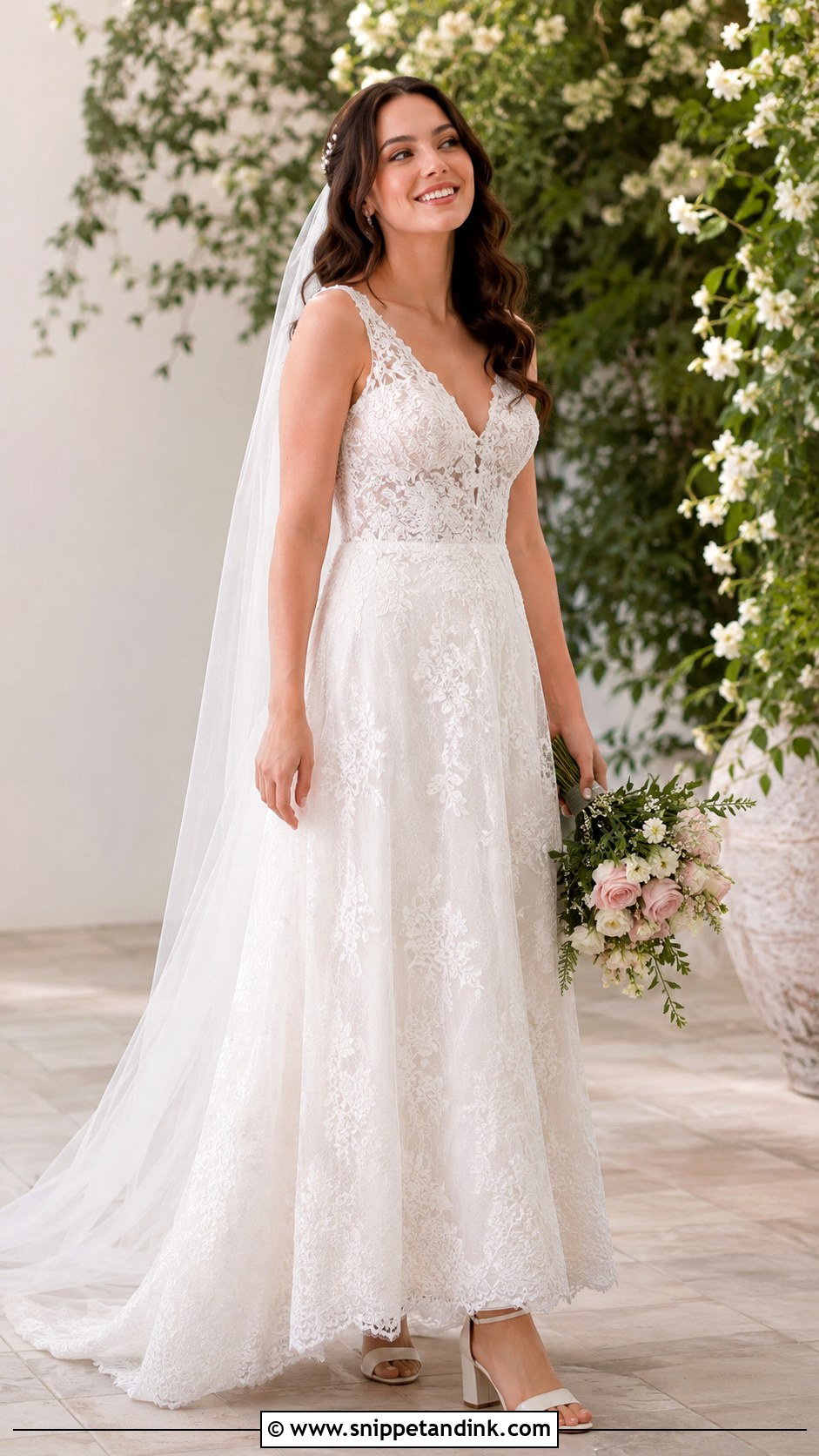
Lace brings texture on its own, so you rarely need bold accessories with it. The lace itself sets the mood: Chantilly feels delicate and vintage, guipure feels graphic and modern, and Alençon with its corded outline sits in between. I’d pair a lace A-line, fit-and-flare or sheath with soft curls, pearl hair pins, simple earrings and block heels or satin pumps. Look at the lining too. A nude lining lets the pattern pop, while ivory lining softens it. If the gown is busy, choose a plain veil; two competing laces next to each other almost never look intentional in photos.
7. Off Shoulder Wedding Dress With Drop Earrings
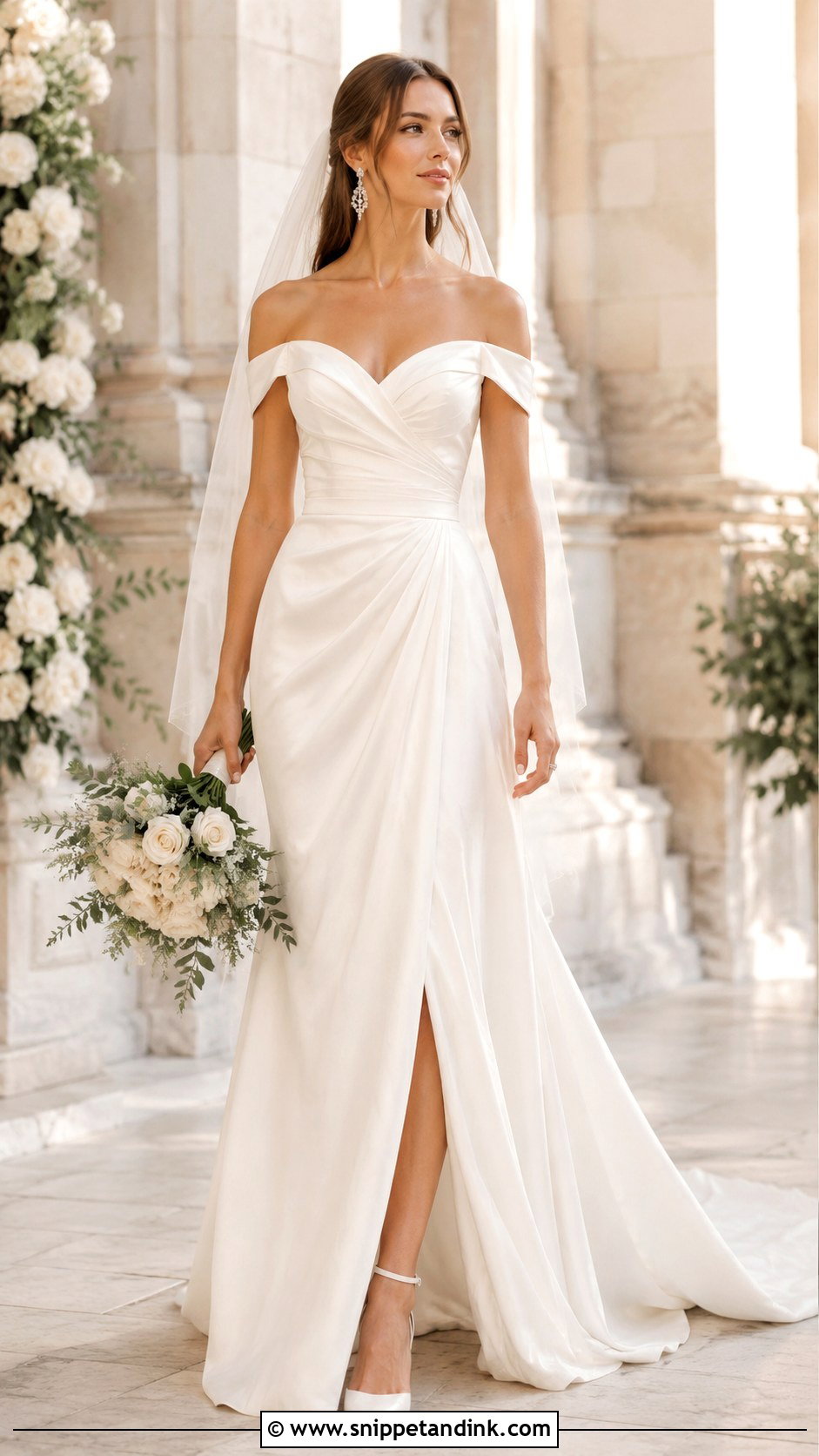
An off-shoulder neckline frames the collarbone so well that drop earrings are usually all you need. Skip the necklace and go for a soft updo, satin heels and a medium-length veil. It works on fitted gowns, A-lines and full ball gowns alike. The question I always ask is whether you plan to hug people and dance, because lifting your arms in a true off-shoulder pulls the straps tight. Look for internal boning or a discreet sleeve that’s stitched to the bodice so it stays put through the first dance.
8. Strapless Wedding Dress With Statement Veil
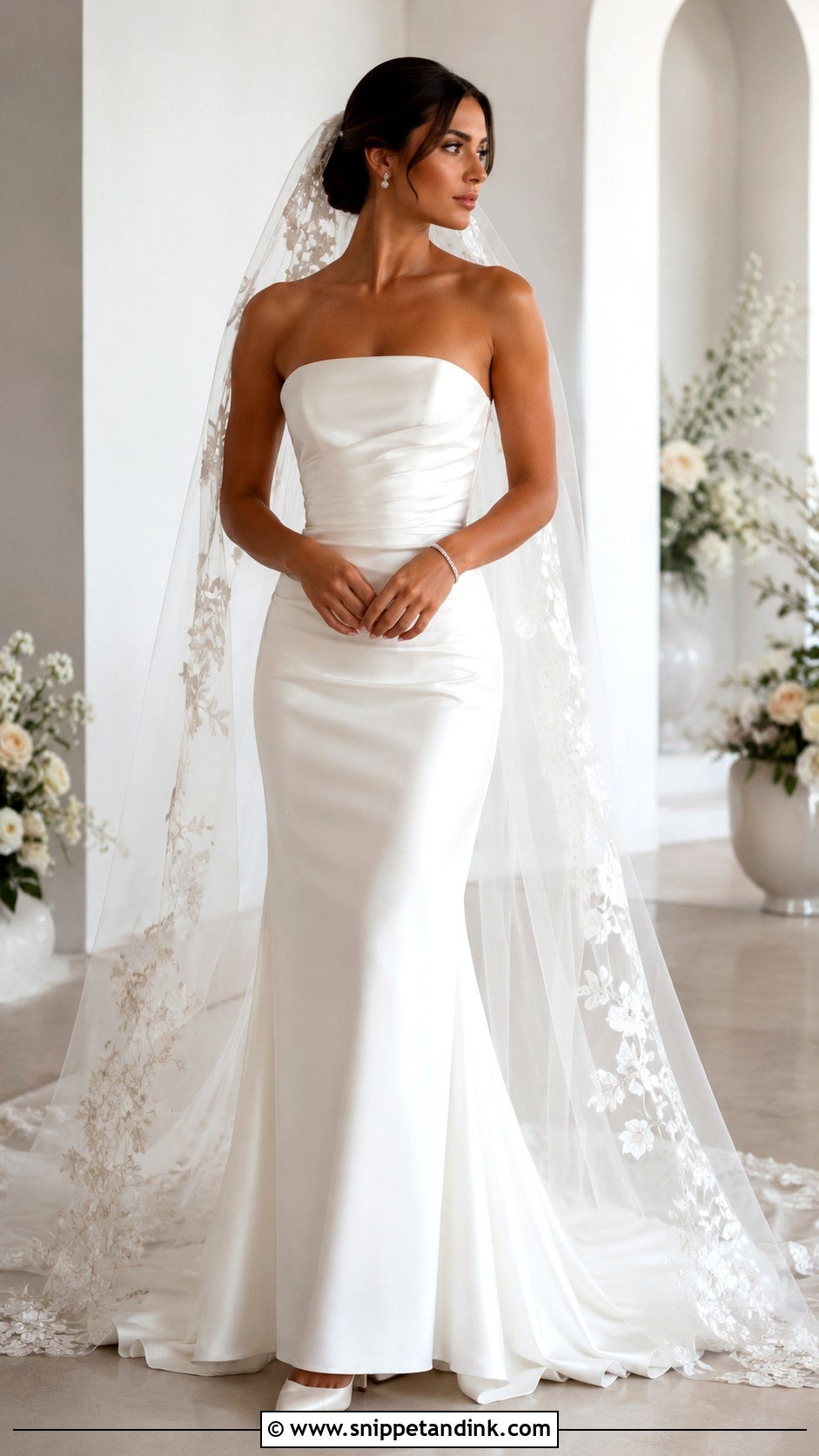
Strapless is a classic because it leaves a clean line for any silhouette, but it lives or dies on fit. The bodice should grip at the ribs, not the bust, so it doesn’t slide when you breathe out. I’ll often pair it with a statement veil, floral embroidery, pearl trim or a soft lace edge, plus a tennis bracelet, simple studs and elegant heels. In satin as a ball gown it reads formal; in crepe as a column it reads modern. Gloves, a cape or a reception accessory are easy ways to change it later in the night.
9. Long Sleeve Wedding Dress With Low Bun
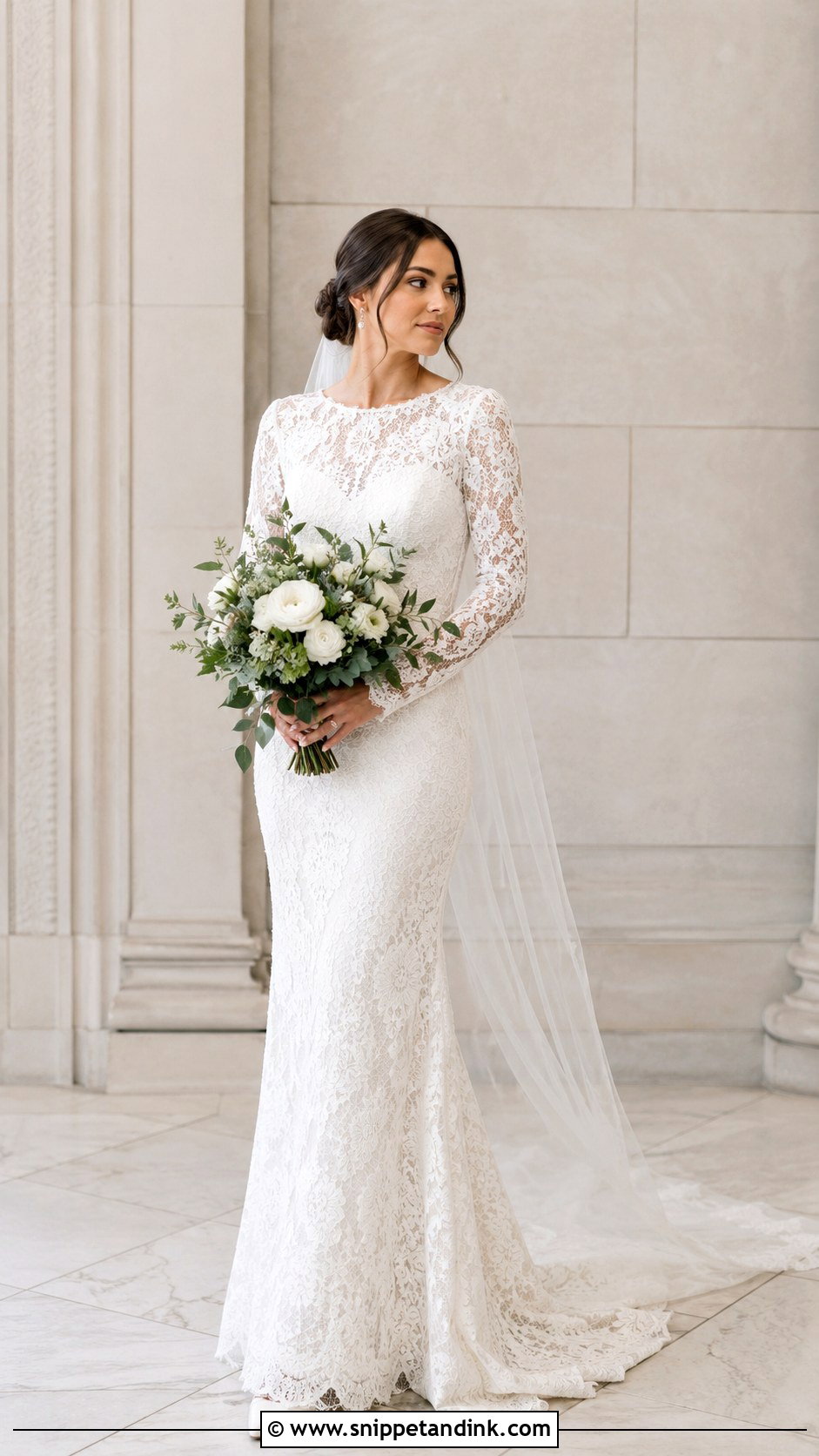
A long sleeve is the fabric’s chance to talk. Lace sleeves feel soft, satin feels polished and sheer illusion sleeves add detail without weight. I’d style it with a low bun, delicate earrings, closed-toe heels and a simple veil. Heavy sleeves suit fall and winter, but light illusion sleeves work any month. My rule is one feature at a time: with a high neckline, keep jewelry minimal; with a deep back, let the back be the moment. At fittings I have brides reach overhead and hug me. If the sleeve cuts under the arm, it needs more room in the armhole, not a looser sleeve.
10. High Neck Wedding Dress With Sleek Hair
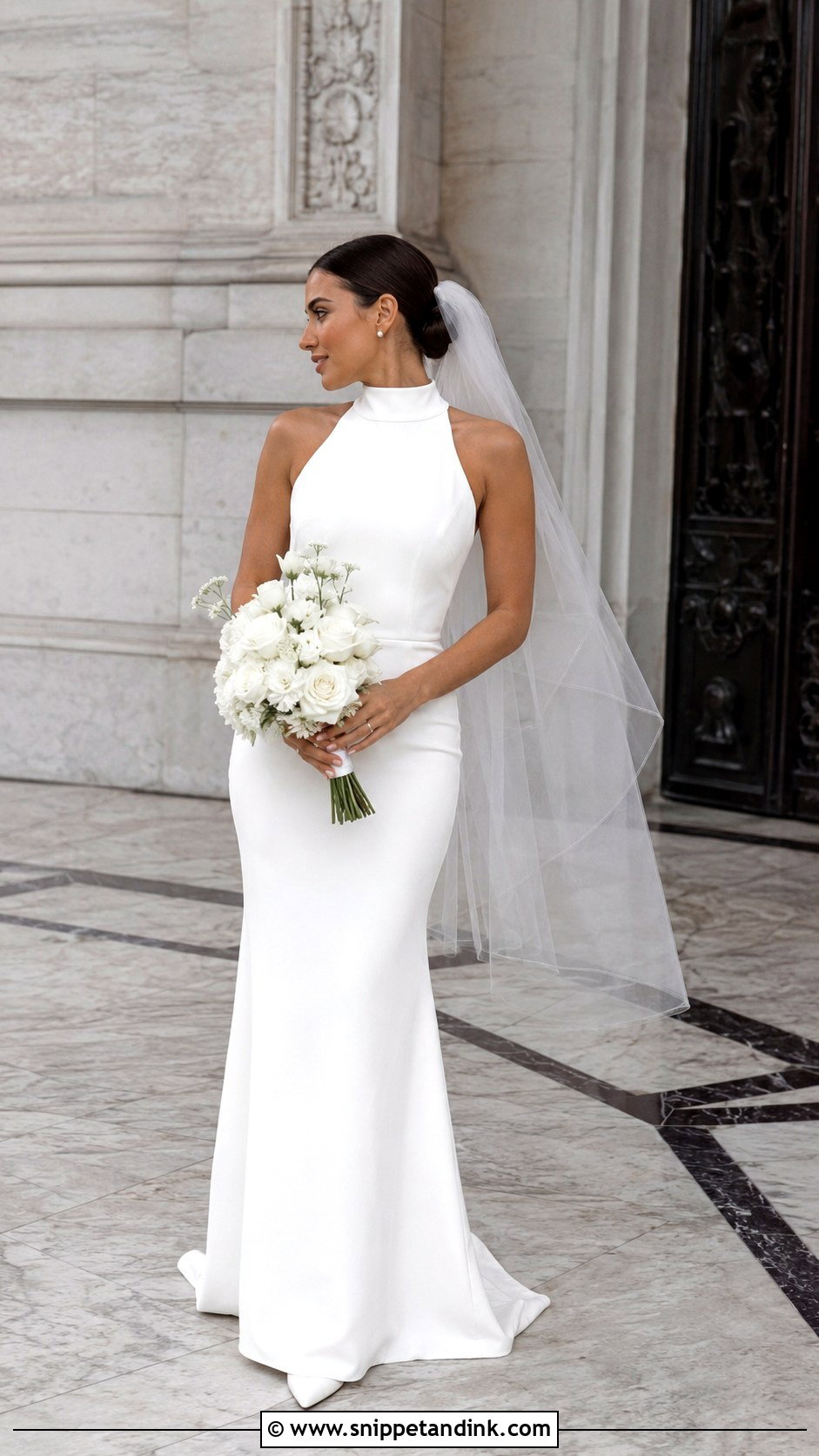
Because a high neck already makes the statement, I take things away rather than add them: sleek hair, small earrings, no necklace. Pointed heels, a structured bouquet and a simple veil set low at the back of the head finish it. The neckline suits column, sheath, A-line and lace gowns. In lace it reads romantic, in satin or crepe it reads editorial. I’d steer brides with shorter necks toward a keyhole or a lower mock neck, because a full high collar can make the head look set straight onto the shoulders in profile shots.
11. Square Neck Wedding Dress With Block Heels
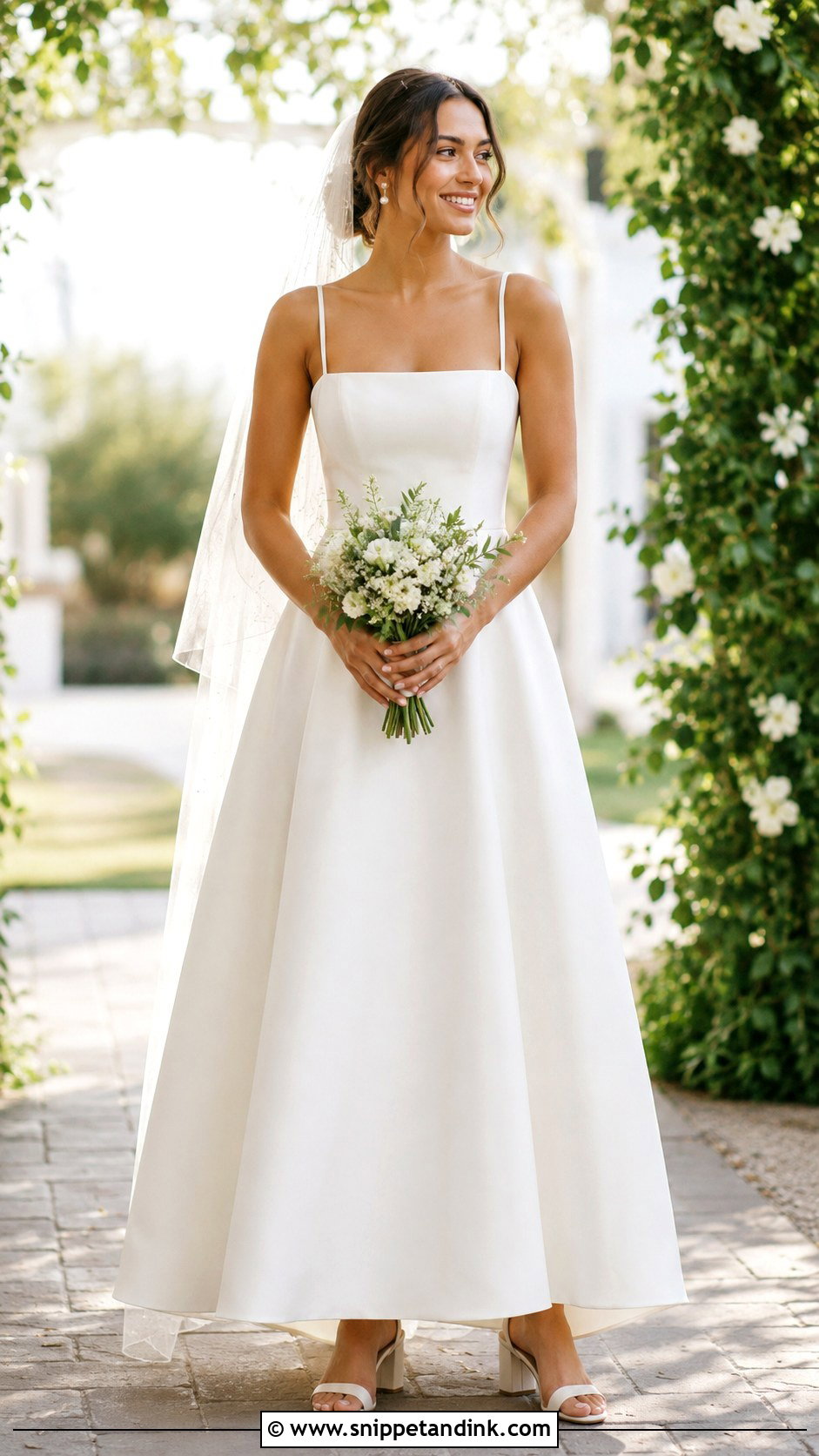
The square neck has a straight, clean line that frames the collarbone and gives the bodice structure. I like it on an A-line or fitted gown with block heels, pearl studs and a soft veil. Block heels earn their place on lawns and gravel paths, and your feet will thank you by the speeches. The neckline pairs with thin straps, long sleeves or a corset bodice. Check the corners of the square when you lean forward; if they gape, the bodice needs taking in at the side seams.
12. Corset Wedding Dress With Full Skirt
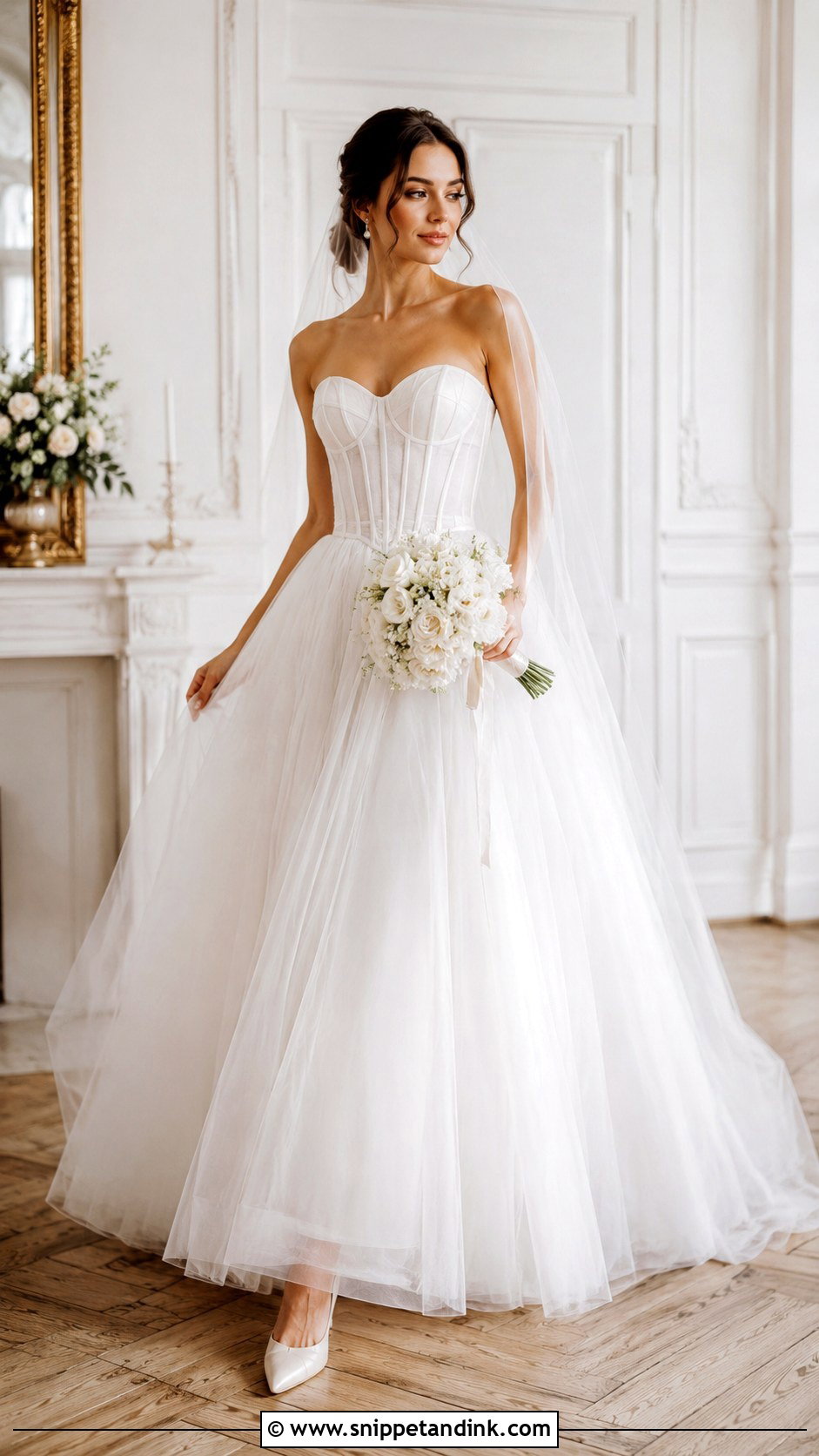
A corset bodice gives real support, which is why so many brides find it more comfortable than they expected. Visible boning looks current when it’s fine and evenly spaced; thick, uneven channels look costume. I’d pair it with a simple veil, pearl earrings, satin heels and a soft bouquet. Tulle, organza, satin and lace skirts all sit well under it. A good corset is fitted at your natural waist with room to breathe and eat. Sit down at the fitting. If the bottom bones dig into your hips, ask about a shorter bodice point.
13. Drop Waist Wedding Dress With Satin Heels
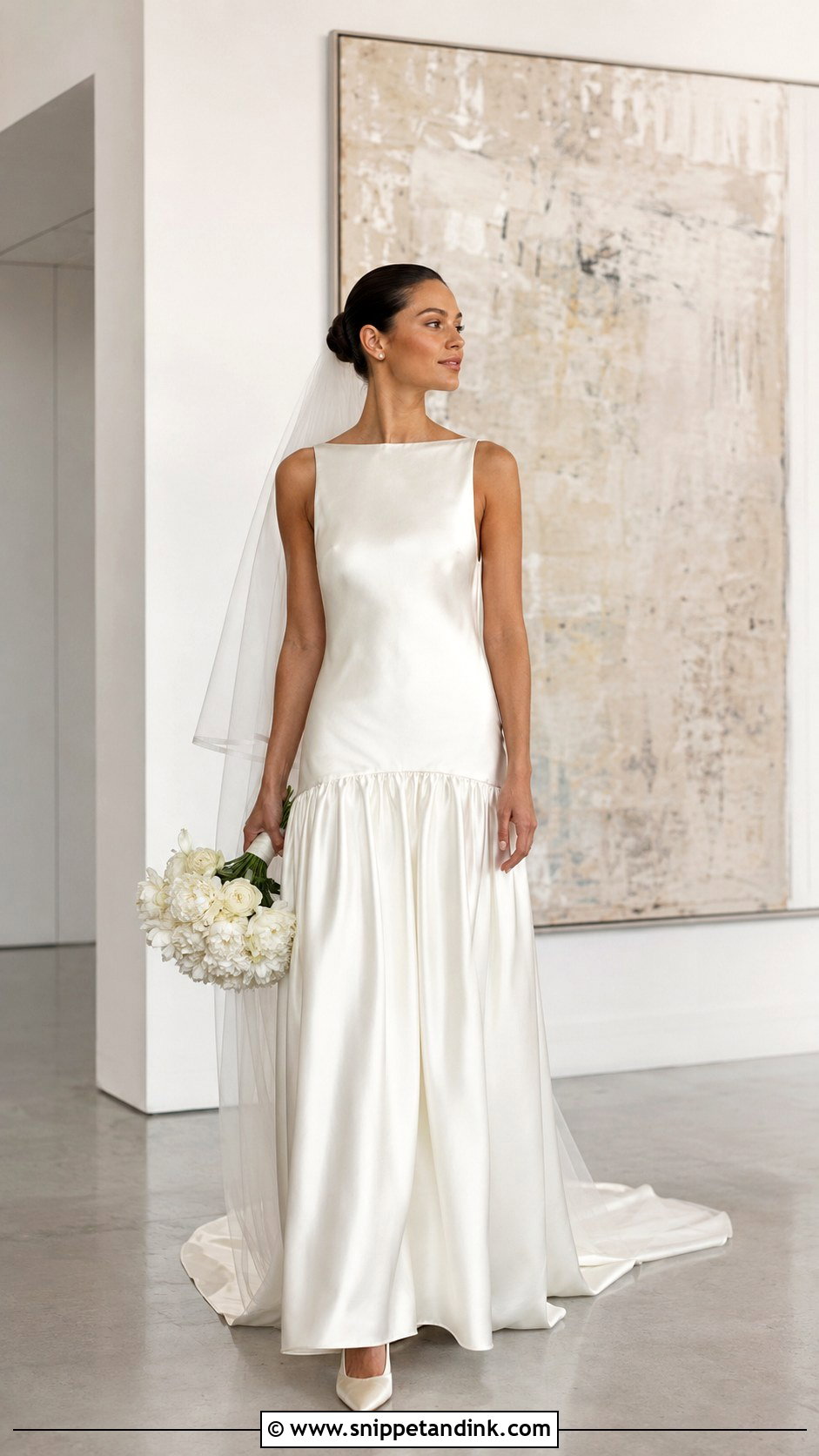
The drop waist moves the seam below your natural waist, so the torso looks longer before the skirt begins. It suits satin, taffeta, organza and lace. With it I’d keep accessories refined: satin heels, small earrings, a clean veil and a sleek bun or polished waves. It’s the most distinctive shape on this list, and also the least forgiving for very short torsos, where the skirt can start almost at the hip and shorten the legs. Have someone photograph you side-on in the fitting room before you decide.
14. Basque Waist Wedding Dress With Cathedral Veil
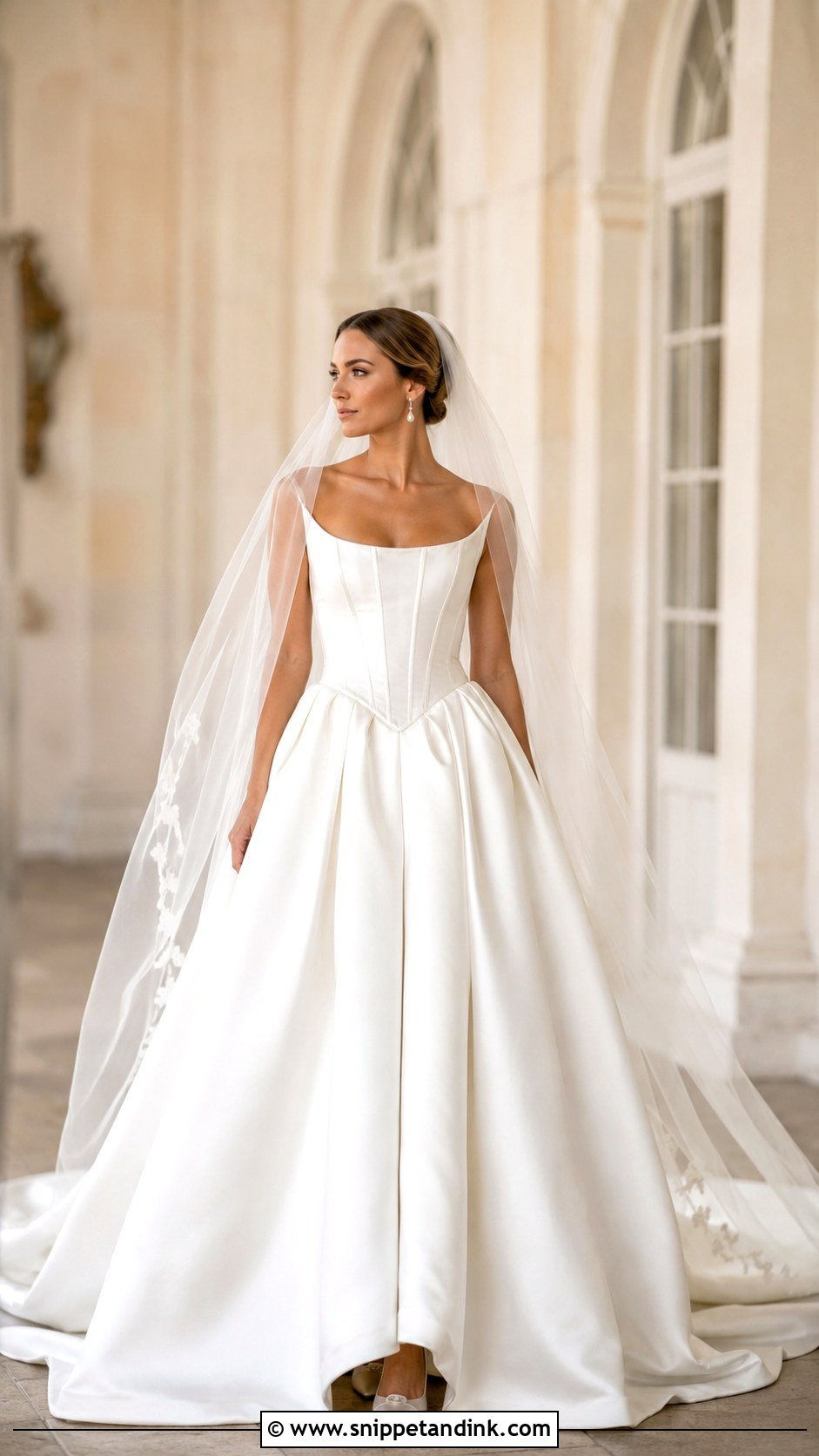
A basque waist wedding dress dips into a soft V at the center front, which draws the eye down and lengthens the torso. It sits best on full skirts, corset bodices and traditional fabrics like satin or tulle. For the ceremony I’d add a cathedral veil, pearl drop earrings and classic ivory heels. The long veil follows the V downward instead of cutting across it. This shape belongs in grand rooms and estate gardens, and it has an old-world feel that doesn’t date.
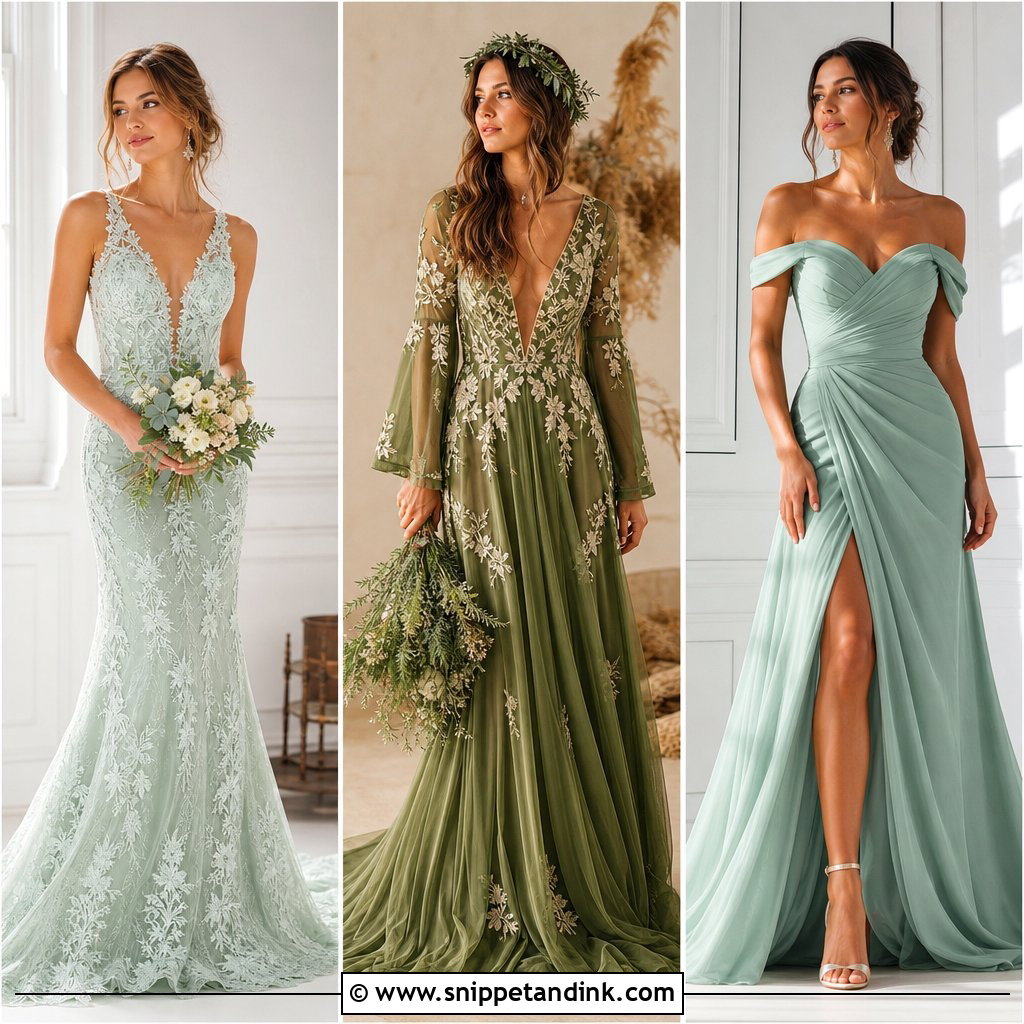


15. Pearl Wedding Dress With Minimal Accessories
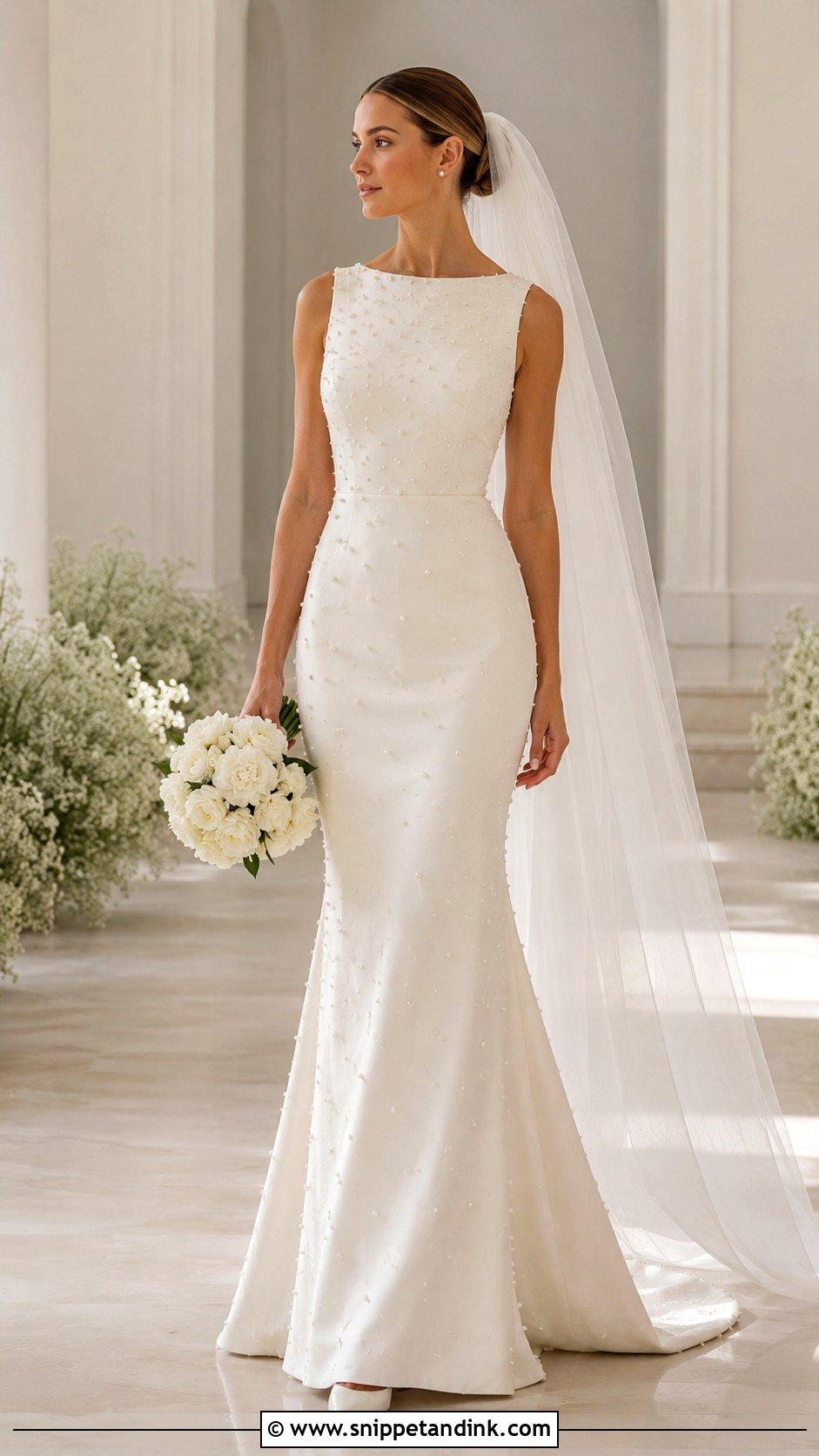
Pearls give a soft glow where crystals give sparkle, and that difference shows up in photos as warmth rather than glare. Look for scattered pearl beading, pearl straps or pearl-edged sleeves. Since the dress already carries the detail, keep everything else quiet: pearl studs, clean heels, a plain veil and smooth hair. It works in a fitted column, an A-line or a sheer overlay over a simple lining. Ask how the pearls are attached. Glued beads pop off on dance floors; hand-sewn ones survive the night.
16. Bow Wedding Dress With Simple Shoes
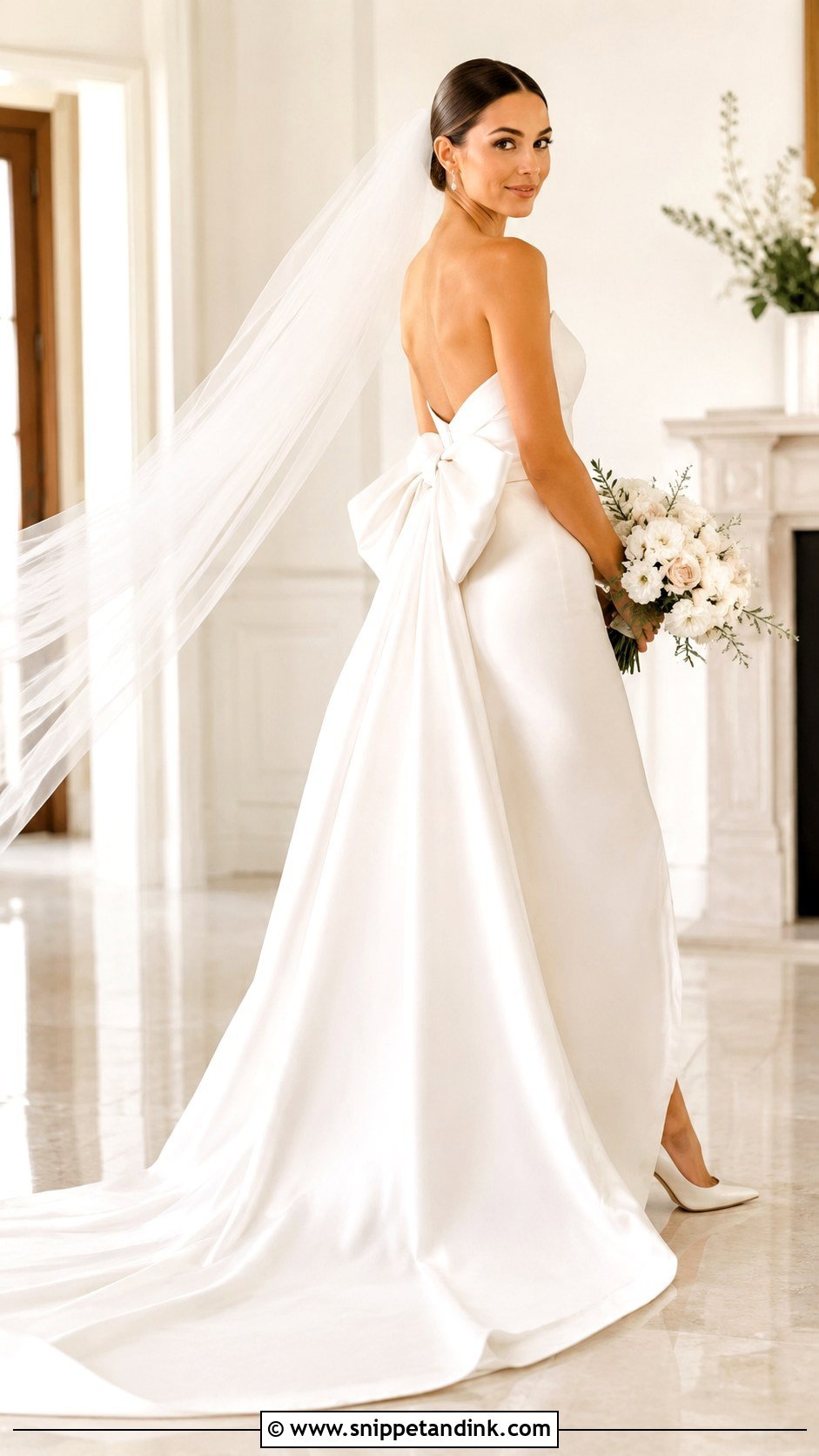
Pick one bow and let it be the focus. It might sit at the back, the shoulder, the waist, the neckline or the train, but two or three bows start to argue. With it I’d keep things simple: satin pumps, small earrings and a clean veil. A large back bow suits a minimal satin dress, while a shoulder bow softens a column gown. Large back bows need stiffening or interfacing, otherwise they wilt flat by the reception and you’ll be sitting on them through dinner.
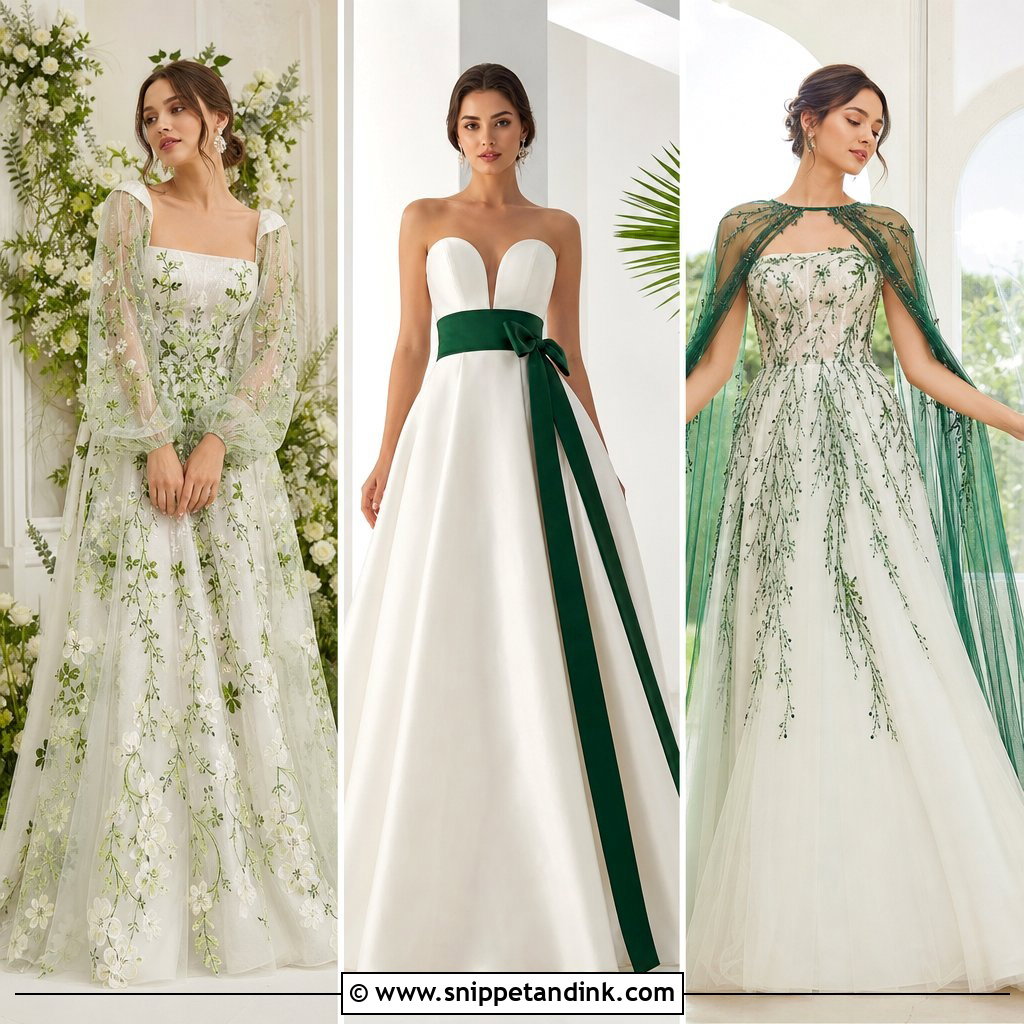
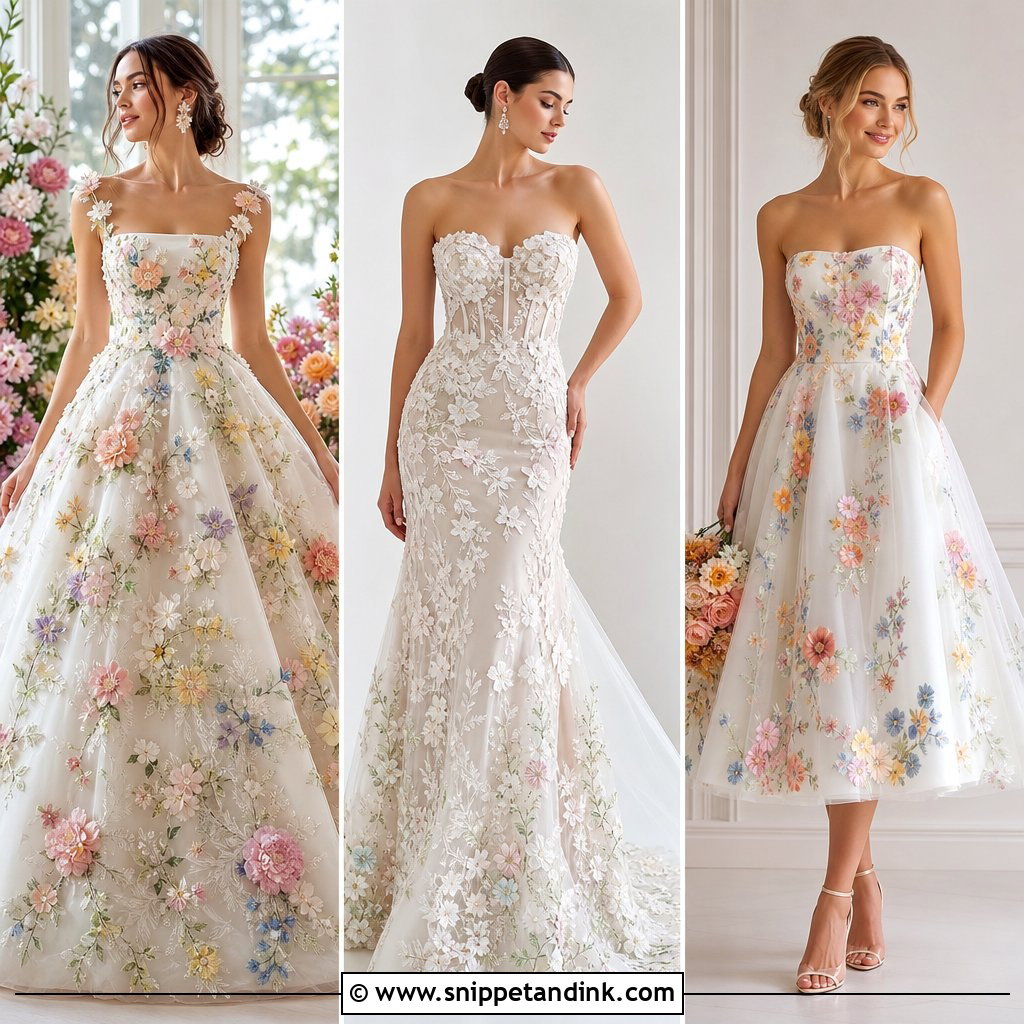
17. Floral Wedding Dress With Garden Heels
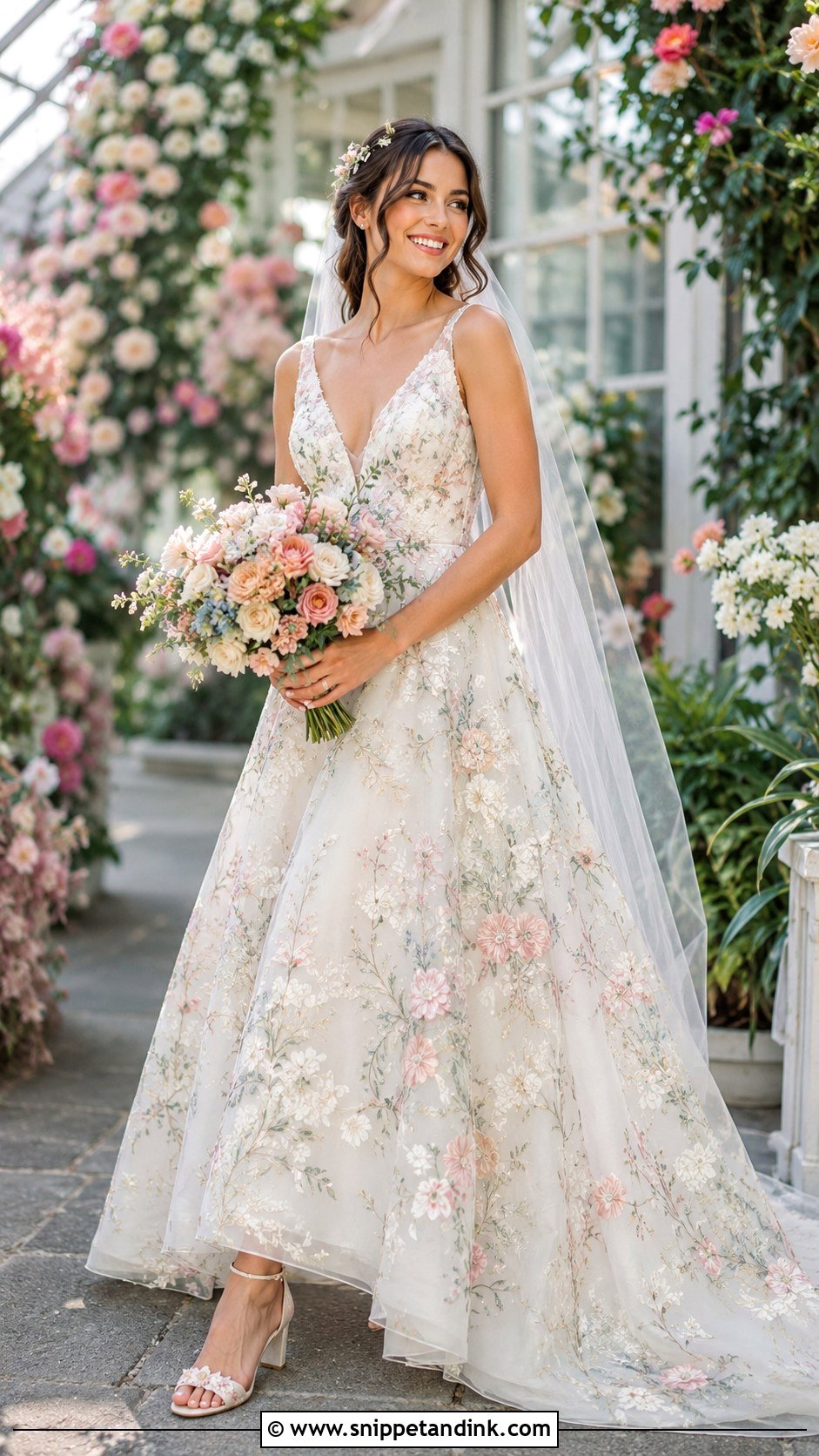
Florals can come through lace, embroidery, appliqué or soft printed fabric, and each reads differently up close. For a garden ceremony I’d put a floral A-line or sheath with delicate heels, flower hair pins and a light veil, and keep jewelry simple so the pattern stays clear. Ivory, blush, pale blue and champagne grounds make the flowers stand out more than stark white. Tell your florist about the dress early. A bouquet that copies the appliqué flowers flattens both, while a looser bouquet in a nearby tone lets each read on its own.
18. Minimalist Wedding Dress With Clean Veil
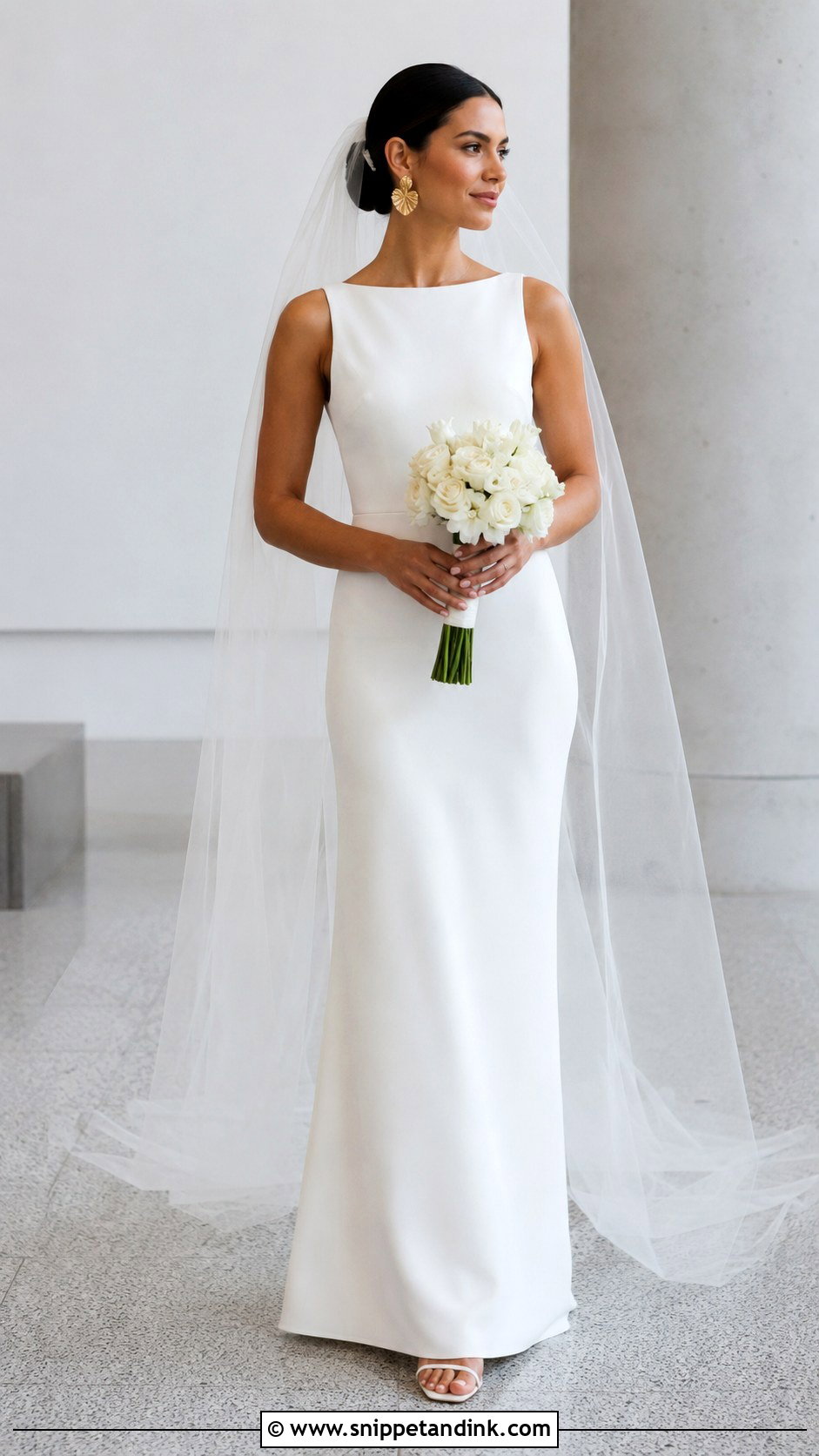
A minimalist gown has nowhere to hide, so fit, fabric and proportion carry everything. Crepe, satin or mikado with a clean neckline and smooth skirt are the usual picks. I style it with a plain veil, sculptural earrings, sleek heels and a small structured bouquet. The neckline is yours to choose, from strapless to square, high neck or long sleeve. This is the gown where I spend the most time at fittings, because a single wrinkle at the hip or a hem a half inch off shows immediately. Budget for alterations even if the dress looks simple.
19. Vintage Wedding Dress With Kitten Heels
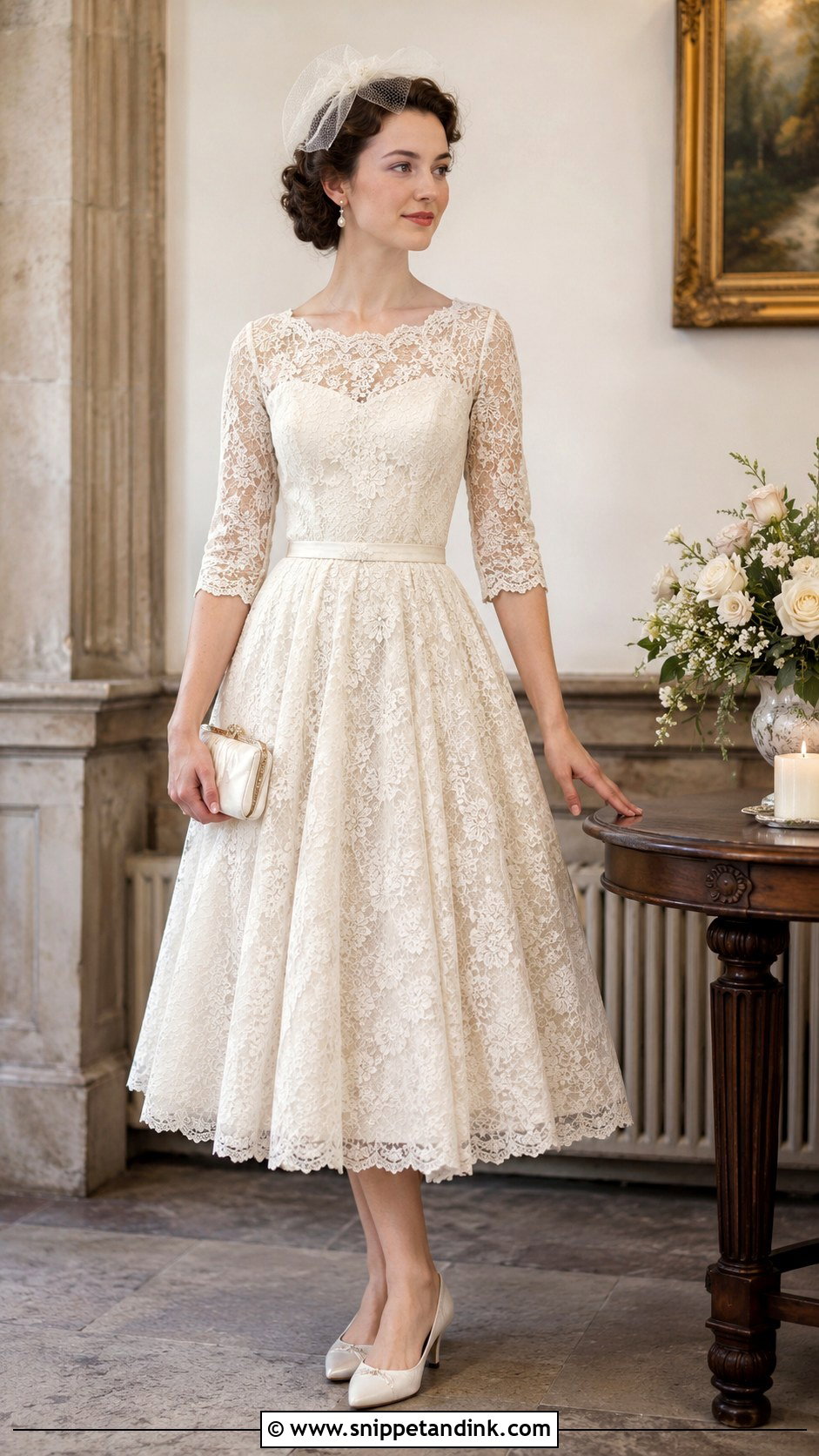
Vintage can mean a true older gown or a new dress cut on an older shape: lace sleeves, tea-length skirts, satin buttons, high necklines, delicate embroidery. I’d pair it with kitten heels, pearl earrings, a short veil and a classic clutch, and keep hair to brushed waves or a low bun. The aim is to look like yourself, not like a period costume, so I usually modernise one element, often the shoes or the hair. If you buy true vintage, have a specialist cleaner and seamstress look at it first; old silk can split along fold lines the moment it’s altered.
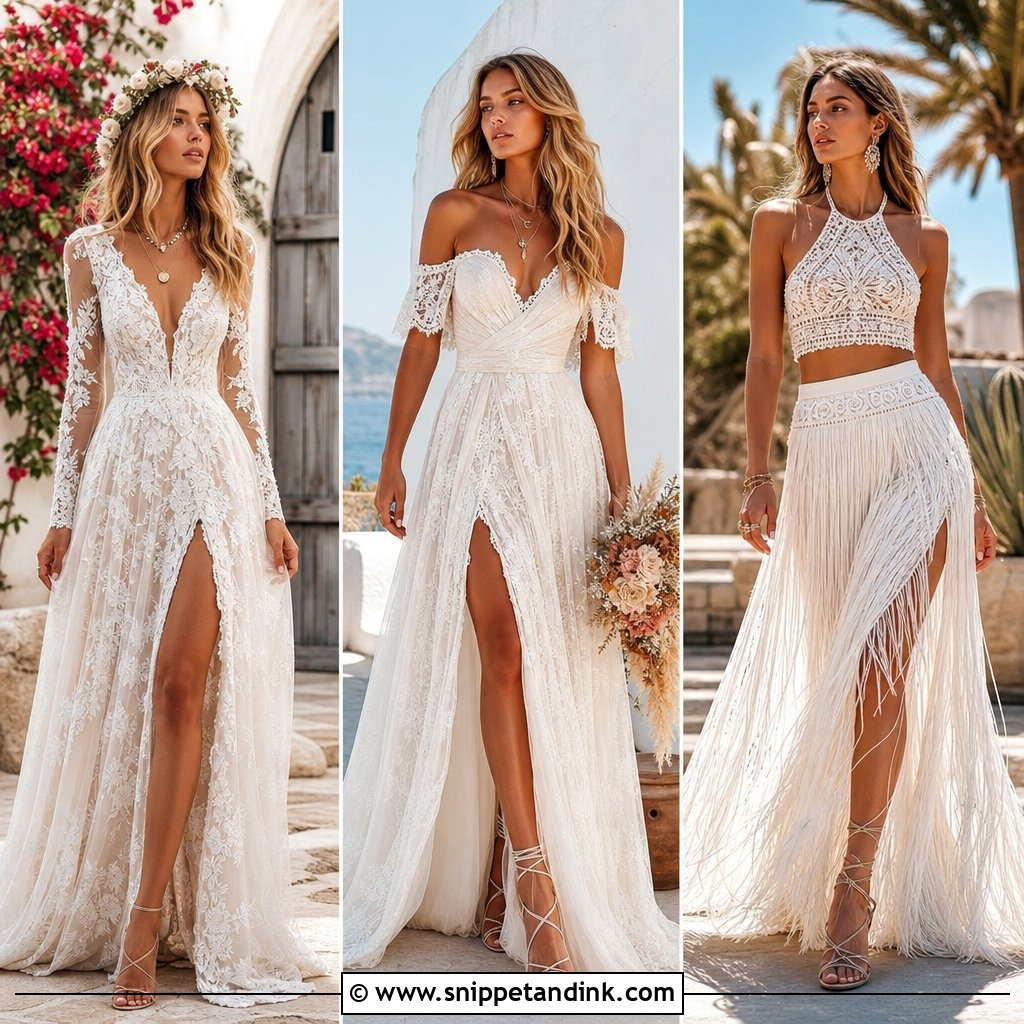
20. Boho Wedding Dress With Loose Waves
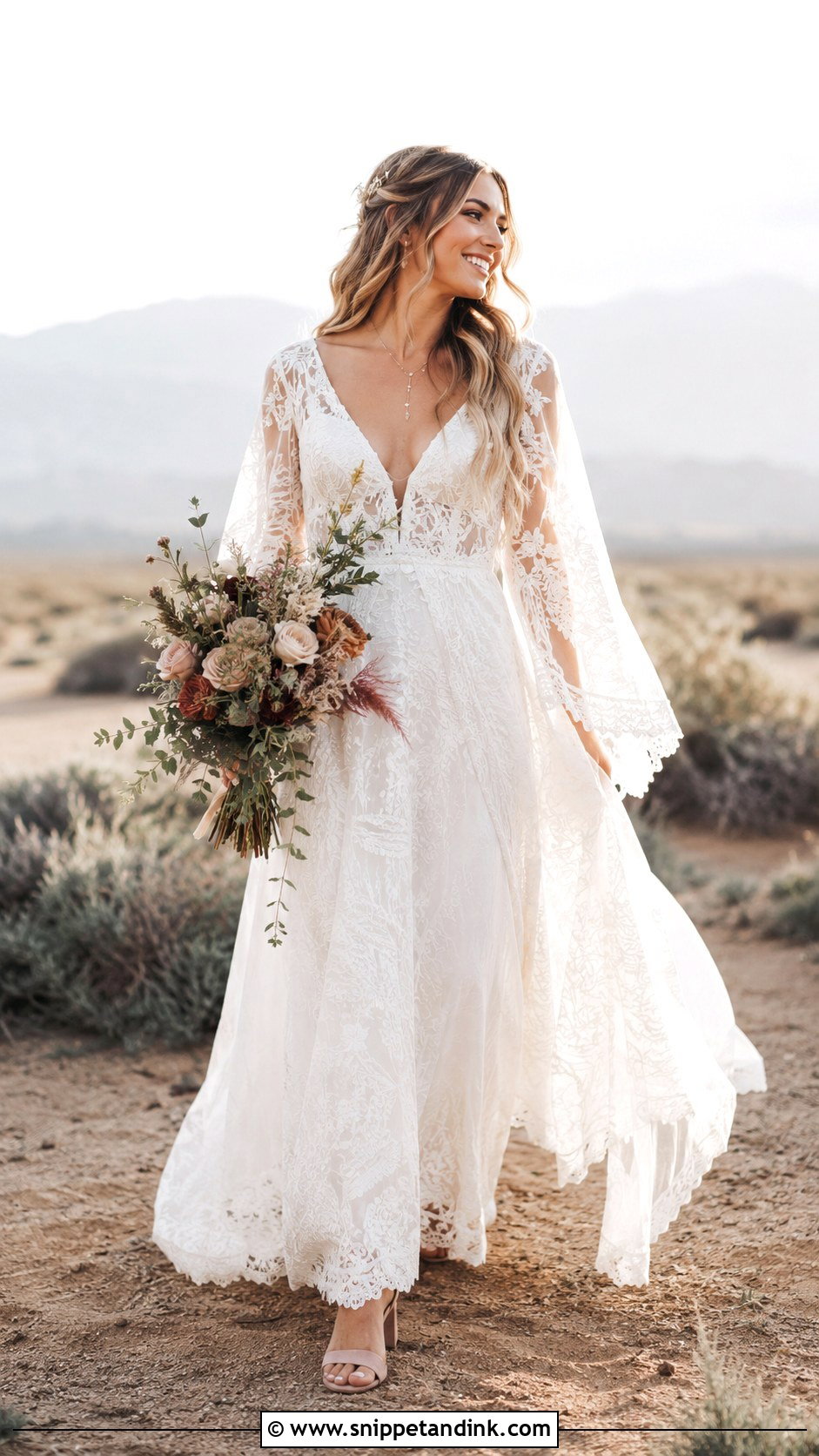
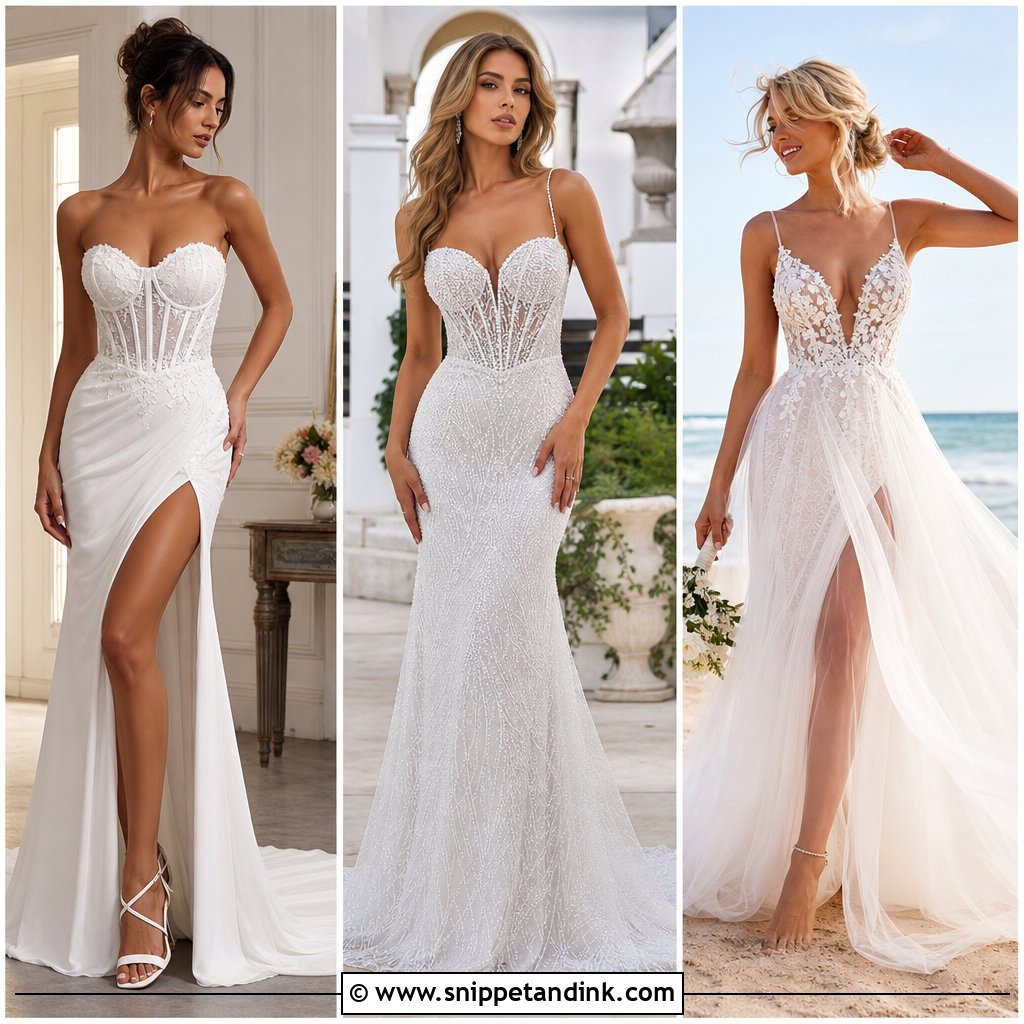
Boho dresses are about ease: soft lace, flowing sleeves, open backs, light skirts and gentle embroidery. Style it with loose waves, simple sandals or low block heels, delicate jewelry and a natural bouquet. A veil can work, though a floral comb or soft pins often fit the mood better. These dresses suit beach, desert and backyard settings. The weak spot is the open back. Strapless and adhesive bras rarely hold through a hot afternoon, so ask your seamstress to sew cups into the lining instead.
21. Beach Wedding Dress With Flat Sandals
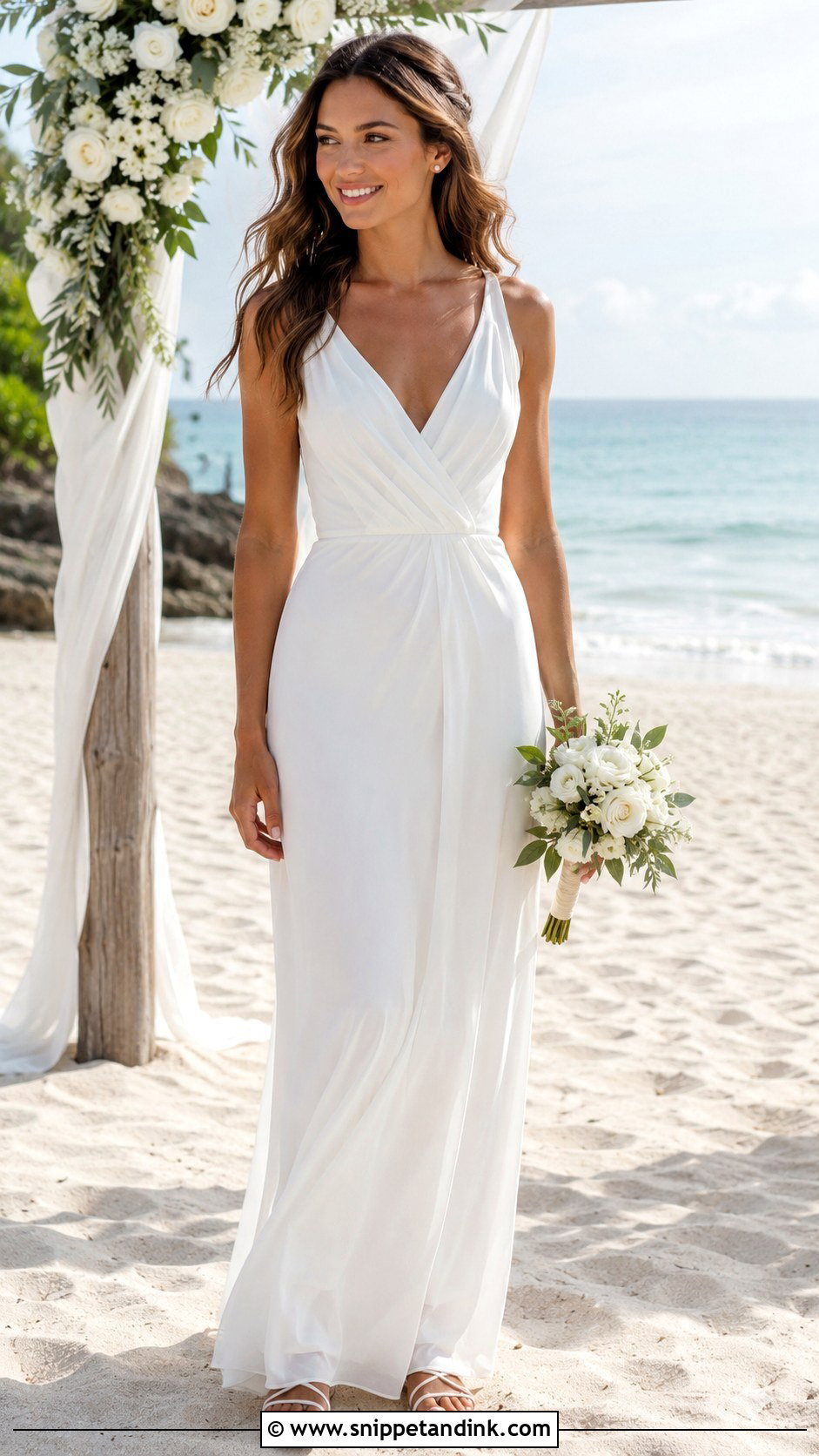
Sand and heavy trains don’t mix. Every step drags, and the hem comes up grey. I steer beach brides toward chiffon, soft crepe, tulle or light lace, in a sheath, slip or relaxed A-line cut, hemmed a touch shorter than usual so you can walk barefoot or in flats. Add flat sandals, pearl studs, loose waves and a simple bouquet. If you want a veil, go short and light, and ask your hairstylist to anchor it with extra pins; sea breeze will lift a long veil straight over your face.
22. Courthouse Wedding Dress With Blazer
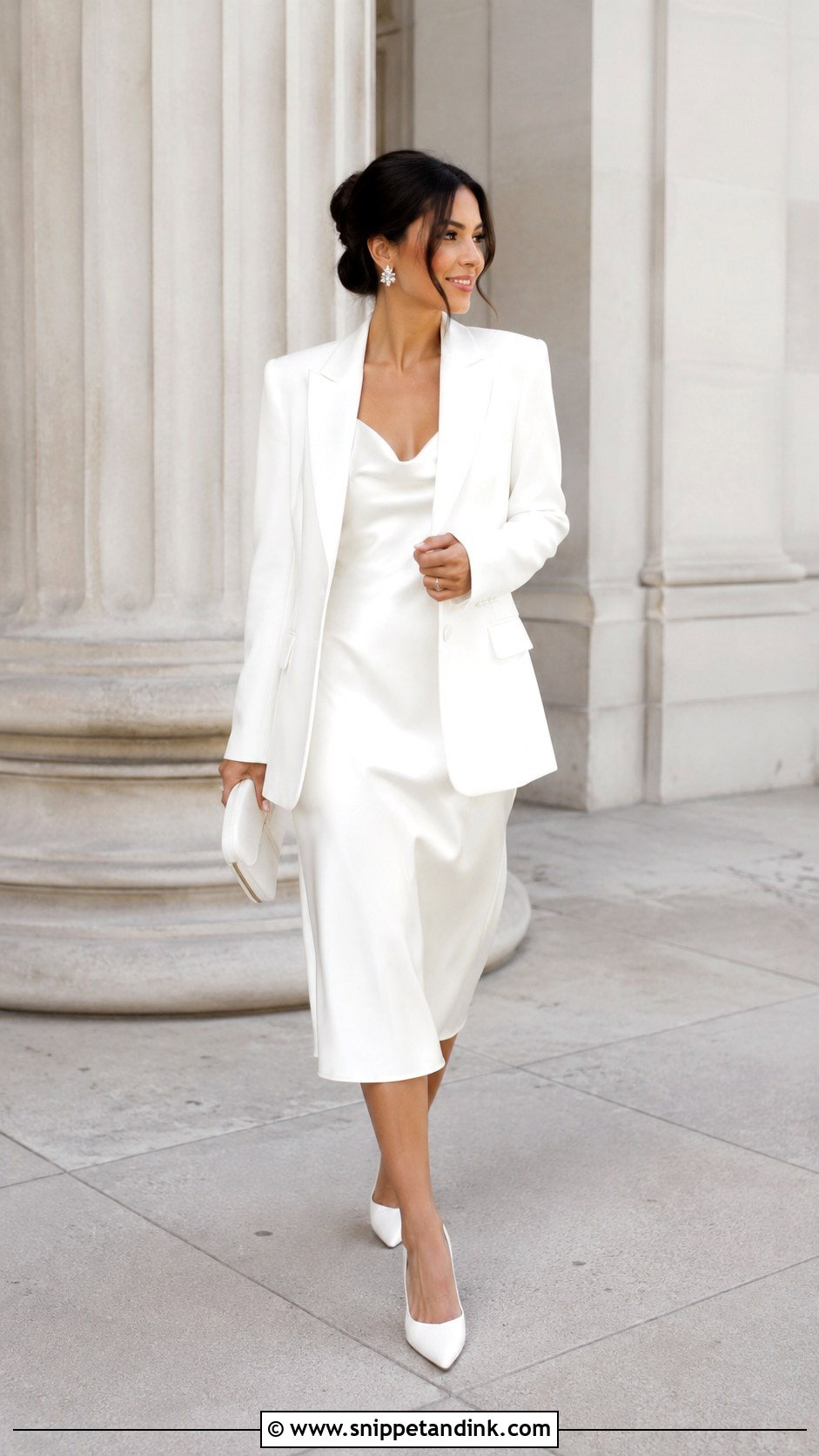
For a courthouse wedding you’re dressing for a short ceremony followed by a long day in ordinary places, so I think about the lunch and the walk as much as the vows. A knee-length dress, midi, slip dress or tailored mini all work. Add a white blazer for structure, pointed heels, a small clutch and modern earrings. Lace or satin softens the look; crepe and structured fabrics keep it sharp. Check the blazer sleeve length with your bouquet in hand, since it’s the most photographed angle of the day.
23. Bridal Mini Dress With Statement Heels
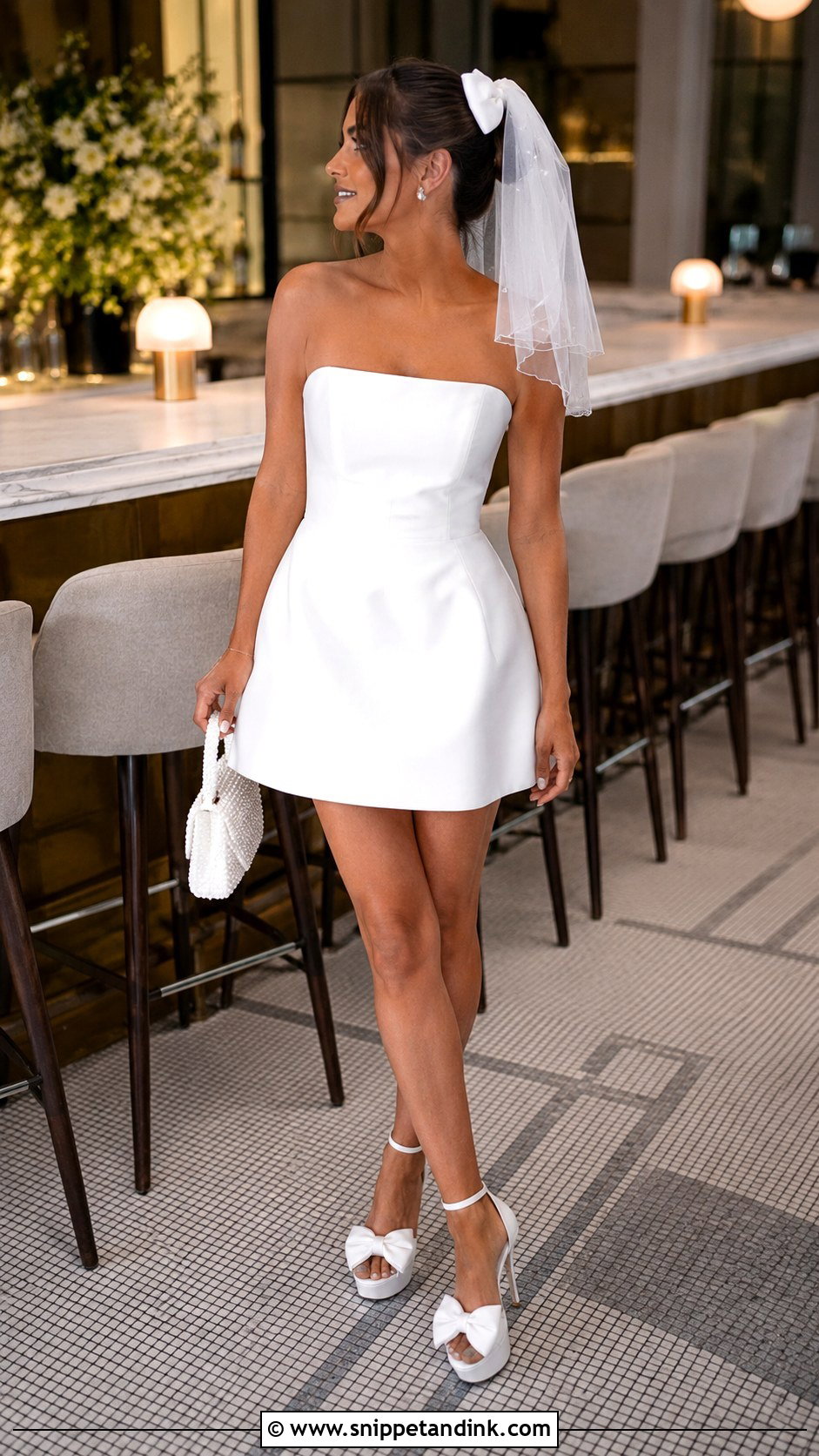
A bridal mini works for a reception, an after-party, a courthouse ceremony or a second look. It’s easy to dance in, but it needs structure to look bridal rather than casual: a tailored bodice, puff sleeves, pearl detail or a crisp satin finish. Pair it with statement heels, a short veil or a bow clip, and a small bag. Do a sitting test with a mini. If it rides up more than a couple of inches when you sit, you’ll be tugging it all evening, so go a size or a cut longer.
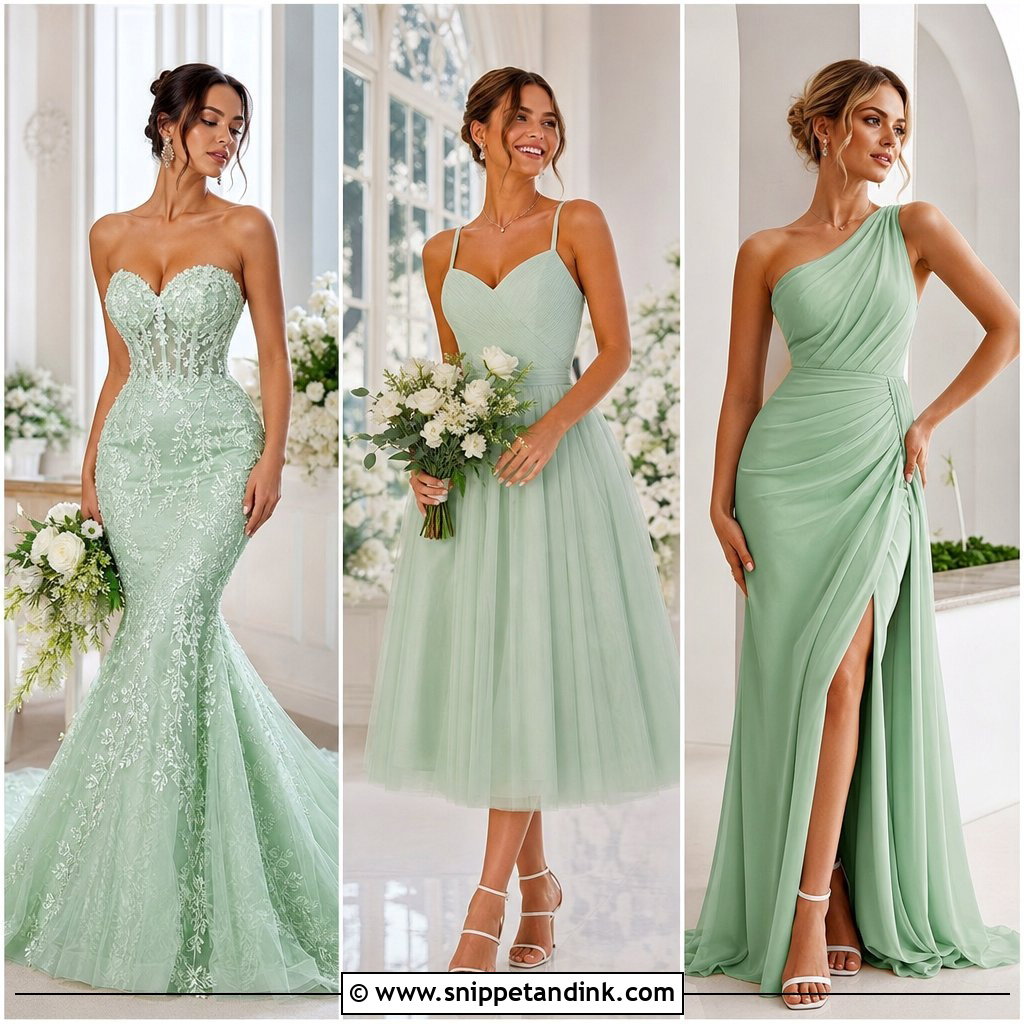
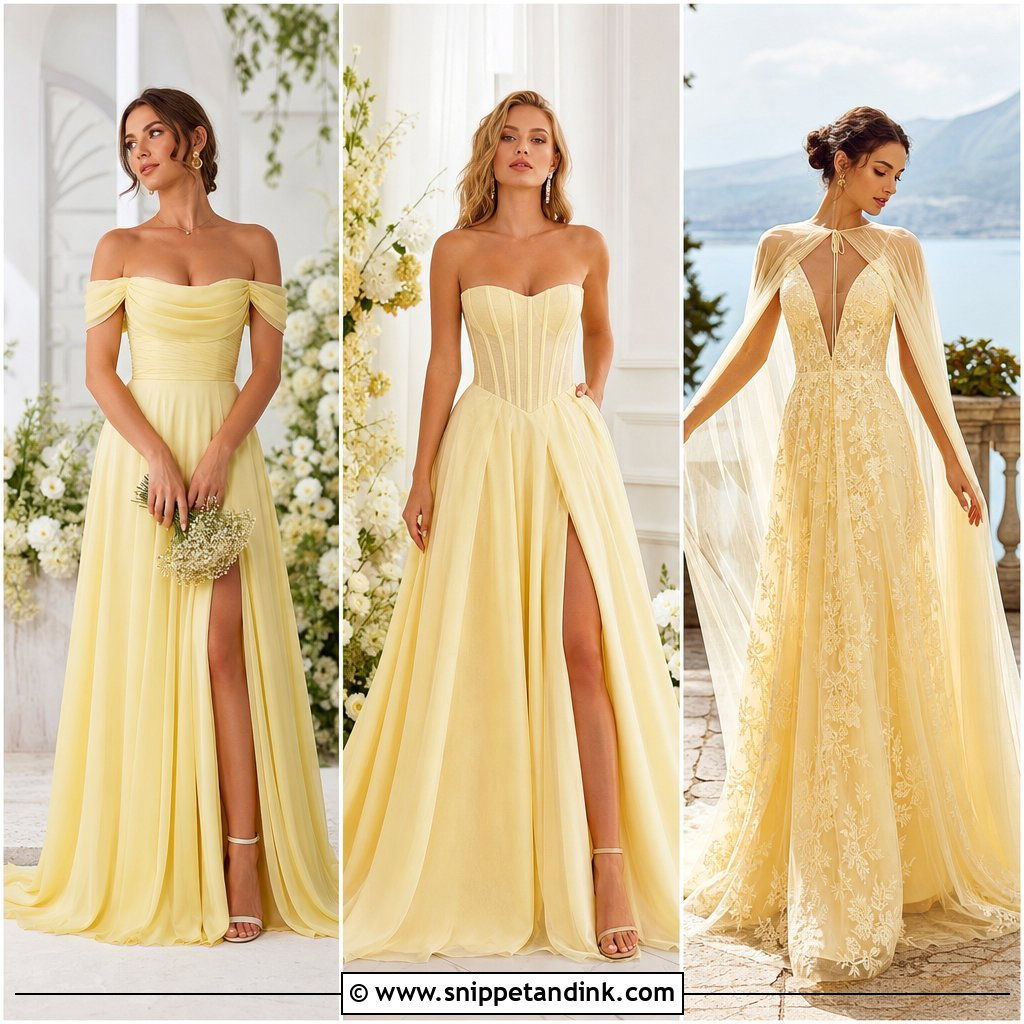
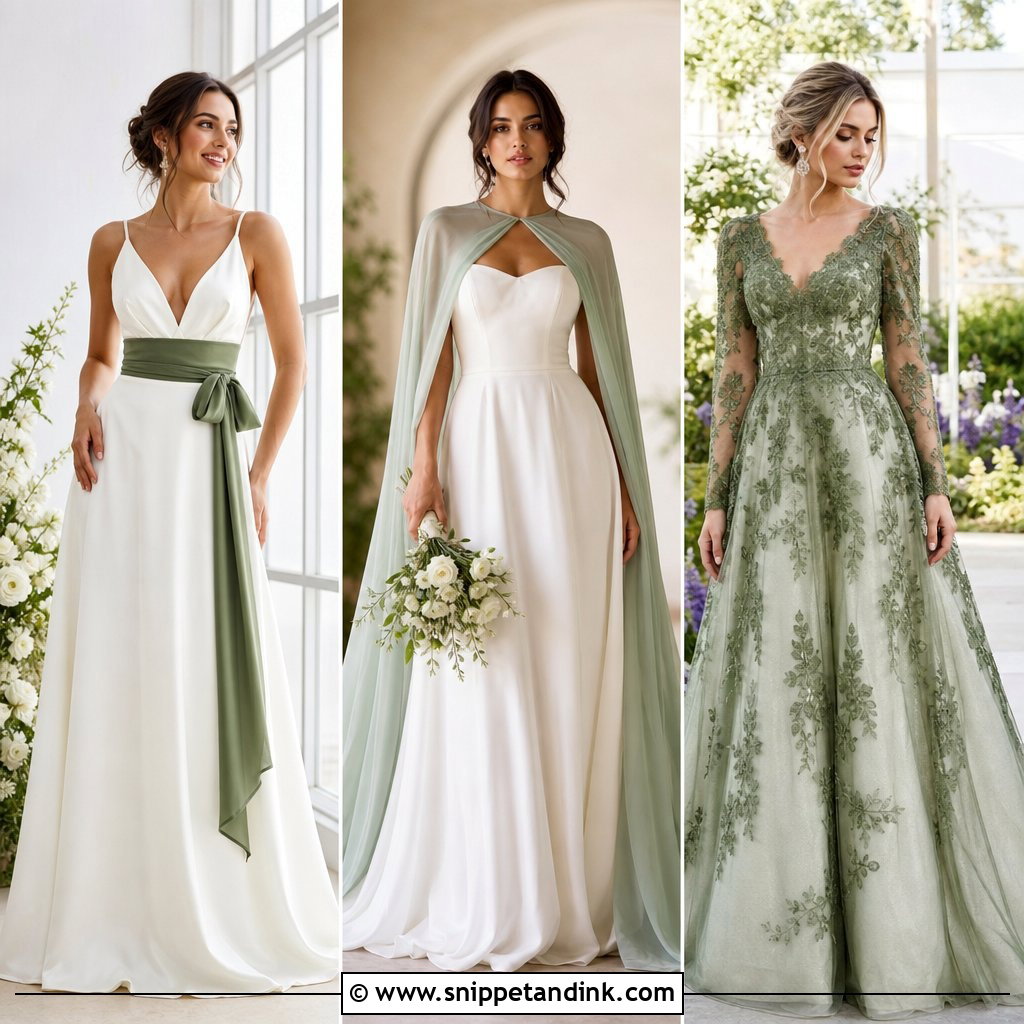
24. Colored Wedding Dress With Neutral Shoes
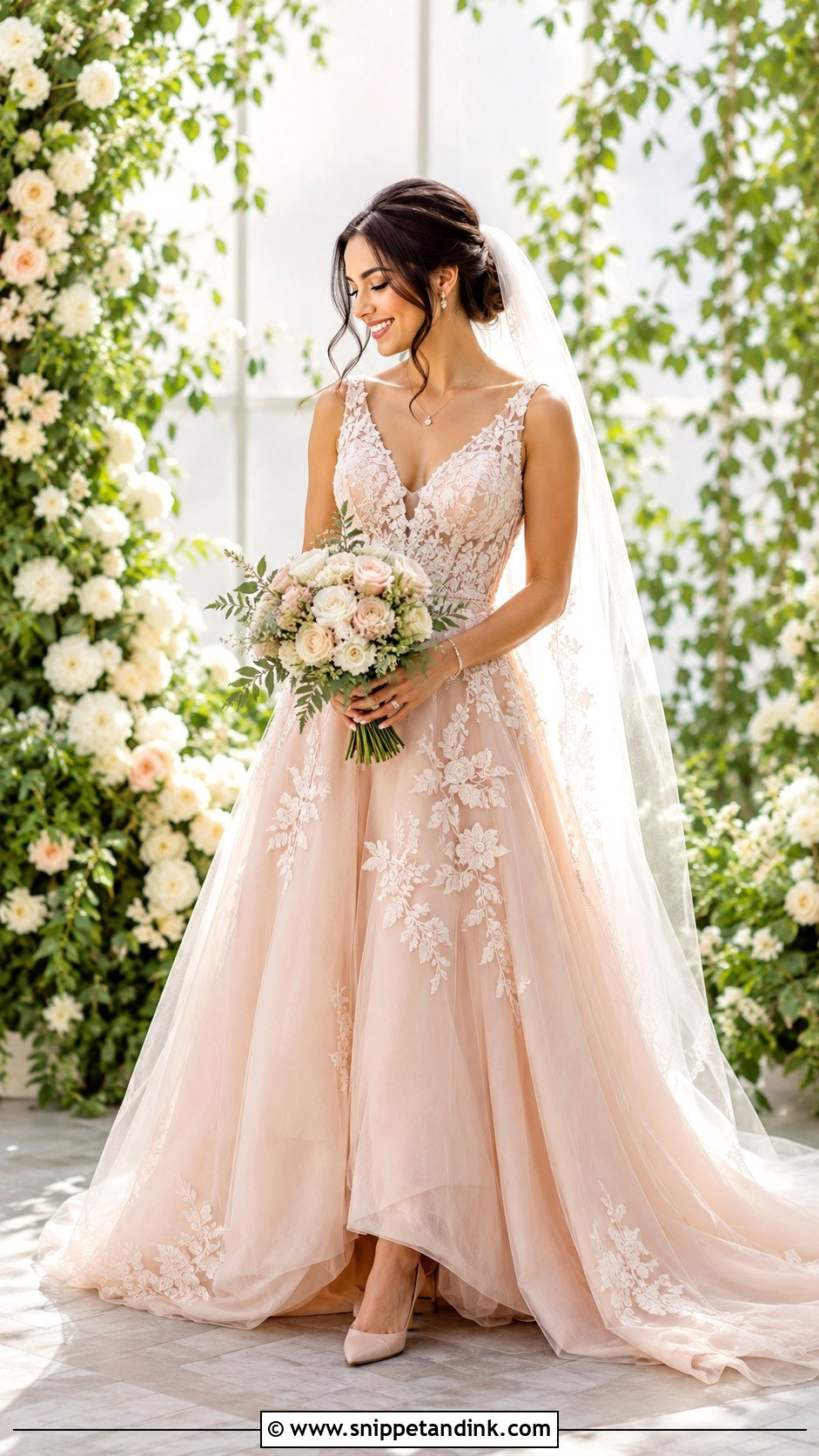
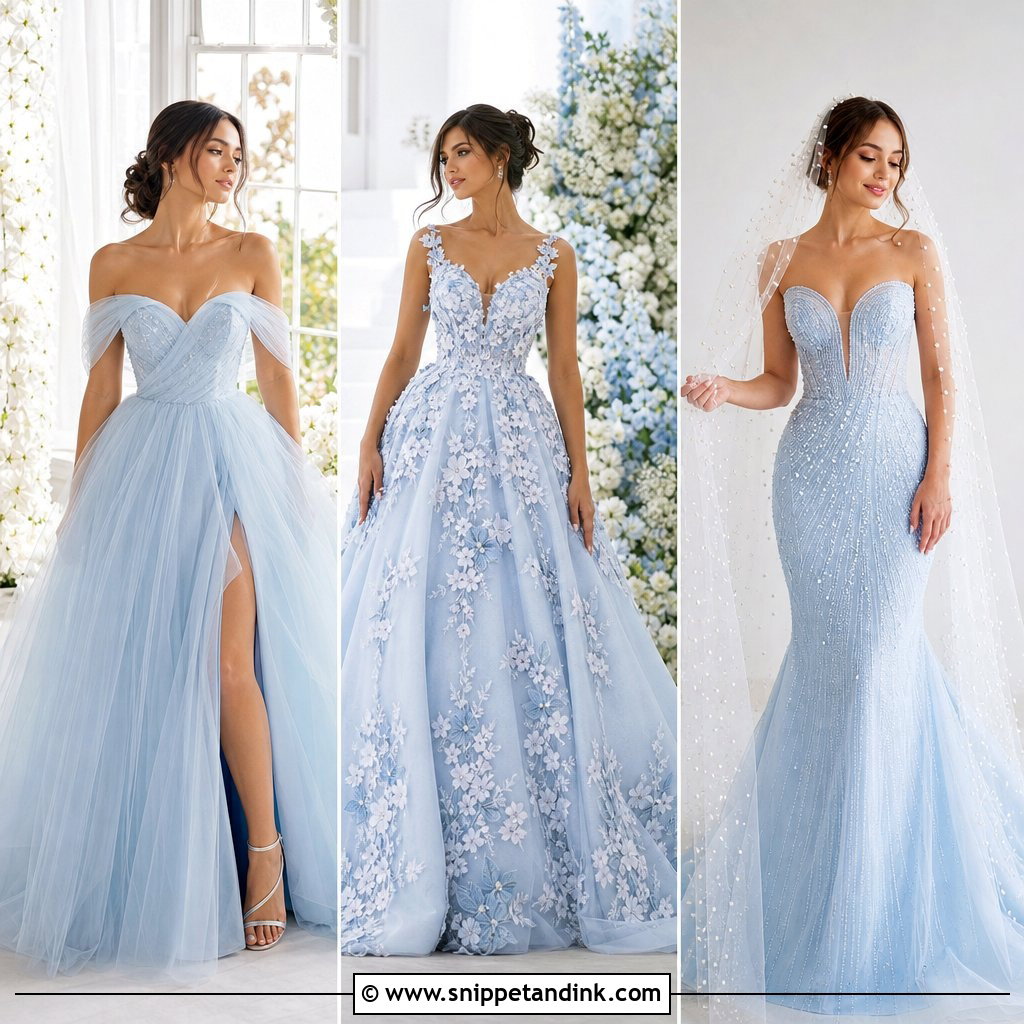
Color makes a gown feel personal straight away. Blush, champagne, pale blue, silver, buttercream and barely-there pink are the easiest moves away from white. I’d keep the shoes neutral, the jewelry simple and the bouquet in a complementary tone rather than an exact match. A colored ball gown is a statement; a colored slip or A-line is softer. Always look at the shade in daylight near a window. Champagne can turn sallow under warm indoor bulbs, and pale blue can read grey on some skin tones.
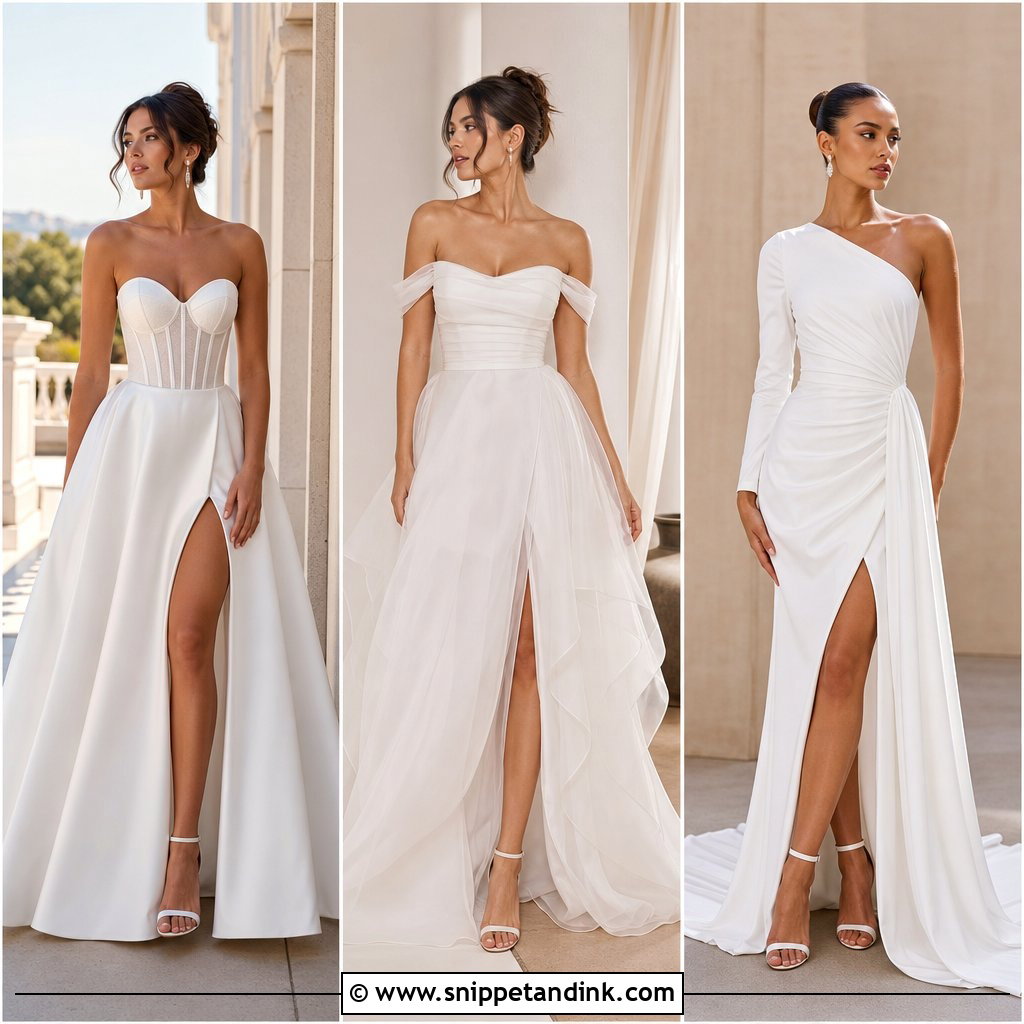
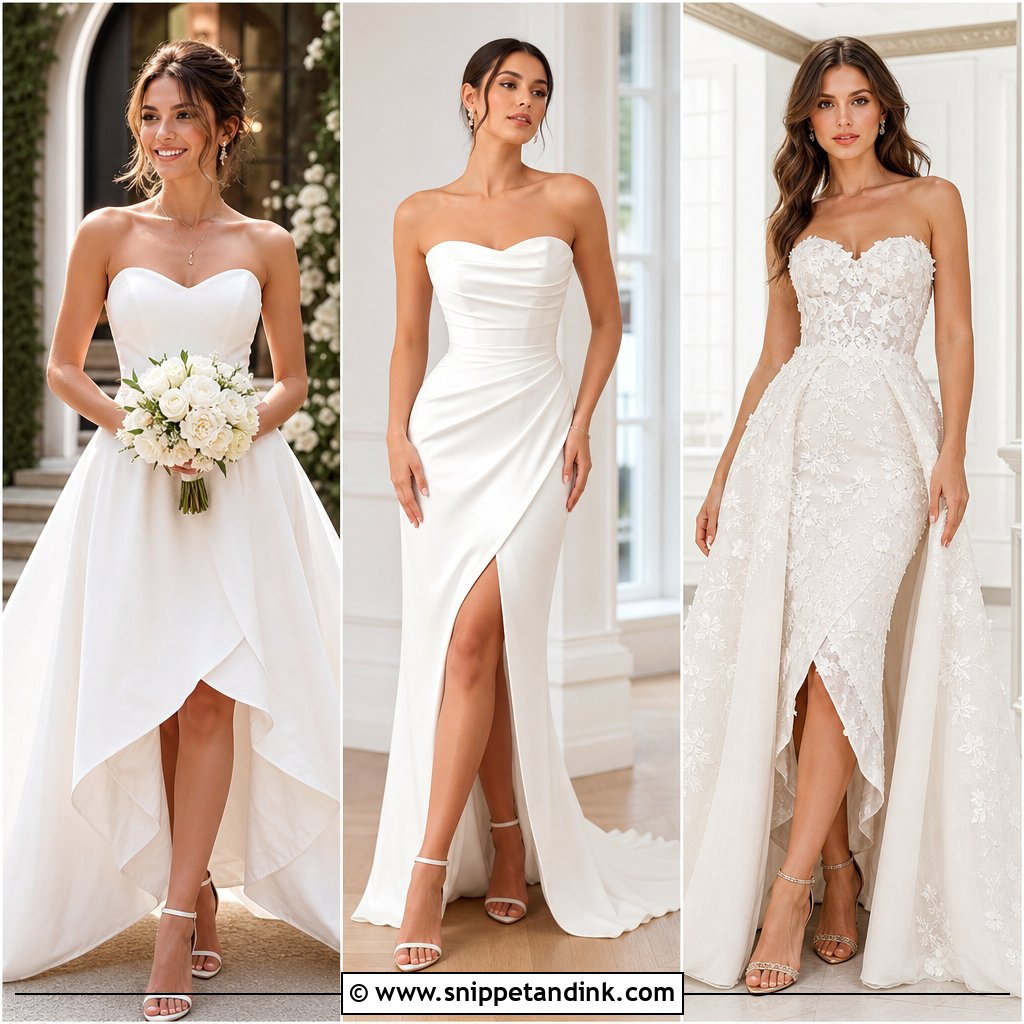
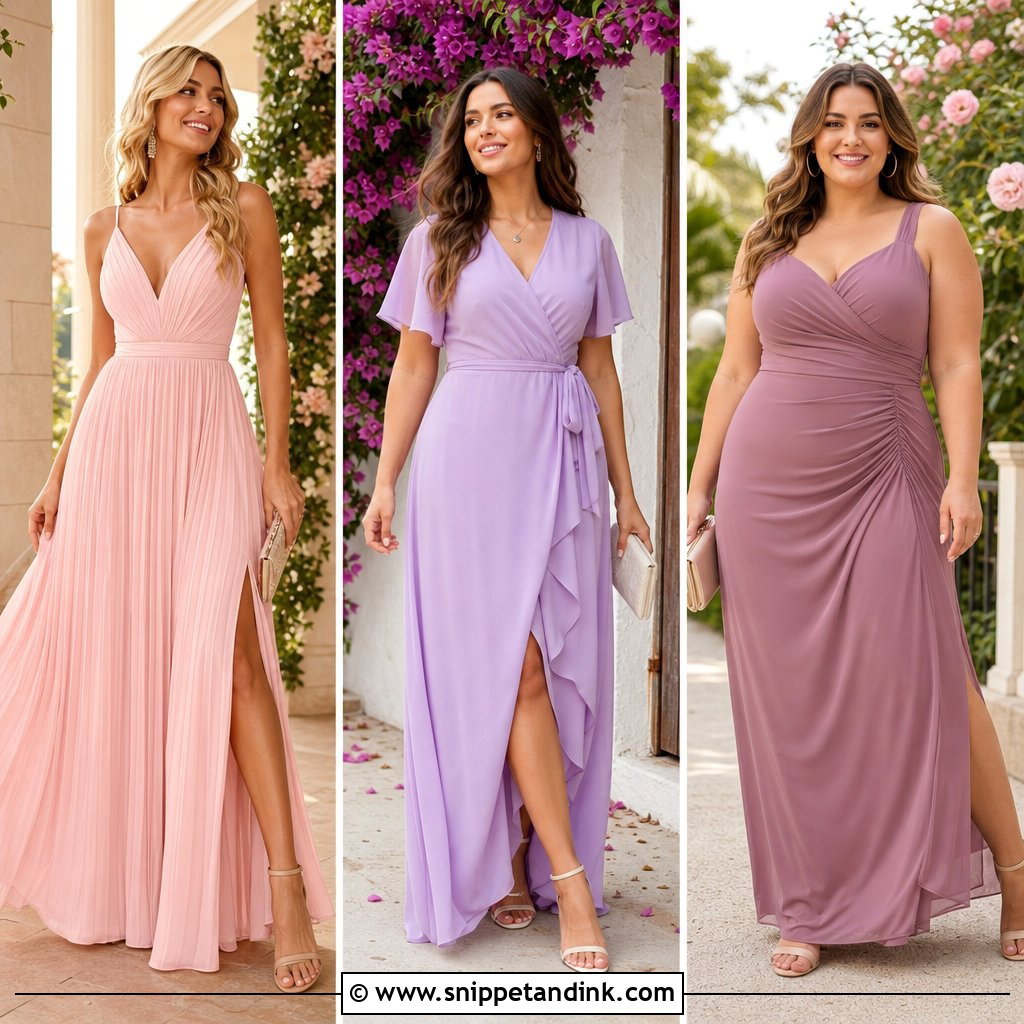

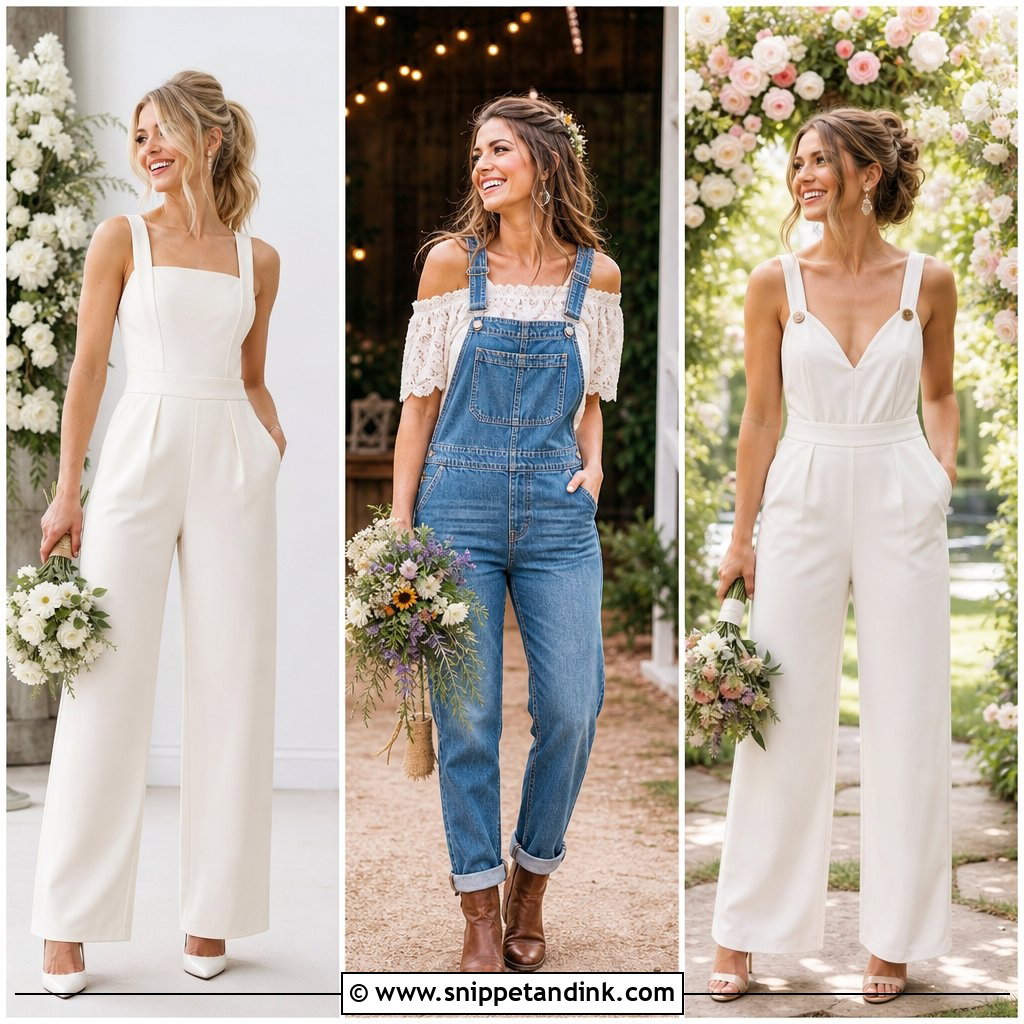
25. Bridal Suit With Veil
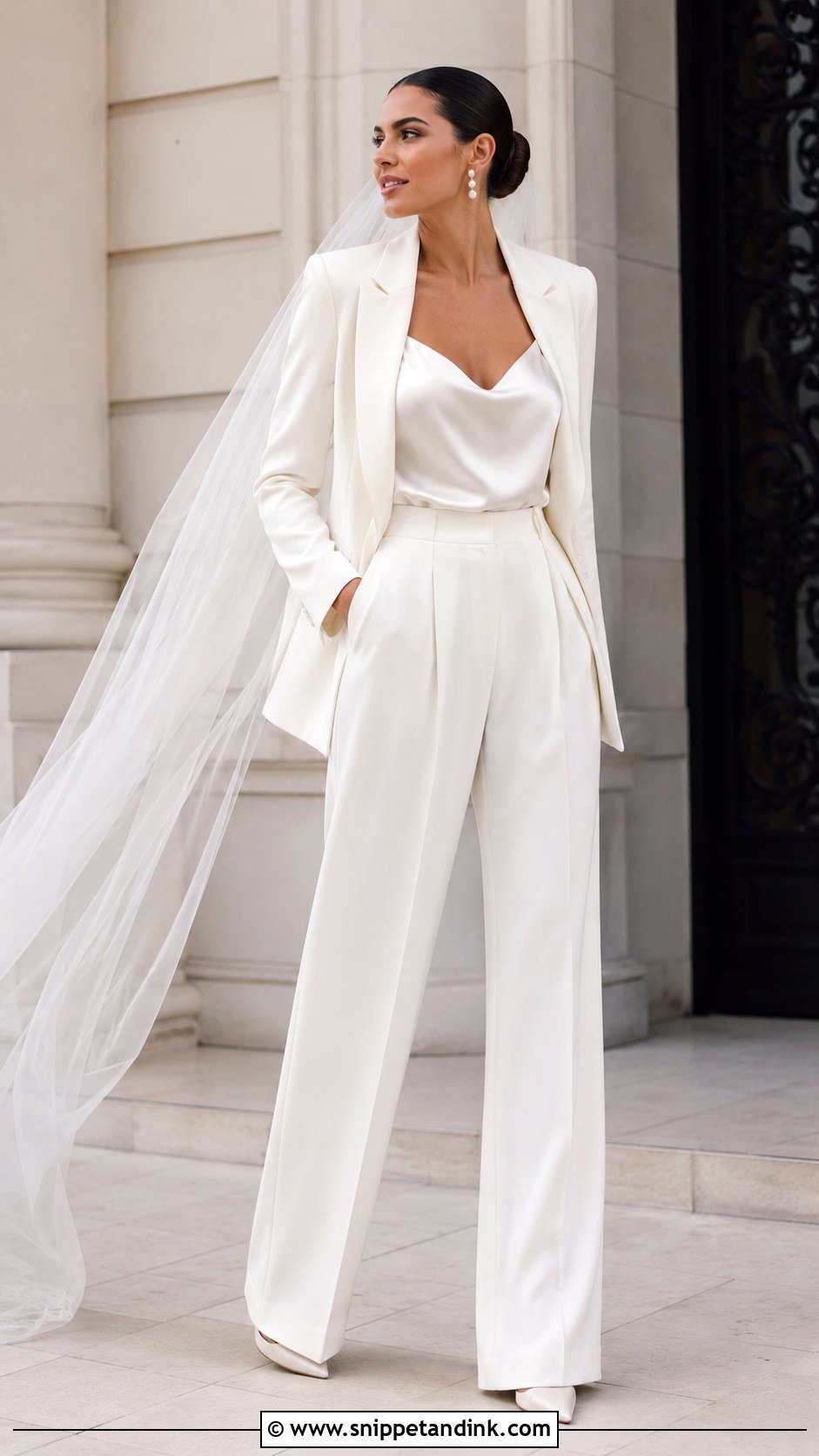
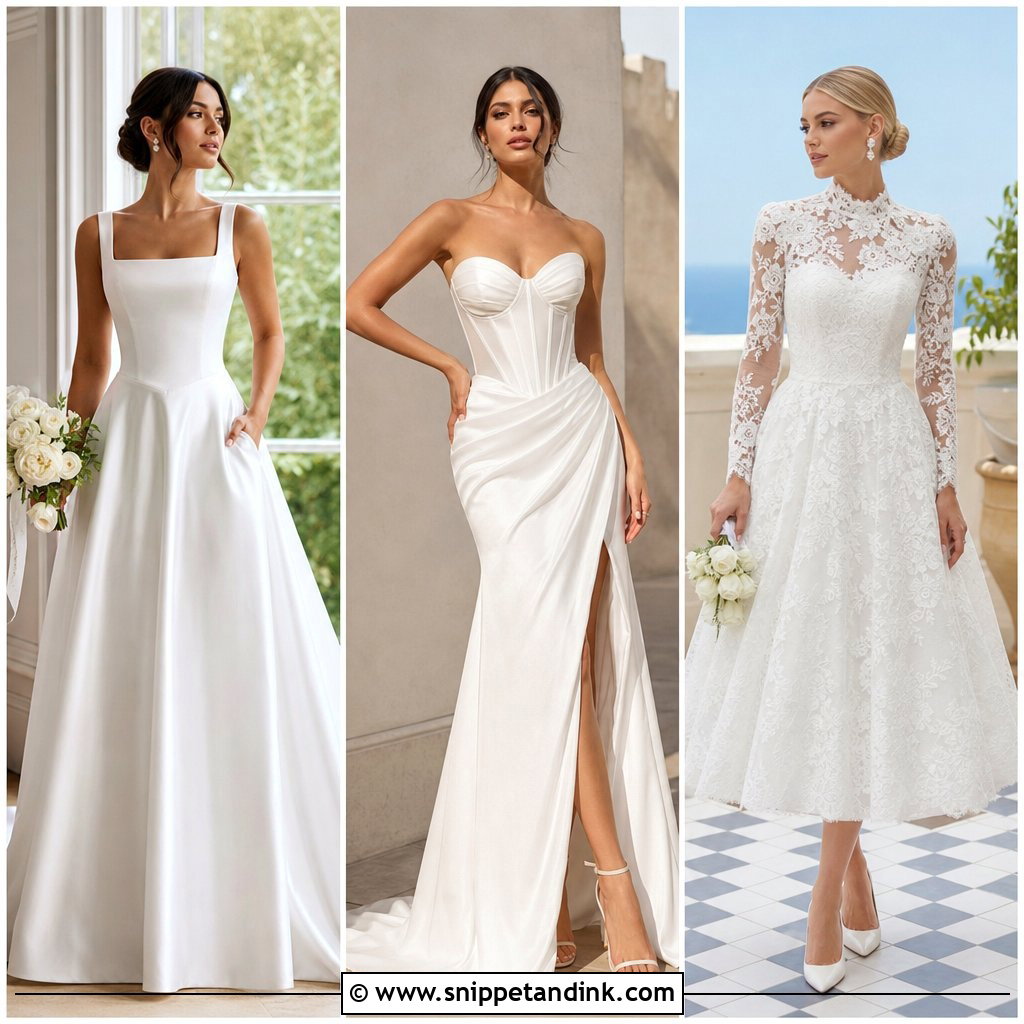
A bridal suit gives you tailoring, pockets and freedom to move. I’d choose white, ivory or cream with a sharp blazer and wide-leg, straight or tapered trousers. Pointed heels, pearl earrings, a sleek bun and a veil make it clearly bridal. Underneath, a silk camisole, a satin bustier or a high-neck top sets the level of coverage. It suits courthouse weddings, city ceremonies, elopements and modern receptions. Have the trousers hemmed with your actual wedding shoes on; a half inch too long and they pool, too short and the line breaks.
How Many Months a Gown Really Needs
Brides are often surprised that the dress takes longer than the venue. Most made-to-order gowns are cut and sewn after you order, and production commonly runs several months before the dress even reaches the shop. Then it needs altering. Timelines vary by designer and season, so ask the boutique for the delivery window in writing.
As a rough working plan, I’d start trying on about nine to twelve months out and order by around eight months. That leaves room for a delayed shipment, which happens more often than anyone admits. If you’re short on time, ask about off-the-rack samples or ready-to-wear lines that ship in weeks.
The alteration fittings
Expect two or three fittings, beginning roughly two to three months before the wedding, with the last one a couple of weeks out. Bring your shoes, undergarments and any jewelry that touches the neckline to every one. Your weight can shift in the final weeks, which is why the last fitting stays close to the date.
Deciding on a bustle
Any gown with a train needs a plan for the reception. An over bustle lifts the train up onto hooks at the back of the skirt and suits lighter fabrics. An under bustle, sometimes called a French bustle, tucks the train underneath with ribbon ties and works well on heavier satin. Ask your seamstress to teach one bridesmaid how to do it, and have her practice at the final fitting rather than in a dim reception hallway.
Your Shortlist Should Fit on One Hand
The right dress is the one you forget you’re wearing by the second hour. Trends point you toward shapes you might not have tried, but your body, venue, season and schedule should make the final call. A ball gown, a clean satin dress, floral lace, a mini, a colored gown or a tailored suit can each be the right answer once the shoes, jewelry, hair and veil are chosen around it. Try on shapes outside your comfort zone, then sit, walk, reach and turn in your favorites. Use this list to build a shortlist, and let the fitting room do the rest.
You'll Like These Ideas:



Leave a Reply