
A corset bodice does a job most gowns leave to your posture: it holds the waist, carries the weight of the skirt and keeps a strapless neckline where it belongs. That is why a well-built one can be worn for twelve hours and a badly fitted one starts pinching before the first toast. The twenty gowns below range from laced ball gowns to sleek mermaid shapes and long, low bodices, and each comes with the accessories, hair and flowers I would put with it. Read them for the construction as much as the look, because the fit is what decides whether a corset dress still feels right in your photos years from now.
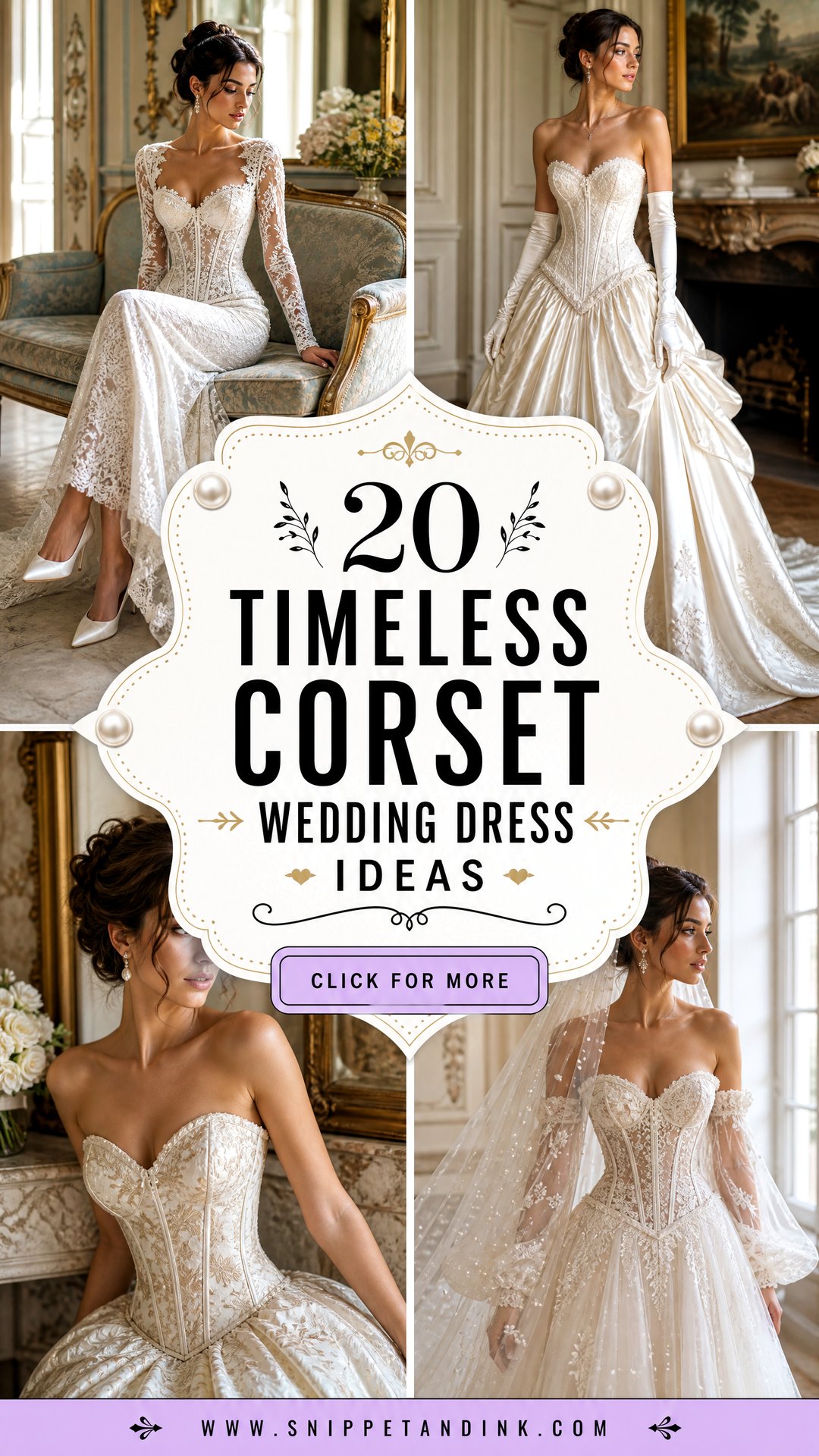
Boning, Lacing and Lining: What Actually Holds a Corset Bodice Up
Two corset gowns can look identical on a hanger and feel completely different after an hour. The difference is almost always inside. When I turn a bodice inside out at an appointment, these are the things I look at first.
- The boning. Spiral or flat steel bones bend with you and hold their shape all day. Flexible plastic boning is lighter and cheaper but can kink at the waist when you sit, leaving a visible ridge.
- The closure. A lace-up back gives you a few centimetres of adjustment, which helps if your weight shifts before the wedding. A zip is quicker to get into but has to be fitted exactly.
- The modesty panel. On a laced back, a strip of fabric behind the lacing stops skin showing through the gaps. Check it lies flat and doesn’t bunch.
- The waist stay. A grosgrain band sewn inside at the waist takes the weight of the skirt off the boning. Heavy satin, brocade and many-layered tulle skirts really need one.
Most well-built bridal corsets have cups or bust shaping sewn in, so you may not need a bra at all. I’d still bring the underwear you plan to wear to every fitting, since even smooth, thin shapewear changes how the bodice sits by a few millimetres.
1. Satin Ball Gown Corset Wedding Dress With Cathedral Veil
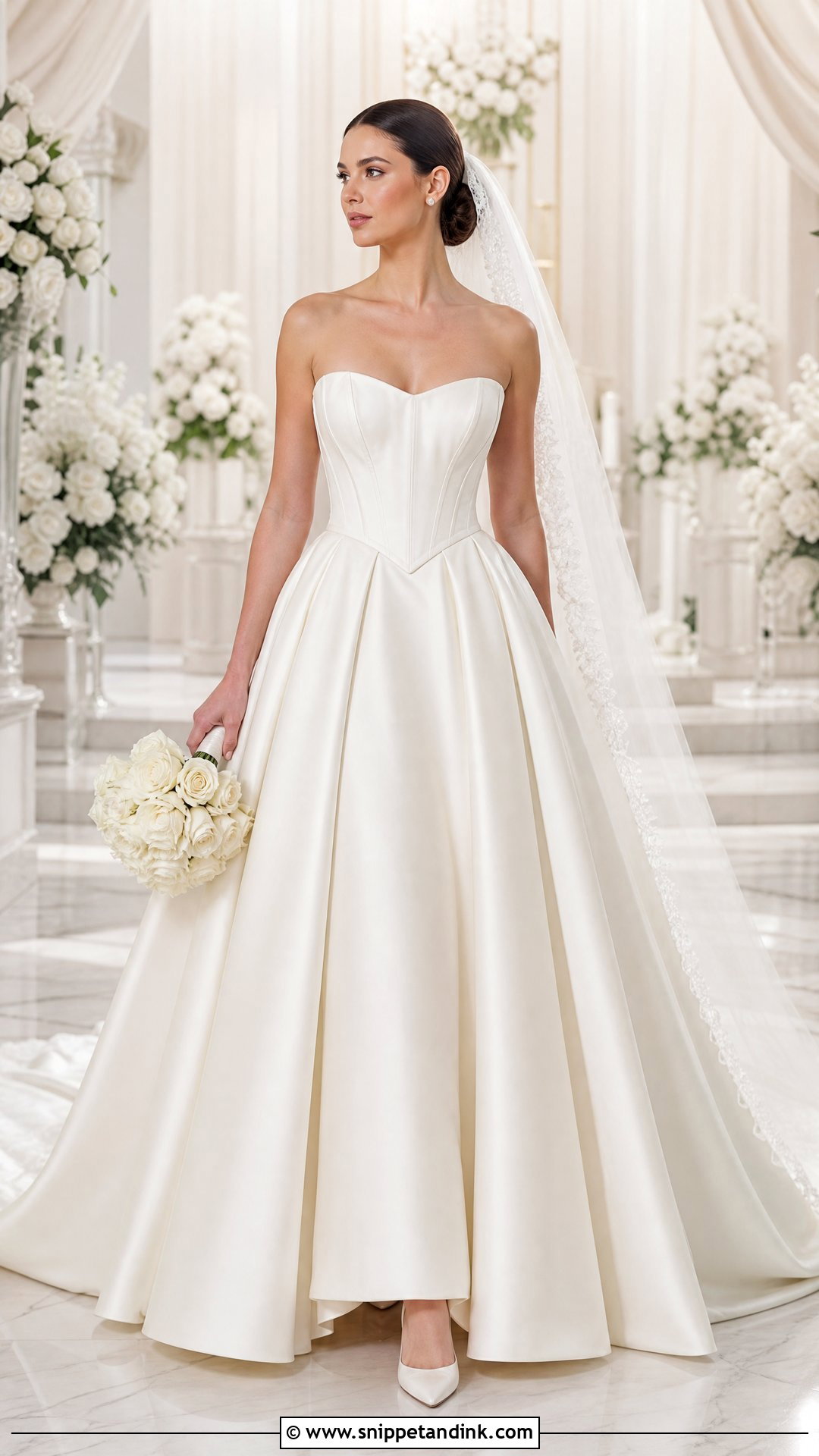
Satin is the most honest fabric for a corset ball gown, because it shows every line of the bodice and hides nothing. I look for covered boning that sits flat under the fabric, a softly curved neckline and a waist placed at or just below your natural one. The full skirt keeps its shape on its own, so the cathedral veil can stay plain with a narrow satin ribbon edge. Pointed ivory pumps, pearl studs, a low chignon and a small bunch of white roses or callas are all it needs. Spend your fitting time on the bodice: satin creases across the ribs if it is even slightly too tight, and that crease shows in every seated photo.
2. Lace A-Line Corset Wedding Dress With Pearl Accessories
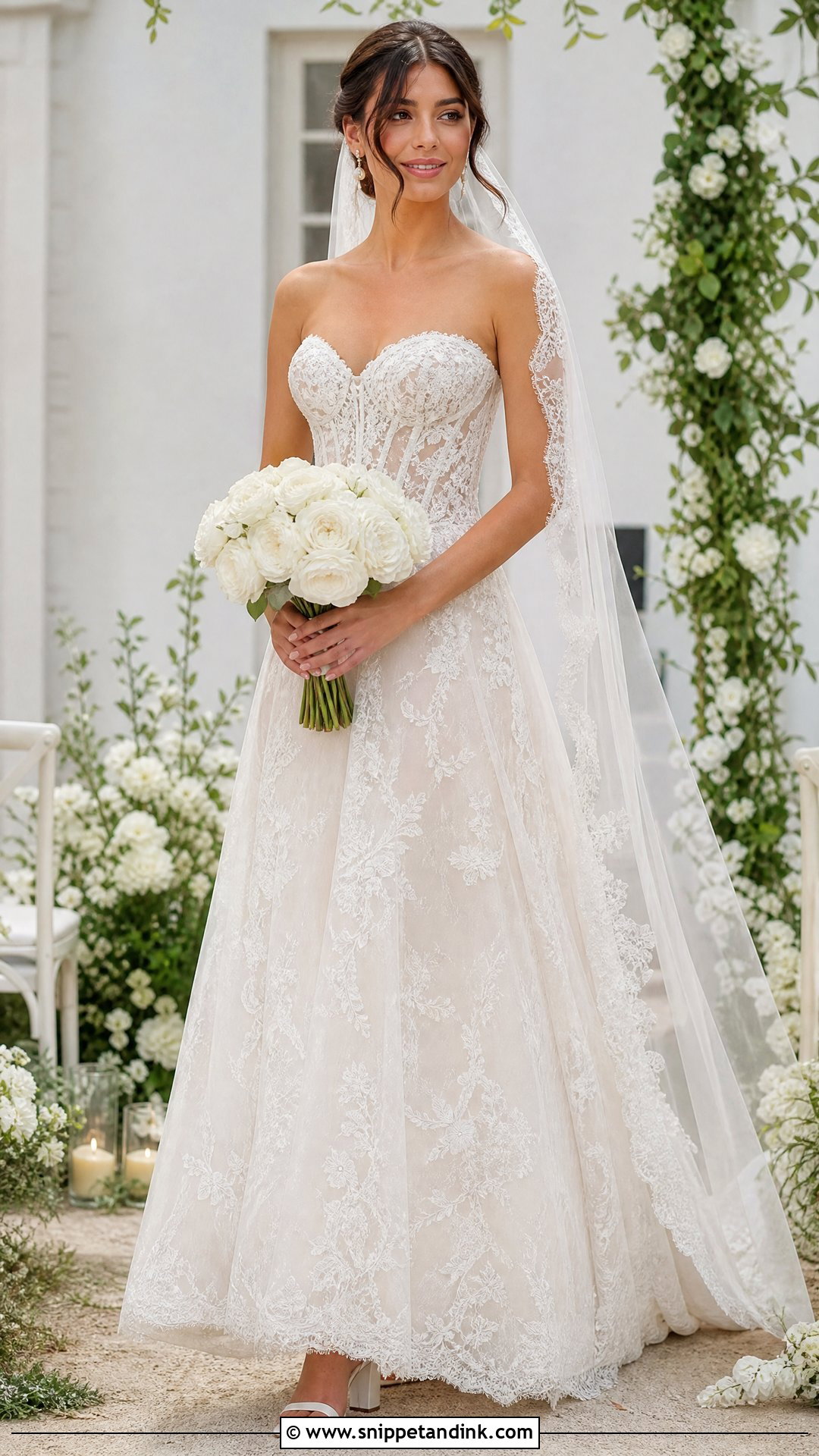
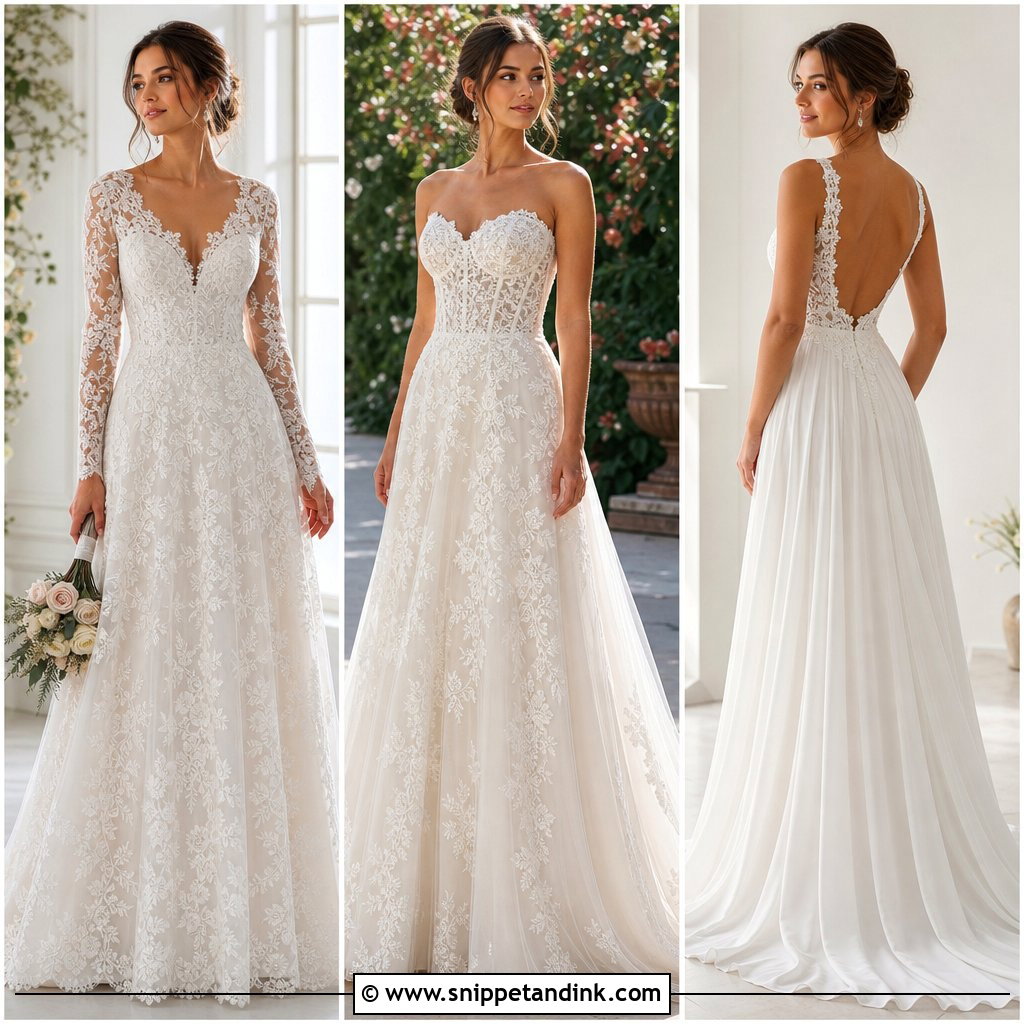
Lace over a corset is forgiving in a way satin is not. The floral pattern breaks up the boning channels, so the structure reads as part of the dress instead of a frame underneath it. A sweetheart or gentle scoop neckline suits the A-line skirt, and the shape moves just as well on a lawn as in a church aisle. I’d keep the jewelry to pearl drops and a slim bracelet, add a fingertip veil with the same lace along its edge, and choose ivory block heels if you’ll be on grass. Loose waves twisted low and a round bouquet of garden roses finish it. When you compare lace gowns, check the edges where appliqués meet the neckline; cheaper lace is cut and glued there, and it lifts by the evening.
3. Mikado Basque Waist Corset Wedding Dress With Long Veil
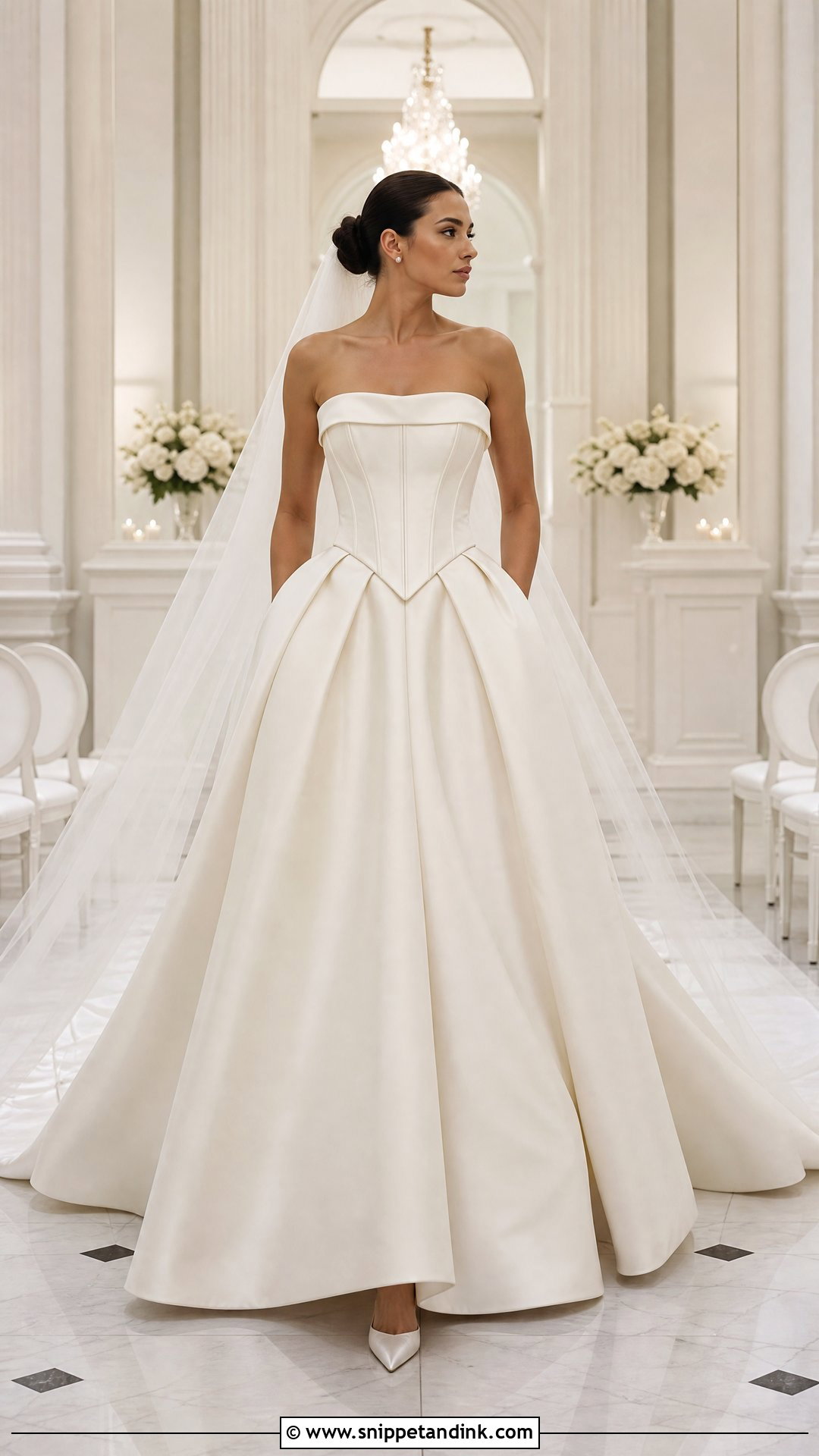
The pointed basque line is the reason to choose this corset gown with a basque waist. It draws the eye downward and makes the torso look longer before the pleated skirt opens out. Mikado is stiff enough to hold that point without collapsing, which softer satins often can’t. I’d keep the strapless neckline gently curved rather than sharply notched, wear a plain chapel or cathedral veil that leaves the waist visible, and stay with pearl or crystal earrings, satin pumps and a compact bouquet. A neat bun keeps the neckline clear. Because the bodice runs below the hip bone, sit down at every fitting: if the point digs into your thighs when you’re seated, it needs shortening.
4. Off-Shoulder Corset Wedding Dress With Tulle Skirt
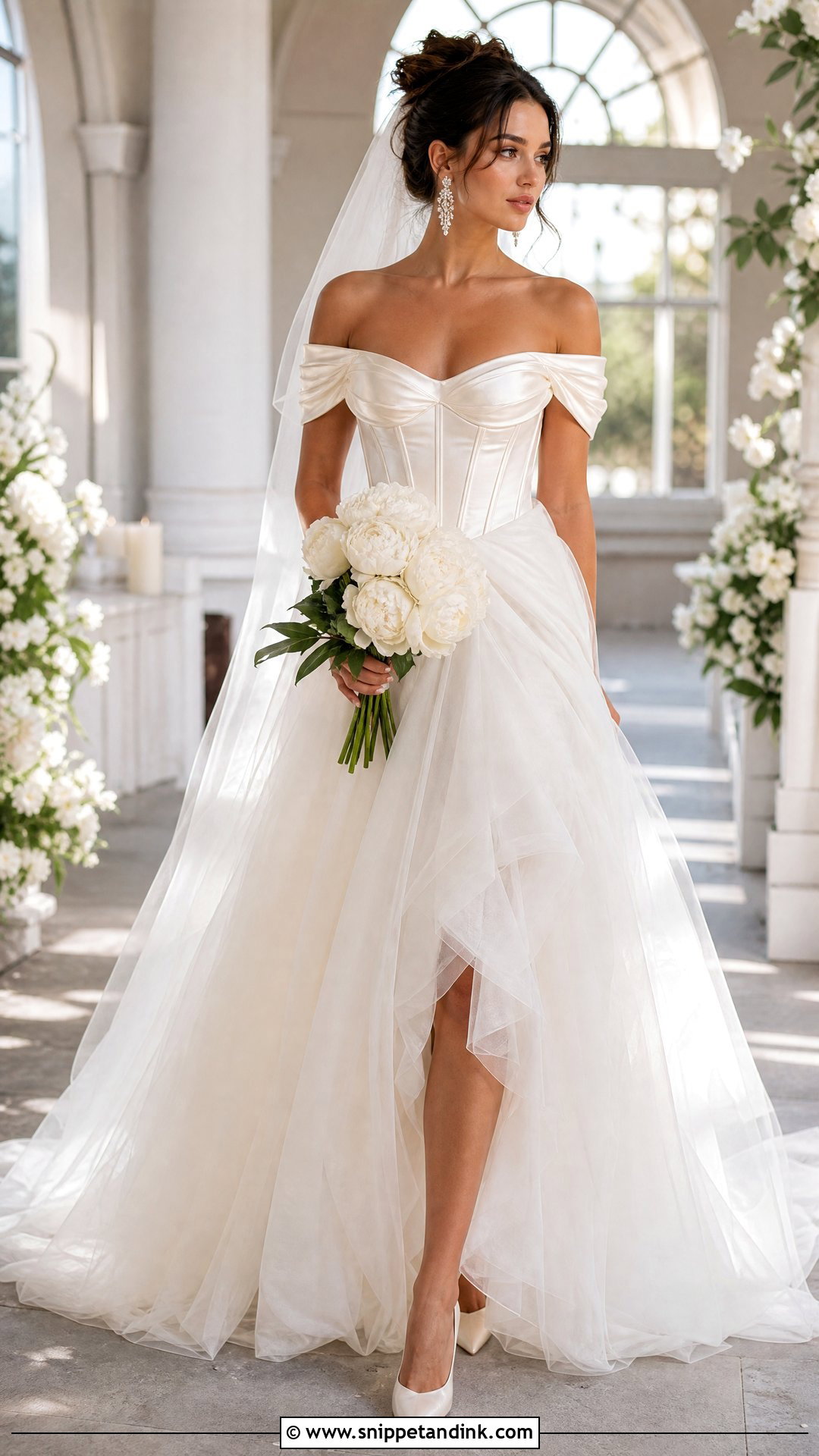
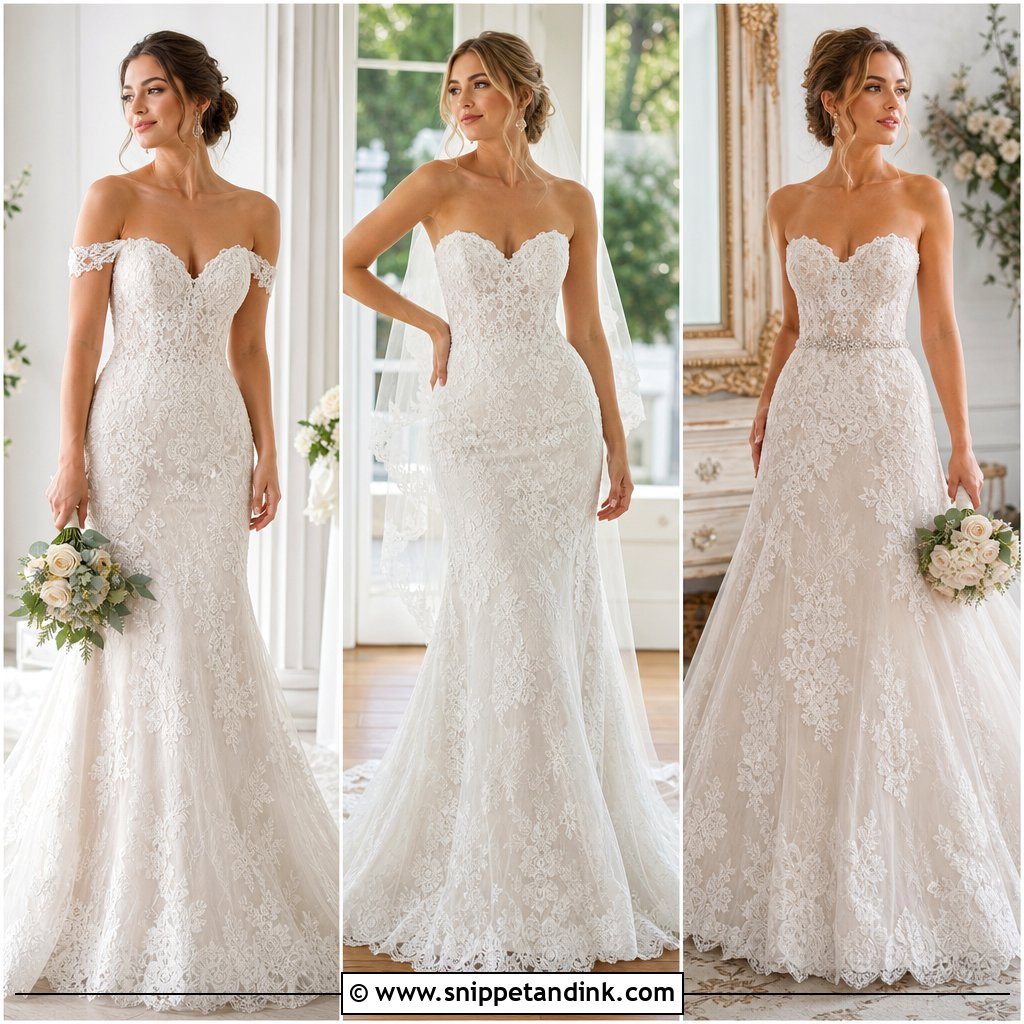
Off-shoulder bands are where I see the most fitting trouble. Pull them too tight and you can’t lift your arms to hug anyone; leave them loose and they creep up toward your neck all evening. Draped satin or lace bands that sit just below the shoulder point, anchored into the corset with a little elastic, behave best. Against the fitted waist, a layered tulle skirt keeps the whole thing light. Let the veil fall behind the shoulders so the neckline stays open, and keep the sparkle to crystal drops and one fine bracelet, with closed ivory pumps. A loose low bun with a few face-framing pieces and a bouquet of peonies or seasonal white flowers suit it. Raise both arms in the mirror at your final fitting before you sign off on the bands.
5. Long-Sleeve Lace Corset Wedding Dress With Classic Pumps
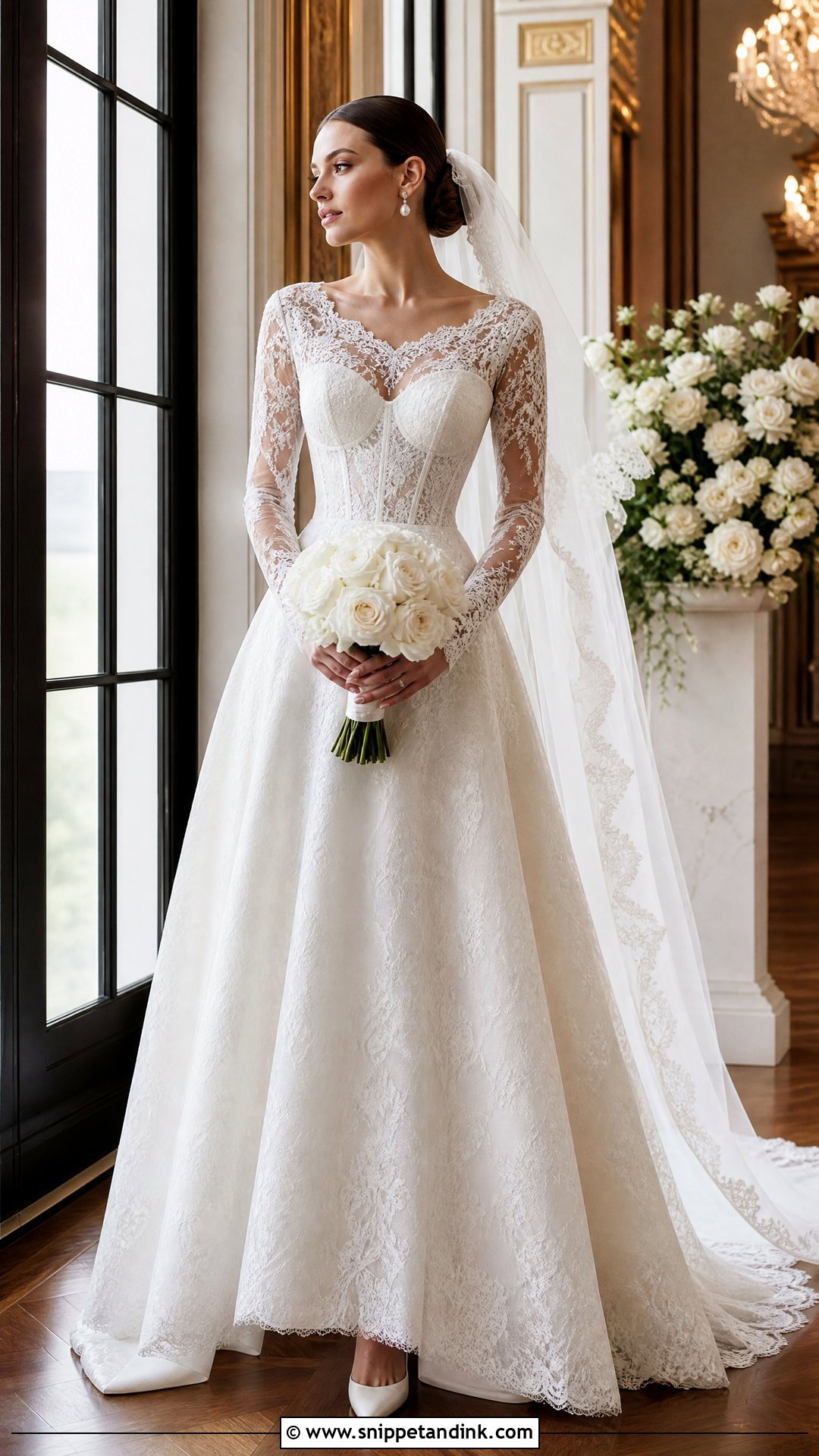
Sleeves change how a corset has to be fitted, because every time you raise an arm the sleeve pulls on the bodice. Illusion fabric with appliqués at the shoulders, cuffs and neckline is the lightest way to get coverage, and a lined corset underneath does the supporting. An A-line or softly flared skirt keeps the proportions calm. I pair this with pointed ivory pumps, small pearl earrings that stay out of the way of the lace, and a veil edged in the same motif. A smooth low bun shows off the neckline, and white roses with fine greenery are enough. Ask your seamstress to fit the sleeves with your arms bent and lifted, not just hanging, or the bodice will ride up when you hold your bouquet.
6. Sweetheart Corset Wedding Dress With Chapel Veil
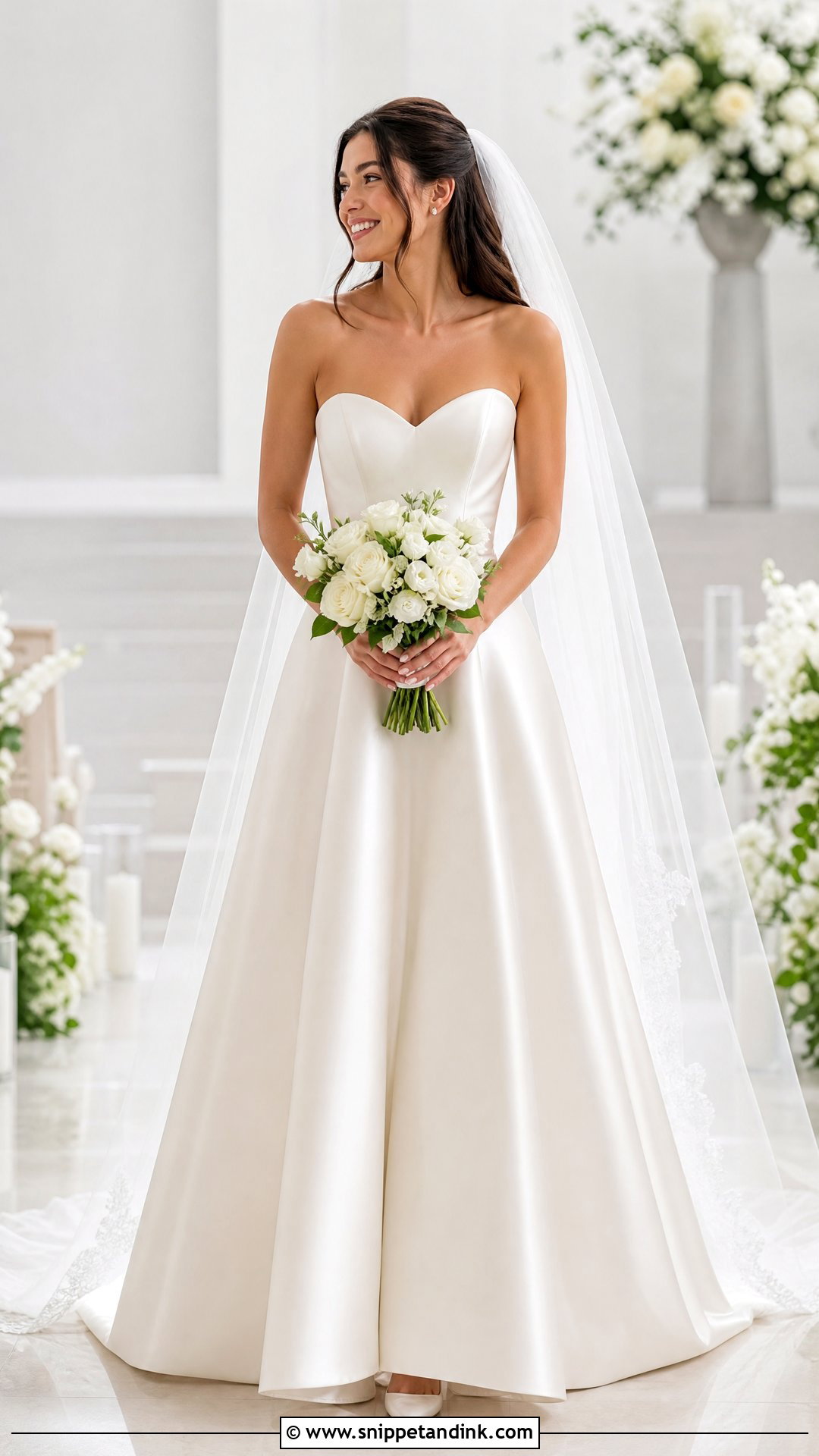
A sweetheart bodice with a chapel veil is about as classic as bridal dressing gets, and it rarely needs extra decoration. The curve should frame the bust without dipping so low that you’re tugging at it between photos. Satin, organza or layered tulle all sit well in the A-line skirt below. Add a chapel veil with a plain cut edge, crystal studs and satin heels you can actually stand in for hours. Half-up hair reads softer and a low bun more formal, so pick by the venue. When you try it on, look at the neckline from the side and while seated. Gaping at the top edge is common on sweetheart corsets, and it is usually fixed by taking in the side seams rather than the cups.
7. Square-Neck Corset Wedding Dress With Low Bun
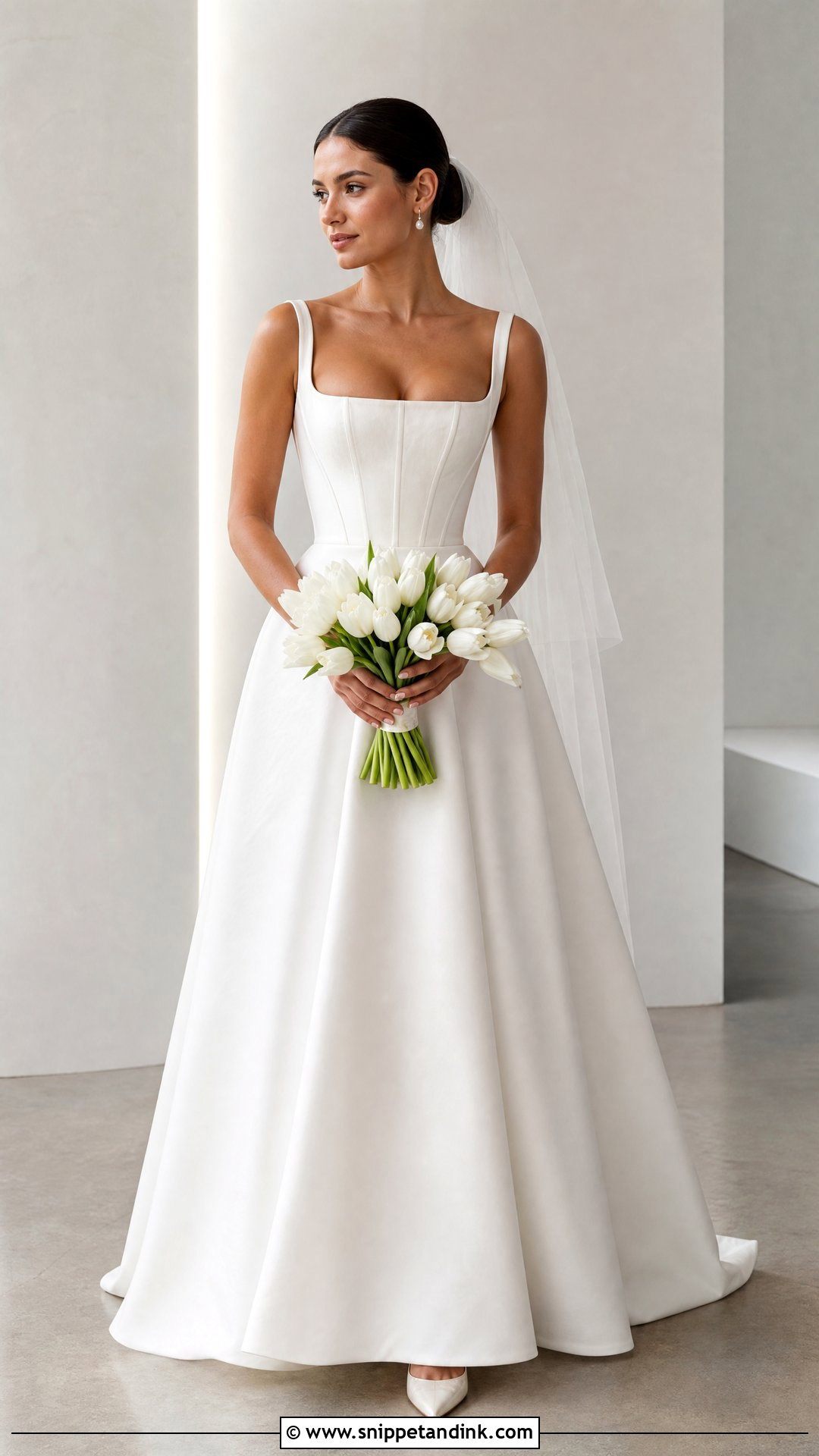
The square neckline is the most architectural of the corset shapes. Wide straps and a fitted bodice give it clean, straight edges, and matte satin or crepe keeps those edges crisp; a little lace at the neckline softens it without blurring the line. I style it simply: sleek low bun, pearl button earrings, a single-tier veil tucked beneath the bun, pointed pumps and a structured bunch of tulips or callas. The neckline is already doing the framing, so a necklace usually crowds it. A good square-neck corset carries its weight from the waist. If you feel the straps pressing into your shoulders after ten minutes, the bodice is too loose at the waist and the straps are taking up the slack.
8. Scoop-Neck Corset Wedding Dress With Lace Veil
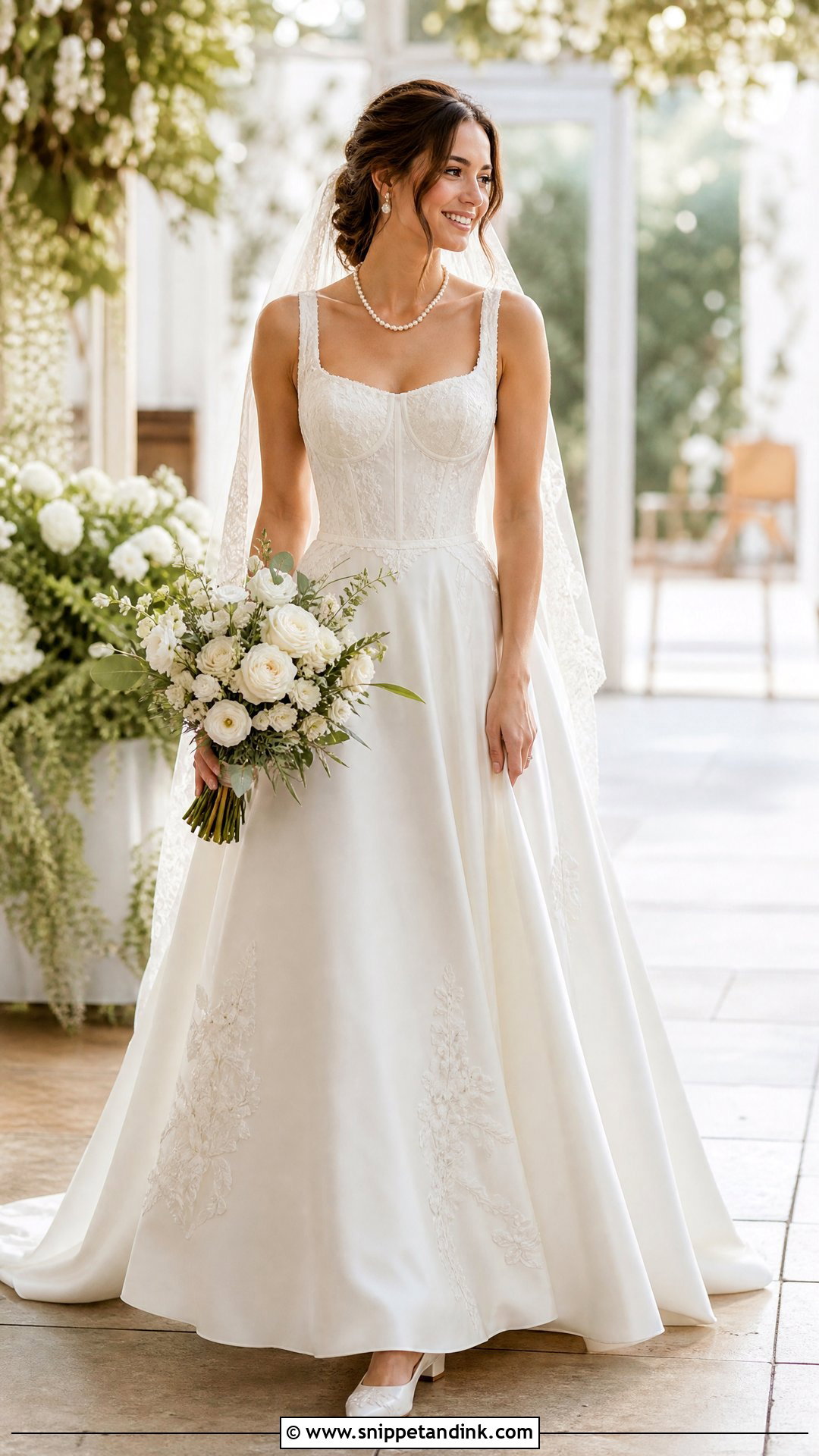
Scoop necklines are the comfortable choice for brides who don’t want to think about their neckline all day. The rounded edge frames the neck gently and covers more than a sweetheart, and wide straps let the corset sit securely without being laced hard. An A-line skirt in satin or lace keeps it traditional. I’d match a lace-trimmed veil to a few appliqués on the bodice, then add pearl earrings, a small pendant on a short chain and low ivory heels. Soft waves pinned back from the face keep it relaxed. At alterations, pay attention to the armholes as much as the neckline. A scoop corset that is cut a touch too deep under the arm rubs, and you’ll feel it by the first dance.
9. Mermaid Corset Wedding Dress With Drop Earrings
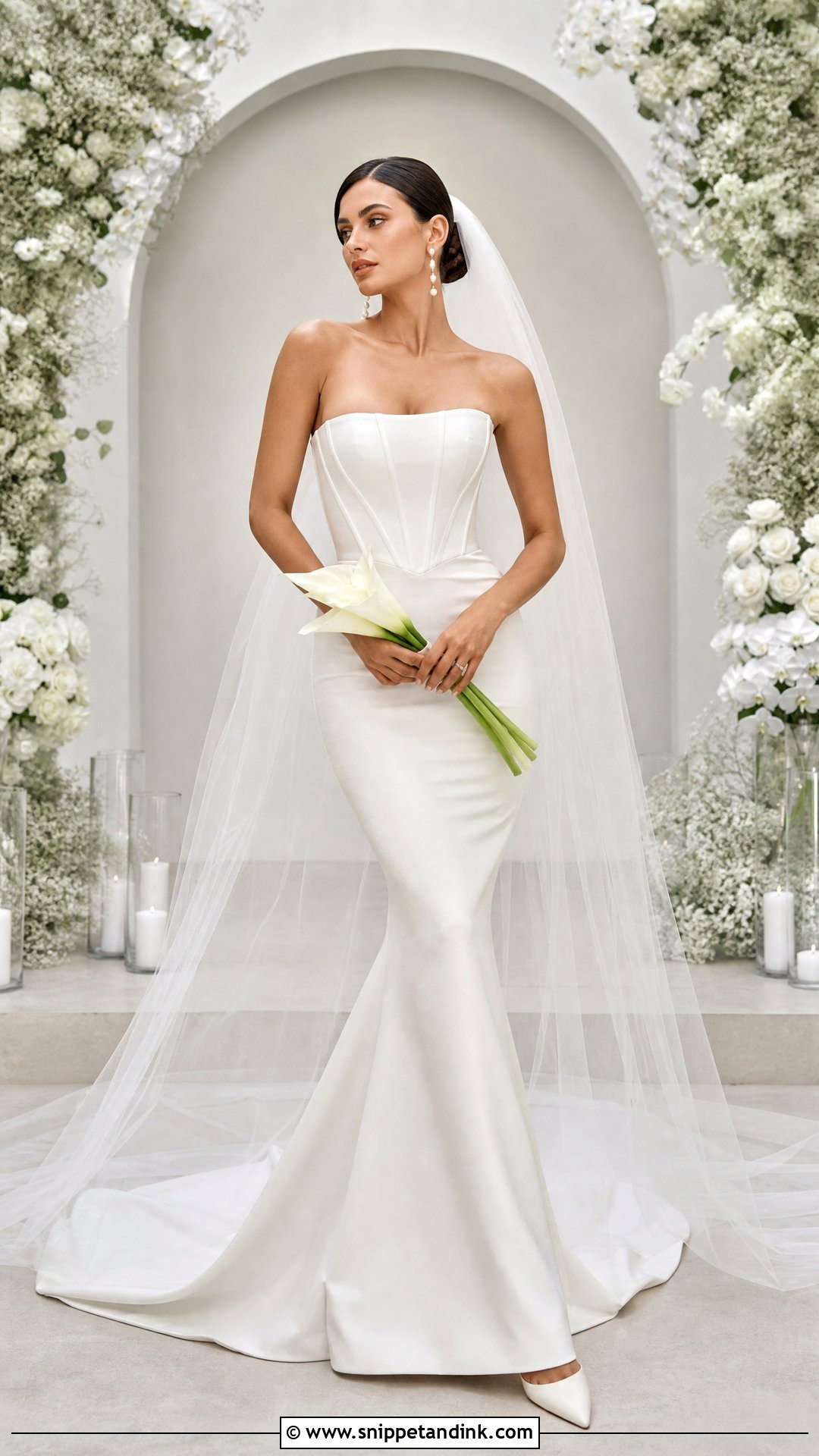
A mermaid corset is the least forgiving shape on this list, and I say that as someone who loves it. The bodice needs internal boning with a smooth exterior, and the skirt should hug the body until just above or at the knee before it flares. Crepe shows the line cleanly, satin adds sheen and softly patterned lace hides small fit issues. Long pearl or crystal earrings, pointed pumps and a clean chapel veil keep it sleek, and a side-parted low bun suits the sculpted shape. Carry callas or long-stemmed roses in a narrow bouquet. Take full strides and sit down during your final fitting; if the flare starts too high you’ll be shuffling, and if it starts too low you can’t climb steps. A discreet bustle makes the train manageable once the formal photos are done.
10. Drop-Waist Corset Wedding Dress With Satin Gloves
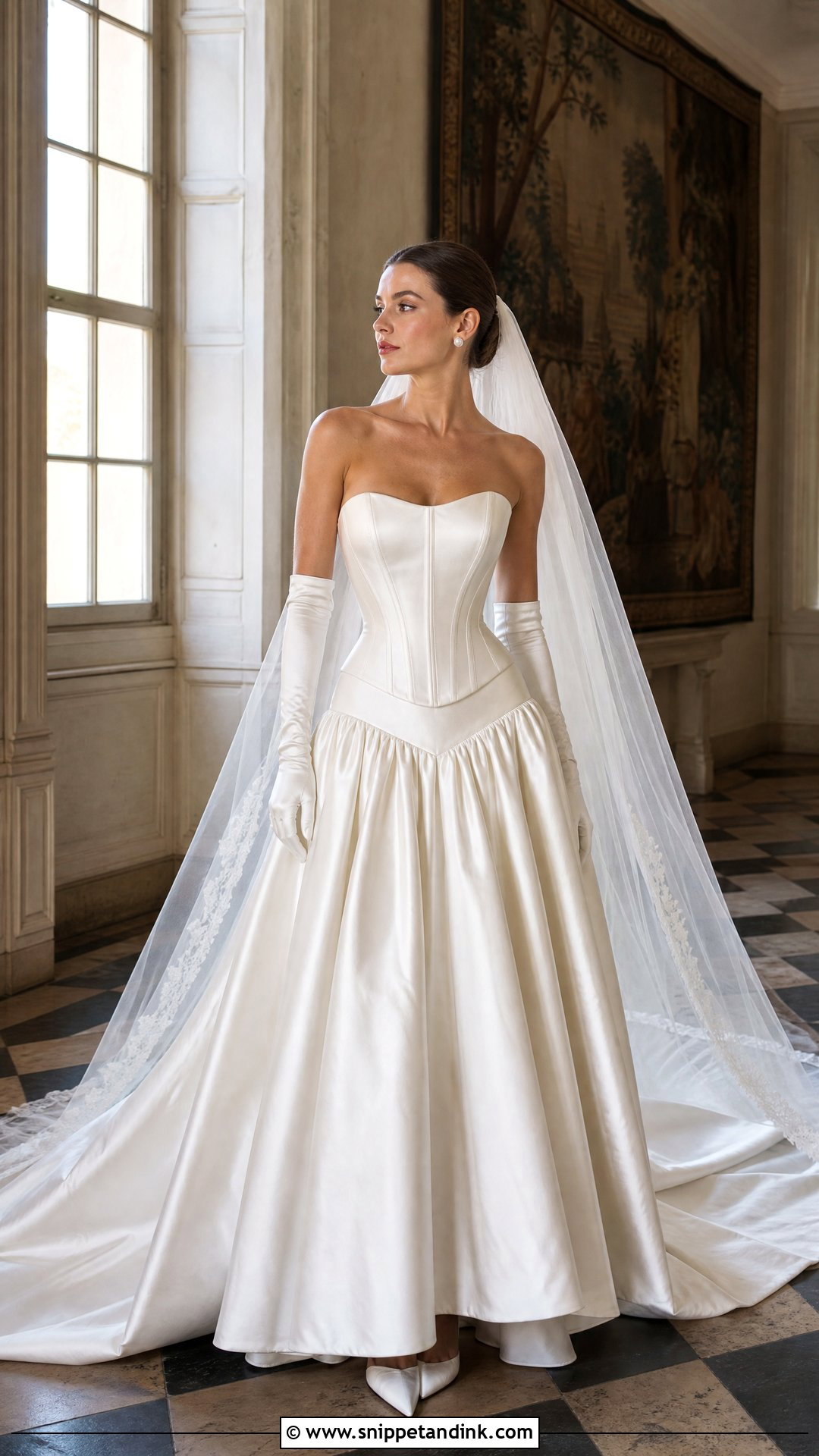
The drop-waist corset runs past your natural waist toward the hips, so the bodice does more sculpting than most. Smooth satin, clean seams and a softly rounded strapless top keep it classic; cutouts and heavy beading tend to fight the long line. Elbow-length satin gloves give it a vintage formality, and I’d keep the rest quiet with pearl earrings, closed heels and a plain cathedral veil pinned beneath a neat bun. Simple white roses balance the long torso. This shape is fitted through the hips, so it is the one that most often folds when you sit. Have the fitter check it seated and standing, and confirm the skirt starts at a point that flatters your hips rather than cutting across their widest part.
11. Tulle Princess Corset Wedding Dress With Crystal Details
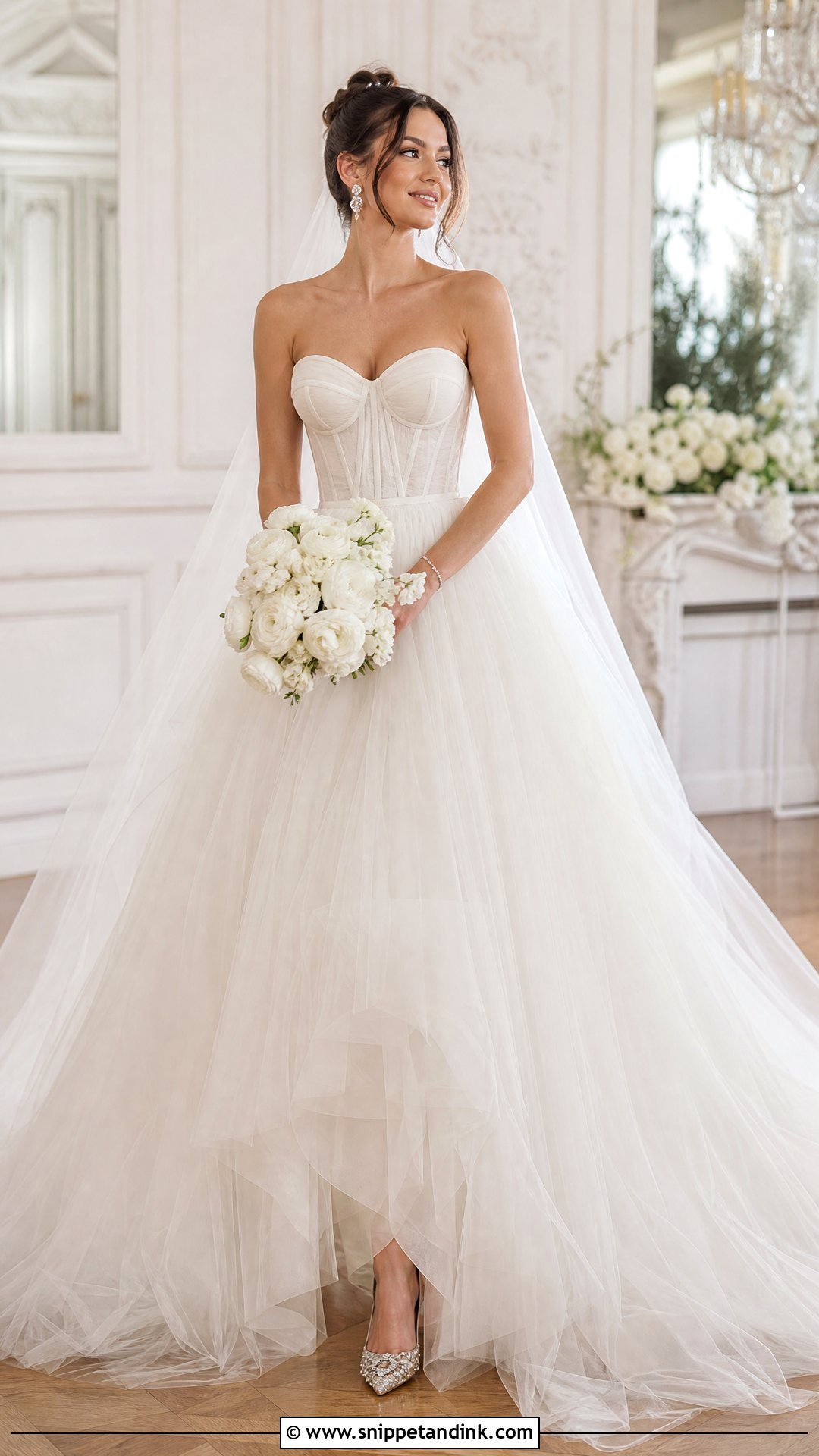
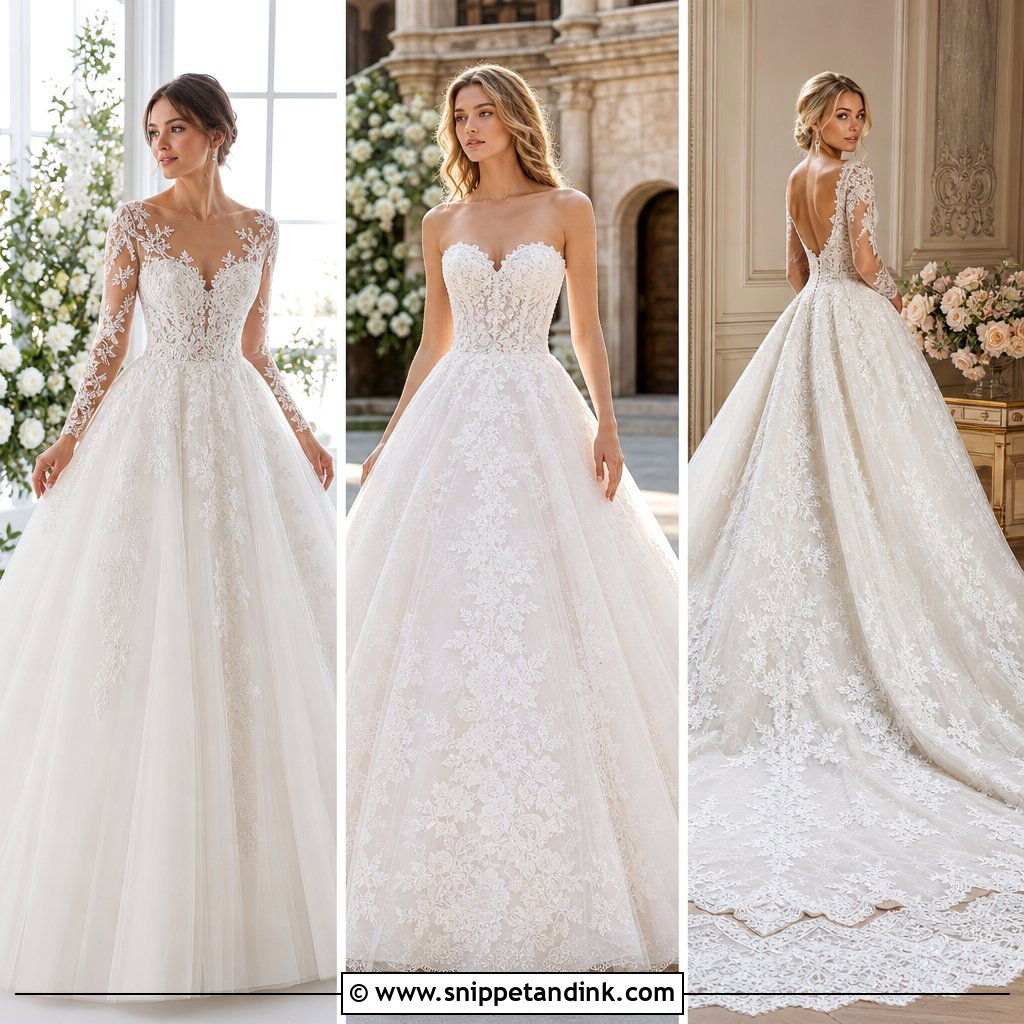
Tulle gives a corset dress fairytale volume while weighing a fraction of what satin would. Start with a sweetheart bodice and lightly covered boning, then choose smooth layers of tulle instead of tiered ruffles; ruffles date quickly, flat layers don’t. Crystal earrings, a fine tennis bracelet and lightly embellished ivory pumps are enough sparkle. A long plain veil keeps the outline airy, and polished half-up hair suits the proportions. Roses, ranunculus or peonies in a round bouquet complete it. Many-layered skirts need a well-planned bustle, and I always ask to see it done before the last fitting. The more tulle there is, the more the waist seam carries, so make sure you can eat dinner in it.
12. Floral Appliqué Corset Wedding Dress With Matching Veil
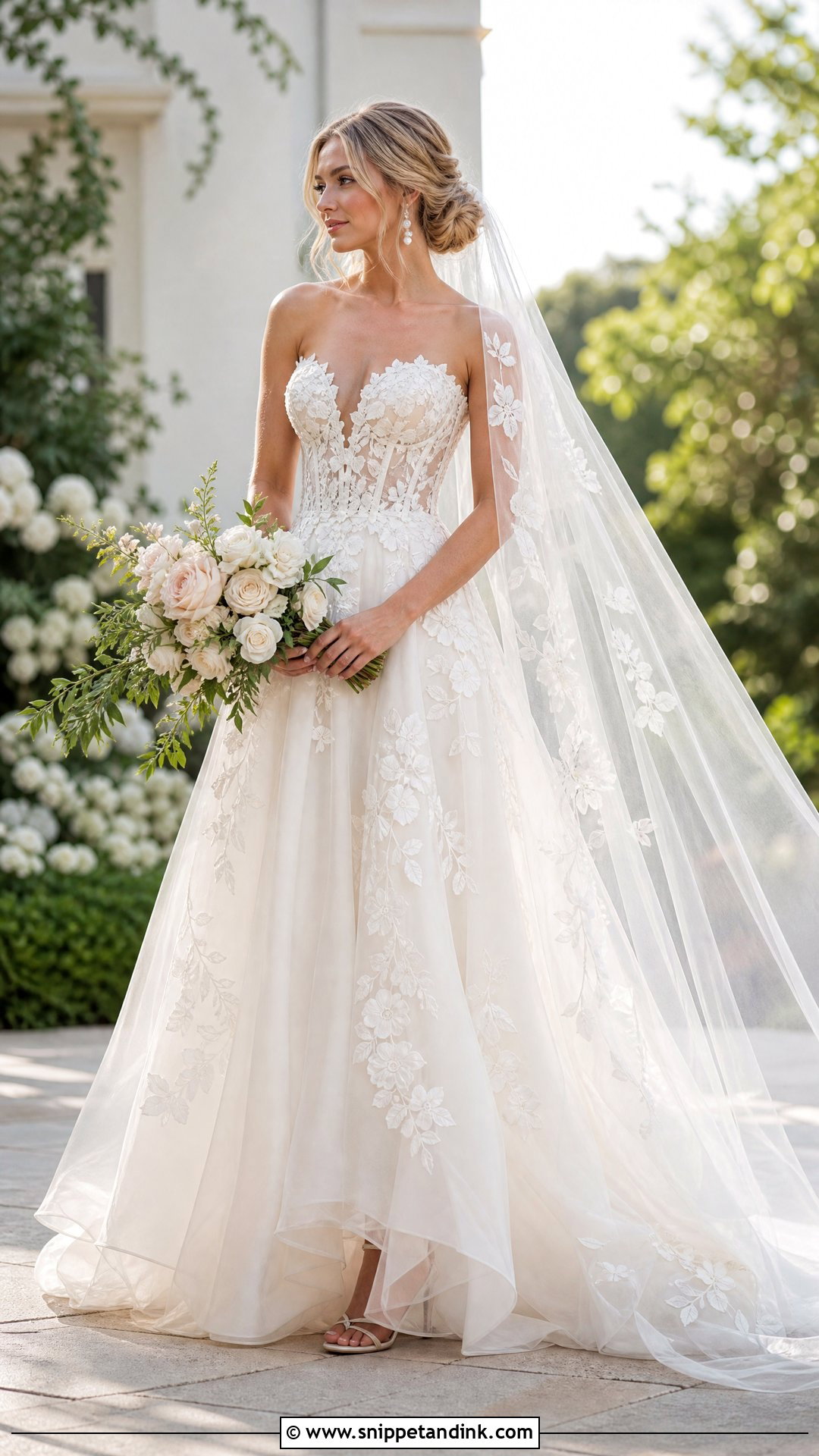
Appliqués work best on a corset when they start dense on the bodice and thin out as they travel down the skirt. That gradient joins the top and bottom of the dress; when the lace stops abruptly at the waist, the gown can look like two separate pieces. A natural-waist corset with an A-line tulle or organza skirt suits this. Add a veil with a few matching appliqués near its edge, pearl drops and plain ivory heels. An airy low bun echoes the floral shapes, and garden roses with seasonal greenery keep the colour palette white. Stick to one floral motif. When beads, sequins and two different laces all appear on one bodice, it reads busy in photos even if it looks fine in the mirror.
13. Minimalist Crepe Corset Wedding Dress With Simple Veil
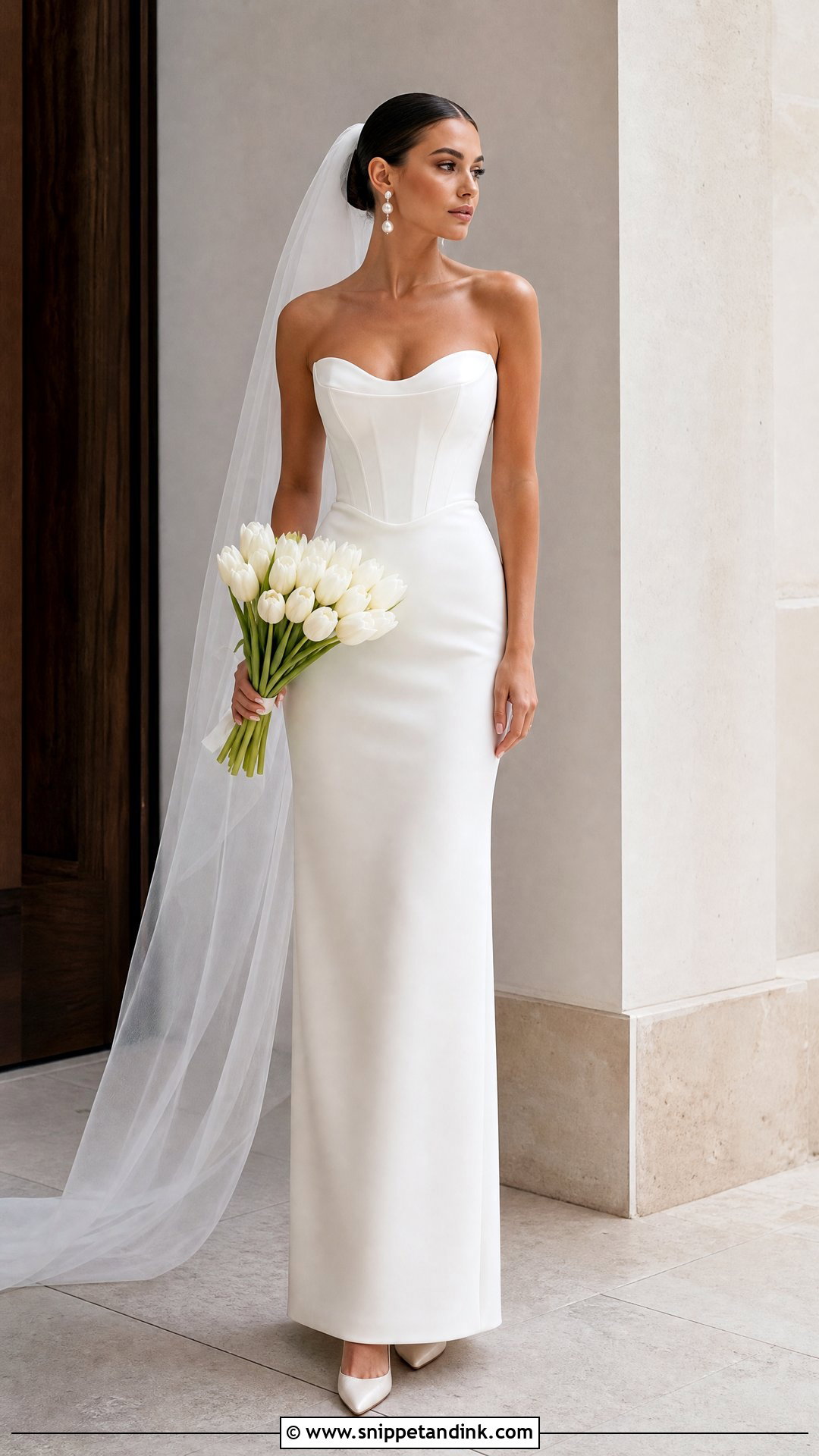
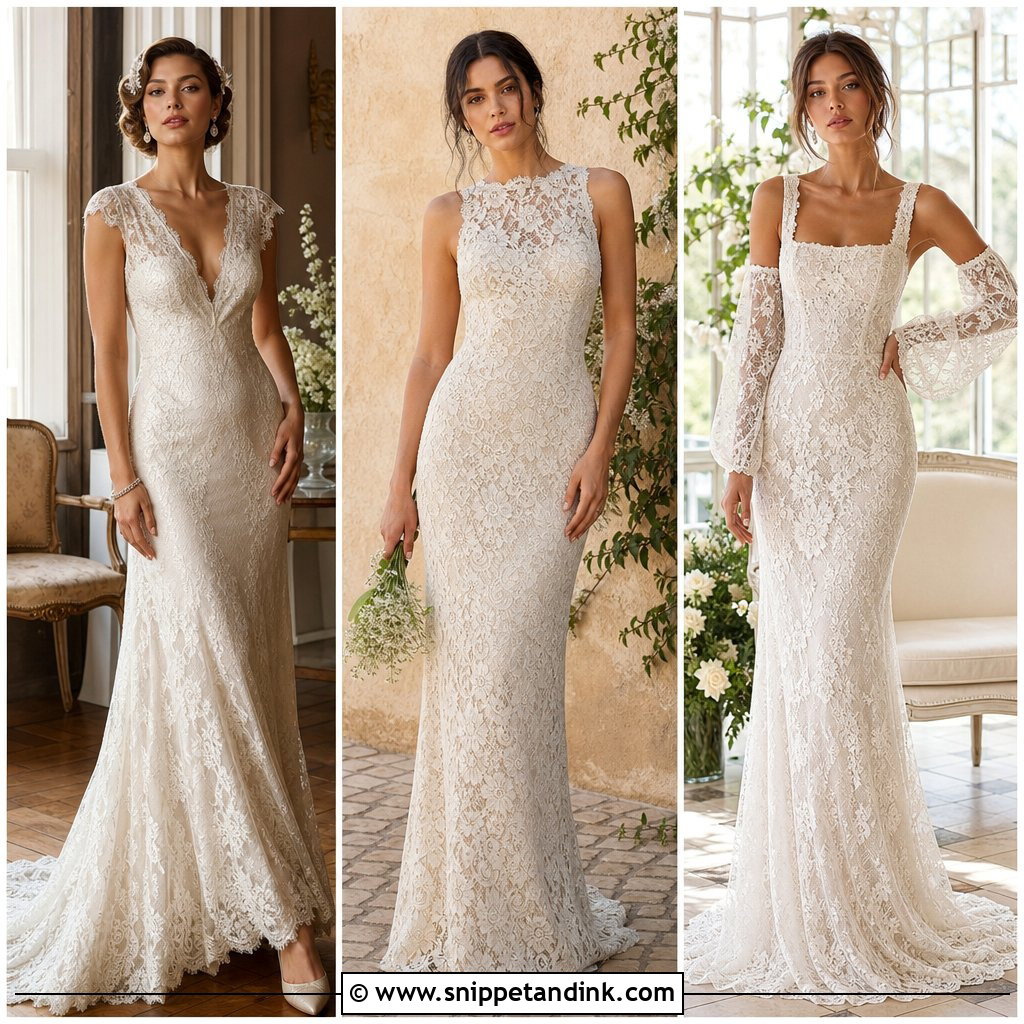
Crepe has nowhere to hide, which is exactly why a minimalist corset in it looks so expensive when it is right. The construction becomes the decoration: smooth boning, precise princess seams and a straight or gently curved neckline over a column or soft A-line skirt. It reads modern yet enduring with a single-layer veil, sculptural pearl earrings and pointed ivory pumps. A sleek low bun and a compact bunch of tulips keep the mood spare. If you want one detail, a row of covered buttons down the back is plenty. Crepe shows every ripple and undergarment line, so try it with the exact underwear you’ll wear and look at it in daylight, not only under fitting-room lights.
14. Pearl-Beaded Corset Wedding Dress With Satin Heels
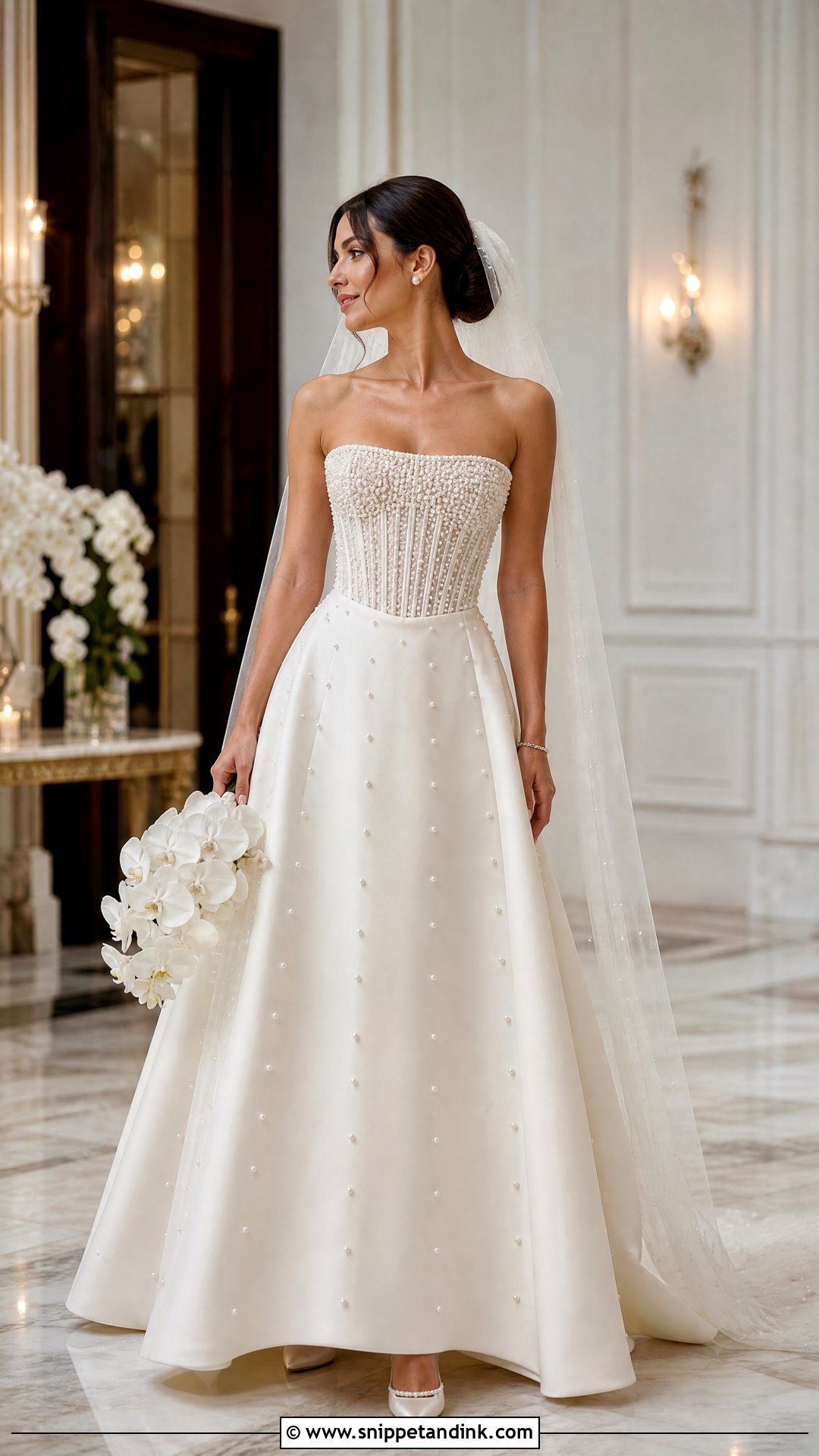
Pearl beading catches light softly, without the hard flash of dense crystals, and it suits a corset because it can be concentrated on the bodice. Evenly spaced pearls over satin or tulle, with a plain A-line skirt, keep the waist defined and the gown from looking overworked. I’d finish it with satin heels, pearl studs, a narrow bracelet and a clean-edged fingertip veil that lets the beading show. A low twisted bun frames the face, and white roses or orchids suit it. Check the beading where your arms rest against the bodice. Loose or raised pearls snag the veil and bouquet ribbon, and a quick re-stitch at a fitting saves a pulled thread on the day.



15. Brocade Corset Wedding Dress With Pearl Earrings
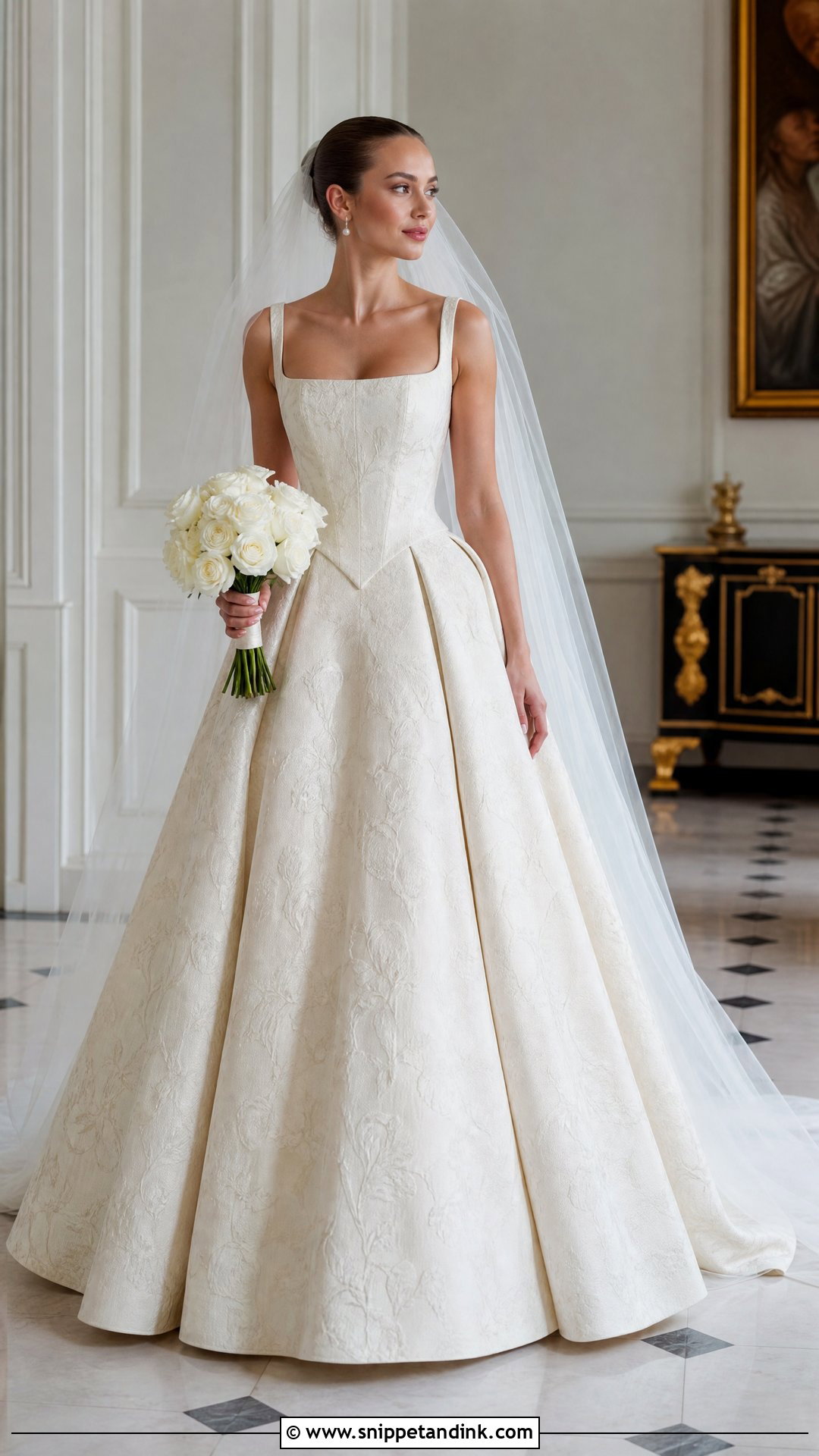
Brocade gives you richness through the weave itself, so the gown needs very little added to it. Choose a low-contrast ivory floral pattern; high-contrast brocade can flatten into a busy blur in photos. A strapless or square-neck bodice with a basque waist and a structured ball skirt is the classic way to wear it. Pearl earrings, plain satin pumps and a simple cathedral veil keep the focus on the fabric, and a smooth chignon matches its formality. White roses with greenery soften it. Brocade is heavy and warm, so it belongs at a cooler-season or indoor wedding. At fittings, ask how the skirt weight is carried, because a heavy skirt pulls a corset down unless the waist is anchored firmly.
16. Corset Wedding Dress With Detachable Sleeves And Pearl Veil
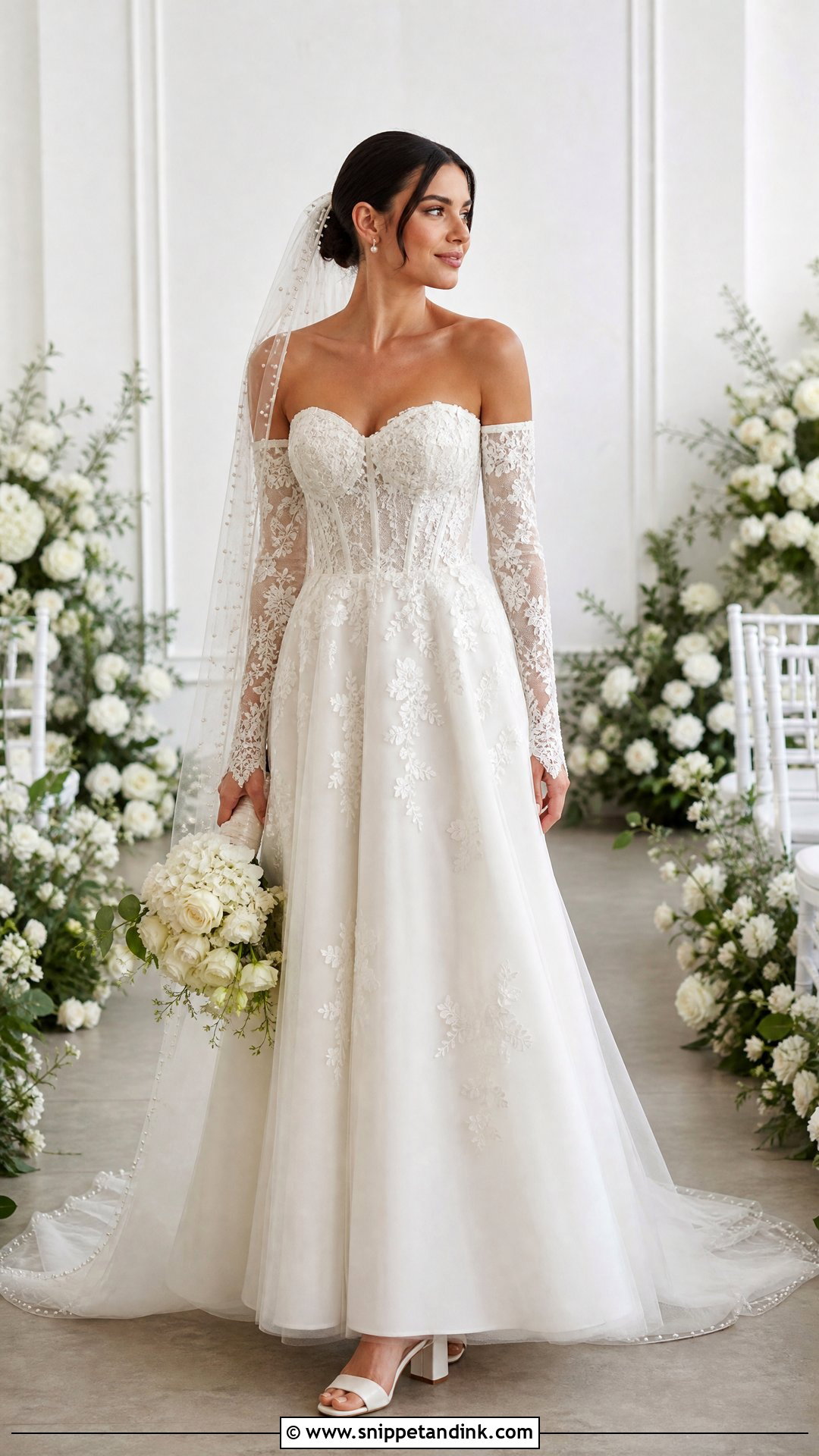
Detachable sleeves give you two outfits from one gown: covered for the ceremony, strapless for the party. Begin with a strapless satin or lace bodice and A-line skirt, then add fitted lace sleeves that fasten just under or along the neckline. A pearl-detailed veil, simple earrings and comfortable block heels keep the attention on the change itself. A low bun shows the neckline in both versions, and a soft white bouquet with little greenery suits it. Practise taking the sleeves off with whoever will help you on the day. Small hooks or snaps hidden in the lining are better than ties, and the bodice should look finished, not marked, once the sleeves are gone.
17. Corset Wedding Dress With Detachable Overskirt And Pumps
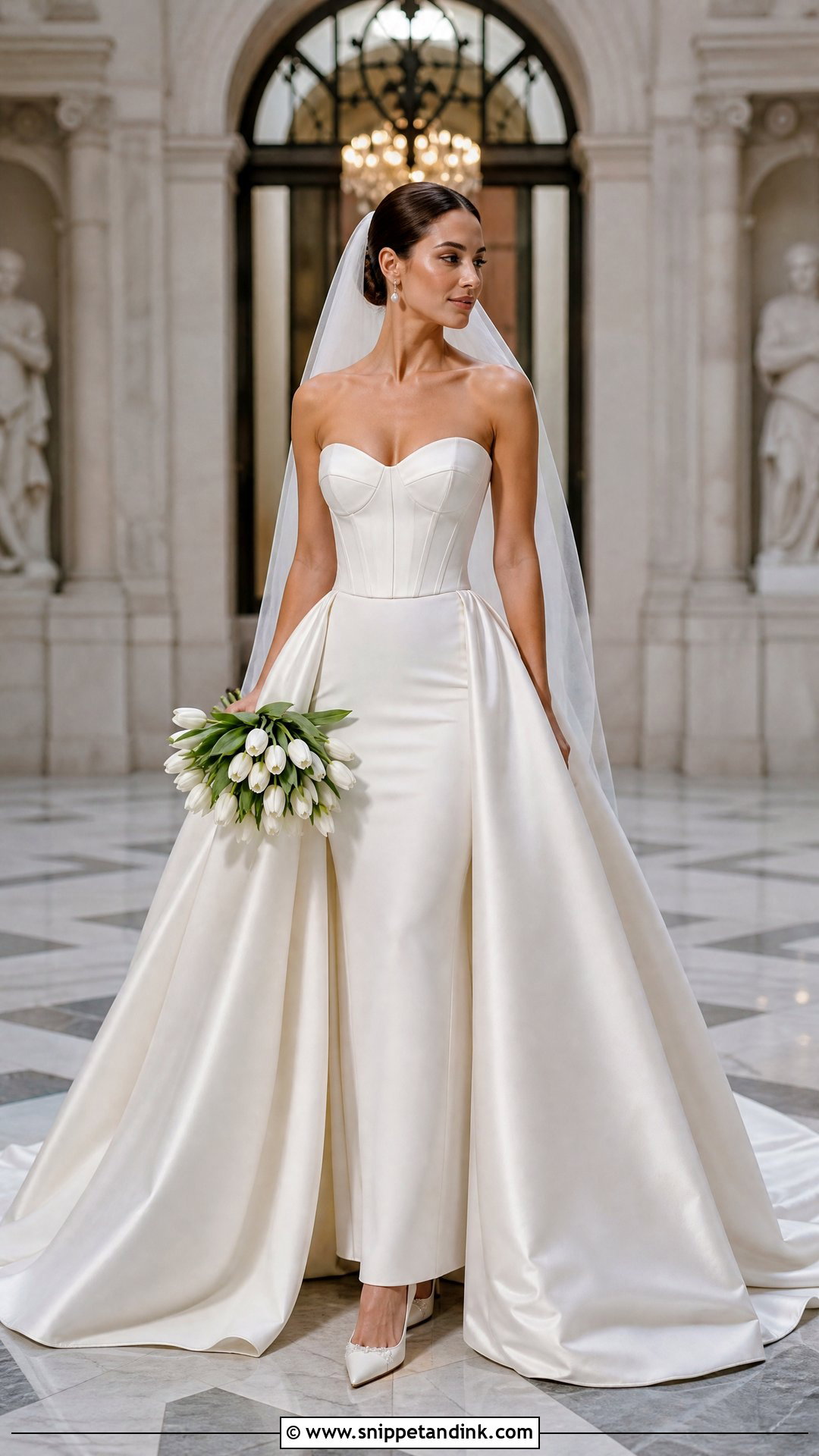
An overskirt gives you ball-gown volume for the aisle and freedom on the dance floor afterward. The base dress is a structured satin or crepe corset in a column, sheath, or mermaid base, and the overskirt fastens at the natural waist, often open slightly at the front so the slimmer line shows through. Pointed ivory pumps, pearl earrings, a chapel veil and a sleek bun suit both versions, as does a structured bouquet of tulips or roses. The closure is the part to scrutinise. Walk briskly in it during alterations, and once it is off, the waistline underneath should look clean, with no exposed hooks or puckering where the extra weight was hanging.
18. Tea-Length Corset Wedding Dress With Slingback Heels
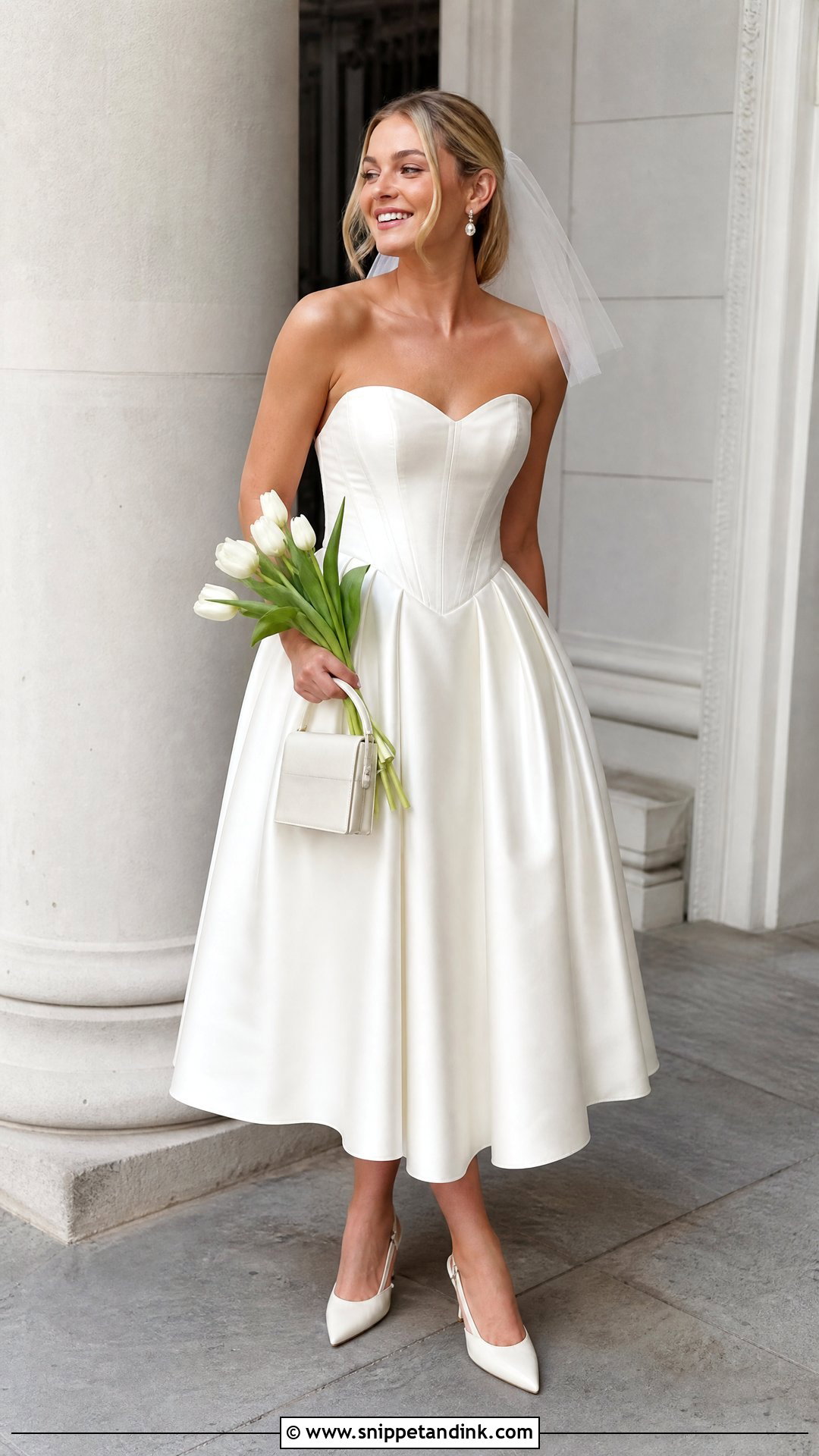
Tea length is the corset dress I suggest for a courthouse ceremony or a daytime lunch, because it reads bridal without a train to manage. A fitted satin bodice with a scoop or sweetheart neckline sits over a full skirt that ends between knee and ankle. Your shoes are on show here, so ivory slingbacks or pointed pumps are worth spending on. Pearl earrings, a short veil and a small structured bag give it a vintage feel, with soft waves or a neat low bun. Roses or tulips in a compact bouquet are enough. A fitted waistband smooths the join between corset and skirt. Pockets are possible, but have them set into the side seams so they lie flat and don’t bulge under the skirt.
19. Plus-Size A-Line Corset Wedding Dress With Lace Sleeves
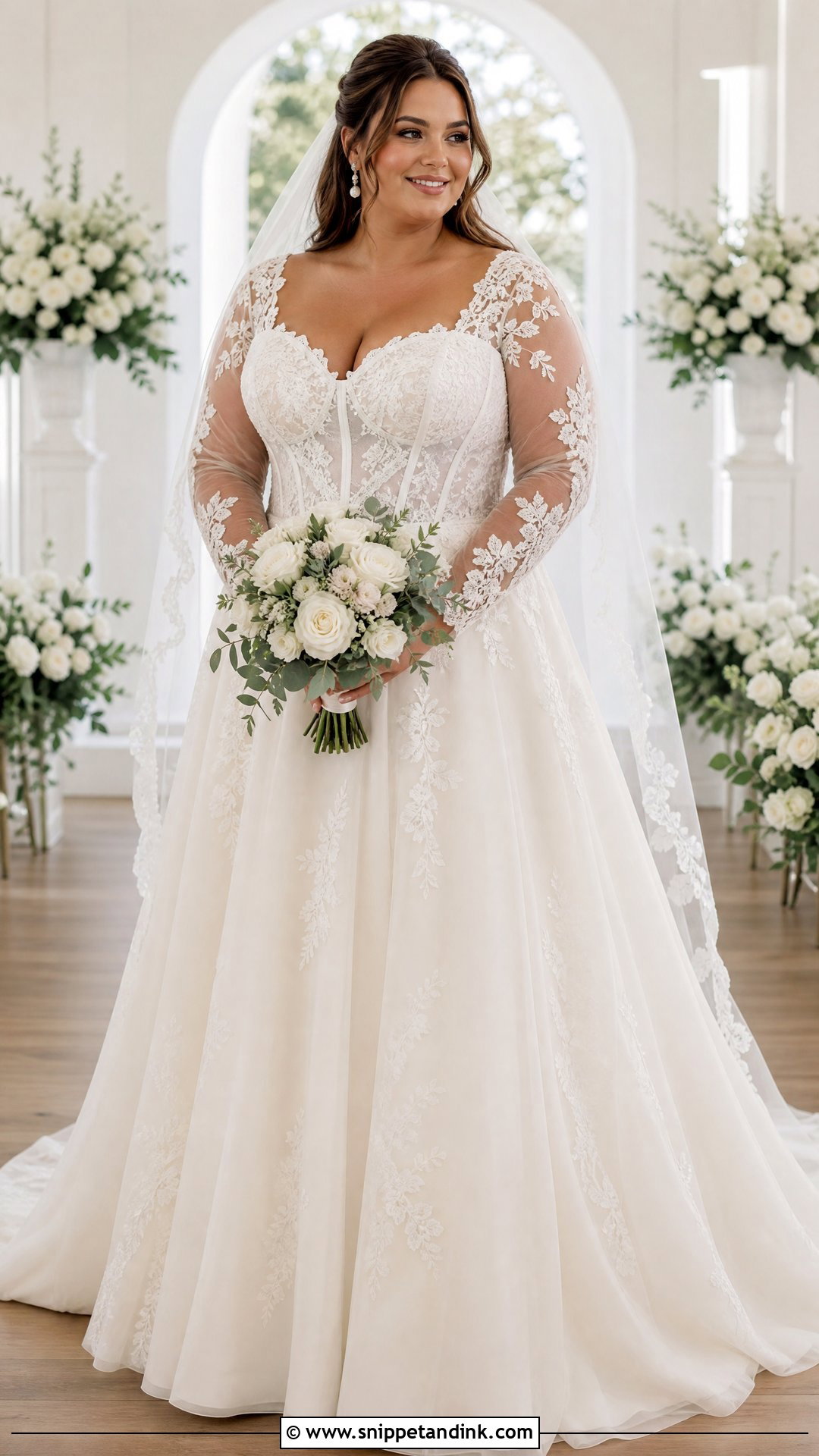
For a fuller figure, the corset is often the most supportive bodice you can choose, as long as it is built properly. Look for strong internal boning, shaped cups and a waistline placed where your body actually narrows, which may be higher or lower than the sample. An A-line skirt moves freely over the hips, and lace sleeves or wide lace straps add coverage and balance the volume below. A chapel veil, pearl earrings and stable block heels finish it, with a low bun or half-up style keeping the neckline open. White roses and soft greenery in a medium bouquet suit the scale. Ask your fitter to adjust bust, waist, straps and hem separately. Taking a corset in evenly all over rarely works on a curvy body; each area needs its own correction.




20. High-Neck Corset Wedding Dress With Long Sleeves
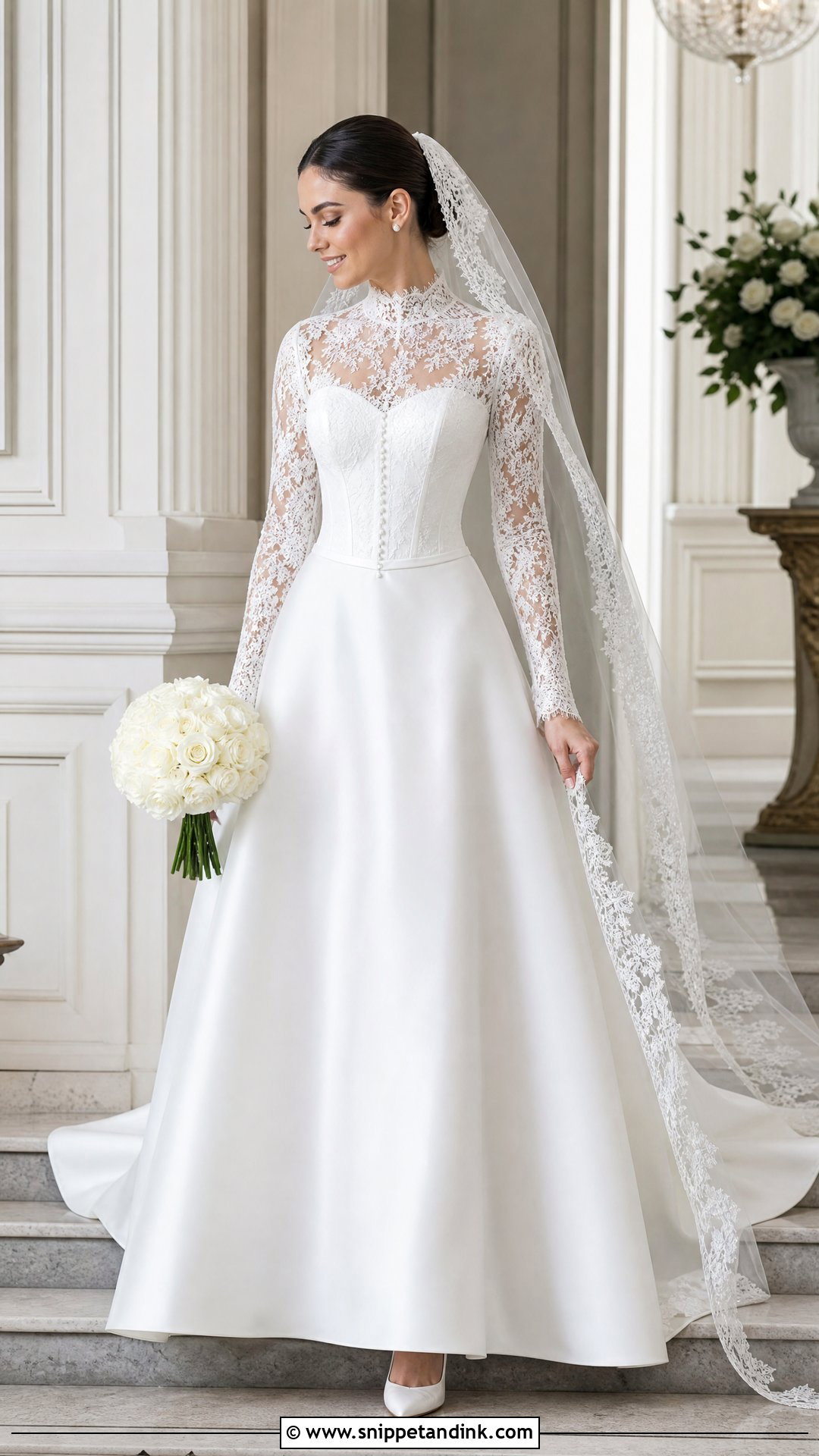
A high neck and long sleeves can still sit over a properly shaped corset. Here a lined sweetheart or scoop corset is hidden under an illusion lace neckline, so the support is there but the gown looks light. An A-line skirt balances the coverage, and small covered buttons at the cuffs and down the back add a traditional finish. Pearl studs, closed-toe pumps and a chapel-length lace veil suit it, with a smooth bun to show the neck and back. Keep the bouquet simple. Illusion lace at the throat can scratch, so rub the neckline against your skin at the fitting, and check that the sleeves bend at the elbow without dragging on the bodice.
Ten Hours in a Boned Bodice: Getting Laced, Seated and Fed
A corset feels different at four in the afternoon than it did at the fitting. Your body warms up, you eat, you dance, and fabric relaxes slightly with heat. Plan for that rather than lacing as tight as possible in the morning.
- Choose one person to lace you and have them practise at your final fitting. Lacing is tightened gradually from the middle outward, not yanked from the bottom.
- Lace firm enough that the neckline stays put when you bend forward, then stop. If you can’t take a full breath, it is too tight and will only get worse.
- Ask your helper to check the lacing after the ceremony. A small loosen before dinner makes a real difference, and the bow can be retied in a minute.
- Sit on the edge of your chair with your back straight. Slouching pushes the top edge of the bones into your ribs and creases the front of the bodice.
- Keep a small kit for the evening: safety pins, a spare length of lacing cord and a few plasters for any spot where a strap or seam rubs.
If you are getting married in heat, mention it to your seamstress. She may leave a little more ease at the waist than she would for a winter wedding, because a corset fitted to the exact centimetre in a cool shop can feel very different in a warm tent by evening.
A Corset Is Only Classic If You Can Breathe in It
Every gown here comes down to the same thing: structure that holds you without fighting you. Satin ball gowns give the most formality, lace A-lines the most softness, and crepe the cleanest line, while detachable sleeves and overskirts buy you a second look for the reception. Decide on neckline, waist position and fabric weight before you fall for embellishment, and then keep the accessories working for the gown’s best feature rather than against it. Above all, sit, walk and lift your arms in every dress you shortlist. The corset that passes those three tests is the one you’ll still be glad you wore when the last photo is taken.
You'll Like These Ideas:




Leave a Reply