
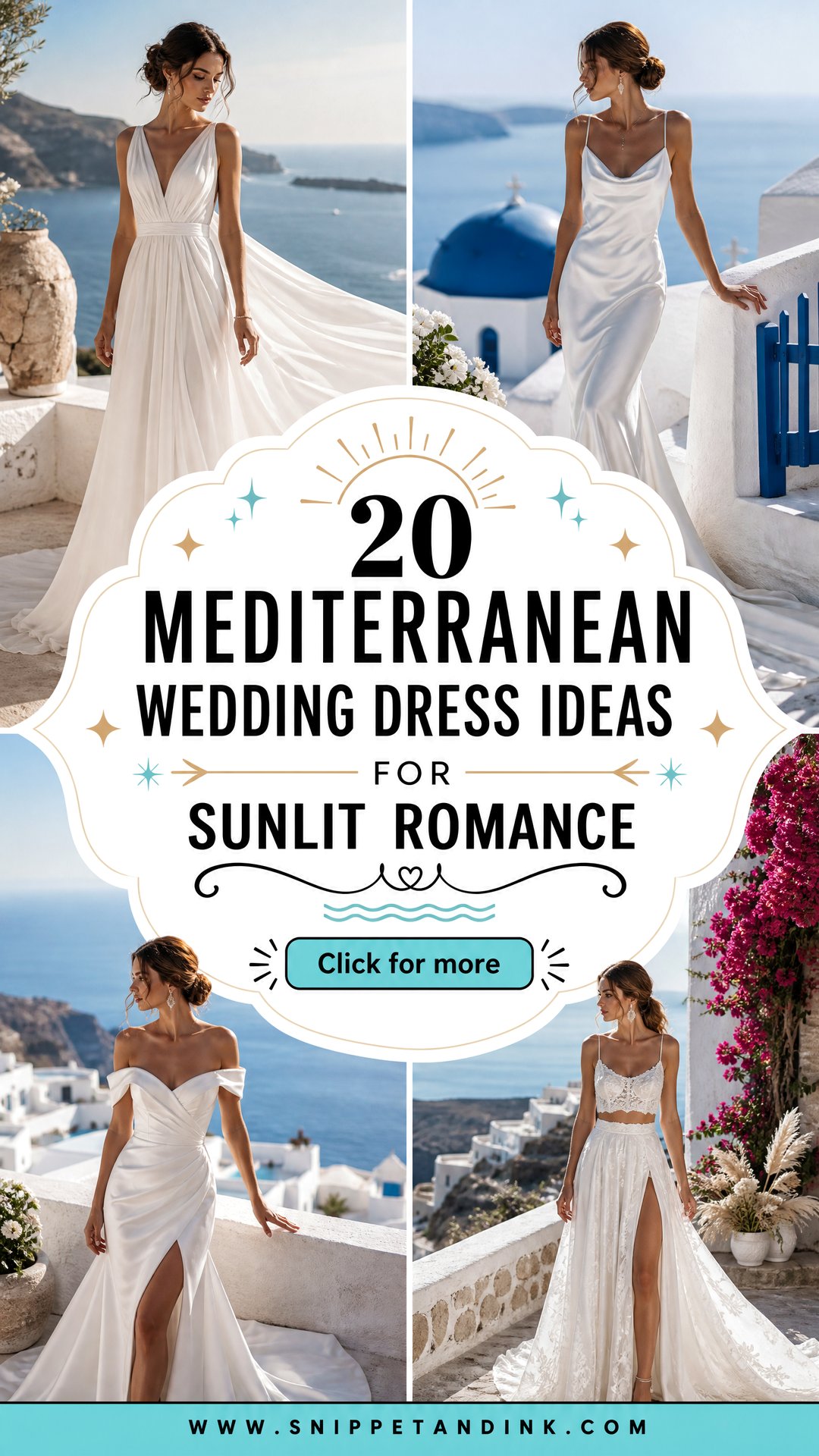
Heat, wind, stone steps and a long journey: that is what a Mediterranean wedding asks of a dress, before anyone has looked at it. The gowns that do best are the light ones. Chiffon, fluid silk, breathable crepe, fine lace and airy organza cope with warm air, and draped necklines, open backs, soft sleeves and modest trains move well outdoors, whether you are marrying on seaside terraces, in a villa garden or a whitewashed courtyard. I have written each of the twenty looks below as a full outfit with shoes and accessories, and added the fitting check I would make for each one in that climate.
Flying Out With a Wedding Gown in Your Hands
Most Mediterranean weddings start with a flight, and the dress has to survive it. I tell every destination bride to carry the gown on board in a breathable garment bag and never check it in. Airlines handle this differently, and some will offer cabin storage while others ask you to fold it into an overhead bin, so call or message the airline before you book seats and ask what they allow.
Fabrics travel very differently
- Chiffon, tulle and soft lace pack well and drop their creases within a day of hanging.
- Silk, satin and crepe hold sharp folds; roll rather than fold them, with acid-free tissue in each bend.
- Organza and mikado crease hard and need professional steaming on arrival.
- Beading and appliqués should face inward, wrapped in tissue so they do not snag the skirt.
Hang the gown as soon as you reach the hotel, in a bathroom away from direct sun. Ask your planner or venue in advance for a local steamer or pressing service, and never use a hotel iron on silk or anything with glue-backed appliqués. Do the final fitting at home before you travel, because finding an alterations specialist abroad two days before the wedding is stressful and expensive.
1. Grecian Draped Wedding Dress
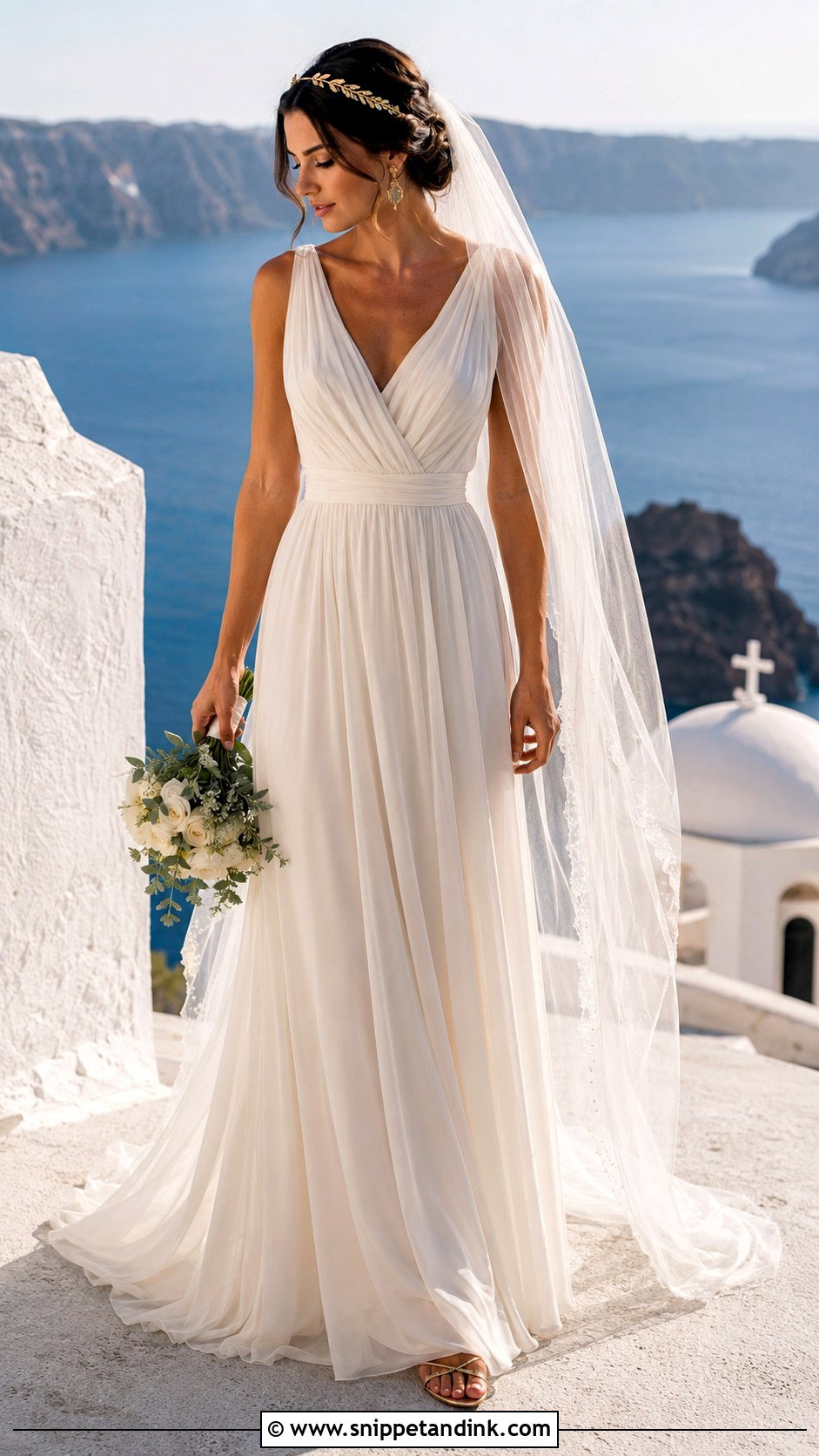
Drape is the oldest trick for a hot climate, and it still works. A wrapped bodice in light chiffon or silk, a defined waist and a fluid A-line skirt let air move around the body, and soft gathers at the neckline flatter the bust without boning. I always ask what is holding the drape in place: a light lining with an inner bodice keeps the folds where they were pinned, while unanchored chiffon slides sideways in a cliff-top wind. Metallic flat sandals, a fine gold headband, drop earrings, a loose low bun and a fingertip veil complete it.
2. Mediterranean Lace A-Line Wedding Dress
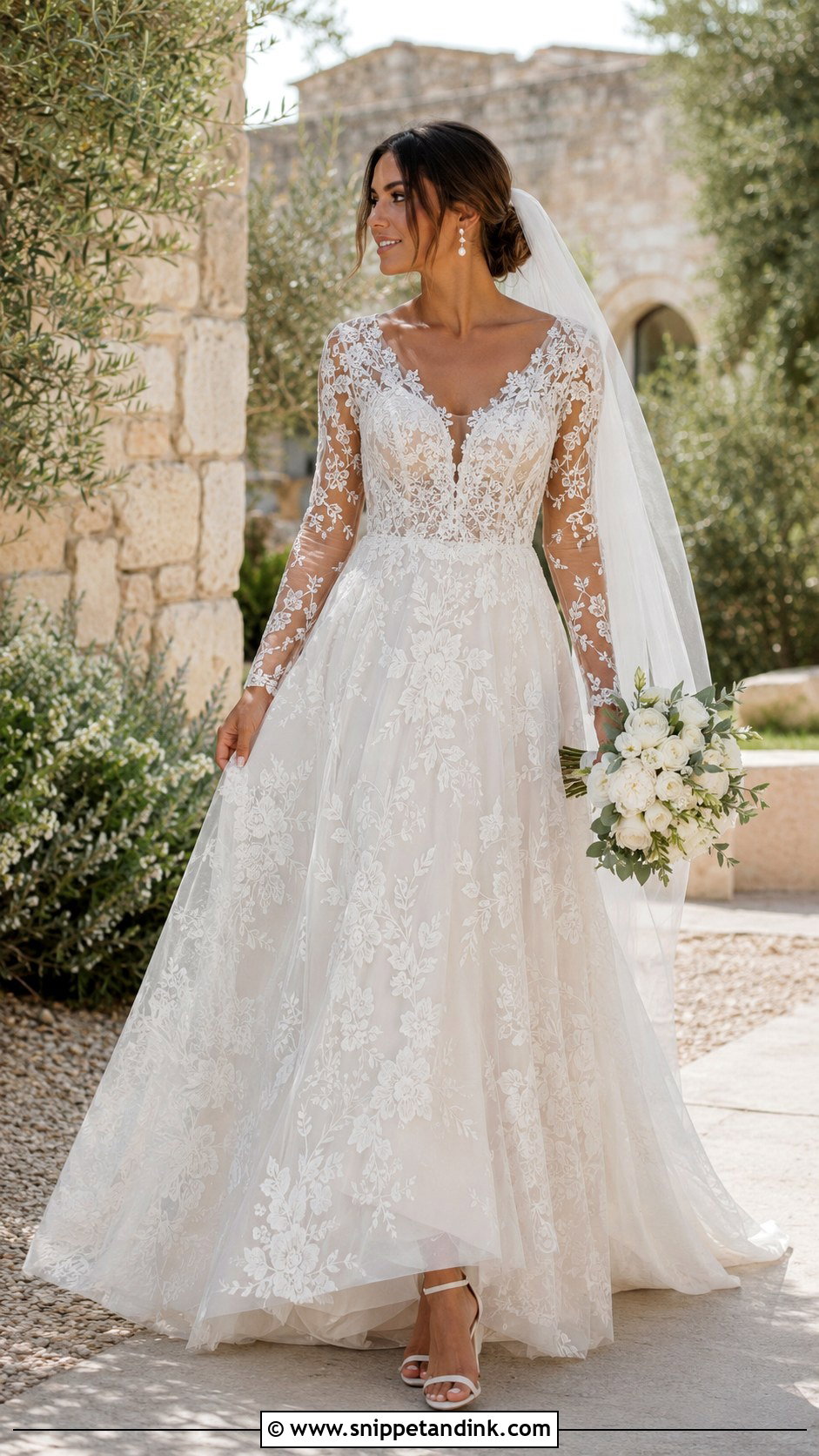
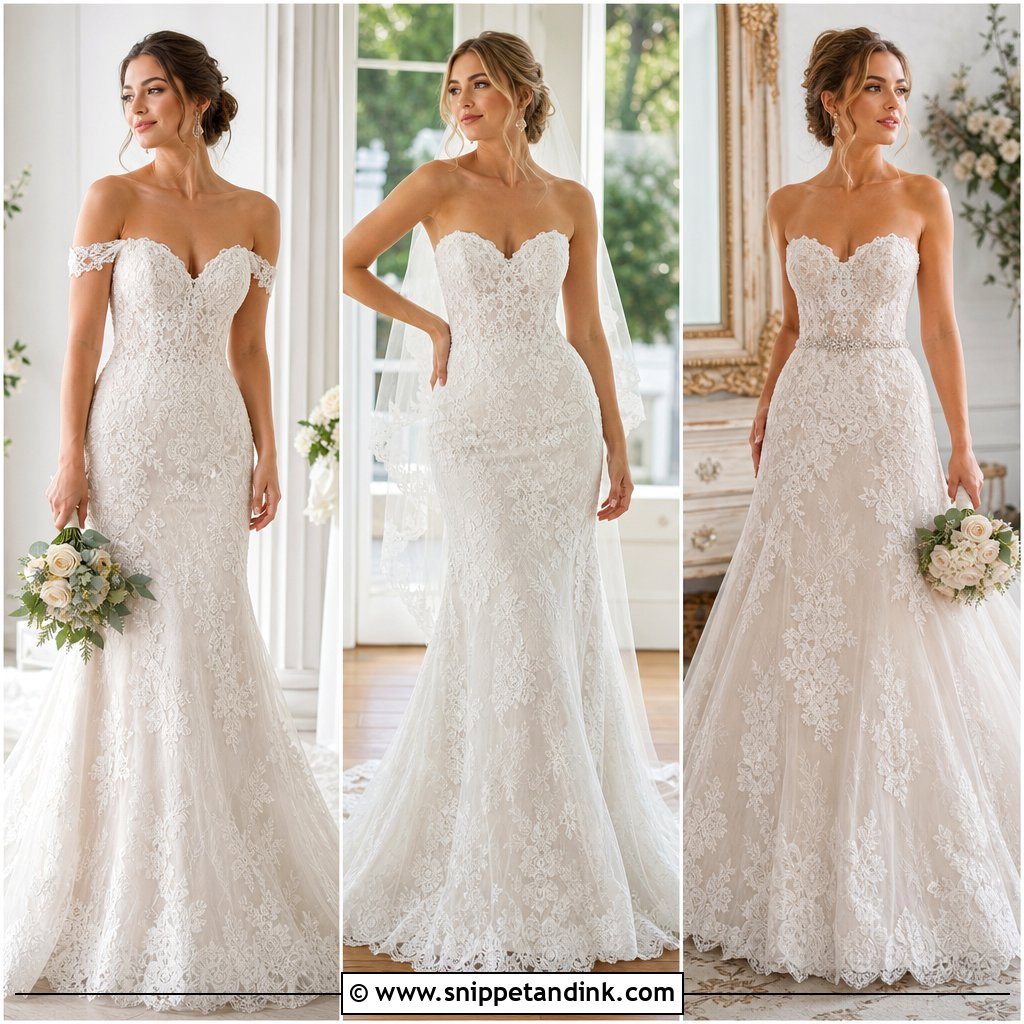
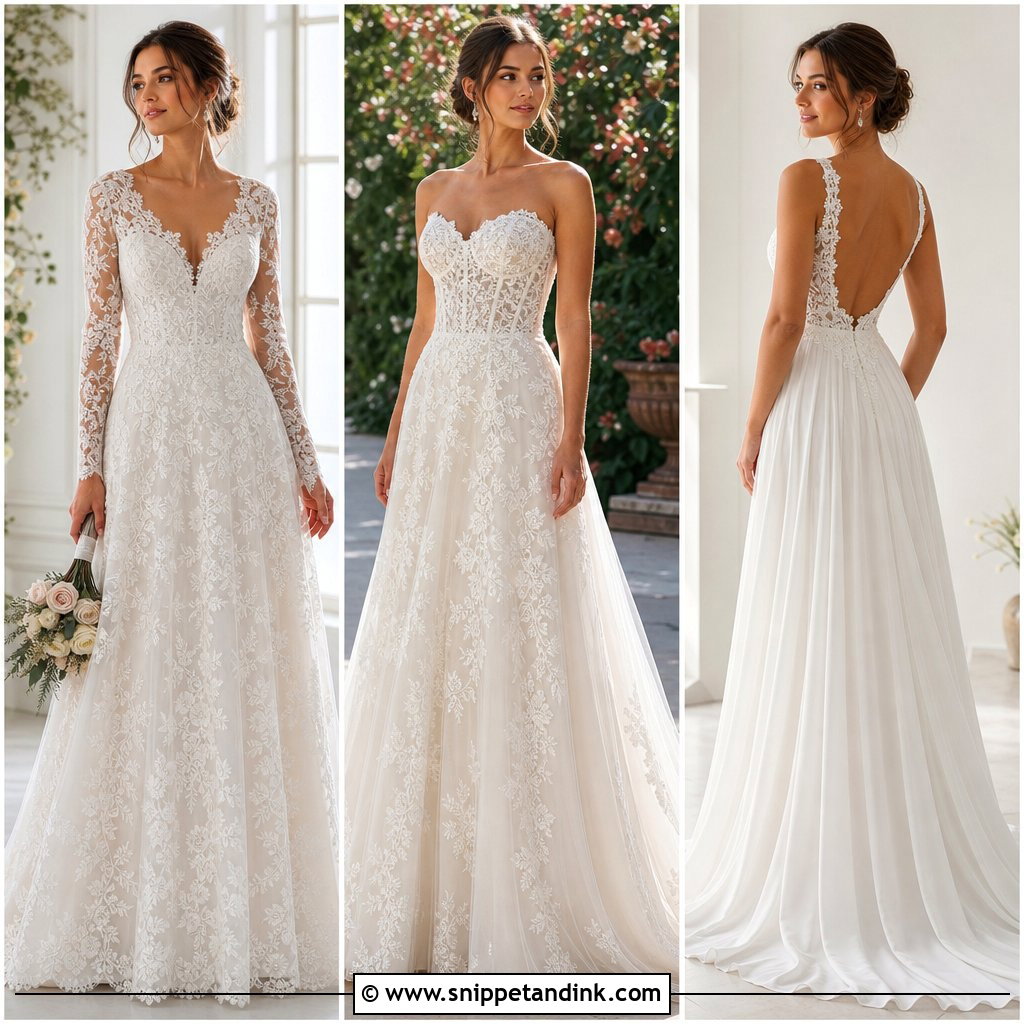
Lace on an A-line is the safe, classic choice, and in heat the lining matters more than the lace. Look for botanical or vine lace over one light lining rather than several layers. The fitted bodice gives shape and the skirt leaves room for stone paths and garden steps. Add sheer lace sleeves or a higher illusion neckline for coverage. I keep the train moderate for outdoor venues; a long lace train collects dry leaves and gravel in its holes like a net. Ivory block-heel sandals, pearl earrings, a simple veil and a small bouquet of white flowers and greenery finish it.
3. Silk Slip Mediterranean Wedding Dress
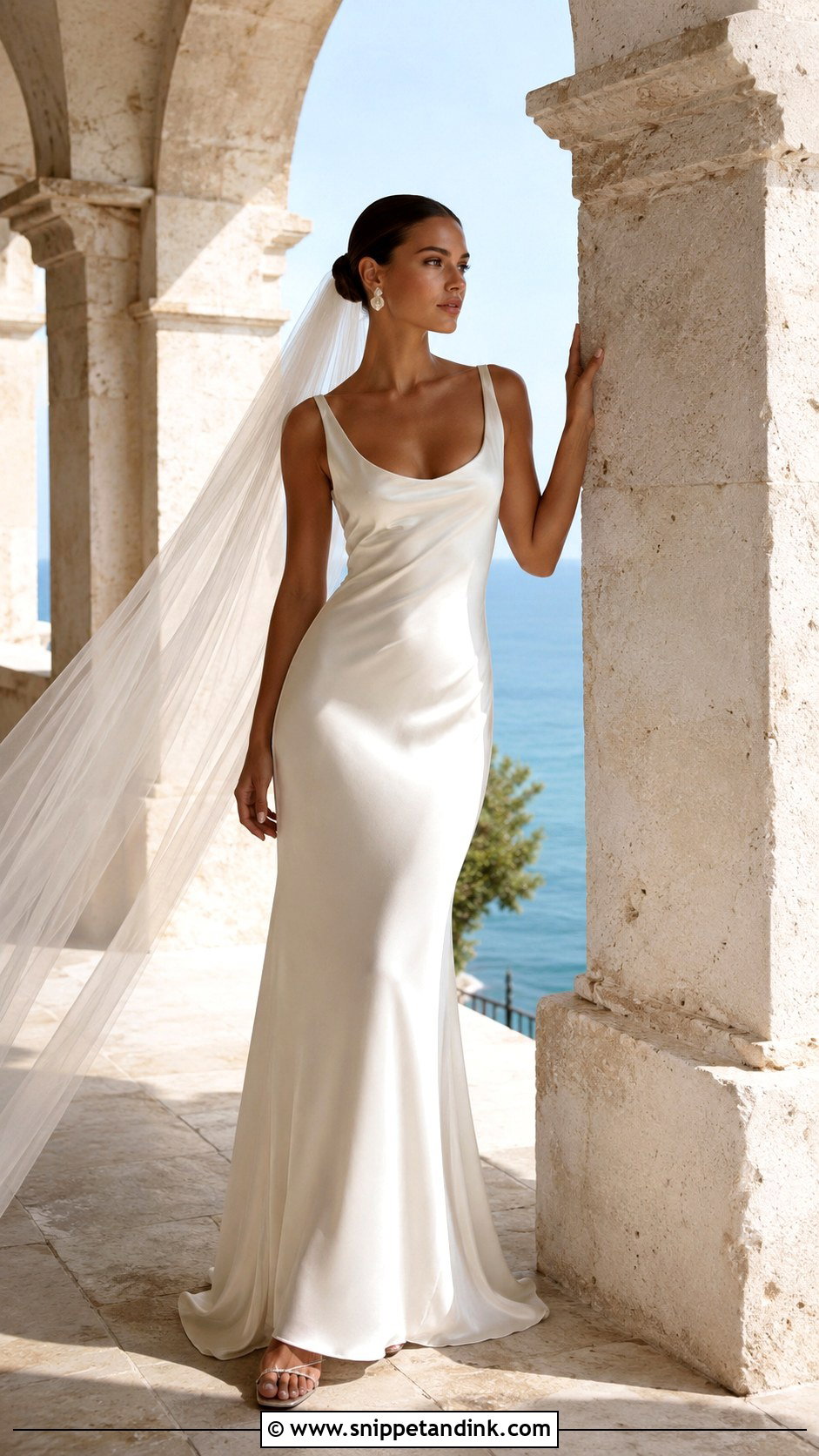
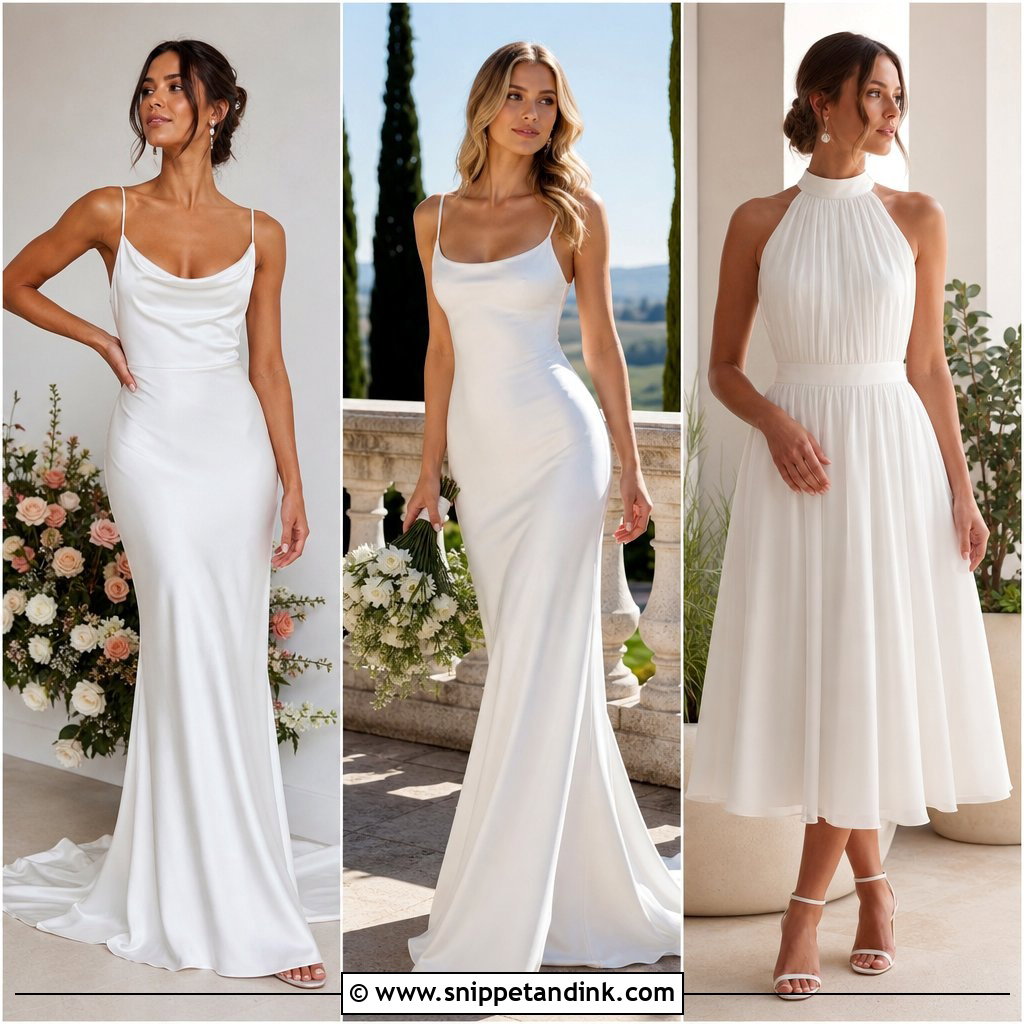
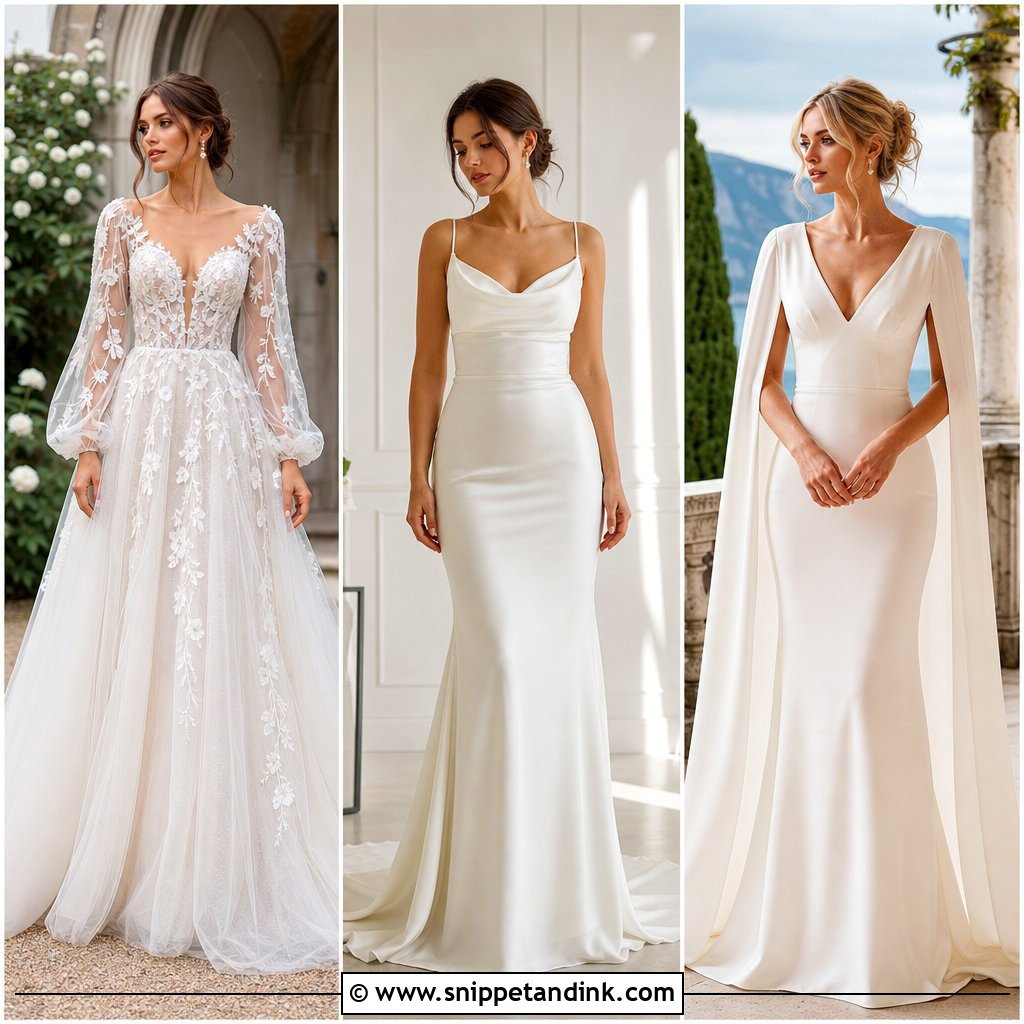
Silk slips are unforgiving. A bias-cut gown in ivory, pearl or champagne with wider straps and a little hidden structure in the bodice looks wonderfully plain against a dramatic coastline, but bias silk shows every seam, strap and line underneath. I fit it in daylight by a window, never only under salon lights, and I also look at the back once the bride has been sitting, since silk creases across the hips. Slim metallic sandals, sculptural earrings, a sleek bun and a sheer cathedral veil suit it, with a lace-edged shawl or silk wrap for the evening. Smooth, skin-tone underwear is not optional here.
4. Off-Shoulder Satin Wedding Dress
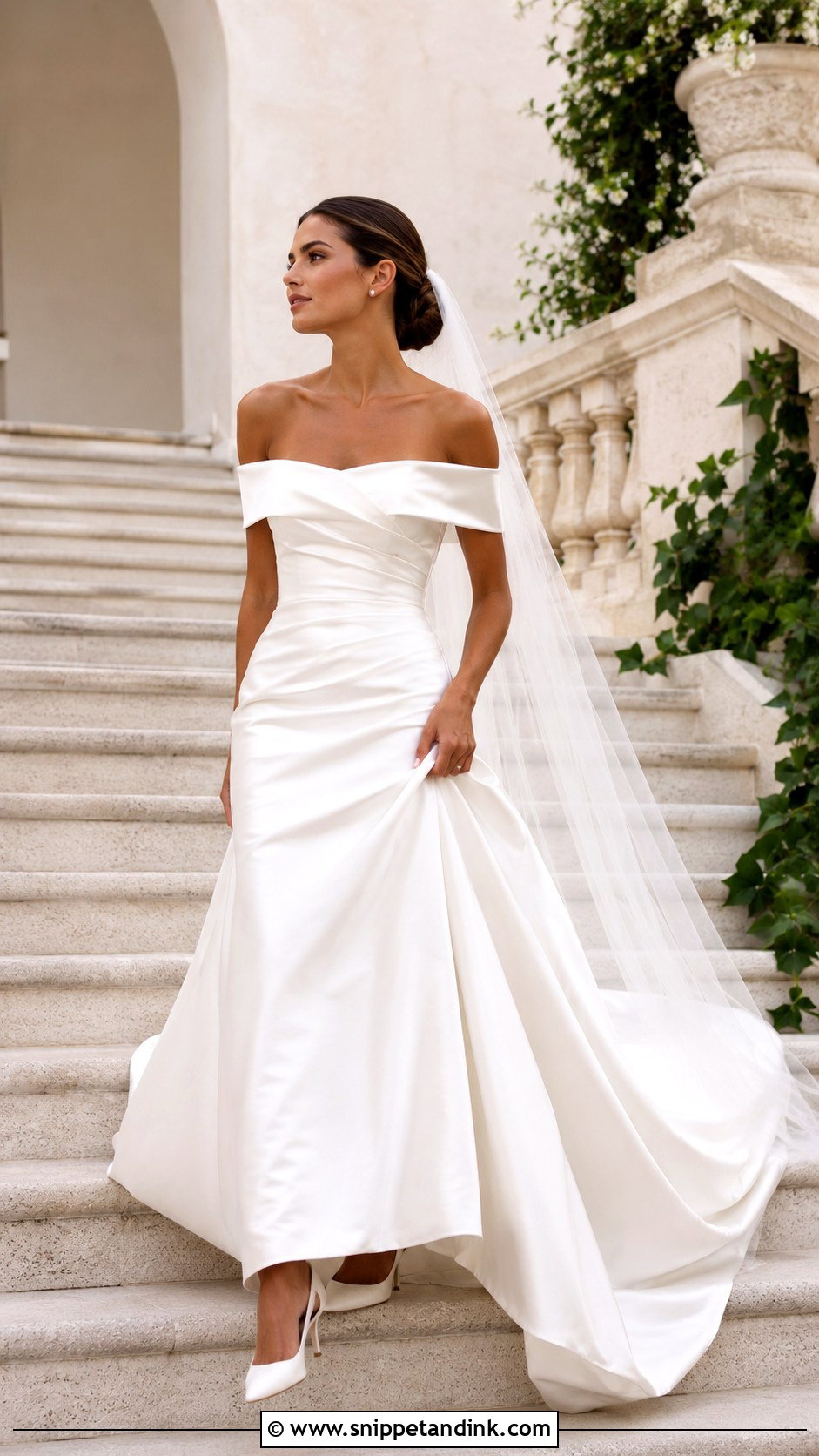
Satin feels formal enough for a villa, and an off-shoulder fold at the neckline frames the collarbone. In warm months I steer away from thick duchess satin toward a more fluid one, which breathes better and moves. A fitted bodice and softly flared skirt keep the proportions balanced. The off-shoulder band has to grip without digging, so hidden straps, internal boning or a corset base are worth asking about early. Pearl studs, a low chignon, pointed slingbacks and a medium veil under the hair are enough; I usually skip the necklace. A detachable overskirt gives drama at the ceremony and comes off for dancing.
5. One-Shoulder Chiffon Wedding Dress
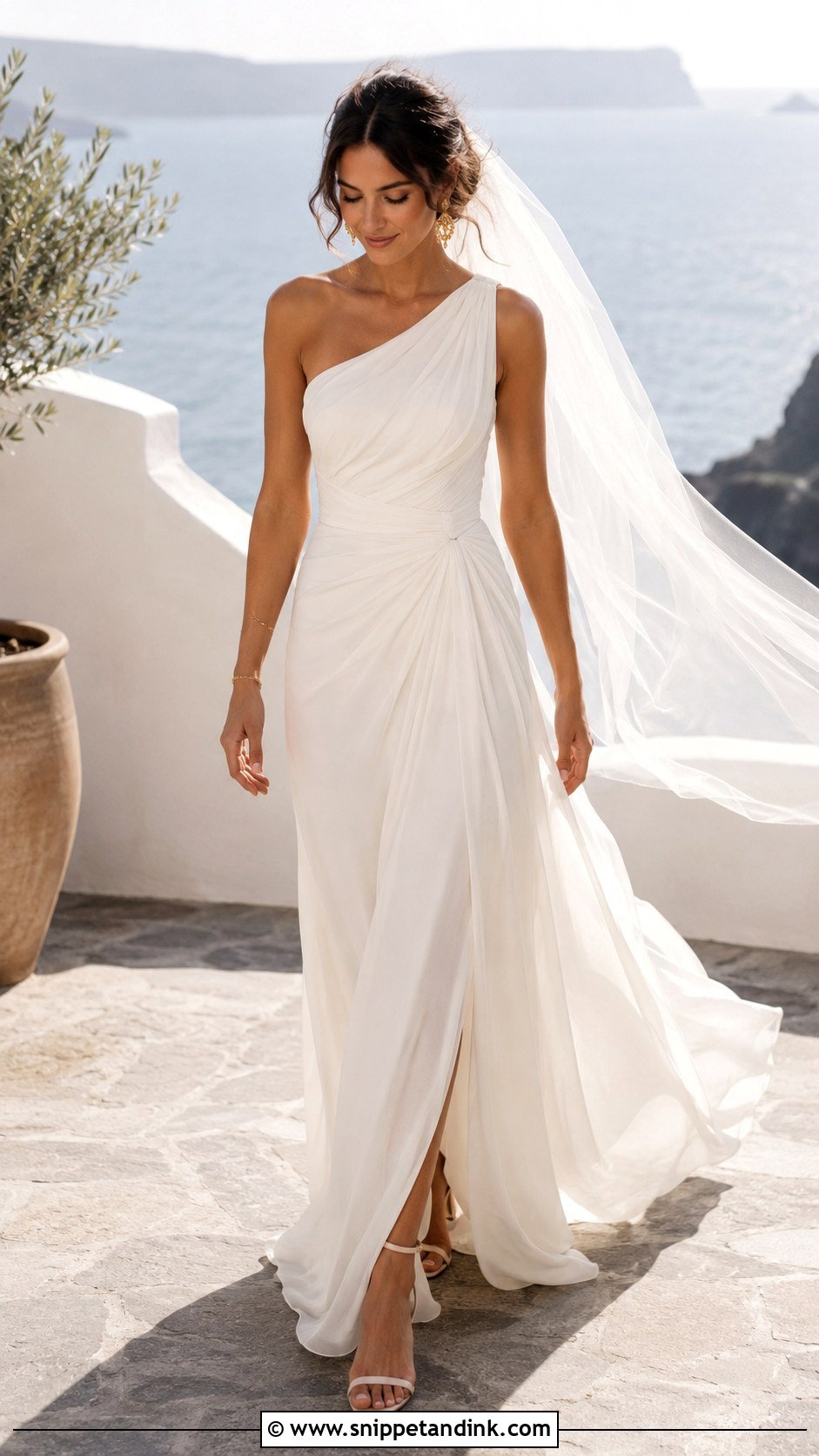
One bare shoulder and a floating chiffon skirt suit a sea breeze better than almost anything. Look for soft draping at the waist and a firm built-in bodice so the asymmetric strap is not doing all the work. Before approving it, I have the bride raise her arms and hug someone; a single strap that is a little loose shifts toward the arm. Gold drops, strappy low heels, a slim bracelet and an updo that shows the neckline suit it. A light shoulder veil fixed discreetly at the back replaces a standard one, and a small side slit helps on uneven ground if it suits the ceremony.
6. Square-Neck Crepe Wedding Dress
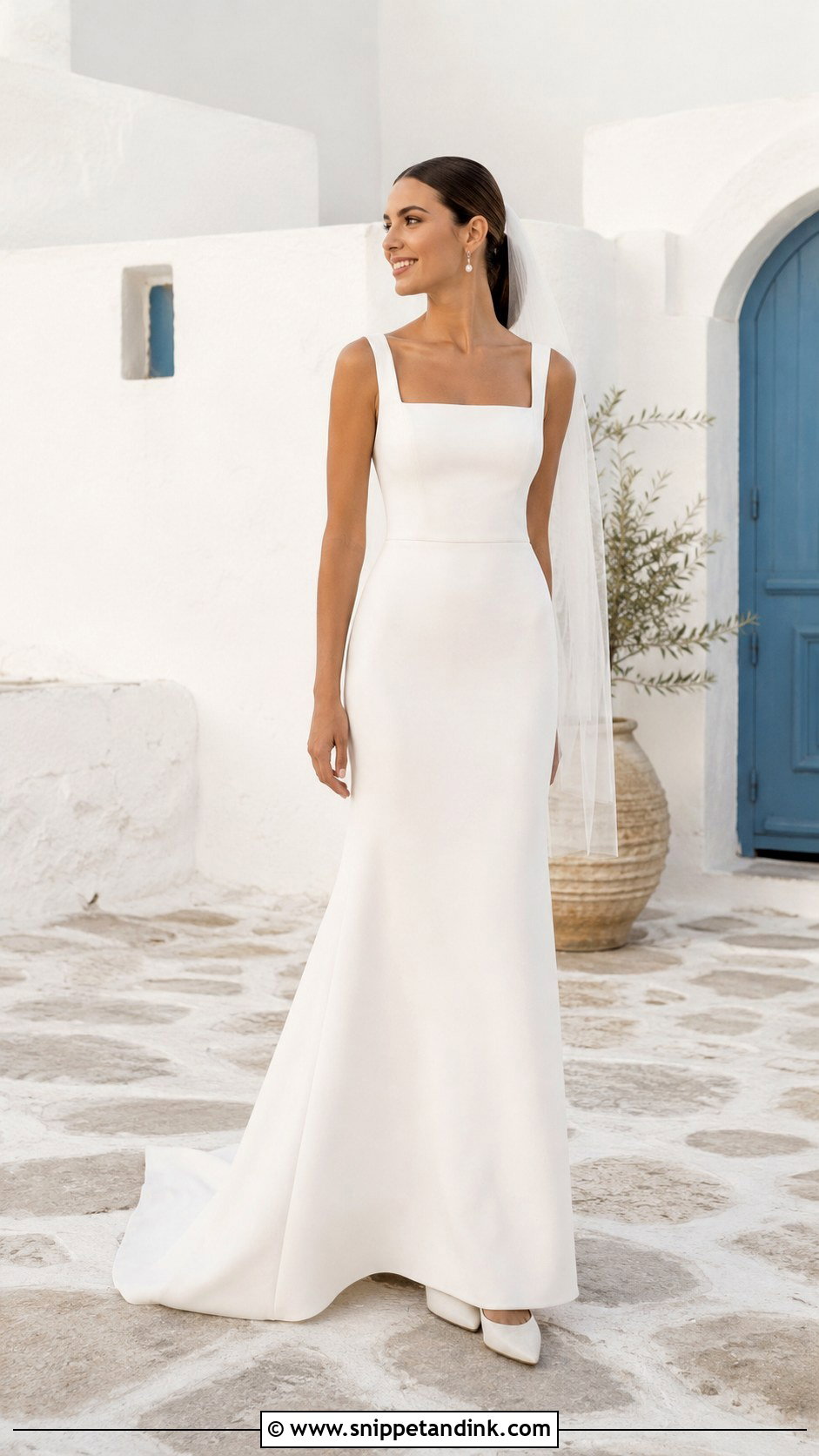
Wide straps on a square neck give real support, which is why this crepe gown suits brides who dislike strapless dresses. Breathable stretch crepe with a shaped bodice, defined waist and gently flared skirt keeps it modern, and a matching square back makes it neat from both sides. Stretch crepe is kind in the heat because it moves with you, but it marks with deodorant at the underarm, so let it dry fully before dressing. Pearl drops, a sleek low ponytail, ivory slingbacks and a plain tulle veil complete it, with covered buttons down the back or a fine lace edge on the veil for detail.
7. Corset Ball Gown Wedding Dress
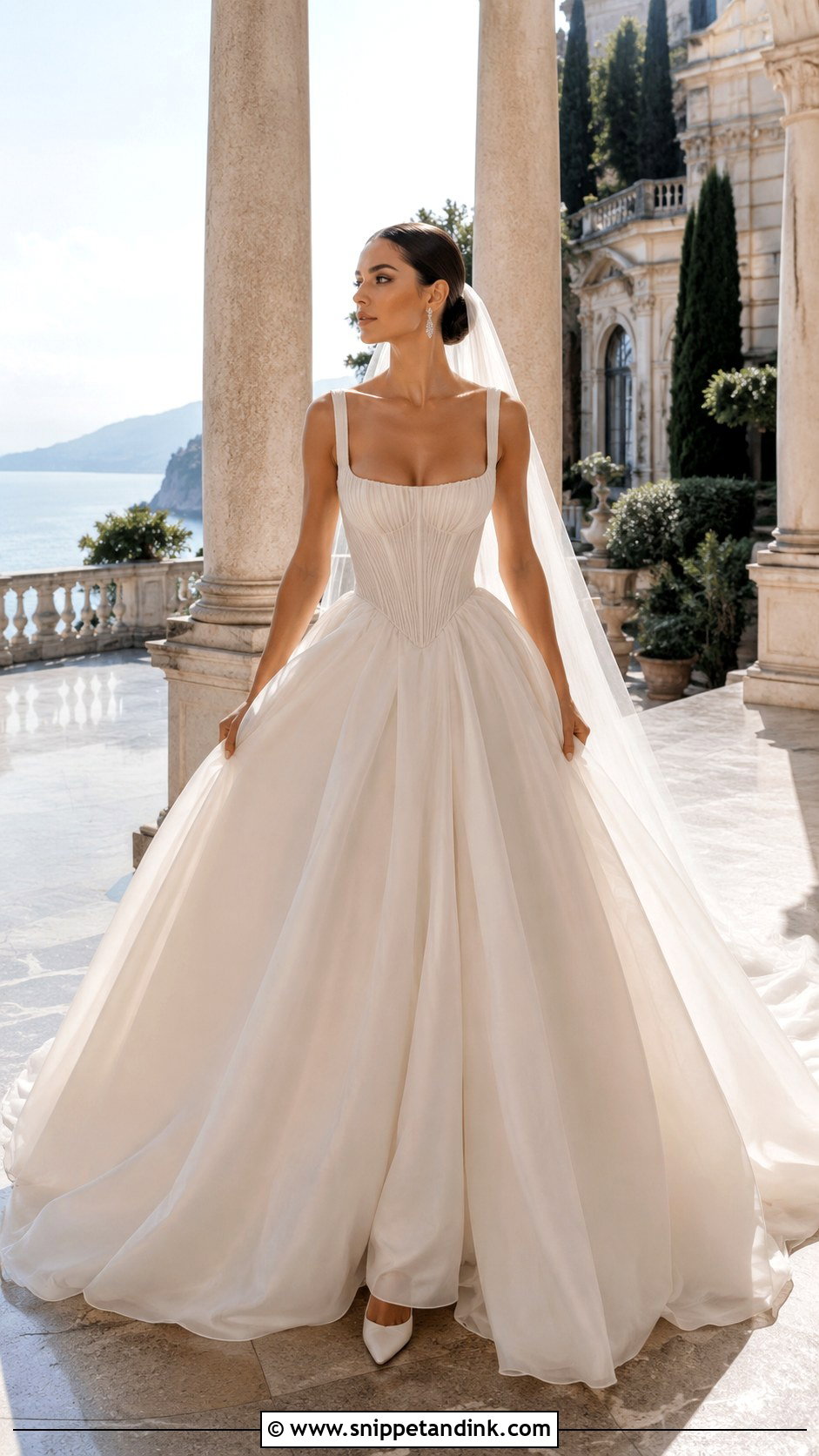
Volume in summer heat needs lightness. A corset ball gown for a grand villa should pair a structured bodice with organza or tulle, not layers of dense satin, and a softly scooped strapless neckline balances the skirt. On a fuller bust, the cups must sit inside the bodice at the right height, and boning needs to be secure; that is a job for a proper alterations specialist. I teach the bustle to an attendant at the last fitting so it is done in minutes before the reception. Crystal earrings, closed pumps, a smooth bun and a sheer cathedral veil finish the look.
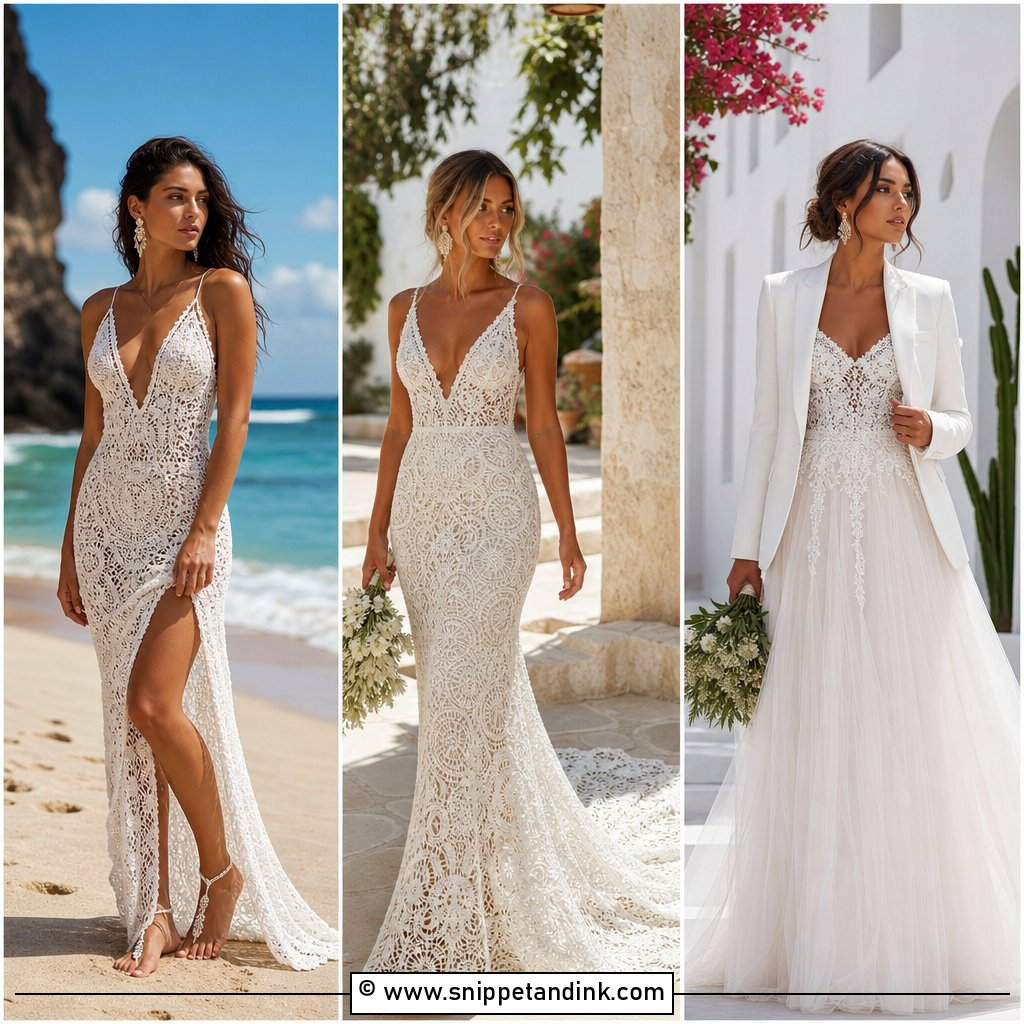
8. Boho Lace Mediterranean Wedding Dress
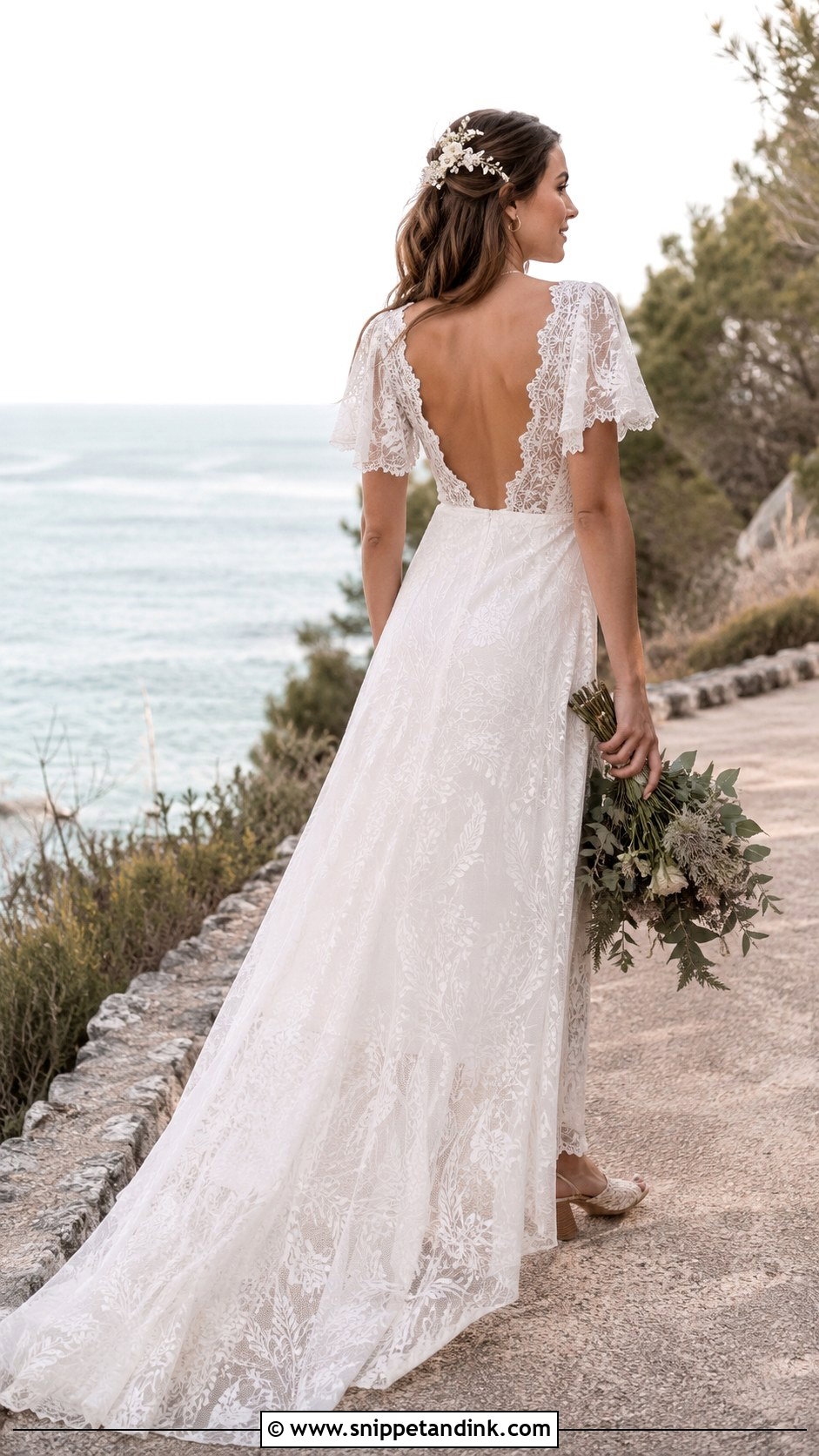
Boho lace is the natural fit for a beach venue or a rustic terrace. Choose soft geometric or botanical lace with a fitted bodice, open back and a flowing skirt lined as fully as you like. Flutter sleeves or slim straps keep it airy, and a modest train adds romance without the work. Rub the lace against the inside of your wrist: some boho laces are scratchy and become irritating after hours in the heat. Woven ivory sandals, small gold hoops, loose waves and a simple veil or floral comb suit it, with a loose bouquet of greenery. Check the hem moves freely over sand and gravel.
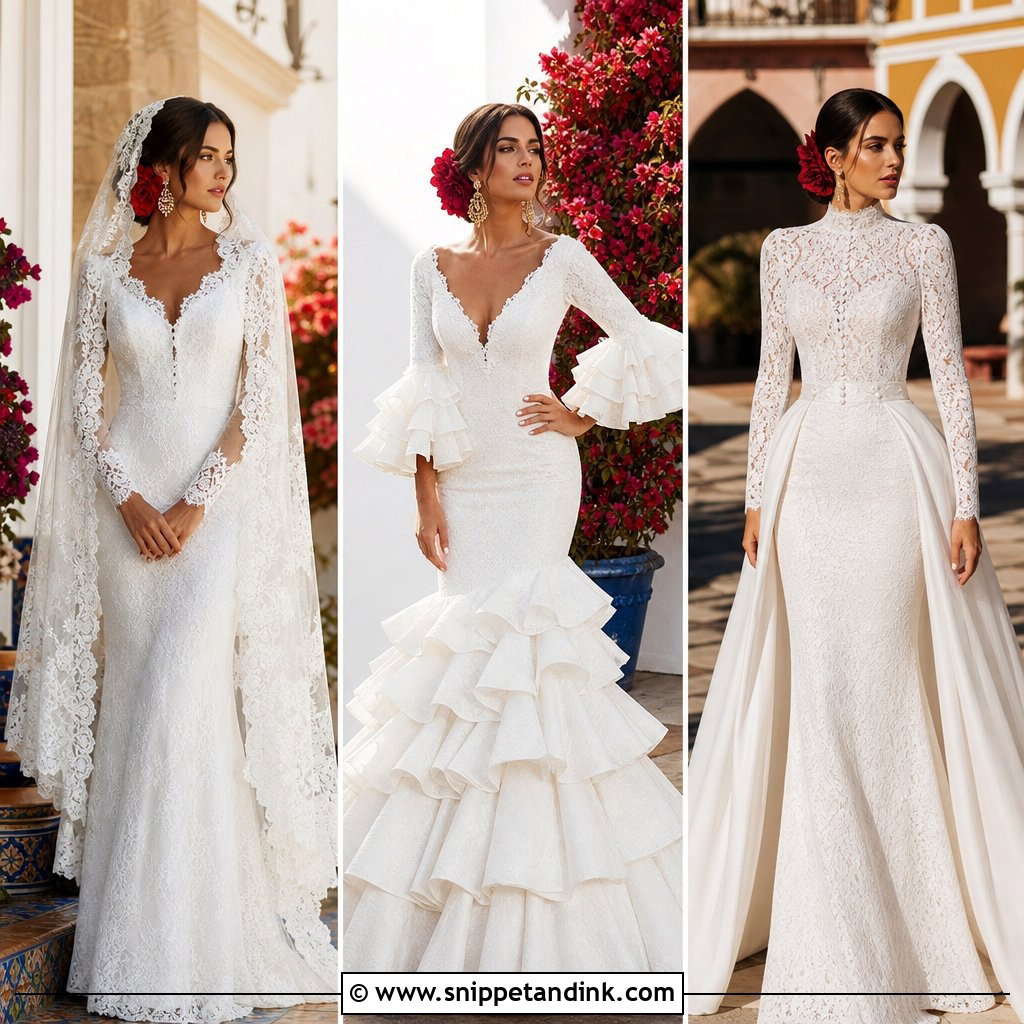
9. Spanish Lace Mermaid Wedding Dress
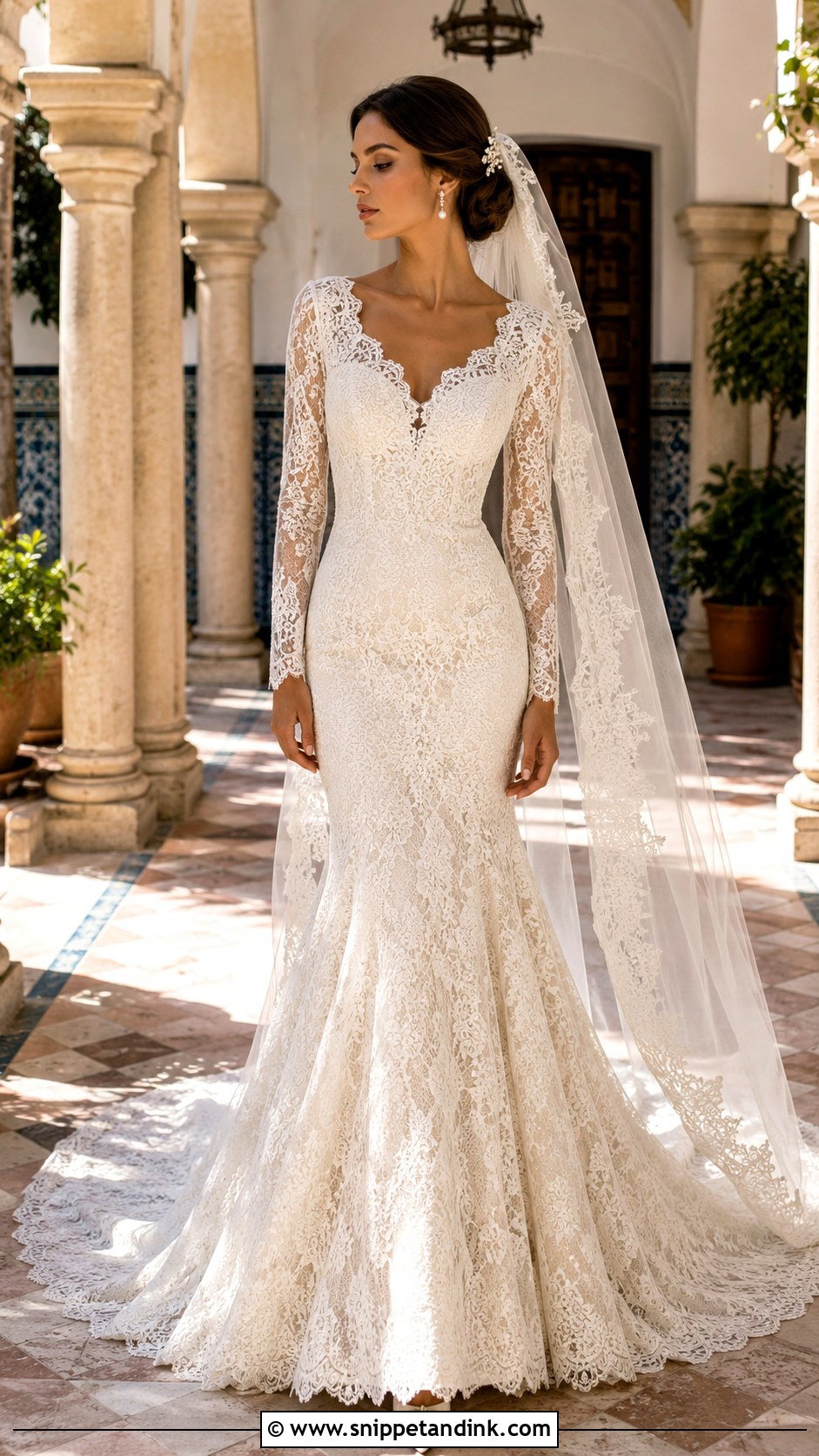
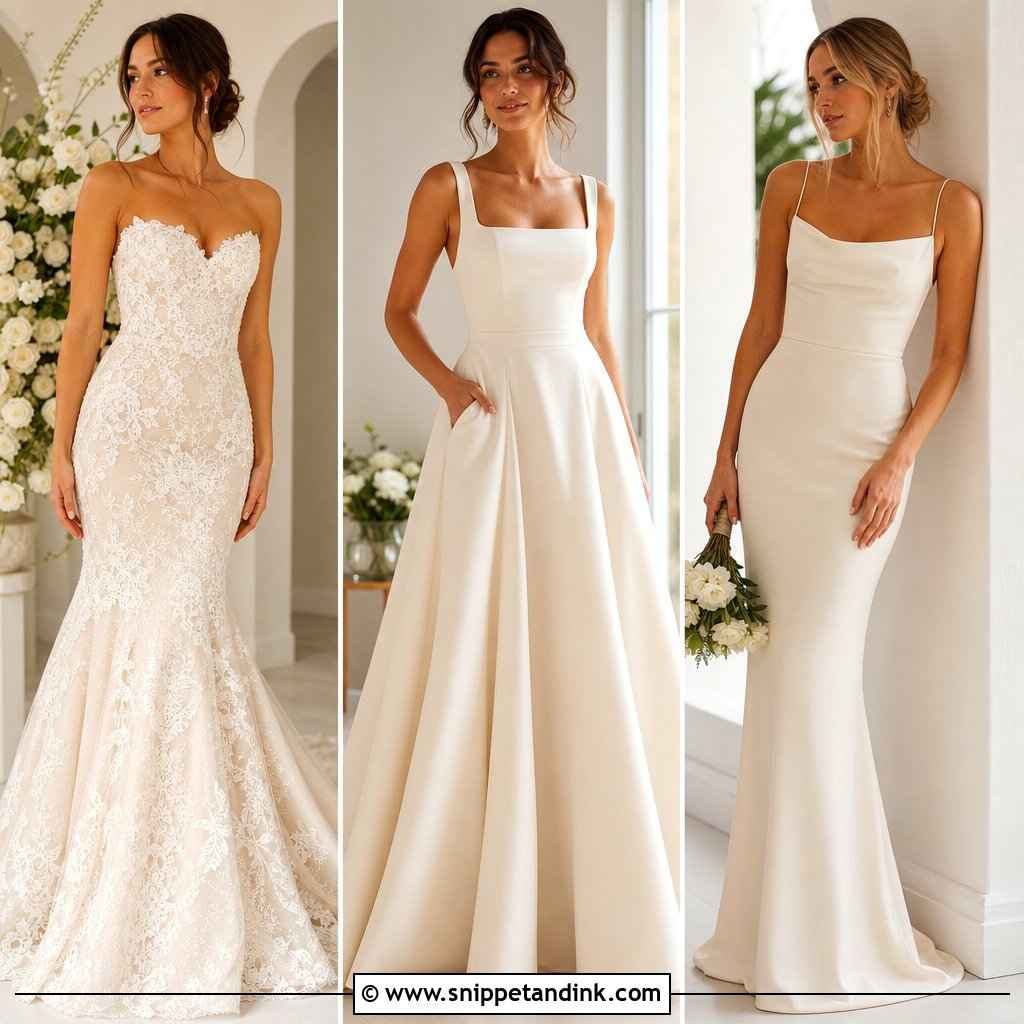
The mermaid shape is all drama, and a Spanish-inspired lace mermaid wedding dress leans into it with a fitted lace body that flares below the hips or knees. A scalloped neckline, long lace sleeves or a curved train adds romance. Fitted gowns trap heat, so I look for stretch lining and ask the bride to sit, climb a step and walk at every fitting; if she cannot do all three comfortably, the flare point moves lower. Pearl combs, drop earrings, pointed ivory heels and a low textured bun finish it. Keep any lace-edged veil in the same pattern family as the gown.
10. Puff-Sleeve Organza Wedding Dress
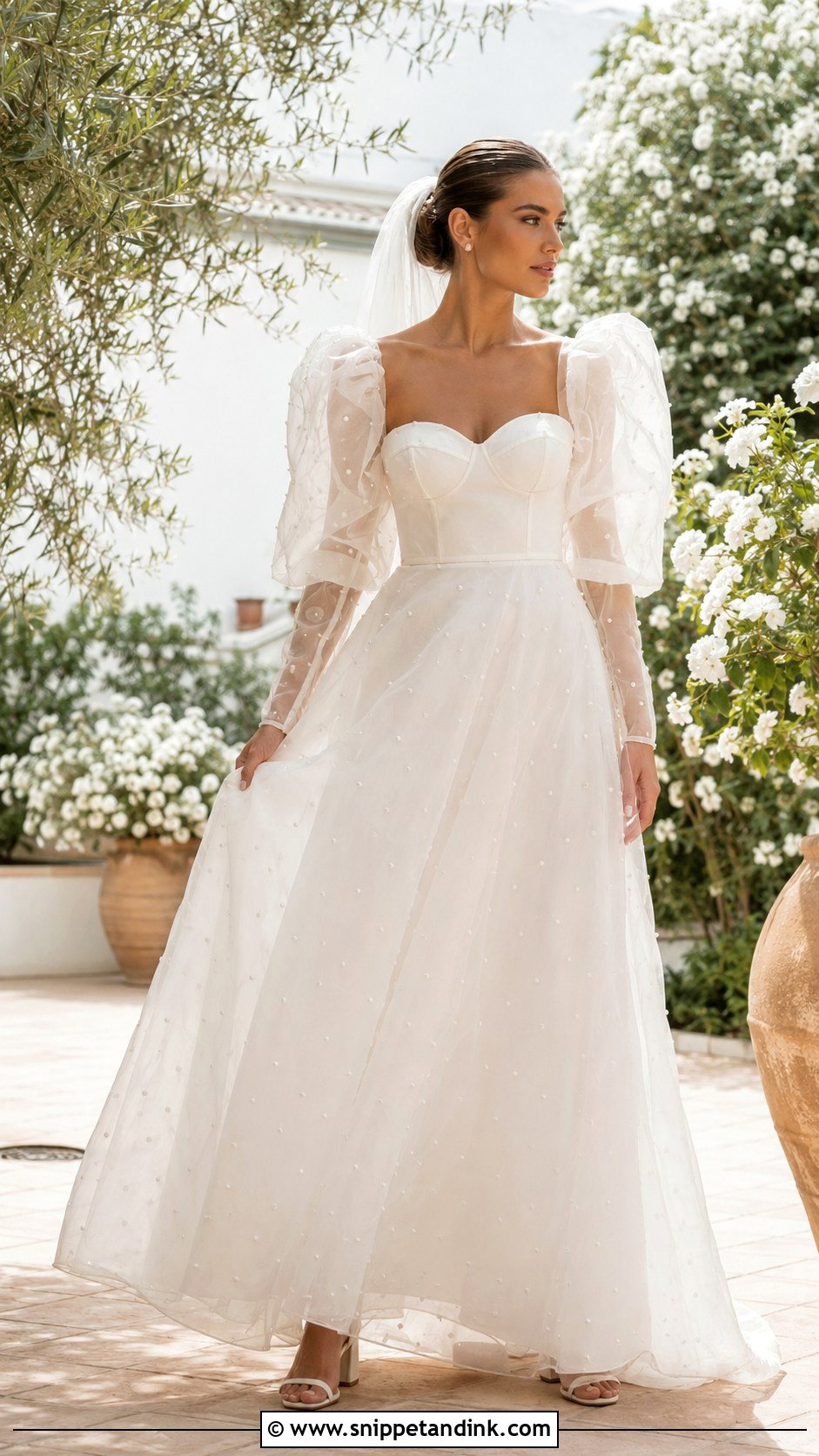
Puff sleeves add a fashion edge, and in organza they weigh almost nothing. A structured bodice and light A-line skirt carry them, with a straight, sweetheart or softly scooped neckline. I recommend detachable sleeves for any warm ceremony; the bride takes them off at the reception and has a second, cooler outfit. Organza creases sharply if it is crushed in a suitcase, so these sleeves travel best stuffed with tissue in their own bag. Pearl studs, block-heel sandals, a polished bun and a short veil under the hair complete it.
11. Halter-Neck Mediterranean Wedding Dress
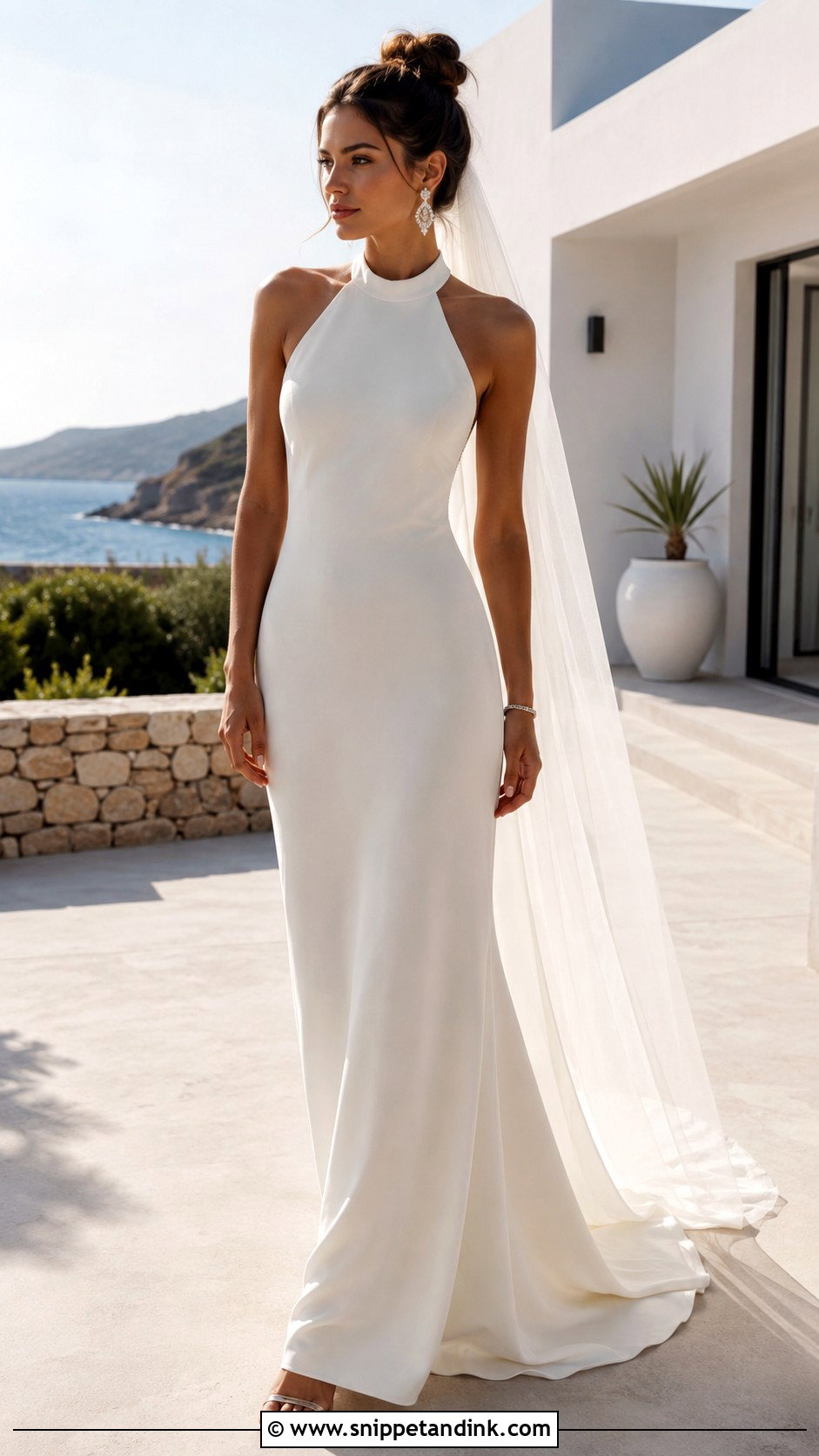
A halter is one of the most secure necklines for a breezy terrace, because it holds from the neck rather than the bust. A halter-neck wedding dress in crepe, satin or light silk with an open back stays cool. The open back means a normal bra is out, so I talk about built-in cups and internal support at the very first appointment rather than discovering the problem at the last. A slim column skirt reads modern; a soft A-line gives more room at the hips. Statement earrings, a high bun, metallic sandals and a narrow bracelet are enough, and a detachable back veil adds ceremony drama.
12. High-Neck Lace Wedding Dress
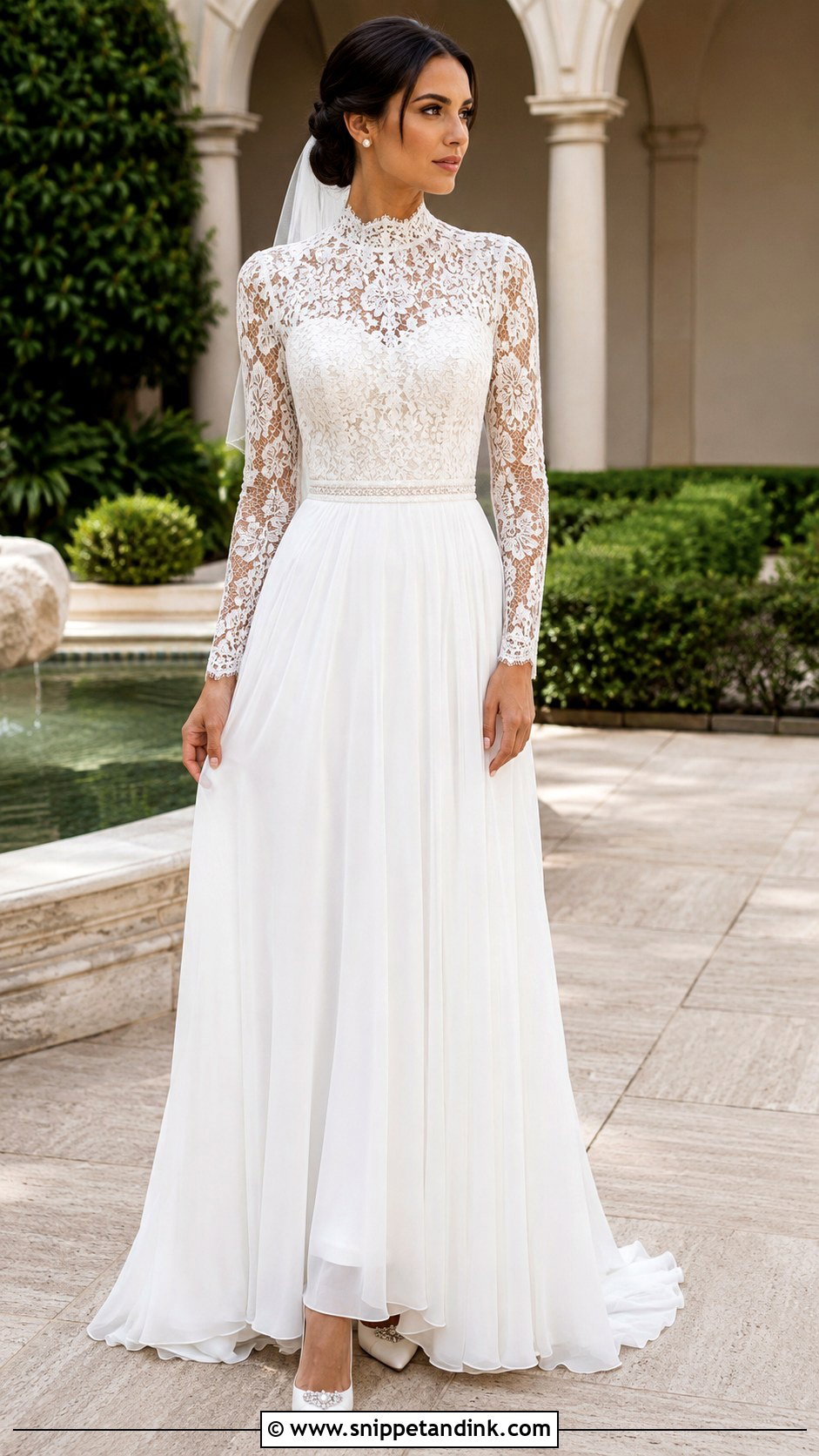
High-neck lace gives coverage without weight if the lace is sheer and the bodice underneath is light and breathable. A defined waist and flowing chiffon or crepe skirt keep the covered top half from looking heavy. Midday Mediterranean sun is very strong, and lace that looks opaque in a shop can turn see-through outdoors, so I photograph the gown in direct sun before final alterations and add appliqués where coverage is needed. Pearl earrings, ivory pumps, a low bun and a veil below the hairstyle complete it; no necklace, which crowds the lace.
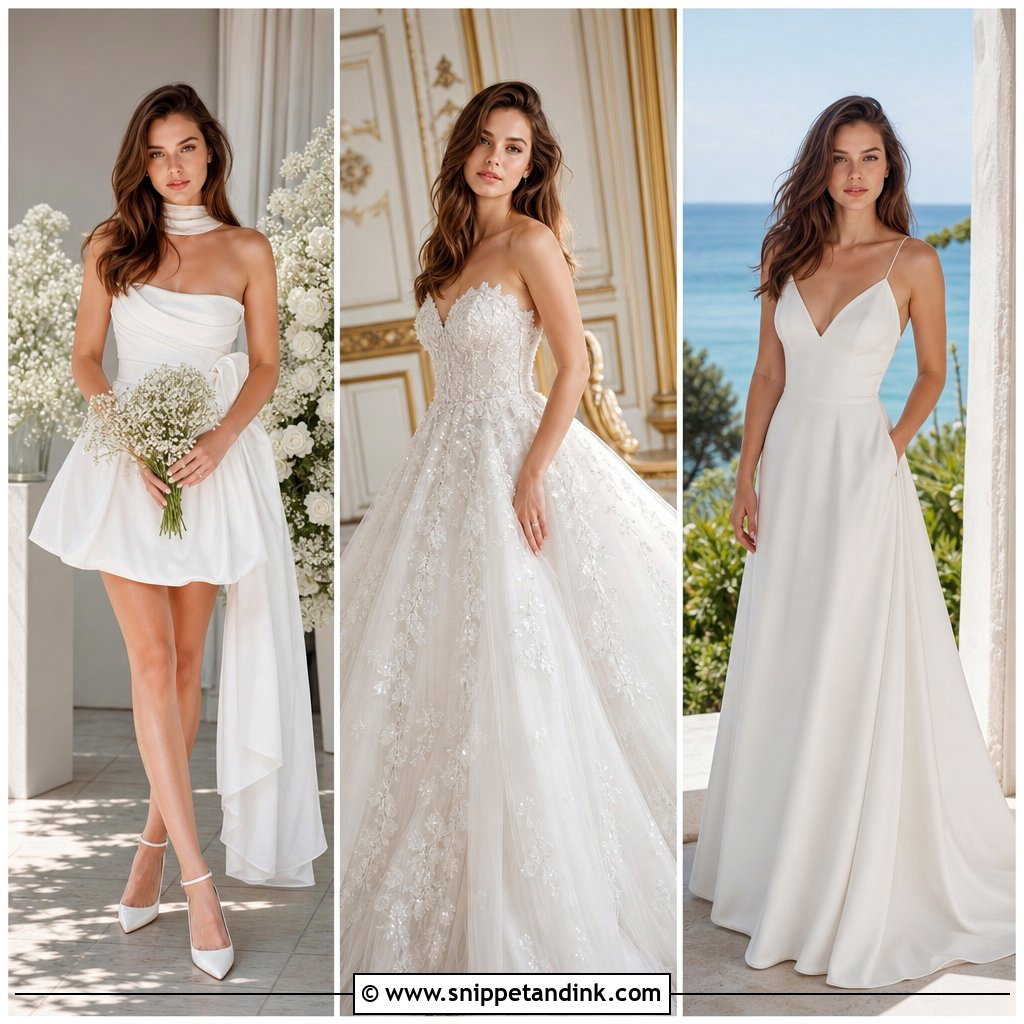
13. Tea-Length Mediterranean Wedding Dress
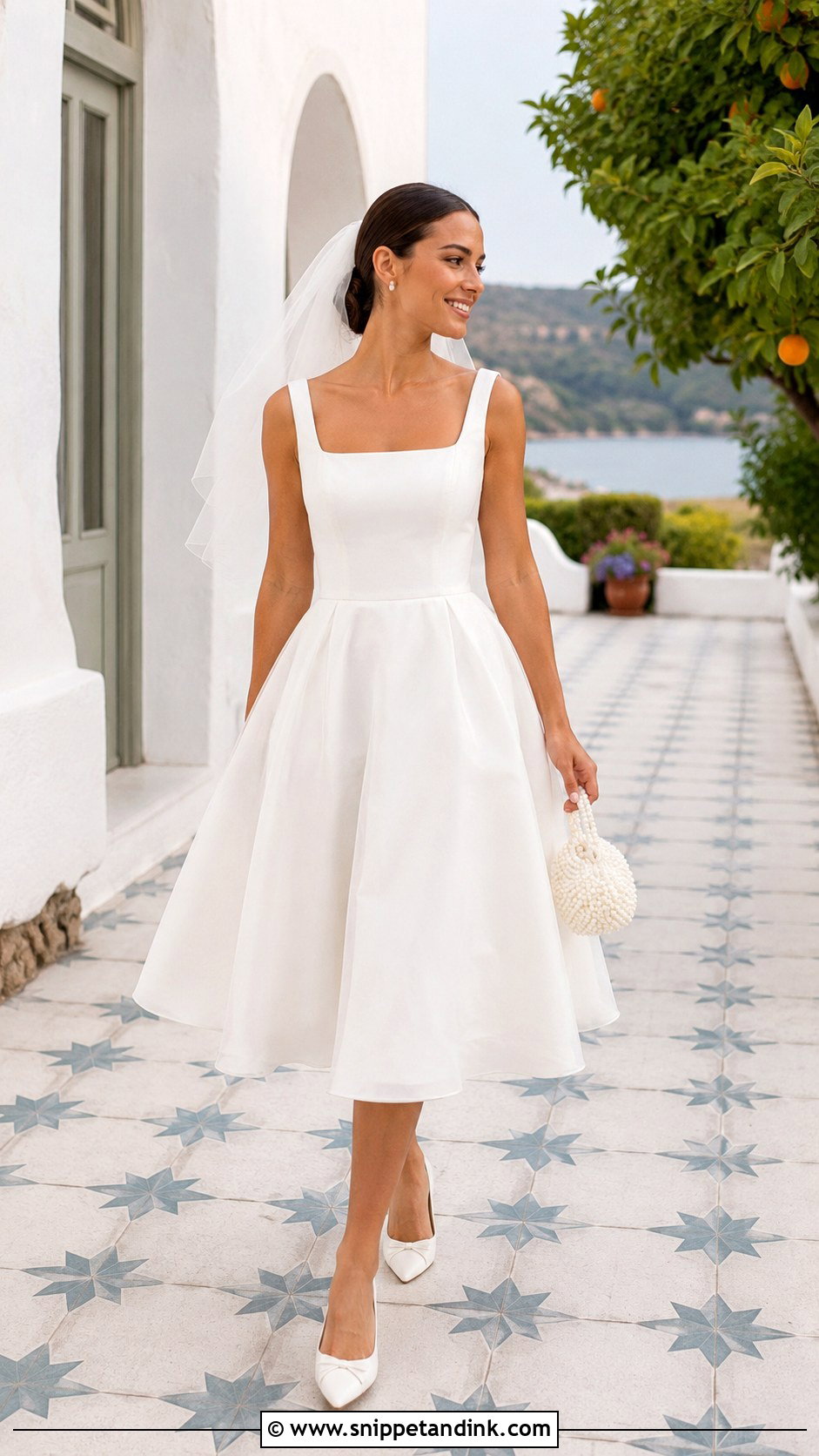
A tea-length dress is the most practical gown in this list. The hem falls between knee and ankle, so cobblestones, sand and garden paths stop being a worry, and it packs easily for travel. Choose a fitted bodice with a softly structured organza, mikado or lace skirt, and a square, bateau or sweetheart neckline depending on whether you want it retro or current. The shoes are on show all day, which changes the brief: I would pick them for comfort first and only then for looks. Elegant slingbacks, pearl studs, a small top-handle bag and a short veil or bow finish it.
14. Two-Piece Mediterranean Wedding Dress
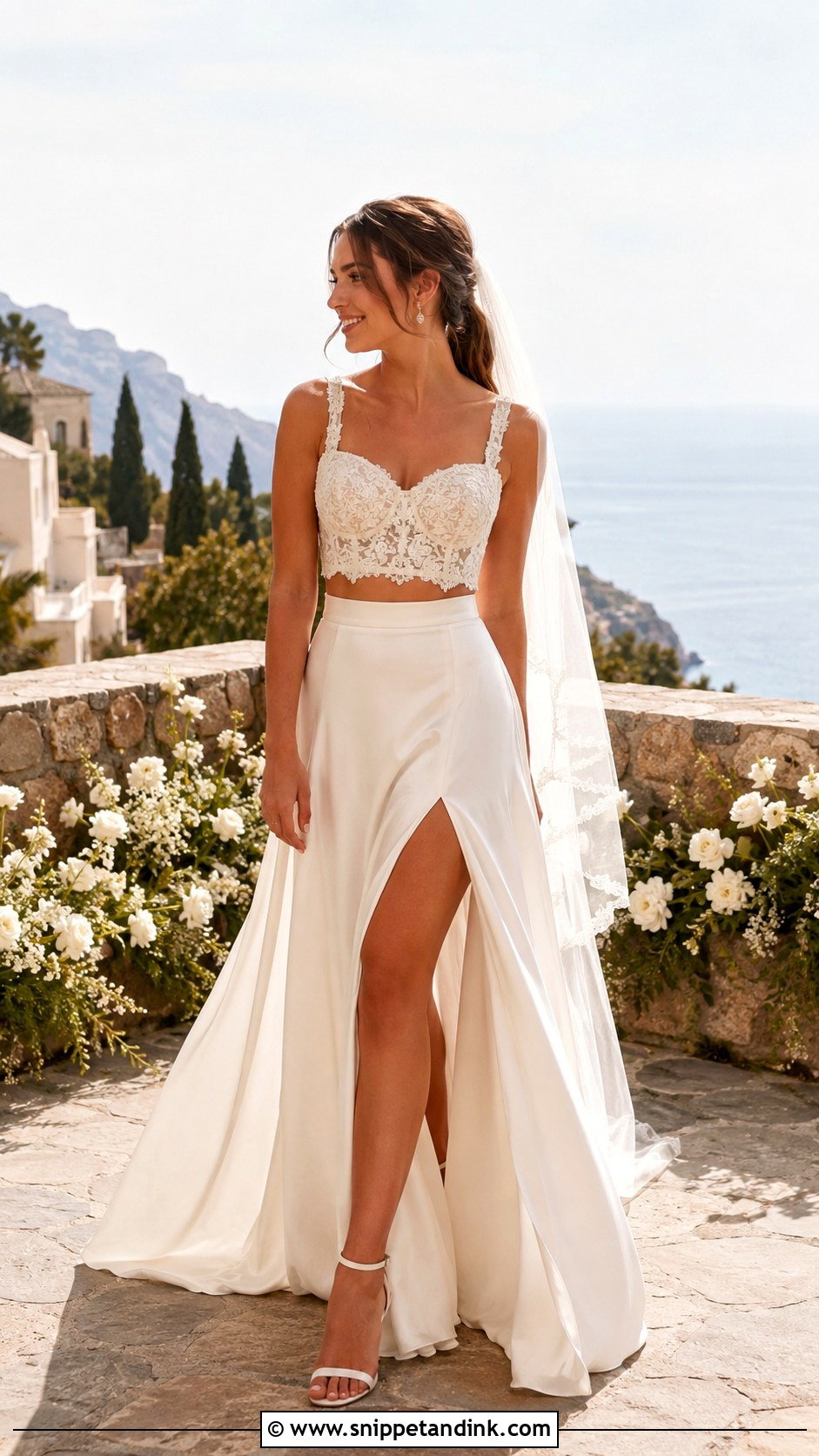
Separates solve a fitting problem many brides have: a different size on top and bottom. Pair a structured lace or satin crop top with a high-waisted chiffon, crepe or silk skirt, leaving only a narrow strip of waist visible. Check at the fitting that the two pieces stay aligned when you sit, reach and dance; a hook-and-bar or hidden snaps between top and skirt stop the top riding up. Block-heel sandals, delicate earrings, a low ponytail and a fingertip veil complete the outfit, and a removable overskirt or light jacket changes it for the evening.
15. Cape-Sleeve Mediterranean Wedding Dress
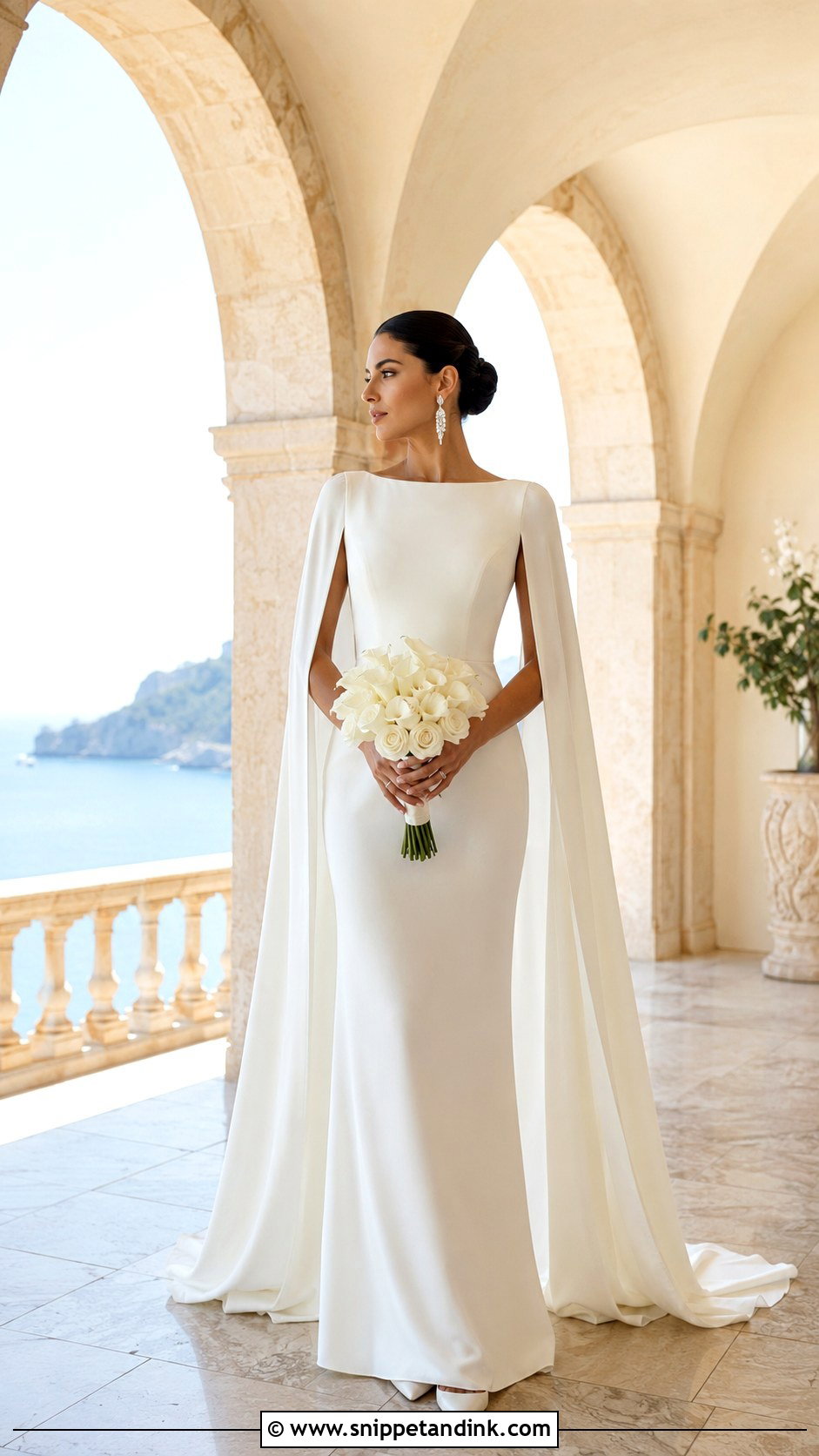
Cape sleeves give movement without a long veil. Choose a streamlined crepe or chiffon gown with cape panels fixed at the shoulders or back neckline, ending at the elbow for light coverage or reaching the floor for an entrance. On a windy coast, loose panels lift and wrap around the arms, so I ask for strong attachment points and sometimes a small weight sewn into the hem of each panel. Pointed ivory shoes, small crystal earrings, a sleek bun and a structured bouquet complete it. Skip a full veil, and ask for the capes to be detachable for the reception.
16. Floral Appliqué Wedding Dress
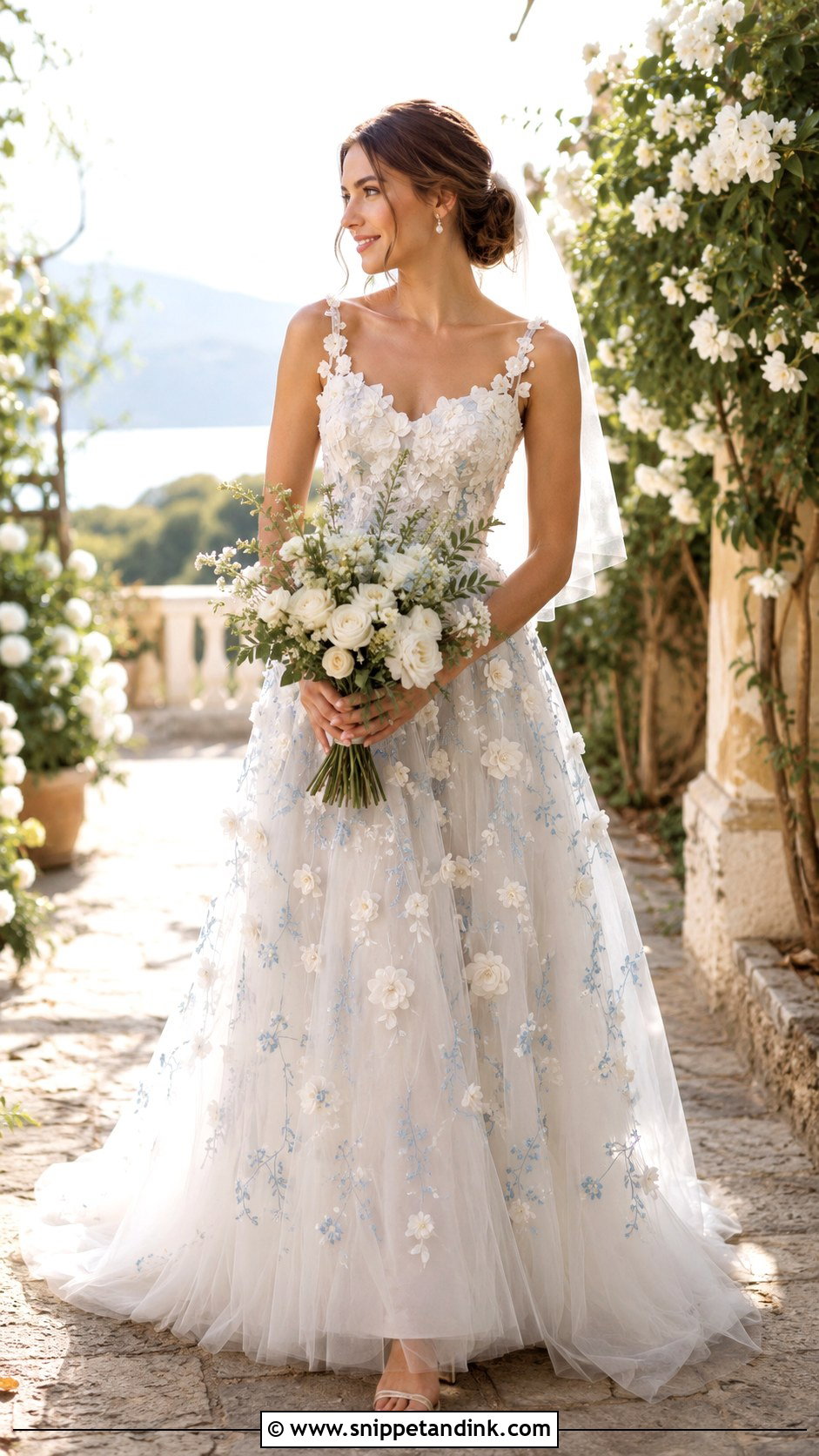
Raised floral appliqués bring the garden onto the gown without any bright colour. A tulle or organza dress with flowers, leaves or climbing vines spaced over a fitted bodice and soft A-line skirt is the base; a pale blush, champagne or soft blue backing under the ivory flowers adds a hint of colour. Raised petals catch on veil tulle and bracelet clasps, so I keep jewellery smooth and test the veil over the shoulder area before the day. Pearl earrings, barely-there sandals, a loose low bun, a plain veil and a white and green bouquet keep it coordinated.
17. Basque-Waist Mediterranean Wedding Dress
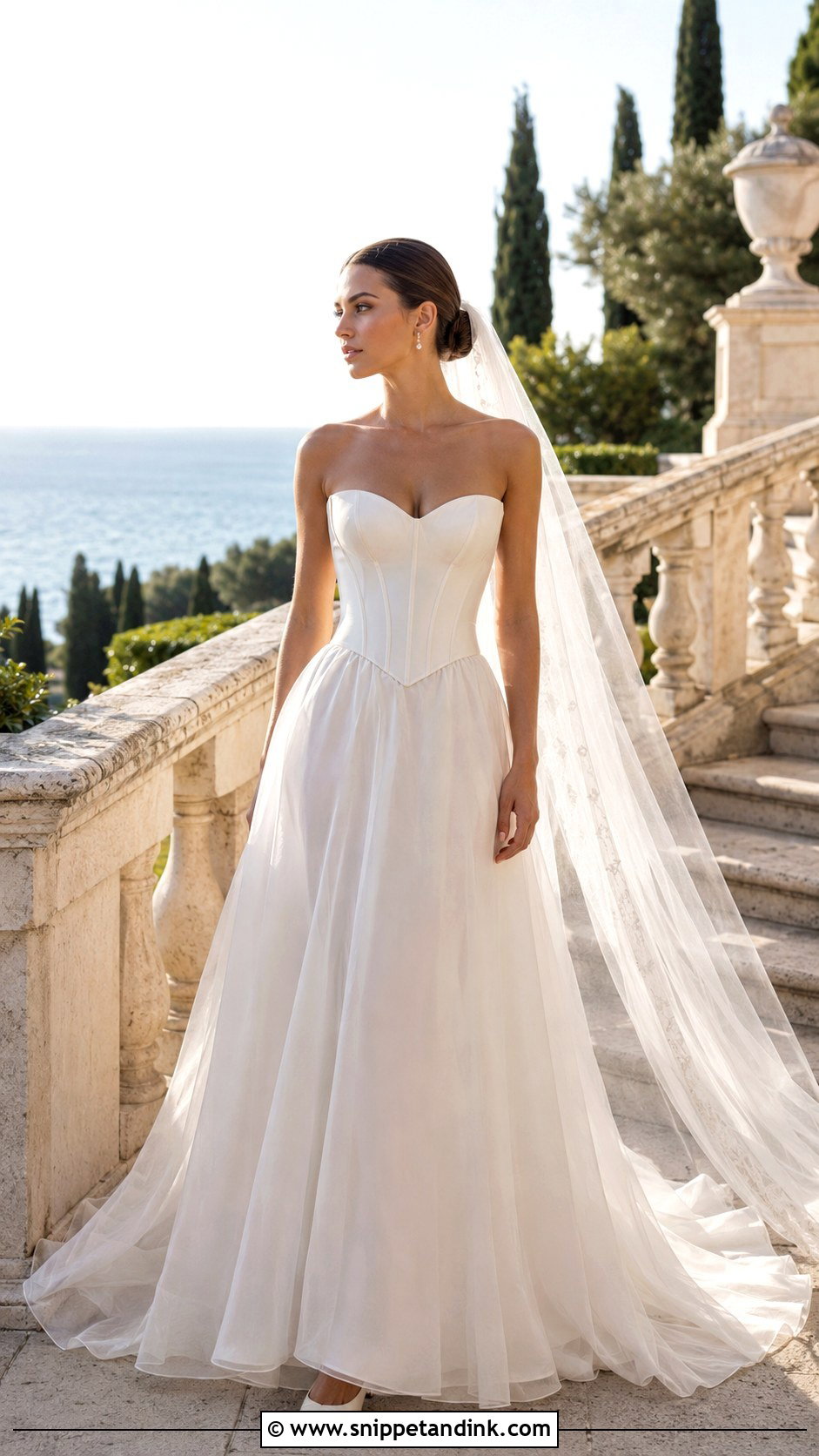
The pointed basque waist lengthens the torso and gives a strong, defined shape. A structured bodice with supportive seams pairs with a light organza, tulle or satin skirt, full for a classic feel or more controlled for a modern one. The point has to suit your torso: I would choose a shallower basque on a shorter body and a longer point on a taller one, and I check that the seam does not fold when the bride sits. Keep the bodice plain. Drop earrings, closed pumps, a smooth updo and a sheer cathedral veil finish it, with a secure bustle for outdoors.
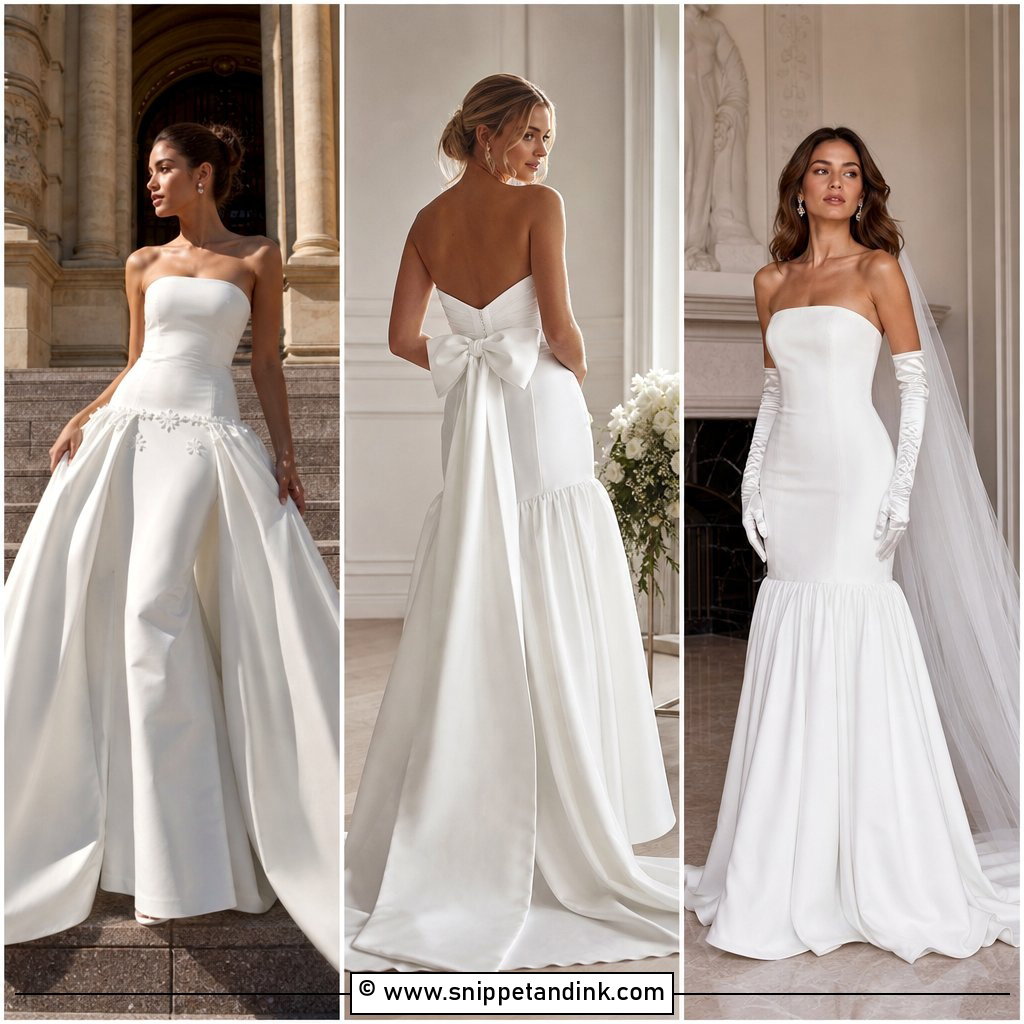
18. Minimalist Column Wedding Dress
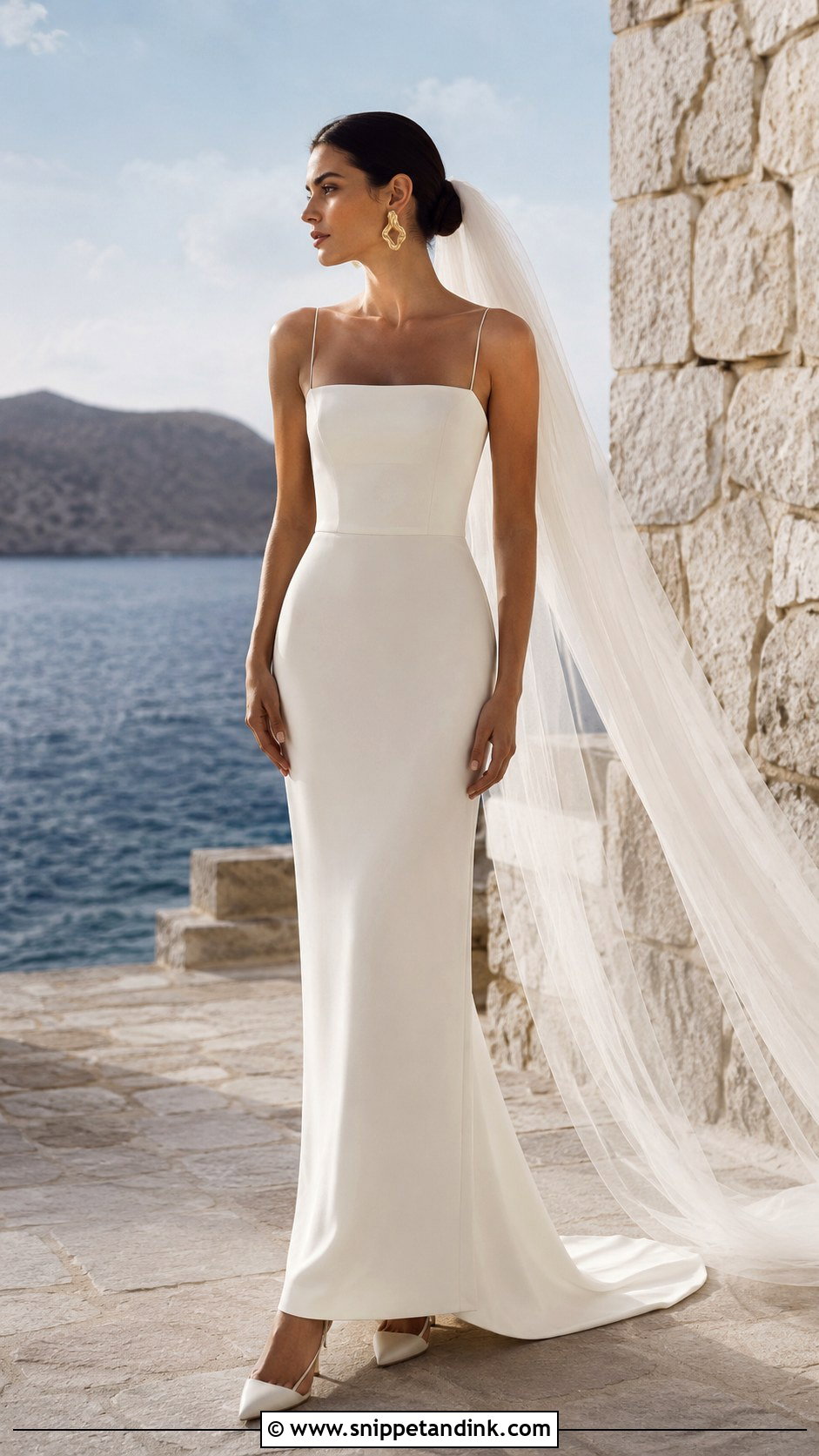
Plain gowns take the most skill to fit. A column in fluid crepe or matte satin with a straight neckline, shaped waist and narrow skirt hides nothing, so tailoring and smooth, well-fitted underwear do all the work. Walk on steps and uneven ground before approving the hem; a narrow column can shorten your stride more than you expect. Sculptural earrings, ivory slingbacks, a sleek bun and a long sheer veil give it personality, and covered buttons or a softly draped back add quiet detail. Against bright gardens, stone walls and blue water, the simplicity reads as confident.
19. Tiered Ruffle Wedding Dress
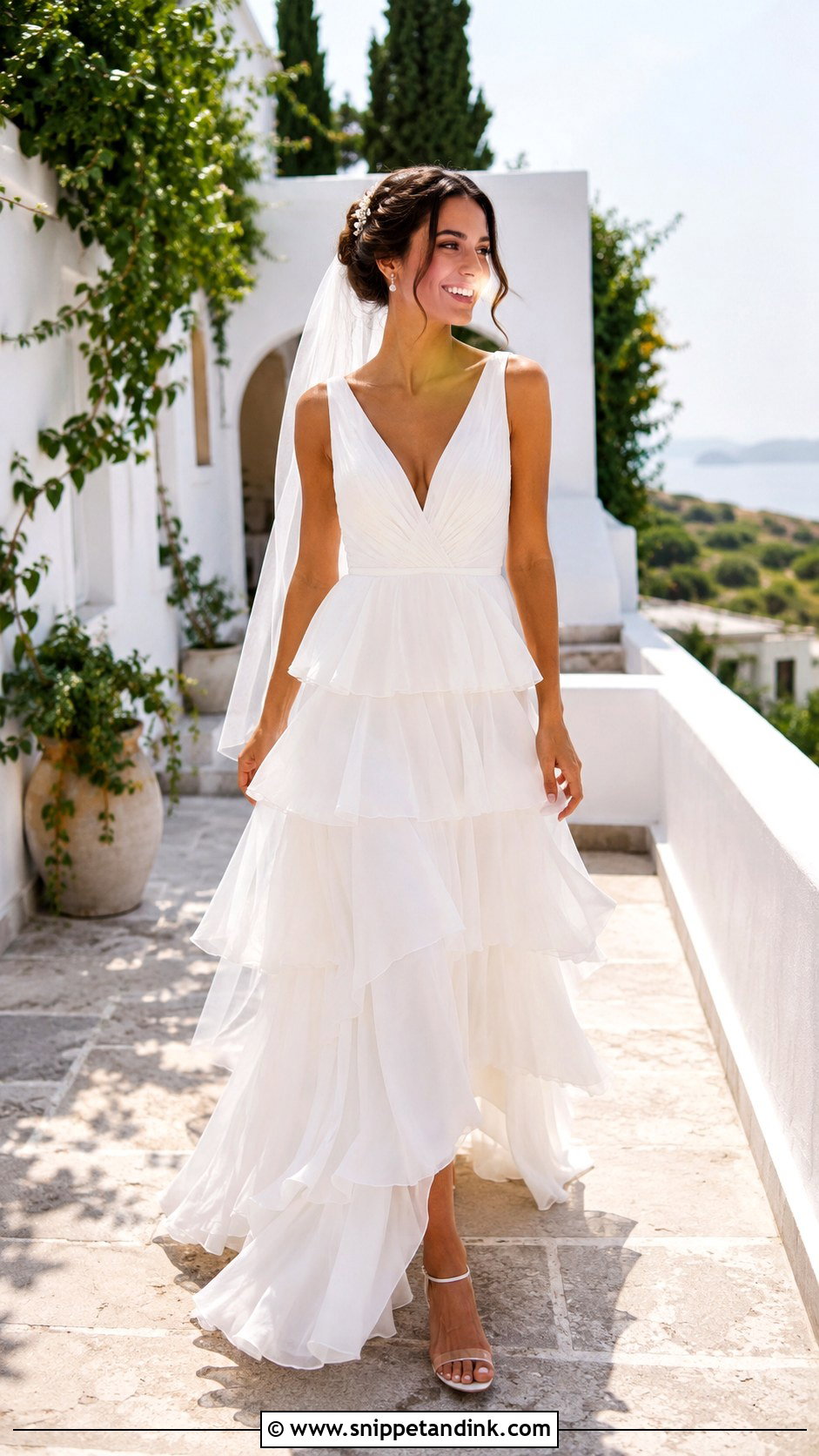
Ruffles are for a lively coastal party. Soft chiffon, tulle or organza tiers should float rather than stand away from the body, and a clean fitted bodice with a V-neck or one-shoulder line balances them. If you want less volume, choose diagonal ruffles or a single tier at the hem. I measure the lowest tier with the actual sandals on, since a ruffle that brushes the ground catches the edge of every step. Simple strappy sandals, small earrings, an understated comb and a plain veil let the skirt sway and do the talking.
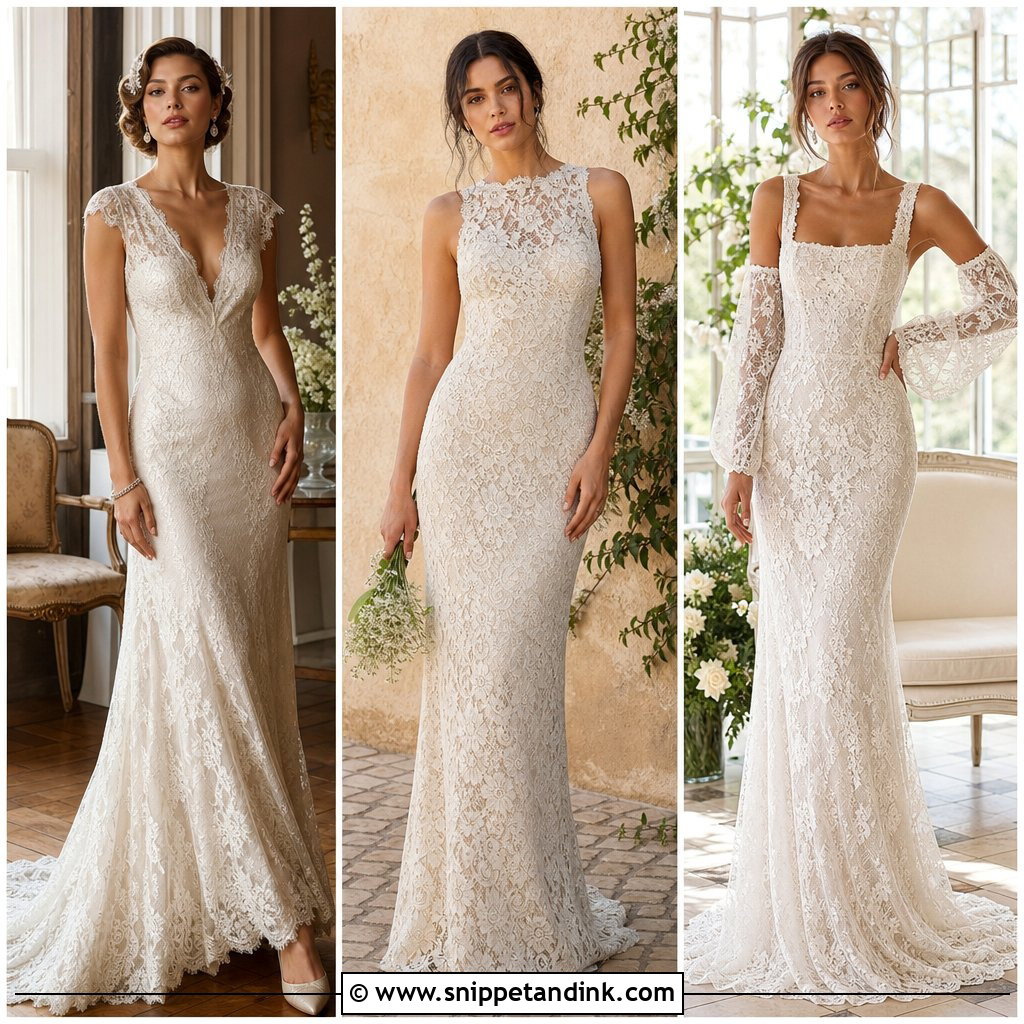

20. Embroidered Long-Sleeve Wedding Dress
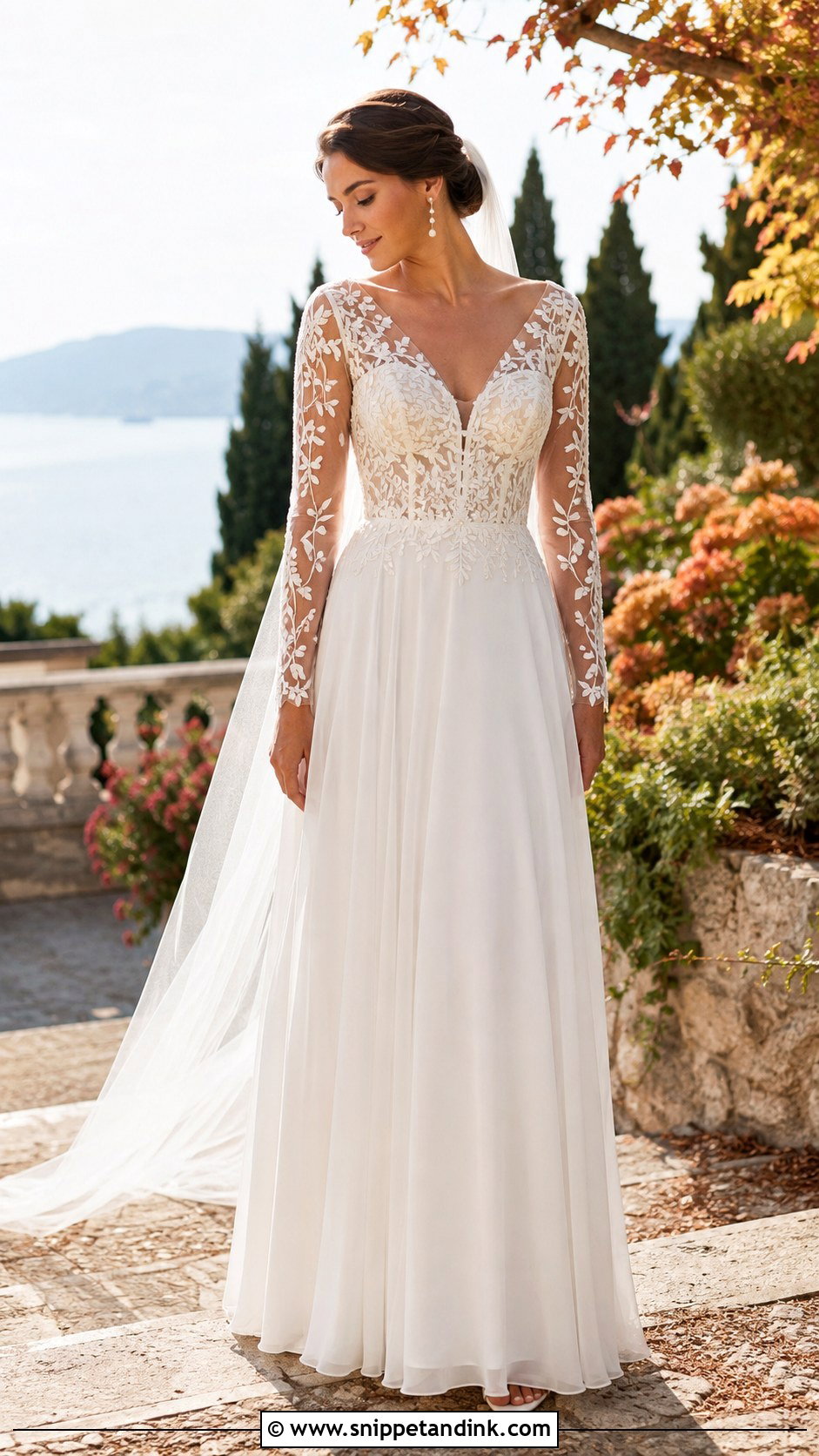
Long embroidered sleeves suit an evening, spring or early autumn ceremony, when the sun has softened. Breathable illusion sleeves decorated with vines, flowers or geometric work pair with a lightly lined bodice and a flowing crepe, chiffon or tulle skirt so the gown does not feel enclosed. A champagne or nude sleeve lining makes the embroidery stand out. I check the armholes with arms raised and make sure bracelets and rings will not catch on the cuffs. Pearl drops, low block heels, a neat chignon and a veil with minimal edging complete it.
Sun, Salt Air and a Church With a Dress Code
Heat is the dress’s real enemy on the day. Self-tan and tinted sunscreen transfer onto ivory fabric at the neckline and underarms, so apply them at least a day before and keep the morning of the wedding to a light, clear product. Dress last, after makeup and hair, with a clean robe or a scarf over the face as you step in.
If you are marrying in a Catholic or Orthodox church, shoulders are often expected to be covered inside. Rules vary by parish, so ask the priest or the church office, and plan a lace bolero, cape or sheer wrap that matches the gown. Most brides take it off for photos outside and the reception.
On a windy terrace
- Shorter or weighted veils behave better than cathedral tulle on a cliff edge.
- Ask your hairstylist to anchor the comb under a braid or section, not just in loose hair.
- Hold the bouquet low and the skirt with your free hand for the walk to the arch.
- Choose an evening or late-afternoon ceremony time if you can; the light is softer and the stone has cooled.
Does It Still Feel Like You at the Water’s Edge?
The gowns that suit this setting are the ones that move with the air and the light. Chiffon handles wind, lace and crepe feel at home in villas, and organza and satin carry a formal courtyard. Think through the heat, the ground under your feet, the journey and the dress code, then make sure the shoes are stable, the underwear supports the shape and the train is easy to bustle. Most of all, wear something that looks like you on an ordinary good day, not a costume built around a postcard view.
You'll Like These Ideas:




Leave a Reply