
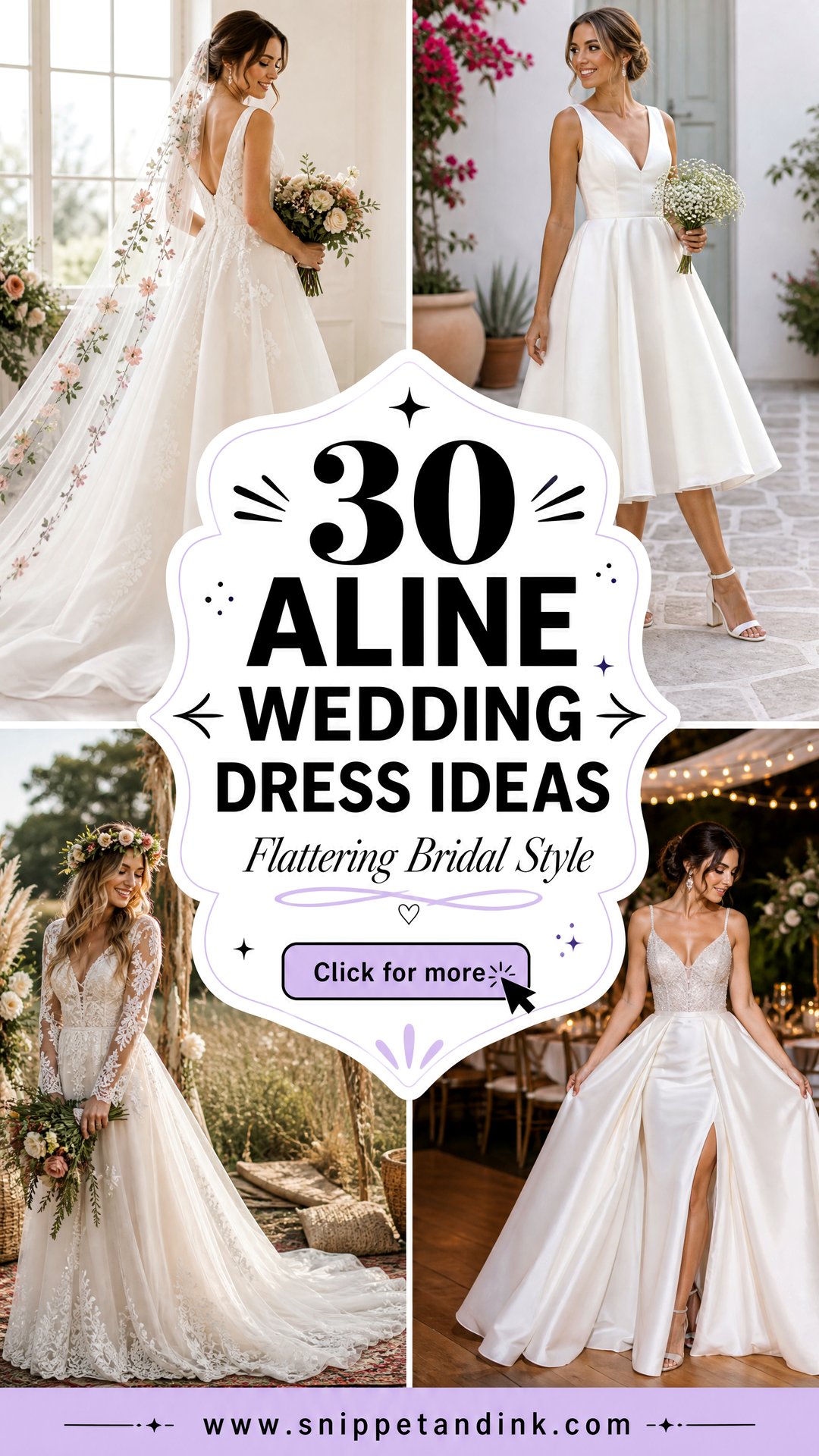
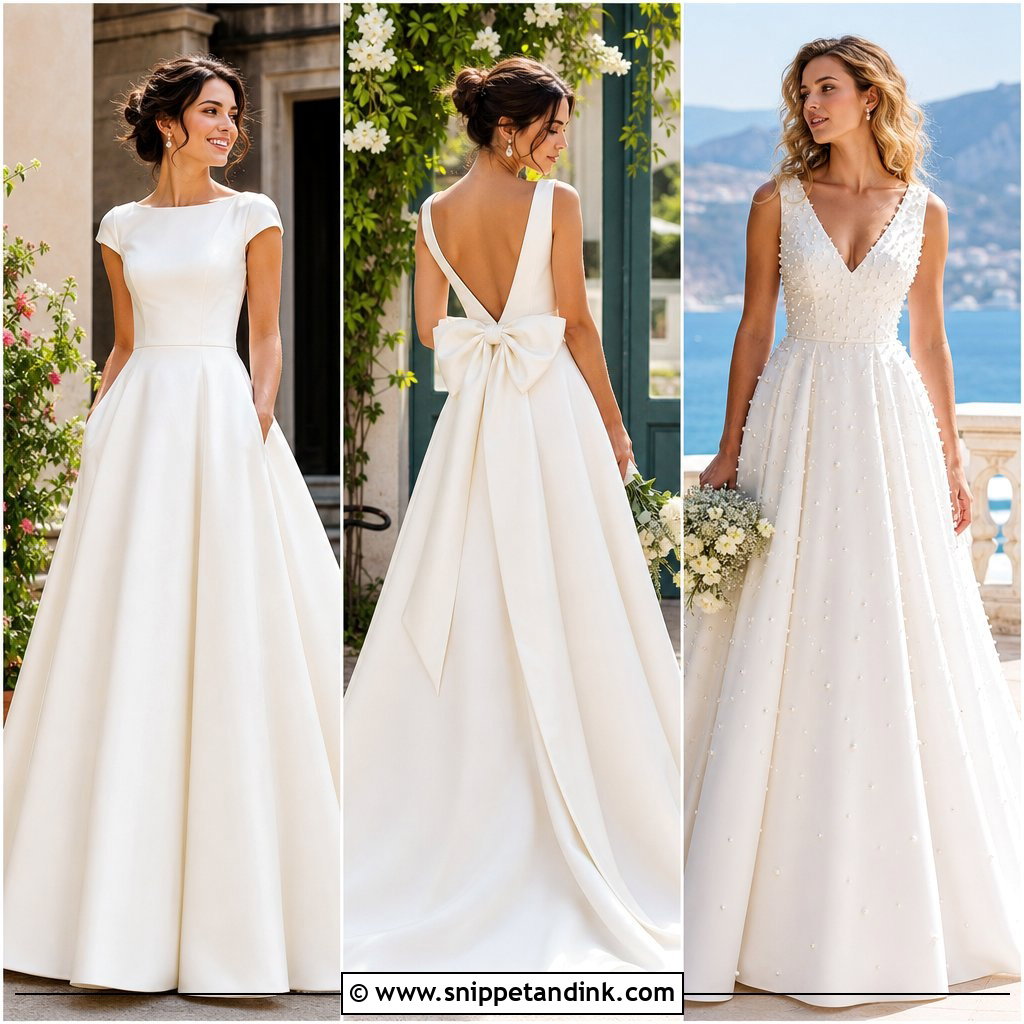
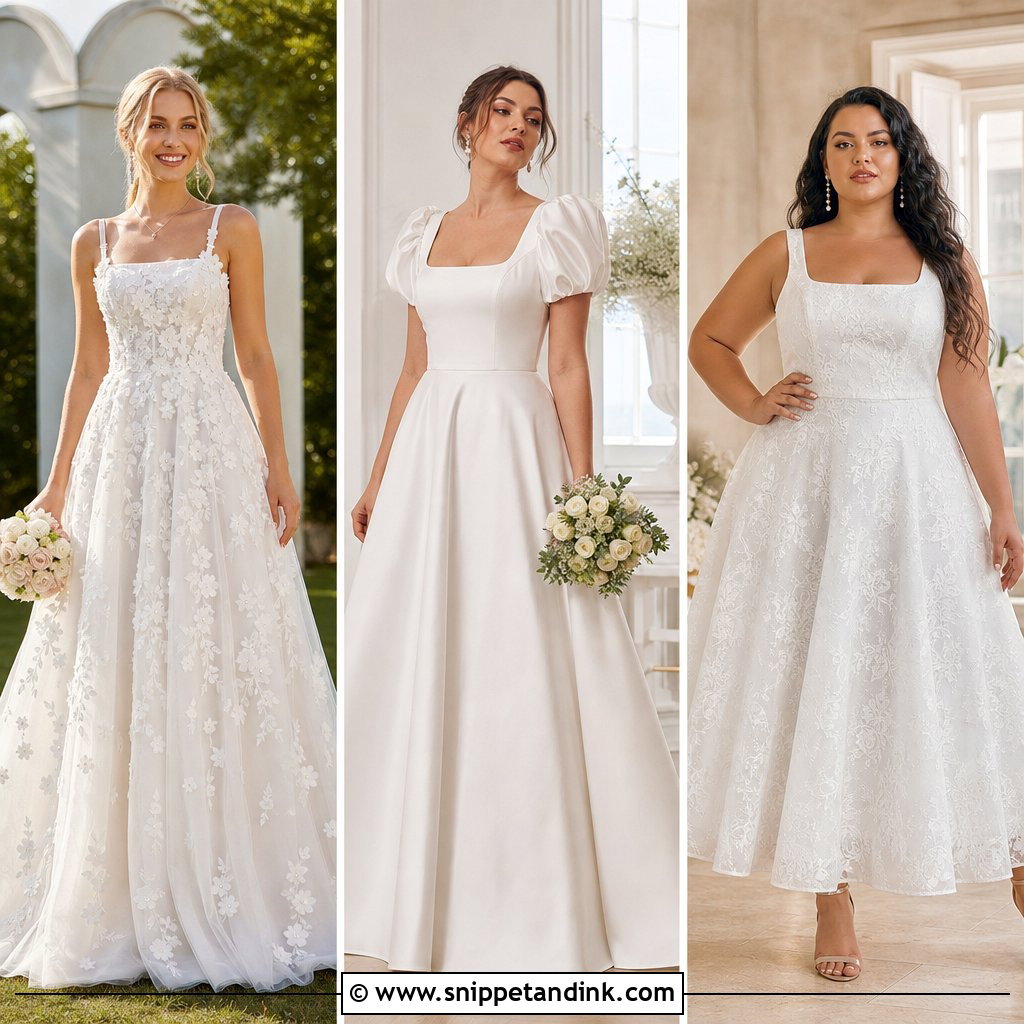
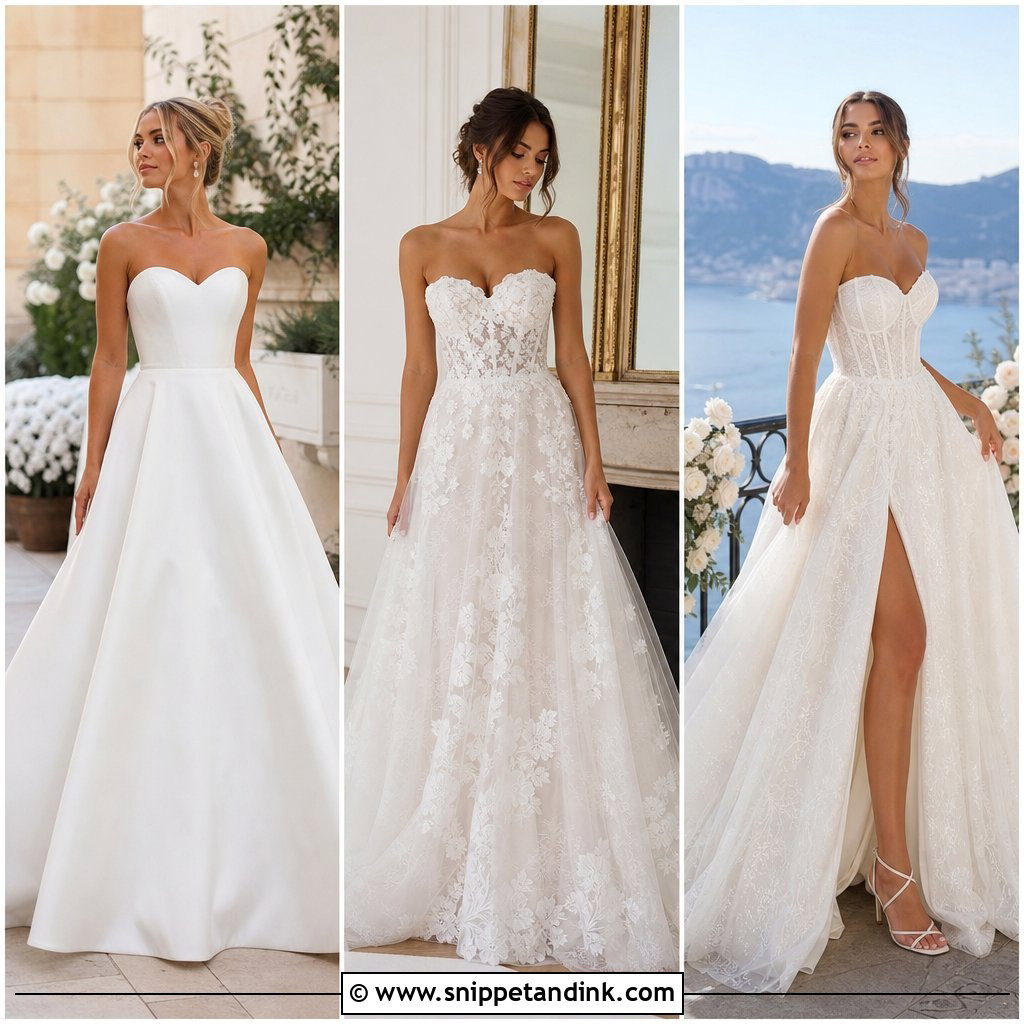
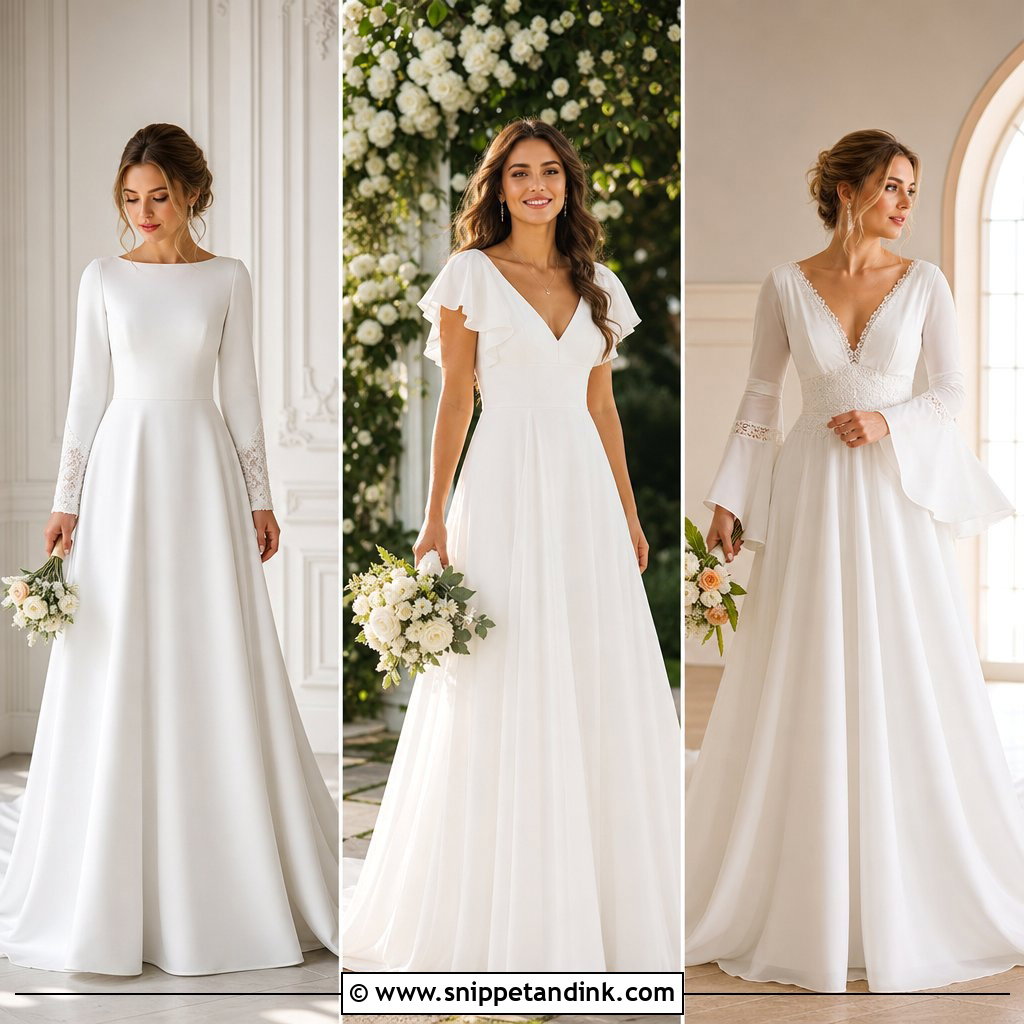
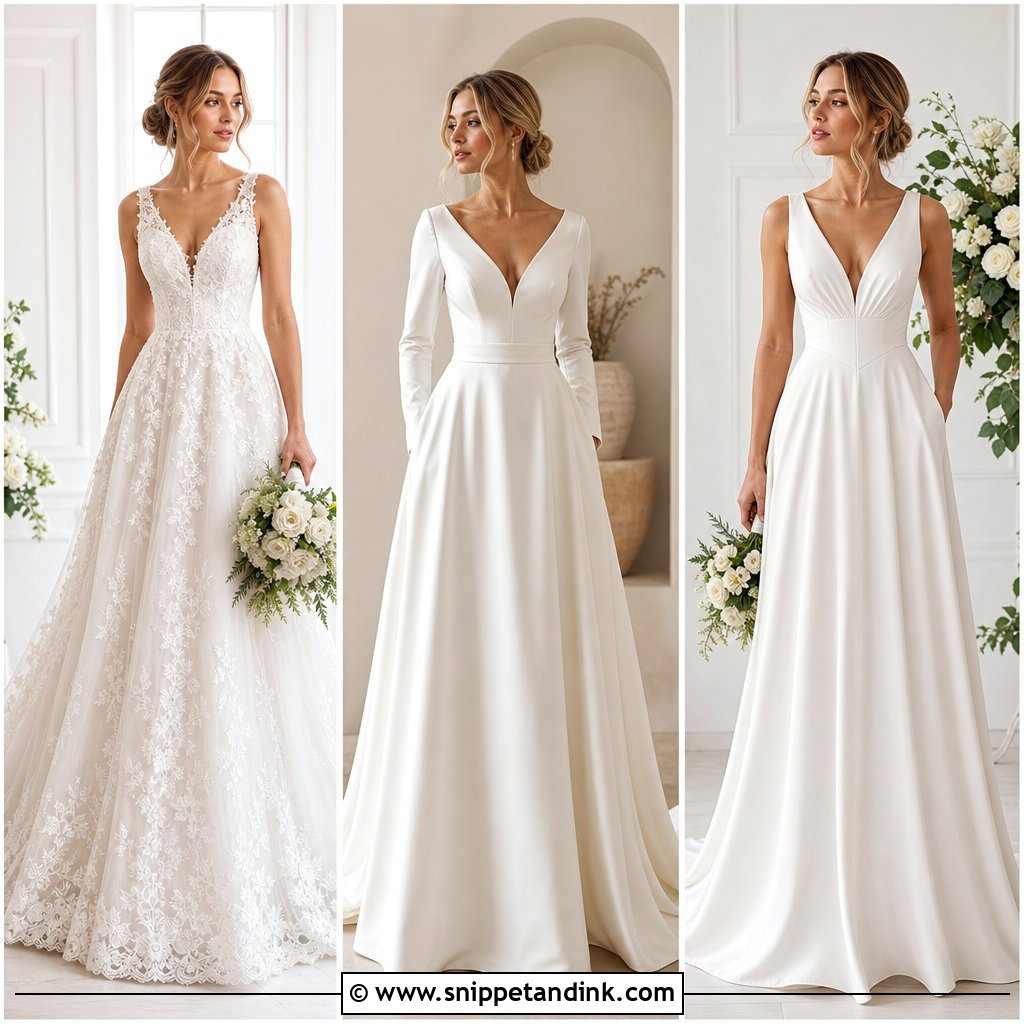
Most brides I dress try an A-line within the first half hour of an appointment, and a lot of them buy one. The shape fits close through the bodice and widens gradually from the waist, so it skims rather than grips, and it suits more figures and venues than any other cut I work with. What changes the mood completely is everything around it: the fabric, the neckline, the veil, the shoes. Details like pearls, lace, basque waists, sleeves and soft satin are all part of the picture right now. Below I’ve put together thirty complete outfits, from courthouse to ballroom, with the fitting and styling notes I’d give a bride trying each one.
Where the Flare Starts Decides How an A-Line Looks on You
An A-line isn’t one shape. Where the skirt begins to widen and how stiff the fabric is change it completely, and that’s what I watch in the mirror when a bride first steps out.
- Natural waist: the classic version. It marks the narrowest point and suits most figures.
- Dropped or basque waist: lengthens the torso. Lovely on taller brides and on anyone with a short waist; can shorten the legs on a petite frame.
- Raised waist: sits just under the bust and makes the legs look longer. Good for petite brides and anyone who wants room through the middle.
Fabric changes the flare. Mikado and heavy satin stand away from the body in a clean triangle; chiffon and soft tulle fall close and move. If you’re nervous about volume at the hips, try a softer fabric before you rule out the shape altogether.
At your appointment, bring the shoe height you plan to wear and a strapless bra or the shapewear you’d use. A gown pinned to a sample size on the wrong heel can feel very different from how it will on the day.
1. Satin A Line Wedding Dress With Pearl Veil
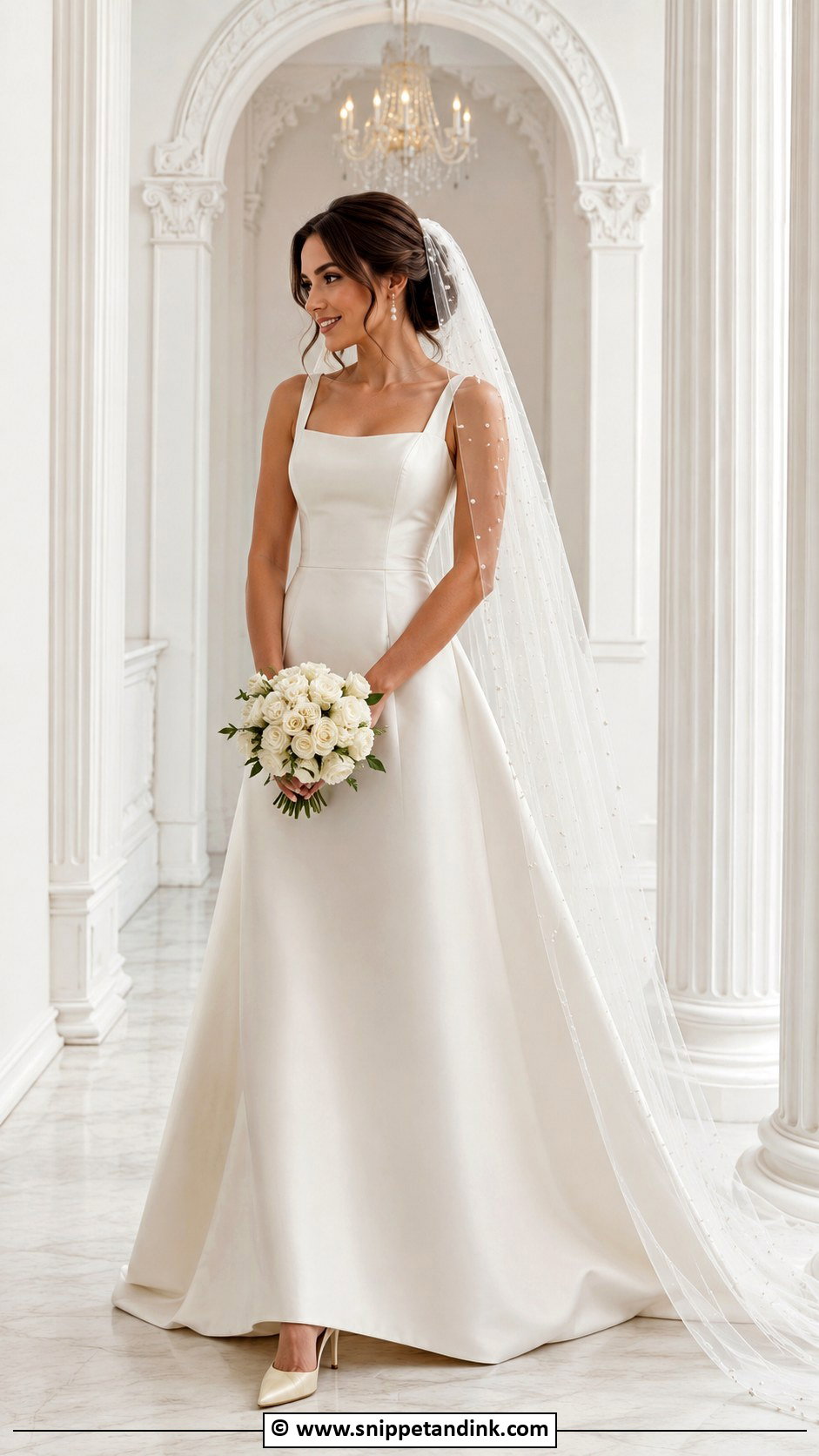
Satin is unforgiving in one useful way: it shows the quality of the tailoring. A well-fitted satin A-line looks sculpted; a loose one ripples at the waist seam. I pair it with a chapel-length pearl veil because the scattered pearls give texture the plain satin doesn’t have. Keep the bouquet to one or two white flowers, pointed ivory heels and pearl drops. It’s an evening and hotel dress, at home under warm lighting.
2. Lace A Line Wedding Dress With Long Sleeves
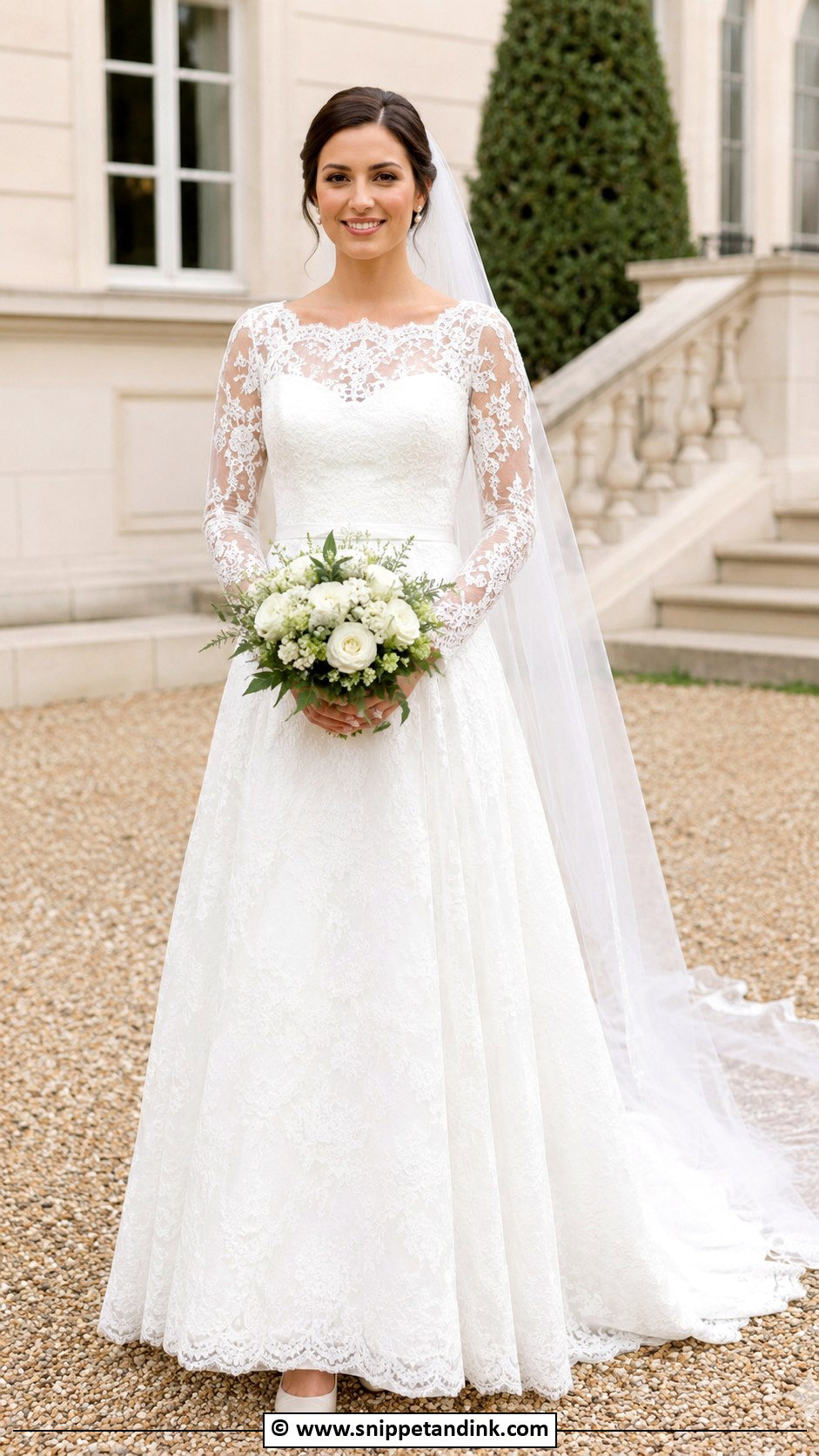
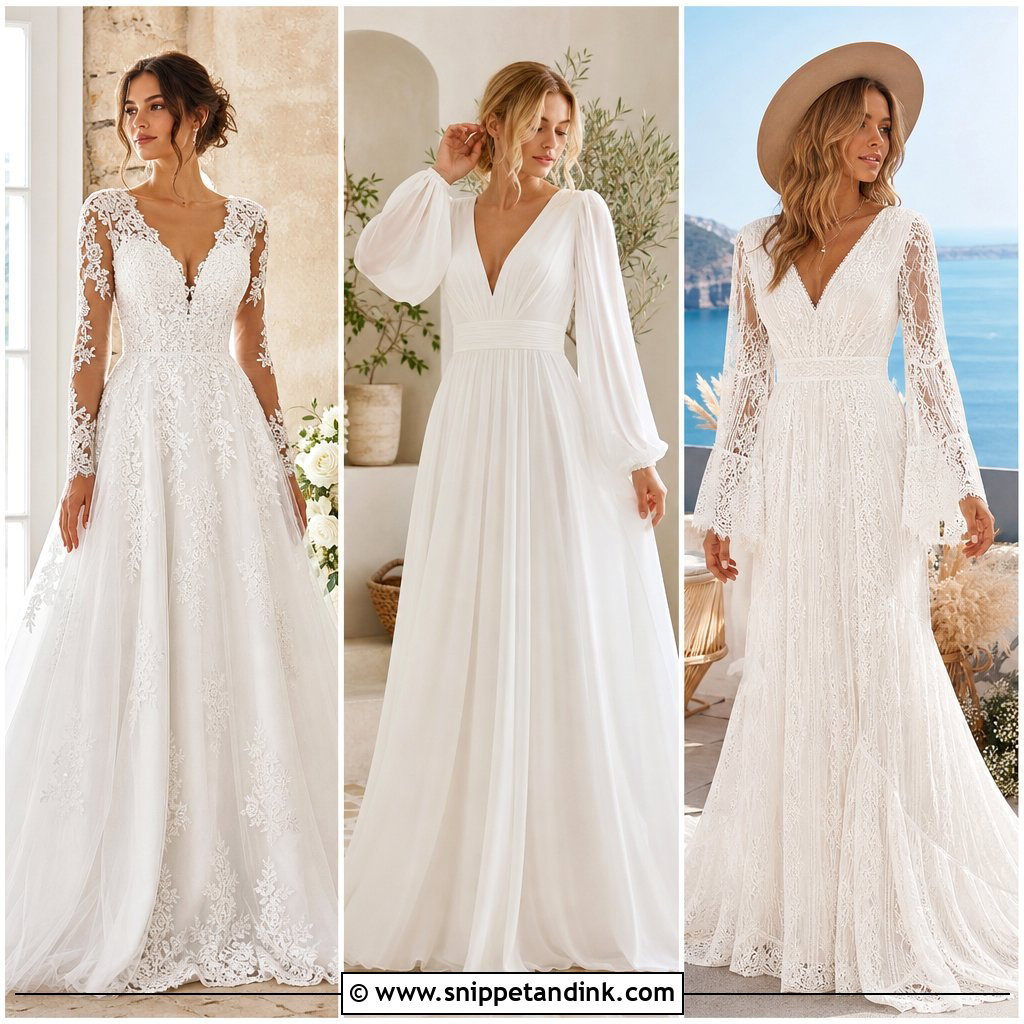
Long lace sleeves give coverage without weight, and on an A-line they balance the flare of the skirt. The fit point I fuss over is the sleeve length and wrist. Lace sleeves that end exactly at the wrist bone look tailored; a centimetre too long and they bunch when you hold the bouquet. Echo the lace pattern with garden flowers, add a fingertip veil and closed-toe pumps, and it works in any season.
3. Off Shoulder A Line Wedding Dress With Cathedral Veil
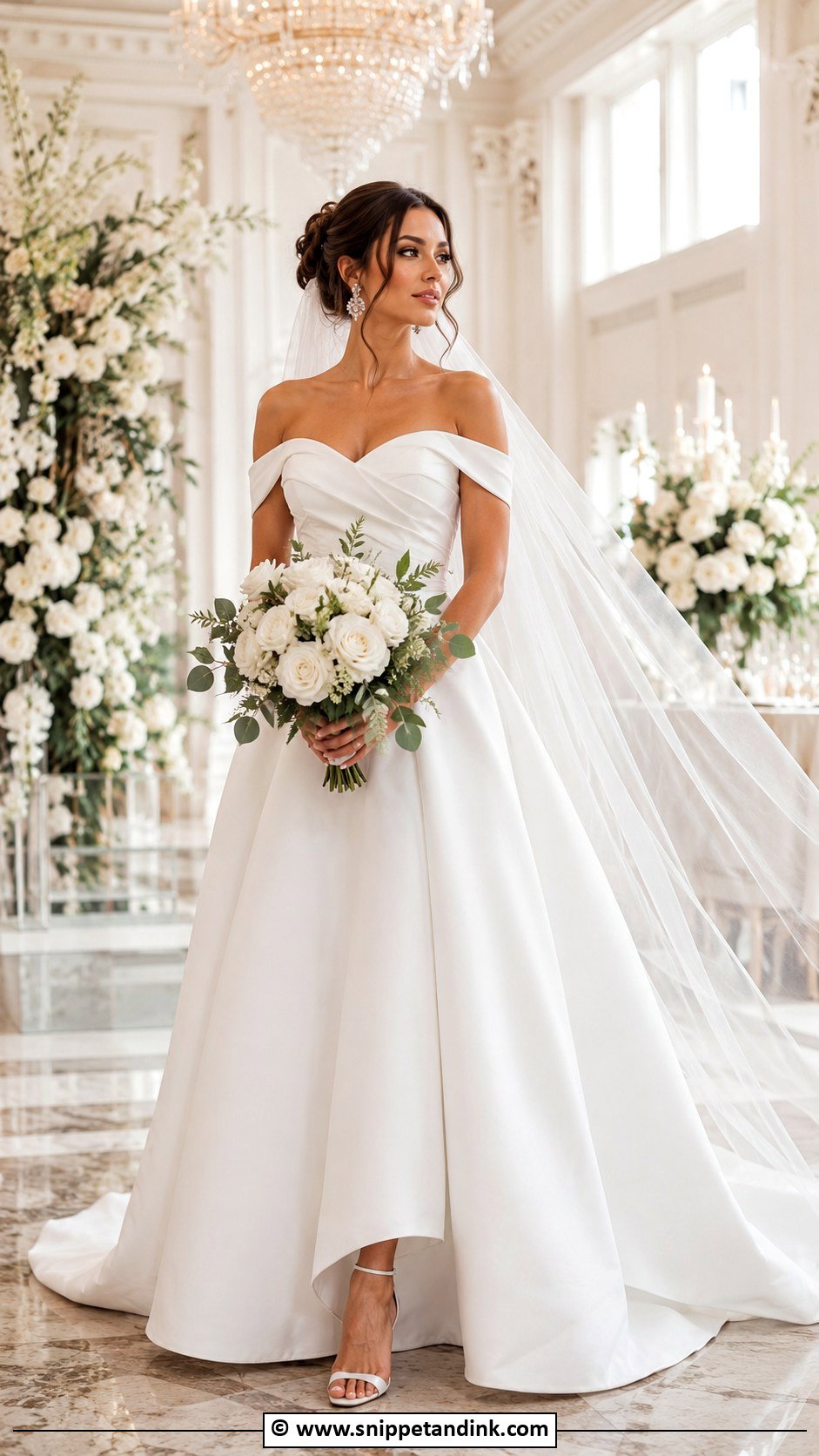
An off-shoulder neckline frames the collarbone, and the A-line skirt keeps the proportions balanced so it never looks top-heavy. A structured bodice is essential here, because the dress has nothing on the shoulders to hold it. I’d plan for a cathedral veil to be pinned under a low bun so it falls behind the shoulders rather than over them. Mikado, satin or organza all work; crystal earrings and ankle-strap heels finish it.
4. Simple Crepe A Line Wedding Dress With Low Bun
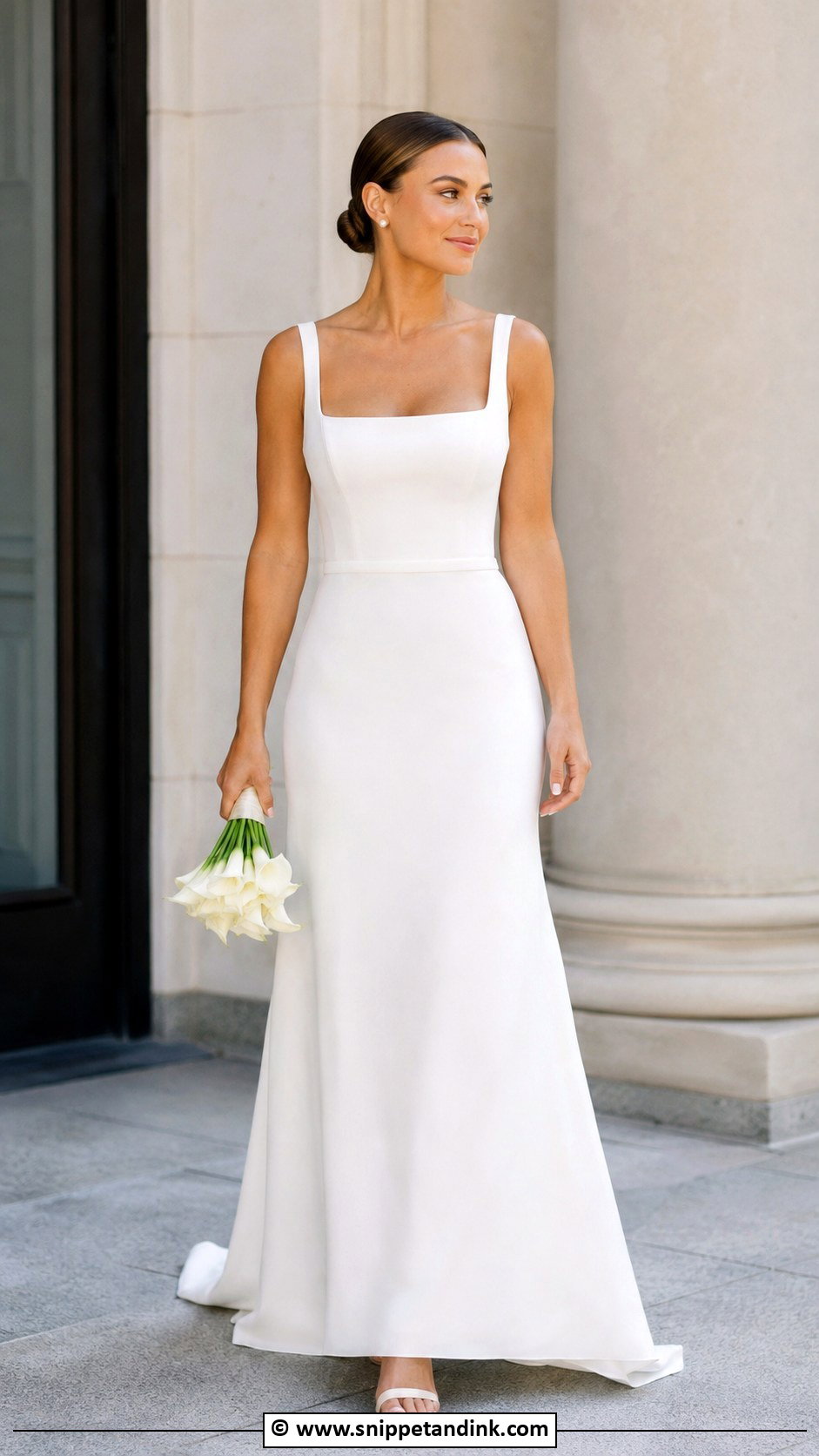
Crepe has no sparkle and no texture to hide behind, so I tell brides this is the dress where the tailoring budget matters more than the dress budget. Every seam shows. A square neck, slim straps or a modest V suit it. A low bun, pearl studs, barely-there sandals and a sleek veil keep it modern for a city or courthouse ceremony.
5. Tulle A Line Wedding Dress With Floral Appliques
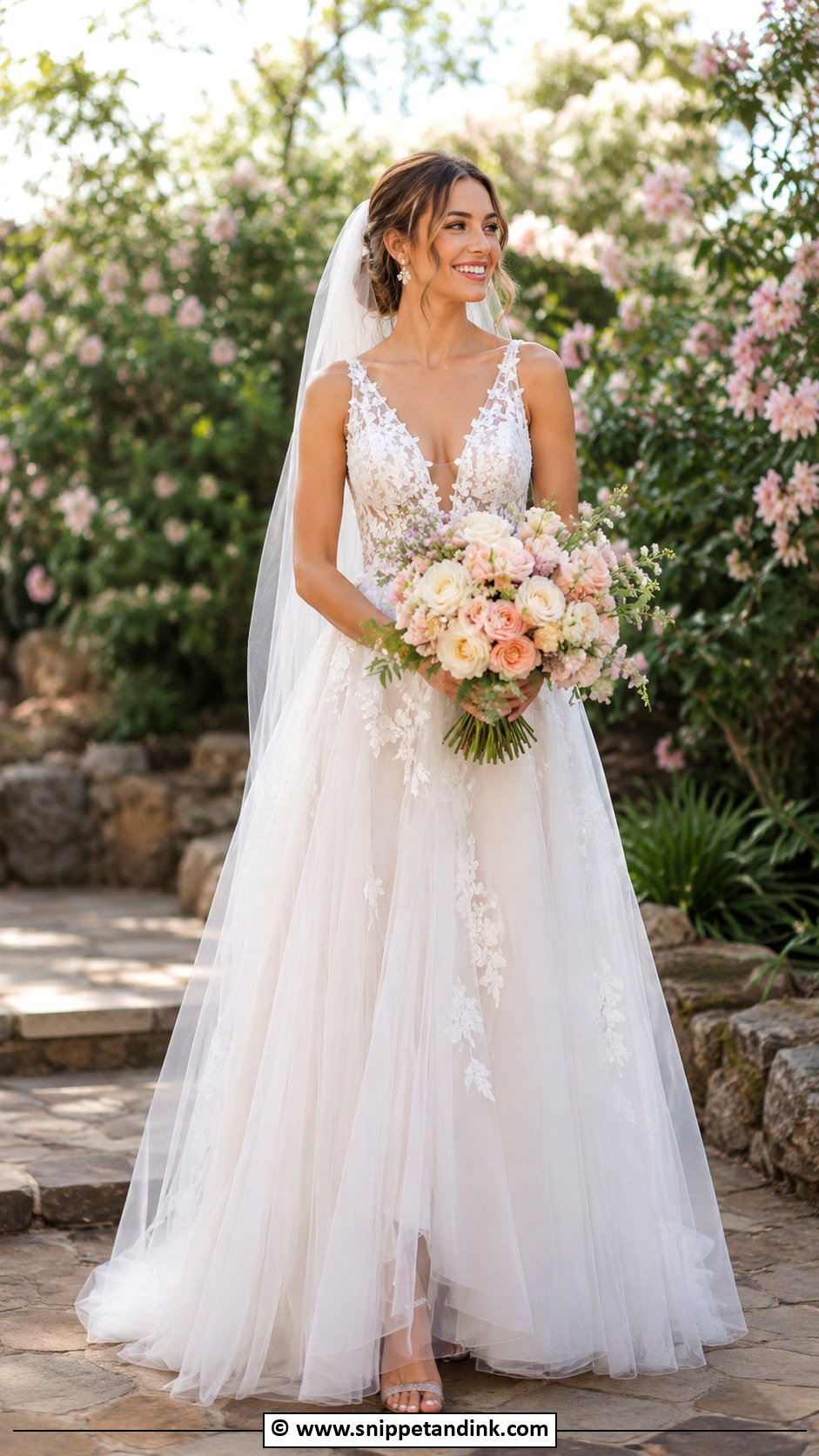
Floral appliques on tulle give an A-line texture without heavy beading, and the tulle keeps the skirt light. Placement is where I’d spend time at a fitting. Appliques that stop at the hip can make the skirt look unfinished, while a few trailing down onto the skirt carry the eye through. A loose updo with face-framing pieces, a soft veil and blush and ivory flowers suit a spring garden.
6. Mikado A Line Wedding Dress With Bow Detail
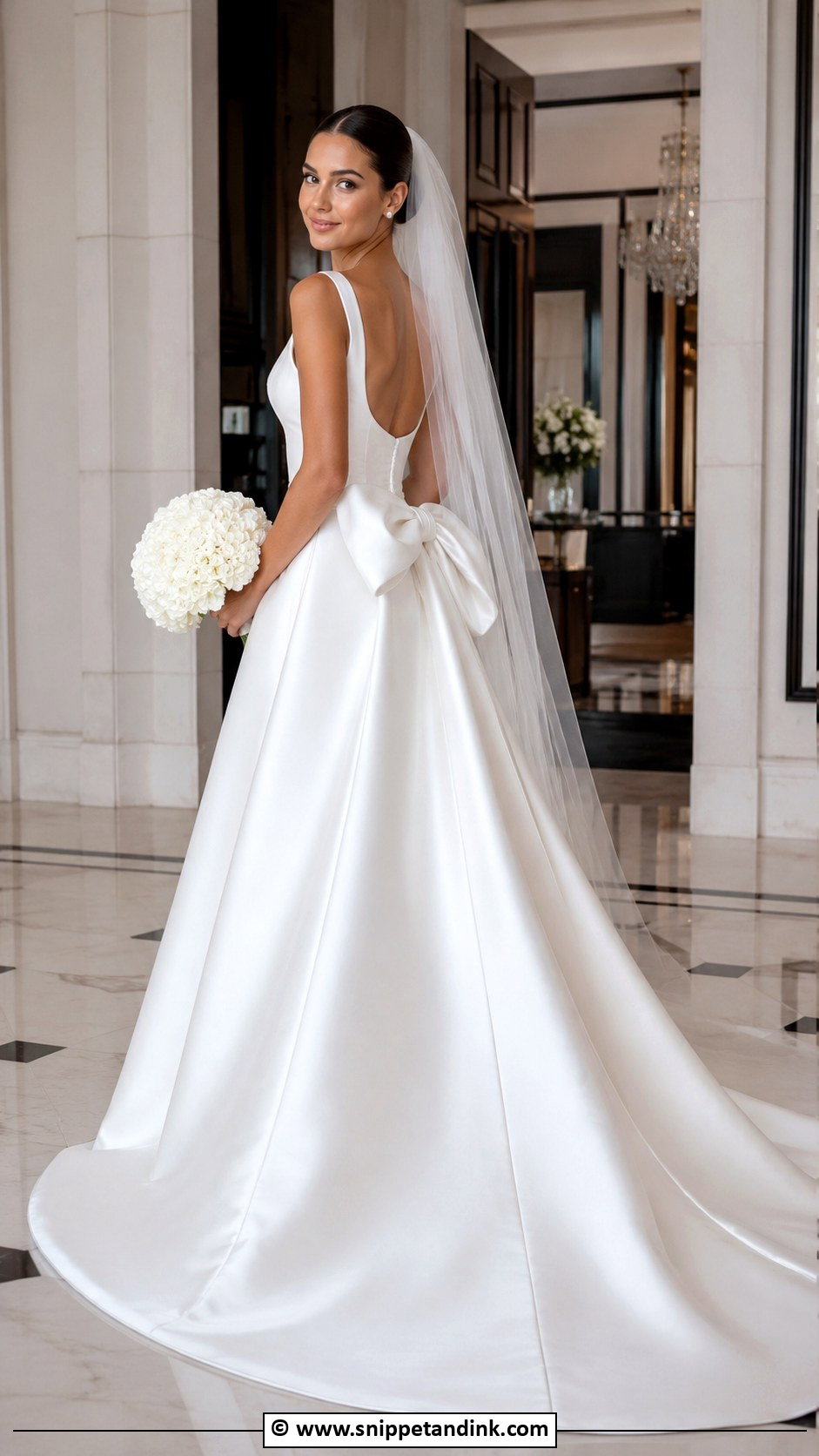
Mikado is a stiff, slightly heavy silk blend, which is why it holds an A-line skirt so crisply without layers of petticoat underneath. It also creases less than many satins. A bow at the back or shoulder adds character; if it’s big, keep the earrings small and the hair in a sleek bun so the shape stays clean. A rounded white bouquet suits it in a formal or city setting.
7. Strapless A Line Wedding Dress With Statement Earrings
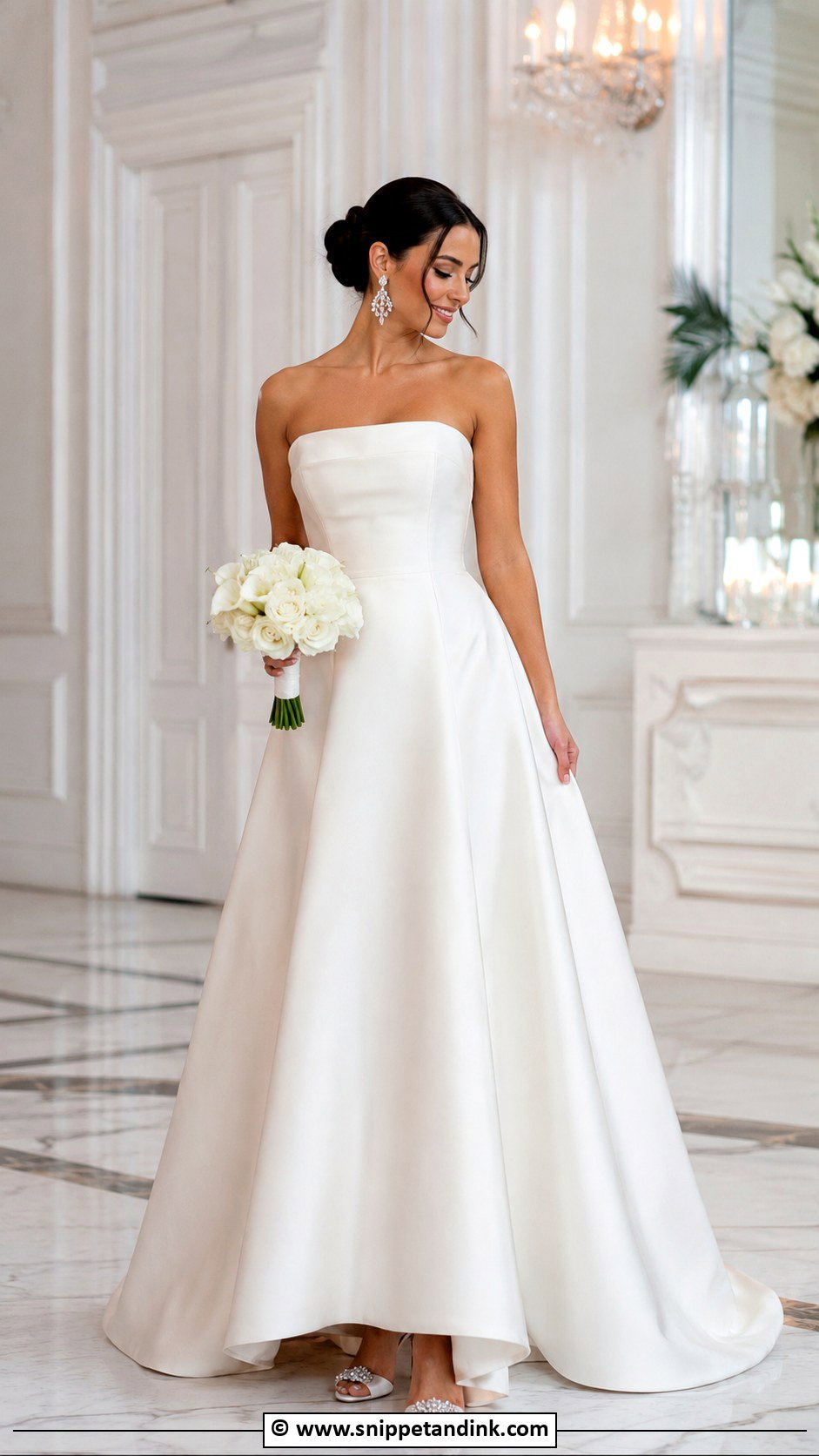
A strapless A-line leaves the neck and shoulders open, which makes earrings the main jewelry rather than a necklace. The fitting must get the bodice support right: boning, a waist stay and enough grip that you aren’t hitching it up during the vows. I test it with the bride hugging me. Crystal drops, ivory heels and either a clean veil or none suit a ballroom or terrace.
8. Square Neck A Line Wedding Dress With Satin Shoes
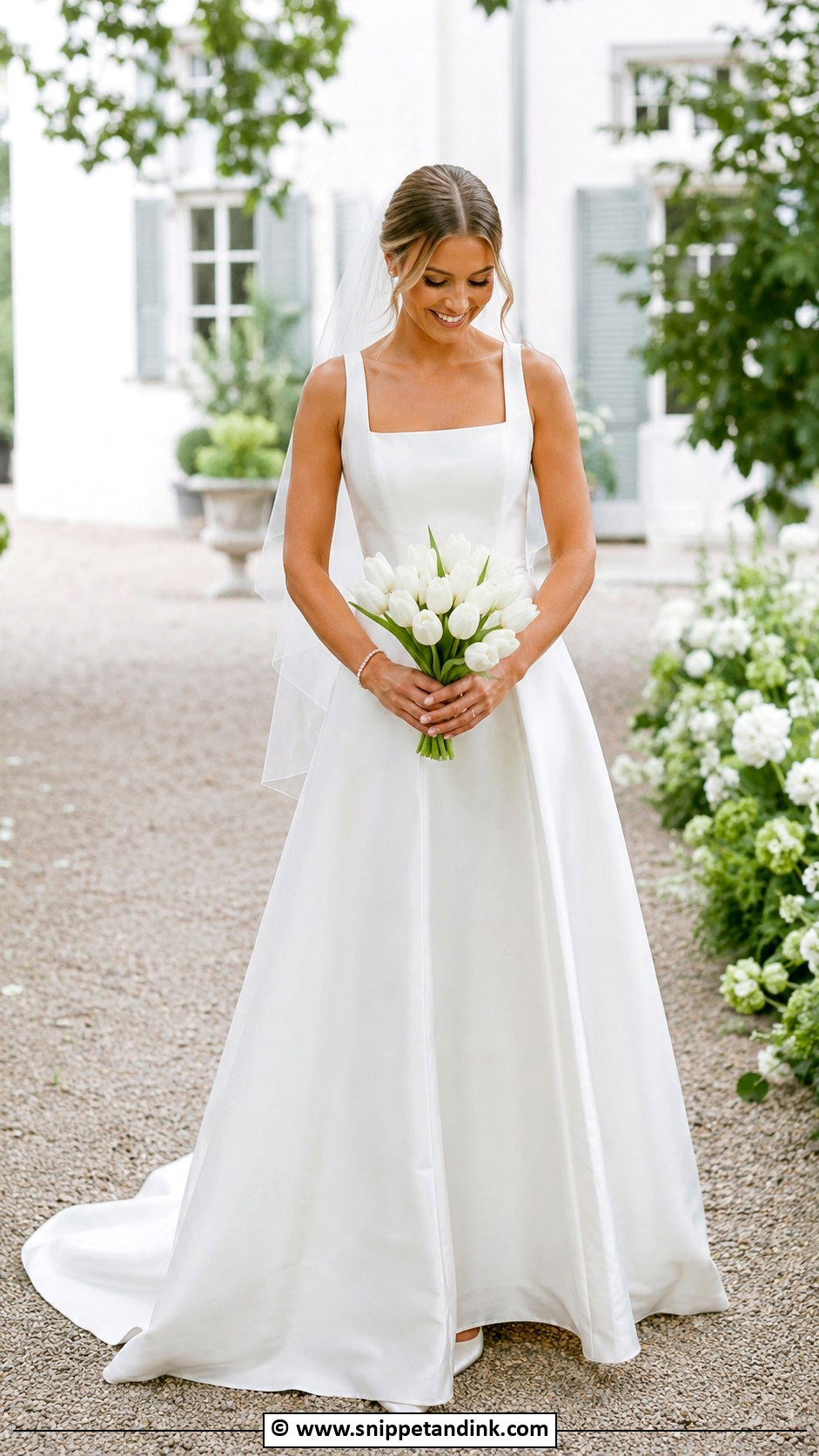
A square neckline has a slightly vintage feeling and frames the face well. It works with wide straps, cap sleeves or long sleeves, and the structure suits brides who like a defined shape. I’d match the shoes to the satin rather than the dress colour, since satin shoes dye or come in ivory shades that echo the gown. A short veil and white tulips or roses keep the look calm.
9. V Neck A Line Wedding Dress With Crystal Belt
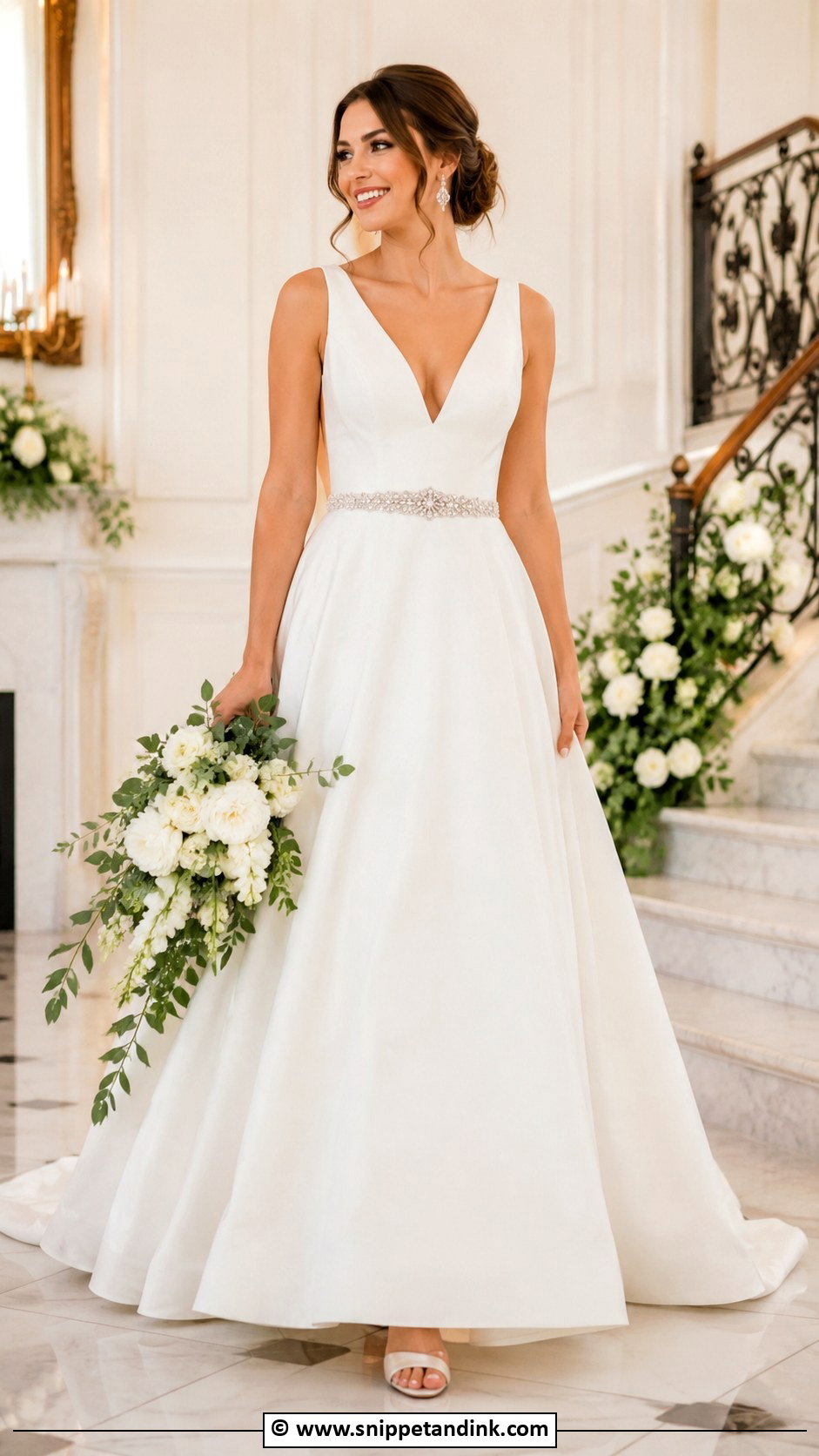
A V-neck lengthens the upper body, and a crystal belt marks the waist where the skirt begins to flare. The belt is where many brides go wrong: a heavily jewelled belt on an already beaded gown looks cluttered. I prefer a narrow belt on a plain fabric, and I always check that the clasp sits flat at the back. Sheer straps add coverage if you want it.
10. High Neck A Line Wedding Dress With Sleek Veil
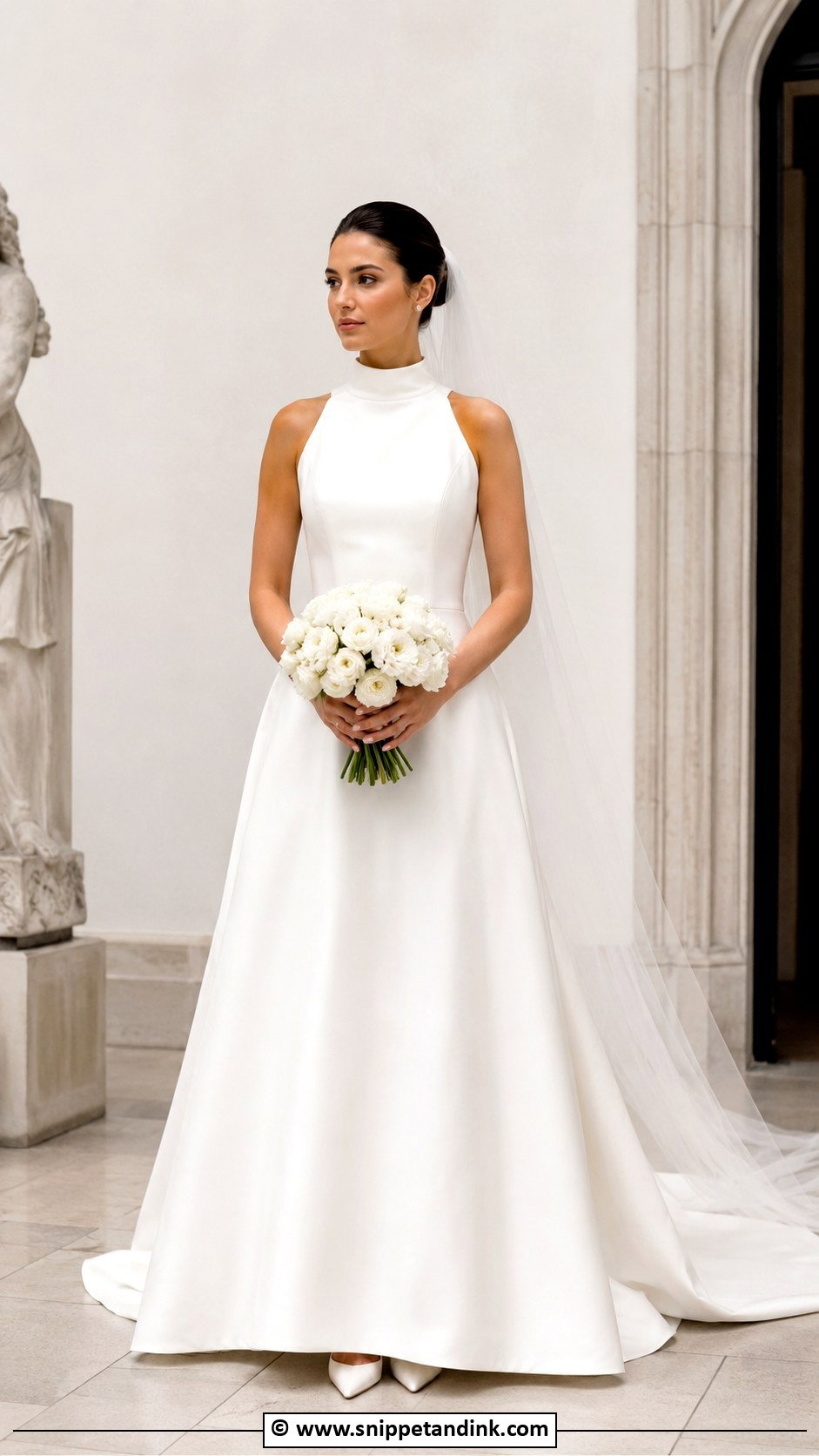
High necklines look modest and modern at once. In lace they lean romantic; in crepe or satin they’re almost architectural. The thing to check is whether you can turn your head comfortably, since a high neck that’s tight at the throat feels restrictive by the end of dinner. Small studs only, a low polished bun and a sleek veil. It’s a strong winter and museum-venue choice.
11. Spaghetti Strap A Line Wedding Dress With Loose Waves
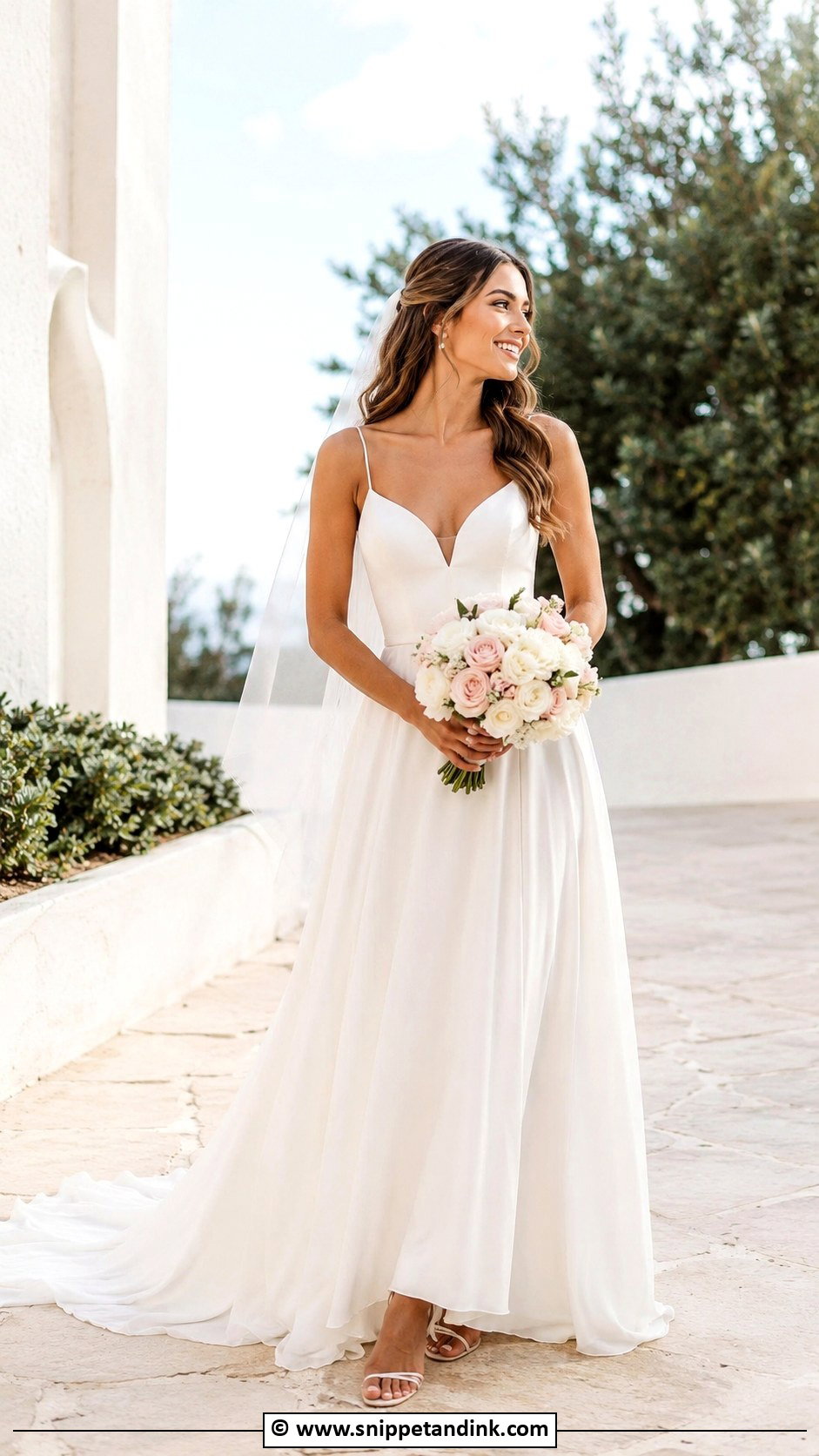
A spaghetti strap A-line wedding dress is the lightest version of the shape, and in chiffon or organza it suits beach and summer ceremonies. Thin straps don’t offer much support, so the bodice needs to hold itself up, and I always adjust the strap length at the fitting so they don’t slide off the shoulder. Loose waves, strappy sandals and tiny earrings keep it delicate.
12. Basque Waist A Line Wedding Dress With Gloves
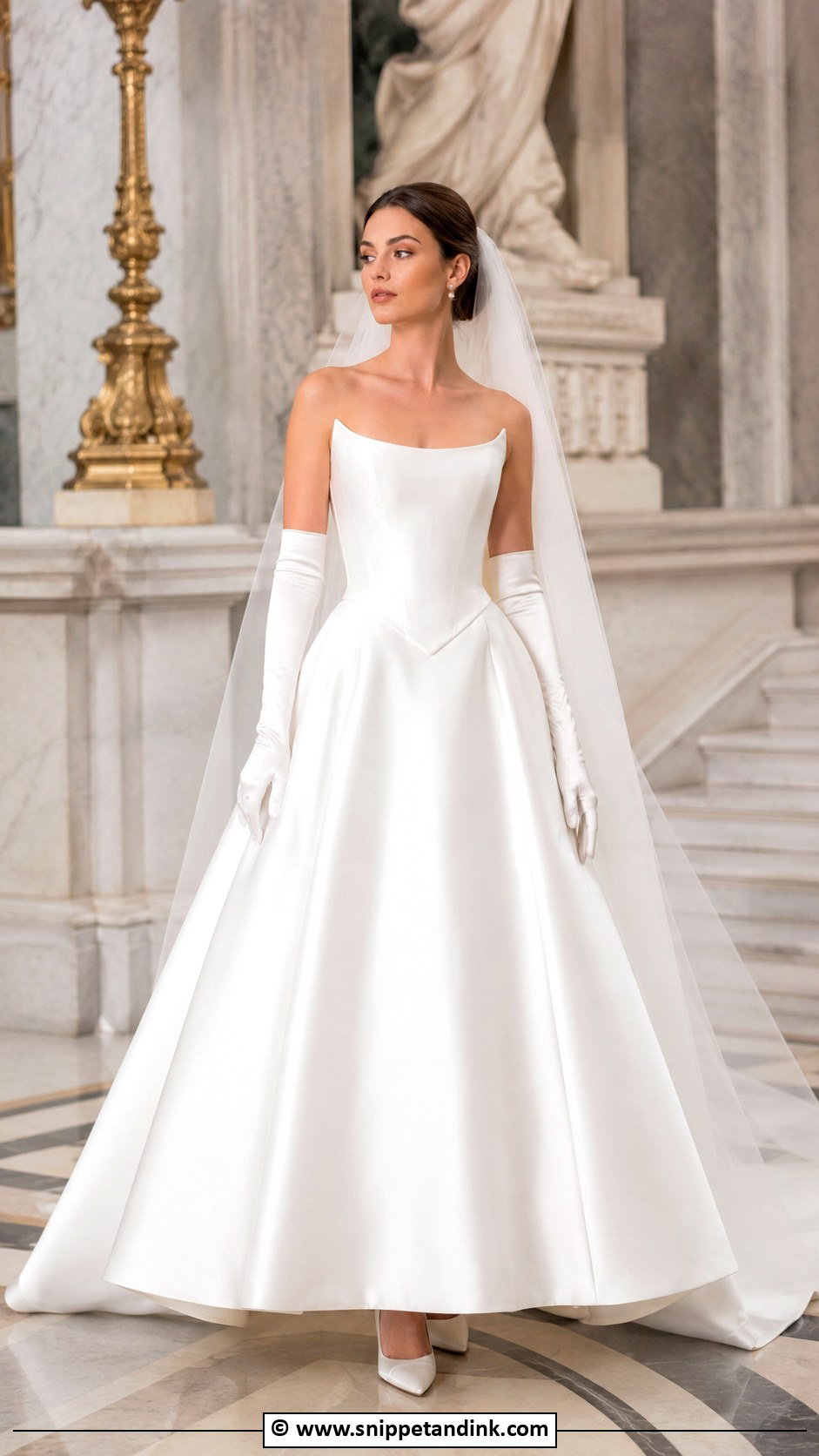
A basque waist dips into a V below the natural waistline, which visually lengthens the torso. It’s one of the most tailoring-sensitive details I fit, because the point has to sit centred and flat; if the bodice is even slightly too long, the point buckles. Opera or wrist gloves add to the vintage formality. Satin or mikado suits historic venues, with simple accessories.
13. Chiffon A Line Wedding Dress With Beach Sandals
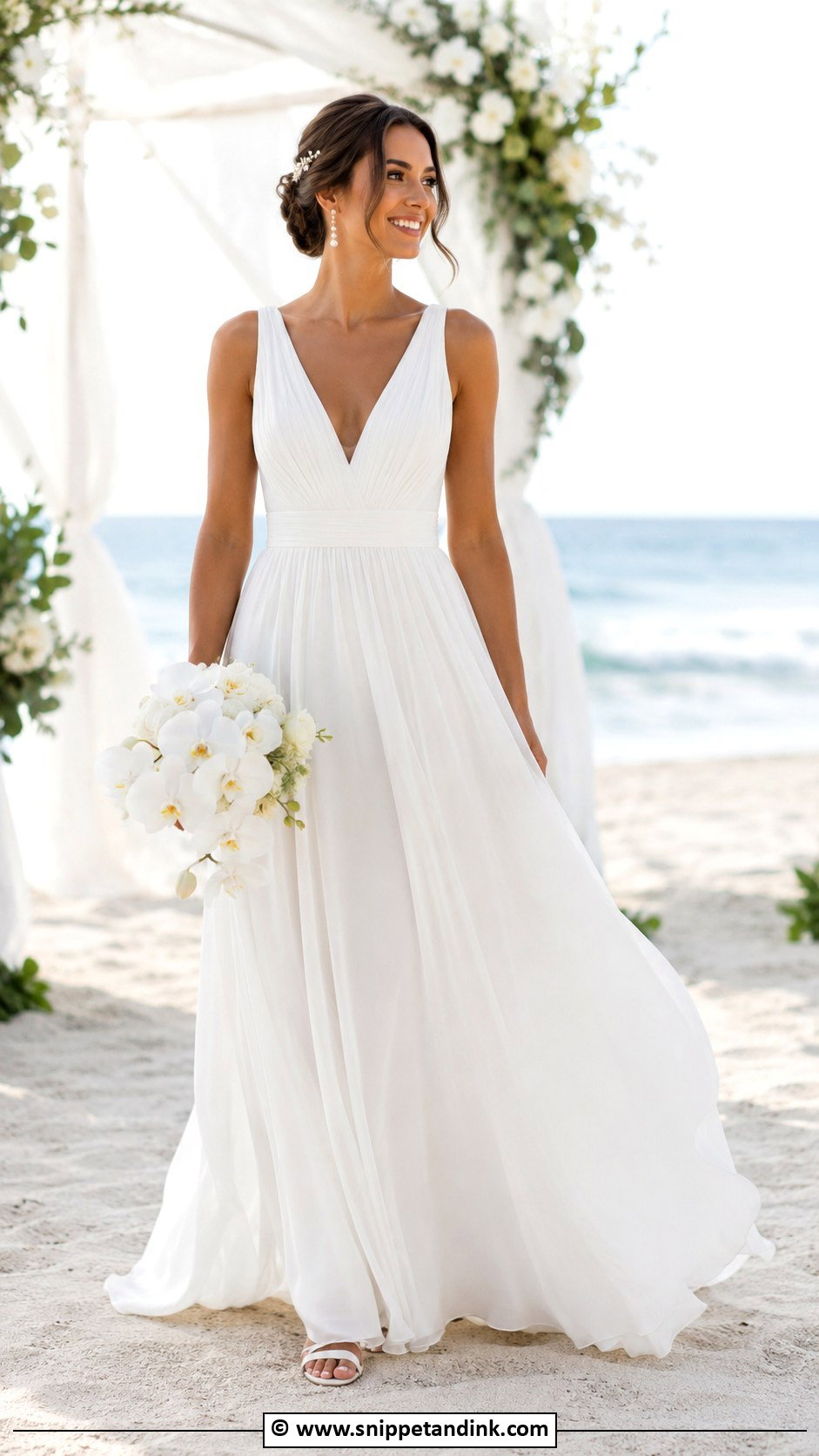
Chiffon is the lightest fabric for an A-line and it moves in the smallest breeze. I warn beach brides about one thing: a long chiffon hem drags in sand and gets damp, so I’d hem it to just clear the ground in flat sandals. A V-neck, halter or strappy bodice suits the relaxed mood. Orchids or tropical greenery suit destination weddings and seaside ceremonies.
14. Organza A Line Wedding Dress With Floral Veil
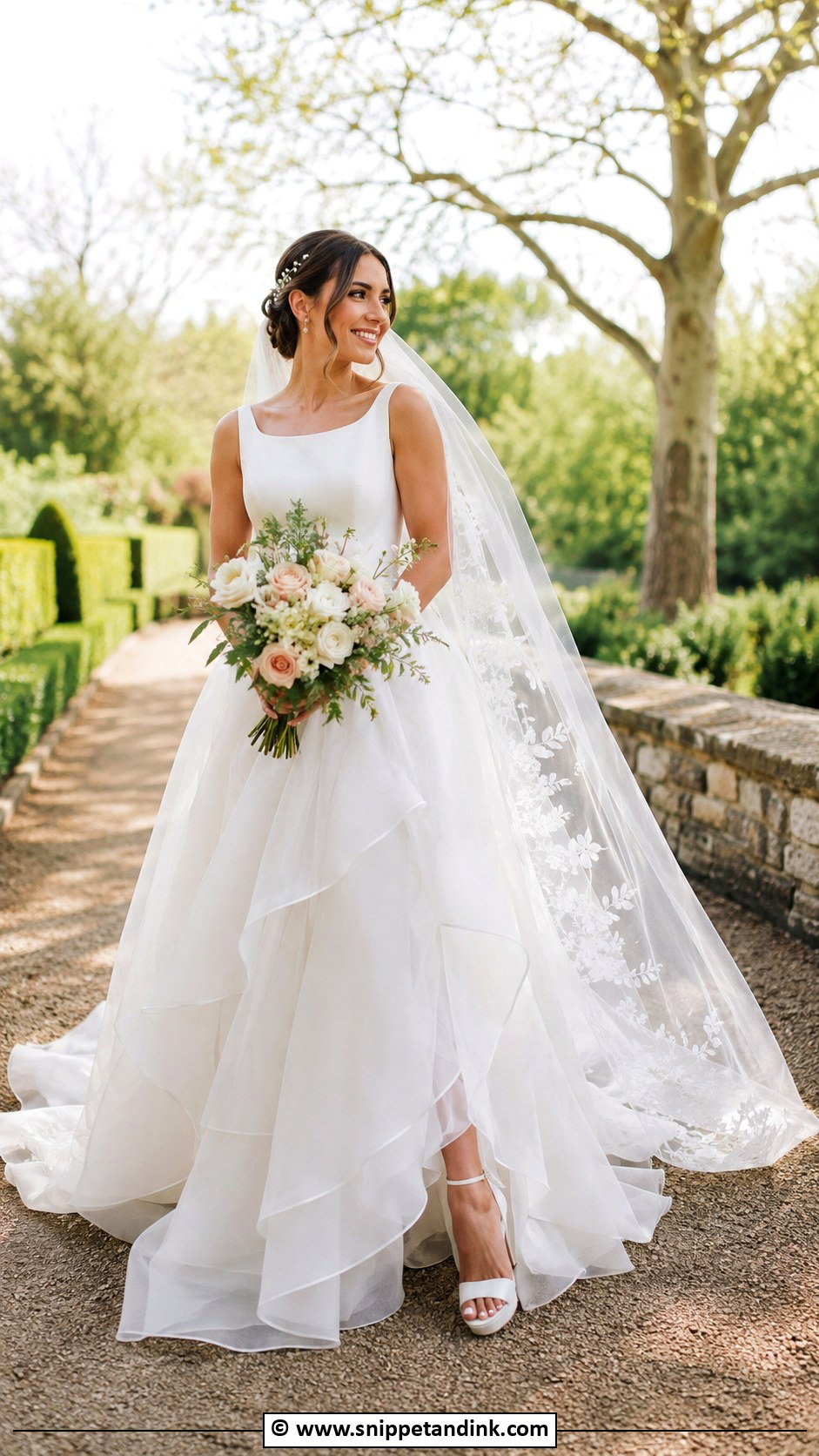
Organza has a crisp, slightly sheer body that gives volume without the weight of satin. It’s prone to snagging on rough surfaces, though, so watch out for stone steps and wooden benches. A floral veil with embroidery or scattered petals brings softness. Keep the bodice simple when the skirt has layers, and pair with pearl pins and ivory block heels for a garden ceremony.
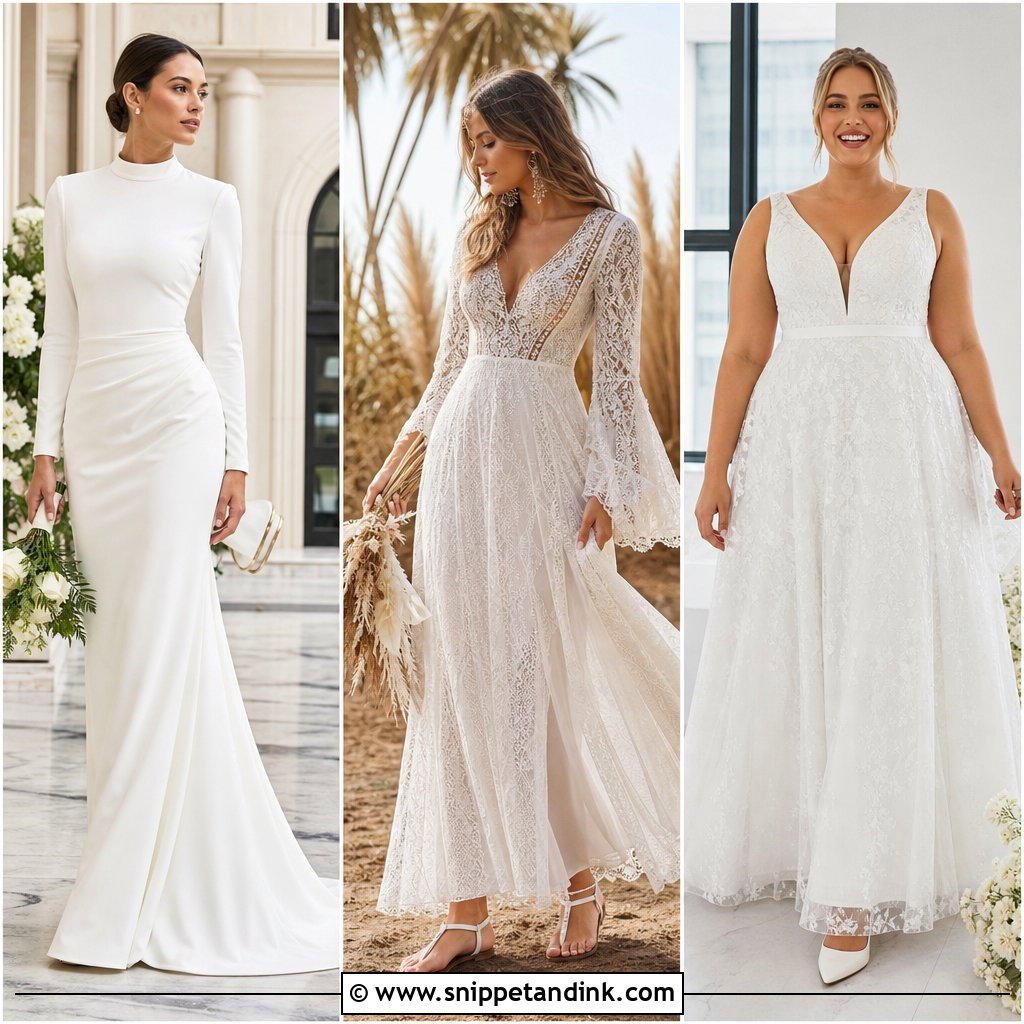
15. Beaded A Line Wedding Dress With Minimal Jewelry
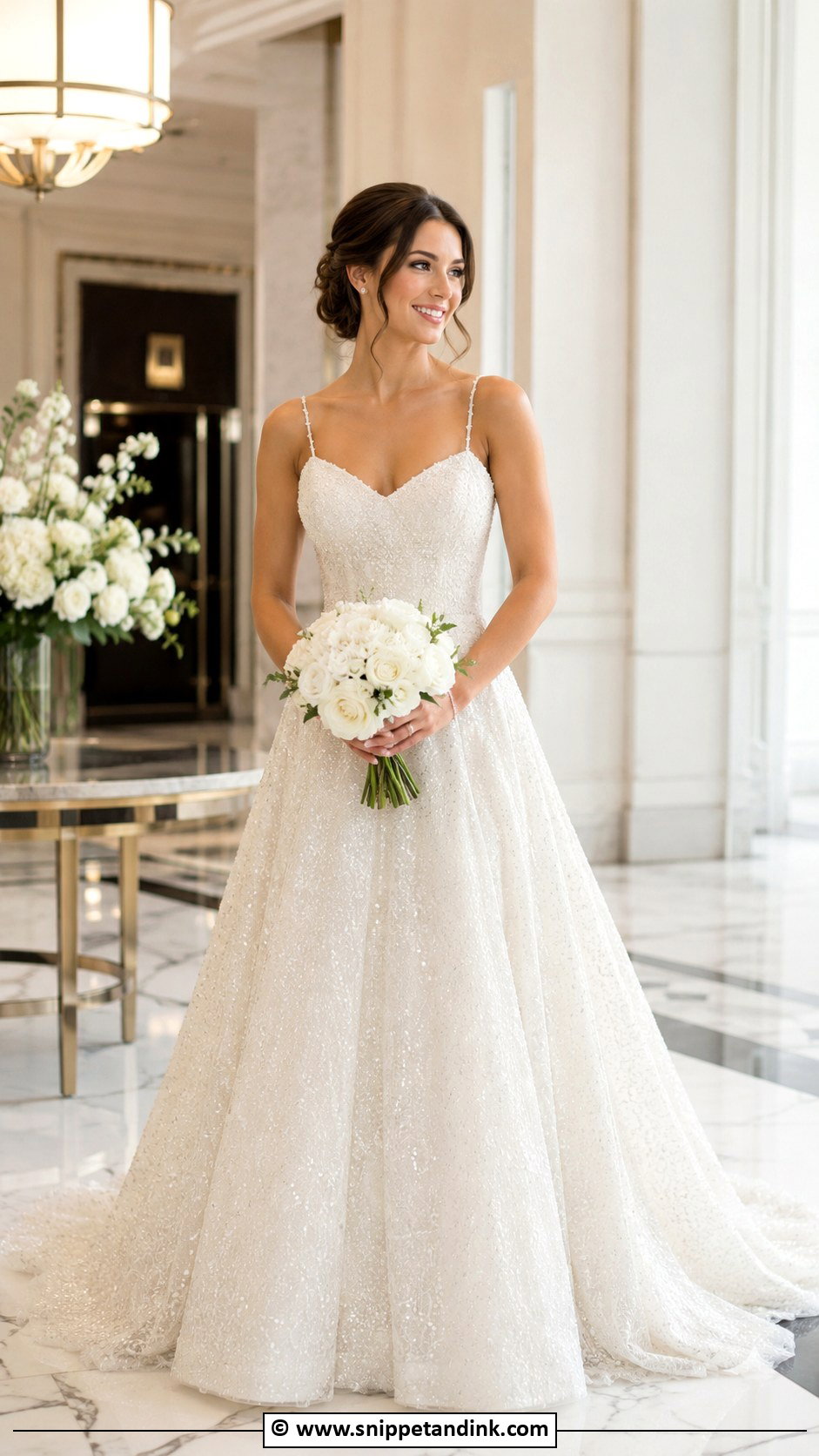
Beading catches the light, so I’d keep jewelry to studs and a thin bracelet and let the dress shine. Fully beaded skirts are heavy, and that weight pulls on the waist seam by the end of the night, so a bodice-only design with a plain skirt is the more comfortable option for a long reception. Soft hair and clean makeup keep the sparkle sophisticated in a ballroom.
16. Tea Length A Line Wedding Dress With Block Heels
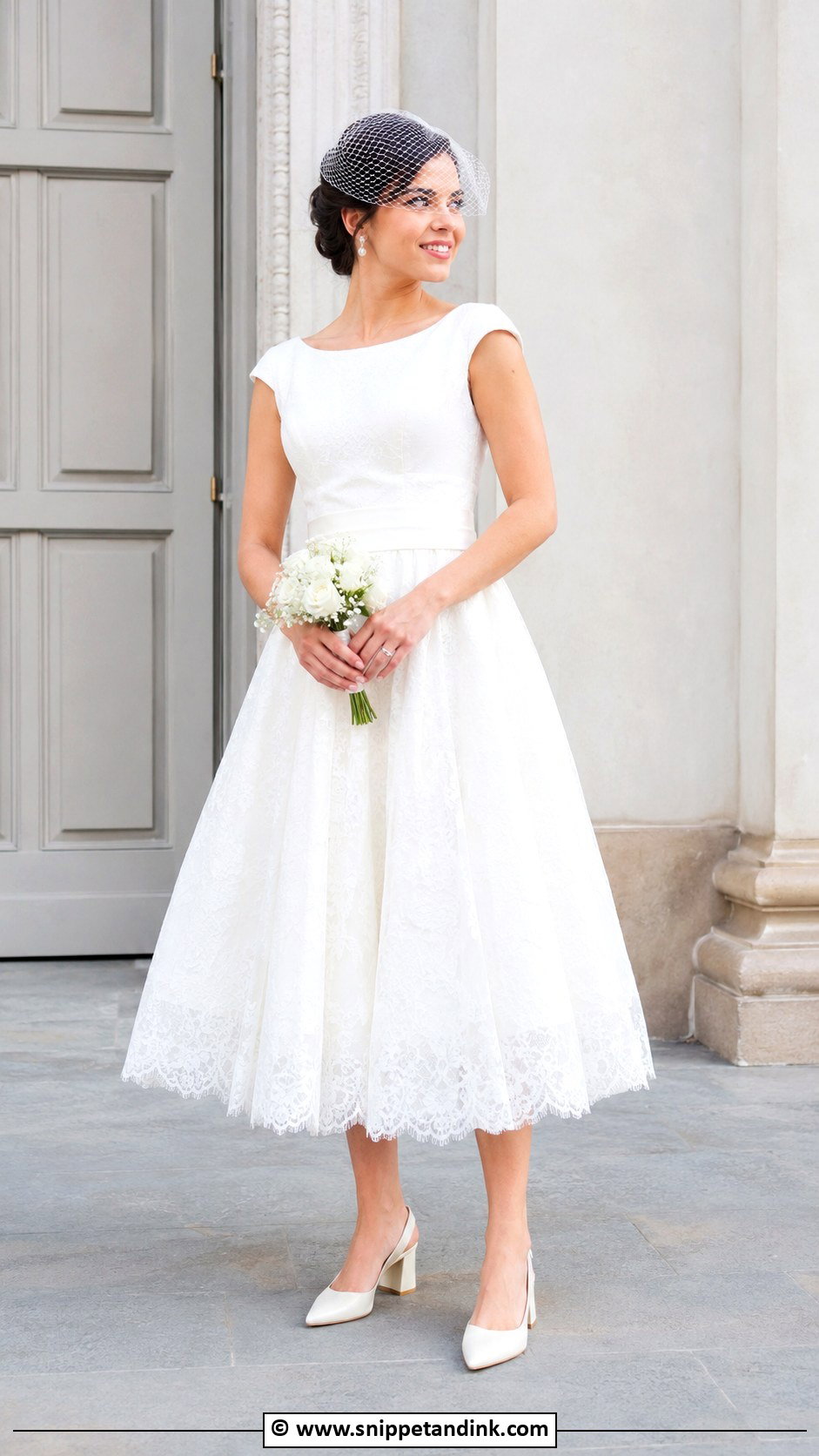
Tea length hits mid-calf, so your shoes become part of the look. Block heels are steady on grass and dance floors. The hem length is the key alteration: too long and it reads like a gown that’s been shortened, too short and it reads as a cocktail dress. A birdcage veil and pearl studs suit a courthouse or brunch reception, and it’s easy to dance in.
17. Plus Size A Line Wedding Dress With Supportive Bodice
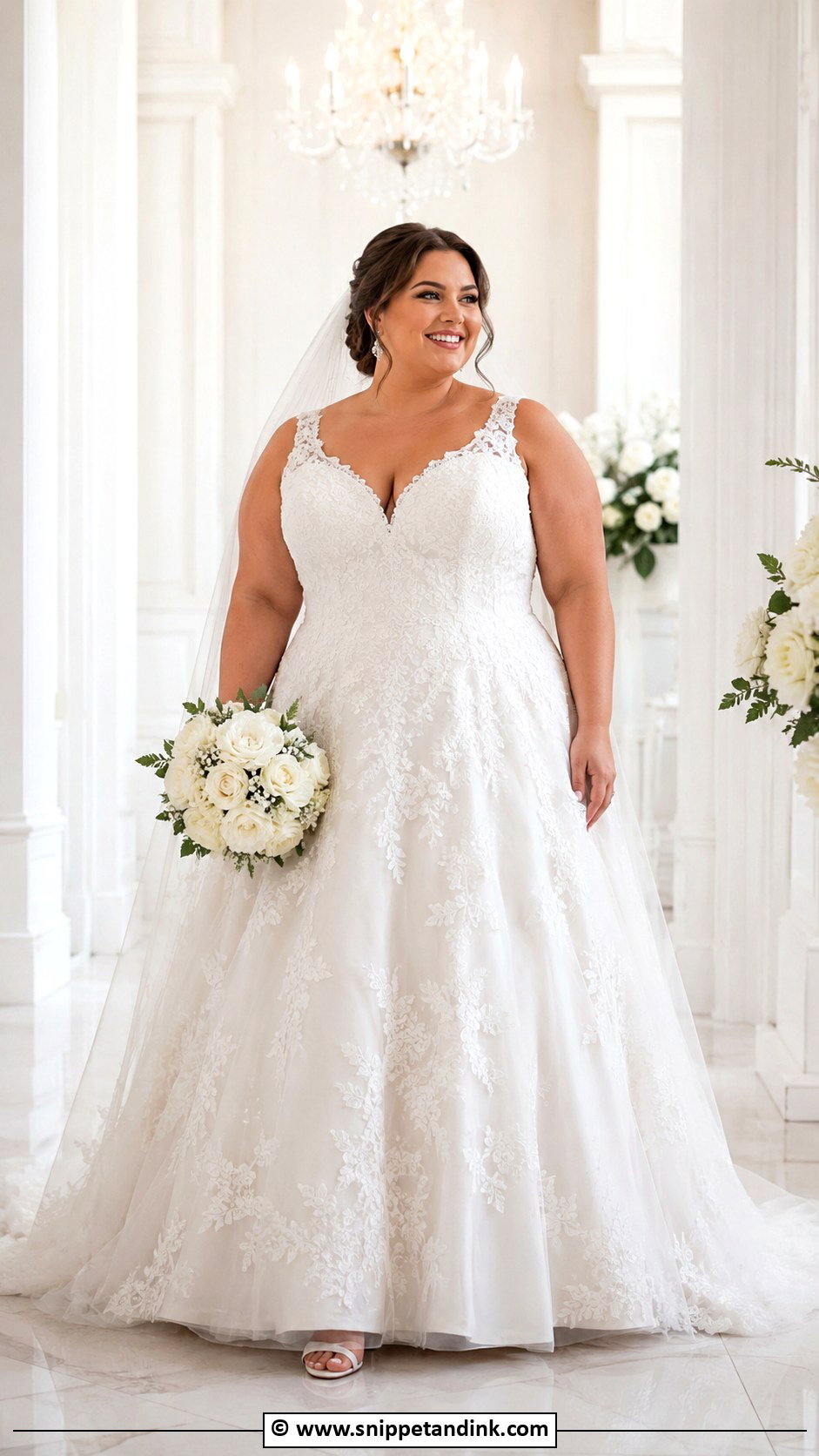
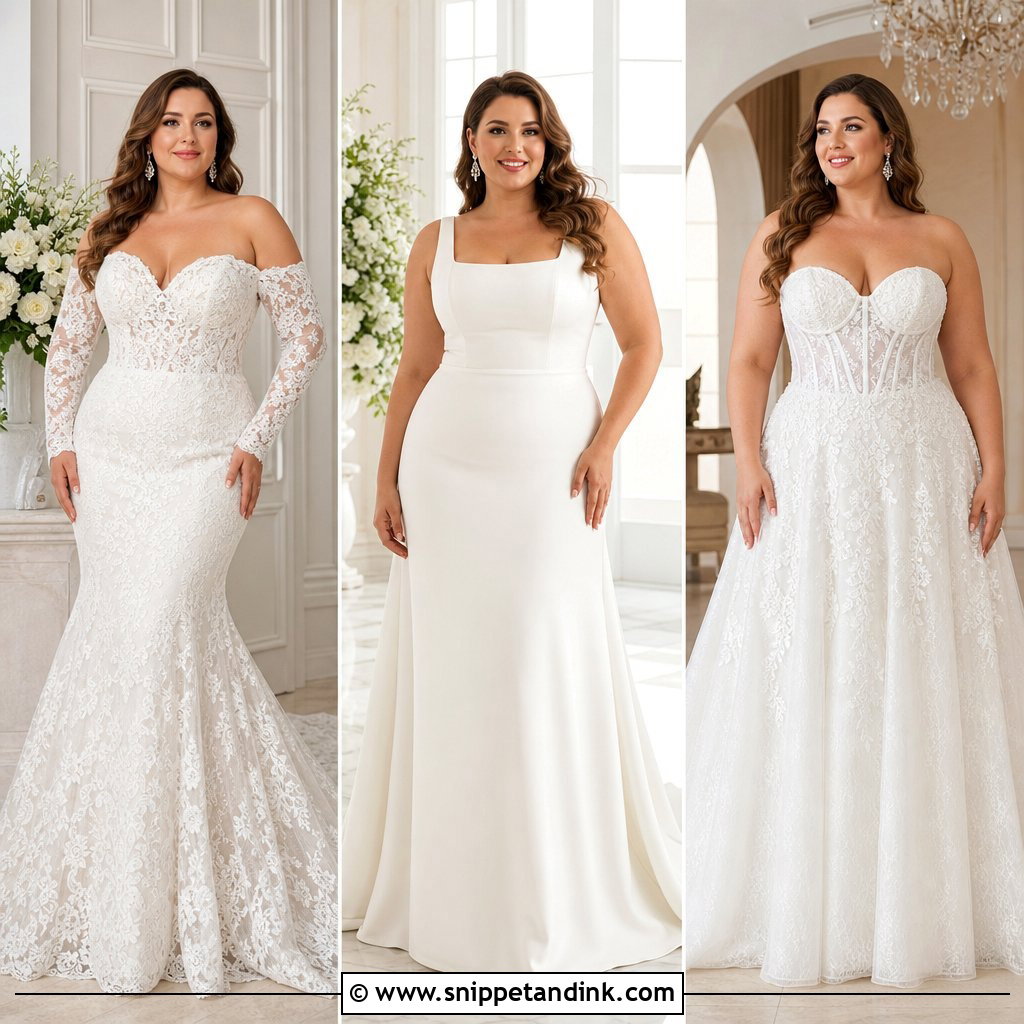
Support is the first thing I build into a plus size A-line wedding dress, before any styling. A well-constructed bodice uses boning, a built-in cup or corset back so straps aren’t doing all the work. Wide straps or a sculpted neckline help too. The A-line skirt falls away from the hips gracefully. Lace, satin and crepe all work; comfortable heels and face-framing earrings finish it.
18. Petite A Line Wedding Dress With Pointed Heels
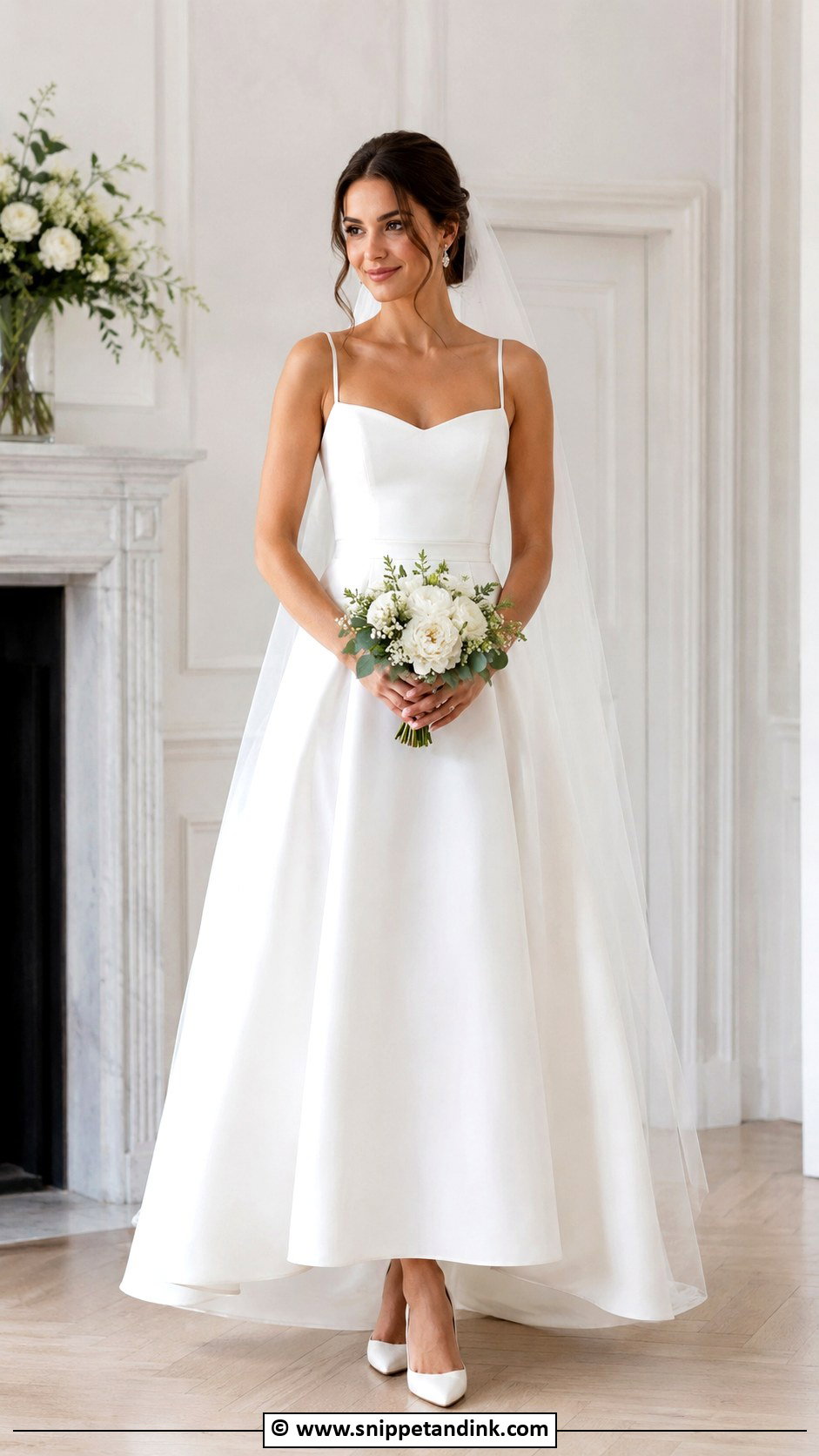
On a petite frame, an A-line can swallow you if the skirt starts too low or carries too much fabric. I look for lighter fabrics, clean seams and a waist set at or slightly above the natural line. Pointed heels add length under the hem. A V-neck draws the eye up. Keep the veil and bouquet in scale; a huge cascade bouquet shrinks a small bride.
19. Modest A Line Wedding Dress With Long Veil
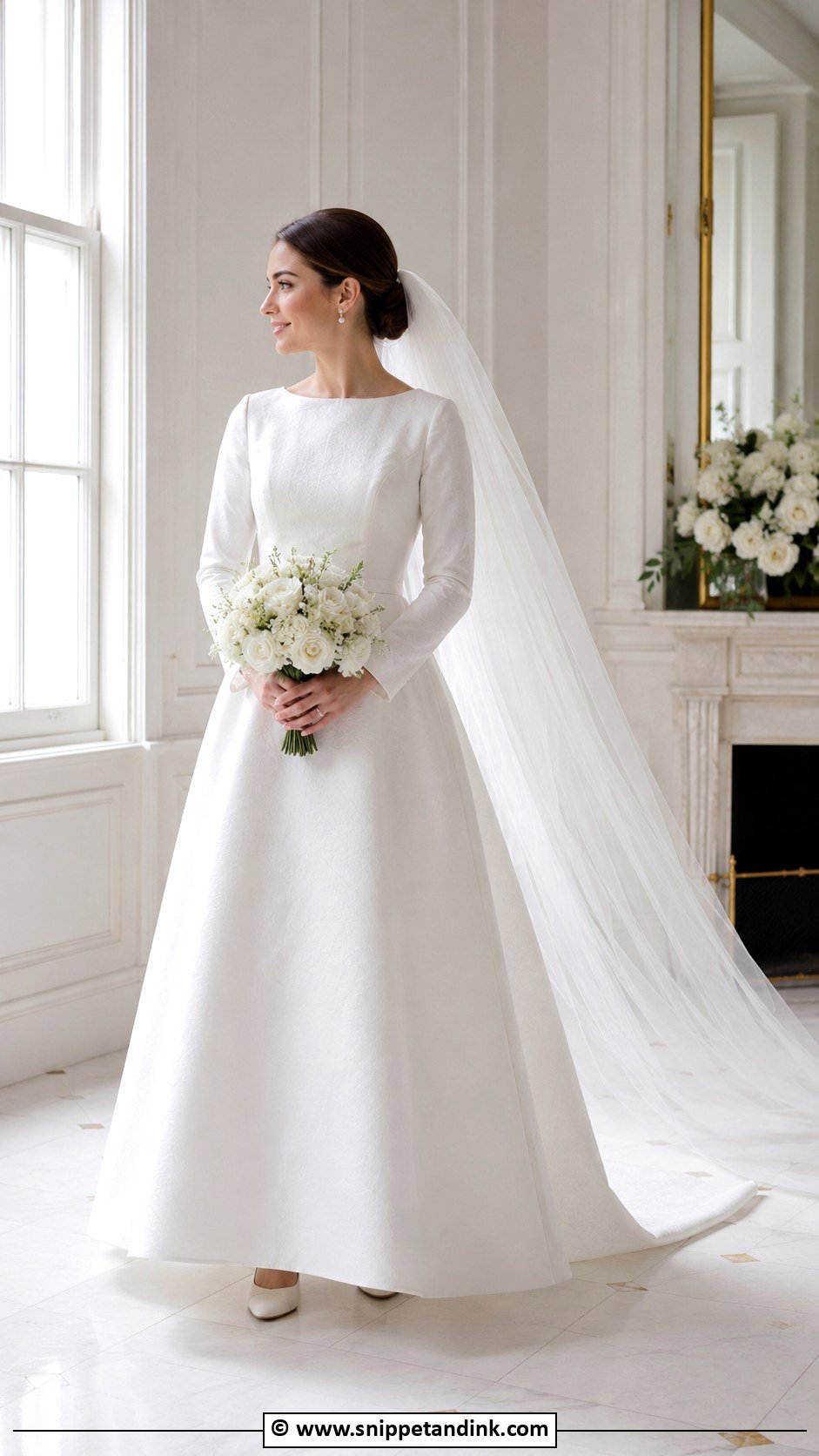
Modest bridal wear has more range than most brides expect. Long sleeves, a bateau or high neck and lined lace give coverage, and covered buttons, lace texture or a satin cuff keep it interesting. The fitting point I check is the sleeve: arms need room to hug and raise a glass, so I prefer a little ease above the elbow. A long veil and a neat low bun suit a family-centred formal ceremony.
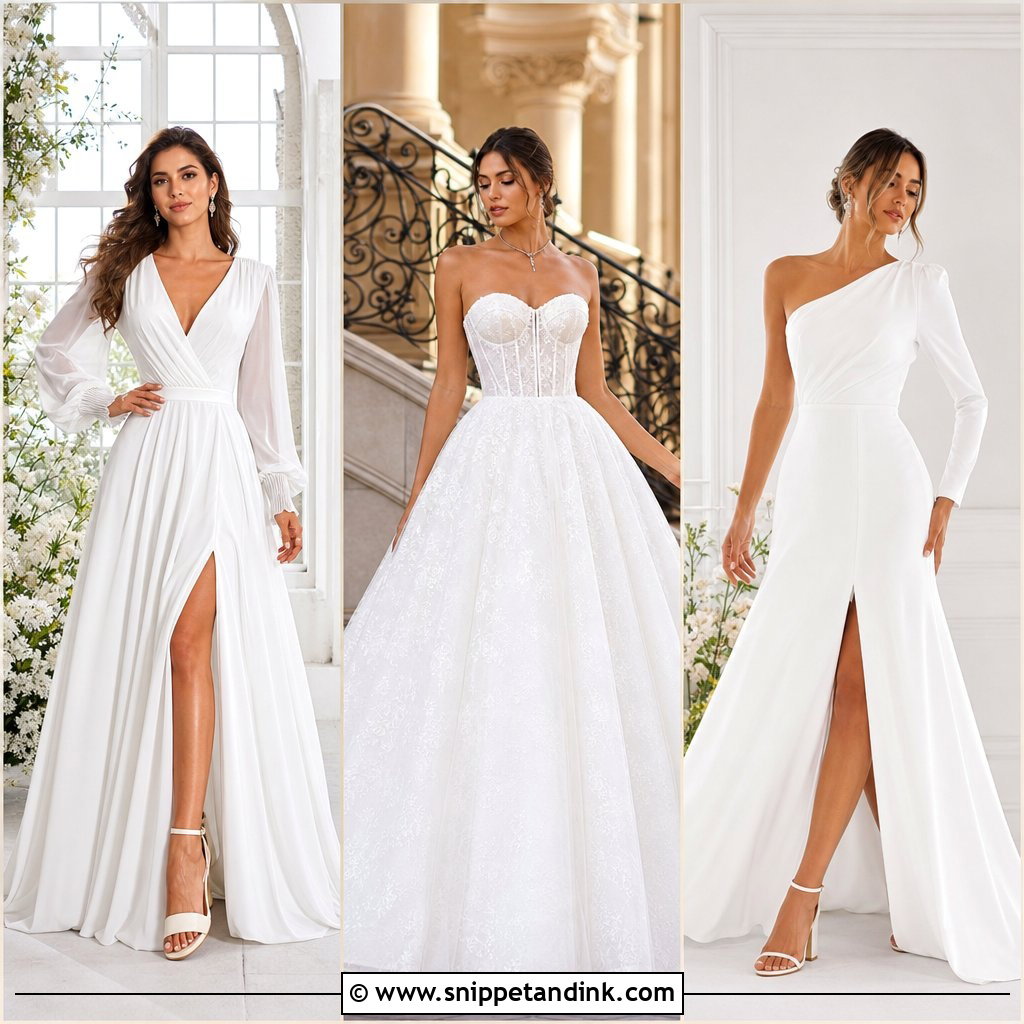



20. Boho A Line Wedding Dress With Flower Crown
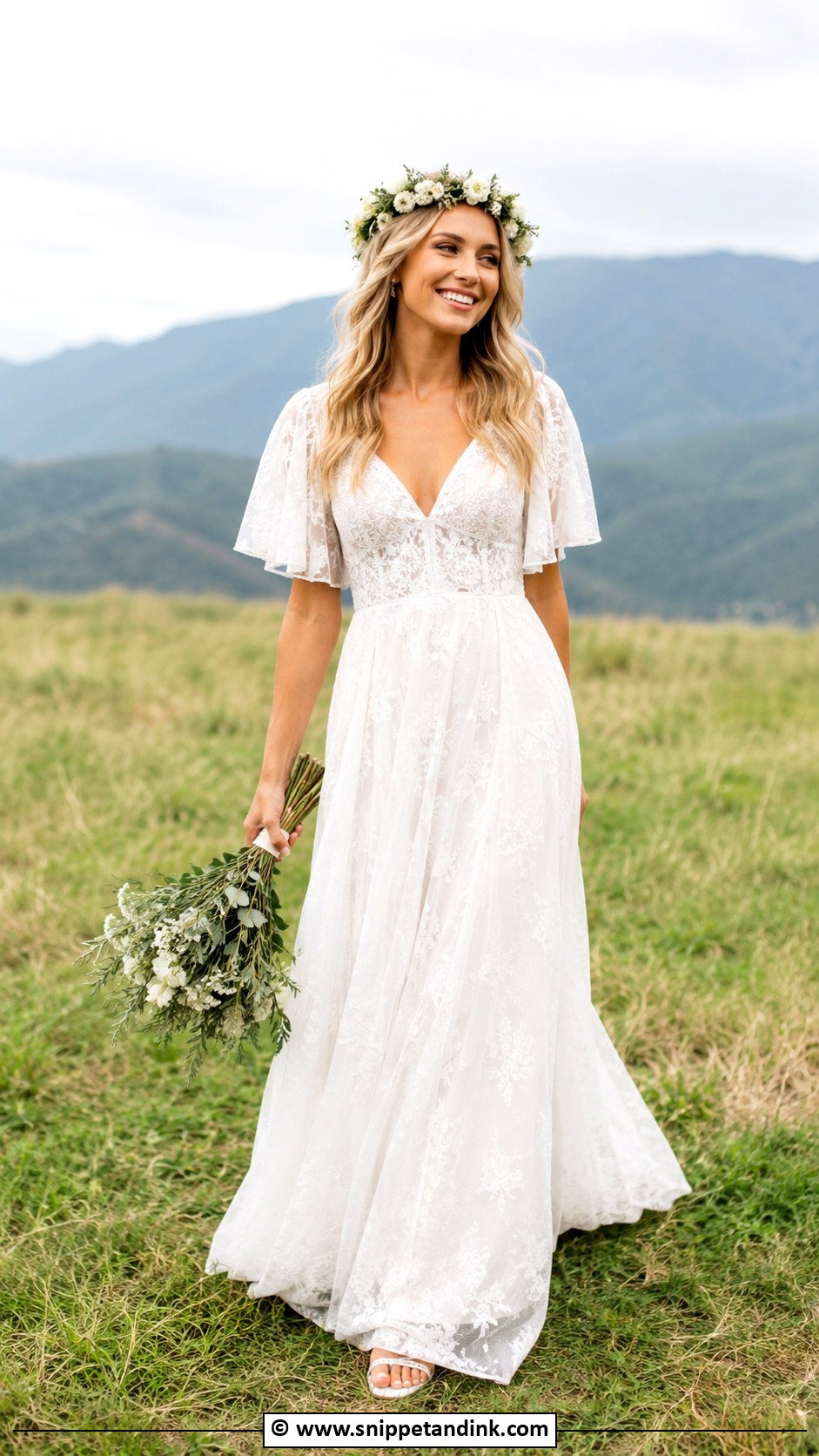
A boho A-line keeps the skirt soft rather than structured, often with lace, flutter sleeves or chiffon. A fresh flower crown wilts in strong sun, so I’d ask the florist about hardy flowers and keep a spare comb for later. Suede-look sandals and loose waves suit meadows and rustic venues. A floral comb is the subtler alternative.
21. Vintage A Line Wedding Dress With Birdcage Veil
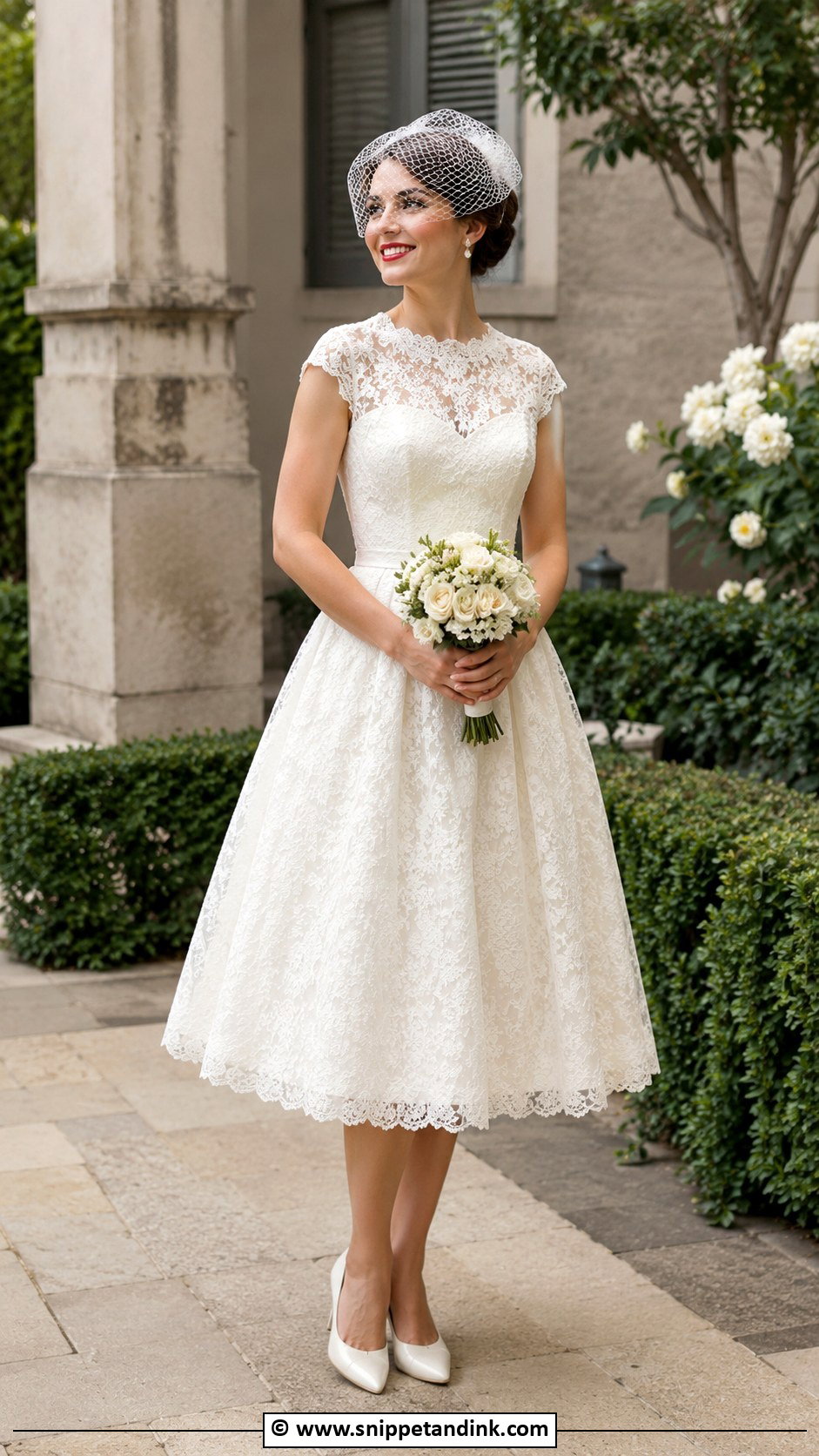
Vintage A-lines lean on details: covered buttons, lace sleeves, a tea-length skirt or a sweetheart neck. The trap is a costume effect, which happens when every accessory is vintage too. I’d pick one strong period element, like the birdcage veil, and keep the rest modern. Classic pumps or block heels, defined lashes and a small structured bouquet suit a historic venue.
22. Modern A Line Wedding Dress With Cape Veil
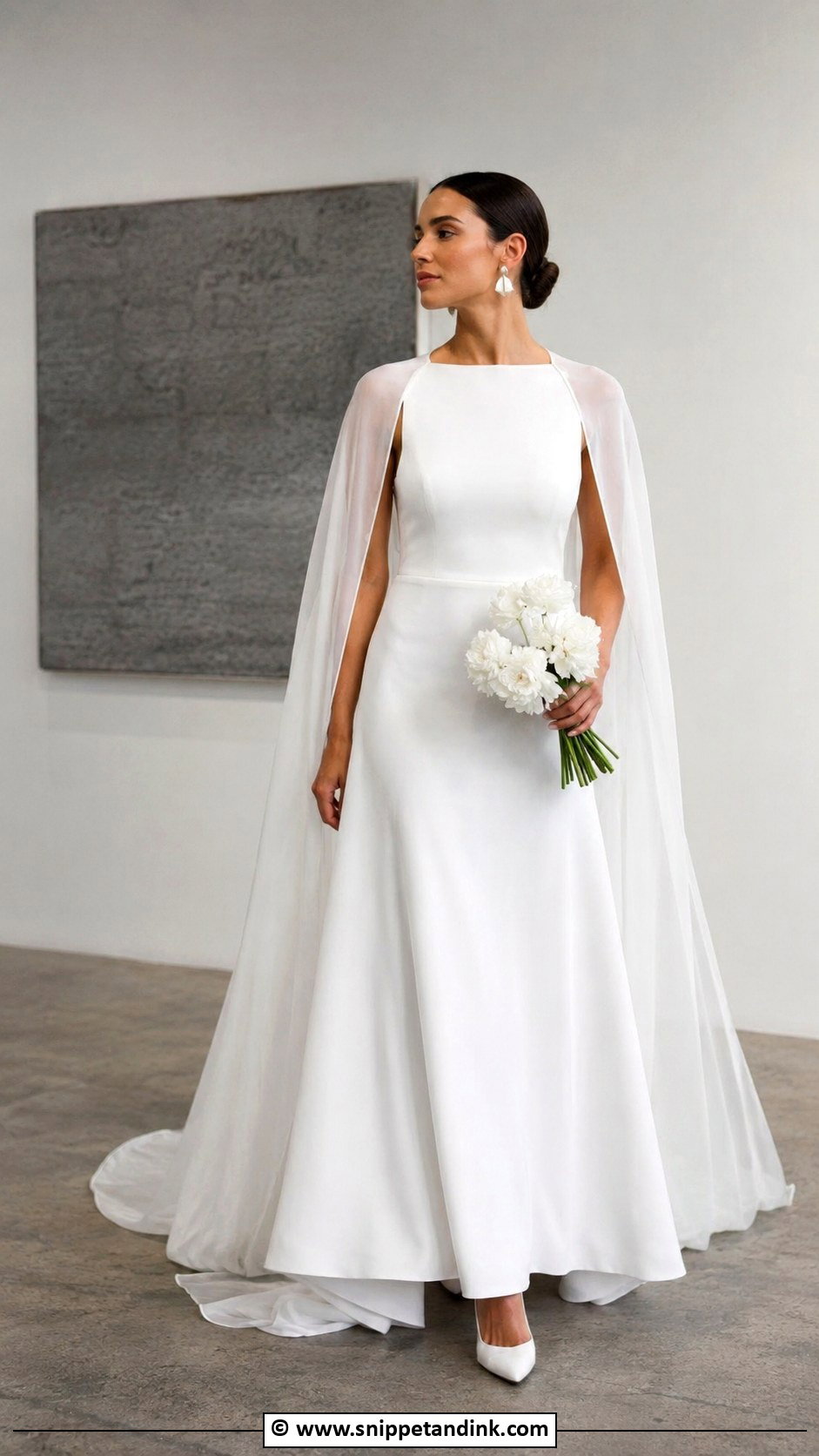
A cape veil falls from the shoulders or back rather than the head, which gives drama without covering the face or hairstyle. It works best over a clean crepe, satin or mikado gown so the two don’t fight. Ask how it attaches; snaps or hooks on the shoulders hold better than clips. A smooth bun, sculptural earrings and calla lilies or orchids keep the lines sharp.
23. Garden A Line Wedding Dress With Embroidered Flowers
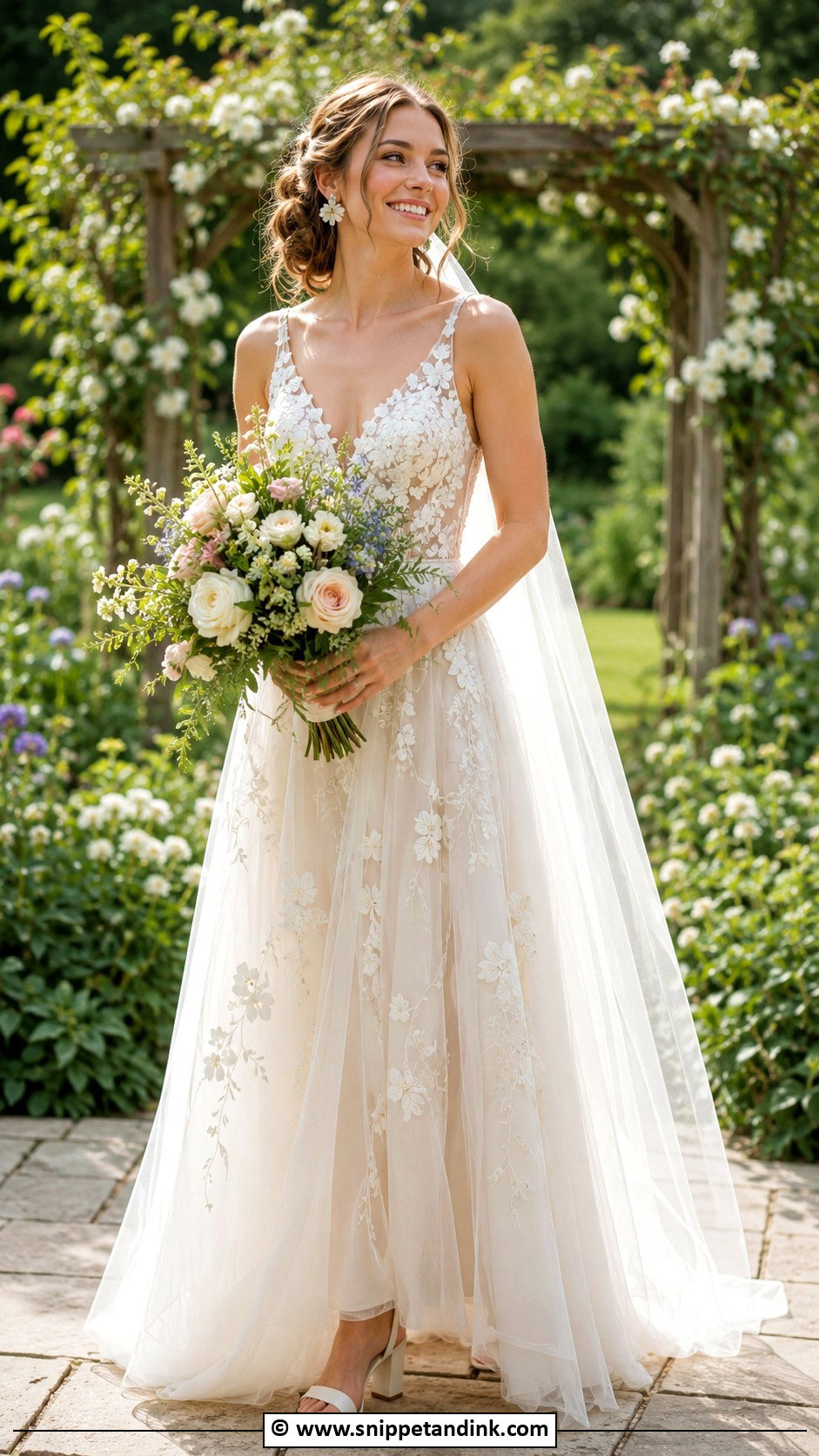
Embroidered flowers on the bodice, sleeves or train give an A-line texture that reads clearly in daylight photos. For an outdoor ceremony I always ask what the ground is. Ivory block heels won’t sink into lawns, and a shorter train stays cleaner on grass. Seasonal blooms in the bouquet link the dress to the garden, with waves, a half-up style or a low bun.
24. Winter A Line Wedding Dress With Faux Fur Wrap
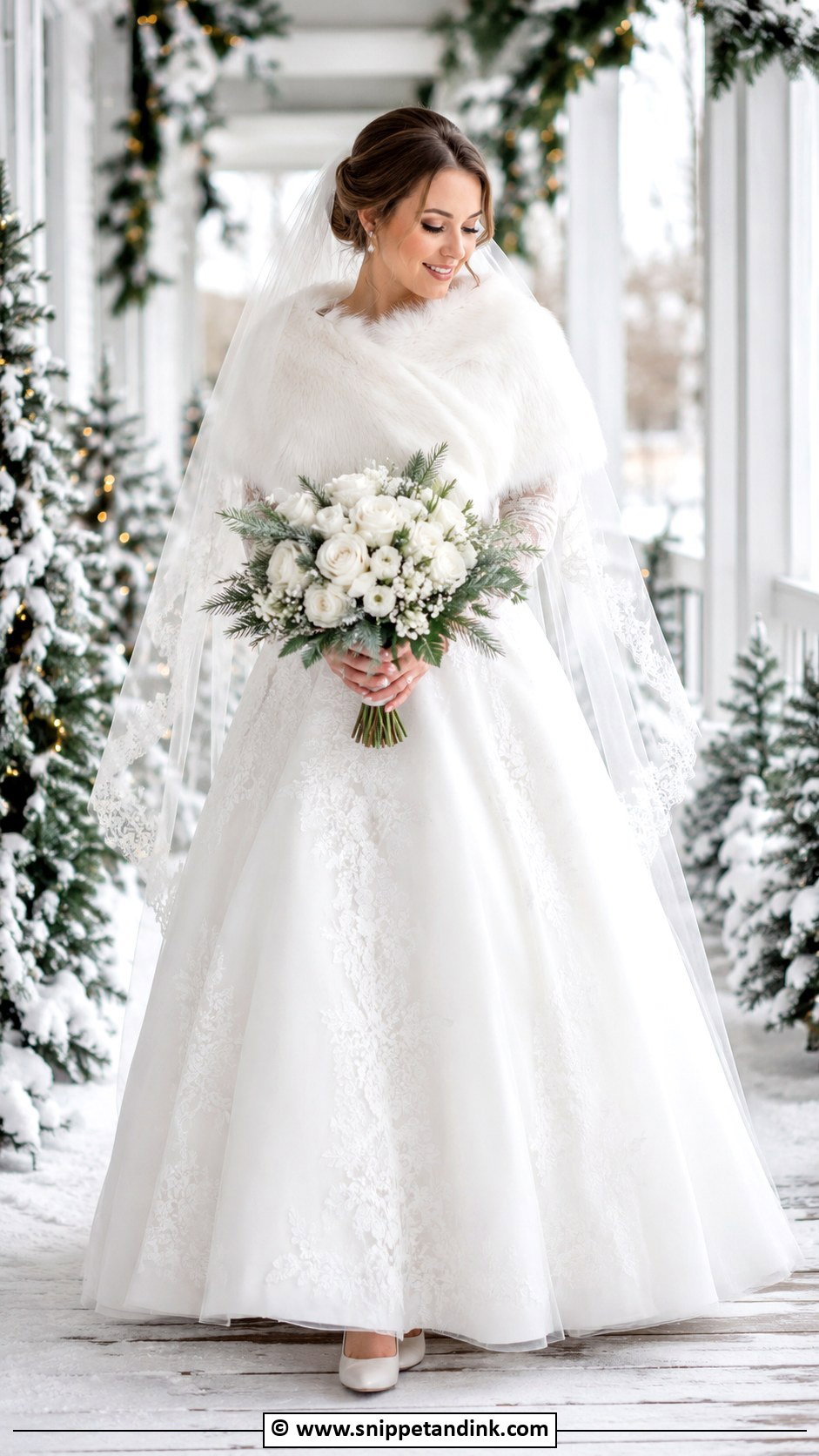
A faux fur wrap over a winter A-line wedding dress gives real warmth for outdoor portraits. Light faux fur sheds a little onto dark suits, so do a lint-roll check before the group photos. Satin, mikado, crepe or lace all work underneath; a long-sleeve bodice helps, but strapless suits too. Keep the palette ivory, white and champagne, with closed-toe heels and a long veil.
25. Summer A Line Wedding Dress With Open Back
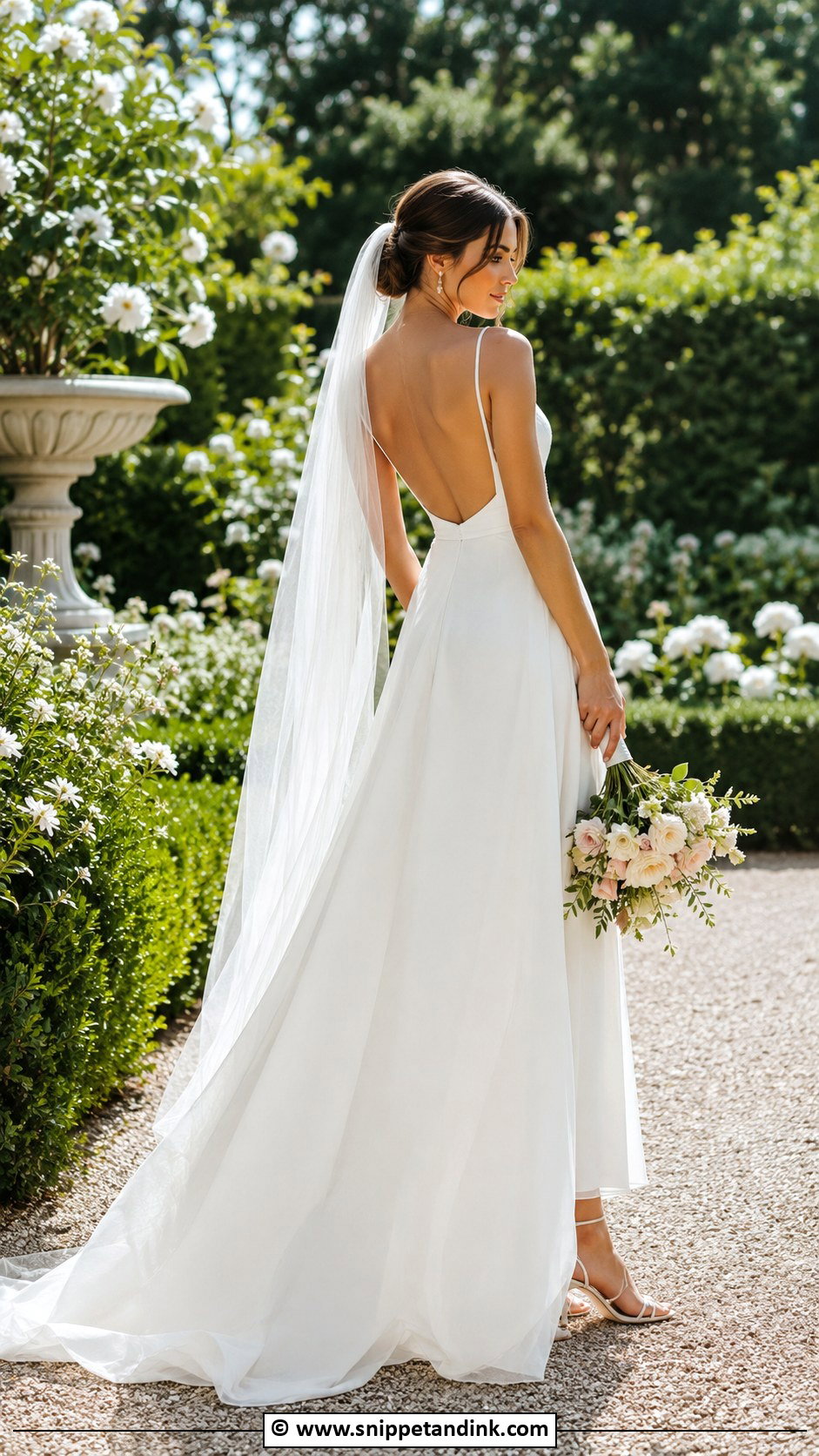
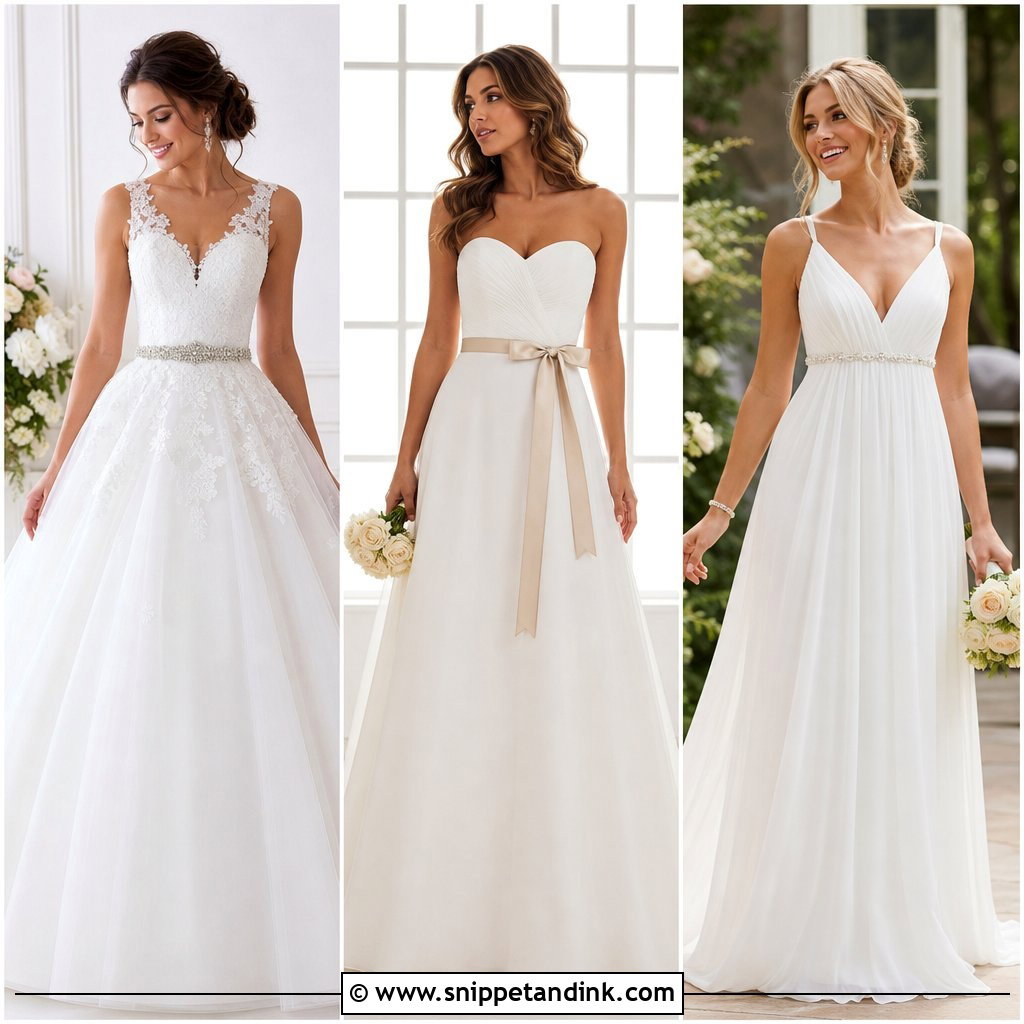
An open back on an A-line gives a summer dress something to look at during the ceremony, since guests spend most of it looking at your back. Breathable chiffon or organza helps in heat. The construction detail I’d check is how the bodice stays up without a back, usually through a strong waistband and inner corset; test it by bending forward. A low bun or side-swept waves show off the back, with a veil that doesn’t hide it.
26. Courthouse A Line Wedding Dress With Short Veil
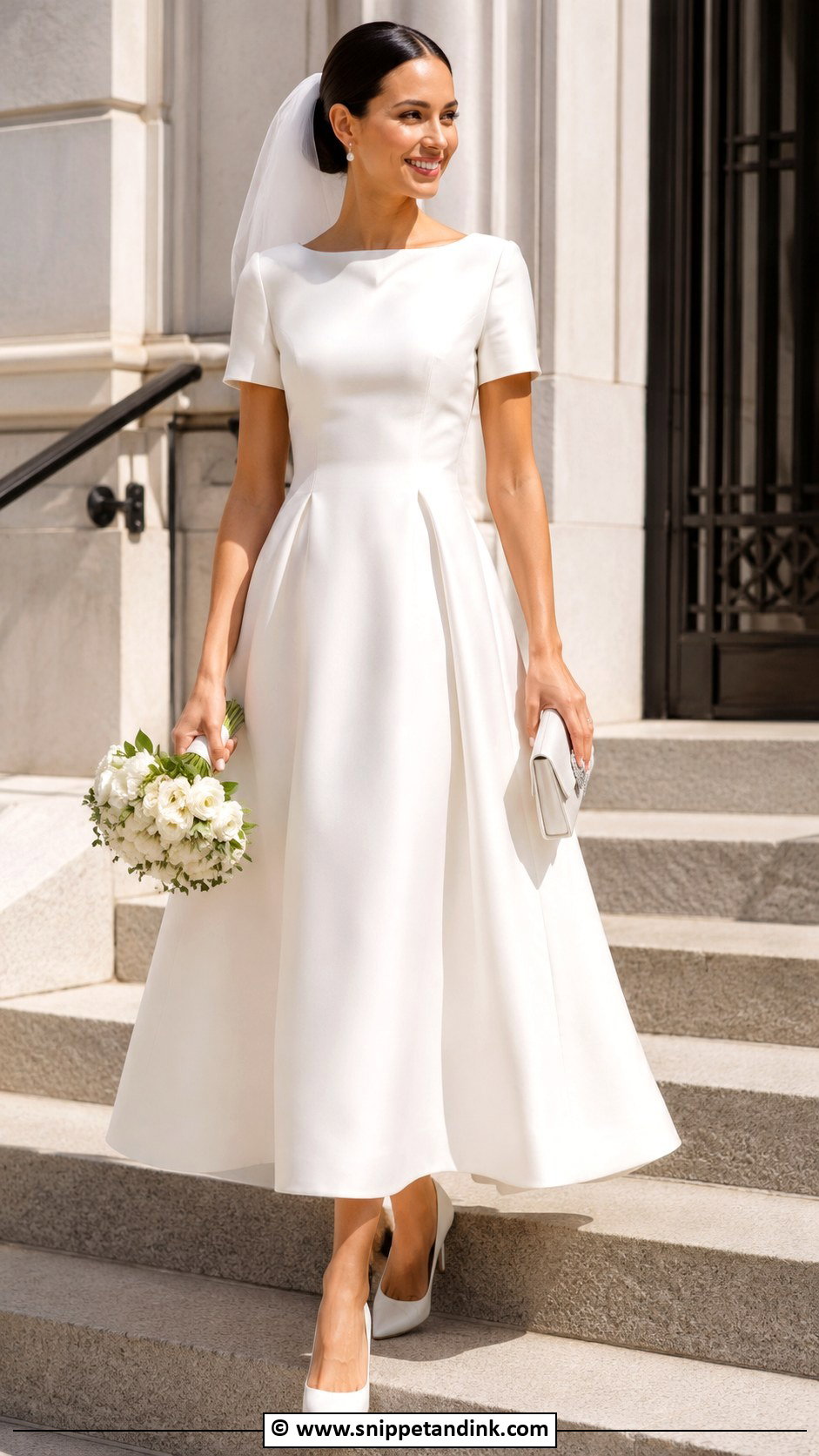
For a courthouse, I’d go tea-length or midi, or a floor-length A-line with no train. Courthouse corridors, lifts and city pavements are no place for a sweep. Satin, crepe and lace all work, with a short veil, pointed pumps and pearl earrings. Carry a small clutch for documents and lipstick, since there’s rarely anywhere to leave a bag.
27. Ballroom A Line Wedding Dress With Long Train
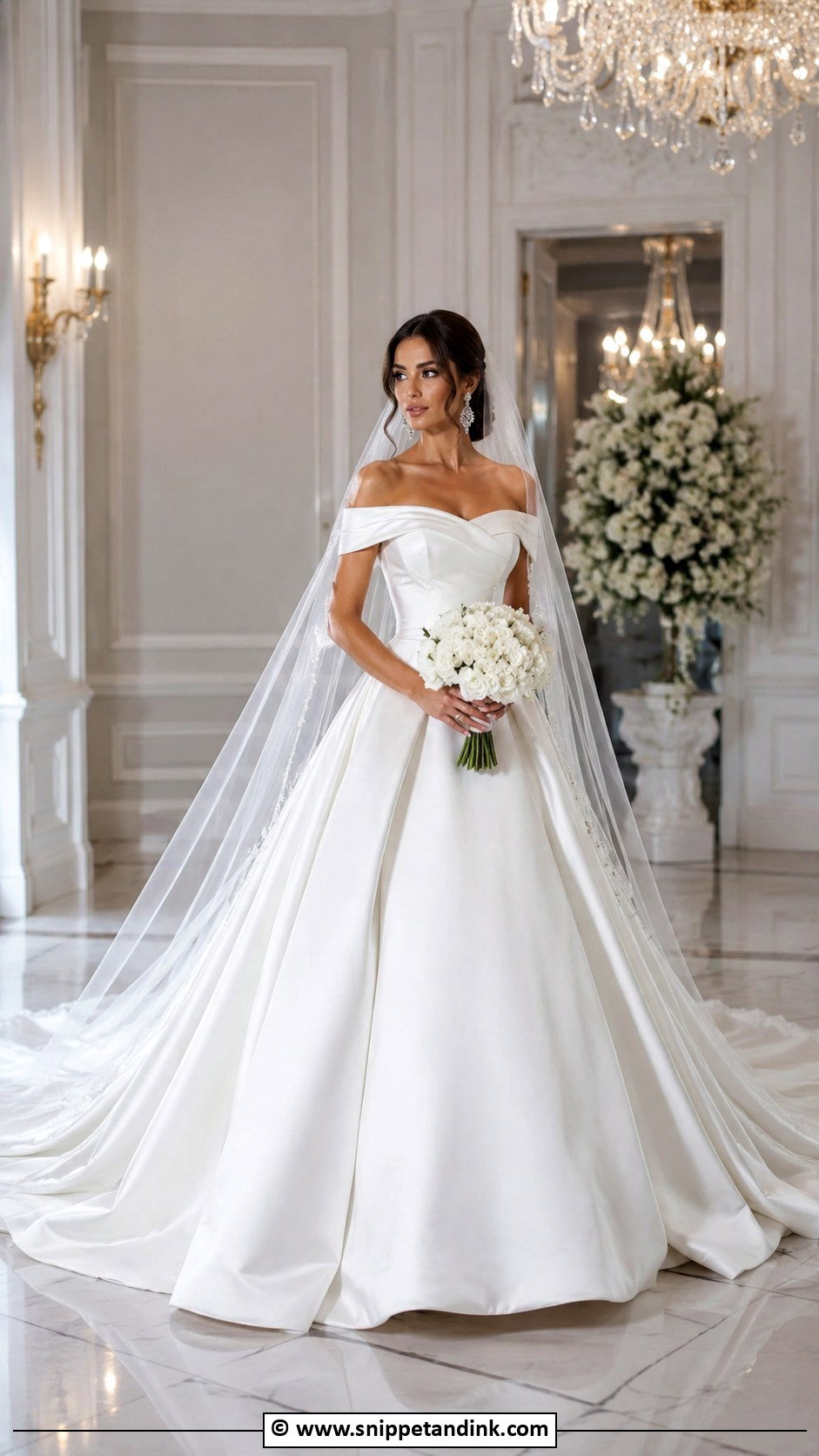
A long train gives an A-line ballroom drama without the full weight of a ball gown. Plan the bustle from the first fitting, because the bustle style depends on fabric: tulle and lace often bustle over the skirt, while mikado and satin bustle neatly underneath. Choose secure-strap heels; you’ll be stepping on the hem otherwise. A cathedral veil and sparkling earrings suit a black-tie room.
28. Minimal A Line Wedding Dress With Pearl Earrings
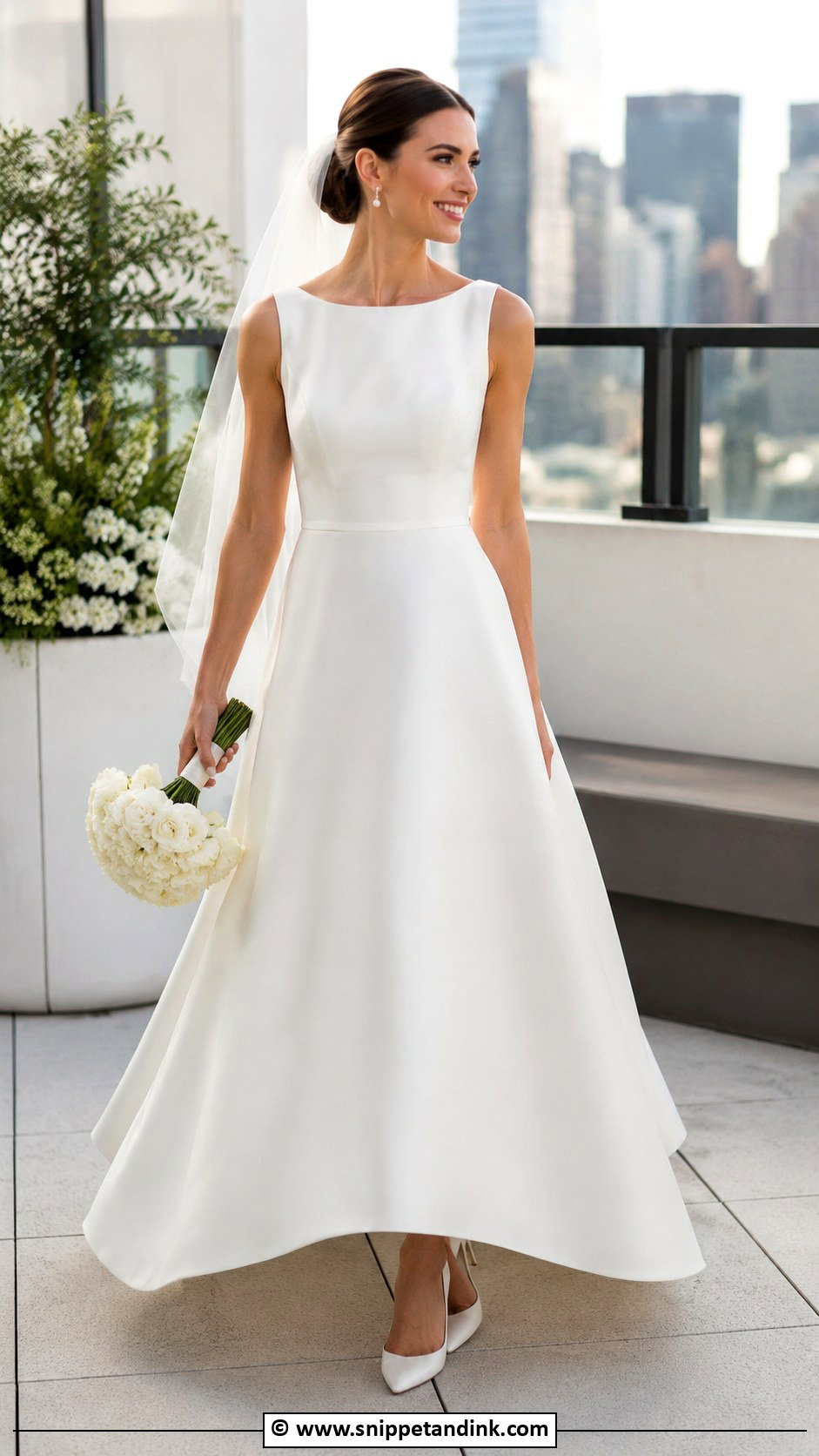
Minimal gowns are carried by fabric and fit. Good crepe, satin or mikado, a neckline that suits your face, and careful tailoring are all it needs. I add pearl earrings to soften the modern lines. Sleek heels, a plain veil and a small white bouquet. A rooftop or contemporary venue suits it, and it’s the dress least likely to date in photos.
29. Romantic A Line Wedding Dress With Blush Details
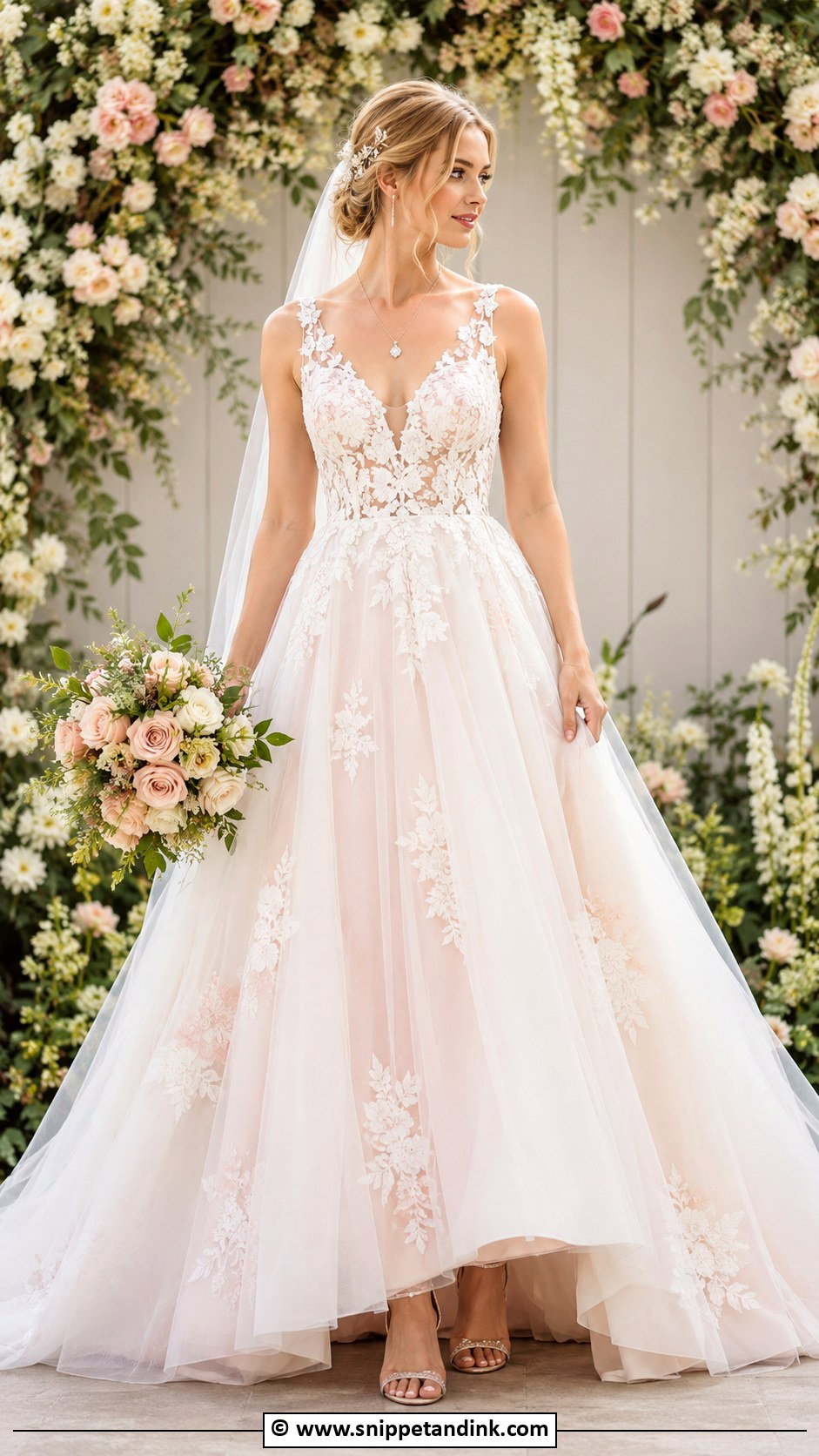
Blush details let you add colour without wearing a coloured gown. It can be an underlay, embroidery, a ribbon sash or appliques. The shade needs checking in daylight against your skin; a blush underlay can read as flesh tone in some lighting, which some brides love and others don’t. Champagne heels and rose-gold jewelry tie it together, with ivory and pale pink flowers.
30. Reception A Line Wedding Dress With Detachable Overskirt
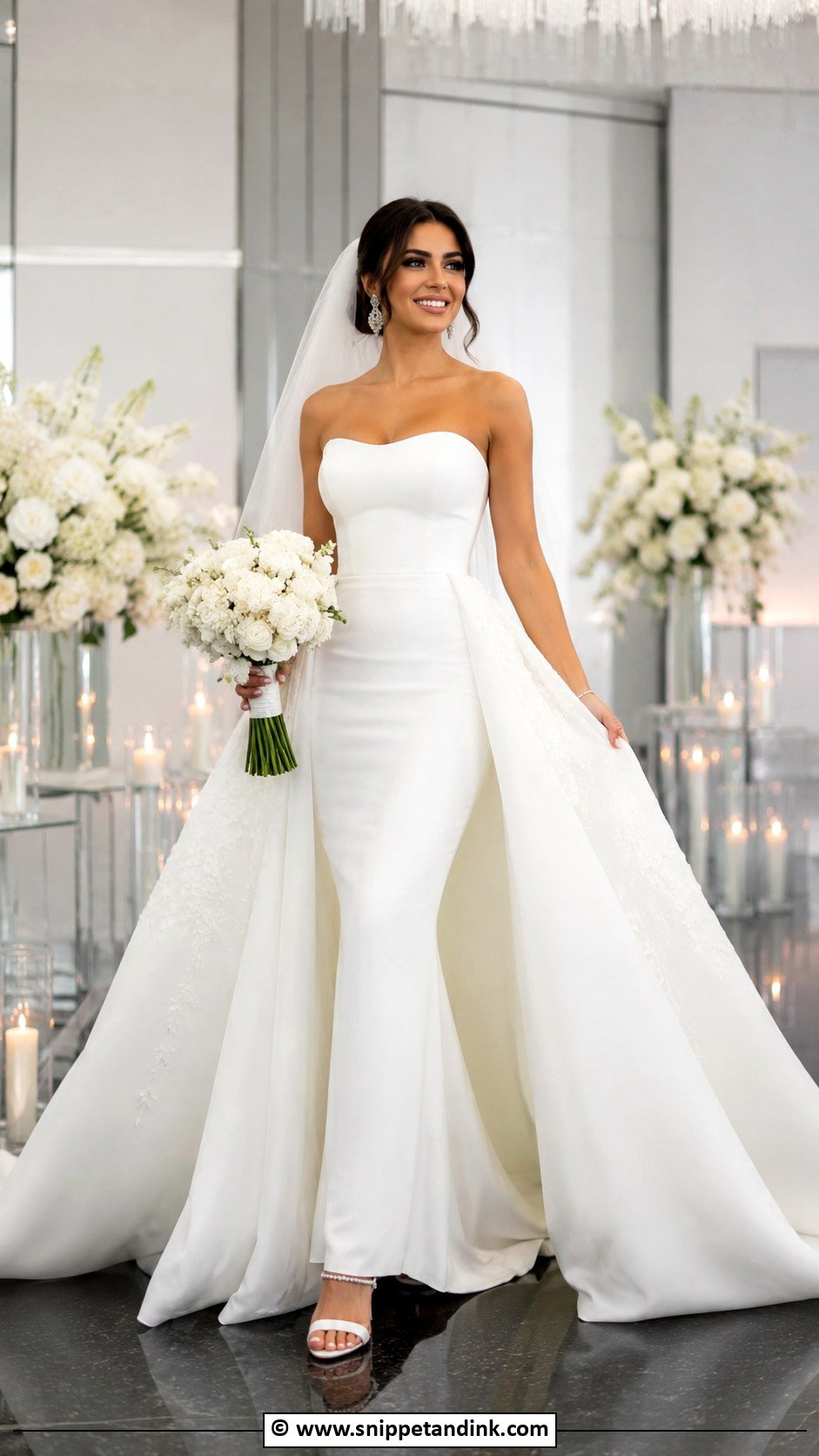
A detachable overskirt turns one gown into two looks. The ceremony gets a full A-line; the reception gets a lighter dress. I always rehearse the removal at the final fitting with whoever will help you, because the hooks are often hidden and fiddly. Check how the waist looks once the overskirt is off; sometimes it needs its own small adjustment. Statement earrings work for the party half.
Hems, Bustles and the Fitting Calendar for an A-Line
Alterations on an A-line are usually simpler than on a mermaid, but the hem can still take time when there are several layers of tulle or lace on top of a lining. Each layer is shortened separately, and lace edges are often moved up rather than cut so the scallop survives.
I’d plan the first fitting roughly two to three months before the wedding, with two or three fittings in total and the last one a couple of weeks out. Bring your shoes and undergarments to every one. Prices and timings vary a lot between seamstresses, so ask for a quote at the first visit.
Which bustle suits your skirt
- An over bustle hooks the train up onto the back of the skirt. It’s quick to do and suits lace and tulle.
- An under bustle, sometimes called a French bustle, tucks the train under itself with ribbon ties. It gives a smooth, layered look on satin and mikado.
- A ballroom bustle lifts the train all around so the dress looks floor-length with no tail. Good for heavy dancing.
Have your maid of honour come to the last fitting and practise the bustle twice. On the day, the room is dim, the music is loud and the ties are usually numbered in tiny writing.
One Silhouette, Thirty Brides: Getting the Details Right
An A-line can be beachy, regal, vintage or minimal, and the gown alone doesn’t decide which. The fabric, neckline, accessories and venue do. When you shop, try the dress with the right undergarments and shoes, sit down in it, and picture where you’ll stand to say your vows. Plan the tailoring early, and treat the veil, shoes and jewelry as part of the same decision rather than an afterthought. Get those right and the dress will feel like yours.
You'll Like These Ideas:



Leave a Reply