
Dressing the bride’s sister is one of my favorite briefs, because the role sits in an odd middle ground. You’re in half the family portraits and often standing right beside her at the altar, yet you’re usually not in the bridesmaid lineup. So the dress has to look considered next to hers without echoing it. In fittings I aim for something a notch dressier than a guest and a notch quieter than the bridal party, matched to the venue and the hour. The ideas below run from satin midis for city dinners to chiffon maxis for lawns and velvet for winter, with the shoes, bag and hair I’d pair with each.
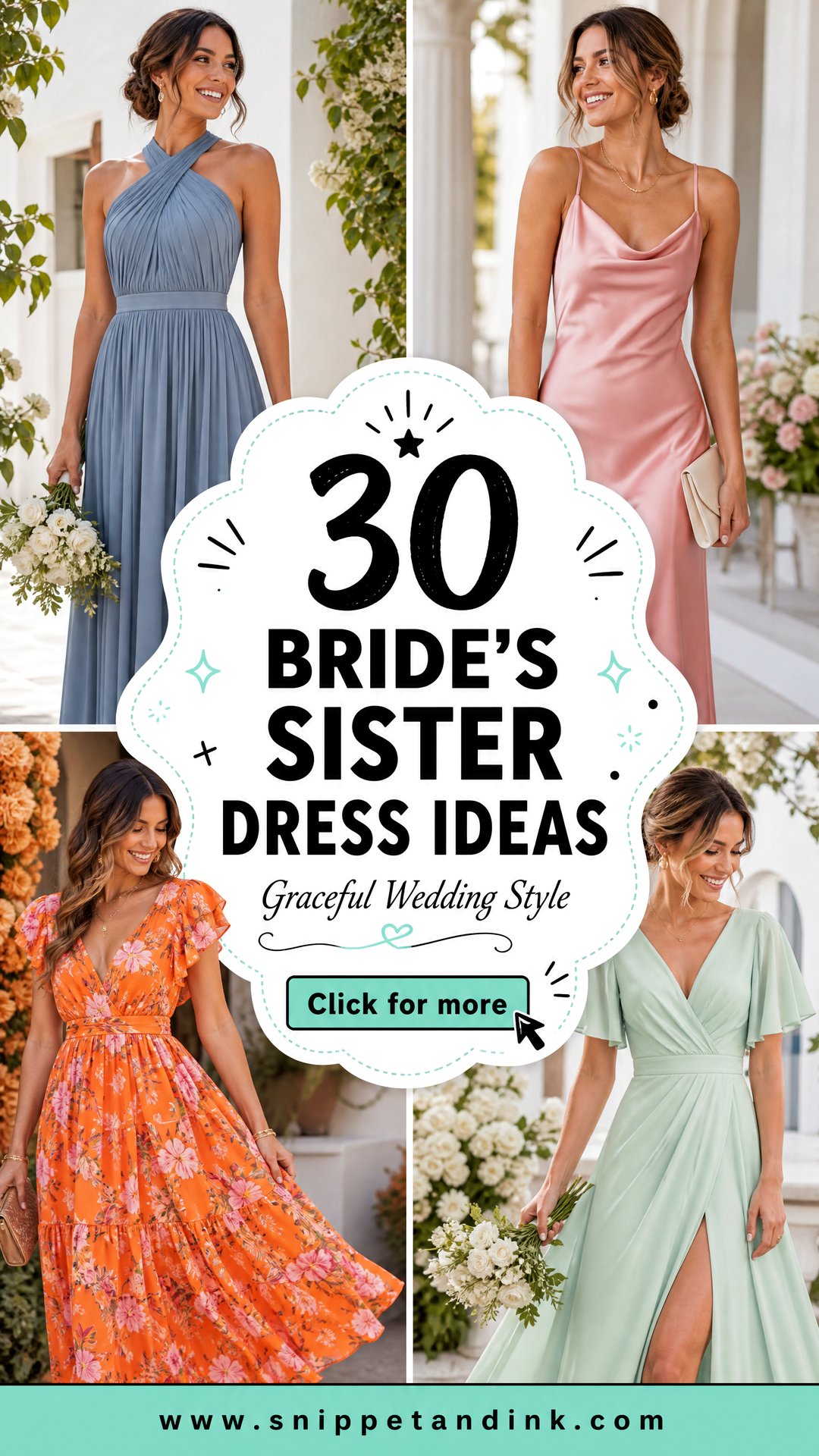
Clearing the Color With Your Sister Before Anything Else
I always start a sister’s fitting with one question: has the bride seen this color? Many brides care more about who stands next to them in portraits than about guest outfits, and a quick conversation now saves an awkward return later. Send her a photo of the actual fabric taken by a window, not the product image, because online color is often edited.
Here’s what I ask a sister to confirm with the bride before ordering:
- Whether she wants you coordinated with the bridesmaids, deliberately different from them, or simply not clashing.
- Which colors are off limits, usually anything near her gown, and sometimes the bridesmaid shade itself.
- Where you’ll stand for the ceremony and portraits, since that decides how visible the dress really is.
- How formal the evening becomes; a garden ceremony can still lead into a black-tie dinner.
Then do my white sheet test. Lay the fabric on something pure white in daylight and take a phone photo with flash. If it reads as cream or ivory in that photo, it will read that way at the wedding too, and I’d go a shade deeper.
1. Navy Satin Midi Bride’s Sister Dress
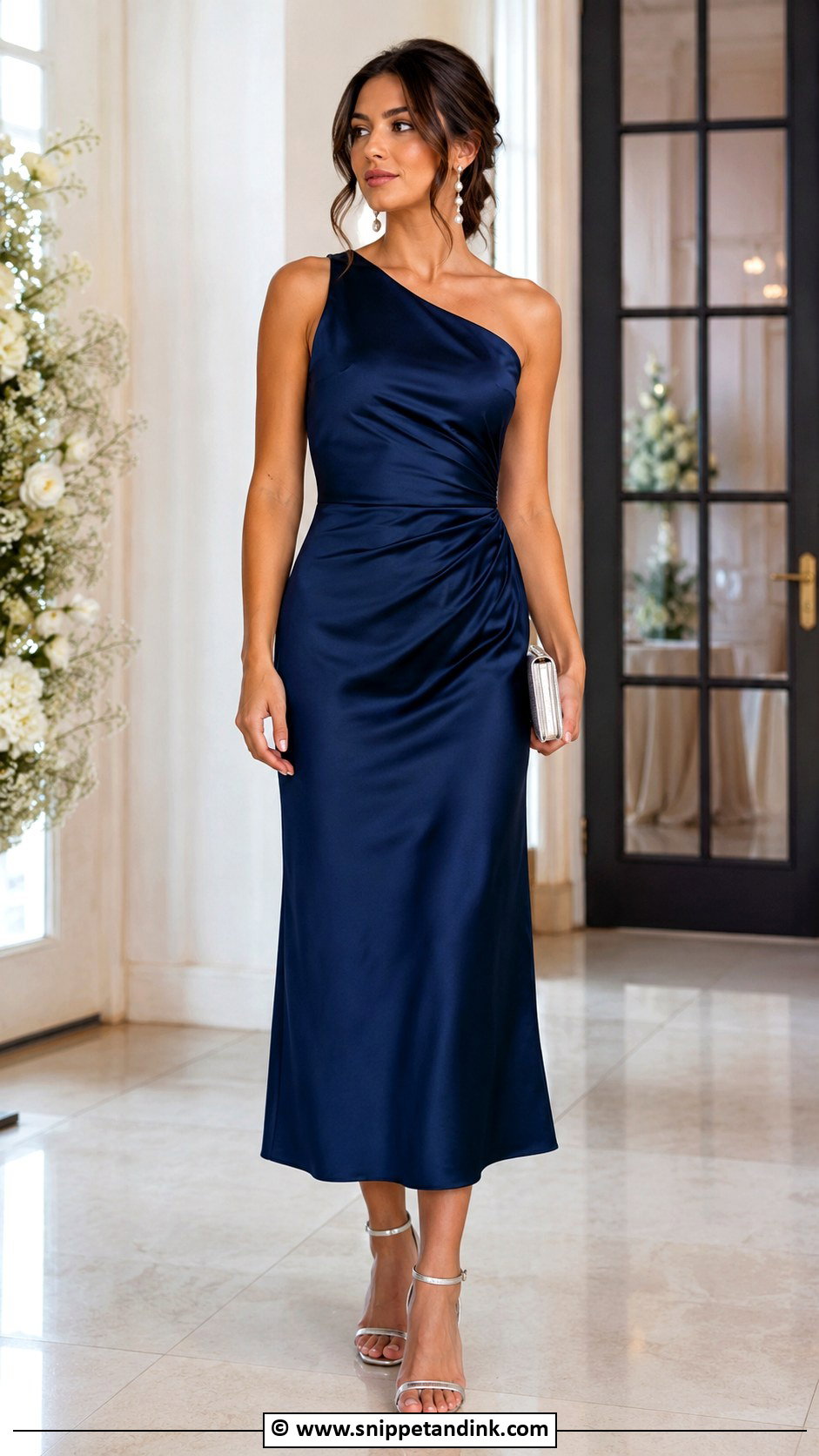
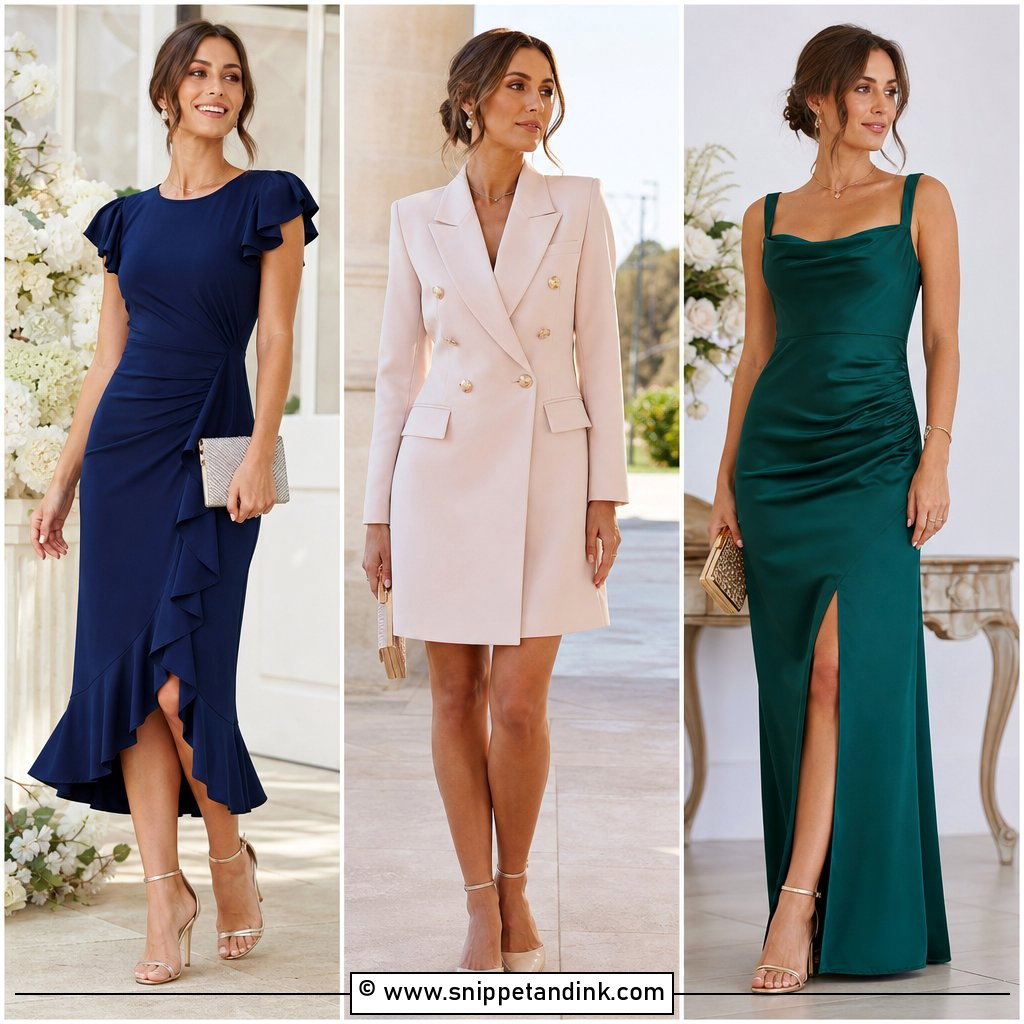
When a sister tells me she has no idea where to start, I hand her a navy satin midi dress. Navy holds its color under every kind of light, from noon sun to tungsten reception bulbs, which is more than most pastels can say. A bias cut drapes over the hips rather than gripping them, but it shows every seam of shapewear, so I always check the back view in the fitting mirror. Silver or champagne heels, a small metallic clutch and pearl drops finish it. For a formal evening, a sleek updo is enough. It also gives the bride an easy answer when she wants family to look polished without matching the bridesmaids.
2. Blush Chiffon Maxi Bride’s Sister Dress
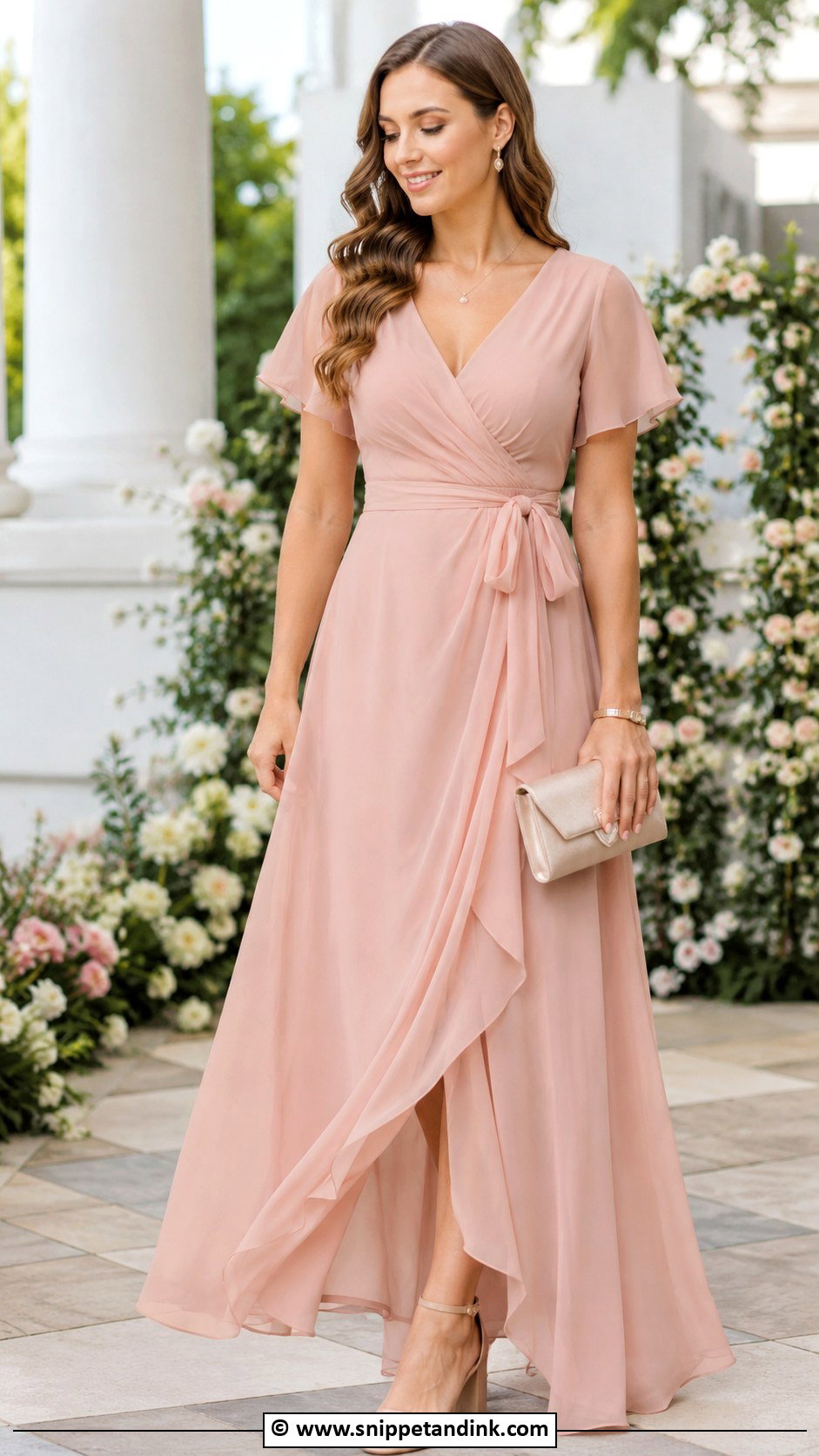
Blush is where I slow down. Under strong sunlight the palest blushes wash out to something very close to ivory, so I hold the fabric next to a white sheet by a window before anyone commits. If it still reads clearly pink, a chiffon maxi with flutter sleeves or a wrap bodice is light enough for an outdoor spring ceremony. Nude block heels, a satin clutch and rose gold studs keep it soft, and I’d keep the makeup fresh rather than smoky so the whole thing stays relaxed.
3. Emerald Green Gown Bride’s Sister Dress
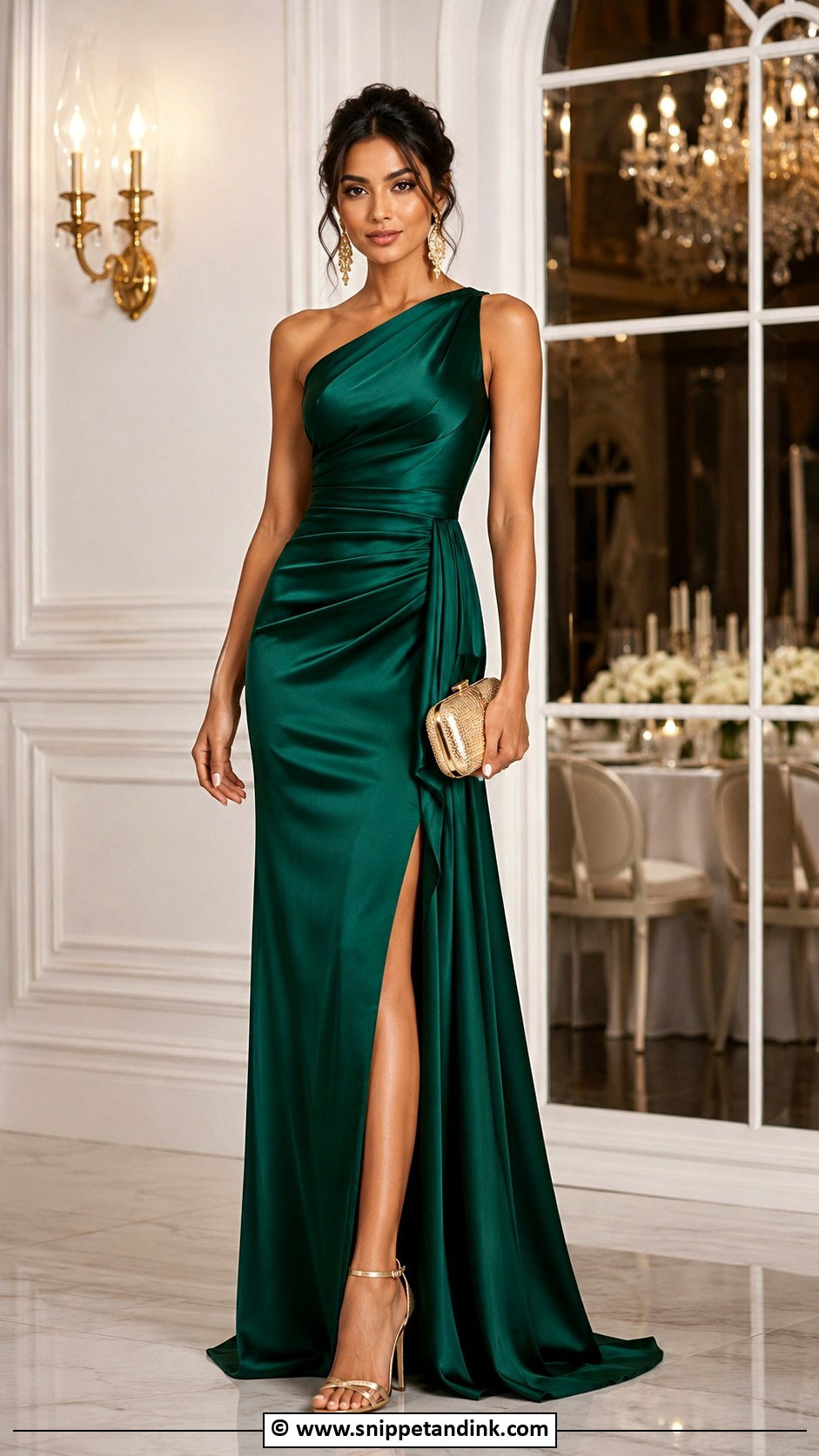
Emerald is the color I reach for when a sister wants presence at a formal wedding. In satin it throws a deep sheen; in crepe it goes matte and sculptural, which is kinder if you’d rather not show every movement. A one-shoulder neckline or a clean column lets the color do the talking. Gold heels, a structured clutch and one pair of strong earrings are plenty. I save this for evening receptions and fall or winter dates, where it reads rich against candlelight and greenery rather than heavy.
4. Floral Midi Bride’s Sister Dress
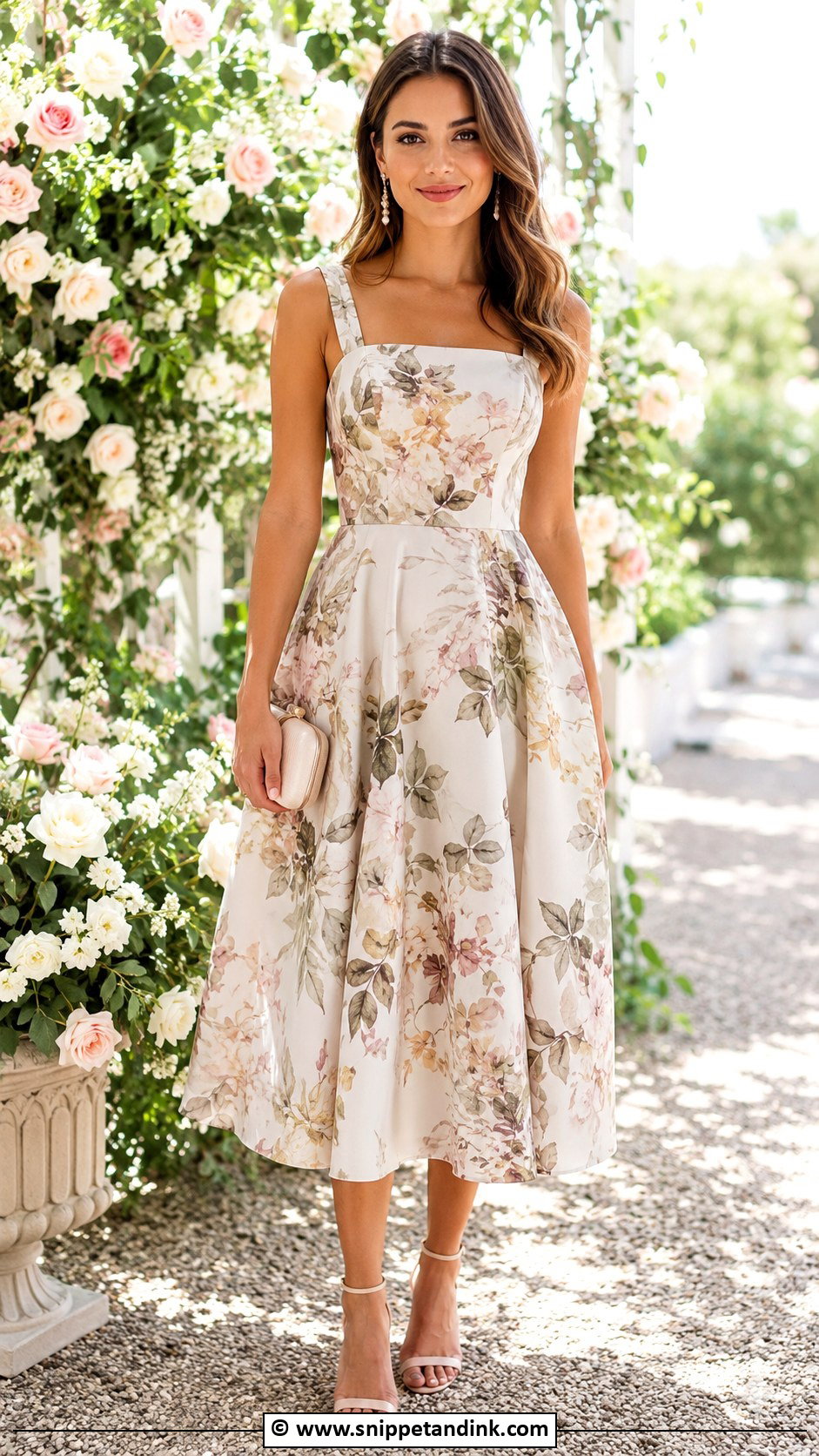
Print scale is the thing I check first with a floral midi. A small, well-spaced print reads as texture from across a garden; a large, high-contrast one ends up competing with the bouquet in every group photo. For a daytime or spring wedding I like a fitted bodice over an A-line or tiered chiffon skirt. On grass, swap stilettos for nude block heels or you’ll spend the ceremony sinking. Keep the clutch and earrings small, since the print is already doing the work.
5. Dusty Blue Pleated Bride’s Sister Dress
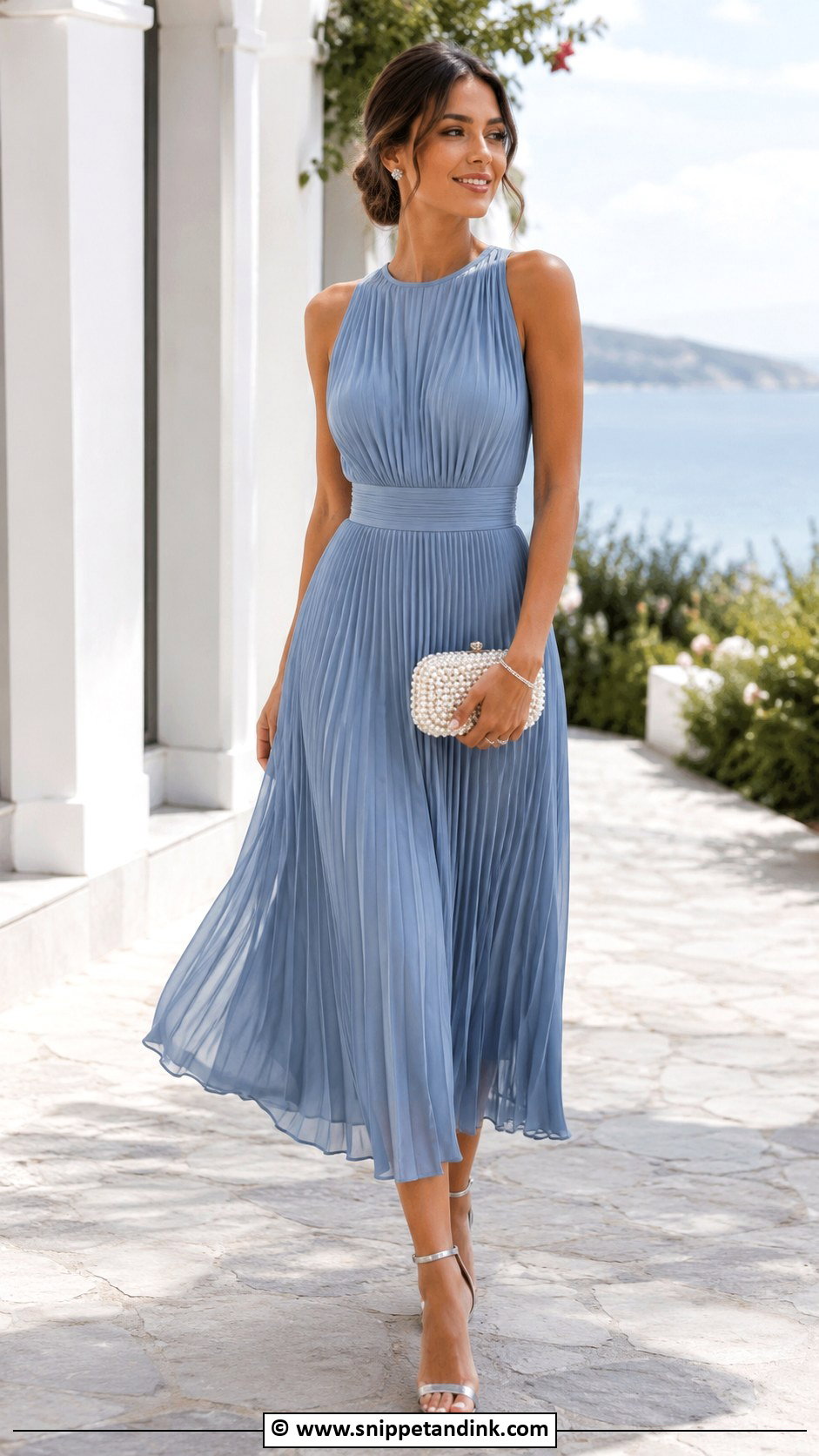
Dusty blue suits more skin tones than almost any pastel I fit, because its gray base stops it from turning icy on cool complexions. A pleated midi or maxi dress moves well, but check the pleats are stitched down at the waist; loose pleats from the bust can add volume you didn’t plan for. Chiffon or georgette with a defined waist keeps the shape clean. Silver heels, a pearl clutch and crystal studs are all it needs. If the bridesmaids are in deeper blue or gray, you’ll coordinate with them without looking like a stray member of the lineup.
6. Burgundy Wrap Bride’s Sister Dress
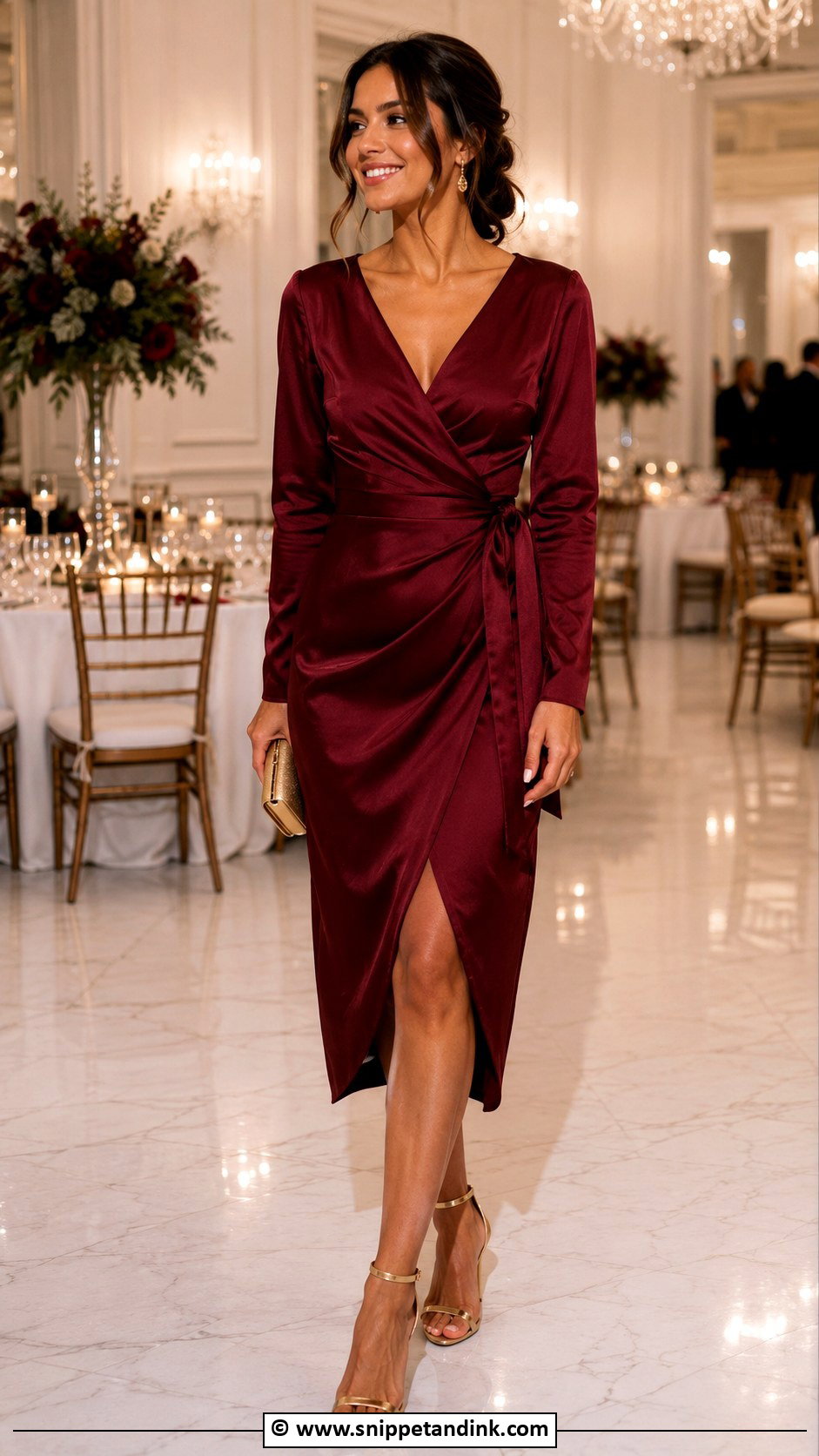
A burgundy wrap dress is the most adjustable thing on this list, and that matters over a long day. You can loosen the tie after dinner, and a wrap forgives a bloated afternoon in a way a zipped sheath won’t. My only caution: a wrap on a slippery satin can gape at the bust when you sit or hug people, so I add a hidden snap or a stitch at the crossover during alterations. Velvet or crepe suits a winter date; satin fits a fall evening. Small gold hoops and a low bun or sleek ponytail keep it clean for family photos.
7. Lavender Tulle Bride’s Sister Dress
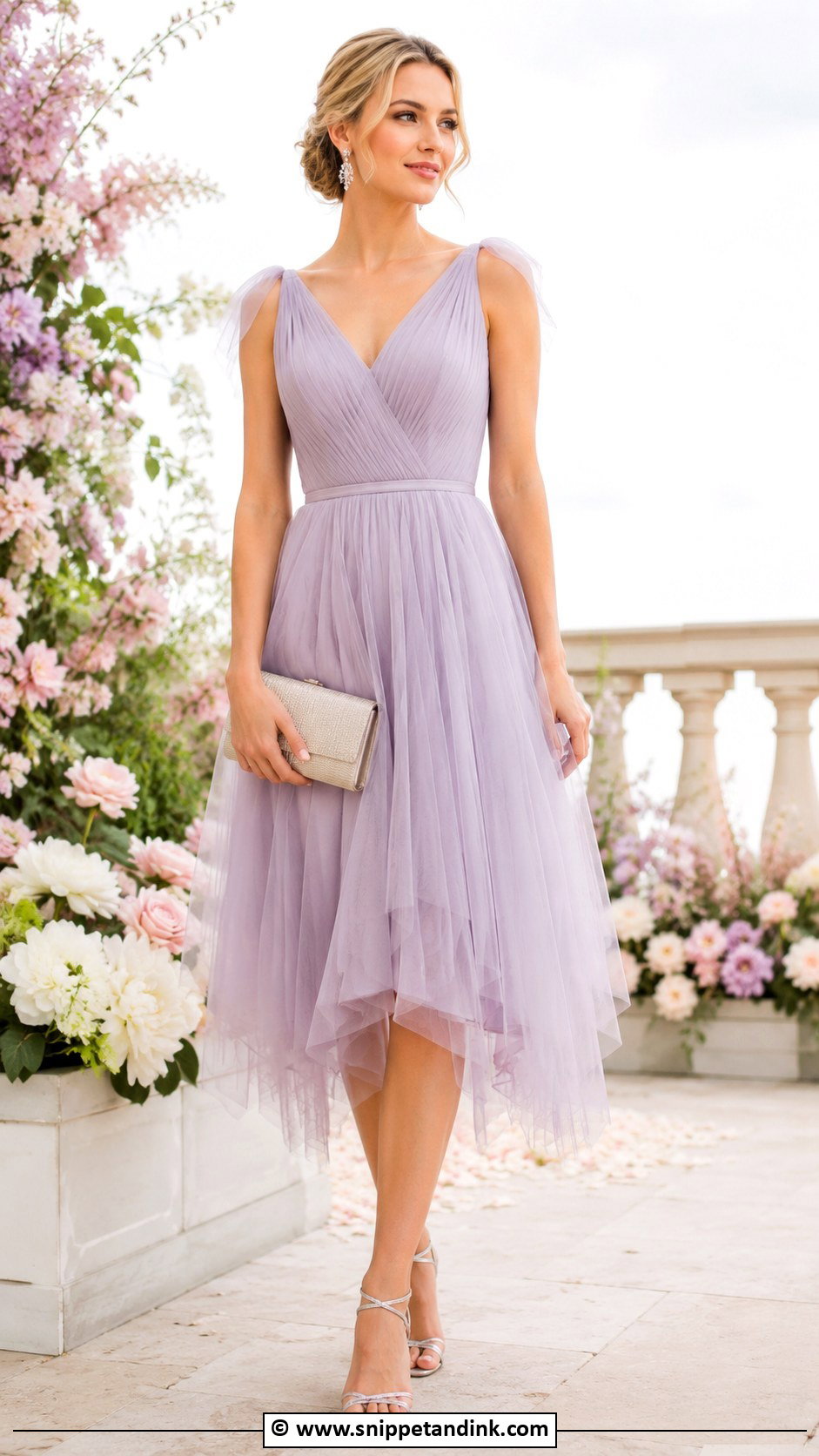
Tulle in lavender walks a fine line. Too many layers and it starts to look like a second bridal gown. I look for a lined bodice, two or three soft skirt layers and very little beading, in tea length or floor length. Silver sandals, a pale clutch and simple crystal earrings suit it. If the skirt has real volume, keep the hair neat and skip the necklace. Lavender sits nicely beside blush, sage, ivory and soft blue decor, which makes it an easy pick for a pastel spring wedding.
8. Black Tie Gown Bride’s Sister Dress
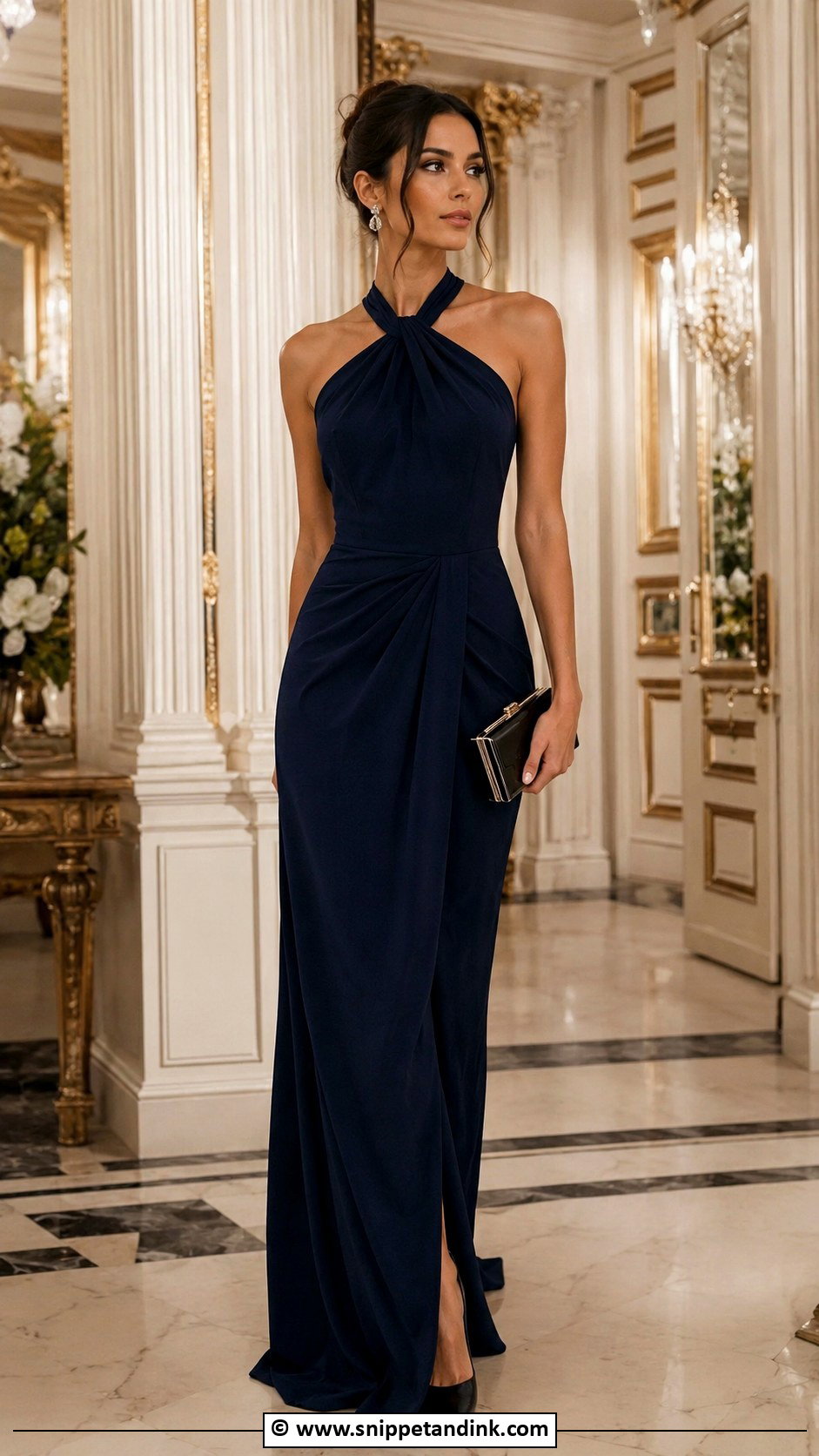
Black tie gives the bride’s sister the most room to dress up, and I’d take it. A floor-length gown in navy, emerald, plum, charcoal or deep rose fits the dress code; what separates good from great is tailoring. I look for one strong detail, like a draped neckline or a structured shoulder, rather than three competing ones. Pointed heels, a hard-case clutch and polished earrings finish it. Steer away from sheer panels and heavy embellishment here, because at a ballroom wedding those details sit too close to bridal territory.
9. Champagne Satin Bride’s Sister Dress
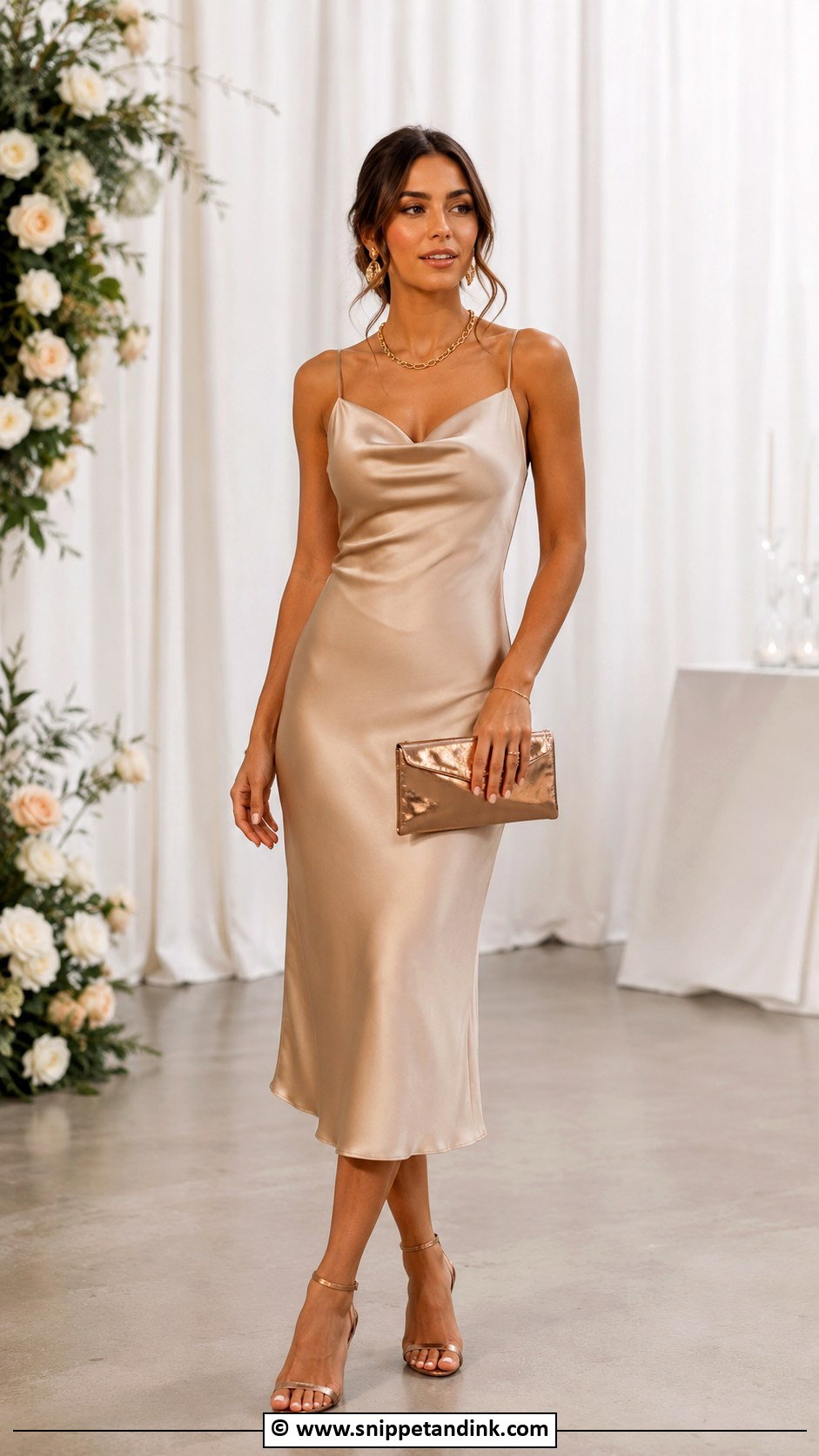
Champagne is the one color on this list I won’t let a sister buy without the bride seeing a swatch. Pale champagne and ivory become nearly identical in flash photography. If you go ahead, choose a deeper champagne, taupe or warm beige, ideally in a satin midi with a cowl neck or long sleeves. Bronze heels, a warm metallic clutch and understated gold jewelry keep it warm. And if the bride’s gown is very simple, I’d honestly pick another color; a plain ivory gown next to plain champagne satin is the pairing that confuses guests.
10. Sage Green Maxi Bride’s Sister Dress
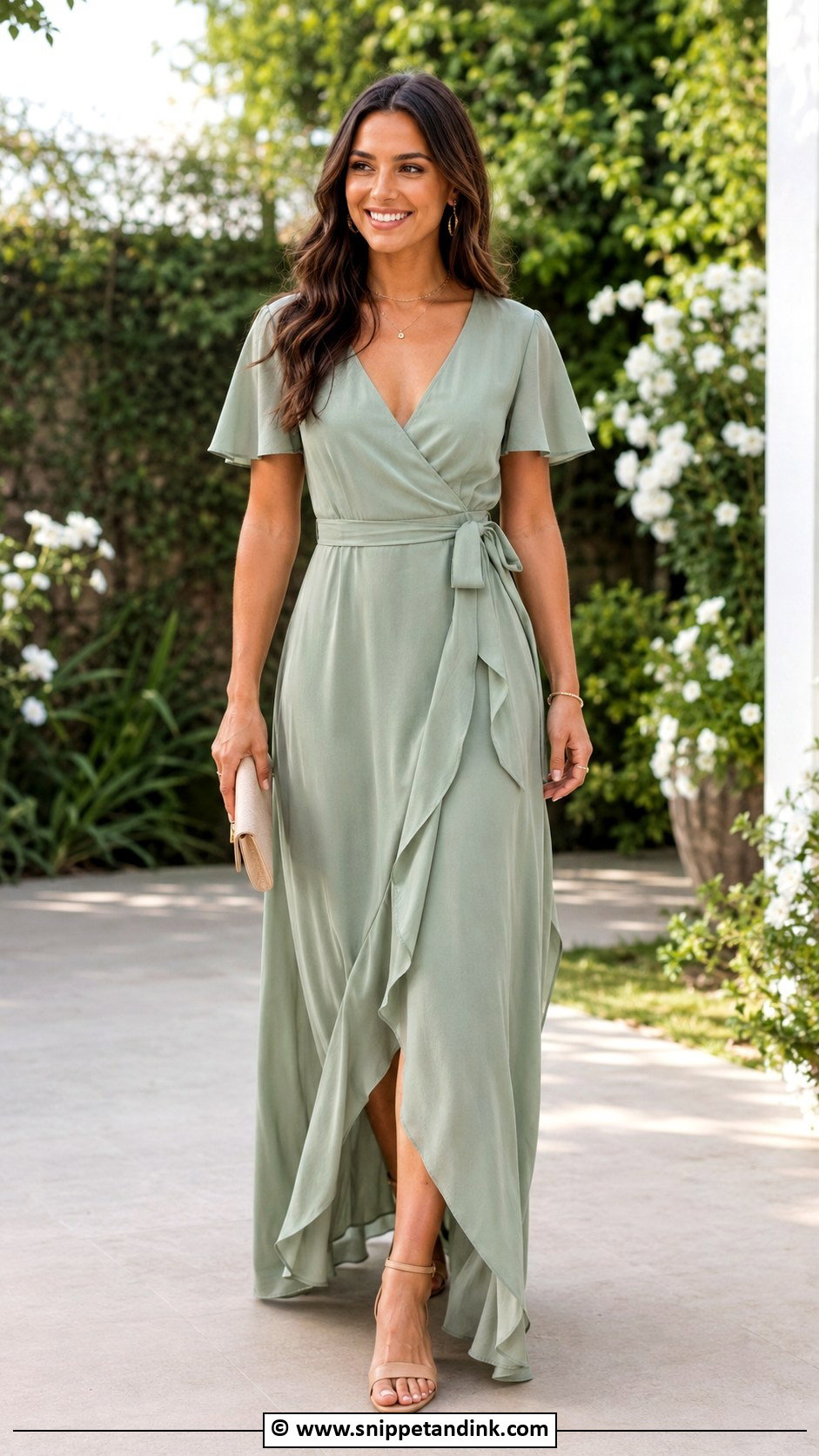
Sage is easy to wear because it sits in the middle of the green range and doesn’t fight warm or cool skin. It fits spring and summer, and it carries into a rustic early-fall wedding. A flowing maxi with flutter sleeves or a square neck looks graceful without stiffness. Nude sandals, a woven or satin clutch and fine gold jewelry suit it, with soft waves or a low bun. Against garden greenery and cream florals it blends in rather than shouting, which is often what the bride wants from family.
11. Mauve Lace Bride’s Sister Dress
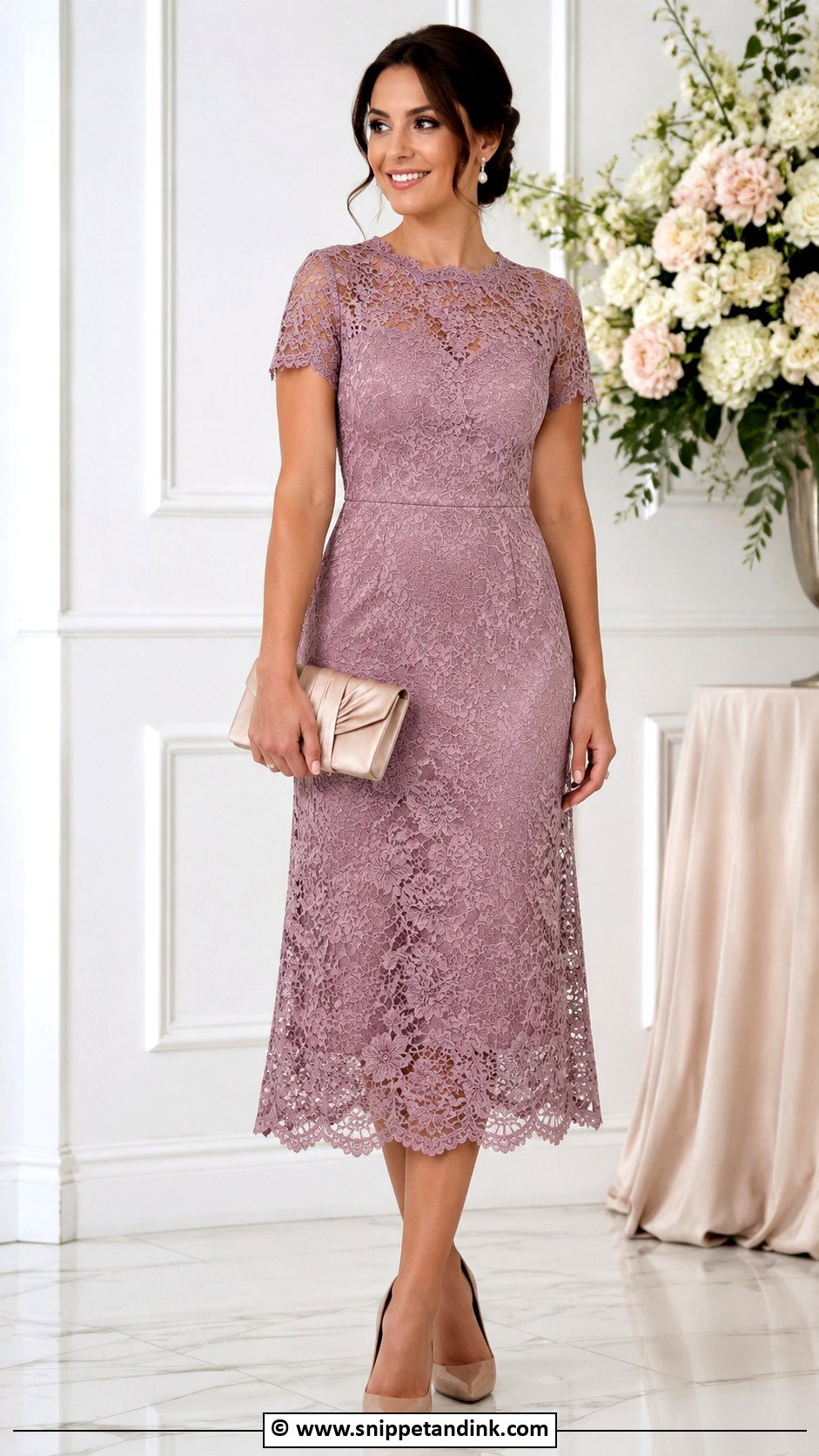
Lace is the fabric I inspect most closely on the hanger. A full lining matters, and so does the scale of the lace itself: the big corded floral patterns are what bridal gowns use, so I lean toward a finer, flatter lace in mauve. A defined waist and a clean neckline keep it from looking fussy. Nude pumps, a small satin clutch and pearl or crystal jewelry are enough. It sits comfortably at a semi-formal indoor reception and against dusty rose, gray, navy or soft green palettes.
12. Floral Maxi Bride’s Sister Dress
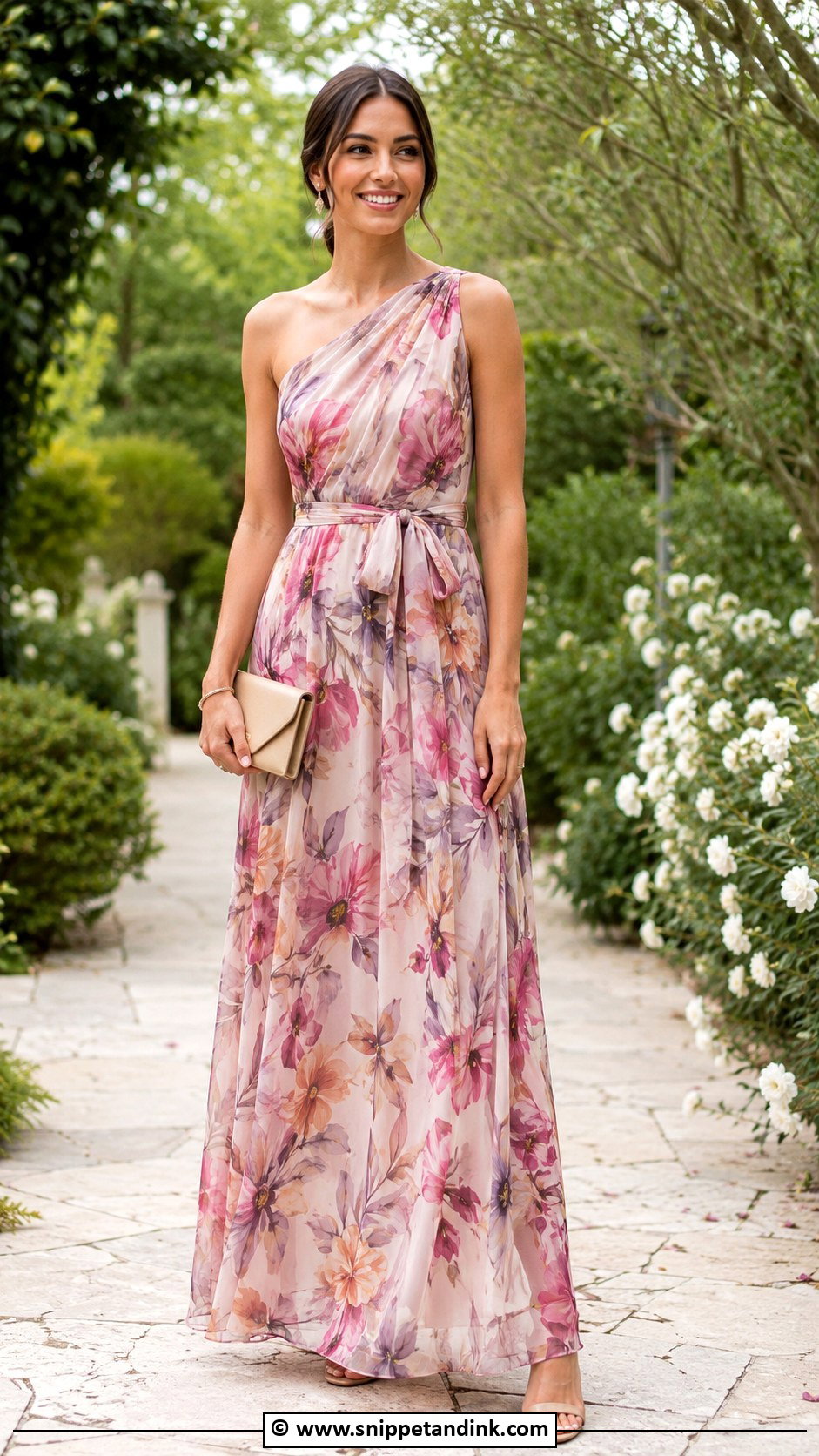
A floral maxi dress earns its place at outdoor, tropical or relaxed formal weddings, provided the print has breathing room between motifs. I pull the clutch color from one shade in the print rather than buying something new and neutral; it ties the outfit together without effort. A wrap front, a halter or a tiered skirt adds movement. Next to bridesmaids in solids, a print gives the family photos a point of interest, so keep the earrings simple and let the dress lead.
13. Rose Gold Sequin Bride’s Sister Dress
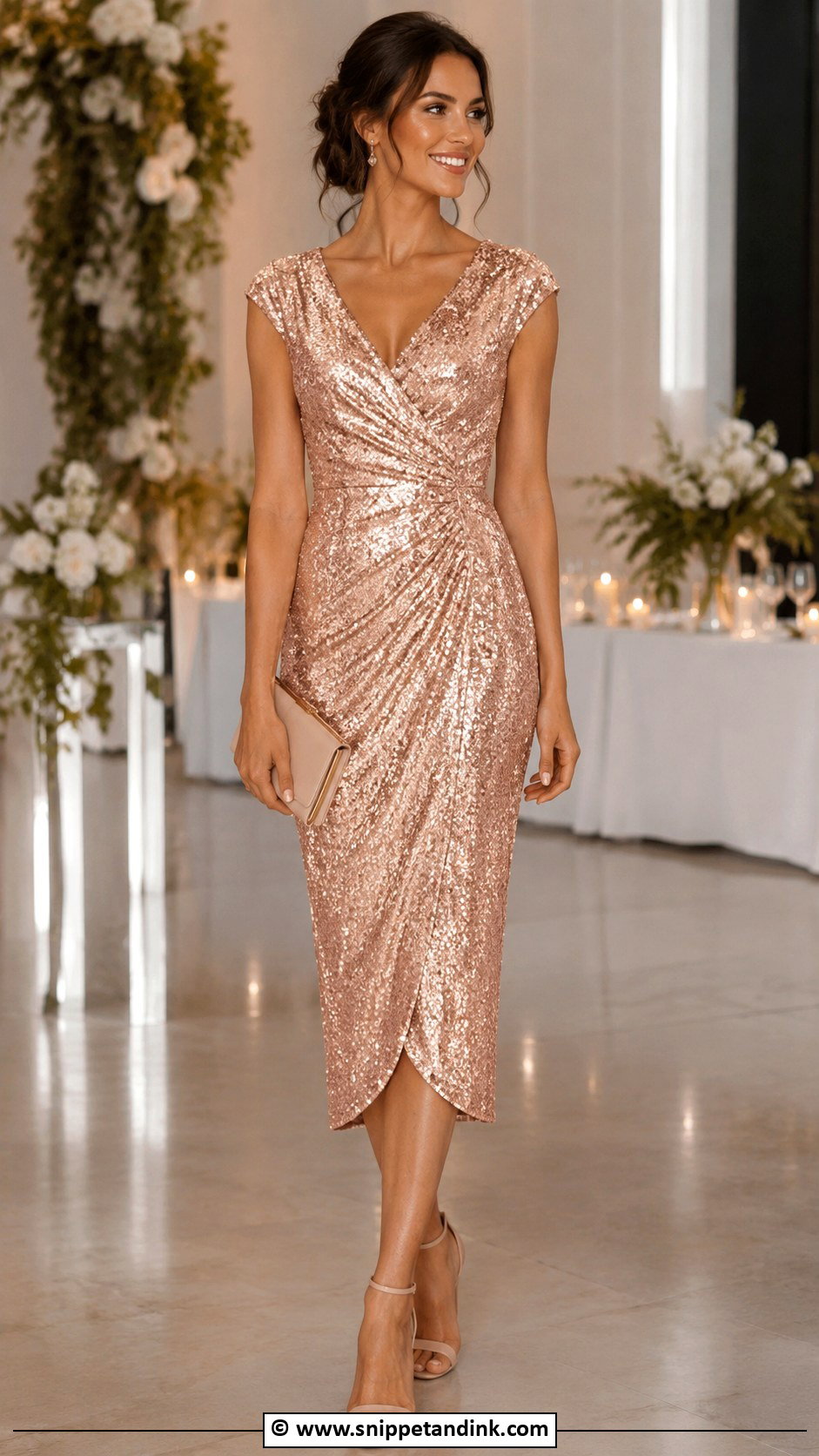
Sequins split opinion, and I’m cautious with them for a sister. Fine, flat sequins in rose gold catch light softly; large paillettes and heavy glitter throw flash back at the camera and can look harsh. Pick a midi or a column gown with no dramatic cutouts. Nude or metallic heels, a simple clutch and small earrings are plenty, with sleek hair. Do check what the bridal party is wearing first: two different sequin finishes side by side clash in a way two plain fabrics never do.
14. Teal Off Shoulder Bride’s Sister Dress
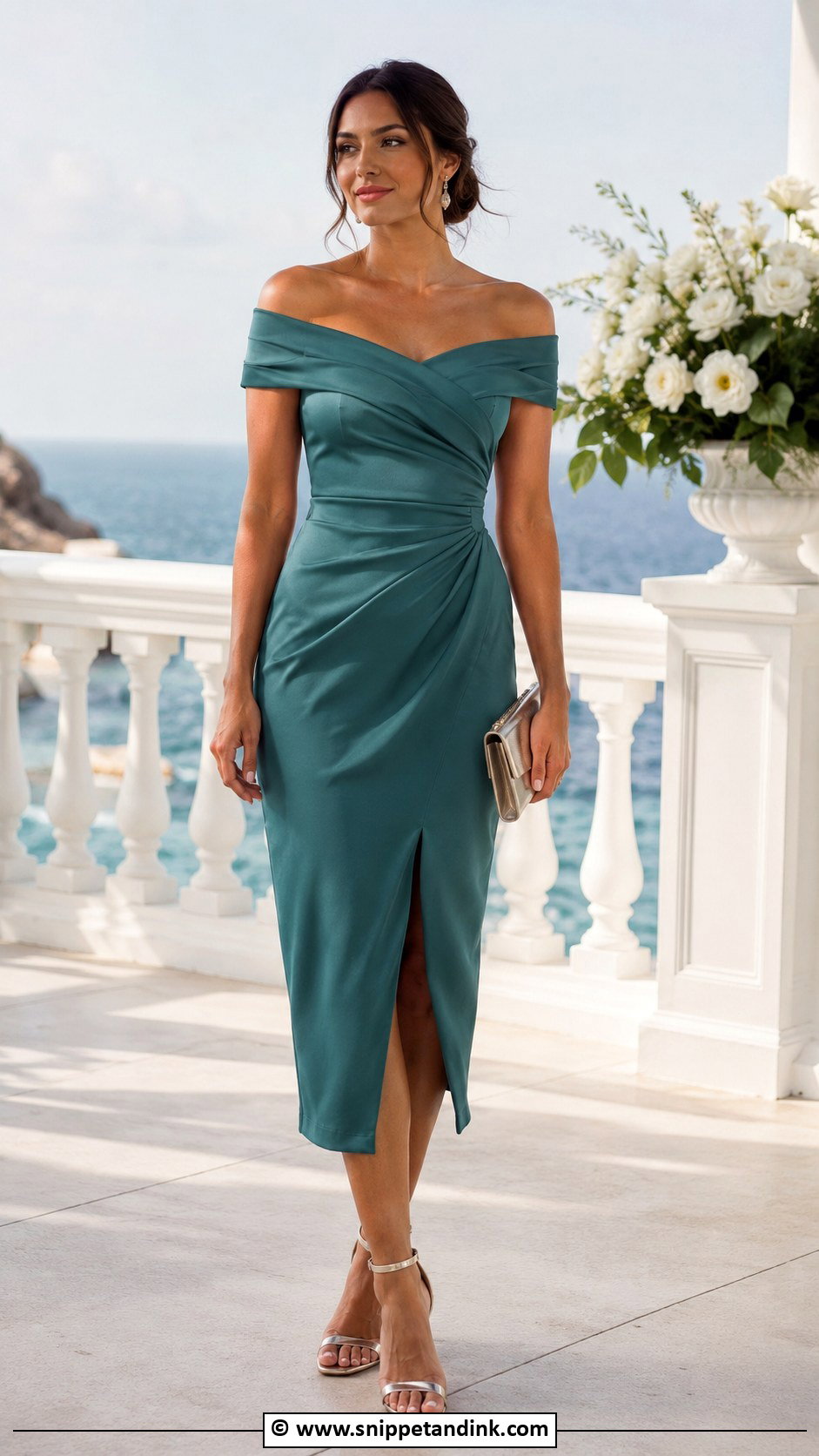
Teal is a color I’d test in daylight before buying, because some teals lean green and others lean blue, and that undertone decides your metal. Blue-leaning teal wants silver; green-leaning teal looks warmer with gold. An off-shoulder midi or gown with a structured bodice keeps the neckline sitting where it should, which loose off-shoulder styles often don’t after an hour of hugging. With the shoulders on show, skip the necklace and wear earrings or a bracelet. It suits evening and coastal weddings.
15. Pastel Yellow Bride’s Sister Dress
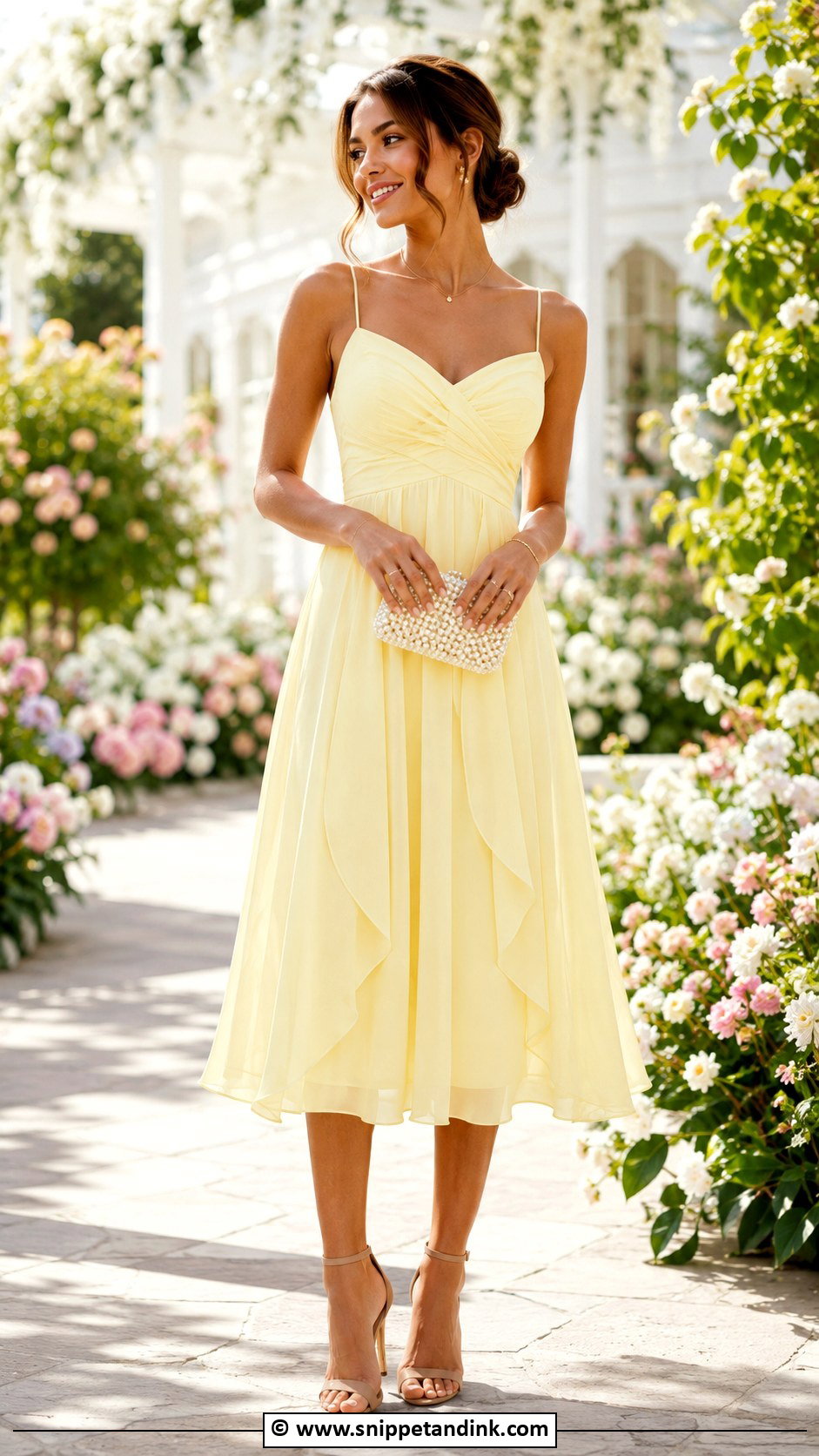
Pale yellow is trickier than it looks. On fair skin a cool lemon can drain the face, so I steer people toward a buttery yellow with a little warmth in it. In chiffon, as an A-line maxi, or as a satin slip with a soft shawl, it suits a spring garden or summer brunch reception. Nude heels, a pearl clutch and dainty gold jewelry keep it light. Avoid anything bordering on neon; it fights with every floral arrangement in the room.
16. Plum Velvet Bride’s Sister Dress
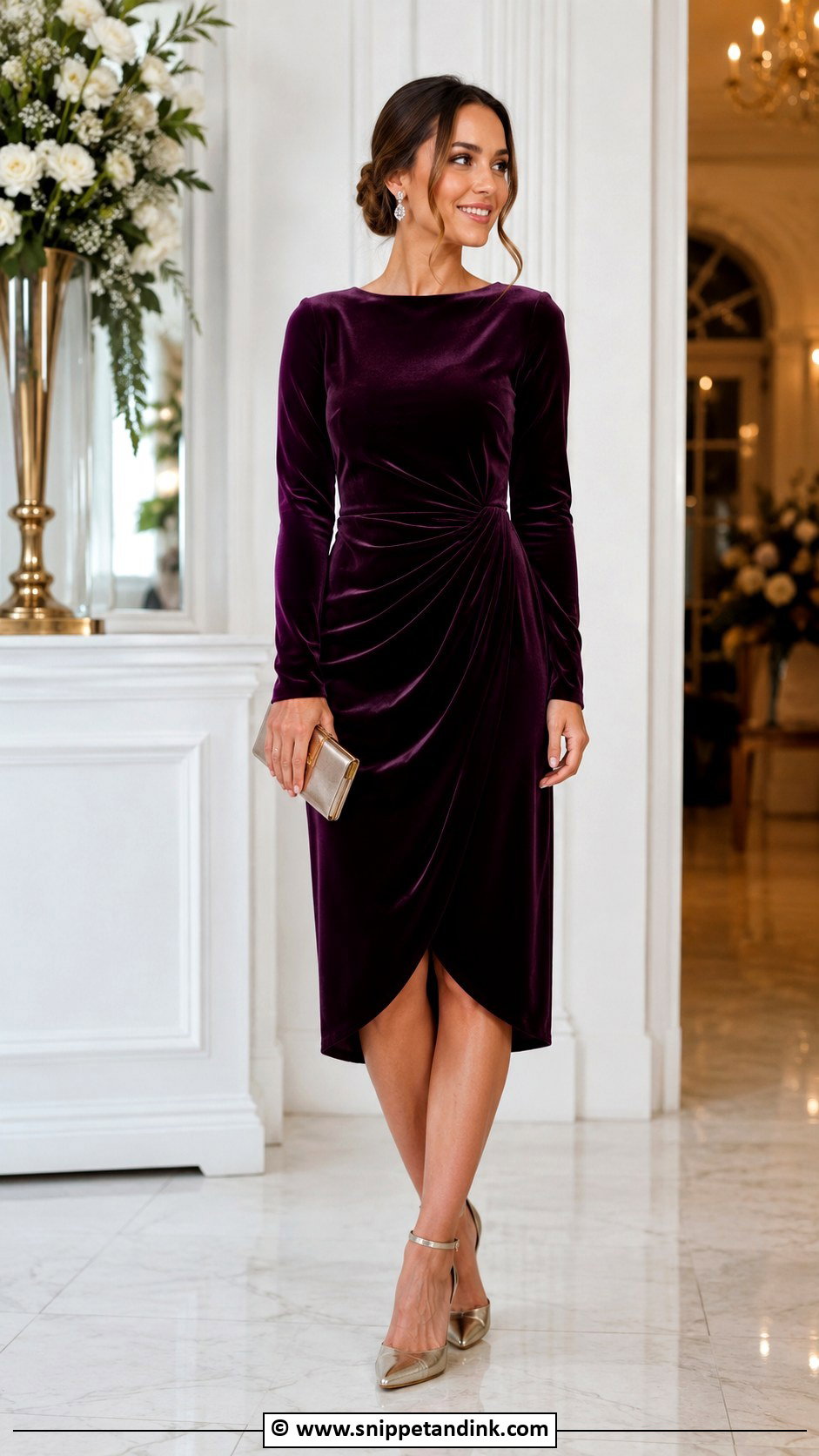
Plum velvet is my winter favorite, with one practical note: velvet crushes where you sit, and the pile shows those marks as darker patches. Hang it in a steamy bathroom the night before, never press it flat with an iron, and stand rather than sit for portraits where you can. A wrap dress, long-sleeve midi or floor-length gown all suit the fabric. Black or metallic heels, a structured clutch and one pair of earrings are enough, because velvet already reads rich in soft evening light.
17. Coral Midi Bride’s Sister Dress
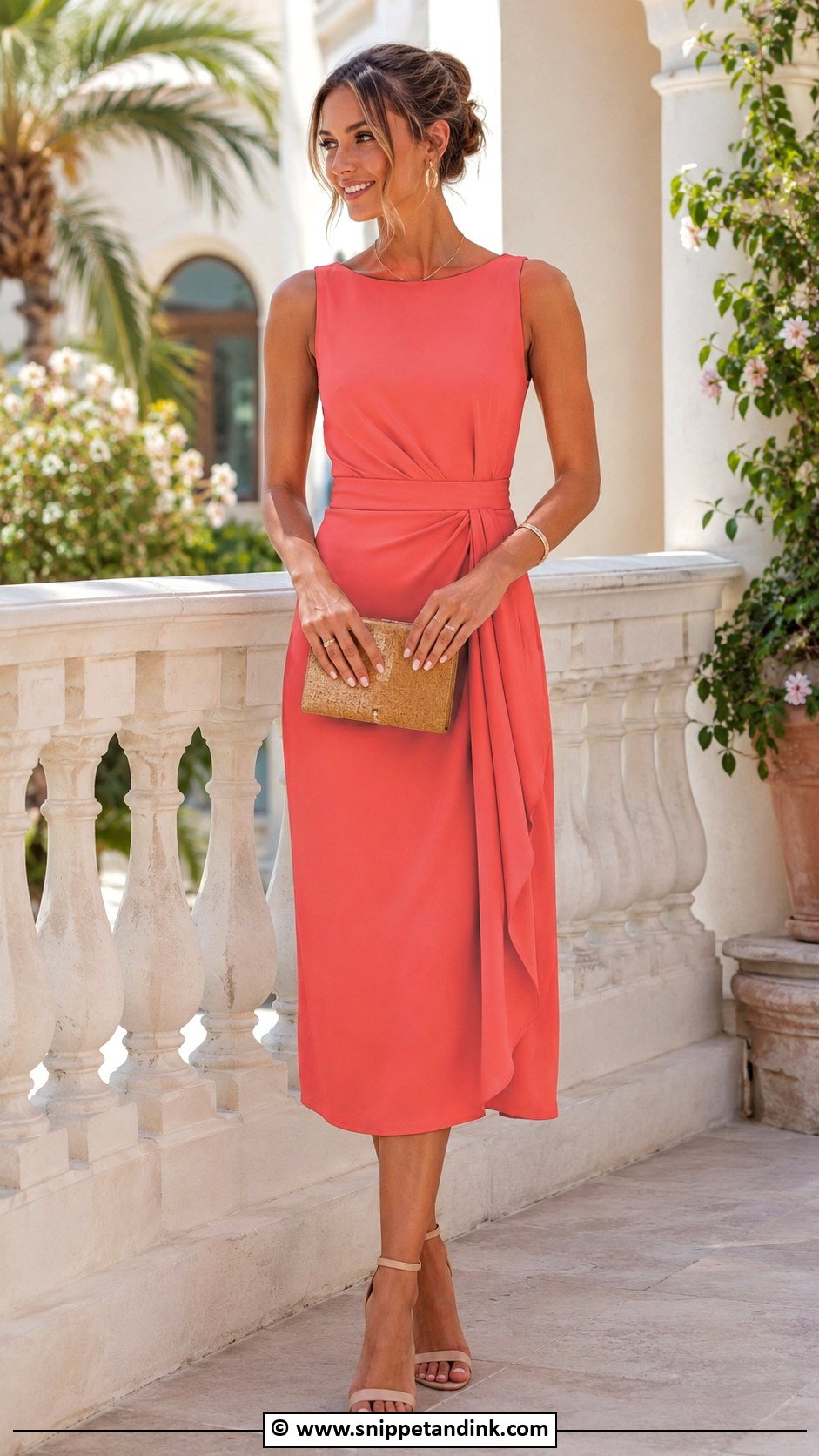
Coral is cheerful on warm and olive skin and can overpower very fair complexions, so I hold it up to the face before anything else. In chiffon, crepe or satin, a wrap silhouette or a square neck feels current. For a beach or garden ceremony I’d pick a raffia-style clutch; for a formal venue, satin. Gold jewelry keeps the warmth consistent. Keep the makeup glowy rather than matte so the color doesn’t look flat next to your skin.
18. Navy Lace Sleeve Bride’s Sister Dress
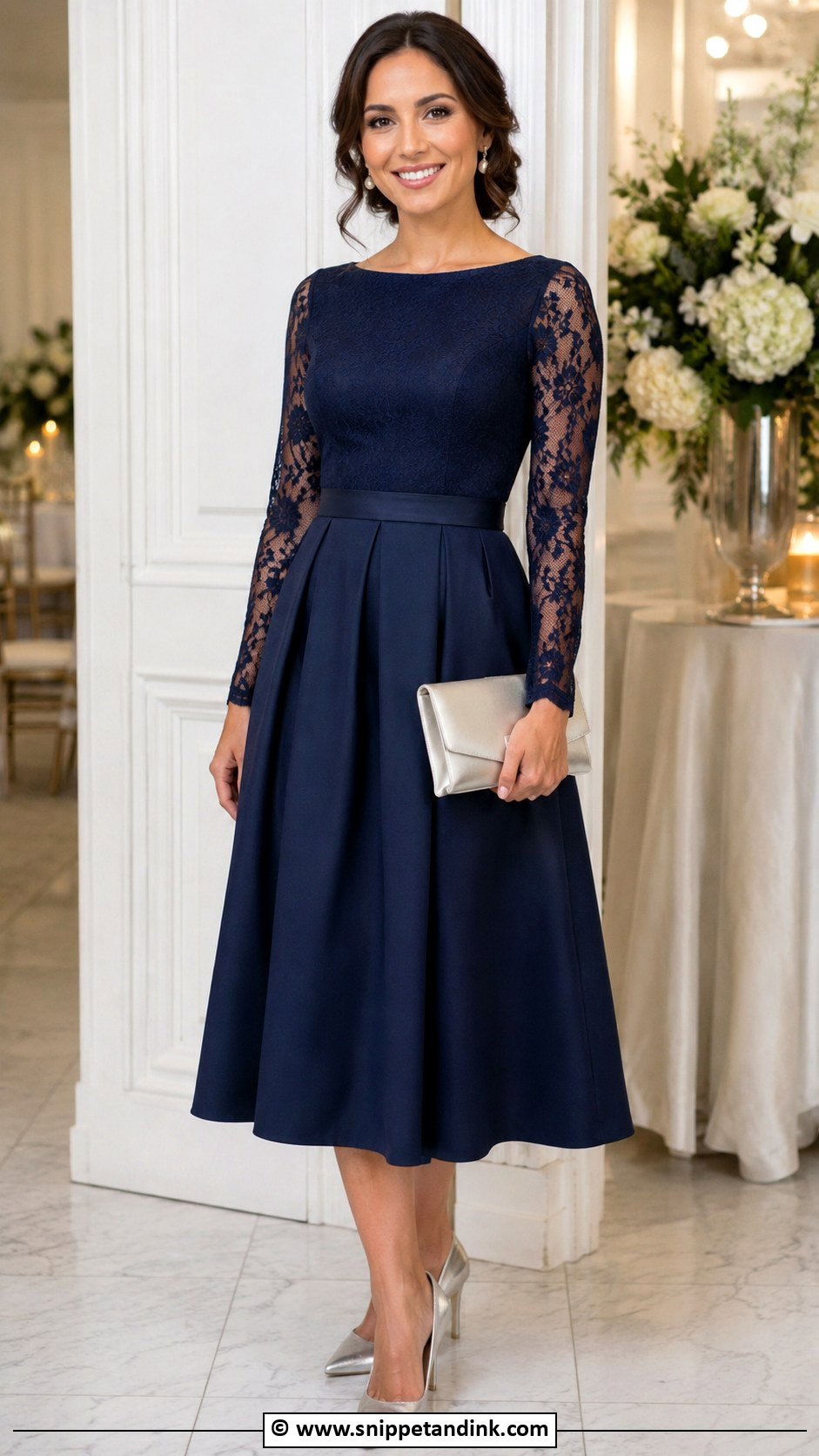
Lace sleeves solve the coverage question without a cardigan or a jacket that breaks the line in photos. Navy keeps it grounded and appropriate for a family-focused ceremony or a more traditional congregation. Choose a knee-length, midi, or maxi dress depending on the dress code, and check the sleeve lace is soft against the inner arm, because scratchy lace becomes unbearable by the speeches. Silver pumps, a satin clutch and pearl earrings complete it. For spring or autumn dates, the sleeves make it the most comfortable option on the list.
19. Dusty Rose One Shoulder Bride’s Sister Dress
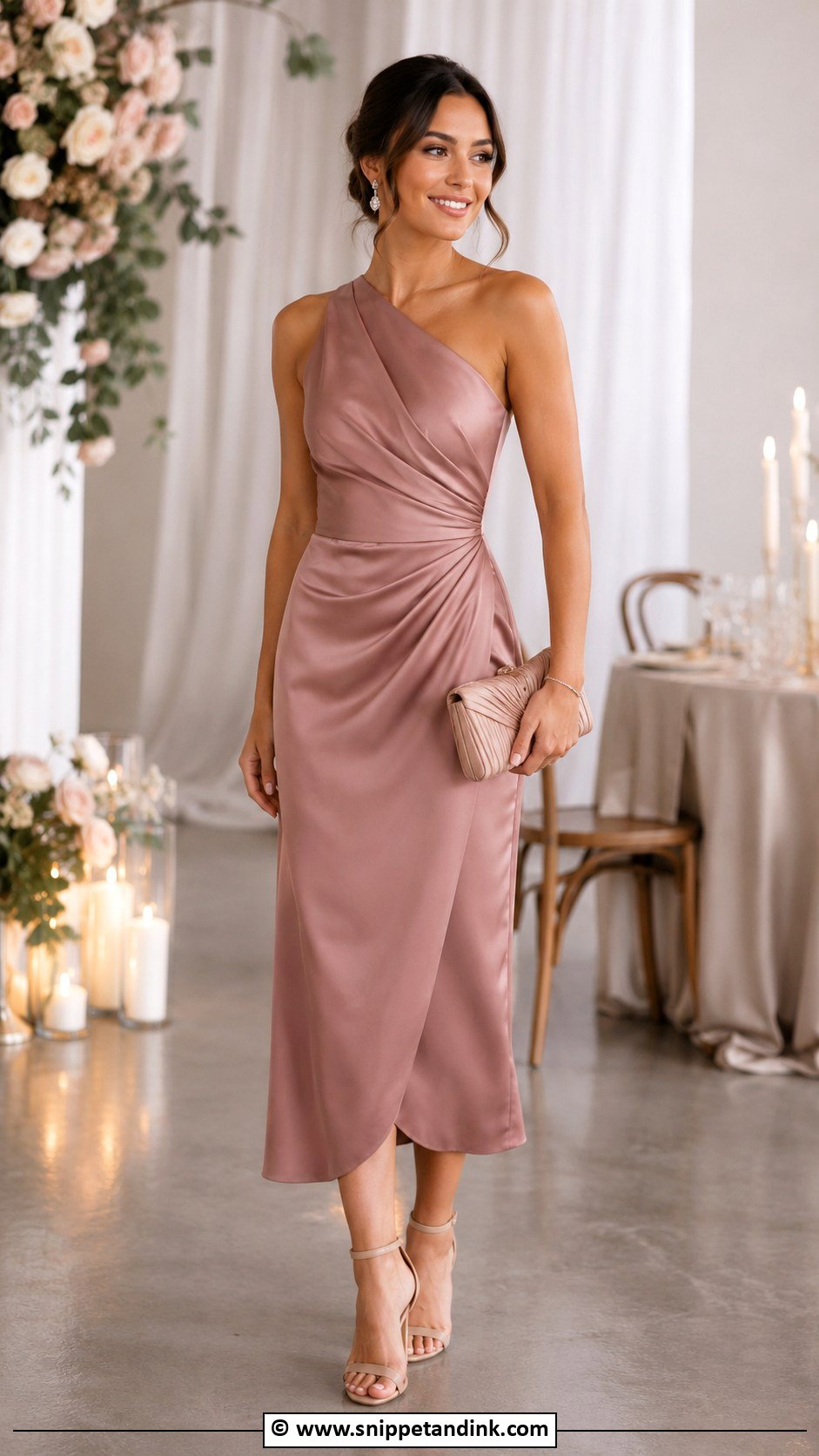
A one-shoulder neckline asks for a well-fitted bodice. If the single strap isn’t anchored firmly, it slowly migrates toward the neck through the day, and I fix that with a strip of silicone gripper inside the bodice edge. Dusty rose keeps the shape soft. Satin, crepe and chiffon all suit it at midi or floor length. Skip the necklace and let drop earrings carry the asymmetry. It pairs easily with neutral bouquets and warm metallics.
20. Forest Green Long Sleeve Bride’s Sister Dress
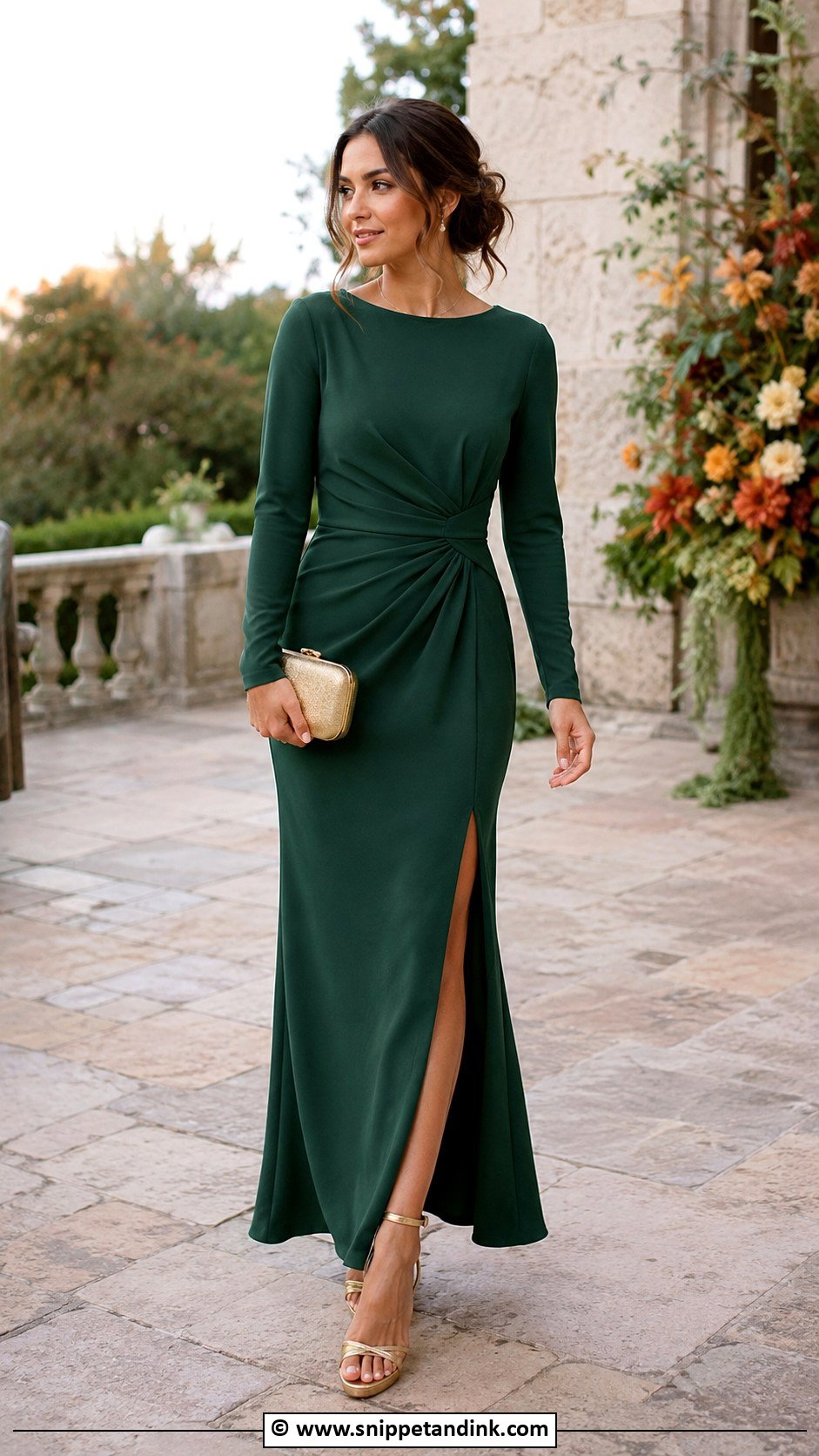
Forest green with long sleeves is the dress I’d suggest for a cold-weather ceremony at an outdoor venue, where you’ll stand still in the air for twenty minutes. Satin, crepe or chiffon with a defined waist keeps it from looking heavy. Since the sleeves already cover a lot of visual ground, I keep jewelry minimal and add gold heels and a small clutch. It sits naturally against wood, neutral flowers and classic black suits.
21. Pink Satin Slip Bride’s Sister Dress
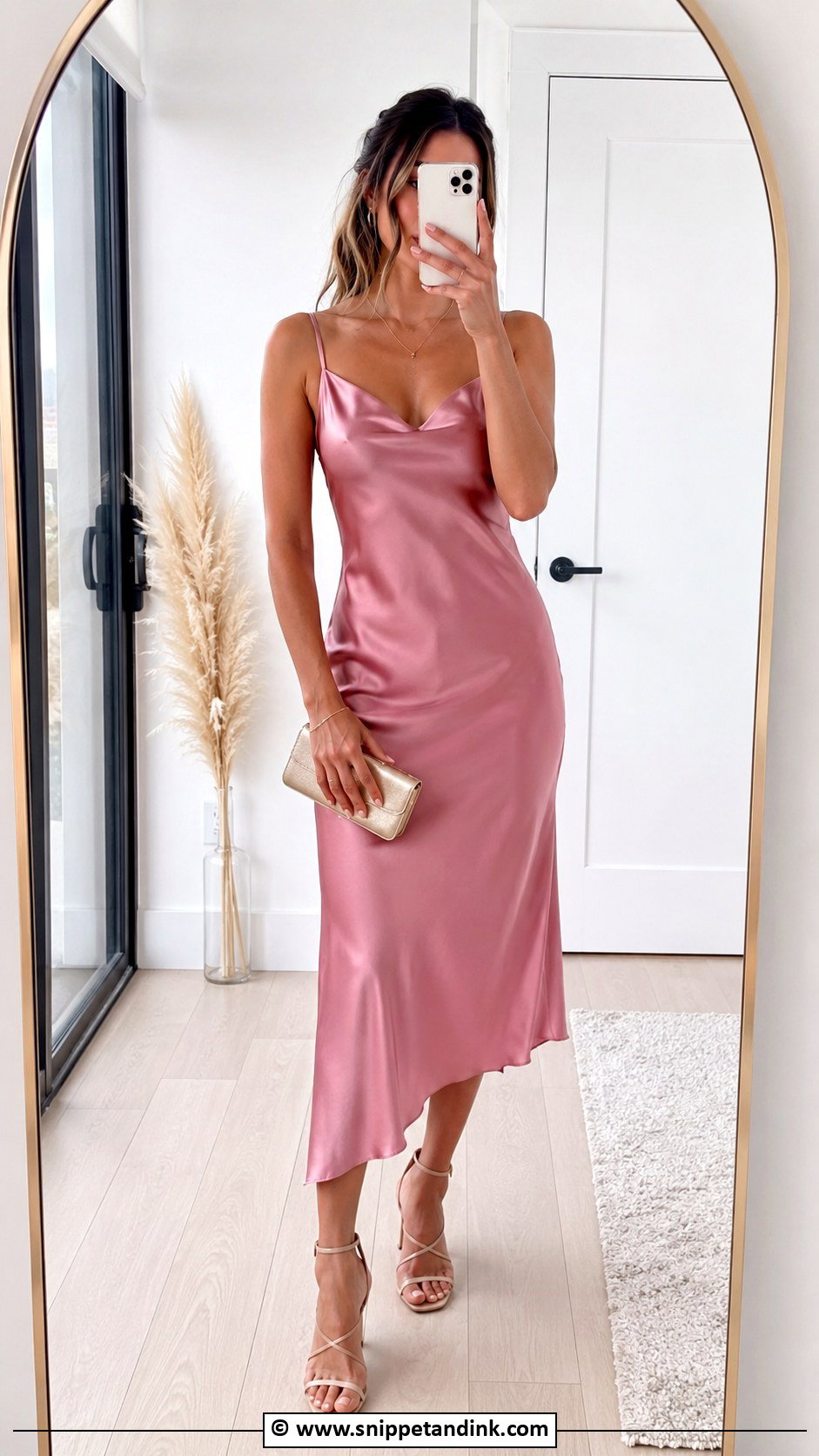
Satin slips are unforgiving, and that’s the first thing I tell anyone trying one. Bias-cut satin shows underwear lines and creases across the lap after the first sit-down, so it suits a cocktail-length city wedding more than a long seated dinner. Go for a medium pink or rose so it can’t be mistaken for ivory. Strappy heels, a small shoulder bag and delicate jewelry fit the mood, and a tailored shawl or cropped jacket covers a more formal ceremony. Size for skimming rather than clinging.
22. Silver Gray Gown Bride’s Sister Dress
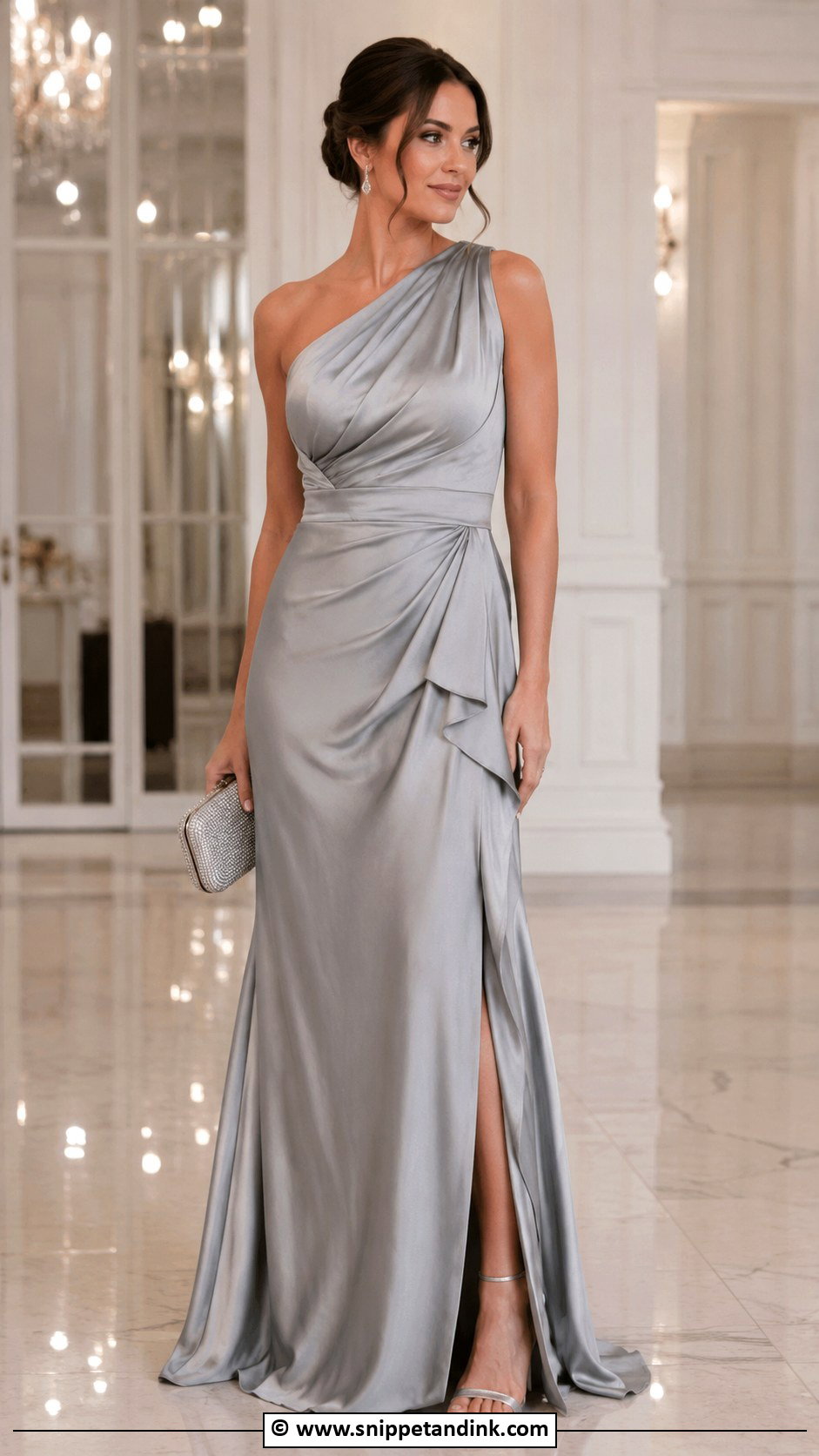
Silver gray works for black tie and winter weddings, but the paler the gray, the closer it drifts toward silver-white under bright flash. A gray gown in chiffon, satin or crepe should be at least a mid-tone. A draped bodice or a simple column keeps it modern. Silver heels, a crystal clutch and delicate earrings suit it, and the color coordinates with navy, blush, emerald and soft blue bridal parties without strain.
23. Orange Floral Bride’s Sister Dress
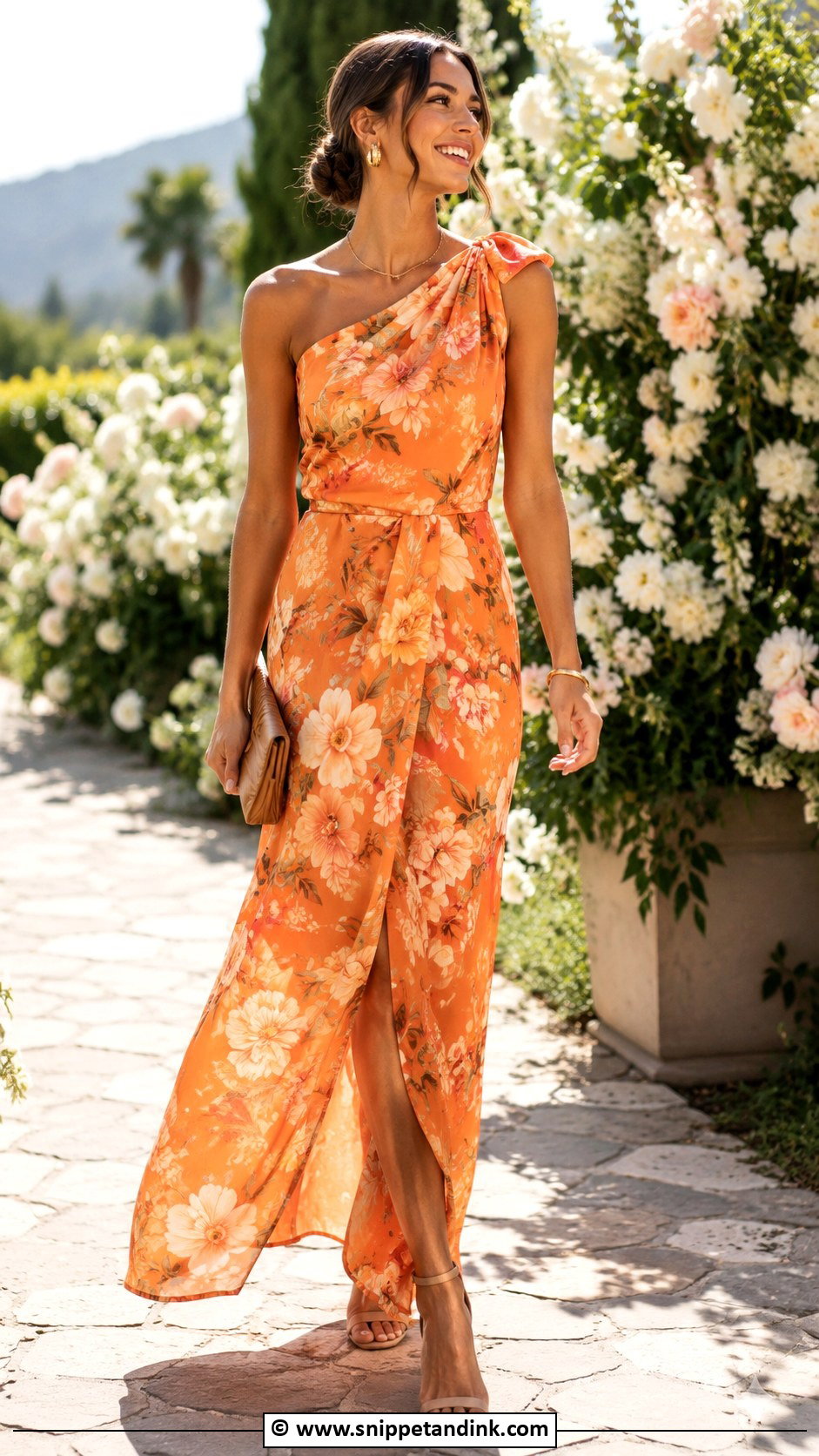
An orange floral can look joyful in late summer, provided the oranges are muted: peach, coral and terracotta rather than traffic-cone bright. A flowing midi or maxi is comfortable at a desert or garden reception. I’d keep the hair and accessories quiet, with nude block heels, a warm-toned clutch and simple gold, because the print brings all the energy the outfit needs.
24. Black Midi Bride’s Sister Dress
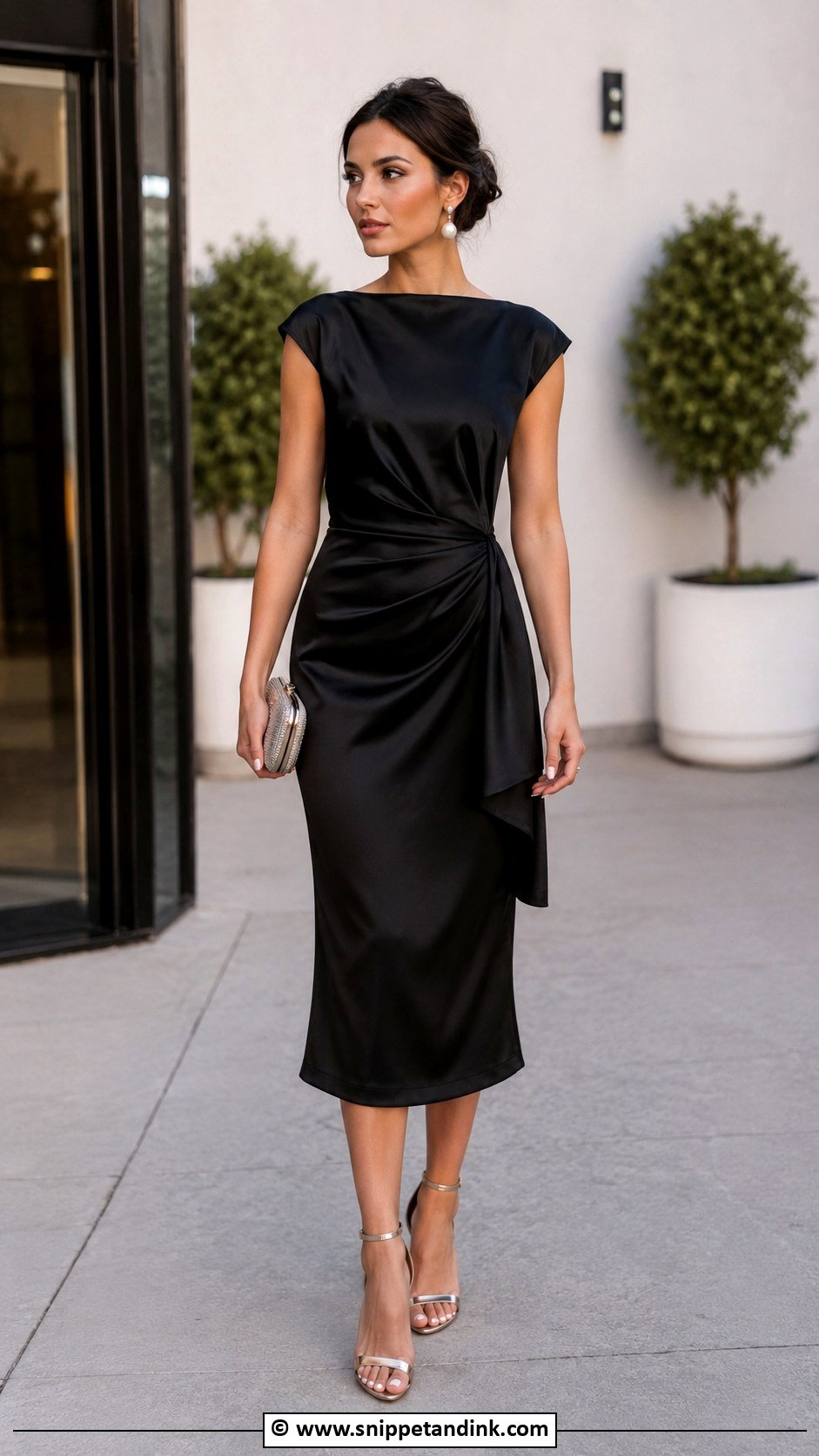
Black on the bride’s sister still raises eyebrows in some families, so I always suggest asking the bride directly before buying. At an evening city wedding with a formal dress code, a black midi in satin, crepe or lace looks sharp. A fit-and-flare, an off-shoulder neckline or a long-sleeve sheath all suit it. Metallic heels and pearl or crystal jewelry lift it so it reads celebratory. At a bright beach or pastel wedding, though, black looks out of step, and I’d choose a different color.
25. Blue Floral Wrap Bride’s Sister Dress
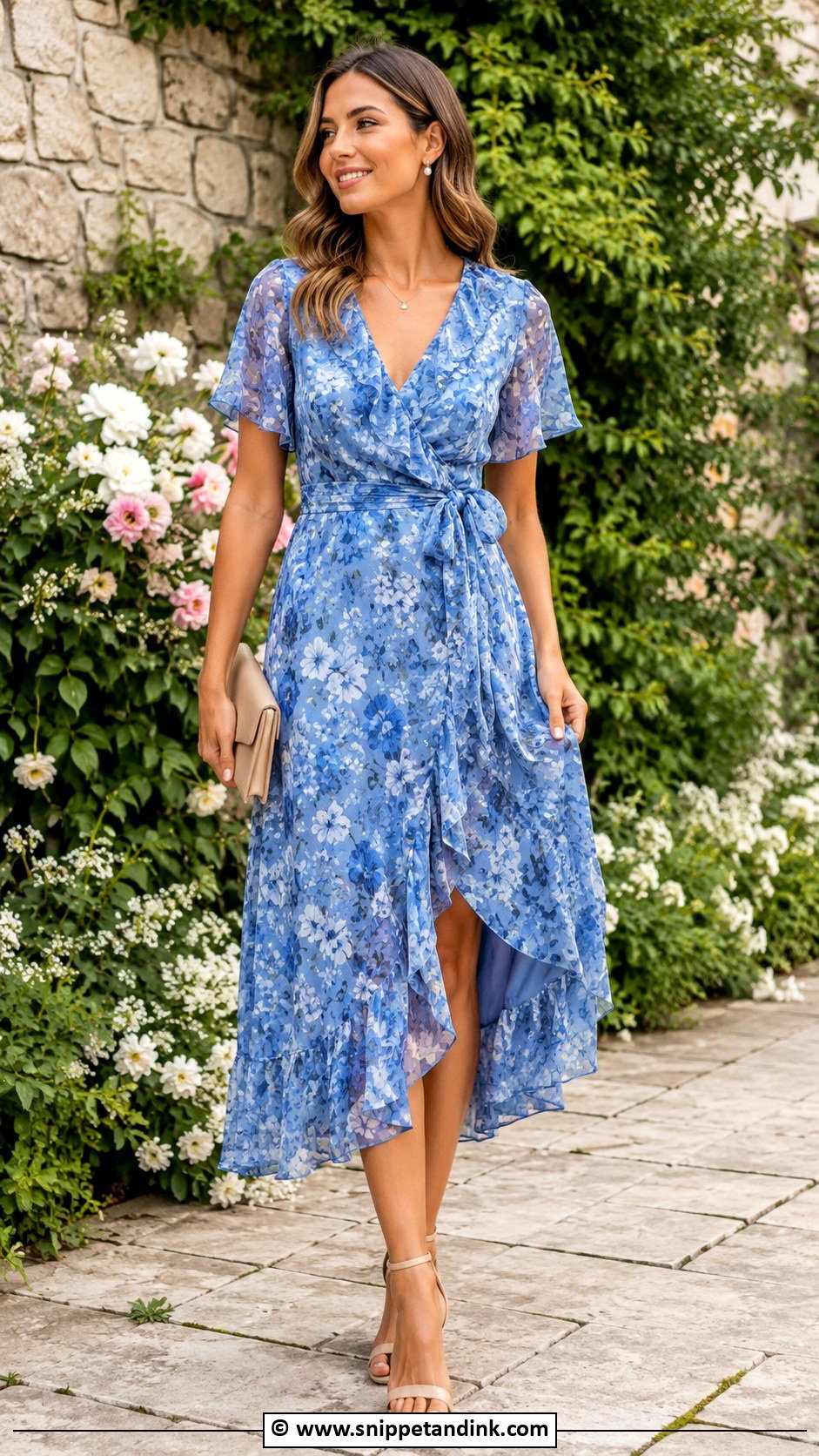
A wrap shape defines the waist on almost any figure, which is why I like a blue floral wrap for spring and summer. Choose chiffon or lightweight satin in midi or maxi length for a dressier finish. Nude or silver sandals, a soft clutch and small earrings are enough. Outdoors, the wrap stays comfortable through a long ceremony on your feet. Keep the print refined so it doesn’t look like a holiday sundress.
26. Taupe Crepe Bride’s Sister Dress
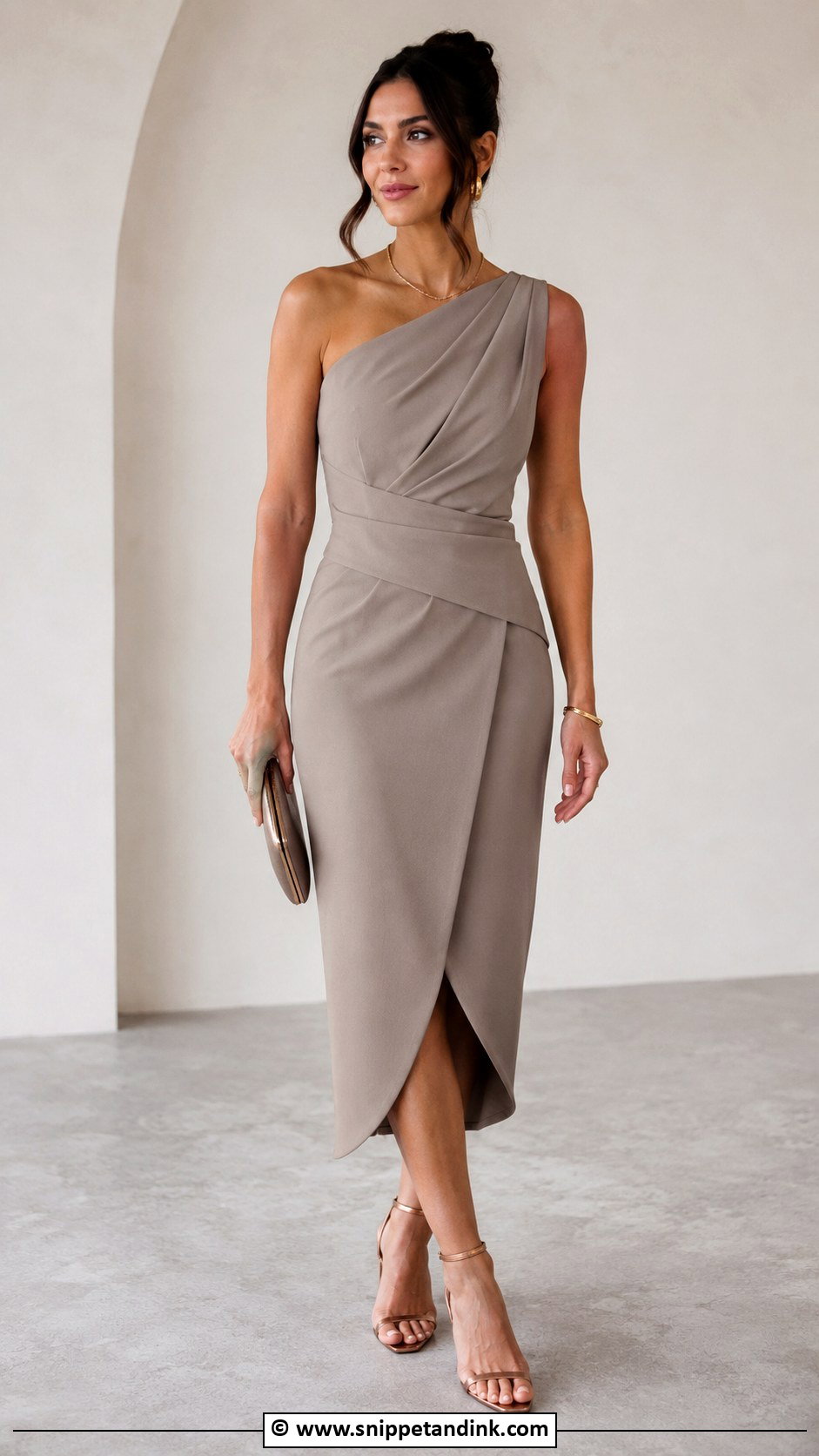
Taupe is a neutral that needs depth to work. A light taupe can look washed out and, worse, bridal in bright sun, so I check it against white fabric just as I do champagne. A crepe midi with a structured bodice or cape sleeve gives it shape. Bronze heels, a matching clutch and warm gold jewelry suit it, and a sleek hairstyle or low bun helps the whole outfit look deliberate at a minimalist or city wedding.
27. Hot Pink Midi Bride’s Sister Dress
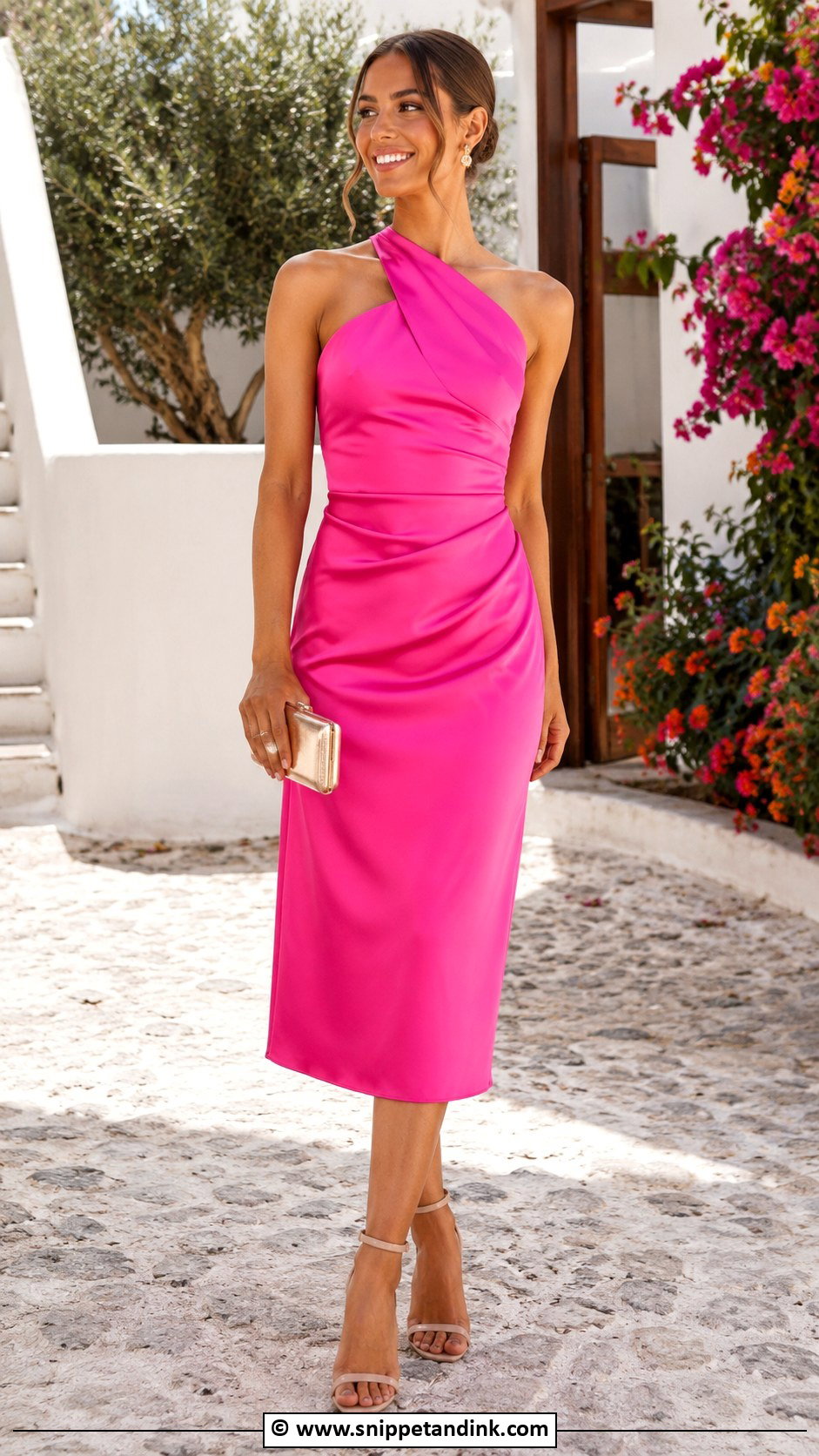
Hot pink belongs at festive, colorful or modern weddings, and it’s honestly not for every family. Ask the bride how she feels about bright tones in her photos. A clean midi in satin, crepe or chiffon with a square neckline or a one-shoulder cut keeps the bold color polished. Nude heels, a small metallic clutch and minimal jewelry are right, since embellishment on top of the color tips it into costume. At a summer or tropical wedding where the bridal party wears softer tones, it gives the photos a strong accent.
28. Mint Green Bride’s Sister Dress
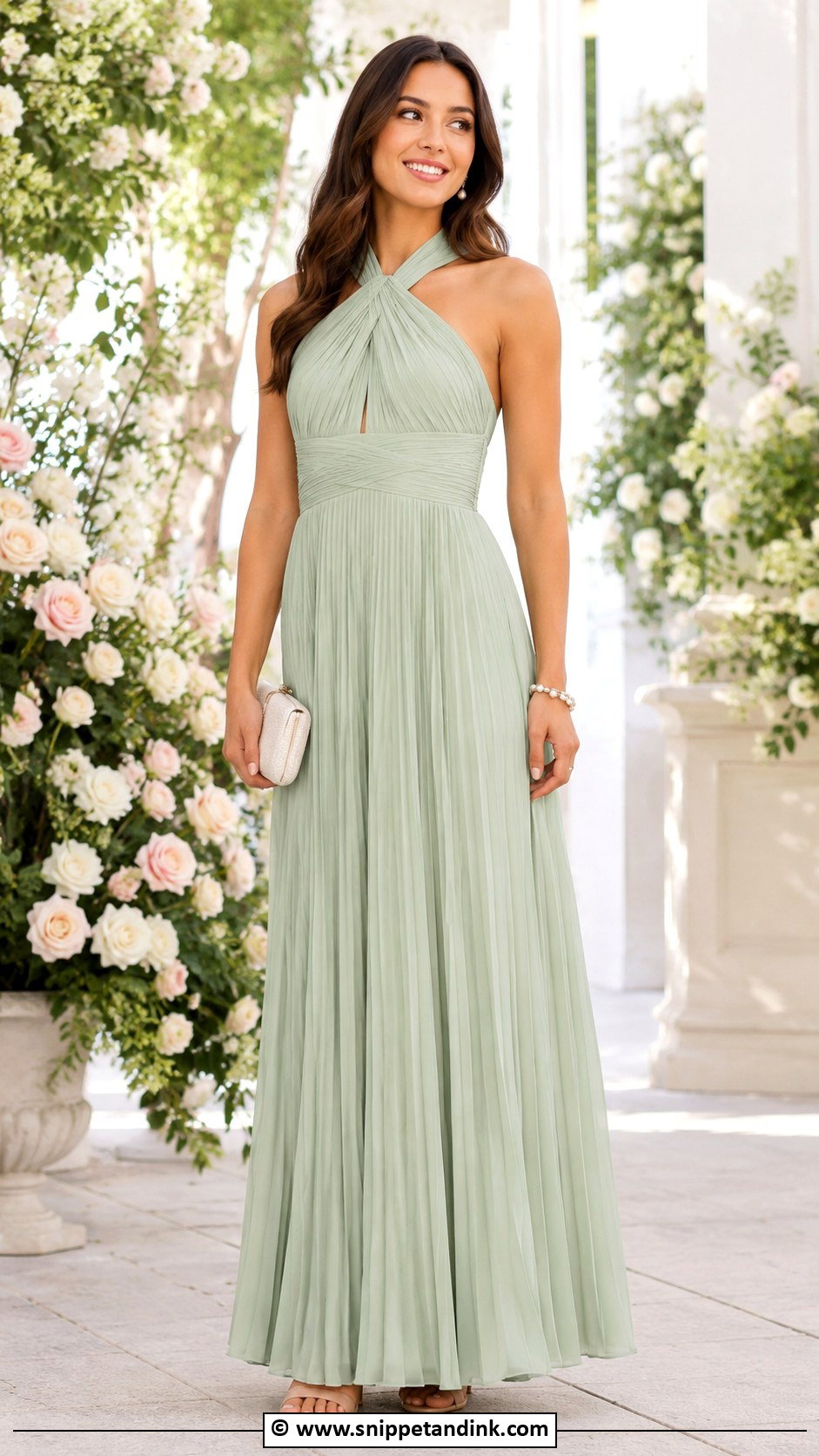
Mint needs testing in bright light, because pale mint can flatten to off-white in sunny outdoor photos. A mint midi or maxi dress in chiffon, organza or satin with a pleated skirt or wrap waist feels airy. Organza creases sharply when packed, so if you’re traveling, hang it on arrival and steam it gently. Nude heels, pearls and a small clutch suit garden weddings, daytime ceremonies and pastel palettes.
29. Royal Blue Gown Bride’s Sister Dress
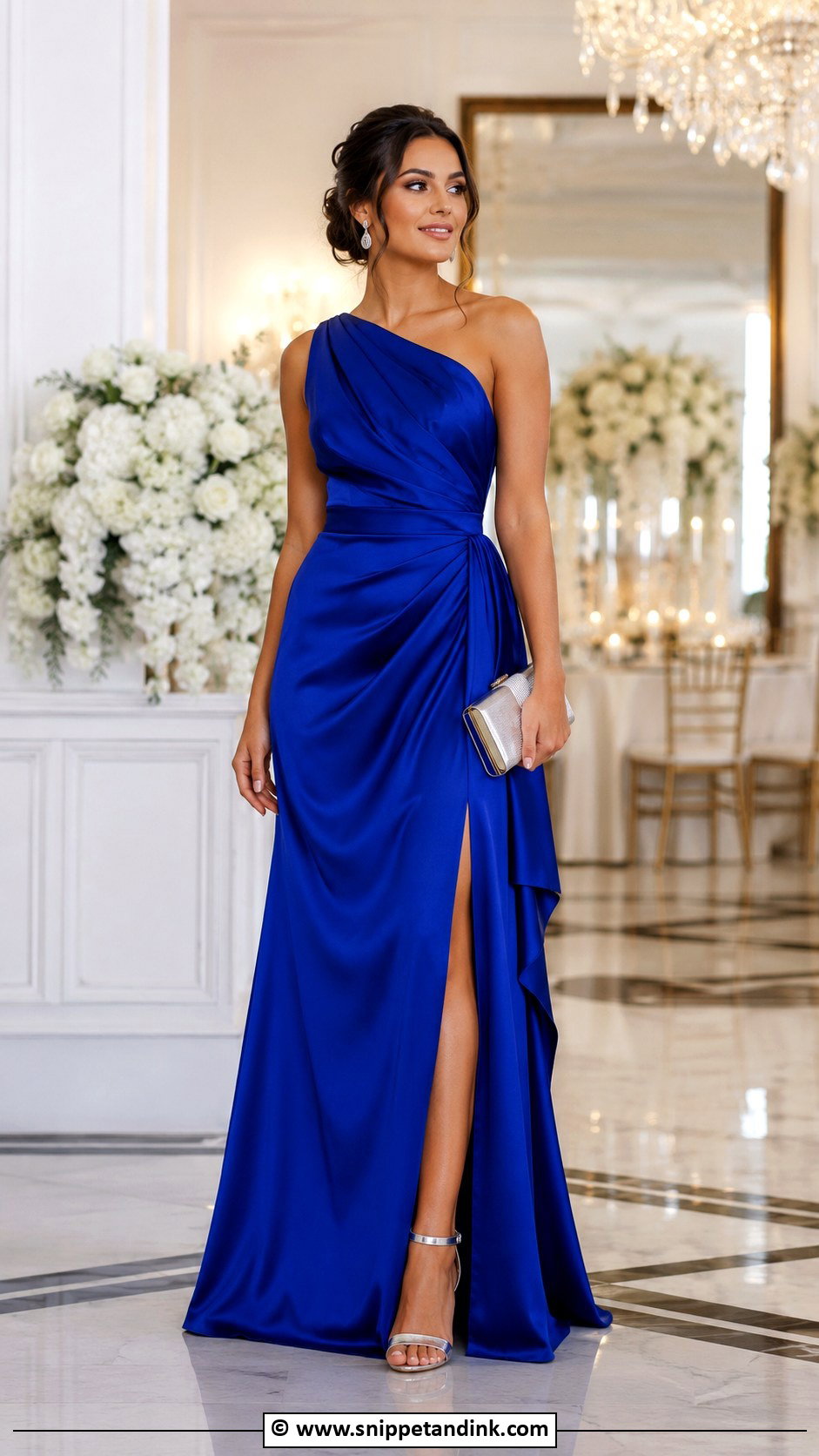
Royal blue is vivid enough that I keep everything around it plain. A floor-length crepe or satin gown in a sleek column, a draped waist or a halter neckline suits a ballroom or evening reception. Silver heels, a structured clutch and clean earrings finish it. Crepe is the safer fabric in a bold color, since satin’s sheen magnifies every wrinkle and seam. In family photos, it stands out without pulling attention from the bride.
30. Soft Peach Maxi Bride’s Sister Dress
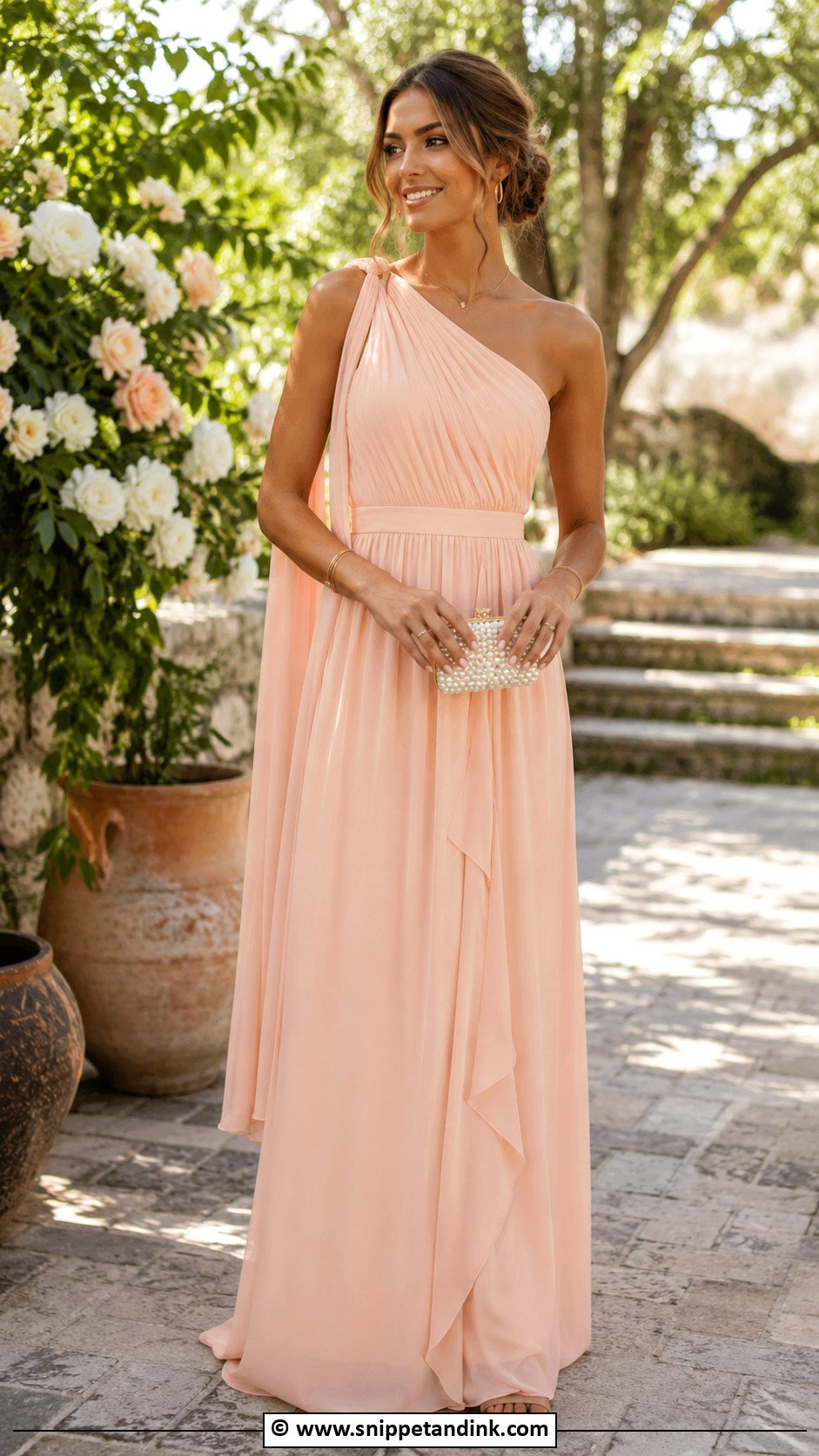
A soft peach maxi suits outdoor and daytime weddings, especially destination ones, as long as the peach has some depth. When the bride wears ivory or champagne, a very pale peach drifts too close to her gown on camera. Chiffon, satin or lightweight crepe with a flowing skirt is comfortable through a warm afternoon. Nude sandals, gold jewelry and a small pearl or satin clutch keep it warm and simple.
How Satin, Chiffon, Crepe and Velvet Hold Up Over a Long Day
The fabric decides how you’ll look at ten at night far more than the color does. A sister’s day often starts at the hair appointment and ends after the last dance, so I think about the sitting, the car rides and the hugging, not just the first look in the mirror.
What each fabric does after hours of wear
- Satin creases across the lap the first time you sit, and the sheen makes those lines obvious. Smooth it as you stand and keep a small travel steamer at the venue.
- Chiffon barely wrinkles and breathes in heat, but its hem catches on heels and outdoor ground, so hem it to clear your shoe by a finger’s width.
- Crepe is the most forgiving: matte, heavy enough to hang straight and good at hiding sweat marks.
- Velvet crushes wherever it is pressed. Steam it from the back and never iron the pile.
Leave time for alterations
Almost every dress I fit needs at least a hem or a strap adjustment. Seamstresses get busy in wedding season, so I’d have the dress in hand six to eight weeks ahead and book the alteration early. Bring the exact shoes you’ll wear to that appointment; a hem set in flats will drag once you’re in heels.
On the day, a few safety pins, a stain pen, double-sided fashion tape and a spare pair of flats in your bag will cover most of what goes wrong. I’d also suggest checking in with the bride’s dresser before the ceremony so someone knows where your kit is if her own needs a quick fix.
One Last Check Before You Buy the Dress
Whatever you pick, put it on and sit, hug, raise your arms and walk across a room before the tags come off. That’s where most dresses reveal their problems, long before the wedding. You don’t need to match the bridesmaids unless your sister asks, but echoing one color from her palette and matching the formality of the day ties you into the photos. Stay clear of white, bridal lace and anything sheer, and let the fit and the fabric carry the look. A dress you aren’t adjusting all night leaves you free to do the real job: being at her side.
You'll Like These Ideas:


Leave a Reply