
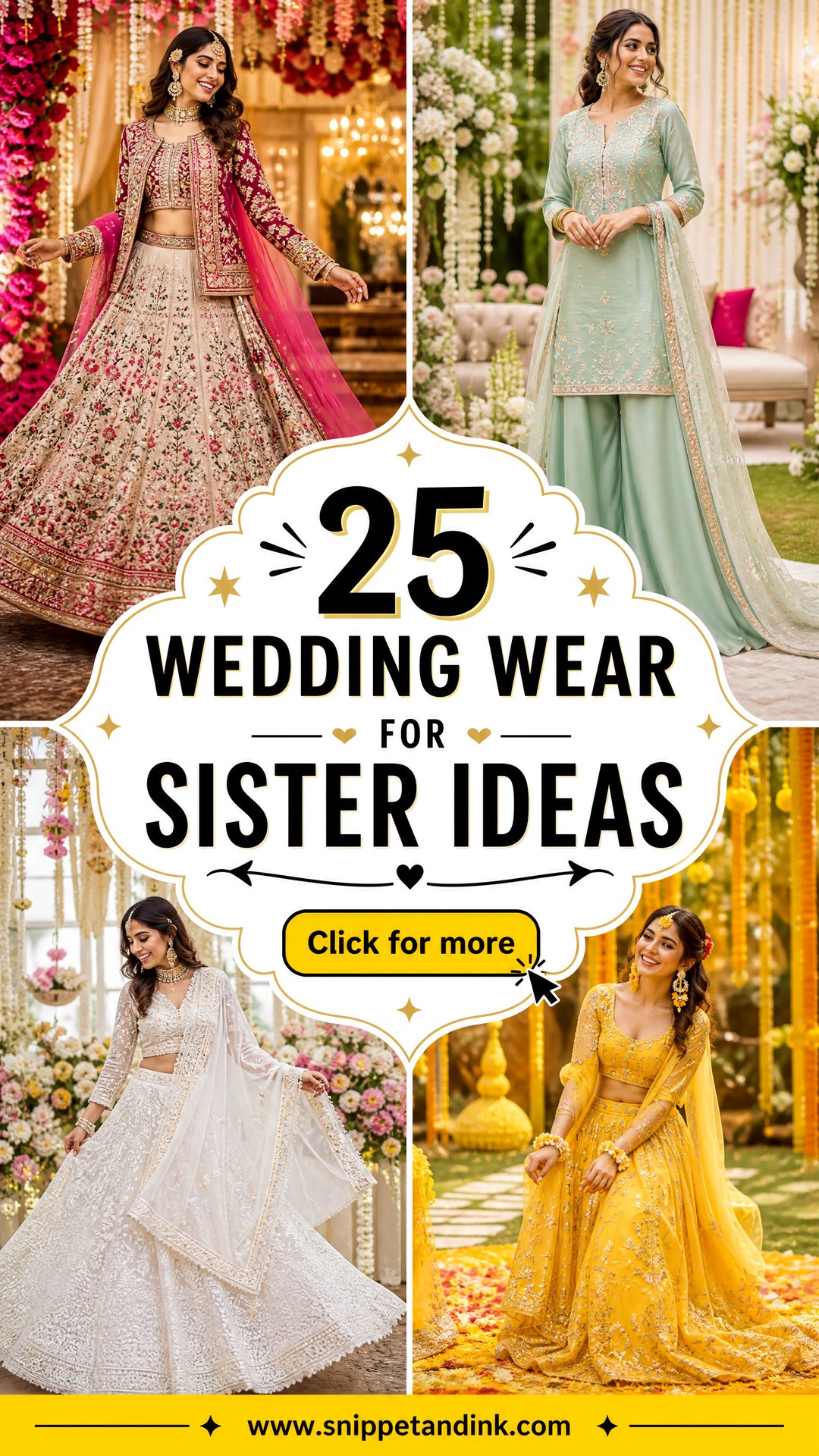
Mapping Every Function Before You Buy a Single Outfit
Most sisters attend four or five events in as many days, and the mistake I see most is buying the showpiece first and then scrambling for the rest. I sit down with the schedule and plan the whole run before anything goes to a tailor.
- Haldi: cotton or washable fabric in yellow or a bright, nothing you’d be upset to stain.
- Mehndi: something with short or rolled sleeves and no heavy work at the wrist, because you’ll be getting henna applied and then waiting for it to dry.
- Sangeet: the lightest outfit with the most movement; this is the night you dance.
- Wedding ceremony: the most traditional piece, silk or Banarasi, with covered shoulders if there’s a temple, gurdwara or mosque element.
- Reception: the place for a gown, pre-draped saree or sequins.
Then ask the bride which colors she’s wearing for each event. If she is in red and gold for the ceremony, I avoid red entirely for the sister and go for emerald, teal or a deep pink that sits beside her in portraits without blending into her.
1. Pastel Lehenga For Sister Wedding
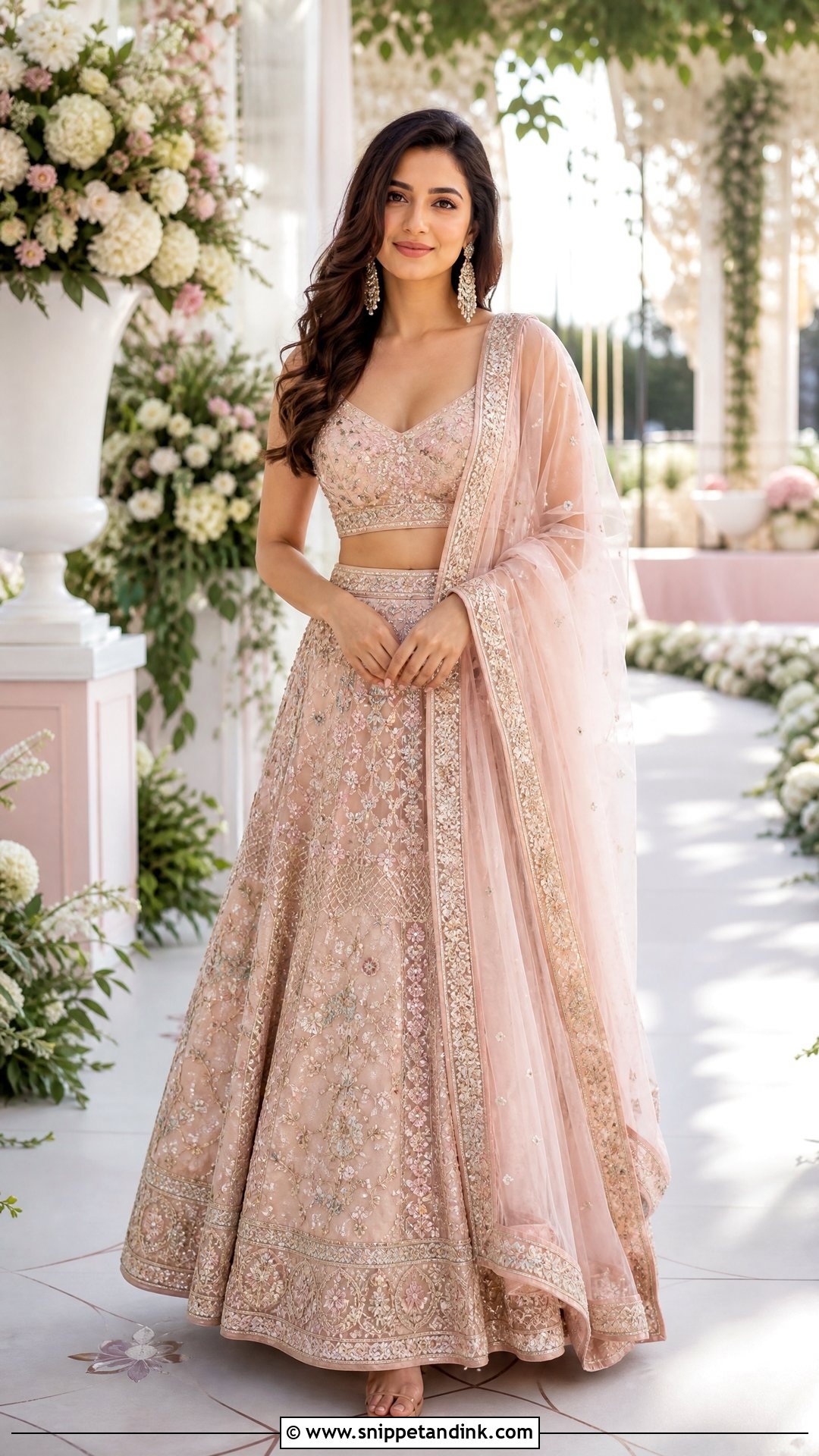
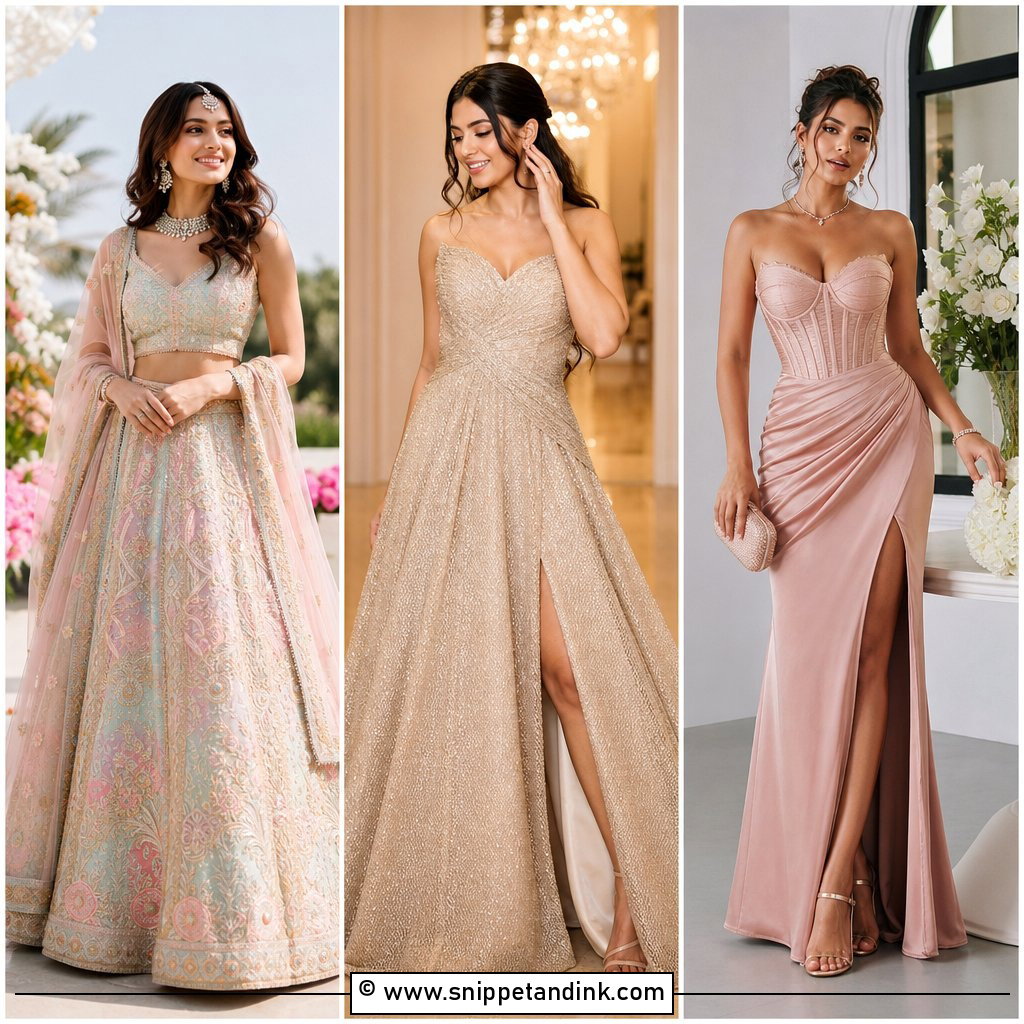
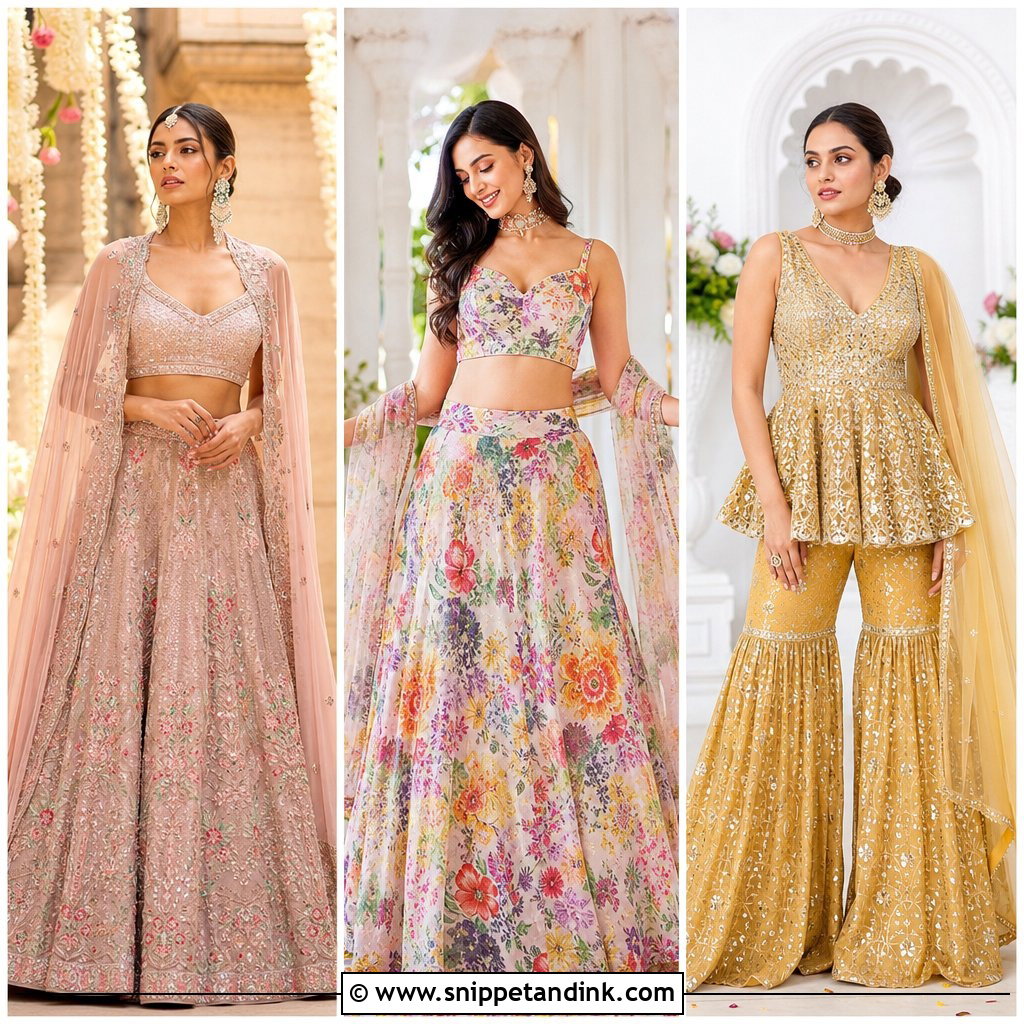
Pastel is the easiest way for a sister to look festive in the day photos without drifting into the bride’s territory. Blush, mint, powder blue, peach and lilac all hold their color in natural light, which matters at garden venues and during family portraits. I steer sisters toward mirror, pearl, thread or light sequin work rather than heavy zardozi, because a daytime lehenga that weighs a lot becomes tiring by the second ceremony. Get the blouse fitted closely; a loose blouse is what makes a pastel lehenga look borrowed. Finish with a sheer dupatta, one pair of statement earrings, soft curls and nude heels or embellished juttis.
2. Silk Saree For Sister Wedding
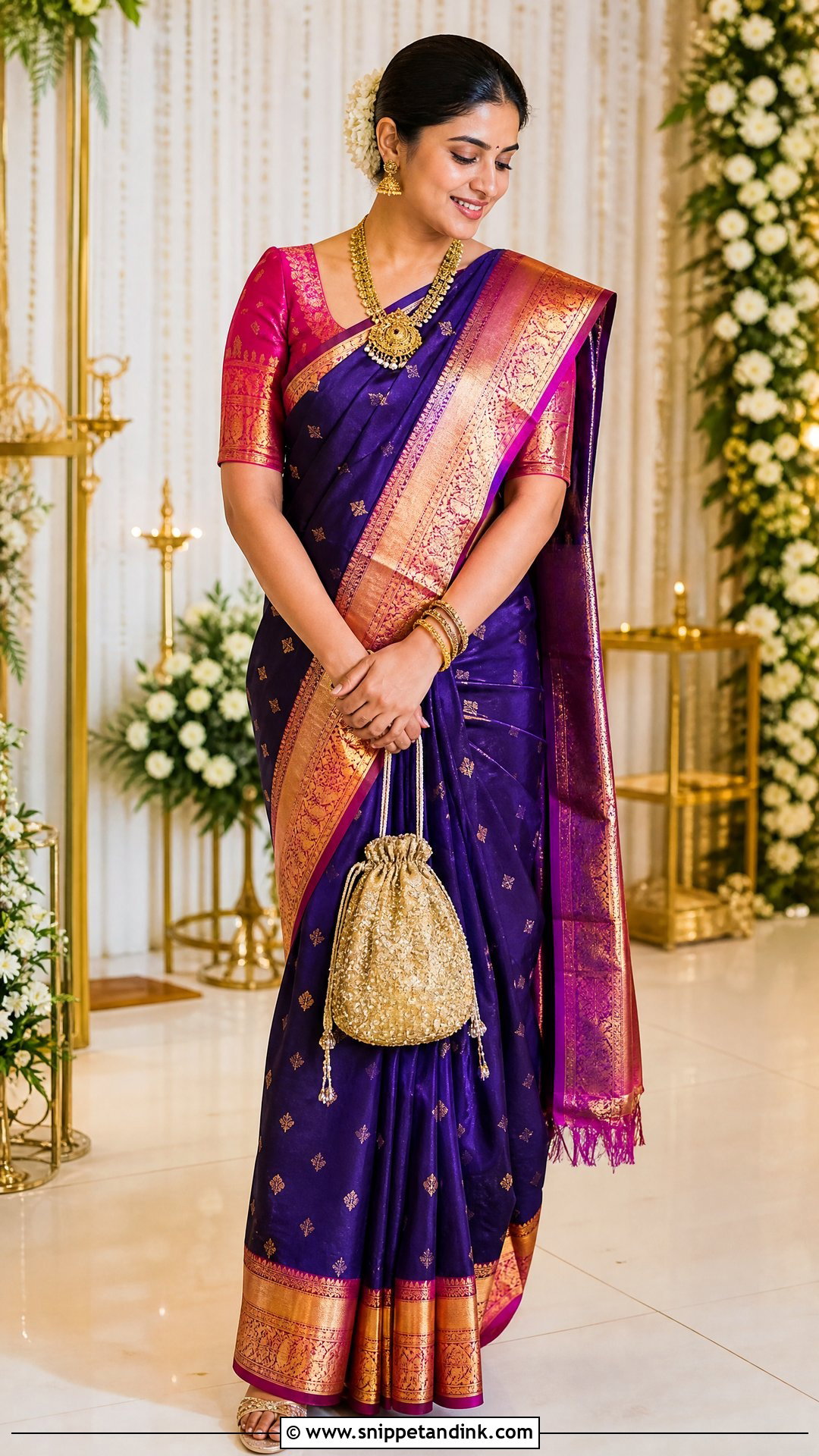
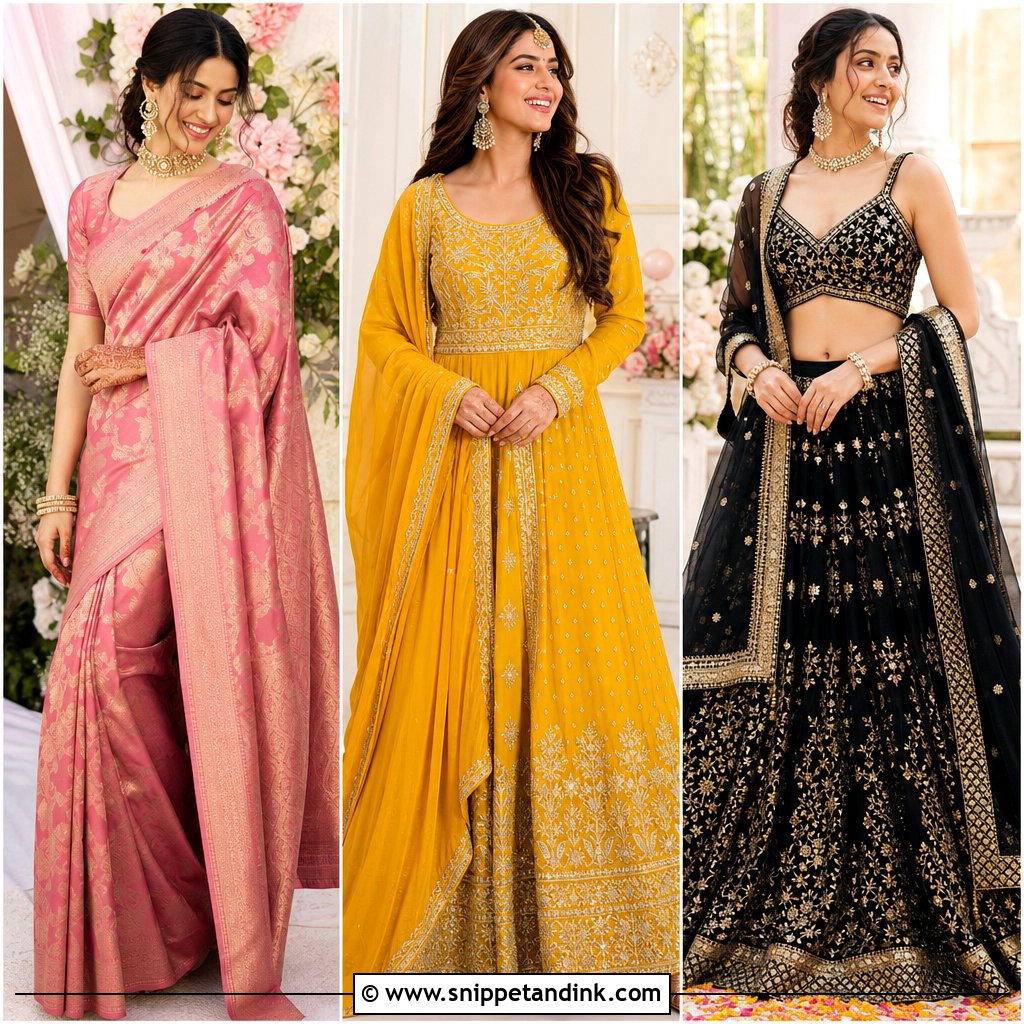
Silk is the fabric I suggest for the main ceremony, because it reads as traditional and respectful in every elder’s eyes. Banarasi, Kanjeevaram, Paithani and tissue silk all suit the sister of the bride or groom. The practical problem is weight: a pure Kanjeevaram can feel heavy across the shoulder after a few hours of greeting guests. If the ceremony runs long, a silk blend gives you the same border and sheen at a fraction of the load. Jewel tones with a contrast blouse photograph richly, and temple jewelry, bangles, a sleek bun and a small potli finish it.
3. Sharara Set For Sister Wedding
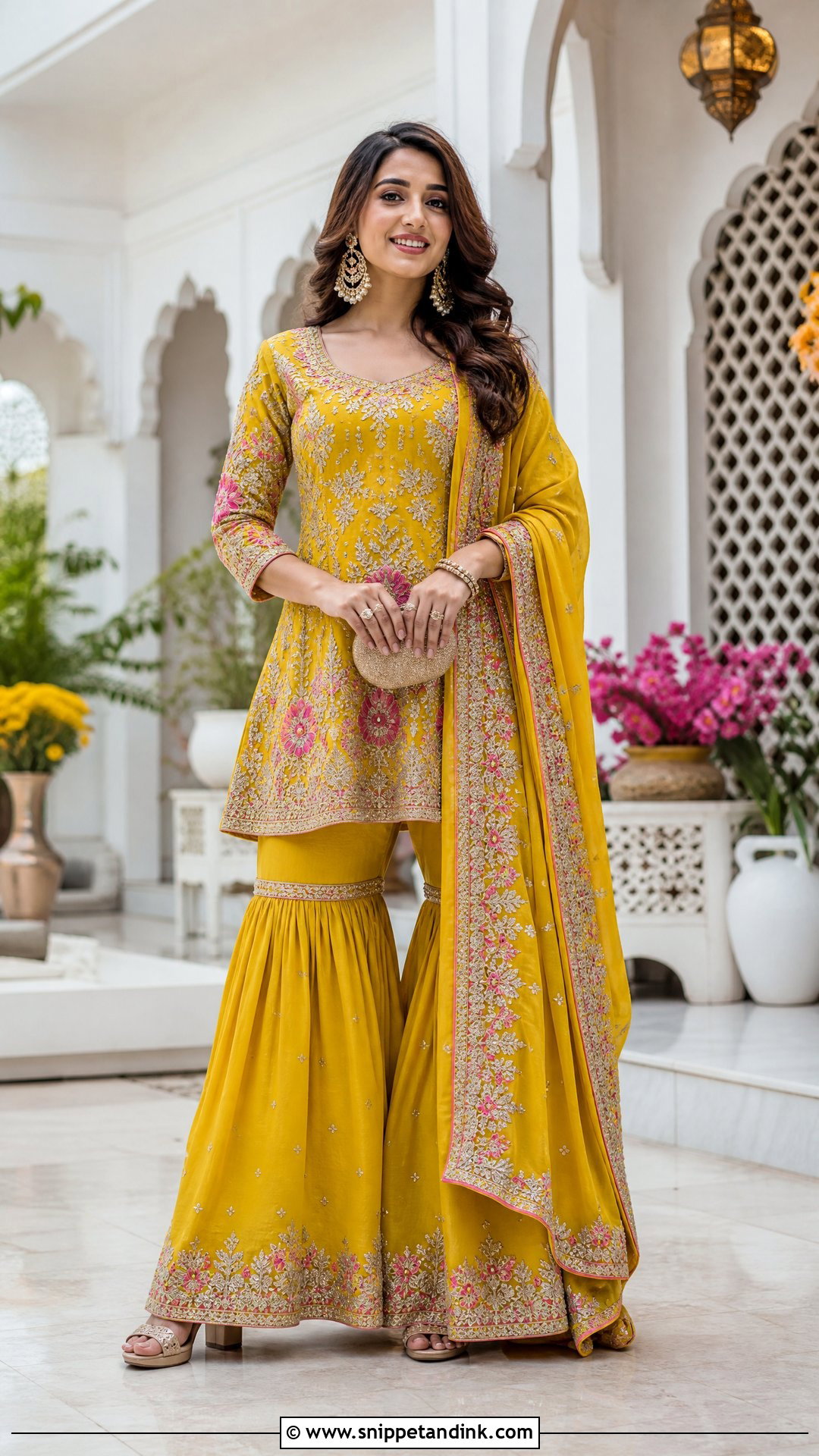
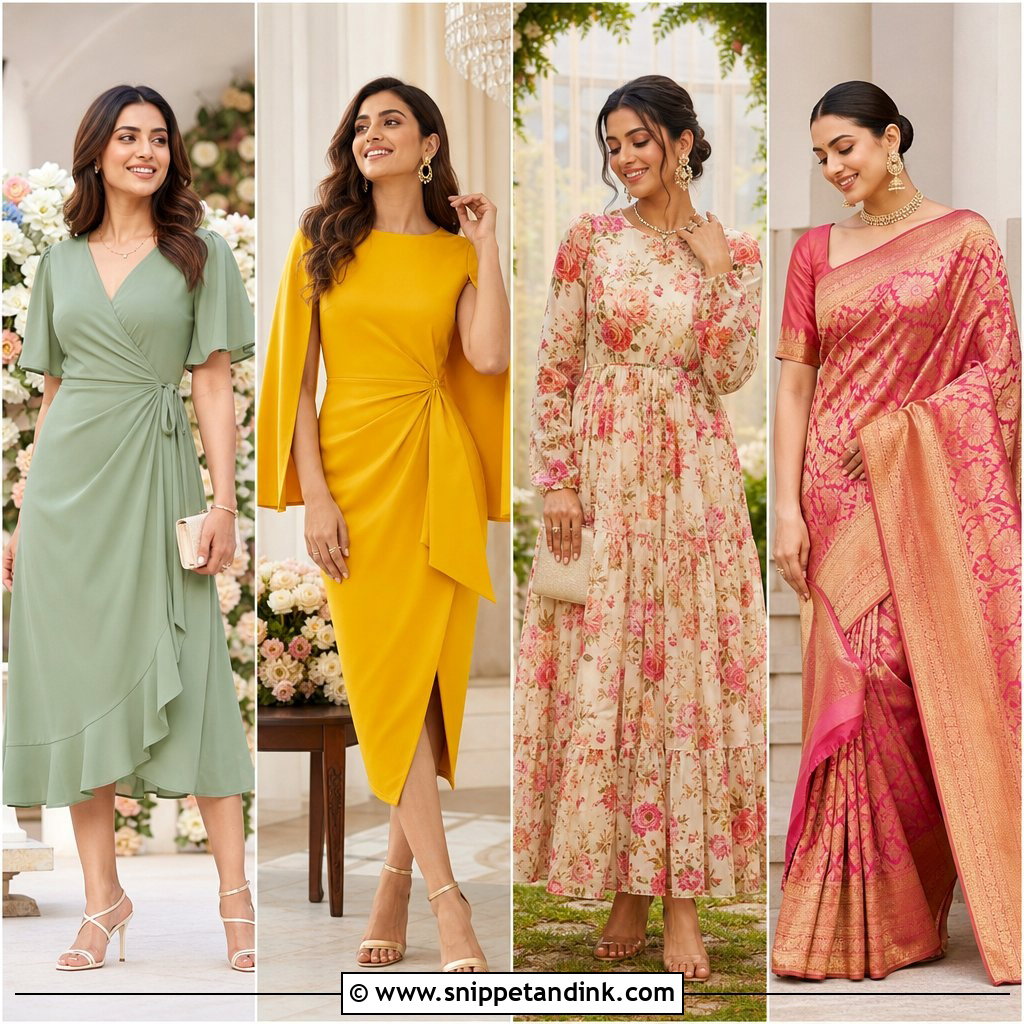
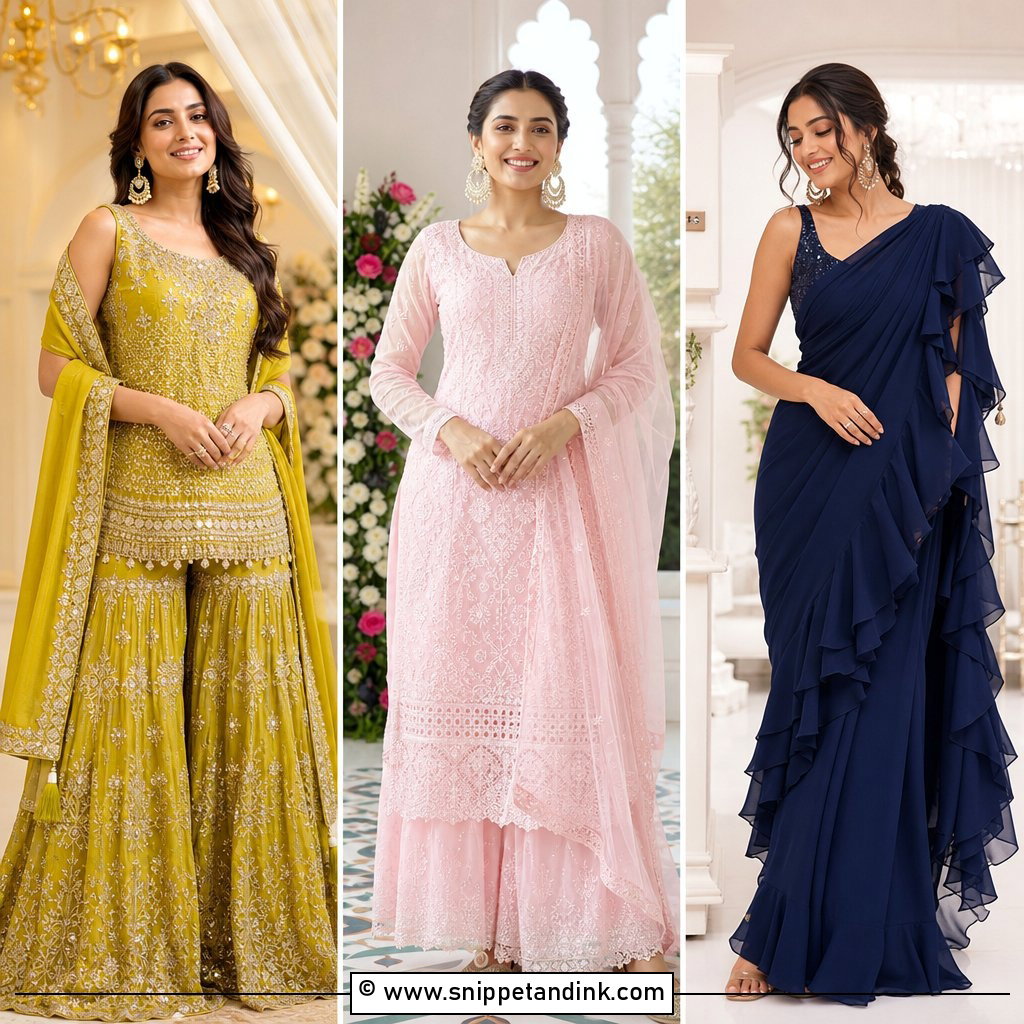
A sharara set is my first suggestion for the sister who will be running between the kitchen, the stage and the photographer. The wide legs let you climb stairs and sit cross-legged on the floor during rituals, which a lehenga makes awkward. Embroidery at the neckline, sleeves and hem keeps it looking finished from the back, the angle candid shots usually catch. Bright yellow, rani pink, emerald, coral and sky blue all read well at mehndi, sangeet or a welcome lunch. Check the sharara length in the shoes you’ll wear; a hem that drags collects mehndi stains and mud. Chandbalis and block heels finish it.
4. Pre Draped Saree For Sister Wedding
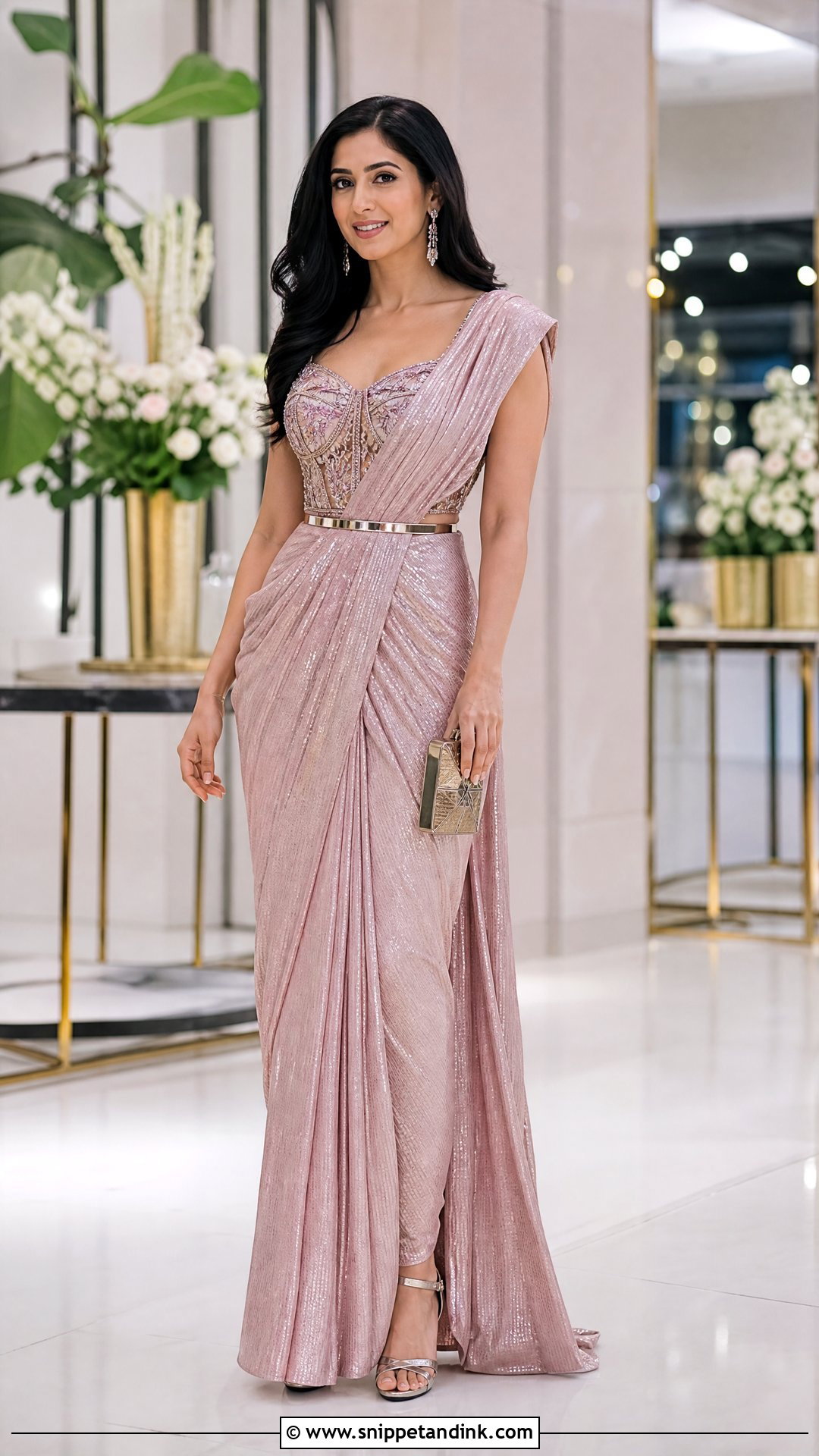
Pre-draped sarees exist for exactly the night a sister has no time to stand still for twenty minutes of pleating. You step into the skirt, fasten the pallu and you’re done. I like them most for cocktail evenings, receptions and sangeet, where a structured blouse, a belt or a soft ruffle gives a modern edge. Check that the pleats are stitched to a waistband with a hook and zip rather than just a drawstring, which loosens through dancing. Drop earrings, metallic heels, a box clutch and a clean ponytail or side-parted waves keep it sharp.
5. Anarkali Suit For Sister Wedding
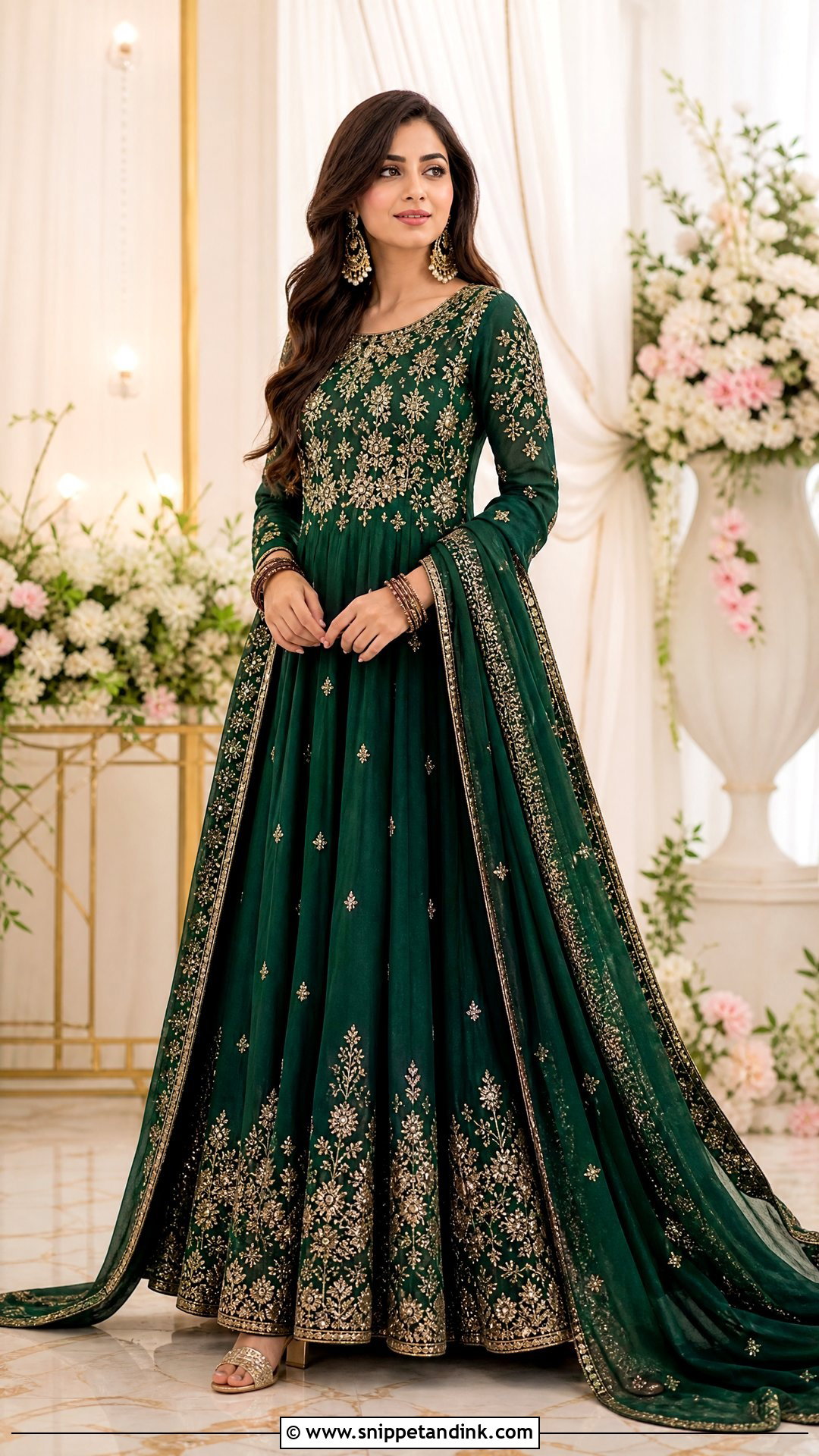
An anarkali gives you the presence of a lehenga with half the weight, and it hides a long day of standing better than almost anything else. The flare starts high under the bust, so the eye travels down the length rather than across the hips. For a sister I’d pick silk, georgette, organza or chiffon with zari, gota or mirror detailing. Jewel tones suit an evening event; pastels and florals suit daytime. The thing to watch is the hem: a floor-length anarkali in georgette can trip you on stairs, so ask the tailor for a hem that just clears your heel. It offers more coverage without losing any of the festivity.
6. Gharara Outfit For Sister Wedding
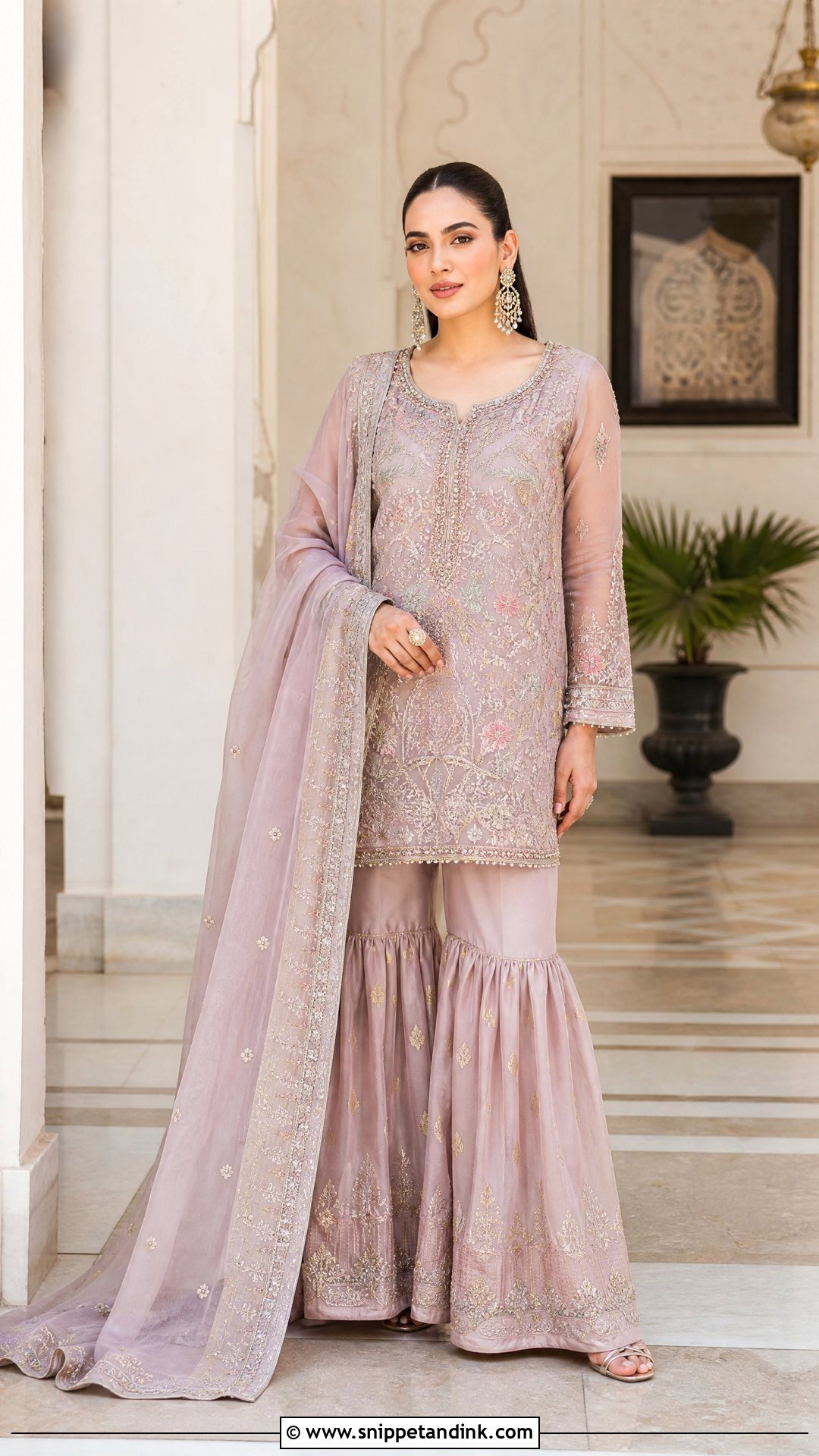
People confuse the gharara with the sharara all the time, and the difference matters for movement. A gharara is fitted to the knee, then flares from a gathered joint, so it walks more neatly but sits less freely on the floor. That structure suits a nikah, a mehndi or a family dinner. Brocade, silk, chiffon or organza with fine embroidery suits the shape. Pastels feel soft, while deep green, navy, maroon and gold feel formal. Pair it with a short kurti so the knee joint stays visible, add a flowing dupatta, statement earrings and a sleek hairstyle.
7. Jacket Lehenga For Sister Wedding
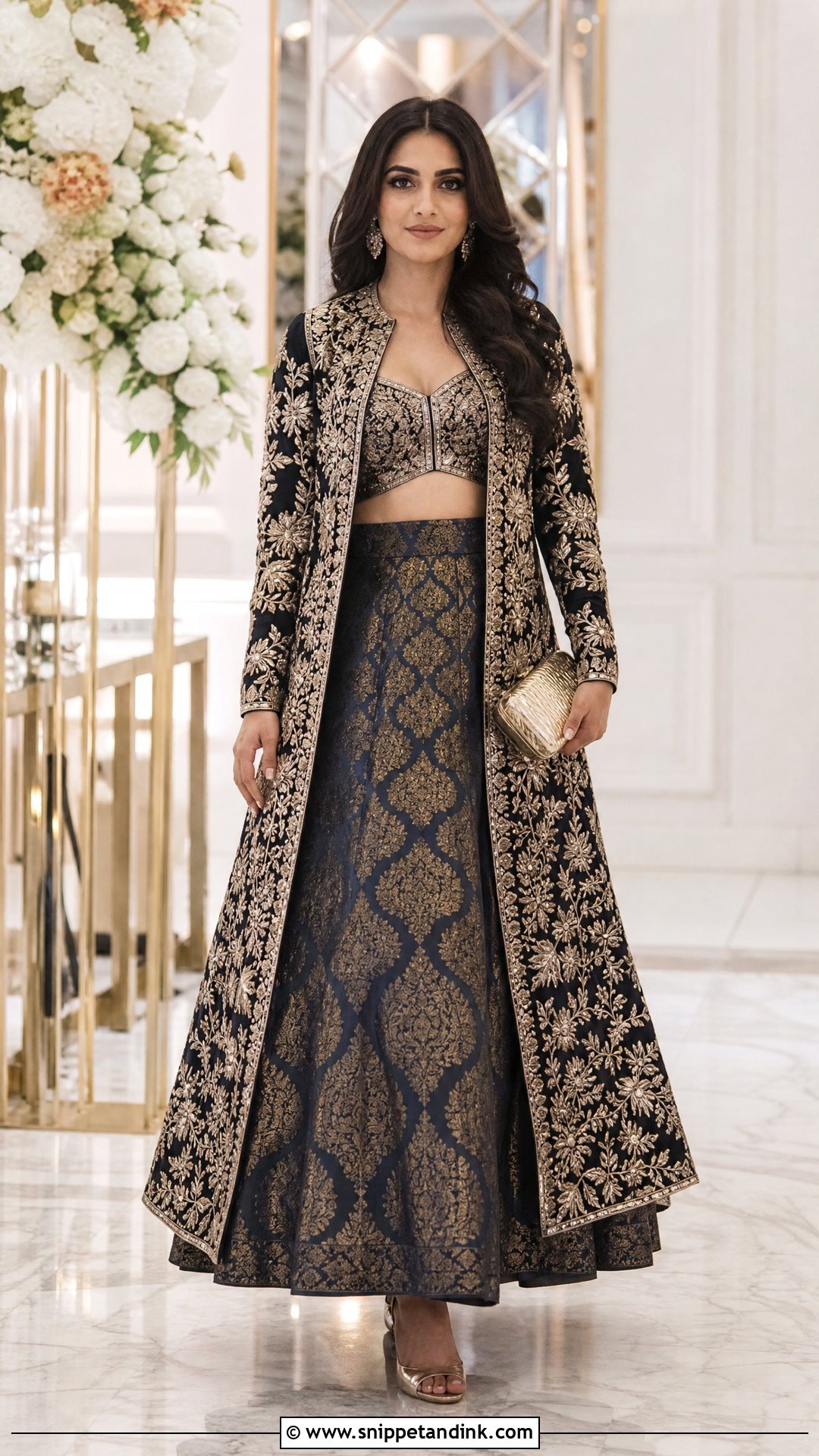
Swap the dupatta for an embroidered jacket and you solve the winter wedding problem in one move. A long or short jacket over the blouse and skirt gives warmth and coverage, and it stays put, unlike a dupatta that keeps sliding off one shoulder. A sheer embroidered jacket adds a little drama; a structured brocade one feels richer. I make sure the jacket armhole is cut generously, because a tight sleeve over a fitted blouse restricts your arms when you serve food or dance. Minimal jewelry, heels and a neat clutch are all it needs for evening venues.
8. Floral Lehenga For Sister Wedding
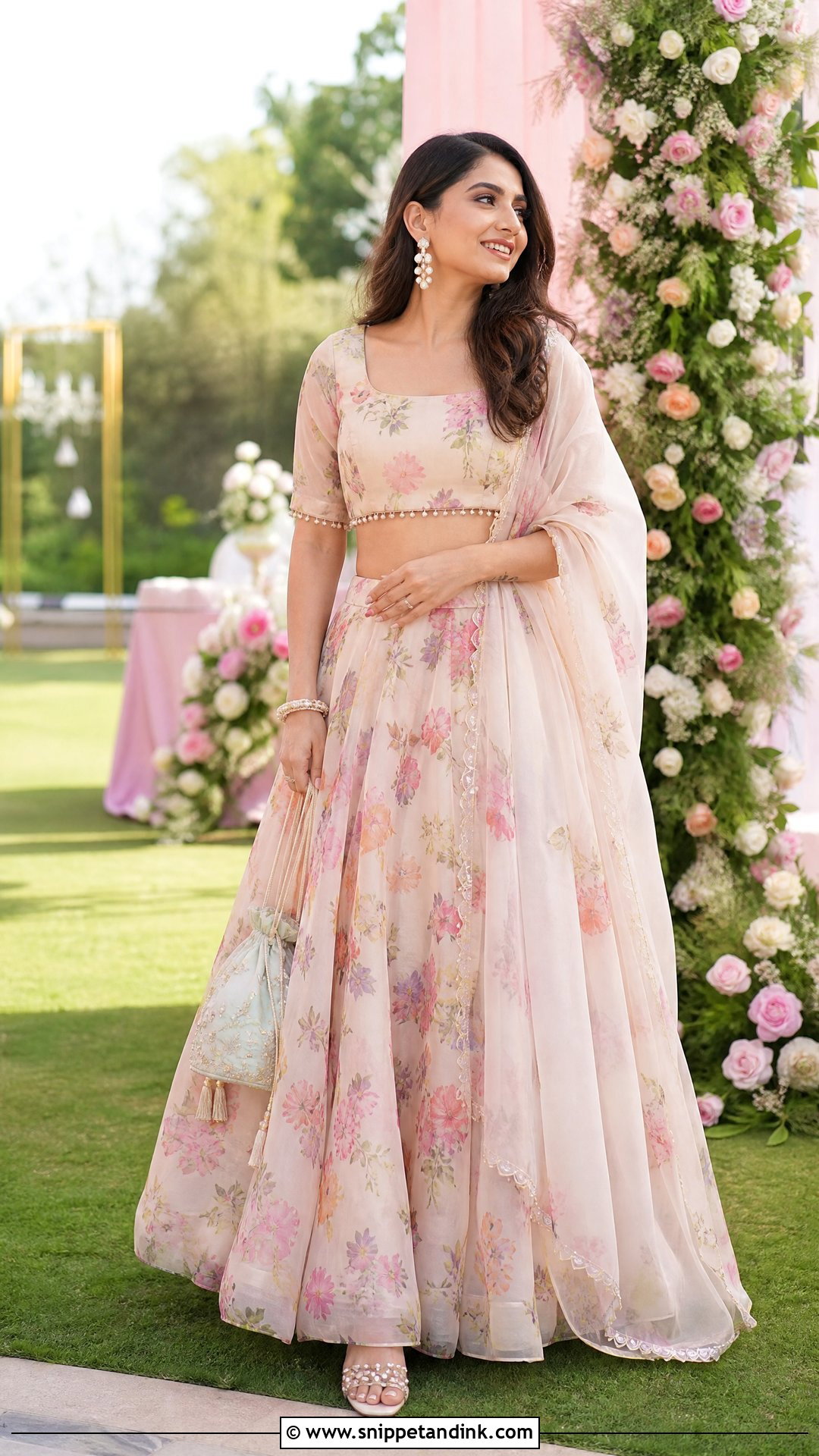
Florals belong in daylight, at mehndi, haldi, brunch weddings and outdoor ceremonies. Printed blooms, embroidered flowers or 3D floral appliqué on organza, georgette or chiffon keep the skirt moving. The common mistake is decorating every piece: a heavily embroidered floral skirt with an equally busy blouse and dupatta looks cluttered in photos. I keep one piece loud and two quiet. 3D petals also crush in a suitcase, so pack the lehenga with tissue between the layers. Pearl earrings, a pastel potli and soft makeup suit the sister who wants something cheerful she can wear across long functions.
9. Sequin Saree For Sister Wedding
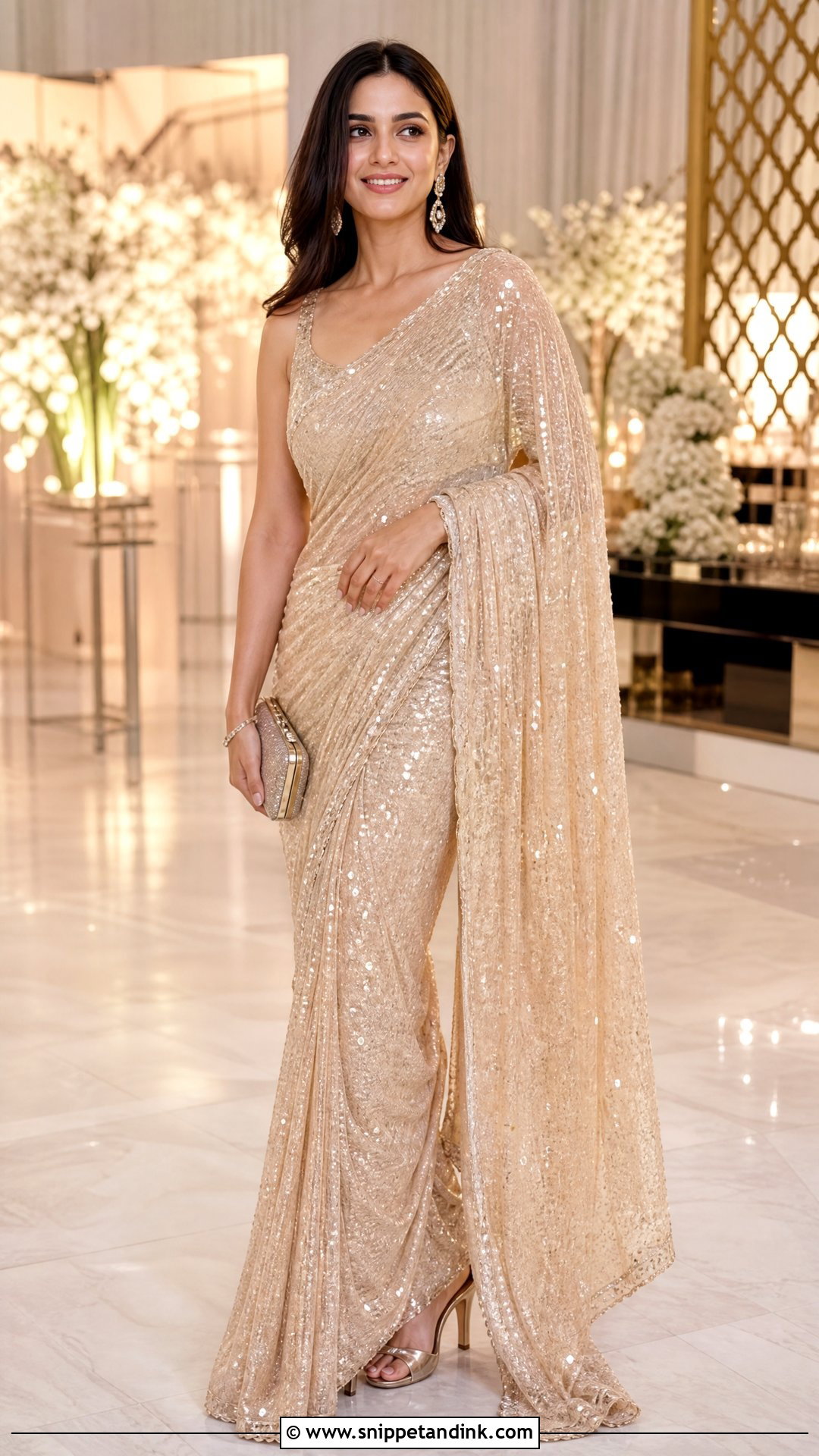
For a reception or cocktail night, a sequin saree gives you sparkle without the bulk of a full gown or a heavy lehenga. Champagne, silver, blush, teal, navy and rose gold all look polished under event lighting. Since the drape already shines, I keep the blouse plain or choose a structured sleeveless cut. Ask for a soft net or satin lining along the inner edge of the pallu; sequins against bare skin scratch the arm and the waist by the end of the evening. Sleek earrings, metallic heels and smooth hair are all you need for a confident, modern sister wedding look.
10. Indo Western Gown For Sister Wedding
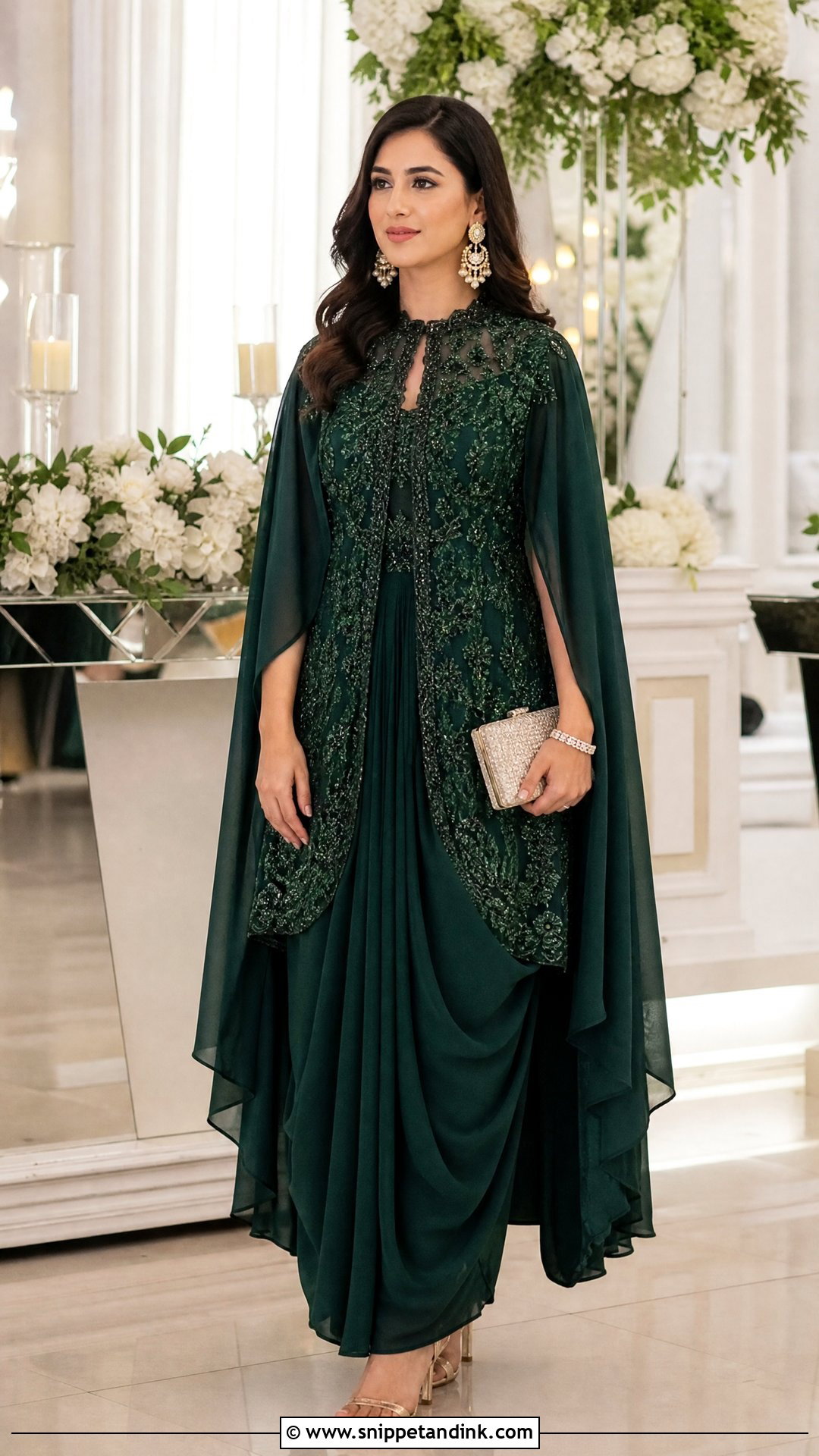
Indo-western gowns are what I suggest when a sister wants the drama of Indian wear without layers to manage. It is one piece: no dupatta, no pleats, nothing to pin. Cape sleeves, draped panels, embroidered bodices or a subtle ethnic border make it fit the wedding. Emerald, midnight blue, plum, gold and ivory suit grand venues, though I’d skip ivory if the bride’s reception outfit is pale. Statement earrings, a bracelet, heels and a small clutch are enough. Keep the jewelry lighter than you think, because a gown already reads as formal for reception night or an engagement party.
11. Cape Lehenga For Sister Wedding
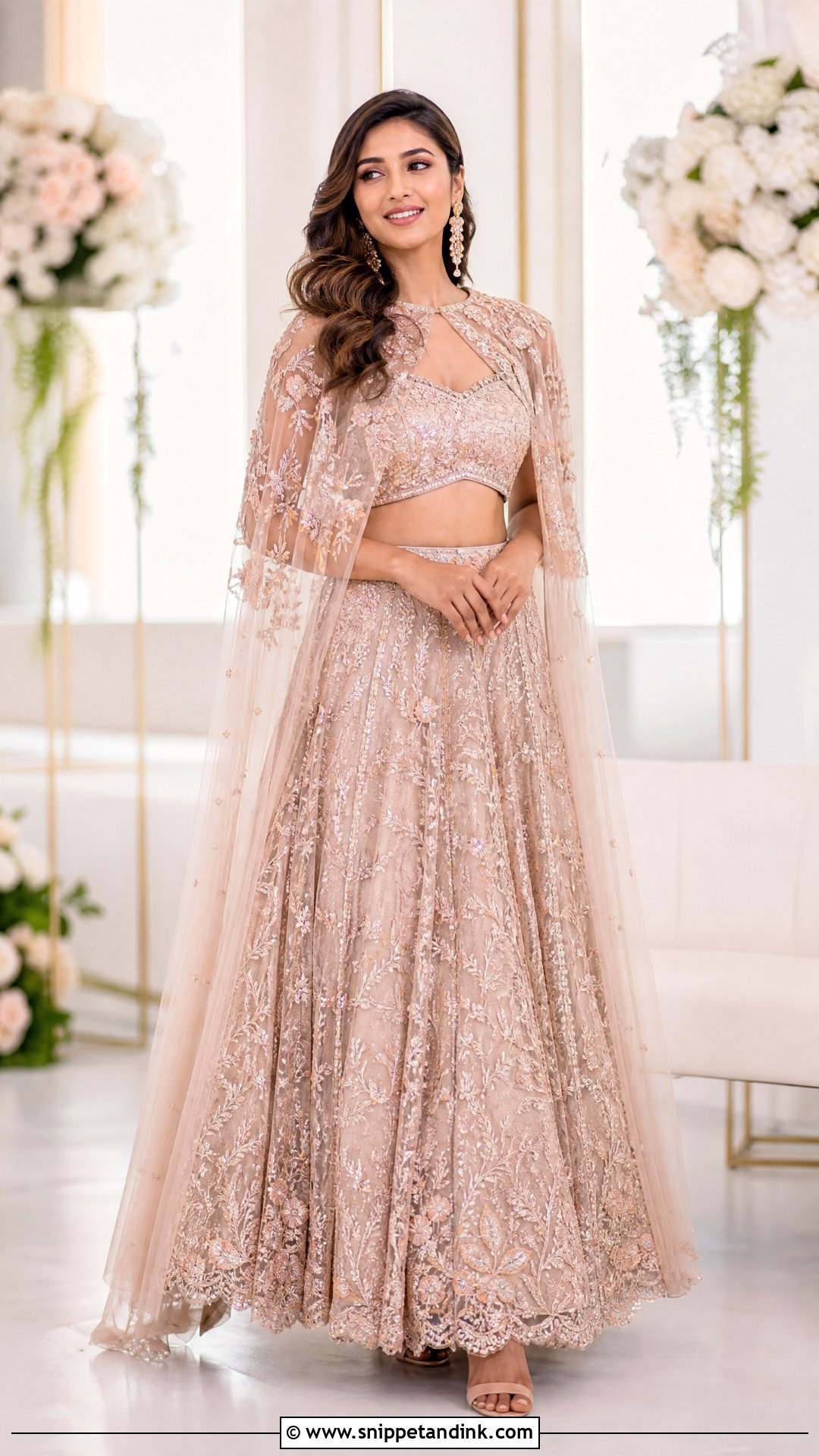
Hands-free is the whole point of a cape lehenga. The cape replaces the dupatta, so you can dance, carry trays, adjust the bride’s veil and hold a phone for the photographer without anything falling. Embroidery, sequins, beads or sheer organza on the cape give it finish. A fitted blouse and flared skirt balance the flowing layer. One thing I check: a long cape catches on chairs and gets stepped on during a crowded sangeet, so a hip or knee-length cape is safer than one that trails. Earrings, soft waves and heels finish it for cocktail nights and receptions.
12. Organza Saree For Sister Wedding
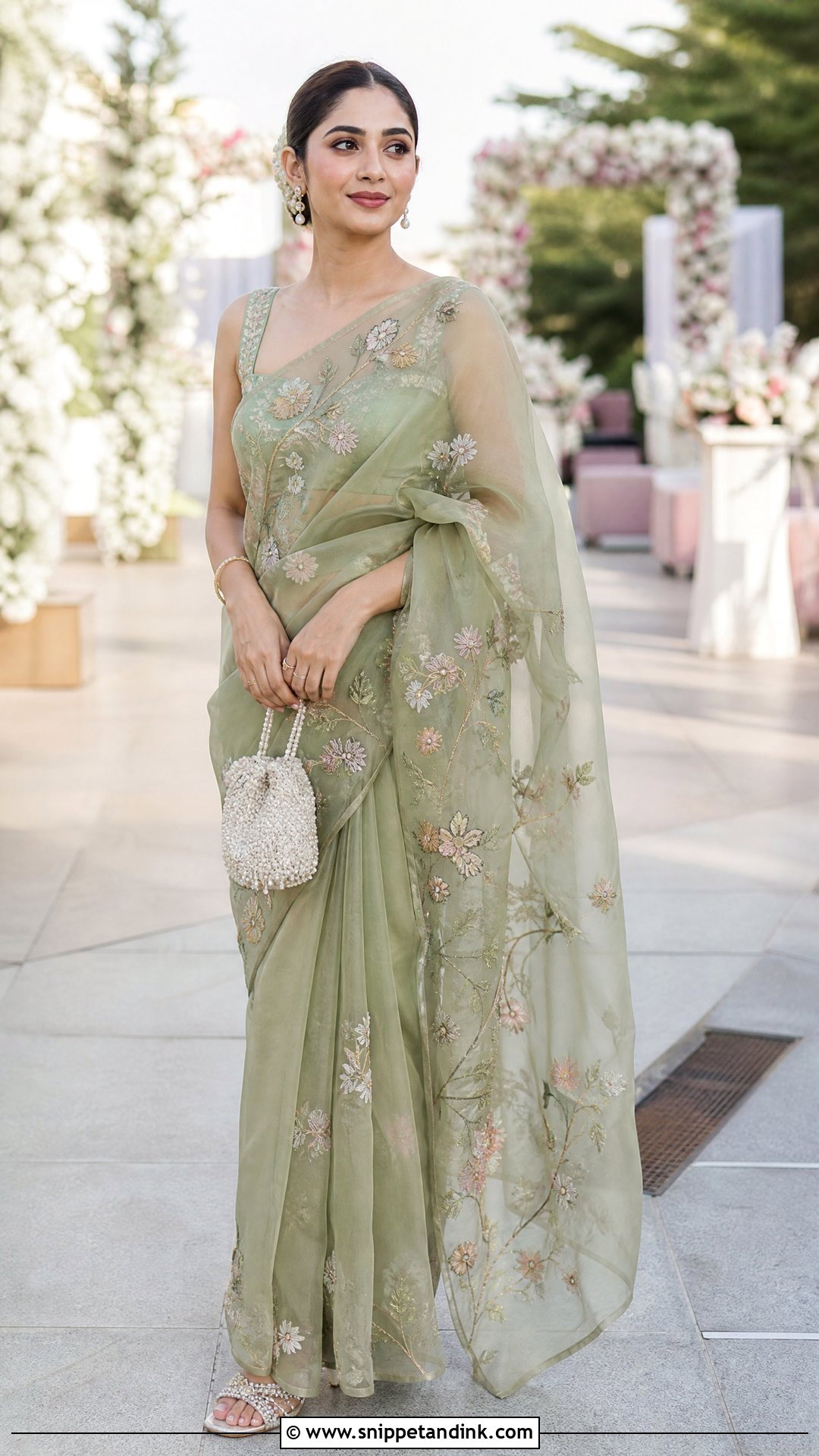
Organza has natural body, so an organza saree stands slightly away from the body rather than clinging. That makes it airy in daylight but means the blouse must be fitted closely, or the whole drape looks puffy. Floral embroidery, pearl borders, scalloped edges or fine zari work suit it. Ivory, sage, lavender and blush photograph cleanly at daytime ceremonies and engagements. Organza creases sharply where you sit and is hard to steam out on site, so I keep the pallu pinned high and sit on the pleats carefully. Pearl jewelry, a clean bun and embellished sandals finish it.
13. Kurta Palazzo Set For Sister Wedding
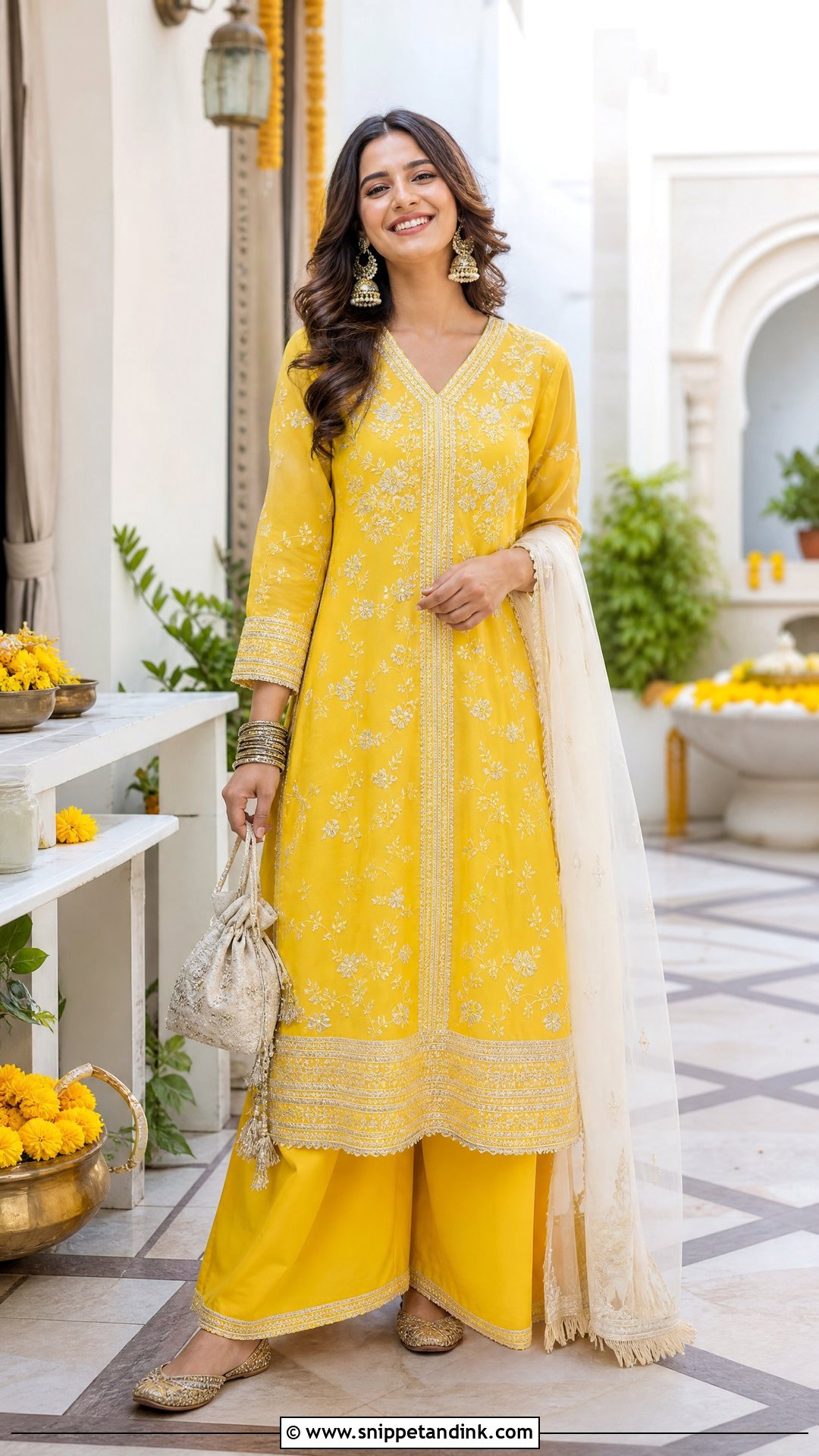
A kurta palazzo set is what I’d pack for the functions before the wedding, when you’re on your feet from breakfast. It works for haldi, mehndi, puja, welcome gatherings and any day of travel between venues, such as pre-wedding functions at a family home. Choose a long embroidered kurta, wide palazzos and a light dupatta. Cotton silk, chanderi, georgette and muslin blends stay comfortable through the heat of the day. Bright yellow, orange, pink, turquoise and green set the mood. Jhumkas, bangles, embellished flats and a potli finish it, with nothing that slows you down.
14. Ruffle Saree For Sister Wedding
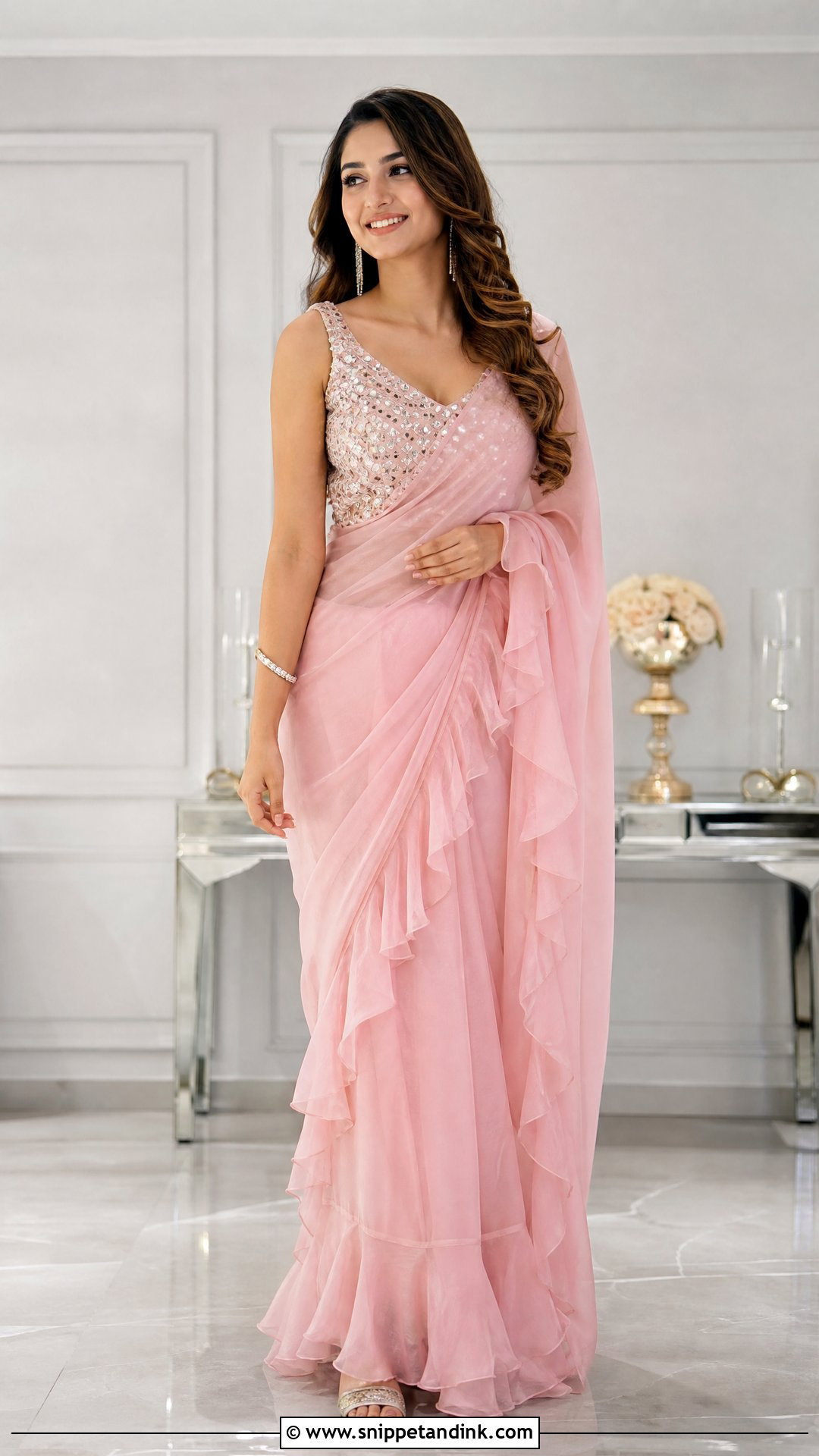
Ruffles give a saree movement without the weight of embroidery, which is why it suits sangeet and cocktail nights so well. A pre-stitched or lightweight drape keeps it comfortable. I pair it with a statement blouse, mirror work, a corset cut or an embellished crop, and then stop: earrings and a bracelet, nothing at the neck. Heels matter here; the ruffled hem is cut for a lifted foot and puddles awkwardly in flats. Georgette ruffles also go limp in humid weather, so if the venue is outdoors in summer, a chiffon with a stiffer edge holds its shape better. It’s a youthful pick for dancing and evening photos.
15. Velvet Lehenga For Sister Wedding
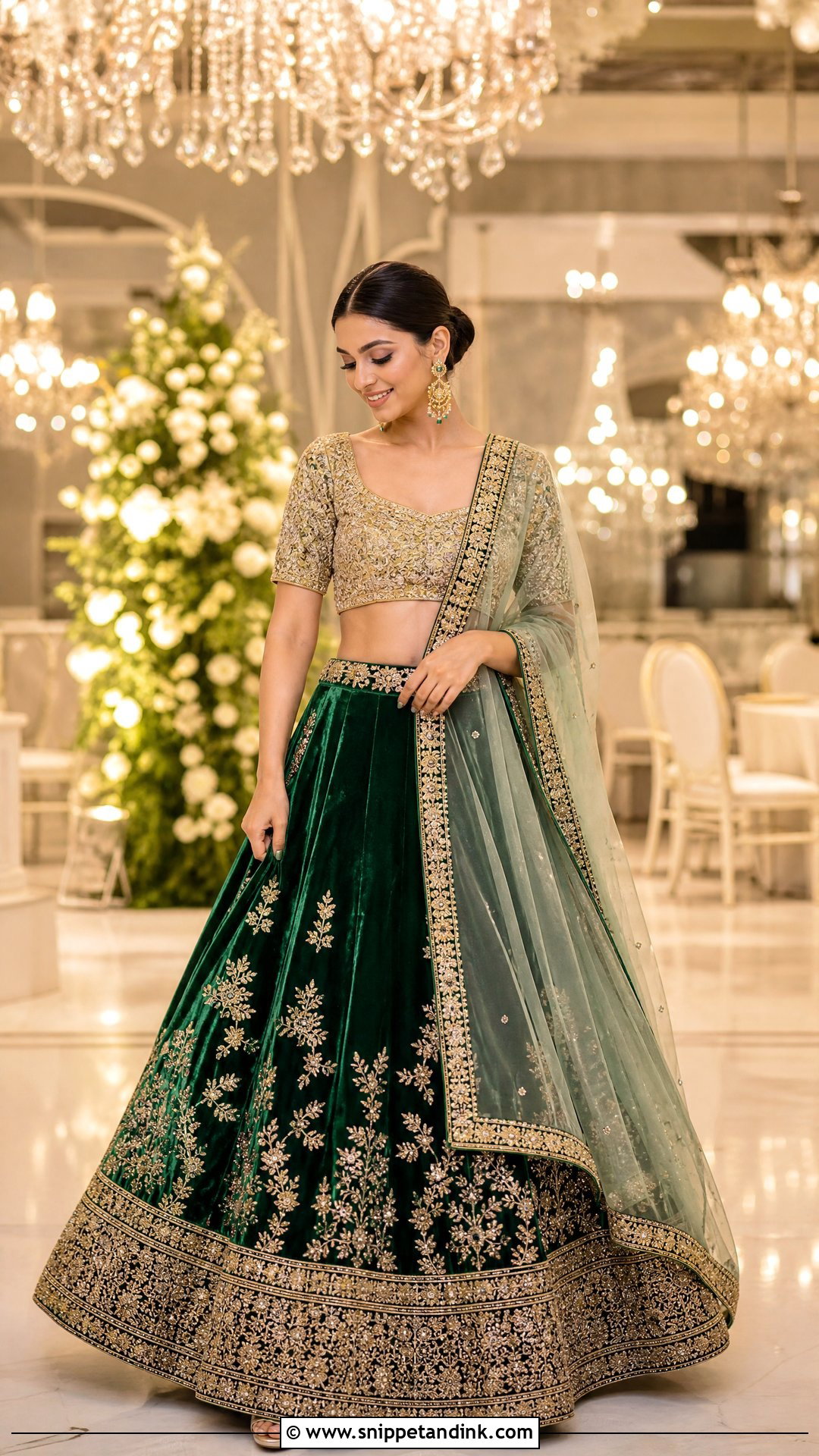
Velvet looks rich even with modest embroidery, so I reserve it for winter weddings and grand evening functions. Emerald, navy, plum, ruby and charcoal give that regal depth. The trade-off is weight and warmth: a full velvet skirt can be heavy at the waist, so I pair it with a lighter blouse and a sheer dupatta. Have the waistband fitted with the skirt fully hooked and the shoes on, because velvet drops slightly at the hem as you wear it. Kundan earrings, a sleek bun and classic heels finish it for reception nights or palace-style venues.
16. Mirror Work Lehenga For Sister Wedding
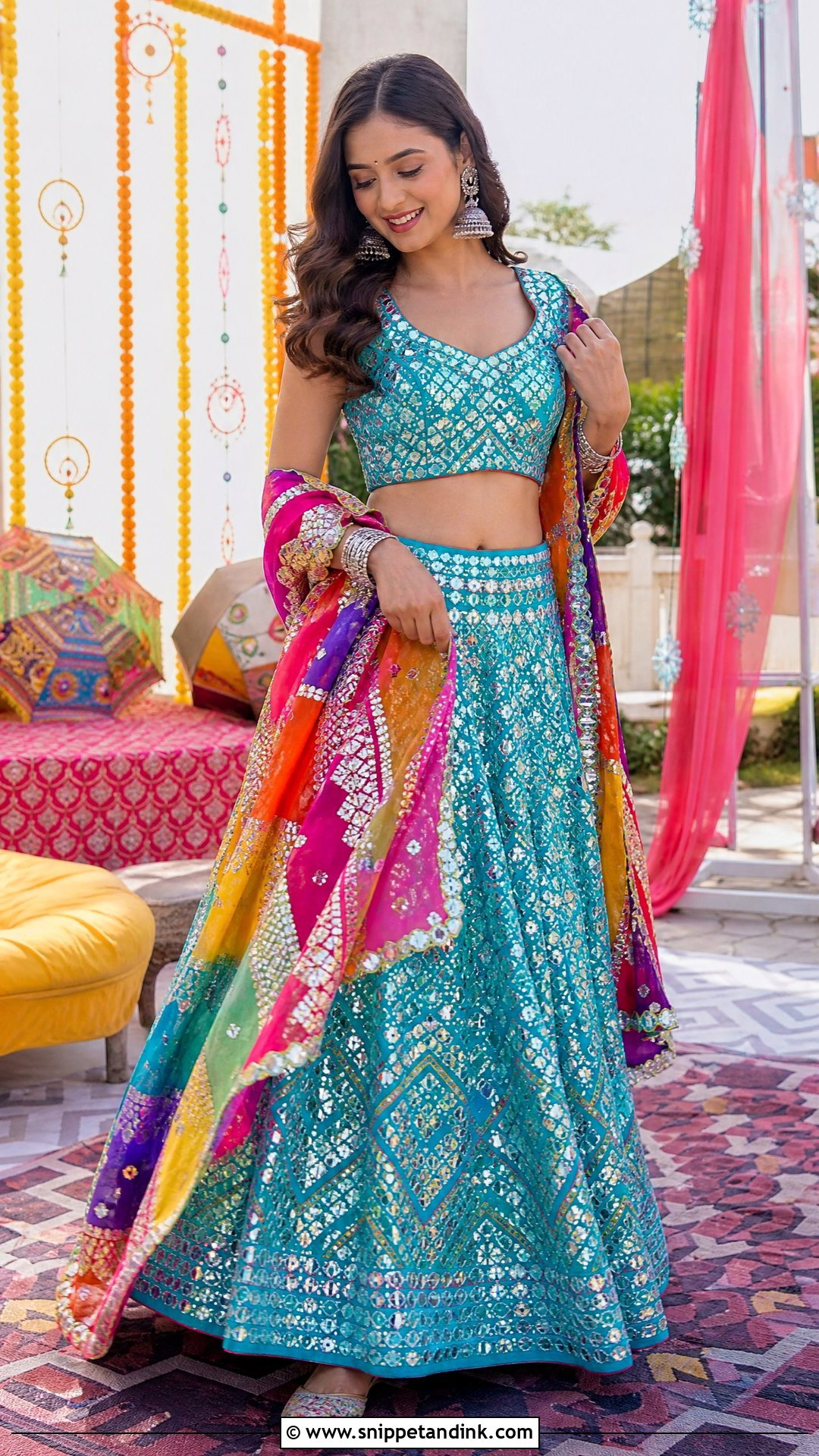
Mirror work suits daytime because the mirrors pick up sunlight and throw it back, which looks lively in candid shots. That is also why it suits mehndi and sangeet so well. Yellow, orange, pink, turquoise and green give a joyful look; ivory or pastel mirror work with a colorful dupatta is softer. The one practical note: mirrors are often glued and stitched, and they can catch on the bride’s net dupatta in hugs. Oxidized earrings, bangles and comfortable heels or juttis keep it traditional, and fresh, glowing makeup suits the lively energy of the function.
17. Chikankari Lehenga For Sister Wedding
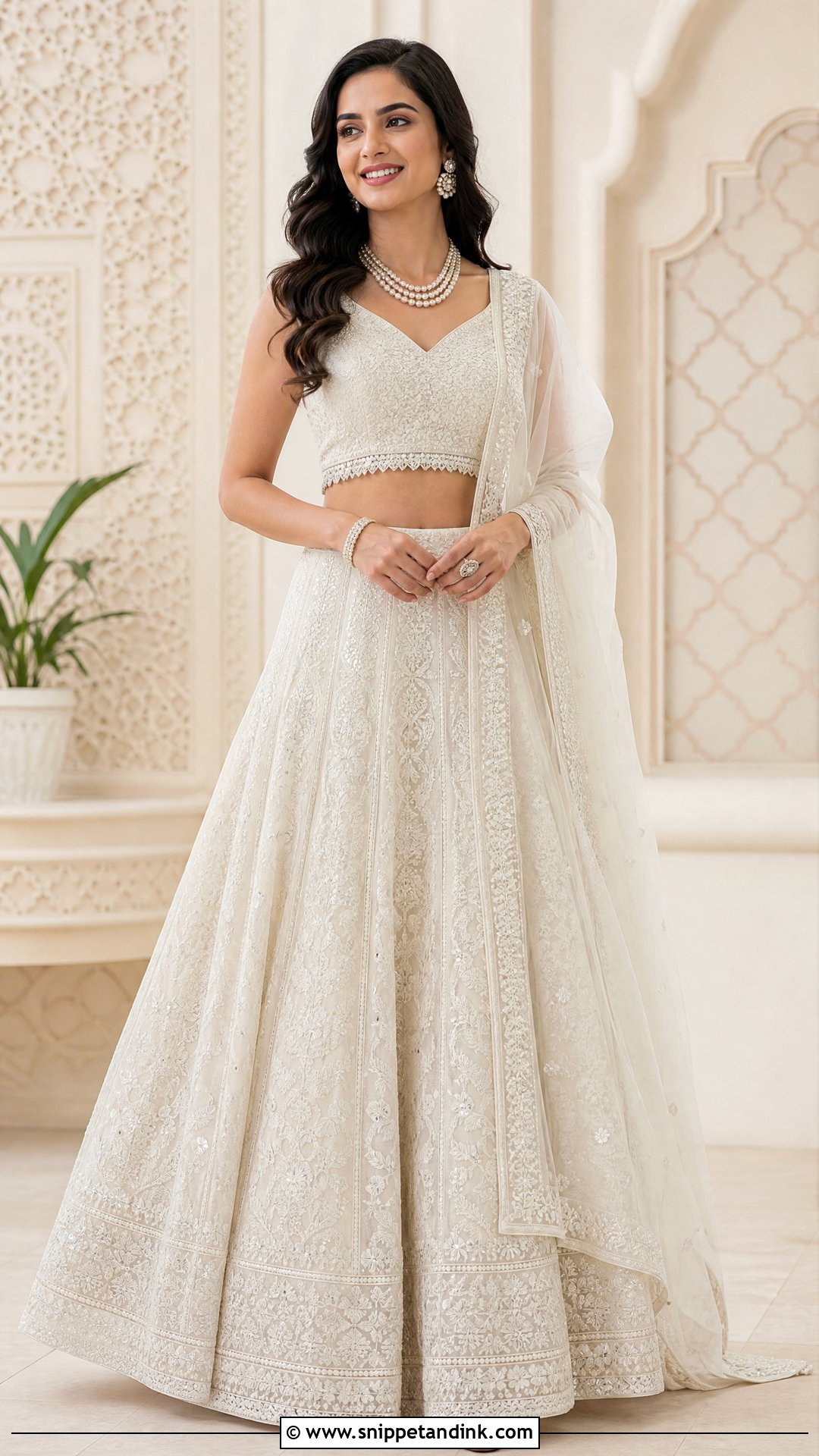
Chikankari is quiet, hand-stitched shadow work, and I recommend it for the sister who dislikes sparkle. On its own it can read a little daytime-casual for a wedding, so I look for chikankari layered with light sequins, pearls or mukaish to lift it. Ivory, blush, sage, powder blue and lavender suit the fine stitching. A matching blouse and soft dupatta keep it calm. Pearl jewelry, dewy makeup and soft curls finish it for day weddings, engagement functions and intimate ceremonies. Because the fabric is usually georgette or cotton, it is also one of the coolest lehengas to wear in summer heat.
18. Banarasi Lehenga For Sister Wedding
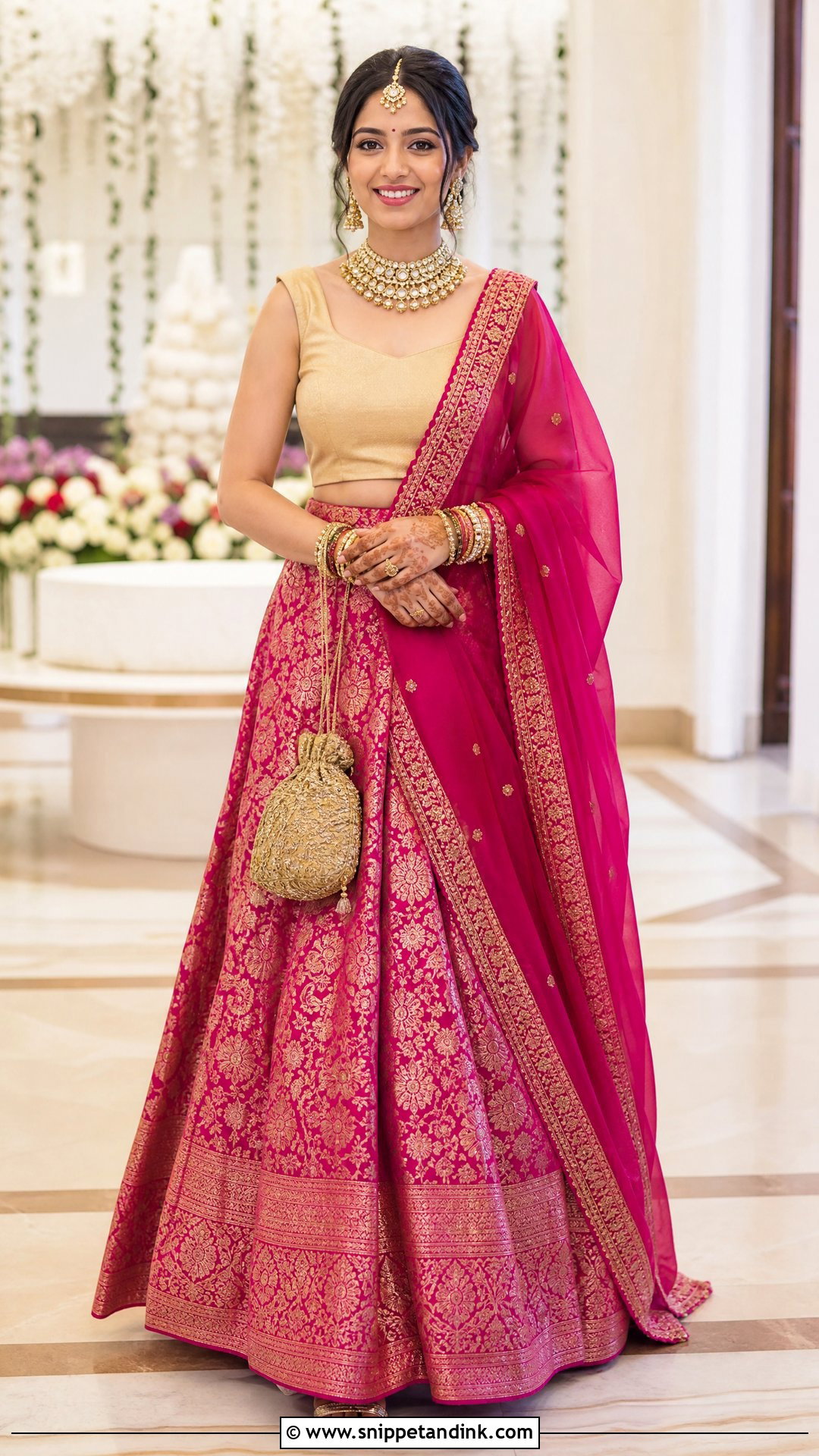
Banarasi brings woven texture and a silk shine, so it looks formal without extra embroidery. Choose jewel tones, gold accents or elegant pastels depending on the ceremony. A Banarasi skirt with a plain blouse and dupatta looks balanced; put Banarasi on all three pieces and it competes with the bride. Kundan jewelry, bangles, a potli and classic sandals suit it for the wedding ceremony and family portraits. Store it folded in muslin rather than plastic and refold it along new lines every few months, because the metallic zari can crack along old creases. Kept that way, it’s a piece you’ll rewear for years.
19. Dhoti Set For Sister Wedding
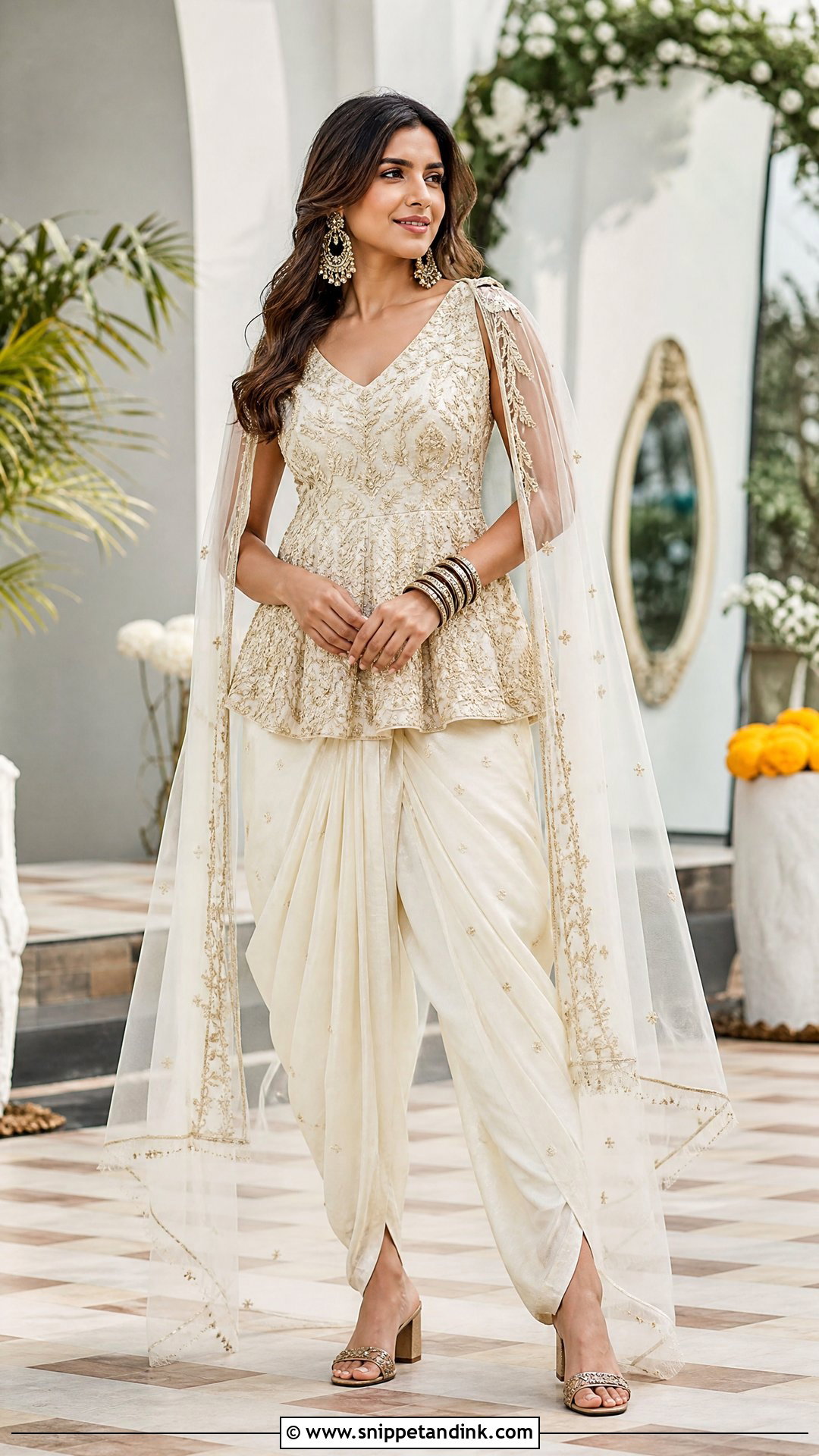
The dhoti set is the most comfortable outfit on this list for a sister who will be dancing or hosting. The draped dhoti bottom gives room to move, and pairing it with a short kurti, crop top, peplum or cape gives the outfit shape. Light embroidery, mirror or gota detailing keeps it festive enough for mehndi, haldi and welcome parties. I’d keep it away from the main ceremony unless the family is relaxed about modern wear. Statement earrings, stacked bangles and block heels finish it.
20. Co Ord Set For Sister Wedding
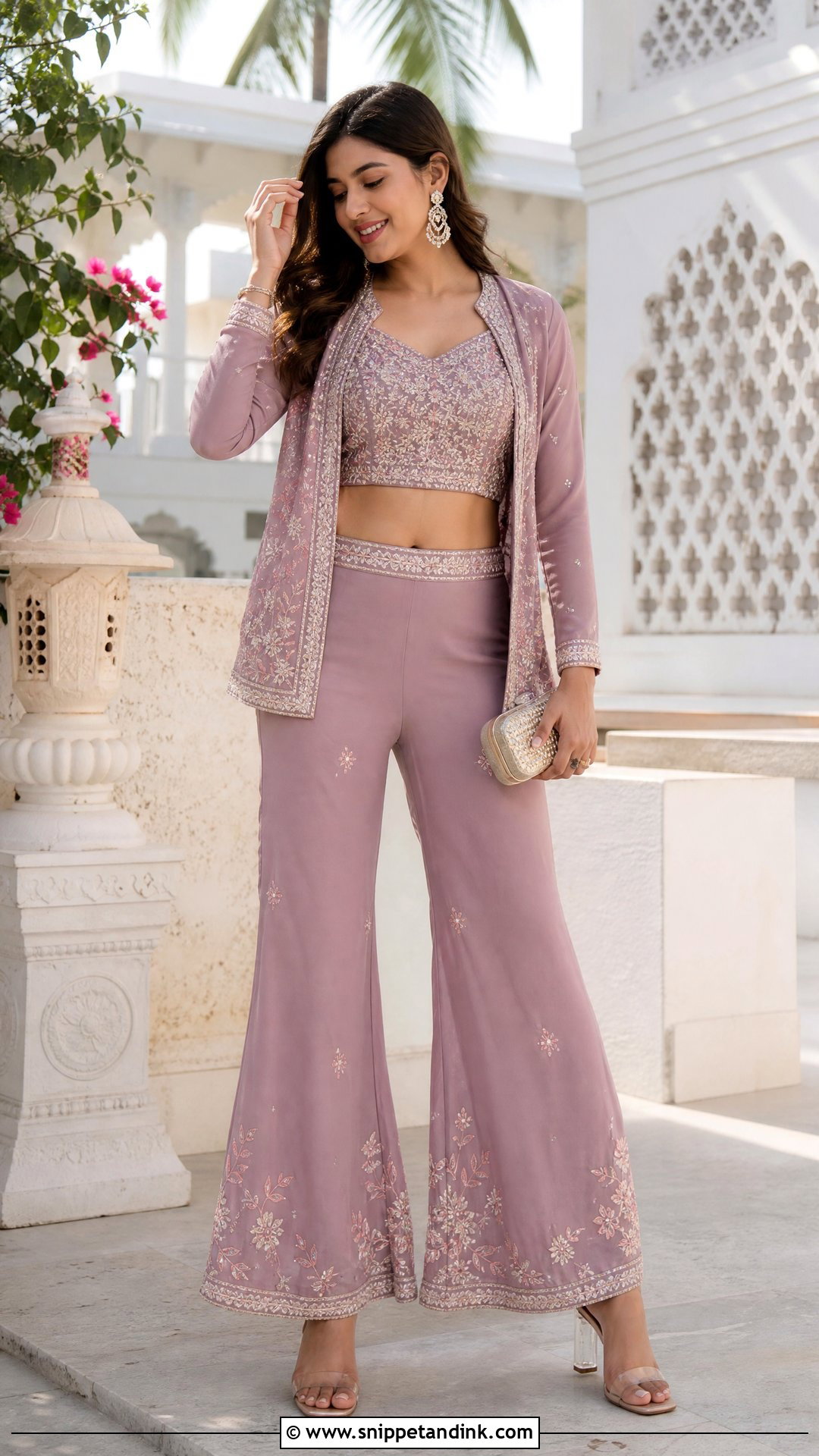
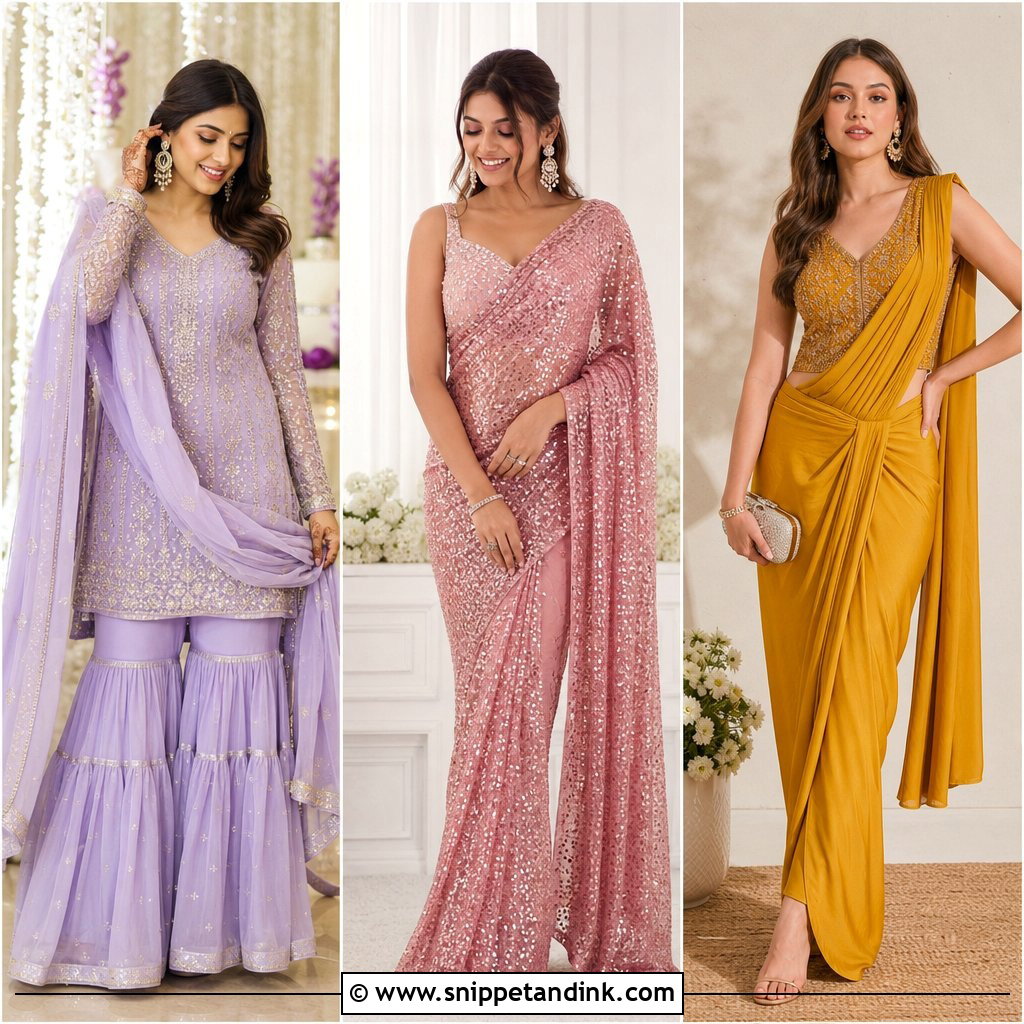
Co-ord sets are the most practical buy for a sister because every piece earns its keep after the wedding. A crop top and skirt, kurta and pants, blouse and palazzo or an embroidered jacket set in silk, georgette, organza or brocade all look dressy enough for engagement brunches, mehndi events, family dinners and destination weddings. I check that the top and bottom are cut from the same dye lot, since mismatched shades show up badly in photographs. Earrings, heels and a sleek clutch complete it, and afterward the top can go with jeans and the skirt with a plain shirt.
21. Peplum Sharara For Sister Wedding
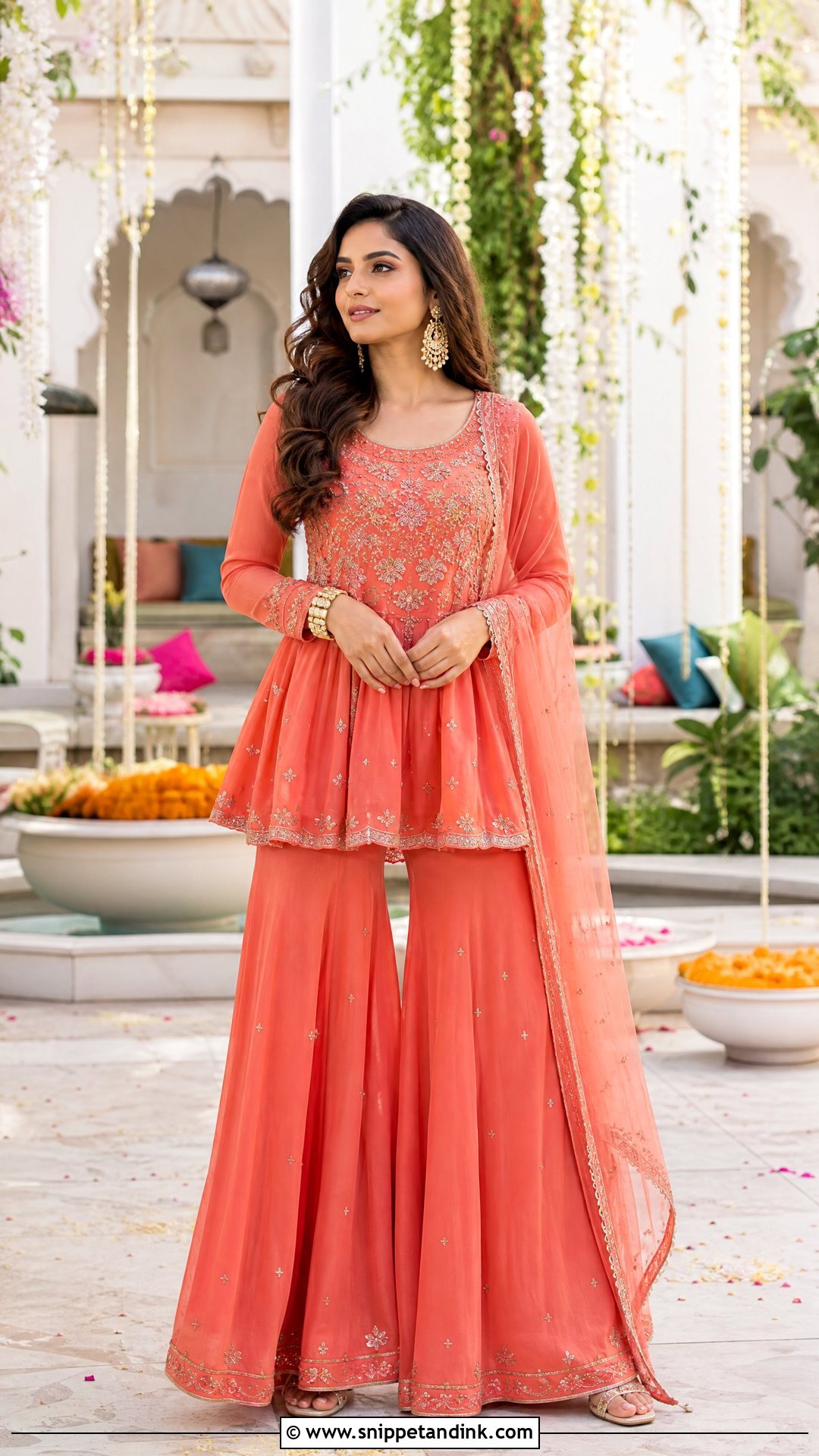
A peplum sharara works because the fitted waist and short flare of the top balance the width of the sharara below. Without the peplum, a sharara can look shapeless on a petite frame. Embroidery at the neckline, waist and sleeves defines the silhouette, and a sheer dupatta adds softness without hiding the peplum. I’d keep the dupatta over one shoulder rather than both, or the waist disappears. Bright colors feel festive at mehndi and sangeet, pastels feel elegant at daytime ceremonies. Earrings, a bracelet and comfortable heels finish it.
22. Long Skirt And Crop Top For Sister Wedding
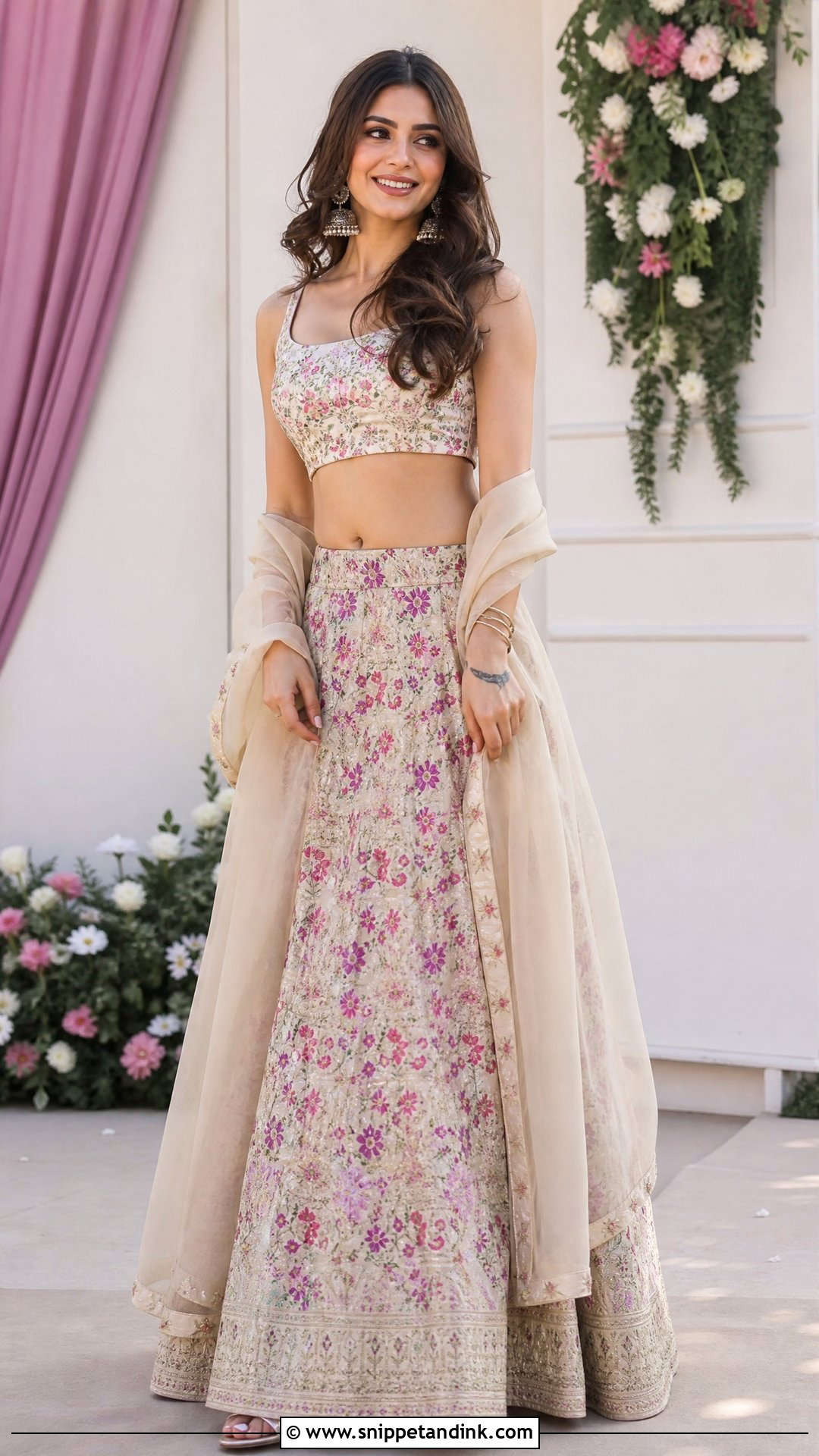
A long skirt and crop top gives the impression of a lehenga with less fabric and less fuss. Choose a printed, embroidered or brocade skirt with a coordinated blouse, add a dupatta for traditional events and drop it for a reception or sangeet. This is also my go-to for dressing a group of younger sisters, bridesmaids and cousins, since each can choose a different blouse while the skirts tie the group together. Check the gap between top and skirt when your arms are raised for dancing, and adjust the blouse length if it shows more than you’d like. Earrings, bangles, heels and soft waves finish it.
23. Reception Gown For Sister Wedding
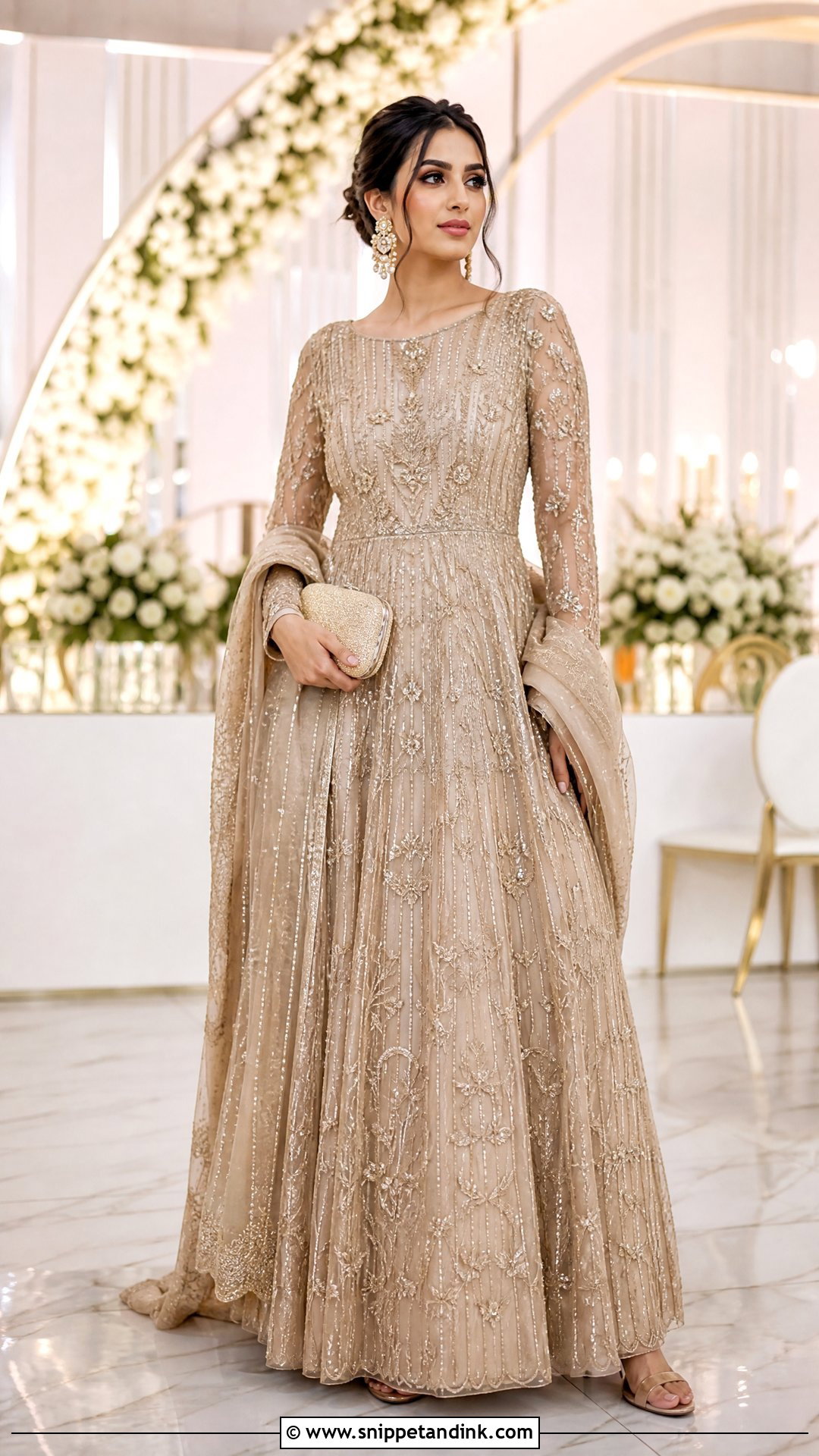
A reception gown suits a formal evening where you’d rather not manage a dupatta, pleats or layers. Indian-inspired embroidery, beadwork, draping or cape details keep it in the wedding mood. A-line is the most comfortable through dinner; a mermaid looks dramatic but limits how you sit and climb onto a stage for photos. Champagne, emerald, navy, mauve and silver sit well under reception lighting, though I’d avoid champagne if the bride is wearing gold. Refined earrings, a clutch, heels and a sleek hairstyle give it a modern finish.
24. Haldi Yellow Outfit For Sister Wedding
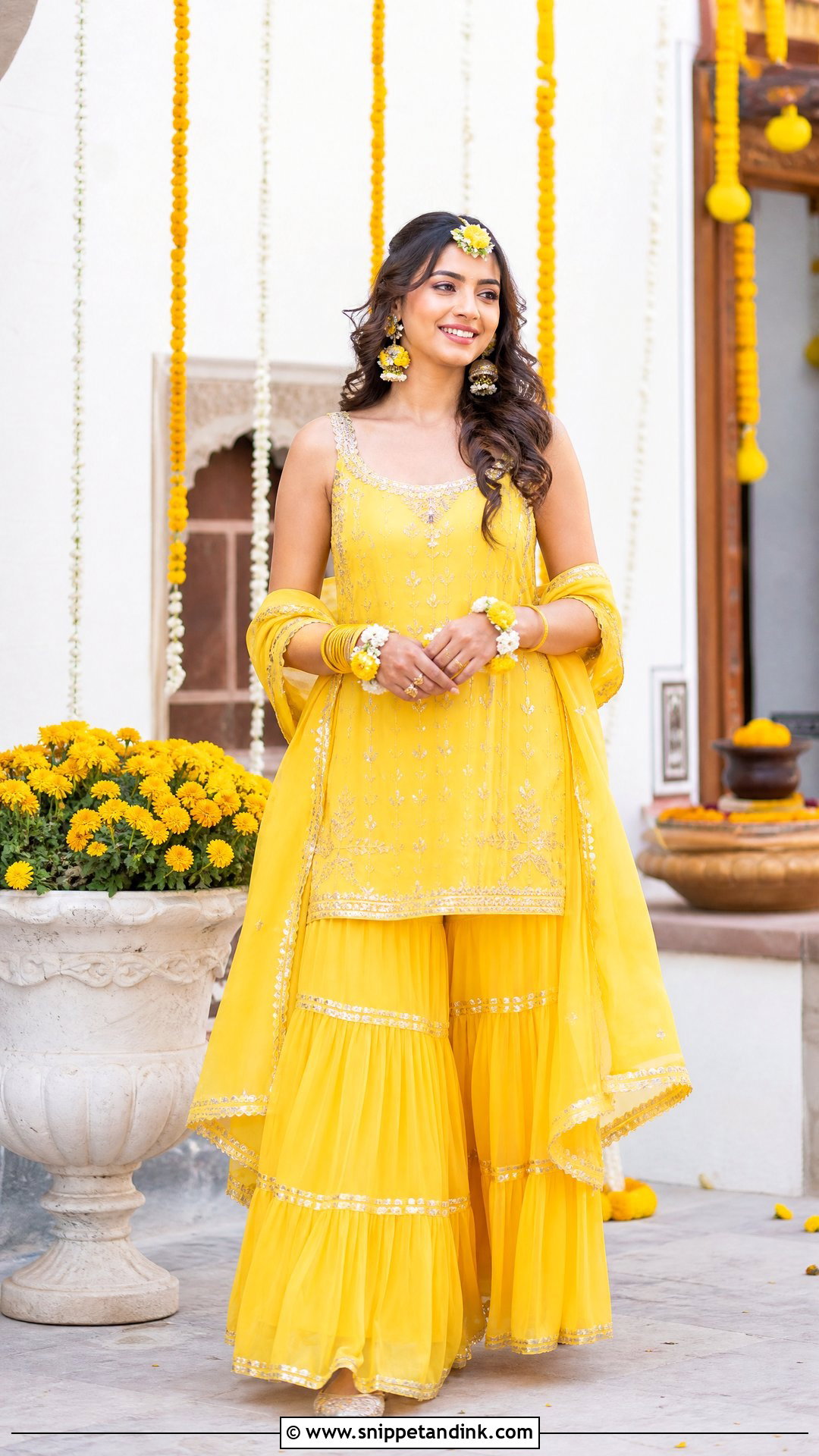
Haldi is the one function where I tell sisters not to wear anything precious. Turmeric paste stains silk, georgette and embroidery permanently, and there’s always someone who smears it on the nearest cheek. A yellow outfit in cotton, cotton silk or a washable blend is the safest choice, whether that’s a sharara, anarkali, saree, lehenga or kurta palazzo set. Floral jewelry, juttis and minimal makeup keep it fresh. White, green, pink or orange accents add contrast. Wash anything stained in cold water the same day, before the turmeric sets.
25. Sangeet Lehenga For Sister Wedding
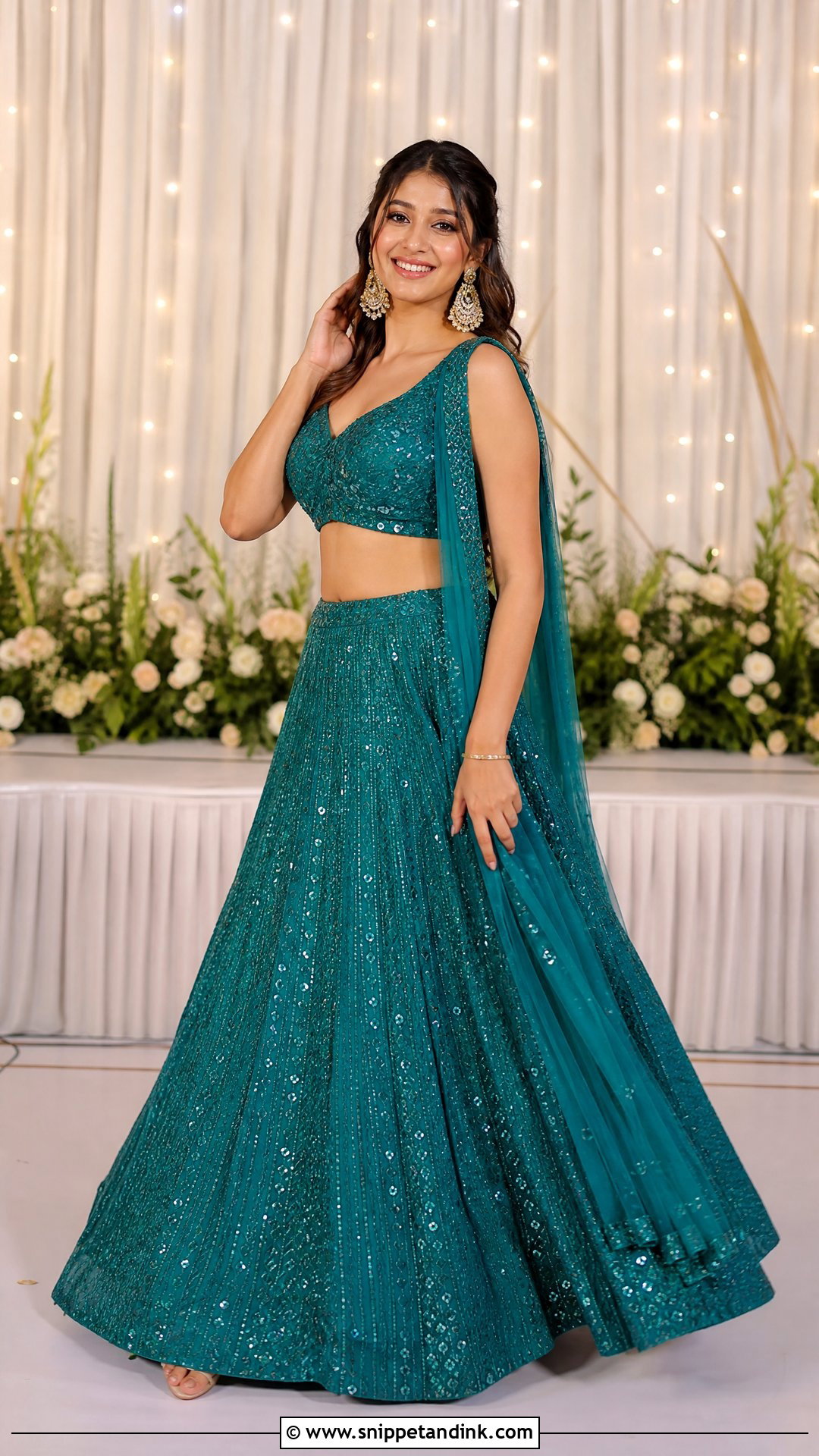
A sangeet lehenga needs to survive choreography, so I judge it by how it moves, not how it hangs. Choose a lighter skirt with good flare, a blouse with a back closure that won’t pop open when you raise your arms, and a dupatta pinned firmly at the shoulder and waist. Sequins, mirror work, thread embroidery and metallic accents read well on stage and in photos. Teal, pink, silver, navy, gold and lavender look lively under event lights. Rehearse your dance once in the actual outfit and shoes; that is when a too-long hem or a heavy can-can shows up. Secure hair and statement earrings finish it.
A Sister Works the Whole Wedding, So the Outfit Has to Work Too
You will be fixing the bride’s dupatta, holding her phone, greeting relatives and probably carrying a plate for someone. These are the practical details I sort out with every sister before the first function.
Give the tailor real time
During wedding season, tailors get booked solid. I order unstitched outfits at least six to eight weeks ahead and schedule a trial fitting two weeks before travel, so there’s time to take in a blouse or shorten a hem. Ready-made pieces still need a fitting, especially the blouse armhole.
Pin more than you think
A dupatta needs pins at the shoulder and at the waist on the opposite side, hidden under the fold. A saree pallu should be pinned to the blouse strap from underneath. Use small, sturdy safety pins rather than decorative brooches, which bend and tear fine fabric.
Keep a small pouch on you
- Spare safety pins and bobby pins
- Double-sided fashion tape for a gaping blouse or a slipping pleat
- A needle pre-threaded with neutral thread for a popped hook
- Blotting papers and the lipstick you’re wearing
- A pair of flat foldable shoes for the late part of the night
Your Sister’s Lehenga Comes First, Then Yours
A sister’s outfit should match each function, the venue, her own comfort and the role she plays, which at most weddings means a lot of standing, hosting and dancing. Anything that is heavy, distracting or hard to manage works against you. Pastel lehengas, silk sarees, shararas, anarkalis, gowns and pre-draped styles each bring something different to the celebration. Let the bride’s palette guide your colors, pick fabrics you can move and sit in, and keep the accessories in proportion. Get that balance right and you’ll be comfortable in every photo, from haldi to the last dance.
You'll Like These Ideas:


Leave a Reply