
Sleeves are the detail I see brides change their minds about most often, usually in the fitting room, once they realise how much a sleeve changes a plain dress. A sleeve can soften a sleek column, balance a full skirt, give coverage for a religious ceremony, or simply make a clean gown feel like yours. Below are thirty sleeved dresses I’d style without heavy beading or layers of lace: satin columns, crepe A-lines, lace and illusion sleeves, puffs, minis, high necks and relaxed beach dresses. For each one I’ve included the shoes, veil and hair that finish it, and what to check before you commit.
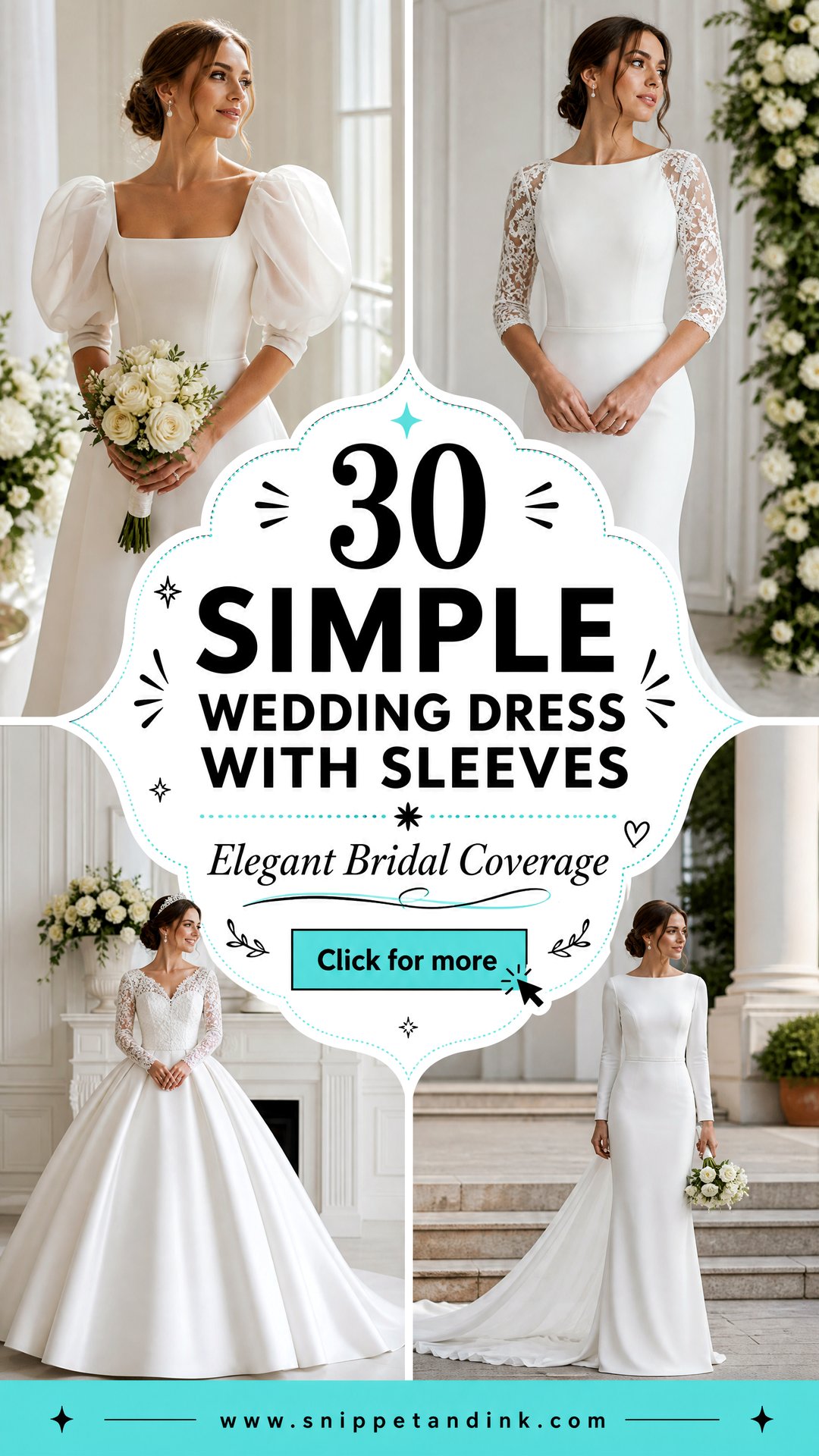
The Arm-Raise Test Every Sleeved Dress Has to Pass
Sleeves are the hardest part of a wedding dress to fit, and the part that most often gets rushed. A sleeveless dress just has to stay up. A sleeved dress has to stay up while you hug, dance, lift a bouquet and reach for a glass. At every fitting, I ask the bride to do four things before I look in the mirror.
- Raise both arms to shoulder height. If the whole bodice lifts, the armhole is cut too low or the sleeve is too narrow.
- Cross your arms in front, as if hugging. Tight fabric across the back of the shoulders will strain here first.
- Bend your elbow fully. Satin and crepe should not dig in at the inner elbow.
- Let your arms hang. A long sleeve should end at the wrist bone or just past it, because it rides up when you move.
A higher, closer armhole actually gives more freedom than a low, loose one, which surprises a lot of brides. If movement is still tight, a seamstress can sometimes add a small gusset under the arm. Raise this at the first fitting, not the last.
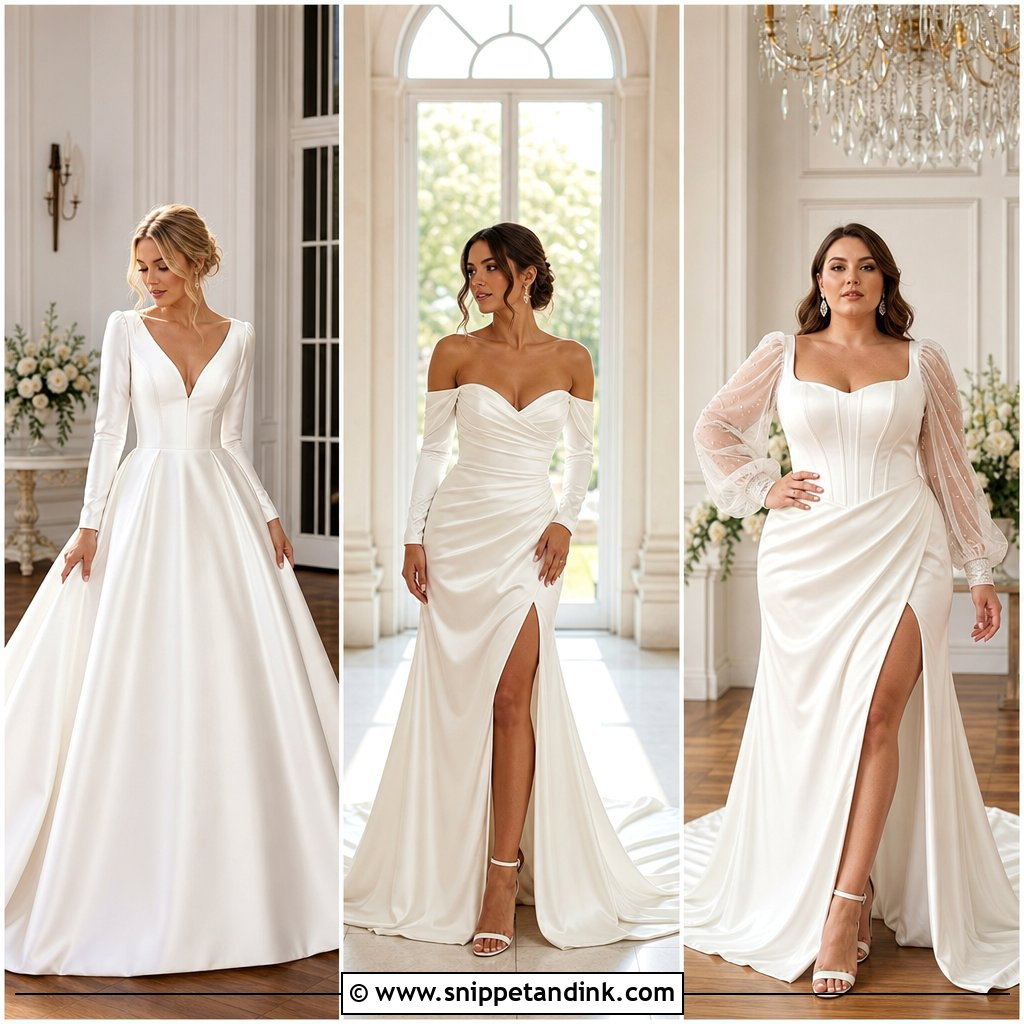
1. Long Sleeve Satin Wedding Dress
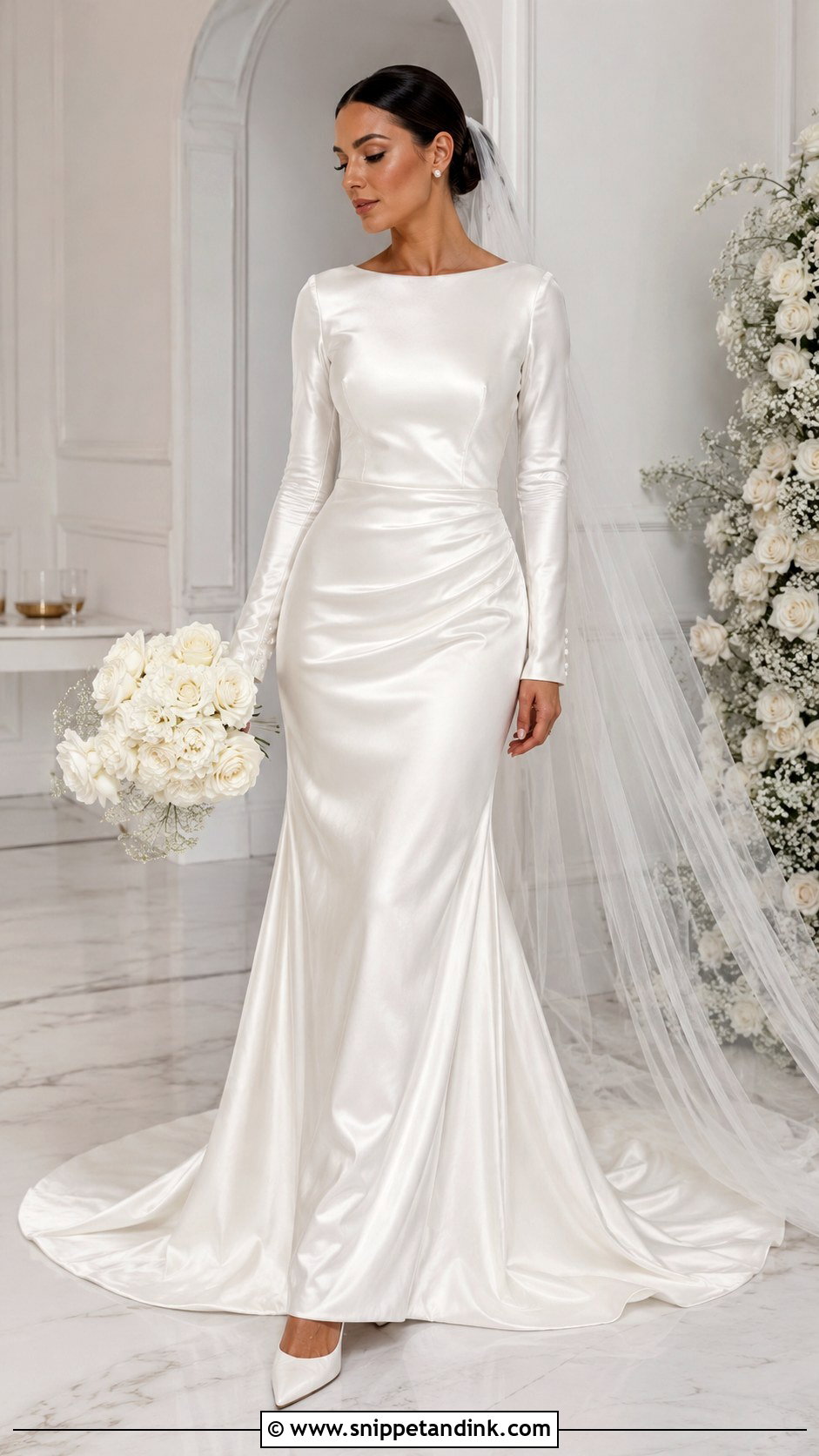
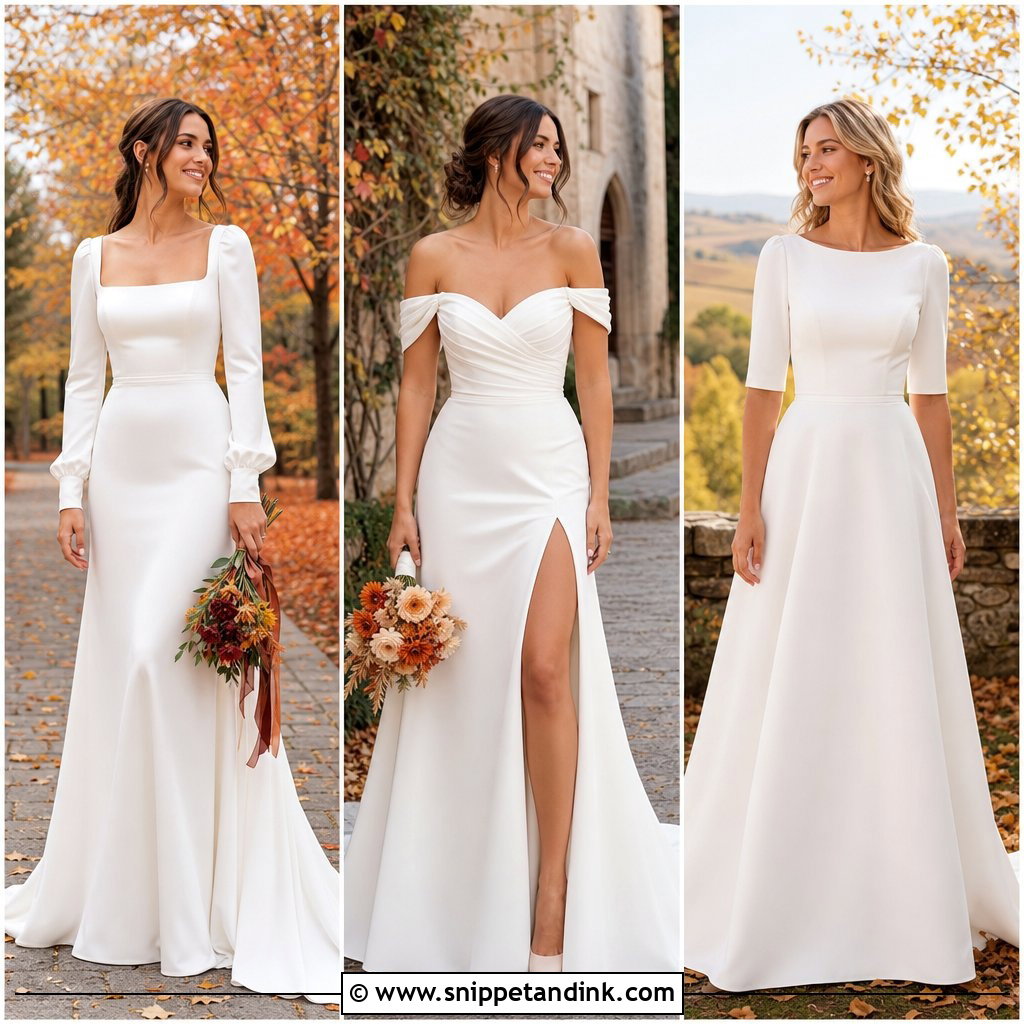
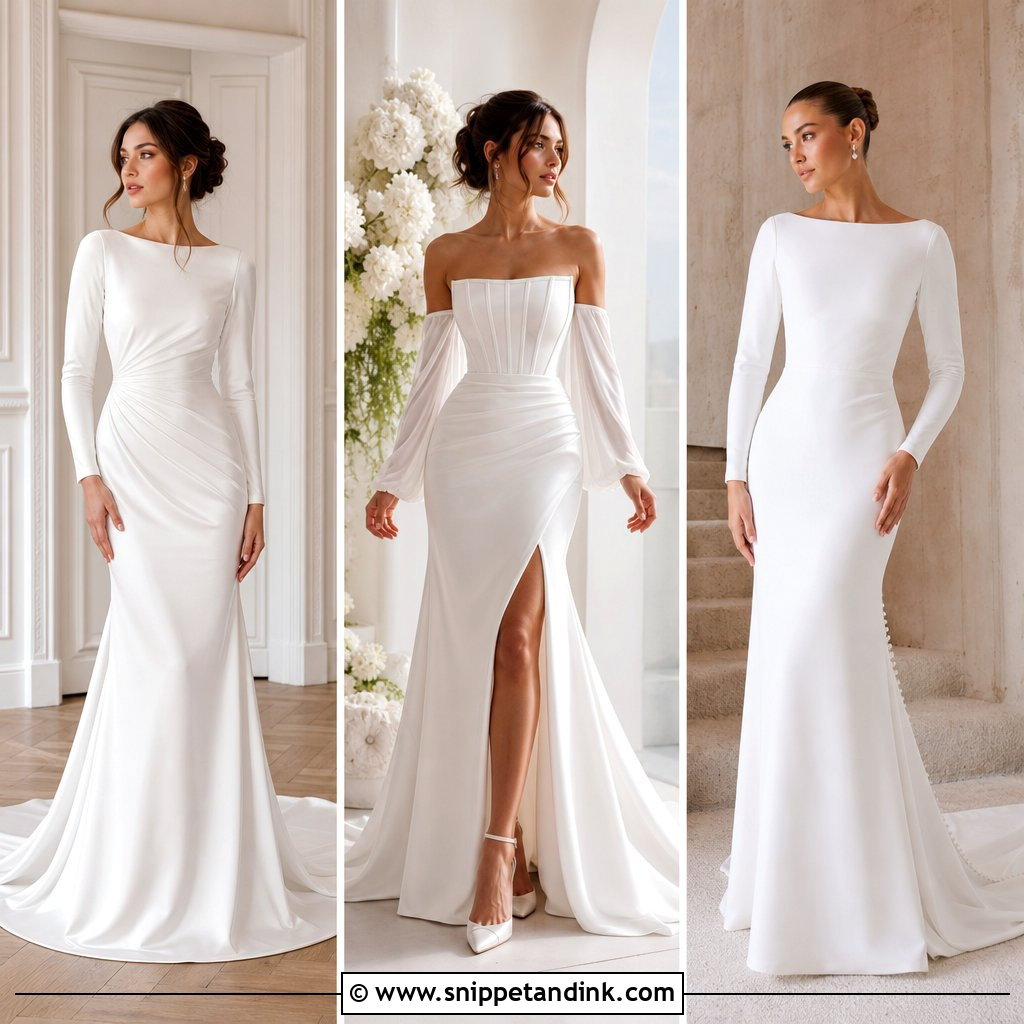
Satin reflects light, so a long satin sleeve looks sculpted even with no detail at all. That shine is also unforgiving. Wrinkles at the inner elbow show in every photo, so I’d ask for a sleeve cut with a little ease and a lining that slides. A slim column, soft A-line or gentle fit-and-flare all work. Ivory pointed heels, pearl studs and a plain floor-length veil, with a low bun or soft waves. My choice for formal indoor venues and cooler months.
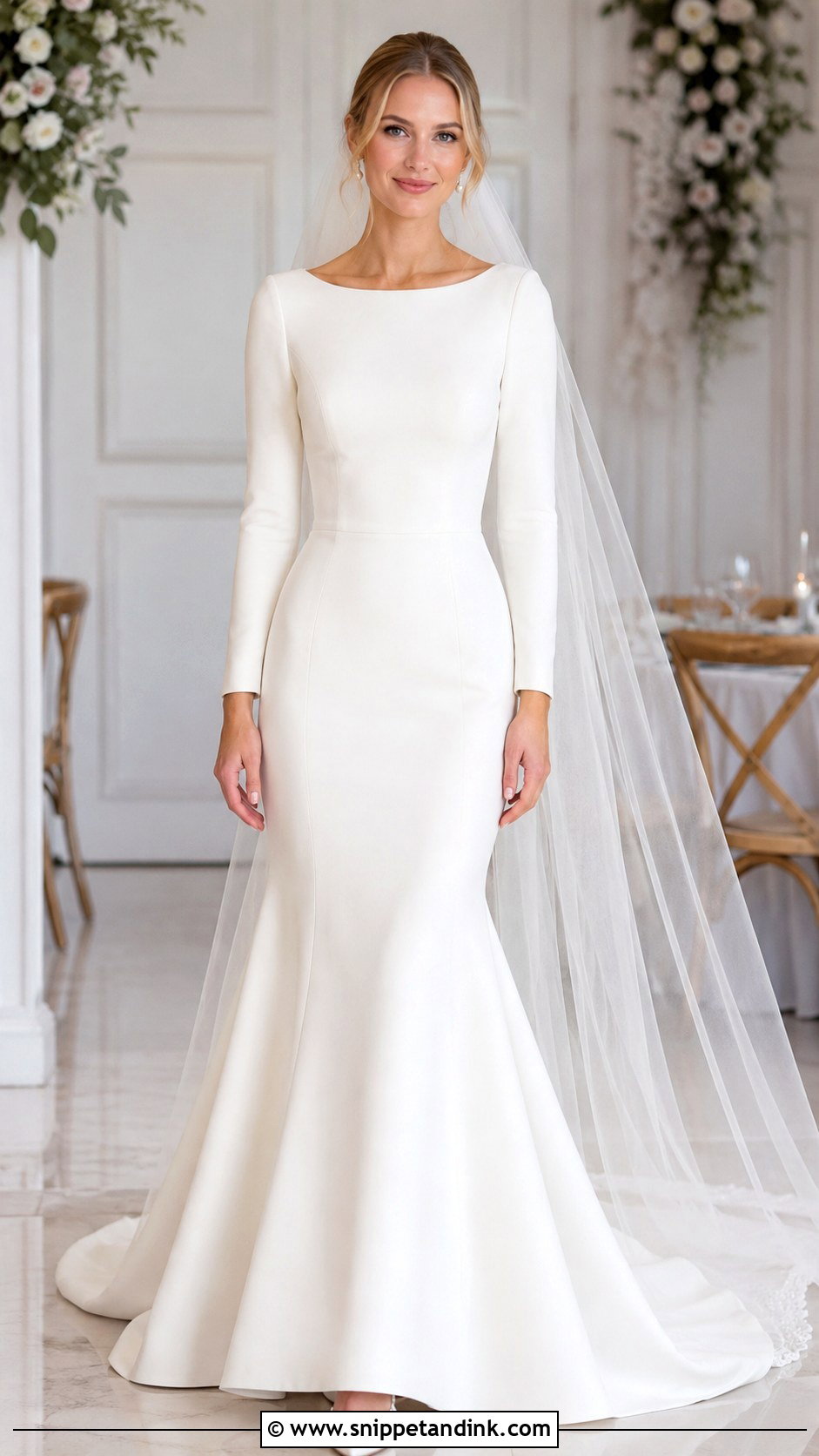
2. Simple Crepe Wedding Dress With Long Sleeves
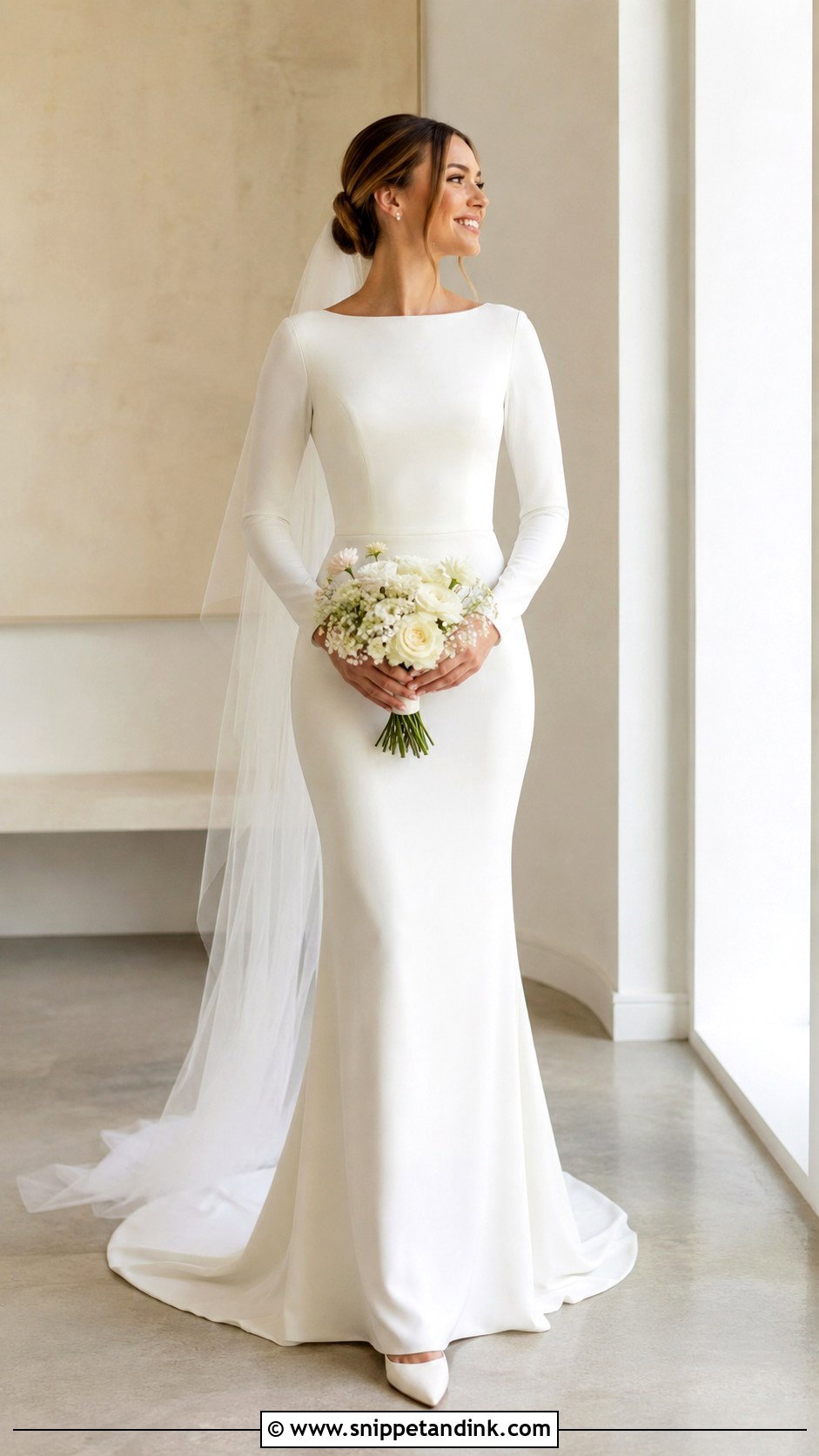
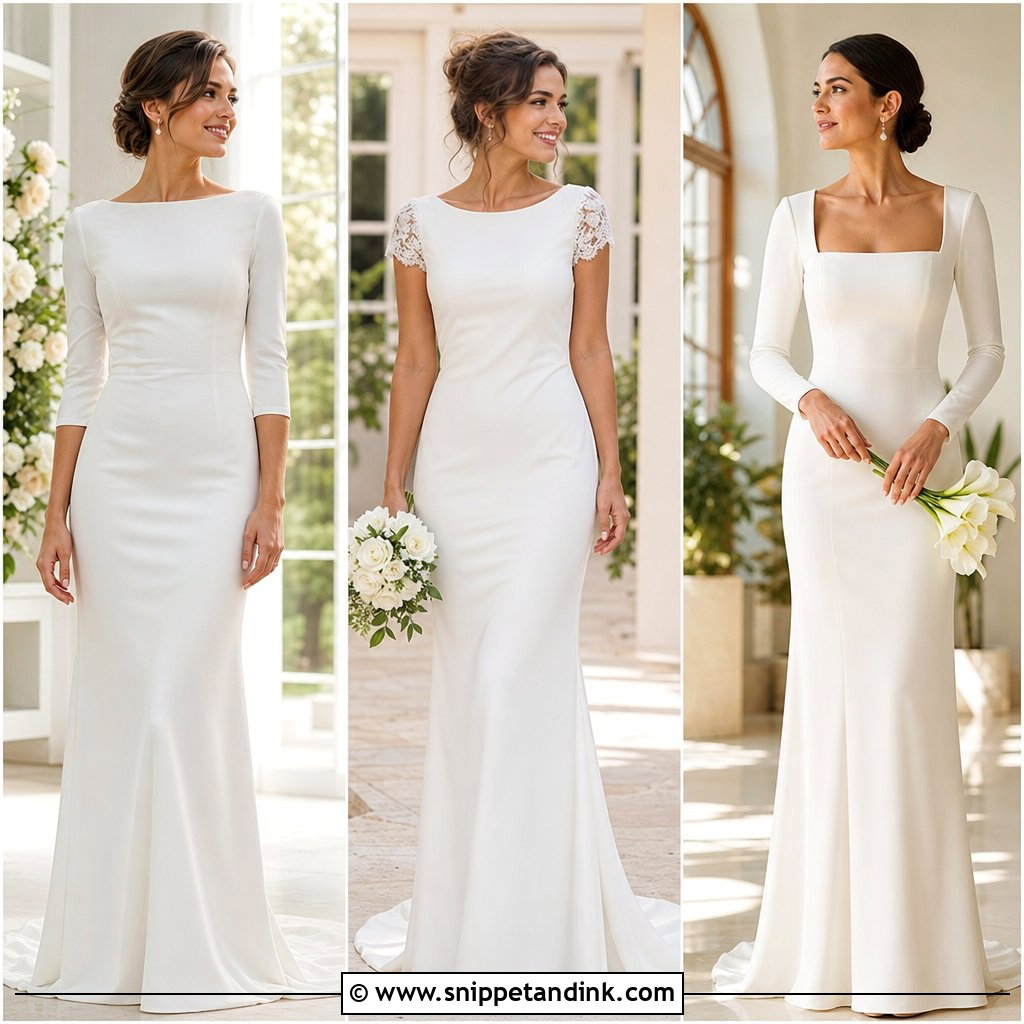
Crepe is matte, heavy enough to drape and has a slight stretch, which makes it the most comfortable fabric for a fitted long sleeve. A fitted bodice and a small train give a clean line from shoulder to hem. The downside: crepe shows every bump underneath, so plan underwear with no visible edges. Low pearl earrings, a smooth veil and a centre-parted bun for a minimal look, or soft curls for something warmer. Galleries and modern ballrooms suit it.
3. A Line Wedding Dress With Sleeves
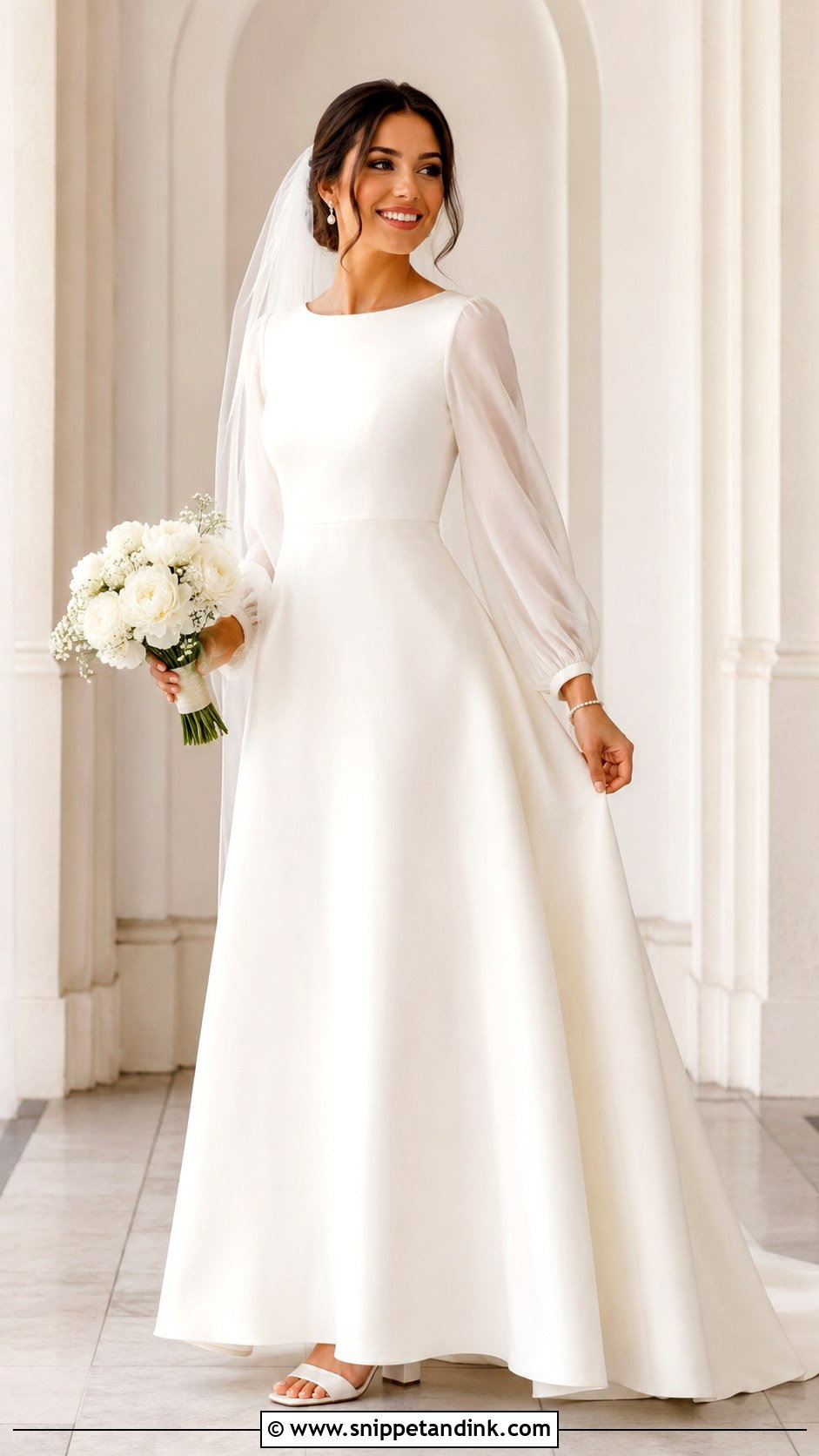
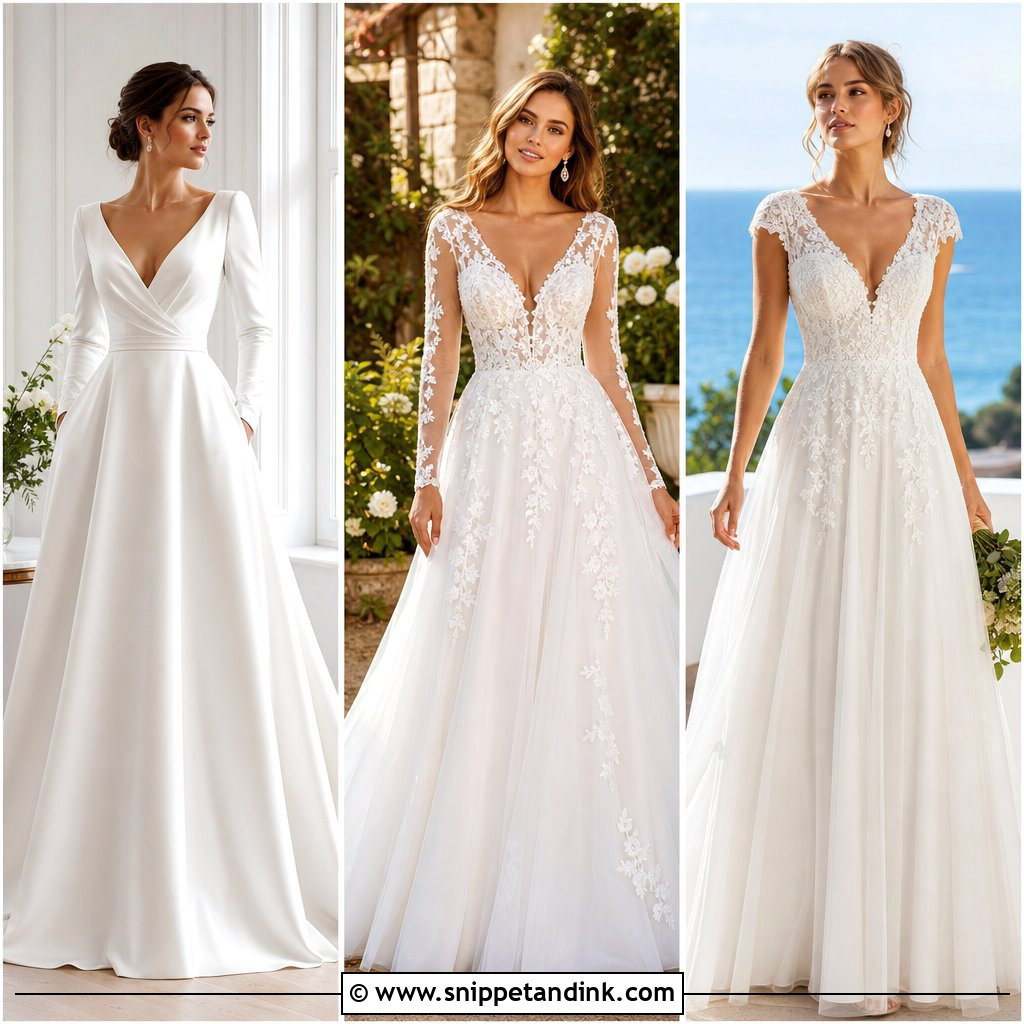
If you want to walk, sit, dance and still look bridal, the A-line is your safest bet. The skirt releases from the waist and the sleeves add balance to the upper body. Crepe, mikado, chiffon or soft satin with very little beading keeps it simple. A bateau, scoop or V neckline works. I’d add block heels, a delicate bracelet and a fingertip veil, which clears the arms so the sleeves still show.
4. High Neck Wedding Dress With Sleeves
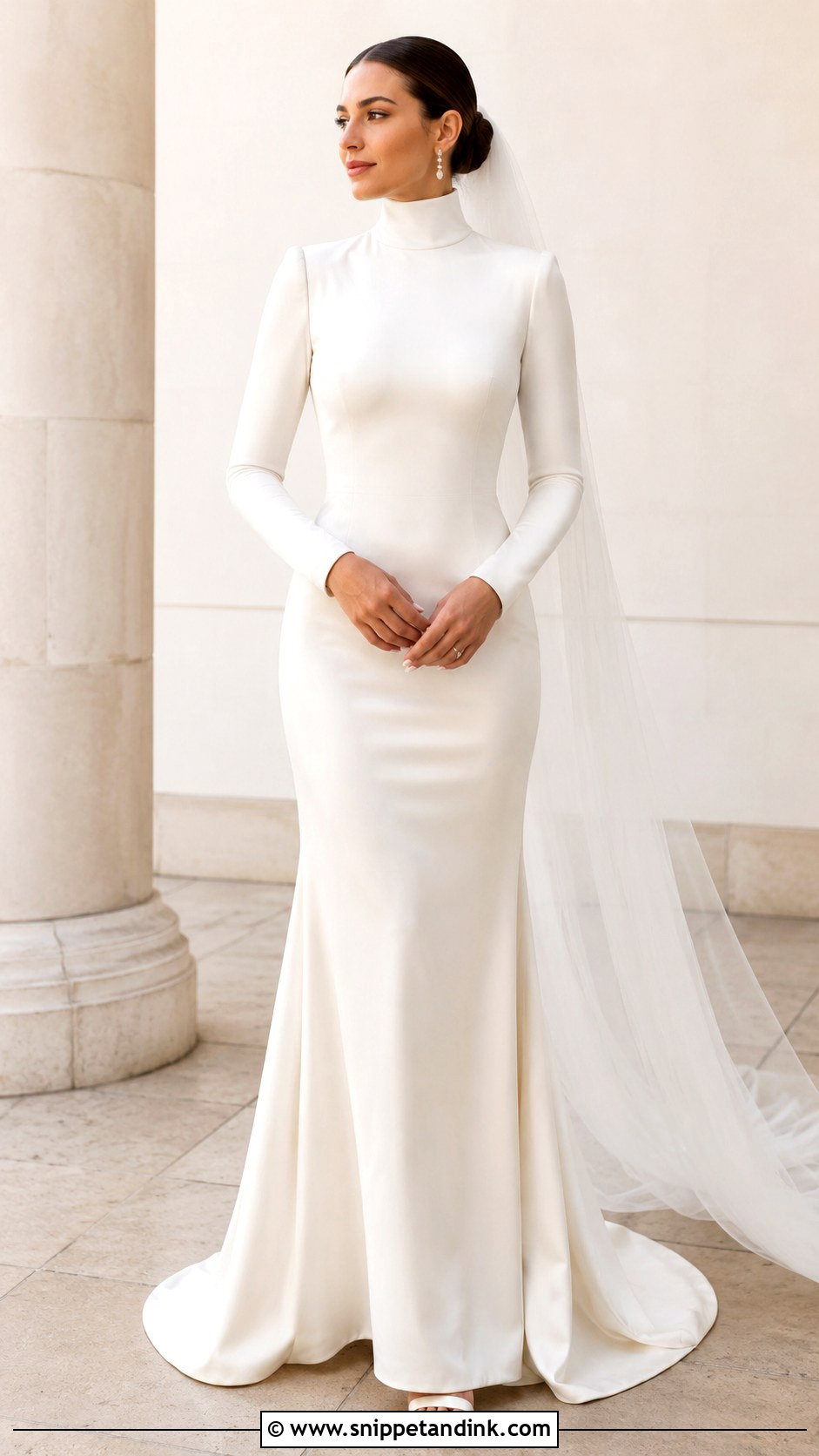
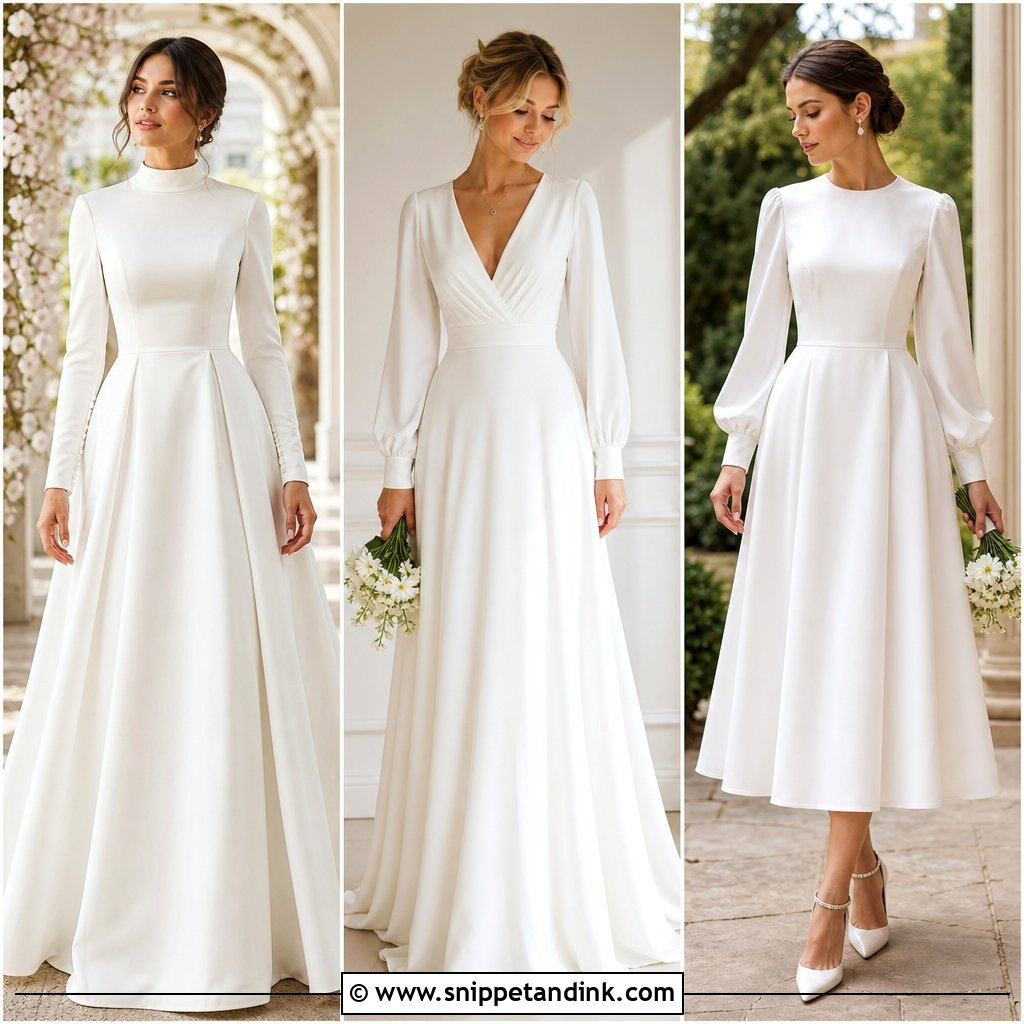
A high neck with sleeves covers a lot of skin, so the cut has to be precise or it starts to feel heavy. Smooth crepe or satin looks modern; a soft lace sleeve feels more romantic. Skip the necklace entirely and wear small drop earrings. I’d keep hair up so the neckline shows. The one fitting issue to watch is the collar height: it should sit below the jawline when you look down, or it creases in every seated photo.
5. Square Neck Wedding Dress With Sleeves
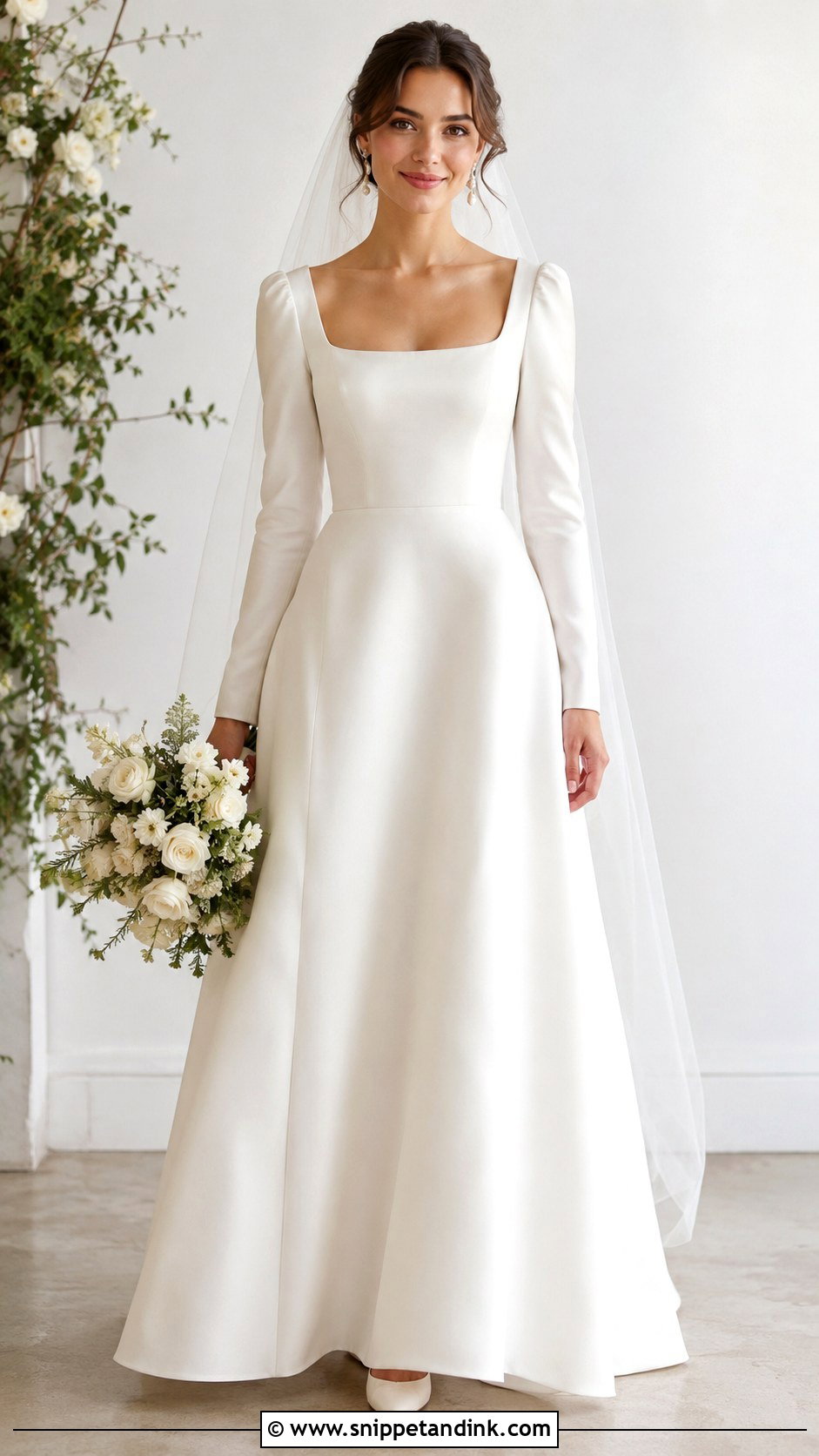
Square necklines give a clean frame at the collarbone, and sleeves stop them from feeling too structured. A plain bodice with a soft A-line or fitted skirt keeps it simple. Crepe, satin or a structured cotton blend all work depending on season. Make sure the straight top edge sits flat; if it bows outward when you lean forward, the bodice needs taking in. Pearl earrings, ivory pumps, a clean veil and a soft updo.
6. V Neck Wedding Dress With Long Sleeves
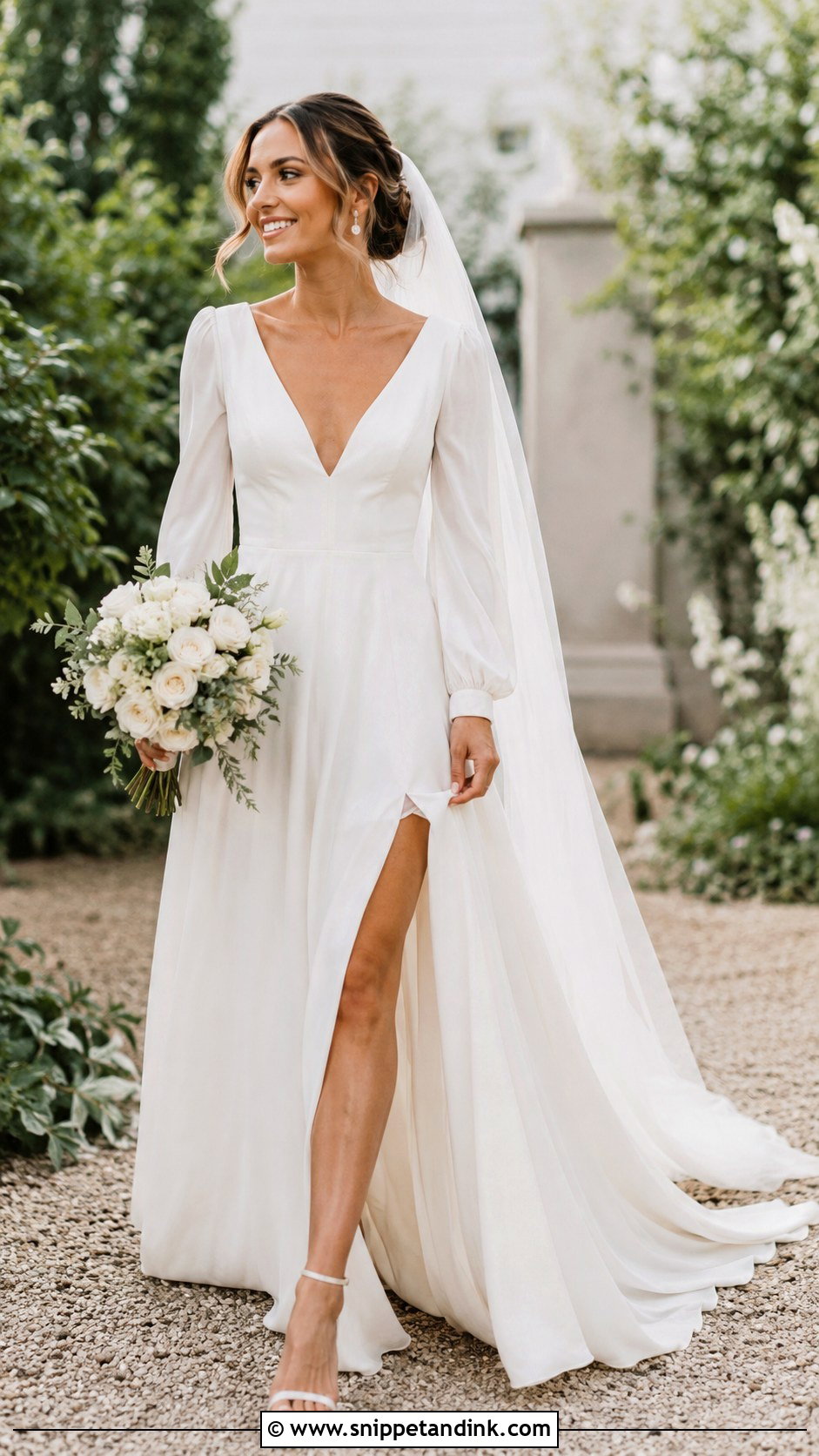
Long sleeves with a V neck is the pairing I suggest when a bride wants arm coverage but doesn’t want to feel closed in. The V lengthens the upper body and keeps the face open. Chiffon or crepe with a soft skirt feels relaxed; satin with covered buttons at the cuffs or down the back is more formal. Thin-strap heels, small earrings and a simple veil. Leave the necklace off.
7. Boat Neck Wedding Dress With Sleeves
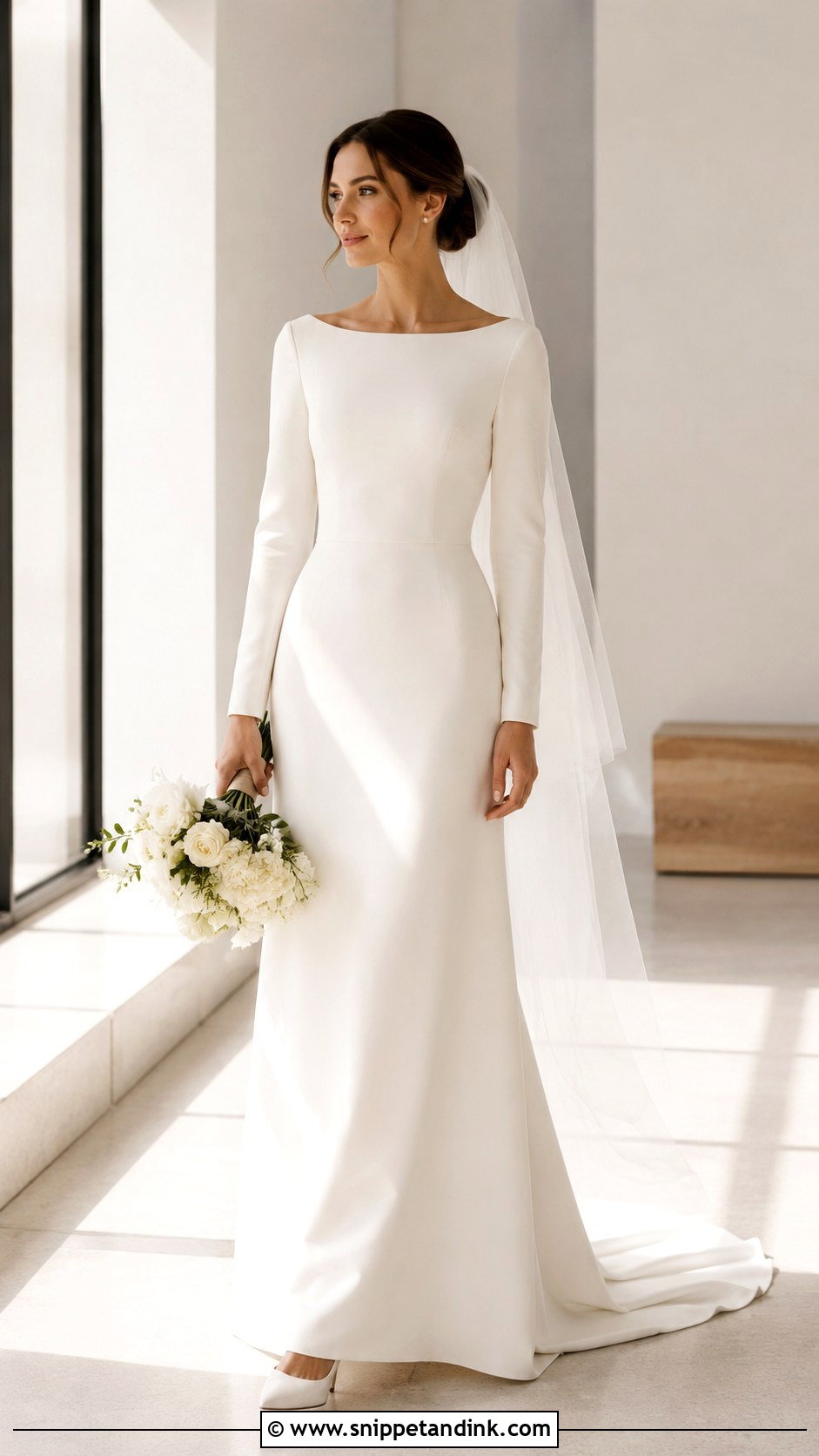
The boat neck runs wide across the collarbone, almost shoulder to shoulder. It’s one of the few necklines that suits long, three-quarter and bracelet sleeves equally well. Smooth crepe or satin keeps it clean. It does broaden the shoulders visually, so I’d steer very broad-shouldered brides toward a V or scoop instead. Pearl studs, a sleek bracelet, classic heels and a low chignon.
8. Off Shoulder Wedding Dress With Sleeves
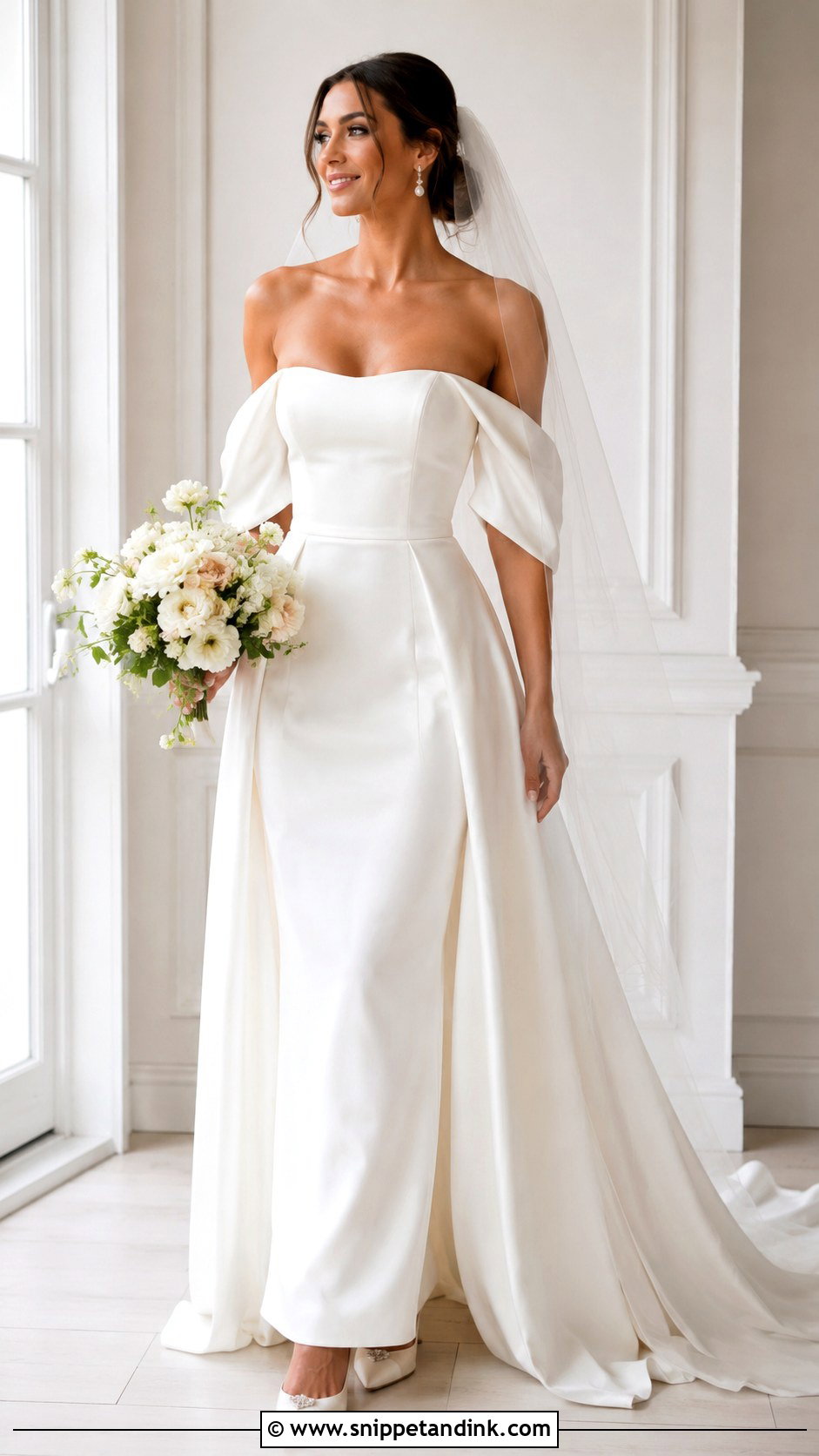
An off-shoulder sleeve sits on the upper arm, which means your arm movement is limited by design. Raise your arms at the fitting. If you can’t get them to shoulder height, the sleeves need more ease or a stretch lining, or you’ll struggle with the first dance and the bouquet toss. Smooth satin, crepe or mikado with no heavy beading keeps it minimal. Hair up or swept to one side, drop earrings and comfortable heels.
9. Lace Sleeve Wedding Dress
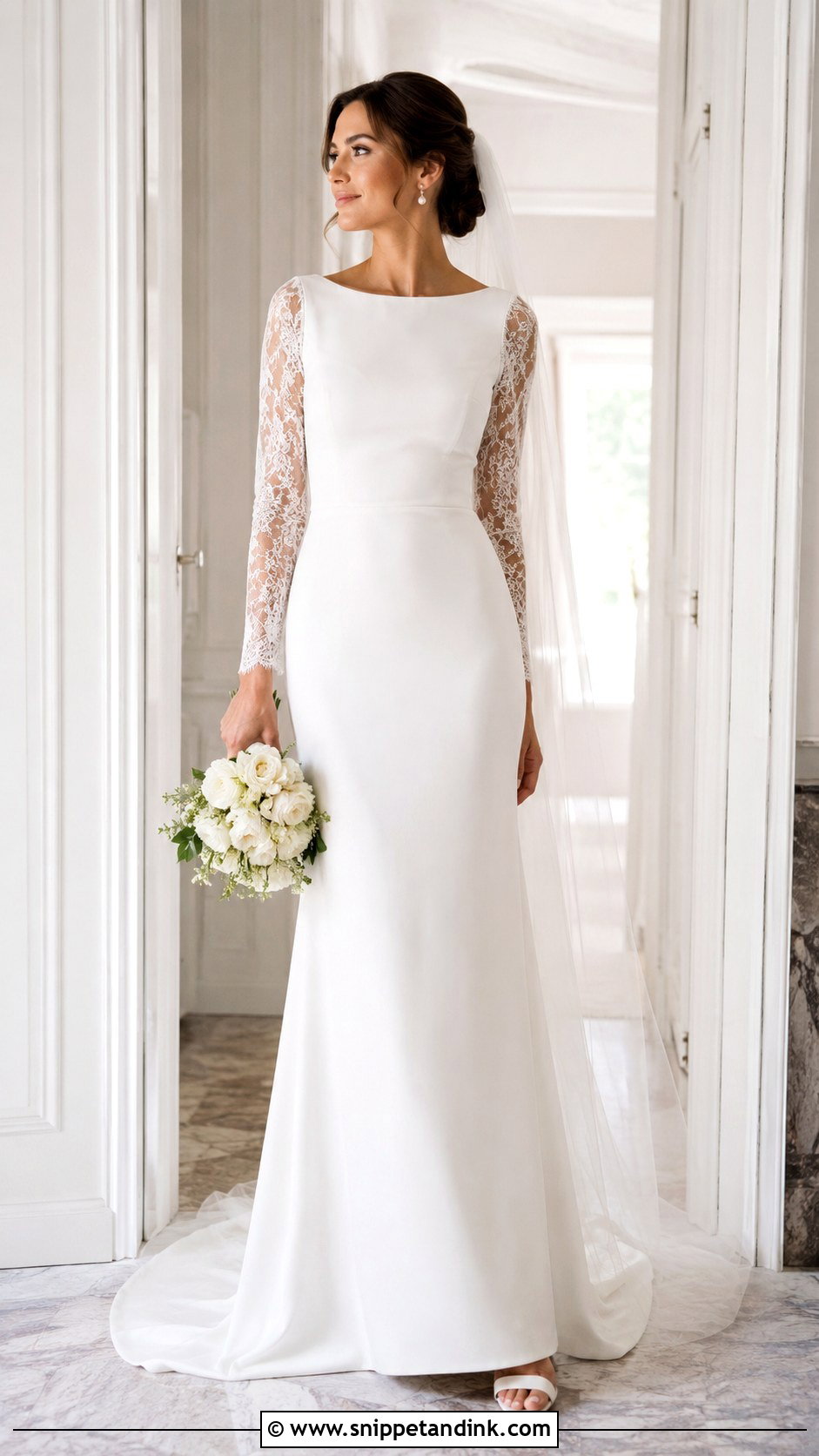
Lace on the sleeves only, or on sleeves and a light bodice overlay, keeps the detail where it’s most visible: next to your face and in your hands. A plain crepe or satin skirt stops it from feeling busy. Unlined lace sleeves are cooler for summer; lined ones suit winter. Pearl earrings, ivory heels and a plain veil let the lace lead, with soft waves or a low bun.
10. Illusion Sleeve Wedding Dress
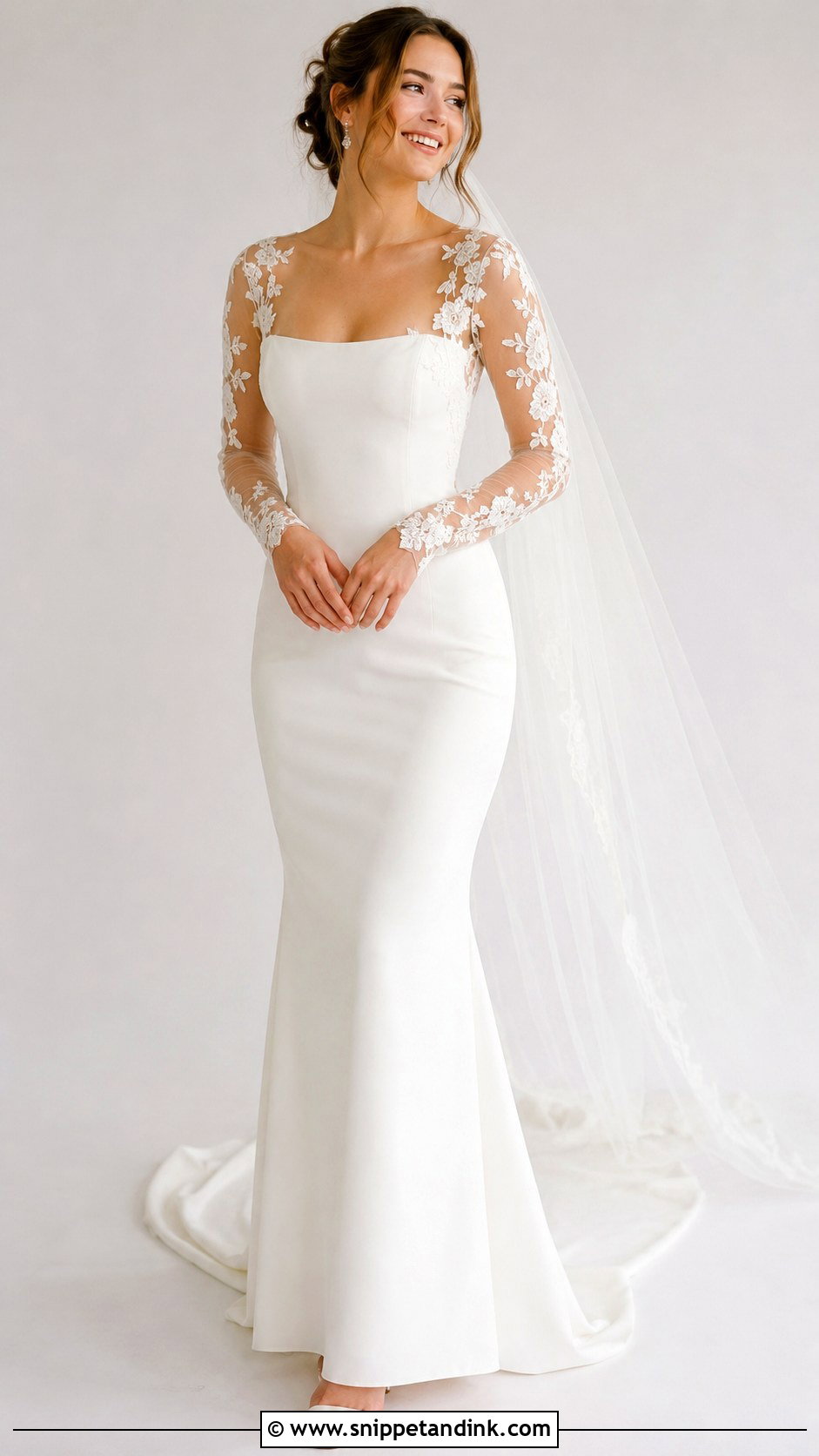
Illusion sleeves are sheer mesh, sometimes with lace appliqué or light dotting, and the whole effect depends on the mesh colour. If it doesn’t match your skin tone closely, it reads as a grey or pink film in photos. Most bridal shops can order mesh in several shades, so ask. A clean skirt keeps the look airy. Thin heels, a soft veil, small earrings and natural makeup.
11. Puff Sleeve Wedding Dress
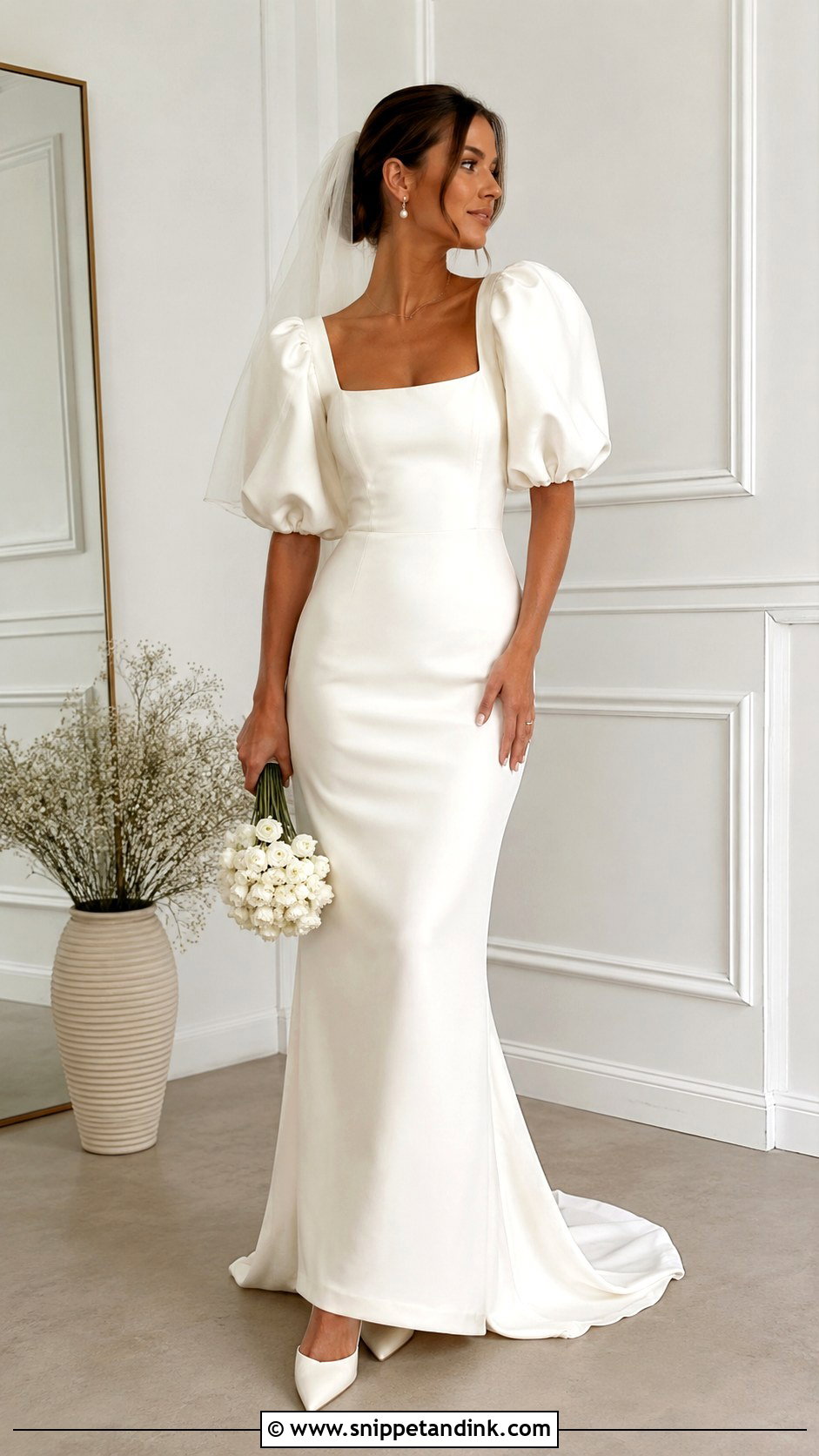
Puff sleeves add volume at the shoulder, so everything else should be calm: a square neck bodice with a slim skirt or a soft A-line. Organza, taffeta or a crisp cotton blend hold the shape best; softer fabrics collapse within an hour. I’d keep hair smooth and off the shoulders so the sleeves have space. Simple pumps, small pearls and a short or plain veil.
12. Bishop Sleeve Wedding Dress
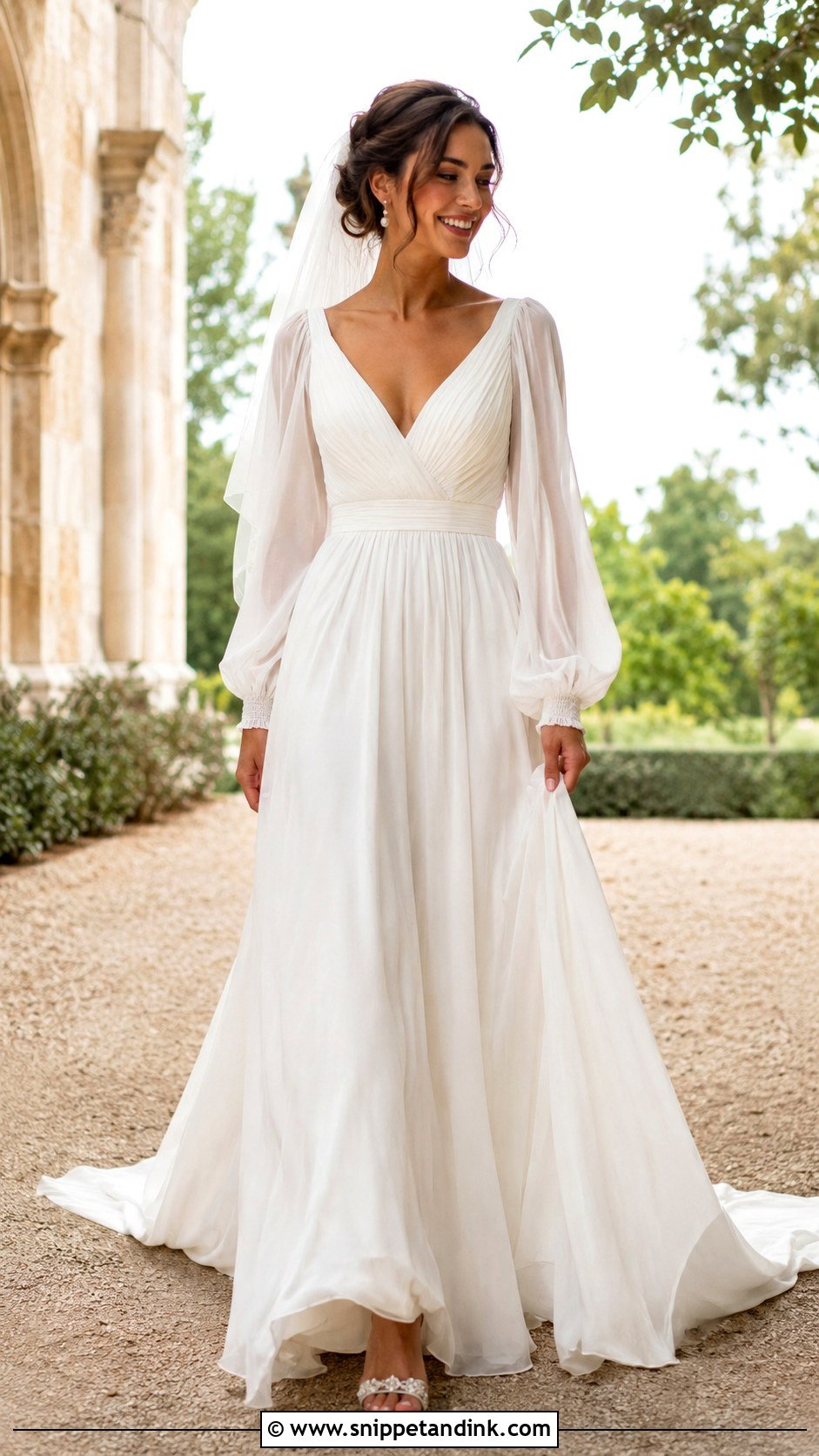
Bishop sleeves are full through the arm and gathered at the wrist, so they move without being tight anywhere. That makes them the sleeve I recommend to brides who hate the feeling of fitted fabric on their arms. Chiffon, crepe or light satin with a clean bodice and flowing skirt suit them. The cuff should close snugly at the wrist bone, or the sleeve slides over your hand. Delicate heels, small drop earrings and a loose low bun for outdoor weddings.
13. Bell Sleeve Wedding Dress
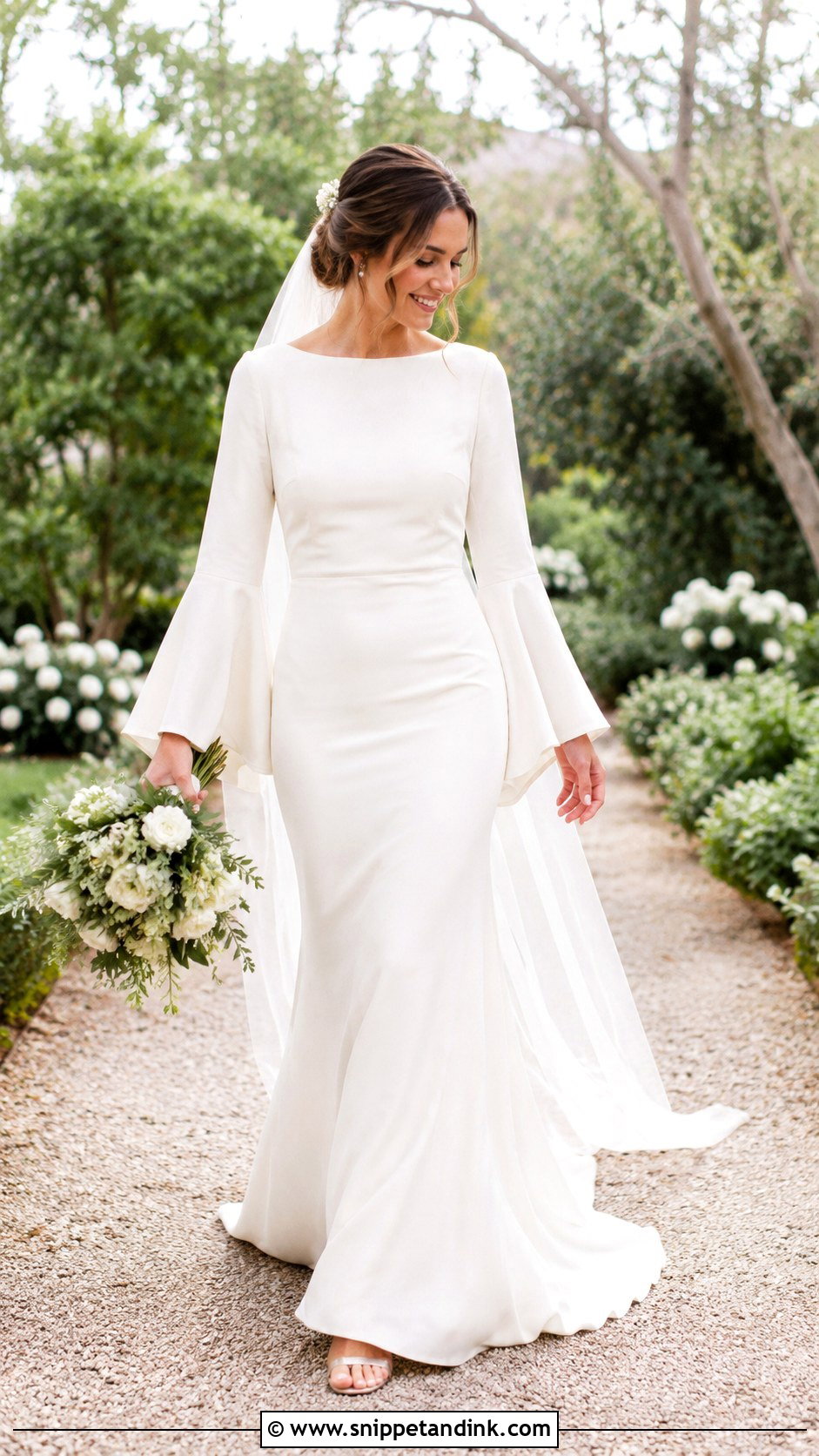
A bell sleeve wedding dress flares near the wrist, so it moves softly as you walk. Keep the gown itself plain: a clean sheath, A-line or slip with minimal trim. Crepe makes the bell modern; chiffon makes it softer. Bell sleeves dangle into food and catch on bouquet stems, so I keep them to three-quarter length for a sit-down dinner. Simple sandals or block heels, a small hair pin and no bracelets.
14. Three Quarter Sleeve Wedding Dress
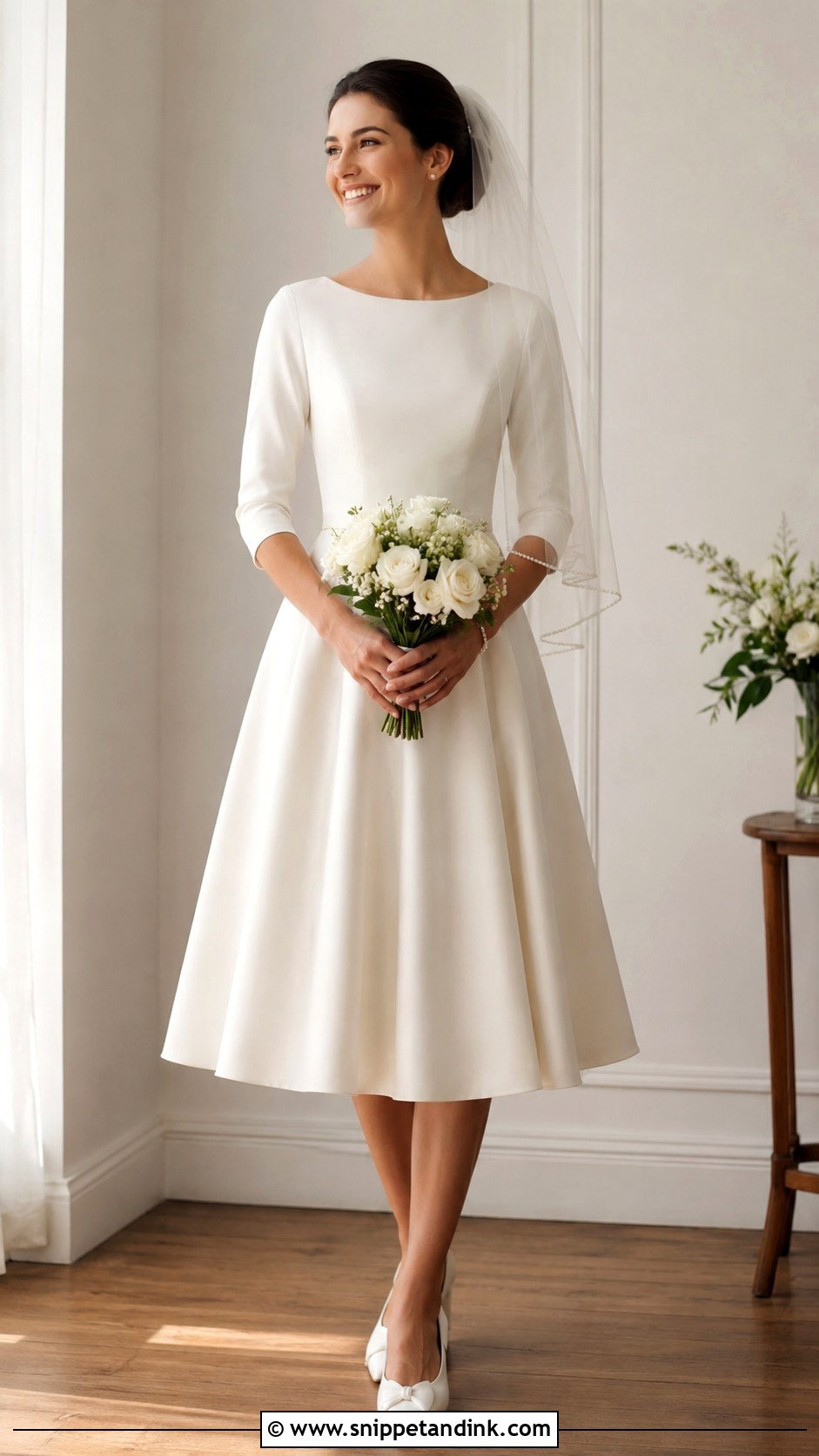
Three-quarter sleeves stop below the elbow and leave the wrists free, which is useful if you’ll wear a family bracelet or want to hold the bouquet without fabric bunching at the wrist. They’re also cooler than full sleeves in warm weather. A simple A-line or tea-length dress suits them well. Pointed flats, low heels or classic pumps, pearl earrings and a fingertip veil. A good fit for small weddings and courthouses.
15. Short Sleeve Wedding Dress
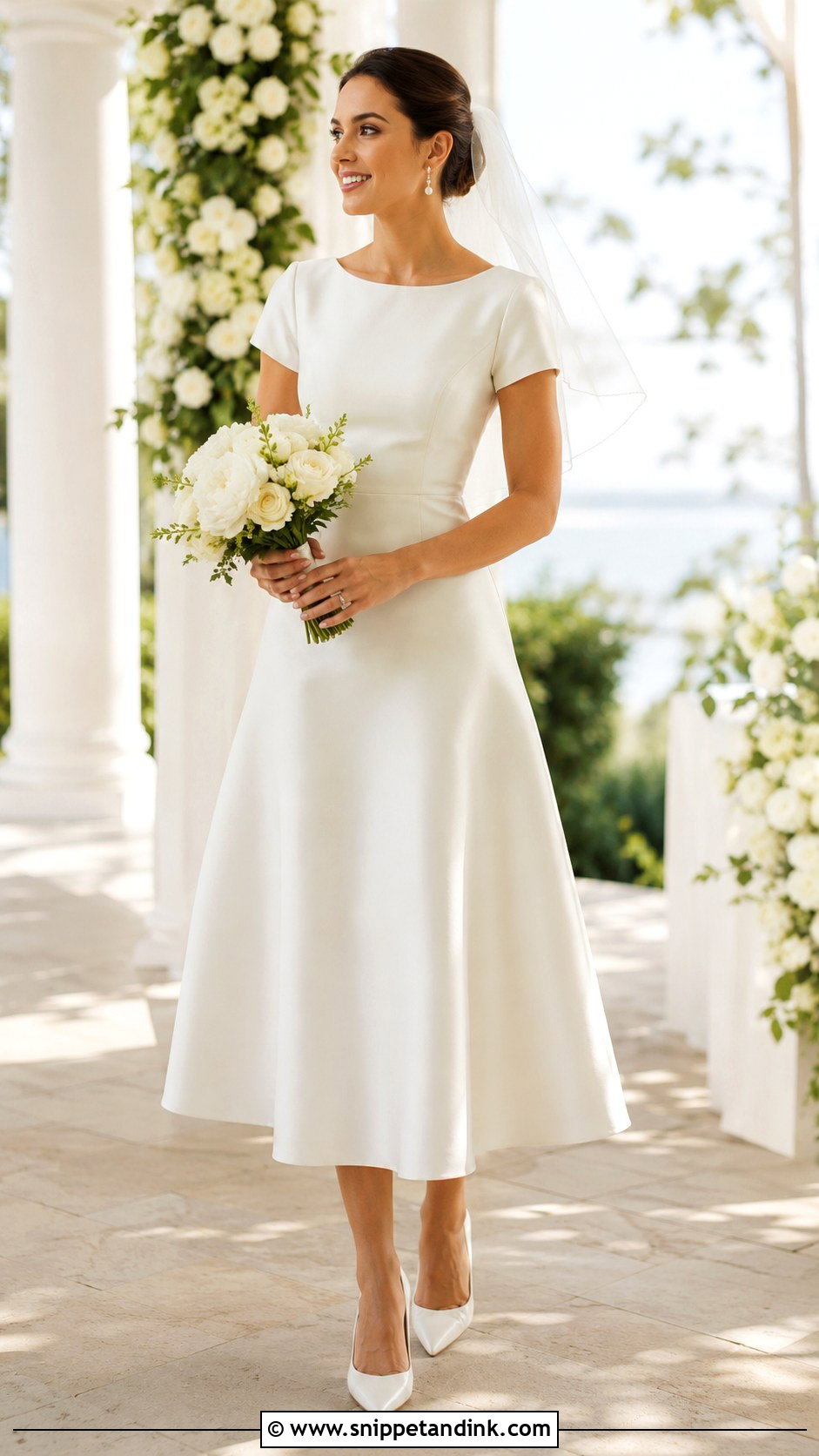
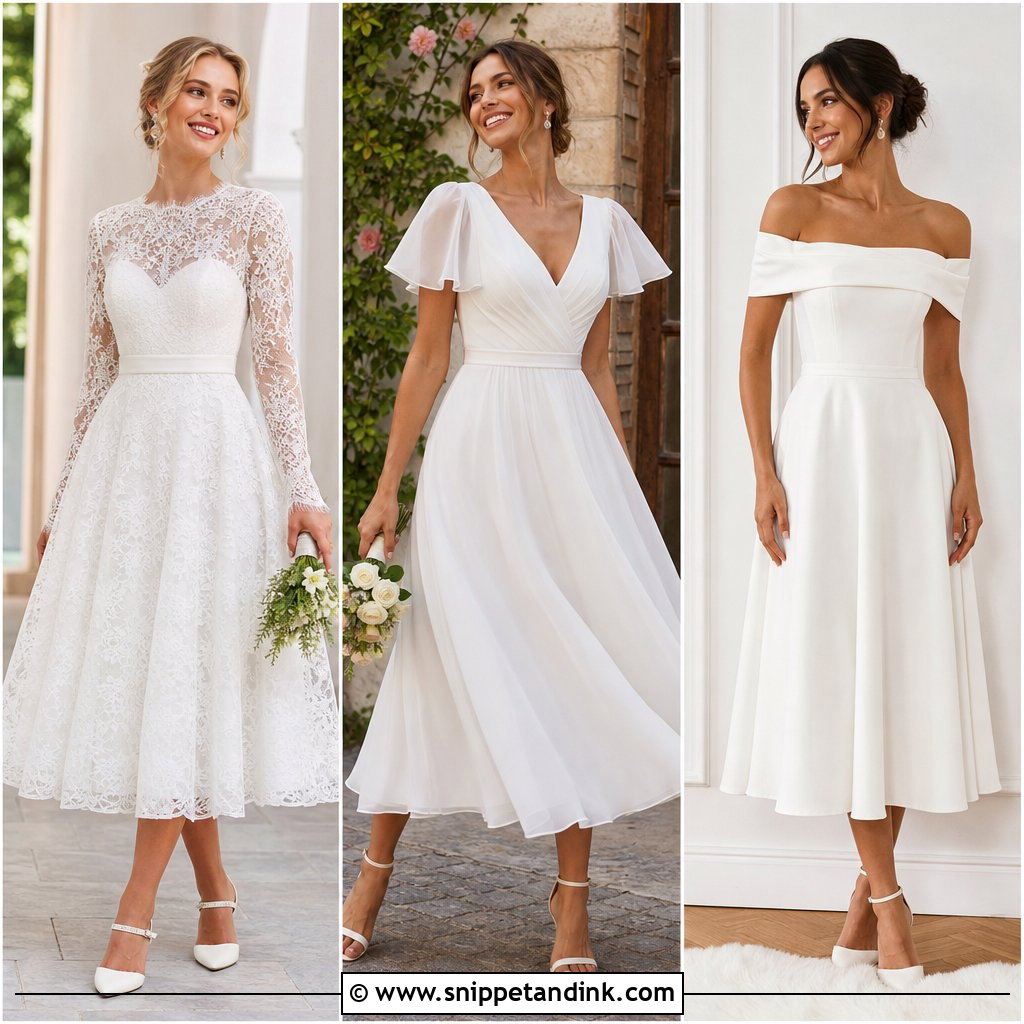
Short sleeves give light coverage without warmth. Fitted, softly capped or slightly fluttered sleeves each change the mood. Fluttered sleeves are the most forgiving on the upper arm, while a fitted short sleeve needs exact tailoring to avoid cutting in. Smooth satin or crepe with minimal seams keeps it clean. Midi, tea-length or full-length skirts all work. Ivory pumps, pearl earrings and a short veil or hair bow suit spring and summer.
16. Cap Sleeve Wedding Dress
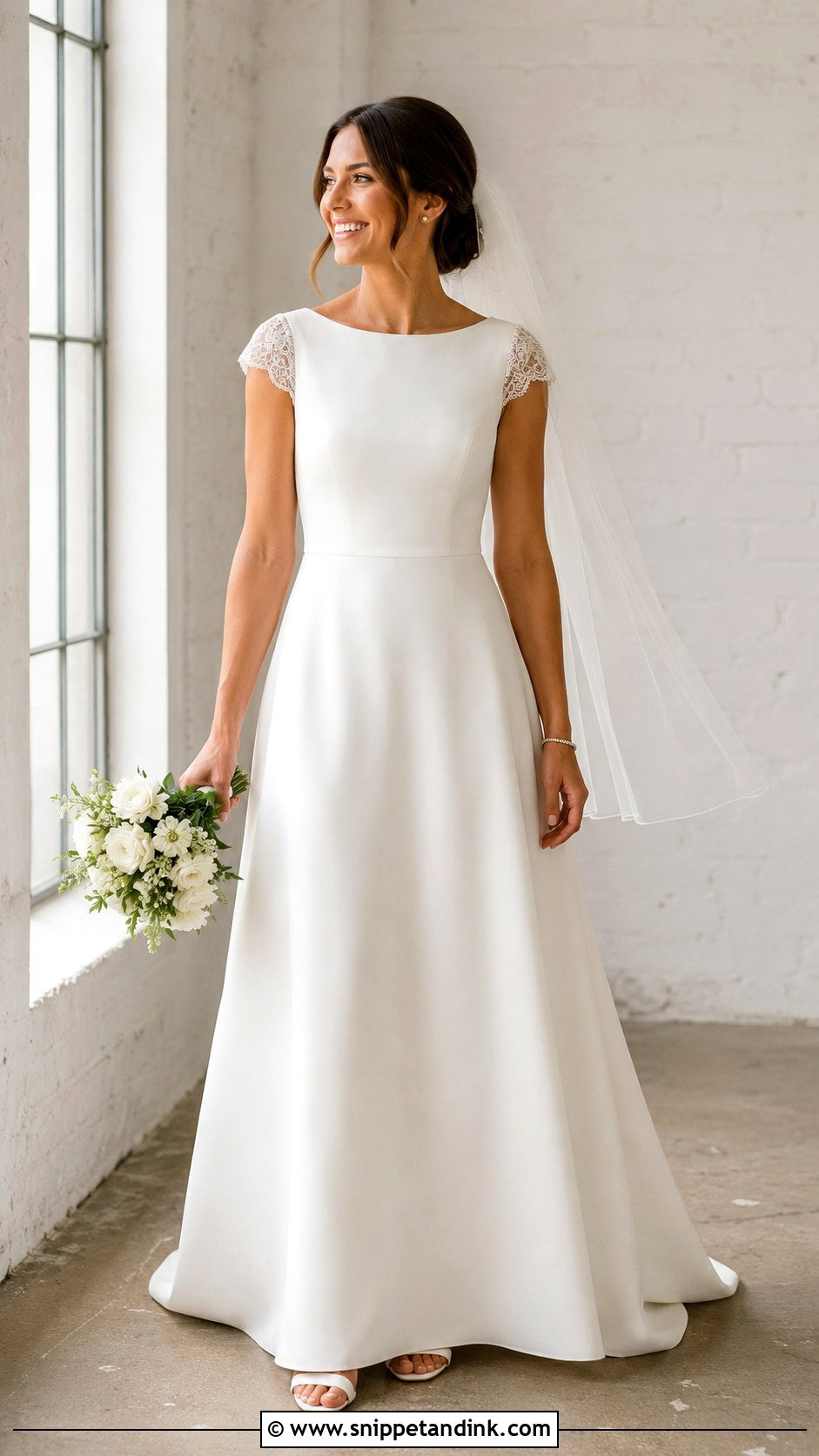
A cap sleeve wedding dress covers just the top of the shoulder, which is why I suggest it to brides who like sleeveless gowns but want a softer edge. Pair it with an A-line, sheath or tea-length skirt. Satin, lace or crepe each change the feel. Check that the cap doesn’t stick out when your arms are by your sides; a structured cap on a soft bodice can look like a wing. Delicate earrings, a simple bracelet and a soft veil.
17. Simple Ball Gown Wedding Dress With Sleeves
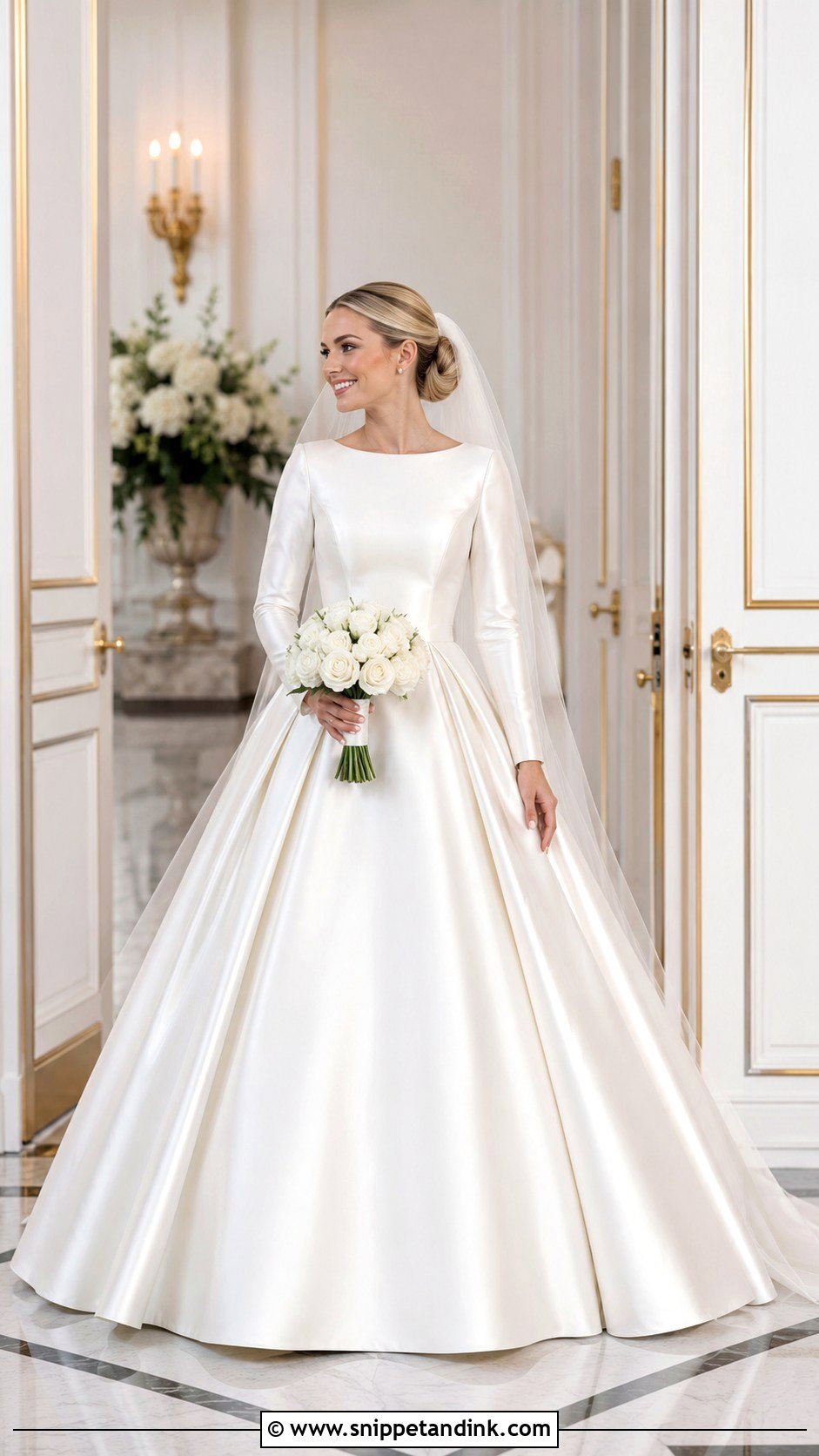
A full skirt with sleeves can tip into heavy very quickly, so a ball gown with sleeves needs the cleanest possible bodice. Mikado, satin or organza give structure. Bateau, square or scoop necklines balance long sleeves best. The skirt hides your shoes, so choose ones you can stand in for hours. Pearl studs, a smooth veil and a neat bun keep the volume at the bottom of the frame where it belongs.
18. Sheath Wedding Dress With Sleeves
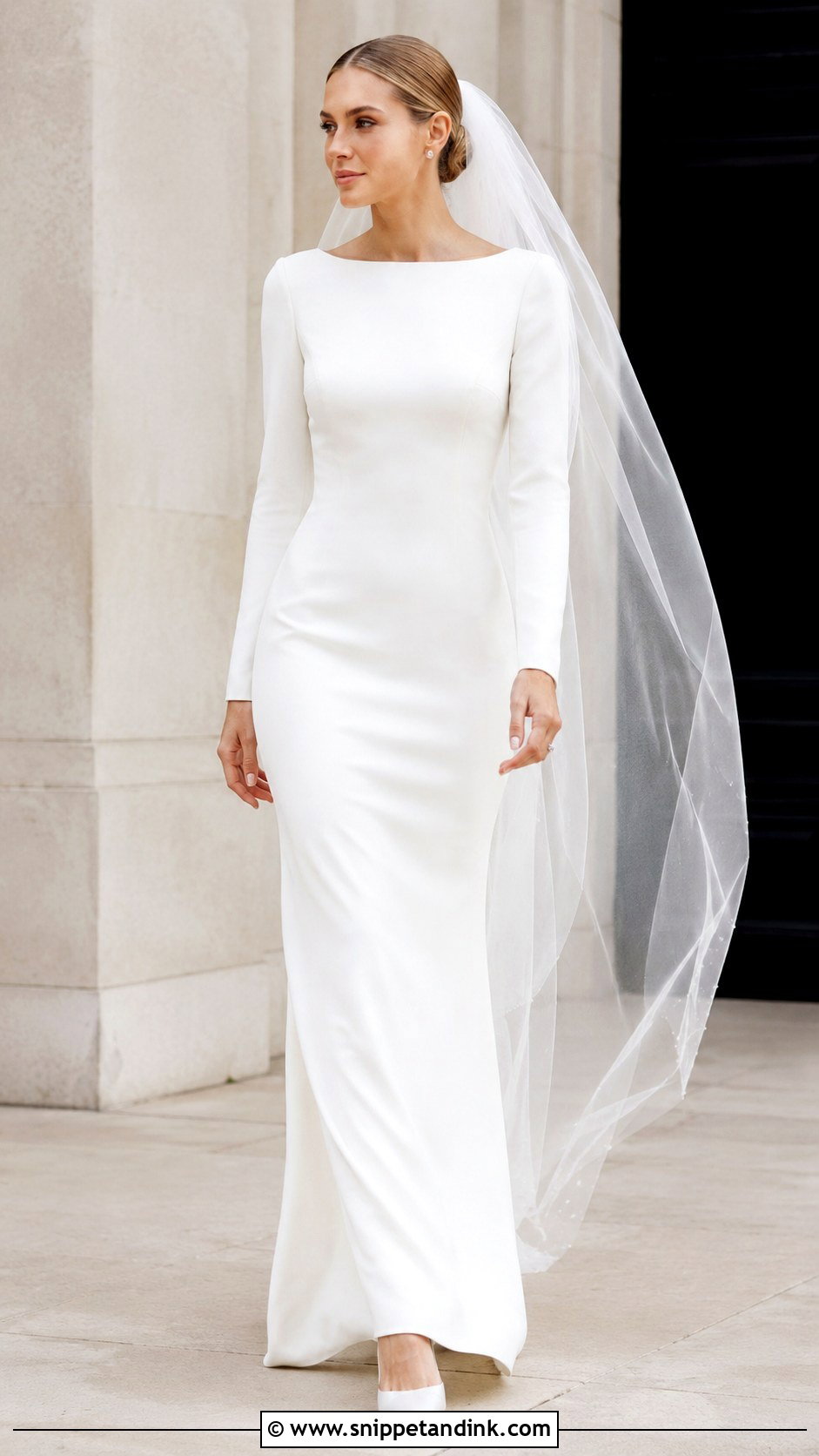
Sheaths follow the body without much flare, so the sleeve sets the tone. Long fitted sleeves feel polished; short or three-quarter ones relax it. Crepe is the usual fabric because it smooths the line and has some give. A sheath with fitted sleeves leaves no room for movement at the back, so check you can reach forward without the seams straining. Pointed heels, small earrings, a narrow veil and a low bun or straight hair.
19. Column Wedding Dress With Sleeves
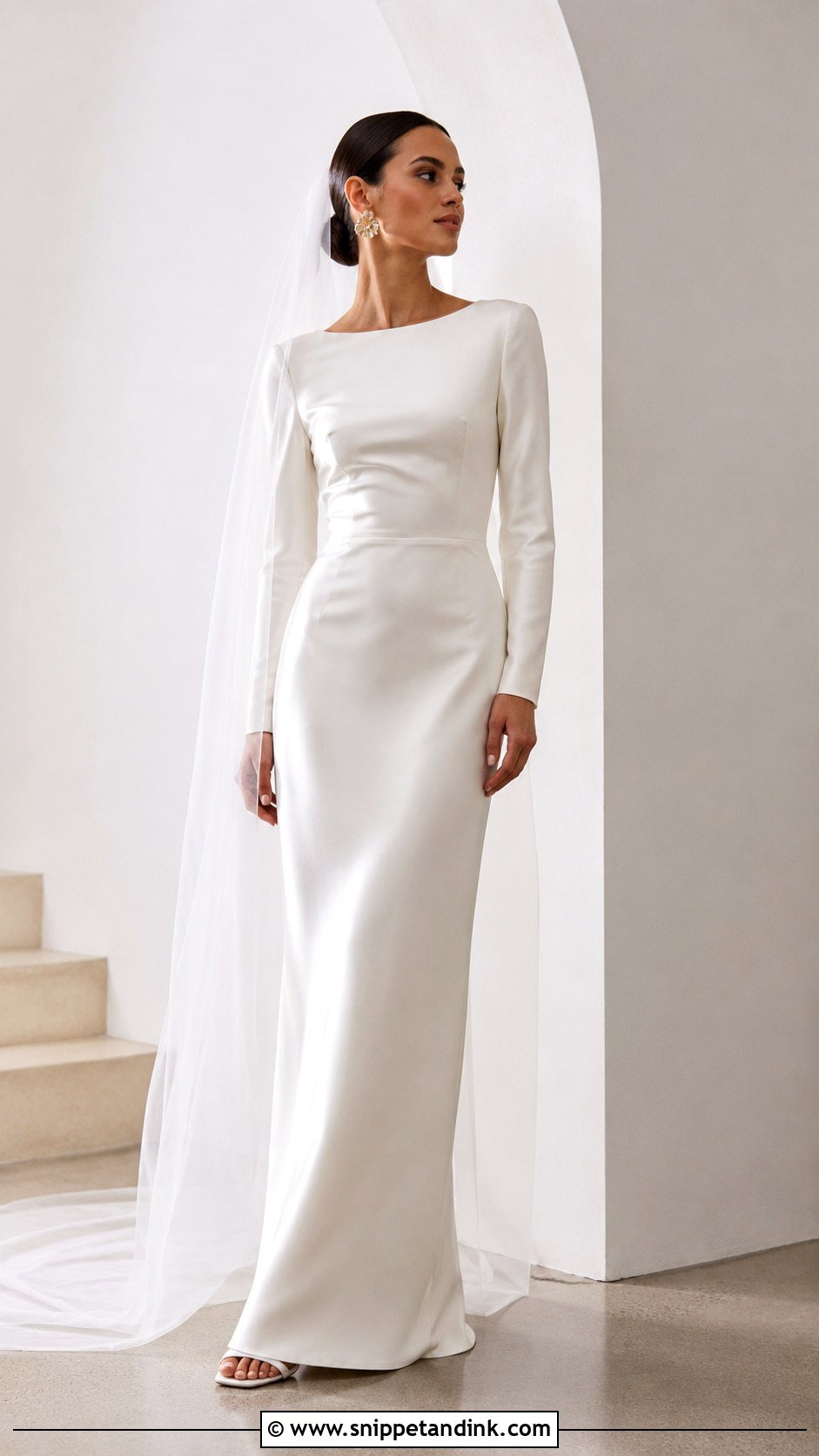
The column drops straight from shoulder to hem. Satin gives it a soft glow; crepe keeps it matte. Long sleeves add structure, particularly with a high, boat or square neck. I’d only suggest this to a bride who’s comfortable with the most minimal look on this list, because there’s nowhere for the eye to rest except the cut. Sculptural earrings, simple heels, a plain veil and a sleek ponytail or bun.
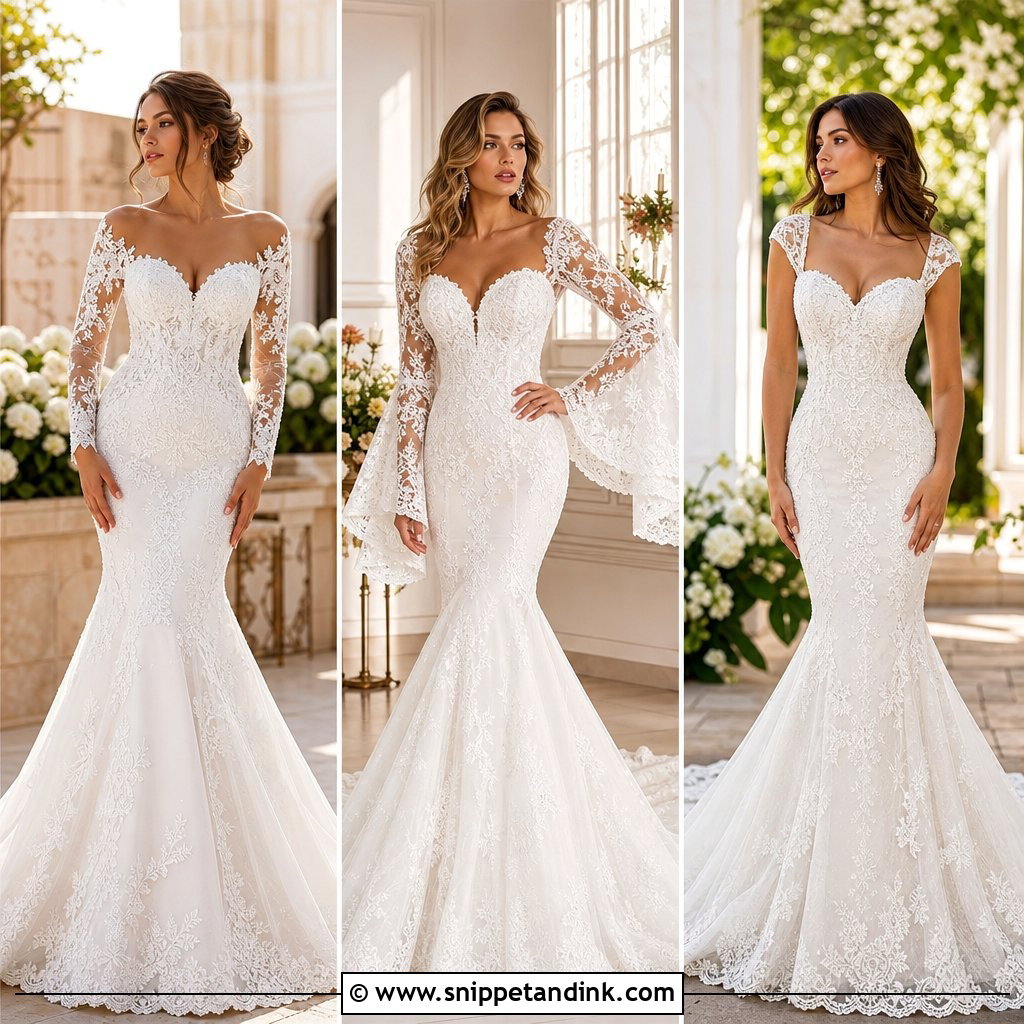
20. Fit And Flare Wedding Dress With Sleeves
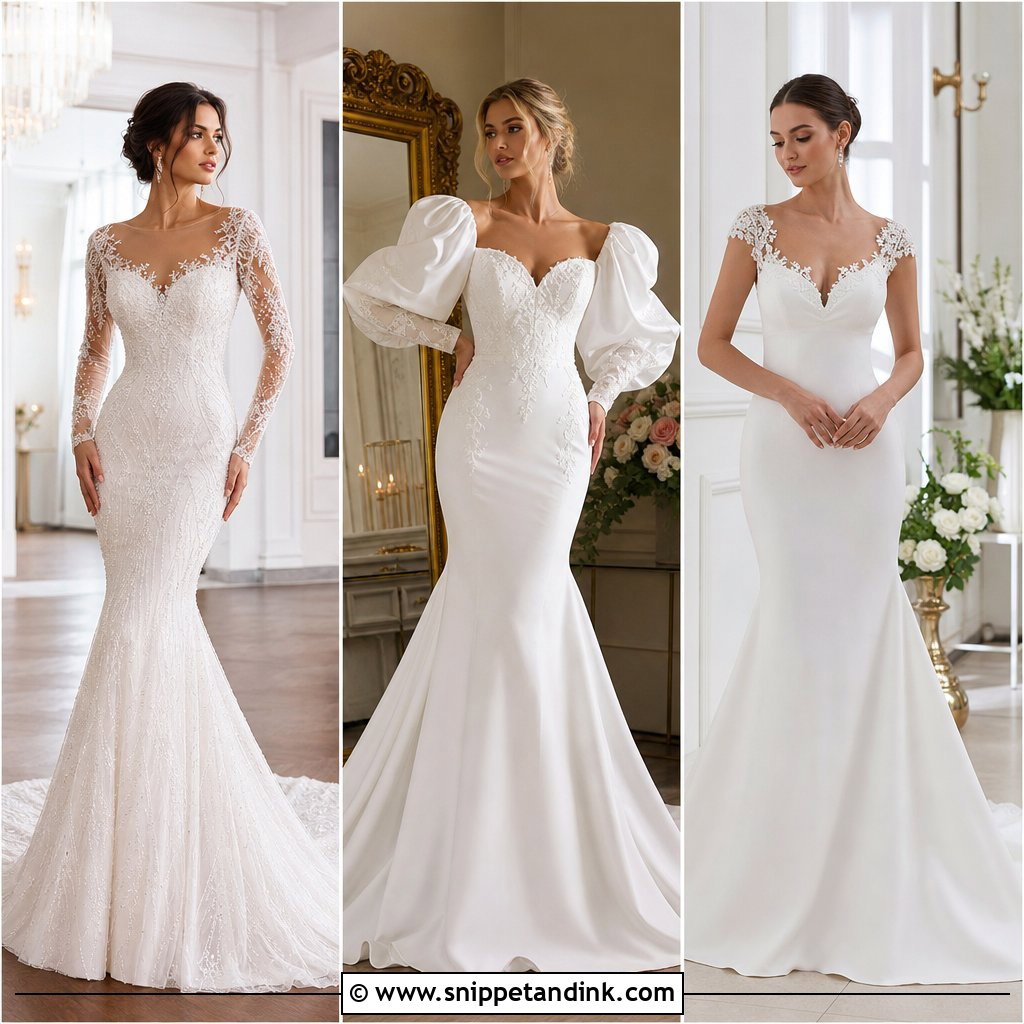
A fit-and-flare fits through the bodice and hips, then opens near the lower thigh or knee. It’s easier to move in than a mermaid because the flare starts higher. Plain crepe, soft satin or minimal lace sleeves with a clean skirt keep it simple. A fitted sleeve balances the flare below. Classic heels, pearl earrings, and a chapel-length veil if you want a bit more drama walking down the aisle.
21. Mermaid Wedding Dress With Sleeves
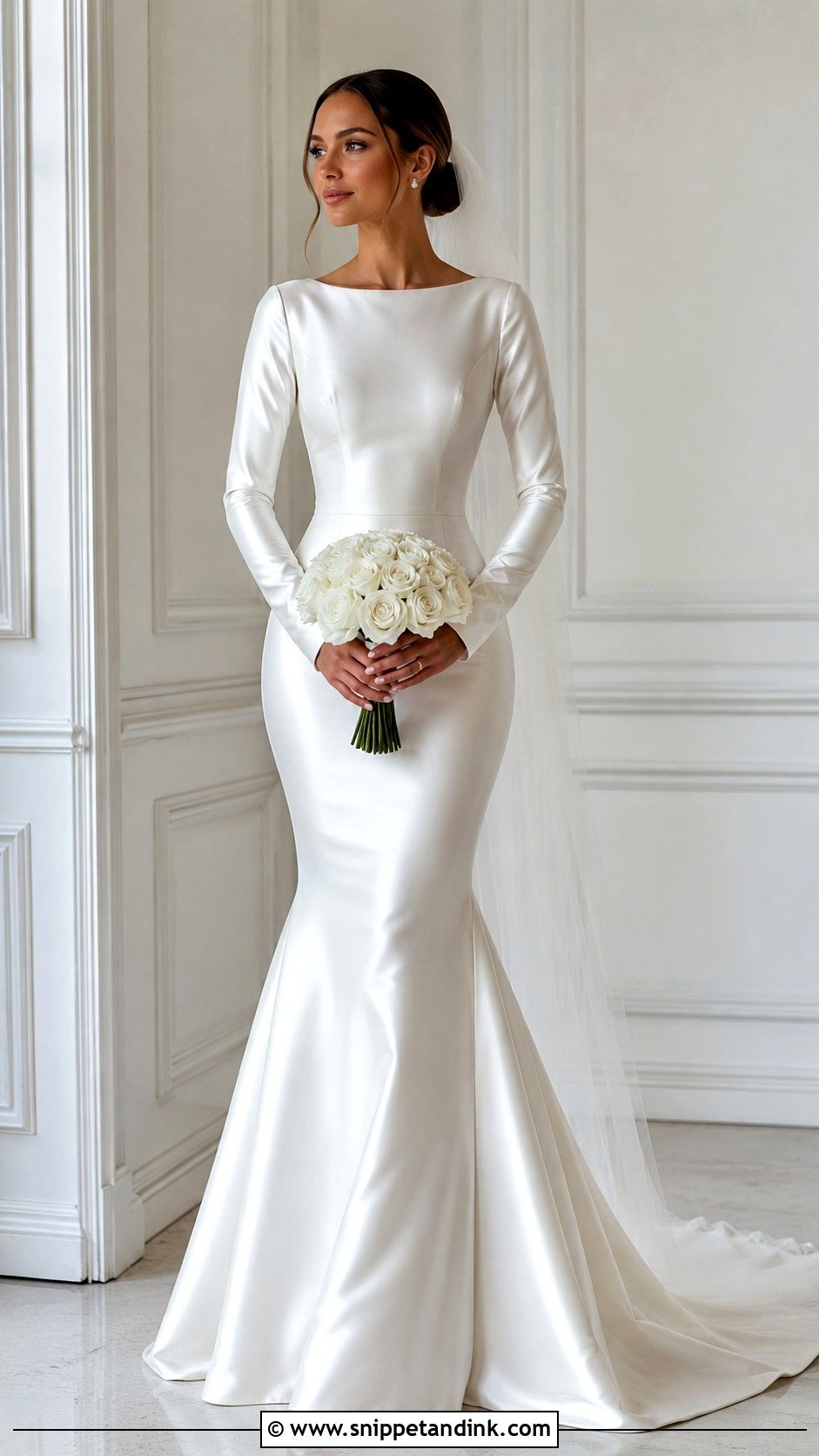
Mermaids flare at or below the knee, which gives the strongest shape on this list and the least freedom to walk. Long sleeves balance that shape and make it feel formal. Clean crepe or satin stops it from becoming showy. Practise climbing steps and sitting in it at your fitting; you’ll need a bustle for the train and probably a slightly higher flare than the sample. Sleek heels, small earrings and a smooth veil for evening venues.
22. Tea Length Wedding Dress With Sleeves
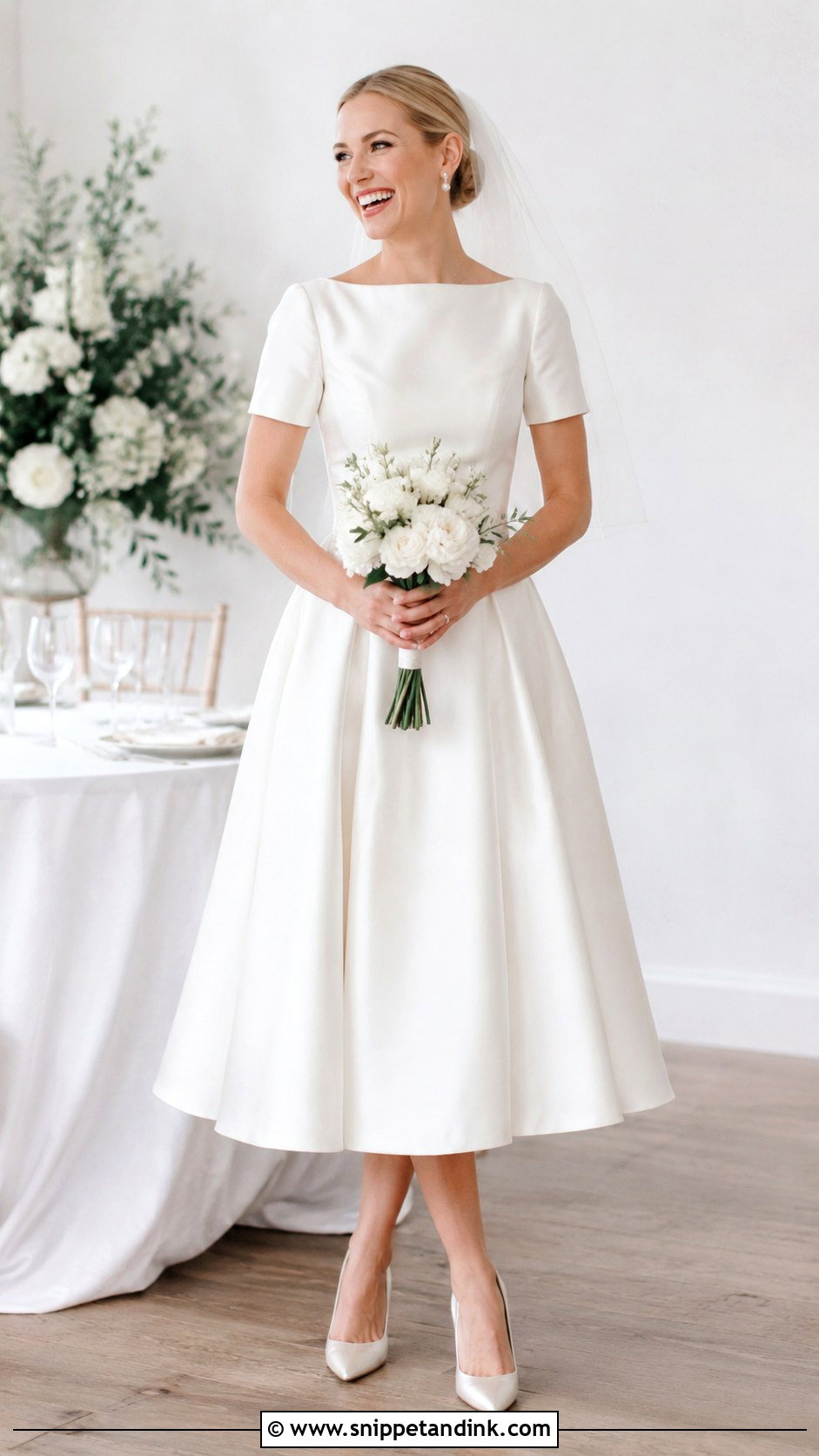
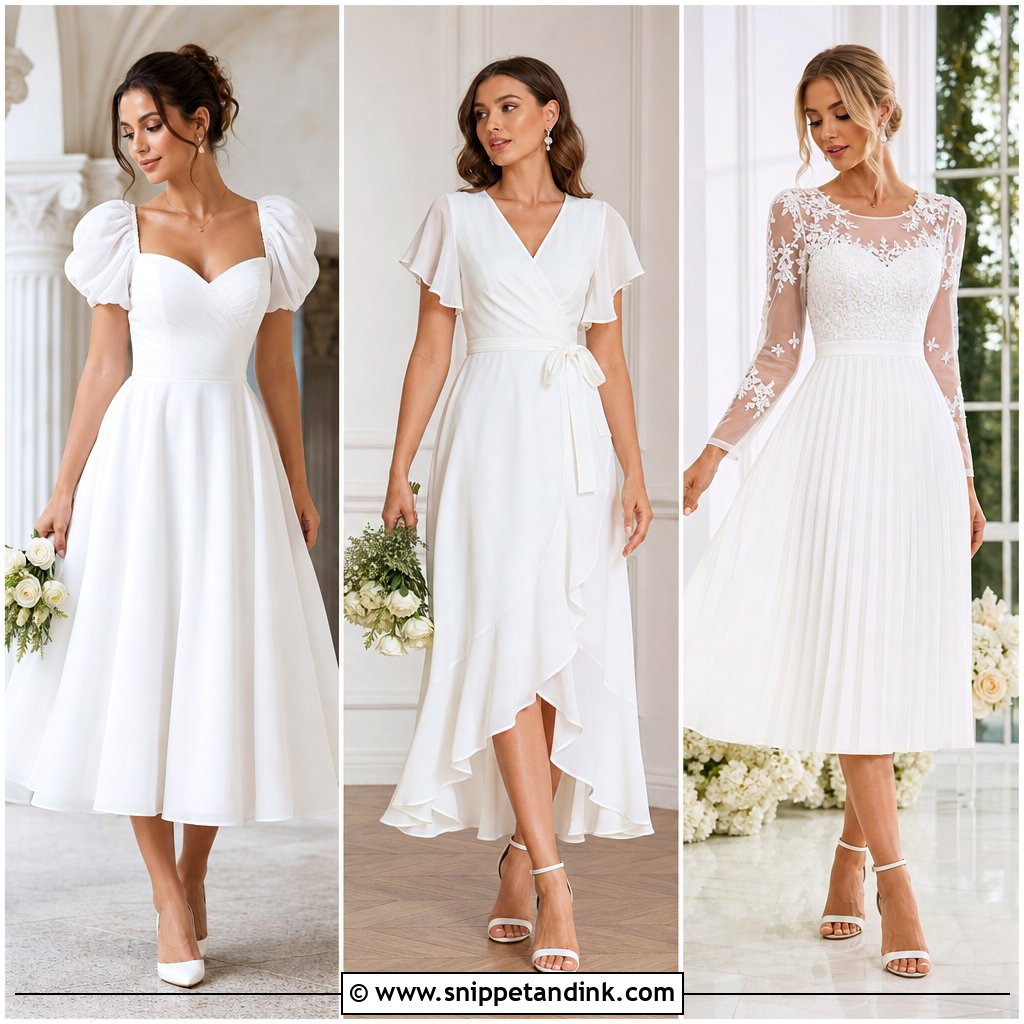
A tea-length hem falls between the knee and ankle, so your shoes become part of the outfit. Ivory pointed pumps, slingbacks or ballet flats keep it classic. Short, cap and three-quarter sleeves suit this length; long sleeves can make it look vintage, which is fine if that’s your aim. Satin, tulle, crepe or a little lace, plus pearl studs and a short veil, for courthouses and small receptions.
23. Midi Wedding Dress With Sleeves
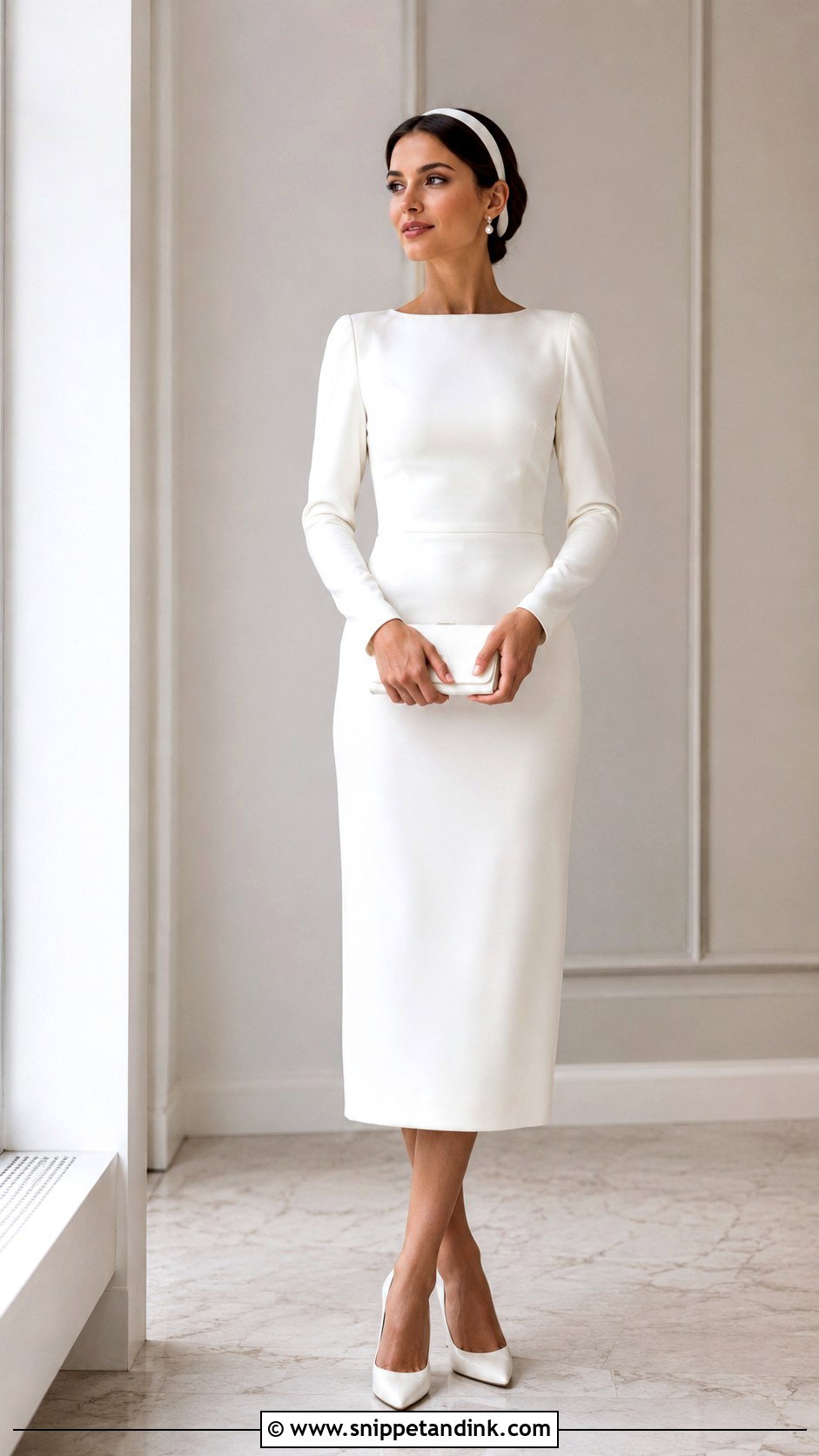
A midi wedding dress feels polished without the formality of a full-length gown. A fitted crepe midi with long sleeves looks sleek; an A-line midi with short sleeves softer. It needs one clearly bridal signal, or it reads as a smart white party dress: a short veil, a bow or a clean headband. Pearl earrings, closed-toe heels and a small structured clutch. Easy to rewear afterwards, too.
24. Mini Wedding Dress With Sleeves
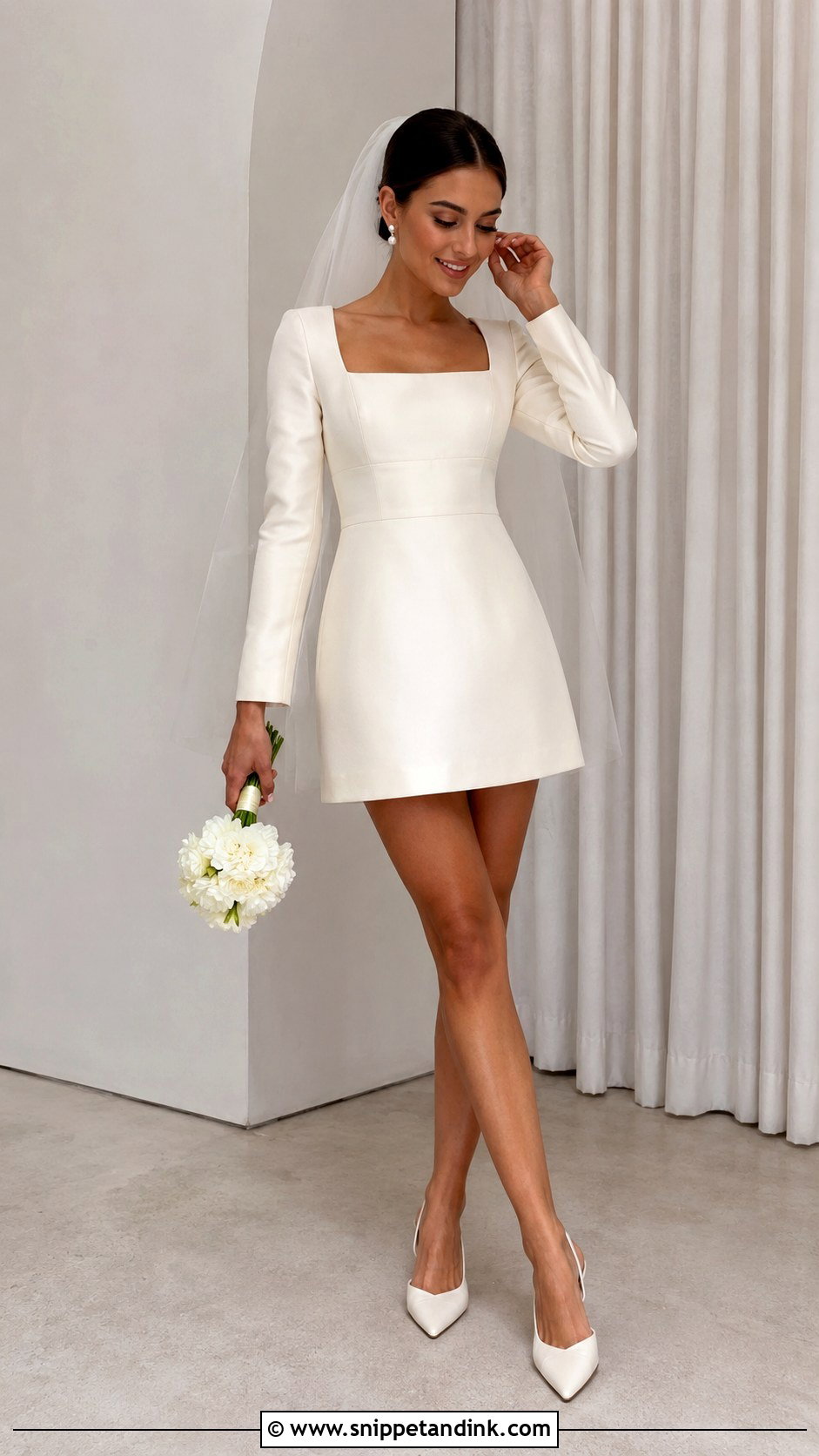
A mini wedding dress with sleeves balances a short hem with coverage up top. Long sleeves make it feel grown-up; puff or short sleeves feel younger. Satin, crepe or structured cotton give it shape, which matters, because a soft mini can look like a nightdress in photos. Pointed pumps, slingbacks or ankle straps, pearl earrings and a short veil or bow.

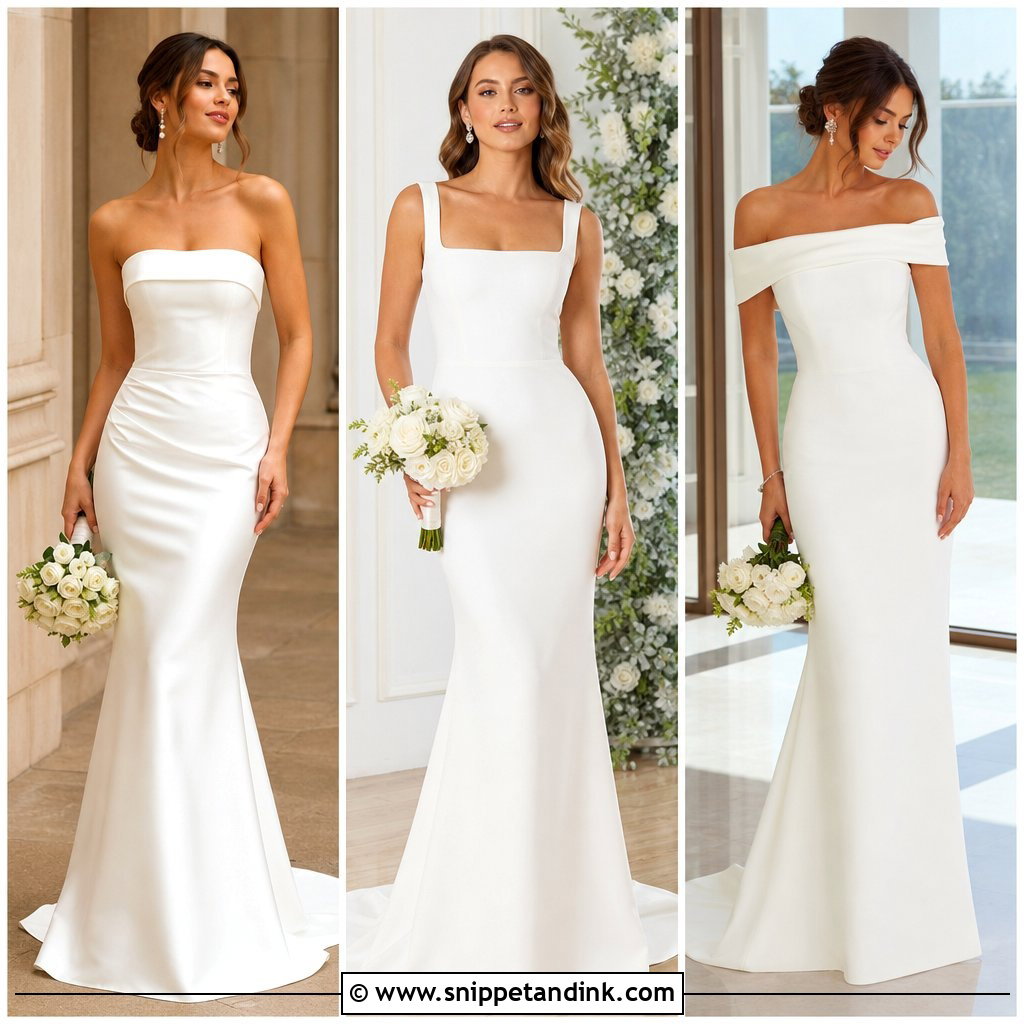
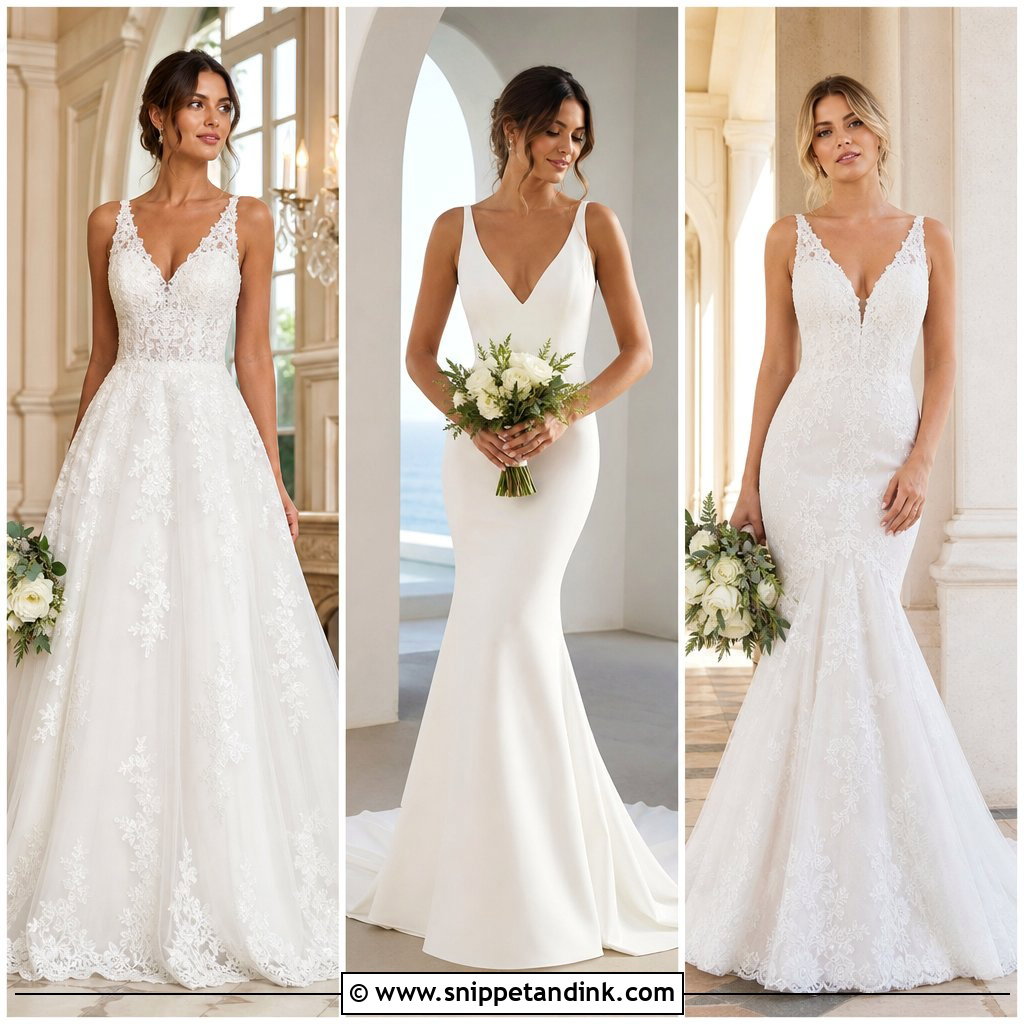
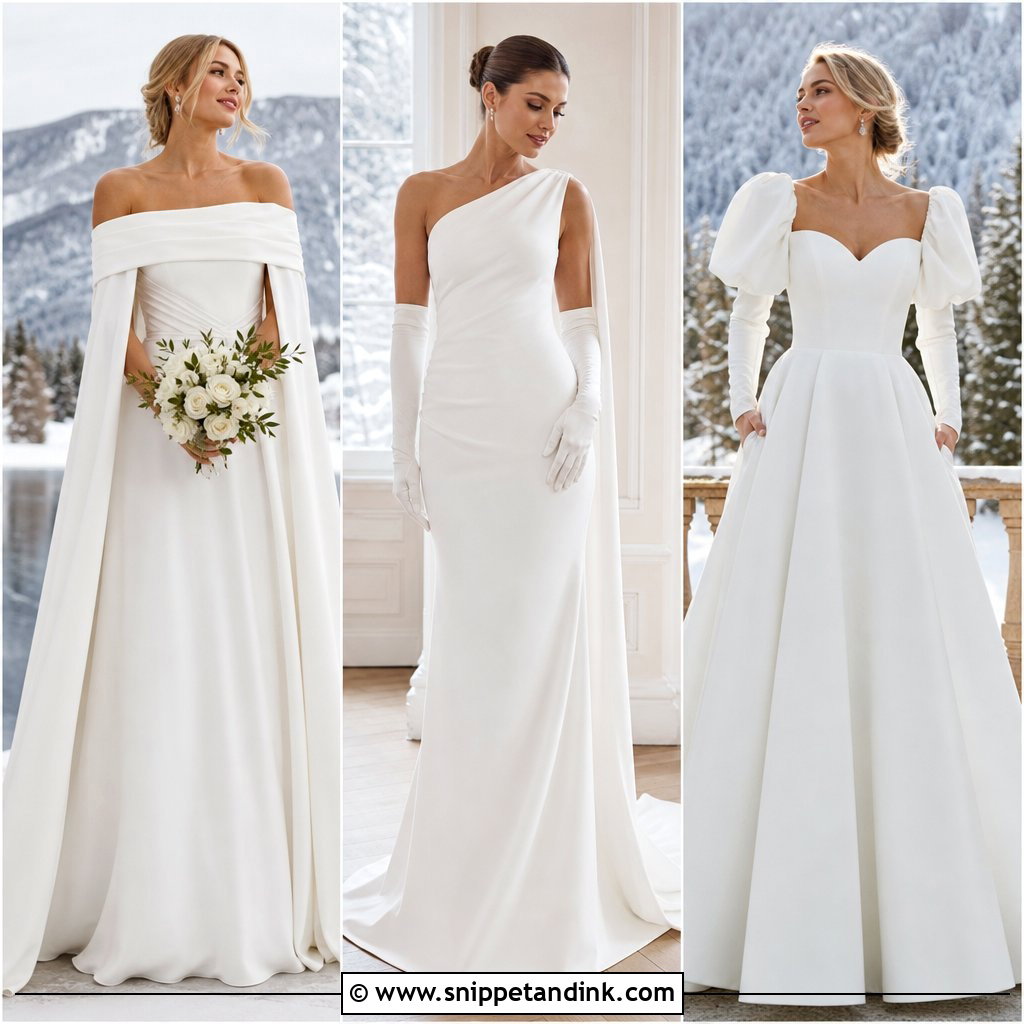
25. Courthouse Wedding Dress With Sleeves
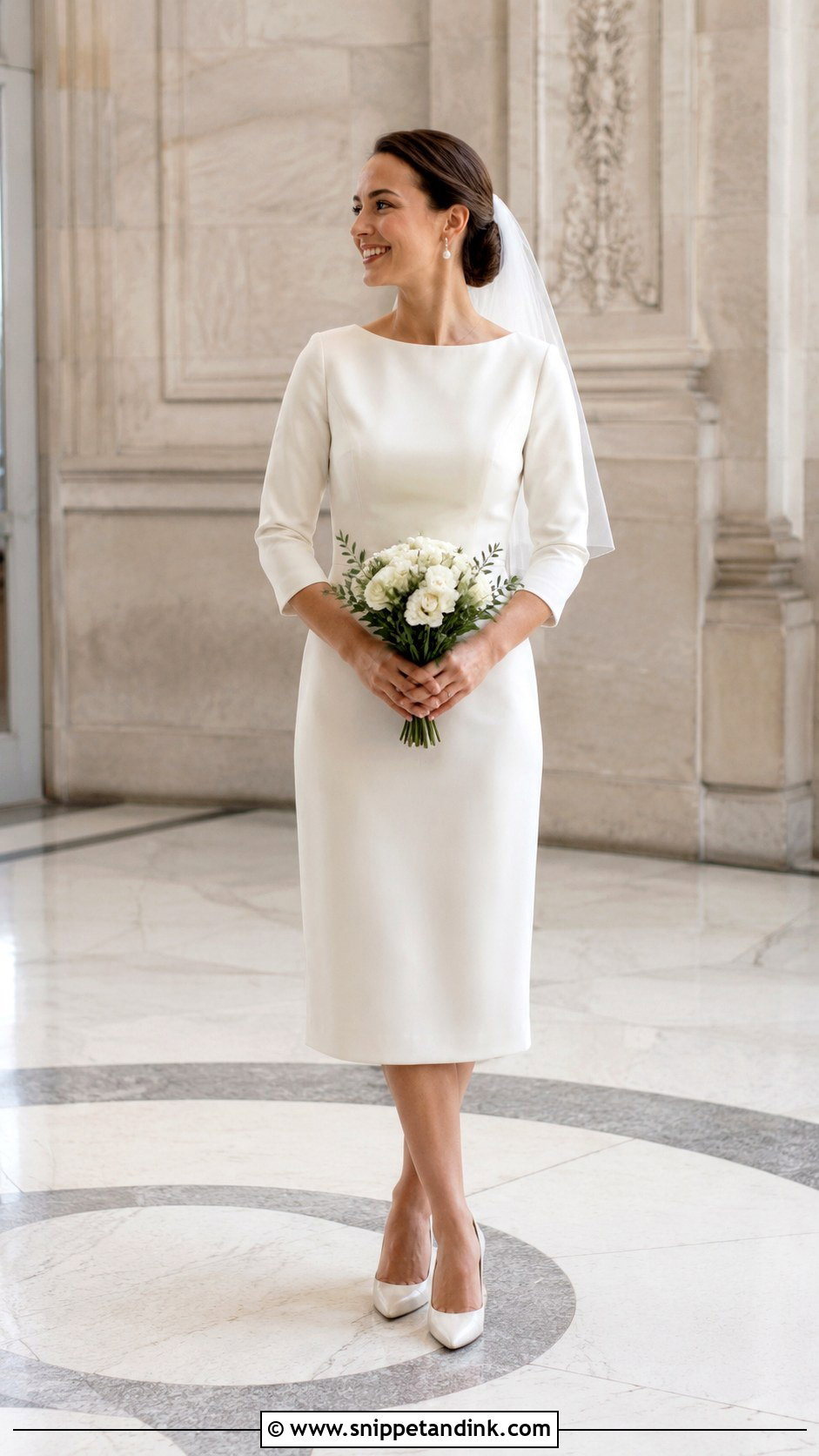
Registry offices are usually small, brightly lit rooms, so a courthouse dress should look neat in harsh light and in close-up. A midi sheath, short crepe dress or simple satin A-line works. Choose sleeve length by season. Closed-toe heels, a small bouquet, pearl earrings and a neat veil or hair accessory are enough. For cooler days, a tailored white coat or blazer over the top looks smart in photos on the steps outside.
26. Beach Wedding Dress With Sleeves
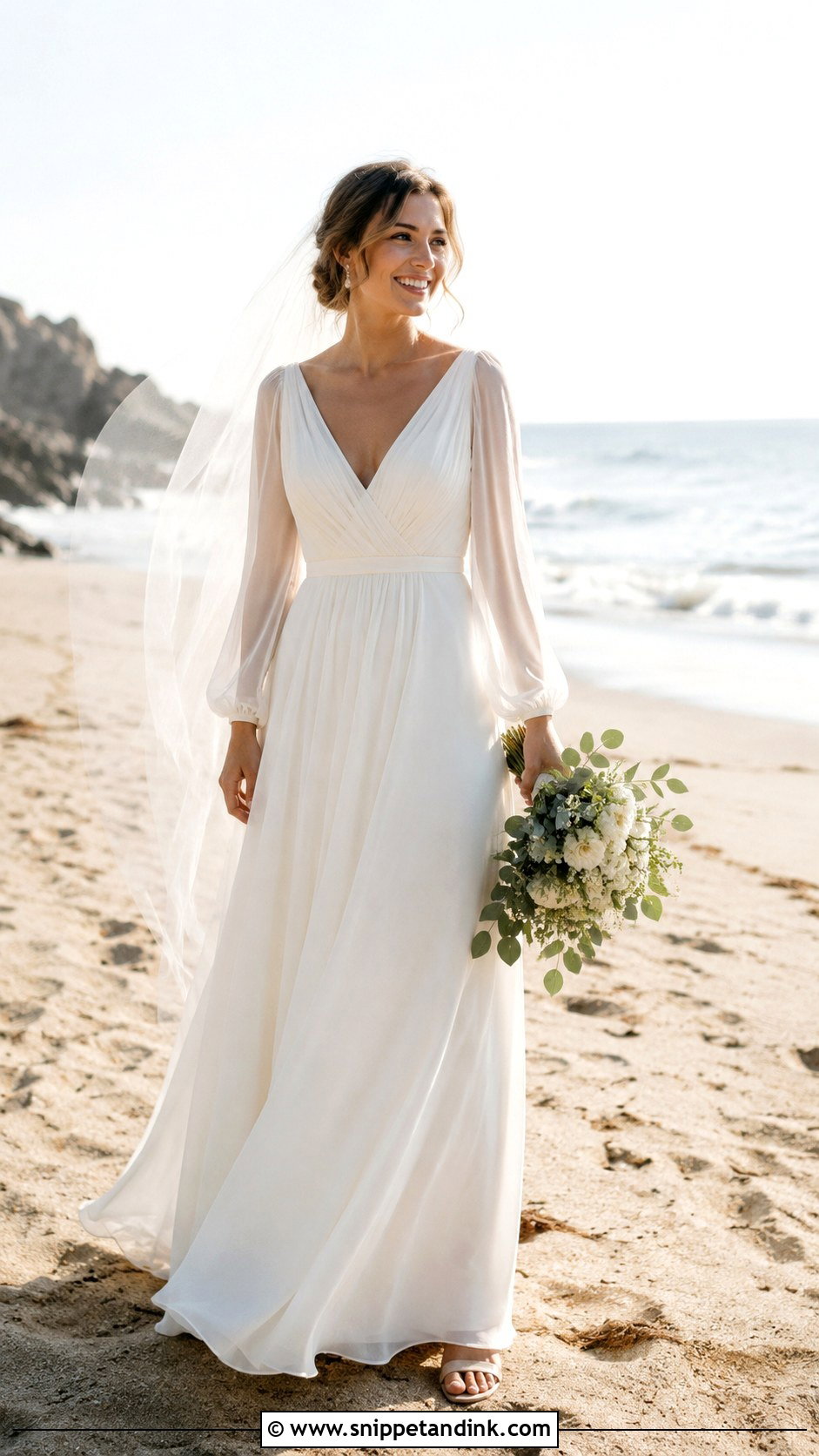
At the beach, sleeves should breathe and move. Chiffon, soft crepe and lightweight lace are the fabrics I’d pick; satin and stiff structure trap heat. A flowing A-line with sheer long sleeves, flutter sleeves or loose bishop sleeves suits the setting. Sand makes heels sink, so check the venue’s rules and choose flat sandals or low wedges. Small earrings, a soft veil or comb, and nothing that needs to stay perfectly in place in the wind.
27. Winter Wedding Dress With Sleeves
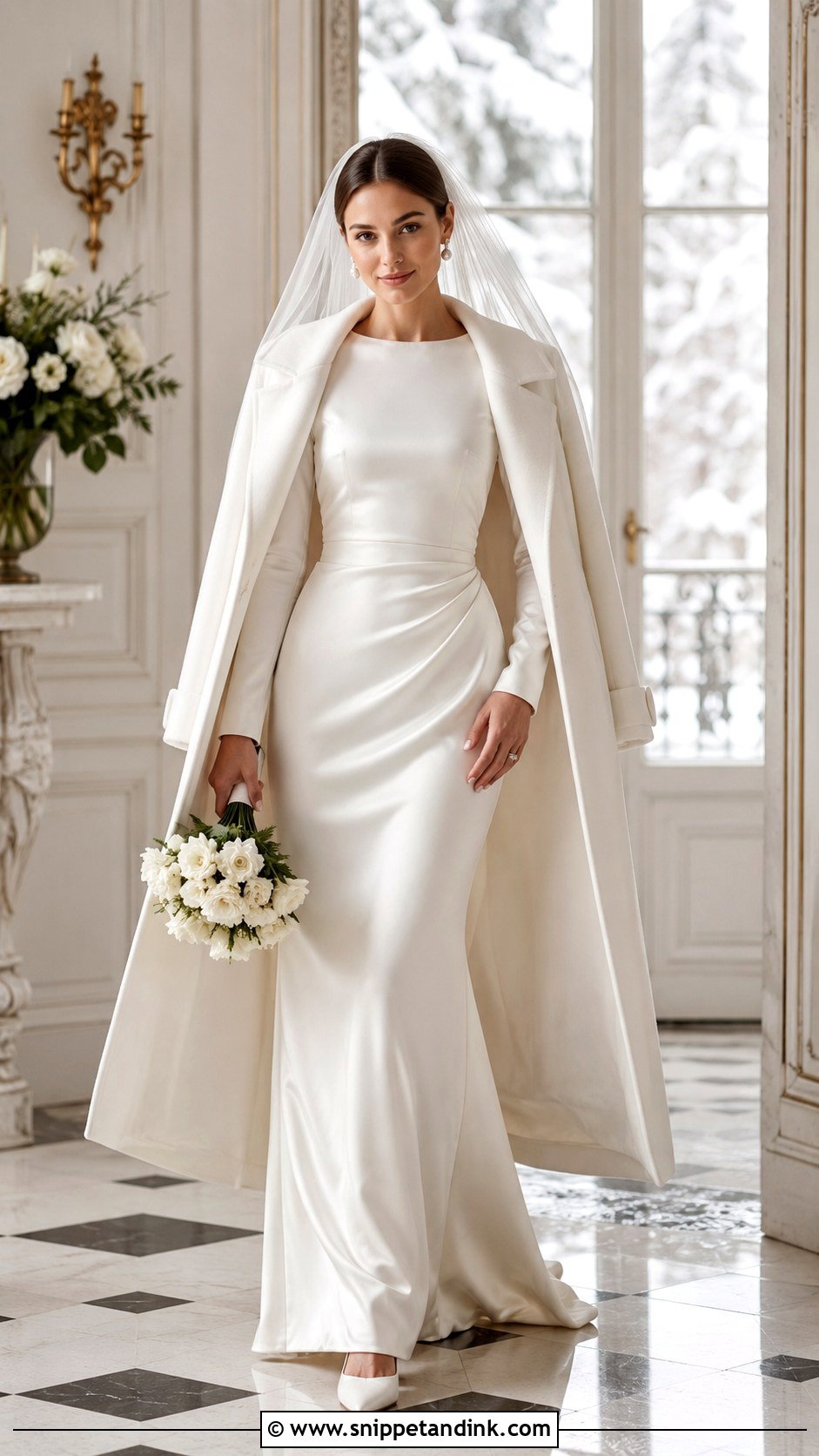
Long sleeves in heavier crepe, satin, mikado or lined lace keep you warm and look right for the season. High, square and boat necklines suit winter well. If you need outerwear, a tailored white coat, faux-fur wrap or plain bridal cape that matches the dress’s shade is better than whatever’s in your wardrobe. Check that the coat sleeves fit over the dress sleeves without bunching. Closed-toe heels, pearl or crystal earrings and a sleek bun.
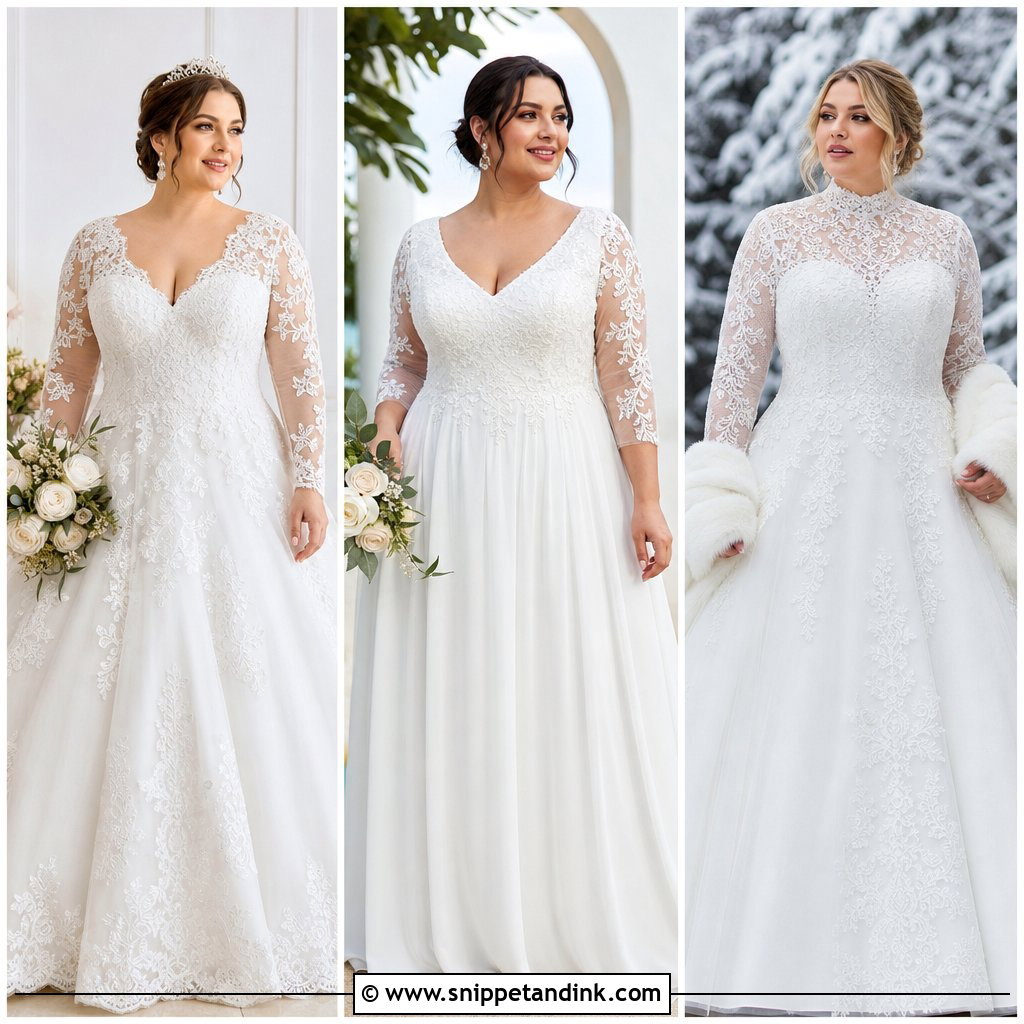
28. Plus Size Wedding Dress With Sleeves
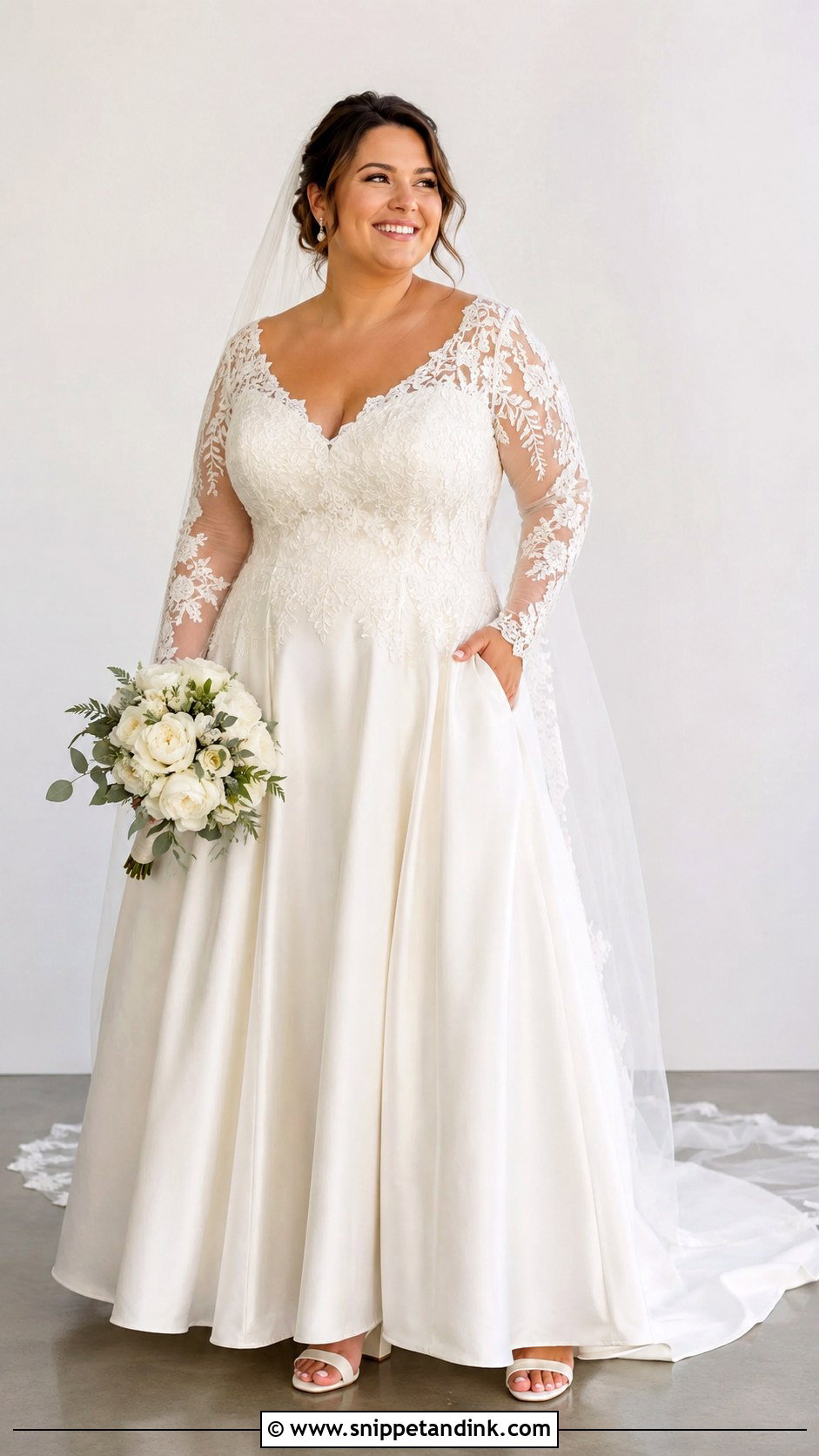
For a plus size bride, the sleeve fit is where I spend the most time. A sleeve that’s tight at the upper arm pulls the whole bodice and is uncomfortable within an hour, so I look for real ease there and strong construction through the bodice. An A-line with long sleeves is dependable; a fit-and-flare can highlight curves cleanly. Stretch crepe, soft satin and lined lace all work. V, square or scoop necklines open the upper body. Comfortable block heels and a simple veil.
29. Modest Wedding Dress With Sleeves
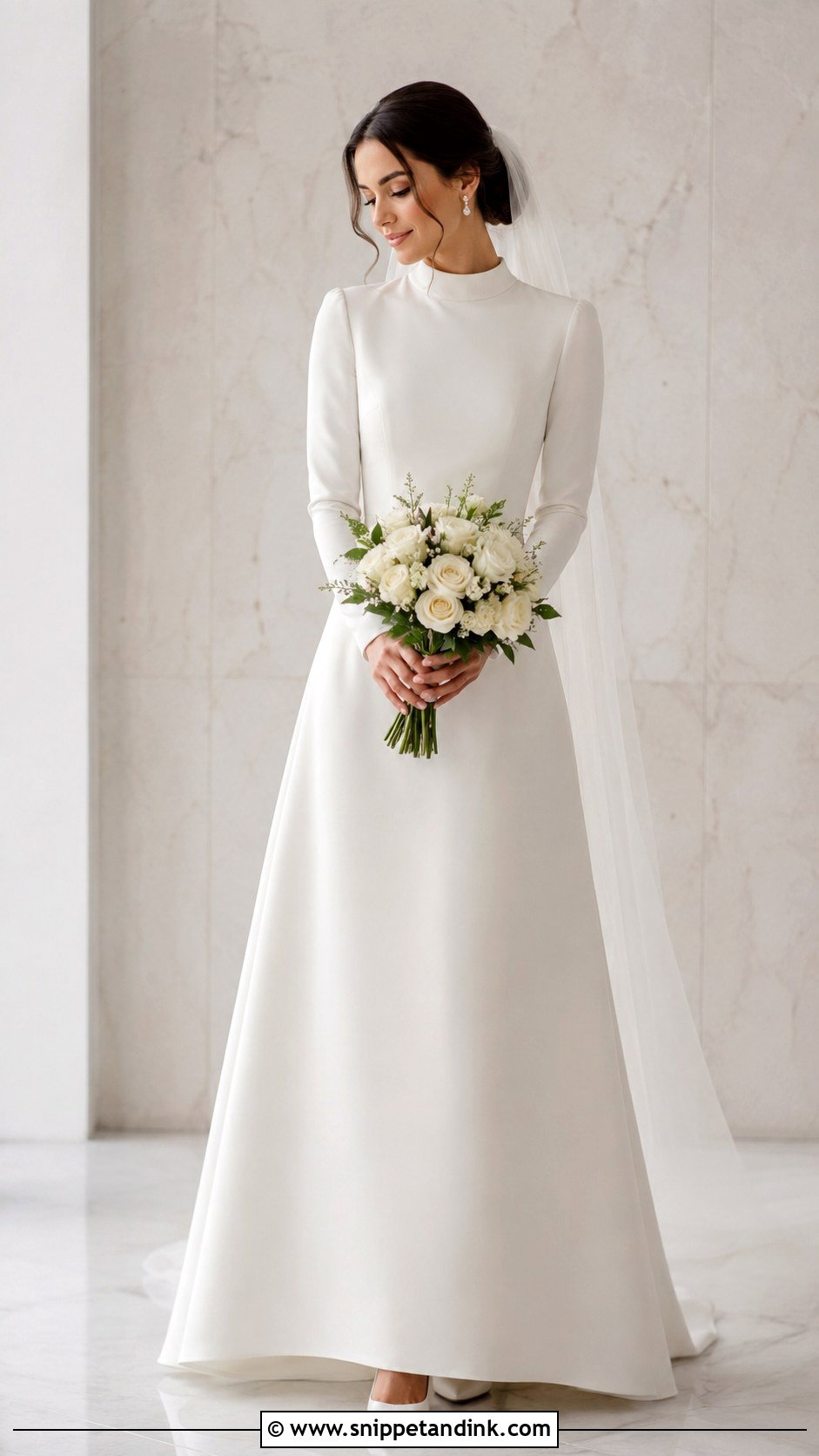
A modest wedding dress with sleeves doesn’t have to feel layered. A higher neckline, lined bodice, long sleeves and a comfortable skirt shape cover everything you need. Crepe, satin and chiffon give clean coverage without weight. A high-neck A-line, long-sleeve sheath or simple ball gown all work. If your ceremony involves kneeling or sitting on the floor, test the skirt for that specifically. Closed-toe heels, delicate earrings and a smooth veil.
30. Detachable Sleeve Wedding Dress
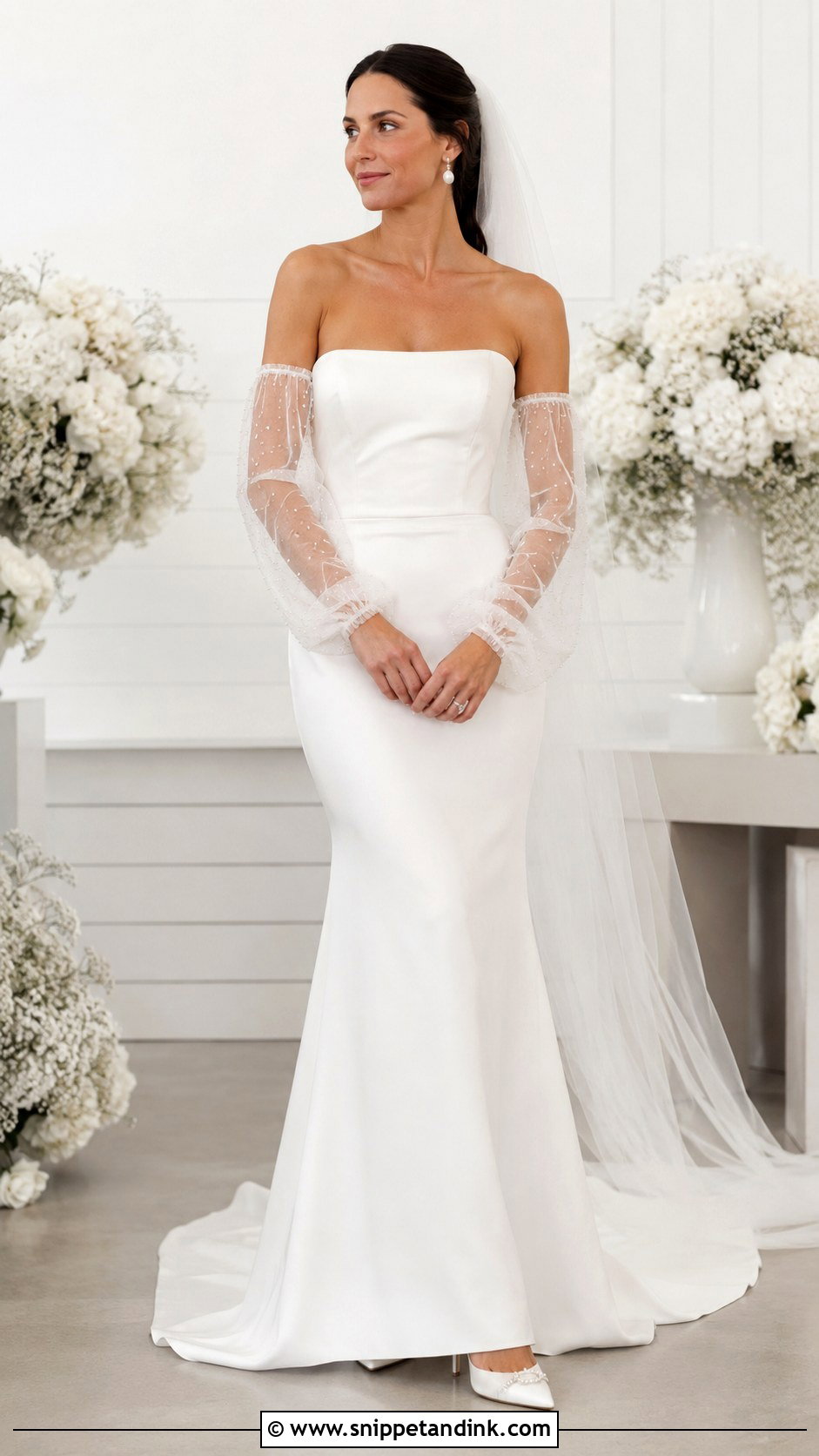
Detachable sleeves give you two dresses for the price of one. You wear the sleeves for the ceremony and take them off for the reception. Fitted, puff, sheer and cape-style sleeves all exist as separates. A plain strapless or sleeveless base dress works best. Ask how they attach: snaps or hooks inside the bodice are secure, while elastic bands can slip. Have a bridesmaid practise removing them at the final fitting, then add a bracelet or change your hair for the second look.
Adding Sleeves After You’ve Already Bought the Dress
Many brides fall for a strapless dress and then want sleeves for the ceremony. It’s very doable, but the fabric match is the hard part. Bridal ivories vary between makers, so a seamstress working from a fabric shop will rarely hit the exact shade. Ask the shop if the designer sells matching fabric or lace by the metre, and order it at the same time as the dress.
Sheer mesh or lace sleeves are the most forgiving to add, because a slight shade difference disappears against skin. Satin and crepe sleeves need a near-perfect match. Allow extra weeks in your alterations schedule, and decide early whether they should be sewn in or detachable.
Will You Overheat in Sleeves at a Summer Wedding?
Not if you choose the fabric for the weather. Chiffon, tulle, organza and unlined lace let air through. Heavy satin, mikado and lined crepe hold heat against the skin, and long sleeves in those fabrics make a July garden ceremony hard work. If you love a structured look for summer, three-quarter or short sleeves are a better compromise than a full sleeve.
- Ask for dress shields sewn under the arms. They protect satin and silk from marks that won’t come out.
- Keep the sleeves unlined if the fabric is opaque enough on its own.
- Plan your portraits in shade or late in the day, when you’ll be cooler and the light is softer.
Sleeves Are a Fit Decision Before a Style One
A sleeve can make a plain dress softer, more modest, more polished or more dramatic, but none of that matters if you can’t lift your arms. Settle the fit and the fabric first, then the shape, then the accessories. Satin long sleeves, lace, minis, courthouse dresses and winter gowns all start from the same question: how do you need to move on the day? Answer that, and the right sleeve is usually obvious.
You'll Like These Ideas:



Leave a Reply