
A sheath follows the body’s natural line from shoulder to hem, without the volume of a ball gown or a full A-line skirt. That’s why it looks so modern, and also why the tailoring matters more than almost anything else. It suits city ceremonies, outdoor weddings, destination trips and smart indoor venues. Satin gives a soft glow, crepe gives smooth structure and lace adds texture. Below are twenty sheath gowns, each styled head to toe, with what I’d check before you commit to one: the neckline, the fabric, and whether you can actually walk in it.
Sheath, Column or Fit-and-Flare? Where the Skirt Breaks Matters
Brides often use these words interchangeably, and boutiques don’t always agree either. The difference that matters is where the skirt leaves your body. A sheath follows you lightly through the waist and hip, then falls almost straight to the floor. A column is straighter still, with less shaping at the waist. A fit-and-flare hugs to mid-thigh and then widens.
That makes a sheath more forgiving than its reputation. It doesn’t need a tiny waist; it needs the fabric to skim, not grip. I’d steer you away from a very thin, stretchy sheath if you’re uncomfortable with how your hip and stomach show, but a midweight crepe sheath with a little waist shaping often suits curvier figures better than a mermaid does.
- Fuller hips: look for a sheath that releases slightly from the high hip so the skirt doesn’t cup underneath.
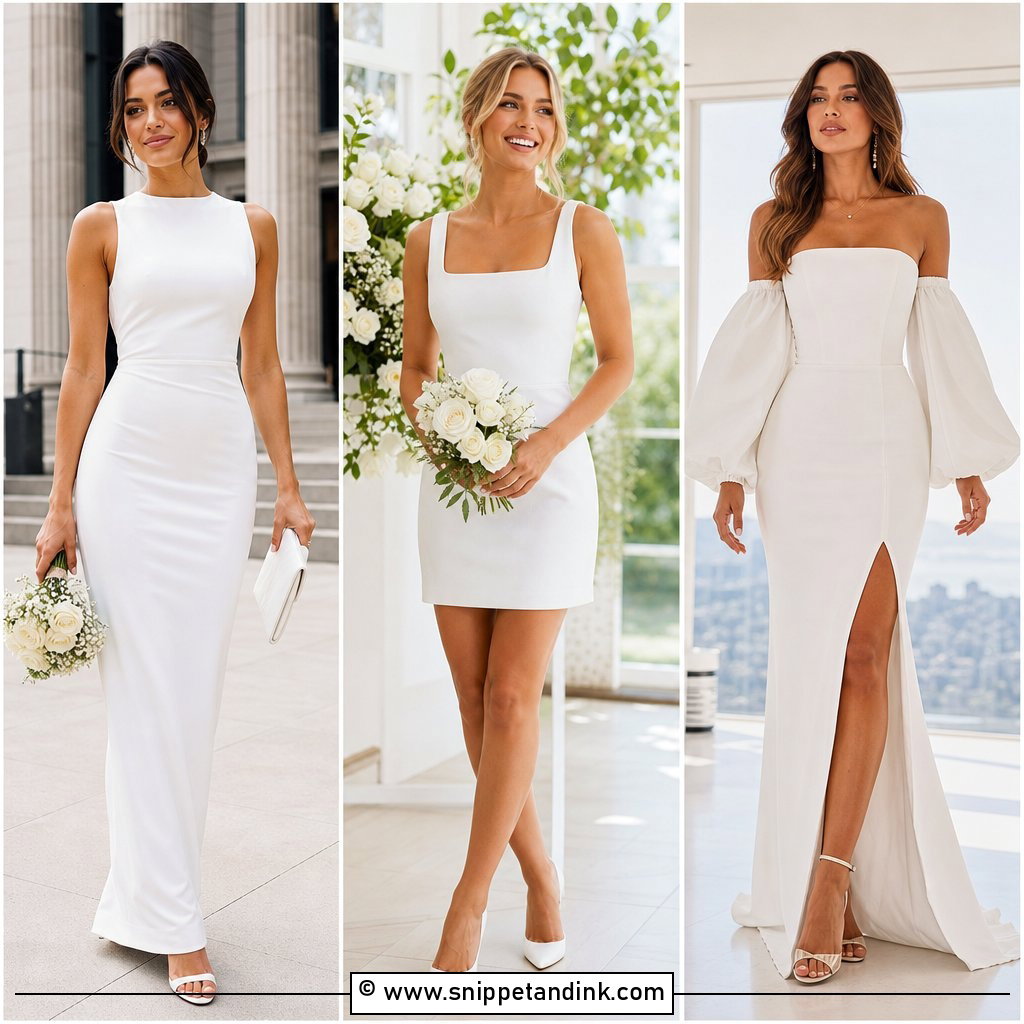
- Short torso: a dropped or undefined waist makes the body look longer.
- Tall frames: a narrow train or slit stops the line looking endless and plain.
- Very straight figures: a draped waist or seaming adds shape without volume.
1. Strapless Satin Sheath Wedding Dress
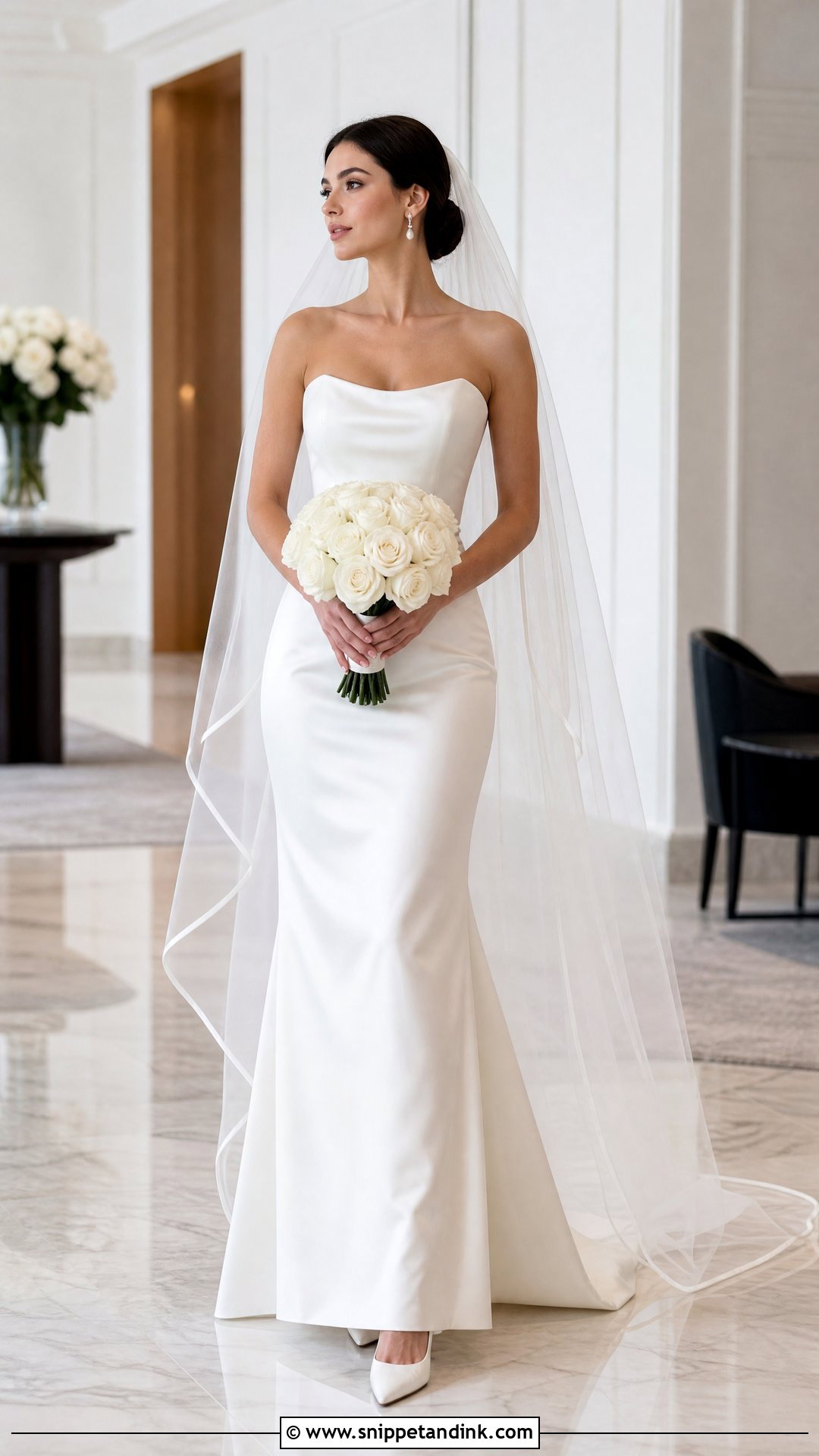
Strapless satin has a quiet glamour, but satin shows every pull, so the fit around the bust, waist and hip has to be exact. I look for internal boning and a straight or softly curved neckline that grips at the ribs. Pointed ivory pumps, pearl drops and a structured mini bag suit it, along with a low chignon that leaves the neckline open. A fingertip veil with a narrow satin edge adds a traditional touch without breaking the line. Hotels, galleries and bright indoor rooms show the sheen best. In strong sun, satin can flash white in photos.
2. Square Neck Crepe Sheath Wedding Dress
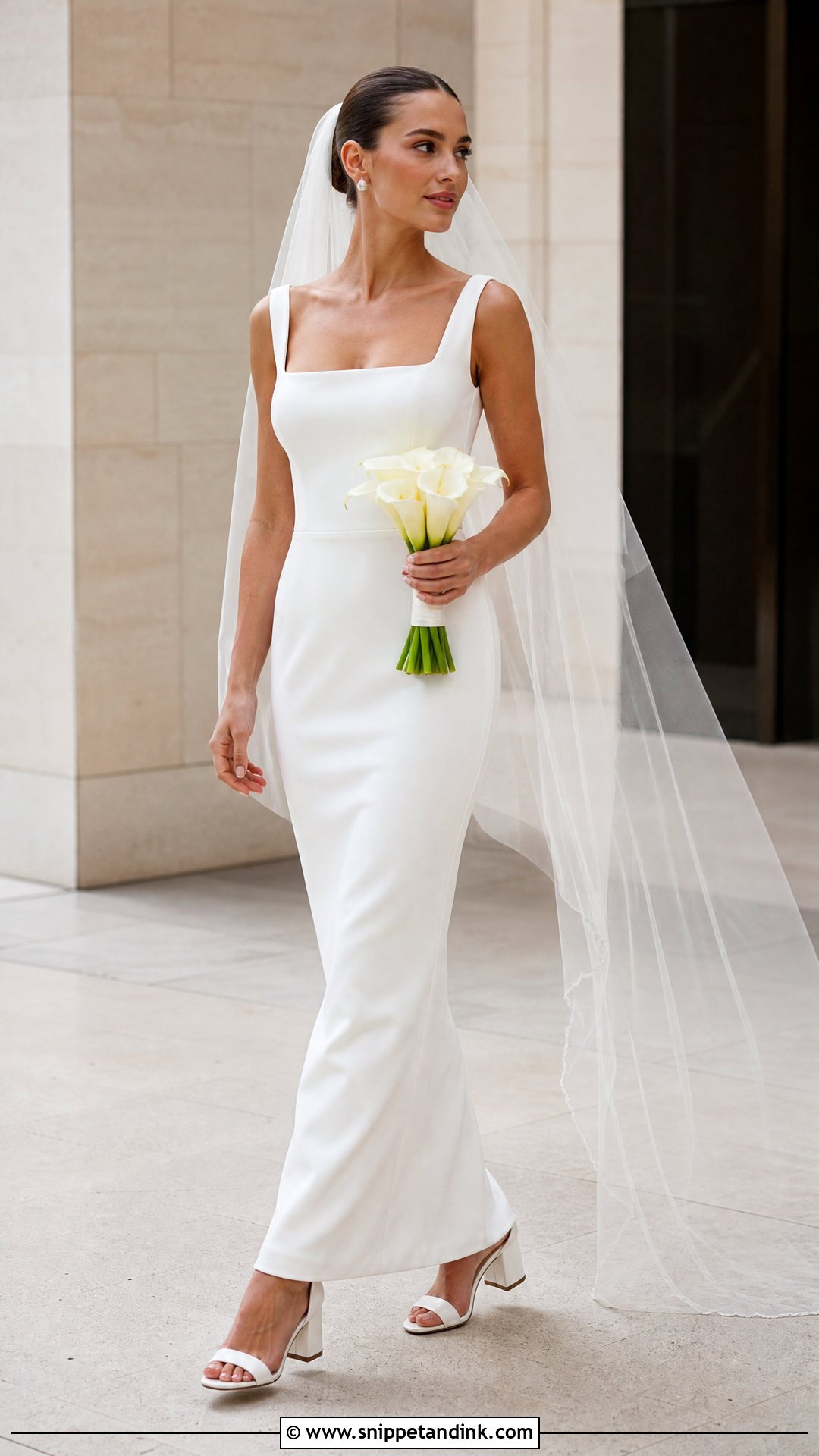
Square necks and crepe are a natural pair, since crepe holds the straight edges without buckling. Wider straps frame the collarbone and give more coverage than spaghetti straps. Choose a midweight crepe that skims rather than clings; lightweight crepe shows the line of every undergarment. Light waist shaping is enough definition. Pearl studs, a smooth bun and white leather block heels keep it comfortable, and a chapel veil adds movement for photos. Carry a compact bouquet of white roses or callas. It suits courthouse ceremonies and understated formal weddings.
3. Spaghetti Strap Silk Sheath Wedding Dress
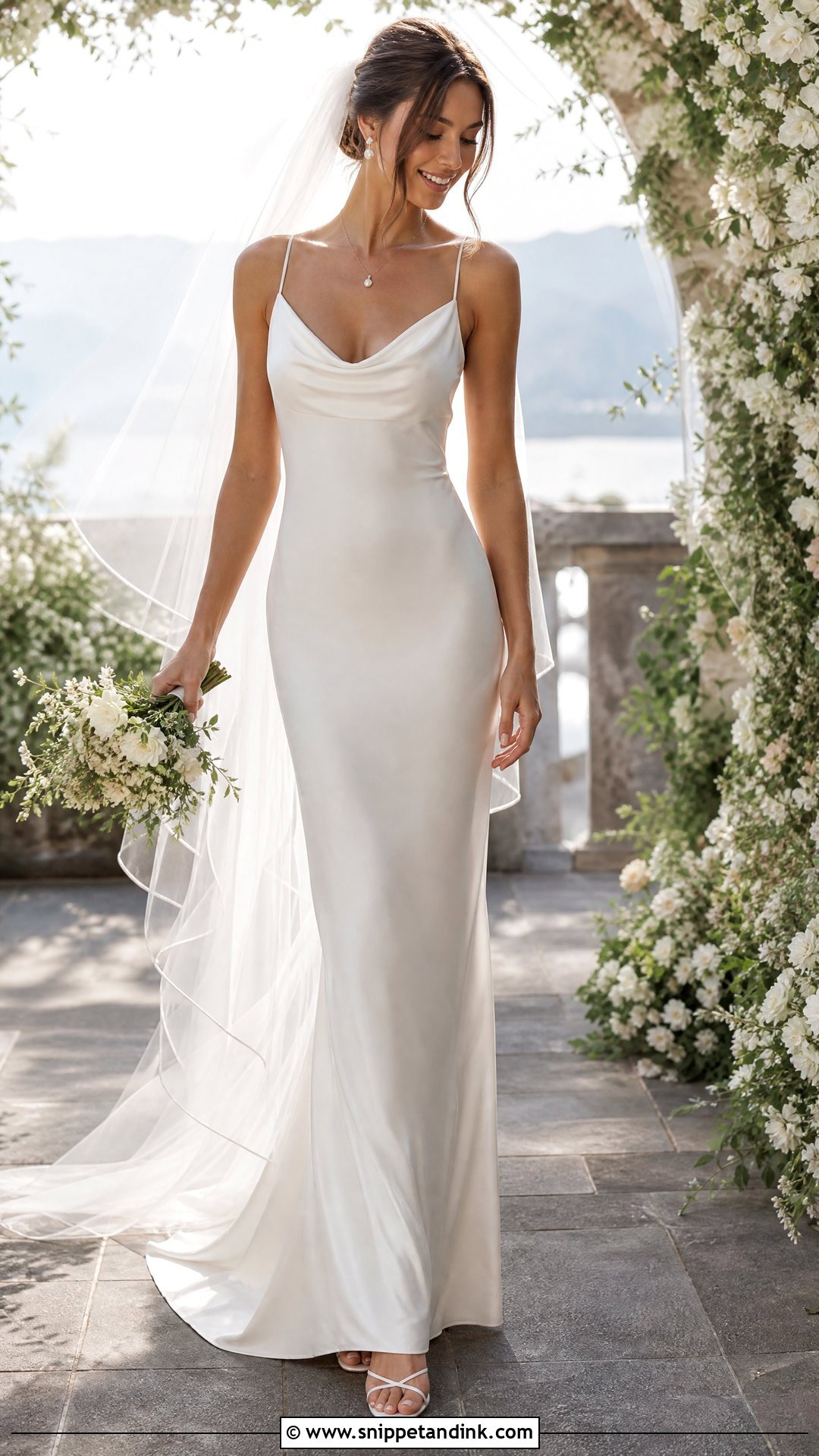
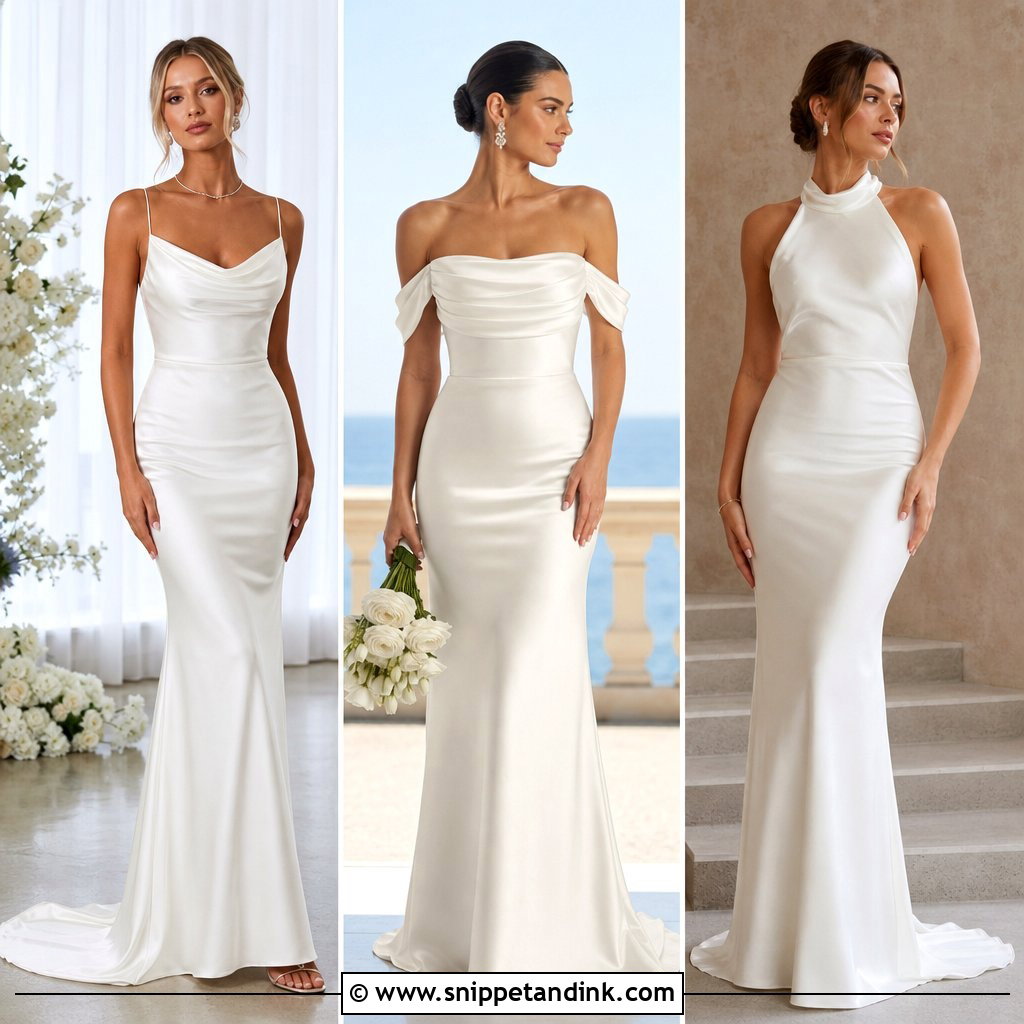
Silk on narrow straps feels relaxed and still unmistakably bridal. A spaghetti strap silk sheath wedding dress with a draped neckline or a simple V reads soft, and a bias cut follows the body naturally. That bias cut is also the risk. It stretches as it hangs, so a good seamstress lets the dress rest on a hanger for a day before marking the hem. Strappy sandals, a fine pendant and pearl earrings suit it, with loose waves or a low knot. A sheer cathedral veil makes it formal; a short one keeps it casual. Destination and garden weddings suit it.
4. Scoop Neck Sheath Wedding Dress
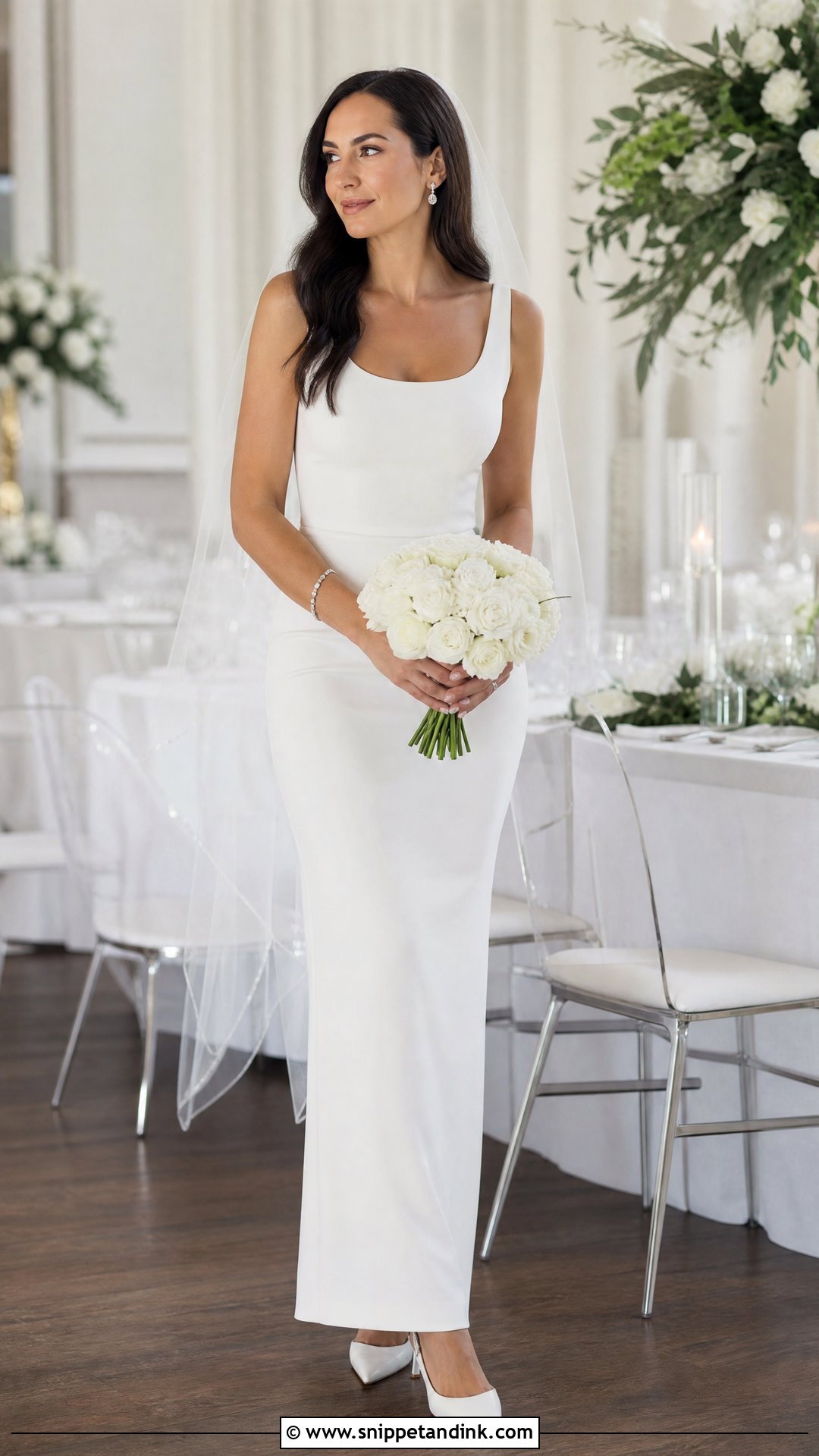
If a square neck feels too severe and a V too revealing, a scoop is the middle ground. The rounded neckline opens the upper body and works sleeveless, with tank straps or short sleeves. Smooth crepe or matte satin keeps it clean, and the straps must sit flat without pulling toward the neck. Closed-toe slingbacks, a slim tennis bracelet and small crystal earrings finish it, with a sleek ponytail or tucked-back waves. A waist-length veil with a cut edge adds a bridal note. It moves easily from a daytime ceremony to an evening reception.
5. V-Neck Sheath Wedding Dress
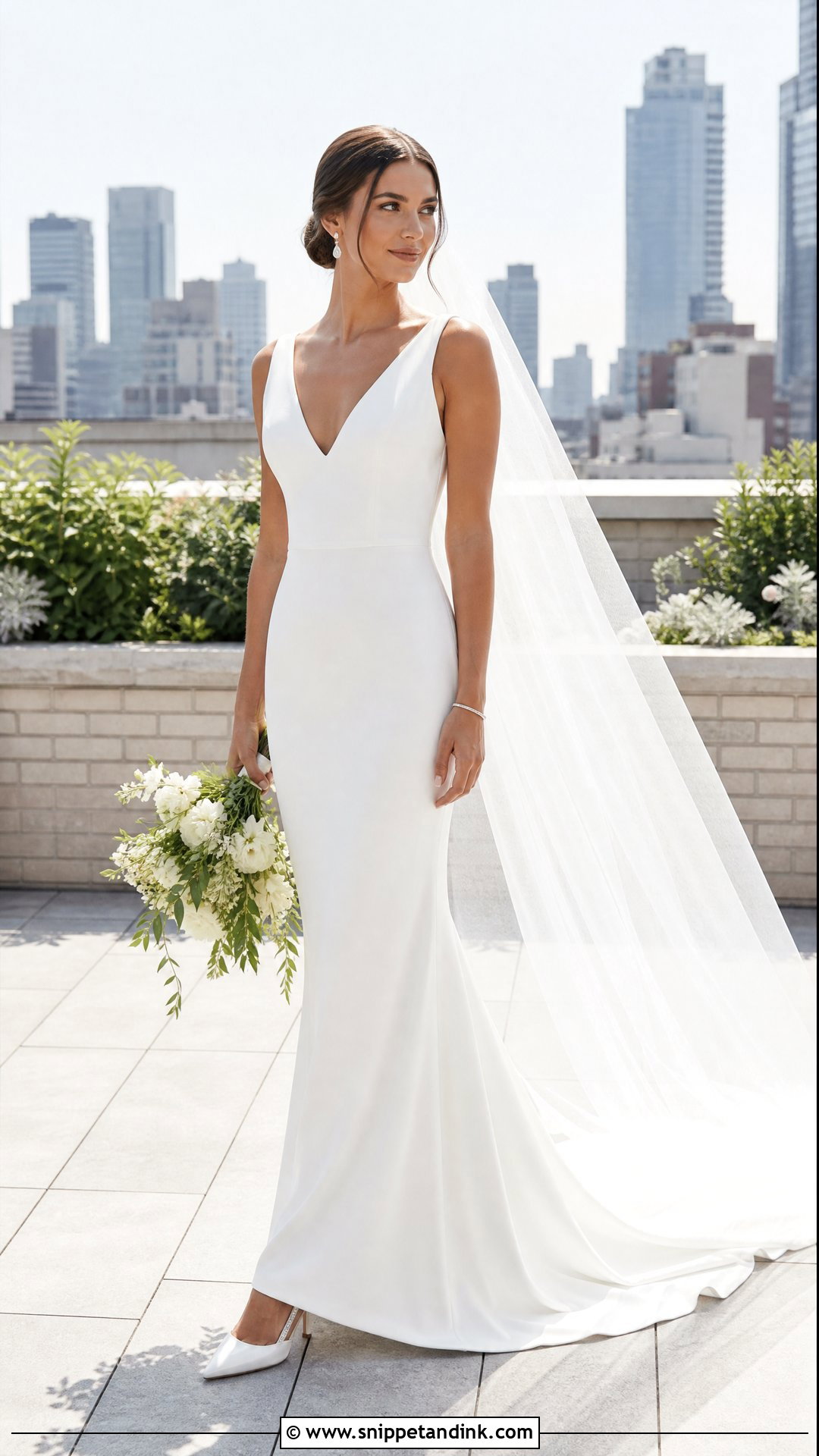
A V-neck lengthens the neck and balances how close a sheath sits through the body. A moderate V is comfortable; a deep one usually needs illusion mesh, which I’d always ask to see in daylight against your skin. Crepe looks smooth and modern, silk softer. Teardrop earrings, pointed slingbacks and a narrow bracelet suit it, with a centre-parted low bun. If the neckline is the statement, keep the veil plain and skip the necklace. A loose bunch of white flowers and greenery adds natural contrast. Indoor ceremonies, rooftops and destination events suit it.
6. High Neck Sheath Wedding Dress
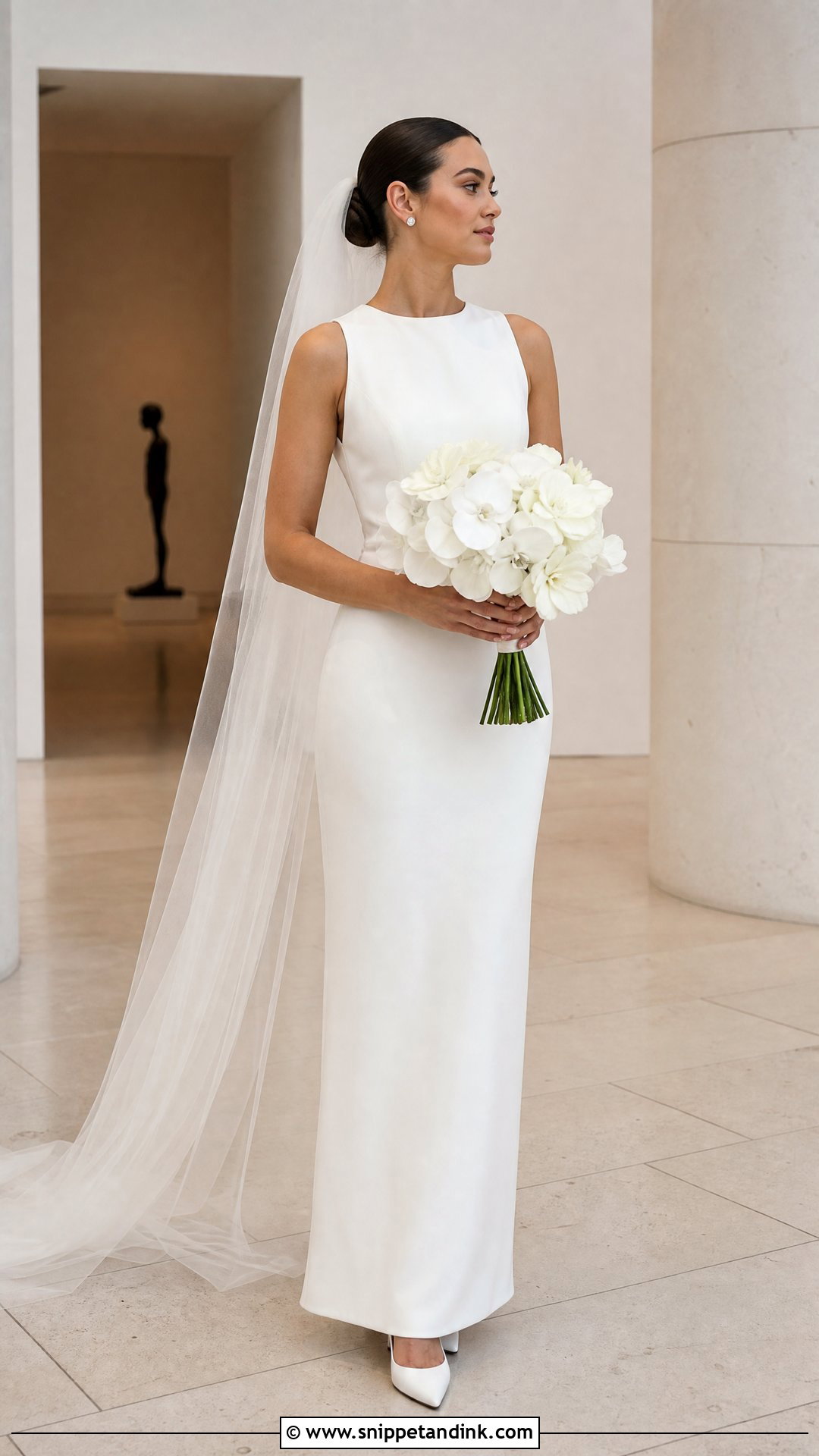
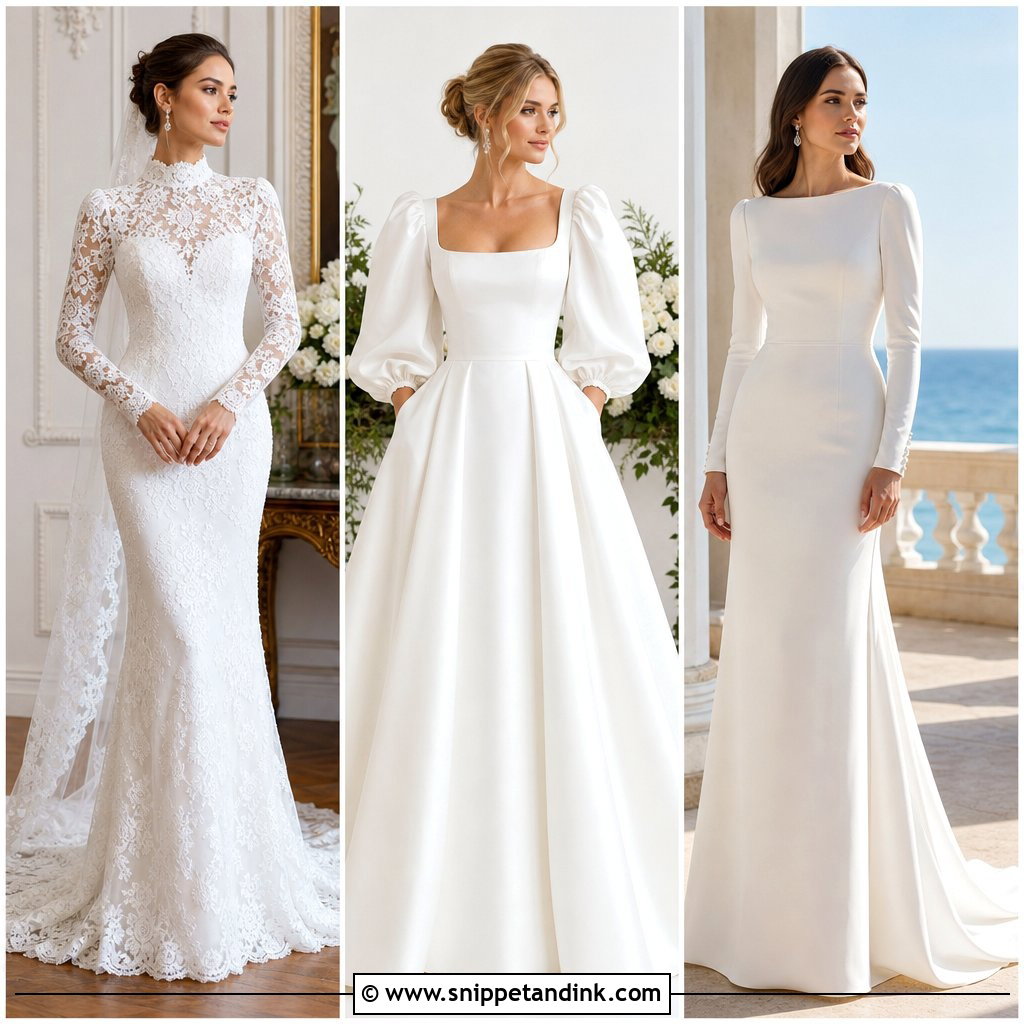
A high neck sheath wedding dress gives coverage while still looking current, as long as the armholes are cut clean and the waist is softly fitted. A bateau, mock or jewel neckline draws the eye to the face and shoulders. Matte crepe is the fabric I’d choose, because shiny fabric on a high neck can look stiff and formal. Polished studs, a sleek bun and pointed pumps are enough. Skip the necklace. Set a long veil beneath the bun for movement from behind. Formal daytime ceremonies and minimalist venues suit it well.
7. Off Shoulder Sheath Wedding Dress
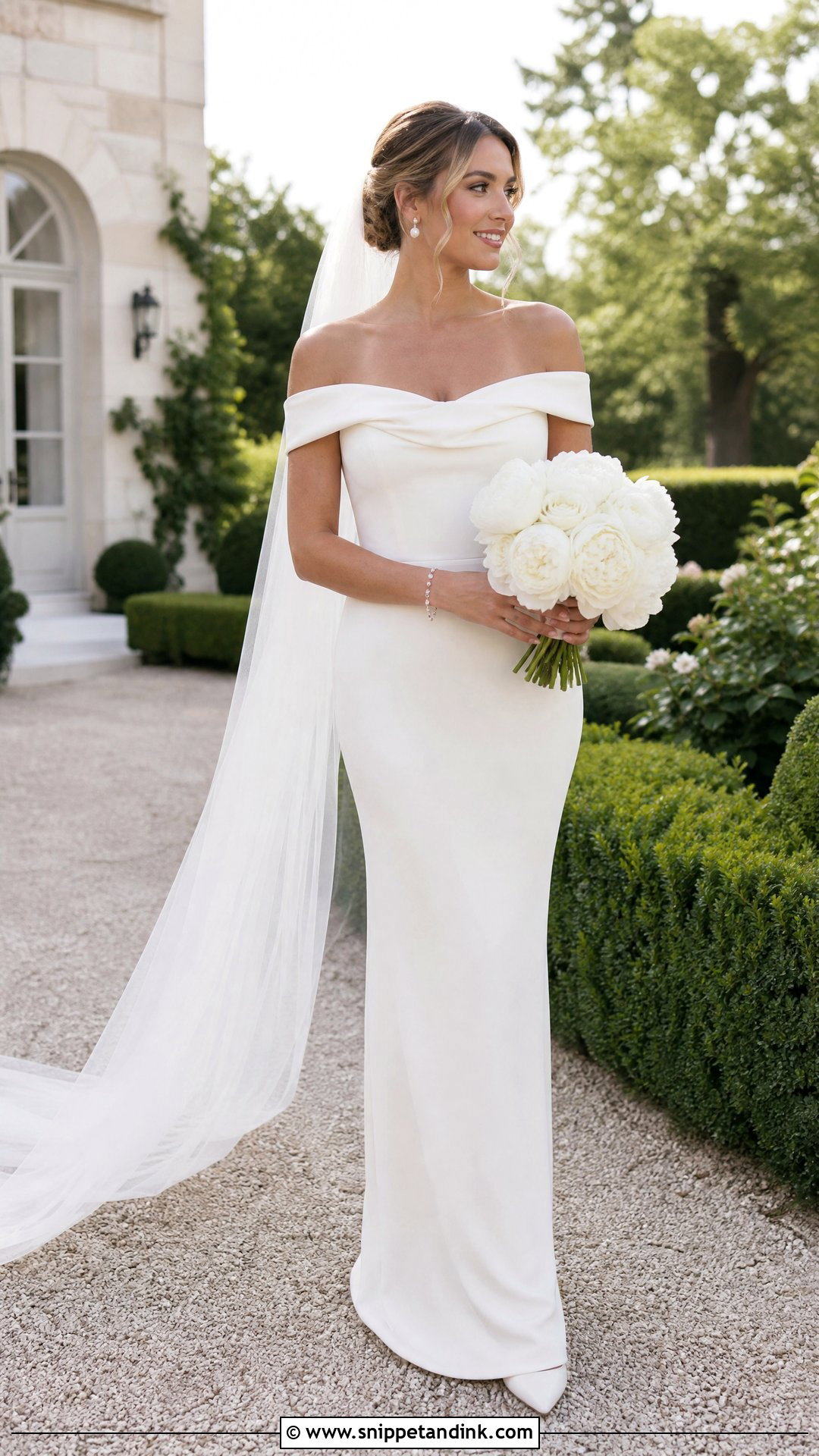
Off-shoulder sheaths fail in one way: the band creeps up the arm as you move. A folded satin band holds better than a draped crepe one, though crepe looks more relaxed. Test the fit by raising your arms, sitting and hugging during alterations, and ask for silicone grip tape inside the band if it travels. Pearl earrings, a fine bracelet and low pointed heels suit it, with a softly twisted updo and a plain chapel veil at the back of the head. White peonies or roses go well with its romantic shape. Gardens, estates and elegant indoor ceremonies all work.
8. One Shoulder Sheath Wedding Dress
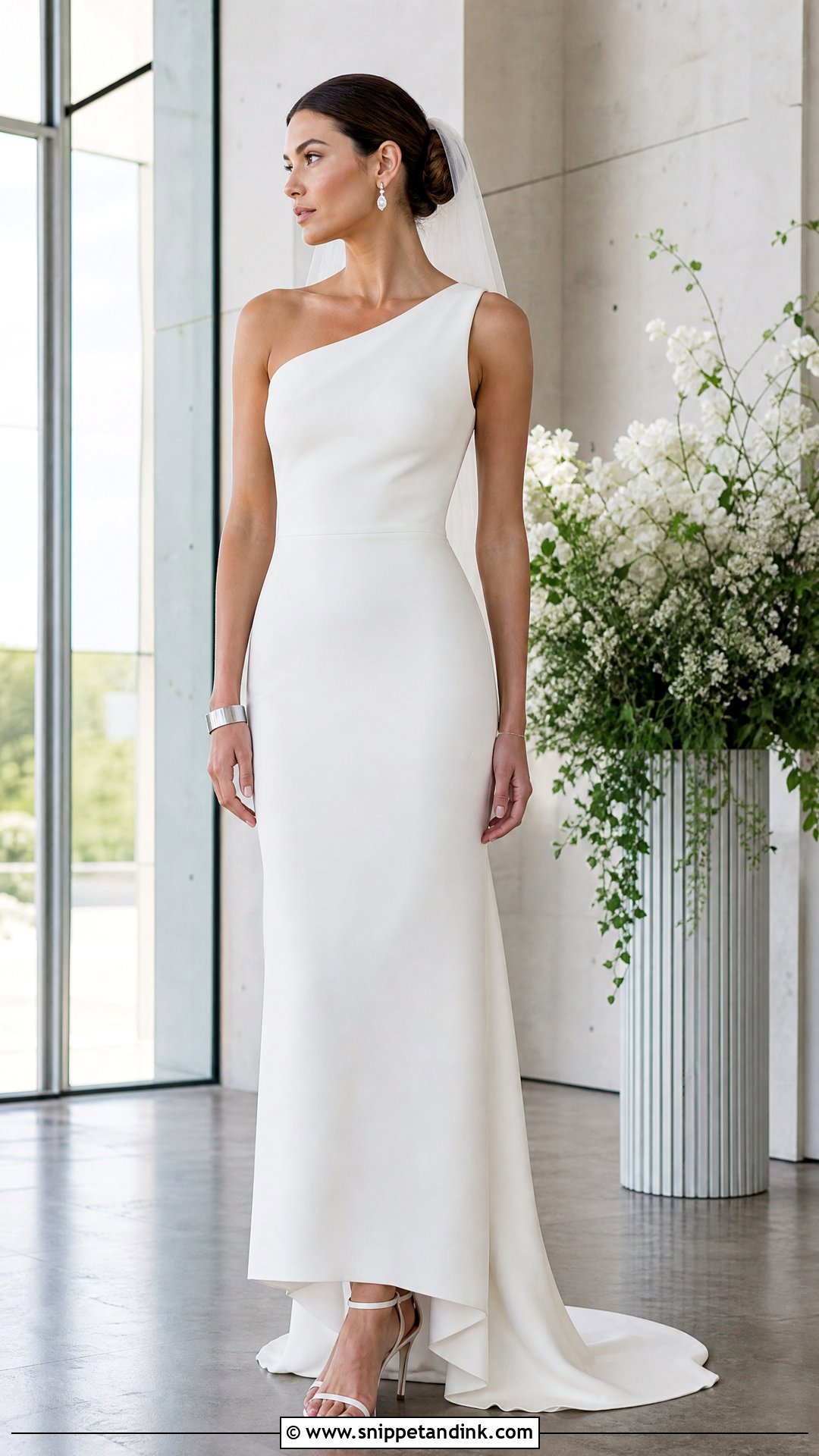
One bare shoulder makes a narrow gown distinctive without any lace or beading. Structured crepe or stretch satin supports the bodice and lets you move, while the skirt stays clean. Set a sleek low bun away from the covered shoulder. Small drops, a polished cuff and minimalist ankle-strap heels finish it; skip the necklace, which fights the diagonal line. A short veil or sculptural comb keeps it modern. I always check for rotation: a one-shoulder bodice tends to pull toward the bare side by evening unless it’s anchored with boning.
9. Cap Sleeve Sheath Wedding Dress
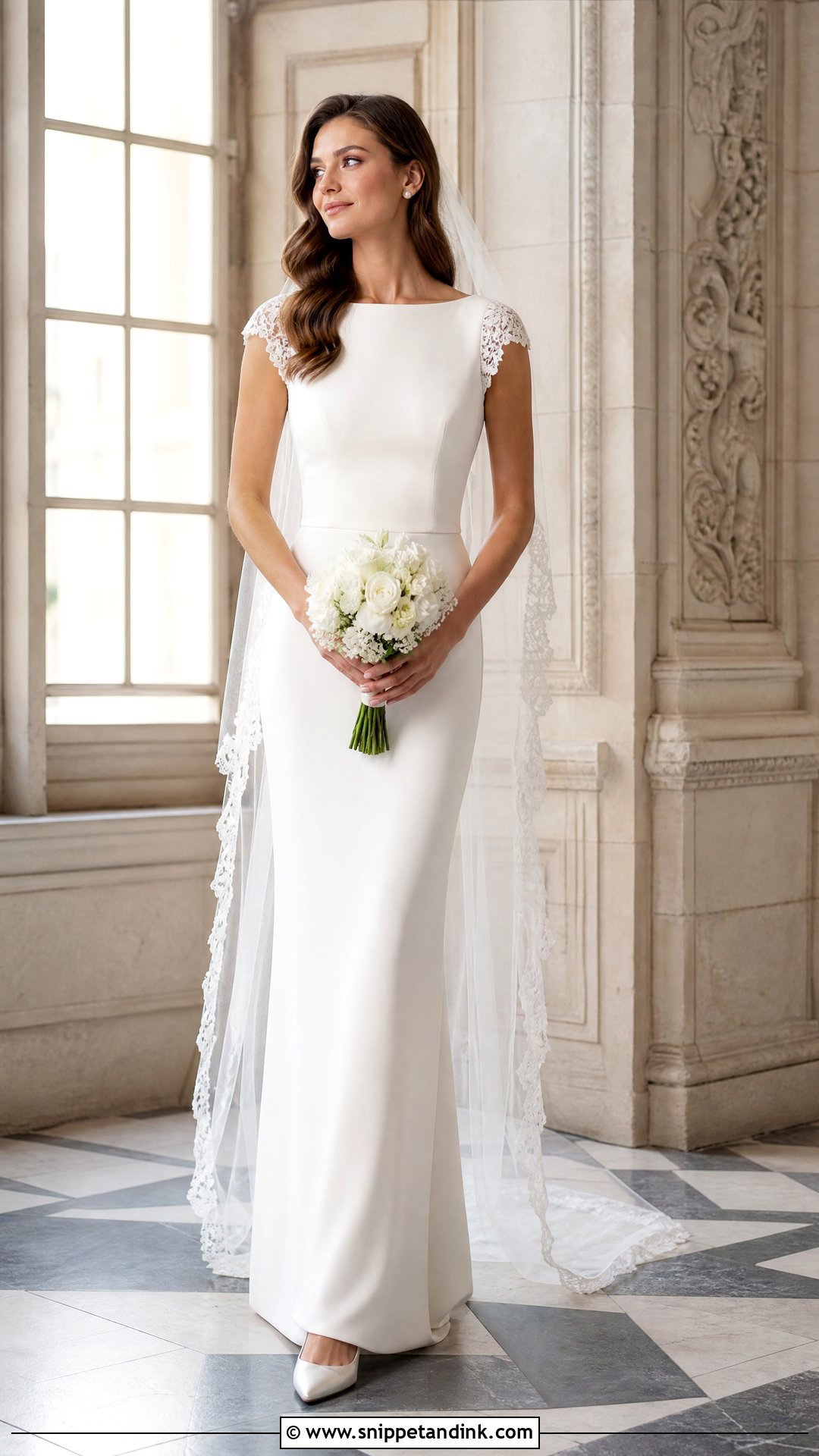
A cap sleeve sheath wedding dress gives the shoulders light cover and keeps the narrow profile. Crepe caps look minimal; delicate lace caps add texture. The sleeve edge should lie flat and let you lift your arms without pulling across the bodice, and that underarm point is where I pin first. Pearl studs, a fine chain bracelet and ivory kitten heels suit it, with a low bun or side-parted waves. A fingertip veil with a narrow lace edge echoes lace sleeves; a plain one goes with crepe. It suits daytime ceremonies and historic venues.
10. Long Sleeve Sheath Wedding Dress
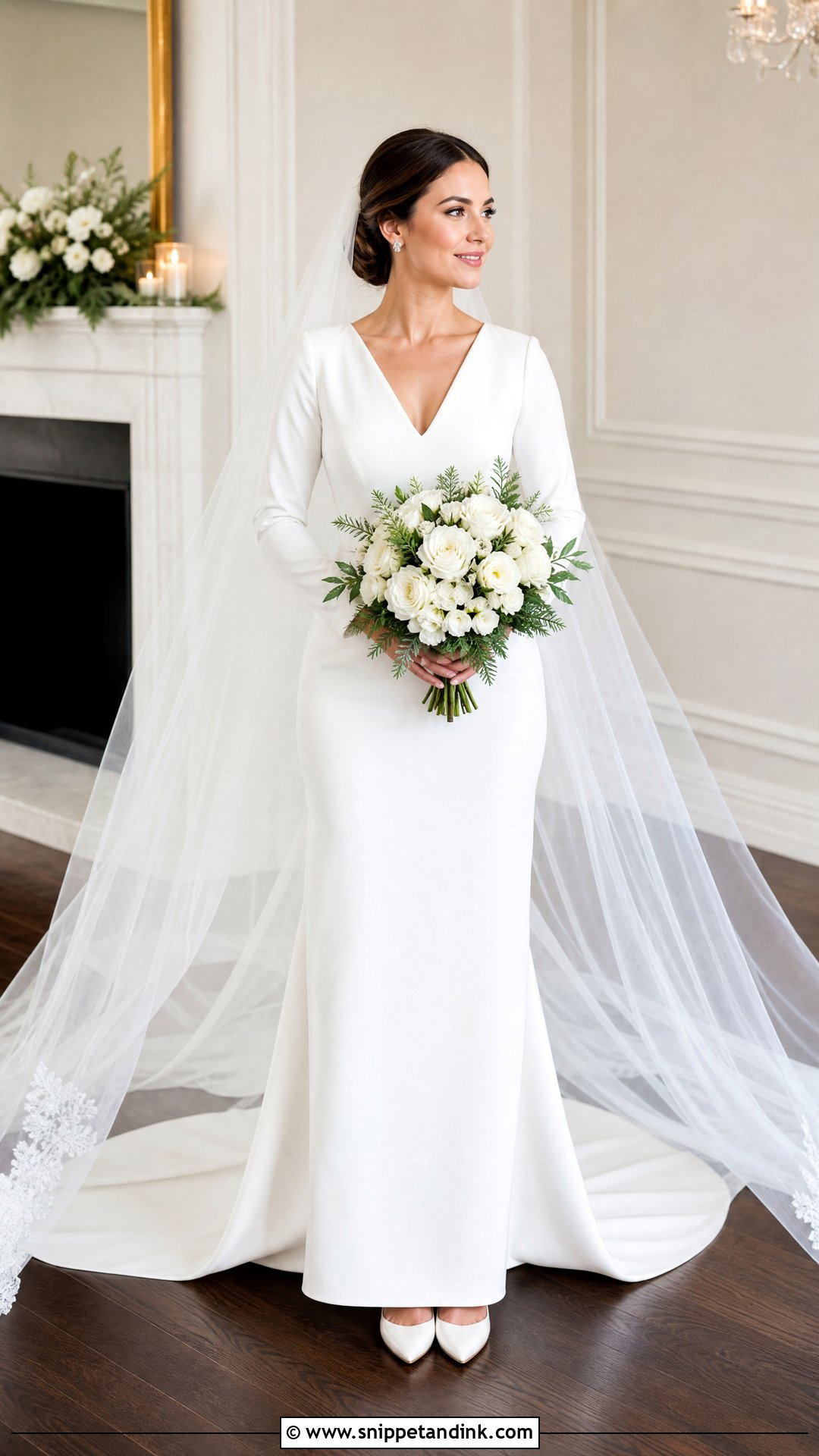
Long sleeves on a sheath can feel heavy if the fabric is wrong. Stretch crepe gives clean coverage and still lets you move, while sheer lace sleeves soften the fitted shape without hiding it. A bateau, scoop or modest V balances the extra fabric on the arms. Closed-toe pumps, crystal studs and a neat low chignon suit it. A cathedral veil adds formal drama behind the narrow skirt; a shoulder-length veil suits a smaller wedding. Carry a structured bouquet in white and pale green. It’s a practical choice for autumn and winter, and for formal city ceremonies.
11. Open Back Sheath Wedding Dress
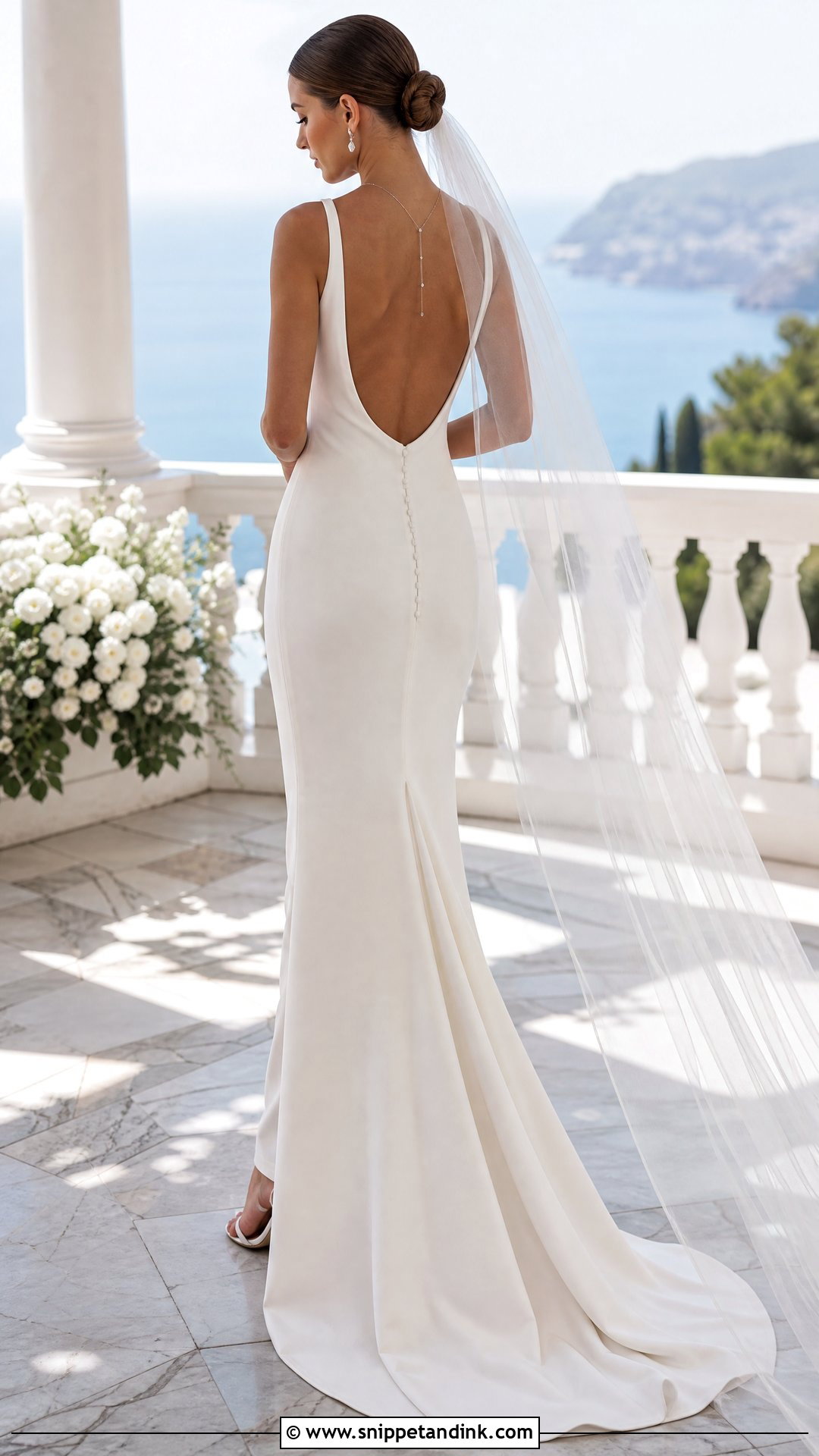
A plain front and an open back is a contrast that works especially well on a sheath, because the narrow skirt keeps the eye on the back as you walk away. A rounded, V or softly squared opening that stops above the waist is easier to support. Thin straps or supportive side panels keep the bodice in place. A smooth bun, delicate back-drop jewellery and slim ivory sandals suit it, with small earrings and a veil set beneath the hair. Plan the undergarments before alterations start, not after. Beaches and warm-weather destinations suit it.
12. Cowl Back Sheath Wedding Dress
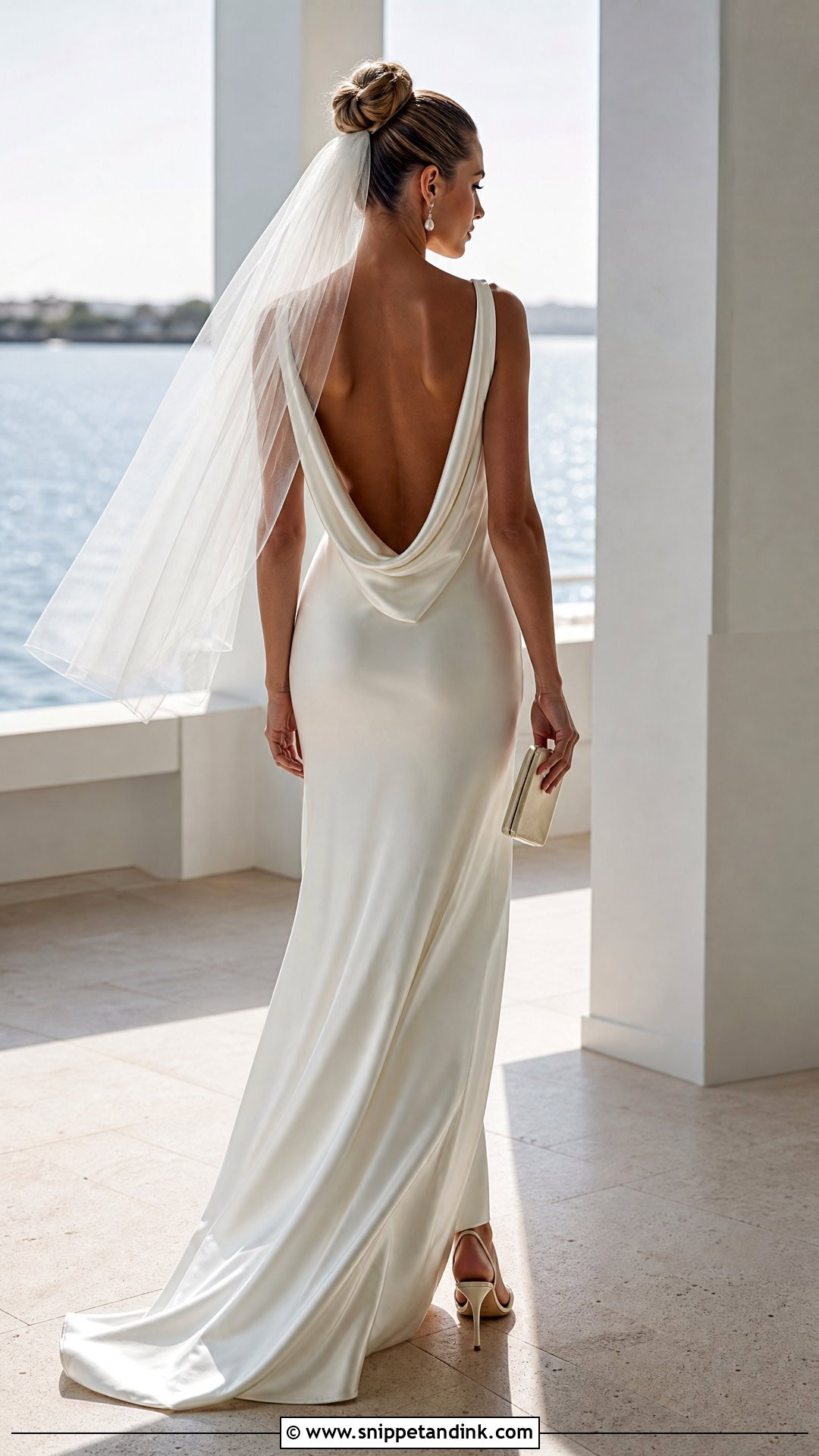
A cowl back sheath wedding dress adds drape at the back while the front stays quiet, with a boat neck, scoop or narrow straps. The cowl needs fluid satin to fall properly; stiff fabric just sticks out. Wear your hair up, high or low, so the folds show. Pearl drops, refined slingbacks and a small structured clutch suit it. A very sheer veil can be worn for the ceremony and removed to reveal the back. Avoid a necklace, which tangles with the drape. Watch the cowl when you bend: if it opens too far, a small hidden weight sewn inside holds it.
13. Lace Sheath Wedding Dress
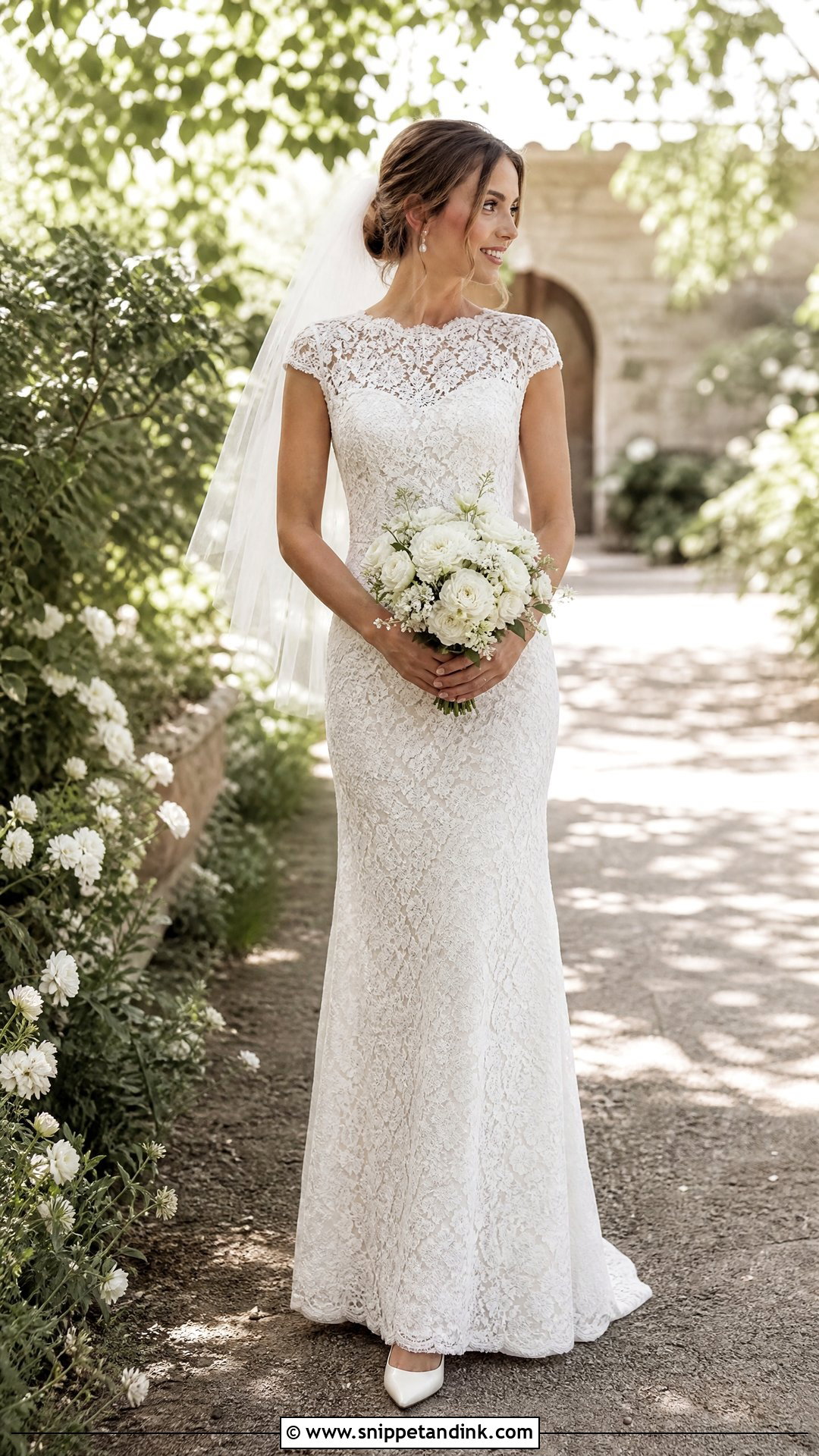
Lace brings warmth to a narrow silhouette. I’d choose one consistent lace pattern rather than mixed motifs, because several laces on a slim gown look busy fast. A lined bodice and skirt give full coverage; sheer caps or a lightly exposed back add contrast. Satin pointed pumps, pearl studs and a plain cut-edge veil suit it, with soft waves or a relaxed low bun. Keep the bouquet to one or two flower varieties. Lace hides small fitting flaws better than crepe or satin, which makes it a forgiving choice. Garden weddings and historic estates suit it.
14. Pearl Sheath Wedding Dress
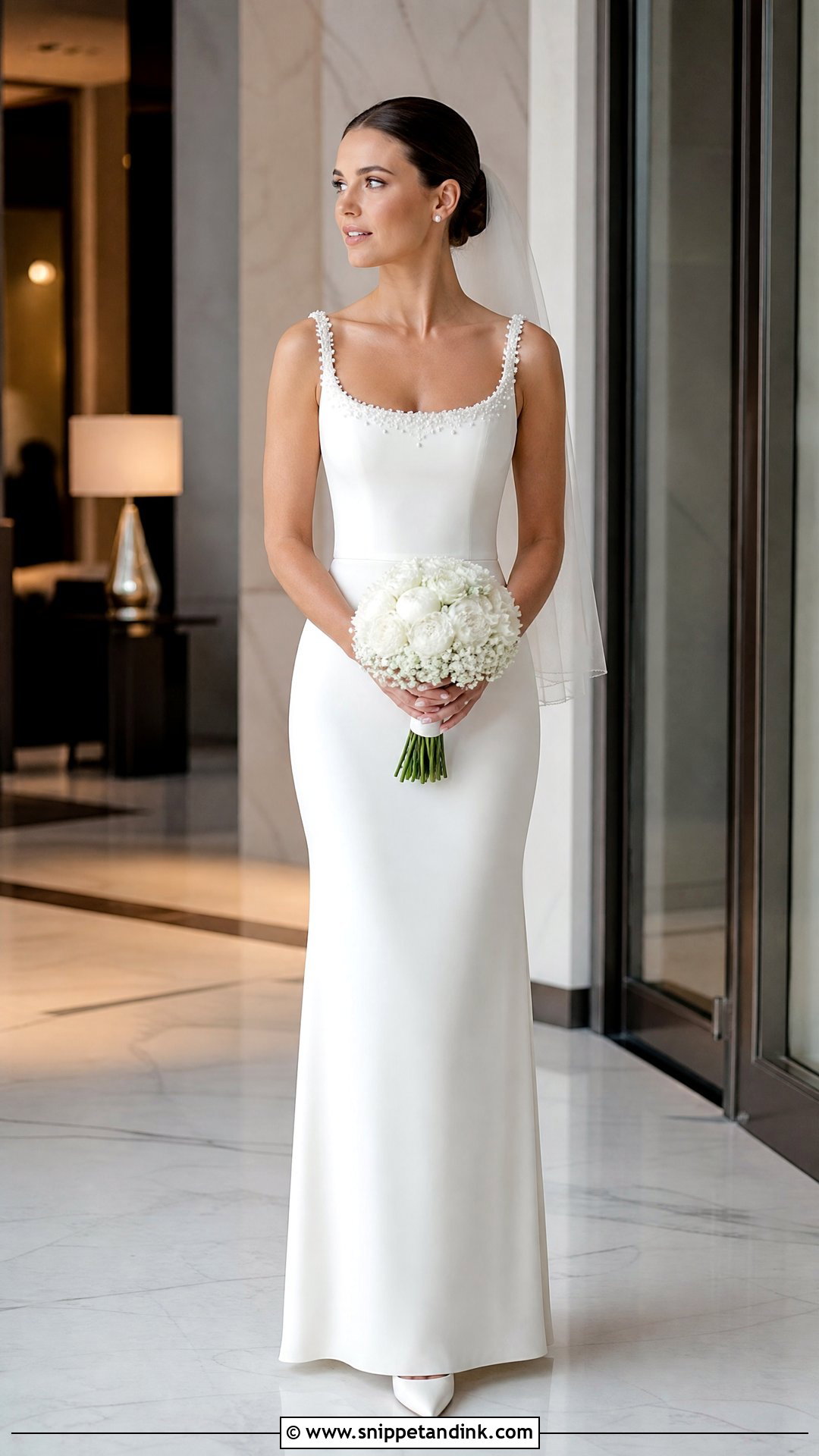
Scattered pearls give a sheath a little shine without crystals or sequins. Look for a pearl sheath wedding dress with pearls along the neckline, straps or back, not across the whole gown. Smooth crepe, satin or fine tulle makes a clean background. Choose simple pearl studs, or skip earrings if the neckline is already worked. White pointed heels, a sleek bun, a plain veil and a compact white bouquet keep it refined. Check how the pearls are attached; hand-sewn ones survive a hug, while glued pearls can pop off when the fabric flexes. Hotel weddings and evening ceremonies suit it.
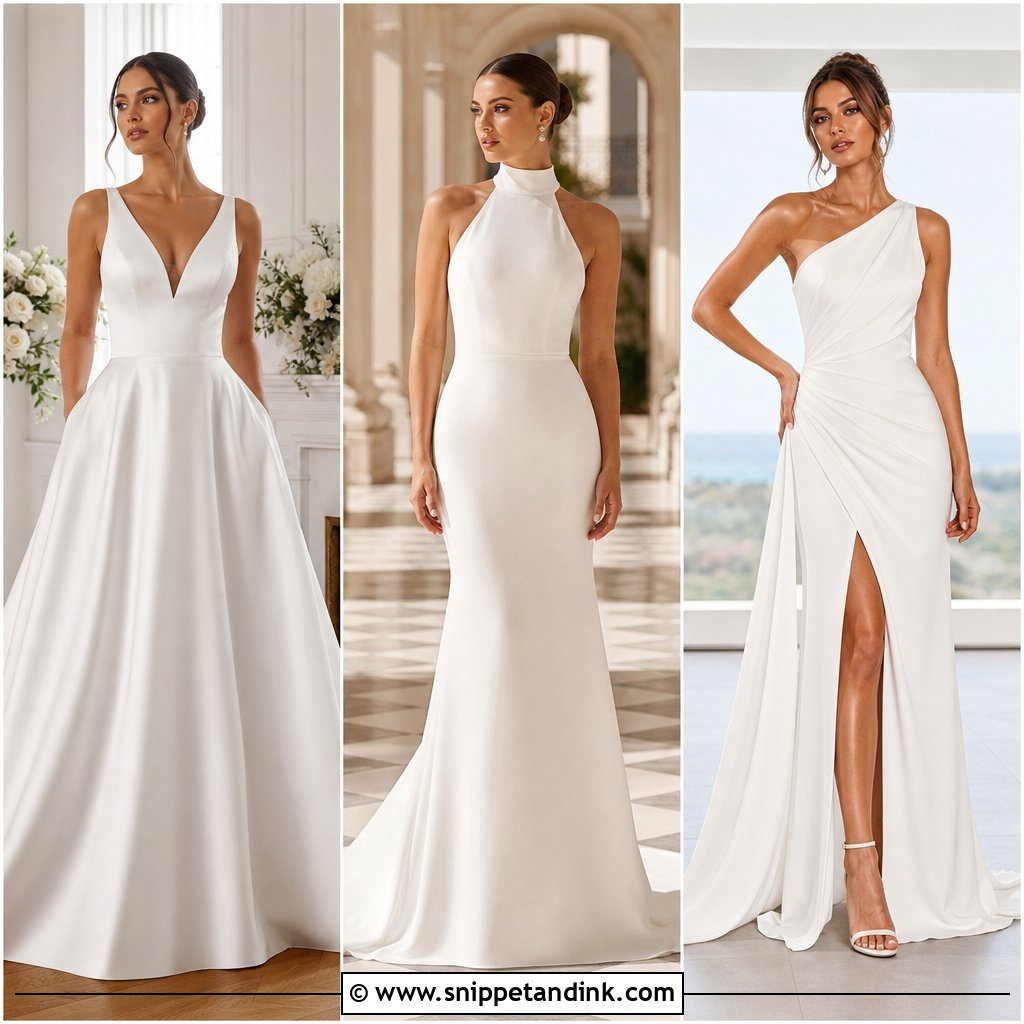

15. Bow Back Sheath Wedding Dress
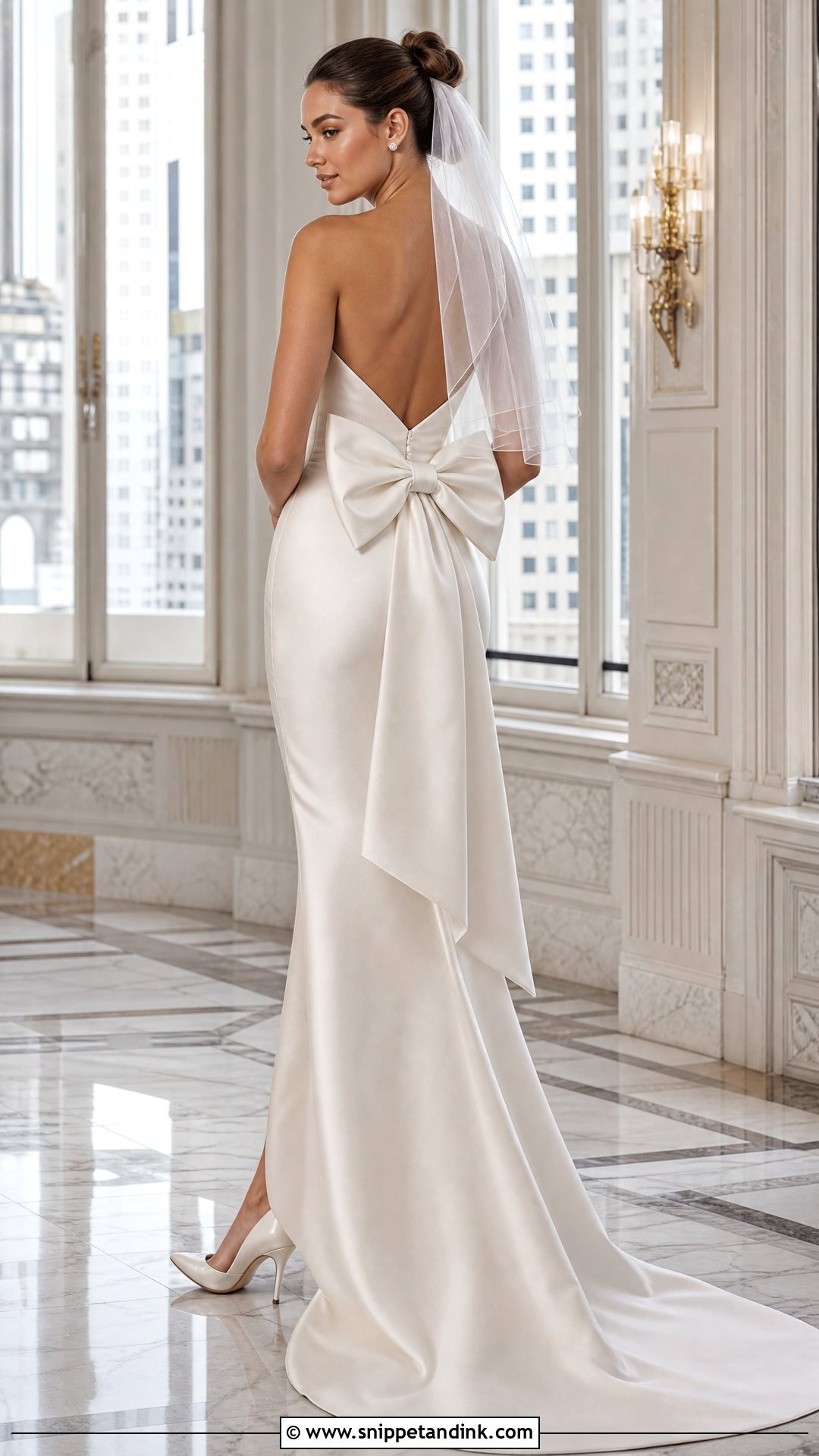
A bow at the back gives a sheath one clear statement. A flat tailored bow is subtle; a larger detachable one makes more impact for the ceremony. Satin and mikado hold a structured bow; crepe gives a softer one. Small studs, pointed pumps and a polished updo leave the back visible, and a short veil set above the bow stops the two details overlapping. A detachable bow can come off before the reception for a cleaner second look, which I’d recommend if you plan to sit through a long dinner, since big bows crush. Ballrooms and city venues suit it.
16. Side Slit Sheath Wedding Dress
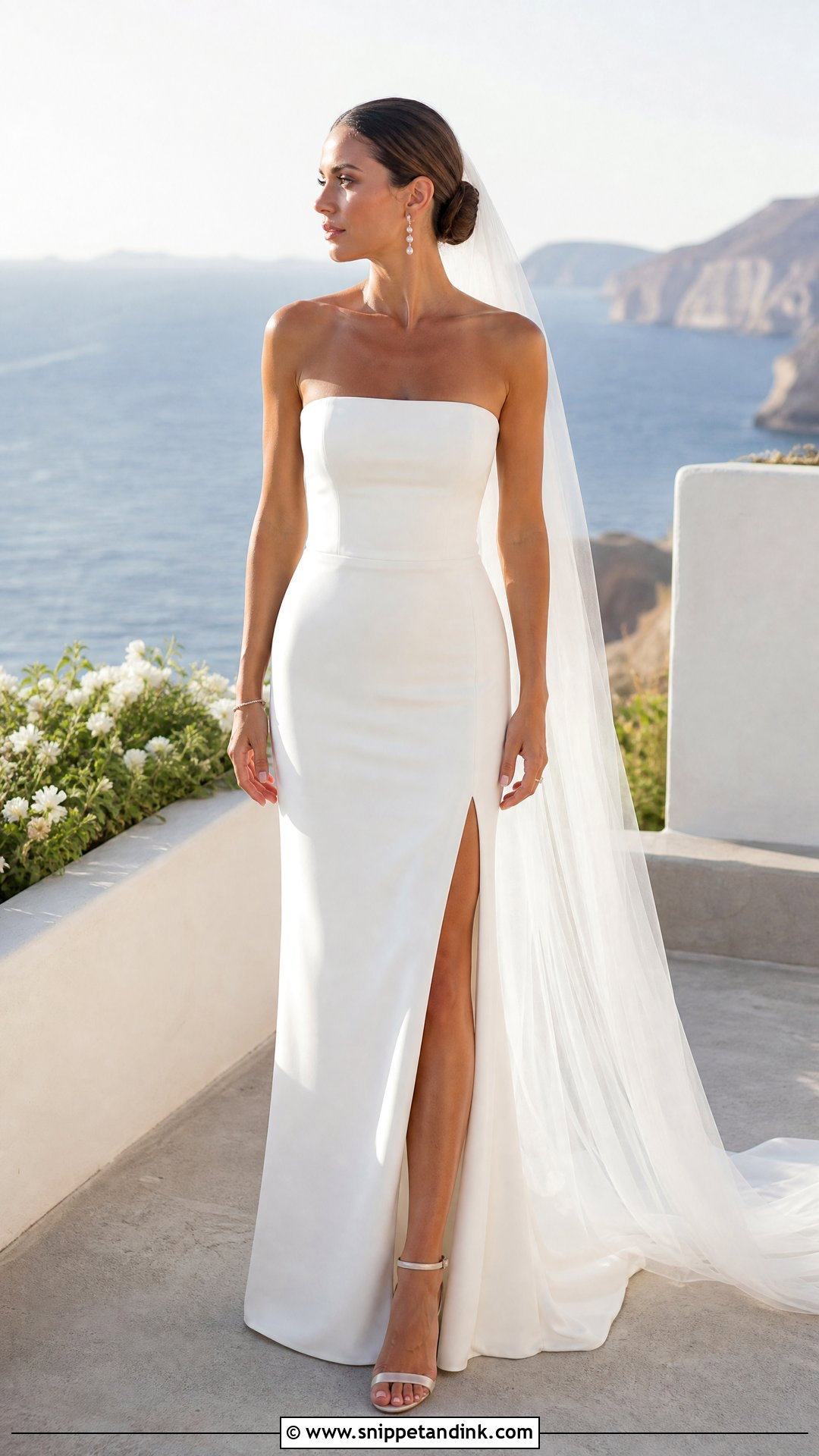
A slit is the most practical change you can make to a sheath, because it gives your legs room to stride. Choose a side slit sheath wedding dress with an opening that starts around the knee or lower thigh; higher than that, and it opens wide every time you sit. A straight, square or simple V neckline keeps the look clean. Your shoes will show, so pick refined pointed pumps or minimal ankle-strap sandals. Delicate earrings, a narrow bracelet and a smooth low bun suit it, along with a long plain veil. Rooftops, coastal venues and warm-weather ceremonies suit it.
17. Draped Waist Sheath Wedding Dress
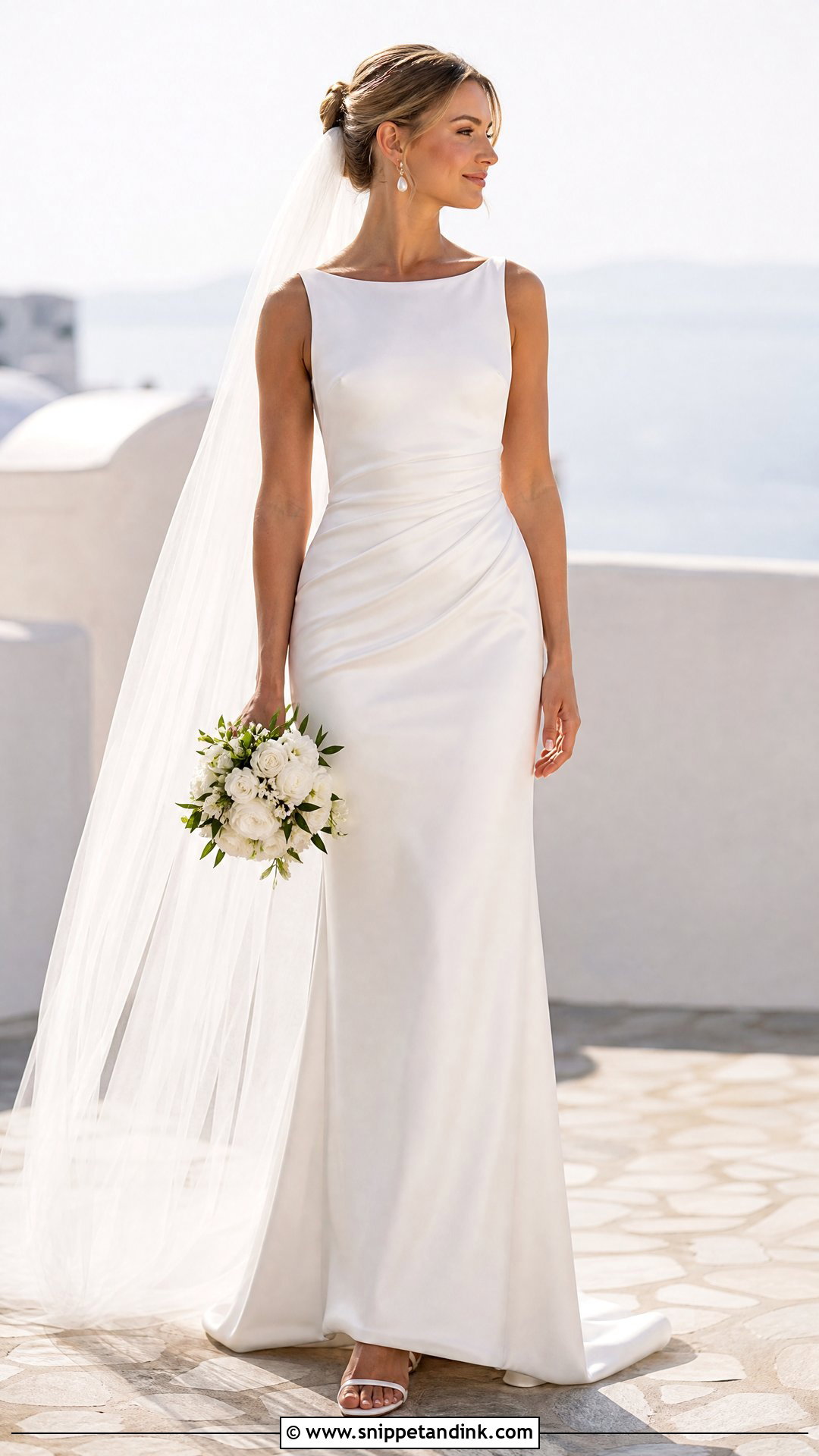
Gathering at the waist adds shape and makes the fabric more forgiving over the stomach. A draped waist sheath may have diagonal pleating, a gathered side seam or a subtle wrap bodice. Stretch crepe or matte satin lets the folds lie flat; stiffer fabrics bunch. Low slingbacks, pearl drops, a tidy updo and a plain fingertip veil keep it light. Skip the belt, which fights the drape. Check the pleats are stitched down rather than loose; loose drapes shift as you move and look different in every photo. It suits daytime formal weddings and relaxed modern venues.
18. Button Back Sheath Wedding Dress
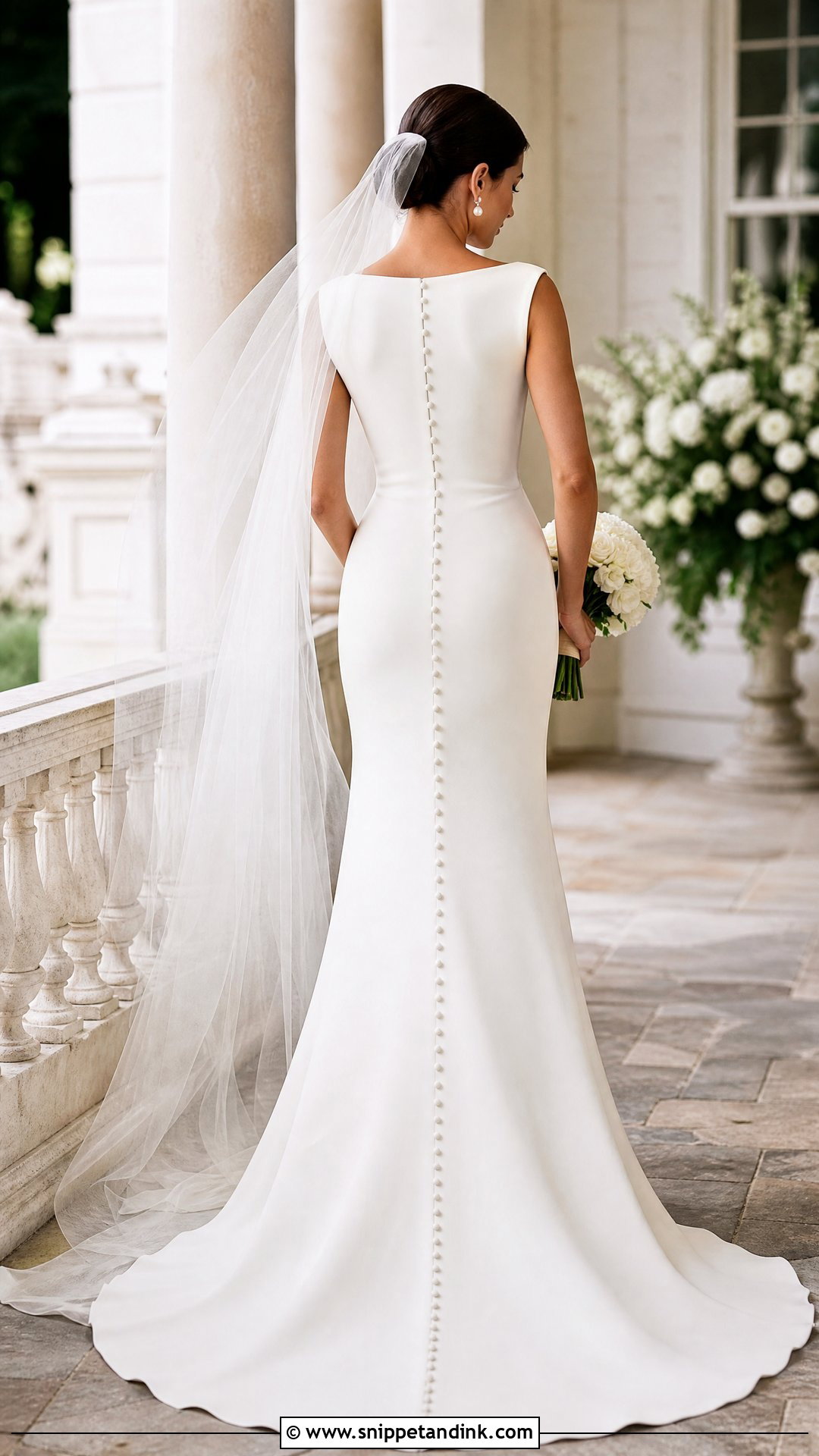
Covered buttons from neckline to waist, or all the way down the train, give a sheath a long vertical line from behind. Fabric-matched buttons look the most cohesive. Pearl earrings, pointed ivory shoes and a clean low bun that shows the upper back suit it, with a sheer veil so the buttons stay visible. Ask whether the buttons are decorative over a hidden zip or functional with loops. Functional ones take a long time to fasten, so ask for a button hook and allow at least fifteen minutes on the morning. Traditional venues and estates suit it.
19. Midi Sheath Wedding Dress
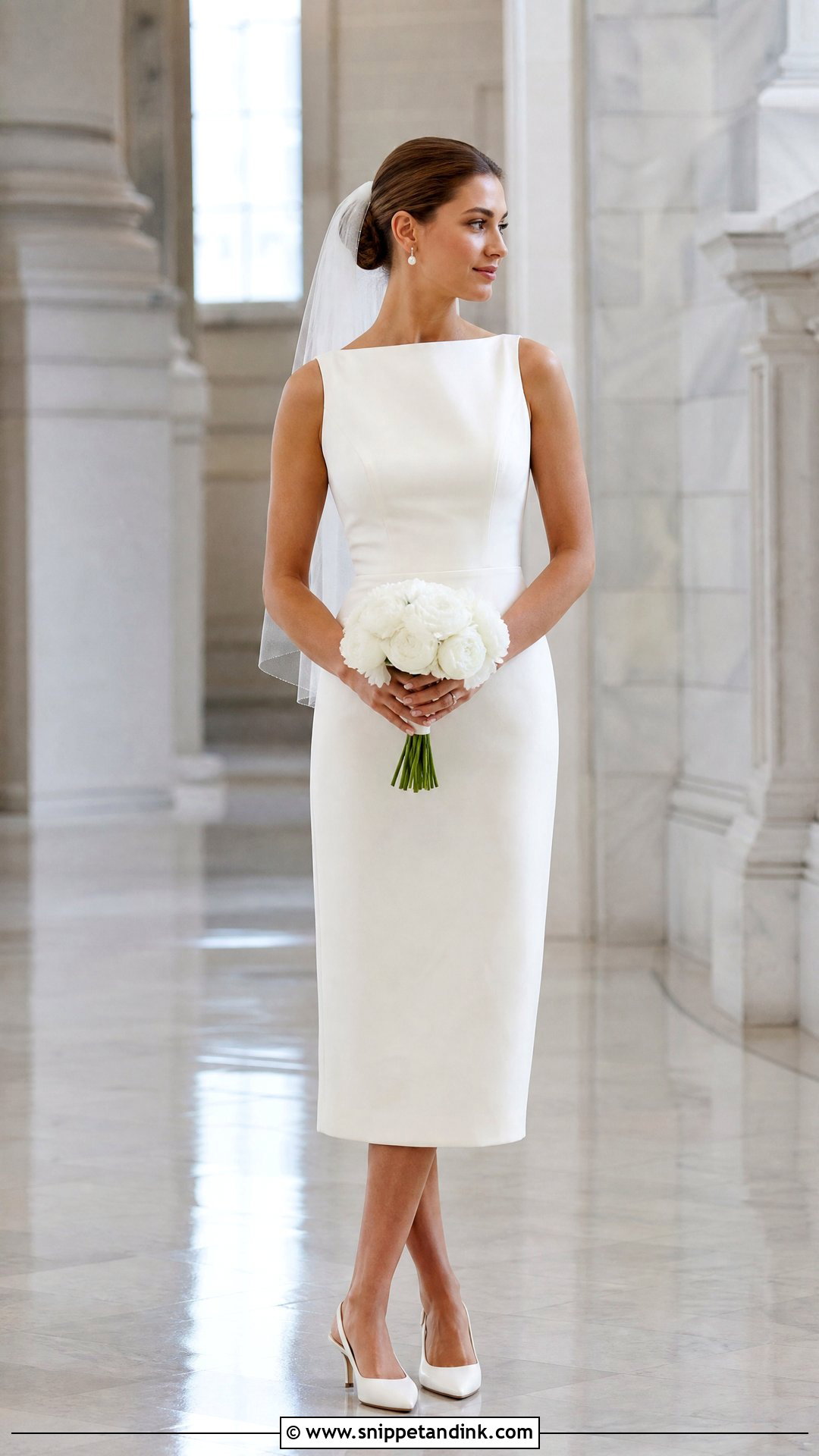
A midi sheath works for a courthouse ceremony, a small celebration or a reception change. The hem can fall below the knee or near the ankle. Structured crepe looks tailored; satin moves more softly. The shorter length puts your shoes on show, so choose slingbacks, low block heels or pointed flats with care. Pearl earrings, a compact bouquet and a short veil or bow accessory finish it, with a clean bun or soft waves. A narrow midi still restricts your stride, so I’d ask for a small back vent. Many brides wear it again for formal events afterwards.

20. Petite Sheath Wedding Dress
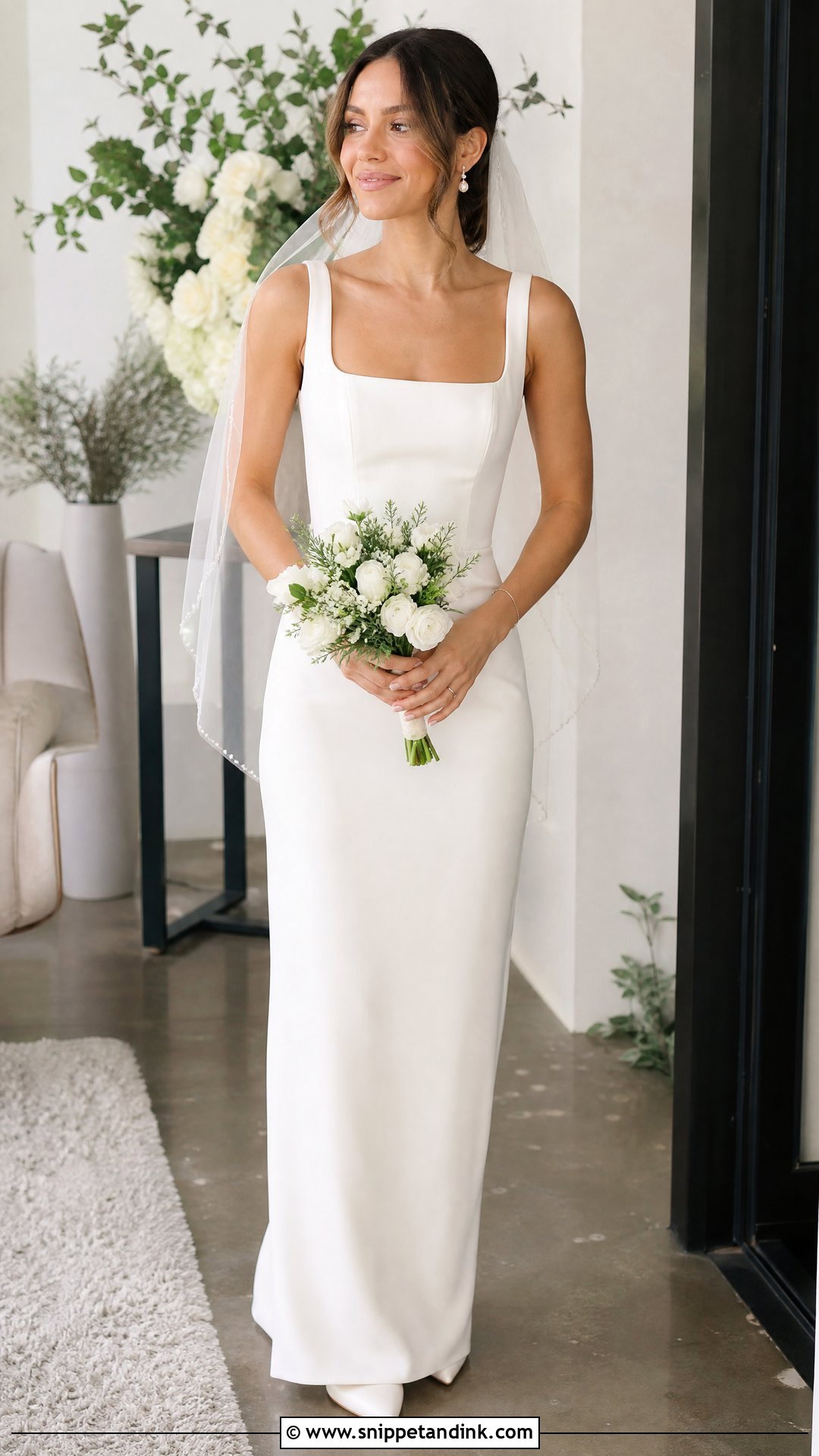
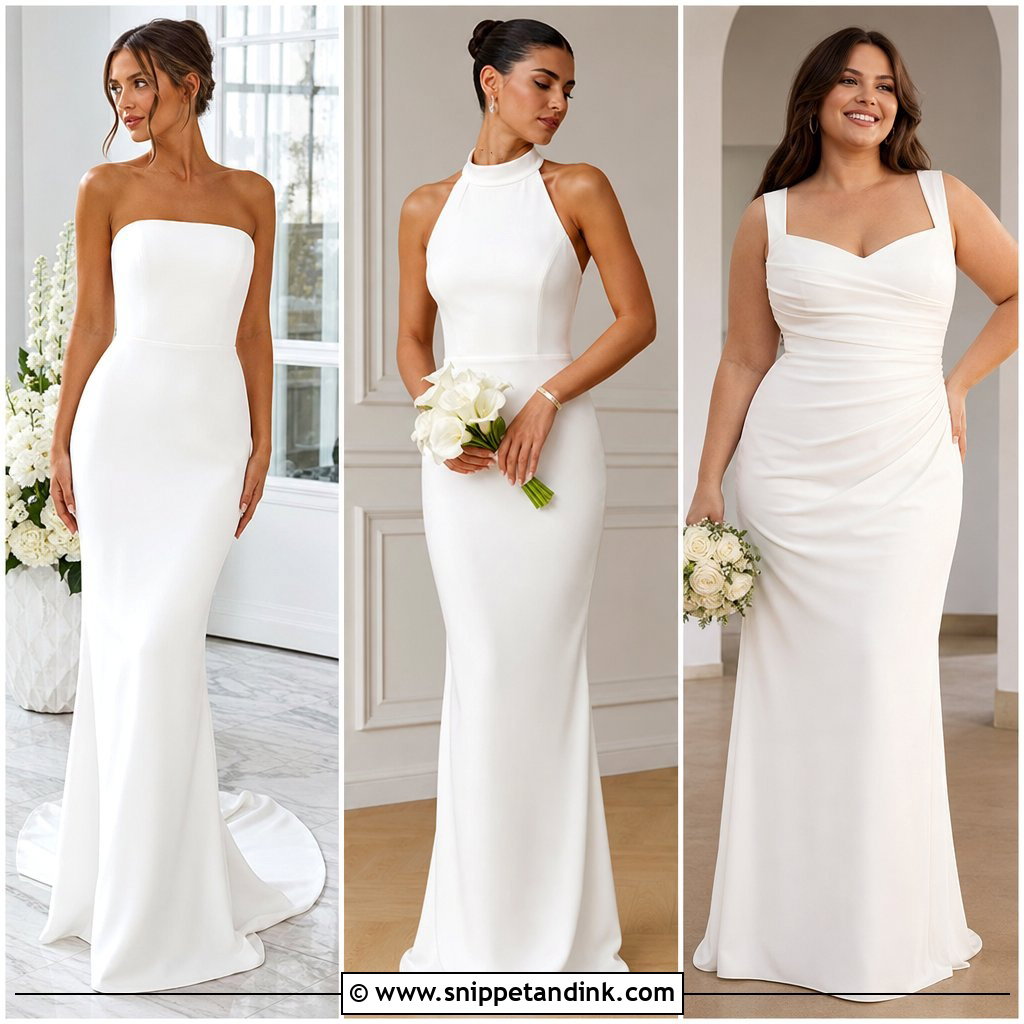
On a smaller frame, a sheath can make you look taller as long as its proportions were designed for your height. Look for a shorter bodice, higher strap placement, a raised waist position and a smaller train. A clean V, square or narrow scoop opens the upper body, and vertical seams lengthen the line. Pointed heels in ivory or a soft neutral, delicate earrings and a slim bracelet suit it. A fingertip veil is better than a wide one, and a compact bouquet keeps everything in scale. Proper hemming and torso alterations are what make a petite sheath look tailored for you rather than simply shortened.
Walking, Sitting and Dancing in a Narrow Skirt
A sheath has a set stride length, and you’ll feel it the first time you take stairs. The skirt’s width at the knee decides how far your legs can move. I always measure a bride’s stride in her wedding shoes at the first fitting, because every fix is easier before the hem is cut.
- A small back vent or kick pleat adds a few inches of stride without changing the front view.
- A side slit gives the most freedom; keep it at the knee or lower thigh for a wedding.
- Check the chair height at the venue. Narrow skirts pull tight across the thighs on low lounge seating.
- A train on a sheath needs a bustle too. A simple French bustle with one to three points works on most narrow trains.
Shapewear Under a Sheath: Usually Less Than You Think
Brides tend to reach for the firmest shapewear they can find, and under a close fabric that often backfires. Firm control garments create a hard edge where they stop, at the thigh or under the bust, and that edge shows through crepe and satin far more than the soft curve it was meant to hide. A light, smoothing slip or a high-waisted brief with a bonded hem usually reads better.
Whatever you choose, wear it to every fitting, since the seamstress marks the dress to your shape in it. Changing shapewear after the final fitting can throw the whole gown off by a size.
A Narrow Gown Lives or Dies at the Fitting
A minimal sheath can be as memorable as any embellished gown. Start with a neckline and fabric that suit your comfort, venue and season, then put your effort into tailoring, because a close silhouette shows every fitting detail. Shoes, jewellery, hair, flowers and the veil should all support the dress. Satin gives shine, crepe gives modern structure and lace adds texture. Long sleeves, an open back, a midi hem or a statement bow can all work. Get the fit right and a sheath stays comfortable from the ceremony to the last dance.
You'll Like These Ideas:





Leave a Reply