
Classic and simple aren’t the same as safe. The plainest dresses I fit are often the most demanding, because clean lines leave nowhere for a loose seam or a wrong fabric to hide. Minimal bridal covers a lot of ground: fluid silk slips, structured satin ball gowns, tailored crepe columns and sharp short dresses. Sculptural construction, soft draping, square necklines and ’90s-style slips are all part of it right now. What holds any of them together is fit, the freedom to move and accessories that know when to stop. Below are twenty complete looks for formal ballrooms, gardens, courthouses and the coast, each with the details I’d check before you buy.
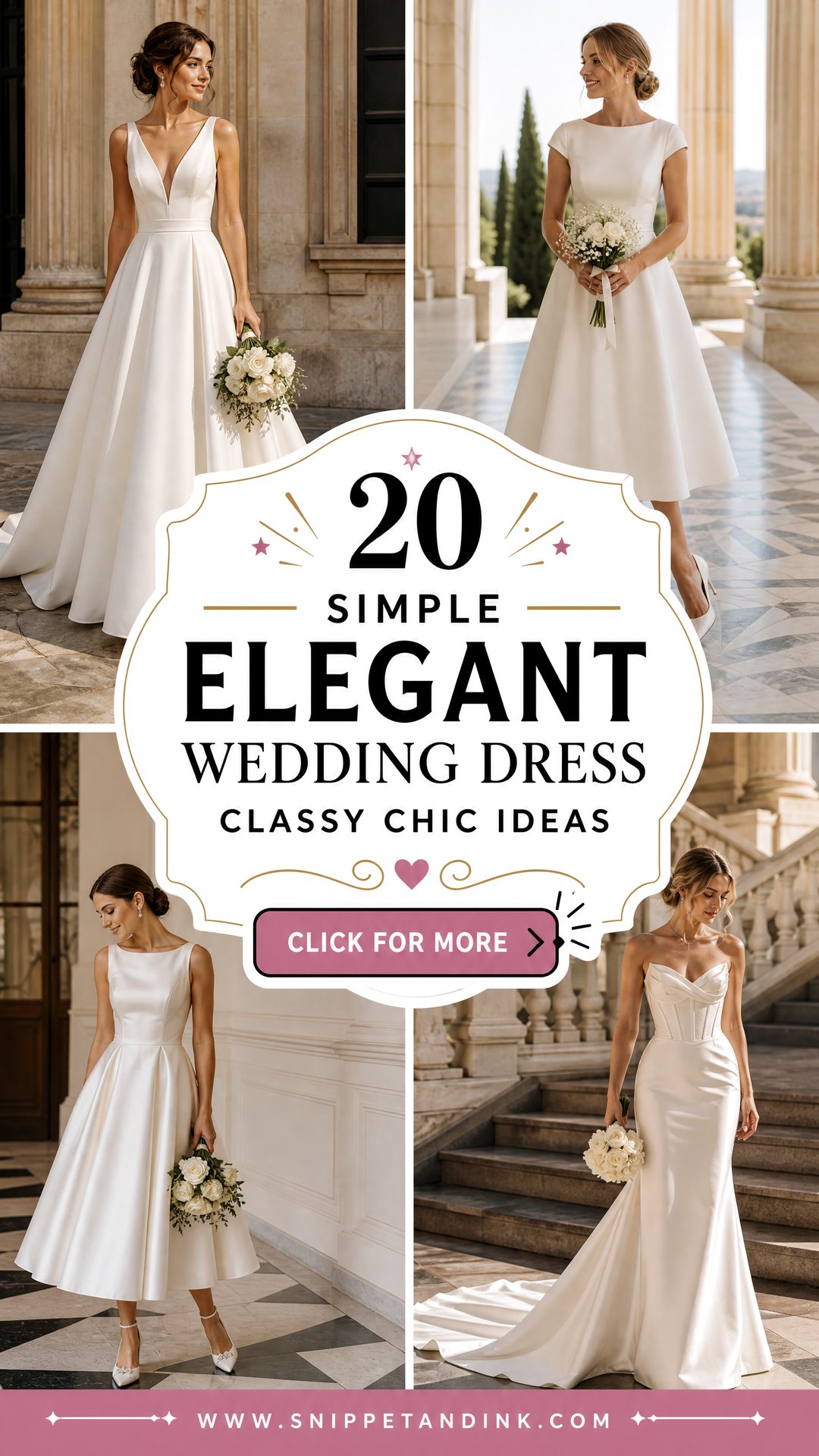
Mikado, Crepe, Satin or Silk? Handle the Fabric Before the Shape
When a dress has no lace or beading, the fabric becomes the design. Brides often fall for a silhouette in a photo and then feel disappointed in person because the material behaves differently than they imagined. These are the fabrics that come up again and again in the looks below, and what each one actually does on the body.
- Mikado is heavy, firm and slightly lustrous. It holds sculpted shapes, folded necklines and full skirts, but it is warm and weighty for a summer outdoor ceremony.
- Crepe is matte and drapes close to the body, especially in stretch blends. It shrugs off most wrinkles, yet it shows shapewear edges and can snag on rough stems or jewelry.
- Satin ranges from structured to fluid depending on weight. It reflects light, creases where you sit and marks if water touches it.
- Silk charmeuse is the fluid fabric of slip dresses. It feels cool and moves well, and it is the most delicate of the group.
- Chiffon and organza are sheer and used in layers. Chiffon is soft and floaty; organza is crisp and holds a puff or a bow.
Ask the shop for swatches if they have them, and look at each one against your skin by a window. I also crush a corner in my hand for a few seconds; how it recovers tells you how the skirt will look after a seated dinner.
1. Simple Satin A-Line Wedding Dress
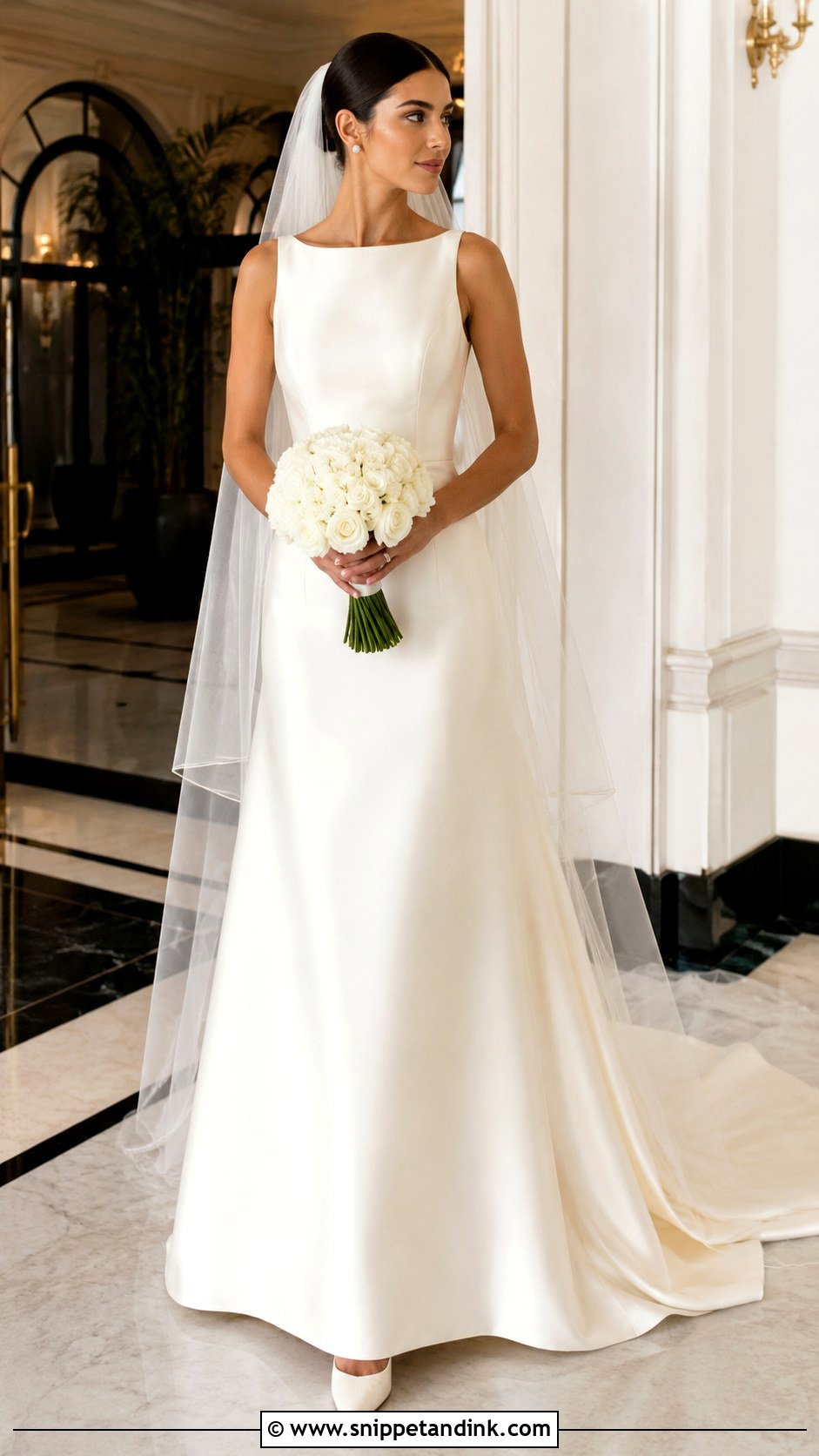
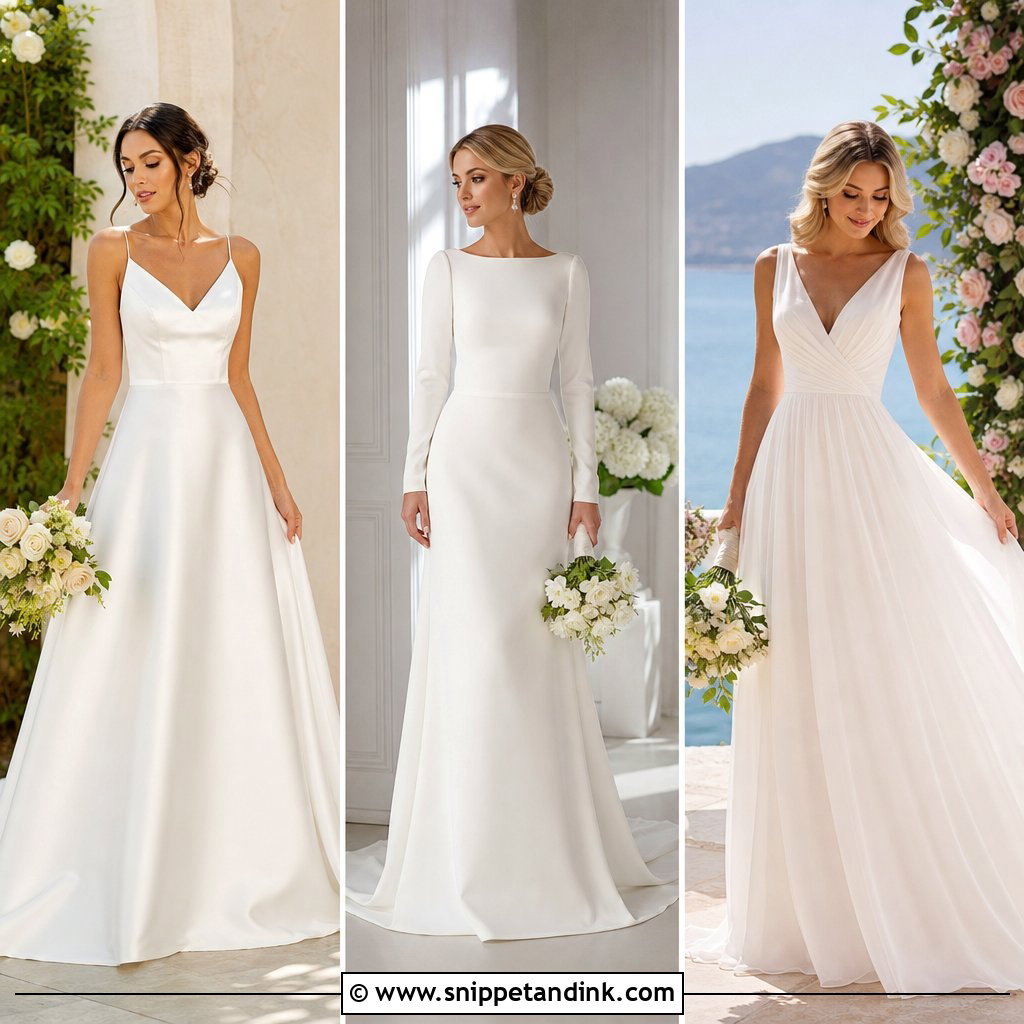
Satin catches light, so the shade of white matters more on a satin A-line than on almost any other dress. Ivory and soft white read warm, bright white reads cool, and I hold both against the bride’s face in daylight before we decide, because the wrong one can make skin look grey in photos. The gown itself is straightforward: fitted bodice, gently defined waist, a smooth skirt and a modest train. Pointed ivory pumps, pearl studs and a raw-edge fingertip veil complete it, with a small structured bag for lipstick and tissues. Keep the bouquet tonal, white roses, ranunculus or calla lilies. Ballrooms, hotels and classic gardens all suit it, and good alterations will make the satin lie flat at every seam.
2. Square Neck Crepe Wedding Dress
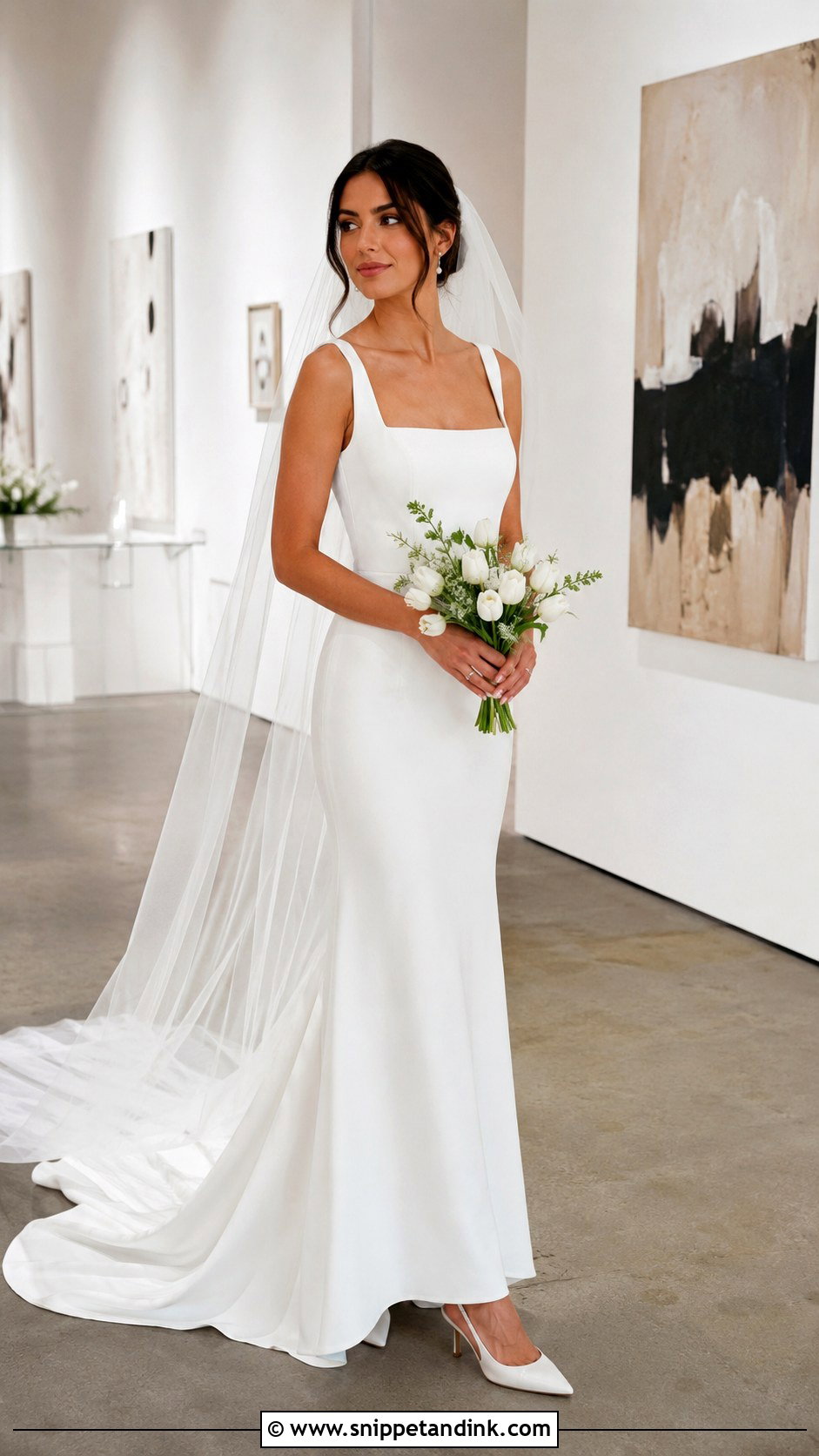
A square neckline on crepe looks crisp and balanced, and wide straps give it real support. On a fuller bust, though, the straight top edge can flatten or pull downward, so I make sure there is boning or a firm inner band behind it. A fitted column or a gentle fit-and-flare with little seaming keeps it clean, and a stretch lining makes a long day far more comfortable. Pearl drop earrings, a sleek low bun and pointed slingbacks finish it, with a cathedral veil adding drama without lace. A loose bunch of white tulips and greenery softens the geometry. The square neck gives structure with no decoration at all, which is why it suits galleries, lofts, modern venues and formal city weddings.
3. Strapless Mikado Ball Gown Wedding Dress
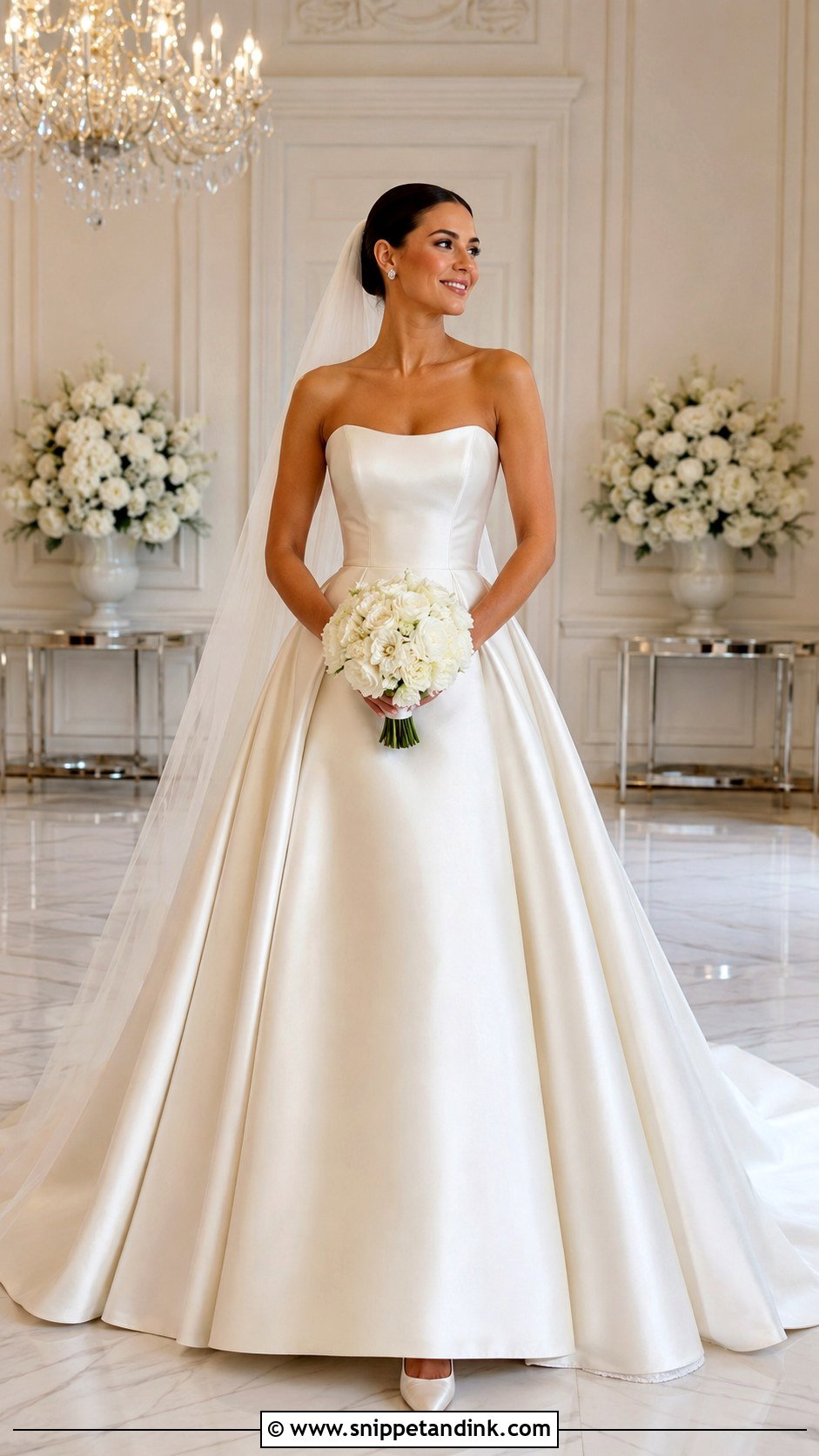
Want a grand silhouette with no beading, lace or sparkle? Mikado does it on its own. The firm fabric builds a smooth bodice, a sharp waist and a skirt that holds its architecture in every photo. It does have one weakness: a full mikado skirt flattens and creases if you sit on it in a car, so I tell brides to spread the skirt out behind them on the drive and have a steamer at the venue. Choose a straight or gently curved strapless neckline with internal structure that stays secure when you sit and dance. Satin pumps, small diamond or crystal studs and a long plain veil complete it, and concealed pockets are a smart addition. A compact bouquet and a polished chignon keep attention on the neckline. Formal indoor venues and evening receptions are its home.
4. Cowl Neck Silk Slip Wedding Dress
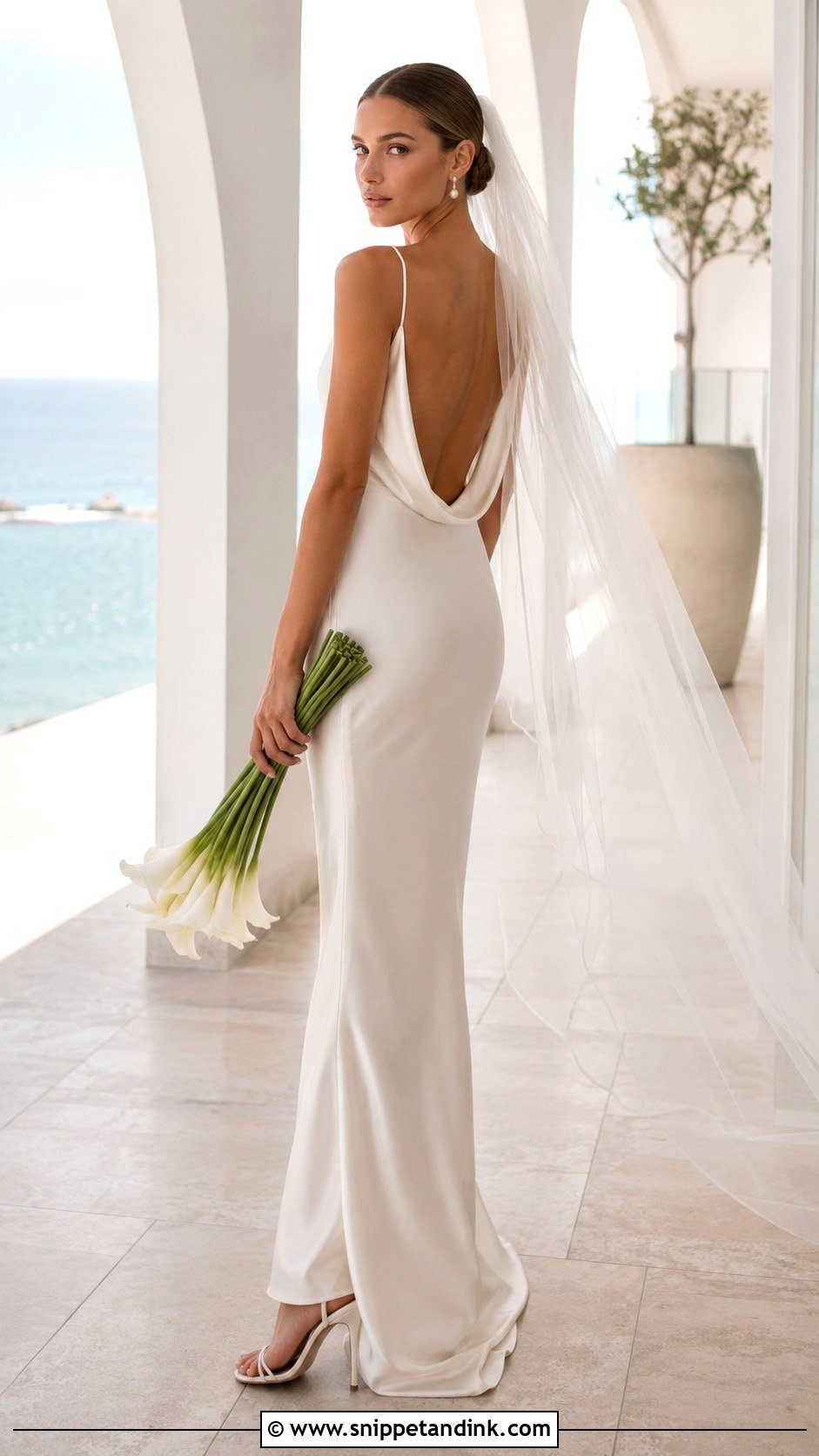
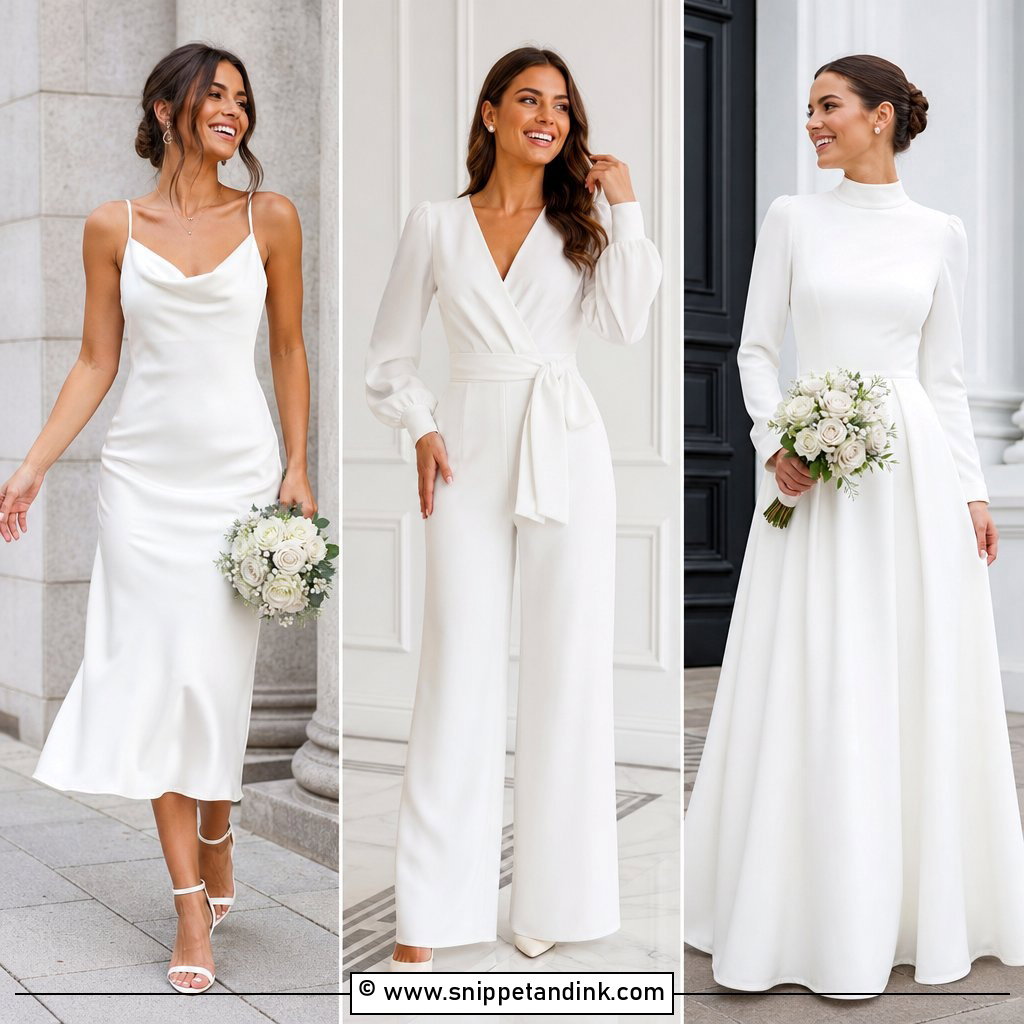
A cowl-neck slip wedding dress in real silk moves with every step and needs no corset or volume. Silk has two habits I warn brides about. Water leaves spots, and in heat, perspiration can mark the fabric under the arms and across the back, so a summer bride in silk should keep cool and carry blotting cloths. Choose substantial silk or satin that drapes rather than clings, and consider a low cowl back. Delicate strappy heels, a slim tennis bracelet and small pearl earrings suit it, with a sheer chapel veil and white calla lilies. Smooth, edge-free undergarments and professional hemming matter because fluid fabric shows the smallest fit problem. Coastal venues, garden weddings, restaurants and destination celebrations fit its relaxed ’90s ease.
5. Long Sleeve Crepe Wedding Dress
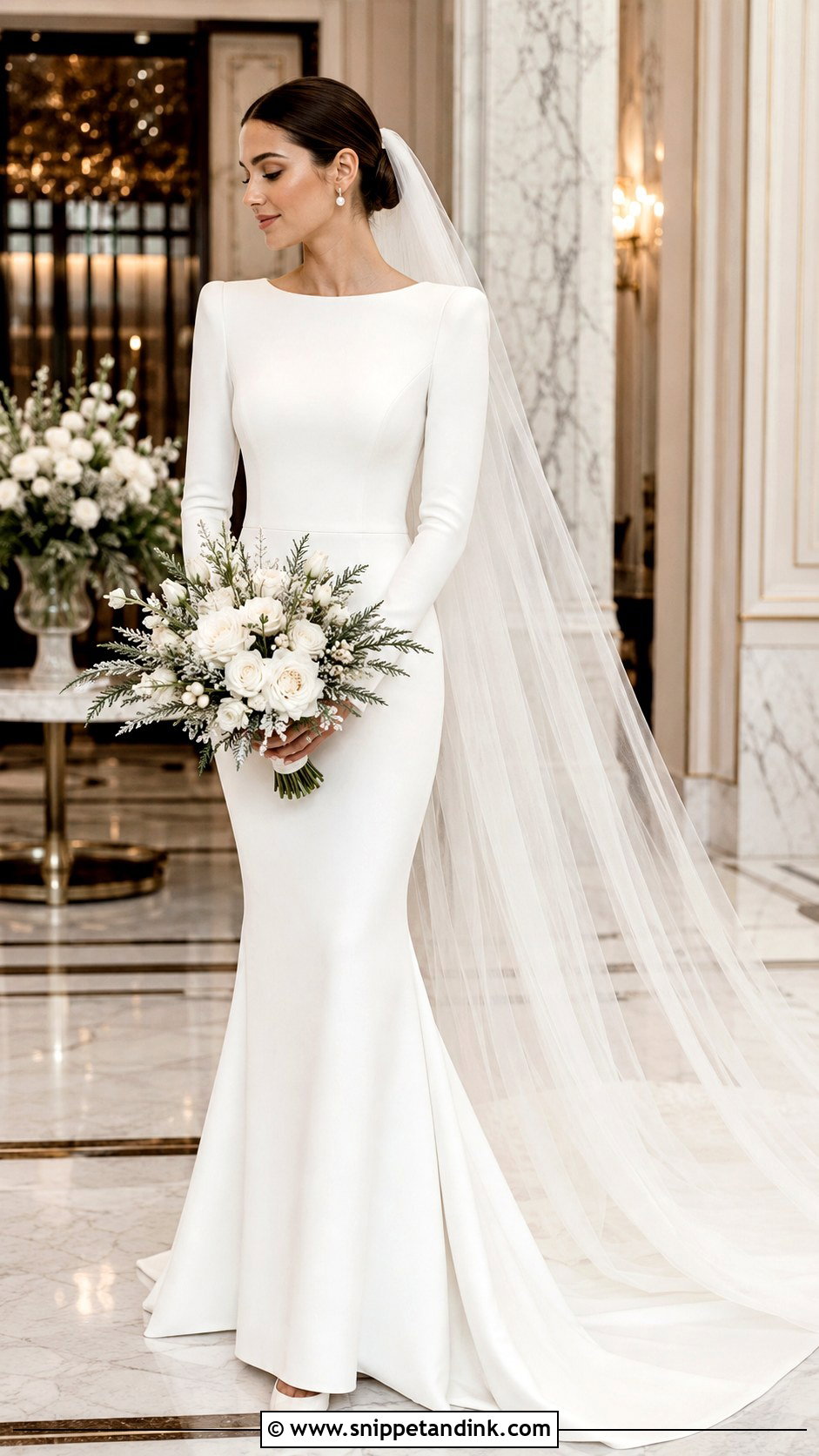
Long sleeves in crepe keep a cold-weather bride warm without visual weight. A fitted bodice, a defined waist and a straight or softly flared skirt provide coverage, and clean sleeves with a slightly structured shoulder or slim cuff keep it minimal. Closed-toe pumps, pearl earrings and a smooth cathedral veil finish the look; a sleek bun or low ponytail keeps the neckline visible. For outdoor portraits, a tailored white coat helps, and I’d make sure its hem either matches the dress length or sits well above it, since two hems ending near each other look accidental. Crepe gives soft structure and moves easily, which suits winter weddings, historic buildings, city hotels and indoor ceremonies.
6. One Shoulder Draped Wedding Dress
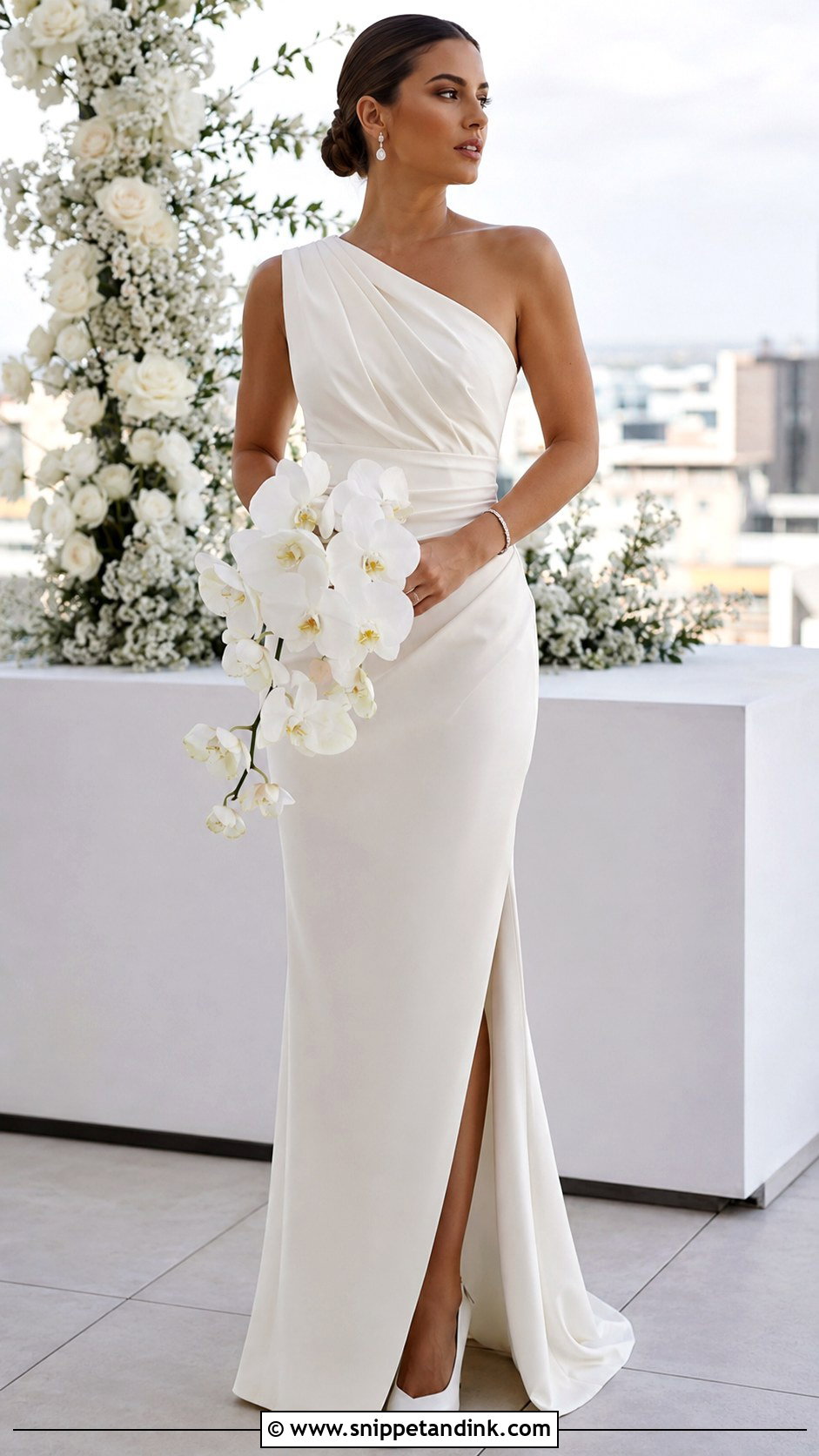
Draping across the bodice is where an asymmetric gown either looks expensive or bulky. Gathers in matte crepe or fluid satin should lie flat and fan toward the shoulder; in a fabric that’s too stiff, they bunch at the waist. A fitted column skirt keeps the shape sophisticated, and a side slit makes walking easier, though I check its height on a staircase before anyone commits. Simple drop earrings, pointed pumps and a slim metallic bracelet on the bare arm are enough, with no necklace. White orchids or anthuriums suit the modern line, and a short shoulder veil under a polished bun replaces a traditional one. Rooftops, galleries, modern hotels and formal city weddings are the right settings.
7. High Neck Halter Wedding Dress
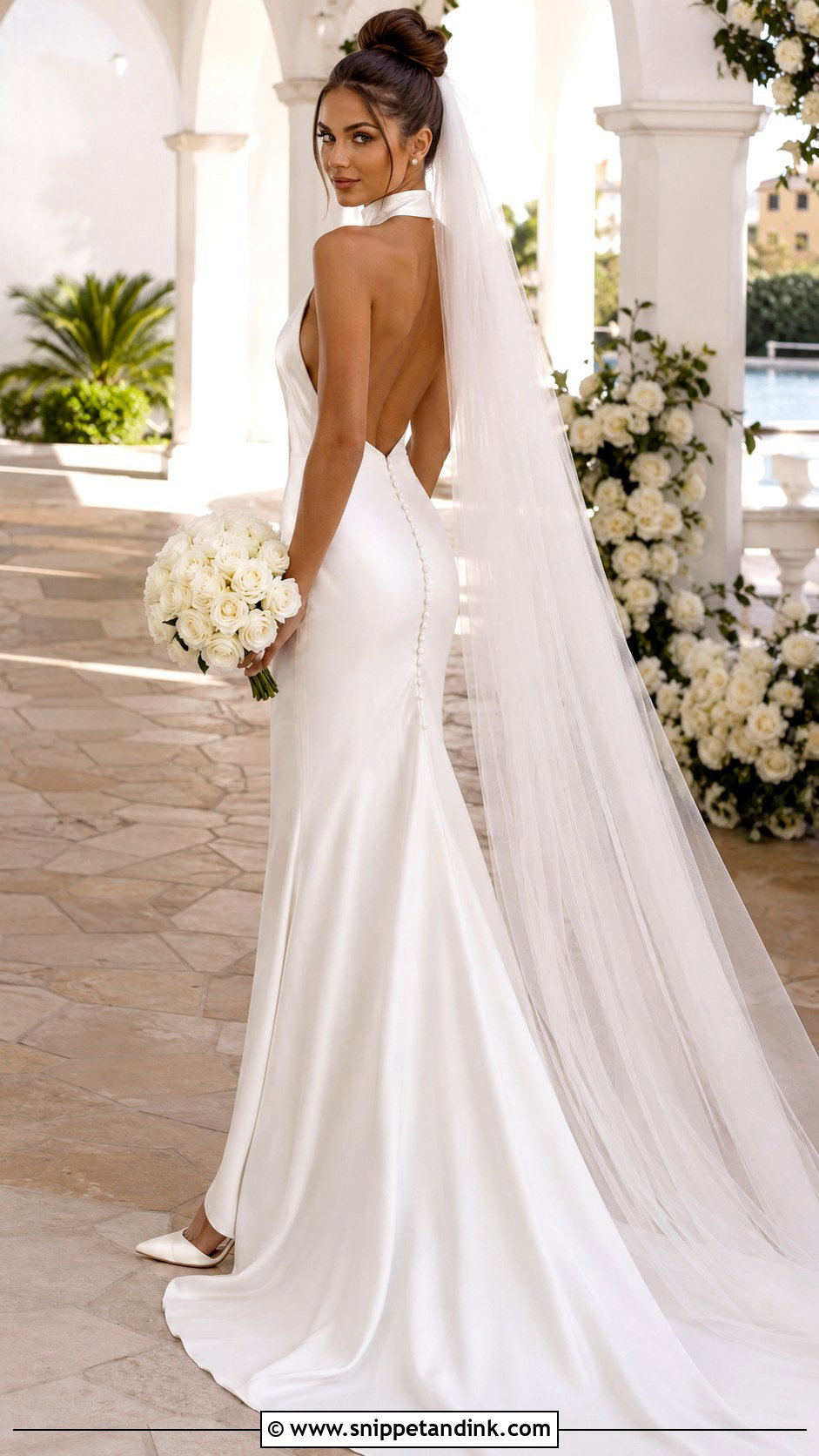
A high-neck halter leaves the shoulders and back bare, and in summer that brings a practical problem: tan lines. A halter strap mark is hard to cover, so I suggest brides plan their time in the sun in the weeks before the wedding. Look for smooth satin or crepe with a fitted waist, an open back and a softly flowing skirt; the covered front against the open back keeps it interesting from both sides. Pearl studs, a low twisted bun and pointed ivory heels complete it, and a long veil pinned beneath the bun moves without hiding the halter. Skip the necklace. A structured bouquet of white roses with little greenery stays in line with the dress. It suits summer celebrations, destination venues, estates and formal outdoor ceremonies.
8. Off Shoulder Satin Wedding Dress
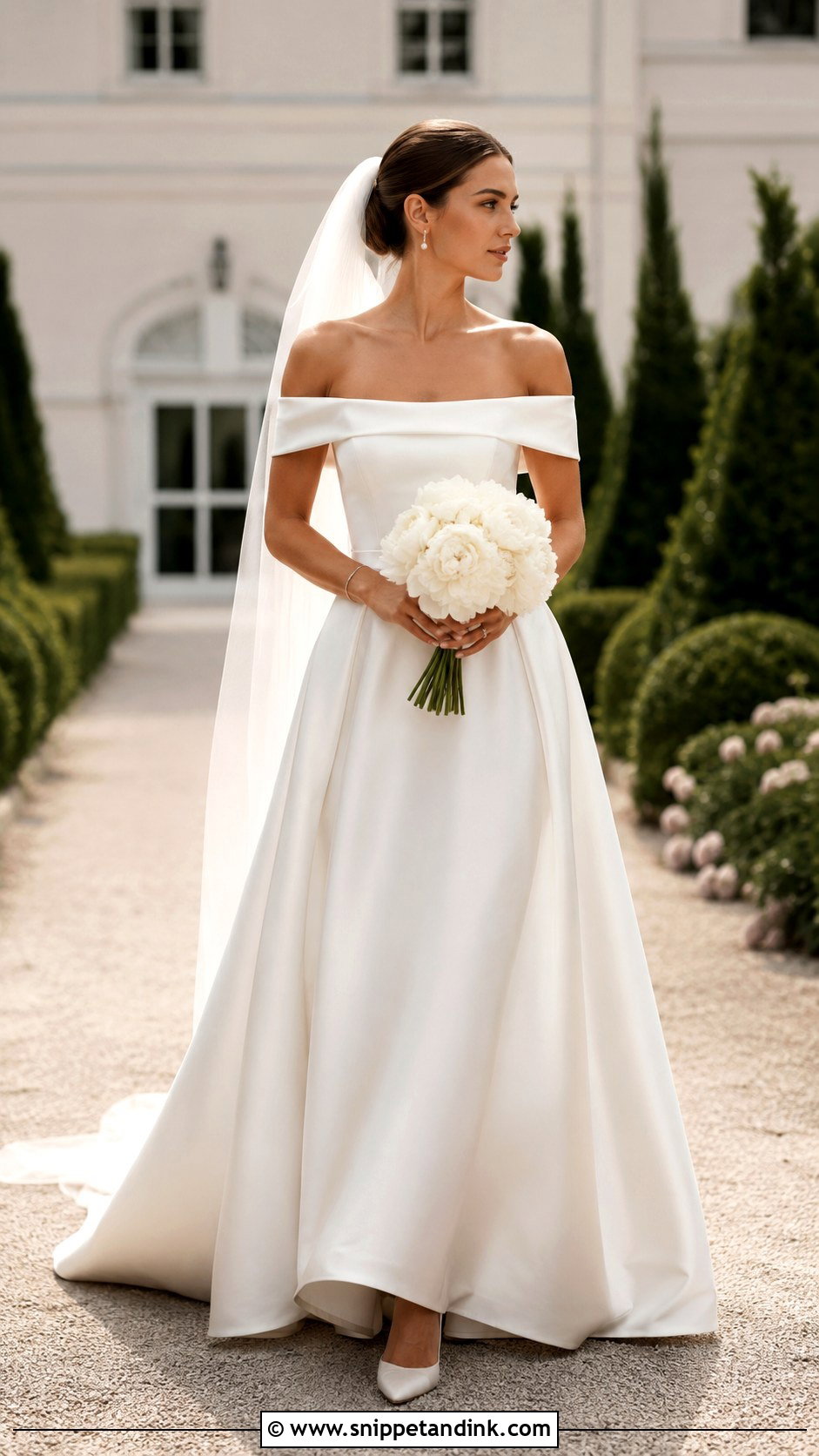
Romantic doesn’t need to mean ornate. Off-shoulder satin with a folded neckline over an A-line or softly flared skirt looks luxurious on fabric and tailoring alone. The neckline has to stay up while you move your arms, and a strip of silicone gripper sewn inside the band is the trick I rely on, because it holds without squeezing. Pearl drop earrings, a delicate bracelet and pointed satin pumps suit it, along with a plain chapel veil that leaves the shoulders visible. A compact arrangement of white peonies or garden roses works well. Wear soft waves or a low bun depending on how much attention you want at the neckline. Estates, gardens, formal halls and hotels all fit.
9. V-Neck A-Line Wedding Dress
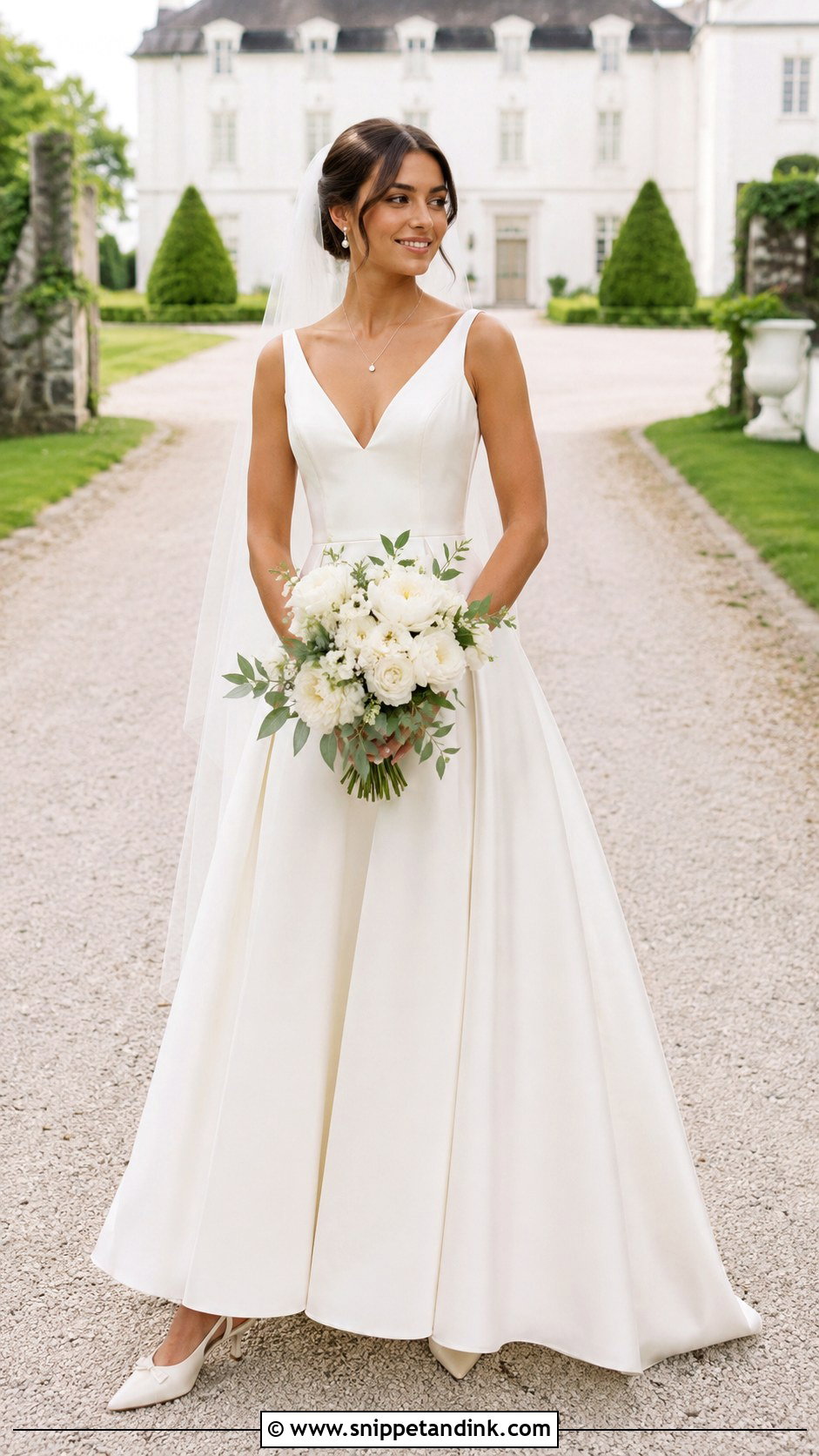
V-necks flatter a wide range of figures because the neckline lengthens the upper body while the A-line skirt falls away from the waist. Wide straps make it easier to tailor for different bust sizes, which is the main reason I recommend this cut to brides who’ve struggled with strapless. Matte crepe, satin or light mikado set the level of structure. If you wear a pendant, it should hang well above the point of the V; when the two meet, the line looks crowded. Pointed slingbacks, pearl earrings and a waist-length veil complete it, with a round bouquet of white flowers and soft greenery. Garden ceremonies, country estates and traditional ballrooms all suit it.
10. Boat Neck Column Wedding Dress
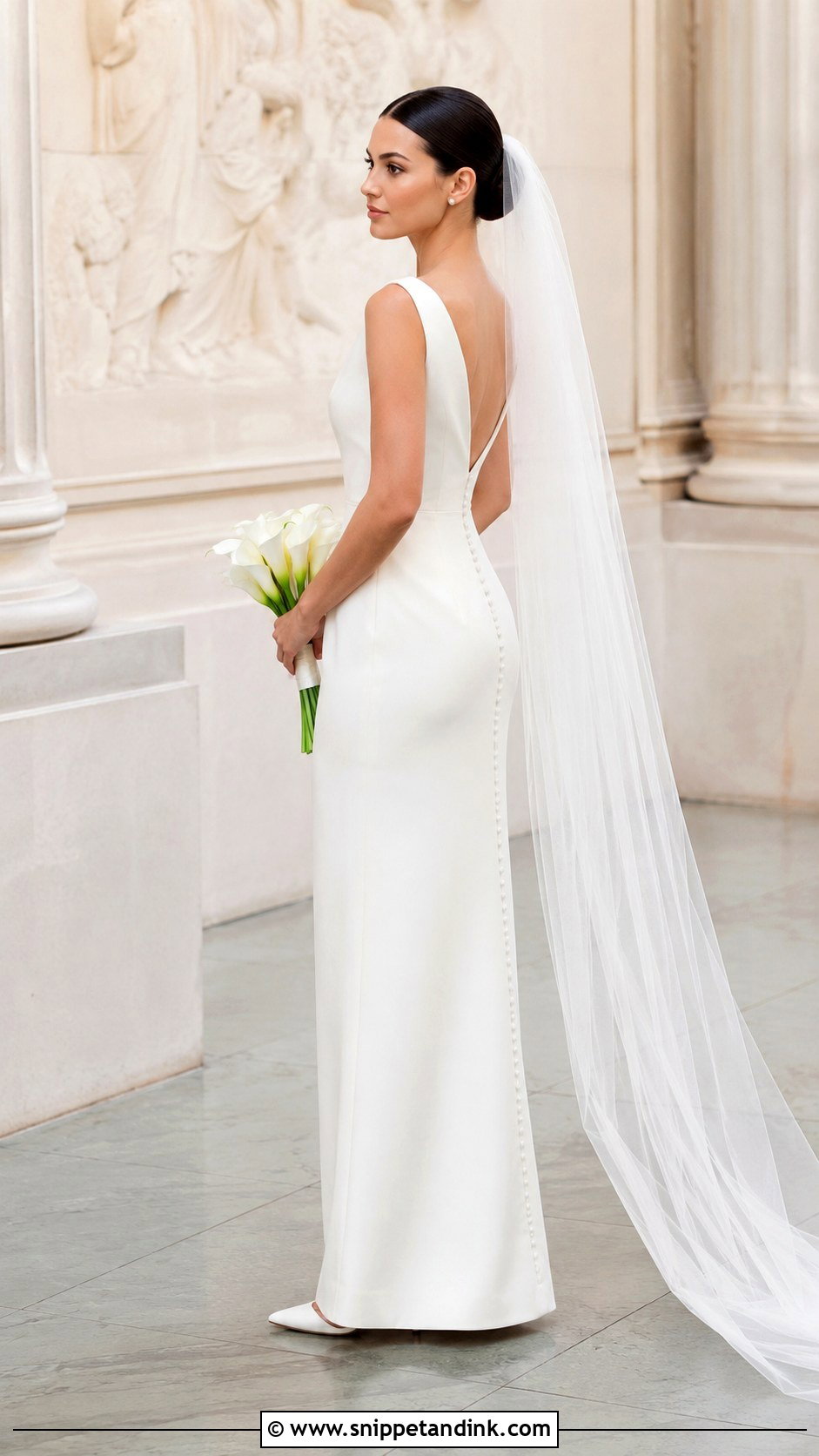
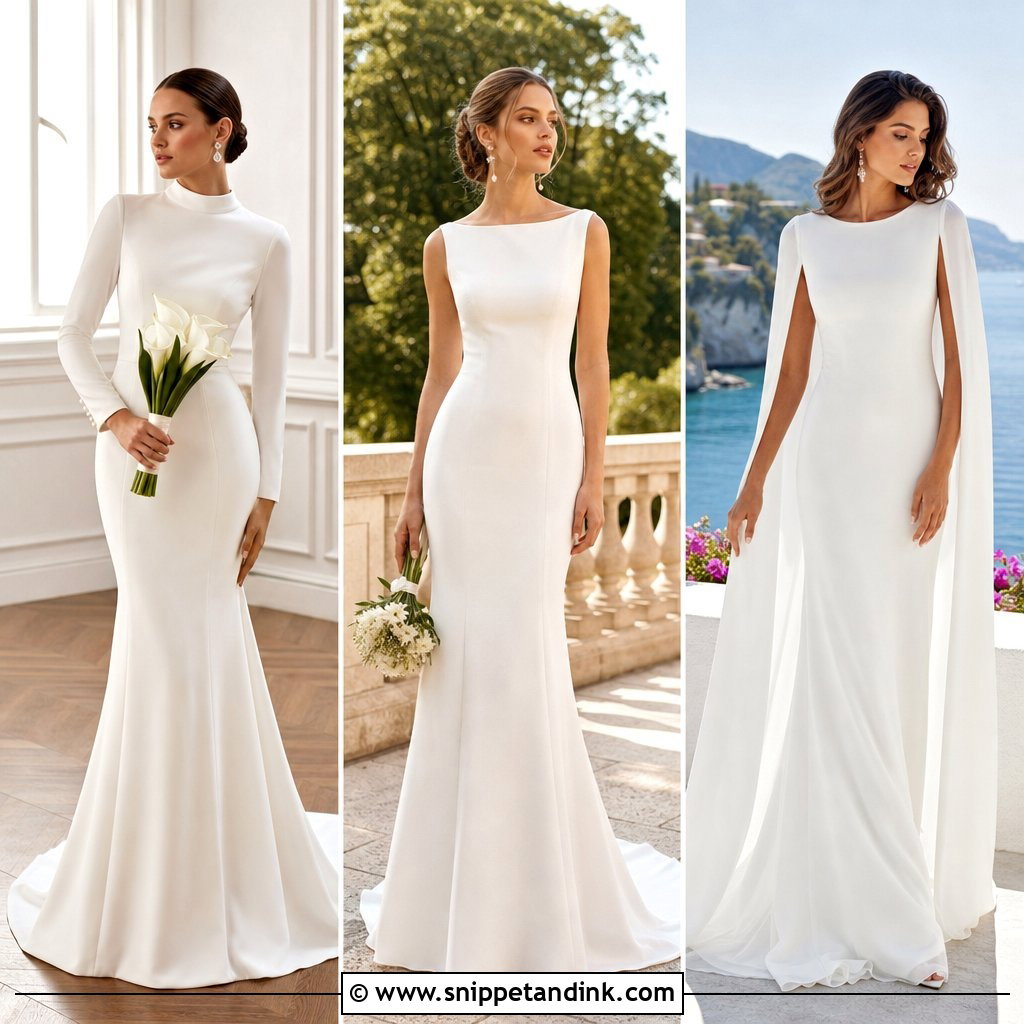
Boat necks and columns borrow from classic formal dressing, and together they draw a clean line across the shoulders. I’ll be honest: on a bride with broad shoulders, that horizontal line can widen the frame, and a V or scoop might serve her better. On everyone else it looks refined in substantial crepe or smooth silk, with gentle waist shaping so the column doesn’t turn boxy. A low back or a row of covered buttons adds interest without touching the front. Pearl studs, pointed pumps and a sleek low chignon finish it, along with a long plain veil you can remove for the reception and slender calla lilies. Courthouses, museums, city hotels and dinner receptions suit it. Careful tailoring keeps the skirt from pulling across the hips.
11. Cap Sleeve Midi Wedding Dress
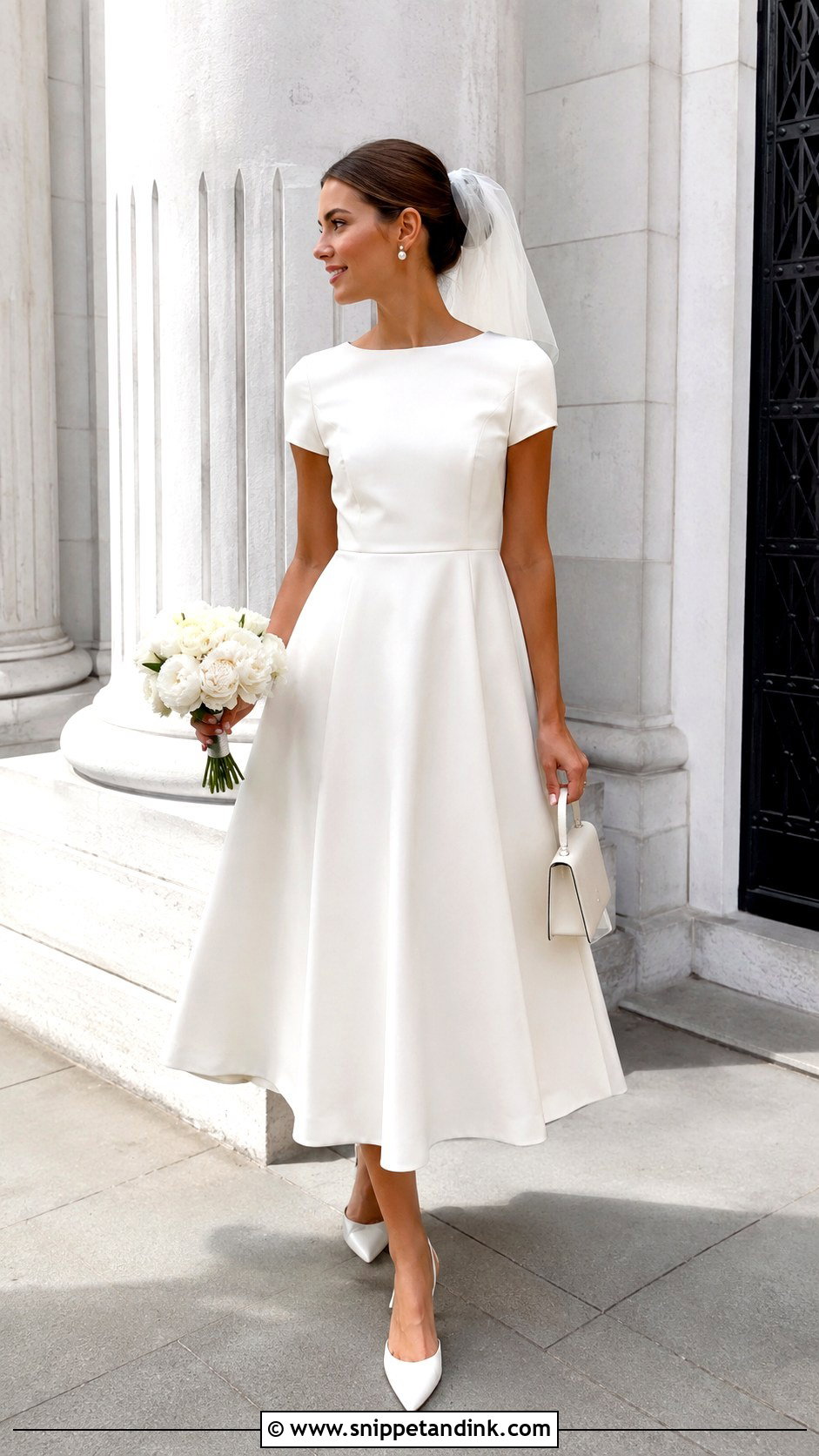
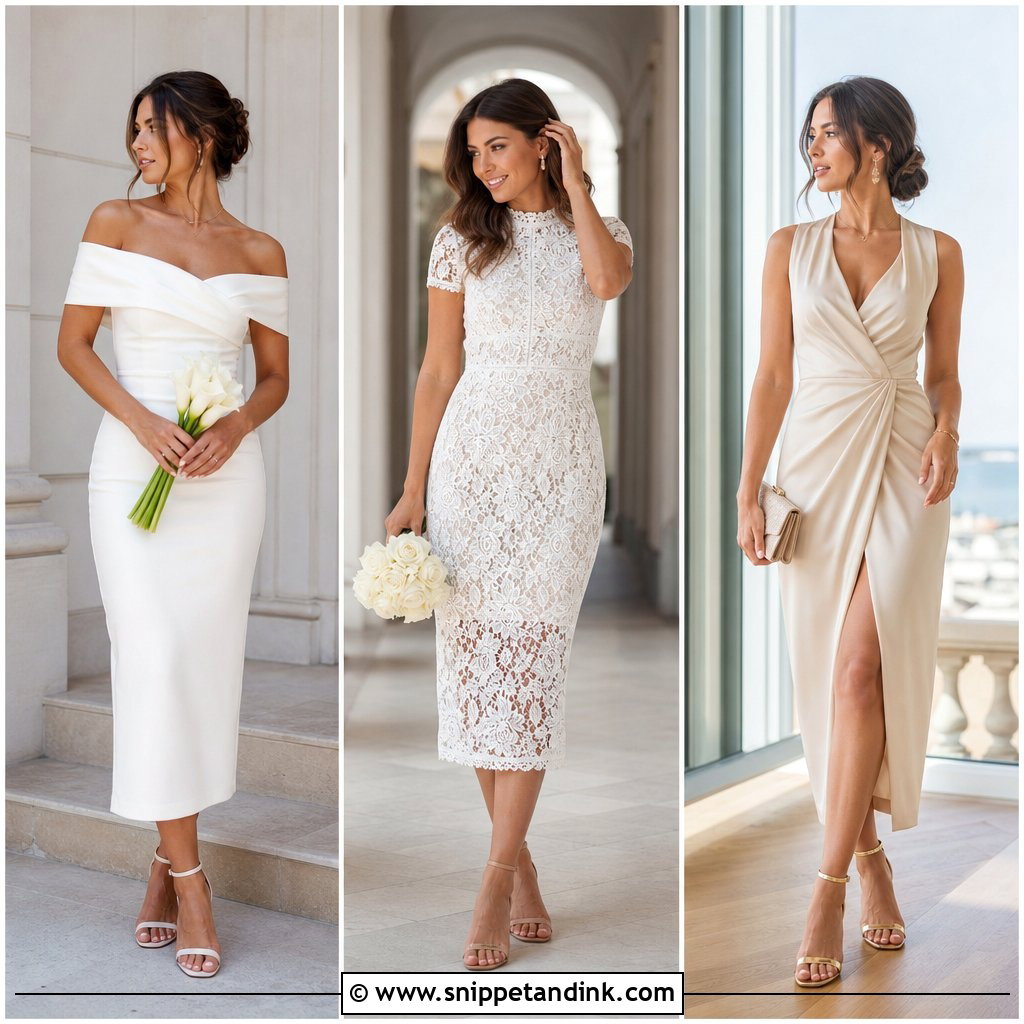
A cap-sleeve midi wedding dress is shorter than a gown but still clearly bridal. Choose structured crepe or satin with a fitted bodice, a defined waist and a skirt between knee and ankle. One detail people miss: the lining should finish just above the outer hem, or it peeks out as you walk and climb steps. Footwear is on show, so pick elegant slingbacks, low kitten heels or pointed satin shoes. A short veil, pearl studs and a small top-handle bag give a vintage note, and a compact bouquet keeps the proportions right. The cap sleeves cover lightly without crowding the neckline. Courthouse weddings, brunch receptions and second looks suit it, and it moves easily through busy city streets.
12. Tea Length Satin Wedding Dress
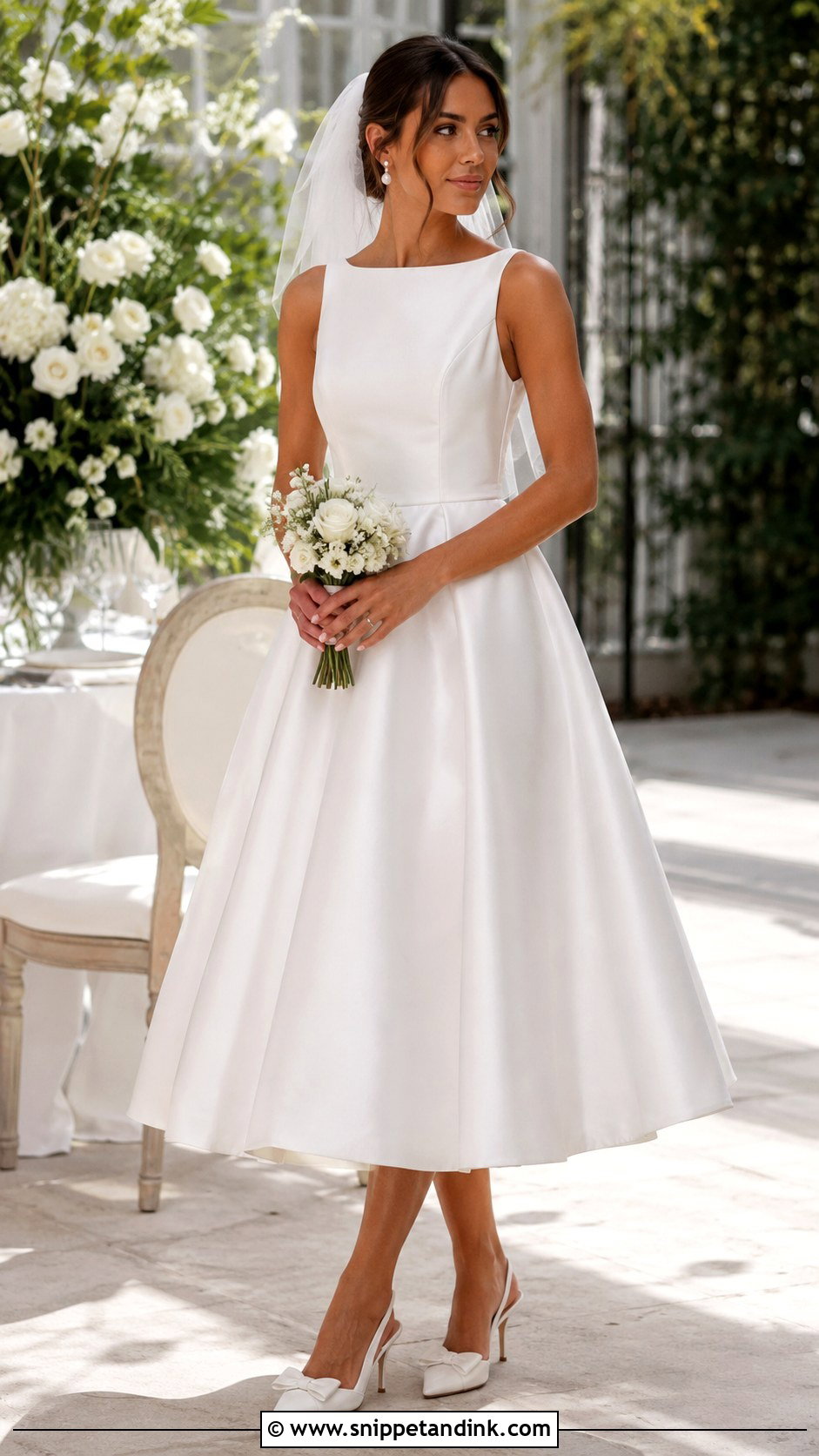
Picture a full satin skirt swinging just above the ankle. Getting that swing depends on what’s underneath. A soft, clean underskirt gives shape, while a very full tulle petticoat can flip the front of the skirt up when you sit, so I always try the dress seated before choosing one. Pair a fitted bodice with a bateau, square or strapless neckline and a softly structured skirt. Pointed pumps or bow-detailed slingbacks matter, since the shorter hem shows them off. Pearl earrings, a short veil and a small bouquet complete it without tipping into costume. Gardens, courthouses, daytime receptions and relaxed venues suit it, anywhere a train would get in the way.
13. Backless Satin Wedding Dress
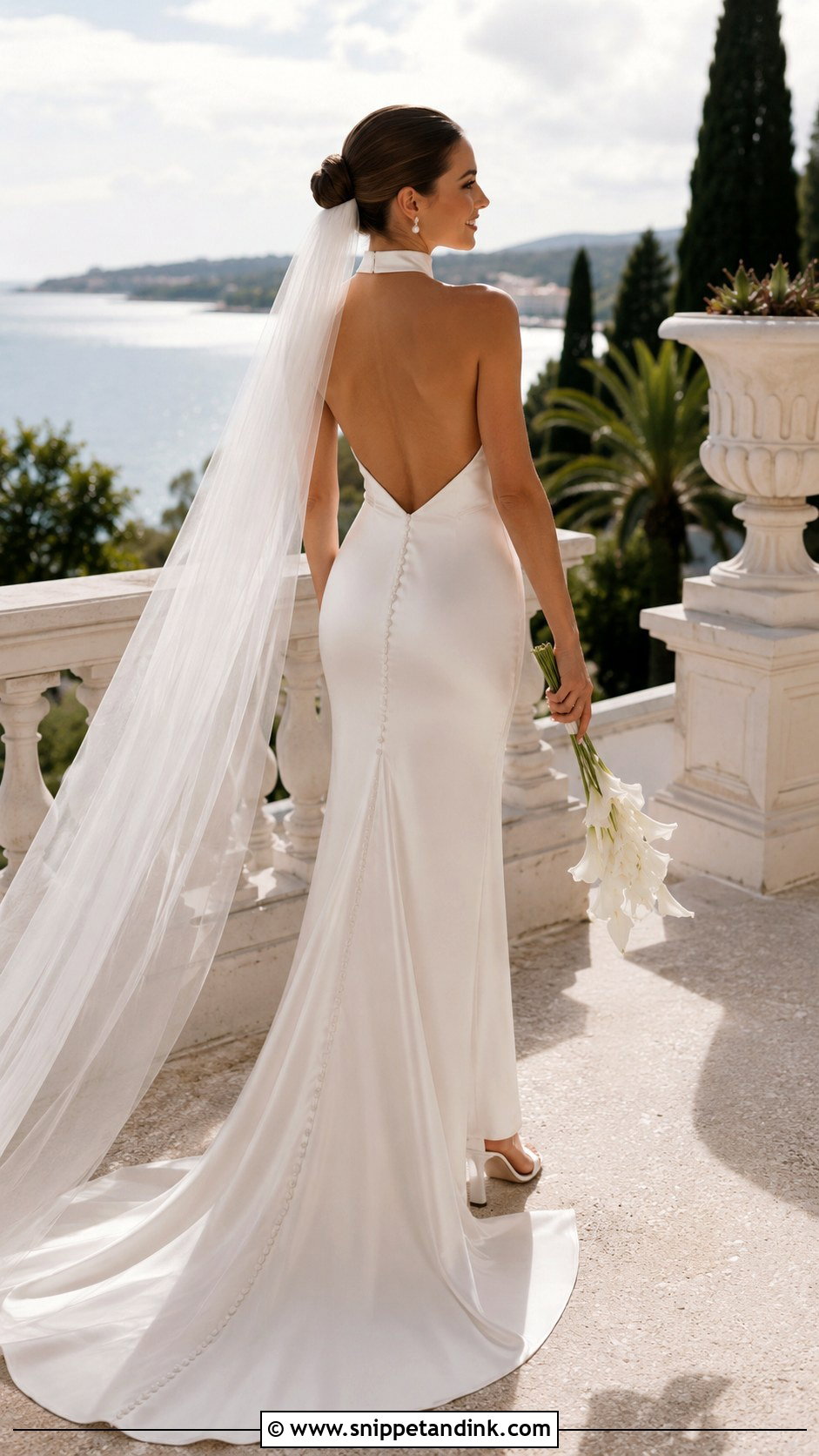
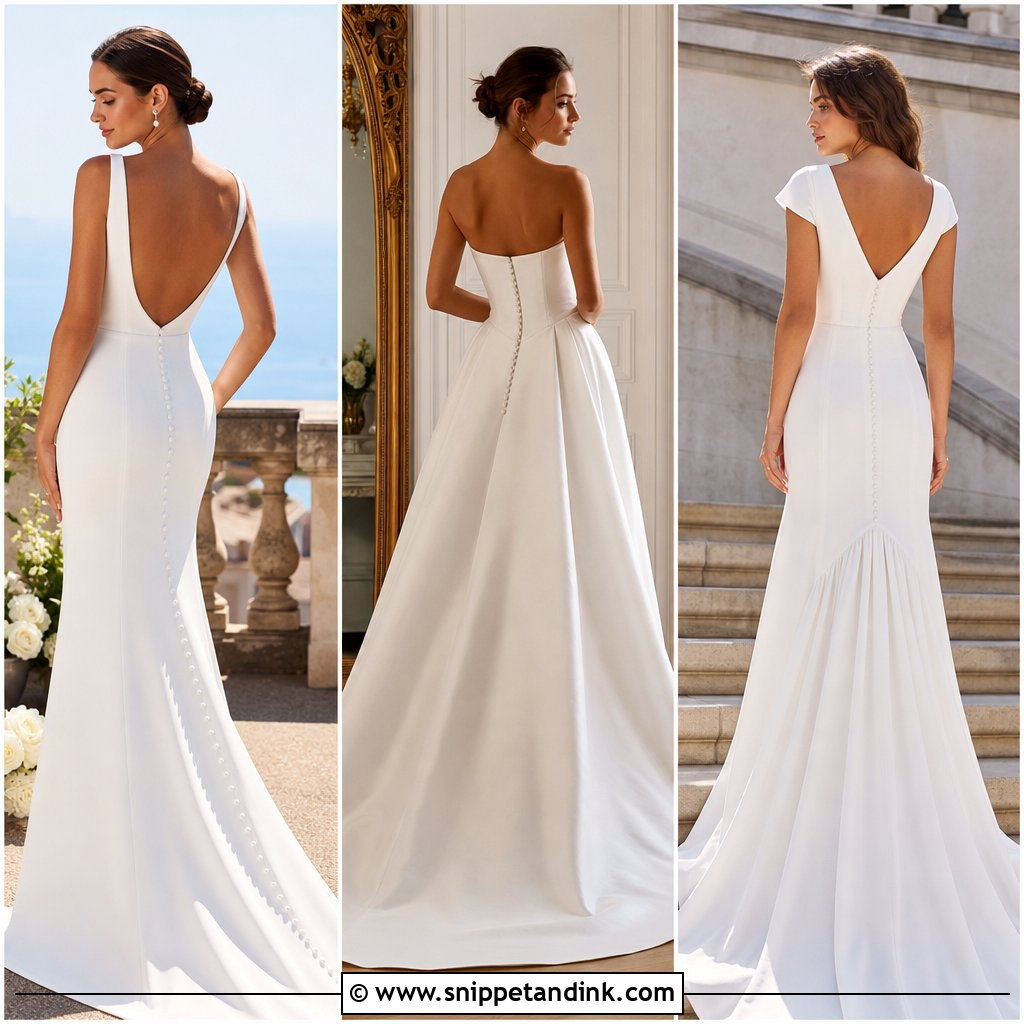
Most guests see a backless satin wedding dress from behind during the ceremony, so the back really is the main view. Keep the front calm with a high neck, bateau or soft drape, and let the back carry the detail: a deep scoop, a subtle cowl or a narrow row of covered buttons. Depending on the depth, you’ll need adhesive support, built-in cups or custom inner construction, and that conversation belongs at the first fitting, not the last. I also suggest giving your back the same skincare attention as your face in the weeks before. Pearl earrings, slim heels and a veil set beneath a polished updo keep the back visible, with a narrow white bouquet. Coastal venues, modern estates and summer weddings suit it.
14. Corset Waist Satin Wedding Dress
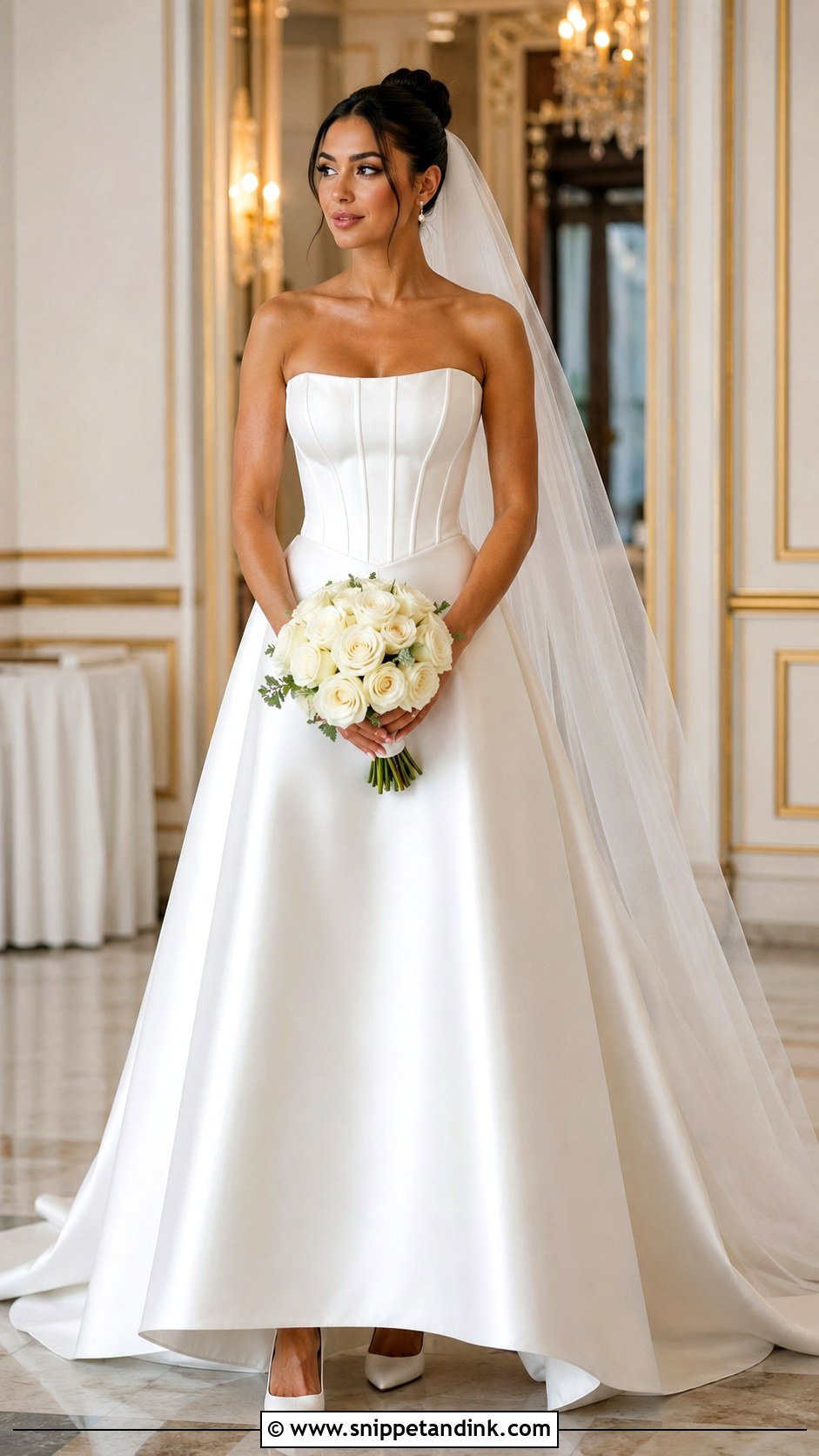
Look at the back closure before anything else on a corset-waist gown. A lace-up back can be loosened or tightened by a few centimeters, which helps if your weight changes in the final weeks; a zip can’t. Smooth boning, a clean strapless neckline and an unembellished A-line or ball gown skirt keep it understated, and tonal seaming gives structure without sparkle. Pearl drop earrings, satin pumps and a long plain veil suit it, with a sleek bun or softly waved bob. If the corset seams are meant to show, hold back on everything else so the construction reads as deliberate. White roses and greenery soften the structure. Ballrooms, estates and evening celebrations suit its defined shape.
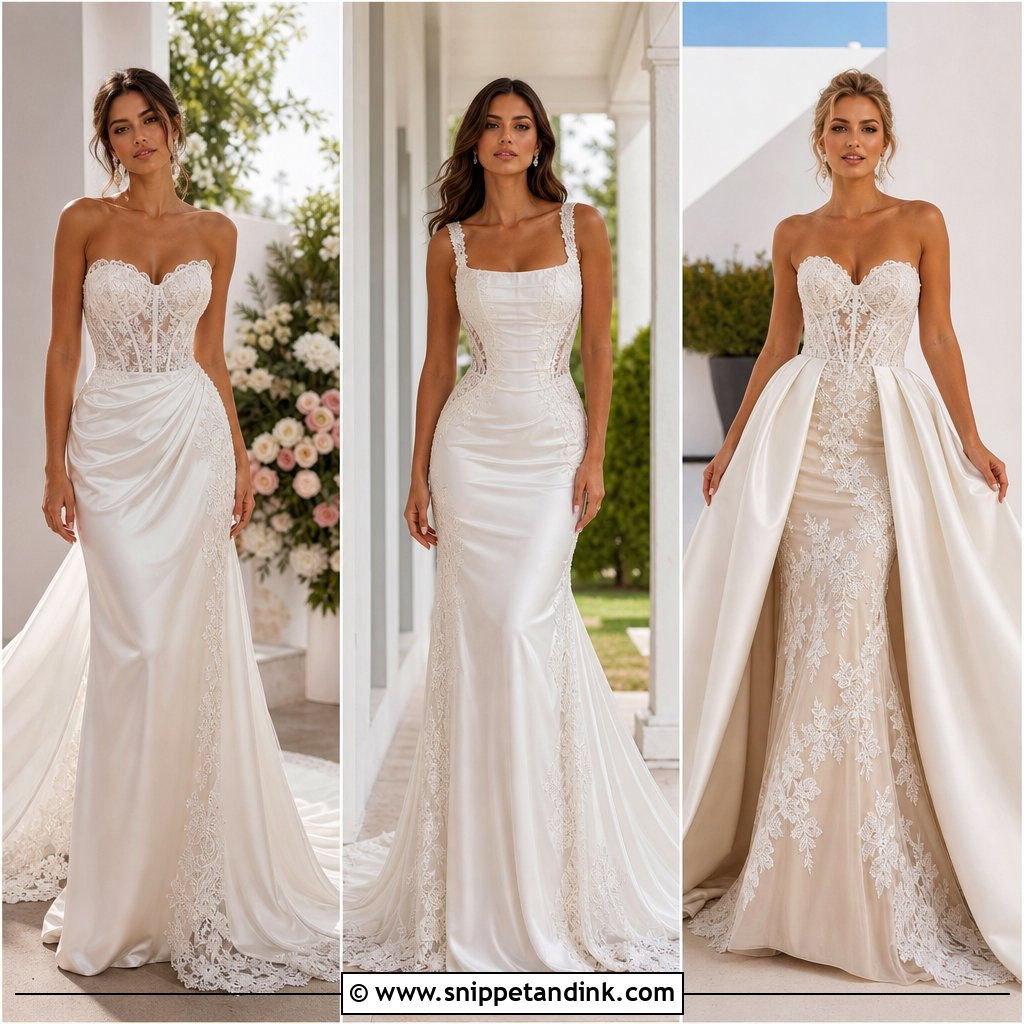
15. Empire Waist Chiffon Wedding Dress
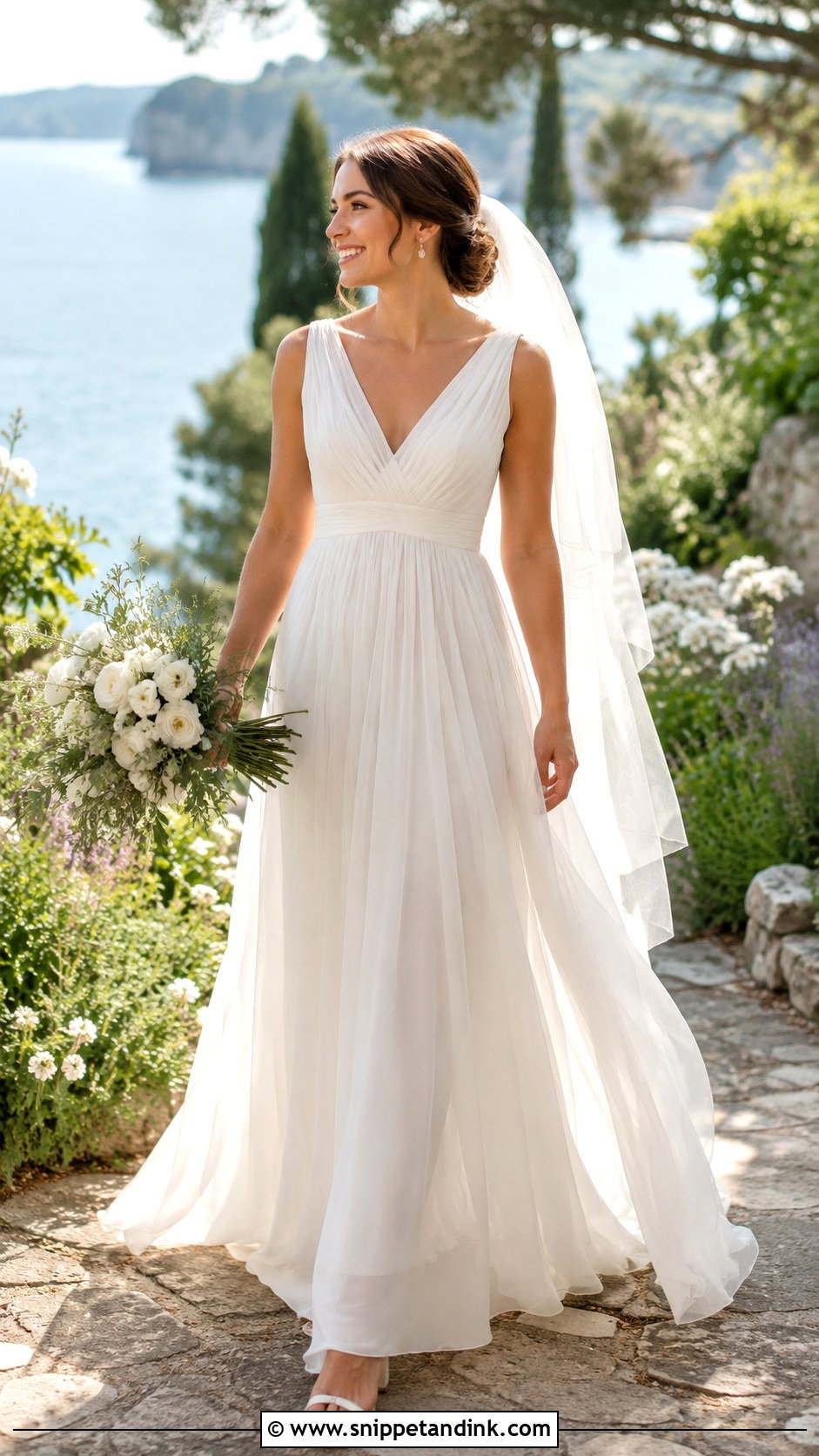
Chiffon from an empire seam just below the bust leaves the waist completely free, and that is exactly why I suggest this shape to pregnant brides. If that’s you, ask for an adjustable back and book your final fitting as late as the shop allows, since the bust and waist can change within weeks. A softly gathered bodice with wide straps, a V-neck or a subtle square neckline works, and several smooth layers of chiffon give movement without bulk. Low block heels, pearl earrings and a sheer chapel veil complete it, with a relaxed bouquet of white flowers and pale greenery. Garden venues, coastal ceremonies and destination weddings suit it, anywhere comfort counts.
16. Minimalist Mermaid Wedding Dress
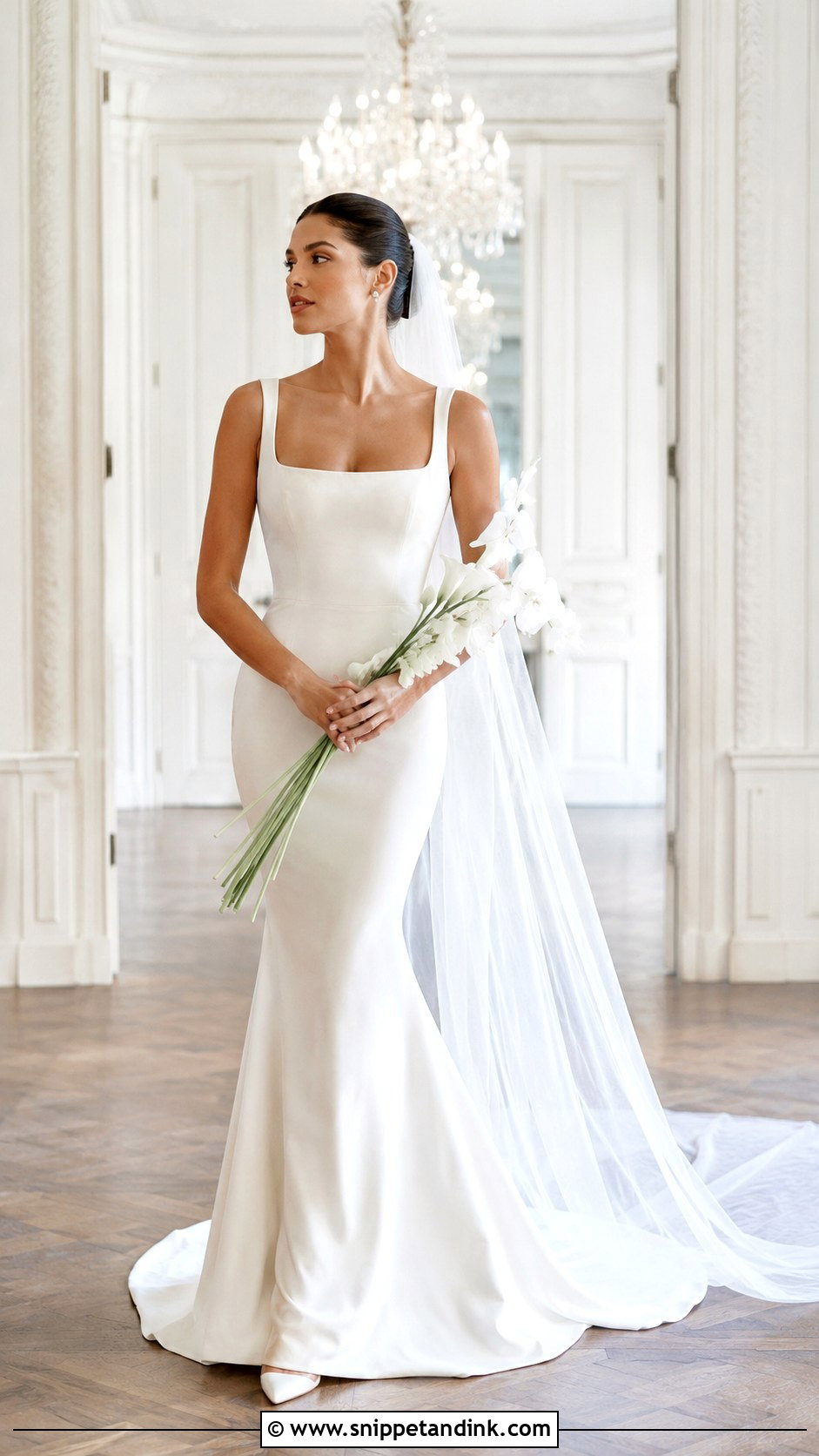
A mermaid can look classy without crystals, lace or appliqué when the cut is precise. Stretch crepe or structured satin should follow the body and flare around the knee, with a square, scoop or strapless neckline balancing the top half. A detachable overskirt adds ceremony volume and comes off for the reception; I check that it hooks onto the waist with the join hidden under a band, and that someone has practiced removing it. Pointed heels, small diamond studs and a plain fingertip or cathedral veil complete it, with a long-stemmed bouquet. Alterations at the hips, thighs and flare point decide whether you can move freely. Formal hotels, modern ballrooms and evening celebrations suit it.
17. Scoop Neck Sheath Wedding Dress
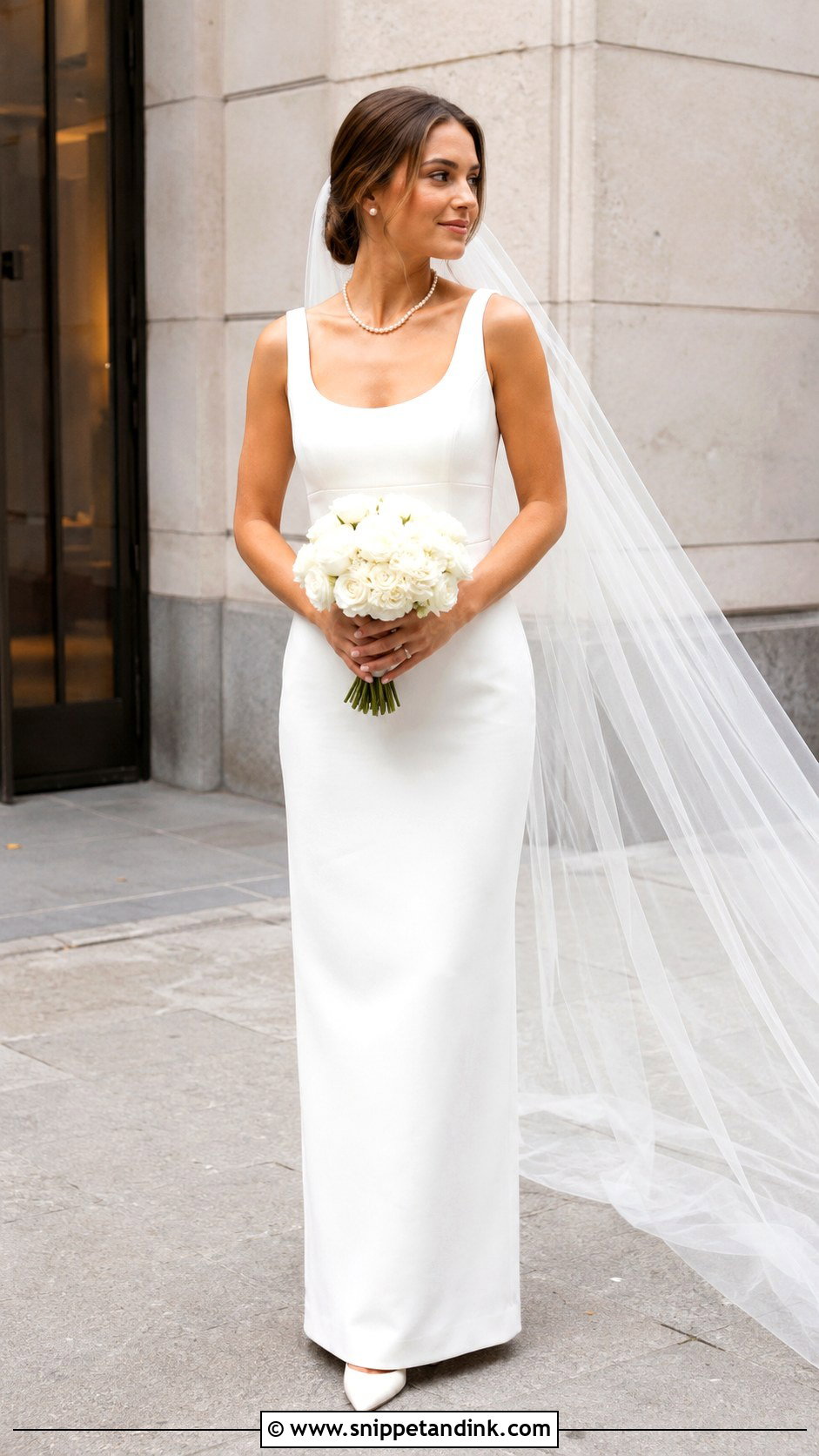
A scoop-neck sheath wedding dress is easy to personalize because it starts almost blank. The curved neckline softens the upper body, the straight skirt lengthens the frame and wide tank straps hide bra straps completely. Choose crepe with enough weight to fall smoothly and supportive inner construction. Then pick one accent and stop there: a short pearl necklace, a slim detachable scarf or satin gloves, but not all three, because a sheath this clean shows every extra piece. Pointed ivory heels, a sheer veil with no border, a low bun and a soft glowing face complete it. Courthouses, city weddings and intimate receptions suit it, and it sits neatly under a tailored coat in cold weather.
18. Wedding Dress With Cape
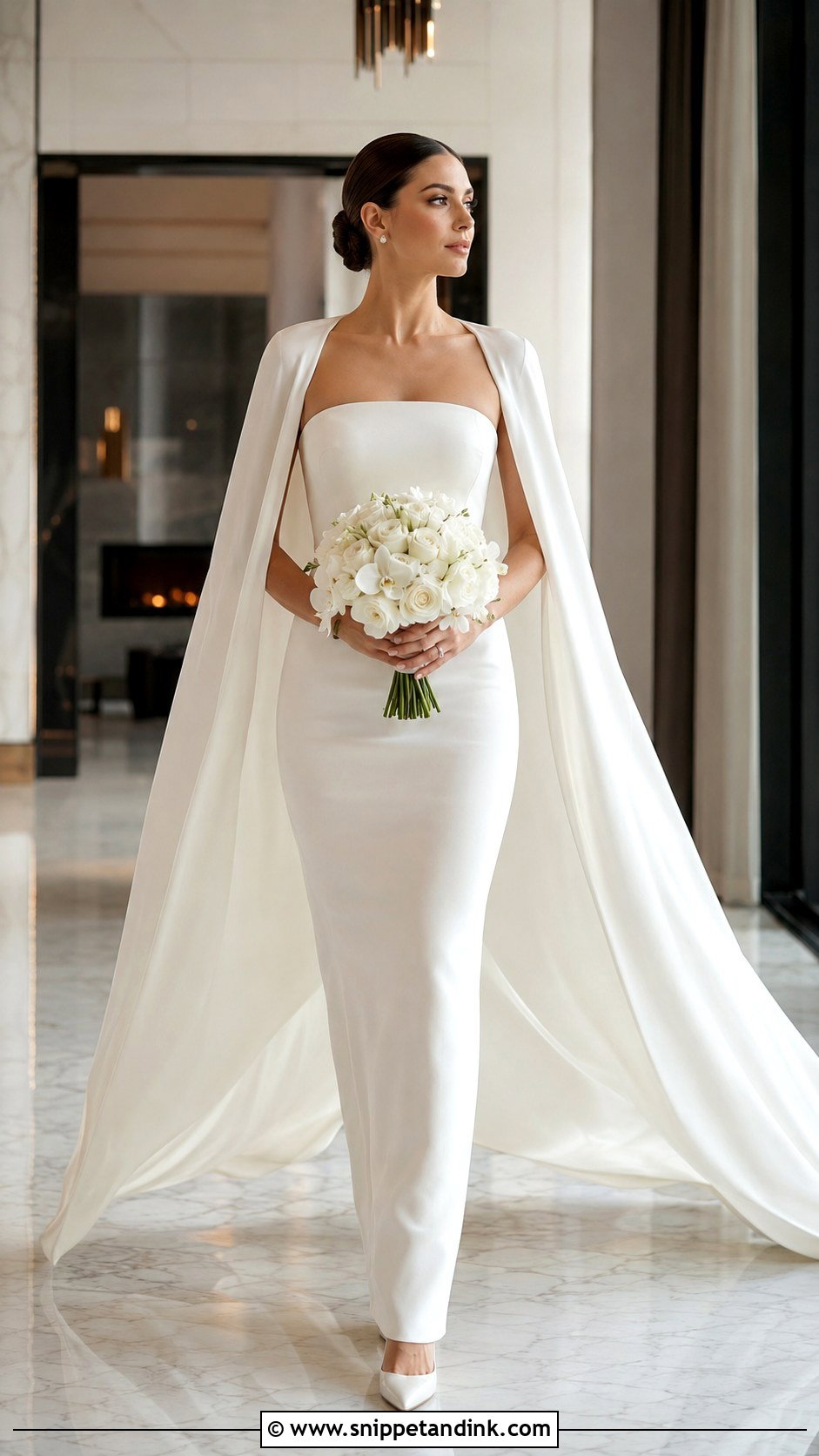
Capes need anchoring. A lightweight floor-length cape that is only fastened at the neck swings forward when you bend, so I like it secured at the shoulders with snaps or with small clear loops around the upper arms, letting it fall behind the arms without hiding the dress. Start with a strapless, sleeveless or column gown in matte crepe or smooth satin. Pointed pumps, pearl studs and a sleek bun finish it; skip the veil, since the cape provides the movement. A structured white bouquet keeps the look modern. After the ceremony, take the cape off for dancing and you’ve got two looks from one gown. Cool-season weddings, contemporary venues and formal hotels suit it.
19. Puff Sleeve Wedding Dress
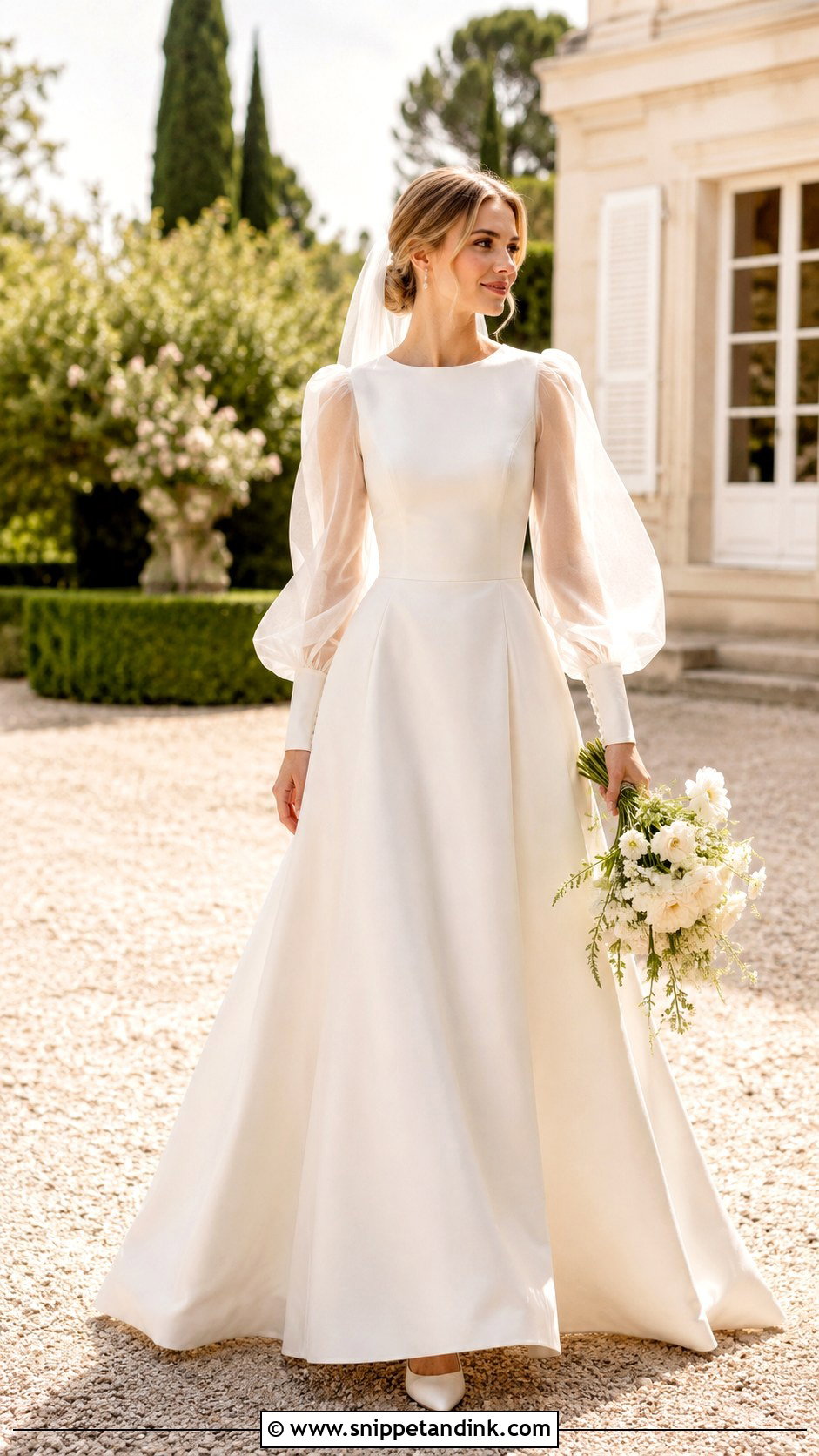
Puff sleeves bring romance to a plain dress, but organza ones flatten if you wear a coat over them or pack them tightly. Steam them at the venue, and keep the sleeves out from under a seatbelt on the drive. Choose sheer organza sleeves over a clean satin bodice, or structured short sleeves with an A-line skirt. The volume should sit easily at the shoulder and taper neatly at the cuff. Pearl earrings, closed-toe pumps and a simple veil starting behind the crown leave the sleeves uncovered, with a loose bouquet of white garden flowers. Detachable sleeves turn it into a strapless reception look. Gardens, country estates and indoor celebrations suit it; keep the rest minimal so the sleeves look deliberate.

20. Tailored Blazer Wedding Dress
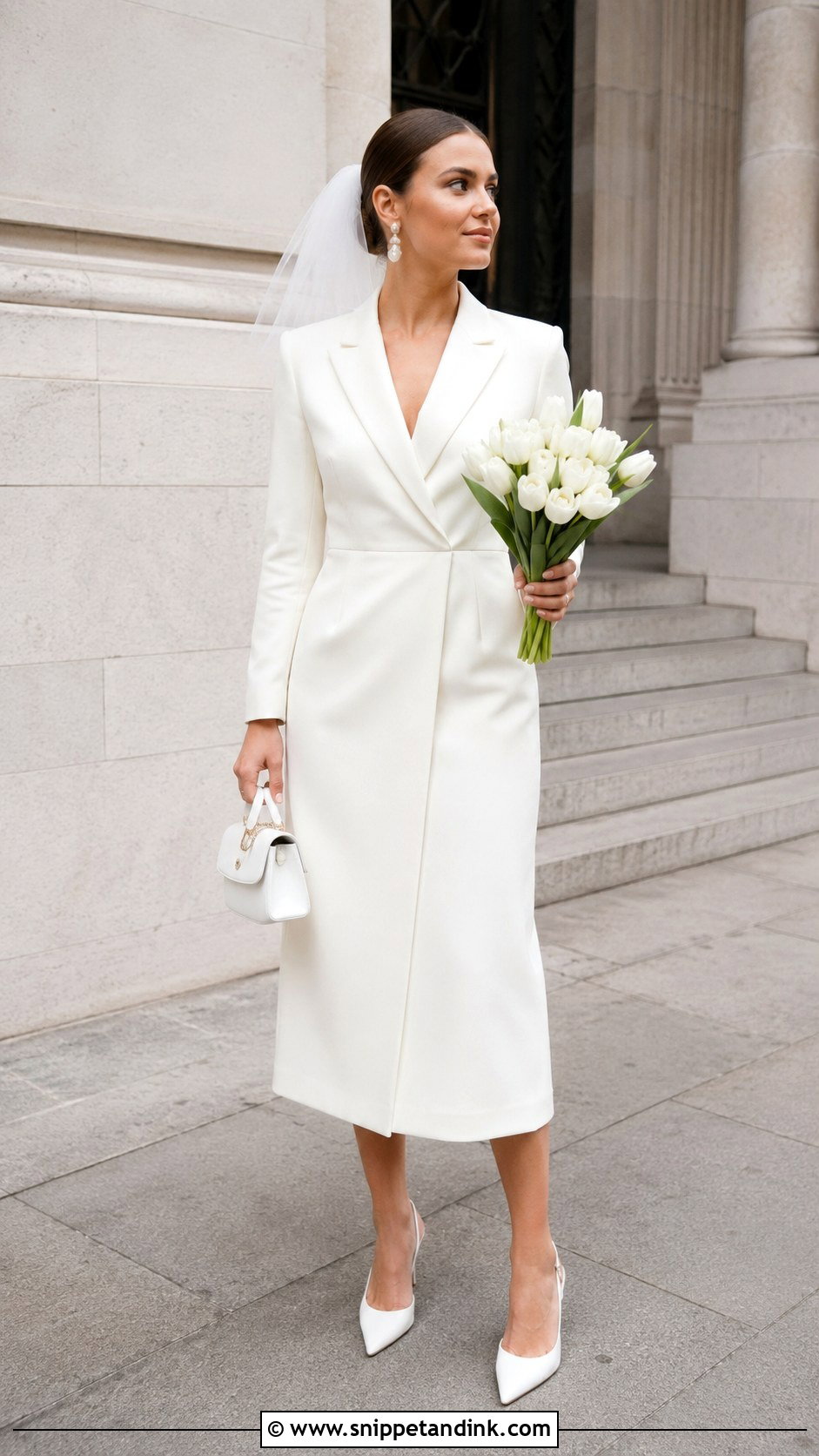
Buy a tailored blazer wedding dress to fit your shoulders and let the alterations team handle everything else. Shoulders are the hardest part of any tailored piece to change, while the waist, sleeves and hem are routine. Look for a structured mini or midi with clean lapels, a defined waist and enough length to sit comfortably. Double-breasted reads classic; a single button looks sharper. Sit down in it and watch the lapels, because a blazer that gapes at the chest when seated needs fashion tape or a small hidden snap. Pointed slingbacks, pearl or sculptural earrings and a small top-handle bag suit it, plus a birdcage veil, short tulle veil or neat bow on a low bun. A compact bunch of white tulips keeps it bridal. It suits courthouses and intimate weddings.
Planning a Reception Switch Without Buying a Second Dress
Several looks here come apart on purpose: capes, overskirts, detachable sleeves and bows. That flexibility only works if the change is planned, so this is how I prepare brides for it.
Pick the moment
The usual window is after the formal portraits and before your entrance into the reception. Tell your planner and photographer so they don’t schedule a group shot in the middle of it. Most removable pieces take only a few minutes, but give yourself more than that.
Choose who helps
Hooks, snaps and thread loops are fiddly under pressure. One person should learn the attachment at your final fitting and practice it there, not on the day.
Adjust the rest
Without a cape or sleeves, you may want different earrings or your hair down. Ask your stylist which pins can come out safely. Keep a garment bag ready so the detached piece is hung, not left in a heap where it will crease or get stepped on.
Is It Simple, or Is It Just Unfinished?
That is the question I ask about every minimal dress in the fitting room. A good simple gown is never plain: the fabric, the tailoring, the proportions and a few well-chosen accessories give it its weight. There’s a look here for a ballroom, a courthouse, a garden, a destination or a dinner for a few close friends. When you shop, go beyond the mirror. Sit, walk, raise your arms and try it with your real shoes and undergarments. Think about how the neckline works with your hair, how the fabric will look in photos and whether the train suits the floor you’ll walk on. Then pick the dress you feel most like yourself in, because it should frame you rather than compete with you.
You'll Like These Ideas:










Leave a Reply