
Sleeves change a plain gown more than any other detail. They decide how much of you is covered, how the shoulders look in photographs and, more than brides expect, how freely you can move your arms all day. On a minimalist dress there’s no lace or beading to pull focus, so the sleeve shape, the fabric and the fit carry the whole look. Smooth satin, matte crepe, chiffon and soft jersey all work without embellishment, and the cut can suit a courthouse ceremony or a ballroom. Designers keep pairing simple gowns with fitted, puffed, sheer and detachable sleeves, so there’s no shortage of options. The twenty looks below are styled from neckline to shoes, with notes on where each sleeve type helps and where it gets in the way.
Why a Higher Armhole Lets You Lift Your Arms
It sounds backward, but a sleeve with a high, close armhole gives you more movement than a low, roomy one. When the armhole drops, lifting your arm drags the side of the bodice up with it. A high armhole lets the arm rise on its own. This is the single biggest reason one long-sleeved gown feels free and another feels like a straitjacket, even in the same size.
Three things to test at a try-on
- Reach both arms forward as if hugging someone. If the back pulls tight across your shoulder blades, the sleeve needs more ease there.
- Raise one hand above your head. The waist seam should stay at your waist.
- Bend your elbow fully. A sleeve that cuts in at the inside of the elbow will leave a red mark by the reception.
Stretch crepe and jersey forgive a lot of this. Satin, mikado and lace don’t, so with those fabrics the cut of the sleeve matters more than the size on the label. Sleeve alterations can be fiddly, so raise any concern at the first fitting rather than the last.
1. Plain Satin A-Line Wedding Dress With Long Sleeves
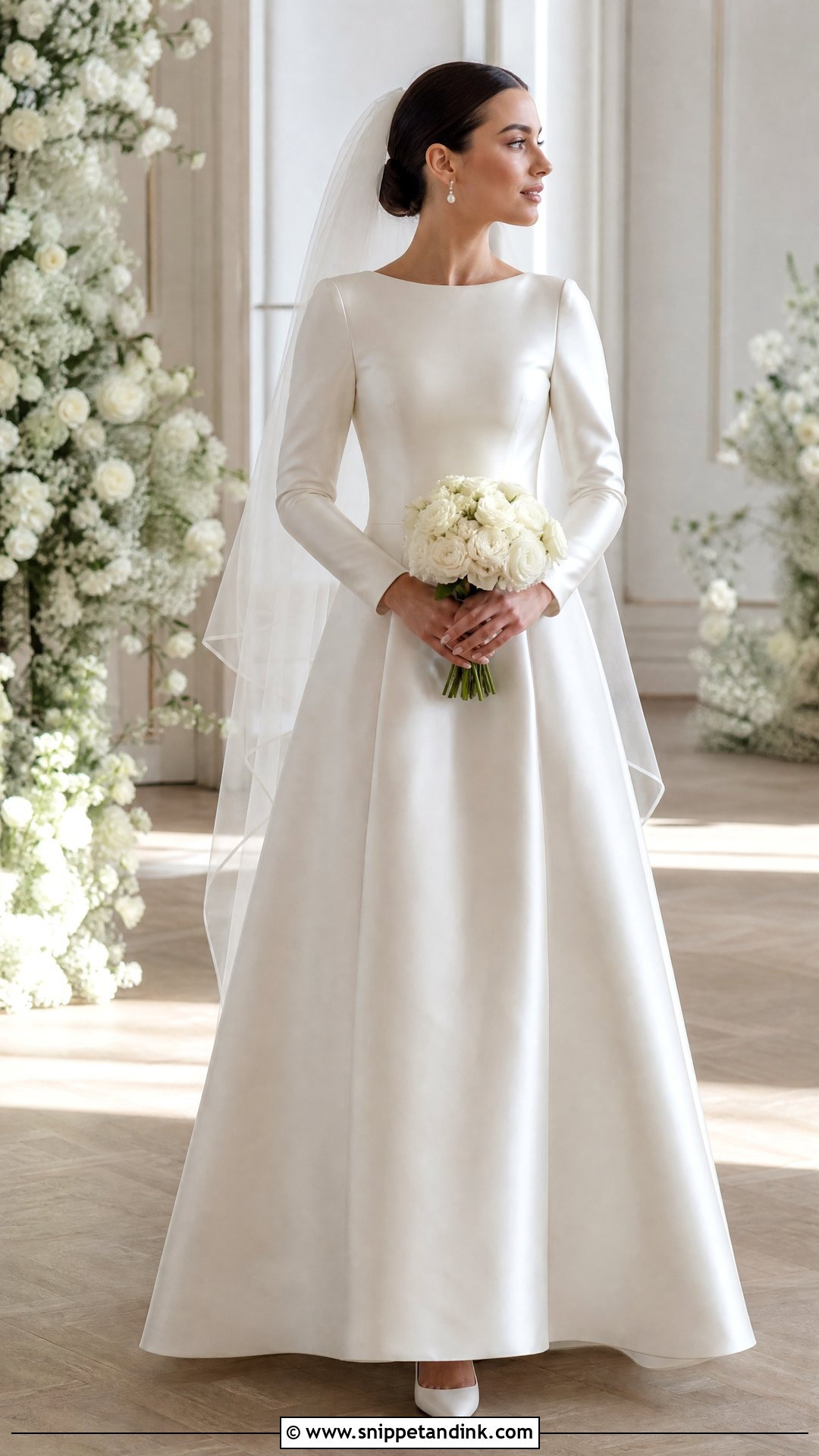
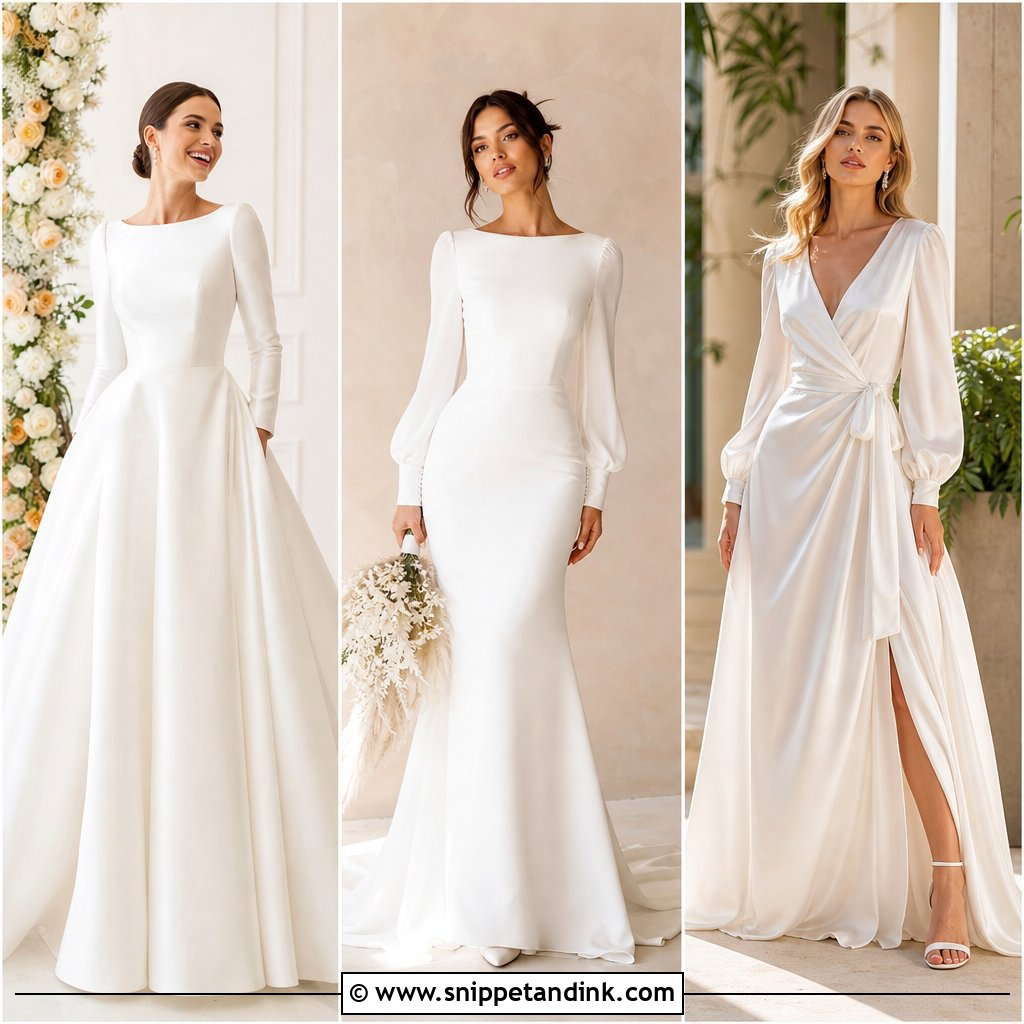
Satin gives an A-line its polish without any crystals or lace. A structured bodice with a soft V or rounded neckline sits over a skirt that falls gently from the waist, and long fitted sleeves keep the upper half streamlined for a fall or winter ceremony. Satin doesn’t stretch, so the sleeve needs a touch of ease at the elbow; fitted too tight, it creases into bands every time you bend your arm. Pearl drops, a low bun and a fingertip veil keep it uncluttered, with pointed ivory pumps and a compact bouquet of white flowers and greenery. A narrow satin waistband adds definition if you want it. You should be able to walk, sit and dance in it without tugging.
2. Plain Crepe Sheath Wedding Dress With Fitted Sleeves
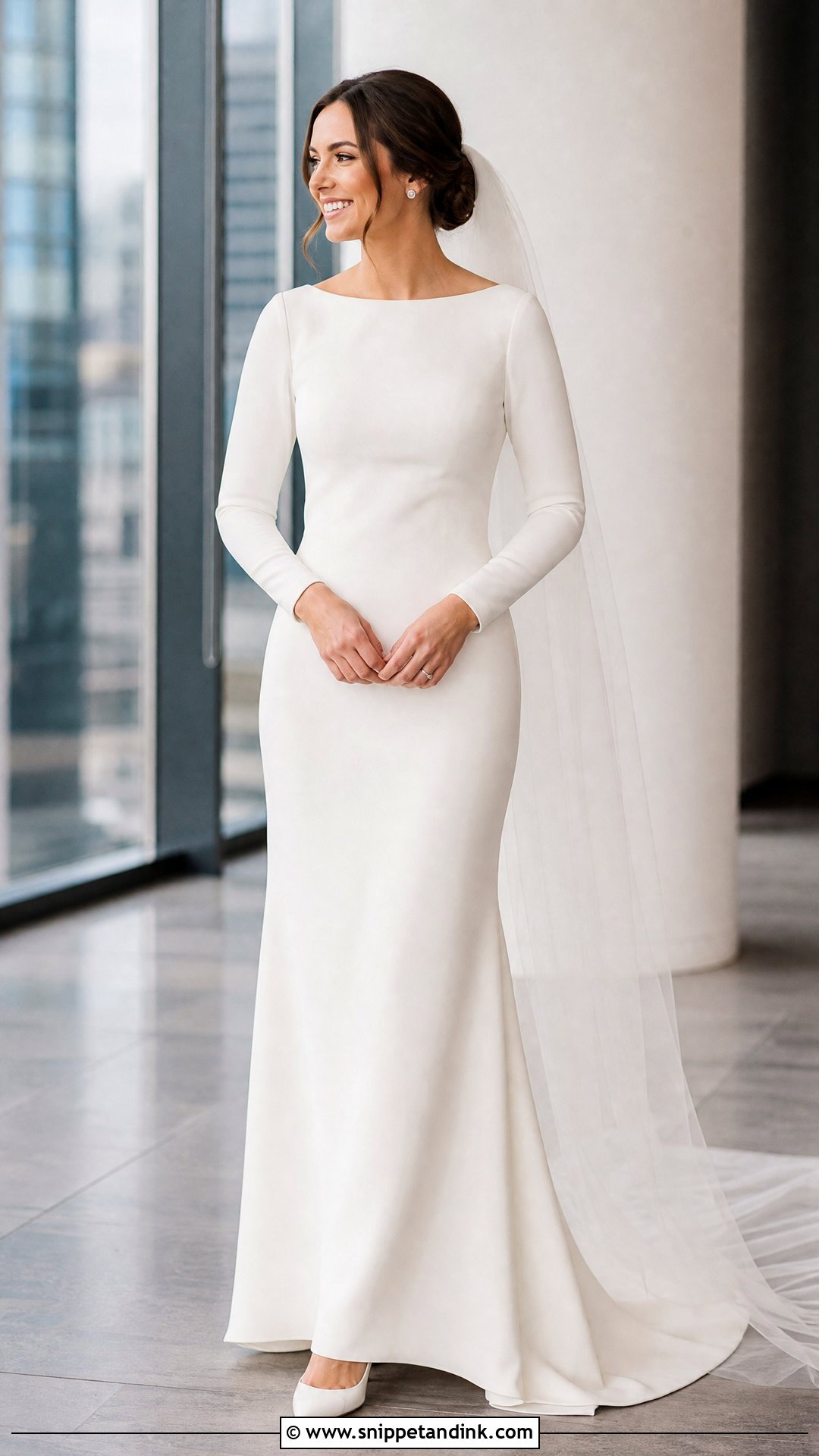
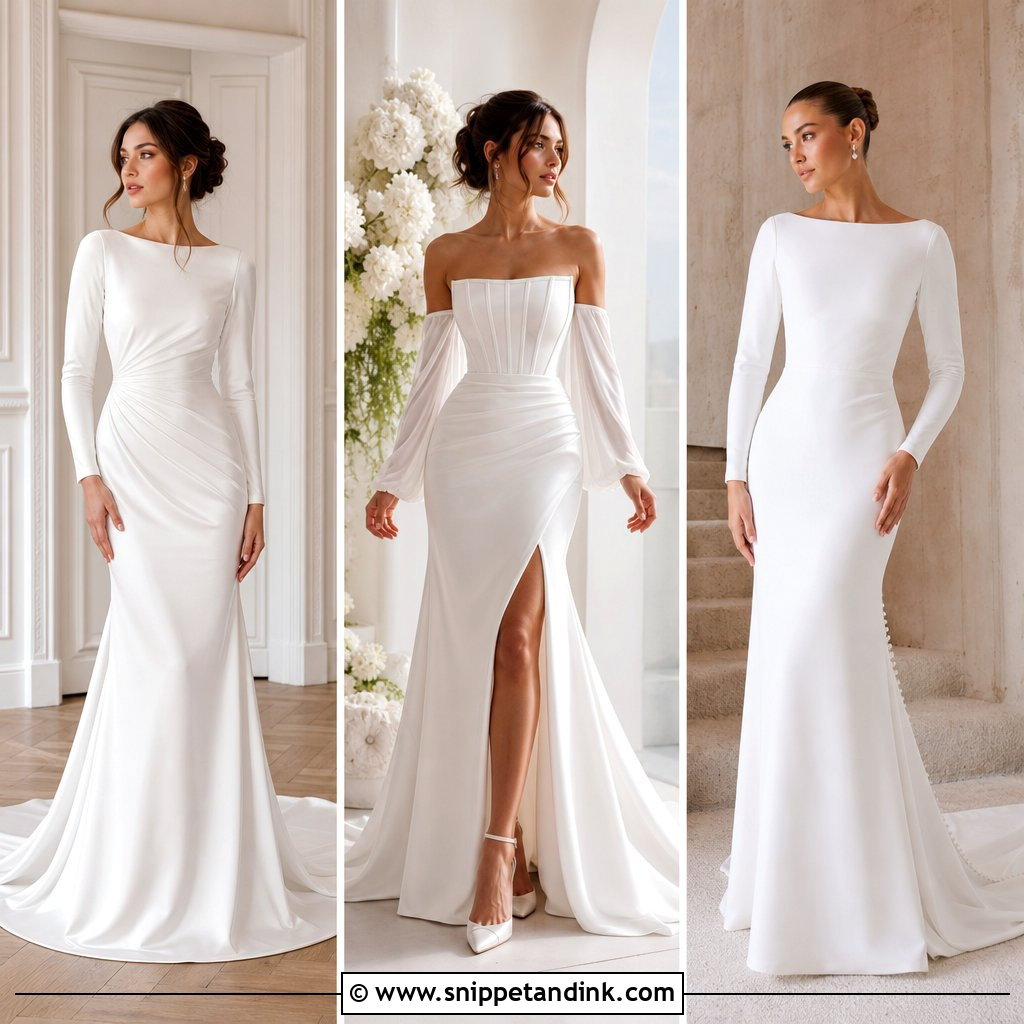
Crepe is the fabric I recommend to brides who dislike shine. It has a slight weight that skims the body, and a sheath in crepe gives one long unbroken line. Look for a bateau neckline, fitted wrist-length sleeves and a small train. Crepe shows a seam that sits wrong more than you’d think, so the tailoring at shoulders, waist and hips has to be exact. Sleek ivory heels and plain studs keep the shape clean. A smooth chignon or softly waved bob keeps attention on the face, and an unembellished chapel veil with a raw or narrow edge finishes it. It’s at home in a contemporary venue, a city wedding or a minimalist indoor ceremony.
3. Plain Chiffon A-Line Wedding Dress With Bishop Sleeves
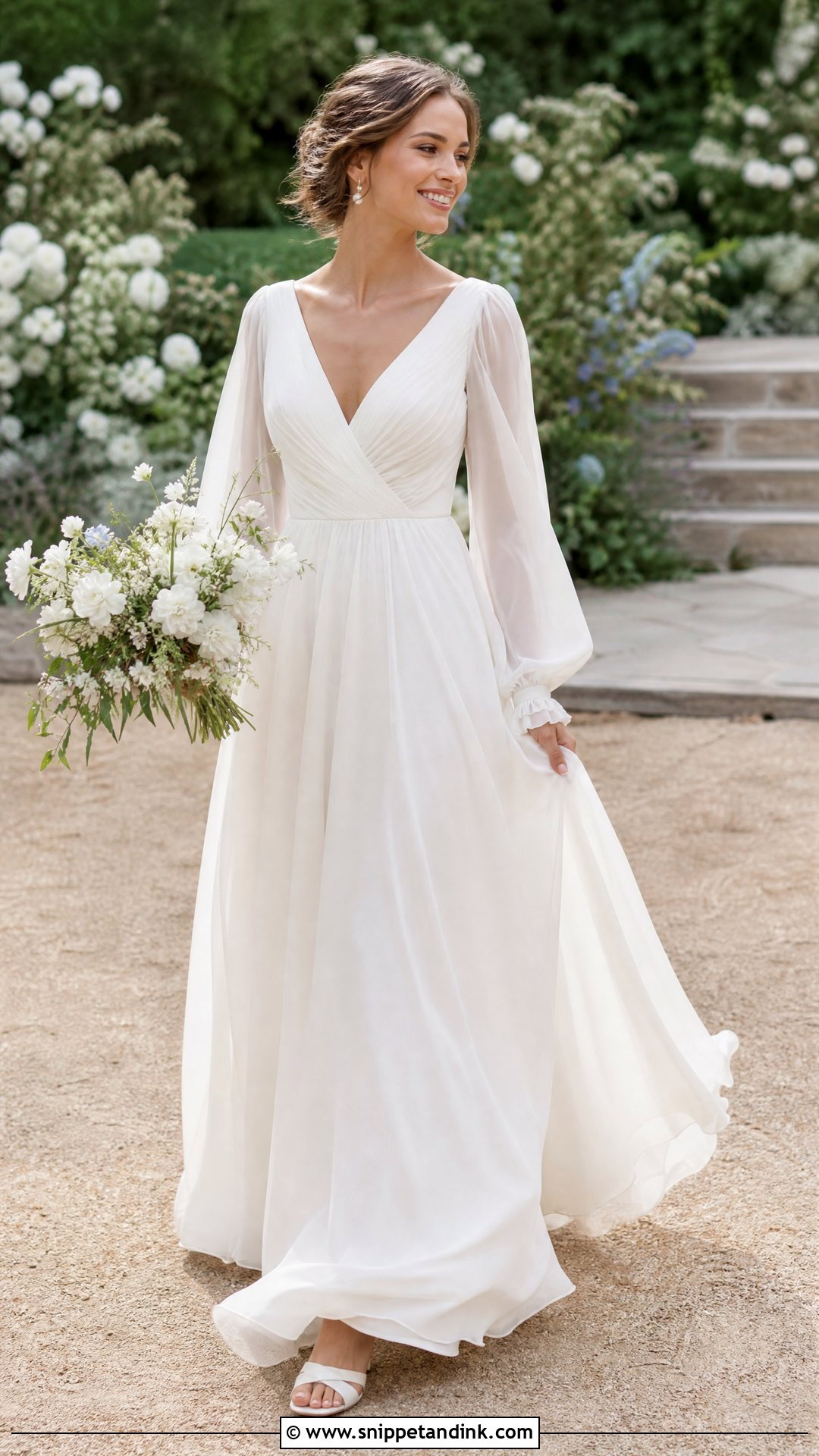
Bishop sleeves billow from the shoulder and gather at the wrist, and in light chiffon they move with every gesture. An A-line skirt falling from a defined or slightly raised waist, a modest V-neck and an opaque lining keep the gown from turning sheer. The cuff matters most on a bishop sleeve. A loose cuff slides over the hand and gets in the way of the ring exchange, so I have it closed with a small covered button snug at the wrist bone. Low block heels, delicate pearl earrings and a loose low bun suit it, and a floral hairpin adds a little detail. An airy bouquet of white blooms echoes the fabric. It’s made for garden, coastal and outdoor ceremonies. Skip large jewelry, which fights the sleeve volume.
4. Plain High Neck Wedding Dress With Long Sleeves
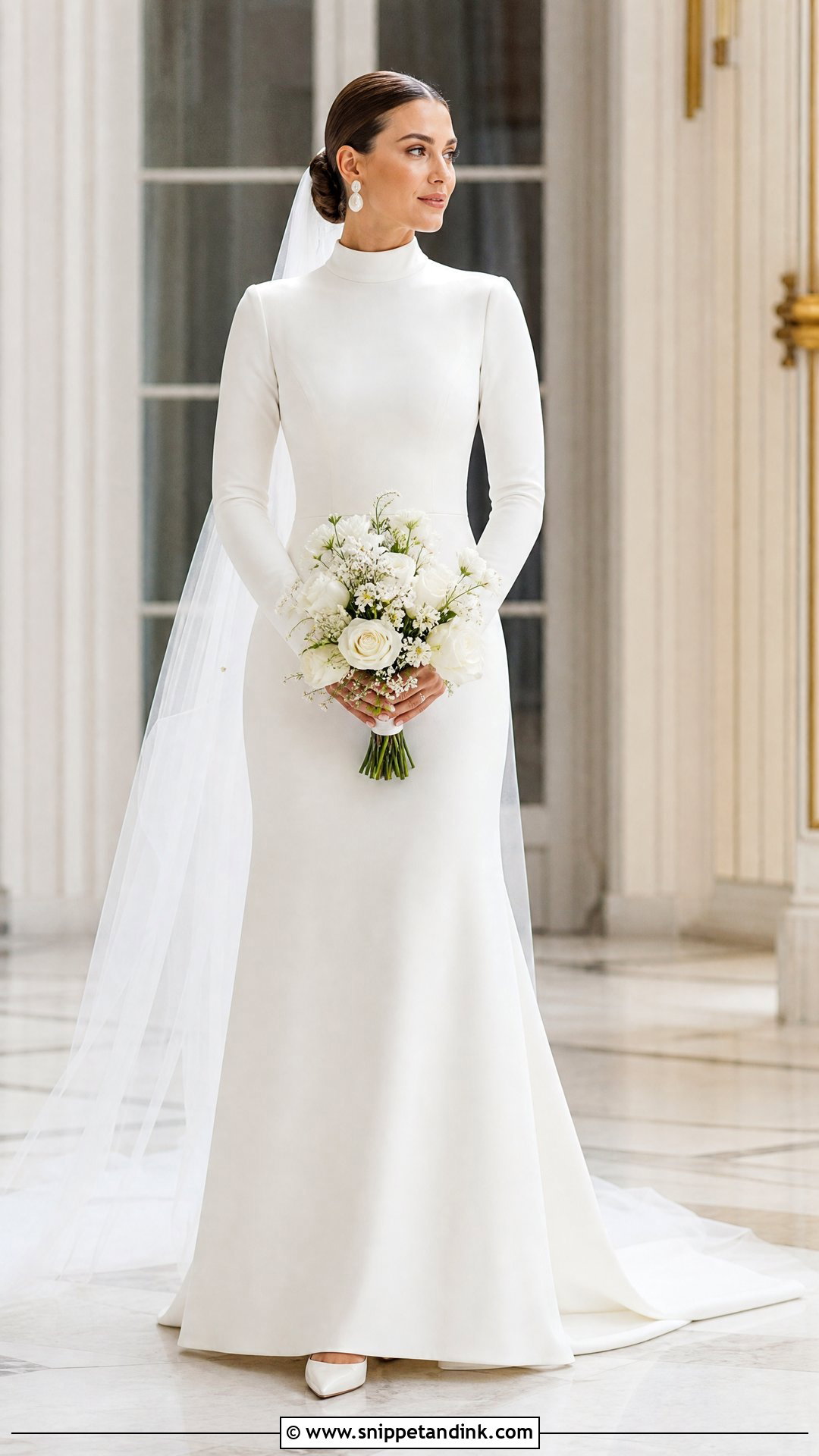
High necklines and full sleeves look strong and modest together, but they only stay comfortable in a fabric with some give. Smooth crepe, stretch satin or soft jersey stop the dress feeling stiff. A fitted bodice over a column or gently flared skirt balances the extra coverage up top. The neckline already frames your face, so I’d skip the necklace and wear pearl drops or sculptural earrings. Hair works in a neat bun, a polished ponytail or waves tucked back. Pointed pumps and a structured bouquet finish the formal look. At fittings, raise your arms, hug someone, sit down and walk. If any of that pulls across the upper back, the sleeves need more room before anything else is altered.
5. Plain Square Neck Wedding Dress With Long Sleeves
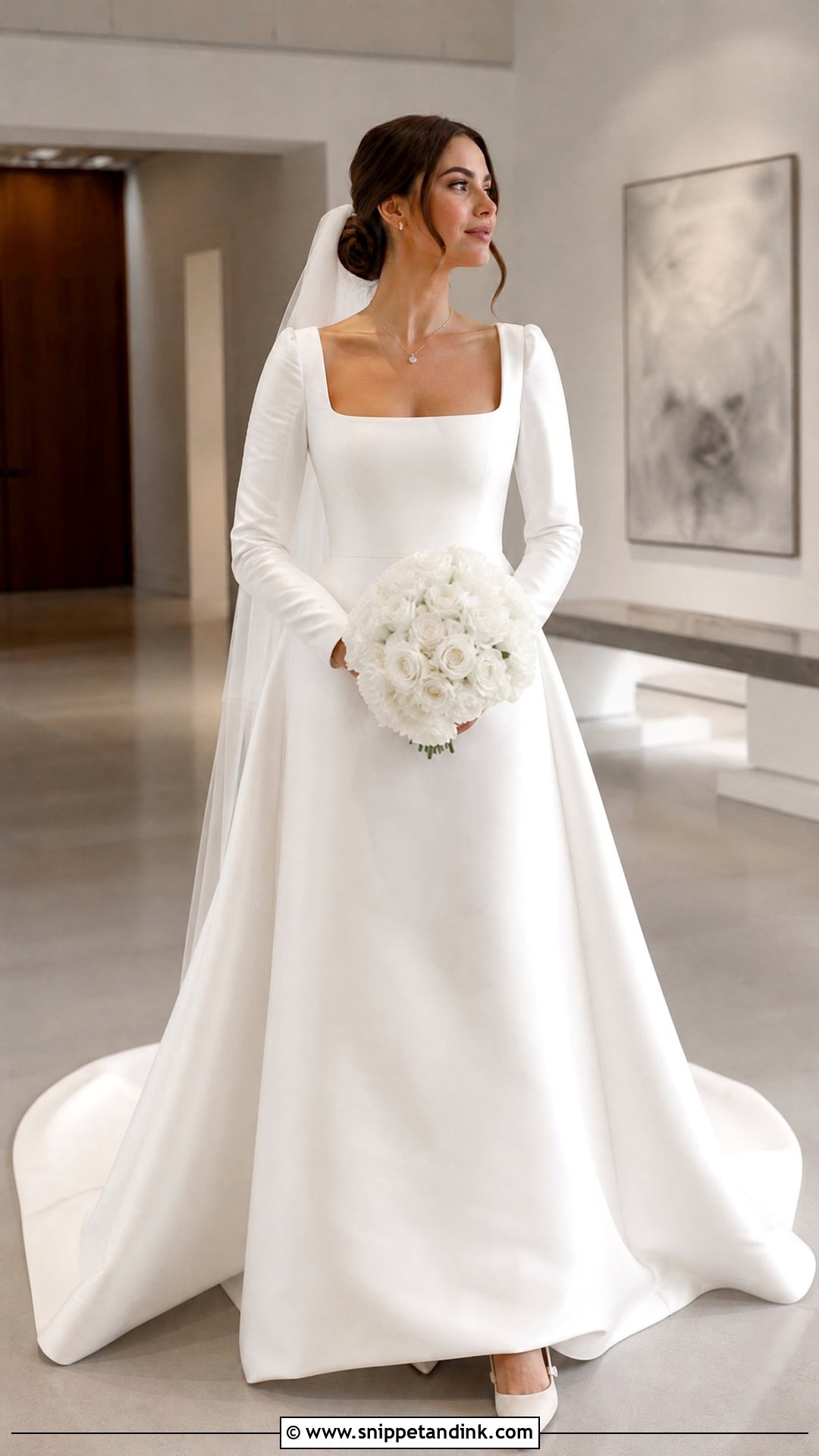
A square neck adds crisp structure and frames the collarbone. Pair a fitted bodice with princess seams, narrow long sleeves and an A-line or softly flared skirt; matte satin or crepe keeps the neckline architectural rather than decorative. A thin pendant can sit inside the open space, though pearl or crystal earrings are often enough. Ivory slingbacks, a low twisted bun and a simple veil set under it complete the look, and a rounded bouquet softens all those straight lines. One practical bonus: a square neck works with far more bra options than a plunge. Have the tailor check that the corners of the neckline lie flat and the sleeve seams sit exactly on the shoulder point.
6. Plain Boat Neck Wedding Dress With Three Quarter Sleeves
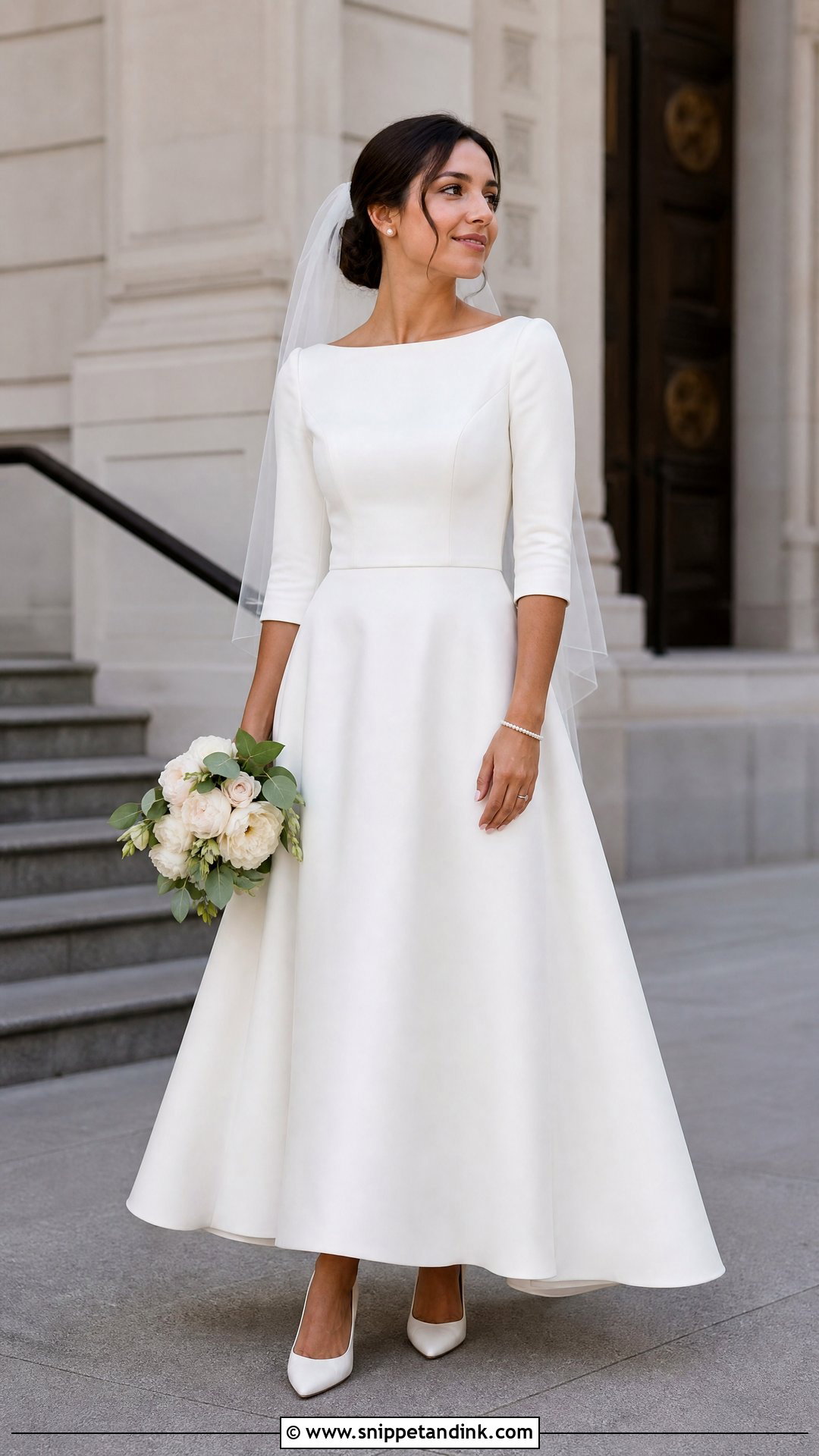
Could a modest gown still feel light? A boat neck with three-quarter sleeves covers the arms while leaving the wrists and collarbone just visible. Look for smooth crepe or mikado fabric with a fitted waist and a softly structured A-line skirt. The wide neckline balances the shoulders, and the shorter sleeve shows a bracelet or a watch that means something to you. Three-quarter sleeves are also the easiest long sleeve to live in, since they never touch a plate or a glass. Pearl studs, a slim tennis bracelet and almond-toe ivory heels suit it. A French twist feels classic, shoulder-length waves less formal. Wear a plain elbow-length veil or just a small comb. It fits courthouse ceremonies, restaurant receptions and daytime celebrations.
7. Plain V-Neck Wedding Dress With Long Sleeves
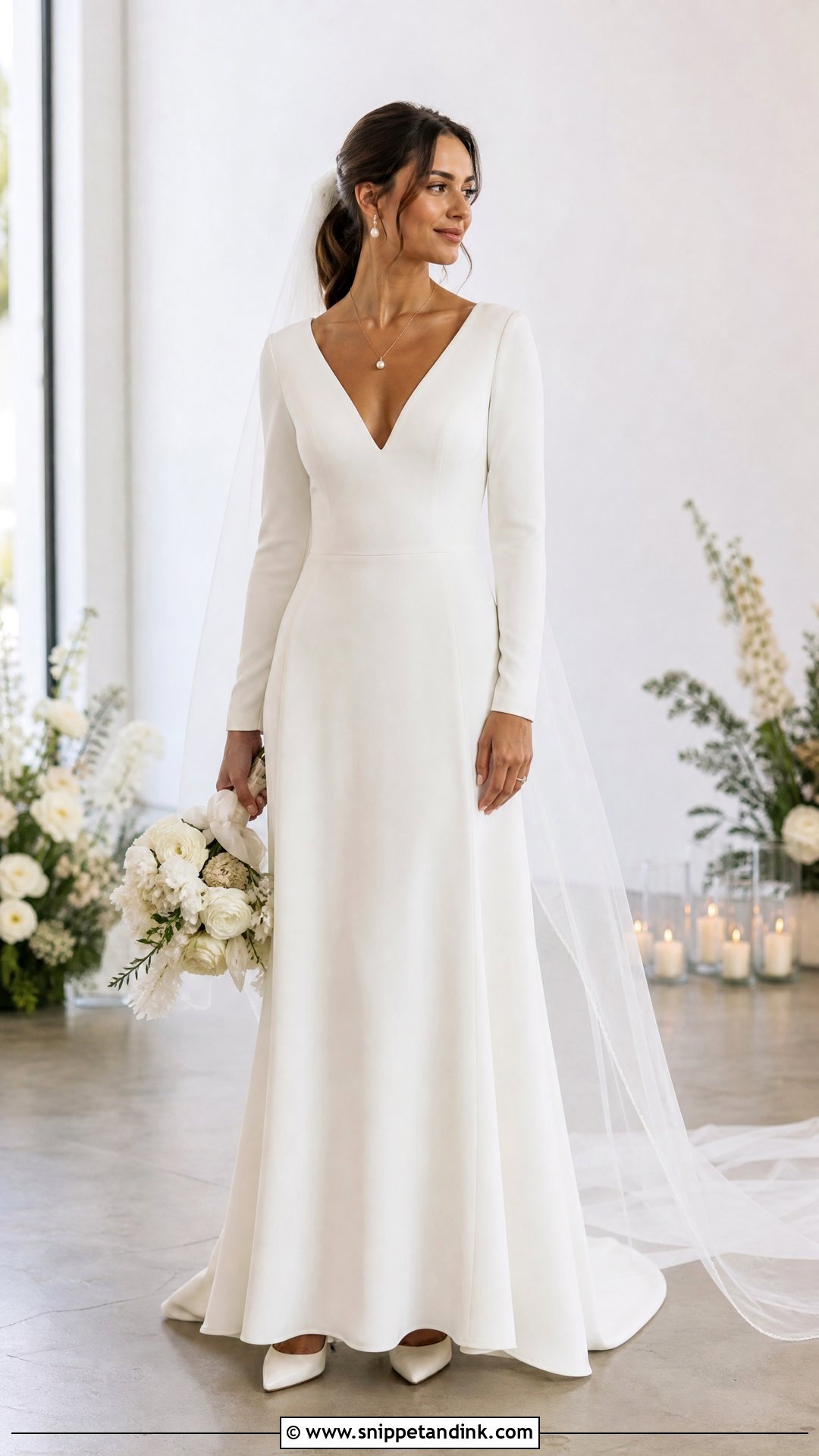
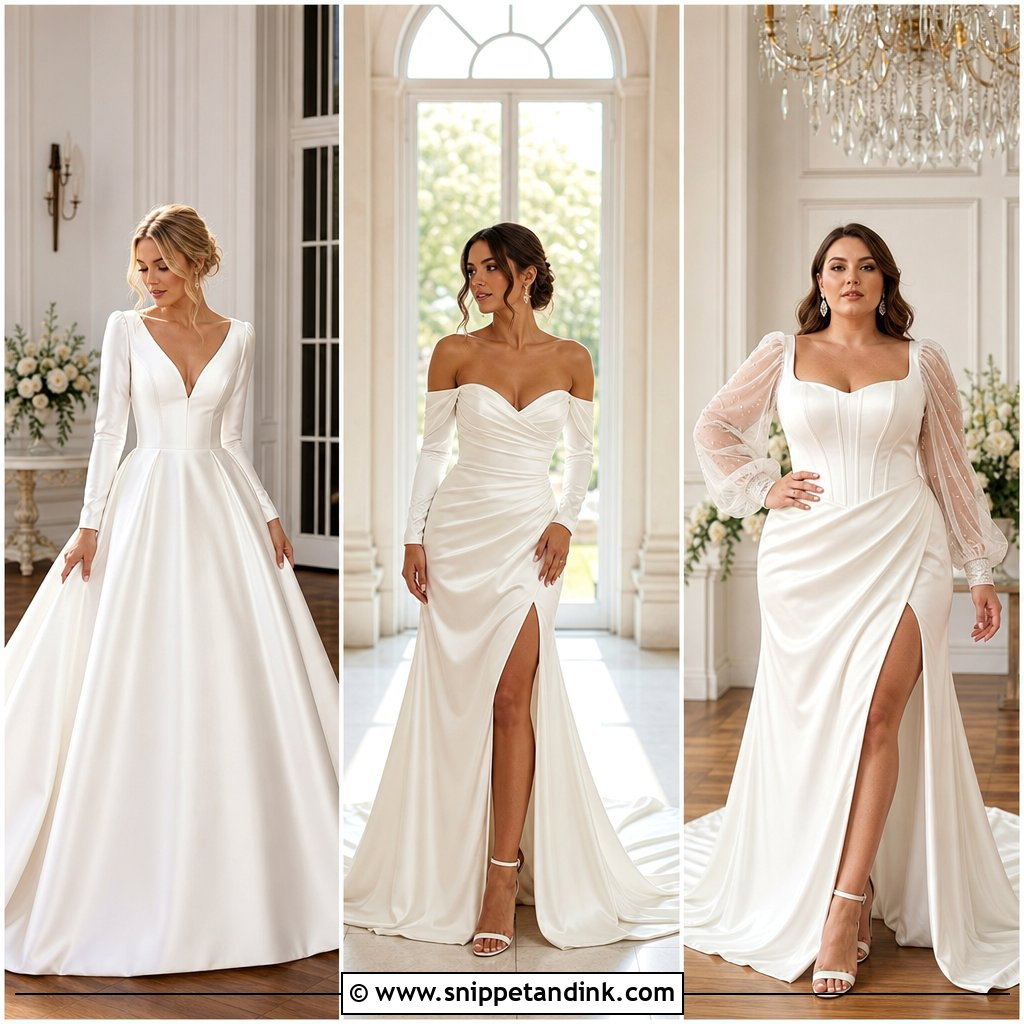
A V-neck lengthens the neck and softens a clean, long-sleeved silhouette. Keep it shallow for coverage or go slightly deeper for a modern look, but it must stay put when you bend; fashion tape or a discreet strip of mesh fixes one that doesn’t. A stretch-crepe bodice with fitted sleeves over a flowing A-line skirt balances structure and ease. Add a fine pendant, small pearl earrings and pointed heels. A waist-length veil keeps the front visible, while a longer raw-edge veil brings ceremony drama. Relaxed waves or a low ponytail match the uncomplicated gown. Stretch crepe is the reason this one works in any season: it moves with the arms and resists creasing.
8. Plain Off Shoulder Wedding Dress With Long Sleeves
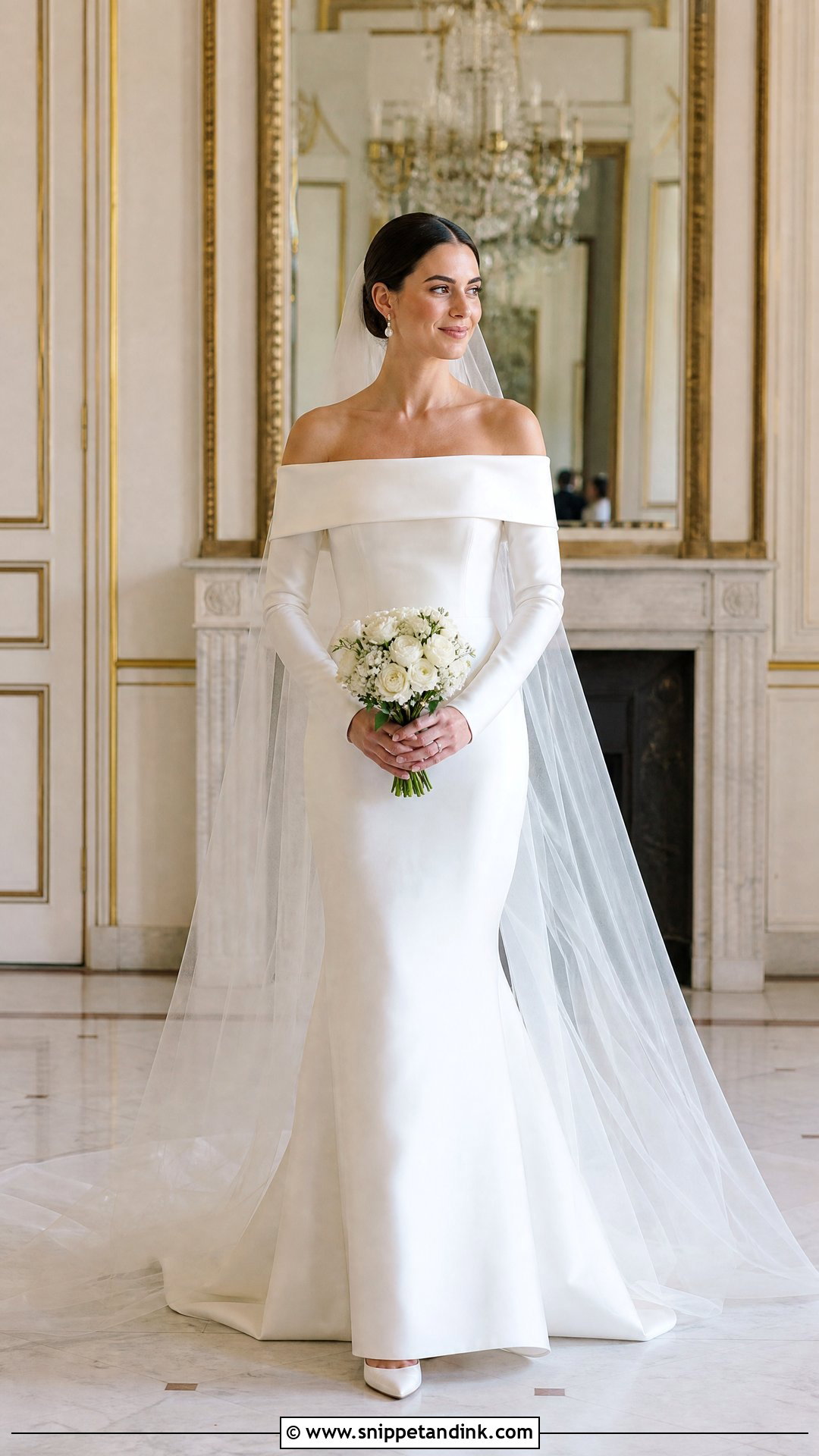
Off-the-shoulder long sleeves look gorgeous and are the hardest sleeve in this list to move in. The sleeve starts below the shoulder, so lifting your arms pulls the whole neckline down. A folded satin neckline with fitted sleeves, over a smooth column or fit-and-flare skirt, needs a firm internal band or boning to hold it. Keep jewelry to small drops and no necklace. A center-parted bun frames the shoulders, and a sheer cathedral veil adds movement behind the slim shape. Ivory pumps and a compact bouquet held below the waist finish it. My advice is to spend most of your fitting time on arm movement. This style is best for indoor ceremonies and evening receptions where you won’t be waving across a field.
9. Plain Puff Sleeve Wedding Dress With Full Skirt
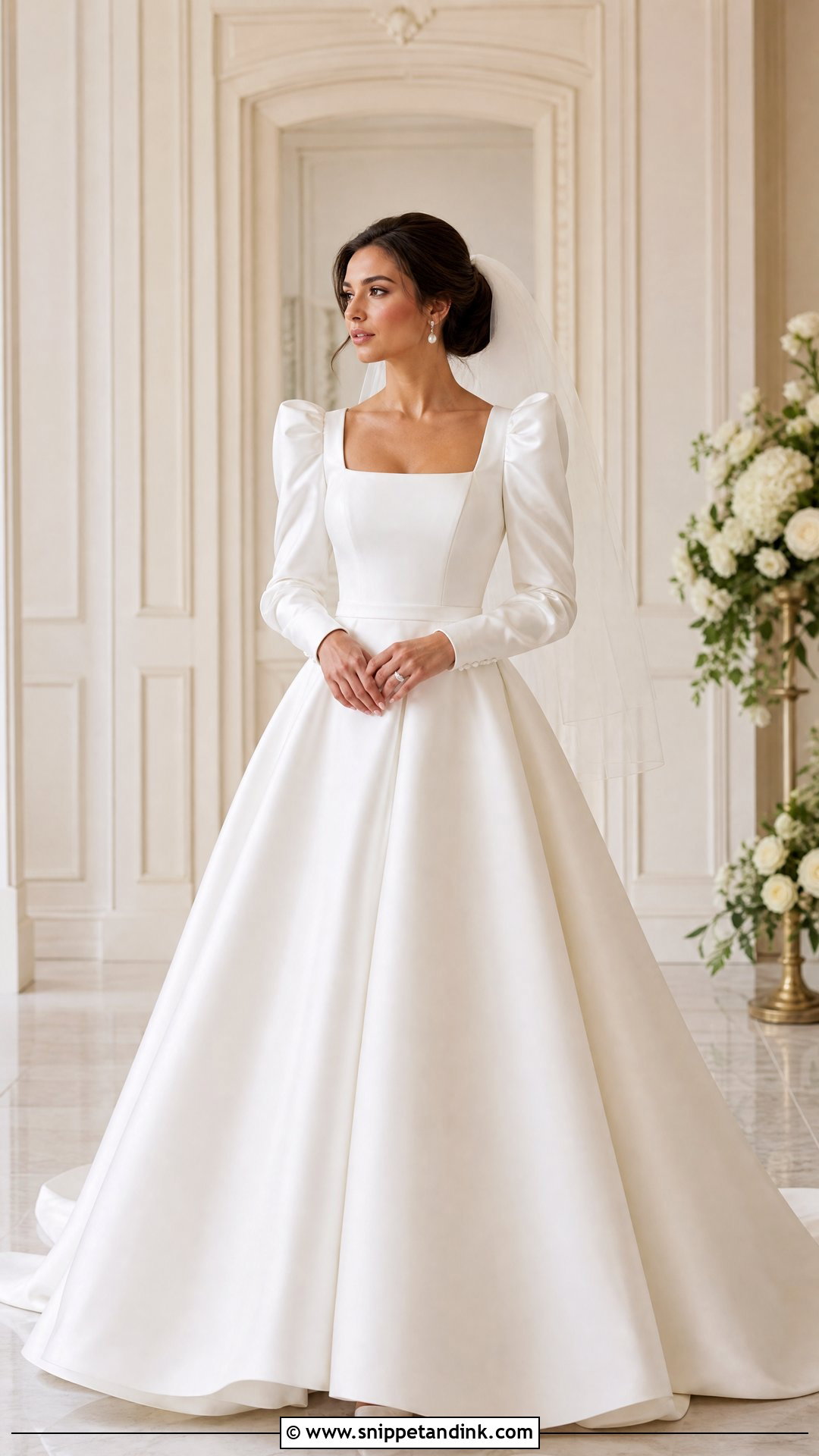
Puff sleeves give a plain dress personality with no embroidery at all, as long as the volume is controlled. I look for a puff that sits on the shoulder rather than above it, gathered into a fitted cuff, because a puff that rises above the shoulder line can make you look boxy in photos. A square-neck bodice with a full satin or mikado skirt balances it. Keep the waist clean or add a narrow matching belt. Pearl button earrings, a smooth updo and classic ivory pumps suit it. A medium-length veil works better than a very full one, since the sleeves already add volume up top. Rounded flowers in the bouquet echo the sleeve shape. It suits a grand indoor venue, a hotel celebration or a cool-weather ceremony.
10. Plain Column Wedding Dress With Bell Sleeves
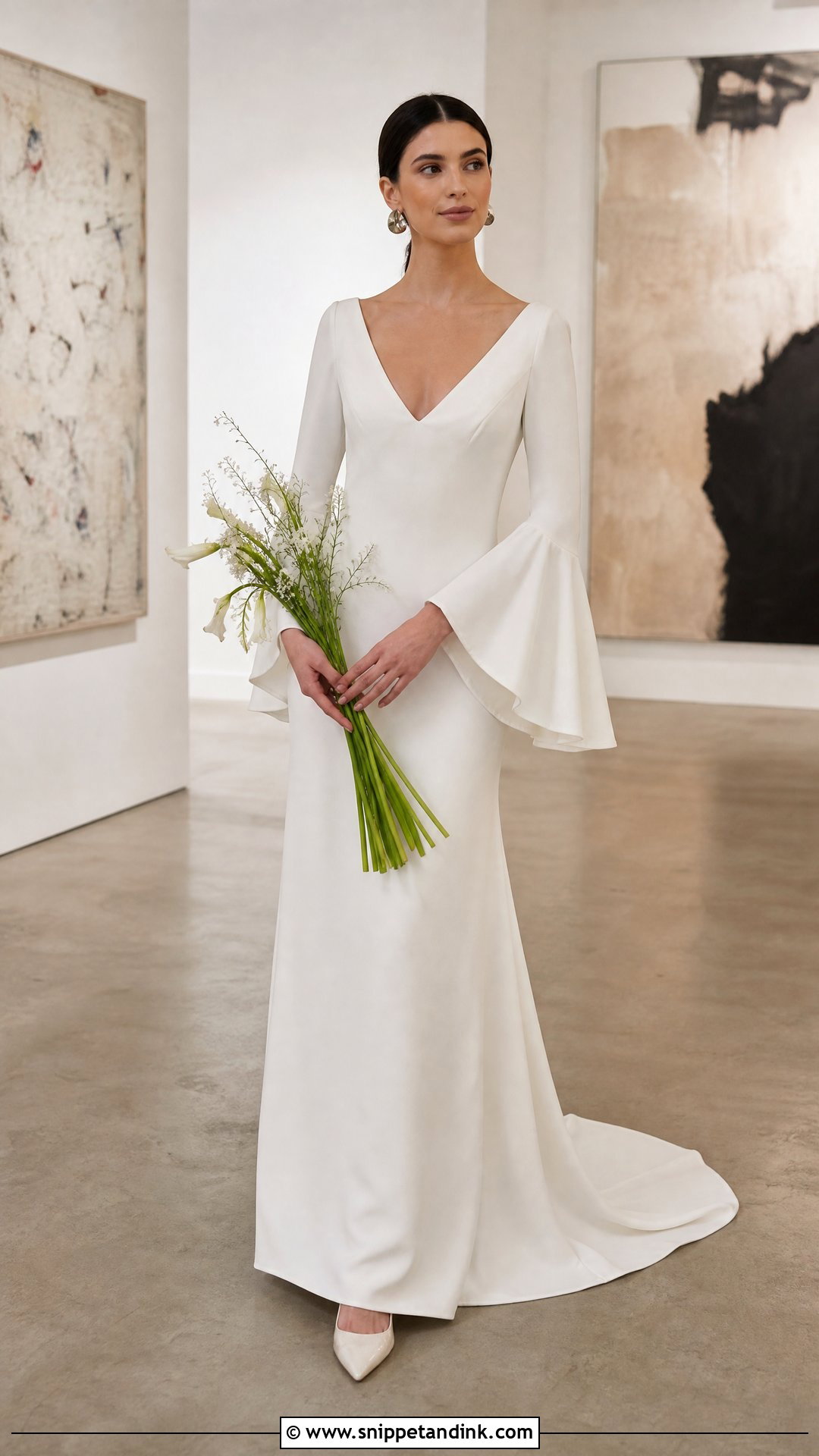
Bell sleeves flare out at the forearm, and on a narrow column gown they give movement without bulk. I’d ask for matte crepe with the flare starting below the elbow, not at the shoulder. That keeps the upper body slim and means a coat still slides on over it. A scoop or soft V-neck suits the fluid line. Low pointed heels, small metallic earrings, a sleek center part and a narrow long-stemmed bouquet follow the vertical shape. The catch is the cuff. Wide bells drag through sauces and catch on candles, so moderate volume is the sensible choice. It fits intimate venues, galleries and relaxed destination ceremonies.
11. Plain Modest Wedding Dress With Opaque Sleeves
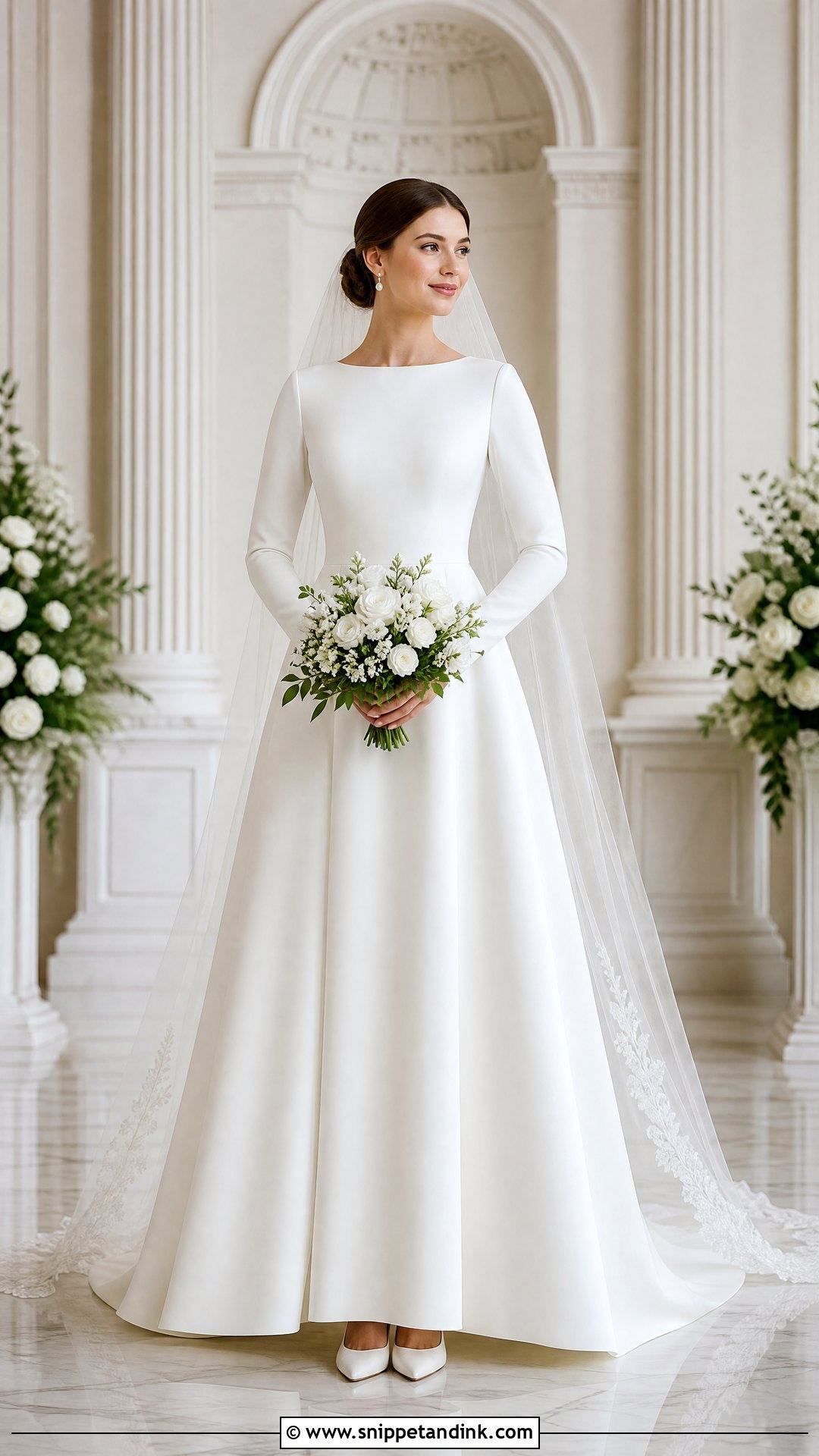
Reliable coverage starts with the lining. An opaque-sleeved gown can look entirely contemporary, but only if the bodice is properly lined so nothing shows in bright light. Choose a jewel, bateau or shallow V-neck with fitted sleeves to the wrist and an A-line skirt for movement. Matte crepe, soft satin or light mikado keep the finish smooth without turning see-through outdoors. Pearl earrings, closed-toe pumps and a simple cathedral veil make it formal; a low bun keeps the neckline neat and white flowers add texture. Stand in daylight by a window and under warm indoor bulbs before alterations are signed off. It suits traditional ceremonies where coverage is expected and no one wants extra layers.
12. Plain Plus Size Wedding Dress With Long Sleeves
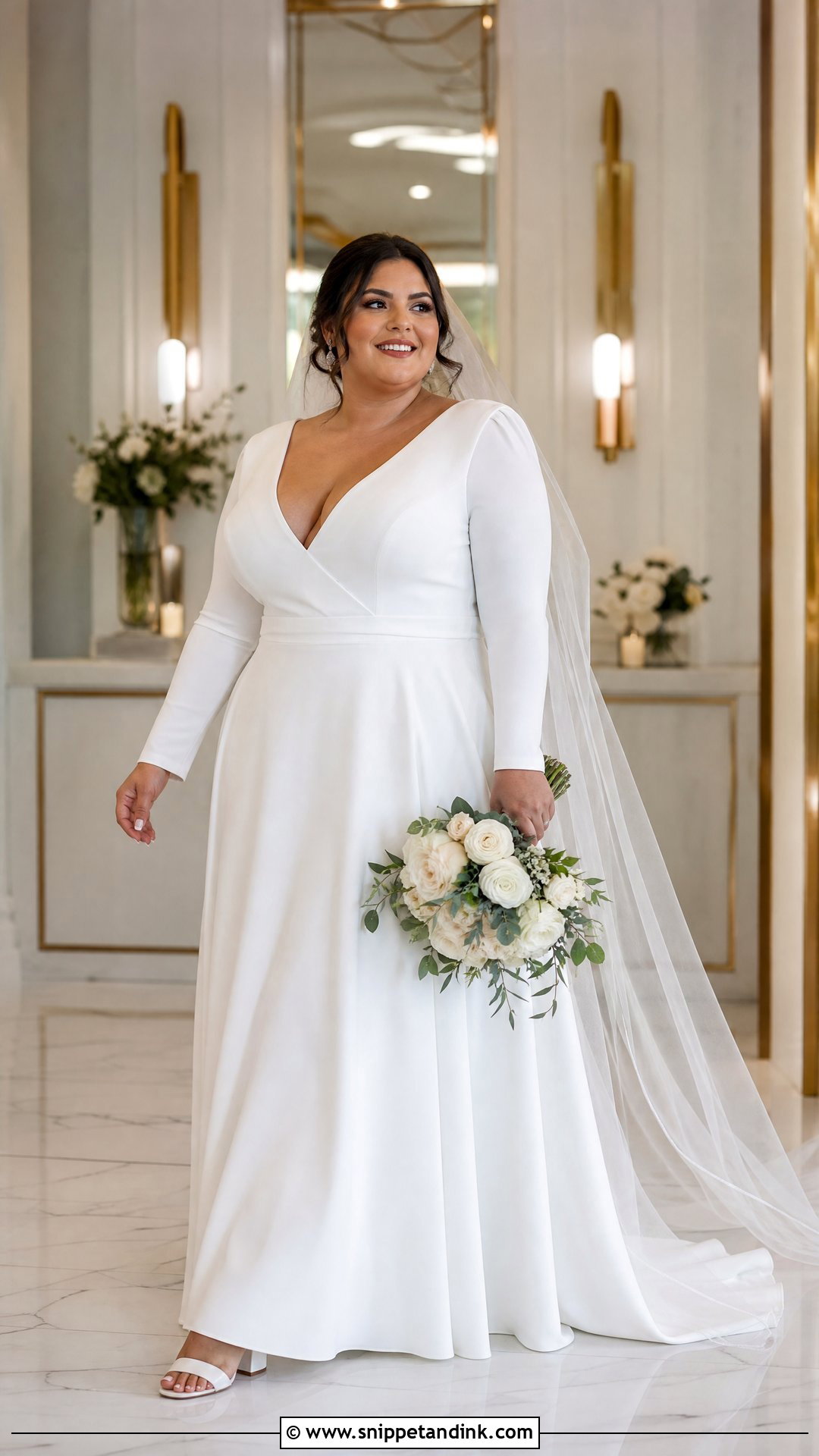
Support comes first in a plus-size gown, and sleeves have to be fitted with it in mind. A V-neck or square-neck bodice with internal structure, stretch long sleeves and an A-line skirt that glides over the hips is a strong starting point. Crepe and matte satin keep the lines clean in photographs. The sleeve is where off-the-rack sizing often fails: it pulls at the elbow and across the upper back while the bodice fits. A good seamstress can let the sleeve out or recut the armhole, so don’t dismiss a dress for that alone. Supportive block heels, medium-scale earrings and a veil that falls past the widest point of the skirt balance the proportions. The waist seam should sit at your natural waist. Secure undergarments and comfortable shoes do the rest.
13. Plain Petite Wedding Dress With Long Sleeves
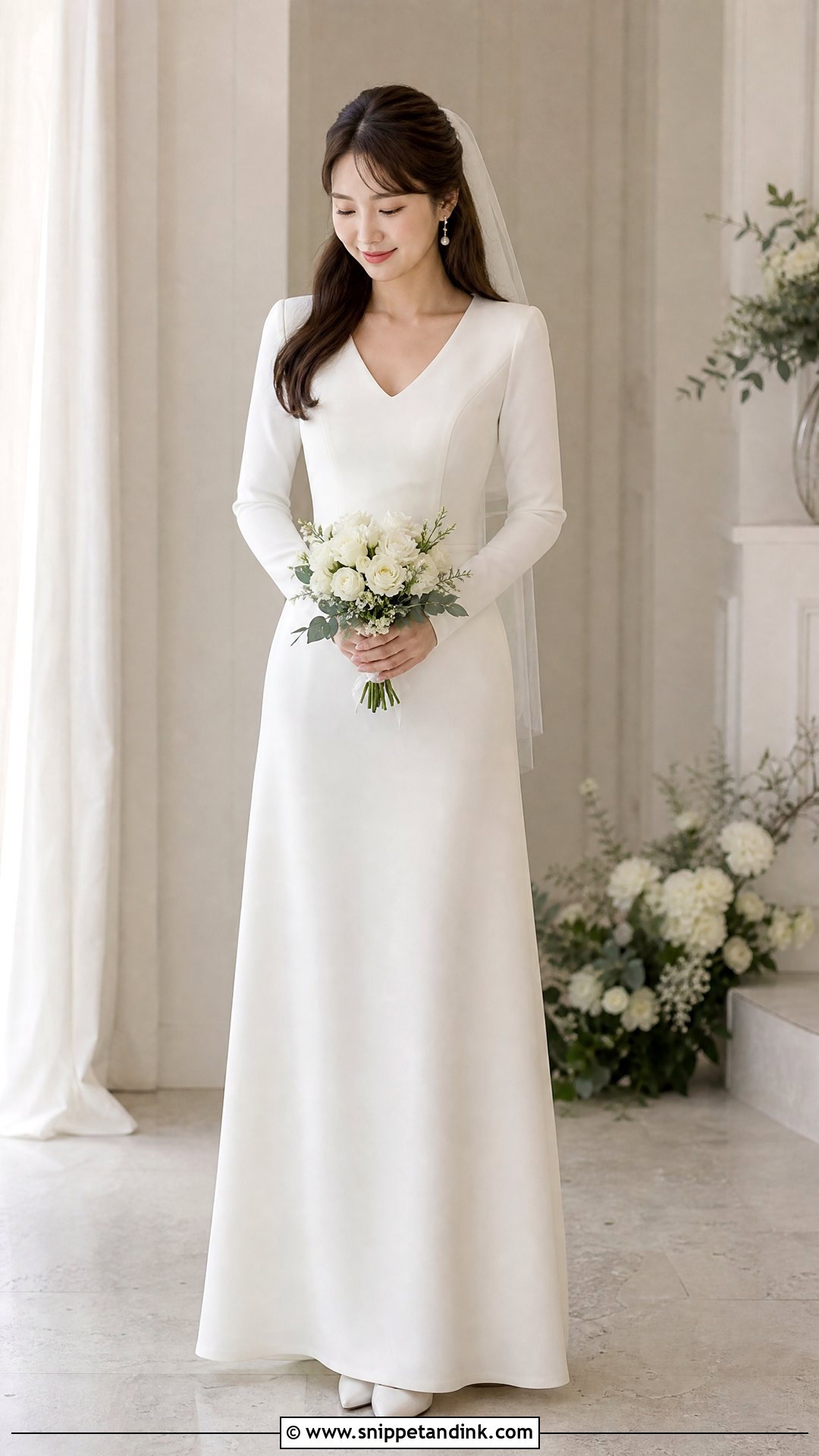
Scale is everything on a petite bride. Clean proportions make a long-sleeved gown lengthen the frame instead of swamping it: a narrow A-line or sheath, a natural waist, fitted sleeves and a modest V-neck. Avoid very wide cuffs, oversized shoulders and a long train. Lightweight crepe or silk-blend satin stays graceful and alters well. Pointed heels in the same ivory as the dress continue the line, and small pearl drops, a compact bouquet and a narrow veil keep everything in scale. An updo or half-up style adds a little height. Petite alterations usually mean shortening the bodice, sleeves and waist as well as the hem. Sleeves on standard sizes often end past the knuckles, so expect that to be part of the work.
14. Plain Tea Length Wedding Dress With Sleeves
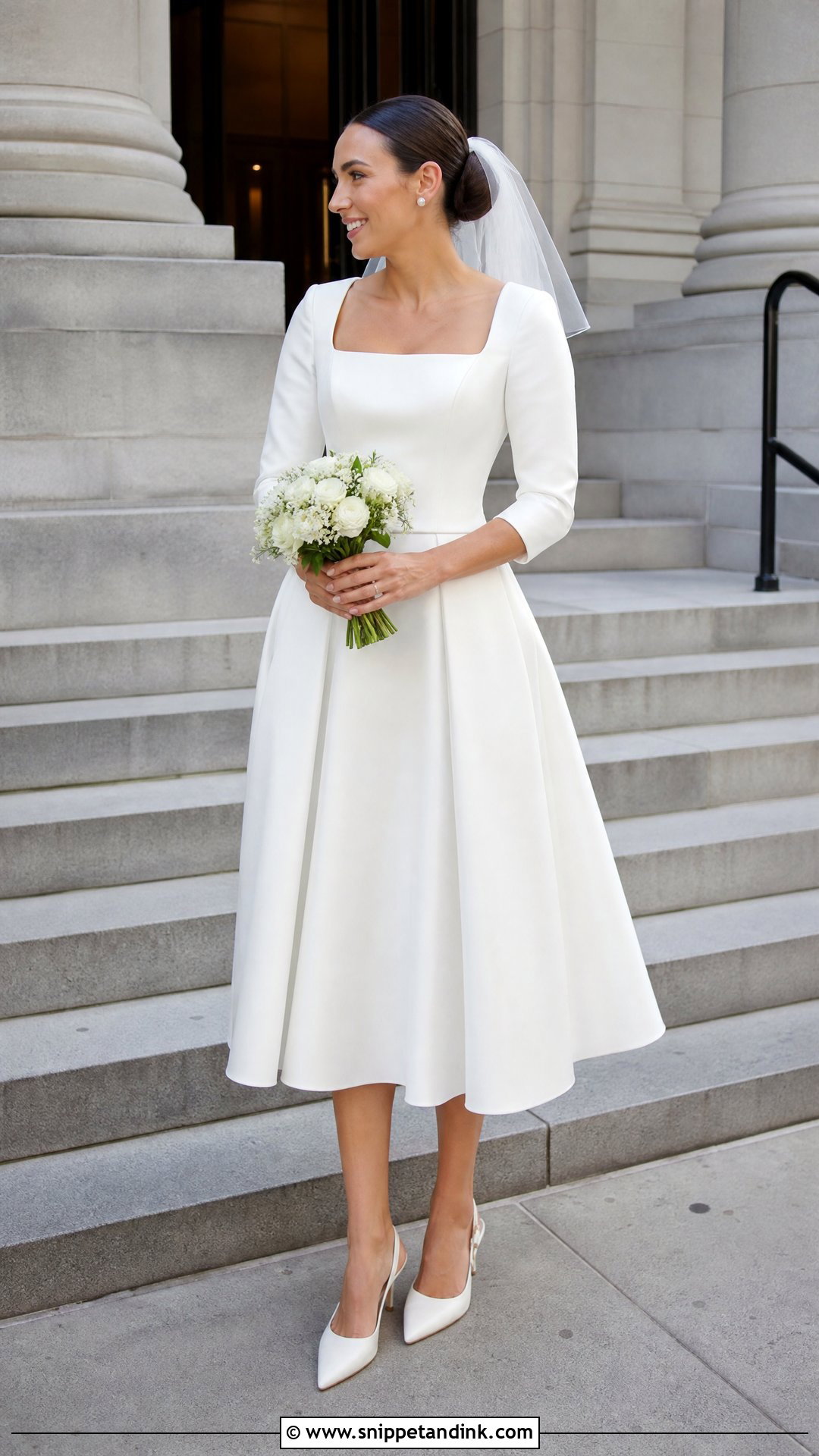
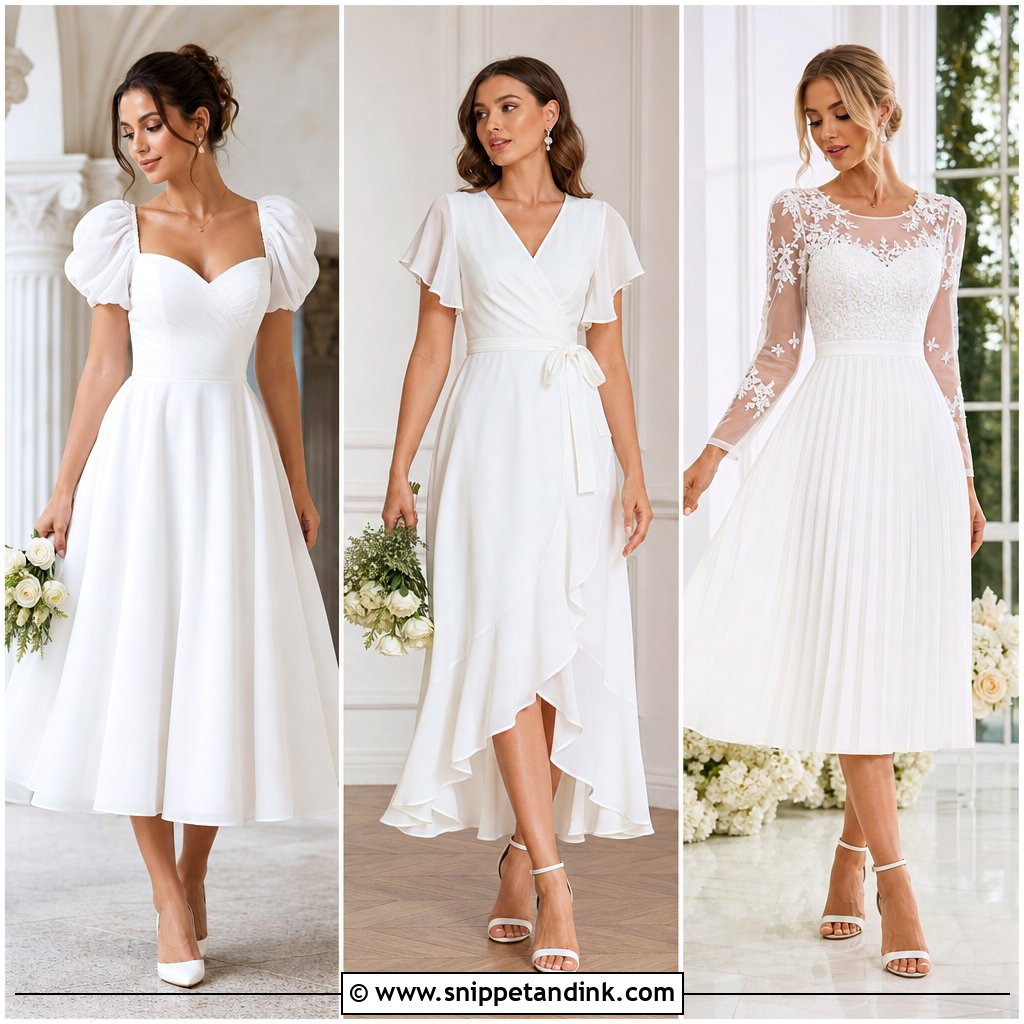
A tea-length wedding dress is the playful alternative to floor length, and it’s still unmistakably bridal. A fitted bodice with a bateau or square neck, three-quarter sleeves and a softly flared skirt ending between knee and ankle is the classic build. Structured satin, mikado or heavier crepe holds the skirt out; thin fabrics droop at this length. With the shoes on show, pick elegant slingbacks, pointed pumps or bridal flats. Pearl studs, a short veil and a compact bouquet suit the shorter proportions. A smooth bun is classic, waves more relaxed. It’s practical for courthouse weddings, daytime receptions and venues with a lot of walking.
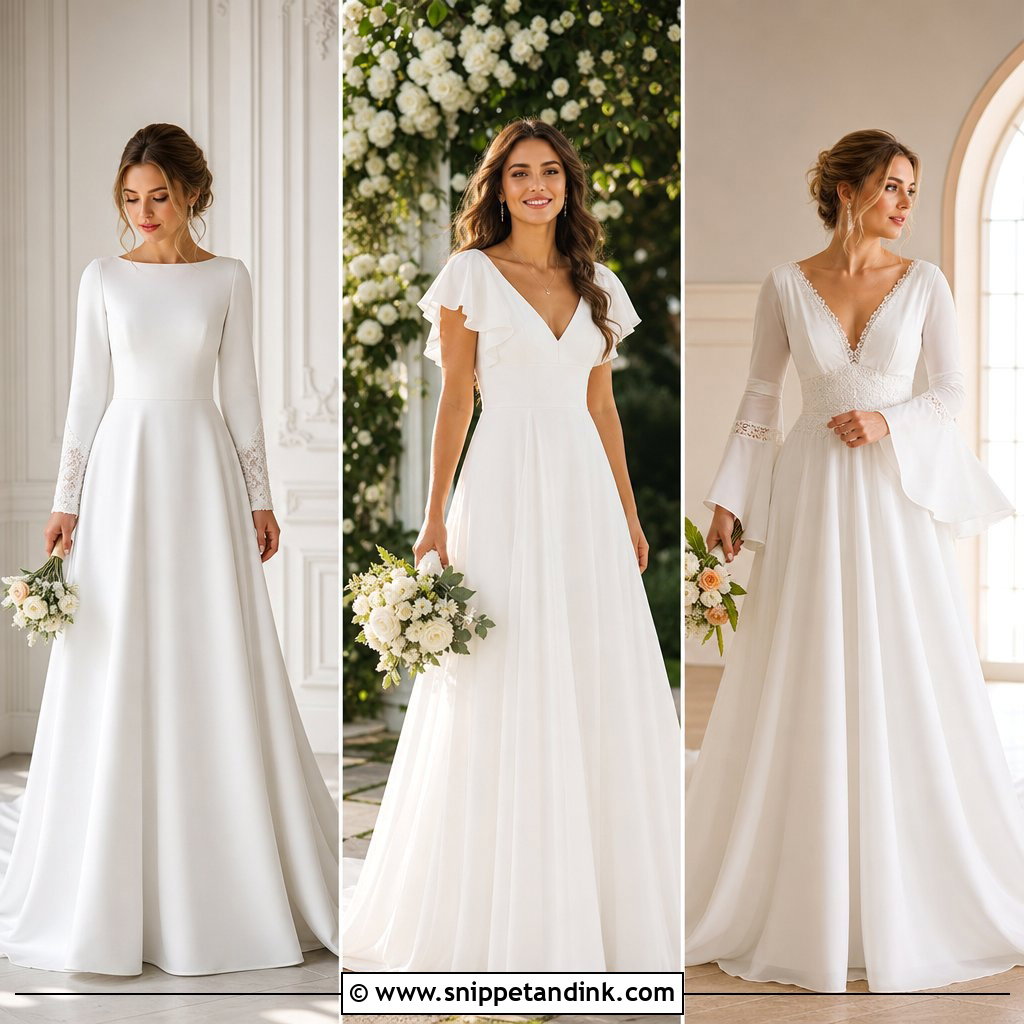

15. Plain Courthouse Wedding Dress With Long Sleeves
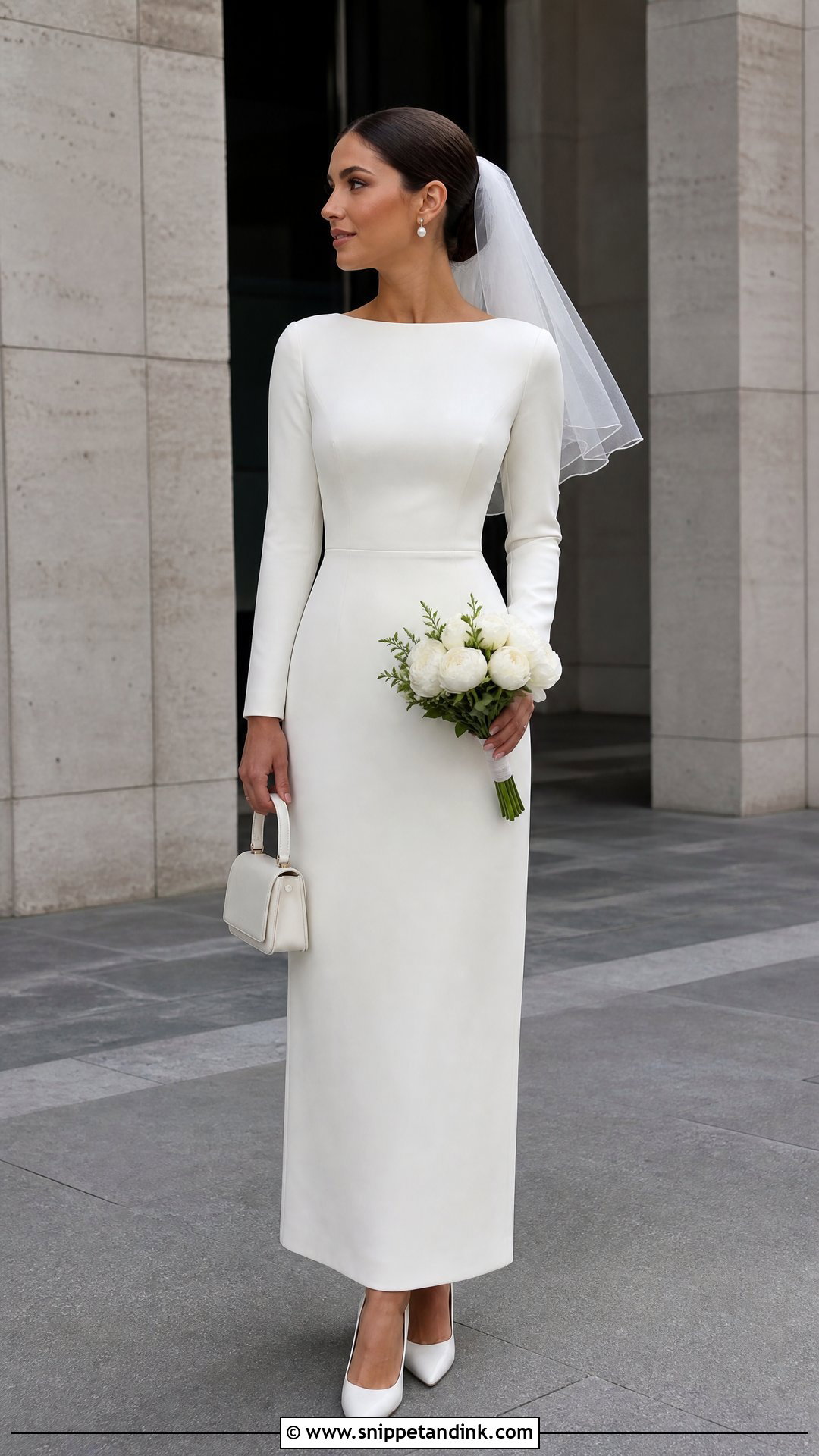
Small rooms and corridors set the rules at a courthouse. A midi or ankle-length crepe dress with long fitted sleeves, a clean waist and a square, boat or shallow V-neck feels special and is easy to wear in a compact setting. White pointed pumps and a small structured handbag give it a city finish. Swap the long veil for a short one, a sculptural hair bow or a polished headband. Small earrings and a neatly wrapped bouquet are easy to carry through hallways. A tailored ivory coat keeps you warm without hiding the shape. Many brides wear pieces of this outfit again, which is a real point in its favor for a legal ceremony or micro wedding.
16. Plain Winter Wedding Dress With Long Sleeves
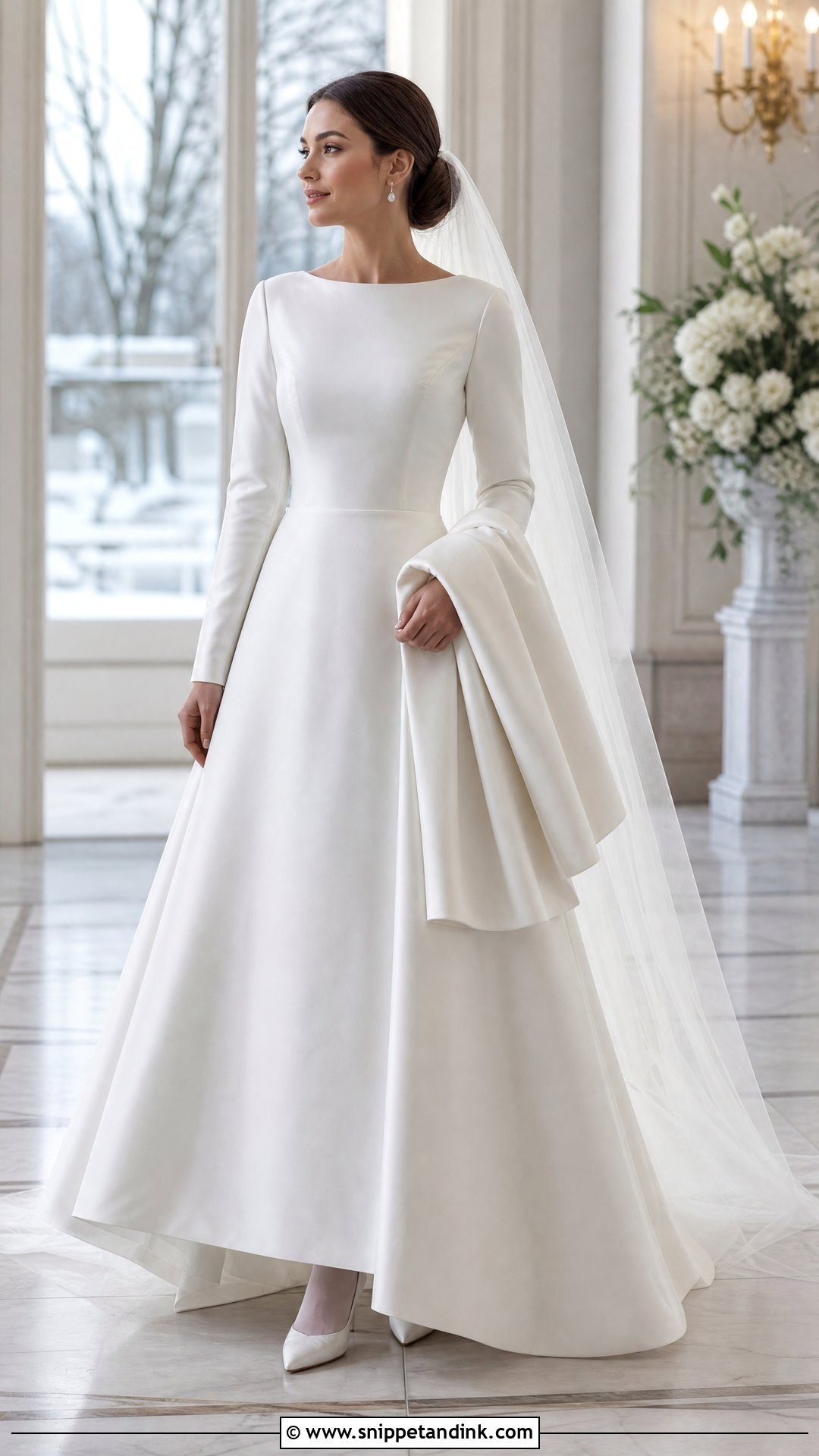
Cold weather is when a substantial long-sleeved gown earns its place. A satin or mikado A-line with a structured bodice, opaque fitted sleeves and a sweeping skirt holds its shape in the cold and looks rich in low winter light. A bateau neckline keeps coverage and frames pearl or crystal earrings. Throw an ivory tailored coat or a textured wrap over it for outdoor photos, then take it off inside. Closed-toe pumps and sheer bridal tights add warmth. A secure low bun and a chapel veil complete it. Leave enough room through the shoulders for a coat to go on without dragging the sleeves up; I check this with the coat itself at the final fitting.
17. Plain Summer Wedding Dress With Chiffon Sleeves
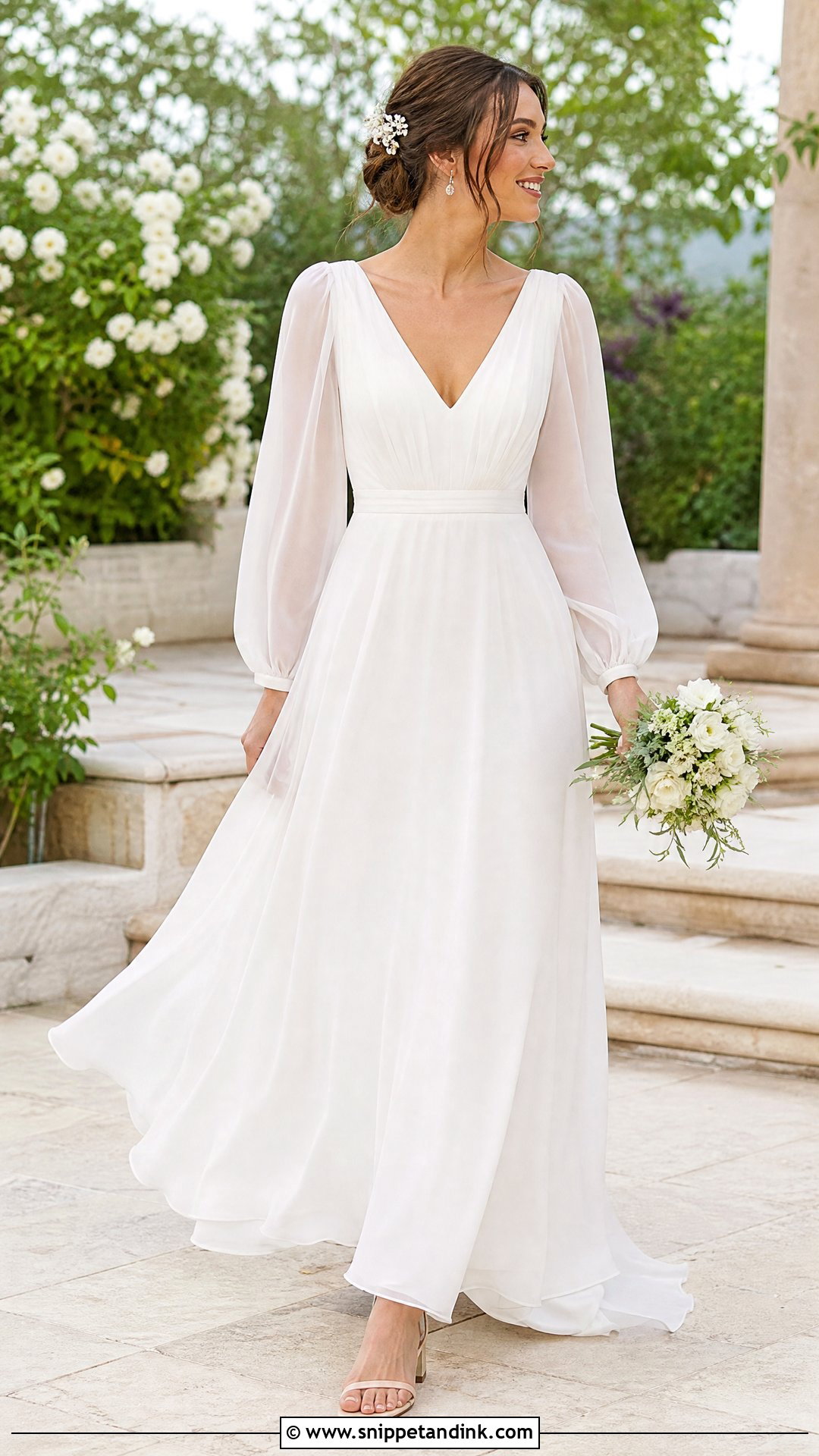
Sleeves in summer only work if they’re airy. An A-line with a lined crepe or chiffon body and loose, sheer chiffon sleeves gathered at narrow cuffs lets air move around the arm. A soft V-neck opens up the upper body, and the flowing skirt makes walking easy. Low block-heel sandals, light drop earrings and a simple hair comb suit it, with a loose bun or half-up style to keep hair off the neck in heat. Carry a small bouquet; a heavy arrangement in hot weather is tiring to hold. Ask about the lining fiber. A polyester bodice lining can feel clammy by afternoon, while cotton or viscose breathes better.
18. Plain Backless Wedding Dress With Long Sleeves
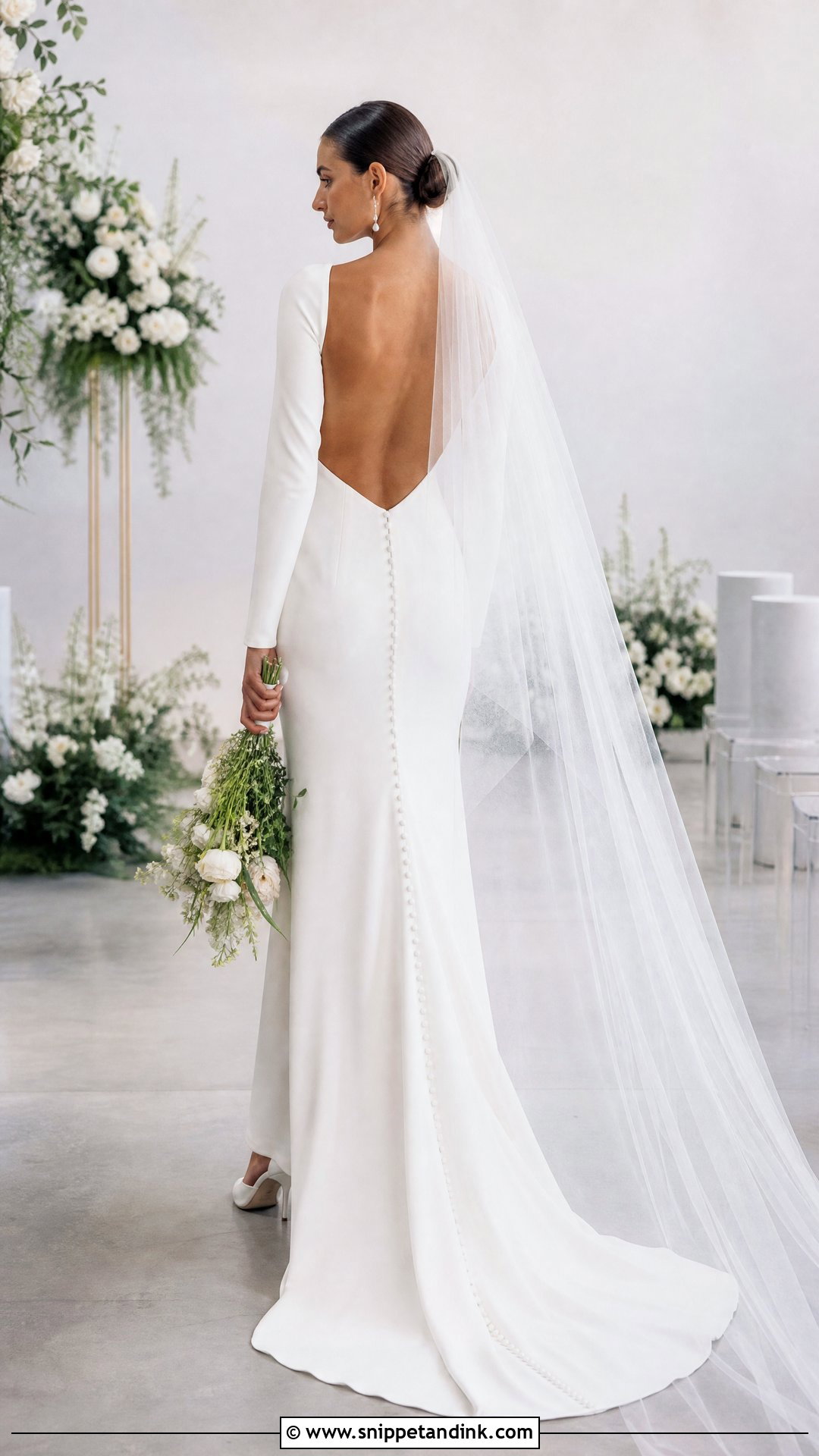
An open back is the surprise on a fully sleeved plain gown. A smooth crepe sheath or fit-and-flare with fitted sleeves and a back opening that ends at a comfortable height looks covered from the front and dramatic from behind. Covered buttons down the center add definition. Have cups sewn into the bodice or use adhesive support so no straps cross the opening. A low bun reveals the back, and a sheer raw-edge veil keeps it visible during the ceremony. Slim drops, ivory pumps and a narrow bouquet are all it needs. Long sleeves pull on an open back when you reach forward, so test it sitting, turning and with arms raised. The back should lie flat without dragging at the shoulders.
19. Plain Detachable Sleeve Wedding Dress
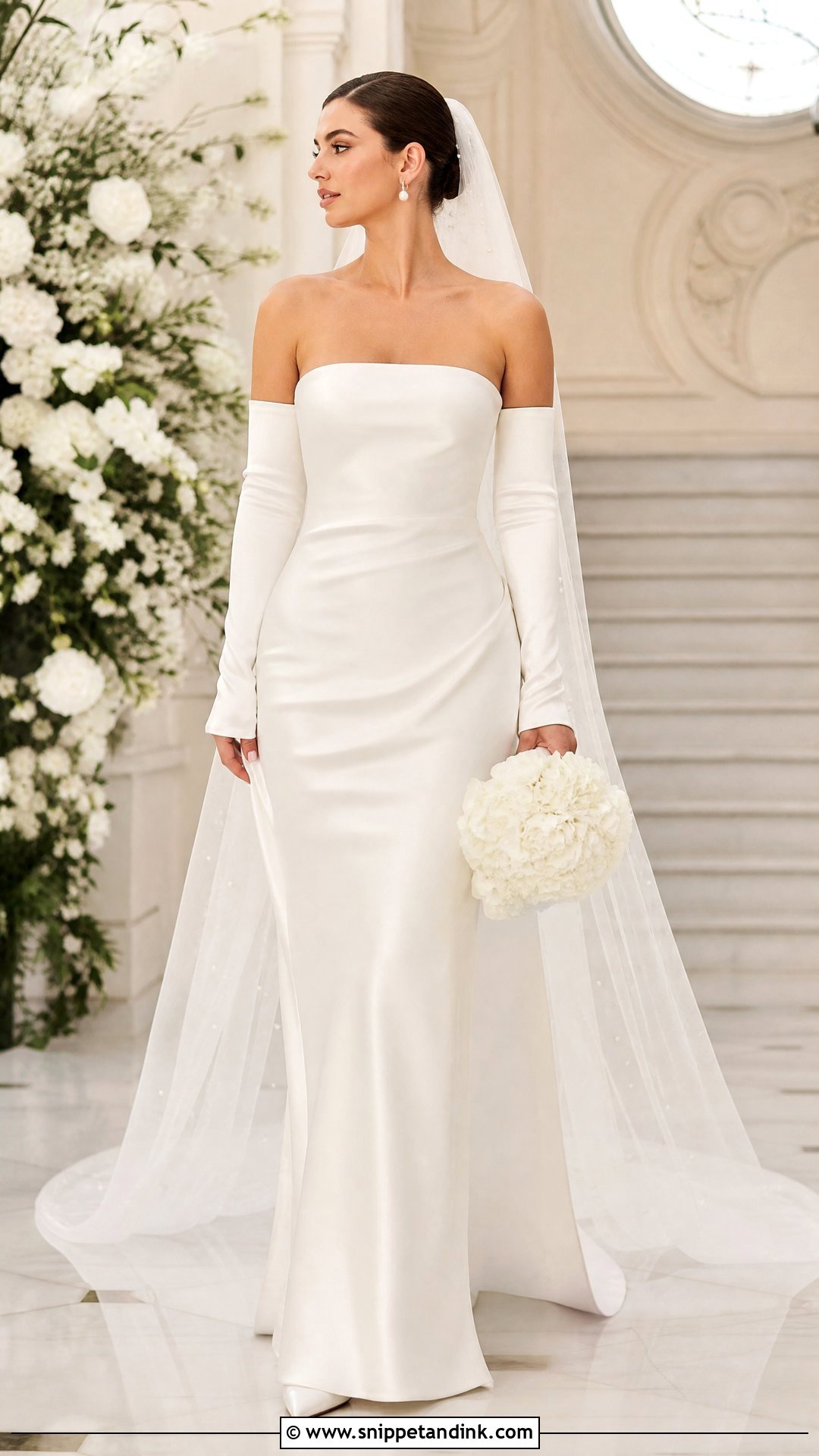
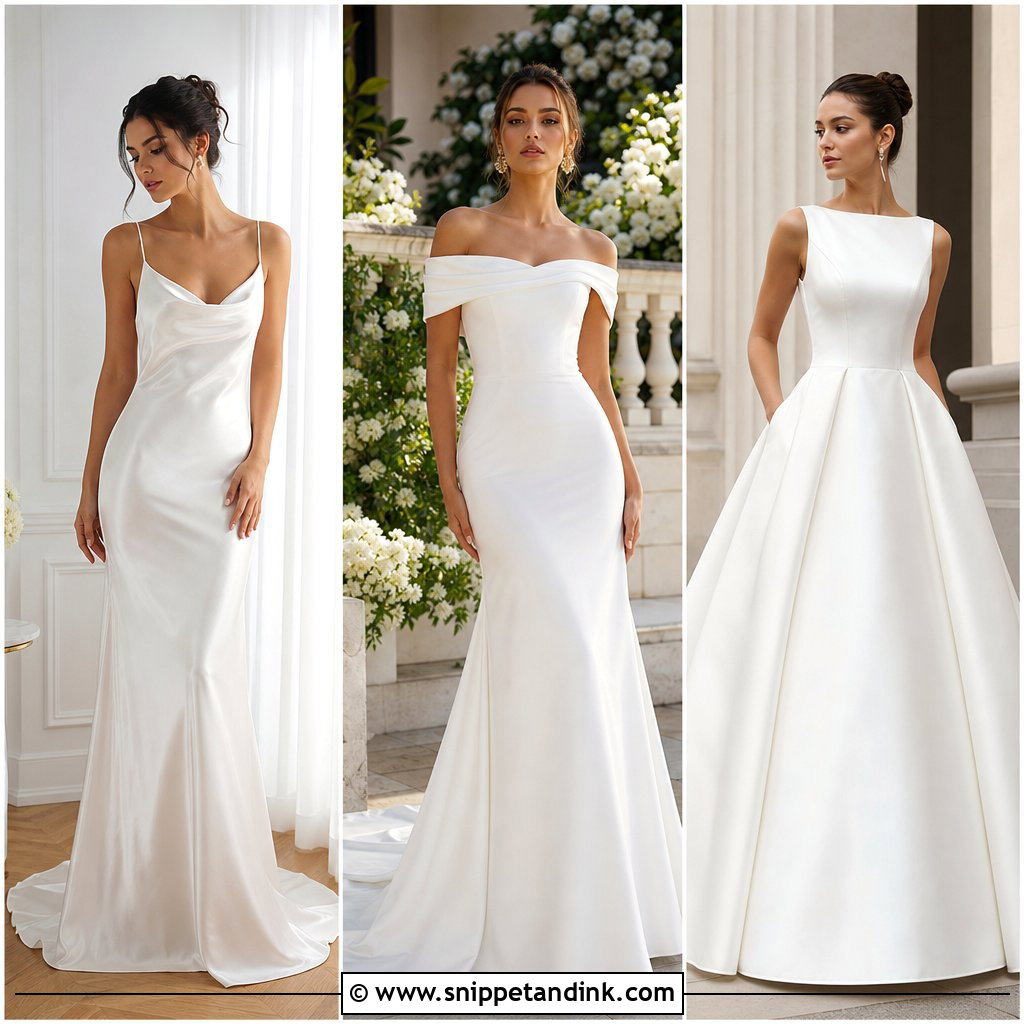
Detachable sleeves give you two looks from one simple dress. Start with a clean strapless or sleeveless satin gown and add fitted crepe sleeves, soft off-the-shoulder sleeves or light puff sleeves for the ceremony, then take them off for the reception. Keep pearl earrings, a sleek bun and pointed ivory heels across both versions so they feel connected. A long veil goes with the sleeved look, and a small hair comb stays once the veil comes off. The attachment points are where these go wrong. Ask the seamstress to hide the snaps or loops completely and to put them where they won’t press into your skin when the sleeves are off. They pair with anything from a minimalist sheath to a full ball gown.
20. Plain Ball Gown Wedding Dress With Long Sleeves
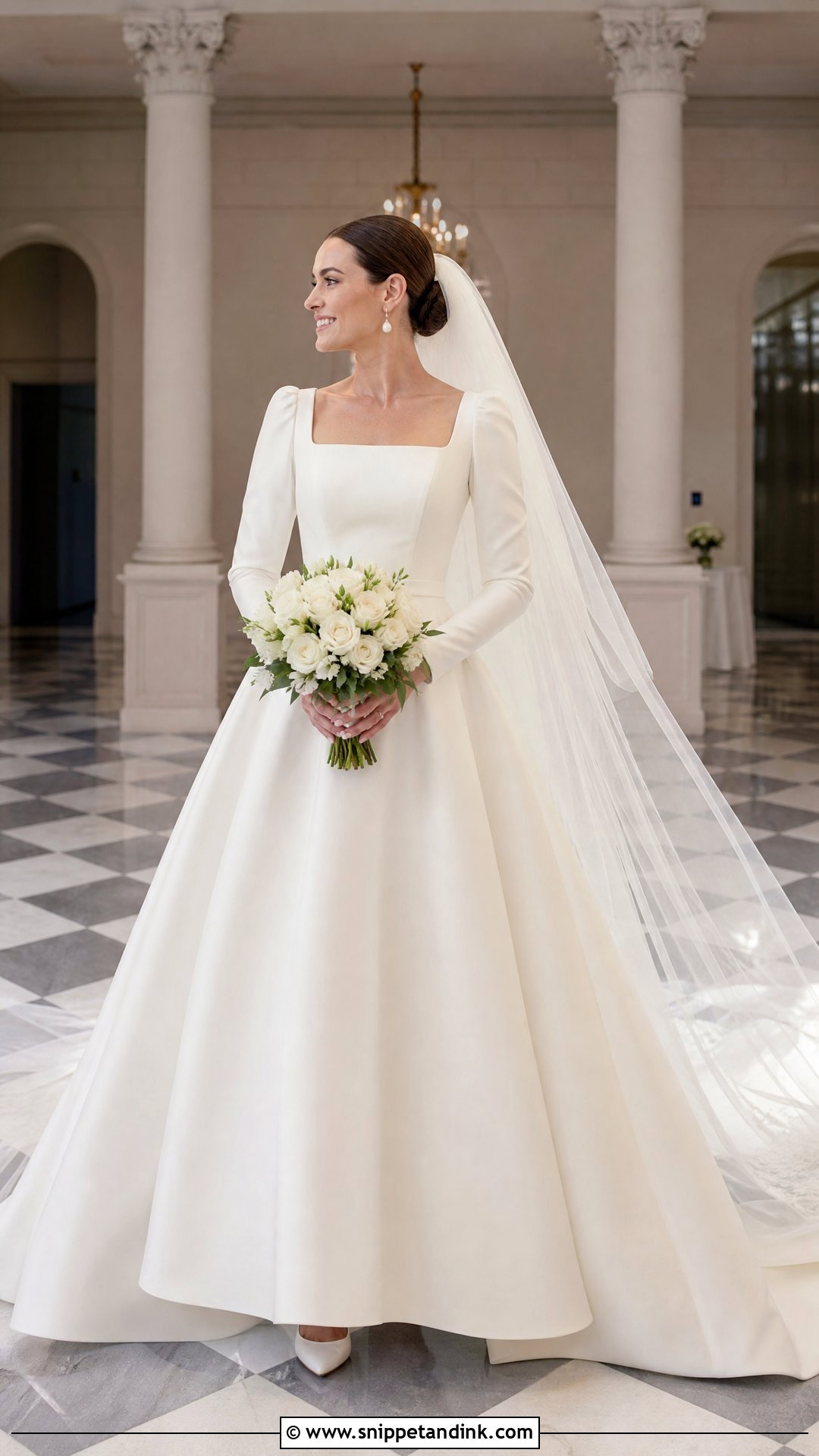
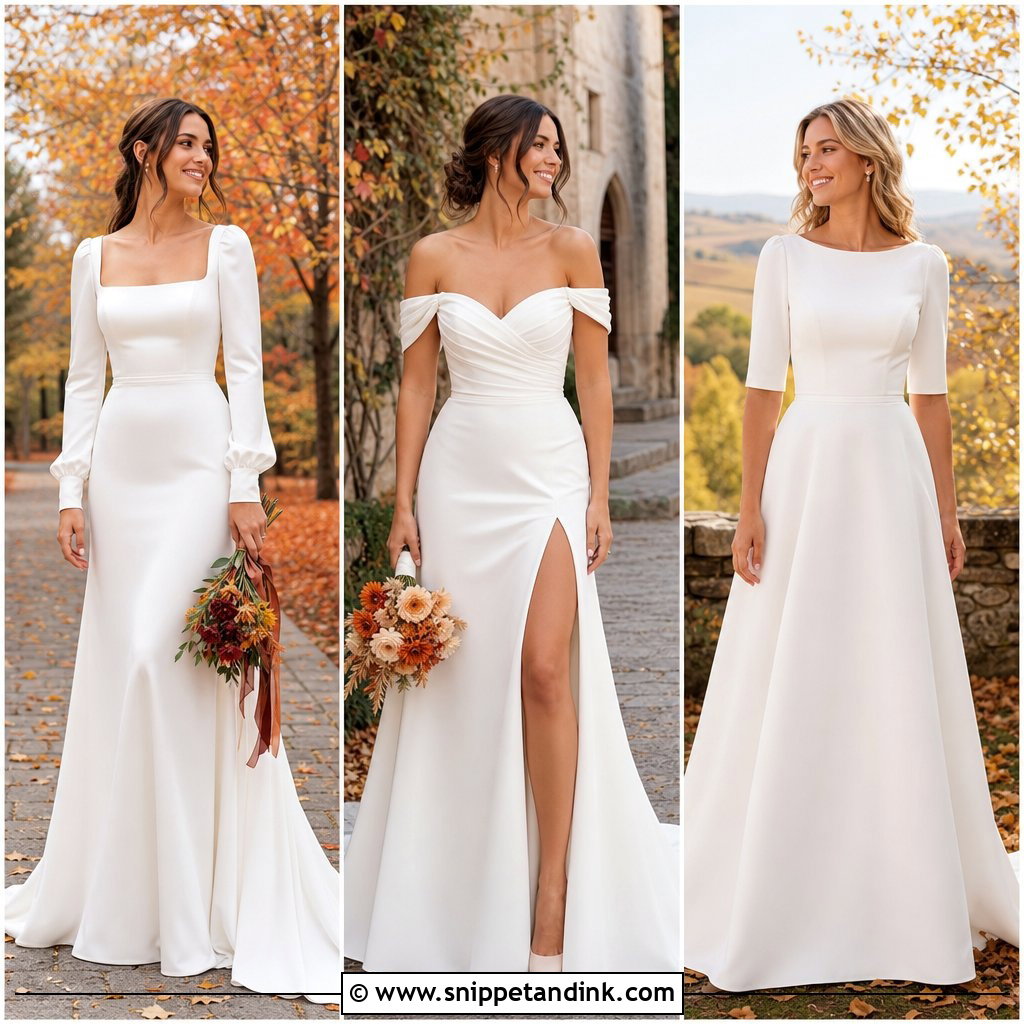
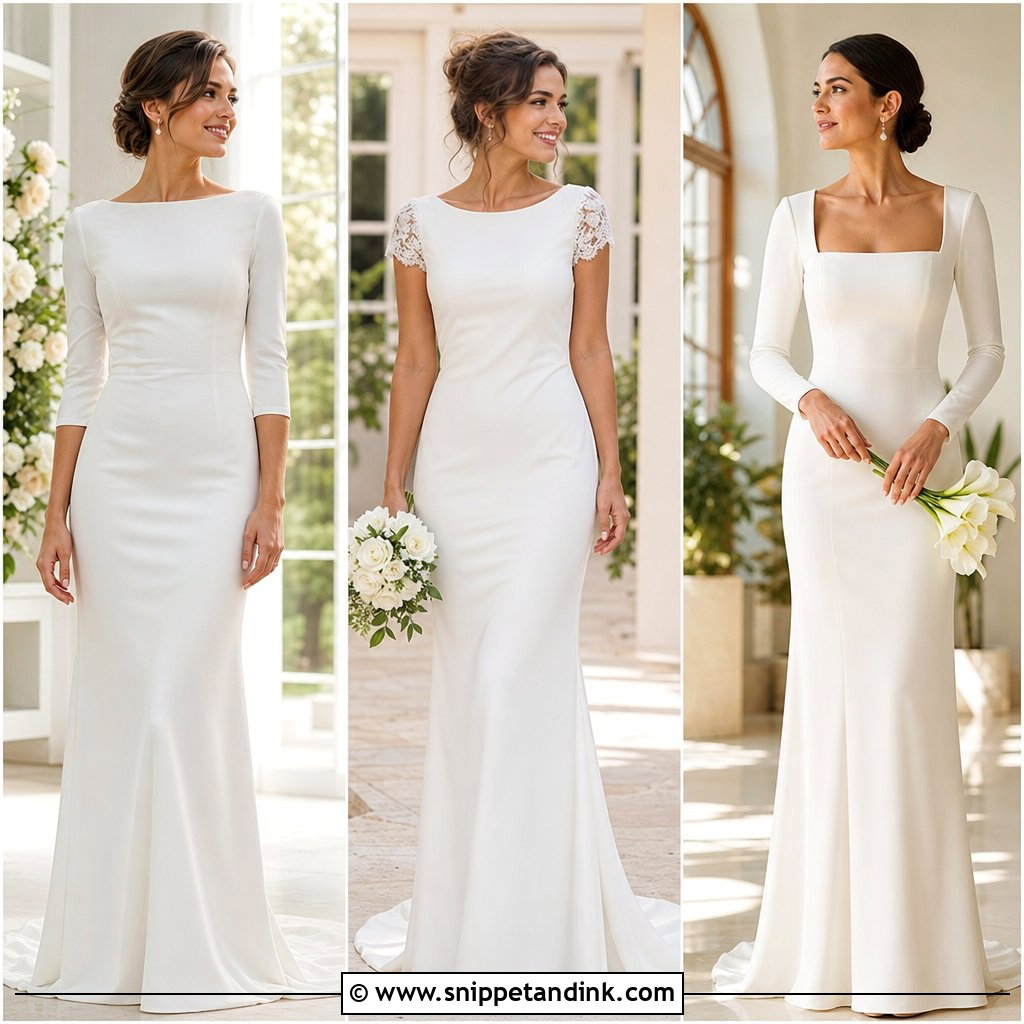
A ball gown can feel grand with no beading at all. Smooth mikado or satin over a fitted bodice, a defined waist, long sleeves and a full structured skirt provide all the drama. A simple square, boat or scoop neckline balances the volume. Pearl drops, closed-toe pumps and a cathedral veil with a plain edge complete it, with a polished bun and a medium bouquet that doesn’t get lost against the skirt. The bodice has to carry the skirt’s weight on its own; if it leans on the sleeves, they’ll pull at the shoulders all evening. Hem to your shoes and ask for a secure bustle for the reception. It’s suited to large venues and formal celebrations.
Where a Long Sleeve Should End for the Ring Exchange
The ring going on is one of the most photographed seconds of the ceremony, and a long sleeve can hide it. I measure sleeve length with the bride’s arm held out in front of her, hand open, the way it will be during the vows. A sleeve that sits perfectly at the wrist bone with your arm by your side rides lower when you extend it and can reach the knuckles.
- For fitted sleeves, aim for the wrist bone with the arm extended.
- Pointed or Juliet cuffs that extend over the hand look lovely but need a finger loop or careful timing to keep the ring visible.
- Bishop and bell sleeves should be gathered or pushed back by an attendant just before the rings come out.
- If you’ll wear a bracelet, make the sleeve a little shorter so the bracelet sits just below the hem rather than catching on it.
Tell your photographer what your sleeves are like. They’ll often step a little closer or change angle for the ring shot once they know a cuff might get in the way.
Proportion, Fabric and a Sleeve You Can Hug In
A simple gown with sleeves succeeds or fails on proportion, fabric and comfort. Satin gives structure and a soft shine, crepe makes smooth modern lines and chiffon brings movement. The neckline, sleeve volume, skirt shape and tailoring have to read as one design. Before you commit, sit, walk, raise your arms and dance a few steps in the dress. Then add shoes you can stand in, restrained jewelry and a veil or hair accessory that suits the shape. When every piece fits and has a job to do, a plain dress looks anything but plain.
You'll Like These Ideas:




Leave a Reply