
A fishtail gown is the one silhouette I never let a bride buy from a photo. It’s fitted through the bodice, waist, hips and thighs and then flares near the knee or lower leg, so a couple of centimetres in the wrong place changes how you walk, sit and dance. Get it right and it’s the most sculpted shape in bridal; get it wrong and you’ll shuffle all night. It suits a ballroom, a city hotel, a garden or a beach depending on fabric, and details like lace, satin, tulle, pearls, sleeves, open backs or a detachable train move the mood a long way. Here are 25 versions, each with the fitting note I’d give you.
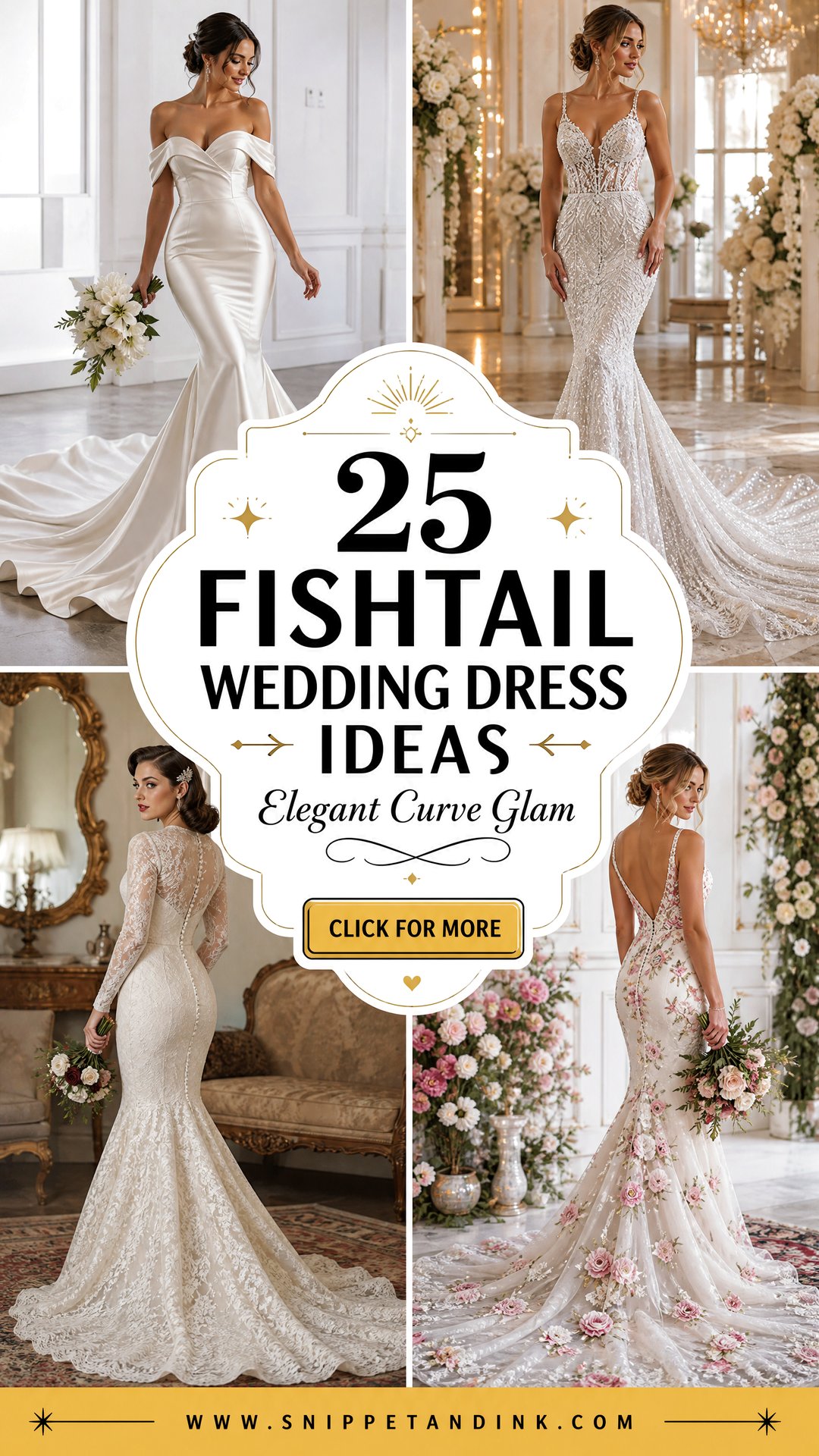
Fishtail, Trumpet or Fit and Flare? Read the Flare Point First
These names get used loosely in shops, but the difference is where the skirt opens. A fit and flare opens at the hip or just below, so it’s the easiest to move in. A trumpet opens around mid-thigh. A true fishtail or mermaid opens at the knee or below, which gives the most dramatic shape and the least stride.
In a fitting room, I ask brides to do three things in each one: walk across the room at a normal pace, sit on a low chair, and take a step up as if onto a stage. If you need to hold the skirt to do any of them, the flare is too low for you, or the gown needs letting out at the knee.
- Want to dance properly? Lean toward a trumpet or a fishtail with a stretch lining.
- Petite? A higher flare keeps the skirt from swallowing your height.
- Long ceremony with lots of standing? A fishtail is fine; the sitting is what tests it.
- Lots of stairs at the venue? Ask about a flare point that opens a little higher.
1. Lace Fishtail Wedding Dress
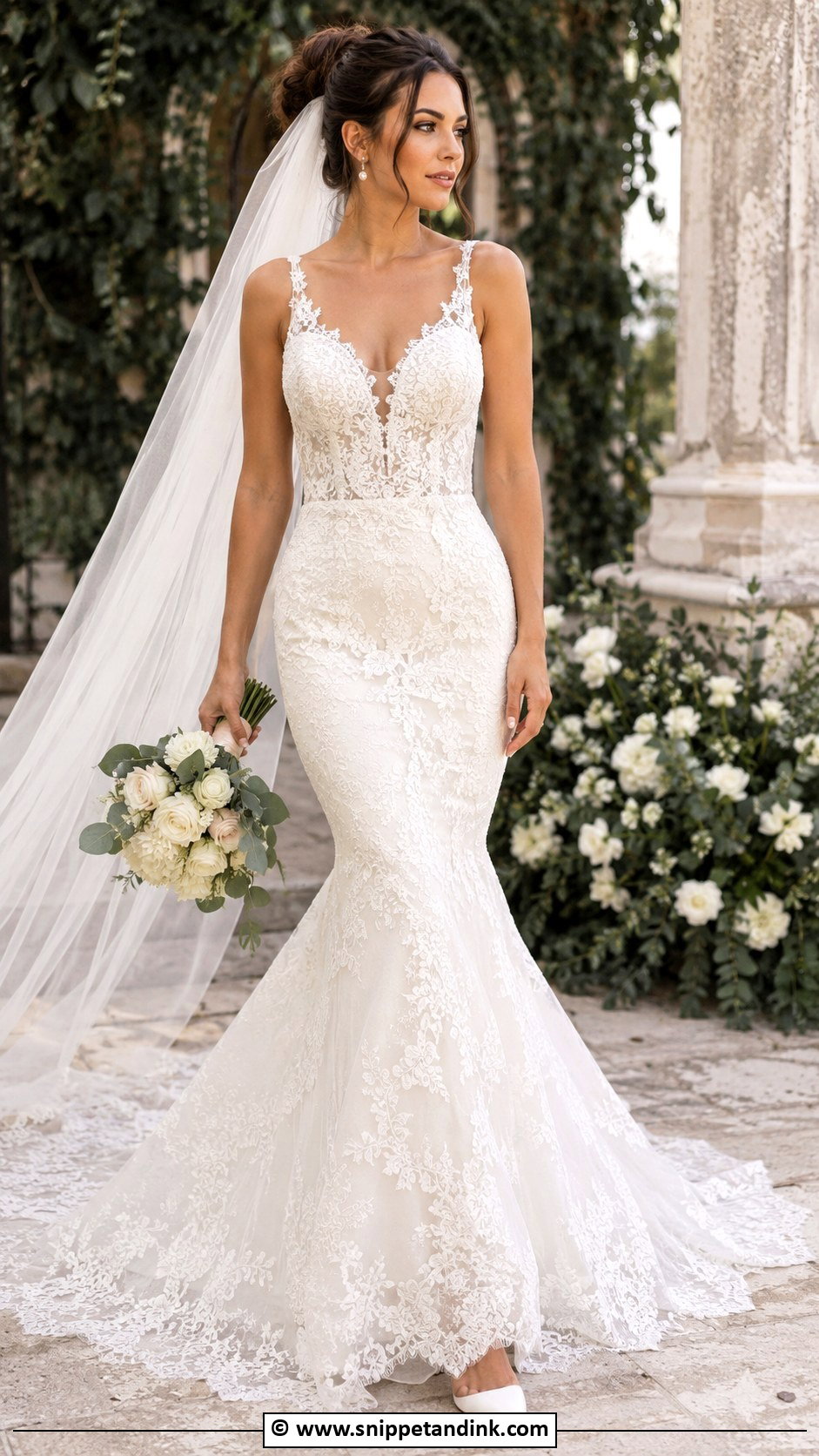
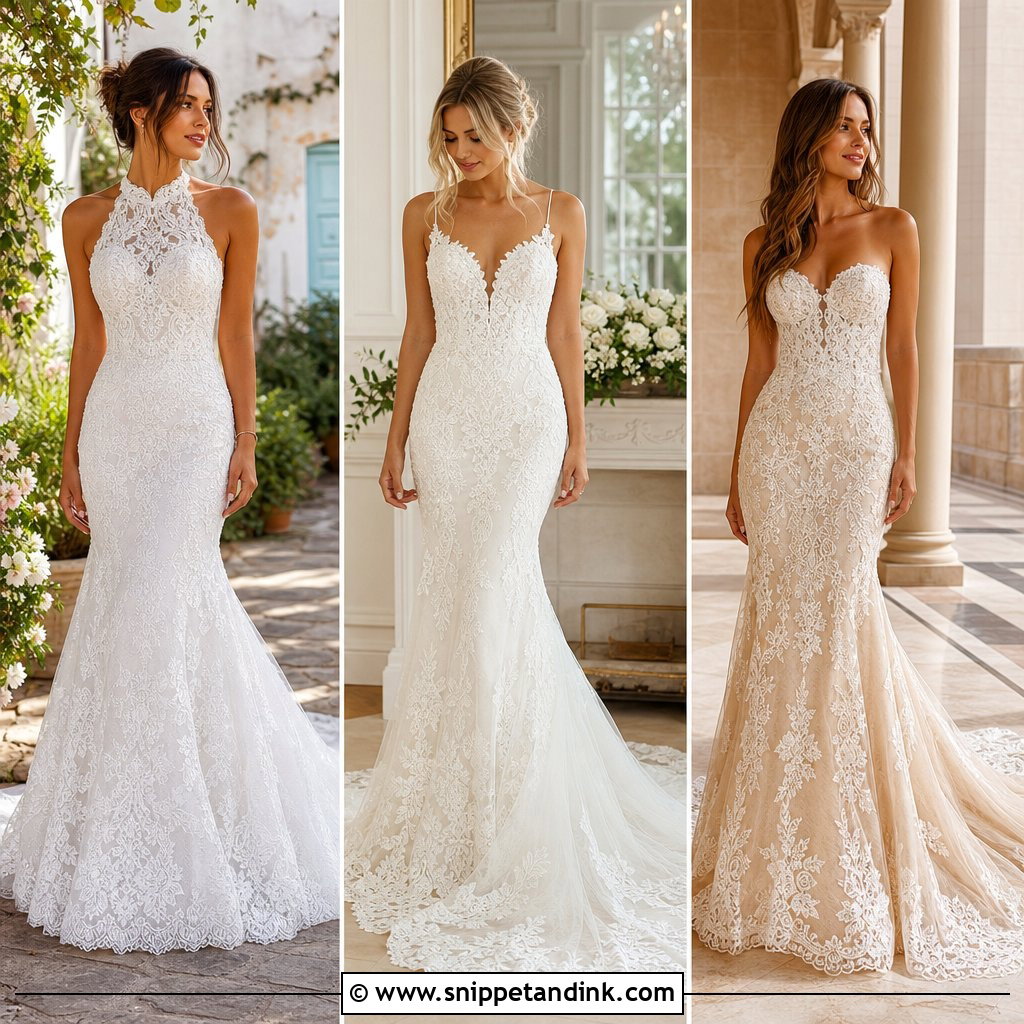
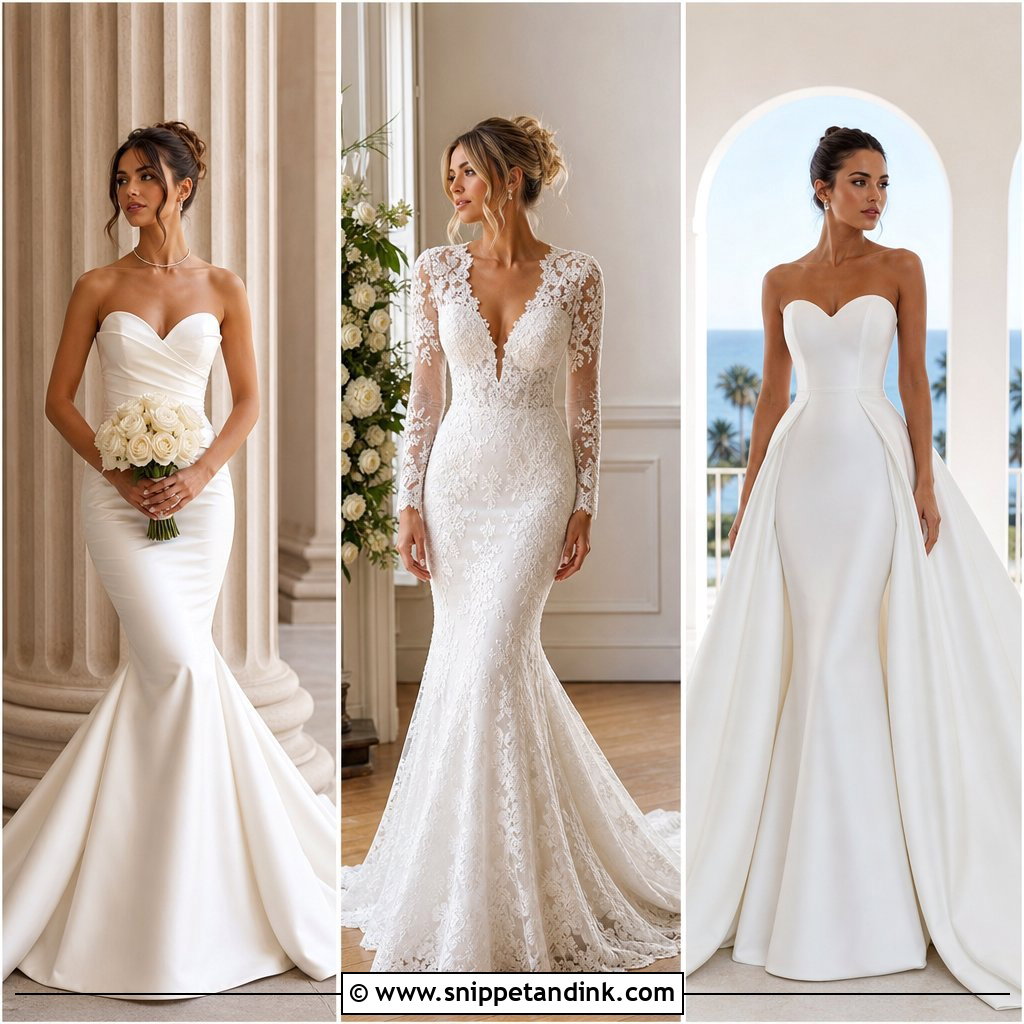
Lace is the friendliest fabric for a fitted shape, because the pattern breaks up the line and hides small wrinkles that satin would show. Floral lace feels soft and garden-like; corded lace has a raised edge and photographs with more depth. Watch the lining: a nude lining makes the motifs pop, while ivory reads more traditional. Good seamstresses re-cut lace along the motifs when taking the dress in, so ask how yours handles it. A long veil, pearl earrings and pointed heels, with a low bun or soft waves, keep the lace in charge.
2. Satin Fishtail Wedding Dress
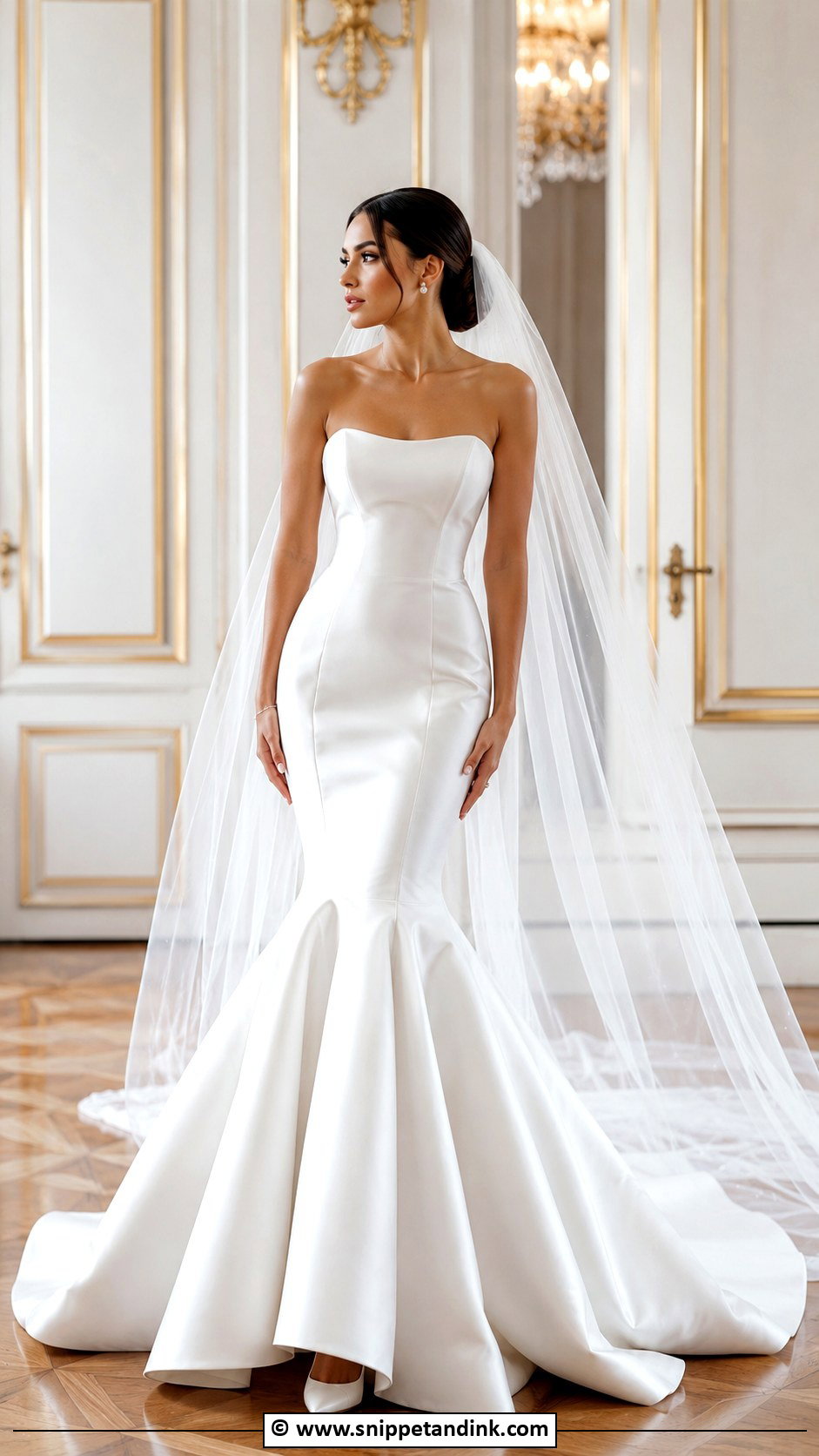
Satin shows everything. On a fishtail that means every pull across the hip and every seam that’s a little off, so I’d only choose it if you’re prepared for proper tailoring and a good undergarment. When it fits, nothing looks cleaner under evening light. Strapless, square or off the shoulder necklines suit it. Pearl studs, a cathedral veil and satin pumps are enough, and opera gloves or a clean chignon push it toward fashion.
3. Off Shoulder Fishtail Wedding Dress
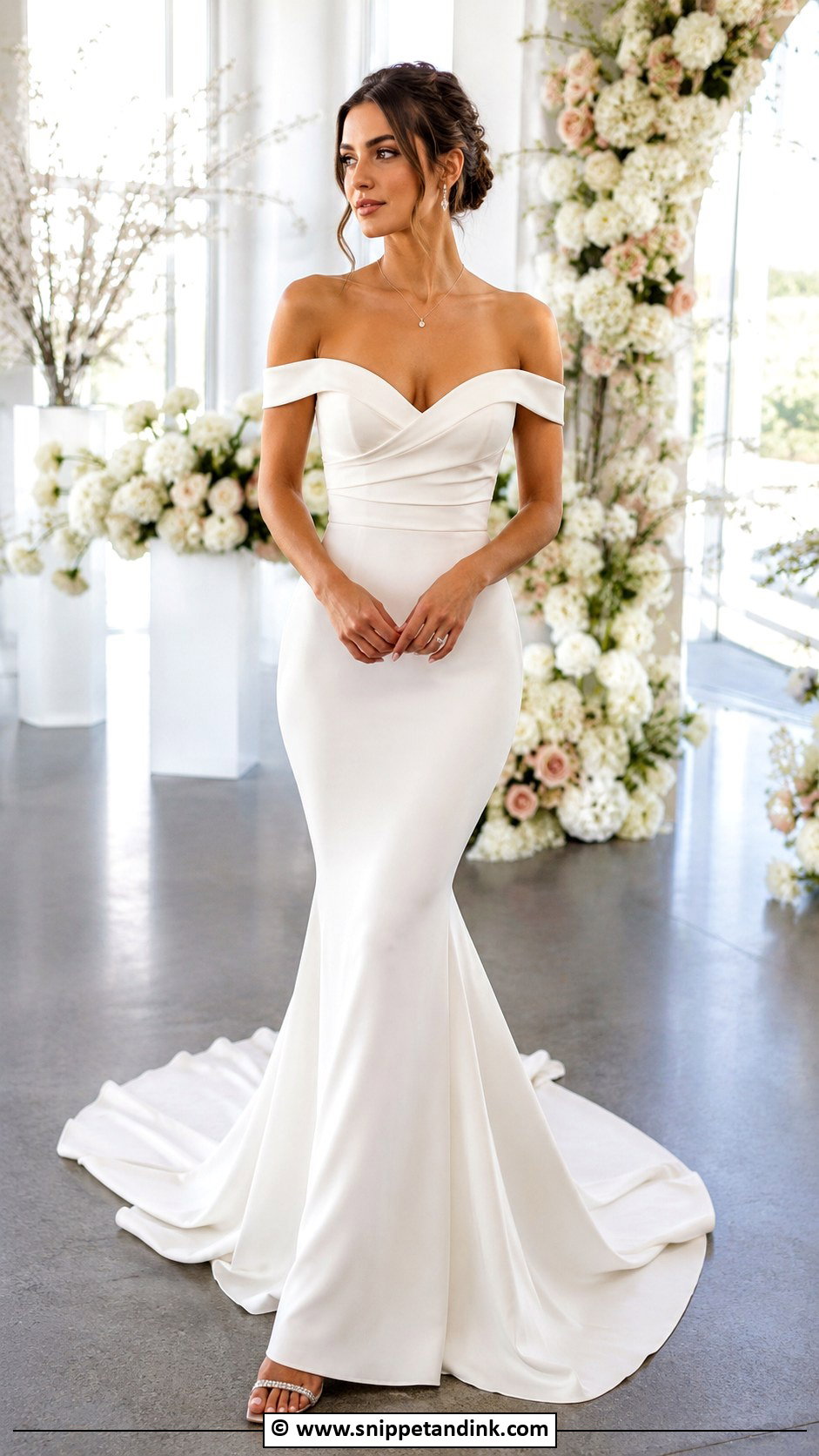
Off the shoulder works well on a fishtail because the width at the shoulder balances the flare at the hem, making an hourglass outline. Built-in structure or a little illusion mesh helps it stay up without constant adjusting. The trade-off is arm movement, so try lifting your arms in the shop. A fine necklace, drop earrings and a veil anchored below the crown suit the neckline. Soft curls or a low twisted bun leave the shoulders clear.
4. Strapless Fishtail Wedding Dress
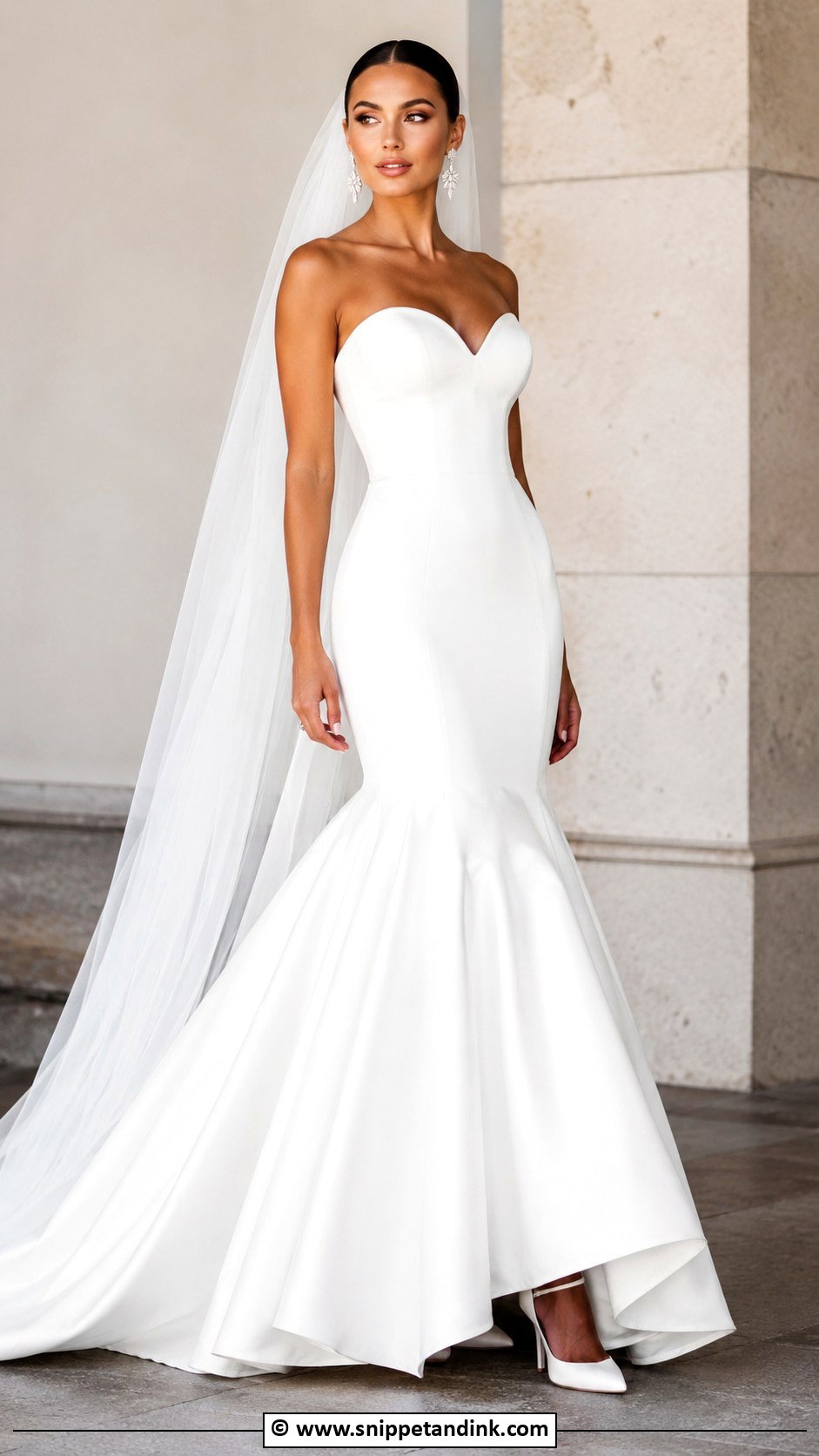
With no straps, everything depends on the bodice construction. I look for boning, a waist stay and a bodice cut close enough that it doesn’t move when you hug. Sweetheart necklines are softer; straight-across ones look more modern. Choose lace for softness, satin for polish, or mikado for structure, which holds the flare crisply. An open neck leaves room for a dramatic veil and sculptural earrings, and an updo or polished waves keep the shoulders clear. It’s a striking shape for formal weddings and editorial portraits.
5. Long Sleeve Fishtail Wedding Dress
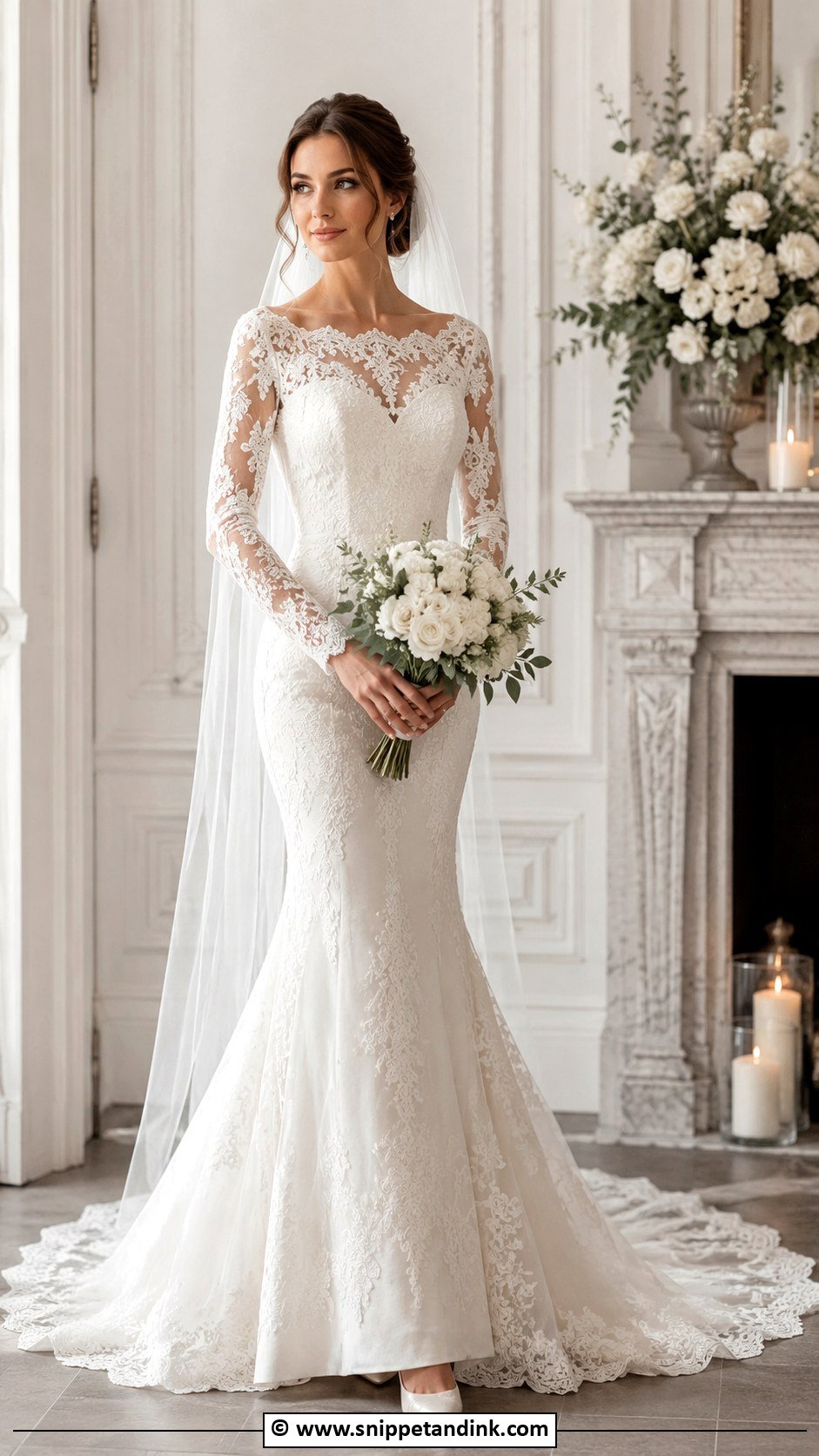
Long sleeves on a fitted body make a very long, unbroken line, which is why this one looks so tall. Lace sleeves soften it; crepe or satin sleeves look sleek. The fitting check is the armhole: if it’s set low, raising your arm pulls the whole hem up. It’s a natural choice for cooler weather and formal rooms. If the sleeves carry heavy detail, skip jewelry and add closed-toe heels, a soft veil and simple earrings.
6. Open Back Fishtail Wedding Dress
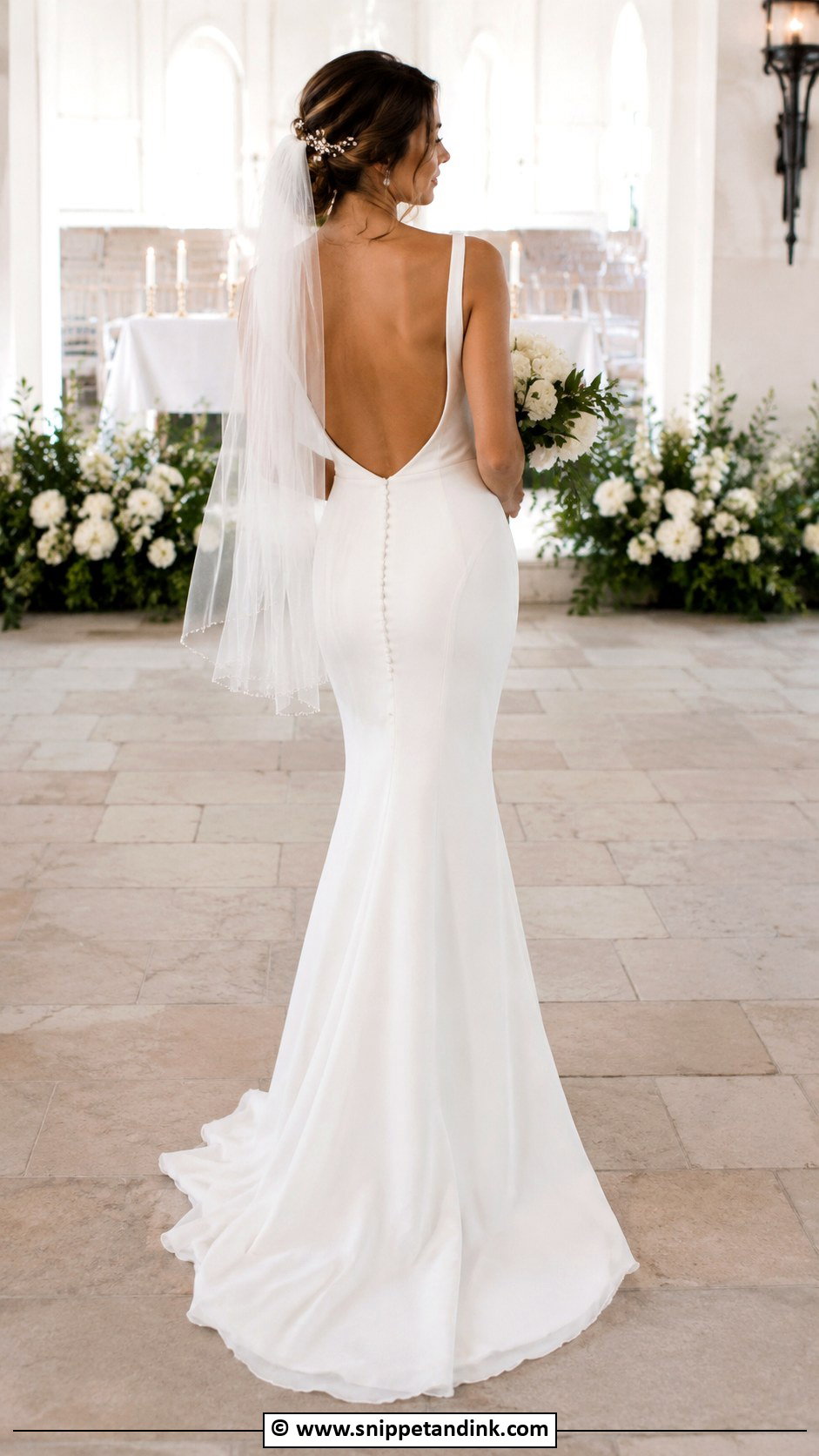
An open back gives the guests something to look at for the whole ceremony, since that’s the view they have. A low scoop, a V, a lace illusion panel or a row of buttons all work on a fishtail. Support is my first question. Built-in cups are more reliable than adhesive ones, which can loosen in heat. Choose a veil that’s sheer enough to show the back or that starts below it. A low bun or a back necklace finishes the line.
7. Beaded Fishtail Wedding Dress
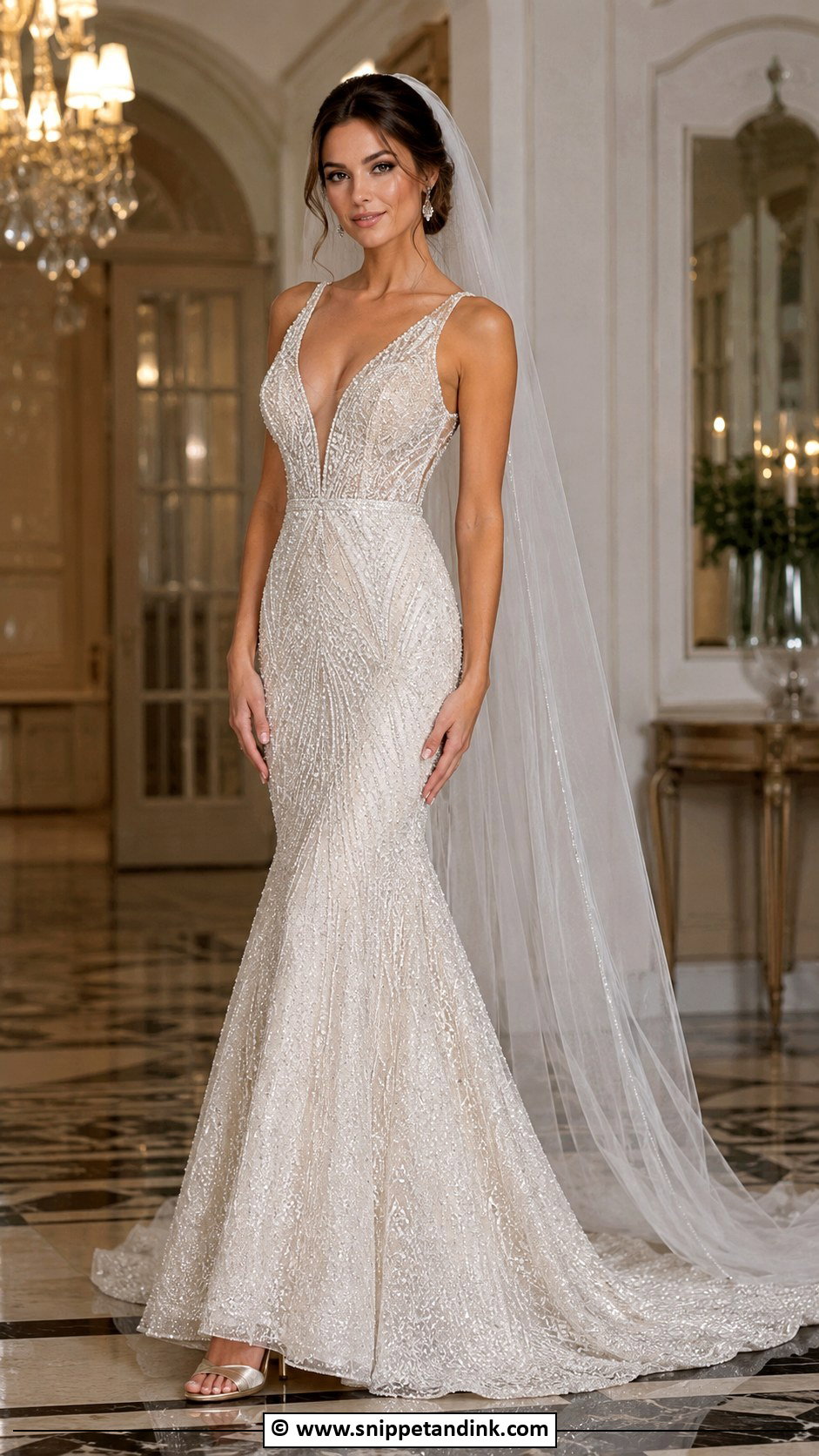
Beading adds weight, and on a fitted gown weight pulls downward through the day. A fully beaded fishtail can be noticeably heavy, so try one on for a while and check that the bodice structure is carrying it, not your shoulders. Beading can sit only on the bodice, trail down the skirt, or cover everything. It glows under evening lighting. Crystal studs, a sleek veil and metallic or ivory heels, with a polished updo, keep it from tipping into too much.
8. Simple Fishtail Wedding Dress
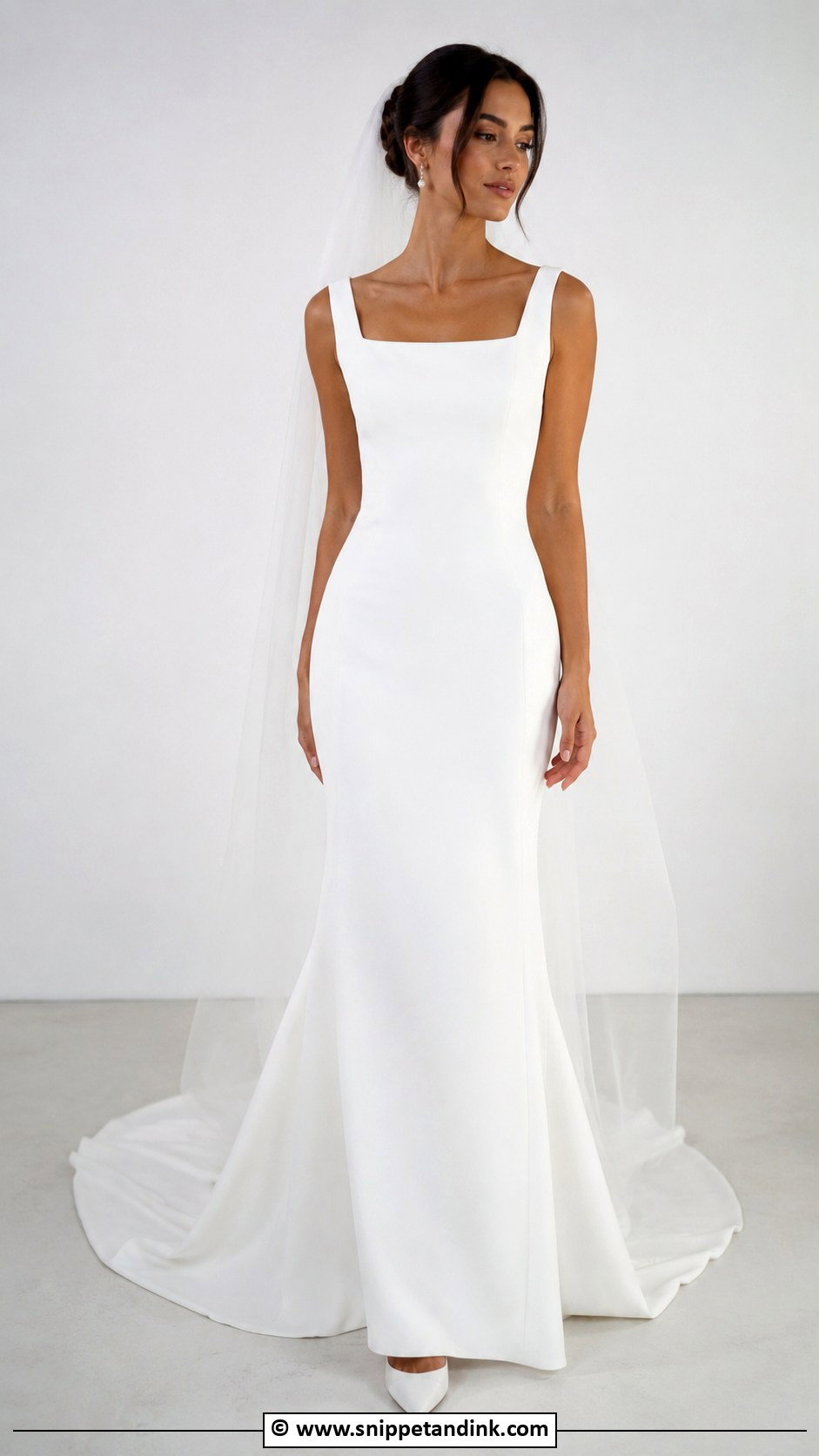
Plain fishtails depend entirely on tailoring, so I’d spend whatever you save on embellishment at the seamstress. Clean crepe, satin or mikado can look extraordinary with nothing on them when the seams sit right. Square, strapless and high necks all suit a minimal version. Pearl earrings, a smooth veil and pointed heels are enough, and a bold bouquet gives you a single point of color.
9. Crepe Fishtail Wedding Dress
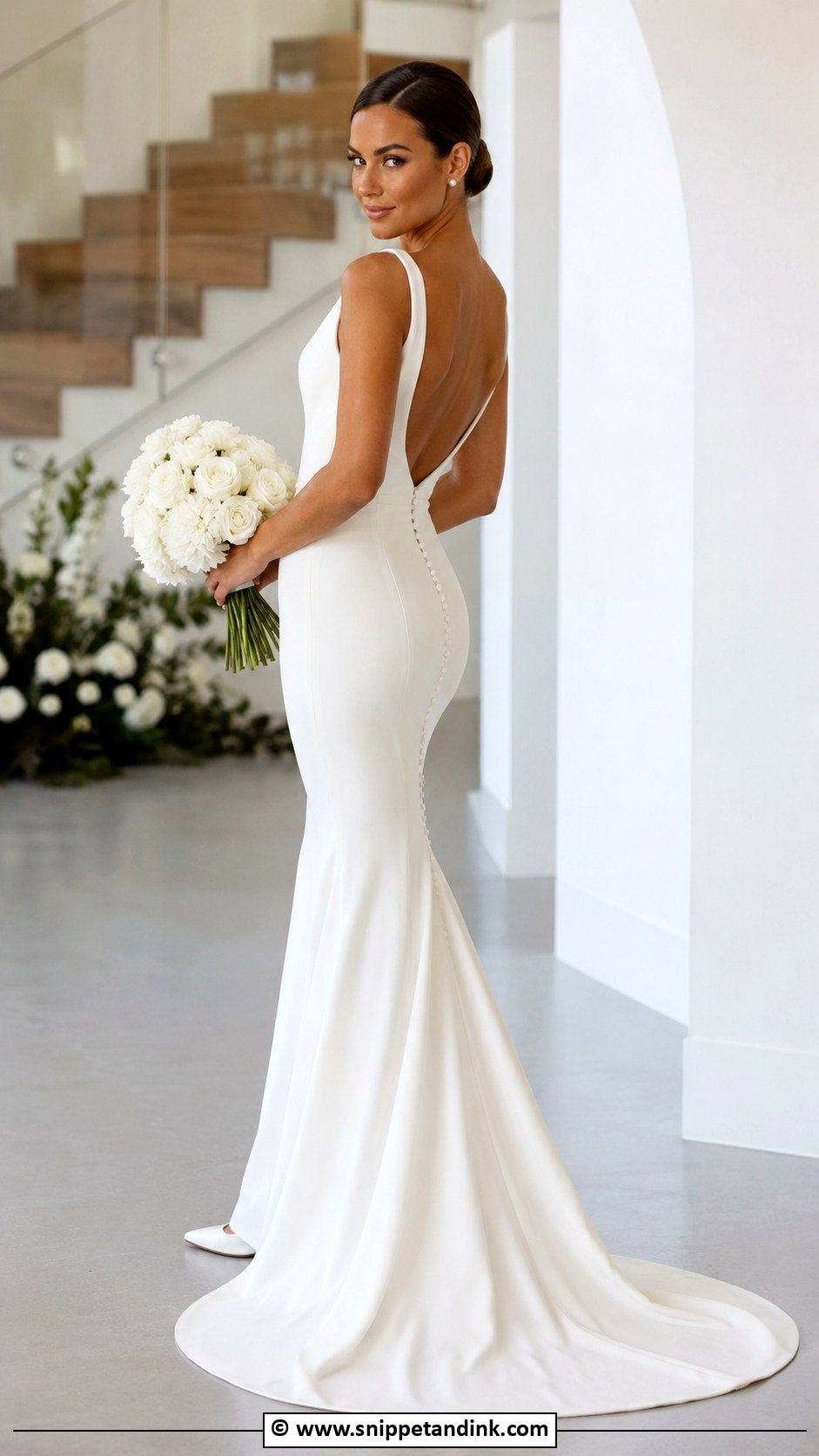
Crepe is lighter than heavy satin and matte, so it moves better and looks quieter. It also shows underwear lines more than you’d expect, which is why I always check the gown in the bride’s actual underwear at the final fitting. It sits best with simple seams, clean necklines and low backs. Minimal jewelry and sleek hair suit it. A long veil gives balance; a short one looks city-ready.
10. Tulle Fishtail Wedding Dress
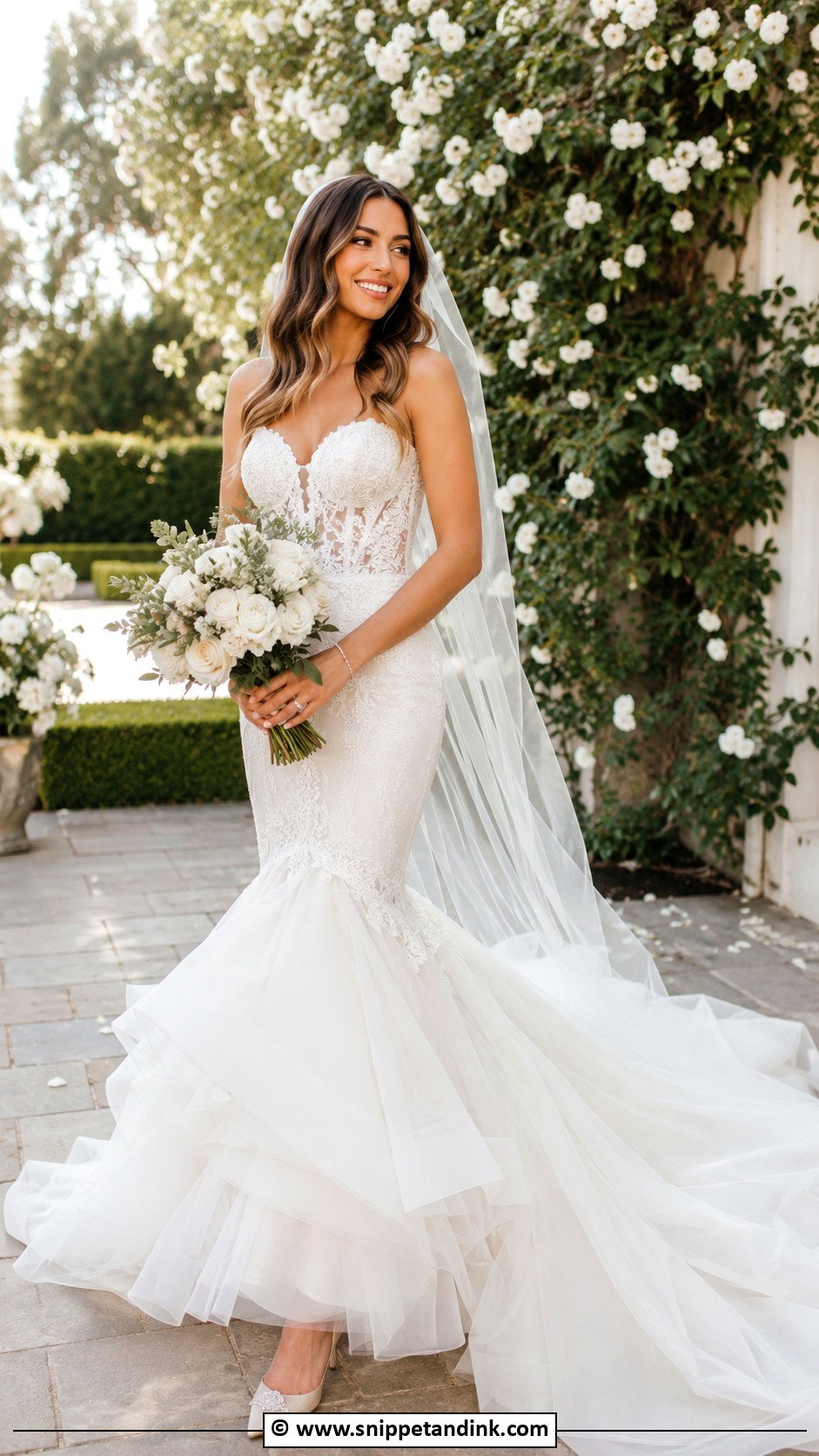
Tulle keeps the flare soft and lighter on the body, so this is the fishtail I’d suggest to a bride who loves the shape but worries about weight. The bodice can be lace, beaded, corseted, or plain. Layered tulle in the train picks up grass and petals outdoors, so a quick shake before portraits helps. Keep the bodice firmly supportive when the skirt has volume. Delicate heels and a sheer veil suit a garden or estate.
11. Plus Size Fishtail Wedding Dress
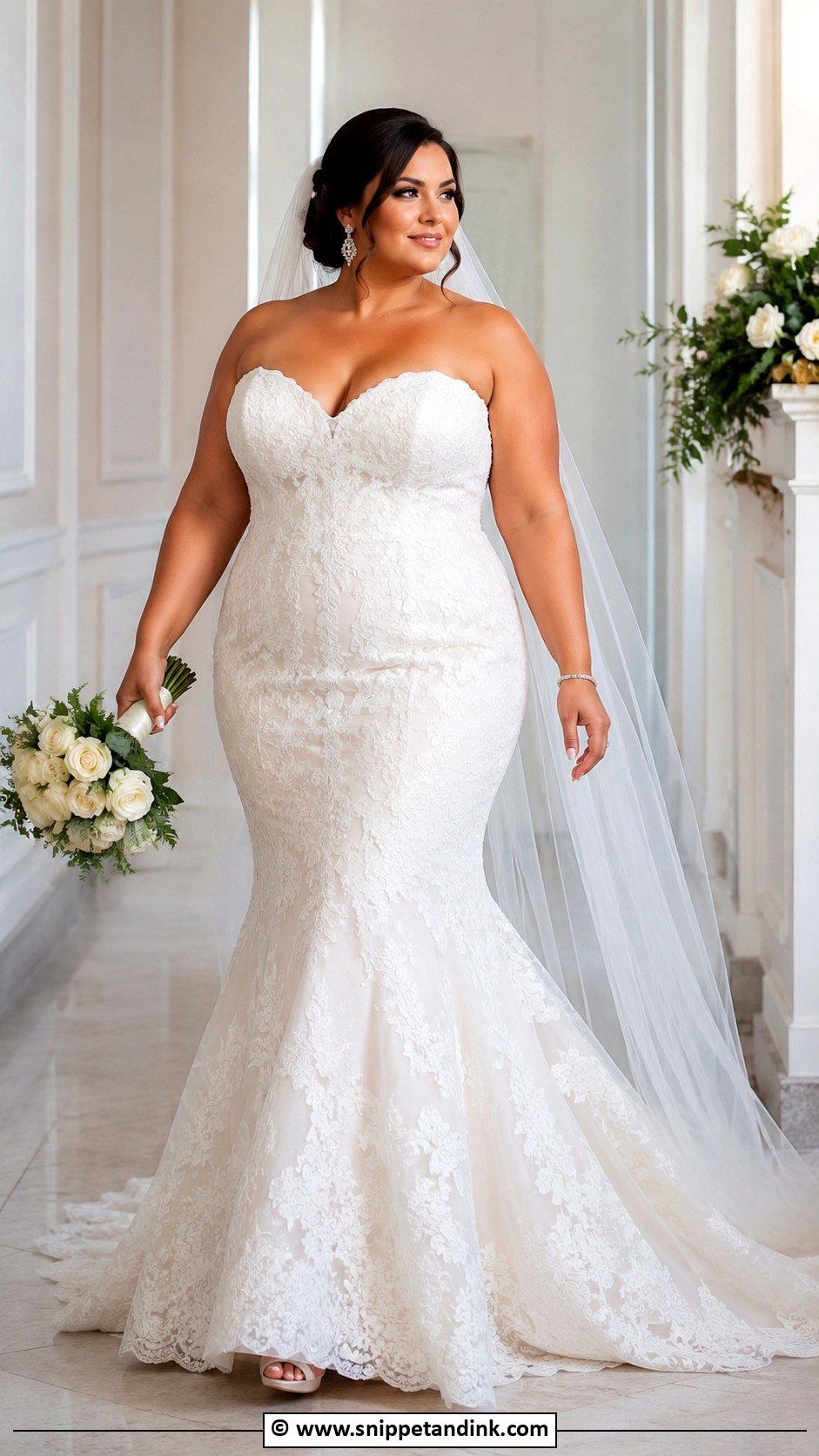
A plus size fishtail wedding dress looks its best when the structure does the work instead of tightness. I look for proper corsetry, a stretch lining that moves with you, and seams that shape without pulling into lines across the hip. The flare point needs to sit where you can still walk and sit easily, often a little higher than on a sample gown. Sweetheart, off the shoulder and V necks all frame the upper body well. Supportive heels and a veil matched to the train length complete it.
12. Petite Fishtail Wedding Dress
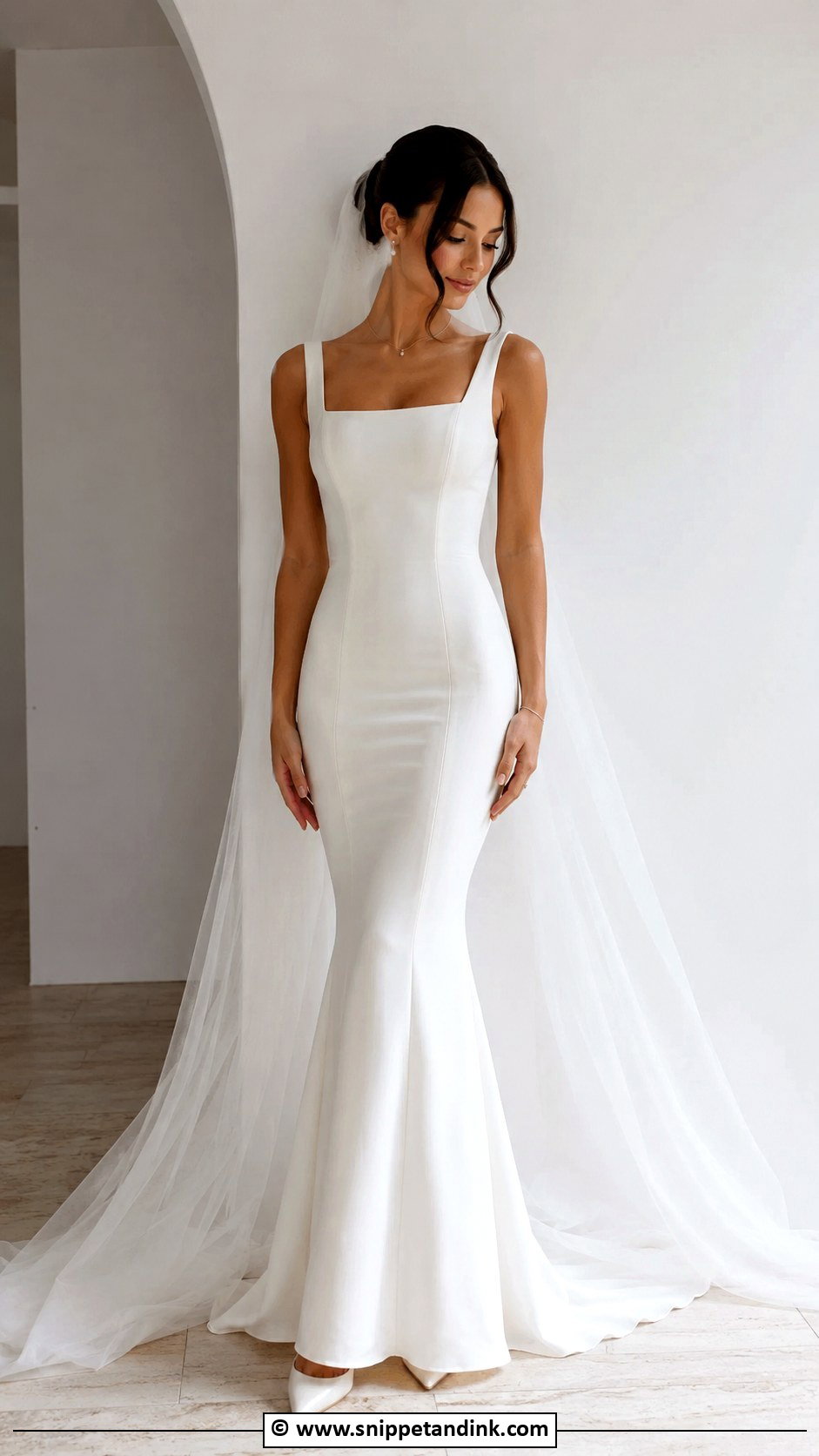
On a petite frame the flare has to start higher, otherwise the skirt eats your height. A higher knee flare, vertical seams and a clean neckline all help stretch the outline. Avoid heavy, wide skirts. Simple crepe, soft lace or satin suits a smaller frame. Nude or ivory pointed heels add height quietly, and a chapel veil also lengthens the look. The hem should be measured with the exact shoes you’ll wear.
13. Boho Fishtail Wedding Dress
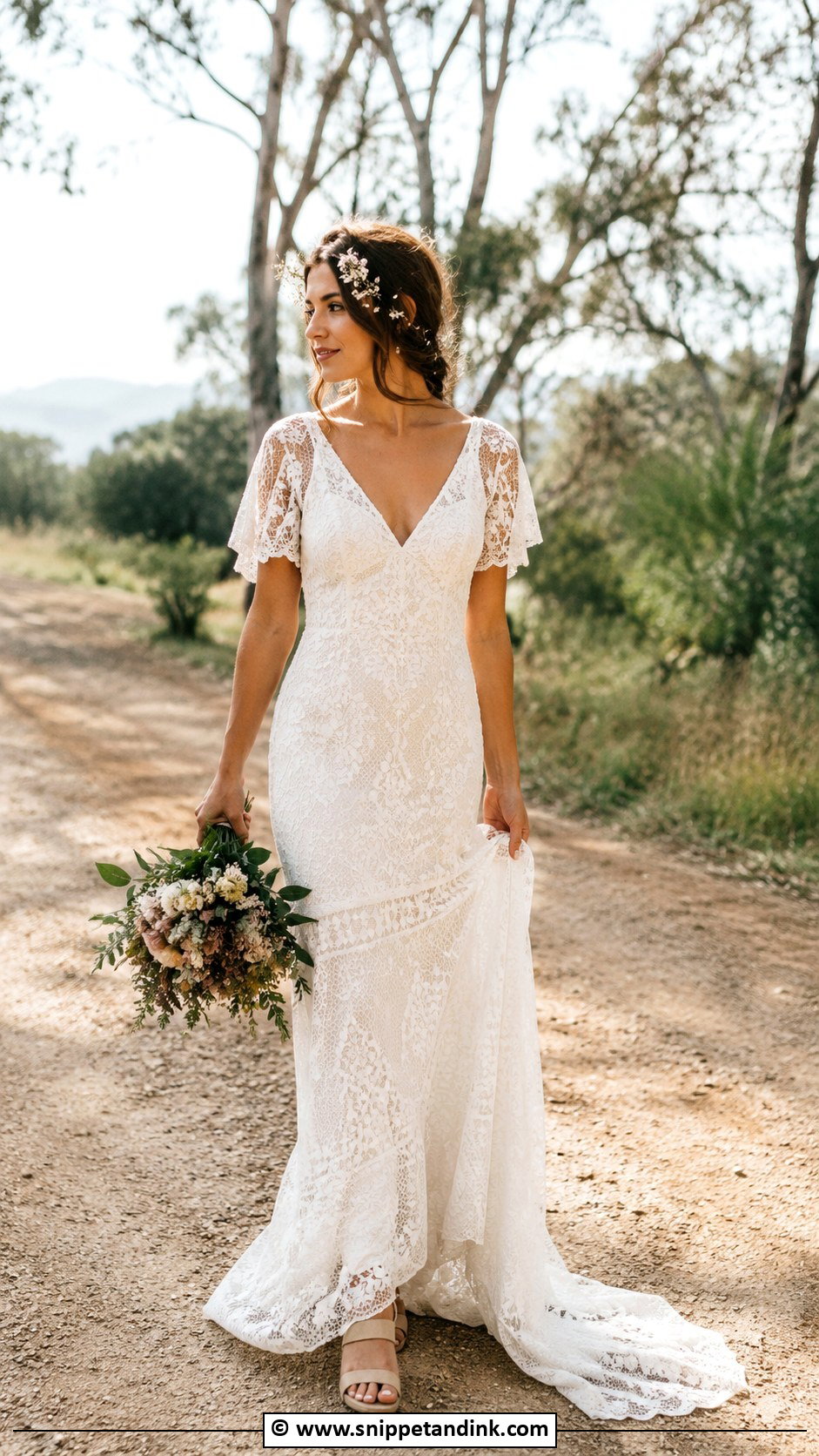
Boho and fitted sound like opposites, and the way to make them meet is texture. Soft lace, crochet-style details, flutter sleeves, illusion panels and a light train give the gown an easy feel even though the shape is sculpted. It sits naturally at a beach, garden or desert venue. Loose waves, floral hair pins, simple sandals or block heels and a natural bouquet suit it. Skip anything that looks too polished, such as heavy crystal.
14. Beach Fishtail Wedding Dress
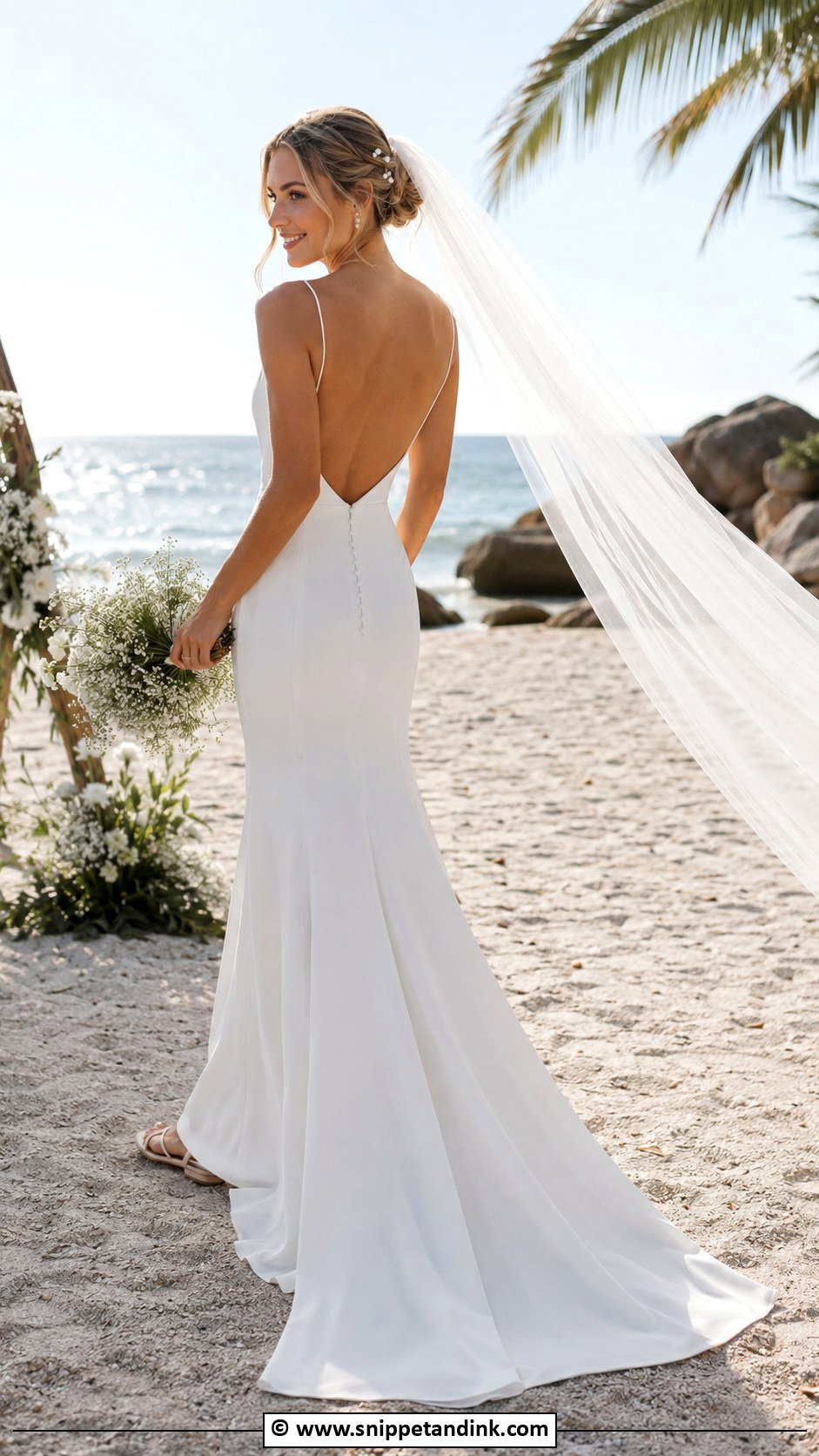
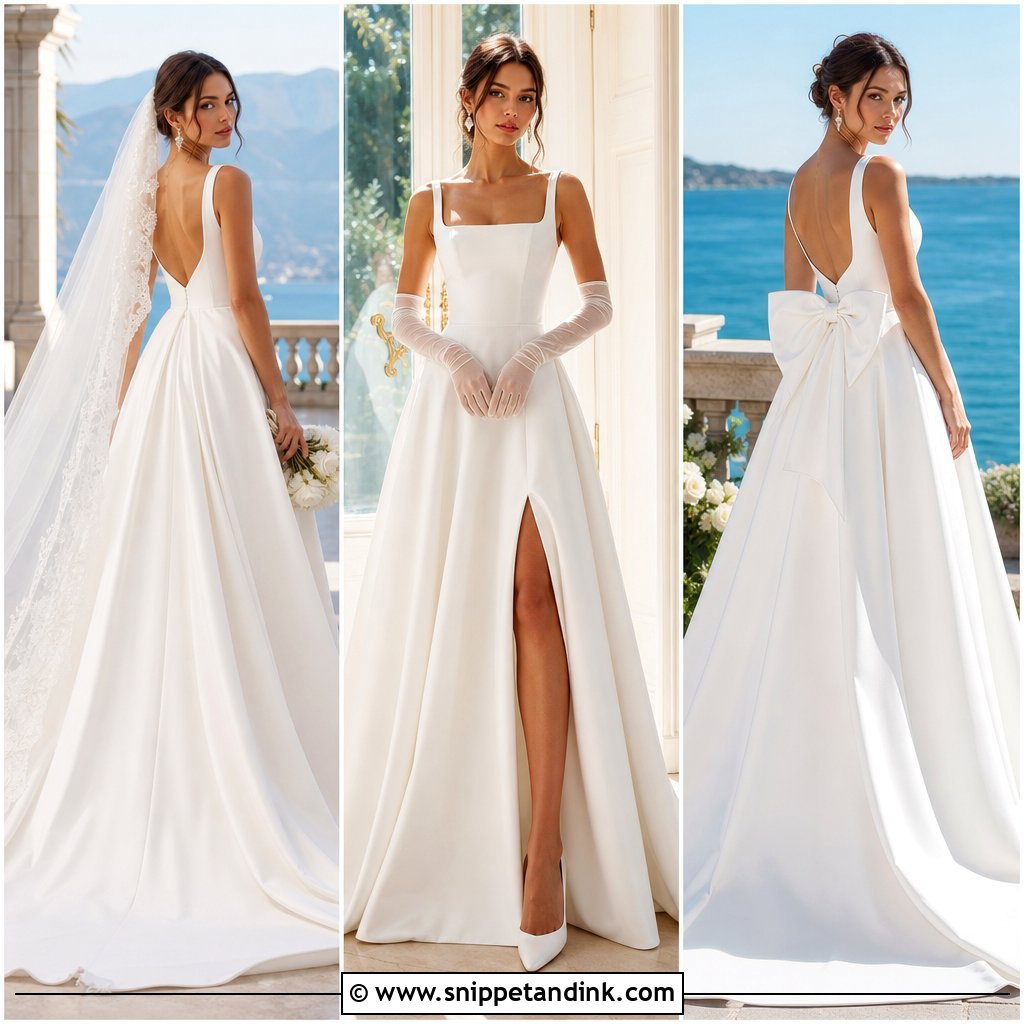
Sand and fishtails don’t mix well unless you plan for it. Heavy satin traps heat and drags, so I steer beach brides toward soft crepe, chiffon overlays, light lace or stretch fabric with a short sweep train. Spaghetti straps, a V neck or an open back stay cooler. Flat sandals, pearl hair pins and a soft veil that moves with the breeze suit it. Keep the bouquet loose and airy.

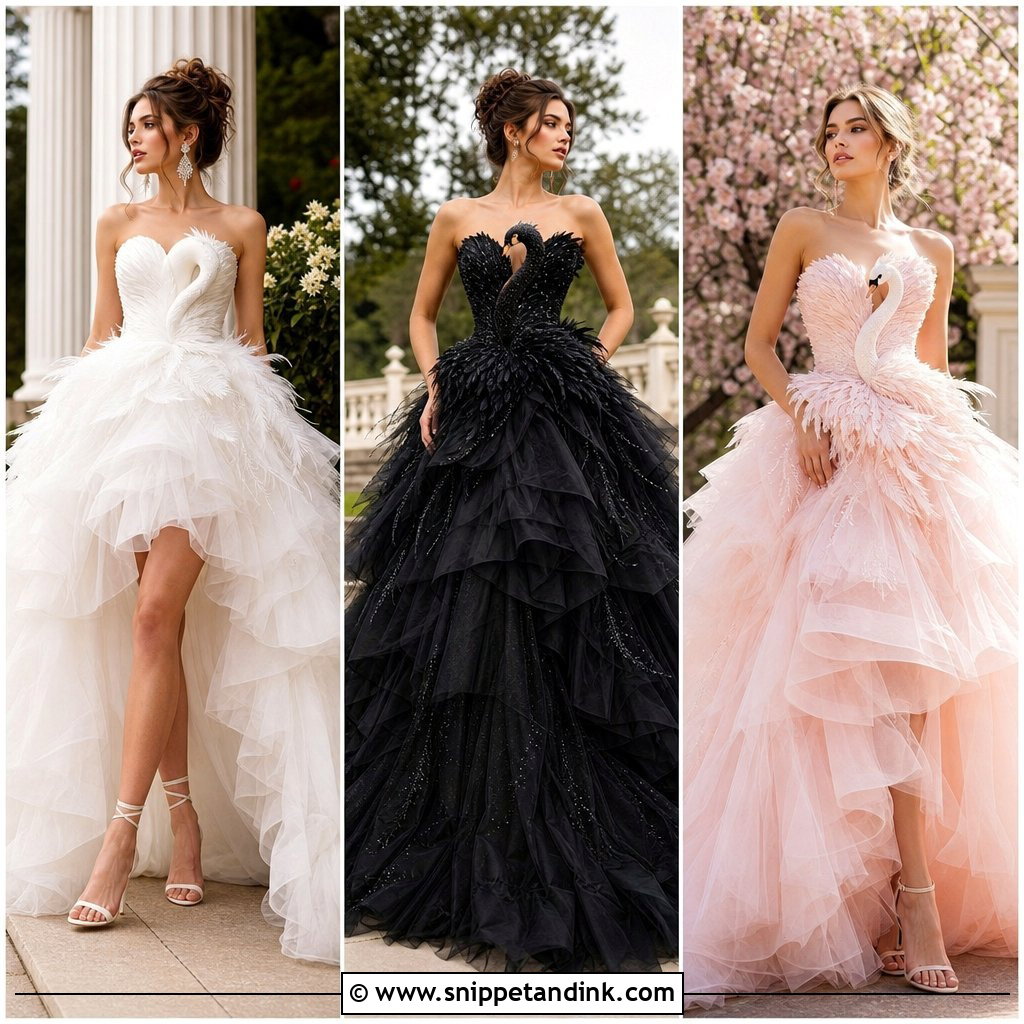
15. Vintage Fishtail Wedding Dress
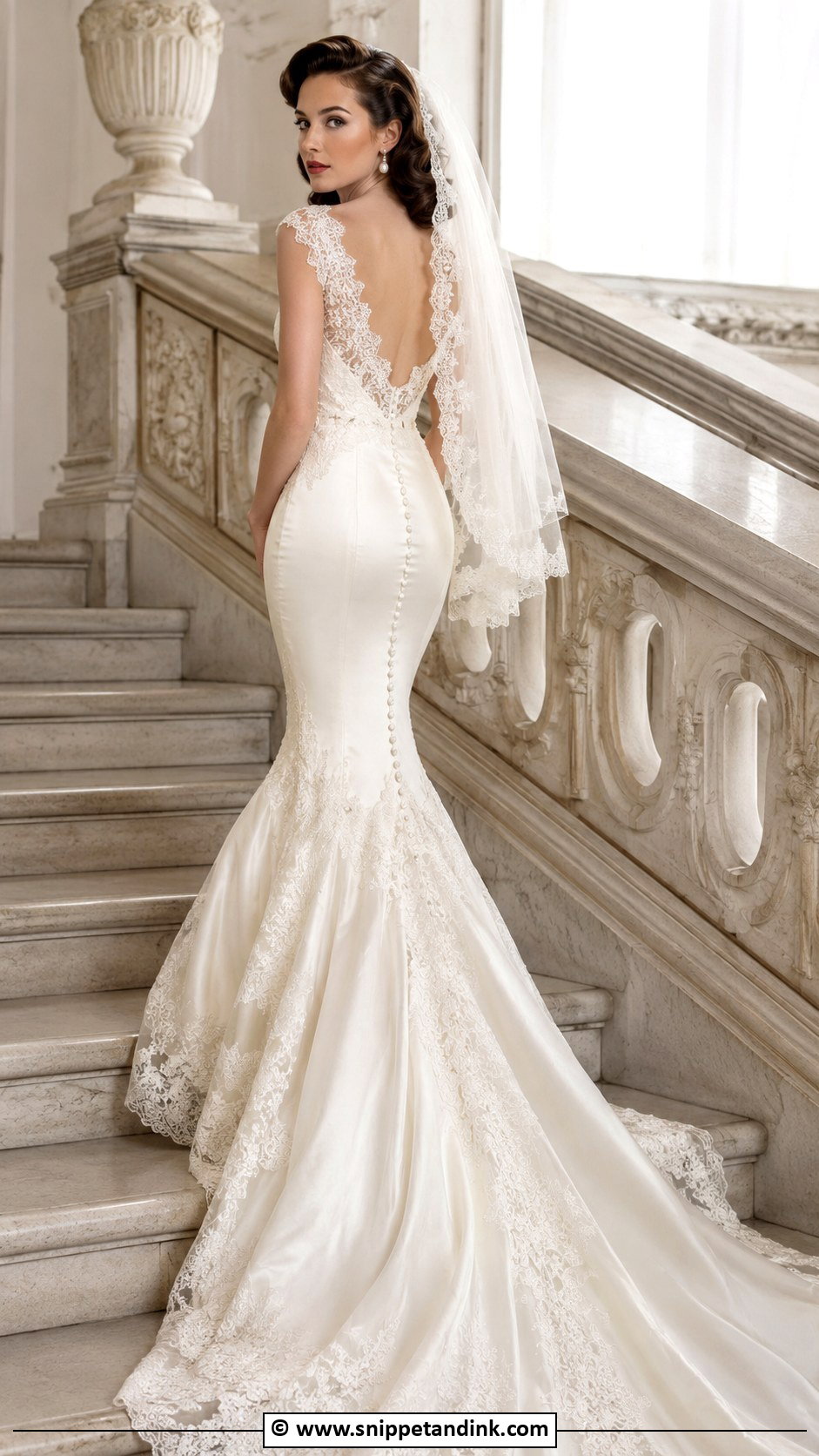
Old Hollywood brides of the 1930s and 40s wore bias-cut satin that flared at the hem, and that’s the line a vintage fishtail borrows. Satin, lace, beading, long sleeves and covered buttons all support the reference. A high neck looks regal, and a sweetheart neck is softer. Finger waves, pearl earrings, a vintage-style veil and ivory heels finish it, with soft makeup rather than a red lip if you want it bridal. It belongs in a historic venue or a grand hotel.
16. Corset Fishtail Wedding Dress
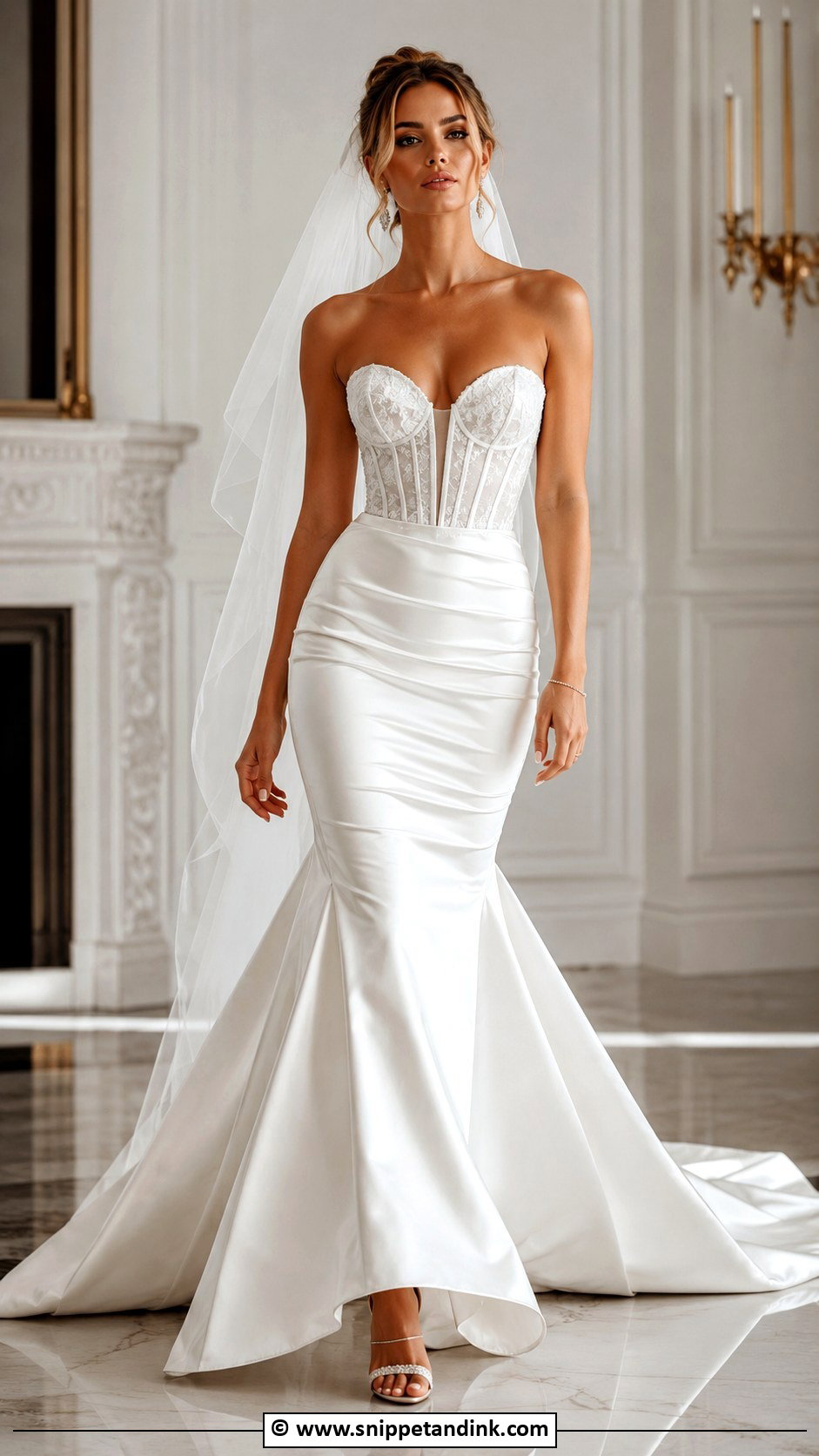
A corset bodice on a fishtail carries the shape from the bust all the way through the hip before the flare, so the internal structure is doing a lot. Visible boning reads modern; hidden corsetry looks more classic. Lace, satin, tulle and crepe all work. Since the bodice is the main detail, skip heavy necklaces. Simple earrings, a clean veil and heels matched to the fabric tone suit it, and a lace-up back gives you some adjustment on the morning.
17. Square Neck Fishtail Wedding Dress
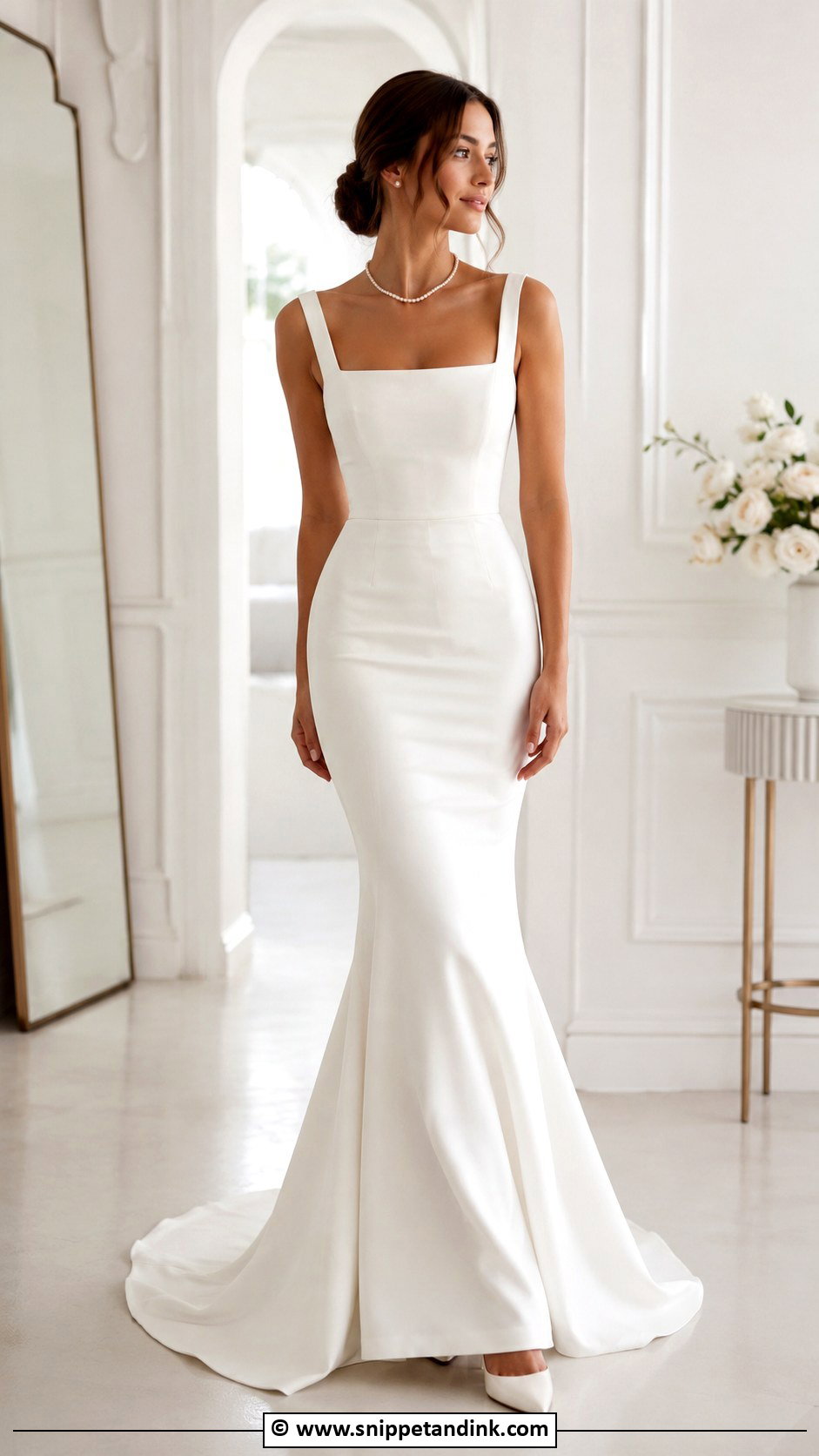
Square necklines are stable, which matters on a fitted dress where you’re already conscious of the body. A straight edge doesn’t slide, and straps or sleeves add more support. Crepe makes it minimalist, satin polished, lace romantic. A short necklace that sits above the square, pearl studs and a sleek veil are enough. It’s one of the least trend-dependent shapes on this list.
18. V Neck Fishtail Wedding Dress
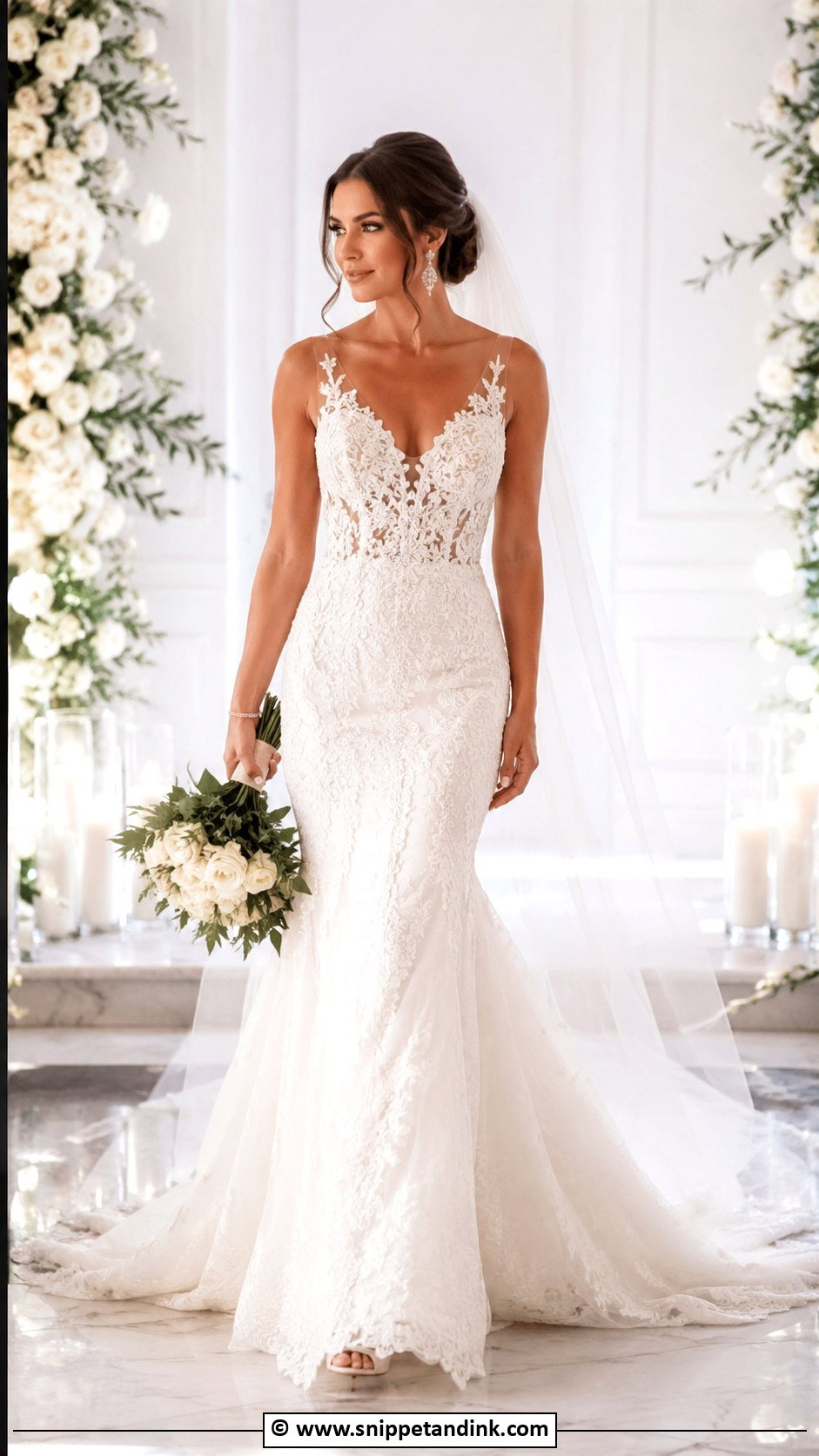
A V neck draws the eye vertically, so it lengthens the torso before the fitted body takes over. Soft Vs are romantic; deep ones are dramatic. If the V is deep, illusion mesh inside adds support and stops gaping when you lean forward. Test that in the shop. Drop earrings, a fine bracelet and strappy or pointed heels suit it, and a simply edged veil keeps the neckline readable.
19. High Neck Fishtail Wedding Dress
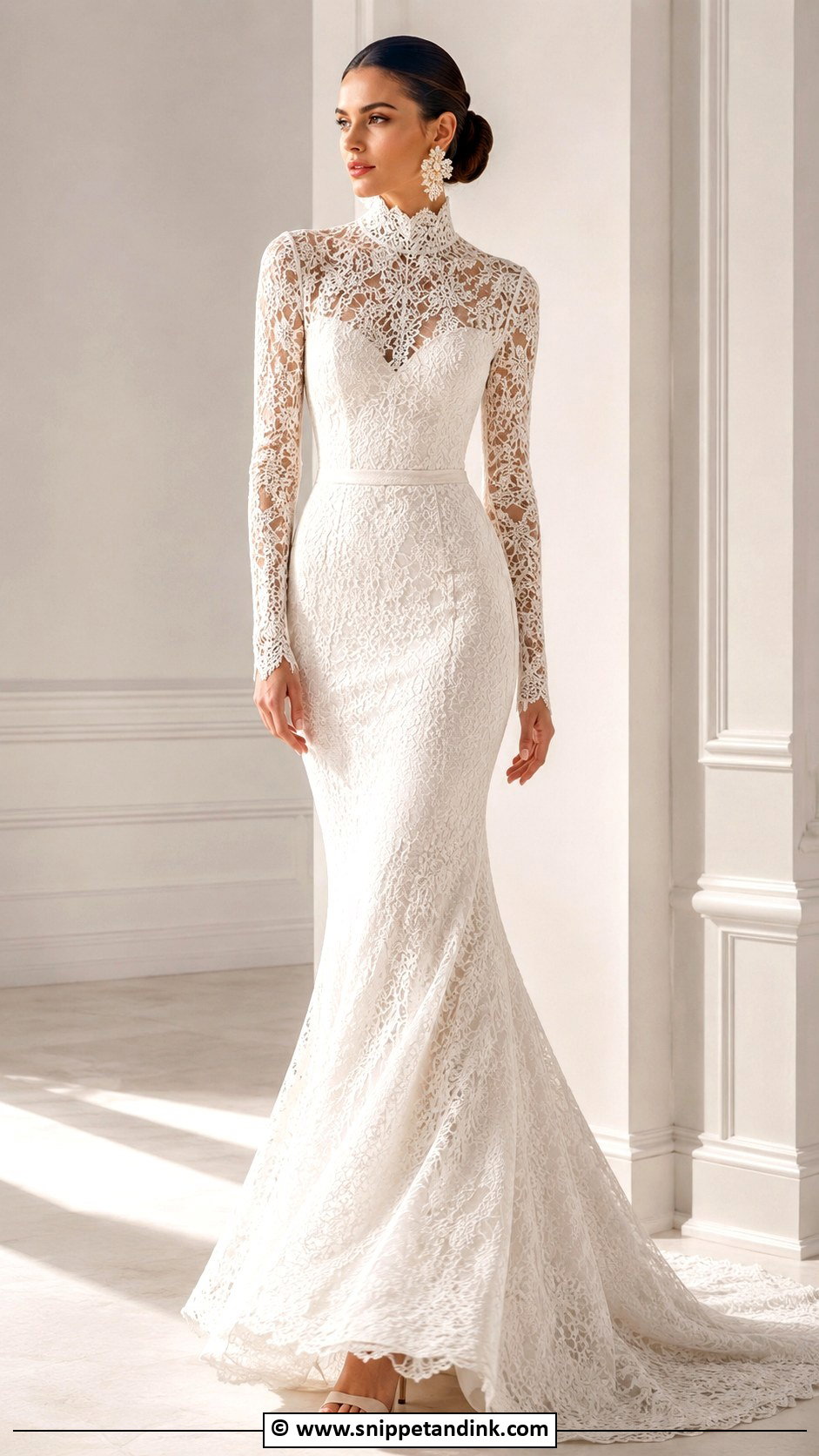
High necks cover a lot at the top, so a fishtail balances them with shape below. Lace high necks feel romantic and vintage; crepe or satin ones look sleek. This is a good place for an open back or long sleeves. Because the neckline frames the face so strongly, skip necklaces and go with statement earrings and a smooth bun. A long veil softens a very structured gown. Make sure the collar doesn’t press into your chin when you look down.
20. Detachable Train Fishtail Wedding Dress
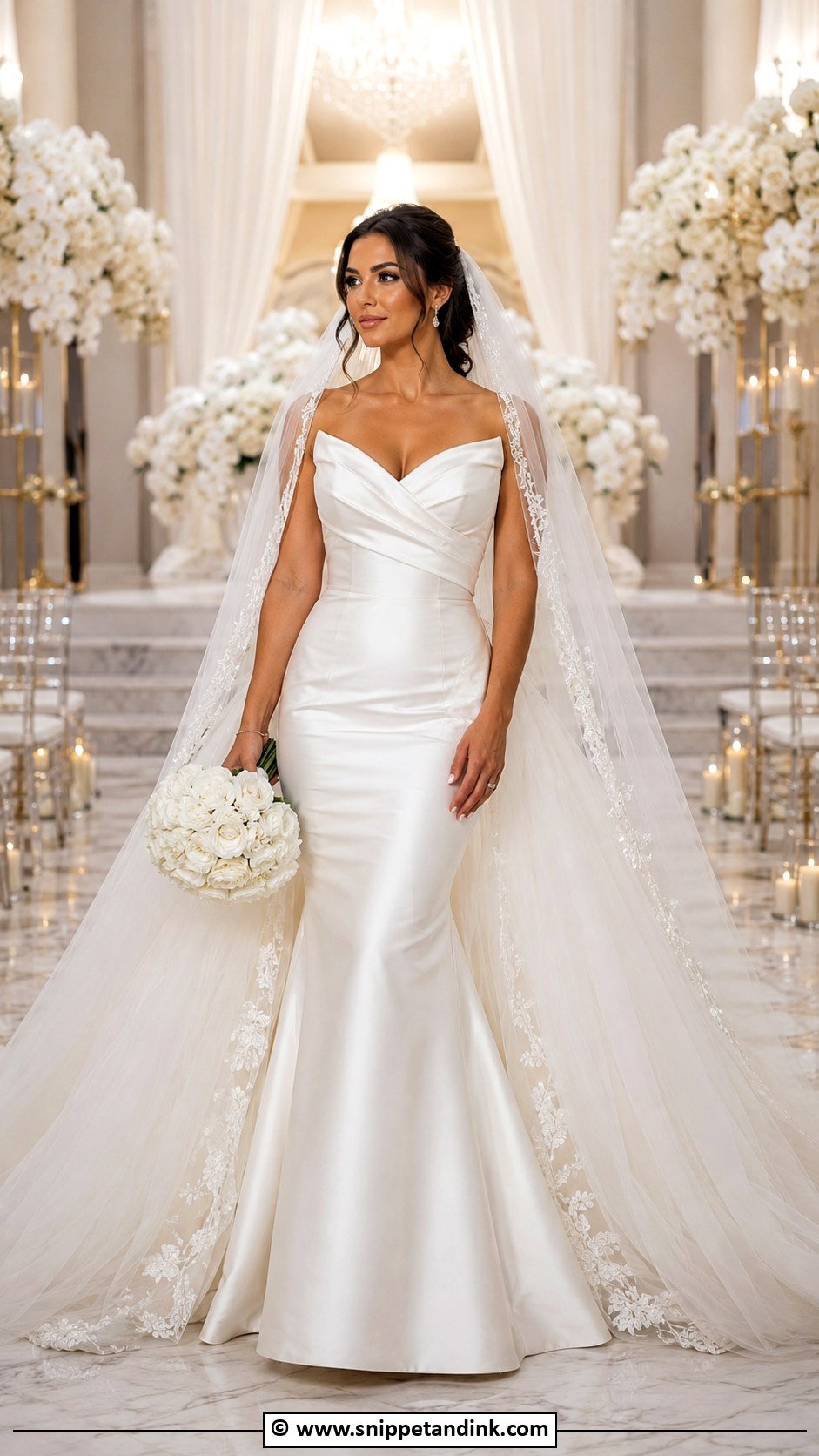
A detachable train fishtail wedding dress gives you a dramatic ceremony train and a clean gown for the reception, without the bustle points that a fixed train needs. Trains usually fasten with hooks or buttons at the waist or under a bow, and tulle, satin, organza or lace versions are all common. I always have the bride and her helper take it on and off once at the final fitting. Pair it with secure heels and a veil that doesn’t fight the train.
21. Fishtail Wedding Dress With Overskirt
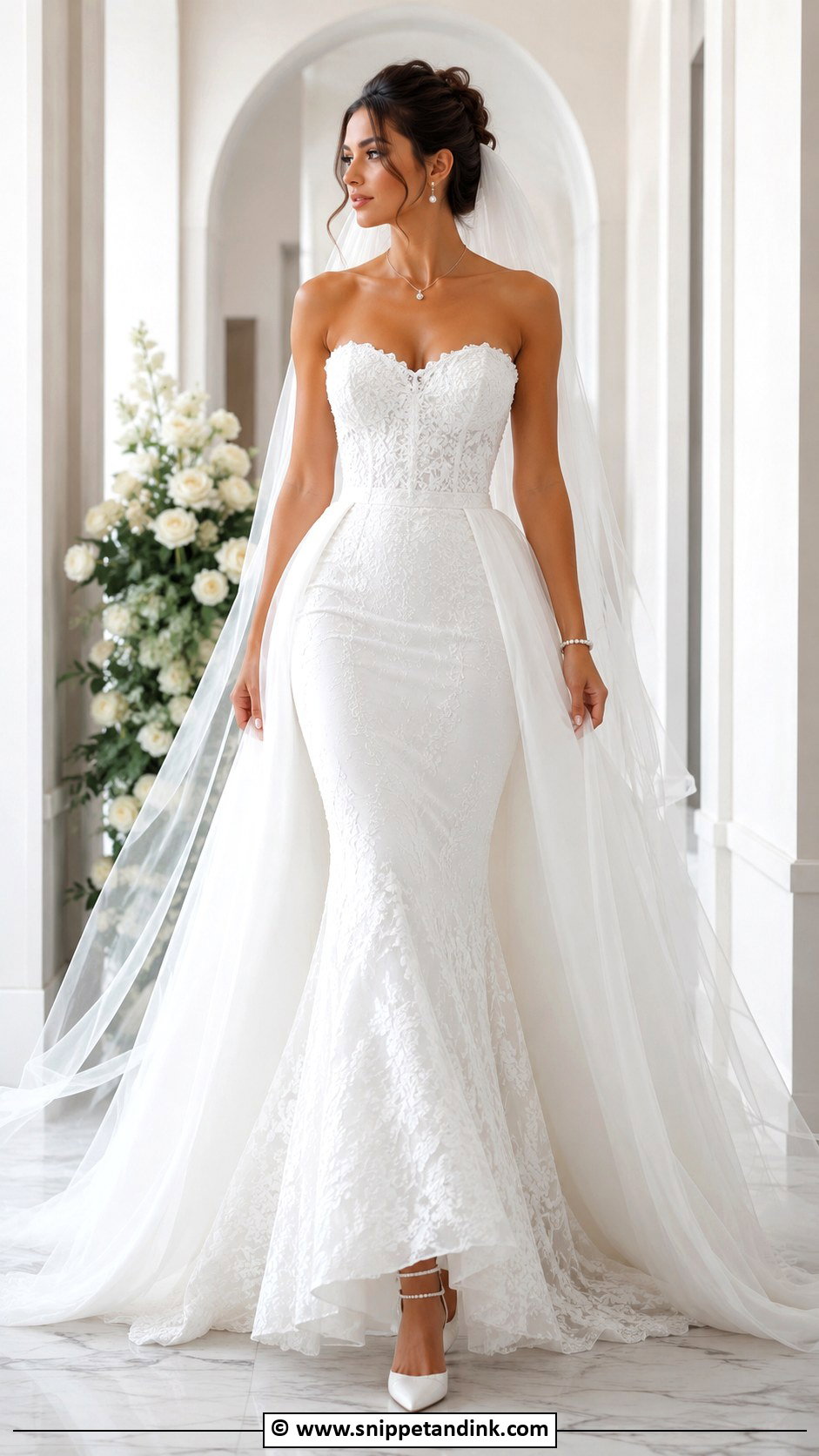
An overskirt lets you walk in looking like a ball gown and dance as a fishtail. The fitted base stays the same; the overskirt adds volume for the ceremony. Sheer tulle overskirts are romantic and show the shape underneath, while satin ones look formal and fully hide it. Practice the removal once, since hooks at the back are hard to reach yourself. A long veil, elegant heels and earrings that match the gown’s detail suit both stages.
22. Pearl Fishtail Wedding Dress
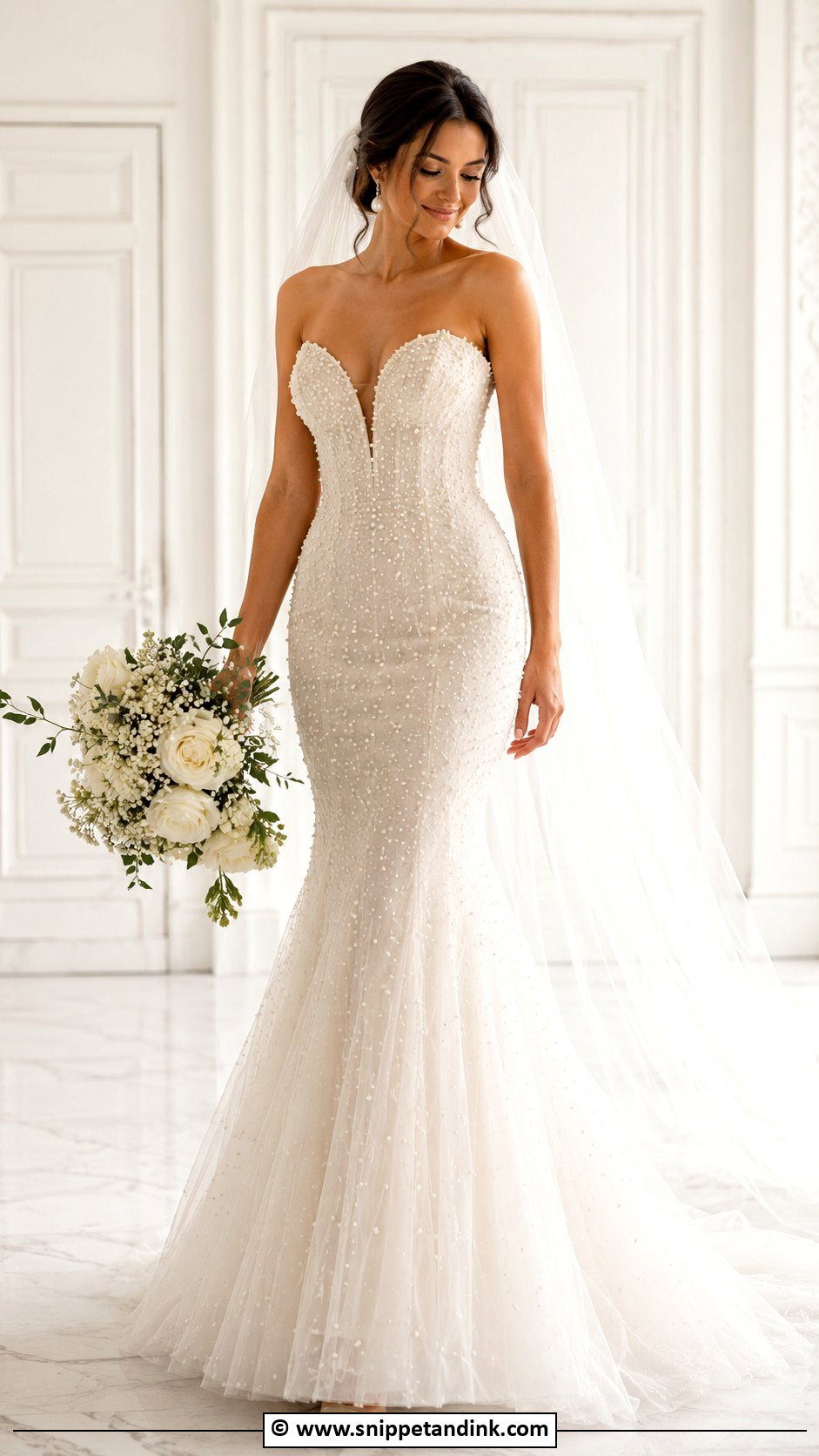
Pearls on a fitted gown give texture without sharp sparkle, which keeps a fishtail from looking too evening-dress. They can be scattered over tulle, placed along the bodice, or trim the sleeves and veil. Pick one or two of those places, not all. Pearl earrings, a simple bracelet and ivory heels are enough. A soft bun or half-up style keeps it graceful.
23. Floral Fishtail Wedding Dress
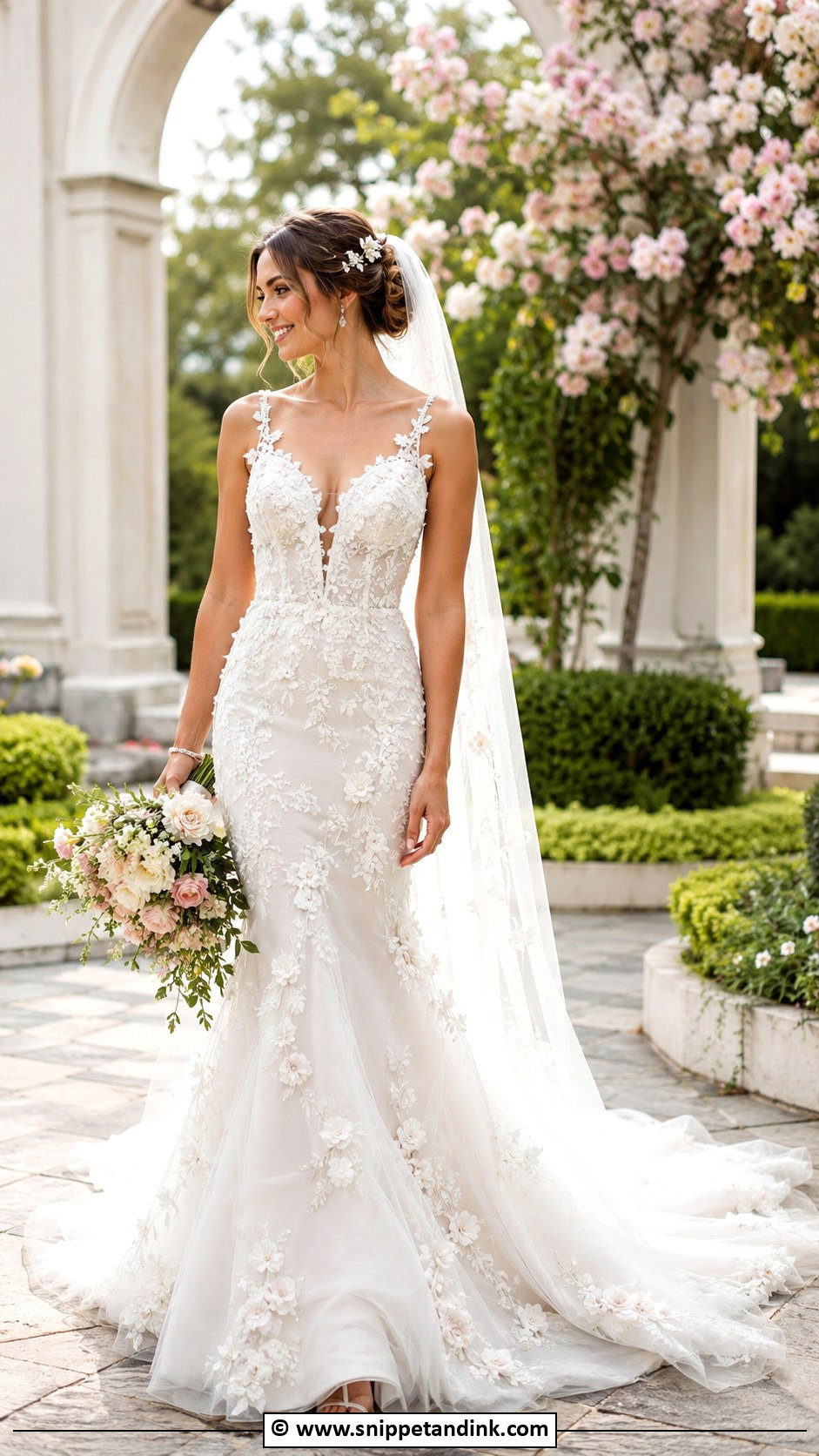
Florals soften the structure of a fishtail. Floral lace, 3D appliqués, embroidered vines and floral beading all work, and they sit naturally in a garden or outdoor estate in spring and summer. Check appliqués are firmly stitched, since a fitted skirt rubs them more when you walk. If the flowers are subtle, add floral pins; if they’re bold, keep hair and jewelry simple. Delicate heels and a soft veil finish it.
24. Black And White Fishtail Wedding Dress
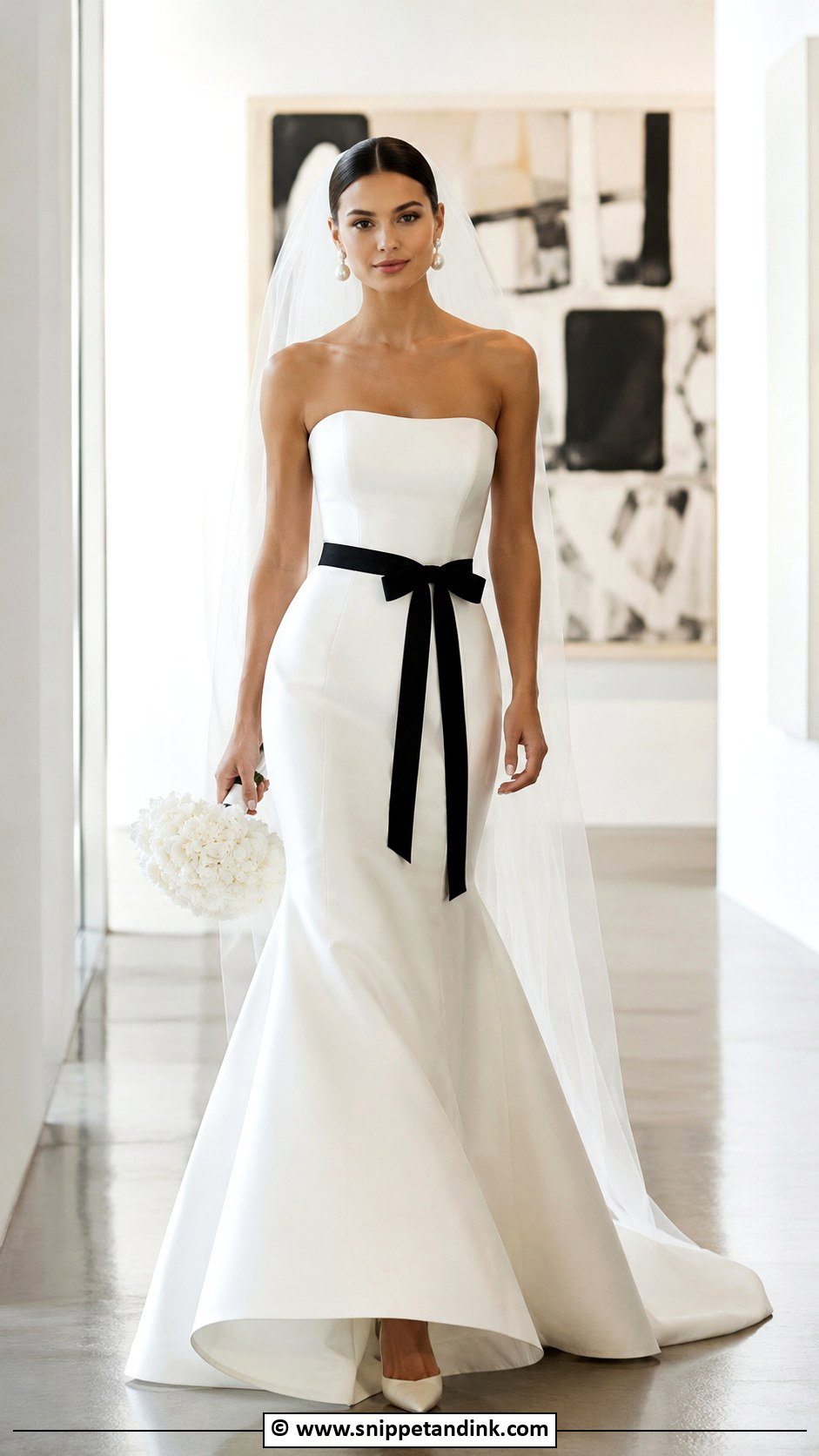
Black on a white gown is a confident choice, and the fishtail’s clean outline makes it look intentional. Black can appear as a bow, a belt, a lace appliqué, gloves or contrast trim. I’d keep it to one placement, otherwise it starts to read as an evening dress. A city venue, a museum or a loft suits it. Black or ivory heels, pearl earrings, a clean veil and classic makeup finish it.

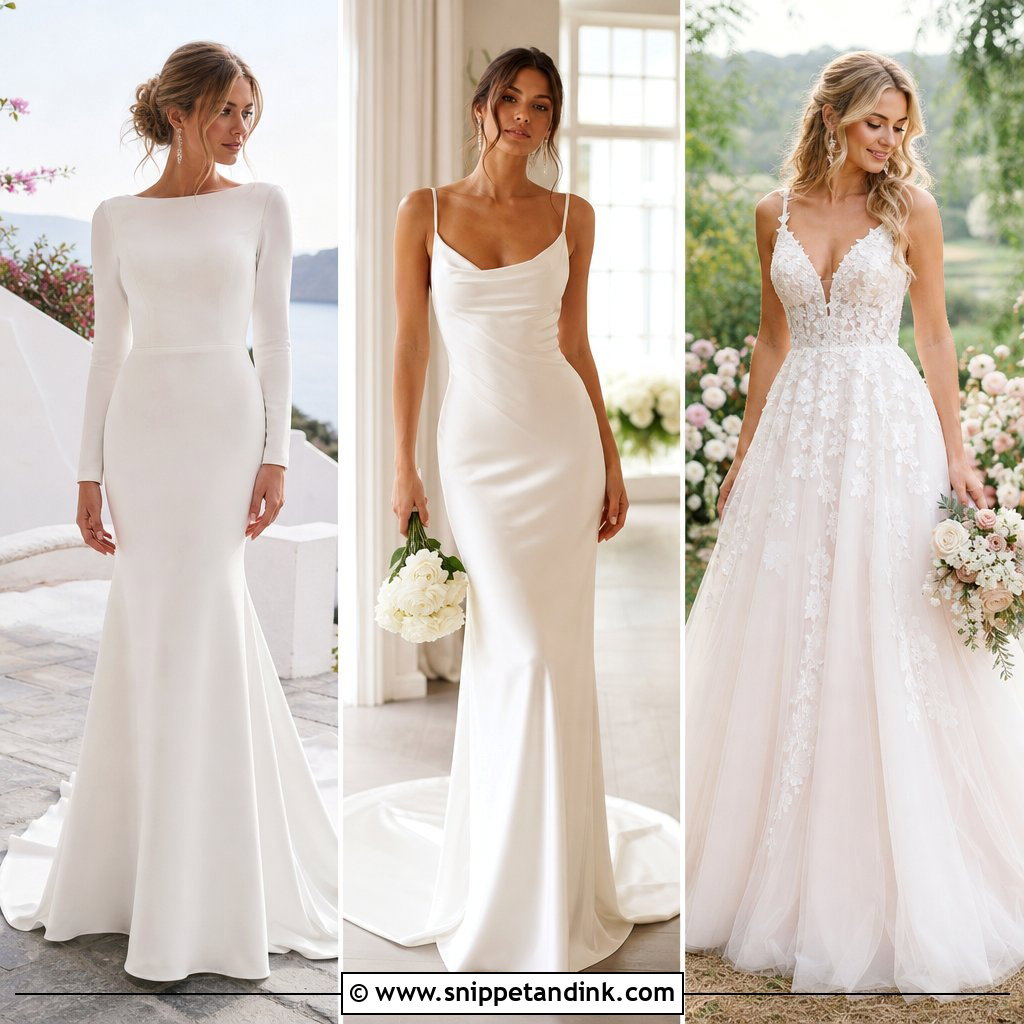
25. Champagne Fishtail Wedding Dress
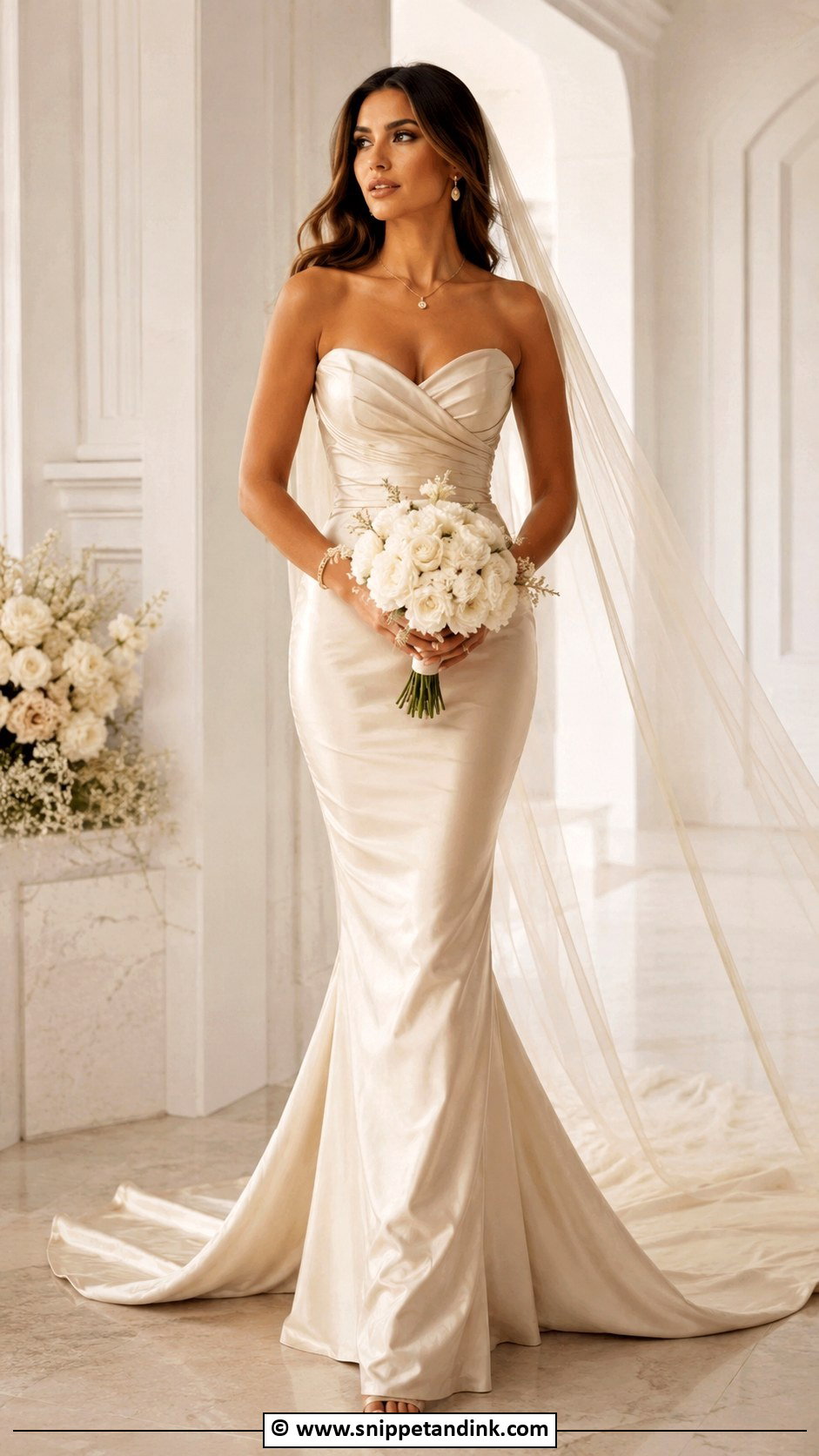
Champagne is a warm alternative to white or ivory, and its golden undertone often flatters skin that looks washed out in bright white. Satin champagne looks glamorous; lace or tulle softer. Hold a swatch against your face near a window, since champagne shades vary a lot. Gold jewelry, ivory or champagne heels and a veil in a matching warm tone work best; a stark white veil makes the dress look dull. A neutral bouquet suits it.
Underneath a Close-Fitting Gown
A fitted dress shows the outline of whatever you wear under it, so underwear decisions should come before your final fitting, not after. Laser-cut underwear with bonded edges, in a shade close to your skin disappears under crepe and satin. If you want shapewear, choose one that doesn’t end mid-thigh, because the edge can show as a ridge right where the flare begins.
Many fitted bodices have cups sewn in, which means no bra at all. If yours doesn’t, ask your seamstress to add them. It’s a simple job and far more secure than sticky alternatives on a hot day.
Bustling a fishtail train
Fishtail trains usually bustle up from a few points under the flare. Have your helper practice at the last fitting, and mark the hooks with a tiny thread loop in a contrasting color so they can find them quickly in a dim room.
For the first dance, a fishtail with a bustled train turns more easily than you would expect. Keep the steps small, let your partner lead the turns, and avoid dips, which put strain on the seams at the knee.
Can You Climb a Staircase in It? The Last Test for a Fishtail
There are so many ways to wear this shape: lace, satin, pearls, sleeves, open backs, overskirts or plain crepe. What matters most is comfort, tailoring, support and movement. A fishtail should look striking in photos, but you should also be able to walk, sit and dance without thinking about it. Try several flare points, fabrics and necklines before you choose. The one that lets you take the stairs without lifting the hem is usually the one.
You'll Like These Ideas:







Leave a Reply