
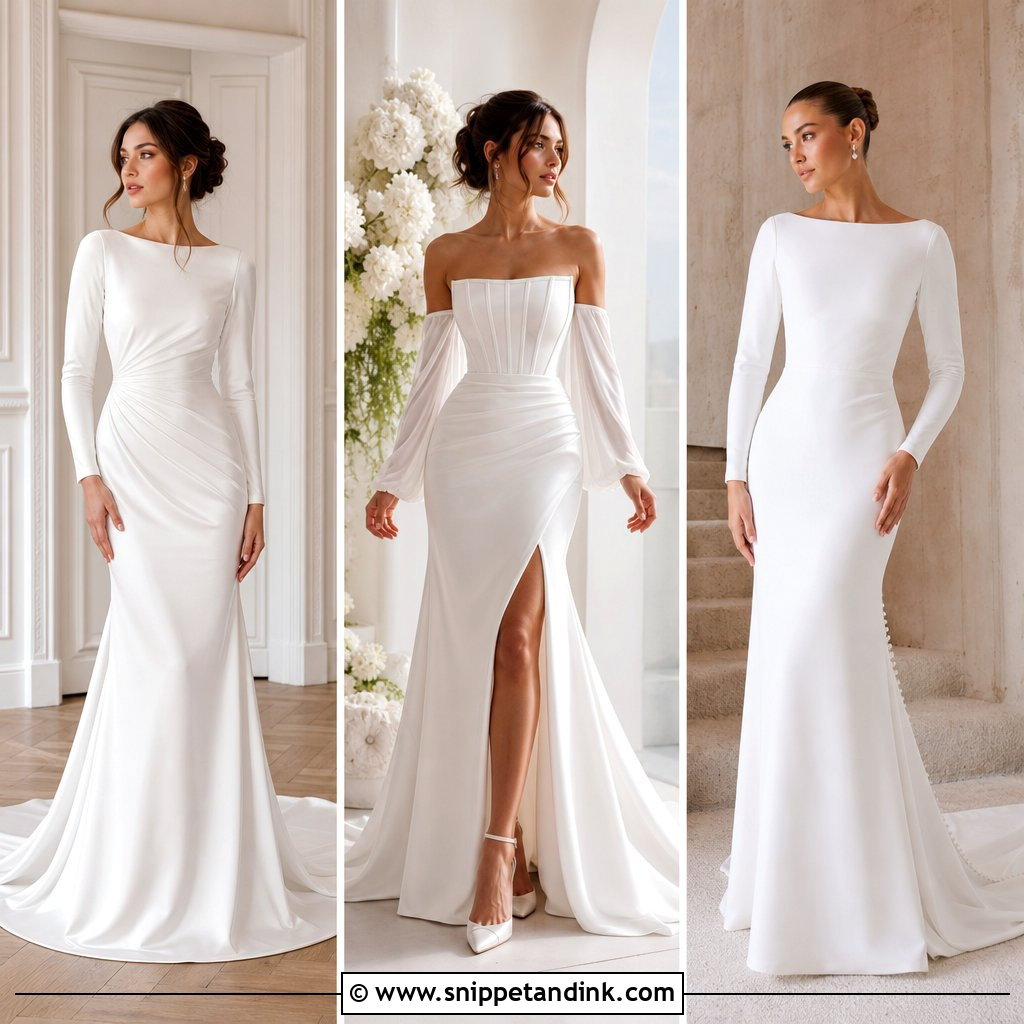
Satin has structure and a soft shine, and sleeves change what that structure does around your shoulders and arms. The options run from clean long sleeves to lace, bishop, bell, and detachable designs, and many newer gowns pair a satin skirt with an illusion bodice, a plunge, an open back, a side slit, pearl cuffs or a cathedral train. When I dress a bride in sleeves, I care less about the picture on the hanger and more about whether she can hug, eat and hold a bouquet in them. A plain veil, restrained jewelry and properly fitted shoes finish the look without fighting the sheen. These twenty sleeved satin gowns come with the fit checks I would make on each one.
Measuring Sleeves With Your Arms Bent, Not Hanging
Most sleeve problems come from a fitting where the bride stood still with her arms at her sides. Woven satin has almost no give, so a sleeve that looks smooth while you stand can lock your elbows the moment you hold flowers. I fit sleeves in three positions: arms down, bouquet held at the waist, and both arms raised as if hugging someone taller.
- Check the armhole first. A higher, closer armhole actually lets you lift your arm further without the whole bodice rising, which surprises most brides.
- Bend the elbow to a right angle. If the sleeve pulls tight across the forearm, ask for a little ease there before anyone shortens it.
- Look at the cuff with the arm bent. Long sleeves should still cover the wrist bone; a sleeve that only reaches it standing will ride up all evening.
- Turn around and check the back. Wrinkles fanning out from the armpit toward the shoulder blade usually mean the sleeve is set too far forward.
If a sleeve feels wrong in the shop, it rarely gets better with wear. Stretch satin or a lace or mesh sleeve gives more movement than solid satin, and that can be the quiet fix for a bride who dances a lot.
1. Long Sleeve A-Line Satin Wedding Gown
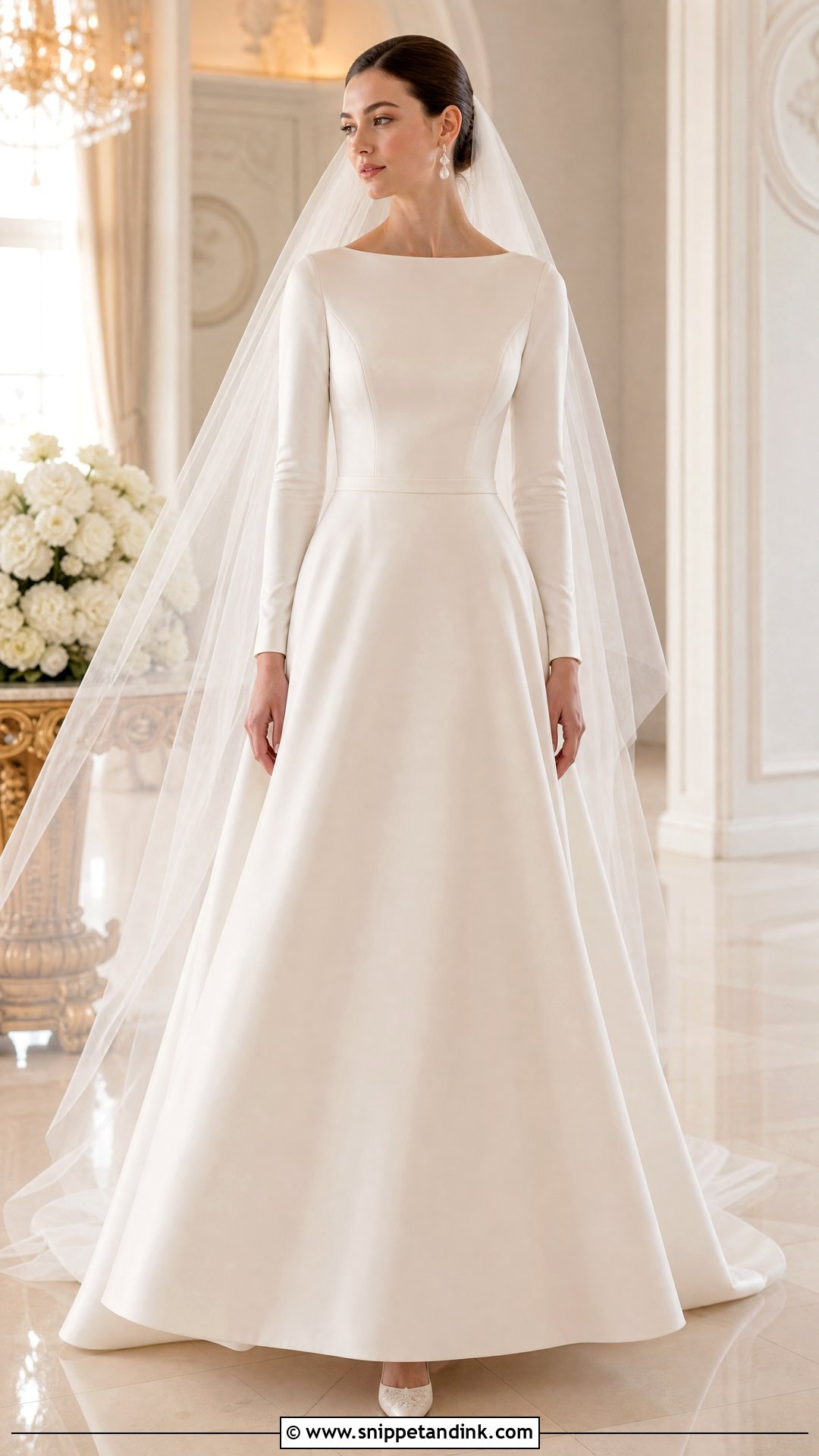
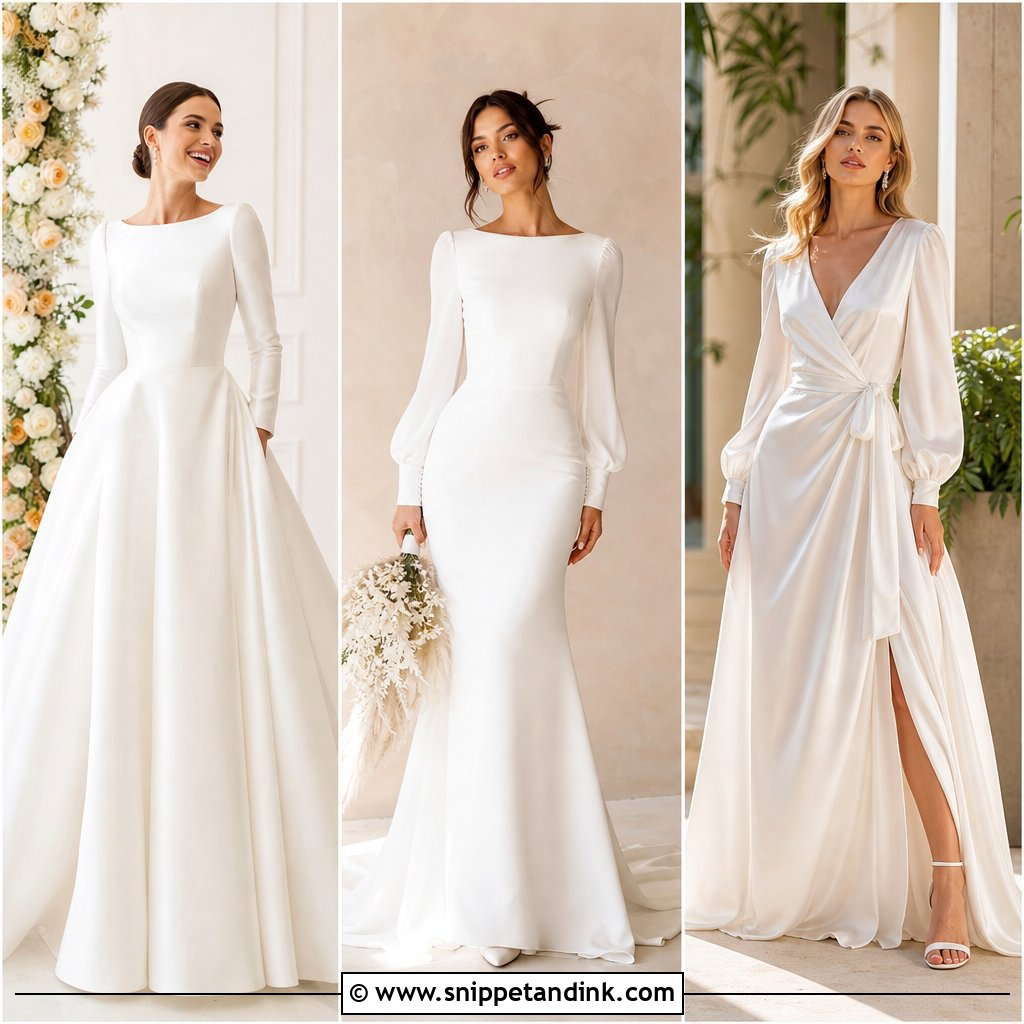
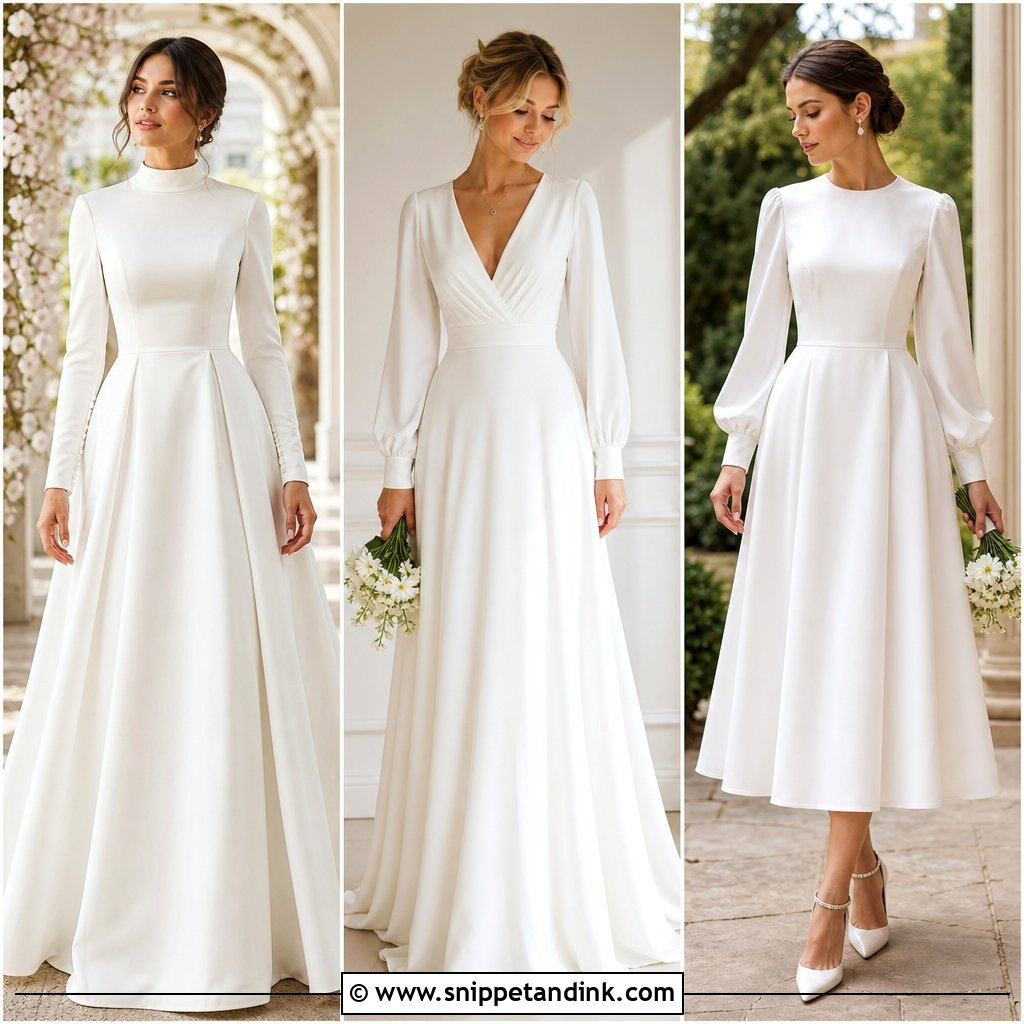
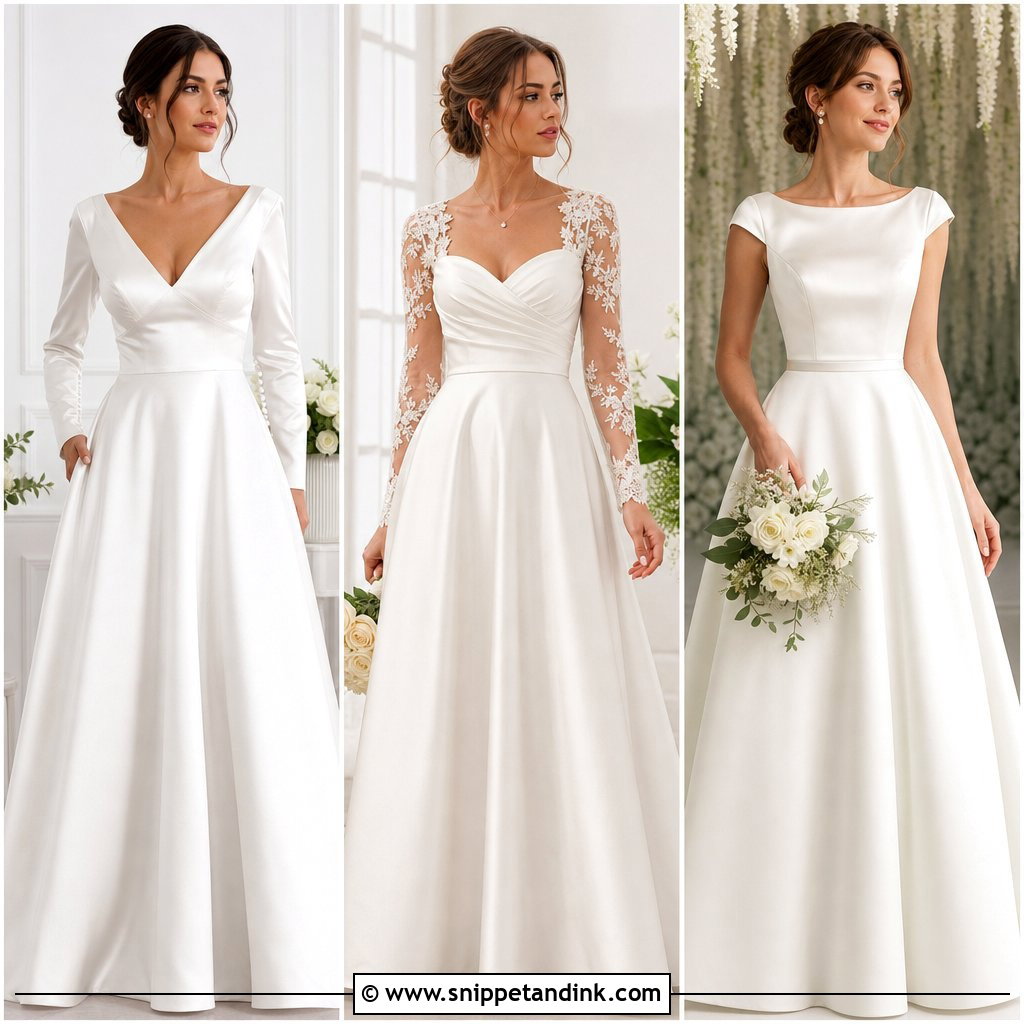
An A-line is the friendliest place to start with sleeves: fitted bodice, natural waist, skirt widening slowly to the floor. Plain satin sleeves read modern, covered buttons at the wrist read traditional. Pearl drop earrings, pointed ivory pumps and a fingertip veil with a narrow satin edge suit it, and a low chignon keeps the neckline from feeling buttoned up. A slim crystal or satin belt adds waist definition if you want it. My first check is the reach. If a bride can’t stretch her arm forward to shake a hand without the shoulder seam pulling, the cuffs will also creep up her wrists all evening.
2. Satin Ball Gown with Lace Sleeves
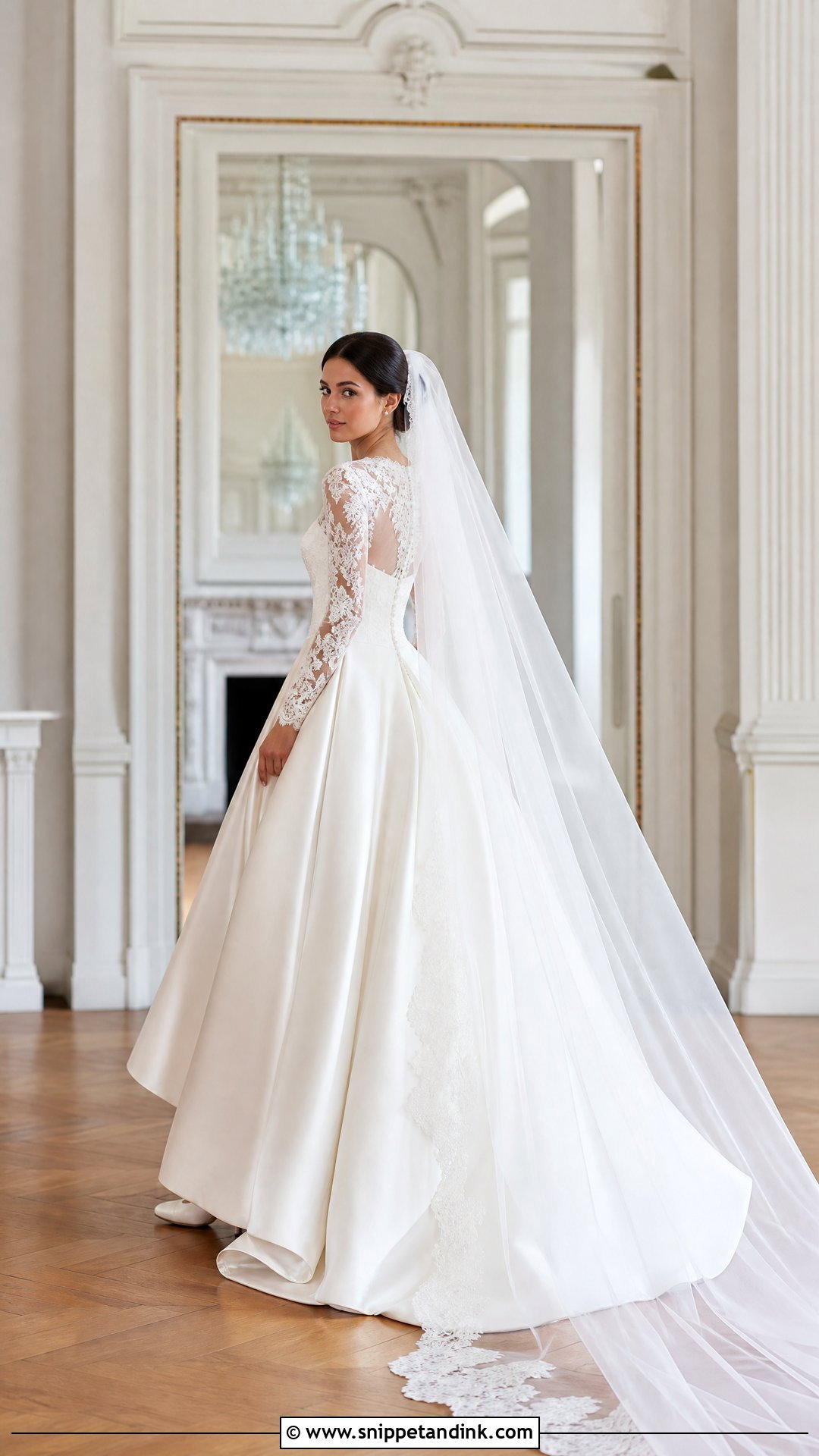
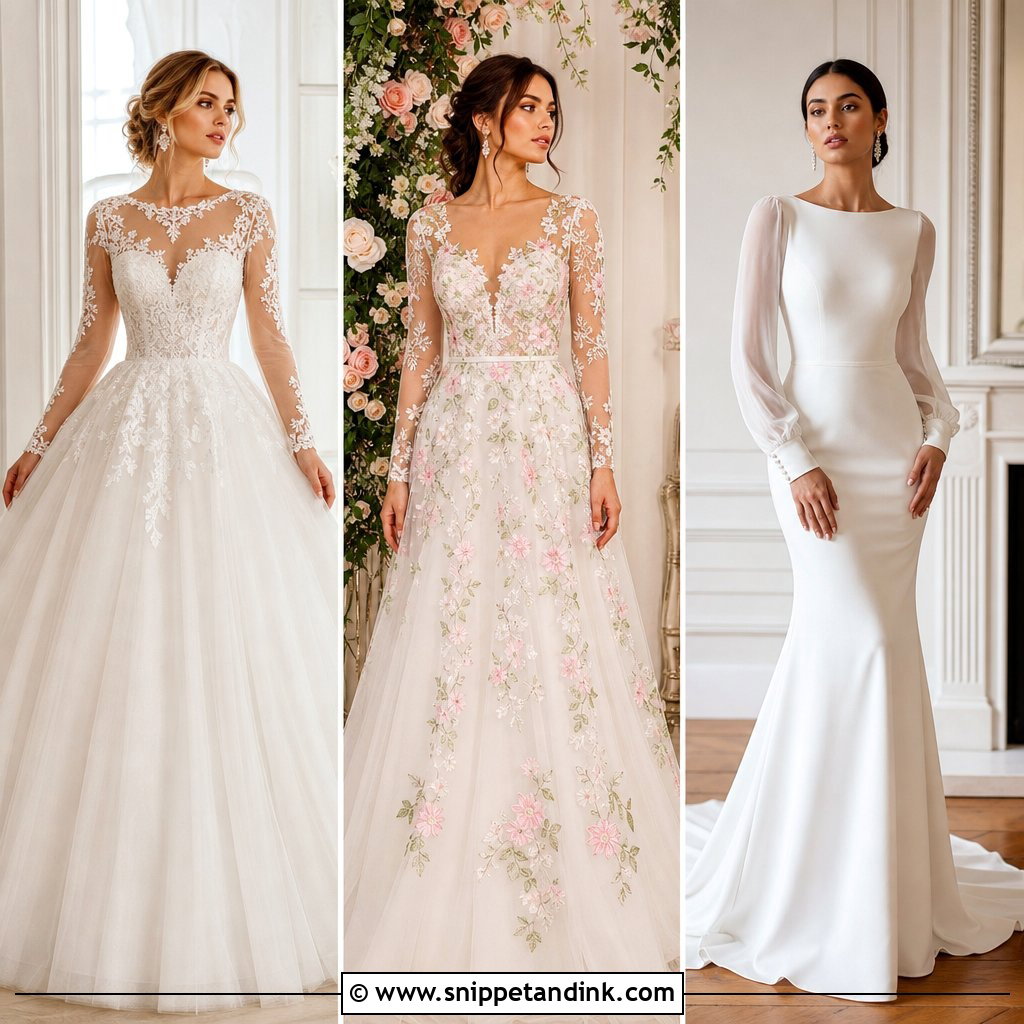
Lace sleeves on a satin ball gown give a regal skirt a softer top half. I look for lace that repeats lightly at the neckline or waist, so the bodice and skirt feel like one dress and not two. A cathedral veil, small pearl studs and closed-toe satin heels make it formal, and a polished bun lets the sleeve pattern show. Skip the necklace if the lace reaches the collarbone. A full satin skirt is heavy, so try the gown with its actual petticoat. The hem should skim the floor so you can walk without lifting the skirt every few steps.
3. Mermaid Satin Wedding Gown with Illusion Sleeves
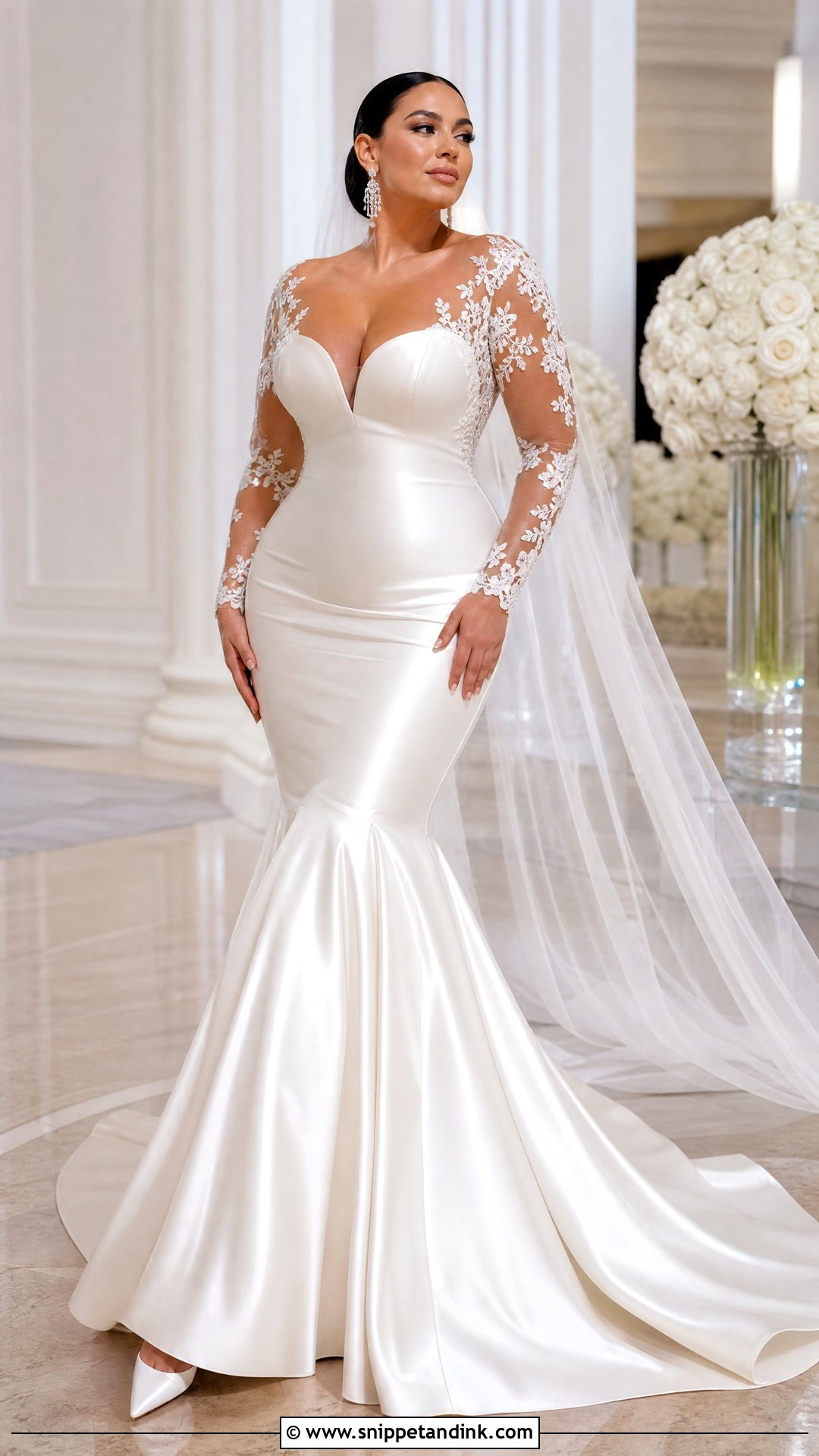
Illusion sleeves give a mermaid coverage without adding visual weight to the shoulders. The fit hugs the torso and hips before opening below the thigh or knee, and lace appliqués running down the sleeve can carry the eye into the bodice. Crystal earrings, a sleek cathedral veil, comfortable pointed pumps and a side-parted low bun keep it polished. Reflective satin shows pulling the second the fit is off, so in fittings I have brides sit, walk and climb a few stairs. That last one tells you whether the flare starts in the right place for your stride.
4. High Neck Satin Wedding Gown with Sleeves
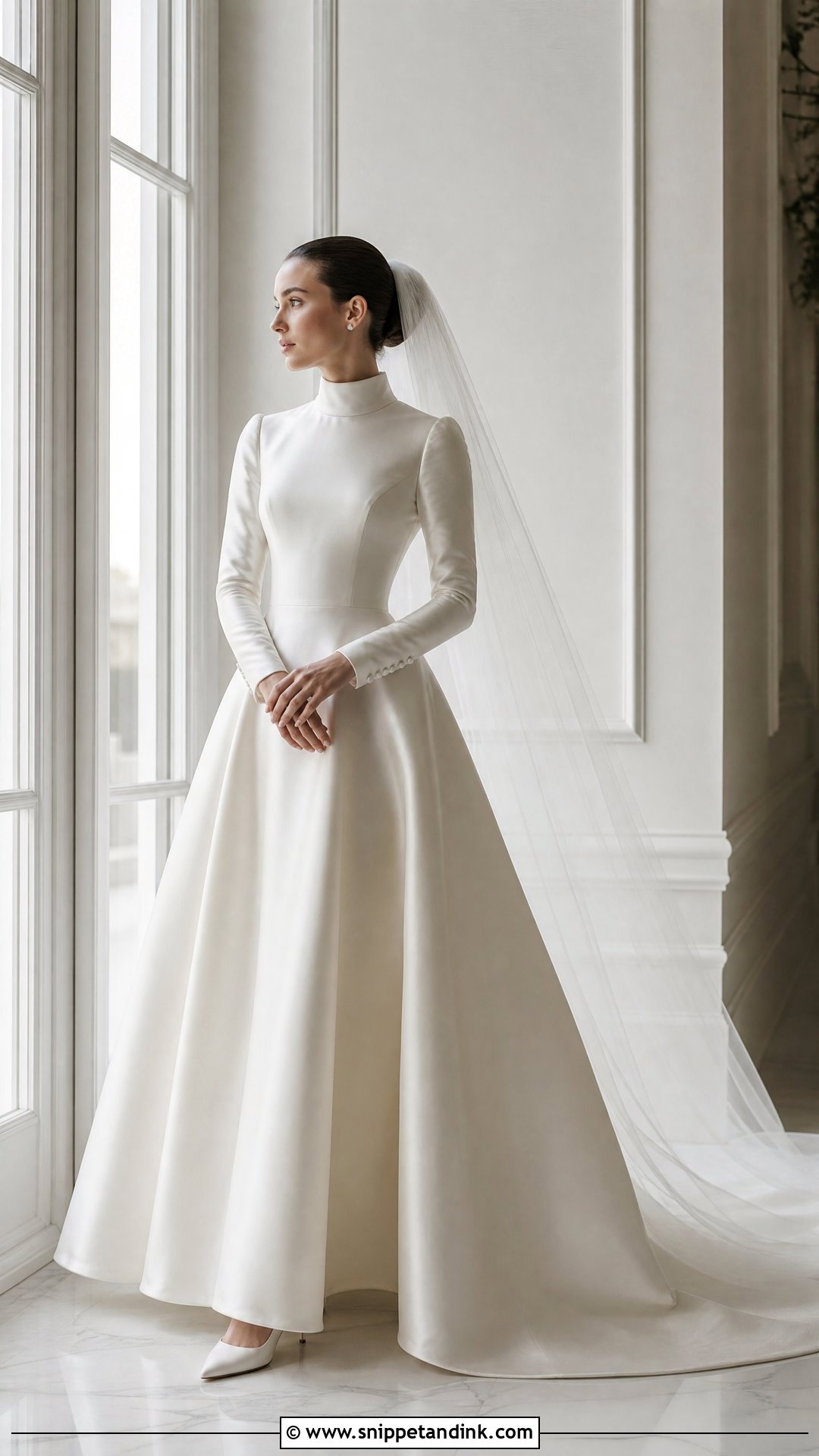
A high neck with sleeves covers a lot of the body, so the line has to be strong: a fitted bodice over a full A-line or ball gown skirt. Covered buttons, a small keyhole at the back or a thin lace trim add interest, and some versions now hide pockets in the skirt, which brides love more than they expect to. Wear small studs, low satin heels and a long veil set under a smooth bun, and skip the necklace. Thick satin at the throat can feel stiff. I ask the bride to turn her head both ways and look down at her bouquet; the collar should lie flat without pressing or wrinkling under the chin.
5. Off Shoulder Satin Wedding Gown with Sleeves
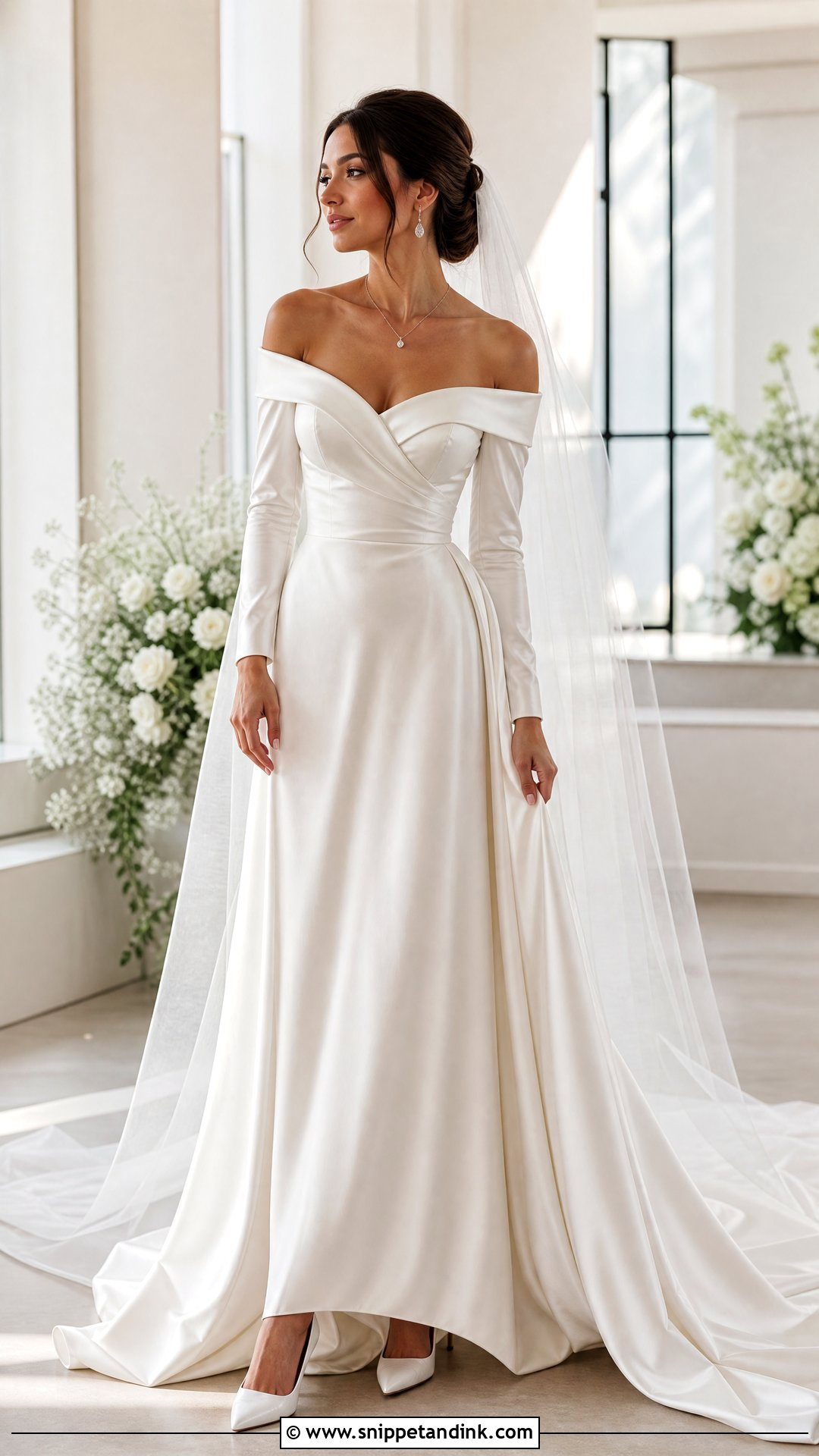
Off shoulder sleeves sit below the shoulder and frame the collarbone. They can be fitted, draped bands or detachable long sleeves. The rule I hold to is that the bodice holds the dress up, never the sleeves. If the sleeves are doing that job, the bride can’t raise her arms higher than her waist. At the fitting I have her lift both arms and hug me, and the neckline should stay put. Pair it with a simple pendant, teardrop earrings, satin pumps and a soft tulle veil, with loose waves or a low textured bun. Fashion tape helps in small spots, but tailoring does the real work.
6. Boat Neck Satin Wedding Gown with Three Quarter Sleeves
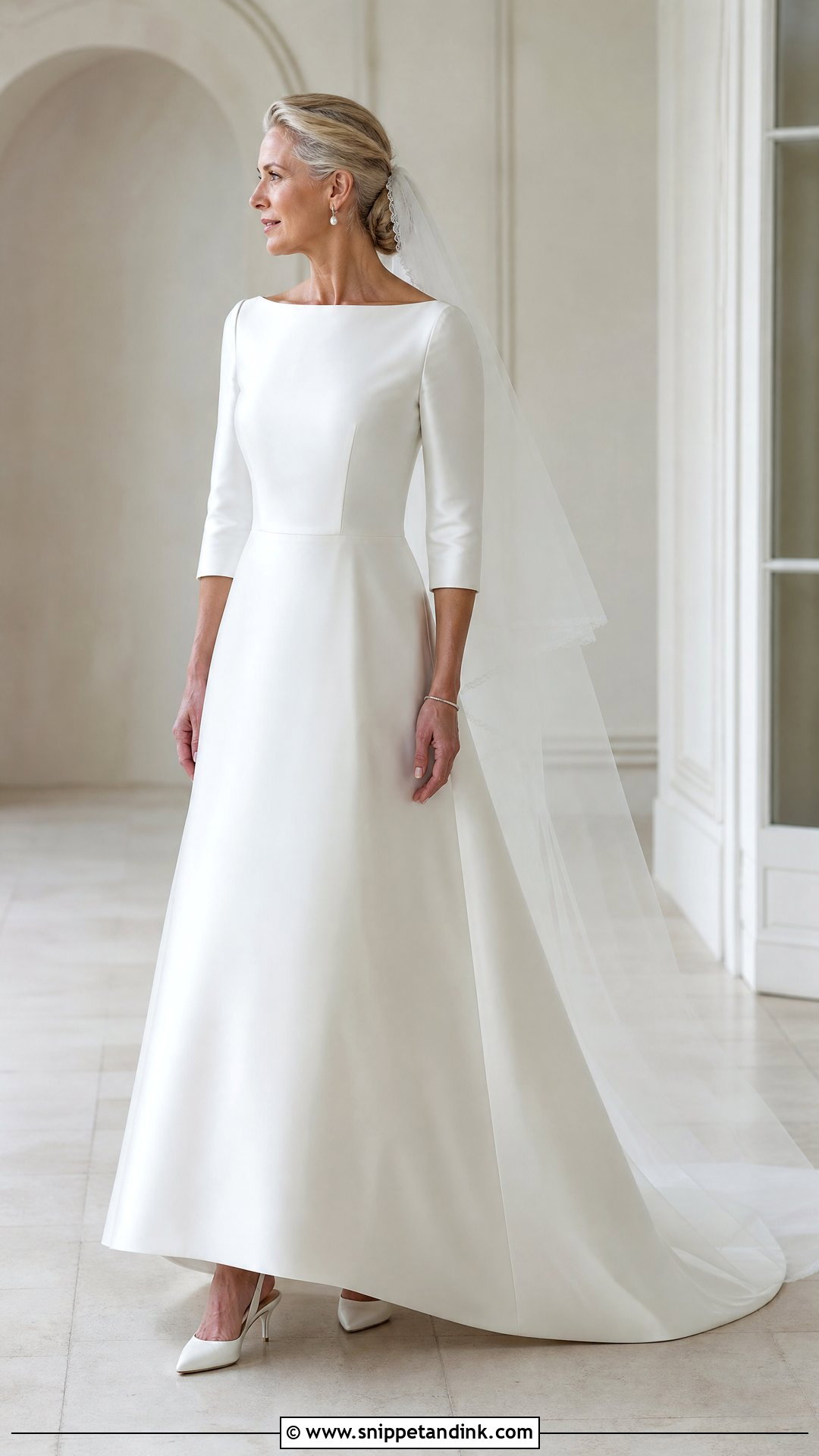
A boat neck runs along the collarbone, and three-quarter sleeves leave the wrists bare for a bracelet that means something to you. Column, A-line or a soft fitted skirt all suit it. Pearl earrings, a slim bracelet, pointed slingbacks, a chapel veil and a French twist keep the polish. Boat necks gape when you sit if they are cut even slightly wide, so check that seated. I end a three-quarter sleeve at the narrowest point of the forearm; any higher and the arm looks wider, any lower and it reads as a long sleeve that shrank.
7. Bishop Sleeve Satin Wedding Gown
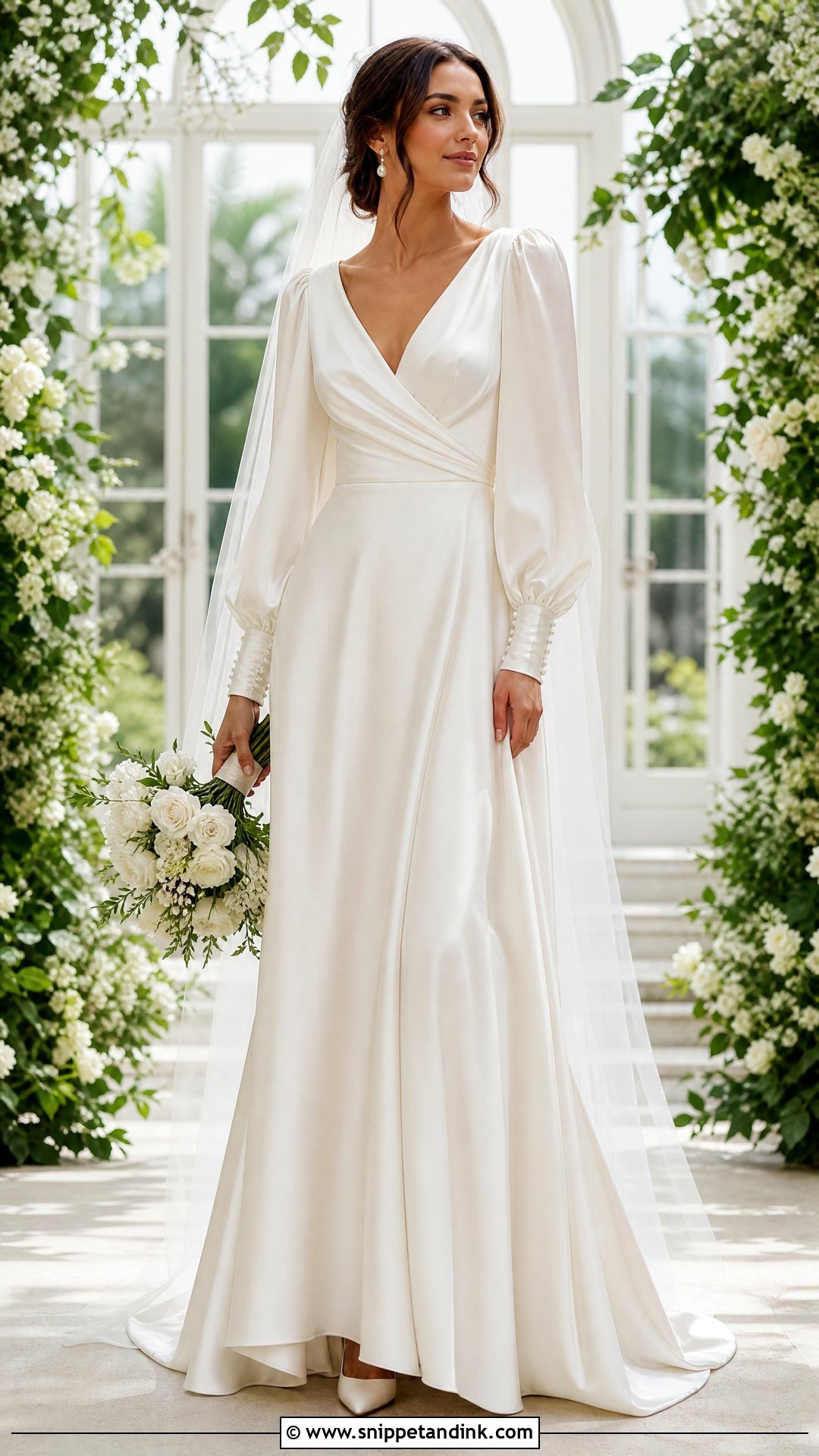
Fabric gathered into a fitted cuff gives a bishop-sleeve satin wedding gown its movement. It pairs naturally with a wrap bodice, V-neck and fluid A-line skirt, and pearl buttons on the cuff echo the sheen. Pearl drops, a simple comb, pointed heels and a light veil that doesn’t cover the sleeve volume finish it, with a low bun. Ask for a lighter satin in the sleeves; heavy duchess satin in a bishop shape puffs stiffly instead of draping. At dinner, that billow drags across plates, so practice eating and holding your bouquet in it before the day.
8. Puff Sleeve Satin Wedding Gown
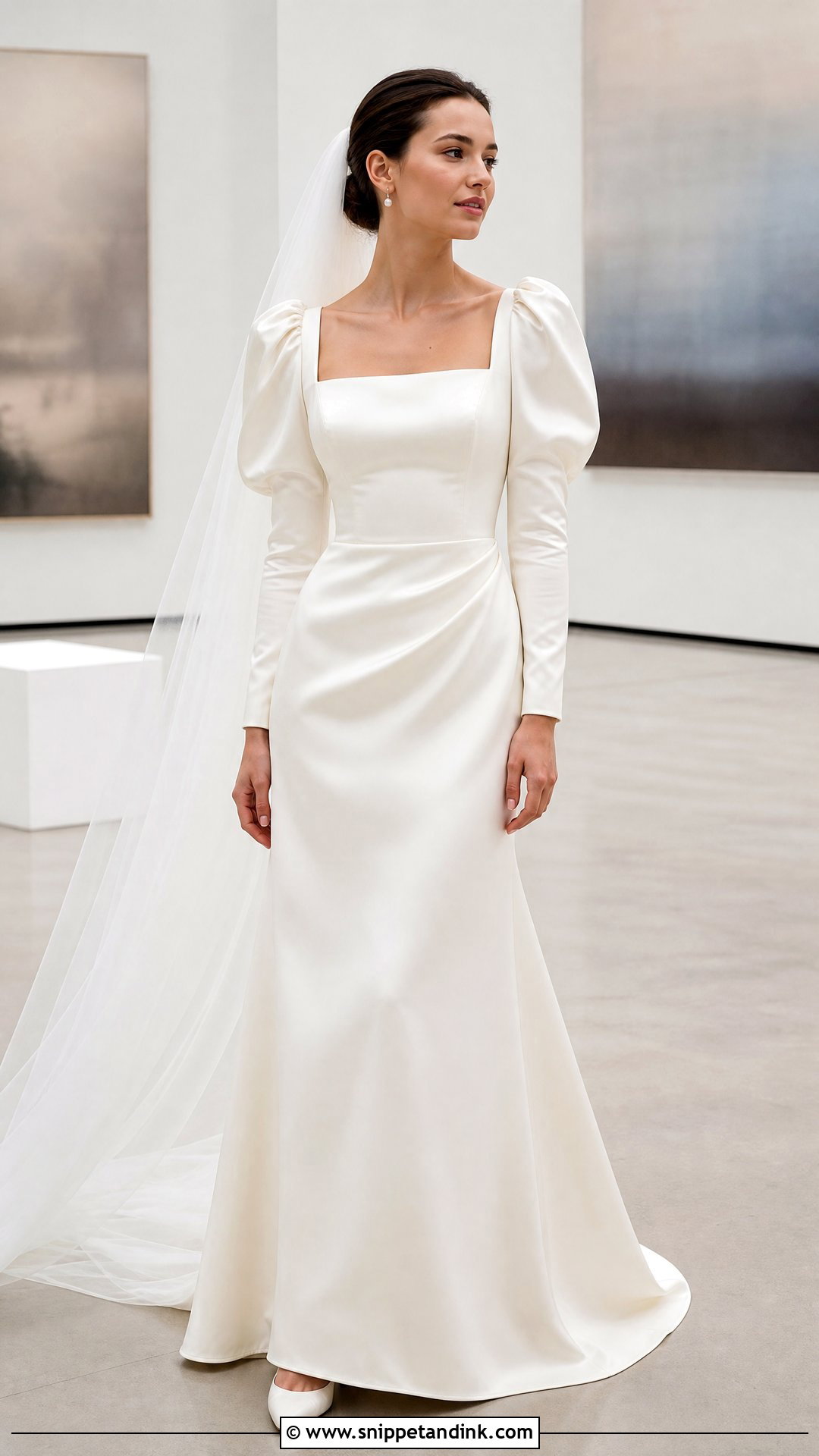
Puff sleeves bring sculpture to a plain silhouette. Short puffs feel fresh with a square neck and fitted waist; long puffs are more dramatic over a slim column or a ball gown. With volume already at the shoulder, keep the rest quiet: small pearl earrings, a plain veil, sleek ivory pumps, a low ponytail or smooth bun. A pronounced puff balances narrow shoulders, while broad shoulders usually look better with soft gathers. I check the sleeve from the front, side and back, because a shoulder seam set half an inch off makes one puff sit higher than the other.
9. Bell Sleeve Satin Wedding Gown
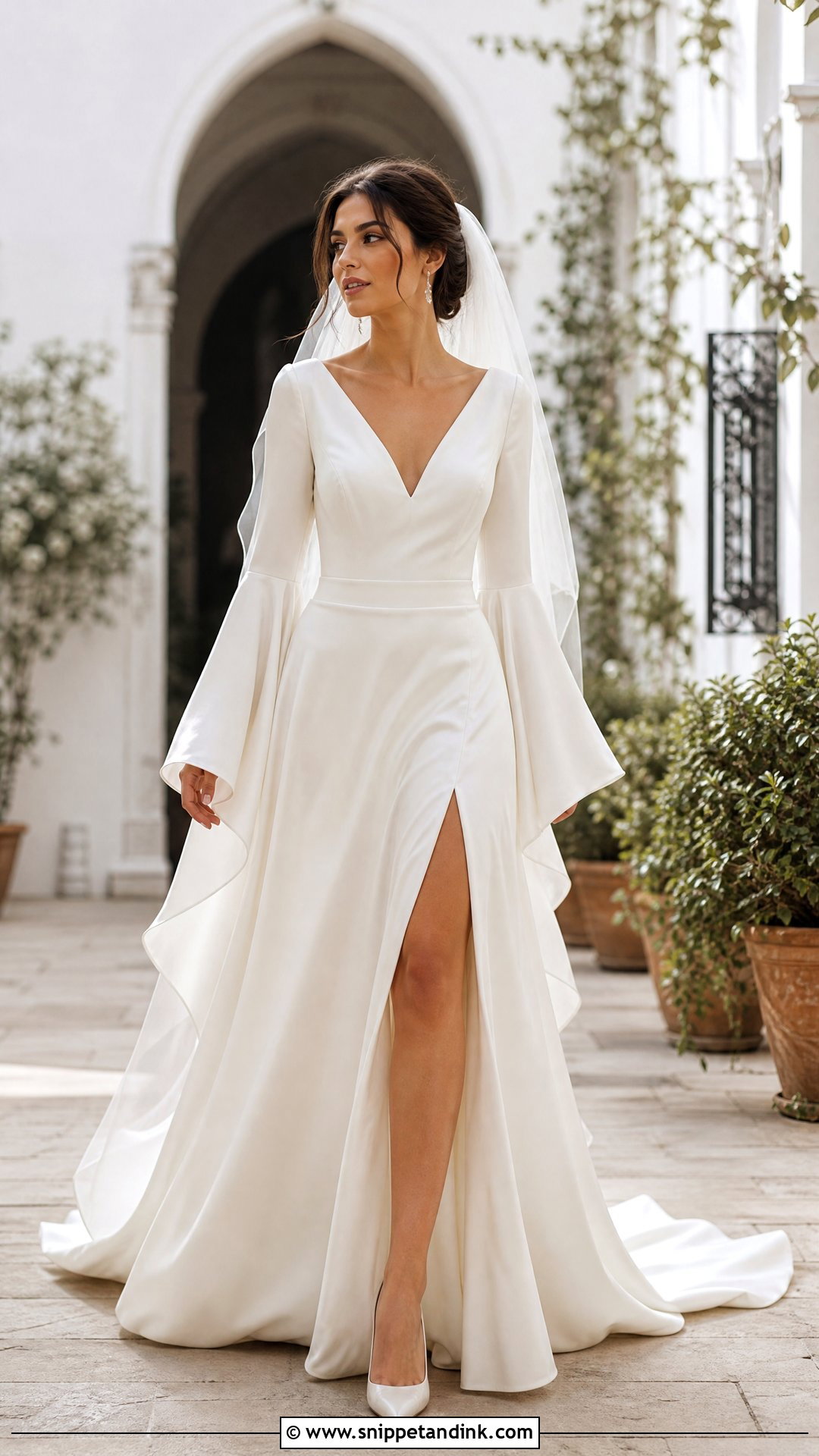
Long bell sleeves add swing to a structured satin gown, especially with a plunging or modest V neck, an A-line skirt and maybe a side slit. Slim drop earrings, pointed pumps and a veil that falls behind the sleeves, not over them, suit it, with a sleek half-up style. I prefer bells that widen below the elbow so the shoulder stays narrow. Ask whether small wrist loops can be sewn inside the sleeve. You slip a finger through and the fabric stays out of the cake, the candle and your partner’s face during the first dance.
10. Short Sleeve Satin Wedding Gown
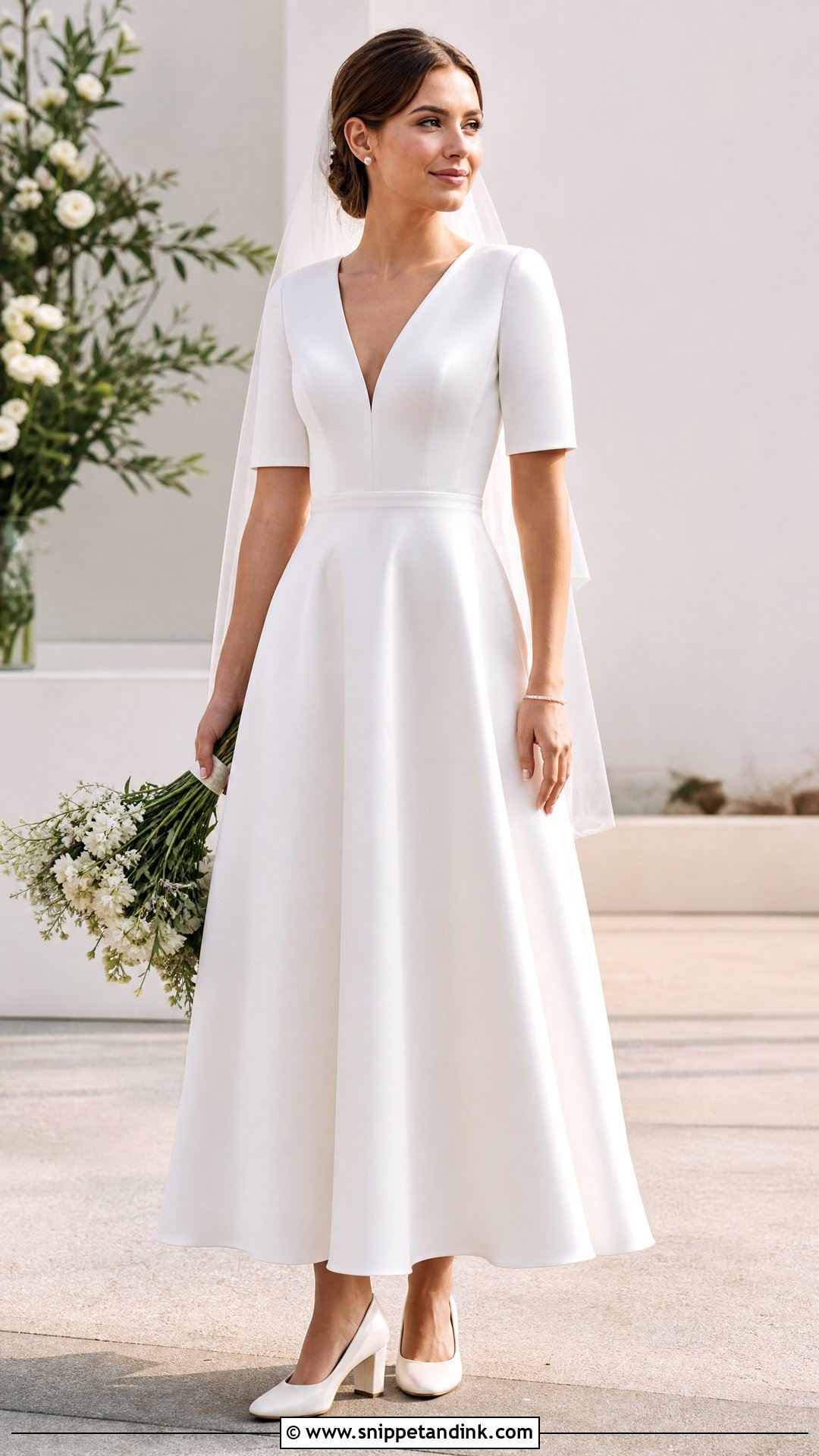
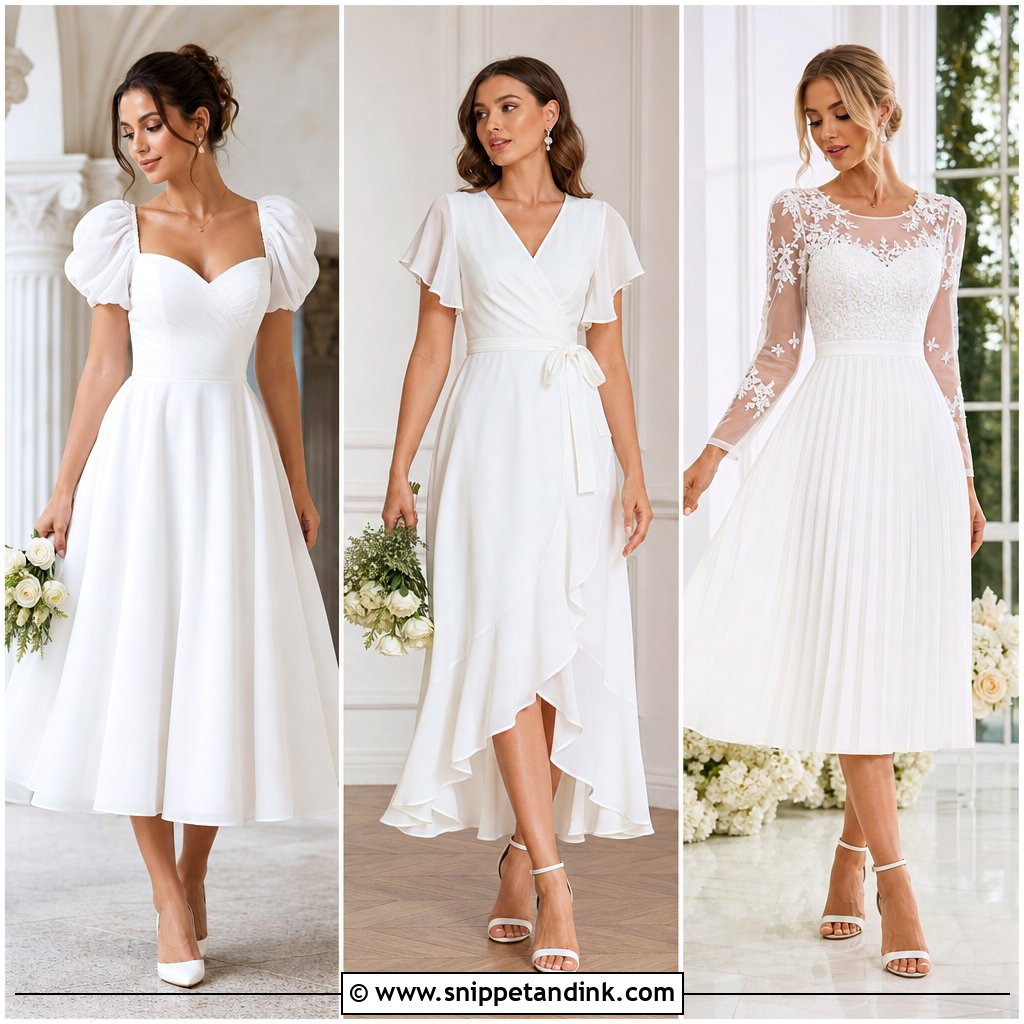
Short sleeves give comfortable coverage without much weight. Tailored sleeves ending above the elbow, a defined waist and an A-line or fit-and-flare skirt are the usual shape; a V neck lengthens the top, a bateau or square neck looks more structured. Pearl studs, a fine bracelet, ivory block heels and a fingertip veil pair well, and waves or a bun both suit it. The flaw I see most is a sleeve that flares out from the arm like a little bell. A tailor can narrow it and change the angle. For a warm outdoor ceremony, ask for a light satin and a breathable lining.
11. Minimalist Satin Wedding Gown with Long Sleeves
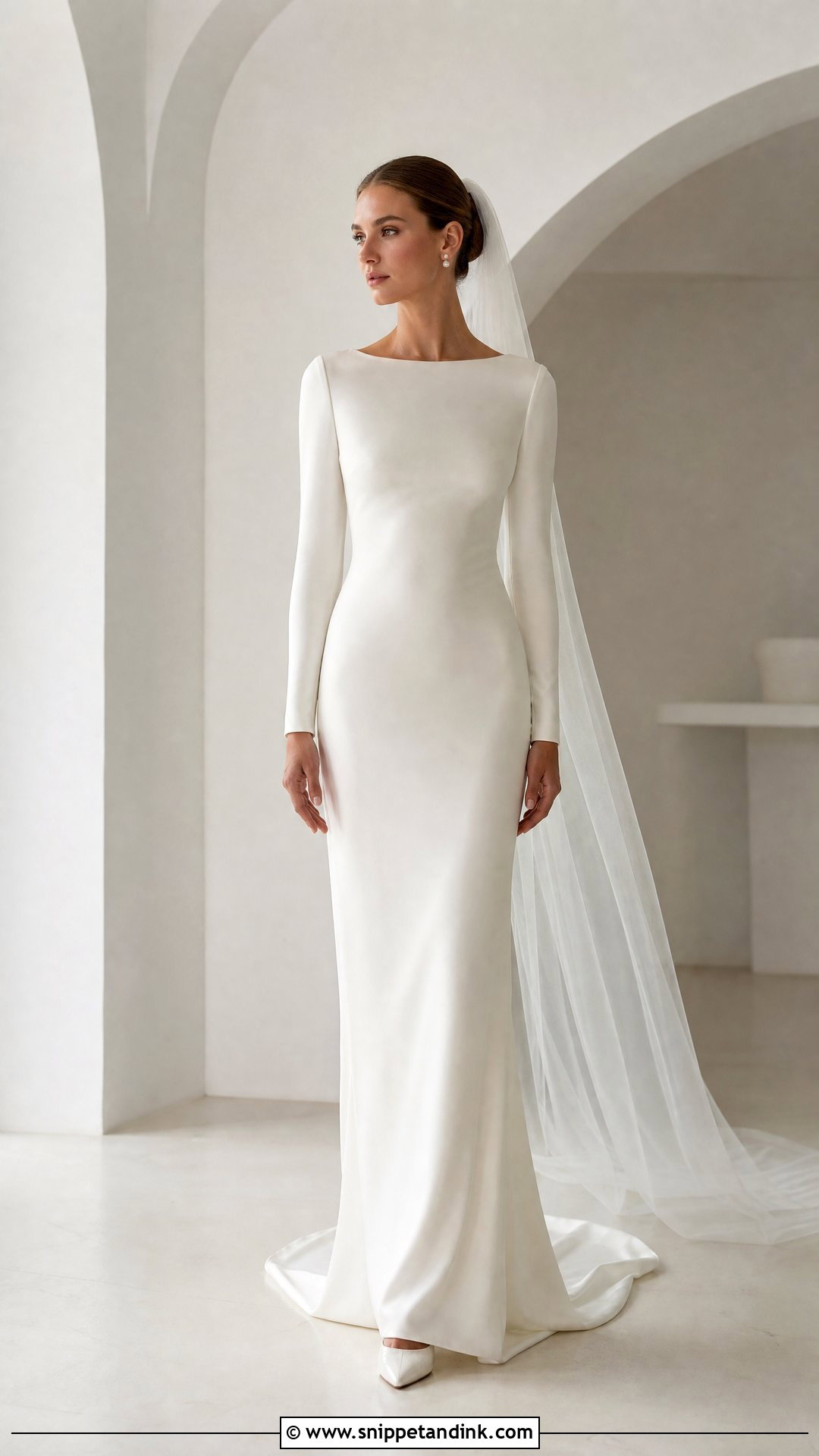
A minimal long-sleeve gown is all about precise seams. A column or gentle A-line with a high neck, bateau or shallow V, plus covered buttons, is enough. Small diamond or crystal studs, pointed pumps, a plain chapel veil, a sculpted low bun and a single-flower bouquet keep the look cohesive. With nothing to distract the eye, I check the seams, lining, zipper and hem more closely than on any other gown. The satin should fall across the waist and hips without rippling, and built-in support can reduce what you need to wear underneath.
12. Satin Wedding Gown with Detachable Sleeves
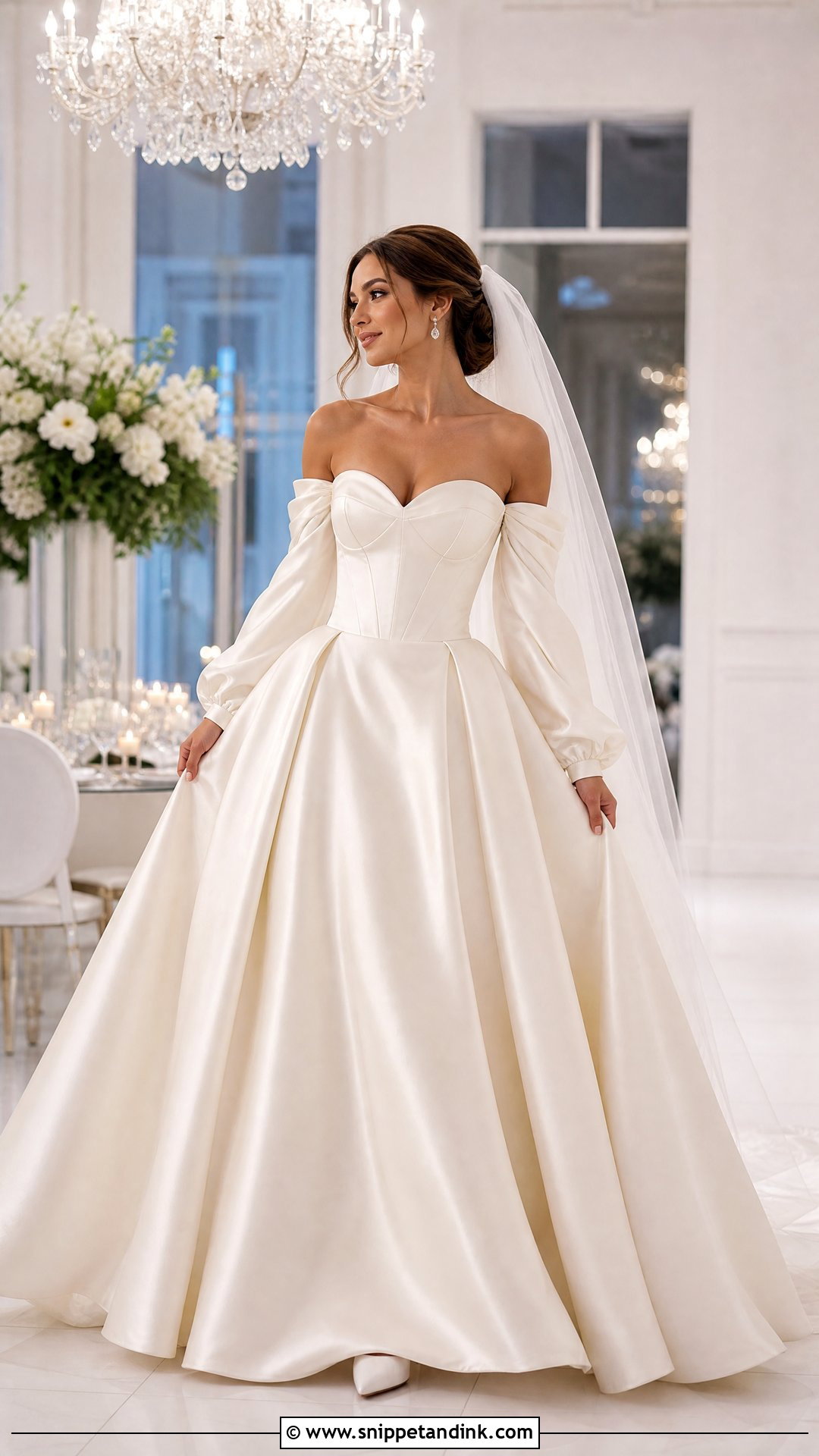
Detachable sleeves give two looks without a full outfit change. Fitted, puffed or off shoulder sleeves for the ceremony come off for a sleeker reception. Long veil, pearl earrings and closed-toe pumps first; then statement earrings, no veil and comfortable block heels. Ask the salon to show you exactly how the sleeves connect before you buy. Snaps, buttons or hidden loops should feel secure and blend into the neckline once removed. Bring the attendant who will help you to a fitting so they practice undoing them, and give them a folded pillowcase to store the sleeves in so they don’t crease.
13. Corset Satin Wedding Gown with Sheer Sleeves
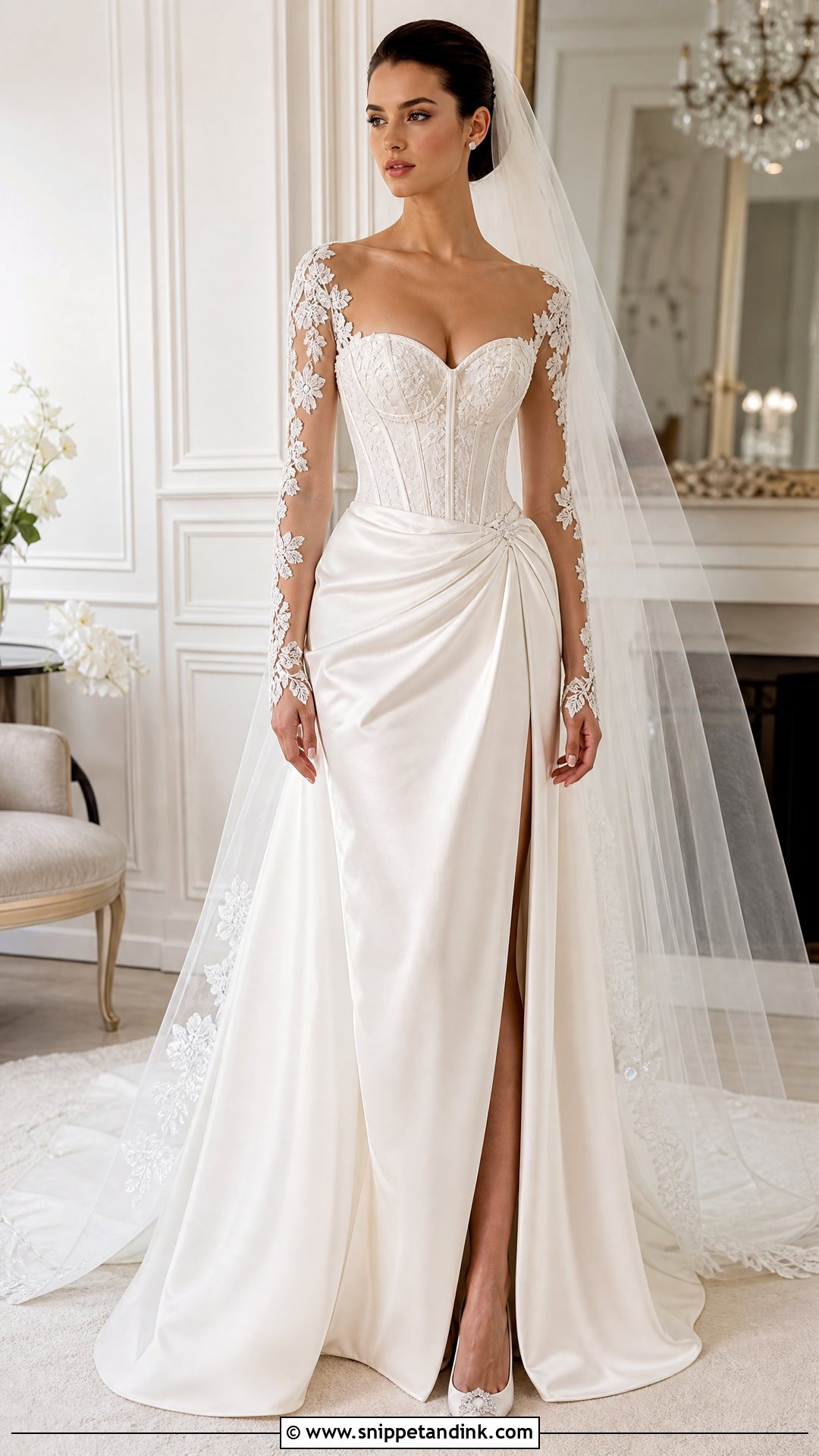
Sheer sleeves soften a corset bodice. Look for real support with visible or hidden boning, a clean satin skirt and illusion sleeves decorated with restrained lace appliqués; a sweetheart or soft V neckline eases the structure. Crystal studs, a fine-edged veil, pointed satin heels and an updo that shows the sleeve detail suit it. Wear your wedding underwear to every alteration and test the corset seated. One thing worth asking: can the mesh be matched to your skin tone? A close match disappears in person and in photos, while a mismatched one reads grey.
14. Modest Satin Wedding Gown with Half Sleeves
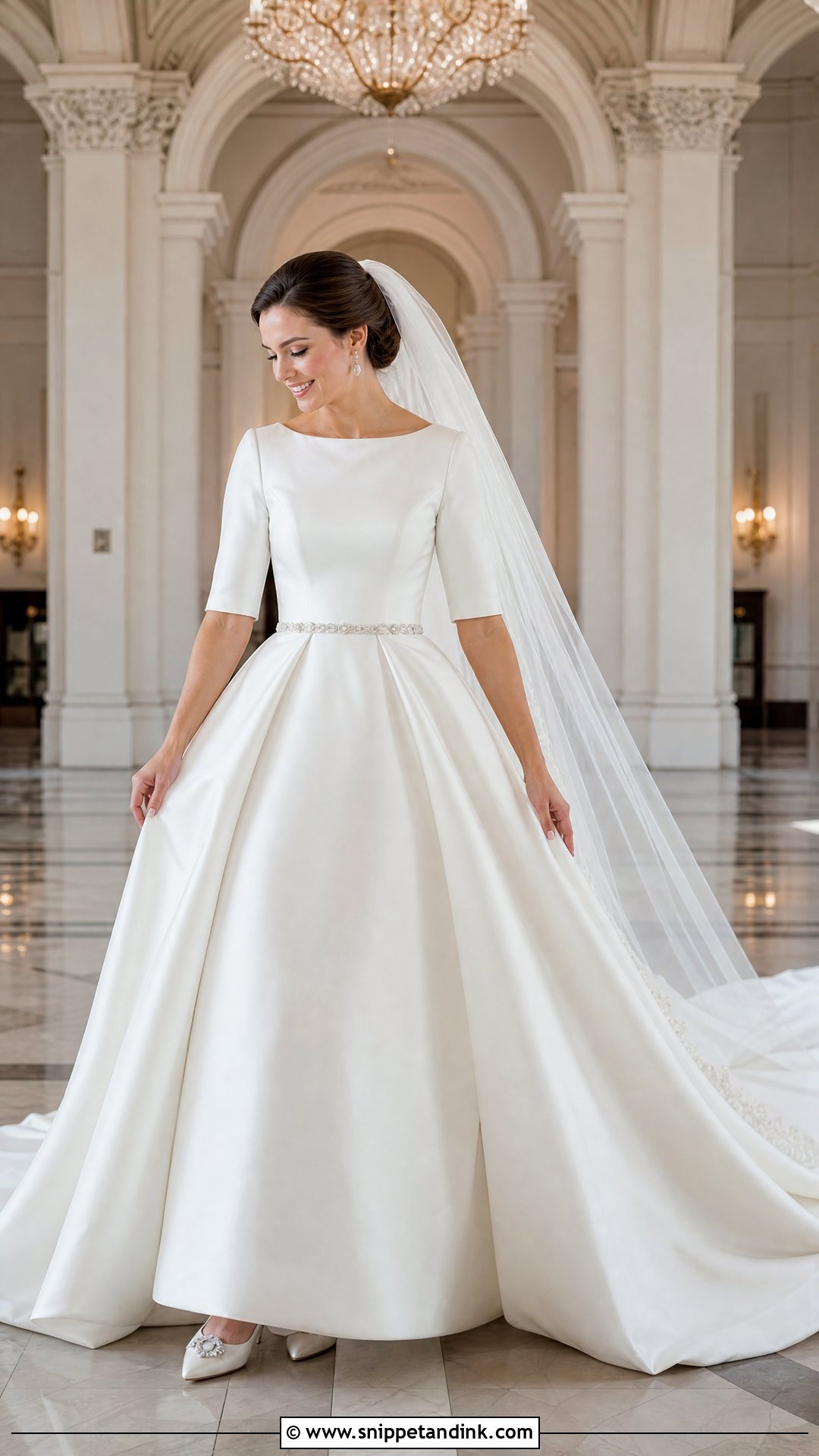
Half sleeves give balanced coverage, and they are what I often suggest to brides who want modesty without the warmth of a full sleeve. Pick a higher neckline, fitted waist and full skirt that moves without revealing much. A jeweled belt defines the waist, while covered back buttons and a cathedral train bring tradition. Many half-sleeve satin ball gowns come in extended and custom sizes, so the proportions can be adjusted more precisely. Pearl earrings, low block heels, a long simple veil and a soft bun or half-up style finish it. Make sure the sleeve ends near the elbow, not mid-bicep, and that the armholes aren’t tight.
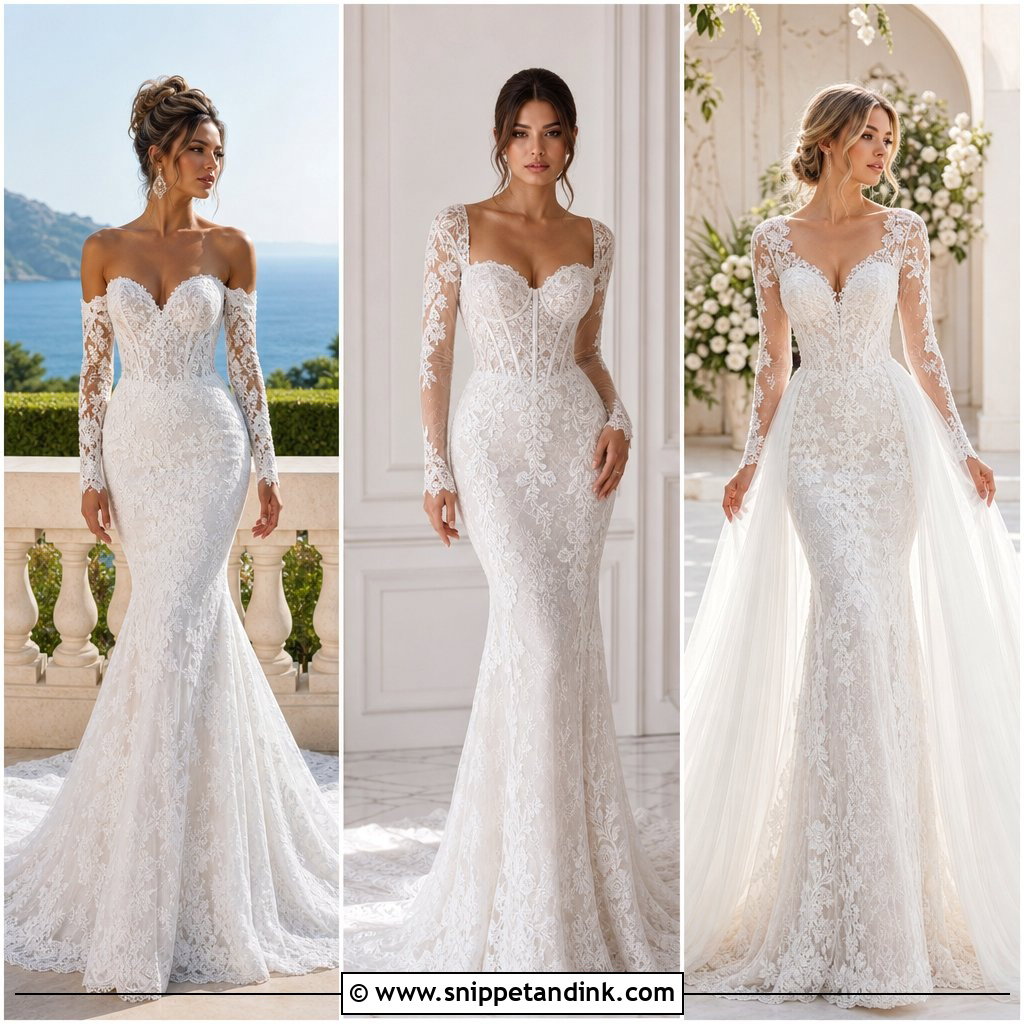

15. Open Back Satin Wedding Gown with Long Sleeves
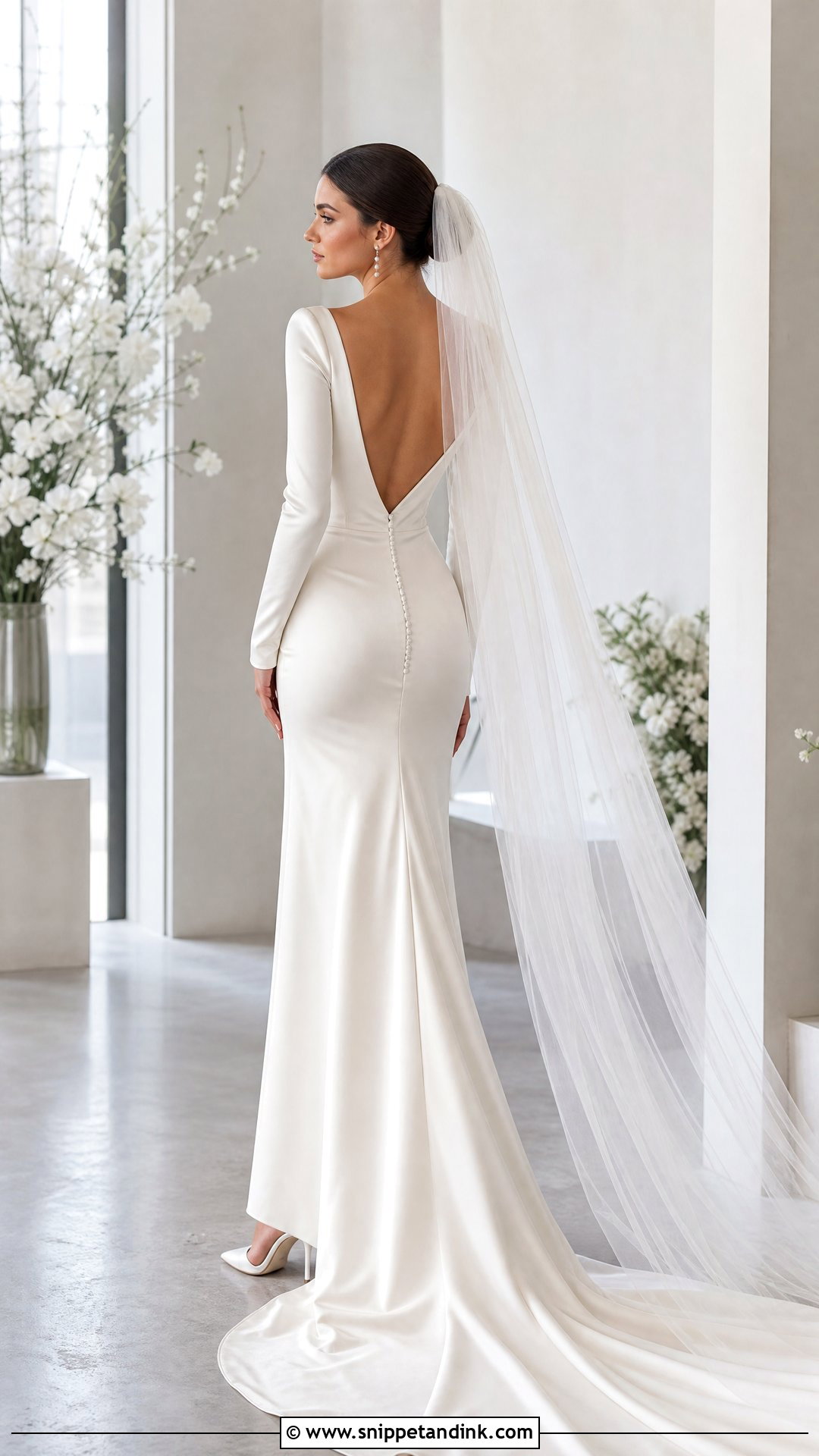
Long sleeves in front and a low back behind make a good contrast. A bateau or V neckline stays simple while the back drops to a low V, round opening or narrow keyhole, with covered buttons framing it. Drop earrings, a back necklace if the opening allows, pointed heels and a veil set below the bun suit it. Settle your underwear before alterations, since a low back usually needs sewn-in cups. This combination has a real trade-off: when you raise long sleeves, they tug the bodice upward, and with an open back that shows. I check it with arms lifted and mid-hug.
16. Plus Size Satin Wedding Gown with Sleeves
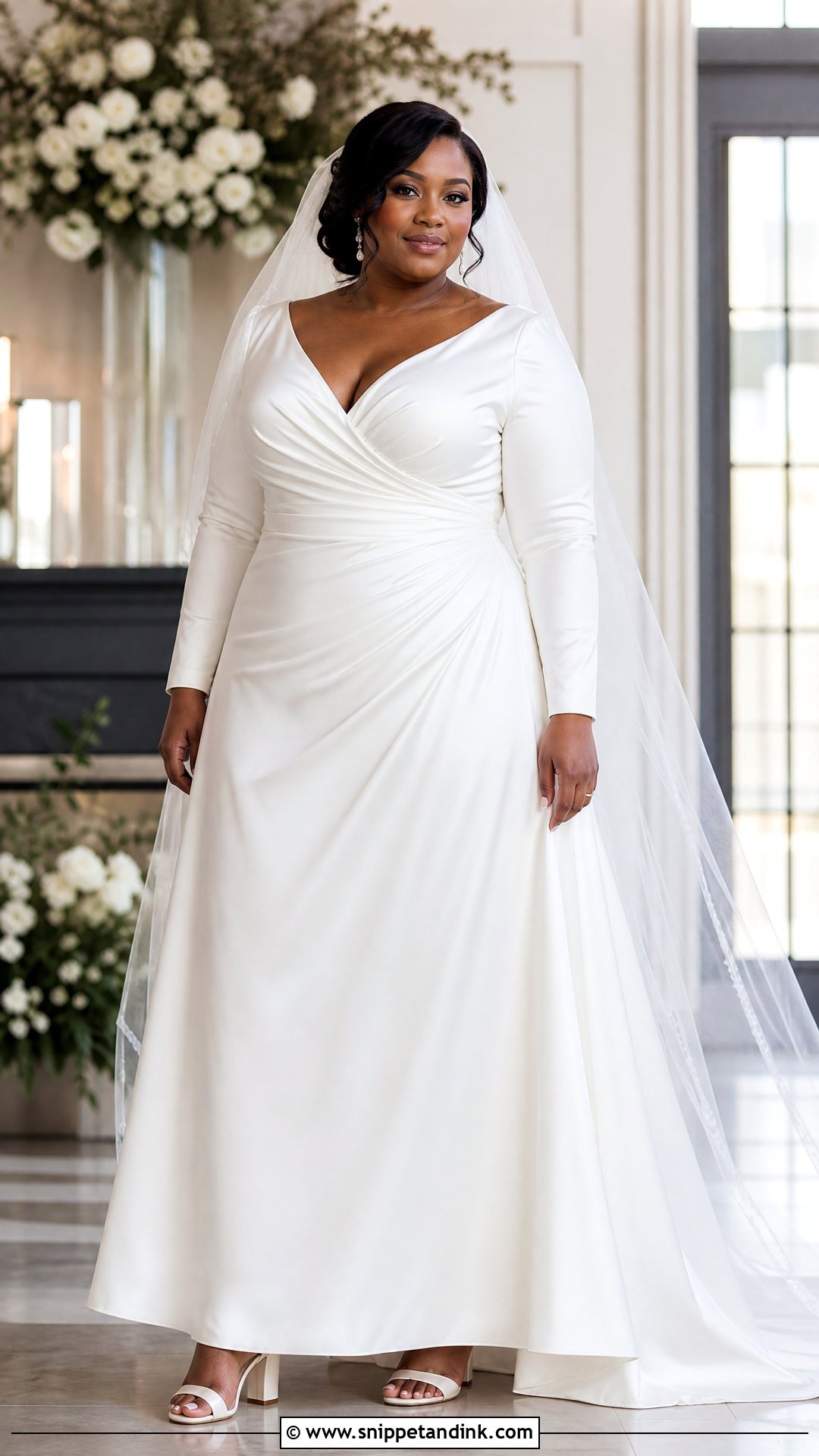
Plus size sleeved gowns should support first and follow the silhouette you actually love. An A-line, ball gown or stretch satin fit-and-flare with a structured bodice and well-placed ruching all work; a surplice V defines the waist while long fitted sleeves draw one clean vertical line. Supportive block heels, pearl drops and a veil in proportion to the skirt finish it, with whatever hair makes you look like yourself. Ask the salon ahead for samples near your size. I check the sleeves seated, since that is when satin pulls across the upper arm and bust, and stretch satin forgives far more there than a rigid weave.
17. Petite Satin Wedding Gown with Sleeves
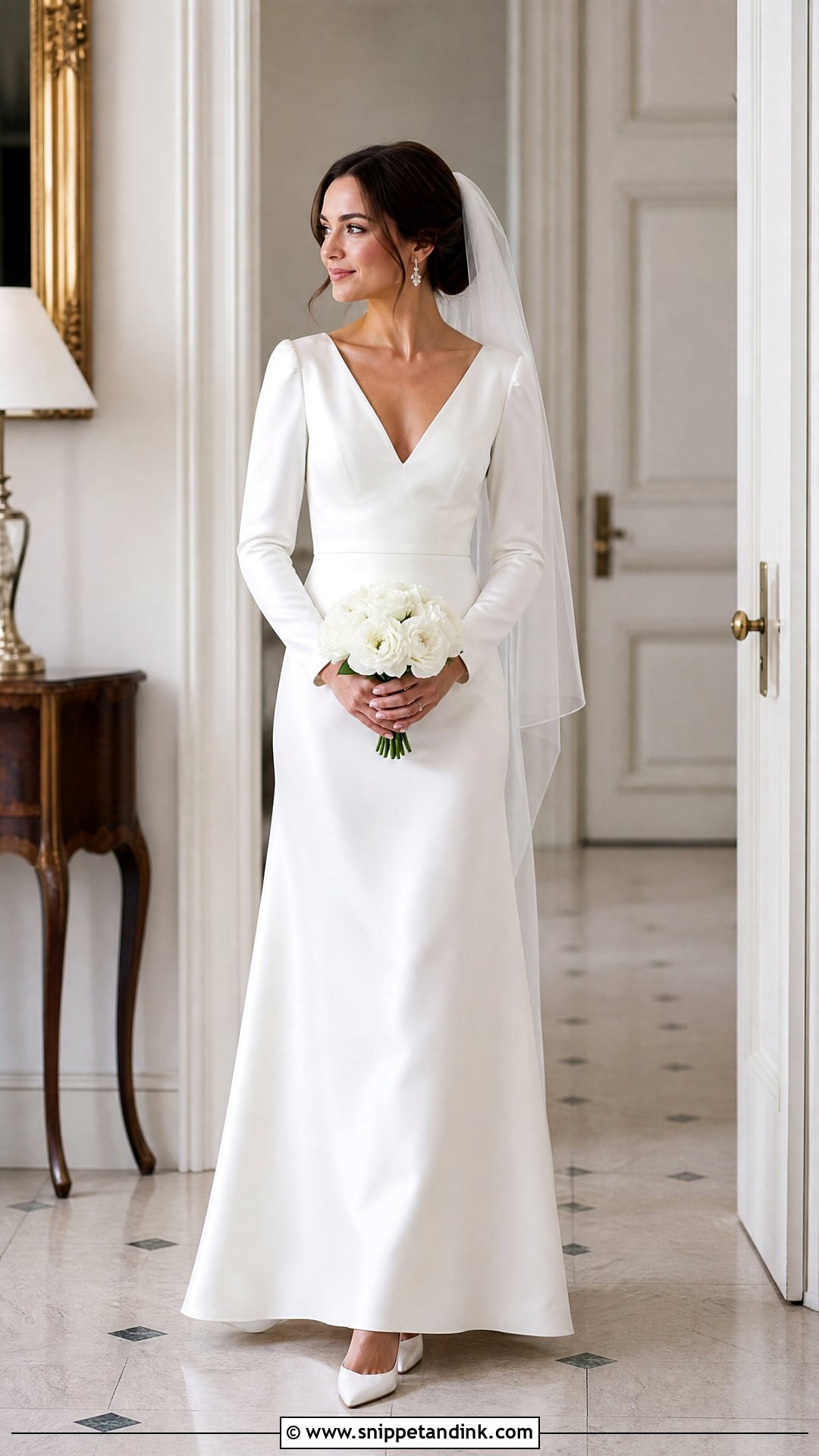
Petite brides can wear sleeves and satin; it’s just a question of proportion. A raised or natural waist, a narrow A-line and fitted sleeves that end exactly at the wrist keep the line long. A V neck helps, and vertical seams keep the eye moving. Pointed low heels, delicate earrings, a narrow chapel veil and a compact bouquet stay in scale. I’d avoid big sleeve volume, very wide belts and heavy layered skirts unless they’re cut to your frame. Petite alterations go beyond the hem. Expect the bodice, waist point, sleeves and train to need work, and bring your wedding shoes.
18. Cathedral Train Satin Wedding Gown with Sleeves
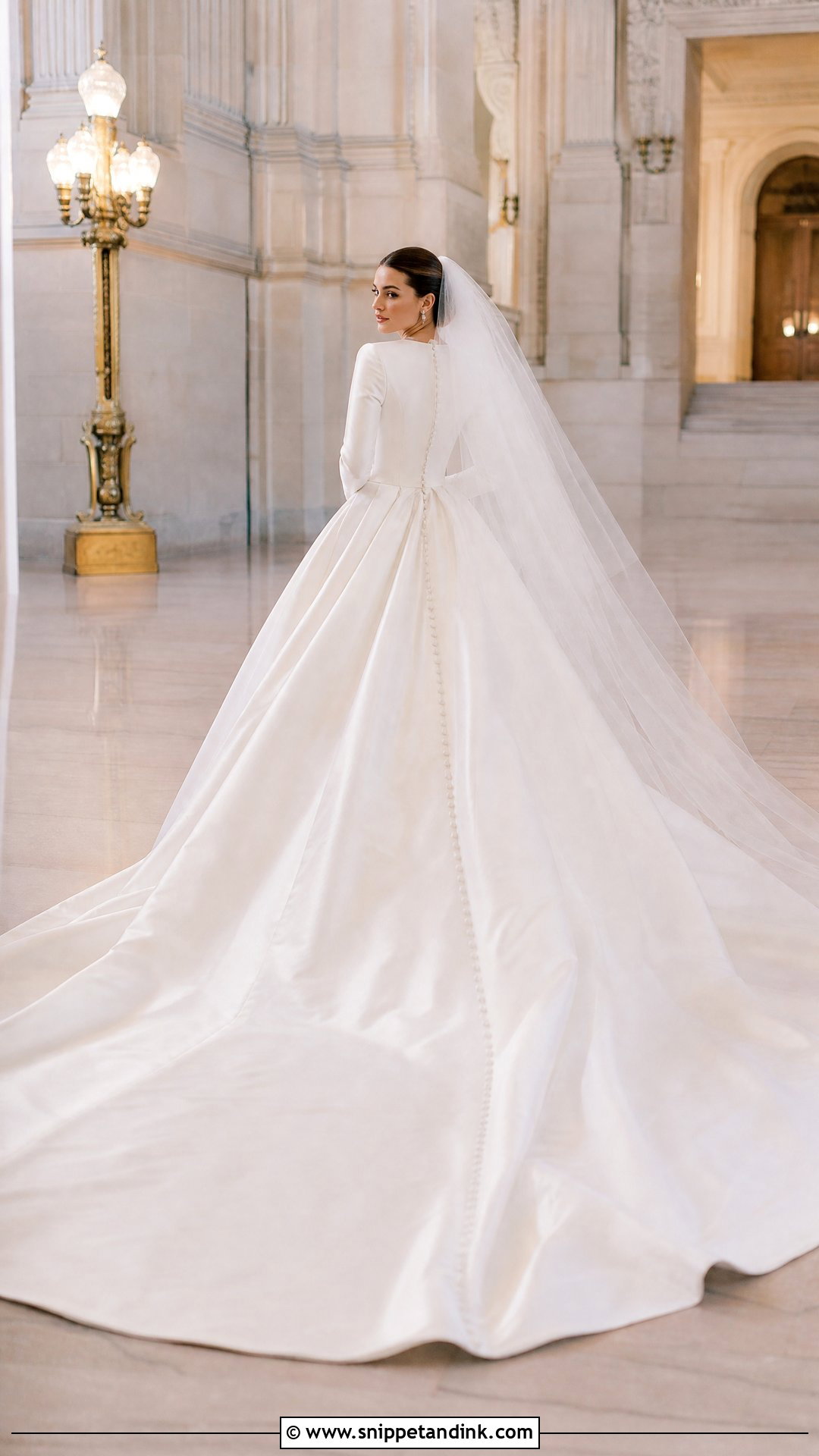
A cathedral train with a fitted long-sleeve bodice makes an entrance. An A-line or ball gown skirt lets the train extend naturally from the back. Lace sleeves soften the grandeur; solid satin sleeves read architectural. Add a long veil reaching the train, understated earrings, stable closed-toe heels and a sleek bun. Have your seamstress build a bustle that spreads the weight across several points, practice it, and name the person who will do it. Before you commit, think about aisle width, slippery floors, the car and where portraits happen. A cathedral train on a narrow church aisle is beautiful once and a hazard the rest of the night.
19. Pearl Button Satin Wedding Gown with Sleeves
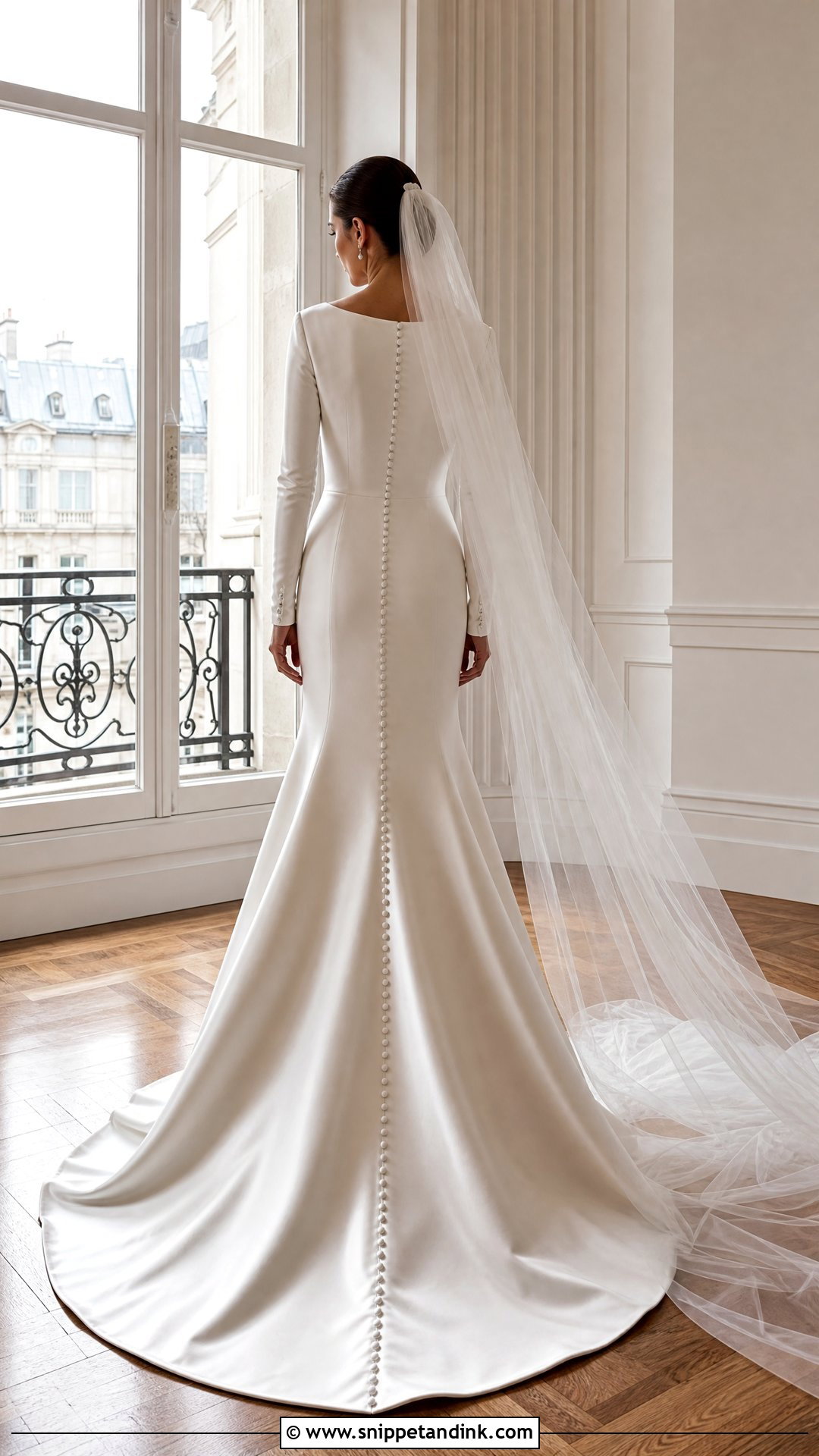
Rows of pearl or satin-covered buttons turn the back and cuffs into the focus. A fitted long-sleeve bodice with buttons from neckline to waist, or all the way down the train, needs a quiet front: bateau, square or shallow V. Pearl earrings, pointed satin heels, a sheer plain veil and a low bun show it off. Back buttons usually cover a zipper, but cuff buttons are often real, and they need to close without biting into the wrist. Ask for every button to be reinforced, and pack spare buttons and matching thread in your kit.
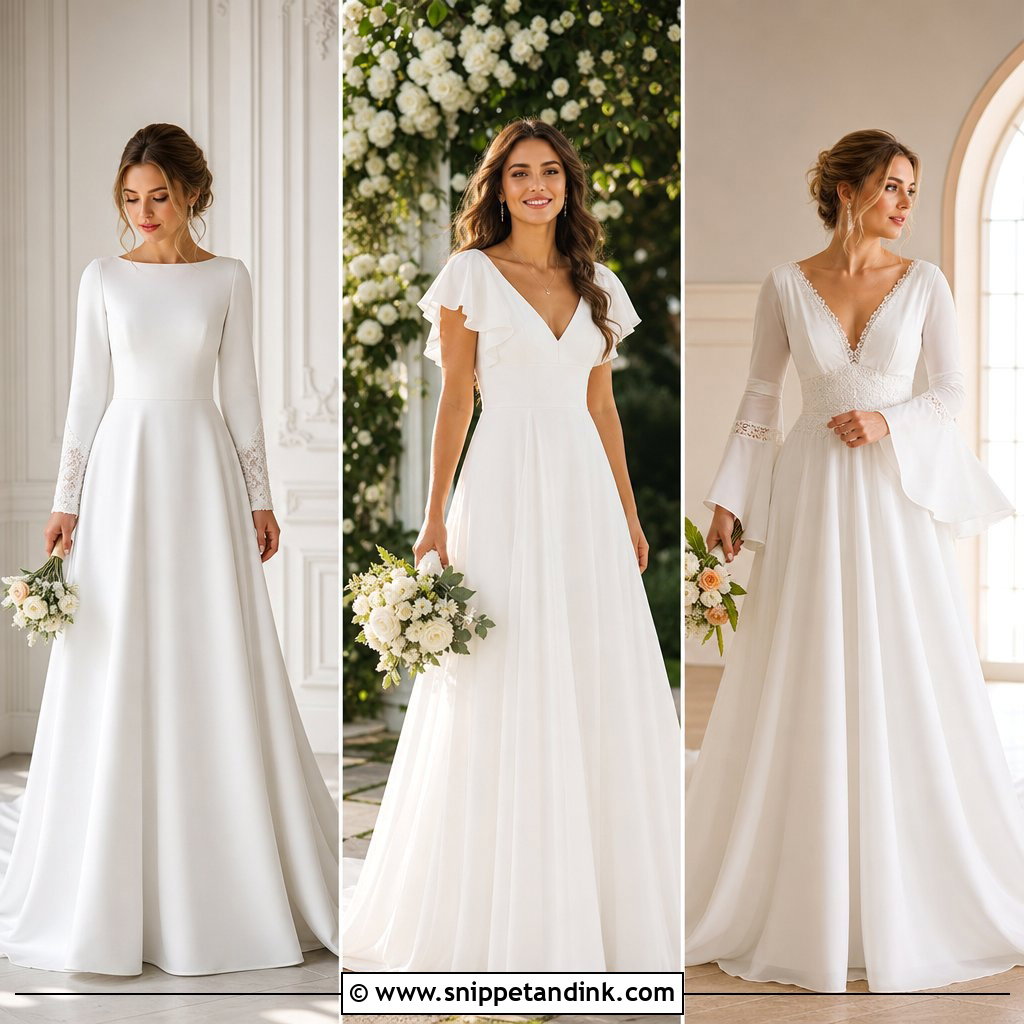
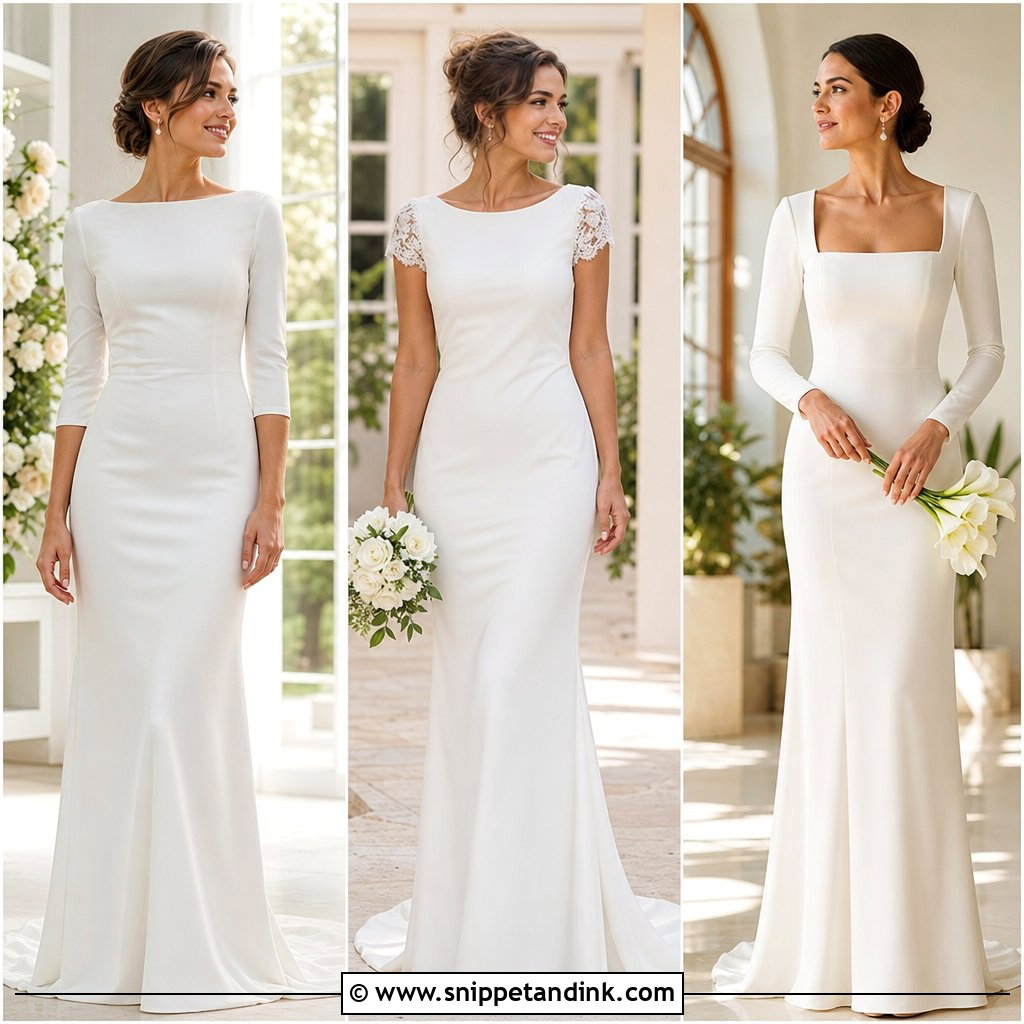
20. Winter Satin Wedding Gown with Sleeves
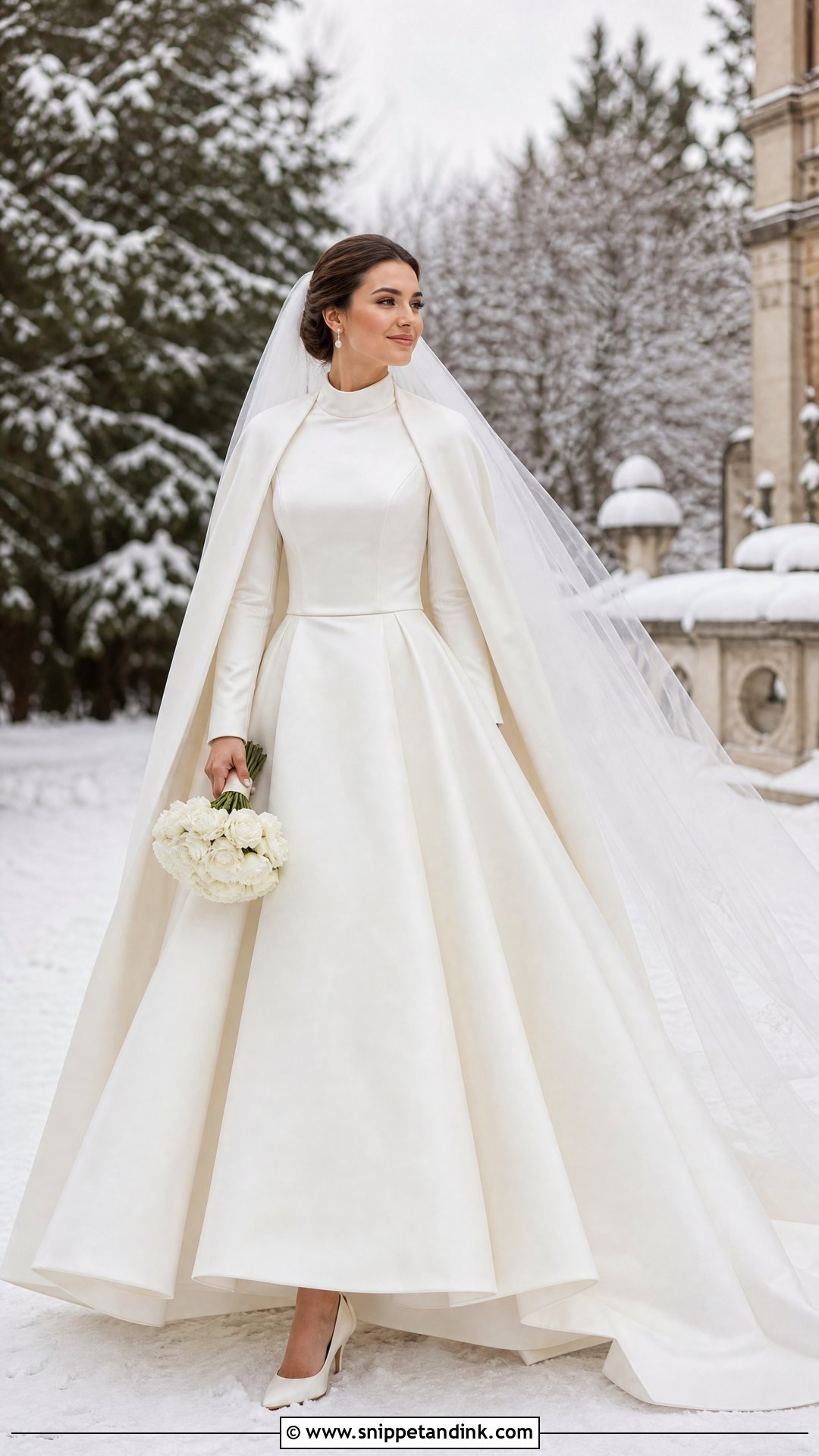
Winter suits a structured satin gown with full sleeves. A high neck, mock neck or fitted V over a substantial A-line or ball gown skirt carries the season. Smooth sleeves read minimal; lace or illusion panels add softness. Closed-toe pumps, pearl earrings, a cathedral veil and a tailored ivory cape for outdoor portraits complete it, and an updo holds up against wind. Satin isn’t warm on its own, so plan thin thermal layers under the skirt. Check that the cape doesn’t crush the sleeves. Then plan for the opposite problem, because heated reception rooms get hot, and a breathable lining and a removable outer layer help.
How Warm Will Satin Sleeves Feel in July?
Honestly, warm. Satin is dense and most wedding satin is polyester, which doesn’t breathe as well as silk. A full satin sleeve in an outdoor summer ceremony is something I raise with the bride before she falls in love with it, not after.
Ways to keep sleeves for a hot date
- Swap the sleeve fabric. Many designers will cut the sleeves in illusion mesh or lace while keeping the satin bodice and skirt.
- Go detachable, so the sleeves are worn for the ceremony and portraits and come off before a warm reception.
- Ask for a cotton or breathable lining in the bodice rather than a second layer of synthetic.
- Use antiperspirant the night before and the morning of, and let it dry fully before dressing. Sweat marks show on ivory satin under the arm.
In cooler months, satin sleeves become the advantage. You can skip a wrap through a church ceremony and save the cape for outdoor photos only.
Sleeves Are the Part of the Gown You Feel All Day
A satin gown with sleeves earns its place when it looks striking and still lets you move. Lace, plain satin, illusion mesh and detachable designs each add something different: coverage, texture, structure or drama. Weigh the venue, weather, neckline, train and formality, then keep accessories in support. Most of all, book professional alterations and test the full look walking, sitting and with both arms raised. Start with the sleeve shape that feels most like you, and fit everything else around it.
You'll Like These Ideas:




Leave a Reply