
A sleeve changes how a simple gown feels to wear as much as how it looks. It decides whether you can hug, raise a glass or throw your arms up on the dance floor without the bodice shifting. Below are twenty sleeve styles, from barely there cap sleeves to full bishop shapes and fitted lace, each styled as a complete look. I’d ignore any old rule about which arms “should” be covered. What matters is the gown’s neckline, fabric and silhouette, the season and the venue, and how the sleeve behaves when you move. At every try-on, I ask brides to lift their arms, sit and walk before they decide anything.
Which Sleeve Suits Which Month?
The length of a sleeve gets all the attention, but the fabric and lining decide how comfortable you’ll be. A long sheer sleeve can be cooler than a short lined one. When I match a sleeve to a season, I look at three things in order: what it’s made of, whether it’s lined, and how close it fits.
Warm weather
Unlined chiffon, georgette, tulle and fine lace let air through, so flutter, cap, petal and sheer long sleeves all stay comfortable in heat. Avoid close-fitted sleeves in satin or crepe for an outdoor summer ceremony. They hold sweat at the elbow and underarm, and marks show on satin.
Cool weather
Lined crepe, mikado and heavier satin hold warmth, and fitted long or bishop sleeves keep the wrist covered. Lined lace is a good middle ground. If the ceremony is cold but the reception room is warm, detachable sleeves or a matching bolero give you a way to cool down.
In between
Three-quarter, elbow length and illusion sleeves are the ones I suggest when a spring or autumn forecast could go either way. They cover enough for a chilly church and stay light enough for a crowded dance floor.
1. Cap Sleeve Wedding Dress
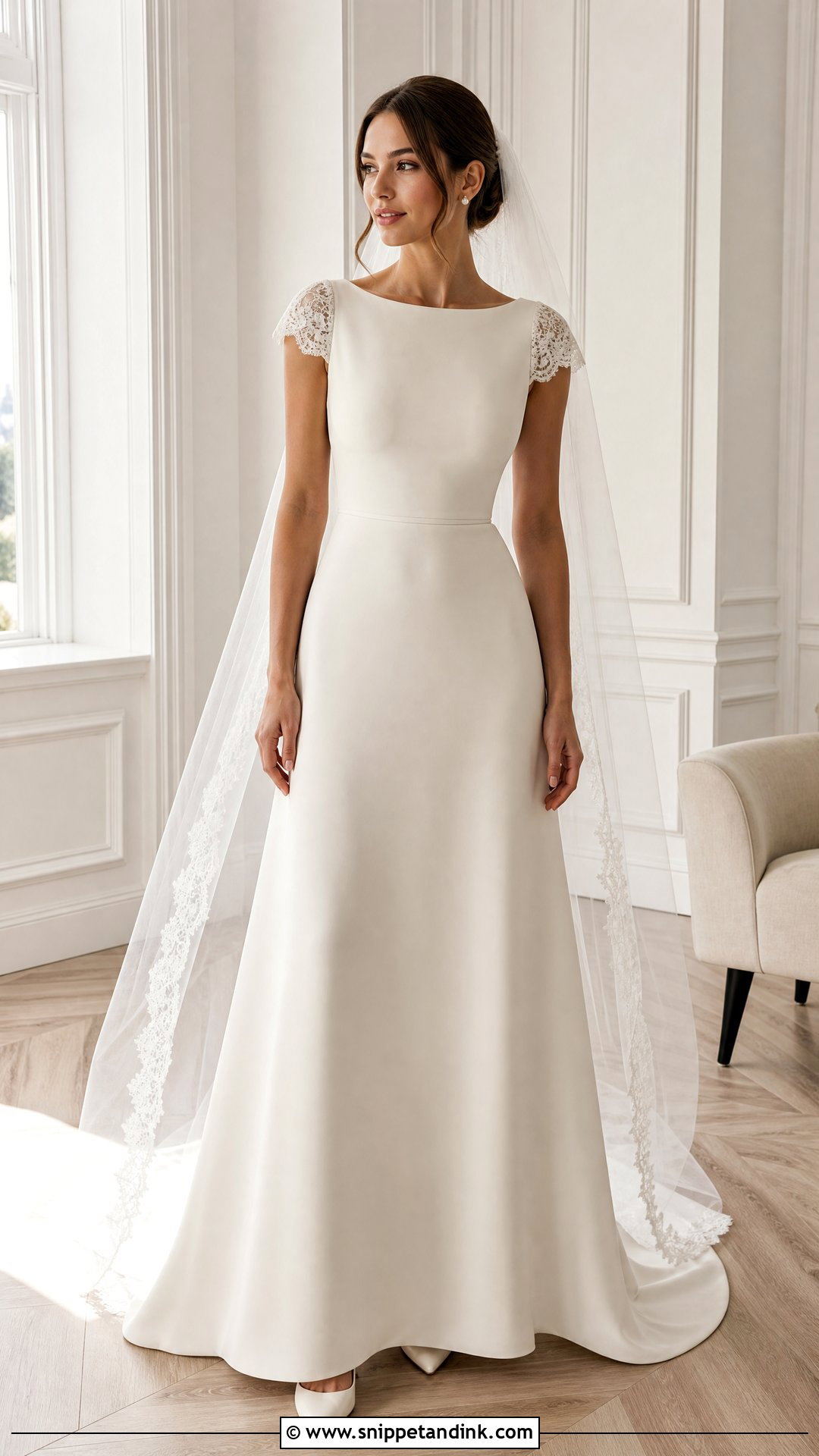
Cap sleeves sit right on the shoulder and stop before the underarm, so they frame the neckline without adding weight to a plain gown. The angle they’re set at is everything. Too tight, and you can’t lift your arm past shoulder height without the bodice rising, which is the first thing I check. Smooth crepe or satin caps look clean and modern; lace or embroidered tulle gives a plain dress a little texture. An A-line skirt, bateau neckline and low bun suit it, with pearl studs, pointed ivory pumps and a light fingertip veil.
2. Short Sleeve Wedding Dress
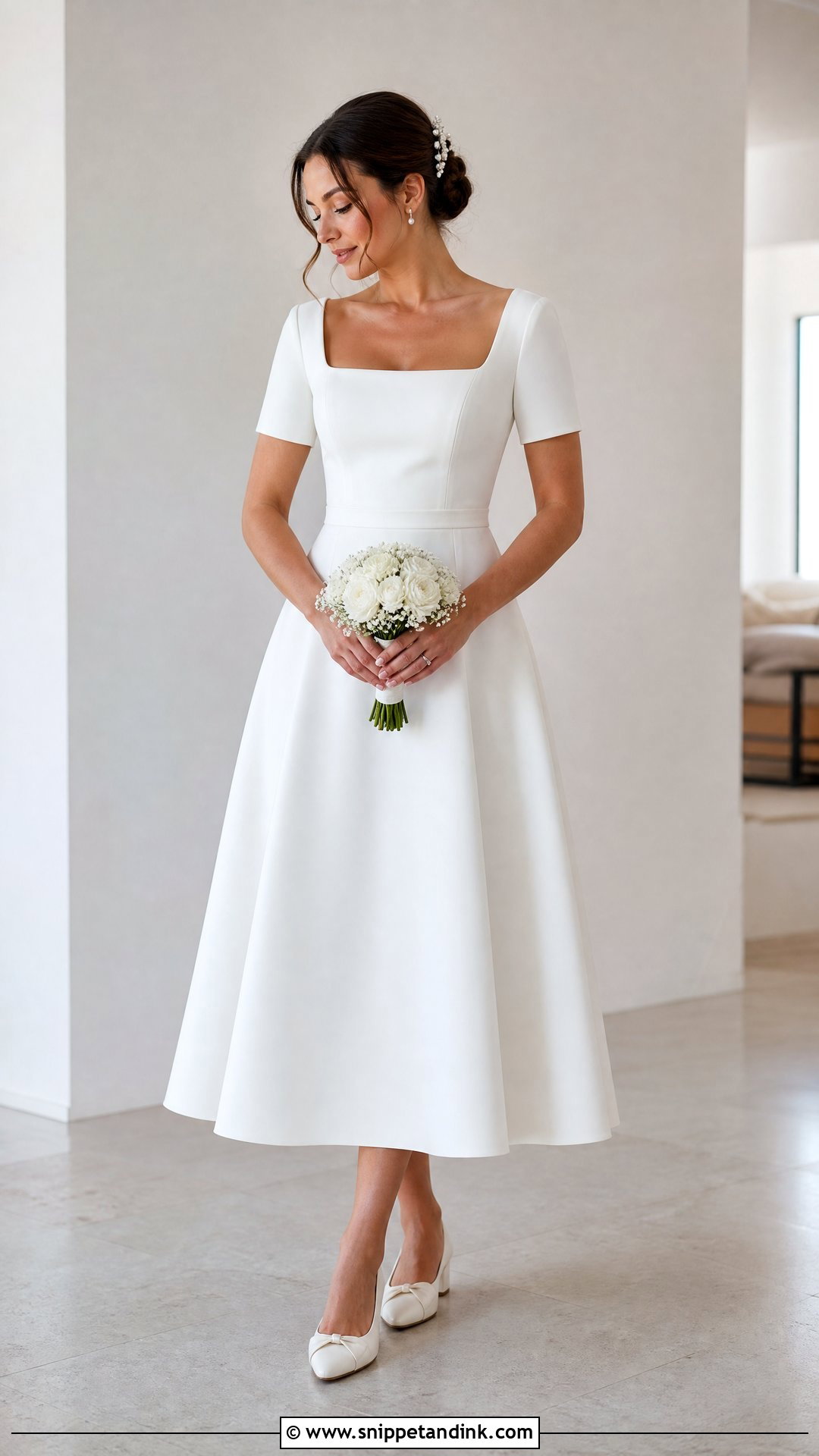
Short sleeves are underrated for relaxed weddings. A fitted sleeve ending mid-upper-arm gives more coverage than a cap without looking heavy, and it pairs neatly with a square neckline and a softly structured A-line skirt. Matte crepe reads modern, lace more traditional. Here’s the catch: a set-in short sleeve pulls when you raise your arms, and I’d test it by hugging someone taller than you. If the whole bodice lifts, the armhole needs recutting higher. Low block heels, a small pearl comb and a compact bouquet finish the outfit.
3. Three-Quarter Sleeve Wedding Dress
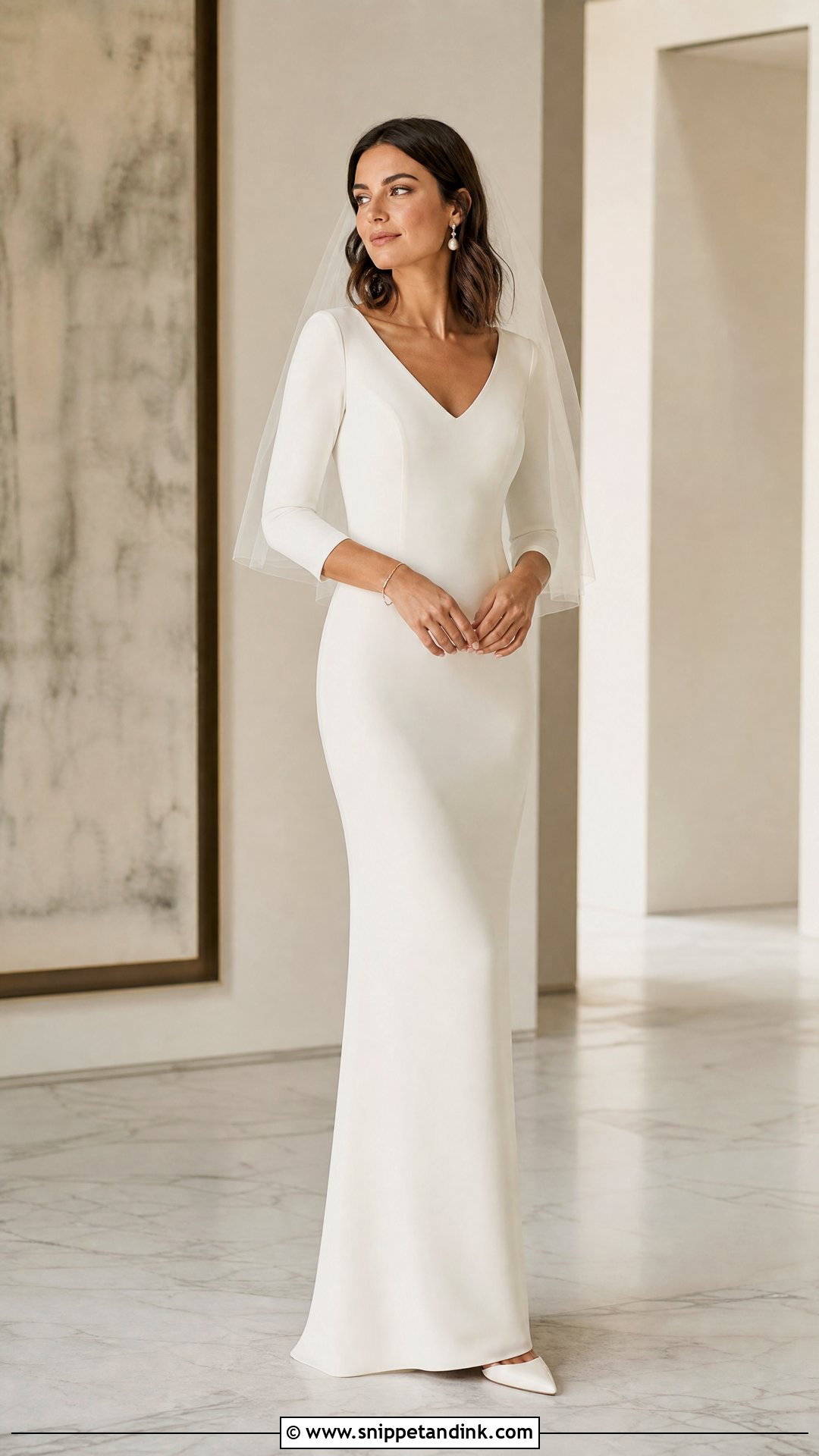
A three-quarter sleeve wedding dress ends between the elbow and wrist, which leaves room for a slim bracelet and keeps your hands free. I like this length for spring and autumn, when a long sleeve feels like too much and a short one too little. Fitted crepe sleeves on a sheath look modern; light lace over a chiffon skirt is softer. Keep the cuffs plain, because anything beaded at the forearm catches on tablecloths. A modest V-neck stops the top looking closed-in. Pearl drops, pointed flats and a shoulder-length veil complete it.
4. Fitted Long Sleeve Wedding Dress
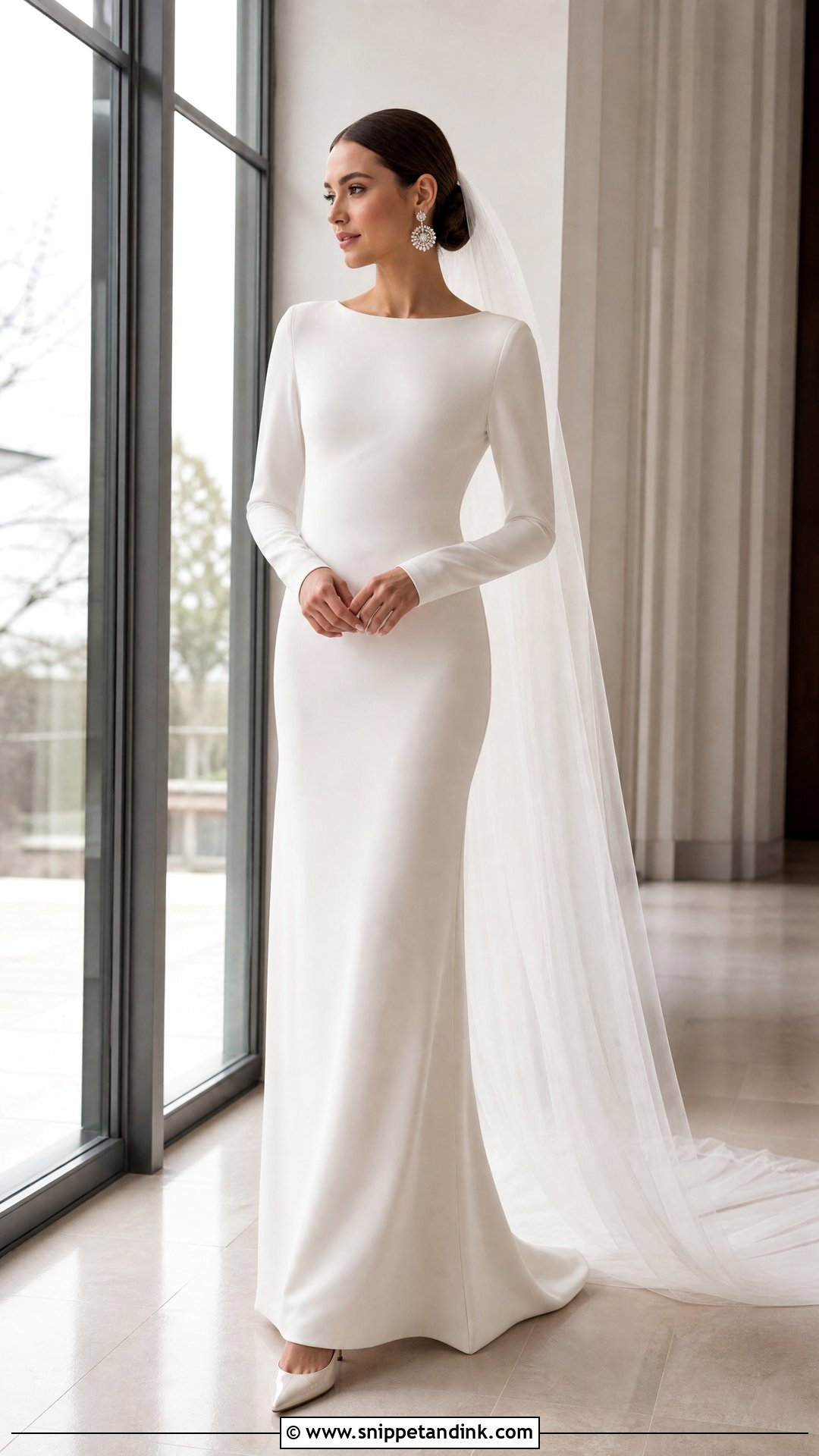
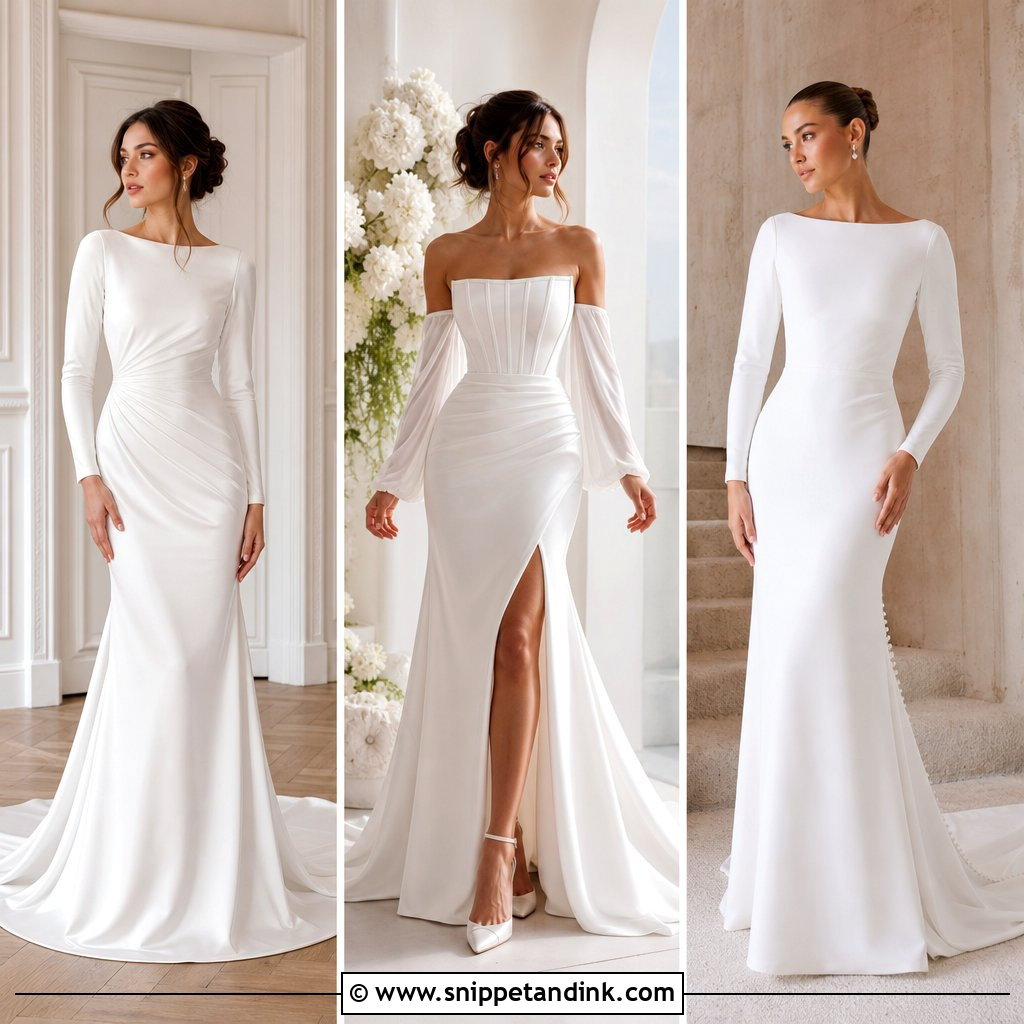
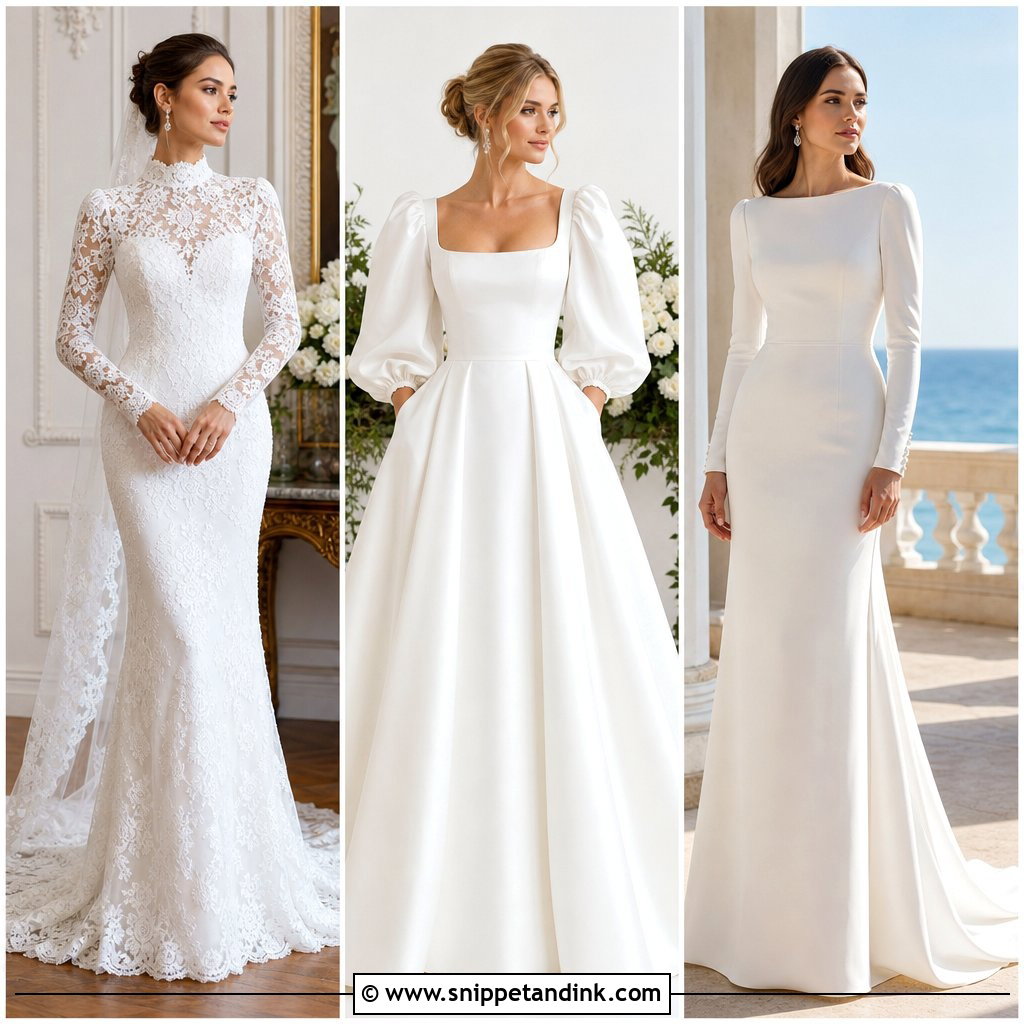
Fitted long sleeves are the least forgiving sleeve to alter, so get the fit right before anything else. They should follow the arm closely in the same crepe or stretch satin as the rest of the dress, which suits a column, sheath or fit-and-flare shape. In fittings I have brides reach forward as if picking up a glass and raise both arms overhead. Pulling across the back means the sleeve head needs more ease. A high boat neck feels refined; a gentle V-neck opens things up. A sleek bun, sculptural earrings, pointed pumps and a plain cathedral veil keep the look clean.
5. Lace Long Sleeve Wedding Dress
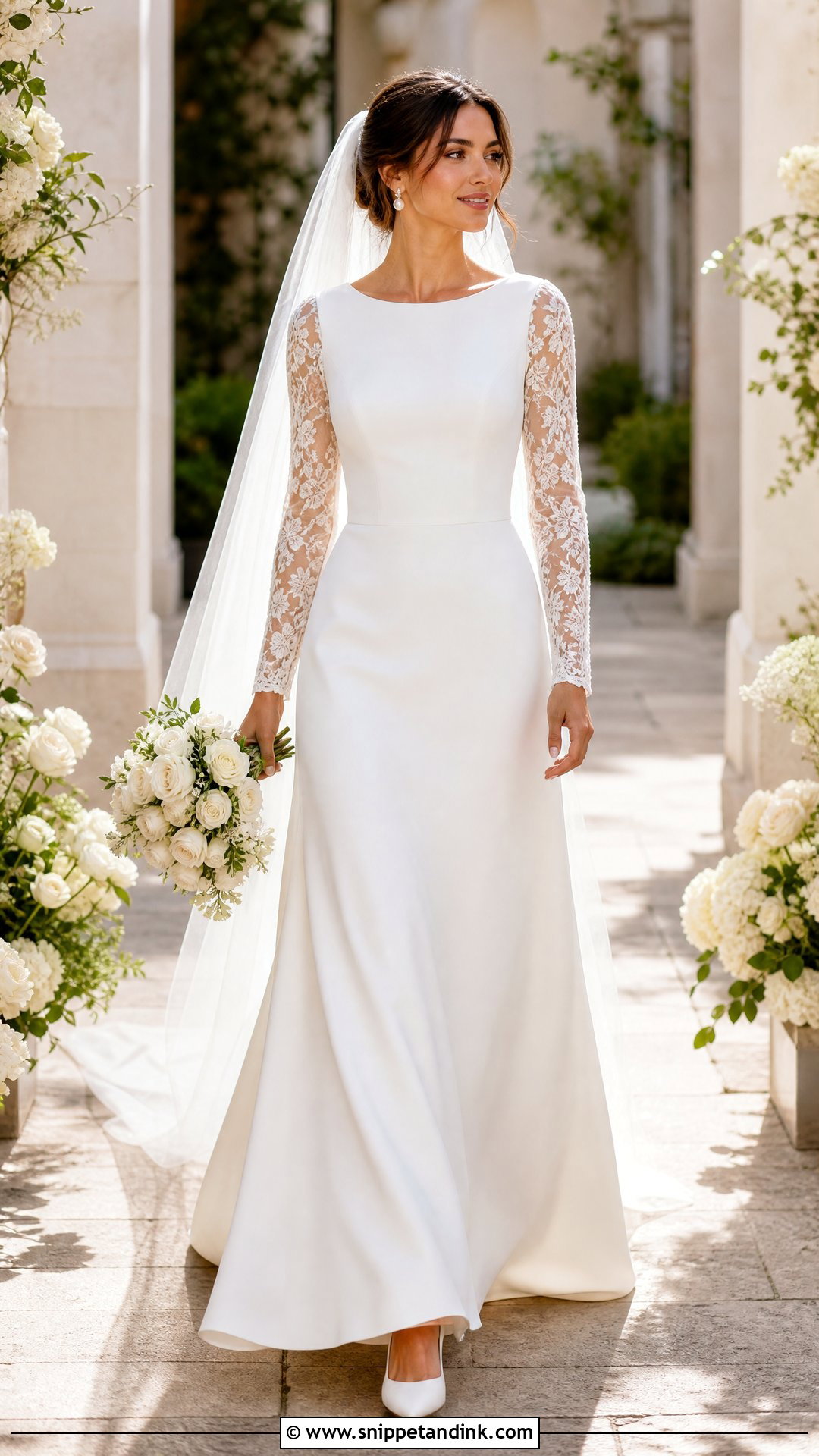
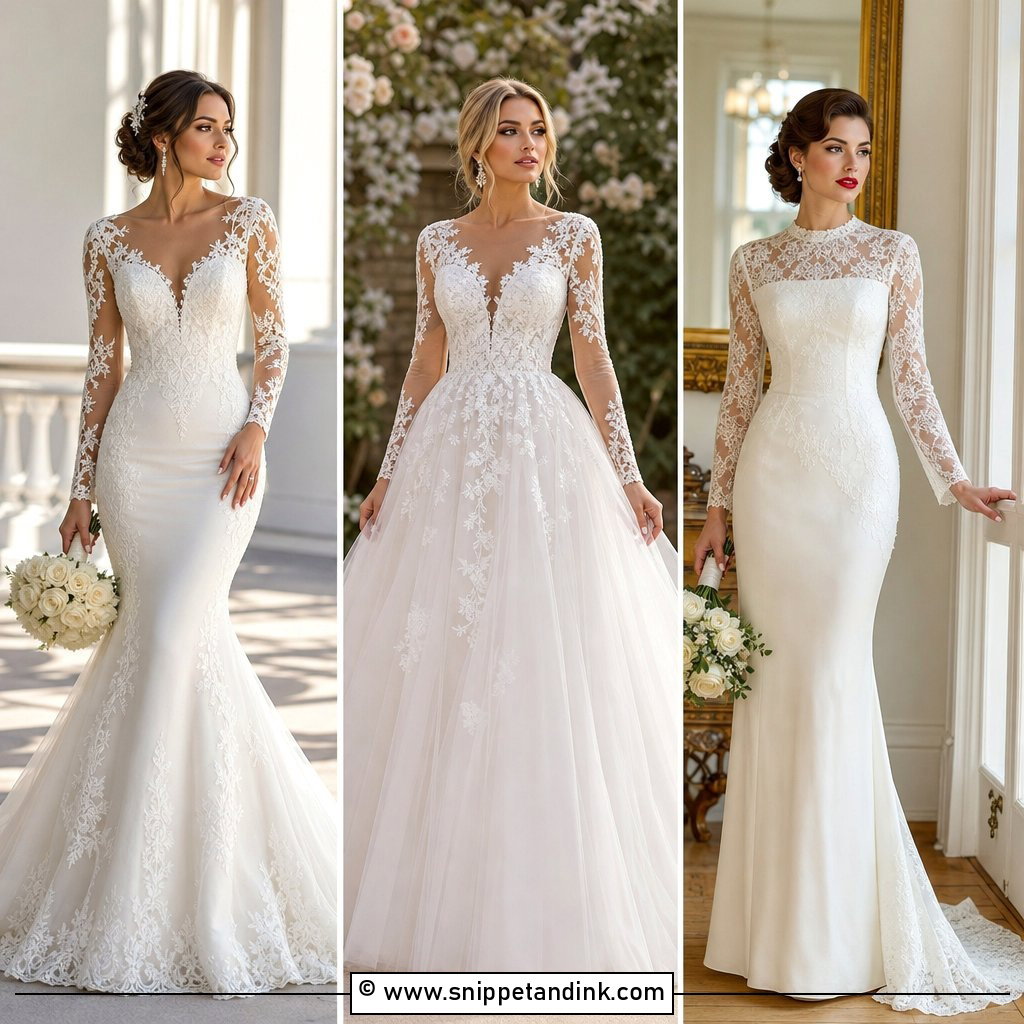
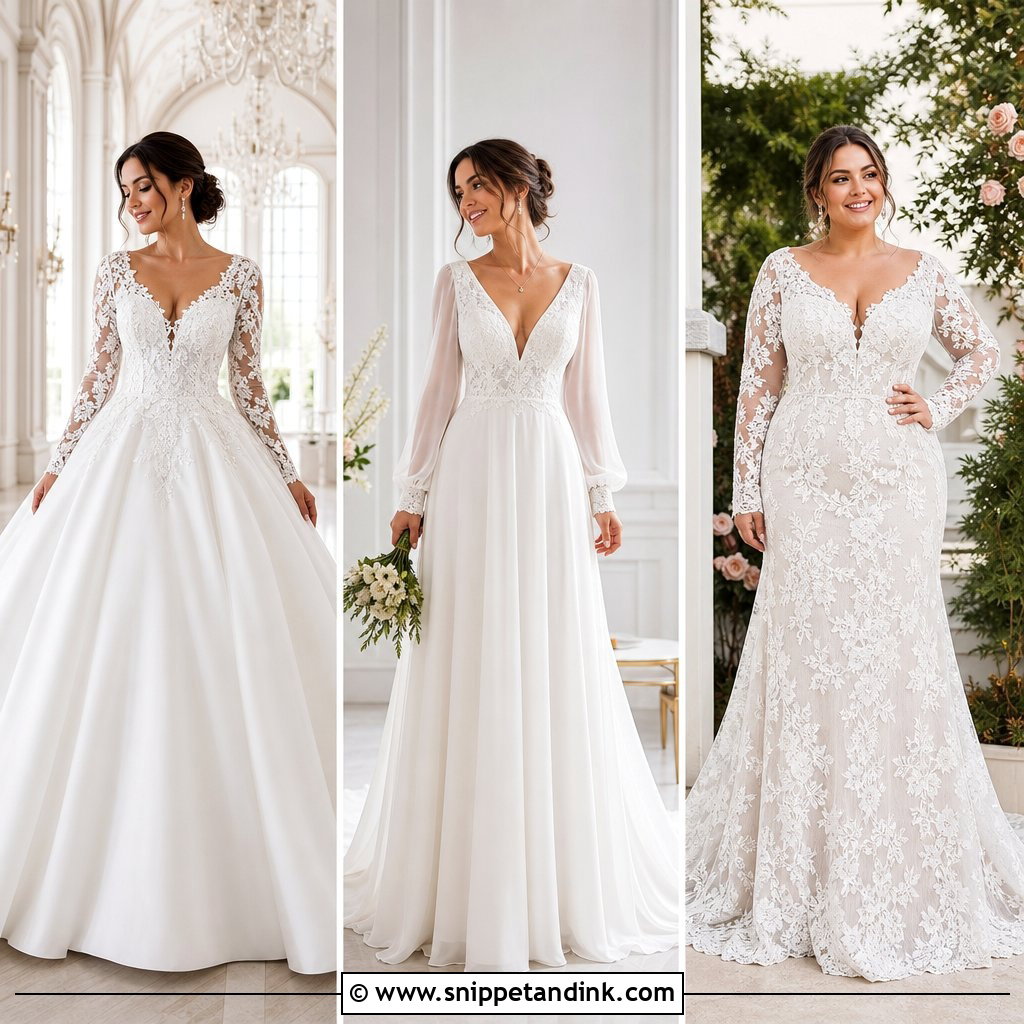
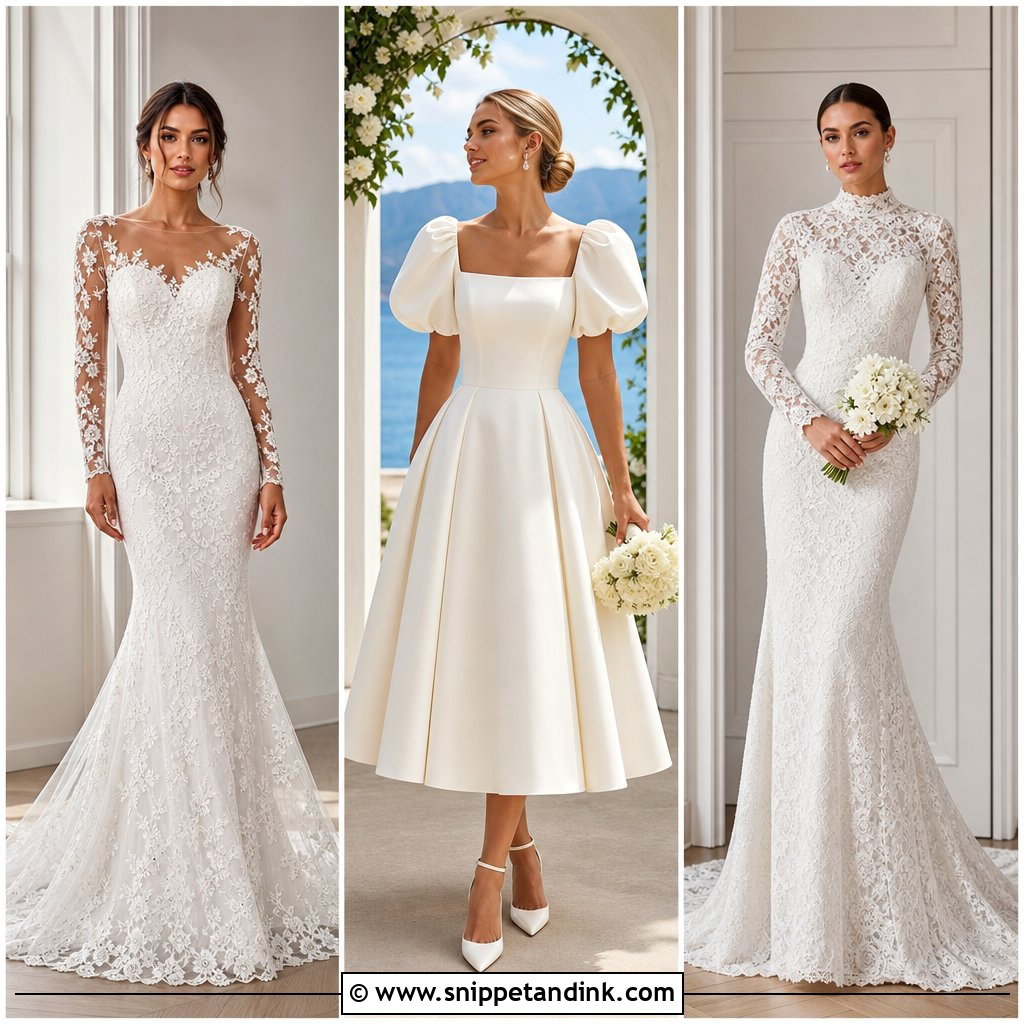
Lace sleeves look their best when there’s only one lace in the dress. Mixing motifs is what tips a simple gown into fussy. I’d pair long lace sleeves with a plain crepe bodice and A-line skirt so the texture stays on the arms, and check the pattern lines up at the shoulder seams and the cuff, because a mismatched motif at the wrist shows in every ring photo. Narrow, smooth edges at the wrist look cleaner than heavy scallops. Choose lined sleeves for more coverage or sheer for air. A curved neckline, pearl earrings, closed-toe heels and a plain tulle veil finish it.
6. Illusion Sleeve Wedding Dress
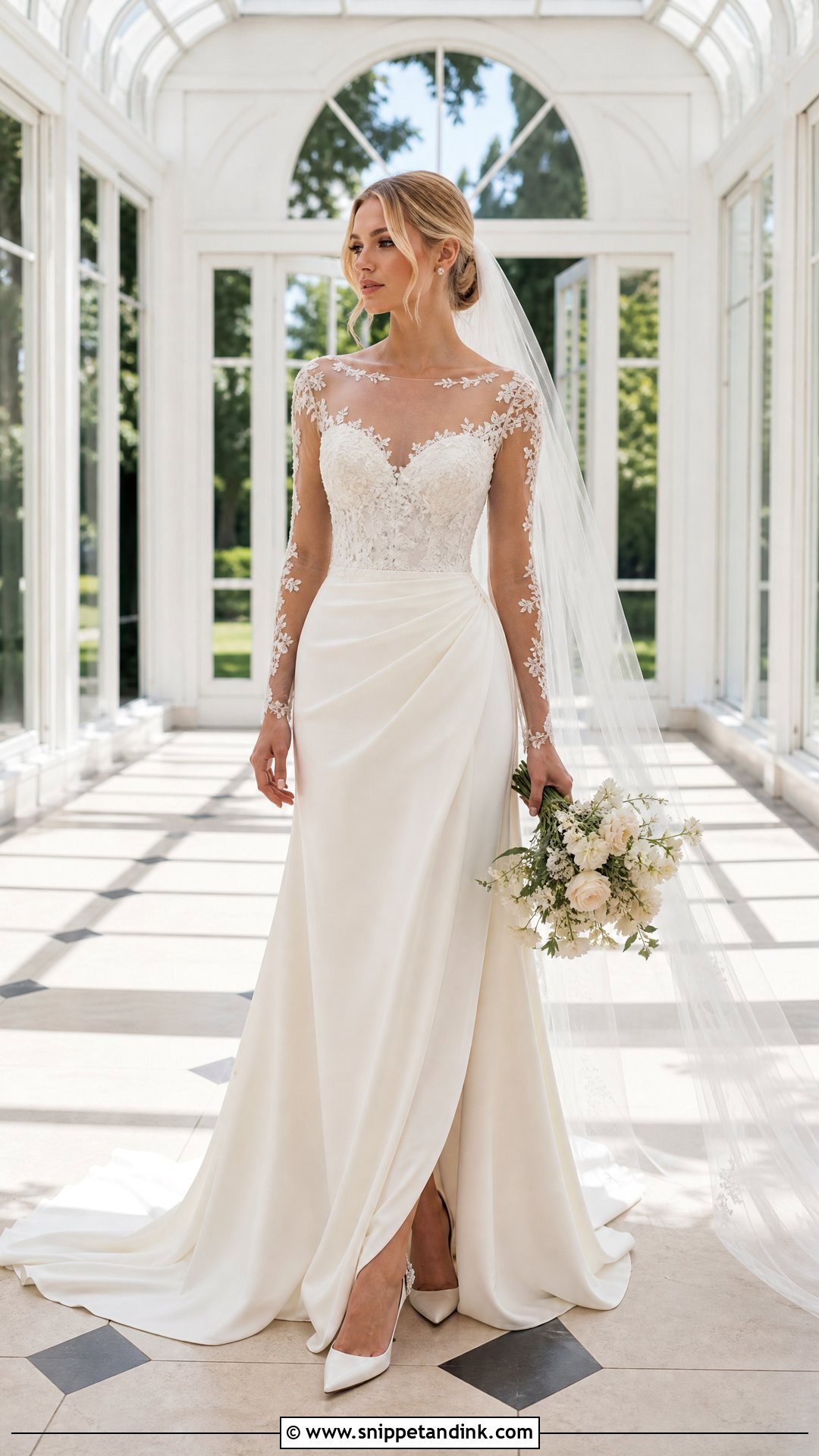
Illusion sleeves are fine bridal mesh with appliqués or small pearls laid on top, so the detail seems to float on your skin. The mesh color is the decision that matters most. I hold several shades against the bride’s arm in daylight and indoor light, because a mesh that looks invisible in the shop can turn grey or pink in photographs. The sleeve should fit closely without digging in, and appliqués placed over the seams hide the join into the bodice. An illusion bateau neckline, soft bodice and A-line skirt suit it, with crystal studs, a low chignon, ivory pumps and a veil with a narrow edge.
7. Off-the-Shoulder Sleeve Wedding Dress
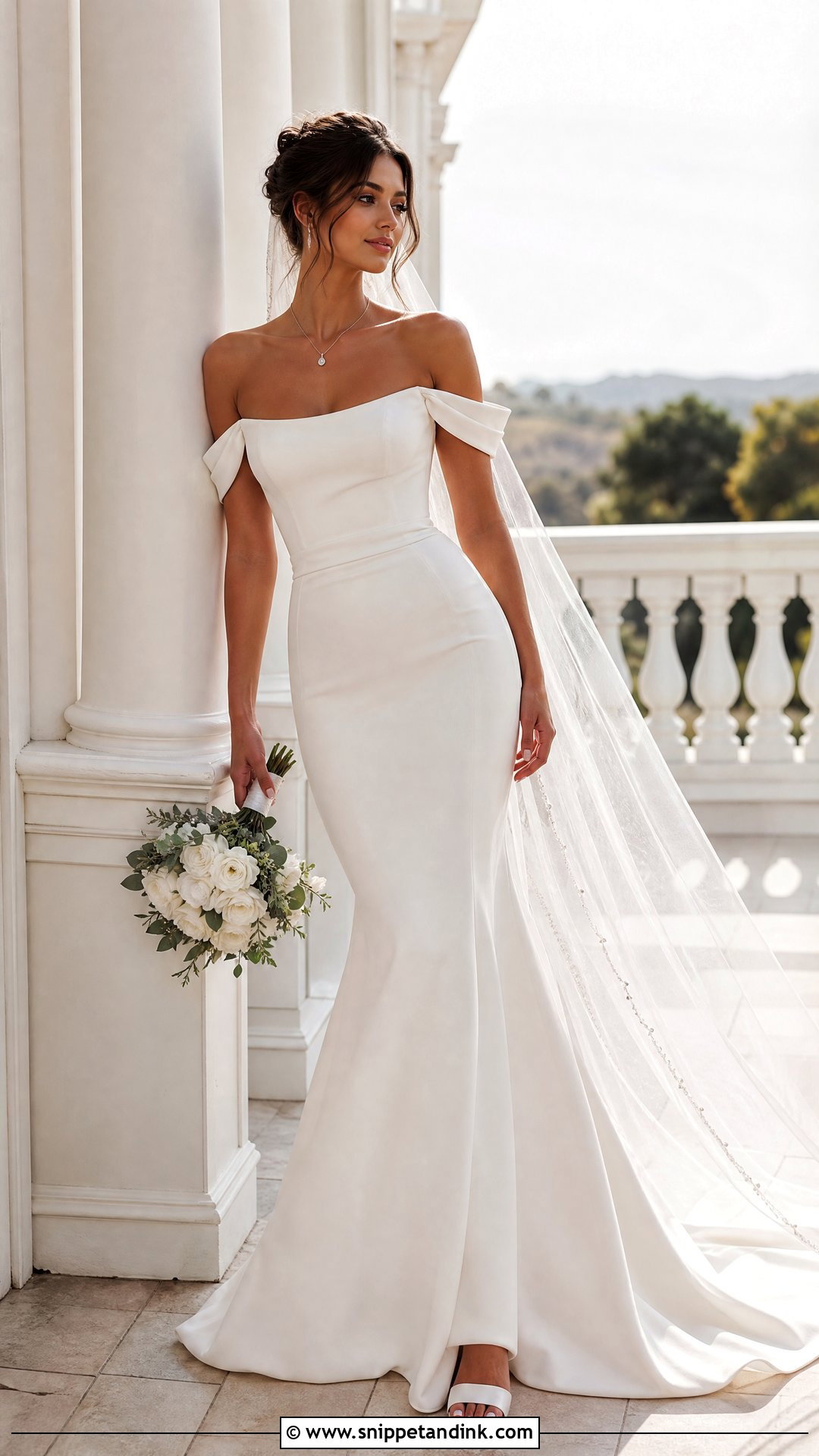
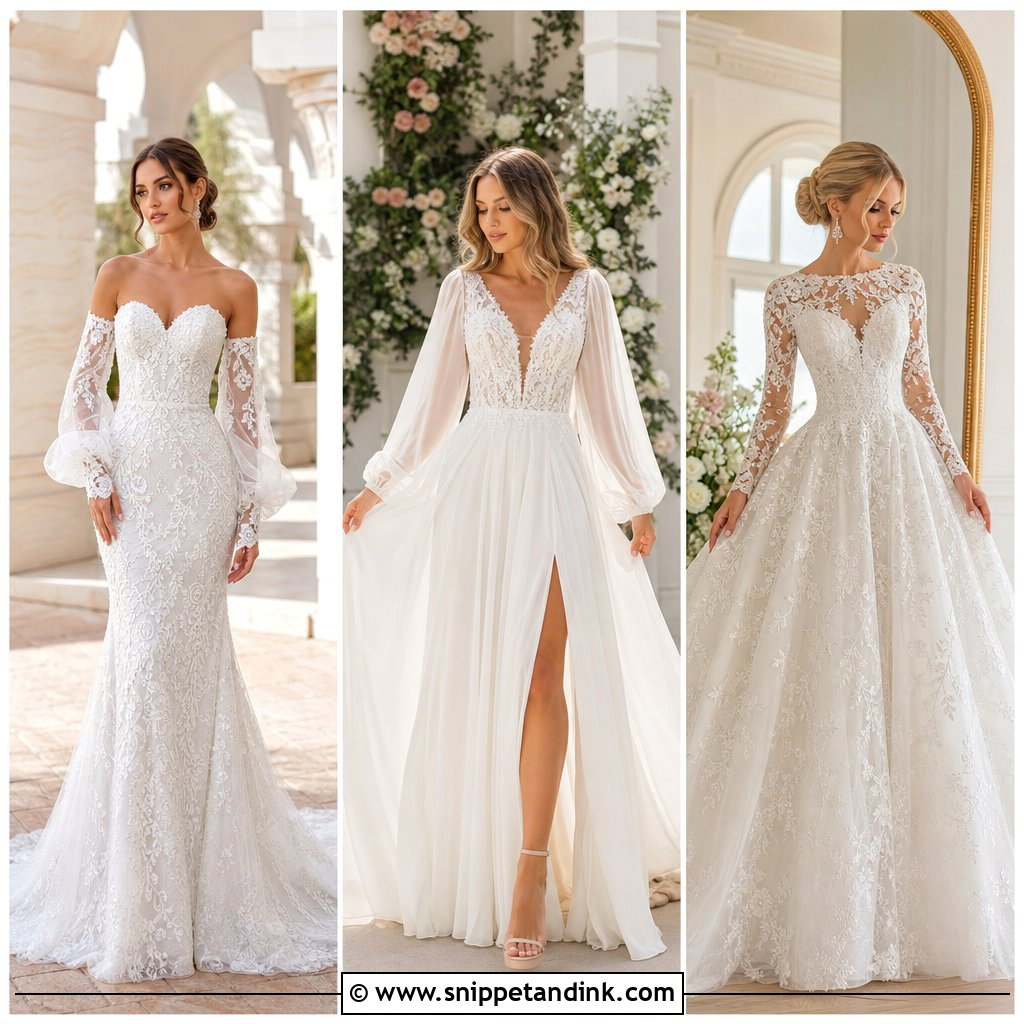
With off-the-shoulder sleeves, the sleeves must never be what holds the dress up. The bodice needs its own internal support, or every time you lift your arms the neckline slides. I ask the alterations specialist to set the sleeves where you can move freely without the bodice shifting. Narrow draped sleeves in satin, crepe or plain tulle keep it simple, and the shape balances an A-line or fit-and-flare skirt. A fine pendant, a polished updo, block heels and a sheer fingertip veil complete it while the shoulder line stays the main feature.
8. Detachable Sleeve Wedding Dress
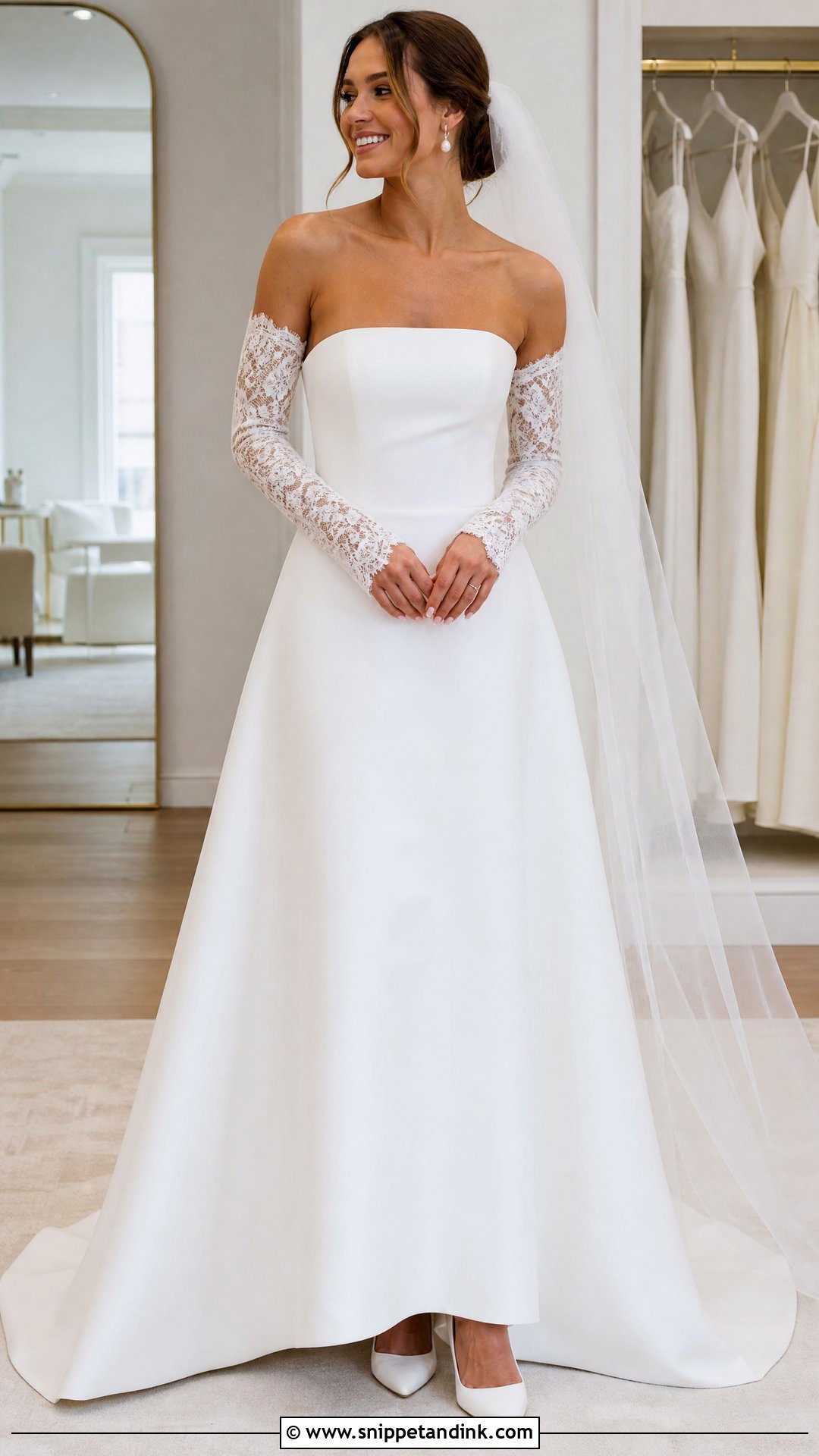
Detachable sleeves give you two looks from one dress: fitted lace, soft tulle or crepe sleeves for the ceremony, then a sleeveless reception outfit later. They attach best to a simple strapless or wide-strap gown, with the fasteners hidden under a neckline edge, appliqué or narrow band. Small clear snaps or hook-and-loop tape are common, and I’d check they don’t rub or alter how the bodice sits. Practice the removal with whoever will help you, ideally twice. For the ceremony, wear a veil, pearl earrings and classic pumps; afterwards, swap to bolder earrings or let your hair down so the change reads clearly.
9. Puff Sleeve Wedding Dress
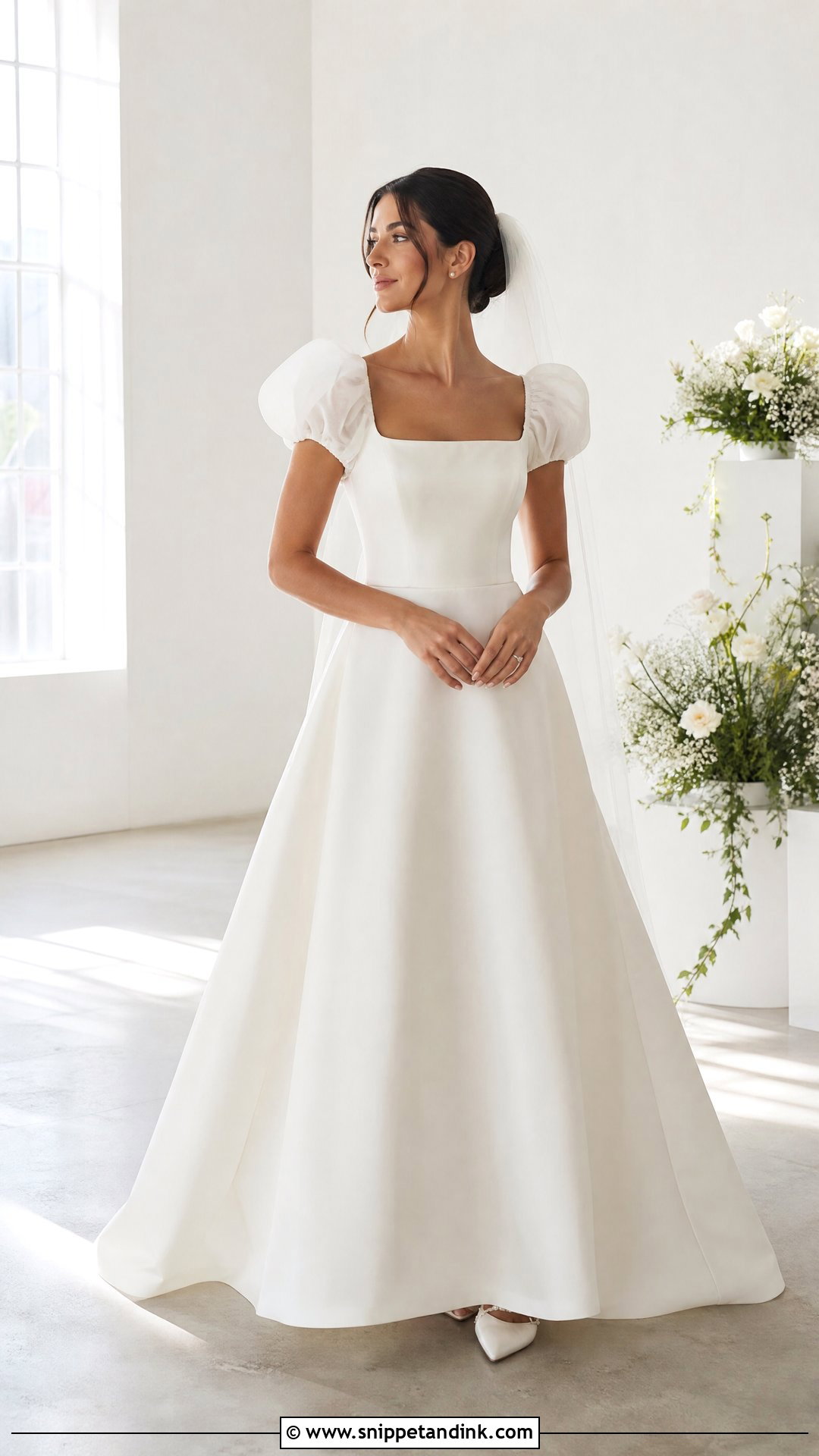
Controlled volume keeps a puff sleeve simple. A small puff at the shoulder tapering into a fitted cuff, or a short rounded sleeve with light gathering, looks modern; a big one starts to look like costume. Broad and narrow shoulders can both wear puffs, and I adjust the scale rather than rule anyone out. Organza or tulle gives an airy shape, satin a structured one, but avoid anything stiff enough to stand away from the arm on its own. Check the elastic or cuff is comfortable. Pair it with a square-neck bodice, plain A-line skirt, low bun, small pearls, almond-toe heels and a single-layer veil.
10. Bishop Sleeve Wedding Dress
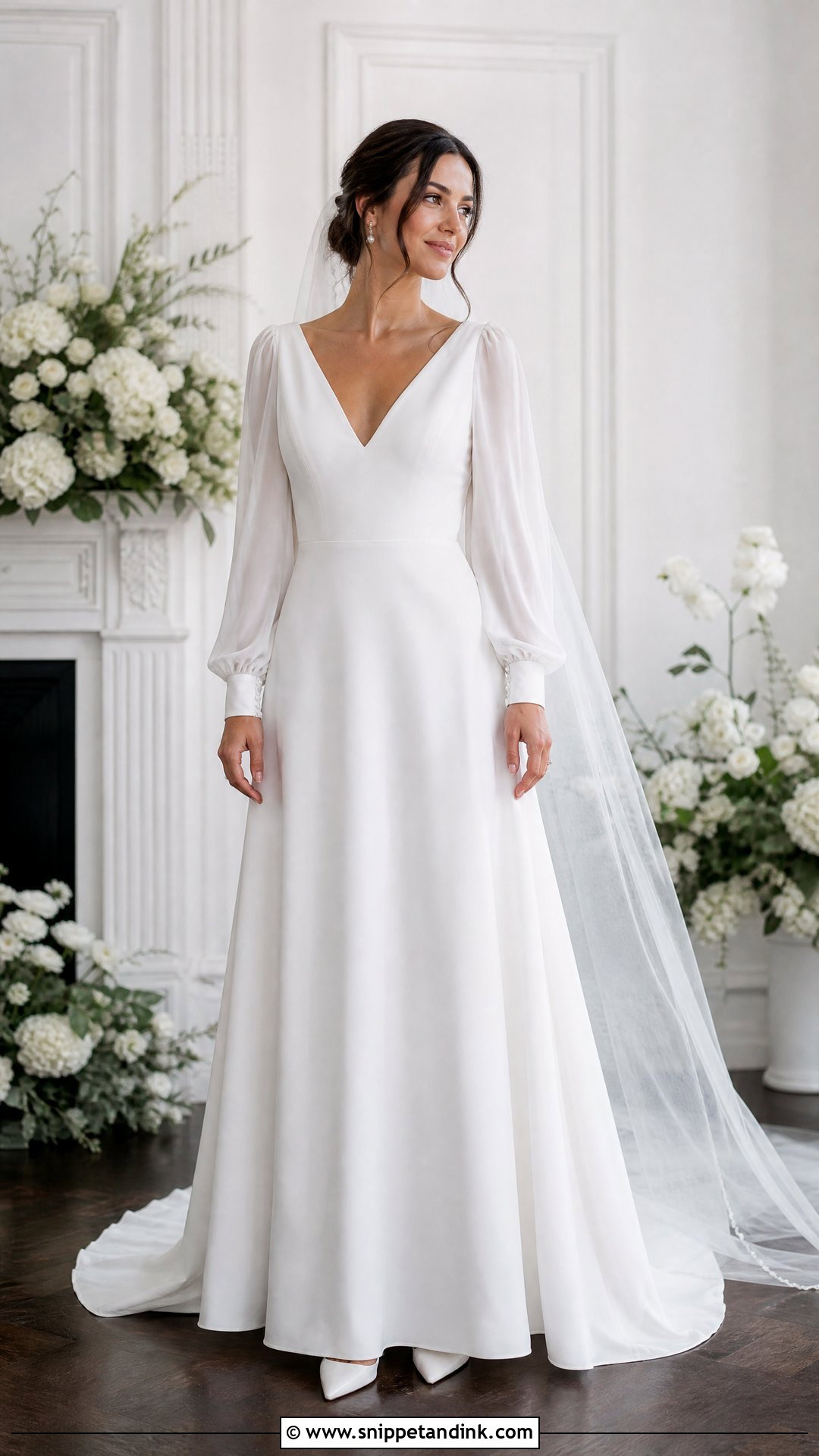
Bishop sleeves are full through the arm and gathered into a fitted cuff at the wrist. The length is what I adjust most: the sleeve should blouse slightly over the cuff without the fabric falling over your hand, or you’ll be pushing it back to hold your bouquet all day. Sheer chiffon or plain organza over a smooth crepe bodice and flared skirt keeps it understated, and a modest V-neck stops the volume swamping your upper body. Covered buttons, loops or an invisible fastening can close the cuff. Skip bracelets, which snag on the gathered fabric, and wear smooth drop earrings, pointed shoes and a clean chapel veil.
11. Bell Sleeve Wedding Dress
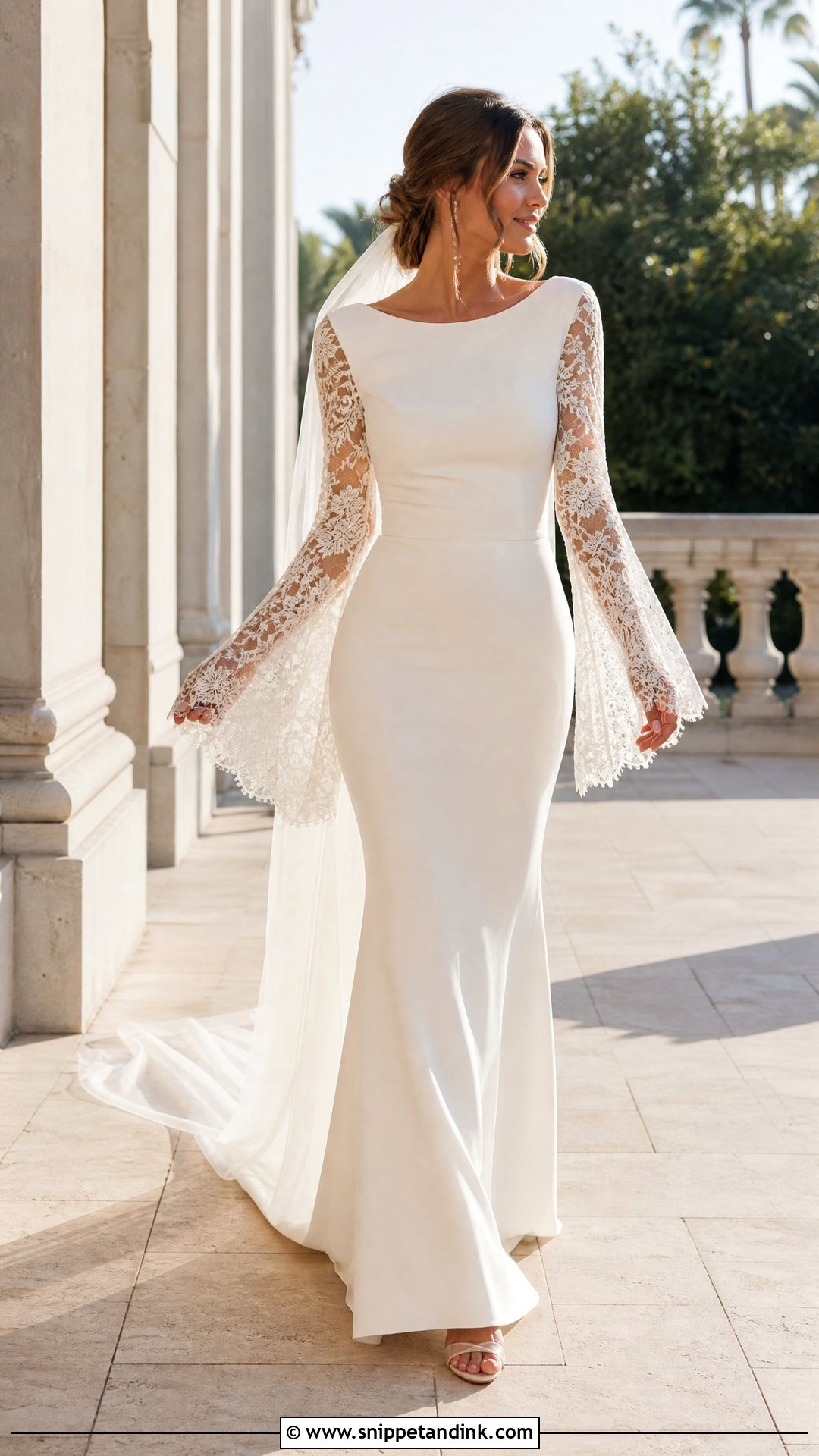
Bell sleeves stay fitted at the shoulder and widen toward the elbow or wrist. A moderate flare is easier to wear than a dramatic one. Very wide cuffs sweep through candles, cake and centerpieces, and I’d look at the reception setup before choosing the length. An alterations specialist can add a hidden wrist loop to hold the sleeve back when you eat. Sheer lace bells on a fitted crepe dress, or light chiffon on a soft A-line, both keep the gown simple. A loose low bun, minimal earrings, block-heel sandals and a veil without heavy edging leave the sleeve movement to do the work.
12. Flutter Sleeve Wedding Dress
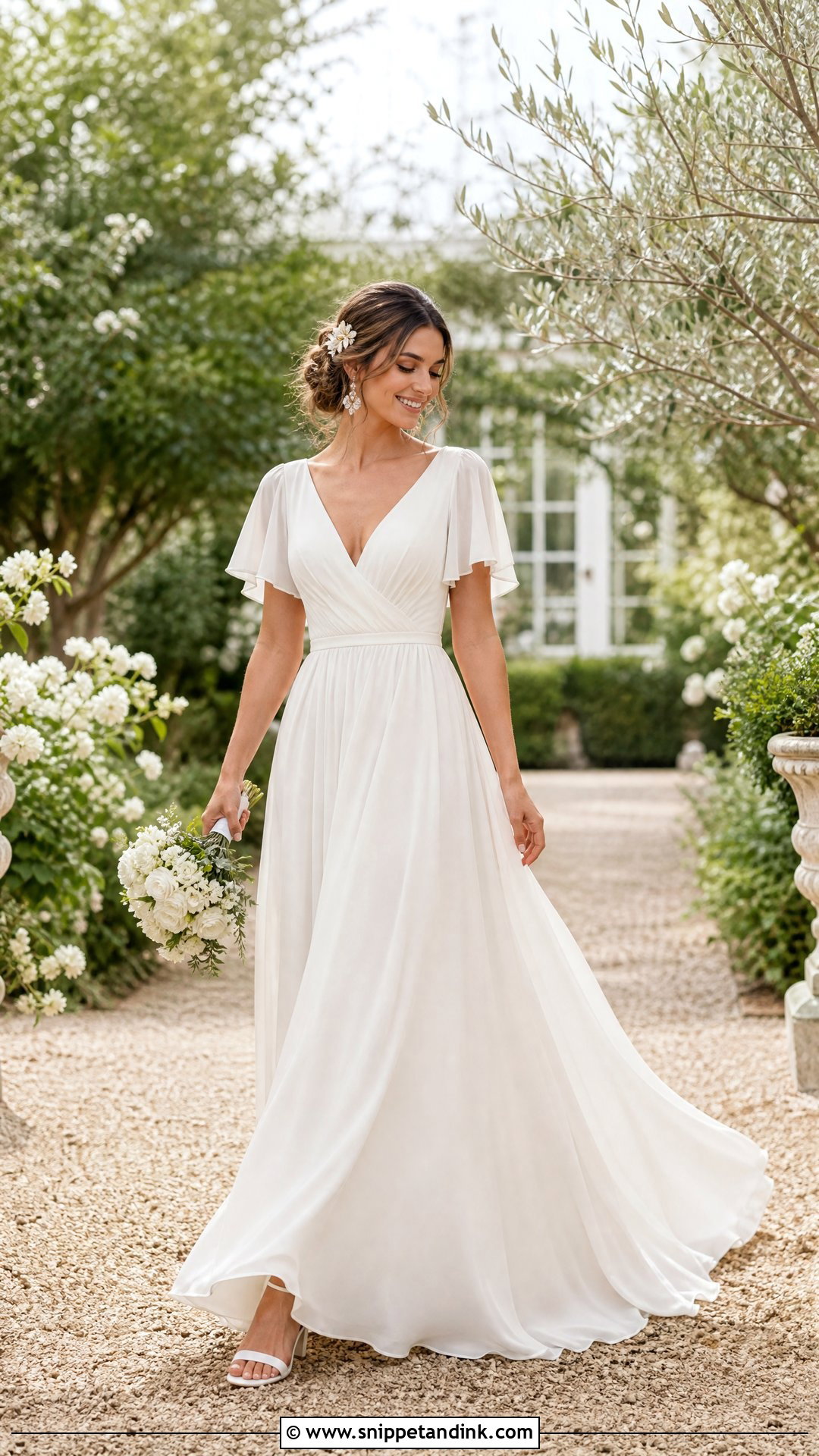
Flutter sleeves fall loose over the upper arm, with no tight armhole or cuff, so they’re one of the most comfortable sleeves for a warm day. Chiffon, silk georgette and fine tulle move with the slightest breeze. Length is the detail I watch: a flutter that drops too far hides the waistline from the side. I also ask for a softly curved hem rather than a straight cut edge, which hangs more naturally. A V-neck bodice with a flowing A-line or empire skirt suits it, plus fine drop earrings, low block heels and a floral hair pin.
13. Balloon Sleeve Wedding Dress
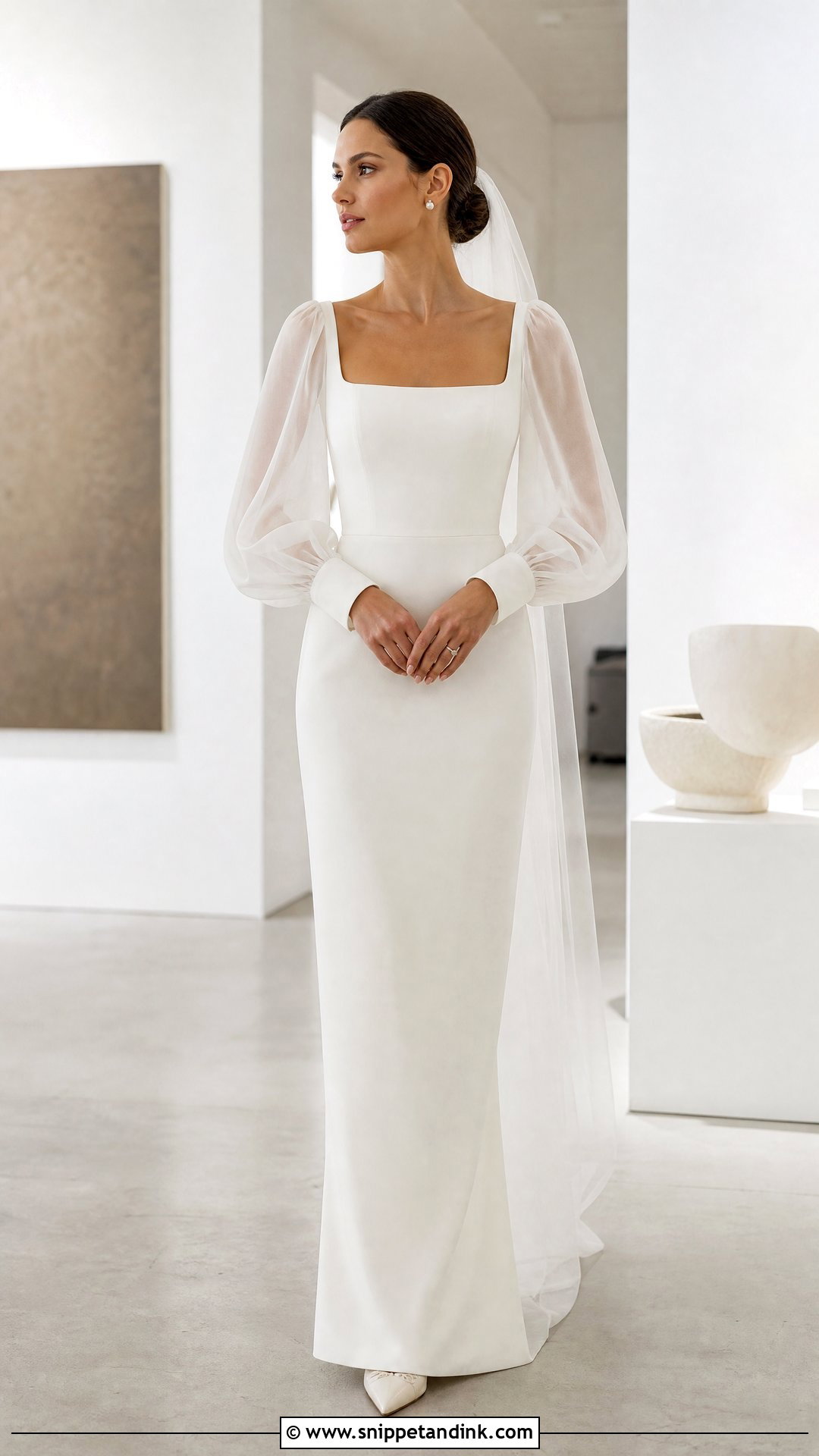
Balloon sleeves hold their volume between a fitted shoulder and a fitted cuff, which makes them a statement no matter how plain the rest is. To keep the whole look simple, I’d pair them with a minimal column or narrow A-line skirt and a square or straight neckline, and leave out beading. Smooth organza, soft tulle or lightweight satin give roundness without weight. The volume should hold its shape at the elbow and stop short of covering your hands. If you want a choice on the day, ask about detachable balloon sleeves. A sleek bun, studs, pointed pumps and a plain veil finish it.
14. Juliet Sleeve Wedding Dress
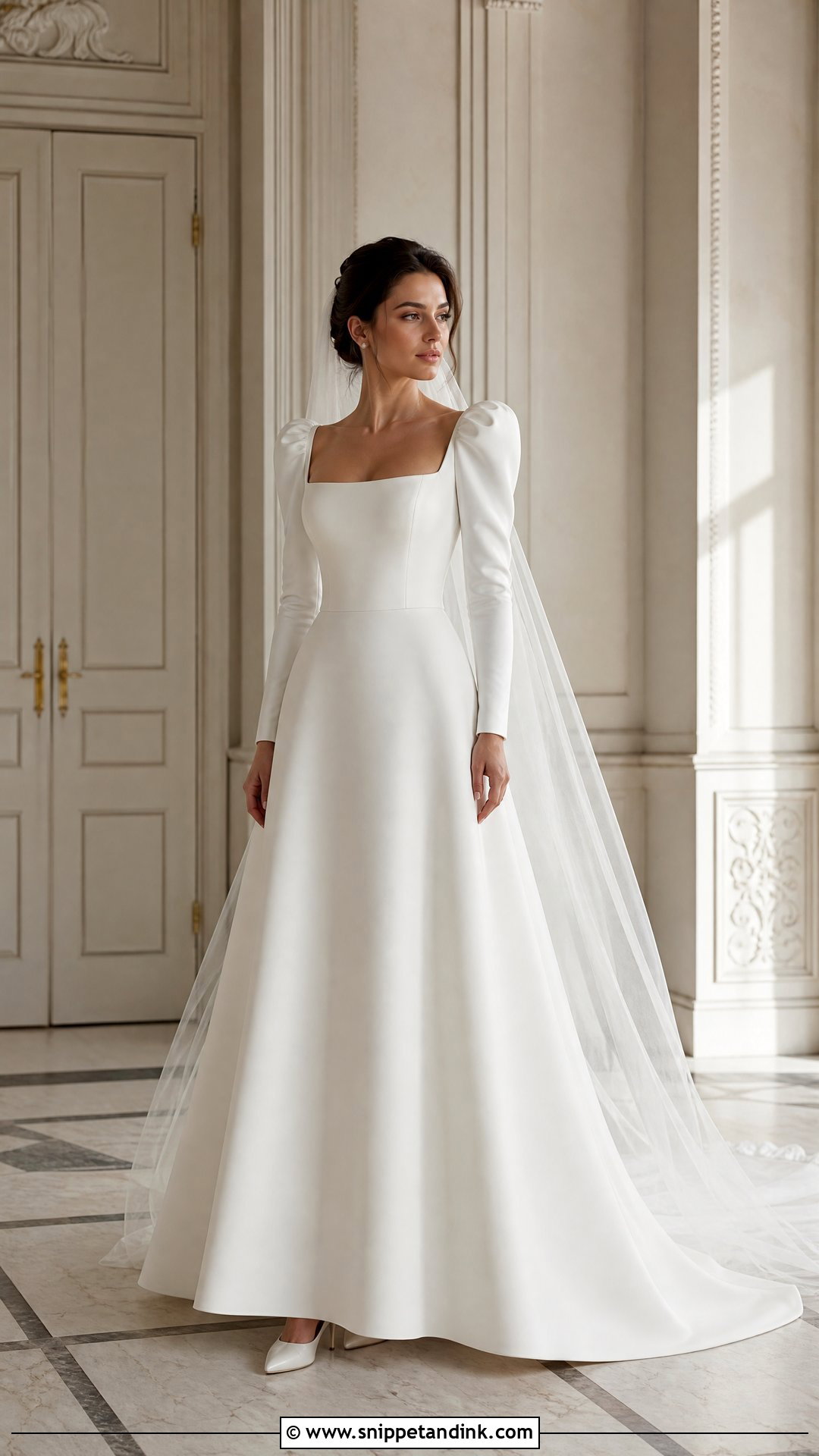
A Juliet sleeve wedding dress has a small puff at the shoulder and a fitted sleeve down to the wrist, which gives it a vintage feel without much decoration. The amount of gathering in the puff is what I play with at fittings. Too much dominates a small frame; too little and it reads as a mistake. The fitted lower sleeve also needs some stretch, or you can’t bend your elbow comfortably. Matte satin or crepe looks structured; sheer tulle with restrained lace is softer. A fitted bodice and flowing A-line skirt balance the shoulder, with a smooth updo, pearl studs, closed-toe heels and a plain cathedral veil.

15. Petal Sleeve Wedding Dress
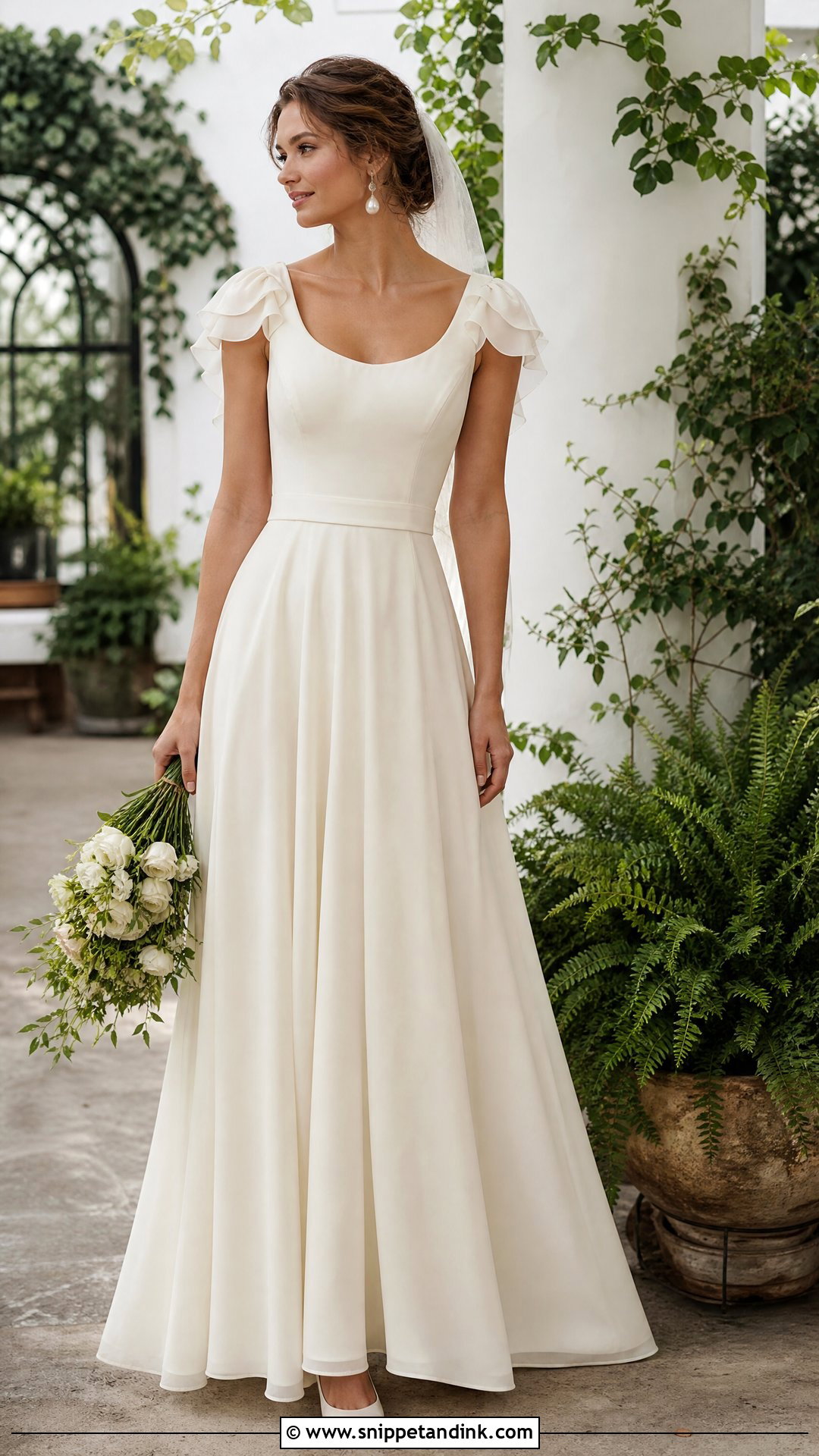
Petal sleeves are two curved panels that overlap over the top of the arm, softer and looser than a set-in short sleeve. They need to overlap enough to keep you covered when you reach forward, which I check with the bride hugging an imaginary guest. Heavy fabric or thick edging makes the petals stick outward, so choose lightweight chiffon, crepe or organza with a clean hem. A scoop-neck bodice and tea-length or full A-line skirt suit the shape, plus pearl earrings, low pumps and a short veil for a quiet vintage note.
16. Dolman Sleeve Wedding Dress
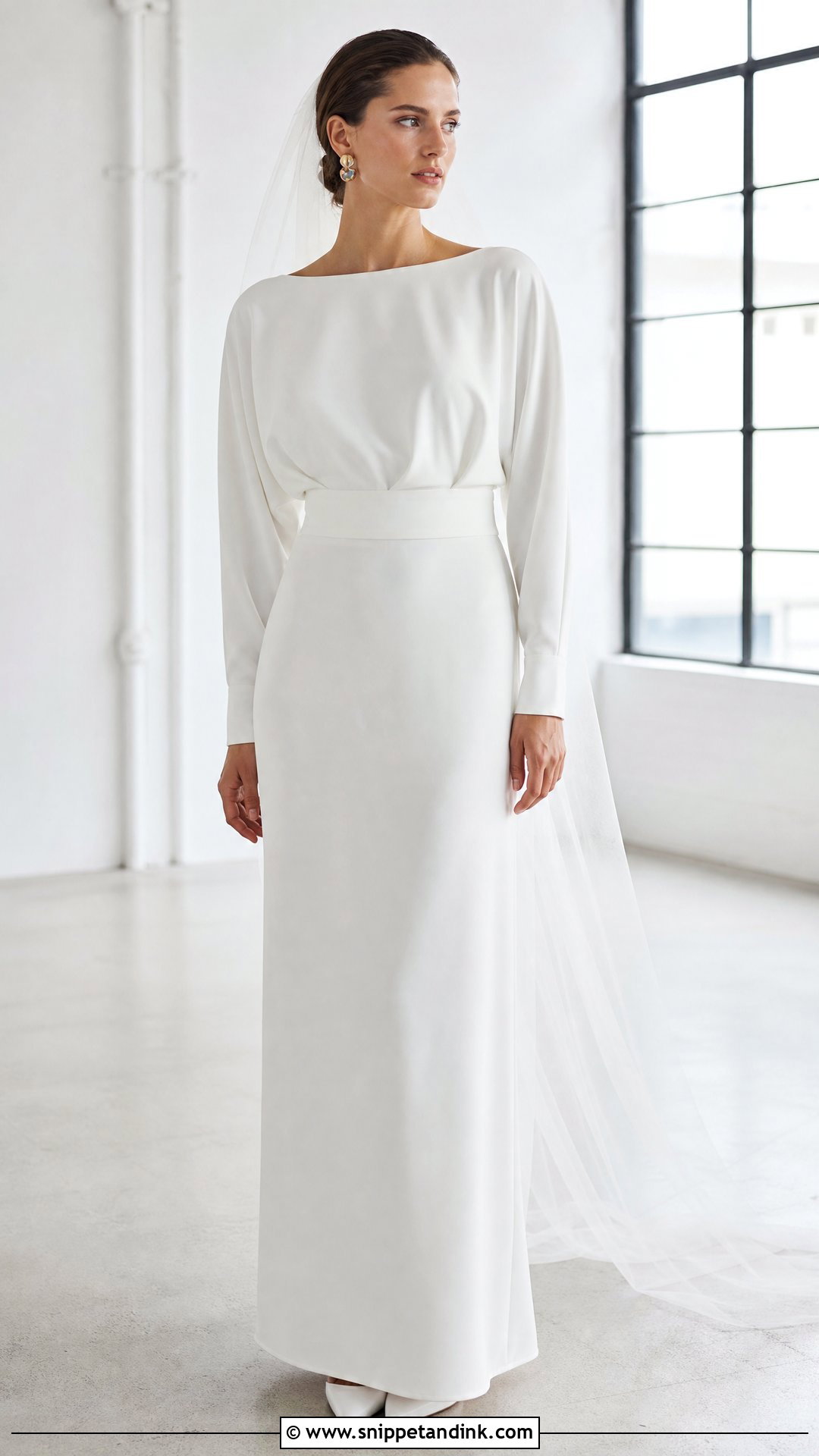
A dolman sleeve flows straight out of the bodice with no defined shoulder seam, then narrows near the elbow or wrist. That makes the upper body look soft and fluid, but it also means extra fabric under the arm, which can bunch and hide your waist when your arms are down. I’d keep that underarm fullness modest and add a structured waistband to bring back definition. Matte crepe, silk jersey or lightweight satin drape best. A draped bodice and straight or softly flared skirt, a sleek knot, small metallic earrings, pointed flats and a narrow veil complete it. Go for this one if you dislike feeling held in.
17. Elbow Length Sleeve Wedding Dress
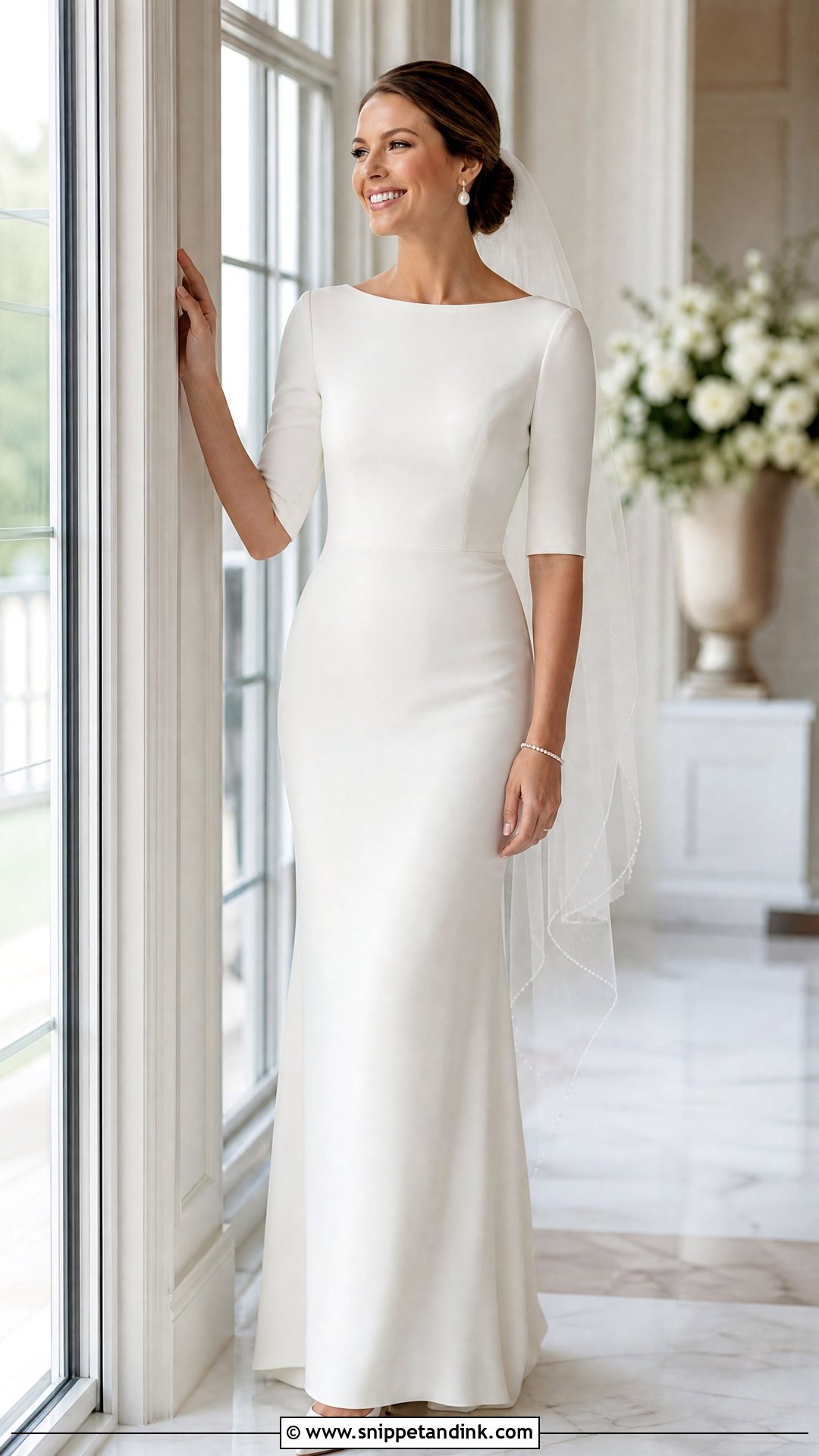
Elbow length sleeves give a clean, finished line on a plain gown and leave the forearms and hands free. The exact end point matters. The hem should sit just above or right at the elbow crease, because a sleeve ending just below it gets pulled tight every time you bend your arm. A narrow hem or fine lace edge looks better than a wide cuff. Fitted crepe with a bateau neck and sheath reads modern; unlined lace with an A-line is softer. A slim bracelet, pearl earrings, classic pumps and a fingertip veil finish it, and the length is easy to adjust during alterations for spring through autumn.
18. Tulle Sleeve Wedding Dress
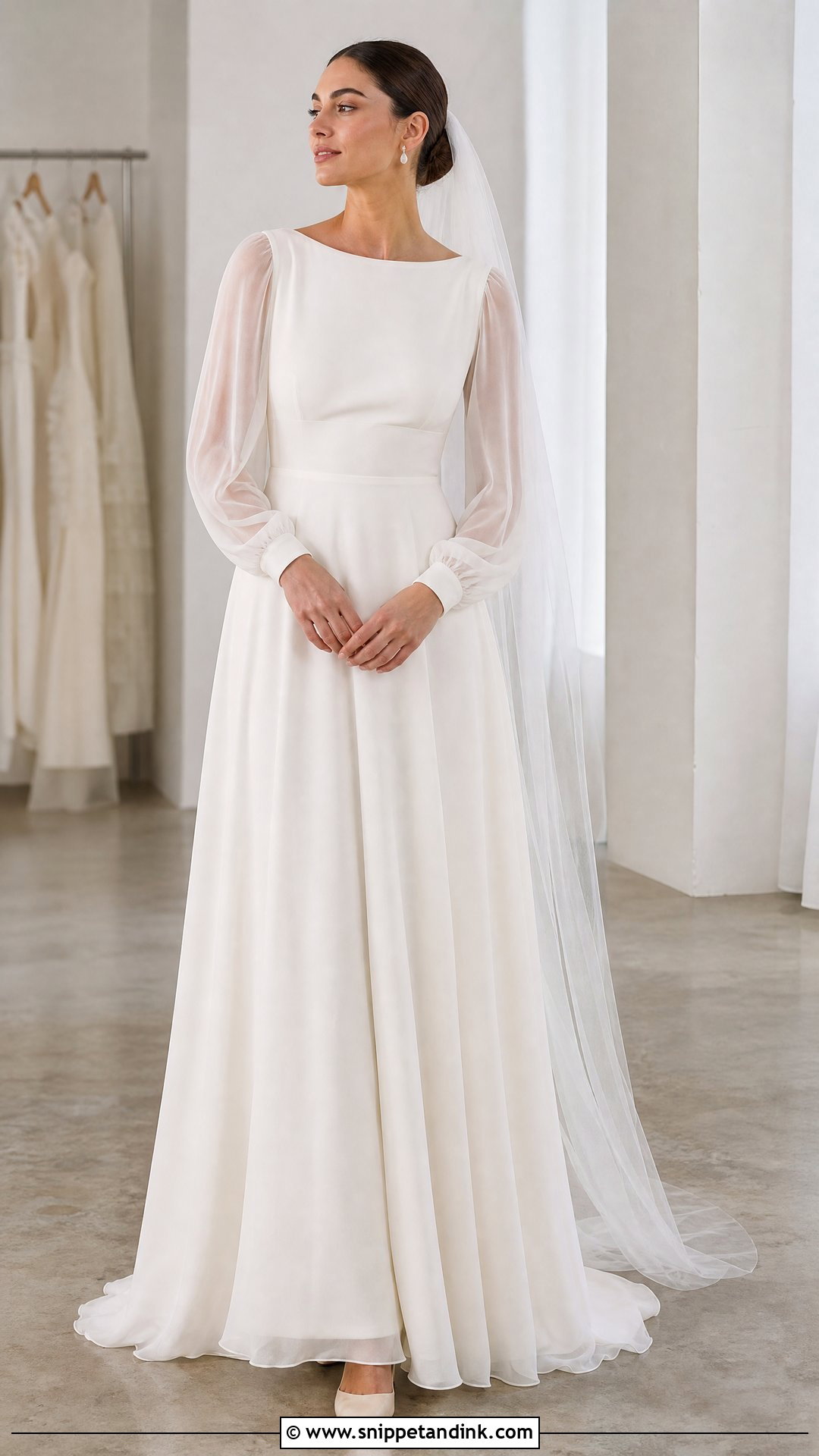
A plain tulle sleeve against an opaque crepe bodice gives contrast without decoration. I always ask for soft bridal tulle here, because the stiffer kind holds odd shapes and scratches along the inner arm. Keep the gathering light at the shoulder, finish it in a narrow cuff, and make sure the seam runs where it won’t show along the inside of the arm. A close but comfortable fit stops extra mesh bunching at the elbow. Tiny crystal earrings, a smooth bun, ivory heels and a plain tulle veil that matches the sleeve texture keep the gown’s airy character.
19. Satin Sleeve Wedding Dress
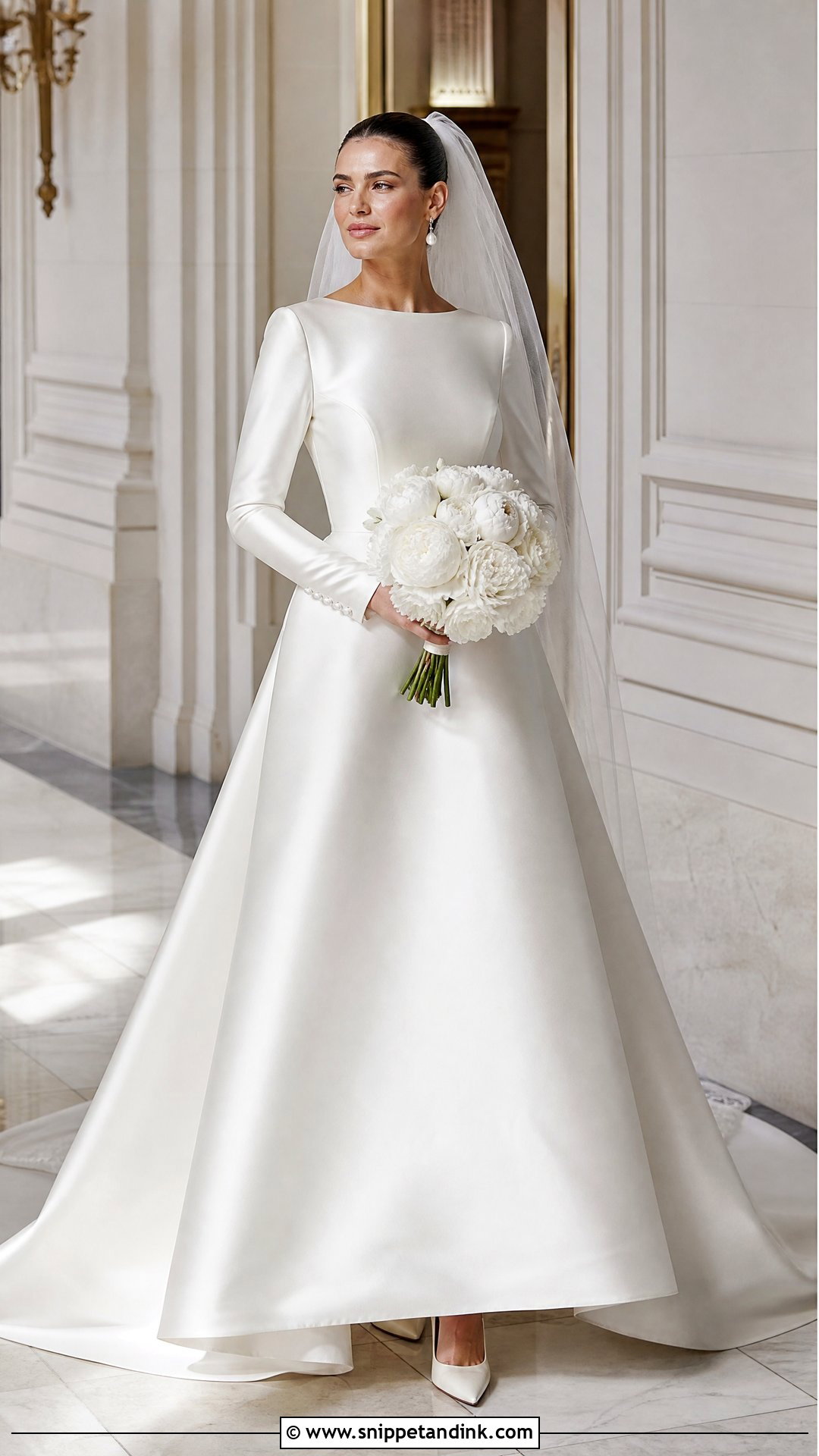
Satin sleeves cut from the same fabric as the bodice give one continuous surface, and on a simple gown that sheen is enough decoration. The fabric shows every pull, so I’m strict about tailoring through the shoulders and elbows, and a light lining helps the sleeve keep its shape. A fitted wrist-length sleeve with a bateau neckline and A-line skirt is the classic version. For more ease, a lightly gathered sleeve with a slim covered-button cuff moves better. Pearl drops, pointed pumps, a structured bouquet and a sheer plain veil finish it. Keep bracelets off, since metal catches the weave.
20. Draped Sleeve Wedding Dress
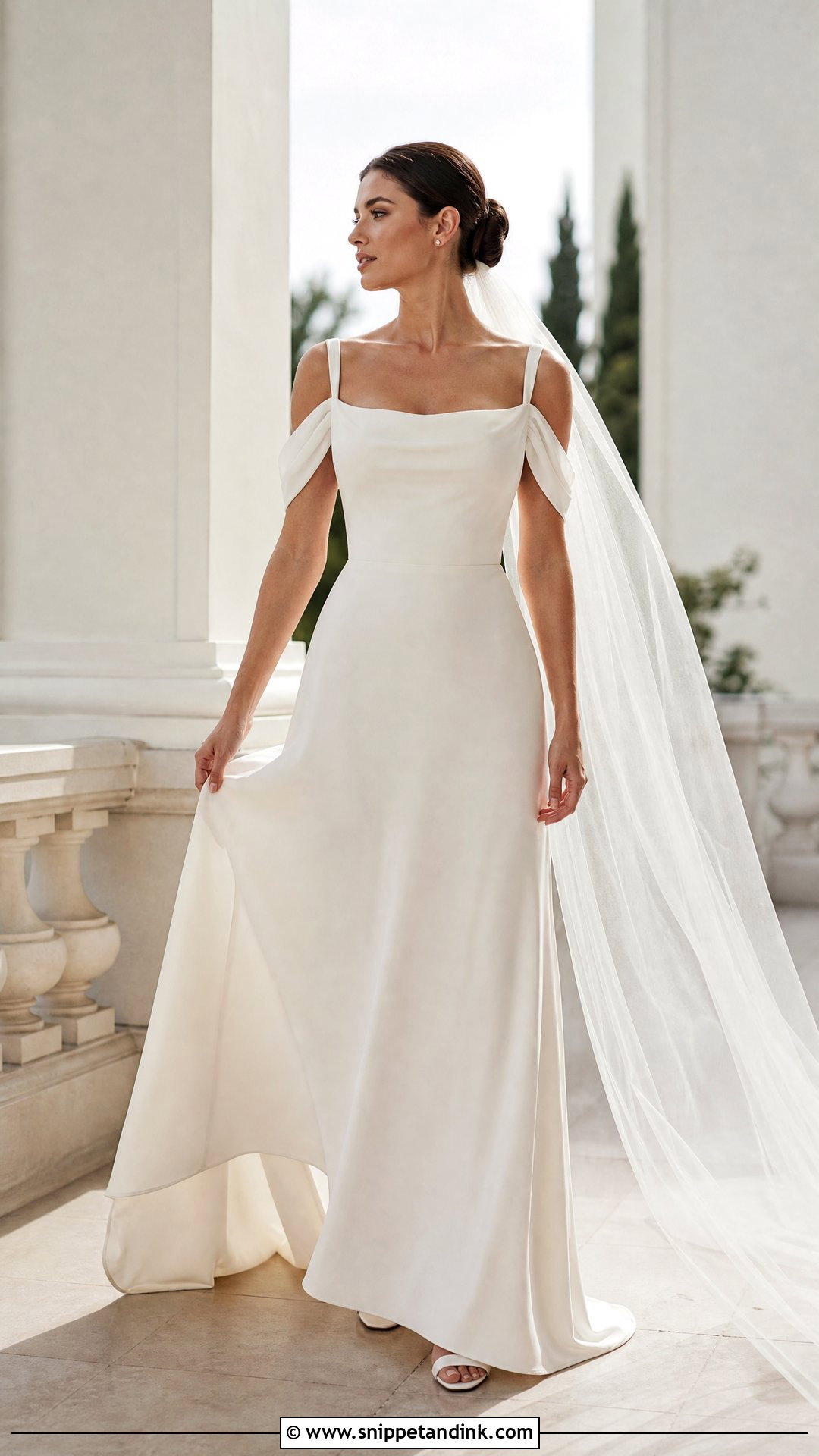
Draped sleeves can fall from the shoulder, cross the upper arm or gather into the bodice. For a simple look, I keep the drape narrow, in matte crepe or silk chiffon, and avoid large swags or several layers. Uneven folds are obvious from the side and back, so I check them from every angle during fittings, then have the bride lift her arms to see if the drape holds. Hidden snaps or a few hand stitches keep it in place through the night. A straight neckline, defined waist and A-line skirt suit it, with a low chignon, simple studs, comfortable heels and a clean chapel veil.
Adding Sleeves to a Gown You’ve Already Bought
Plenty of brides fall for a strapless dress and then want coverage. Sleeves can usually be added later, but how well they blend depends on the fabric match, so I start there rather than with the style.
- Ask the shop or designer whether matching fabric or lace is available. Some will sell a length, and it is the easiest way to get an identical shade.
- If not, an alterations specialist can sometimes take lace from a long hem or train. Ask before anything is cut.
- Bridal whites vary a lot. Compare a sample against the dress in daylight, not under shop lighting.
- Sheer sleeves forgive a slight color mismatch better than opaque crepe or satin.
- Leave extra time. Sourcing fabric and making sleeves takes longer than a standard hem, so raise it at your first fitting.
If adding sleeves feels like too big a change, a separate lace jacket, bolero or cape can give similar coverage. You can take it off for the reception, and it doesn’t involve cutting into the gown at all.
A Sleeve Should Move When You Do
Cap, petal, and flutter sleeves suit warm months and easy movement; fitted, lace and satin sleeves give classic structure for cooler ones; bishop, balloon and draped sleeves add movement without beading. Bring reference photos to your appointment, but try at least one shape you’d never have picked, because sleeves are hard to judge on a hanger. Before you buy, ask what can be altered later, and test every option by lifting your arms, sitting and hugging. If the sleeve lets you do all of that without the bodice moving, you’ve found it.
You'll Like These Ideas:





Leave a Reply