
Sleeves change a dress more than any other single detail. The same bodice reads modest with a fitted long sleeve, relaxed with a bishop sleeve and modern with a sharp cap, and a sleeved wedding gown no longer has to feel heavy or formal to give you coverage. In fittings, sleeves are also where I spend the most pins, because they decide whether you can hug your grandmother or lift your arms to dance. These twenty designs keep the decoration low and let the sleeve shape do the work, with my notes on shoes, veil, hair and the fitting check each one needs. They suit courthouses, gardens and ballrooms, summer and winter.
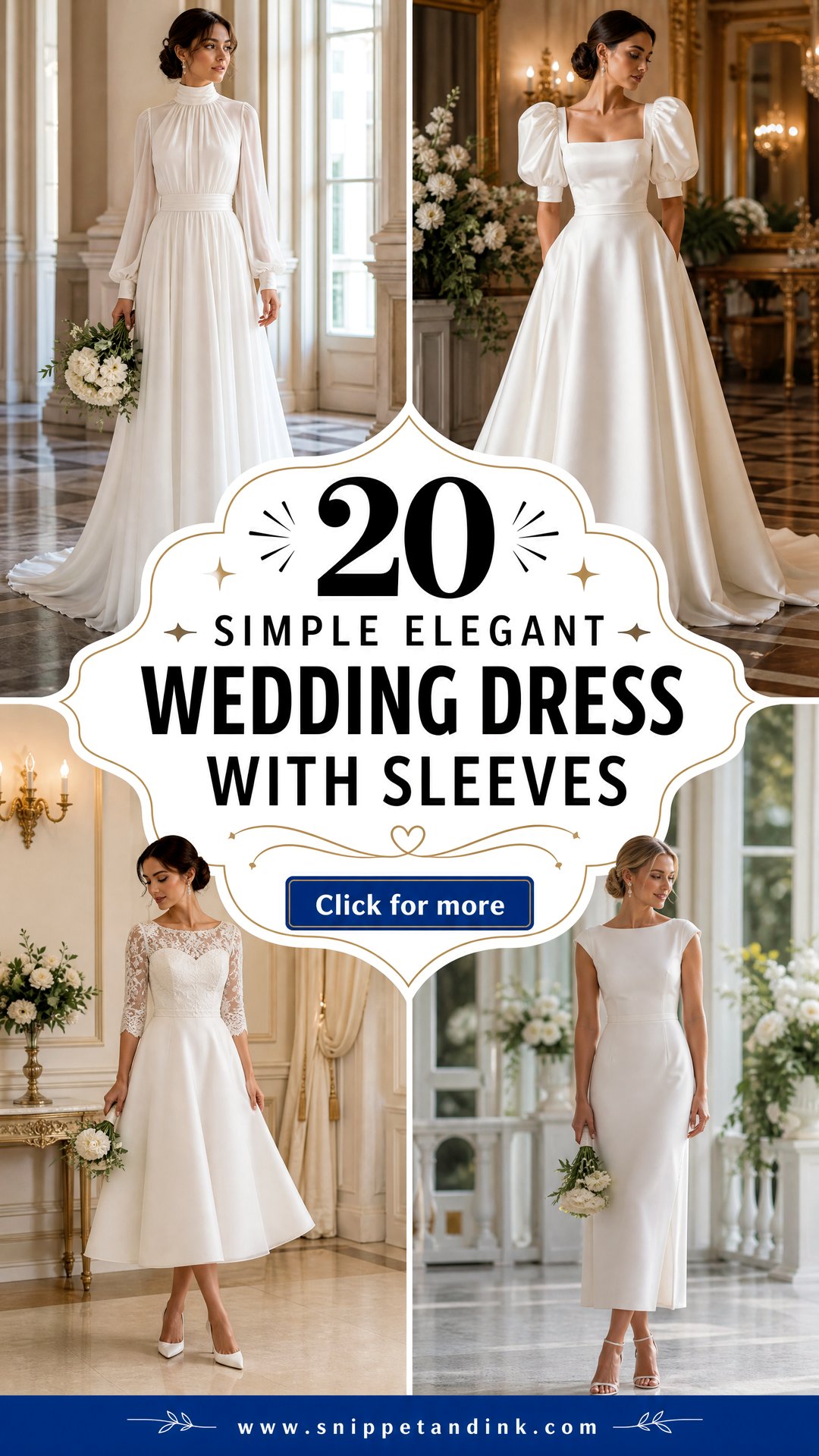
Armholes Decide Whether a Sleeved Dress Lets You Hug
Most complaints about sleeved wedding dresses aren’t about the sleeve at all. They come from the armhole. When it’s cut low, raising your arm lifts the whole bodice; when it’s cut higher and closer, the arm moves independently. Bridal patterns are often drafted for the hanger, so I check this before anything else.
The three-move test
- Reach both arms straight up. The waist seam shouldn’t rise more than a little.
- Cross your arms as if hugging someone. Look for strain lines across the upper back.
- Bend your elbow and bring a hand to your face. A fitted sleeve that pulls at the elbow will do it every time you touch your hair or wipe a tear.
If the dress fails, tell the seamstress what happened rather than just saying it feels tight. Raising an armhole, letting out a sleeve seam or adding a small gusset under the arm are all normal alterations, but they’re easier on the first fitting than the last. Stretch lace and crepe with a little give are easier to fit than satin or Mikado, which hold their shape and don’t forgive a tight sleeve.
1. Satin A-Line Wedding Dress With Long Sleeves
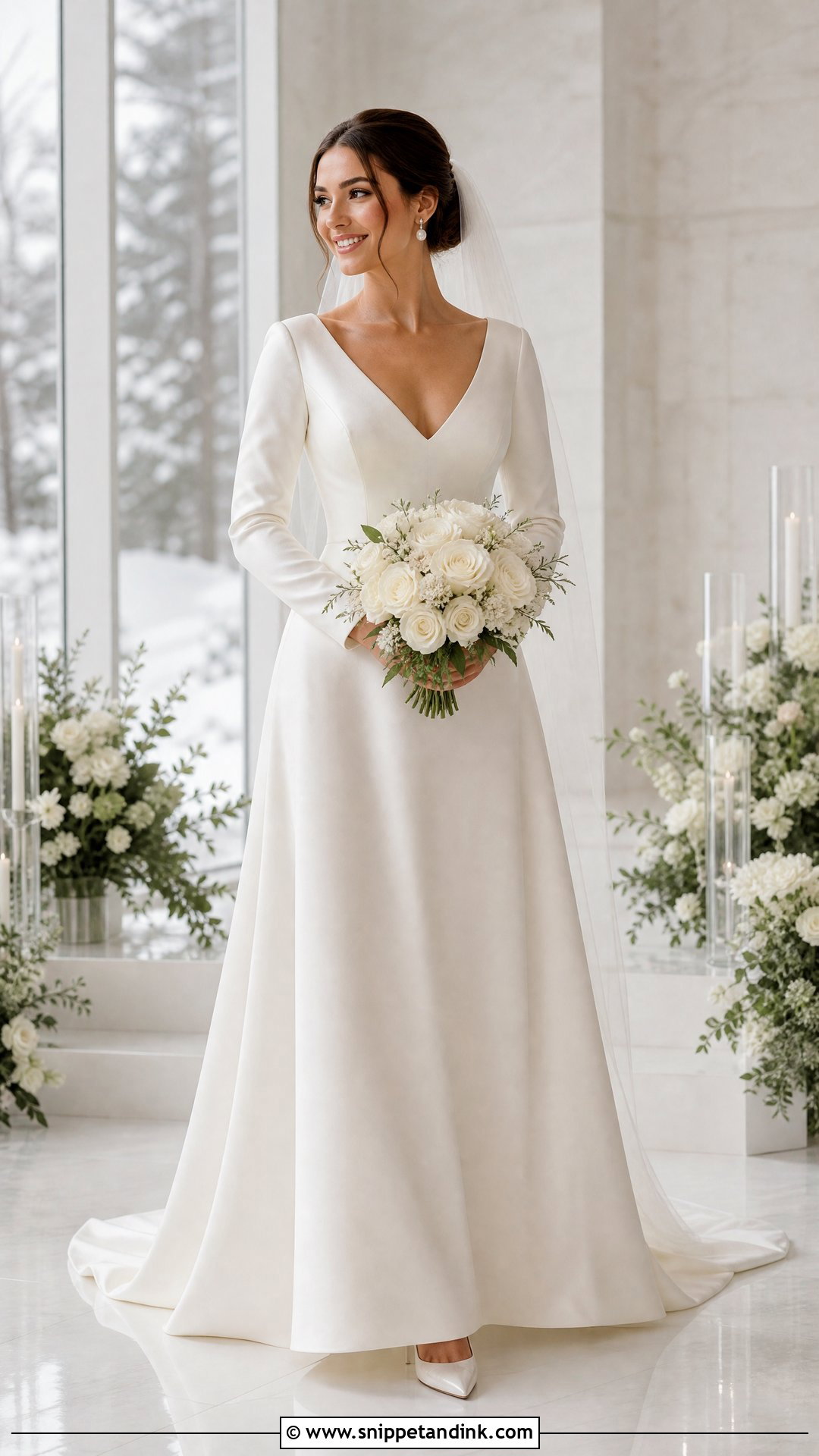
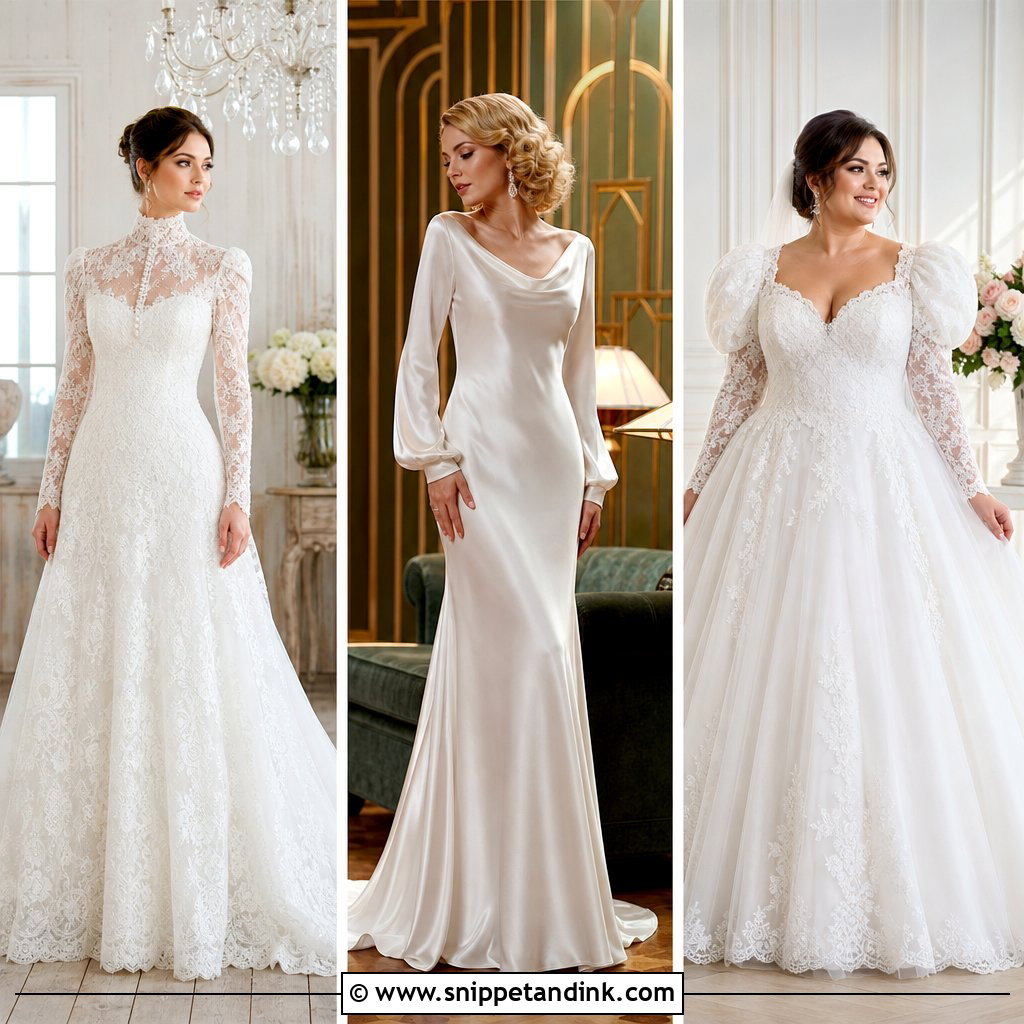
Start with the version most brides try first. Satin A-line, fitted long sleeves, a V or soft scoop neckline so the coverage on the arms is balanced by a little open skin at the chest. The skirt skims the waist and widens on its own. My fitting focus is the cuff: it should end right at the wrist bone, because a sleeve that’s a centimetre long bunches when you hold the bouquet and looks borrowed. Satin pumps, pearl drops, a smooth fingertip veil, white roses or seasonal greenery. Heavier satin for autumn and winter, lighter satin into spring.
2. Crepe Sheath Wedding Dress With Fitted Sleeves
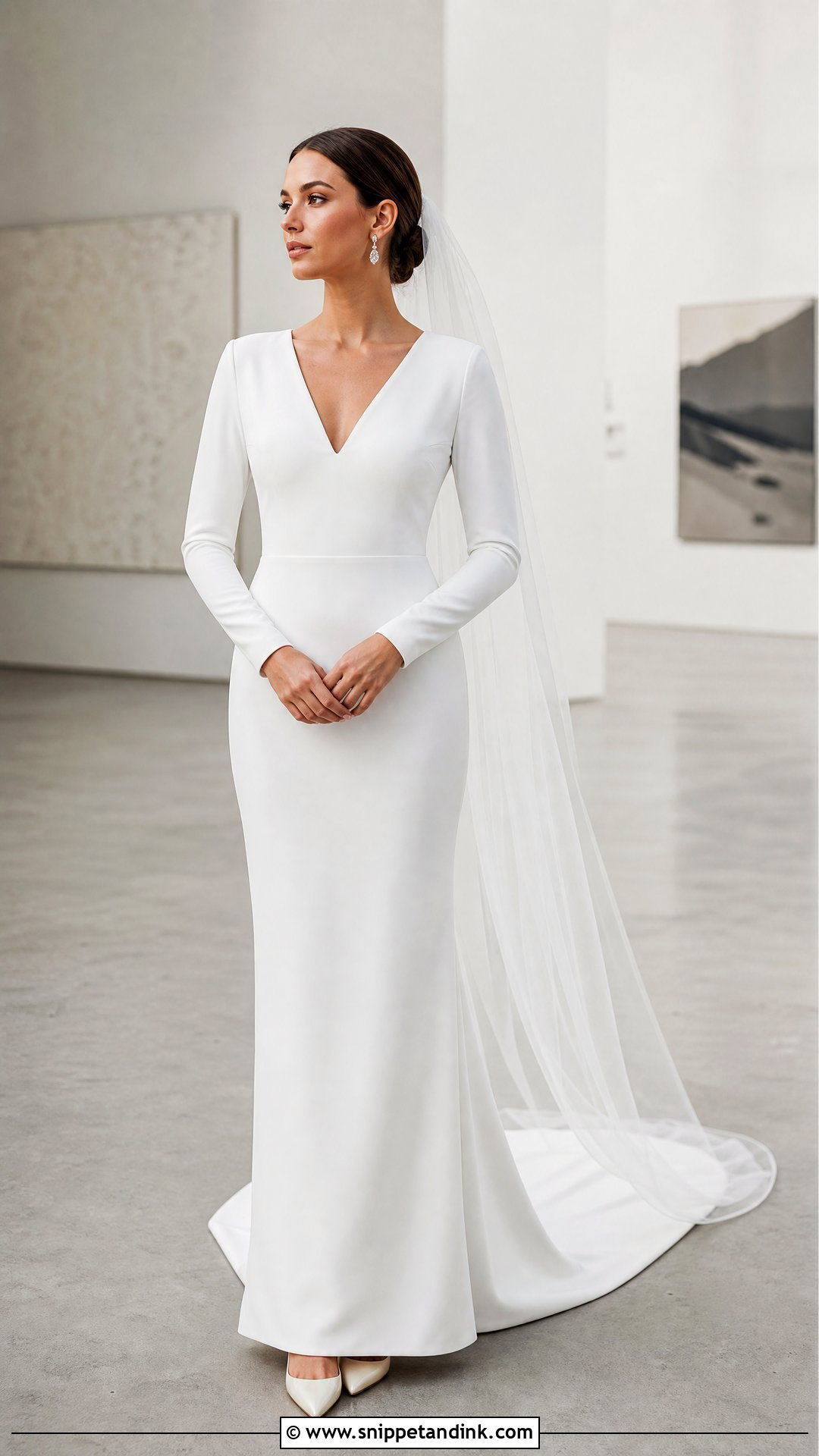
Crepe sheath, fitted sleeves, nothing else. The narrow shape and matte fabric give one long uninterrupted line, which is why I like it for galleries, lofts, hotels and city halls. But crepe tells the truth about construction: a pulled seam at the elbow or a ridge from underwear is visible in every photo, so alterations and undergarments matter more here than with satin. A V or round neckline, pointed ivory heels, small crystal earrings, a sleek low bun and a chapel veil. Insist on a smooth lining so the sleeve slides over your arm instead of sticking.
3. Bateau Neck Wedding Dress With Long Sleeves
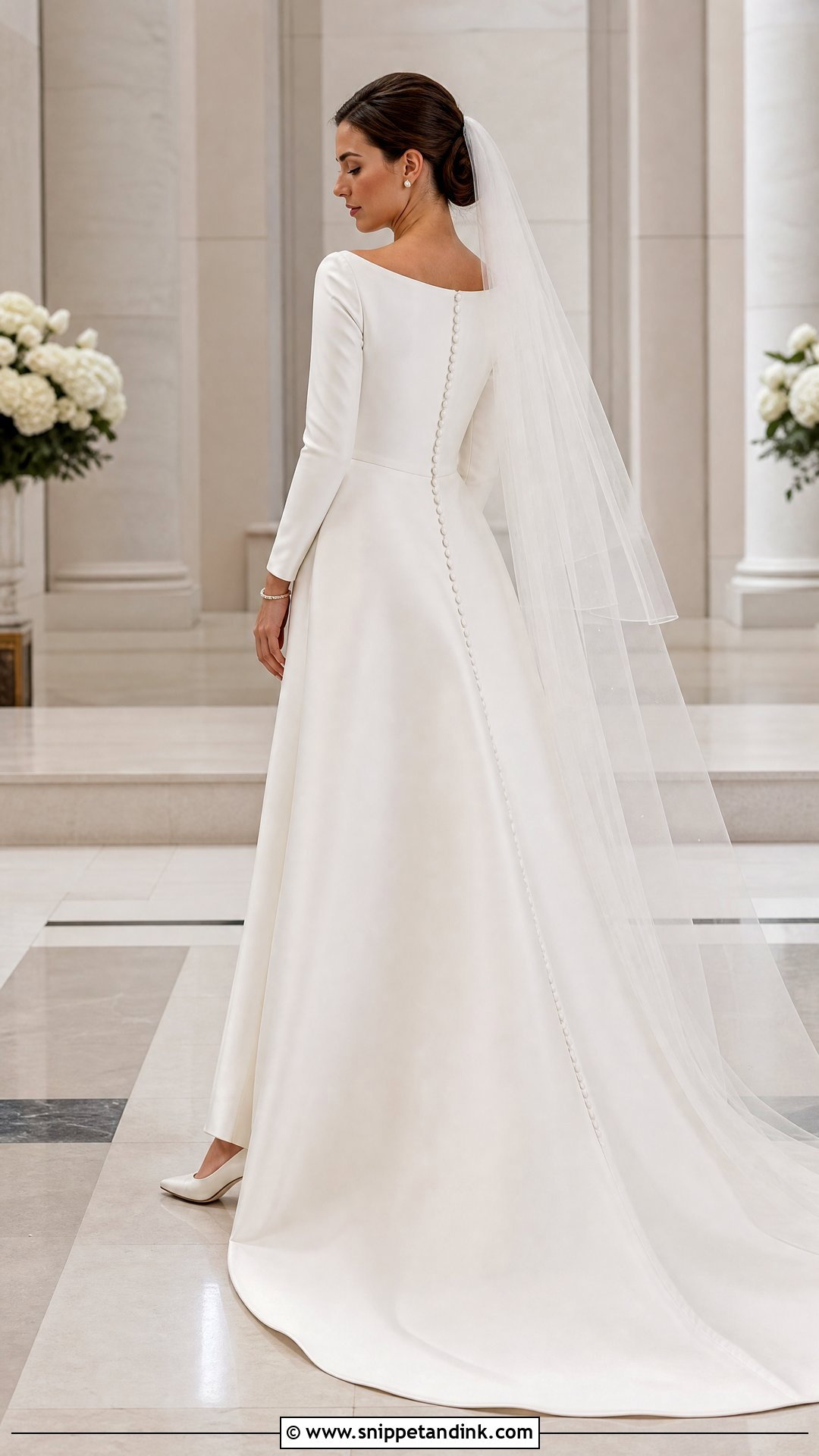
The bateau neckline runs straight from shoulder to shoulder just above the collarbone, and with long sleeves it gives the most balanced shape on this list. It does depend on precise shoulder seams. If they sit even slightly beyond your shoulder bone, the neckline gapes and the sleeves look dropped. Pair it with a fitted bodice and either a slim column or a gentle A-line, with covered buttons down the back and a short chapel train. No necklace; pearl studs, a thin bracelet and an updo with the veil tucked underneath. Low or mid satin heels.
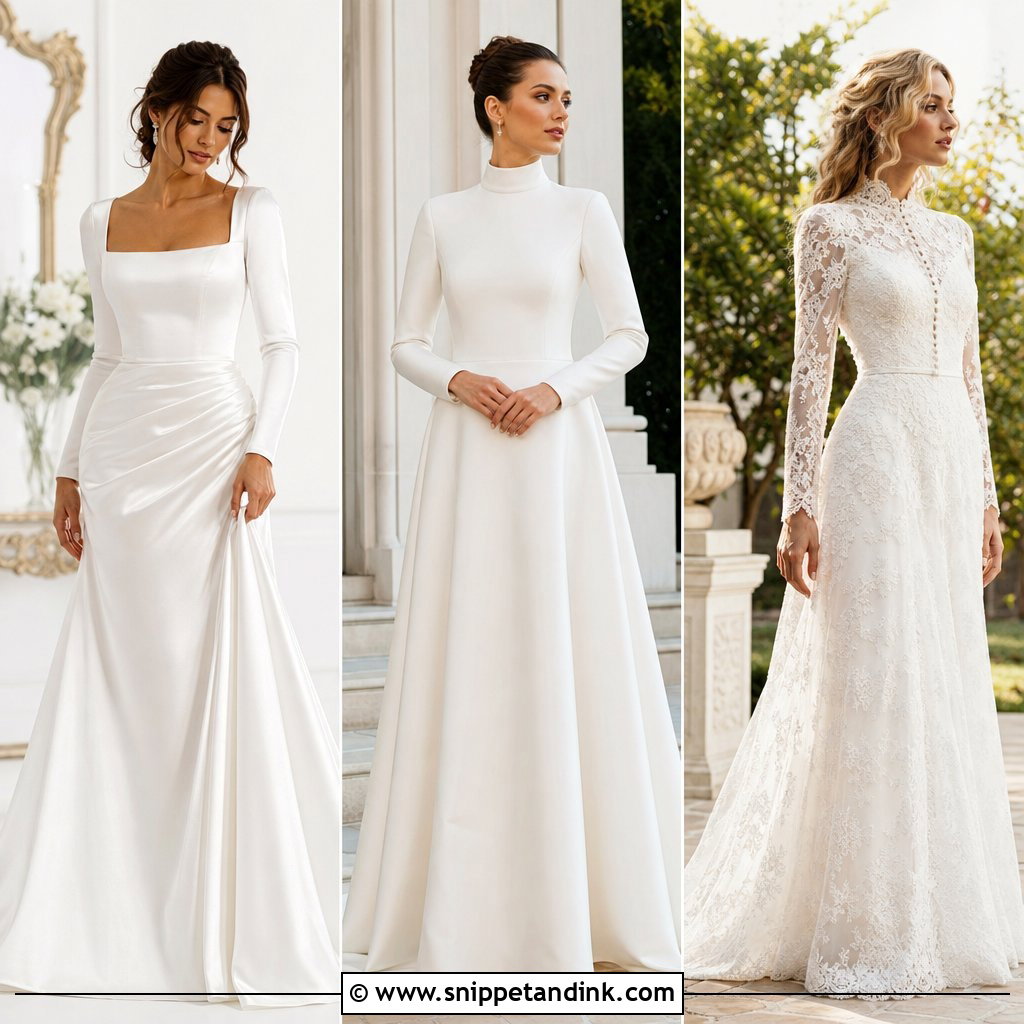
4. Square Neck Wedding Dress With Long Sleeves
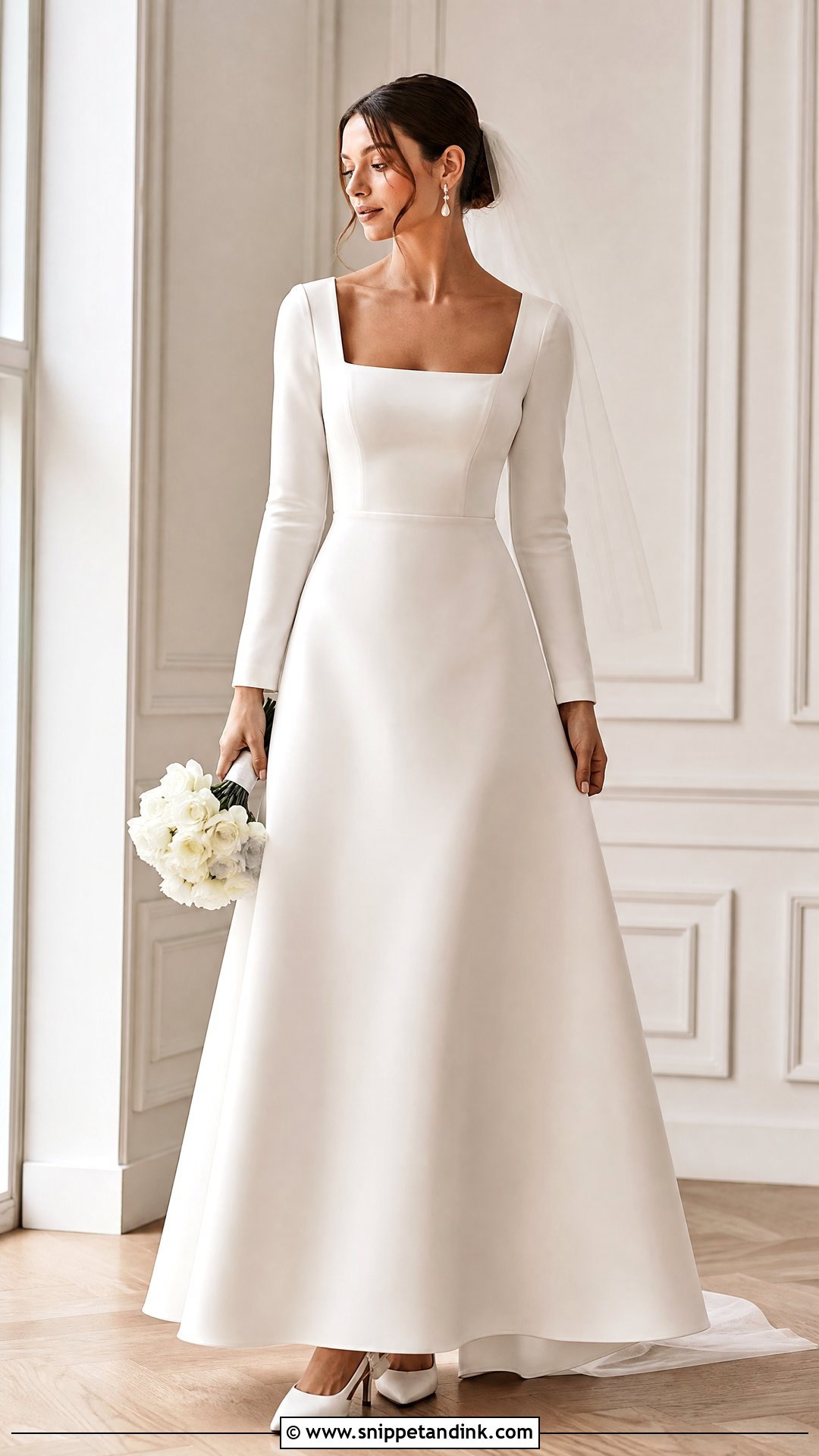
A square neck gives you strong horizontal lines, and fitted sleeves supply the vertical ones. The combination is very clean. Matte crepe, silk or smooth satin with few seams and a supportive bodice; A-line for movement, fitted for a sleeker look. The fault I watch for is the neckline bowing when you move your arms forward, since long sleeves pull on the bodice in a way that sleeveless dresses don’t. Hug the seamstress in the fitting if you have to. Drop earrings, a low chignon, closed-toe slingbacks and a plain tulle veil to soften the corners.
5. High Neck Chiffon Wedding Dress With Sleeves
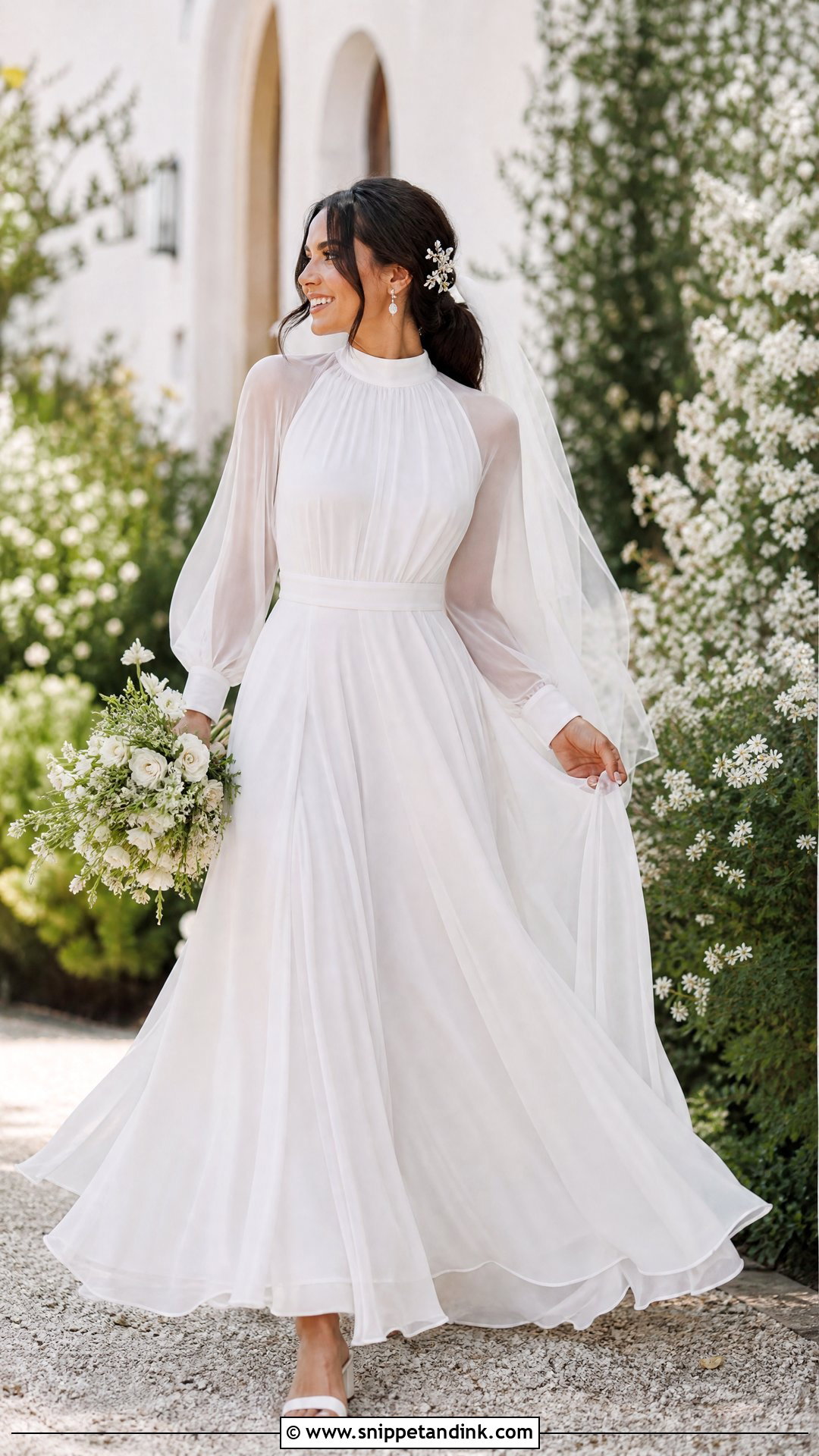
High neck plus long sleeves can feel like a lot of fabric. Chiffon solves that. A lightly gathered bodice, sheer or lined sleeves finished with a soft cuff and a skirt that floats make it one of the lightest dresses here, which is why I keep it for spring gardens and breezy coastal venues. Block-heel sandals for lawns, small pearls, a loose low bun, and either a floral comb outdoors or a light chapel veil indoors. Hem it to your exact shoe; chiffon that touches the ground wraps around your ankles as you walk.
6. Lace A-Line Wedding Dress With Illusion Sleeves
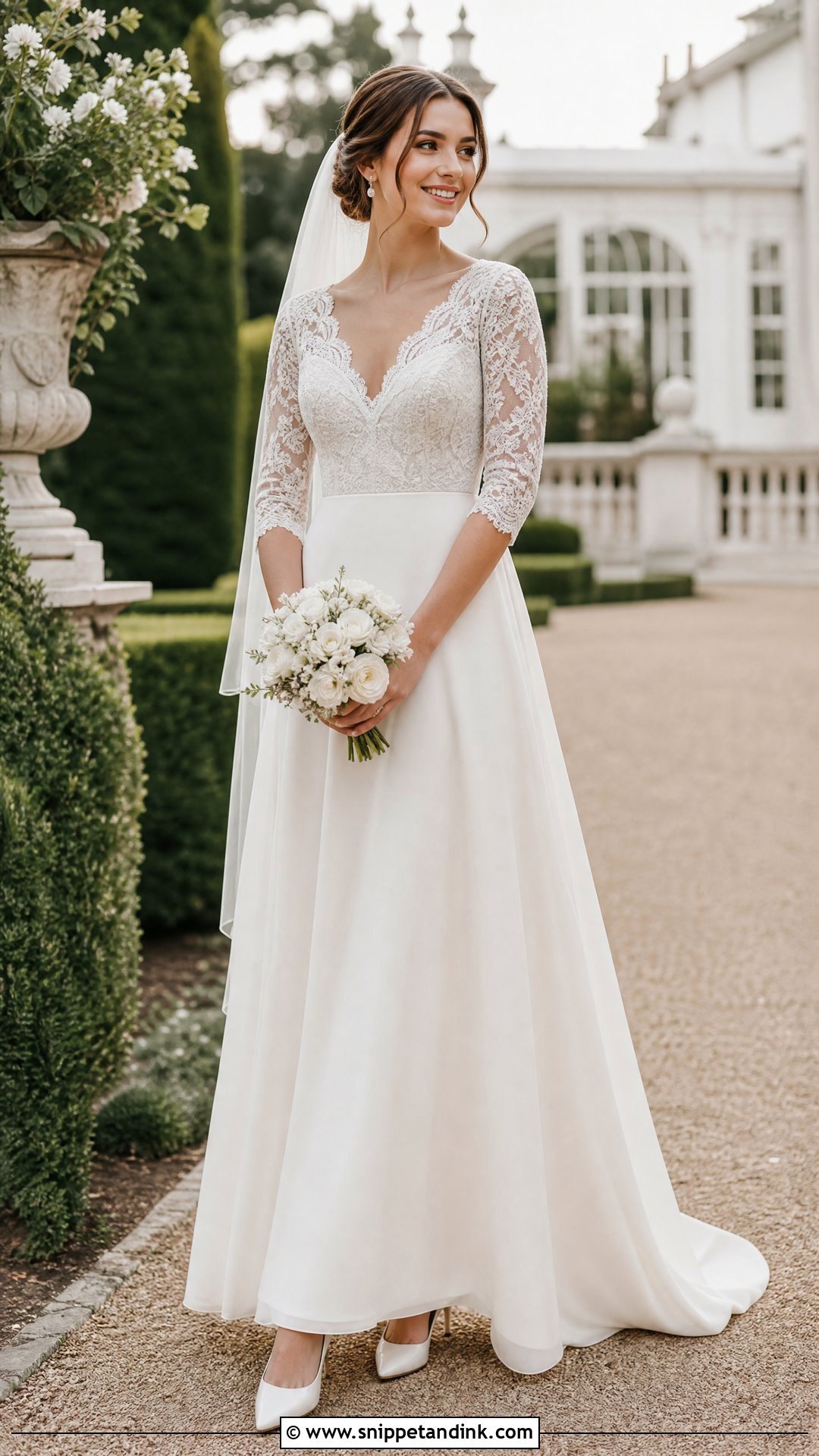
Illusion sleeves are sheer tulle with lace motifs placed on top, so you get coverage that still breathes. I prefer lace kept to the sleeves and bodice with a plain skirt below; full lace from wrist to hem gets busy fast. The alteration that matters is placement. When a tailor takes in a lace sleeve, the motifs should be lifted and re-laid so they flow continuously, not cut through at the seam. A soft V or bateau neck, ivory pumps, pearl earrings, a single-layer plain-edged veil and a small white-and-green bouquet.
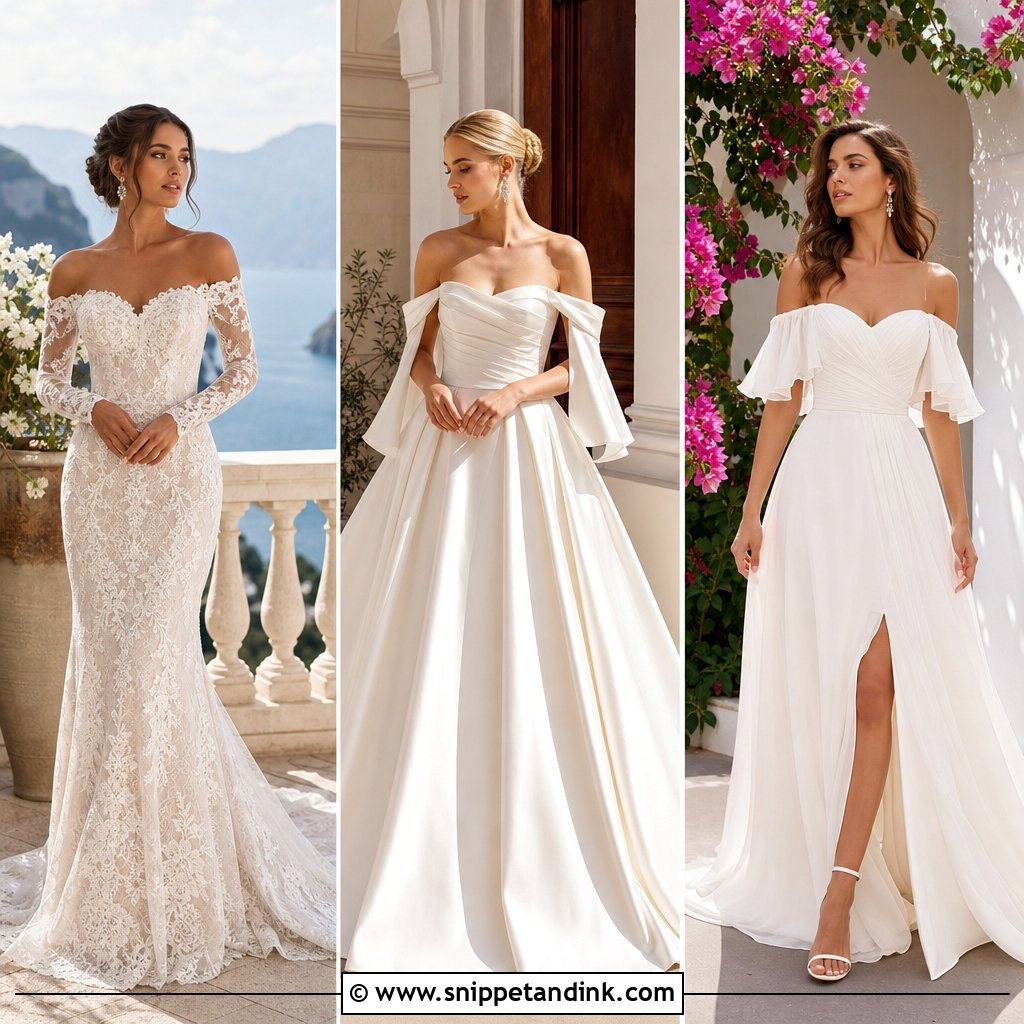
7. Off-Shoulder Wedding Dress With Long Sleeves
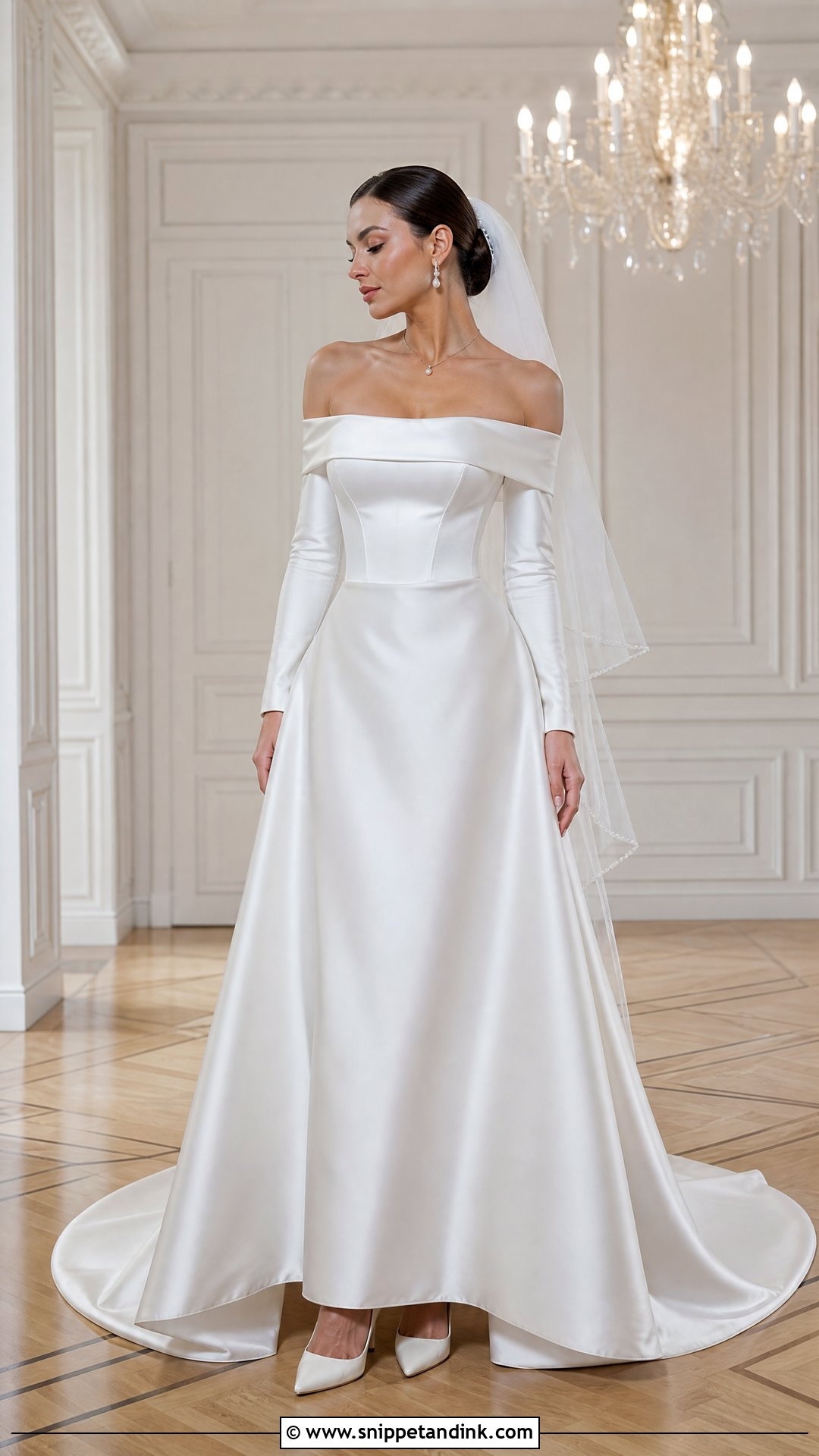
Off the shoulder with long sleeves frames the face and collarbones while covering the arms, and it’s the trickiest combination to move in. When the sleeves start below the shoulder, lifting your arms pulls the whole neckline up with them. I always test this before a bride commits: arms up, hug, reach across a table. If the neckline creeps, the bodice needs stronger internal support. Smooth satin or crepe, a fitted bodice and A-line skirt, pearl earrings, maybe a short pendant or fine choker, pointed heels, hair low or swept aside, fingertip veil.
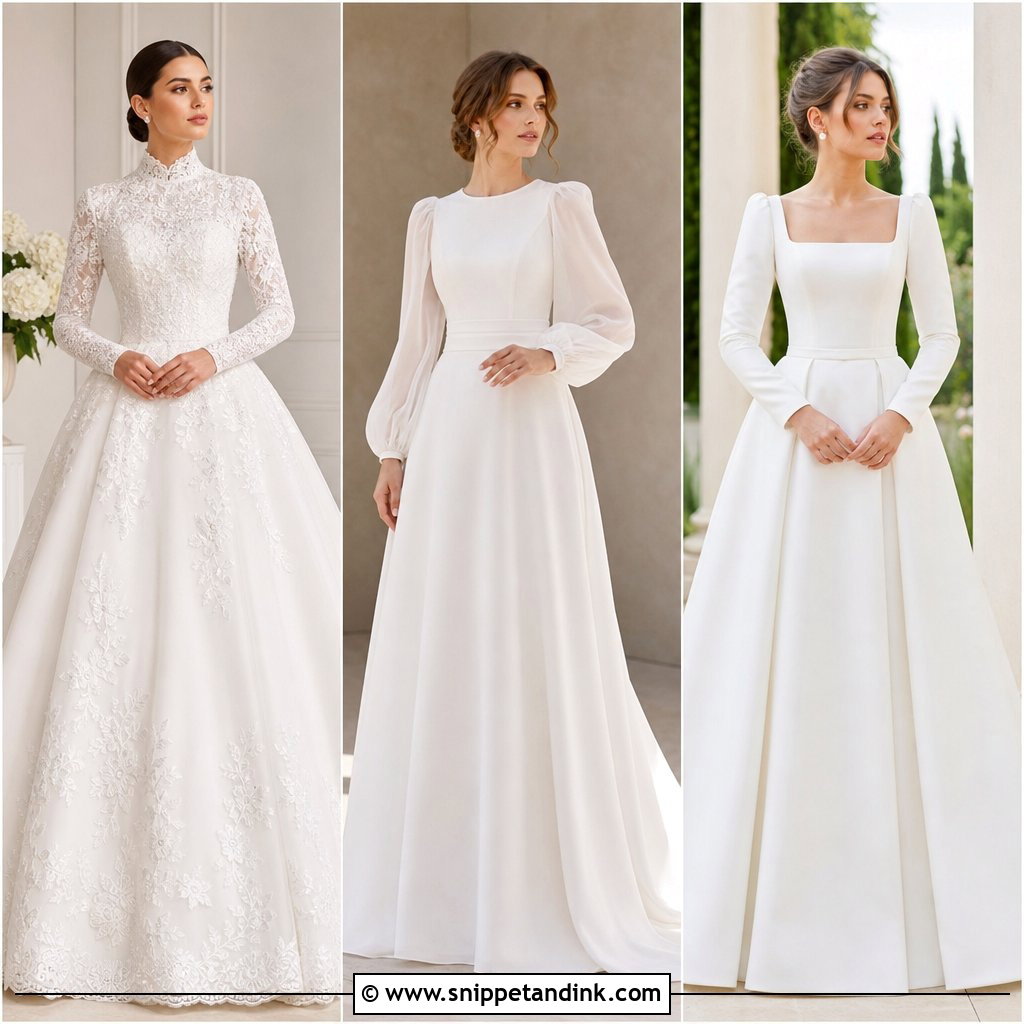
8. Bishop Sleeve Wedding Dress With Simple Skirt
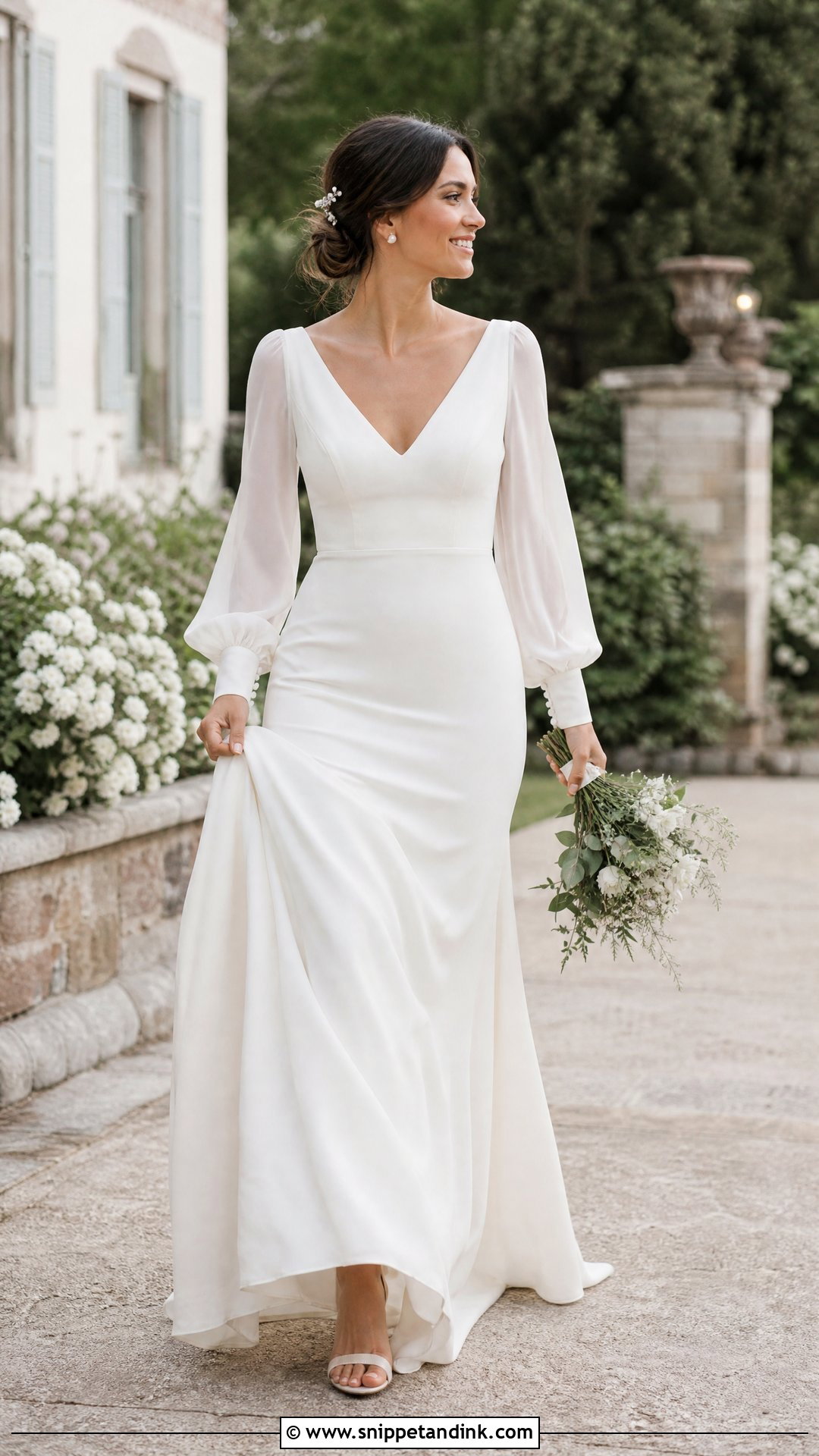
Soft bishop sleeves are full through the arm and gathered into a cuff at the wrist, and in chiffon, georgette or silk they move every time you do. Keep everything else lean: a clean V-neck bodice, a softly fitted skirt, satin sandals, pearl studs and a low textured bun. With that much volume on the arms, skip big jewelry and keep the bouquet simple. I ask for covered buttons or a hook at the cuff rather than elastic, because elastic creeps up the forearm and the gather loses its shape in close-ups. Good for estates and countryside weddings.
9. Bell Sleeve Wedding Dress With Clean Lines
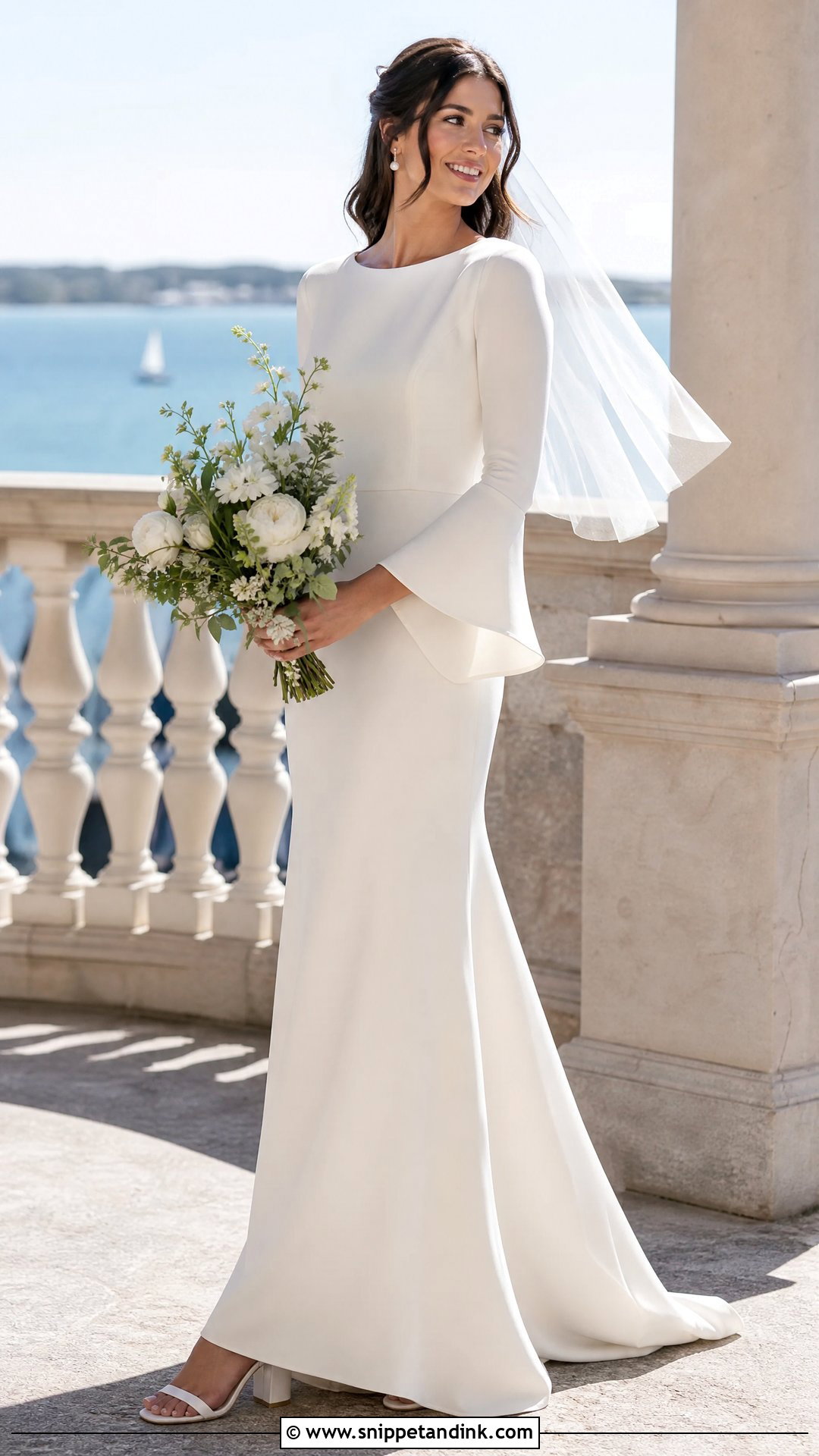
Narrow bell sleeves flare a little below the elbow. A little. Long trumpet cuffs past the hands look romantic on a hanger and end up in the soup. With a slim crepe bodice and a softly flared skirt echoing the sleeve, the shape feels coordinated rather than costume. Platform sandals or block heels, small gold or pearl earrings, loose waves pinned back, a light fingertip veil and a compact bouquet. In the fitting, hold a bouquet and sit at a table; if the cuff drags across the surface, have it shortened.
10. Puff Sleeve Wedding Dress With Fitted Waist
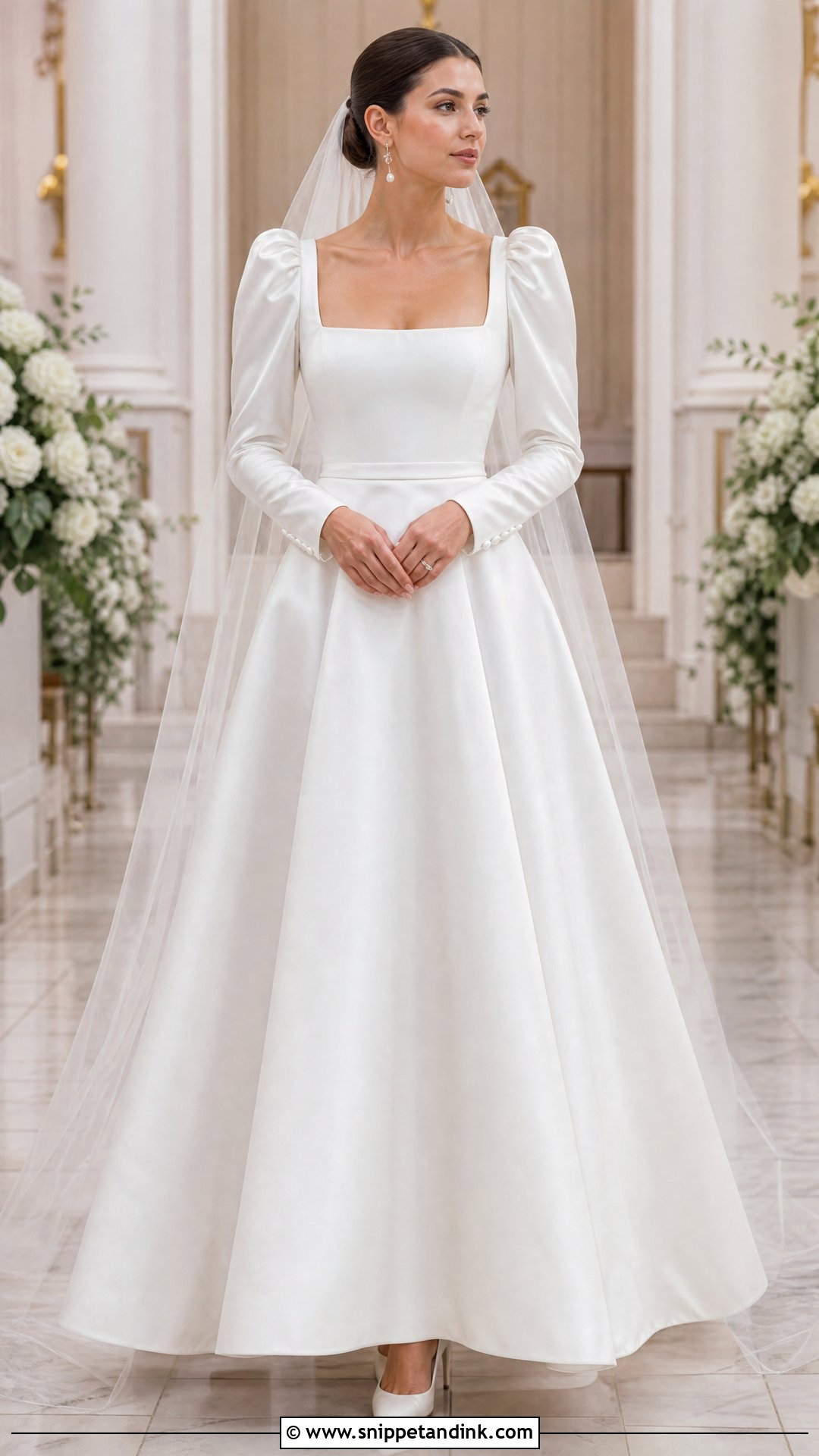
Puff sleeves need controlled volume. A small puff at the shoulder with a fitted lower arm keeps the shape clean, and placement decides everything: if the puff sits outside your shoulder bone, the bodice looks wider than it is. I check this from the front and from behind, since it’s easy to miss in a single mirror. A square neckline and defined waist pair well, with an A-line skirt for balance. Pearl drops, a smooth bun, ivory pumps and a plain cathedral veil for formal ceremonies or a shorter one for small venues. Keep accessories plain.
11. Three-Quarter Sleeve Tea-Length Wedding Dress
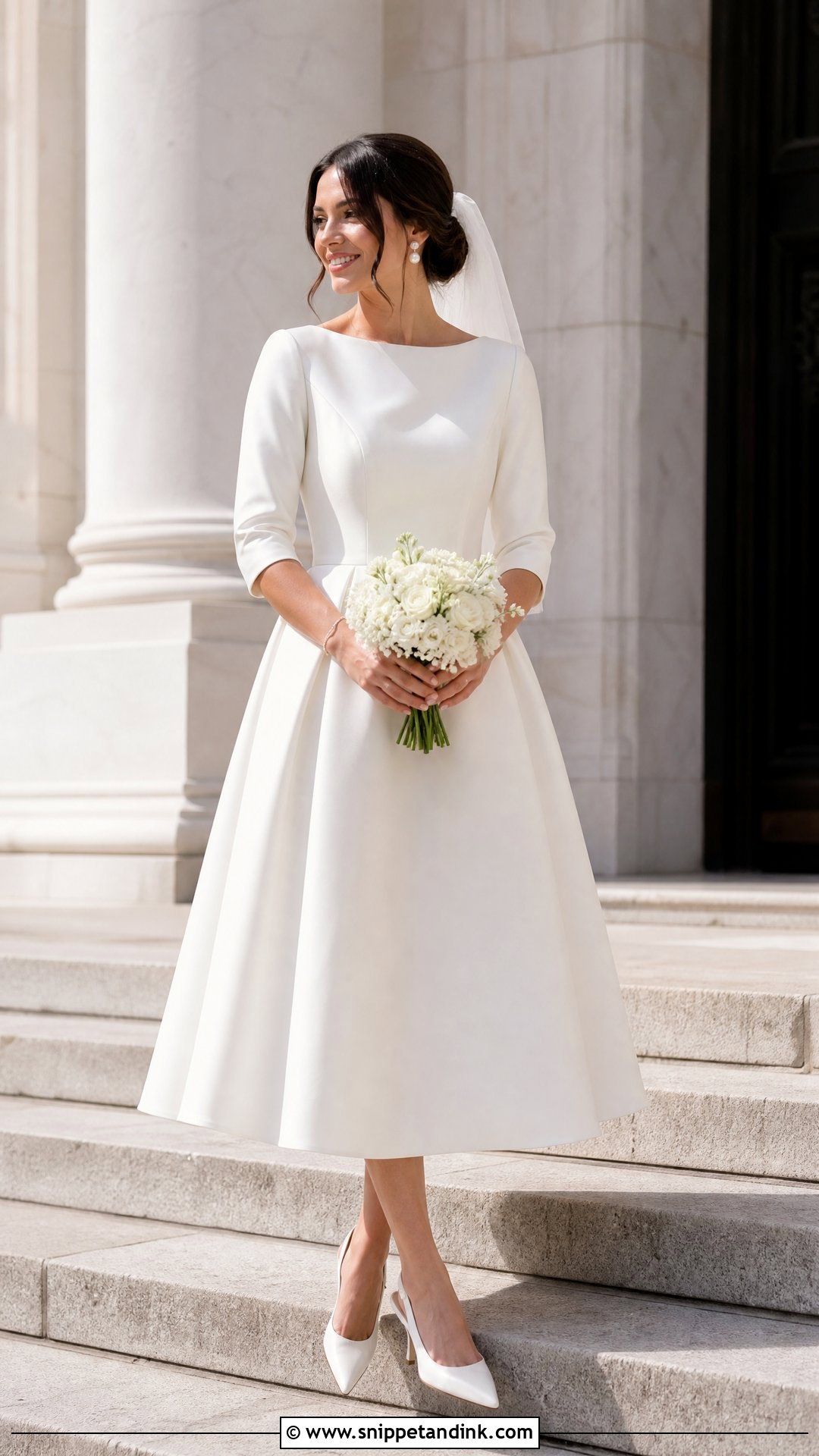
Three-quarter sleeves stop just below the elbow, which means you can eat, sign the register and hold a glass without a cuff in the way. On a tea-length dress, with the hem between knee and ankle, they give a practical, slightly retro feel that suits courthouses, restaurant receptions and daytime weddings. Choose a structured A-line, fitted waist and simple bateau or scoop neckline. Since your legs and shoes are on show, the hem has to be perfectly even, and the waist seam should land at your narrowest point. Pointed pumps, slingbacks or low block heels in ivory or soft metallic leather, pearls and a short veil.
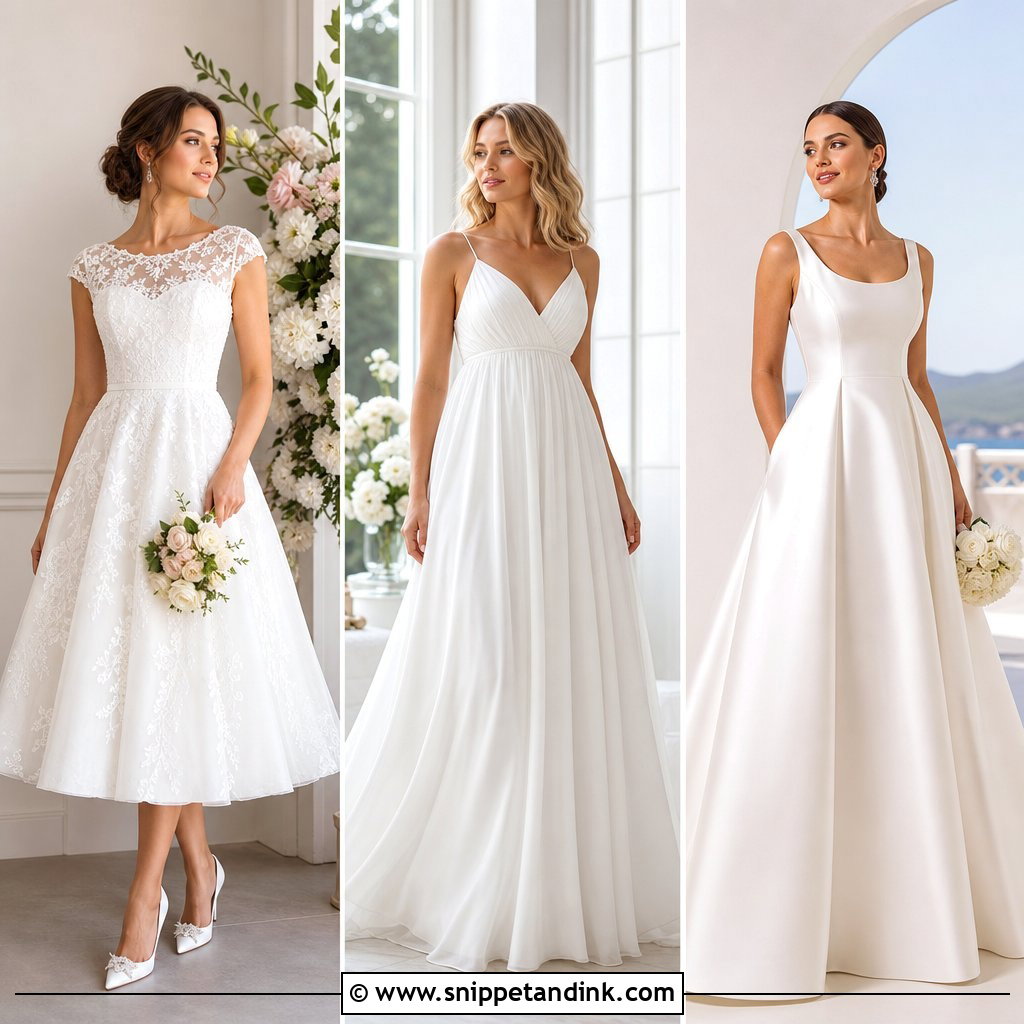
12. Cap Sleeve Midi Wedding Dress
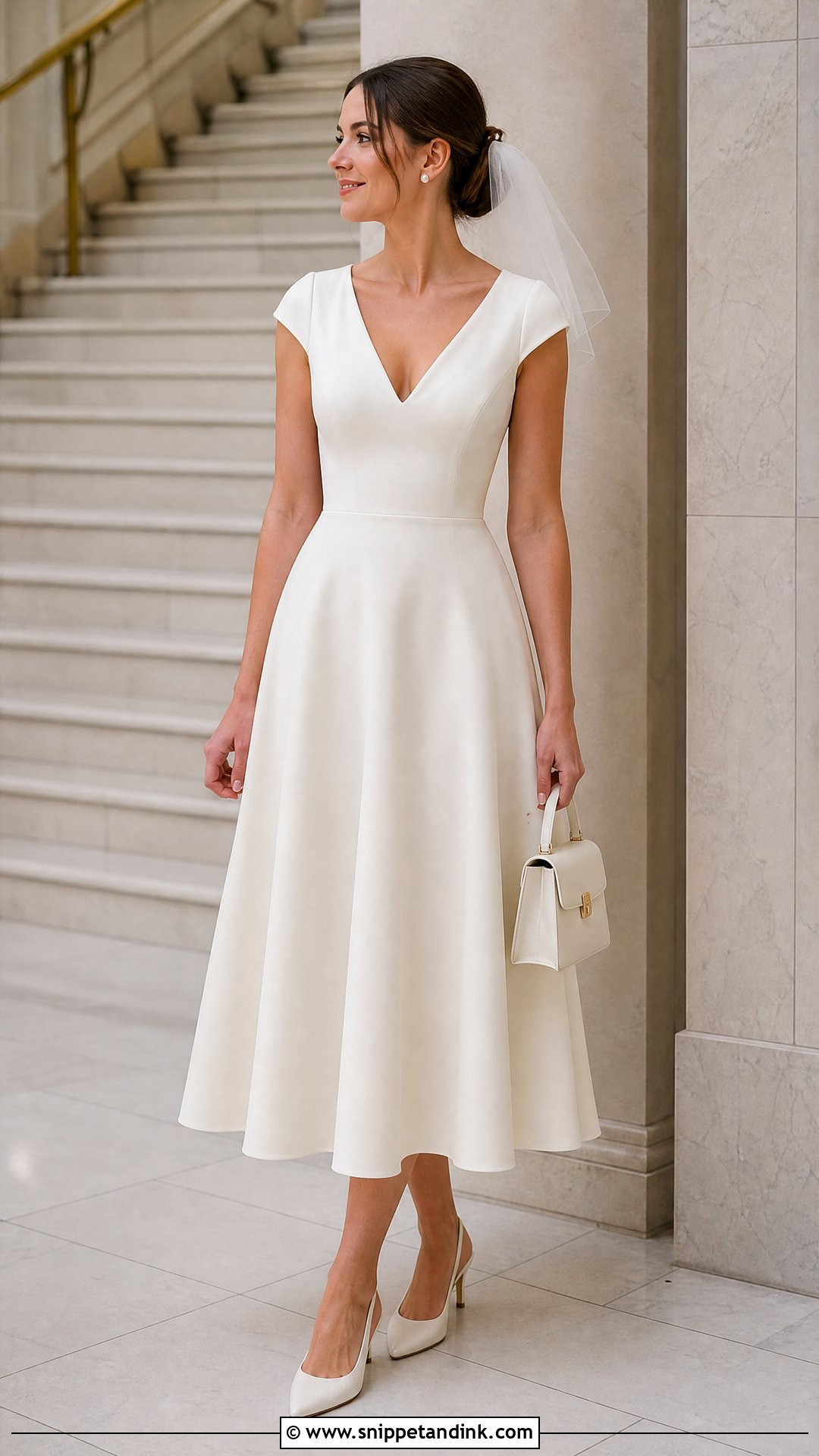
Cap sleeves give just enough coverage at the shoulder to feel finished. On a midi in smooth crepe, satin or a subtle jacquard, with a fitted bodice and softly flared skirt, they make a neat outfit for civil ceremonies, rehearsal dinners and daytime receptions. A V-neck lengthens the upper body; a round neck is more modest. The one thing I look for is a sleeve edge that lies flat rather than digging into the arm, which non-stretch fabric is prone to. Slingback heels, pearl studs, a small structured bag and a birdcage or short tulle veil.
13. Wrap Wedding Dress With Long Sleeves
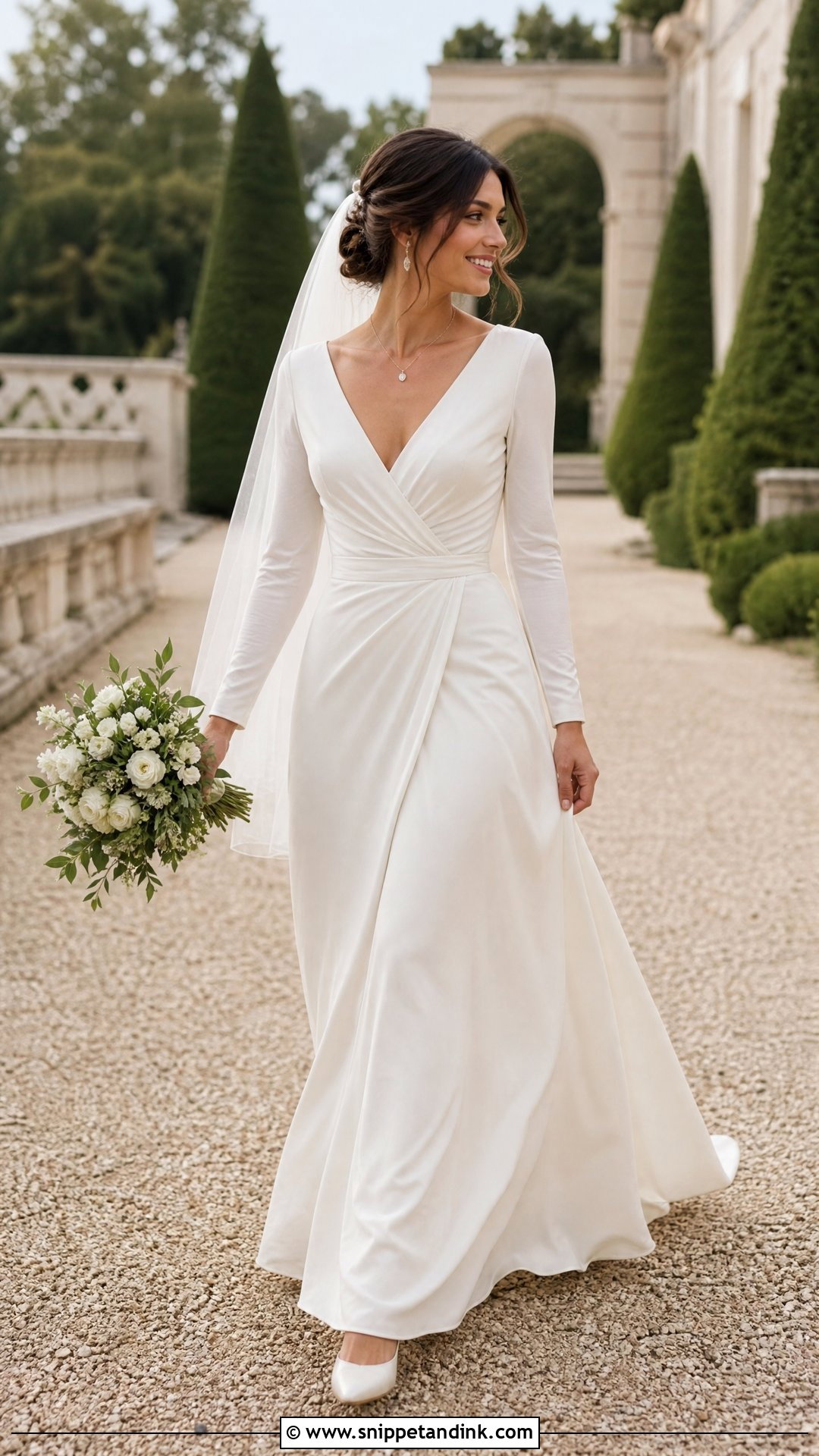
A wrap gown defines the waist with a diagonal line. I prefer a faux wrap, stitched closed, over a real tie closure for a wedding, because a real wrap loosens as you move and needs retying in the bathroom. Long fitted sleeves and a flowing A-line skirt keep the line long. Look at the neckline from the side as well as the front; a discreet snap or a strip of support stops it from opening when you lean. Low satin heels, small earrings, a pendant that follows the V, a loose chignon and a light fingertip veil. The skirt overlap must cover you when you sit.
14. Empire Waist Wedding Dress With Chiffon Sleeves
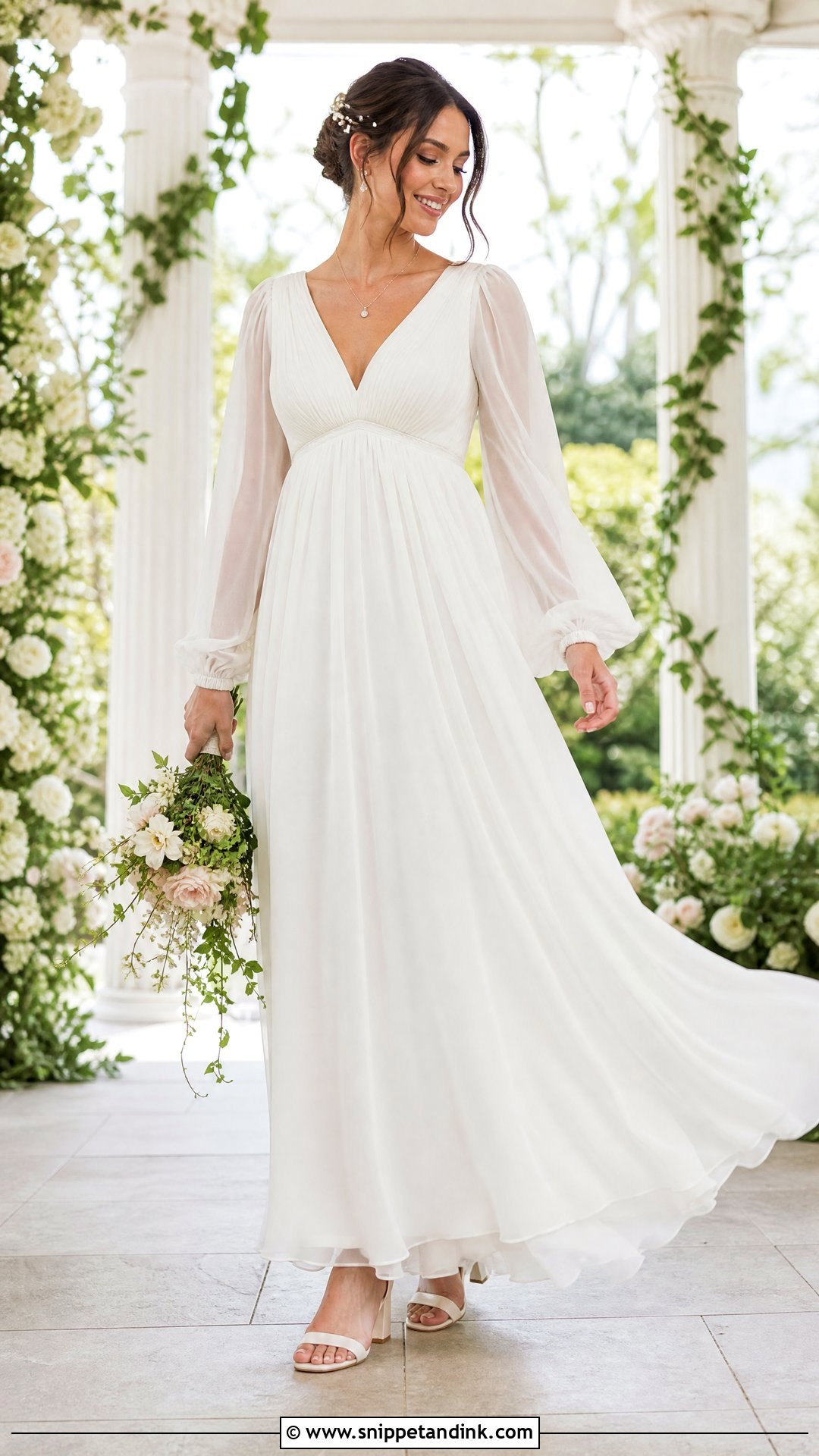
An empire waist starts just under the bust and the skirt falls clear of the midsection, which is why it’s comfortable for long days. Sheer chiffon sleeves, a modest V-neck and soft gathers keep it light. It’s a natural option during pregnancy, and I’d book the final fitting as close to the date as the seamstress allows for a pregnant bride, since the bust measurement can change week to week. The raised seam should sit securely and not ride up. Low block heels, a fine pendant, pearl pins in a relaxed updo and a narrow bouquet with trailing greenery.

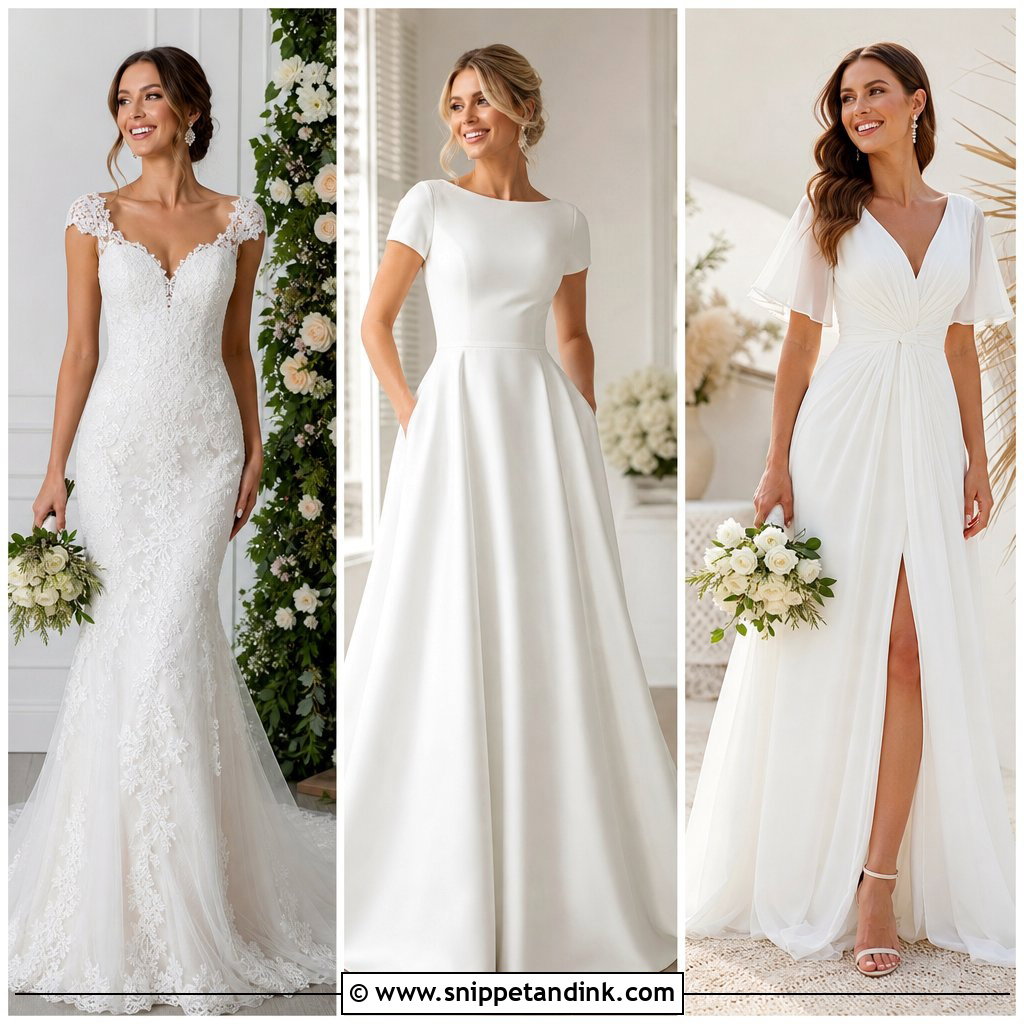

15. Modest Ball Gown Wedding Dress With Sleeves
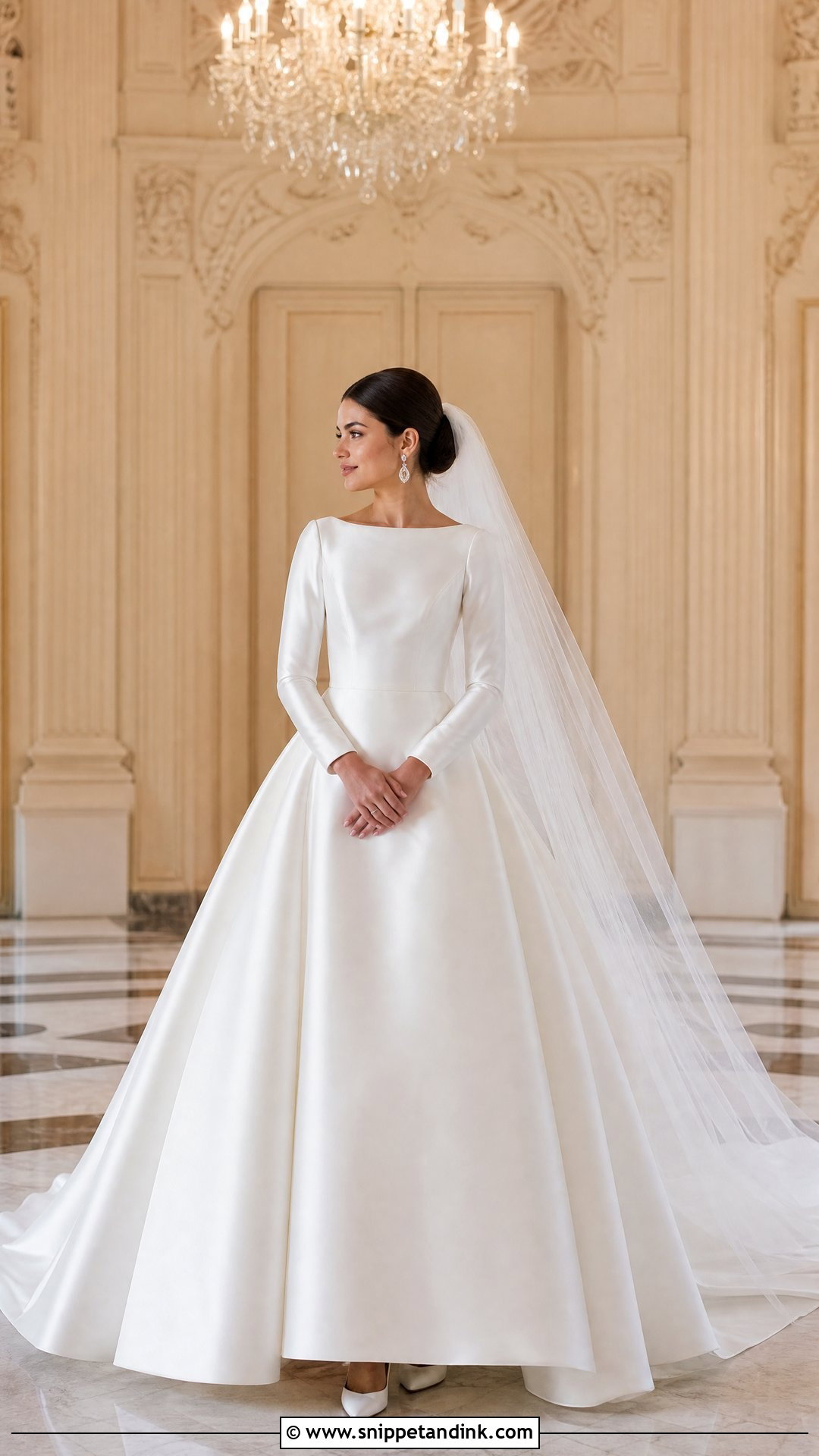
The modest ball gown gets its presence from shape, not sparkle. Matte satin or Mikado, a clean bodice, long fitted sleeves and a high bateau or round neckline, with a structured skirt below. The full skirt needs internal support, usually a built-in petticoat, and you should practice sitting in it before the day. Structured bodices also restrict the shoulder, so I make sure there’s enough ease in the sleeve head for natural arm movement. Small crystal earrings, a polished bun, closed-toe satin pumps and a cathedral veil. Best for large indoor venues in the cooler months.
16. Open Back Wedding Dress With Long Sleeves
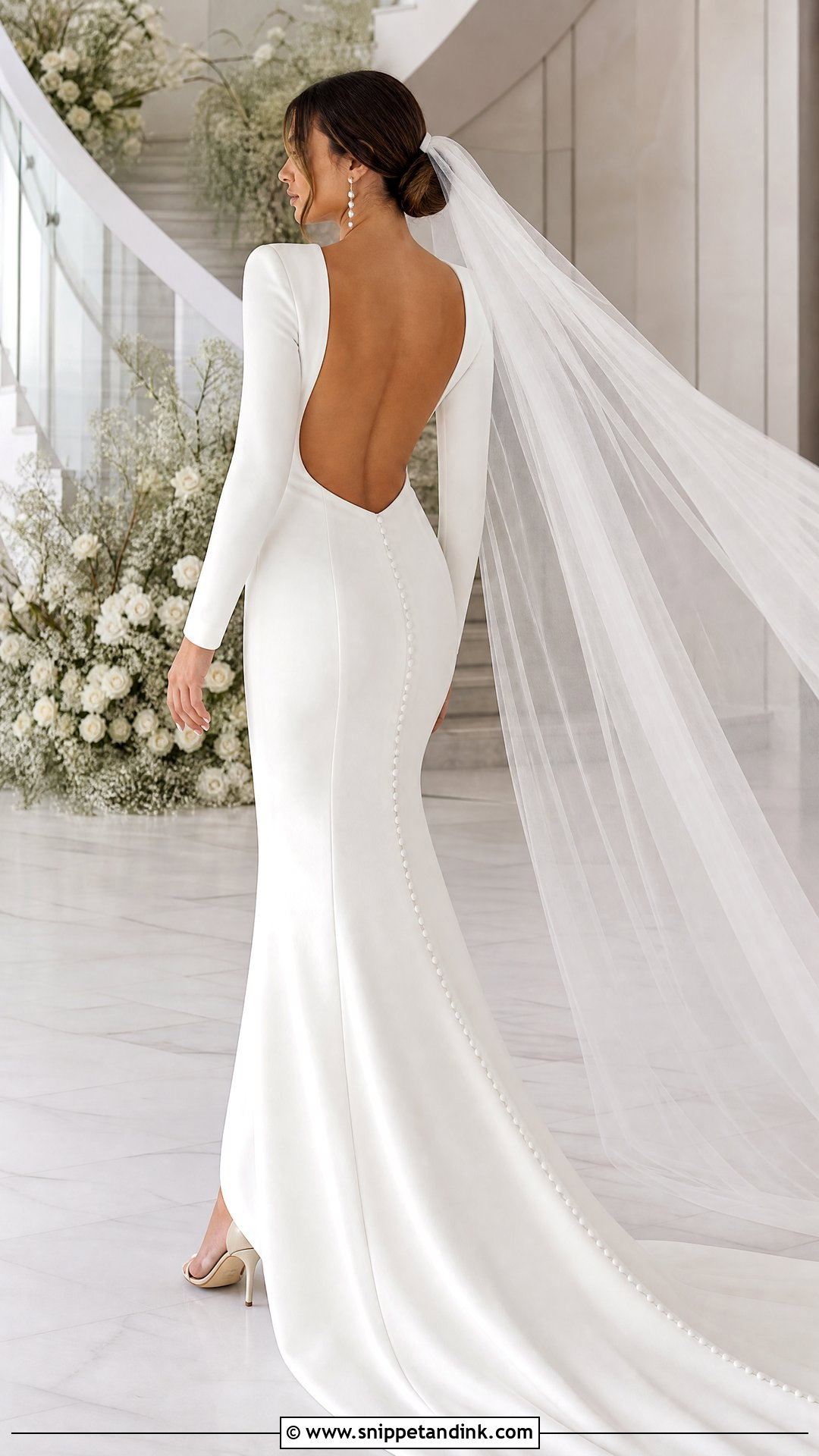
Long sleeves and an open back balance each other: covered from the front, a reveal from behind. I keep the opening moderate, since a very deep back on a long-sleeved dress has nothing holding the shoulders in place, and the sleeves start sliding down. A supportive crepe or satin bodice with secure edges, a simple column or fit-and-flare skirt, and maybe covered buttons along the lower back. Sort out built-in support during alterations. Low bun placed above the opening, small drops, slim ivory heels and a sheer veil that comes off after the ceremony.
17. Button Back Wedding Dress With Fitted Sleeves
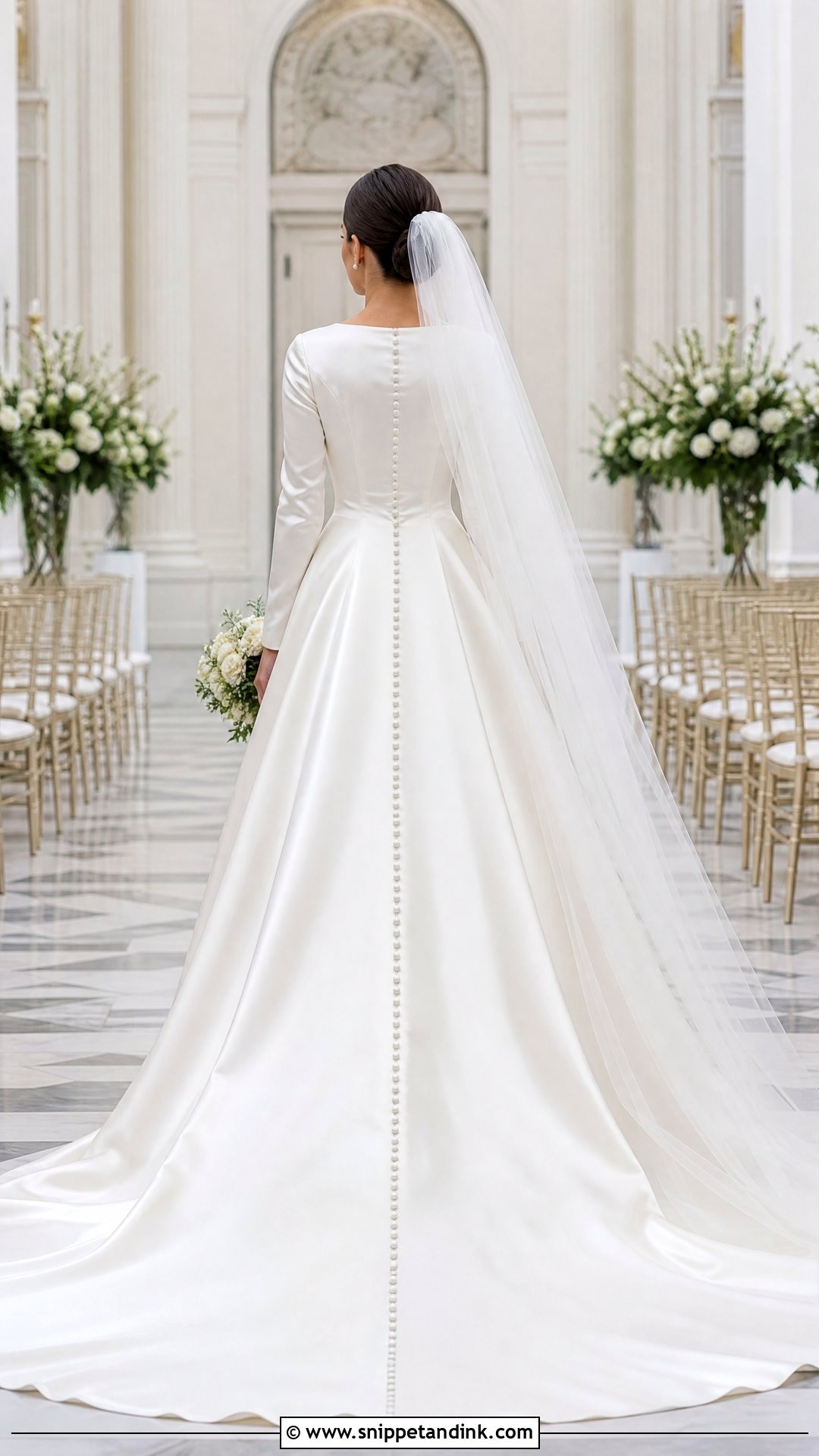
A line of fabric-covered buttons from neckline to waist, or down into the train, is detail you only notice up close. With a high bateau neck, fitted sleeves and an A-line skirt, it gives a clean look from every side. Ask whether the buttons actually fasten. Many are decorative over a hidden zip, which I prefer, because thirty loops take a long time to close on the morning. Matching buttons at the wrists finish the sleeves. Pearl studs, pointed pumps, a clean-edged chapel veil, and hair up so the back stays visible.
18. Wedding Dress With Detachable Long Sleeves
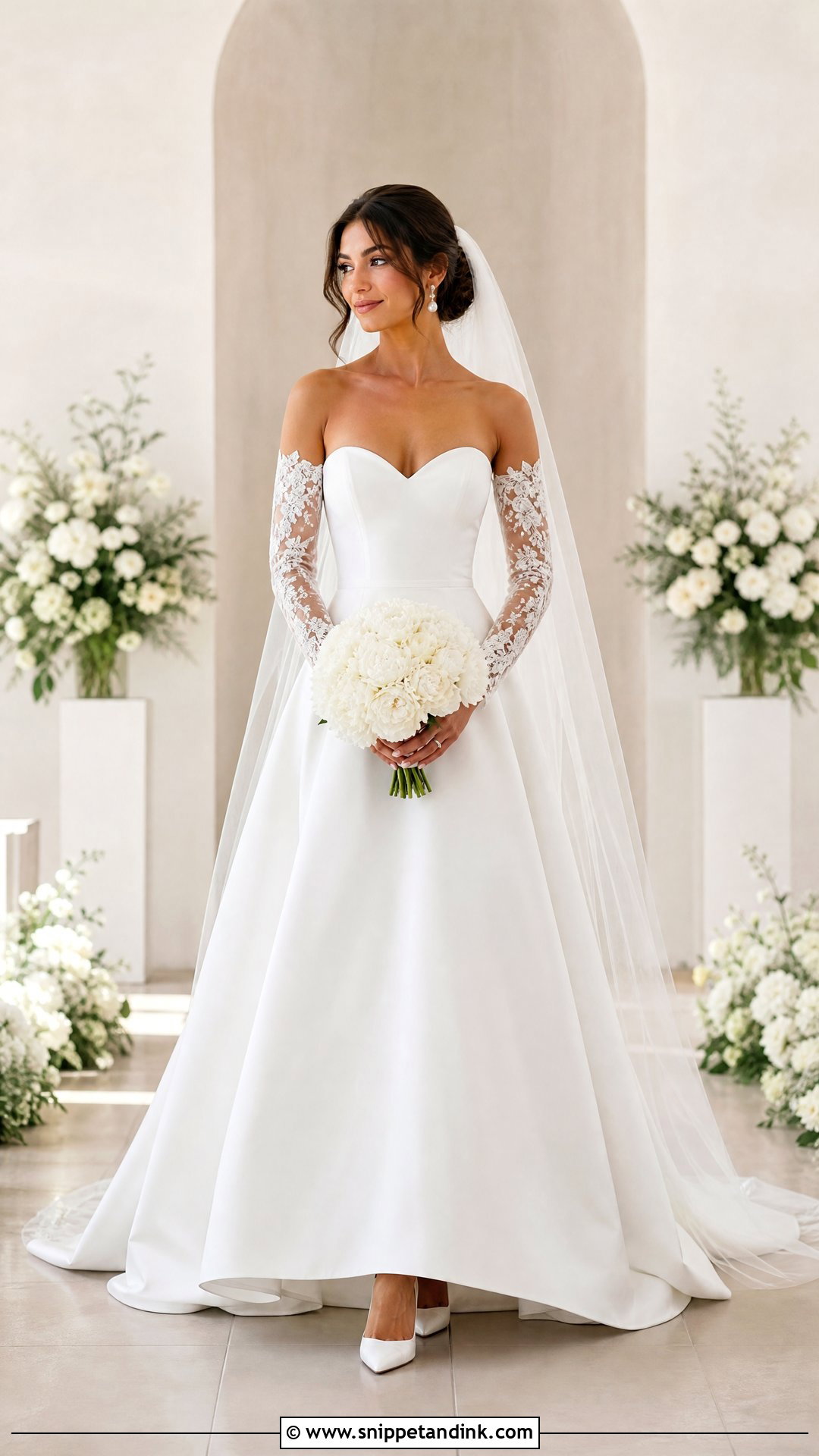
Detachable sleeves give you two dresses: covered for the ceremony, lighter for the reception. The base should be a clean strapless or sleeveless gown, A-line or fit-and-flare, so it looks complete once they’re off. I test the attachments at every fitting; snaps and hidden buttons have to hold through a hug and disappear afterwards. Pair the ceremony version with a long veil, pearls and classic pumps, then swap in statement earrings or a bracelet for the second look. Put the removed sleeves straight into a labelled bag so they’re kept with the gown when it’s cleaned and stored.
19. Cape Sleeve Wedding Dress With Satin Skirt
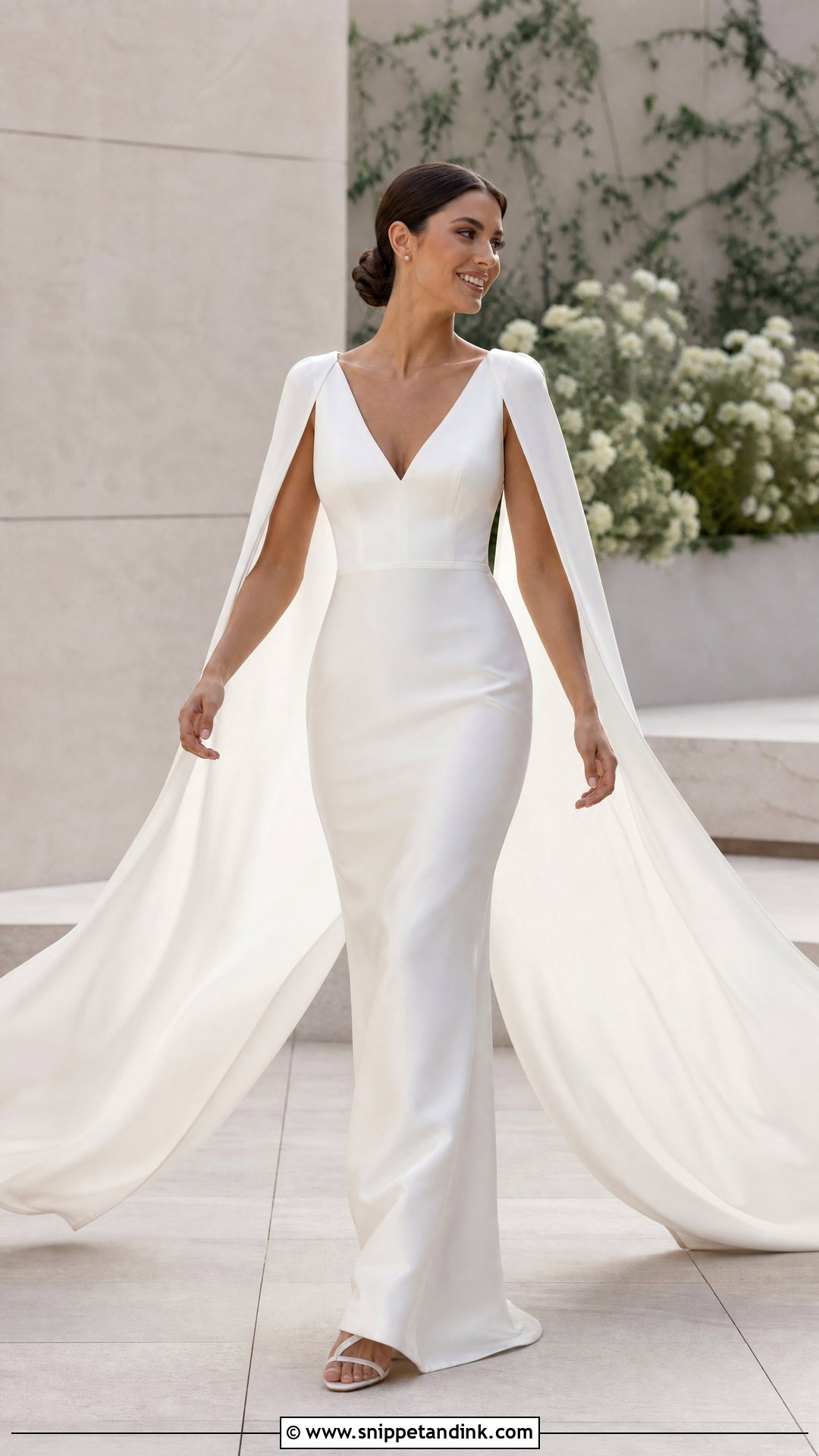
Cape sleeves drop from the shoulder and float behind the arms rather than wrapping them. That gives movement similar to a veil, so I usually tell brides they can skip one, or wear a very plain fingertip veil at most. A clean satin bodice, a modest V-neck and an A-line or column skirt keep it simple. The length needs checking in motion: the cape should clear the floor, stay off the bouquet and not cover the waistline. Small studs, sleek ivory heels and a low bun. Lovely for indoor ceremonies and for an outdoor one with a light breeze.

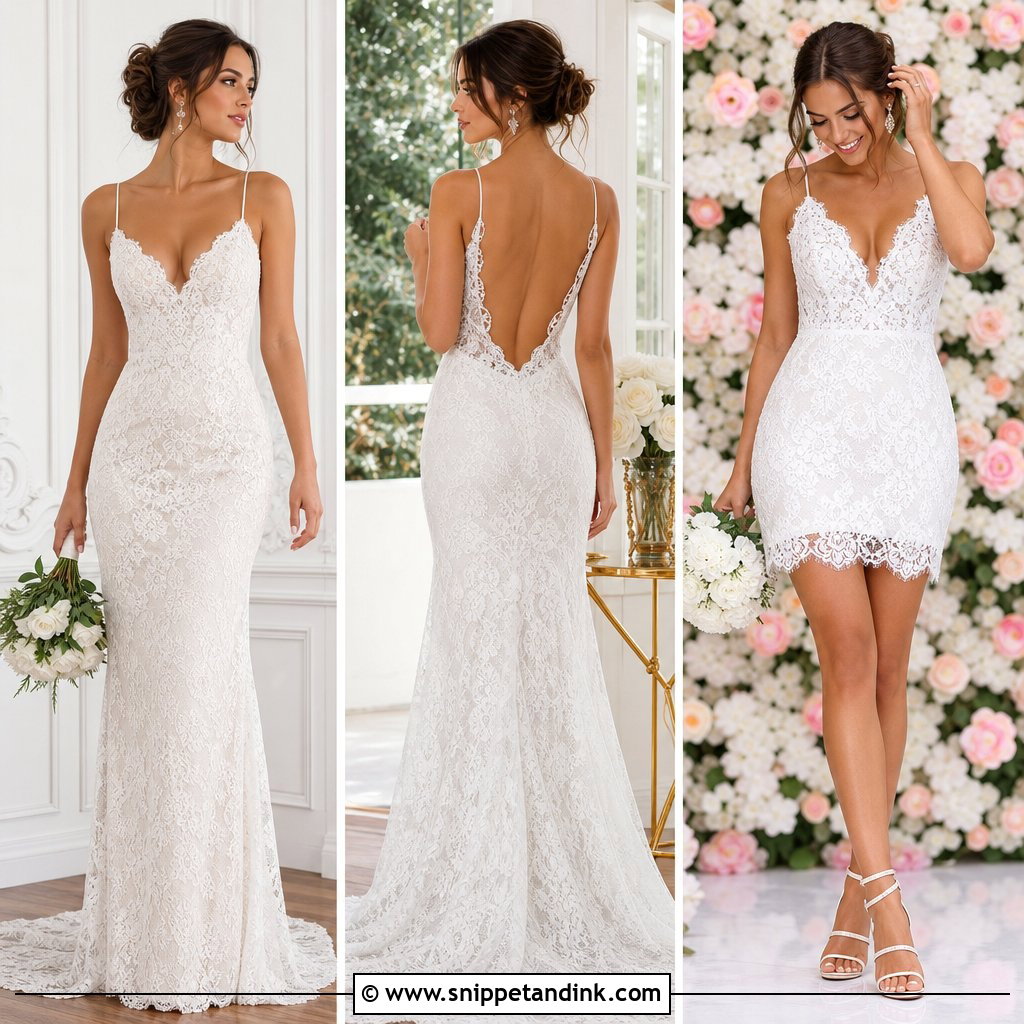

20. Short Wedding Dress With Long Sleeves
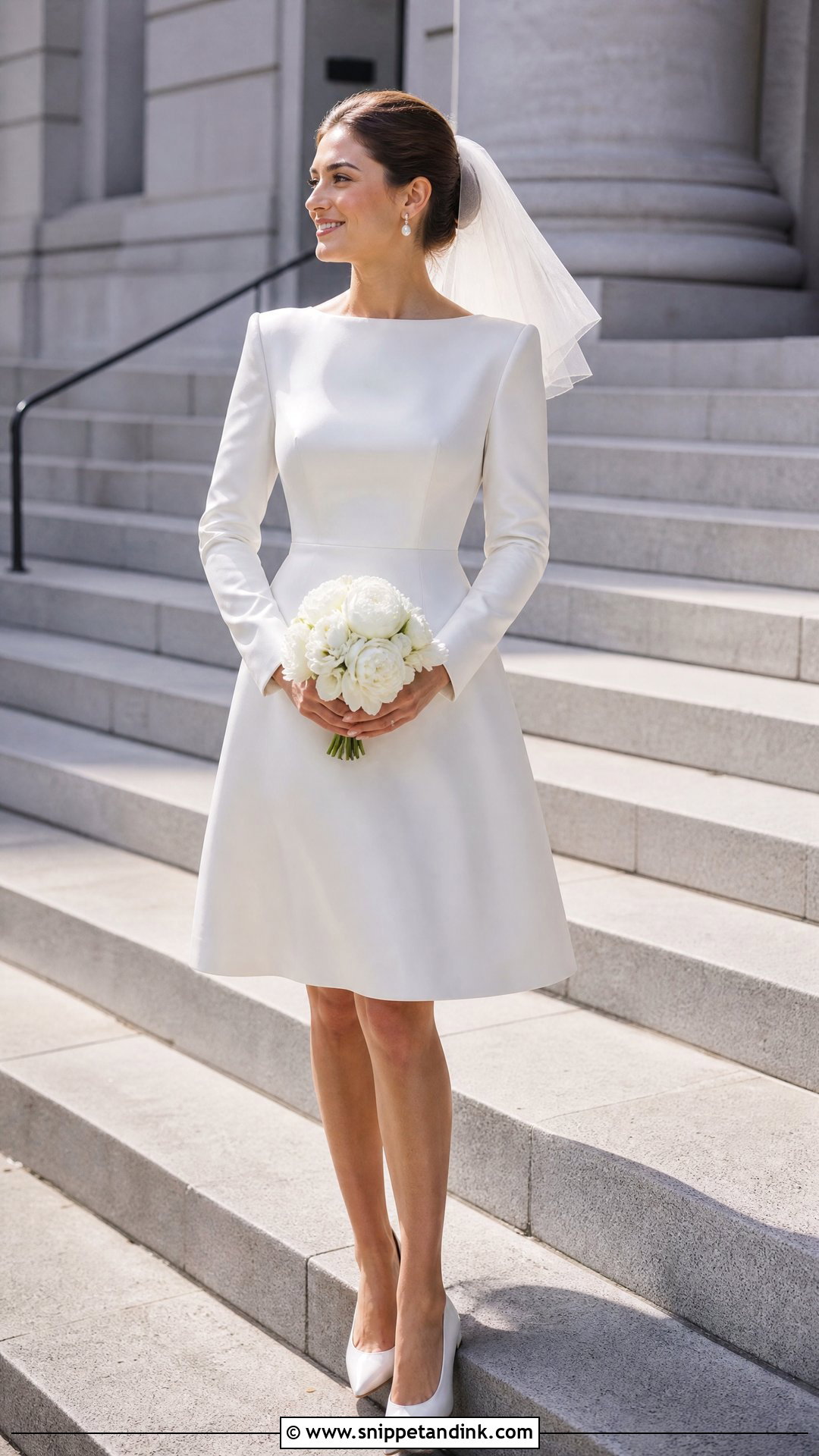
A short dress with long sleeves feels considered rather than casual, which makes it my go-to for courthouse weddings and small dinners. Take the hem to just above the knee or to mid-calf, depending on how formal you want it, in crepe, structured satin or a subtle jacquard. Shoes are on full view, so pick a pair you can stand in for hours. The shoulders and waist should be fitted, with room to sit. A short veil, bow or plain headband, pointed pumps, pearls and a compact bouquet. Sheer tights for winter.
Long Sleeves in a Warm Month
I’m often asked whether a sleeved dress is a mistake for a summer wedding. It doesn’t have to be. Heat comes mostly from fabric weight and lining, not from the sleeves themselves. Unlined tulle, illusion mesh and chiffon sleeves let air through; satin and Mikado sleeves don’t, and you’ll feel it during outdoor photos.
- Ask for the sleeves to be left unlined if the fabric allows it.
- Choose three-quarter, cap or cape sleeves if the ceremony is outside at midday.
- Plan a lighter reception look with detachable sleeves rather than a second dress.
Adding sleeves to a strapless gown you already love
This is one of the more common requests I see, and most experienced bridal seamstresses can do it. They’ll need matching or complementary fabric, and the bodice has to be strong enough to carry the extra weight. Ask early, since sourcing a close match for ivory satin or lace can take a while, and expect at least one extra fitting.
A Sleeve Is Only Right If You Can Raise Your Arms
The right sleeved gown balances coverage with movement, and fabric makes most of that decision for you. Satin gives structure, crepe gives clean lines, chiffon keeps things light, lace adds texture when it stays on the sleeves and bodice, and detachable sleeves let you change between ceremony and party. Think about the venue, the season, your neckline and your shoe height. Then, at every fitting, move as you will on the day. Sleeves are the part of a dress you’ll notice most if they’re wrong, and the part nobody notices when they’re right.
You'll Like These Ideas:




Leave a Reply