
I dress brides and guests in jumpsuits more often every year, and the ones that work all share one thing: someone took the fit seriously before thinking about accessories. A jumpsuit is less forgiving than a gown because it has to fit your bust, waist, seat and inseam at once, and it has to keep fitting when you sit down. Get that right and the rest is easy. Below are thirty directions I’d actually put a client in, from an ivory crepe ceremony look to a floral cut for a garden guest, with notes on fabric behaviour and who each one suits.
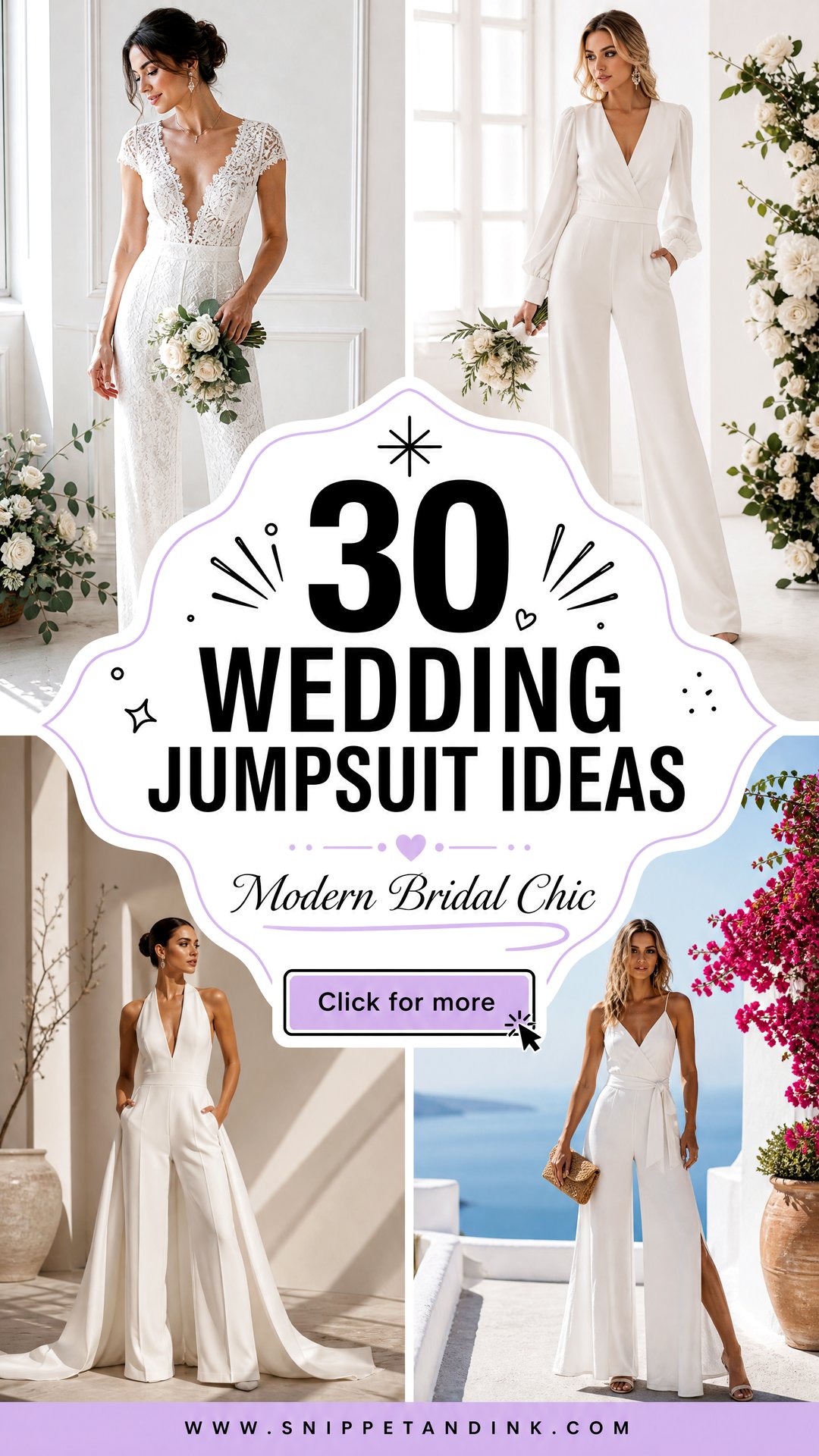
The Torso Length Problem Most Jumpsuit Buyers Discover Too Late
A dress only has to fit you standing up. A jumpsuit connects your shoulders to your crotch in one piece of fabric, so if that distance is wrong for your body, no amount of hemming fixes it. When I fit a client, I measure the torso loop first: from the top of one shoulder, down the front, through the legs and up the back to the same point. Brands rarely list it, but asking the shop for the garment’s torso length is worth the awkward conversation.
A torso that is too short gives you the familiar pulling at the crotch and a neckline that drags down every time you sit. One that is too long sags at the waist and bags at the seat. Shortening the torso is possible on some styles by lifting at the shoulder seams or waistline; lengthening is usually impossible because there is little seam allowance to let out.
The fitting room routine I make every client do
- Sit on a hard chair for a full minute and watch whether the bodice drops or the crotch pulls.
- Raise both arms as if hugging someone taller than you. If the waist lifts, the torso is short.
- Walk a few stairs in your wedding shoes to check the hem and how the leg swings.
- Bend to pick something up off the floor. Wide legs and strapless tops show their weak spots here.
Bring the actual shoes to every fitting. A wide leg hemmed for flats will drag behind heels or flap above platforms, and a two-centimetre difference in heel height is visible in photos. Allow time for at least two alteration appointments, because jumpsuits often need waist, hem and strap adjustments, and each one changes how the others sit.
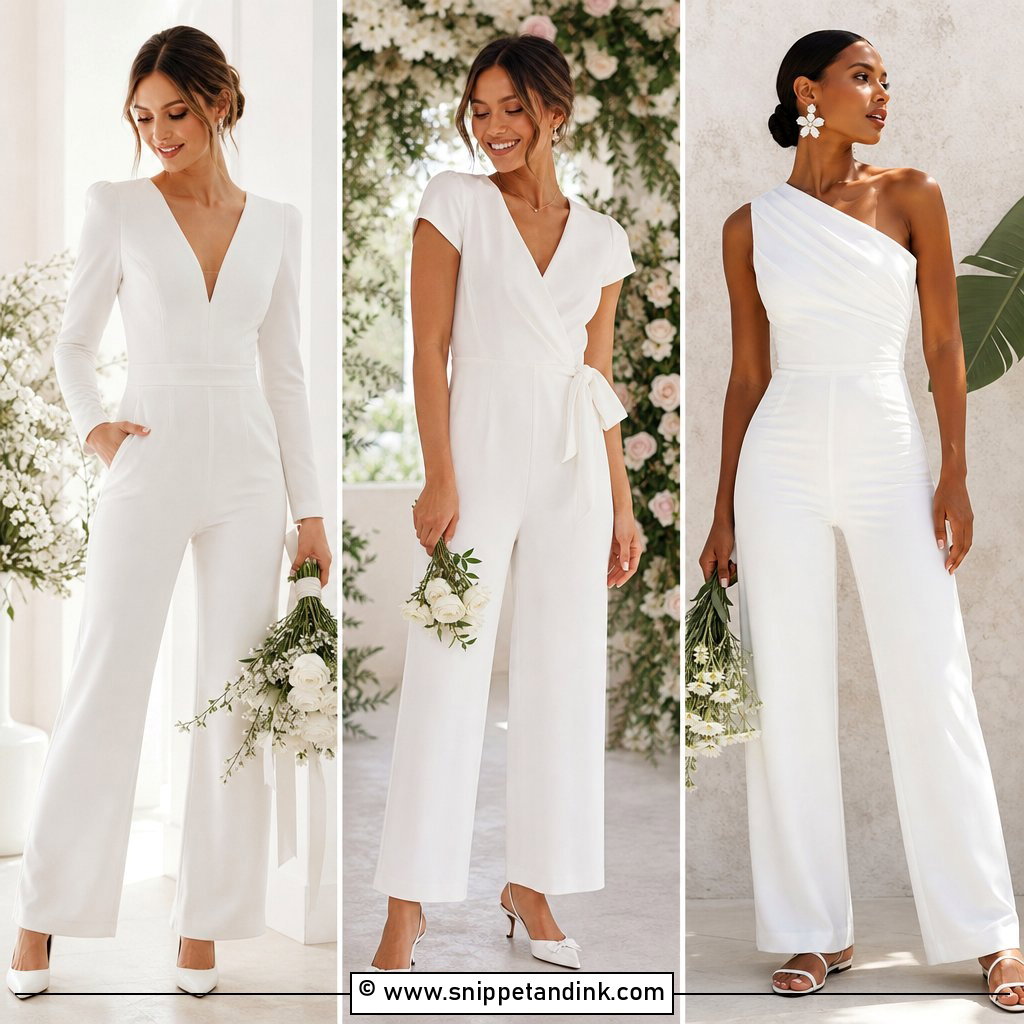
1. White Bridal Wedding Jumpsuit
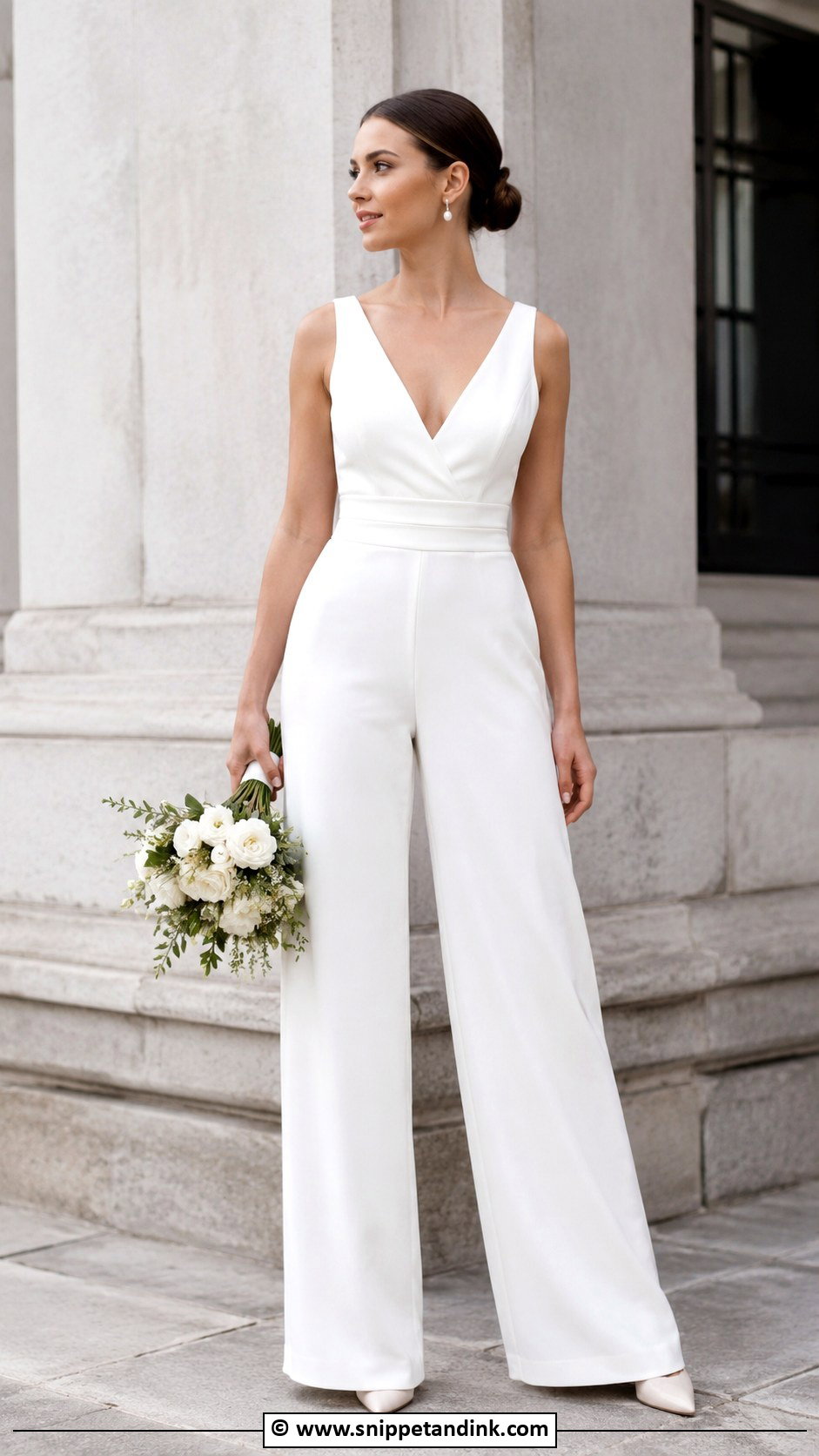
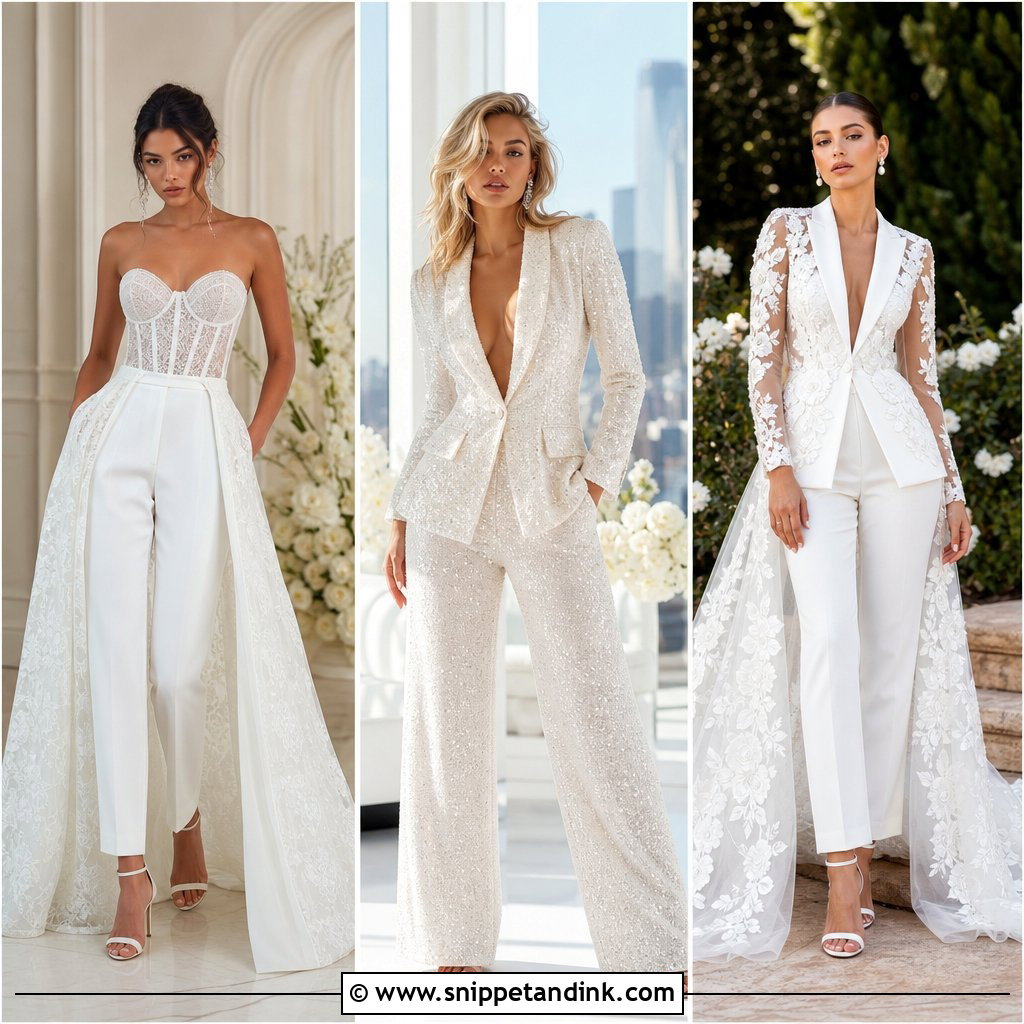
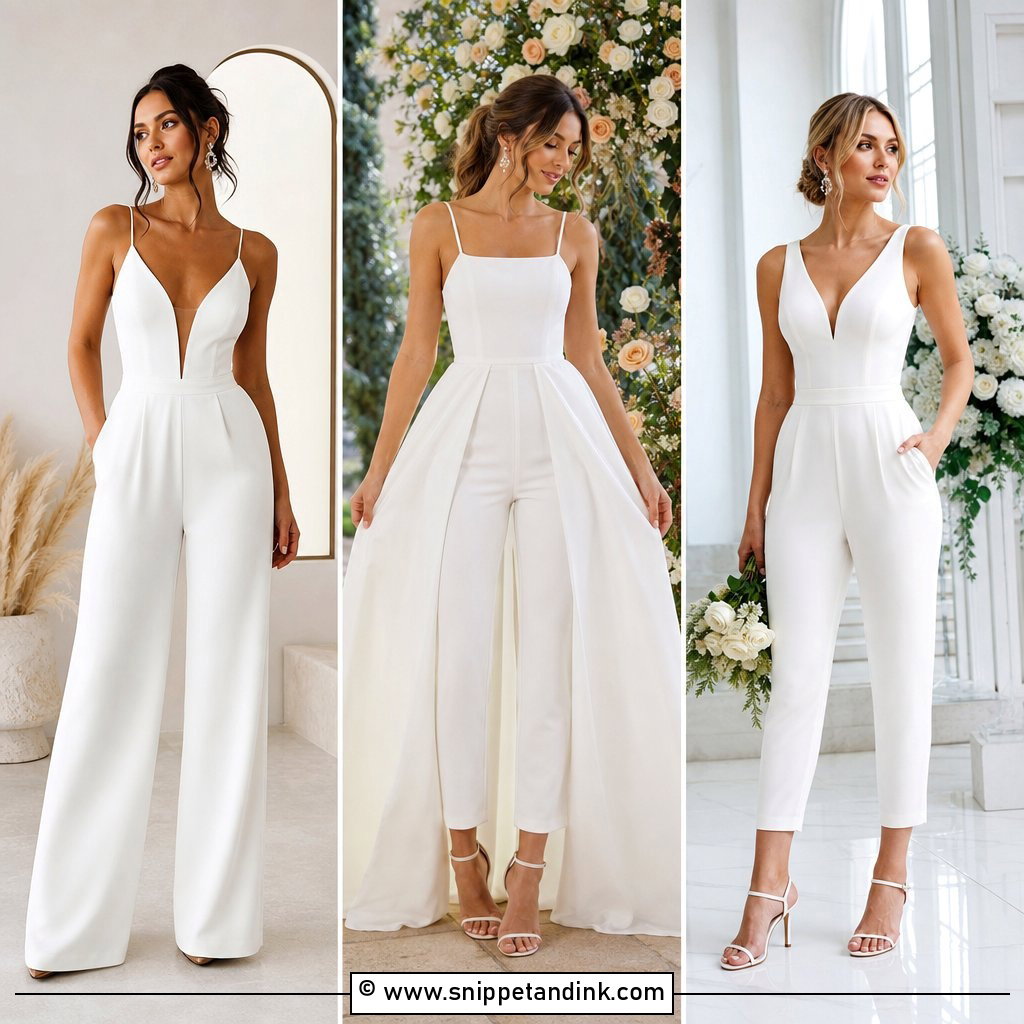
A white bridal wedding jumpsuit in structured crepe or heavy satin is the one I reach for when a bride wants a ceremony look that is clearly bridal but not a gown. Ask for a fitted bodice and a defined waist; the wide leg should start falling from the hip, not the knee. I hem these with the wedding shoes on so the fabric just grazes the floor, and pointed toes help that long line. If you want more drama for the aisle, a detachable overskirt or long veil can come off for dancing.
2. Lace Bridal Wedding Jumpsuit
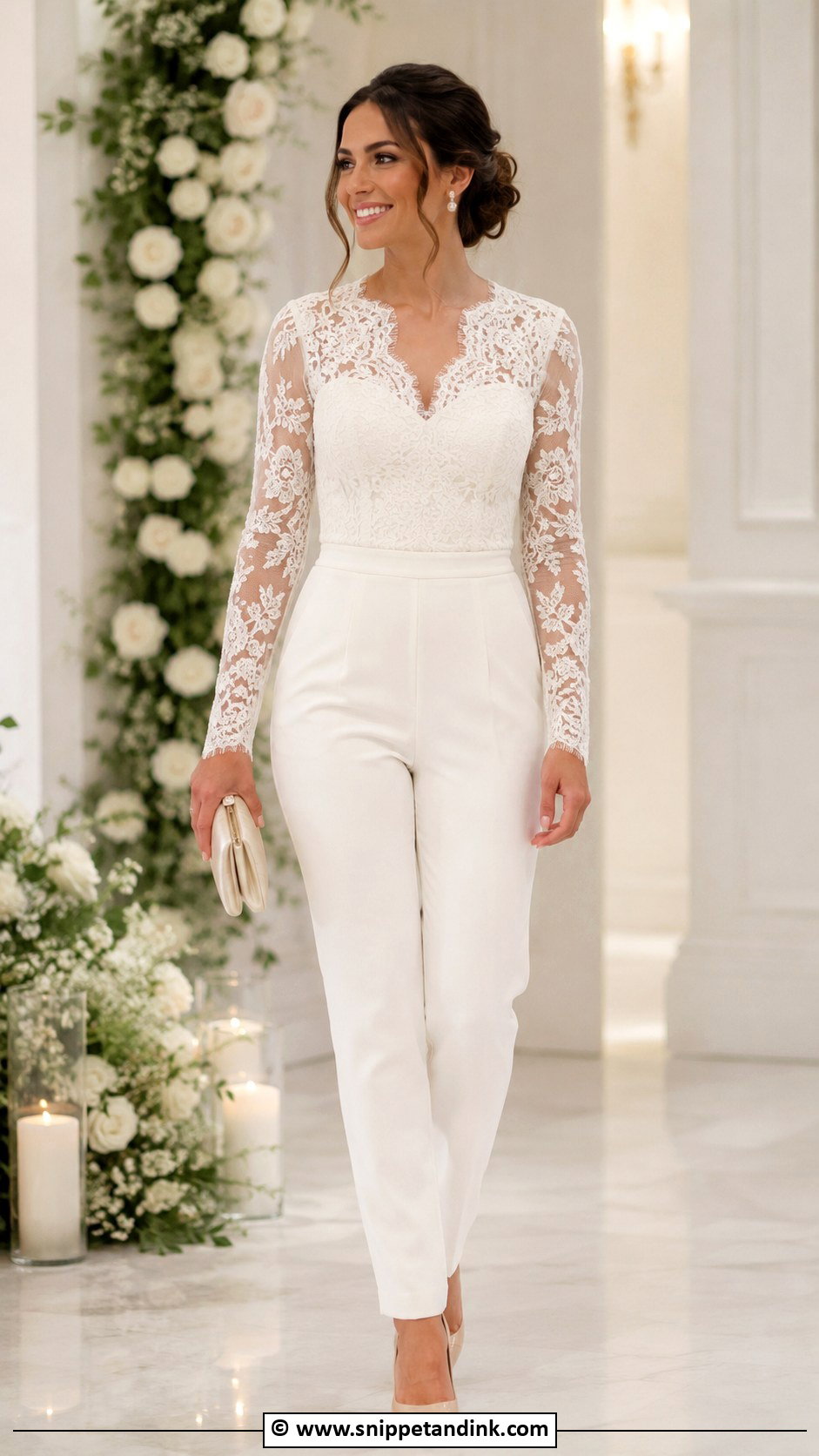
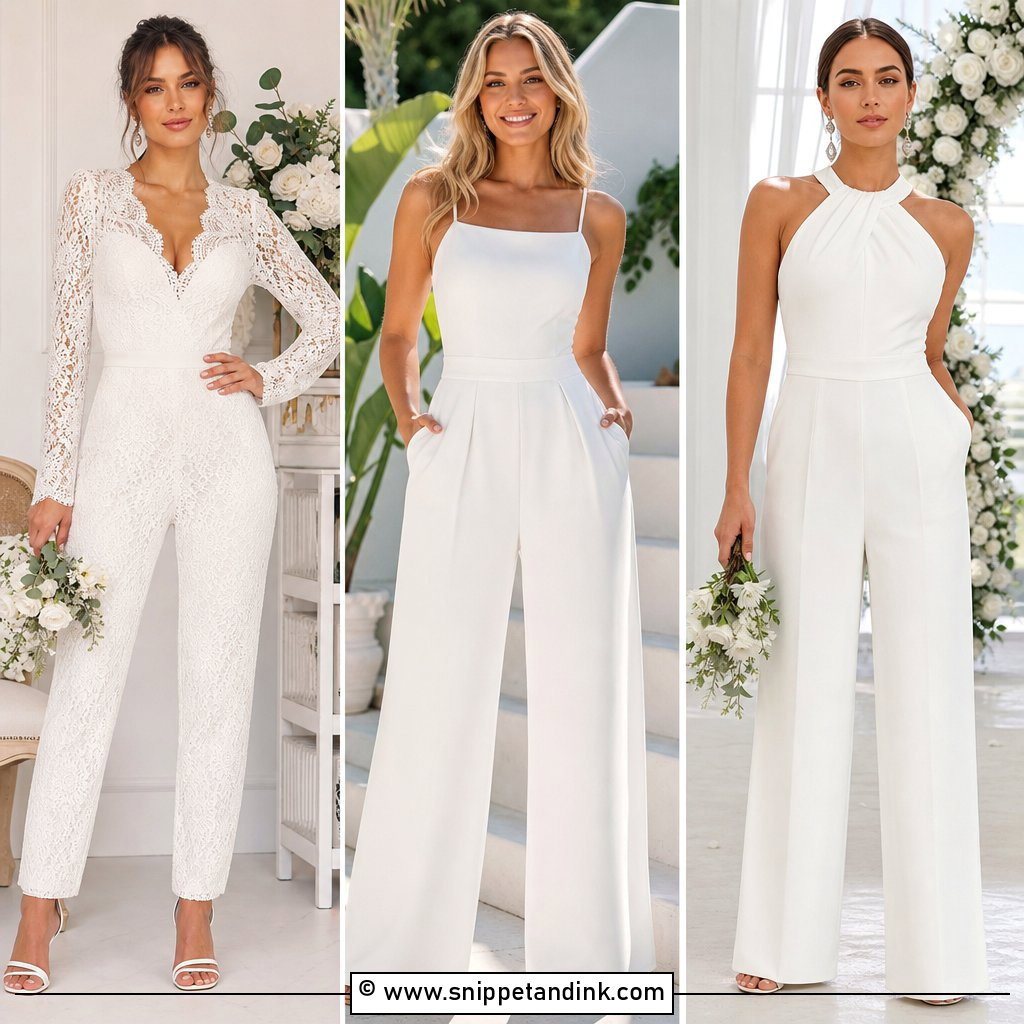
Lace on a jumpsuit needs a firm waist. When the bodice is loose, the pattern reads as busy and the whole outfit looks bigger than you are. I prefer lace sleeves or a lace bodice over tailored ivory trousers, which keeps the texture near the face and leaves the leg clean. Check where the lace motifs land at the seams before you buy: good makers match them, cheap versions cut straight through. Keep the clutch plain satin so the lace stays the detail.
3. Satin Wedding Jumpsuit
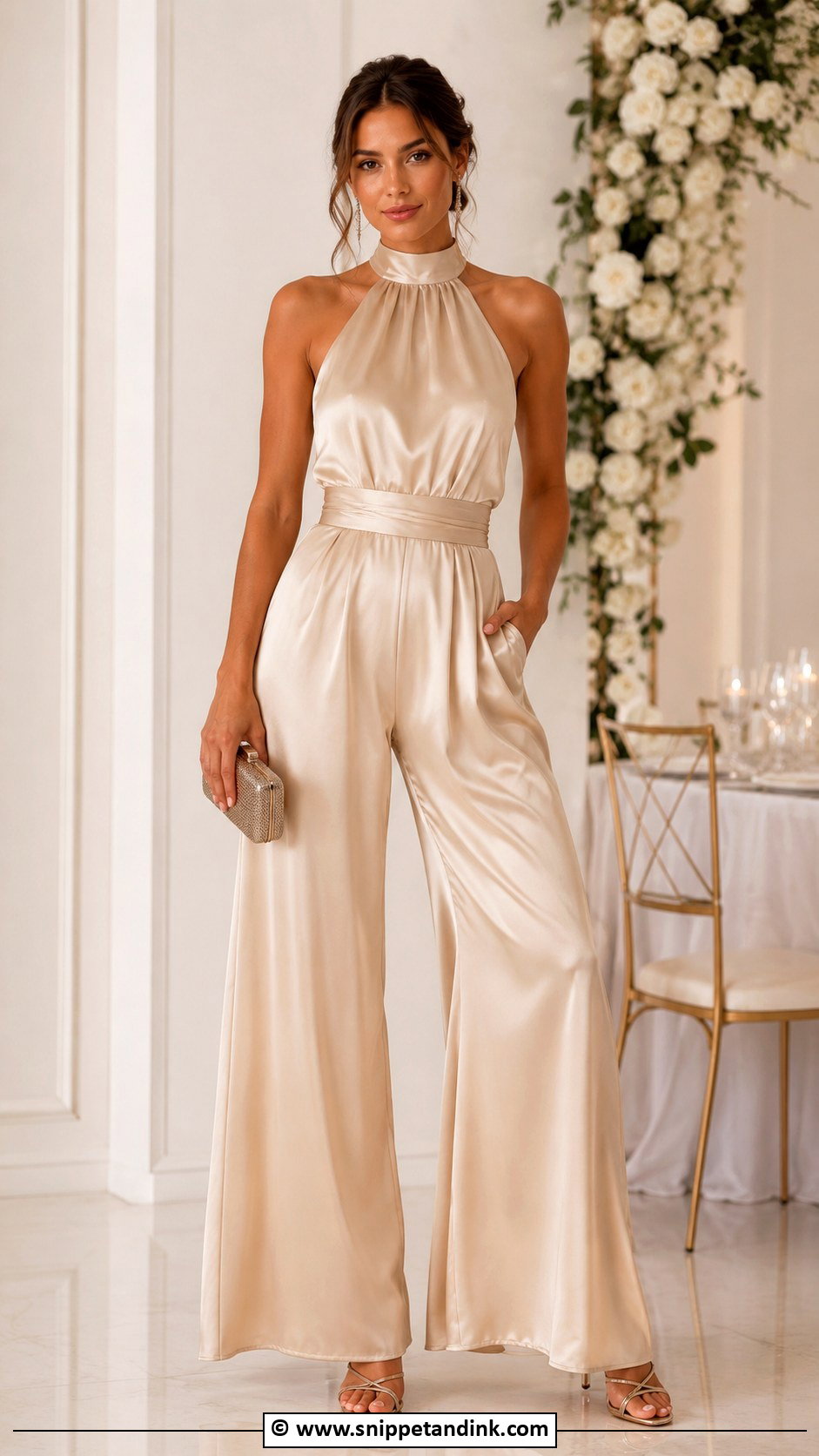
Satin shows everything, which is its charm and its risk. Ivory or champagne satin reads instantly dressed for a bride, while guests look right in navy, blush or sage. Draped necklines and wrap bodices suit it because the fabric folds softly, but I always warn clients that satin creases across the lap after a seated ceremony and shows water marks. A heavier, double-faced satin holds up much better than a thin charmeuse.
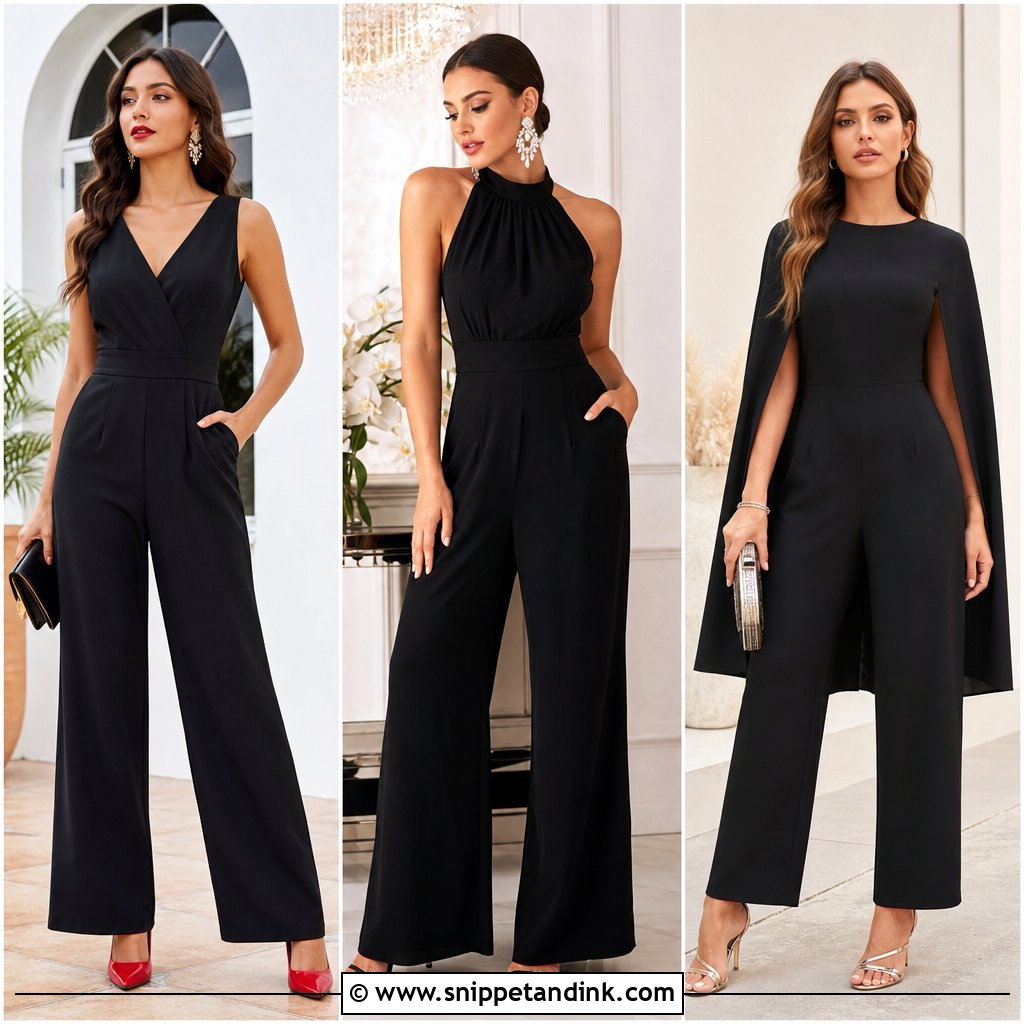
4. Black Tie Wedding Jumpsuit
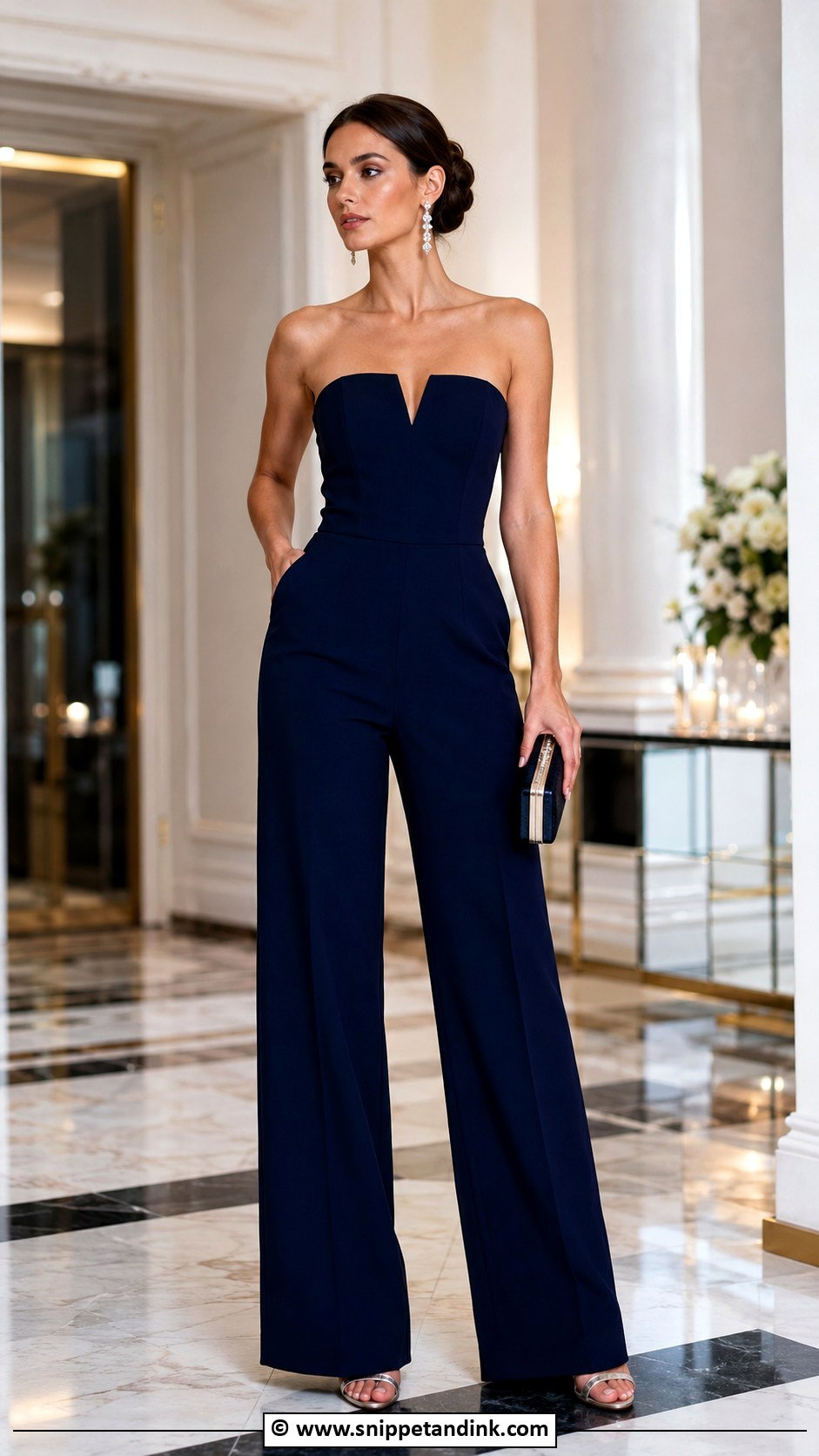
For a black tie wedding jumpsuit, my rule is simple: it has to be floor length and it has to read as formal as the gowns around it. Black, emerald, burgundy or deep plum in crepe, velvet or heavy georgette all hold their shape under evening light. A strapless or high-neck bodice gives the evening silhouette. If the cut is very plain, a tuxedo blazer or a cape brings it up to the dress code, and a hard-case clutch with a smooth updo finishes it.
5. Wedding Guest Jumpsuit
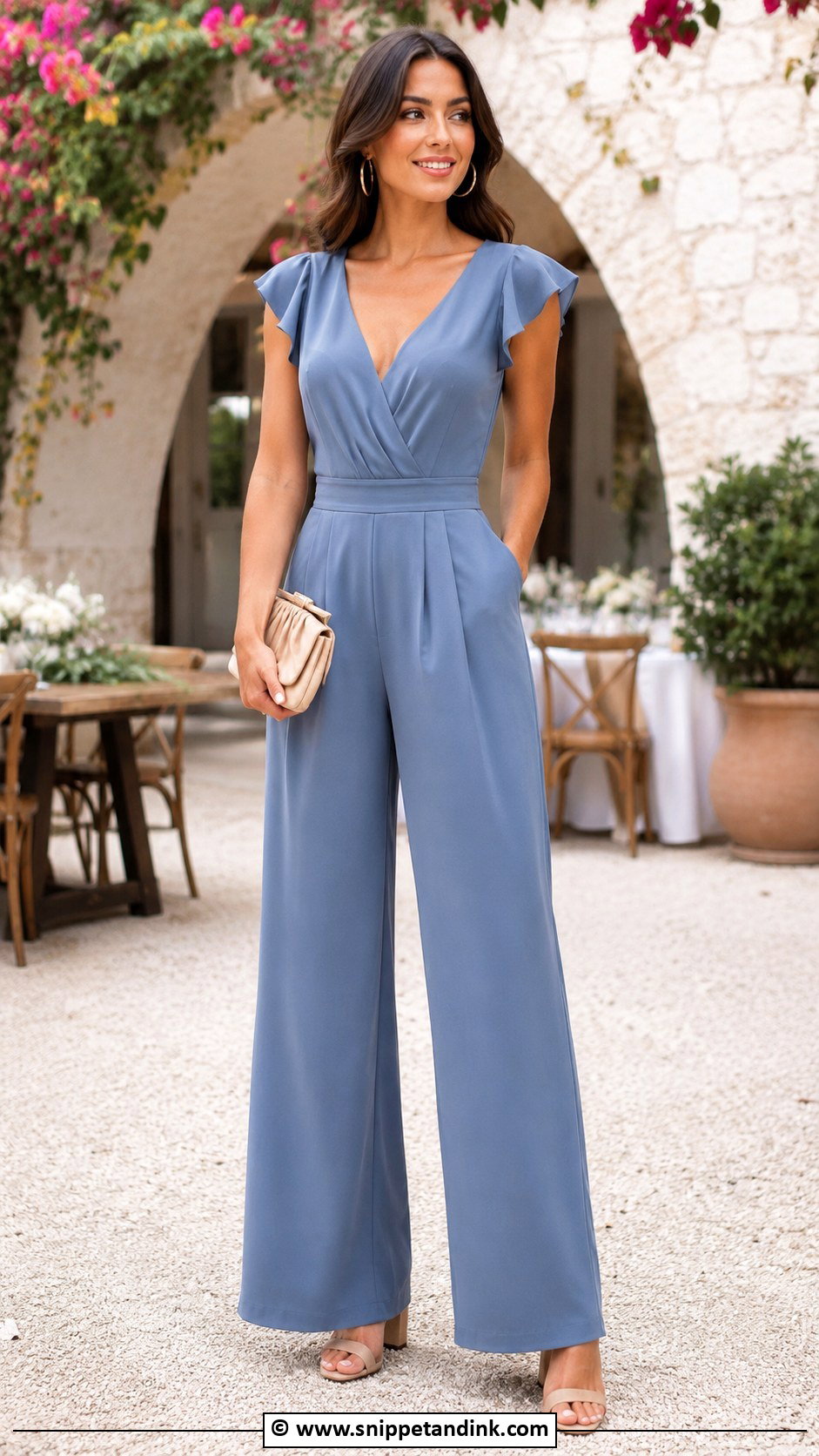
As a guest, the jumpsuit is often the more comfortable choice, but it is easy to get the level wrong. A wide leg with heels reads dressier than a slim leg, so that is my starting point for anything semi-formal. Pick colour by season: soft blue in spring, coral in summer, rust in autumn, navy in winter. Steer clear of ivory, anything sheer below the waist and anything that looks like work trousers. Earrings and a cuff do more than a necklace here.
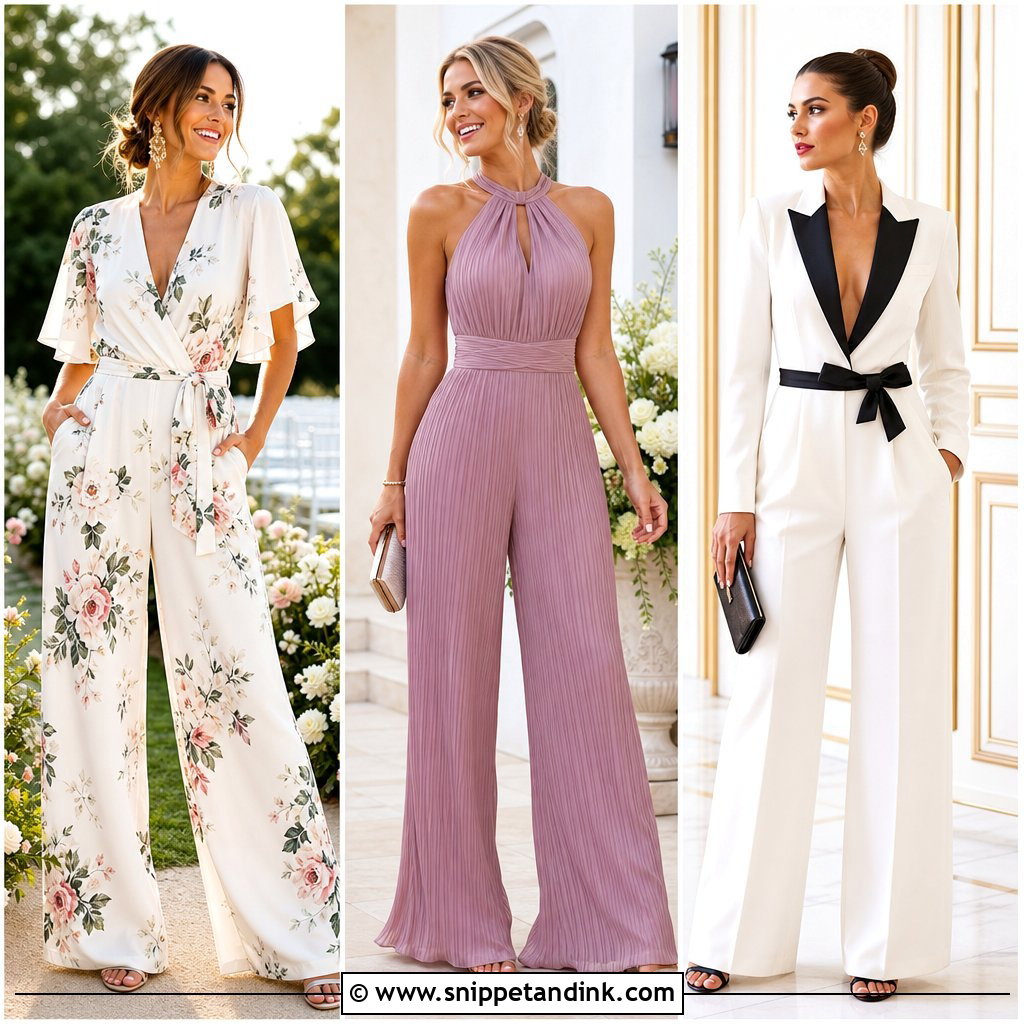
6. Floral Wedding Jumpsuit
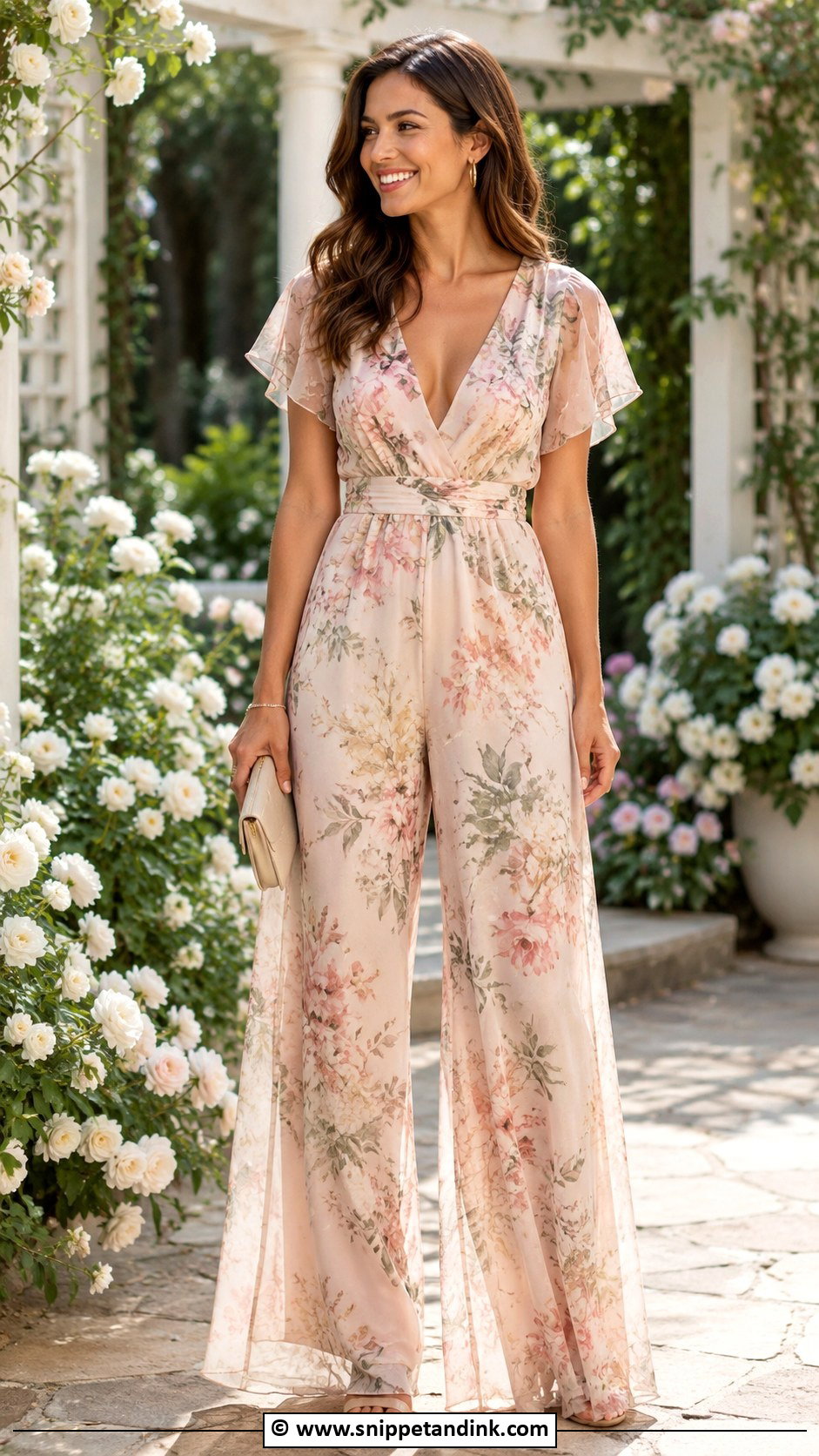
Prints are where guest jumpsuits go wrong most often, usually because the scale is off. A small, dense floral on a wide leg can look like pyjamas; a medium print with two or three colours, blush and green or blue and white, reads intentional. Chiffon or soft crepe gives movement. Keep shoes nude so the print stays in charge, and add gold hoops and a small clutch. Daytime garden ceremonies and outdoor receptions are where these belong.
7. Garden Wedding Jumpsuit
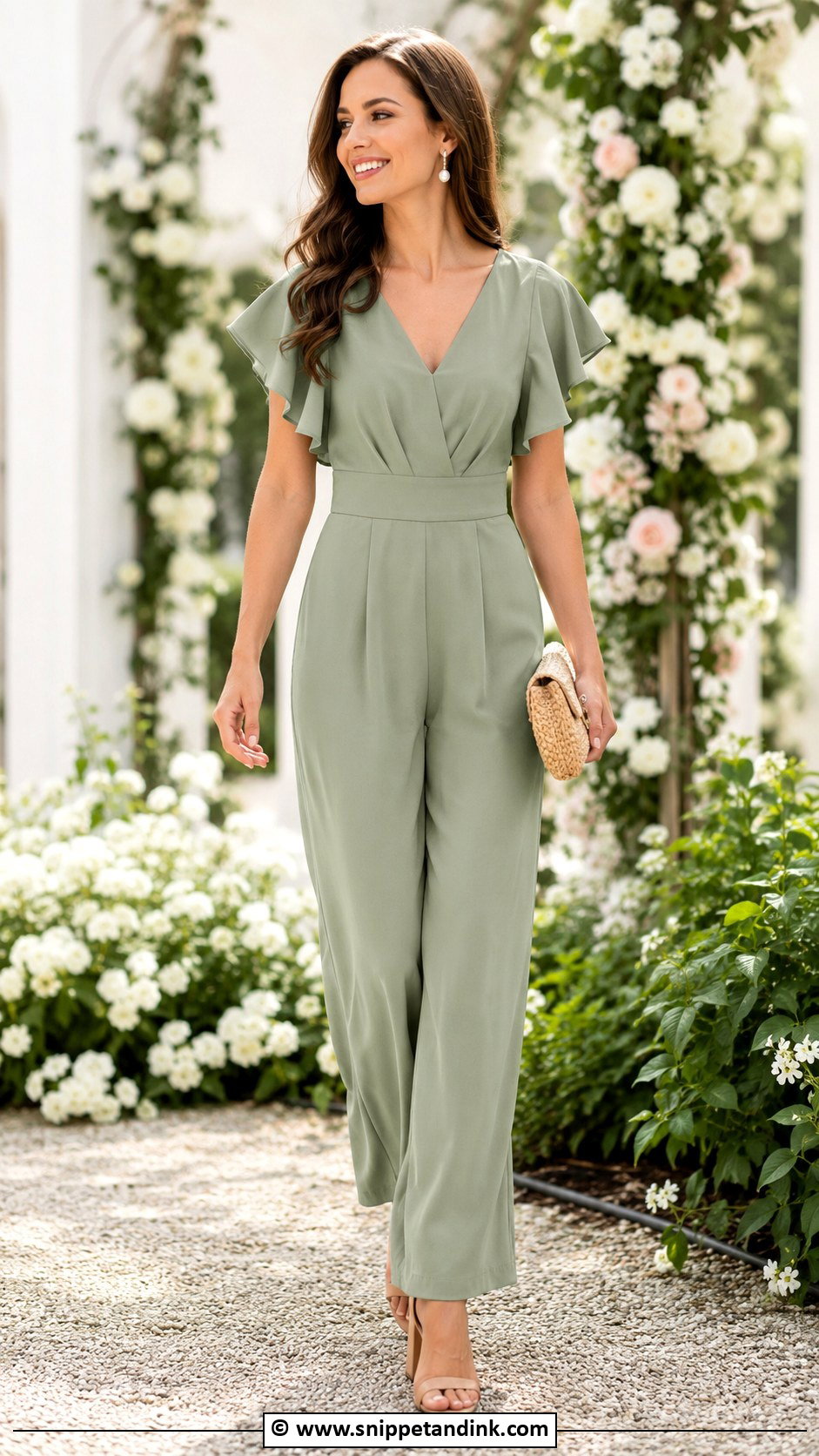
Grass is the practical problem at a garden wedding, so I cut the hem to ankle length and pair it with block heels or wedges. Stilettos sink and a floor-length hem picks up damp and grass stains by the first toast. Sage, dusty rose and powder blue sit naturally in the setting. A wrap bodice or flutter sleeve softens the shape, and I’d always pack a light wrap if the party runs into the evening, because gardens cool fast once the sun drops.
8. Beach Wedding Jumpsuit
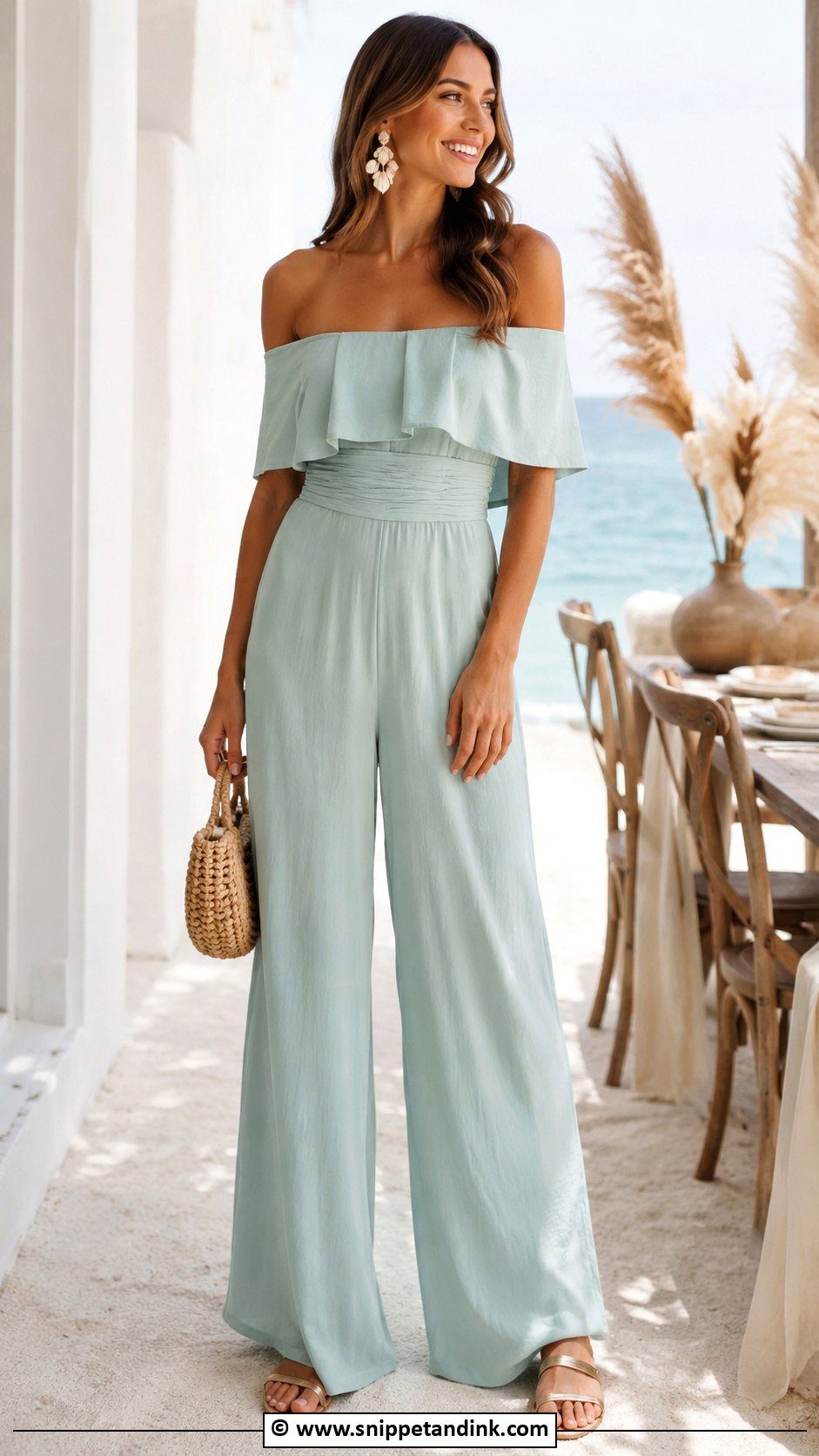
On a beach, wind and sand decide everything. Linen blends and chiffon breathe, but linen wrinkles within the hour, so accept that or choose a soft crepe. Halter and off-shoulder necklines suit the setting. The hem must stop above the sand; a wide leg that drags fills with it and gets wet at the shoreline. Flat sandals or low wedges, a woven bag and natural makeup. Seafoam, coral and soft blue for guests, ivory for the bride.
9. Courthouse Wedding Jumpsuit
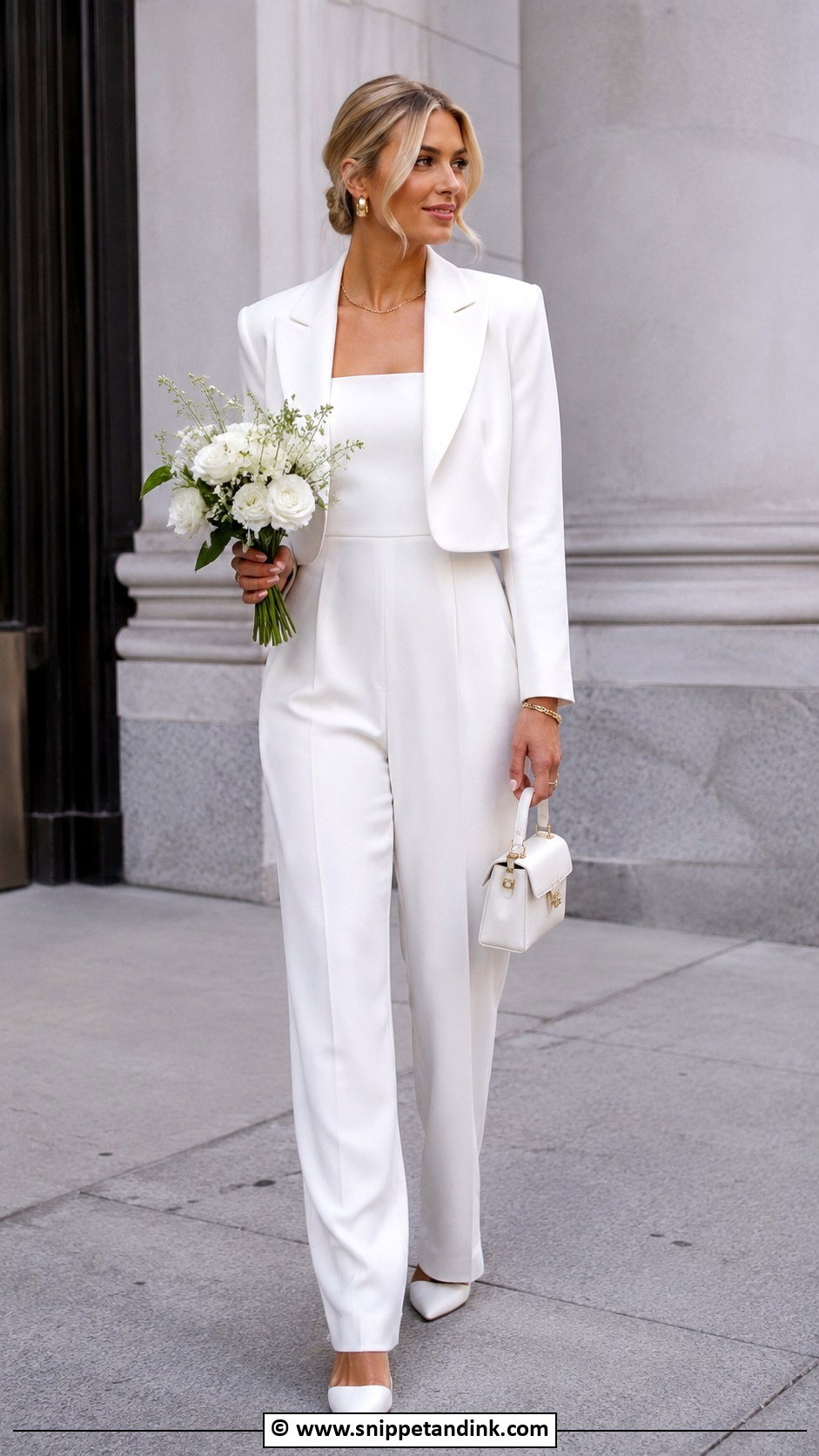
Courthouse weddings reward sharp tailoring because the photos are usually close-up and in hard indoor light. A white or cream jumpsuit with crisp lines barely needs styling. I like a cropped blazer over it: it photographs well on the steps and keeps you warm in air-conditioned corridors. Square, high or strapless necklines all work. Pointed pumps, a structured mini bag and a sleek bun or bob keep it tidy.
10. Reception Wedding Jumpsuit
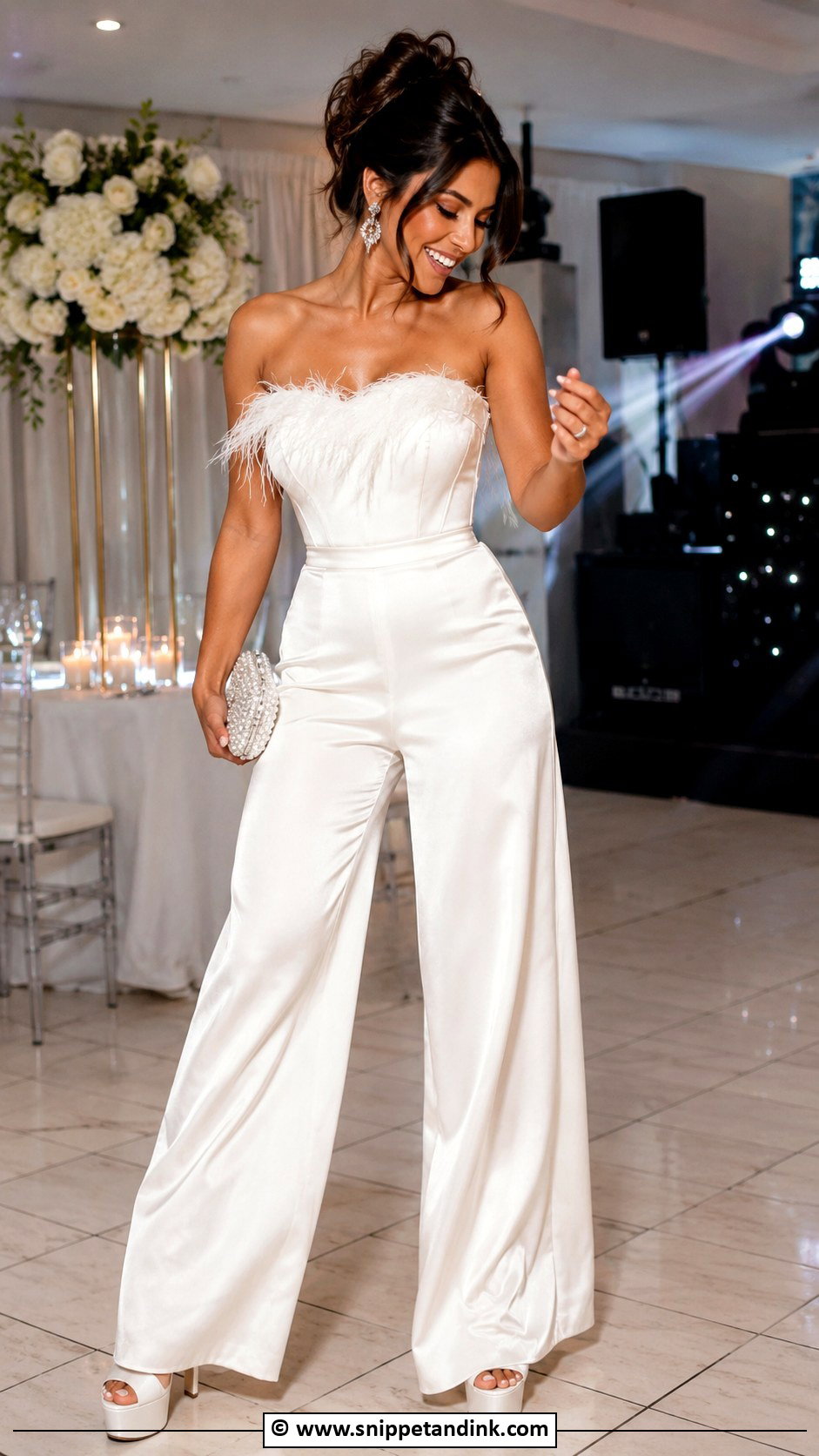
Most brides I dress for a reception change want one thing: to stop thinking about their outfit. A white satin jumpsuit, a feather-trimmed crepe or an embellished wide leg feels lighter than the gown and still says bride. The shoes matter more than the jumpsuit here. Platforms or block heels you have already danced in at home will save the night. Sparkly earrings and a quick hair change, a ponytail or loose waves, make the switch feel deliberate.
11. Civil Wedding Jumpsuit
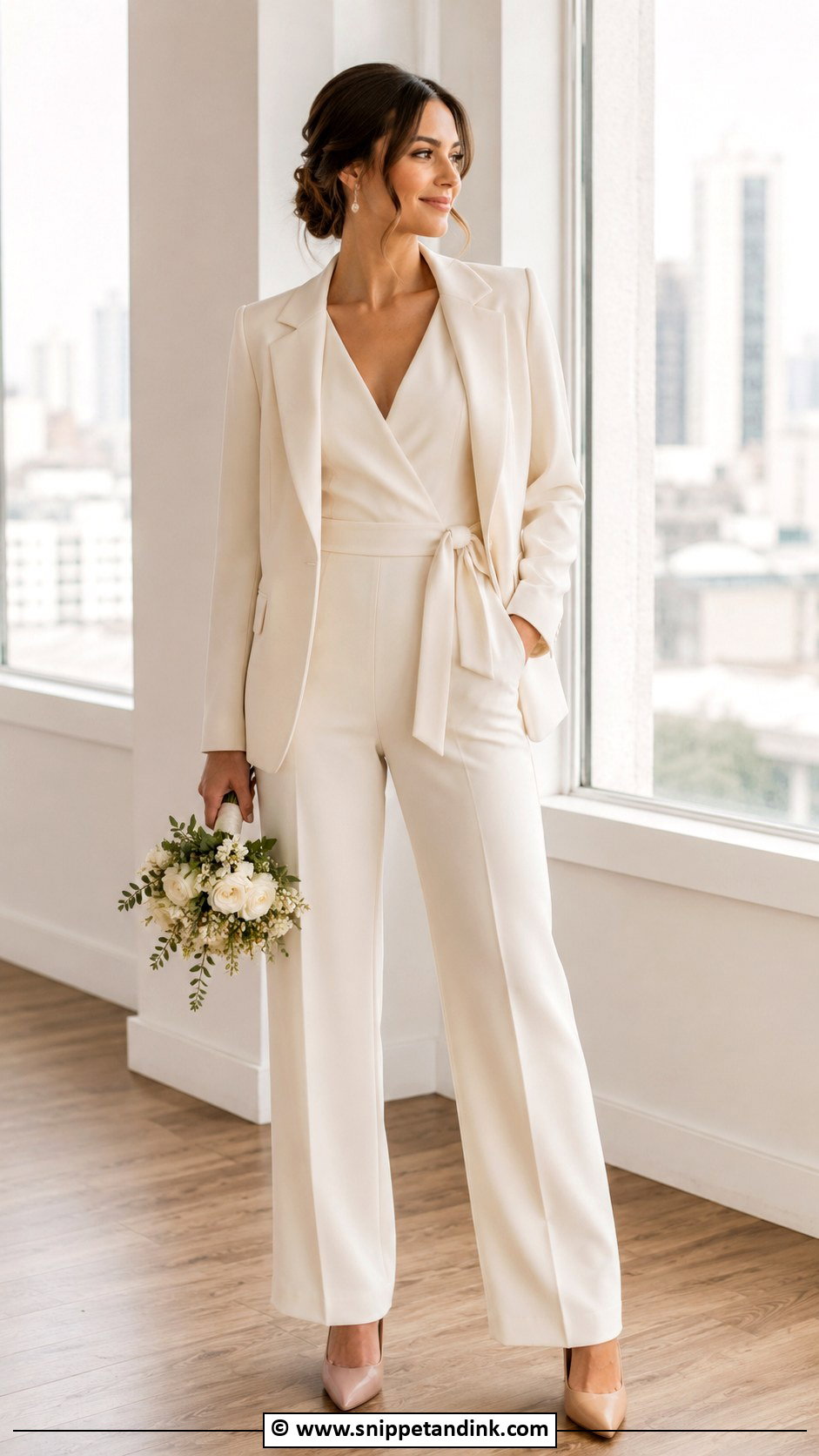
For a civil ceremony I’d keep it tailored and restrained: ivory crepe, white suiting fabric or champagne satin with a structured waist. A V-neck or wrap front flatters most bodies and gives a clear shape. A blazer layered on top makes it feel official, which suits city halls and register offices. Simple heels, a small posy and good earrings. Restraint is the point; over-accessorising makes it look like you are trying to replace a gown.
12. Plus Size Wedding Jumpsuit
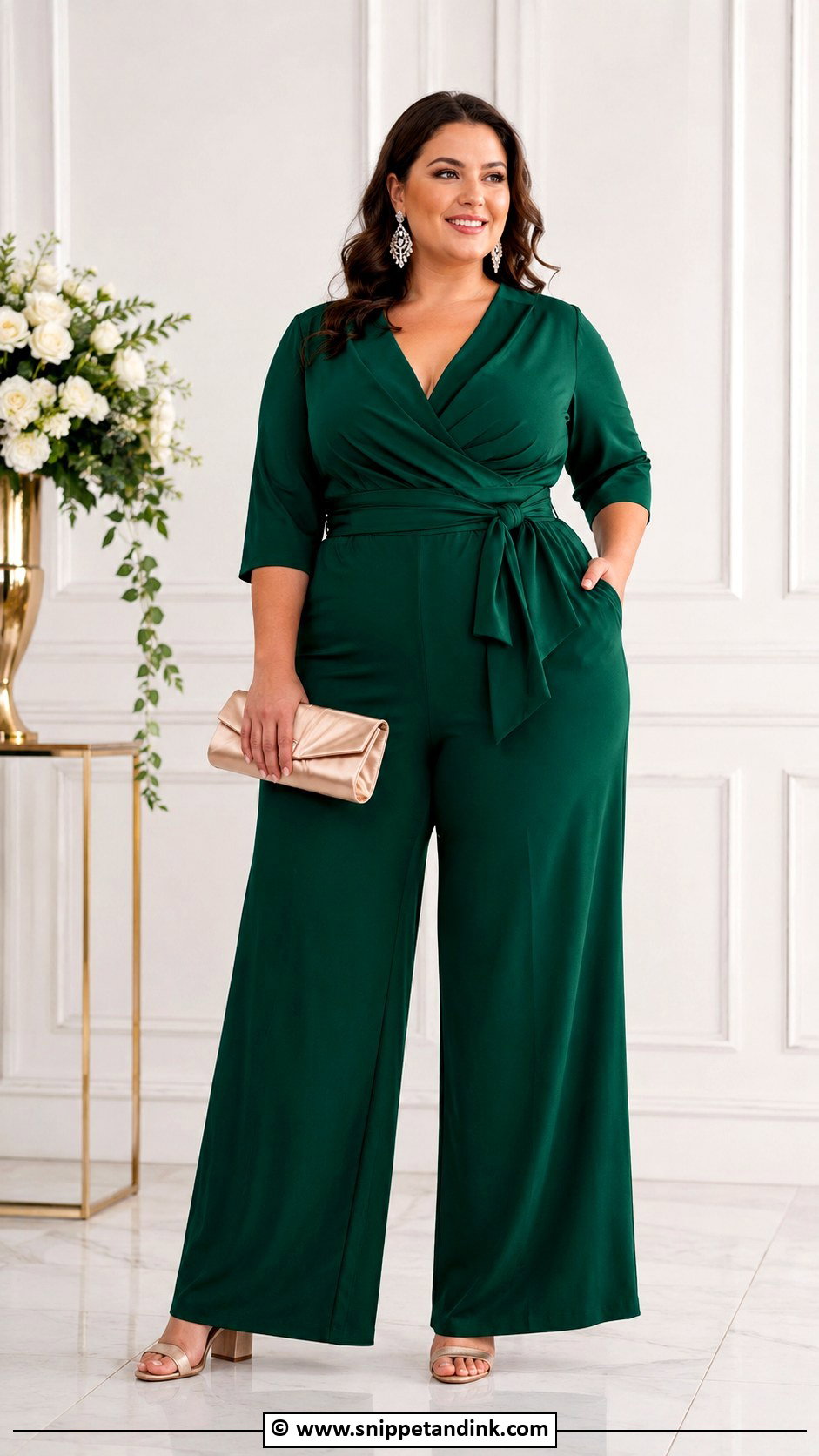
With plus size clients, I start with support, then shape. A built-in bra or boned bodice and a defined waist do far more work than any print. Choose fabric that skims, like a mid-weight crepe, over jersey that clings at the stomach and seat. Wrap fronts and wide legs balance curves, and the crotch length must be checked sitting down, because a short rise is the most common fit fault I see. Dark jewel tones for guests, ivory crepe or lace for brides, and a cropped jacket if you want coverage.
13. Petite Wedding Jumpsuit
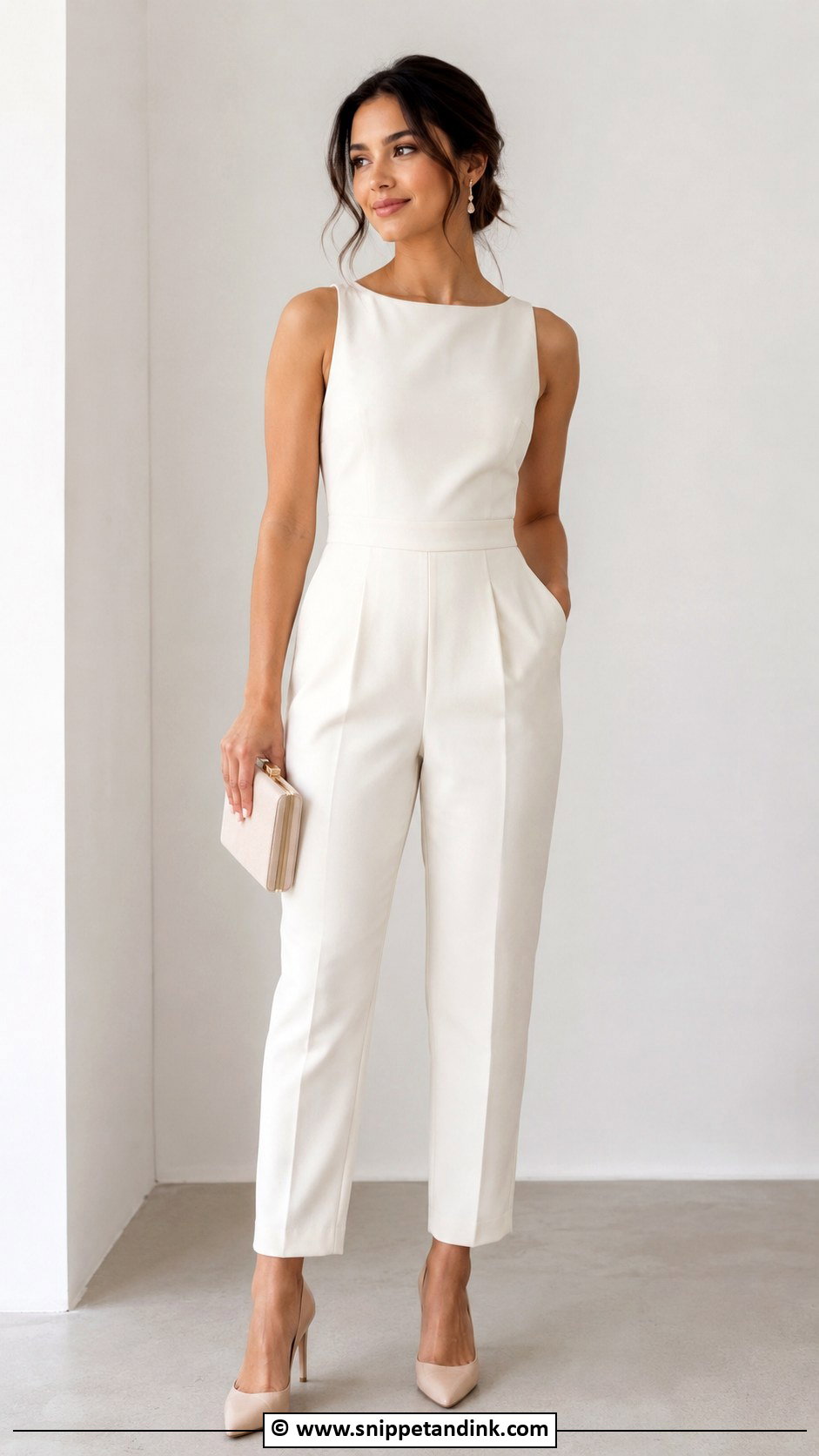
On a petite frame, the danger is fabric pooling at the ankle and swallowing you. A high waist, vertical seams and a V-neck all lengthen, and a monochrome outfit reads as one continuous line. Wide legs are fine if the fabric drapes and the hem is cut to your exact shoe height. Petite ranges also have a shorter torso, which matters more than people realise: a standard jumpsuit often pulls up uncomfortably or bags at the waist. Keep the clutch and earrings small.
14. Tall Wedding Jumpsuit
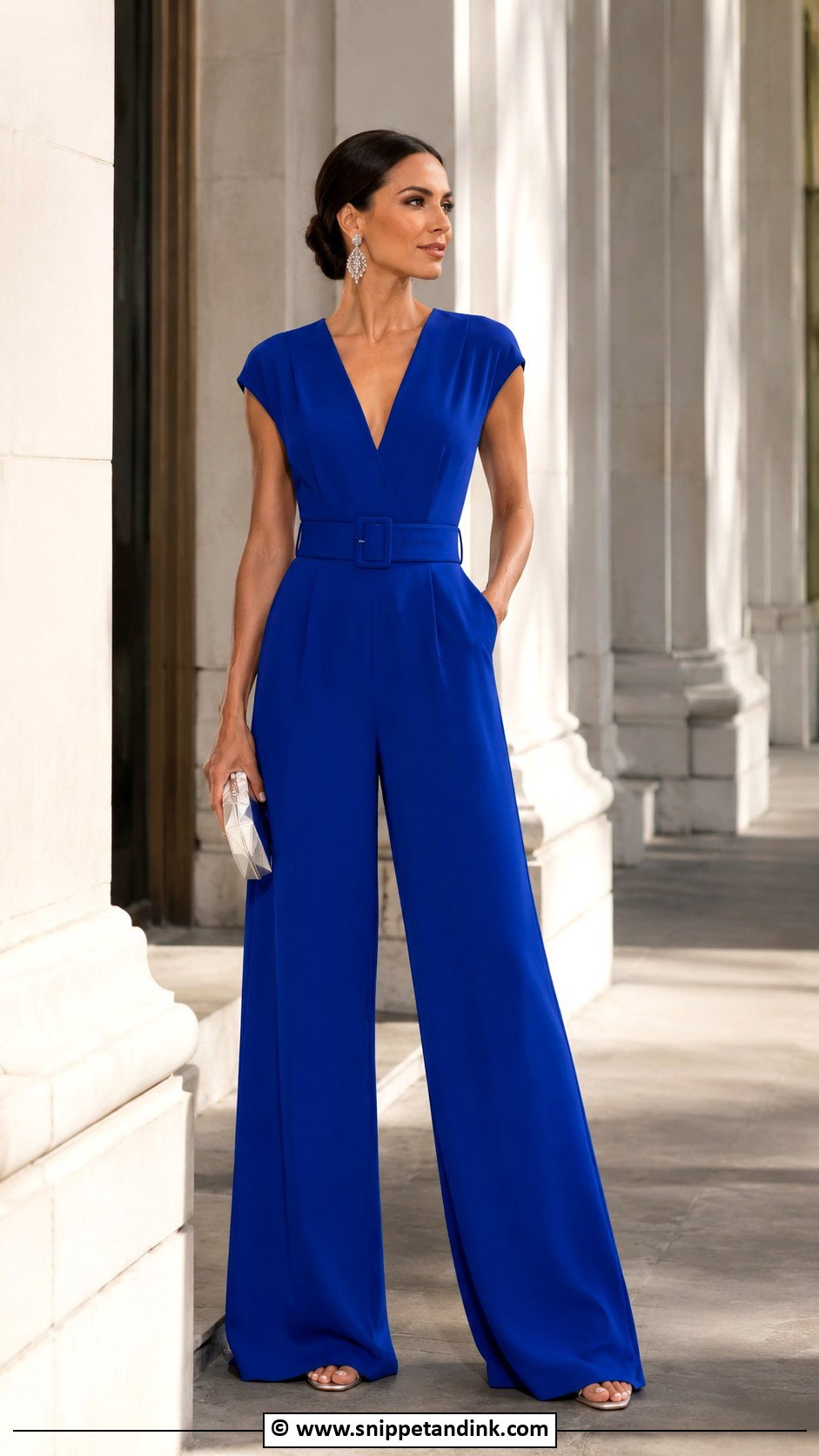
Tall women carry the dramatic shapes best: extra-wide trousers, a halter top, a cape, a belted waist. The problem is length. Check the inseam and the torso, because many off-the-rack tall wedding jumpsuit options are tall in the leg but short in the body, and you will feel it pulling every time you sit. A floor-skimming hem looks the most formal. Brides can add a long veil or cape to carry that height, and statement earrings suit the frame.
15. One Shoulder Wedding Jumpsuit
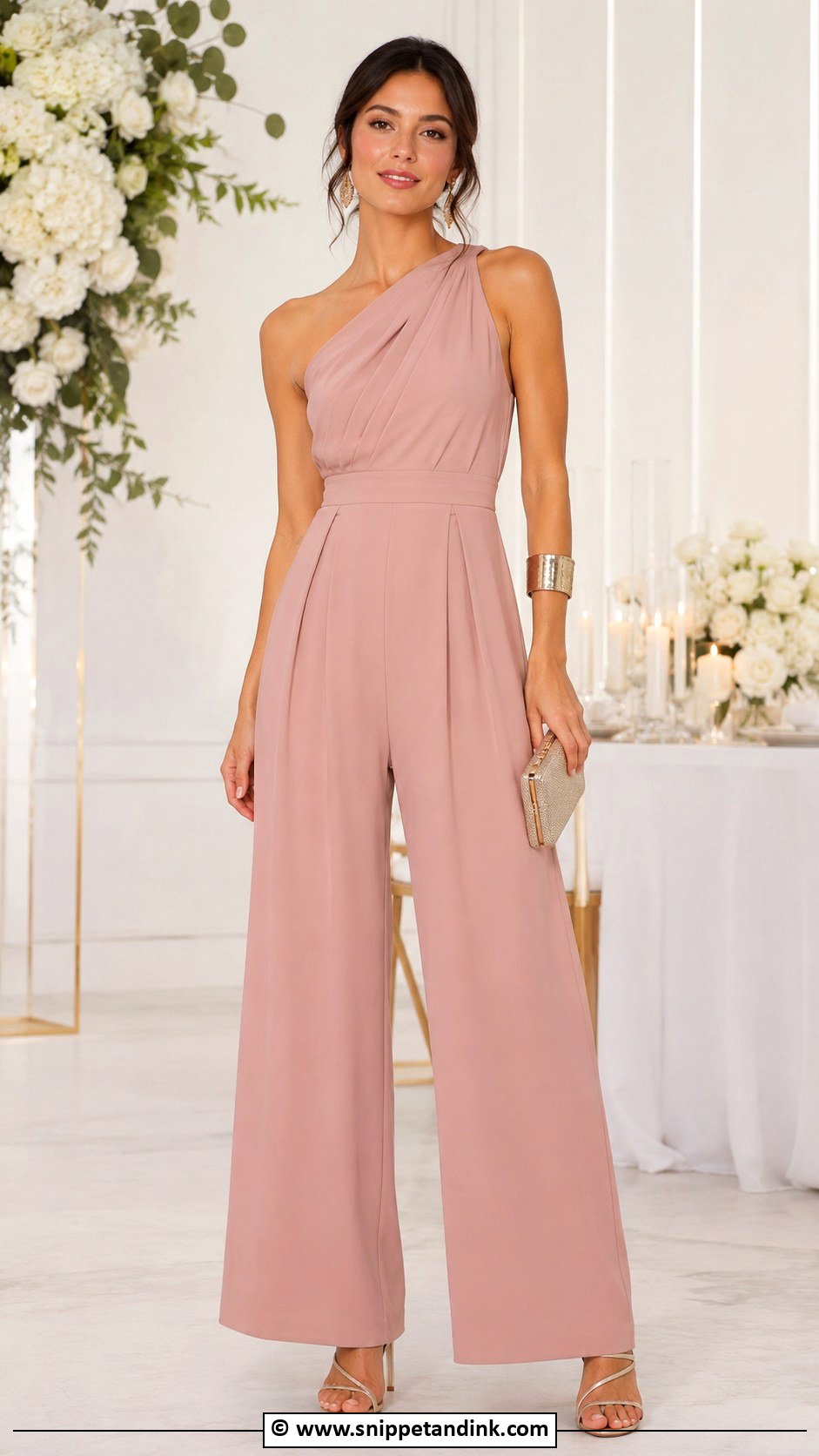
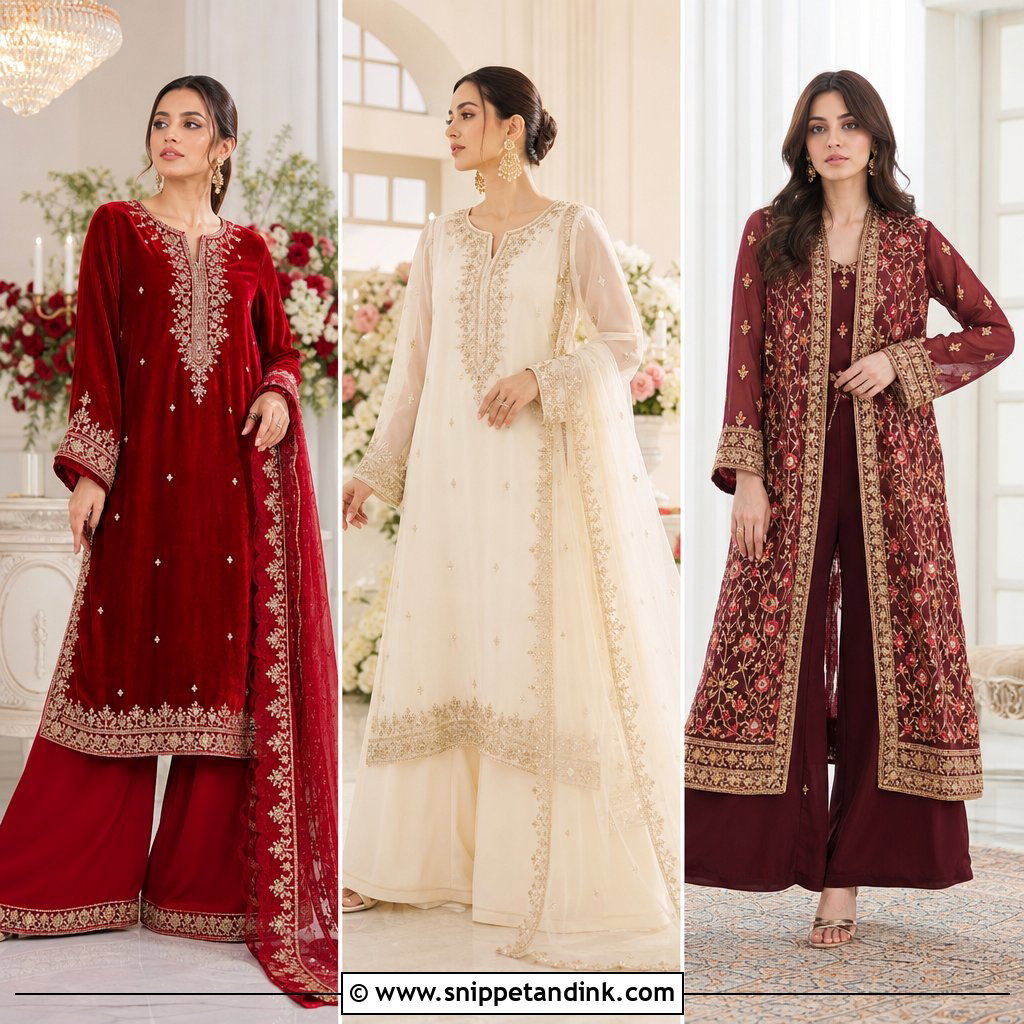
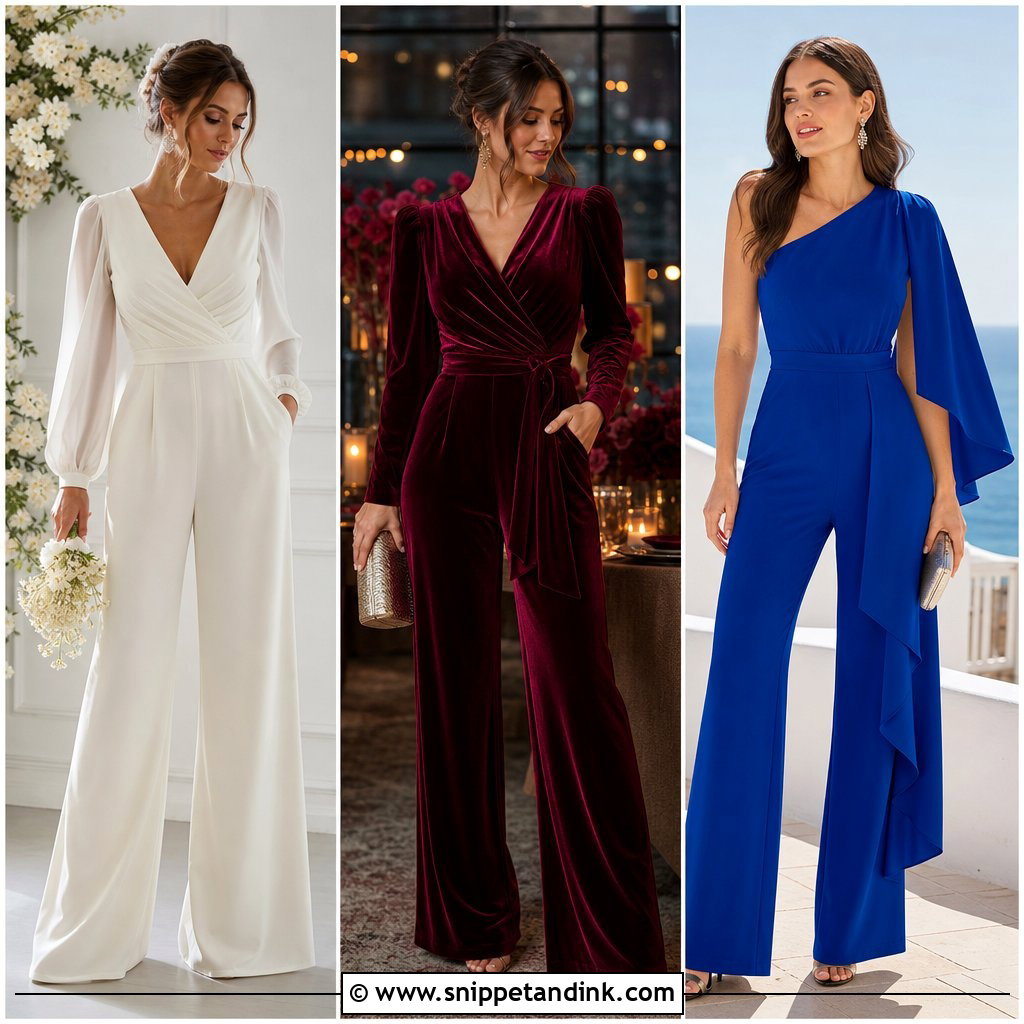
The asymmetry of a one shoulder neckline already does the styling, so I’d drop the necklace and wear earrings or a cuff instead. Make sure the shoulder strap sits firm; on cheap versions it slides outward once you lift your arms to hug people. Wide or straight legs both keep it clean. Emerald, navy, rose and copper suit guests; ivory satin or crepe suits a bride. Cocktail receptions and evening weddings are its natural home.
16. Strapless Wedding Jumpsuit
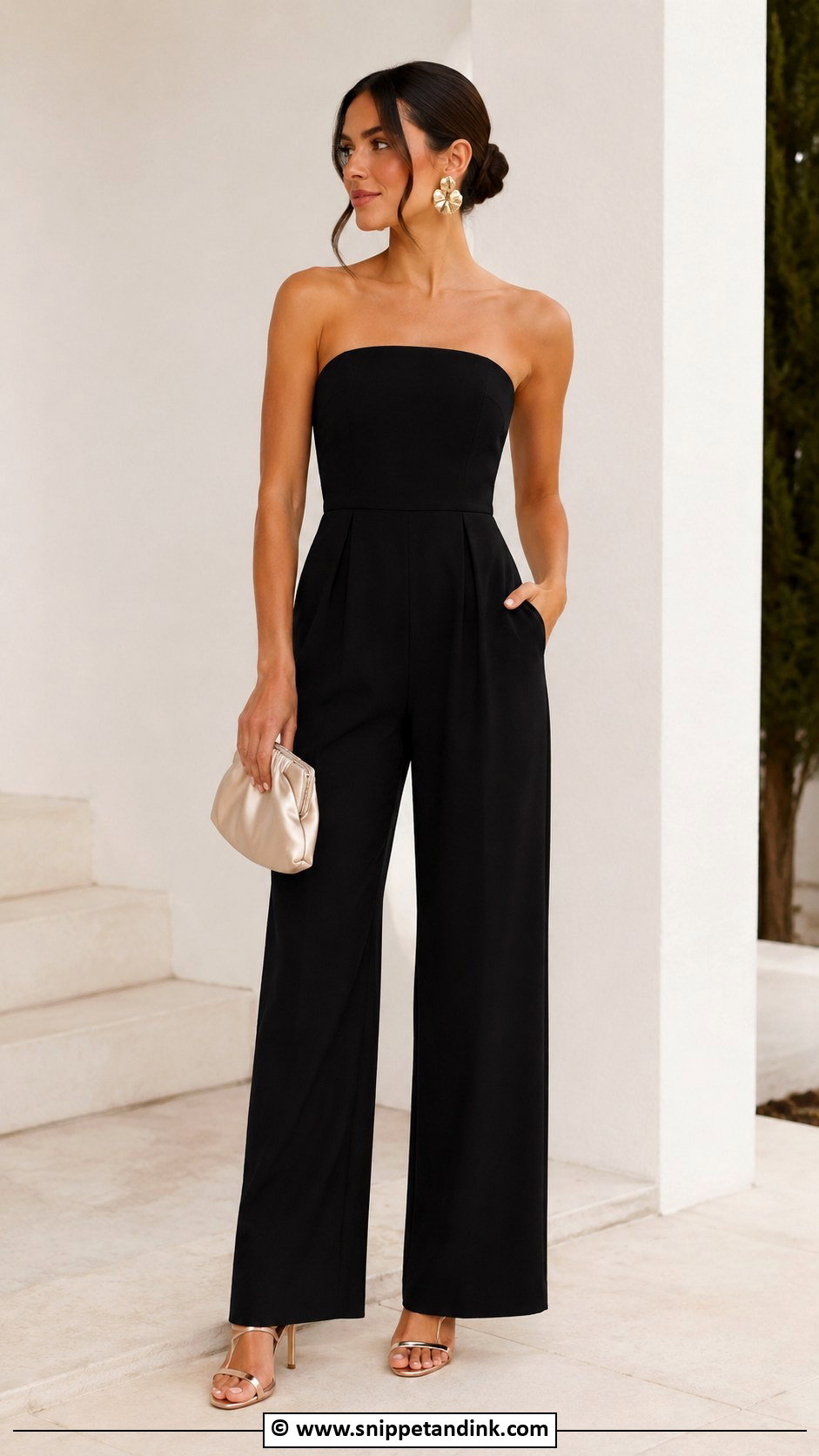
A strapless jumpsuit only works if the bodice is boned or has a silicone grip strip at the top edge. Without it, you will be hitching it up all evening, and a jumpsuit is harder to adjust than a dress because the trousers pull the bodice down when you sit. Wide legs balance the fitted top. Brides can pair ivory with a veil; guests can go pastel, jewel tone or black. Bring a wrap for cooler rooms.
17. Halter Wedding Jumpsuit
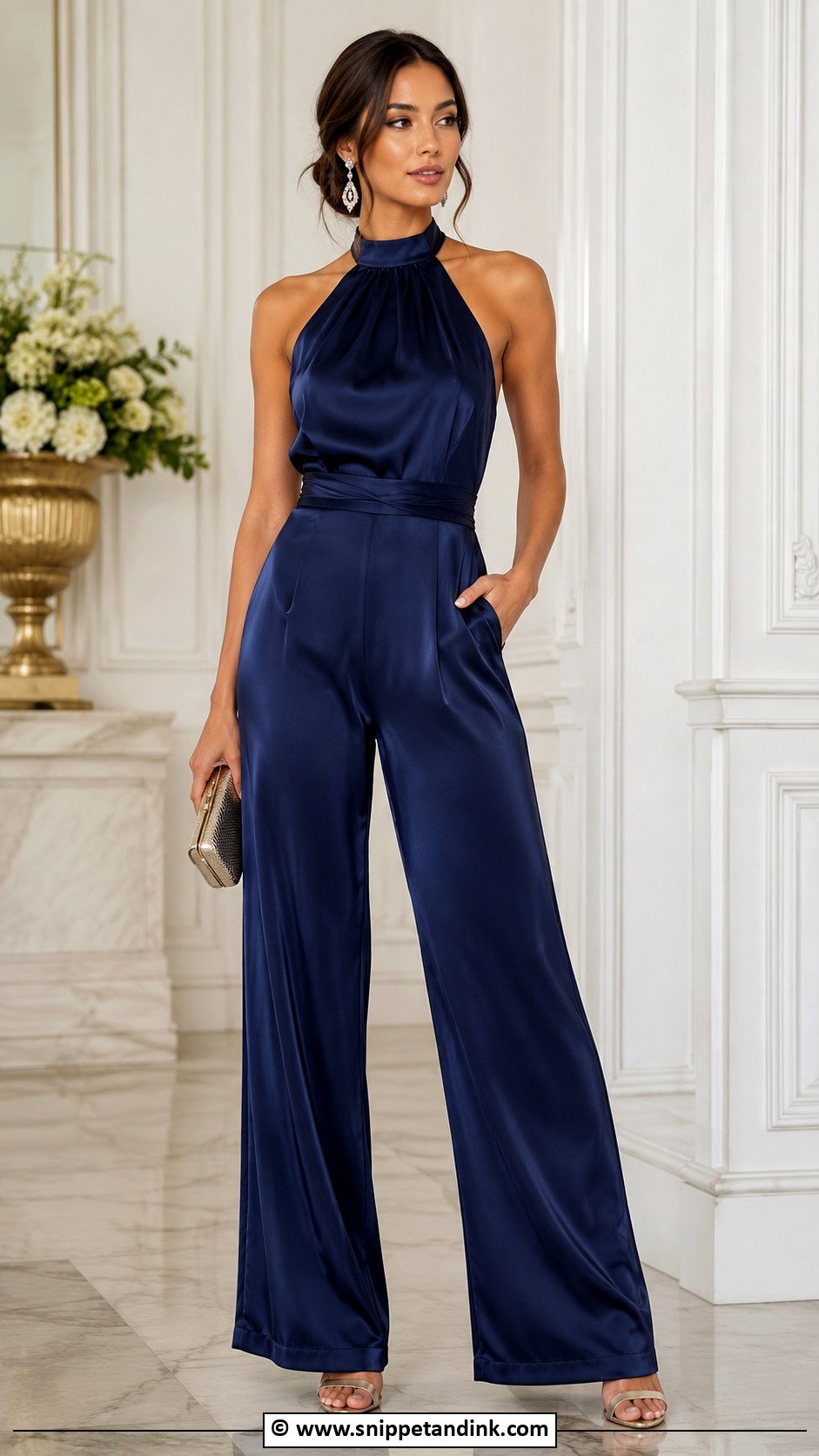
A halter neck lengthens the neck and shoulders, so it suits updos, sleek ponytails and tucked waves that leave that line clear. Satin and crepe drape well; soft jersey is comfortable but shows every undergarment line. Drop earrings rather than a necklace. One fitting note: halters tie or clasp at the back of the neck, and a heavy fabric pulls on that point over hours, so I check the weight before a long day. Ivory for brides; deep green, blush or terracotta for guests.
18. Long Sleeve Wedding Jumpsuit
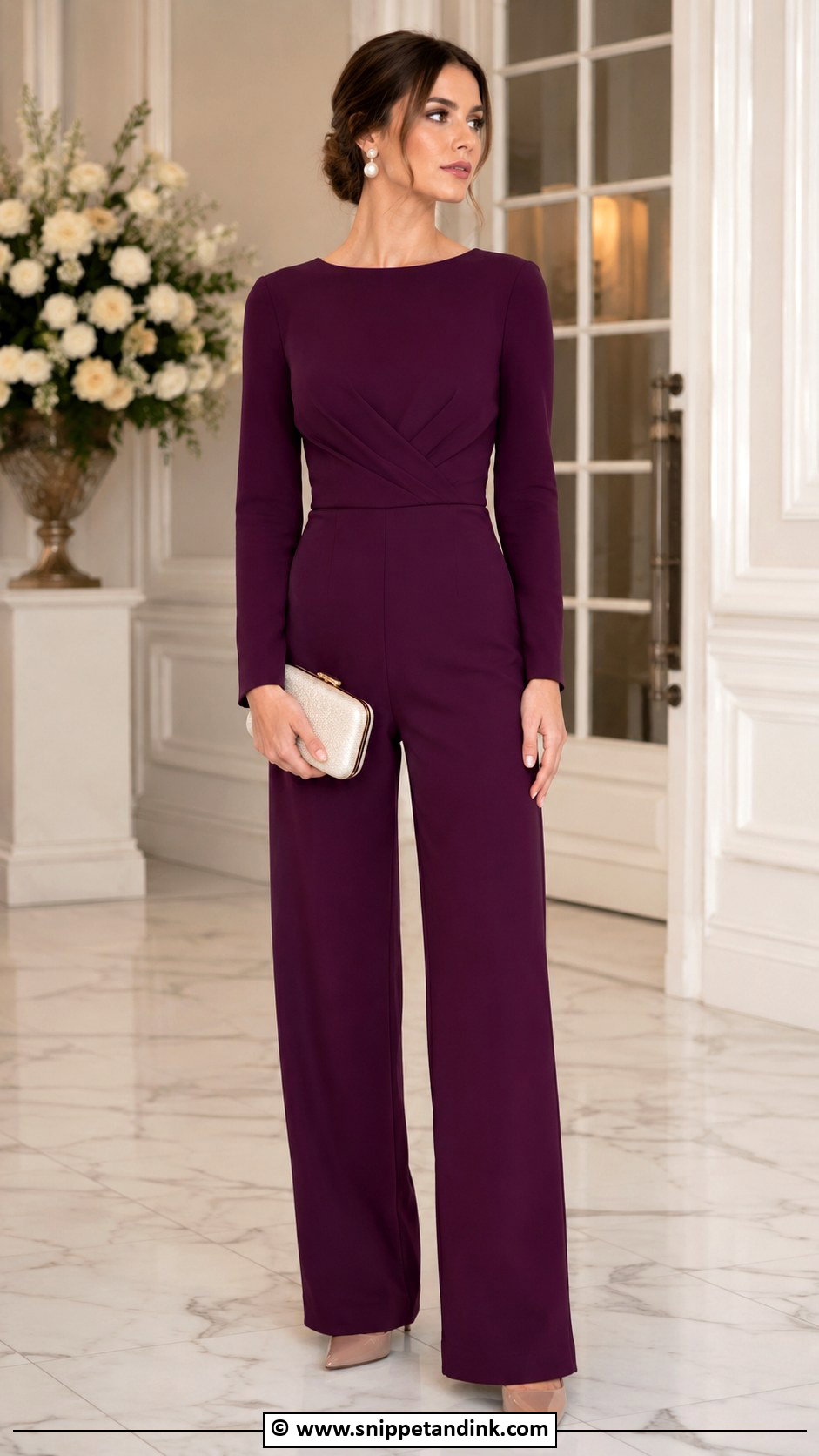
Long sleeves are my answer for winter weddings, churches with cover-up expectations and anyone who runs cold. Lace sleeves read romantic, crepe or satin sleeves read clean. Have the sleeve length checked with your arms raised, since a sleeve that is right at rest rides up when you hold a bouquet or hug. Keep the waist fitted and the leg wide so the coverage does not feel heavy. Plum, forest green and chocolate are strong guest colours.
19. Cape Wedding Jumpsuit
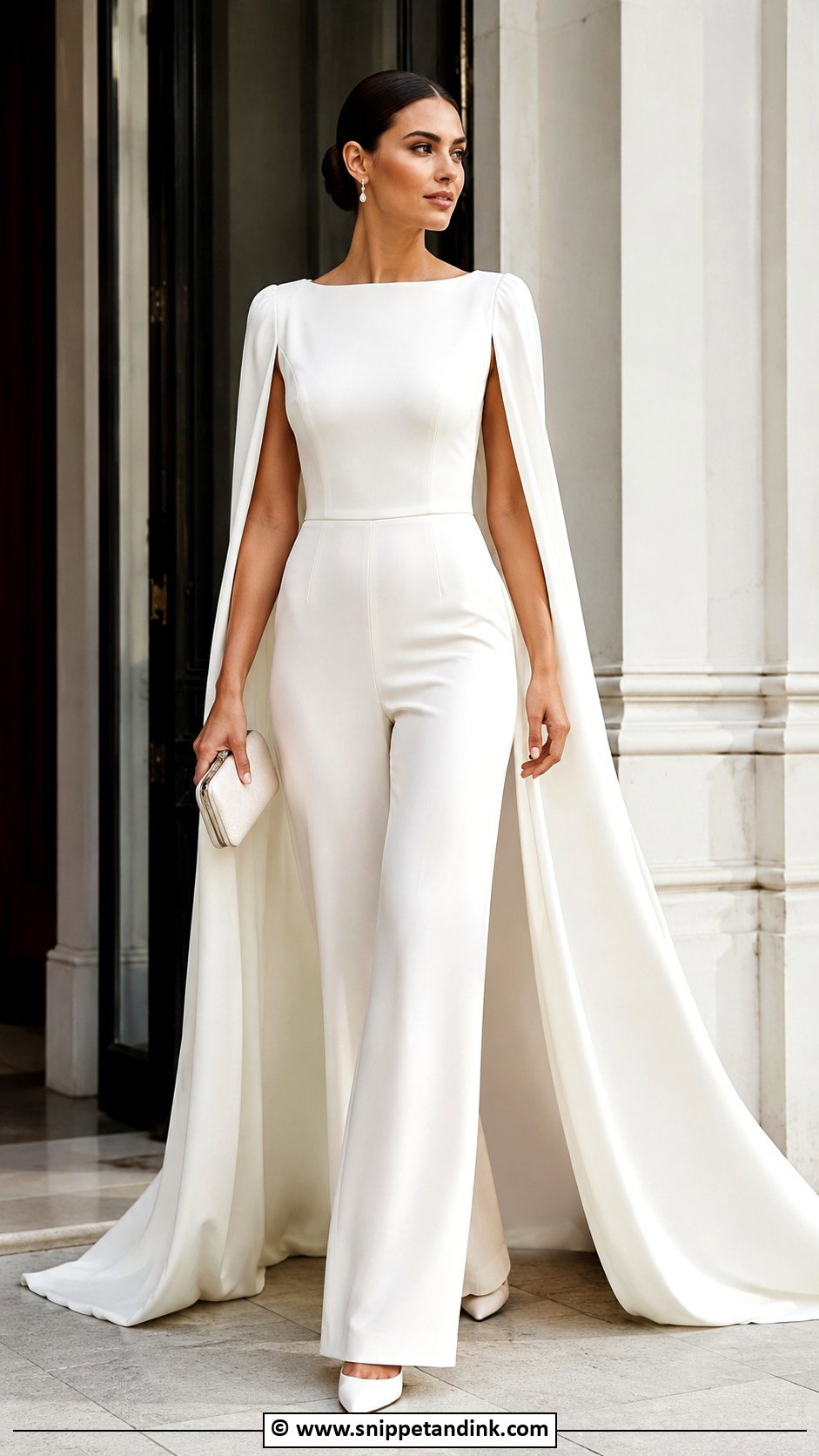
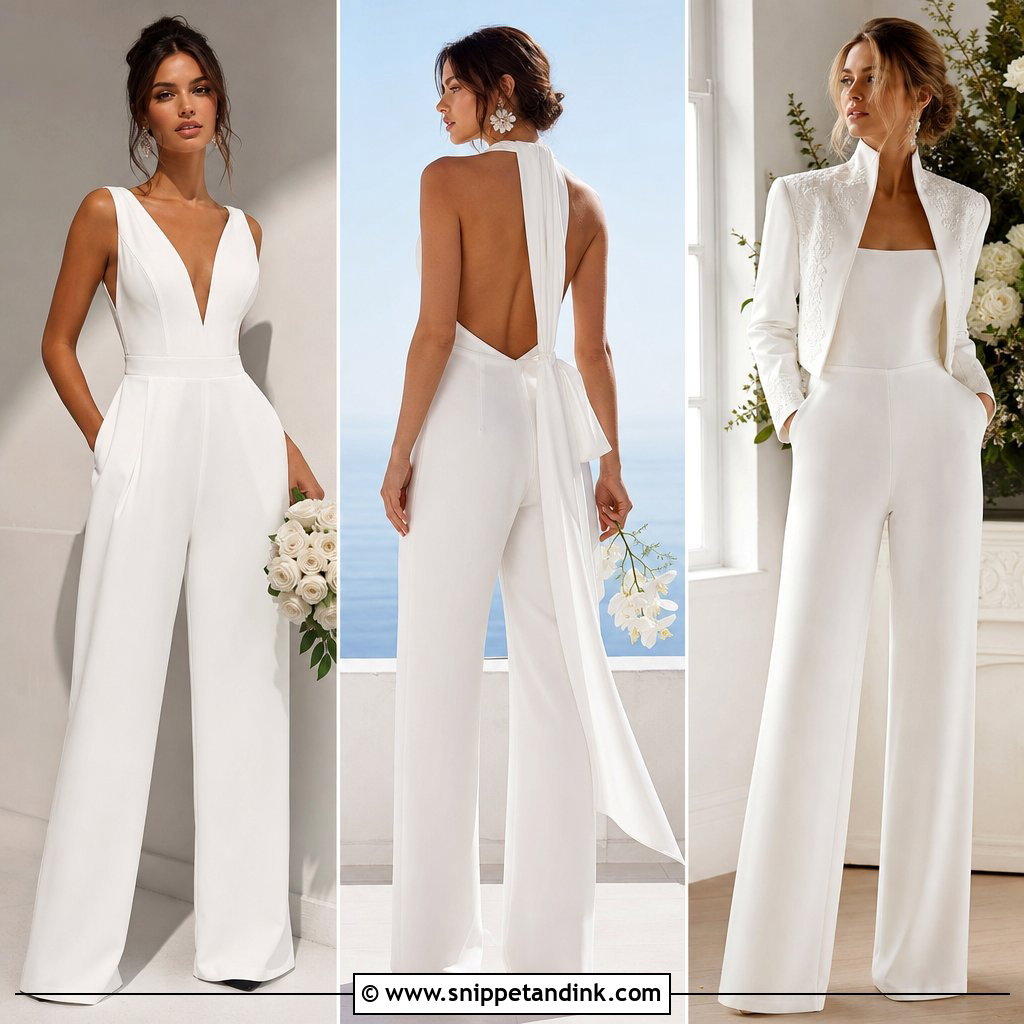
A cape wedding jumpsuit gives you the drama of a train without the weight. The cape can attach at the shoulders, fall from the back or drape from one side. I prefer detachable versions, held on with hidden snaps or a hook, so the cape can come off before dinner, because capes catch on chairs and drag through food. Keep accessories minimal. The back view is the whole point, so make sure your photographer knows to catch you walking away.
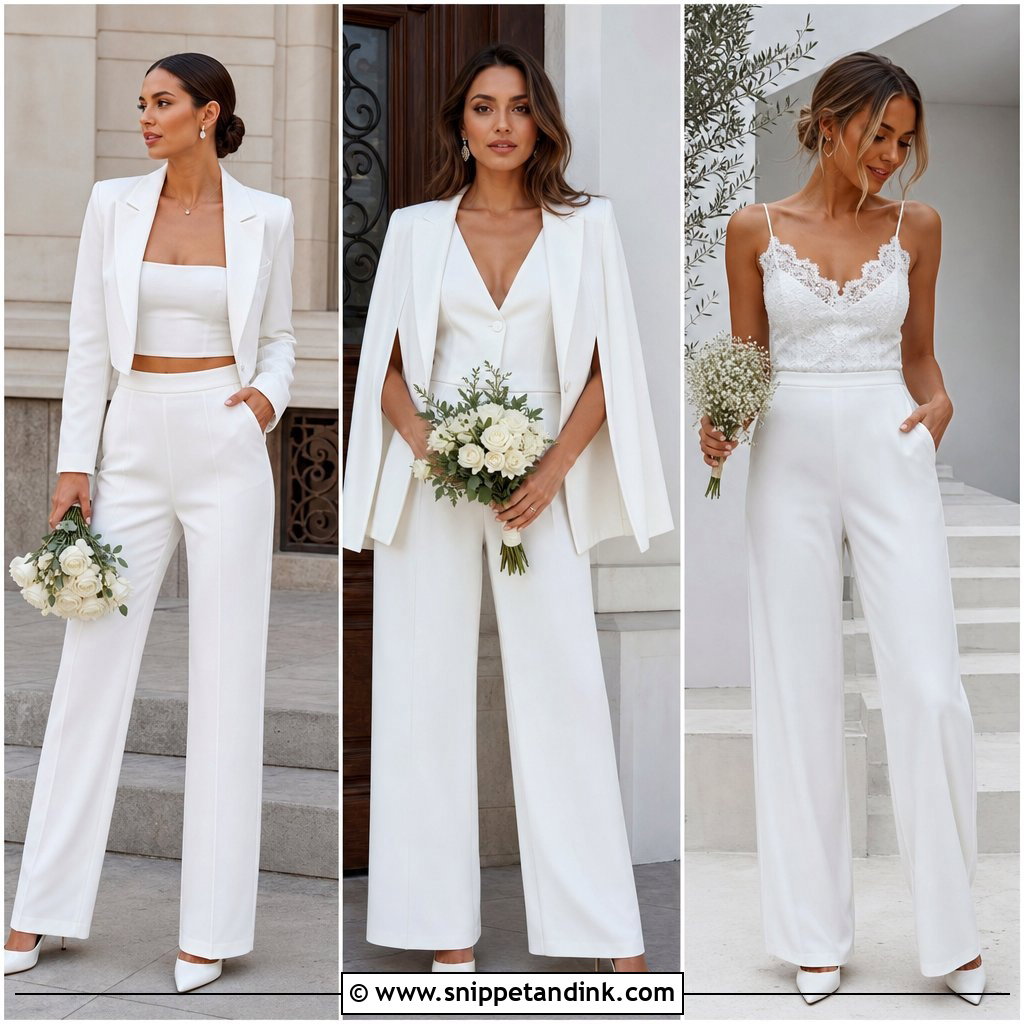

20. Wide Leg Wedding Jumpsuit
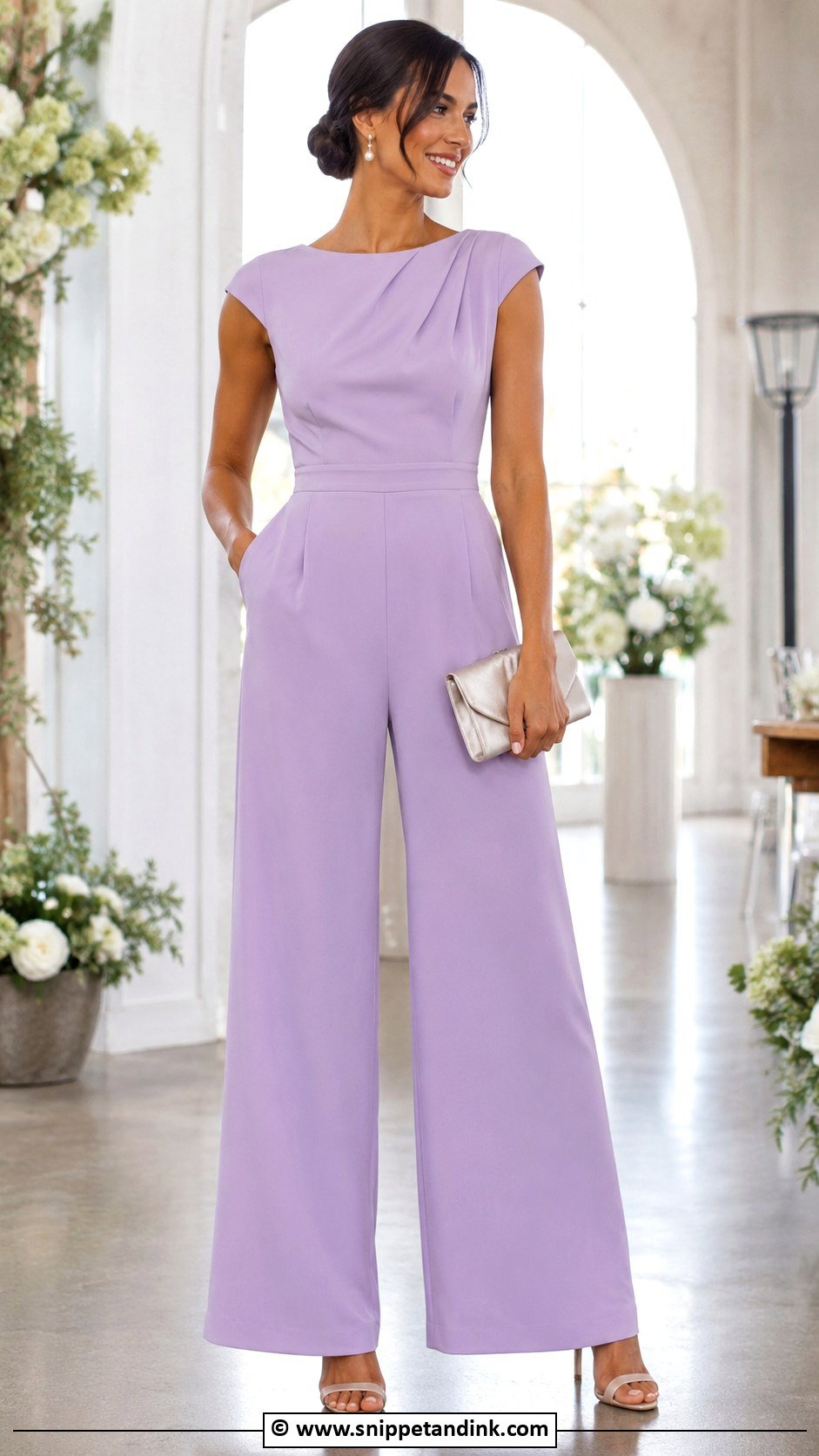
Wide legs are the closest thing to a gown in jumpsuit form, because the fabric moves as you walk. The fit has to be smooth through waist and hips before it opens out; any pulling across the seat shows instantly. Heels matter here more than with any other cut. They keep the hem off the floor and let the trousers hang straight. Ivory crepe, satin or lace for brides, florals and jewel tones for guests.
21. Chiffon Wedding Jumpsuit
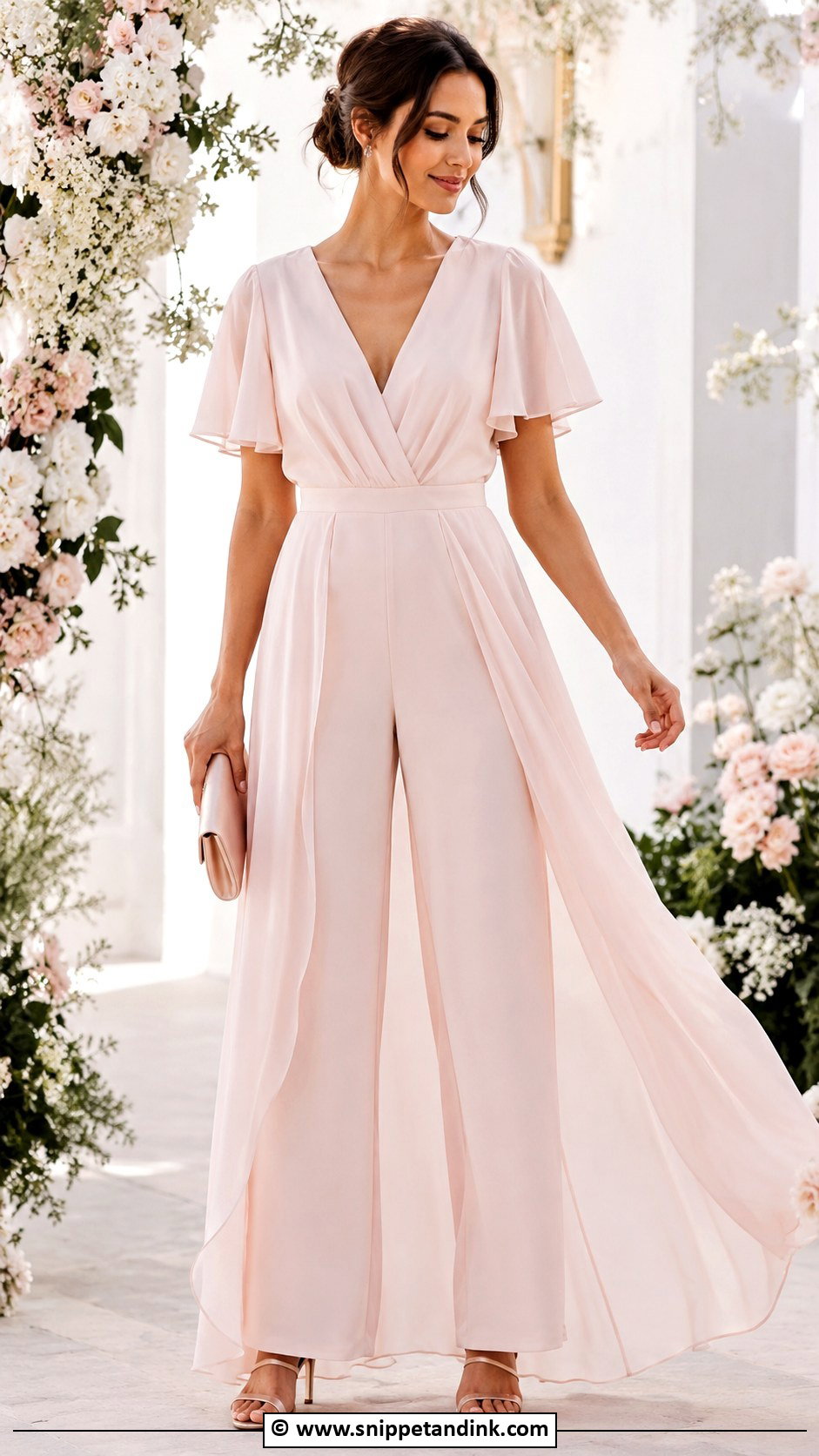
Chiffon brings air and movement, especially as overlay panels, flutter sleeves or a flowing leg. The catch is that chiffon is sheer and snags easily on jewellery and bouquet wire, so check the lining is full and comfortable and keep bracelets smooth. Blush, sage, lavender and navy all suit it. Delicate sandals and a satin clutch keep it light. It is a natural fit for garden and beach ceremonies in daylight.
22. Velvet Wedding Jumpsuit
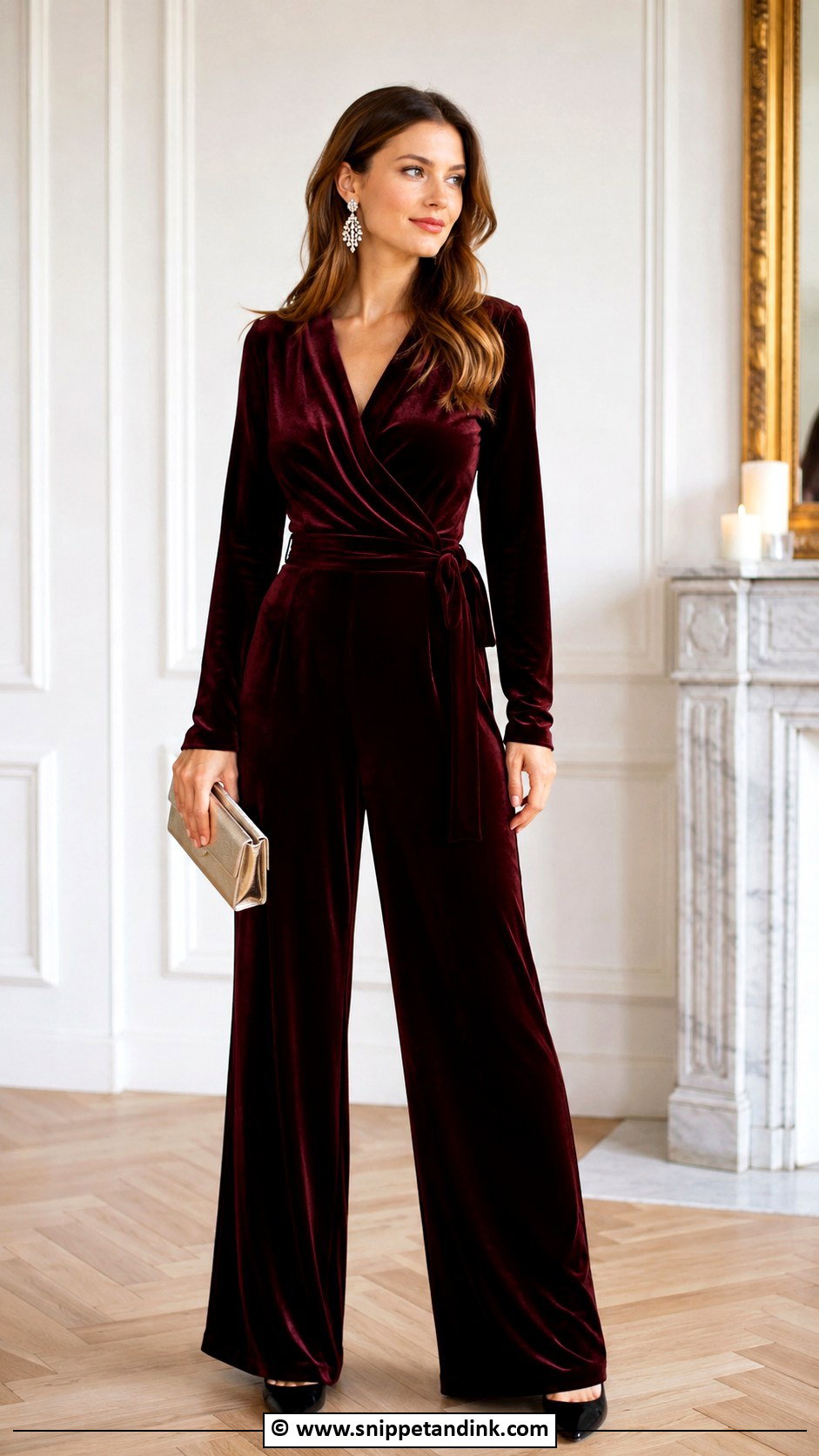
A velvet wedding jumpsuit is my favourite cold-weather option, but it is warm, so I only suggest it for autumn and winter venues. Velvet adds bulk, so a tailored cut with a defined waist matters more than usual. Emerald, burgundy, navy and black look richest. Velvet also marks if it is crushed, so hang it in a steamy bathroom rather than pressing it with an iron. A deep V or wrap bodice keeps it from feeling heavy.
23. Sequin Wedding Jumpsuit
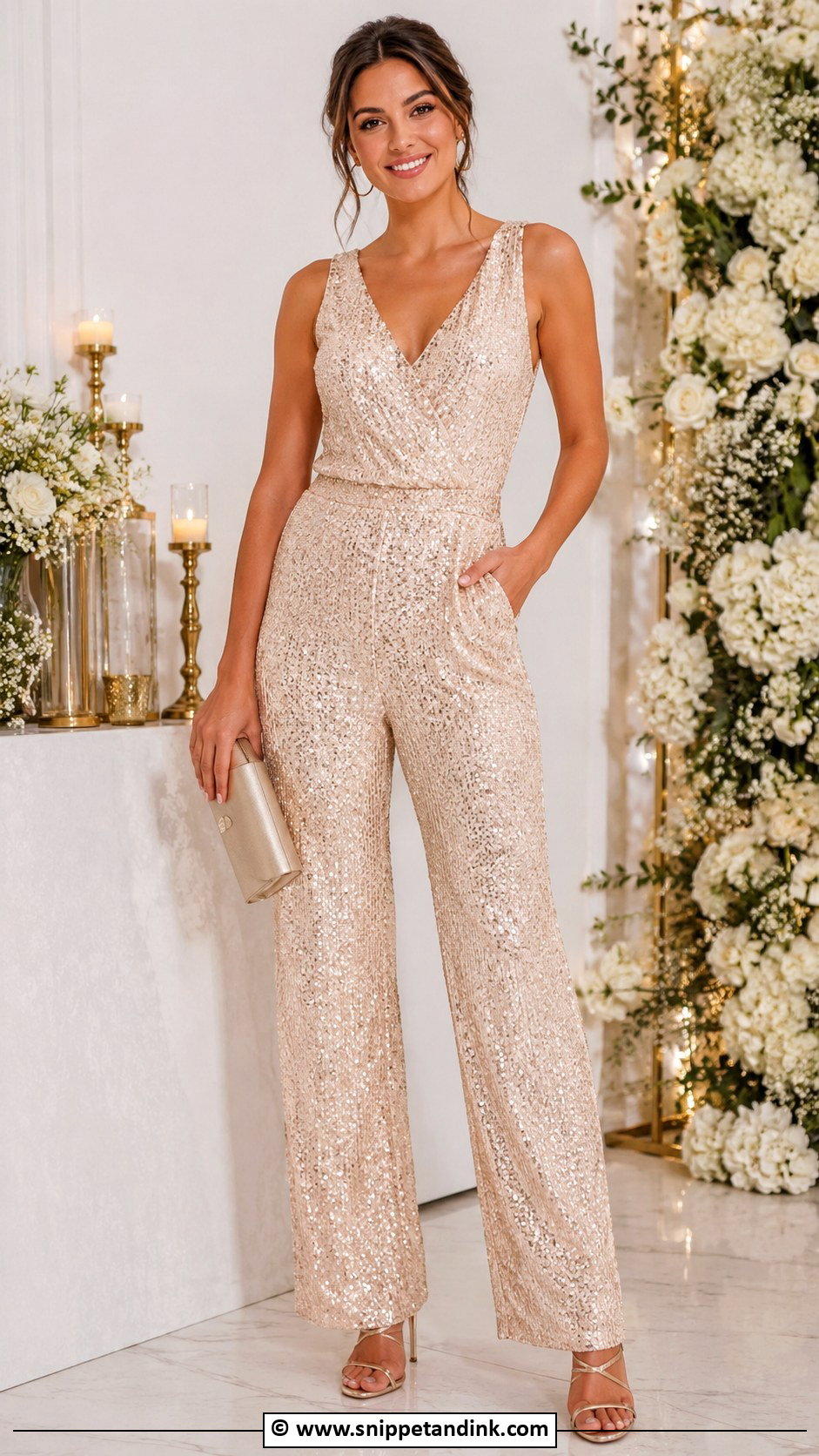
Sequins belong at receptions, after-parties and festive evening weddings. Keep the cut simple, straight or wide leg, because the fabric already carries all the attention. Champagne, silver, black and navy are the easiest shades. Check the inside seams before you commit: sequins can scratch the underarms and inner thighs over a long night, and a soft lining makes all the difference. Brides can wear ivory sequins as a second look; guests should pick celebratory colours that stay clear of white.
24. Minimal Wedding Jumpsuit
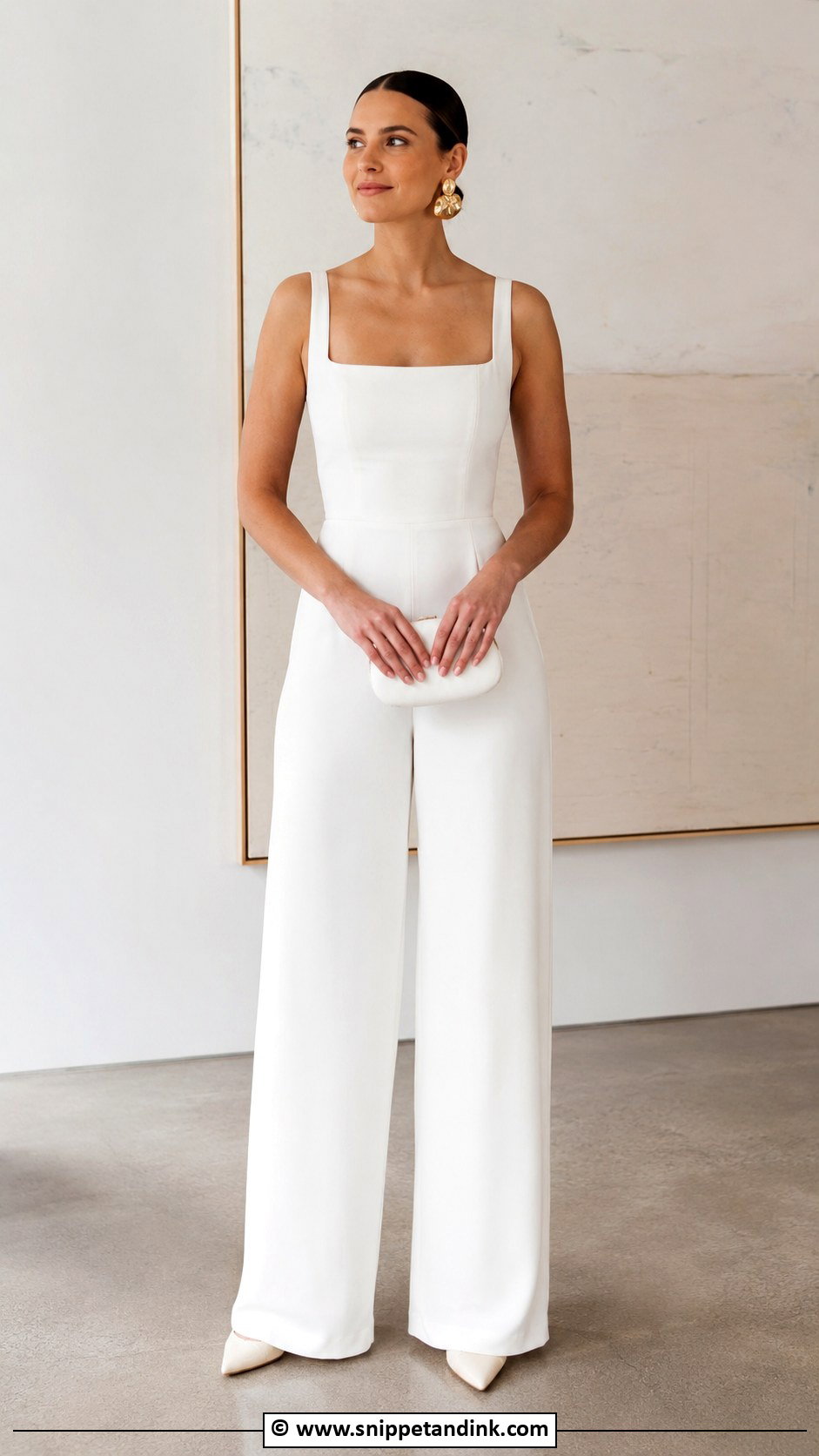
Minimal jumpsuits are the hardest to get right because there is nothing to distract from fit. Every pull line, every puckered seam shows. So I’d spend the money on tailoring here rather than embellishment. A square neck, high neck or strapless cut in crepe or structured satin, sculptural earrings and a smooth clutch. Ivory for brides, black or navy for formal guests, soft neutrals in daylight.
25. Boho Wedding Jumpsuit
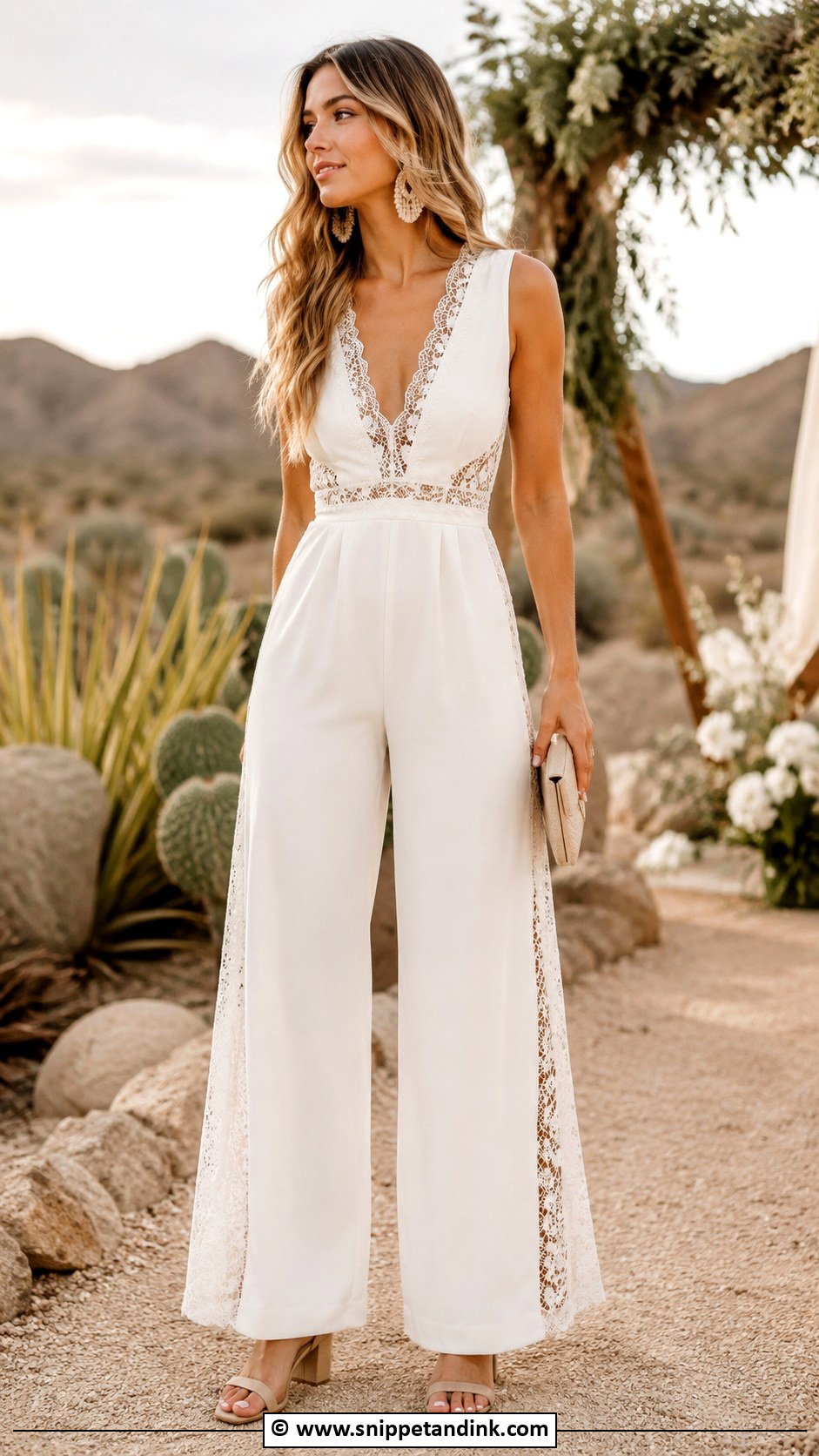
Boho jumpsuits lean on texture: lace inserts, crochet details, flutter sleeves and a soft wrap shape. The risk is tipping into costume, which happens when every accessory is also boho. Choose one textured element and keep the rest quiet. Ivory works for a bride, earthy tones and muted florals for guests. Block-heel sandals handle uneven outdoor ground, and loose waves or a low braid suit the mood.
26. Modern Wedding Jumpsuit
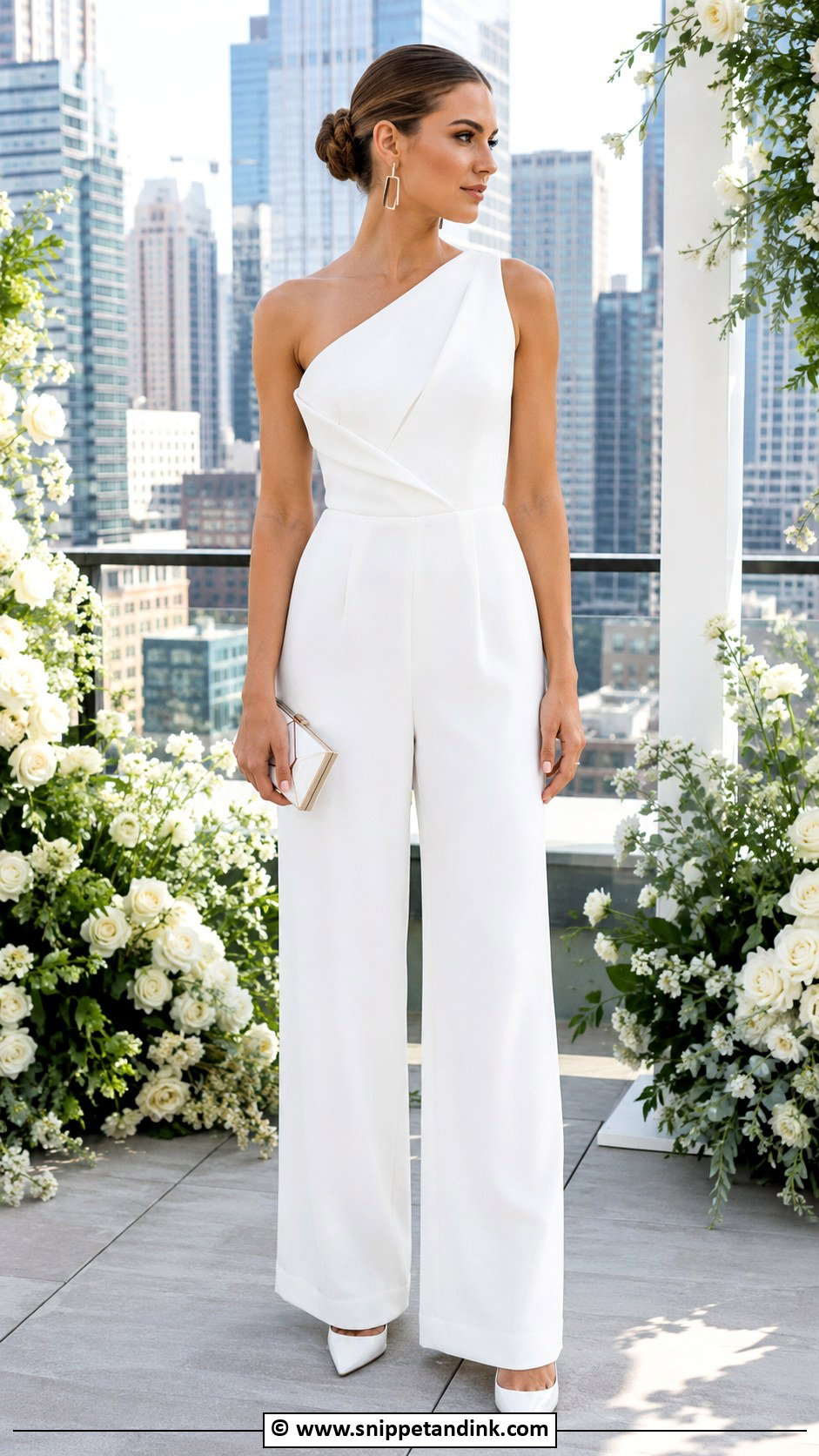
Architectural shapes, a sculpted bodice, a square or one-shoulder neck, a straight or wide leg, make a modern jumpsuit read like fashion rather than occasionwear. Crepe is the fabric for it because it holds a crisp line. Bright white or ivory for brides; black, cobalt or deep green for guests. Keep hair smooth or pulled back so the neckline stays visible. It suits gallery and rooftop venues.
27. Bridesmaid Wedding Jumpsuit
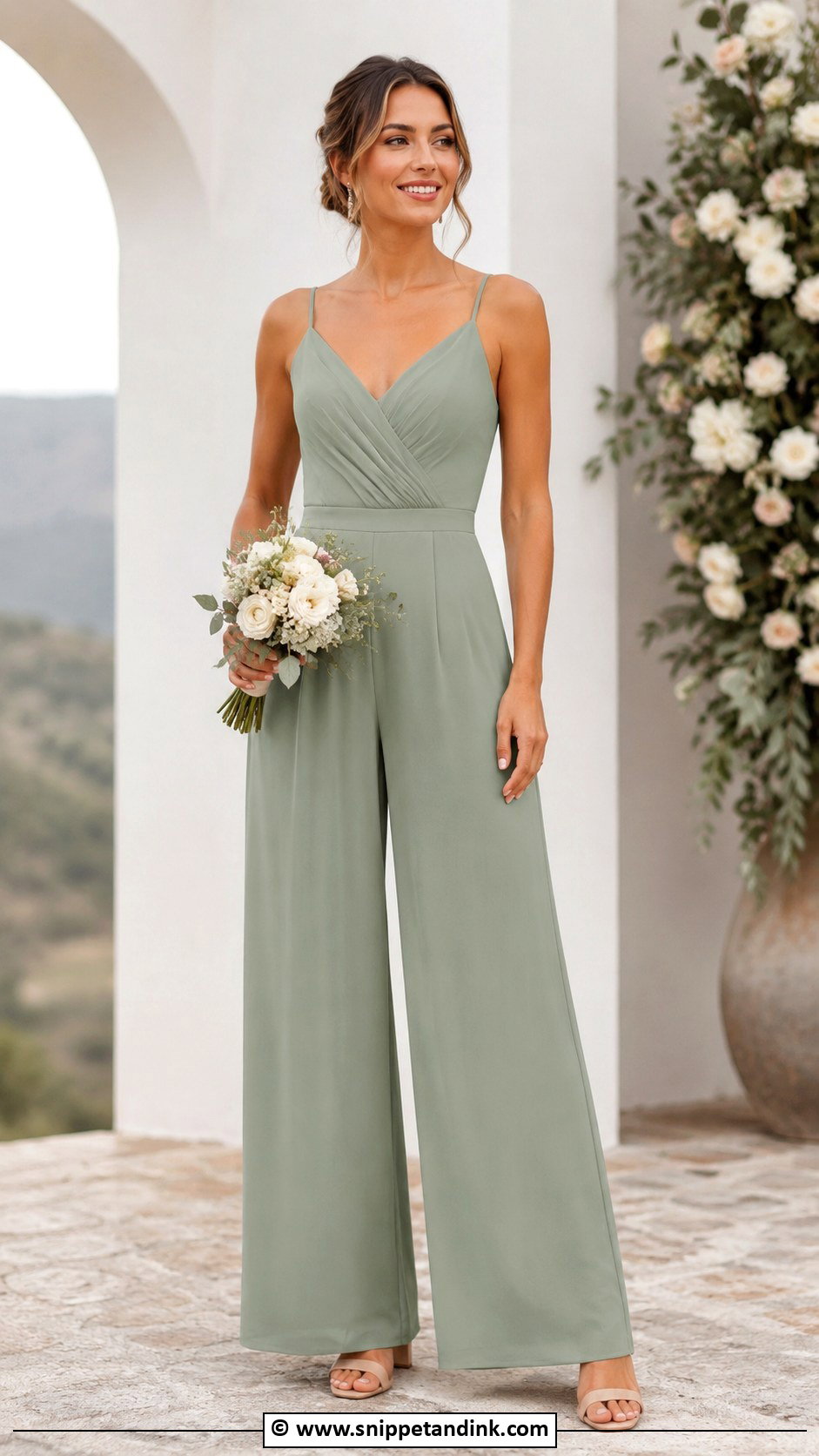
When I style a bridesmaid group in jumpsuits, I fix the fabric and leg shape first and let necklines vary. That keeps the line consistent in photos while letting each person choose a cut she is comfortable in. Sage, dusty blue, champagne, mauve and terracotta all read well side by side. Order early, because jumpsuits need more alterations than dresses, and every bridesmaid will need hems adjusted to her own shoes.
28. Mother Of The Bride Wedding Jumpsuit
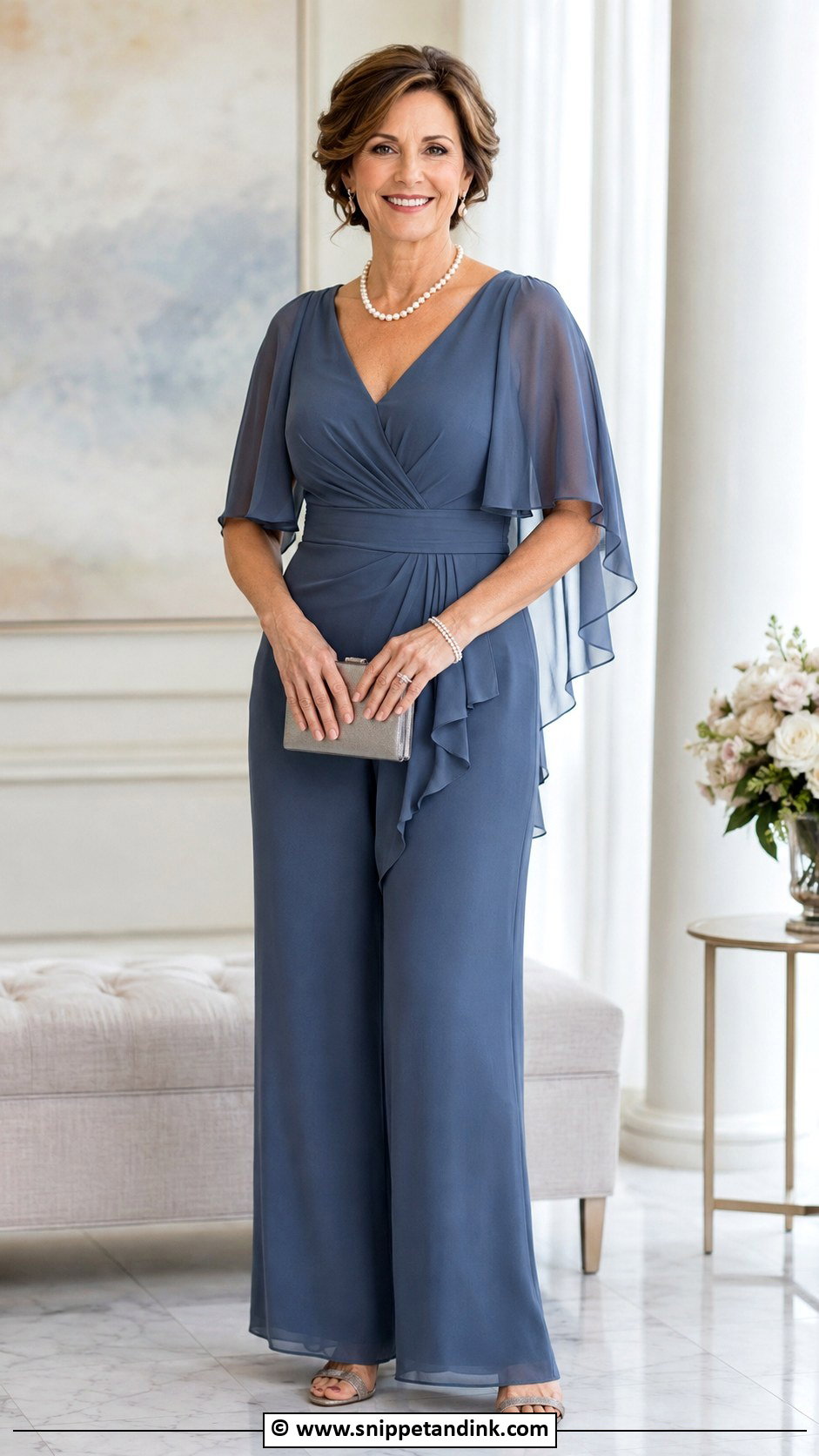
Mothers of the bride often tell me they want comfort and coverage without looking matronly. Crepe, chiffon, satin or soft jacquard all hold shape well. A wrap bodice, cape sleeve or long sleeve gives grace without fuss. Navy, champagne, slate blue and deep green are safe and flattering. Supportive heels matter since she will be on her feet greeting guests for hours, and a soft jacket or shawl gives coverage for church and evening.
29. Casual Wedding Jumpsuit
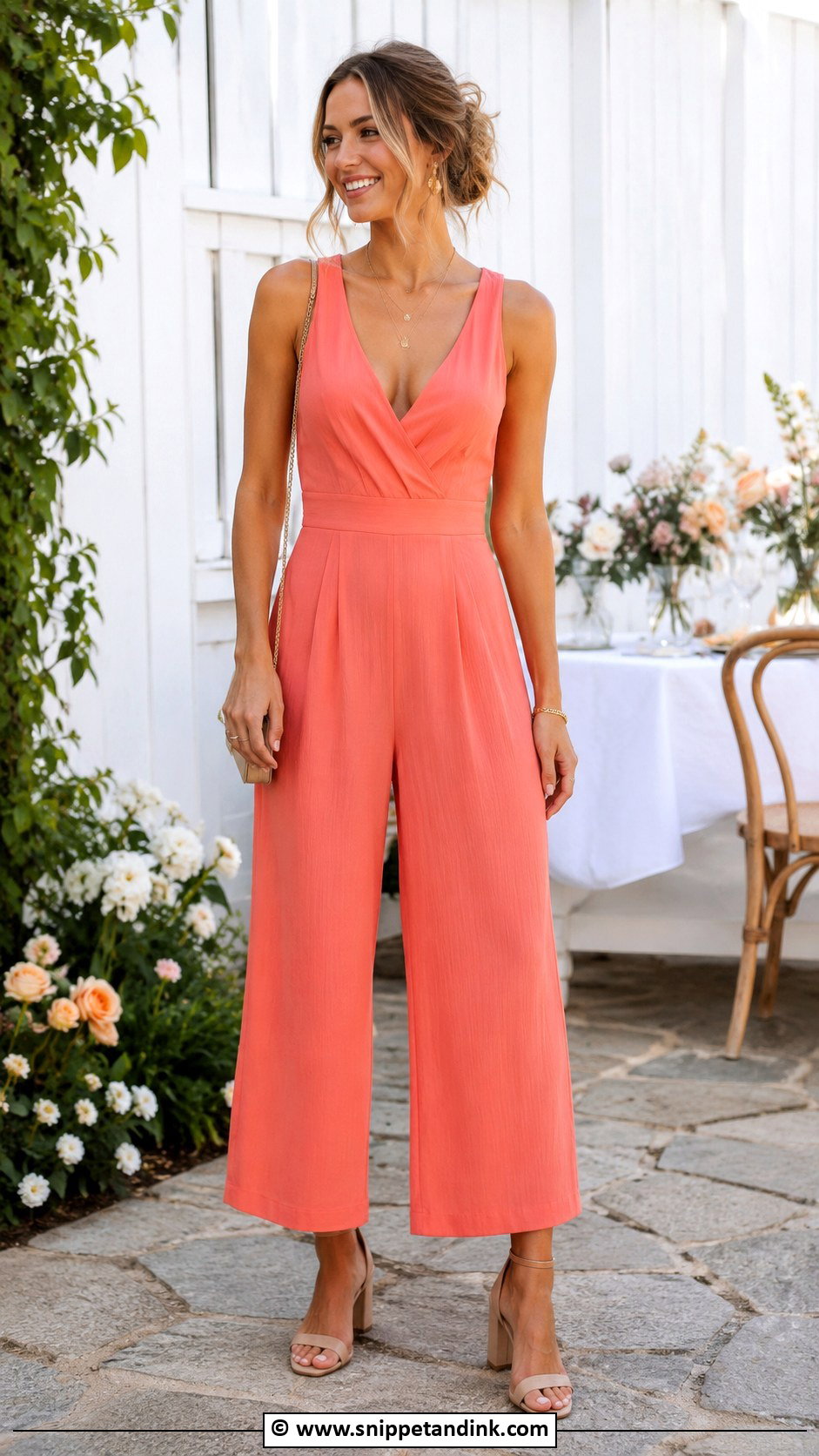
Casual does not mean careless. I’ve seen guests turn up in jumpsuits that looked like they came from the office or the sofa, and that is the line to avoid. A cropped wide leg in linen blend, cotton sateen or soft crepe, worn with block heels and a small shoulder bag, hits the right note for a backyard or daytime party. A light blazer gives you a bit more polish if you suspect the dress code is more relaxed on paper than in practice.
30. Summer Wedding Jumpsuit
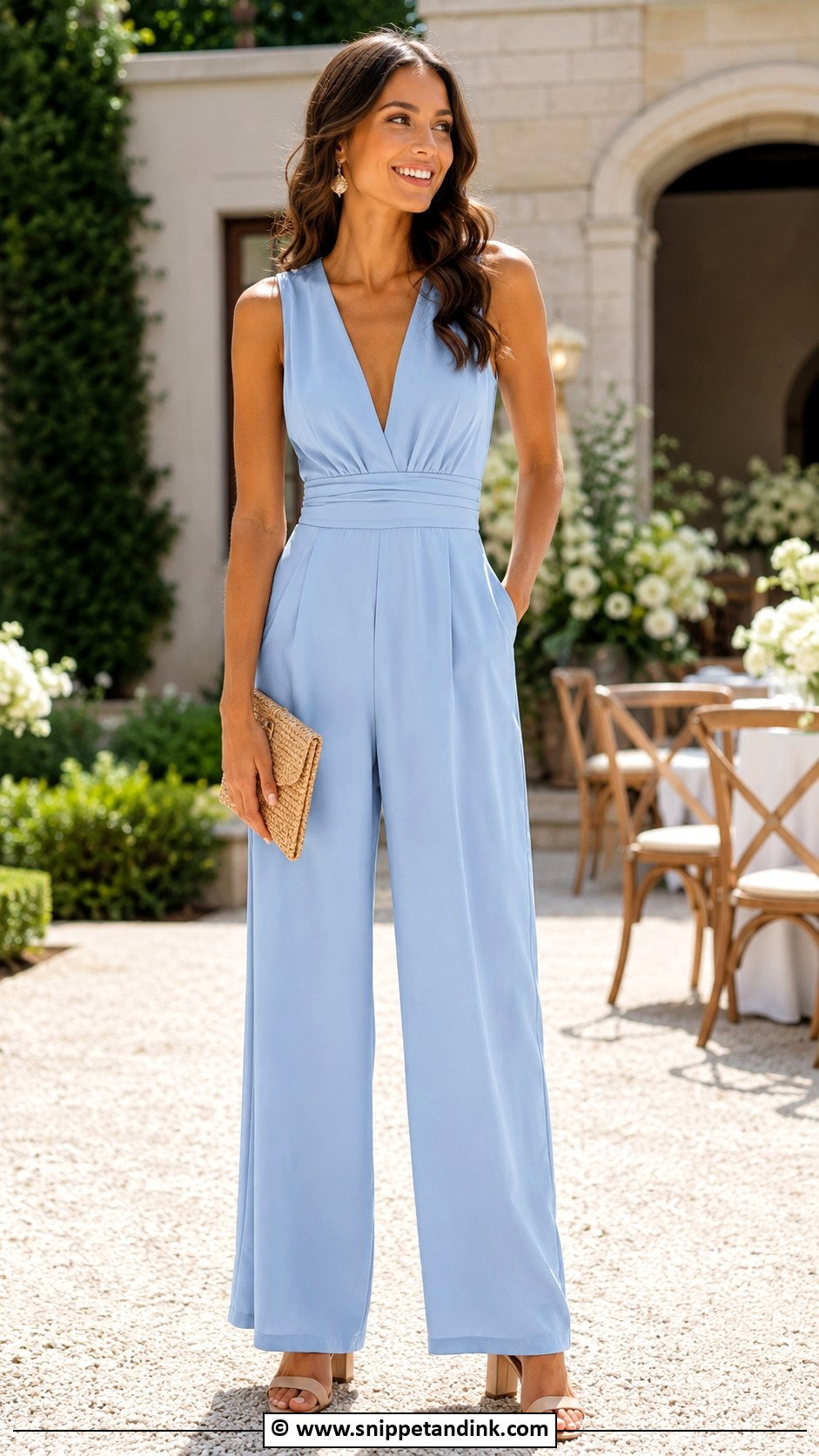
Heat is the real test for a summer wedding jumpsuit. Polyester satin traps heat and shows sweat marks; linen blends, cotton and light crepe breathe. Sleeveless, halter, strapless or flutter-sleeve cuts let air move. Coral, butter yellow, sky blue and soft florals feel right for the season. Block-heel sandals and light jewellery keep you comfortable, and an ankle-length hem stays clean outdoors.
Bathroom Trips, Zips and Underwear: The Unglamorous Part
Every bride asks me the same quiet question about jumpsuits, and it’s a fair one. You will need to take most of it off to use the bathroom, so the fastening matters more than the neckline. A side zip or a front zip you can reach yourself is far easier than a long back zip with a hook and eye at the top. If yours does fasten at the back, decide in advance who comes with you, and practise the zip together once before the wedding.
Underwear deserves a fitting of its own. Satin and jersey show every line, so laser-cut briefs with no edge seams in a shade close to your skin tone are the safest choice; white underneath ivory crepe often shows through in flash photography. Strapless and halter styles may need adhesive cups or a built-in bra, and boned bodices sometimes need nothing at all. Wear the whole set at your last fitting so the tailor sees exactly what you’ll have on.
What goes in the small bag on the day
- Double-sided fashion tape for necklines and wrap fronts that start to gape.
- A few safety pins and a small sewing kit in your jumpsuit colour.
- A stain pen tested on a scrap of your fabric first, as some leave a ring on satin.
- Blister plasters, since jumpsuits push you toward heels that you might not usually wear for hours.
The night before, hang the jumpsuit by its inner loops rather than the straps so the weight of the legs doesn’t stretch the shoulders. Steam crepe and chiffon gently from the inside; keep the steamer moving on satin, which can water-spot if the nozzle spits.
A Jumpsuit Earns Its Place at the Fitting, Not the Checkout
Jumpsuits can be every bit as formal as a gown, but only when the fit is honest from shoulder to hem. For brides, ivory satin, lace, a cape or clean tailoring all carry a ceremony. Guests have far more room to play with print, colour and velvet. Whatever you pick, sit down in it, lift your arms in it and walk a flight of stairs in it before the wedding. If it passes those three tests, you’ll forget you are wearing it by the first dance.
You'll Like These Ideas:


Leave a Reply