
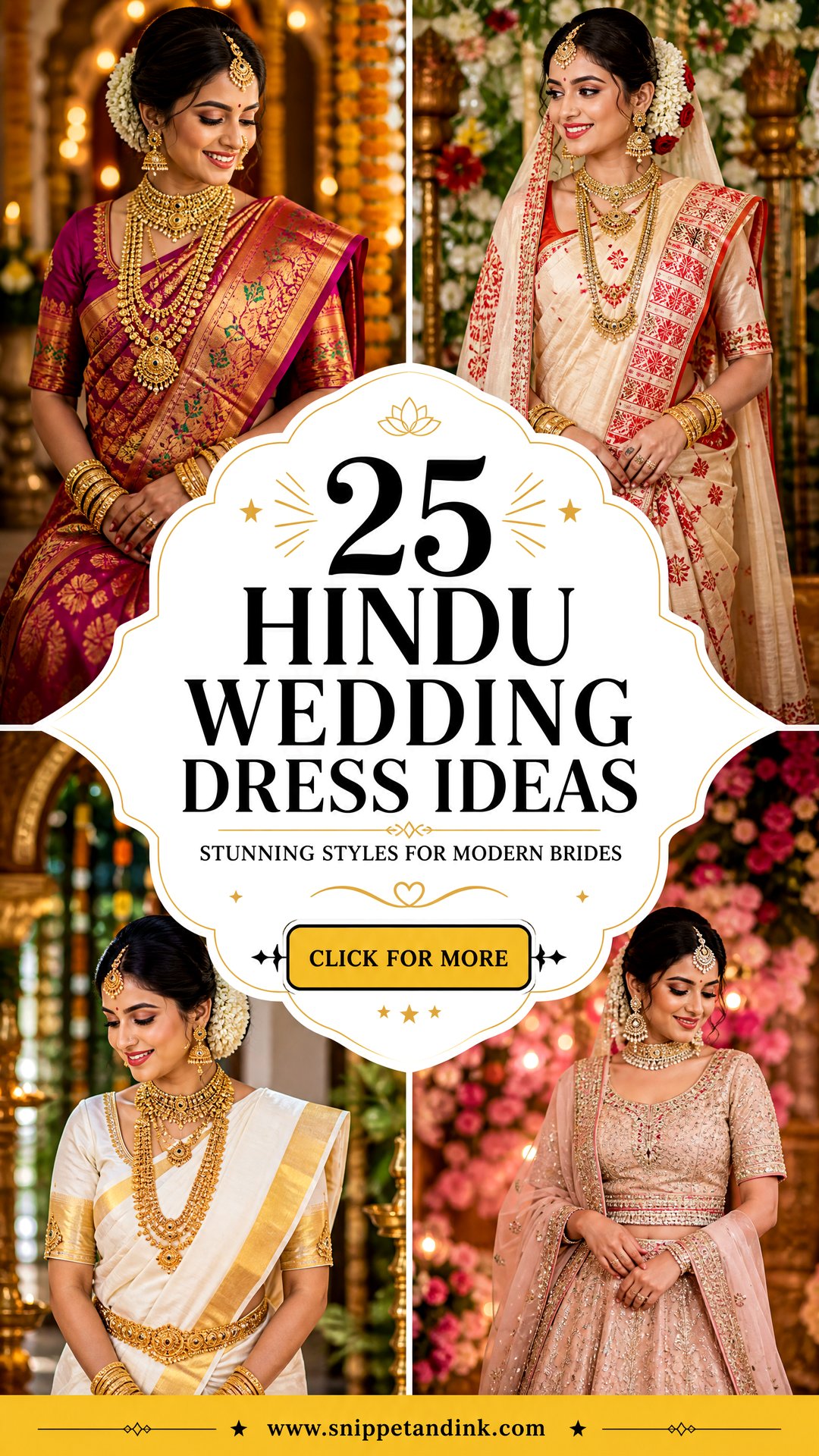
There is no single Hindu bridal outfit. A Bengali bride in a red-bordered saree, a Gujarati bride under a Gharchola and a Punjabi bride in a heavy lehenga are all dressed correctly for their own families, and that variety is the first thing I talk through with a client. After custom comes the practical side: hours of rituals, much of it seated, heat from the havan, heavy jewelry and a camera on you all day. Venue, season, ceremony length and how freely you need to move should all shape the choice. The 25 outfits below range from classic red to gold, pastels and regional textiles, with what I’d check before you commit to each.
Testing a Lehenga for Weight and a Long Seated Ceremony
The most common regret I hear about bridal lehengas is weight. Heavily embroidered skirts with a can-can underneath can be tiring to carry, and the pheras, the kanyadaan and the photographs that follow mean hours of standing, walking and sitting on a low seat. I ask brides to test for that before the outfit is finalized.
- Ask the maker roughly how heavy the finished lehenga will be, and where the weight sits. Embroidery concentrated at the hem pulls the skirt down; spread across the skirt, it rests on the hips.
- Request a waistband with a broad, firm fit, and side hooks or a drawstring you can loosen slightly after the ceremony.
- Sit cross-legged and on a low stool at the trial. The skirt should spread without the can-can pressing into your legs, and the blouse shouldn’t ride up.
- Wear the full jewelry set at one fitting. A heavy choker and a head dupatta change how the blouse sits and how much weight your neck carries.
- Leave time. Hand embroidery and fittings often take several months for a custom bridal piece, so order early rather than paying for a rush.
For a saree, the test is different. Have it draped by the person who will drape you on the day, then walk seven rounds of a room, kneel and stand up again. Loose pleats show up immediately.
1. Red Bridal Lehenga With Gold Jewelry
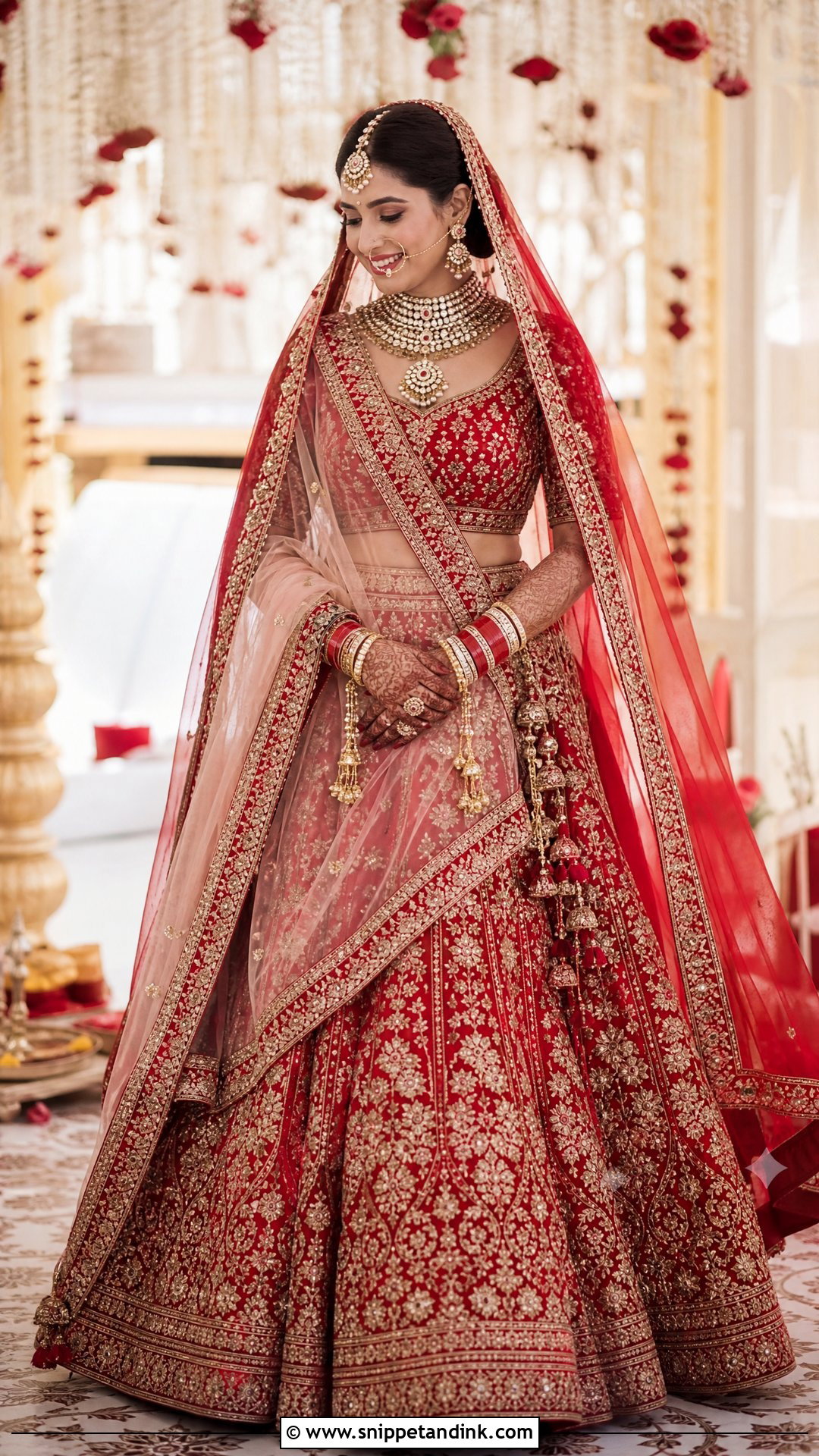
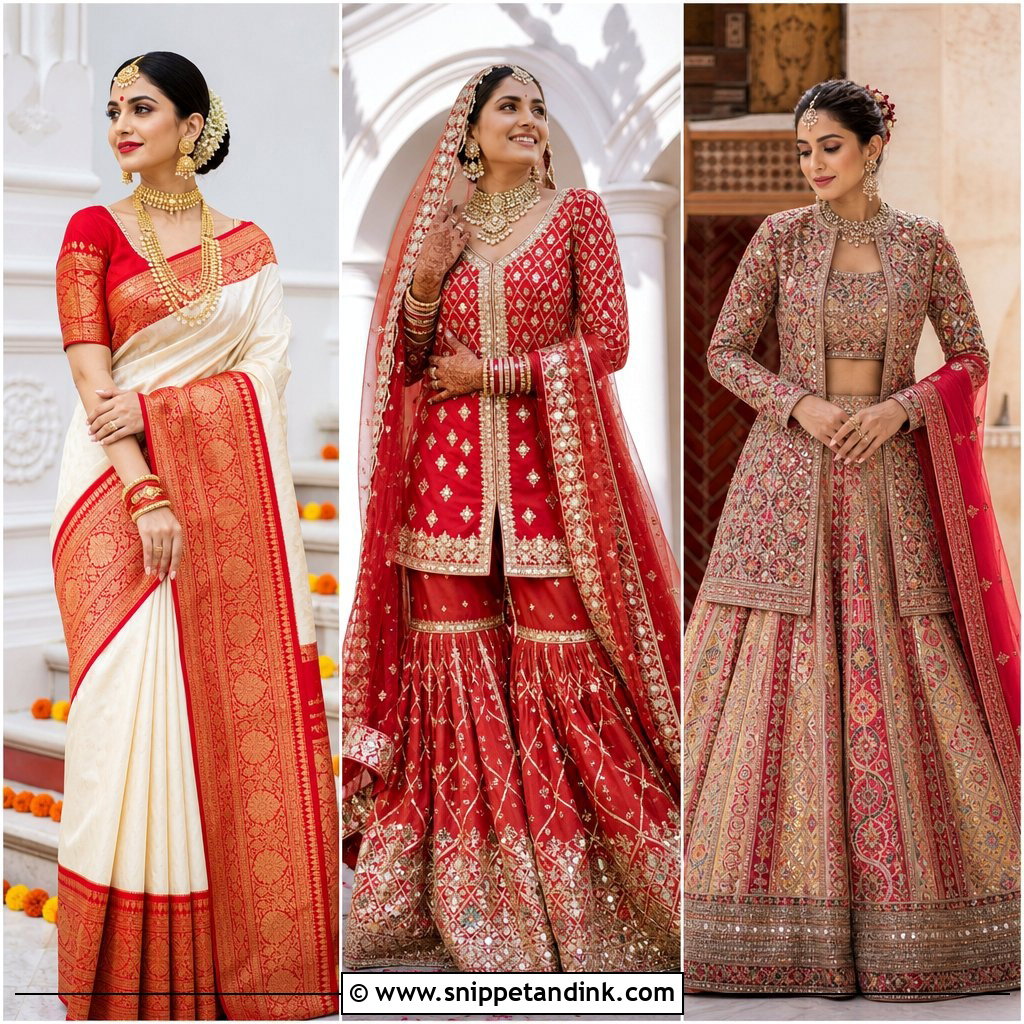
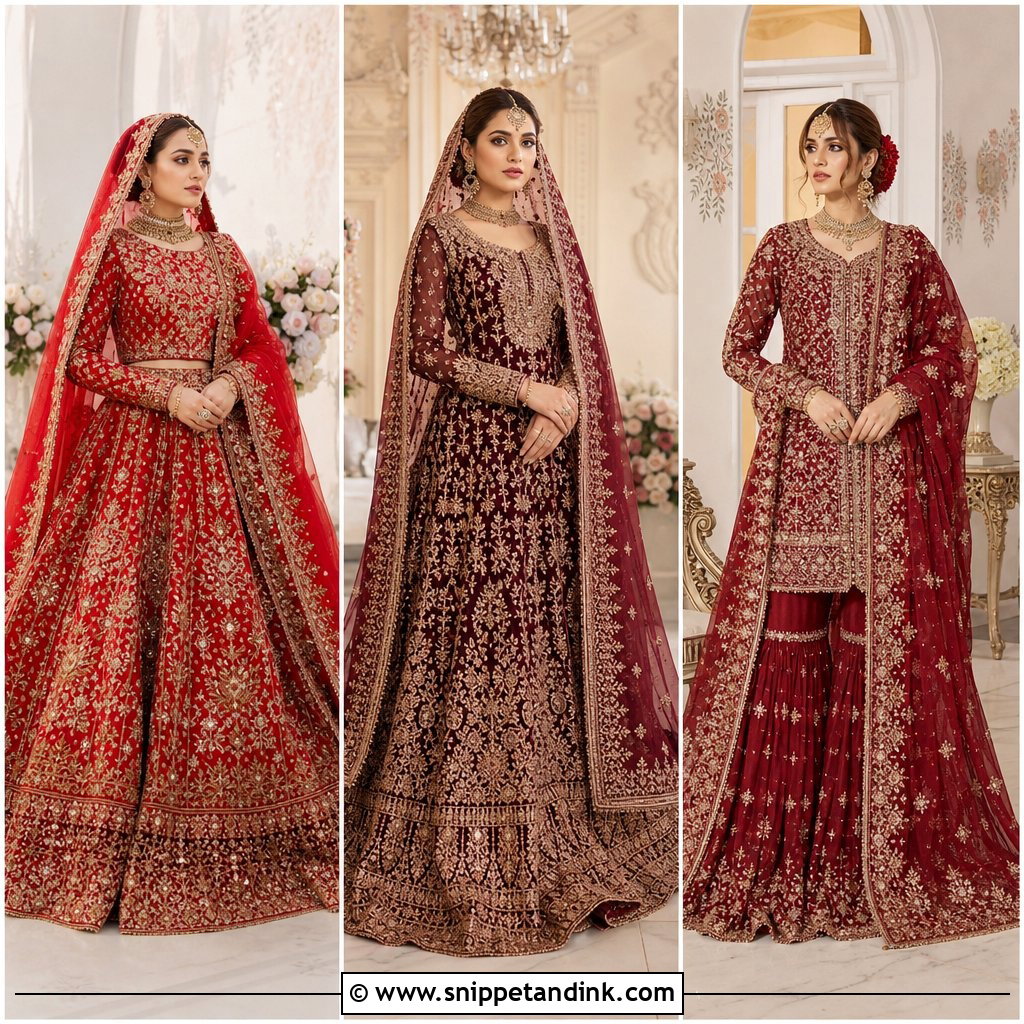
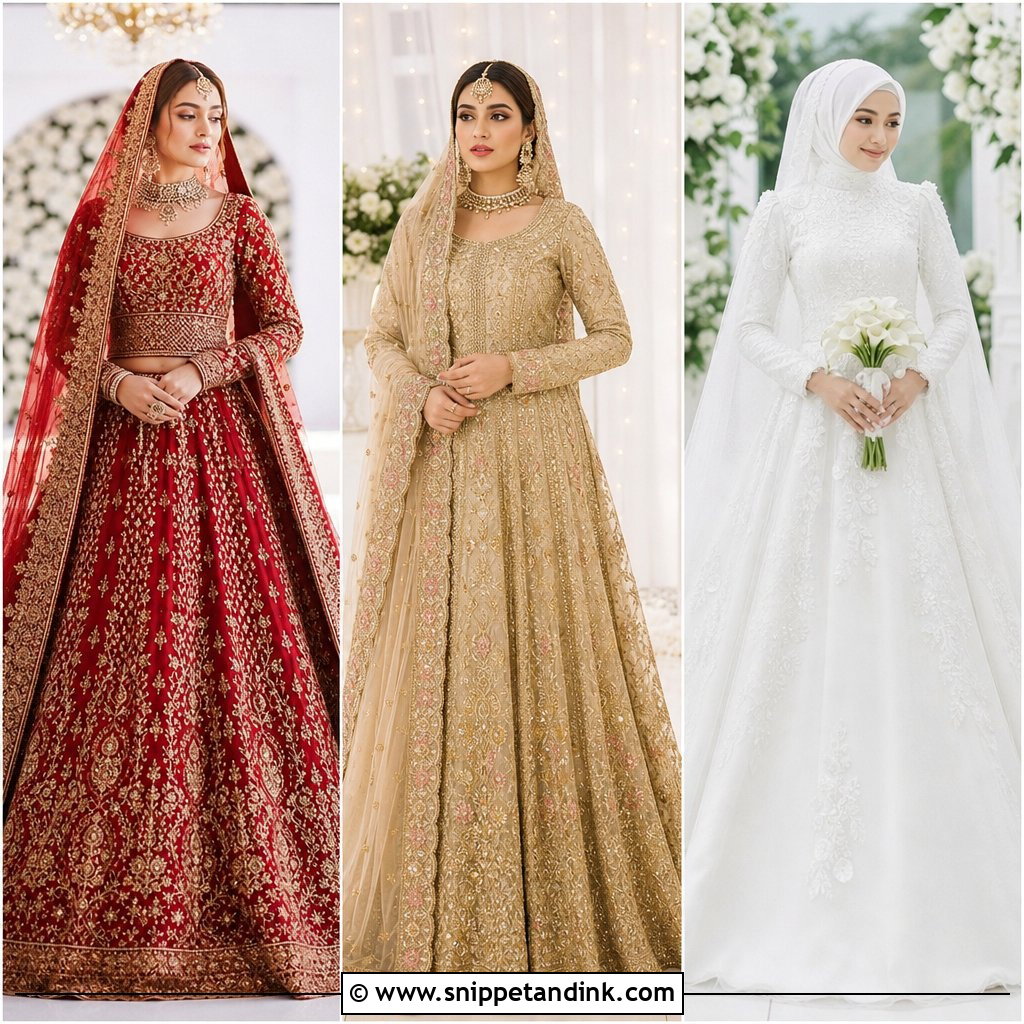
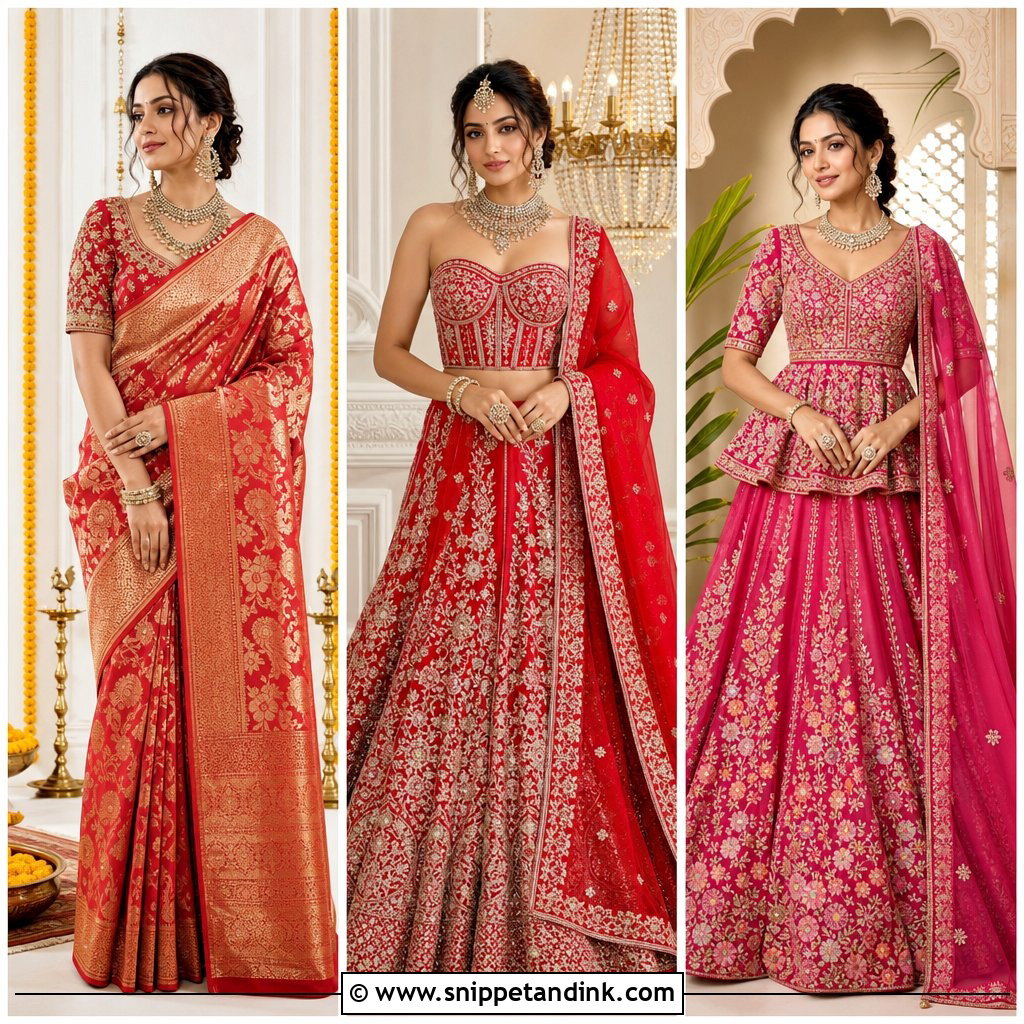
Red remains the color most families picture for the pheras, and a lehenga gives it the most drama. Choose a full skirt with zari, zardozi or resham embroidery, a fitted blouse and a coordinated dupatta; one dupatta over the head and a second across the shoulder gives the formal layered look. Heavy embroidery all over the skirt can be tiring to carry, so I often suggest dense work at the hem and a lighter upper skirt. Deep crimson suits evening ceremonies, brighter vermilion reads better in daylight. Have the blouse fitted with your jewelry on, since a heavy choker sits on the neckline and can drag it forward during seated rituals.
2. Maroon Velvet Bridal Lehenga
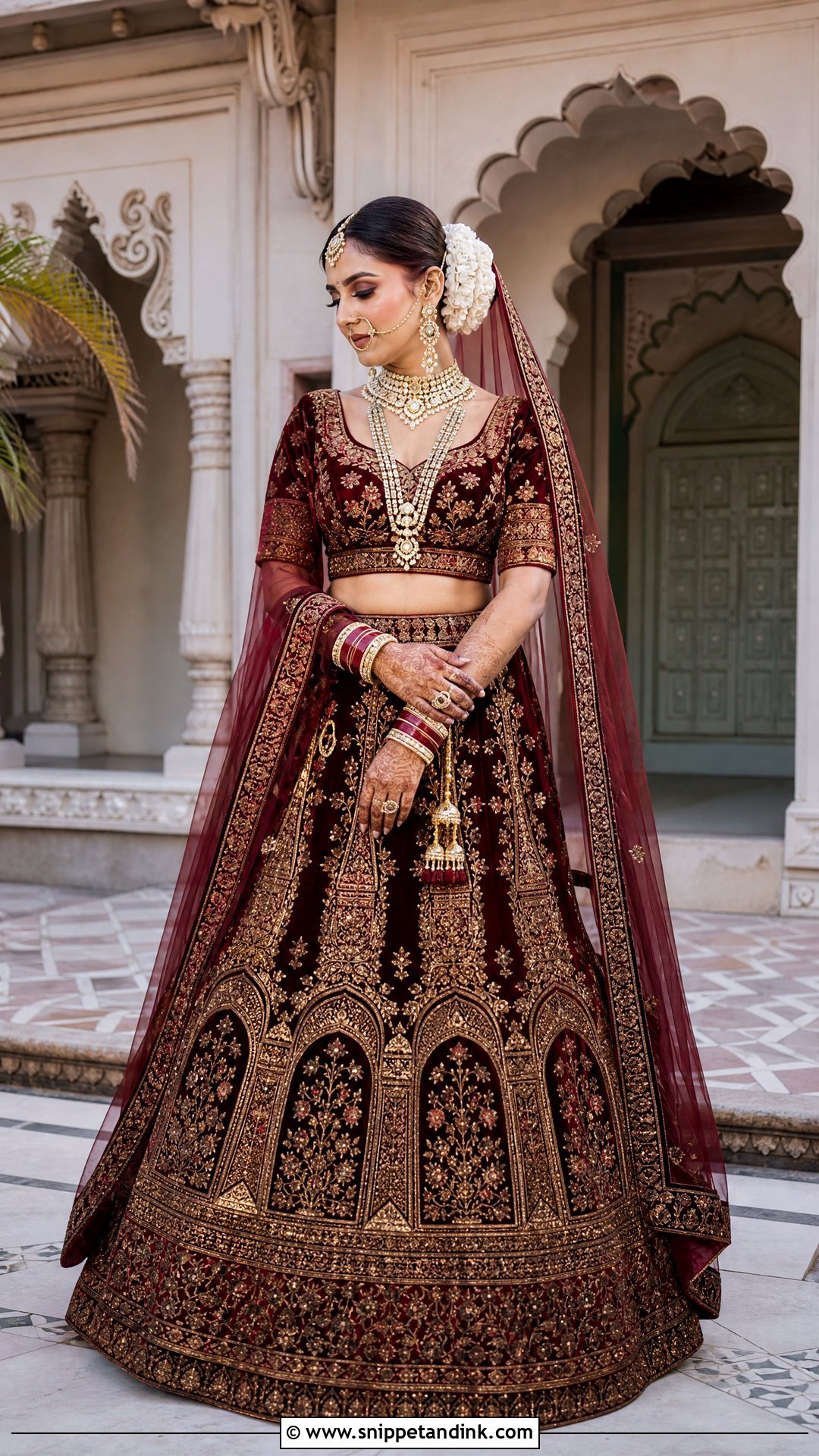
Velvet belongs to winter ceremonies. A maroon velvet lehenga with antique gold embroidery looks substantial before any decoration goes on, so a defined border, an embroidered blouse and a lightly worked dupatta are enough. Kundan jewelry, a traditional nath, stacked bangles and velvet or brocade juttis finish it. A low bun with fresh flowers keeps the neckline clear and sits neatly under a head dupatta. Velvet is warm and heavy, so ask for a breathable cotton lining and keep the can-can to one layer. Burgundy, oxblood and deep berry are richer alternatives to bright red.
3. Blush Pink Bridal Lehenga
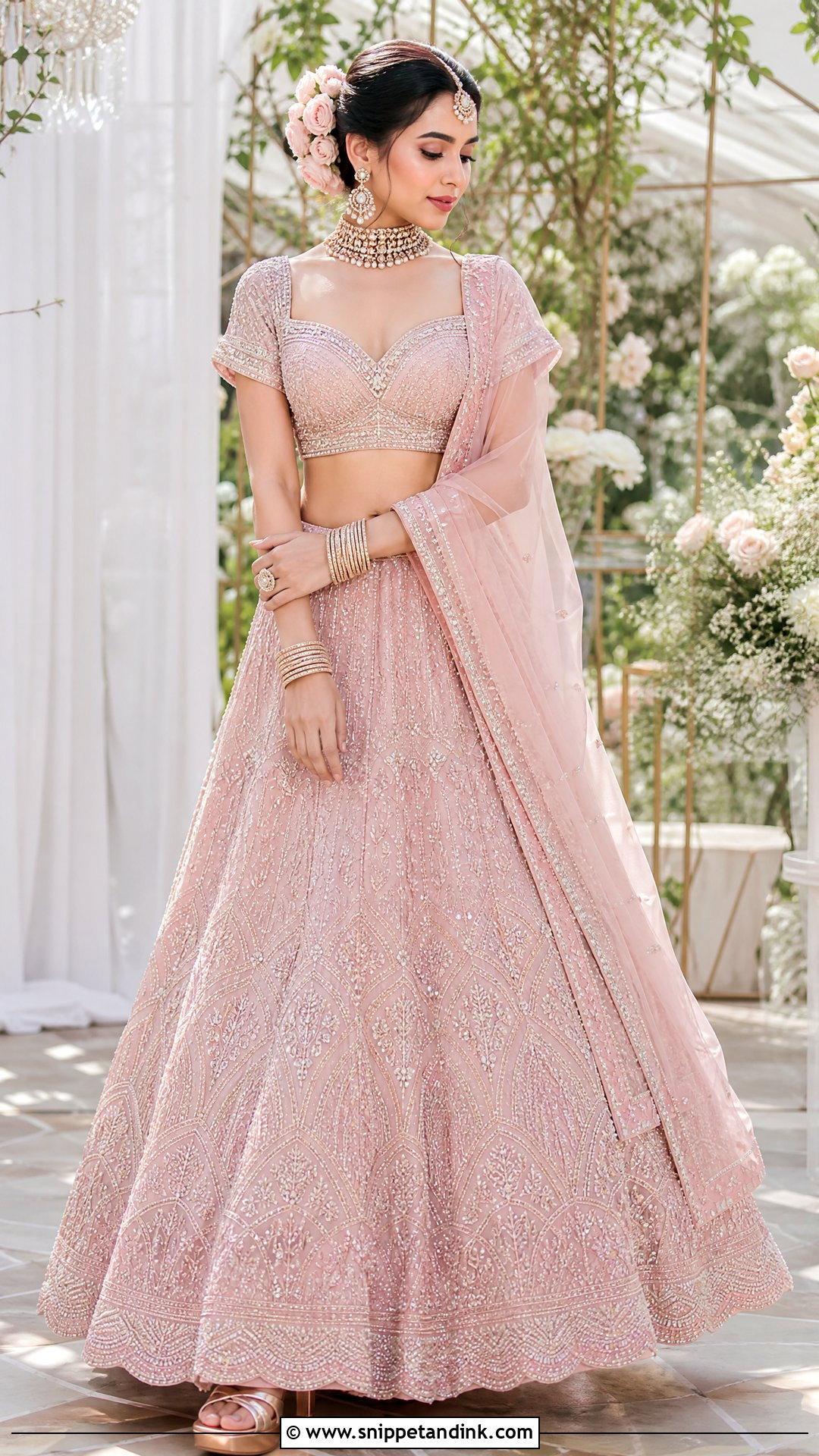
Blush suits garden, palace and daytime weddings. Choose a flowing lehenga with pearlwork, sequins or pale gold embroidery rather than strong contrasts, a structured blouse to give the soft color shape, and a sheer dupatta. Pale pink can look washed out on camera, so I look for embroidery with visible texture and a slightly deeper pink border to hold the outline in photos. Rose-gold heels, a potli and kundan or polki jewelry with blush stones finish it, and a brighter dupatta can bring in ceremonial color if the family prefers it.
4. Ivory And Gold Bridal Lehenga
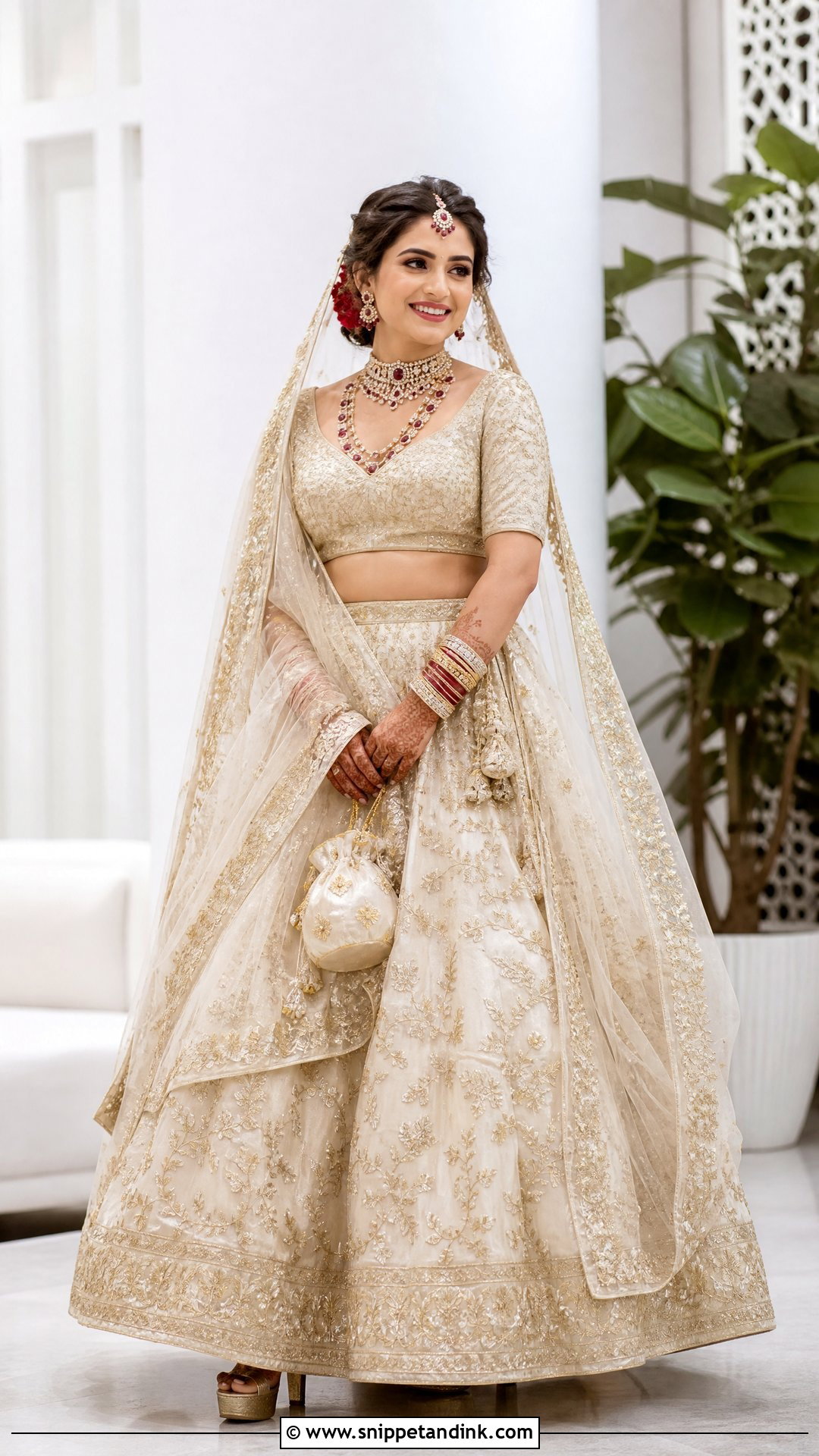
Ivory and gold look luminous indoors, but the outfit has to read as deliberate, not as a white gown borrowed from another tradition. Warm ivory with metallic threadwork, pearls or mirror accents does that, and ruby, emerald or multicolored jewelry brings back traditional warmth. Some families still prefer red for the ceremony itself; a red head dupatta, a maroon border or colorful bangles honor that easily. Pale fabric shows every seam and hook, so I insist on good lining and precise tailoring here. Gold platforms or cushioned juttis keep the palette consistent and support you through a long muhurat.
5. Emerald Green Bridal Lehenga
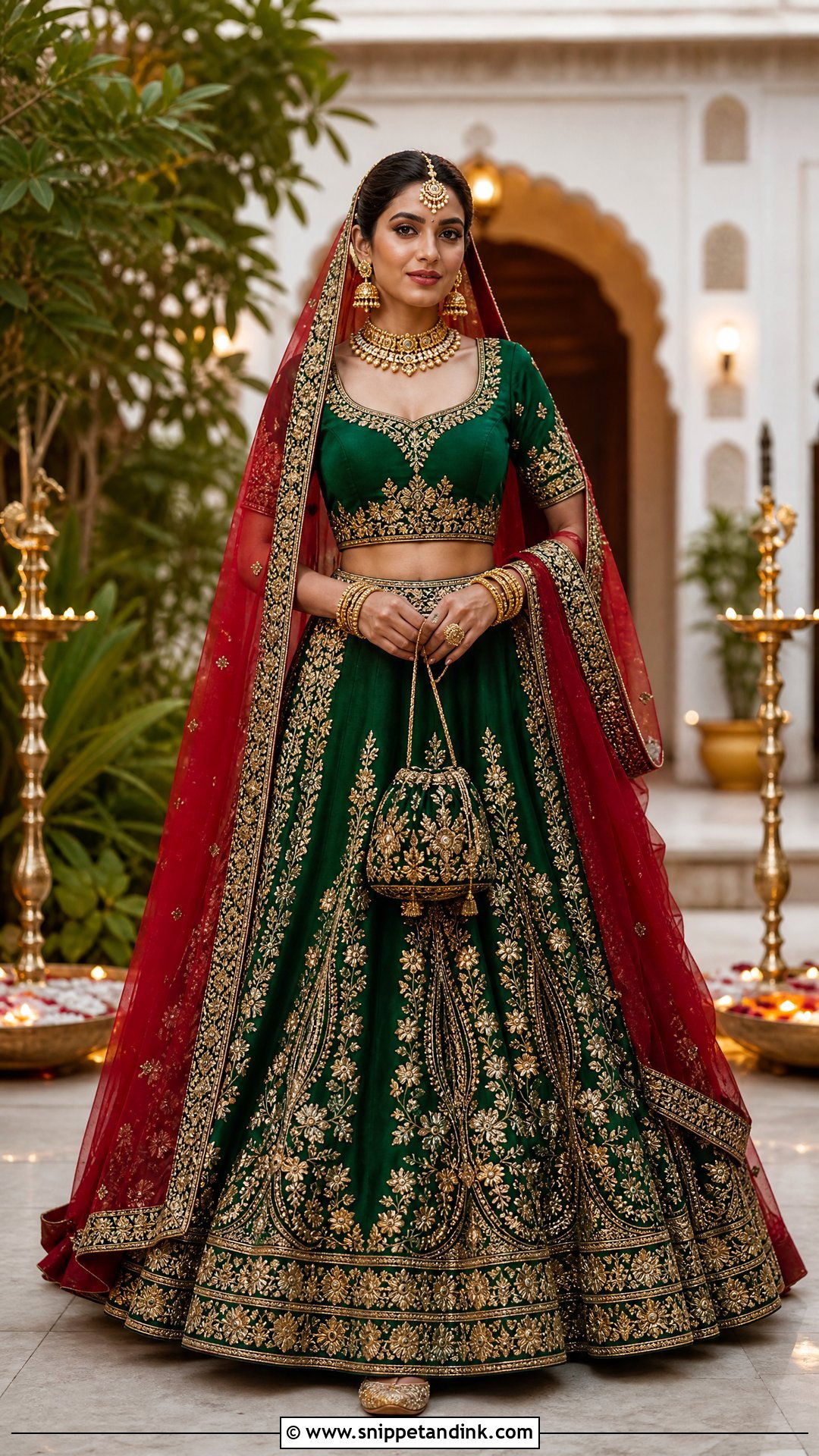
Emerald is regal without being red. Choose silk, raw silk or velvet with antique gold embroidery, and either a matching blouse or a red, rust or gold dupatta for ceremonial contrast. Temple jewelry, kundan or emerald-and-pearl pieces suit it, with gold juttis and a structured potli. Warm makeup with softly defined eyes and a berry or brick lip balances the cool green. Under evening lighting, dark green can swallow fine embroidery, so check that the gold work is bright enough to read from a few meters away. Sage with delicate threadwork is the lighter version.
6. Red And Orange Bandhani Lehenga
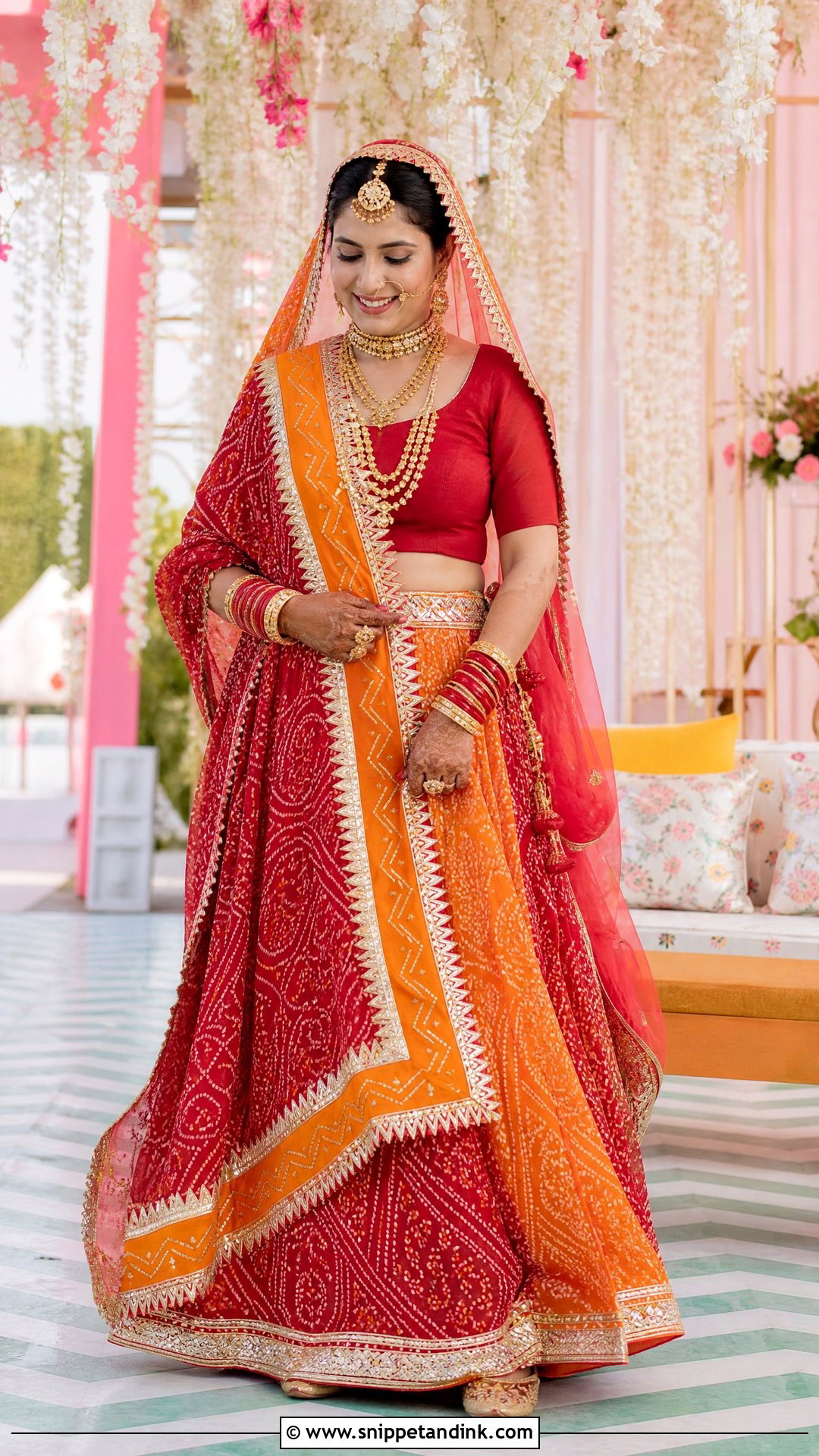
A red and orange Bandhani lehenga carries its own character in those tie-dyed dots. Use Bandhani on either the skirt or the dupatta, then pair it with a solid silk blouse so two patterns don’t fight. Gota patti borders, mirrors and gold trim add festivity without covering the dots. A borla-style maang tikka, layered necklaces, bangles and embroidered juttis complete it, and a braid or sleek bun anchors the head dupatta well. Real Bandhani is hand-tied and can bleed when damp, so keep it away from mehndi and wet hands on the day.
7. Red Banarasi Silk Saree
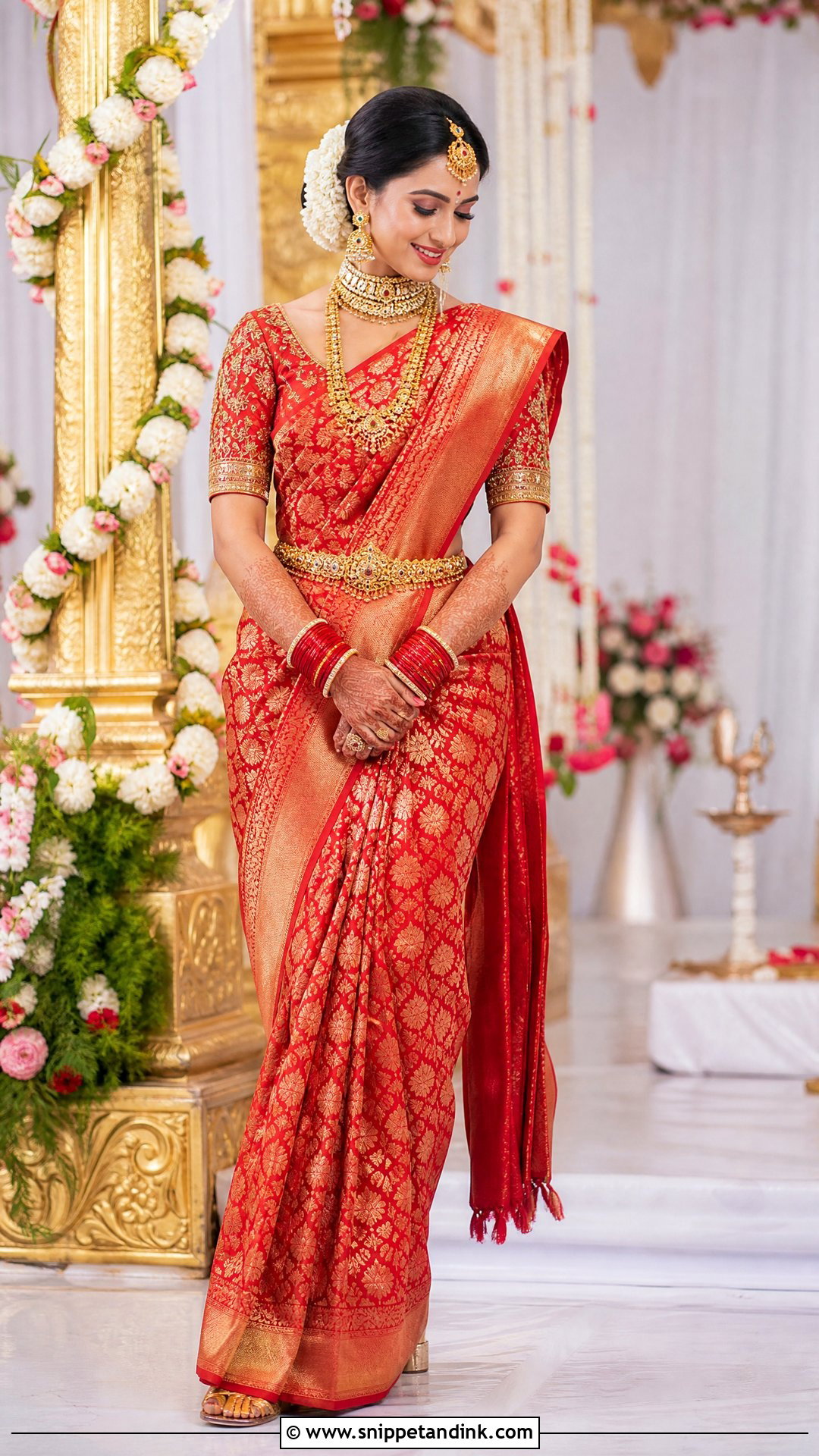
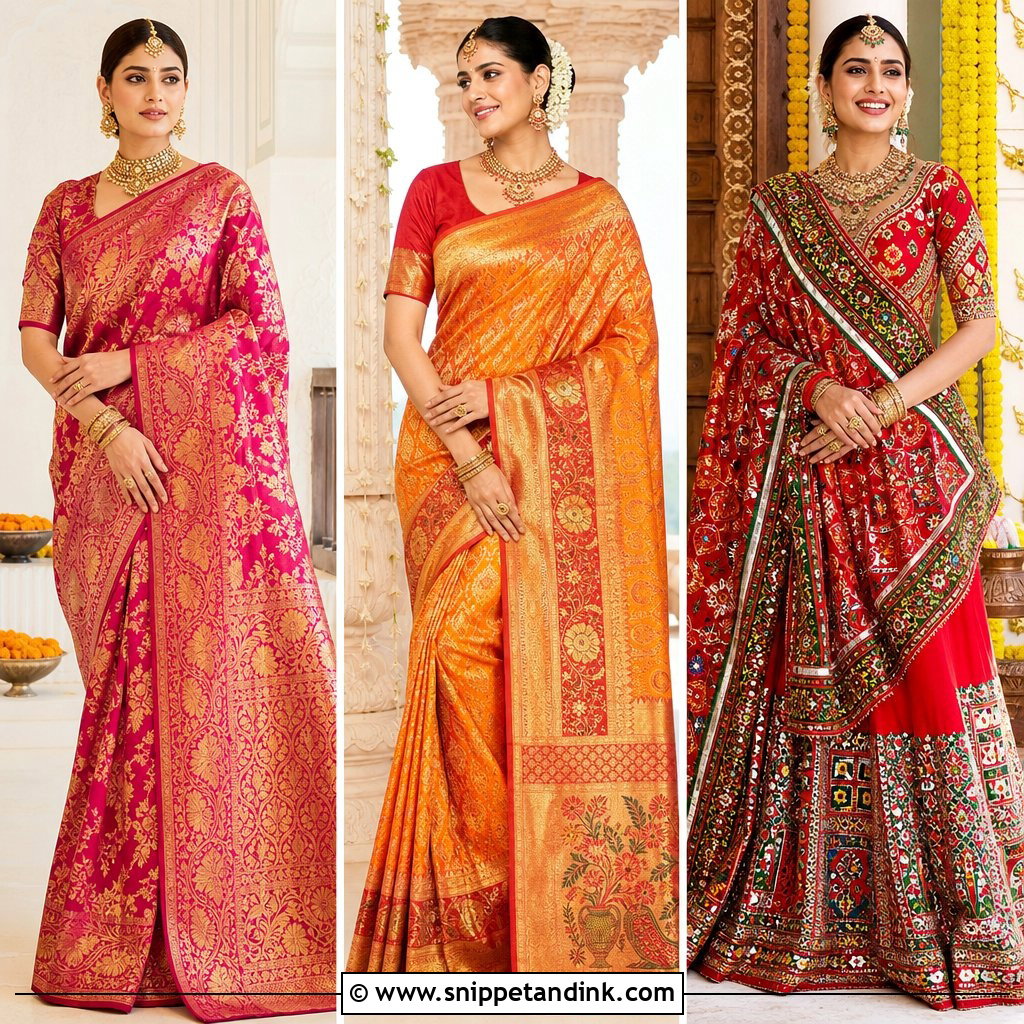
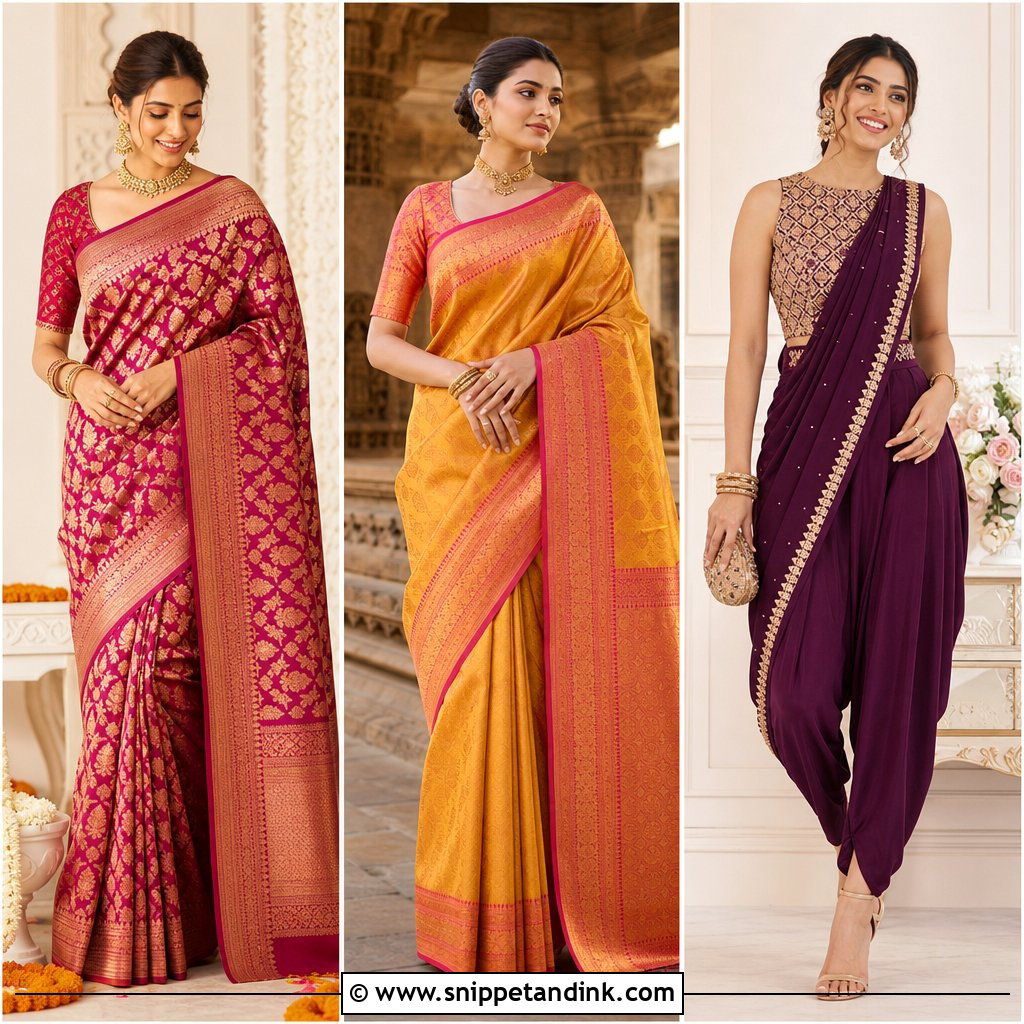
Banarasi silk is woven with zari into the fabric itself, so the saree looks rich before you add a single piece of jewelry. Choose red with gold zari motifs and a well-fitted brocade or embroidered blouse. Pleats should be pinned firmly at the waist, and the pallu can go over the shoulder or the head as the ceremony requires. Kundan jewelry, a waist belt, red bangles and embellished sandals complete it. Because the weave carries so much, I keep accessories more restrained than with a lehenga, which also makes the outfit lighter to wear. A sleek bun with flowers lets the woven detail lead.
8. Kanjivaram Silk Saree With Temple Jewelry
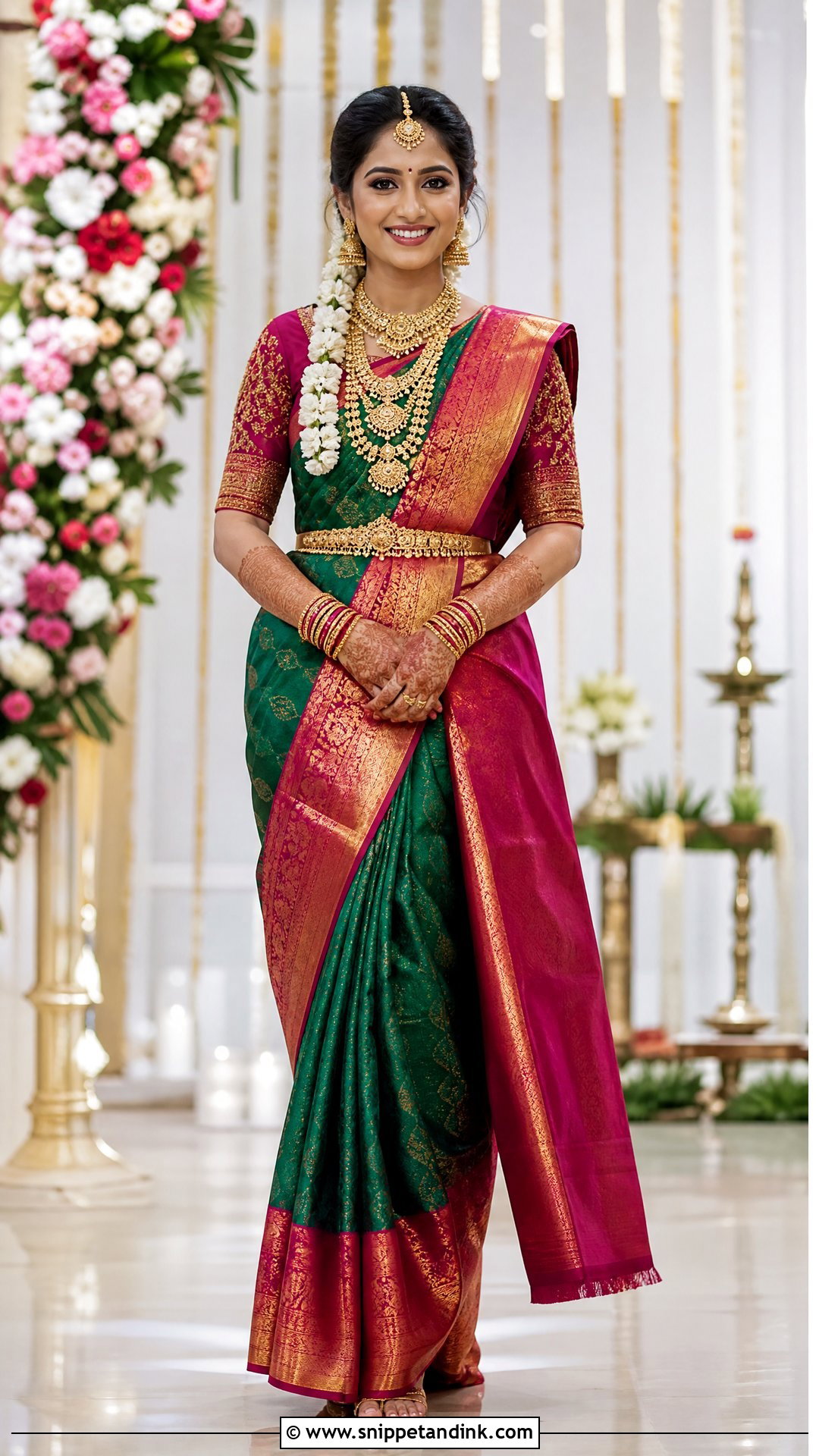
A Kanjivaram silk saree is the classic South Indian bridal choice, recognizable by its heavy silk, saturated color and contrasting zari border. Red, green, mustard, purple and royal blue all appear, depending on the family. Kanjivaram is thick and stiff, so the pleats need a skilled draper and a few extra pins to stay flat while you walk around the mandap. Temple jewelry, layered gold necklaces, jhumkas, bangles, a waist belt and hair ornaments finish it, with a long braid dressed in jasmine. Match the blouse to the border color and the look settles into balance.
9. Red Bridal Saree With Embroidered Veil
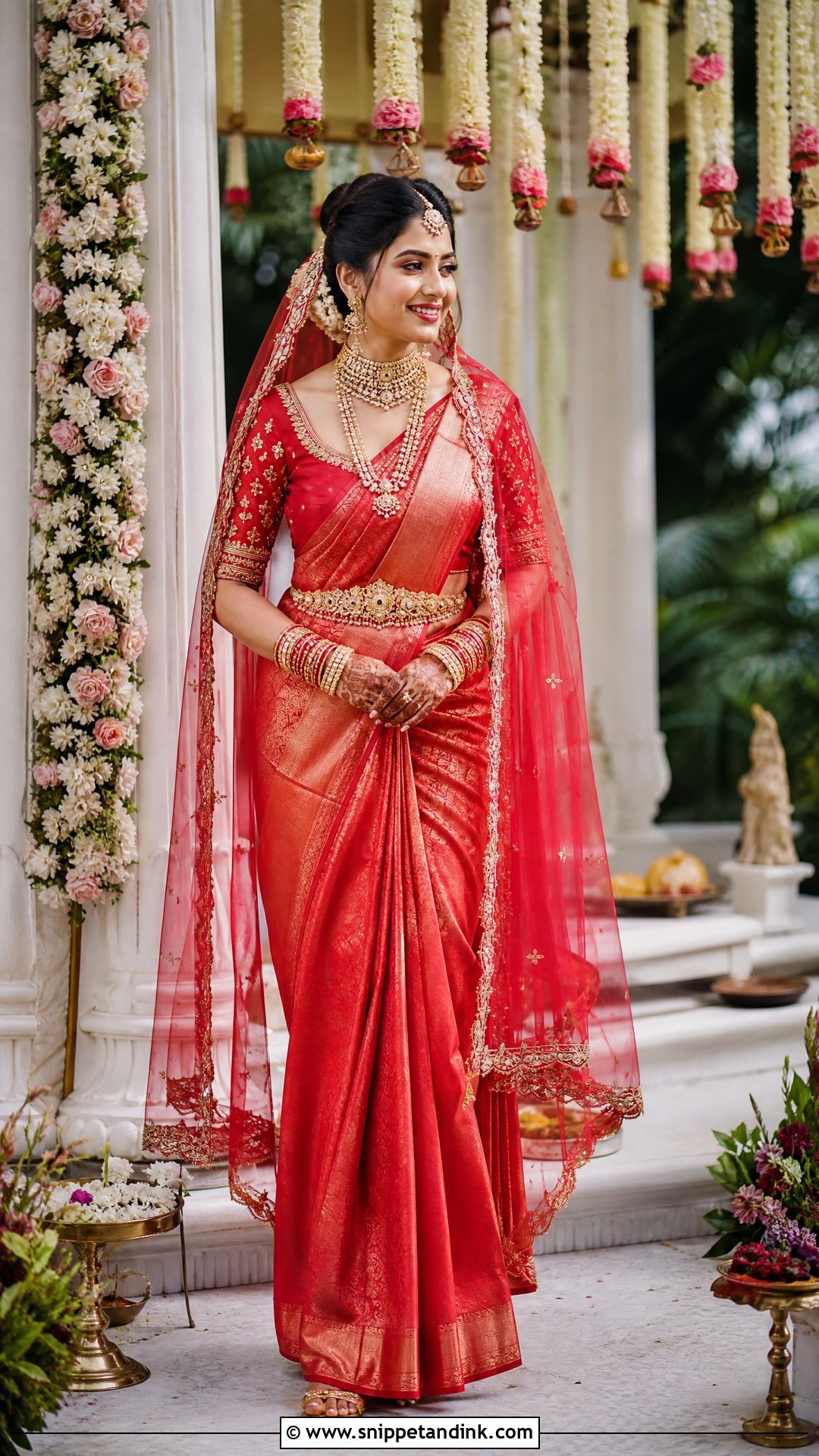
Adding a separate veil to a red saree gives a formal frame around the face without touching the pleats. Start with a silk saree with a gold border and a fitted blouse, then secure a soft net or organza veil over a bun so it falls lightly across the shoulders. Organza holds its shape but is crisp; net is softer and easier to manage through rituals. I pin the veil to the bun, never to the saree, so lifting it doesn’t drag the pallu. A choker, long necklace, maang tikka, bangles and a jeweled belt complete it, with comfortable gold sandals.
10. Paithani Saree With Traditional Gold Accessories
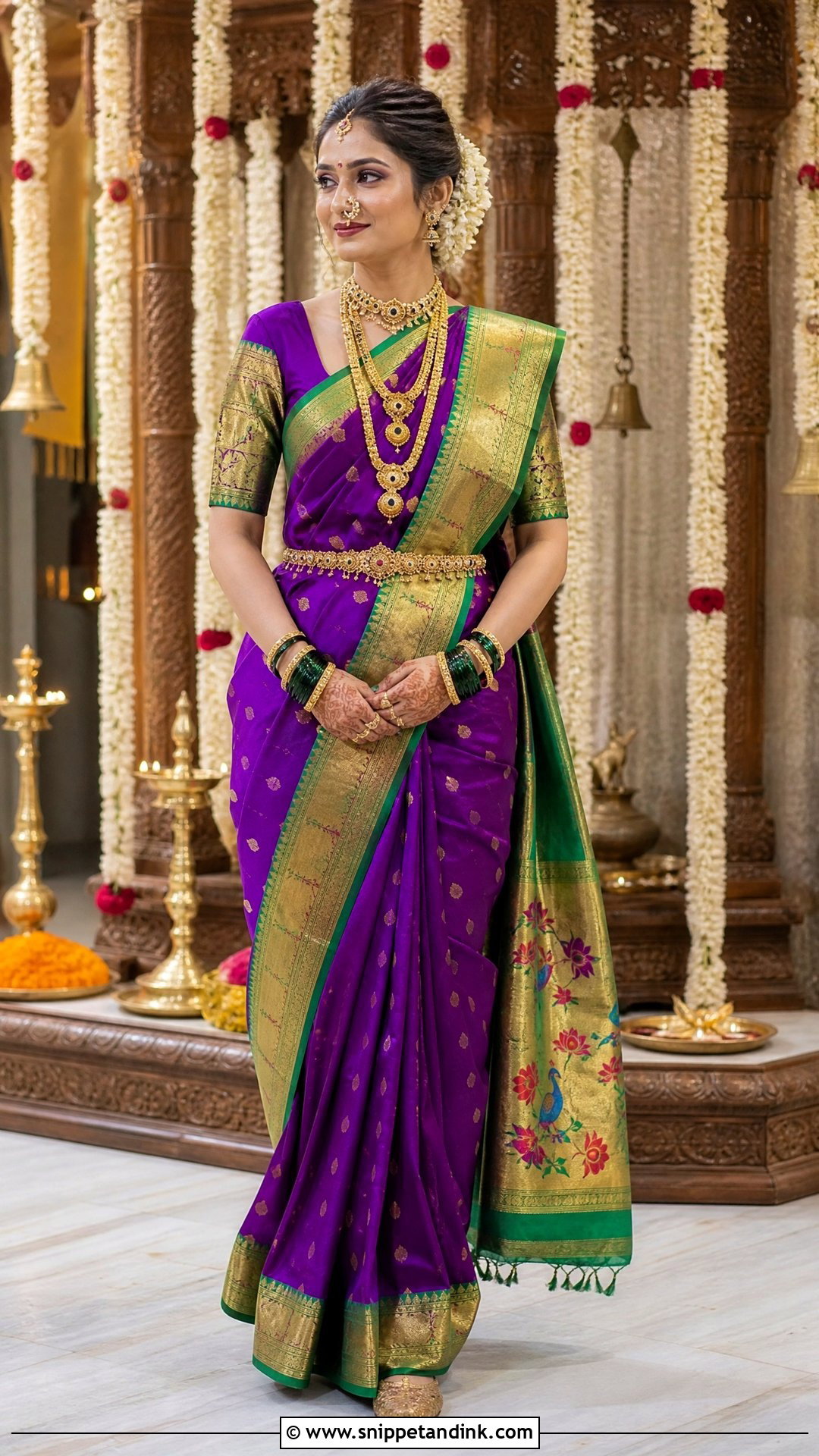
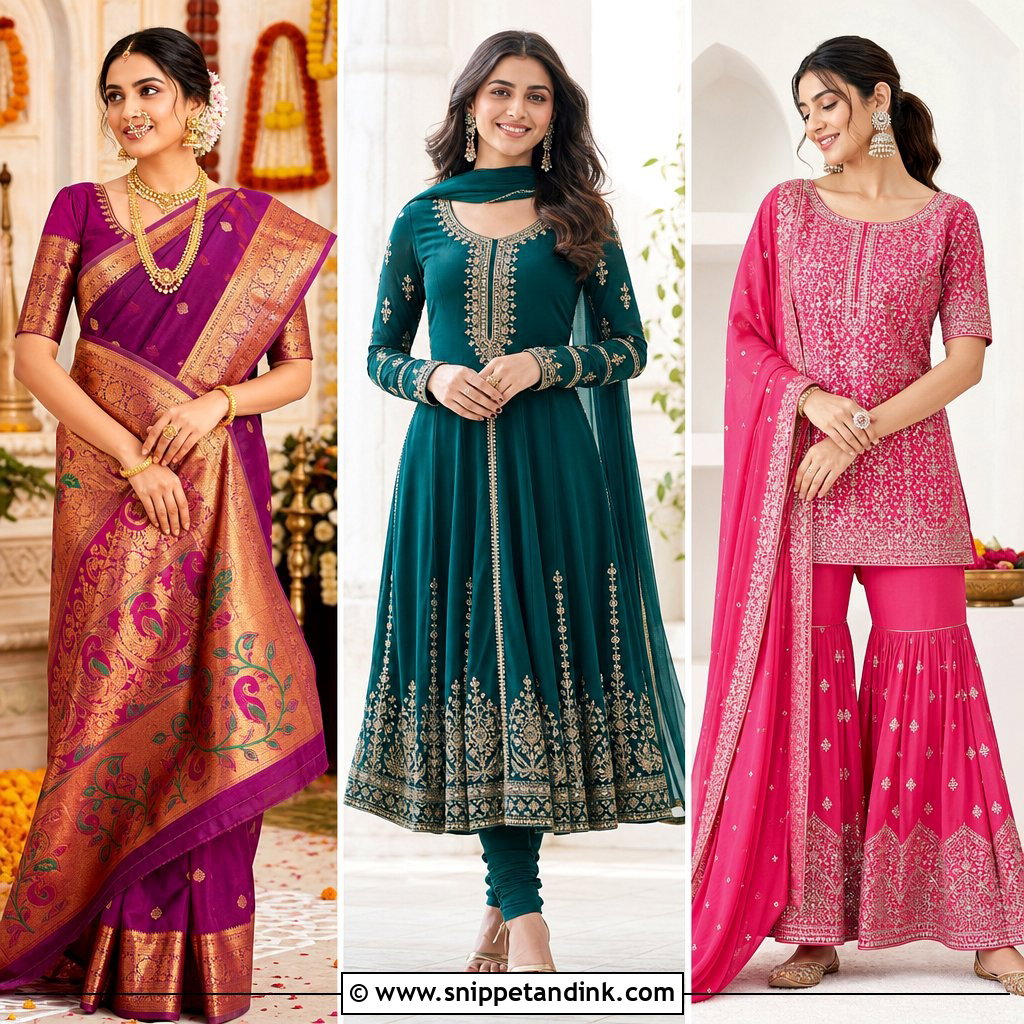
The Paithani is a Maharashtrian heirloom weave, and its decorative pallu, often with peacock or floral motifs, is the reason to wear one. Purple, magenta, green and rust suit a contrasting short-sleeve blouse. Drape it traditionally or in a standard style, according to comfort and family preference. A crescent-shaped nath, layered gold necklaces, green glass bangles and a waist belt complete it, with a center-parted bun dressed in flowers. The border and pallu are already detailed, so I keep the blouse simple. Gold flats or low sandals make long standing rituals easier.
11. Bengali Red And White Bridal Saree
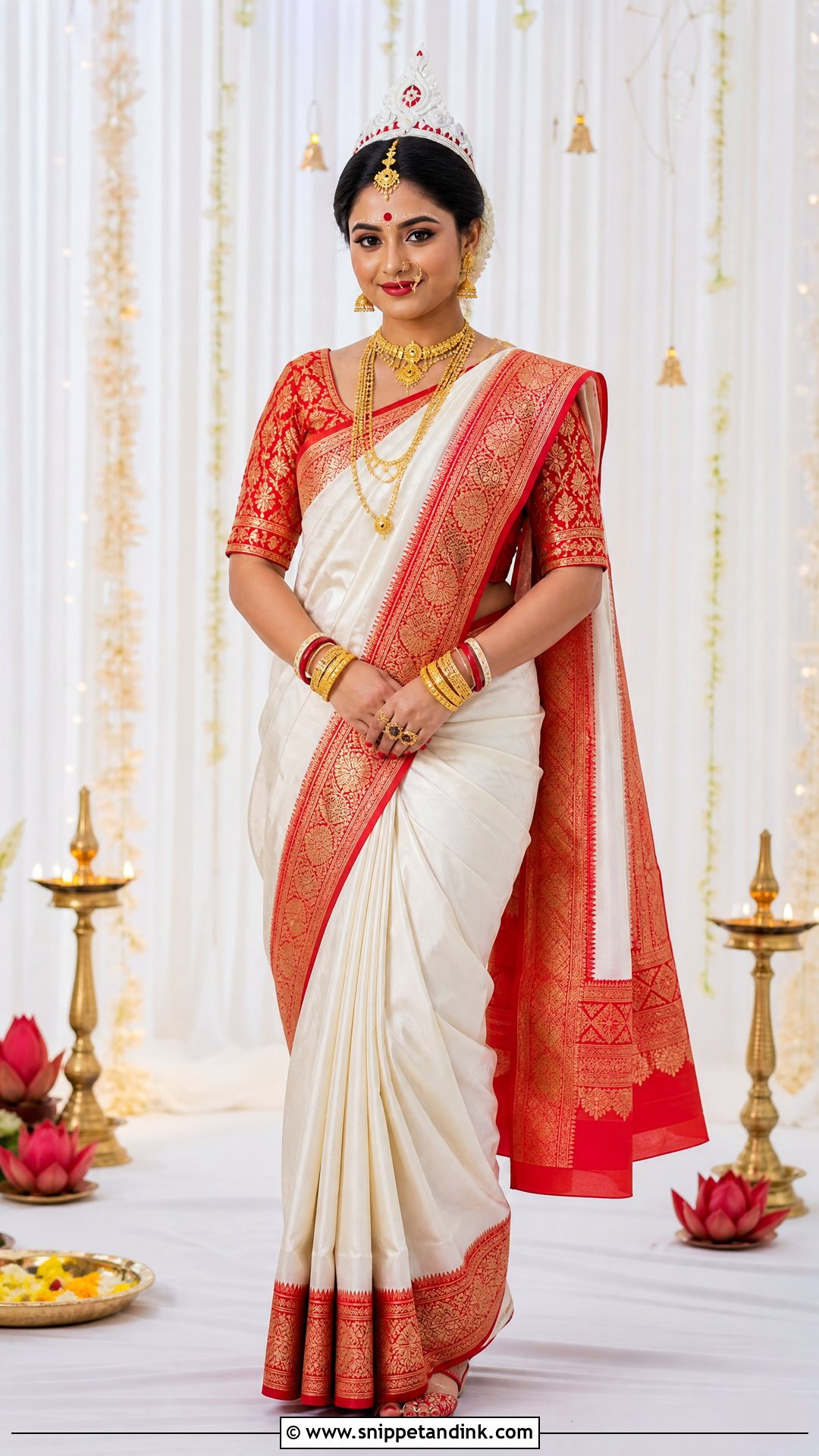
The Bengali bridal saree is red, or white with a broad red border, and that contrast is instantly recognizable. With a white base, pair a red silk or brocade blouse and drape it so the border and pallu stay visible. Layered gold jewelry, the red and white bangles and a bridal headpiece complete it, with red detailing in the beauty look as the family’s customs guide. The traditional headpiece is light but tall, so a firm, smooth bun underneath helps it stay upright. Red or gold sandals with a stable heel finish it; woven gold motifs add richness without changing the two-color palette.
12. Panetar Saree With Gharchola Dupatta
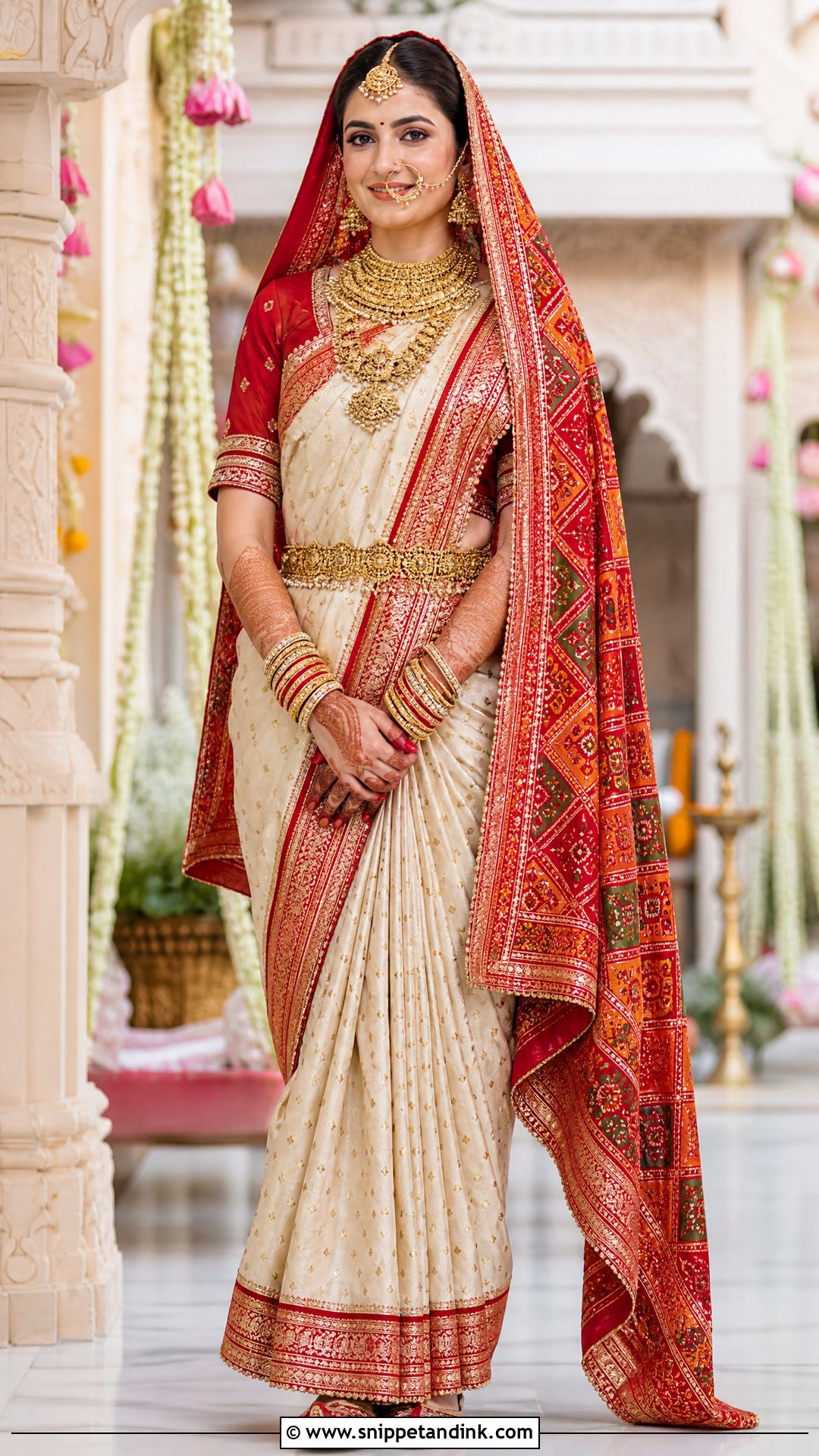
The Gujarati pairing of a Panetar saree and a Gharchola dupatta is two textiles worn together: a pale saree with a red border underneath, and a red checked covering over the head. The contrast photographs well from any angle, but the double drape adds real weight. I’d choose a lighter blouse embroidery to compensate and make sure both layers are pinned before the ceremony starts. Traditional gold jewelry, a statement nose ring, bangles, a waist belt and embroidered footwear complete it. Use a draper who knows this combination, and ask family elders how they expect it to sit.
13. Maharashtrian Nauvari Saree
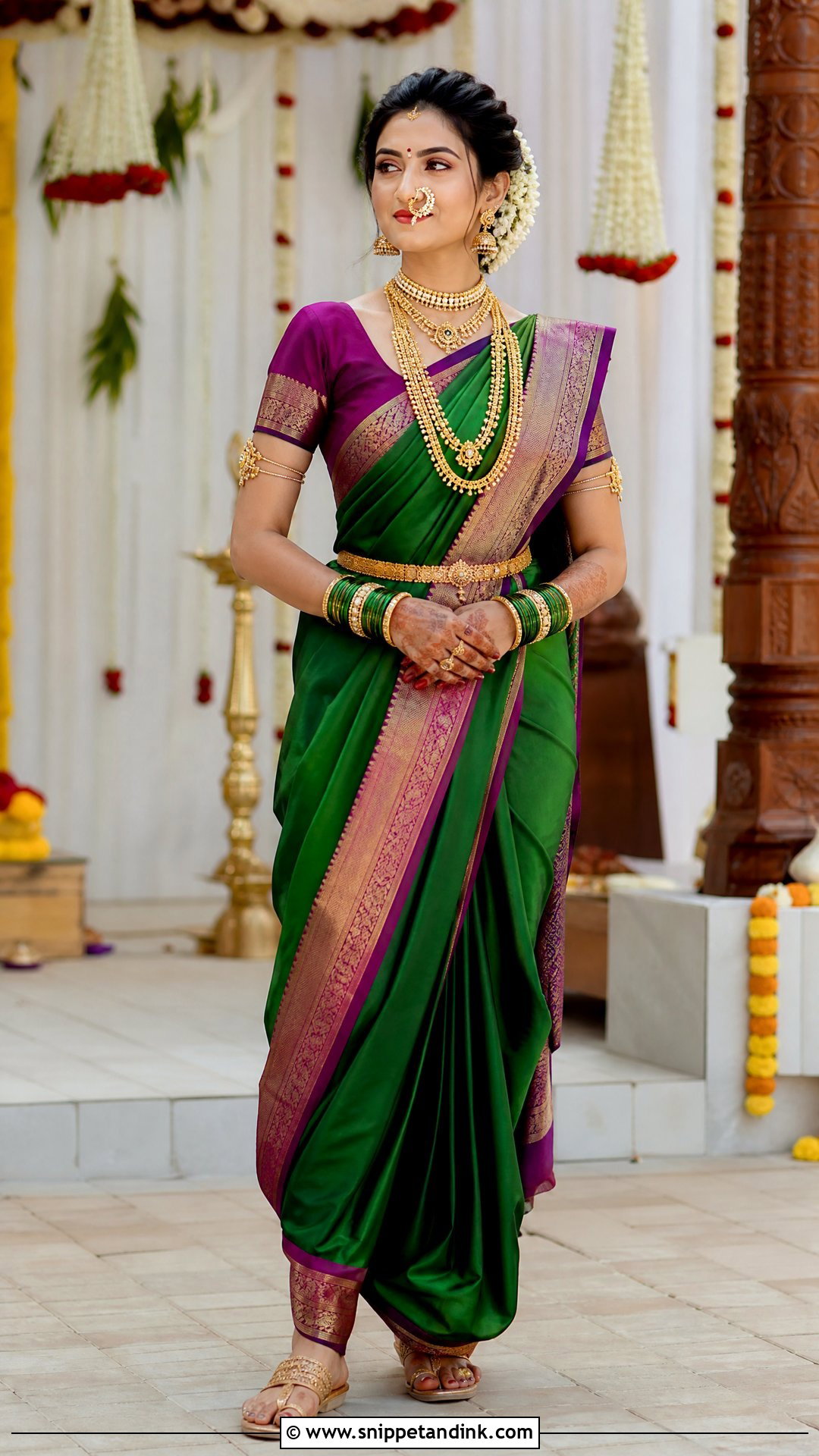
A Nauvari saree is nine yards draped so the lower half divides into trouser-like panels, which makes it far easier to walk and sit cross-legged in than a standard saree. Choose silk in green, purple, yellow or red with a contrasting gold border, with a fitted blouse, a traditional nath, layered necklaces, green bangles, armlets and a waist belt. A flower-covered bun or long braid suits it. Part of the feet show, so choose flat sandals you like the look of. The drape takes skill; book a trial, or choose a pre-stitched Nauvari if you’ll change outfits during the day.
14. Assamese Mekhela Sador Bridal Look
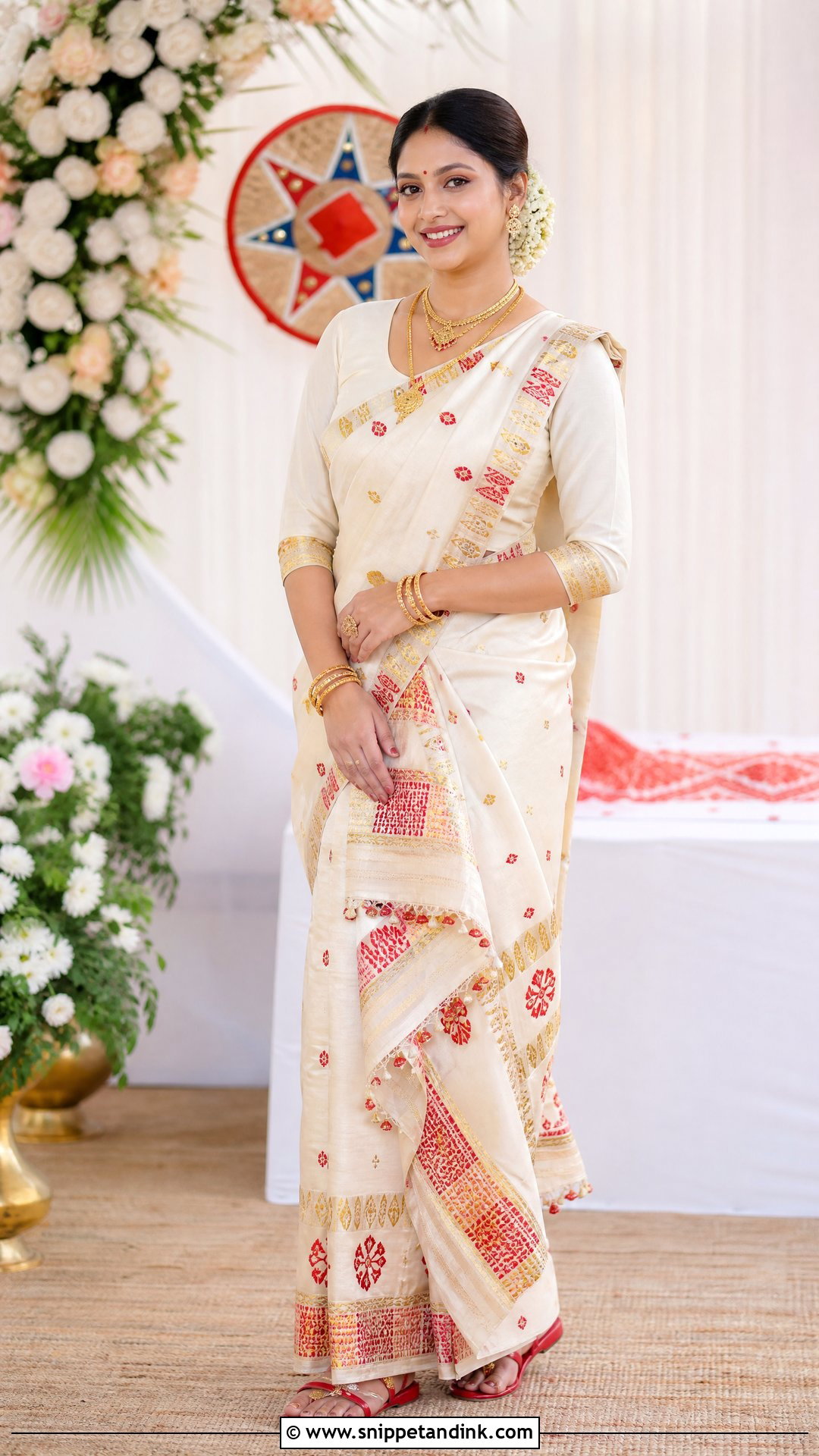
The Assamese Mekhela Sador is a two-piece outfit, a wrapped lower mekhela and a draped upper sador, often in cream or golden silk with red and gold woven motifs. It has a clean, softly structured line. Pair it with a coordinated blouse and arrange the sador so its motifs show. Traditional gold jewelry, bangles, a neat bun with fresh flowers and red or gold sandals complete it, and a red veil or crimson blouse adds bridal color if wanted. The textile is the point, so skip oversized accessories. If you’ve never worn one, practice sitting and walking in it; the mekhela is narrower than a lehenga.
15. Kerala Kasavu Saree With Gold Jewelry
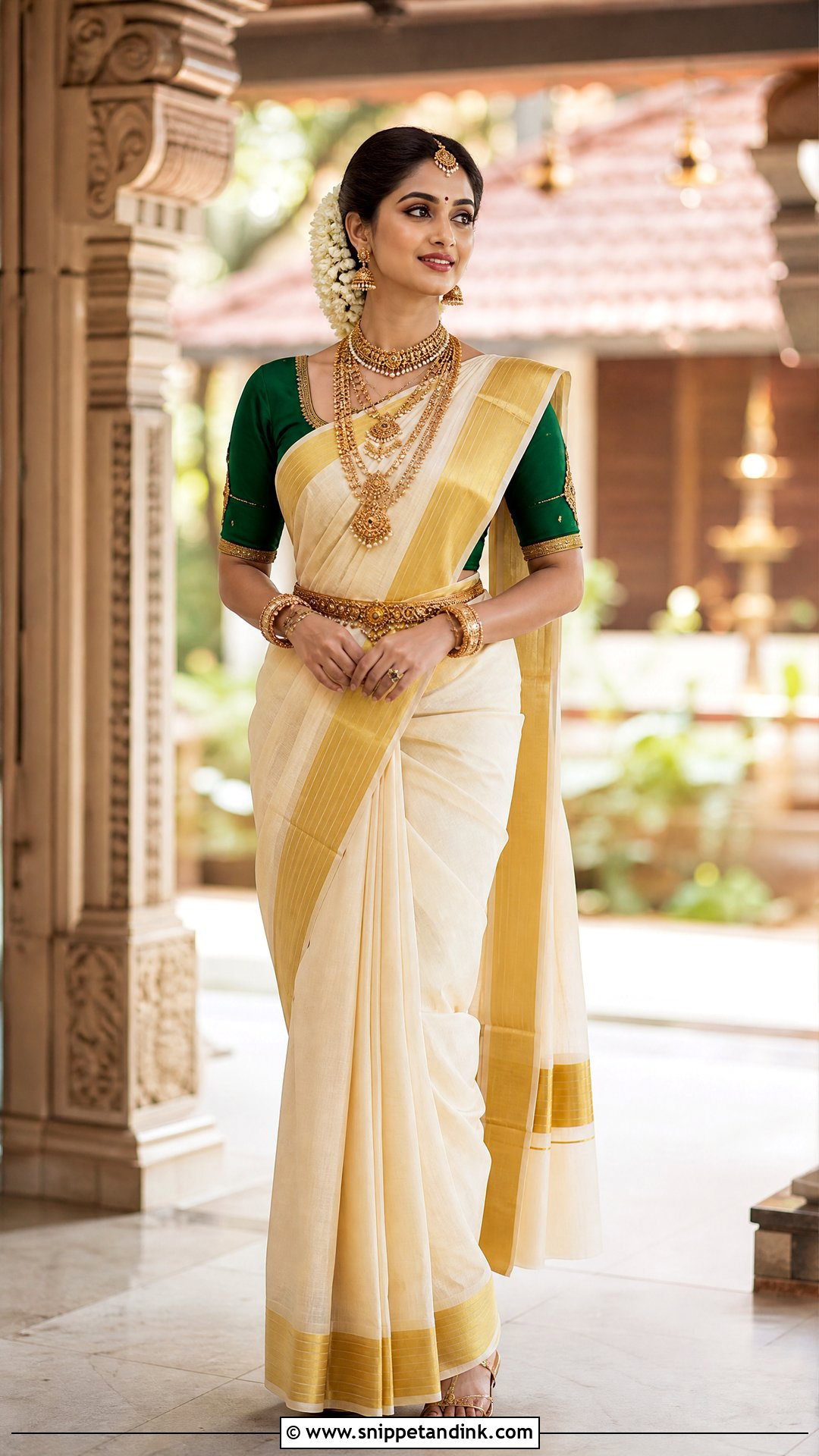
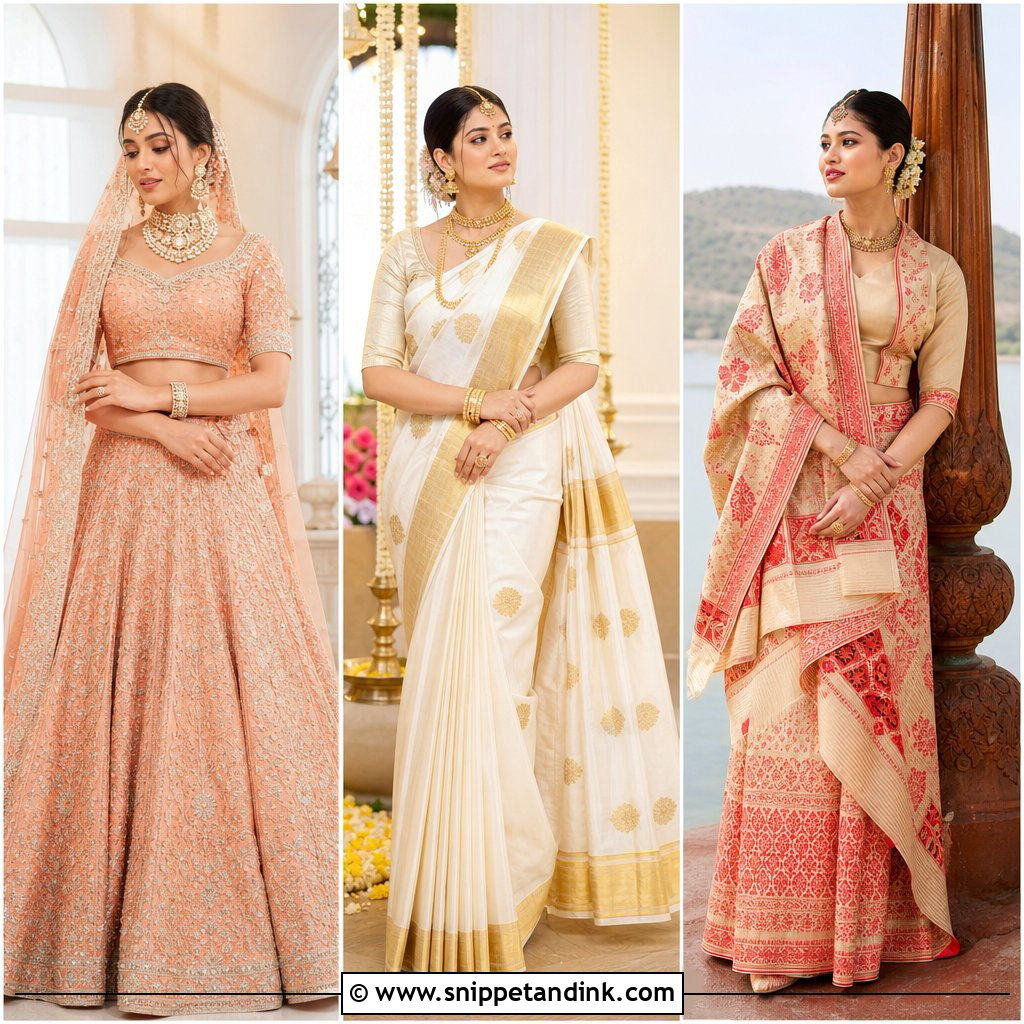
The Kerala Kasavu saree is cream with a gold border, and its restraint is what makes it bridal. A matching cream blouse keeps it understated, while green, red or maroon adds contrast. That plain base is made for layered gold necklaces, jhumkas, bangles, a waist belt and hair ornaments, with a long braid or low bun wrapped in fresh jasmine. The blouse fit shows more here than with any other outfit on this list, because nothing distracts from it. A broader gold border or woven motifs add formality without losing the saree’s character.
16. Odia Silk Saree With Silver Jewelry
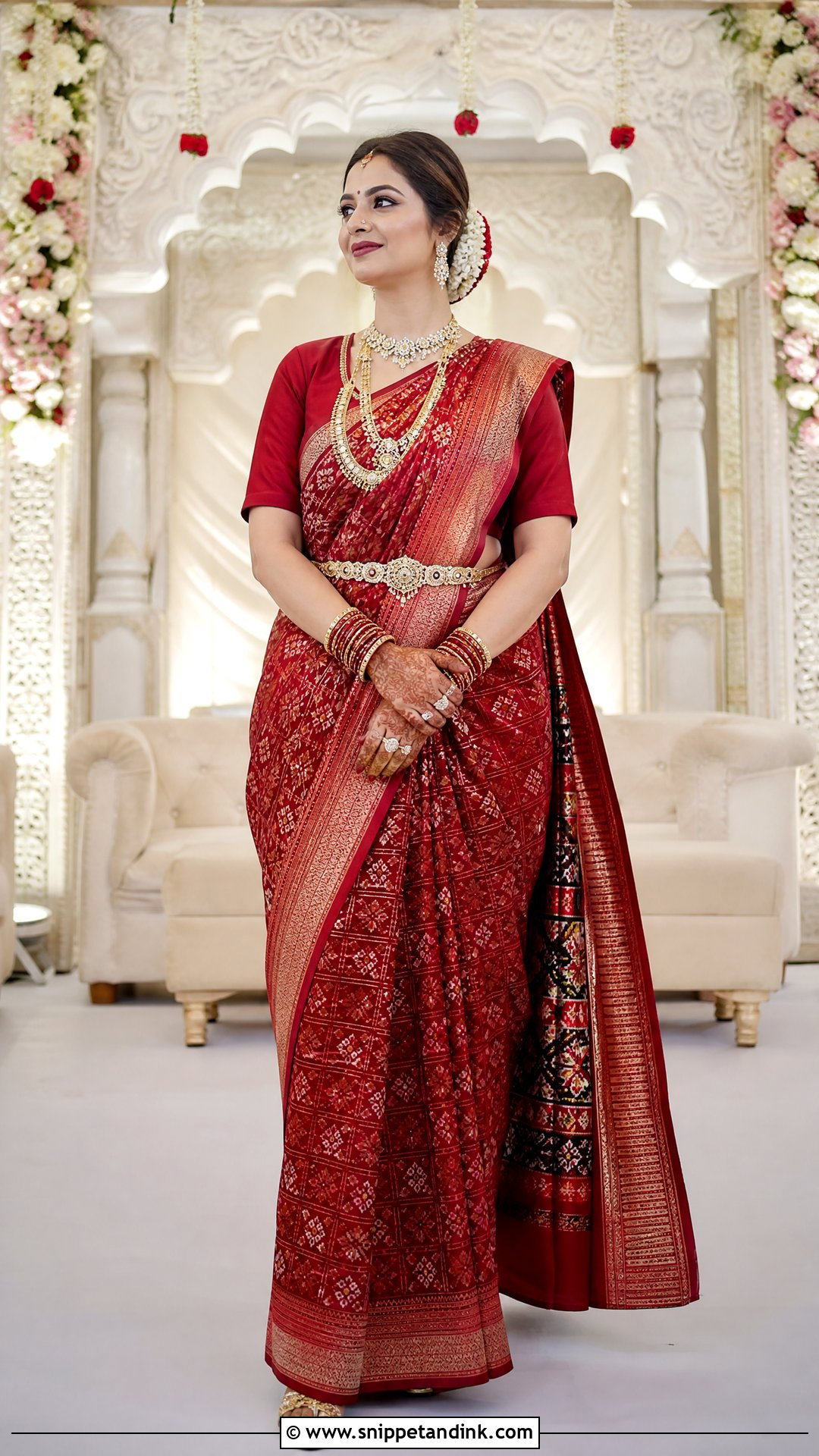
Odia silk sarees, especially ikat weaves, have the pattern dyed into the threads before weaving, which gives that slightly blurred edge to every motif. Deep red, maroon, black-red or green combinations pair best with a solid blouse that repeats one color from the saree. I arrange the drape so the patterned pallu faces the camera in portraits. Gold or silver jewelry, depending on family tradition, plus stacked bangles, a waist belt and a decorated bun complete it. Keep the blouse plain when the weave is bold, and choose comfortable sandals that let you walk with pleats secure.
17. Rajasthani Rajputi Poshak
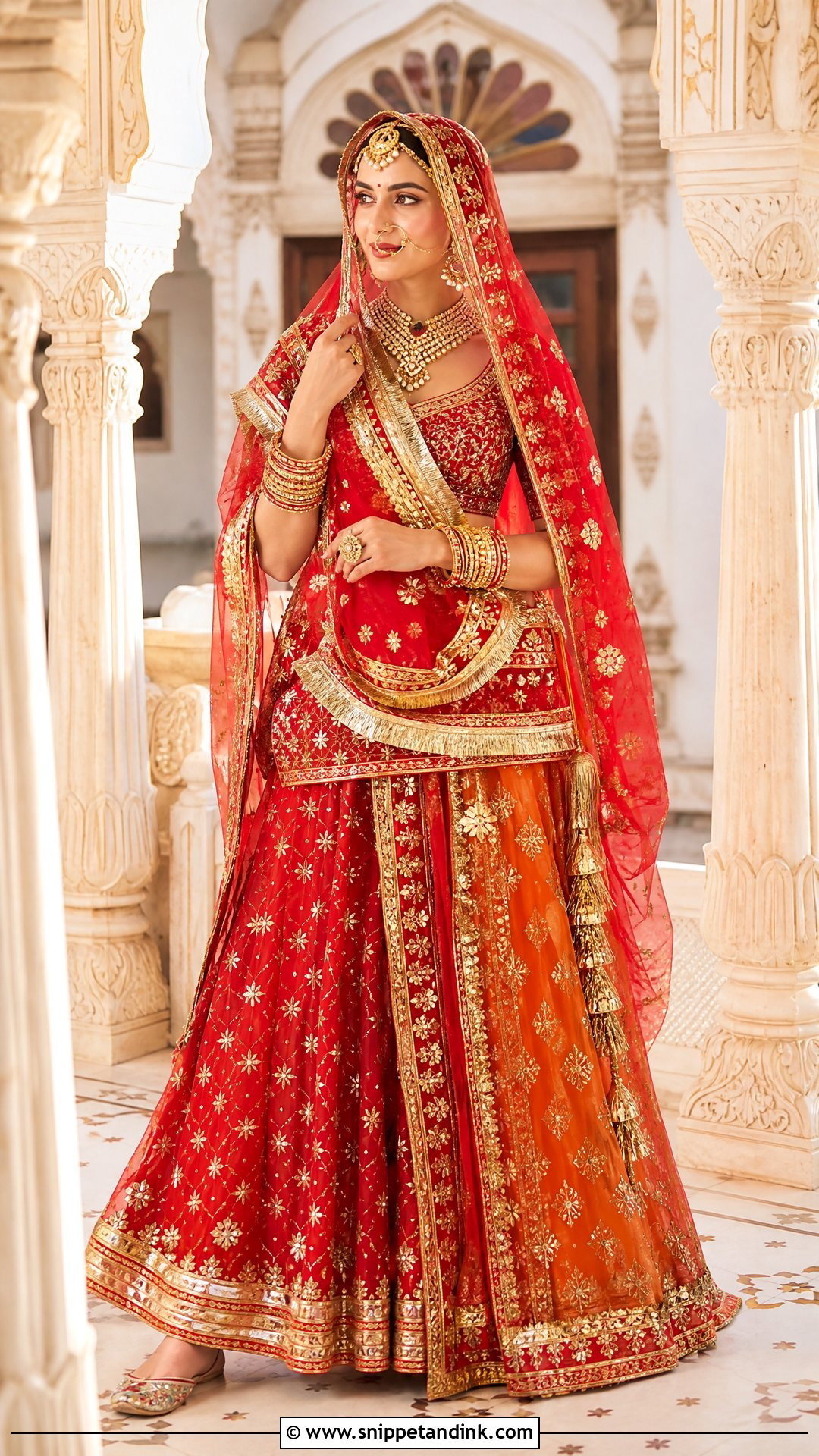
A Rajputi Poshak is several pieces worn together, skirt, kurti, inner blouse and odhni, in rich red, orange, pink or maroon with gota patti and metallic borders. Arrange the odhni over the head so its edge frames the face without hiding the jewelry. A borla, choker, layered necklaces, earrings, bangles and embroidered juttis complete it. With so many layers, heat is the real concern, so choose light gota work for a warm-weather ceremony and make sure the inner blouse and waist are firmly fitted. Details differ between families, so ask relatives before settling the drape and jewelry.
18. Phulkari Bridal Lehenga
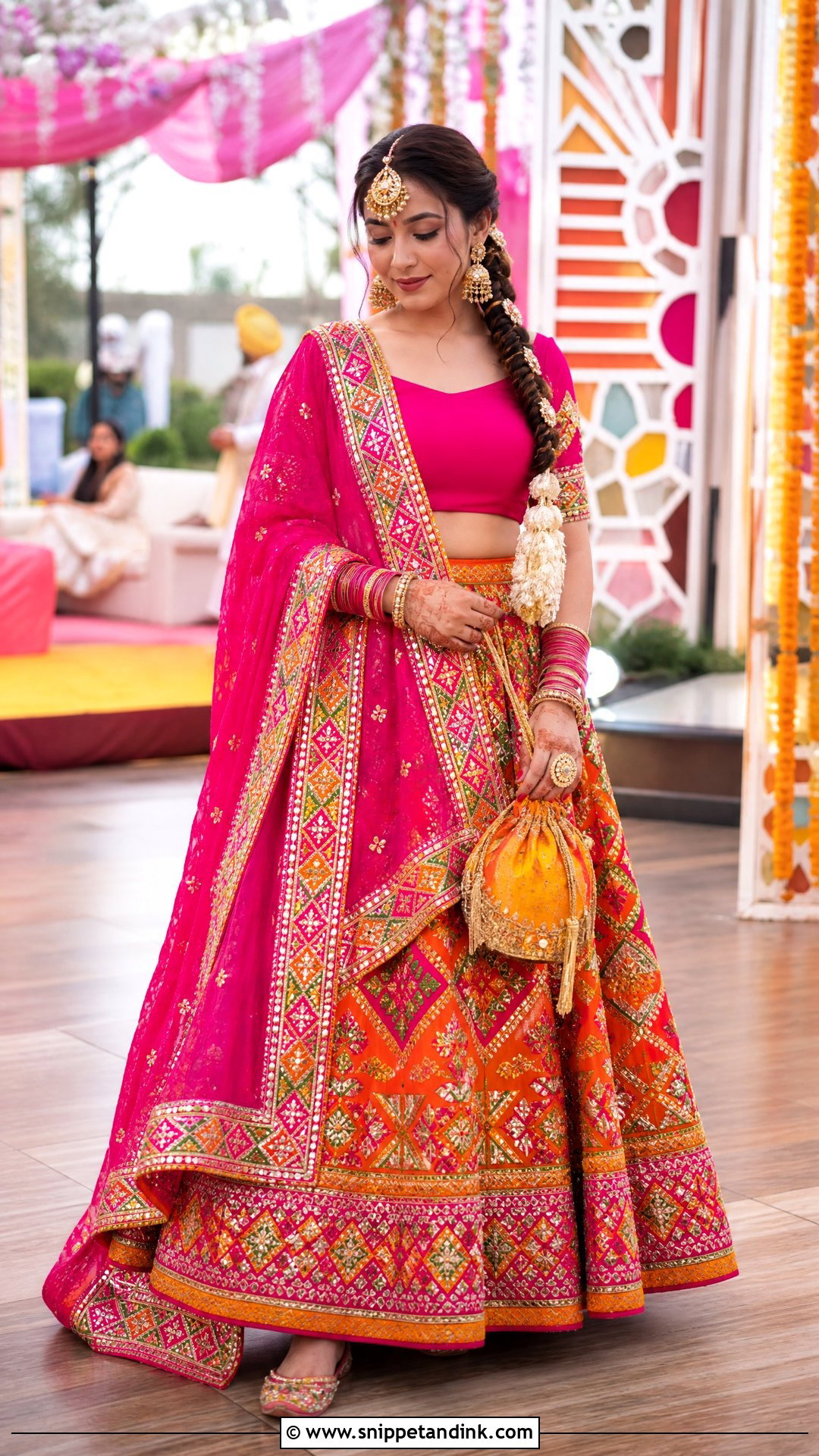
Phulkari is Punjabi hand embroidery in bright silk floss, and it looks joyful and handmade in a way machine work doesn’t. Build the outfit around a Phulkari skirt or a statement dupatta, with a solid blouse in red, fuchsia, orange or deep purple so one piece stays calm. Gold jhumkas, a maang tikka, layered bangles, a small potli and Punjabi juttis complete it, with a paranda-style braid or a more formal bun. Putting the main Phulkari on the dupatta keeps the outfit lighter. Turn the embroidery over before buying; rough knots on the reverse rub skin over a long day.
19. Floor-Length Bridal Anarkali
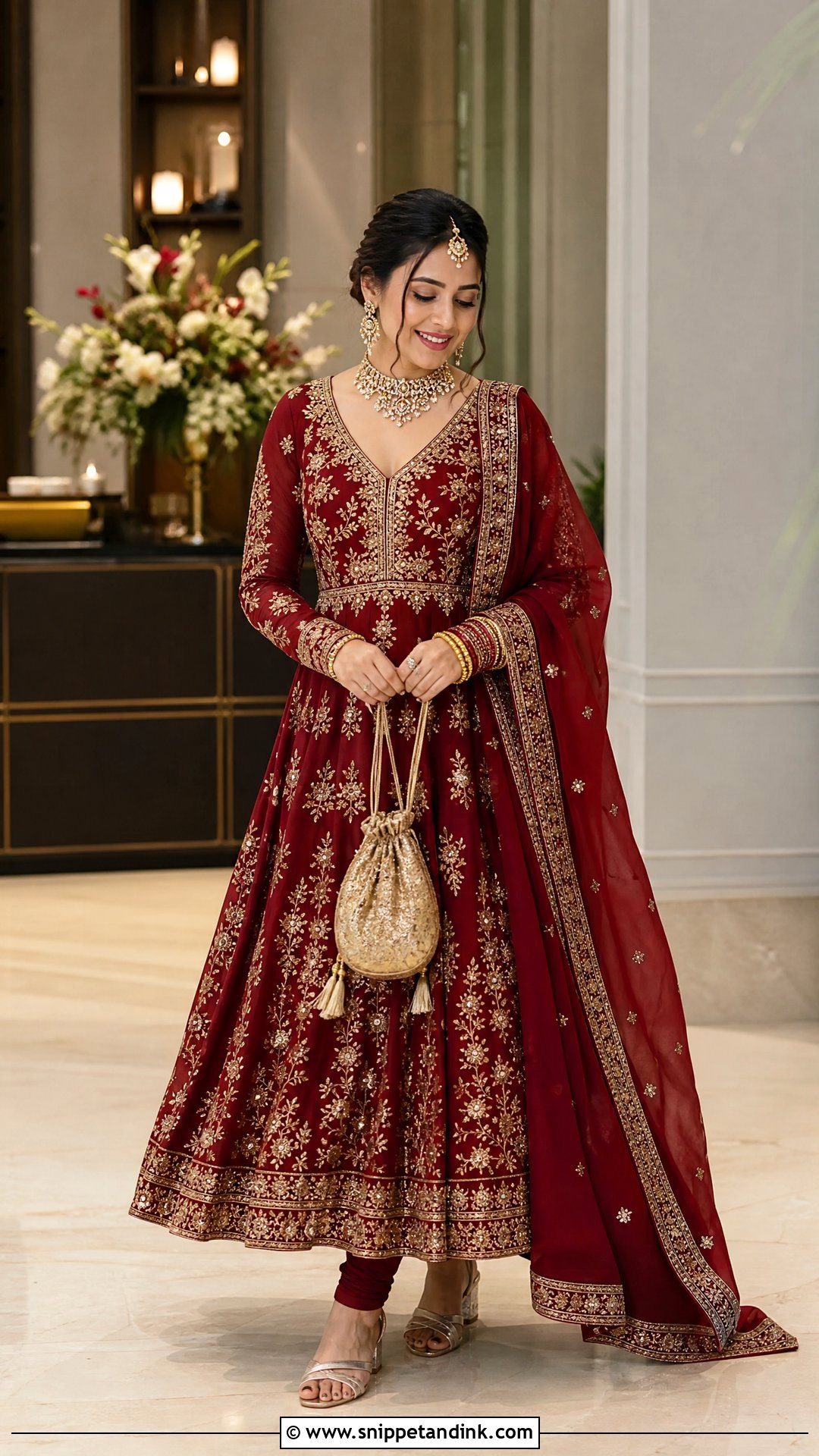
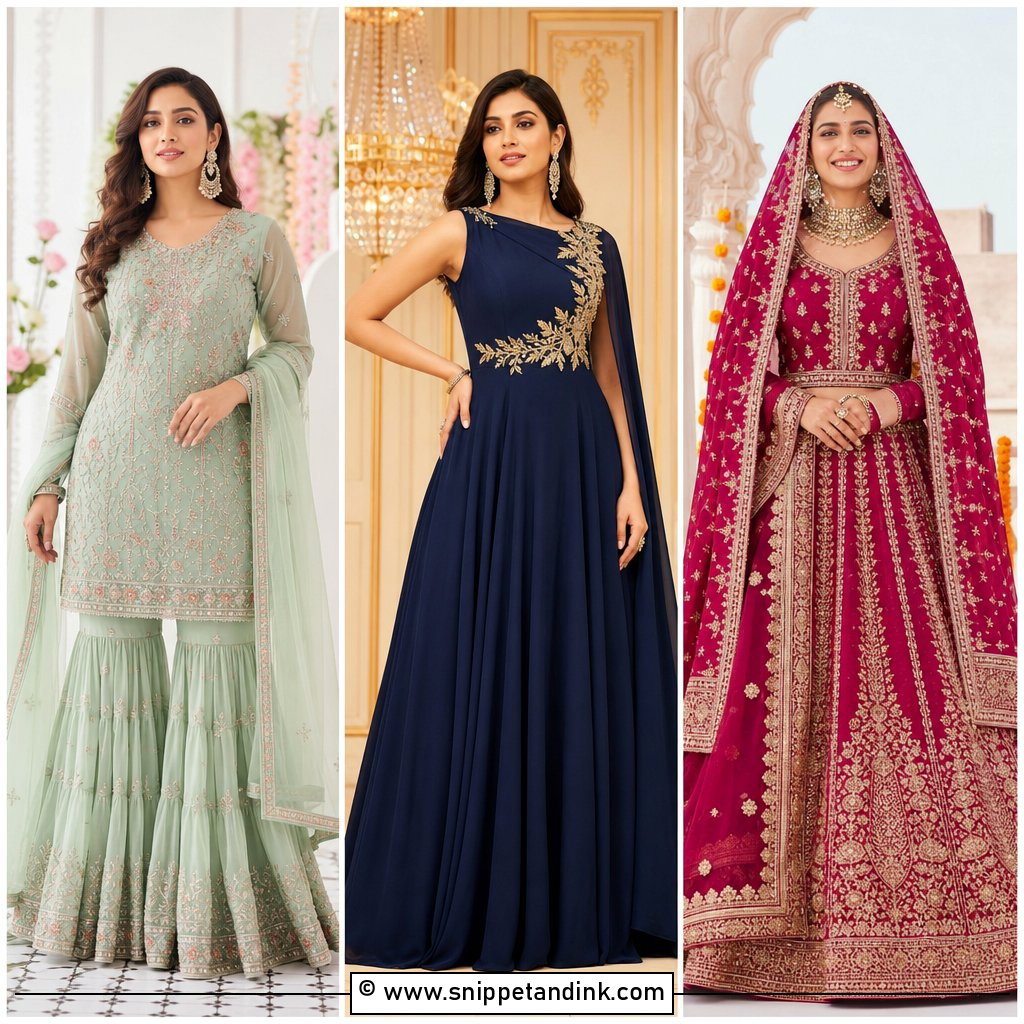
An Anarkali is the easiest bridal outfit on this list to put on, and that matters for a small wedding, a pre-wedding ritual or a reception change. Choose silk, brocade or georgette with a fitted bodice and a generous flare; red, maroon, emerald and gold feel traditional, while blush or blue is softer. Add a churidar or narrow pants underneath and an embroidered dupatta over one shoulder or the head. Chandelier earrings, a necklace, bangles, a potli and low heels finish it. A defined waist seam shapes the figure and vertical embroidery lengthens it. When the day involves travel or dancing, I’d pick this over a draped outfit.
20. Bridal Sharara With Short Kurti
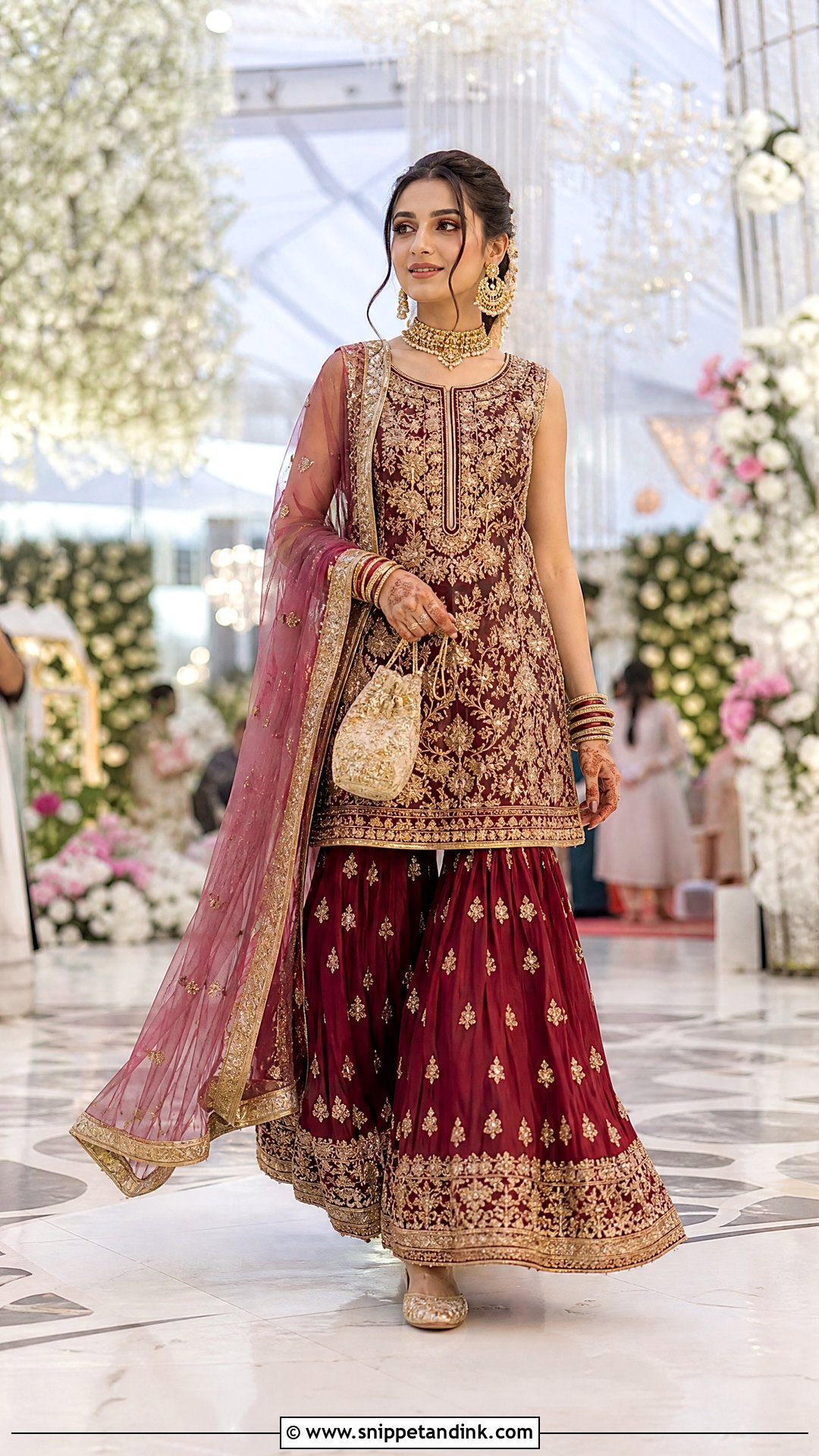
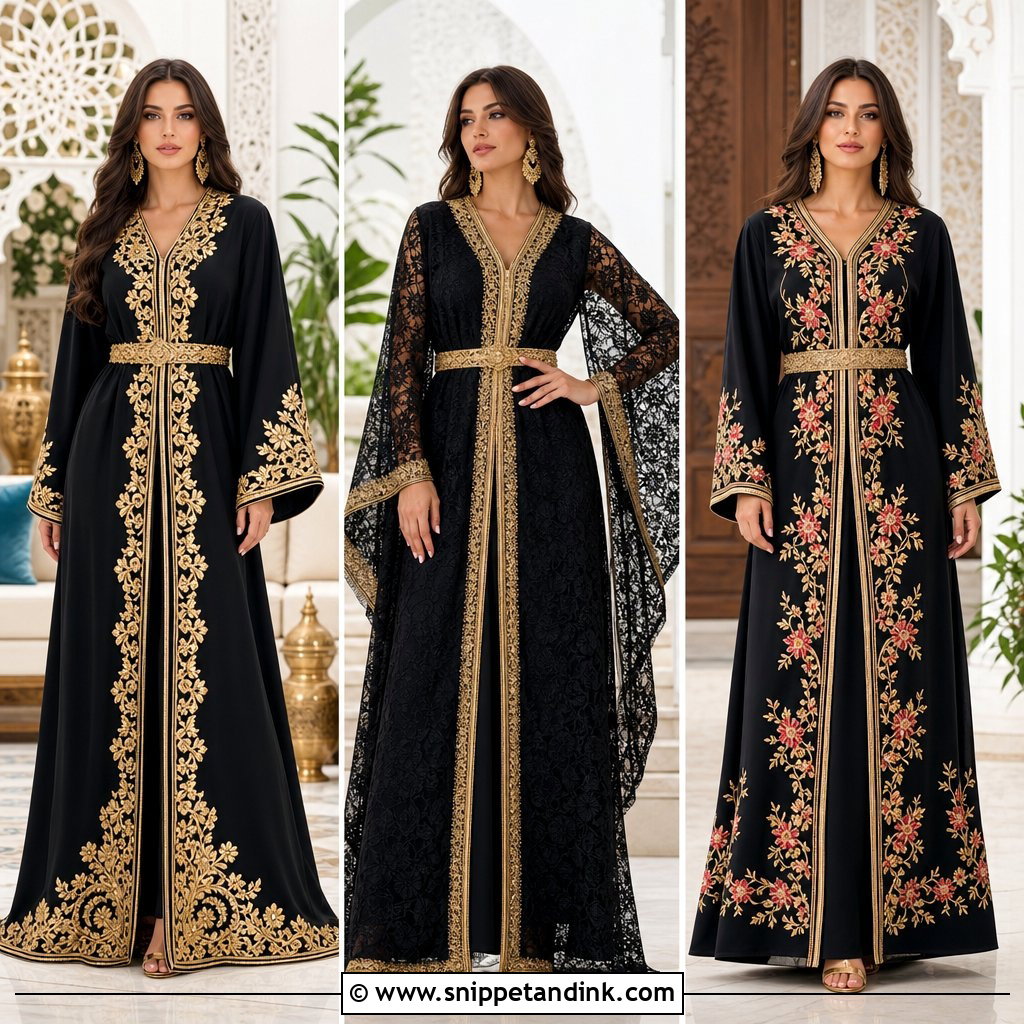
A bridal sharara gives festive volume and real freedom to move, which is why I suggest it for brides who plan to dance. Choose wide, flared pants with a short embroidered kurti and a light dupatta; maroon and gold suit evening events, coral, mint or yellow daytime ones. Keep the kurti fitted through the shoulders so it balances the fullness below. A choker, statement earrings, bangles, a small bag and juttis or block heels complete it. Drape the dupatta from one shoulder to the opposite wrist to keep your hands free, and choose georgette or a silk blend if there’s dancing.
21. Pre-Draped Bridal Saree Gown
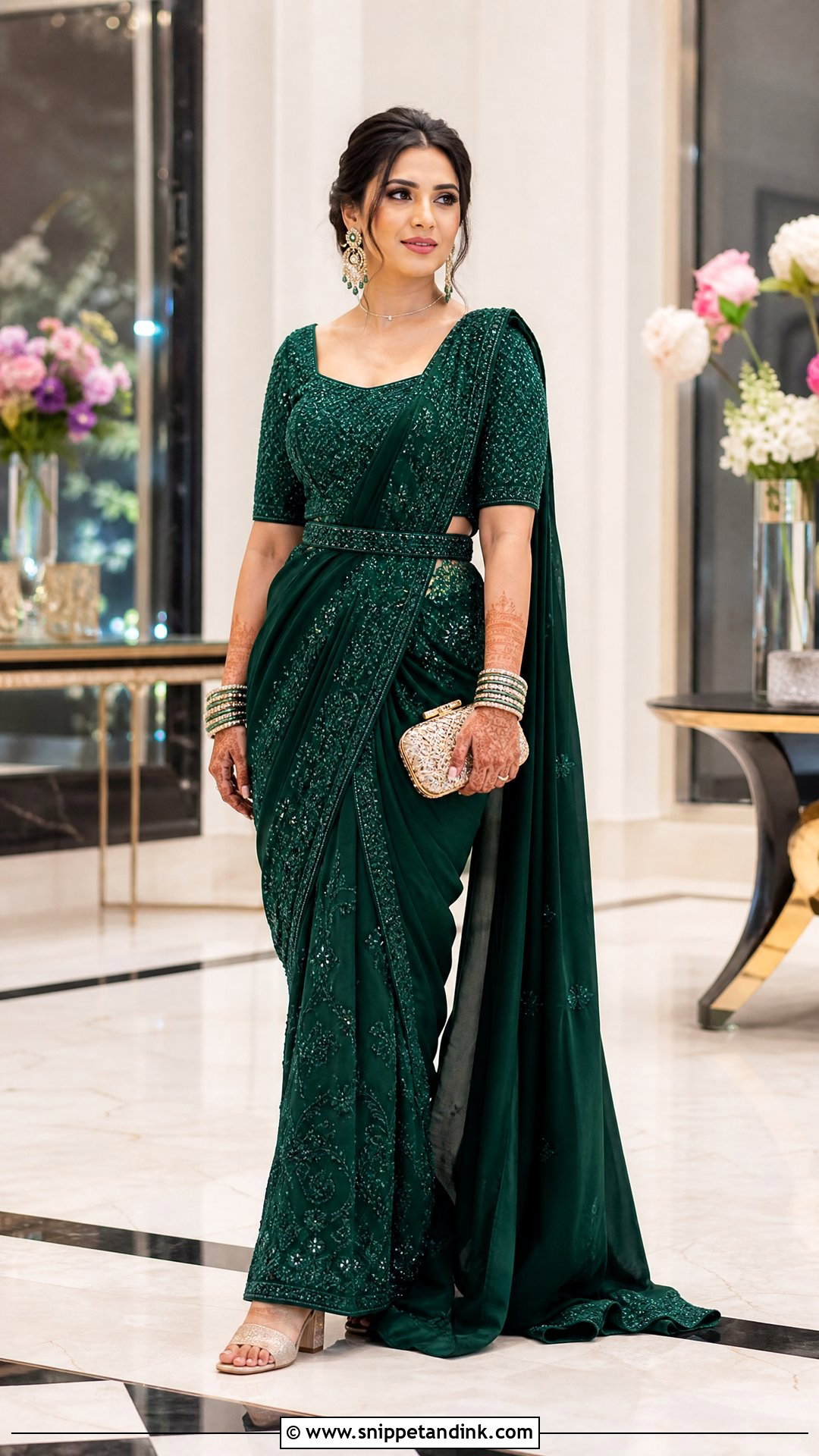
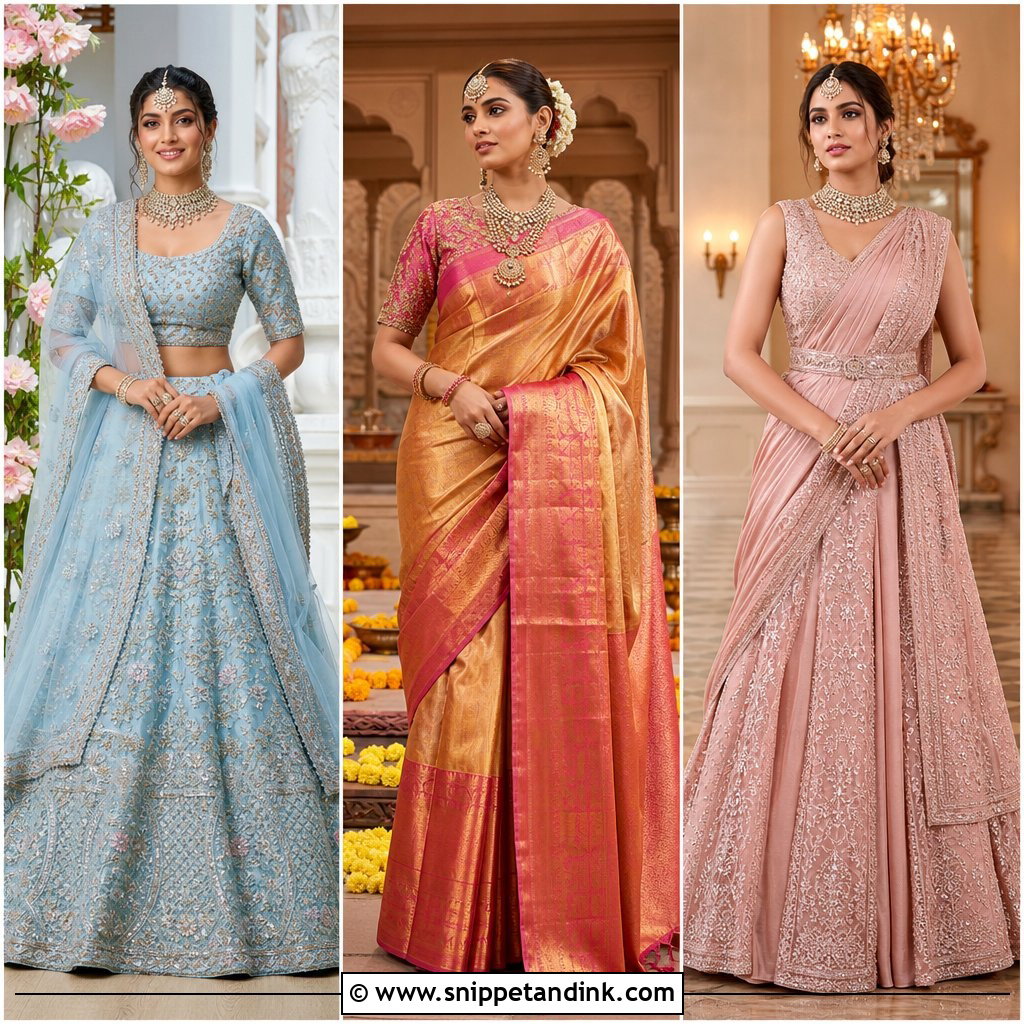
A pre-draped saree gown gives you pleats and a pallu that are stitched in place, so nothing slips. Choose a defined waist, a flowing pallu and an embroidered blouse section in deep red, bronze, emerald, plum or champagne for a reception or modern ceremony. Wear either a statement necklace or dramatic earrings, not every piece at once. Bangles, a small clutch and block heels at the exact height the hem was set for complete it. Ask for hidden hooks or snaps on the pallu. I recommend it most to brides who’ve never worn a saree for a full evening.
22. Cape Bridal Lehenga
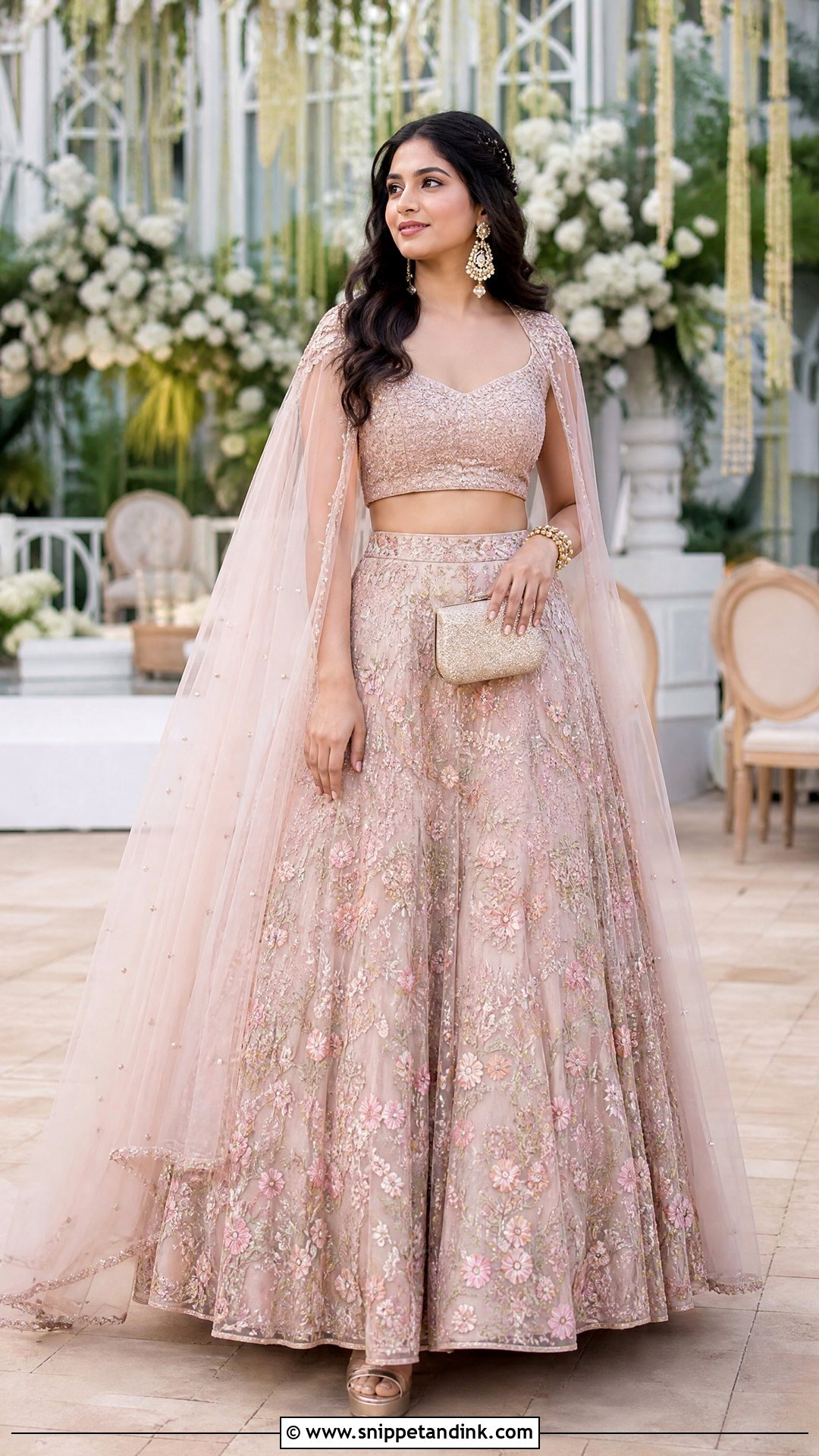
A cape replaces or supplements the dupatta with a flowing layer across the shoulders. Start with an embroidered skirt and fitted blouse, then add a sheer cape with matching borders, beadwork or appliqué; jewel tones suit evenings, blush, peach and powder blue daytime. Statement earrings, a bracelet stack, a clutch and platforms or juttis complete it, with minimal necklaces if the cape neckline is detailed. Before buying, check whether the family expects a head covering during the ceremony; a cape doesn’t provide one, so you may still want a light dupatta for the pheras. Make sure the arm openings let you hug and dance.
23. Jacket Bridal Lehenga
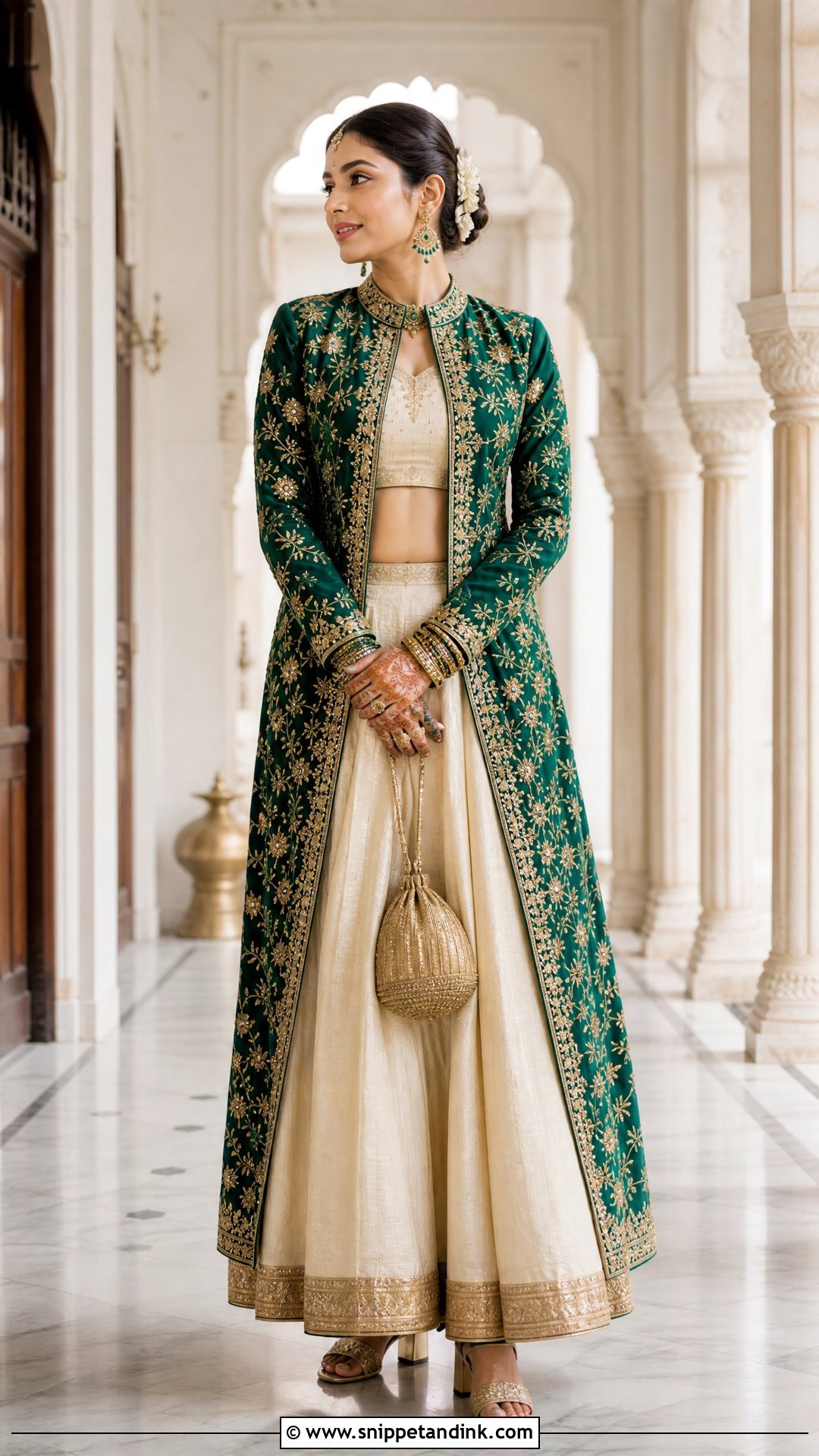
A jacket lehenga adds coverage and a polished layered line. Pair a full skirt and fitted blouse with a long embroidered jacket that ends near the hem, or a waist-length one if the skirt is heavily decorated. Match colors for a long line, or contrast an ivory skirt with a red, green or gold jacket. With a high-necked jacket, skip the necklace and put the jewelry in the hair. Drop earrings, bangles, a potli and block heels finish it. Insist on light lining and enough room in the sleeves to lift your arms. For a winter wedding it’s the warmest option, and the jacket comes off for dancing.
24. Floral Pastel Bridal Lehenga
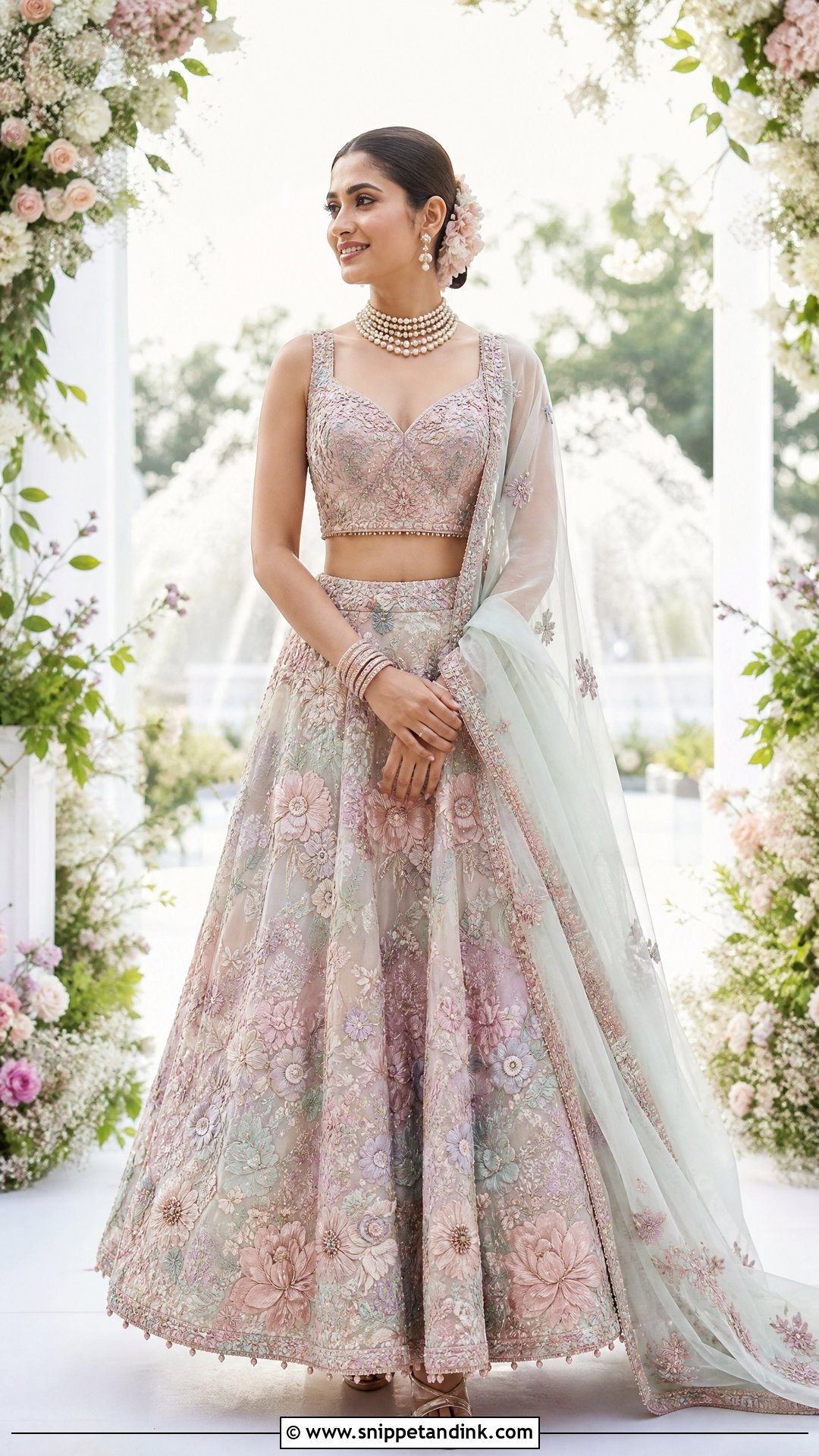
Pastel florals belong outdoors in daylight. Choose a lightweight skirt with printed or embroidered blossoms in peach, lilac, mint, sky blue or blush, with a structured blouse and a sheer dupatta. Pearl jewelry, pastel stones, delicate bangles and metallic sandals suit the palette. Fresh flowers in a bun or braid should pick up one color from the lehenga rather than every shade in it. A deeper border on the skirt gives definition in photos. Organza, silk and georgette stay comfortable in warm weather, which heavier velvet and brocade won’t.
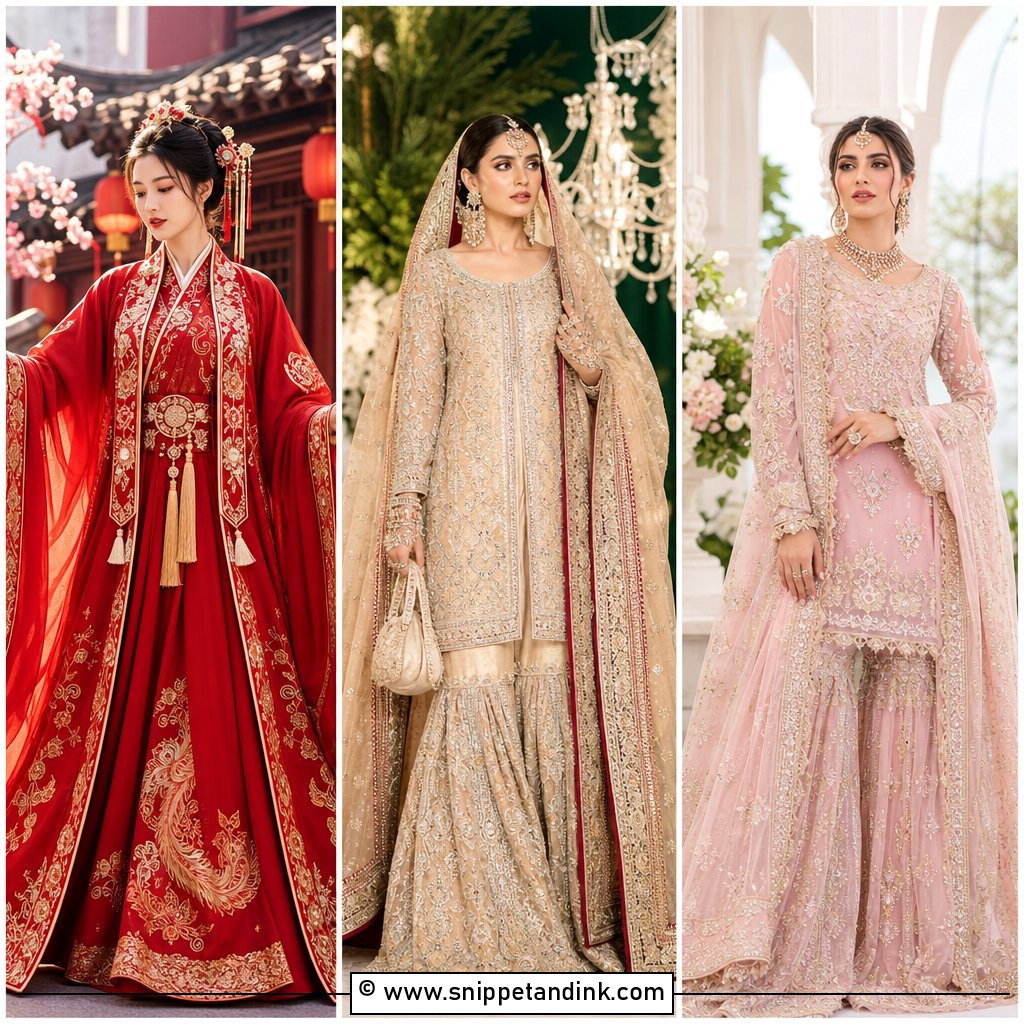
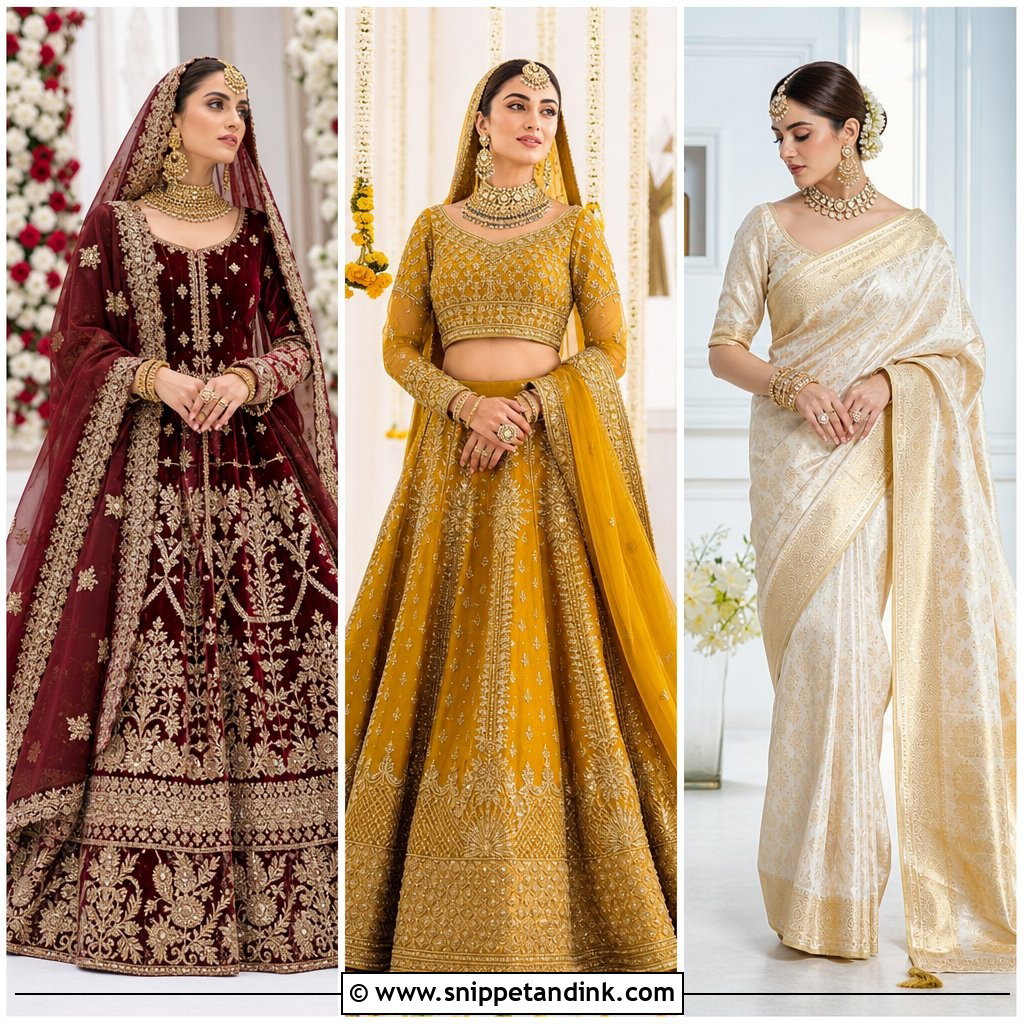
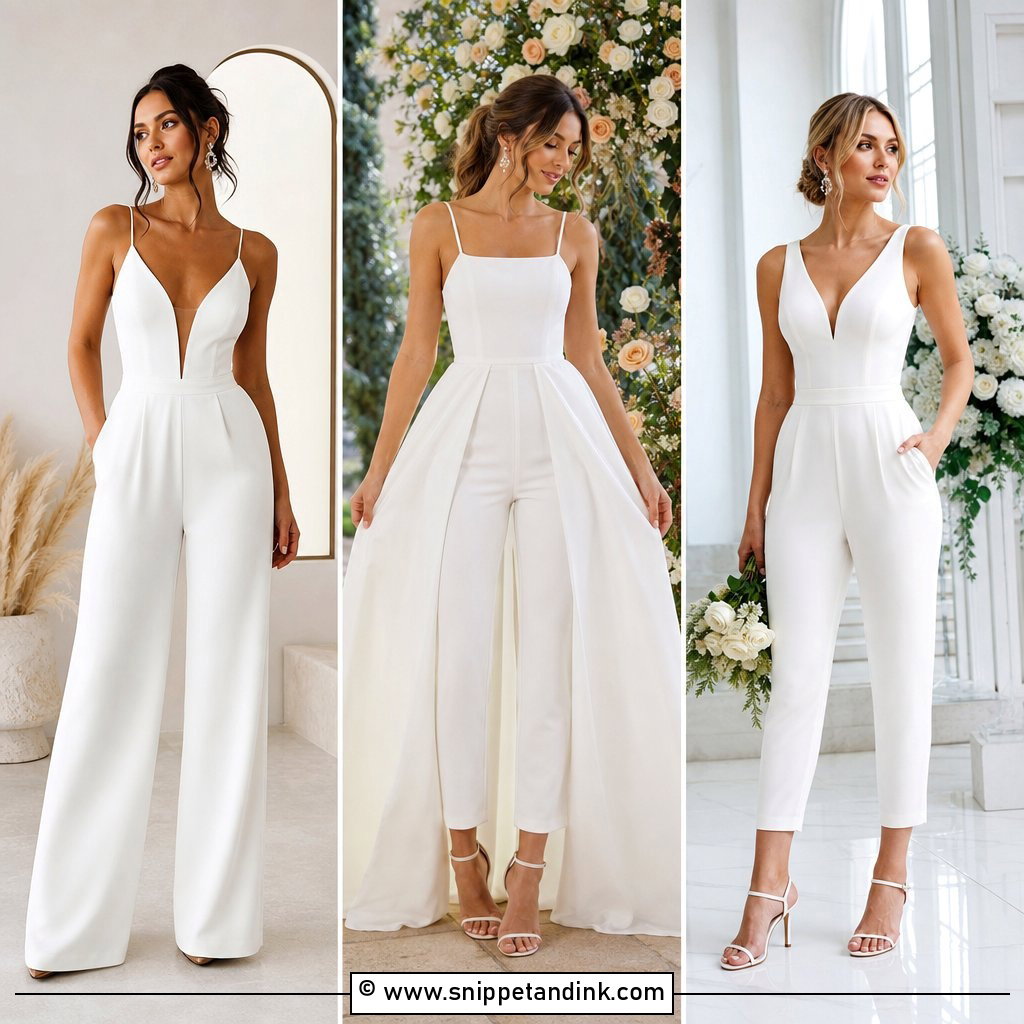
25. Minimal Silk Bridal Lehenga
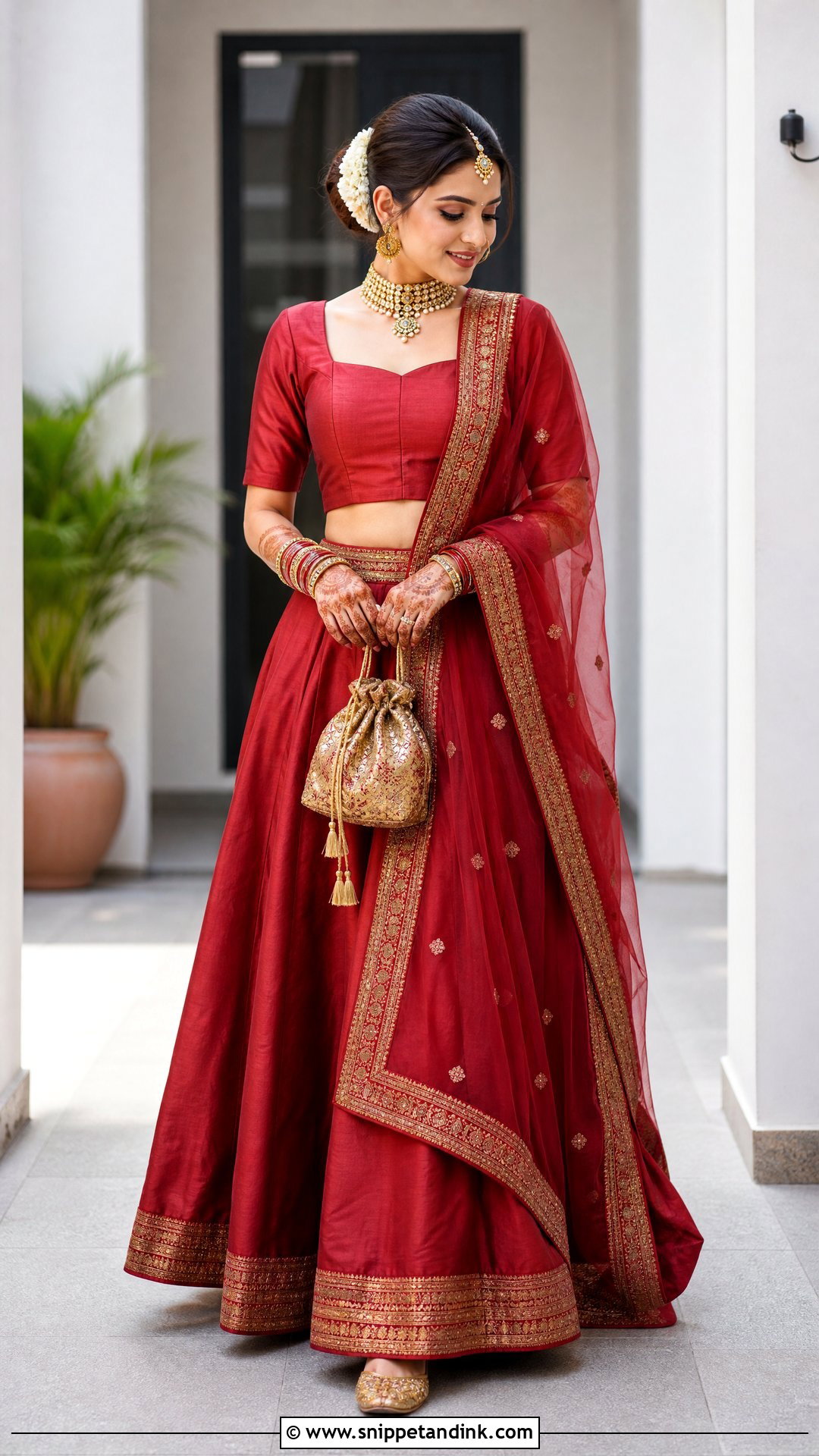
A minimal silk lehenga relies on cut and fabric instead of embroidery. Choose red, rust, rose, green or gold, with a structured blouse and a border-trimmed dupatta, and let the silk’s sheen do the work. Pick one strong jewelry pairing, a choker with earrings or a long necklace with a maang tikka. Bangles, a silk potli and cushioned juttis finish it. Intimate ceremonies suit it, and it’s far easier to wear again. The trade-off is that plain silk hides nothing, so the waistband, hem, blouse fit and dupatta placement all need precise tailoring.
After the Wedding, Silk and Zari Need Air, Not Plastic
A bridal saree or lehenga is often kept for decades and handed down, and the first weeks after the wedding decide how well it lasts.
Air everything out of direct sun for a day before packing it away; sweat and perfume left in silk turn into stains and weaken the fibers. Take any marks to a dry cleaner who handles bridal silk and zari, and tell them what caused each one.
Wrap the outfit in clean cotton or muslin, never in plastic, which traps moisture. Real zari tarnishes when exposed to damp air and perfume, and it cracks along the same fold line over time, so unfold and refold sarees along different lines every few months. Store heavy lehenga skirts flat or loosely rolled, with the can-can kept separately, and keep moth repellents in a cloth pouch rather than touching the fabric.
Family Custom First, Then the Fabric
The right bridal outfit respects your family’s tradition and still lets you feel like yourself. The lehengas, regional silk sarees and modern alternatives above cover a wide range of venues and seasons, but the order of decisions stays the same. Confirm what your family expects for the ceremony, then measure carefully and try the complete outfit with jewelry, footwear and underlayers. Practice walking, sitting and handling the dupatta or pallu so nothing feels unfamiliar on the day. Good tailoring and balanced accessories can make a simple outfit as memorable as the most embroidered one.
You'll Like These Ideas:


Leave a Reply