
An outfit you can actually carry for twelve hours changes how a wedding feels. I’ve watched brides spend a ceremony quietly hitching up a skirt or re-pinning a dupatta, and the photos always show it in the shoulders. The looks below are chosen with that in mind: lightweight lehengas, sarees, simple gowns, tailored suits and bright outfits for the pre-wedding events, each styled from shoes to hair. Easy to carry doesn’t mean plain. It means breathable fabric, draping that stays put, shoes you can stand in, and embroidery placed where it shows rather than everywhere it adds weight. Traditional, modern, small or outdoors, the same rules apply.
Judge a Lehenga’s Weight With Your Arms, Not the Price Tag
Bridal lehengas vary enormously in weight, and the shop photo never tells you which kind you’re looking at. Heavy zardozi, stone work and several can-can underskirts can make a bridal outfit genuinely tiring to wear, while a georgette skirt with border work can feel close to everyday clothing. When I shop with a bride, I lift the skirt off the hanger before she falls in love with it.
- Hold the skirt at the waistband with one hand for a full minute. If your arm is tired, your waist will be by the second ceremony.
- Ask how many can-can layers are sewn in and whether one can be removed. Volume can often come from a lighter net instead.
- Check the waistband. A wide, padded band with a hook and side zip spreads the weight better than a thin drawstring.
- Weigh up the dupatta separately, especially if it will sit on your head. A heavy border pulls the hair and the maang tikka backward all evening.
None of this means giving up embroidery. It means asking for it where it shows: the hem, the blouse and the dupatta edge.
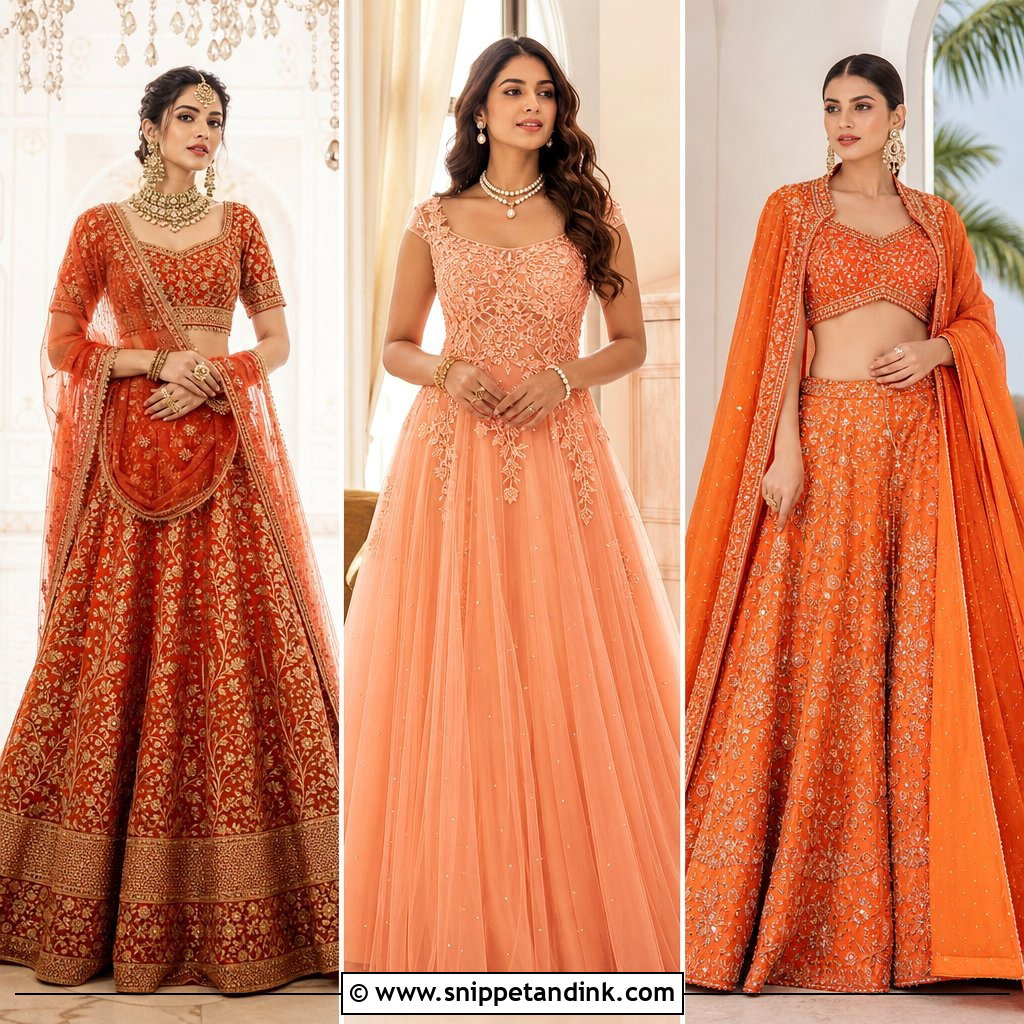
1. Lightweight Bridal Lehenga With One Shoulder Dupatta
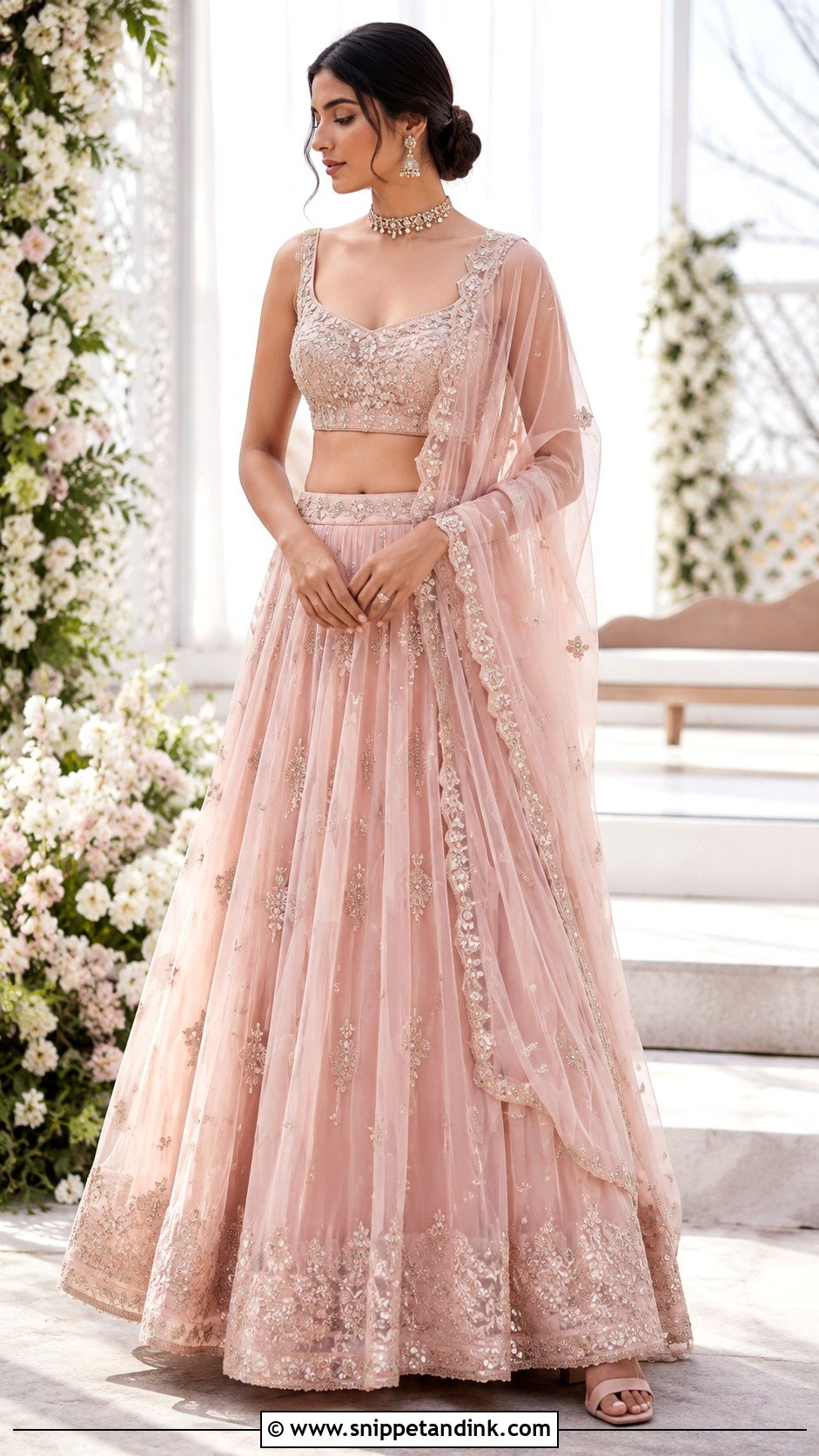
Grandeur without every step feeling like work: that’s what a lightweight lehenga is for. I’d choose a flowing georgette, organza or soft silk skirt with the embroidery concentrated at the hem and waistband, where it’s seen most and costs the least in weight. A fitted blouse with proper straps keeps the top secure, and one dupatta over one shoulder means far less fabric to manage. Pin it at the shoulder and again at the waist, the waist pin hidden under the drape, so it holds through hugs and photos. Block-heel sandals, a choker, medium jhumkas and slim bangles finish it, with a low bun or soft waves. It suits a bride who wants traditional detail and still plans to move freely.
2. Pastel Bridal Saree With Pearl Jewelry
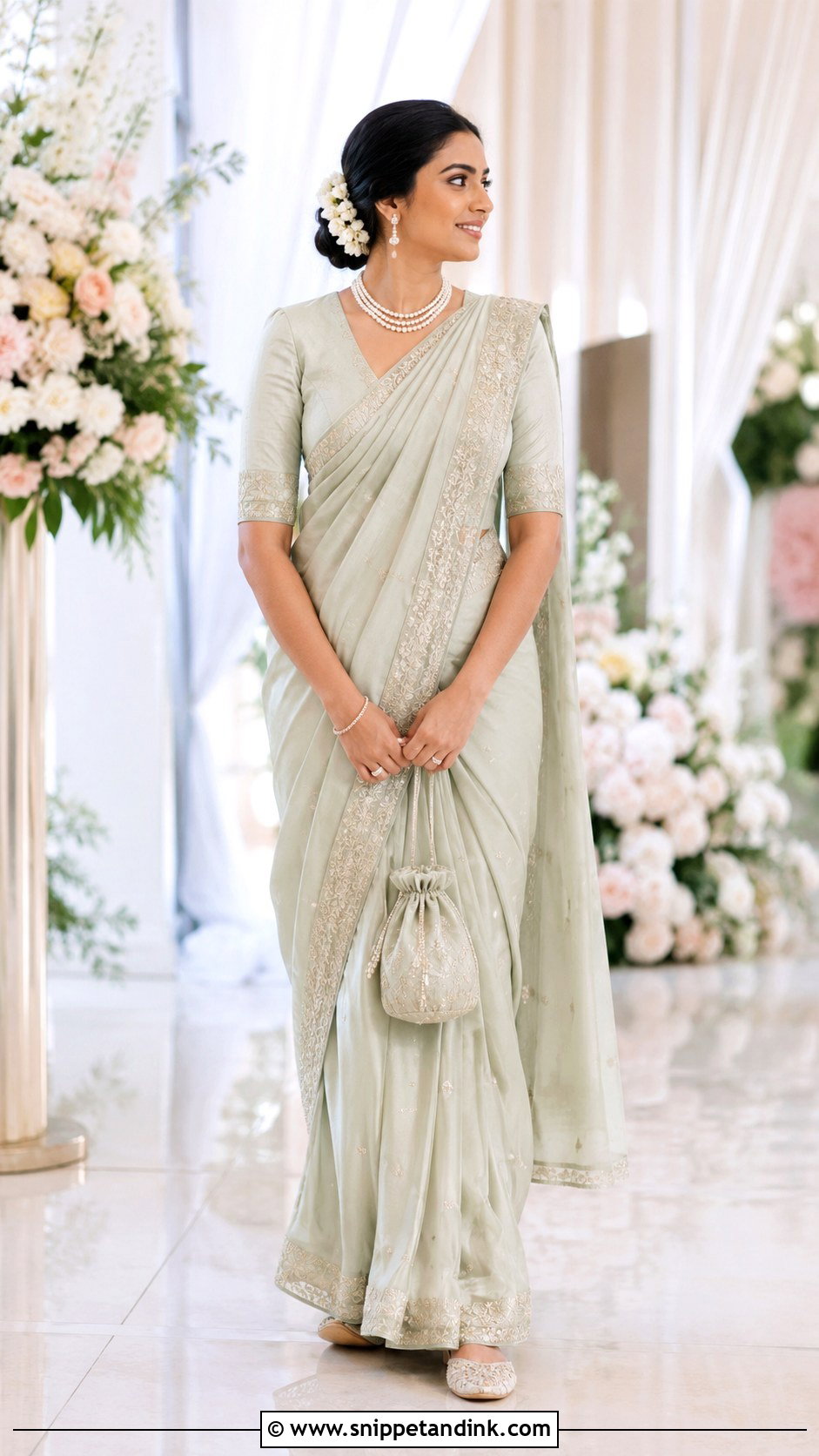
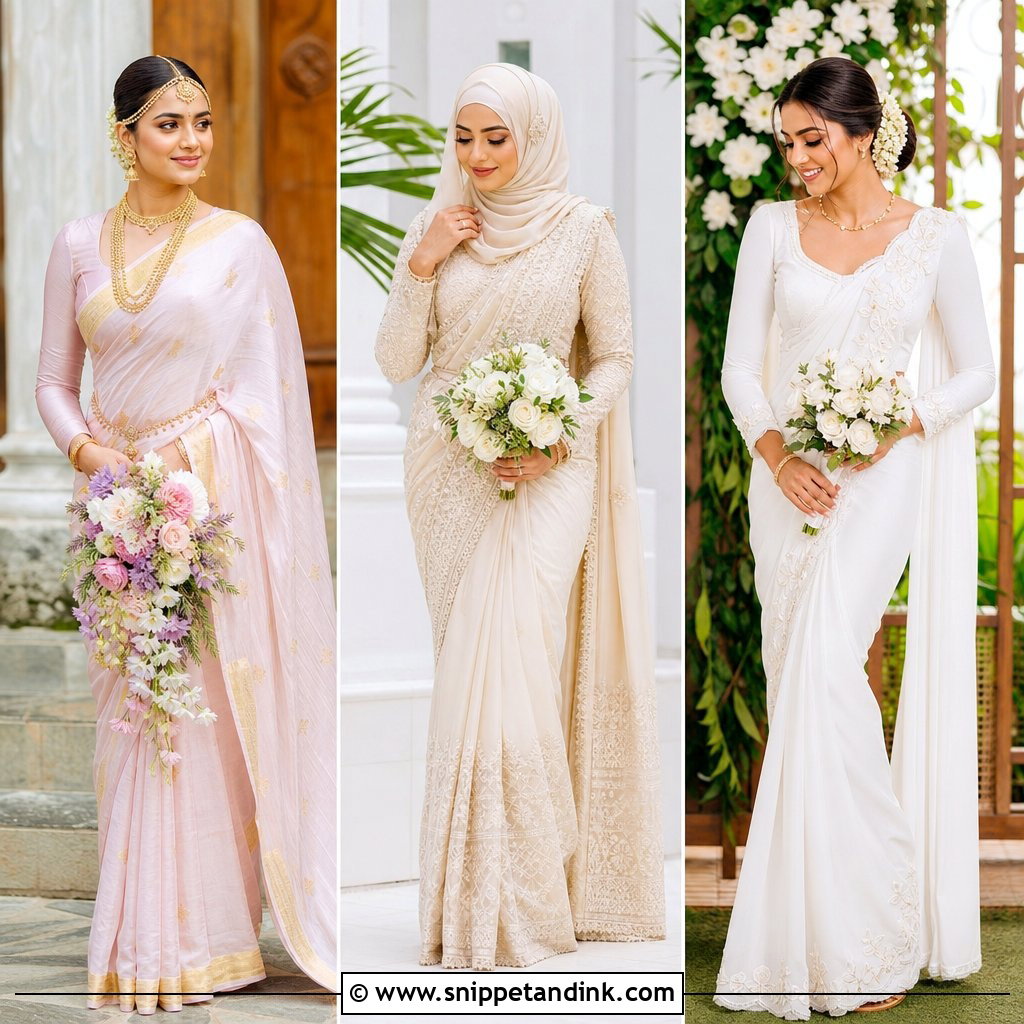
Daytime ceremonies suit pastels better than almost any other color, because soft light flatters them. Powder pink, sage, lavender or pale blue in organza, chiffon or light silk all drape well. An elbow-sleeve structured blouse gives support. Fix the pleats at the waist with two safety pins on the inside, not one, and pin the pallu at the shoulder from underneath so the pin doesn’t show. Pearl drops, a delicate necklace and a small maang tikka suit the palette. Embroidered flats or low block heels, a compact potli and a neat bun with fresh white flowers complete it, with luminous skin, rosy cheeks and a neutral lip. Chiffon slips more than silk, so give it extra pins.
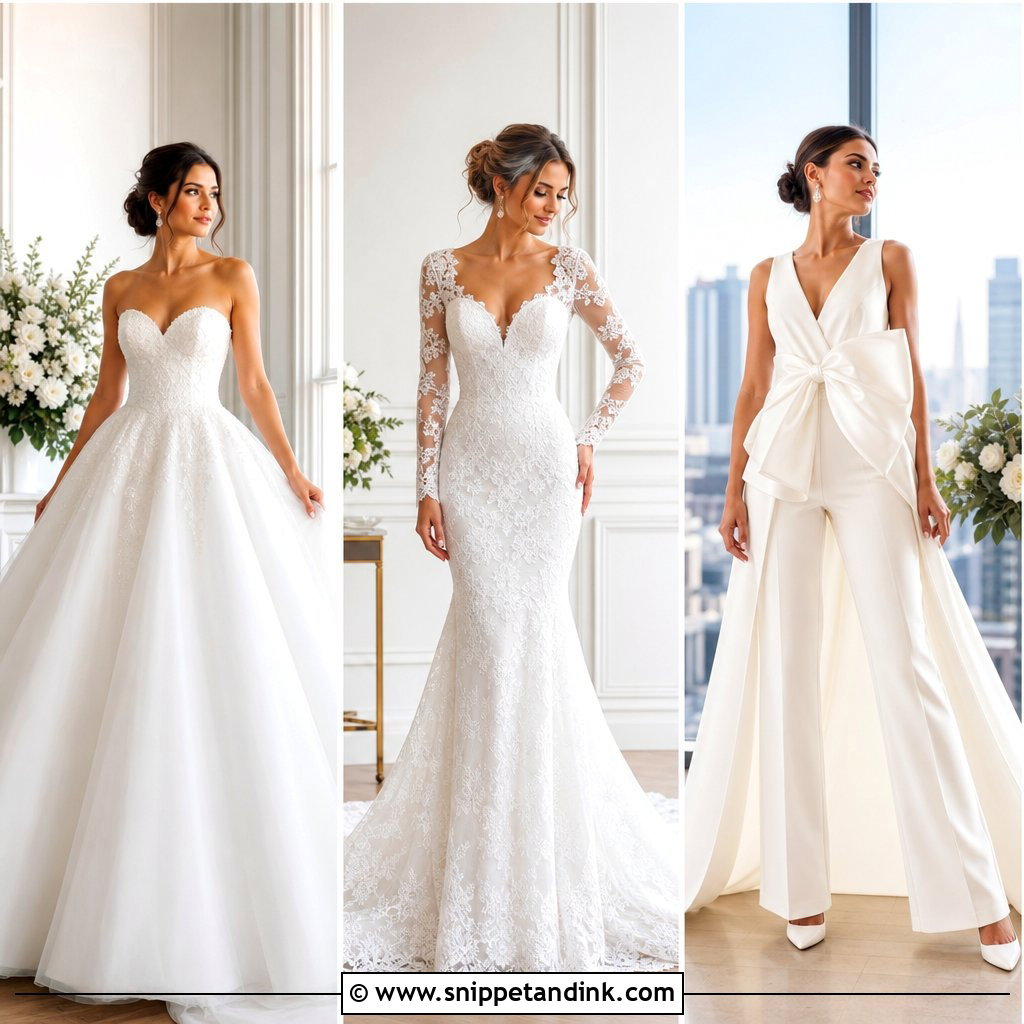
3. Minimal Bridal Gown With Block Heels
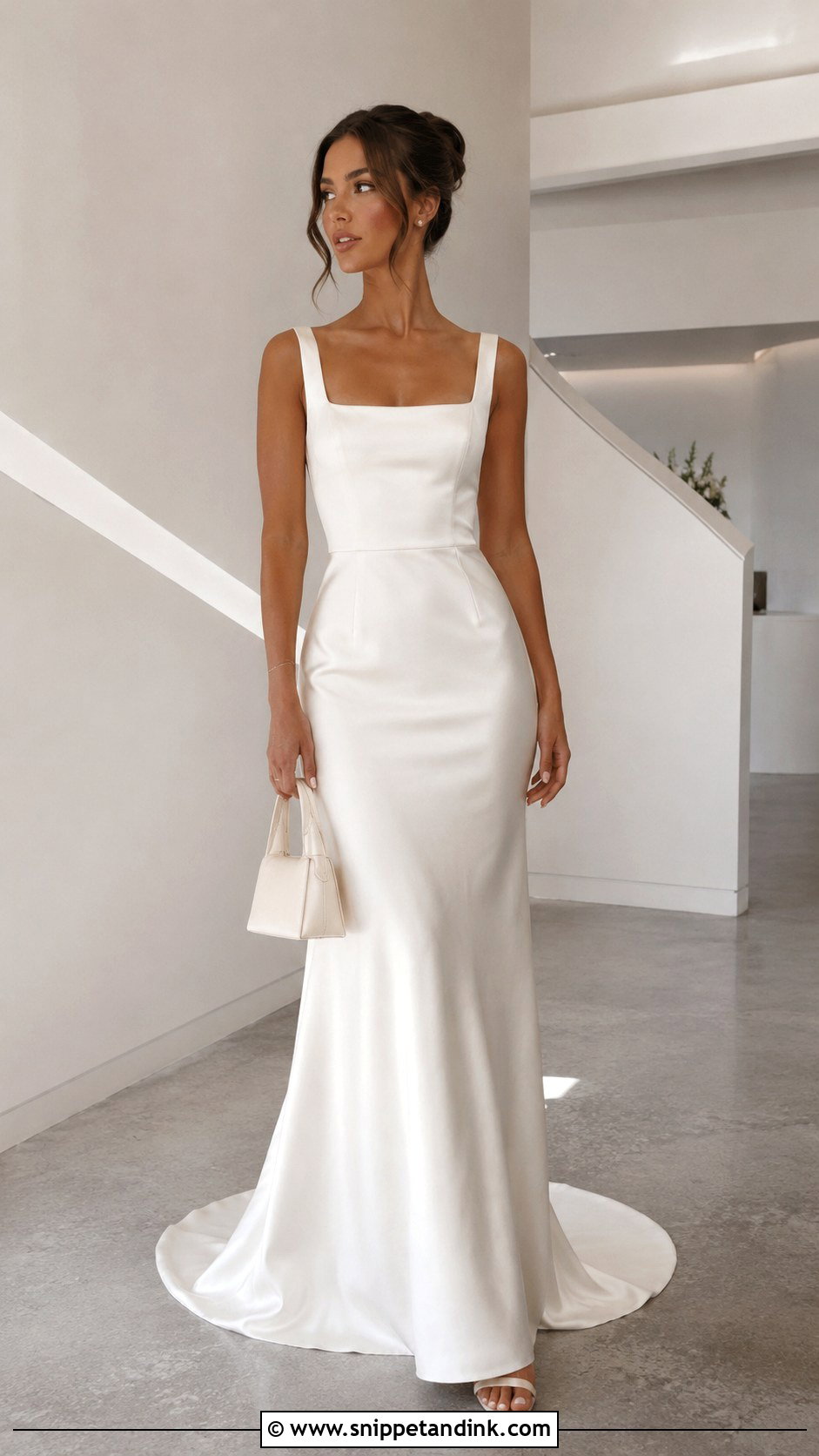
Clean lines can carry as much impact as heavy decoration. A minimal gown with a fitted bodice, defined waist and softly flared skirt in crepe, satin or layered tulle is the easiest gown on this list to wear for a long day. A square or off-the-shoulder neckline gives interest without fussy accessories, so crystal studs, a simple bracelet and supportive block heels are enough. Skip the long train. A floor-length hem or a short sweep lets you walk, turn and climb steps without a helper, and I’d have the hem finished in the actual shoes. A sleek bun, polished ponytail or brushed waves suit the shape, and a structured mini bag holds the essentials.
4. Bridal Anarkali With Embroidered Flats
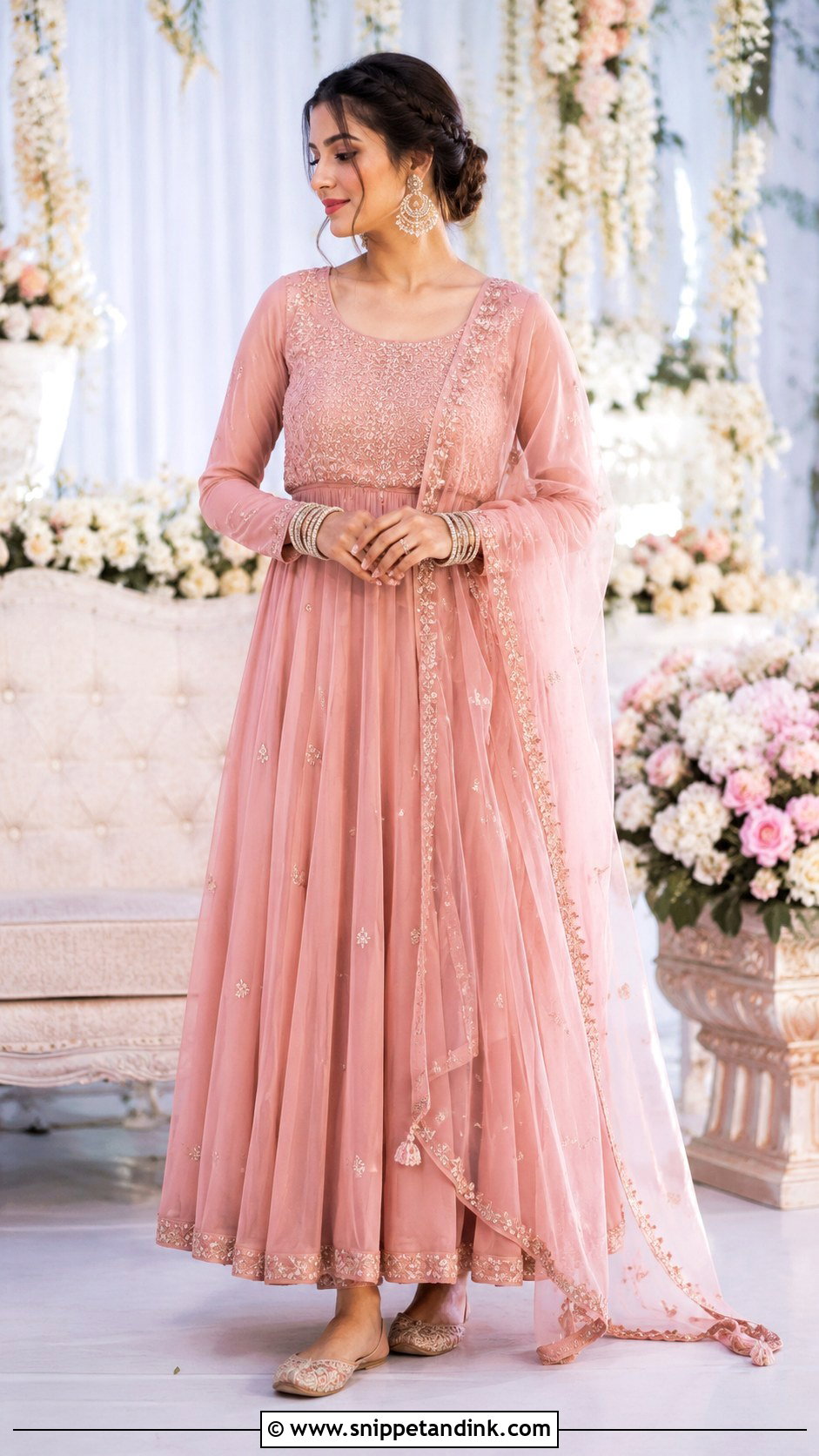
Coverage and comfort meet in this one. The movement of an Anarkali comes from its flared panels, which swing as you walk and spread out when you sit, so you’re never perching on tight fabric. Choose a floor-length design in silk blend, chiffon or georgette with fitted sleeves and a lightly embellished bodice. Vertical embroidery lengthens a shorter frame. Wear the dupatta over one shoulder or pinned across the front. Embroidered juttis or cushioned flats belong here; new juttis are stiff at the heel, so wear them around the house for a few evenings first. Chandbalis, stacked bangles, one small ring and a braided bun or loose curls complete it.
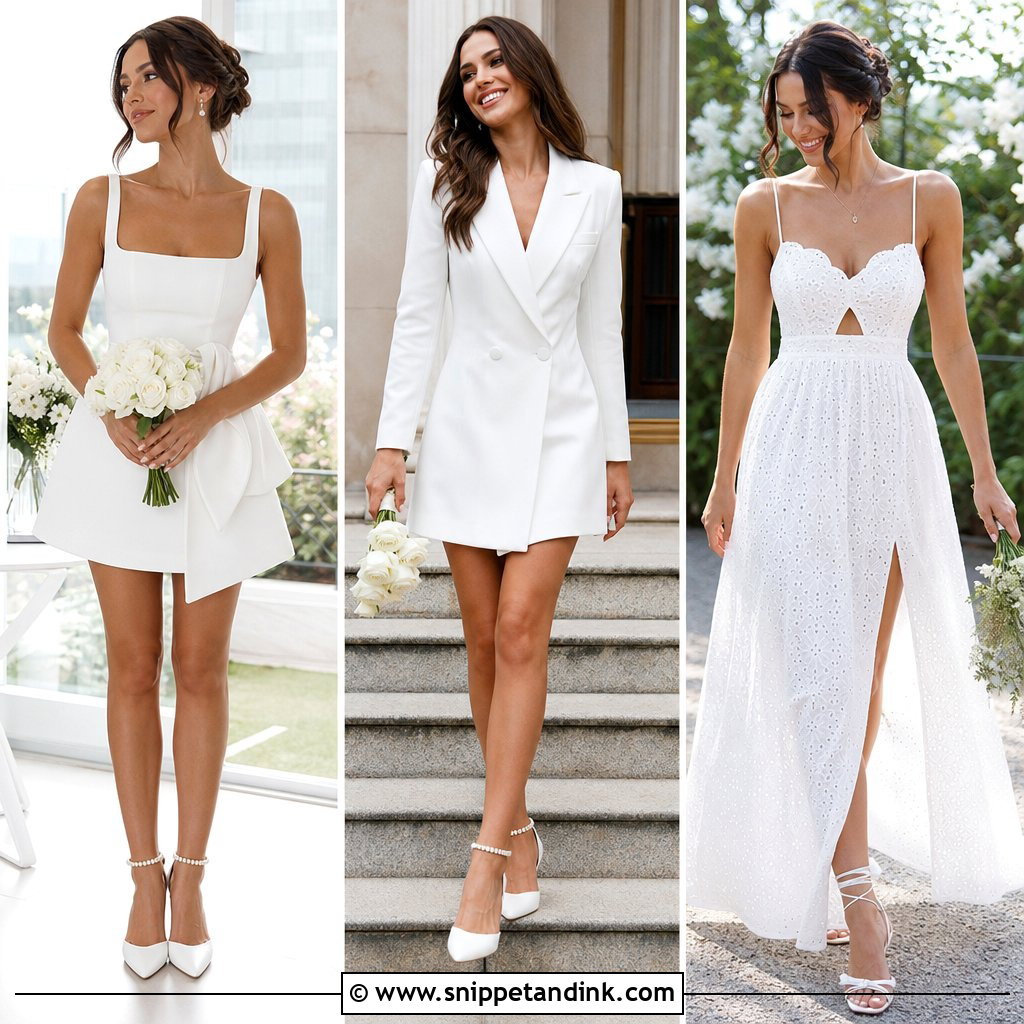
5. Bridal Sharara Set With Short Dupatta
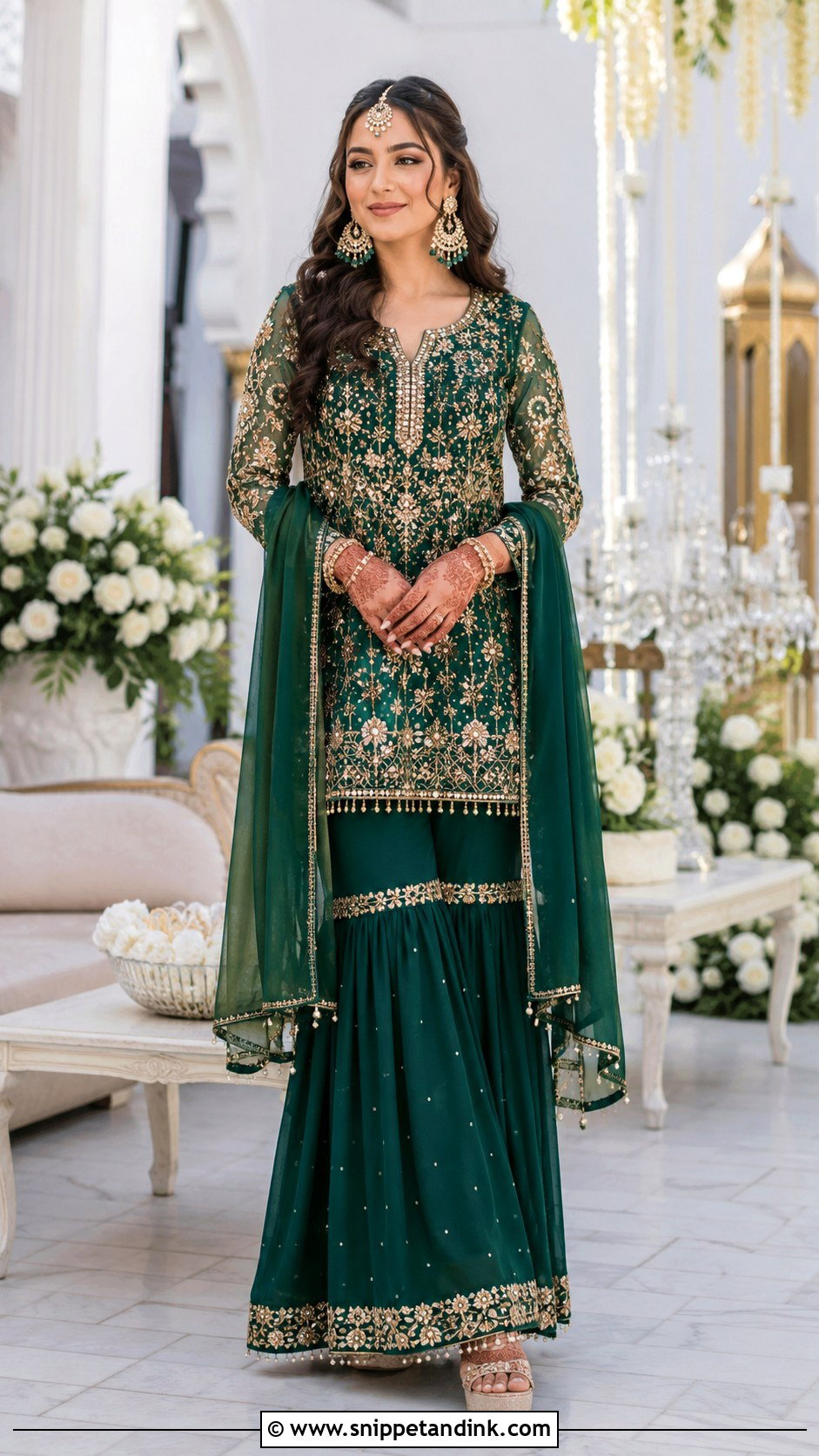
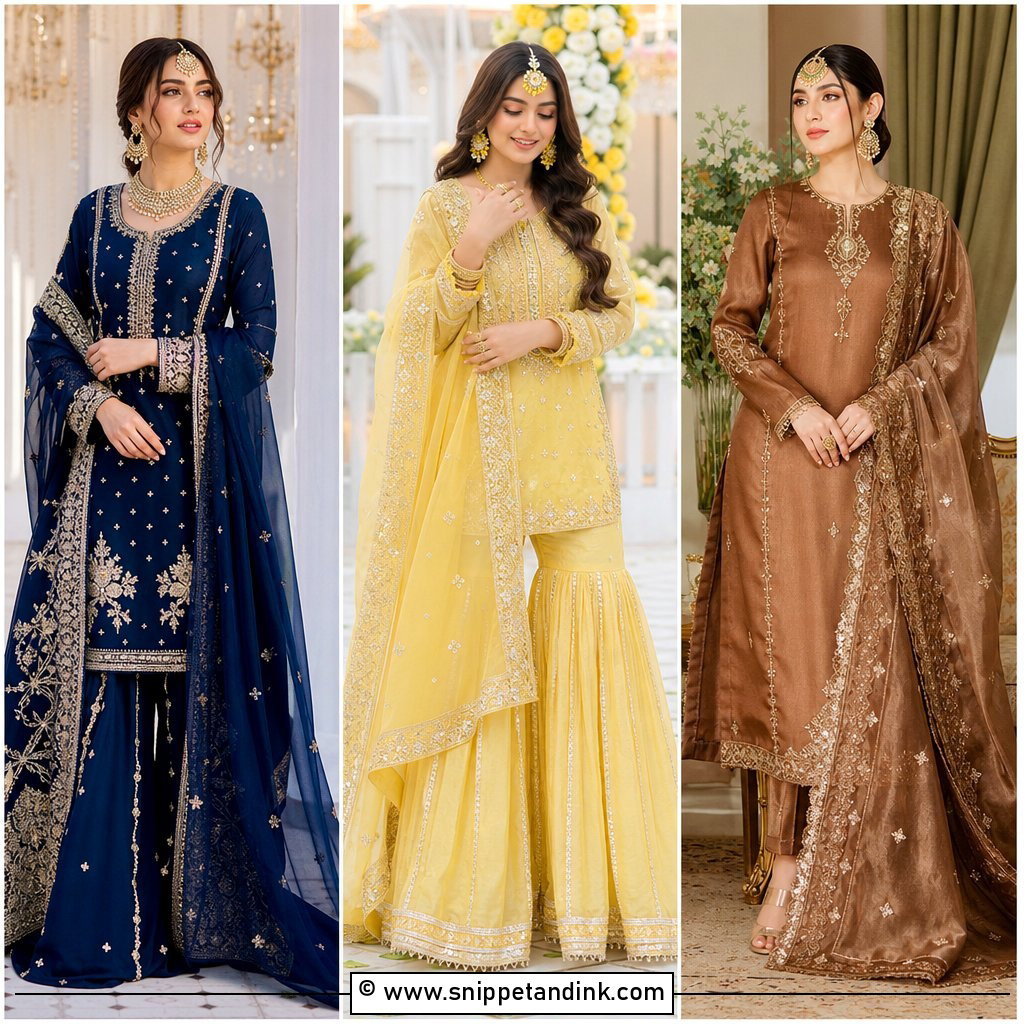
A bridal sharara set gives you the swish of a lehenga with your legs free. A knee-length kurta with a defined waist sits over wide, flowing sharara pants in matching fabric. Borders, fine mirror work or tonal embroidery bring the sparkle without bulk. Keep the dupatta short and light, which is far easier to control than a heavy floor-length one; pin it on one shoulder or carry it across both arms for portraits. Platform juttis, statement earrings, a small maang tikka and a half-up style finish it. Sharara pants flare from the knee, so check the hem with your shoes on; too long and the flare catches underfoot on the dance floor.
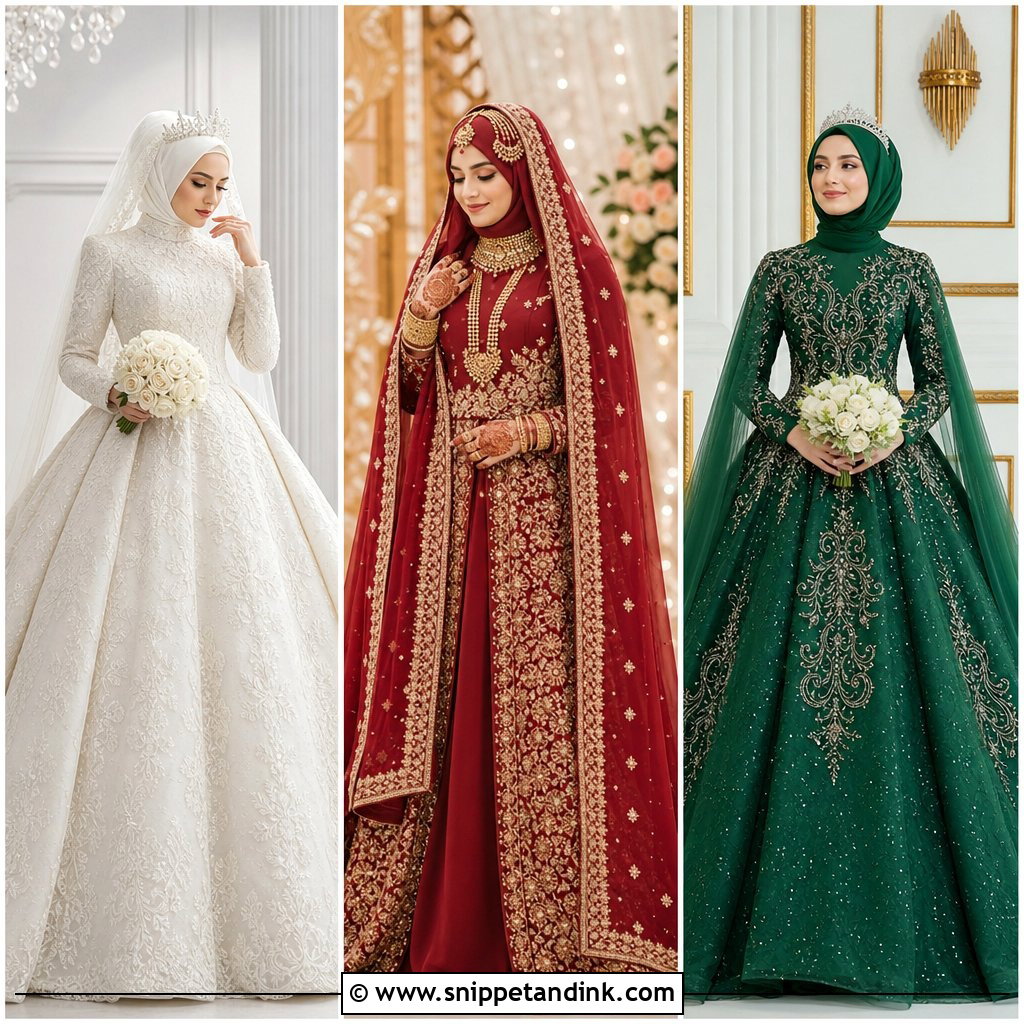
6. Red Bridal Lehenga With Belted Dupatta
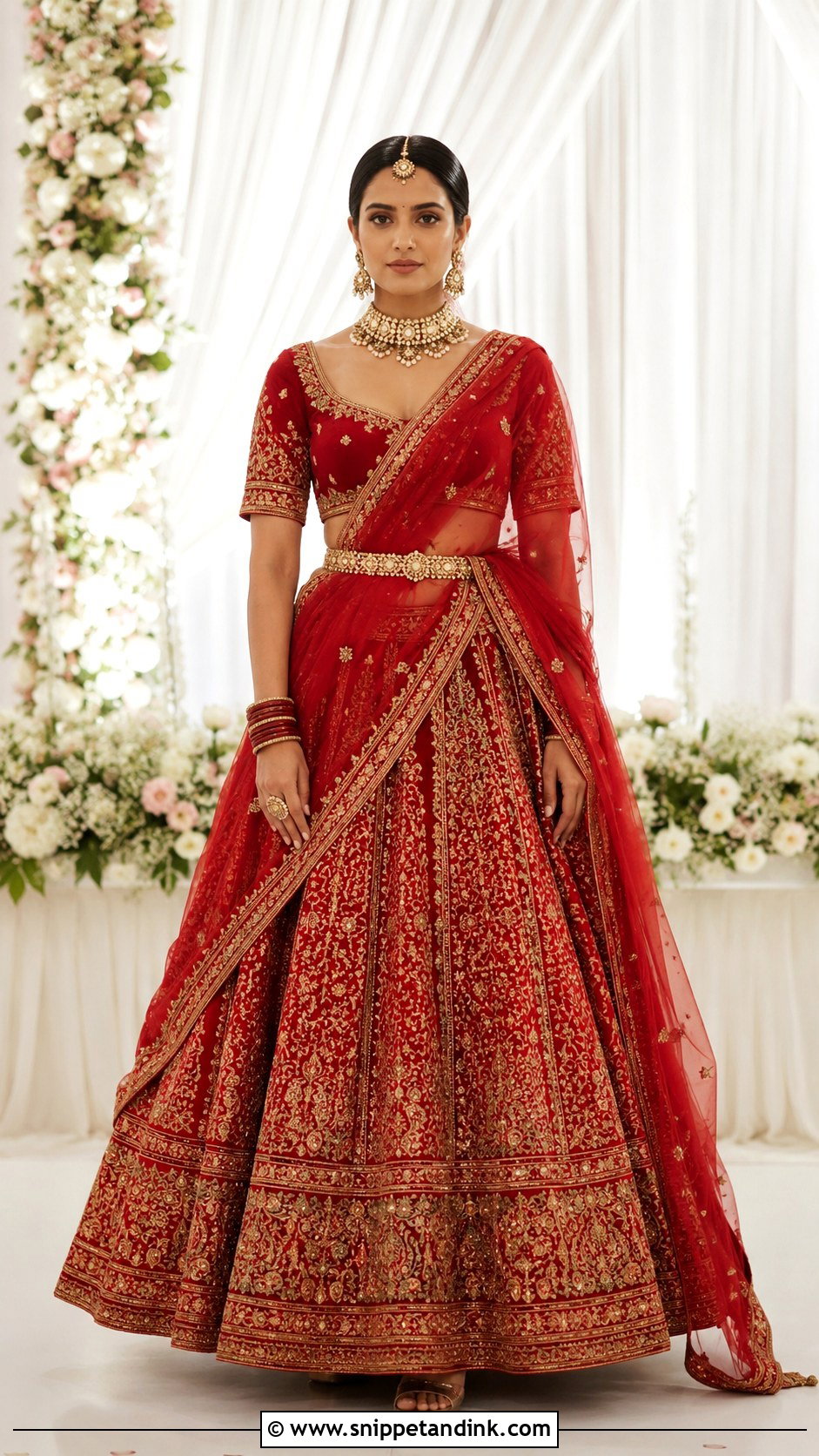
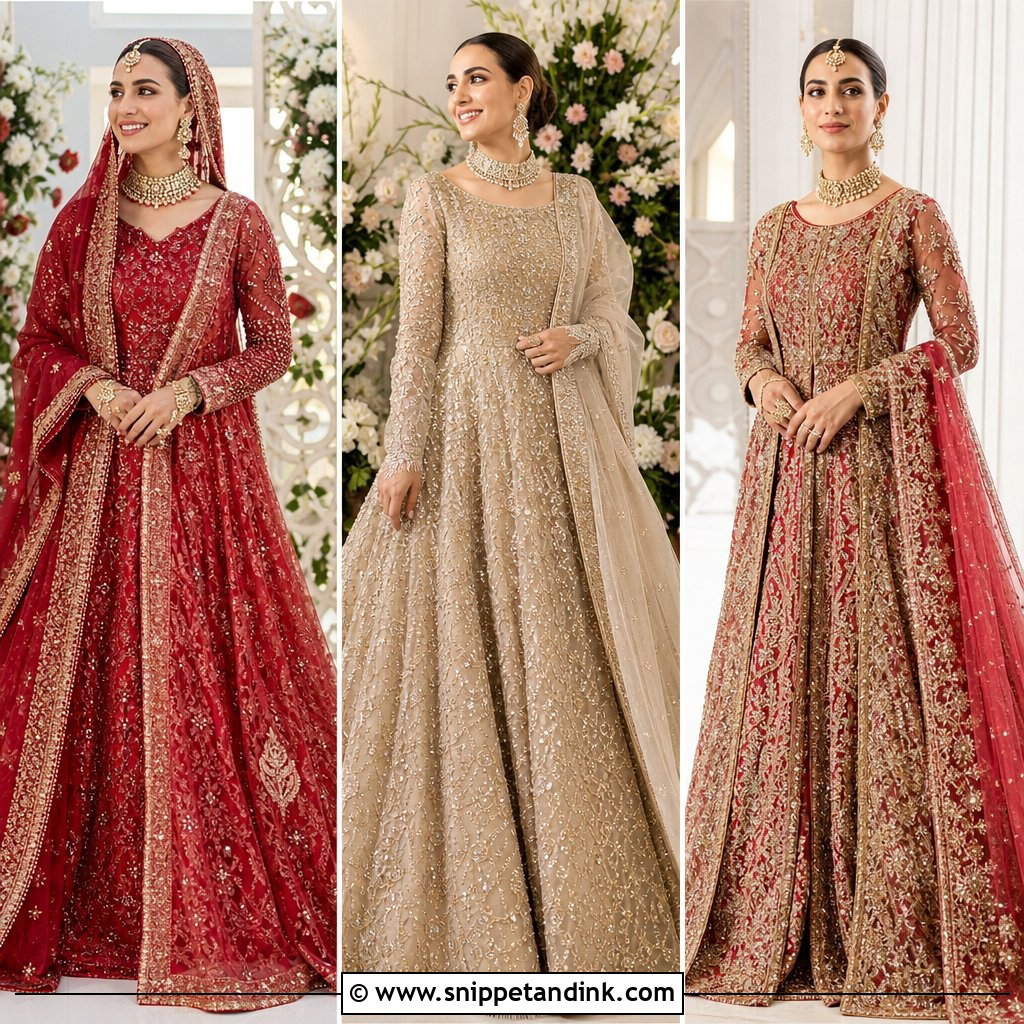
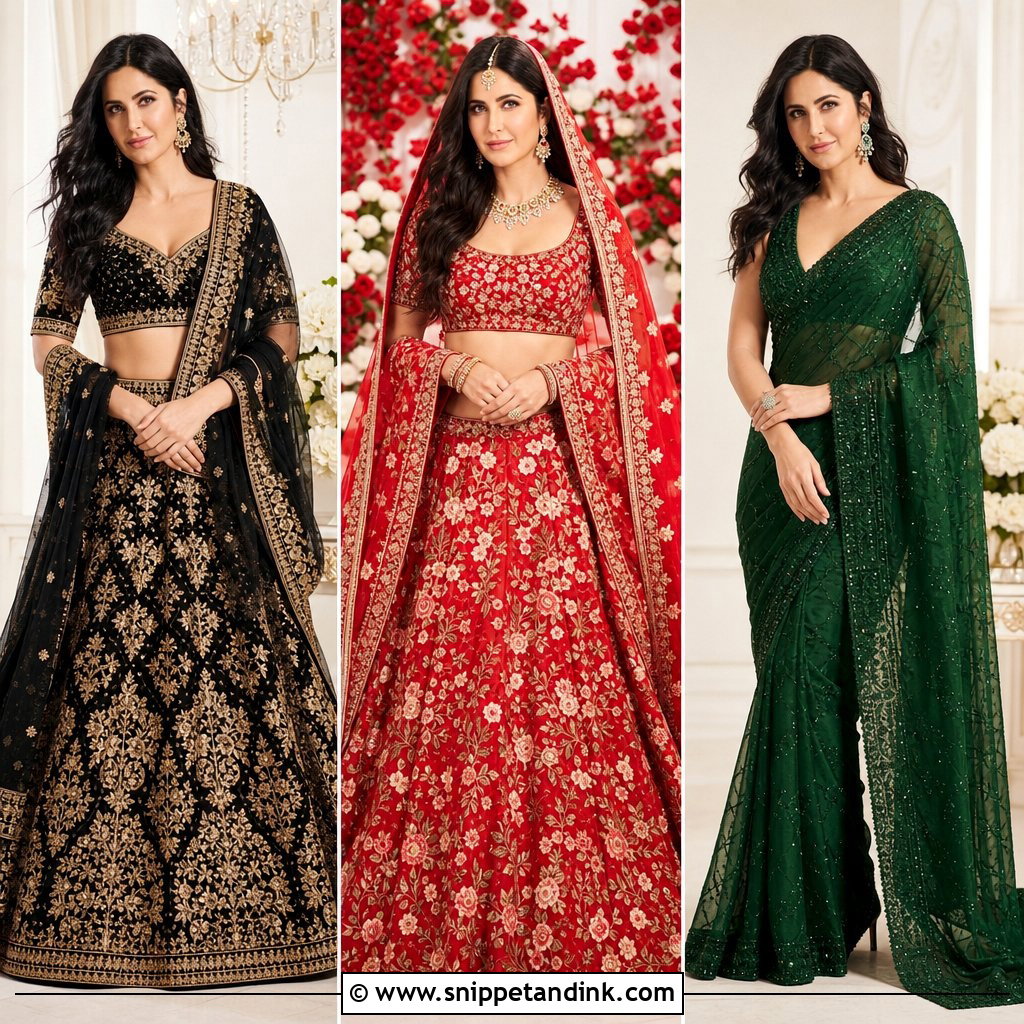
Red is still the color many brides dream of, and it doesn’t have to be a burden. The secret is construction. I ask for medium-volume skirt panels instead of several stiff underskirts, because can-can layers add weight and heat faster than embroidery does. A well-fitted blouse and a soft net or organza dupatta, draped diagonally across the body and held with an embroidered waist belt, stop the dupatta sliding every time you raise an arm. Kundan choker, matching earrings, comfortable block heels and a small potli finish it, with a center-parted low bun. Split the bangles evenly between both wrists so neither arm tires first.
7. Ivory Bridal Lehenga With Gold Accessories
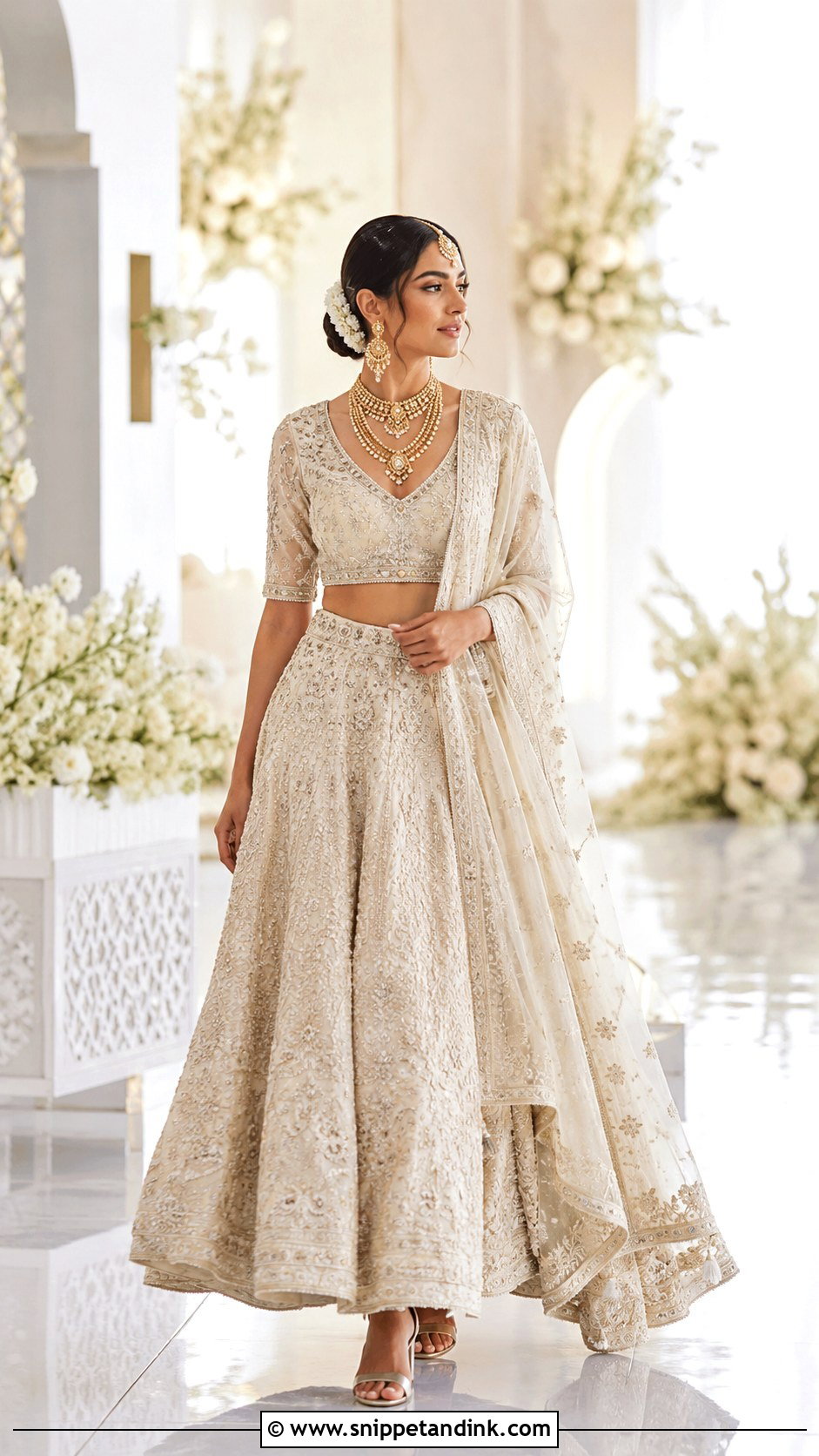
Ivory and gold glow in almost any light. Choose an ivory lehenga with tonal threadwork, scattered sequins or fine gold embroidery rather than dense work over every panel, which keeps the skirt lighter and the color clean. A fitted blouse and lightly draped dupatta hold the shape. Gold drops, a layered necklace, slim bangles and a delicate headpiece bring richness, with champagne block heels or cushioned juttis underneath. A smooth low bun or glossy waves and softly defined eyes with a rose or berry lip suit it. Ivory marks easily, especially at the hem. I keep a stain pen and a white cloth in the bride’s bag, and someone lifts the back of the skirt on any outdoor path.
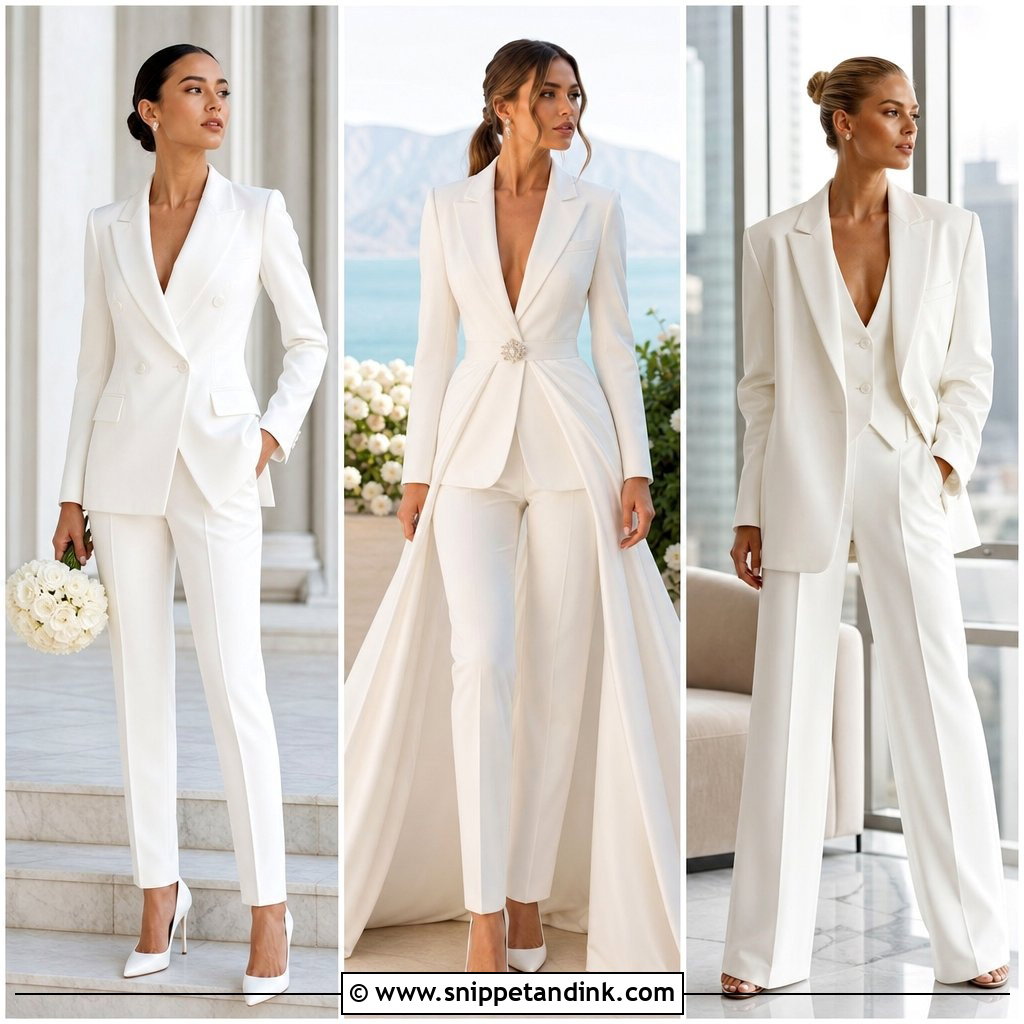
8. Bridal Jumpsuit With Detachable Cape
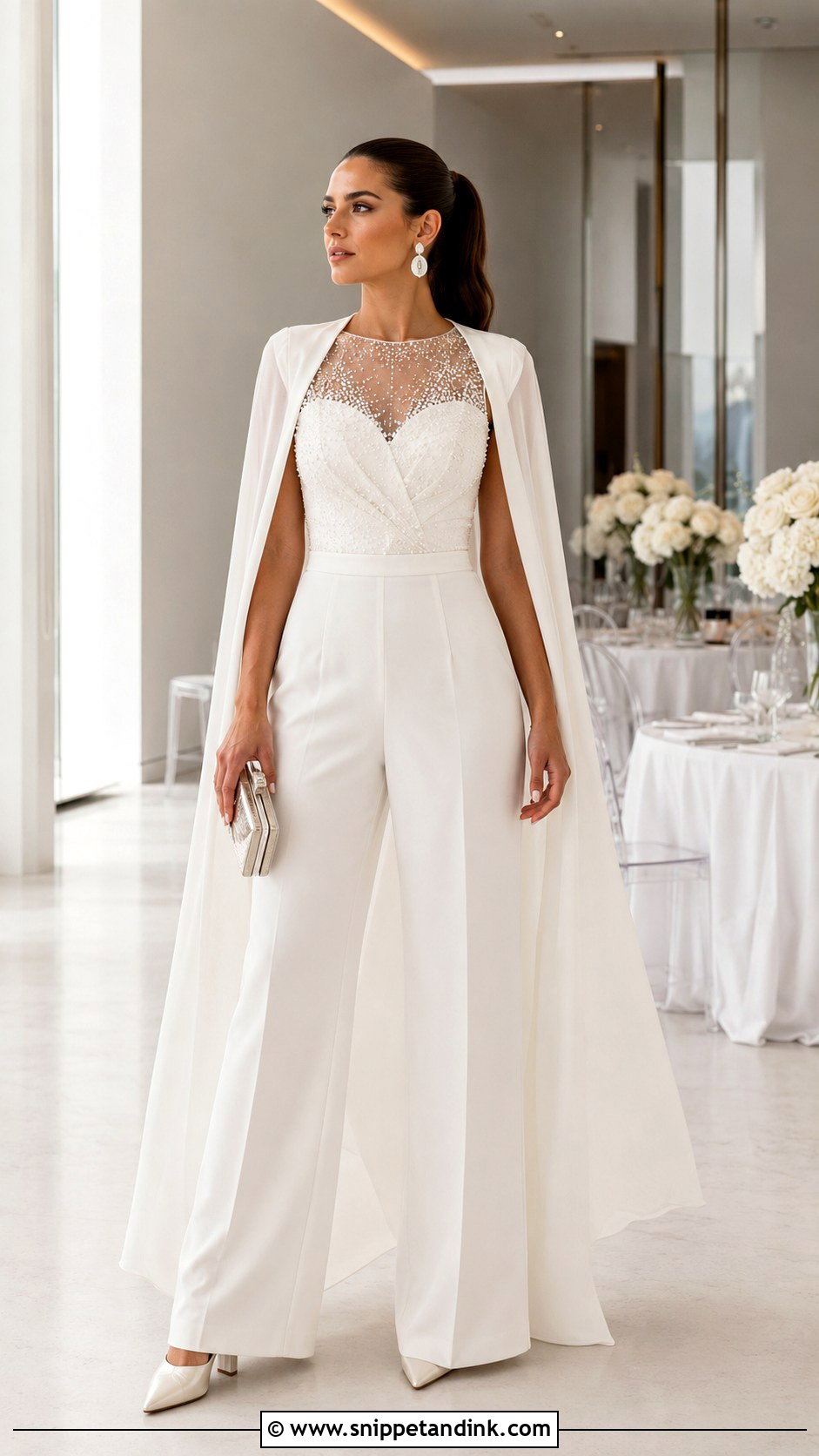
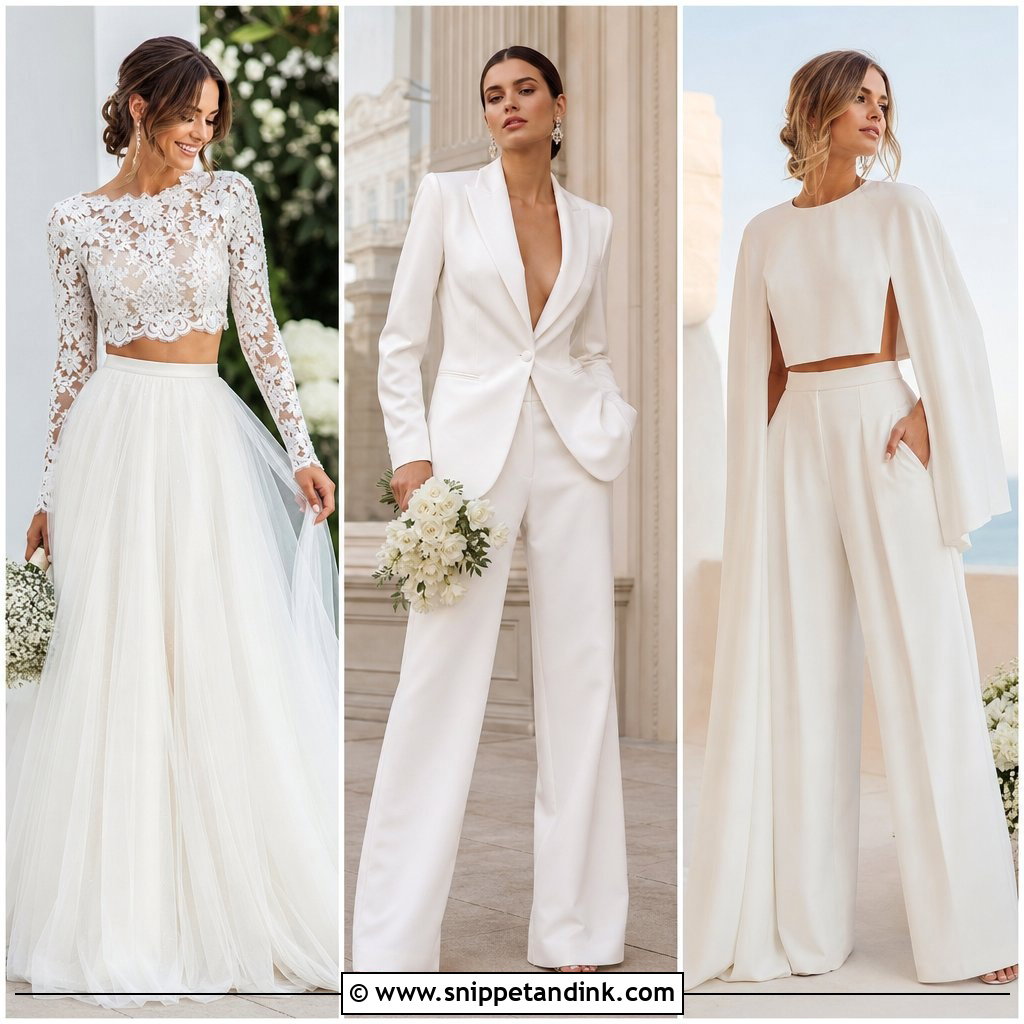
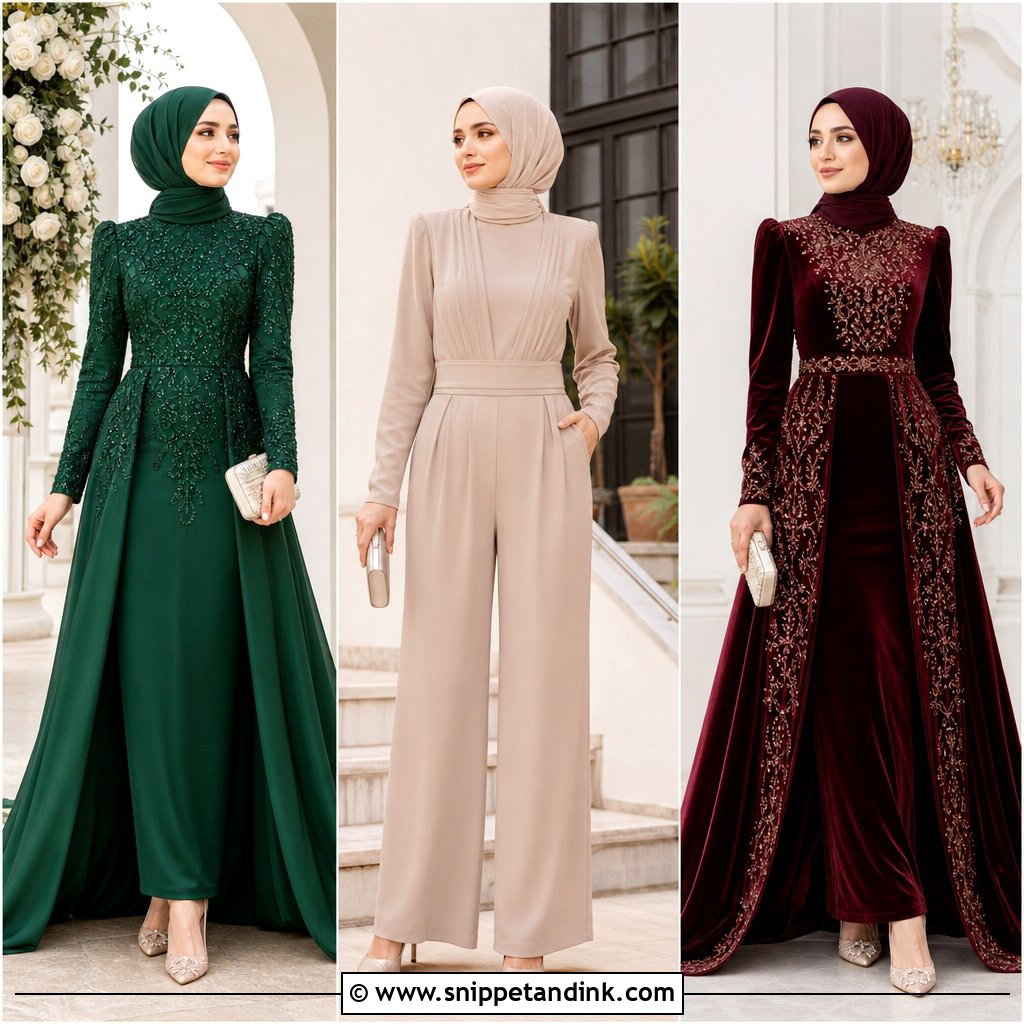
Jumpsuits solve the train problem entirely. A tailored wide-leg cut with a defined waist, a supportive bodice and fabric that falls without clinging looks sharp at a contemporary ceremony or reception. Lace panels, pearl detail or subtle beadwork make it bridal. A detachable chiffon cape adds ceremony drama and comes off for dancing, so check that its fastening can be undone by someone else in under a minute. Pointed pumps or block-heel sandals lengthen the leg. Sculptural earrings, a small metallic clutch and a sleek ponytail or soft side part finish it. Plan for bathroom breaks: a side zip you can reach yourself is worth more than any detail.
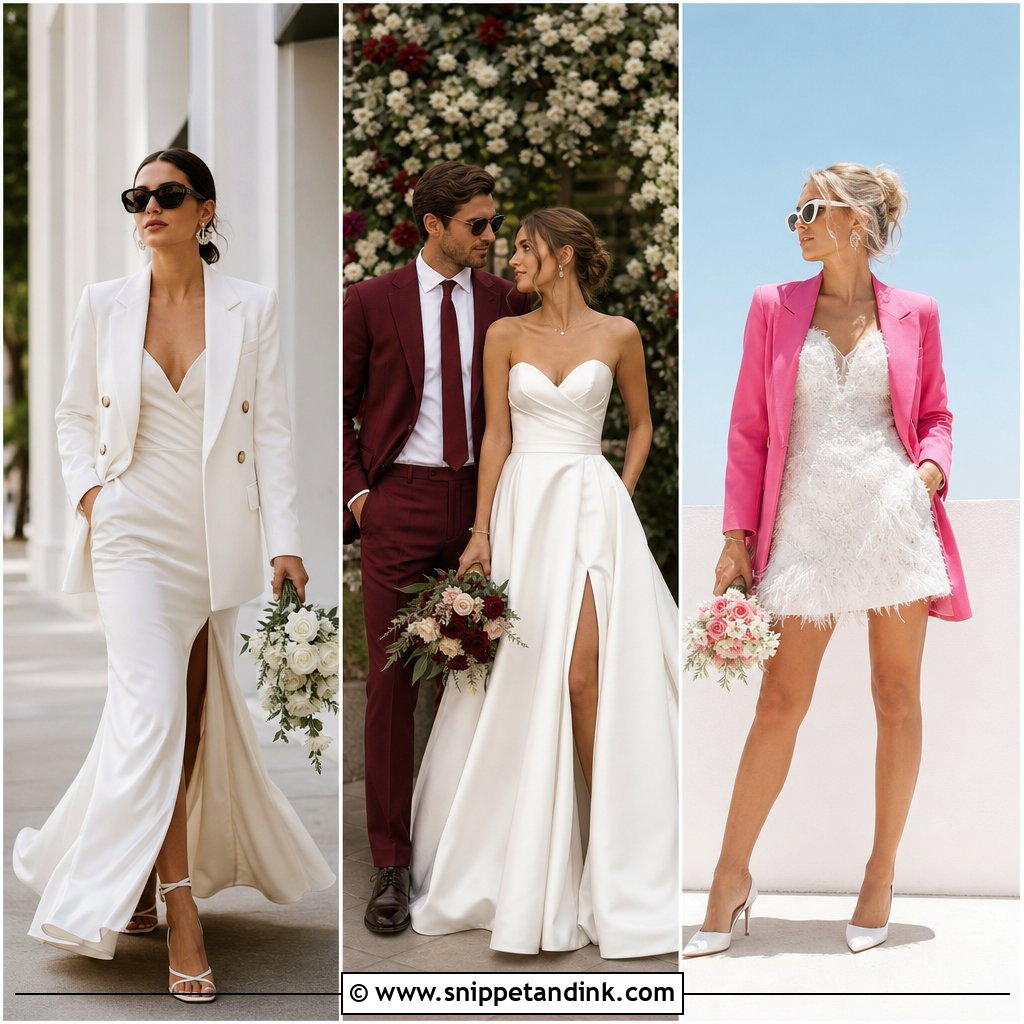
9. Tea Length Bridal Dress With Mary Jane Shoes
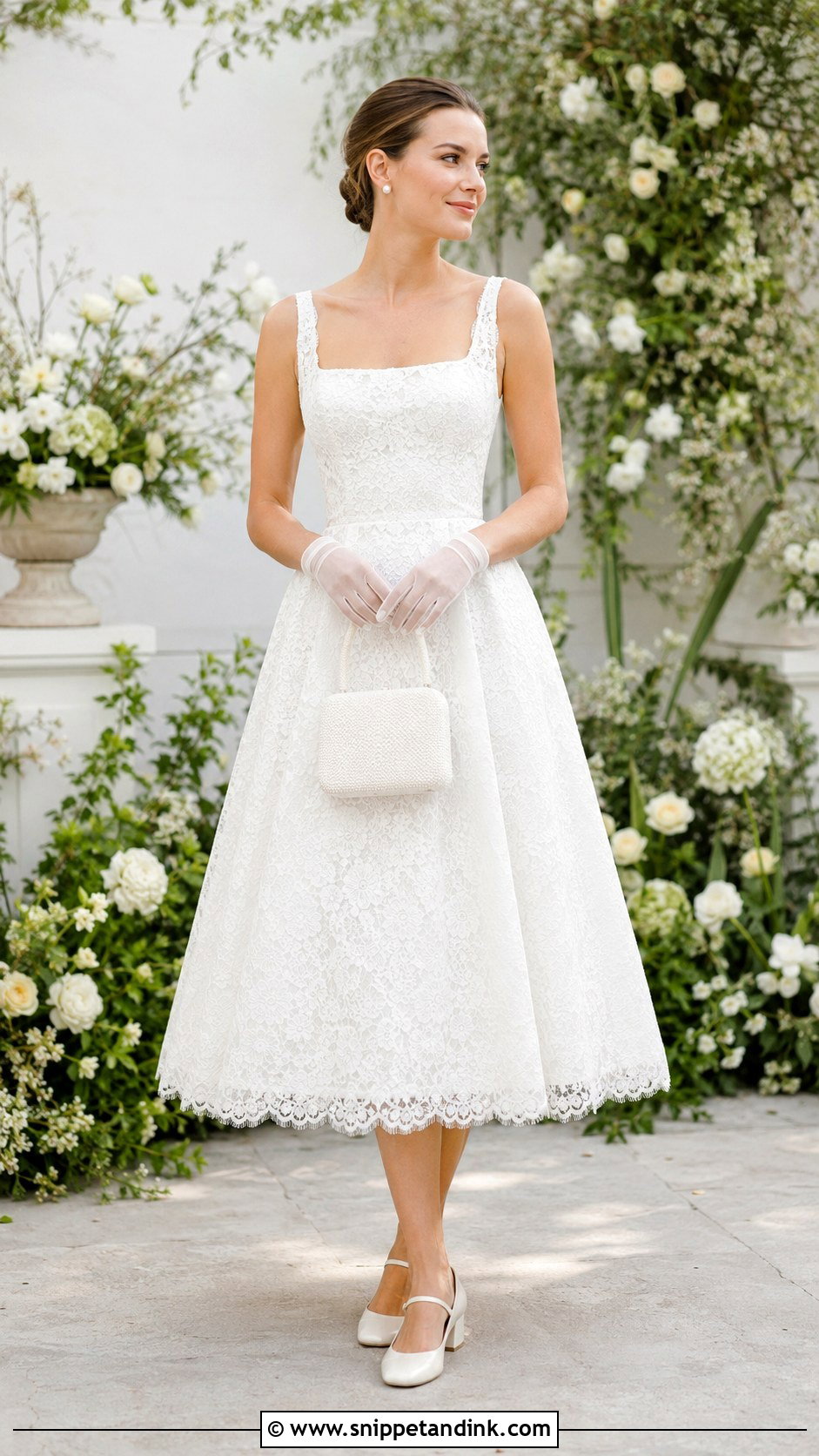
Short hems are the most practical bridal length there is. A tea-length dress suits a courthouse, a garden or a small wedding, and it turns your shoes into part of the outfit. Choose a fitted bodice and a softly structured A-line skirt in satin, lace or embroidered organza. Classic Mary Janes with a low block heel are stable on grass and gravel, and the strap stops a shoe slipping off mid-dance. Pearl studs, short gloves or a delicate hair bow work, but pick one or two, not all three. A small bouquet, compact top-handle bag and a smooth chignon or shoulder-length waves finish it.
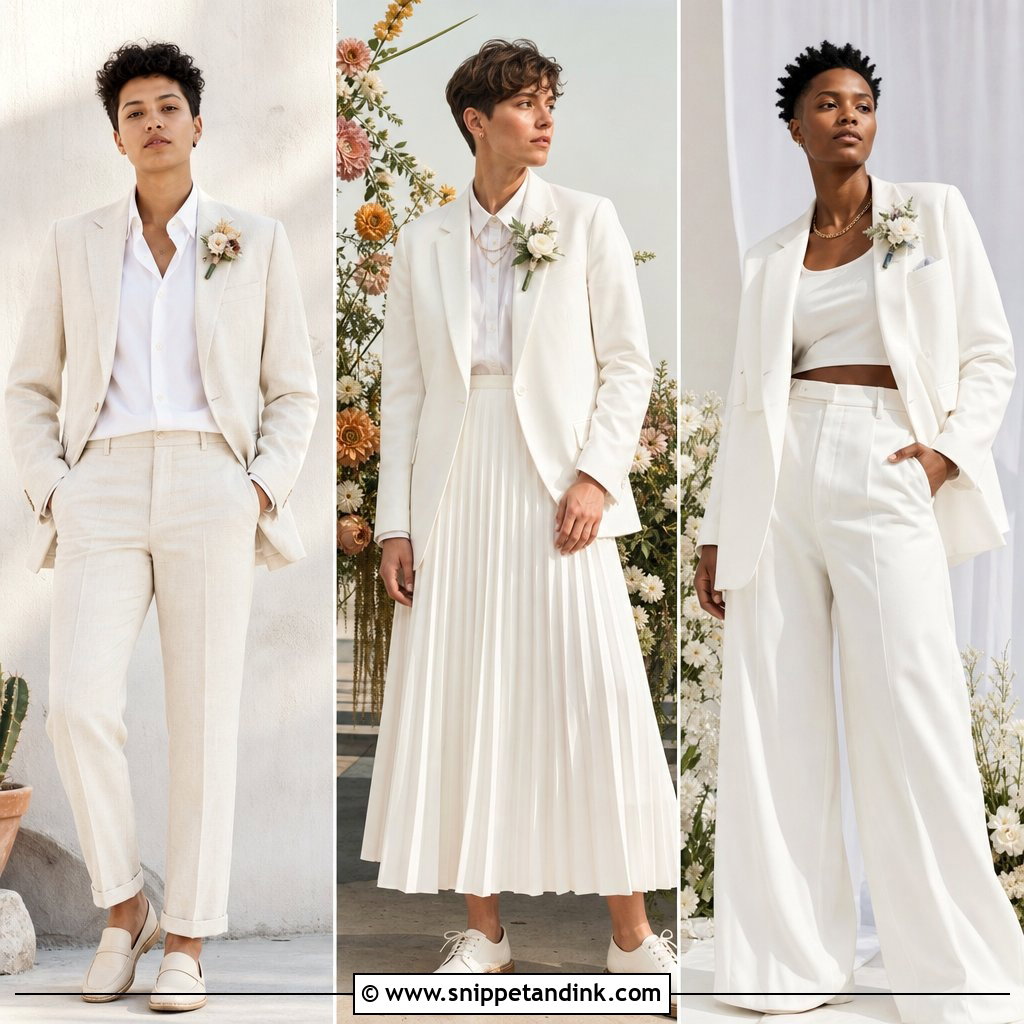
10. Bridal Pantsuit With Pointed Heels
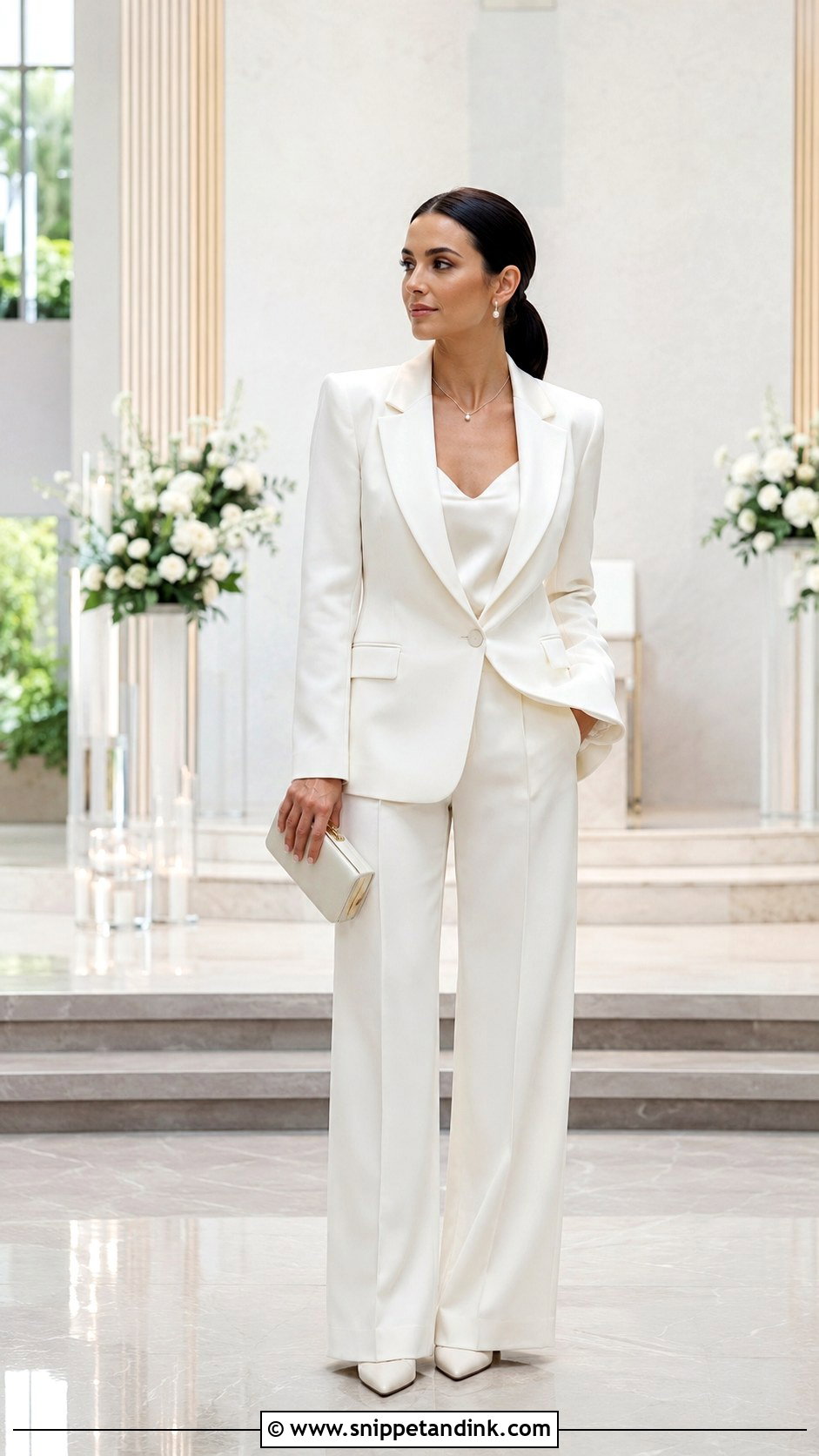
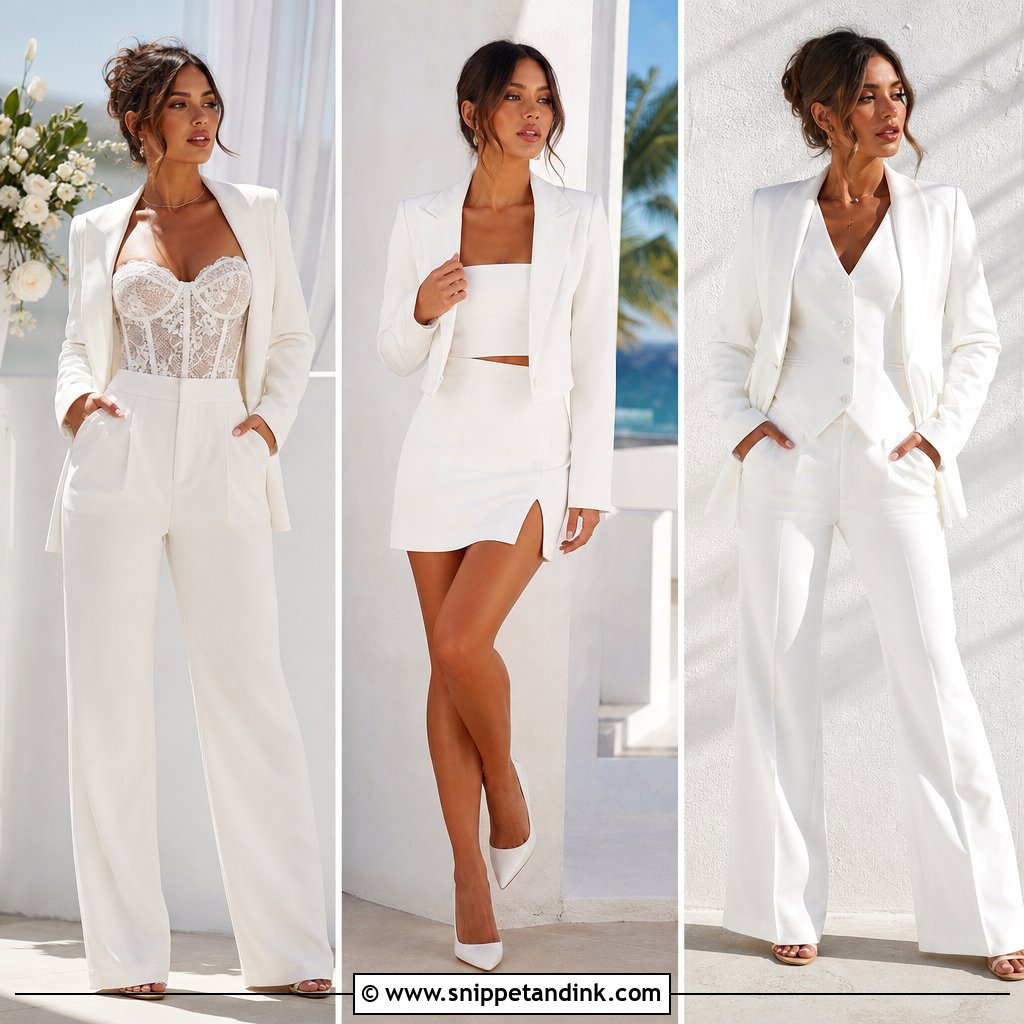
A pantsuit asks for perfect tailoring and very little else. Choose a single-breasted blazer with defined shoulders and straight or wide-leg trousers in ivory, cream or soft white, with a silk camisole, lace bodysuit or modest satin top underneath to suit the ceremony. Pointed block heels look sharp and are kinder than stilettos. Pearl earrings, a slim necklace and a structured clutch are enough, plus a low ponytail or sleek bun. I always check two lengths in alterations: the sleeve should show a sliver of wrist when your arms hang, and the trouser should brush the top of the shoe without bunching. A removable veil or cape adds drama if you want it.
11. Floral Bridal Lehenga With Minimal Jewelry
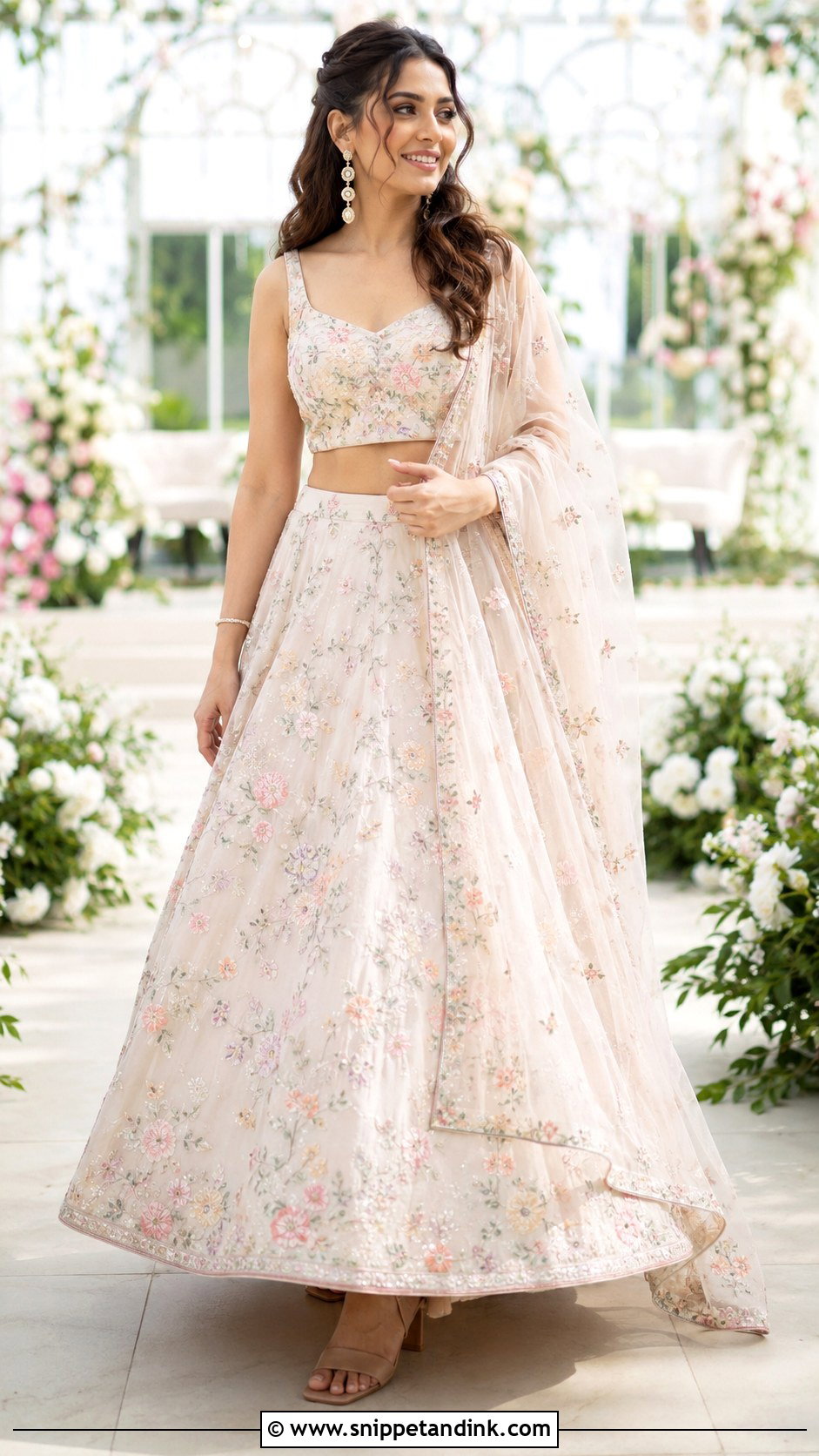
Prints belong in daylight. A floral lehenga suits a daytime wedding, a welcome event or a pre-wedding celebration, especially in a breathable base with printed flowers, thread embroidery or small appliqués. Keep the blouse streamlined and choose a sheer dupatta with a narrow border so the print stays the hero. Jewelry should be minimal: delicate drops, a simple bracelet, one statement ring. Nude block heels or embroidered flats and a loose braid or half-up waves with a few small flowers suit it. I’d pull the makeup tone from the softest shade in the print rather than the brightest, so the face doesn’t fight the fabric.
12. Bridal Kurta Set With Straight Pants
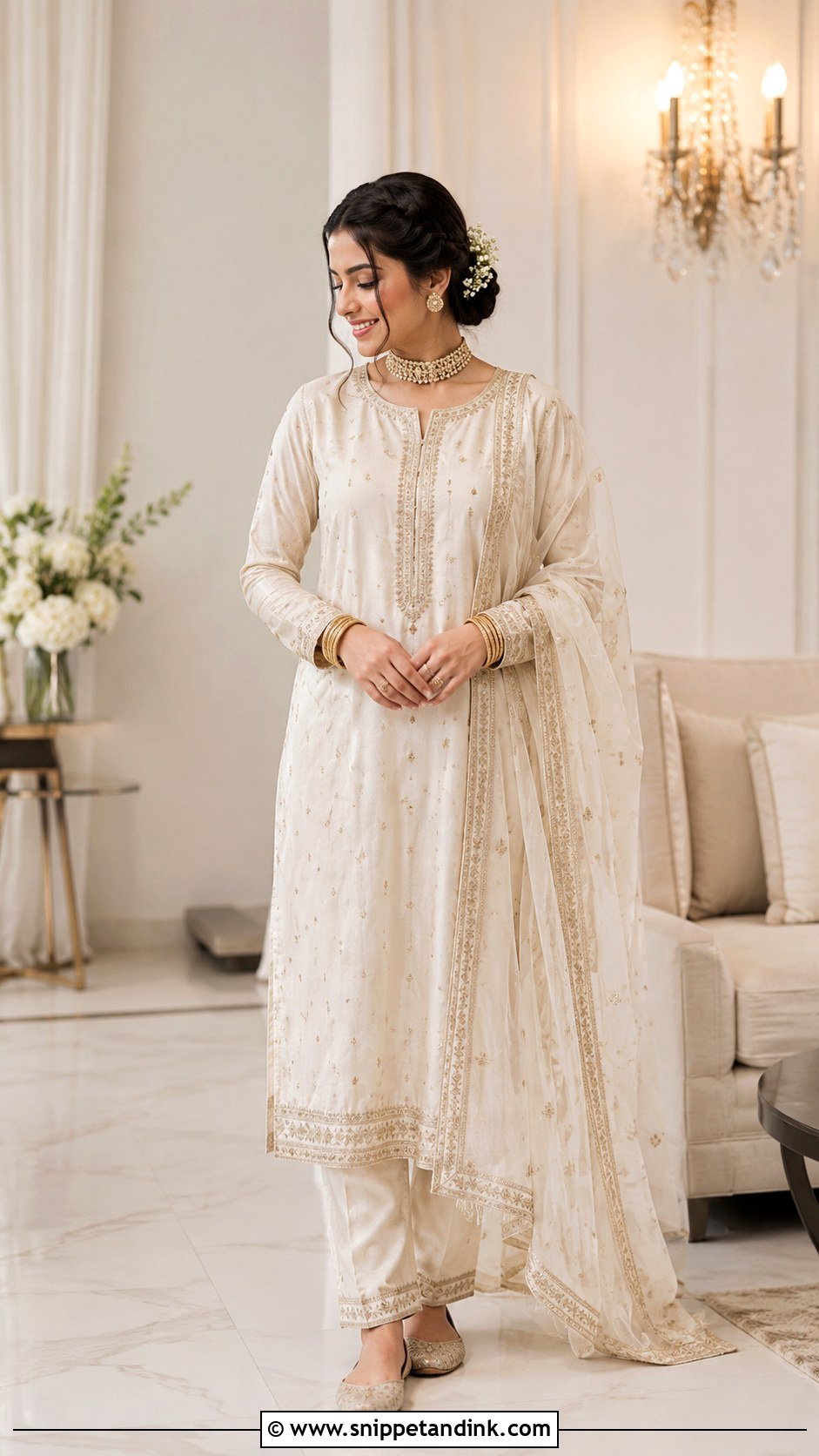
Simple shapes feel bridal when fabric and fit are right. A long embroidered kurta with straight pants gives a clean vertical line and none of the weight of a skirt. Silk, chanderi or georgette in ivory, red, blush or jewel tones all work. A light dupatta goes over one shoulder and is secured at the wrist or waist. Add a polished choker, medium earrings and stacked bangles, embellished flats and a low braided bun or soft curls. Chanderi is light but slightly stiff, so it holds creases if packed; hang it the night before. Small ceremonies, registry events and home celebrations suit it.
13. Cape Sleeve Bridal Gown With Crystal Earrings
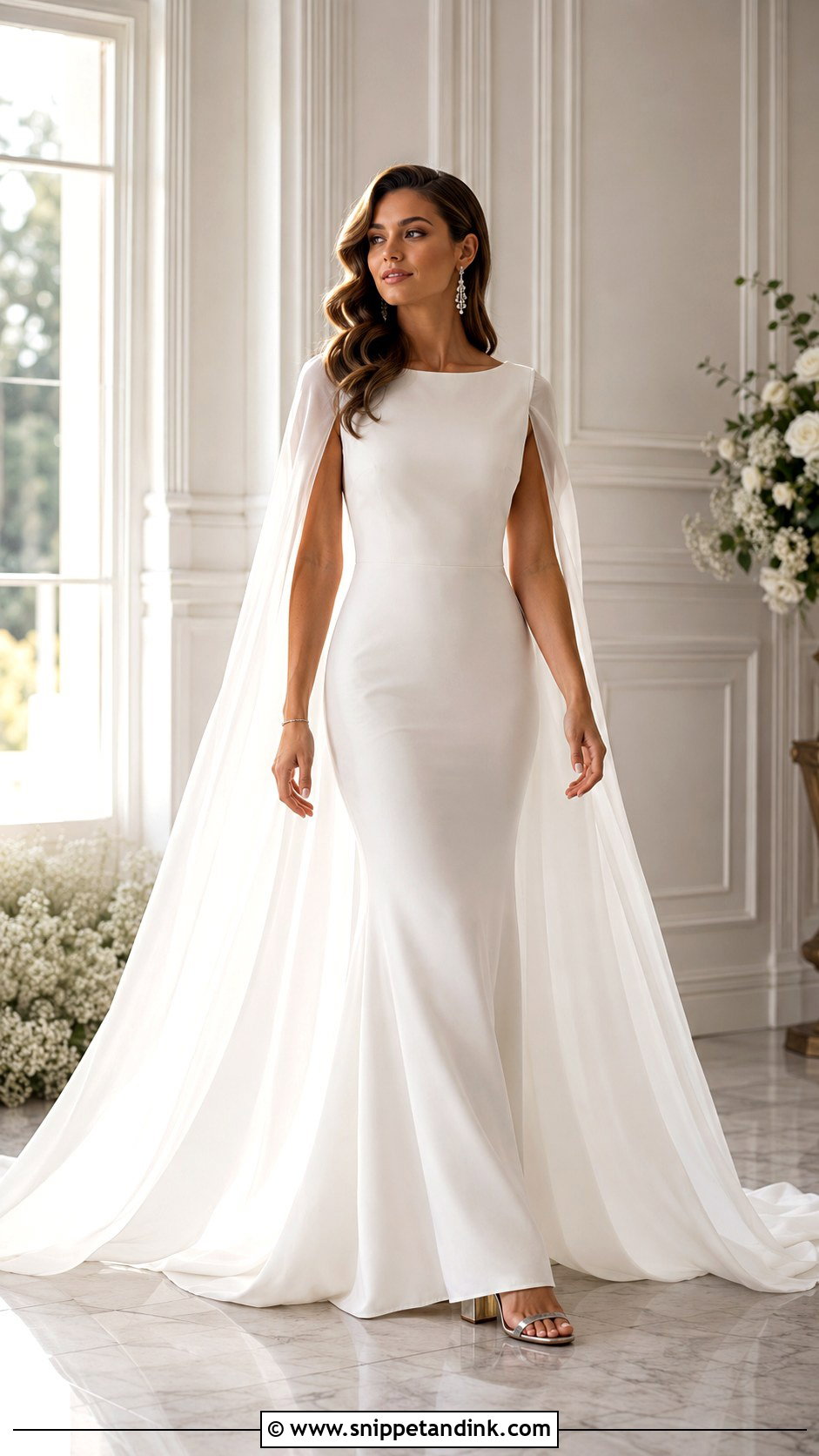
Cape sleeves give you the movement of a wrap without a wrap to keep track of. The cape panels are attached at the shoulders of a fitted or softly flared gown, and sheer chiffon, organza or tulle keeps the upper body free. The sleeves are the drama, so accessories stay focused: crystal earrings, a slim bracelet and metallic block heels. Skip a long necklace if the neckline is embellished, and wear a polished bun or side-swept waves so the cape shows. Sheer capes catch on bouquet stems and chair backs, so I hold the bouquet slightly forward in portraits and ask guests to mind the back at dinner. A short train or floor-skimming hem keeps it easy.
14. Blush Bridal Saree With Belted Pleats
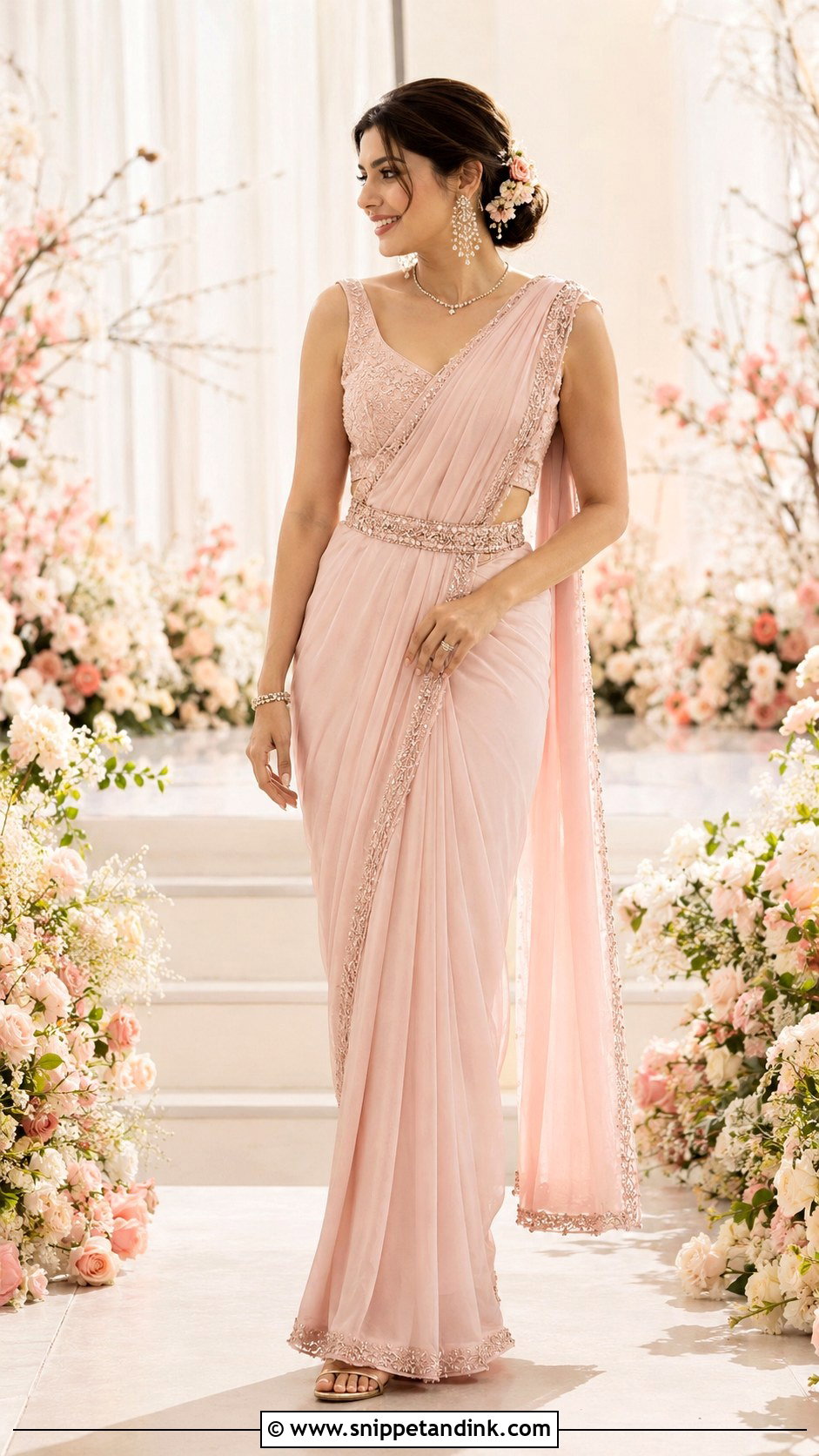
Blush is festive without shouting. Choose a light silk, georgette or chiffon saree with a decorative border and a fitted blouse in a matching tone. Arrange the front pleats evenly, secure them at the waist and add a slim embellished belt over them; the belt holds the pleats flat when you sit and walk, which is the moment most drapes come loose. Rose-gold sandals, chandelier earrings and a delicate necklace suit the color, with a low bun dressed in blush or white flowers and fresh, softly defined makeup. It moves from a ceremony into a lively reception without needing a re-drape.
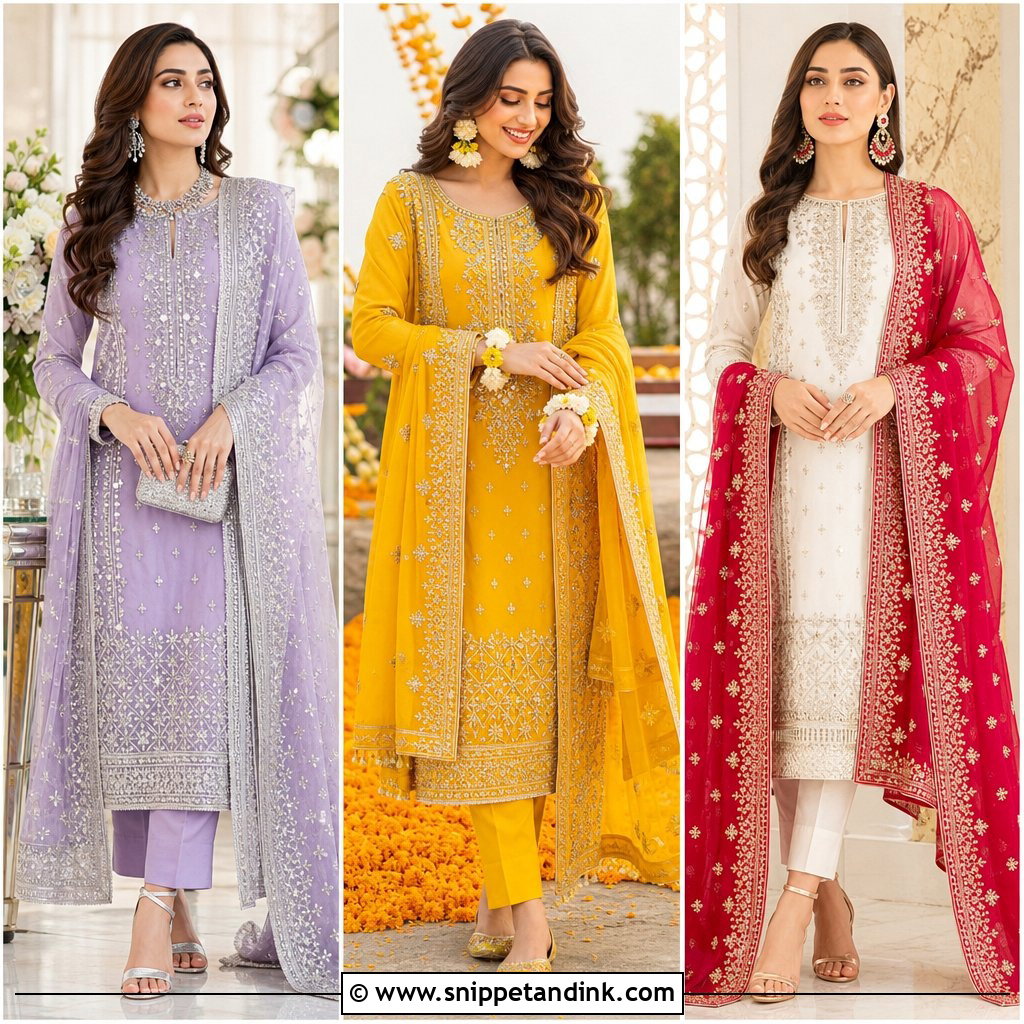
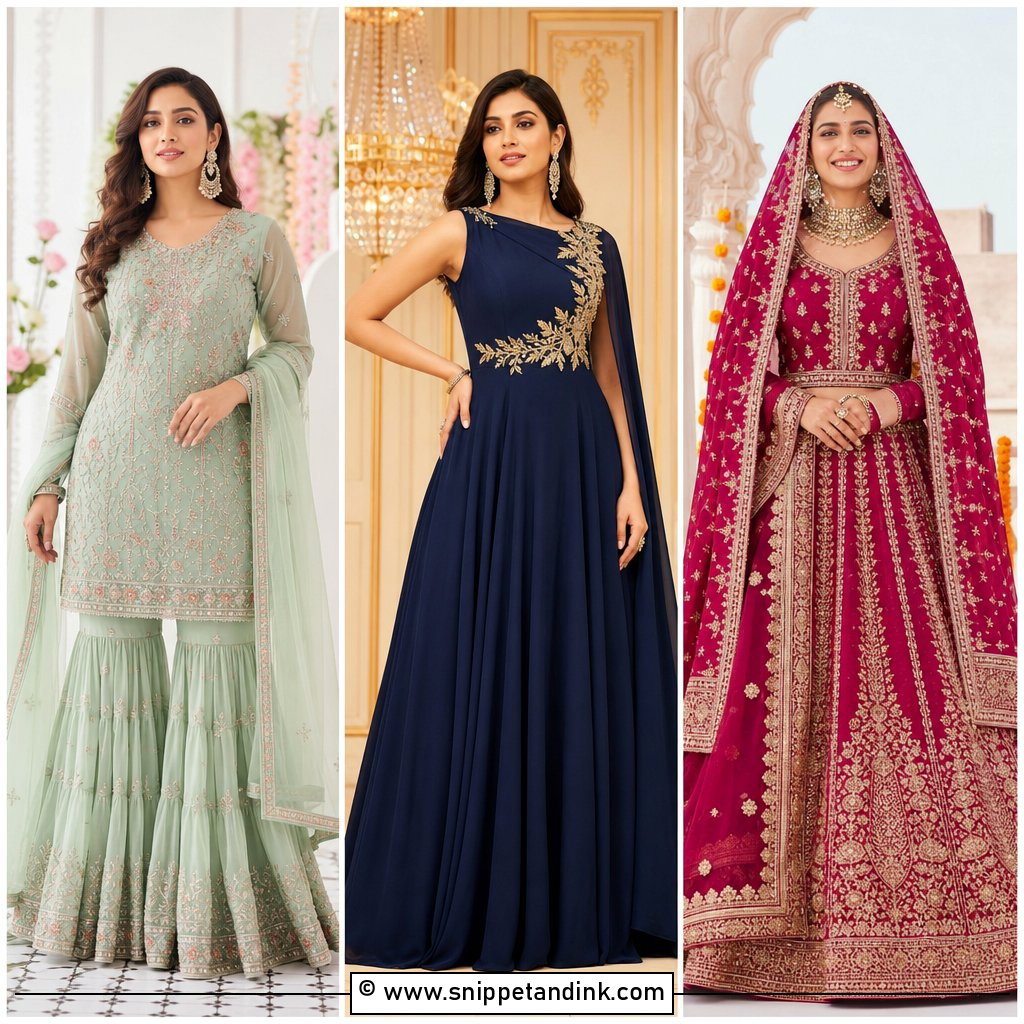
15. Velvet Bridal Lehenga With Lightweight Dupatta
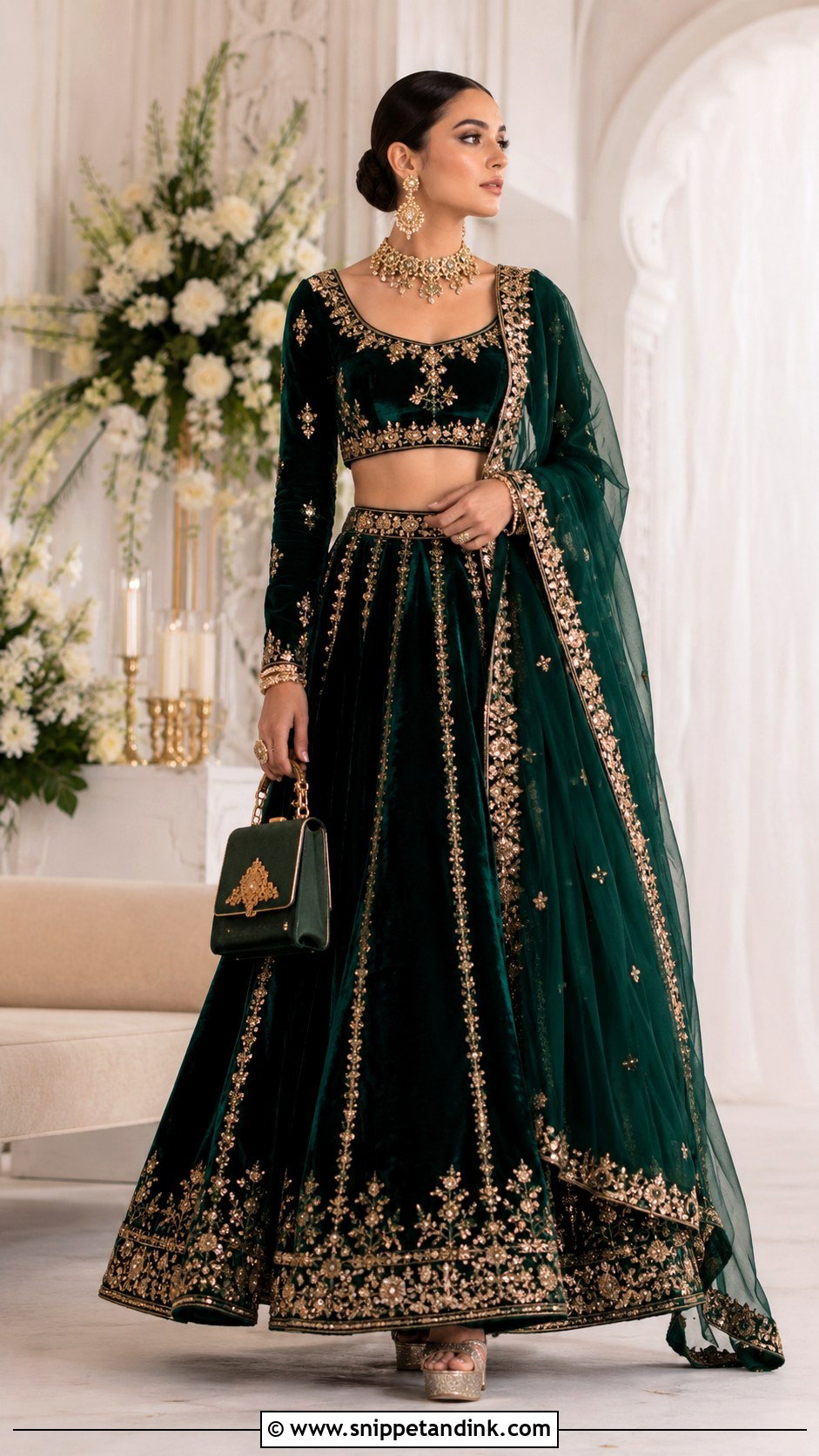
Velvet is rich, warm and heavy, so it needs controlling. Choose a paneled velvet lehenga with embroidery along the hem rather than over the whole skirt, a matching blouse, and a light net or chiffon dupatta draped over one shoulder and secured near the waist. Antique-gold earrings, a medium necklace and comfortable platform heels suit it, with a sleek low bun to balance the texture. Deep red, emerald, navy and plum all look rich in velvet. Velvet holds heat, so I only suggest it for winter or air-conditioned venues, and it crushes where you sit; have it steamed from the inside, never pressed flat. Keep the bag small and structured.
16. Bridal Midi Dress With Bow Heels
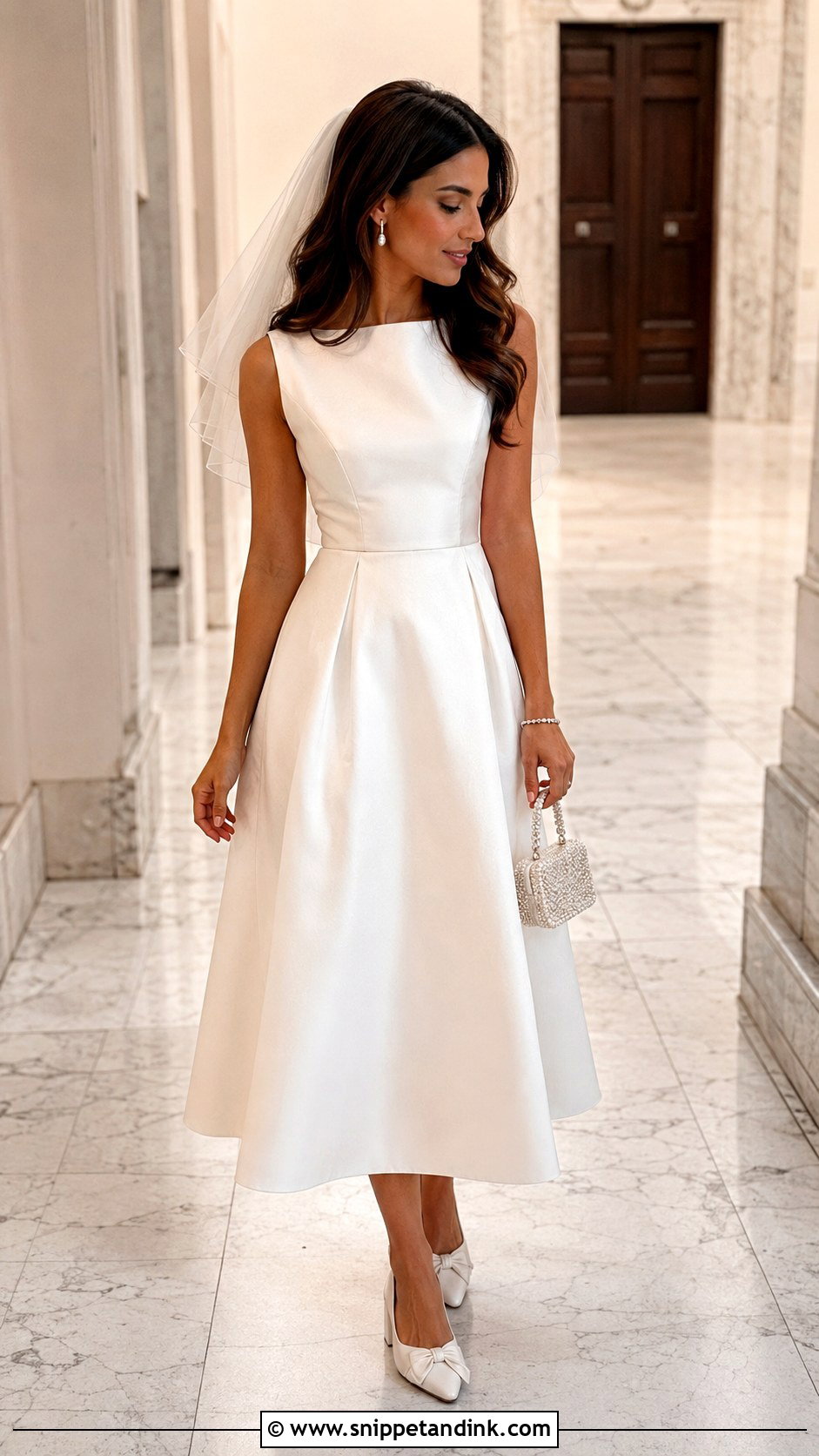
A midi dress is the lightest bridal option here and suits a civil ceremony, rehearsal or relaxed reception. Look for an A-line or column with a defined waist and a hem between knee and ankle, in satin, crepe, lace or textured jacquard to make the short length feel celebratory. Bow heels add personality; a supportive block heel is kinder for several hours, and you can switch after the photos. Pearl hoops, a delicate bracelet and a miniature bag go with it. Add one bridal detail on top, a short veil, a headband or a hair bow, but only one, and wear soft waves or a neat bun.
17. Bridal Skirt And Blouse With Floral Dupatta
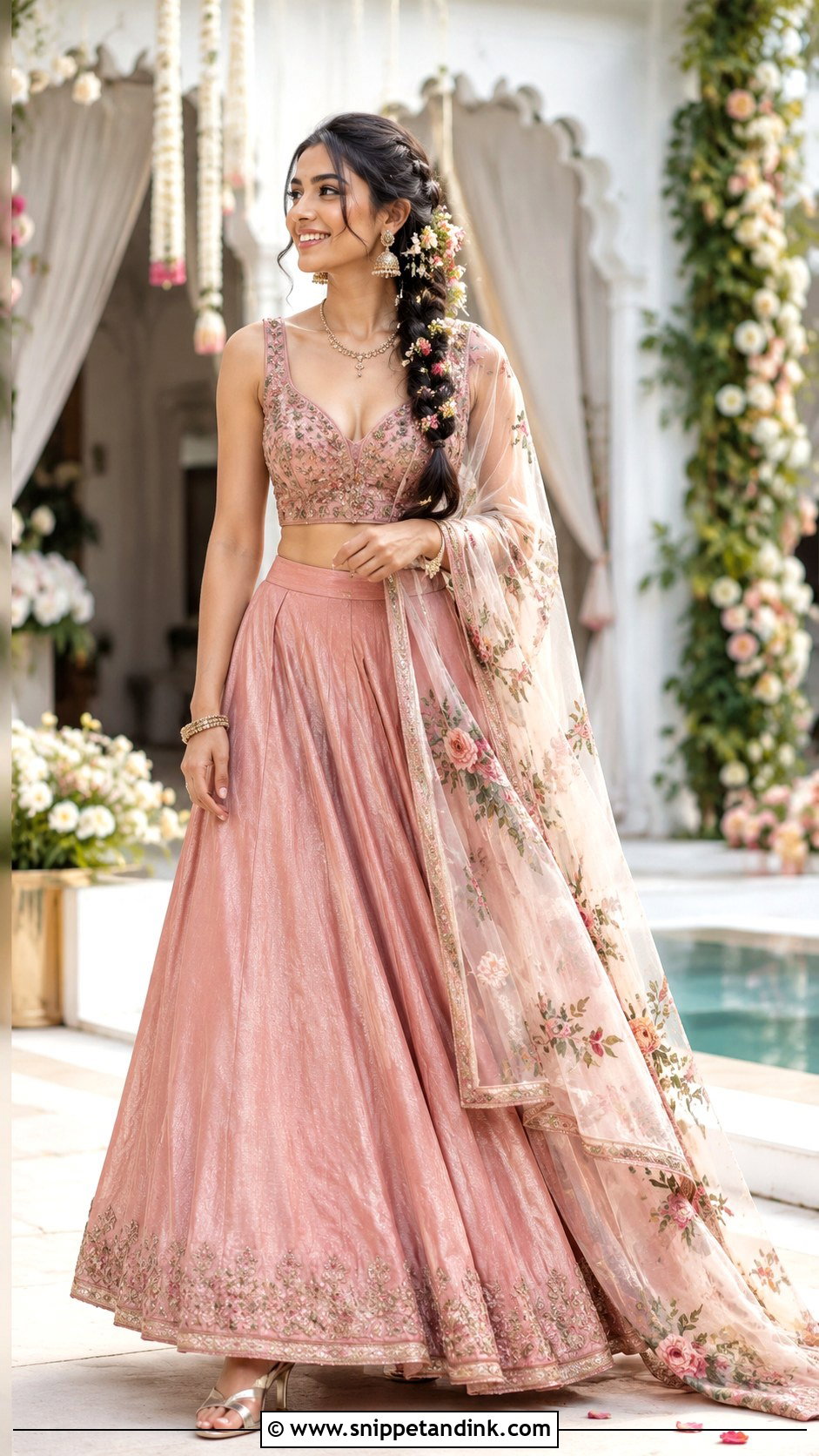
Separates let you choose the fit and weight of each part. Pair a flowing silk or georgette skirt with a supportive embroidered blouse that sits securely at the waist, then add a floral dupatta in organza or soft net for color and movement. Wear it over one shoulder, catch it at the opposite wrist or tuck one end into the waistband. Jhumkas, a delicate necklace and low metallic heels suit it, with a loose braid dressed in small flowers. The gap between blouse and skirt is where things go wrong; I ask the tailor for a hook at the side seam so the blouse can’t ride up. Keep the skirt just off the floor.
18. Bridal Gown With Removable Overskirt
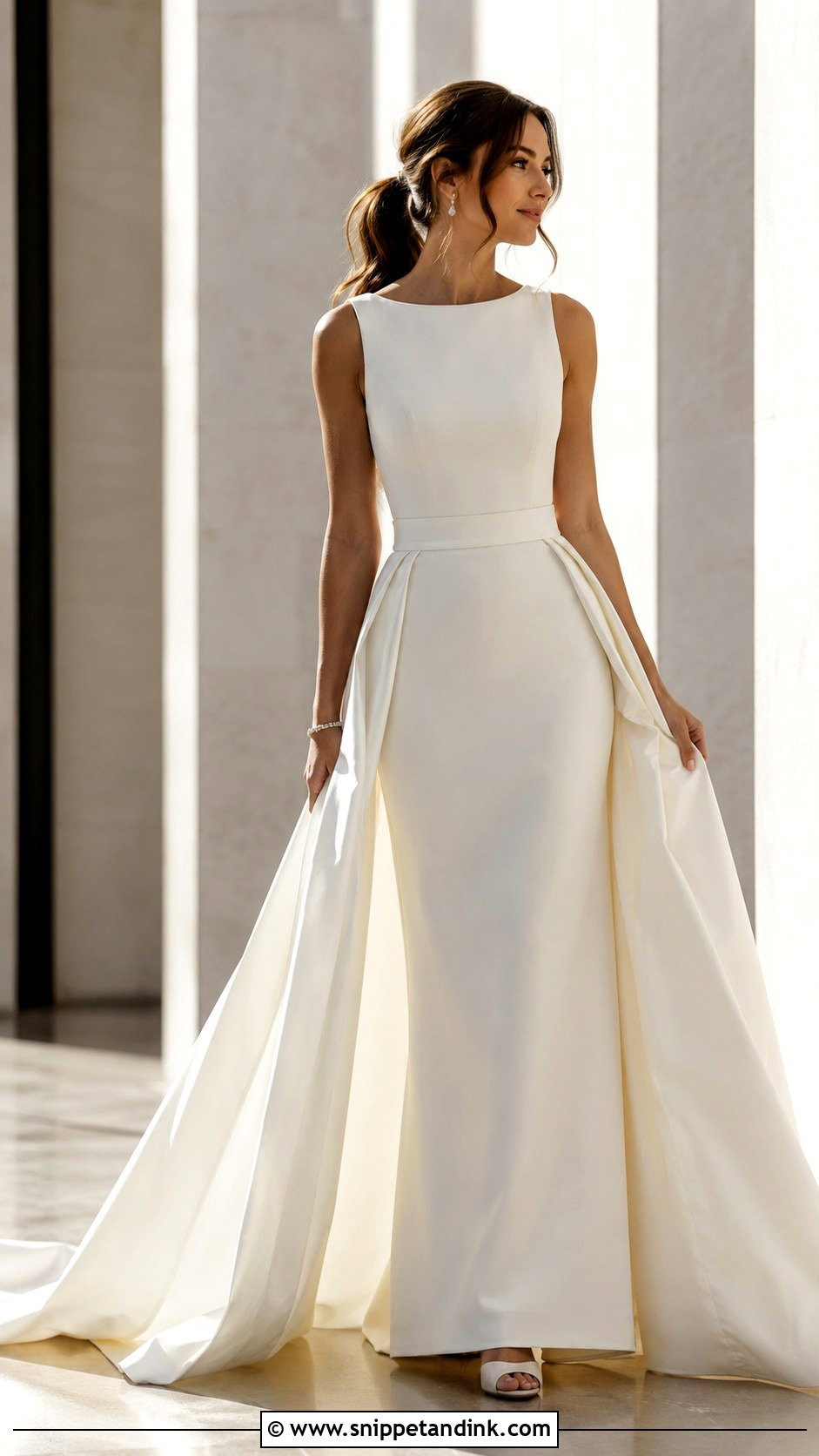
Two looks, one dress. A fitted column, sheath or slim A-line in crepe, satin or lace takes a lightweight overskirt at the waist for the ceremony, then sheds it for dinner and dancing. Wear the same block heels, drop earrings and bracelet for both versions, with a sleek bun or softly waved ponytail. The fastening is the detail to test. It should be secure enough for a walk down the aisle and simple enough for a bridesmaid to undo, usually hooks and a hidden snap at the back. Try the removal at your final fitting so nobody is learning it in a corridor at the reception.
19. Bridal Saree Gown With Statement Earrings
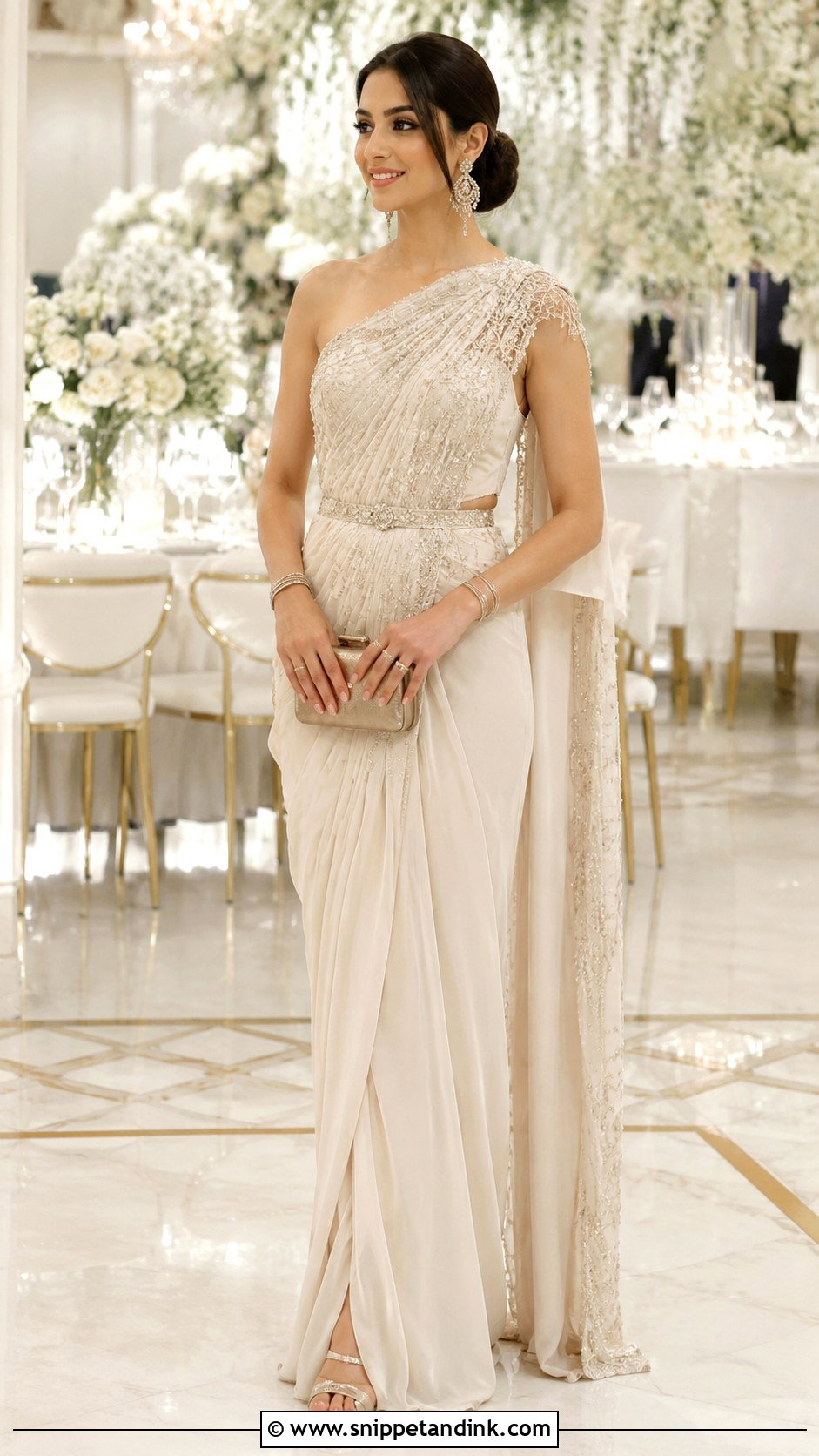
Not comfortable draping a saree yourself? A saree gown gives the look of a drape with the ease of a dress. Choose one with stitched waist pleats, an attached shoulder drape and a comfortable side or back closure, in crepe, georgette or stretch silk so it moves naturally. Because nothing needs re-arranging, you can walk, sit and dance without stopping to fix the fabric. Statement earrings, slim bangles and metallic sandals suit it; skip a big necklace if the shoulder is embroidered. A side-parted bun or sleek waves shows off the asymmetry. Check the attached drape doesn’t pull the neckline sideways when you raise the opposite arm.

20. Reception Bridal Lehenga With Sneakers
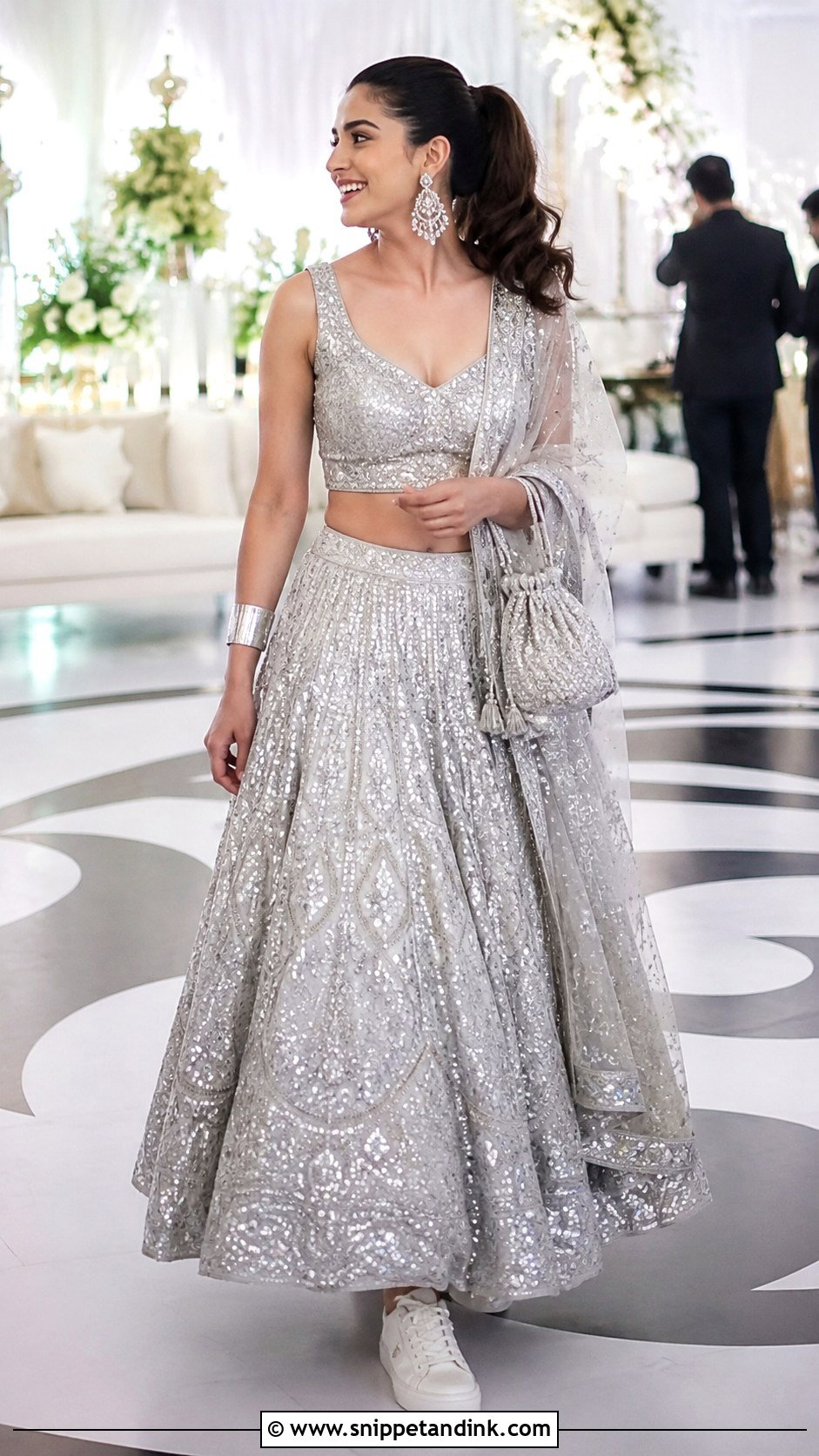
Dancing is the priority here. A reception lehenga with clean sneakers is practical and fashion-forward at once. Choose a light skirt with sequins, tonal embroidery or reflective detail, a fitted blouse, and a short, firmly pinned dupatta or structured cape. White, silver or custom embroidered sneakers stay hidden under a floor-length skirt until you move. Bold earrings, a cuff and a small crossbody or wristlet keep your hands free, with a high ponytail, textured braid or secure bun. Have the hem taken up a little, since sneakers are flatter than the heels most lehengas are measured for, and the skirt will catch underfoot otherwise.
A Full Dress Rehearsal at Home, Two Hours Long
Ten minutes in a fitting room tells you how an outfit looks. Two hours at home tells you how it wears. About two weeks before the wedding, once alterations are done, I ask brides to put on everything, jewelry and shoes included, and live in it for a while.
- Sit on the floor or a low cushion for twenty minutes if your ceremony includes it. Lehenga waistbands and saree pleats show their weak points here.
- Eat something and drink from a glass. Heavy bangles and a tight blouse sleeve make both harder than you’d think.
- Go to the bathroom with a helper and agree who that person will be on the day.
- Climb stairs and get in and out of a car. Hems and dupattas catch on both.
The Small Kit Someone Else Carries
Give a sister or friend a pouch with safety pins in two sizes, U-pins for the hair, double-sided fashion tape, a needle with matching thread, blister plasters and spare earring backs. If your earrings are heavy, ear chains that clip into the hair take the weight off the lobes for hours. It’s a small bag, and it rescues more outfits than any designer label.
Comfort You Can Still See in the Photographs
A bridal outfit should look like you and let you enjoy the day. Light fabrics, secure draping, sensible heels and balanced jewelry make more difference over a long celebration than any single embellishment. The ideas here cover traditional, modern, minimal and colorful styles for different settings. Before you decide, walk in the full outfit, sit, lift your arms and climb stairs, and check every pin, hook, shoe and earring. Leave time for alterations. When the practical details are settled early, you stop thinking about your clothes, and that ease shows in every picture.
You'll Like These Ideas:



Leave a Reply