
Orange is the bridal colour I spend the most time on at fittings, because the word covers everything from a pale apricot to a brick saffron, and those shades behave nothing alike on skin or under lights. Rust and saffron lean traditional; coral, peach and citrus read younger and lighter. The outfits below include monotone lehengas, Banarasi weaves, cape silhouettes, Anarkalis, fusion sets and Western gowns. What decides whether any of them works is the shade against your face, the fabric it is woven in, and the room you’ll stand in. As a rule I put gold with the warmer oranges and pearls, crystal or silver with the softer ones, and I style each look below from head to toe so you can see how the pieces hold together.
Holding Orange Swatches to Your Face in Daylight and Lamplight
Orange changes more under different light than any other bridal colour I work with. A coral that looks fresh by a window can turn pink under cool LED panels, and a saffron that glows in afternoon sun can go muddy under warm tungsten bulbs. So I never let a bride order from a screen or a single showroom mirror.
Ask the shop or designer for fabric swatches, or at least photograph the bolt in two kinds of light. Then do this at home:
- Hold each swatch under your chin by a north-facing window, with no makeup on. Look at your skin, not the fabric. If you look grey or sallow, that orange is wrong for you.
- Repeat in the evening under ordinary warm house lights, which is closer to most reception halls.
- Take a phone photo with the flash on. Bright oranges often blow out to a flat, glowing block in flash photos, which tells you how they’ll look at the reception.
- Compare the swatch with your actual jewellery. Antique gold, yellow gold, silver and pearl each pull the same orange in a different direction.
As a loose guide, warmer and olive skin tones carry rust, saffron and burnt orange well, while fair skin with pink undertones usually looks best in coral or a peachy apricot. Deep skin tones can wear almost any orange, and bright tangerine often looks better on deeper skin than on fair. Your face in the window light outranks any chart, including this one.
1. Burnt Orange Bridal Lehenga With Gold Jewelry
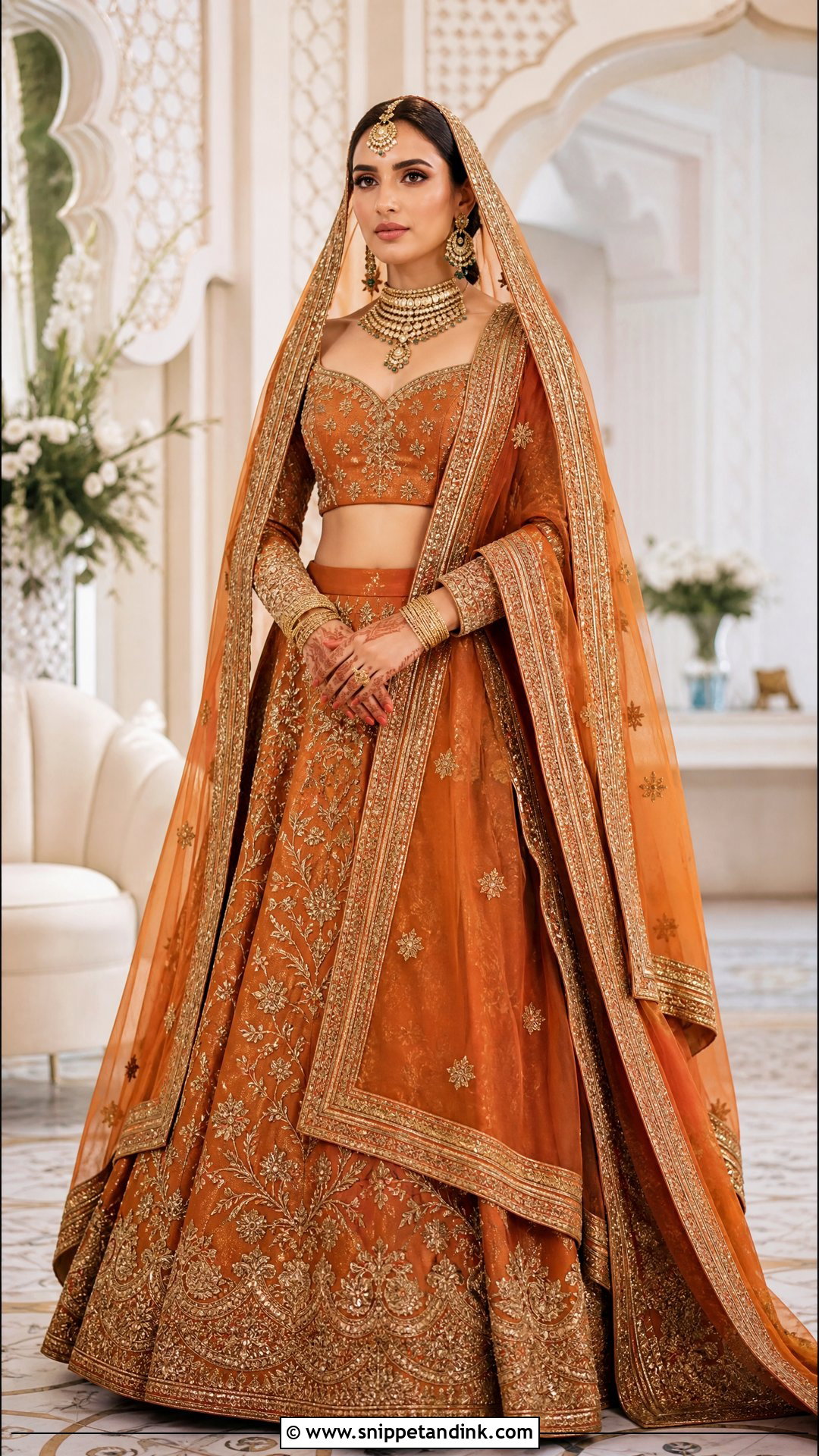
Burnt orange is the forgiving end of the range: it has enough brown in it to stay rich under warm indoor bulbs and evening light, where brighter oranges can go flat. I’d look for raw silk or brocade with tonal embroidery and antique-gold zari, and a structured blouse with proper cups so you aren’t hitching it up all night. Keep the flare of the skirt moderate; a heavy brocade cut too full gets tiring by the second hour. Drape one embroidered dupatta across the shoulder and pin a lighter veil over the hair if you want coverage. Antique-gold earrings, layered necklaces, stacked bangles and embroidered juttis finish it. On the face, brown liner and a muted terracotta lip connect to the fabric, and ivory flowers with a neutral manicure stop the whole look going too dark.
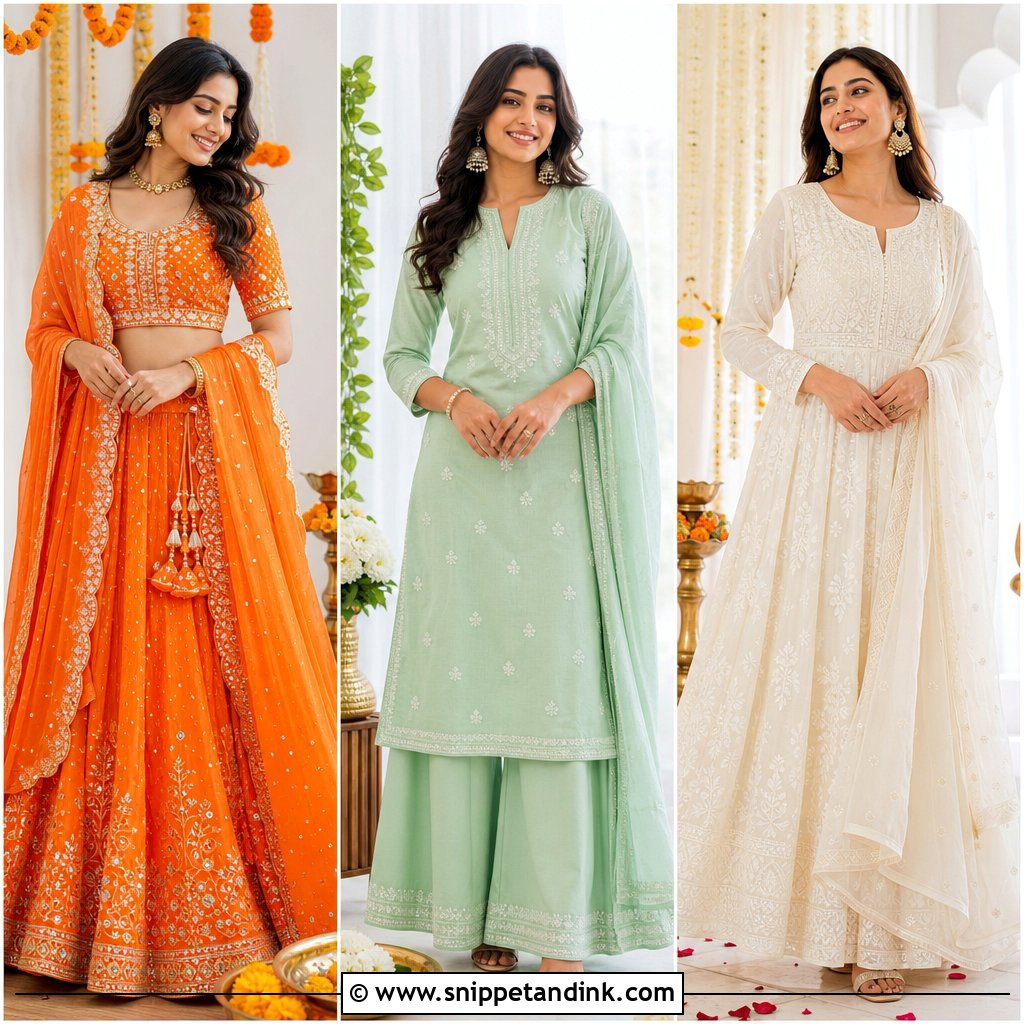
2. Tangerine Orange Bridal Lehenga With Green Jewelry
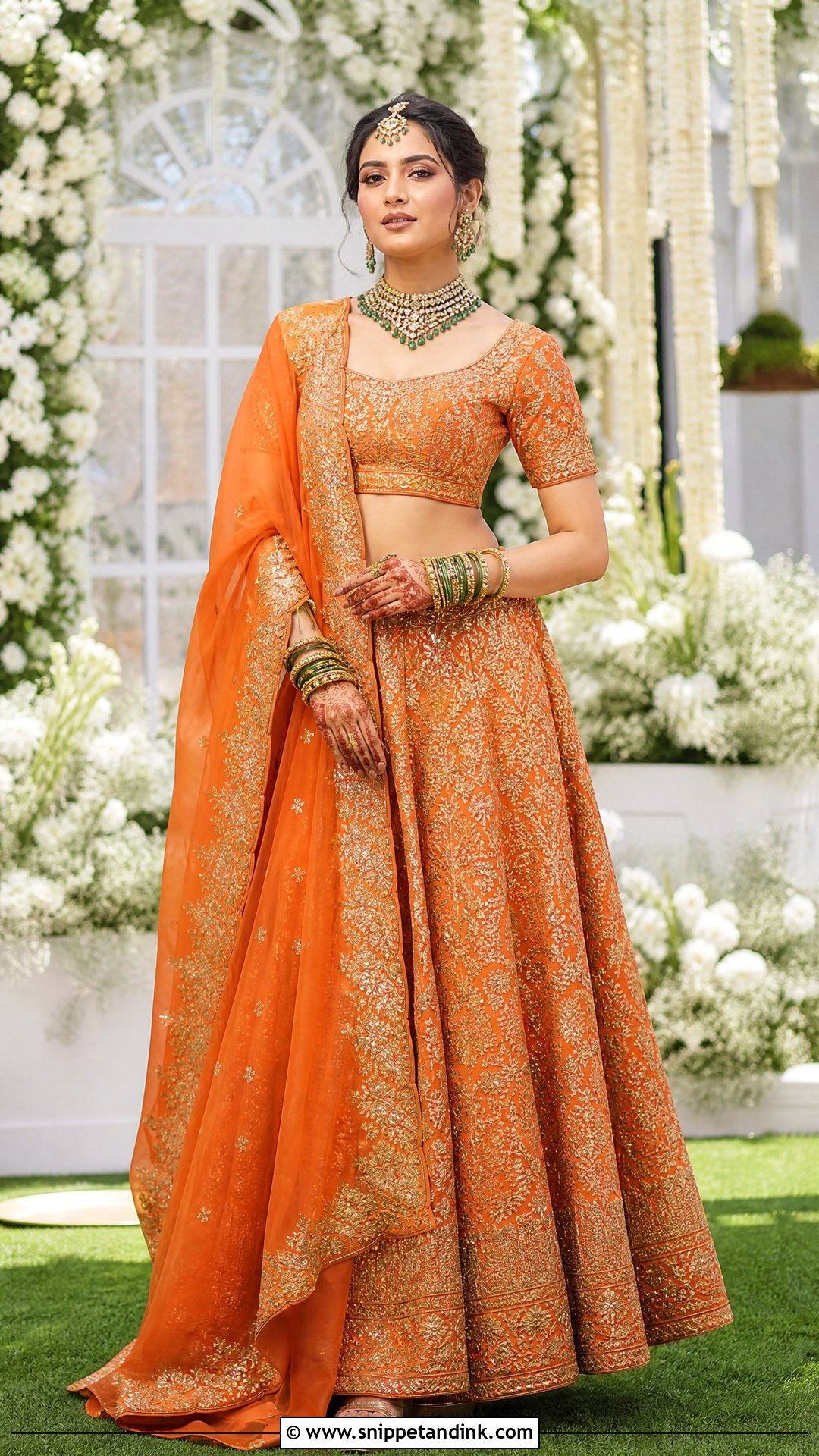
Tangerine needs daylight. Indoors under yellow bulbs it can look almost red, so I keep this one for sunlit ceremonies. A silk skirt with gold motifs and a matching fitted blouse carries the colour, and an organza dupatta keeps it from feeling heavy. Emerald or kundan stones sit opposite orange on the colour wheel, which is why green jewellery gives contrast without fighting it. One choker with drop earrings, a small headpiece and a few green bangles tucked into gold stacks is enough. Wear cushioned juttis or metallic platforms; nobody sees them under the skirt. Keep the face fresh with a peach-pink lip, and a sleek bun with small white flowers so the earrings stay visible.
3. Orange Banarasi Bridal Lehenga With Red Dupatta
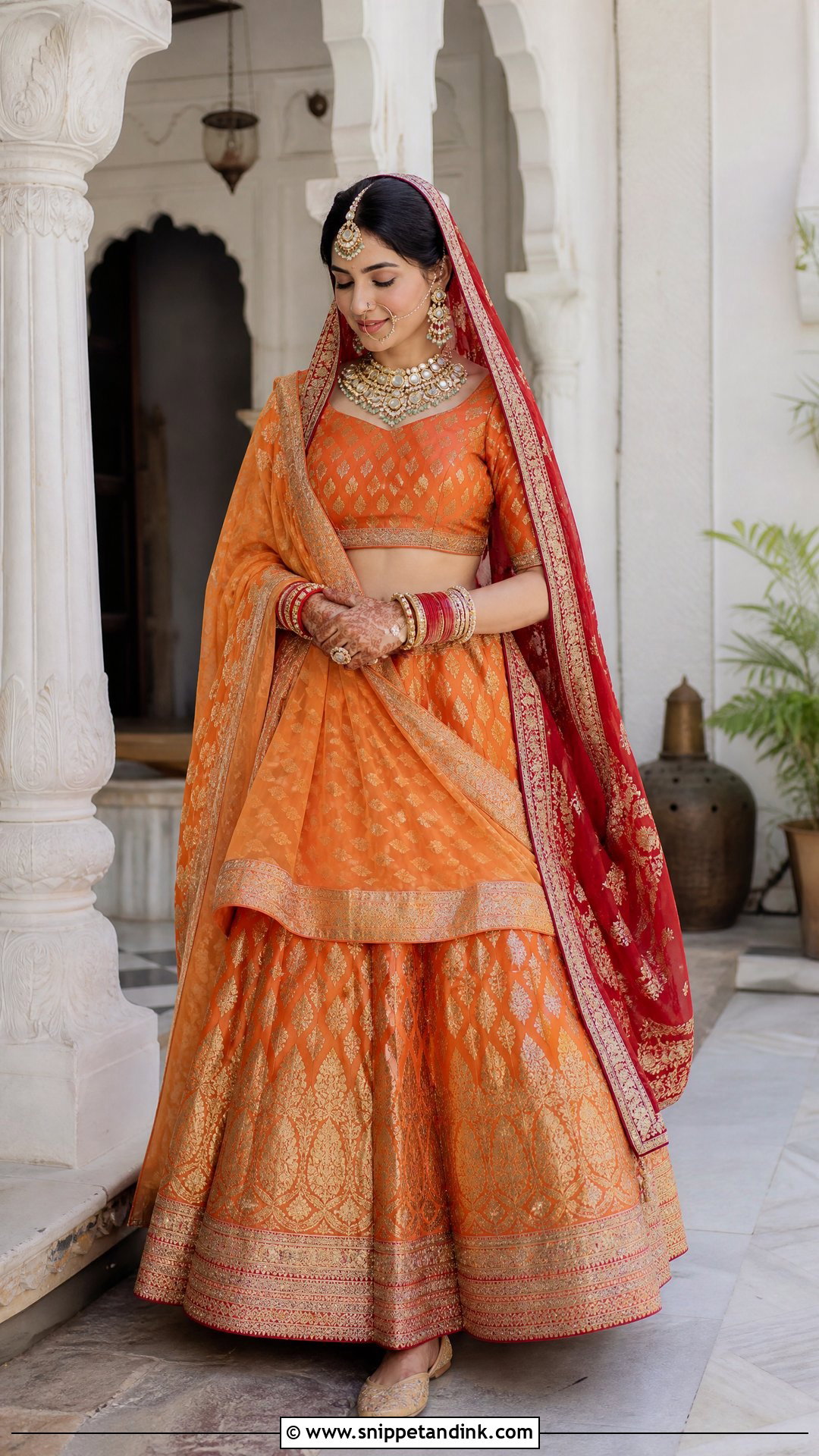
Pairing an orange Banarasi skirt with a red dupatta is an old combination, and it holds up because the woven gold does the decorating for you; you don’t need dense surface work on top. I’d choose a short-sleeved orange blouse and a full skirt with a broad woven border. Put the red dupatta over your head and carry a lighter orange drape on one shoulder. Polki, red-and-gold bangles and embroidered juttis complete it, with a low bun, defined liner and a deep red lip. Banarasi silk is stiff, so at the fitting I ask for an adjustable waistband and a cotton lining; without them the skirt digs in once you’ve been seated for the rituals.
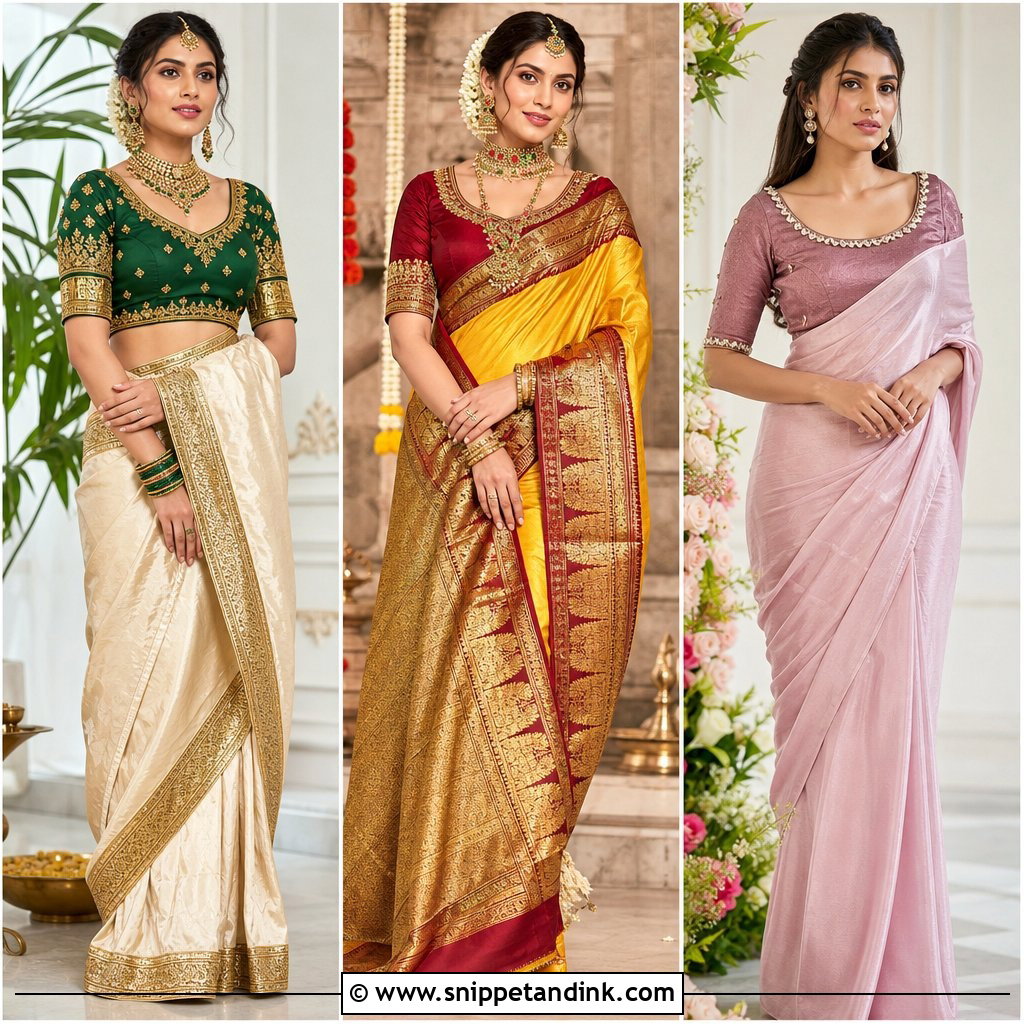
4. Orange Kanjeevaram Bridal Saree With Temple Jewelry
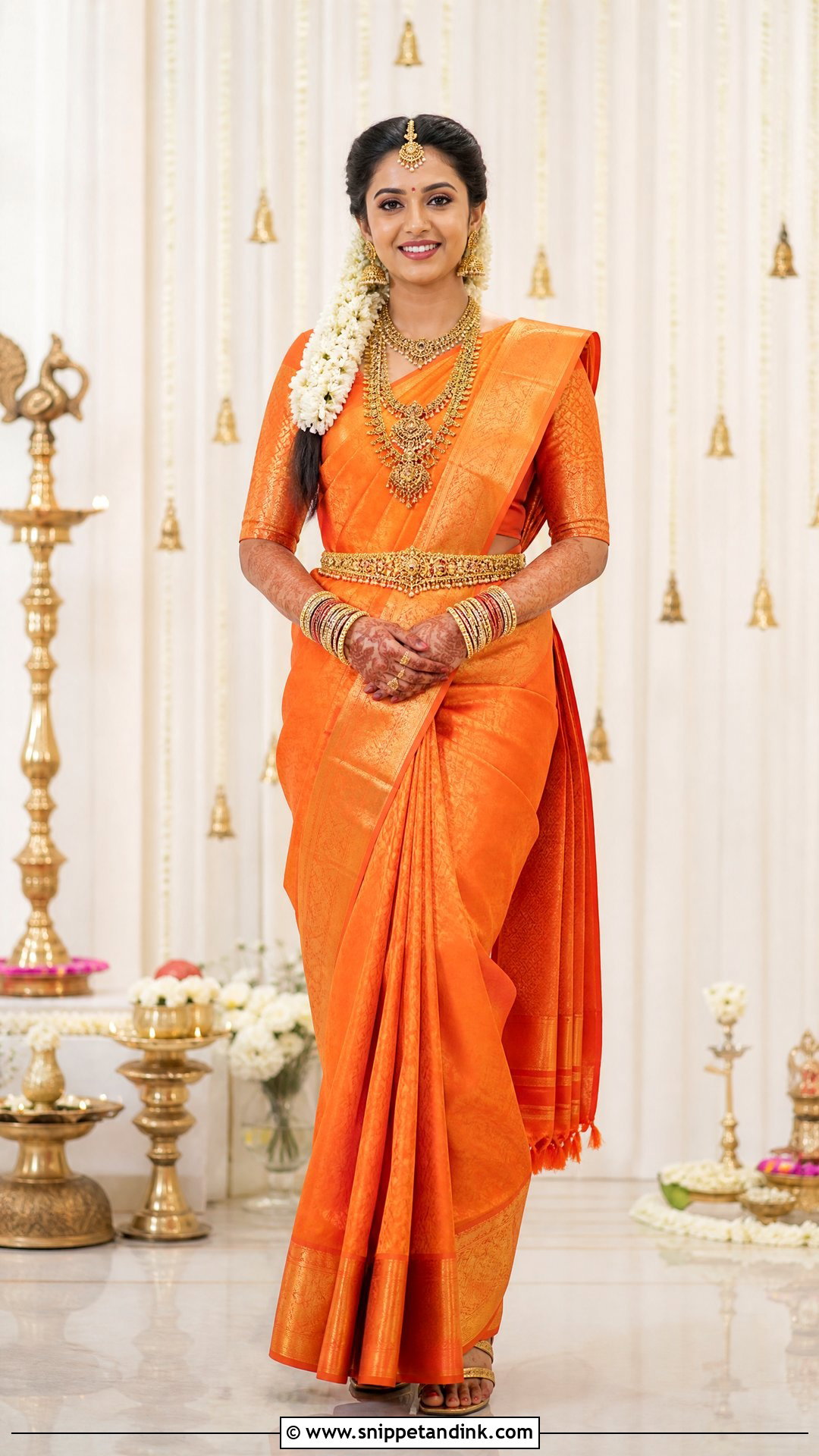
The appeal of an orange Kanjeevaram bridal saree is the silk itself: it has a sheen that shifts as you move and a heavy gold border that frames the drape. Marigold and reddish-orange are the classic picks. A contrasting magenta, green or deep red border adds depth while keeping the traditional character. I like elbow-length sleeves on the blouse because Kanjeevaram is weighty and a short sleeve can look thin beside it. Temple necklaces, jhumkas, gold bangles and an oddiyanam belt are the standard pairing, with gold sandals underneath. A braid or low bun with white flowers, a red lip and a small bindi finish the face. Have the pleats pinned by someone who drapes sarees regularly; Kanjeevaram pleats that aren’t anchored at the waist spread open within an hour of walking.
5. Peach Orange Bridal Gown With Pearl Accessories
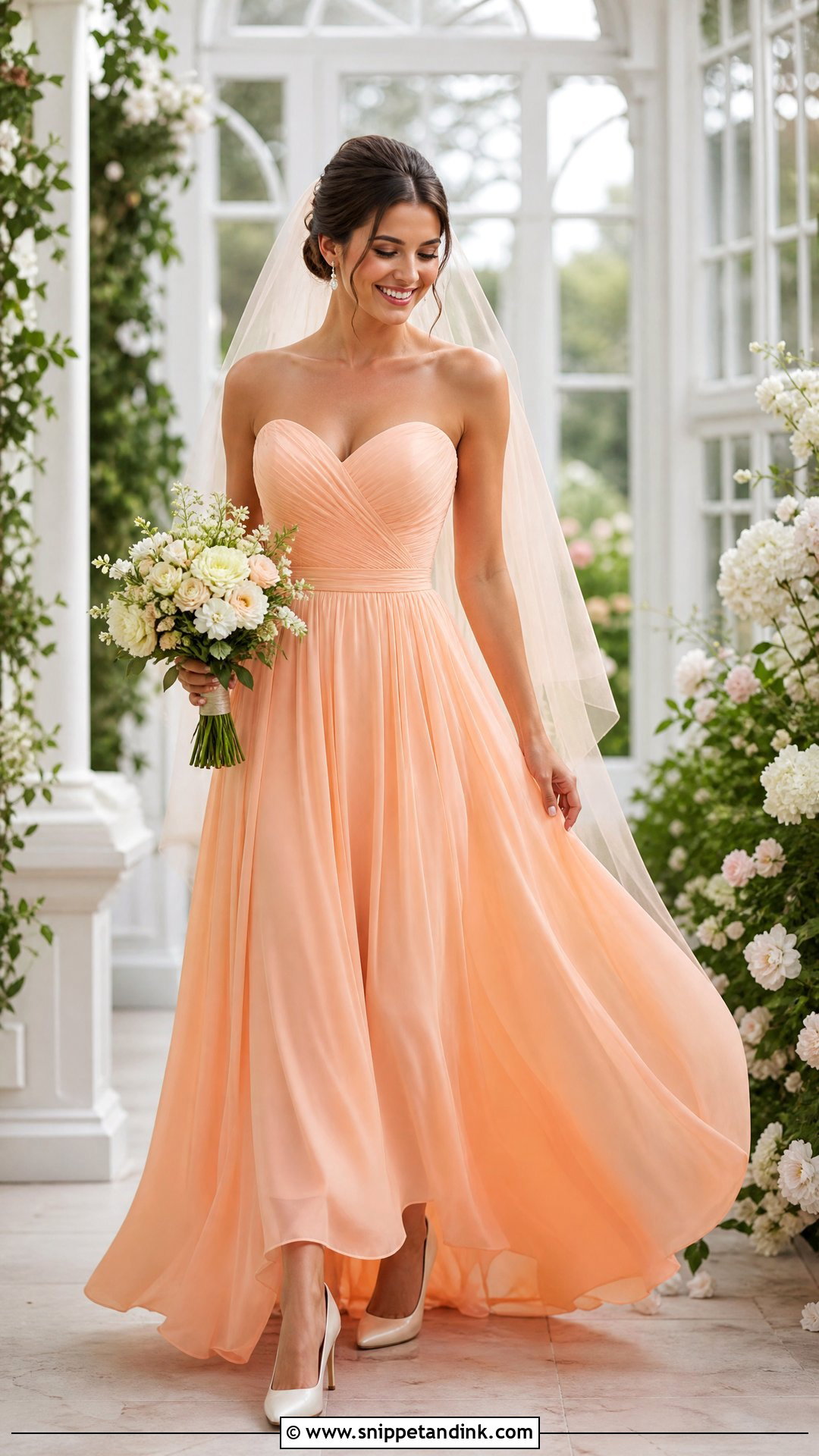
Peach-orange suits brides who want colour but would be uncomfortable in anything loud. It’s also the shade most likely to wash out pale or very warm skin, so hold the fabric to your face before ordering. An A-line in chiffon, tulle or layered organza with a defined waist keeps it light. A sweetheart, square or off-the-shoulder neckline leaves room for pearls: drop earrings, a fine bracelet, ivory satin pumps. I’d add a sheer peach veil rather than white, since white next to peach makes the dress look faded. Keep the bouquet cream, blush and pale peach, the hair in loose waves and the lip a rosy nude. Gardens, conservatories and rooms with big windows suit it best.
6. Rust Orange Satin Bridal Gown With Gold Heels
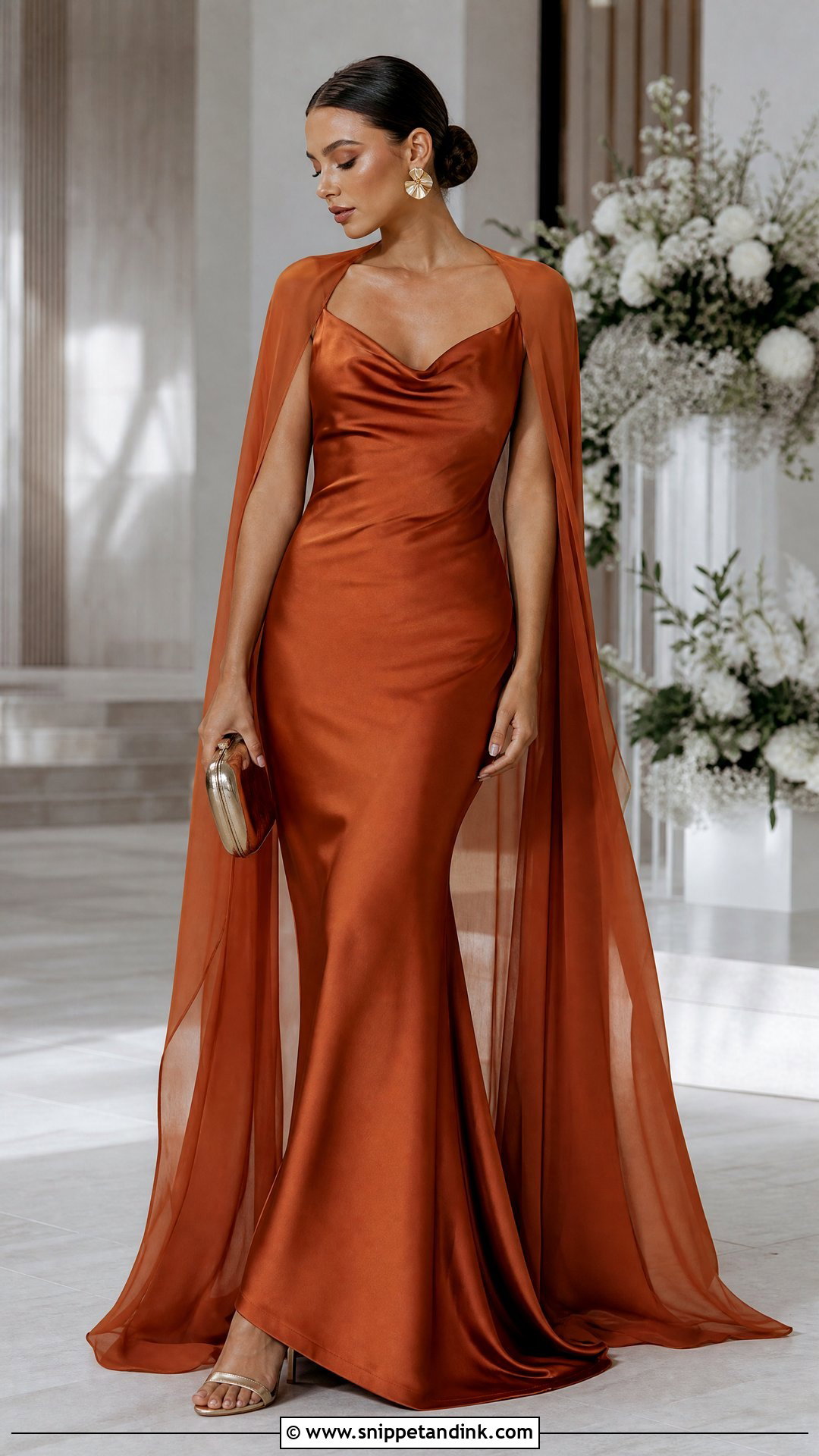
Satin in rust orange needs almost no decoration, but it is the least forgiving fabric on this list. It shows every pull at the seams and every line underneath, so the tailoring has to be exact. A bias cut drapes softly and clings; a structured column hides more. I’d pair it with slim gold heels, sculptural earrings and a small metallic clutch for later. A detachable chiffon cape or sheer veil gives you a ceremony look you can remove for dancing. A polished bun or deep side-parted waves, bronzed skin and a cinnamon lip go with the earthy tone. Get smooth-finish underwear fitted with the dress on, and keep fashion tape in your kit; satin also creases across the lap once you sit, which steams out but won’t fall out on its own.
7. Orange Tulle Ball Gown With Crystal Jewelry
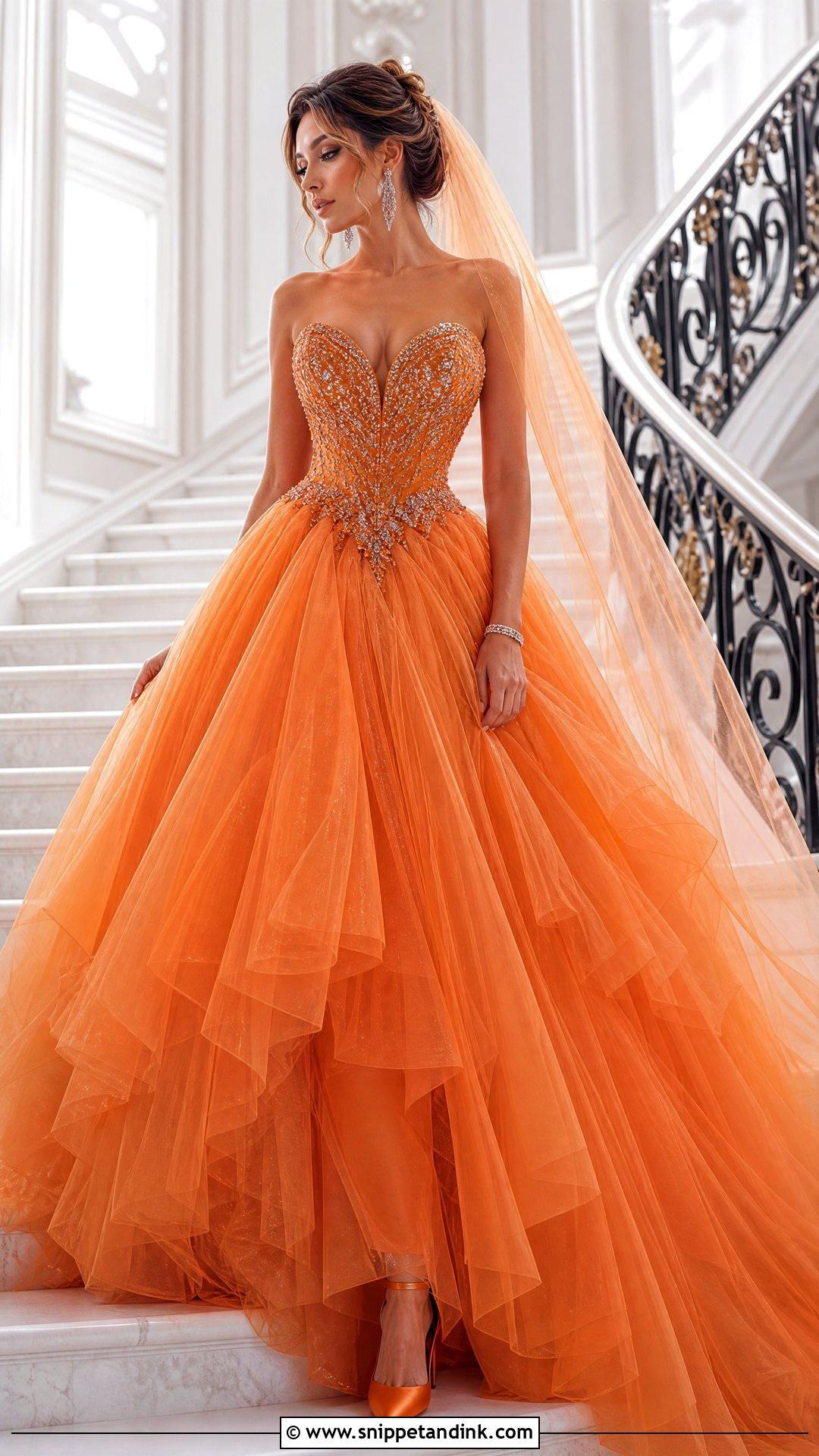
An orange tulle ball gown is for the bride who wants the full traditional silhouette and a colour nobody expects. The bodice must have real internal boning, because layered tulle in volume is heavier than it looks and pulls a soft bodice down. Pumpkin, coral and a soft persimmon all work; tonal embroidery or scattered crystals add texture while keeping attention on the shape. Crystal drops, a thin tennis bracelet and closed-toe satin heels are all I’d add. A fingertip veil stays clear of the skirt instead of fighting it. Keep the hair controlled in a low updo or half-up style, and the makeup neutral with a peach lip, or the whole thing tips into costume. Ask for a secure bustle with enough loops; tulle trains get stepped on constantly at receptions.
8. Ombre Orange Bridal Gown With Metallic Accessories
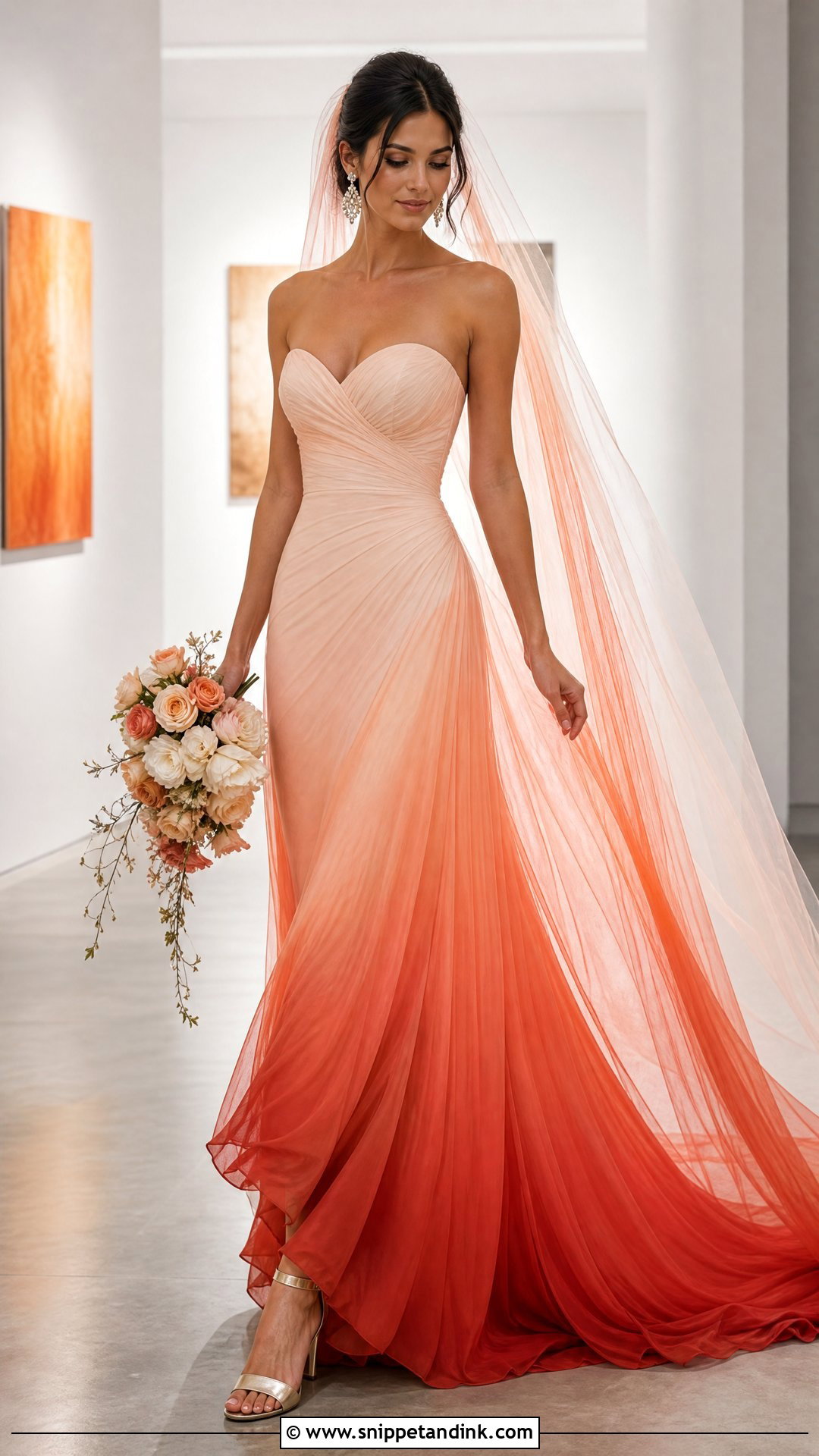
An ombre bridal gown lets you wear several oranges without choosing one. The good ones fade gradually from pale peach at the bodice to coral, tangerine or rust at the hem. Look closely at where the dye changes: on cheaper versions you can see a band where one dye bath ended. Chiffon, pleated tulle and organza show the gradient best because they move. Accessories should stay small: metallic sandals, little crystal studs, a slim bracelet. A clear veil with a faintly tinted edge echoes the fade. Carry cream and soft orange flowers, wear natural waves and light eye makeup, and skip big jewellery or a heavily decorated bag, since the dress is already doing the work.
9. Floral Orange Bridal Gown With Ivory Shoes
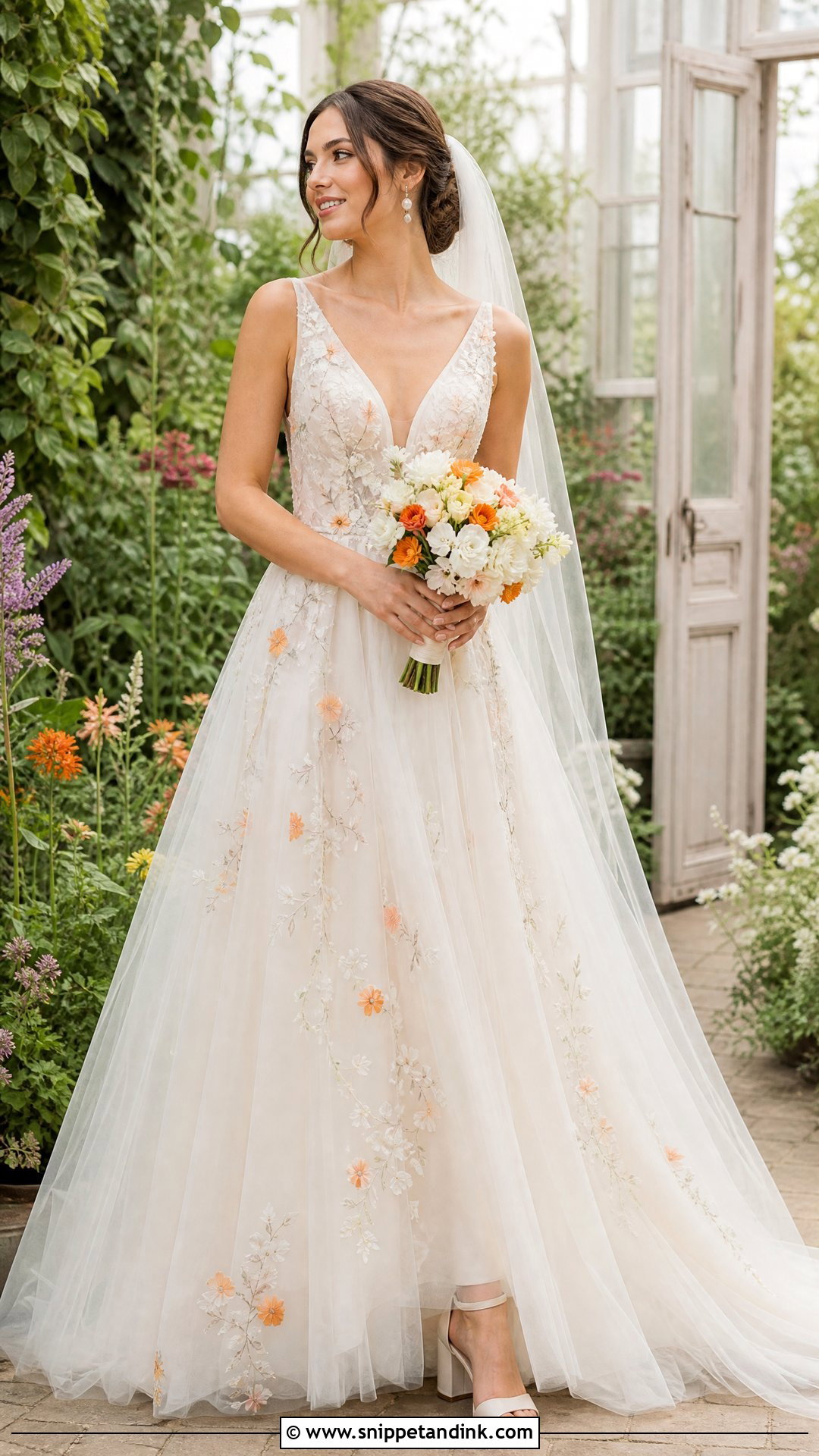
Floral orange gowns come in two forms: ivory tulle embroidered with orange flowers, or an orange base with cream and peach appliqués. The first reads more bridal; the second is bolder. Either way, an A-line skirt and a defined bodice keep the pattern from distorting over curves. I’d finish with ivory block heels, pearl earrings and a small satin clutch, and keep the veil completely plain so it doesn’t add a second pattern on top. A modest bouquet with greenery, white flowers and a few orange stems matches without crowding the print. If you want coverage, ask the maker for illusion sleeves or a cape cut from the same embroidered fabric, so the motifs continue rather than stop at the shoulder.
10. Orange Lace Bridal Dress With Nude Heels
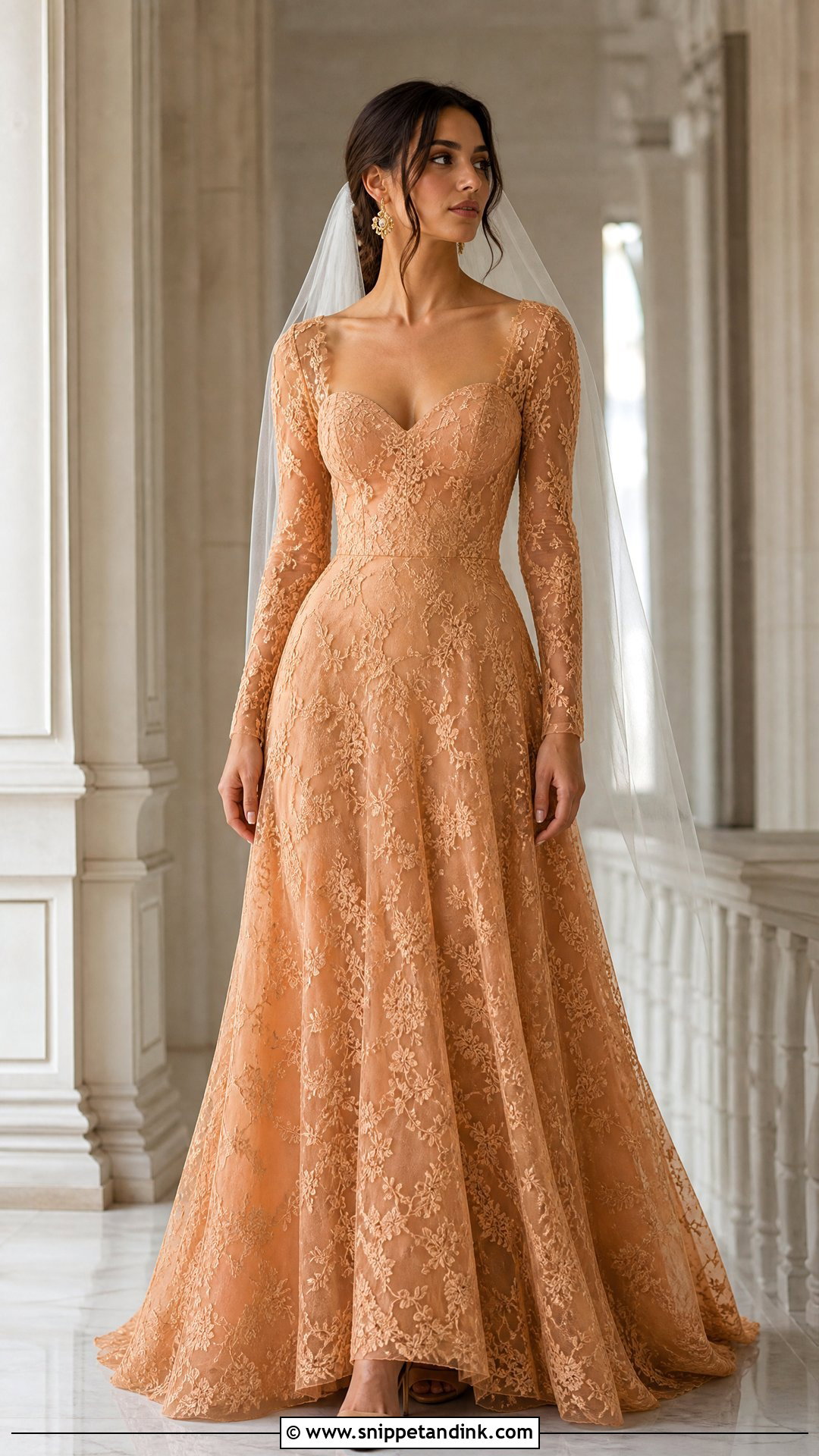
Lace softens orange more than any other fabric here, because the open pattern lets the lining show through and mutes the colour. Choose a floor-length dress in muted apricot, copper or burnt orange with a lined bodice and sheer lace sleeves. Fit-and-flare or a gentle A-line both work. Nude heels lengthen the line, and gold earrings with a fine pendant add a little shine. Go for a cathedral veil for a formal ceremony and a fingertip one for anything relaxed. A low textured bun keeps the neckline visible. The detail I check hardest is the lining: if it’s a shade off from the lace, the camera flash exaggerates the difference and the dress looks patchy.
11. Orange Cape Bridal Lehenga With Statement Earrings
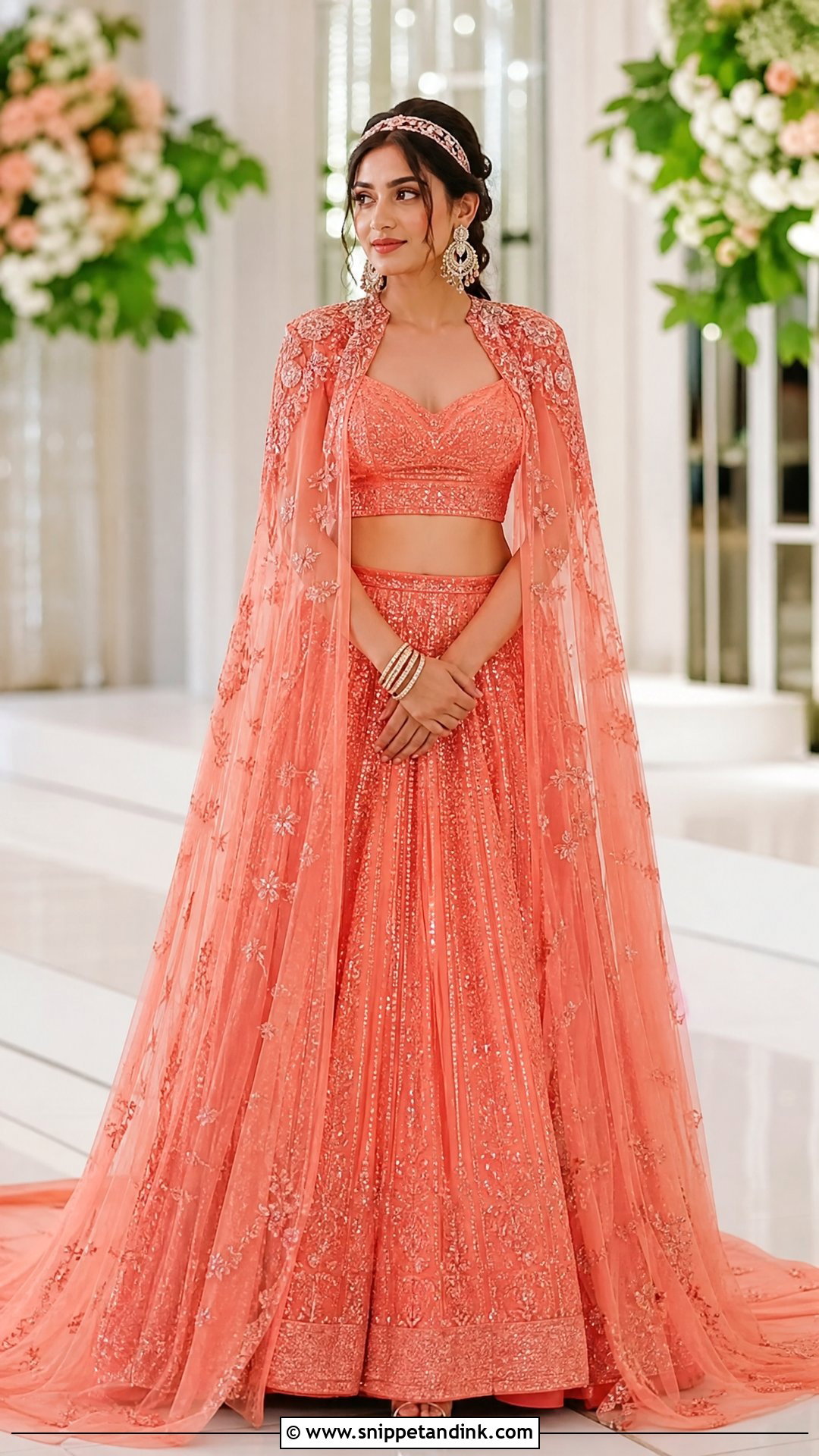
A cape lehenga gives you the movement of a dupatta without having to keep re-pinning one. A coral or deep-orange skirt with tonal beadwork, a fitted blouse and a sheer embroidered cape is the usual combination. The cape can fall from the shoulders, attach at the neckline or run into a short train. Because the top half is already busy, I’d swap heavy necklaces for statement earrings, a jewelled headband, slim bangles and metallic platforms. A sleek ponytail or smooth bun keeps the outline modern. Watch the length: a cape that brushes the floor gets stepped on by everyone behind you, so have it hemmed just above or add a wrist loop.
12. Orange Anarkali Bridal Dress With Silver Jewelry
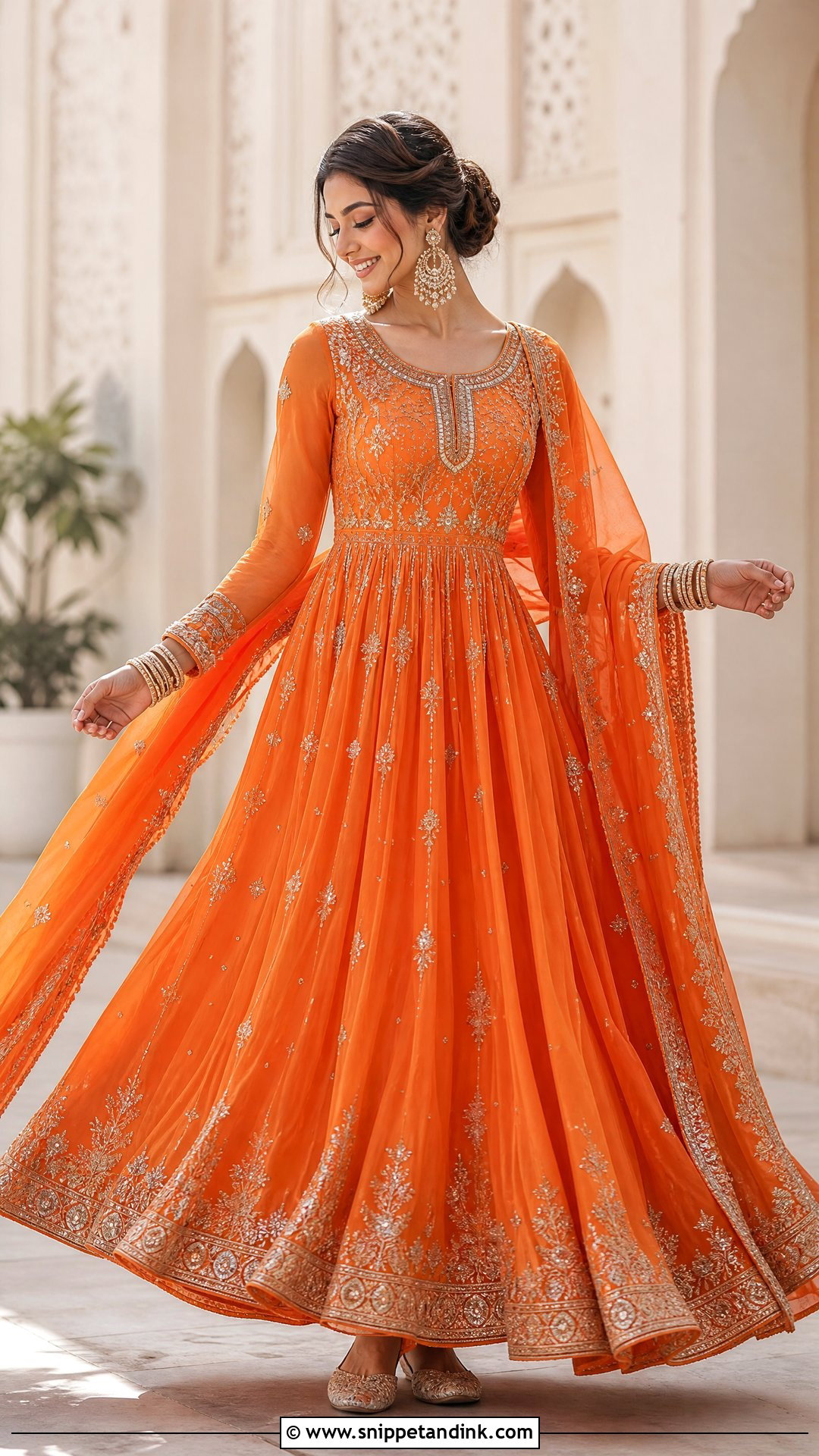
A flowing orange Anarkali is my usual suggestion for a smaller ceremony or the functions before the wedding, when a full lehenga feels like too much. Georgette or chiffon, floor-length, fitted through the bodice and wide at the hem. Silver embroidery looks crisp on vivid tangerine; gold sits better on deeper saffron, so match the metal to the shade, not to your jewellery box. Chandelier earrings, stacked bangles and embroidered flats or low block heels finish it. Drape the dupatta over one shoulder only, or it hides the fitted top that makes an Anarkali flattering. A braided updo, kohl and a coral lip keep it festive. Insist on a side zip and a smooth lining; pulling a fitted georgette bodice over your head with finished hair and makeup is a real problem.
13. Orange Sharara Bridal Outfit With Embroidered Dupatta
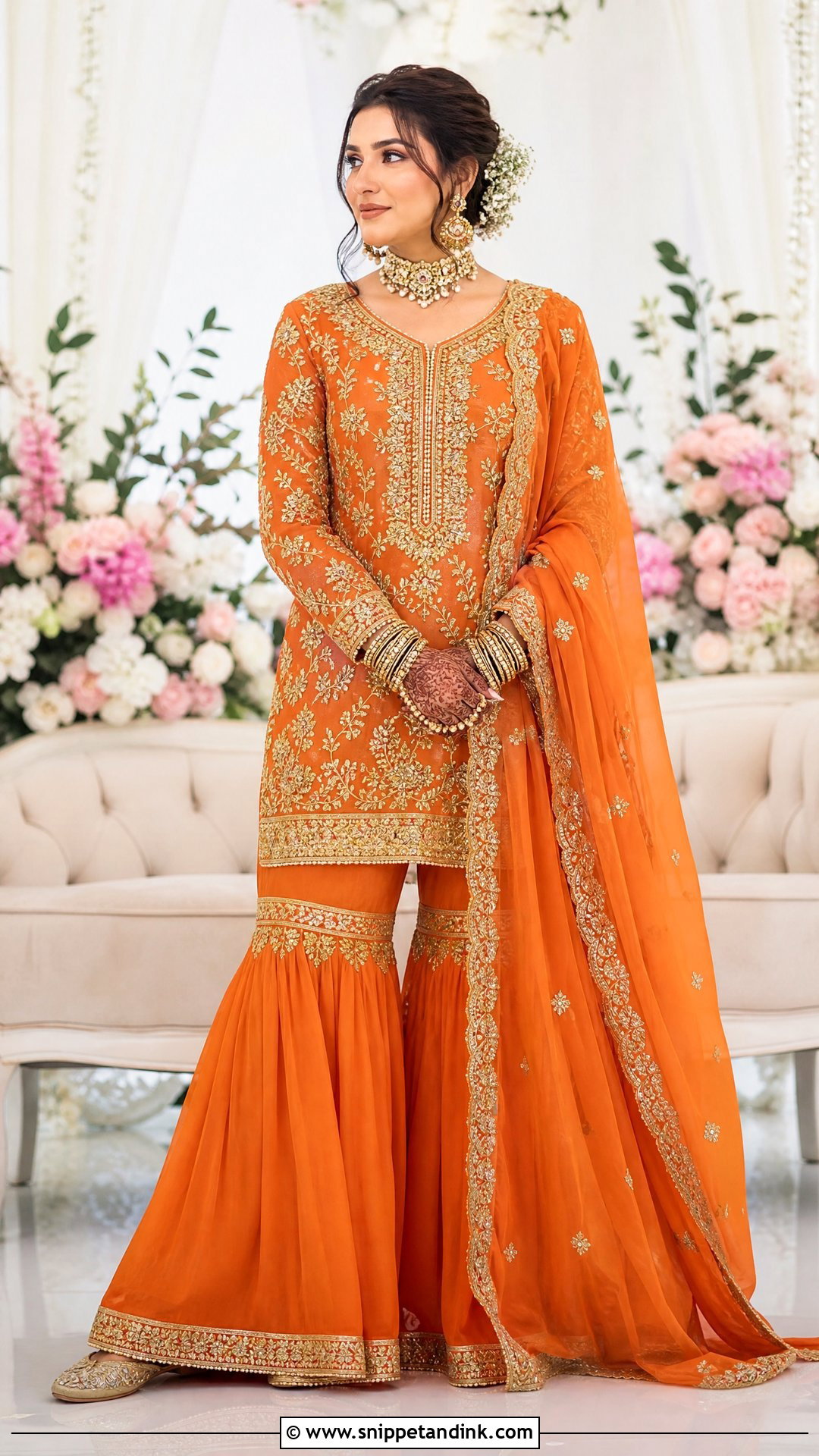
Sharara sets are the most comfortable bridal option here, and I recommend them to brides with a long day of dancing ahead. A fitted orange kurta with a shaped waist and embellished neckline, ending above the knee, sits over wide flared pants in matching silk or georgette. The dupatta goes over one shoulder so your arms stay free. A kundan choker, matching earrings, bangles and cushioned juttis are enough jewellery. A centre-parted low bun and a warm pink lip finish it. The thing to get right is the hem: hold the fitting in the exact shoes you’ll wear, because a sharara even an inch too long catches under the heel on stairs.
14. Orange Draped Saree Bridal Dress With Gold Sandals
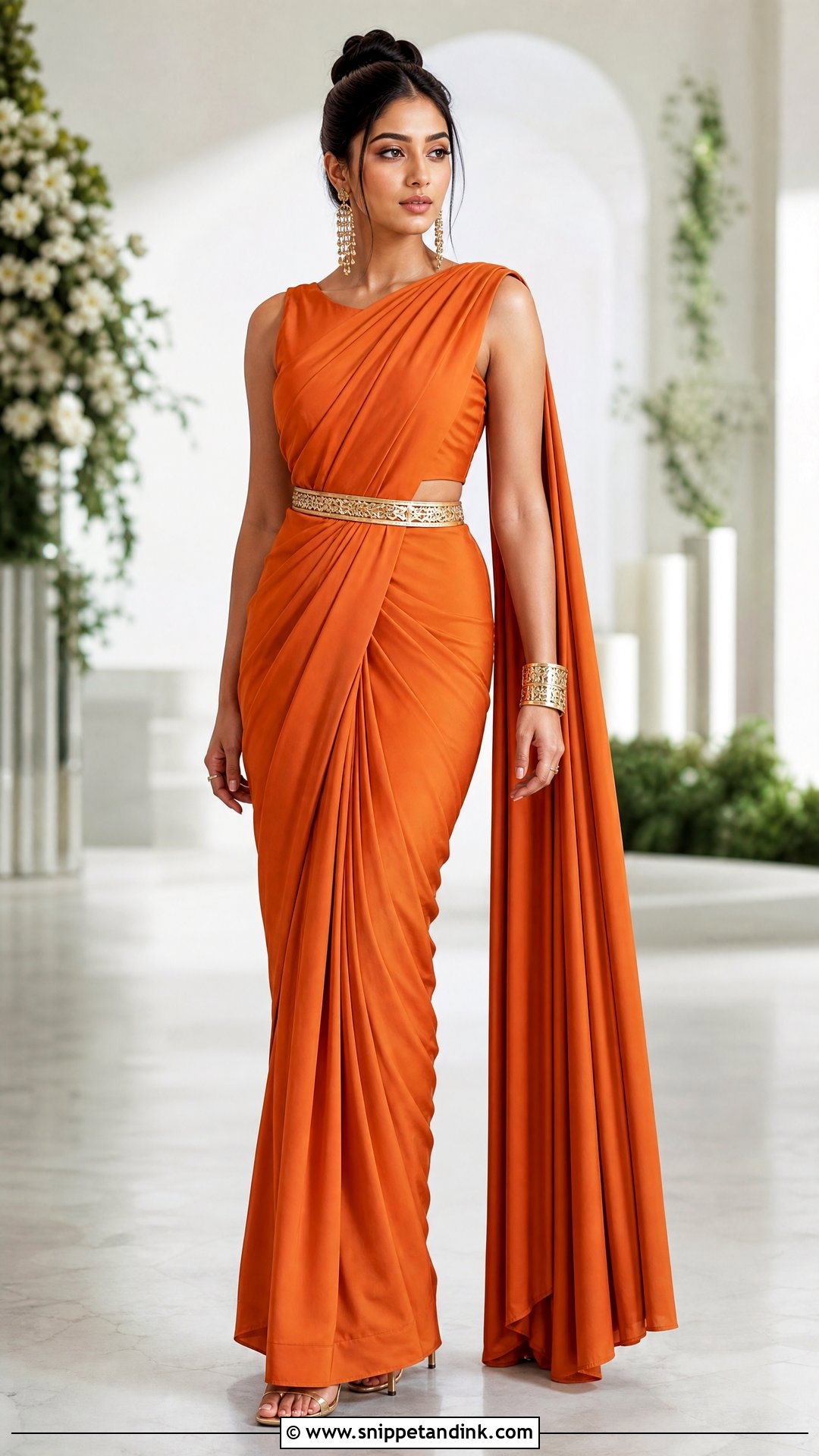
A pre-draped saree gown looks like a draped saree but is stitched in place, which matters if you’ve never worn one for twelve hours. A fitted bodice with sewn pleats in satin, crepe or light silk, plus a draped shoulder panel in place of a loose pallu, means nothing slips during the event. I’d pair it with gold sandals, a structured cuff and long earrings, plus a slim belt if you want the waist defined. A high bun or glossy ponytail suits the clean shape; bronze shadow and a soft brown-red lip keep the face polished. At the fitting, sit down and walk up a step or two: stitched pleats sometimes restrict the stride more than a free drape would.
15. Orange And Pink Bridal Lehenga With Kundan Jewelry
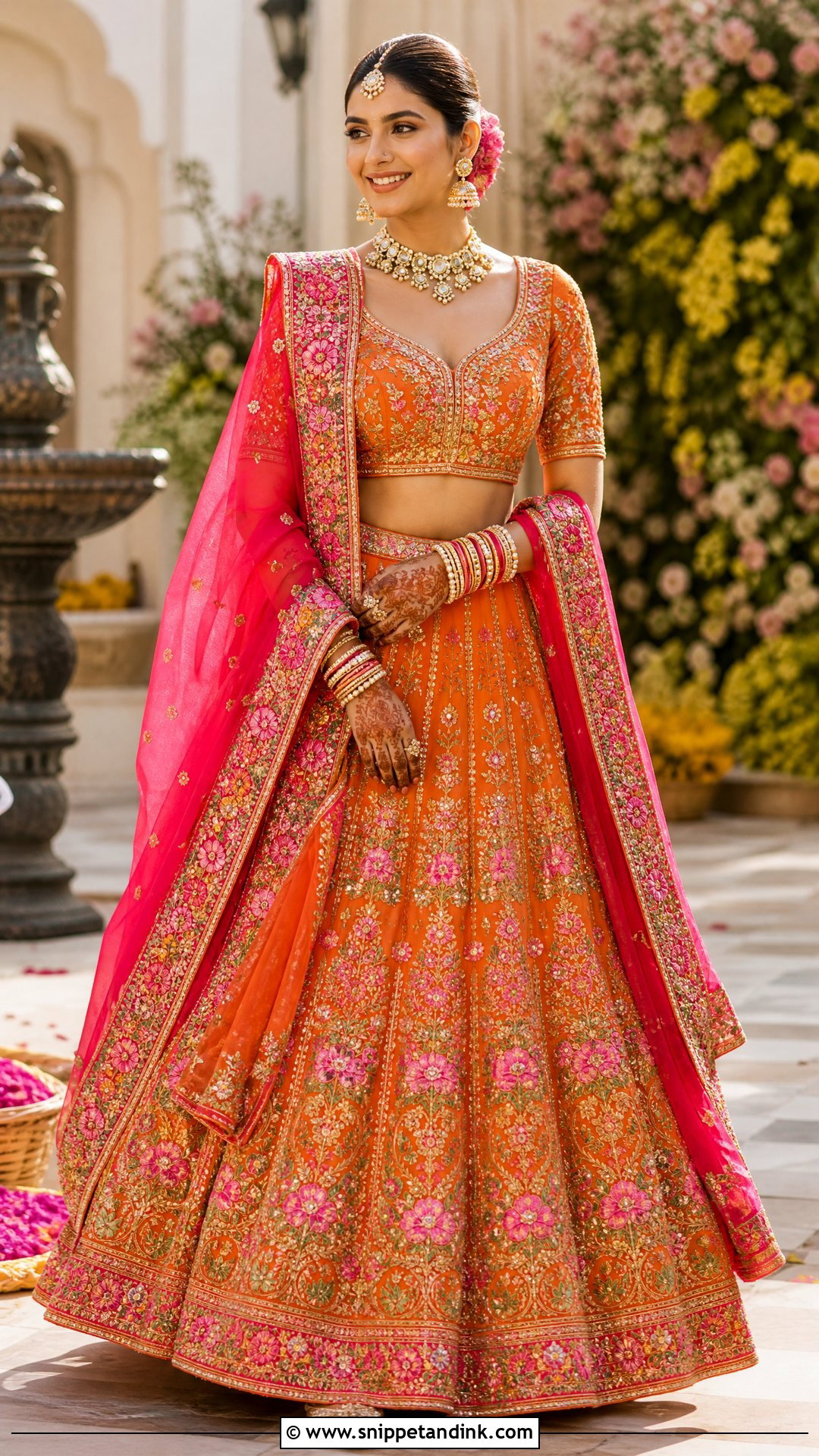
Orange with pink is the combination I’d point to if you want colour that still feels celebratory but don’t want red. Start with an orange embroidered skirt and blouse, then bring fuchsia or hot pink in through the dupatta, borders and floral motifs. Kundan helps tie the two together because the gold setting and pale stones sit comfortably next to both. A layered necklace, earrings, bangles and a small headpiece are plenty, with gold juttis or block heels underneath. A braided bun with pink flowers and a pink-red lip repeat the accent. The mistake I see most is too many shades of each: settle on one dominant orange and use a single pink as the contrast.
16. Orange And Gold Bridal Lehenga With Double Dupatta
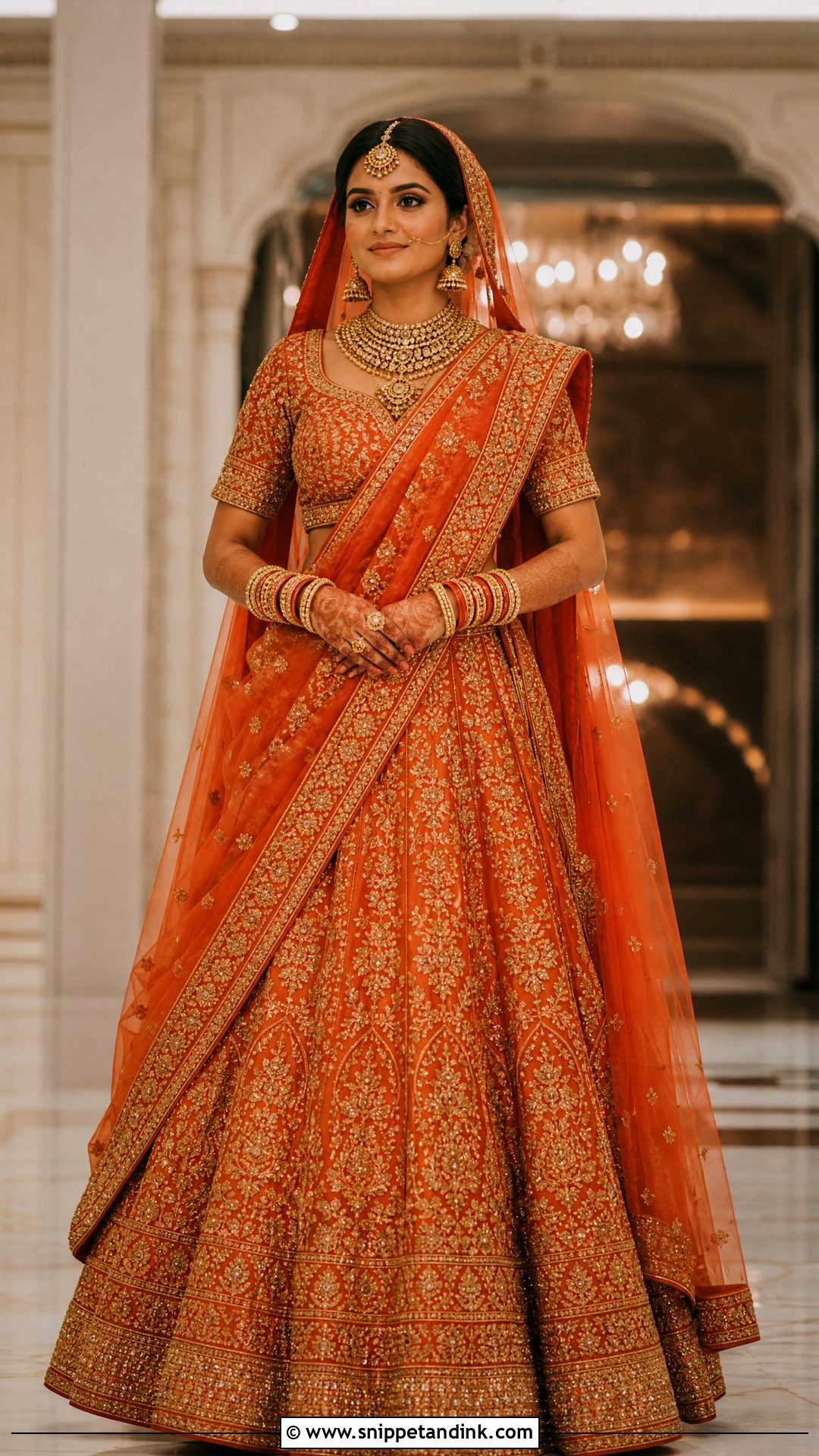
This is the grandest version on the list: a deep orange skirt with balanced zari or zardozi, a blouse with supportive sleeves, one dupatta draped diagonally and a longer, lighter veil over the head. The weight adds up quickly, so plan for it. Antique-gold necklaces, large earrings, a traditional headpiece and stacked bangles complete it. Underneath, wear hidden platform sandals or padded juttis for stability. A smooth low bun gives the veil a firm base for pins without adding bulk. Warm matte makeup and a brick-red lip hold up against the strong colour. Do a full dress rehearsal with both dupattas pinned and walk around for twenty minutes; that’s when you find the pin that pulls at your scalp.
17. Coral Orange Beach Bridal Dress With Flat Sandals
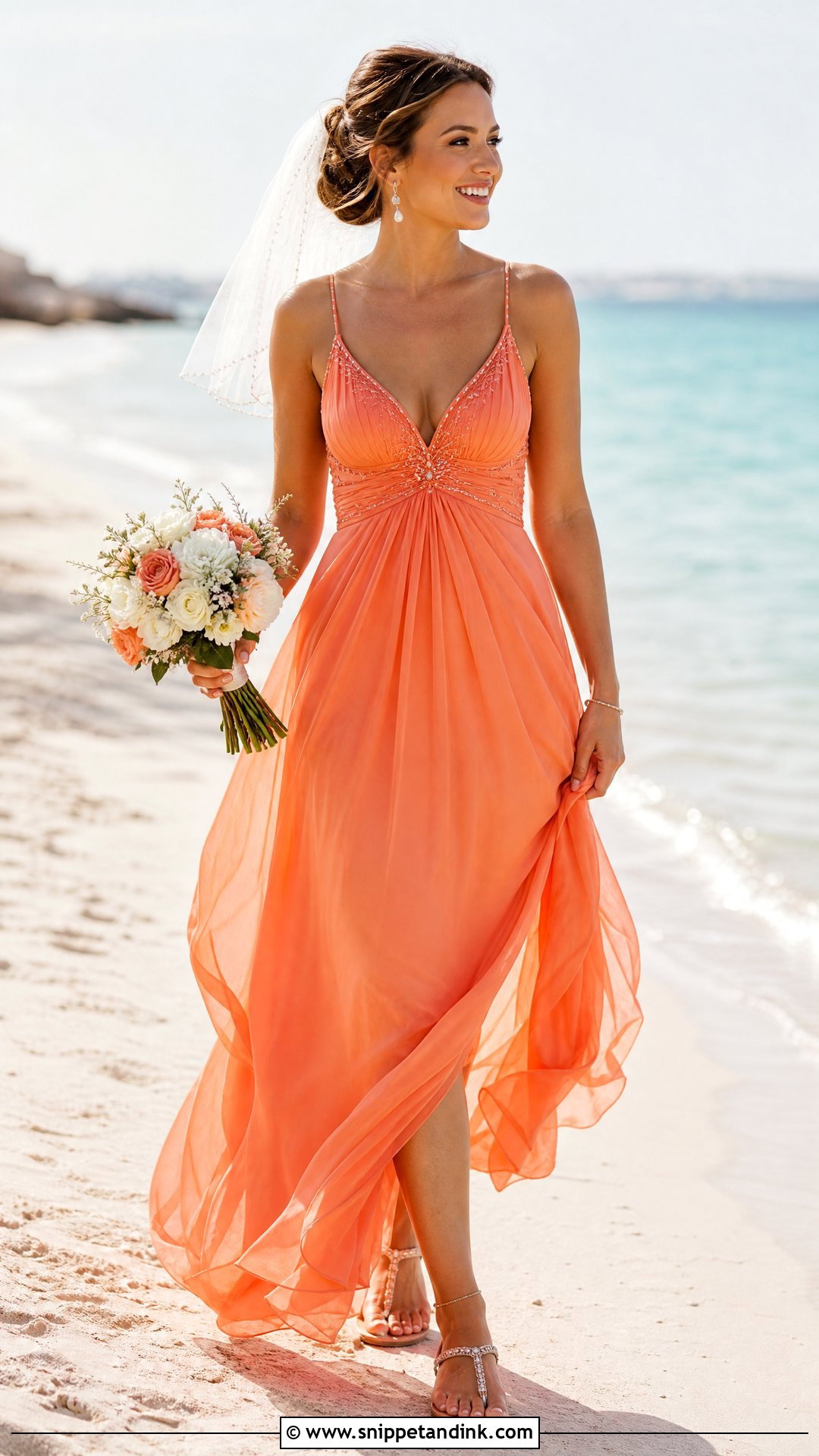
Coral is the orange I’d take to the beach, because it sits well against sand and water without looking like a costume. Lightweight chiffon or crepe with an empire waist, an open neckline and a flowing skirt is the right construction. Skip the long train; it collects sand and catches the wind. Embellished flat sandals, pearl drops and a fine anklet are enough. Instead of a long veil, try a short sheer one or a removable shoulder drape that won’t sail off in a breeze. Loose waves, a braided half-up style or a low ponytail survive salt air better than set curls. Use long-wear makeup with a coral lip, and keep the bouquet white, peach and orange so it ties to the dress without looking themed.
18. Terracotta Velvet Bridal Gown With Antique Gold Jewelry
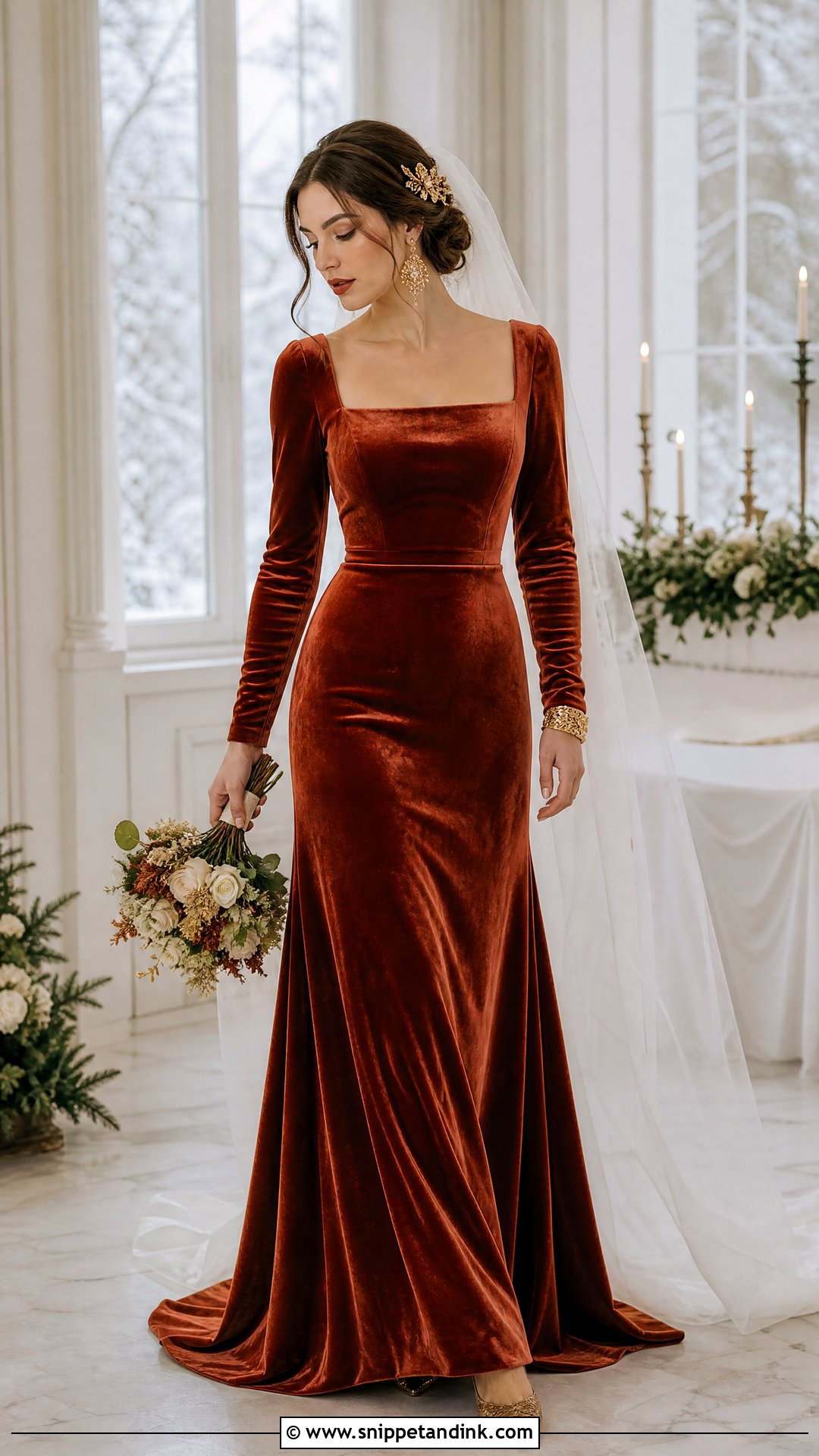
Terracotta velvet is my cool-weather choice; it looks substantial and keeps you warm. Long sleeves, a square neckline and a moderate flare work best. Velvet already has depth from the pile catching light, so limit embroidery to the neckline, cuffs or waist. Antique-gold earrings, a statement bracelet and a decorative comb in the hair add warmth. Dark nude or gold closed-toe heels and a light veil finish it, with a sleek chignon and a softly smoked eye. Choose a velvet with some stretch and ask for a breathable lining, because a heated room in winter can make velvet uncomfortable by the reception. Also avoid sitting on it in the same position for too long; velvet pile crushes and leaves visible marks.
19. Minimalist Orange Column Bridal Gown With Pearl Veil
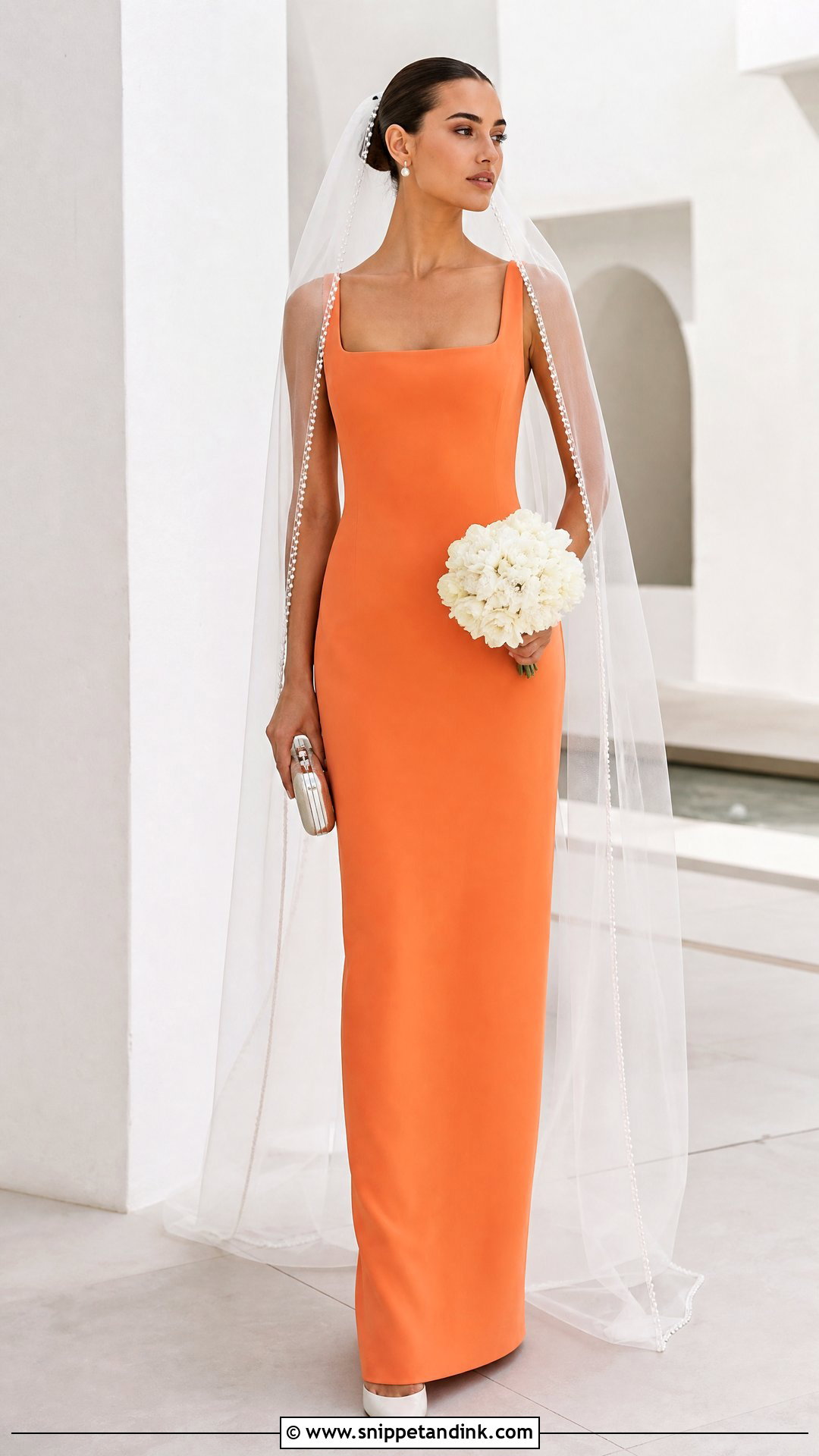
A minimalist column gown puts all the attention on the shade, so pick an orange you love up close. Smooth crepe, cut with a high neck, square neck or one asymmetric shoulder, suits apricot, papaya and muted rust. A pearl-edged veil, small pearl earrings and pointed ivory heels add the bridal details the plain dress leaves out. Carry a slim metallic clutch at the reception. A neat bun or polished waves and a softly defined lip keep the face in the same quiet register. Because there’s nothing to hide behind, the tailoring at waist, hem and neckline carries the whole look: the dress should skim your body, never pull across the hips or cling at the stomach.

20. Orange Bridal Jumpsuit With Detachable Train
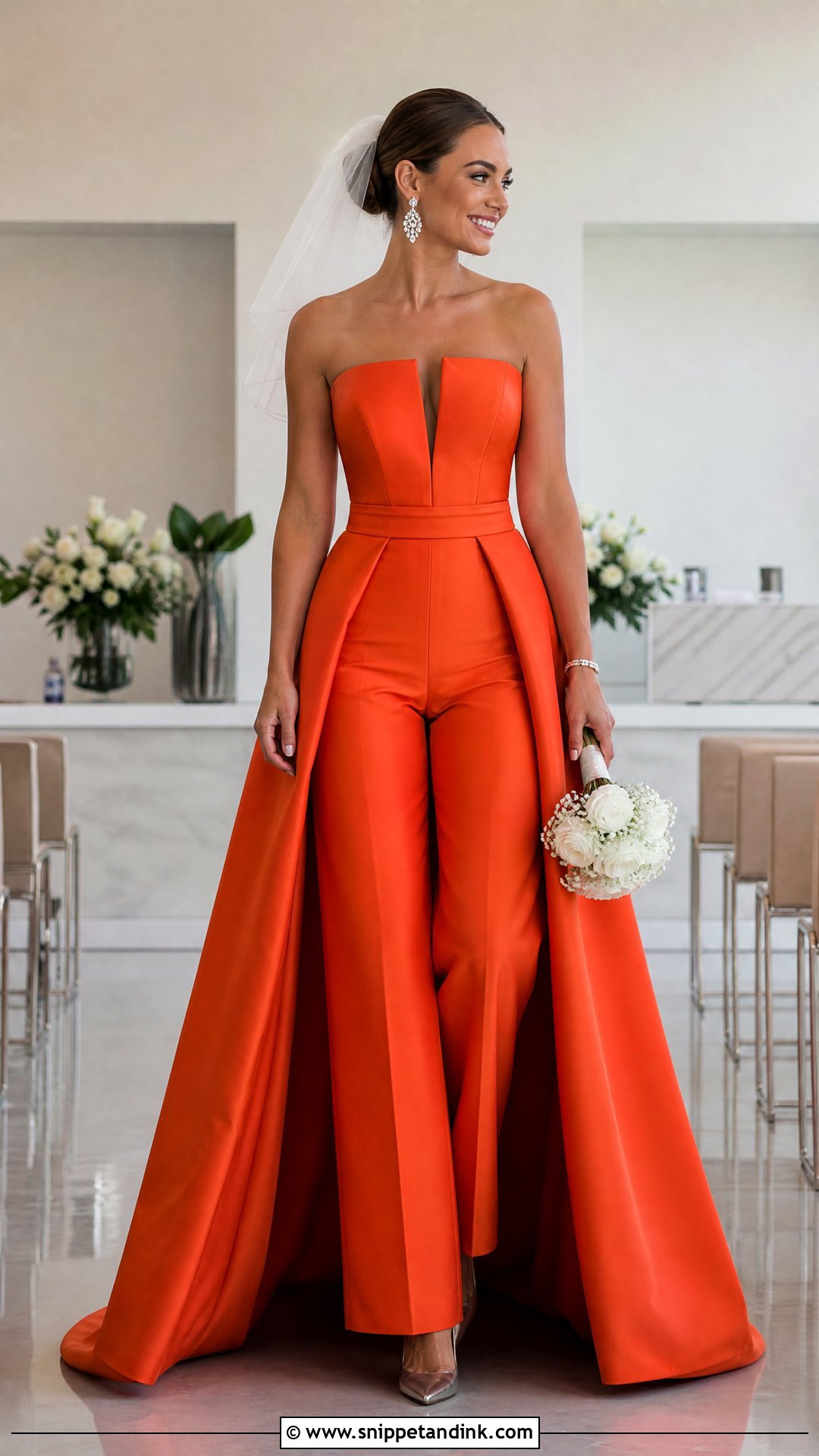
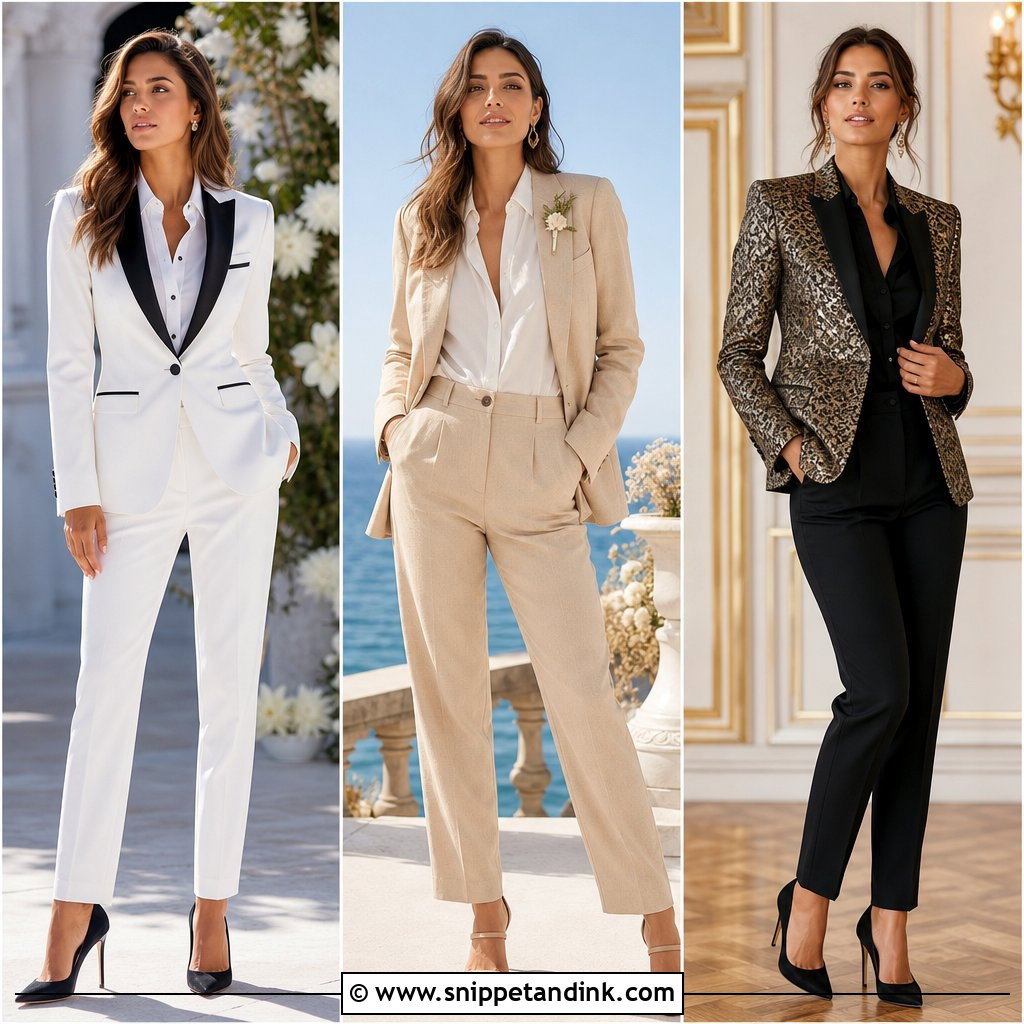
An orange jumpsuit works for a civil ceremony, a reception change or a bride who simply doesn’t want a skirt. A tailored wide leg with a structured bodice and a defined waist is the version that reads as bridal. Add a detachable overskirt or floor-length train for the ceremony and unhook it when the dancing starts. Crystal earrings, a slim bracelet and metallic pointed heels finish it. A small ivory bouquet and a short veil make it obviously bridal without covering the tailoring. The fitting point people forget is torso length: too short and the crotch pulls when you sit or lift your arms. If the maker can add discreet side pockets, take them.
Why Orange Pieces Rarely Match Unless You Plan For It
Orange dye is notoriously hard to repeat. Two bolts of the same silk dyed a week apart can come out a shade apart, and you’ll see it the moment a separately bought blouse sits next to a skirt. In daylight the difference might be slight; under a photographer’s flash it often looks obvious.
When I put an orange outfit together, I ask for every piece to be cut from the same dye lot, or dyed together in one batch if the maker colours fabric to order. If you’re buying a dupatta or cape from a different shop, take the skirt or a cut-off from the hem with you rather than a photo. Alterations need thread matched to the actual fabric too; a slightly redder thread line along a hem shows in close-ups.
Contrast is easier than a near match
If you can’t get a true match, go clearly different instead. A red, pink or green dupatta against an orange skirt looks intentional. A second orange that’s almost right looks like a mistake, so I’d rather see a bold contrast than two oranges that nearly agree.
Water Spots, Sweat and Turmeric on Orange Silk
Bright orange silk and satin show damp patches as darker blotches, and they show them quickly. Underarm perspiration on a fitted blouse is the most common one, so I have dress shields stitched or taped into blouses for long ceremonies, and I keep a hand fan in the bridal bag for the hottest part of the day.
If you’re having a haldi ceremony, don’t wear any piece of the wedding outfit to it. Turmeric paste stains silk and the yellow tint is almost impossible to lift completely. Afterwards, spot-clean nothing yourself: water rubbed into silk can leave a permanent ring. Hang the outfit to air, note where any marks are, and take it to a cleaner who handles silk and zari within a week or two. Store it folded in plain cotton, away from sunlight, which fades orange dye faster than most colours, and refold it along different lines every few months so the zari doesn’t crack at the creases.
Settle the Shade First, Then Build the Outfit Around It
Of all the decisions in an orange bridal look, the shade comes first and everything else follows from it. Peach and coral keep things light; rust, saffron and burnt orange bring weight and ceremony. Think about the lighting at your venue, the season, your jewellery metal and any tradition the outfit needs to honour before you commit. Then put the whole outfit on together at least once: veil, shoes, underwear, jewellery and all. That’s when heavy layers, loose drapes and painful shoes show up, while there’s still time to fix them. A lehenga, a silk saree, a gown or a jumpsuit can all work in orange, as long as the colour was chosen for your skin and your room first.
You'll Like These Ideas:




Leave a Reply