
The hijab is the part of a bridal look I plan first, not last. It sits closest to the face, it carries the veil and any headpiece, and its fabric has to agree with the gown or the whole outfit looks assembled from two shops. Get that relationship right and almost any style follows: satin gowns with smooth chiffon hijabs, lace with pearl pins, embroidered lehengas with matching dupattas, or a plain crepe gown with a clean veil. Covering is not about hiding the bridal moment; it’s about making every layer look chosen. Below are 25 looks for a nikah, walima, reception, civil ceremony or destination wedding, with the styling details I’d actually adjust for each.
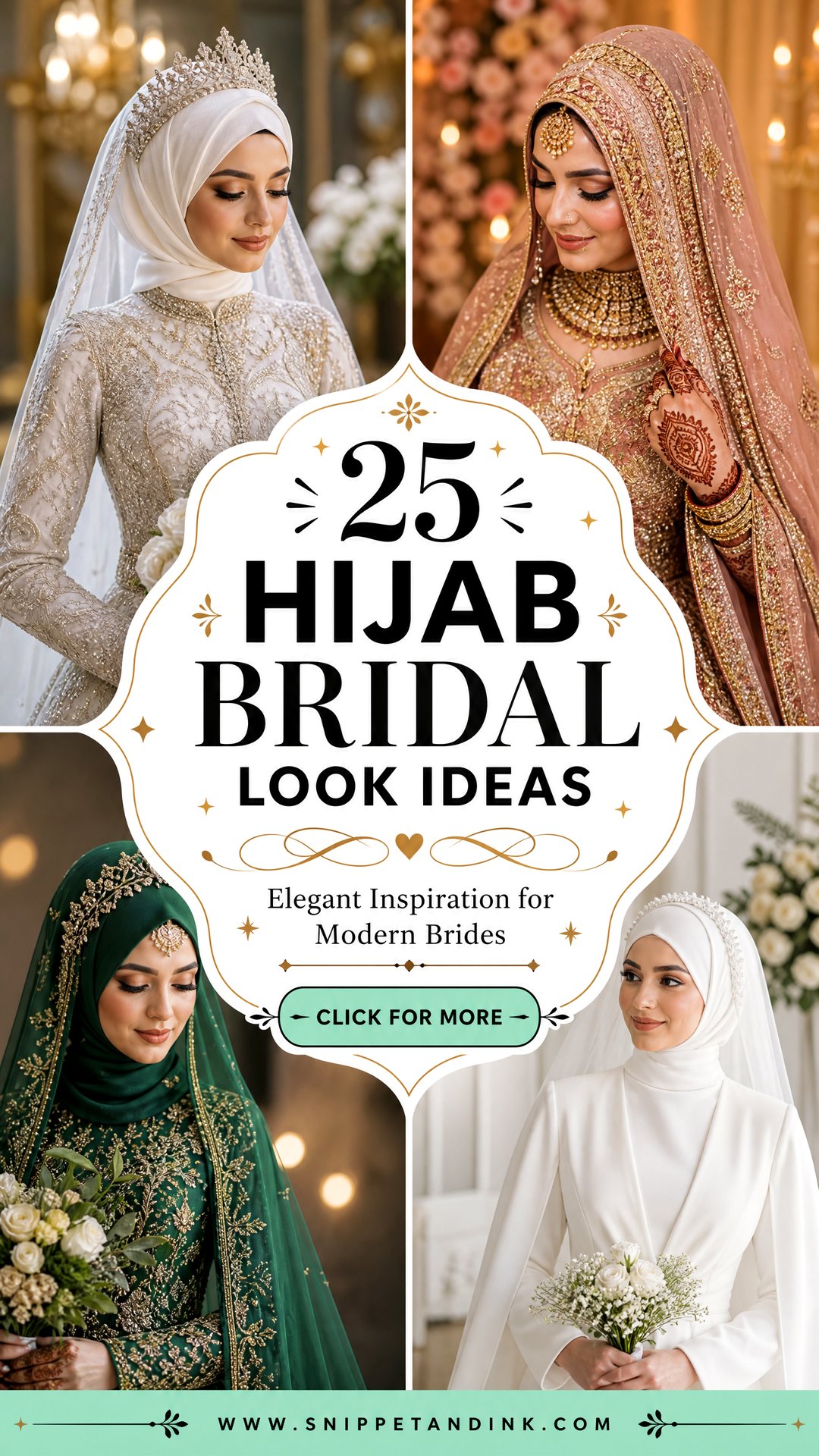
Building a Wrap That Holds a Veil, a Crown and a Long Day
Most bridal hijab problems are structural, not stylistic. The wrap slides, the veil drags it back, or the headpiece tilts. I build every bridal wrap from the bottom up, and I do it at the trial, never for the first time on the morning.
The base layer does the holding
A snug cotton or crinkle undercap gives pins something to bite into. Satin and silk hijabs are slippery on their own, so without a grippy base they creep backward over a few hours. Match the undercap to the hijab color, because a sliver of it will show at the forehead.
Pins and where the weight goes
Fine dressmaker pins and small safety pins anchor the wrap; magnetic pins are handy at the chin but won’t carry a veil. Anything heavy, like a cathedral veil, dupatta or crown, should pin through to the undercap so the load rests on your head and not on the chiffon. Fine chiffon shows pin holes, so place the pins once and avoid moving them.
Bring the real pieces to the trial
Your stylist needs the actual hijab, veil and headpiece to practice with. A veil that is a few inches longer or heavier than the sample changes everything about where it anchors.
1. White Hijab Bridal Dress
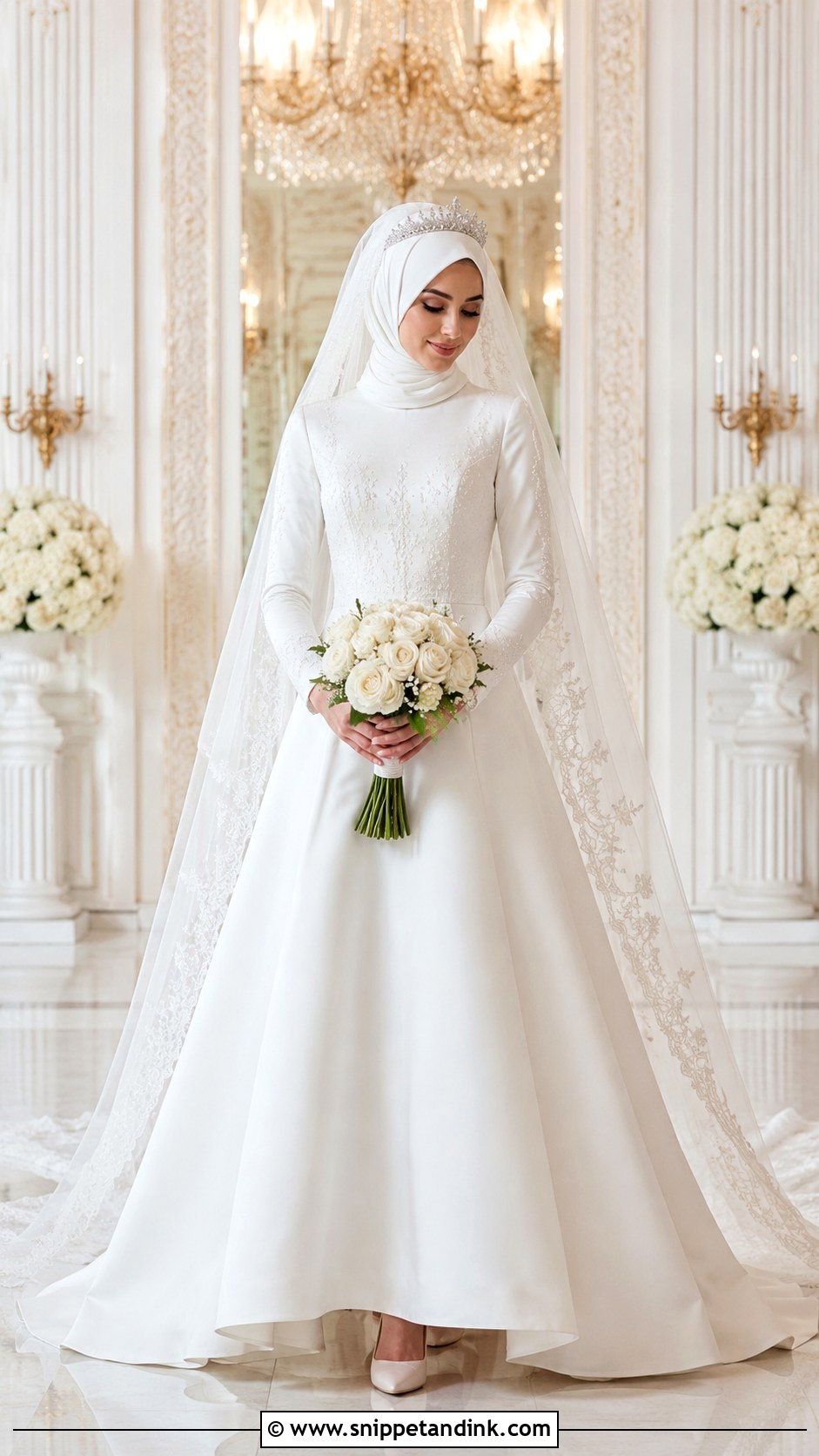
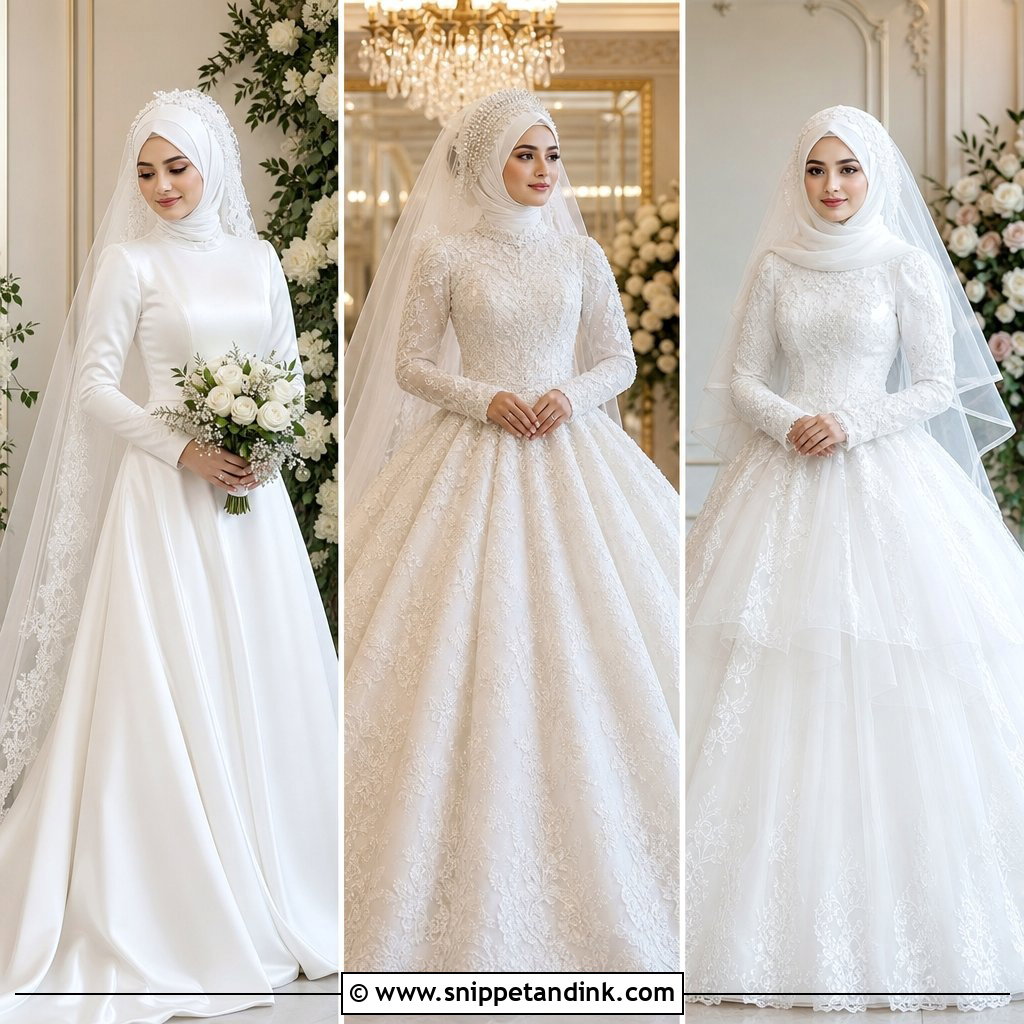
White on white is the most traditional route, and it only works when both whites genuinely match. Bright white chiffon next to a soft-white satin gown looks grey in photos, so I hold the hijab fabric against the gown in daylight before anything is bought. A long-sleeve A-line or ball gown with a smooth chiffon or satin wrap in the same shade frames the face cleanly. Add a soft cathedral veil, a delicate tiara, ivory closed-toe heels and white roses. If the neckline sits low, a custom bodice lining adds coverage without changing the dress. Formal receptions, hotel weddings and classic indoor ceremonies suit it.
2. Ivory Hijab Bridal Gown
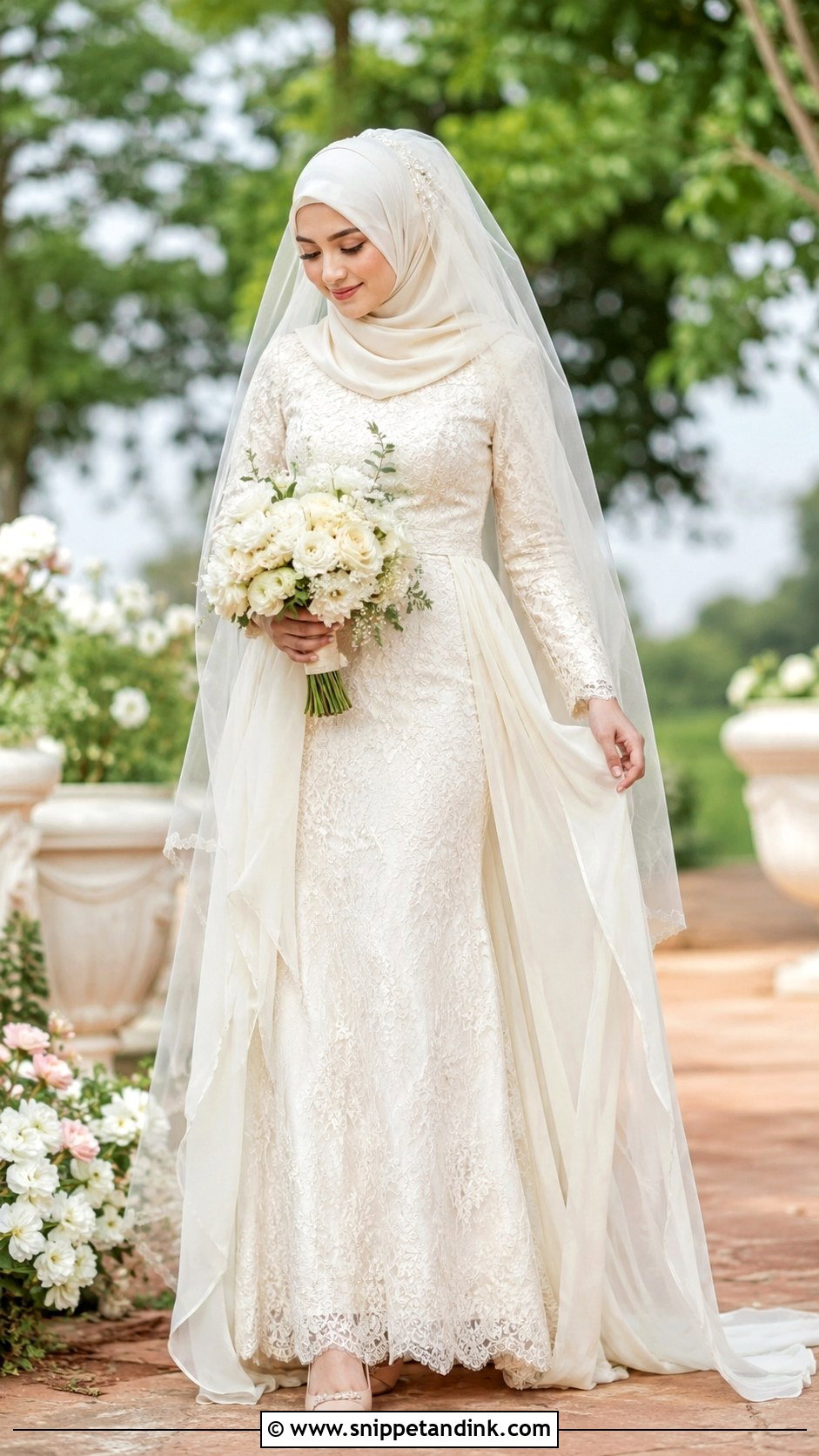
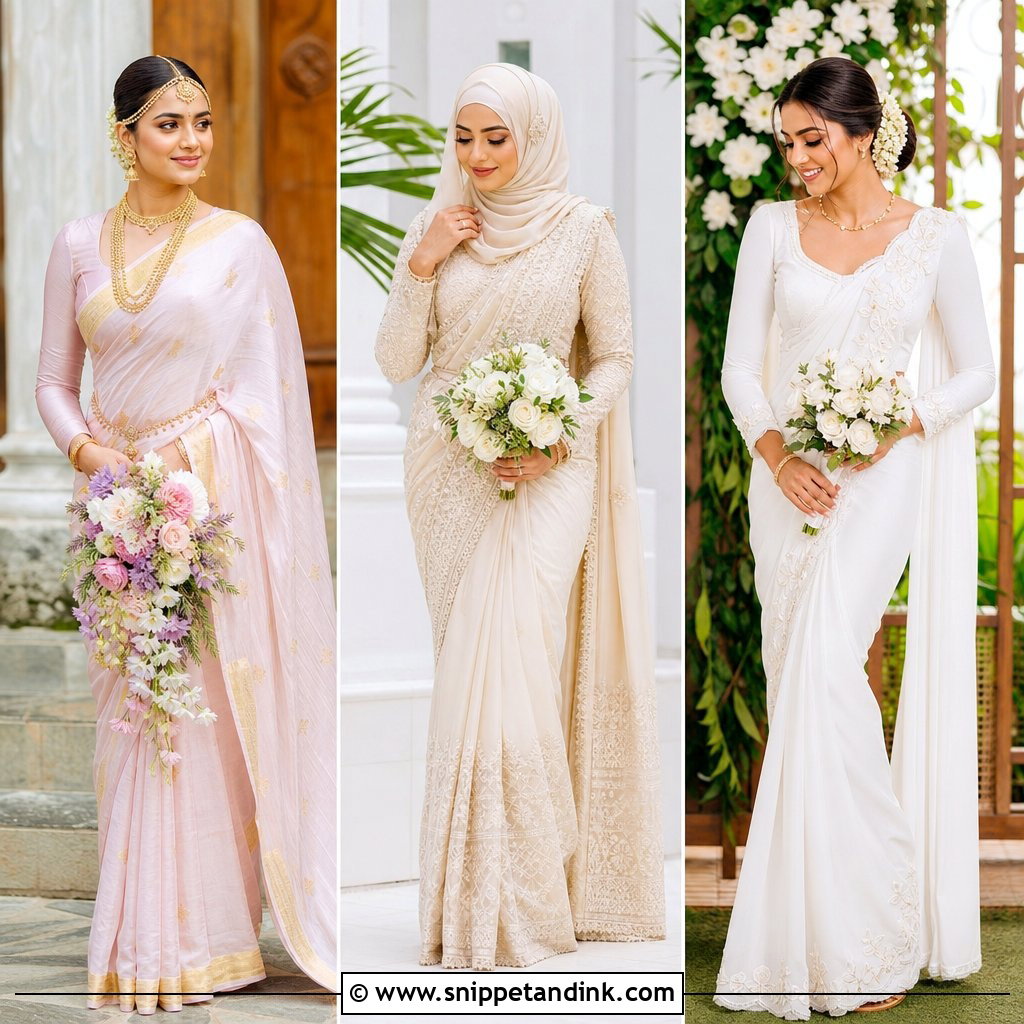
Ivory is kinder than pure white to most skin tones, especially olive and deeper complexions, because it has a little warmth in it. A long-sleeve ivory lace gown with an ivory chiffon hijab reads graceful in daylight. Keep the wrap smooth around the face, then let the veil fall from the crown or the back of the head. Champagne heels, pearl pins and a cream bouquet finish it without clutter. Daytime and garden weddings show this color at its best.
3. Satin Hijab Bridal Look
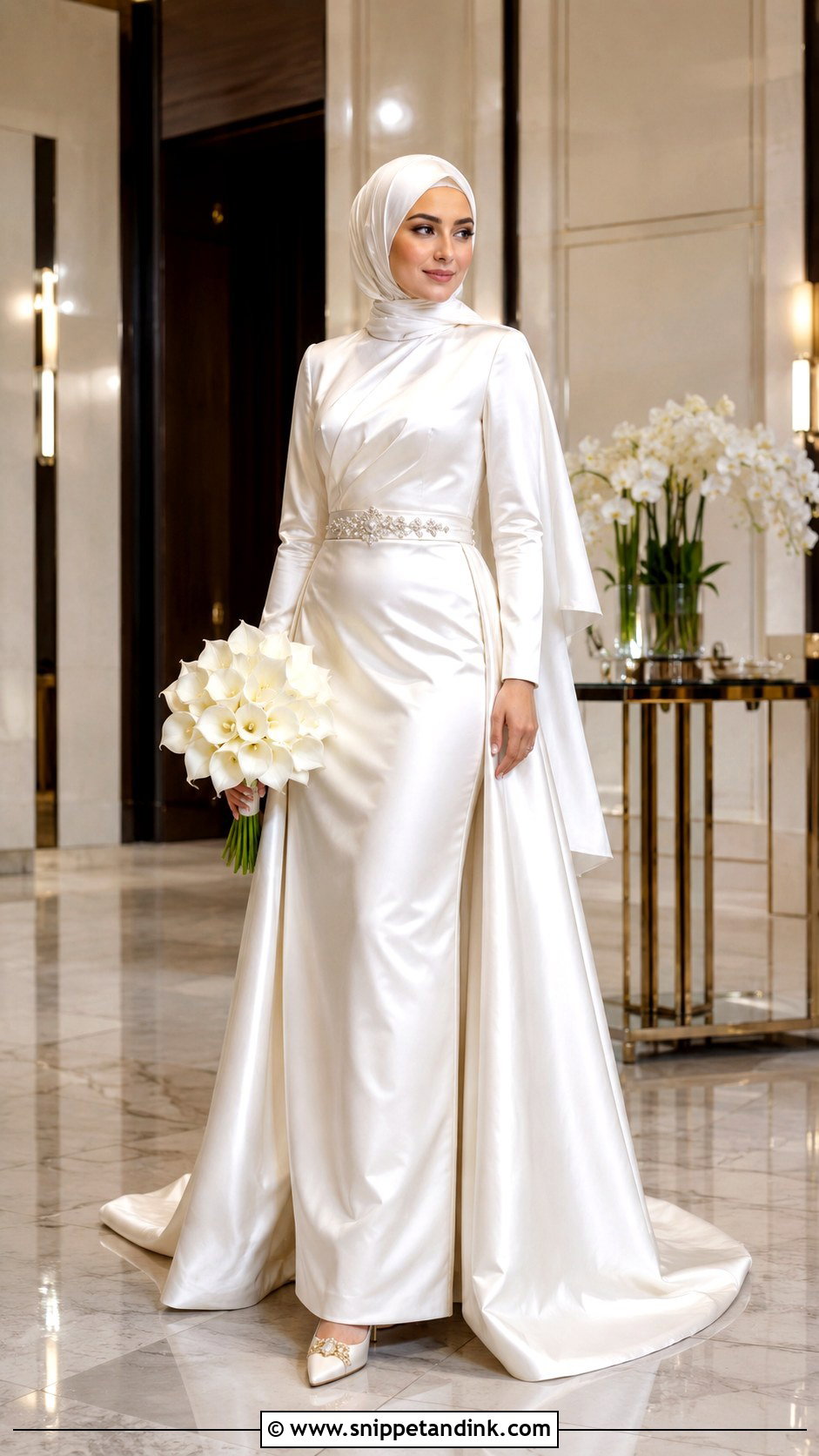
Satin on satin gives the smoothest, most polished finish, but satin hijabs are slippery, and that changes how I pin. A crinkle or cotton undercap underneath gives the pins something to grip, otherwise the wrap creeps backward over a long evening. Pair a satin long-sleeve gown with a lightweight satin or silk-blend hijab in the same color family. A plain cut can take a jeweled belt, pearl veil pins or a sculpted bouquet; a gown with dramatic sleeves or a long train wants the hijab kept fitted and quiet. Pointed heels in ivory or champagne suit hotel ballrooms and evening receptions.
4. Lace Hijab Bridal Dress
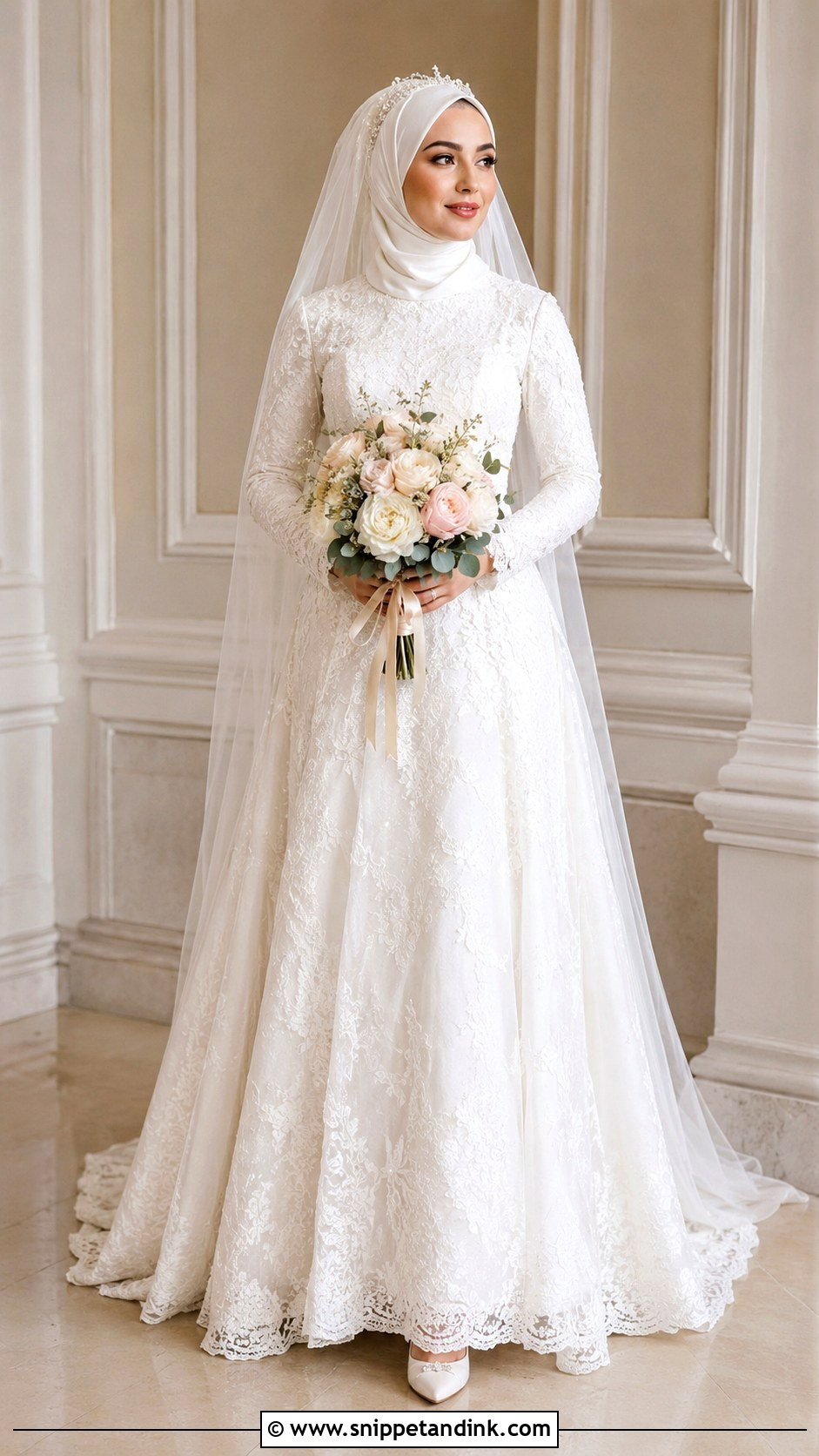
With a lace gown I almost always pair a plain chiffon hijab. Lace on lace near the face fights for attention, and the chiffon lets the gown’s pattern lead. Look for a fully lined long-sleeve gown with a high neckline or an illusion lace overlay, and check that the lining reaches the wrists so the sleeves aren’t see-through in flash photos. A narrow veil, a pearl hairpiece over the hijab, classic ivory heels and a white, blush or cream bouquet keep it soft without turning sweet.
5. Pearl Hijab Bridal Look
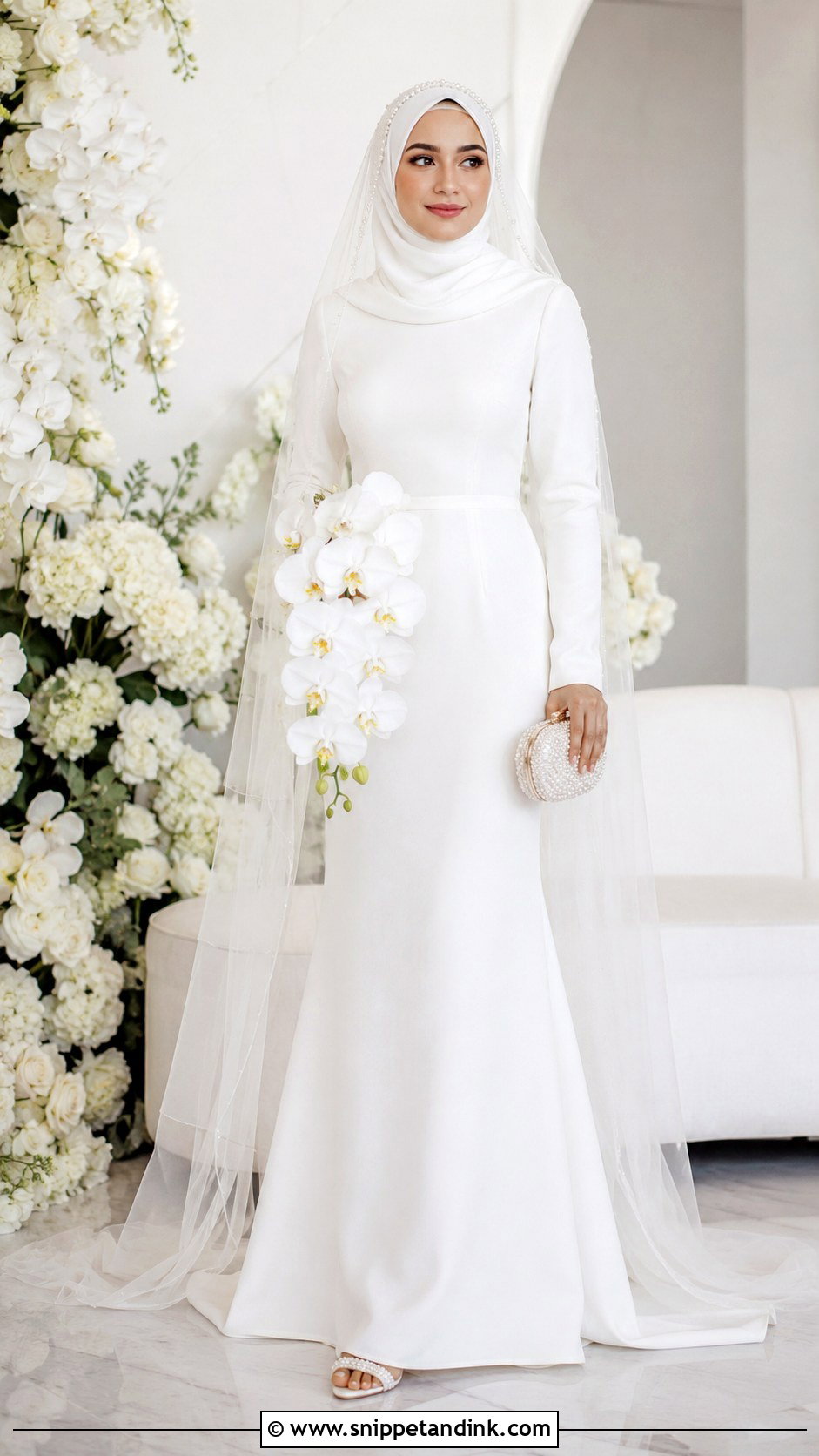
Pearls are the easiest detail to personalize, and also the easiest to overdo. Start with a simple crepe, satin or tulle gown, then add a hijab with scattered pearls or a few pearl pins placed around the crown. I count them: three to five pins frame the face; a dozen starts to look like a costume. A plain veil, pearl-trimmed shoes and a small pearl clutch tie the outfit together. Soft makeup with a glowing base and a bouquet of white roses or orchids suit the pearls, and you avoid heavy embroidery entirely.
6. Beaded Hijab Bridal Gown
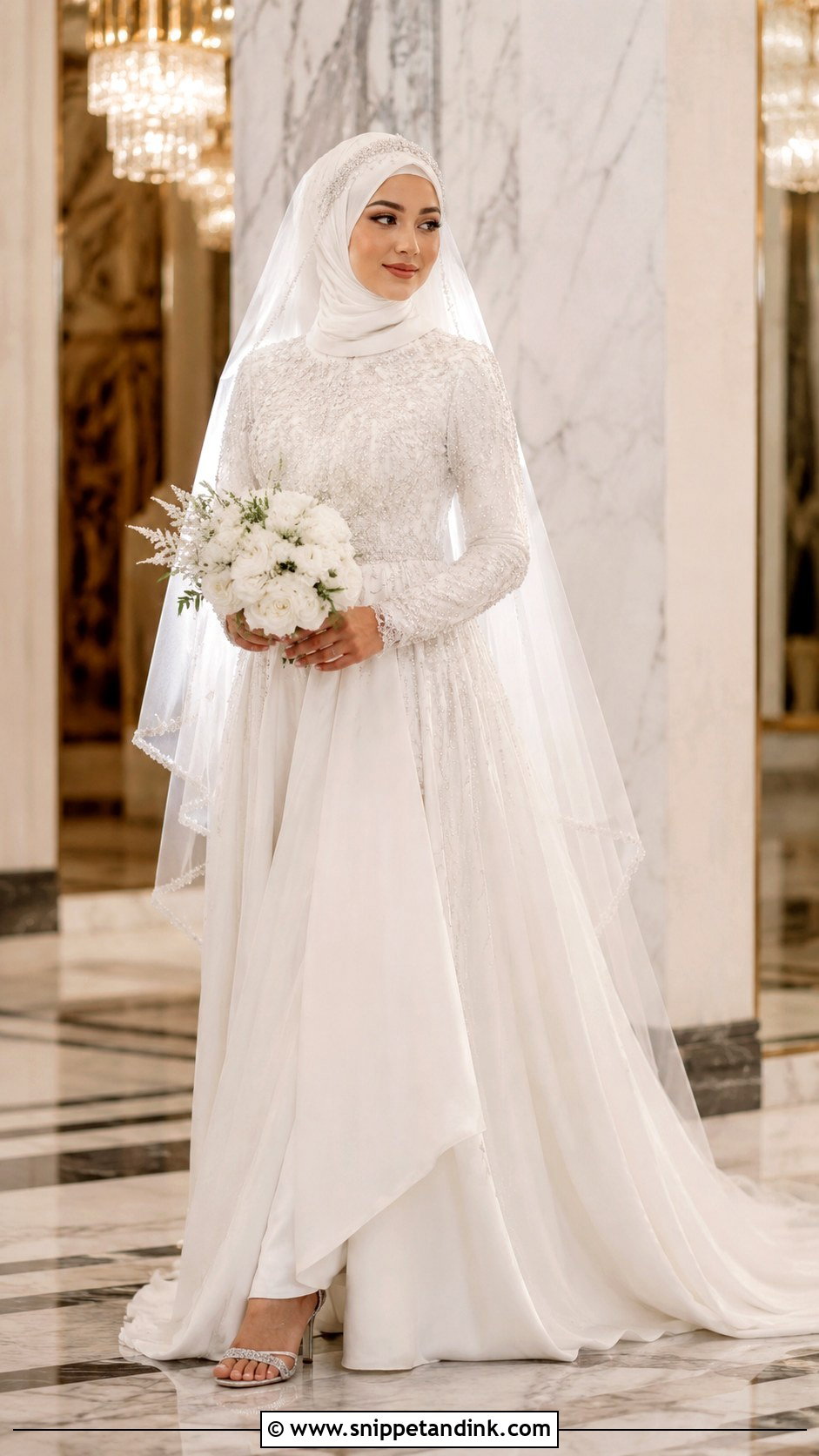
When the gown is beaded, keep the hijab matte. Shiny fabric plus beadwork near the face creates hot spots of glare under a photographer’s flash, and a matte chiffon wrap absorbs that light instead. Choose beadwork on the bodice, sleeves or skirt; if you want a little more sparkle up top, put it on the veil edge or a small crystal headpiece rather than the scarf. Silver heels and a structured bouquet complete it. Evening weddings and grand venues bring the beading to life.
7. Princess Hijab Bridal Dress
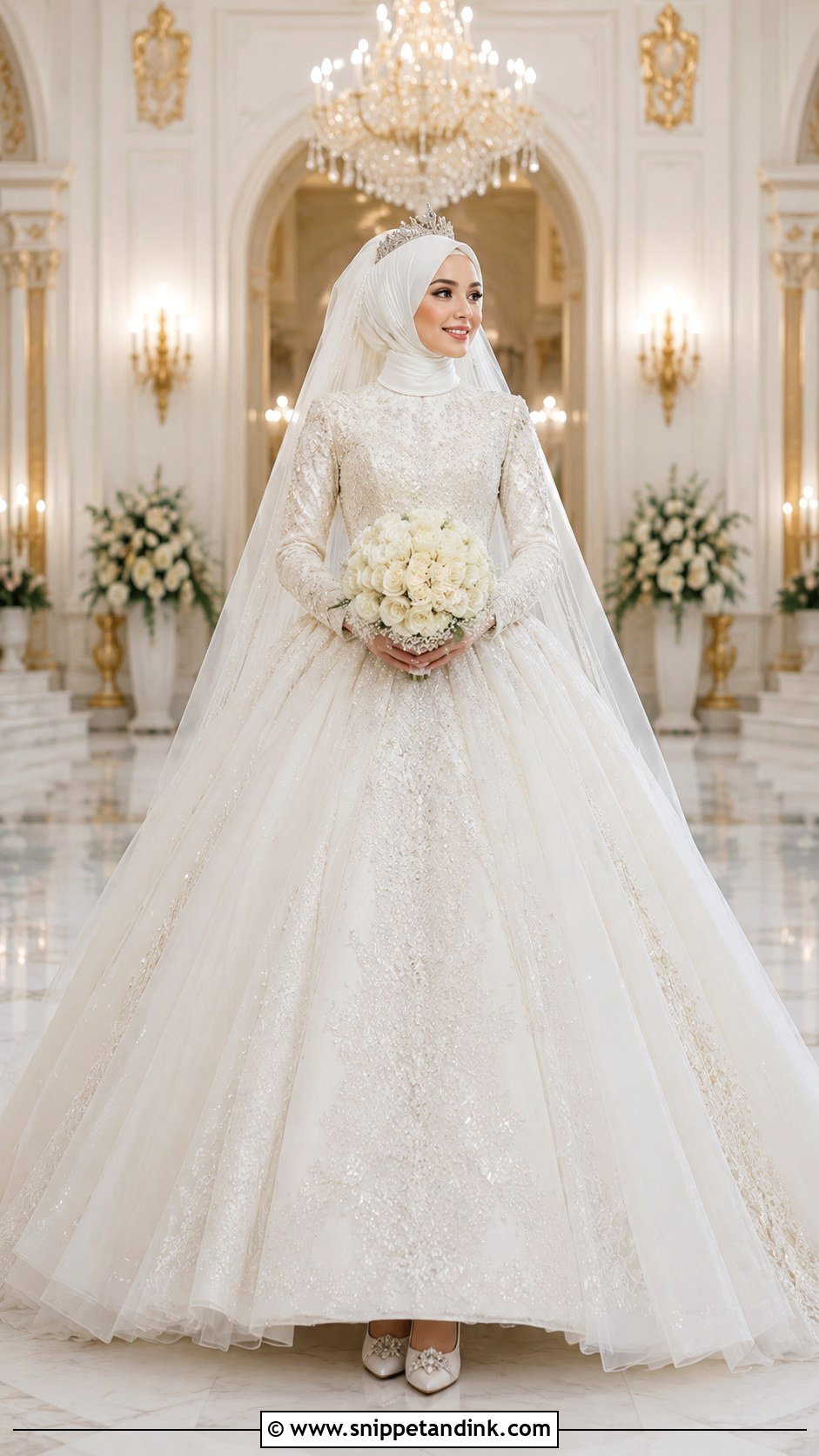
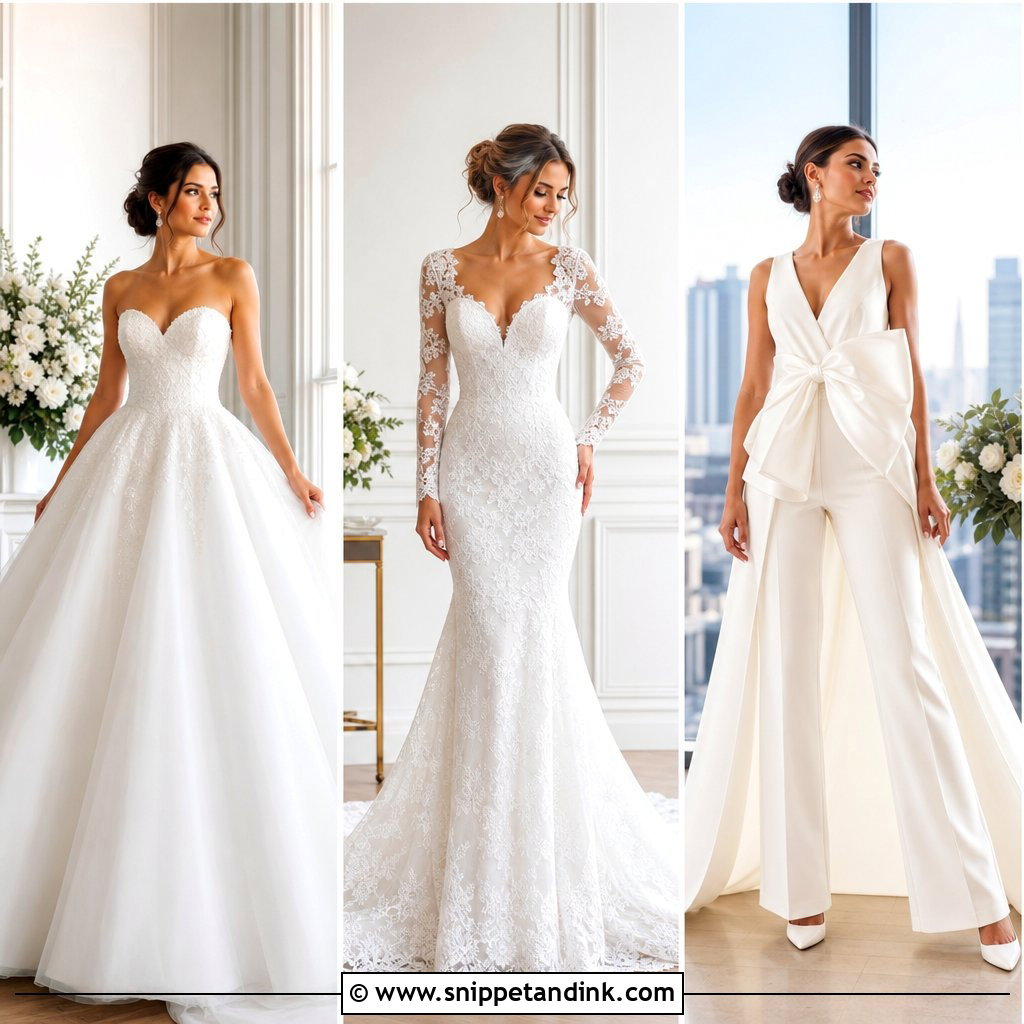
A modest ball gown with long sleeves, a fitted bodice and a full tulle or organza skirt is the fairytale version. The full skirt is wide, so the head needs some structure to balance it, which is why I wrap the hijab neatly and firmly around the face here rather than loosely. Add a tiara, a long veil and sparkling heels. A rounded, classic bouquet echoes the skirt shape. Large venues and grand entrances are where this look makes sense; in a small room it can overwhelm the space.
8. Mermaid Hijab Bridal Gown
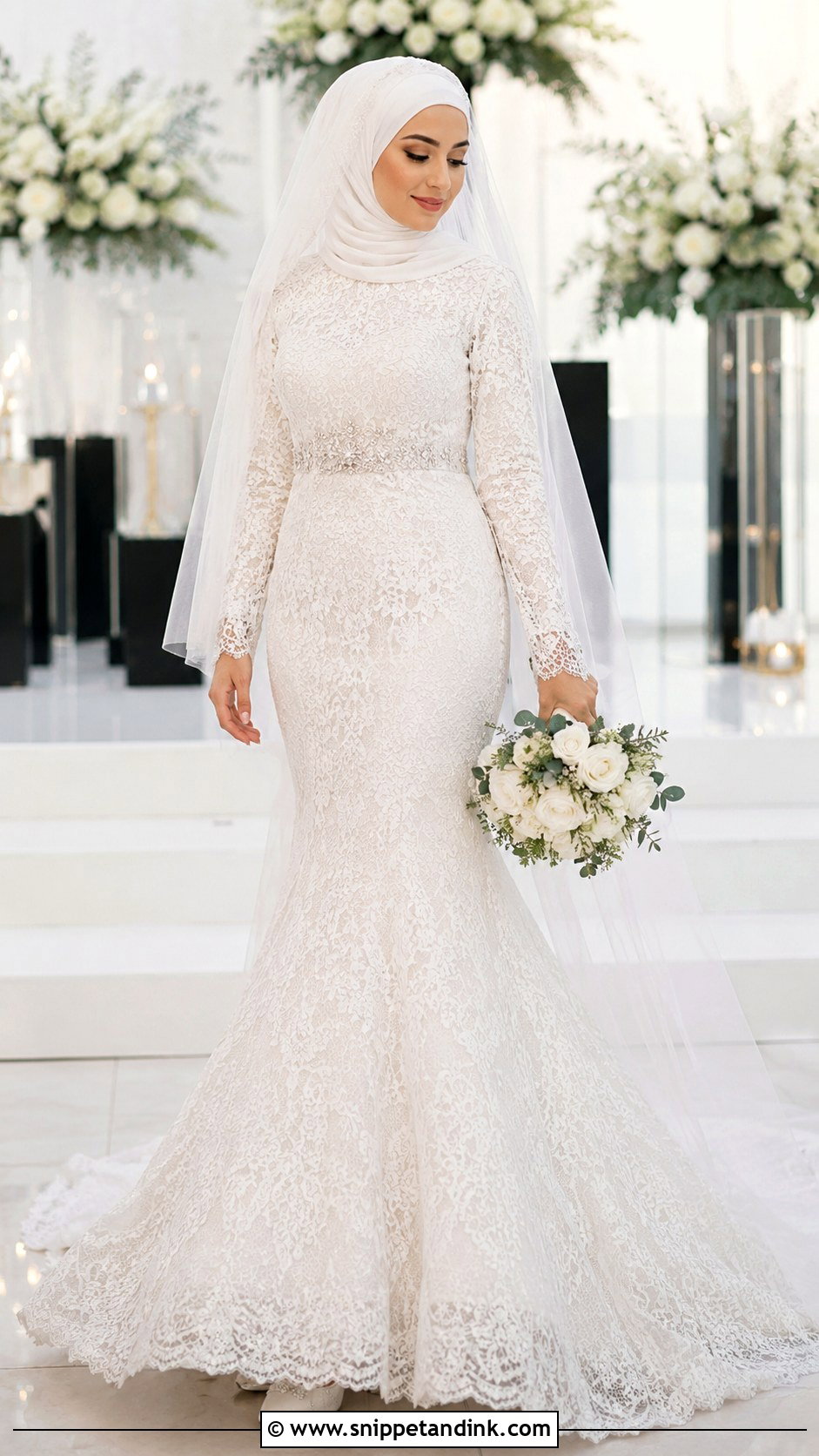
Mermaid gowns can be modest, but only when designed for it. Look for long sleeves, a higher neckline and a skirt that flares gently below the knee, and sit down at the fitting to check the fabric doesn’t strain across the hips. A soft chiffon hijab balances the fitted shape. A gown with lace or beadwork wants a plain veil; a simple one can take crystal pins or a jeweled belt. Closed-toe heels lengthen the line. I’d suggest this one more for a reception or portrait session than a long ceremony on the floor.
9. A Line Hijab Bridal Dress
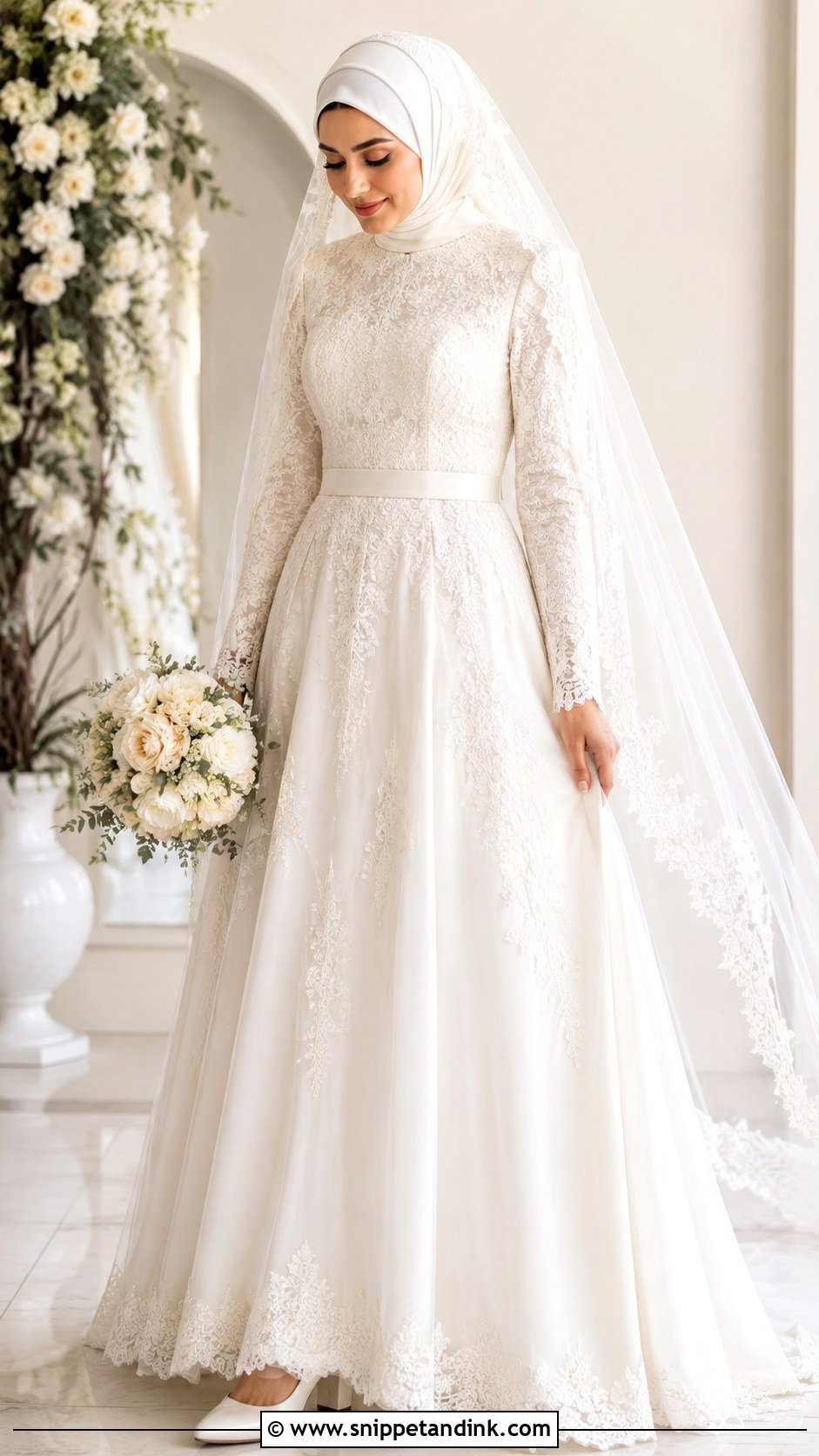
The A-line is the shape I’d suggest to a bride who isn’t sure what suits her. The fitted top and gently flowing skirt give shape without restricting movement, so sitting on the floor for a nikah, standing for photos and walking between rooms are all comfortable. Pair it with a matching chiffon hijab, a soft veil, and block heels or pointed pumps. Lace sleeves, satin or subtle beadwork shift the mood from simple to formal without changing the silhouette.
10. Minimal Hijab Bridal Look
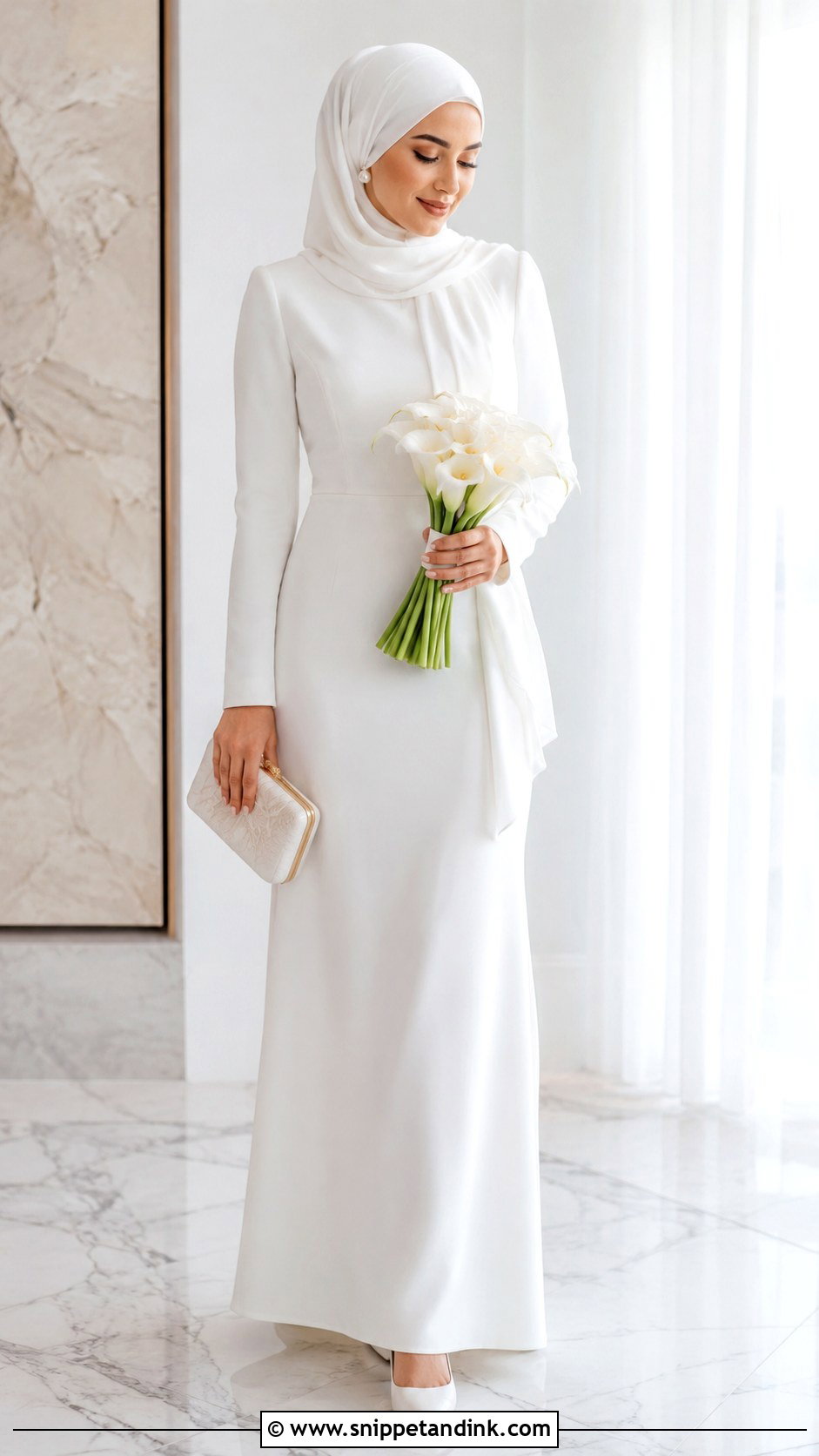
Minimal bridal looks depend entirely on fit and fabric, because there’s nothing to distract from a wrinkle or a pulled seam. A plain crepe or satin gown with long sleeves, a high neckline and a smooth skirt, with a neatly wrapped chiffon hijab in the same shade, is all you need. Steam both on the morning; creases in a plain hijab show far more than in a printed one. Pearl studs, white heels, a structured clutch and a small bouquet of calla lilies or roses suit civil ceremonies, nikah events and intimate receptions.
11. Turkish Hijab Bridal Look
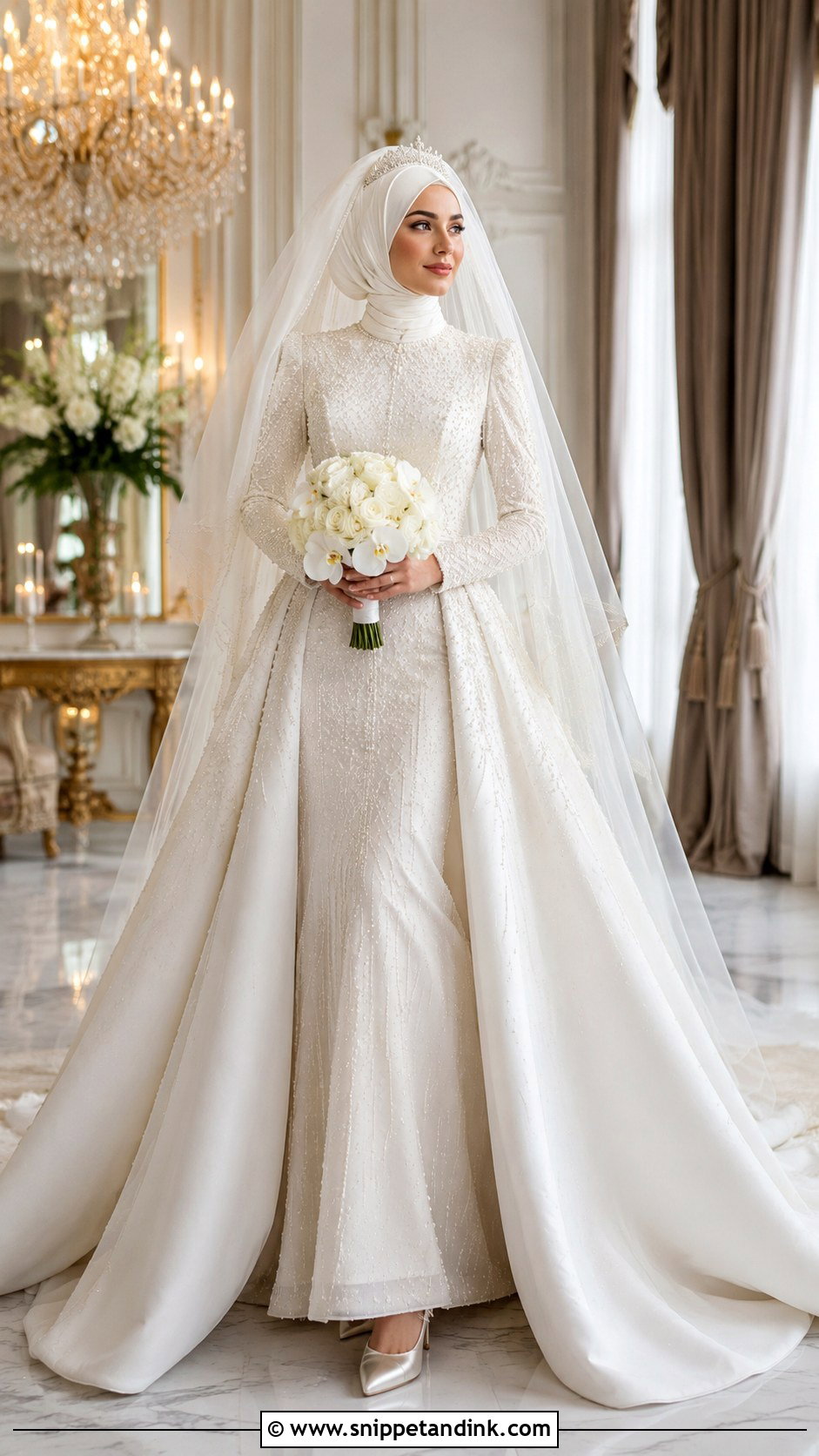
The Turkish style is defined by a smooth, close wrap. The hijab sits flat over a fitted undercap with no bulk at the temples, then a veil is layered from the crown. Under that, choose a long-sleeve gown with a structured bodice, a soft A-line skirt and delicate lace or pearl details. A slim tiara or jeweled headband sits neatly on top of such a sleek wrap. Ivory pumps or satin heels finish it. I find this wrap holds best on brides with a smaller undercap volume; if you wear a volumizing clip underneath, the tiara needs extra pins to stay level.
12. Arabic Hijab Bridal Dress
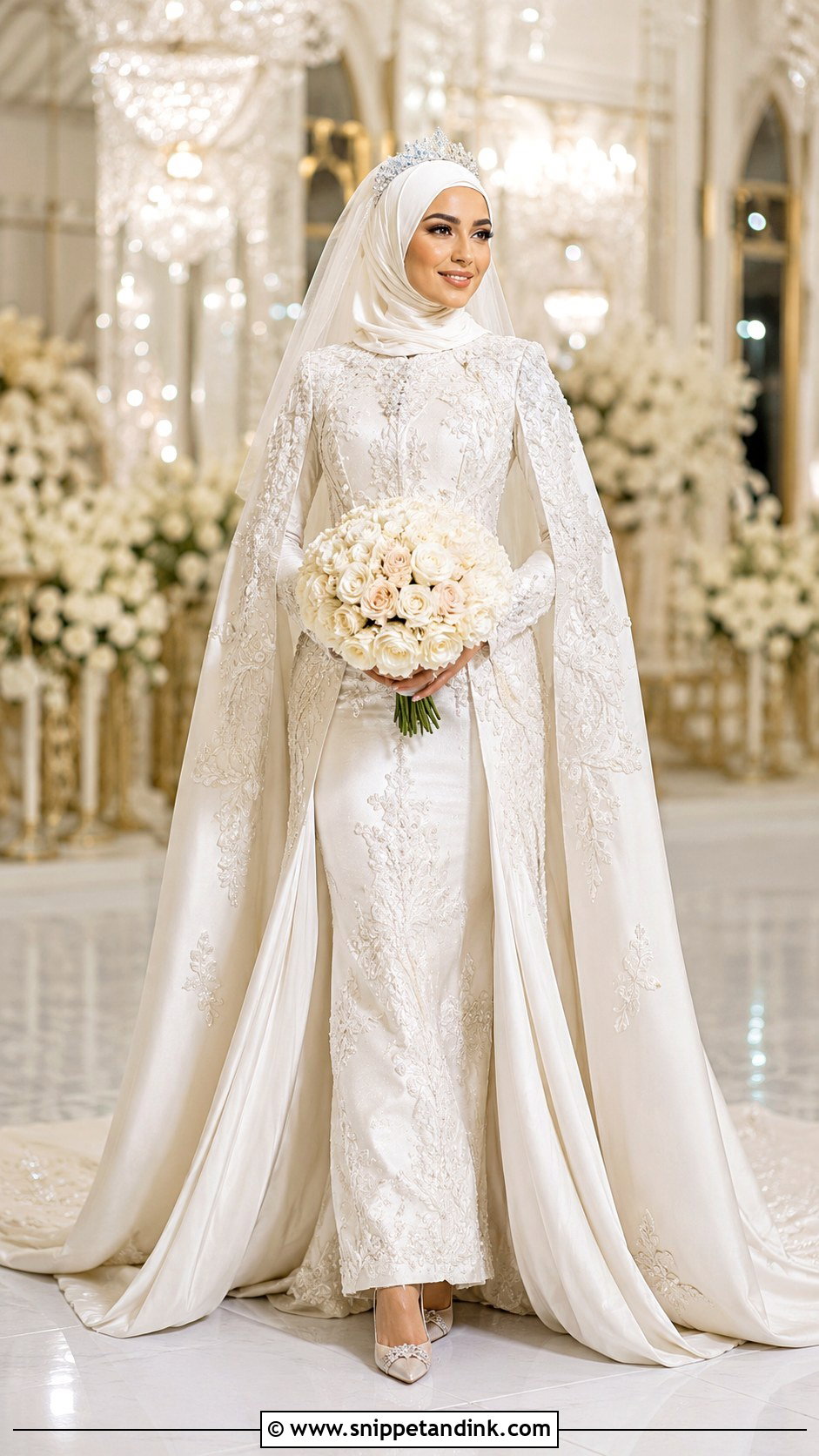
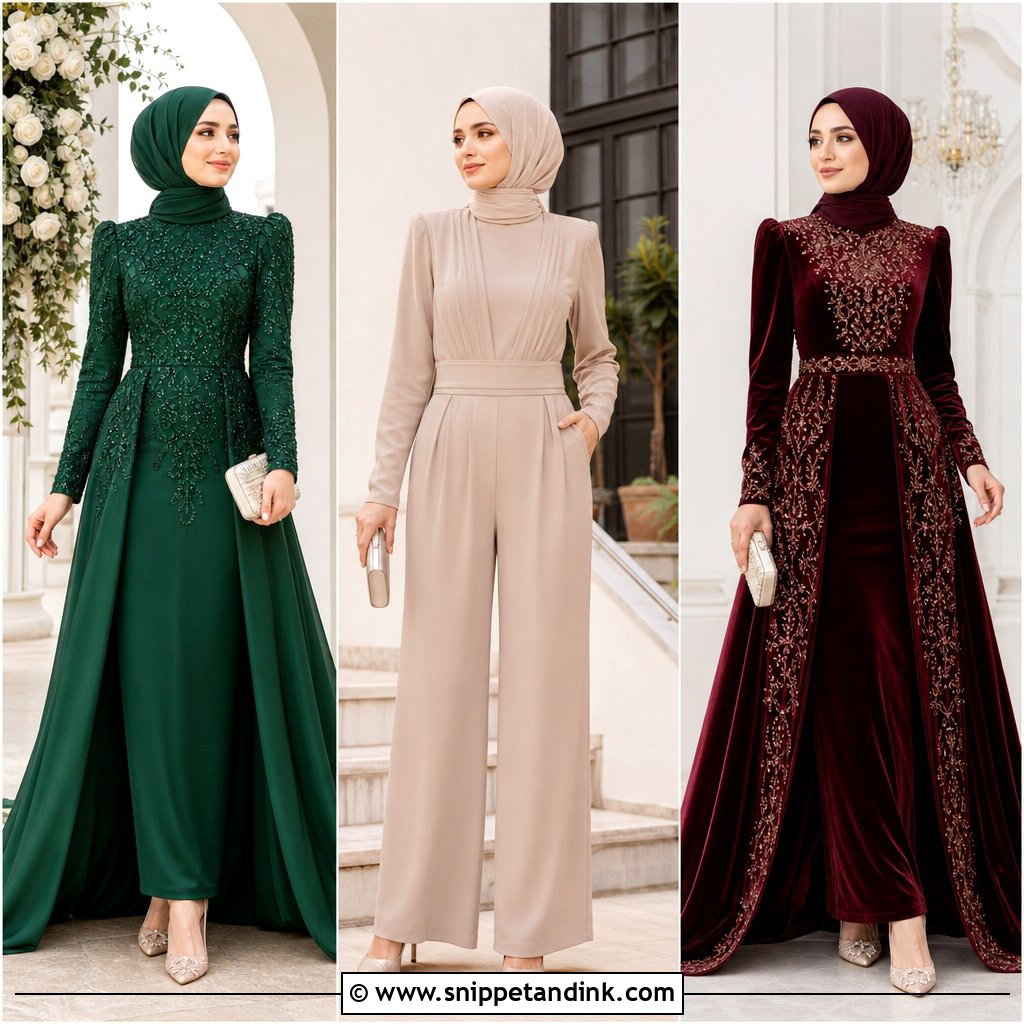
Arabic bridal styling leans on rich fabric and generous coverage. A long embroidered gown with wide sleeves or a flowing cape layer creates a regal effect, with a matching hijab, a soft veil, and gold or crystal accessories chosen to suit the gown color. When the dress is heavily embellished, I keep the hijab plain and concentrate jewelry at the crown or neckline so the eye has one place to land. Metallic heels and a full bouquet complete it for large receptions and family celebrations.
13. Pakistani Hijab Bridal Look
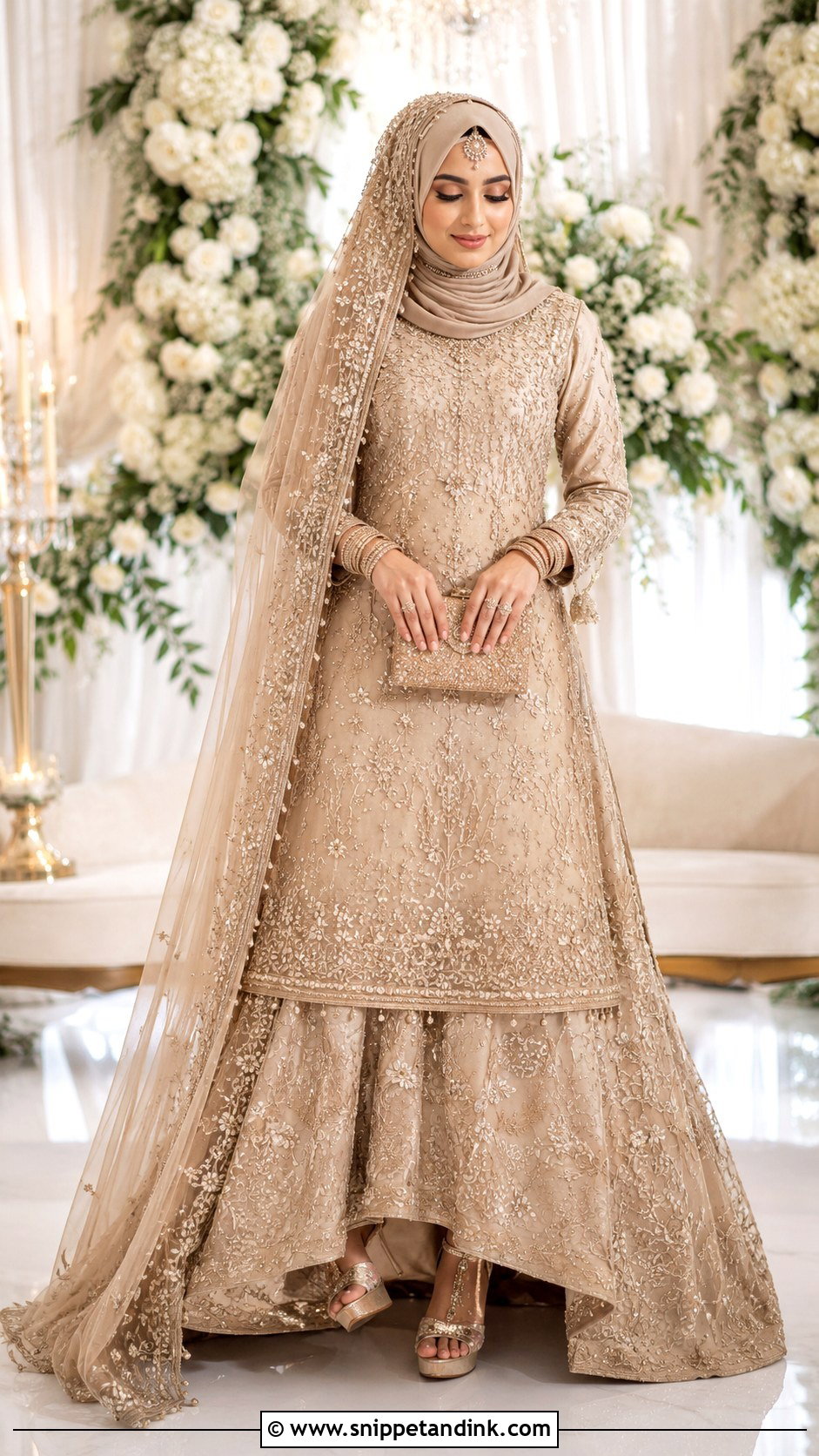
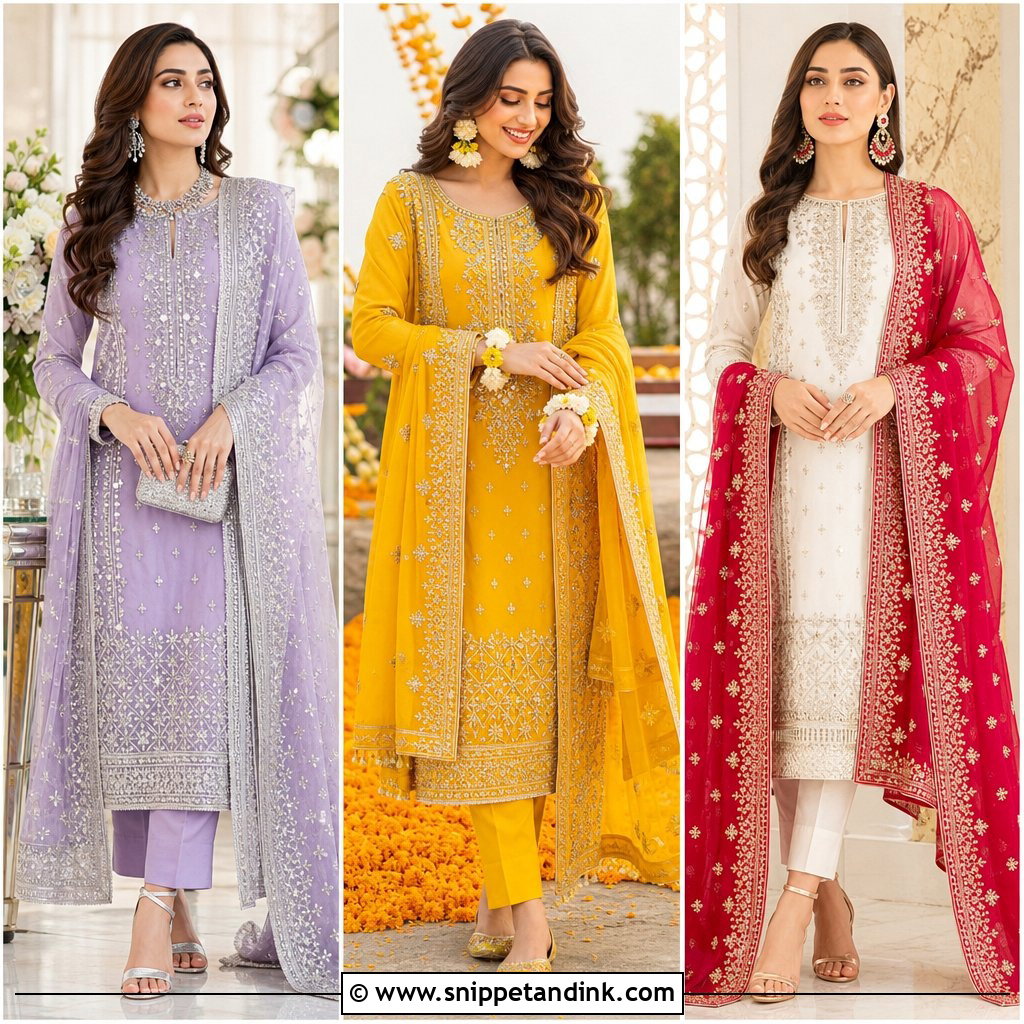
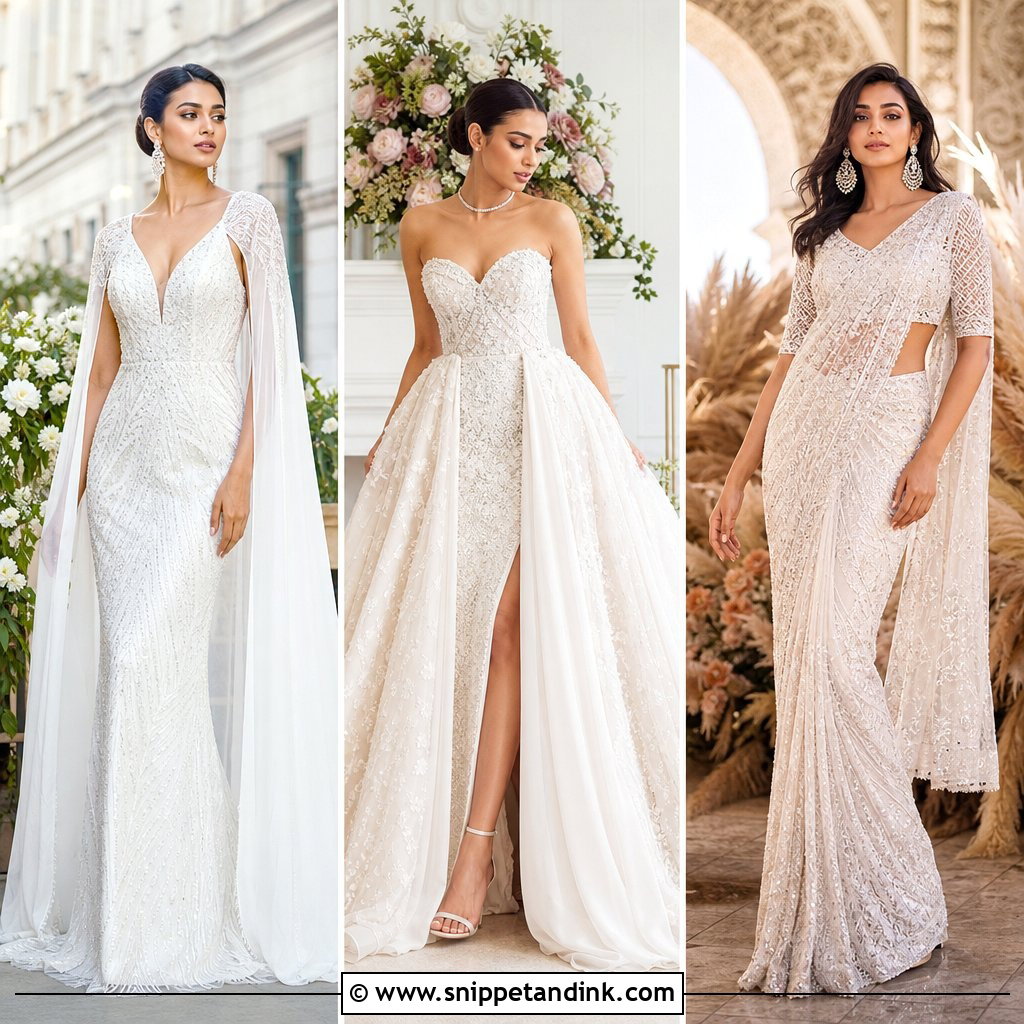
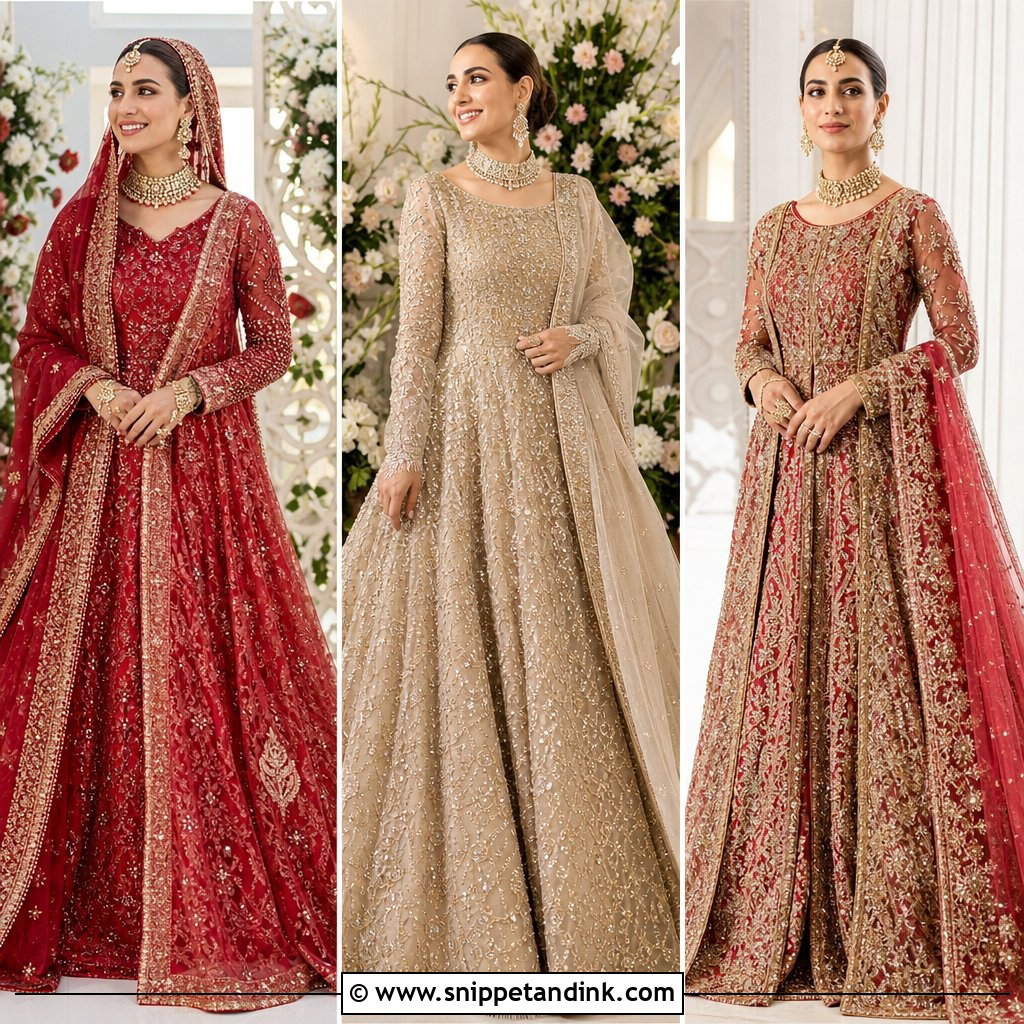
A Pakistani hijab bridal look is built around embroidery and layering. A lehenga, gharara or long bridal dress gets a matching hijab underneath and a dupatta over it, and that dupatta is heavy, so it needs its own pins anchored into the undercap rather than the hijab fabric alone. Ivory, blush, champagne or mint read softer; red, maroon, gold or deep green are the traditional palette. A tikka-style headpiece over the hijab, bangles, embellished heels and a coordinated clutch complete it for nikah, mehndi, walima and reception events.
14. Indian Muslim Hijab Bridal Look
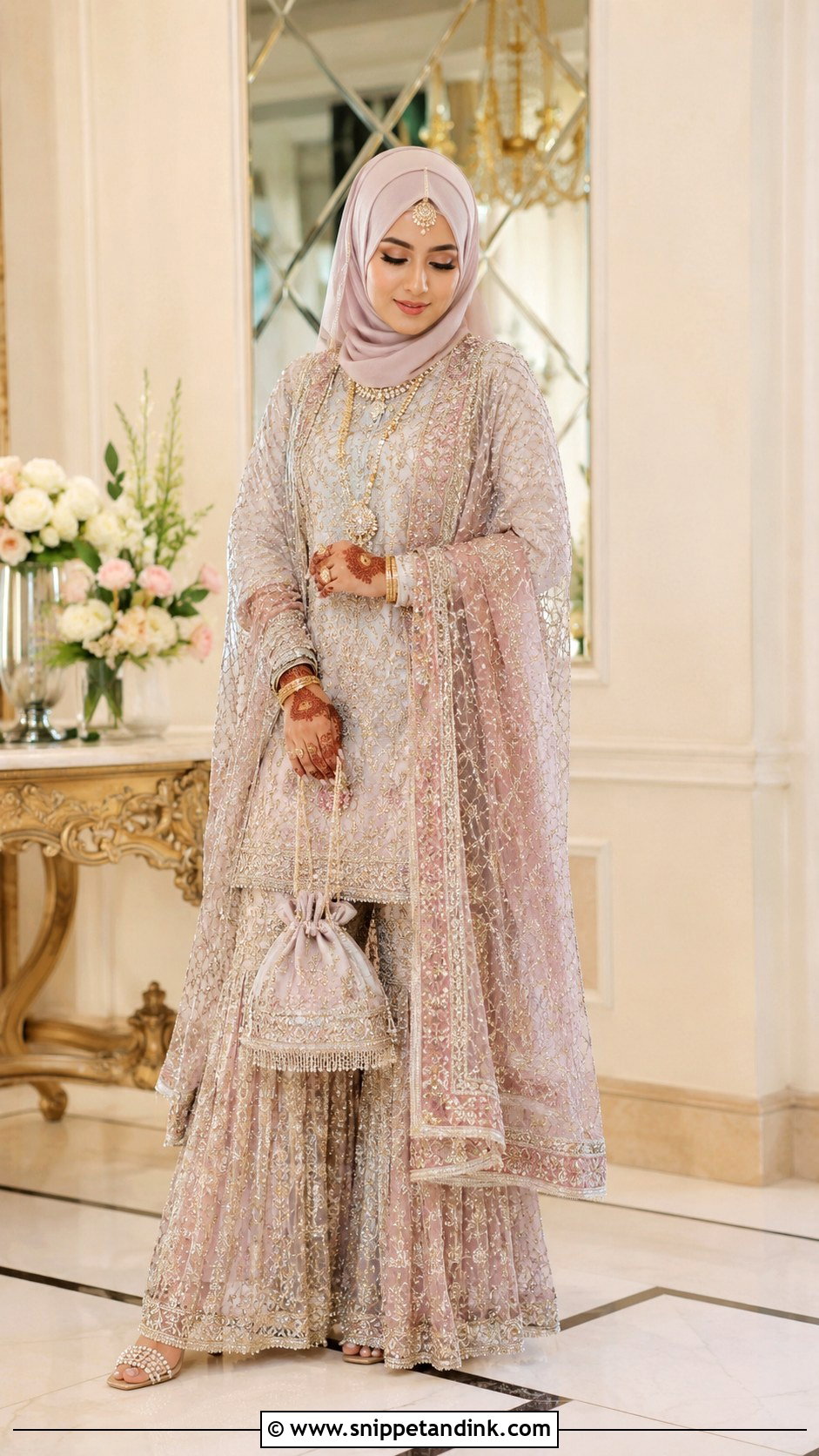
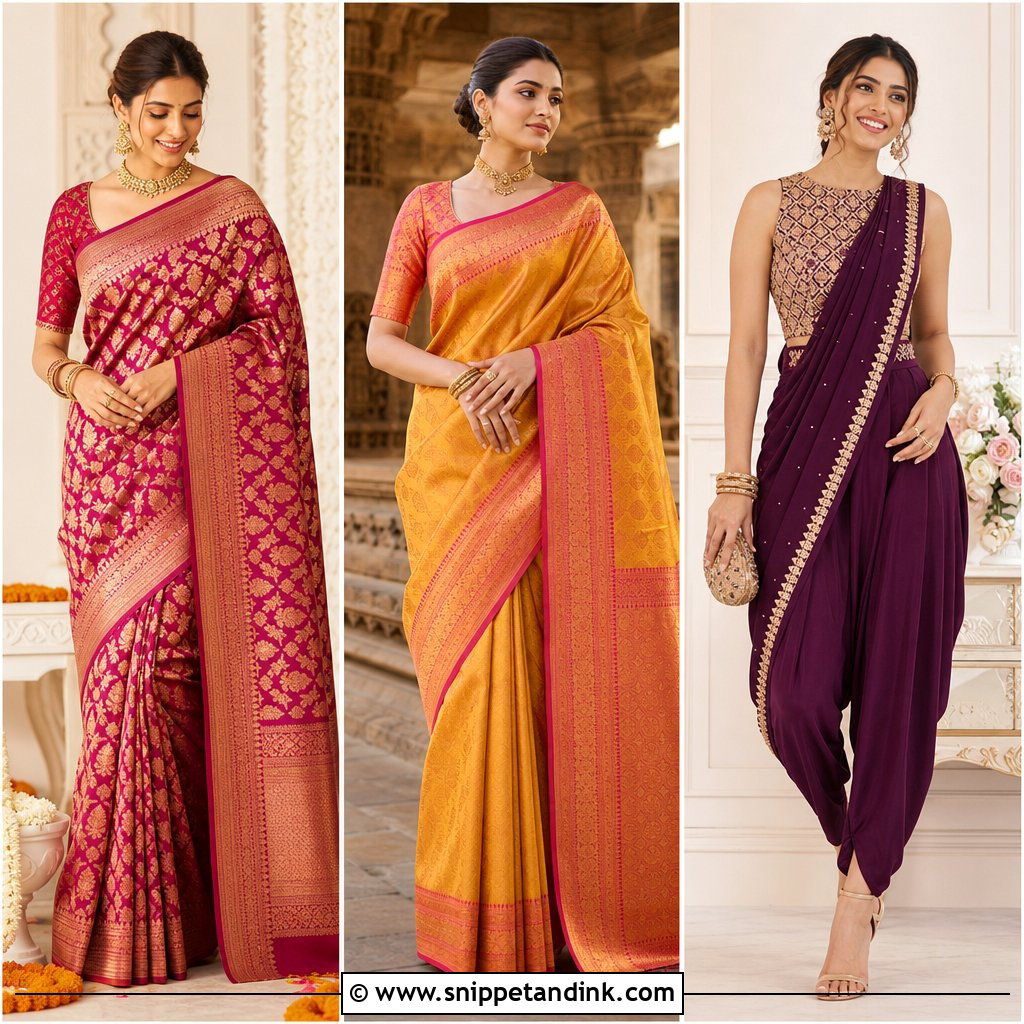
An Indian Muslim hijab bridal look often starts from an anarkali, lehenga or sharara set, paired with a matching hijab and an embroidered dupatta. Silk, organza, net and brocade give the festive weight. Organza and net dupattas are stiff, so they hold a drape well but scratch the cheek if pinned too close to the face; I set them a little back. Gold jewelry, embellished heels and a small potli bag bring it together. For a lighter ceremony, pastels with pearl details feel fresher.
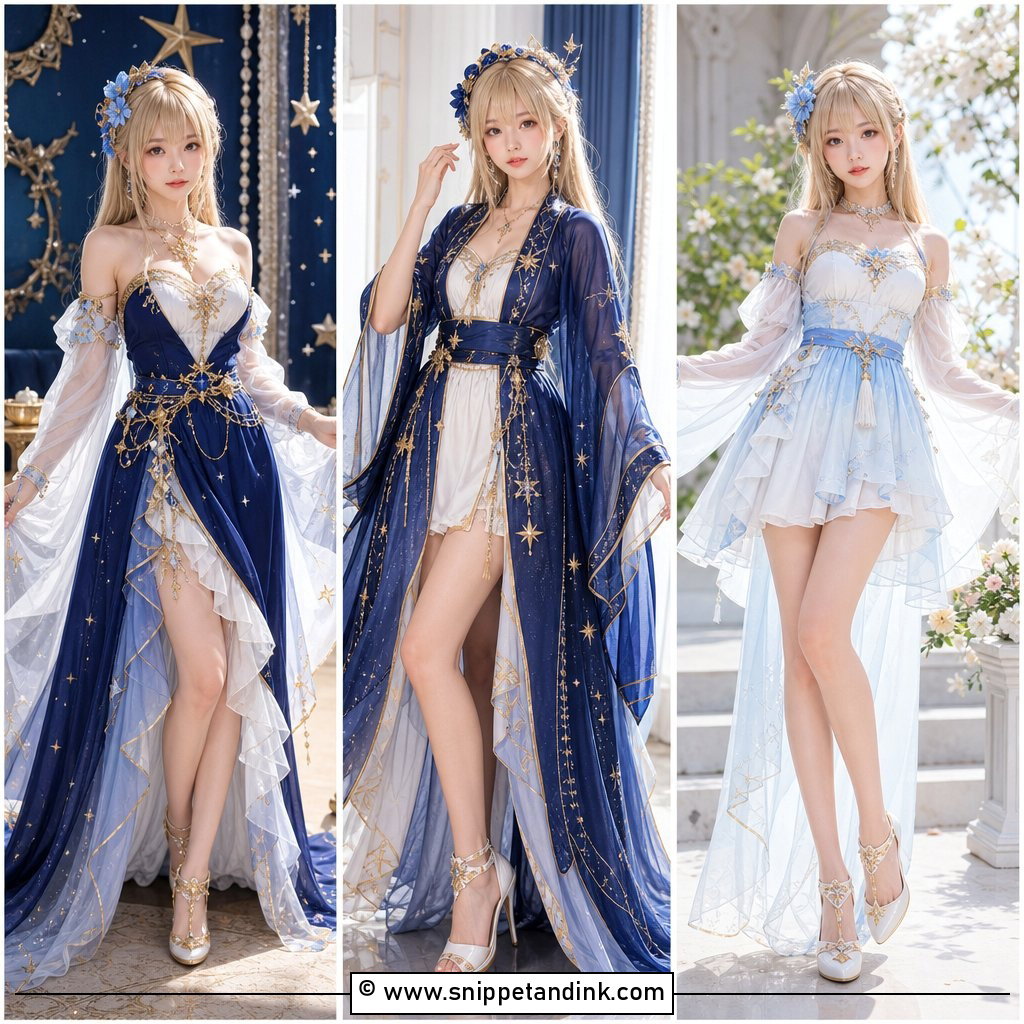
15. Red Hijab Bridal Lehenga
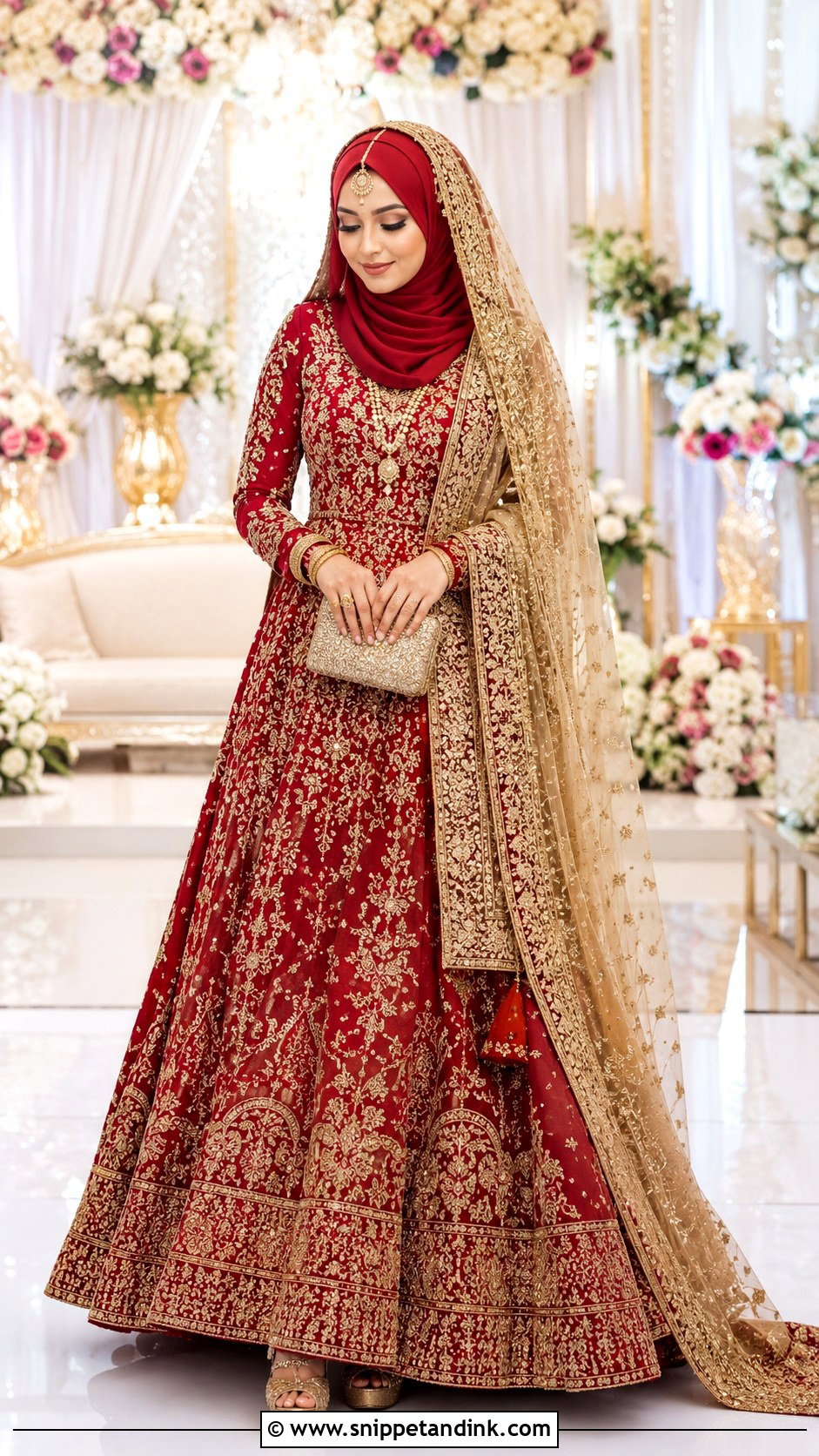
Red is the classic bridal color for many South Asian families, and a red lehenga with a hijab needs a top that covers well, like a long modest blouse or a jacket-style top. Pair it with a red or gold-toned hijab that sits smoothly under the dupatta. The tricky part is matching reds. Dyes vary a lot between suppliers, so I ask for a hijab swatch cut from the same fabric house or choose gold to avoid two reds that almost match. Add gold jewelry, bangles and embellished heels, and keep makeup balanced with defined eyes and a softer lip.
16. Blush Pink Hijab Bridal Dress
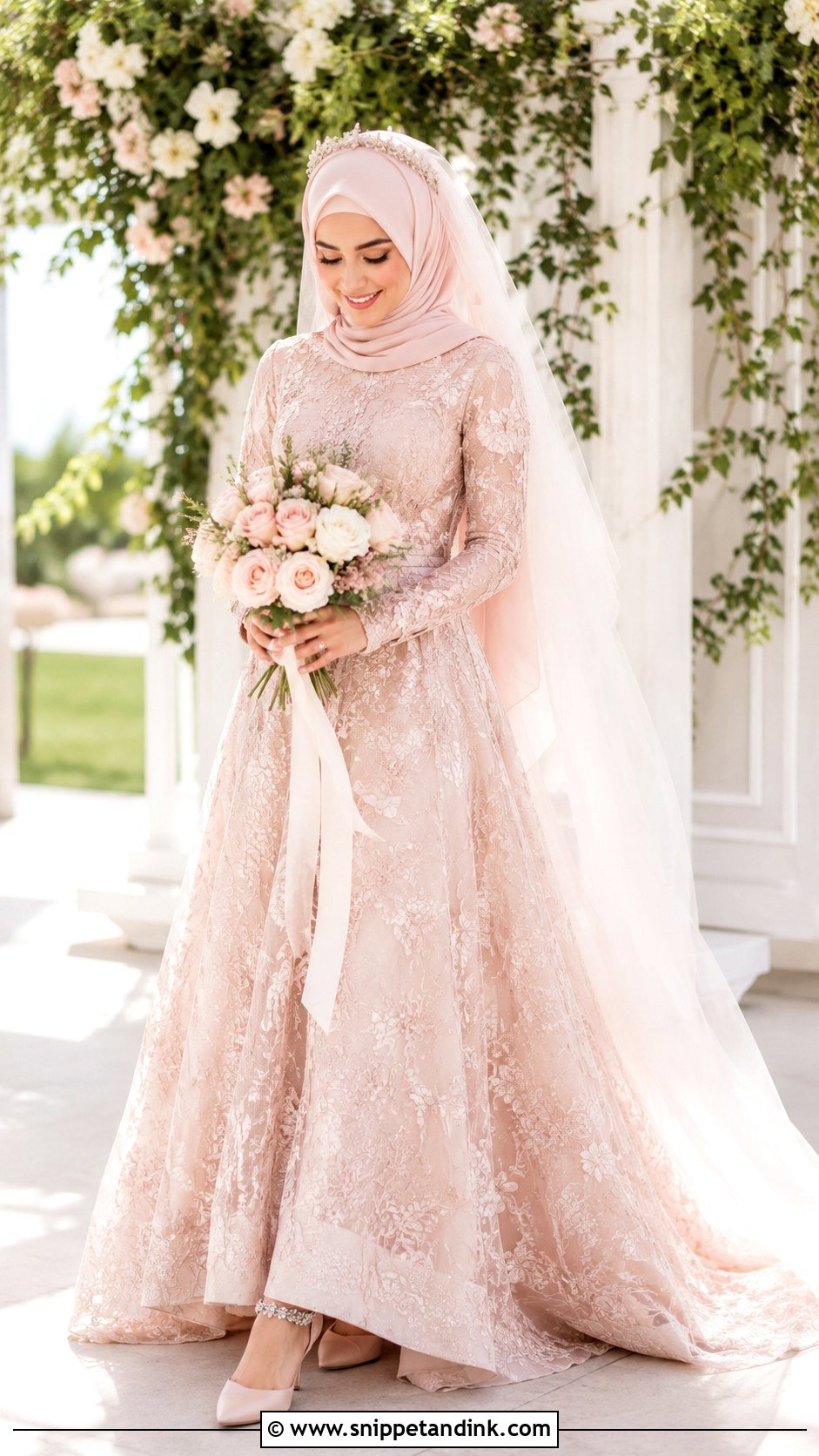
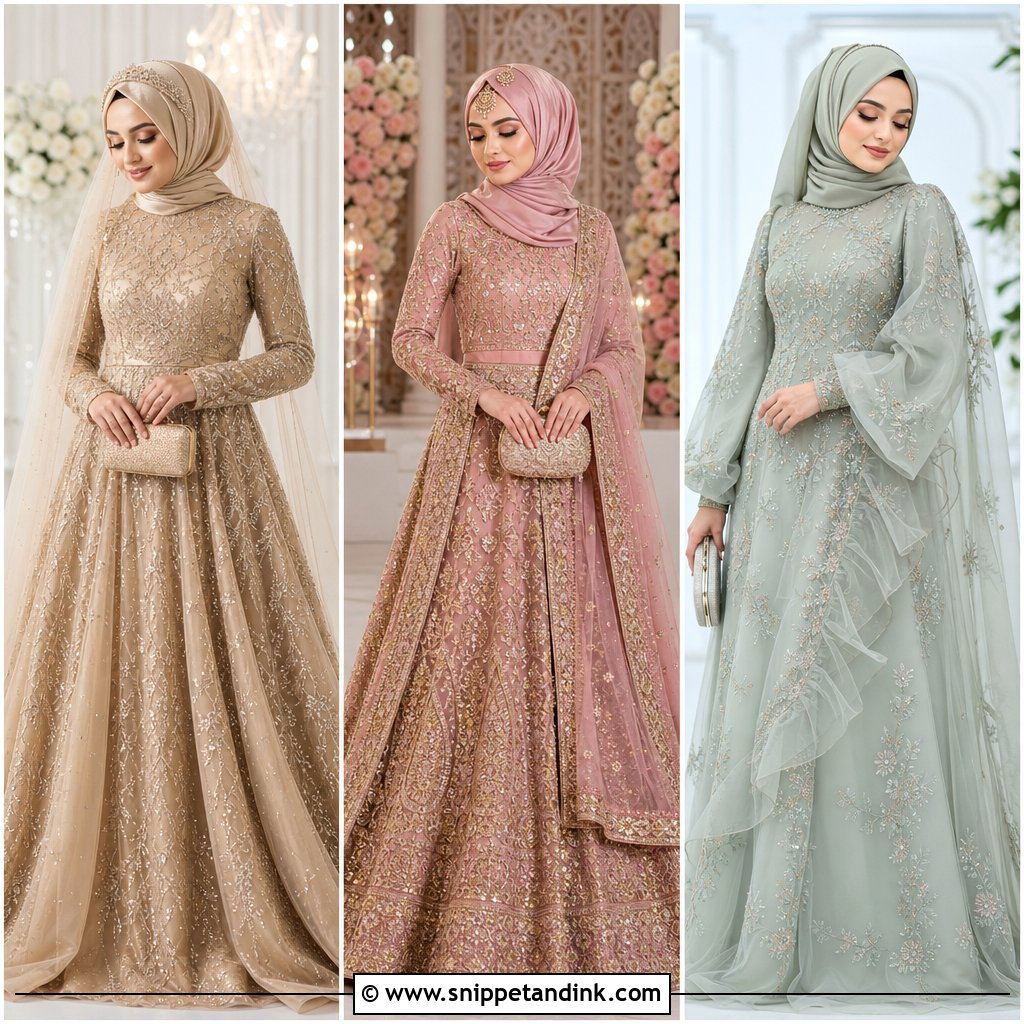
Blush is lighter than red and warmer than white, which makes it a good walima or engagement color. Choose a blush gown, lehenga or embroidered maxi with long sleeves, and pair it with a matching chiffon hijab and a veil in blush, ivory or champagne. One caution: pale pink can wash out fair skin under bright midday sun, so test the shade near your face outdoors before you commit. Rose-gold accessories, nude heels and a bouquet of blush and cream flowers suit daylight and garden settings.
17. Champagne Hijab Bridal Gown
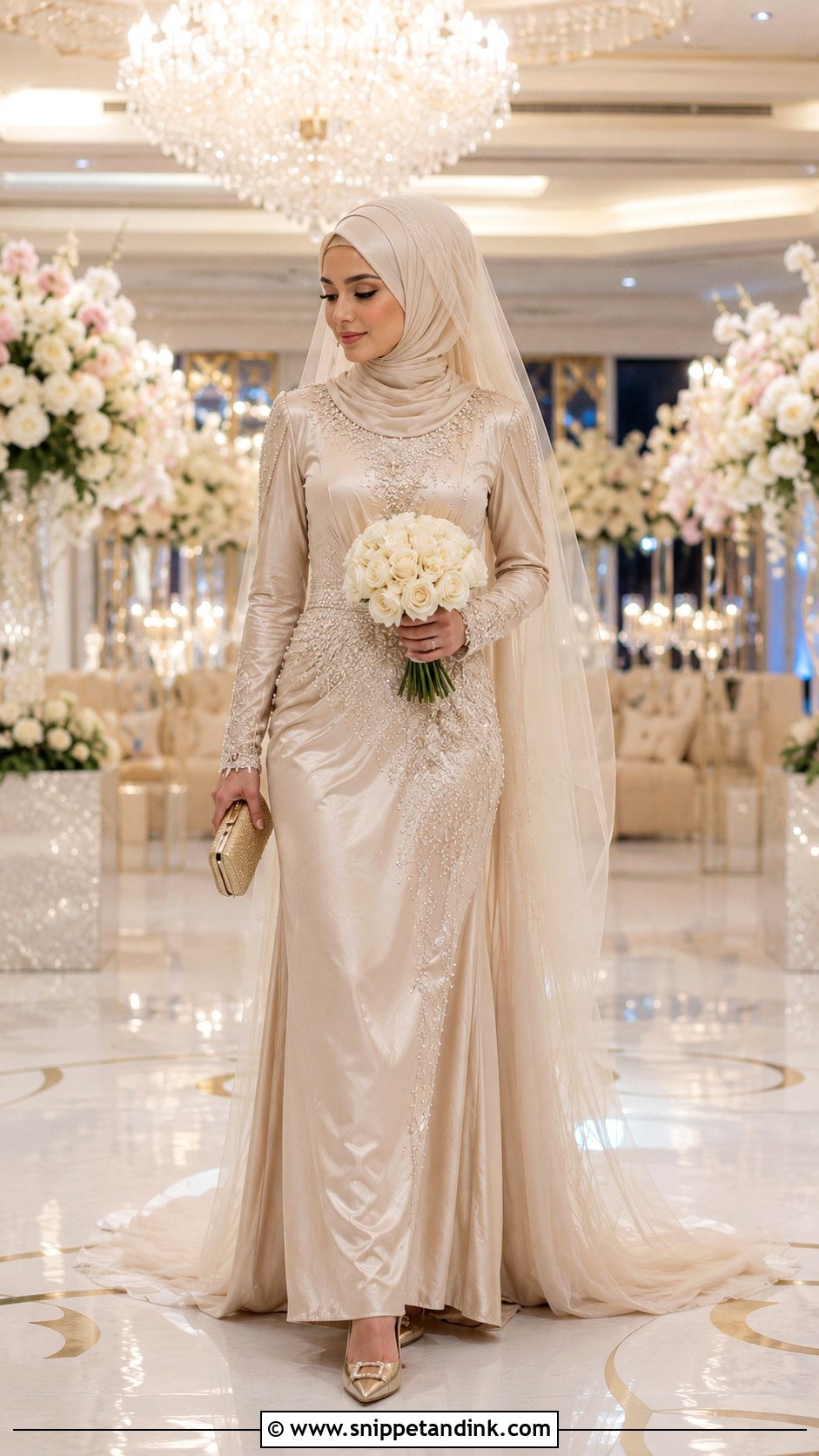
Champagne brings warmth without brightness, and it pairs easily with gold, ivory and pearls. Choose a satin or beaded champagne gown with long sleeves and a clean neckline. I usually match the hijab to the gown and keep the veil sheer ivory, which gives a bridal contrast without introducing a third color. Metallic heels, a small gold clutch and cream flowers complete it. Evening receptions and hotel venues, where warm lighting deepens the shade, suit it best.
18. Gold Hijab Bridal Look
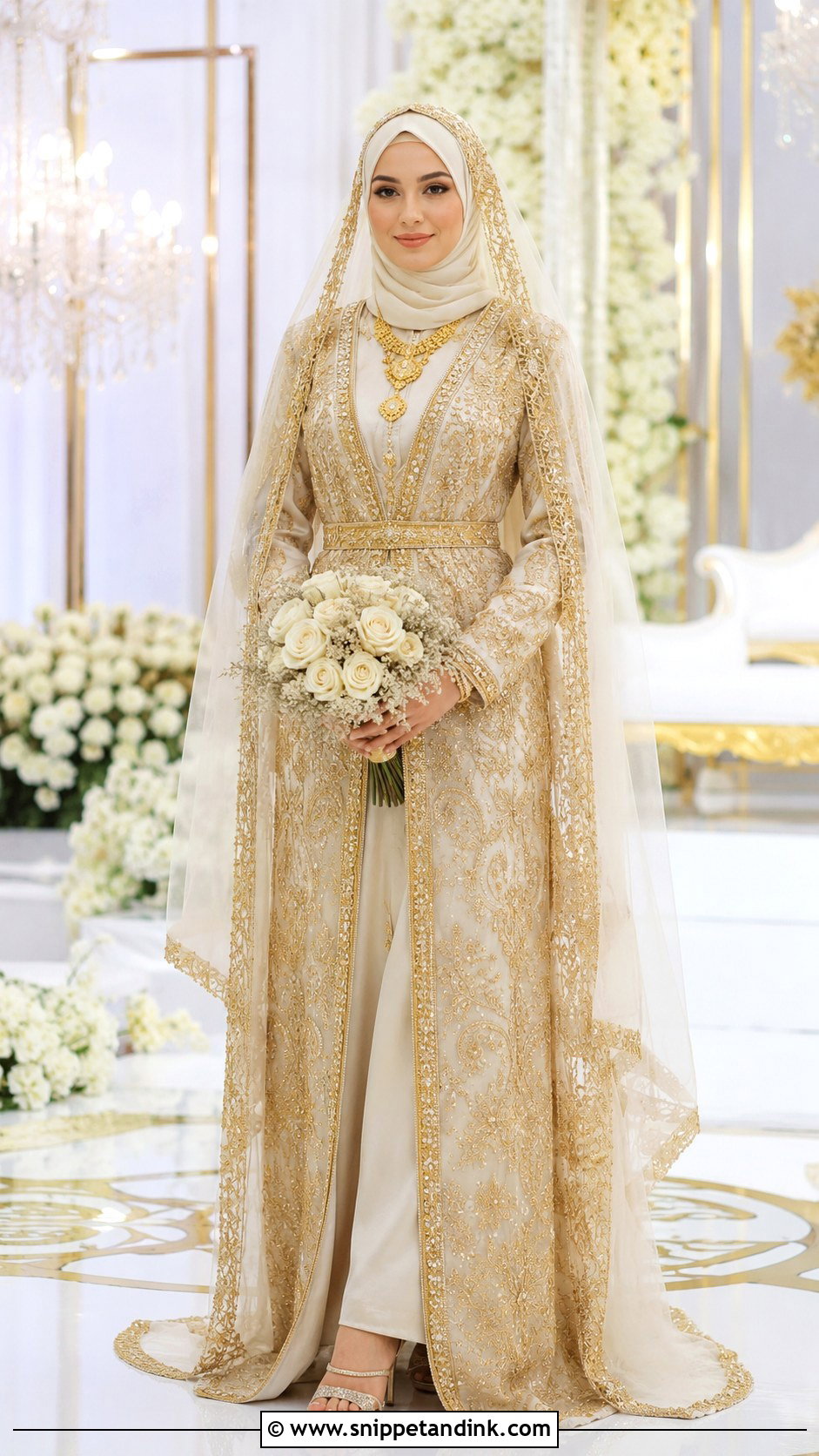
Gold is the most festive option here. Choose a gold embroidered gown, lehenga or kaftan-style dress with modest sleeves and a flowing skirt. The decision I help brides make is the hijab color: soft gold continues the shine right up to the face, while ivory gives the skin a break from all that metallic reflection. Gold jewelry, embellished heels and a cream bouquet balance it. With heavy detailing, keep the wrap simple and the pins few.
19. Emerald Green Hijab Bridal Look
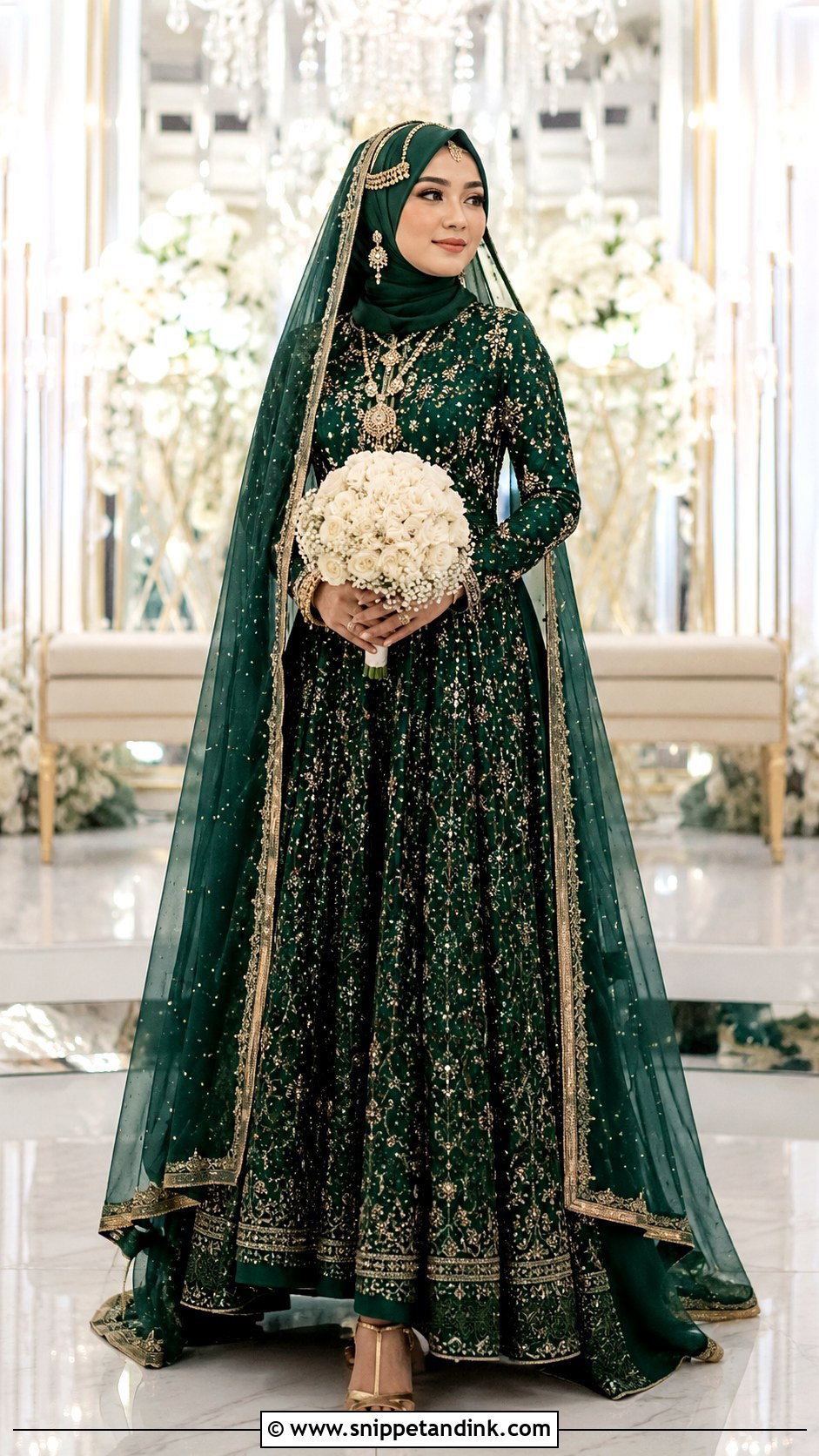
Emerald is my pick when a bride wants real color but not red or pink. A velvet, silk or embroidered green gown with long sleeves and a full skirt gives depth, and a matching hijab creates a strong monochrome line, while a gold-trimmed dupatta or veil adds contrast. Velvet is warm, so I’d only suggest it for winter or an air-conditioned venue. Gold heels, statement jewelry and a cream bouquet complete it. Emerald holds its richness under evening lighting, where paler shades can flatten.
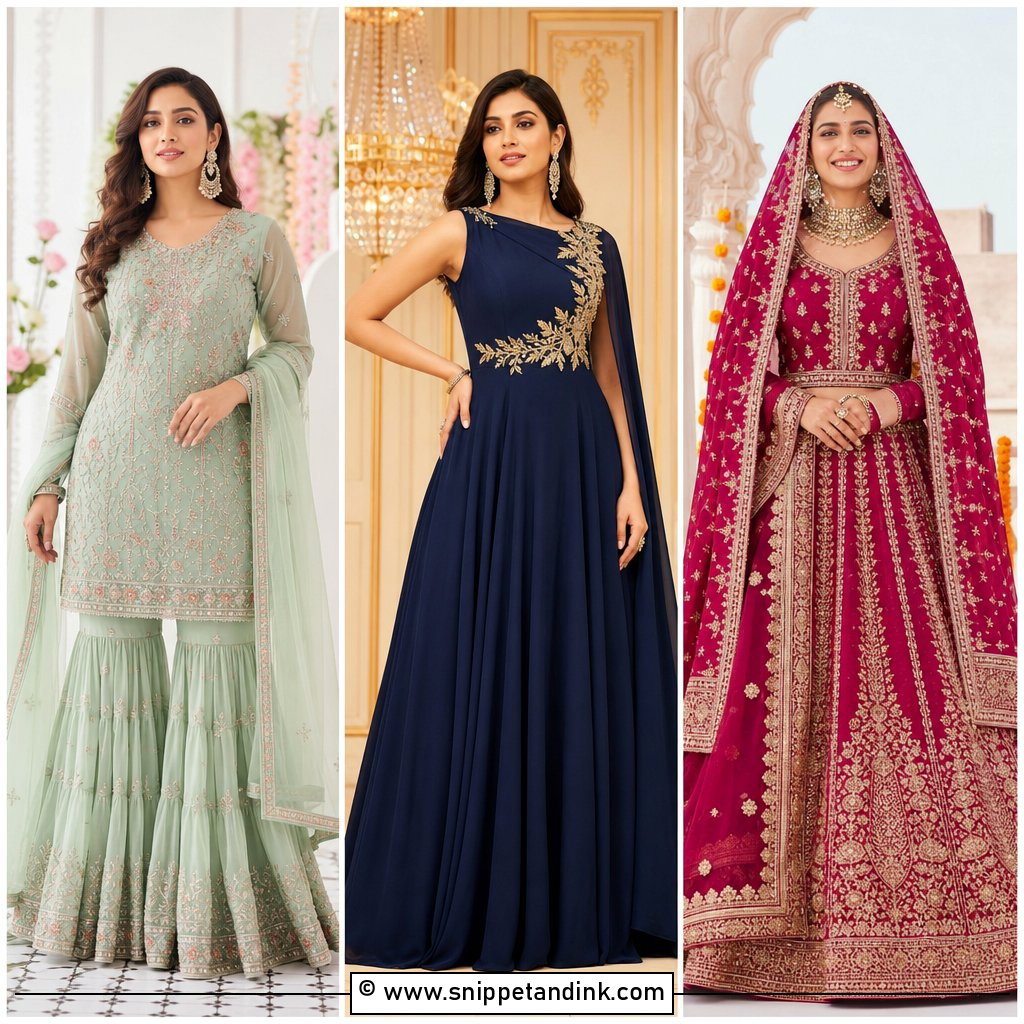
20. Pastel Hijab Bridal Look
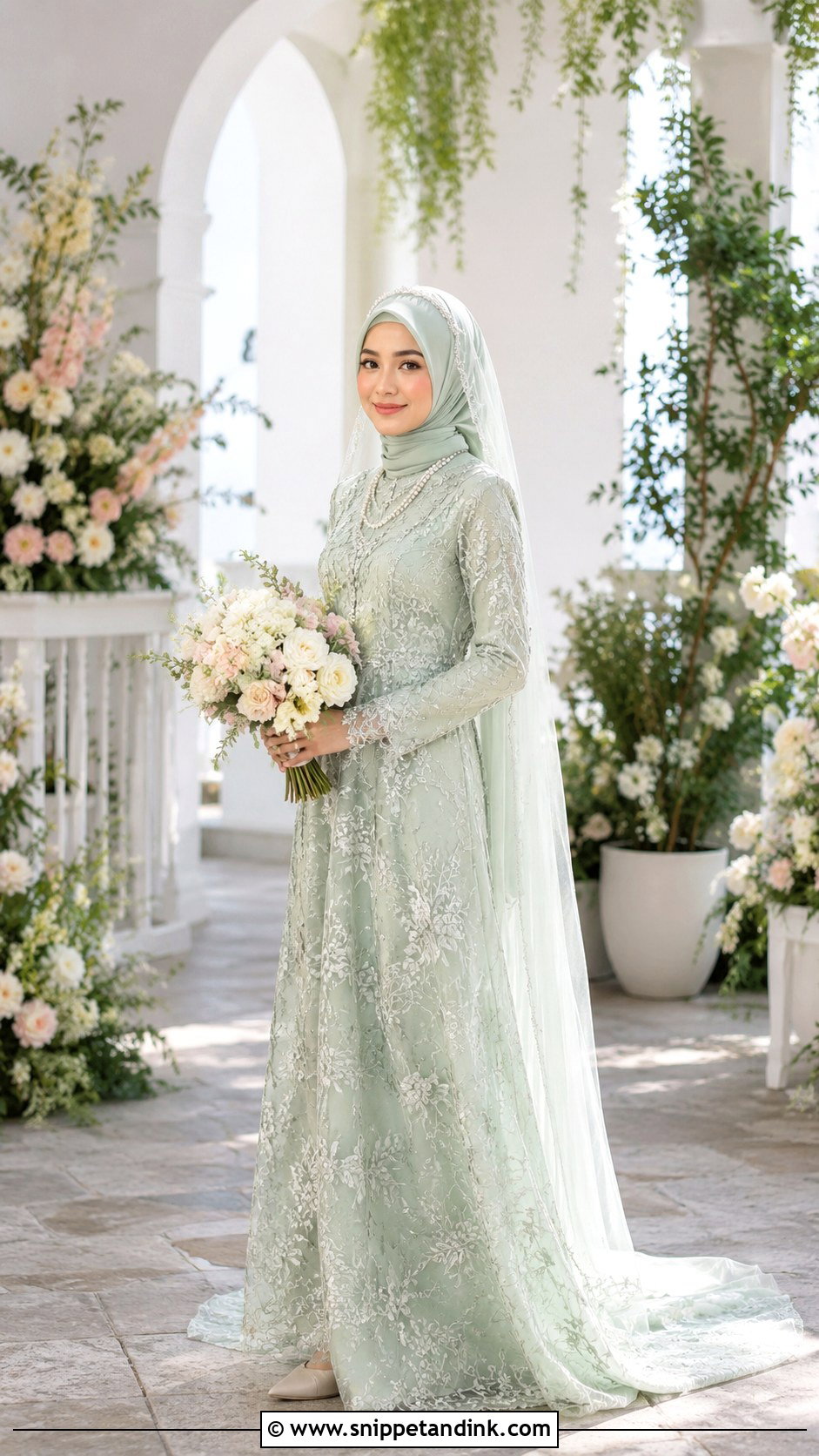
Pastels are the gentlest way to step away from white. Choose a gown or lehenga in mint, powder blue, lavender, peach or soft pink, with a matching hijab and a light veil. Silver suits the cool pastels like blue and lavender; rose gold suits peach and pink. Keep shoes neutral so the color stays the focus, and choose a pastel bouquet with cream flowers. Nikah ceremonies, daytime weddings and spring celebrations all suit it.
21. Floral Hijab Bridal Dress
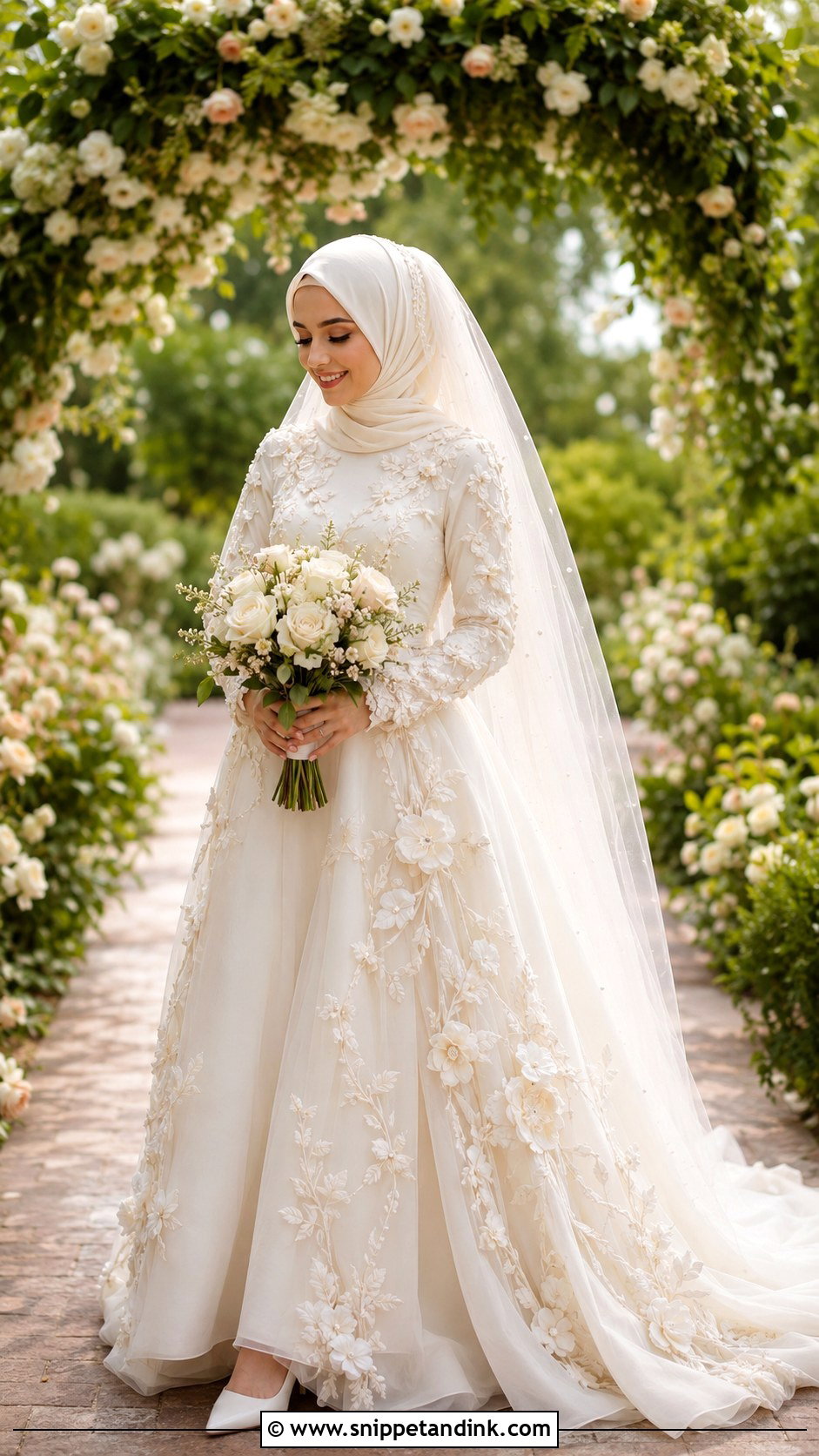
Floral gowns, whether embroidered, appliquéd in 3D or worked in subtle lace, already carry a lot of pattern. I pair them with a plain hijab every time so the flowers stay readable. Choose white, ivory or pastel, then add a soft veil, pearl pins and simple heels. Raised 3D flowers on the shoulders can catch a veil’s edge, so check the veil drapes freely before the wedding. A bouquet that echoes one of the floral tones ties it together for garden weddings and spring ceremonies.
22. Cape Hijab Bridal Gown
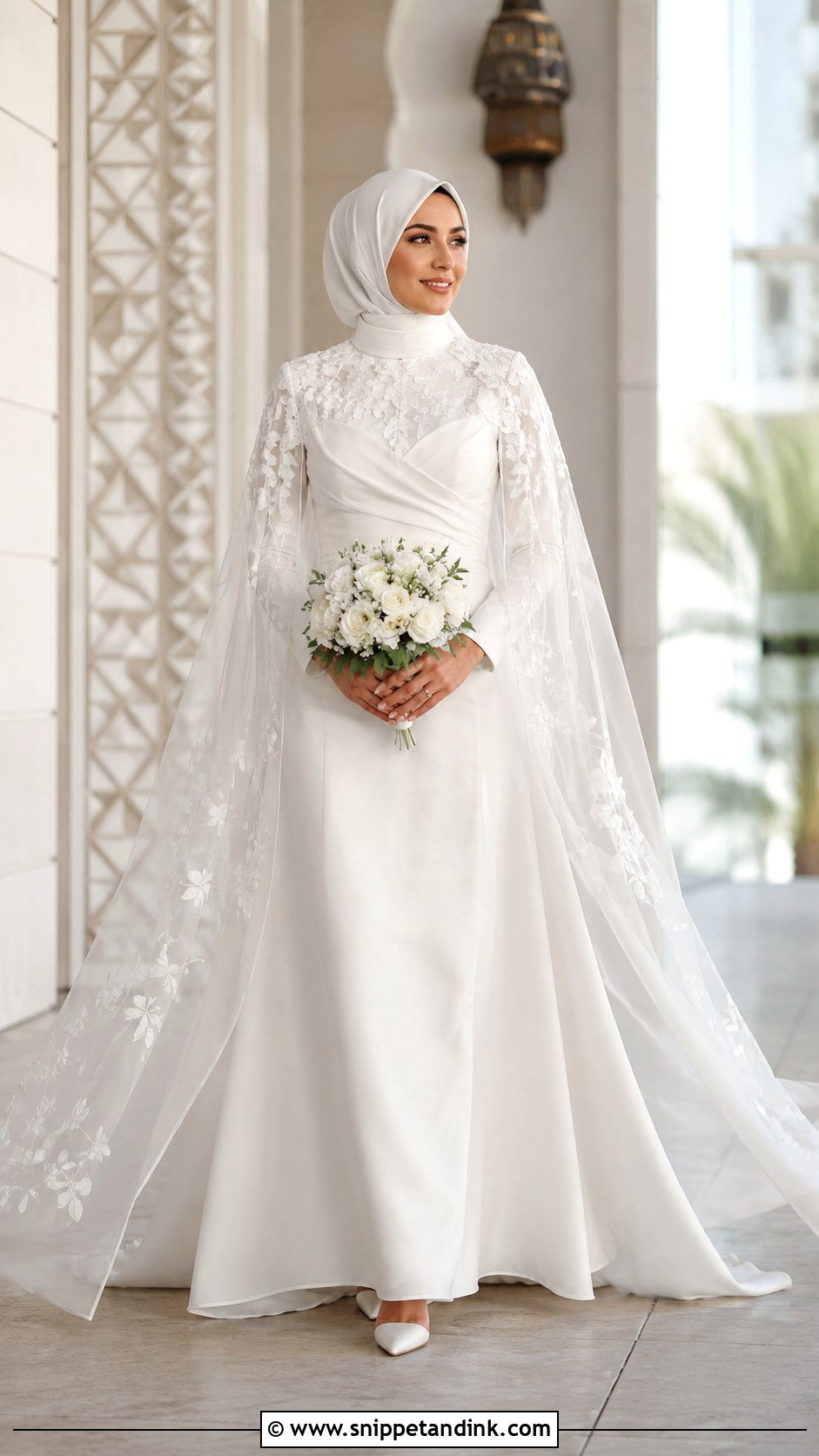
A cape gives drama and coverage without needing a full skirt. Choose a fitted or A-line gown with a sheer, lace or satin cape attached at the shoulders; the movement reads well in walking shots. Tuck the hijab smoothly under the cape neckline so nothing bunches at the throat, which is where I see this look go wrong most often. Keep jewelry minimal if the cape is embroidered or beaded, add pointed heels and a structured bouquet, and skip the veil if the cape already does that job.
23. Veil Hijab Bridal Look
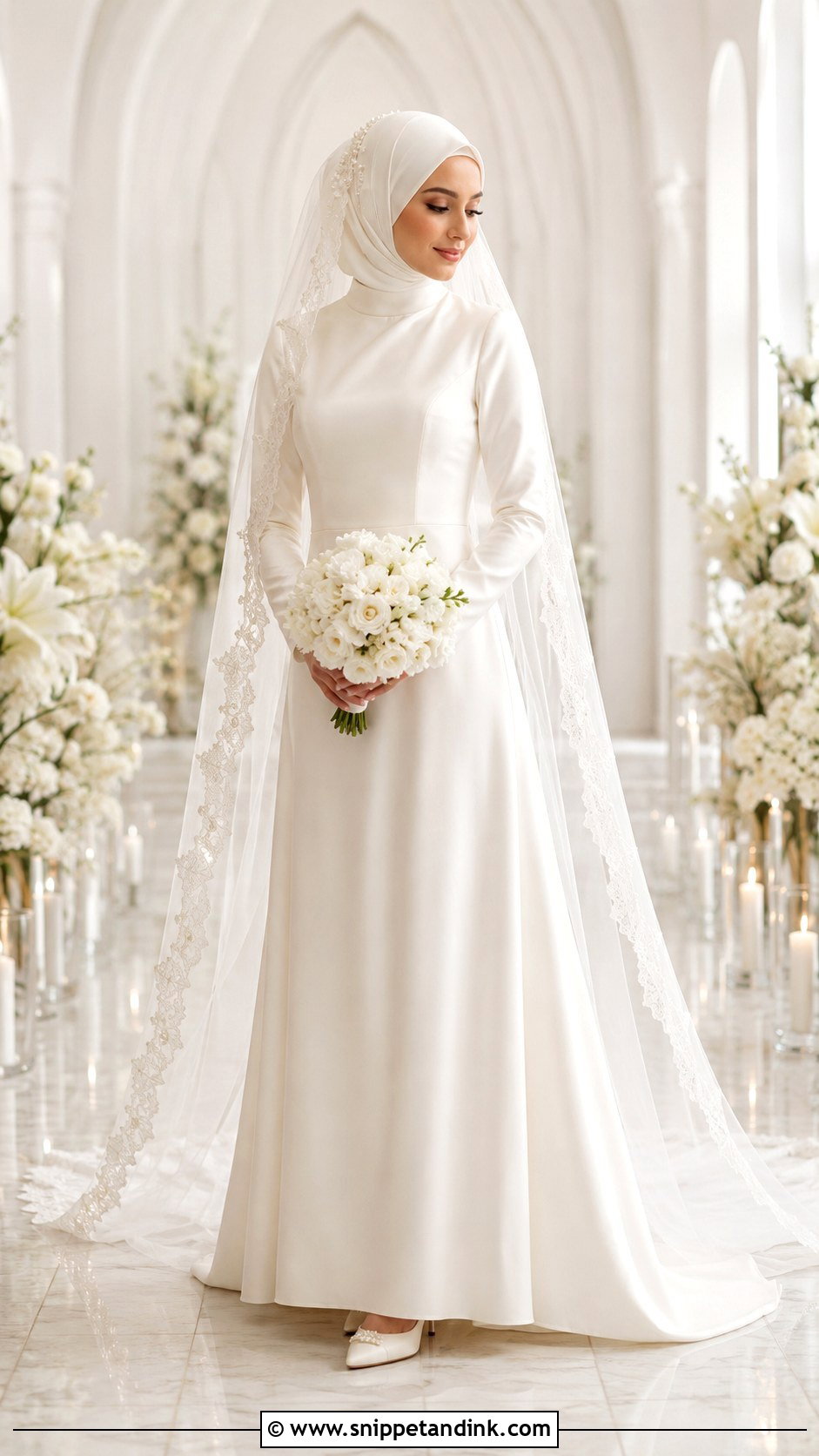
Layering a veil over a hijab is mostly an engineering question. Start with a simple long-sleeve gown and a smooth hijab in matching fabric, then attach the veil over or behind the wrap without disturbing it. A comb won’t grip chiffon, so the veil is usually pinned into the undercap or sewn to a soft band. A chapel veil feels classic; a cathedral veil adds drama and weight. Lace-edged veils want a simple gown, and an embellished gown wants a plain veil. Pearl pins, ivory heels and a neat bouquet complete it.
24. Crown Hijab Bridal Look
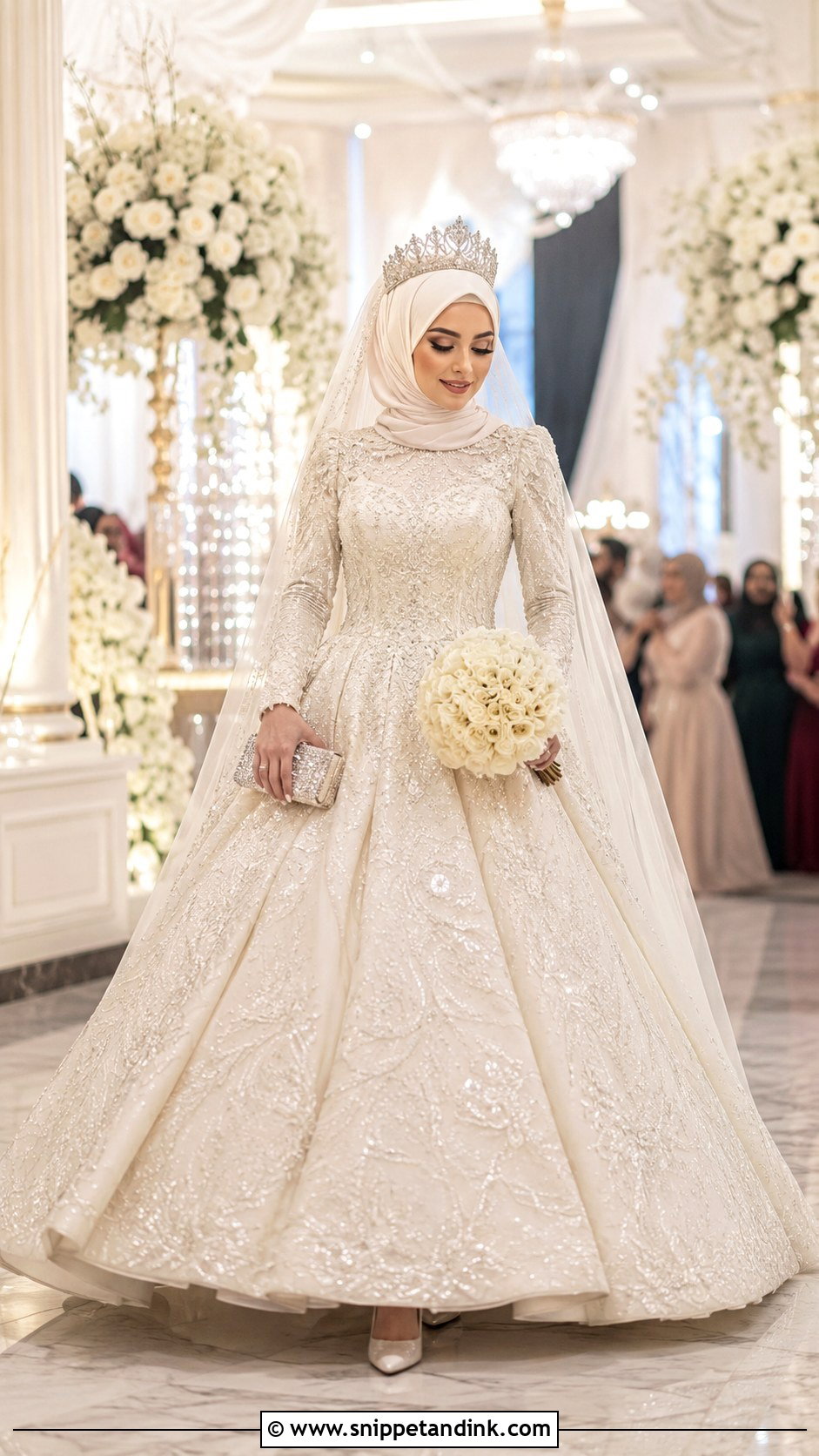
A crown or tiara over a hijab needs to look secure, because a headpiece that tilts by the reception is distracting in every photo. Choose a structured gown, embroidered dress or ball gown, wrap the hijab smoothly, and set the crown over it with pins passing through to the undercap. I keep the veil light under a large crown, or pair a fuller veil with a smaller tiara. Classic heels, a sparkling clutch and white or cream flowers suit formal receptions and grand entrances.

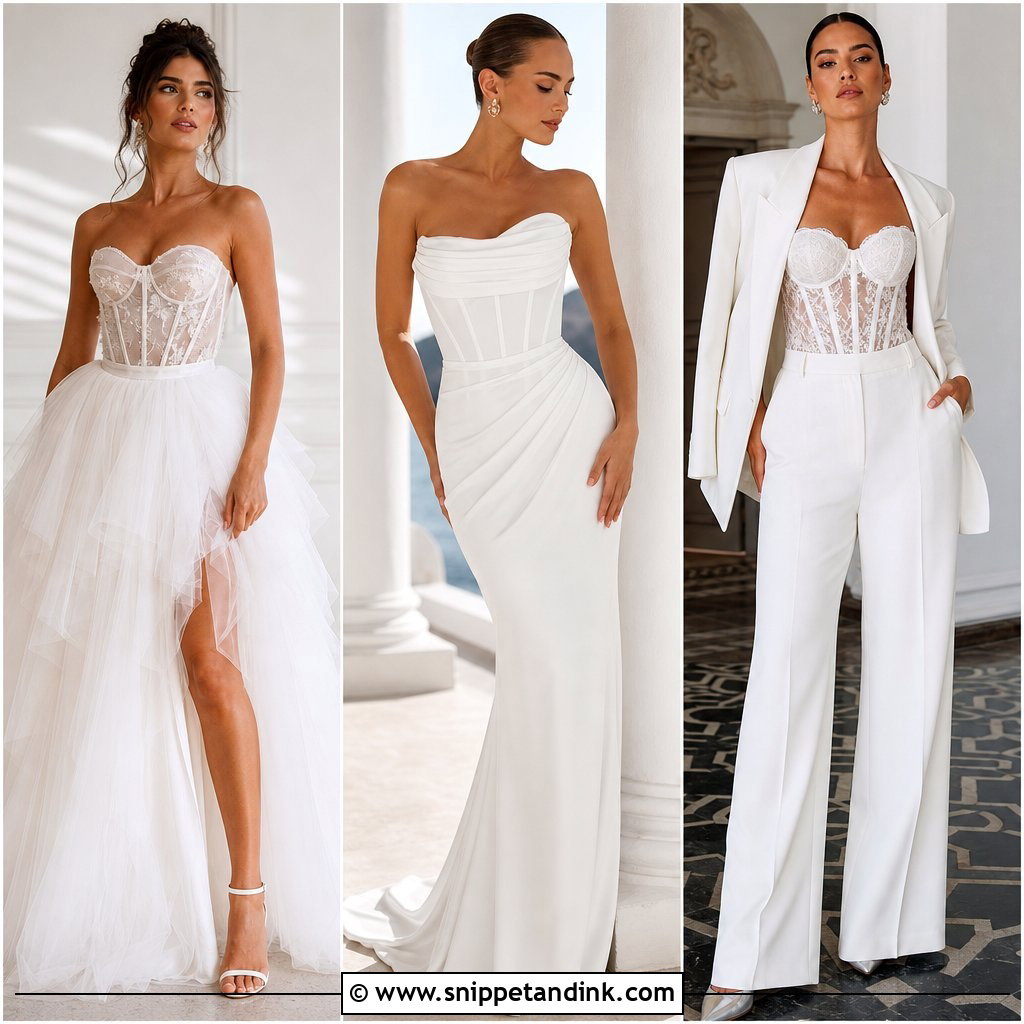

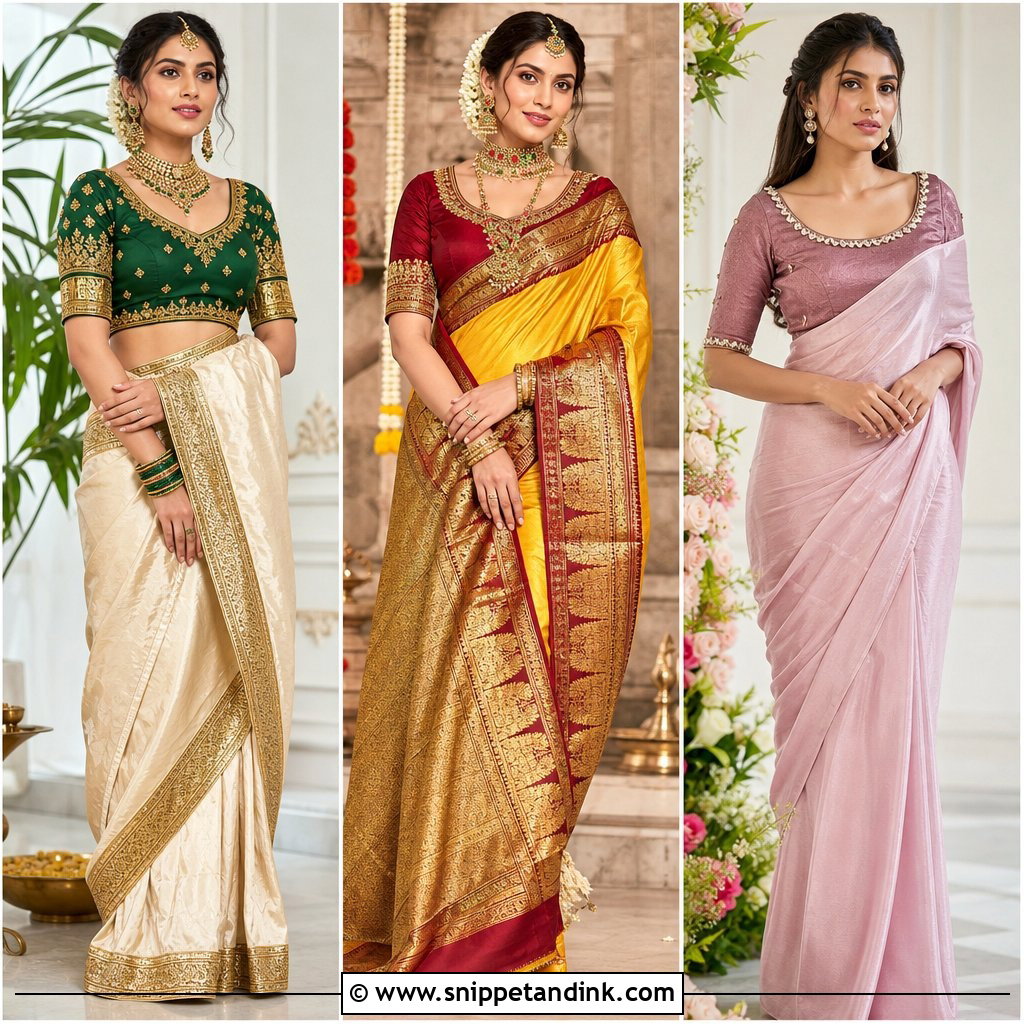
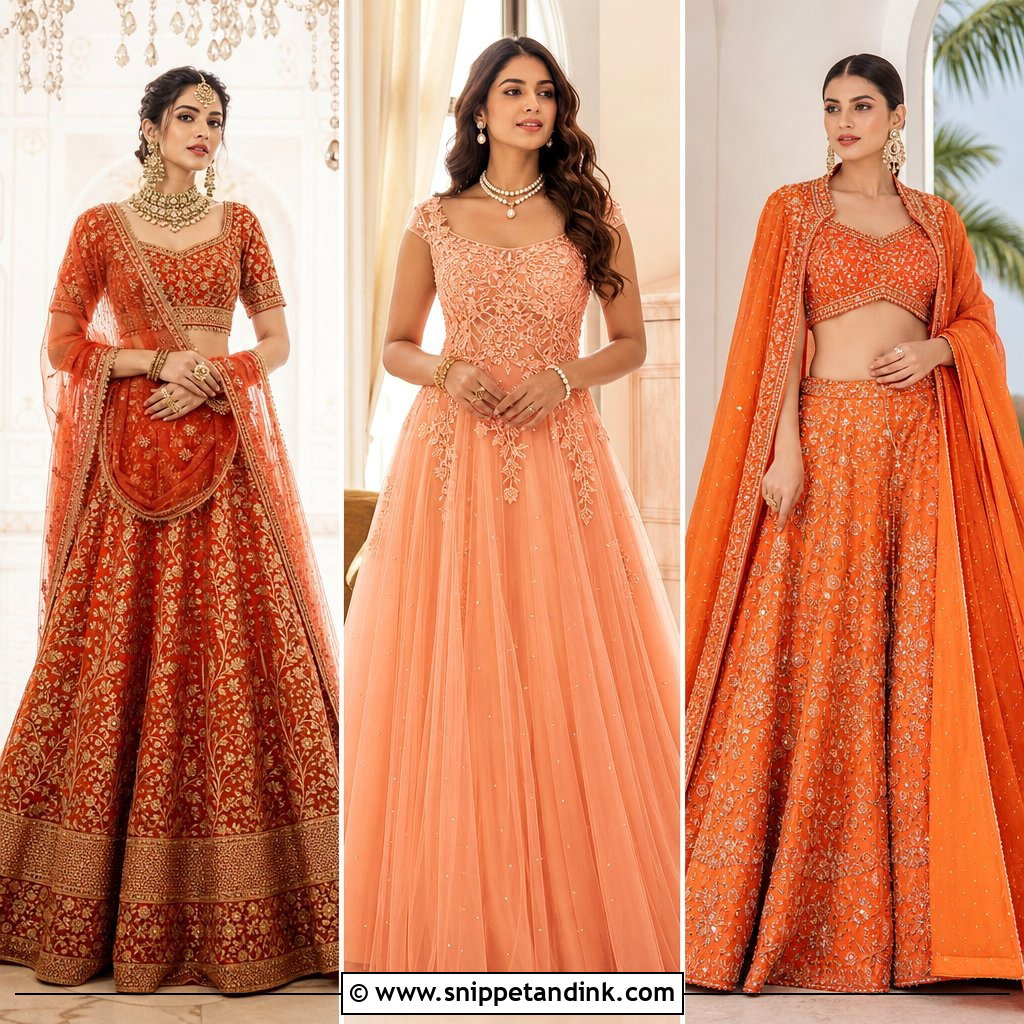
25. Civil Wedding Hijab Bridal Look
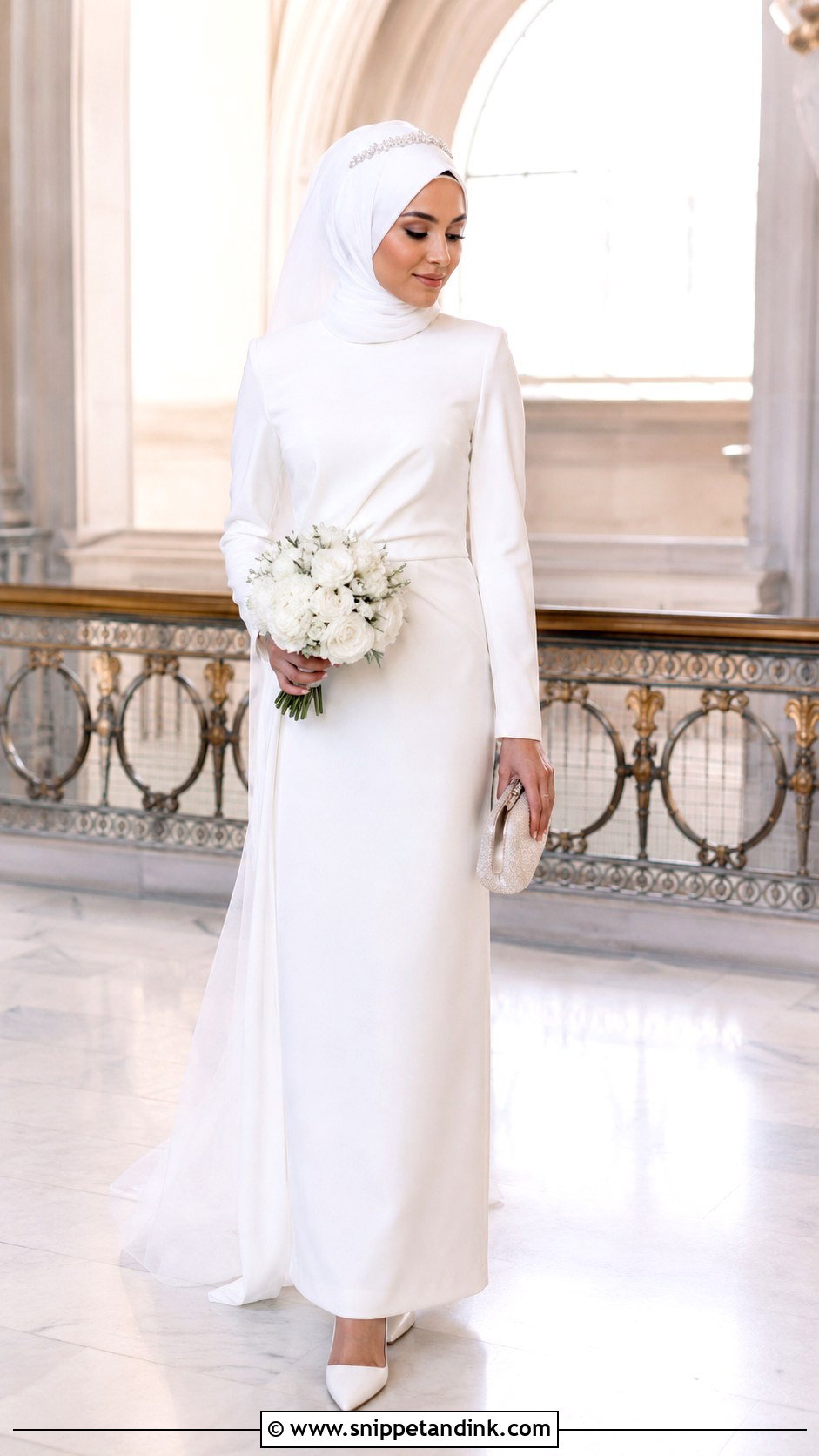
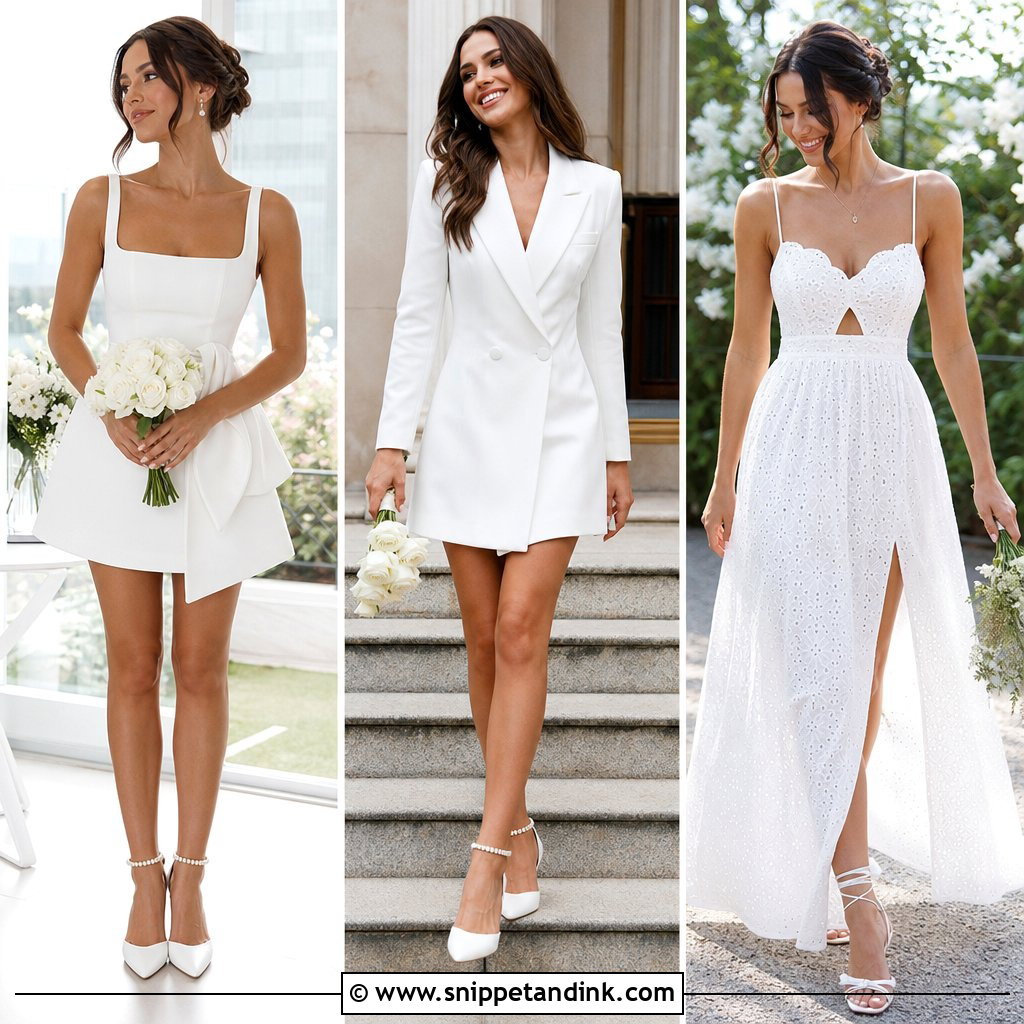
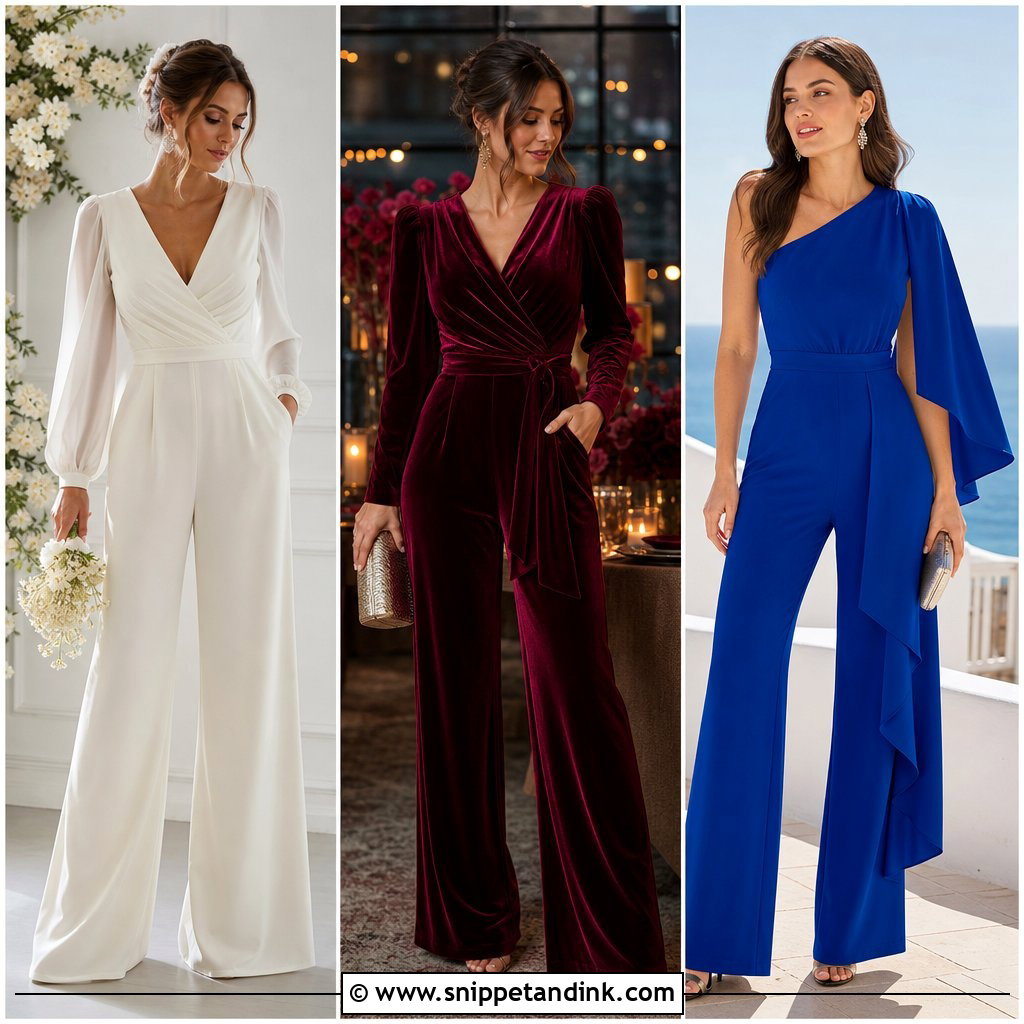
For a civil wedding, practical comes first: you’ll walk between rooms, sign documents and possibly head to lunch afterwards. A white or ivory tailored maxi, blazer dress, jumpsuit or simple crepe gown with long sleeves keeps it polished. Pair it with a clean chiffon hijab, pointed heels, a small clutch and white flowers. A short veil or pearl headband adds a bridal note without formality. Check the sleeves let you sign comfortably; a heavy cuff dragging across the register is a small but very real annoyance.
Planning Around Prayer, Heat and Changing Between Events
A wedding with a nikah, a reception and sometimes a walima on separate days means your look has to survive more than one outing. These are the things I sort out with brides before the first event.
- If you’ll pray during the day, plan it with your makeup artist and stylist. Sleeves that push up to the elbow and a wrap that can come off and go back on with the same pins save a full restyle.
- Heat gathers under layered fabric. Chiffon and georgette breathe; satin, velvet and heavy brocade do not, so put the heavier outfit on the cooler or air-conditioned event.
- Keep a small kit with spare pins in your hijab color, a second undercap, blotting papers and a lint roller for dark fabrics.
- If you change outfits between events, ask whether the same wrap will sit under both necklines. A high-necked gown and a lehenga blouse often need the hijab tucked differently.
- Assign one person who watched your trial to fix the veil or dupatta if it shifts. A bride can’t see the back of her own head.
Your Hijab Sets the Tone for Everything Else
A hijab bridal outfit works when you feel comfortable and fully yourself in it. Start from the event, then decide the dress shape, hijab fabric, veil, shoes, bouquet and accessories together rather than one at a time. A simple gown becomes bridal with pearls and a veil, while a detailed lehenga may need only a clean wrap and balanced jewelry. Test fabric weight, pin placement and coverage in a full rehearsal, and look at photos from the side and back. Then adjust any of the looks above to your culture, venue and season.
You'll Like These Ideas:


Leave a Reply