
A bridal blouse doesn’t have to be embroidered edge to edge to hold its own next to a heavy silk saree. In fact, the blouses I like best leave fabric showing. Aari work is chain-stitch embroidery done with a hooked needle while the fabric is stretched on a frame, which is why it can be very fine and very precise when the motifs are planned well. Lotus flowers, peacocks, paisleys and temple borders are the traditional starting points, and zari, pearls, stones, beads or sequins can be worked in where you want shine. The ideas below go from red silk with gold to soft pastel combinations, and for each one I’ve noted where the embroidery should sit, what to pair it with and the tailoring detail that makes the difference.
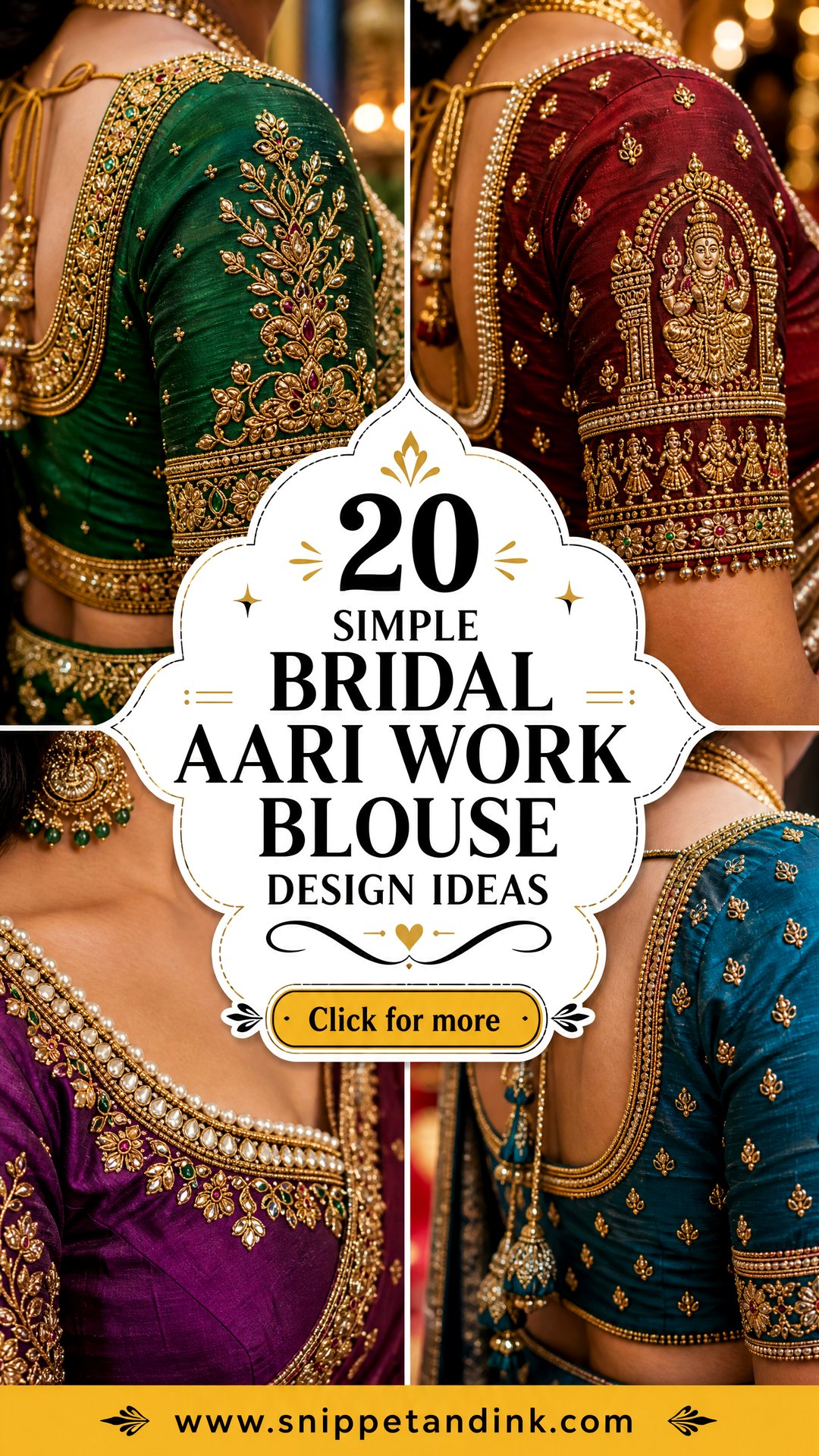
How an Aari Blouse Moves From Tracing Paper to Your Shoulders
Brides are often surprised that the embroidery usually comes before the stitching. The blouse pieces are marked out and worked on a frame first, then cut and sewn into the blouse. That order changes how you should plan.
- Bring the saree and your jewelry to the first meeting. The neckline depth and border width depend on which necklaces sit over them.
- Get measured in the bra you’ll wear on the day. If you want padded cups built into the lining, decide now, because they change the fit.
- Approve the tracing. The design is drawn onto the fabric before any stitching. This is your last easy chance to move or remove a motif.
- Allow time. Simple Aari work on a blouse can take anywhere from a few days to a couple of weeks, and queues get much longer in wedding season. I’d place the order at least six to eight weeks ahead.
- Book a trial fitting. Ask the tailor to leave some margin in the side seams and sleeves so small adjustments are possible after the embroidery is done.
1. Red Silk Bridal Aari Work Blouse
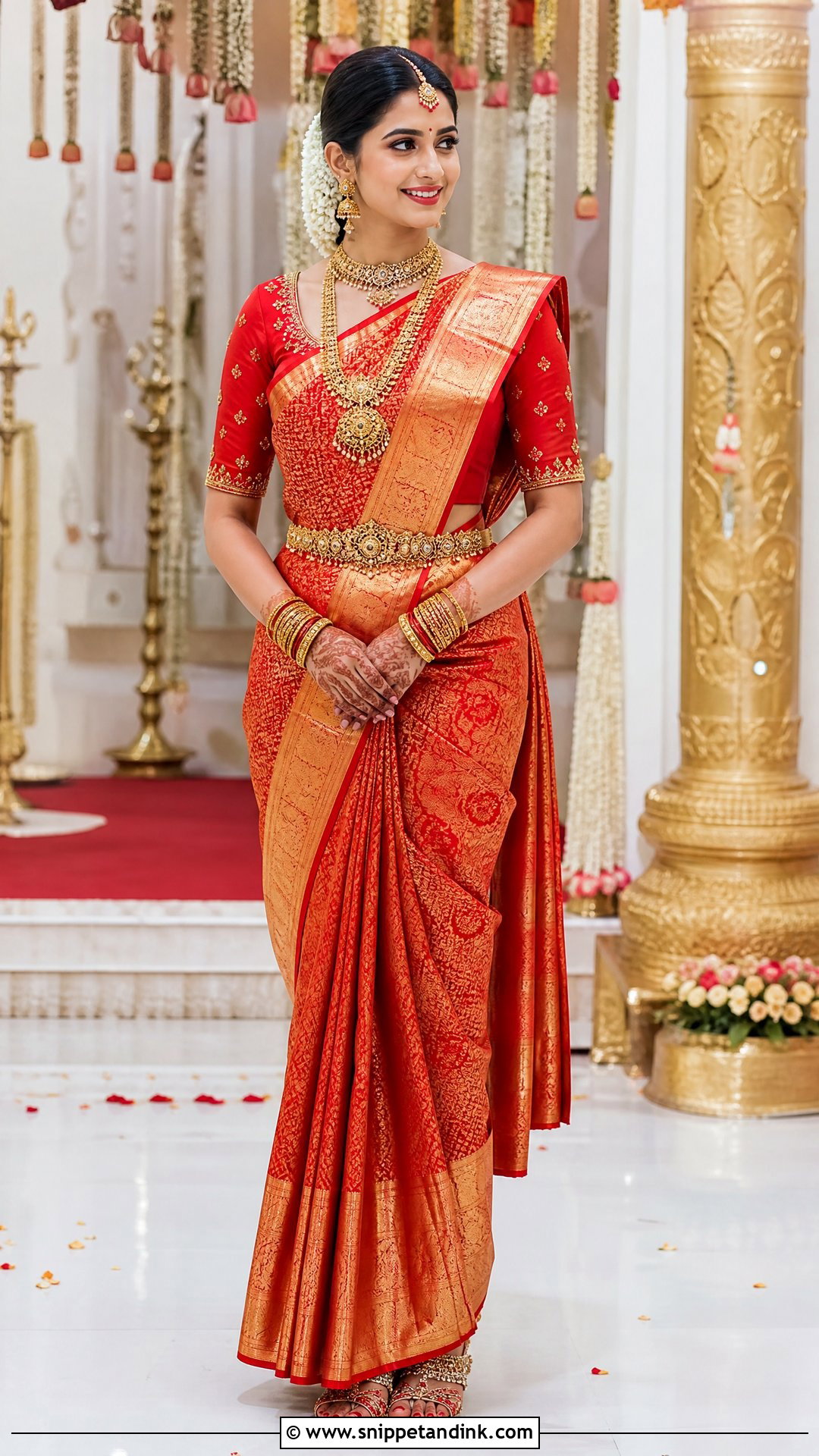
Restraint is what makes a red silk blouse look bridal rather than busy. I’d start with a fitted round neck, short sleeves and a neat zari border tracing the neckline and sleeve edges, then scatter tiny floral buttas across the front and back. Pair it with a red, maroon or mustard Kanjivaram with traditional gold borders, plus antique temple jewelry, stacked bangles, a waist belt and a jasmine-wrapped braid. Concentrate the embroidery where people and cameras actually see it: the neckline, the sleeve hems and the back. Work hidden under the pallu adds weight without adding anything to the look.
2. Green Bridal Aari Work Blouse With Gold Border
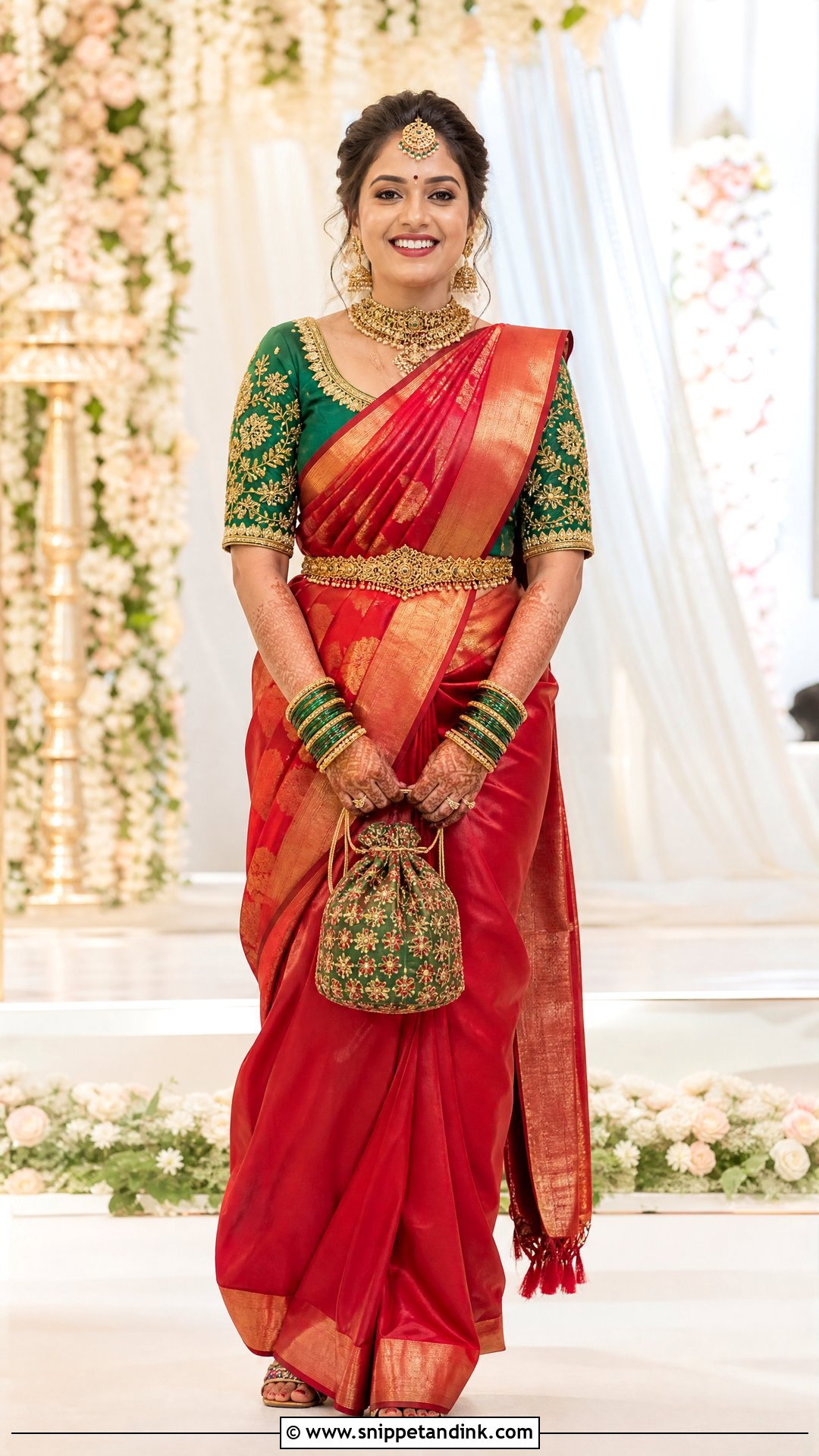
Green against a red Kanjivaram is one of the oldest pairings in South Indian bridal dressing, and it still works because the two colors make each other brighter. Choose a raw silk blouse with a deep U-shaped back and a narrow gold Aari border at the neckline, with small leaves or a delicate vine following it. Elbow sleeves feel more formal and leave space for an embroidered cuff. Antique gold necklaces, green glass bangles and a gold waist belt suit it, along with a center-parted bun and fresh flowers. Ask your tailor to match the green to the saree’s border or pallu rather than picking a green that merely looks nice on its own.
3. Pink Lotus Bridal Aari Work Blouse
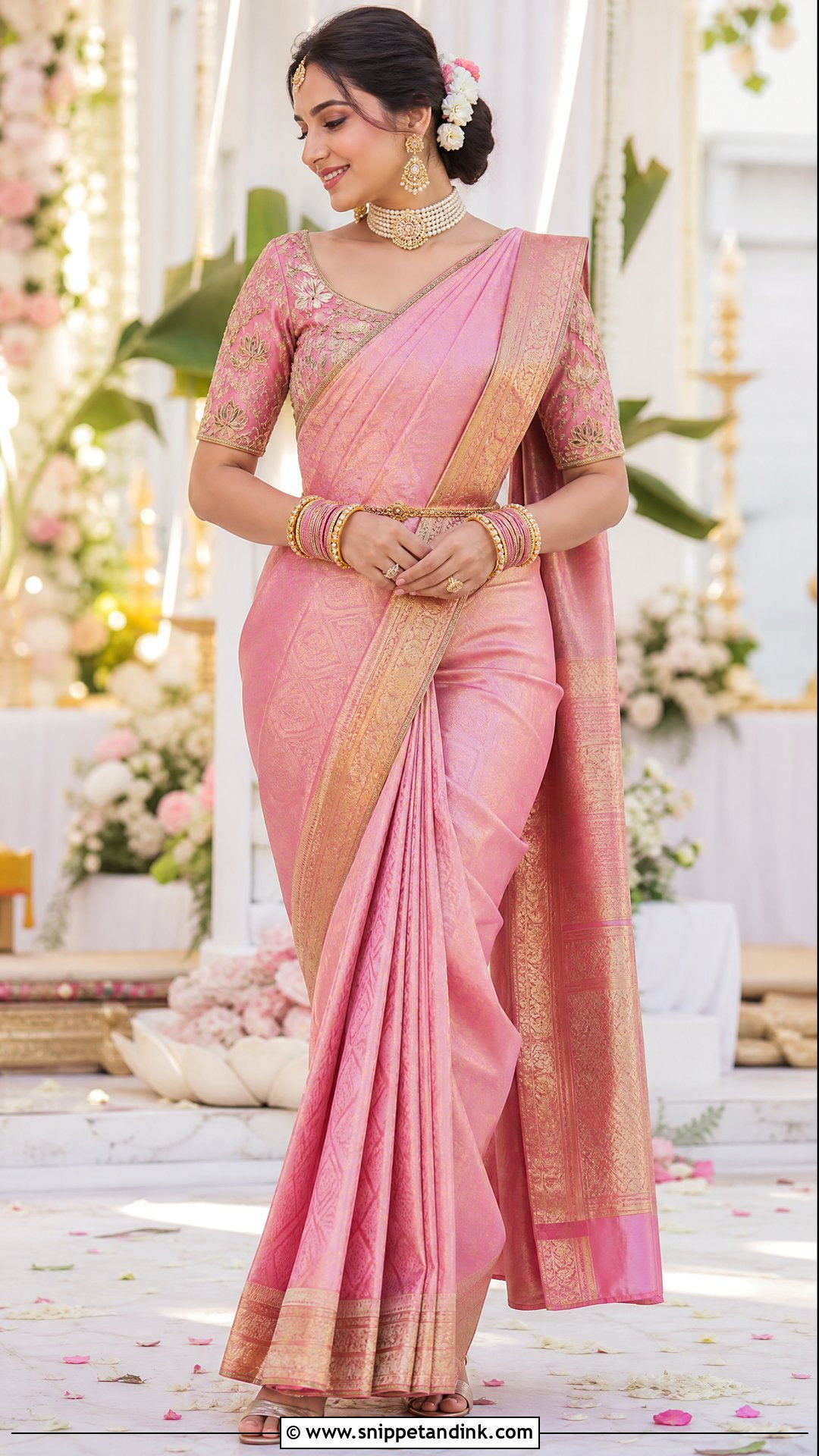
The lotus is a motif I use when a bride wants meaning without heavy work. Start with a pink bridal blouse in rose pink or deep fuchsia silk, with a modest boat neck and elbow sleeves. Small gold lotuses along the sleeves and one larger lotus at the center back are enough, connected with fine zari stems and a few tiny pearls. It goes with a pink-and-gold silk saree or an ivory one with a pink border. A pearl choker, gold jhumkas, bangles and a low floral bun finish it. Keep the motifs well spaced; lotus petals blur into a blob when they’re crowded or stitched too small.
4. Peacock Bridal Aari Work Blouse With Elbow Sleeves
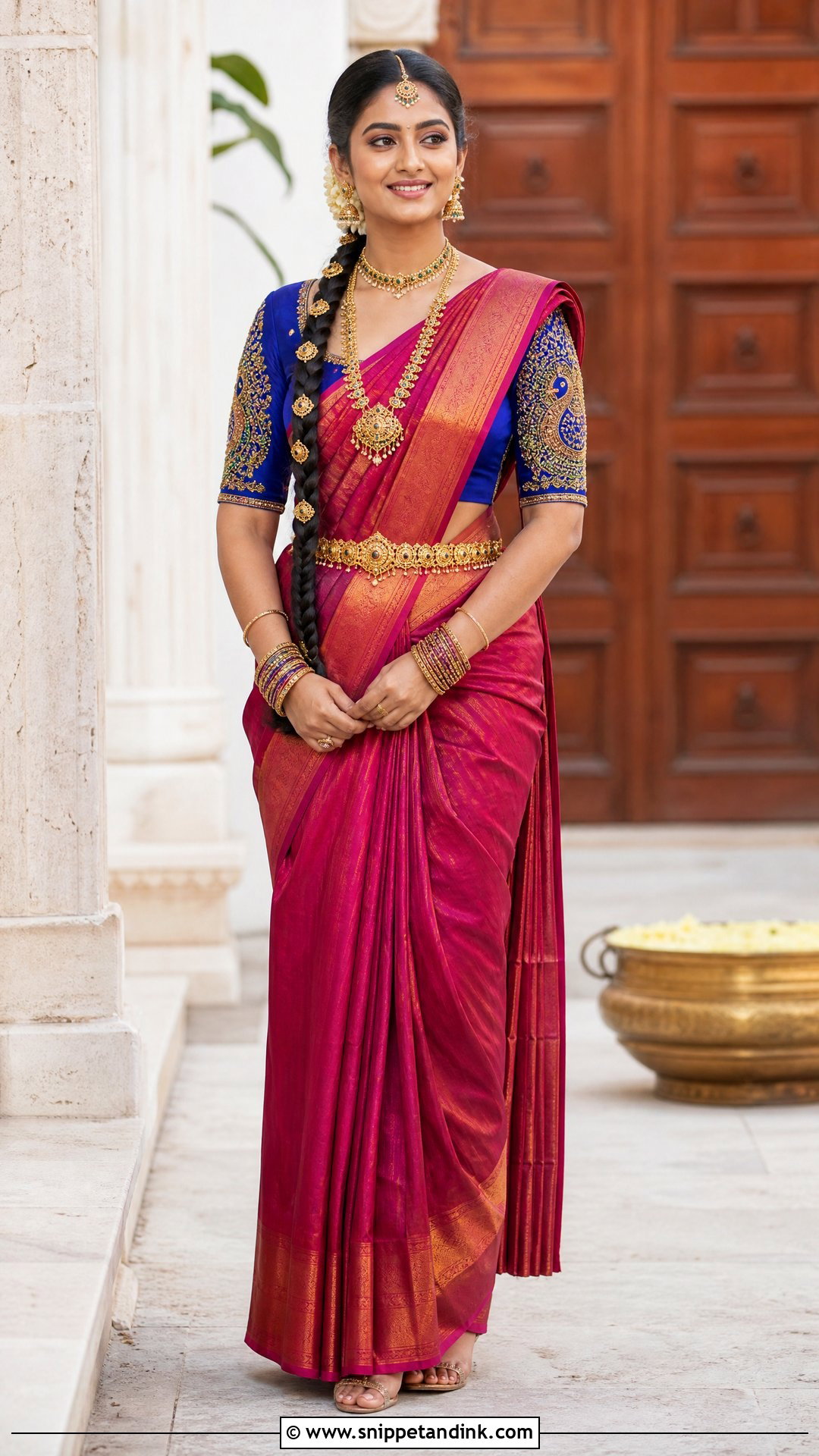
One peacock, placed well, does more than a blouse covered in them. Choose royal blue, emerald or magenta silk with elbow sleeves and a wide round back, then put two small peacocks near the lower back or one on each sleeve. Work the body in gold thread and add only a little green and blue to define the feathers. Pair it with a contrasting silk saree, antique gold jewelry and a long braid with gold hair accessories. I keep the front neckline to a light border here, because layered bridal necklaces sit right on top of it and would hide anything more.
5. Maroon Bridal Aari Work Blouse With Paisley Motifs
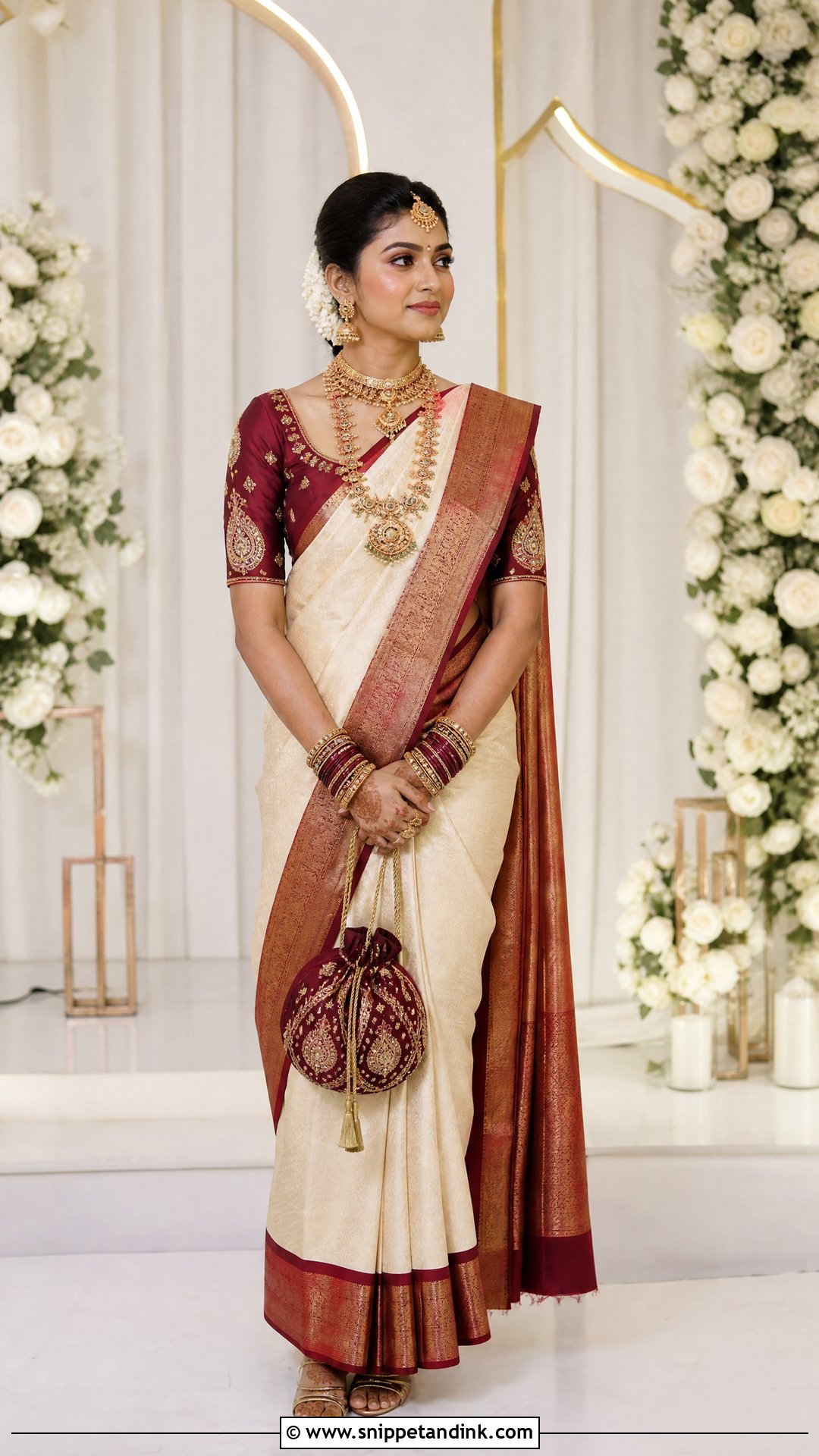
Maroon silk makes gold thread glow. A princess-cut blouse with a medium round neck and elbow sleeves gives a structured shape, and princess seams are worth asking for because they fit the bust without darts breaking up the embroidery. Put small paisleys along the sleeve cuffs and around the back neckline, with a fine line of gold beads outlining each one. It pairs with a cream, mustard, bottle green or maroon saree with gold zari. An antique gold choker, a longer necklace, matching earrings, maroon bangles and a sleek bun with white flowers complete it.
6. Bridal Aari Work Blouse With Temple Border
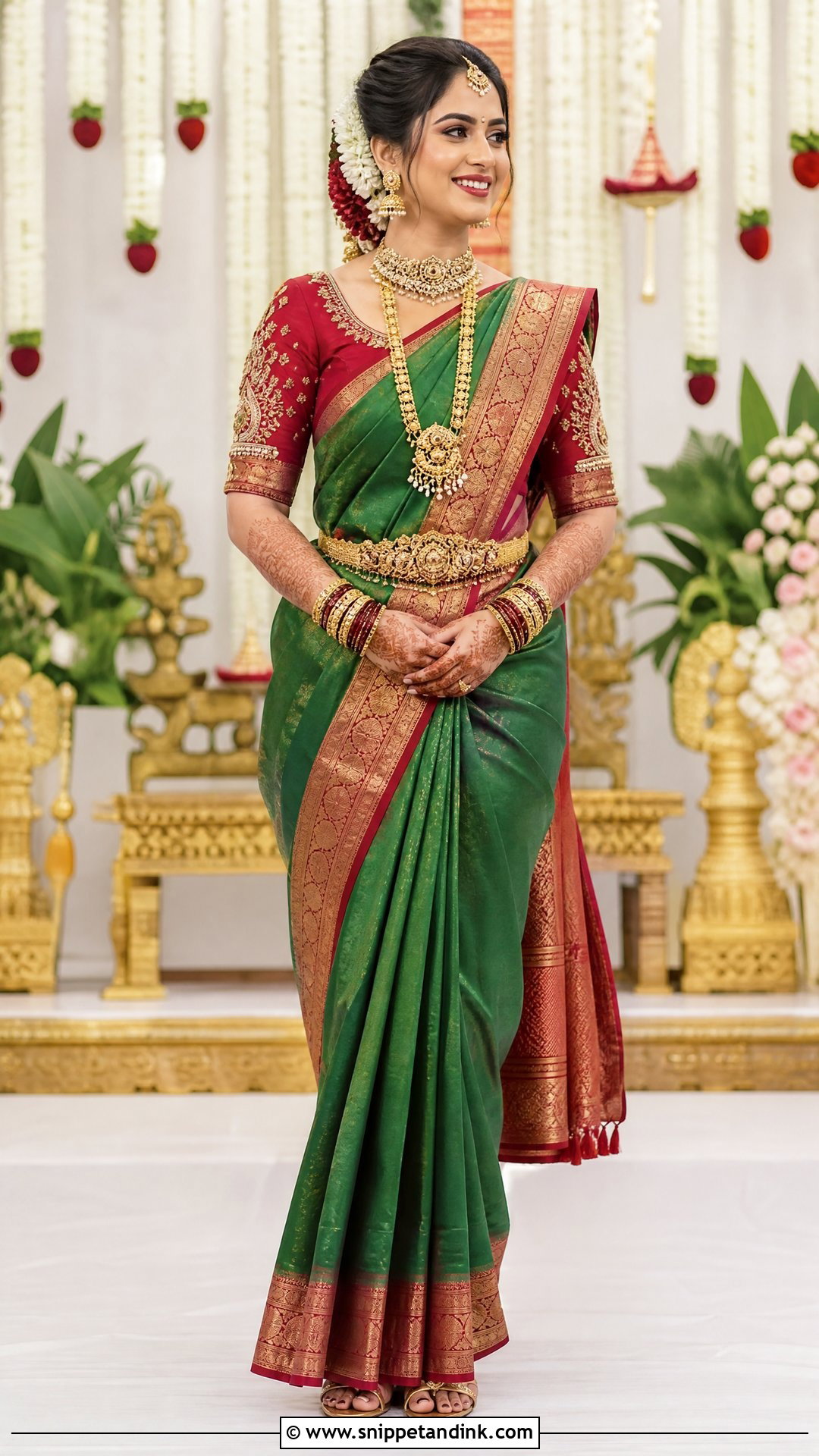
Temple borders are geometric, so they need precise spacing to look right. I’d choose red, green or purple raw silk with a square neck and short or elbow sleeves, then run a narrow row of gold zari temple triangles around the sleeve edges and back neckline, with tiny stones between them if you want a little sparkle. Wear it with a Kanjivaram that carries a similar temple border, along with temple jewelry, a gold waist belt, stacked bangles and a neat braid. Match the scale of the blouse border to the saree border. If the blouse triangles are bigger than the saree’s, the outfit starts to look crowded.
7. Bridal Aari Work Blouse With Pearl Neckline
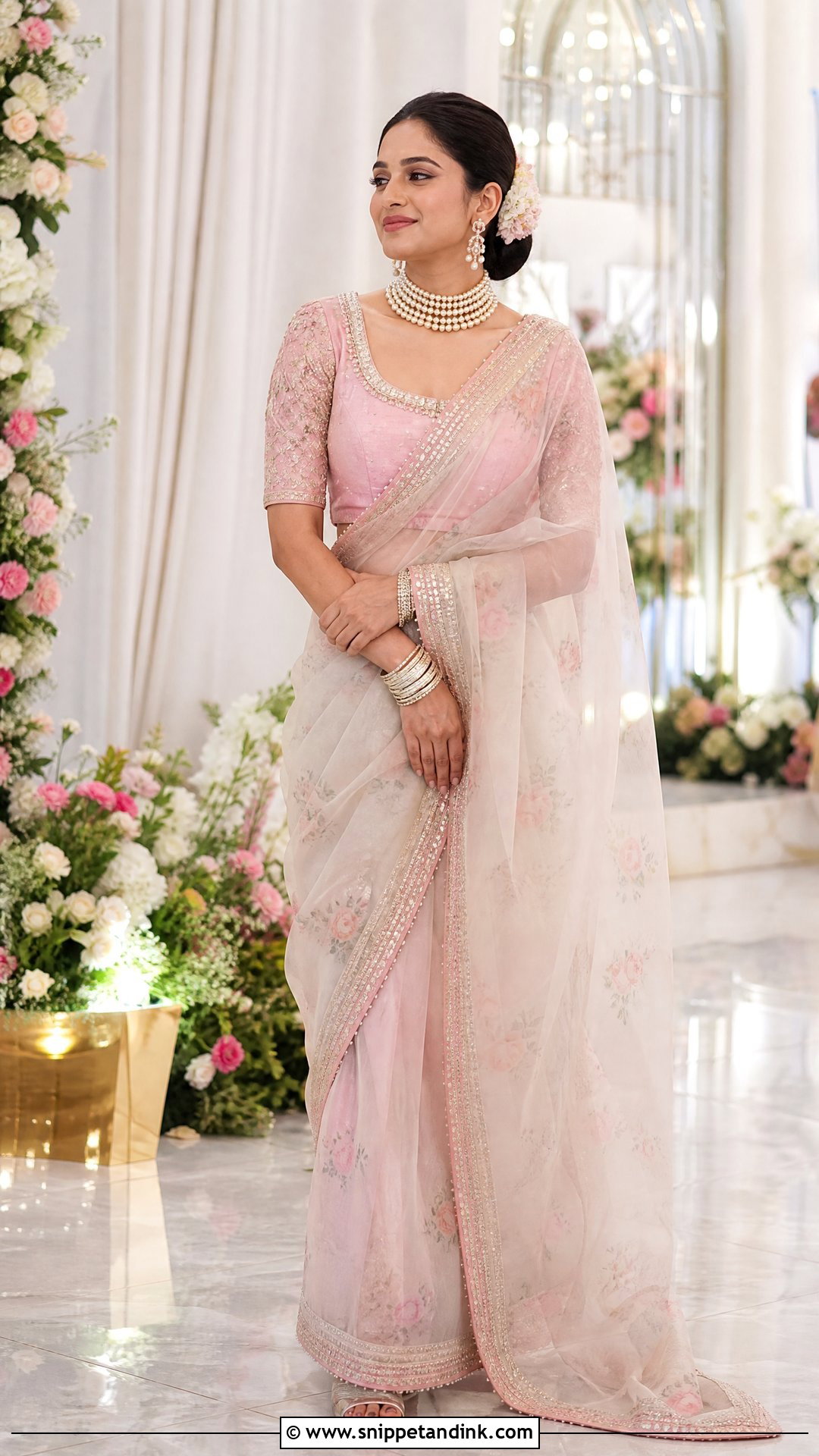
Pearls are the softer route for brides who find stone work too shiny. Start with pastel pink, ivory, powder blue or lavender silk and a simple round neckline, outlined with fine Aari threadwork and one clean row of tiny pearls, repeated at the sleeve edges. A pastel silk or organza saree with a quiet metallic border suits it. Pearl earrings, a delicate choker, metallic bangles and a structured potli complete the look, with a smooth low bun and pale flowers. I’d save this one for a daytime ceremony, engagement or reception. Pearls also catch on hair and dupattas more than you’d expect, so ask for them to be stitched down at both ends.
8. Bridal Aari Work Blouse With Floral Vine Back
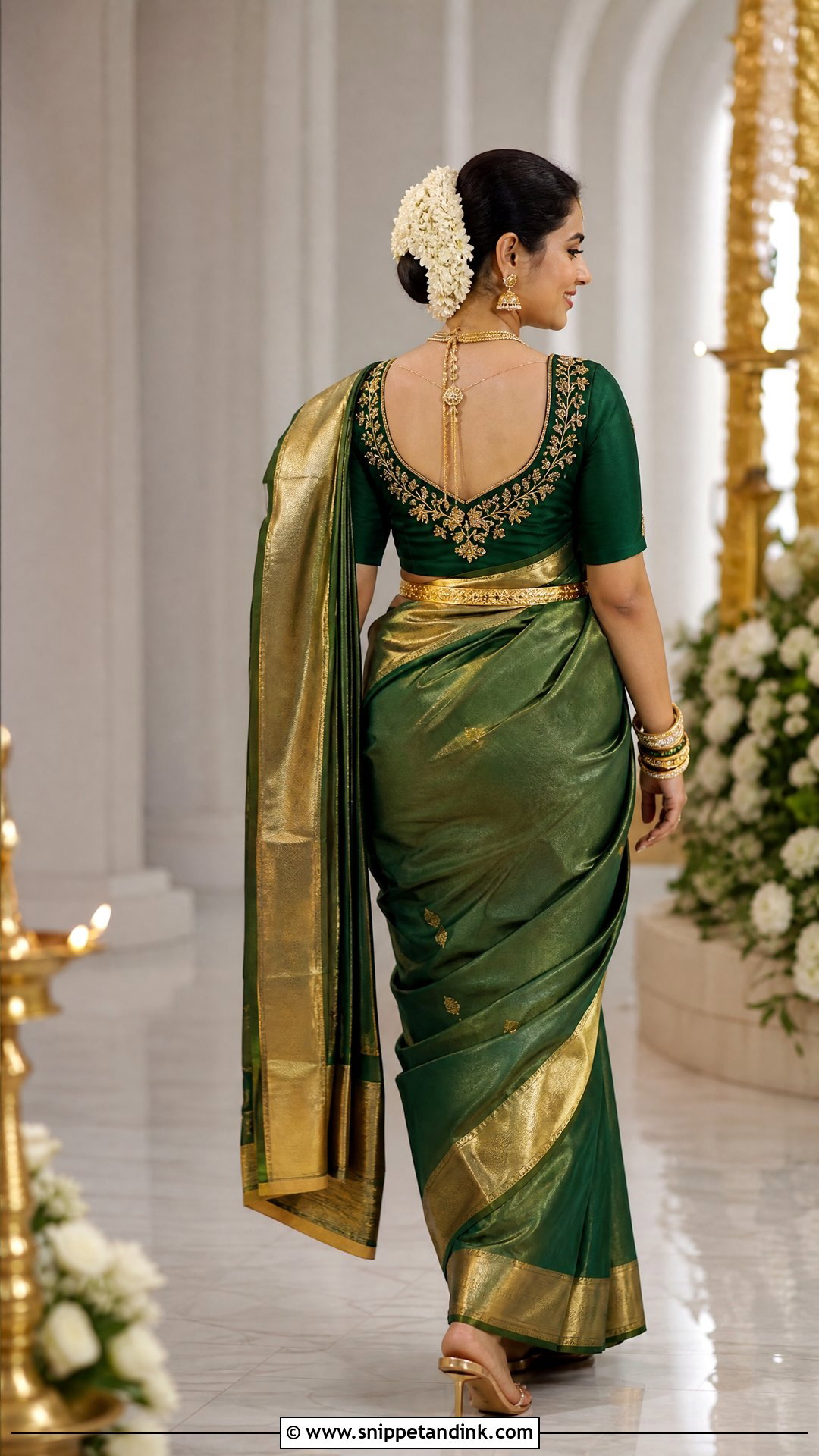
A single vine around the back neckline gives a plain blouse its focal point. Choose silk with a wide U-shaped back and short sleeves, and ask for one continuous vine of small flowers and leaves, starting at one shoulder and curving evenly around. Gold thread suits deep red, green, purple or navy; tonal thread is softer on pastels. A coordinated saree, a medium-length necklace, jhumkas and a waist belt finish it. Wear your hair up in a bun or a long braid so the back stays visible, and add a fabric tie with matching tassels if you want some movement. When I check the tracing, I look at both shoulders to make sure the vine starts and ends at the same height.
9. Bridal Aari Work Blouse With Stone Sleeve Border
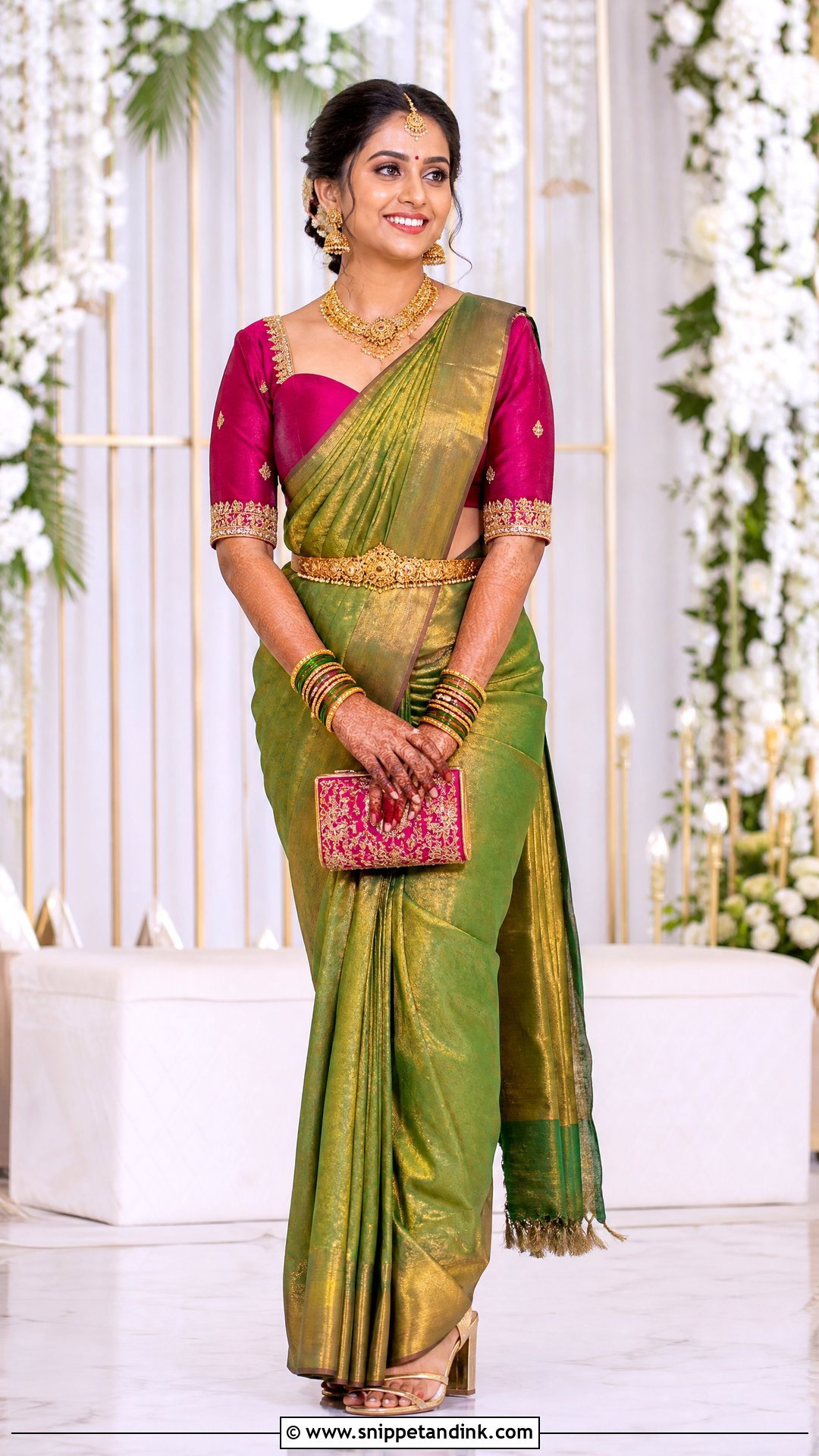
Stones on the sleeves bring sparkle to the part of the blouse that moves most. Use plain raw silk with elbow sleeves and a softly curved neckline, and place a slim Aari border of gold thread and evenly spaced stones around the cuffs. Repeat just a fine zari line at the neck. Pair it with a silk saree that has a defined metallic border, so the sleeve detail echoes it. Gold earrings, two layered necklaces, coordinated bangles and embellished sandals complete it. Check the back of the stone work before it’s lined; poorly backed stones scratch the inner arm through a long ceremony.
10. Bridal Aari Work Blouse With Small Buttas
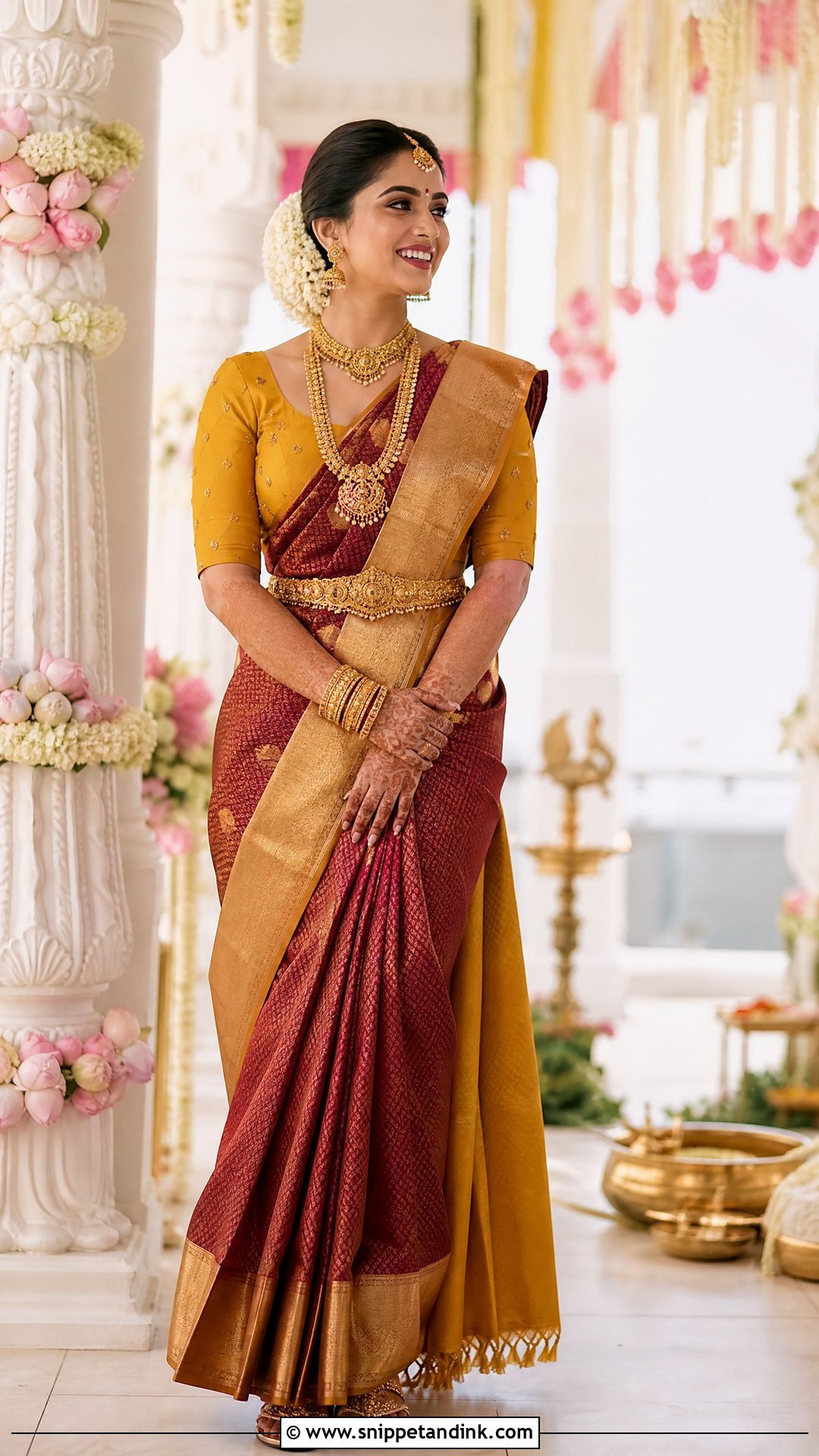
Small buttas scattered evenly let the silk do most of the work. I’d go for a fitted princess-cut blouse in red, emerald, magenta, mustard or royal blue, with tiny gold floral or diamond buttas across the bodice and sleeves and enough space between them to show the fabric. One narrow embroidered line at the neck and cuffs finishes the edges. Choose a saree that repeats one of the blouse colors in its border or pallu, and keep jewelry classic. Because the pattern is quiet, it sits comfortably under a richly woven saree. It’s also the blouse brides wear most often afterwards with simpler sarees.
11. Bridal Aari Work Blouse With Cutwork Sleeves
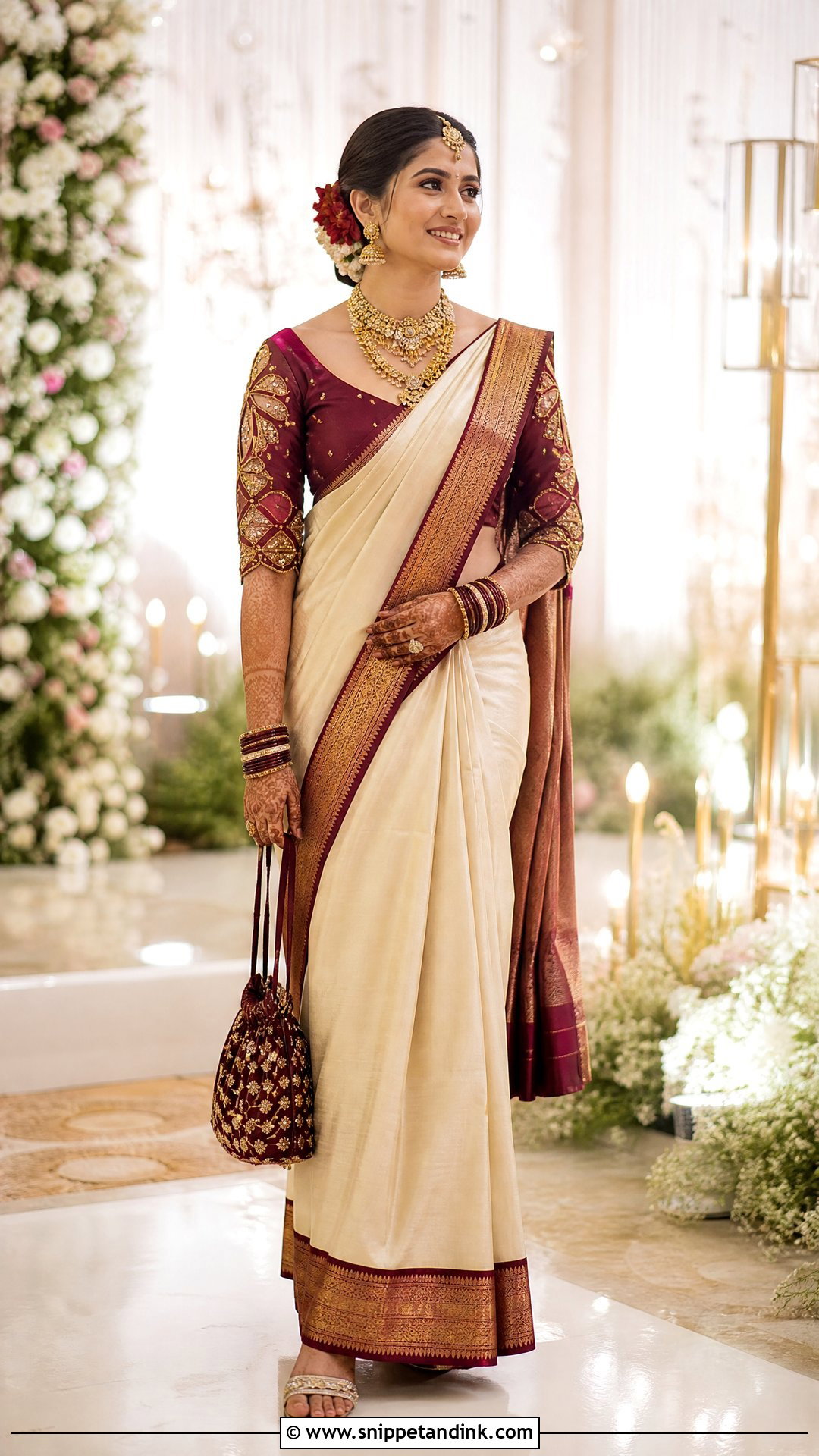
Cutwork along the sleeves gives definition, but it needs a fabric that won’t fray. Sturdy silk or raw silk in wine, green, navy or red is safest, cut as an elbow sleeve with a scalloped edge outlined in gold Aari thread and a tiny pearl or bead between curves. Keep the neckline modest and lightly embroidered so the sleeves lead. Pair it with a silk saree with a clean gold border, a choker, a long necklace, statement earrings and metallic bangles, and wear a smooth bun or braid. Run a finger along the inner arm of the sleeve at your trial. Cutwork edges that aren’t finished well rub the skin raw by the end of the day.
12. Bridal Aari Work Blouse With Round Back Neck
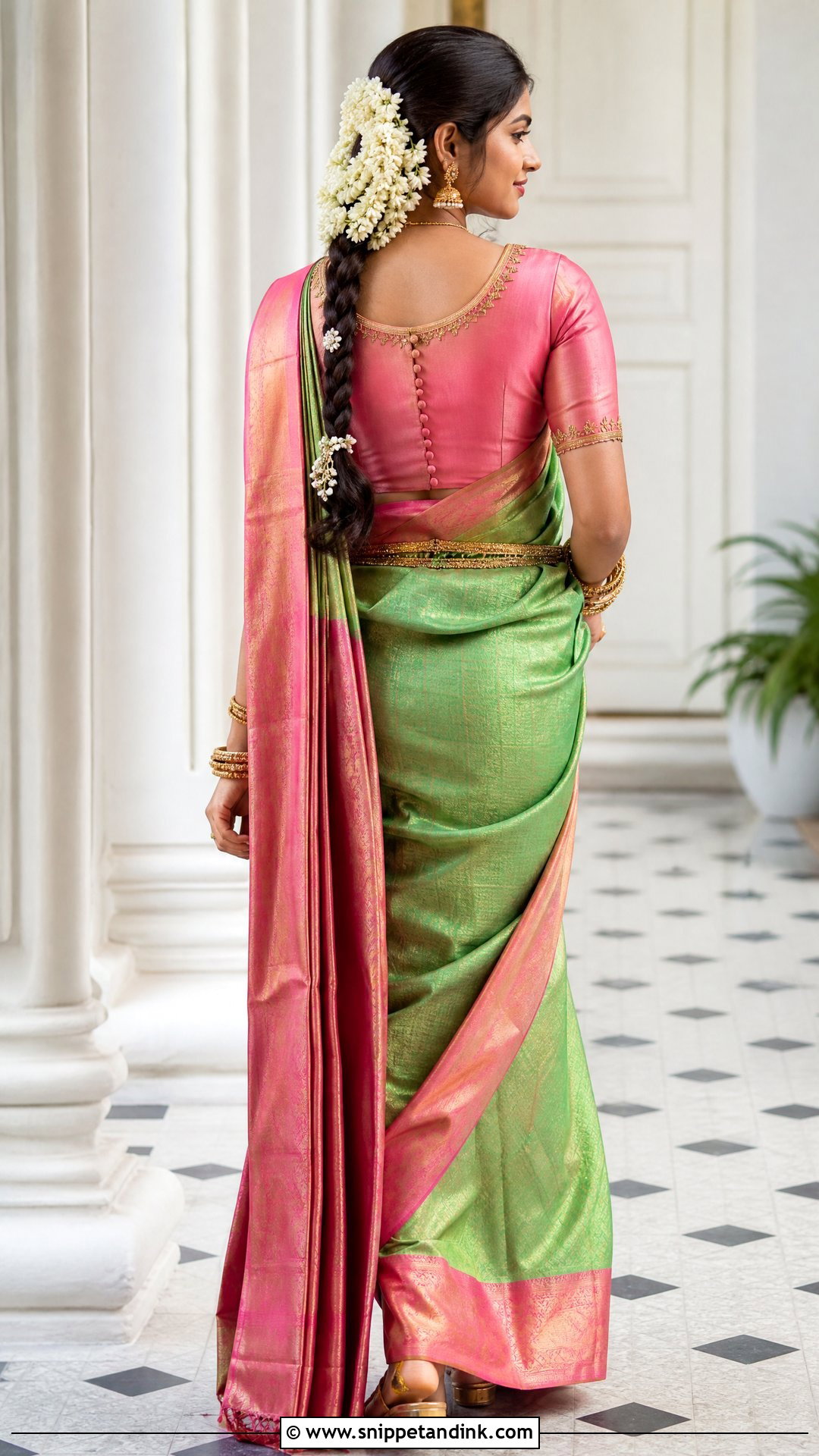
Round back necks are what most tailors cut best, which is a good reason to choose one for a bridal blouse that has to fit perfectly. A medium-depth round cut stays secure through long rituals. Outline it with a slim gold floral border and place one small motif just below the center. Short sleeves with matching edges keep it neat. A red, pink, green or purple version pairs with a complementary Kanjivaram and traditional gold jewelry. Fabric-covered buttons, simple tassels and a flower-adorned braid highlight the back. Leave plenty of plain fabric between the border and the motif so both read clearly.
13. Bridal Aari Work Blouse With Boat Neck
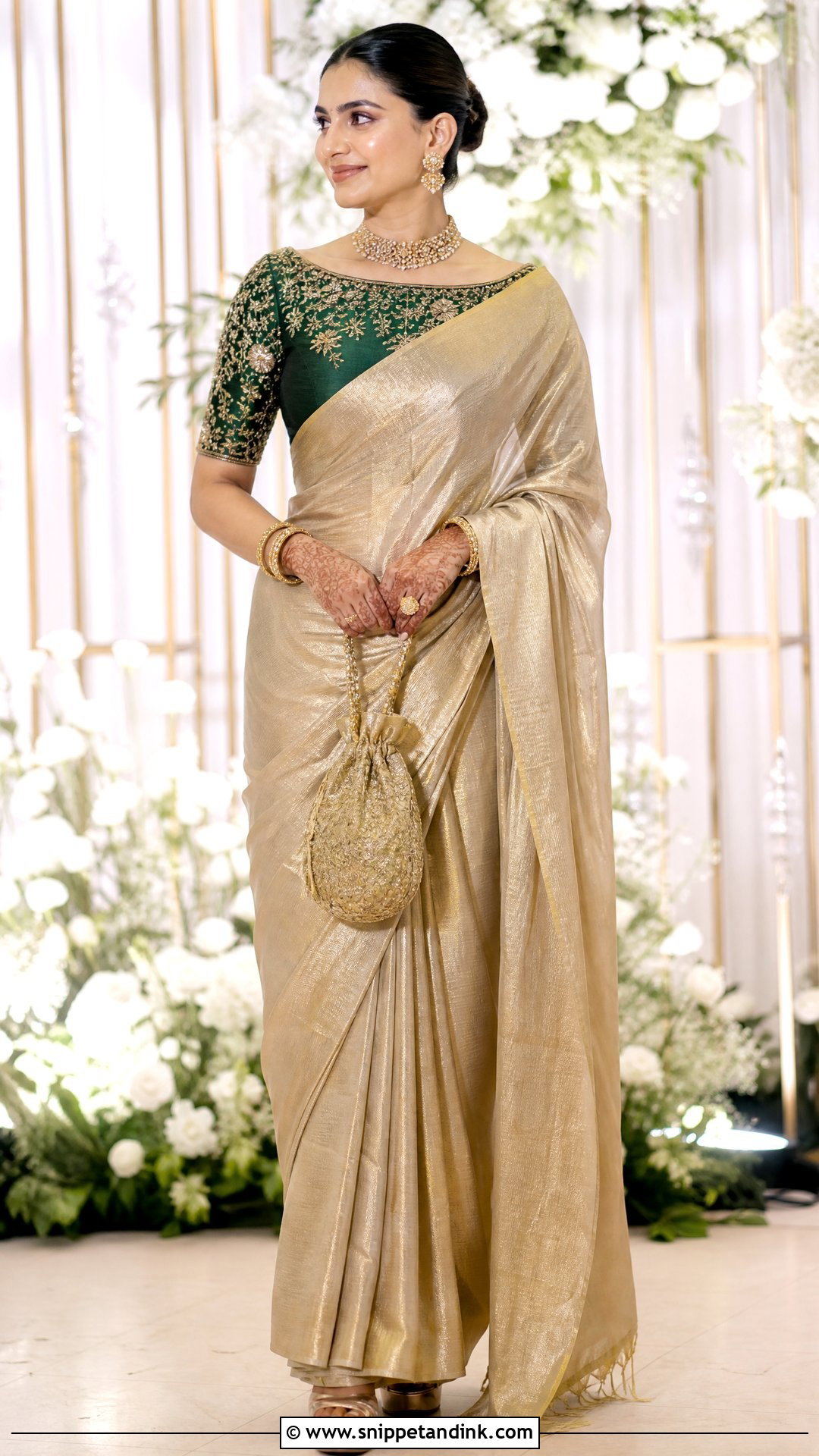
A boat neck frames the shoulders and suits long or elbow sleeves. I’d use raw silk in emerald, maroon, navy, dusty pink or muted gold, with a narrow Aari floral border across the front and back neckline, repeated near the cuffs, and tiny beads at regular intervals. Pair it with a silk or tissue saree and a short choker that sits above the neckline, never one that overlaps it. Matching earrings, stacked bangles, a center-parted bun and a structured clutch complete it, and it suits an engagement, a reception or the ceremony itself. A boat neck slides toward one shoulder if it’s cut too wide, so have it fitted with the saree pinned on.
14. Bridal Aari Work Blouse With V Neck
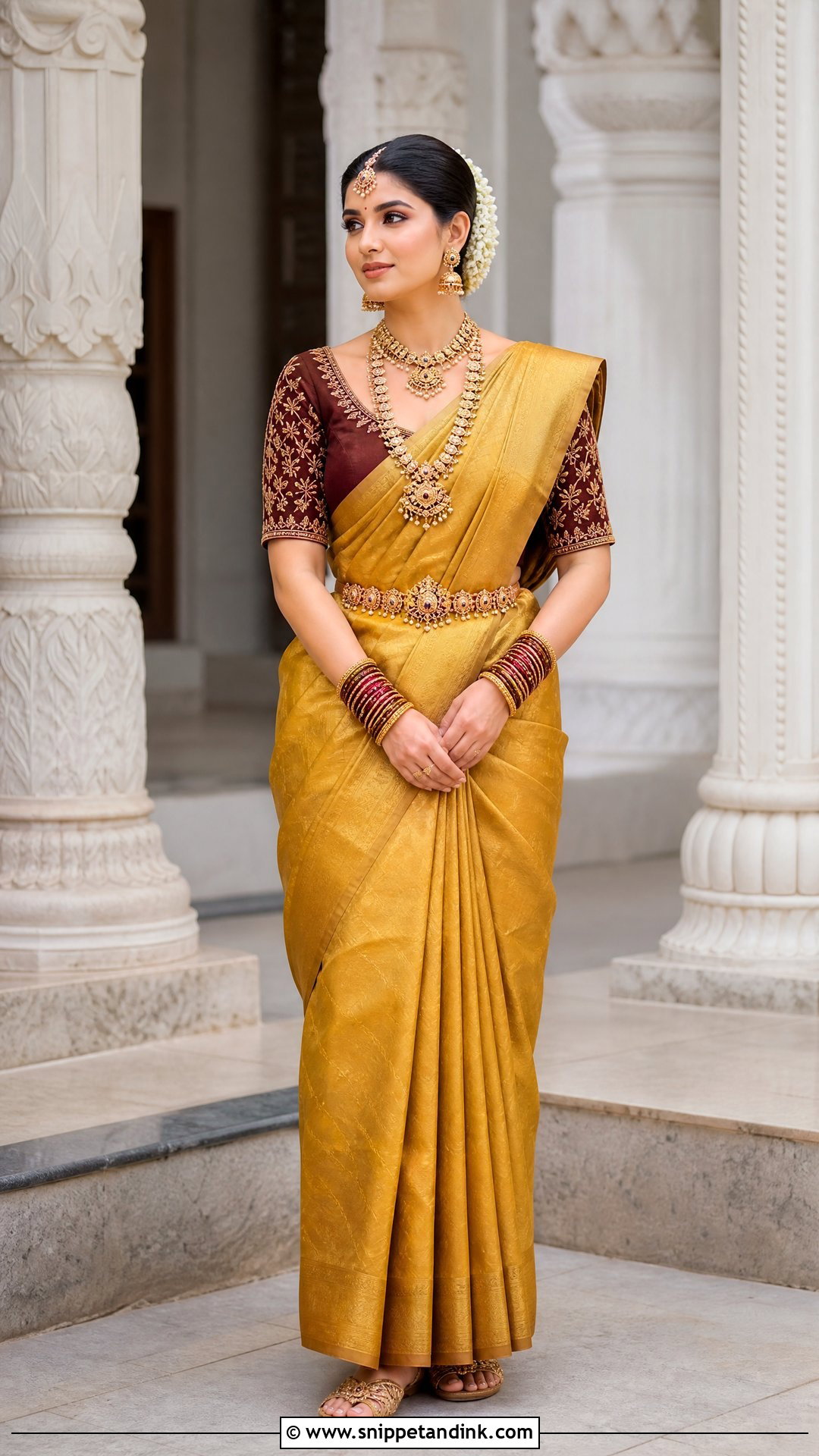
A V neck lengthens the upper body and leaves room for necklaces in graduated lengths. Keep the V moderate in a structured silk, framed with a thin border of zari, tiny leaves and small stones, and continue the design lightly around the back and sleeve edges. A contrasting silk saree, jhumkas, a waist belt, bangles and a sleek floral bun complete it. Lay your actual necklaces against the tracing before the embroidery starts; the lowest one should sit inside the V, not on the border. The V only stays sharp with reinforced edging and a supportive fit, otherwise it softens into a curve.
15. Bridal Aari Work Blouse With Square Neck
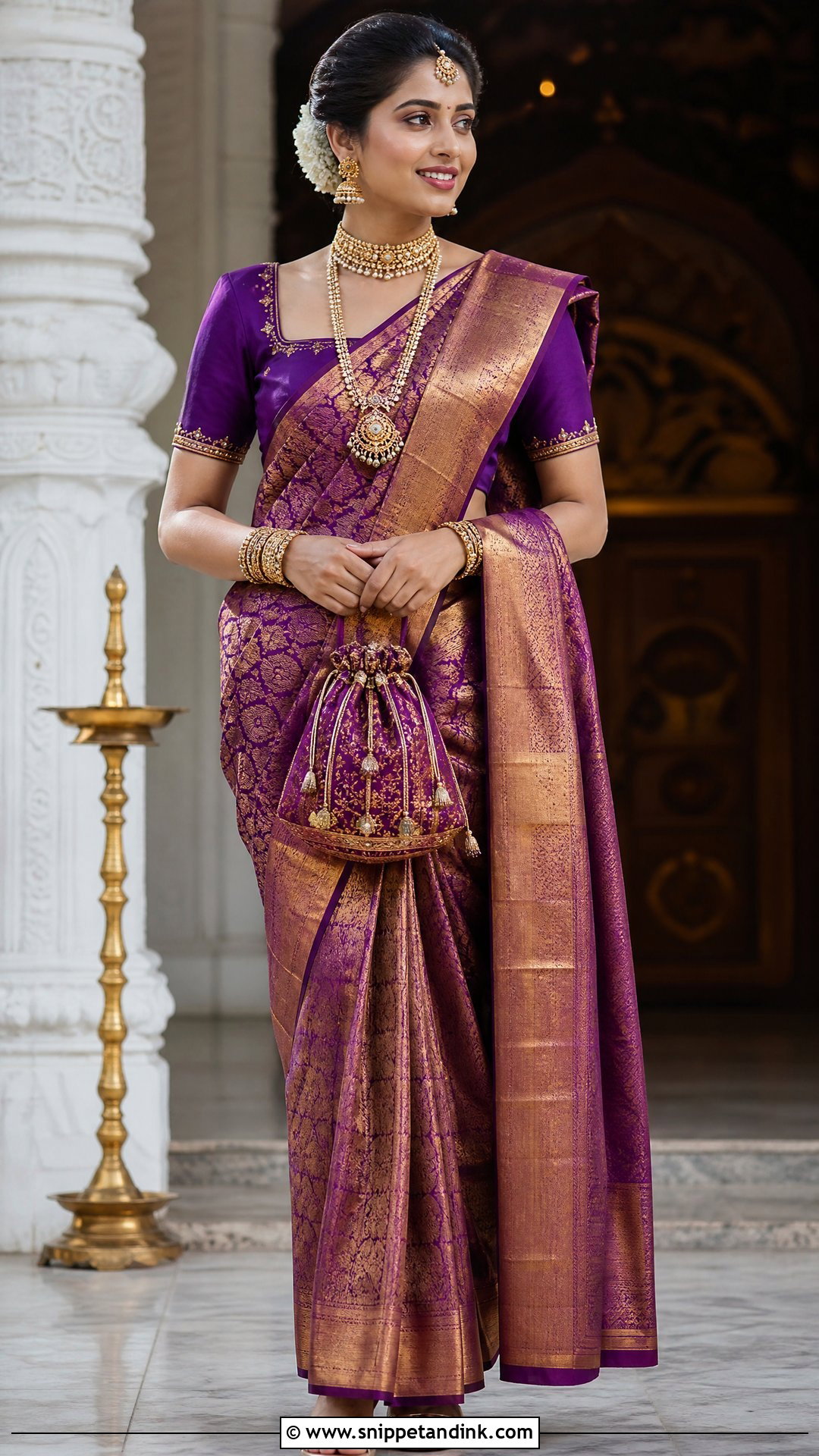
Square necklines take geometric or floral Aari borders equally well. Choose jewel-toned raw silk with short or elbow sleeves, trace the square with a narrow gold border of tiny flowers, leaves or lines, and add small motifs at the corners. Pair it with a Kanjivaram whose border has similar angles. A collar-style choker, a long chain, traditional earrings and gold bangles suit the open neckline, along with a low bun, fresh flowers and an embroidered potli. The corners are the test of good tailoring. If they don’t lie flat against the body, the embroidery around them looks warped.
16. Bridal Aari Work Blouse With Kundan Details
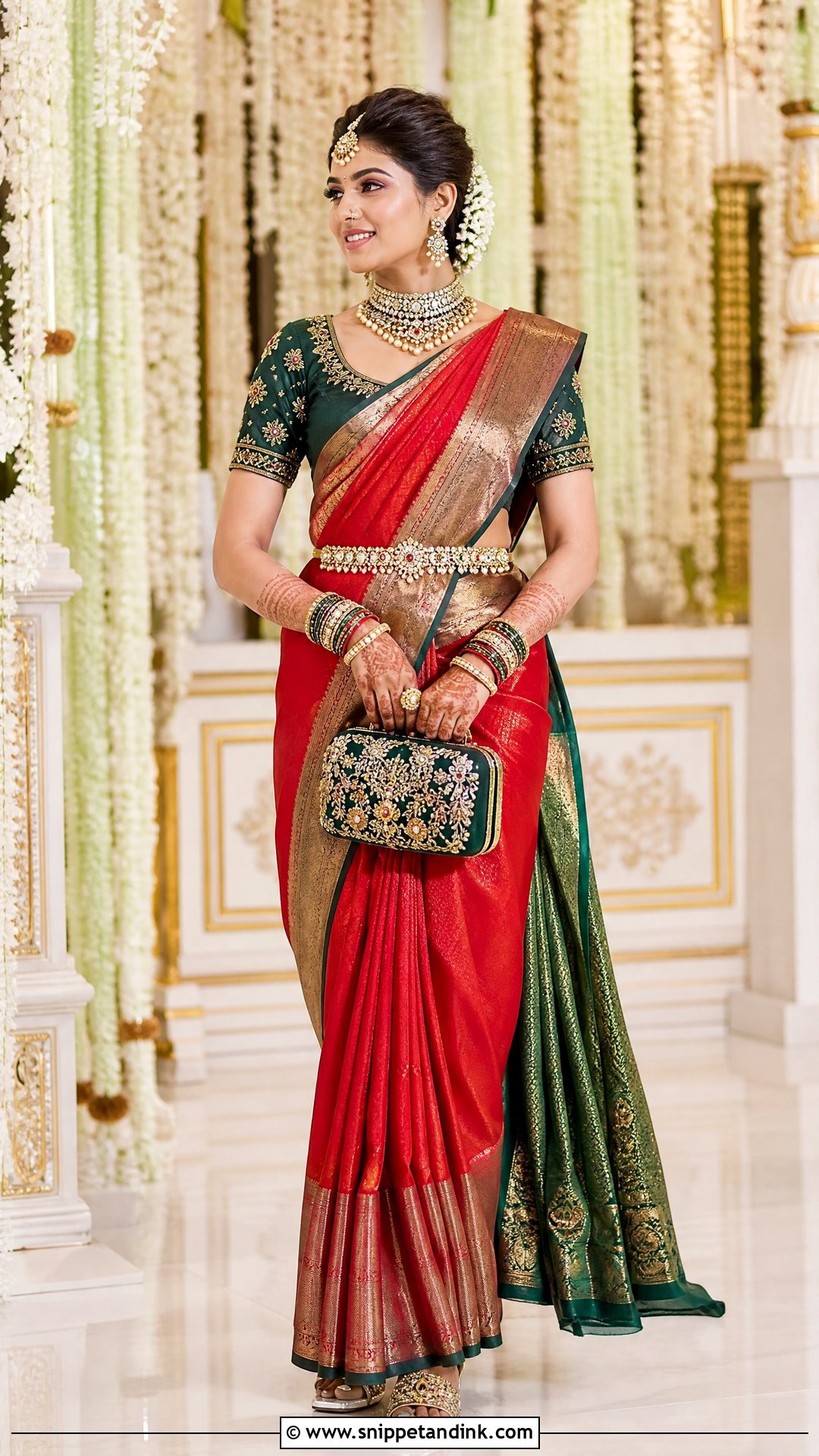
Kundan in small doses gives an Aari blouse a regal touch. Choose deep red, bottle green, plum or navy silk with a round or U-shaped neck, embroider a fine gold vine around it and set small Kundan pieces at the center of selected flowers. Keep the sleeves mostly plain apart from a matching cuff border. Pair it with a rich silk saree and jewelry that repeats the same stone shapes, such as a Kundan choker and earrings, with stacked bangles and a structured bun. Kundan is heavy compared with thread, so I’d keep it to the neckline. Covering the whole blouse adds weight that pulls the neck down and hides the Aari stitches.
17. Bridal Aari Work Blouse With Mirror Accents
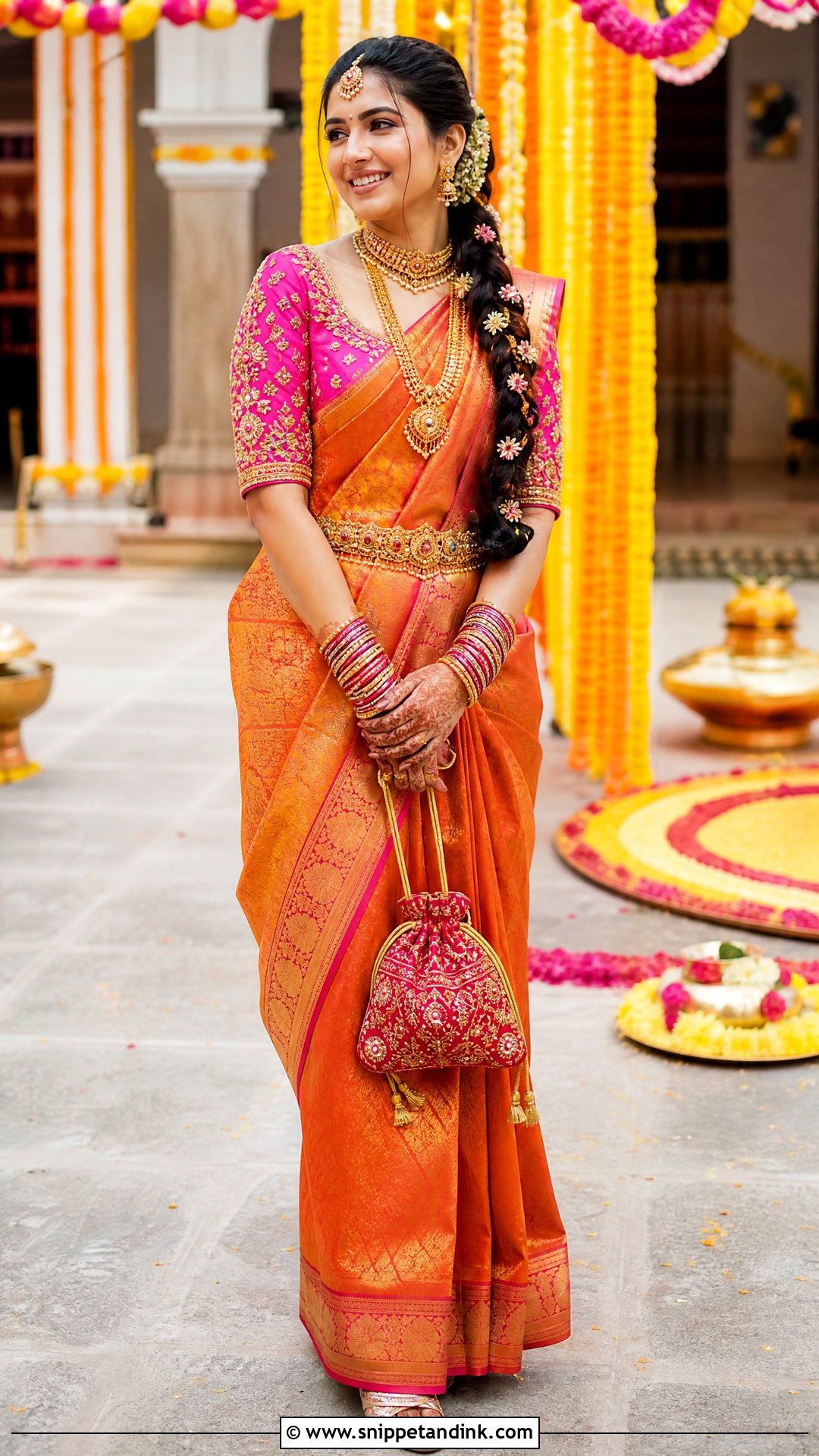
Mirrors bring light and movement, and a little goes a long way. Begin with bright pink, orange, green or blue raw silk with a round neck and elbow sleeves. Set tiny round mirrors inside floral motifs along the cuffs and back neckline, each held with neat gold or tonal Aari stitches. A contrasting silk saree, gold jewelry, colorful bangles, a compact potli and a braid with flowers suit the celebratory feel. Leave generous plain space between motifs, as mirrors bounce camera flash and can compete with your makeup in close-ups. This one feels most at home at the mehndi or sangeet.
18. Bridal Aari Work Blouse With Scalloped Border
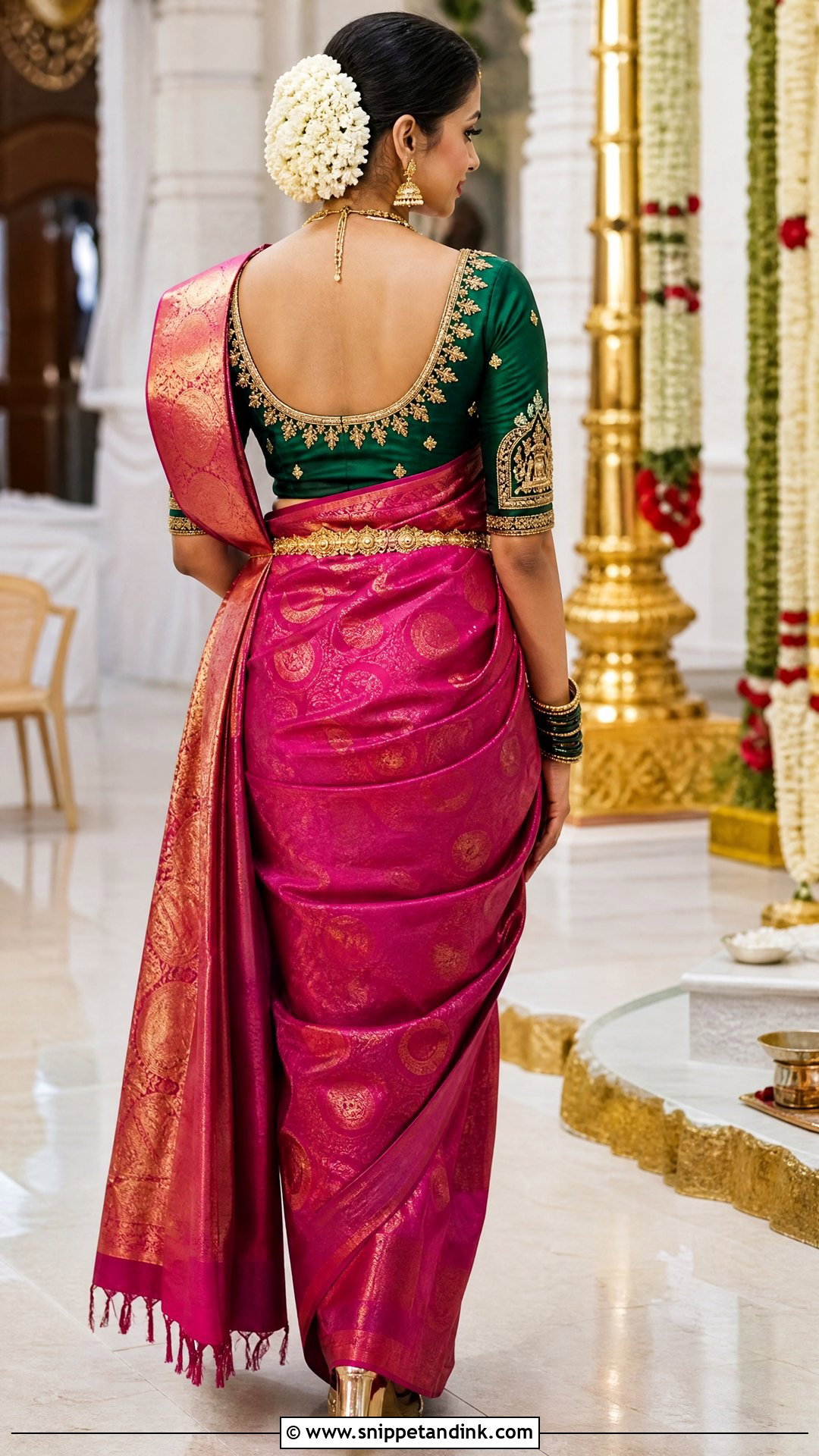
A scalloped border softens the neckline and sleeves without needing any motif at all. Choose a plain silk in maroon, emerald, purple, red or rose pink. Ask for small, consistent scallops outlined in gold zari, with a bead or pearl inside every second curve. A wide U back shows the border, and elbow sleeves give room to repeat it. Pair pearl details with a pearl choker, or gold beads with temple jewelry, along with a gold-bordered saree, a floral bun and bangles. Spacing is everything on this pattern. Uneven scallops look homemade, so I ask to see the tracing laid flat before any stitching begins.
19. Contrast Bridal Aari Work Blouse With Silk Saree
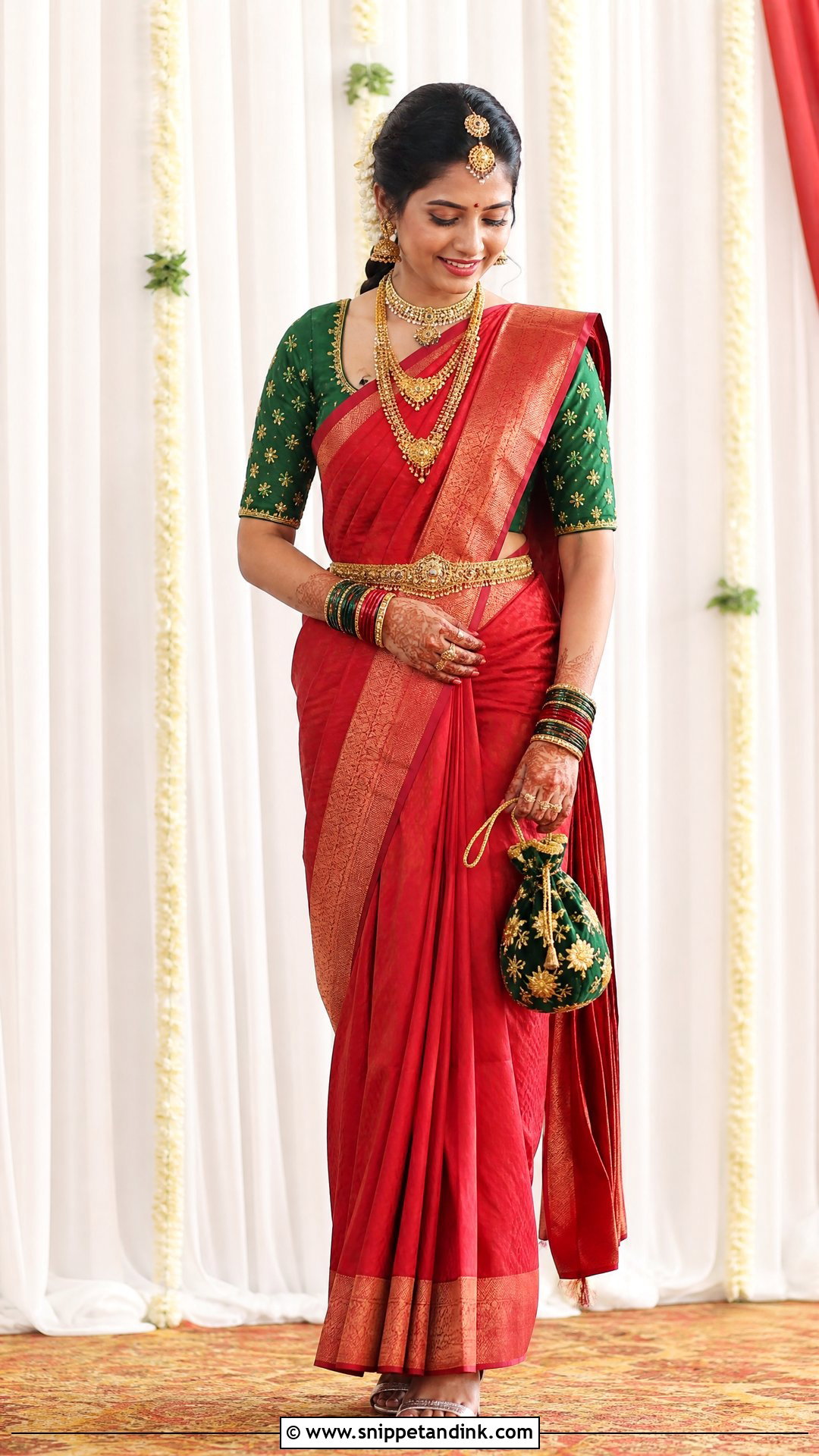
A contrast blouse can make an heirloom saree feel new. Pick one secondary color from the saree, such as the green in a red saree’s border or the maroon in a mustard pallu, and repeat it in the blouse’s Aari motifs. A round neckline, elbow sleeves and thin embroidered borders are a reliable base, with small florals or paisleys on the sleeves and a mostly plain bodice. Coordinated gold jewelry, two-tone bangles, a waist belt and a traditional braid complete it. Always compare the fabric and thread samples directly beside the saree in daylight. Colors that match under shop lighting can clash outdoors.

20. Ivory Bridal Aari Work Blouse With Gold Zari
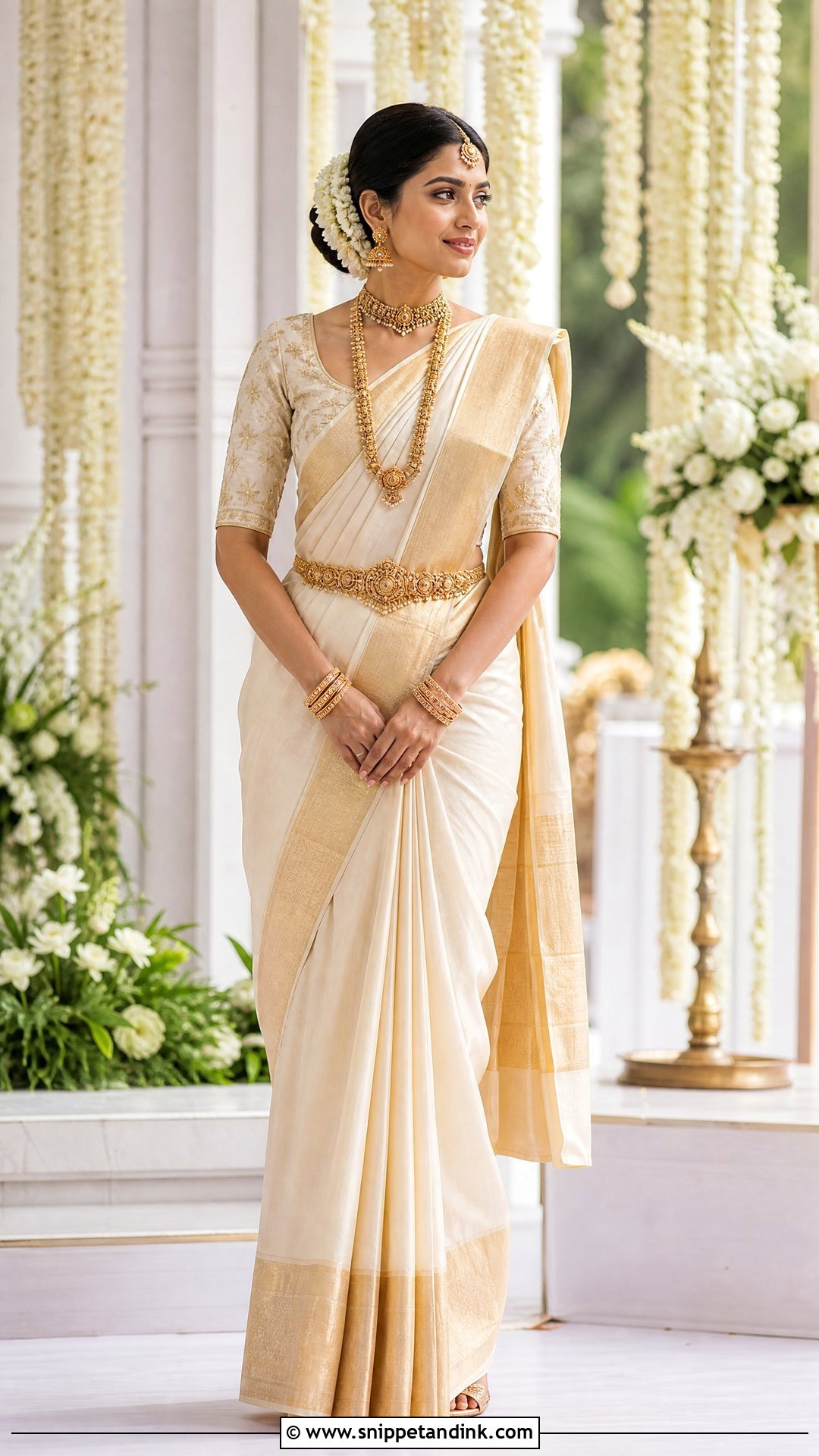
Ivory and gold read calm and ceremonial in daylight. Choose an ivory raw silk blouse with a modest round or boat neck and elbow sleeves, with fine gold Aari vines at the neckline and cuffs and a scattering of tiny pearls. Wear it with an ivory, cream or white saree with a rich gold border, plus traditional gold jewelry, a waist belt, ivory-and-gold bangles and fresh jasmine. A neat bun or long braid suits it. Pale fabric shows every flaw, so the lining has to be smooth and the stitching clean. I also match the gold thread to the saree’s zari, since yellow gold beside antique gold looks like a mistake on ivory.
Storing Zari So It Doesn’t Darken Before the Next Festival
An embroidered silk blouse lasts for years if you treat it gently, and it’s the zari and the stones that need the most care.
Right after the wedding
Air the blouse inside out for a day before putting it away, since sweat left in silk weakens and stains the fabric. Take it to a dry cleaner who handles embroidered silk rather than washing it at home. Spray perfume before you dress, not onto the blouse, because alcohol and moisture dull metallic thread.
Long-term storage
Wrap it in soft cotton or muslin, never plastic, with tissue folded over the embroidered areas so stones don’t press into the silk. Fold it loosely along plain sections rather than across the embroidery, and refold it in a different place every few months. Keep it away from damp walls; humidity is what turns zari dark and spots silk.
Start With the Saree Border, Then Draw the Blouse
A well-planned blouse ties the whole bridal outfit together. Light embroidery can be just as memorable as dense work: floral vines, lotuses, paisleys, temple borders, pearls and small stones give plenty of detail without the weight. Decide on the design by looking at the saree border, your jewelry, the neckline, the sleeve length and how comfortable you’ll be through long rituals. Ask your embroiderer for a fabric sample and a full motif tracing before the work starts. A simply embroidered Aari blouse is also one you’ll actually wear again with other festive sarees.
You'll Like These Ideas:





Leave a Reply