
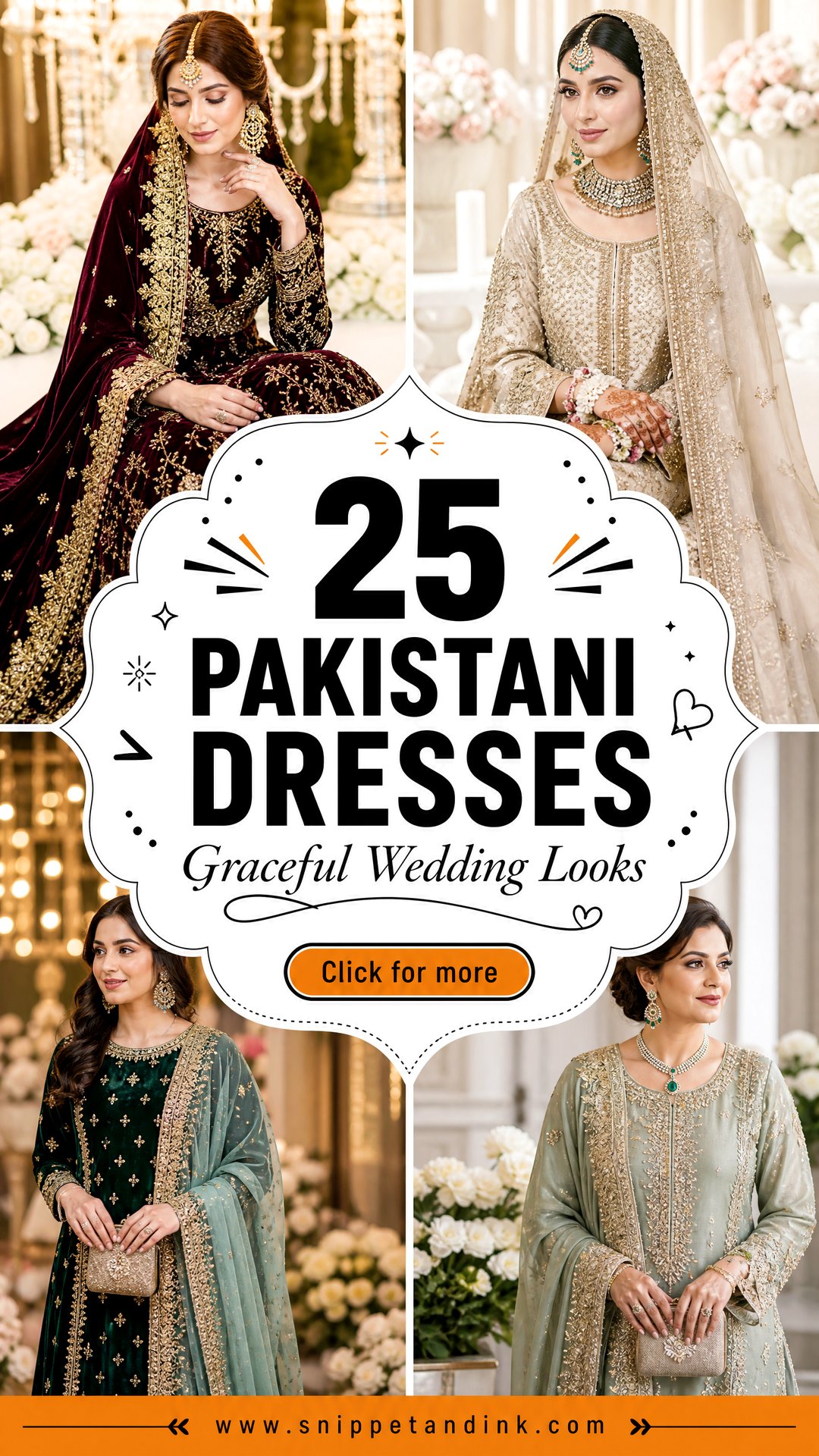
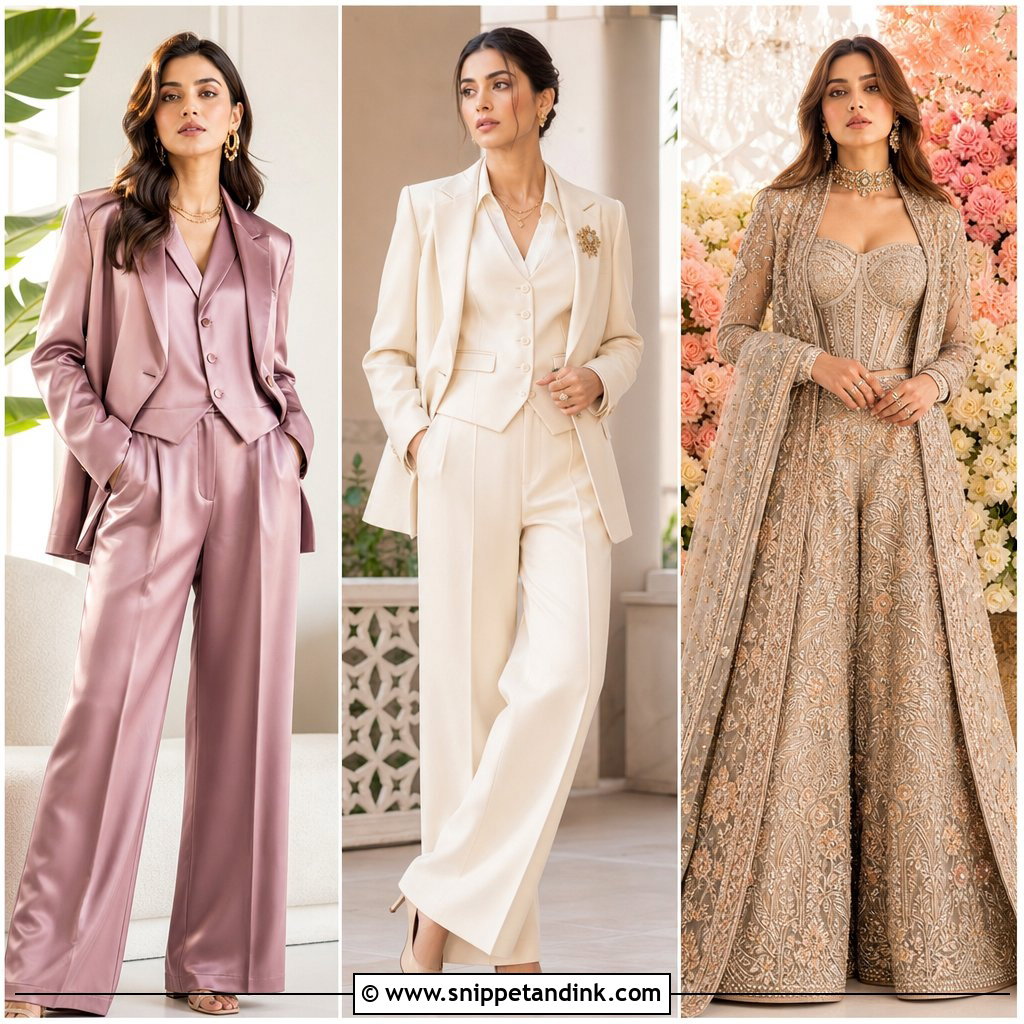
Every function at a Pakistani wedding has its own dress code, even if nobody writes it down. Mehndi is colour and movement. Nikkah is soft and composed. Baraat is the grandest night, and walima calms back down into pastels and fine work. I dress brides, close family and guests for all of them, and the outfits that work best are the ones chosen for the function and the person wearing it, not just the hanger. Lighter embroidery, softer colours, structured shapes and pieces you can wear again are what most clients ask me for now. Below are 25 looks, from the bride’s red lehenga to a guest’s chiffon suit, with fabric, colour, jewellery, shoes and dupatta setting for each.
Reading the Dress Code When Nobody Spells It Out
Pakistani wedding invitations rarely say what to wear, so the clues come from elsewhere. The venue is the first one: a marquee or banquet hall at night calls for more work than a home dholki. The time is the second: daytime functions suit lighter fabric and softer colour. The third is your place in the family, and that matters more than people think.
- Bride: the heaviest work of the event, especially at baraat.
- Immediate family and bridesmaids: rich but clearly a step below the bride.
- Extended family: festive, medium embellishment.
- Friends and colleagues: formal suits, light lehengas, elegant pastels or jewel tones.
If you’re still unsure, ask someone in the family what they’re wearing. It’s a normal question, and it’s far easier than turning up in the same shade as the bride.
1. Red Pakistani Bridal Lehenga
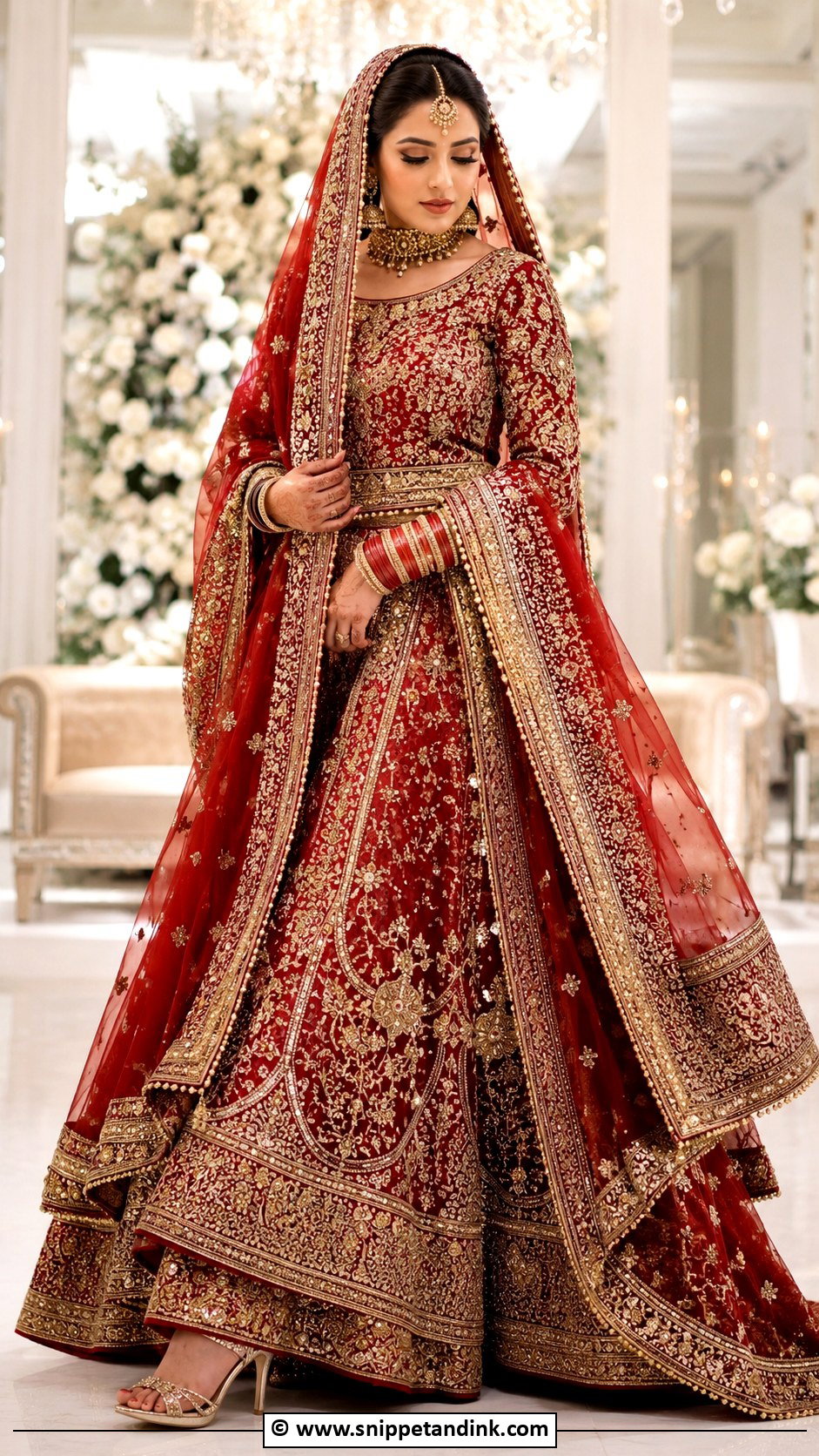
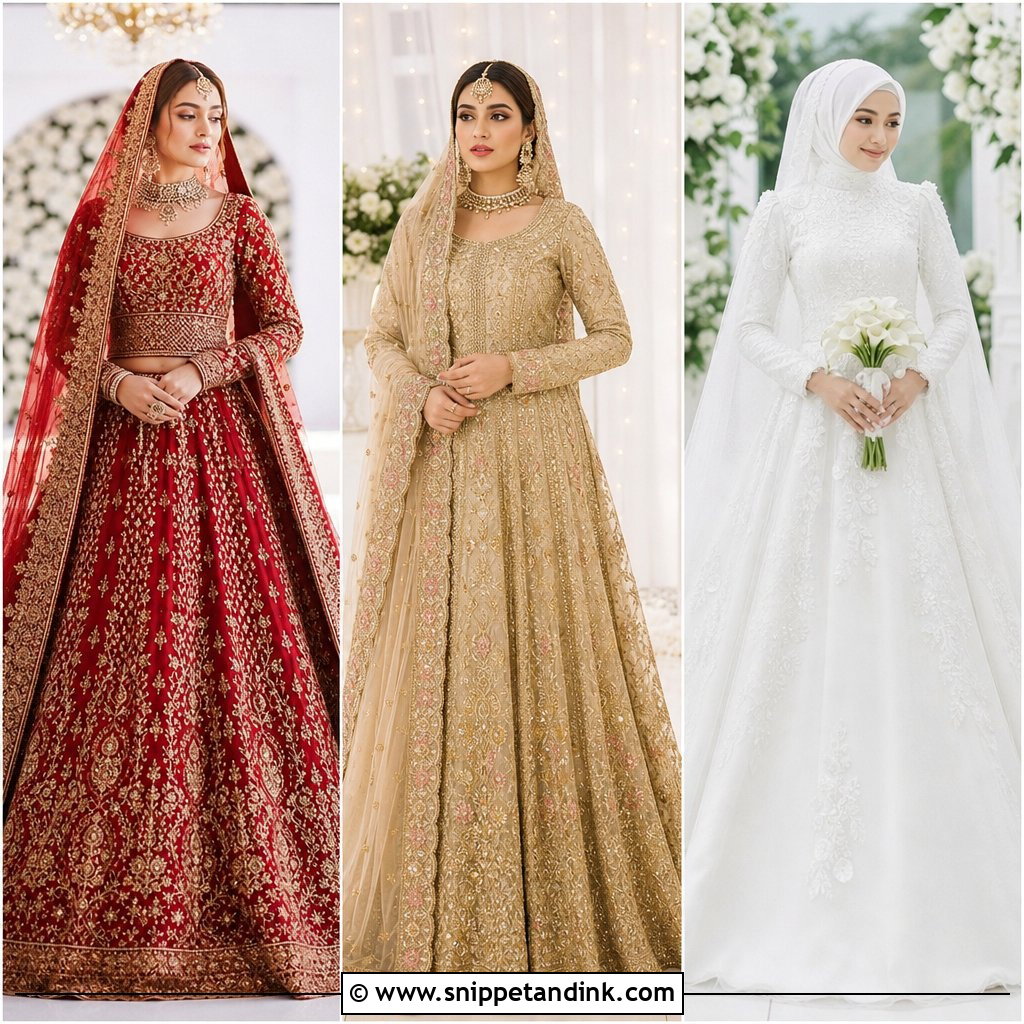
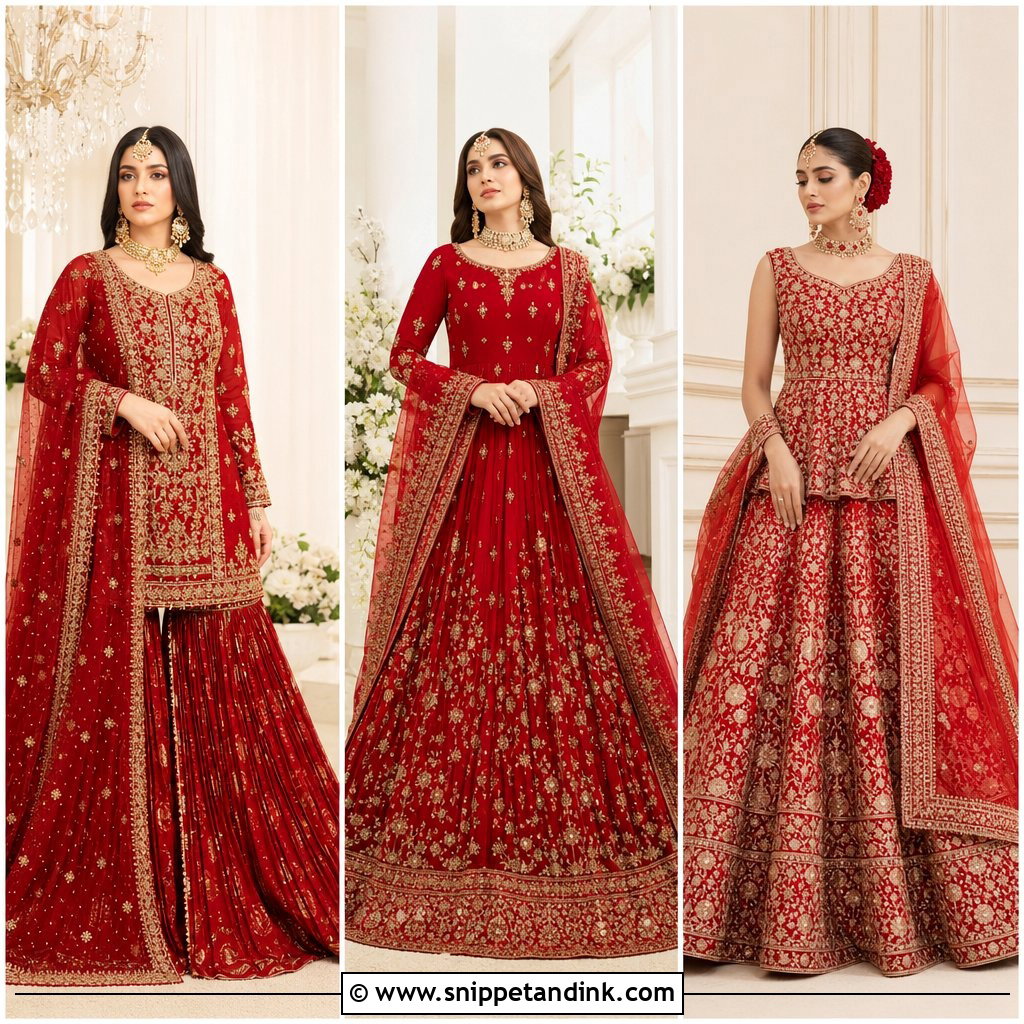
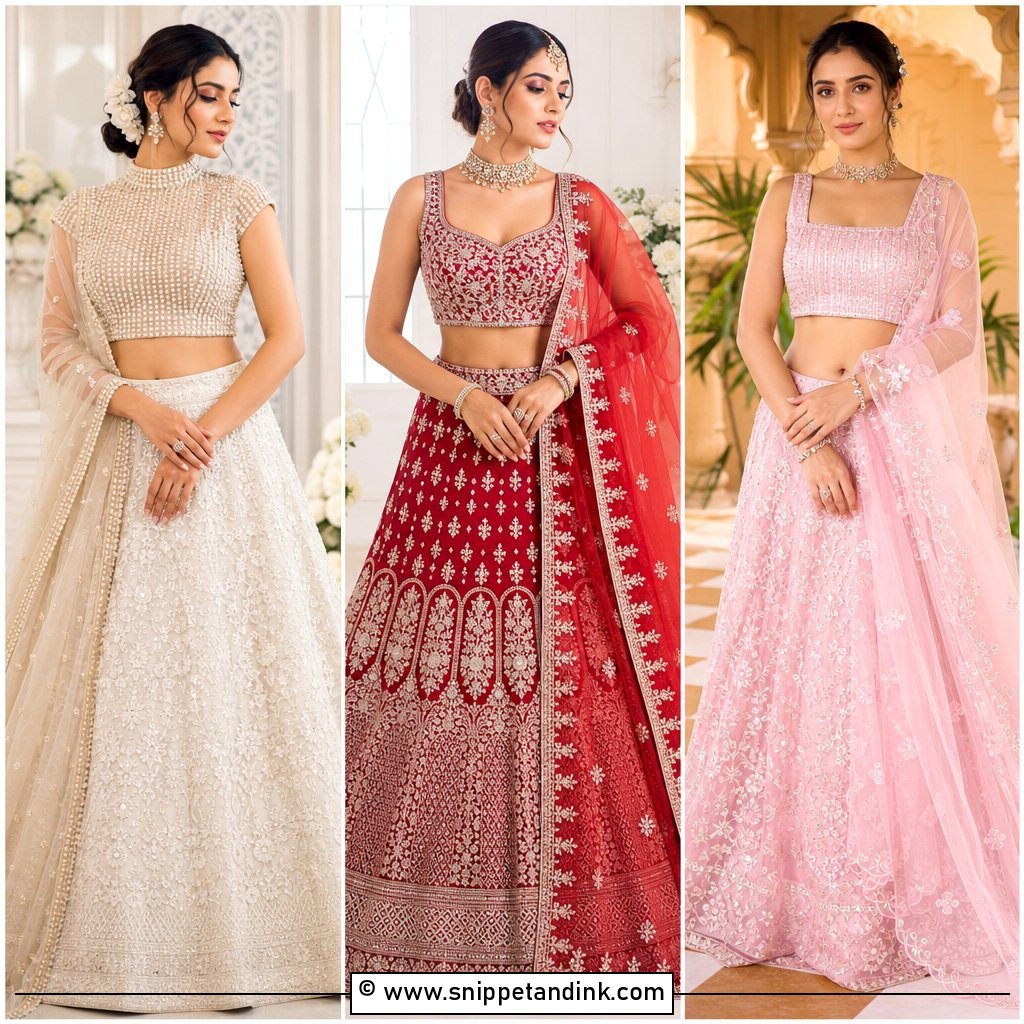
Red is still the baraat colour most brides come back to, and for good reason. Deep red or maroon with zari, dabka, sequins or threadwork reads as bridal from across a hall. Before you commit to a shade, see it under warm hall lighting and with a camera flash; a bright tomato red can turn orange on stage, while a deeper maroon stays rich. A heavy bridal lehenga can weigh a lot, so I ask brides to wear it for a full hour at the final fitting. Matching blouse, heavily bordered dupatta over the head or one shoulder, gold choker, jhumkas, matha patti and bangles. Embellished block heels or khussas, and defined soft-glam eyes with a balanced lip.
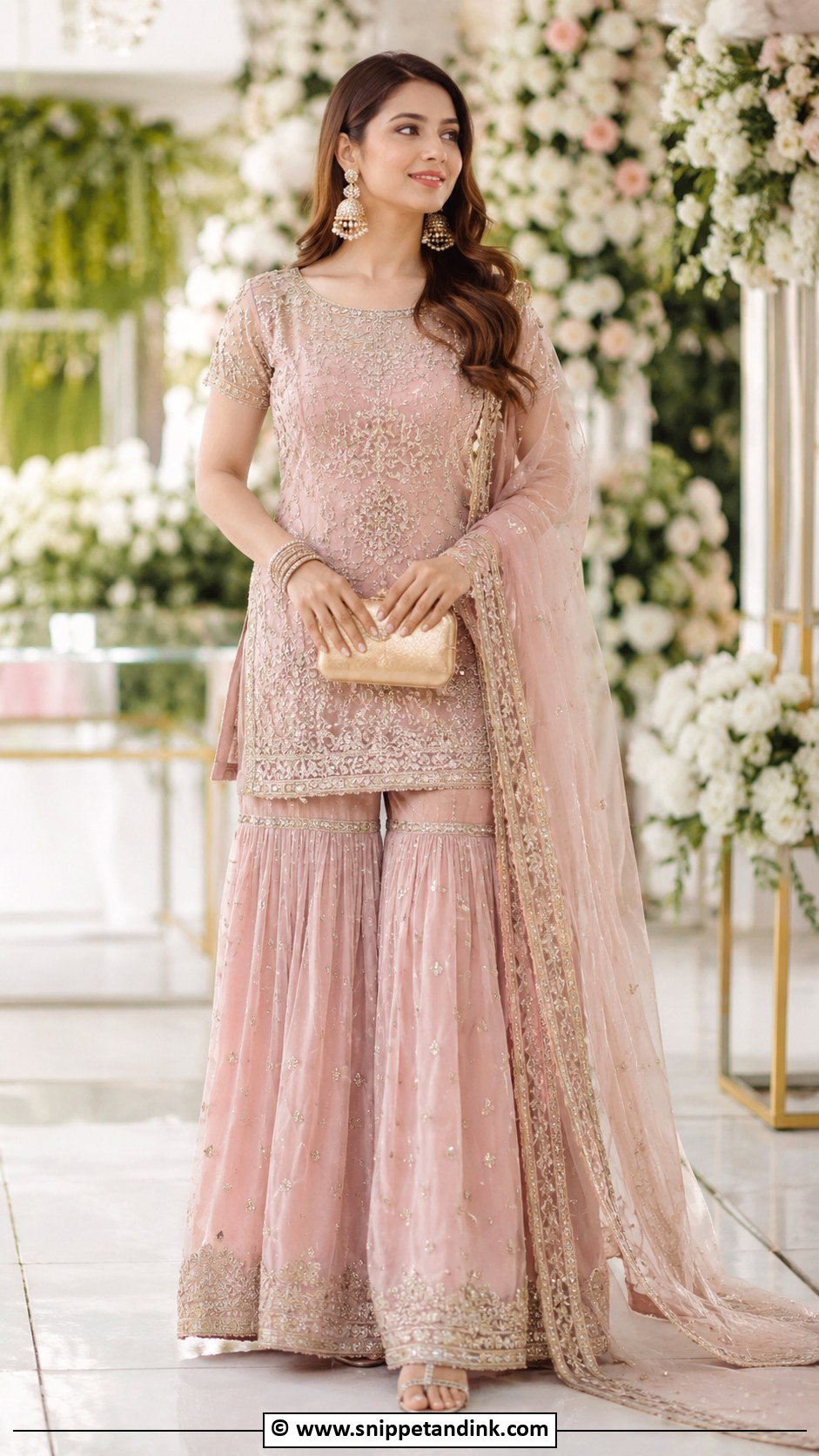
2. Pakistani Gharara Dress For Wedding
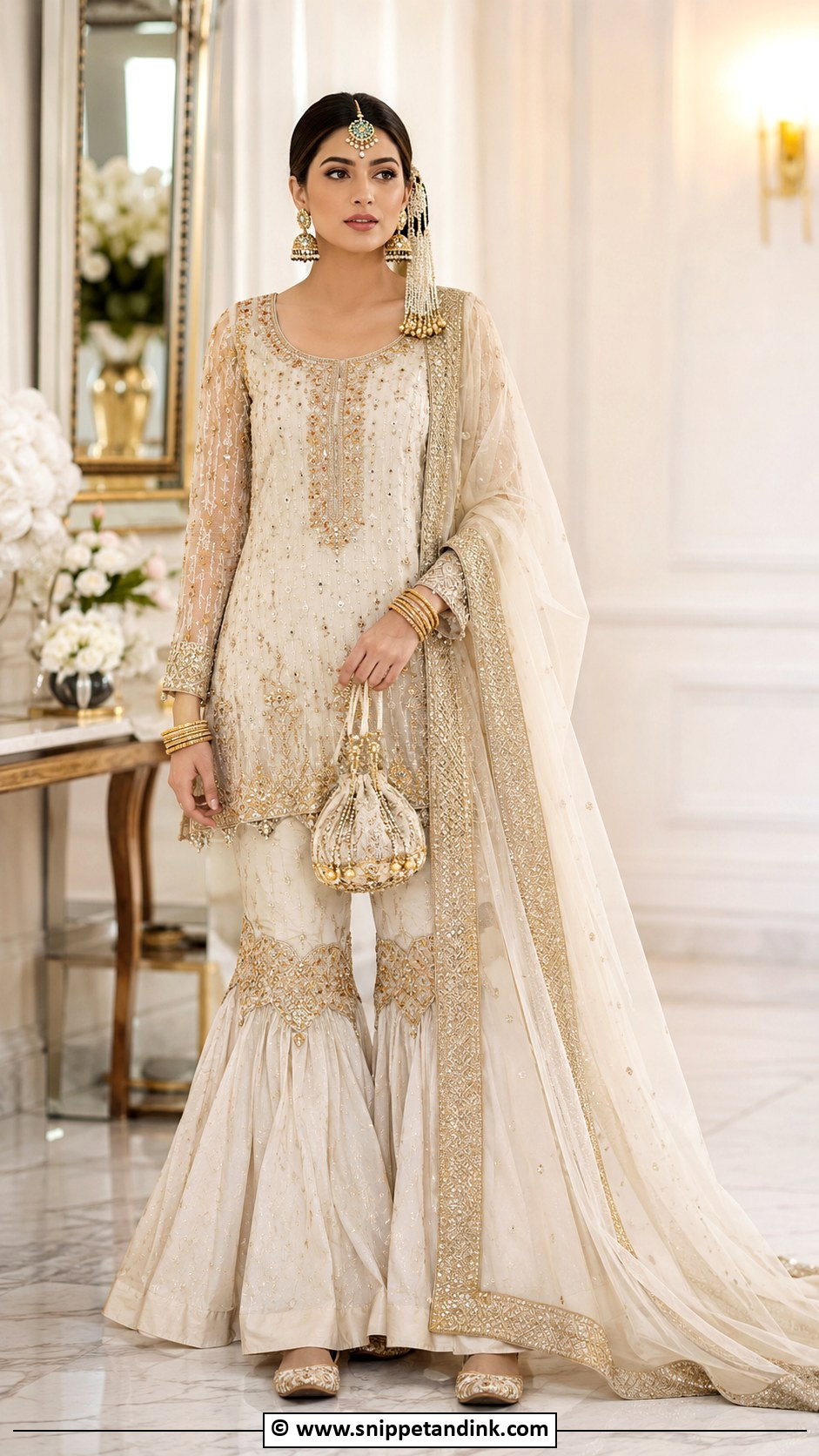
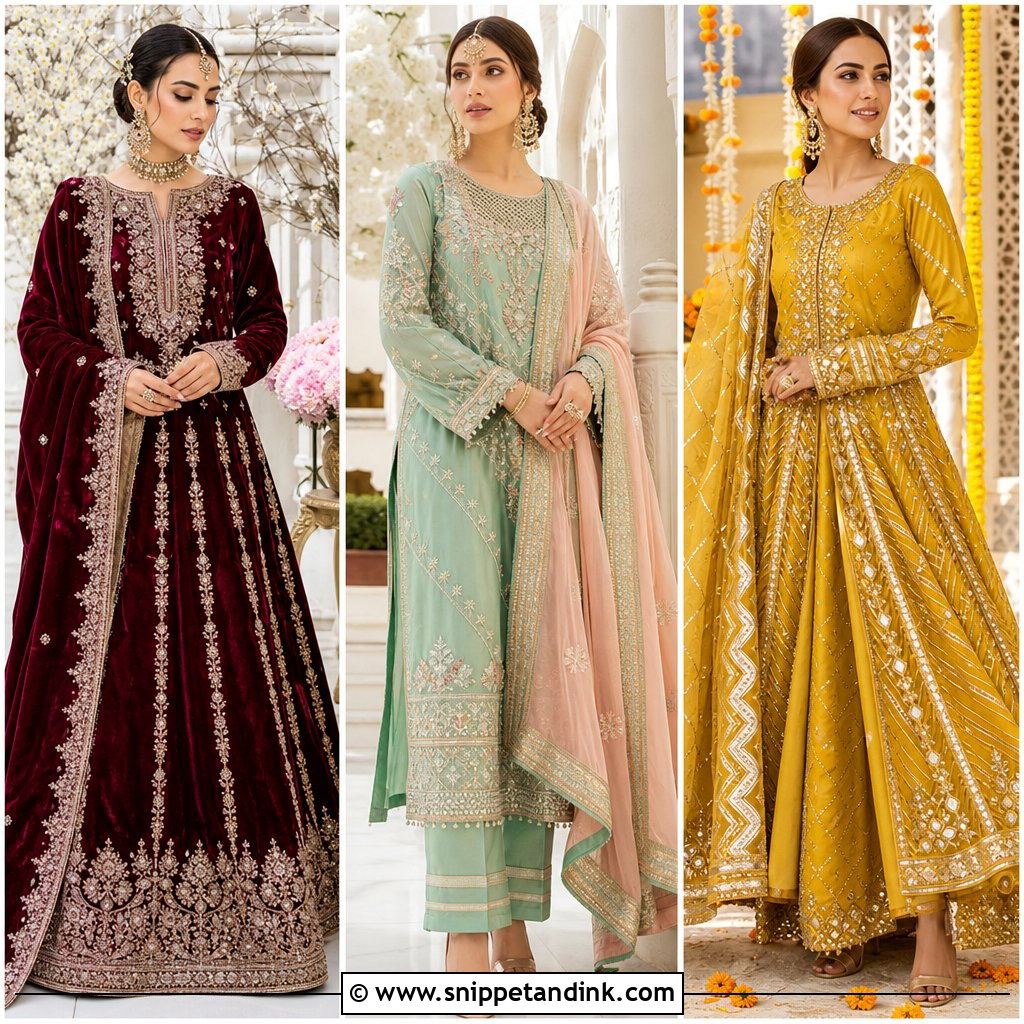
Gharara has an old-world shape that never feels like a costume: fitted to the knee, then flaring out, under a short or mid-length kameez. Ivory, gold, green, blush or maroon with gota, zardozi or mirror detail all suit it. The flare comes from the number of panels below the knee band, so ask how many kalis are in the bottom half; skimpy ones hang flat. A dupatta over both shoulders or lightly on the head, jhumkas, a passa and stacked bangles, with pointed khussas or embroidered heels. Mehndi, nikkah and family weddings all suit it, as do bridesmaids going traditional.
3. Pakistani Sharara Dress For Wedding
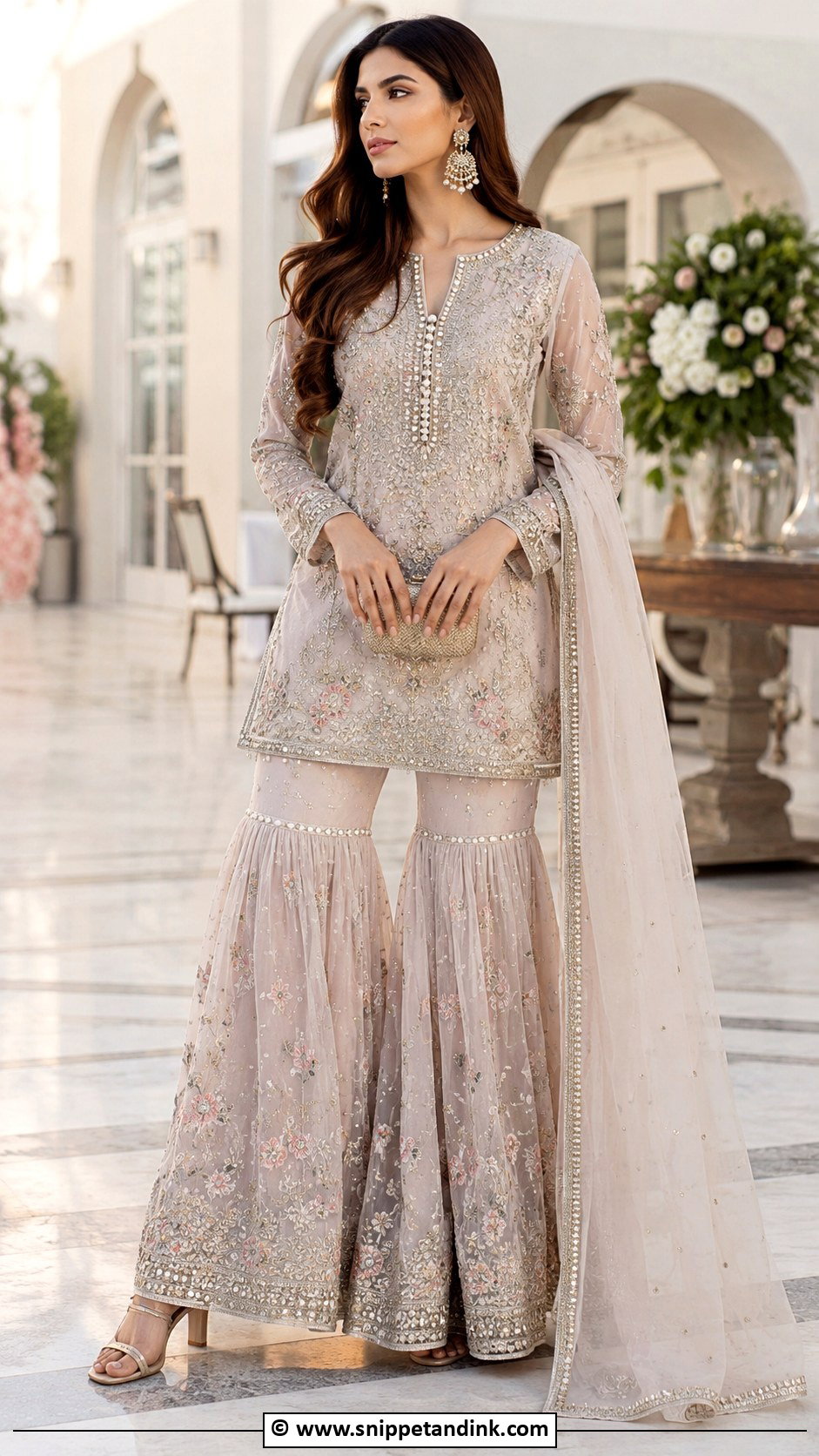
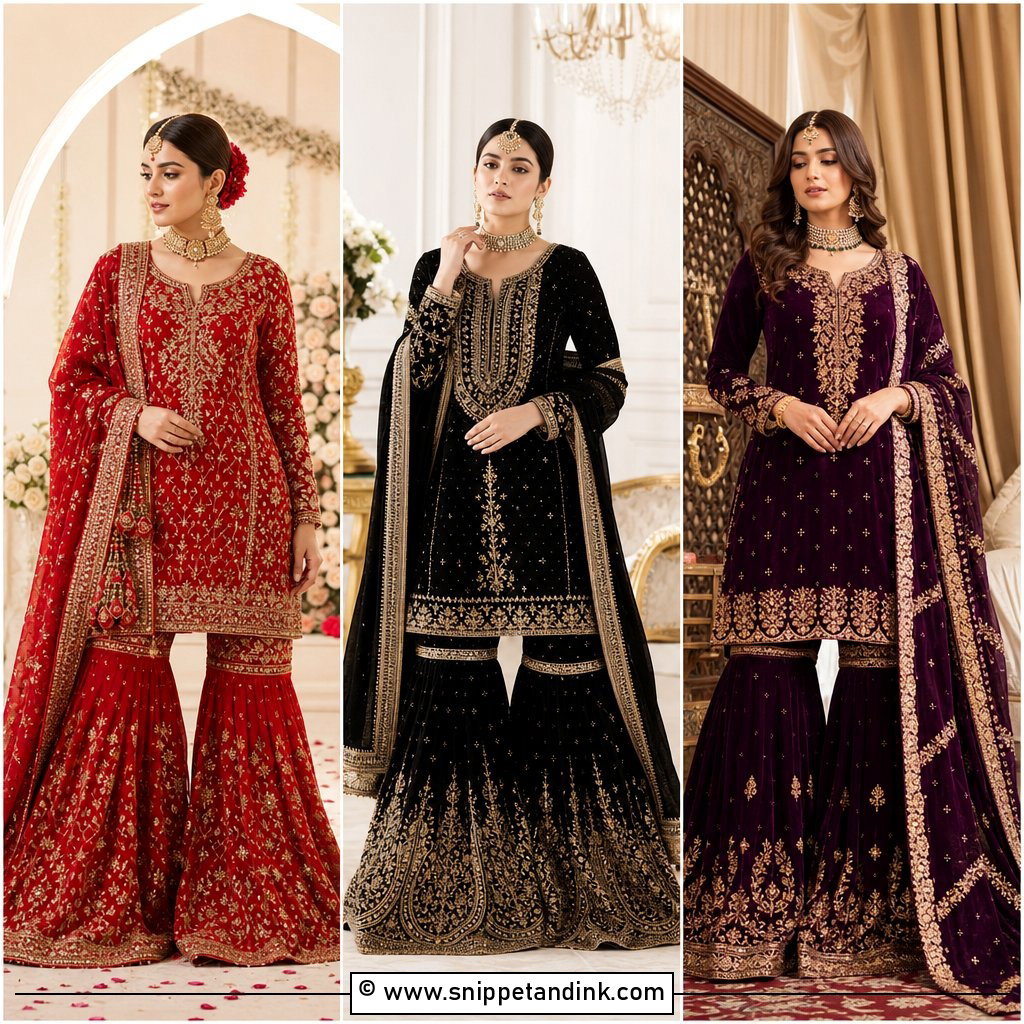
Shararas give you volume without the weight of a lehenga, which makes them easy to wear through a long event. A short embroidered shirt over flared sharara and a light dupatta is the classic set. I always check the sharara lining. Unlined chiffon or net legs look fine in daylight and turn see-through under stage lights. Pastels for day, jewel tones for evenings. Mehndi suits yellow, green, coral or orange with mirror work; walima suits champagne, powder pink, mint or silver. Statement earrings, soft curls and a clutch.
4. Pakistani Pishwas Dress For Wedding
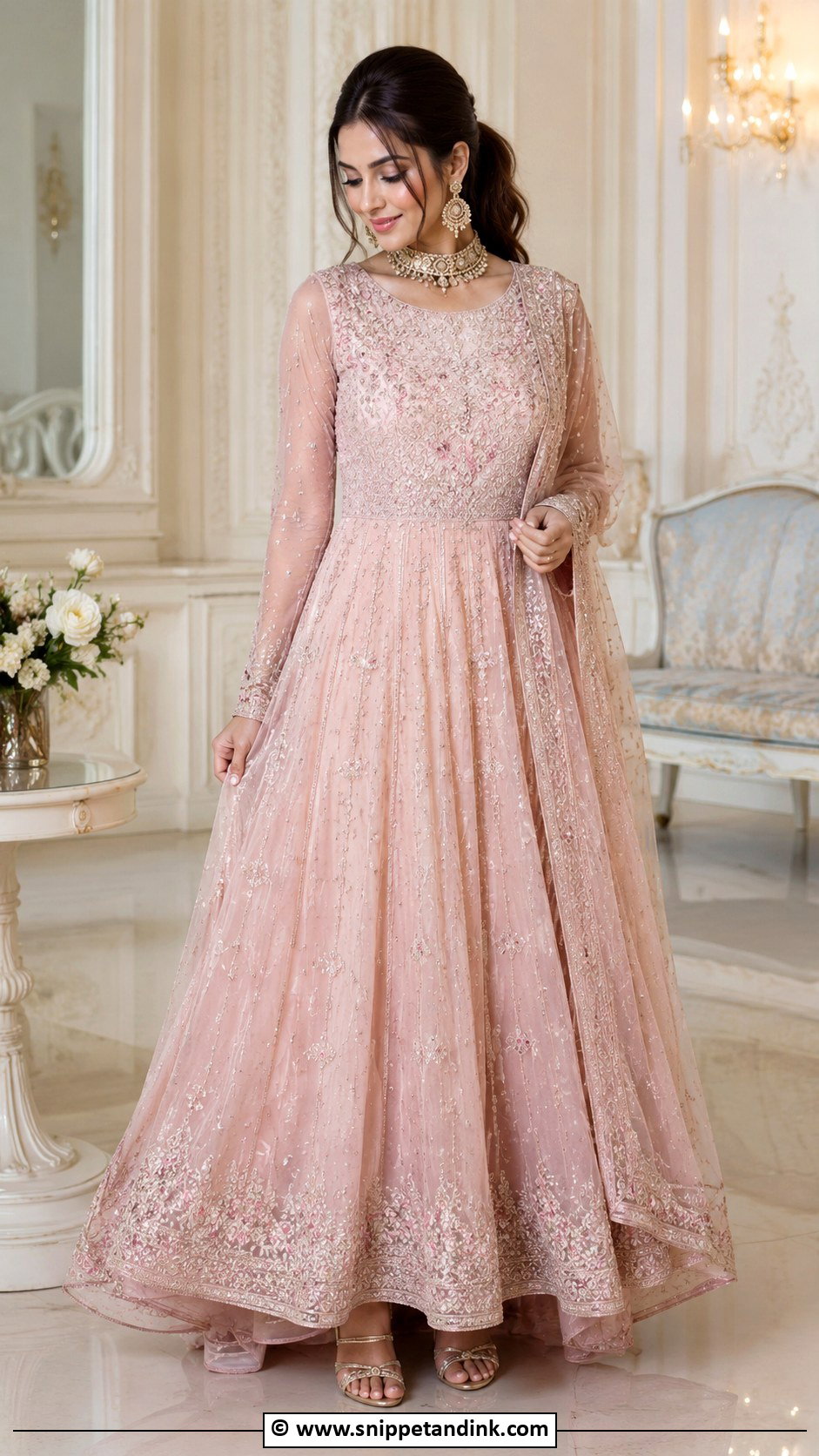
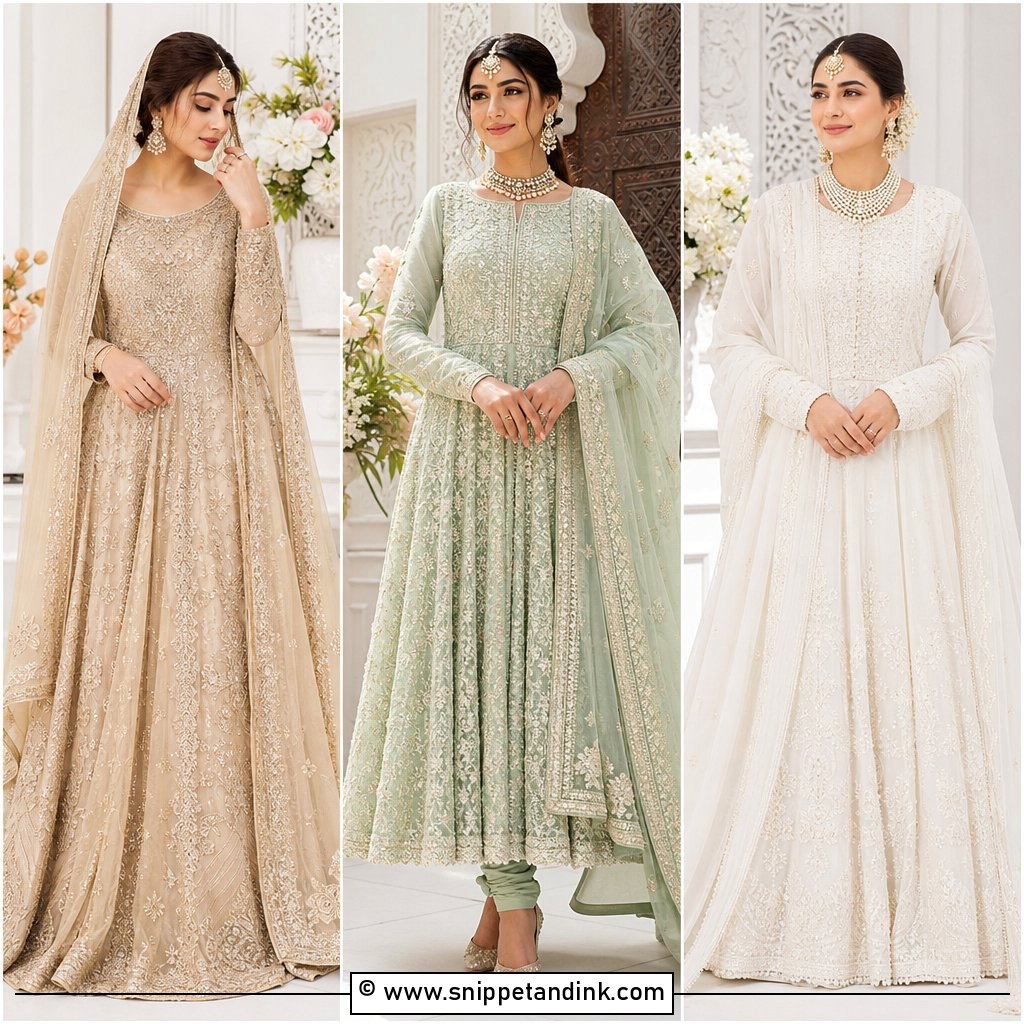
A pishwas flows from a fitted bodice into long flared panels, and it suits brides, sisters, and close guests equally well. Chiffon, net, organza or raw silk, with work on the bodice, sleeves, hem and dupatta border. A heavier embroidered hem helps a chiffon pishwas fall and swing; a plain hem tends to cling. Ivory, rose, peach and pistachio suit nikkah or walima; emerald, navy and maroon suit evenings. A sheer dupatta, a delicate choker, earrings and embellished heels.
5. Pakistani Anarkali Dress For Wedding
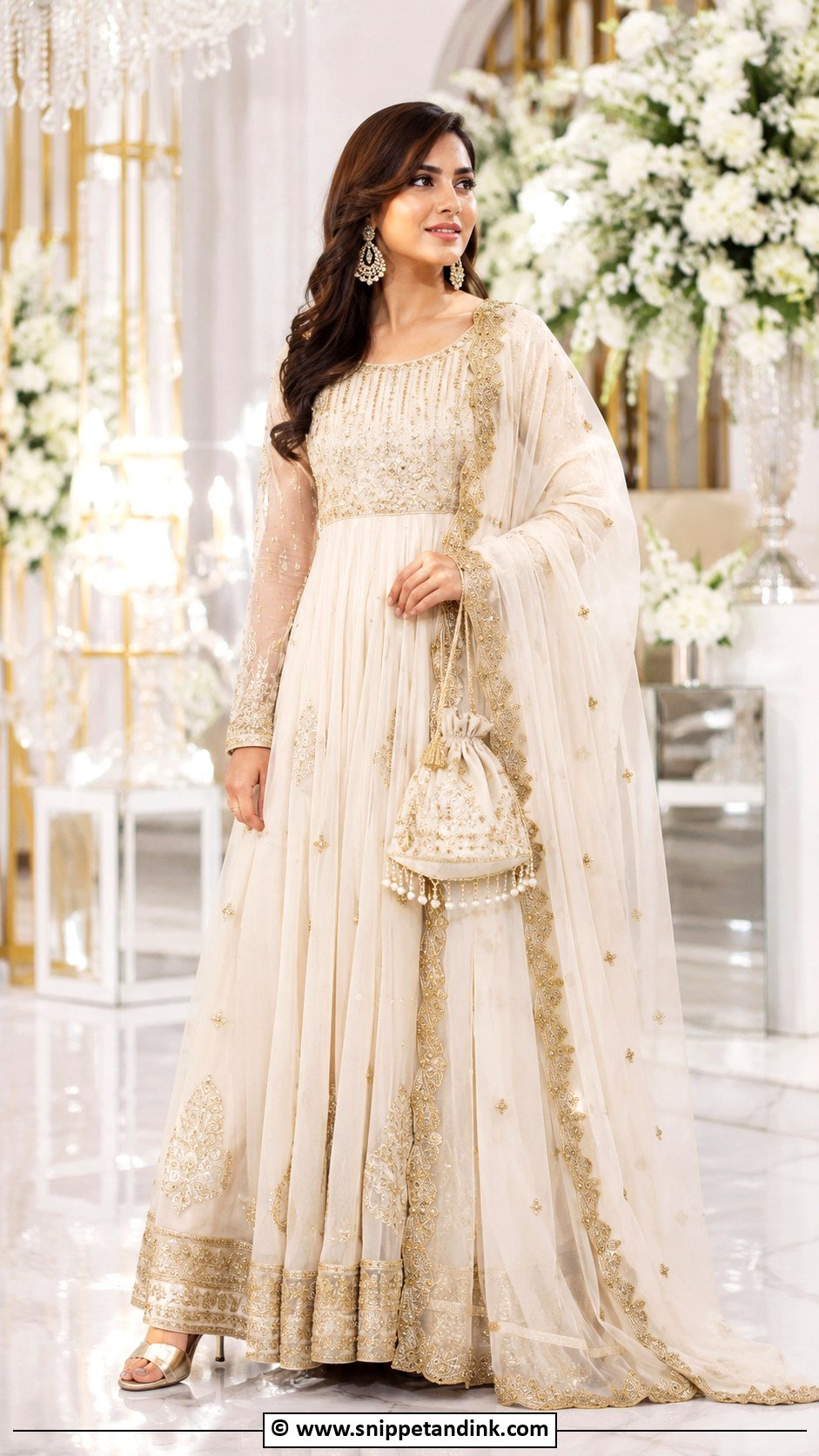
Anarkalis flow out from a high waist and lengthen the body, which is why they suit so many figures. A floor-length one with work on the neckline, sleeves and hem is formal enough for a wedding; a kalidar version with a chiffon dupatta and less embellishment is lighter. Gold, ivory, peach, dusty pink and emerald all work. If you wear it with churidar, have them cut long enough to gather at the ankle in neat folds; short churidar pull up when you sit. High heels, a potli, traditional earrings, and a sleek bun or soft waves.
6. Pakistani Maxi Dress For Wedding
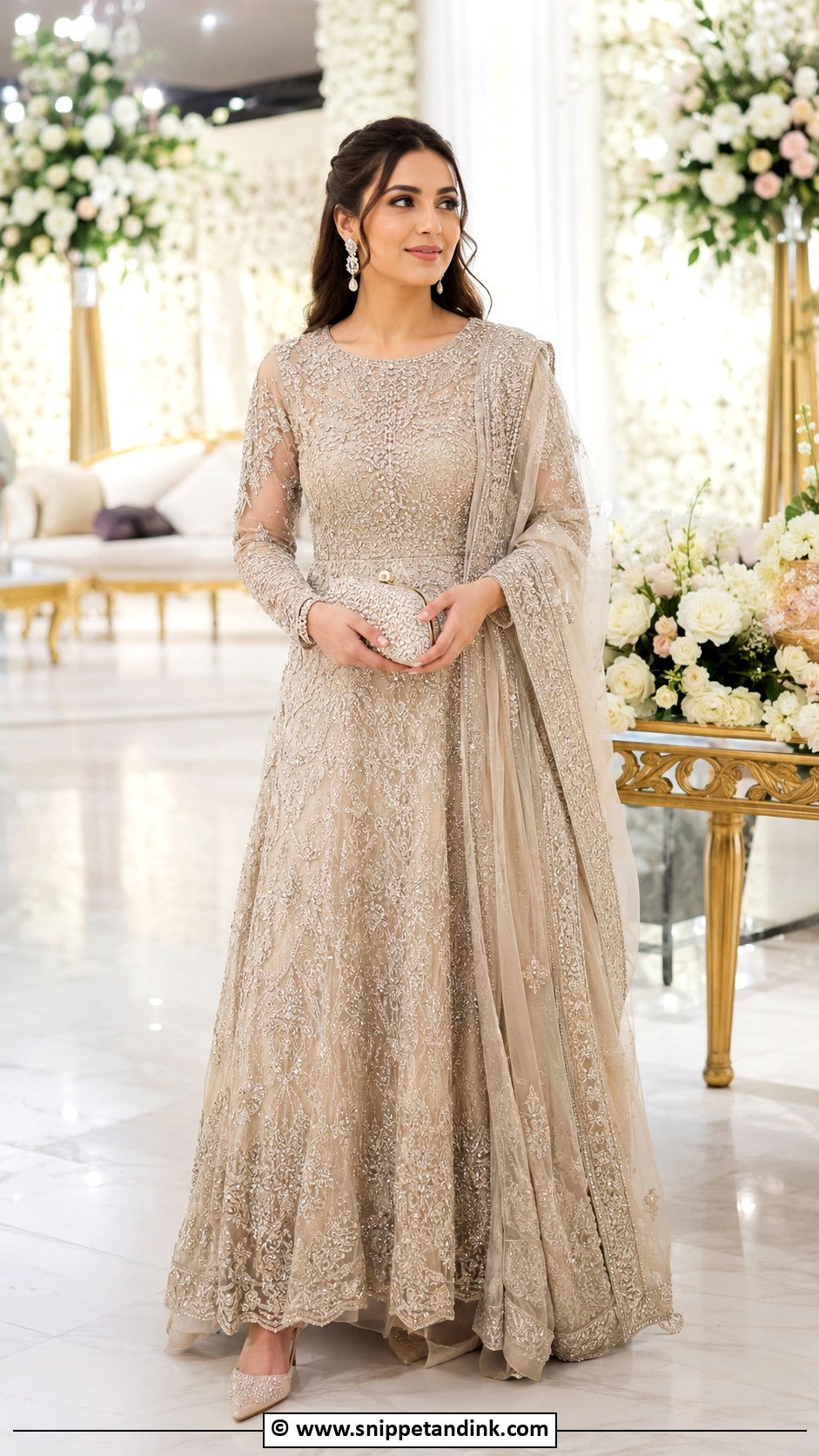
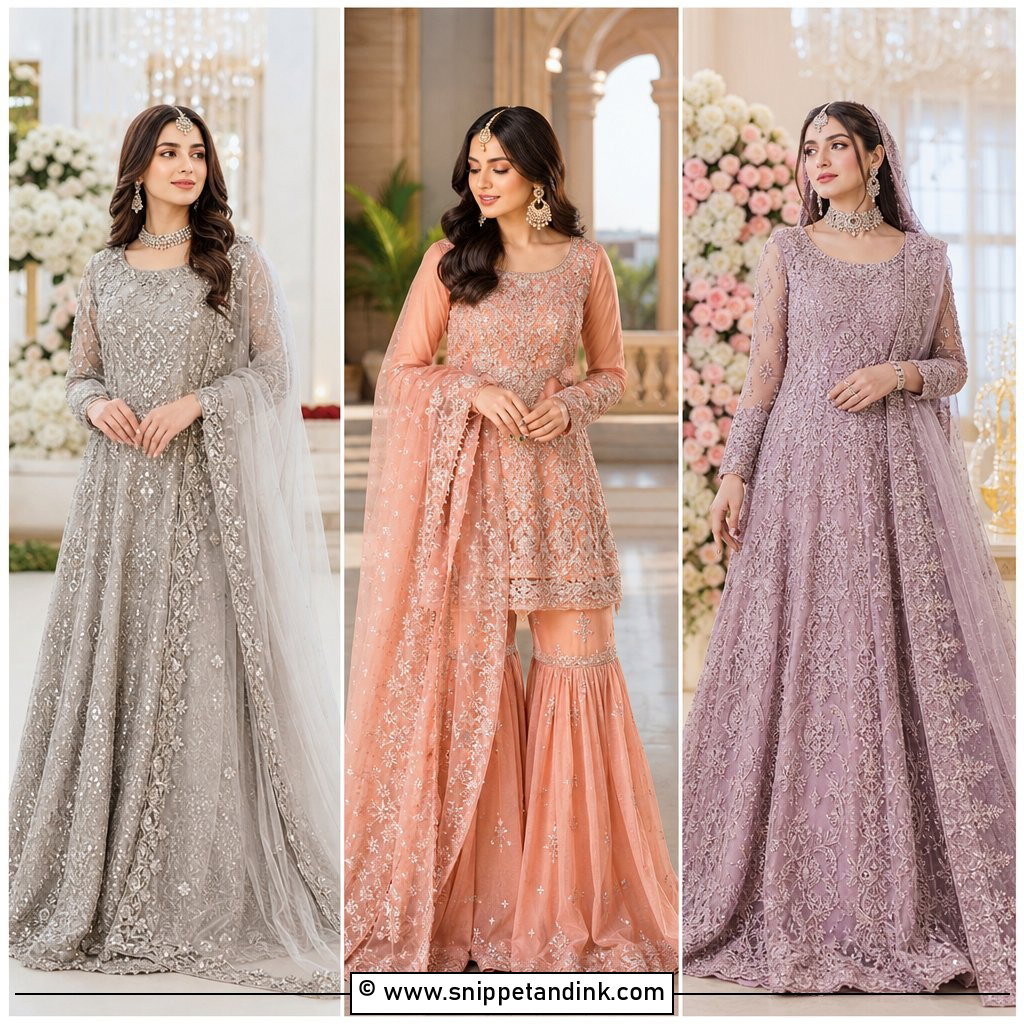
Styled with embroidery and a dupatta, a maxi sits comfortably between modern and traditional. Net, chiffon or organza in silver, blush, champagne, lilac or powder blue suits walima, engagements and receptions; plum, teal or maroon suits a night function. Net can scratch along the underarm seams over a long evening, so check that the inside is bound or lined. Delicate heels, a clutch, pearl or kundan jewellery, and a light dupatta so the maxi doesn’t feel bulky. Bridesmaids and guests both wear this well.
7. Pakistani Saree For Wedding
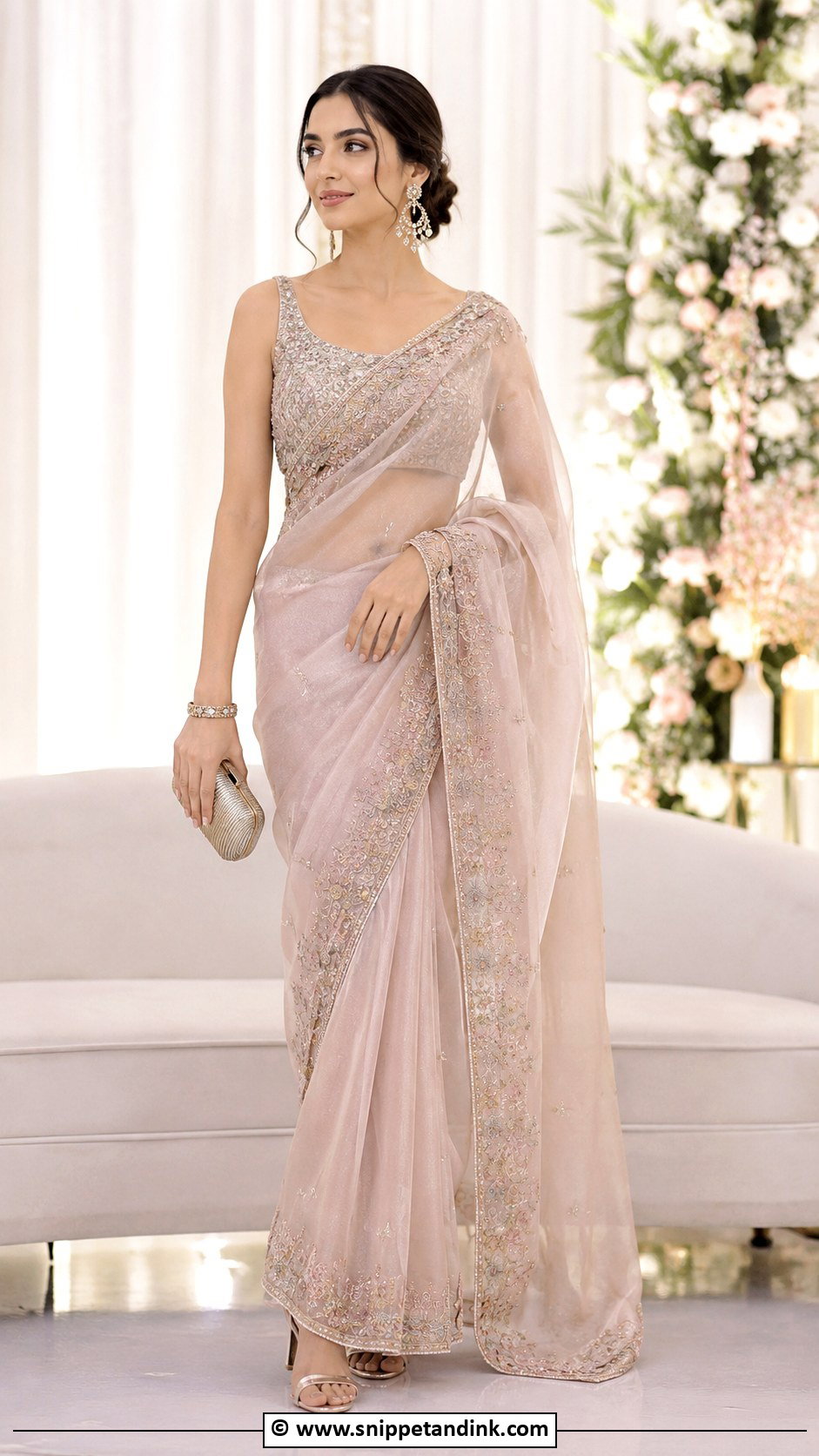
For receptions and formal evenings, a saree is sleek and graceful. Choose chiffon, silk, net or organza with an embroidered border and a properly fitted blouse. The blouse is a separate tailoring job, and it’s the part that decides how the whole saree looks; give it its own fitting. Pastels with pearls feel soft; deep green, navy or maroon feel dramatic. If draping is new to you, a pre-stitched saree keeps the pleats in place all night. Heels, a structured clutch, statement earrings and a low bun or sleek hair. For more coverage, a longer blouse or a cape layer works.
8. Pakistani Peplum Lehenga For Wedding
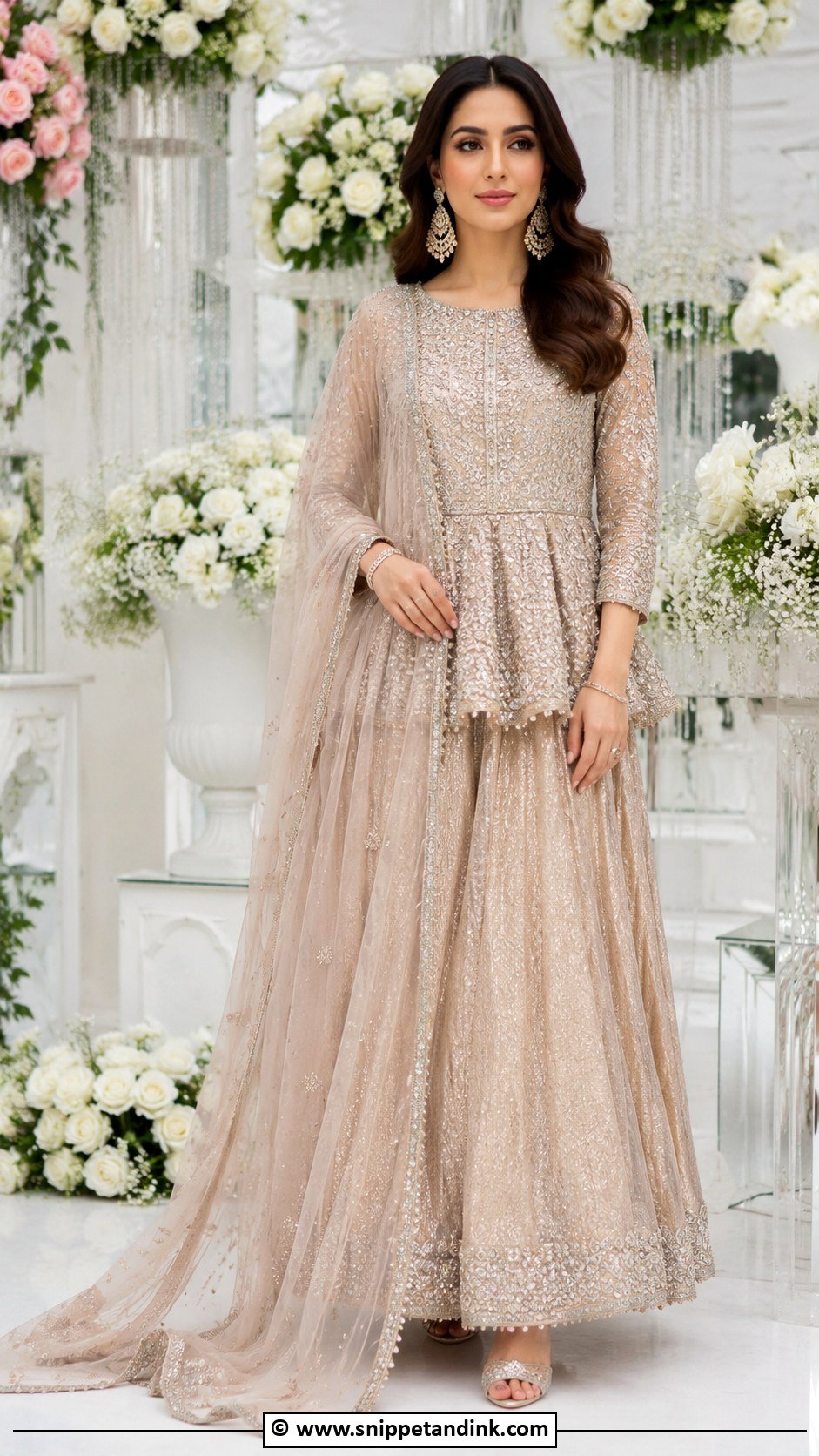
Peplum over lehenga gives structure and keeps the festive volume. A heavily embroidered peplum over a plain or lightly worked lehenga balances well; matching work on both pieces looks richer. Ivory, gold, rust, emerald and blush suit it. Peplum length matters with height: on a petite frame, a peplum ending at the high hip keeps the legs long, while a longer one cuts them short. A dupatta on one shoulder or pinned at the back, chandelier earrings, a bracelet and embellished heels. Bridesmaids and sisters wear this well at baraat or walima.
9. Pakistani Long Shirt With Lehenga
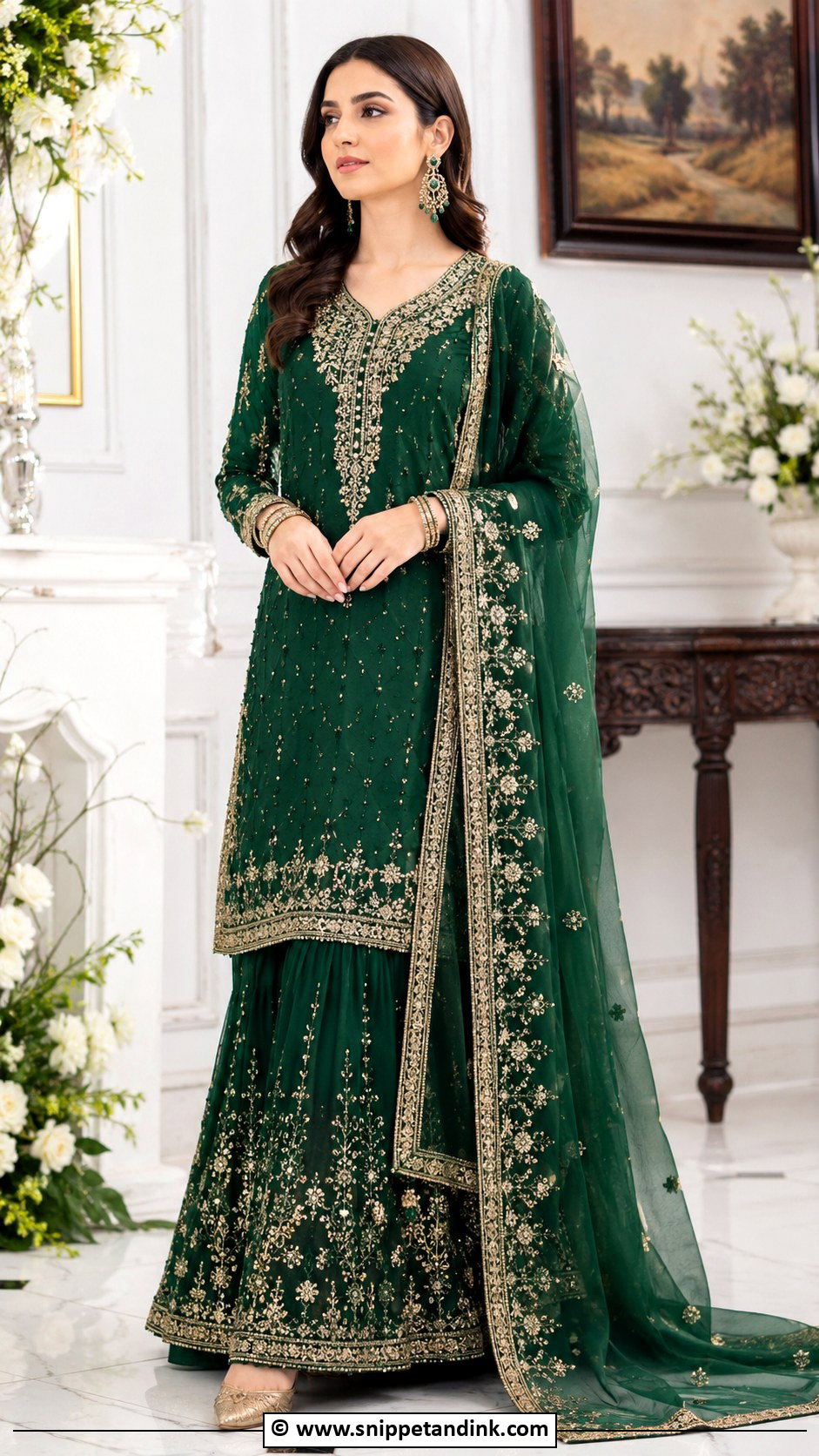
A long shirt over lehenga gives strong vertical lines and modest coverage while still feeling like a wedding outfit. The side slits decide how you move. Cut too low, they restrict your stride and pull the shirt tight across the hips when you walk. A long embroidered kameez over a flowing silk, organza or net lehenga with a heavy-bordered dupatta works for baraat, walima and formal family events. Ivory and gold, deep red, emerald, navy or soft pink. Pointed heels or khussas, earrings and bangles.
10. Pakistani Short Shirt With Gharara
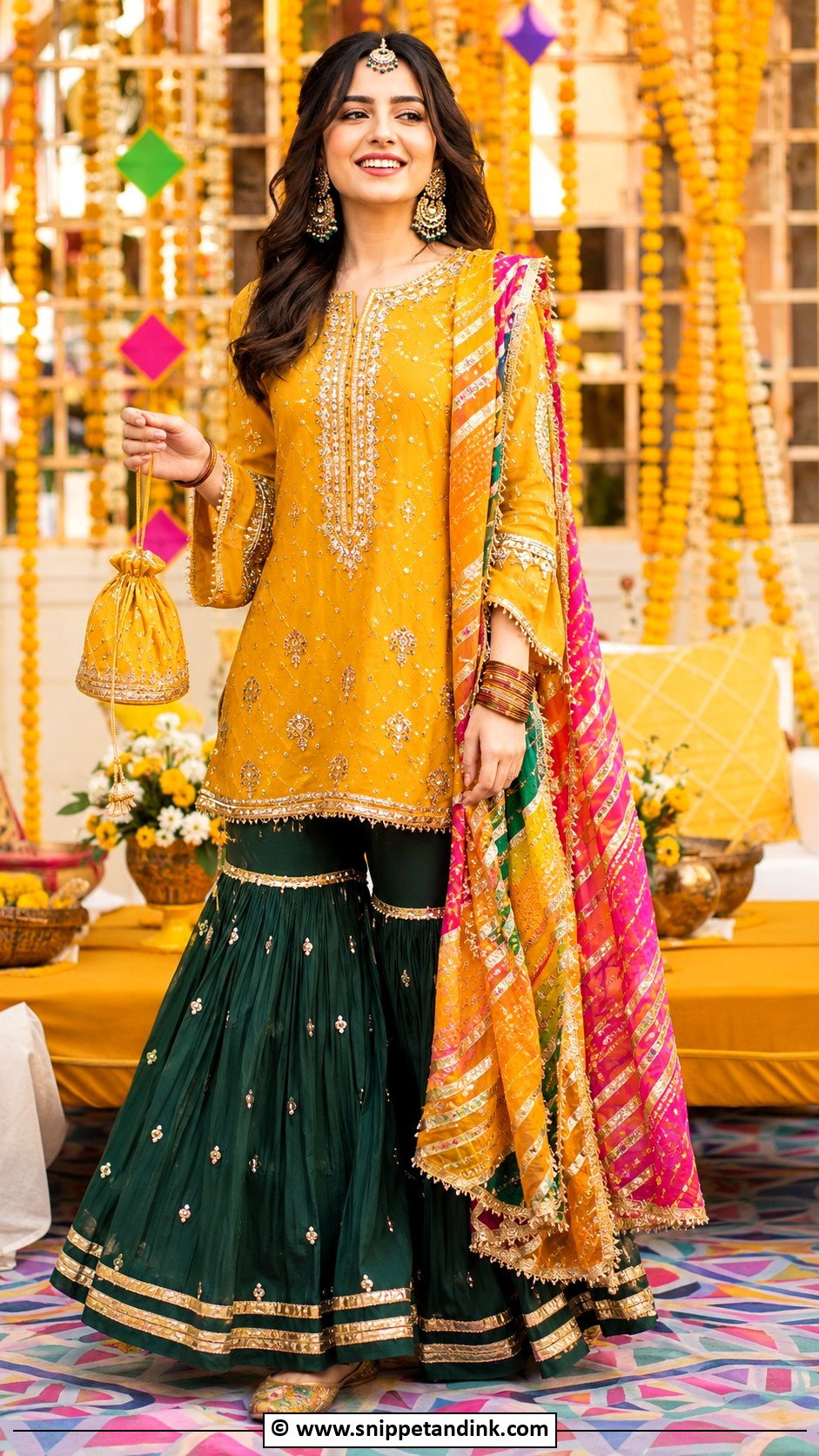
The short shirt with gharara shows off the flare and the knee detailing, and it’s youthful and easy to style. Mustard, green, orange or fuchsia with gota and mirrors suit mehndi; ivory, blush, champagne or mint suit nikkah and receptions. A lightweight dupatta with lace or embroidered borders keeps it balanced. Jhumkas, bangles and a potli. Khussas are the most comfortable shoe, and I’d always choose them for a night of dholki dancing.
11. Pakistani Angrakha Dress For Wedding
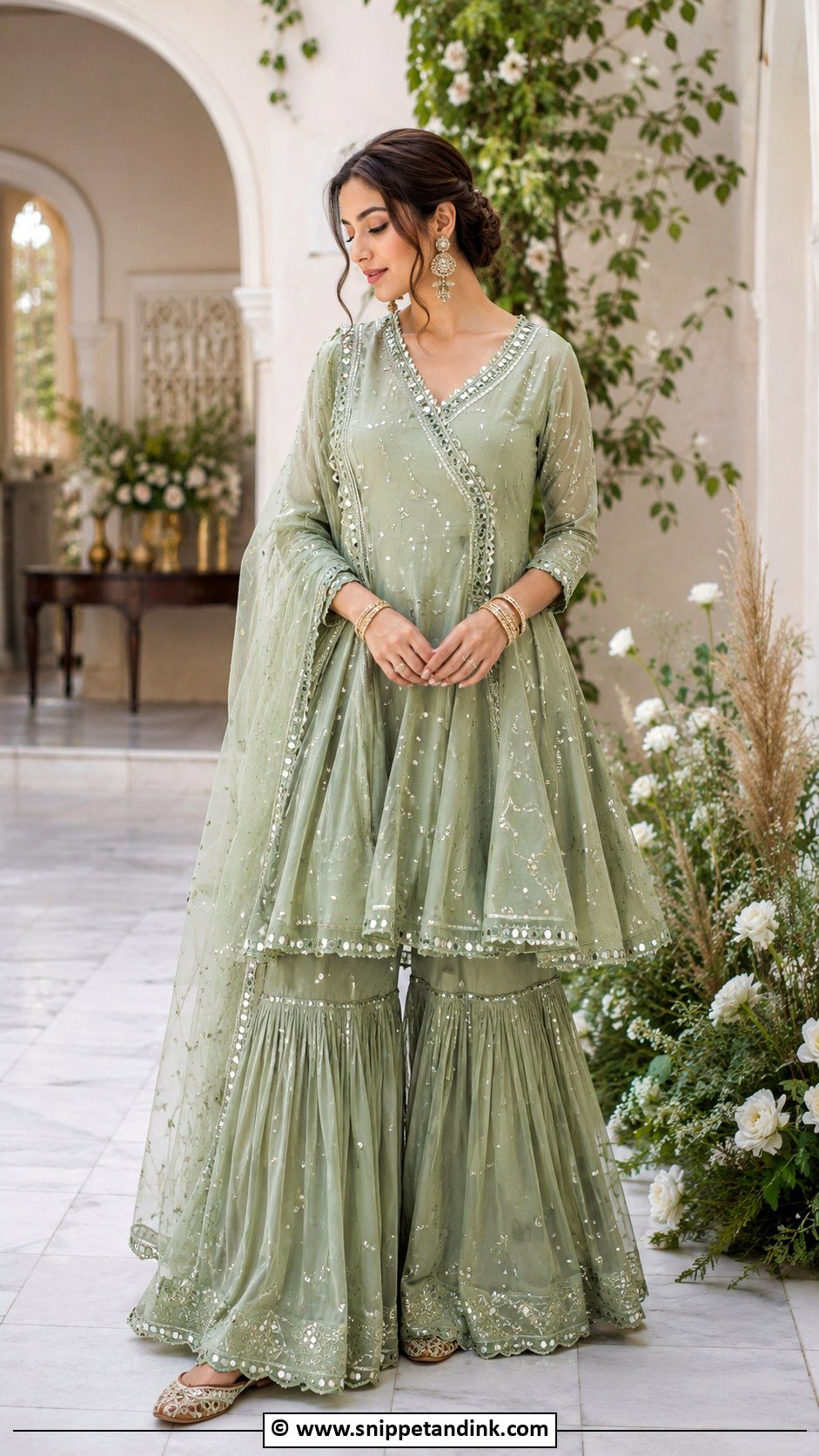
The angrakha’s overlapping front has a heritage feel, and it comes as a long frock, pishwas, or shirt over sharara, gharara or straight pants. Mirror work, gota, thread embroidery or fine zari depending on the function: bright colours for mehndi, ivory, gold, sage or blush for nikkah. The tie front is the accessory, so jewellery can stay simple. It flatters most when the flare starts right at the waist; a flare that starts lower makes the overlap look bulky. A soft dupatta, jhumkas and khussas.
12. Pakistani Velvet Dress For Wedding
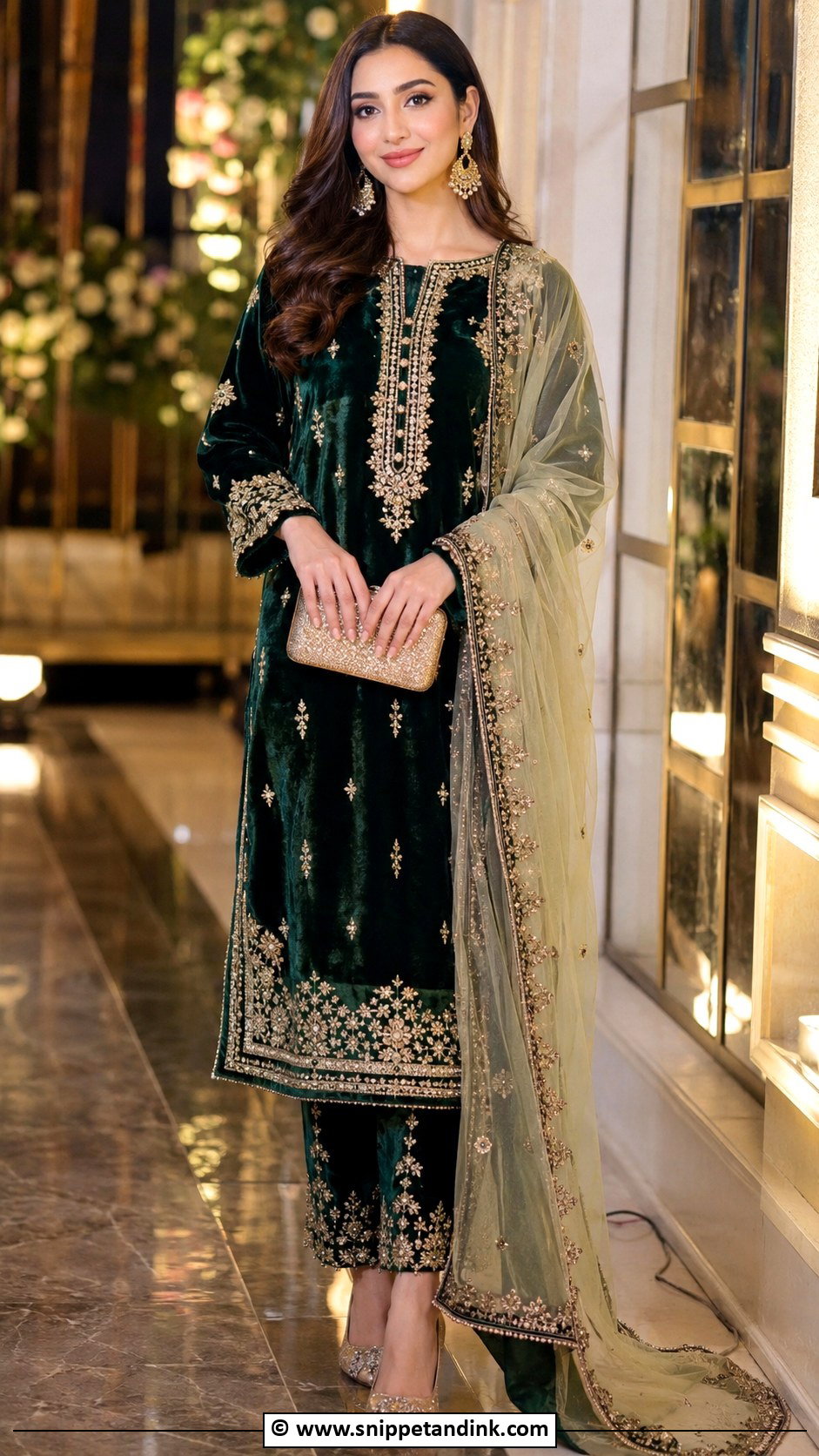
Velvet is the cold-weather choice, and even simple embroidery looks formal on it. A velvet shirt with gharara, sharara or straight pants in emerald, navy, maroon, plum or black with gold, dabka or zari borders. Velvet crushes where you sit, so expect a flattened patch at the back after dinner; steaming from the inside lifts it again. Keep the dupatta lighter in organza or chiffon. Gold jewellery, a clutch and comfortable heels for winter weddings, formal dinners and receptions.
13. Pakistani Organza Dress For Wedding
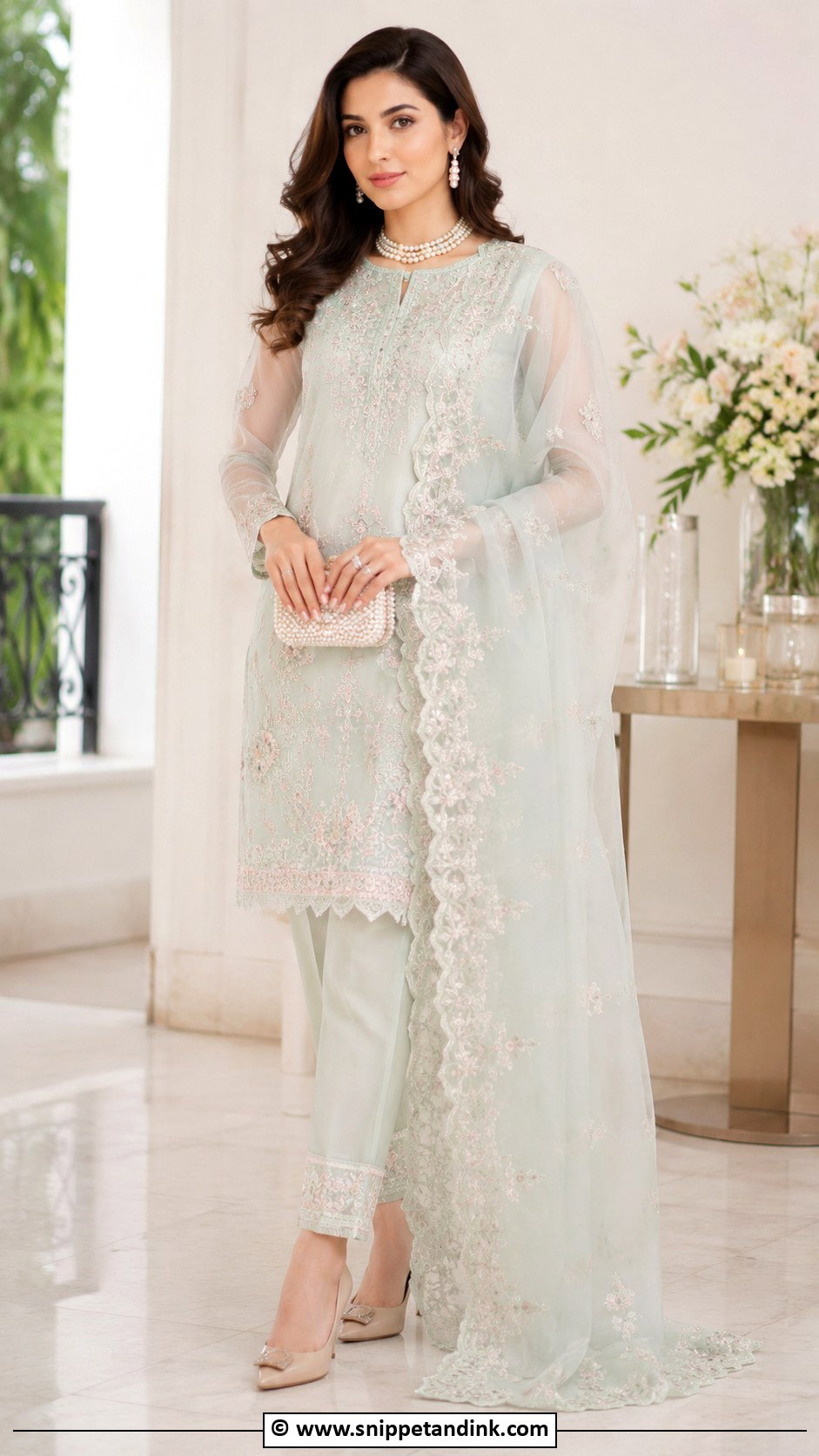
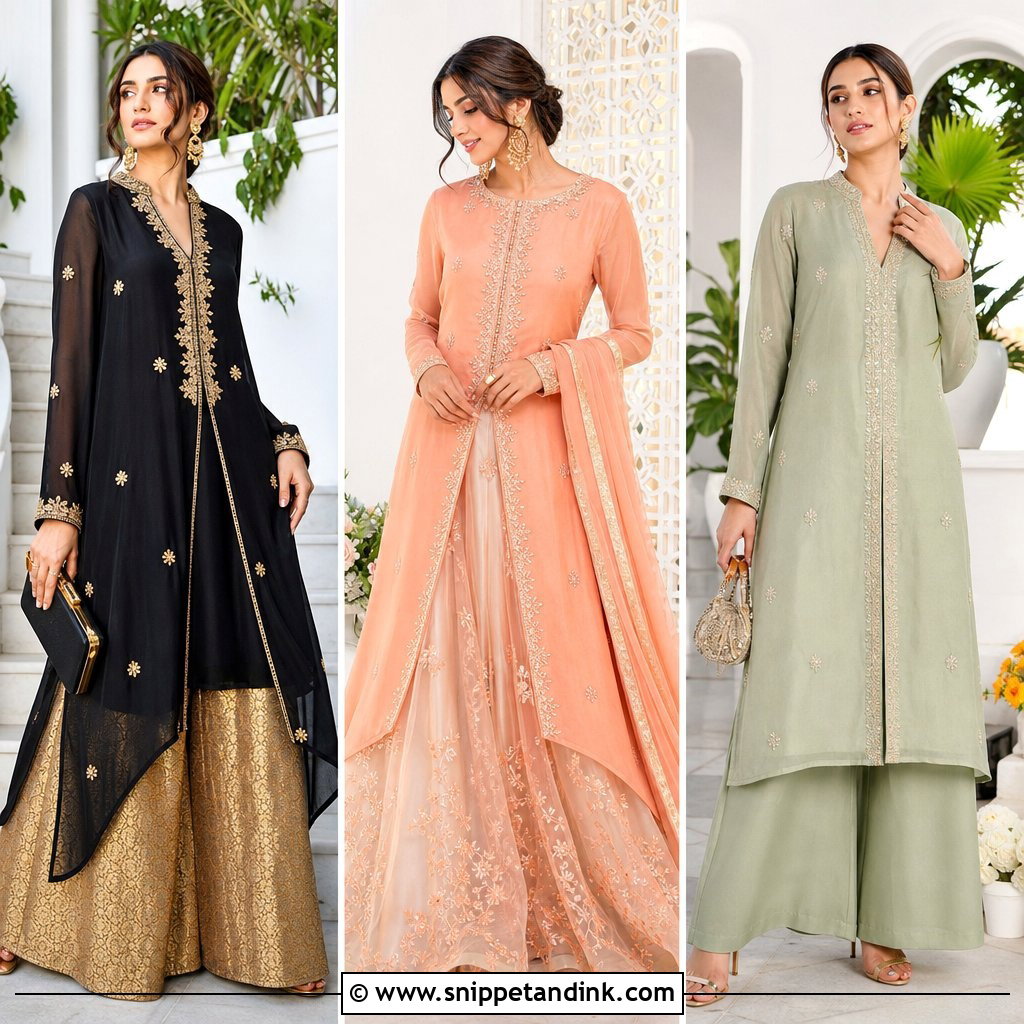
Organza is airy and dressy and holds a shape well, so it works for shirts, dupattas, lehengas and pishwas. Pastel organza with embroidery for daytime; darker organza with metallic work for evenings. A shirt with straight pants and an organza dupatta makes a good guest look; an organza lehenga set feels more formal. It creases sharply when folded, so hang it, and steam it before you leave. Organza is sheer, so check the lining fits comfortably. Pearl jewellery, soft makeup and delicate heels for nikkah, walima or engagements.
14. Pakistani Chiffon Dress For Wedding
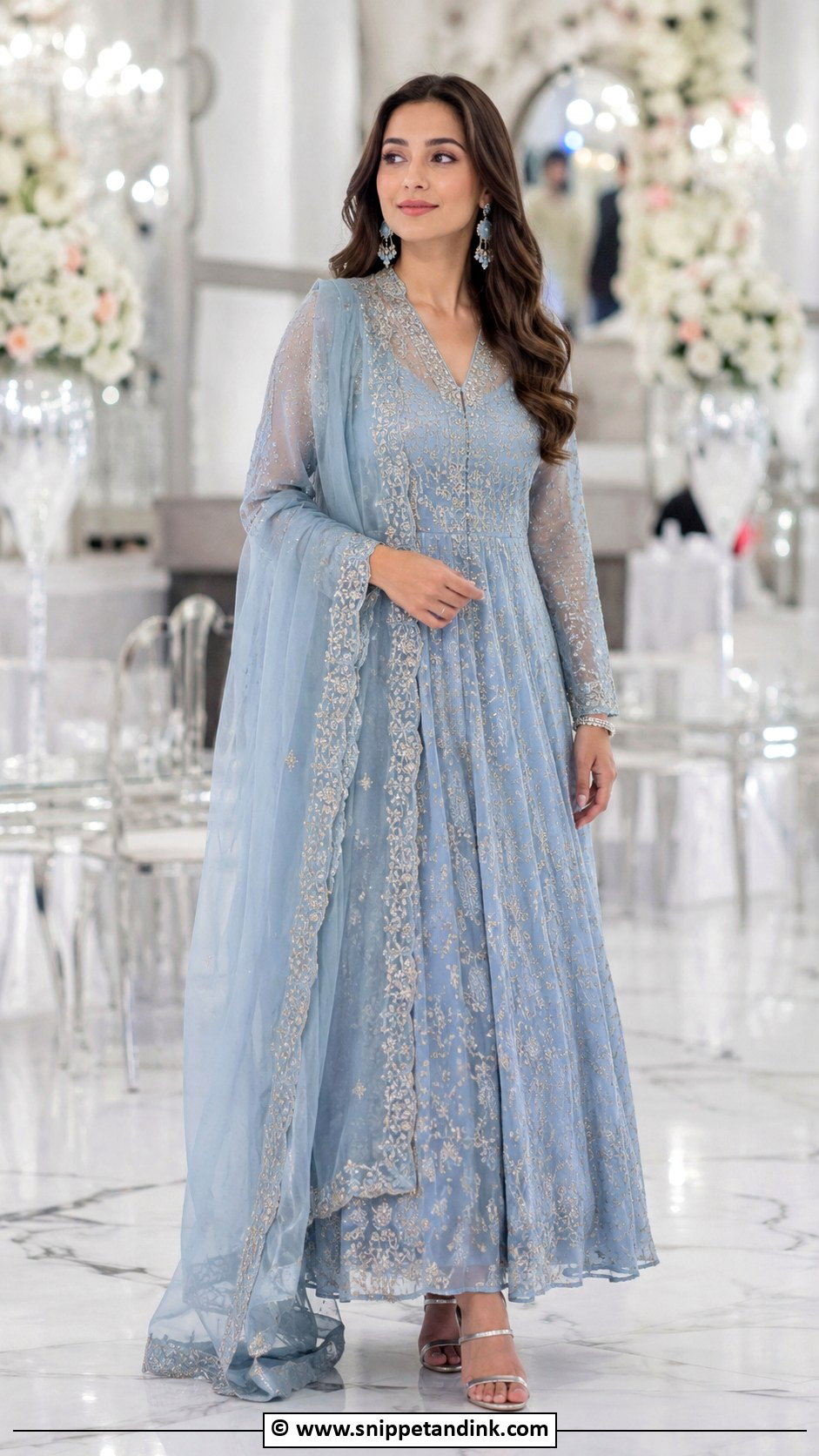
Chiffon drapes softly and is easy to wear for hours, which is why it turns up as maxis, pishwas, sarees and long shirts. Keep the work on the neckline, sleeves and borders for a formal look without weight. Pastels suit daytime; deeper shades suit night. The weakness is snagging: stacked bangles and rings with prongs pull threads, so choose smooth jewellery. A flowing dupatta, dainty heels and jewellery that picks up the embroidery colour, with simpler accessories if the work is heavy.
15. Pakistani Silk Dress For Wedding
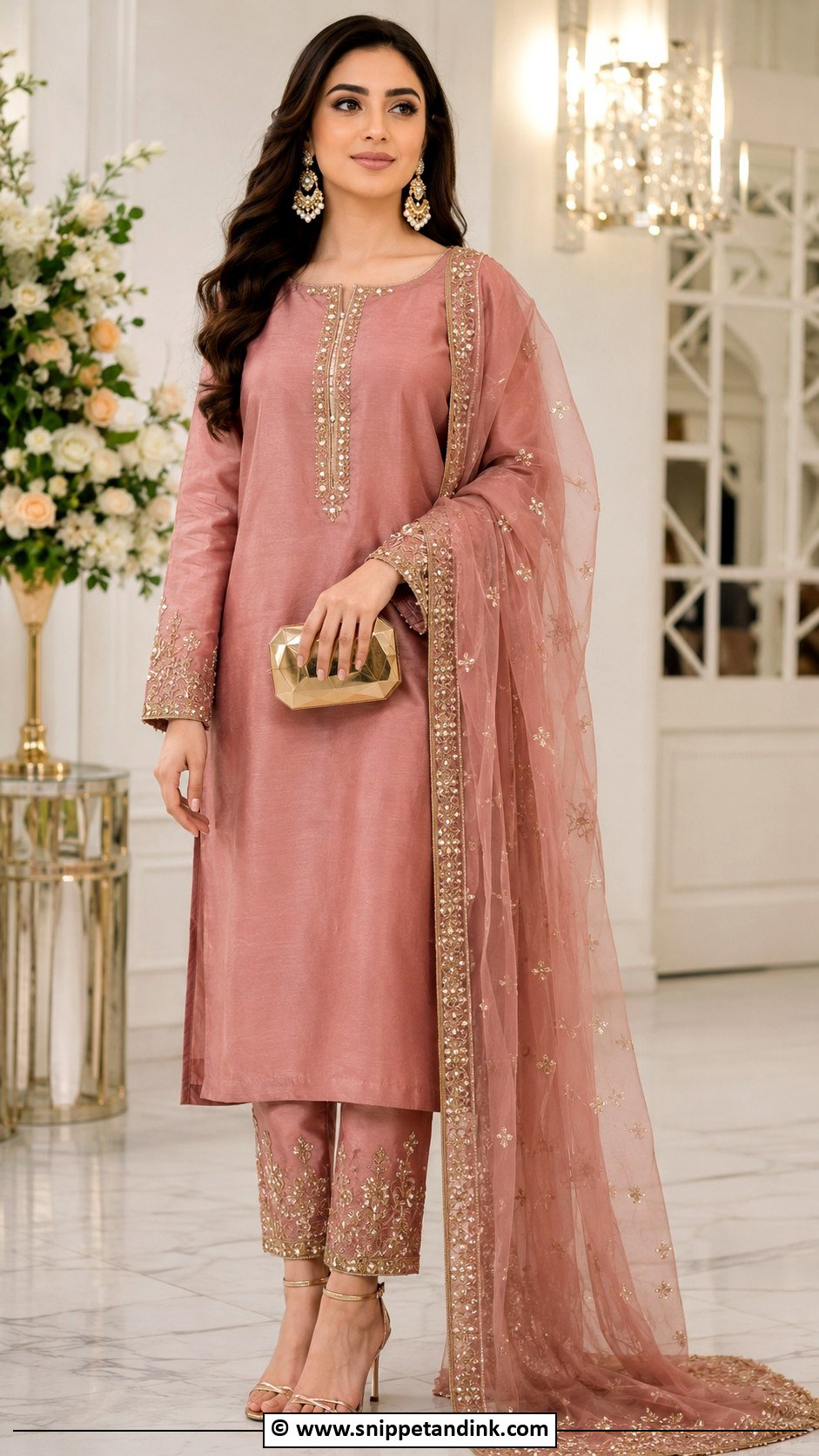
Silk has a smooth, rich finish that suits women who prefer structure to flow. Raw silk, Korean silk and jamawar turn up in formal shirts, lehengas, ghararas and trousers. A silk long shirt with embroidered pants suits nikkah or walima; a silk lehenga with a worked blouse feels festive at baraat. Gold, ivory, emerald, rust, rose or deep blue. Raw silk marks with water, so never dab a spill with a wet tissue; blot it dry and leave it for a dry cleaner. The natural sheen means embroidery can be lighter. Kundan, a neat dupatta and heels.
16. Pakistani Pastel Dress For Wedding
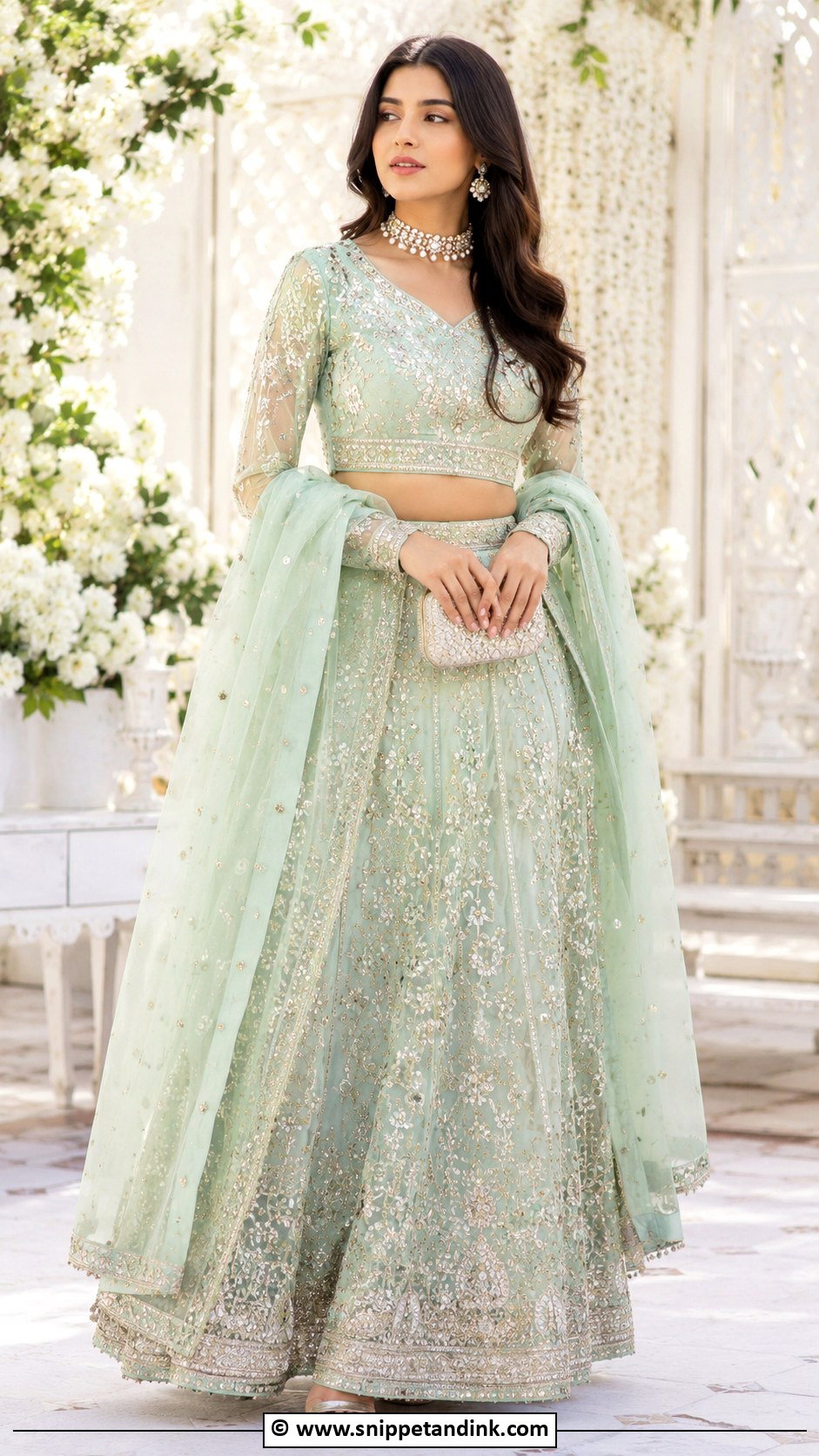
Pastels suit nikkah, walima, engagements and daytime events. Blush, mint, ivory, lavender, powder blue and champagne in a lehenga, maxi, pishwas or gharara with pearl, sequin or thread work. Silver and champagne embellishment sits lighter than heavy gold. One thing I warn every client in pastels about is foundation transfer at the neckline and dupatta, so set your makeup well and dress after it’s done. Soft glam, delicate jewellery, nude or metallic heels, and a sheer dupatta with a scalloped border.
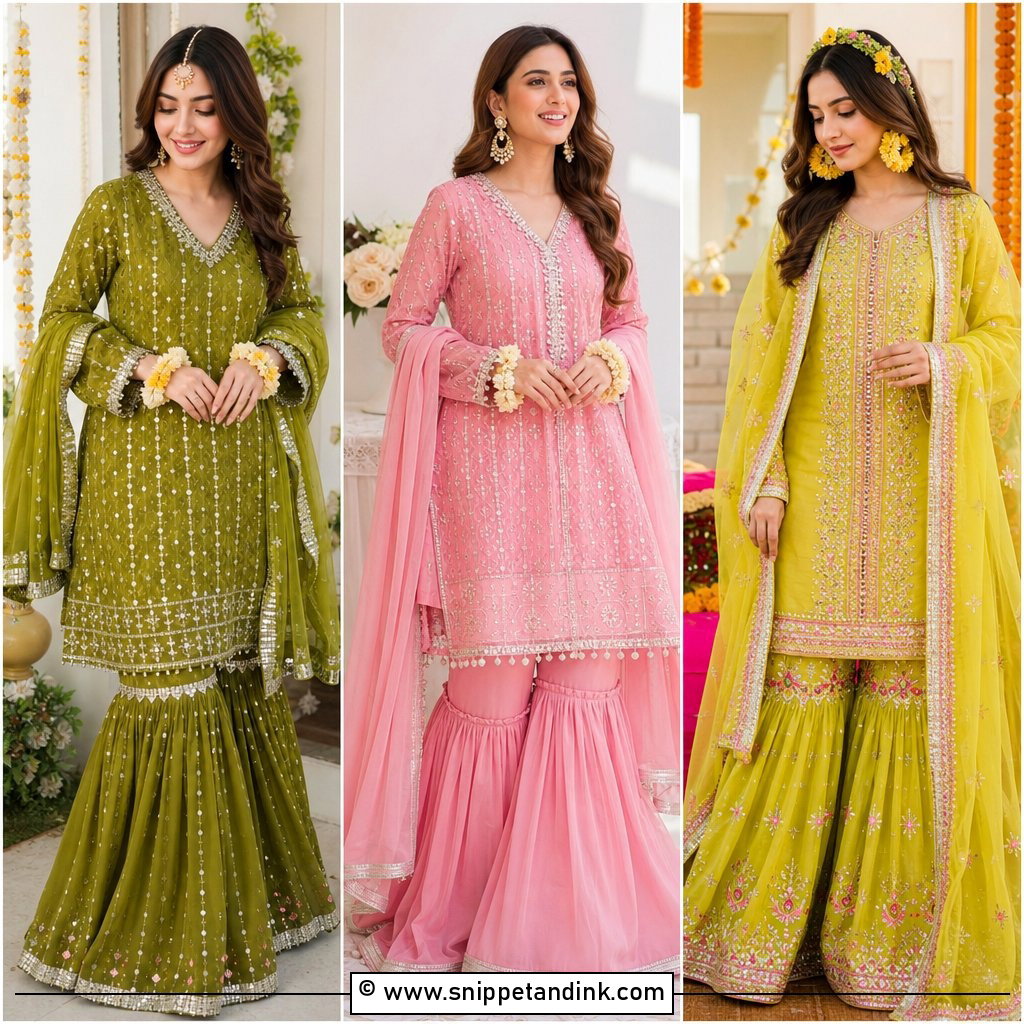
17. Pakistani Mehndi Dress For Wedding
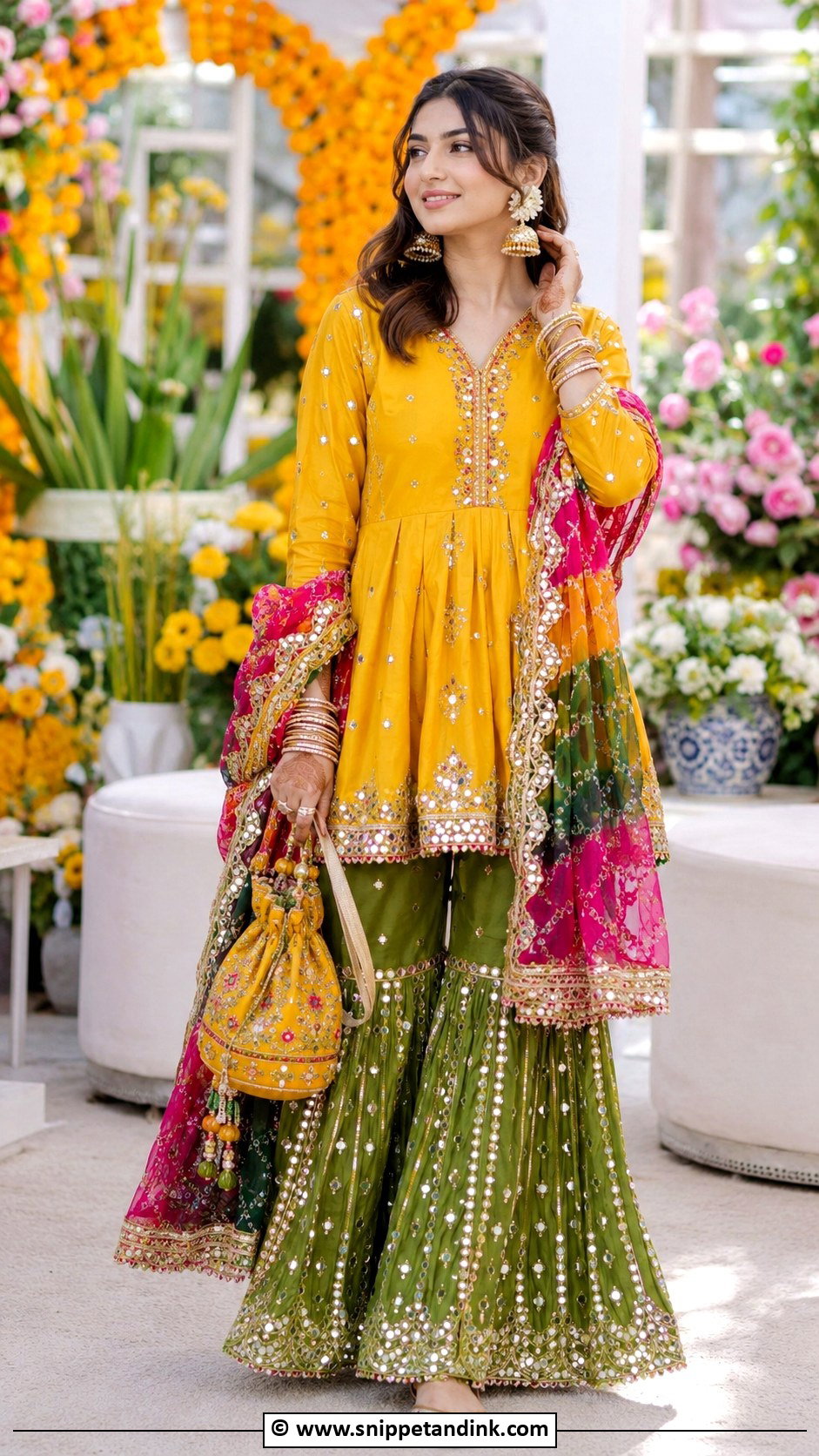
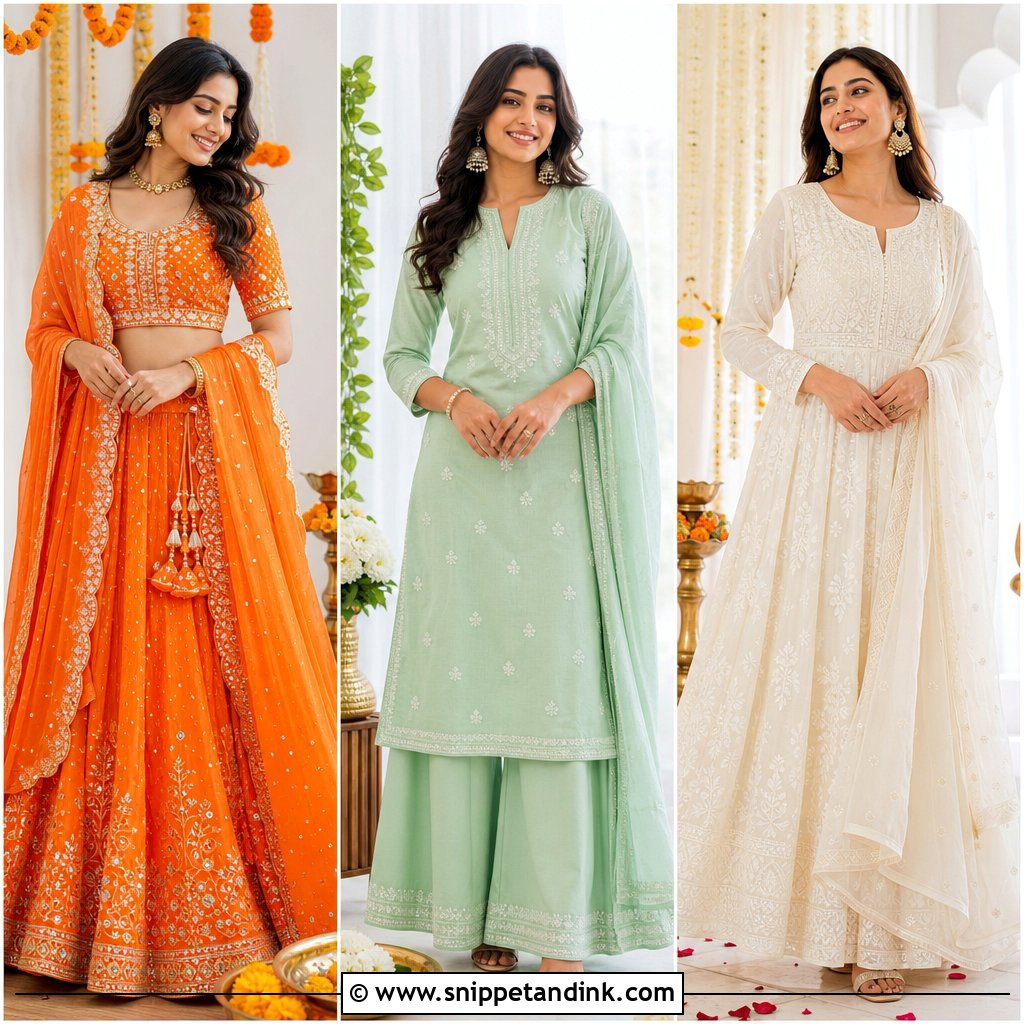
Mehndi clothes should be bright and easy to move in: yellow, green, orange, pink or turquoise in a short shirt with gharara, a mirror-work sharara or a colourful lehenga choli. A dupatta with gota or tassels, playful jhumkas, bangles or floral jewellery, and khussas or block heels. Fresh henna paste stains fabric, and pale fabric worst of all, so if you’re having your own hands done that night, wear a colour that hides an orange mark and keep your sleeves short or pushed back. Glowing skin and defined eyes.
18. Pakistani Nikkah Dress For Wedding
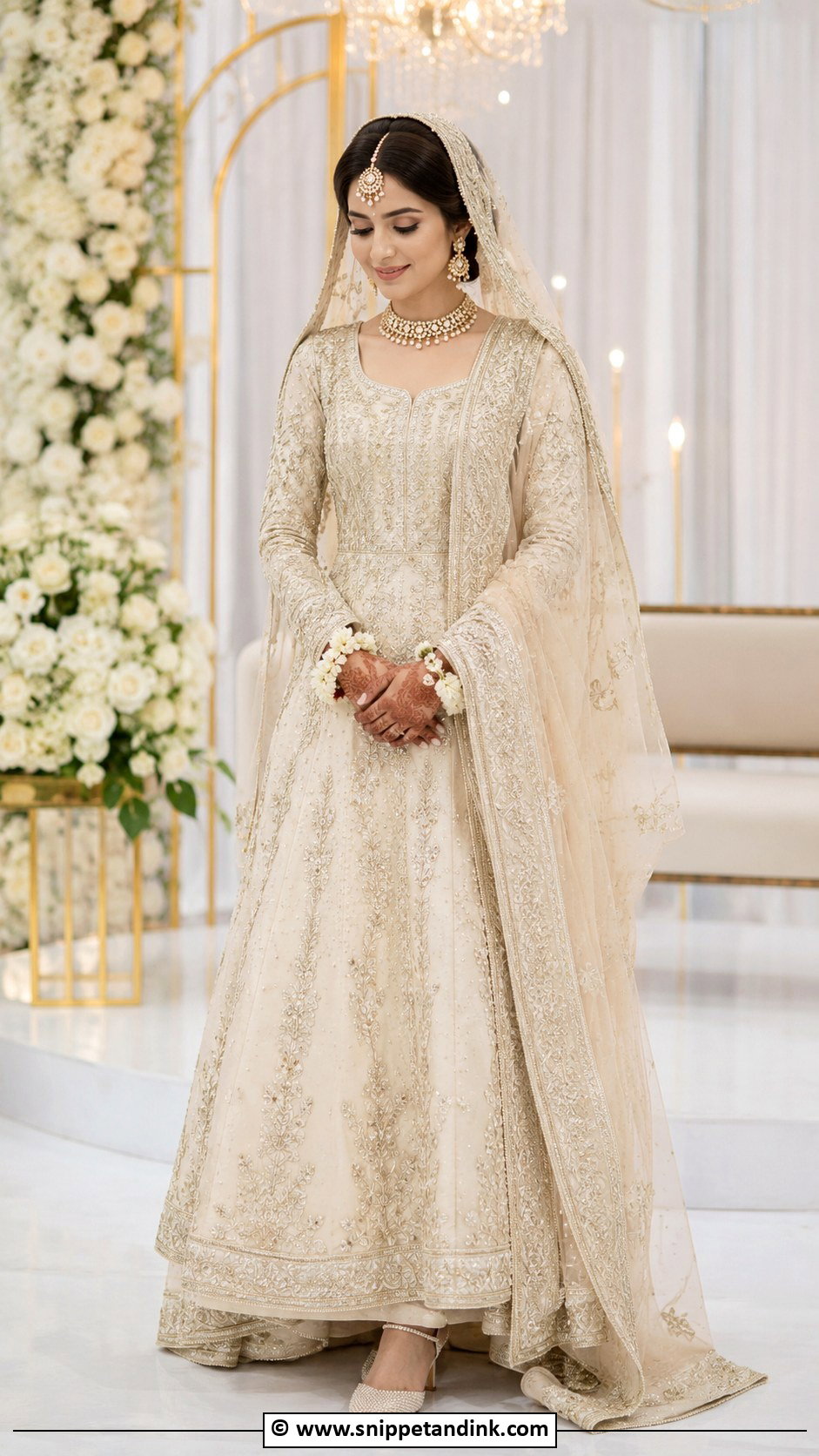
A Pakistani nikkah dress is usually soft and composed, in ivory, white, champagne, blush or gold. A pishwas, a long shirt with gharara, a pastel lehenga or an embroidered maxi all suit it. The dupatta often sits lightly over the head during the ceremony, so ask your hairstylist to pin it to the hair, not to rest on it. You’ll be signing papers, so very wide or heavily beaded sleeves can be awkward at the table. Pearl, kundan or gold jewellery, refined heels or khussas, soft makeup and a neat bun or loose waves.
19. Pakistani Baraat Dress For Wedding
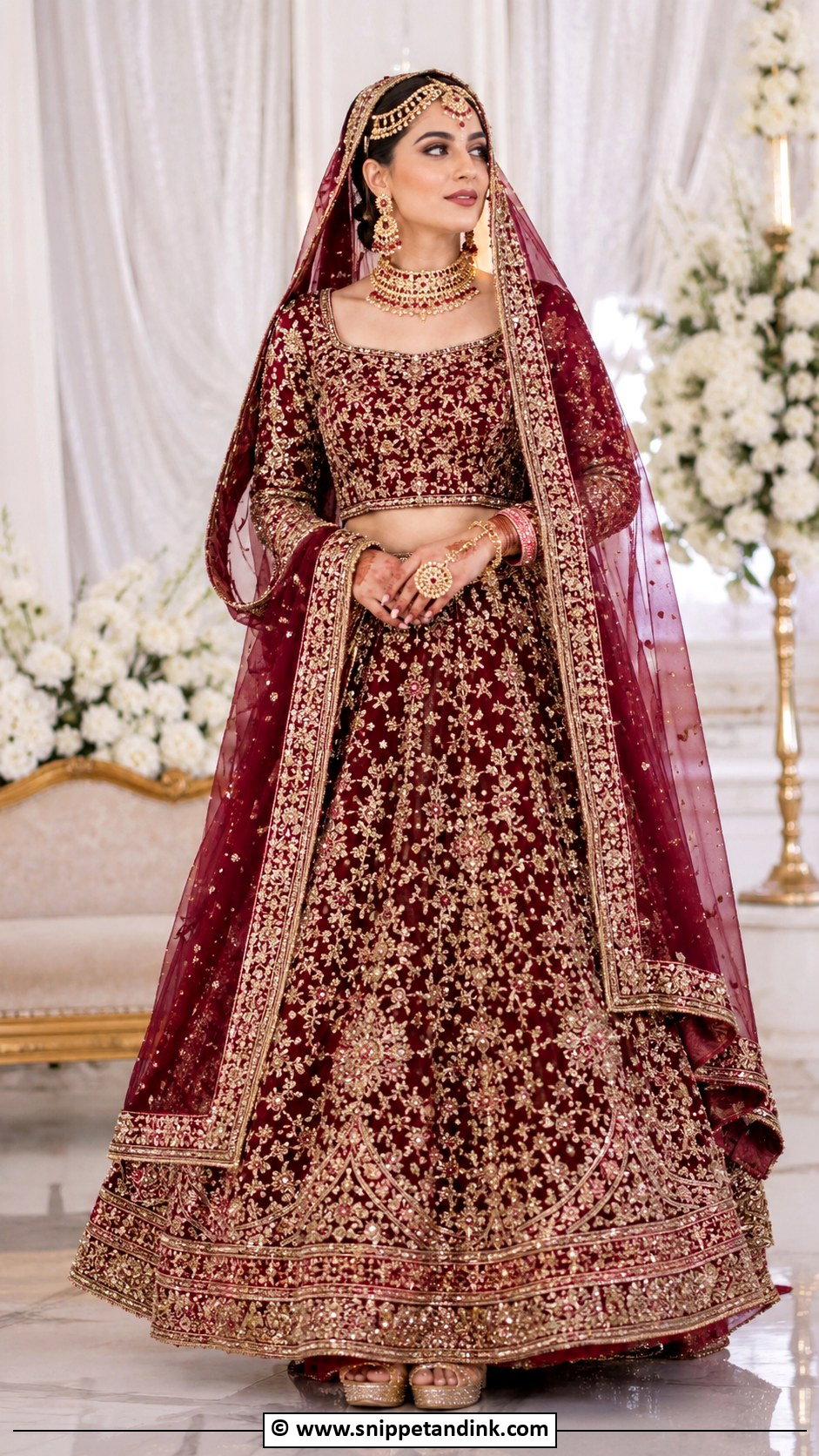
A Pakistani baraat dress is the grandest outfit of the wedding, in red, maroon, rust, gold or deep jewel tones. A heavily worked lehenga, pishwas, gharara or long shirt with lehenga suits it, with zardozi, dabka, nakshi, gota or resham work. The bride spends a long time seated on stage, so I check how the skirt spreads when she sits and whether the waistband digs in. A dupatta over the head, across a shoulder or layered for fullness, then a choker, earrings, bangles and a matha patti. Comfortable heels, because baraat runs late.
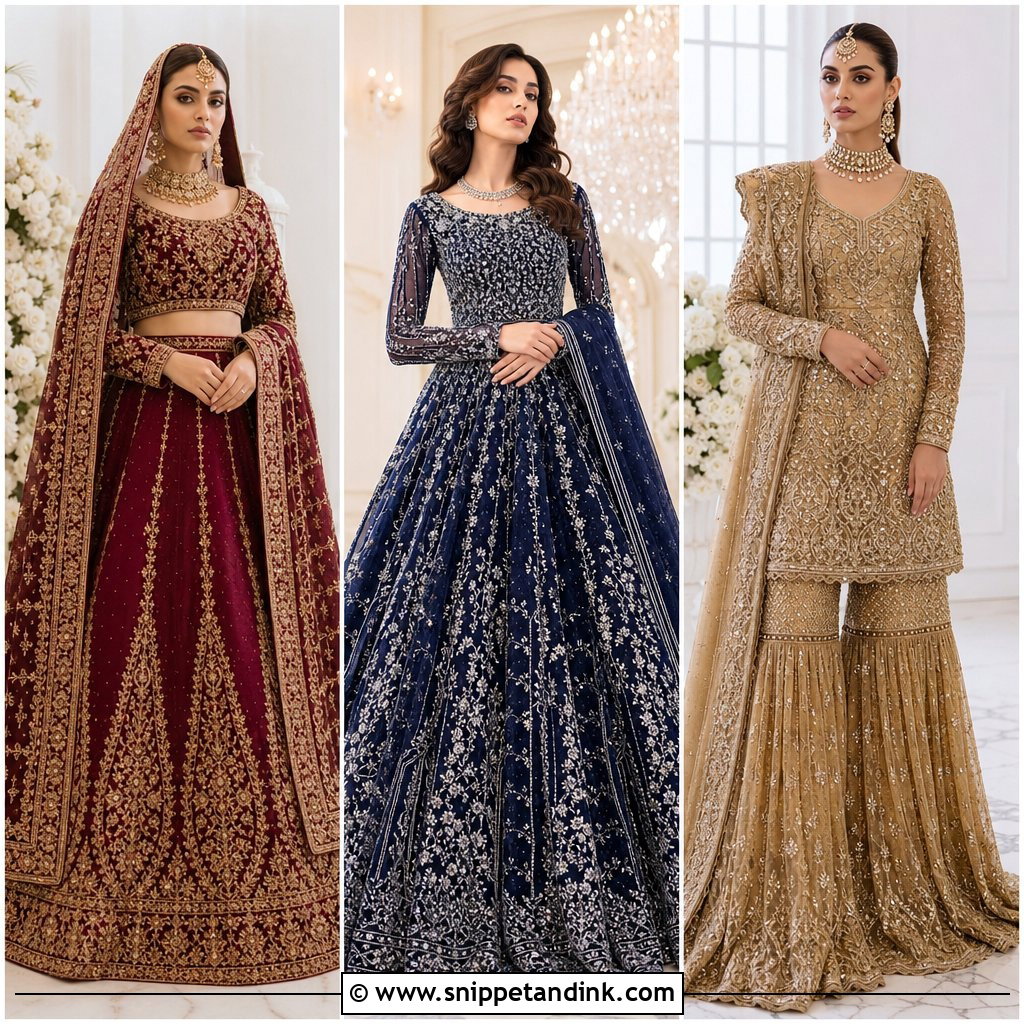
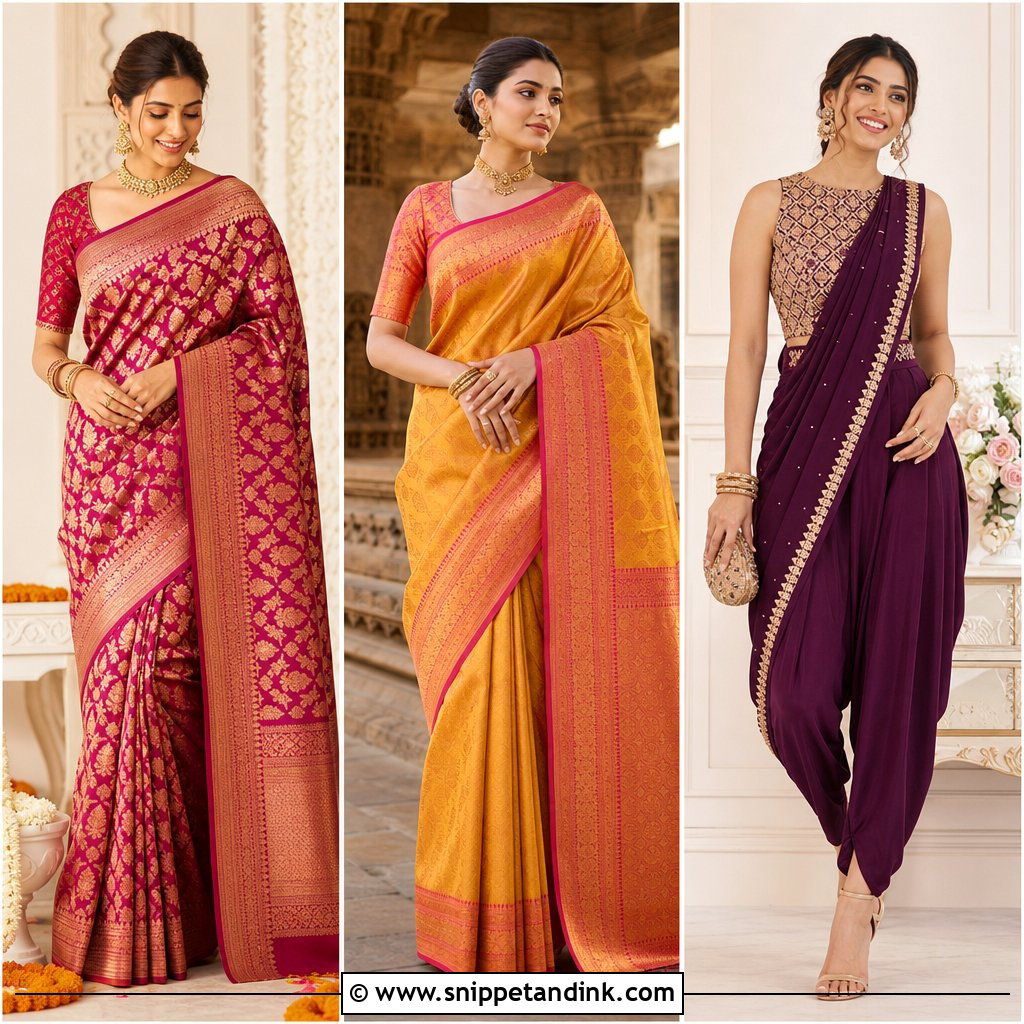
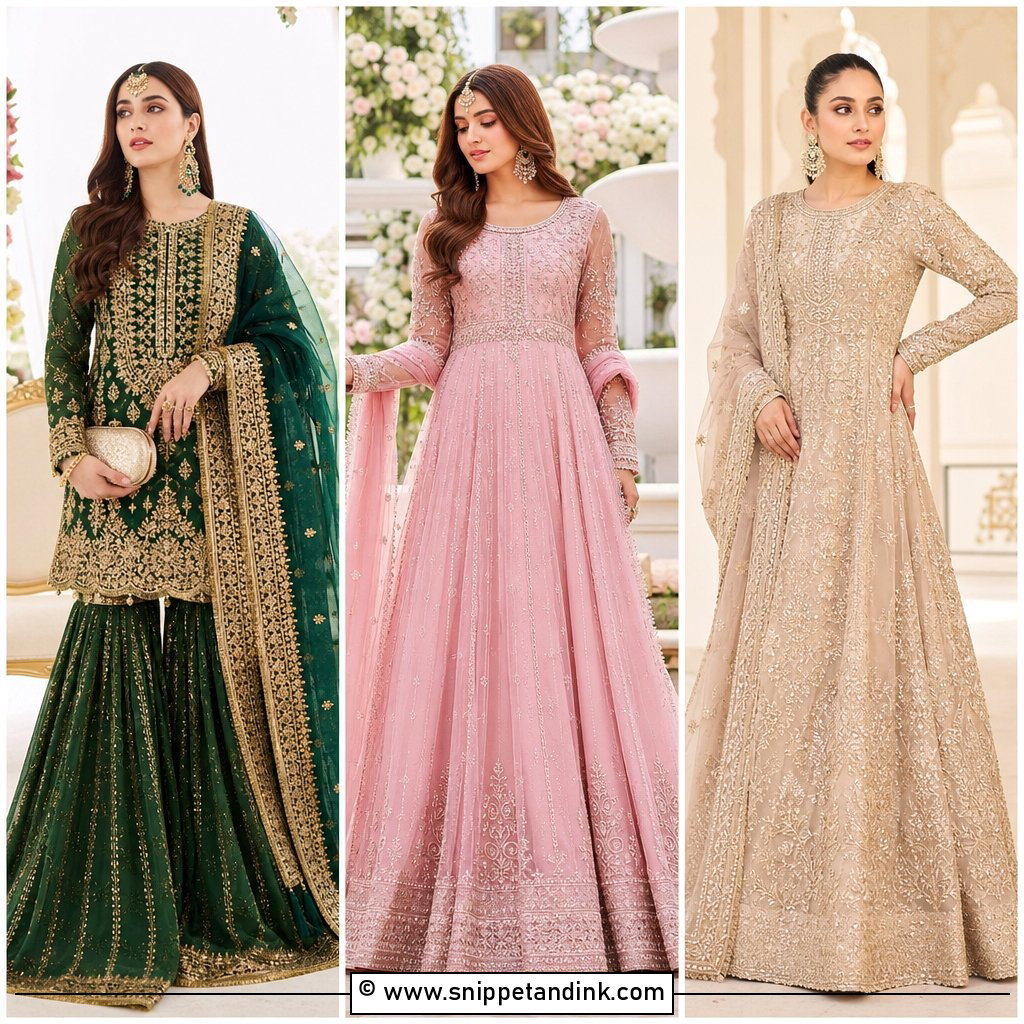


20. Pakistani Walima Dress For Wedding
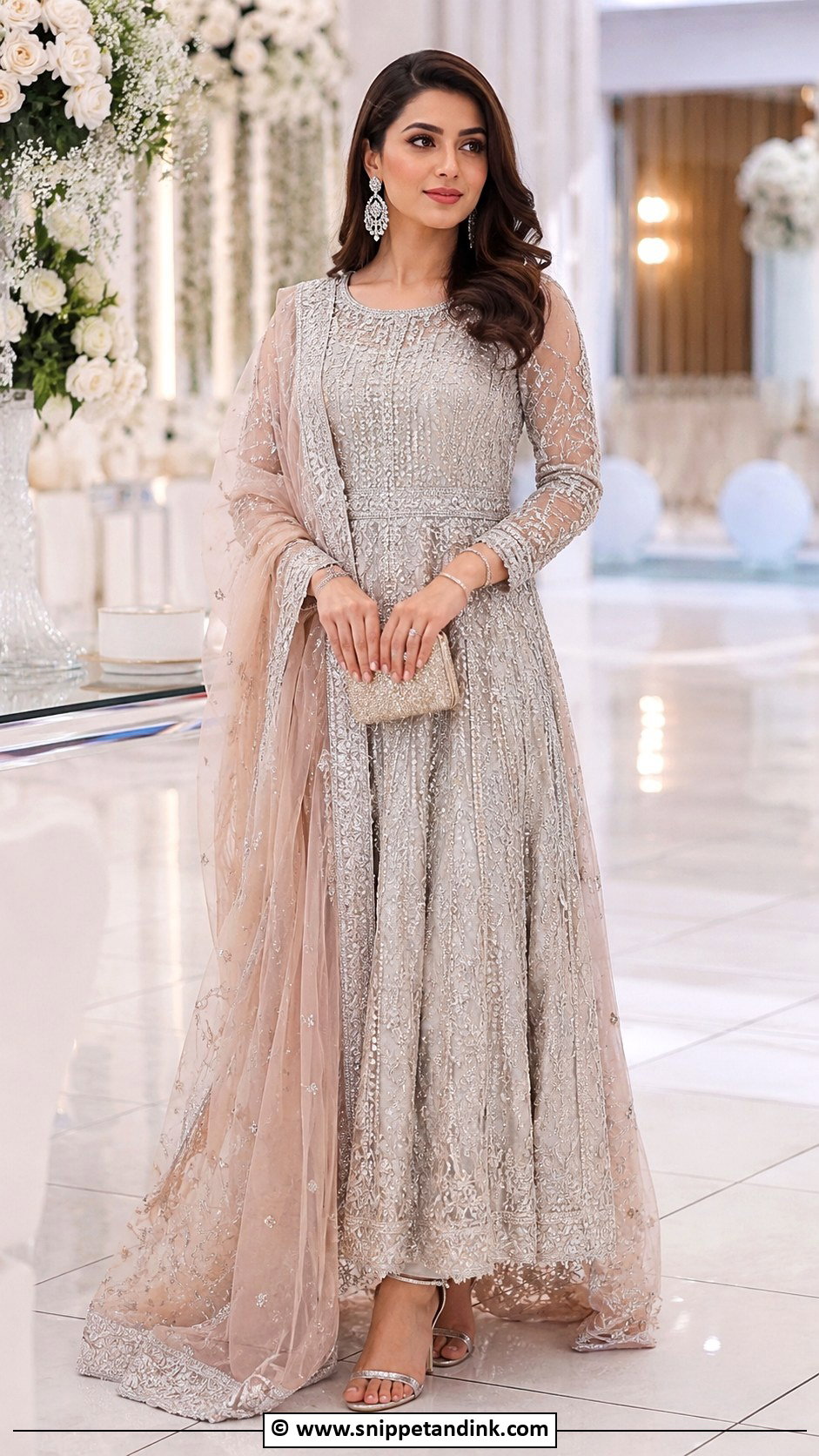
A Pakistani walima dress usually feels softer than the baraat outfit: pastels, silver, champagne, dusty pink, powder blue or mint. A maxi, saree, lehenga or gown-style dress with delicate embroidery, pearls, sequins or crystals. Crystals and sequins at the neckline can catch loose hair and earrings, so I suggest an updo or swept-back style with heavily embellished necklines. A light, neatly draped dupatta, drop earrings, a bracelet and a soft necklace, with heels and a small clutch.
21. Pakistani Wedding Guest Dress
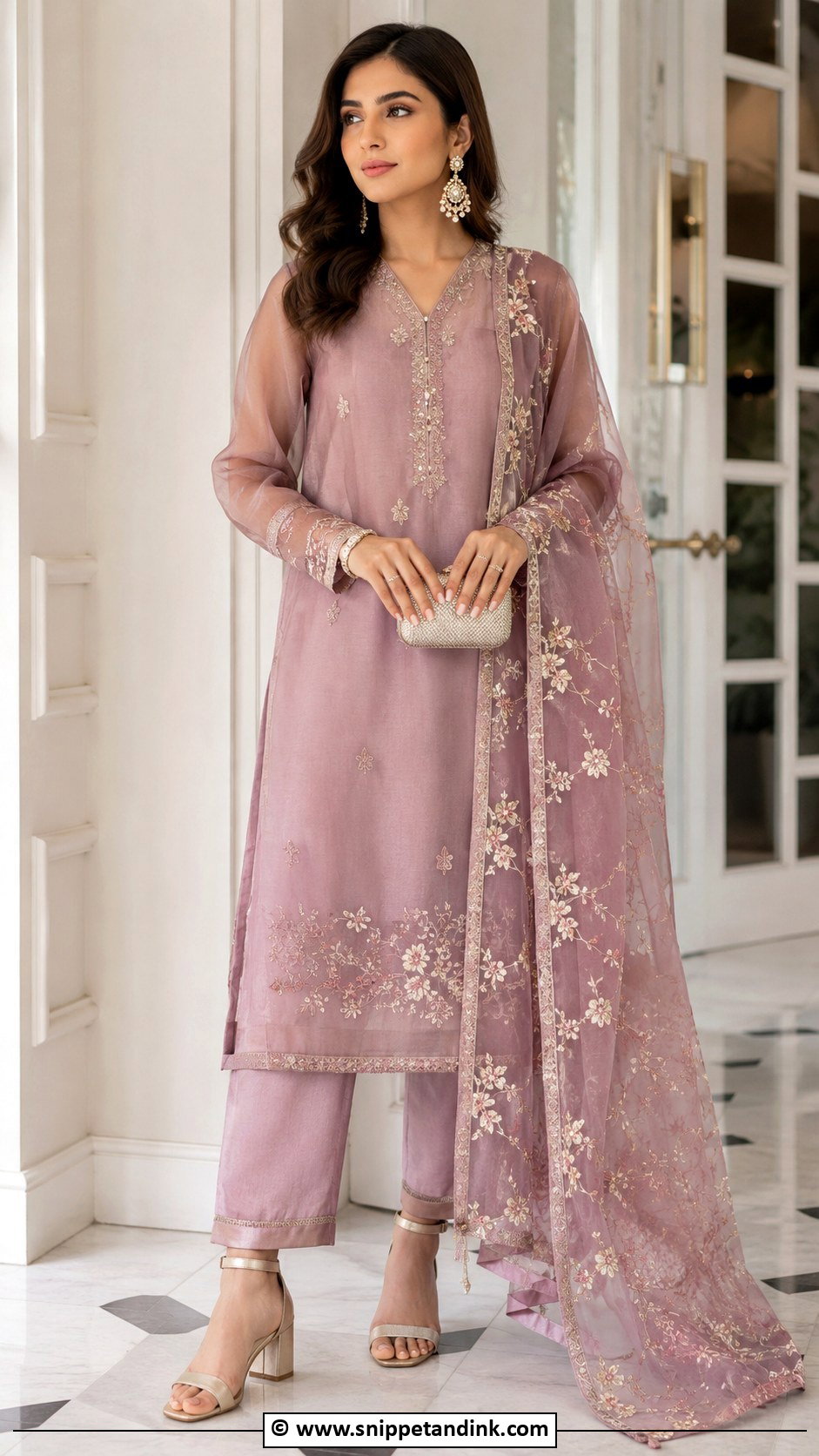
Festive without competing with the bride is the whole brief for a guest. A formal chiffon suit, organza shirt with trousers, sharara set or light lehenga all work. Bright colours for mehndi, soft pastels for nikkah, richer shades for evening receptions. I’d avoid deep bridal red at a baraat as a guest, and keep embroidery at a level you’d describe as elegant rather than bridal. A bordered dupatta makes a simple outfit feel ready. When unsure, medium embellishment is the safe middle. Earrings, bangles, a clutch, and comfortable heels or khussas.
22. Pakistani Bridesmaid Dress For Wedding
Bridesmaid outfits need to look coordinated and stay comfortable all day. Matching shararas, pastel lehengas, pishwas or long shirts with ghararas all work. Blush, sage, lavender, ivory or powder blue for a soft theme; yellow, green and pink for mehndi. Similar colours with different cuts suit different bodies better than identical outfits. If the outfits come from more than one shop, the same colour name won’t match exactly, so order from one place or compare fabric swatches side by side. Coordinated rather than identical jewellery, and comfortable shoes for a day of helping.
23. Pakistani Mother Of The Bride Dress
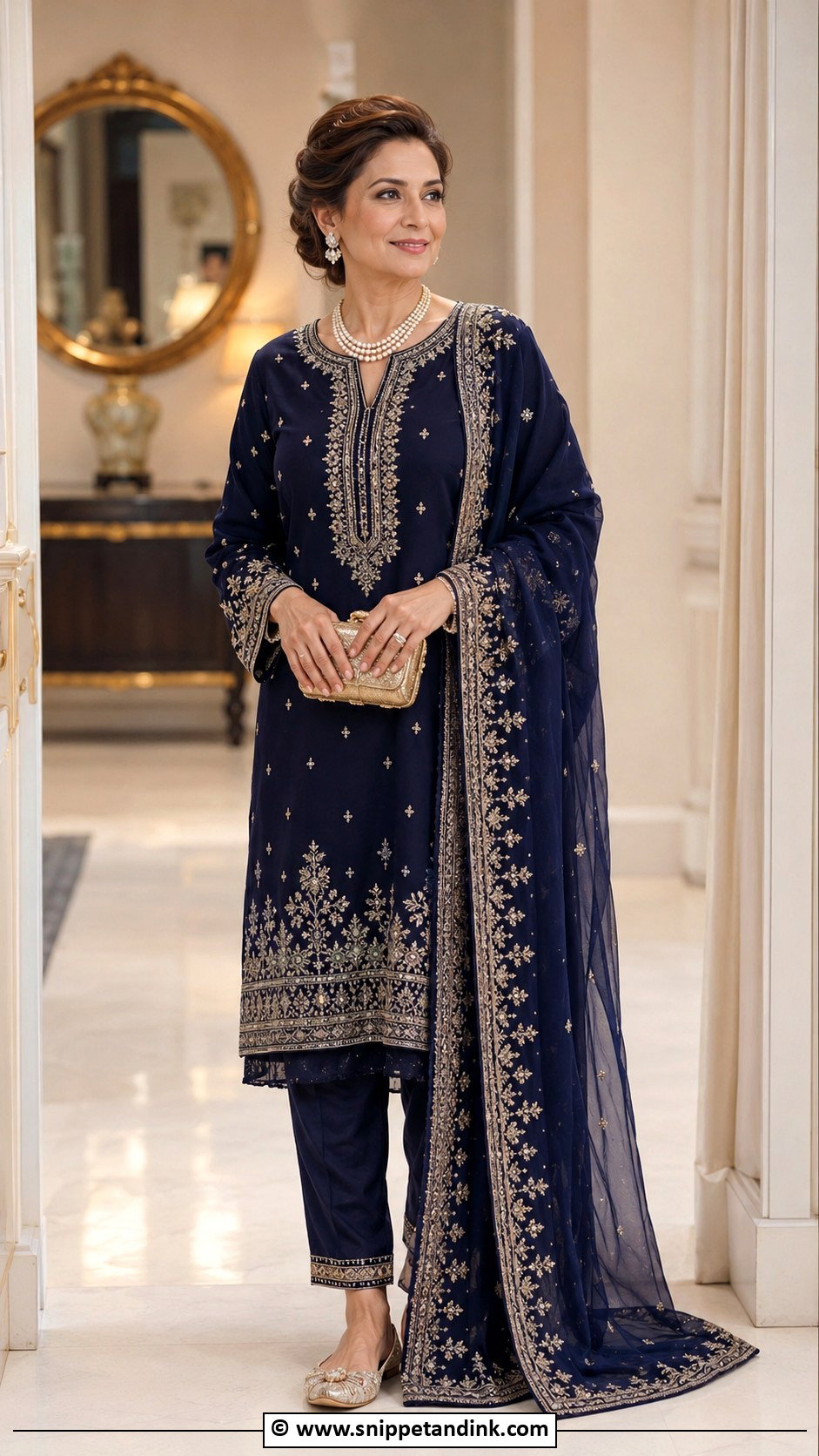
The bride’s mother is hosting as well as celebrating, so her outfit has to look dignified for hours of greeting guests. Long shirts with straight pants, embroidered ghararas, silk suits and chiffon sarees all work. Emerald, navy, maroon, gold and mauve look refined; pastels suit daytime. Good fabric shows here more than anywhere, with tasteful work on the neckline, sleeves, border and dupatta. I suggest a dupatta that pins securely, since she’ll be moving between tables all night. Pearl strands, kundan earrings or a statement necklace, and comfortable heels or embellished flats.
24. Pakistani Plus Size Dress For Wedding
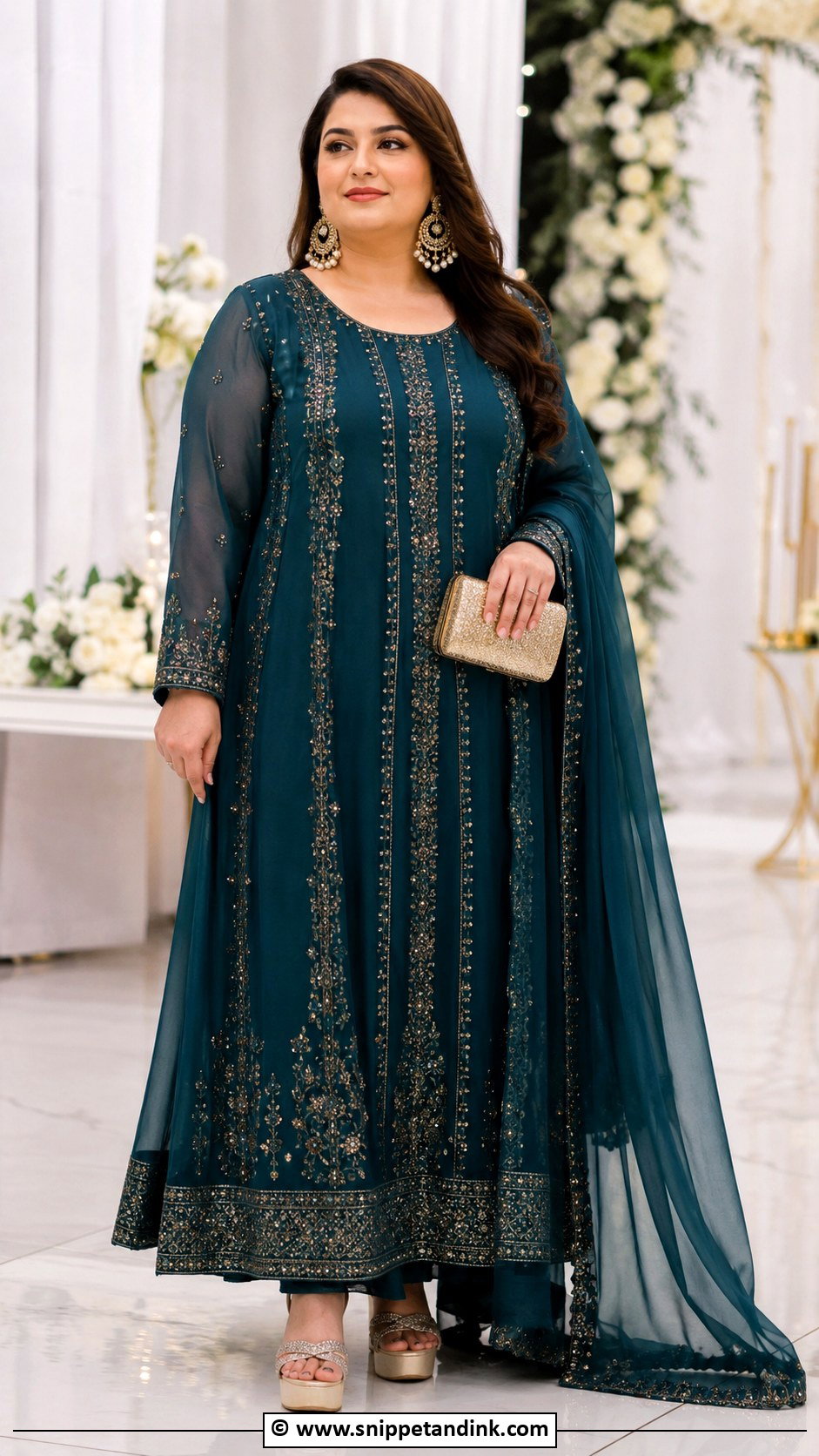
For plus-size clients, I look for drape and structure together. Long shirts with straight pants, A-line pishwas, anarkalis and flowing maxis all work. Chiffon, georgette, silk or soft organza with proper lining drape well; georgette in particular falls without clinging. Vertical embroidery, side panels and balanced borders lengthen the line. Very stiff cuts can restrict movement, especially across the upper arm. A dupatta pinned on one shoulder or worn open adds elegance without bulk. Supportive shoes, statement earrings and a clutch.
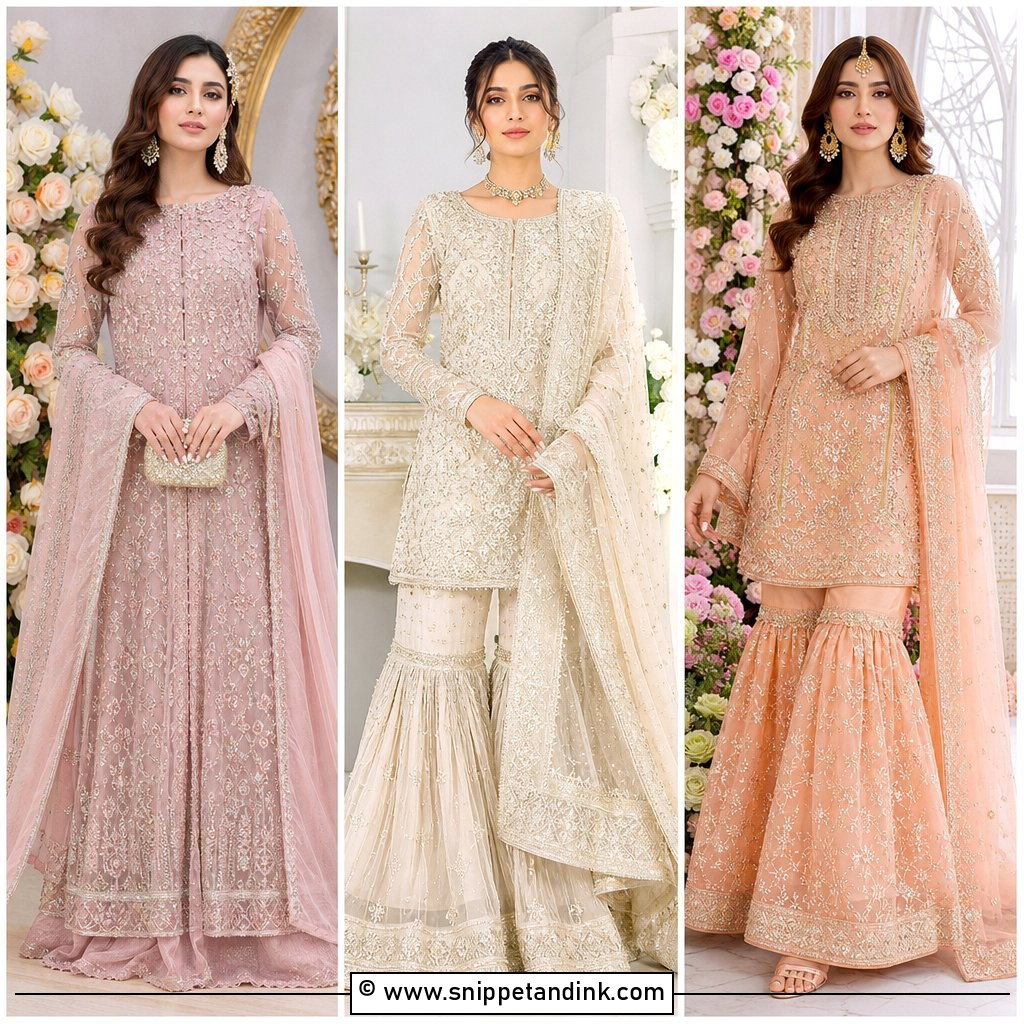


25. Pakistani Modest Dress For Wedding
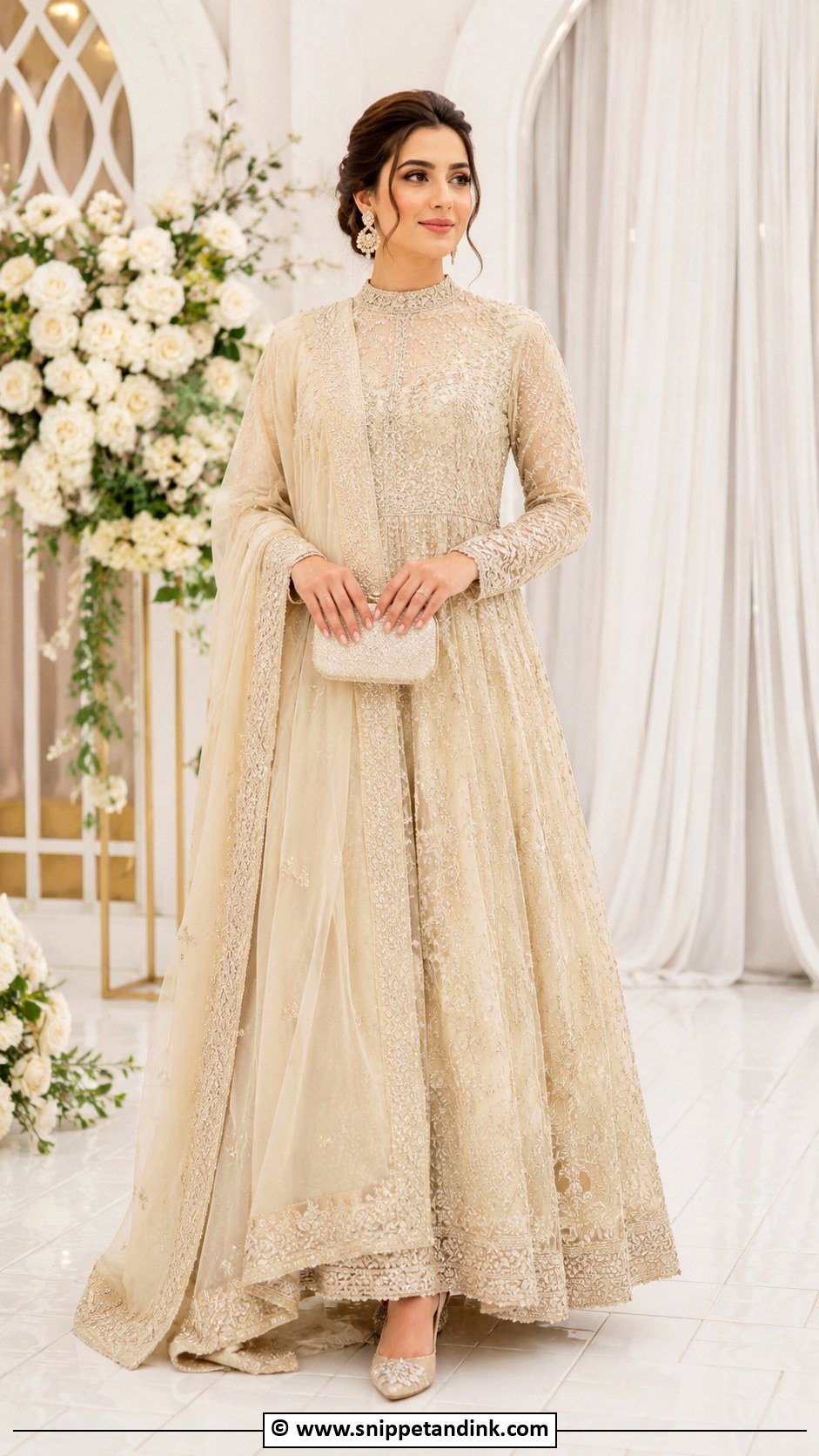
Fully covered can still be formal. A long shirt with wide-leg pants, a full-sleeve pishwas, an anarkali or a maxi with a matching dupatta all work. High necklines, lined sleeves, longer hems and relaxed cuts keep it comfortable. Soft embroidery on the sleeves, neckline and dupatta border is enough for a wedding. Ivory, sage, blush, navy, emerald or champagne, with closed-toe heels, khussas or embellished flats. A neatly styled hijab or dupatta can match or contrast softly. When a hijab and dupatta are worn together, I pin the dupatta to the hijab, not the hair, so neither shifts.
Ready-to-Wear, Unstitched or Made to Order?
Formal Pakistani outfits come three ways, and each suits a different timeline. Ready-to-wear is fastest, but sizes are standard, and almost everyone needs at least the sleeves, length or waist adjusted. Unstitched suits let a tailor cut to your measurements and add touches like linings or deeper side seams, but in wedding season tailors get busy, so hand them in early. Made-to-order pieces from a designer or boutique give the most control and take the longest, since the embroidery is often done before the garment is stitched.
My rule of thumb is to treat any formal outfit as needing a fitting, whichever way you buy it. Lead times vary widely between workshops, so get dates confirmed before you pay a deposit.
Travelling With Heavy Formals
A lot of Pakistani weddings mean a flight or a long drive. Embroidered outfits travel best rolled in tissue or a cotton sheet, with the embroidered side facing in so threads don’t catch. Pack heavy lehengas in a hand-carry garment bag if you can; checked luggage crushes the can-can and creases organza badly.
- Hang everything as soon as you arrive and let the creases drop overnight.
- Use a handheld steamer from the inside; irons can scorch zari and melt sequins.
- Keep each outfit’s dupatta, jewellery and pins in one labelled pouch so nothing goes missing between functions.
Start With the Function, Then the Fabric
Once you know which function you’re dressing for and what your role is, the choice narrows quickly. Red lehengas belong to baraat; pastel pishwas suits nikkah and walima. Ghararas and shararas bring tradition; sarees, maxis and peplum lehengas bring a modern edge. Pick a fabric that suits the season and the hours you’ll be in it, keep the jewellery balanced, wear shoes you can stand in, and settle the dupatta before you leave the house.
You'll Like These Ideas:





Leave a Reply