
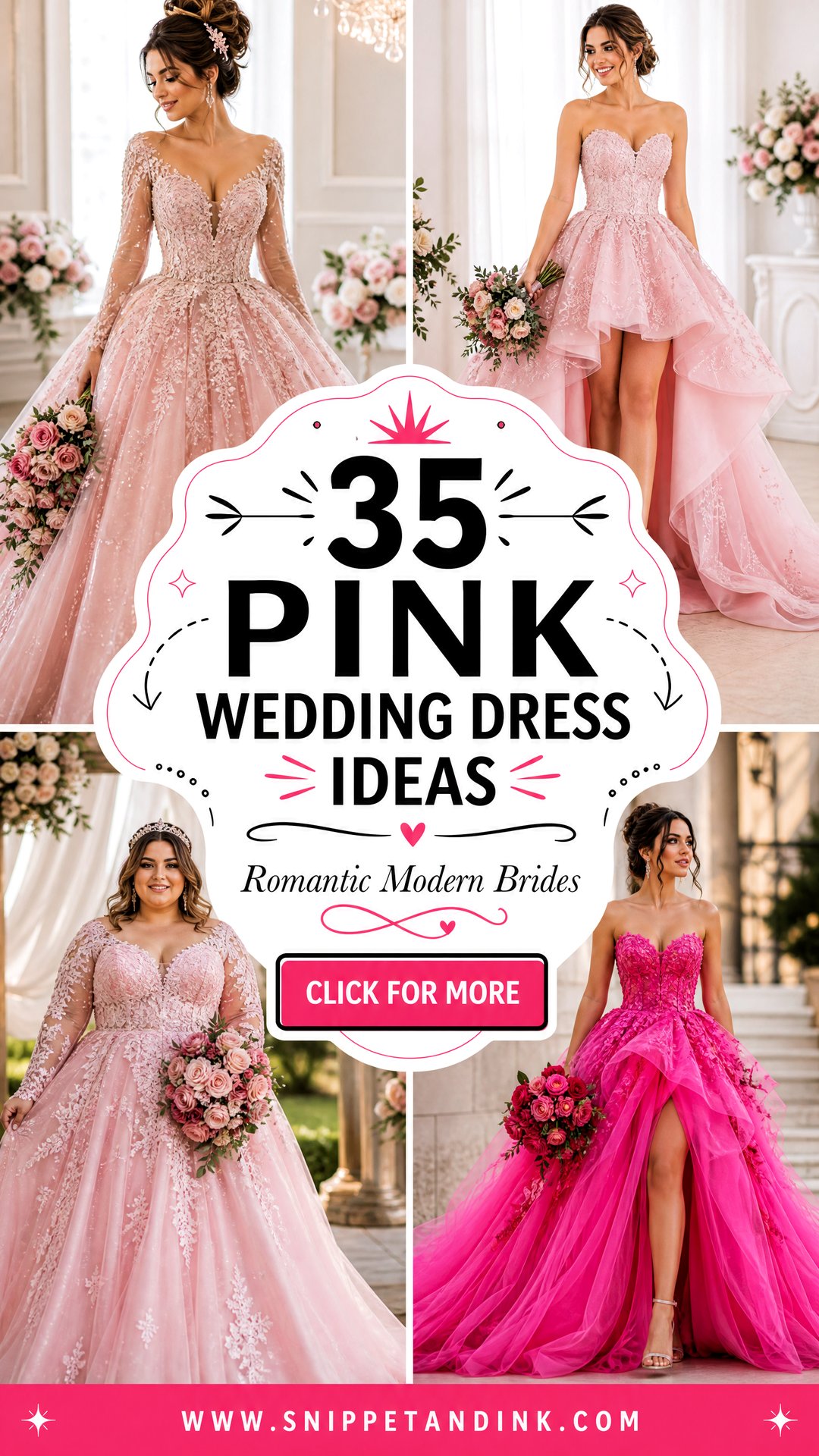
More brides are skipping white for pink, and the range is wider than most people expect: blush, ballet pink, rose, dusty pink, mauve, champagne pink and, for the brave, fuchsia. Every one of them can look properly bridal if the fabric and cut are right. The shade does a different job on every complexion, though, and it shifts again under candlelight, in full sun and next to a bouquet of peonies. I start every pink appointment with the bride’s skin and the venue’s light, and only then look at silhouettes. The looks below run from barely-there blush to full hot pink, with the practical notes I’d give in the fitting room.
Which Pink Suits Your Skin? Try the Window Test
Pink sits right under your face, so it either warms your skin or drains it. Pale blush can make very fair skin look washed out, while deep skin often glows in rose or fuchsia and can look slightly grey in very pale pastels. Undertone matters as much as depth. Cooler skin tends to suit ballet pink and mauve; warmer skin usually prefers peachy blush and champagne pink.
I don’t rely on rules, though. I test. Here’s how I do it with a bride, and you can do it at home with fabric swatches or even scarves:
- Stand at a window in daylight, with no makeup or just your usual base.
- Hold each shade under your chin, one at a time, and look at your skin, not the fabric.
- The right pink makes your skin look clearer and your eyes brighter. The wrong one brings up redness, shadows or a sallow cast.
- Repeat under warm indoor light, since most receptions are lit that way.
Bring the winning shade to your makeup trial too. Your artist may adjust blush and lip so they sit with the dress instead of clashing with it.
1. Blush Pink Ball Gown Wedding Dress
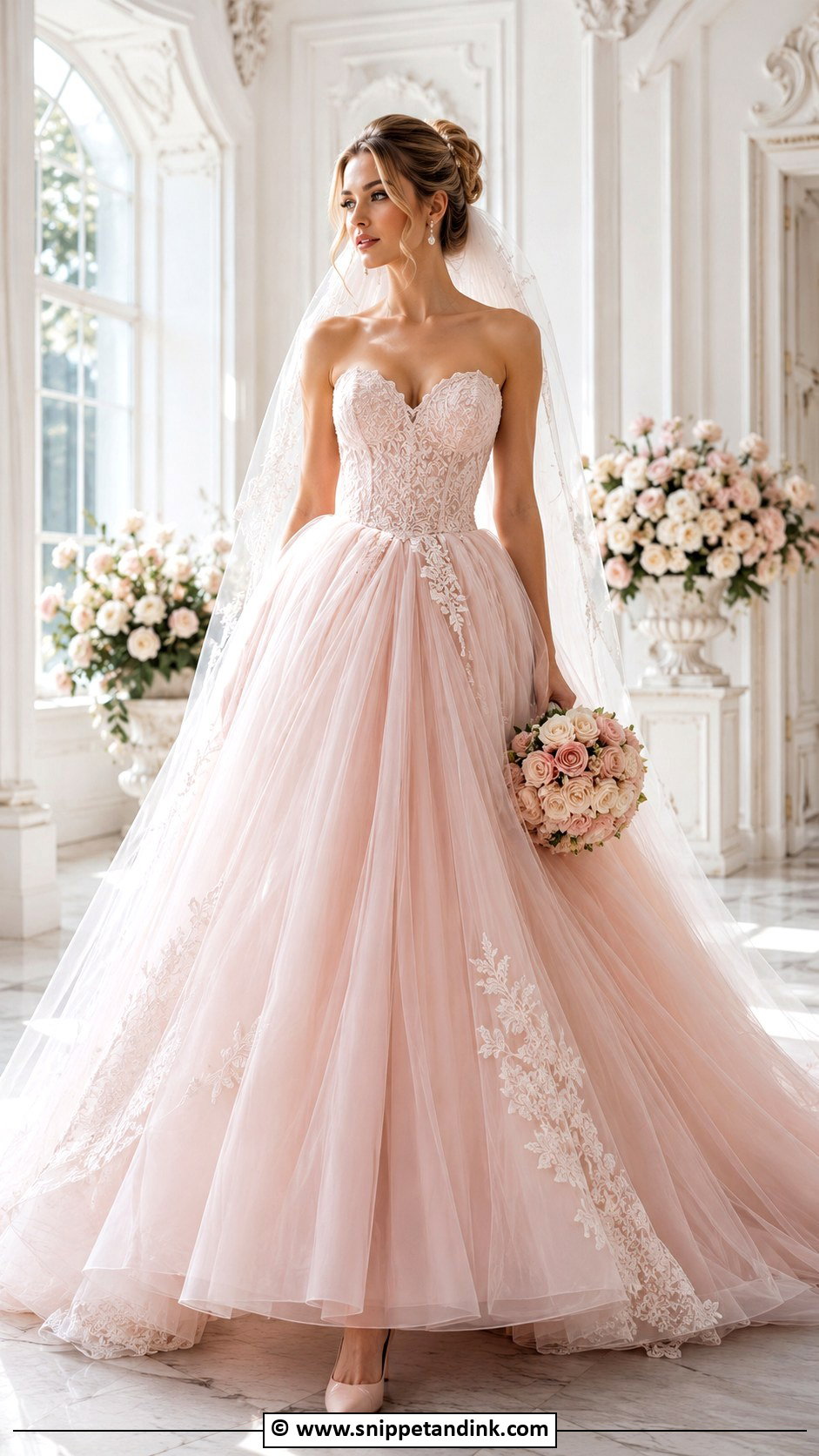
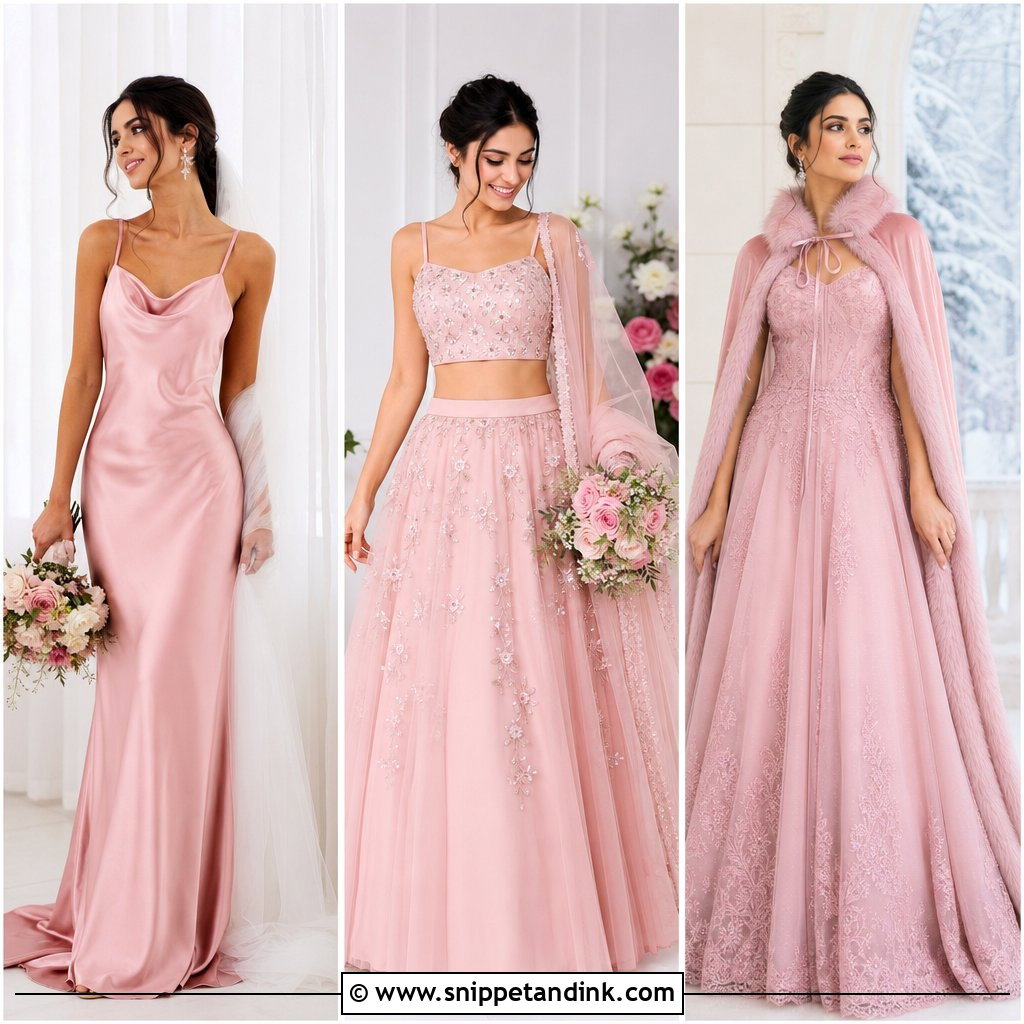
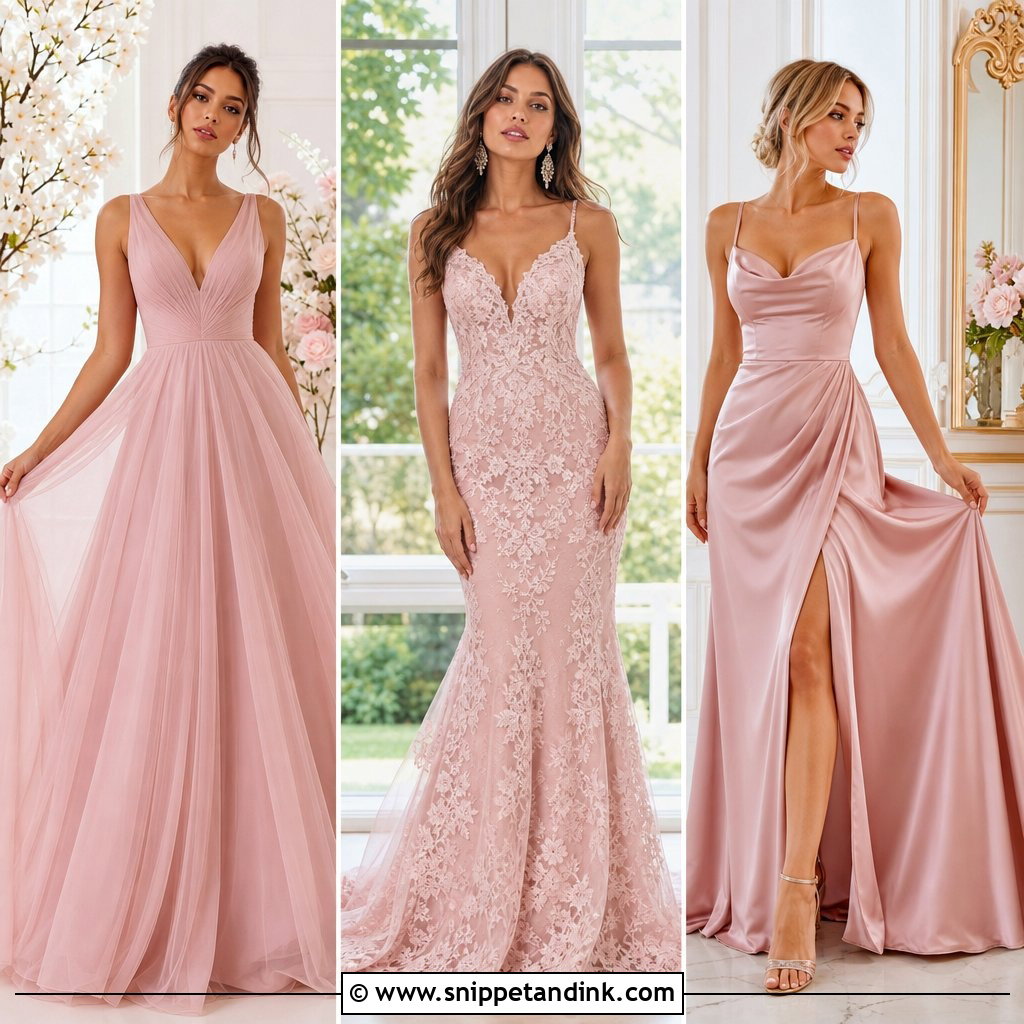
Blush on a full ball gown is the gentlest way into pink, because the classic shape keeps it reading as a wedding dress. Layers of tulle give movement, a fitted bodice gives structure and lace or floral appliqués add detail. Pair it with a cathedral veil, pearl earrings and a soft rose bouquet. Shoes should be ivory, nude or pale pink. One thing I check on blush tulle: layered over an ivory underskirt, the pink can almost disappear in bright sun, so if you want the color to show, ask for at least one pink layer close to the lining.
2. Pale Pink Lace Wedding Dress
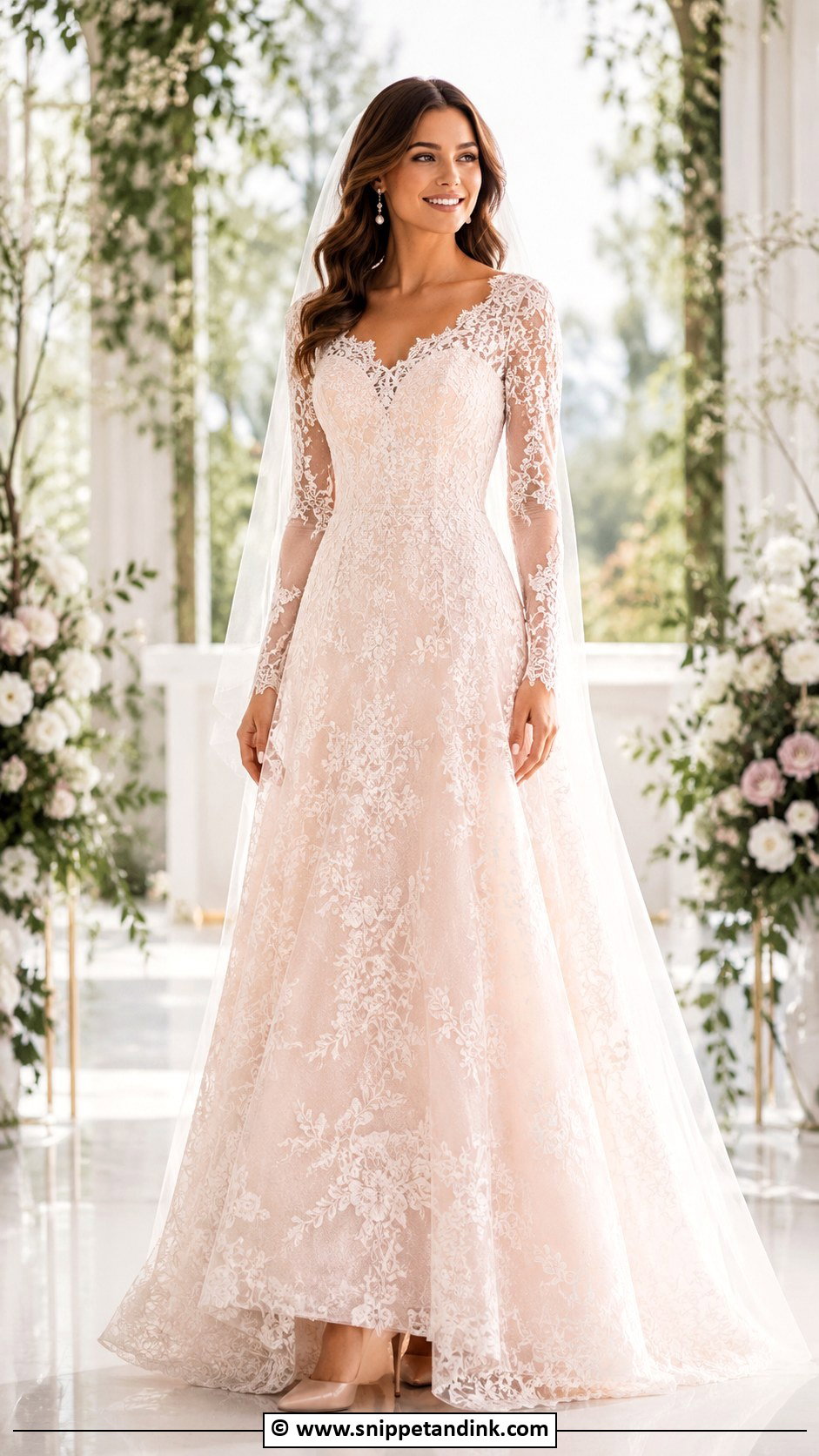
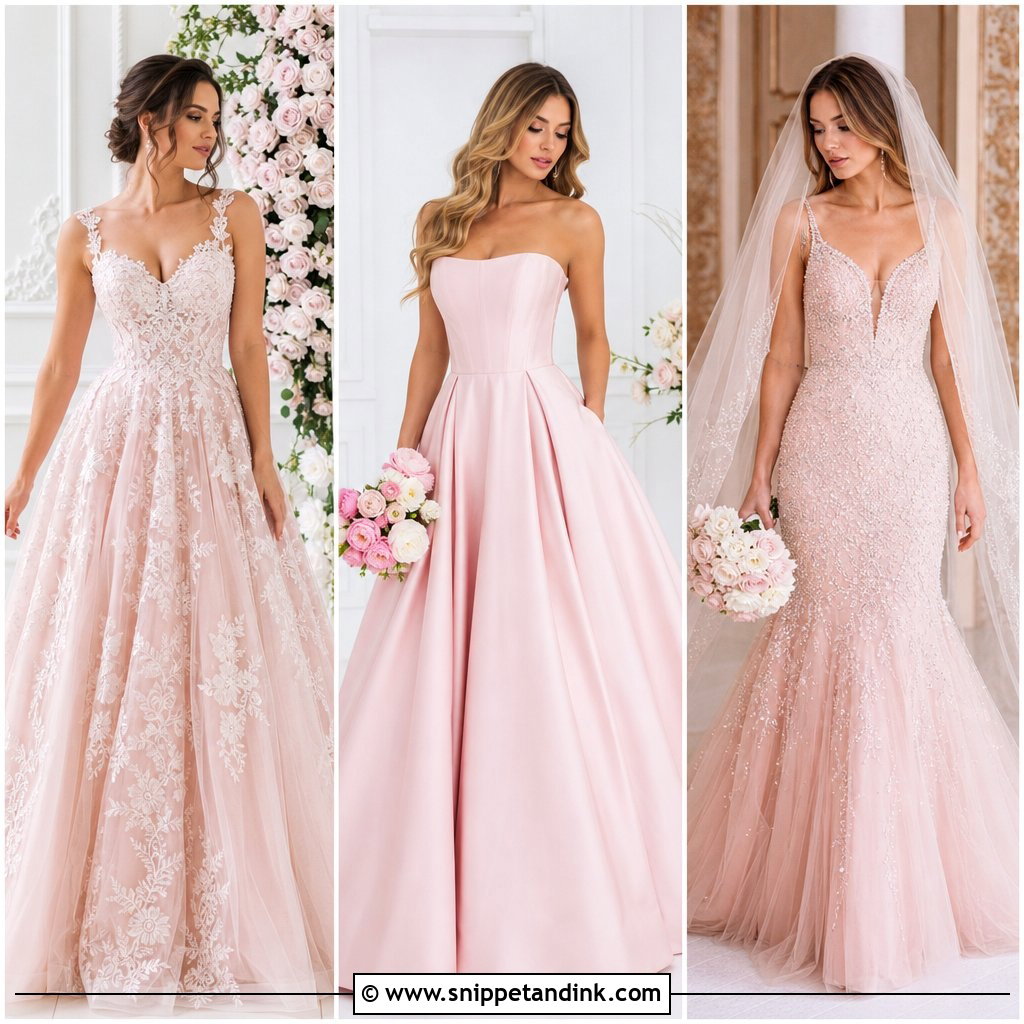
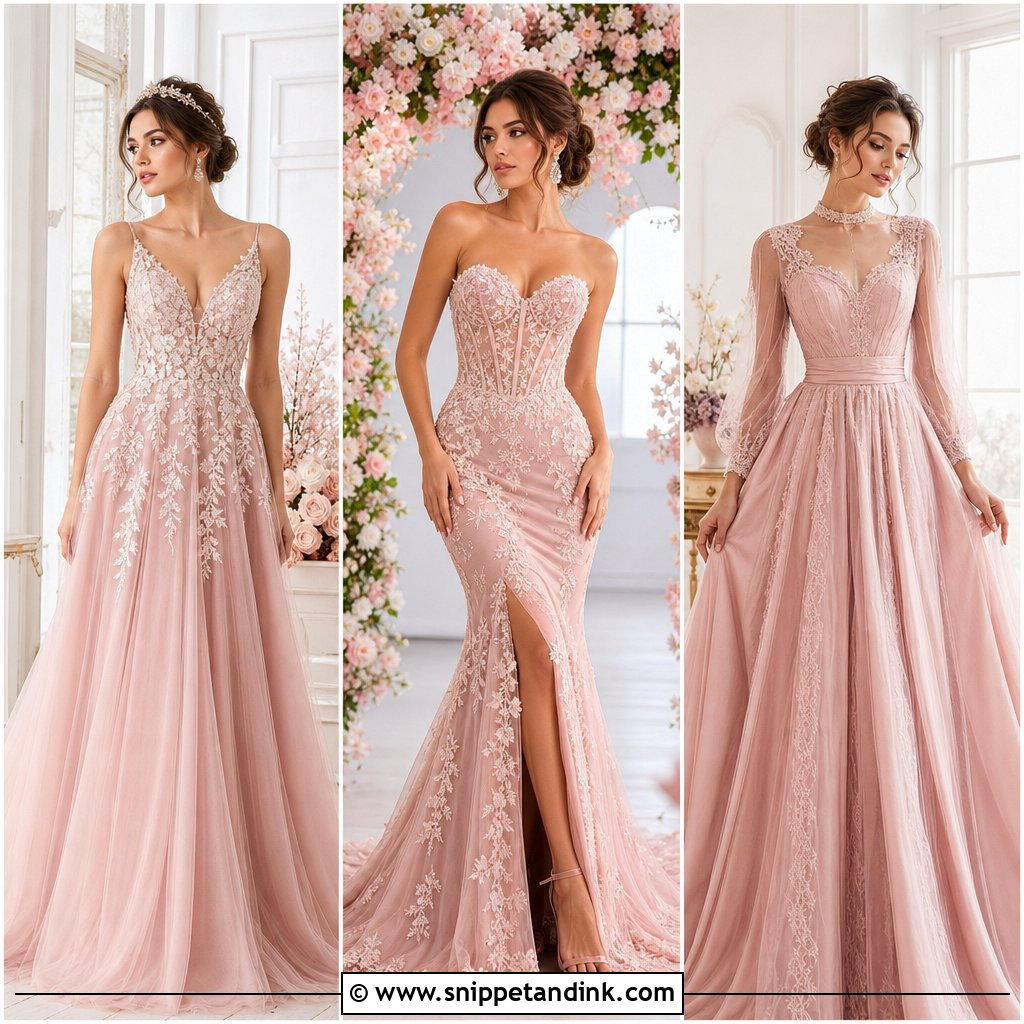
Pale pink lace usually means ivory or nude lace over a pink lining, and the lining is what makes the pattern stand out. Lace sleeves, a scalloped neckline or a sheer lace back give coverage without weight. A-line and fit-and-flare shapes show the lace most clearly. A simple veil, pearl drop earrings and a low bun finish it, with nude pointed heels or satin sandals. Ask to see the dress in daylight; a lining that looks pink under shop spotlights can read almost flesh-toned outdoors, which some brides love and others don’t.
3. Dusty Rose A Line Wedding Dress
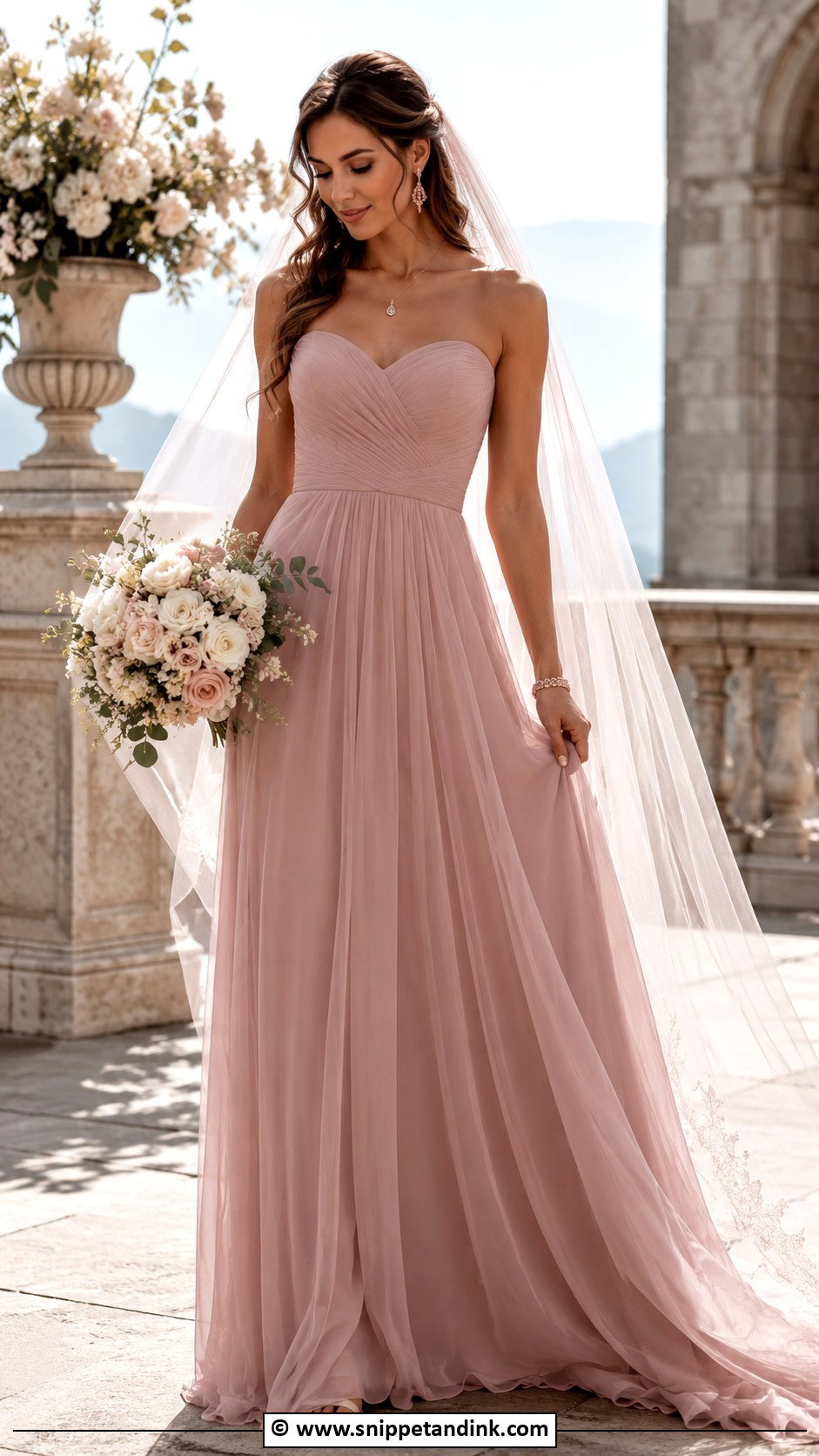
Dusty rose is the pink I suggest to brides who think pink is too sweet for them. Its muted, slightly grey tone reads mature and pairs well with ivory, taupe, sage, champagne and soft metallics. An A-line makes it easy to wear, flattering the waist and falling gently over the hips. Chiffon, satin or tulle can work depending on the setting. Rose gold jewelry, a soft veil and neutral heels finish it. Dusty rose is also forgiving in mixed lighting, which is why it holds up so well outdoors and in fall.
4. Pink Tulle Princess Wedding Dress
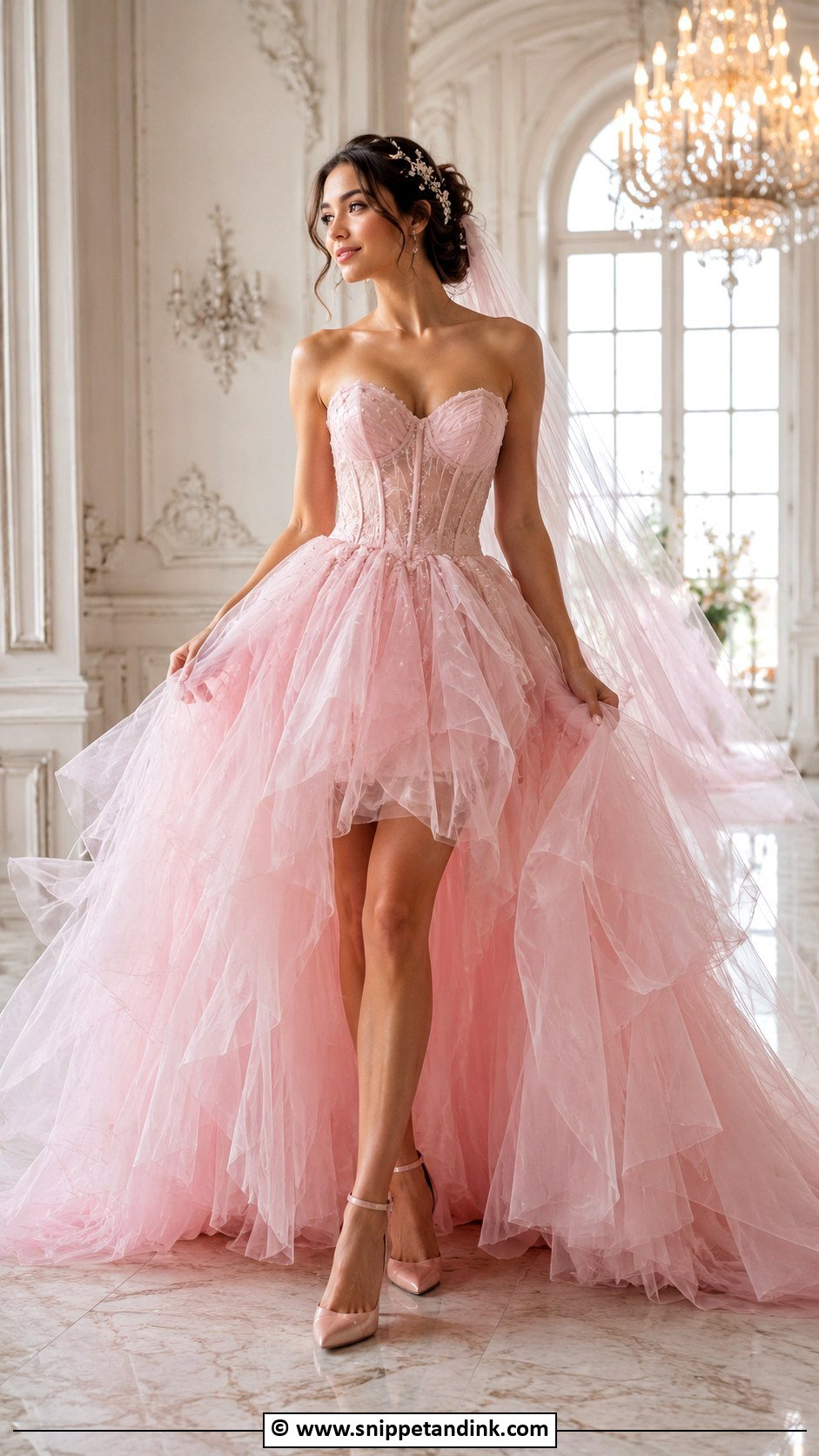
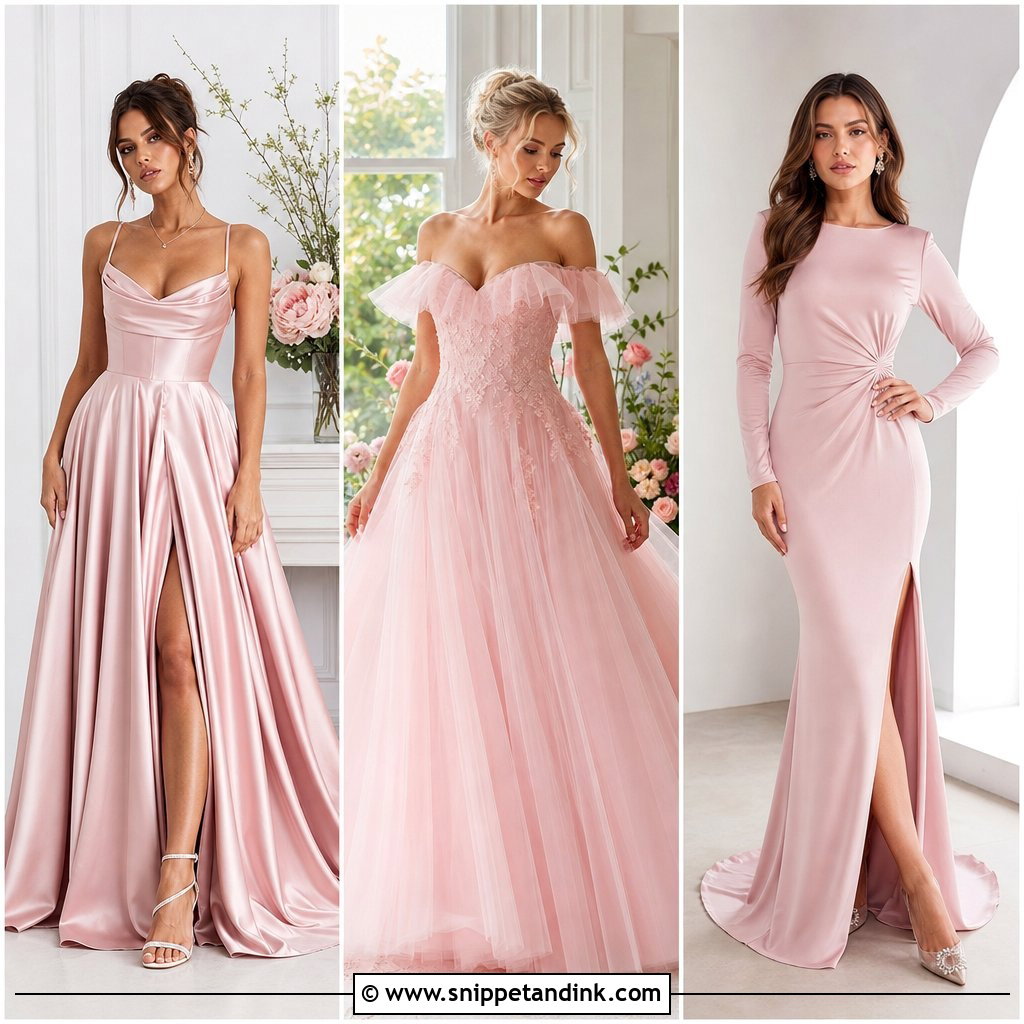
A pink tulle princess wedding dress gives the fairytale feeling without the full white-gown tradition. Layers of tulle create the volume, and a corset bodice, sweetheart neckline or off-the-shoulder detail adds romance. The risk is costume, so I keep styling light: a sheer veil, crystal hair pins and dainty earrings, with soft pink or ivory heels under the skirt. Volume like this needs space. Check the aisle width at your venue and how you’ll get in and out of the car.
5. Rose Pink Satin Wedding Dress
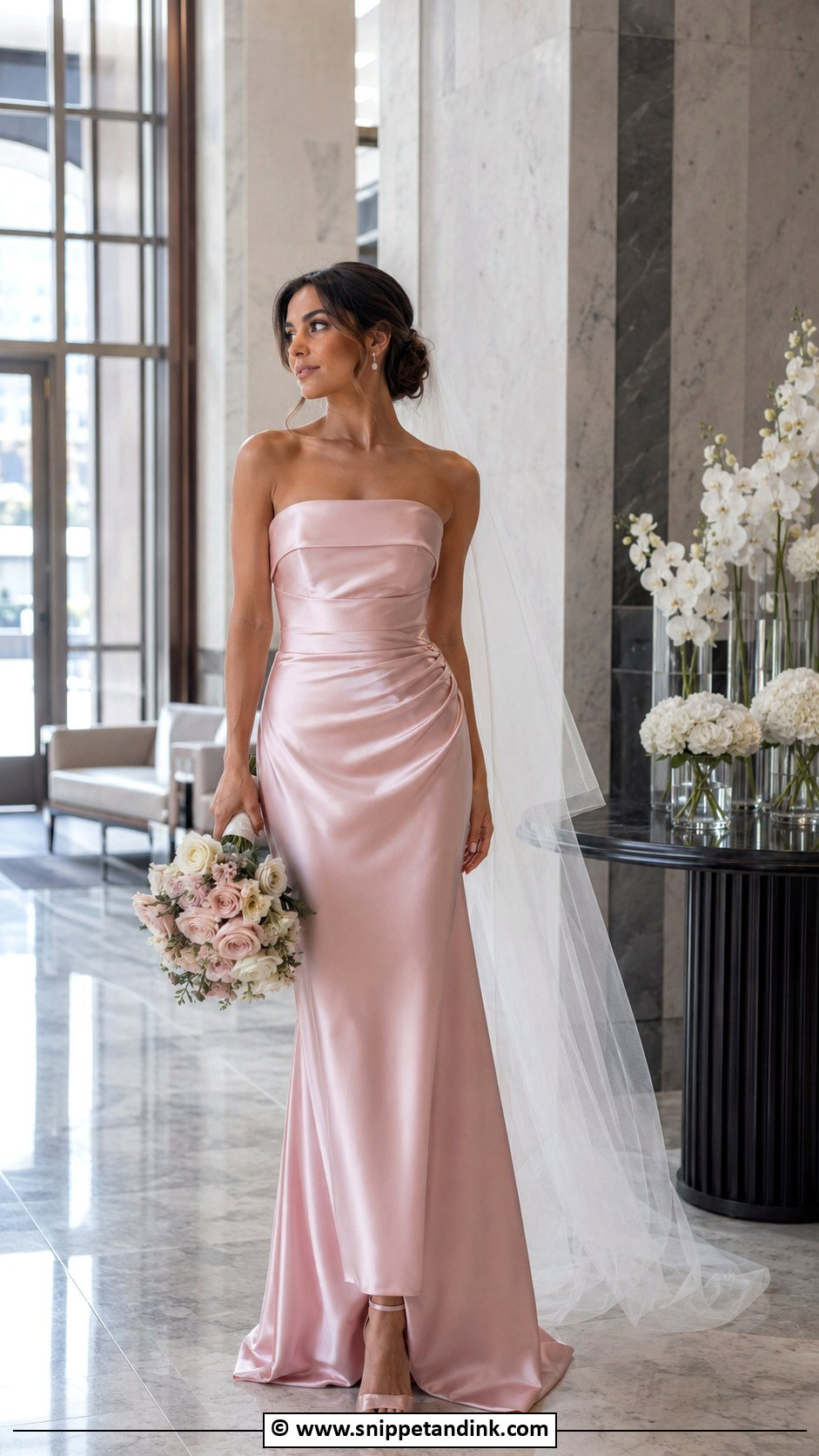
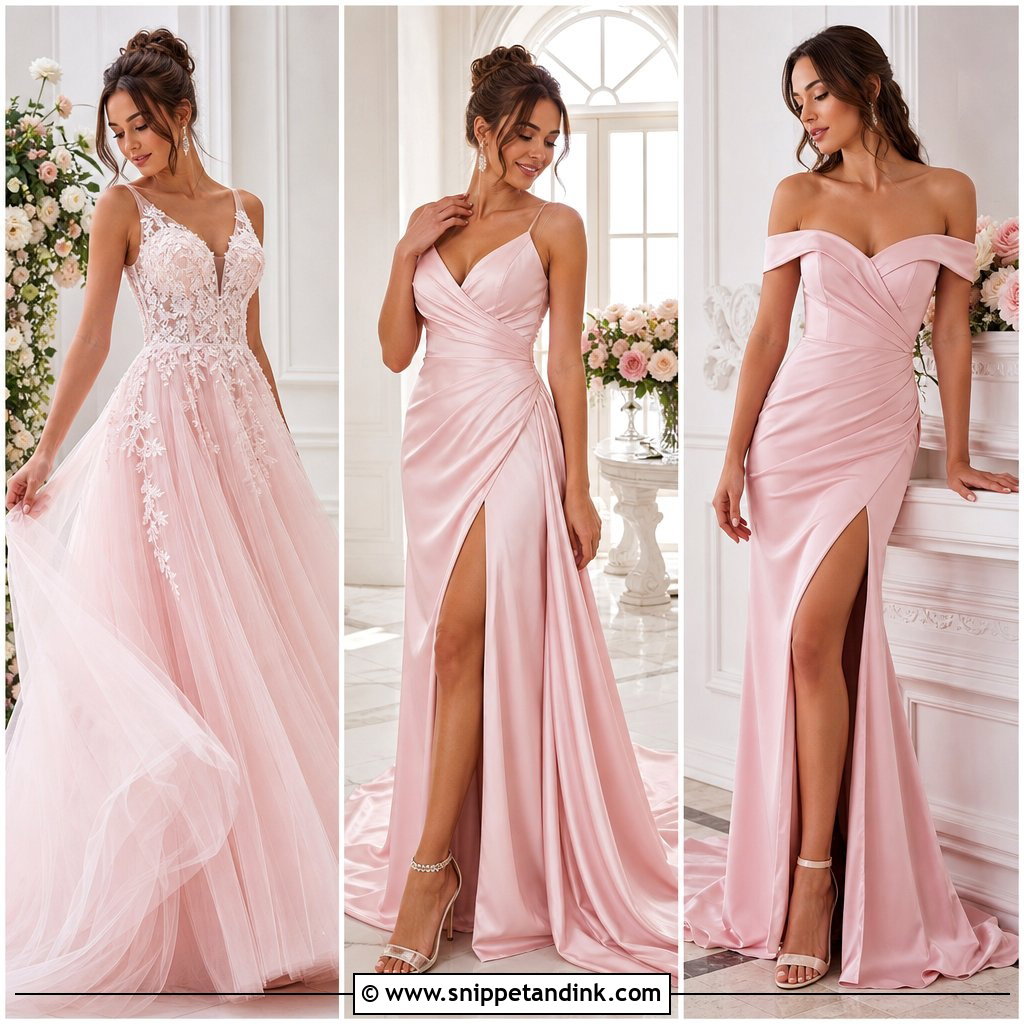
Satin’s natural sheen makes even a plain rose pink silhouette feel special, and rose has enough depth to hold its color in photographs where blush sometimes washes out. A clean strapless gown, a cowl neckline or long satin sleeves all read modern. Minimal jewelry, sleek hair and satin heels keep it refined, and a long veil softens a very simple dress. Satin shows every crease, so I’d steam it as close to the ceremony as possible. Hotels, city venues and evening receptions suit it.
6. Blush Pink Mermaid Wedding Dress
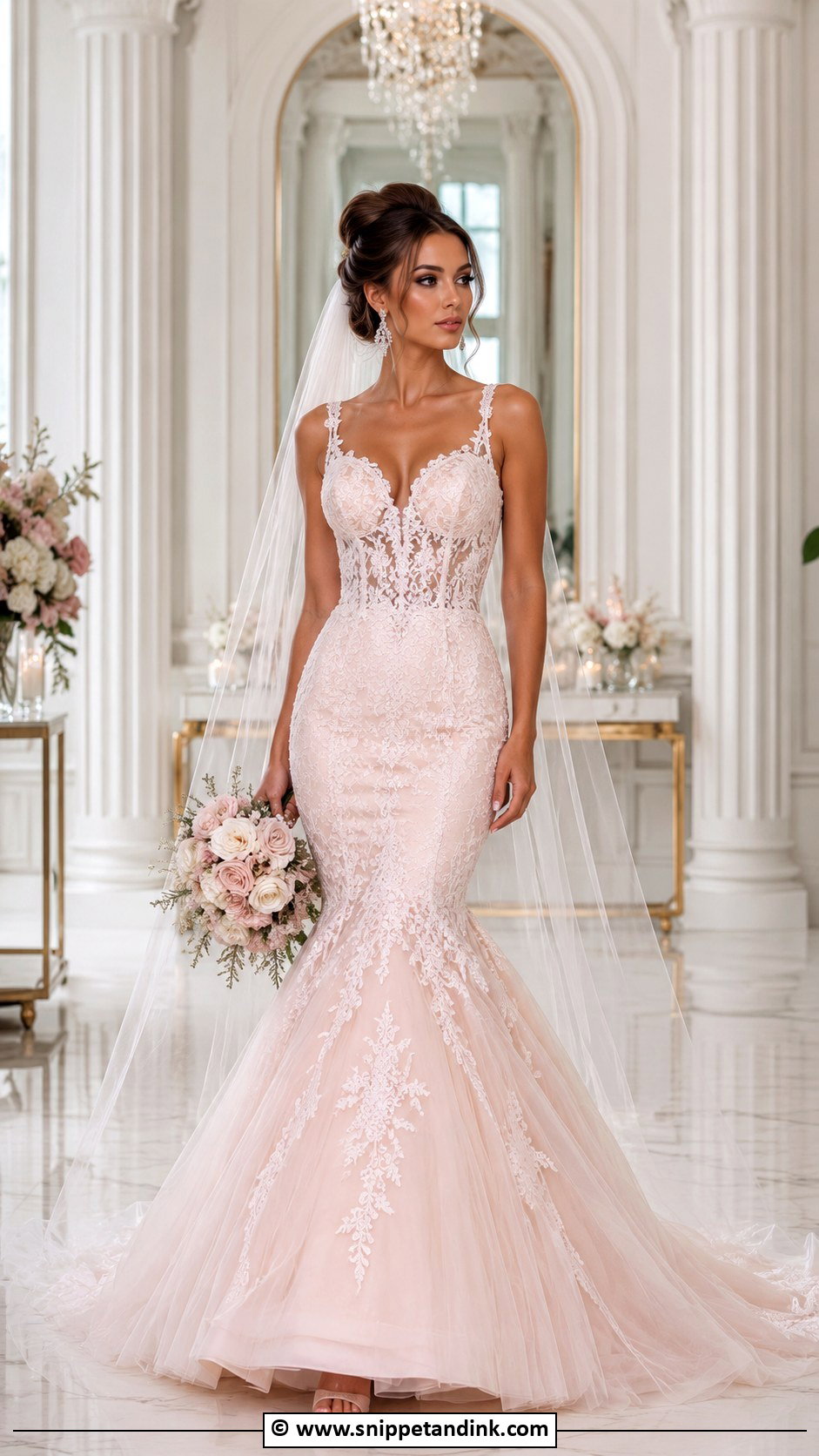
The mermaid fits closely through the bodice and hips and flares at the knee, and blush takes the edge off that drama. Lace appliqués, beading or layered tulle on the skirt add texture. Before committing, walk, sit and climb a step in it; a mermaid restricts your stride, and where the flare begins decides how much. A long veil, crystal earrings and a smooth updo show the neckline, with nude or pale pink heels. Formal weddings and grand entrances suit it.
7. Light Pink Off Shoulder Wedding Dress
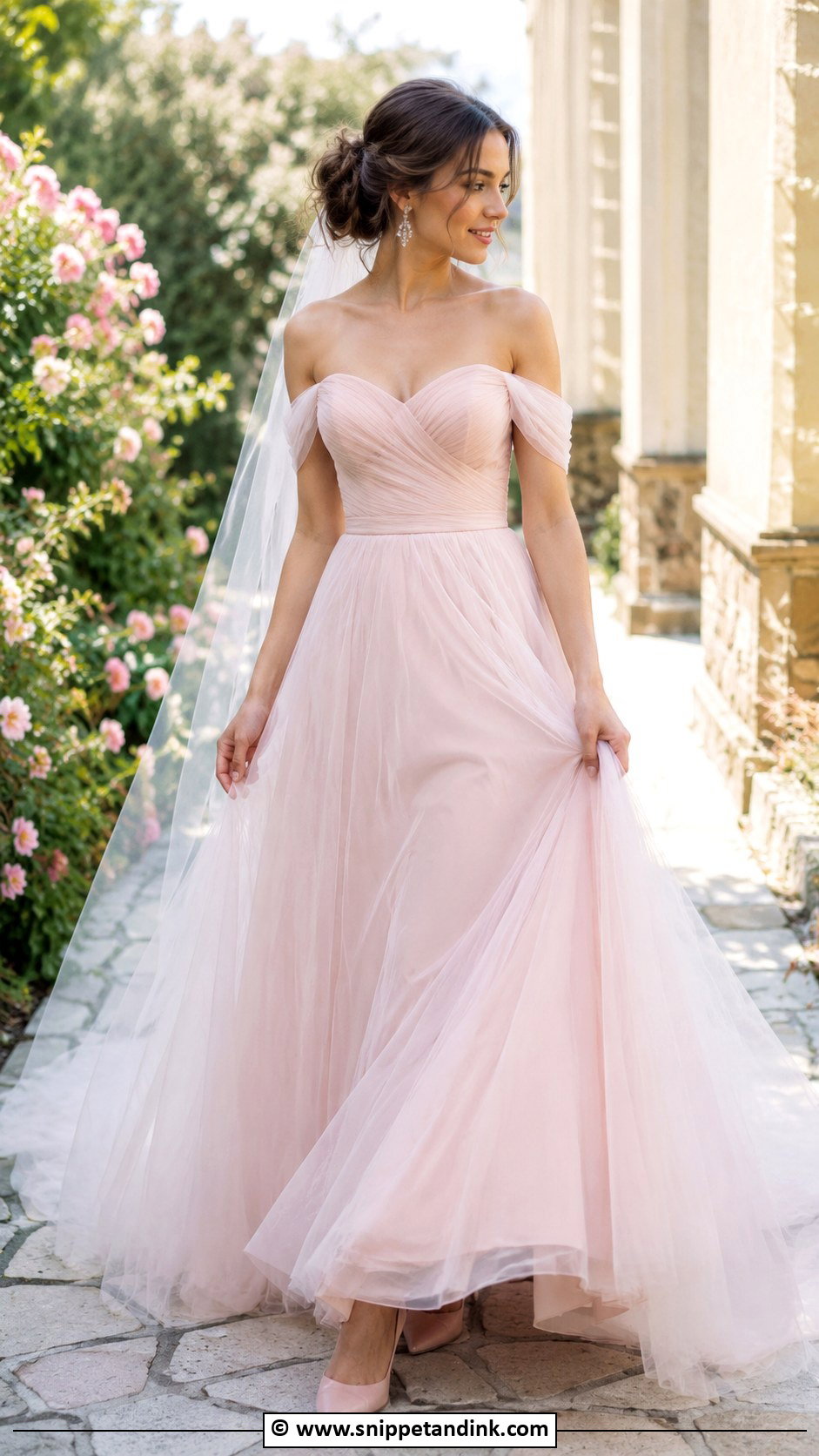
Off-the-shoulder necklines frame the collarbone, and a light pink fabric right next to the skin warms the face. Ball gown, A-line and fitted shapes all work. Tulle feels airy; satin is cleaner. Wear a necklace only if there’s real space between neckline and throat; otherwise earrings are enough. A loose bun or soft waves finish it. Test how high you can lift your arms in it, because off-shoulder sleeves can pin your arms during hugs and the first dance. Spring, gardens and softer indoor venues suit it.
8. Pink Floral Embroidered Wedding Dress
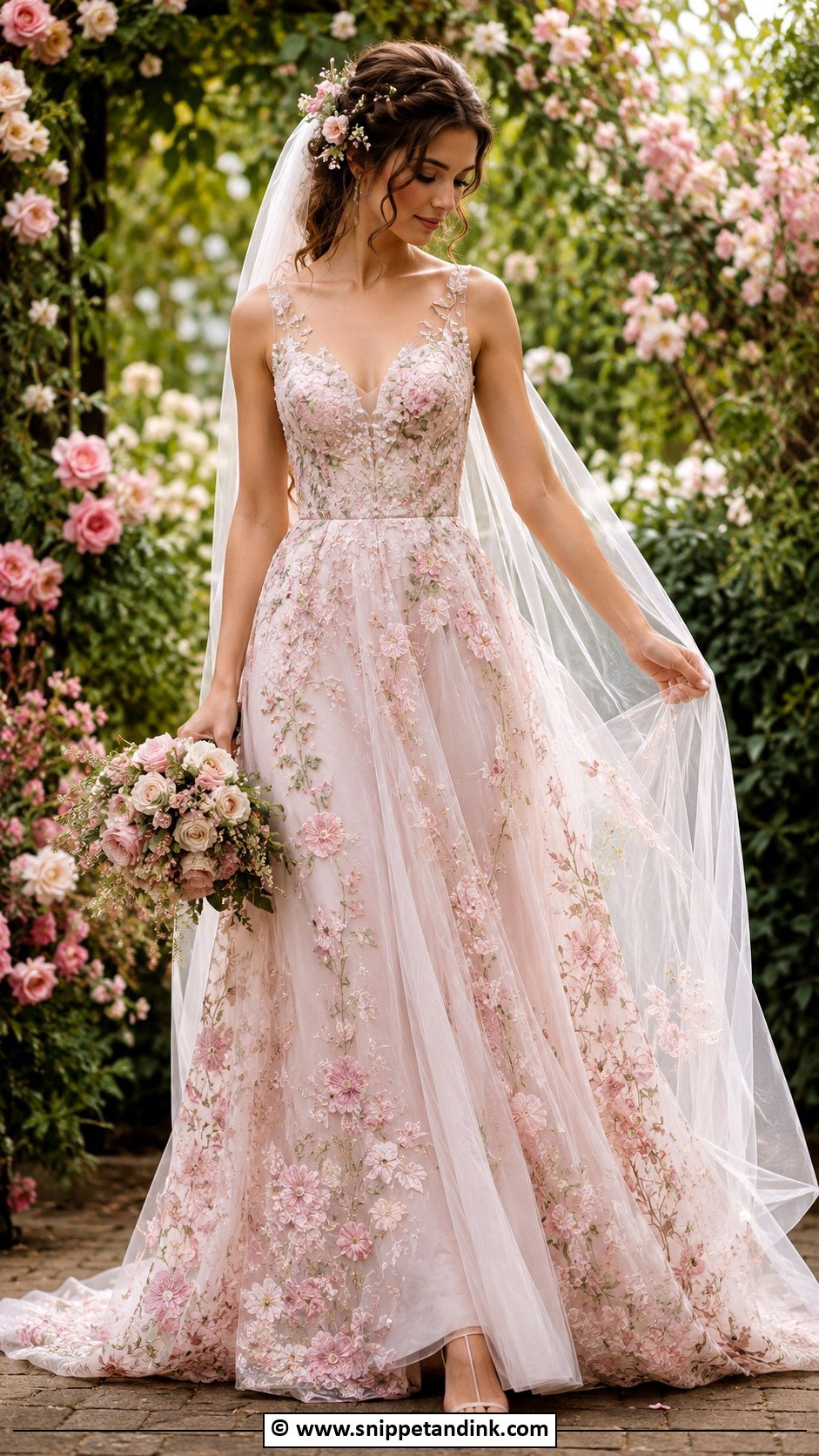
Floral embroidery brings color and detail into a gown without losing the bridal feel: blush flowers, rose vines, pastel petals or tonal pink thread over ivory or pink fabric. A fitted bodice and flowing skirt give the embroidery room. Keep accessories quiet, with a sheer veil, small floral hair pins and neutral heels. I’d have the florist see a photo of the embroidery before planning the bouquet, so the flowers echo the thread colors rather than fighting them. Gardens and spring weddings suit it.
9. Pink Ombre Wedding Dress
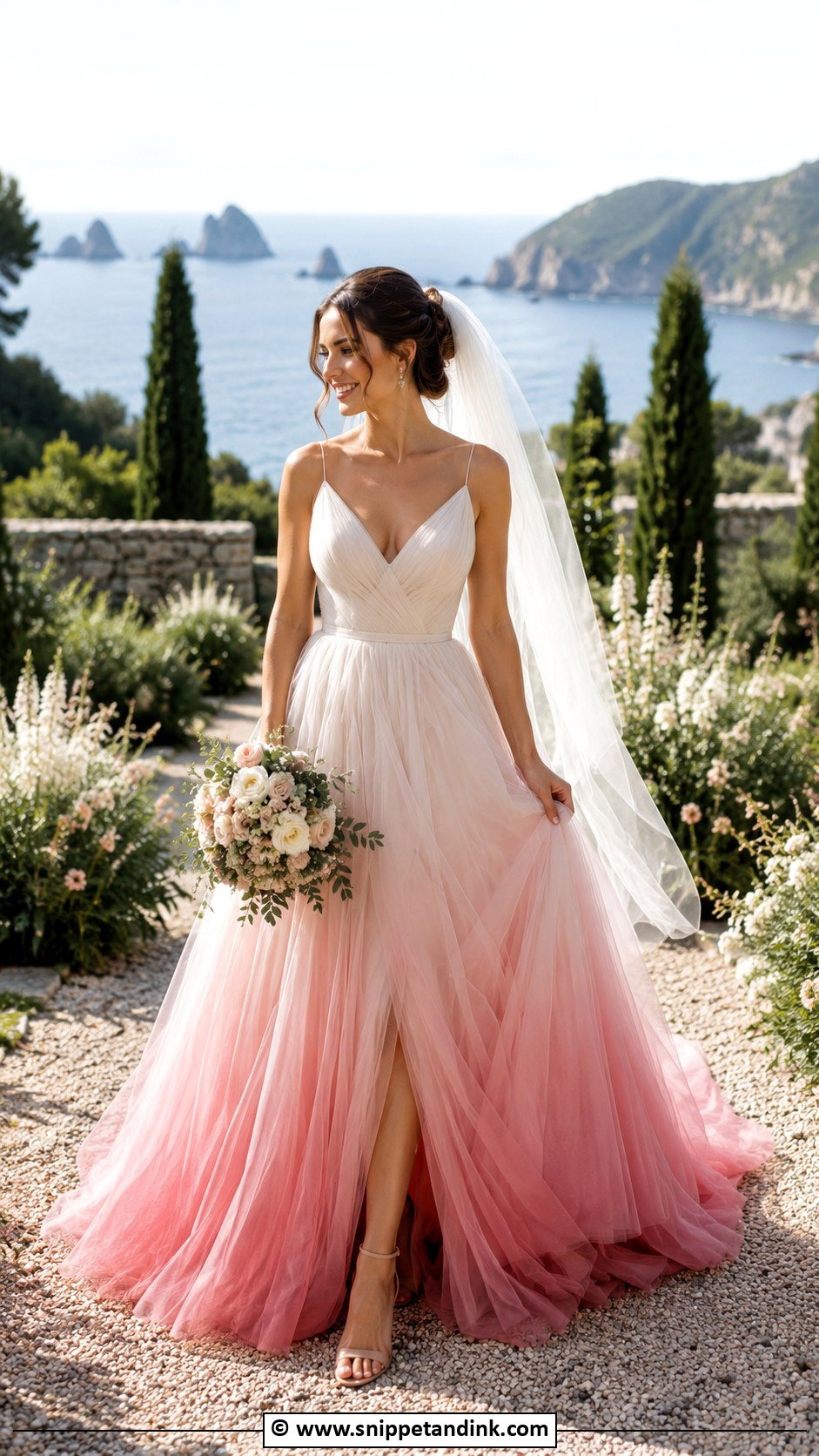
Ombre fades from one shade to another, ivory to blush, blush to rose or pale pink deepening at the hem. It shows best on tulle, chiffon and organza, where the fabric moves and the gradient shifts with it. Keep the bodice simple so the color change stays the feature. Clear, nude or pale pink heels and a soft veil finish it. A deeper-pink hem will pick up grass and sand stains more visibly than ivory, so it suits a beach or garden only if you’re relaxed about that. Ombre is also hard to alter at the hem, since shortening it cuts off the darkest band, so buy close to your length.
10. Champagne Pink Wedding Dress
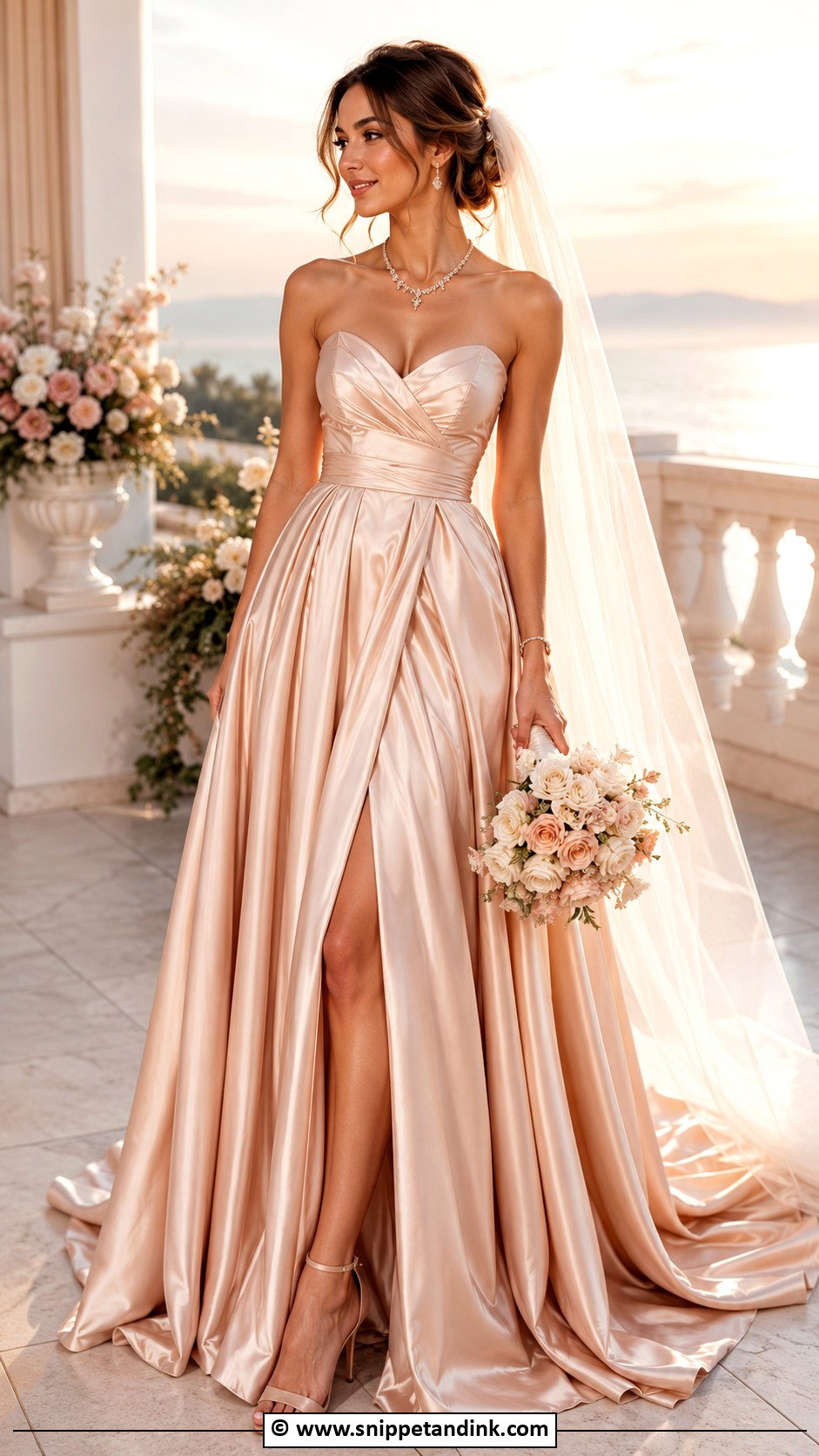
Champagne pink blends pink with beige or golden undertones, and it’s the shade that suits the widest range of skin tones in my experience. It sits between ivory and obvious pink, so it looks quietly different. Satin, lace and beaded tulle all work. Gold or rose gold jewelry, a soft veil and neutral heels keep it cohesive, and a bouquet of cream, blush and muted greenery suits it. Formal venues and sunset ceremonies bring out its warmth.
11. Pink Beaded Wedding Dress
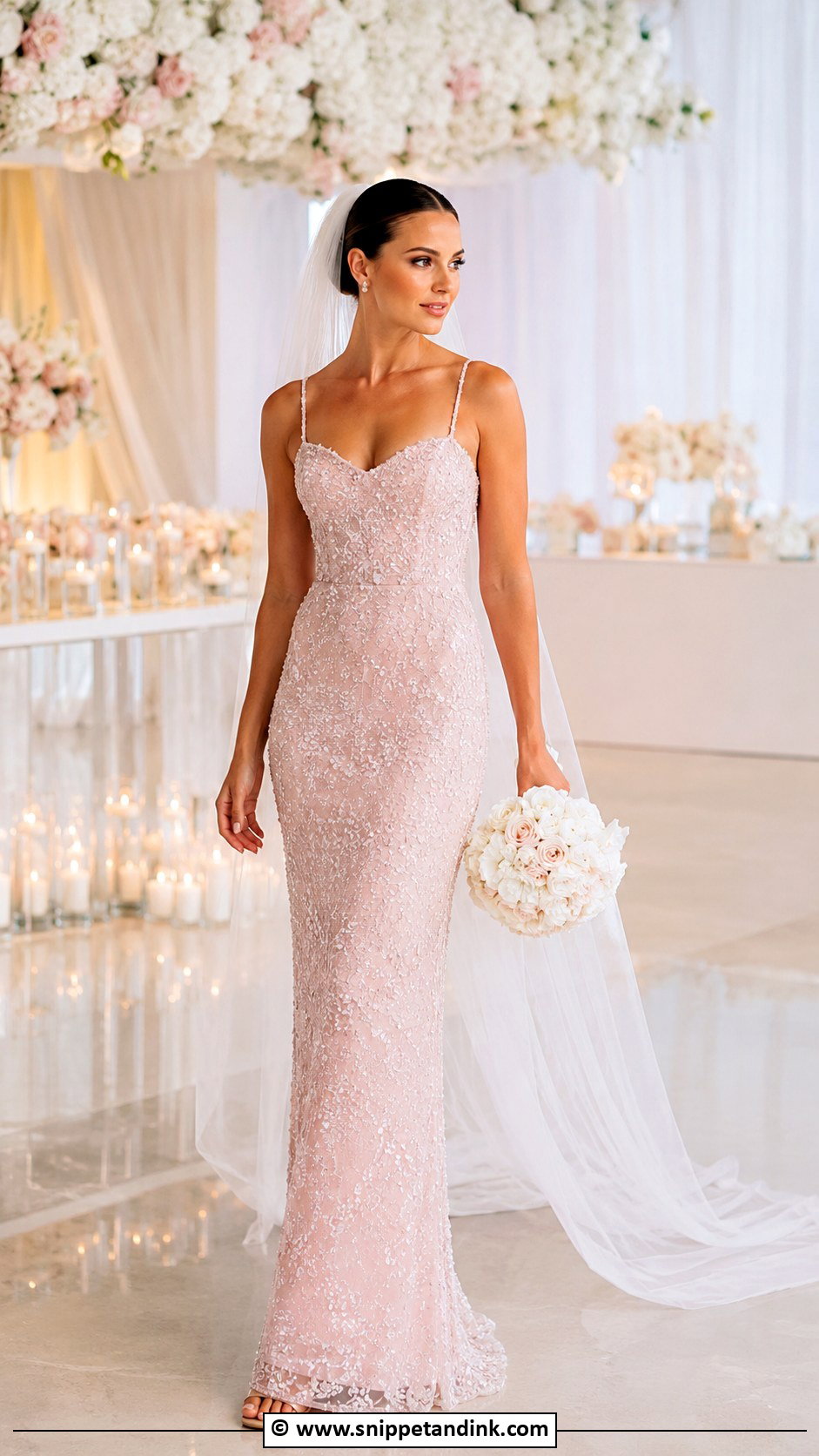
Beading over blush or rose pink sparkles with more warmth than beading over white. All-over beading reads dramatic; delicate beadwork on the bodice is softer. A sheath, fit-and-flare or slim A-line keeps the sparkle elegant. Simple earrings, a smooth hairstyle and metallic or nude heels are enough, without a necklace over a detailed bodice. Heavily beaded gowns take longer and cost more to alter because beads must be removed and re-sewn at every seam, so start fittings early. Evening weddings suit it.
12. Blush Pink Long Sleeve Wedding Dress
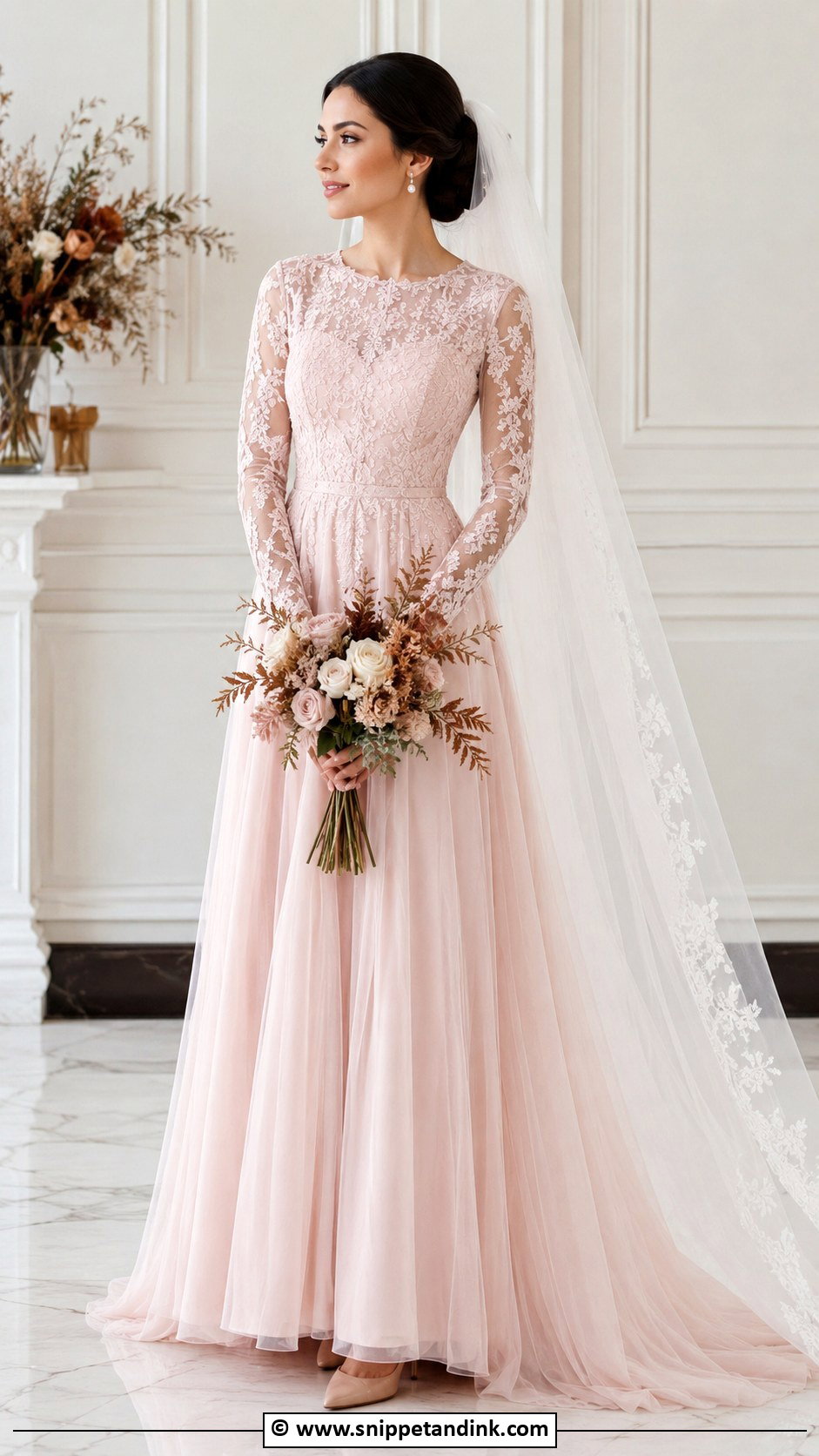
A blush long sleeve wedding dress gives coverage that still looks soft. Sleeves can be sheer lace, fitted crepe, airy tulle or full bishop sleeves. Fall, winter and formal indoor weddings suit it. Pearl earrings, a neat chignon and a long veil finish it, with nude, ivory or blush heels. Skip bracelets if the sleeves are detailed. Fitted sleeves should let you bend your elbow fully and lift a glass; I check this at every fitting, since a tight sleeve is miserable by the toasts.
13. Pink Strapless Wedding Dress
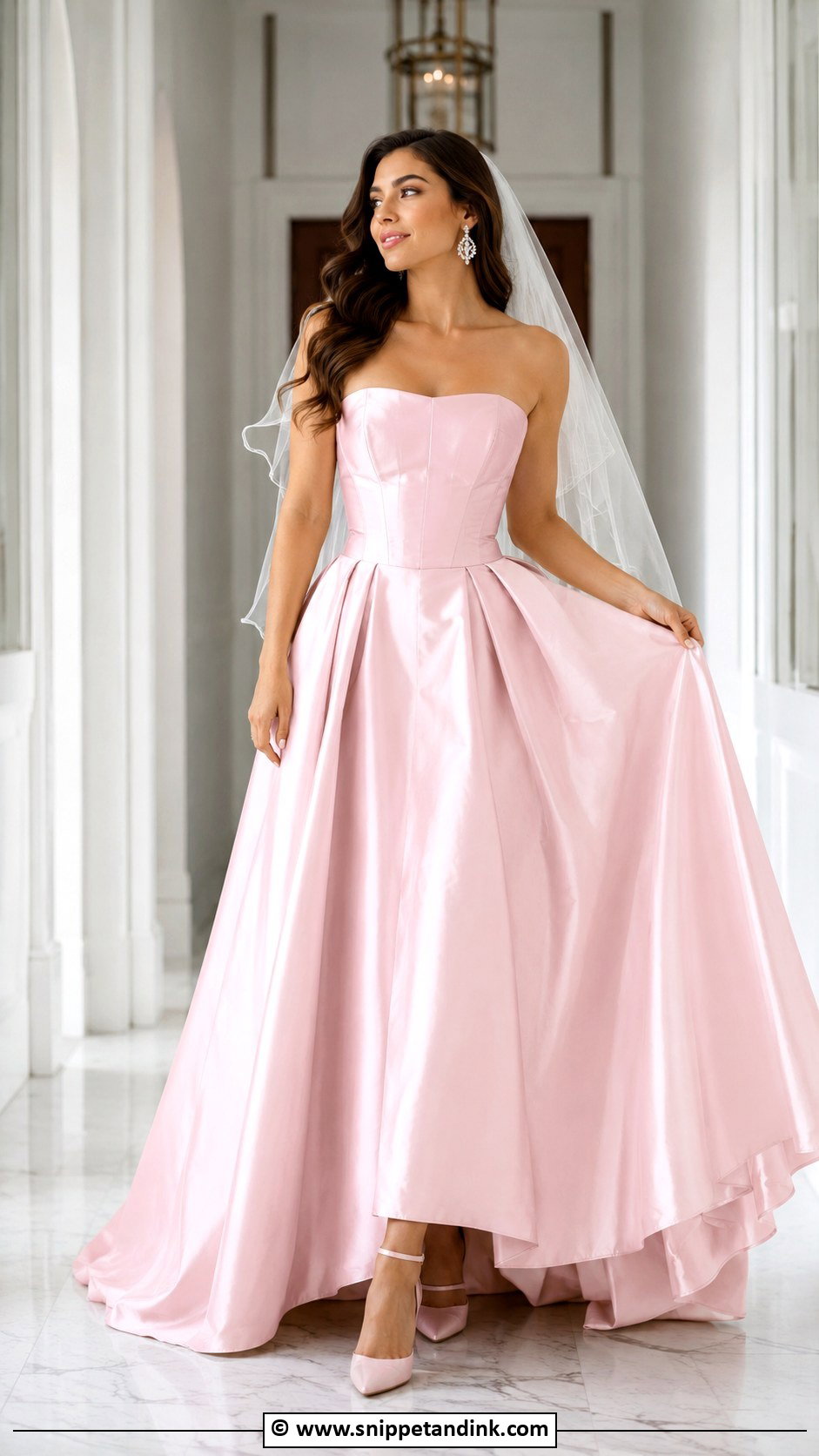
Strapless pink looks clean and very bridal when the fit is right, and fit is the whole story. A blush satin gown is minimal, a pink tulle ball gown romantic and a lace strapless more traditional. Whatever the fabric, ask to see the inner corsetry: boning and grip tape keep a strapless dress up, a tight fit alone doesn’t. A veil, statement earrings and a polished updo or soft waves finish it, and a delicate bracelet adds shine without crowding the neckline.
14. Pink Corset Wedding Dress
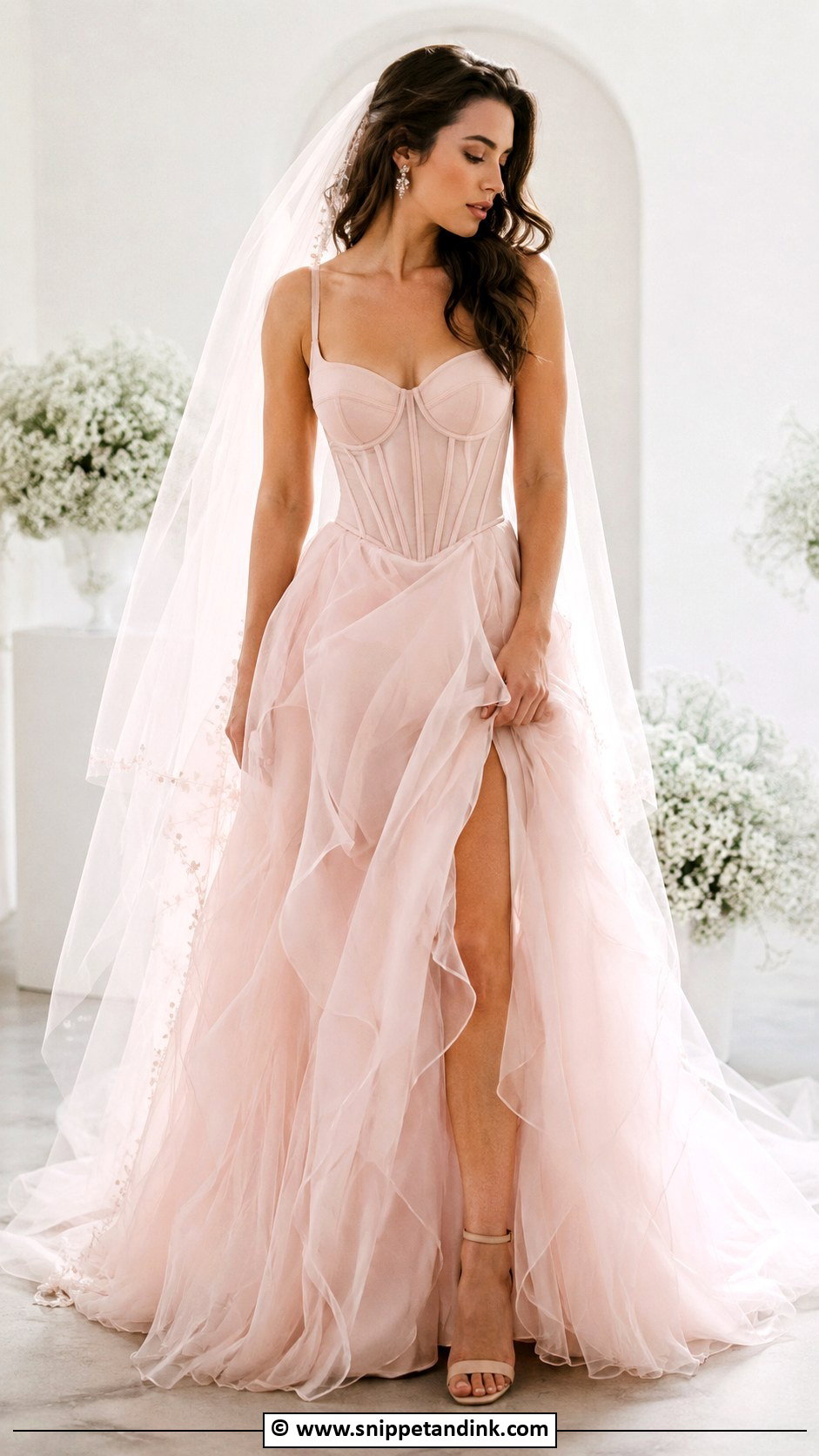
A pink corset wedding dress combines structure with softness. The corset defines the waist and holds the gown securely, and pink keeps it from looking severe. Exposed boning reads fashion-forward; covered boning is more classic. Tulle, satin or organza skirts all pair with it. Ballet pink, blush and dusty rose suit the shape best. A sheer veil, small earrings and soft makeup are enough. Sit down and breathe deeply at the fitting. If the bodice bites, it needs easing, because you’ll be in it for ten hours or more.
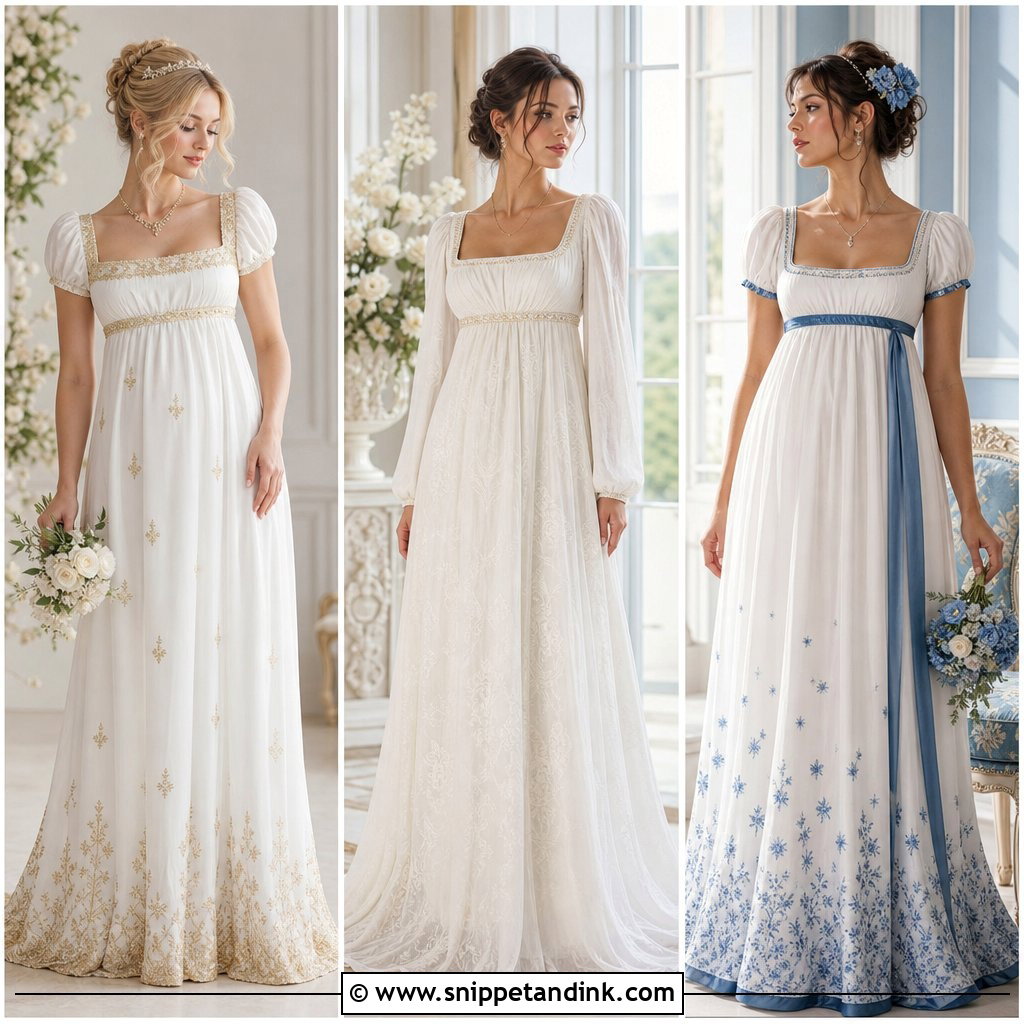
15. Pink Organza Wedding Dress
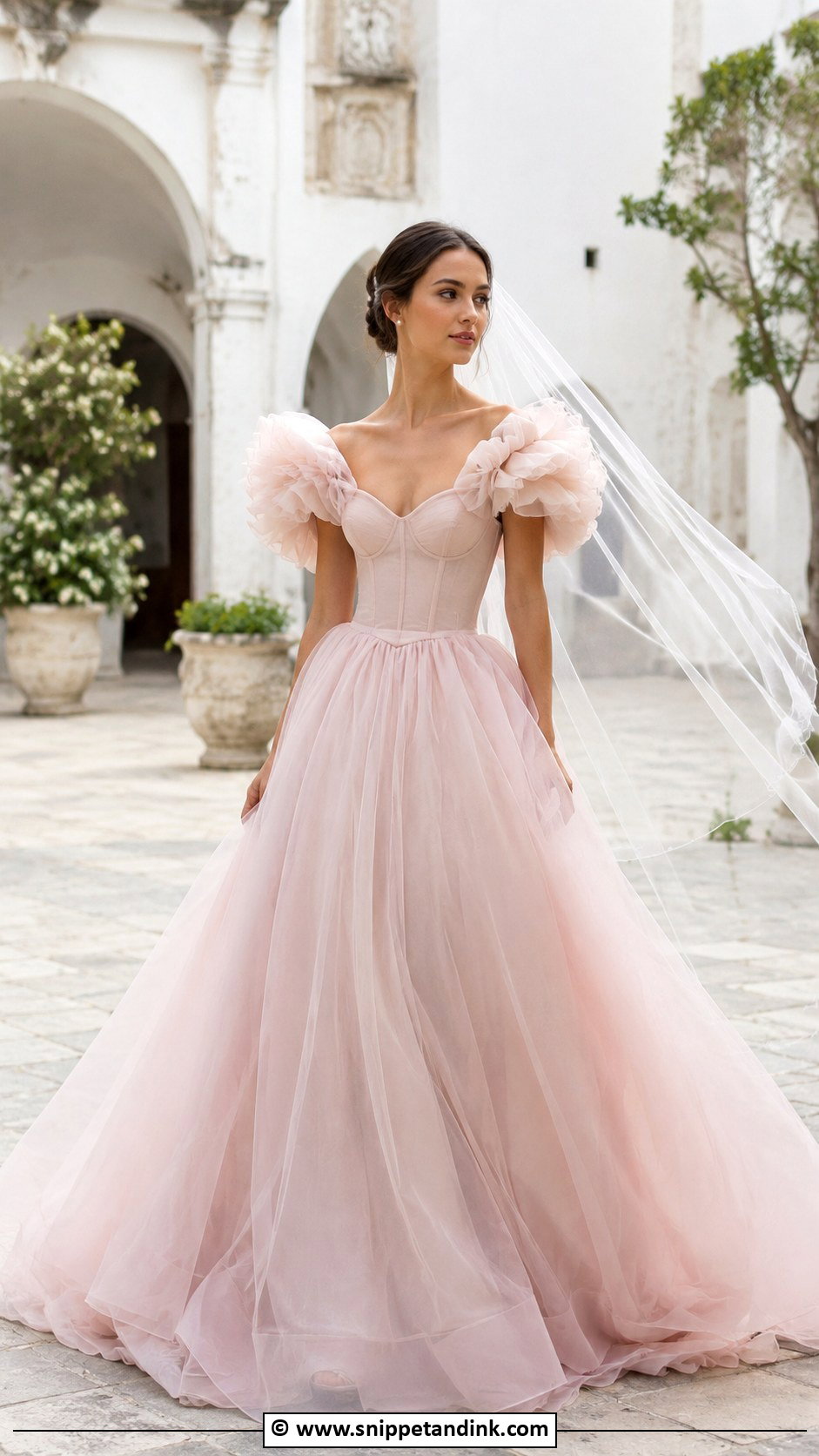
Organza is light and crisp, holding shape better than chiffon while still feeling soft. In pink it can carry a full skirt, sculpted sleeves, floral appliqués or a clean architectural line, and its natural volume means drama without weight. Keep jewelry minimal, the heels soft and the veil as light as the dress. A low bun or sleek waves finish it. Organza creases sharply when crushed, so I’d hang it the night before, not lay it over a chair. Bright venues and spring or summer weddings suit it best.
16. Blush Pink Chiffon Wedding Dress
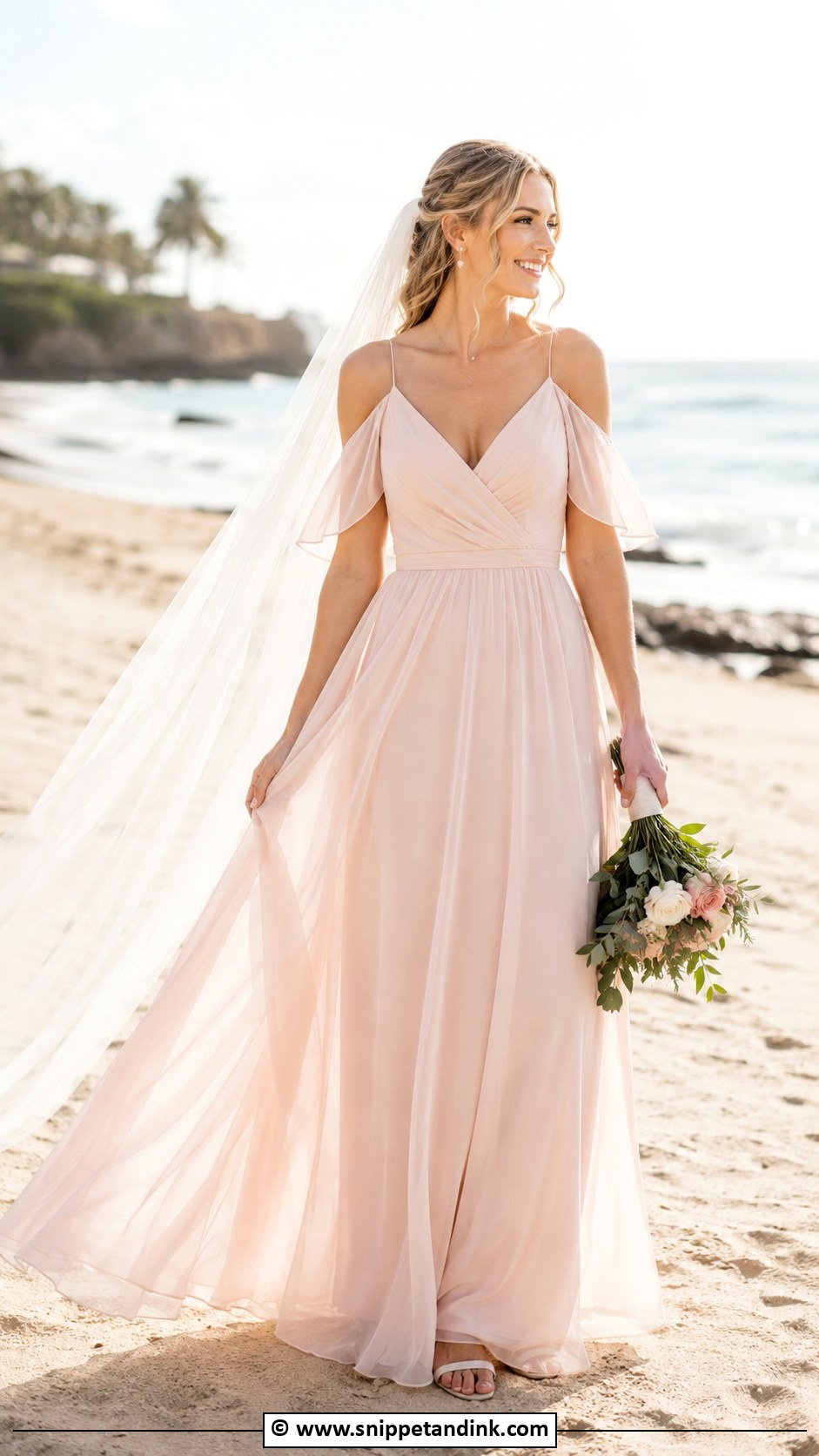
Chiffon drapes softly and moves easily, which makes blush chiffon a natural fit for beaches, destination ceremonies, gardens and relaxed celebrations. Empire waists, soft A-line skirts, flutter sleeves and delicate straps all suit it. Simple sandals, a lightweight veil and natural-looking jewelry keep it light, with a loose updo or soft waves. Chiffon frays easily at the hem and snags on rough surfaces, so I’d have the hem finished properly rather than left raw, especially on sand.
17. Pink Tea Length Wedding Dress
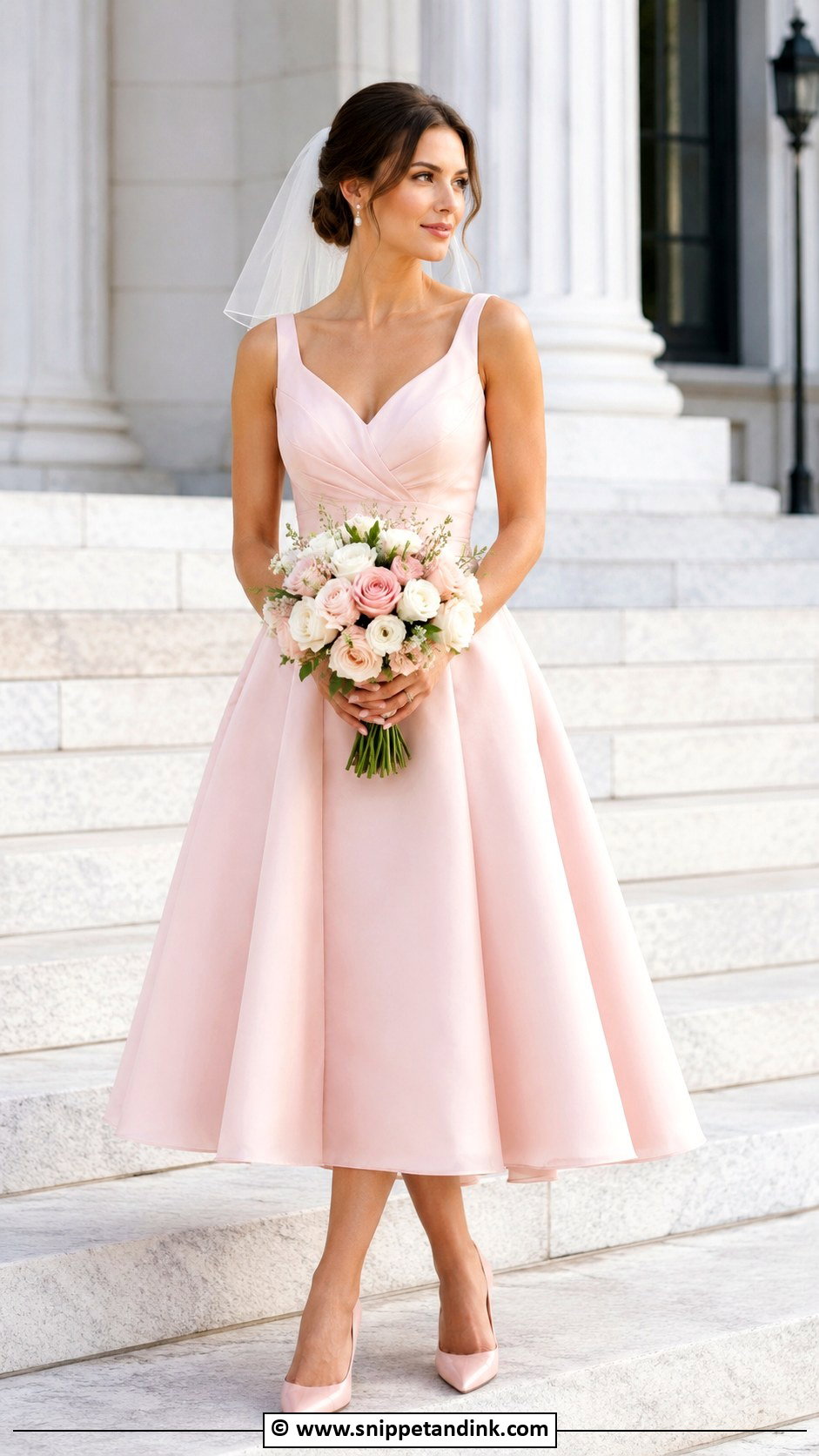
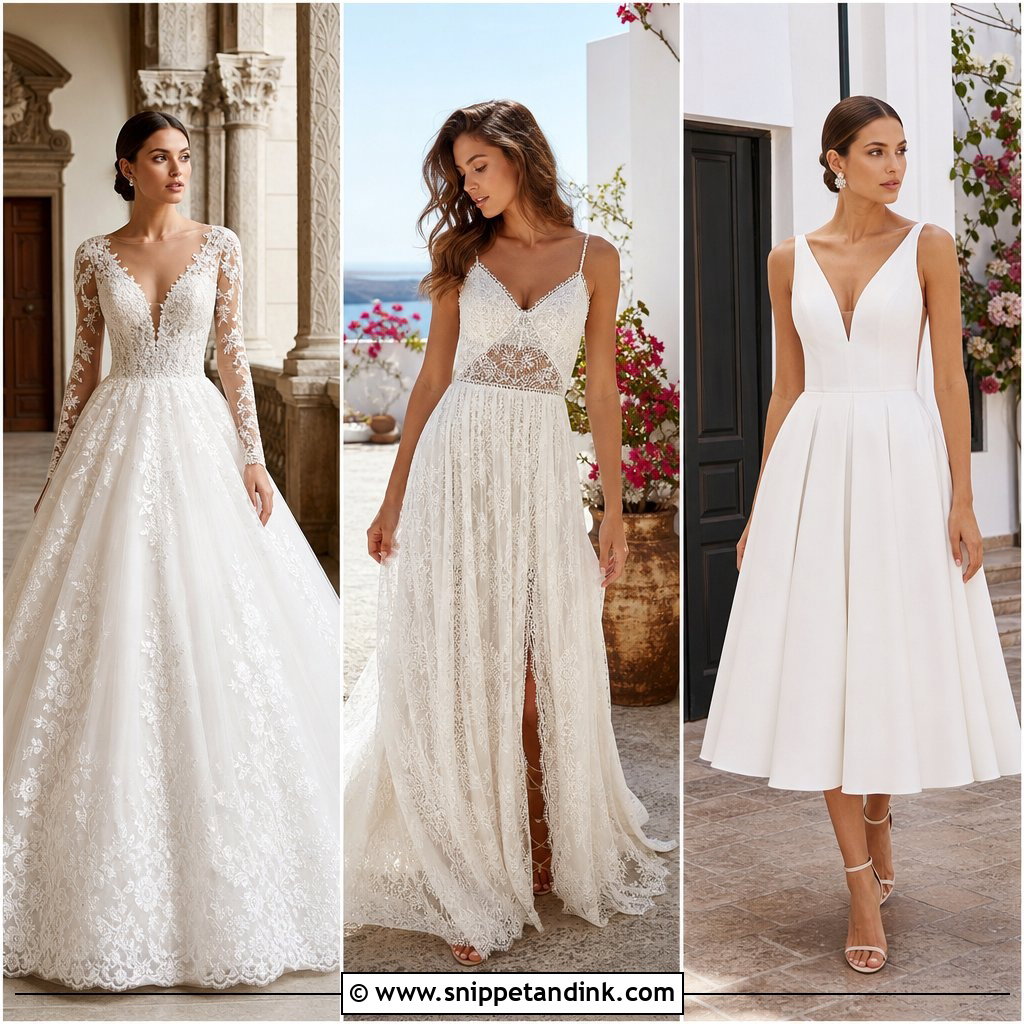
Tea length falls between knee and ankle, so it’s easy to walk and dance in and shows off your shoes. A blush or rose gown with a fitted bodice and flared skirt has a vintage charm. Pointed pumps, satin block heels or embellished flats all work, with a short veil, pearl earrings and a structured bouquet. Courthouse weddings, intimate celebrations and brunch receptions suit it. Fit the hem with your actual shoes on, because an inch too long or short is easy to see at this length.
18. Pink High Low Wedding Dress
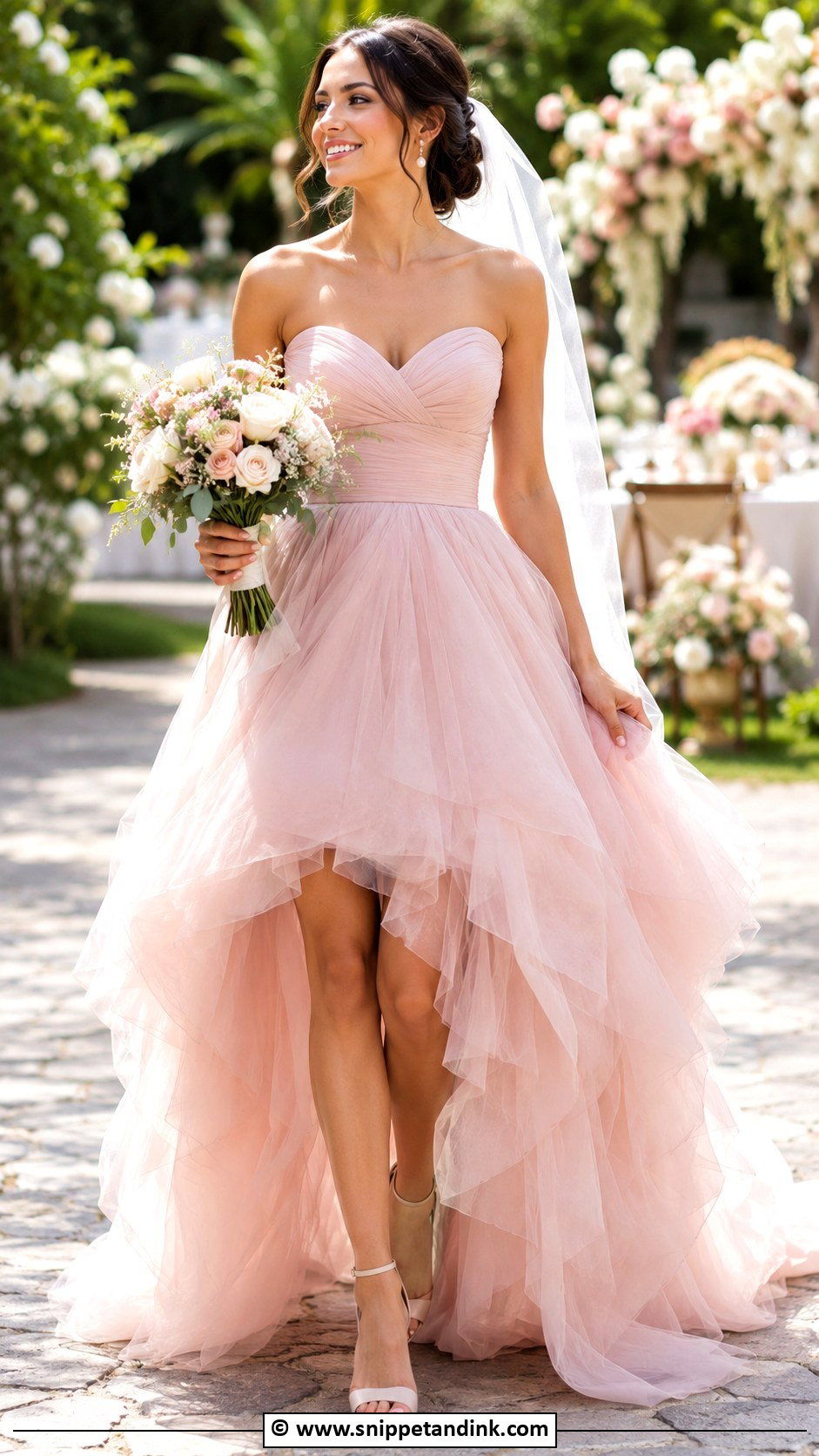
High-low hems show the shoes at the front and keep a gown-like fall at the back. Tulle, organza and satin each shape the hem differently: tulle floats, organza stands away, satin drops cleanly. Blush feels romantic, brighter pink more playful. Your heels will be on display, so choose them carefully. Add a simple veil or hair bow. A high-low hem is unforgiving on stairs, since the longer back catches under the heel, so practice a staircase before the day. Outdoor weddings and reception looks suit it.
19. Pink Two Piece Wedding Dress
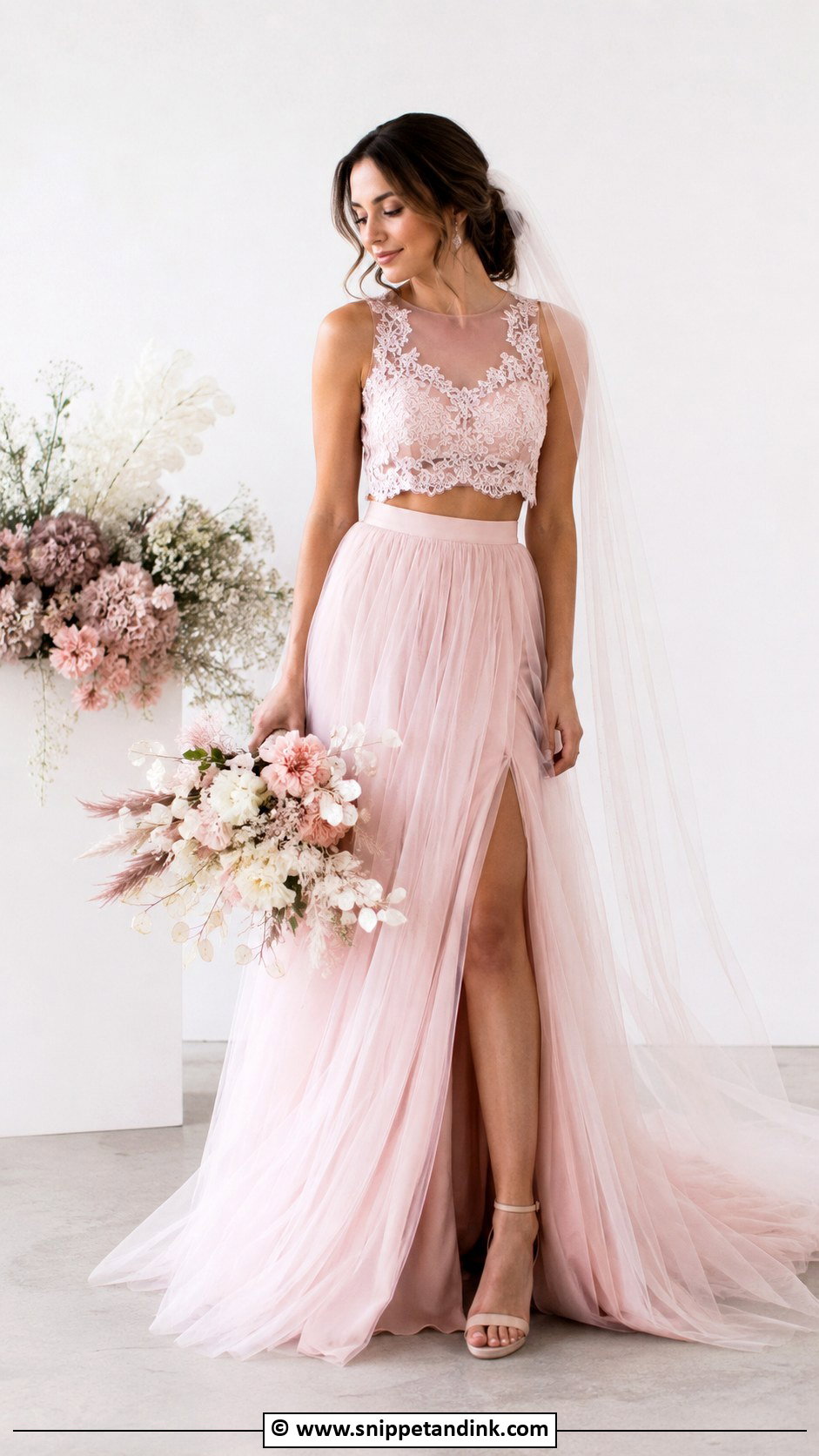
A two-piece gives flexibility: a lace crop top with a tulle skirt, a structured bodice with a satin skirt or a soft blouse over flowing chiffon. Matching shades read more bridal; tonal separates feel more fashion-led. Get both pieces cut from the same fabric batch if you can, because pinks from different dye lots rarely match perfectly in daylight. Keep the waistline polished, then add simple heels, a veil and delicate earrings. Elopements, creative weddings and receptions suit it, and each piece can be worn again.
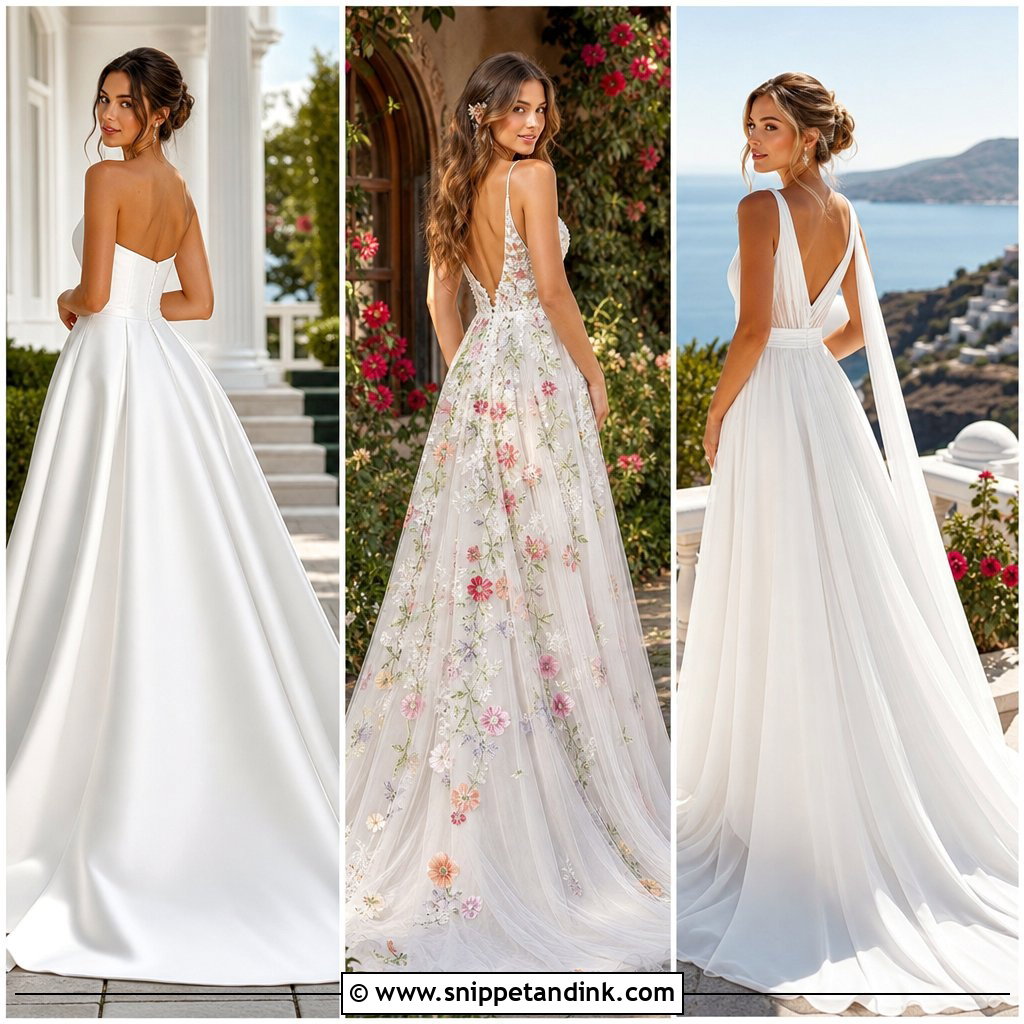
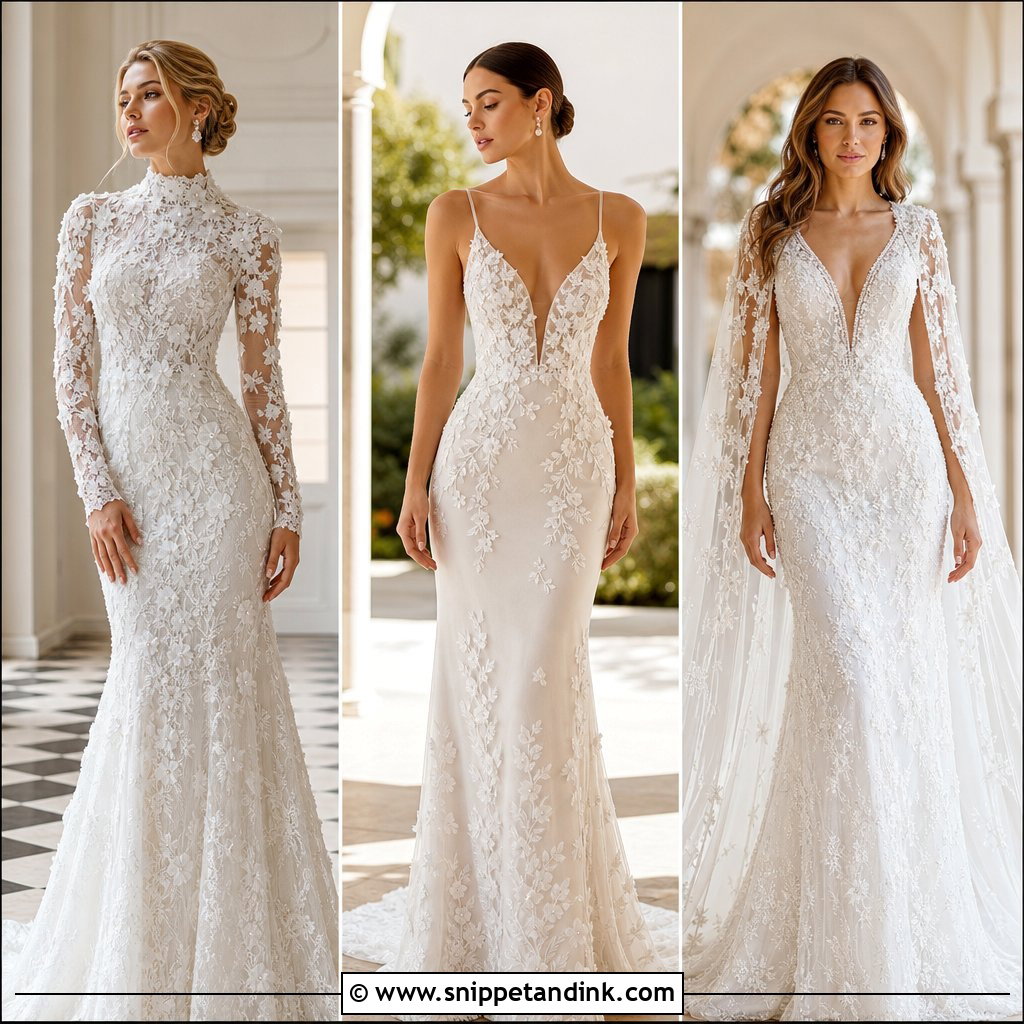
20. Pink Wedding Dress With Cape
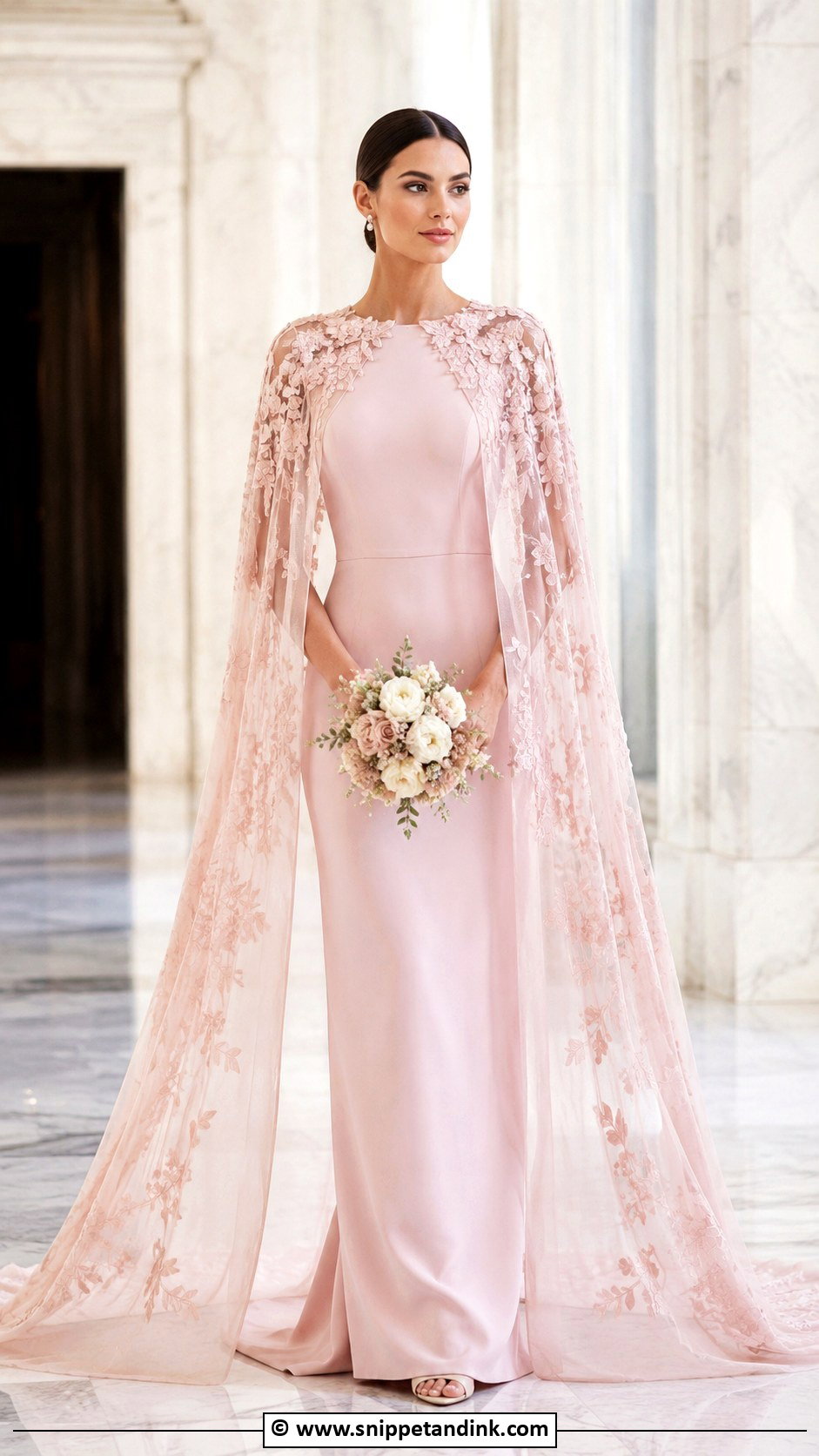
A cape can replace a veil or add movement over a simple gown. A blush sheath with a sheer cape is soft; a rose pink satin gown with a cape reads bold. Embroidery, pearls or clean tulle on the cape all work. Keep jewelry minimal and pair the look with simple heels and sleek hair. Check how the cape fastens. One hooked only at the throat pulls back on your neck when you sit, so I prefer capes anchored at the shoulders too. It gives coverage and a strong entrance.
21. Pink Wedding Dress With Bow
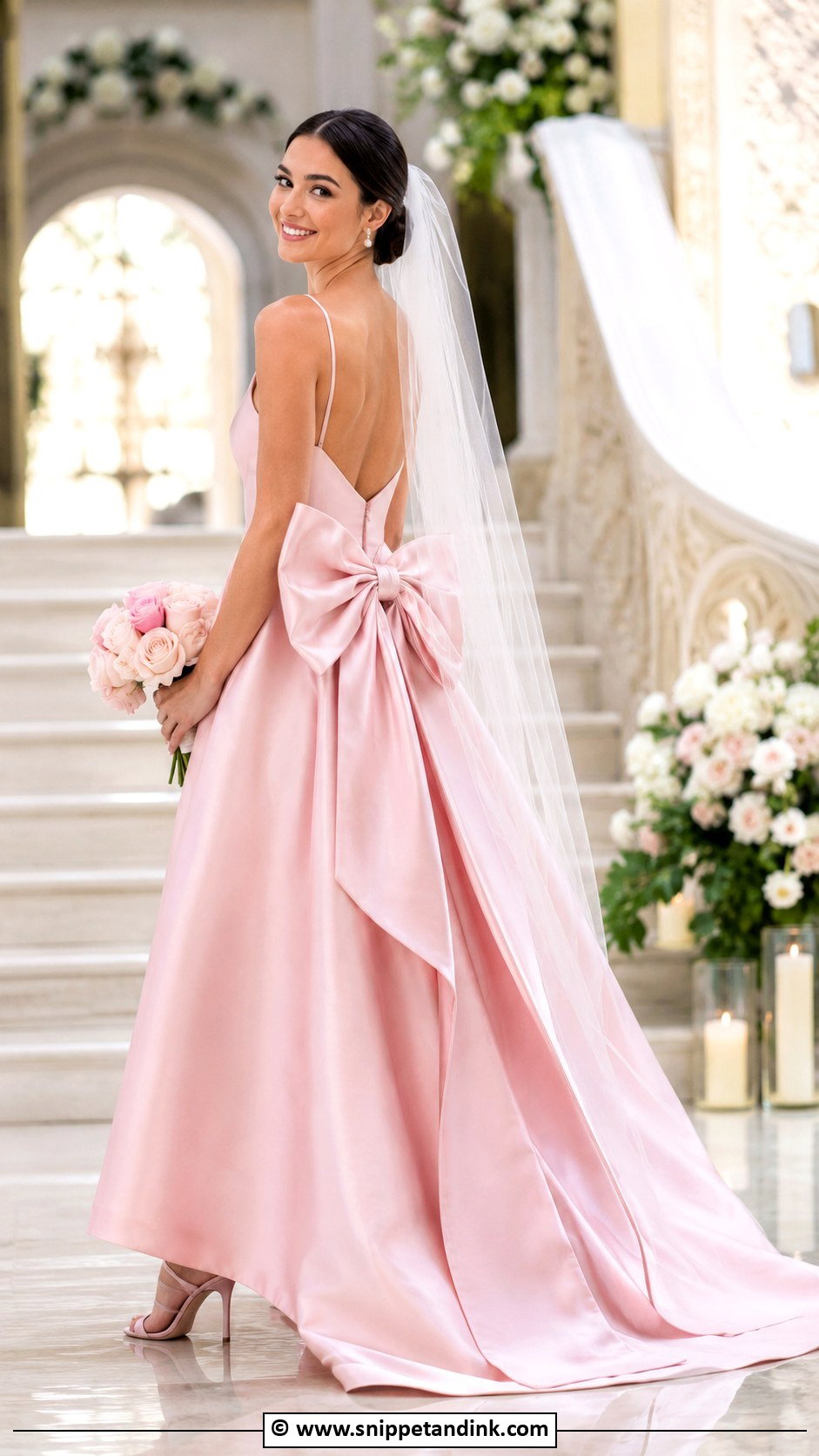
Bows sit at the waist, back, shoulder or neckline, and their size changes the mood. A small back bow on blush is romantic; an oversized bow on rose satin feels editorial. Balance matters: a large bow wants a plain dress, a small bow can sit alongside lace or beading. Clean heels, pearl earrings and a simple veil finish it. A big back bow gets crushed every time you sit, so ask whether it can be detachable or reinforced with interfacing to hold its shape.
22. Pink Floral Applique Wedding Dress
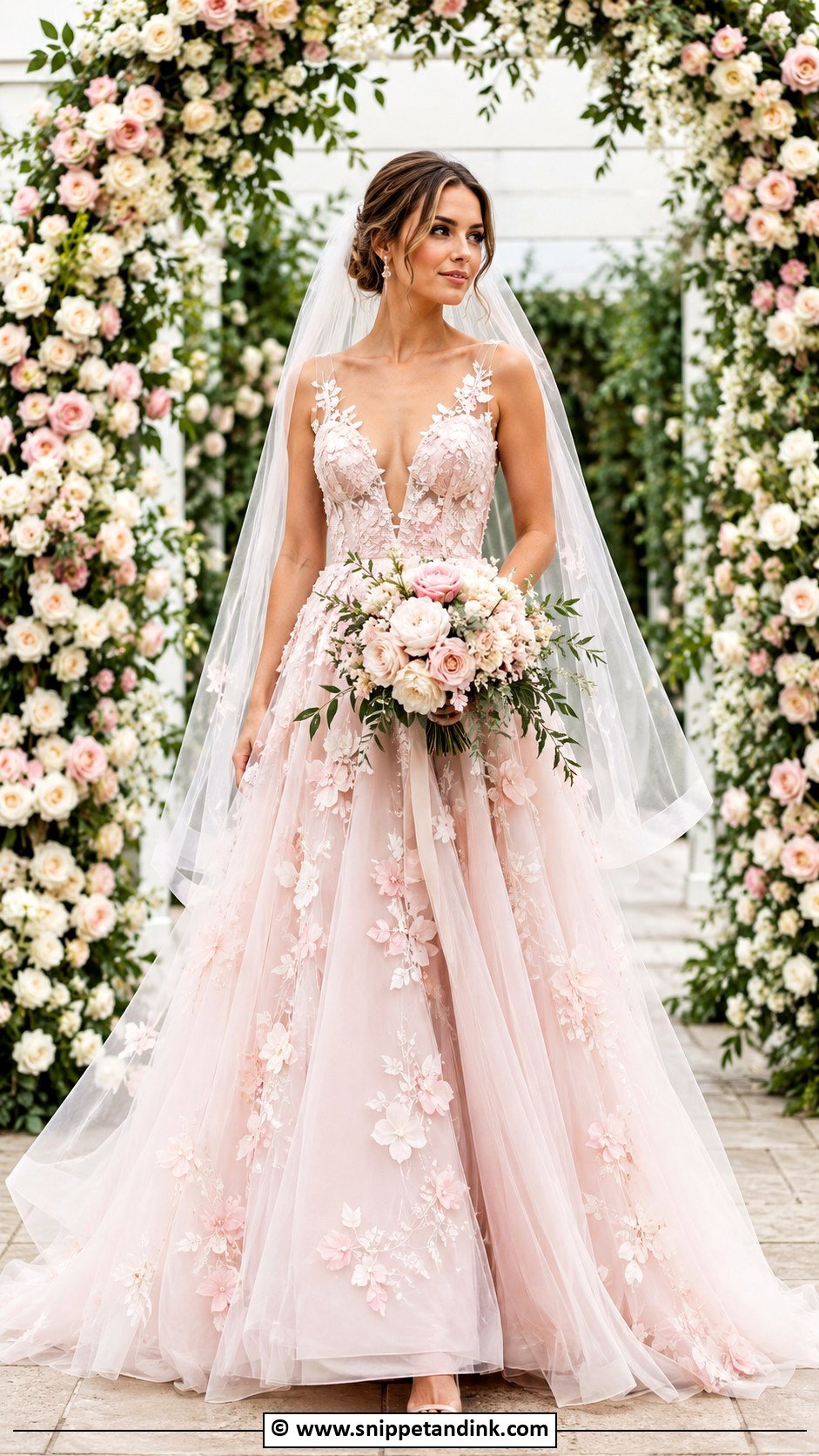
A pink floral applique wedding dress adds dimension without heavy sparkle: blush flowers on ivory, tonal pink blooms on tulle or petals scattered across bodice and skirt. Choose a silhouette that gives the flowers space, such as an A-line, ball gown or soft mermaid. A sheer veil, delicate earrings and neutral heels are enough. Three-dimensional appliqués catch on veils, so a veil with a plain, unedged hem works best over them. A bouquet in matching tones ties everything together for a garden or spring wedding.
23. Pink Sequin Wedding Dress
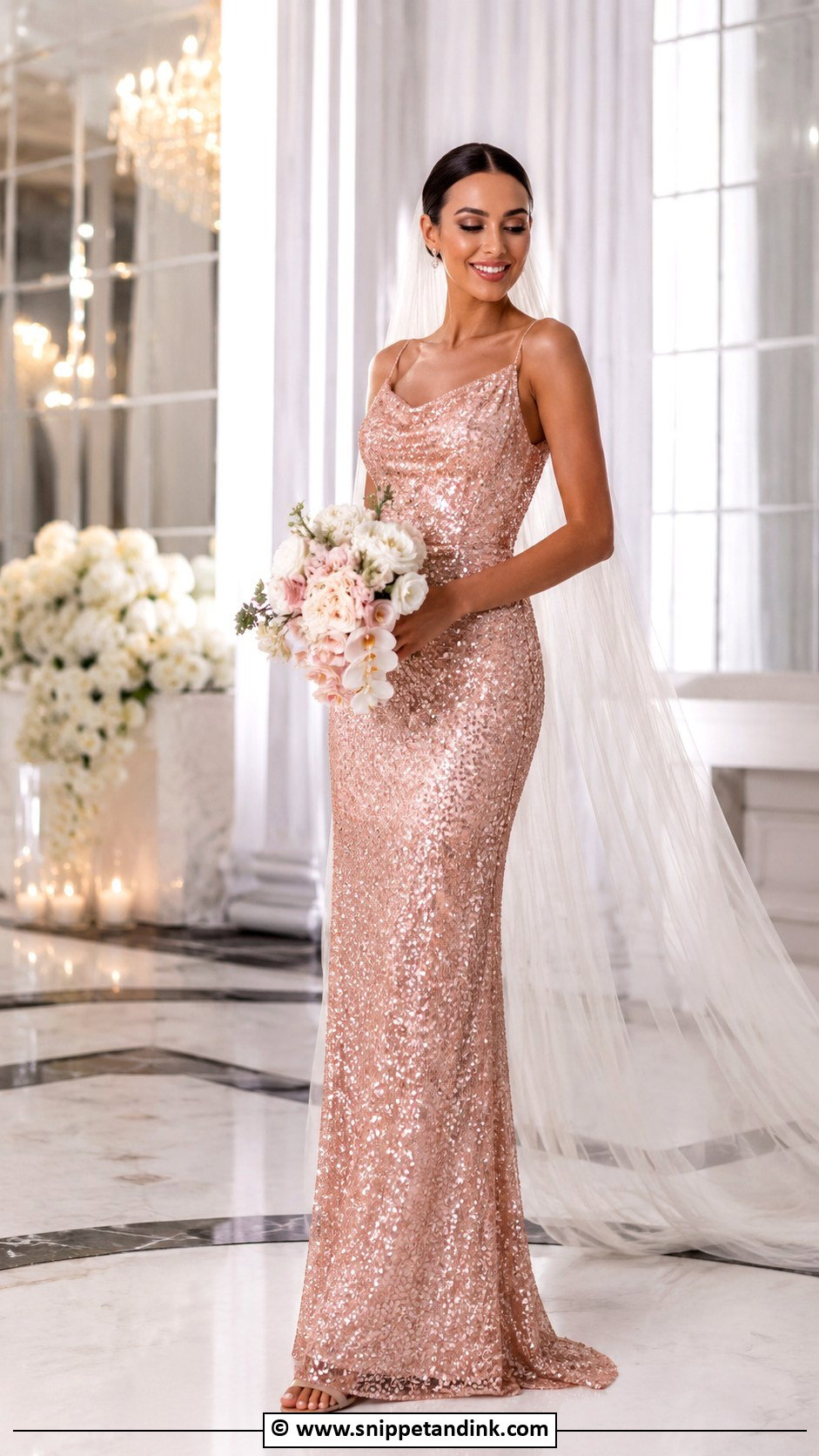
Sequins over blush, rose or champagne pink give real glamour while staying soft. A slim sheath keeps the sparkle sleek; a full skirt makes it dramatic. Keep accessories clean: small earrings, sleek hair and nude or metallic heels. A plain veil can soften the sparkle for the ceremony and come off for the party. Sequins scratch skin at the inner arms and catch delicate tulle, so I’d look for a smooth lining and a veil in sturdier tulle. Evening weddings and city venues suit it.
24. Soft Pink Minimal Wedding Dress
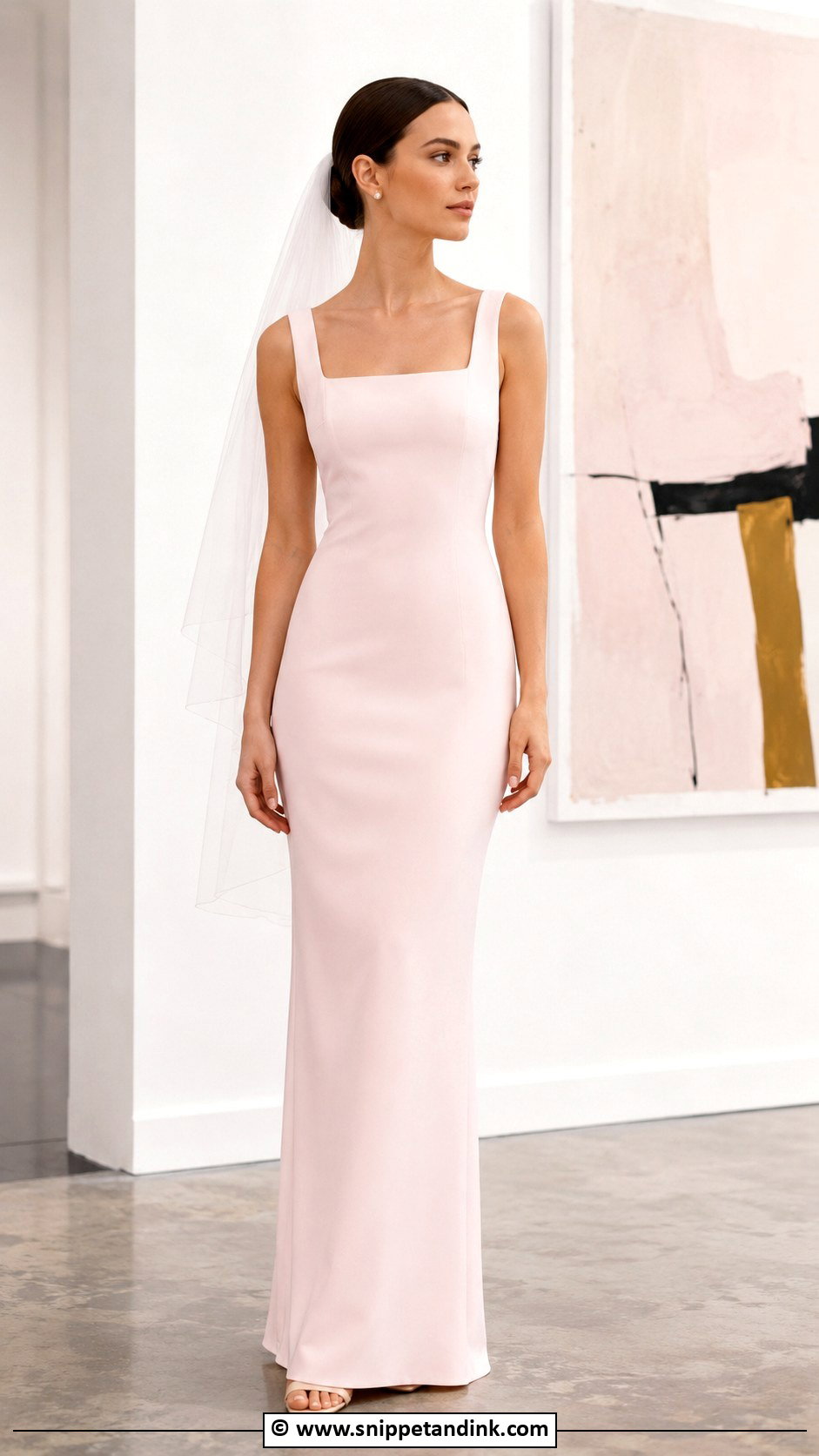
A minimal pink gown relies on cut and fabric alone, which suits brides who love clean lines. Smooth satin, crepe or mikado with a square neckline, strapless bodice or long column silhouette all work. Let the cut do the work, without heavy embellishment. Sleek hair, pearl studs, a simple veil and refined heels finish it, with a structured bouquet in ivory and blush. With nothing to hide behind, tailoring has to be precise, so allow time for a proper final fitting. City weddings and gallery venues suit it.

25. Pink Vintage Wedding Dress
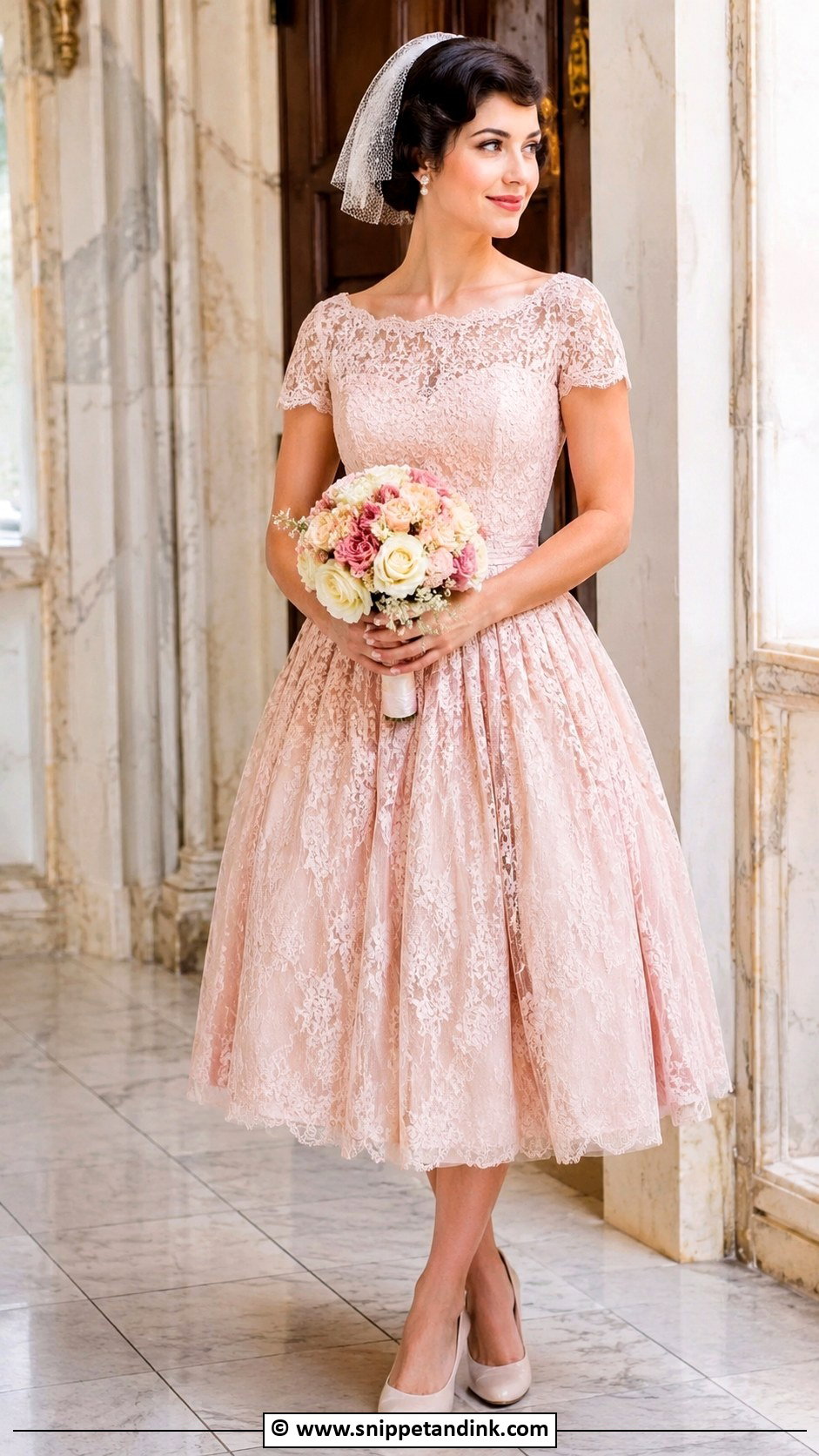
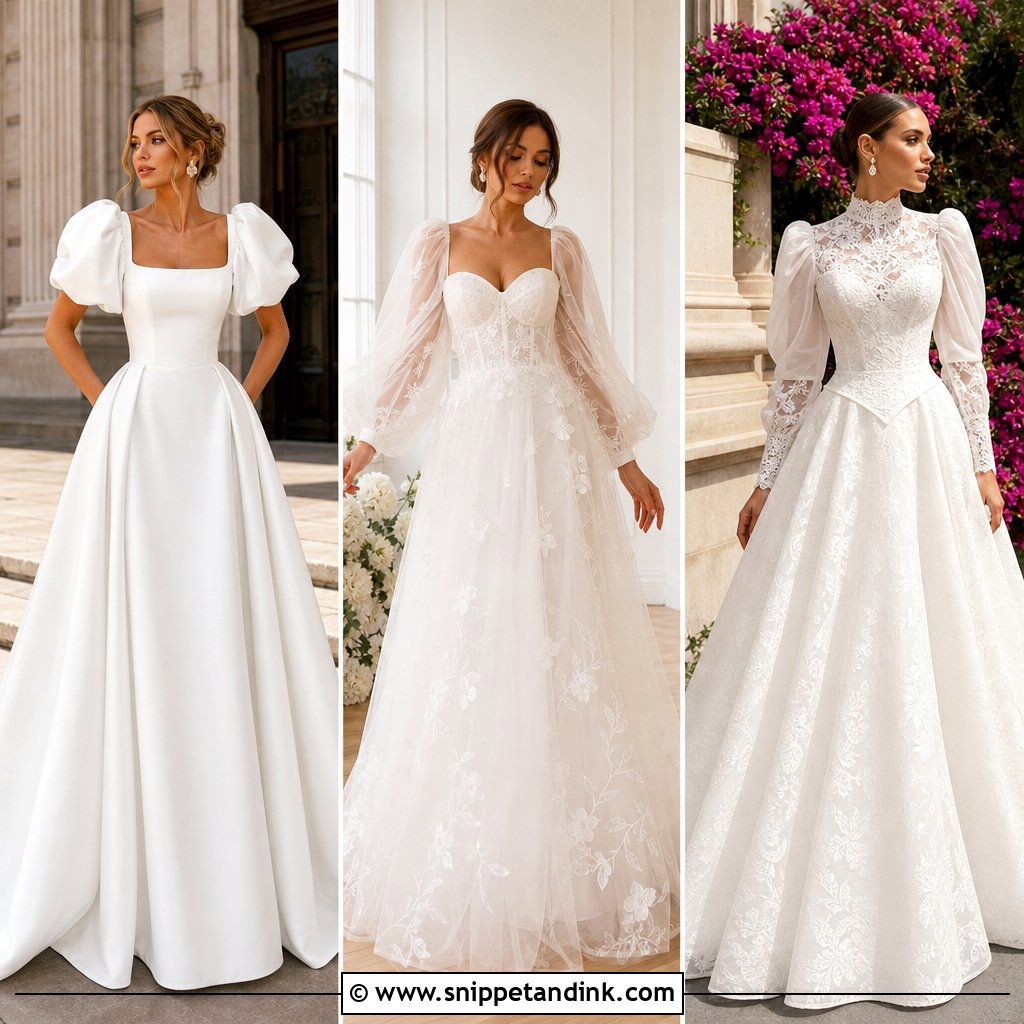
Vintage pink borrows tea-length skirts, lace sleeves, high necklines, delicate buttons or soft tulle layers. Blush and dusty rose already have an old-world softness. Classic pumps, pearl earrings and a short veil or birdcage-style headpiece finish it, with a bouquet in cream, pink and muted greenery. The trick is restraint. I pick one or two vintage elements and keep everything else polished, so it reads personal rather than costume. Historic venues and intimate weddings suit it.
26. Pink Boho Wedding Dress
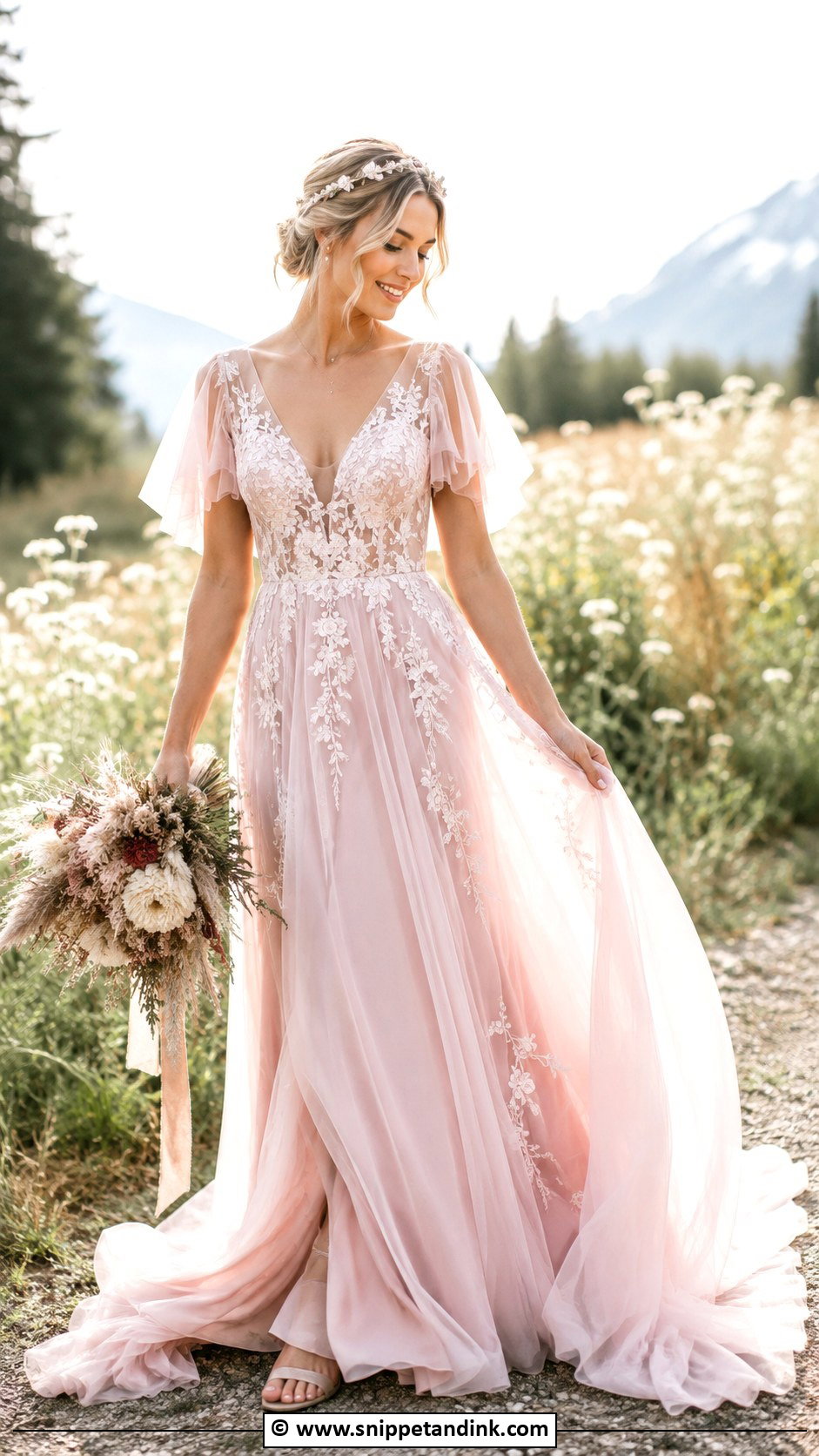
Boho pink is relaxed and loose: soft blush chiffon, floral lace, flutter sleeves and flowing skirts, maybe a V-neck, open back or embroidery. Loose waves, delicate hair vines, layered but subtle jewelry and sandals or block heels finish it, with a wildflower-style bouquet. Outdoor ceremonies, beaches, mountains and backyard celebrations all suit it. Fine lace on a boho gown snags on bark, gravel and bouquet wire, so wrap the bouquet stems and watch where you sit for portraits.
27. Pink Plus Size Wedding Dress
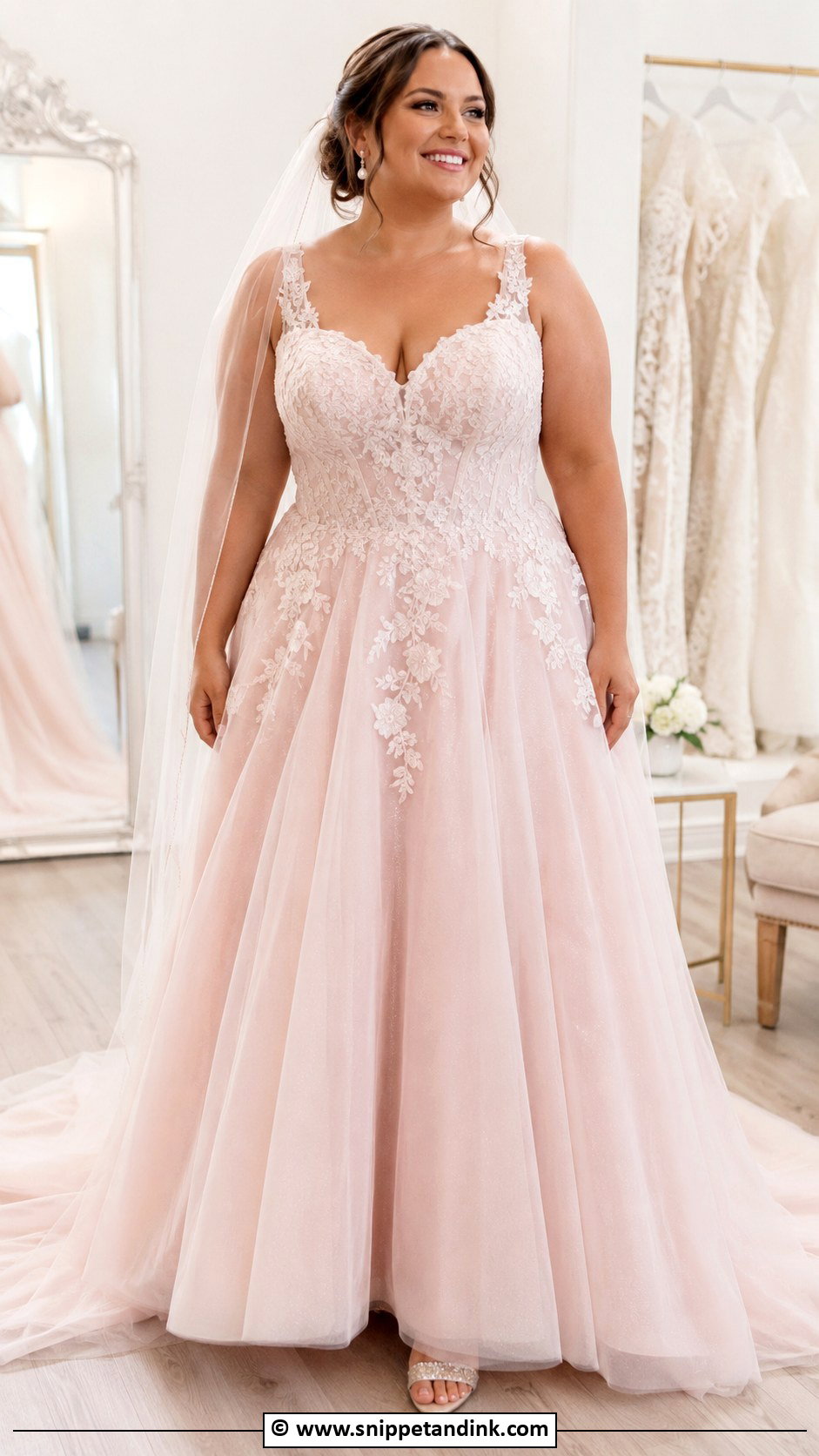
For a plus-size bride in pink, construction matters more than silhouette. Strong bodice structure, well-placed seams, adjustable support and fabric with real movement make the difference between a dress you tolerate and one you forget you’re wearing. A-line, ball gown, mermaid and fitted satin can all work; the right one is whichever feels supportive and confident on you. Blush, rose and dusty pink all suit it. Match the veil, earrings and shoes to the formality of the gown. I’d ask the salon about built-in cups and a waist stay at the first appointment.
28. Pink Maternity Wedding Dress
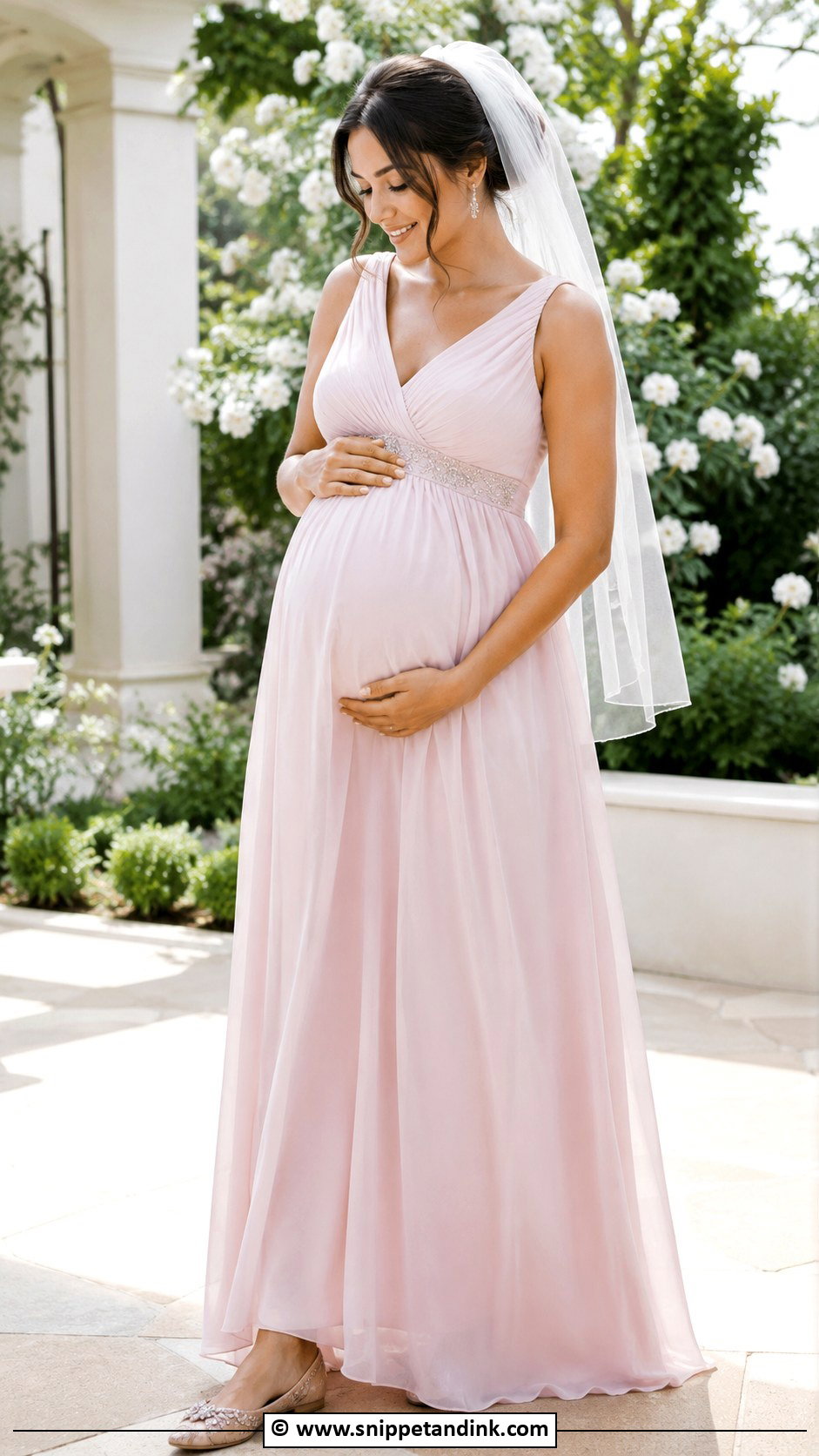
A pink maternity wedding dress should give room and support. Empire waists help most, falling from just under the bust and leaving space through the middle. Chiffon, tulle and stretch lace are comfortable, and blush or pale pink adds a soft glow. Supportive straps, soft sleeves or a wrap-style bodice add comfort. Low block heels, embellished flats or supportive sandals are kinder to swollen feet. Schedule the final fitting as close to the date as the seamstress allows, because a bump can change a lot in a few weeks.
29. Pink Short Wedding Dress
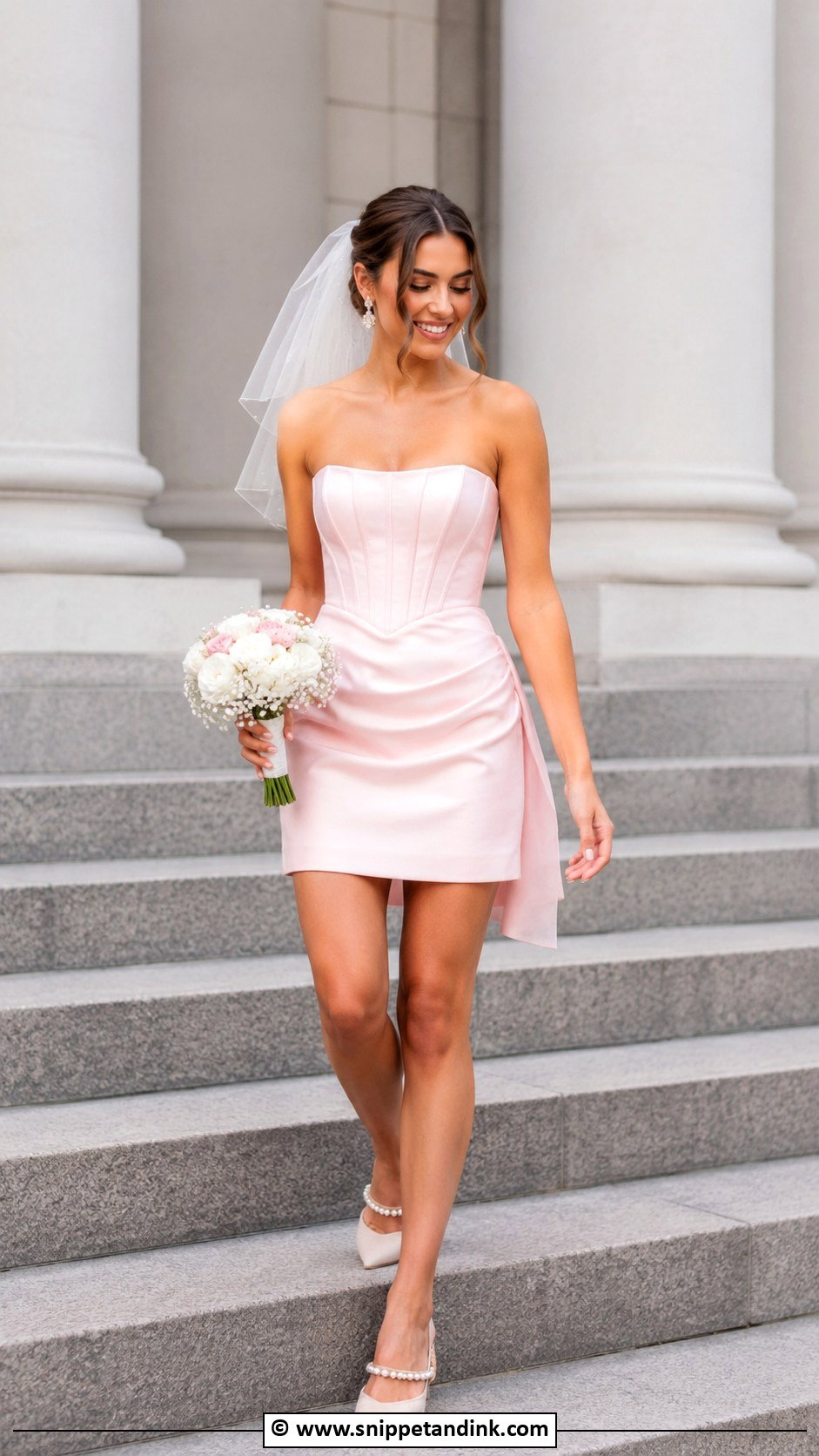
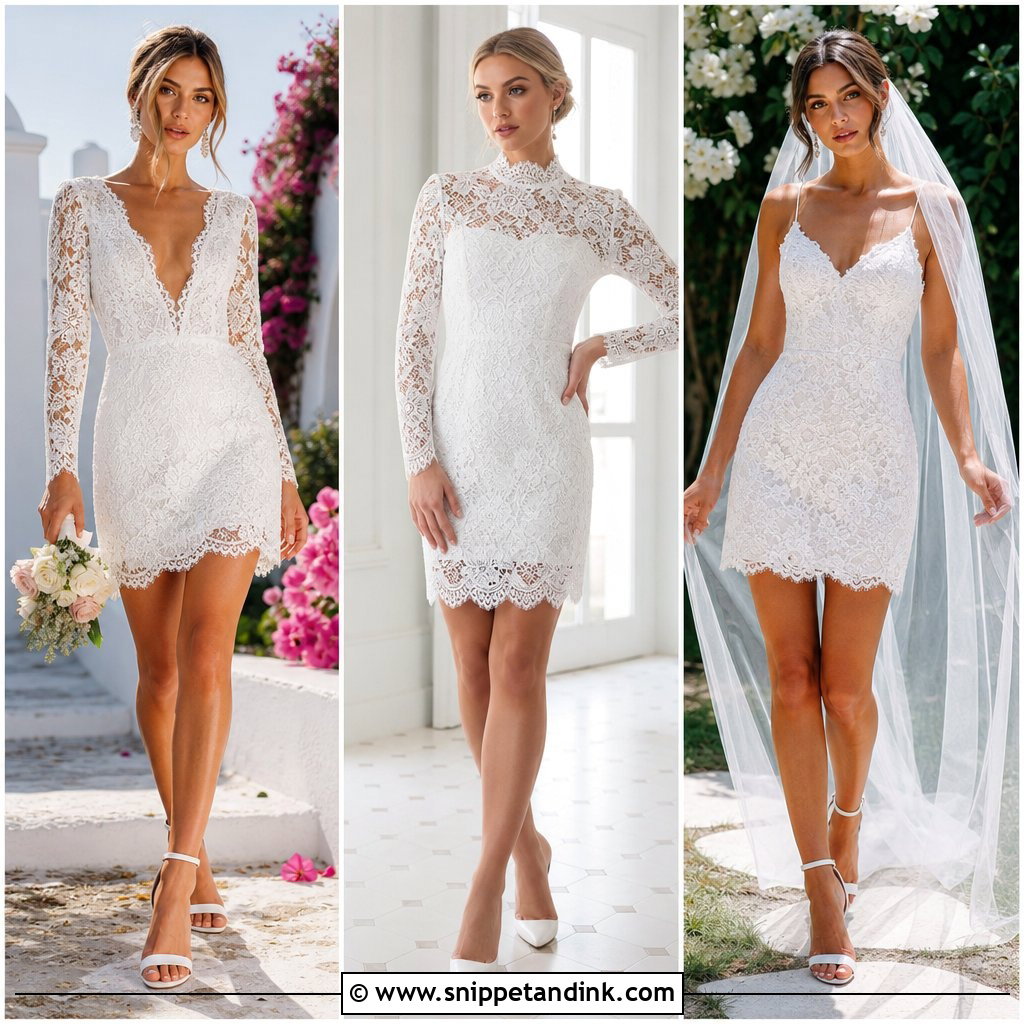
A pink short wedding dress works for courthouse weddings, after-parties, elopements and casual ceremonies. Blush in a structured fabric reads chic; pink lace reads sweet; feathers, bows or tulle make it playful. Legs and shoes are on show, so choose footwear carefully: satin pumps, pearl heels or embellished flats. Add a short veil, hair bow or statement earrings. Short dresses ride up when you sit and when you’re lifted for photos, so check the length seated before you buy.
30. Pink Reception Wedding Dress
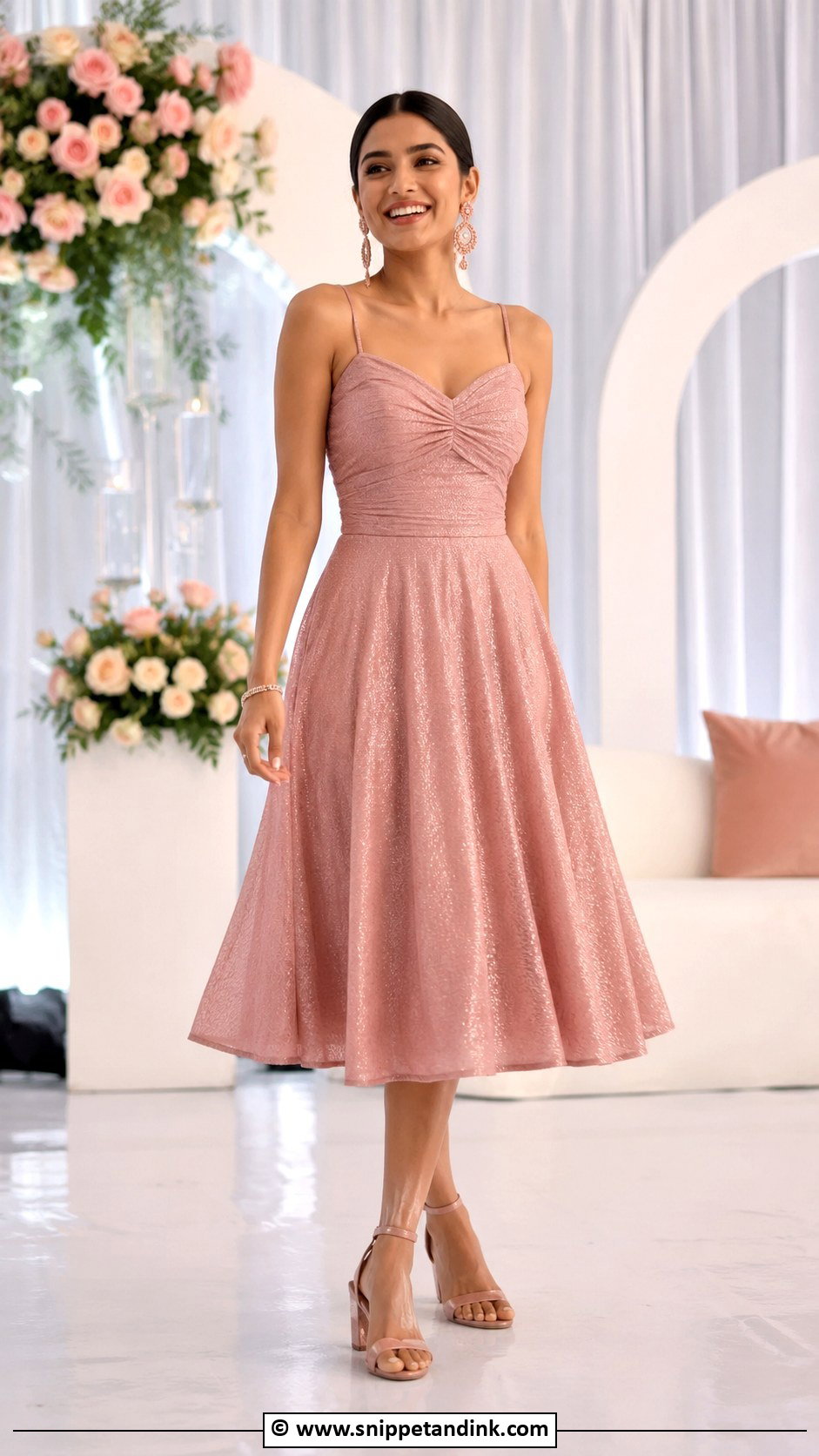
A reception dress lets you change into something lighter or easier to dance in: a blush midi, a rose pink slip, a sequin mini or a tea-length tulle gown. It should still feel bridal while giving you more freedom than the ceremony gown. Comfortable heels, sparkly flats or platform sandals work, with fun earrings and a small bouquet or none. Saving pink for the reception is a good compromise when family would rather see white at the ceremony. Hang the dress and have it steamed before the day begins, and build fifteen minutes into the timeline for the change.
31. Hot Pink Wedding Dress
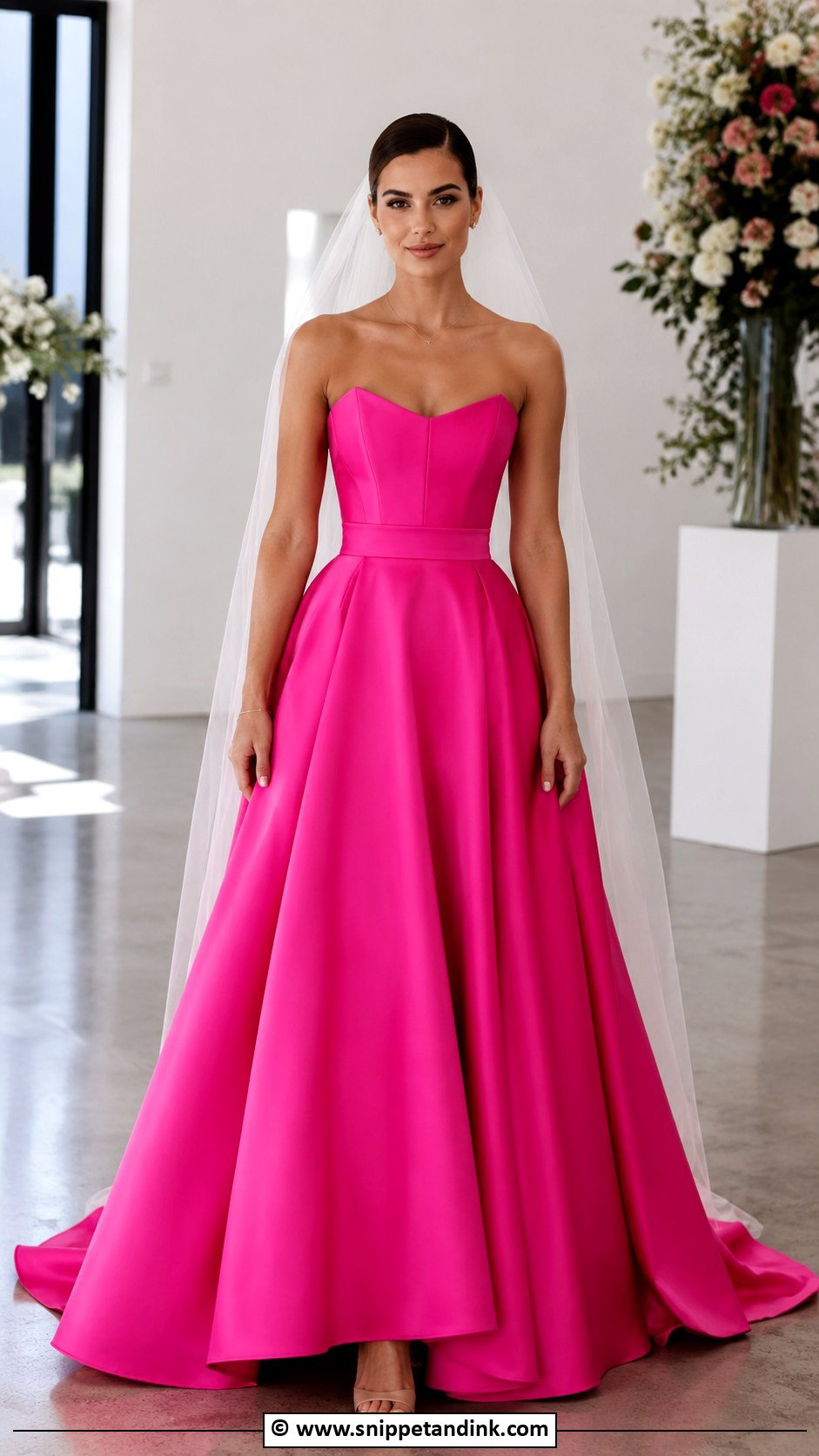
Hot pink is the boldest choice here, and it works when the silhouette stays clean so the color does the talking. A satin ball gown, a sleek column or a structured A-line in vivid pink all suit it. Keep accessories simple: nude heels, clear crystals or silver jewelry, and a plain veil to add a bridal note. Bright pink can reflect onto skin and teeth in close-ups, so I’d ask the makeup artist to check the foundation in daylight while you’re wearing the dress. Modern venues and fashion-forward celebrations suit it.
32. Baby Pink Wedding Dress
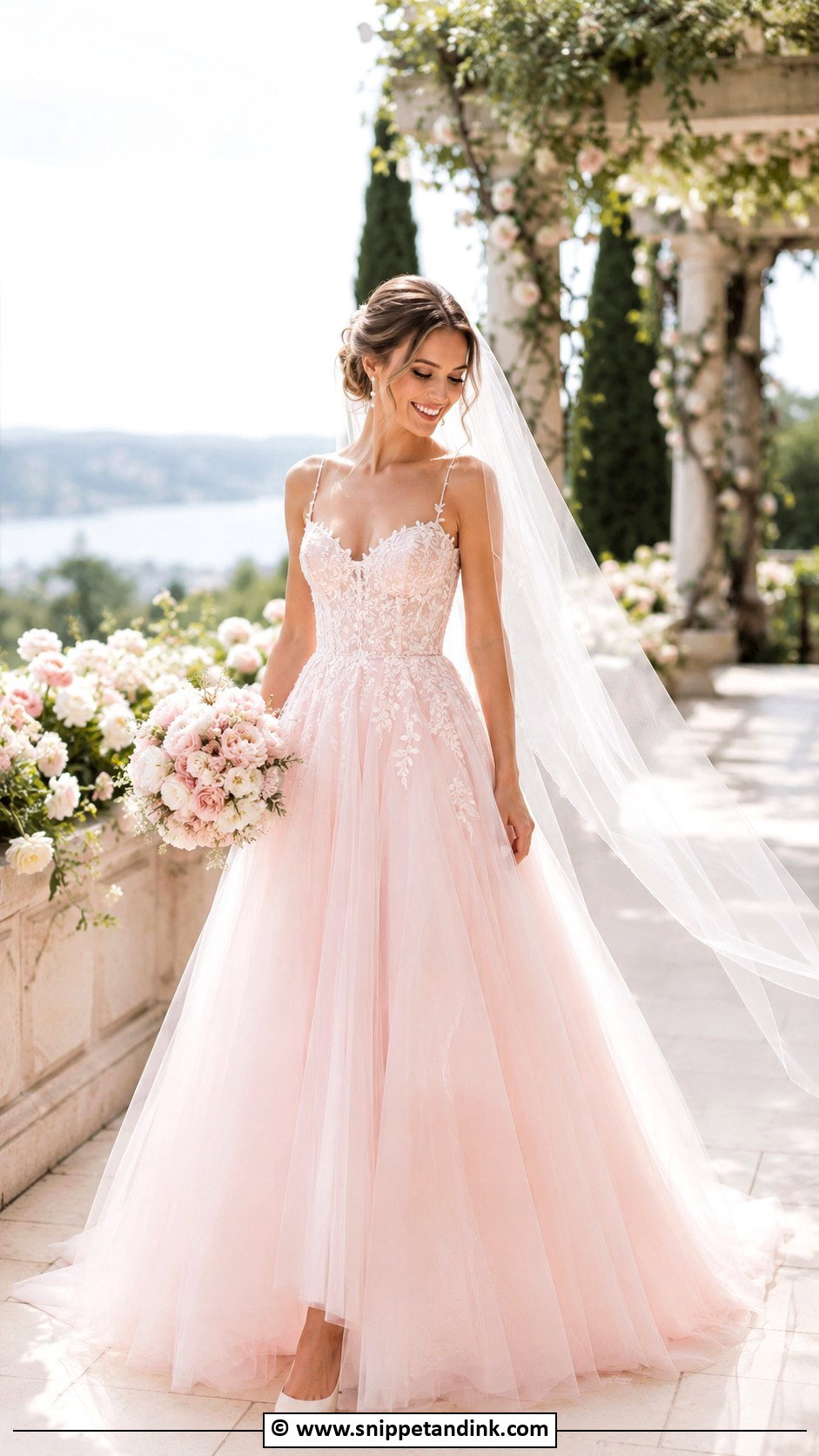
Baby pink can look youthful without looking childish if the cut is refined. Tulle, satin, lace and organza keep it bridal. A baby pink A-line with a fitted bodice is classic; a satin column is modern. Pearl earrings, ivory heels and a sheer veil keep it light. Avoid stacking sweet details, such as large bows, heavy ruffles and sparkle on one dress. Very pale pink can read as white under flash, so if you want the color to register in photographs, go a shade deeper than you think. Spring and daytime ceremonies suit it.
33. Mauve Pink Wedding Dress
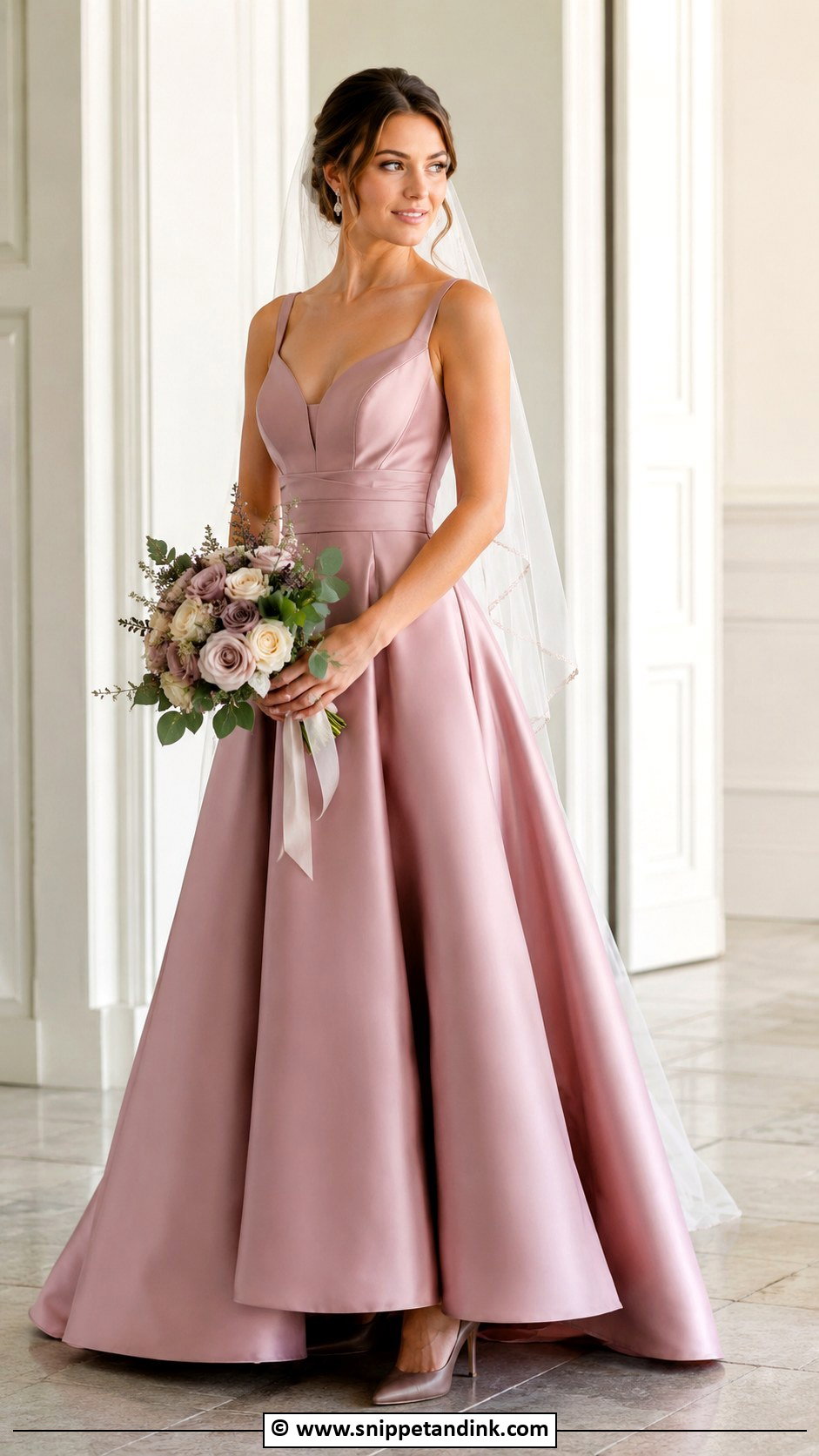
Mauve carries purple and grey undertones, so it feels richer and more grown-up than blush. It pairs well with silver jewelry, taupe shoes, ivory flowers and soft greenery. Satin, crepe and lace suit it. A fitted gown reads elegant; an A-line stays romantic. A veil in ivory, blush or matching mauve coordinates it. Mauve can shift toward grey under cool LED lighting, so check it at the venue at the time of day you’ll marry. Fall weddings and evening ceremonies suit it.
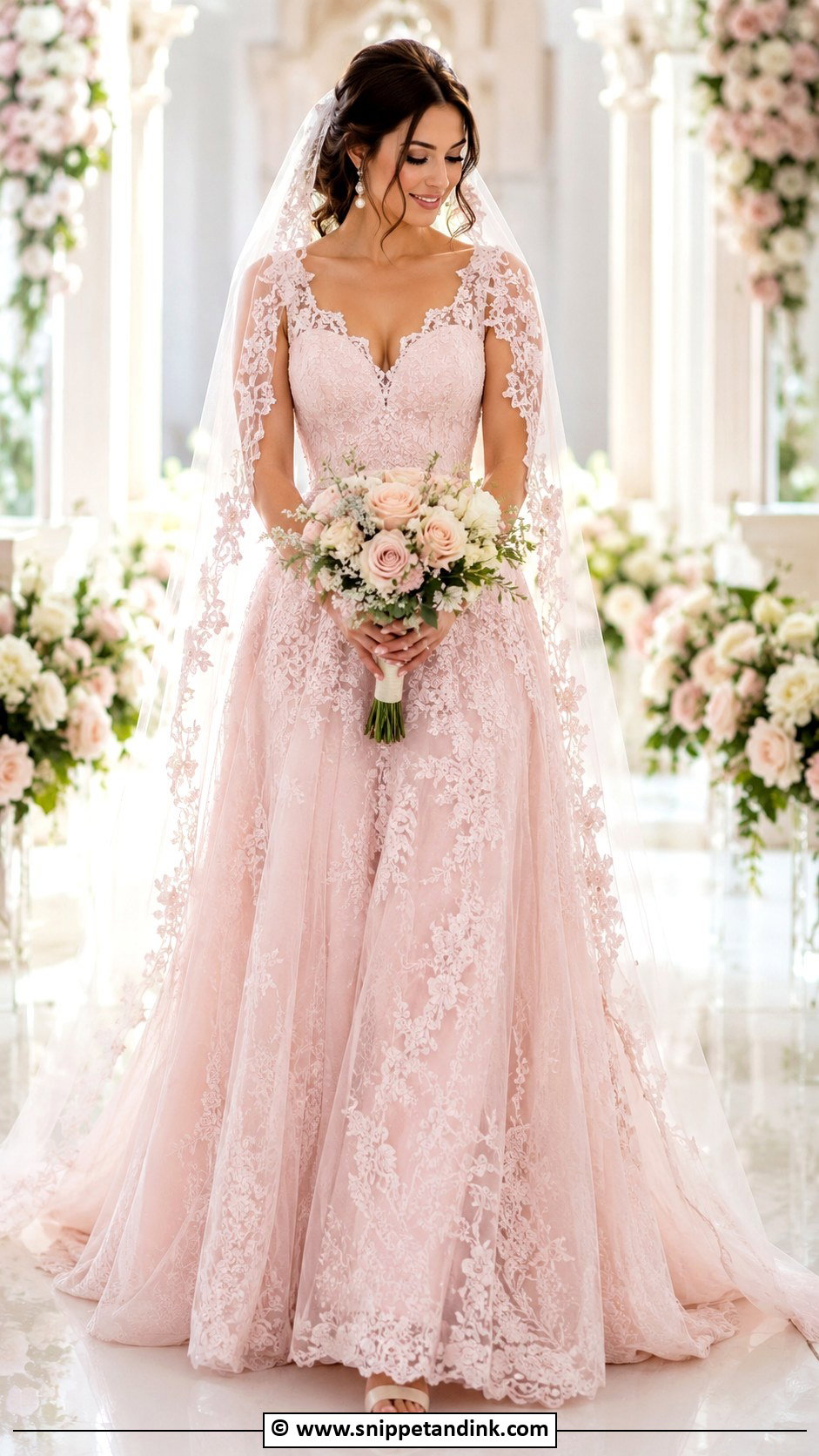
34. Pink Wedding Dress With Veil
A veil softens a bold pink gown or adds romance to simple blush. With a detailed dress, choose a plain veil; with a minimal gown, try lace trim, pearls or delicate floral embroidery. Tone matters most. Bright white tulle looks stark and slightly blue next to pink, so I nearly always reach for ivory or a blush-tinted tulle, held against the bodice in daylight before ordering. Simple heels, earrings and a bouquet in coordinating shades complete it.
35. Pink Wedding Dress With Sneakers
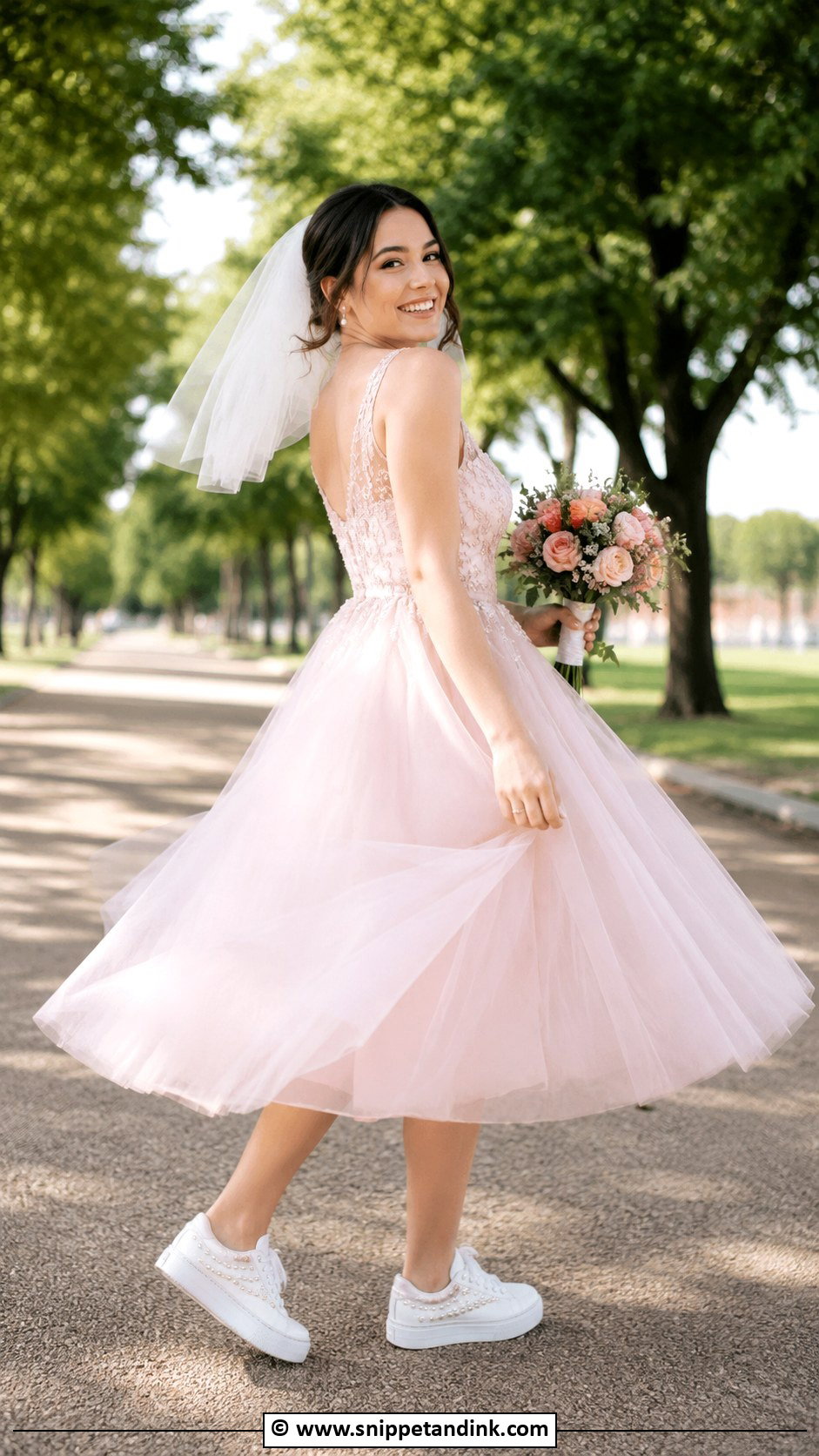
Sneakers suit short dresses, tea-length gowns, high-low hems and relaxed chiffon, wherever the shoes show. Clean white, blush or embellished sneakers look intentional. A pink tulle dress with pearl sneakers is playful; soft chiffon with minimal sneakers is relaxed. Keep the bridal note with simple jewelry, a short veil or a hair ribbon. Sneakers are flatter than heels, so have the hem taken up with the sneakers on, or the dress will drag. Outdoor ceremonies, elopements and receptions suit them.
Stopping Pink Bridesmaids and Peonies From Swallowing the Dress
The most common pink-wedding problem I see isn’t the dress. It’s everything around it. Put a blush bride beside blush bridesmaids holding blush peonies, and in group photographs she stops standing out. The fix is contrast, planned early.
If your gown is pale pink, dress the bridal party in a deeper or different tone, such as burgundy, sage, dusty blue or a much stronger rose. If your gown is a bold pink, keep the bridesmaids neutral. Ask your florist to include white, cream or green in the bouquet so it reads against the dress rather than melting into it.
Send swatches, not screenshots
Screens shift pink badly; one phone shows peach, another shows lilac. Ask the salon for a fabric swatch and pass it to your florist, the bridesmaids’ dress shop and your photographer. Photographers can then keep your gown’s true color in mind when editing, so the pink you chose is the pink you see in the album.
Blush, Rose or Fuchsia? Start With Your Skin and the Light
Pink covers a huge range, from barely-there blush to hot pink. Blush and champagne pink read subtle; rose, mauve and fuchsia are statements. Fabric changes it again: tulle dreamy, satin polished, lace traditional, chiffon relaxed. Test the shade against your skin and in your venue’s light, plan the bridal party and flowers around it, then focus on fit and movement. When shade, silhouette, shoes, veil and accessories agree, pink looks completely bridal.
You'll Like These Ideas:






Leave a Reply