
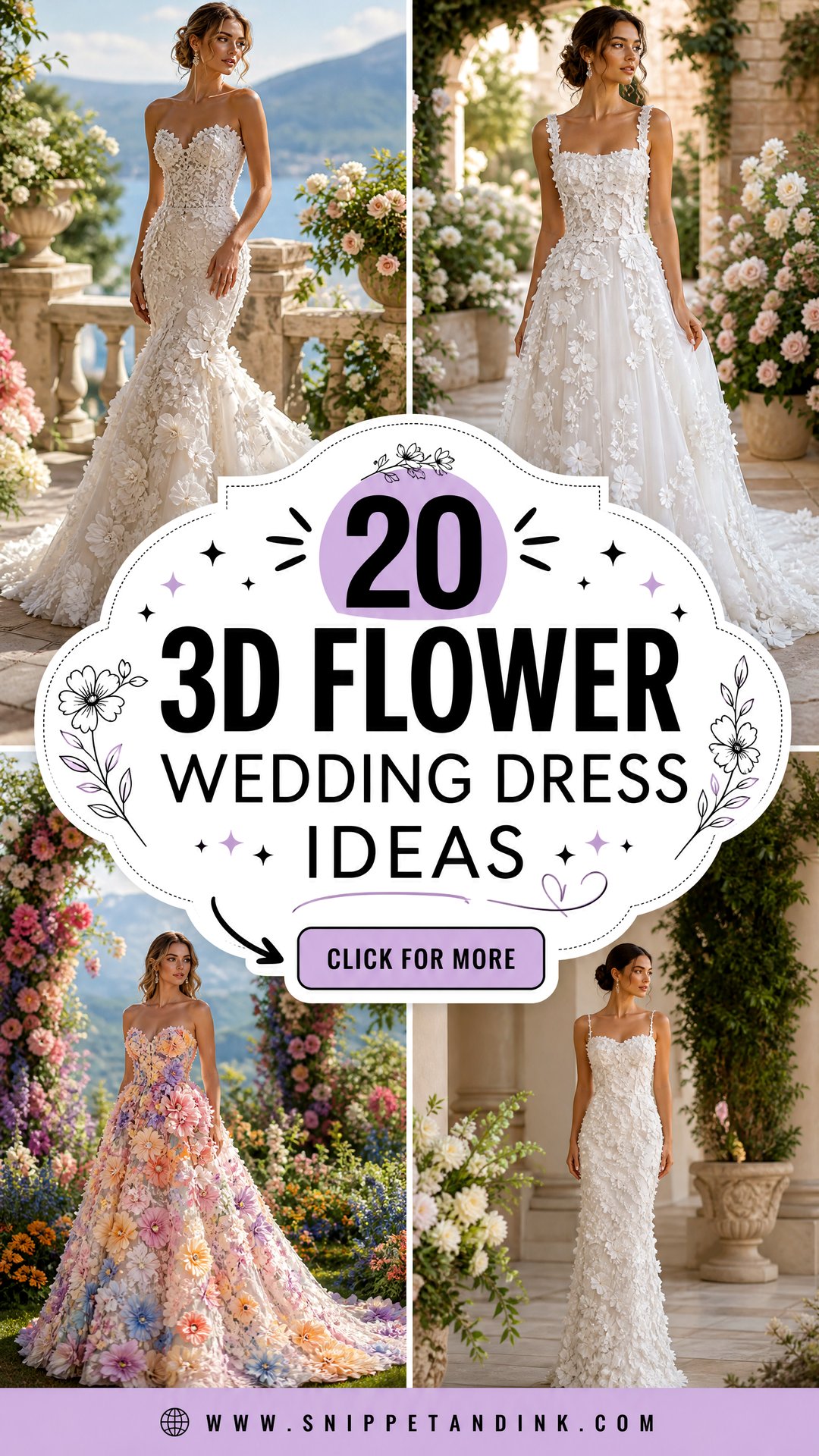
Raised petals do something flat lace never can: they cast tiny shadows, so a dress looks textured even across a room. Dimensional flowers turn up on airy tulle A-lines, sculptural ball gowns, fitted mermaids and short reception dresses, softening a structured bodice, marking the waist or trailing down a train. In fittings I find the flowers decide almost everything else. The scale and color of the petals tell you how plain the shoes should be, how small the earrings, and which bouquet won’t fight the dress. Ivory blooms, faint blush and colored botanical accents are all here, and each look below comes with the detail I’d check before saying yes.
How the Petals Are Made Tells You How the Dress Will Wear
Most dimensional flowers on bridal gowns are cut from organza, chiffon or tulle, with the edges heat-sealed so they don’t fray, then layered and fixed at the center, often with a bead or pearl. Two dresses can look alike in a photo and behave completely differently after eight hours, and the difference is usually in how those petals were attached.
At an appointment, I turn the bodice slightly inside out and look at the back of the appliqués. Hand stitches through each flower mean it can be moved or replaced during alterations. A shiny film of glue means it can’t, and glued petals can lift with heat from a steamer.
- Pinch a petal gently and let go. Good organza springs back; cheap synthetic stays creased.
- Run a fingertip along the edges. Heat-sealed edges should feel smooth, not scratchy or melted into hard beads.
- Look at the dress under bright light from the side, because dense layers can show glue or stitching shadows through sheer tulle.
- Ask what happens if a flower comes loose. Shops that make their own appliqués can often send spare petals for the day-of kit.
Petal size matters too. Small, flat flowers survive hugs, car seats and bouquets pressed against the bodice. Big, open blooms look dramatic but crush where your arms rest, so they suit skirts and trains better than the sides of the bodice.
1. 3D Flower A-Line Wedding Dress
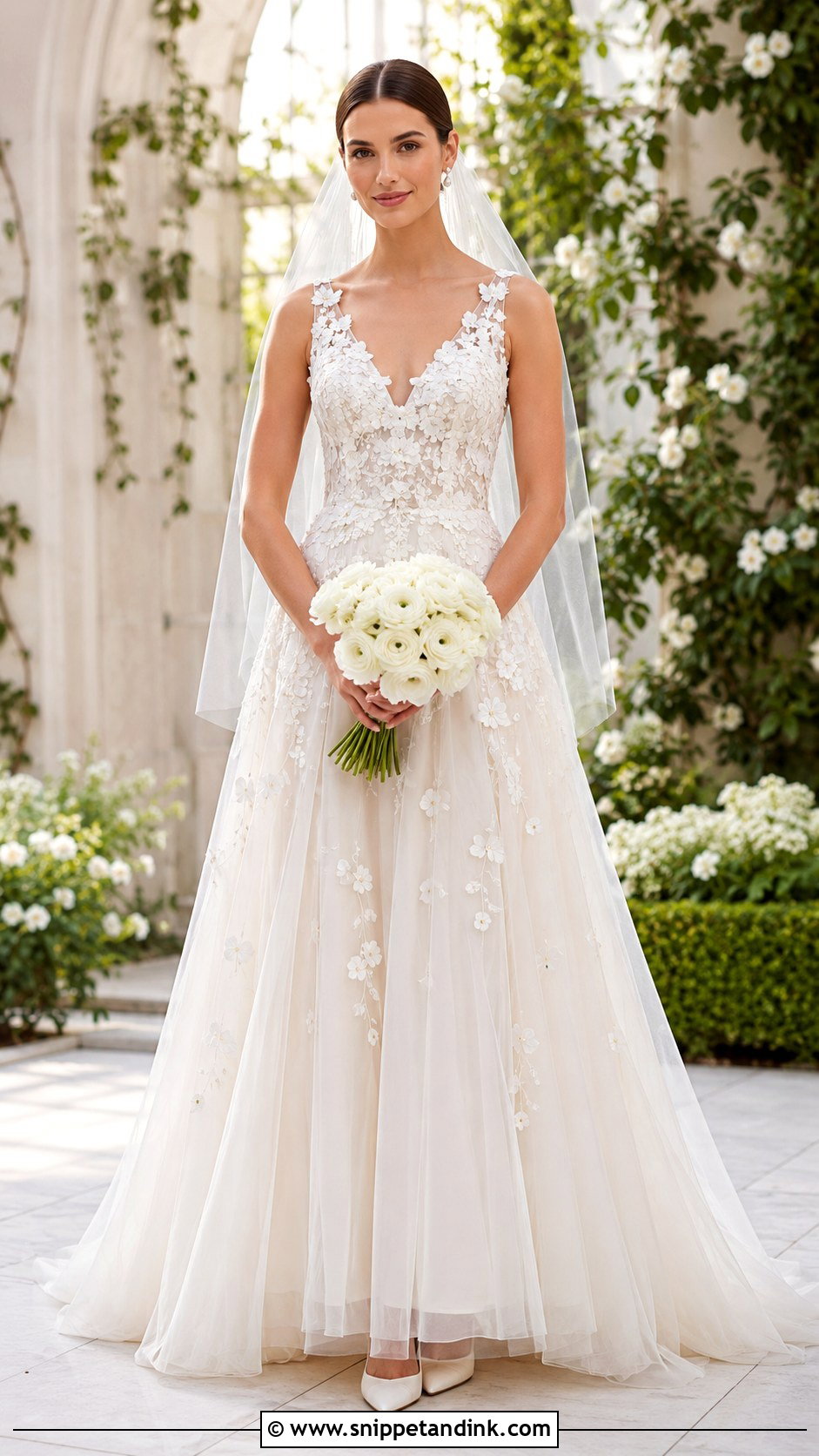
Start with an A-line if you want petals without a dramatic shape. Small organza blossoms cover the fitted bodice, a soft tulle skirt falls from the waist, and a few strays scattered down the skirt tie the halves together. Ivory pointed pumps, pearl drops and a plain-edged fingertip veil keep everything quiet. I’d wear the hair in a loose low bun so the bodice stays visible from behind. White ranunculus and sweet peas suit the bouquet for a spring garden ceremony.
2. 3D Flower Ball Gown Wedding Dress
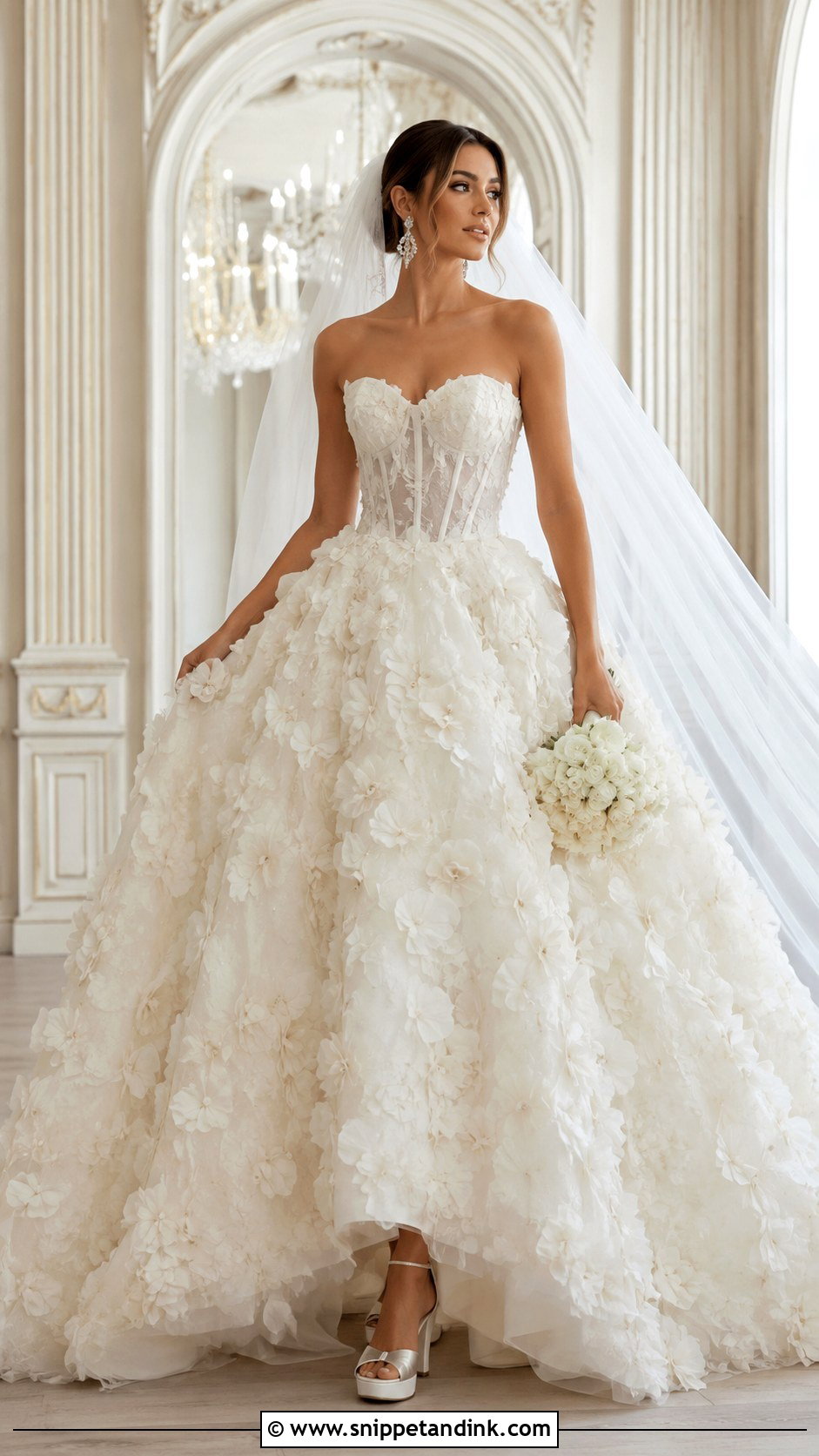
A full ball gown is the one silhouette with room for big, layered blossoms, since the volume of the skirt keeps large flowers in proportion. A structured corset bodice gives support, and a straight strapless or soft scoop neckline leaves the flowers in charge. Satin platforms add height under the skirt without showing. Crystal studs, a polished updo and a long sheer veil without heavy edging finish it, with a compact bouquet of white roses. Ask how the heaviest flowers are anchored. Large blooms stitched only at the center flop forward once you’ve been sitting for a while.
3. 3D Flower Mermaid Wedding Dress
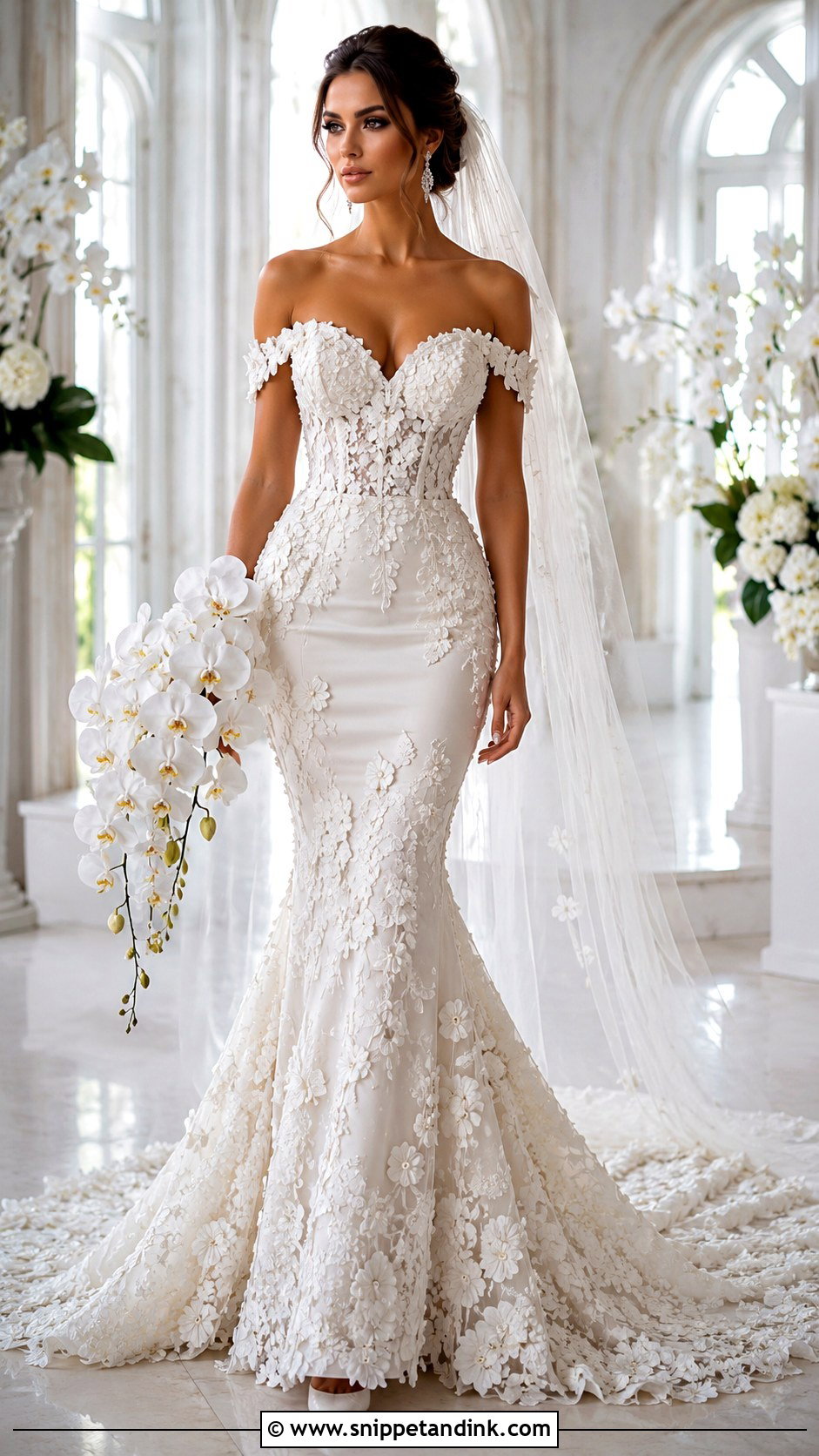
Following the curve of a mermaid with delicate flowers makes the shape read softer. I prefer appliqués placed along the bodice, hips and flared hem rather than across every inch, because spaced flowers trace the silhouette instead of hiding it. A sweetheart neckline with removable off-the-shoulder straps balances the close fit. Pointed ivory heels, slim diamond earrings and a smooth chapel veil set under a low bun complete it, with a narrow bouquet of white orchids or callas. Practice sitting and climbing a step in it well before the wedding. Petals at the knee take the most crushing when the skirt is tight.
4. Off-The-Shoulder 3D Flower Wedding Dress
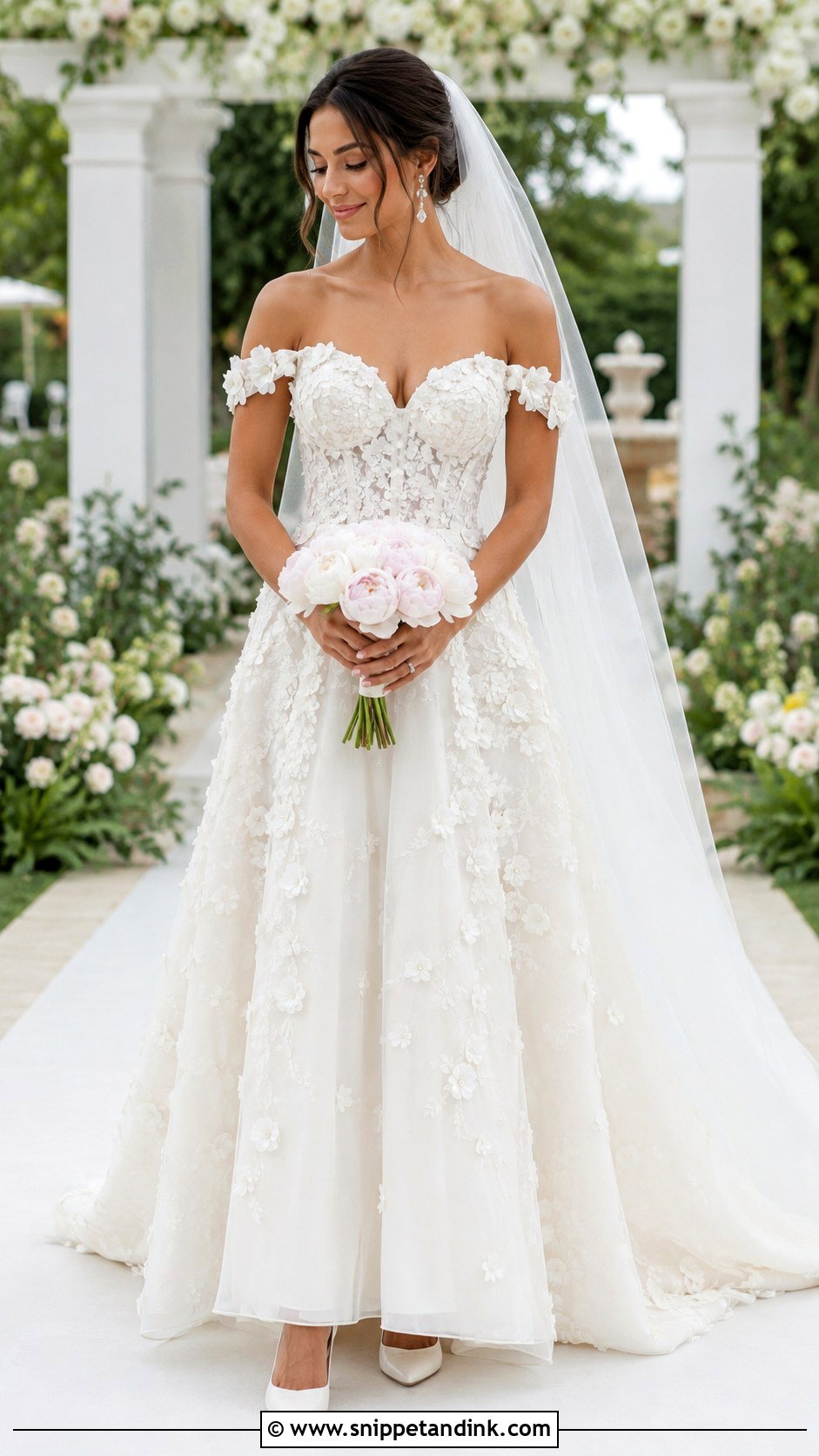
Off-the-shoulder straps covered in tiny petals frame the face so well that you can skip the necklace. Choose a gown with a supportive corset inside and a gently curved neckline, and carry the flowers across the bodice and upper skirt. An A-line or fit-and-flare keeps the shoulder detail from looking flimsy. A swept-back bun, pearl-and-crystal earrings and an unembellished veil set low in the hair work well, along with closed-toe ivory pumps. Raise your arms at every fitting. Off-shoulder straps that are cut too tight dig in when you hug, and petal-covered ones can’t be stretched later.
5. Long Sleeve 3D Flower Wedding Dress
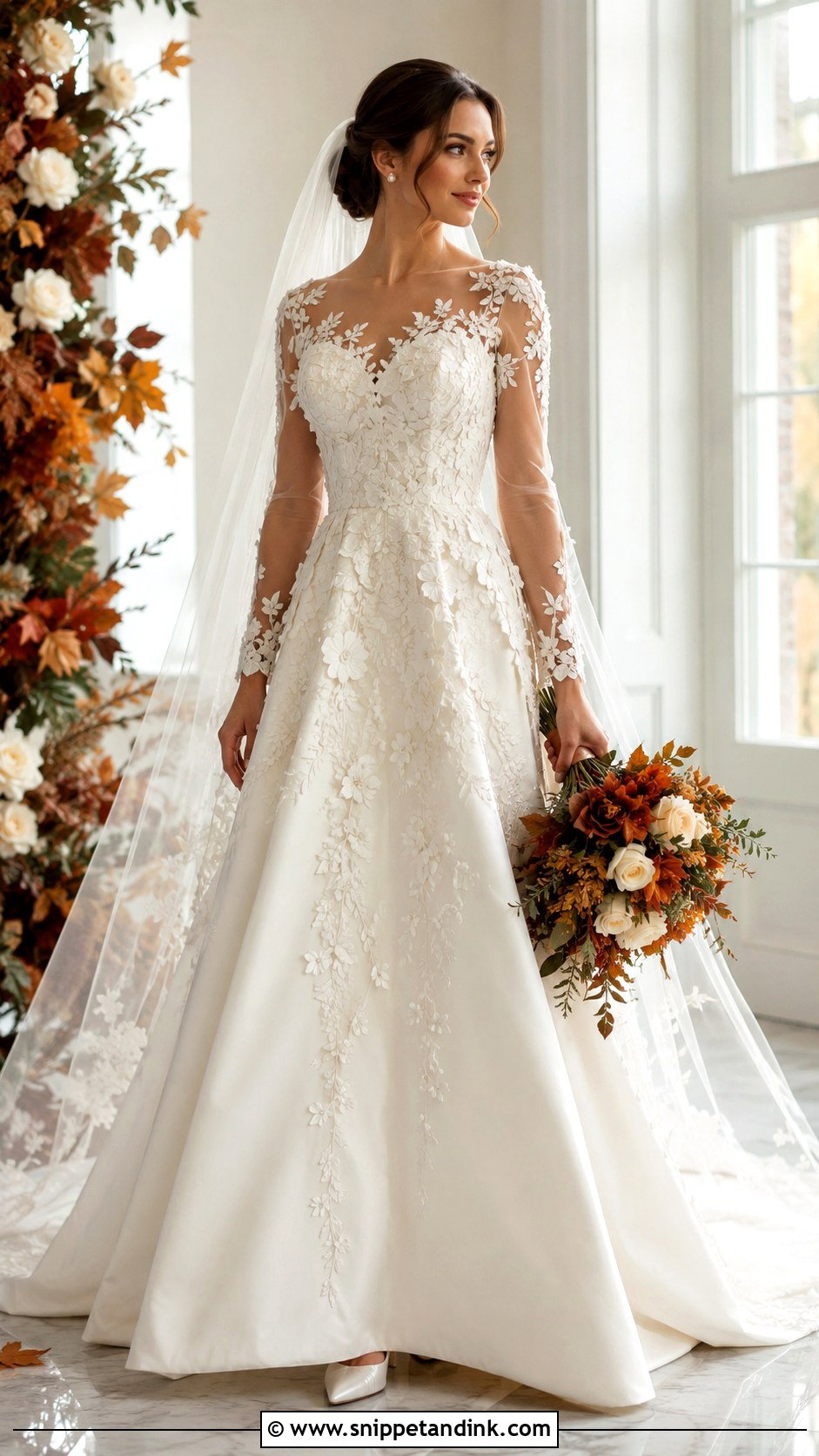
Long illusion sleeves dotted with raised blossoms give coverage on a cool day without weight. I like the flowers concentrated at the cuffs, shoulders and bodice, with clear tulle showing between them so the sleeve still looks light. A lined A-line skirt contrasts with the detailed arms. Closed-toe satin heels, a small ivory clutch and pearl earrings finish it. Hair belongs in a low chignon here; loose strands catch on petals all evening and pull the threads. A plain cathedral veil and white anemones suit a fall or winter ceremony indoors.
6. Strapless 3D Flower Corset Wedding Dress
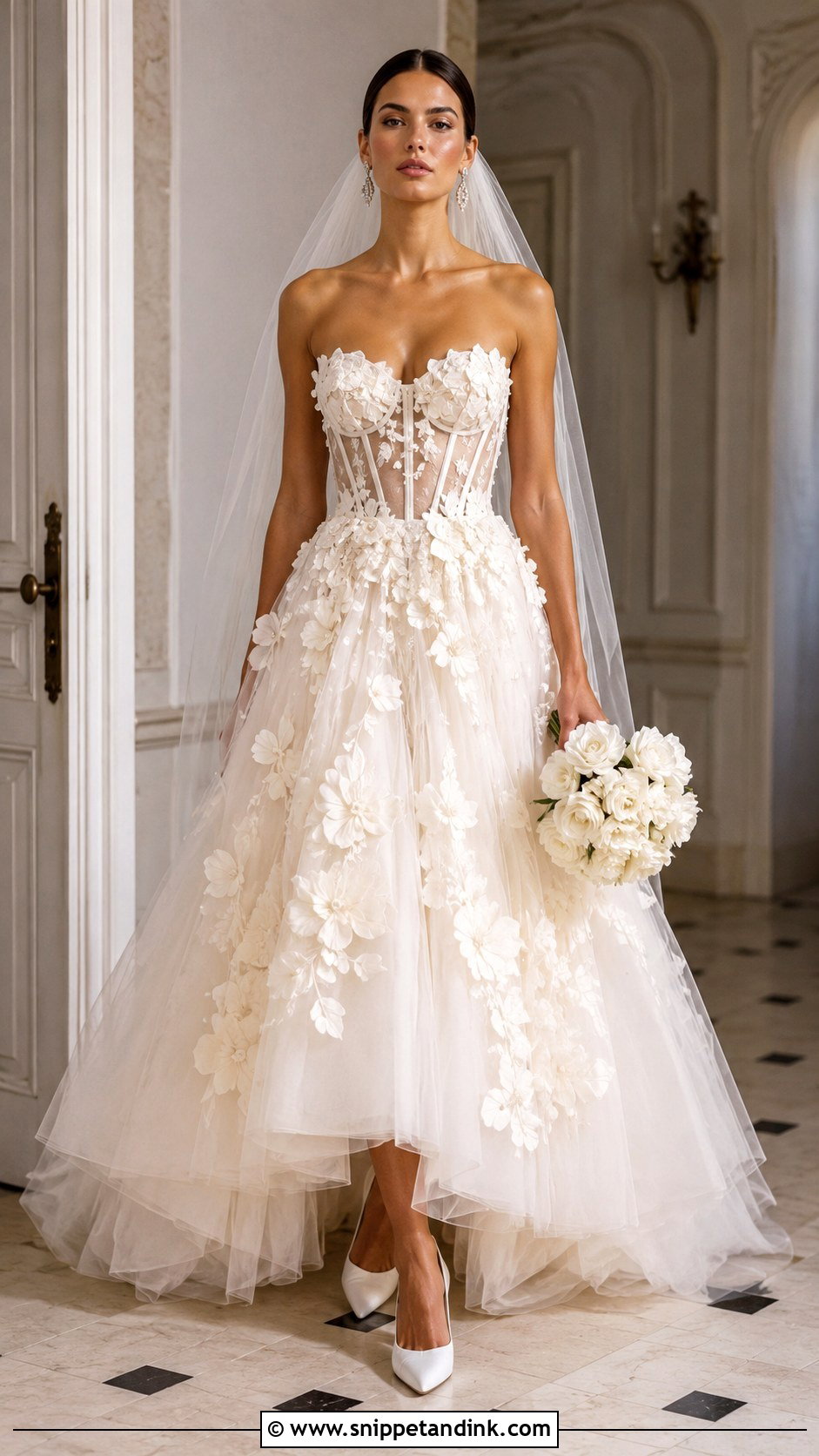
An exposed corset gives the soft floral trend structure and a modern edge. Look for blossoms placed over the boning so the construction still shows between them, and a dropped or basque waist that lengthens the line before a full tulle skirt. Sleek white pumps, crystal drops and a tennis bracelet are enough; skip the necklace. A high bun and a plain chapel veil soften the structure. Strapless corsets should hold without you tugging at them. If you catch yourself hitching it up at the fitting, it needs taking in.
7. Square Neck 3D Flower Wedding Dress
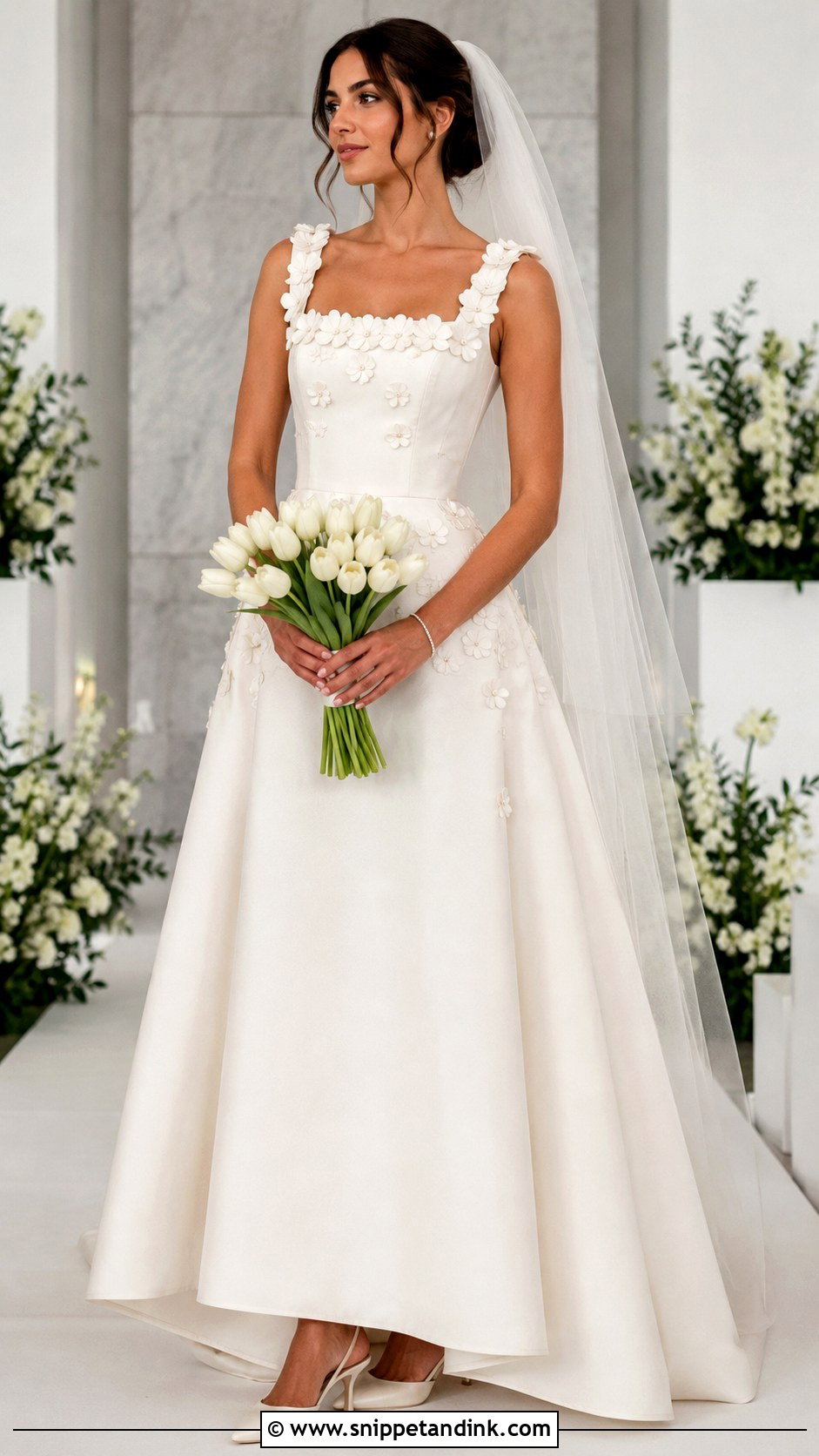
A square neckline adds clean geometry to an otherwise organic dress. Wide straps and a fitted bodice with small appliqués around the neckline, waist and upper skirt pair naturally with an A-line, since both shapes are clear and balanced. Pearl studs, a fine bracelet and ivory slingbacks are all it needs. Keep the hair up or half-up so the neck shape shows, with a waist-length veil that won’t hide the back. White tulips and a few leafy stems, hand-tied, suit both modern and traditional settings.
8. High Neck 3D Flower Wedding Dress
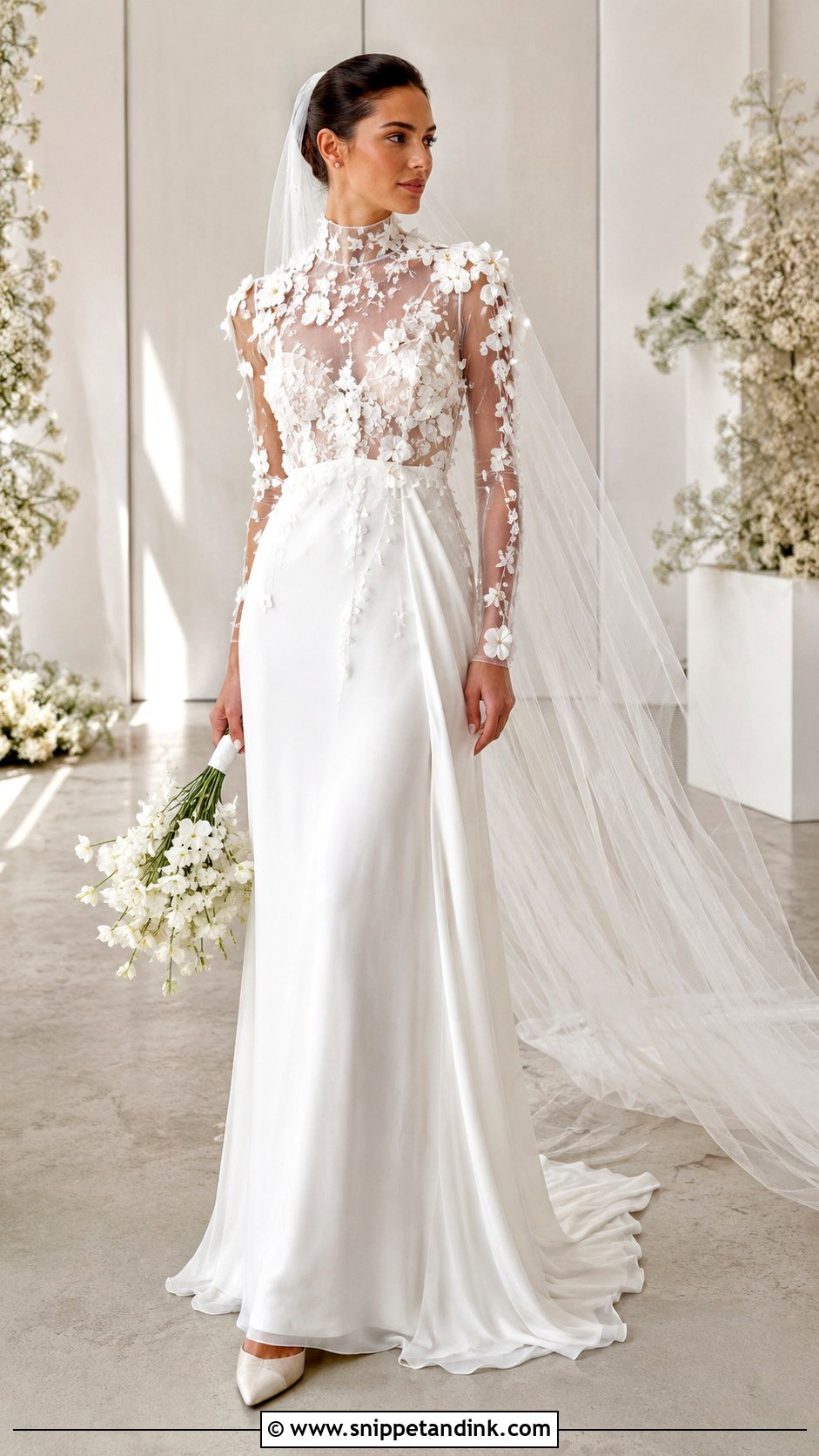
Can a high neckline feel light? It can, when the collar is sheer tulle and the petals are used sparingly. Choose illusion fabric across the collarbone with flowers that seem to float over the shoulders and bodice, then a clean crepe or softly layered chiffon skirt. Low ivory pumps, small studs and a slim bracelet finish it. Never add a necklace here; it crowds the floral collar. A neat low bun with a cathedral veil set underneath keeps the vertical line intact. Check where the flowers sit at the throat. A petal right under the chin rubs every time you turn your head.
9. Colorful 3D Flower Wedding Dress
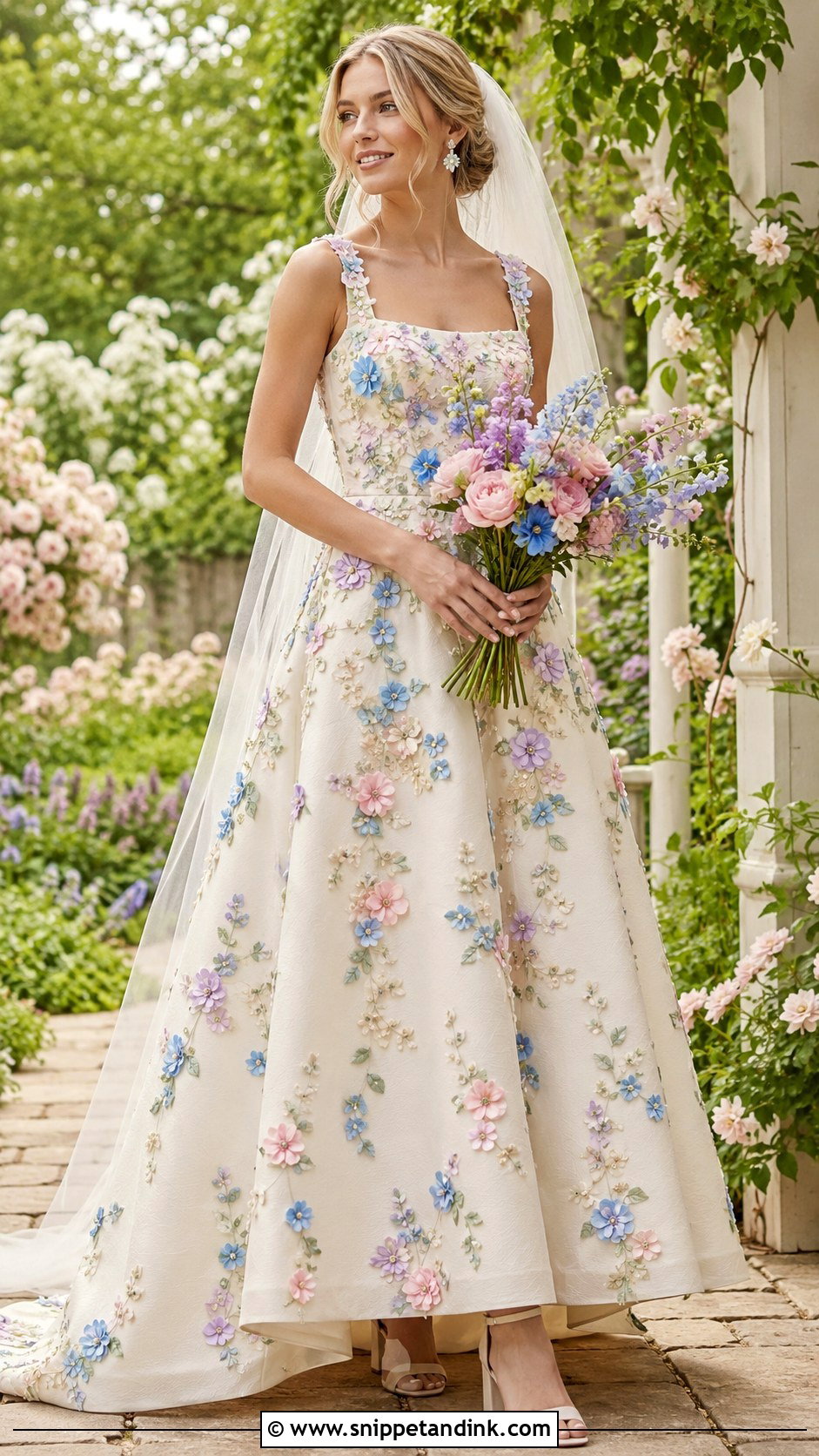
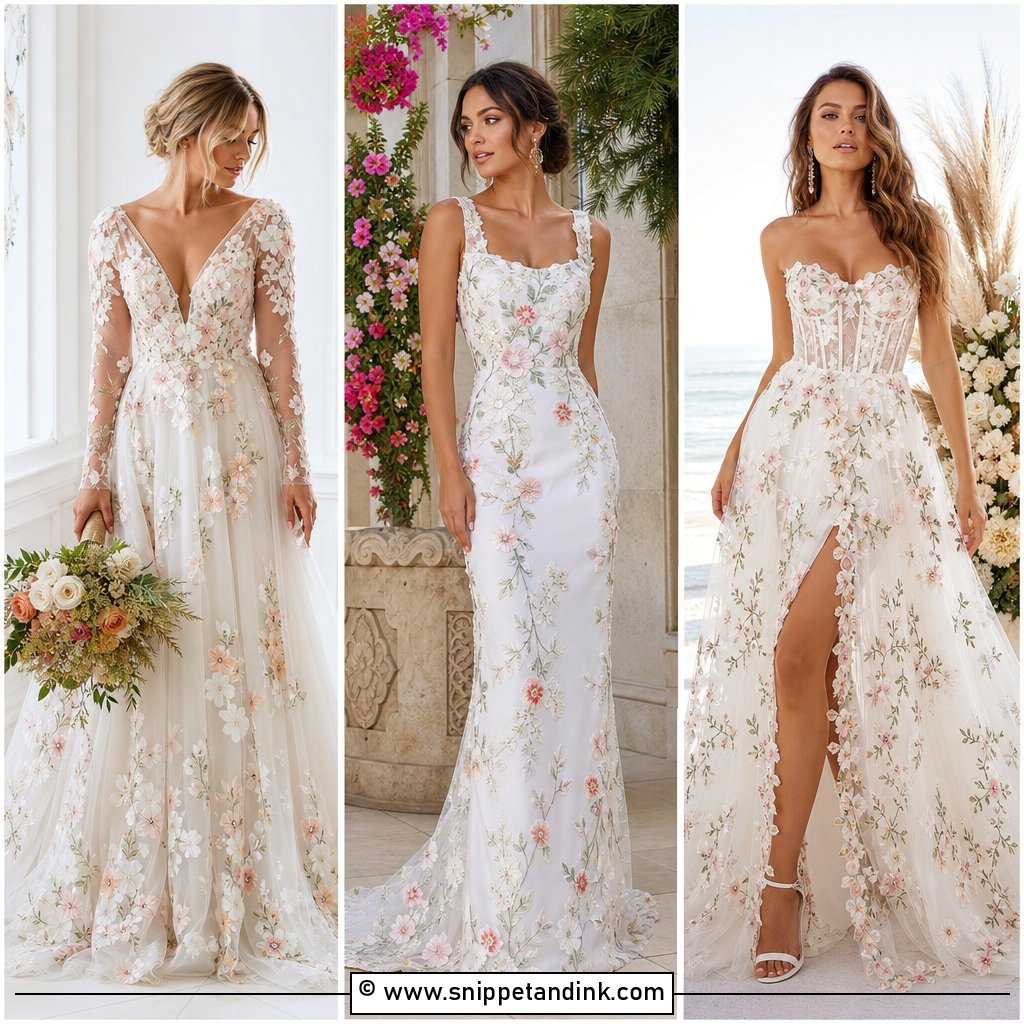
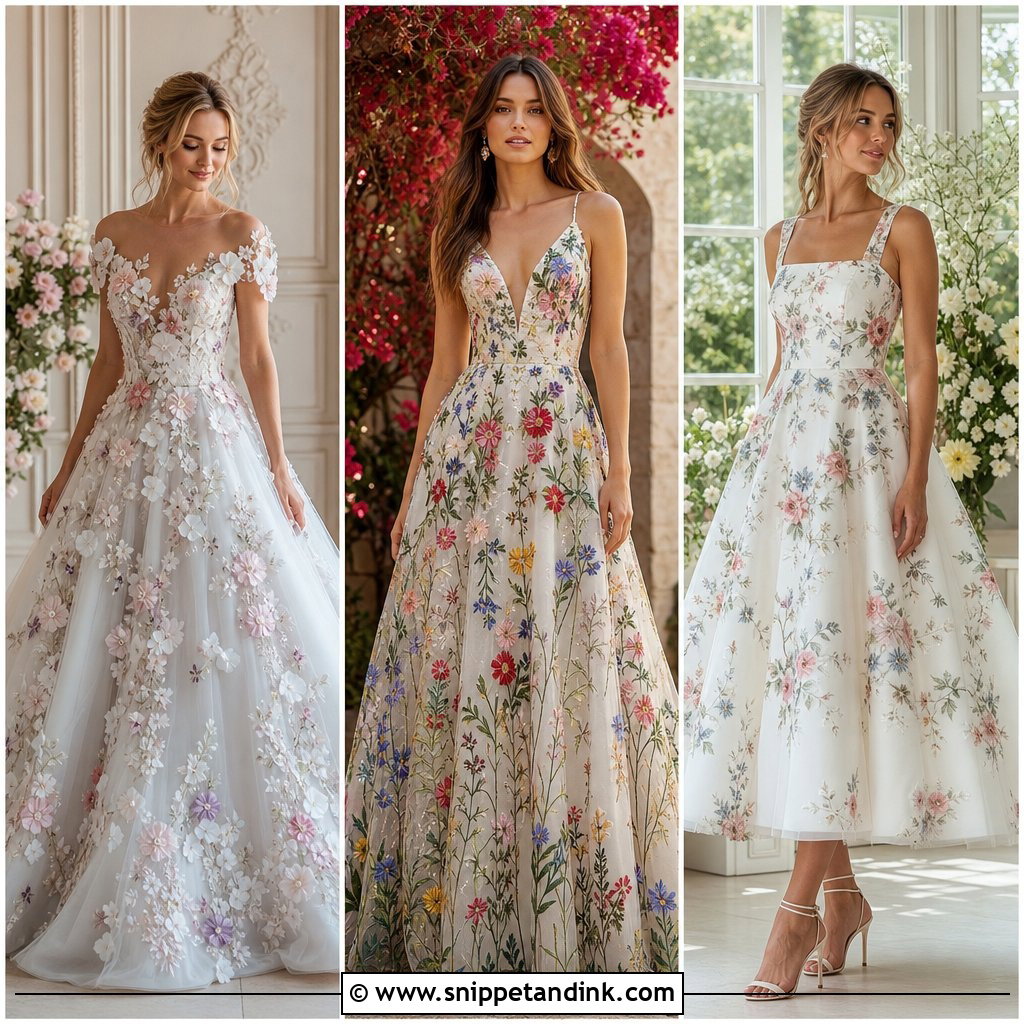
Pastel appliqués in blue, pink, lavender and soft green on an ivory base bring color while the dress still reads as bridal. The flowers should cluster on the bodice and thin out down the skirt, and a simple A-line gives them space without tipping into costume. Ivory block heels, small sapphire or amethyst earrings and a plain sheer veil keep it calm, with loose waves and one floral pin at the back. My rule for the bouquet is to repeat only two of the dress colors; more than that and the eye can’t settle. Remind your photographer to take close-ups, since small colored petals disappear in wide ceremony shots.
10. Blush 3D Flower Wedding Dress
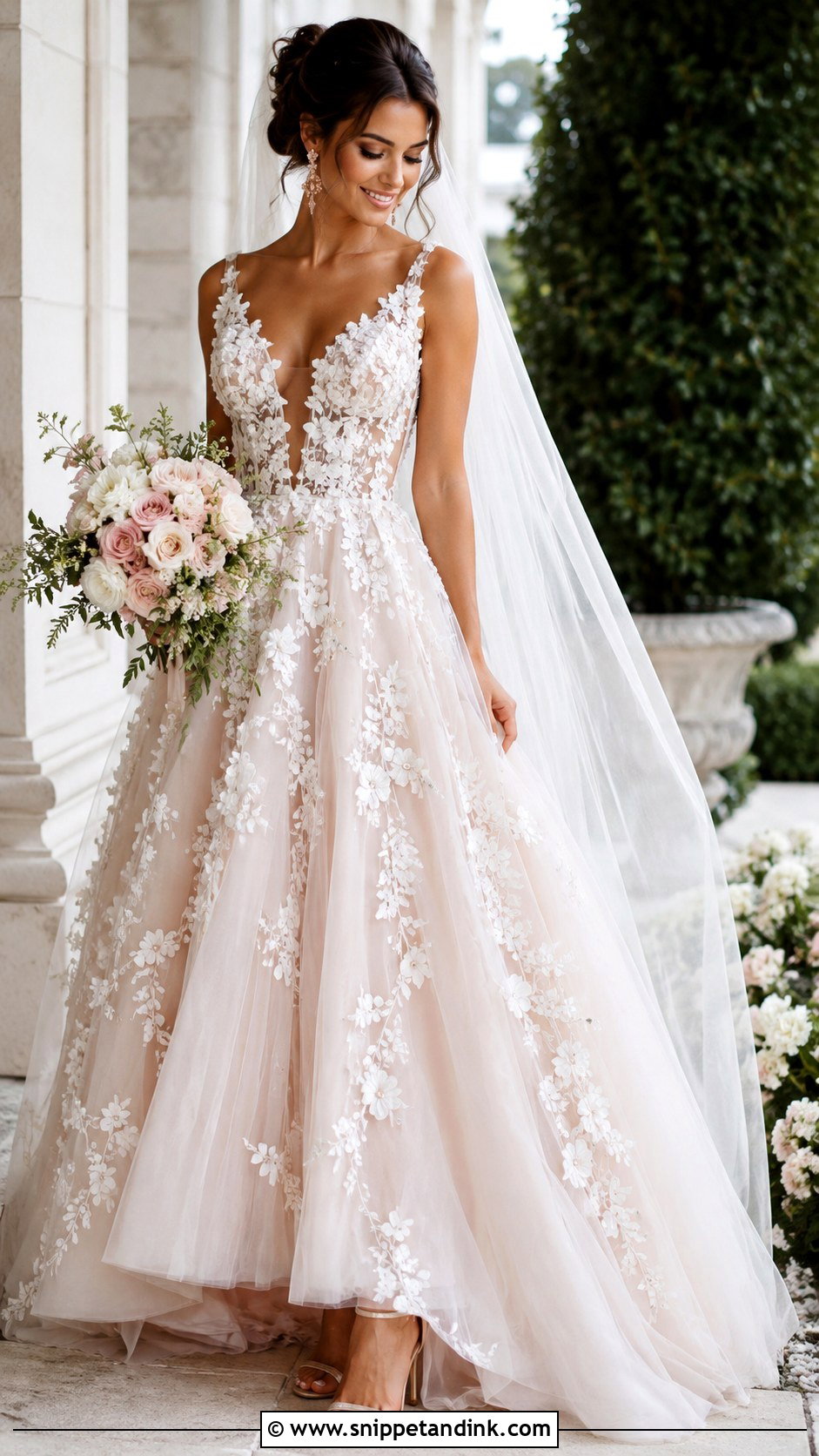
Blush lining under ivory tulle makes ivory petals look more three-dimensional, because the warm base shows in the gaps between them. Choose a soft pink or nude lining, not a saturated color, with a fitted bodice and flowing A-line skirt. Champagne heels, rose-gold earrings and a clean-edged ivory veil suit the warmth, with a low bun or softly pinned waves. Always see a blush gown in daylight before deciding. Under warm boutique bulbs, some blush shades vanish entirely, and others turn peach against certain skin tones.
11. Satin Wedding Dress With 3D Flower Bodice
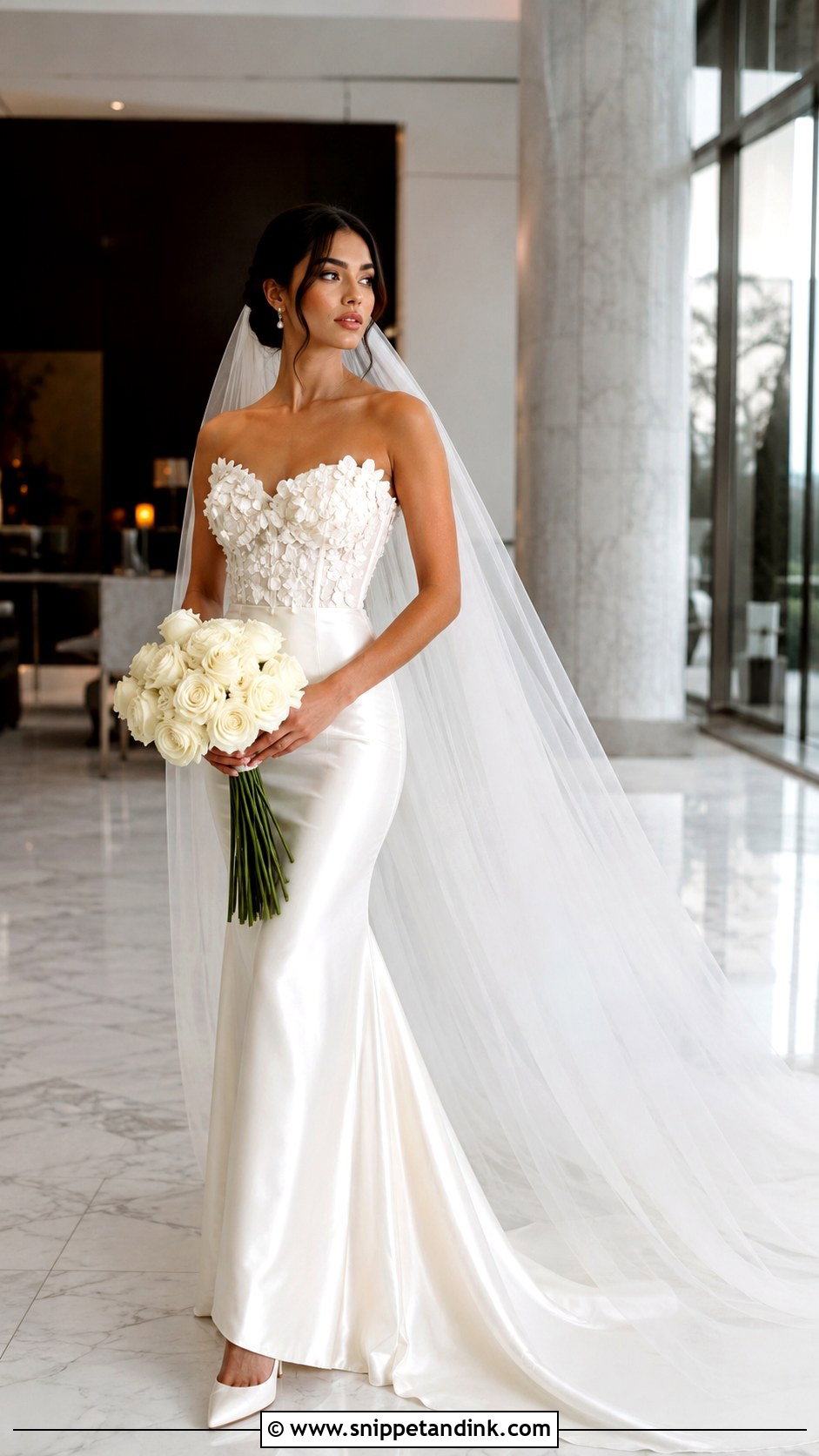
Satin below the waist and raised petals above is a contrast I reach for when a bride likes flowers but not whimsy. A subtle basque seam helps the two textures meet cleanly, and the satin skirt should stay completely plain. Satin pointed heels, pearl drops and a small structured bag for the reception suit it, with a sleek bun and a plain cathedral veil. Long-stem white roses or callas keep the bouquet as clean as the skirt. One fitting caution: satin marks easily where the petals rub against it, so ask that the lowest flowers sit a little above the waist seam.
12. All-Over 3D Flower Wedding Dress
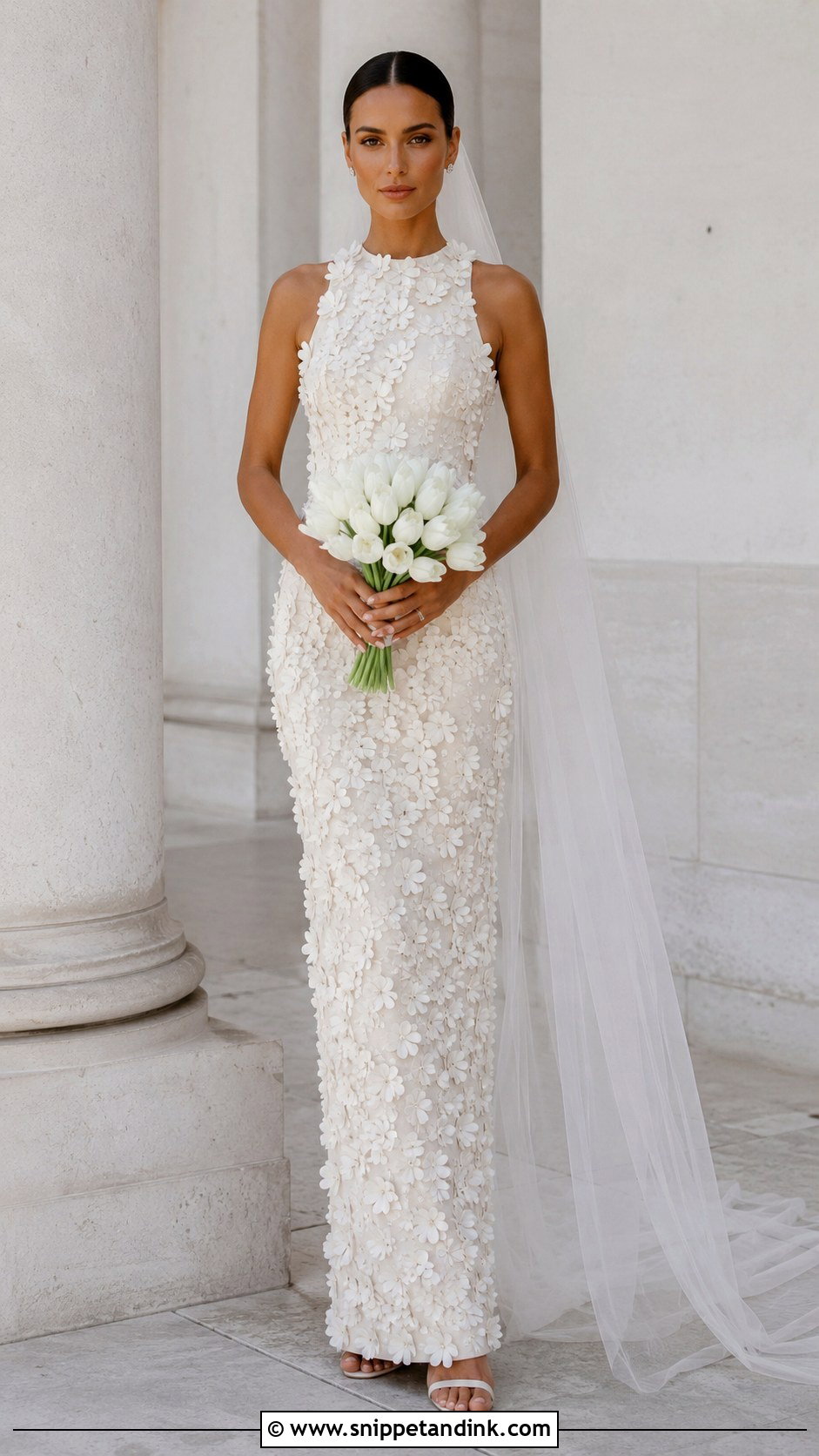
Petals from neckline to hem give maximum texture, so everything else has to be calm. I’d keep the flowers one consistent ivory shade with little or no extra sequins, on a simple column or gently fitted A-line. Minimal ivory sandals, small diamond studs and a narrow untrimmed veil are enough, with a clean low ponytail or bun. A compact bouquet of one variety, white tulips for example, complements rather than copies the gown. Before buying, run your arm along your side the way you would while walking. Petals on the bodice sides can scratch the inner arm all day, a complaint that comes up often with all-over designs.
13. 3D Flower Skirt Wedding Dress
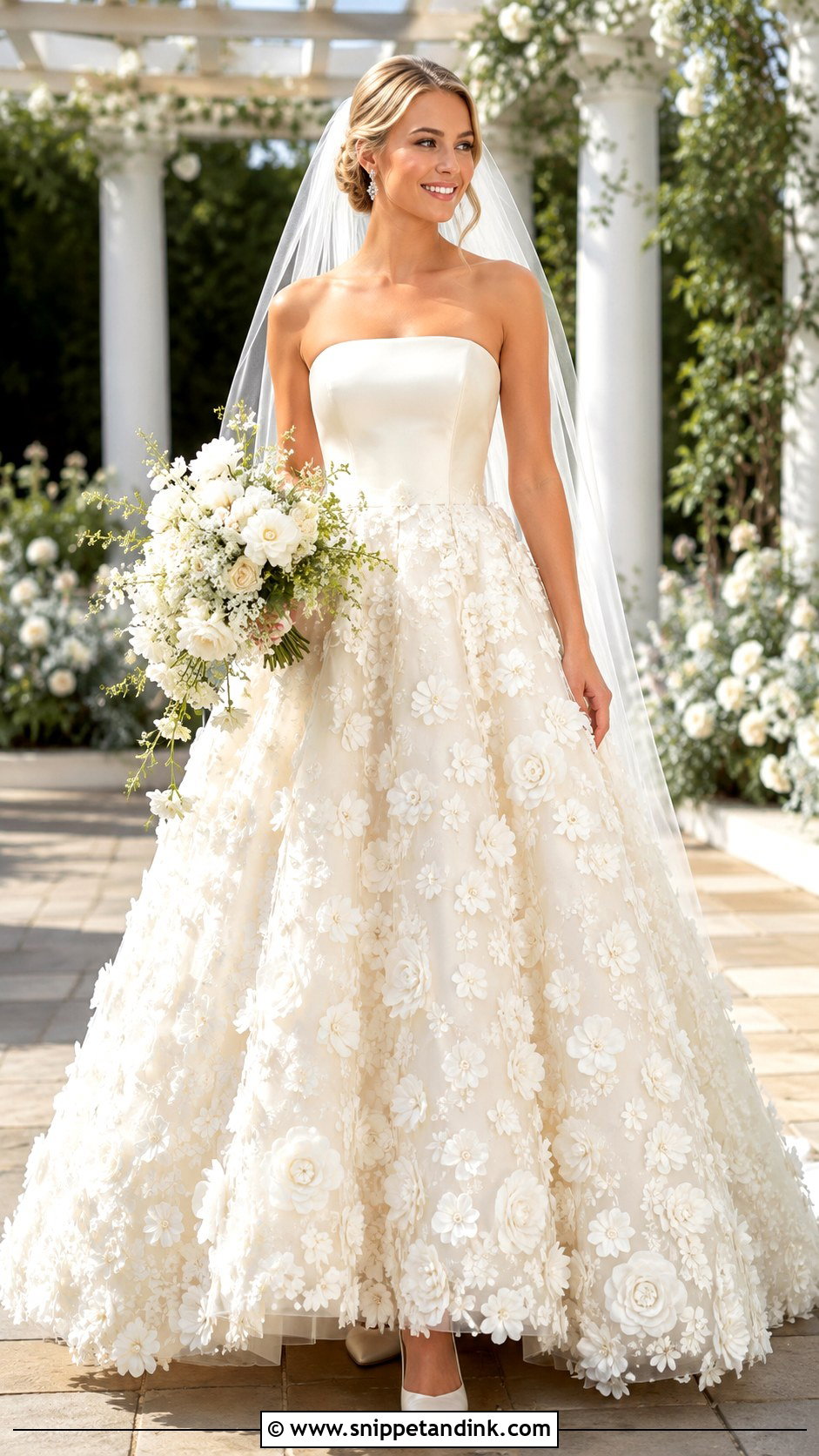
Keeping the bodice plain and putting every flower on the skirt gives you texture while leaving the neckline quiet. A smooth strapless corset or simple square-neck top sits over tulle scattered with blooms from waist to hem, adding movement without crowding the face. Crystal earrings, a slim bracelet and satin pumps hidden under the skirt finish it, with a polished bun and fingertip veil. This is one of the few floral gowns where a short delicate necklace works, if the neckline feels bare. An airy, natural bouquet suits it.
14. 3D Flower Train Wedding Dress
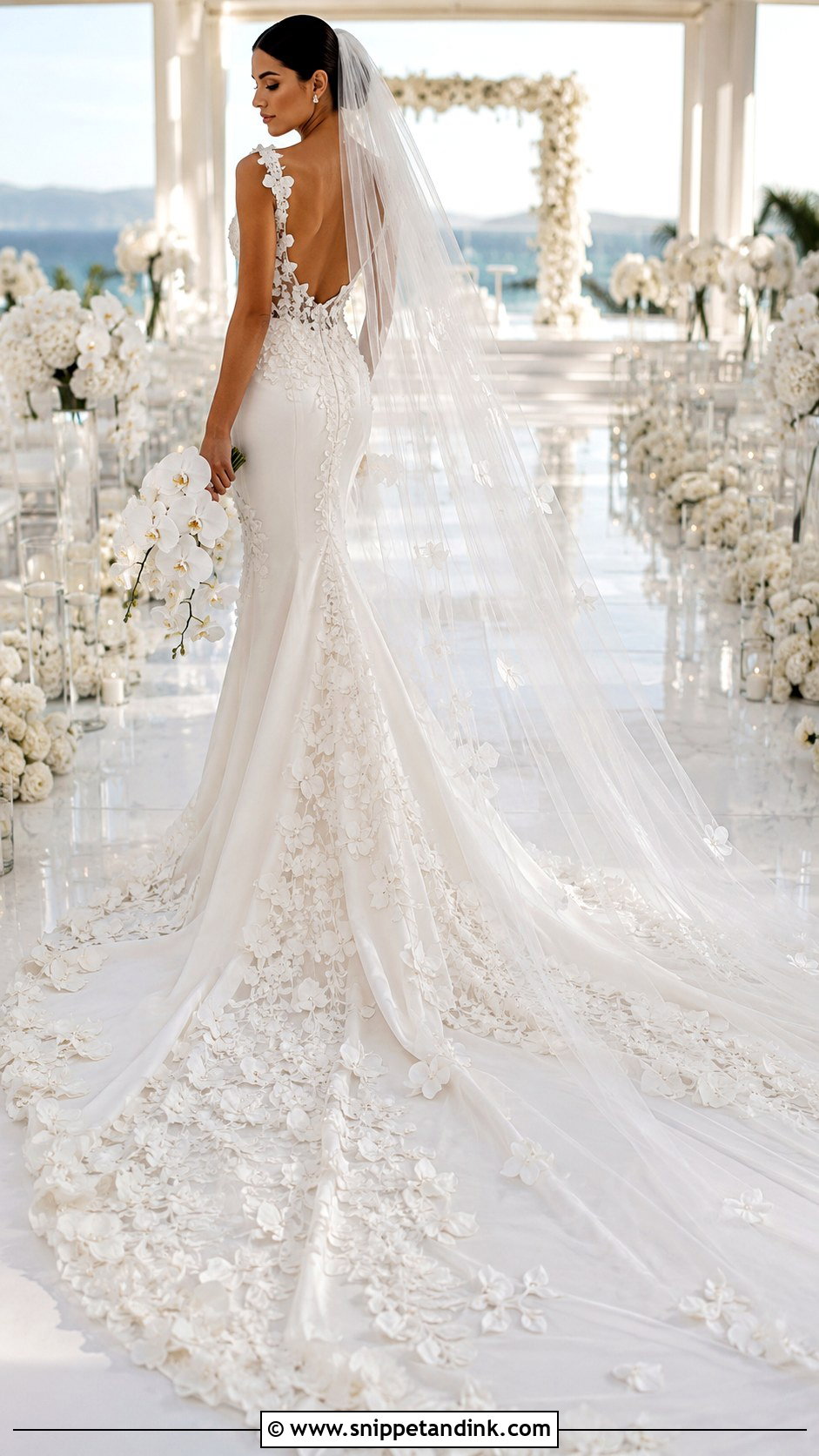
A floral train puts the drama behind you and keeps the front understated. Choose a fitted crepe or satin gown with appliqués starting near the lower back and growing denser across a chapel or cathedral train. Pointed heels, crystal studs and a long sheer veil that extends just past the train complete it, and an updo lets guests see the back detail. White orchids keep the bouquet sleek. Ask your seamstress for a sturdy bustle; flowers add real weight to a train, and a bustle point that holds plain tulle can tear out under appliqués. Test it by dancing, not just standing.
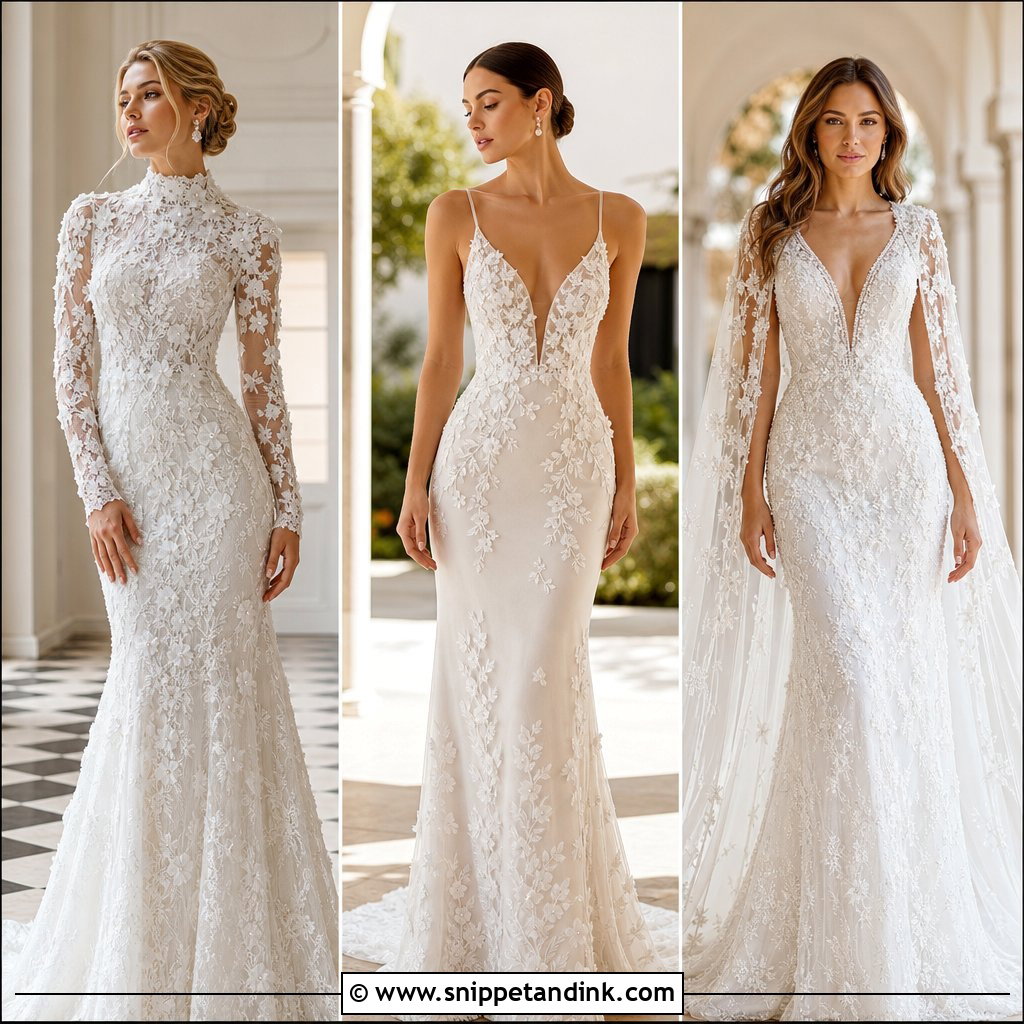
15. 3D Flower Cape Sleeve Wedding Dress
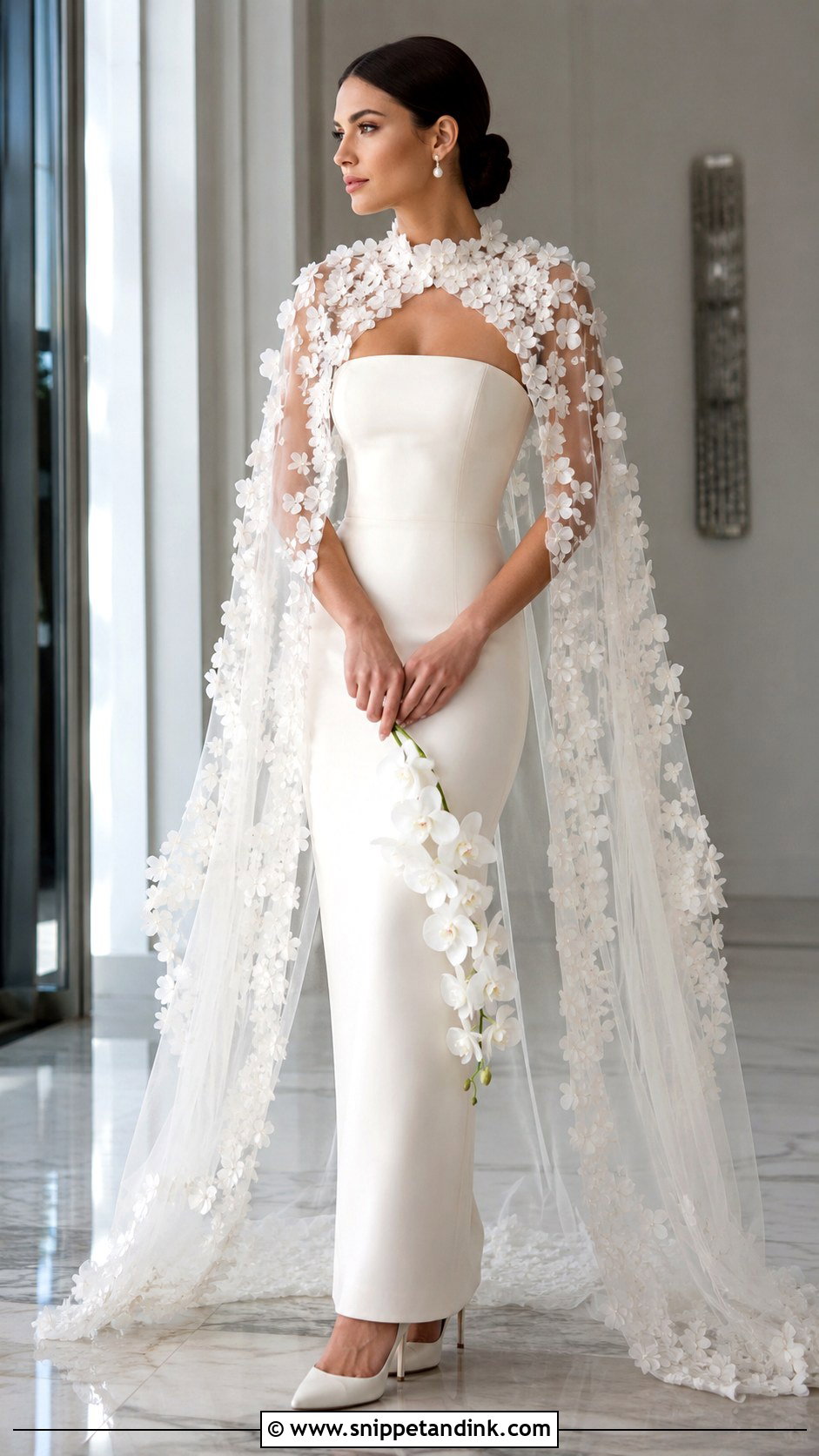
A detachable floral cape transforms a simple gown and gives soft cover over the shoulders and arms. Start with a smooth strapless or sleeveless column, then add a sheer cape edged in dimensional blossoms. The base dress must stay plain, or the cape gets lost. Ivory pumps, pearl earrings and a low bun suit it, and the veil is optional because the cape already moves behind you; if you want both, keep the veil short and plain. Taking the cape off after the ceremony gives you a second, simpler look without a dress change. Check how it fastens at the neck, since petals around a clasp often snag.
16. 3D Flower Detachable Overskirt Wedding Dress
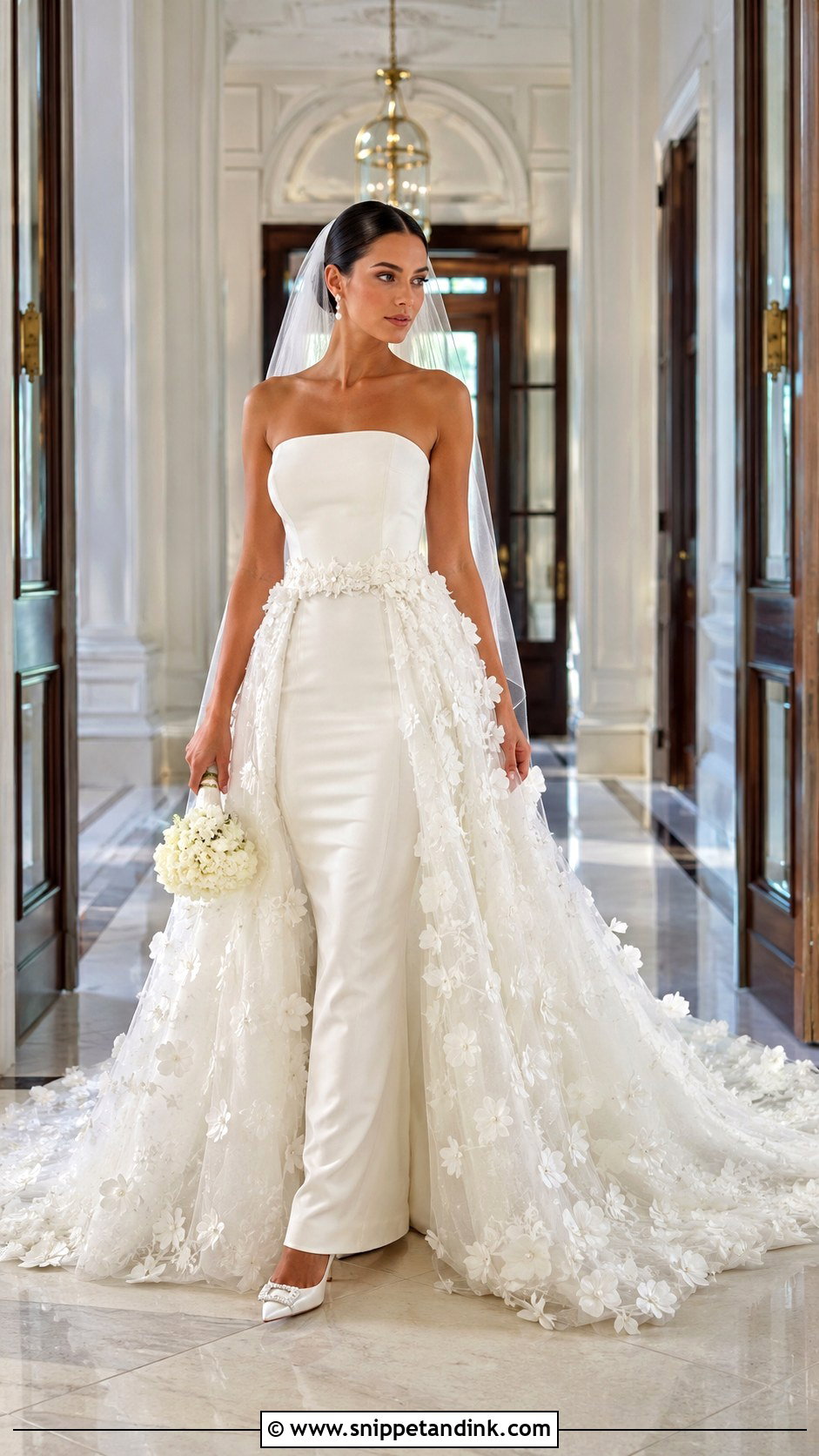
A detachable overskirt gives you two silhouettes in one outfit. Begin with a fitted ivory column or crepe dress, then layer a full tulle overskirt decorated around the waist, sides and train. The ceremony gets the volume; the dance floor gets the sleek dress underneath. Pointed satin heels, modern pearl earrings and a simple fingertip veil work for both, as does a smooth ponytail or bun. Keep the bouquet compact so it doesn’t cover the decorated waistband. Rehearse taking the overskirt off with the person who’ll help you. Petals around the hooks make them hard to find by feel.
17. Short 3D Flower Wedding Dress
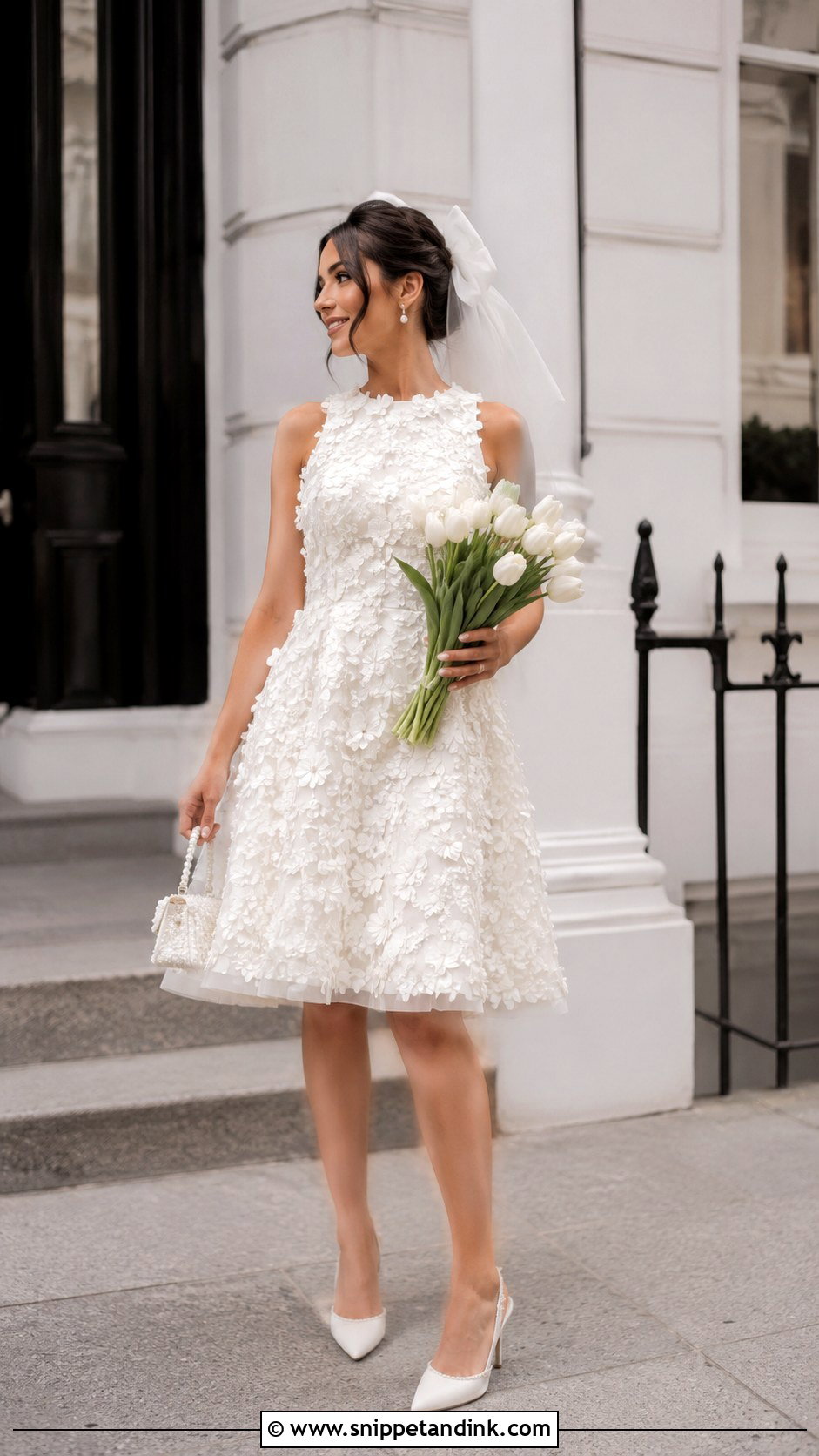
A short floral dress suits a courthouse ceremony, a destination wedding or a second look for the party. Choose a structured mini or knee-length A-line with appliqués spread evenly over bodice and skirt; a higher neckline or sheer sleeves balances the hem. Pointed slingbacks, pearl earrings and a small top-handle bag finish it, with a birdcage veil, short bow veil or headband in place of anything long. White sweet peas or tulips in a small bouquet suit the proportion. Since your shoes are fully on show, pick a pair you’d be happy to see in every photo. The dress has to look deliberately bridal, not like a white party dress.
18. Plus Size 3D Flower A-Line Wedding Dress
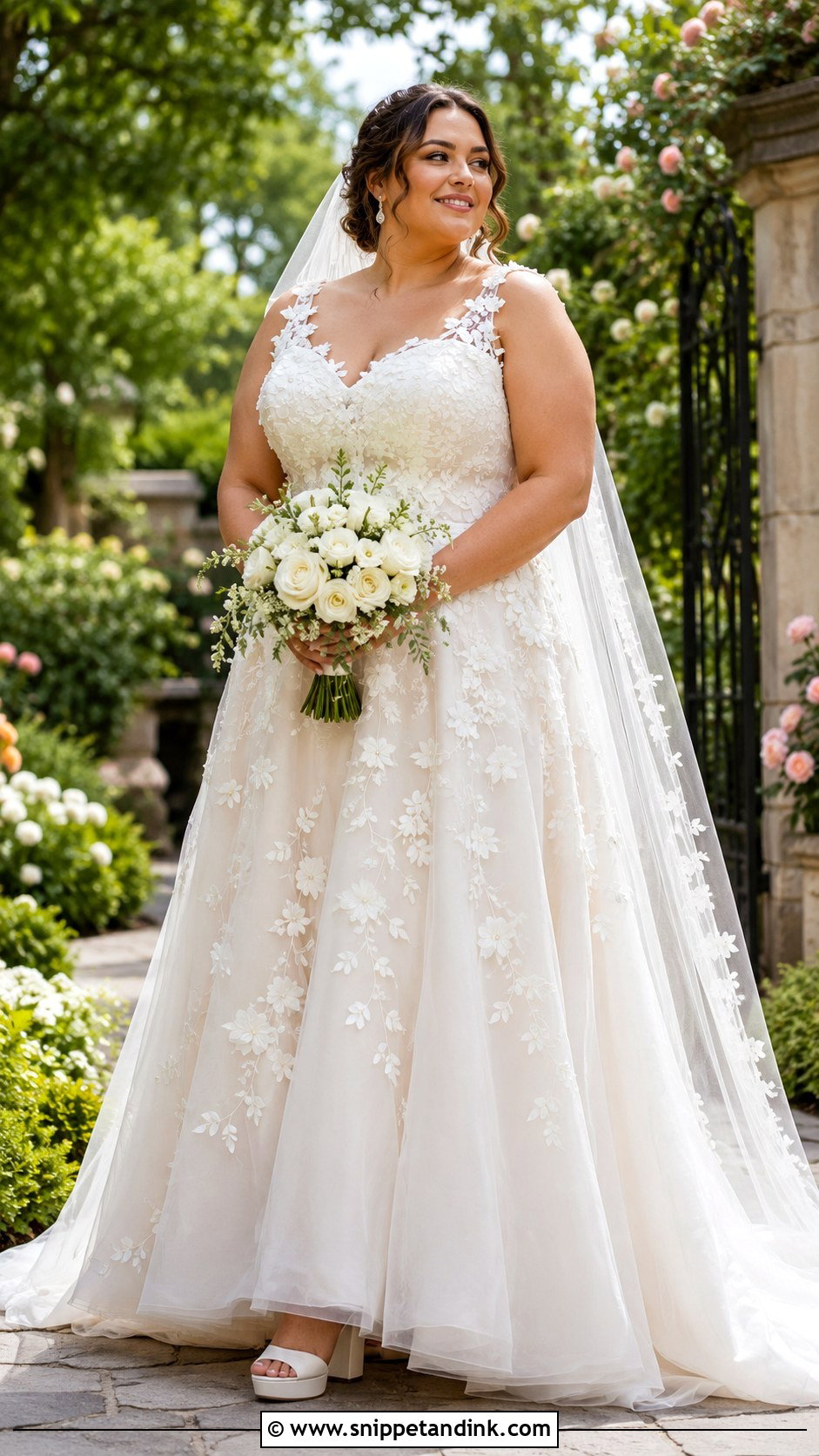
A supportive A-line shows off dimensional flowers on any size. Look for a structured bodice with internal boning, comfortable straps and appliqués that follow the neckline before spreading lightly over the skirt, which marks the waist without forcing the flowers into a rigid pattern. Cushioned block heels, medium drop earrings and a soft chapel veil finish it, with a low updo or side-swept waves. Scale the bouquet to your height and the gown’s volume. Order for your largest measurement and have it tailored down. Taking in a floral bodice means moving appliqués, so ask at the first fitting whether the seamstress will reposition them by hand.
19. Petite 3D Flower Column Wedding Dress
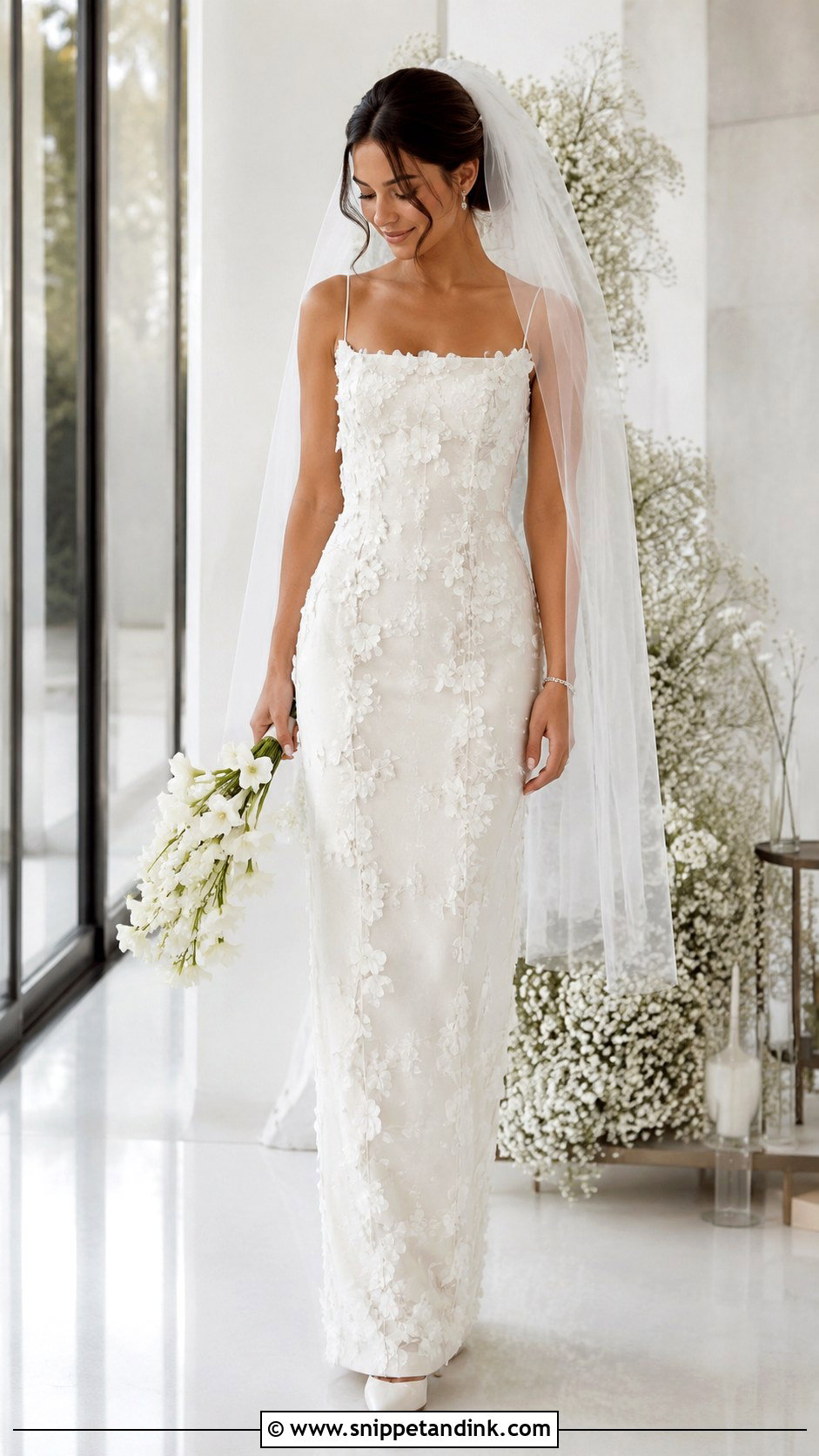
On a petite frame, a narrow column with small or medium flowers running vertically from shoulder to hem adds length. Big blossoms across the whole skirt tend to swamp a shorter bride, so I’d keep the arrangement focused. Pointed heels in ivory or a skin-toned neutral extend the leg, with small drops, a slim bracelet and a waist-length veil. A high bun adds height and keeps the neckline open, and a narrow bouquet suits better than a wide cascade. Adjust the waist, straps and flower placement at the same fitting. Taking up the hem carelessly can cut through part of the original appliqué pattern, so hemming often has to happen from the waist instead.

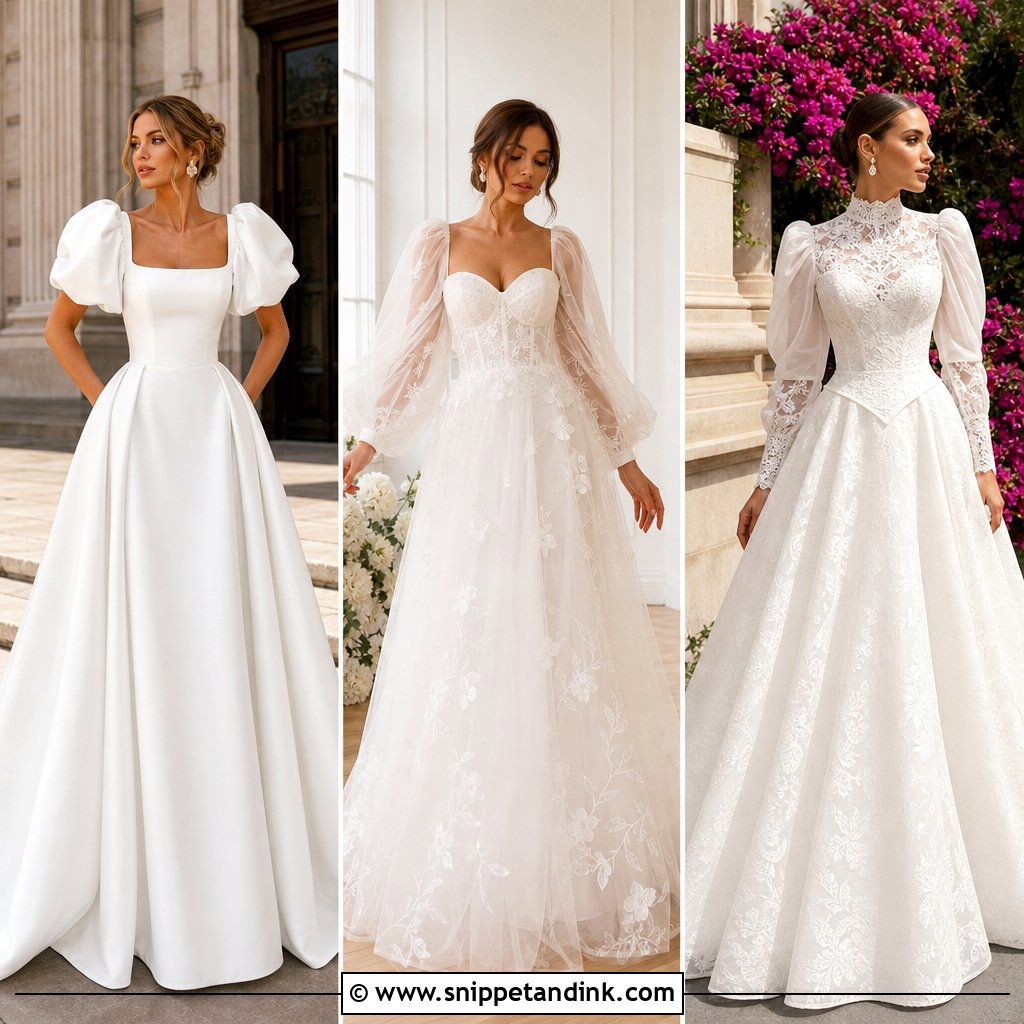
20. Beach 3D Flower Wedding Dress
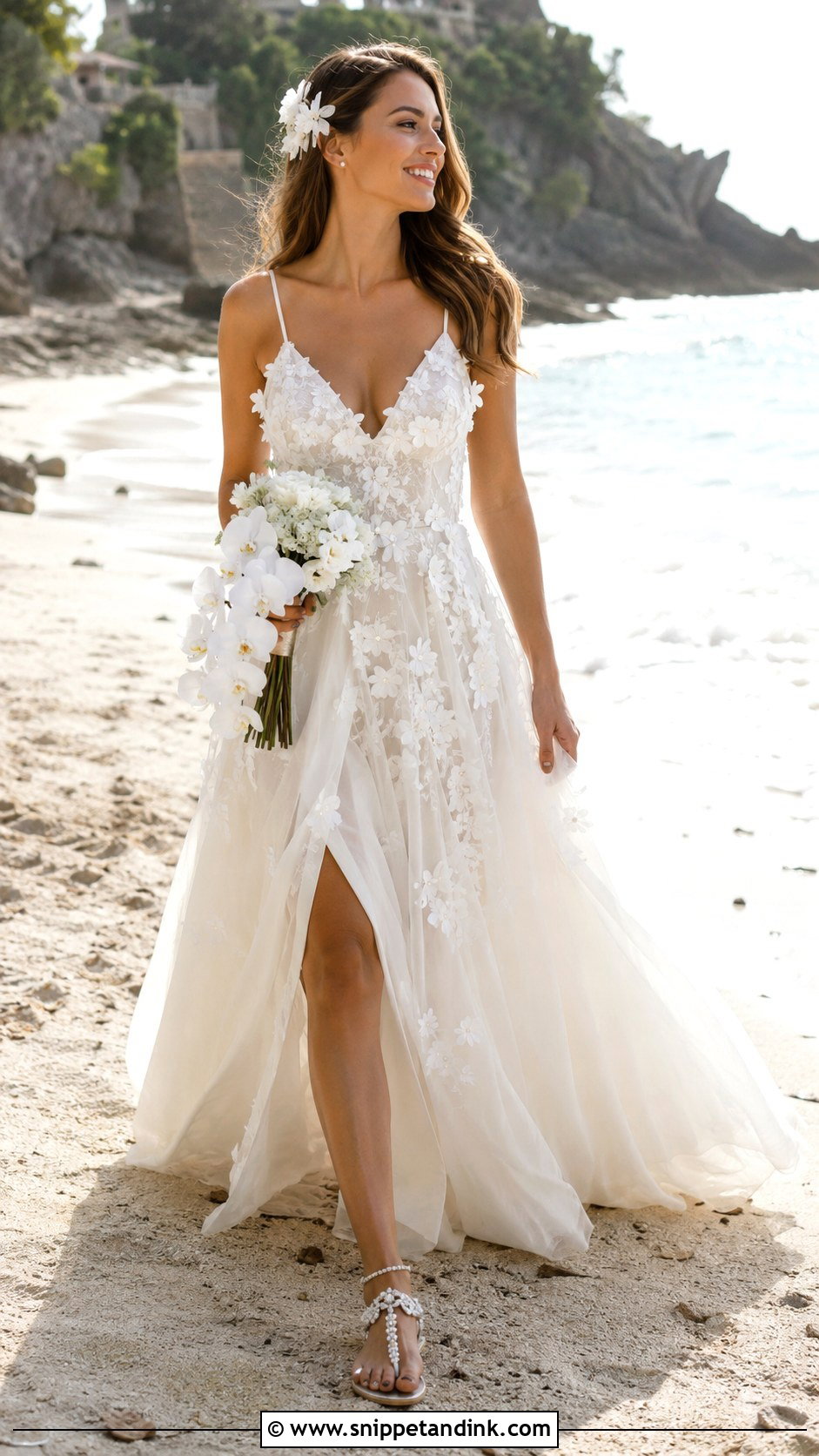
On a beach, raised flowers need to be small and stitched close to the fabric, because wind and sand catch on anything that sticks out. Lightweight chiffon, soft tulle or breathable mesh in a flowing A-line or relaxed sheath silhouette moves well in a breeze. Embellished flat sandals or bridal flats stay stable on sand, and pearl studs, a fine anklet and a short veil or floral comb suit better than a cathedral veil. Loose waves or a braided low bun feel right in the setting. Keep the train short, or it collects wet sand that weighs the petals down.
What If the Flowers Arrive Crushed?
Flattened petals are the most common floral-dress panic, and almost always fixable. Gowns travel in bags, get folded into cars and pressed by bouquets, so some flattening on the day is normal. Never iron a floral dress. Here is how I bring petals back:
- Hang the gown and let it rest for an hour; light creases often relax on their own.
- Hold a handheld steamer well away from the flowers and work from the inside of the skirt or bodice, so steam rises through rather than hitting glue.
- Lift each petal with clean, dry fingertips while it’s still slightly warm.
- Finish with a hairdryer on the cool setting to set the shape and dry any moisture.
To travel, stuff the bodice with acid-free tissue and never fold through the floral sections. In the car, lay the train across the seat. After the wedding, tell the cleaner exactly which areas are appliquéd, since pressing equipment flattens them permanently, and store the gown flat in a box rather than hanging, so the weight of the flowers doesn’t stretch the shoulders.
Let the Petals Lead and Keep Everything Else Simple
A floral gown works when the texture suits your silhouette, your venue and the way you move. A classic A-line, a ball gown, a mermaid or a short dress can all carry dimensional flowers, as long as the flowers stay the main feature. Plain shoes, restrained jewelry and a clean veil almost always give the most balanced finish. Before you commit, touch the appliqués, sit down in the dress and look at it in a phone photo taken from across the room. A good seamstress can then improve support and keep the flower placement right as the dress is fitted to you.
You'll Like These Ideas:





Leave a Reply