
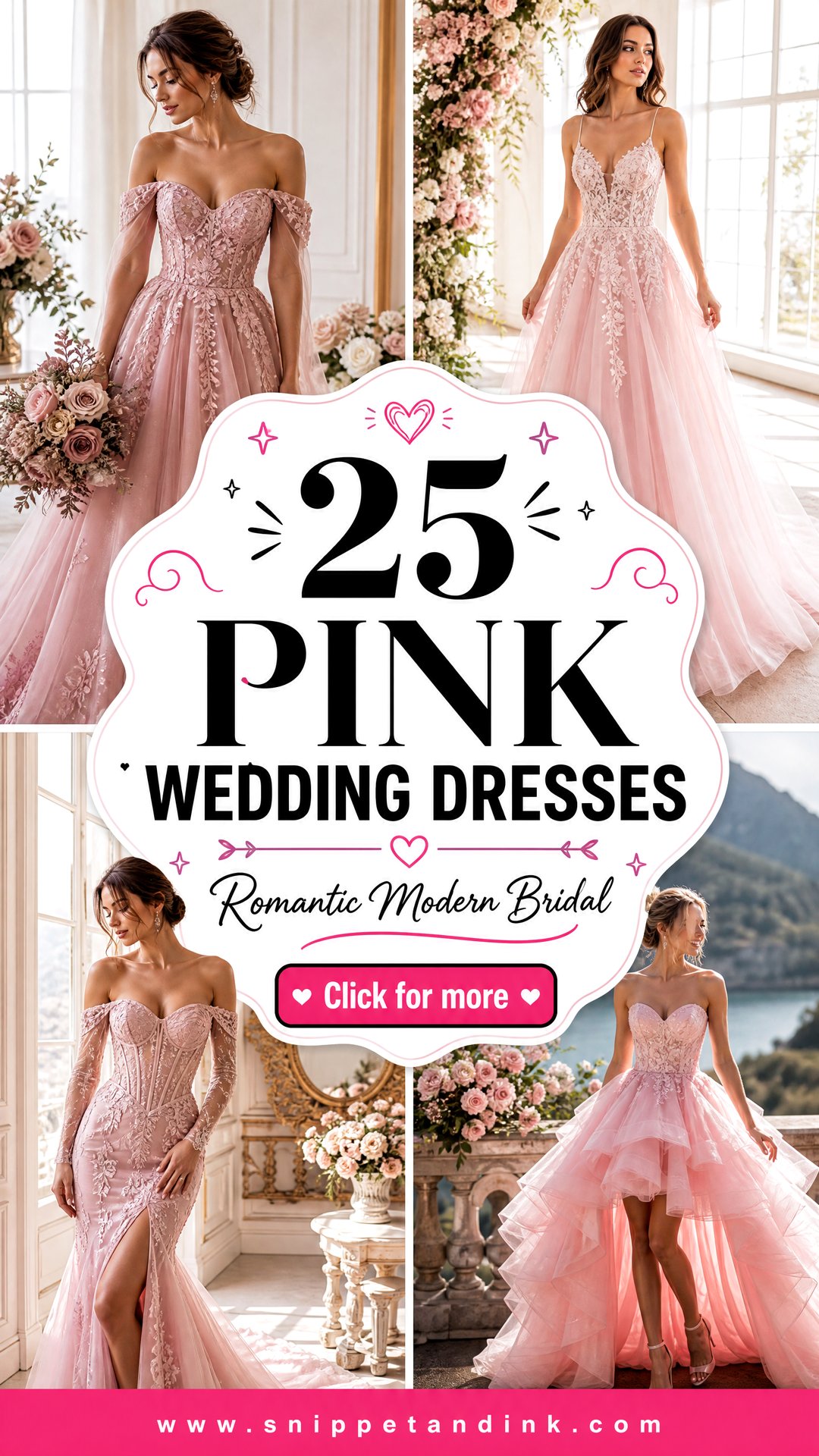
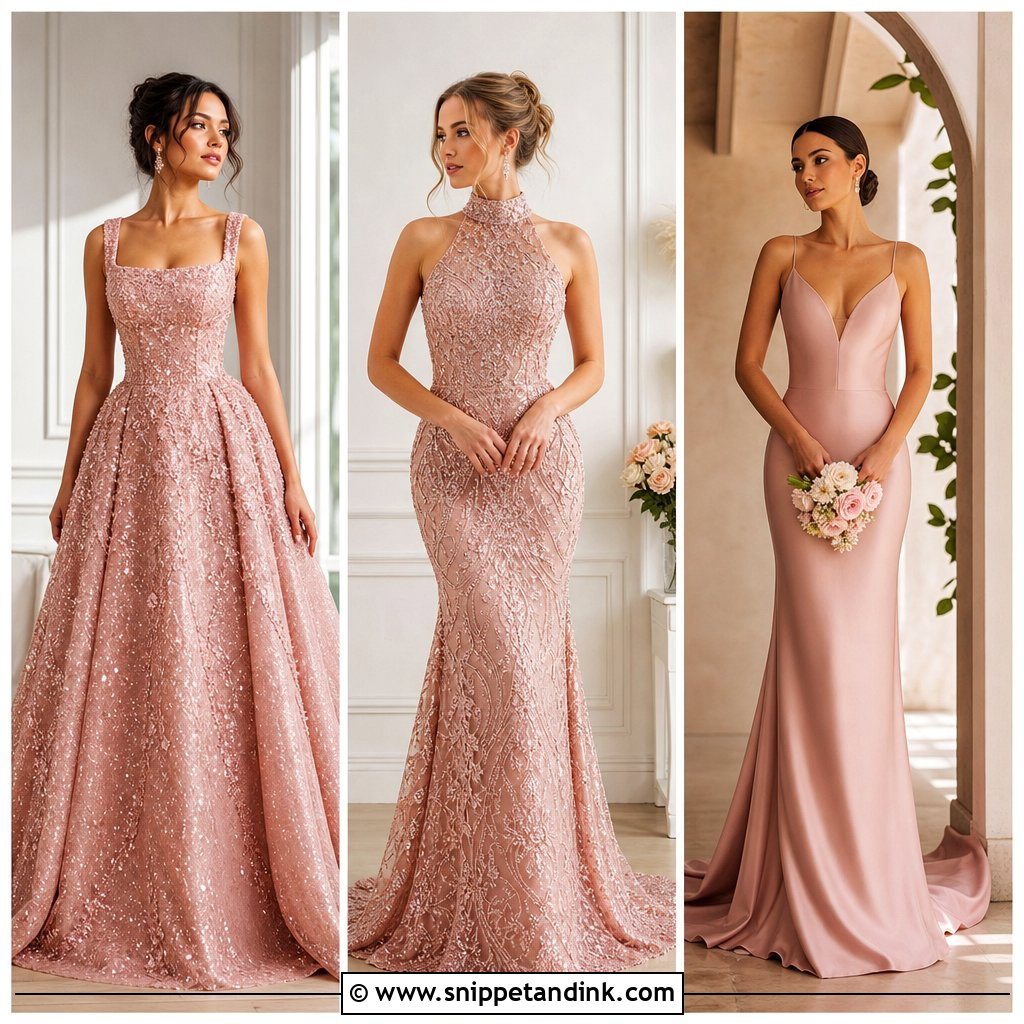
More brides are walking in with pink swatches than ever, and I understand why: a colored gown still reads as bridal while saying something about you. The hard part is that pink is not one color. Blush, dusty rose, peach-leaning pinks and hot pink each sit differently against skin, and the same shade looks cooler in a shop and warmer at golden hour. Fabric changes it too, since tulle softens pink while satin intensifies it. In my fittings, the veil, shoes and bouquet decide whether a pink dress looks polished or sugary. Below are the 25 pink gowns I’d pull for a bride, with what I watch for in each.
Will Your Pink Read as Pink, Peach or Beige on Camera?
Bridal shop lighting is warm and kind. Daylight, flash and phone cameras are not, and pale pinks are the shades most likely to shift. A blush that looks clearly pink in the boutique can wash out to beige outdoors, while a peach-leaning pink can turn orange under warm reception lights.
Before I let a bride commit to a shade, I ask her to do three quick tests:
- Take the swatch or sample near a window and look at it against your bare face, not just against your hand.
- Photograph it with flash and without, then compare the two on your phone.
- Hold it next to your skin with no makeup on. If the shade makes you look grey or tired, it will do the same in portraits.
As a rough guide, cooler pinks with a hint of blue suit pink or olive undertones, and warmer peachy pinks suit golden or warm skin. It’s a starting point, not a rule, and the mirror test always wins.
1. Blush Pink Ball Gown Wedding Dress
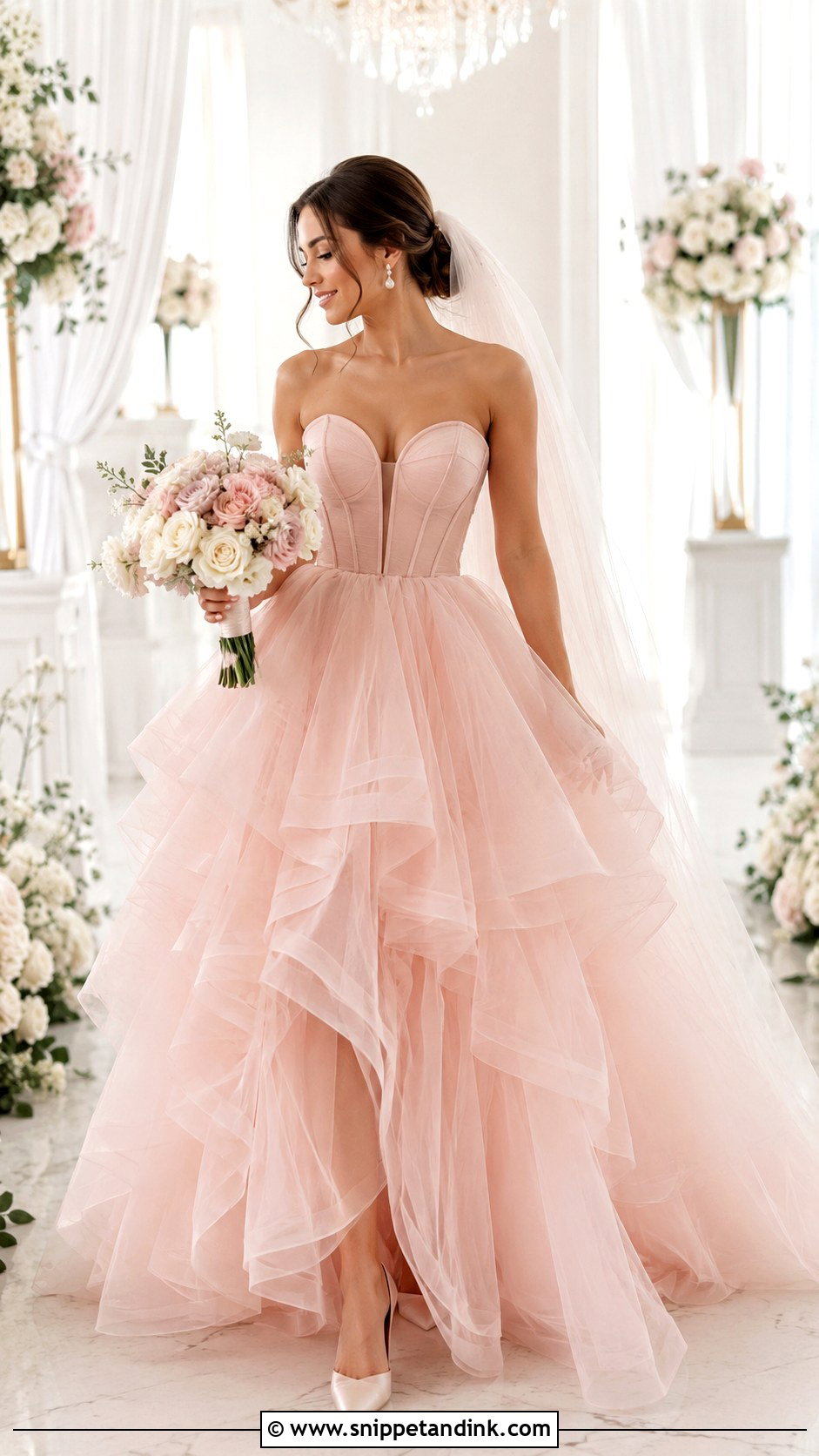
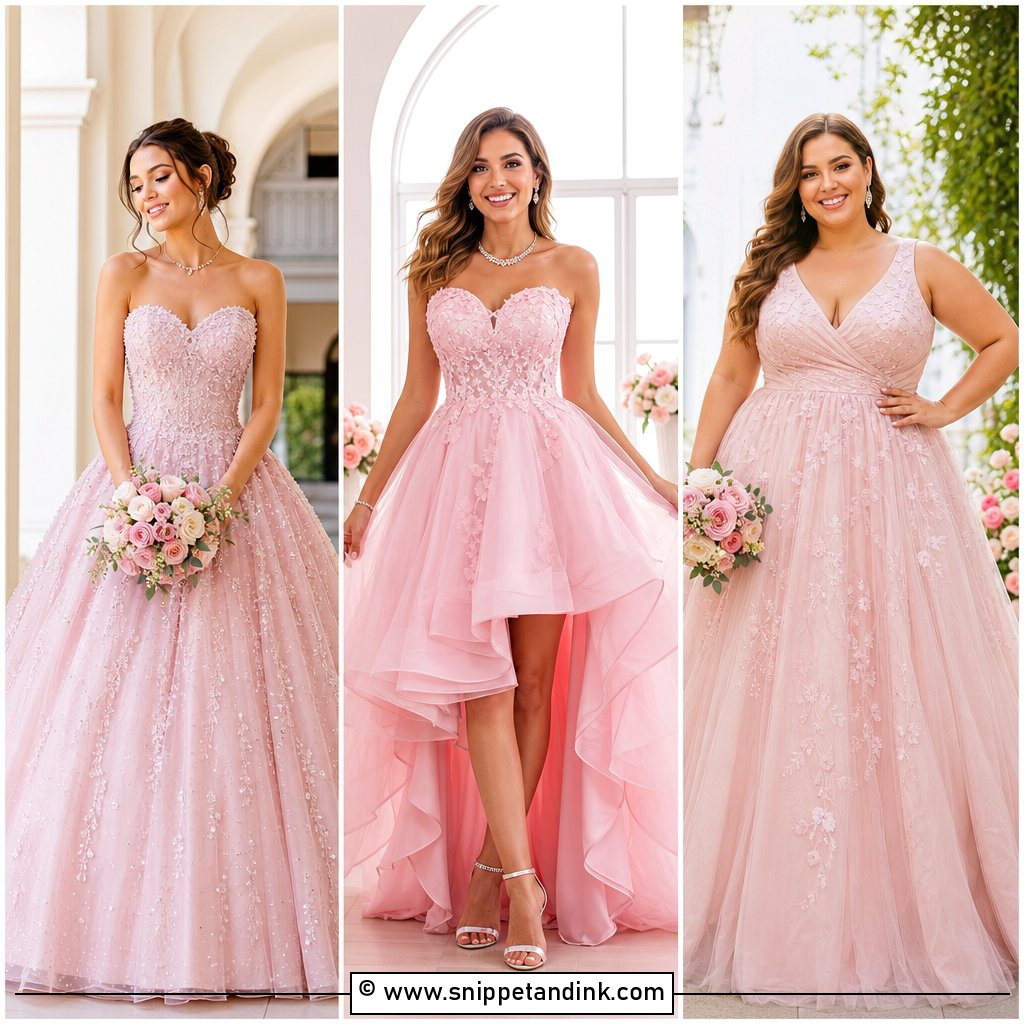
The blush ball gown is where most brides start, and it’s the easiest pink to get right because the shade is pale enough to read as bridal from across a room. Layers of tulle or organza give the skirt its lift; organza holds a crisper shape, tulle floats. The structured bodice is what keeps all that volume from swallowing you, so I’d check that the boning sits flat at the side seams when you lift your arms. A blush or ivory veil, pearl drops and satin pumps finish it, and cream roses in the bouquet stop the pink from going sweet.
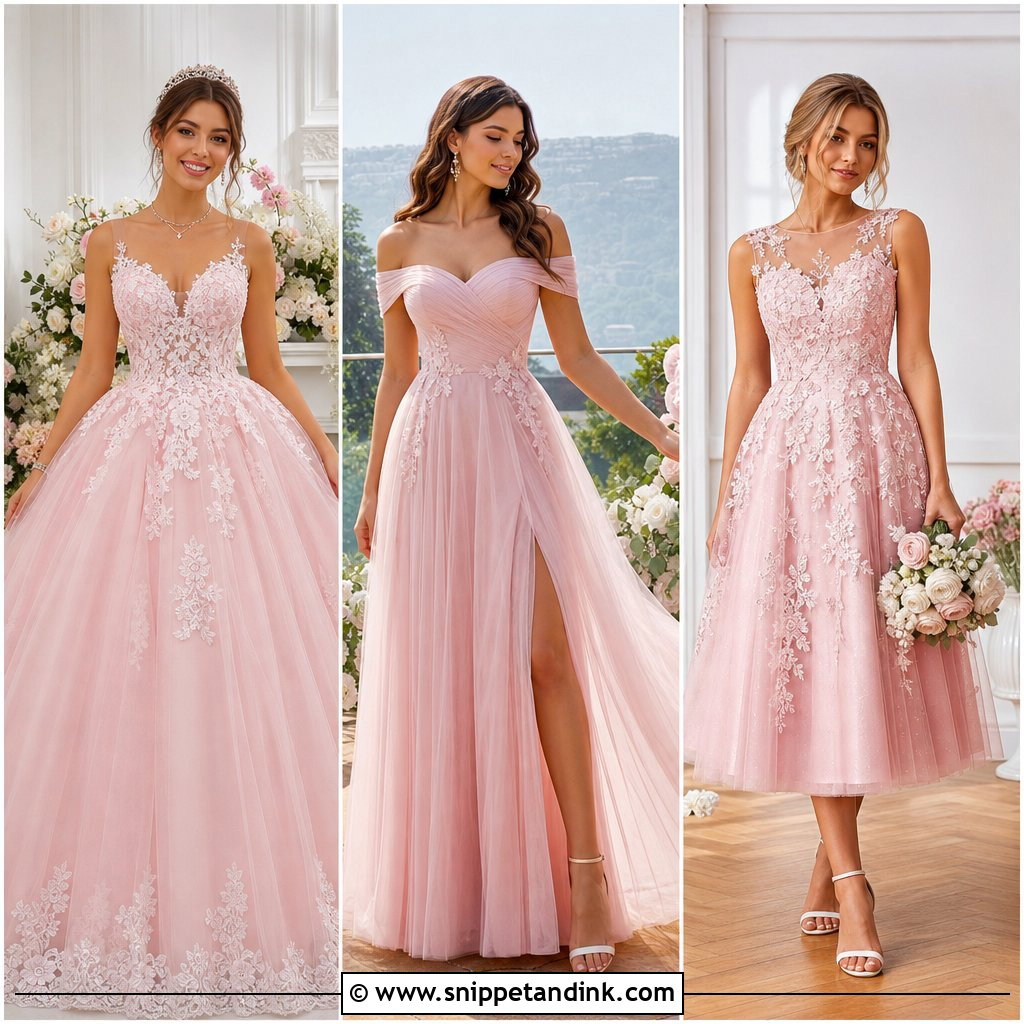
2. Pink Lace Wedding Dress
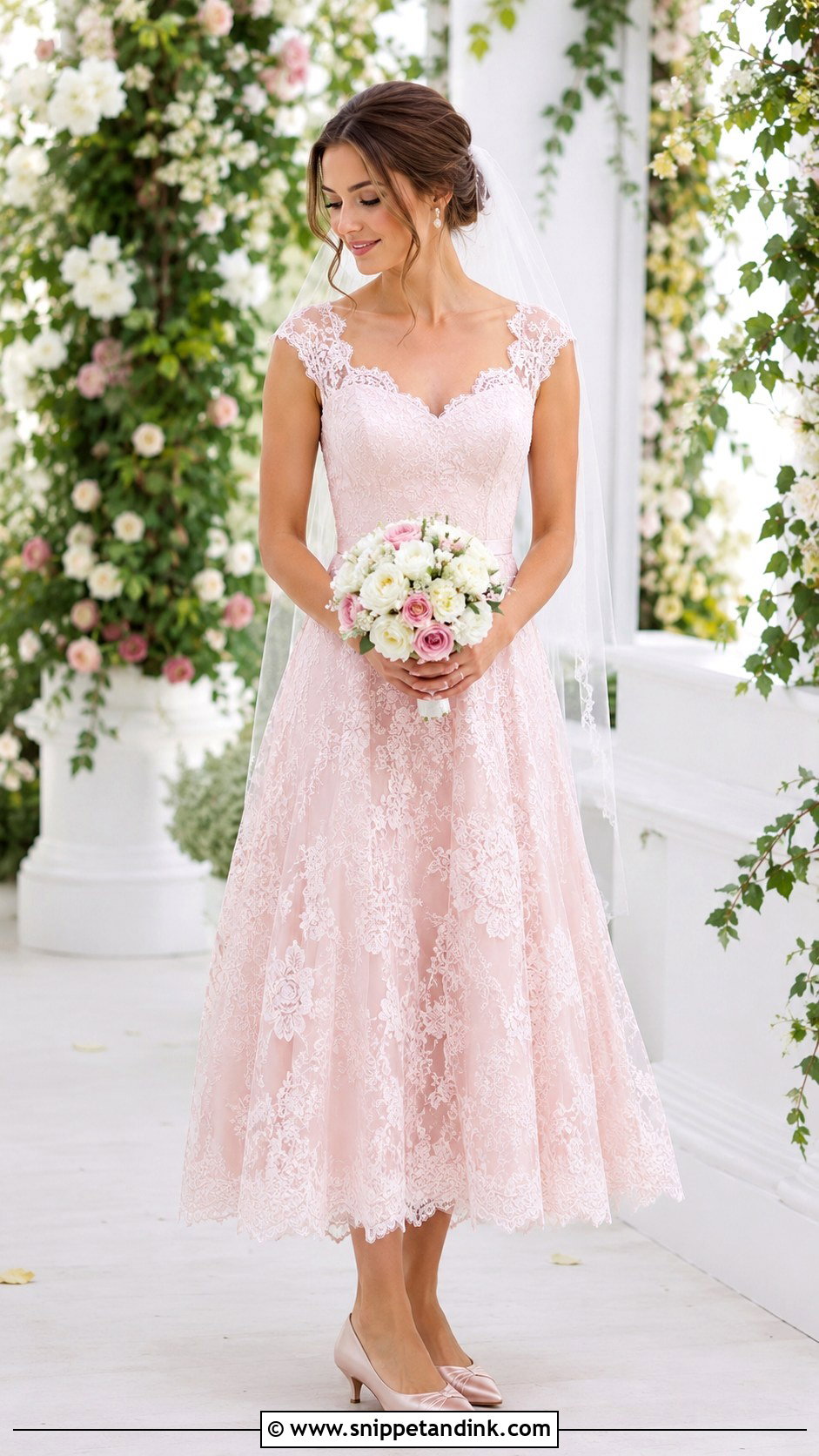
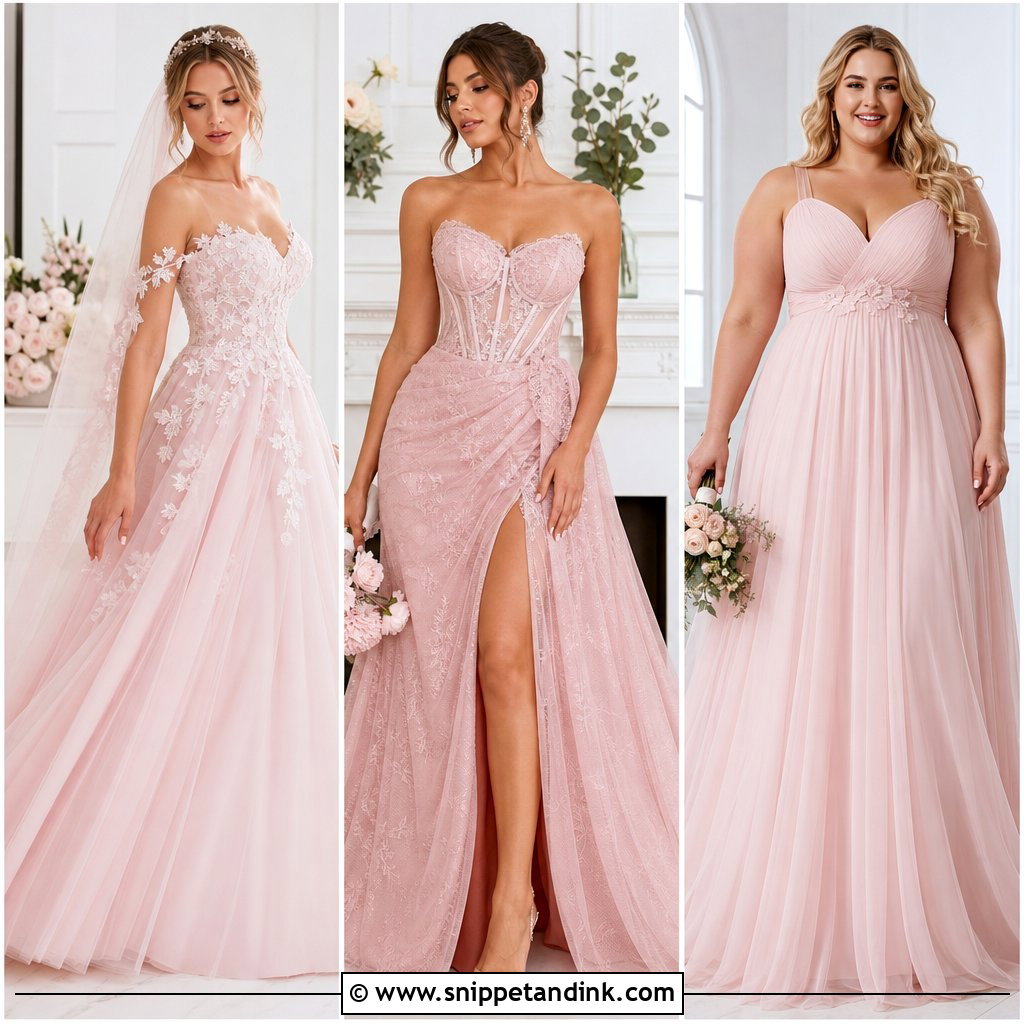
Lace over a blush lining is clever, because the lining is the only pink: the lace itself is often ivory, so the pattern stands out more than it would on white. That also means you can change the mood by changing the lining shade at fittings, which is worth asking your bridal shop about. Scalloped edges and sheer sleeves suit a bride who wants the traditional detail. A soft updo shows the neckline, and I’d keep earrings small so the lace stays the main texture.
3. Dusty Rose Wedding Dress
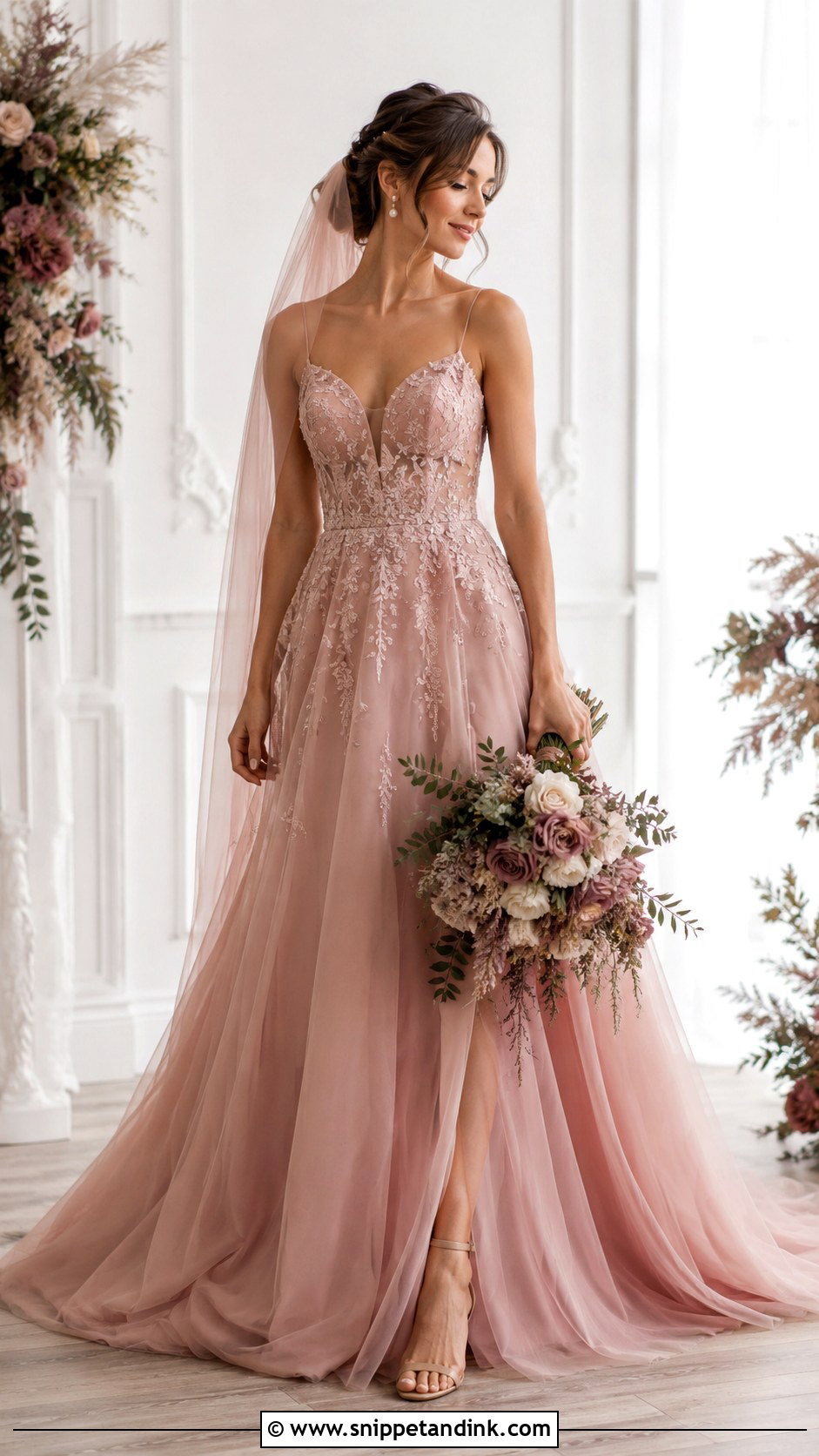
A dusty rose wedding dress has grey in it, and that grey is why it looks grown-up rather than sugary. It’s also the shade I’m most careful with on cool, pale skin, where it can drain color from the face. Hold it up near your face in daylight before you fall for it. Crepe and satin show its depth best; tulle lightens it. Pearl earrings, a veil in a matching soft tone and nude or rose satin shoes keep it cohesive, and mauve and cream flowers make the shade look deliberate.
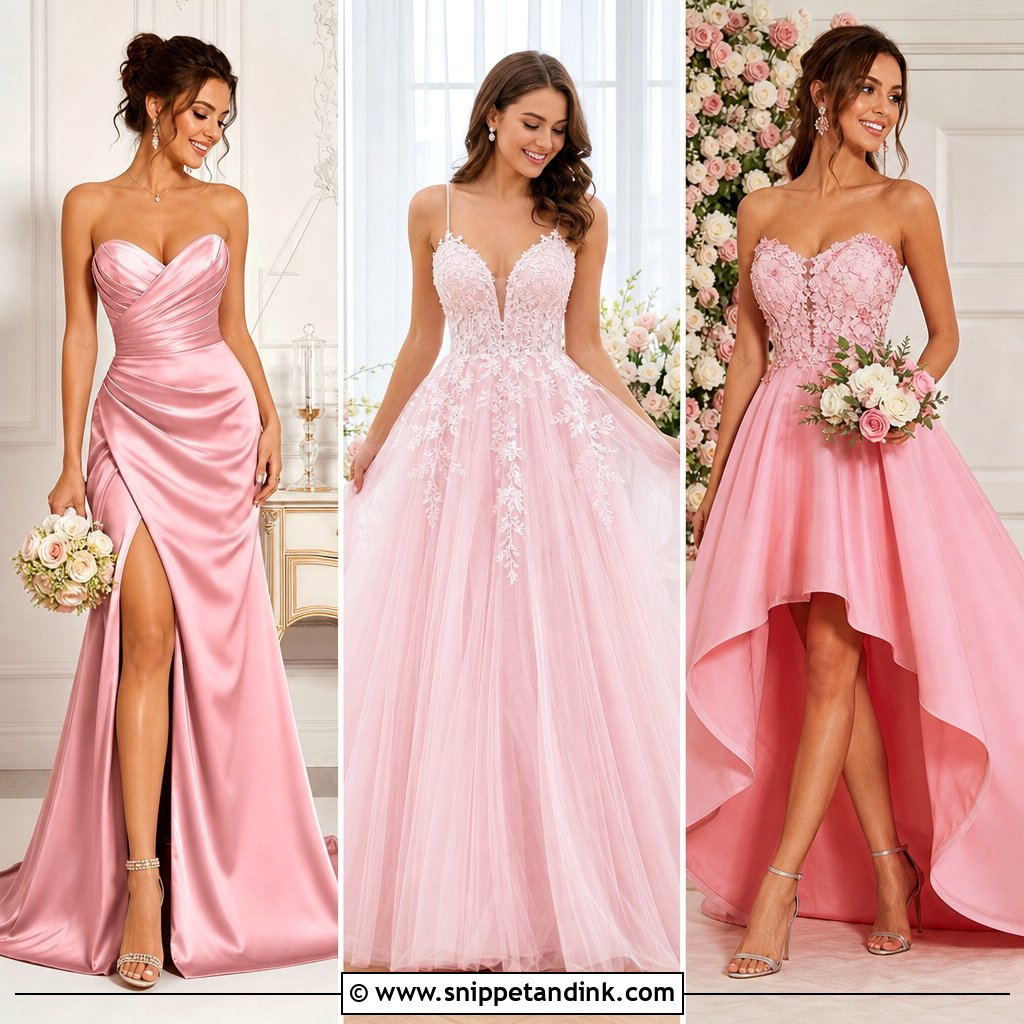
4. Pink Satin Wedding Dress
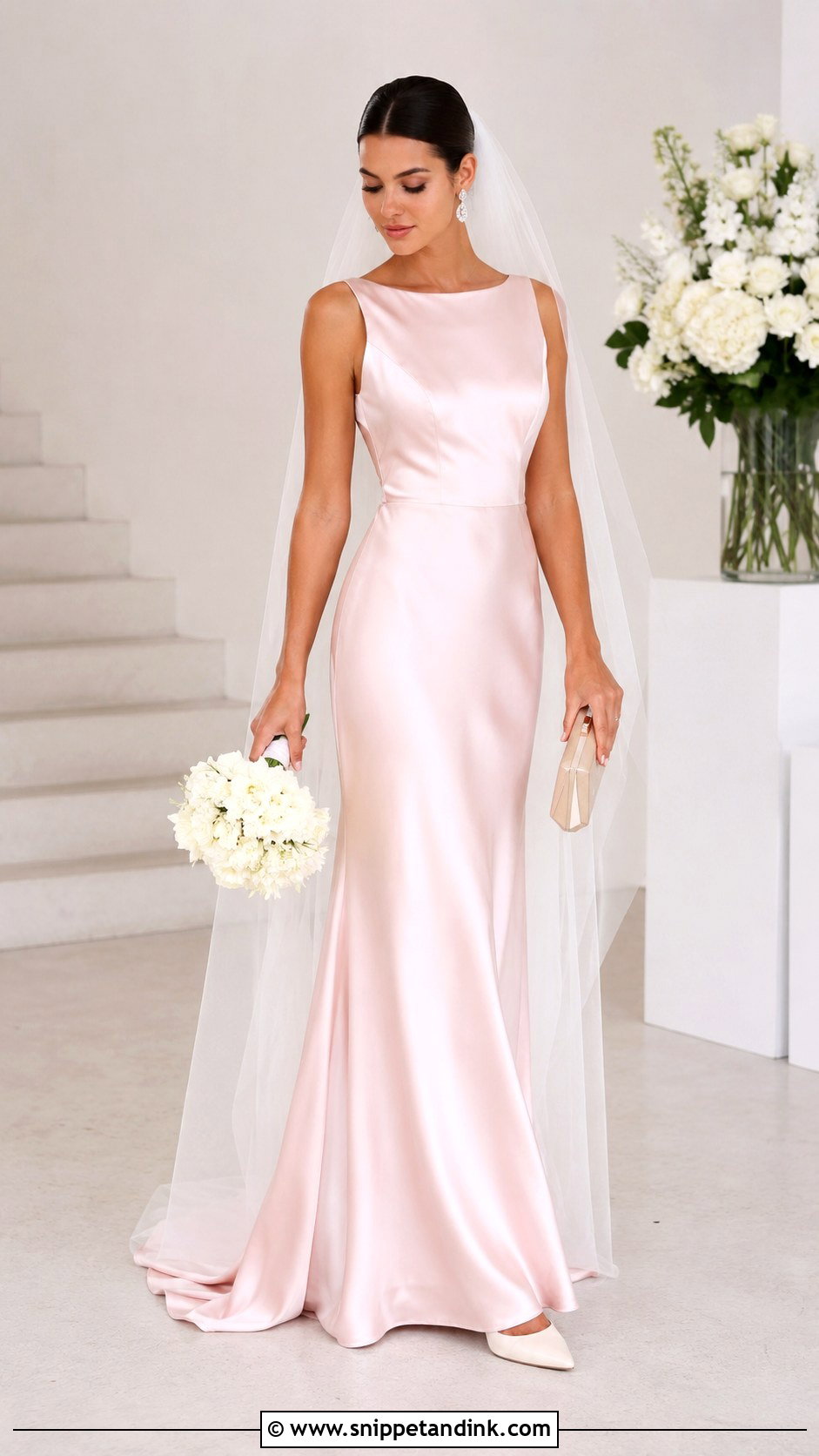
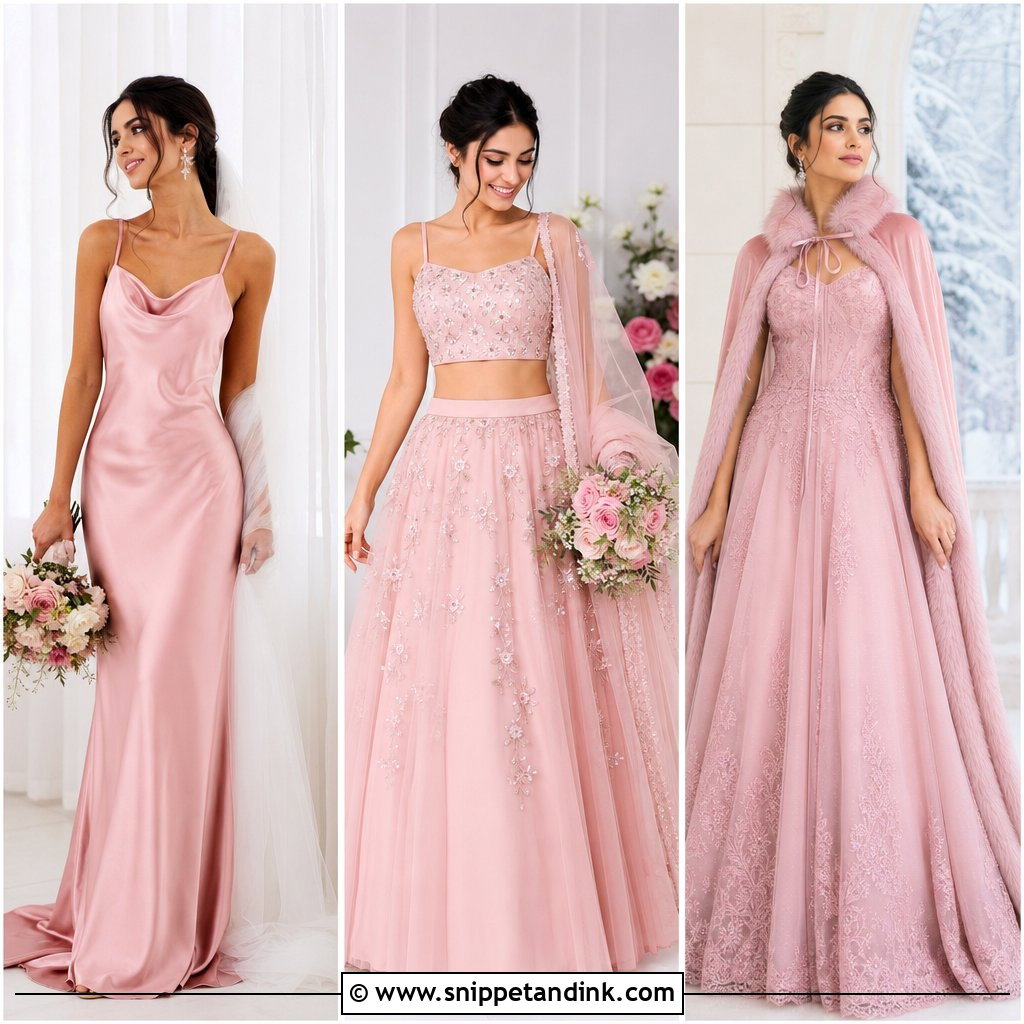
Satin is the fabric that shows pink most honestly, so the shade you see on the hanger is roughly the shade you’ll get in photos. It also shows every crease, especially across the lap after the ceremony. Heavier duchess satin holds a ball gown or A-line shape, while a lighter charmeuse drapes into a slip. Because the fabric already shines, I keep accessories sharp and simple: crystal studs, a clean-edged veil and closed-toe heels. Roses or orchids with clean shapes match the smoothness of the gown.
5. Pink Tulle Wedding Dress
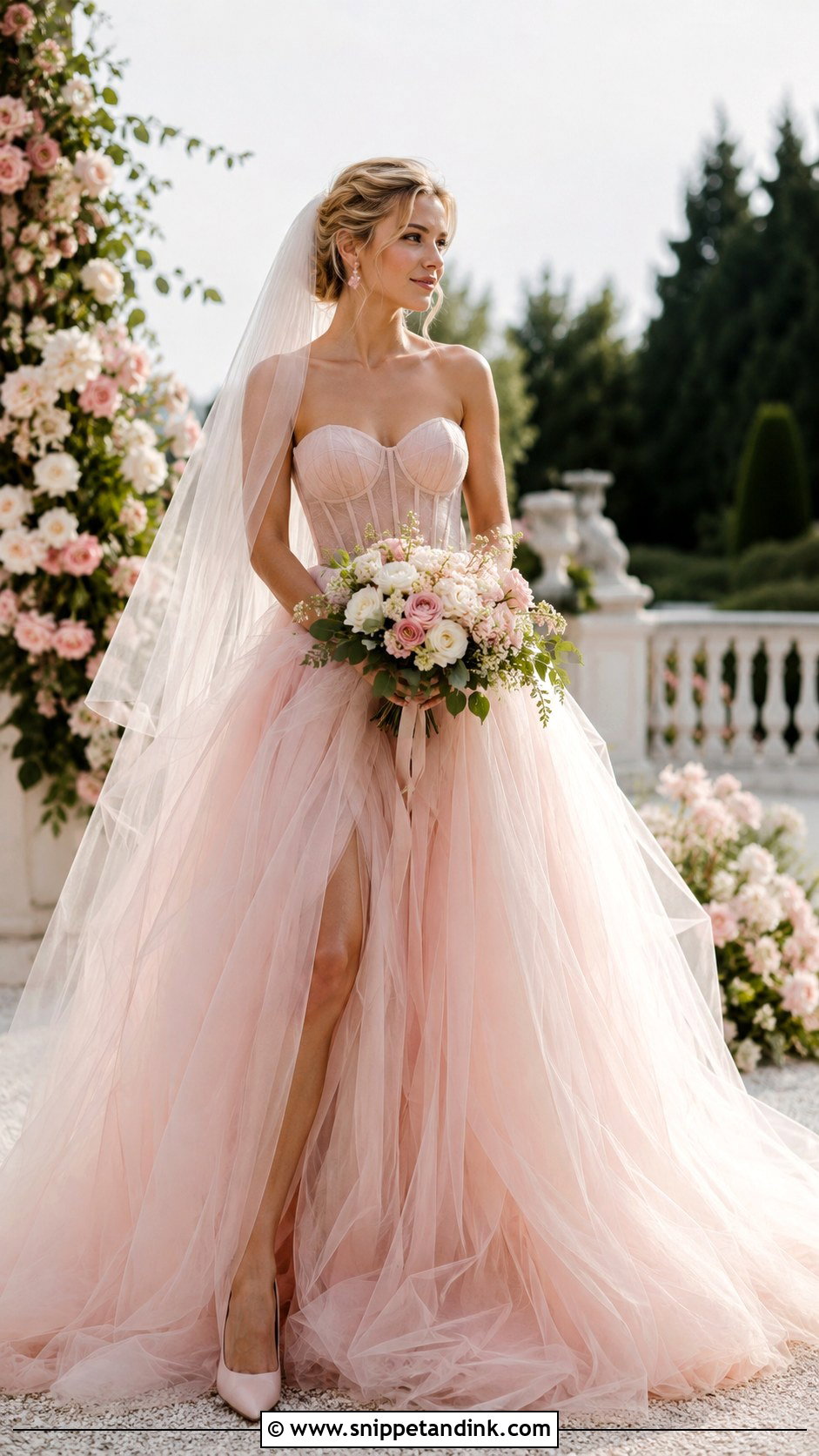
Tulle diffuses color, so a pink that looks loud on a swatch card turns soft once it’s layered three or four times. That’s the trick when a bride is drawn to brighter pinks but worries they’ll look costumey. A corset bodice, delicate straps or an off-the-shoulder neckline all suit the floaty skirt. Tulle catches on everything though, from bracelet clasps to rough stone steps, so keep jewelry smooth. A ribbon in the hair and a bouquet of cream, blush and pale peach garden flowers keep it fresh.
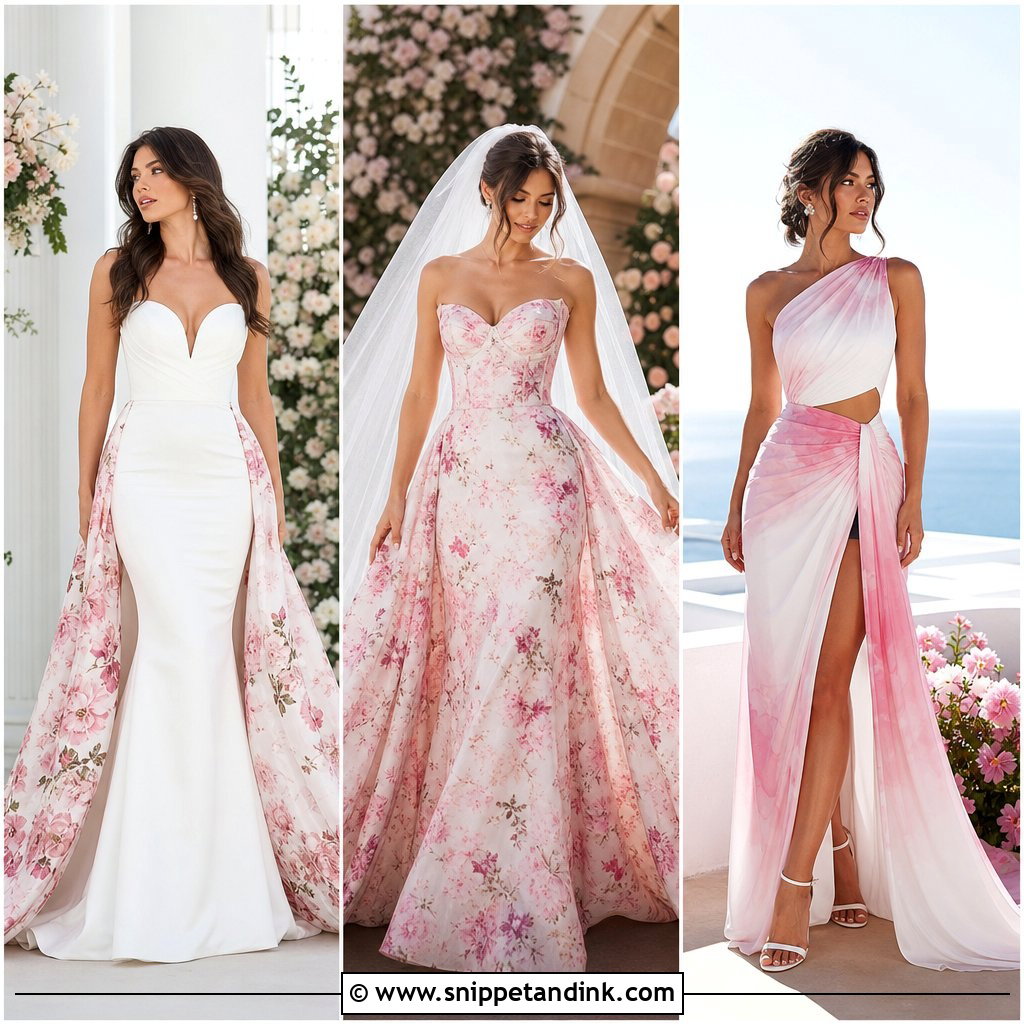
6. Pink Floral Wedding Dress
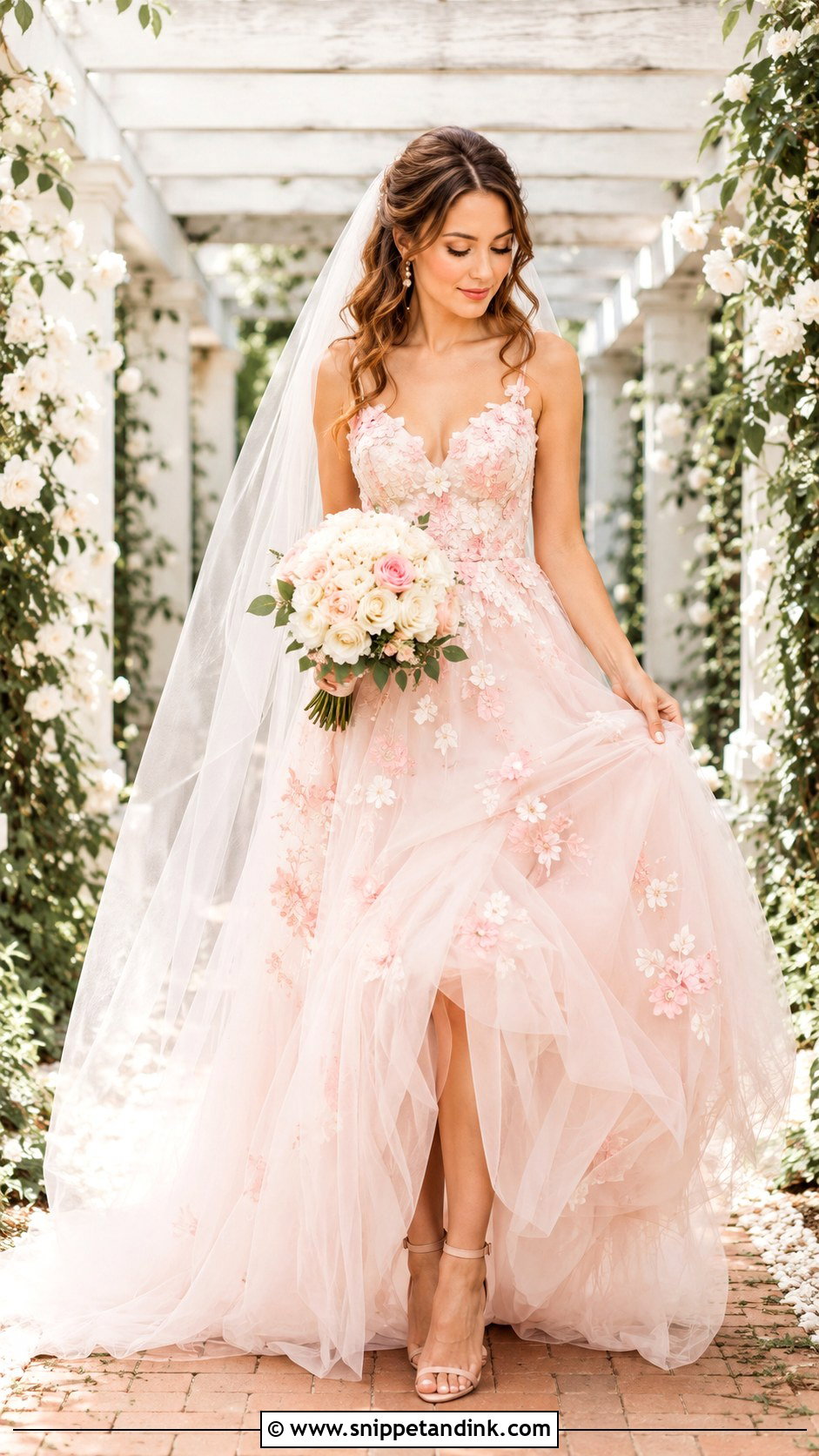
Floral detail on a pink dress needs a firm limit. I pick one floral element, whether it’s appliqué, embroidery or a soft print, and keep everything else plain. With 3D flowers, I’d skip necklaces entirely, since the petals catch on chains and the texture needs space. A sheer veil, nude heels and small pearls are enough. The bouquet should support the dress rather than compete with it, so I lean toward simple cream and pale pink flowers. It’s especially at home in a garden.
7. Pink A Line Wedding Dress
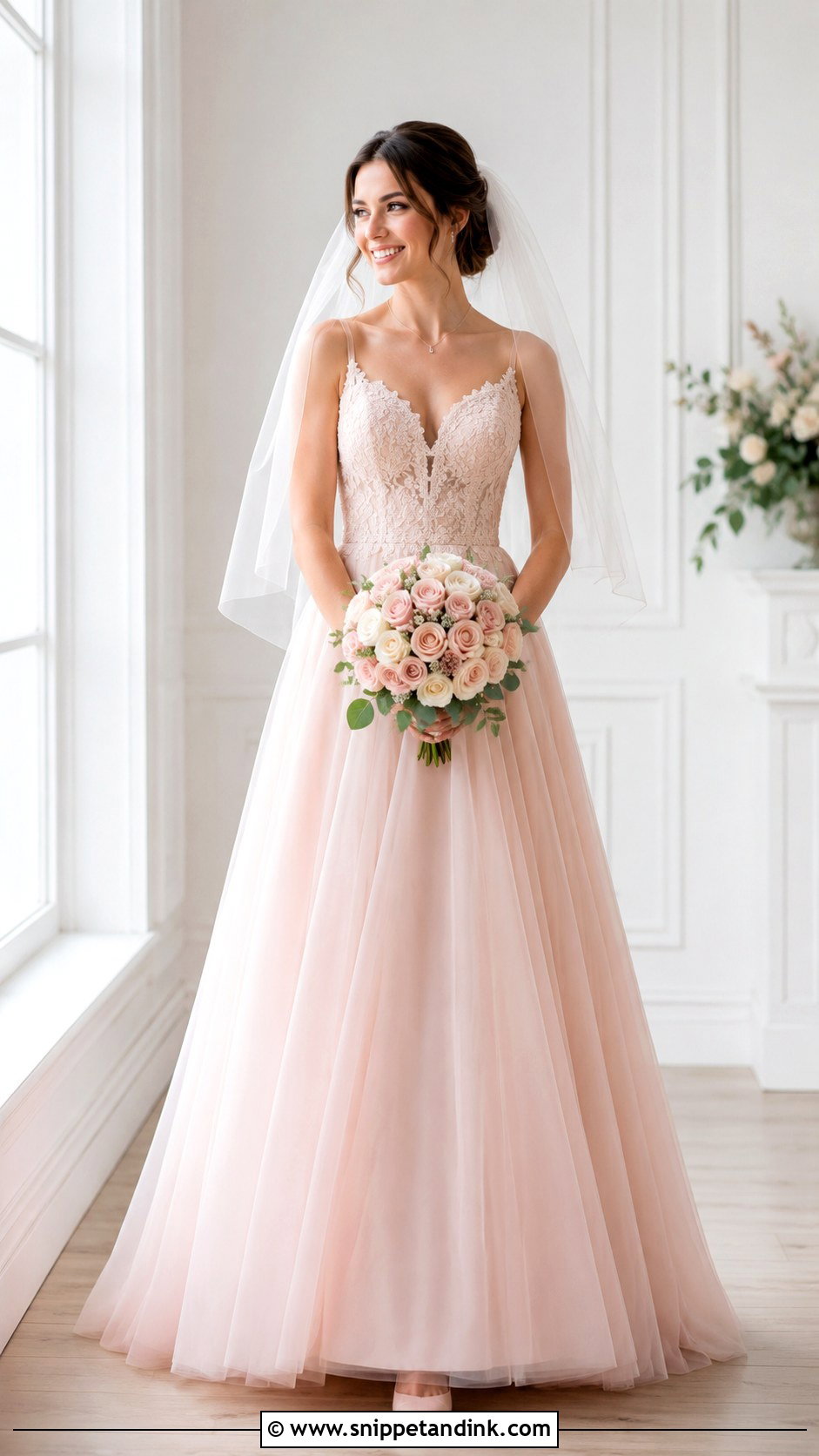
The A-line is the silhouette I recommend most when a bride is unsure, because it defines the waist and then skims rather than clings. That makes it comfortable through a long ceremony and dinner. In pink, I like it in a mid-weight fabric like crepe or mikado, which holds the flare without needing a crinoline. Blush, rose and muted pinks all suit it. A medium-length veil and classic pumps keep it balanced, and roses, ranunculus or peonies keep the bouquet classic.
8. Pink Mermaid Wedding Dress
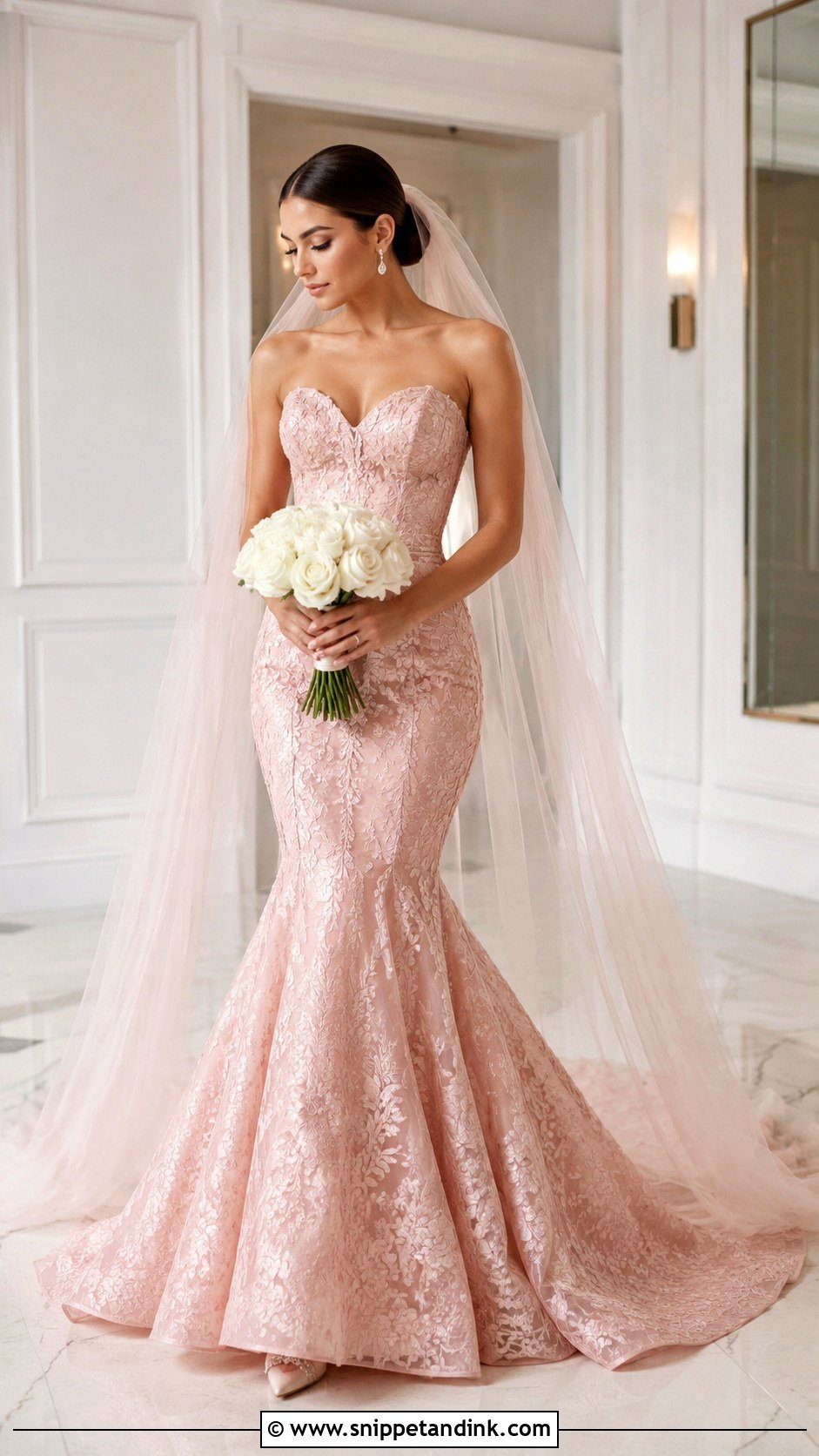
A mermaid fits close through the hip and flares at the knee or lower thigh, so the fabric choice decides how you’ll feel by evening. Stretch crepe moves with you; heavy beaded lace does not, and you’ll be taking small steps all night. I always have brides sit and climb a step at the fitting. In pink, the shape reads softer than the same cut in white. Drop earrings, a long veil and a low bun or smooth waves suit the line, with a slim bouquet so the silhouette stays the focus.
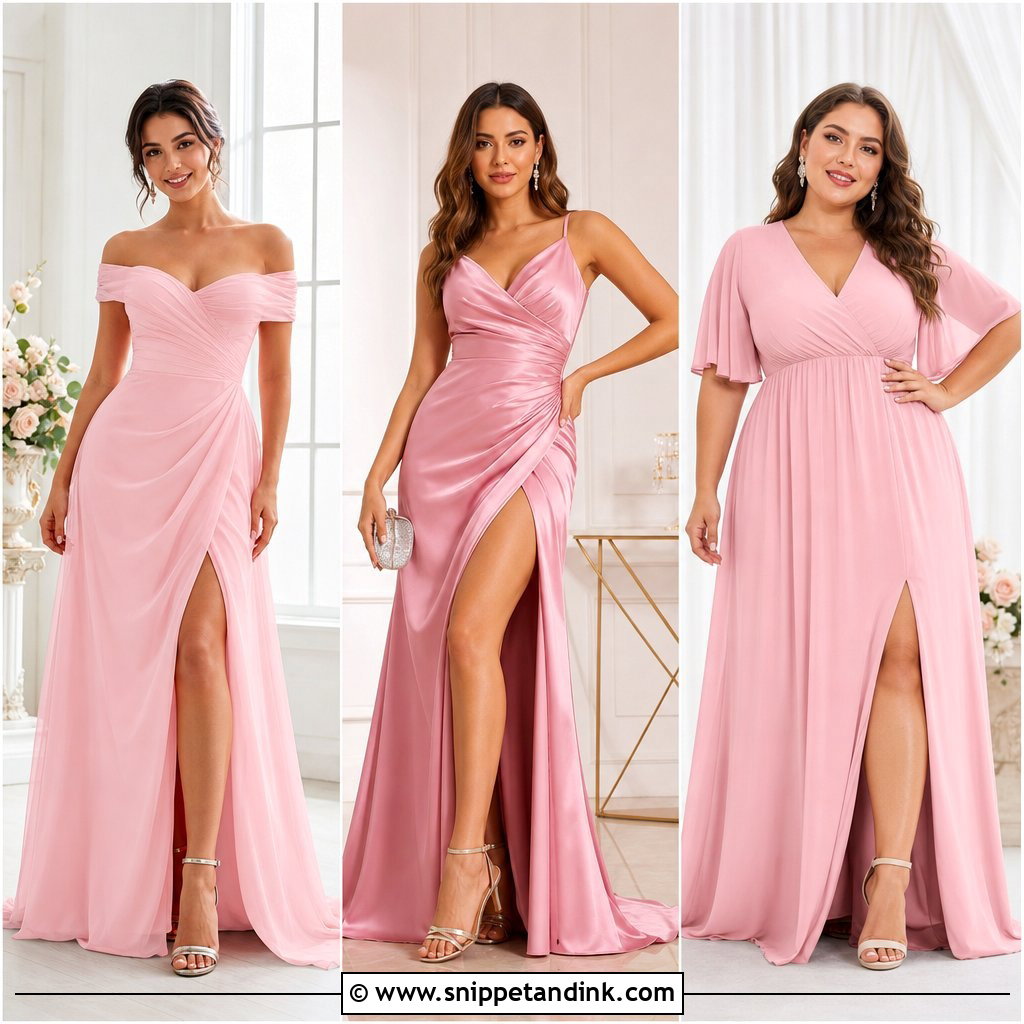
9. Pink Off Shoulder Wedding Dress
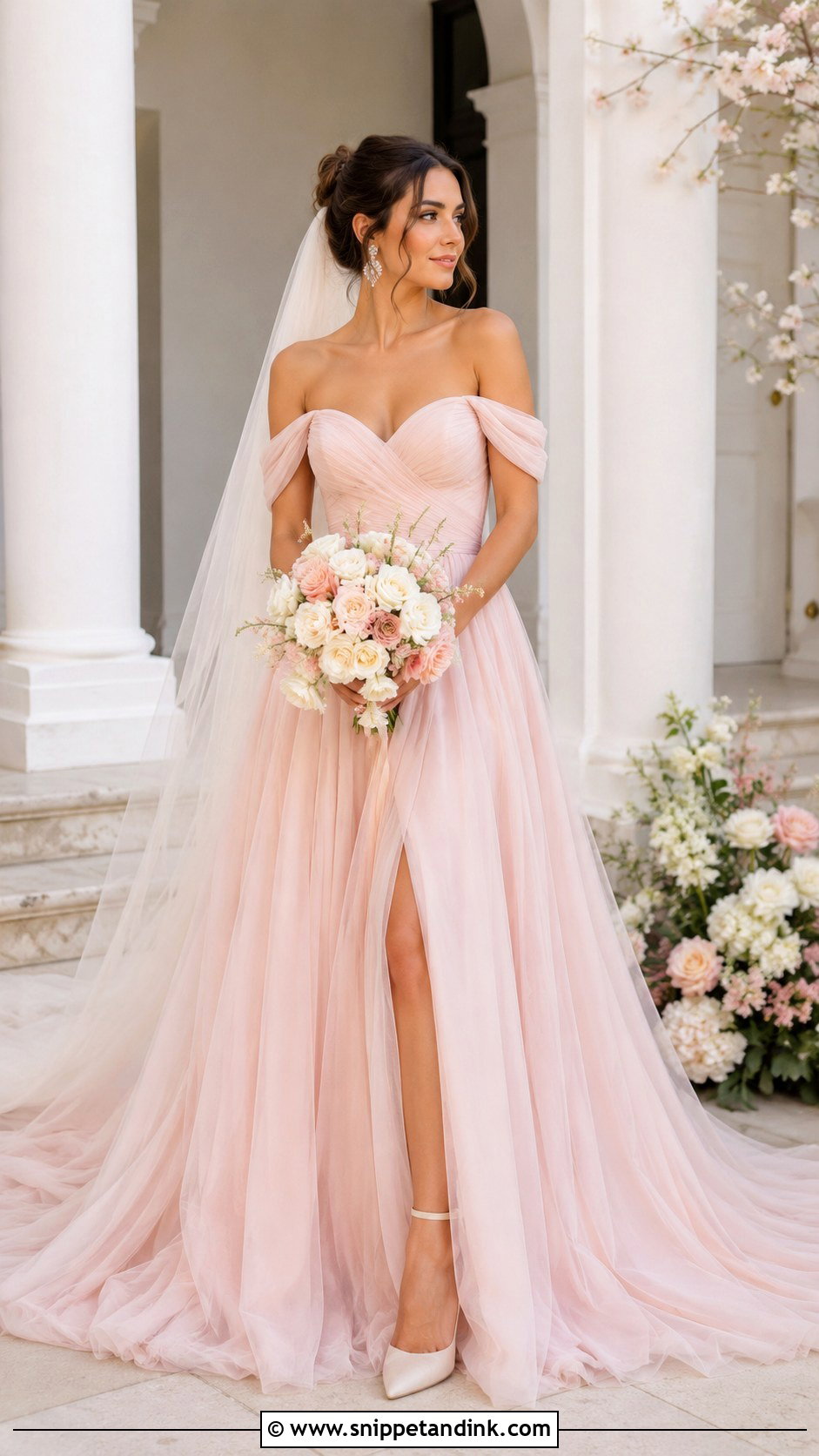
Off the shoulder necklines show the collarbones, but they have one weak point: they ride up when you hug or raise your arms. Ask the seamstress for silicone grip tape along the inside of the neckline. Blush tulle, satin, lace and crepe all work. A necklace only works if the neckline is very plain; otherwise, choose statement earrings and a clean veil. Ivory, nude or pale rose shoes keep the outfit cohesive, and a soft pink and cream bouquet completes it.
10. Pink Strapless Wedding Dress
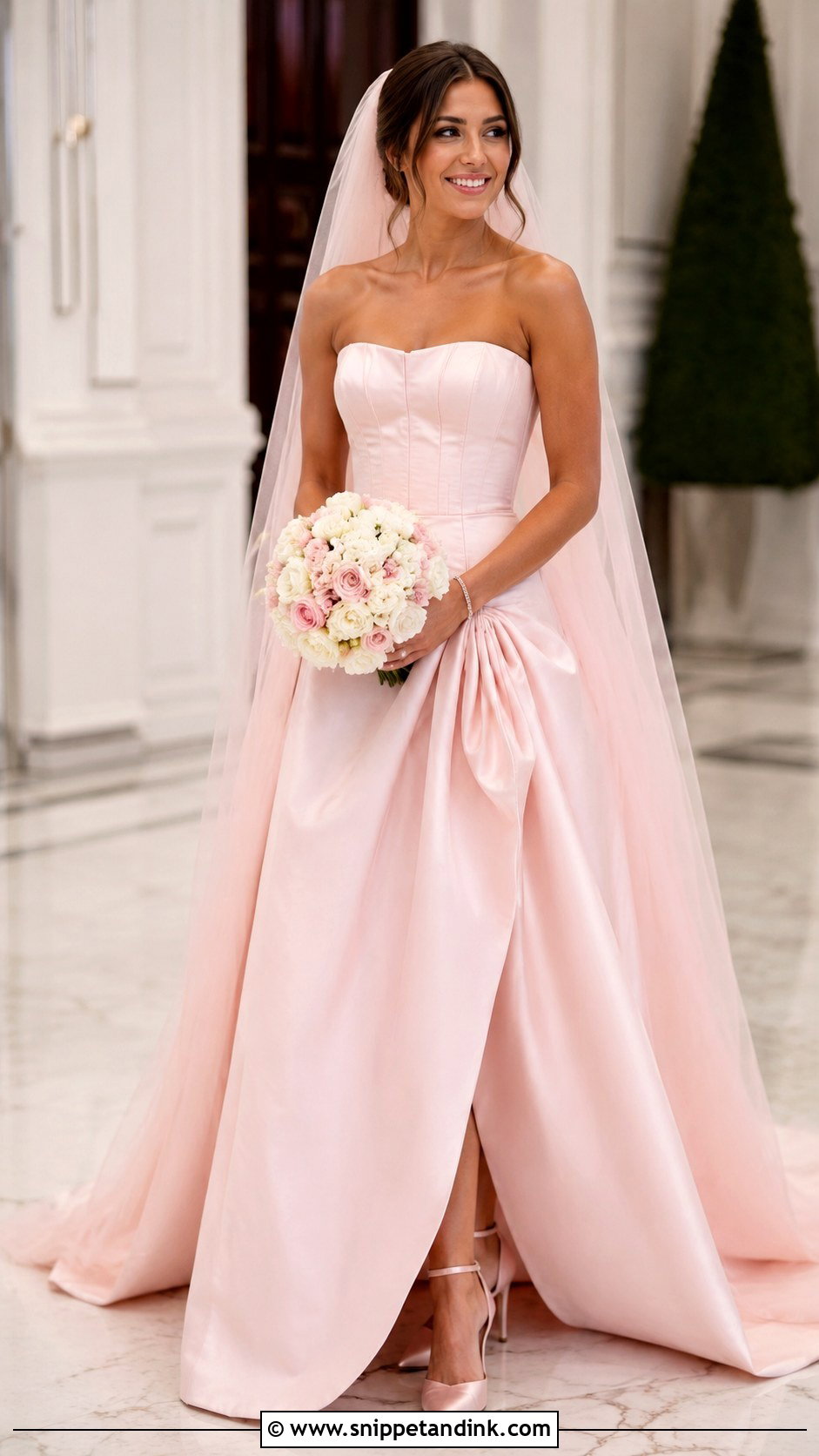
A pink strapless wedding dress stands or falls on the bodice fit. If it’s even slightly loose, you’ll spend the day hitching it up, so I’d book a final fitting no more than two weeks out in case your weight shifts. The cut works on everything from a full ball gown to a sleek column. A veil matched to the dress tone, earrings that frame the face and a bracelet for sparkle keep the neckline clear. Satin heels and a round bouquet finish the look.
11. Pink Long Sleeve Wedding Dress
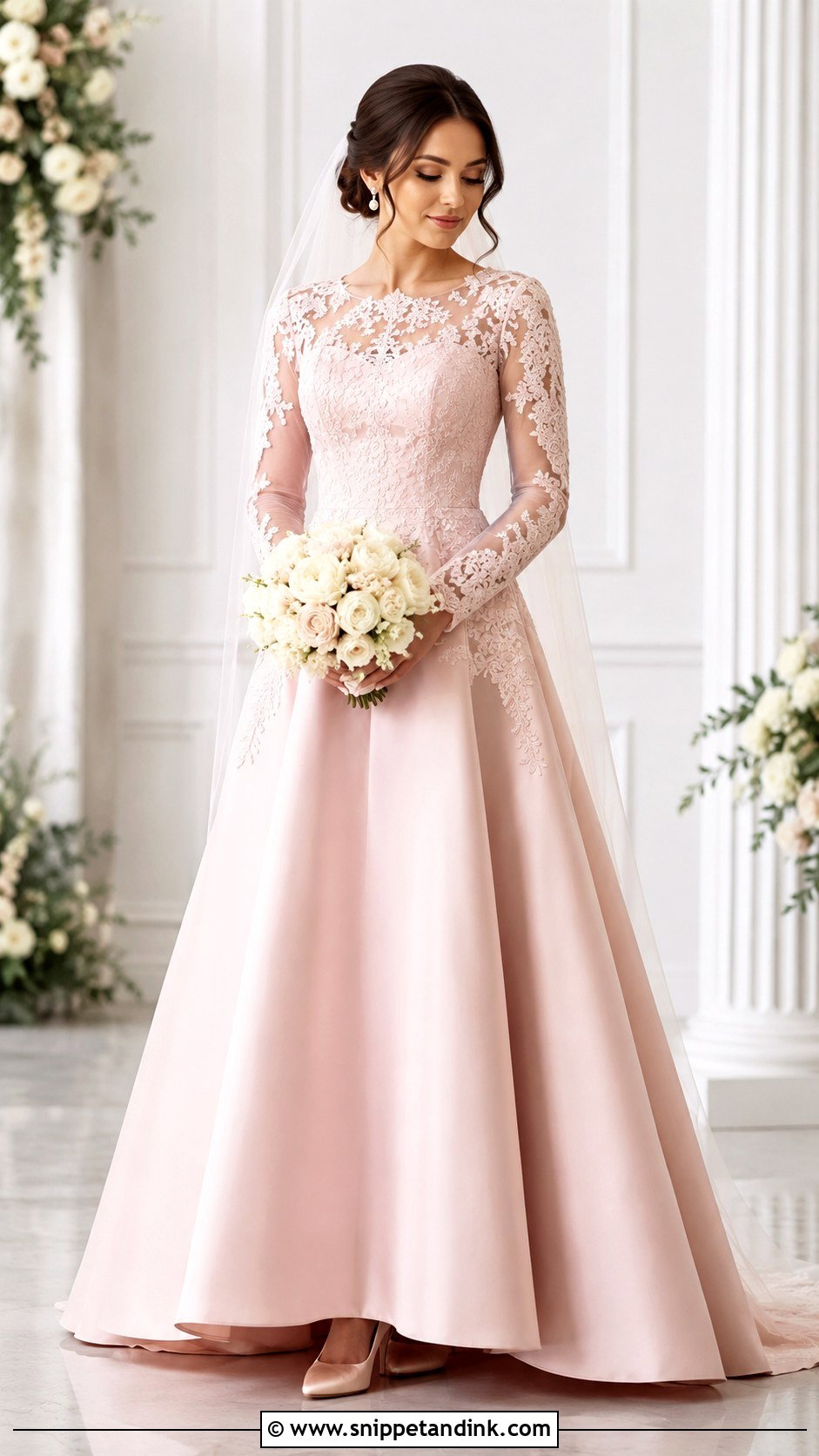
Long sleeves give coverage and a quieter elegance, and pink stops them from feeling severe. Sheer lace sleeves feel delicate, while satin or crepe sleeves look cleaner. I check two things at the fitting: that the sleeve doesn’t pull across the upper arm when you reach forward, and that the cuff sits right at the wrist bone. Cooler seasons and indoor venues suit it best. Pearl earrings and closed-toe heels keep it refined, and if the sleeves are embellished, I’d skip bracelets entirely.
12. Pink Corset Wedding Dress
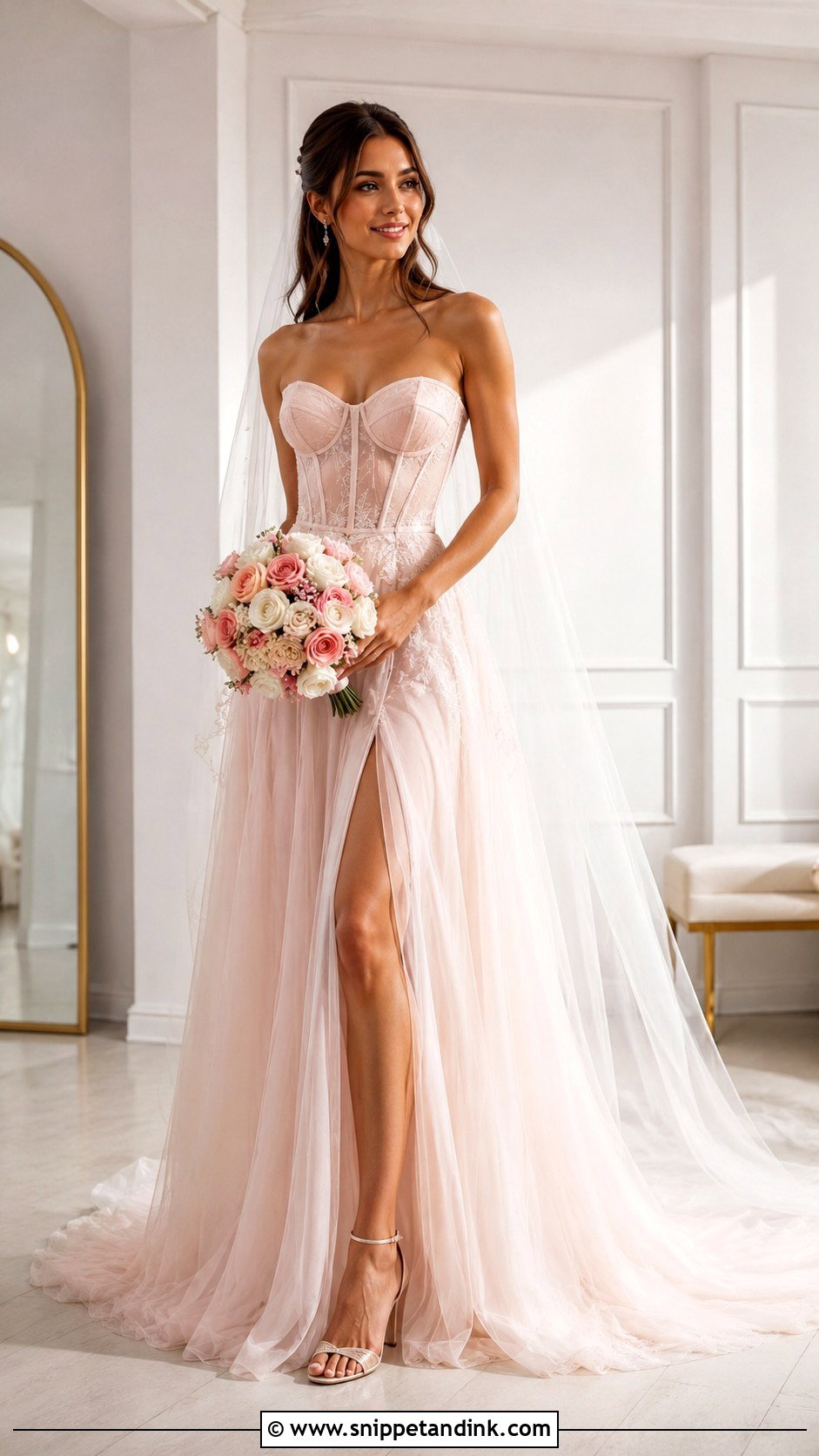
Corset bodices are back in a big way, and in pink they feel romantic rather than harsh. Real boning gives shape and support; cheap versions with plastic boning can bend and crease at the waist after a few hours of sitting. Lace overlay or smooth satin panels both work. A half-up hairstyle softens the structure, and I’d keep the veil sheer so it doesn’t fight the bodice lines. Pale pink and ivory flowers keep the bouquet from overpowering the color.
13. Pink Princess Wedding Dress
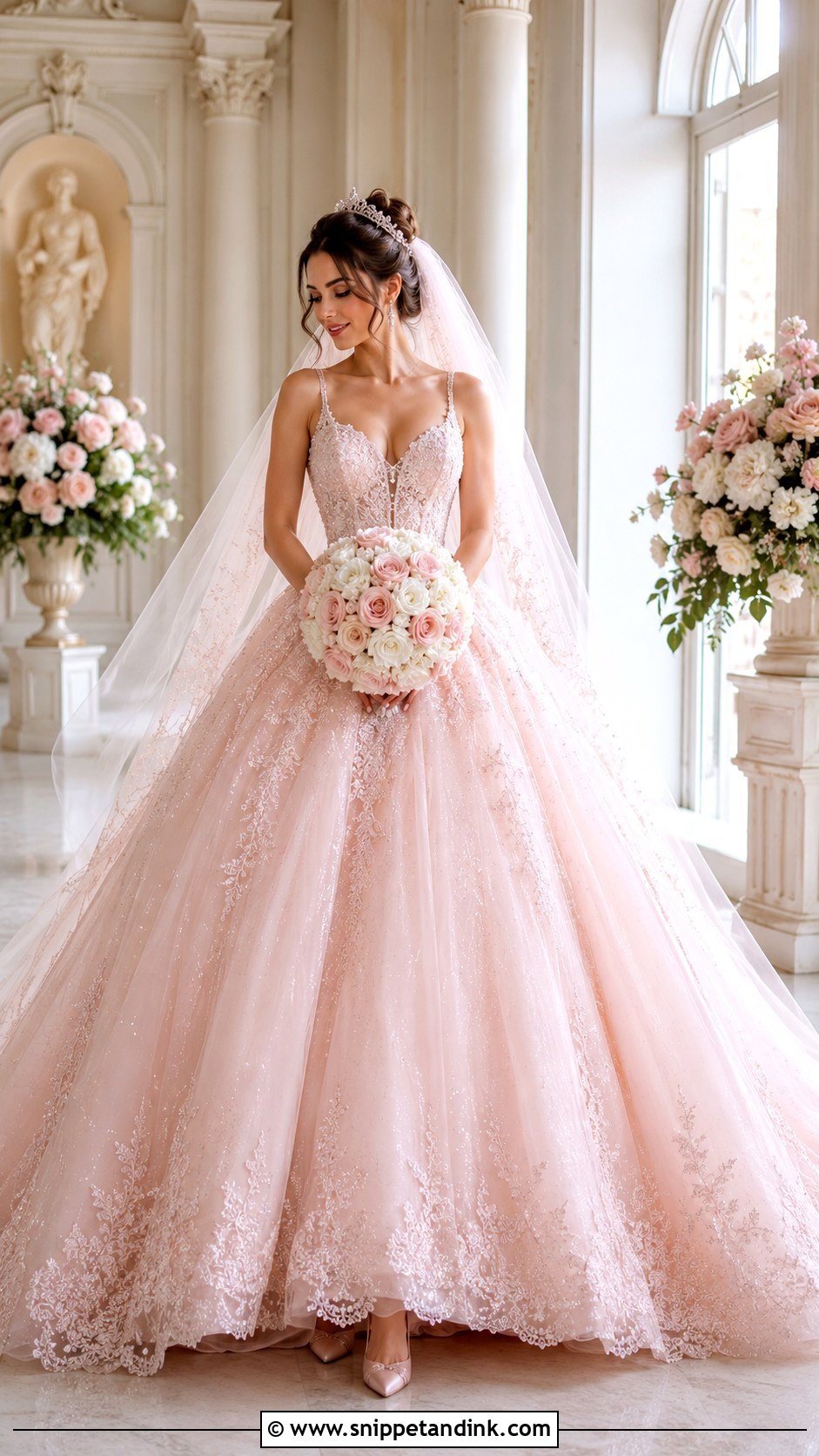
The princess gown is the most theatrical dress on this list, so it needs restraint in the details. Tiny floral appliqués, light sparkle or a smooth satin bodice keep it elegant; all three at once tips into costume. A full tulle skirt can weigh several kilos, so I always ask brides to walk and turn in it before ordering. Hide simple heels beneath the skirt, wear a long veil and delicate earrings, and carry a soft round bouquet.
14. Pink Minimal Wedding Dress
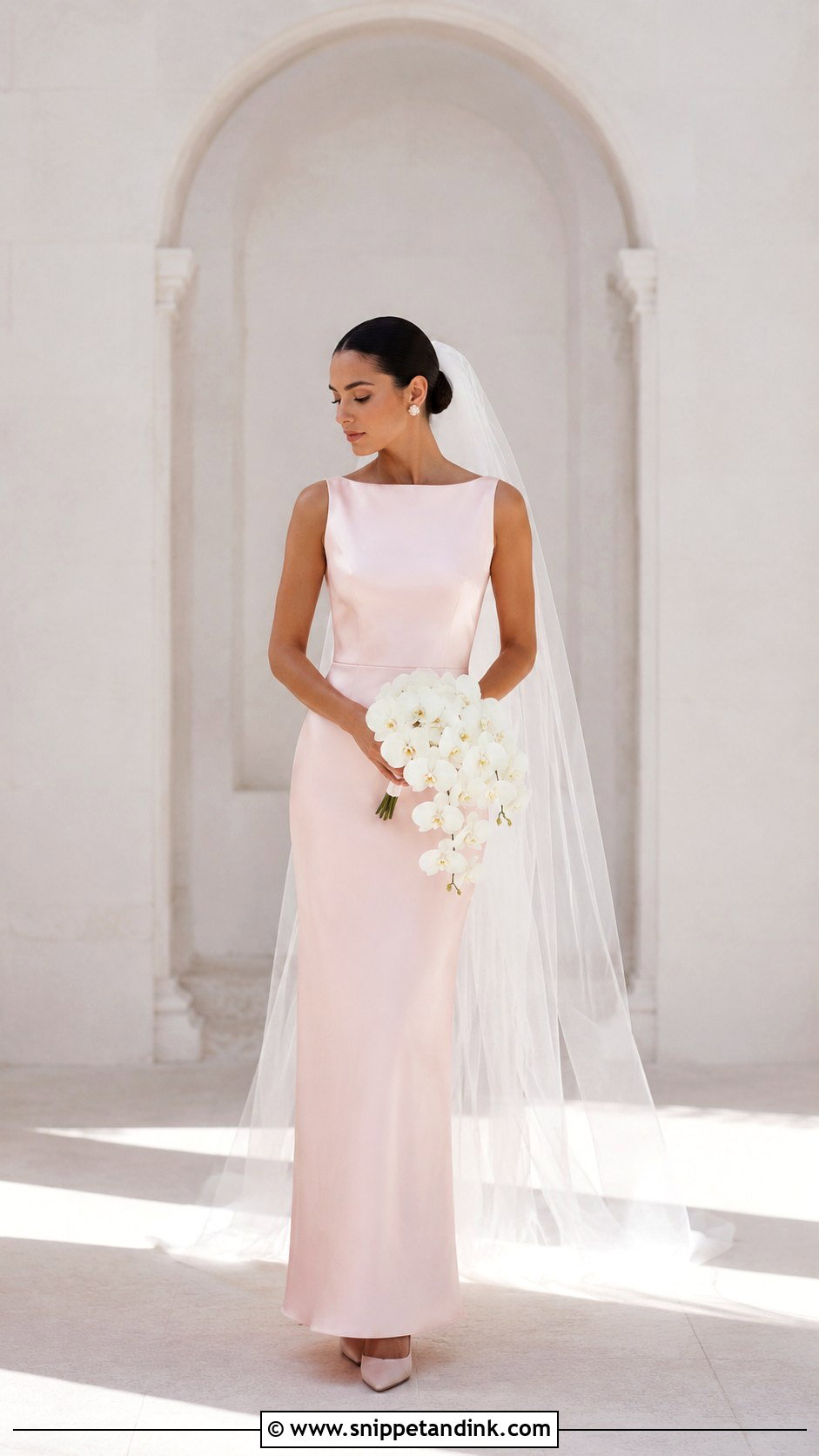
Minimal pink dresses rely entirely on cut and fabric, so there’s nowhere for a poor fit to hide. A pale pink satin slip, a crepe column or a simple A-line can all look chic, but only after proper tailoring. I’d keep the veil plain and the hair sleek, often a low bun, so the line of the gown stays clean. One or two flower types in the bouquet, like roses and orchids, match the restraint of the dress.


15. Pink Boho Wedding Dress
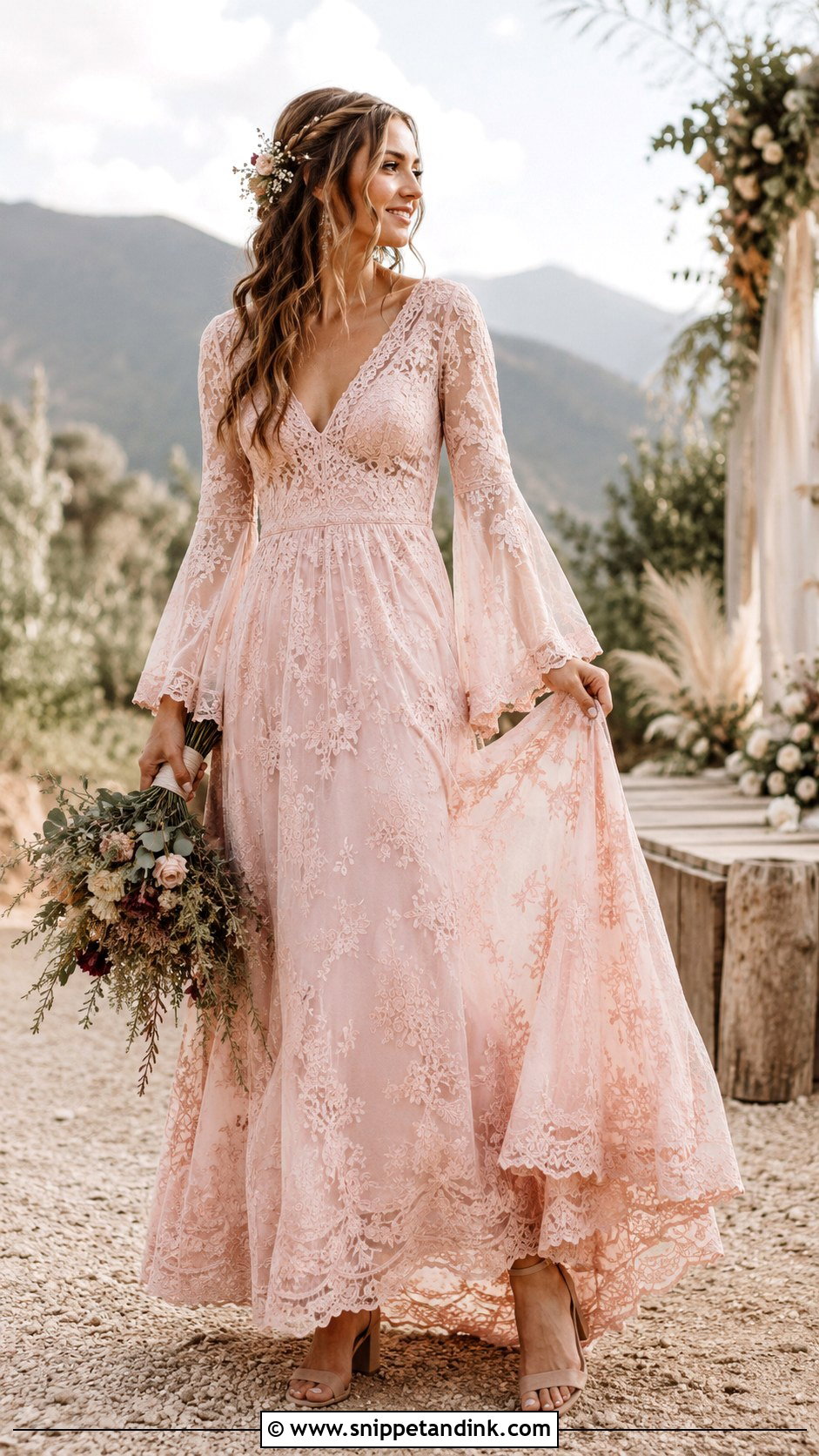
Boho pink dresses are made of soft lace, loose sleeves and flowing skirts, which means they’re also the most forgiving to move and dance in. I’d watch for unlined lace in sunshine, since outdoor light can turn it sheer. Loose waves, floral hair pins and block heels or embellished flats suit outdoor and garden weddings. A light veil keeps it bridal, and small hoops or pearl studs keep it relaxed. A loose wildflower bouquet finishes it.
16. Pink Vintage Wedding Dress
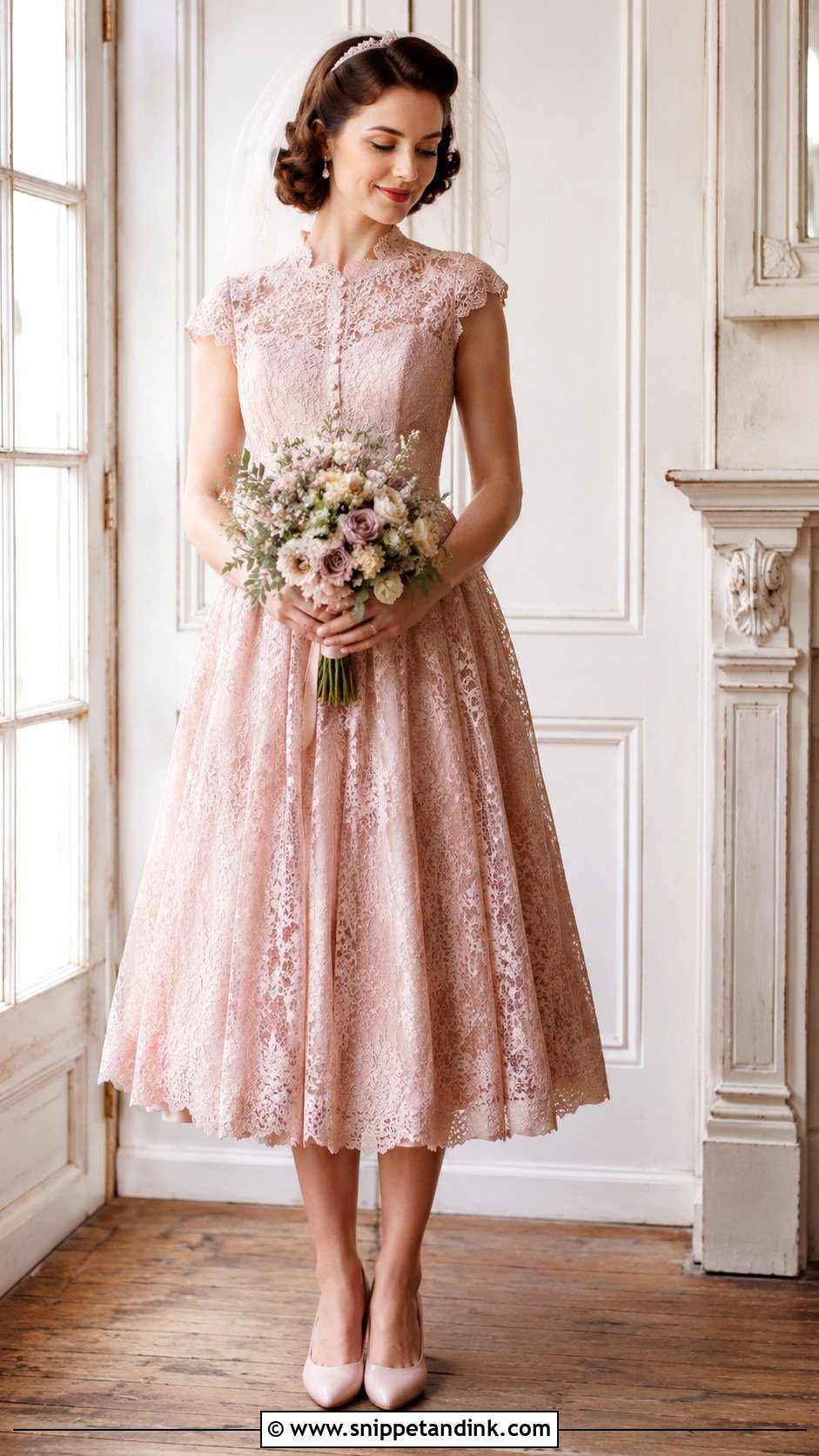
Vintage pink is all about restraint. Choose one or two retro details, such as dusty rose lace, a tea-length skirt, a high neck or puff sleeves, and let the rest stay modern. Pile on all four and it looks like a costume. Pearl earrings, a short veil and classic pumps sit naturally with it. I like a soft curled style or a low chignon, and a bouquet of garden roses and muted greenery. Vintage pinks tend to lean toward mauve, which suits warmer skin especially well.
17. Pink Tea Length Wedding Dress
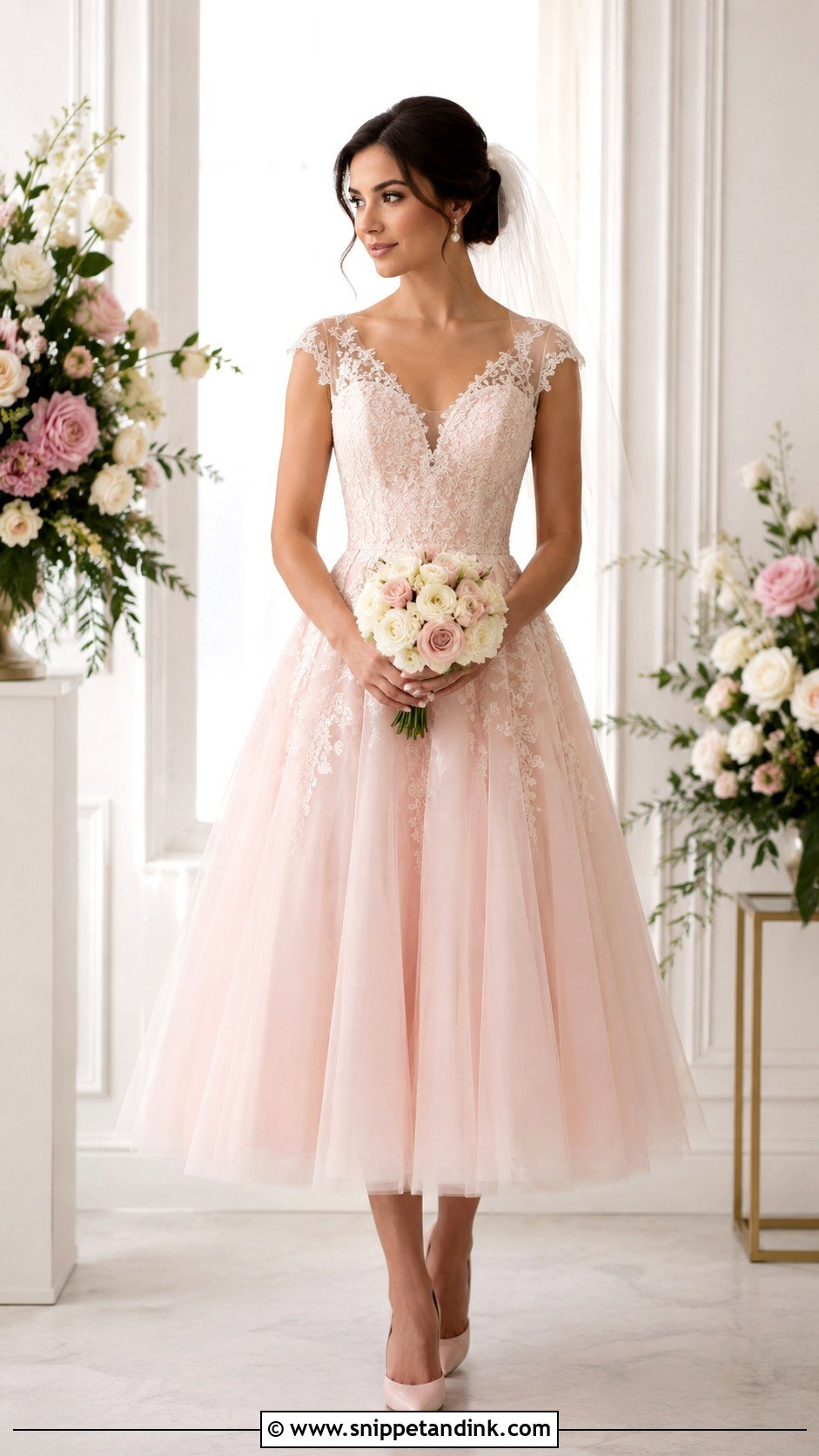
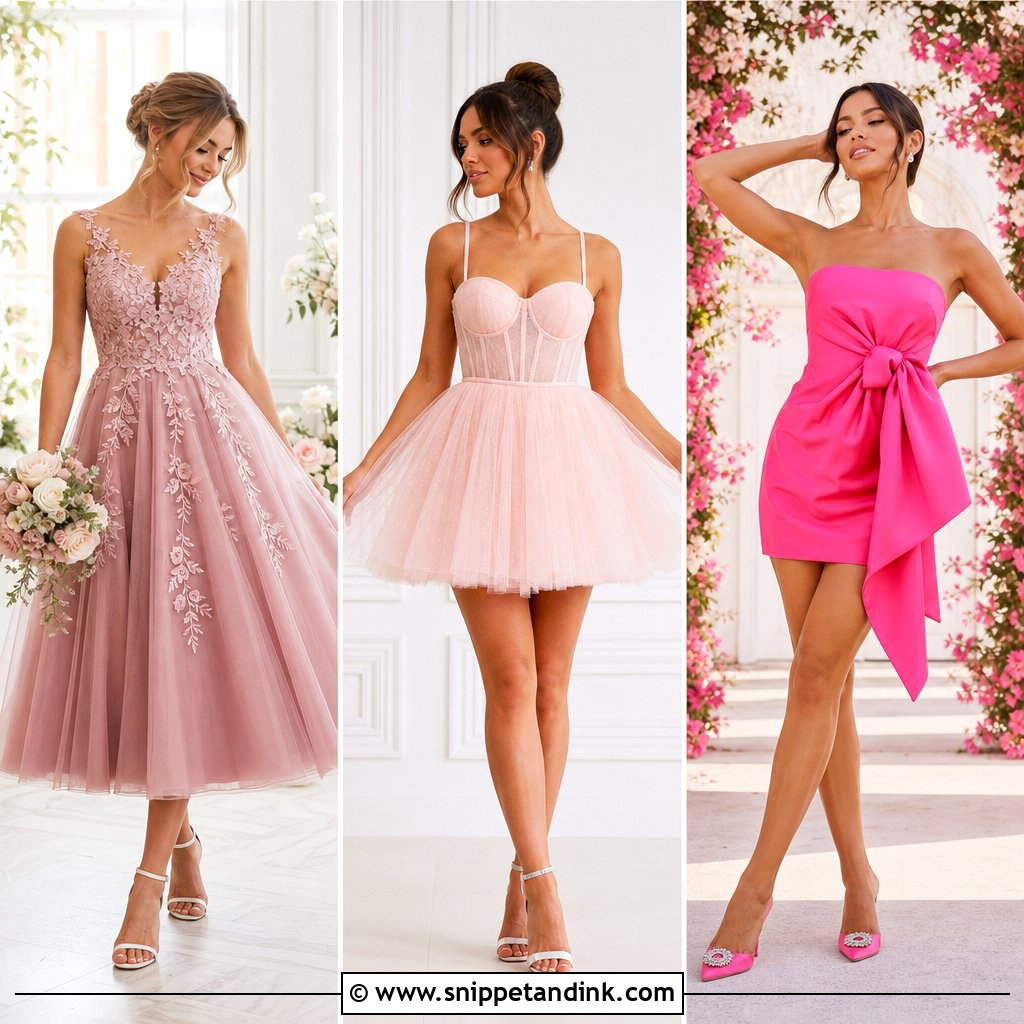
A pink tea length wedding dress shows off your shoes, so the shoes become part of the outfit rather than something hidden. That’s why I’d pick them first and have the hem set in them. Blush satin, lace, tulle and organza all hold the shorter shape. Courthouse ceremonies and small weddings suit it, and the length makes dancing easy. Pointed pumps, pearl earrings and a short veil or a bow in the hair keep it playful. A small bouquet in cream and pink keeps it balanced.
18. Pink High Low Wedding Dress
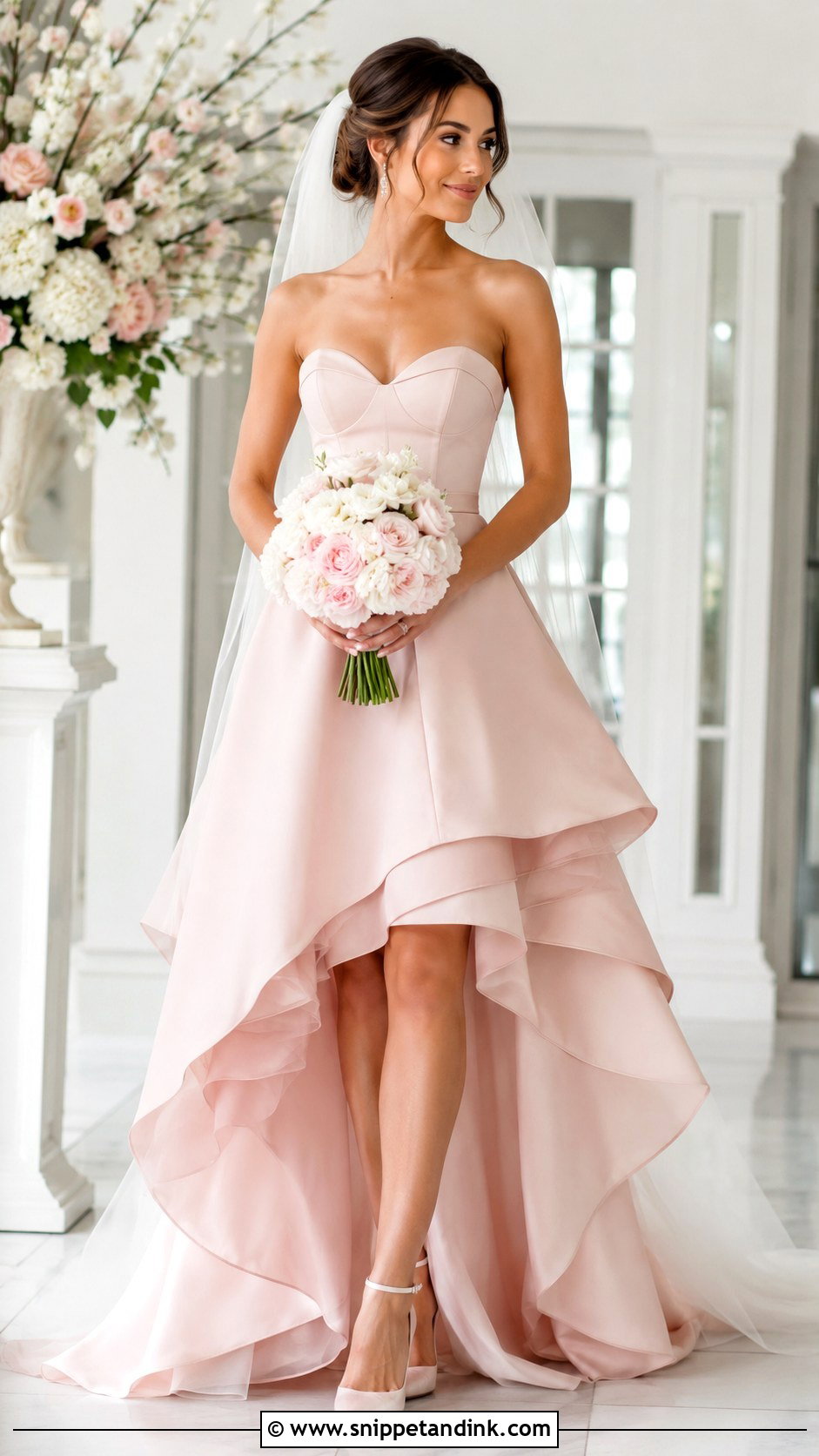
High low hems need fabric with body, like tulle, satin or organza, or the shorter front just hangs limply. Your shoes will be in every full-length photo, so treat them as a real styling choice, not an afterthought. I like a gentle curve from front to back rather than a steep drop, which can look like two dresses stitched together. Simple earrings, a clean veil and a neat hairstyle keep it refined, and pink and white flowers suit the playful hem.
19. Pink Sequin Wedding Dress
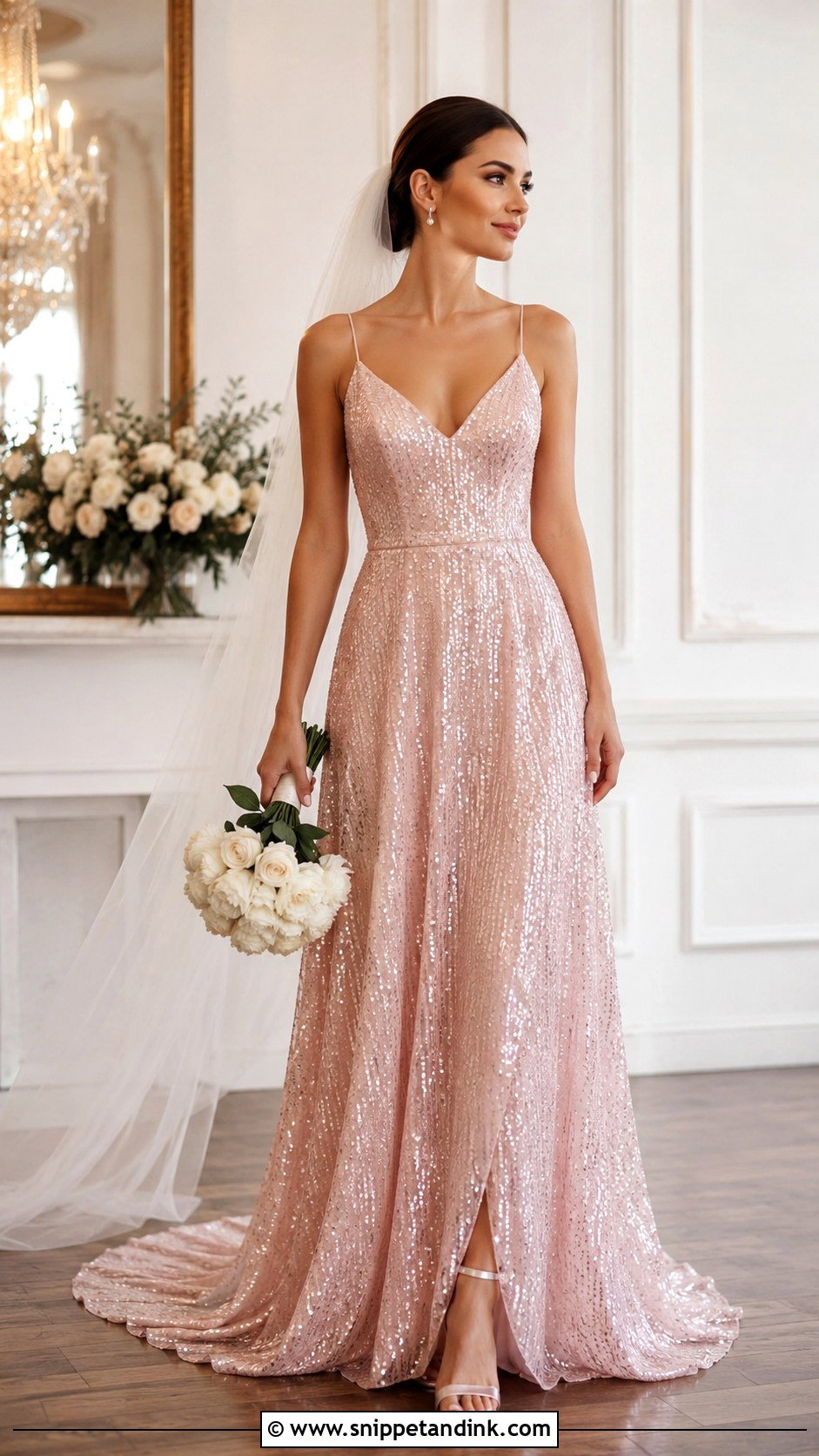
Pink sparkle reads softer than silver sparkle on white, which is why brides who usually avoid sequins often come round to this one. Fine sequins or scattered beading look bridal; large paillettes look like eveningwear. Check the inside seams and underarms for scratchiness before ordering. Column, A-line and shimmering tulle shapes all work. Because the dress catches light, I’d keep heels plain, earrings small and the veil unembellished. A smooth hairstyle and a simple ivory or blush bouquet balance the shine.

20. Pink Bow Wedding Dress
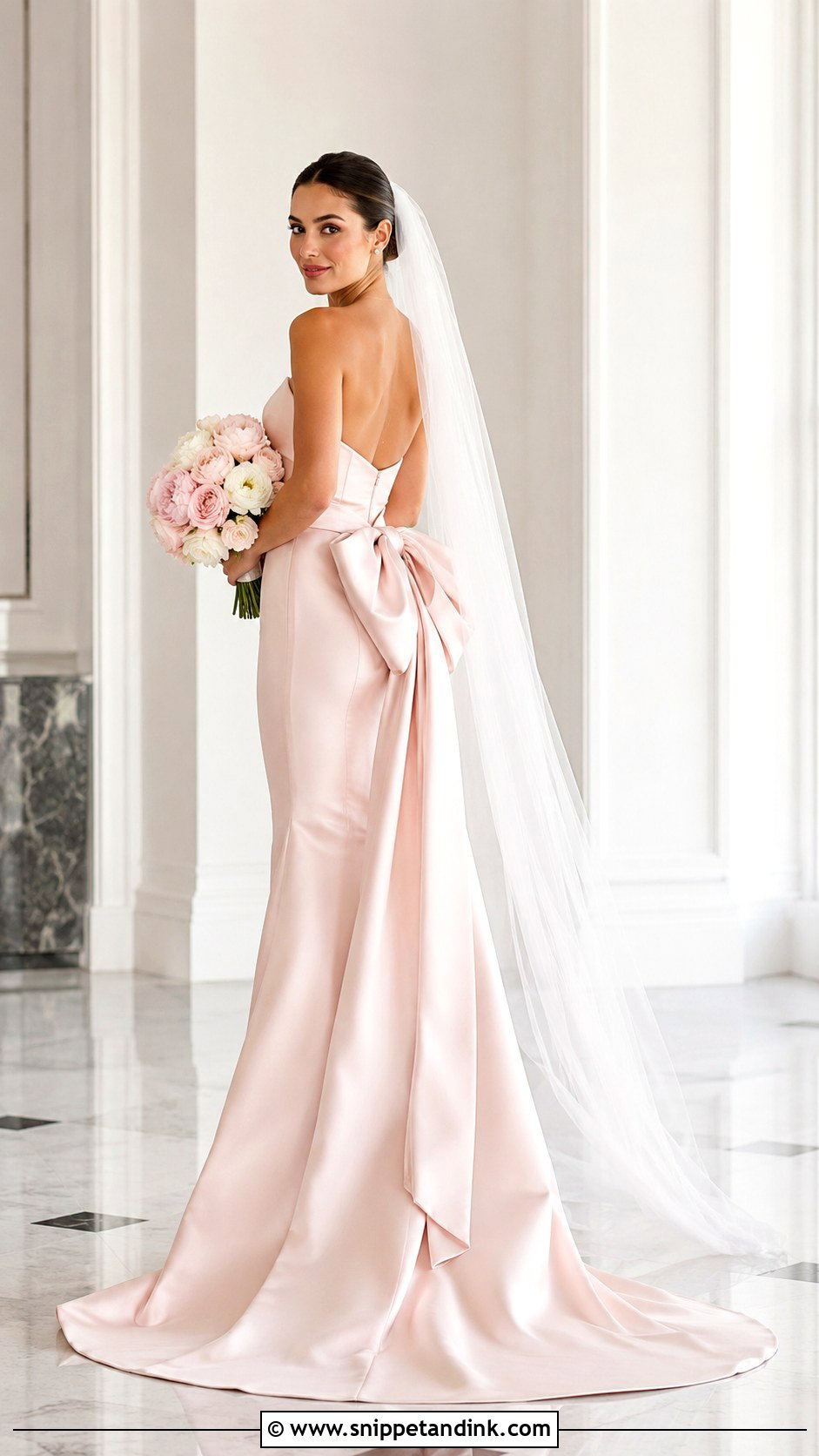
A pink bow wedding dress works when there’s exactly one bow doing the talking. A large back bow is the most dramatic, but think about your ceremony: guests see your back for most of it, so that’s where the detail earns its keep. A removable bow train gives you a different look for the reception. Keep the gown fabric smooth and the accessories simple: a sleek veil, studs and satin heels. Rounded flowers in the bouquet echo the softness of the bow.
21. Pink Plus Size Wedding Dress
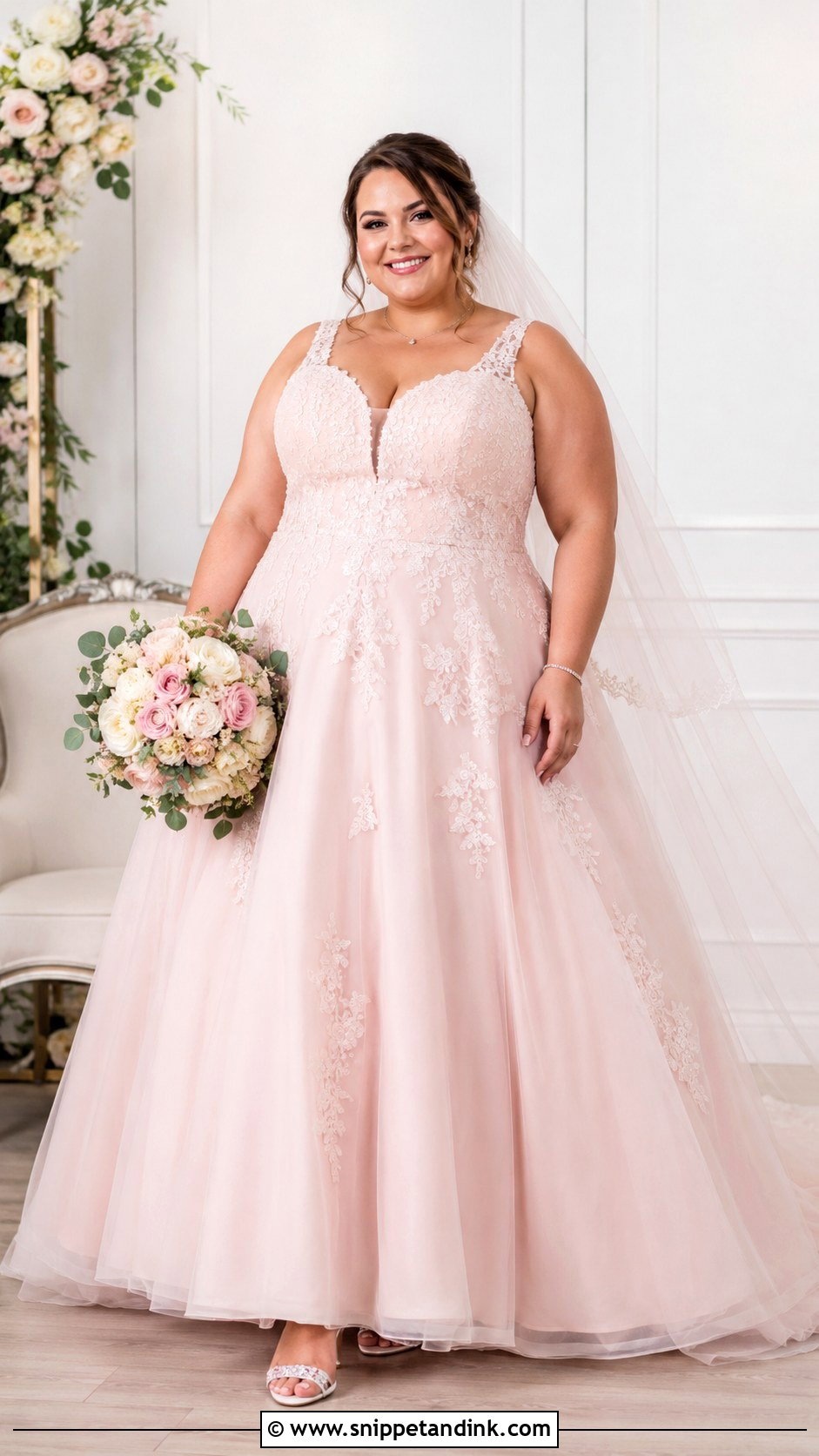
A pink plus size gown should give you support you don’t have to think about. I look for a structured bodice, wider straps or a corset back, and well-placed seams that sit where your body actually curves. Blush and dusty rose look rich in tulle, lace, satin and crepe. A-lines are an easy option, but a fitted silhouette can look just as striking when it’s tailored properly. Comfortable heels, a veil that matches the dress tone and jewelry chosen for the neckline finish it. Above all, the dress should feel like you.
22. Pink Maternity Wedding Dress
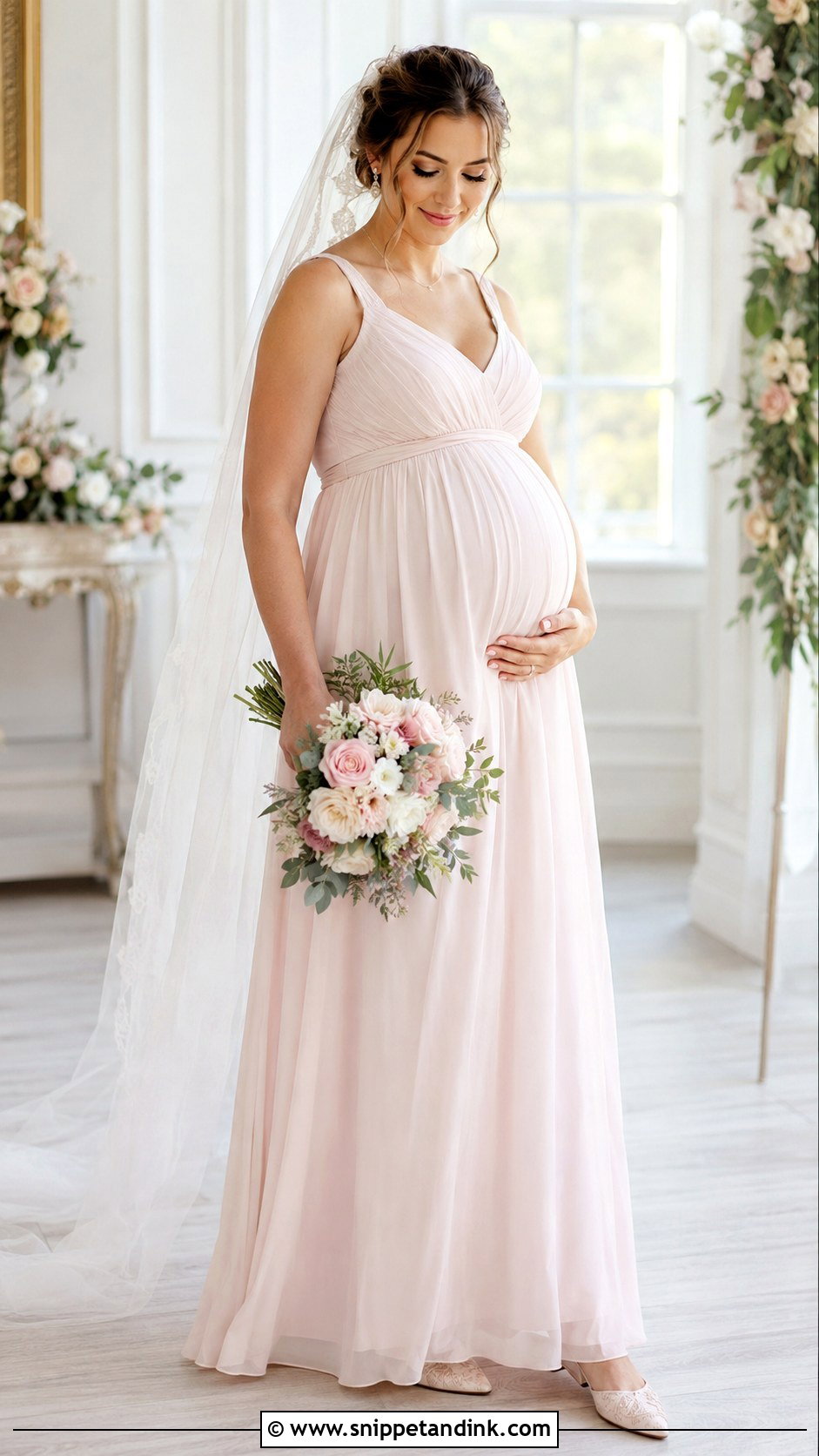
Maternity gowns have to account for change, so I always plan the final fitting as close to the wedding as possible, ideally within the last week or two. Empire waists, stretch lace, flowing chiffon and lightweight tulle give shape without pressure on the bump. Blush and pale rose are flattering in natural light. Supportive straps or sleeves add comfort, and low block heels or cushioned flats keep you steady. A light veil and simple earrings add the bridal finish without weight.
23. Pink Beach Wedding Dress
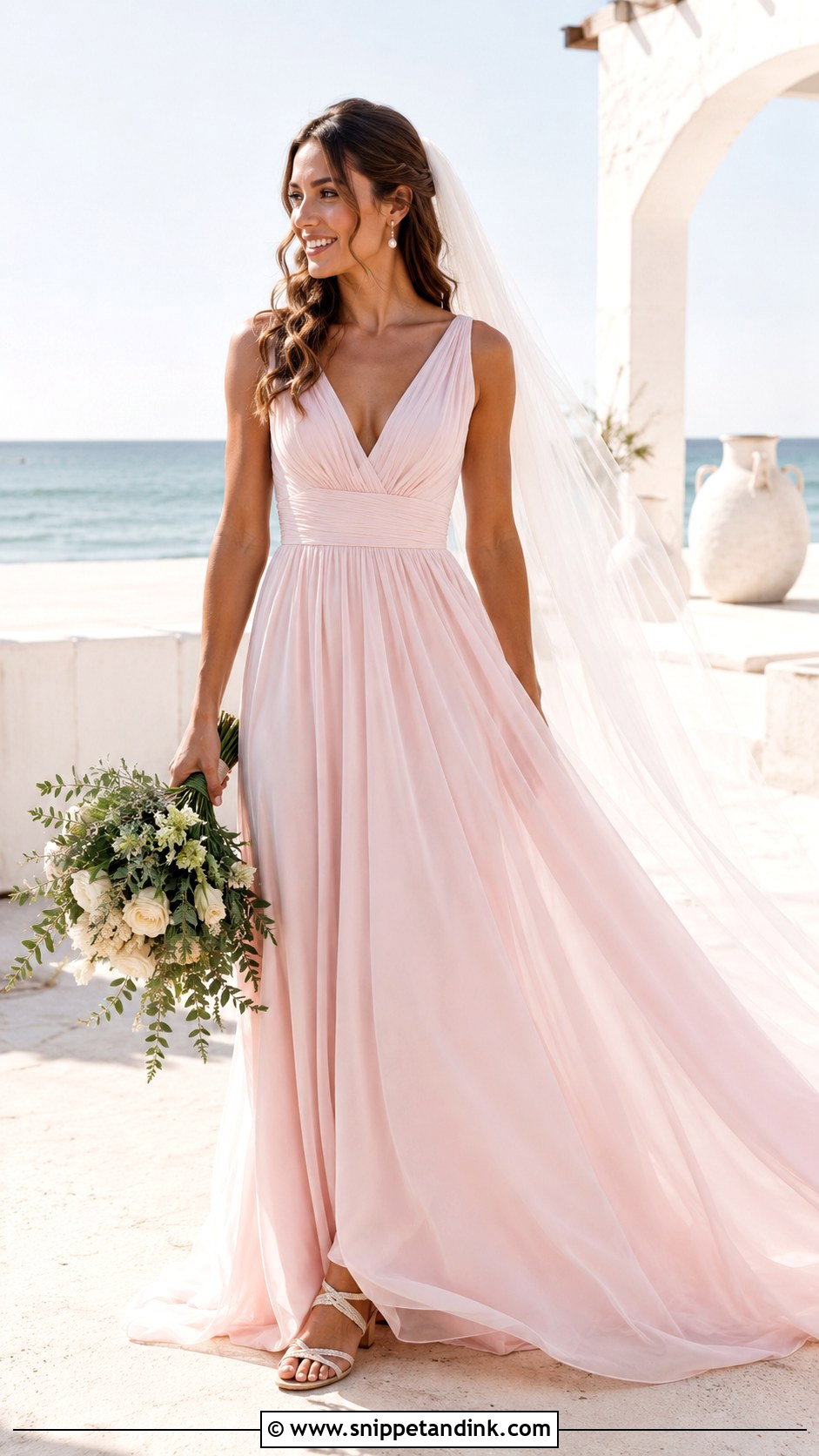
On a beach, wind and sand do most of the styling for you, so the dress needs to be light and forgiving. Chiffon, airy tulle or simple crepe work better than heavy layers, and a long train will drag sand and seaweed. I’d skip satin, since salt spray and humidity mark it. Pale blush and peachy pinks look lovely against sand and water. Flat sandals or bare feet, pearl earrings and a short, light veil that won’t wrap around your face in the breeze finish it, with a loose bouquet of pink, ivory and greenery.
24. Pink Garden Wedding Dress
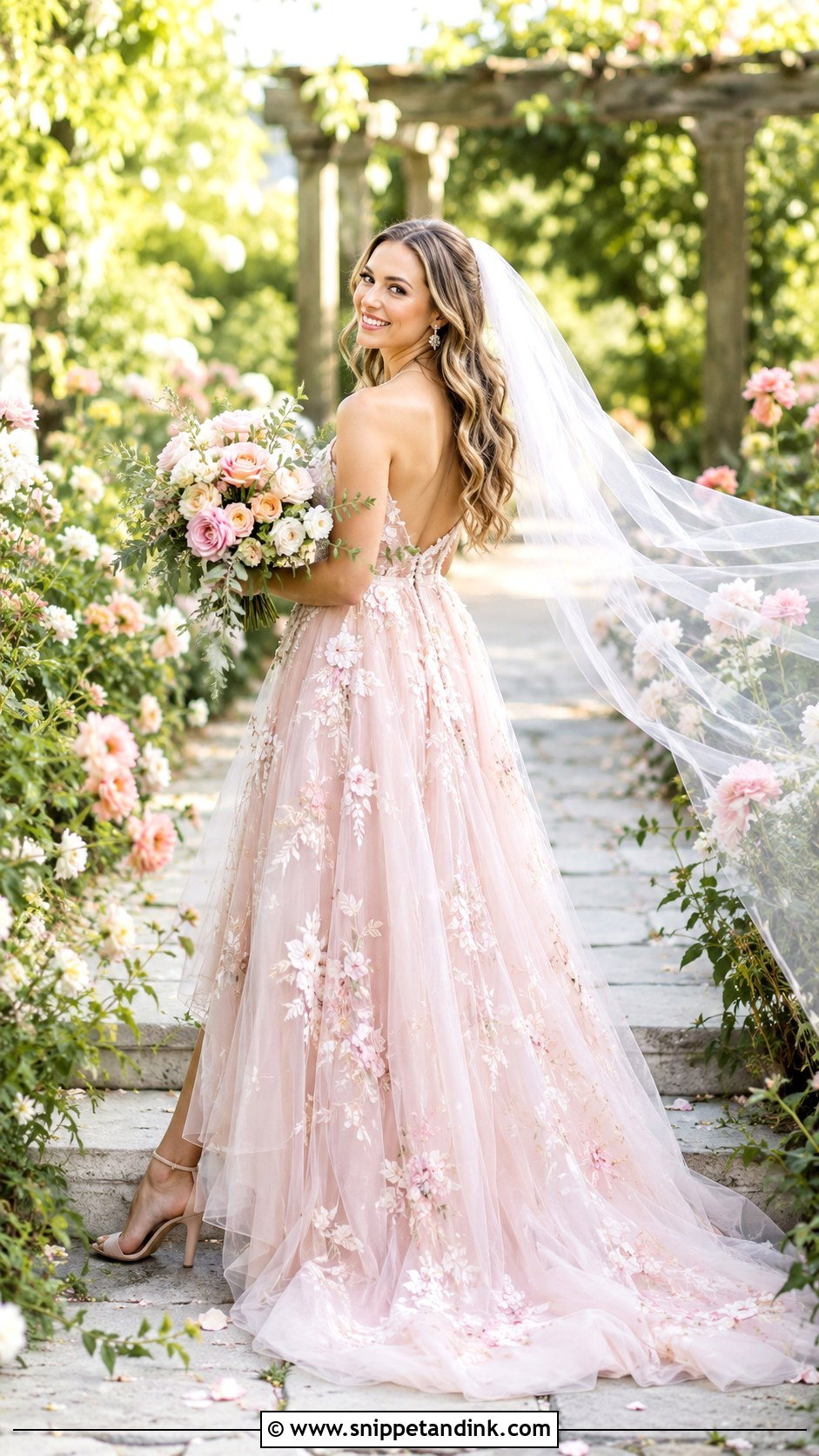
A pink garden dress should echo the setting rather than compete with it. Blush tulle, embroidered flowers, lace appliqués or a flowing A-line skirt all suit lawns and borders. Grass is hard on hems, so ask your seamstress for a horsehair braid or a slightly shorter hem if you’ll be walking outdoors a lot. Block heels or dressy flats stop you sinking. Delicate jewelry, soft waves and a bouquet of garden roses, peonies and greenery tie it together.
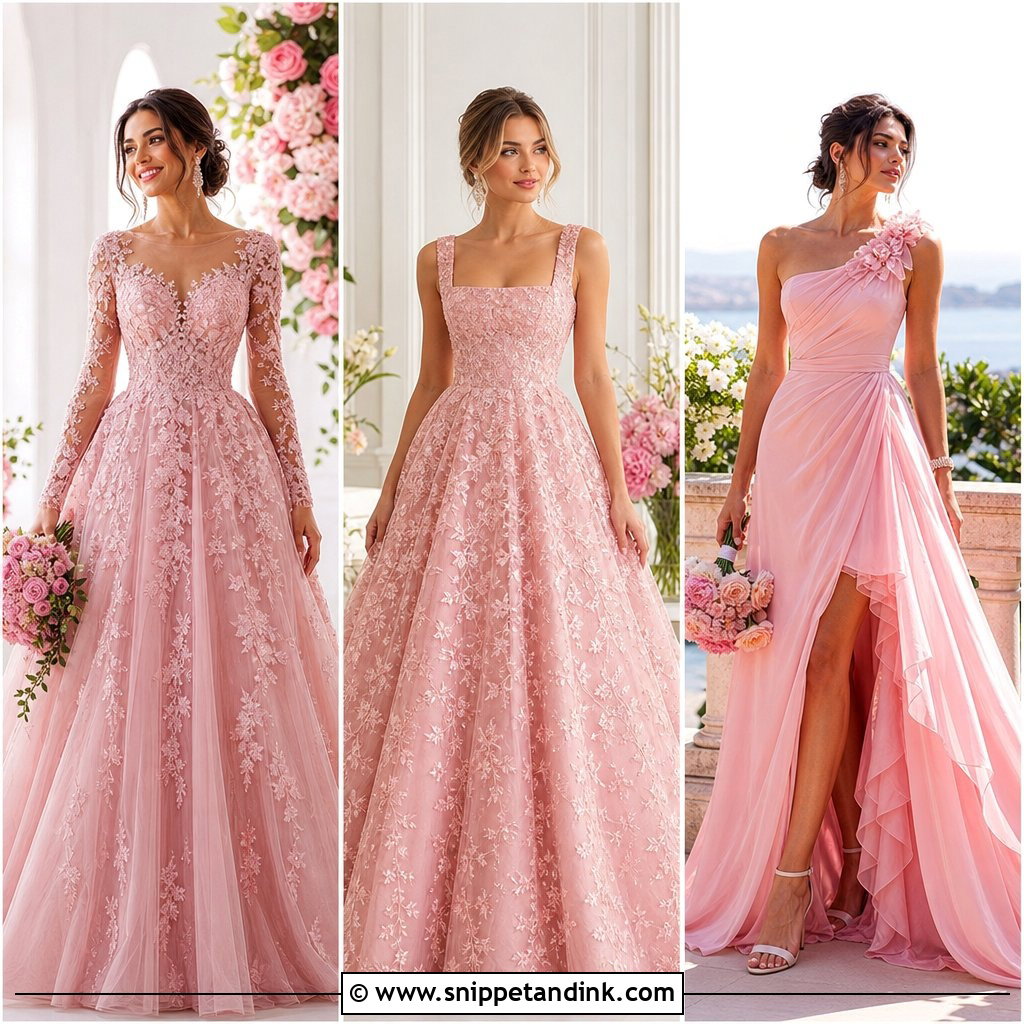

25. Hot Pink Wedding Dress
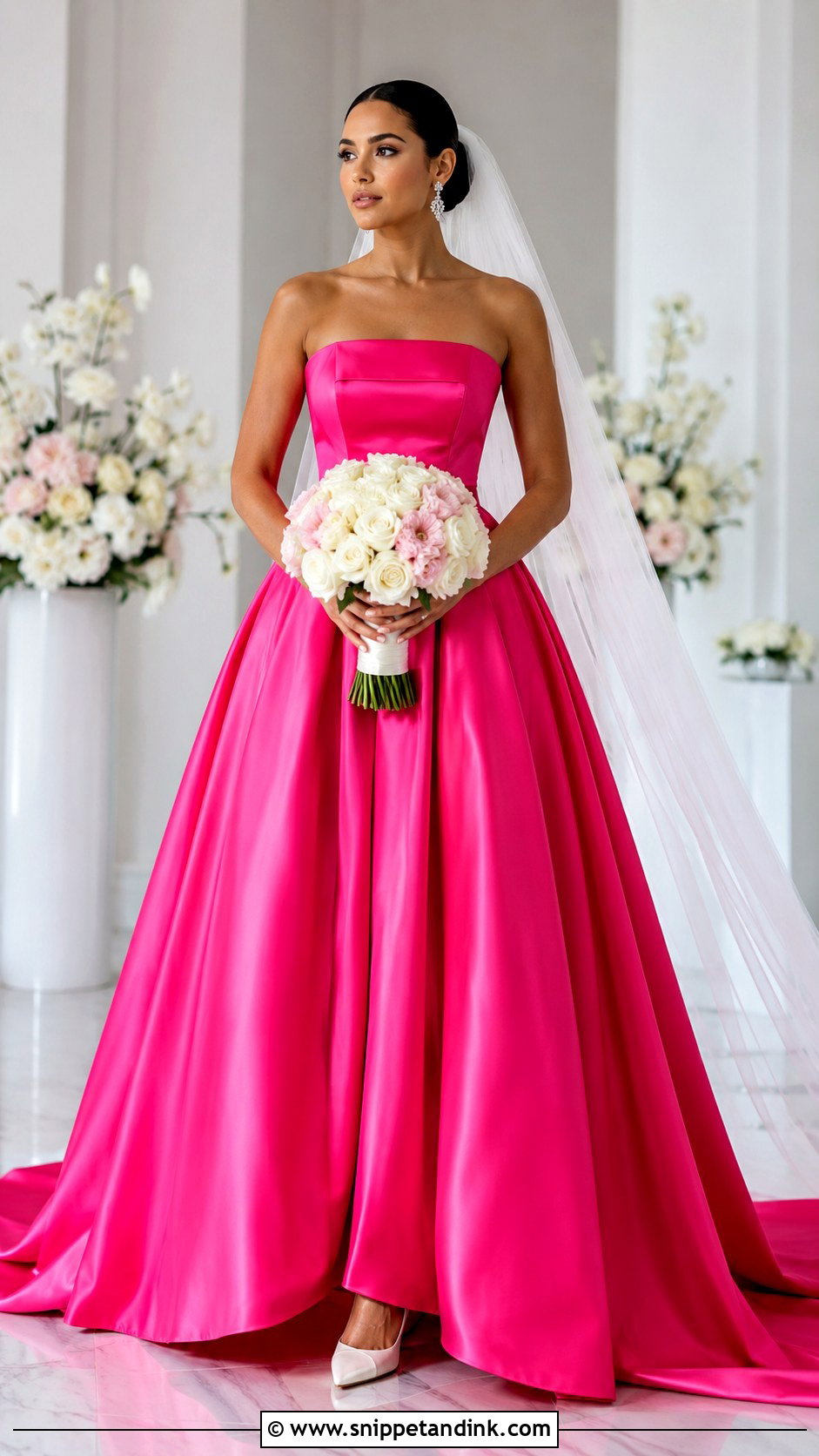
Hot pink is the bravest choice here, and it only works when the color is clearly a decision. That means an excellent fit and a clean silhouette: a satin ball gown, a sleek column or a structured A-line. I keep accessories almost plain, with ivory heels, crystal earrings and a simple veil to soften the shade. A bouquet of white flowers with touches of pale pink creates contrast without a clash. Check the shade against your bridal party colors early, since bright pinks fight with reds and oranges.
Keeping a Colored Gown From Fading, Yellowing or Clashing
Pink fabric behaves differently from white, and a few precautions protect the color from the day you order it until long after the wedding.
Before the wedding
Keep the gown in its breathable garment bag and out of direct sun. Pale dyes can fade unevenly along folds if the dress hangs near a bright window for weeks. If your veil is ivory and the dress is blush, see them together at a fitting. A mismatched white veil over pink can look grey in photos, so I usually suggest a blush-tinted or soft ivory veil.
On the day
Self-tan, deep foundation and bronzer transfer onto pale pink much more visibly than onto white. Let tan set fully the night before, and have your makeup artist powder the neck and chest. A white chalk stain stick hides marks on white dresses but shows up on pink, so carry a fabric-safe wipe instead.
Afterwards
Have the gown professionally cleaned soon after the wedding and tell the cleaner it’s a dyed fabric. Store it in acid-free tissue in a dark cupboard, away from the attic heat that yellows and fades fabric over the years.
Blush, Rose or Hot Pink: Let Daylight Decide
Pink gives brides a huge range, from barely there blush to rich rose and bold hot pink. The color is only half the decision. The rest is fabric, silhouette, shoes, flowers and how you want to feel walking up the aisle. Tulle softens a shade, satin sharpens it, lace adds romance and crepe keeps things quiet. Take your favorites into daylight, test them against your skin, then pick the one that suits your venue and your comfort. A pink gown can feel every bit as bridal as a white one.
You'll Like These Ideas:



Leave a Reply