
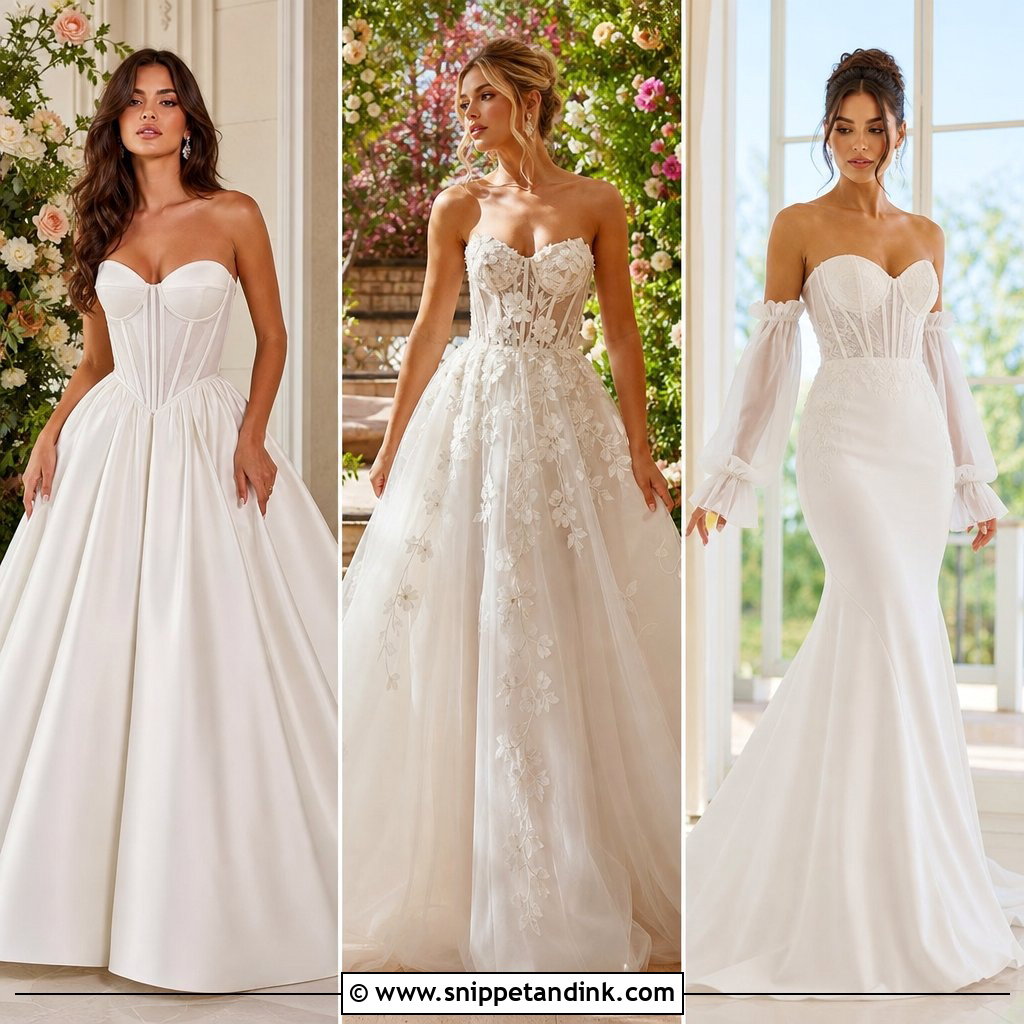
A corset bodice does two jobs at once: it shapes the waist and it holds the dress up, which is why so many brides who try one never go back to a loose bodice. The skirt and fabric decide everything else. A basque waist ball gown and a lace mermaid share the same boned foundation but feel like different dresses. Satin, tulle, lace, pearls and detachable sleeves all change the mood. Below are thirty corset gowns, with what I look for in the fit of each and who I’d steer toward or away from it.
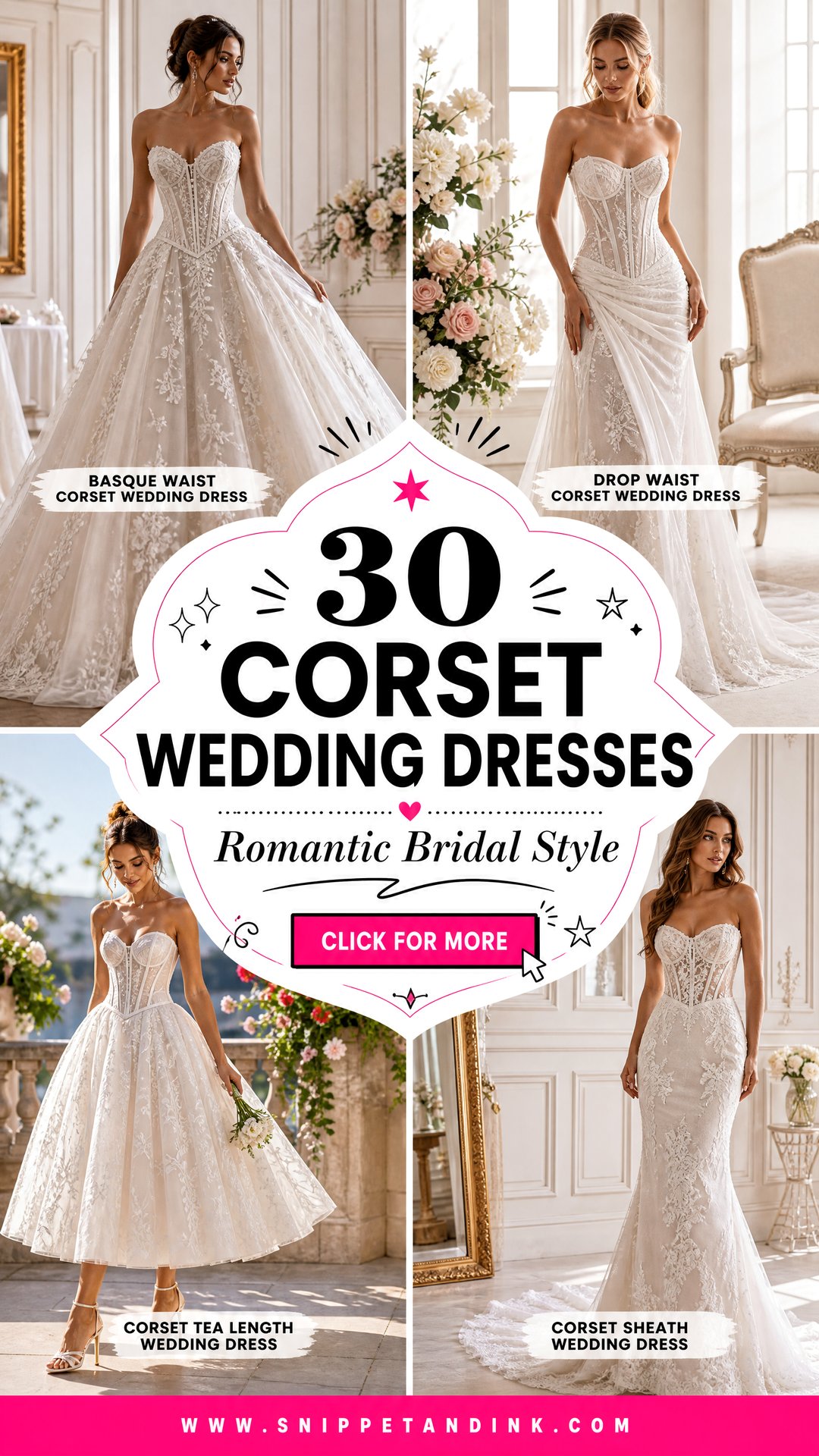
How Tight Should a Wedding Corset Feel?
A bridal corset is not a waist trainer. It should hold you firmly and stay put, but you should be able to breathe deeply, eat a meal and sit for an hour without counting the minutes. Here is what I check at every corset fitting.
- Two fingers should slide flat under the top edge at the side. If they can’t, it’s too tight for a long day.
- Take a deep breath and then sit down. Pain in the ribs or a bone pressing into your hip means the boning length or placement needs changing.
- Bend forward as if signing a register. The top edge shouldn’t gap away from your chest.
- Ask what the boning is. Spiral steel and flexible synthetic bones bend with you; rigid plastic can warp in heat and leave dents in the fabric.
Most corset dresses feel snug at first and ease slightly as the body warms. I’d fit them firm but not tight, since a bodice that’s loose at the morning fitting will slide by the evening.
1. Basque Waist Corset Wedding Dress
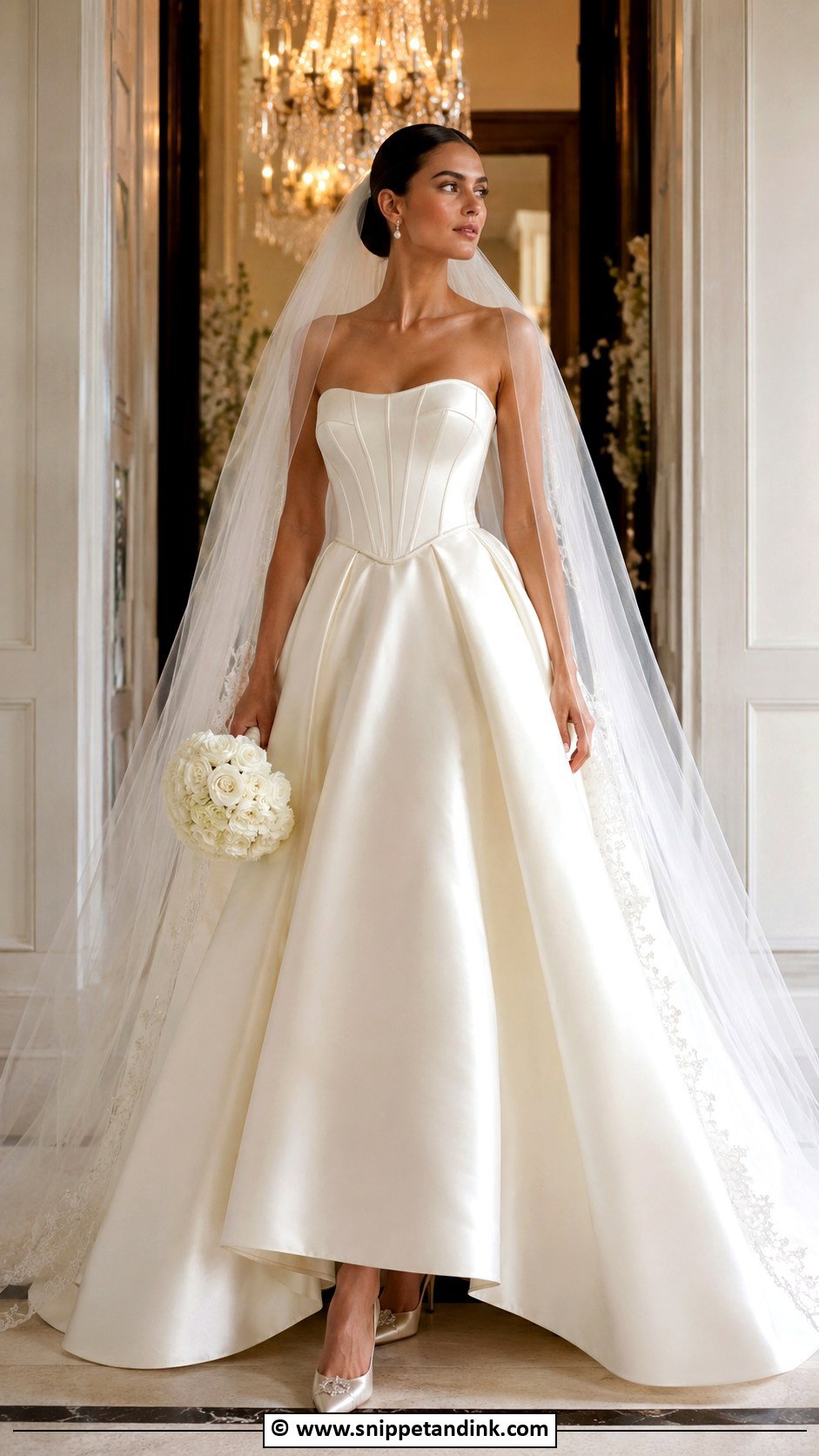
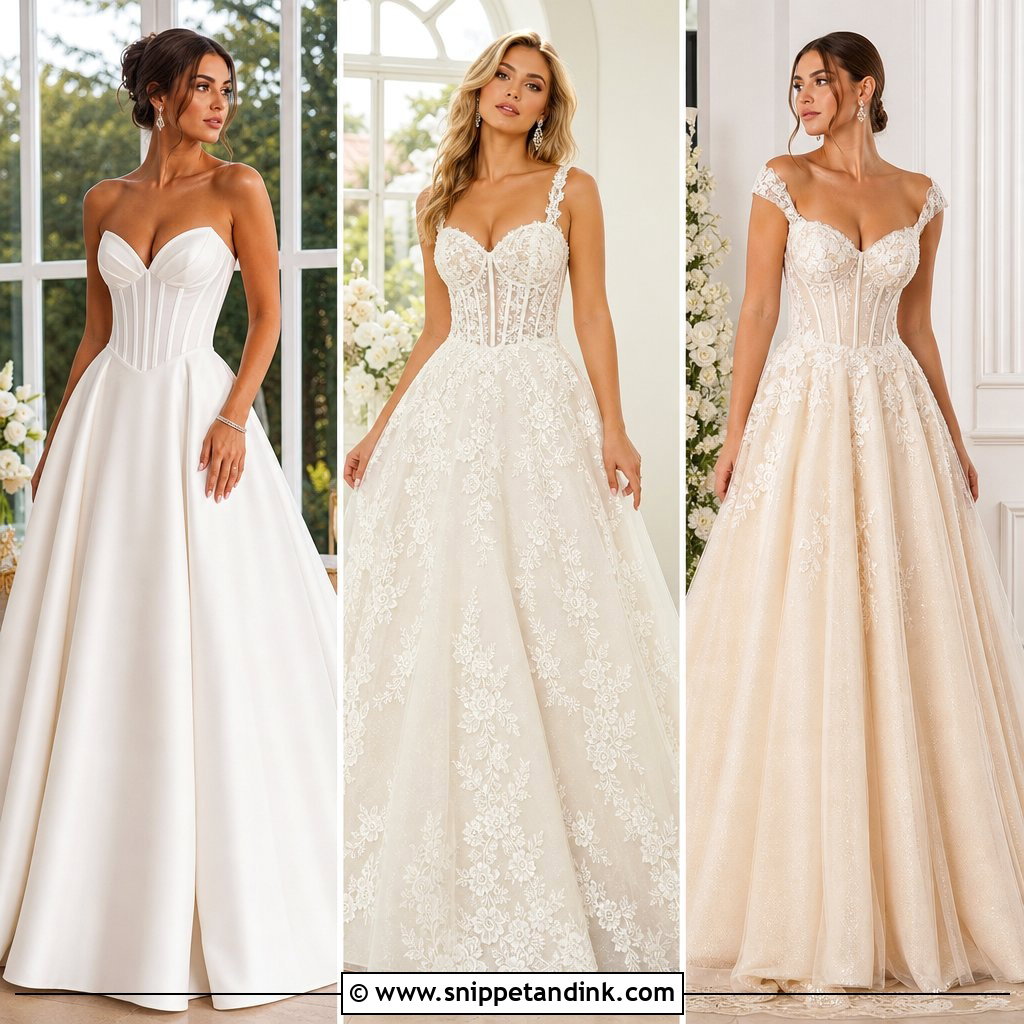
The basque waist dips into a V below the natural waistline, which lengthens the torso and makes the skirt beneath look fuller. It’s an old shape and still one of the most flattering. Satin, mikado and tulle all balance the structured top. My one check: the point of the V should sit centered over your navel when you stand, not pulled sideways by an uneven zip. Ask for comfortable boning, smooth lining and a secure inner waist stay. A cathedral veil, pearl drops and pointed ivory heels finish it.
2. Strapless Corset Ball Gown Wedding Dress
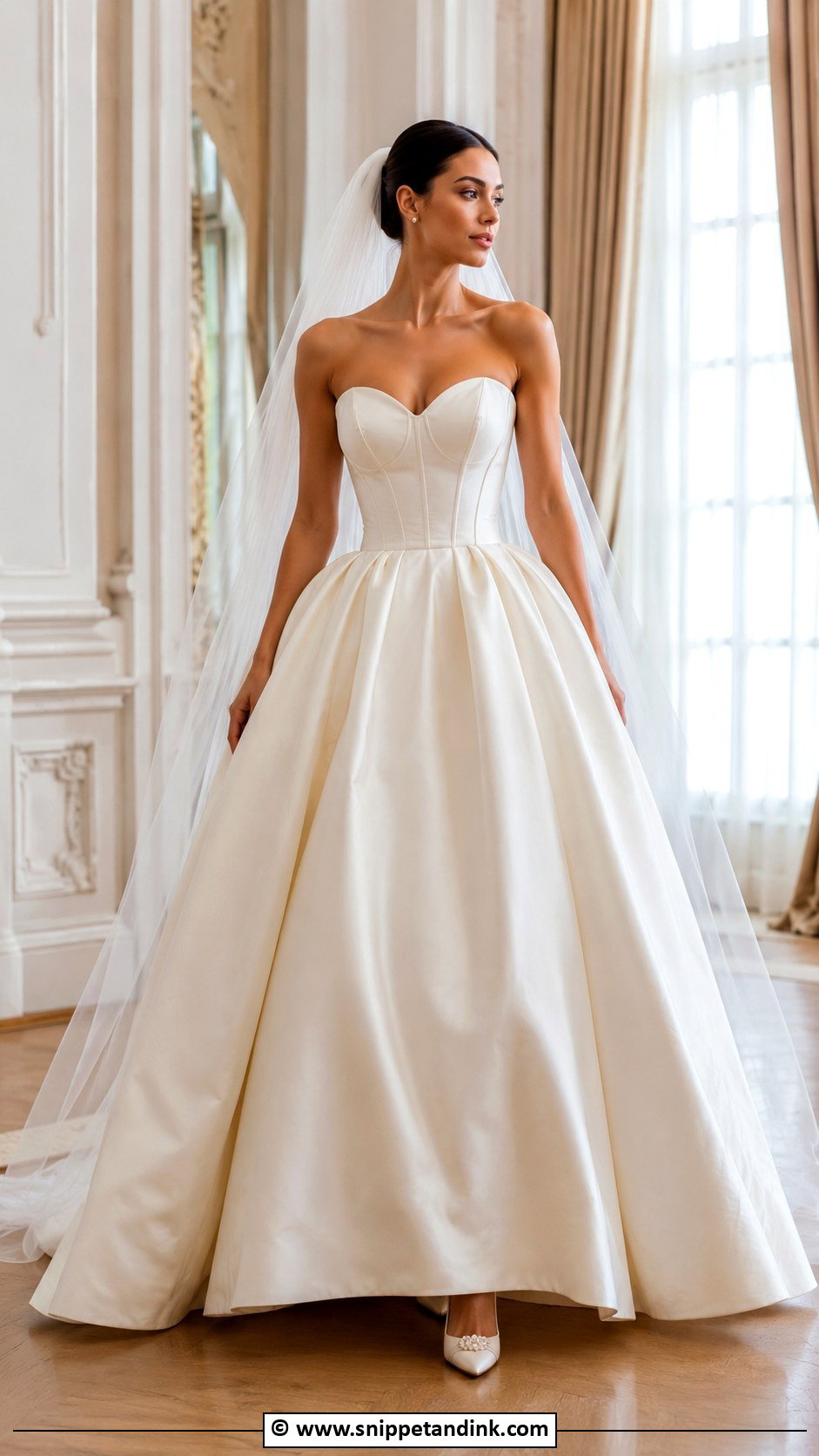
A strapless corset ball gown relies entirely on its boning and inner waist stay to stay up, and that is where I’d spend your fitting time. If you find yourself tugging at the neckline, the bodice is too loose at the ribs, not too low at the bust. A sweetheart neckline softens the structure; a straight one reads cleaner. Satin looks polished, tulle feels lighter and jacquard adds a quiet pattern. A sleek bun, a long veil and plain studs are all it needs. Ballrooms and staircases show the skirt off.
3. Lace Corset Mermaid Wedding Dress
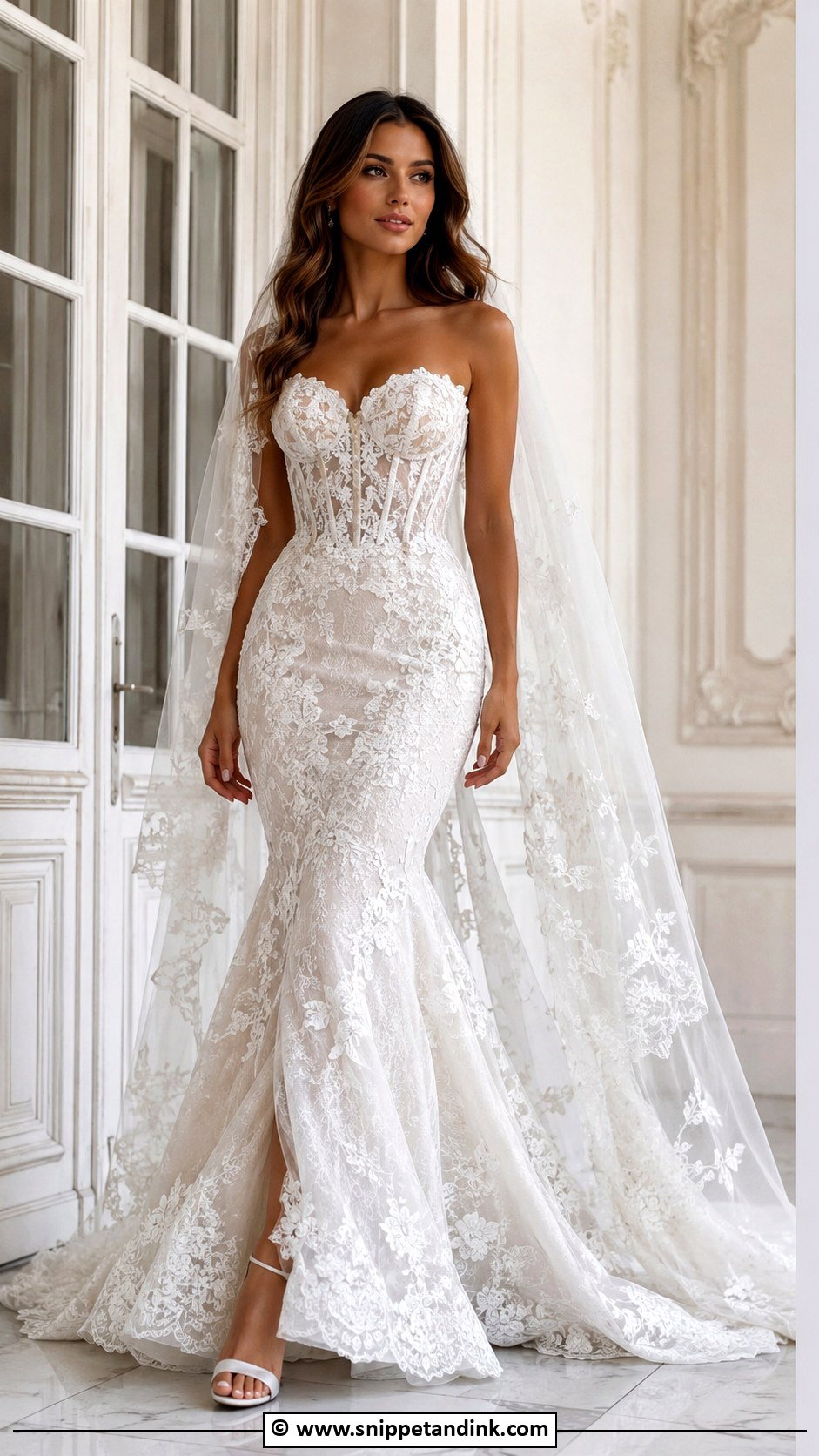
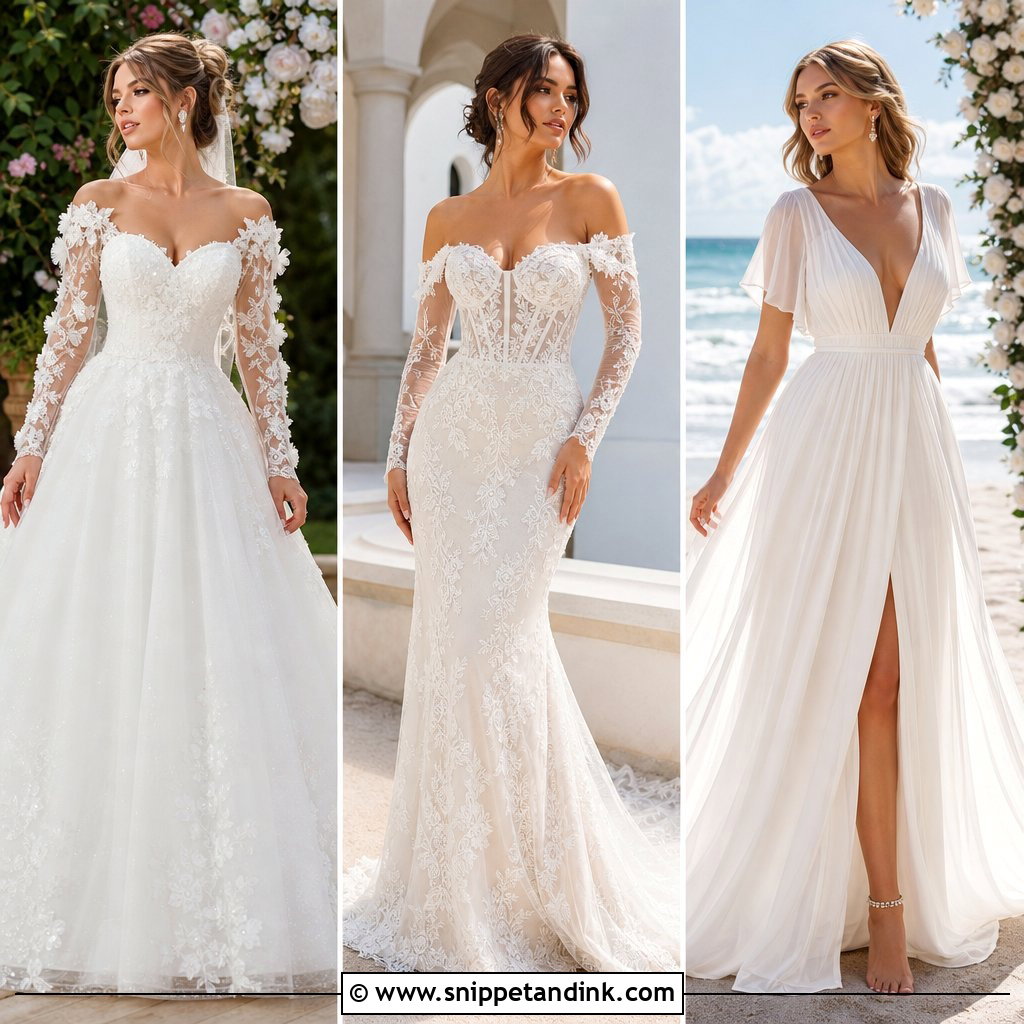
Lace on a corset mermaid keeps a very fitted shape from looking severe. The bodice defines the waist; the skirt follows the hips and flares at or just below the knee. I’d ask where exactly the flare begins, because a low flare looks dramatic but shortens your stride. Floral appliqué, illusion straps or a lace-up back add romance. Keep accessories delicate: a fingertip veil, soft waves, ivory heels. Sit, walk and dance at every fitting. Mermaid gowns that pass the mirror test can still fail the chair test.
4. Satin Corset A Line Wedding Dress
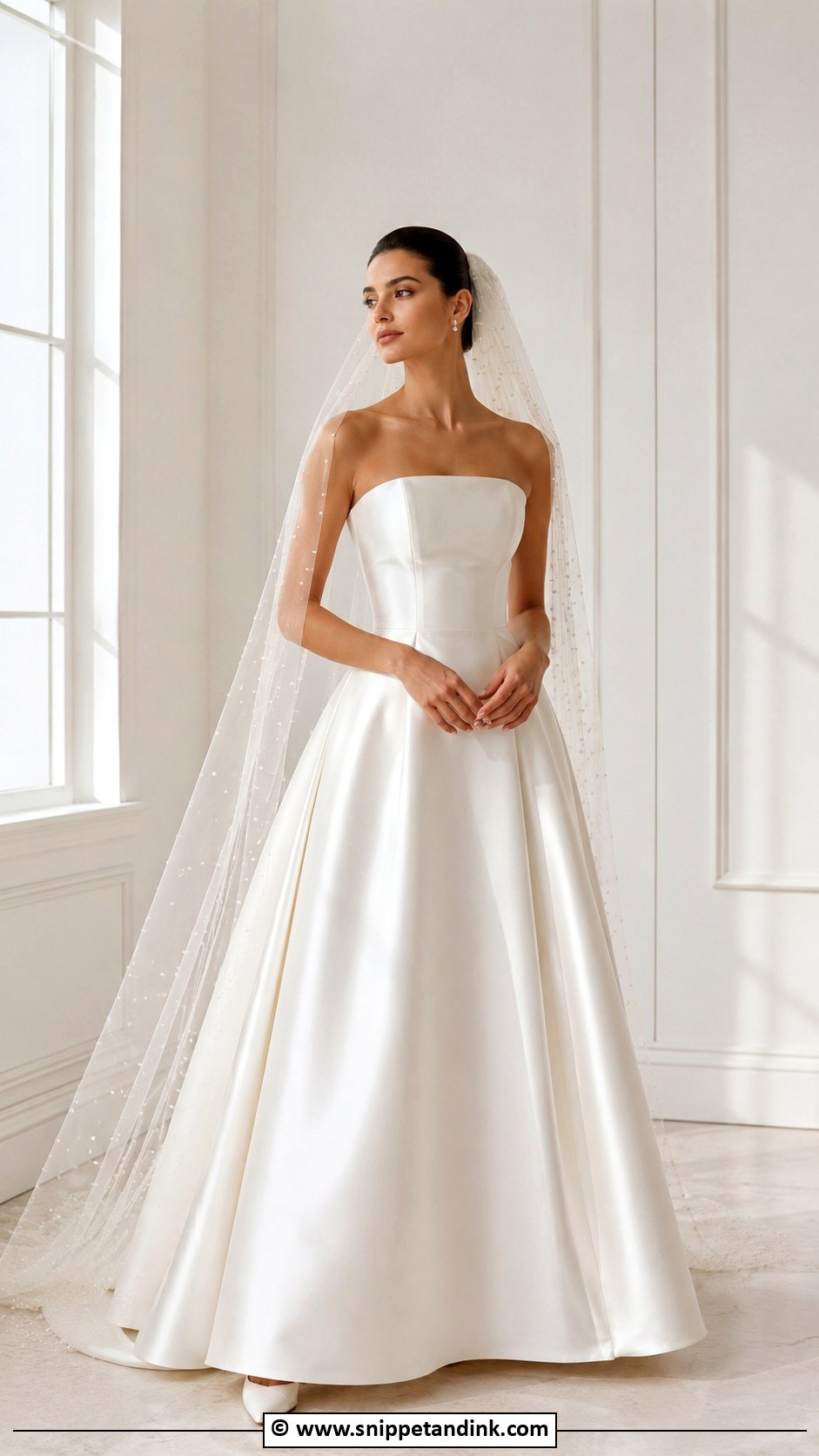
Satin on an A-line is the easiest corset dress to wear all day. The top supports and shapes; the skirt falls away from the hips so nothing pulls when you sit. Satin reflects light, so even a plain gown looks rich, though it also shows sitting creases and water spots. Scoop, sweetheart and off-shoulder necklines all work. A pearl veil, soft glam makeup and a small structured bouquet suit it. It’s a classic dress that stops short of princess, and it flatters most figures.
5. Drop Waist Corset Wedding Dress
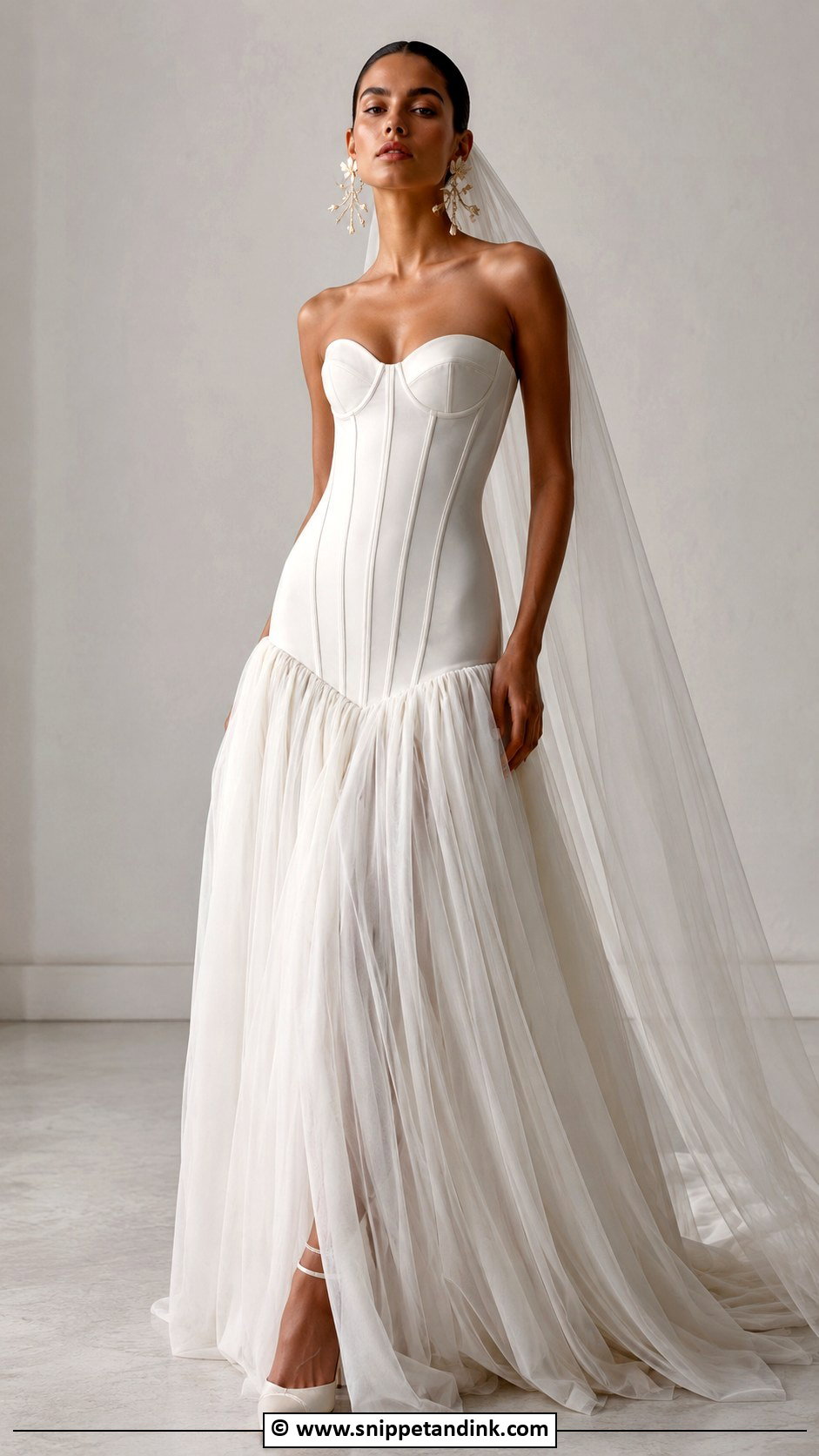
A drop waist corset wedding dress carries the bodice down past the natural waist before the skirt begins, so the torso looks long and the volume starts low. Satin makes it sleek; gathered tulle makes it romantic. The proportion is the whole point. On a petite or short-waisted bride, a very low drop can make the legs look shorter, so I’d try a softer drop first. Smooth hair, sculptural earrings and a simple veil keep attention on the waistline.
6. Off Shoulder Corset Wedding Dress
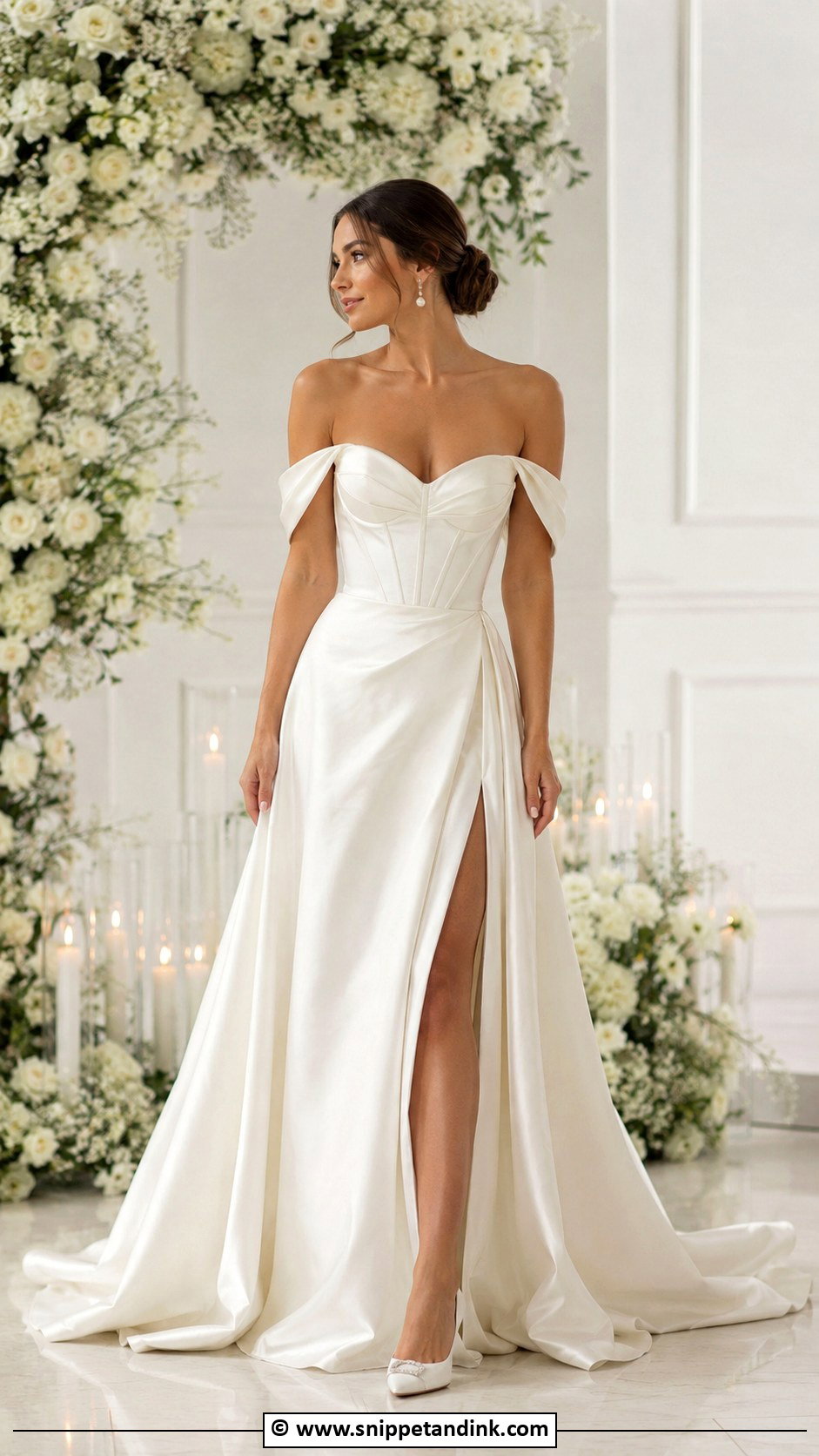
Off-shoulder sleeves soften a structured bodice and show the collarbones. The catch is that those sleeves sit on your upper arm, so they limit how high you can lift your arms. At alterations, raise both arms, hug someone and hold a bouquet at chest height. If the sleeves slide or the bodice lifts, they need a small elastic or grip inside. Lace, satin and draped tulle all suit the shape. Detachable versions let you change for the reception. Wear a low bun, pearl earrings and a mid-length veil.
7. Sweetheart Corset Wedding Dress
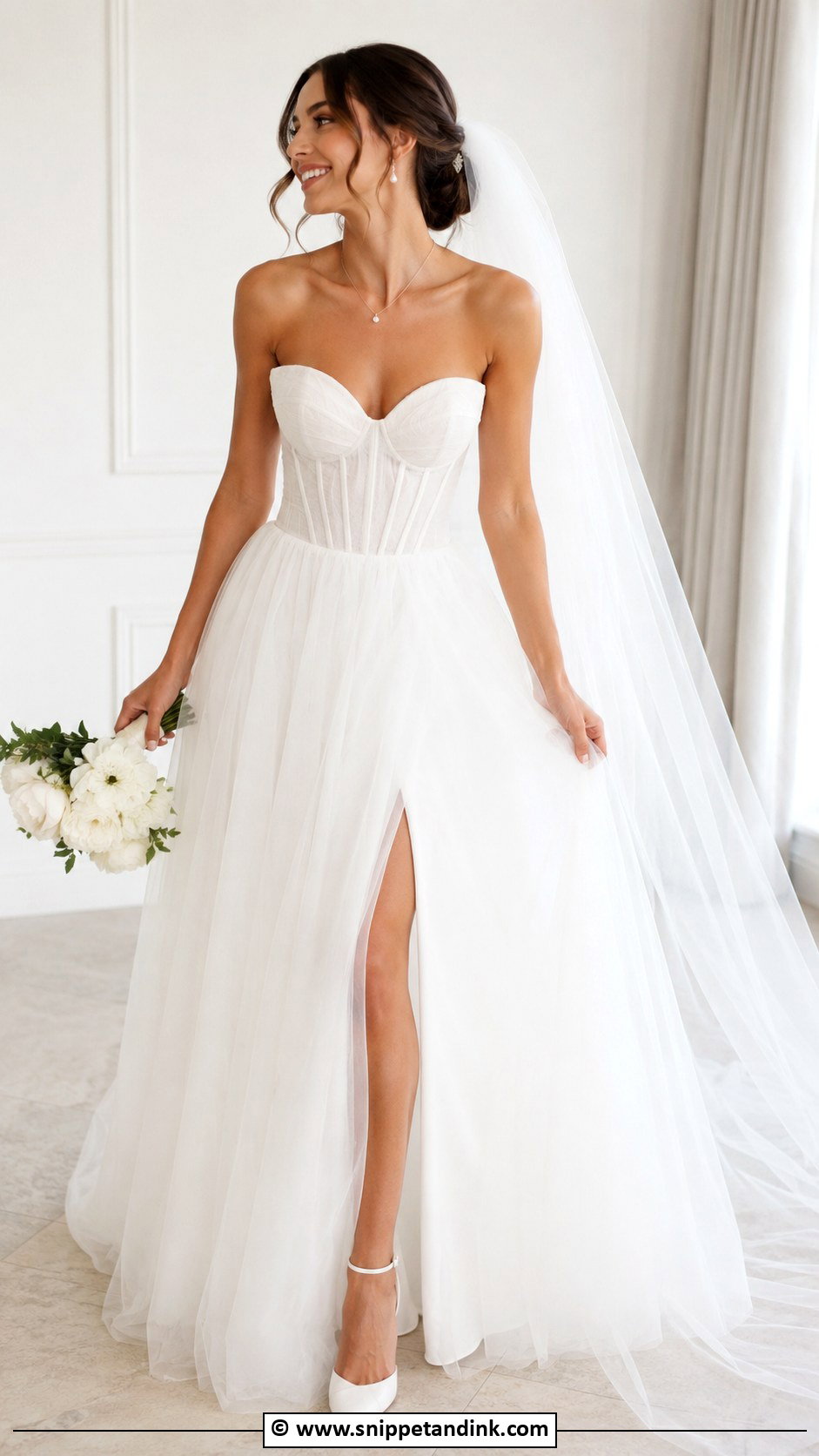
The sweetheart neckline curves over the bust and pairs naturally with a corset, which is why it remains so popular. Corset cups need to sit flat against you: a gap at the top edge means the cup is too big, a ridge means too small, and both photograph badly. The neckline works strapless, with fine straps or with detachable sleeves. Satin is classic, lace is romantic and tulle is softer. A simple necklace, pearl studs and a veil in the same fabric are enough. The bodice should feel supportive, not tight.
8. Square Neck Corset Wedding Dress
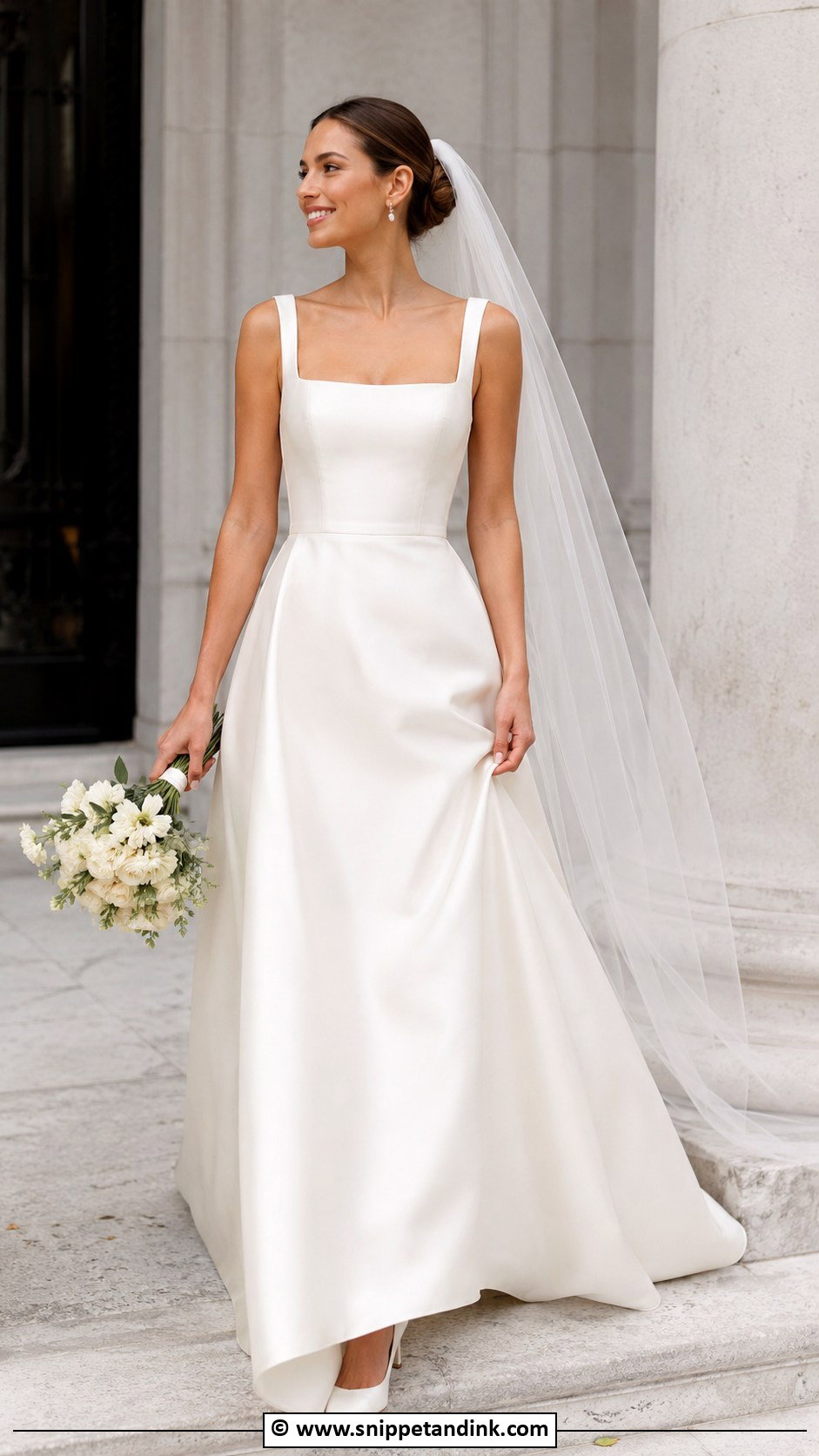
A square neckline adds clean lines to a corset bodice and shows the collarbone without plunging. Satin, crepe and mikado hold those sharp corners best; soft fabrics let them sag. Lace or tulle straps soften it if you’d like. I check the corners at fittings because a loose square gapes forward when you lean. It offers more coverage than a sweetheart while keeping strong shape. A sleek veil, simple earrings and a low chignon suit it.
9. Corset Wedding Dress With Sleeves
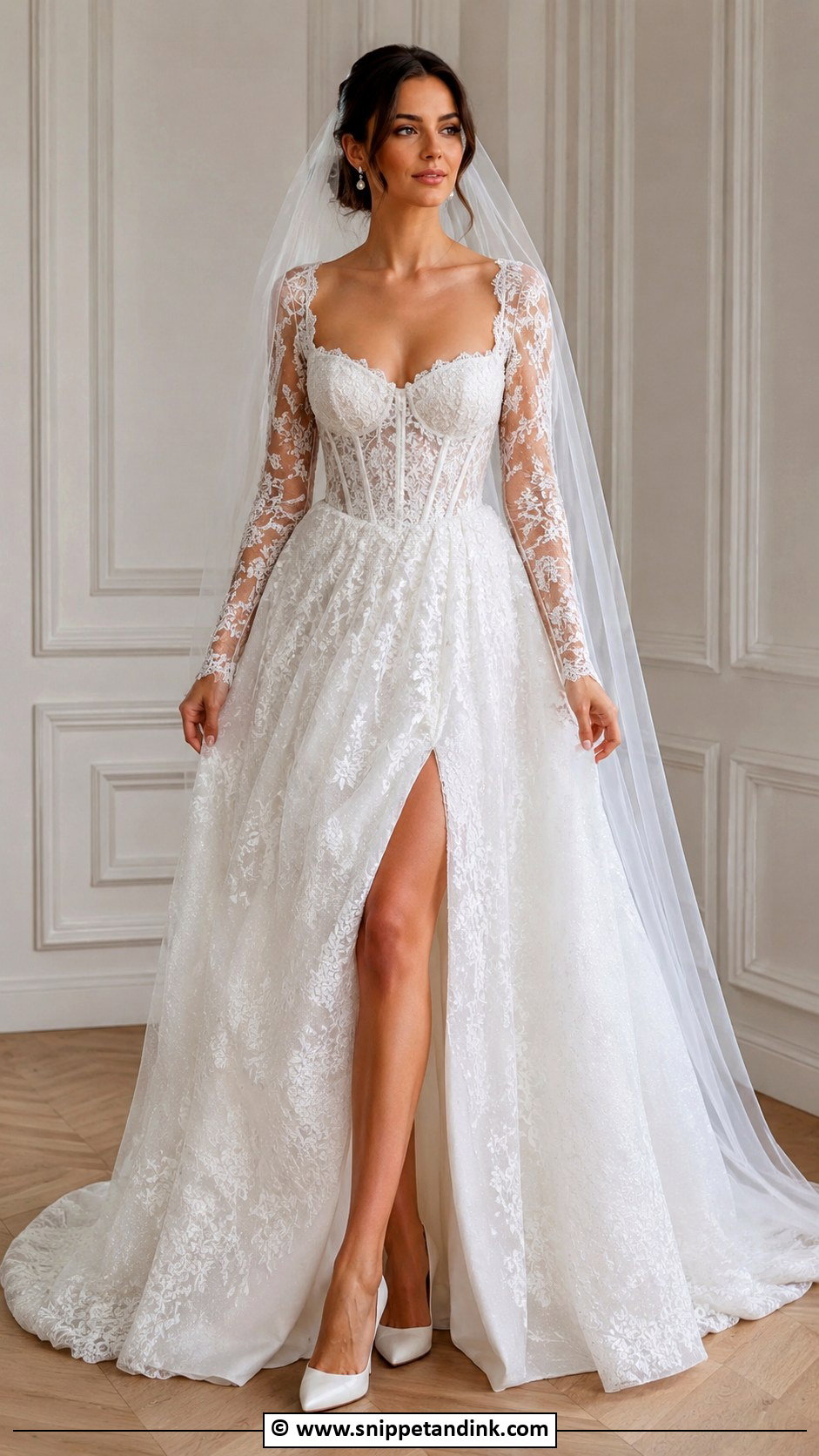
Sleeves on a corset gown give arm coverage while the bodice keeps the waist defined. Lace sleeves feel romantic, sheer tulle sleeves feel light and satin feels formal. Because the bodice is rigid, the sleeves have to give, so fitted sleeves need room at the elbow and armhole. I ask brides to hug, hold flowers and reach across a table before I approve the fit. They suit cool seasons, traditional ceremonies and anyone who simply prefers covered arms. Add a long veil and classic pumps.
10. Corset Wedding Dress With Detachable Sleeves
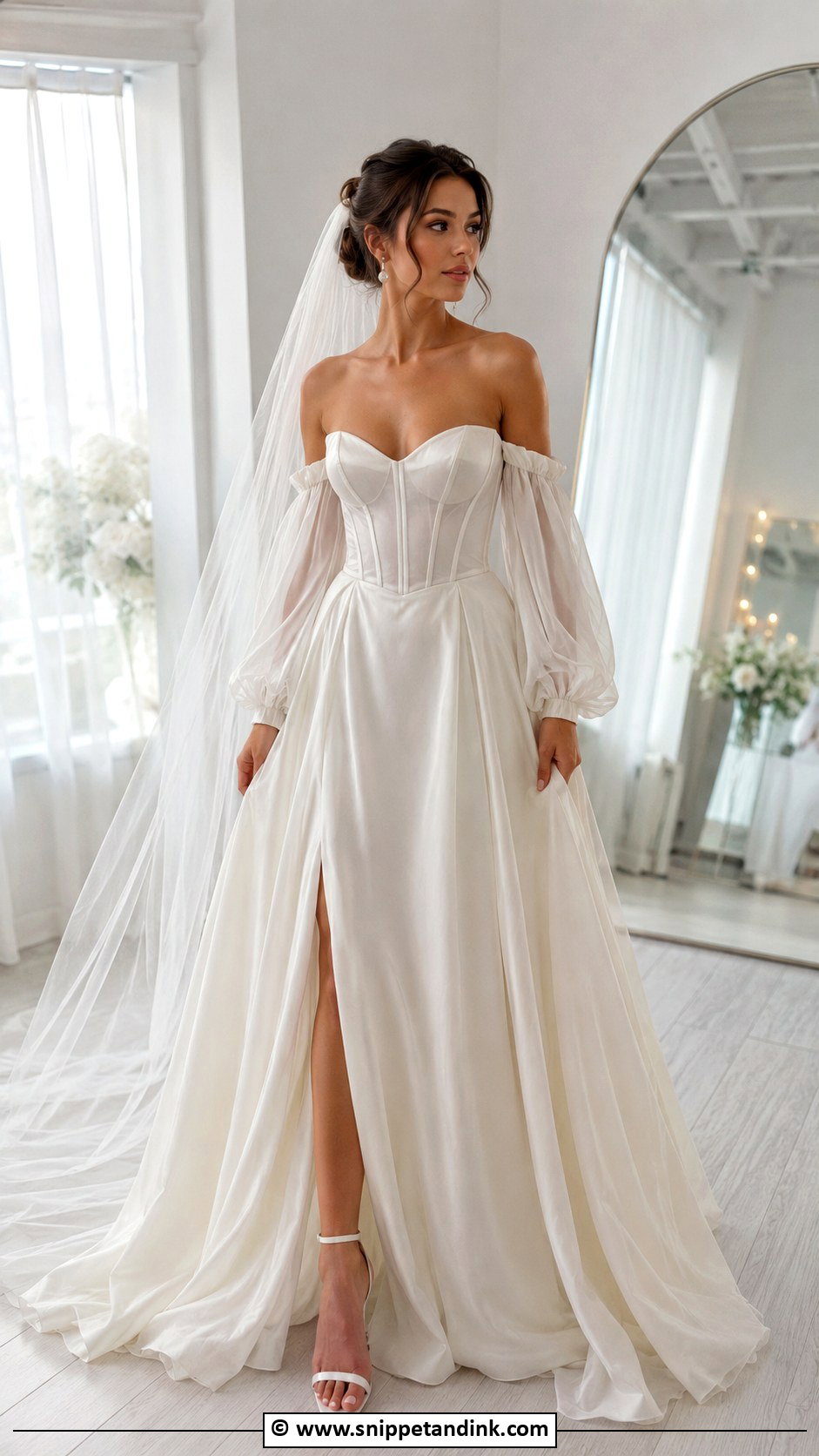
Detachable sleeves give you two looks without a second dress. Wear them for the ceremony, then remove them for the reception. Puff sleeves feel playful, off-shoulder ones soft, sheer lace classic. Because the corset holds the dress up on its own, the bodice stays secure once they’re off. Ask your seamstress to hide the attachments under the bodice edge; visible snaps look cheap in close-ups. Change jewelry when you change looks: a veil for the ceremony, statement earrings later.
11. Pearl Corset Wedding Dress
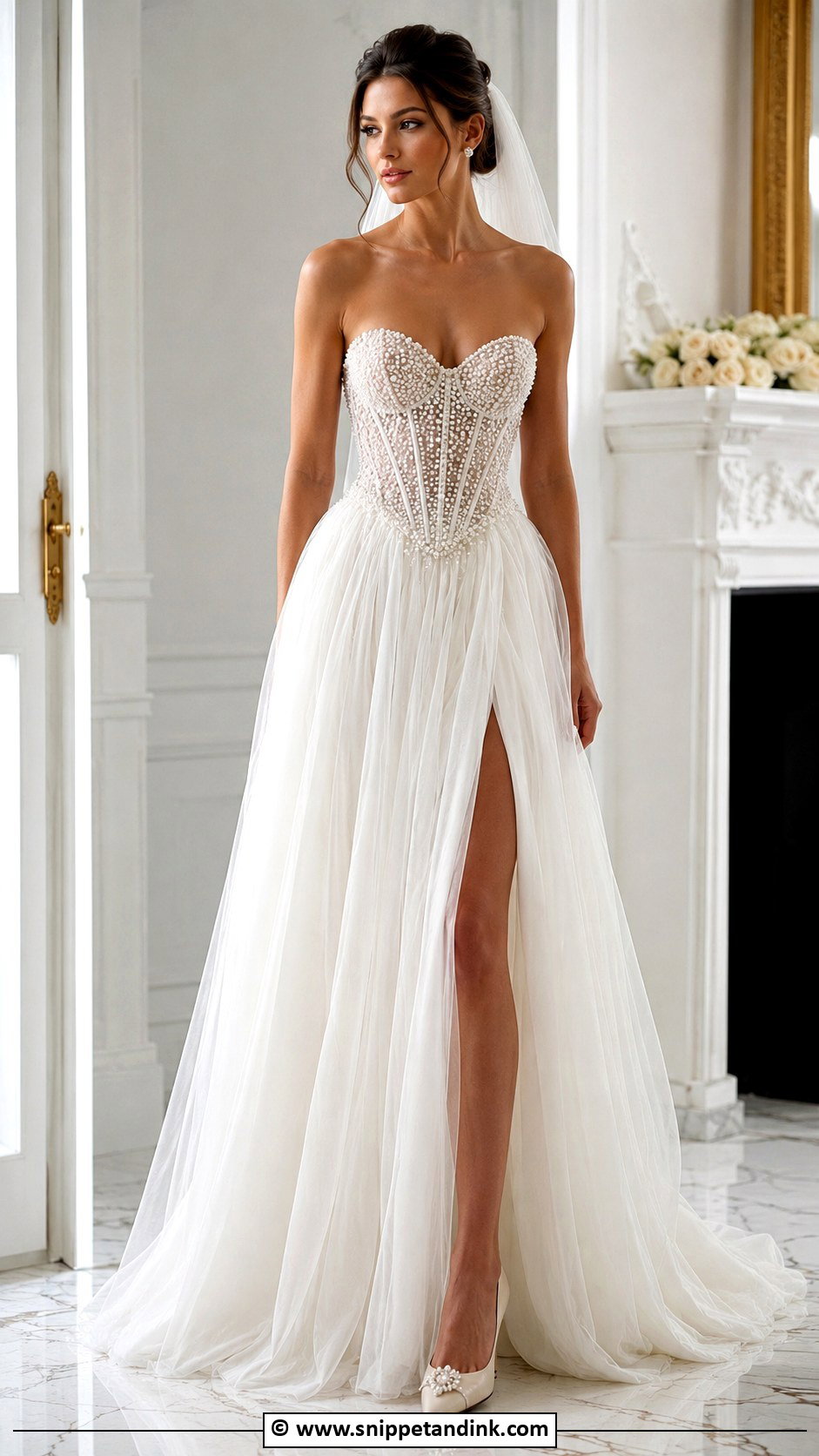
Pearl beading on a corset bodice usually traces the boning channels, the neckline or the waist seam, so it emphasizes the structure underneath. That gives a soft shine rather than sparkle. Pearls are heavier than sequins, though, and a heavily beaded bodice needs strong boning to stay smooth. It pairs well with tulle, satin or sheer overlays. Keep accessories quiet: pearl studs, a plain veil and smooth ivory shoes. Daylight shows pearl work best.
12. Floral Lace Corset Wedding Dress
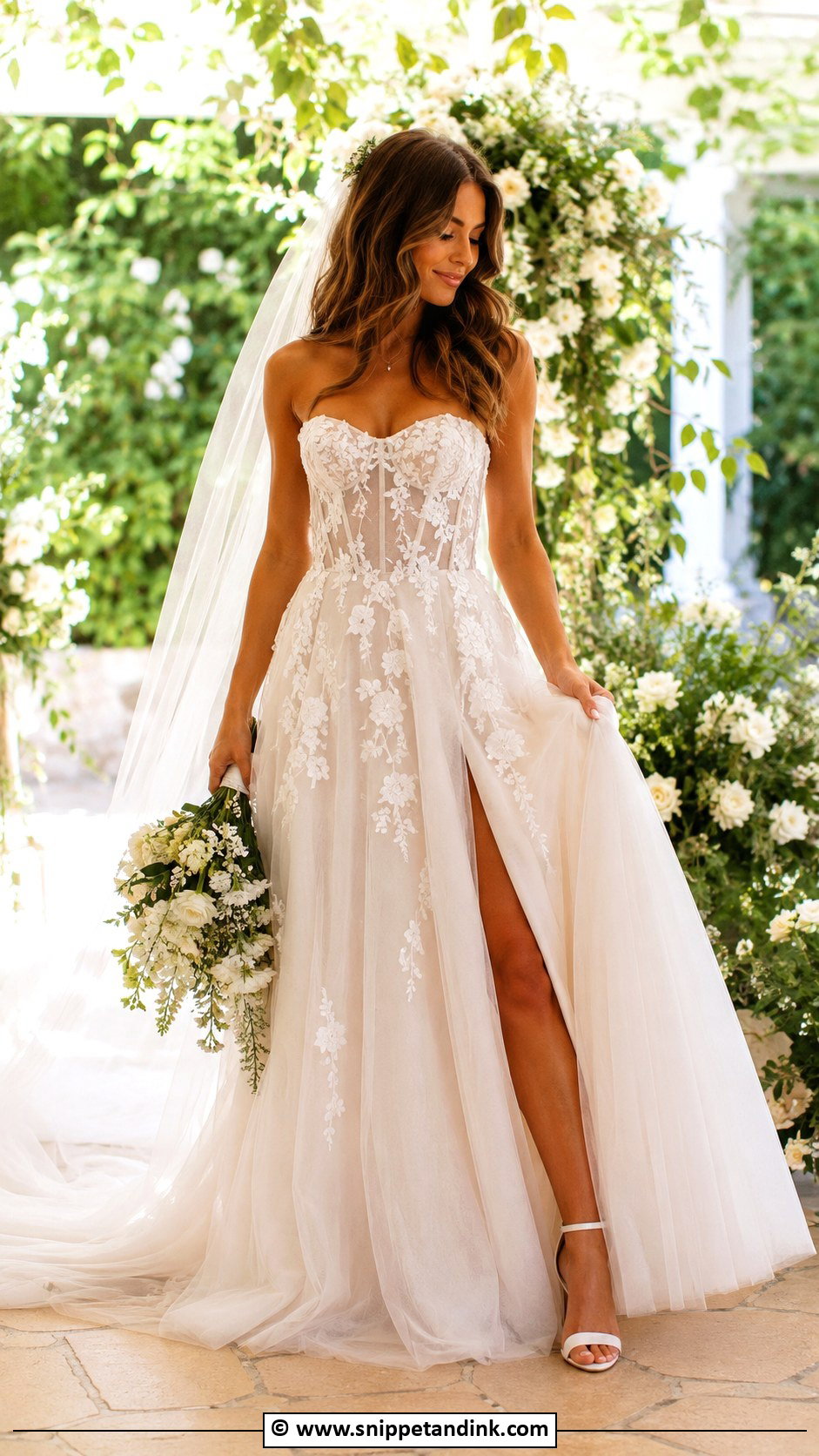
Floral lace on a corset makes structure look soft, which is why it fits garden and estate weddings. Large appliqués read bold from a distance; small motifs read delicate up close. Look at how the lace is placed over the boning. Good lace is hand-cut and laid so motifs cross the seams without being chopped. A tulle or organza skirt keeps it airy; a fitted skirt makes it dramatic. Pair with a soft veil, loose waves and a bouquet with greenery.
13. Minimalist Corset Wedding Dress
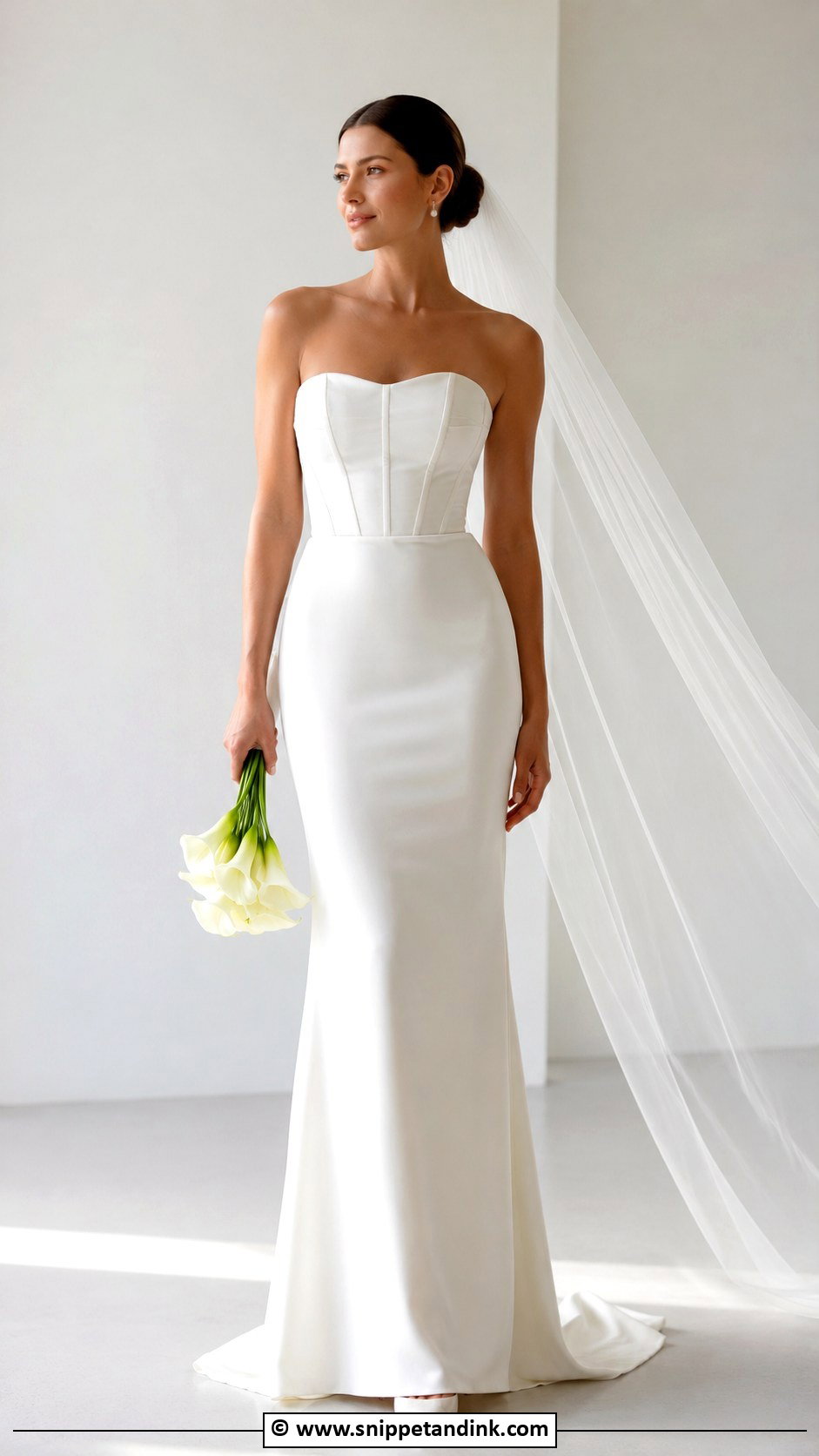
With no lace or beading, a minimalist corset gown shows every seam, so alterations matter more here than anywhere else in this list. Satin, crepe and mikado hold shape and look polished. Straight, square or subtle scoop necklines suit the clean lines. I’d check that the boning channels don’t show through the fabric as ridges, which can happen with thin satin. Style it with a simple veil, sleek hair and small diamond or pearl earrings. When the bodice is smooth and the hem exact, the whole dress looks expensive.
14. Corset Wedding Dress With Bow
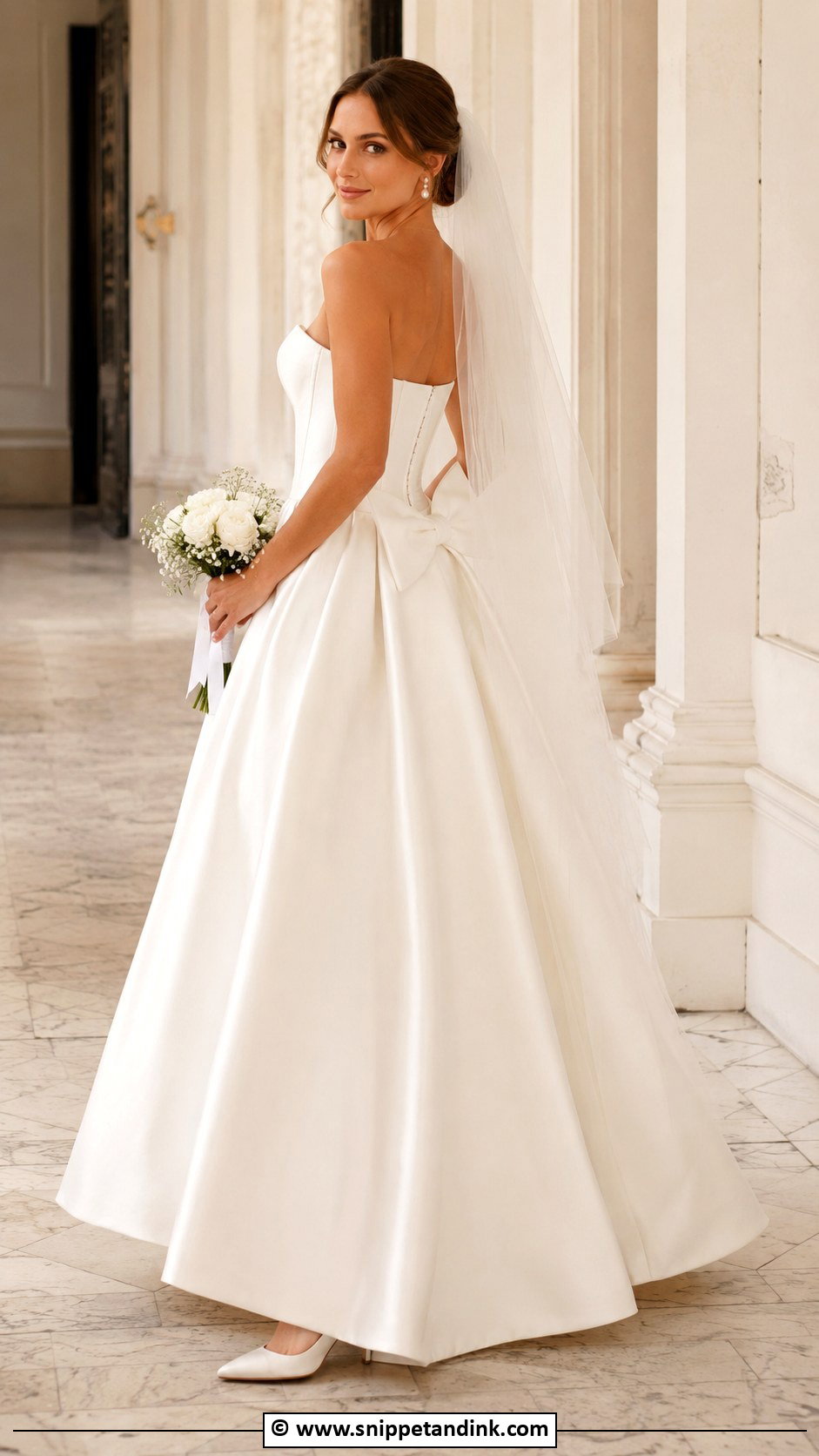
A bow can sit at the back waist, on the bodice or as part of a detachable train, and against a structured corset it adds a sweet contrast. Satin bows feel classic; organza bows look lighter. Large back bows crush when you sit, so ask whether the bow is stiffened or attached with snaps to remove for the reception. Keep jewelry simple so the bow stays the focus. It sits most naturally on a ball gown or A-line skirt.
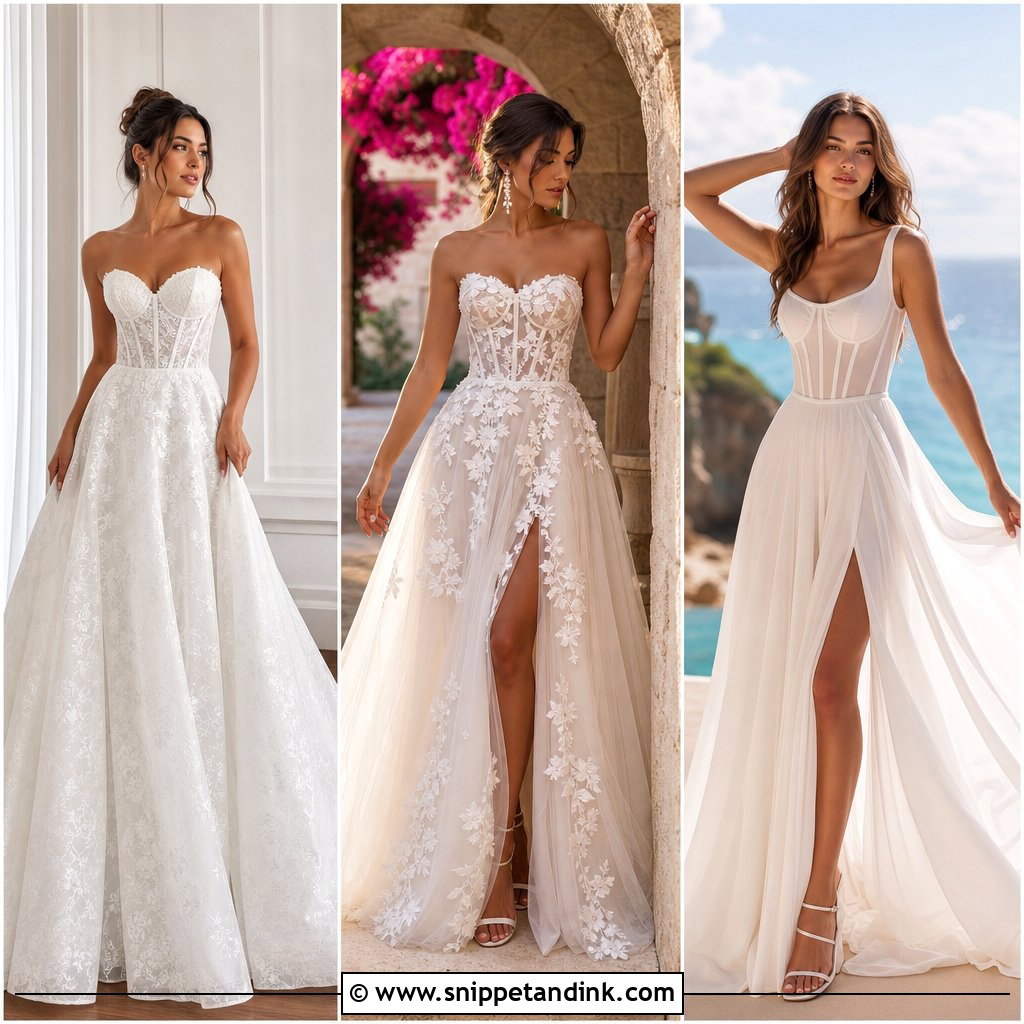
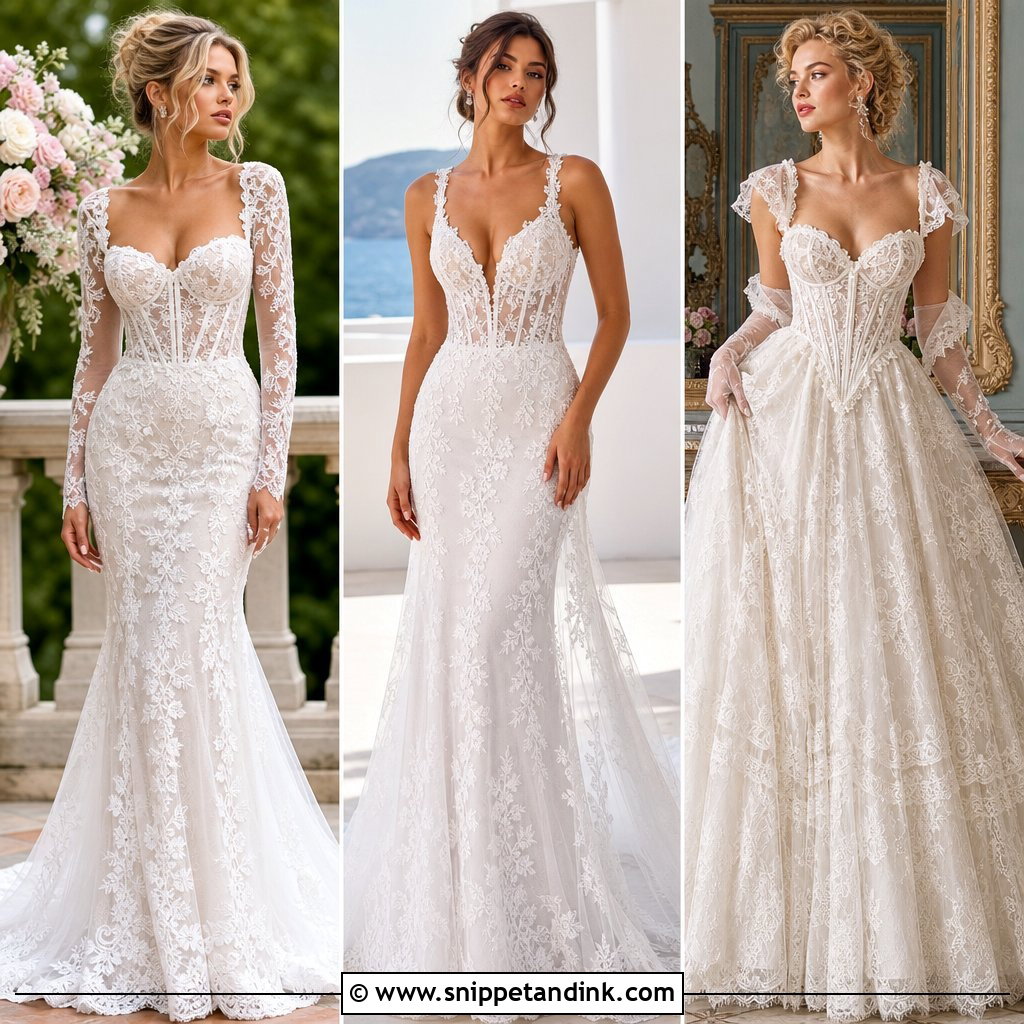

15. Corset Wedding Dress With Train
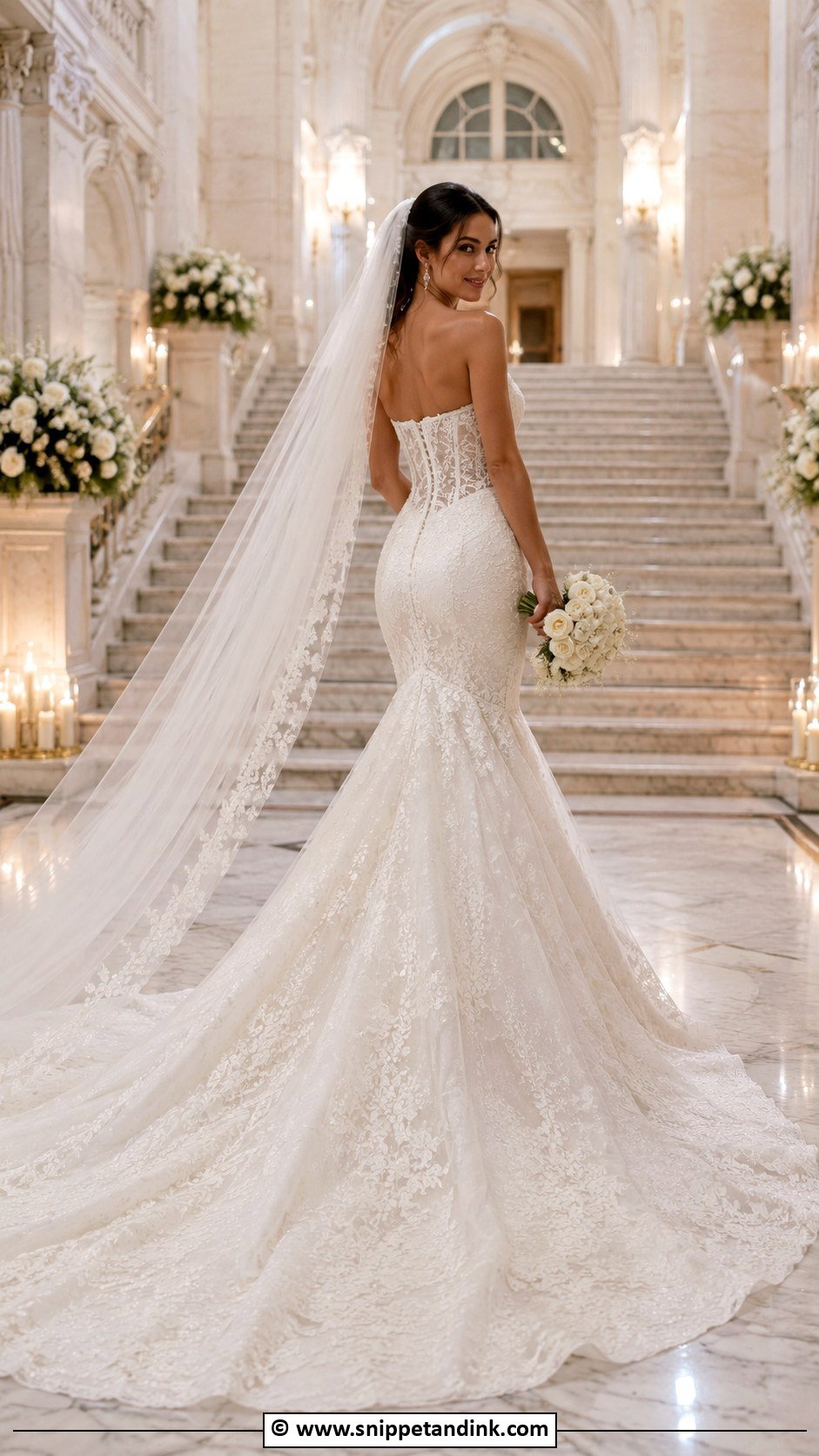
A train adds drama from behind while the corset does the work at the front. A chapel train is manageable for most venues; a cathedral train needs space and an attendant. Satin, lace and layered tulle all suit it. If the train is heavily detailed, a shorter veil keeps the two from competing. The bustle matters as much as the train. I’d ask to see it done at the last fitting, and teach a bridesmaid how to fasten it, so you’re not dragging fabric across the dance floor.
16. Corset Wedding Dress With Slit
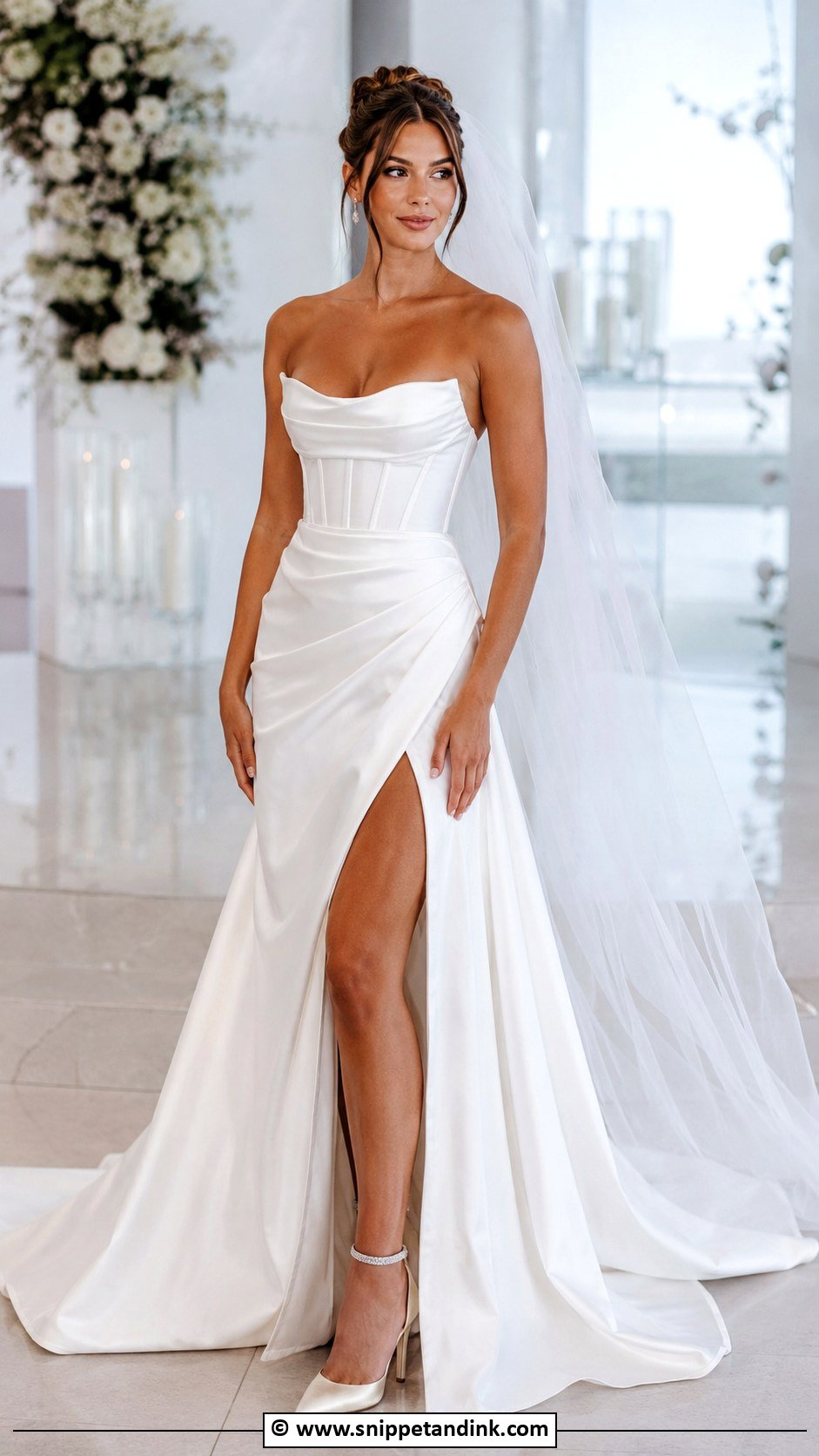
A slit makes a corset gown easy to move and dance in, and the structured bodice keeps it from looking too bold. A soft A-line with a side slit is the most wearable version. Satin and crepe suit it; tulle softens it. Slit height is personal, so sit, climb a step and walk at fittings, and check that it doesn’t open further than you’d like. Statement heels make sense here, since they’ll show. Keep the veil and jewelry clean.
17. Corset Wedding Dress With Tulle Skirt
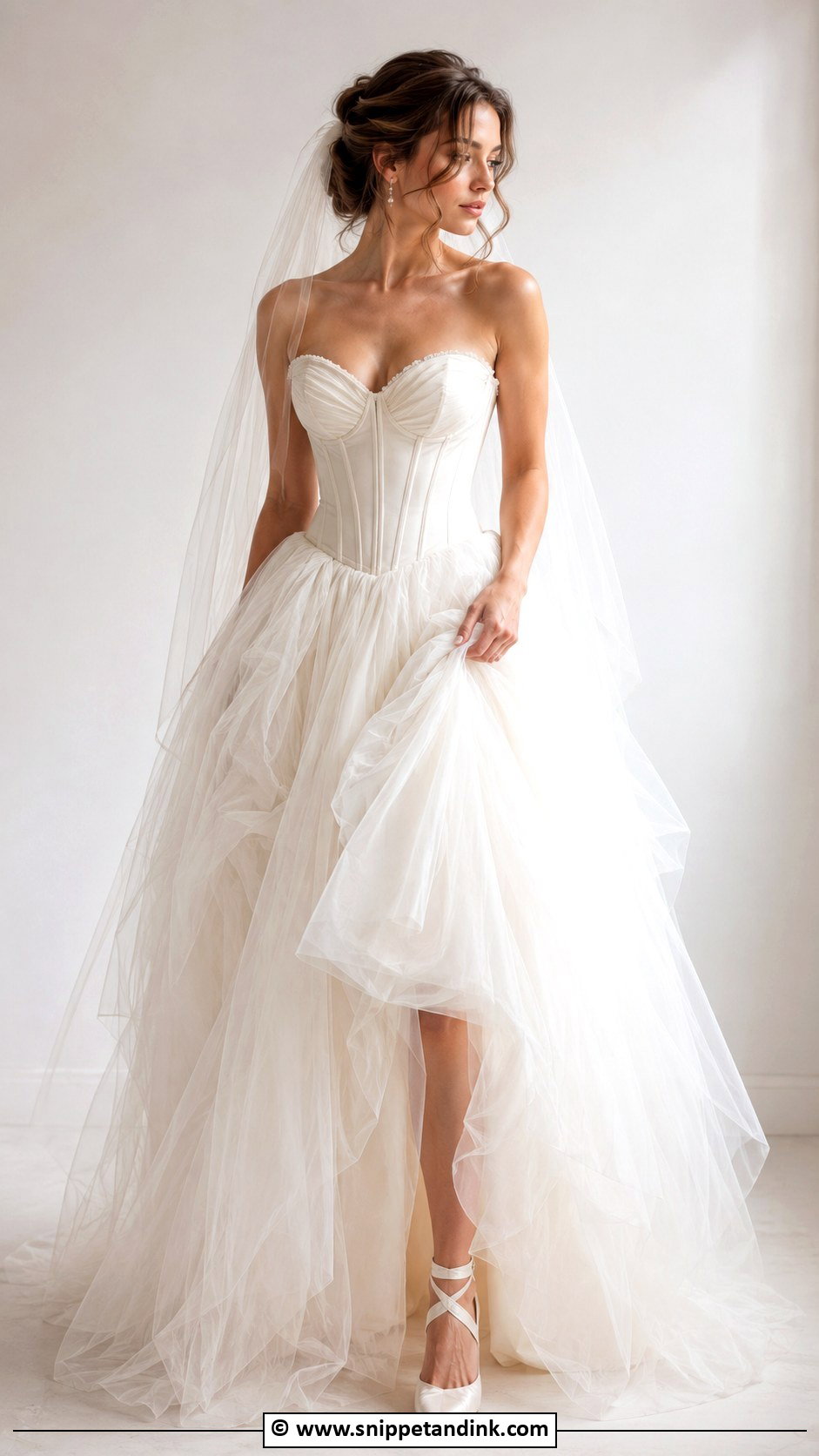
A corset over a tulle skirt gives shape on top and softness below. It’s the closest thing to a princess-inspired look without the weight of satin. Fine layers look airy; fuller layers look dramatic. A sweetheart neckline, basque waist or lace-up back pairs well. Tulle hides creases better than smooth fabrics, which helps on long days, but it snags on rough surfaces and jewelry clasps. Add delicate earrings, a soft veil and ballet-style heels.
18. Corset Wedding Dress With Organza Skirt
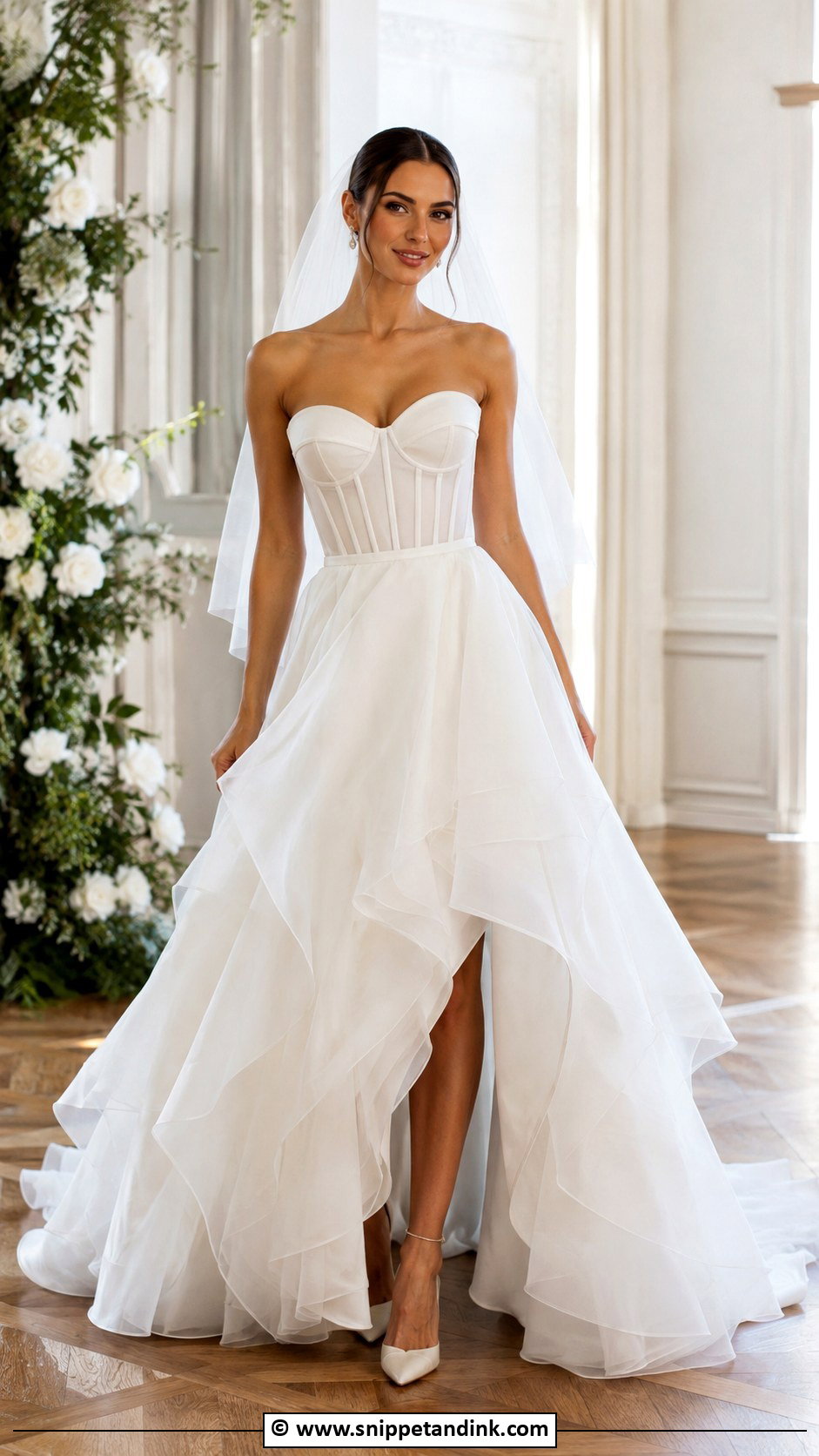
Organza is crisp and light, so a full skirt keeps its shape without much weight. The corset sets off the waist against that airy volume. Organza can be worked into soft waves, tiers or sculptural folds. Be aware it creases more sharply than tulle, so a steamer is worth having on the morning. It suits outdoor venues and modern ballrooms. Finish with a clean veil, pearl earrings and simple ivory sandals or pumps.
19. Corset Wedding Dress With Lace Up Back
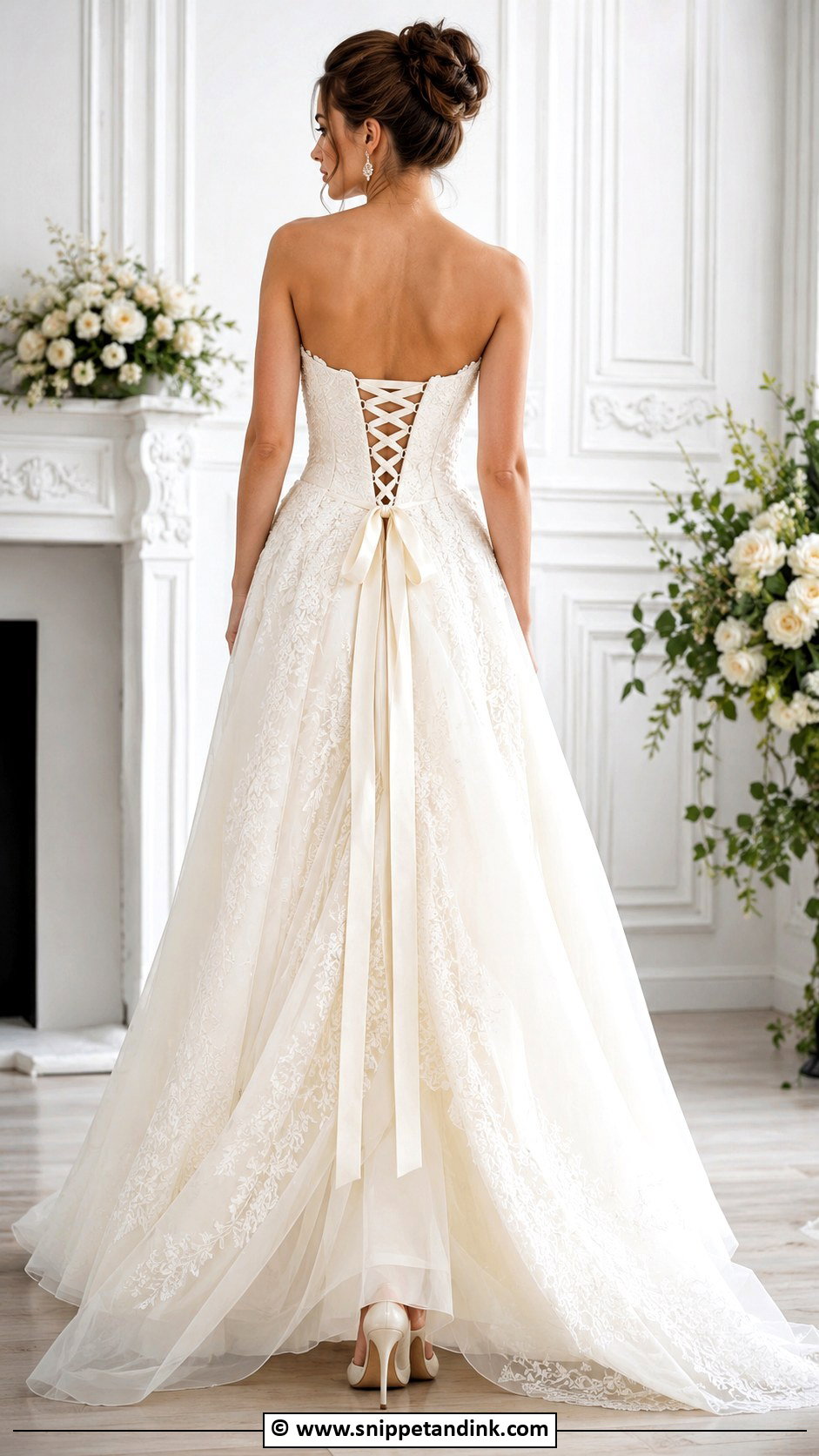
A lace-up back is the most forgiving closure for a corset bodice. The lacing adjusts by a few centimeters, which helps if your measurements change in the weeks before the wedding. It suits ball gowns, mermaids, A-lines and lace designs. Satin ribbon looks smooth and classic; narrow cord looks finer. Wear an updo or half-up hair so the back shows. During alterations, make sure the modesty panel behind the lacing lies flat and matches the dress color exactly.


20. Corset Wedding Dress With Exposed Boning
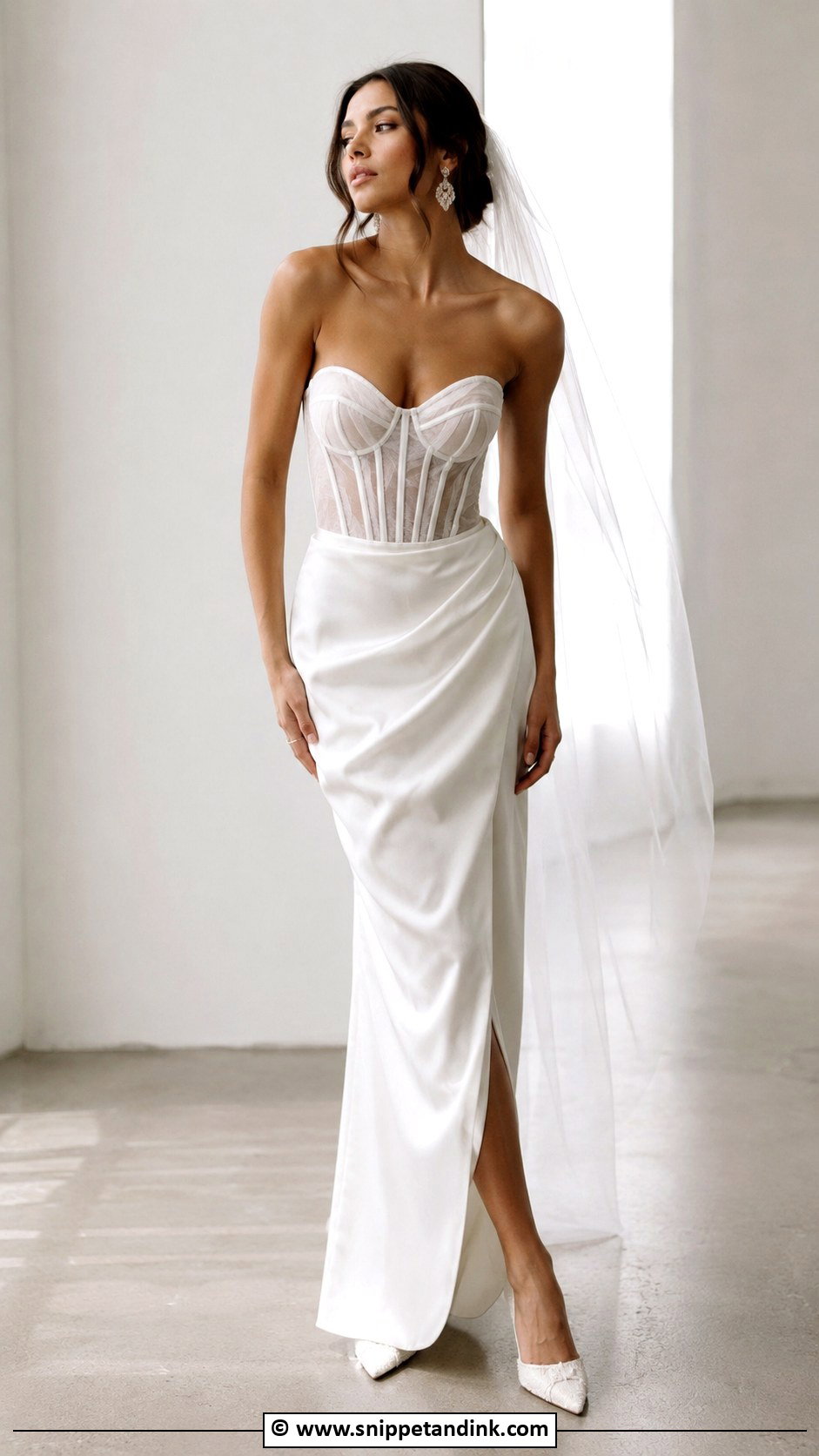
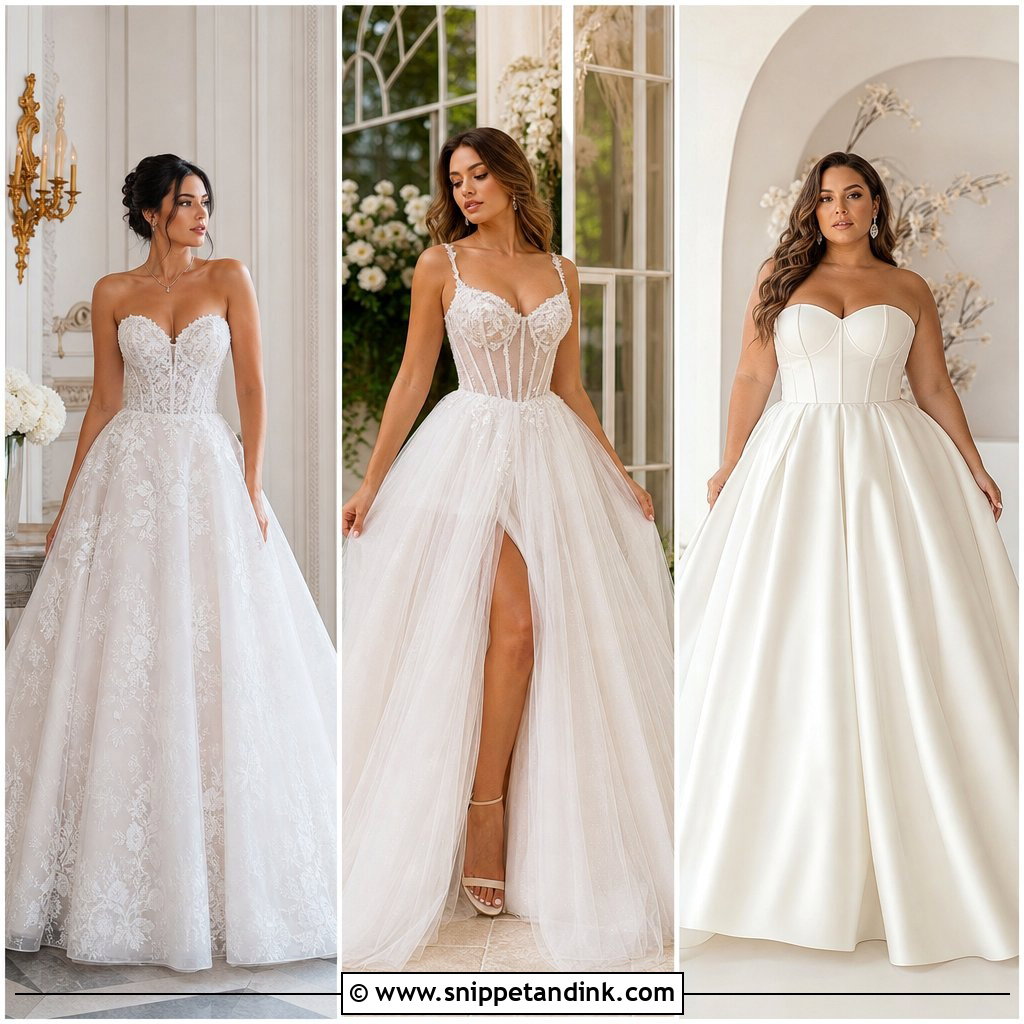
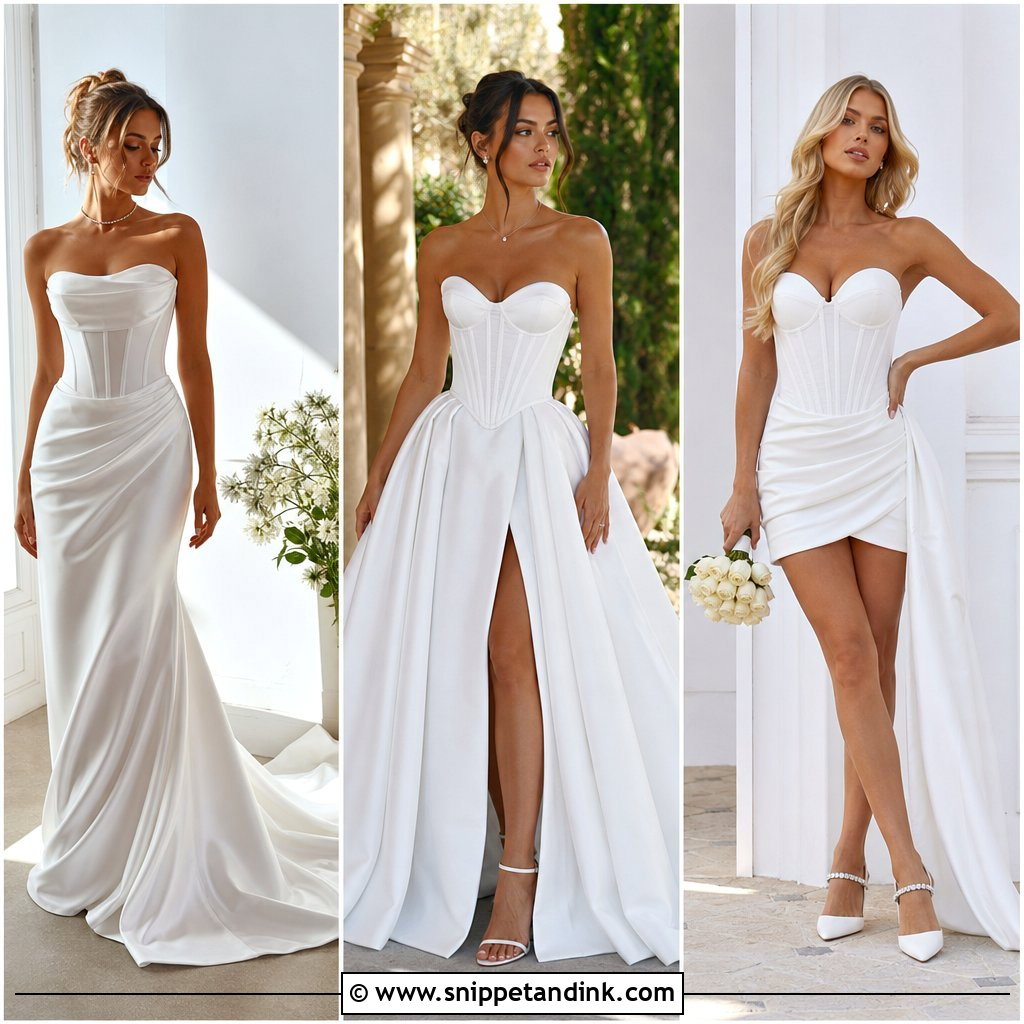
Exposed boning puts the corset’s structure on display, which gives the gown a fashion edge. Sheer tulle over the bones or lace along the seams softens it. Because the bodice is busy, the skirt should be plain. Comfort is the test I care about: the bones should support without digging into your ribs or hips when you sit. Ask what the boning is made of. Spiral steel flexes with you; cheap plastic can bend and stay bent. A sleek veil, clean earrings and minimal shoes suit it.
21. Corset Wedding Dress With Illusion Bodice
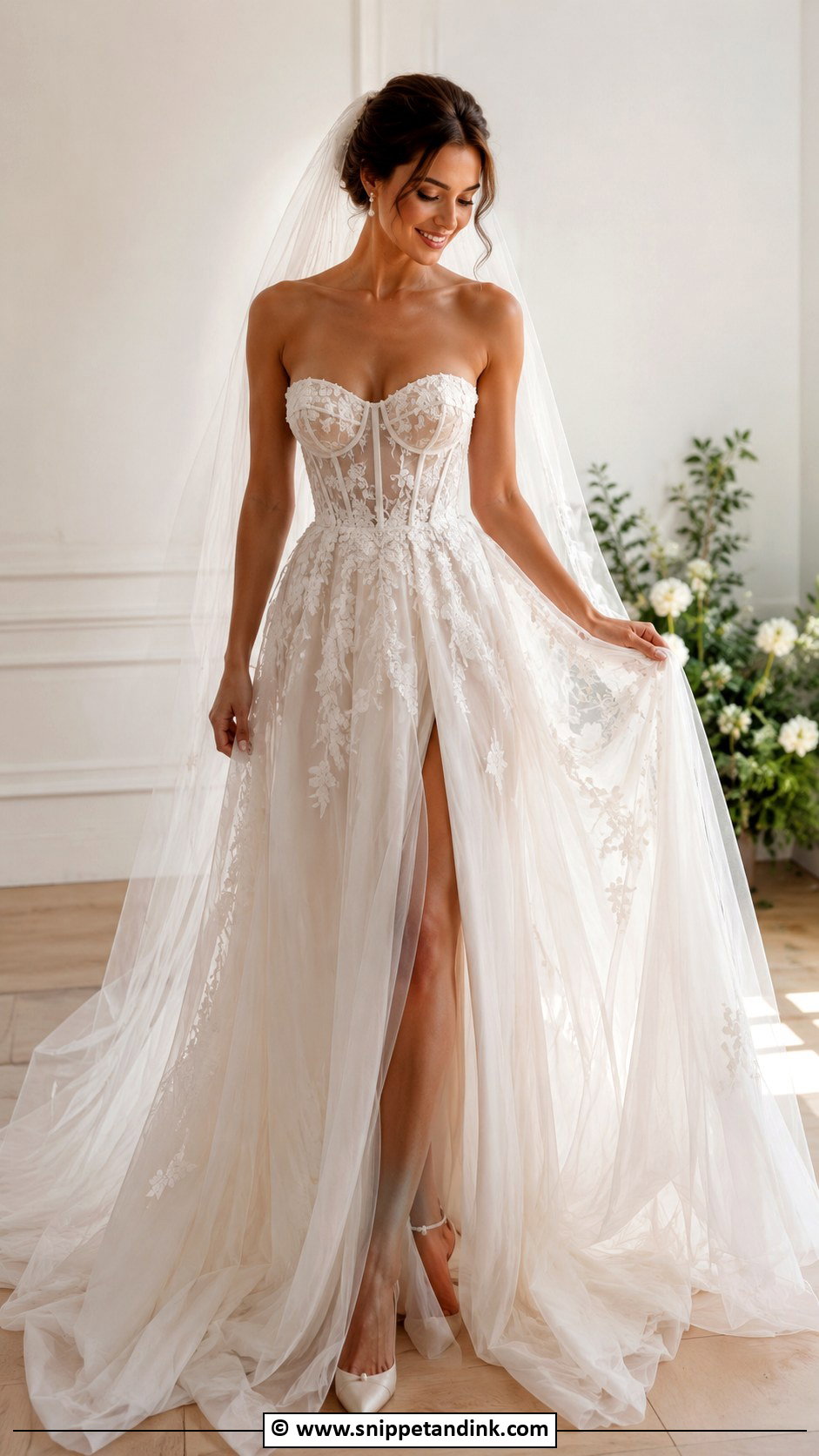
An illusion bodice uses sheer mesh to carry lace, beading or visible boning, so the gown looks detailed without a fully covered top. It suits tulle, lace and fitted crepe skirts. The mesh color is everything: match it to your skin tone as closely as you can, and check it in daylight and flash, since some nude meshes turn grey on camera. Review where the lining starts and stops at fittings. Pair with soft makeup, delicate earrings and a plain veil.
22. Corset Wedding Dress With Draped Skirt
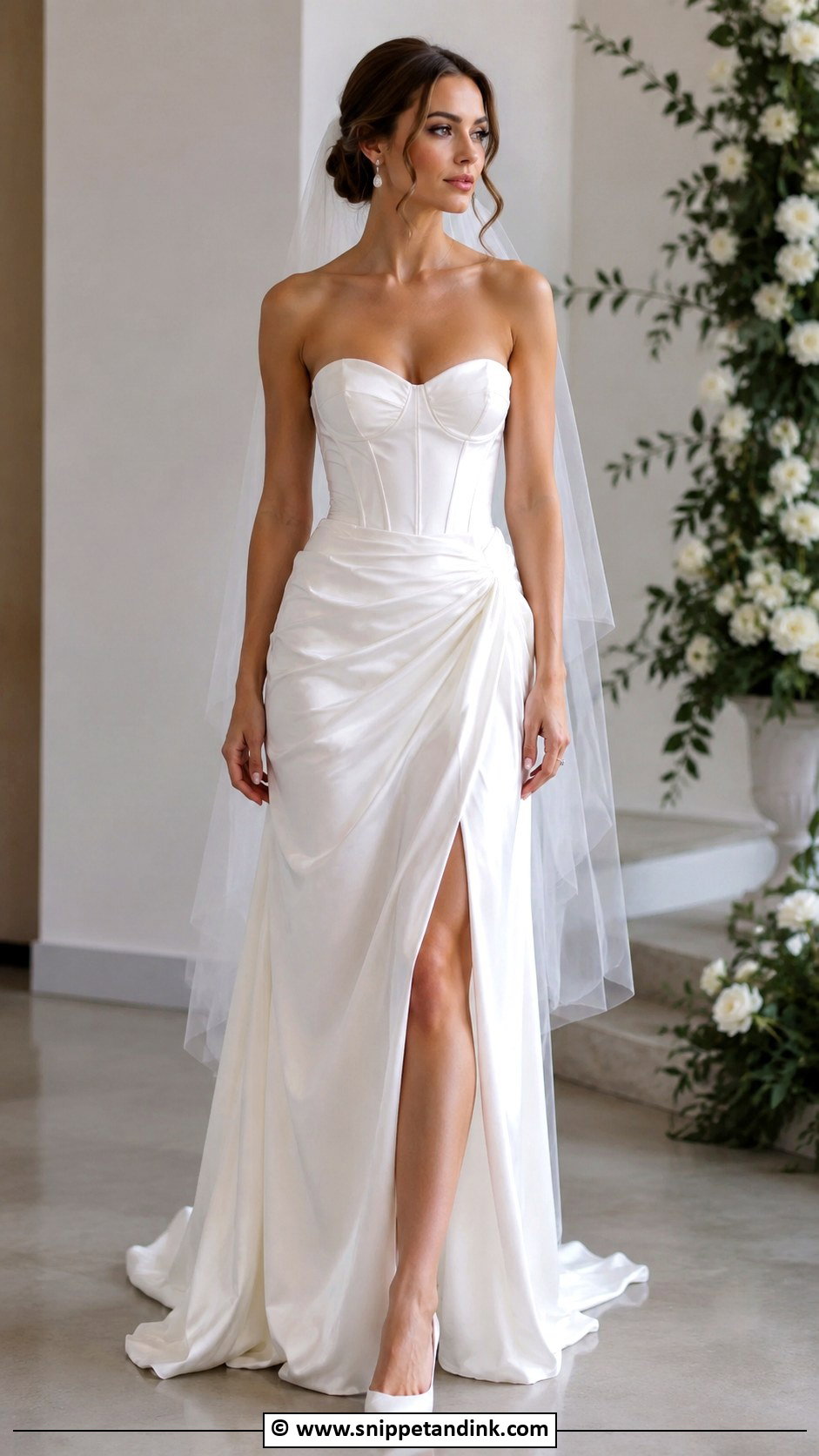
Draping across the hips softens a corset and gives the skirt fluid movement. Satin and crepe fold smoothly and hold the drape. The folds should fall naturally when you stand and walk, so bring your wedding shoes to every fitting; a different heel height shifts them. It flatters brides who want shape without a stiff skirt. Pair with a simple veil, swept-back hair and polished heels.
23. Corset Wedding Dress With Ruffle Skirt
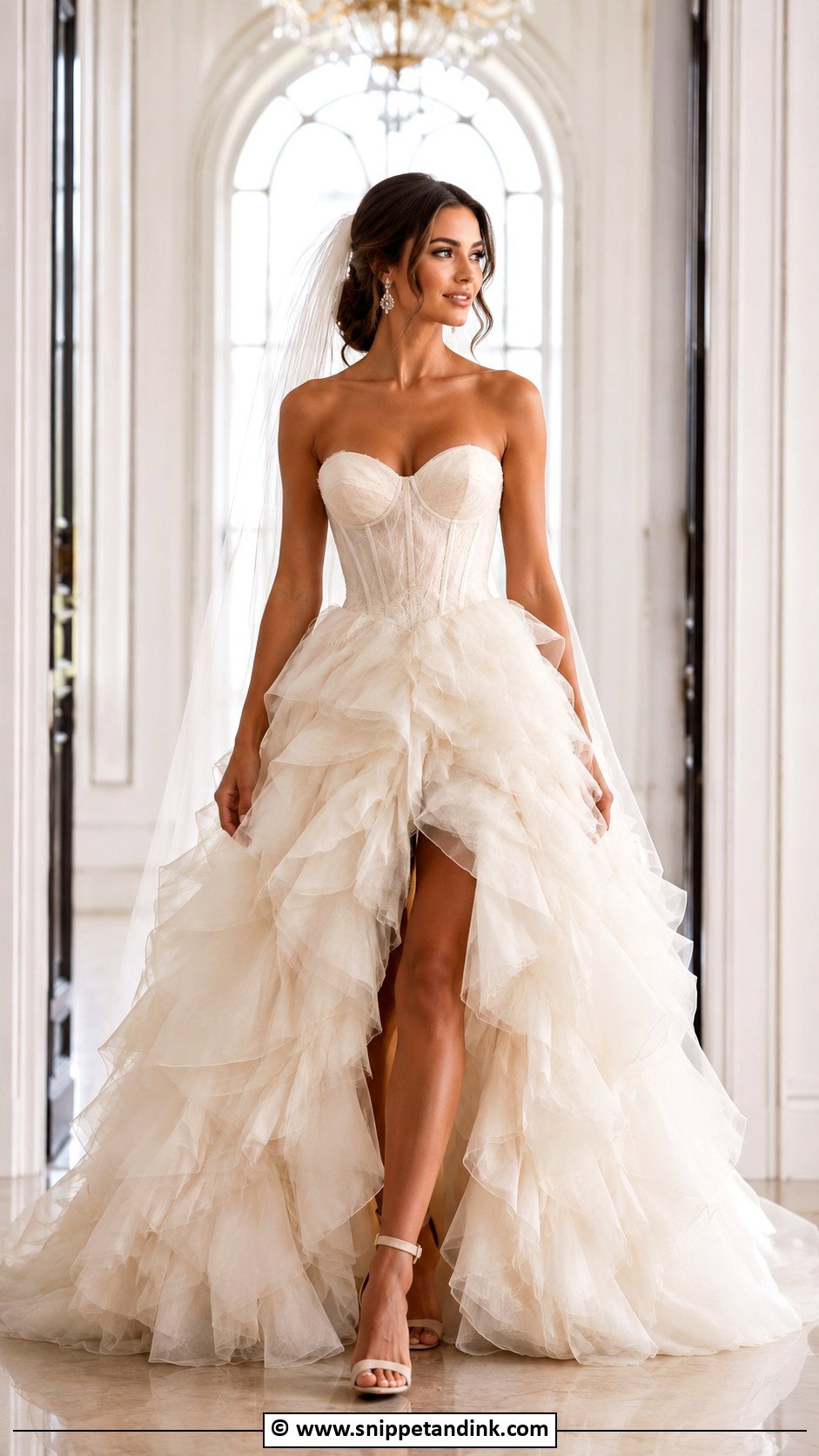
Ruffles add movement and volume, and the corset keeps the top balanced. Tulle ruffles feel romantic, organza ones crisp, lace ones vintage. The skirt carries plenty of interest, so keep accessories simple: a plain veil, small earrings and classic heels. On a petite frame, tiered ruffles can overwhelm, so I’d choose softer, smaller ruffles. The skirt will move as you walk, which shows up well in candid photos.
24. Corset Wedding Dress With Overskirt
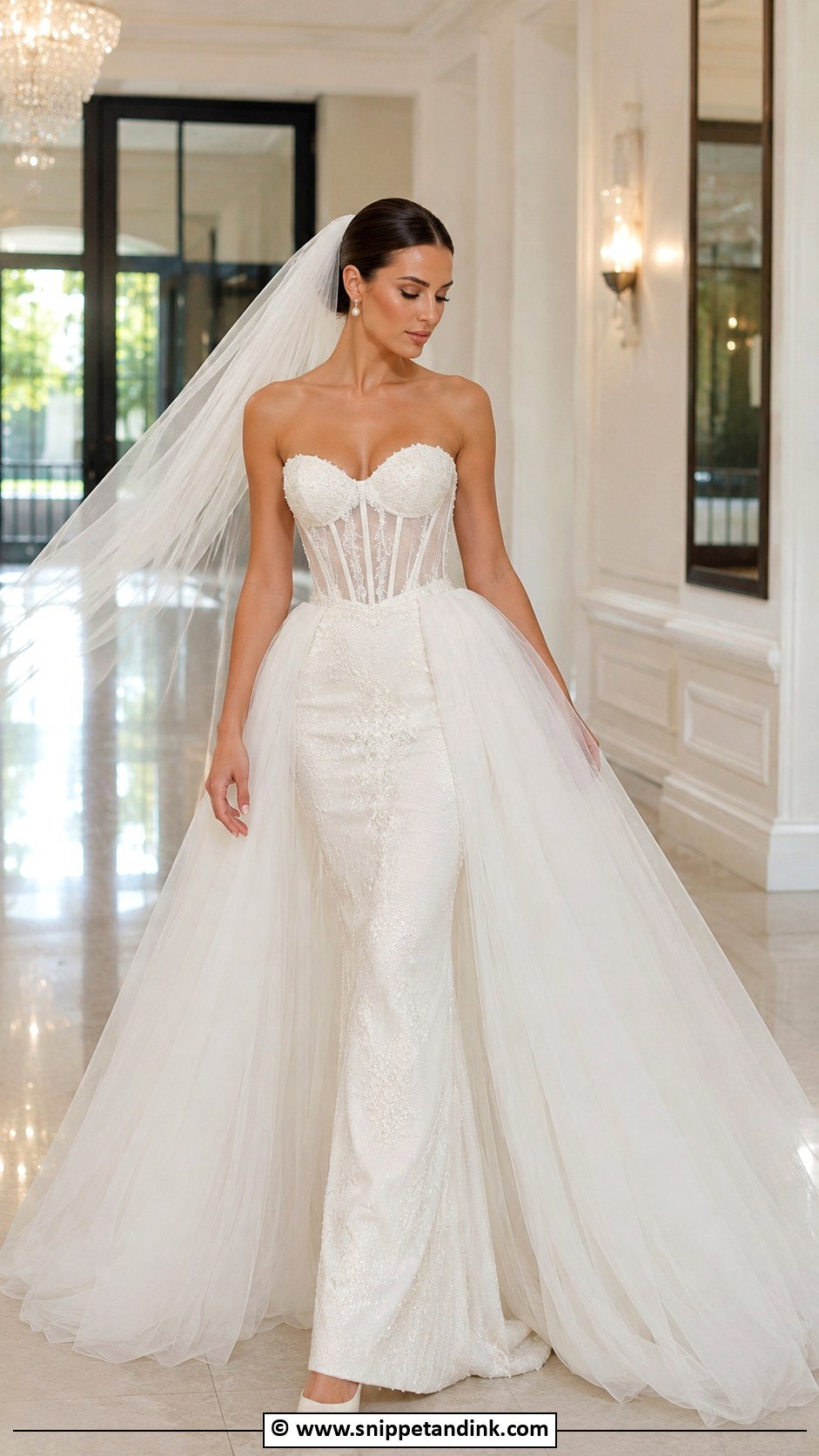
An overskirt gives you a grand aisle look and a lighter reception outfit with the same bodice. Underneath can be a fitted gown, sheath or simple A-line. Satin overskirts look formal; tulle feels soft. Remove the veil and overskirt together after the ceremony and you’re ready for the dance floor. Ask the shop to show how the overskirt attaches. Hooks under a belt or seam sit flattest at the waist, and someone should practice taking it off before the day.


25. Corset Mini Wedding Dress
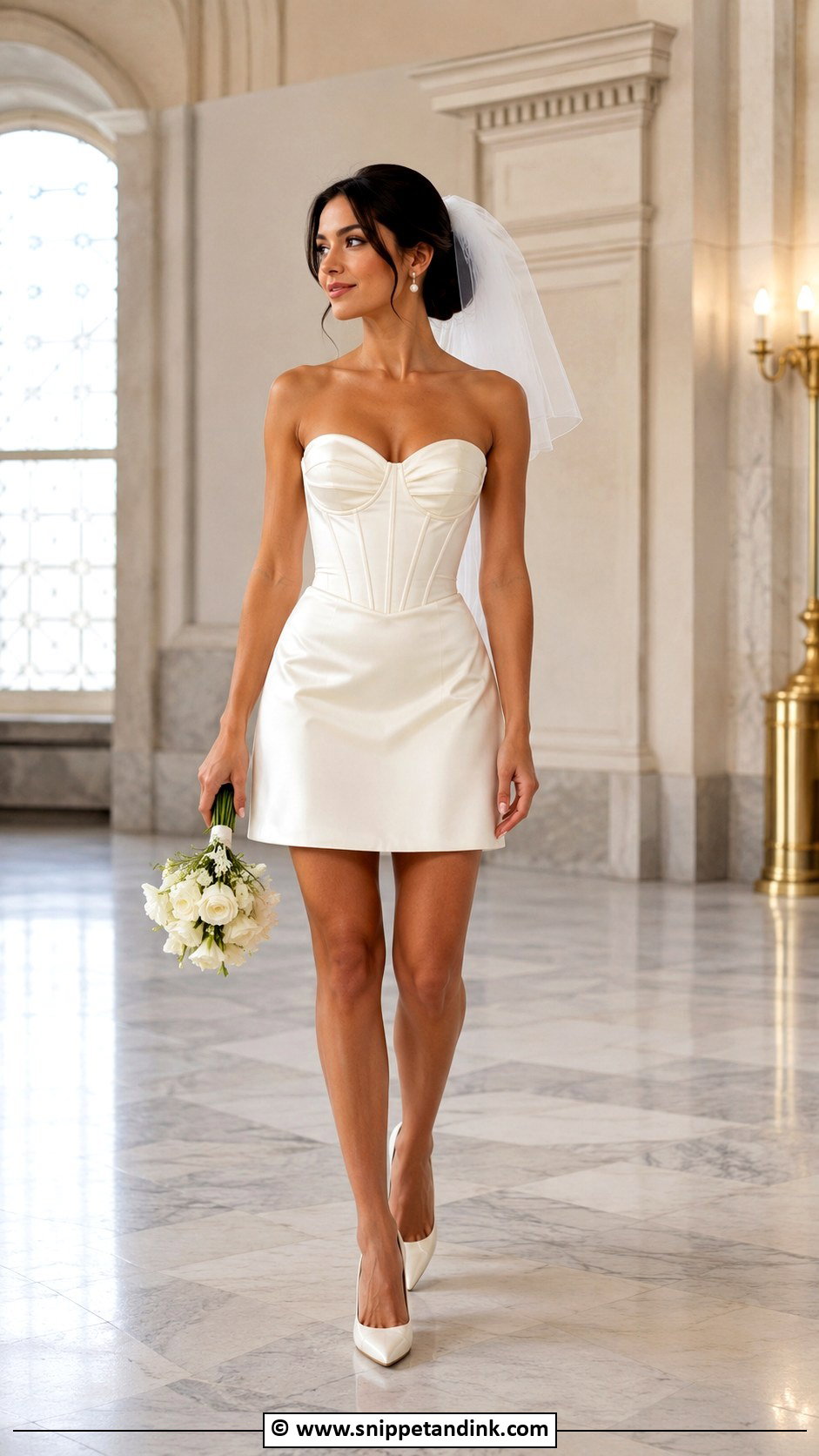
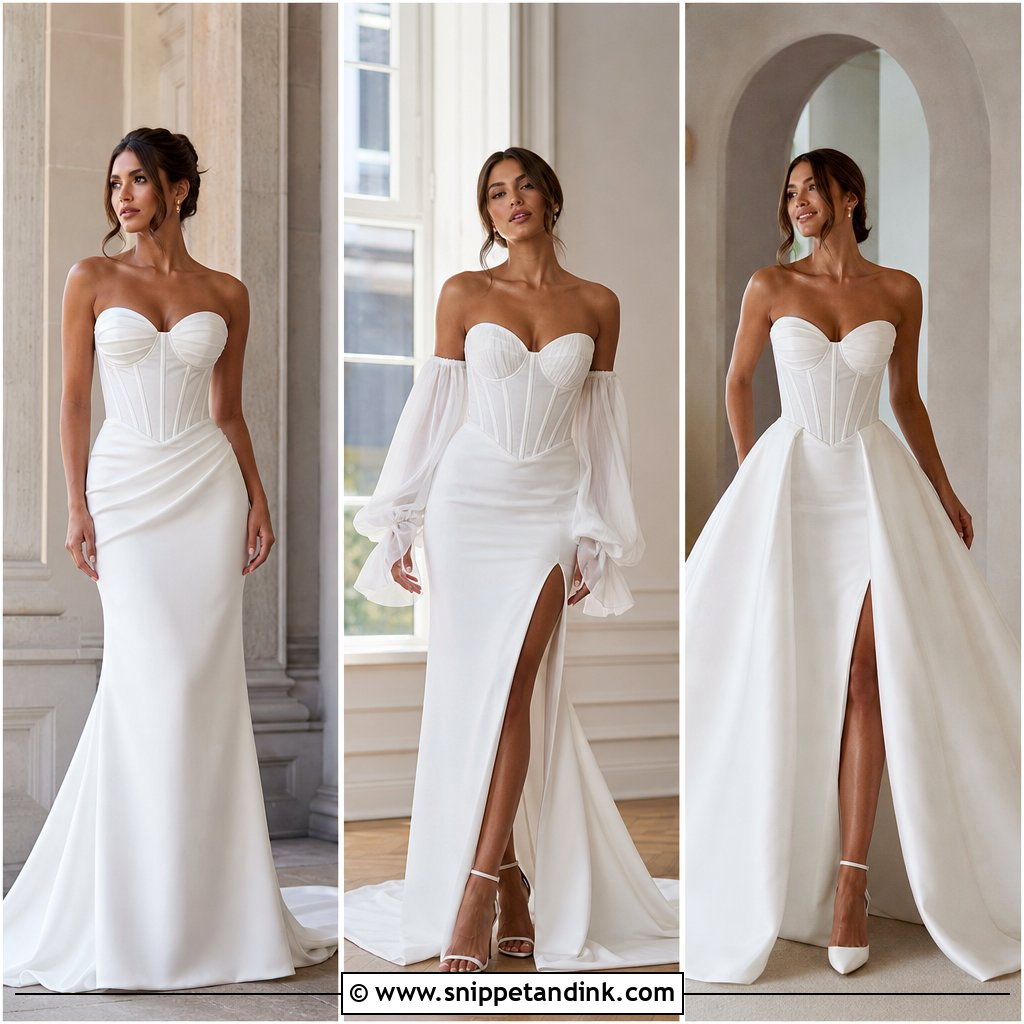
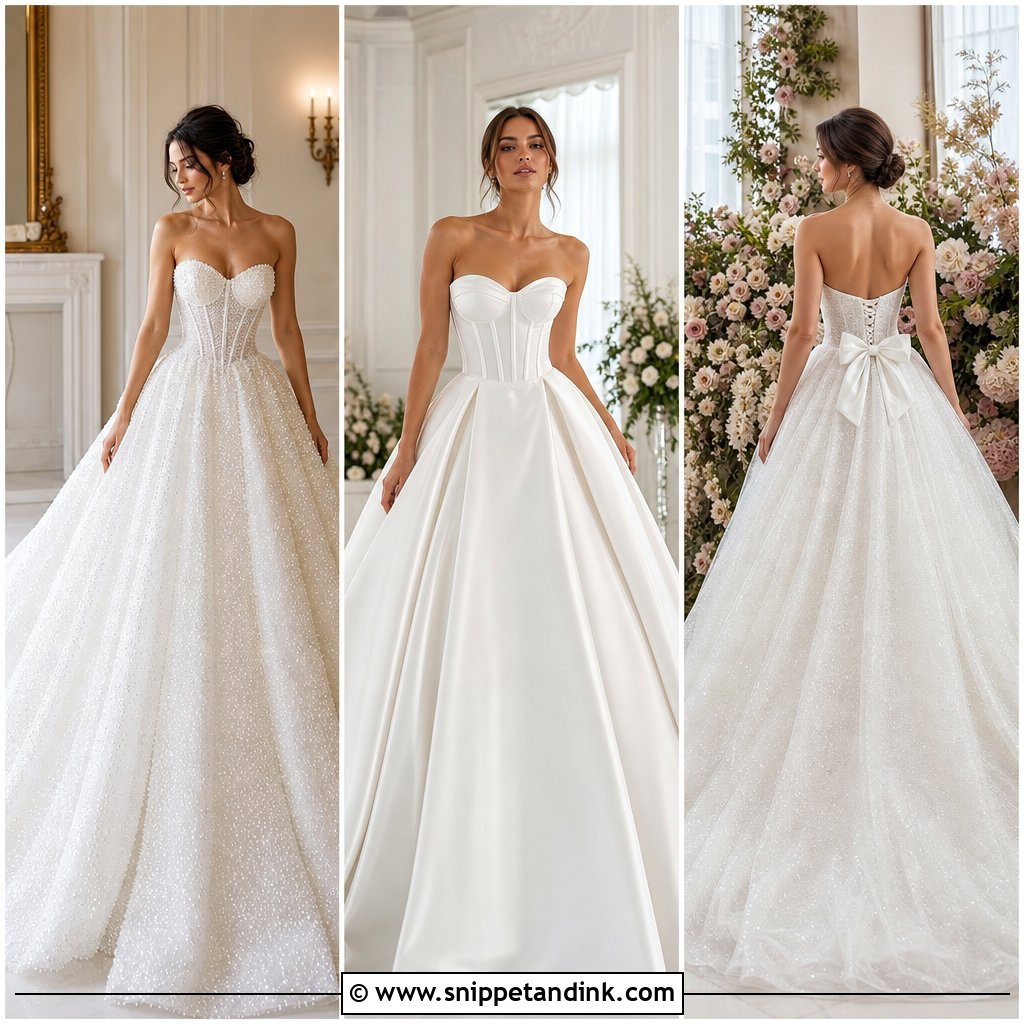
A corset mini suits a civil ceremony, a reception change or a modern bride. The short hem feels playful; the boned bodice keeps it polished. Satin, crepe and lace all work. Fit matters more on a short dress: a mini has nowhere to hide a loose bodice, and the skirt should let you sit without riding up. Pointed pumps, pearl earrings and a short veil or bow clip make it bridal. Sheer gloves or a structured blazer add coverage.
26. Corset Tea Length Wedding Dress
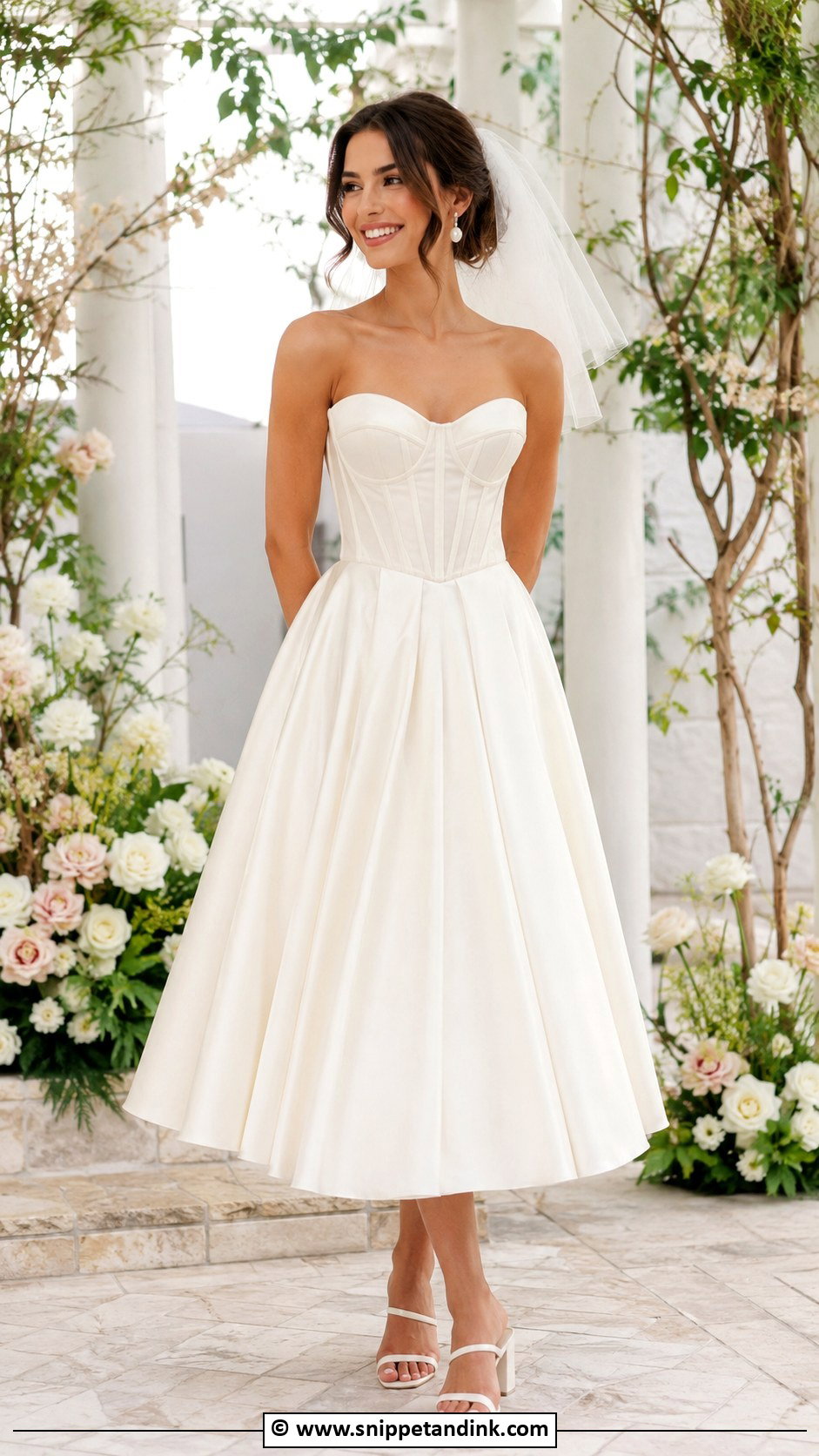
Tea length lands between knee and ankle, so the corset gives bridal shape while the skirt feels light. It suits courthouse weddings, gardens, brunch receptions and vintage-minded brides. Satin looks polished, tulle soft, lace classic. Because the hem shows your shoes, treat them as part of the outfit: block heels or embellished flats you can stand in. Add pearl earrings and a short veil.
27. Corset Sheath Wedding Dress
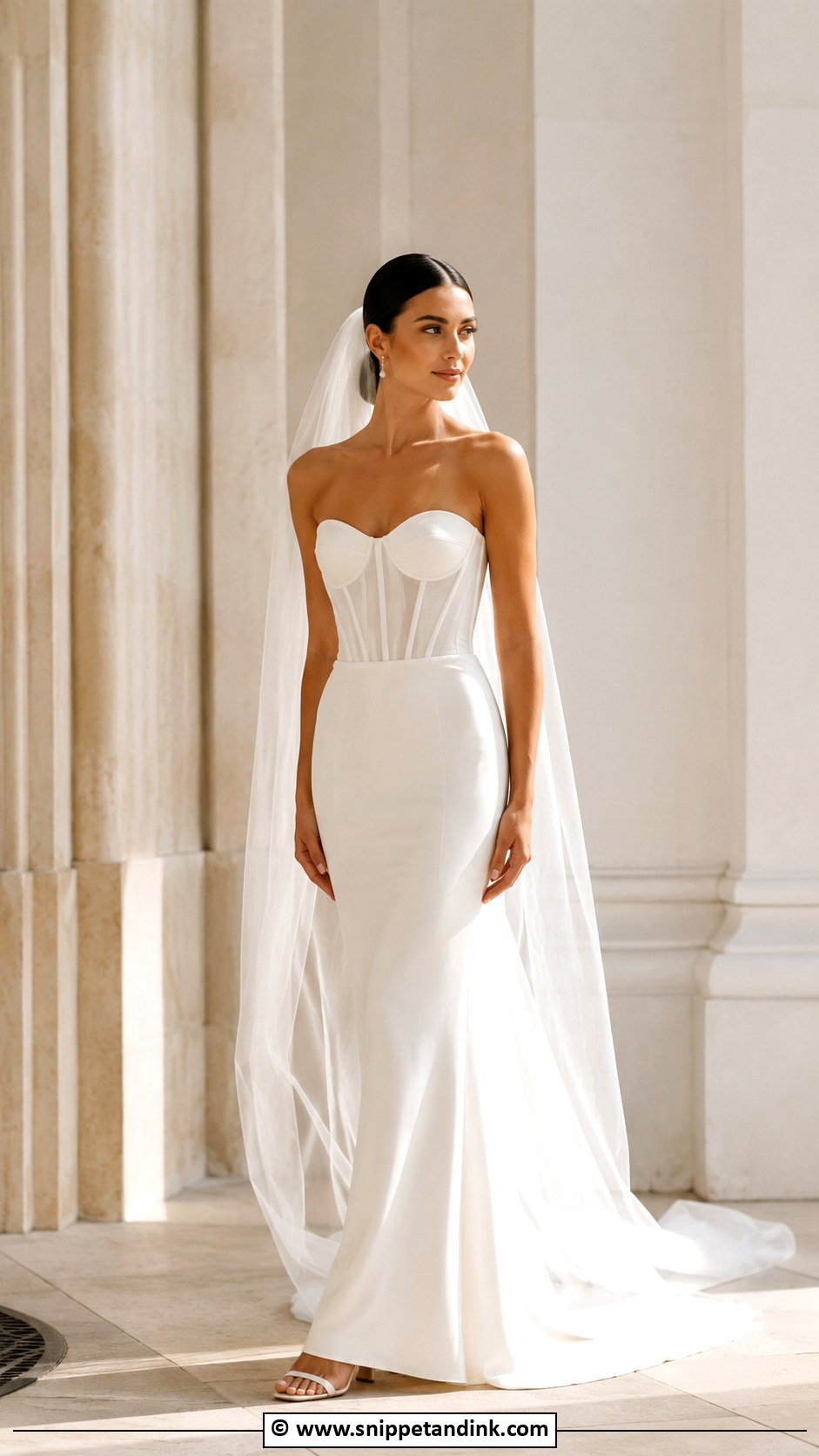
A corset sheath is the sleekest option here. The bodice shapes the upper body; the skirt falls close to the figure in a straight line. Crepe, satin and soft lace suit it. The skirt should skim, not pull, so check for horizontal lines across the hips when you sit; they mean the skirt needs letting out. A long veil adds ceremony drama, a short one keeps it minimal. Simple earrings, smooth hair and refined heels finish the look.
28. Corset Princess Wedding Dress
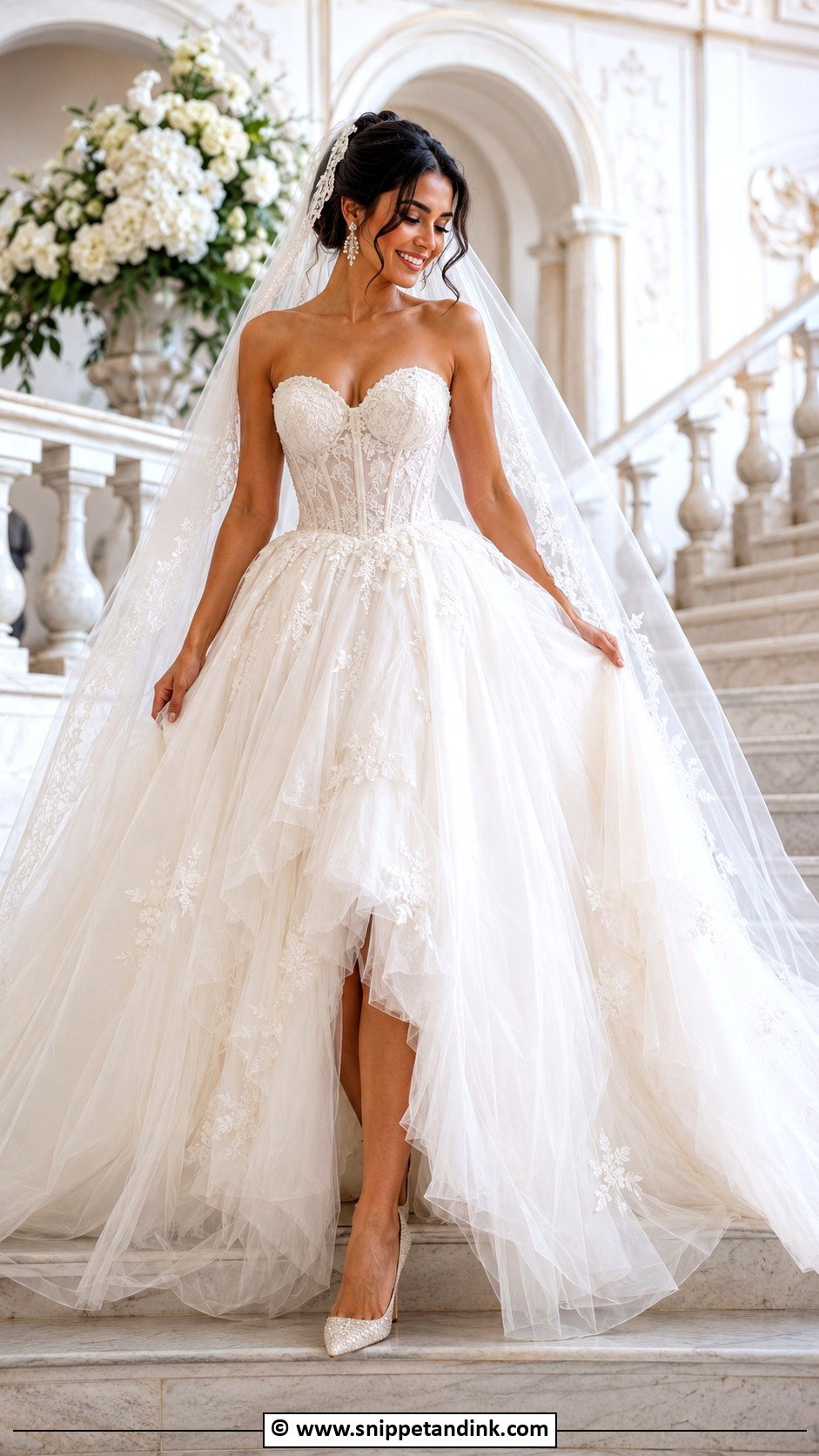
A corset princess wedding dress pairs a defined waist with a full skirt, and the boning matters even more under that much fabric. Tulle, satin, organza and layered lace all work, depending on the drama you want. A sweetheart neckline, basque waist or lace-up back adds romance. Balance is the rule: if the skirt is very full, keep the bodice clean or use fine appliqué. A cathedral veil, sparkling earrings and classic ivory heels complete it.
29. Corset Boho Wedding Dress
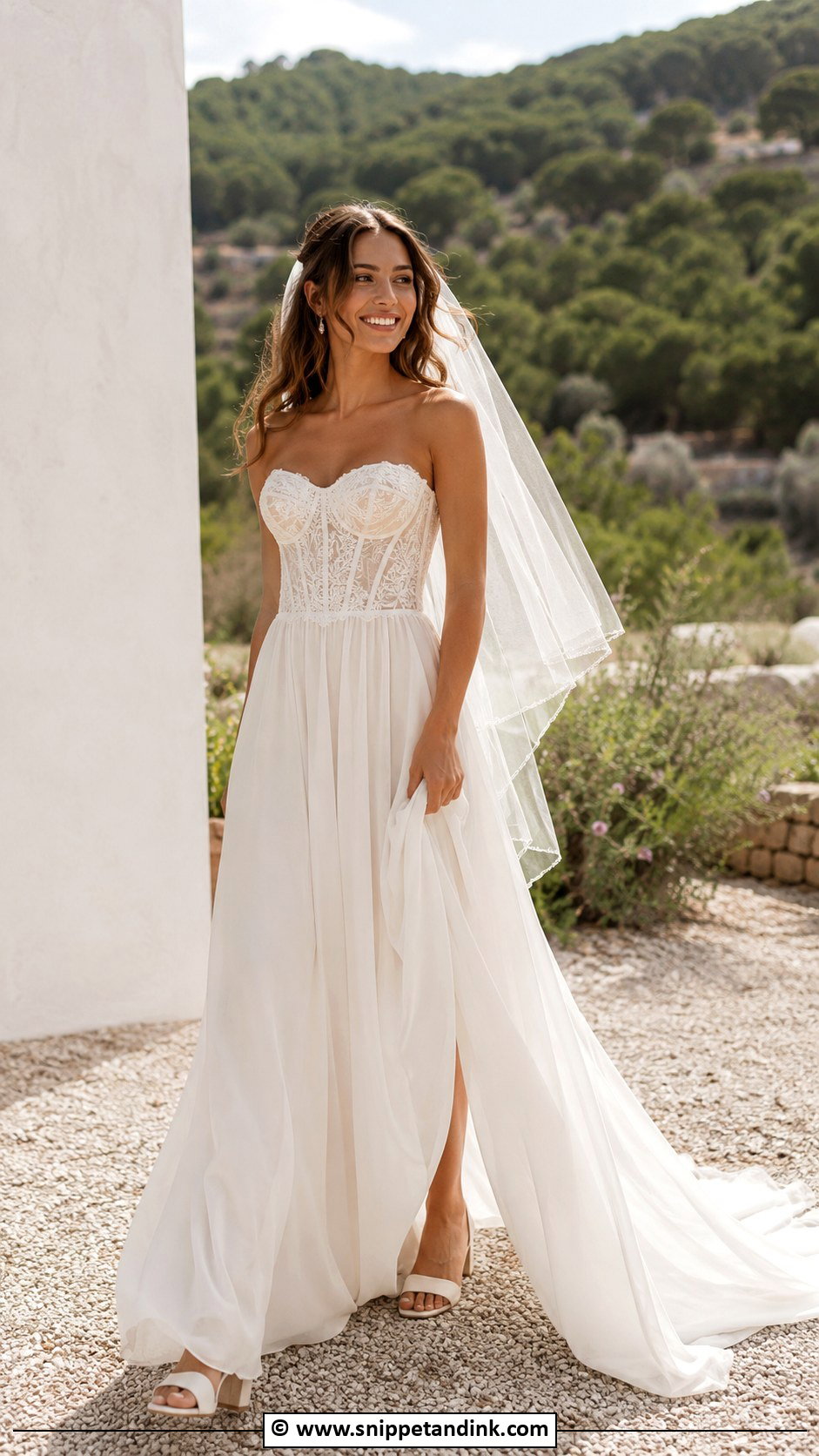
A boho corset should shape without stiffness, so I’d look for lighter boning and soft lace, light tulle or chiffon layers. Crochet-style lace and floral appliqué suit it more than sparkle. Outdoor venues, deserts, gardens and rustic barns all fit its mood. It breathes better than a satin corset, which matters in summer. Pair it with loose waves, simple earrings and sandals or block heels. A fingertip veil or floral comb finishes it naturally.
30. Black Corset Wedding Dress
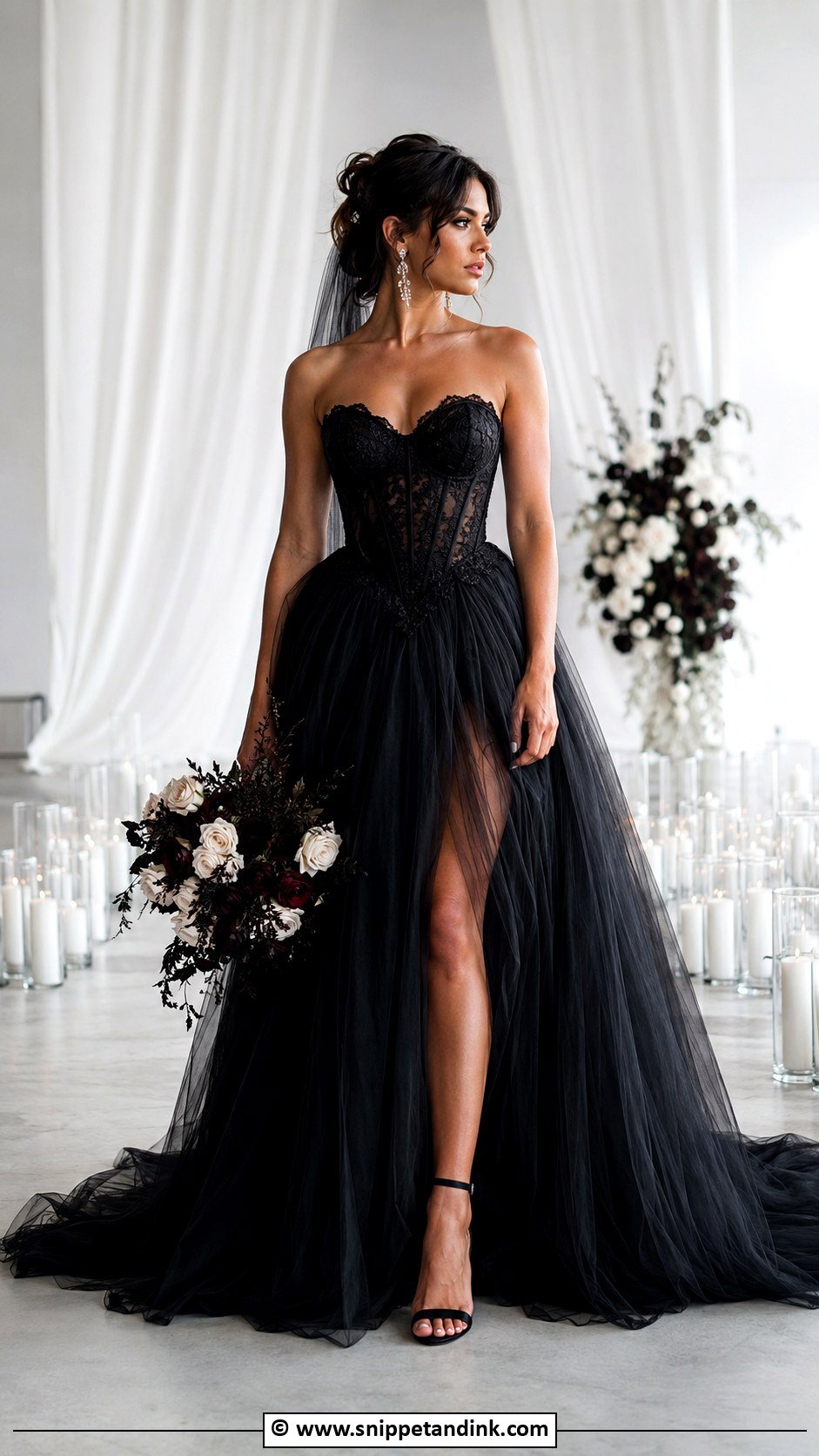
A black corset gown is a deliberate break from ivory, so the fit has to be flawless; black shows structure and seams clearly in photographs. Black satin, tulle or lace all work. A ball gown reads formal, a lace mermaid romantic and an A-line modern. Keep accessories refined: crystal earrings, sleek heels, a bouquet in white or deep green. If a full black gown feels too much, black lace over a nude or ivory lining is a gentler version.
Teach Someone to Lace You Up a Week Early
Lace-up and corset backs look simple until someone nervous tries to do them at 8am with a photographer waiting. Pick one person, usually a bridesmaid or your mother, and have them do it at your final fitting while the seamstress watches.
- Start with the modesty panel flat and centered behind the lacing before any tension goes on.
- Lace from the top down or from the bottom up as your seamstress shows, pulling evenly at each pair of loops so the gap stays parallel.
- Leave the lacing slightly loose at first, then tighten again after about twenty minutes. The fabric and your body both settle.
- Tuck the tails of the ribbon or cord neatly inside the panel, or tie a small bow at the base. Long tails tangle with the veil.
Allow extra time in the getting-ready schedule for this. Eat a proper breakfast before you’re laced, and keep small snacks for later, since a big meal in a corset is uncomfortable.
A Corset Bodice After the Wedding
Boned bodices are the part of a gown that suffers most in storage. Never hang a corset dress by its straps or shoulders; the skirt’s weight pulls the bodice out of shape. Use the inner hanging loops sewn at the waist, or lay it flat in an acid-free box with tissue in the bodice. Have it professionally cleaned soon after the wedding, since sweat at the boning channels can mark fabric over time. If the bones are steel, keep the dress somewhere dry.
Which Corset Gown Suits Your Day?
Corset gowns work because they give shape and support in many forms. A dramatic basque ball gown, a sleek satin sheath, a romantic lace mermaid gown or a playful mini can all sit on the same boned foundation. Start with your venue, your comfort level and how you want to move, then judge each dress on fit, fabric and how it behaves when you sit and dance. Get the alterations right and any of these will feel like your own.
You'll Like These Ideas:






Leave a Reply