
Satin and lace pull in opposite directions, and that is what makes them work together. Satin is smooth and reflective; lace is matte, textured and softer in photos. Put them in one gown and each makes the other look better. Here are twenty satin and lace combinations, from ball gowns and mermaids to slip dresses, midis and minis, with lace used as a corset, a back panel, a trim, a cape or a removable overskirt. I’ve added the accessories I’d choose and the fitting details that matter when two very different fabrics have to sit together on one body.
Hand-Sewn or Glued? Inspecting the Lace in the Salon
Two satin and lace gowns can look identical on a hanger and wear very differently. When I pull a dress for a bride, I turn the bodice inside out and look closely before she tries it on. You can do the same.
- How the appliqués are attached. Hand-stitched motifs move with the satin. Glued or fused ones can stiffen and lift at the edges after a long day of body heat.
- Whether the lace crosses the seams. On better gowns the lace is cut and matched across seams so the pattern doesn’t stop abruptly at the side.
- The edges of each motif. Run a finger along them. Rough or scratchy edges near the underarm will bother you within an hour.
- The colour match. Hold the lace against the satin by a window. White lace on ivory satin shows as two shades in photos.
None of this means a cheaper gown is wrong. It tells you what to ask your seamstress to reinforce before the day.
1. A-Line Satin Lace Wedding Dress
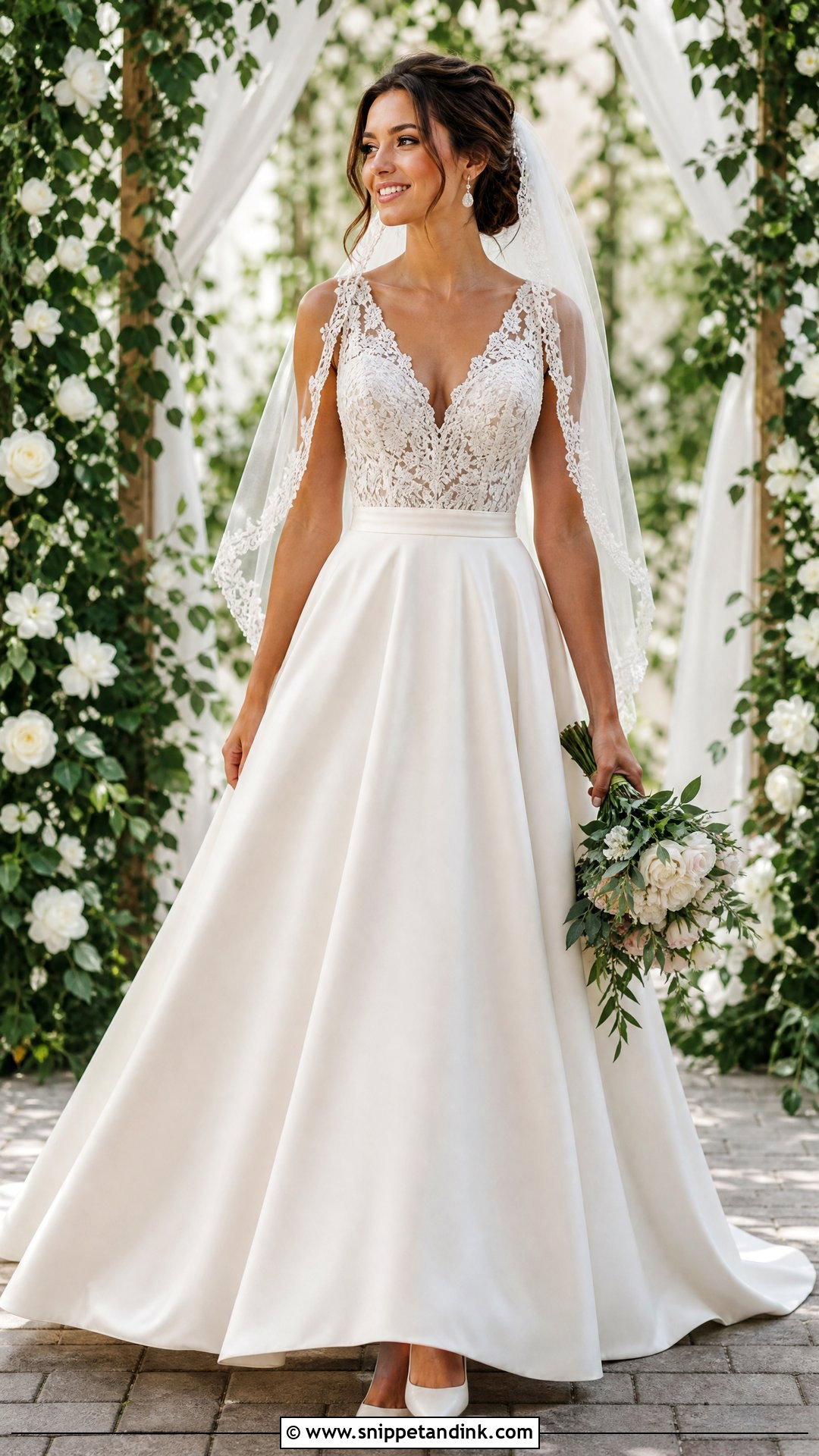
An A-line gives structure without the weight of a full ball gown, which is why I suggest it to so many brides who are torn. A fitted lace bodice with a soft V and a defined waist flows into a plain satin skirt. I like appliqués that spill a little below the waist seam, so the change from lace to satin looks gradual rather than cut off. Pointed ivory pumps, pearl drops, a fingertip veil and a low chignon. You can walk, sit and dance in it without thinking, which counts for a lot by evening.
2. Strapless Satin Lace Ball Gown
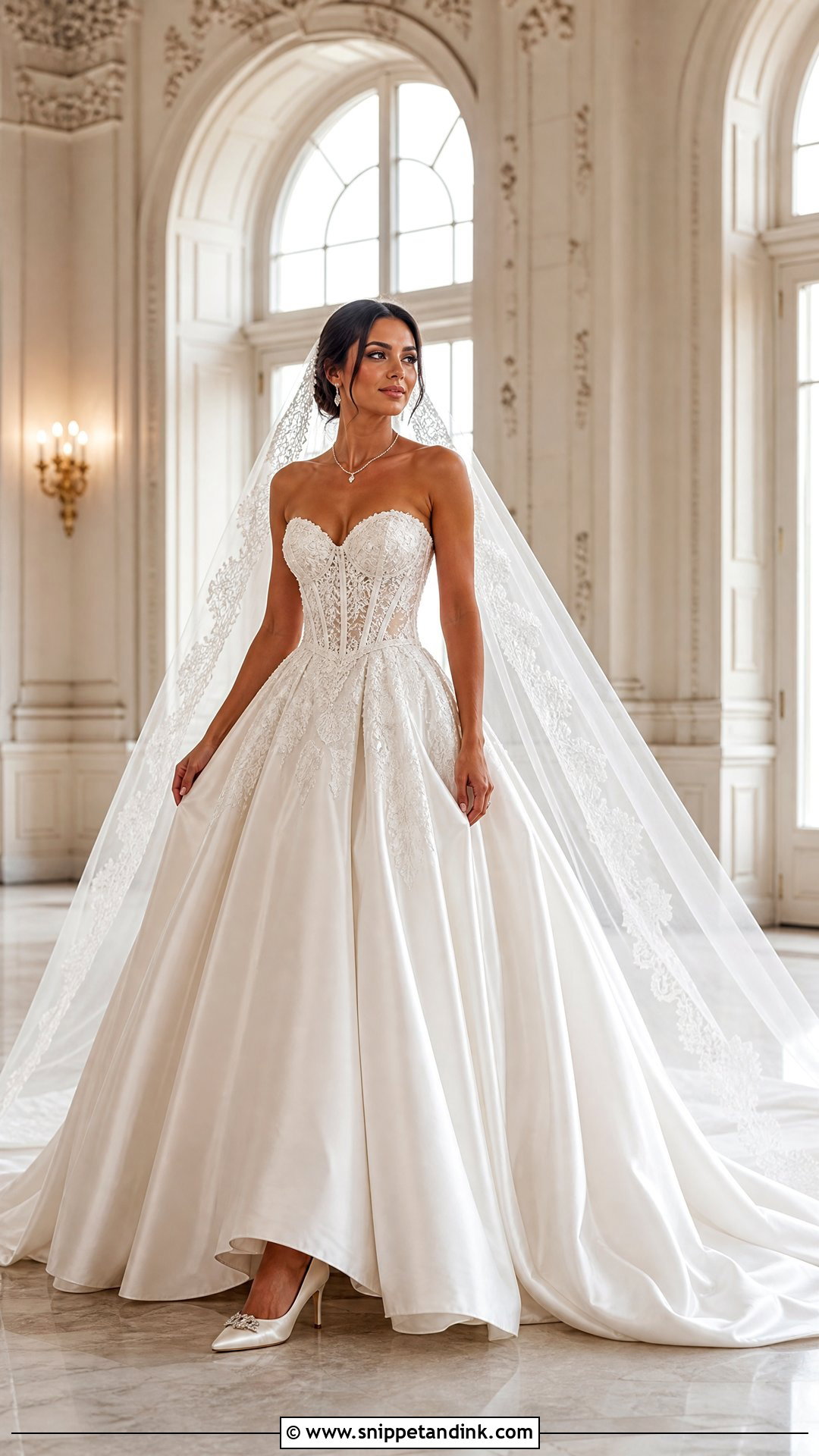
The strapless ball gown is the classic version, with real volume. A lace corset bodice with visible seams sits above a structured satin skirt, and a basque or slightly dropped waist lengthens the torso and gives the skirt its dramatic sweep. With that much skirt, the bodice must be firmly boned; a heavy satin skirt pulls down on a loose top all night. Crystal studs, a thin tennis bracelet and closed satin heels. A cathedral veil for a formal church, or shorter for a lighter feel. Detachable lace sleeves add ceremony coverage if you want it.
3. Long Sleeve Satin Lace Wedding Dress
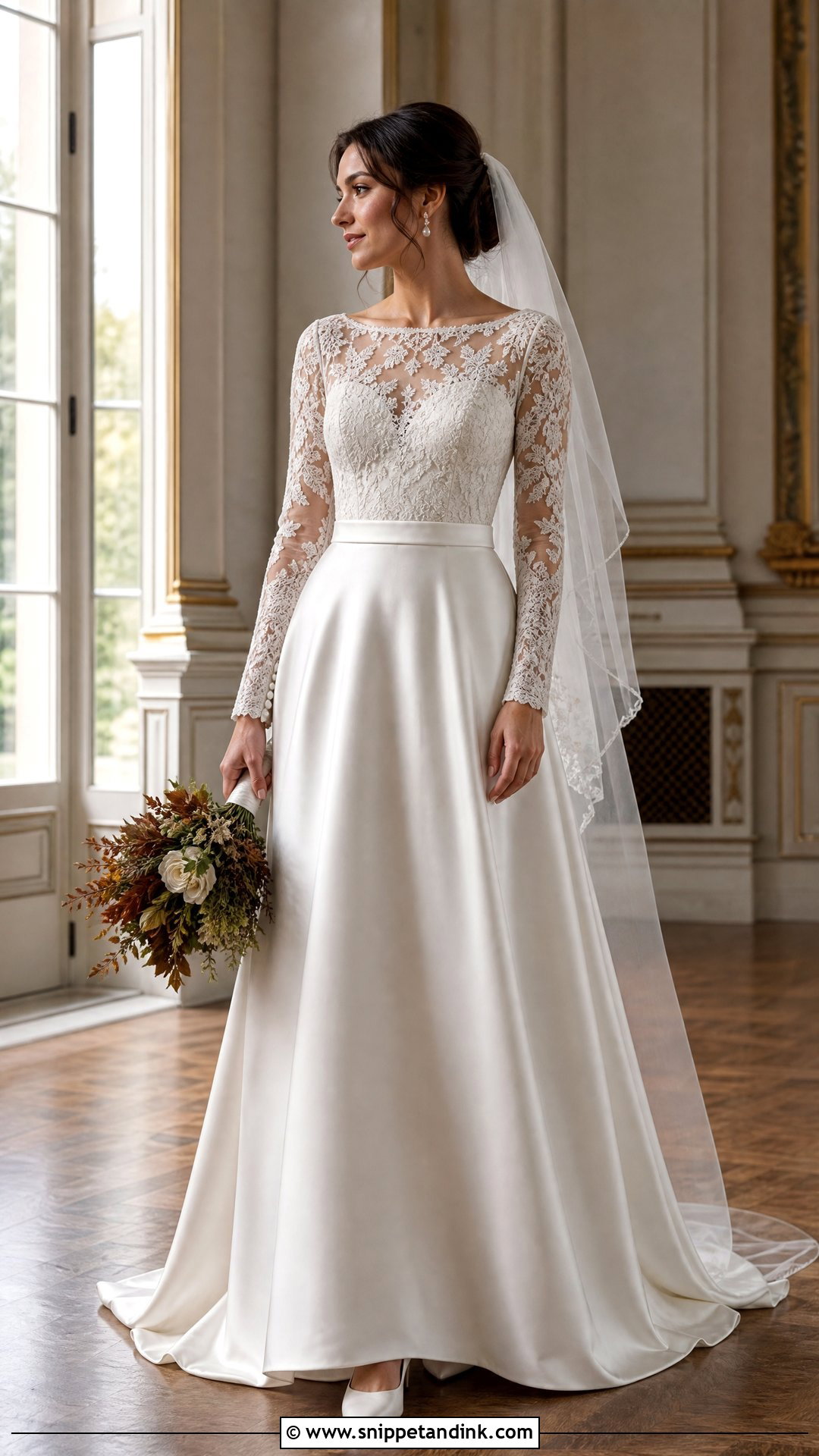
Lace sleeves give coverage while the satin skirt stays clean. A fitted lace bodice with a bateau or modest V runs into an A-line skirt. I prefer illusion-lined sleeves: the lace pattern shows clearly against the skin without the sleeve feeling see-through. Pearl buttons along the cuffs and down the back finish it traditionally. Check you can bend your elbows; lace sleeves on a satin bodice have no stretch. Low satin heels, small pearl earrings and a neat bun or twisted updo. It suits autumn through early spring, though light lace works in summer too.
4. Off-Shoulder Satin Lace Wedding Dress
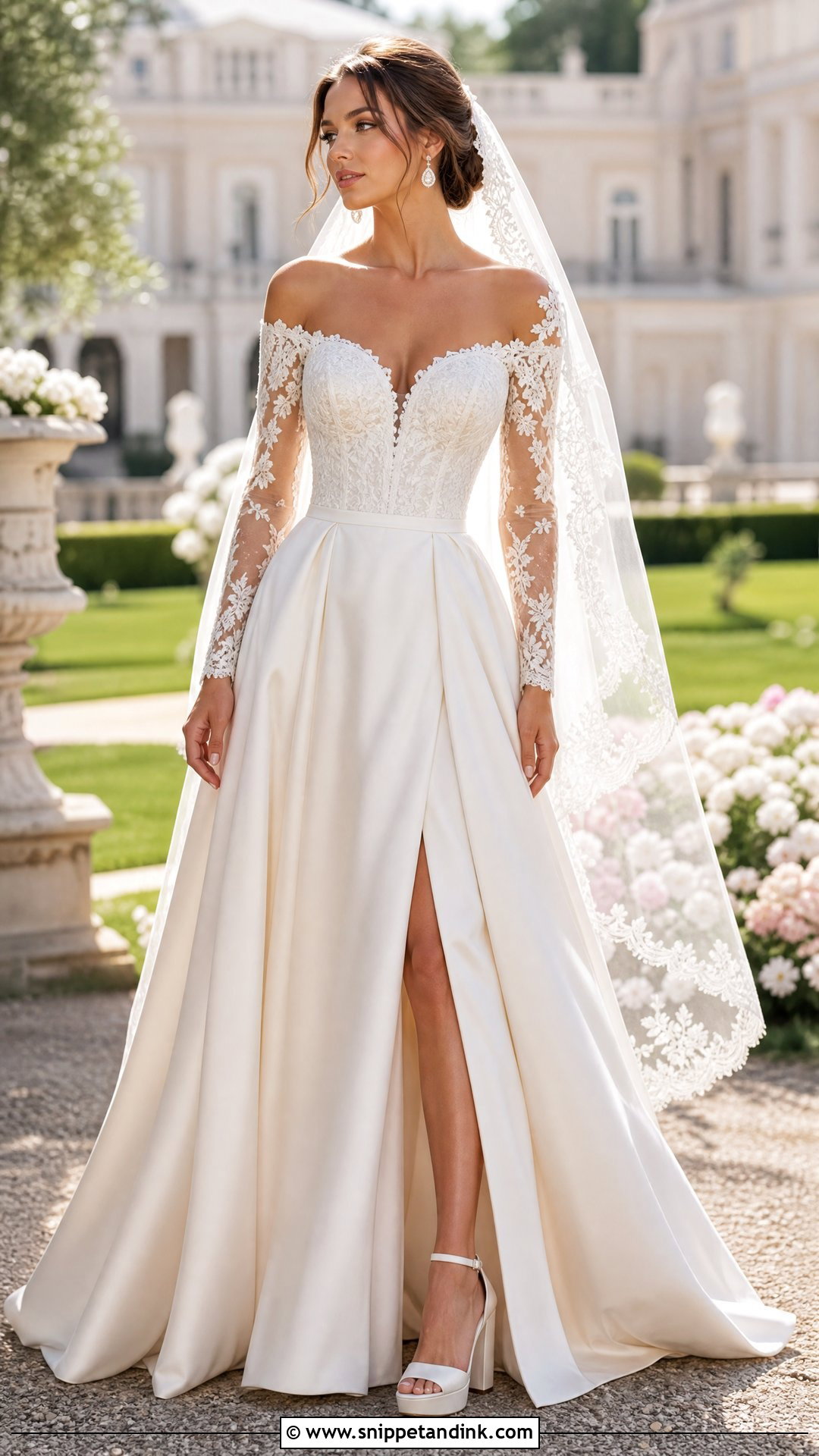
Lace draped around the shoulders softens a structured satin gown. The bodice needs firm inner construction so the lace frames the neckline instead of holding the dress up, and the lace shouldn’t stop you raising your arms. Over a pleated satin skirt or gentle fit-and-flare, it keeps a clean finish. Teardrop earrings, ivory block heels, and a sheer veil with a narrow lace edge. Skip the necklace, since the lace is already busy near the face. Loose waves or a low textured bun both suit the open neckline.
5. Square Neck Satin Lace Wedding Dress
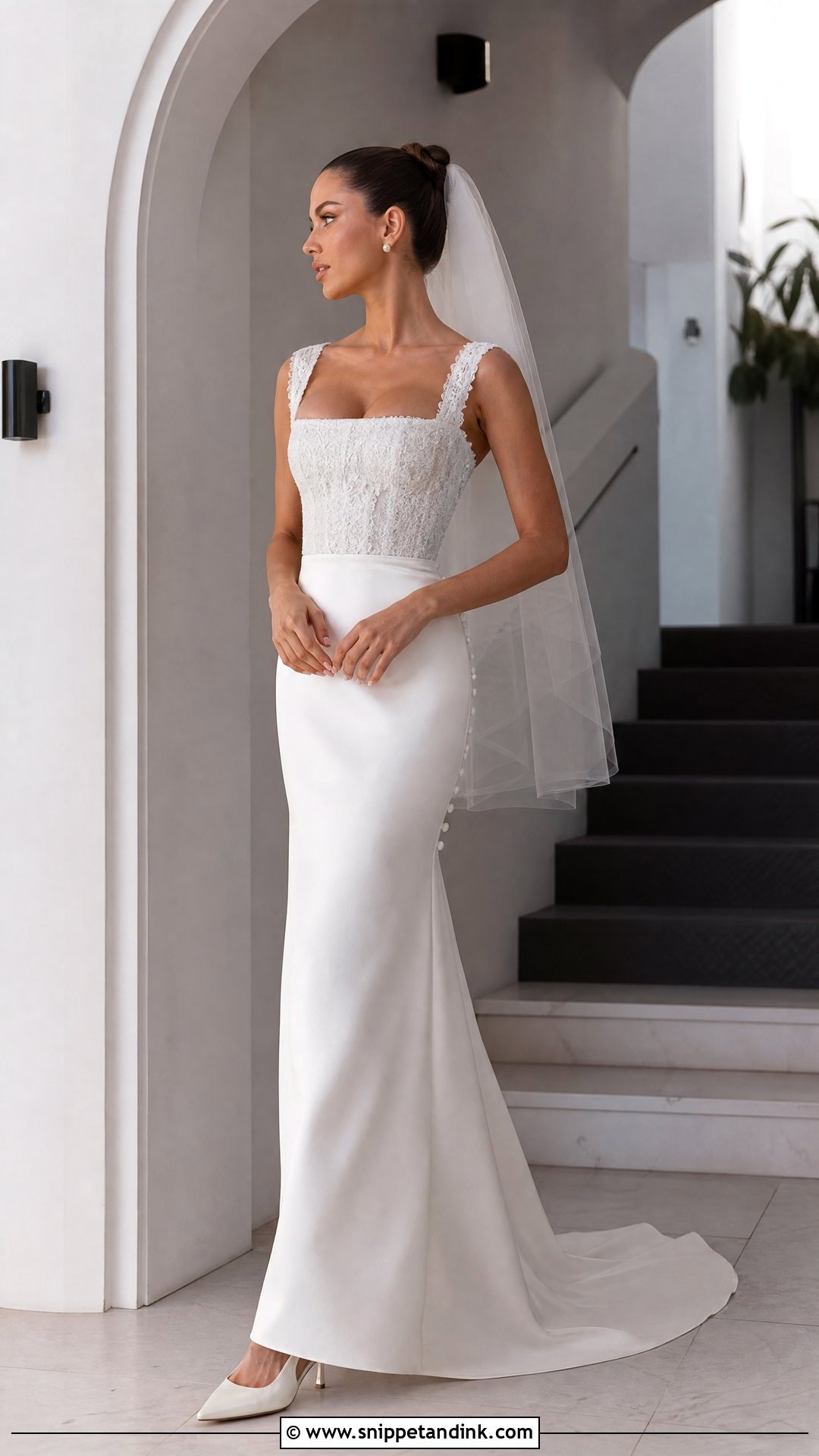
A square neck gives satin and lace a clean modern frame. The lace bodice should have wide straps and light boning so the neckline stays sharp; a soft lace edge can sag into a curve. A satin skirt in A-line or column shape, and a low square back finished with covered buttons. A polished bun, pearl studs and pointed slingbacks are enough jewellery-wise, since the neckline already shows the collarbone. Plain tulle veil for fresh, lace-edged for traditional.
6. Basque Waist Satin Lace Wedding Dress
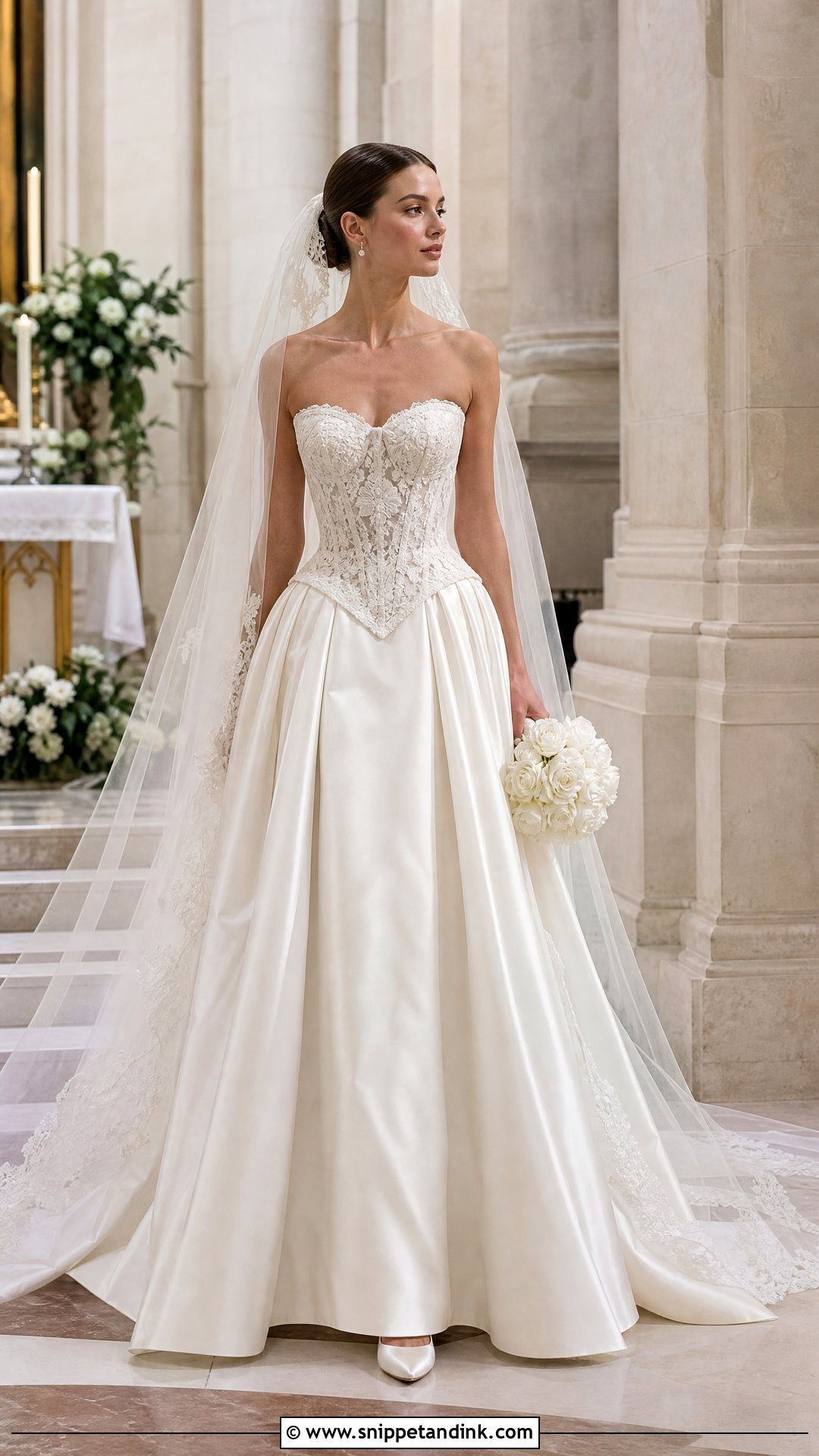
The basque waist dips below the natural waist and lengthens the body. With a lace corset above and a full pleated satin skirt below, it feels vintage but not costume. Where lace meets the point of the basque, ask how the seam is finished: the lace should be cut and stitched around the point, not folded over it, or you’ll get a lump. A long veil, classic pearl earrings and stable satin pumps, with a smooth low bun. If the lace is detailed, skip a necklace and wear a slim bracelet.
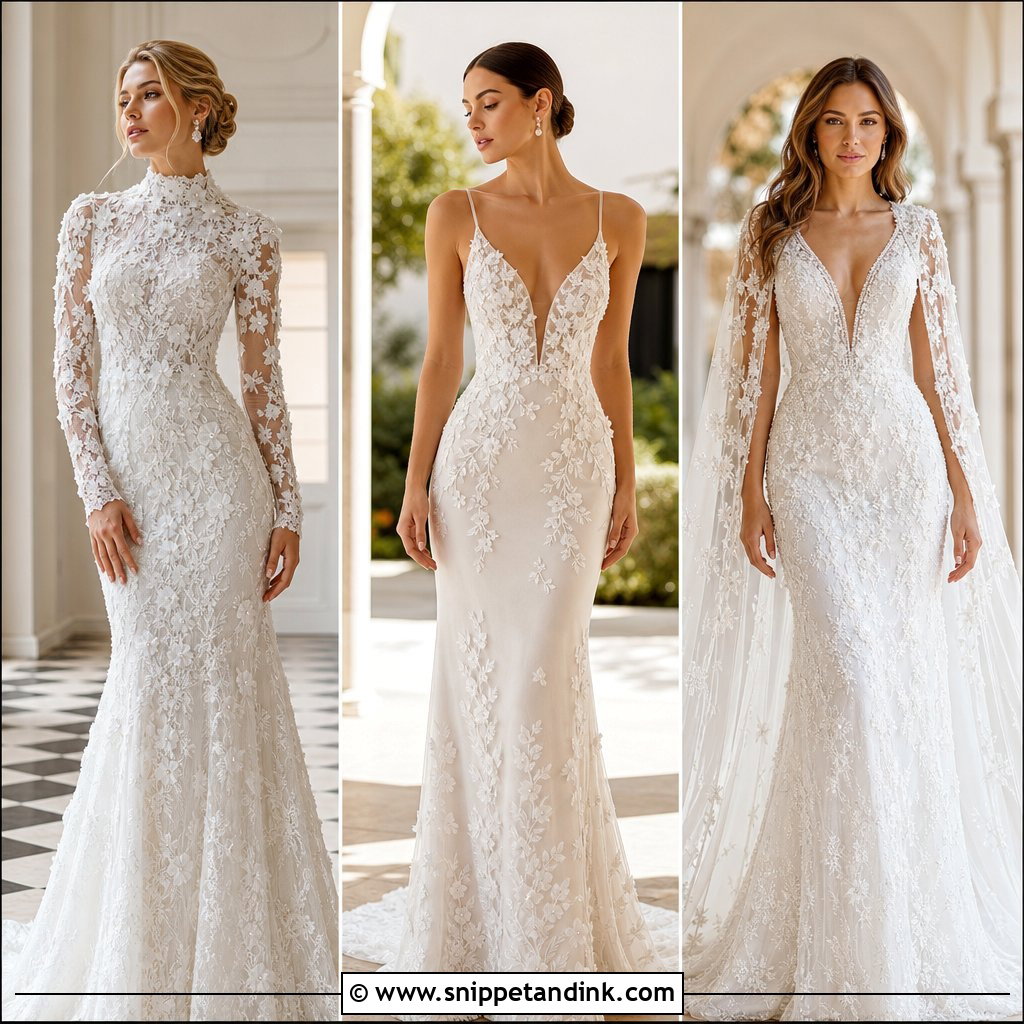
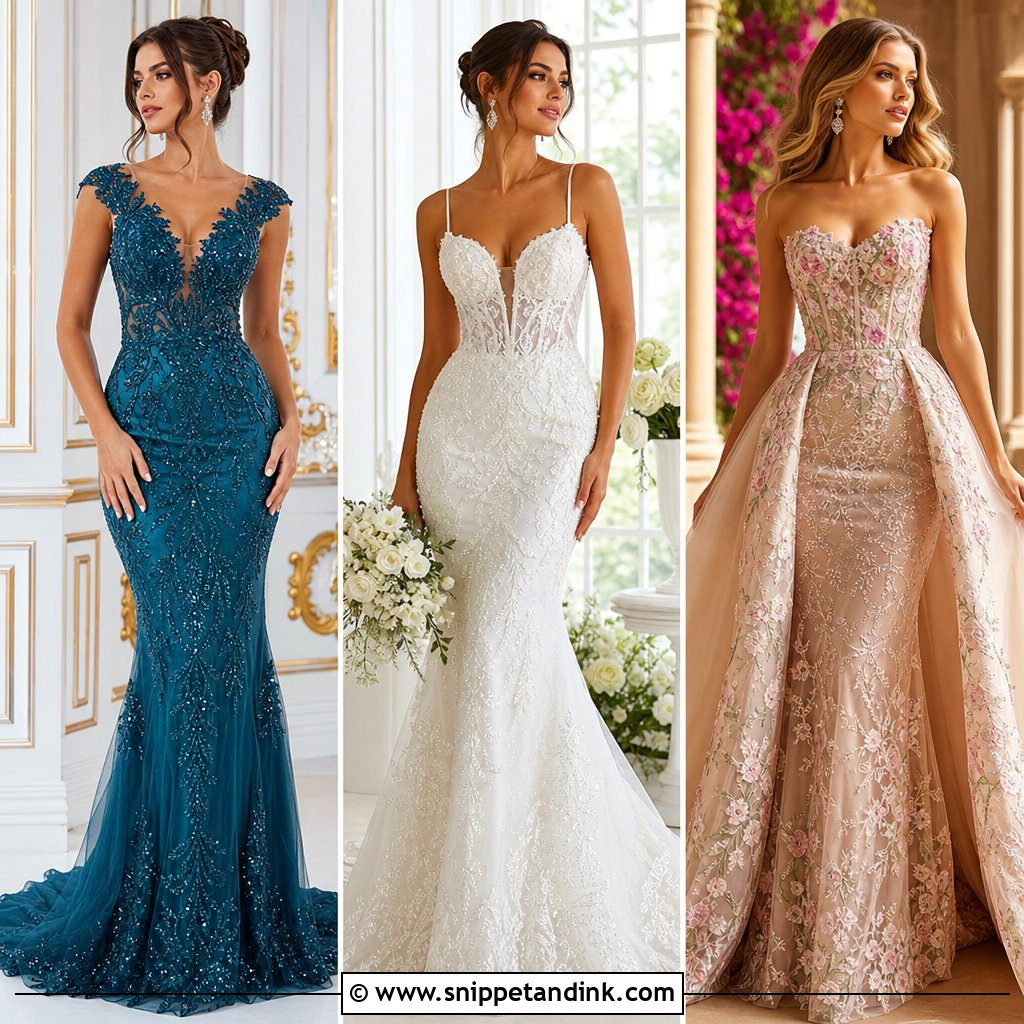
7. Mermaid Satin Lace Wedding Dress
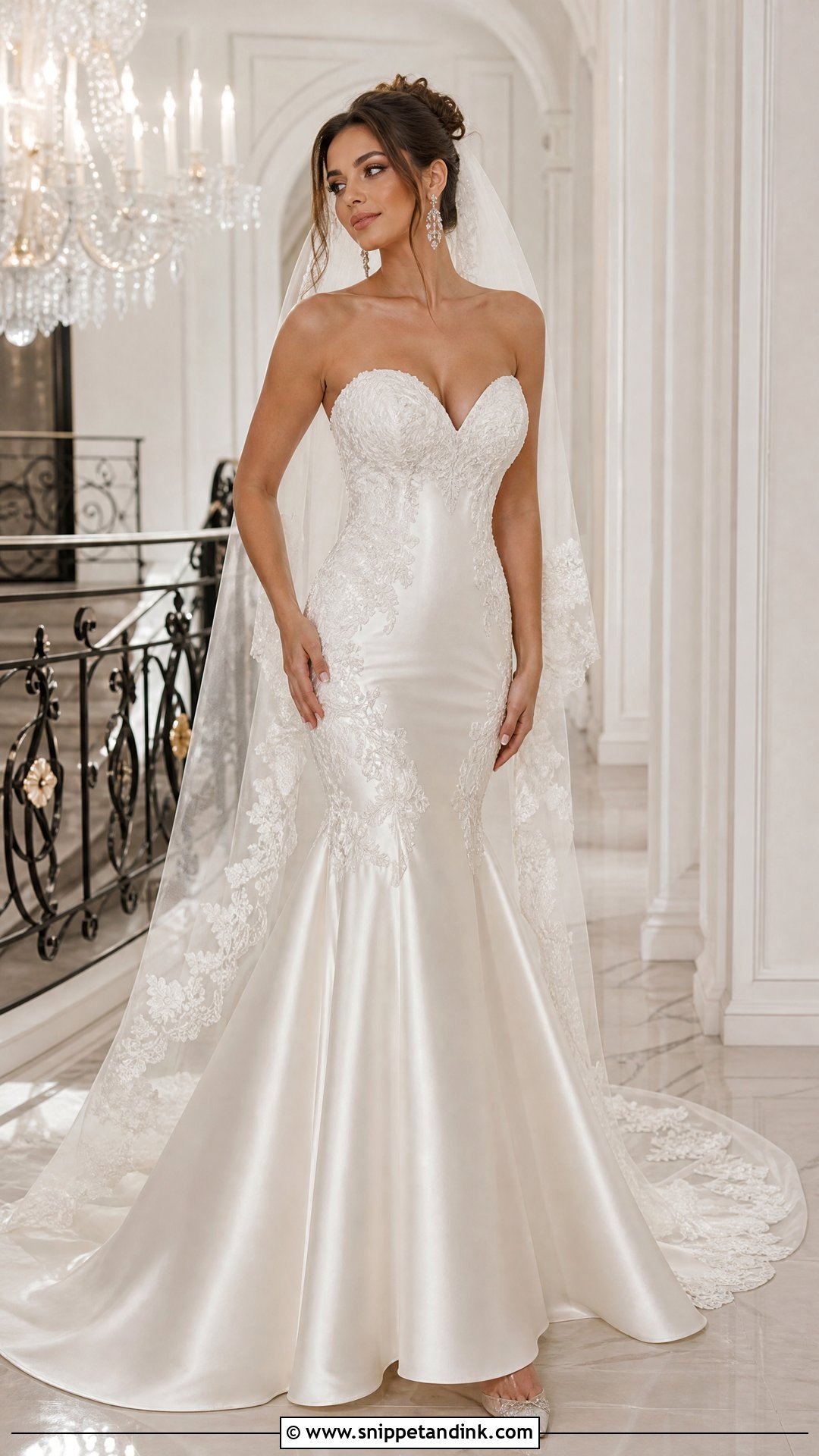
Lace on a satin mermaid should follow the seams. Appliqués placed along the bodice, over the hip and down into the train look intentional; scattered at random, they make the fitted shape look busy. A sweetheart or soft scoop neckline balances the close fit. Drop earrings, pointed heels and a simple chapel veil, with side-swept waves or a low bun. Sit and walk in it at the salon, because the flare height decides how freely you move.
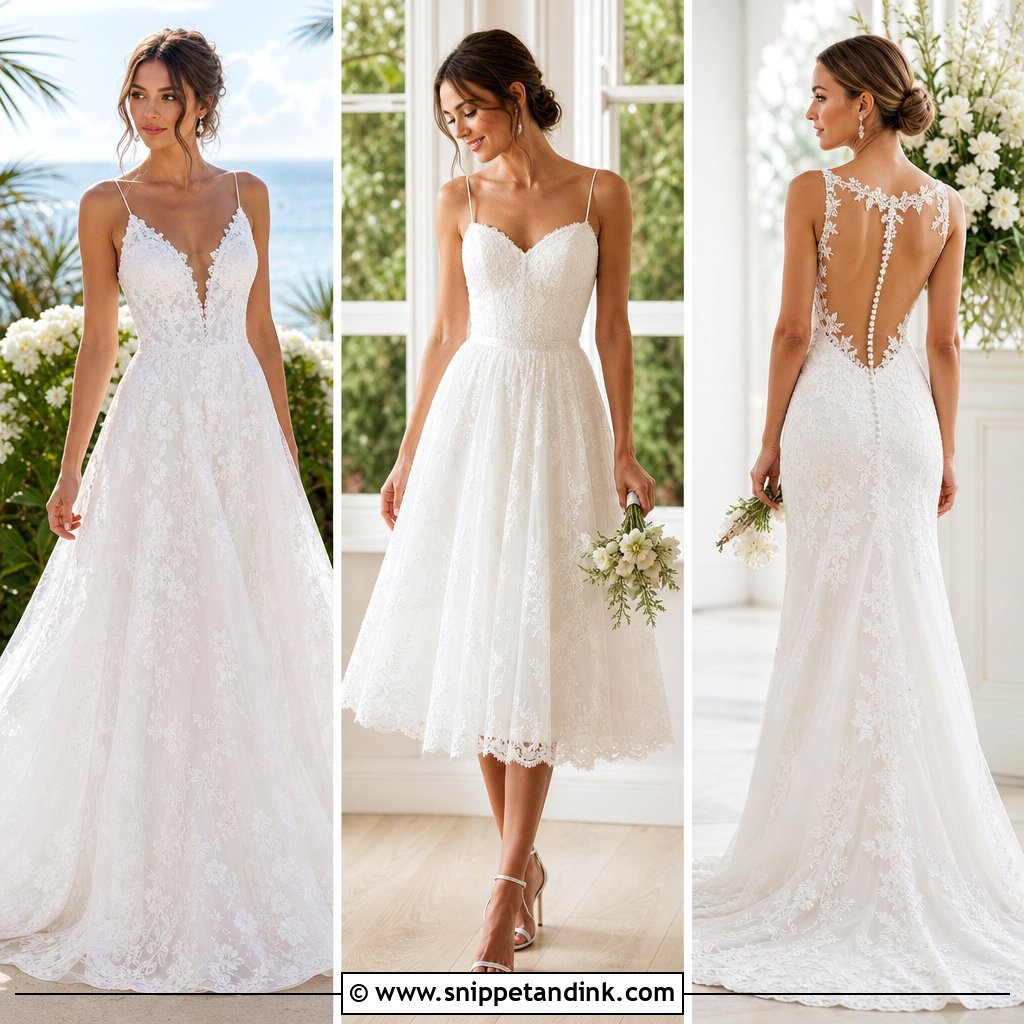
8. Satin Wedding Dress With Lace Back
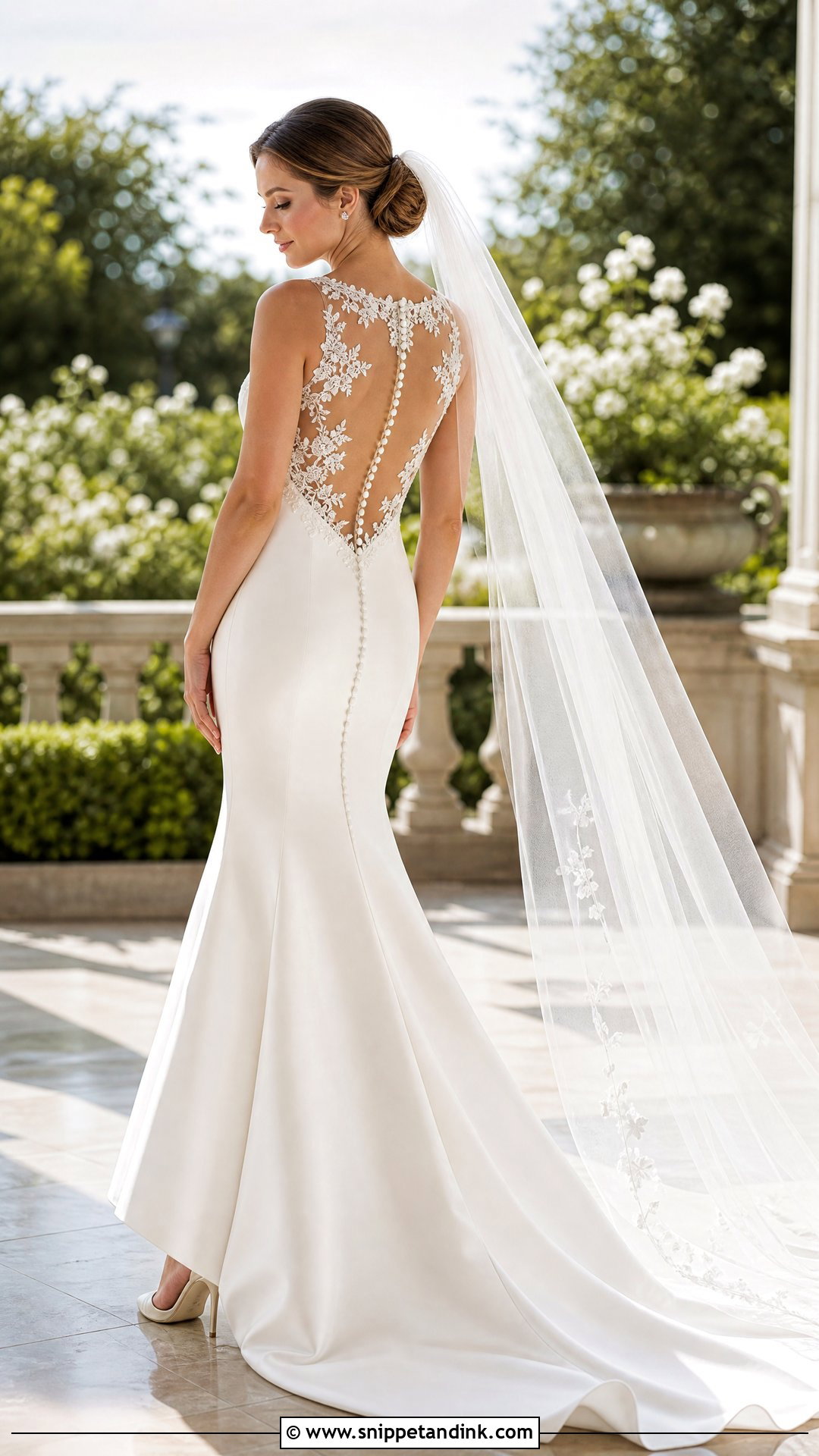
Put the lace on the back and leave the front plain. A sheath or fit-and-flare with a simple neckline and an illusion lace panel across the back is quiet from the front and striking as you walk up the aisle. Covered buttons through the lace and down the skirt tie it together. Mesh backing on illusion panels comes in several skin tones; ask for the one closest to yours so it disappears. A sheer veil, crystal studs, ivory heels and a low chignon or side-swept style.
9. Satin Slip Wedding Dress With Lace Trim
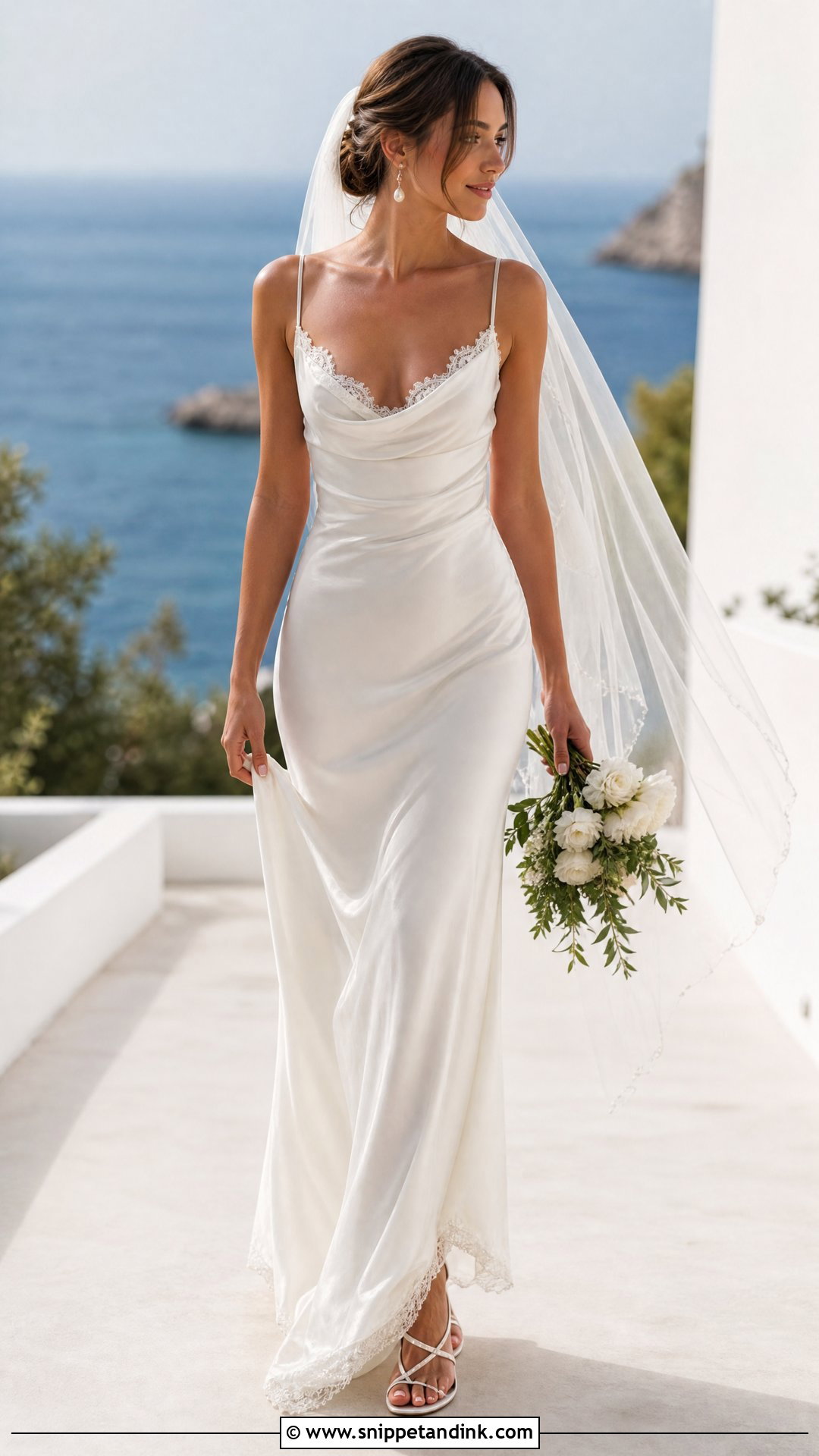
A bias-cut slip with lace trim at the neckline or hem is about the simplest bridal outfit there is. Adjustable straps and a decent lining make it comfortable. Lace trim on bias satin can pucker if it’s stitched on straight, so look closely at the edge when you try it on; it should move with the fabric. Strappy ivory sandals, small pearl earrings, and a fingertip veil or a sheer bridal scarf. Soft waves keep it relaxed, a bun makes it more formal. Beaches, small venues and city weddings suit it.
10. High Neck Satin Lace Wedding Dress
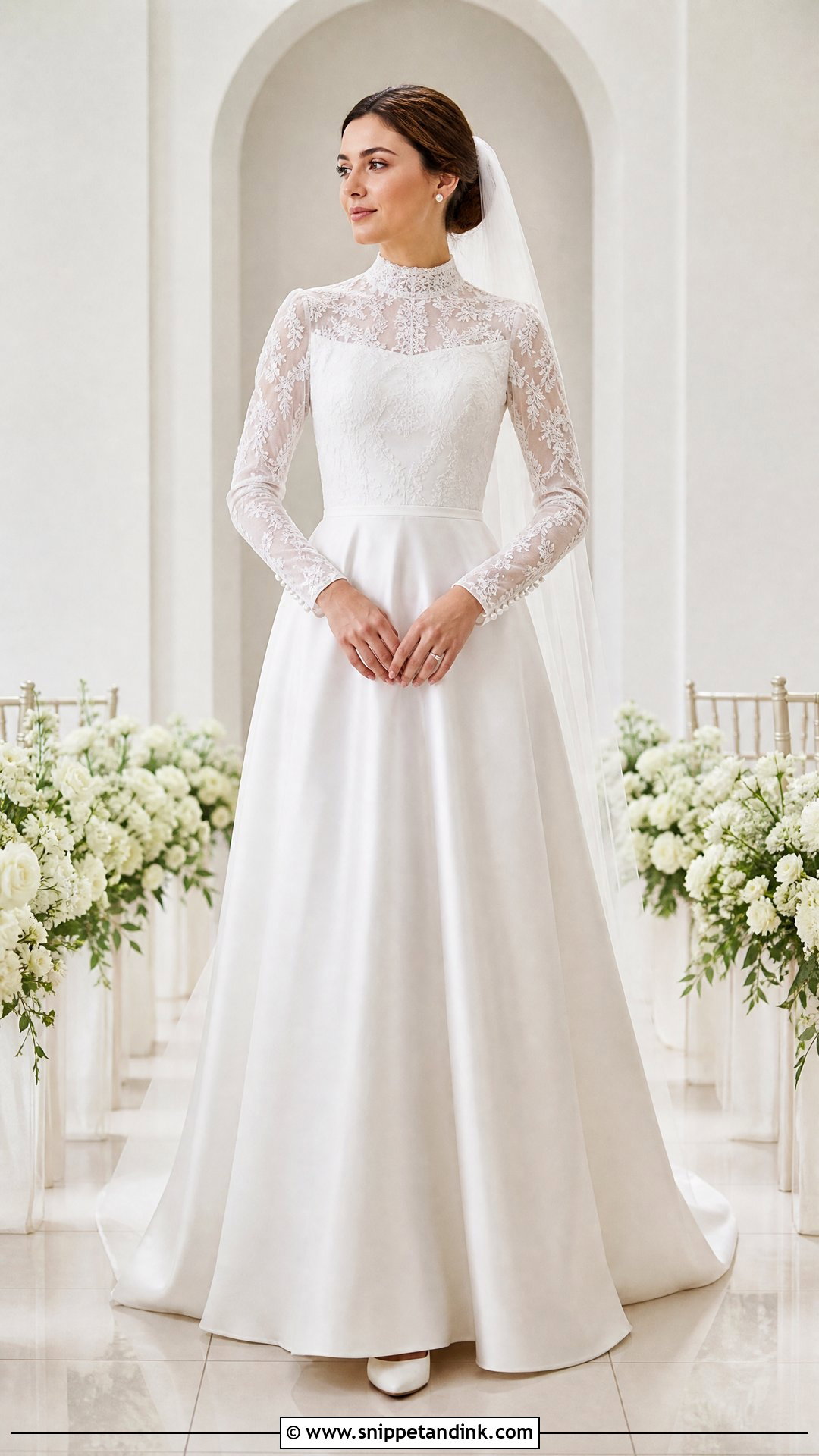
A high lace yoke covers the neck and frames the face. Under it, a lined bodice runs to a smooth satin skirt from the natural waist. Long sleeves make it formal; cap sleeves or sleeveless versions feel lighter. Since the neckline already carries the detail, I’d avoid necklaces and big earrings and use studs instead. Covered buttons at the back and cuffs suit the traditional mood. Try turning your head and looking down at the fitting; a lace collar can scratch the jaw if the edge isn’t finished softly.
11. Cap Sleeve Satin Lace Wedding Dress
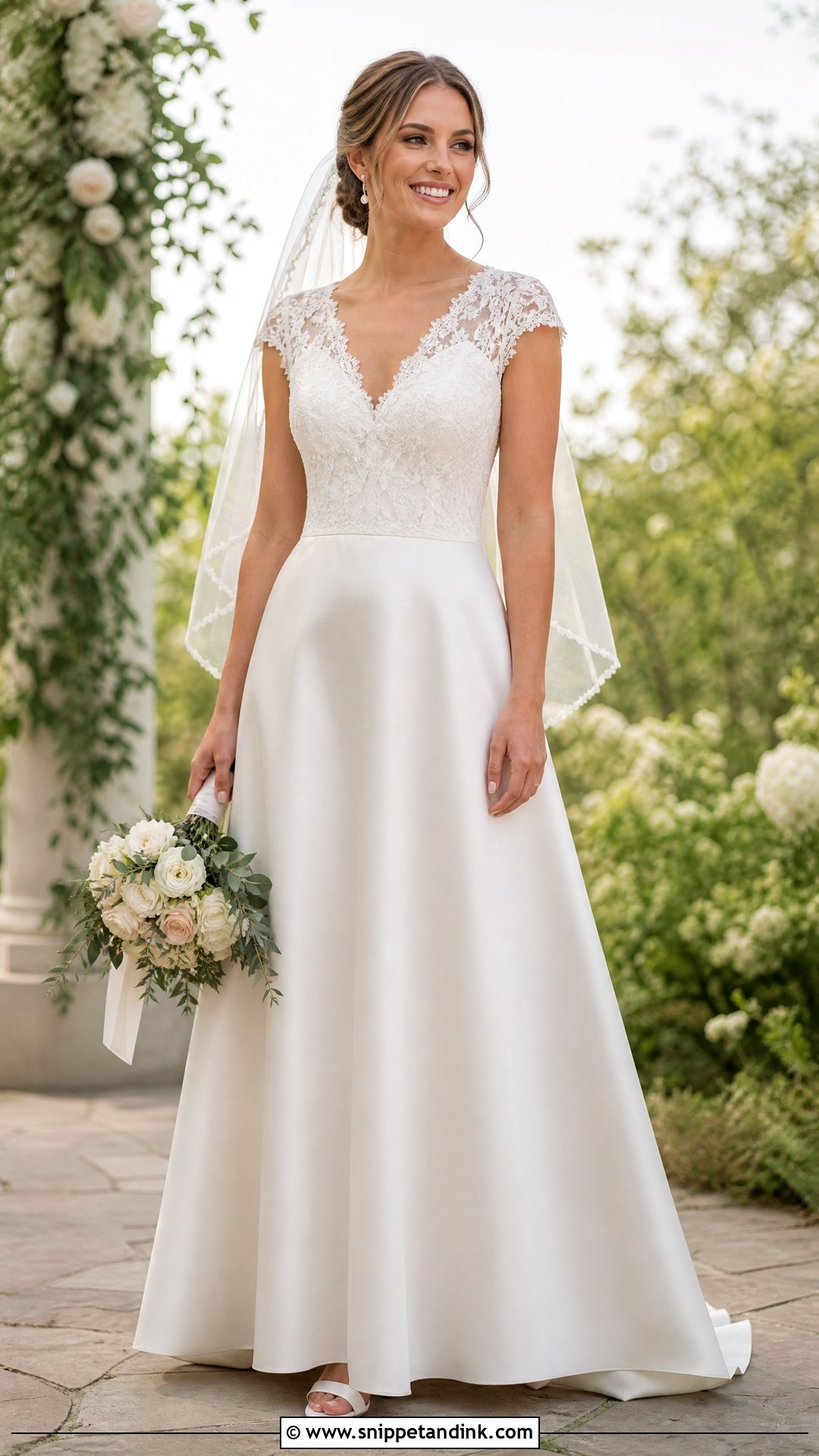
Cap sleeves cover the shoulder lightly without the formality of full sleeves. A lace bodice with a rounded or shallow V-neck over a satin A-line skirt. Scalloped lace edges at the sleeve give a neat finish, and a lightly lined bodice keeps it comfortable. Pearl earrings, mid-height block heels and a fingertip veil, with a soft braided bun or half-up style. Easy to wear indoors or out from spring into early autumn.
12. Tea-Length Satin Lace Wedding Dress
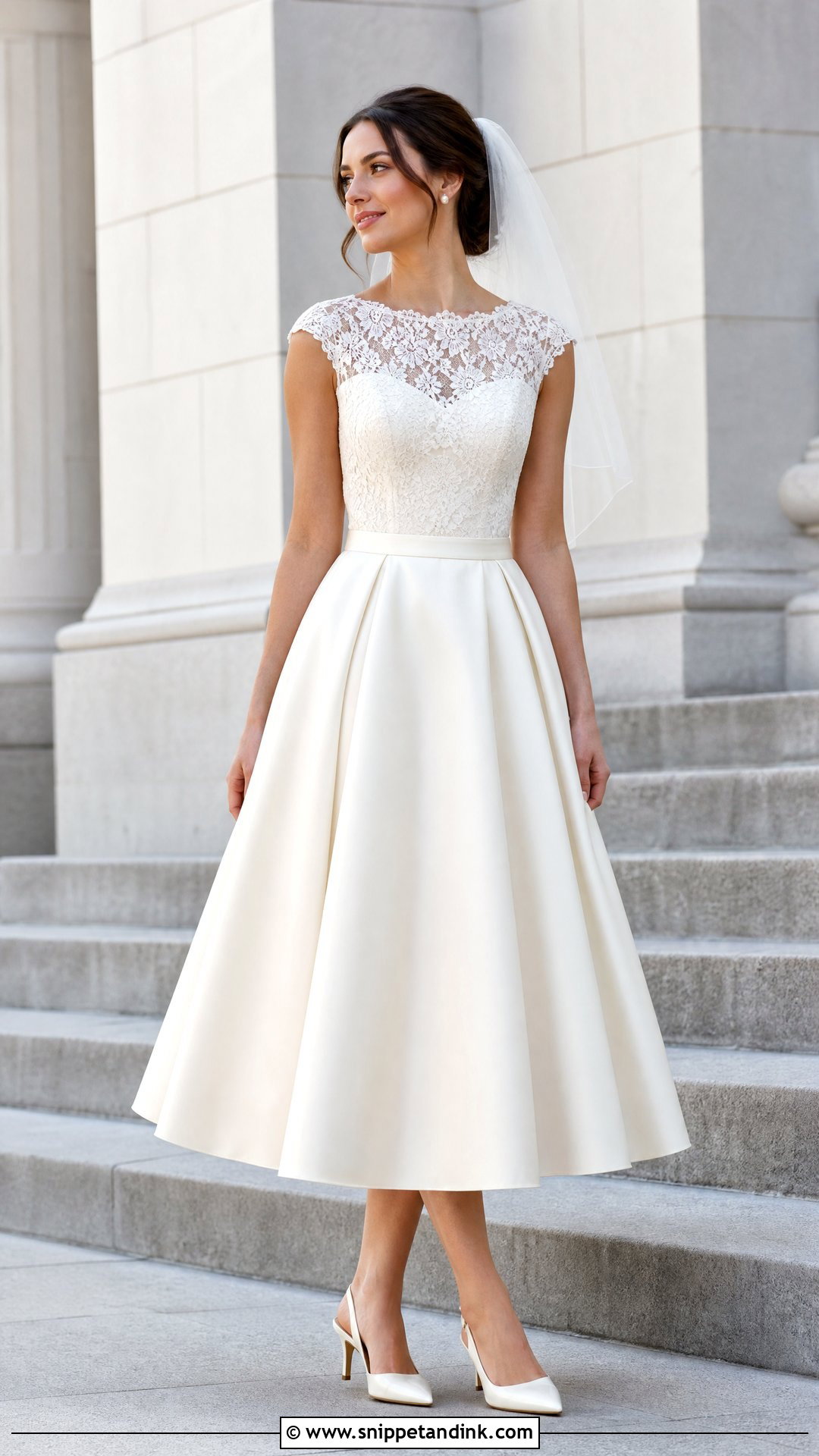
Tea length has a vintage feel and is very easy to wear. A fitted lace bodice and a satin skirt between knee and ankle, with soft box pleats for shape. Your shoes are on show, so they deserve real thought: pointed pumps, low slingbacks or embellished flats. Get the hem set with those exact shoes on, because the point where the skirt stops changes how long your legs look. Pearl studs, a short veil, and a neat bun or shoulder-length waves. Daytime weddings and courthouses suit it.
13. Midi Satin Lace Wedding Dress
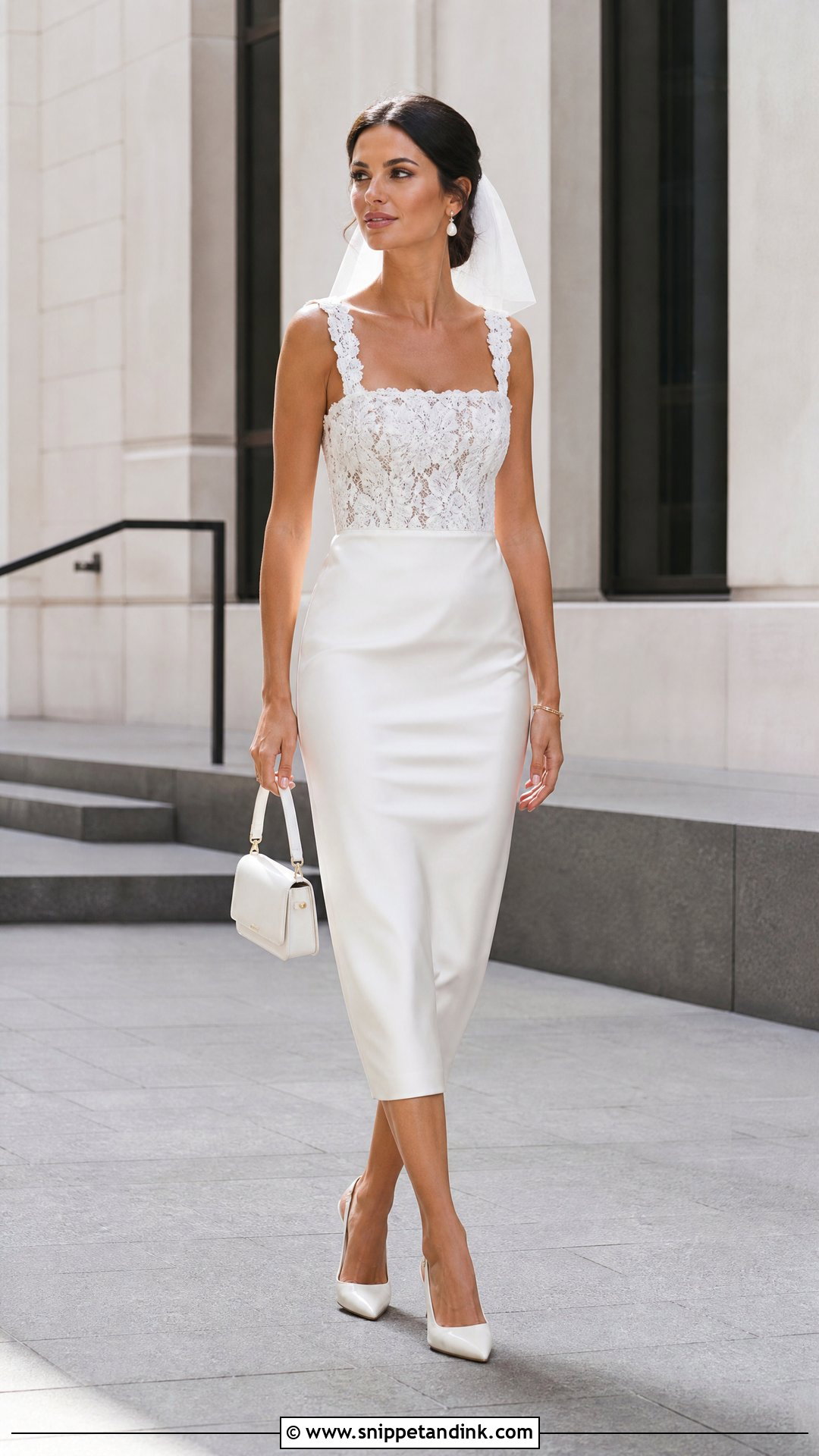
A midi sits around mid-calf and feels modern for a courthouse or small celebration. A slim satin shape with a lace bodice, a square neck or a light lace overlay on the shoulders. Pointed slingbacks, a structured ivory bag, pearl drops, and a short veil, hair bow or small headpiece keep it bridal. It also works for a rehearsal event or second ceremony look. Choose opaque satin with a good lining; thin satin at this length can show the outline of your legs in bright sun.
14. Satin Lace Mini Wedding Dress
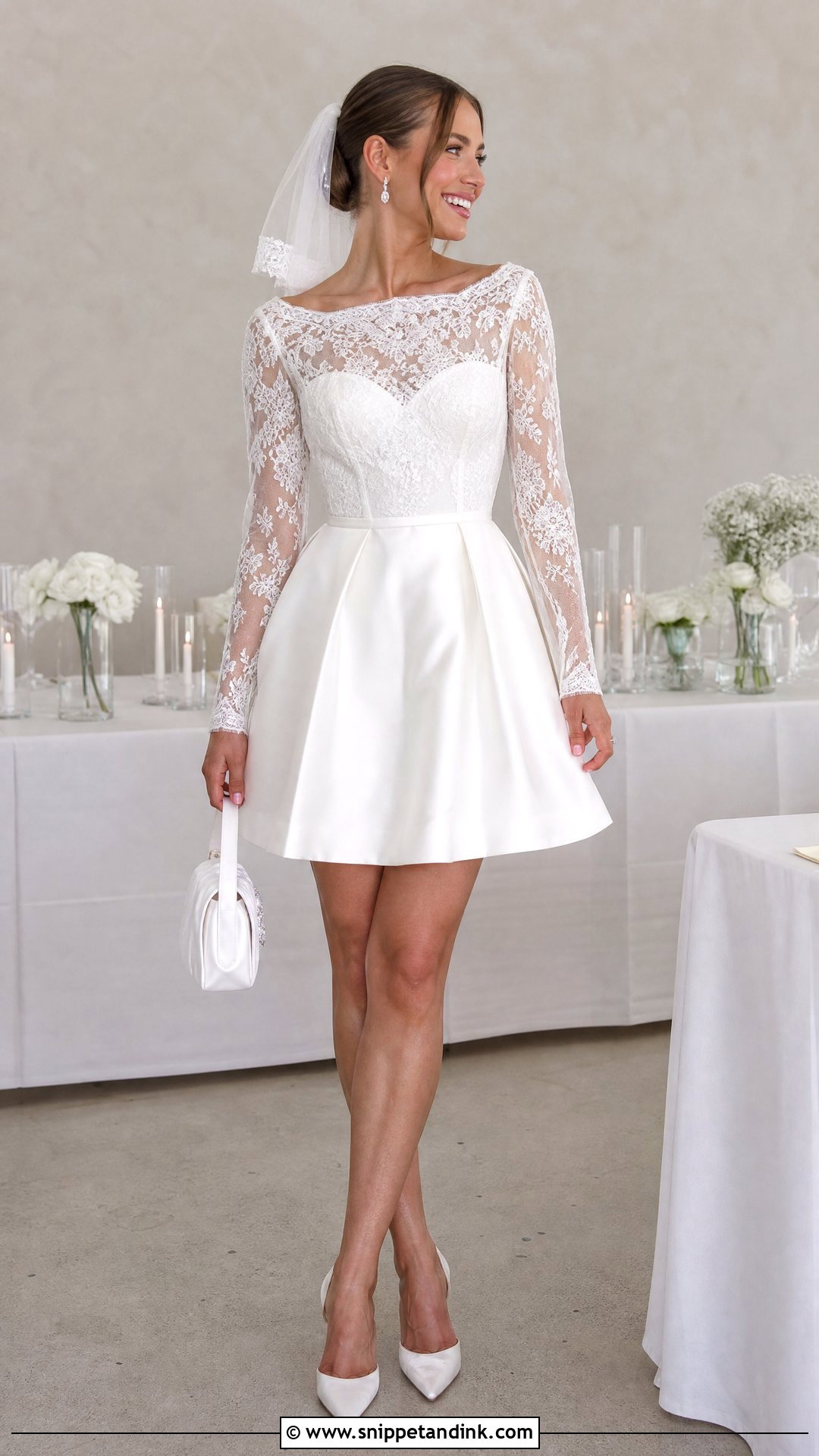
A mini is playful but should still look finished. I’d steer toward structured satin with a fitted lace bodice and a gently flared skirt, rather than something very tight, which rides up as soon as you sit. Long lace sleeves balance the short hem, and a square or bateau neckline keeps it grown-up. Pointed pumps, crystal earrings, a small satin bag, and a short veil or oversized bow. If you’re dancing, pick stable heels and test the skirt sitting down.
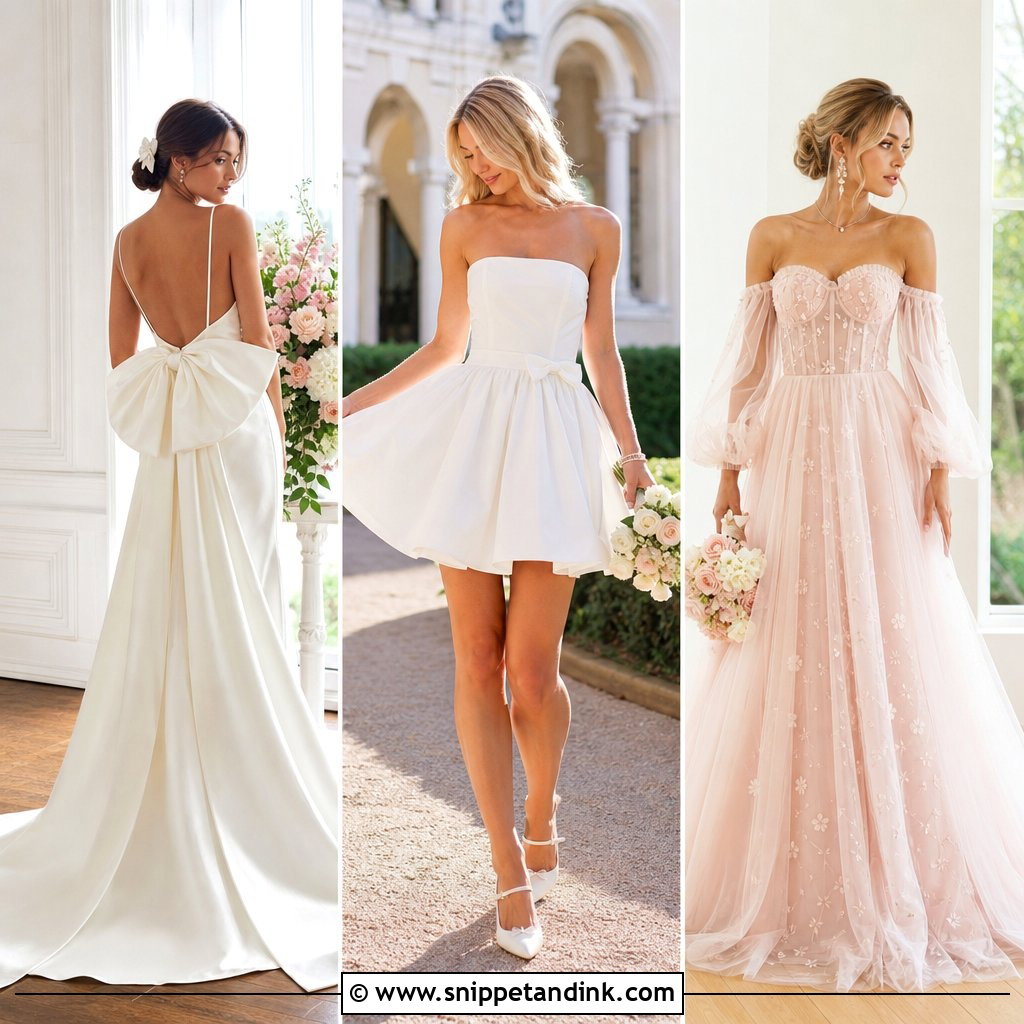
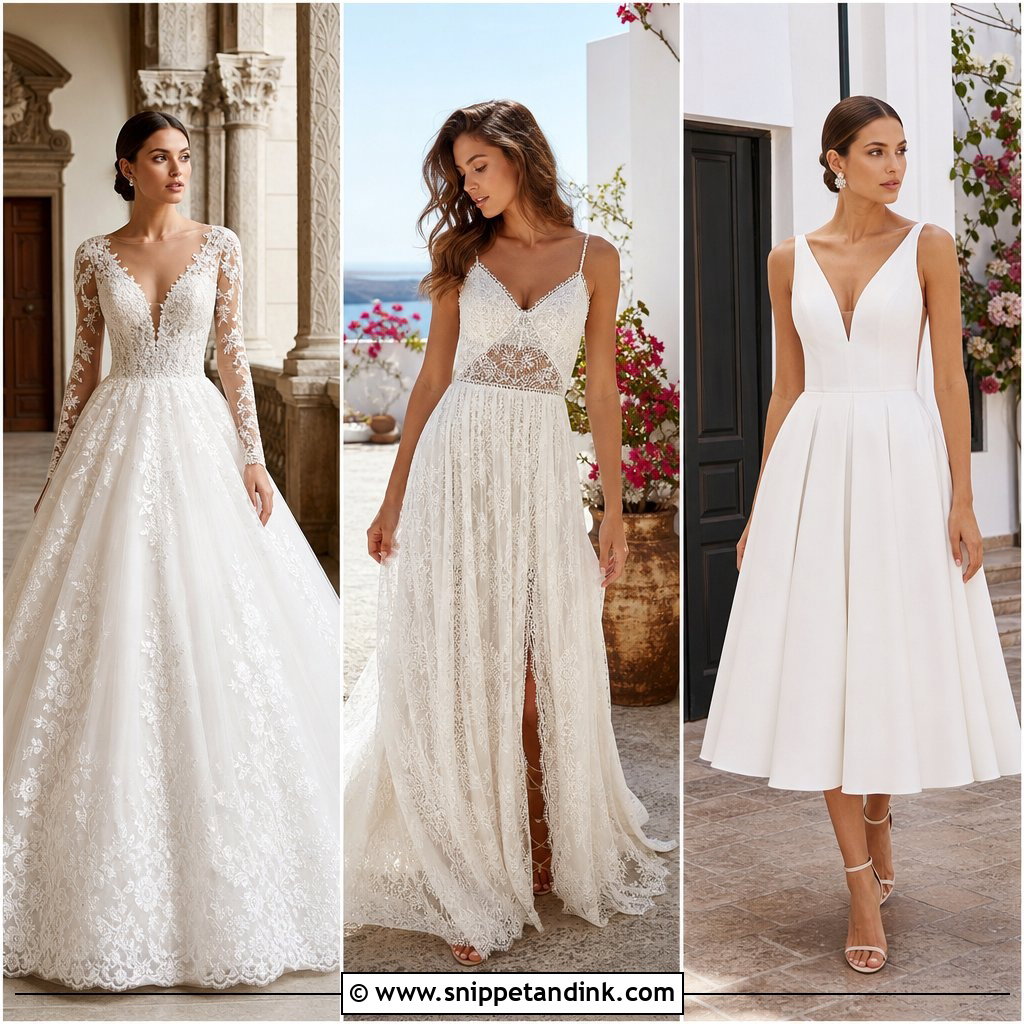
15. Plus Size Satin Lace Wedding Dress
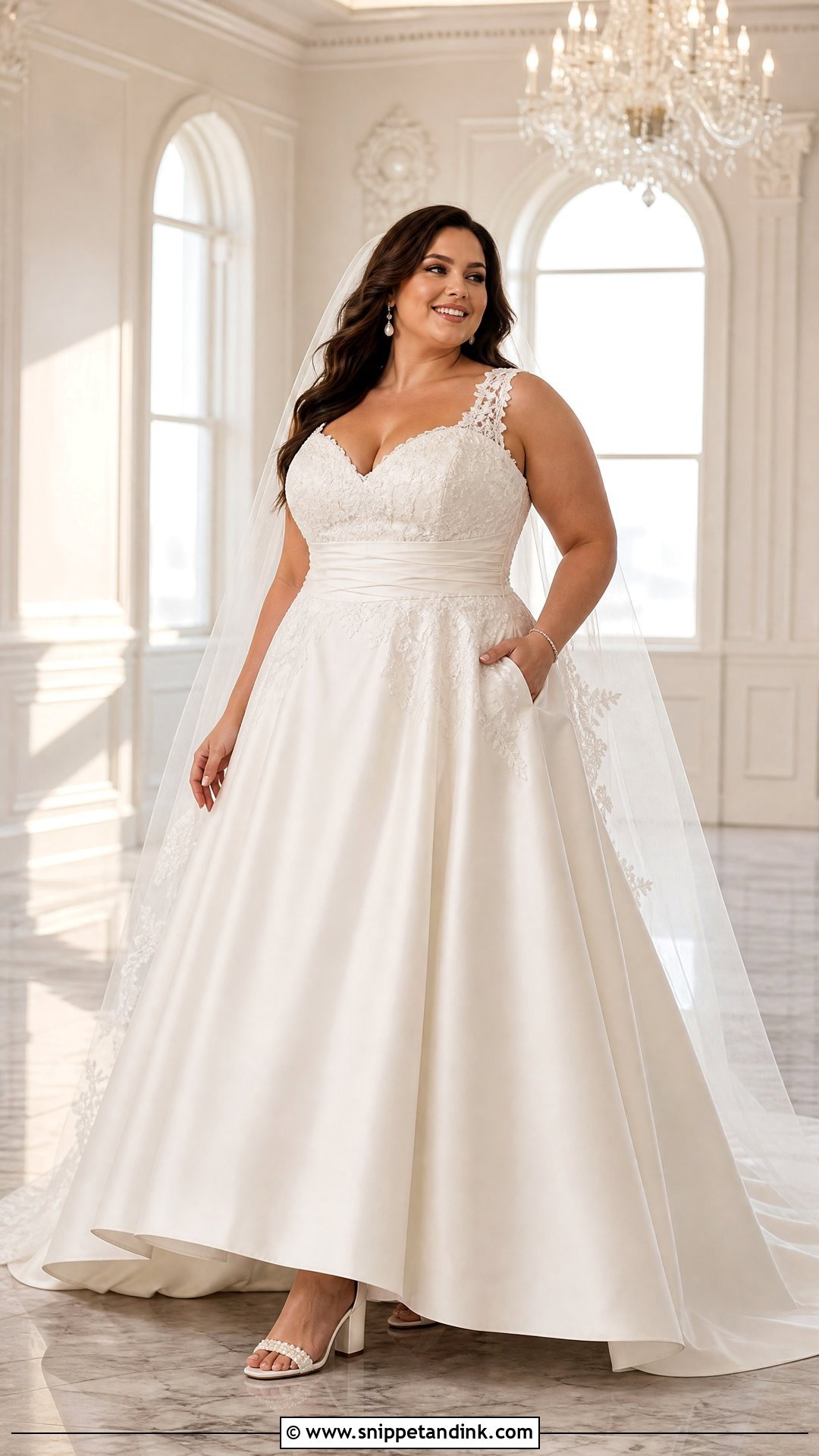
On a plus-size frame I start with support: a reinforced lace bodice, wide straps, and a defined natural or basque waist. Soft ruching shapes the middle, and a structured satin skirt falls smoothly instead of clinging. Choose the neckline you feel best in, whether sweetheart, V, square or off-shoulder. Lace over a supportive bodice needs to be stitched to the lining at several points, or it can shift and bunch. Cushioned block heels, pearl earrings and a veil pinned into a comfortable updo. Size labels mean little; the alterations decide the fit.
16. Petite Satin Lace Wedding Dress
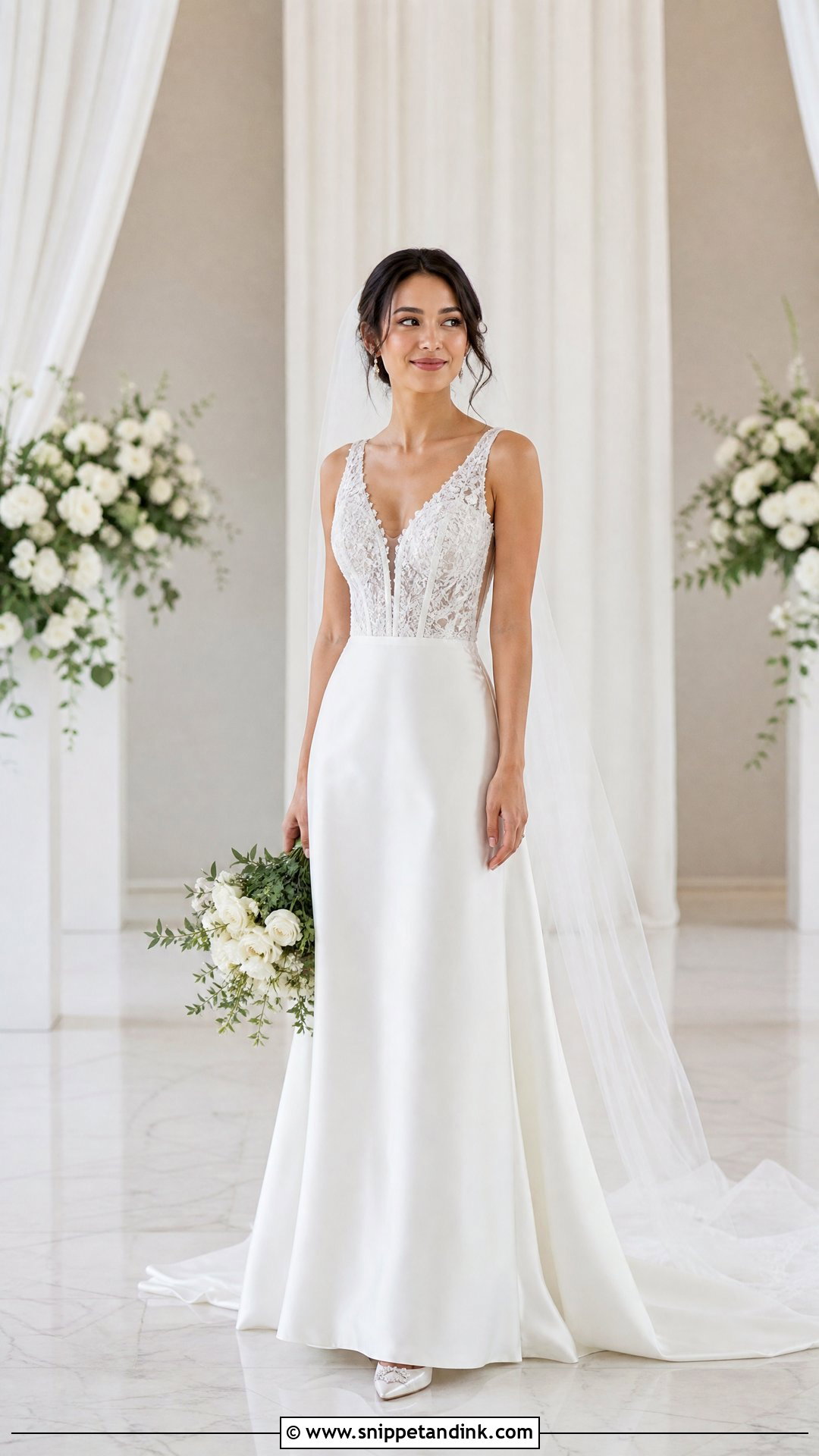
On a petite bride the risk is too much: too many layers, oversized appliqués, a train you have to wrestle. A defined waist, vertical seams on the bodice and a skirt that falls cleanly keep the proportions right. A lace V-neck over a satin A-line or sheath draws the eye up and down. Keep the appliqué scale small and the veil narrow. Pointed heels, small drops and a high bun add a little height. Bring your ceremony shoes to every fitting so the hem is set accurately.
17. Champagne Satin Lace Wedding Dress
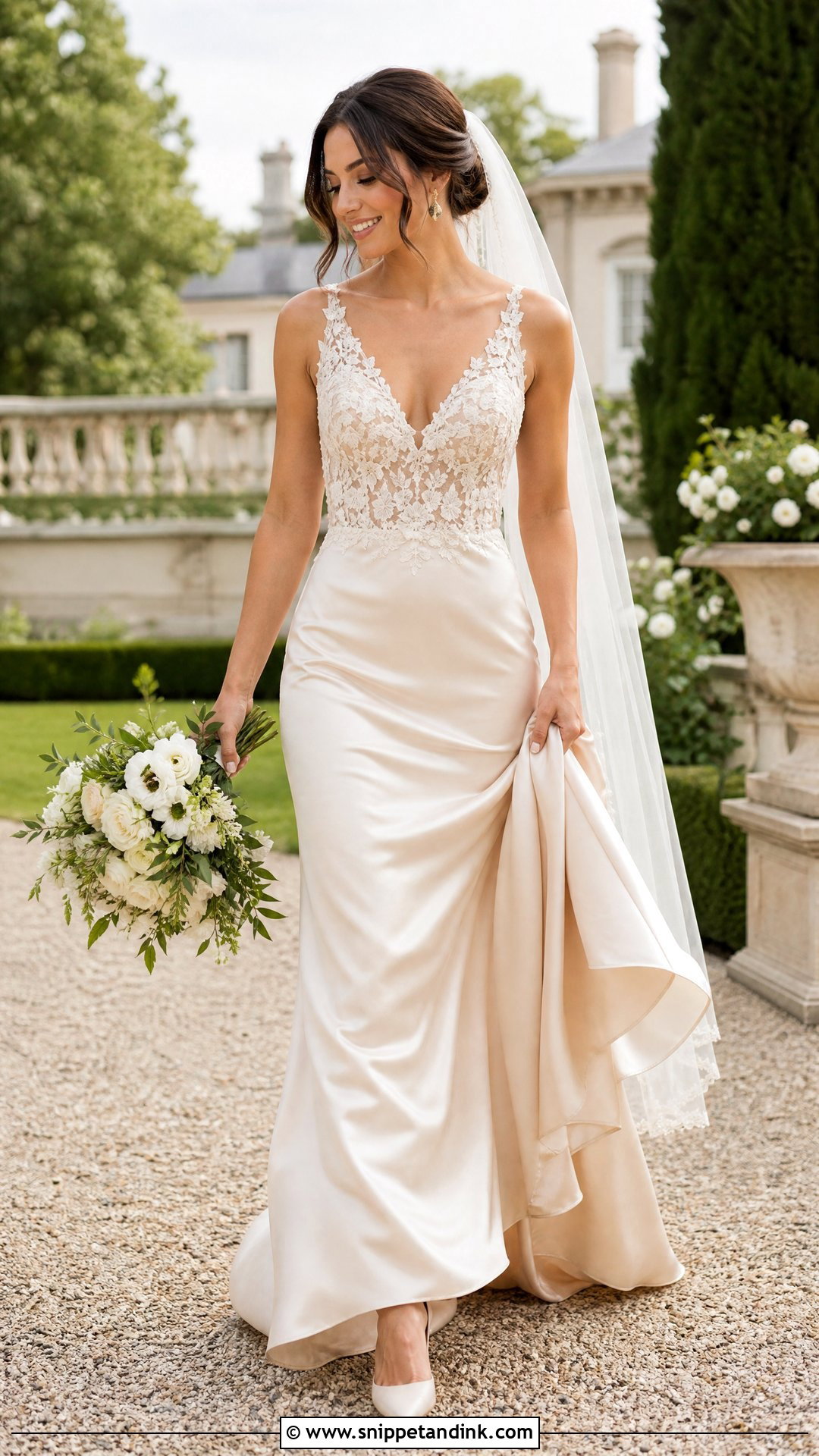
Champagne satin under ivory or cream lace makes the lace pattern show up more clearly, because the warmer base sits behind the motifs. A lace bodice with a champagne lining continuing into a flowing satin skirt. Gold-toned earrings, neutral heels and a cream veil match without fighting the colour. White flowers with greenery keep it fresh. Look at the gown in daylight and under warm venue lighting before buying, since champagne shifts more than ivory does in photos. Brides who find bright white draining often look better in it.
18. Blush Satin Lace Wedding Dress
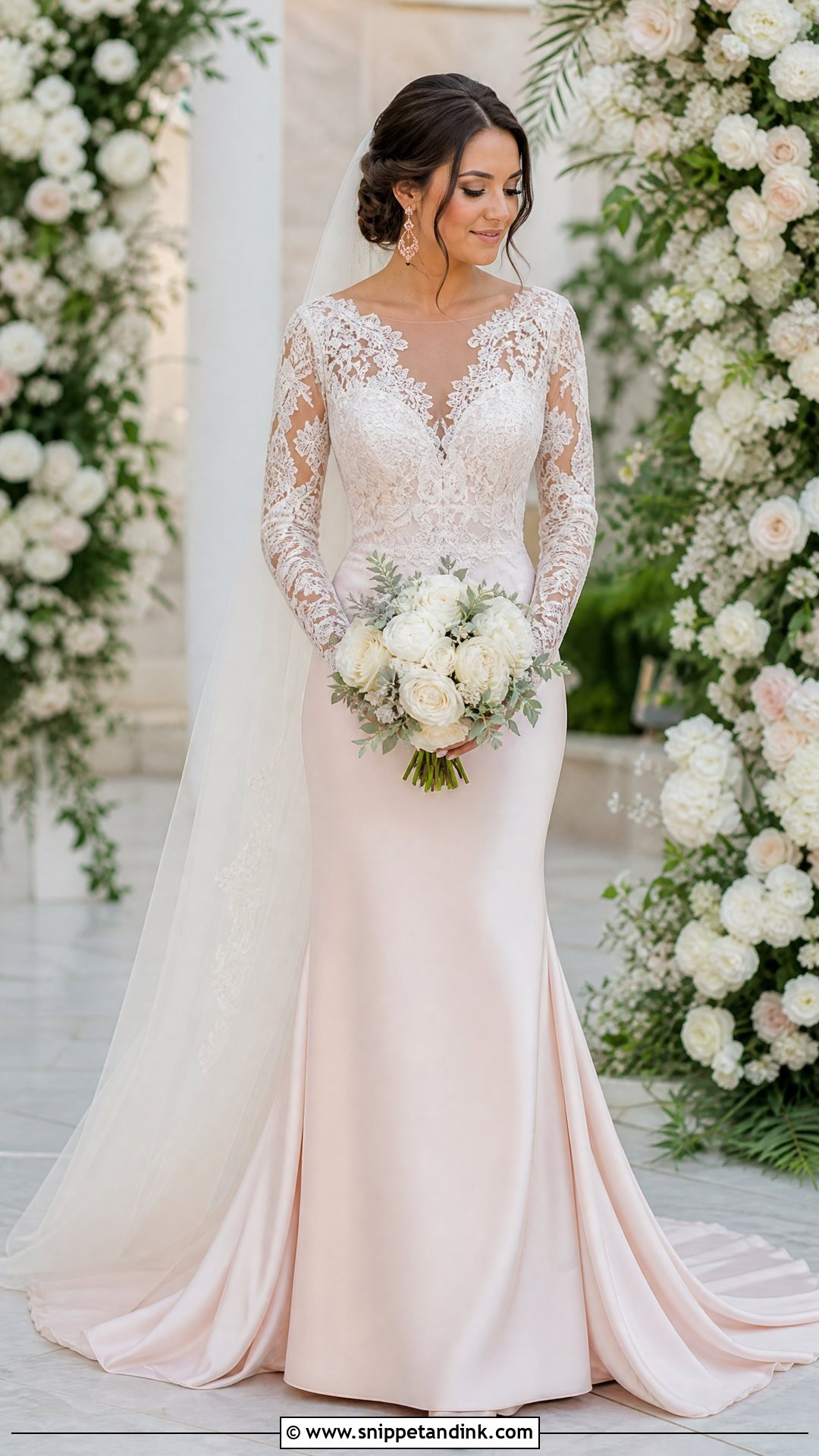
Blush adds colour quietly. A pale pink satin base with ivory lace on the bodice, sleeves or upper skirt, with the lace thinning out gradually so the two-tone effect looks deliberate. Neutral or blush heels, rose-gold earrings and an ivory veil. Keep pink accessories to a minimum; too many and the dress loses its own colour. A bouquet of cream, pale pink and muted green, and a loose low bun or curled half-up style. Natural light shows the tonal shift between lace and satin best.
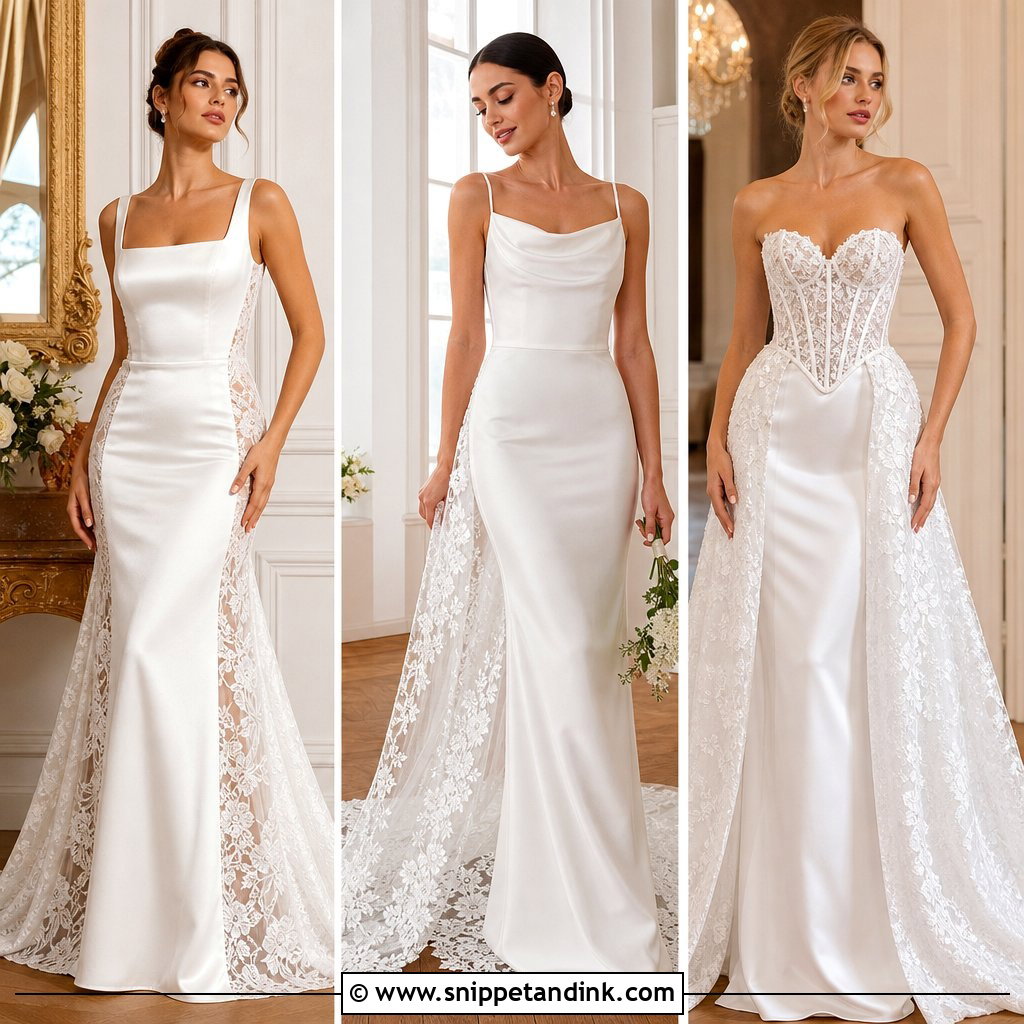
19. Satin Wedding Dress With Lace Overskirt
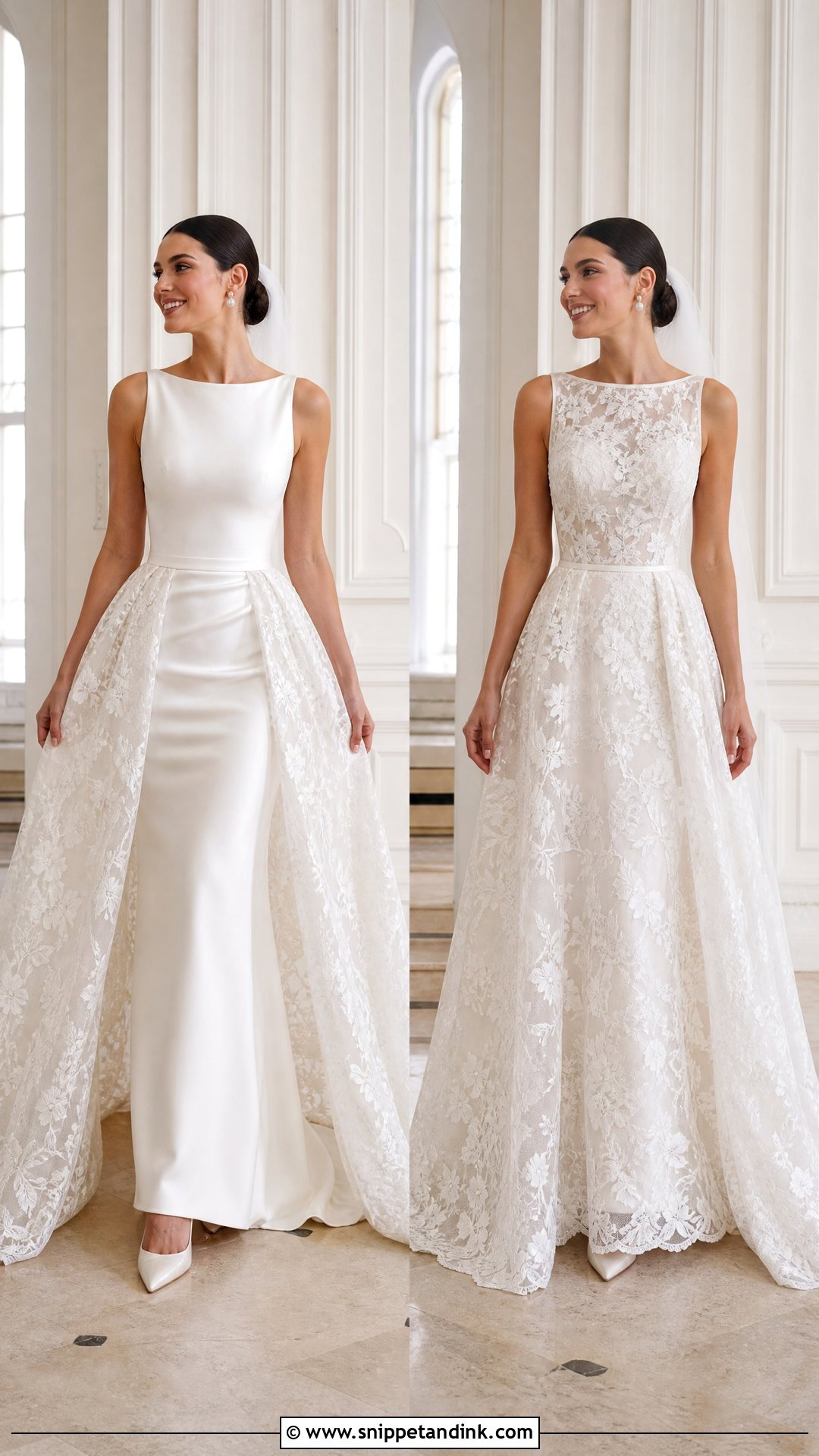
A detachable lace overskirt turns a fitted satin column or sheath into a full ceremony gown, then comes off for dinner and dancing. The waistband must sit flat and blend into the dress. Lace overskirts are lighter than satin ones, which helps, but the hooks catch in lace easily, so practise removing it with your helper. Pointed heels, pearl earrings, a simple veil and a polished bun. It saves buying a separate reception dress.
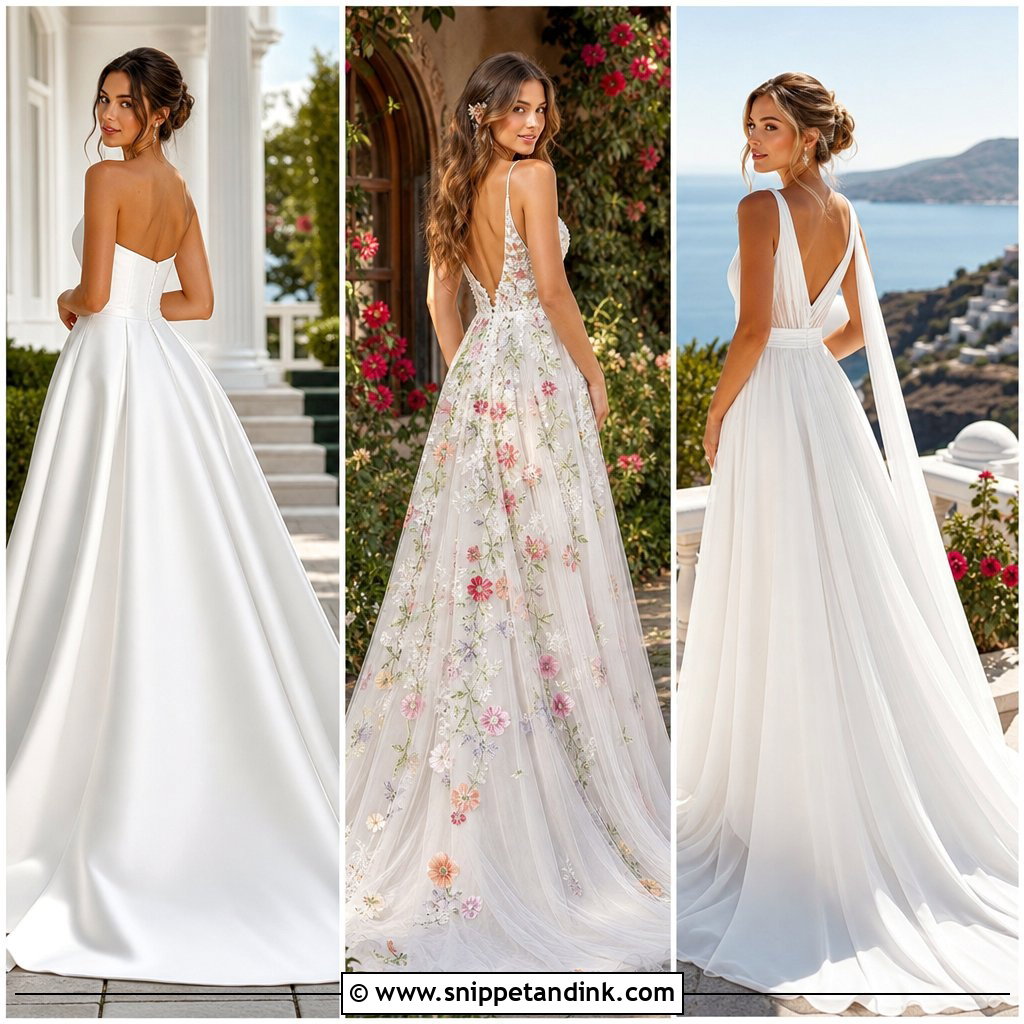
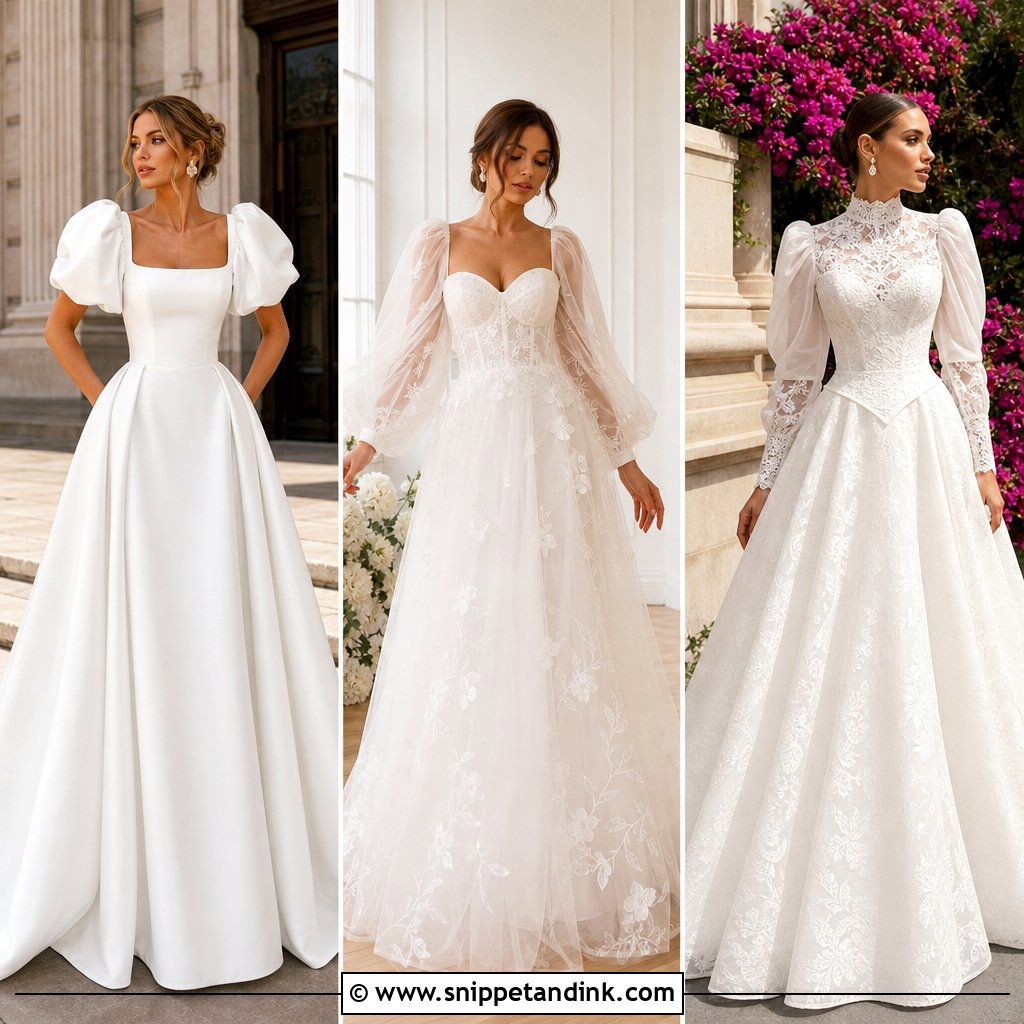
20. Satin Wedding Dress With Lace Cape
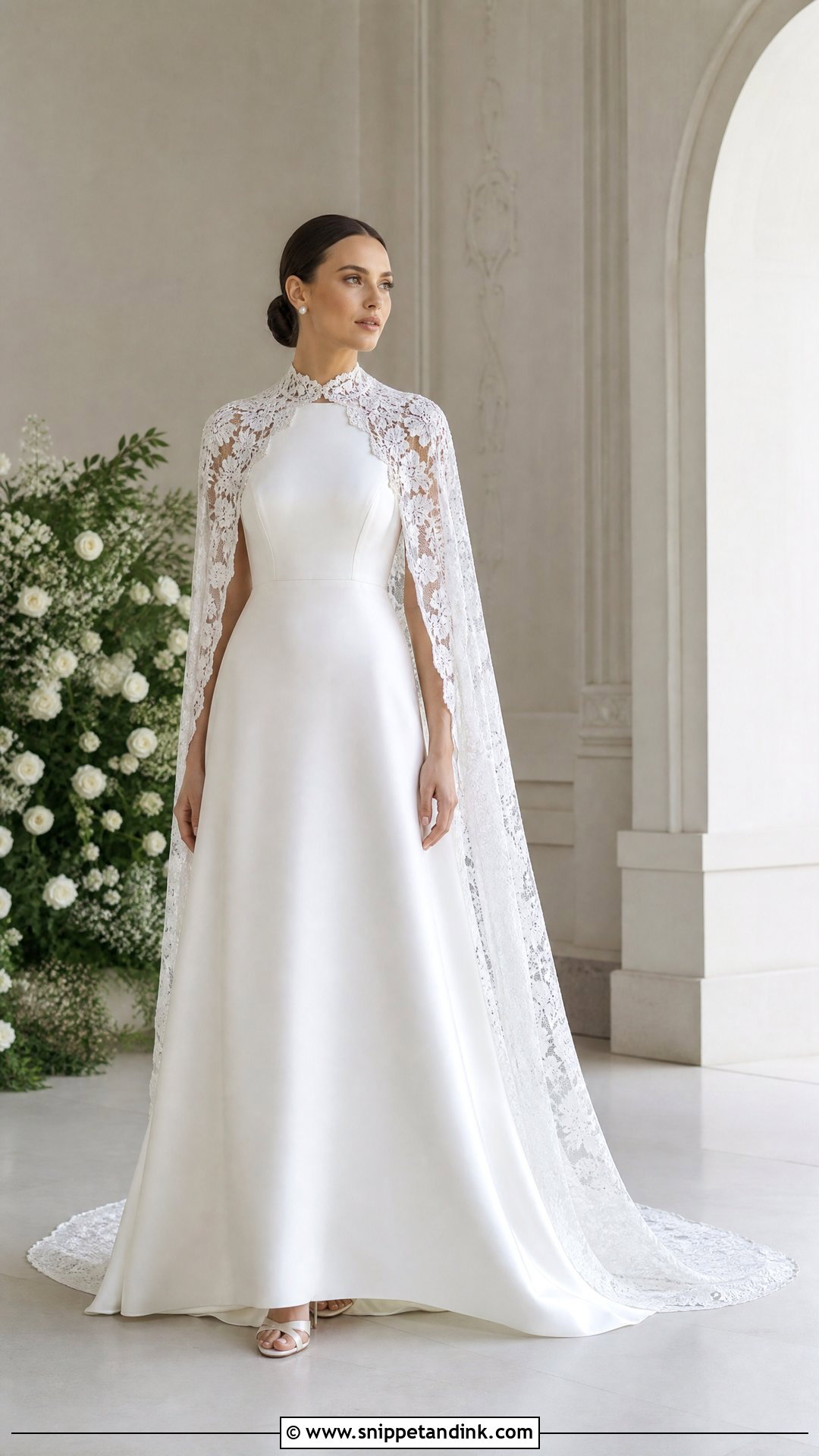
A lace cape makes a simple satin gown dramatic for the ceremony. Start with a strapless or sleeveless satin column, fit-and-flare or A-line, and choose a cape length that works with the train rather than covering it. A high-neck cape gives modest coverage; an open-front one shows the neckline. If the cape runs past the hem, I’d skip the veil to avoid too many layers at the back. Pearl studs, satin heels and a smooth low bun. Take the cape off for the reception.
Lace Snags Easily, So Plan for It
Satin marks and lace catches. Put them together and you have a gown that needs a little care all day. Most problems come from the same few sources.
- Bracelets with prongs or open settings. Choose smooth bangles or skip them on the side where lace sleeves sit.
- Engagement rings with high claws. Turn the stone inward when you adjust your bodice, or adjust with the other hand.
- Bouquet stems wired with florist tape and pins. Ask your florist to finish the handle with ribbon and no exposed pins.
- Velcro on bags, chair covers and some shapewear. It pulls threads out of lace instantly.
If a motif lifts during the day, don’t pull at the thread. Pack a needle, ivory thread and small scissors in the emergency kit, and have a bridesmaid tack it back with two or three small stitches through the satin.
Cleaning a gown made of two fabrics
Lace and satin can react differently to cleaning, especially if one is silk and the other synthetic. Take the gown to a cleaner who handles bridalwear and tell them what both fabrics are, or bring the care label. Don’t spot-clean lace with water at home: it can shrink slightly against the satin and pucker the area around the stain.
Where Should the Lace Go on Your Satin Gown?
Good satin and lace gowns balance smooth structure with texture placed where it counts. Start with a silhouette that supports you, suits your venue and lets you move. Then decide where lace makes the most impact: bodice, sleeves, back, train or a removable layer. Wear your shoes, veil, jewellery and underwear at fittings so you see the whole outfit together. From ball gowns to midis, the right pairing should fit securely and feel like you.
You'll Like These Ideas:





Leave a Reply