
Regency dresses come down to one line: a seam sitting just under the bust, with a long skirt falling straight from it. Everything else in the period, the pale colours, the light fabrics, the small sleeves, exists to keep that line clean. A modern bridal version can borrow all of this and still look historically inspired rather than like a costume, as long as the inside of the gown is built the way a current wedding dress is: lined, supported and fitted to you. Below are twenty directions I’d put in front of a bride who loves the era, each with the shoes, hair and veil I’d pair with it, and a note on where it tends to go wrong.
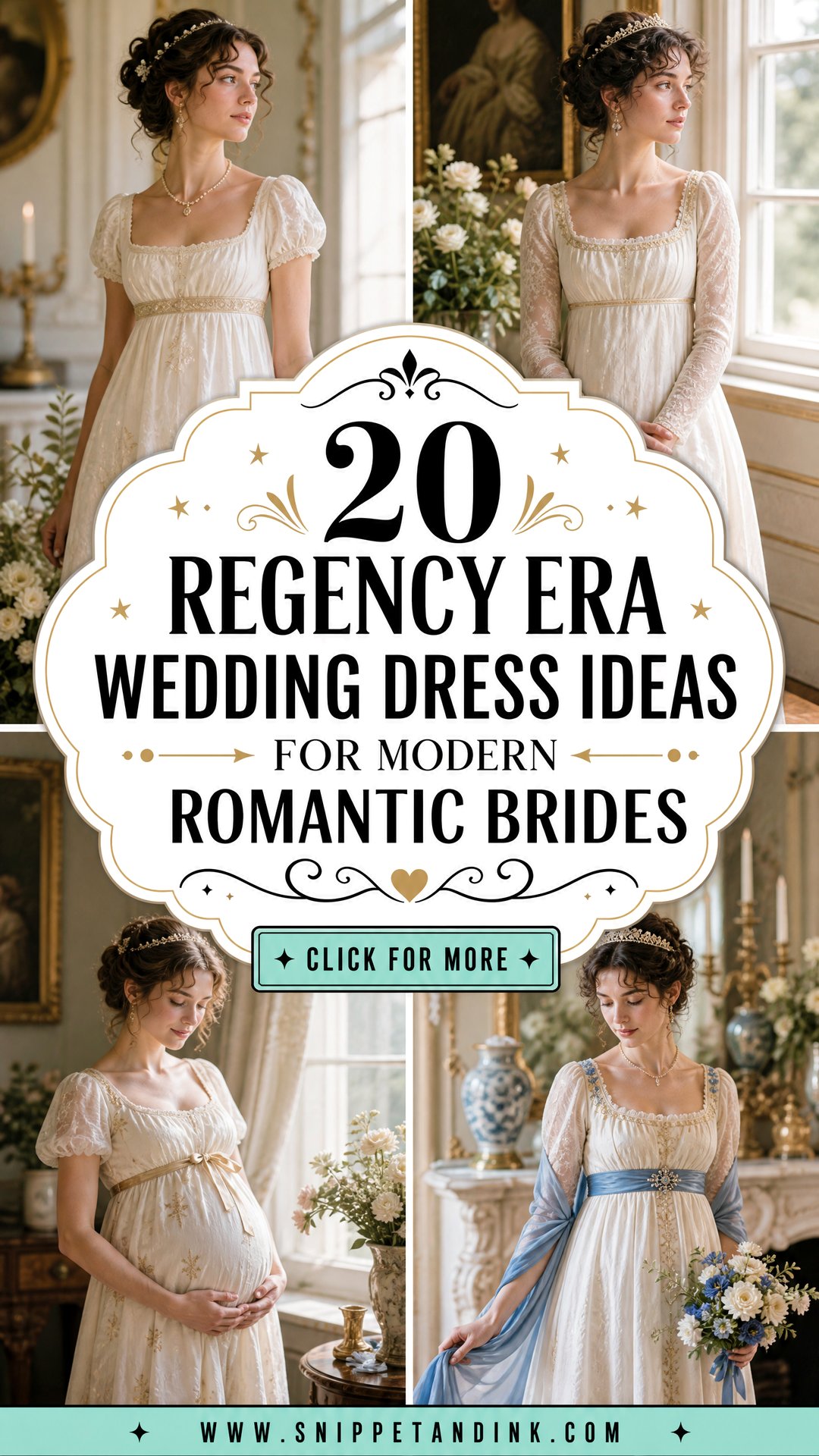
Where the Empire Seam Should Sit, and How I Check It
Every gown on this list depends on one measurement: the distance from your shoulder to the crease under your bust. Sample dresses are cut for an average body, so the seam on a sample almost never lands in the right place on you, and that is normal. At the first fitting I pin it where it should be and look at three things.
- From the side: the seam should run level, or rise very slightly toward the back. If it dips at the front, the skirt will tent forward and you’ll look pregnant in profile photos even if you aren’t.
- When you sit: the bodice shouldn’t ride up and expose the bra band or lining. Sit on a hard chair during the fitting, not just a fitting-room stool.
- When you lift your arms: high armholes are typical of the style, but you need to hug, throw a bouquet and dance. If the whole bodice lifts with your arms, the sleeve needs more ease.
Bring the bra or bodysuit you’ll actually wear, and your wedding shoes. Changing either after the hem and seam are set means another fitting, and the empire line is unforgiving of small shifts.
Light Fabrics Need a Plan for Wind, Rain and Cold
Chiffon, muslin and organza are what make these gowns move, and they are also what make them fragile outdoors. Wind lifts a single layer of chiffon and wraps it around your legs, so I add a slightly heavier lining or a few small weights tacked inside the hem for an exposed site. Light skirts show water marks quickly; carry a clean white towel to blot rain rather than rub it.
For cold months, a Spencer jacket is the period answer and still looks right: a short, fitted jacket that ends at the empire seam, so it covers you without hiding the line. Velvet or wool crepe in ivory works for photos outside, and you take it off for the reception. A long pashmina, by contrast, drops below the waist seam and erases the silhouette you chose the dress for.
1. Empire Waist Regency Era Wedding Dress
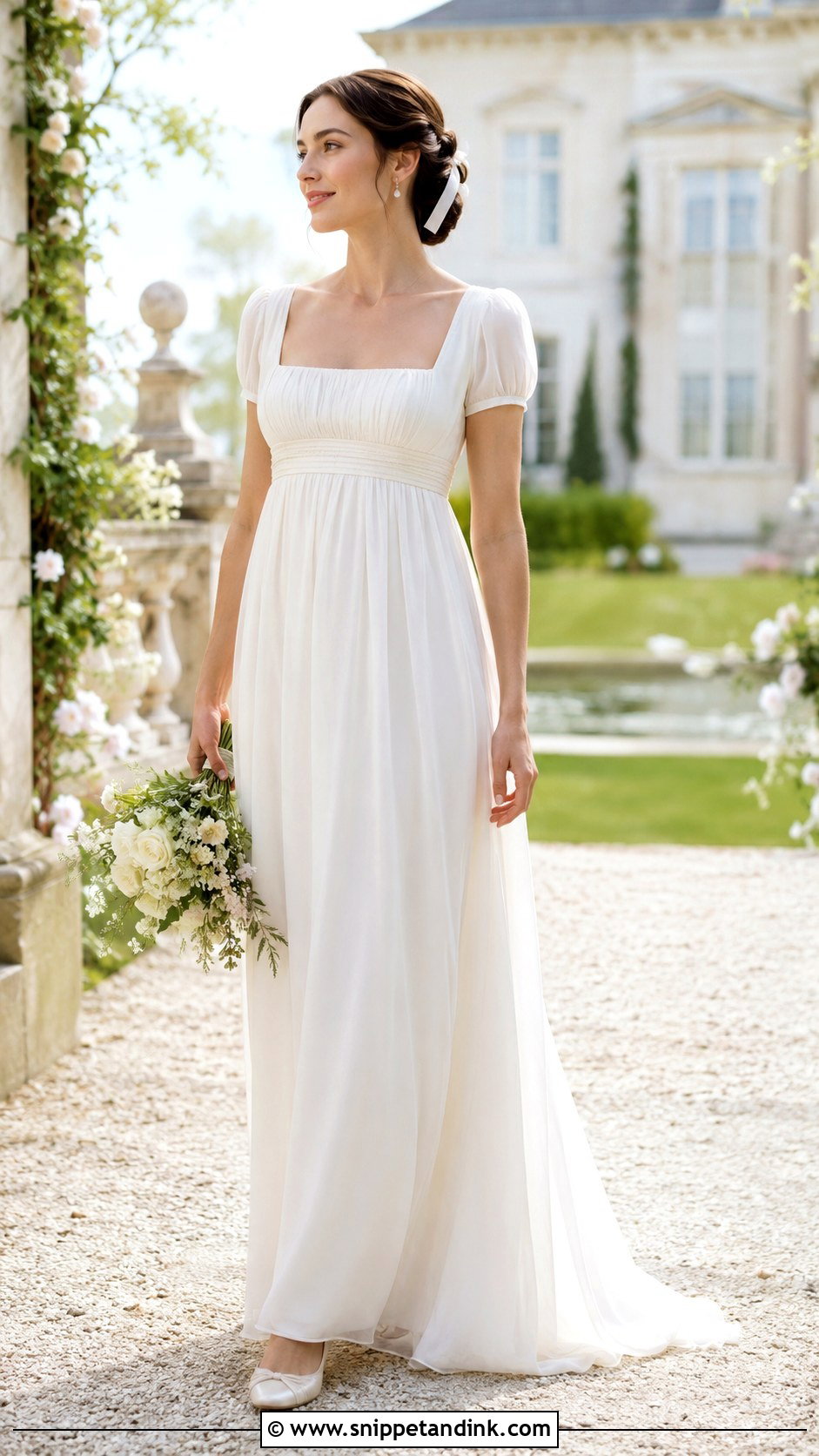
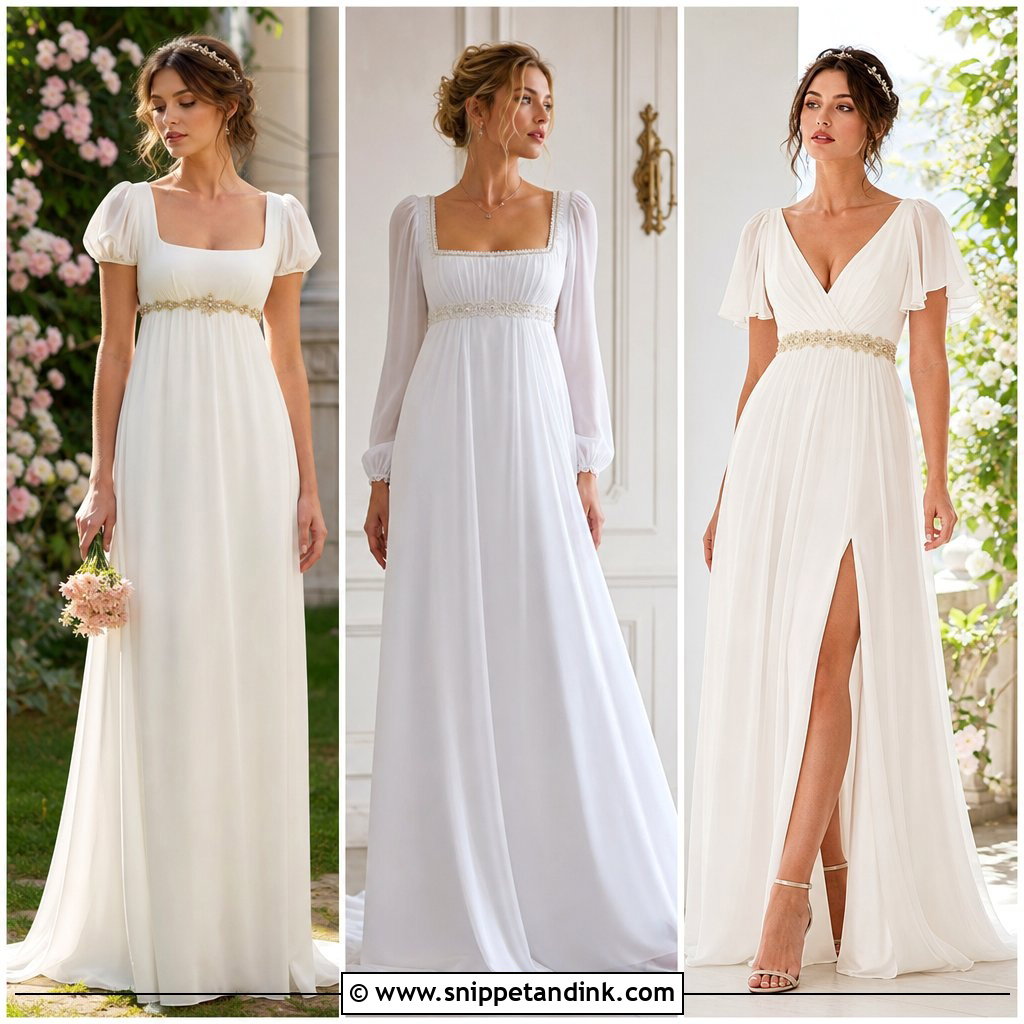
This is the purest version, and also the least forgiving of a poor fitting. The under-bust seam has to sit exactly in the crease beneath your bust; half an inch too low and the whole gown looks like a nightdress. Over that seam I like a soft square neckline, short sleeves and a chiffon or silk skirt that drops without any shaping at the natural waist. Ivory satin flats, pearl drops and a thin ribbon threaded through a loose updo keep it light. Pin the veil below the hair rather than on top, so the neckline stays uncluttered from the back as well. Garden ceremonies and historic houses suit it, especially in warm weather, because so little fabric touches the body.
2. Square Neck Regency Era Wedding Dress
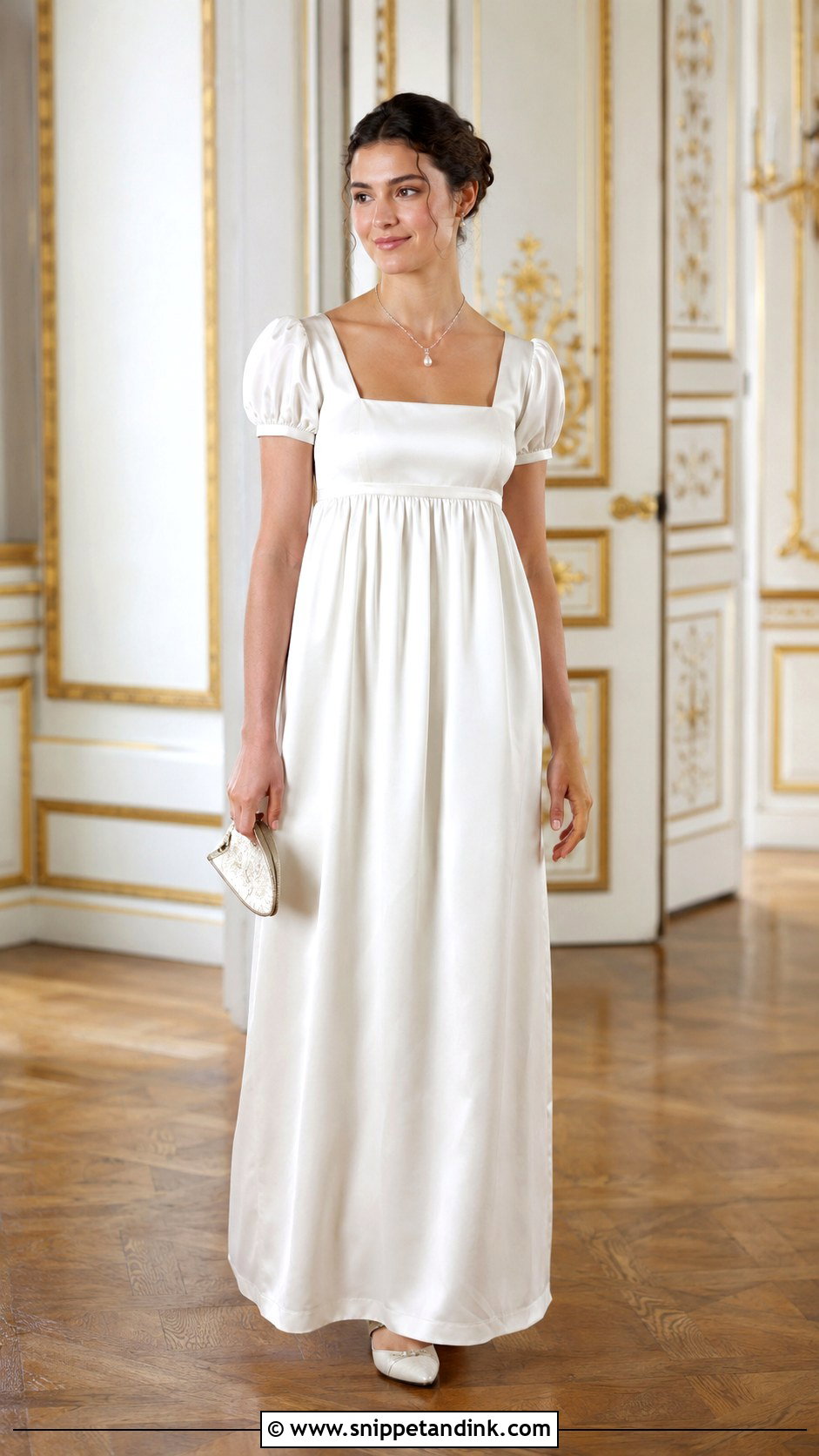
A square neckline is the shape I see flatter the widest range of collarbones, because its straight edge reads structured even on a soft gown. Build it on a smooth silk bodice with a high seam and a lightly gathered floor-length skirt, and keep the puff sleeves small. One thing I’d insist on: modern inner support and a fully lined skirt. Period-style sheer layers look fragile in daylight and show every shadow underneath. Pearl studs, a fine pendant, pointed satin flats and a low bun with a few loose curls at the face finish it. It holds up well indoors, where a formal ceremony needs a little more polish.
3. Puff Sleeve Regency Era Wedding Dress
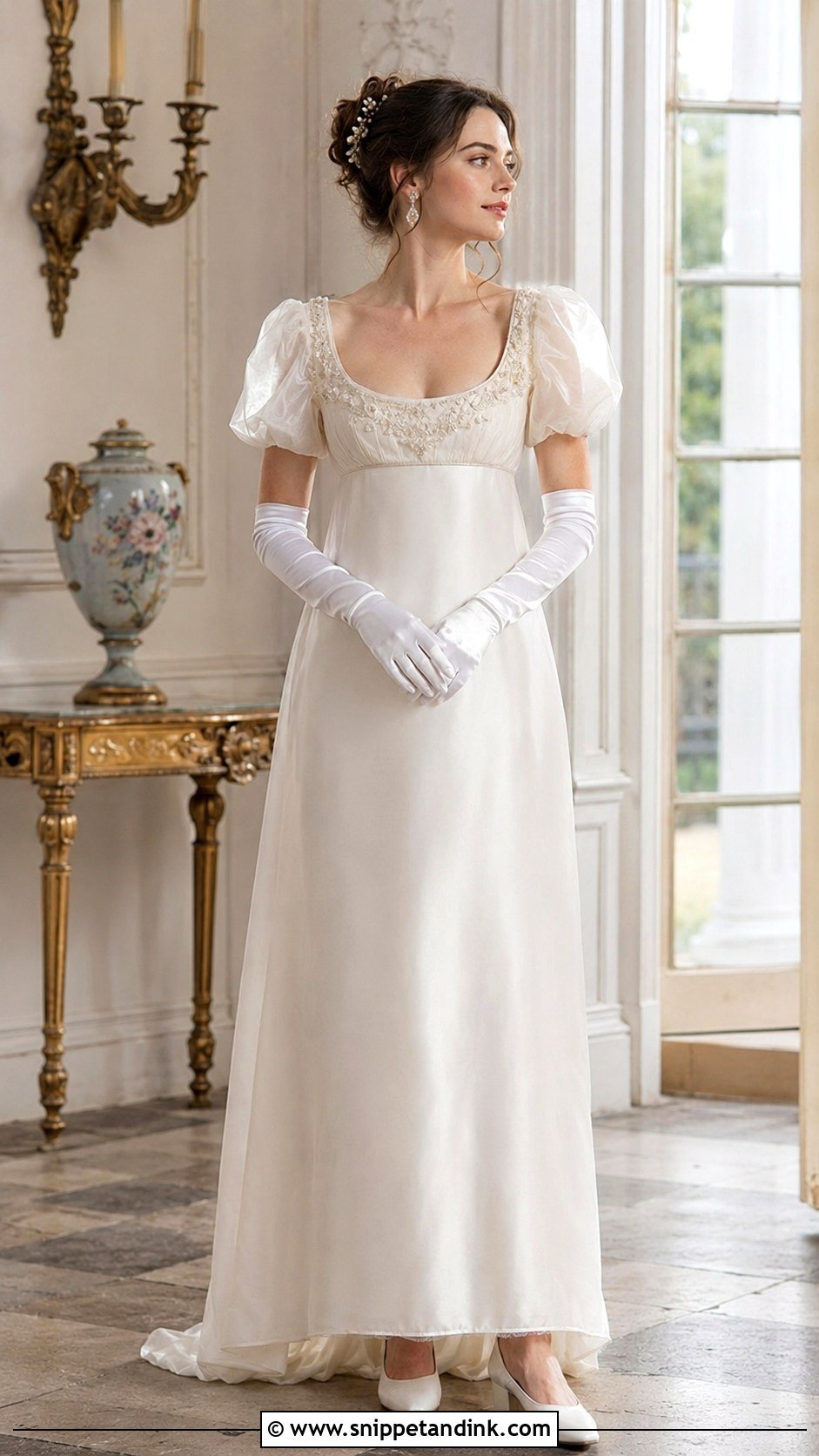
Sleeves are where the Regency mood comes from, and soft puffs give a gown that romantic Regency character straight away. The fabric decides whether they work. Silk organza or dotted tulle holds a puff with air inside it; stiff satin sleeves look like shoulder pads by the first hour. Keep the bodice fitted and the skirt narrow so the volume stays up top, and let a little tonal embroidery mark the neckline and waist seam. Elbow-length gloves, crystal earrings, low block heels and a pearl comb carry the period feeling. Hold a small bouquet of pale seasonal flowers so nothing covers the sleeve line.
4. Long Sleeve Regency Era Wedding Dress
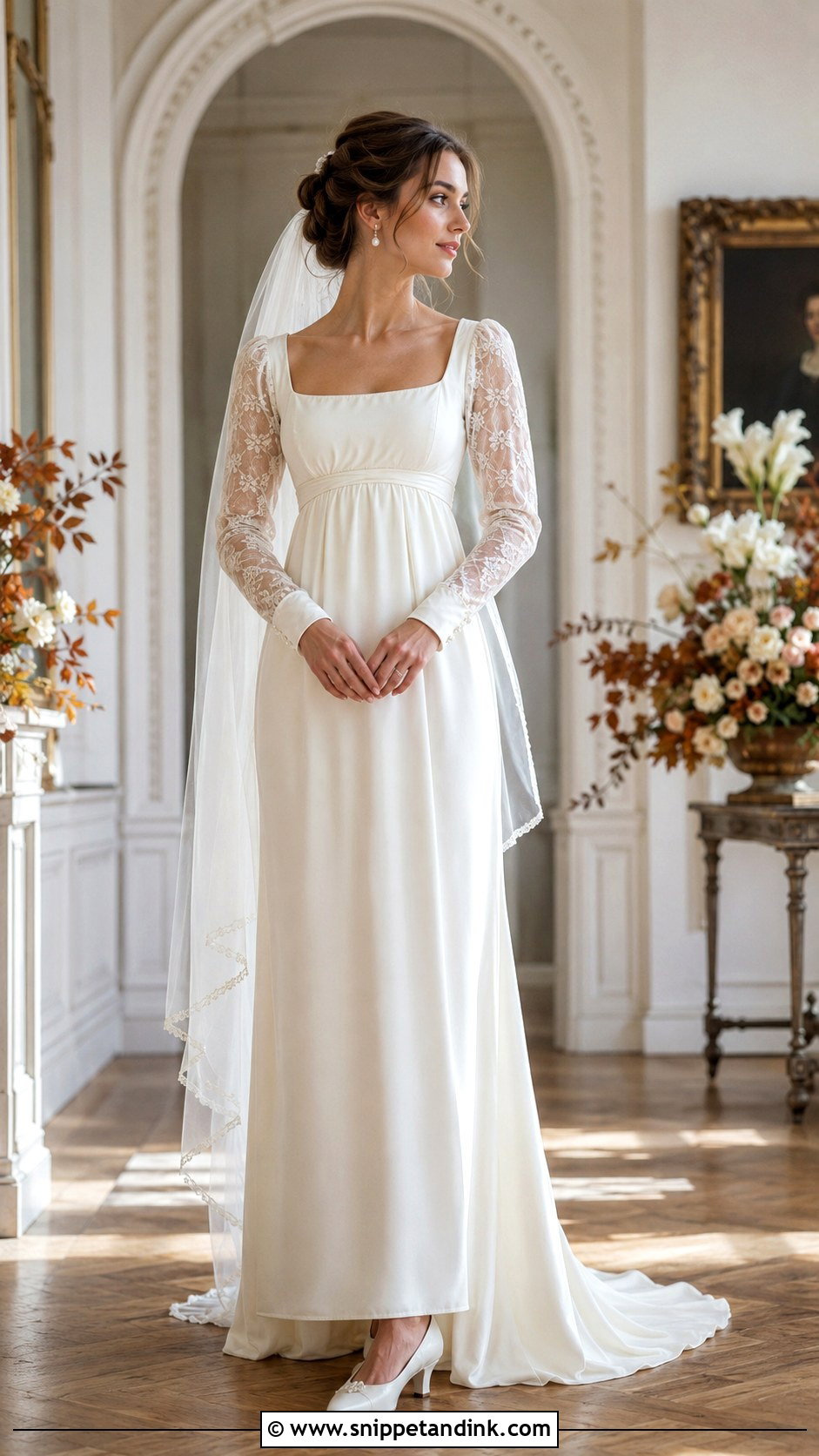
Cold venues are where I suggest long sleeves, and sheer lace keeps them from feeling heavy. Ask for fitted cuffs and check that you can lift your arms over your head at the fitting; tight lace sleeves set into a high empire armhole restrict movement more than brides expect. The skirt should be crepe or light silk falling cleanly from the bust. Balance the coverage with a scoop or square neckline. Ivory low heels, pearl and crystal earrings, and a comb above a loosely twisted bun work with a fine chapel-length veil for the ceremony. Fall weddings, winter ballrooms and old stone buildings are its home.
5. Satin Regency Era Wedding Dress
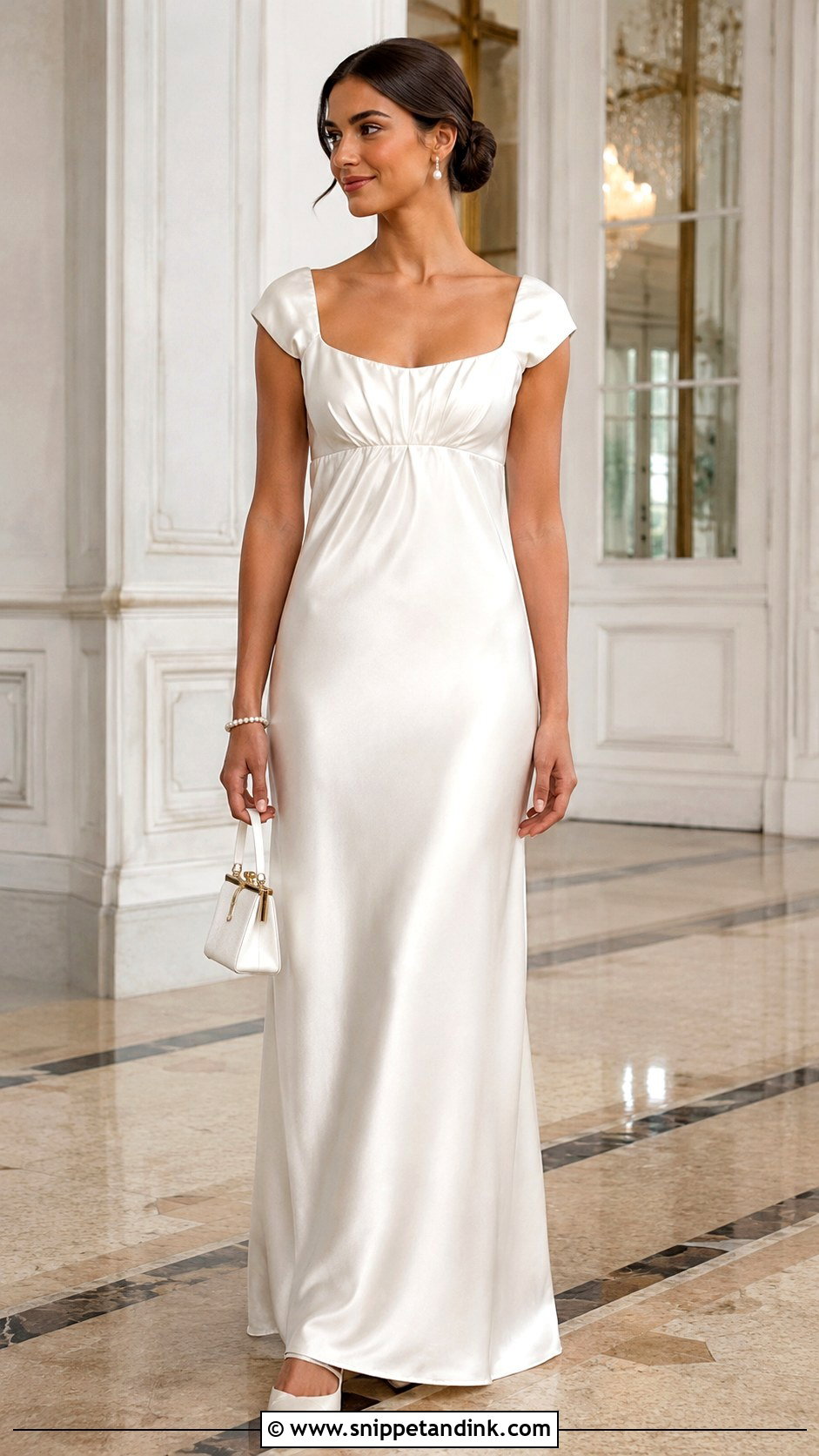
Satin changes the mood from country house to evening. The weight matters a great deal here: a heavy duchess satin fights the empire line and stands away from the body, so I steer brides toward silk satin or charmeuse that drapes. Be honest with yourself about it, though. Charmeuse shows every seam and undergarment line, so plan smooth, edge-free shapewear only if you need it and try it at the fitting. Gather the bust softly, keep the waistband slim and let a column skirt skim the floor. Thin straps or cap sleeves, satin slingbacks, a pearl bracelet and a smooth low bun with a fingertip veil let the fabric do the talking at a hotel or ballroom reception.
6. Lace Regency Era Wedding Dress
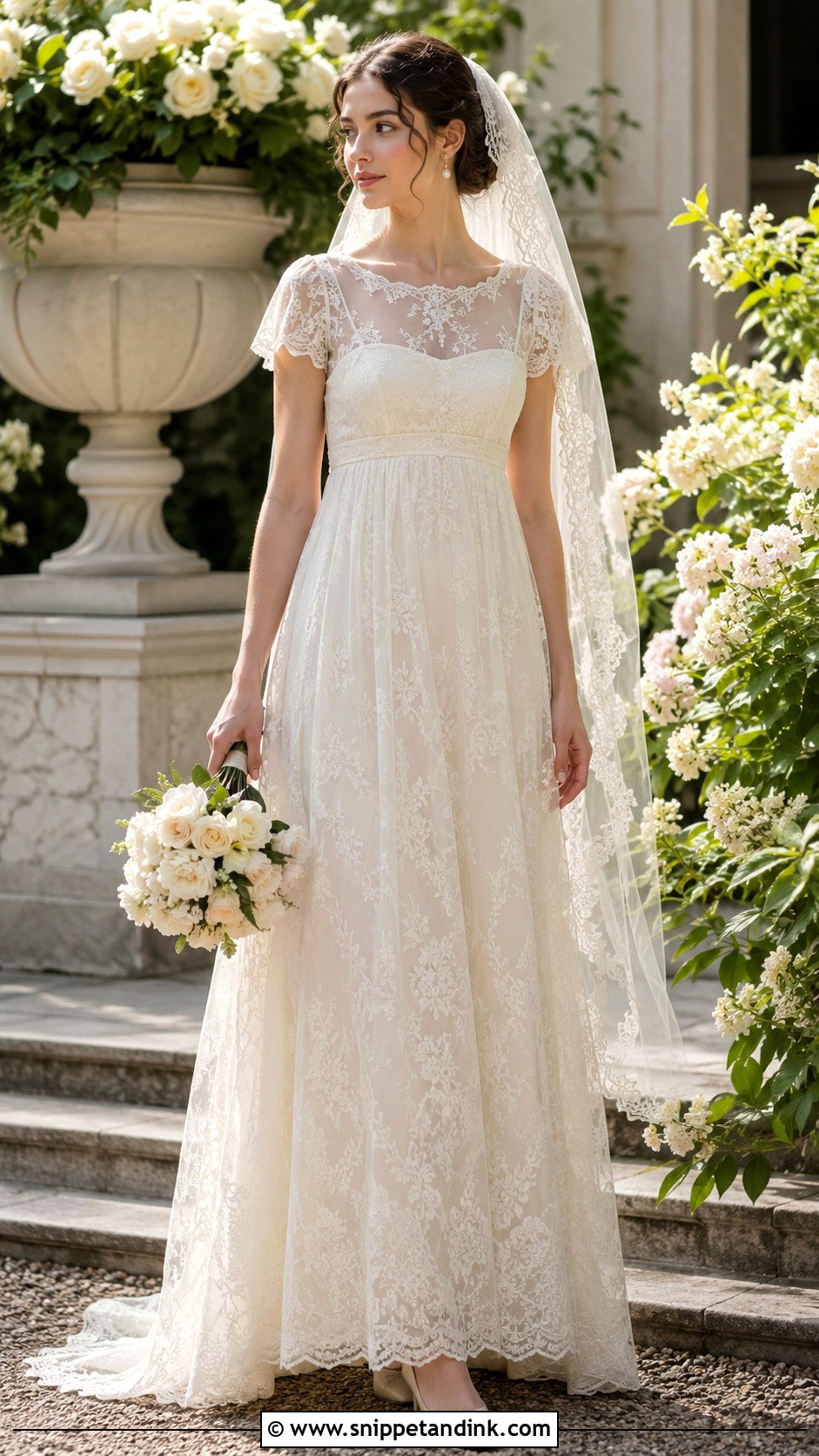
Fine lace over a flowing empire gown reads romantic without anyone needing to explain the period reference. Pick a delicate floral or trailing-vine pattern; chunky corded lace adds bulk exactly where this silhouette needs to stay flat. I like a lined sweetheart bodice under a sheer square neckline, which gives real support while the outer layer looks period. Short lace sleeves and a narrow waistband define the top before the skirt falls away. Ivory kitten heels, pearl hairpins, a lace-edged veil and teardrop earrings finish it. Keep the bouquet compact, or the best part of the dress disappears in every portrait. Manor houses and formal gardens suit it.
7. Muslin Regency Era Wedding Dress
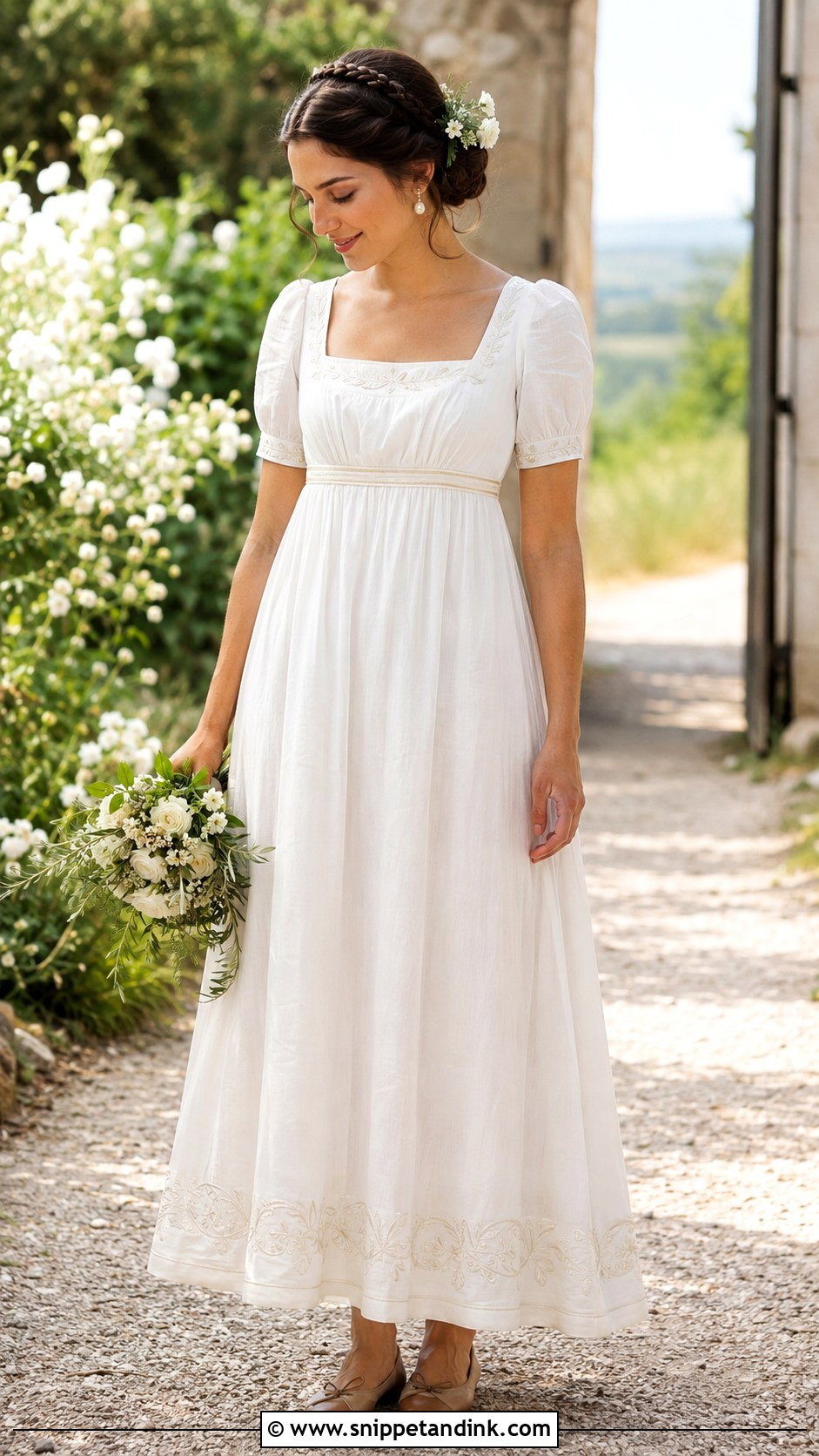
Lightweight muslin is the most authentic fabric on this list and the easiest to get wrong. Cheap muslin creases the moment you sit in the car and can look like a nightshirt by the speeches. Ask for a fine, high-quality cotton muslin with a full lining, careful pleating at the bust and an embroidered border at the hem to give it weight. A square-neck bodice, gathered short sleeves and a narrow sash set the shape. Leather ballet flats, a gold pendant, pearl earrings and a fingertip veil keep it relaxed, and fresh flowers in a braided low bun suit an outdoor summer ceremony. Expect some softening of the fabric over the day; that crumple is part of its charm, but steam it on the morning.
8. Embroidered Regency Era Wedding Dress
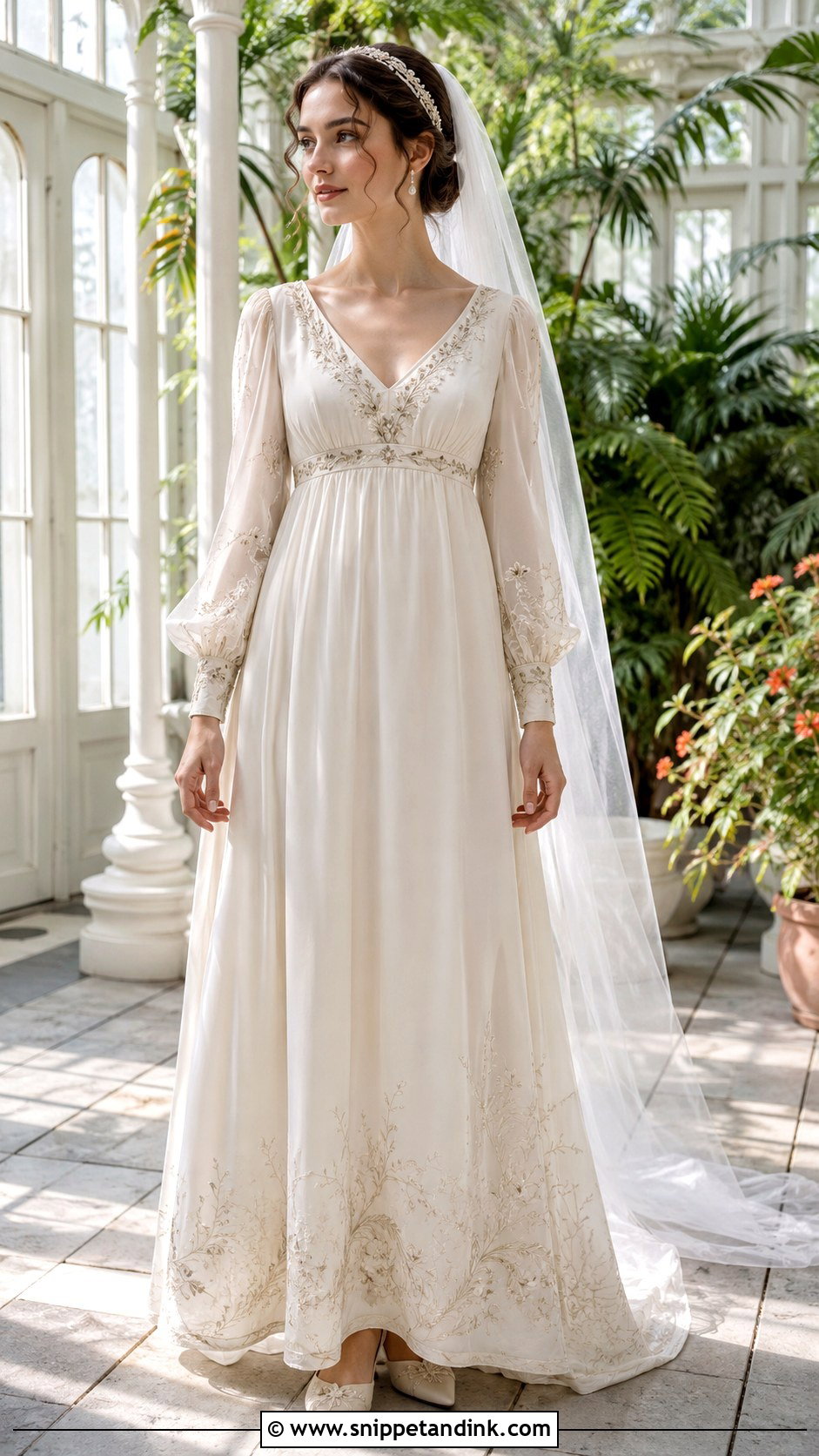
Embroidery gives a plain empire gown depth, but only if it is concentrated. I look for tonal botanical stitching at three points, the neckline, the sleeve edges and the lower skirt, and nothing across the middle, so the long line stays light. A soft V-neck over a fitted bodice and a chiffon overlay on the skirt make a modern base. Pointed ivory flats, pearl drops and a narrow embroidered ribbon in a low updo pick up the motif without repeating it too loudly. Choose a plain tulle veil; an embroidered one competes with the hem. Conservatories and spring gardens are natural settings, and it is a quiet way to carry a meaningful flower into the dress without bright colour.
9. High Neck Regency Era Wedding Dress
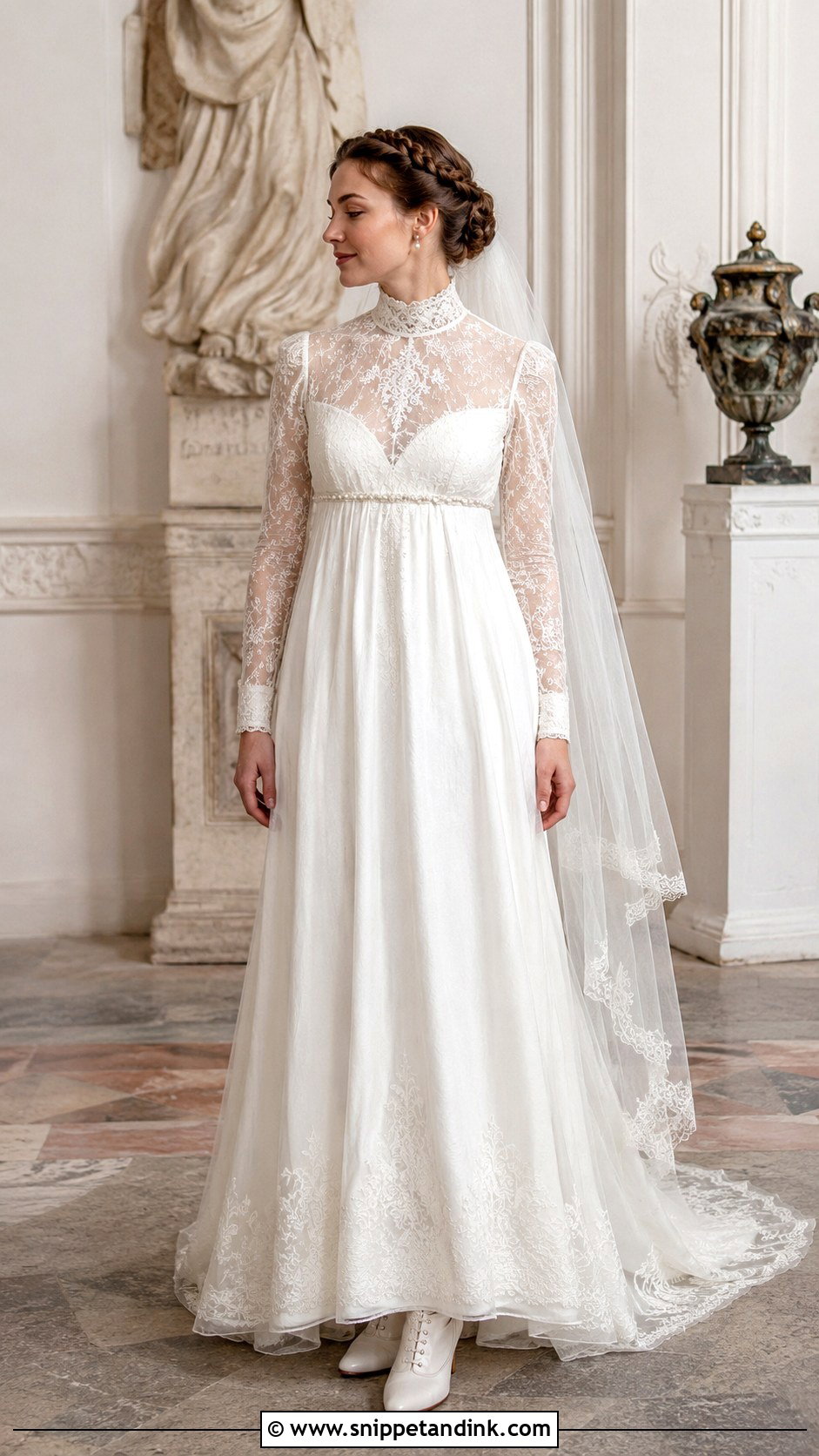
Regency evening wear was cut low, so a high neck is a modern choice, and a good one for a bride who wants coverage. The secret is a sheer lace yoke over a structured sweetheart lining: the support comes from underneath and the lace just floats on top. Keep the bodice decoration minimal, or a high neck can start to feel tight and buttoned-up. Long fitted sleeves for winter, cap sleeves for daytime spring. Pearl studs, ivory buttoned boots or low pumps and a neat braided bun go well. Fix the veil under the bun so the lace collar shows from behind as well as the front.
10. Cap Sleeve Regency Era Wedding Dress
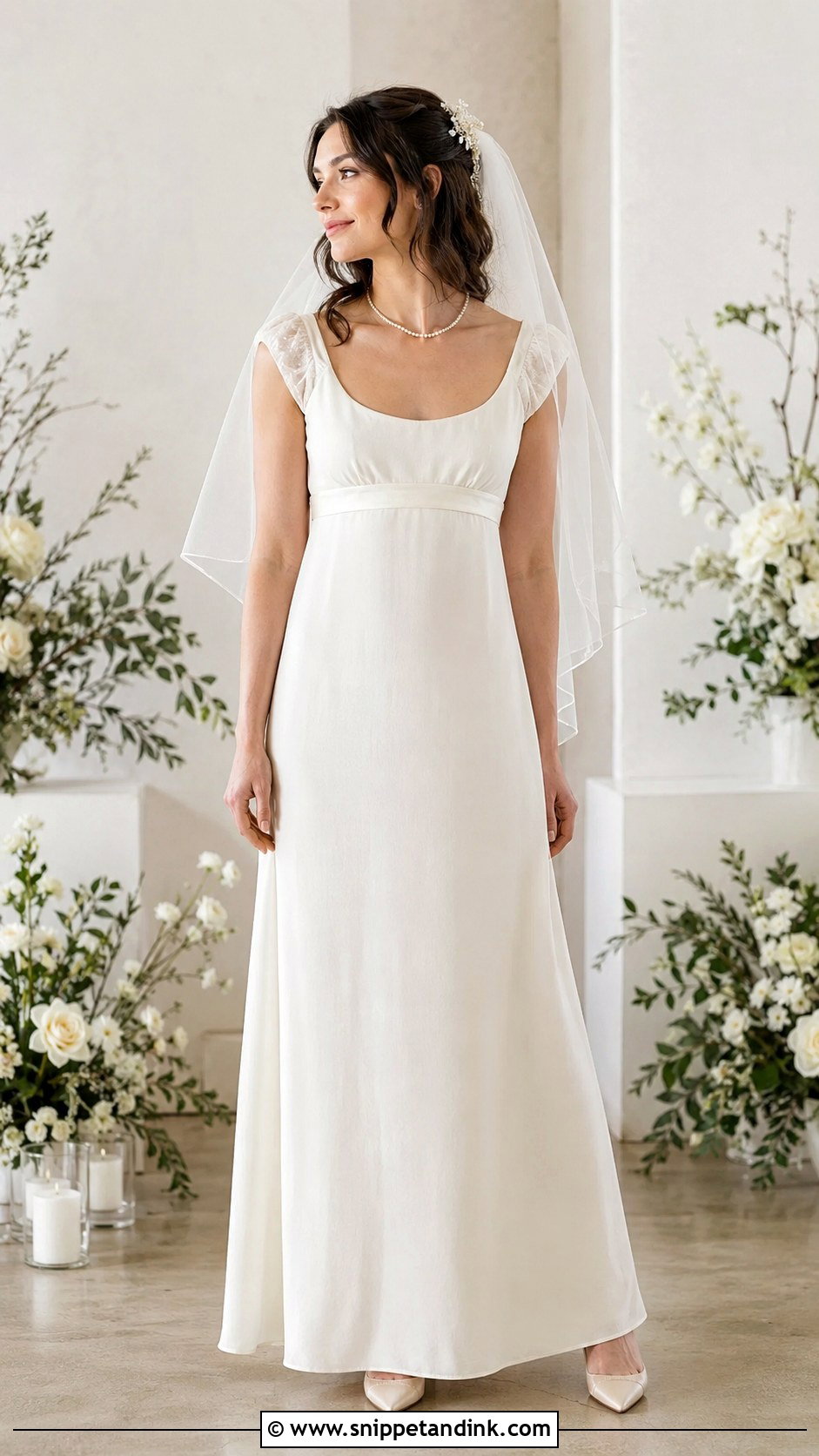
Cap sleeves are the quietest nod to the era, and I often suggest them to brides who like the shape but worry about looking theatrical. Pair them with a gently curved neckline, a fitted empire bodice and a crepe or chiffon skirt that falls close to the body. A narrow satin band under the bust defines the raised waist; a contrasting wide one would chop the torso. Low pointed heels, a fine pearl necklace and a small floral comb above a soft chignon finish it, with a shoulder-length veil that leaves the sleeves visible. It suits a courthouse ceremony or a modern venue, and it stays comfortable from the vows to the last dance.
11. Ribbon Sash Regency Era Wedding Dress
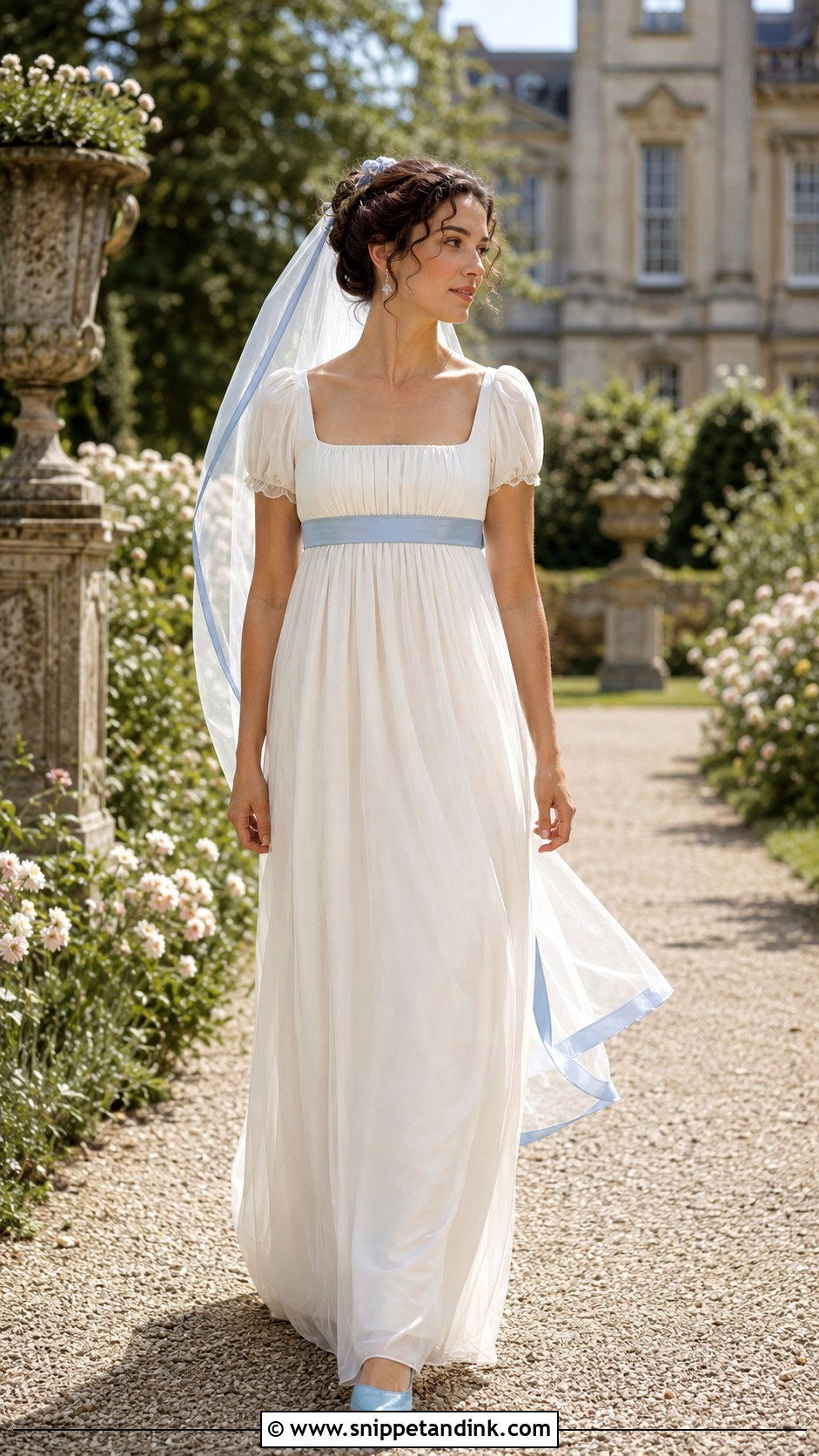
A sash is the cheapest way to mark the raised waist, and it can be added to a plain chiffon gown after purchase. Start with a square neckline, fitted bodice and gathered skirt, then tie a silk ribbon directly under the bust in ivory, champagne, dusty blue or a shade from your palette. Tie it at the back with short tails. Long tails get stepped on, sat on and crushed in the car. Ask your seamstress to tack the ribbon at the side seams so it can’t ride up when you raise your arms. Matching satin flats, small earrings and a ribbon-trimmed veil or hairband complete it. Let the sash be the only strong detail on the dress.
12. Pearl Beaded Regency Era Wedding Dress
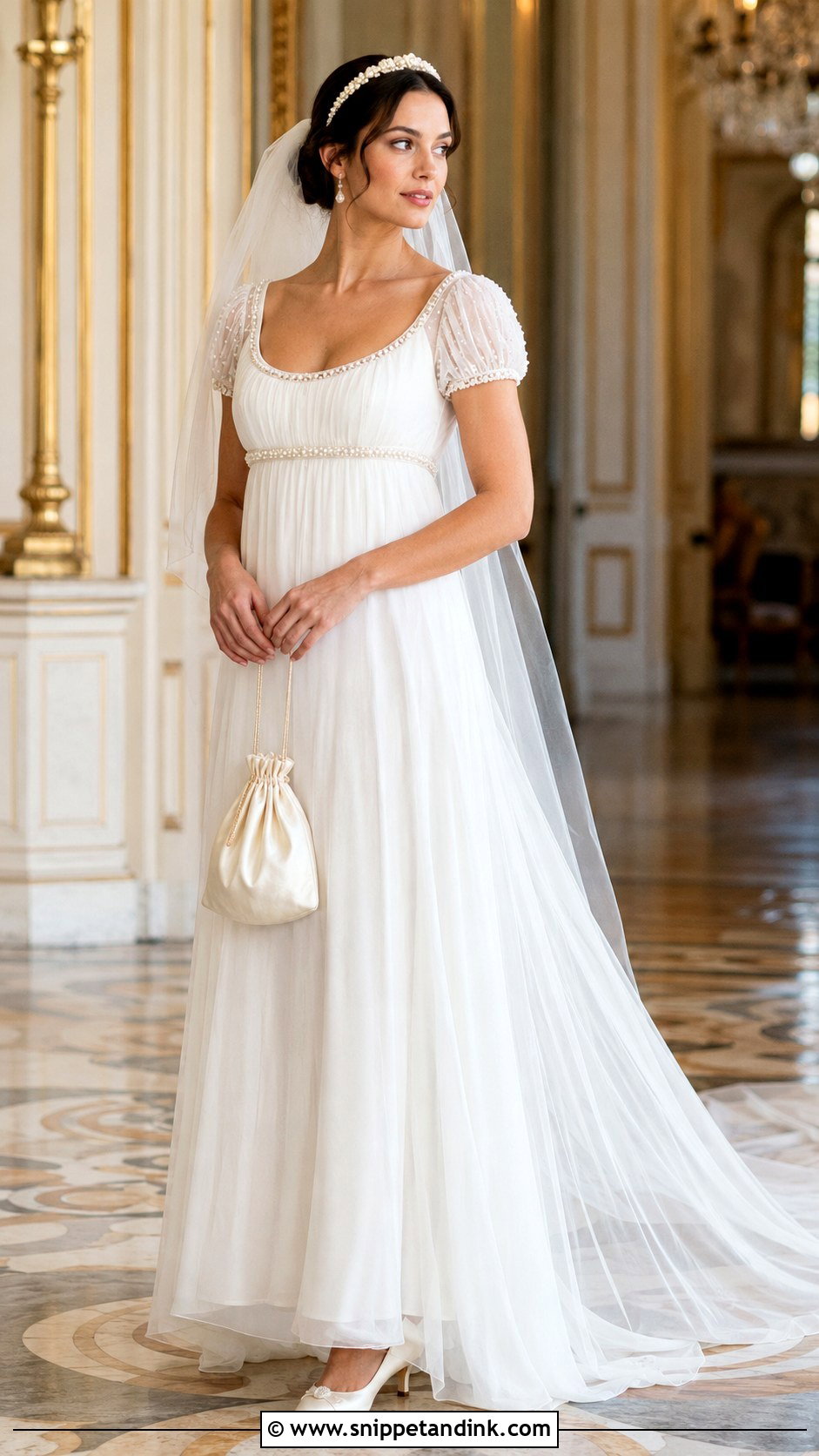
Pearl beading gives a soft glow rather than sparkle, which suits the restraint of the period. Look for tiny pearls tracing the neckline, the waistband and the sleeve edges, on a simple square-neck bodice and a smooth chiffon skirt. Check the back of the beading at your fitting: pearls sewn on with a single thread snag on lace veils and pop off when hugged, so I ask whether each one is individually secured. Pearl drops, ivory low heels and a small satin bag work with a narrow pearl headband over softly pinned curls rather than a crown. Add a plain cathedral or chapel veil for length. Indoor evening receptions suit it best.
13. Floral Appliqué Regency Era Wedding Dress
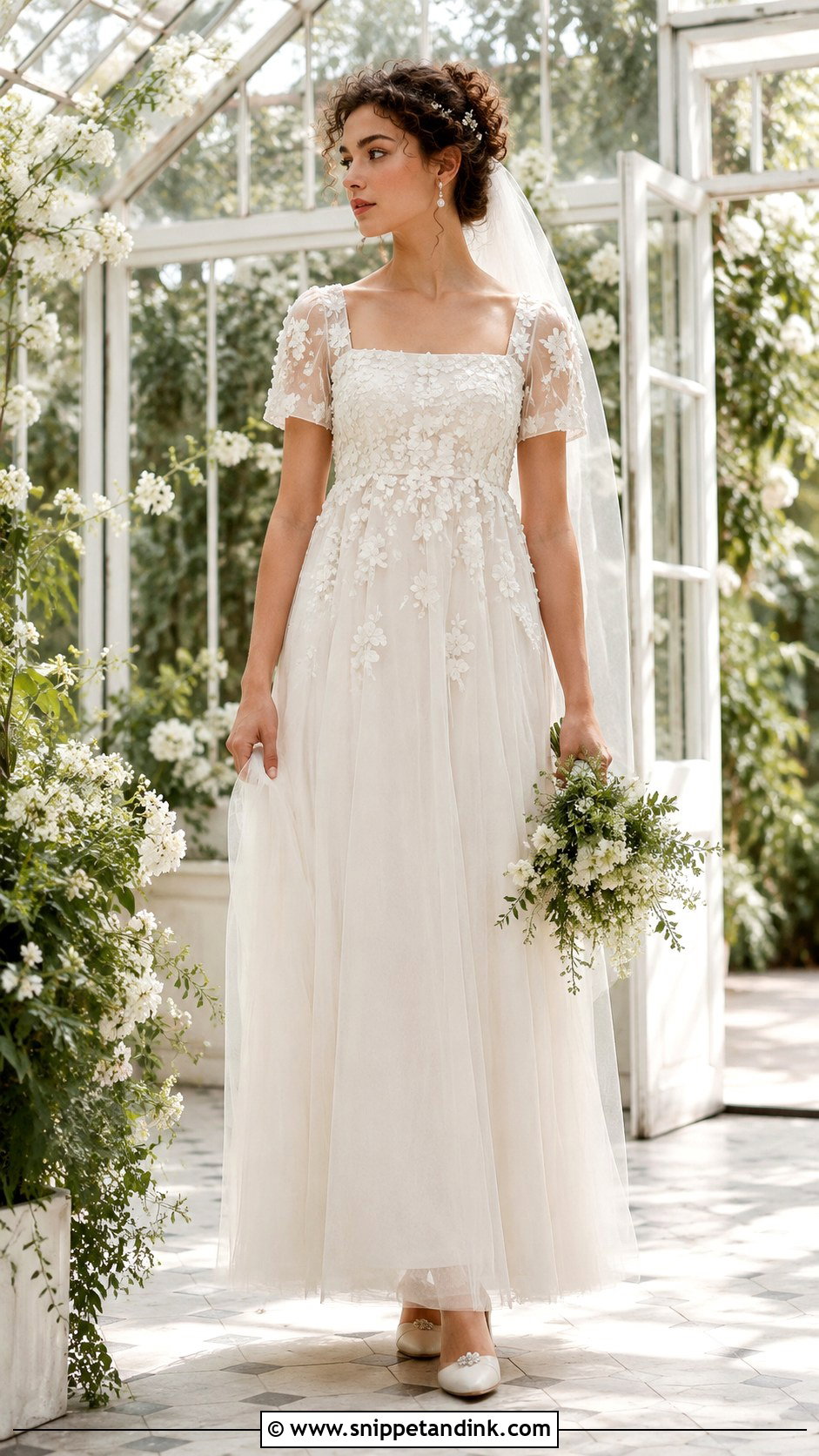
Three-dimensional flowers bring the empire gown closer to a garden. The placement is what I’d judge: dense on the bodice, thinning as it moves onto the upper skirt, and gone before the knee, so the raised waist and long skirt still read clearly. A square neckline, short sheer sleeves and flowing tulle keep the Regency base underneath. Ivory block heels, floral pins, pearl earrings and a plain tulle veil let the appliqués lead. Carry a moderate bouquet with similar flower shapes. A large one hides the bodice, which is the part you paid for. Spring and summer weddings in greenhouses or bright rooms suit it.
14. Cape Sleeve Regency Era Wedding Dress
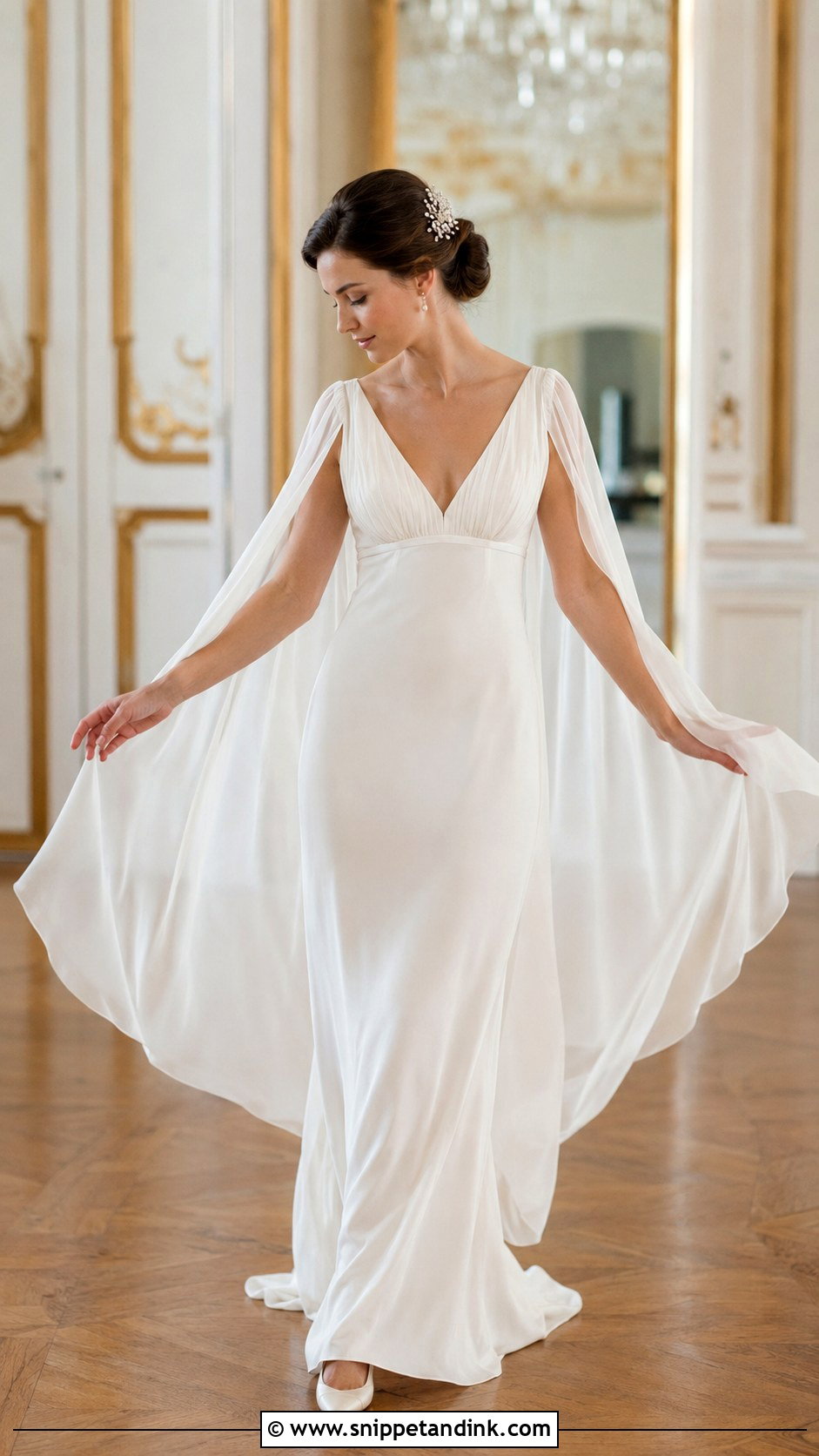
Cape sleeves give you a dramatic entrance without the weight of a separate cape. They should be chiffon panels attached at the shoulder seam, light enough to lift when you walk. Underneath, keep things plain: a V or square neck and a crepe column skirt. A long veil and cape sleeves tangle, especially in wind, so I’d choose a short veil or simply a crystal comb in a smooth low bun. Pointed satin flats or low heels keep walking easy beneath the drape, and small pearl earrings are enough. It comes alive in a tall ballroom or anywhere the walk down the aisle is long.
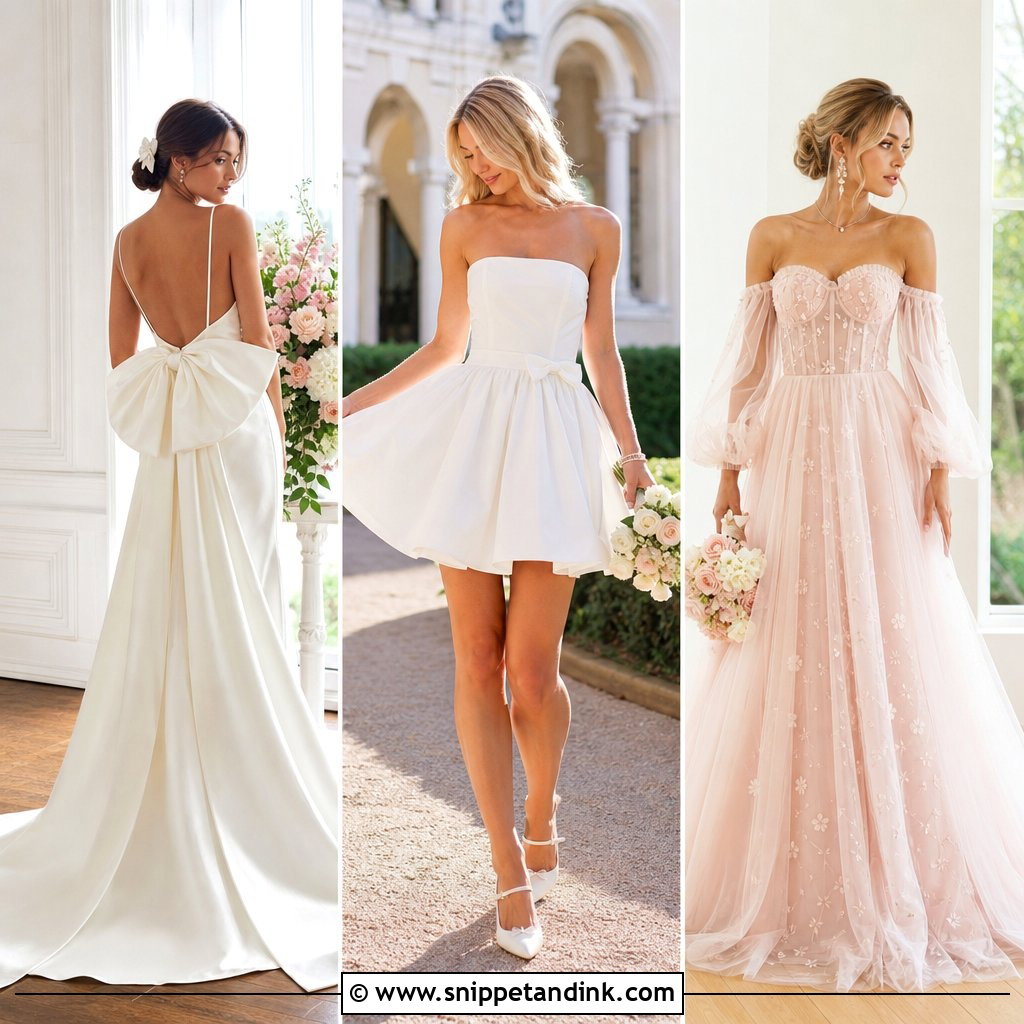
15. Detachable Train Regency Era Wedding Dress
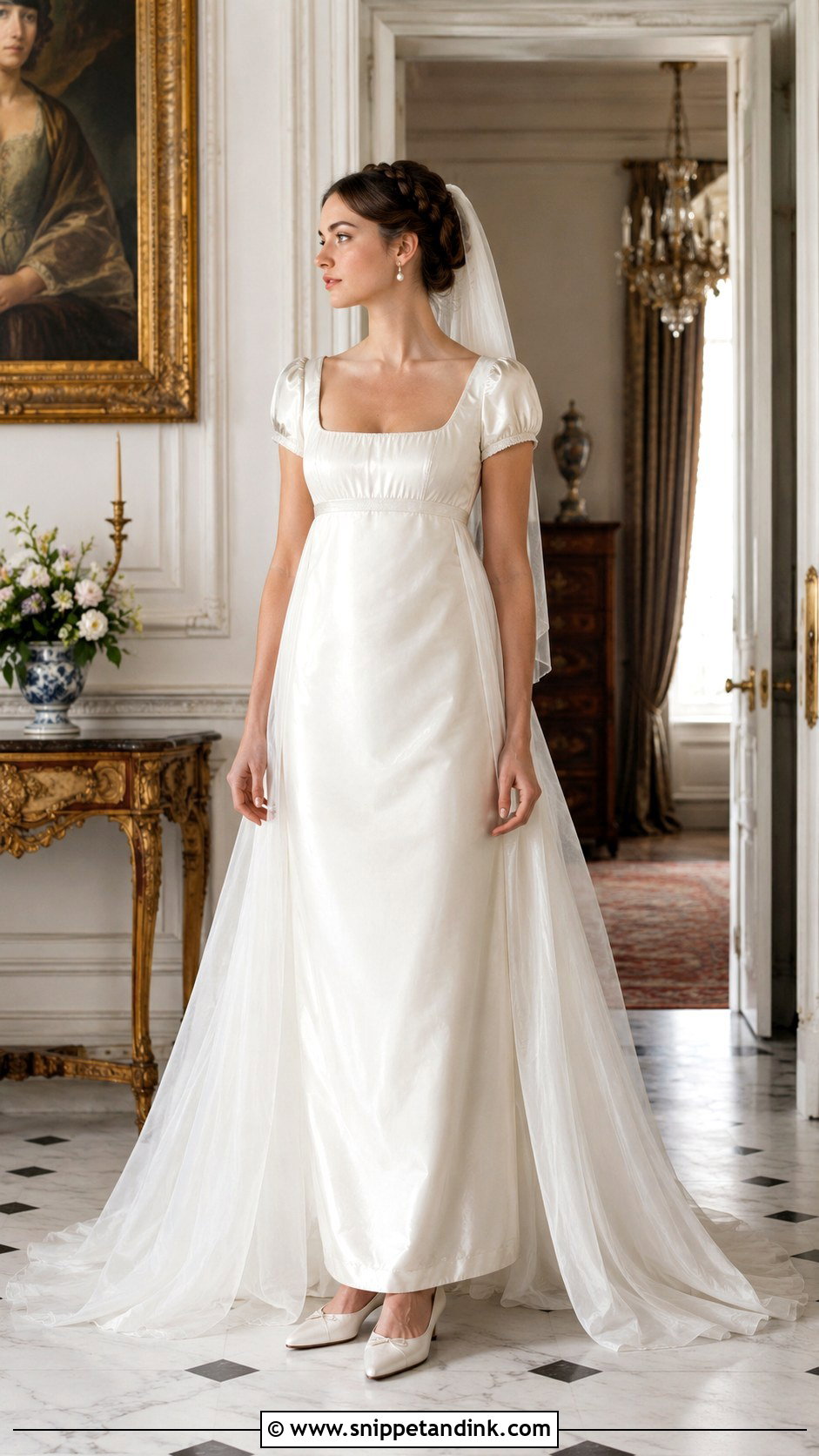
A detachable train is the most practical solution I know for a bride who wants a grand entrance and an easy reception. Start with a silk empire column with a clean square neckline and short sleeves. The train should attach under the raised waistband, not at the natural waist, so it flows from high on the back and adds no bulk at the hips. Practise removing it before the day; ask your seamstress whether it uses hooks, buttons or snaps, and show your maid of honour how it comes off. Satin kitten heels, pearl earrings and a low braided bun with a slim comb suit it, with a short veil so the back of the gown stays visible.
16. Tea Length Regency Era Wedding Dress
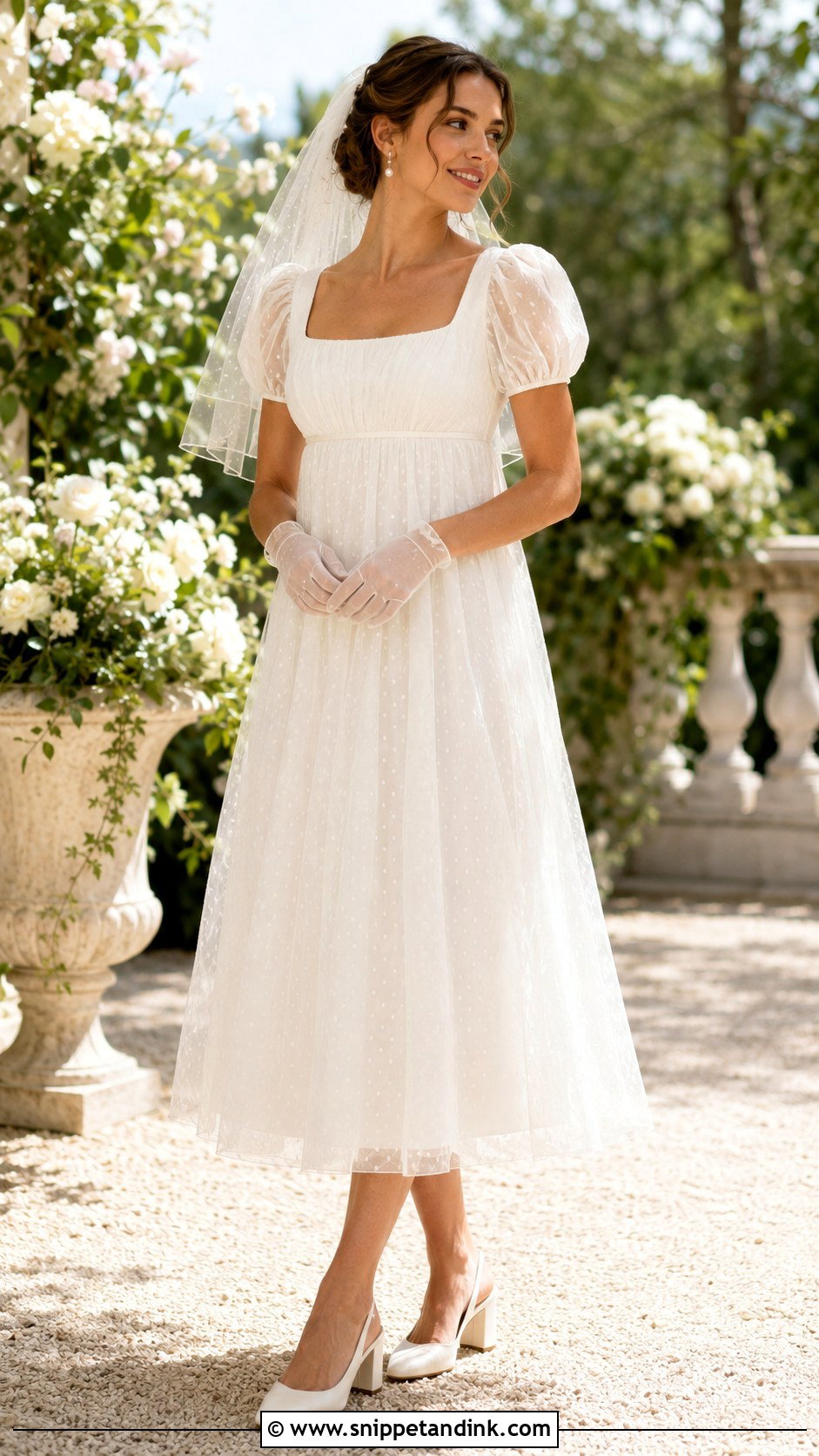
Shorter hems change everything about a tea-length Regency wedding dress, starting with the shoes, which are now on show the whole day. I build it on an empire bodice with a square neck, short puff sleeves and a gathered organza or dotted tulle skirt ending between knee and ankle. Choose the hem length with your shoes on: mid-calf on one heel height can look awkward on another. Ivory slingbacks, low block heels or ribbon-tied ballet flats all work. Pearl earrings, short gloves and a small veil above a loose bun finish it. Daytime city weddings and relaxed gardens suit it, and dancing is far easier.
17. Plus Size Regency Era Wedding Dress
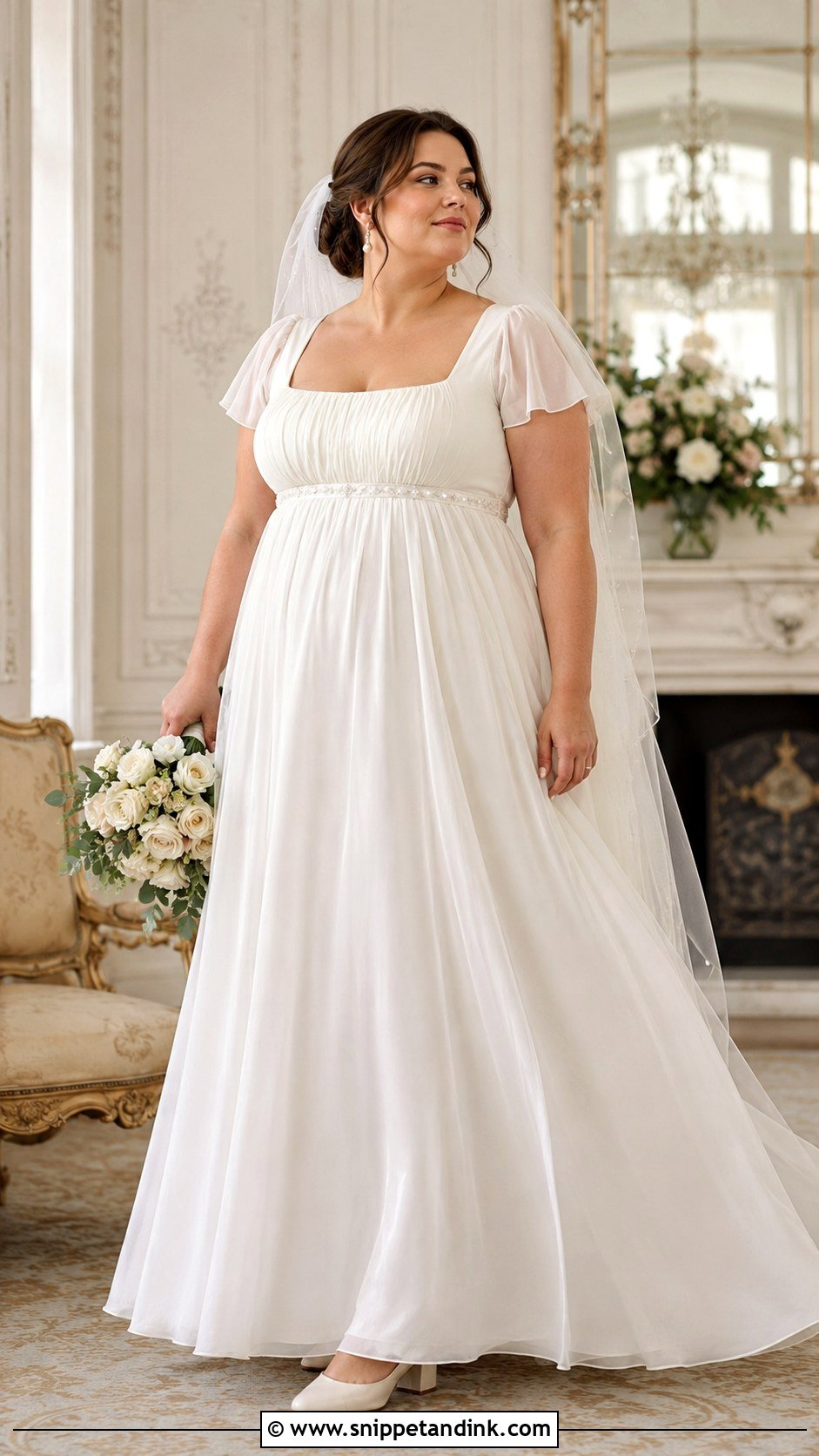
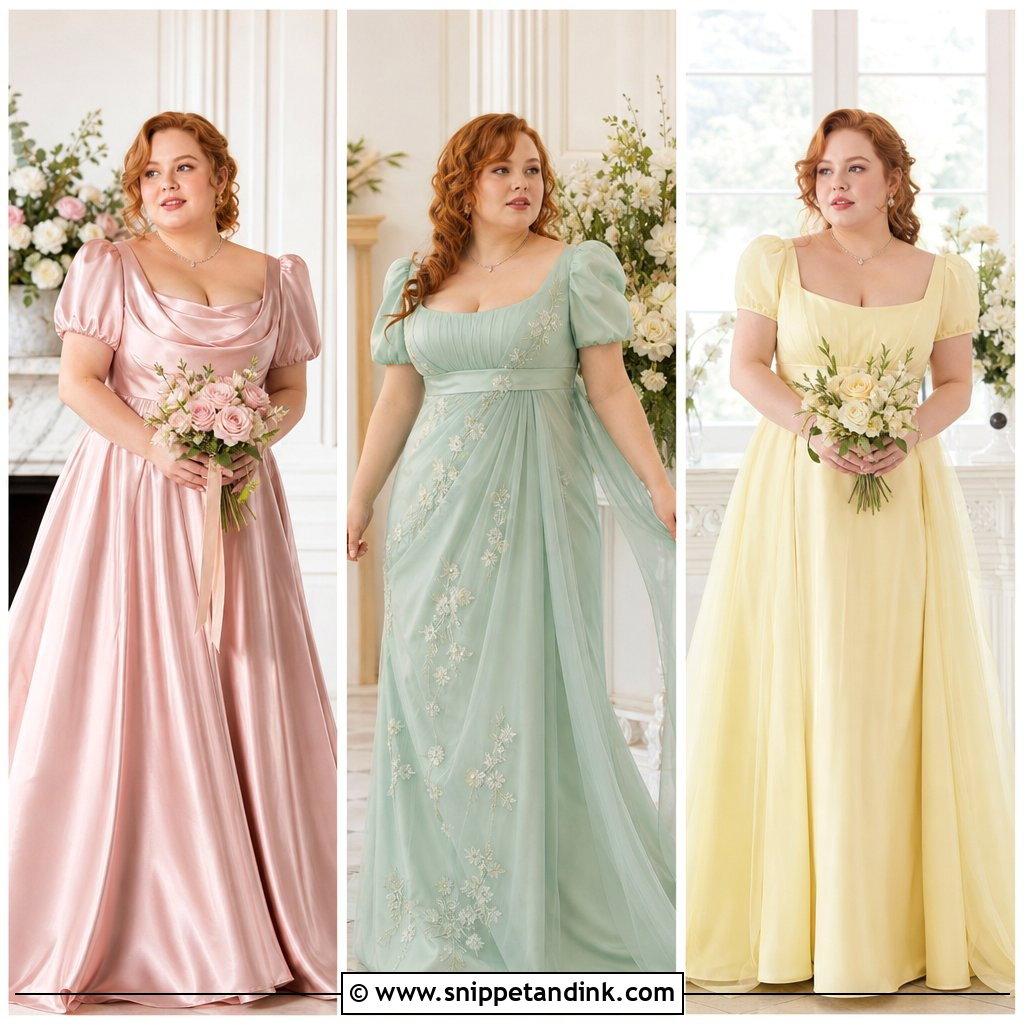
A loose empire shape does a plus-size bride no favours if it relies on gathering alone. What makes it work is structure: a built bodice with wider shoulder coverage, internal support fitted to your measurements and an under-bust seam that sits under the bust rather than across it. That seam is where most alterations time goes, and I’d book at least two fittings for it. A square or soft V-neckline opens the chest, and a chiffon skirt moves without clinging. Short flutter sleeves or sheer elbow-length sleeves give coverage. Supportive block heels, pearl drops, a fingertip veil and a defined low updo complete the look.
18. Petite Regency Era Wedding Dress
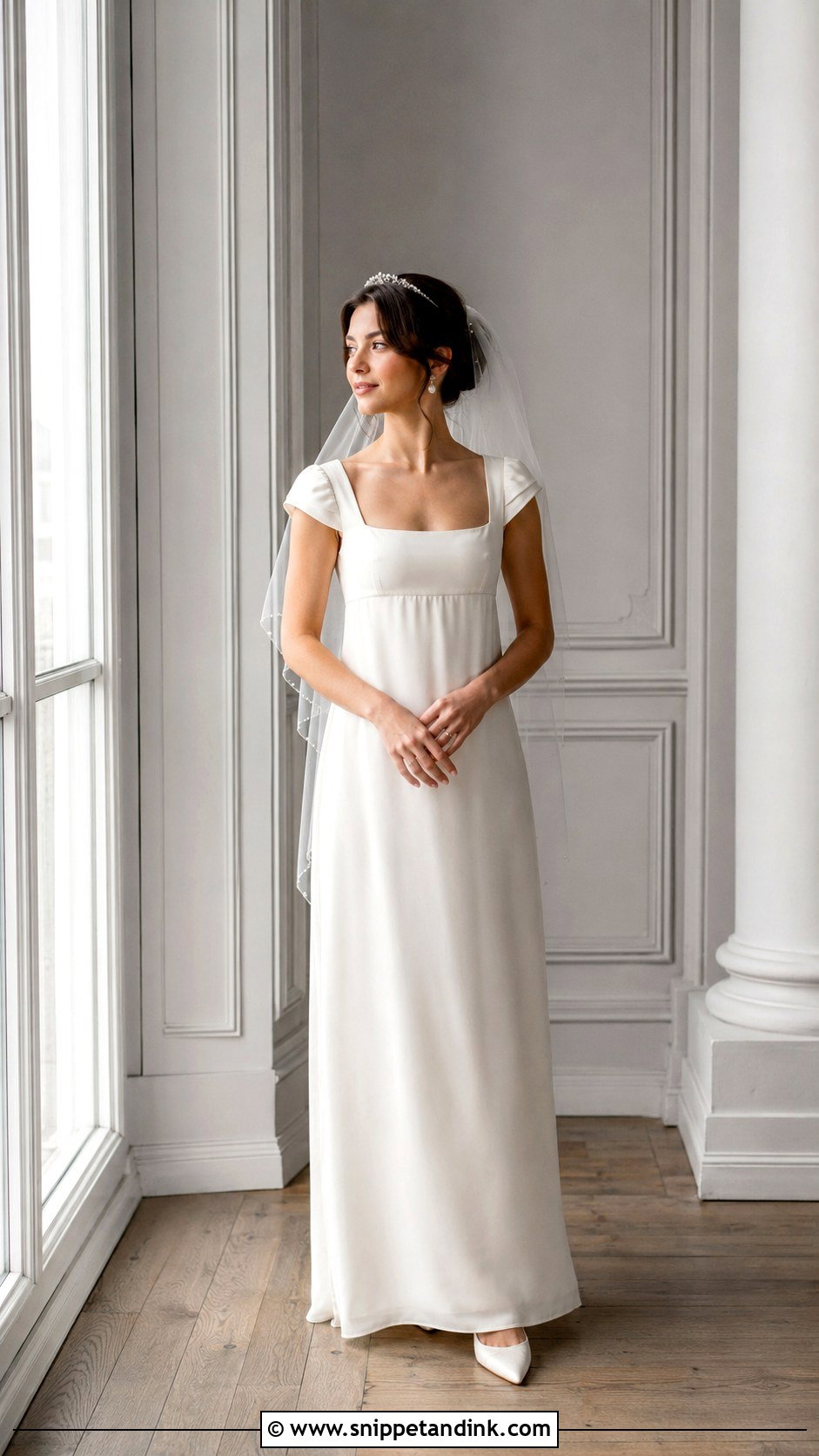
On a petite frame the empire line can lengthen you or swamp you, and the difference is volume. Keep the seam narrow, the bodice lightly fitted and the skirt only gently gathered. Big sleeves, wide sashes and large appliqués all shorten the torso, so I’d swap them for cap sleeves and a clean square neckline. Have the hem cut to the exact shoes you’ll wear, floor-skimming and no longer, because extra length pools and makes you look shorter. Pointed ivory heels continue the vertical line. Small pearl earrings, a narrow comb and a simple fingertip veil finish it in proportion.
19. Maternity Regency Era Wedding Dress
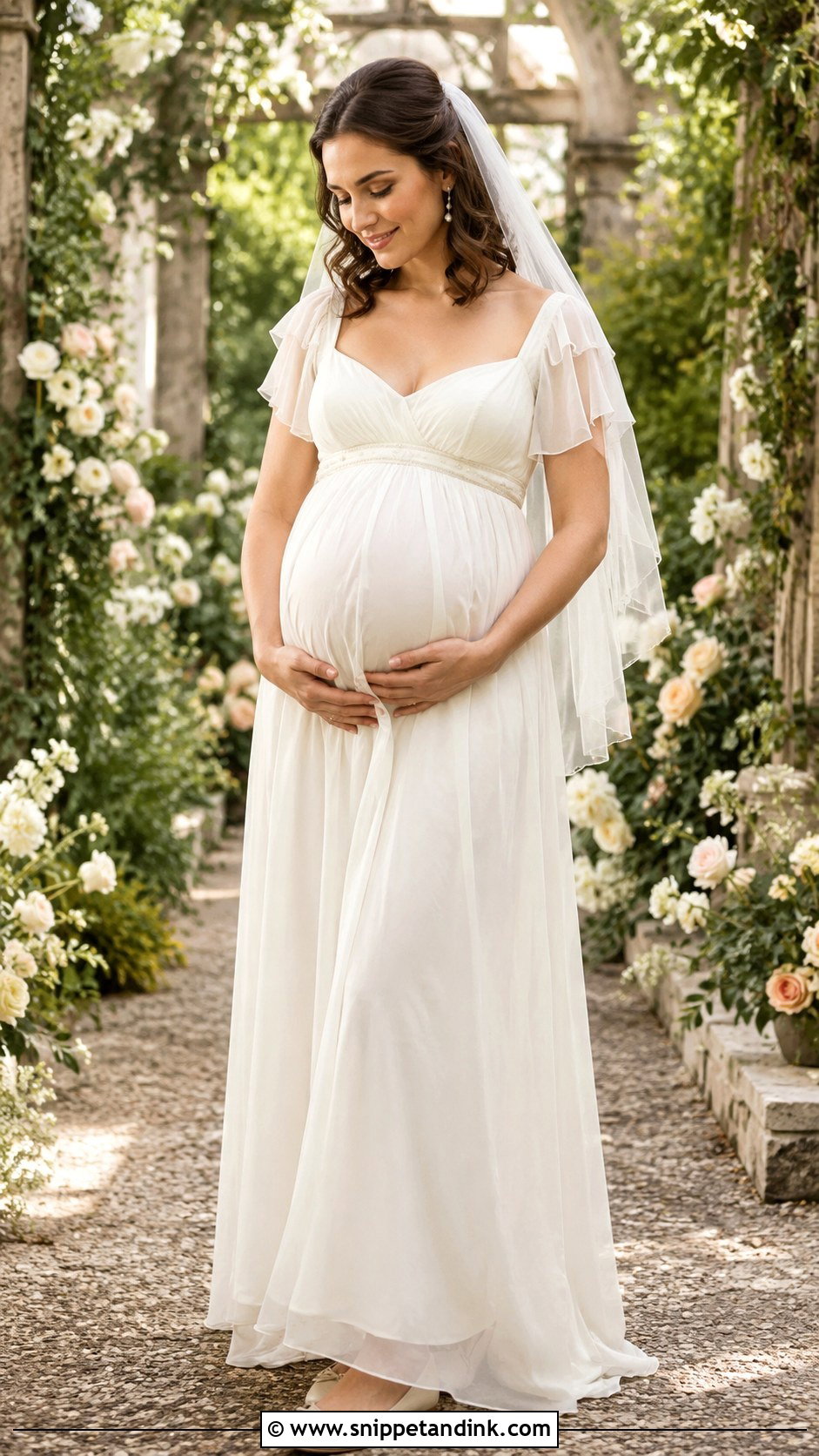
The raised waist and free-falling skirt make this one of the kindest silhouettes for a pregnant bride. Ask for a soft but supportive bodice with seam allowance left in, because the bust often changes in the last weeks and the final fitting should be as close to the date as your seamstress allows. A chiffon or stretch-lined skirt with no waistband falls freely over the bump. Short flutter sleeves and a curved neckline stay comfortable when you are warm. Cushioned ballet flats or low block heels matter more than they look. Pearl earrings and a light shoulder-length veil are enough; heavy beading only adds weight you’ll carry all day.
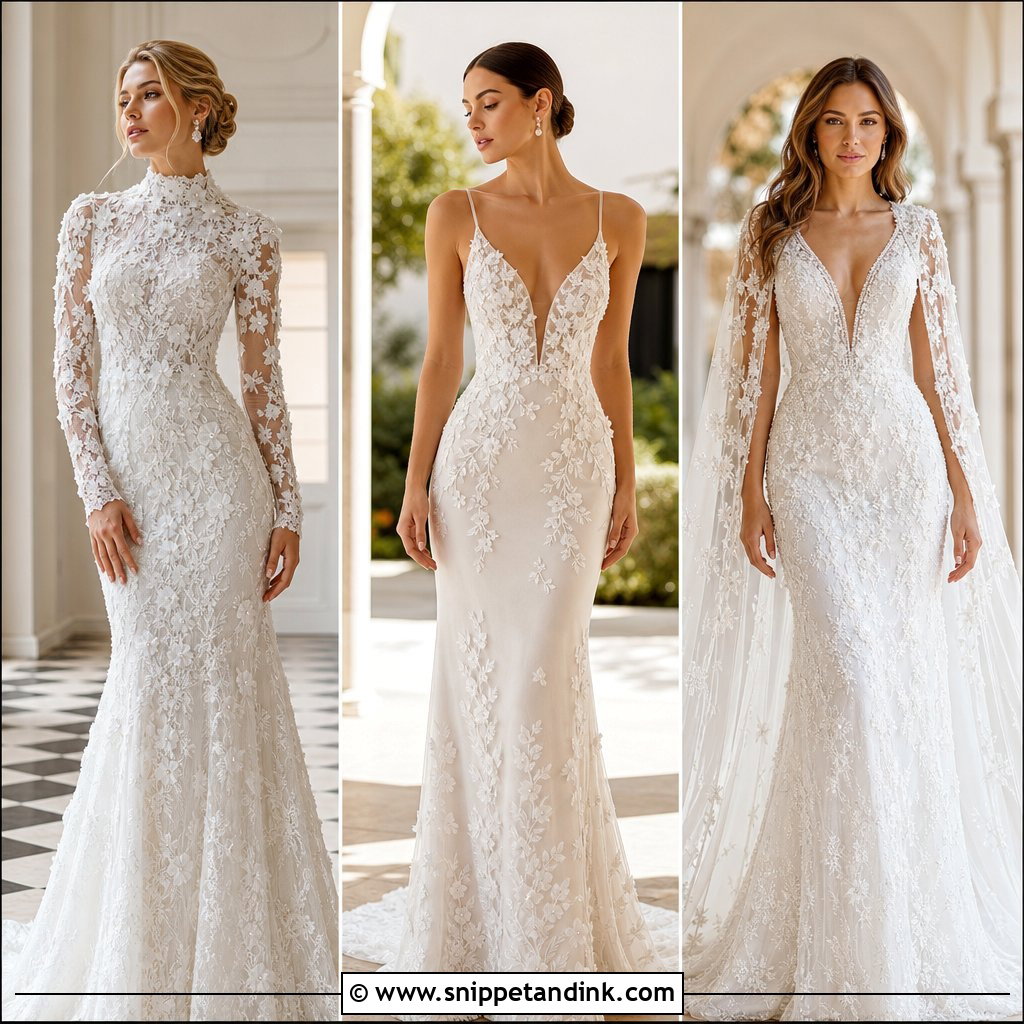

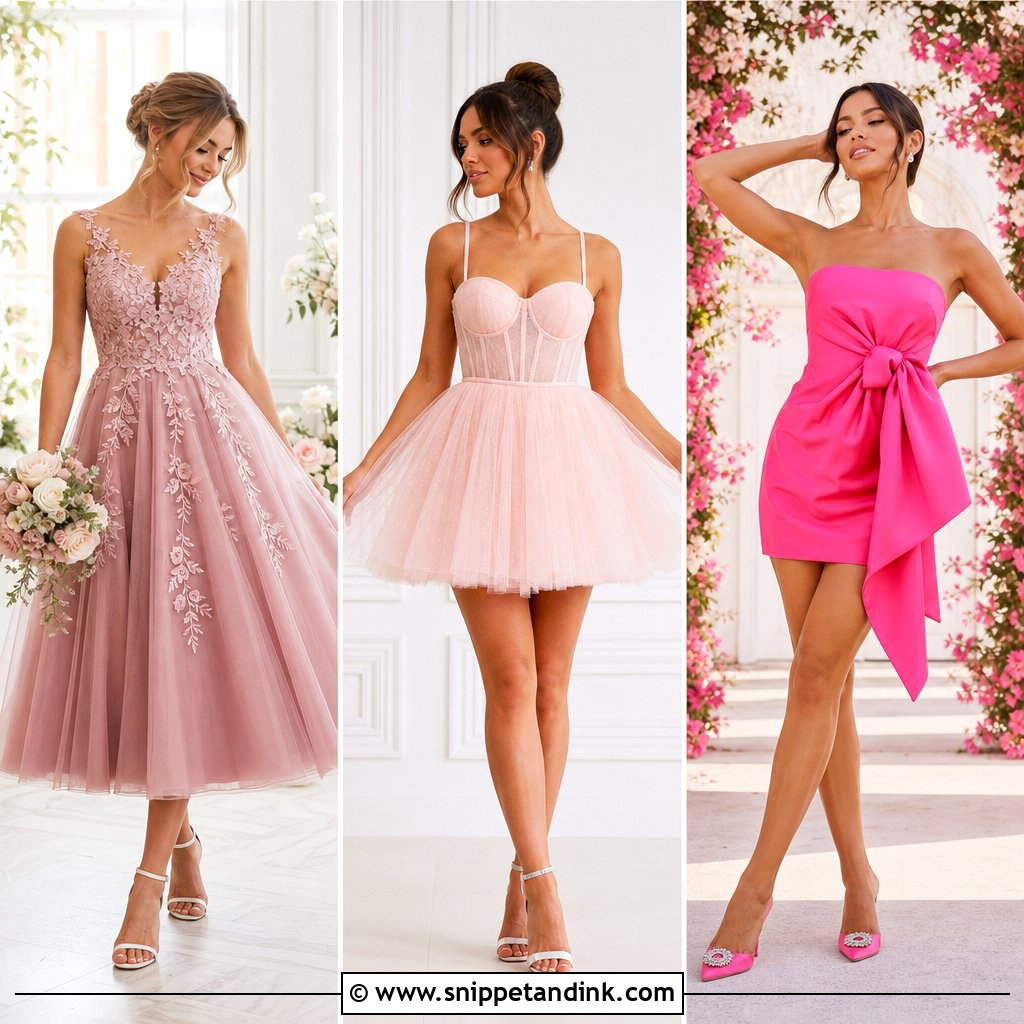
20. Blue Accent Regency Era Wedding Dress
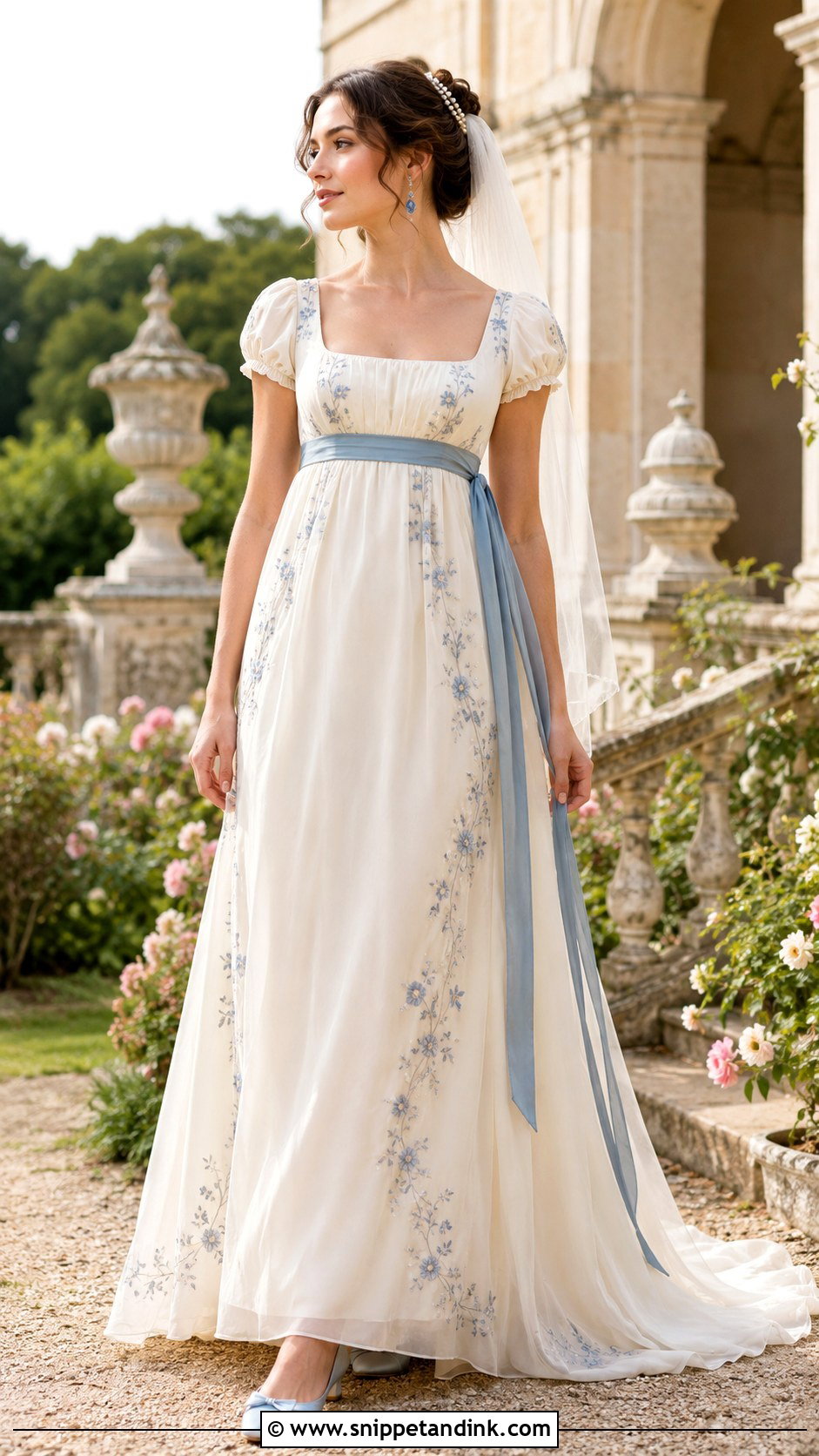
Blue appears in plenty of surviving Regency trims, and a touch of it makes an ivory gown feel personal. My rule is one or two blue details, never three. Pick from a narrow dusty-blue silk sash, pale blue embroidery at the hem or a few tiny blue flowers on the bodice. Put the gown in daylight with the swatch before you commit; some dusty blues turn grey against warm ivory. Ivory satin flats, blue gemstone earrings, a pearl comb and a plain veil keep it balanced, and a small white and pale blue bouquet repeats the colour. Estate gardens and spring ceremonies suit it.
Caring for a Chiffon or Muslin Gown Before and After the Day
Collect the dress as late as your seamstress allows, and hang it in a breathable cotton garment bag, not plastic, somewhere dark. Silk chiffon yellows in sunlight and plastic traps damp. Hang it from the inner hanging loops rather than the shoulders, because the weight of the skirt stretches a light bodice over a few weeks.
On the morning, steam rather than iron. A handheld steamer held a few inches from the fabric releases the creases from packing without the shine an iron leaves on silk. Muslin and cotton voile can take a cool iron on the reverse if needed; test on the hem allowance first.
After the wedding, get it to a specialist cleaner within a few weeks. Sugar from champagne and cake dries invisible on pale fabric and turns brown months later, which is why a gown that looked clean goes into storage spotless and comes out marked. Store it flat or loosely folded in acid-free tissue in a box, kept somewhere with a stable temperature, never in a loft or a damp basement.
One Seam Decides the Whole Dress
Start with the empire waist, a light skirt and a gentle neckline, and you already have a Regency gown. Lace, pearls, embroidery, a ribbon or a hint of blue are personal choices on top of that base, and one of them is usually enough. Keep shoes and jewellery small so the long proportions stay in charge. Above everything, budget time and money for alterations, because this silhouette lives or dies on where the under-bust seam lands on your body. Historically faithful or only lightly inspired, the right gown is the one you can sit, walk and dance in without thinking about it.
You'll Like These Ideas:





Leave a Reply