
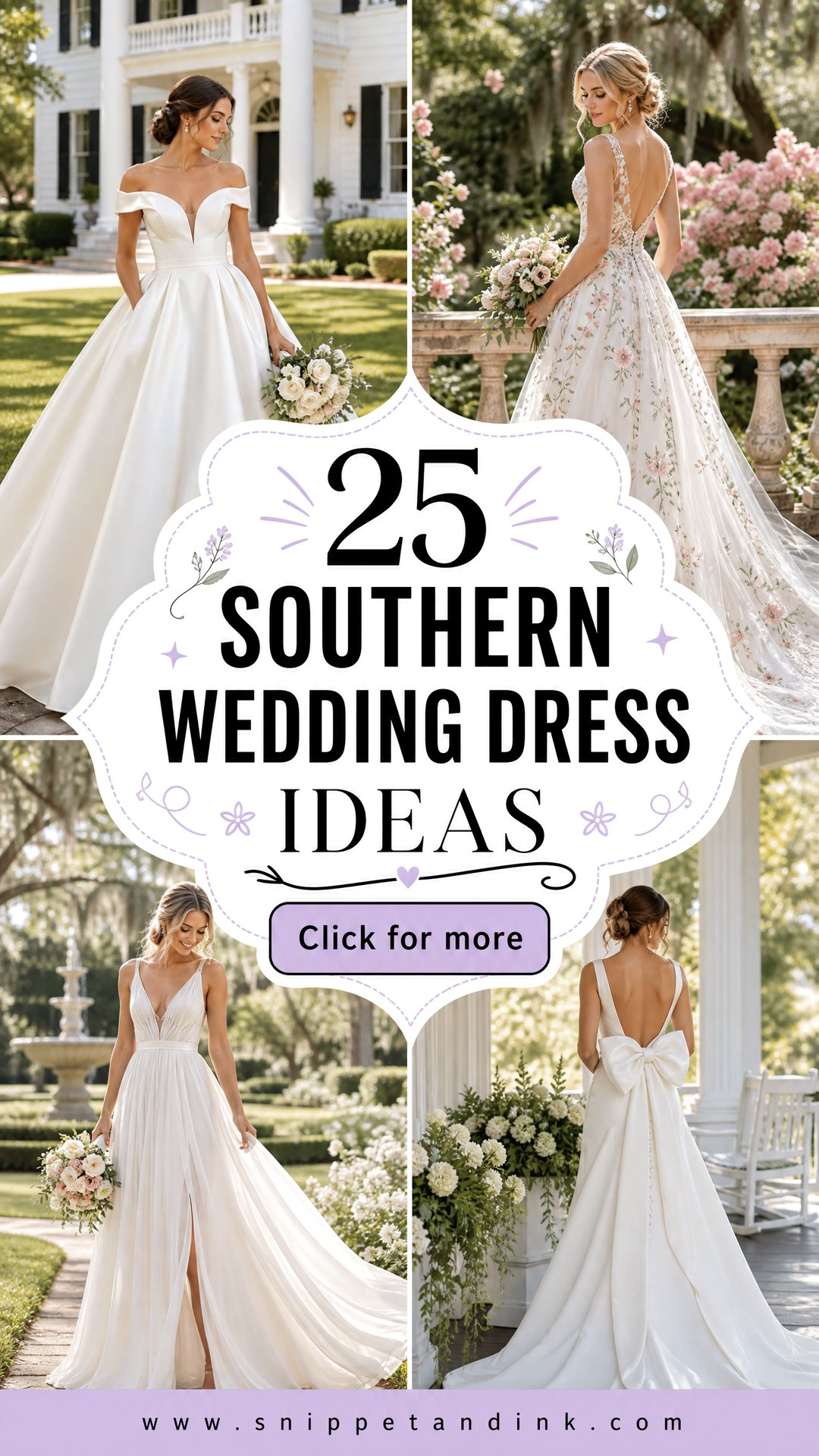
Southern weddings ask a lot of a dress. It has to look right on a lawn at four in the afternoon, survive a humid porch, and still feel formal in a ballroom or a historic home after dark. When I style a Southern bride, I start with the setting and the weather, then the silhouette, then everything from earrings to the bouquet ribbon. Below are 25 gowns and bridal outfits, from classic lace and satin ball gowns to crepe, slips, jumpsuits and a reception mini, each with notes on how I’d put the full look together and where each one struggles.
How Southern Humidity Changes the Fabric You Pick
A dress that feels fine in an air-conditioned salon can feel very different on a lawn in June. Before I talk silhouettes with a Southern bride, I ask where she’ll stand for the ceremony and for how long, because the fabric has to cope with the climate first.
- Chiffon, organza and fine lace breathe best. They let air move through and dry quickly if you get warm.
- Satin and mikado are heavy and hold heat. They also show water spots and sweat marks, especially in pale ivory.
- Crepe skims the body and can cling in humidity. A good lining makes a real difference.
- Polyester linings trap heat; a cotton or silk lining, where the gown allows it, is cooler.
I also look at the inside of the gown. Heavy boning, multiple petticoat layers and a full lining add warmth you won’t notice at the boutique. If your ceremony is outdoors in summer, I’d sit in the gown for ten minutes at a fitting with the heating on, or step outside on a warm day, and see how it feels.
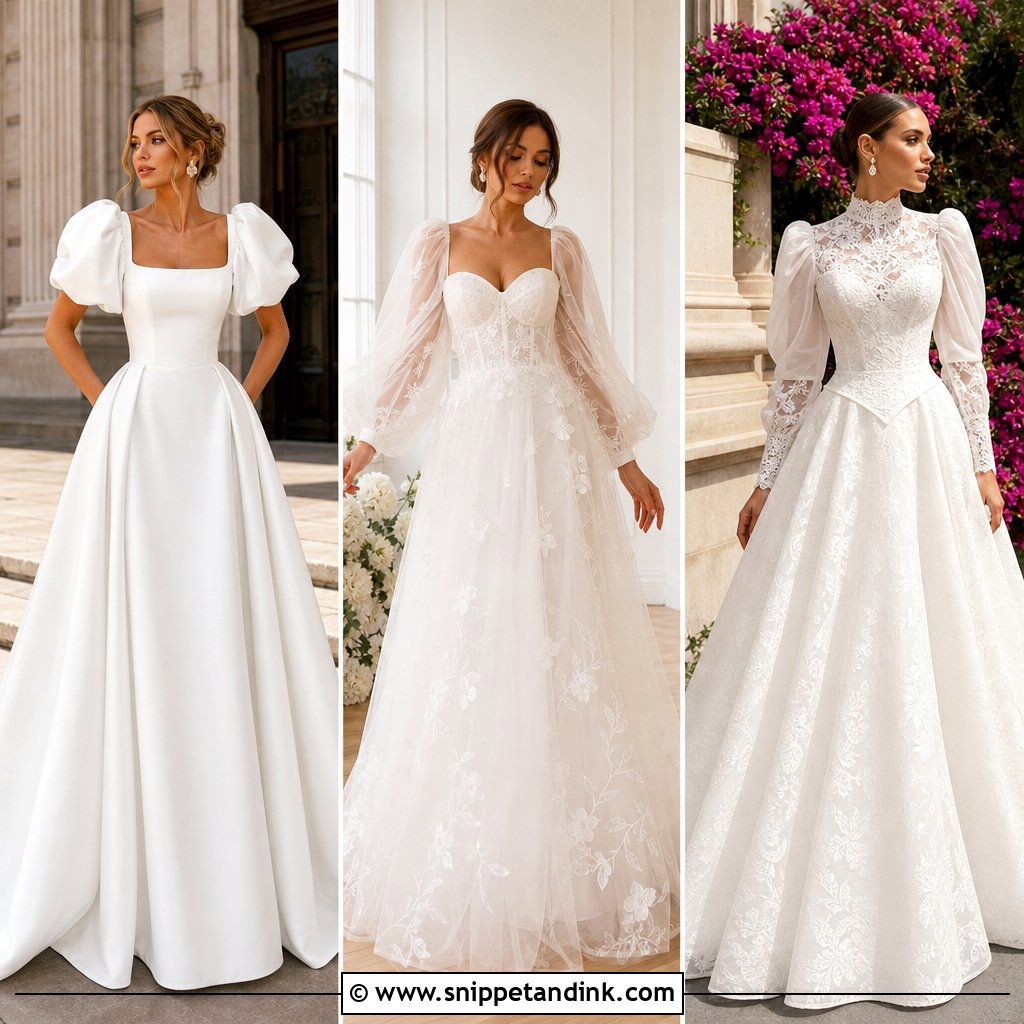
1. Southern Lace Wedding Dress
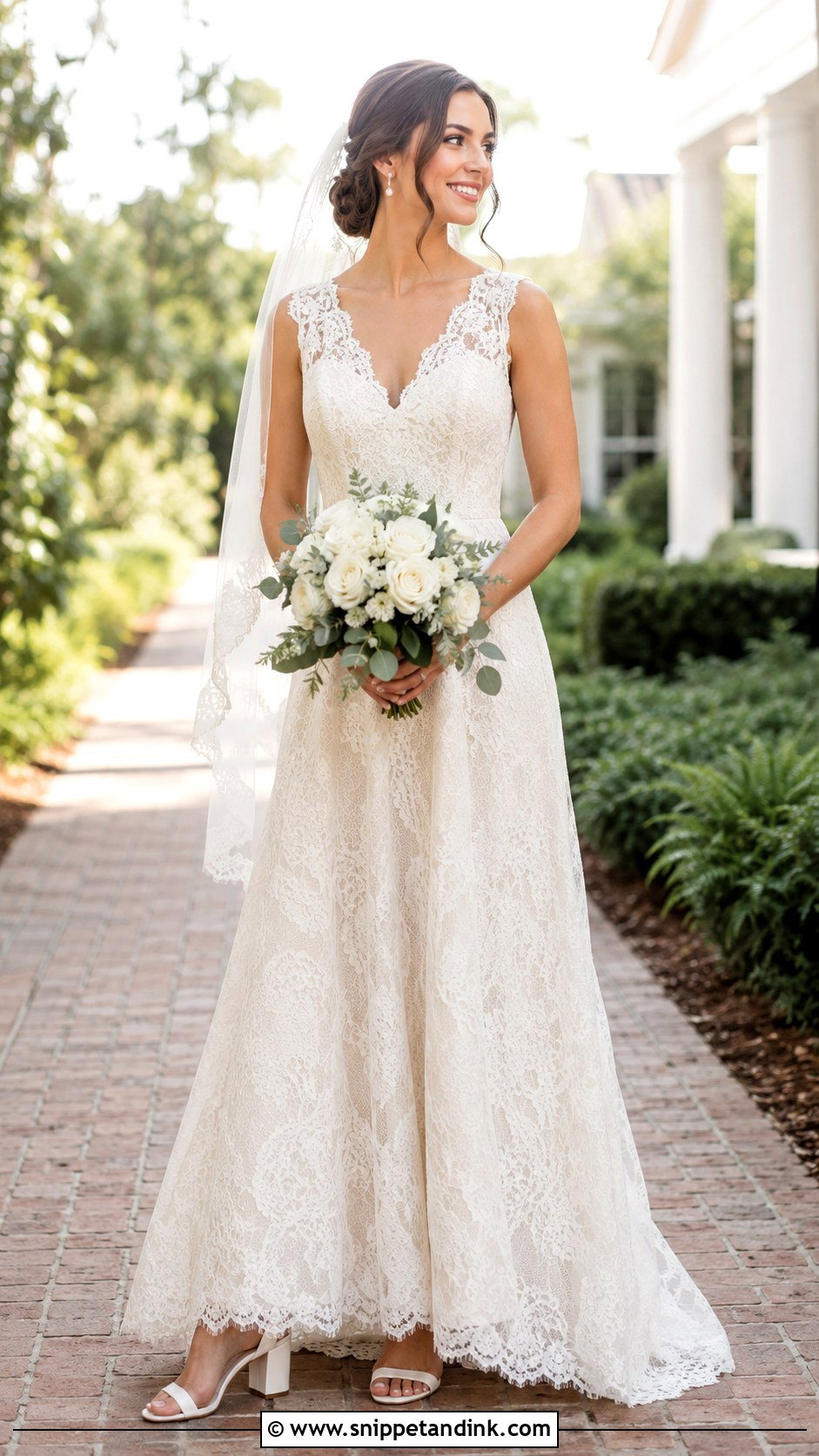
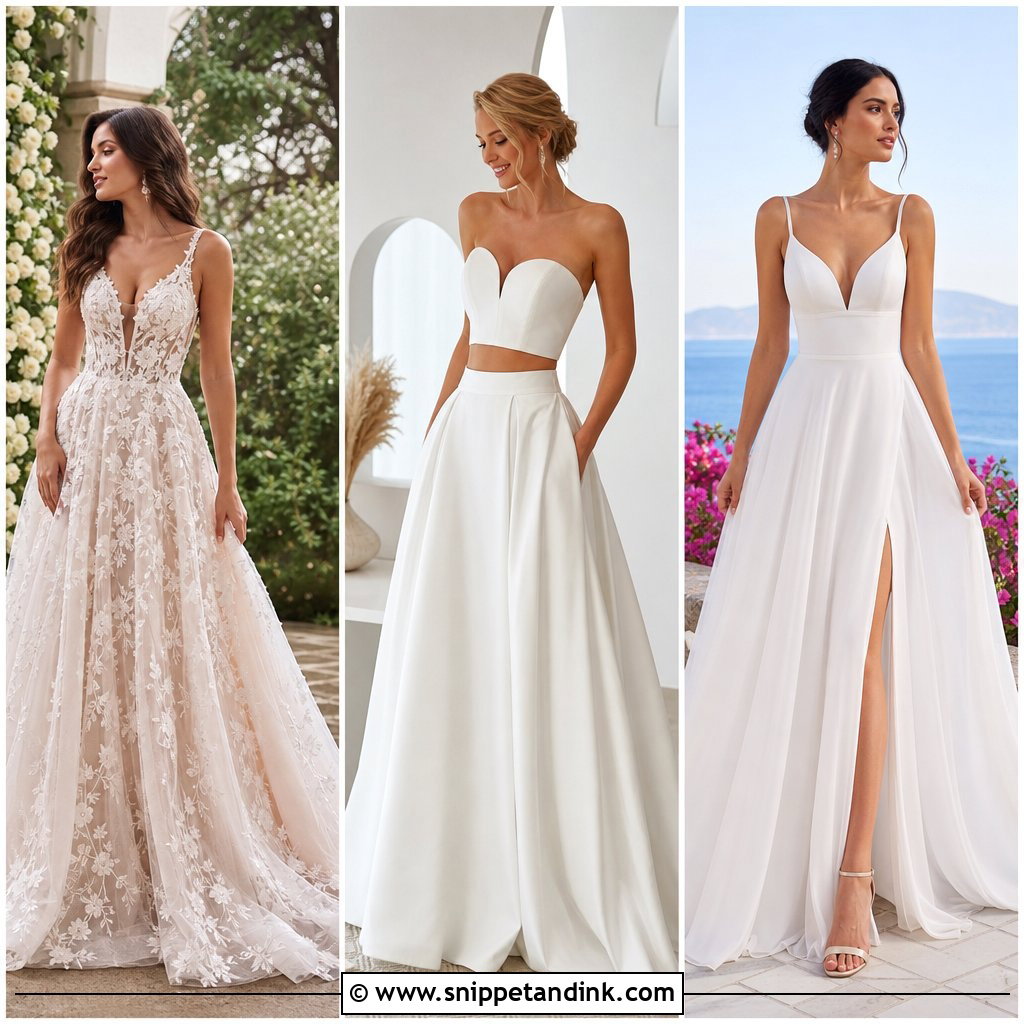
Lace is the default for a reason, but the type of lace decides whether it looks fresh or dated. I steer brides toward fine, light lace over a fitted bodice and soft A-line skirt; heavy corded lace on a hot afternoon feels like a blanket. For warm weather, illusion straps, a breathable lining and a low back with proper internal support all help. Pearl drops, a fingertip veil and ivory block heels that won’t sink into grass finish it. I like a small bouquet of white roses and greenery tied with a pale blue ribbon. It suits gardens, estates and indoor receptions equally well.
2. Southern Satin Ball Gown Wedding Dress
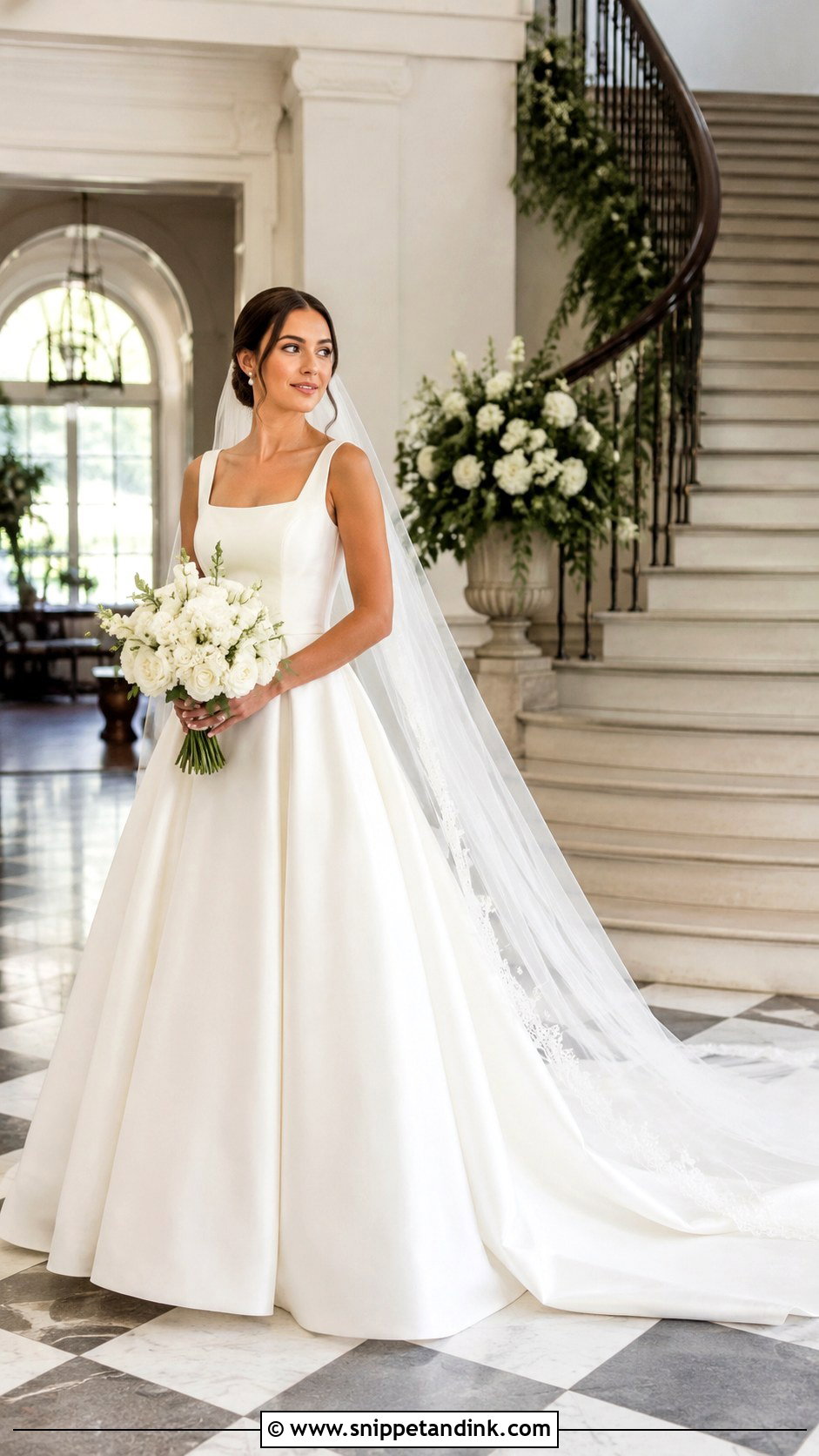
Satin ball gowns are made for grand entrances and big rooms. The version I’d pick has a structured bodice, a smooth skirt and a waist seam that doesn’t add bulk at the hip. Heavy duchess satin shows every crease from a car ride, so I steam it at the venue, not at home. In bright daylight and candlelight it reads crisp and clean. A cathedral veil, simple diamond or pearl studs and pointed heels are all it needs, with a tight bouquet of white blooms. Save it for a formal venue, a grand staircase portrait, or a black-tie evening; outdoors in July, it’s hot.
3. Southern Off Shoulder Wedding Dress
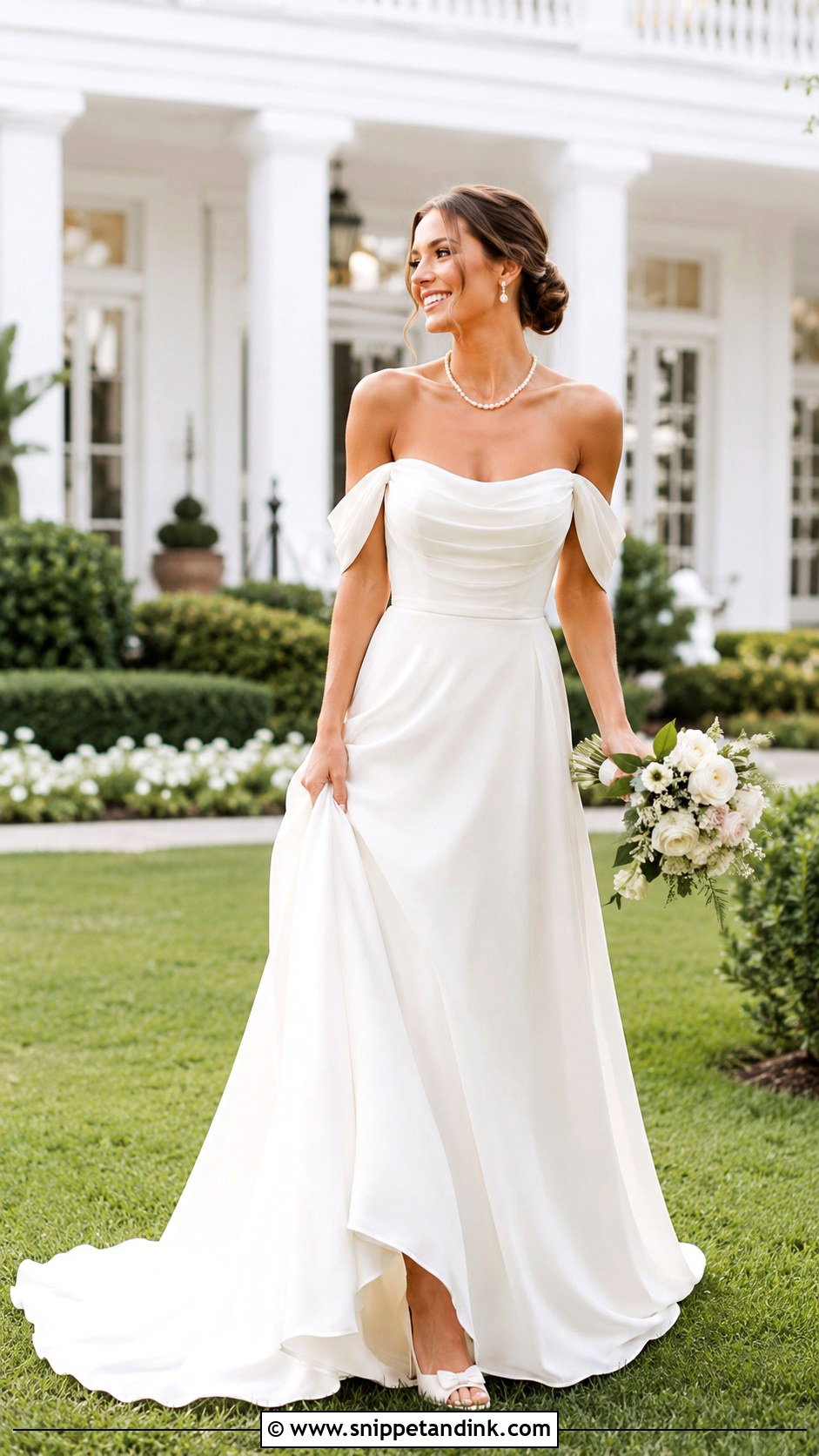
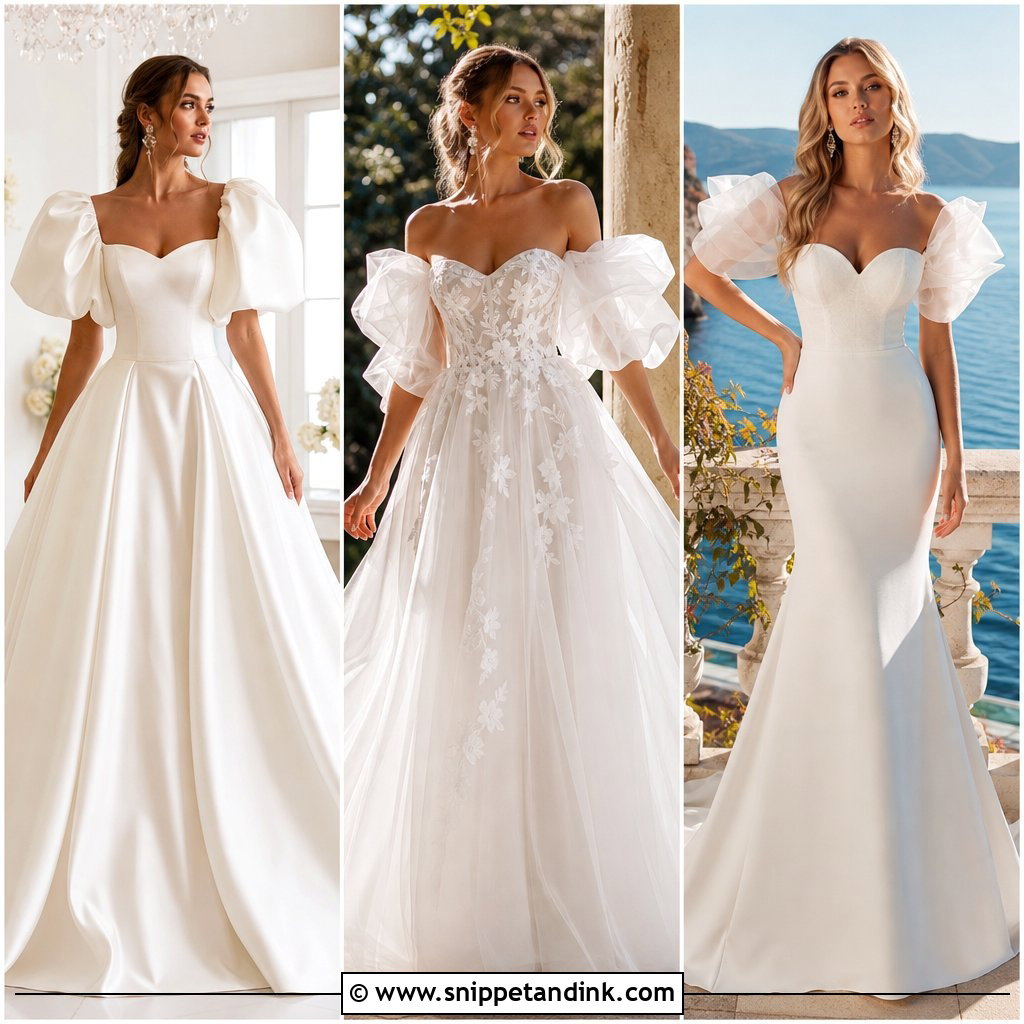
Off-shoulder necklines frame the collarbones and suit loose waves, a low bun or a half-up style. The thing I always test is arm movement: if the band sits too tight on the upper arm, you can’t hug or lift your bouquet comfortably, and it creeps up through the day. Gentle draping, lace sleeves or satin folds all work. A short pearl necklace, drop earrings and a veil set low at the back of the hair keep the shoulder line open. Spring and early fall suit it best, when it’s warm enough for bare shoulders but not sticky.
4. Southern A Line Wedding Dress
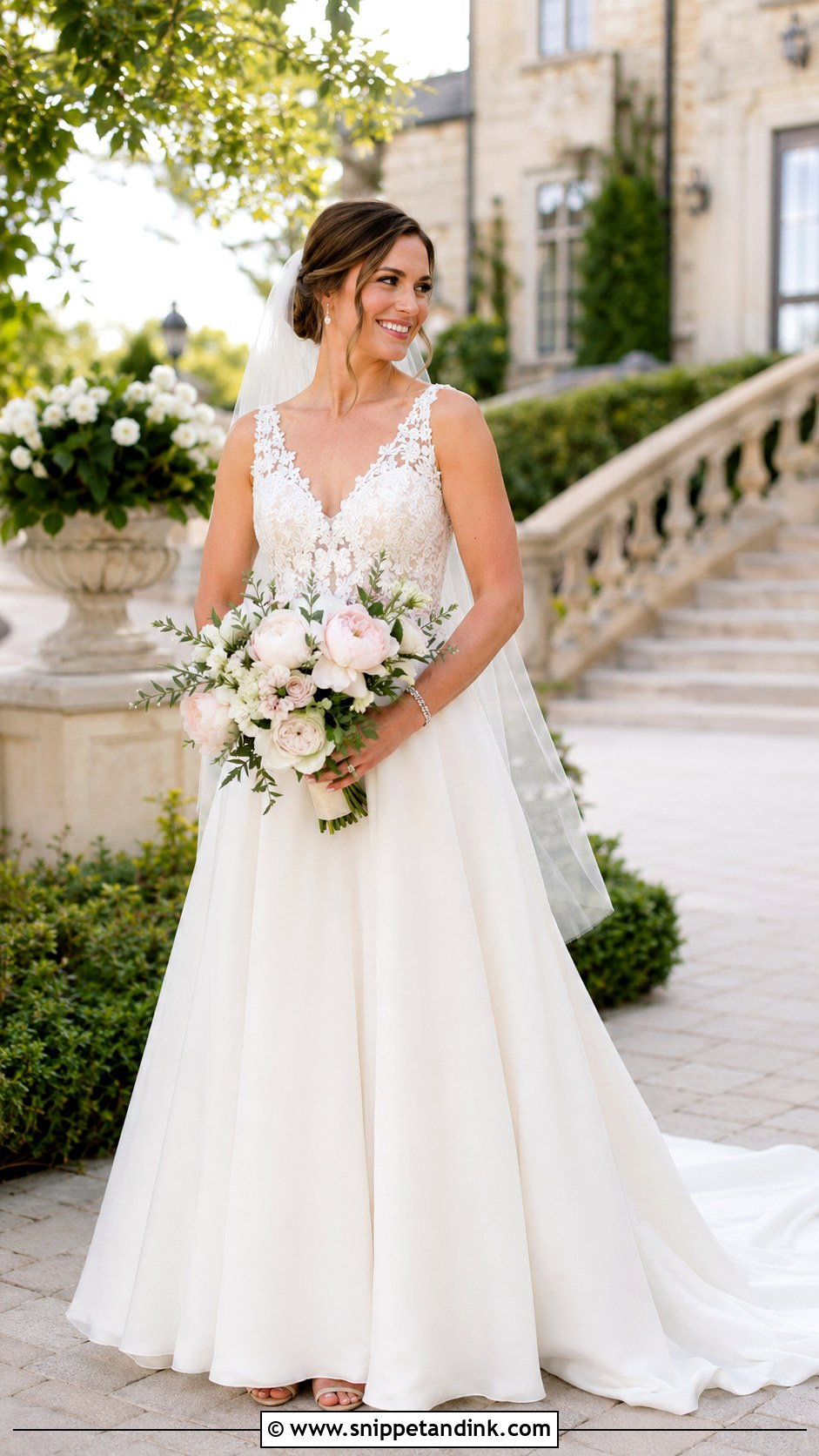
If you asked me for the most forgiving silhouette, it would be the A-line. A fitted top defines the waist and the skirt clears the body enough to walk on lawns, dance and sit at dinner without fighting fabric. Lace leans romantic, satin formal, chiffon soft and outdoorsy. A pearl bracelet, low veil and comfortable heels or bridal sandals finish it, with peonies, garden roses and greenery in the bouquet. It flatters most body types, and when a bride is torn between two shapes, I usually ask her to try an A-line version of both.
5. Southern Floral Embroidered Wedding Dress
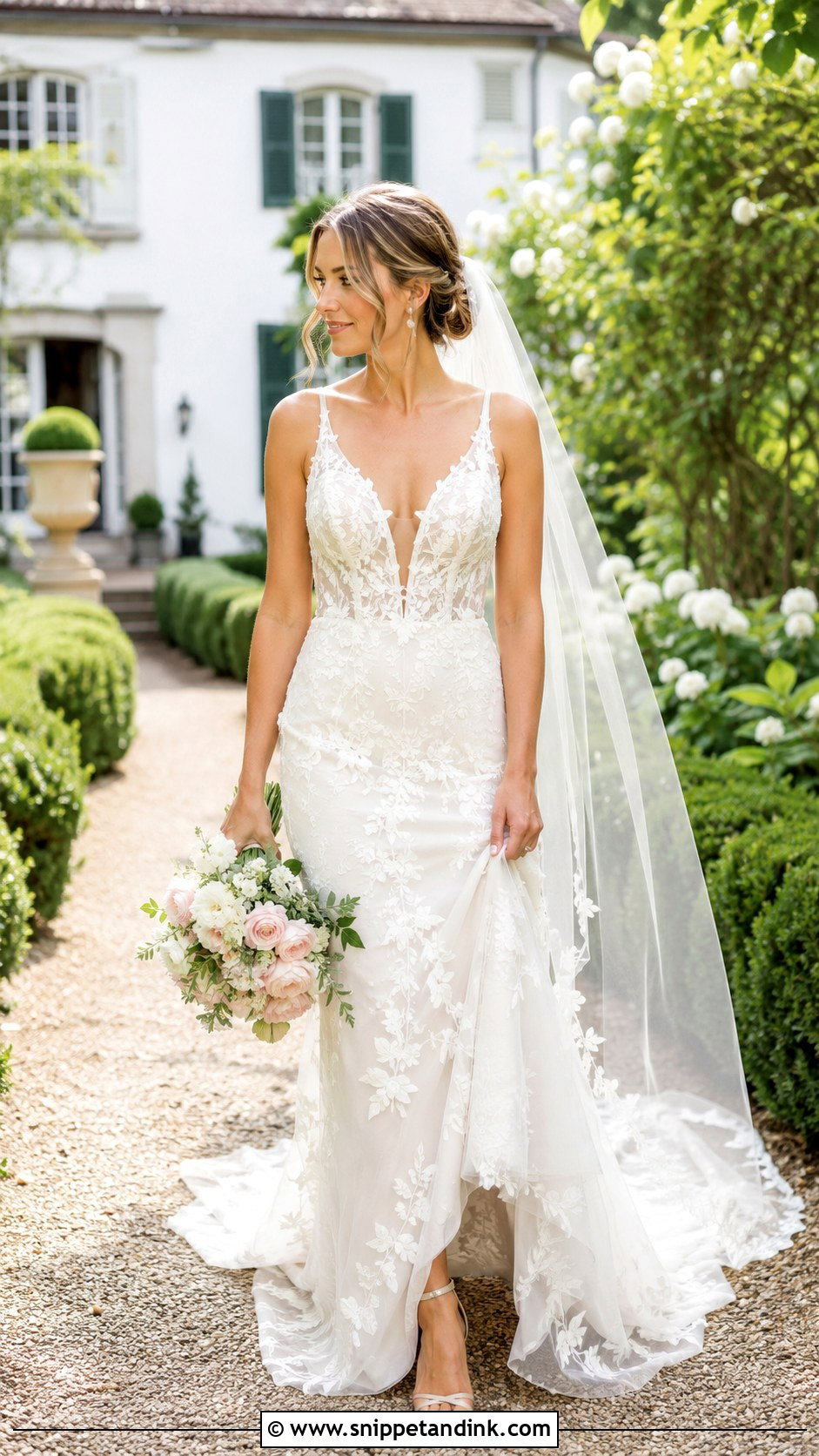
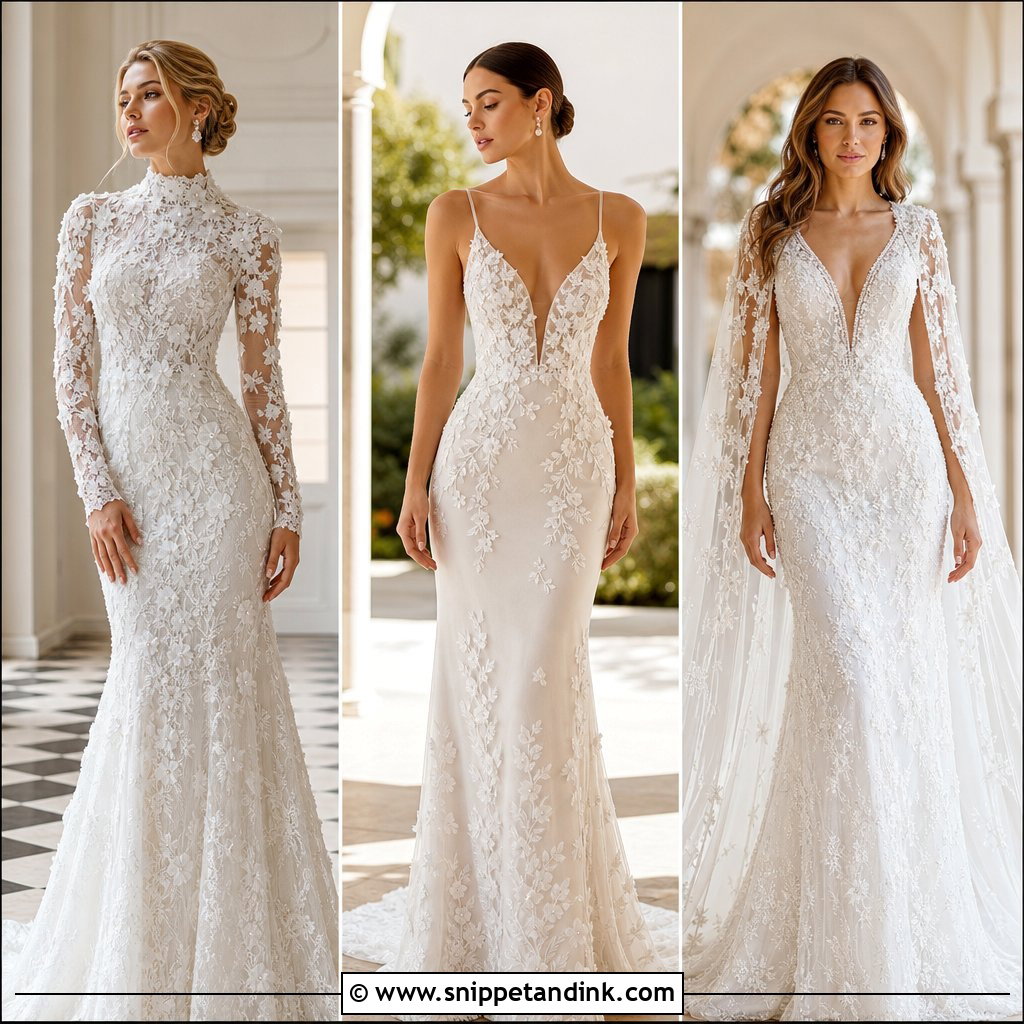
Floral embroidery carries a lot of texture, so this is a gown where I keep accessories almost bare. Ivory embroidery, dimensional flowers or a fine vine pattern across bodice and skirt all suit Southern gardens. A sheer veil, pearl studs and delicate ankle-strap heels are enough. The bouquet should echo the embroidery without copying it; if the gown has roses, I’d choose a looser mix with a rose or two. Dimensional appliqués catch on lace veils, so I check that the veil edge is smooth before the ceremony. It reads best outdoors in spring and at estate venues.
6. Southern Long Sleeve Lace Wedding Dress
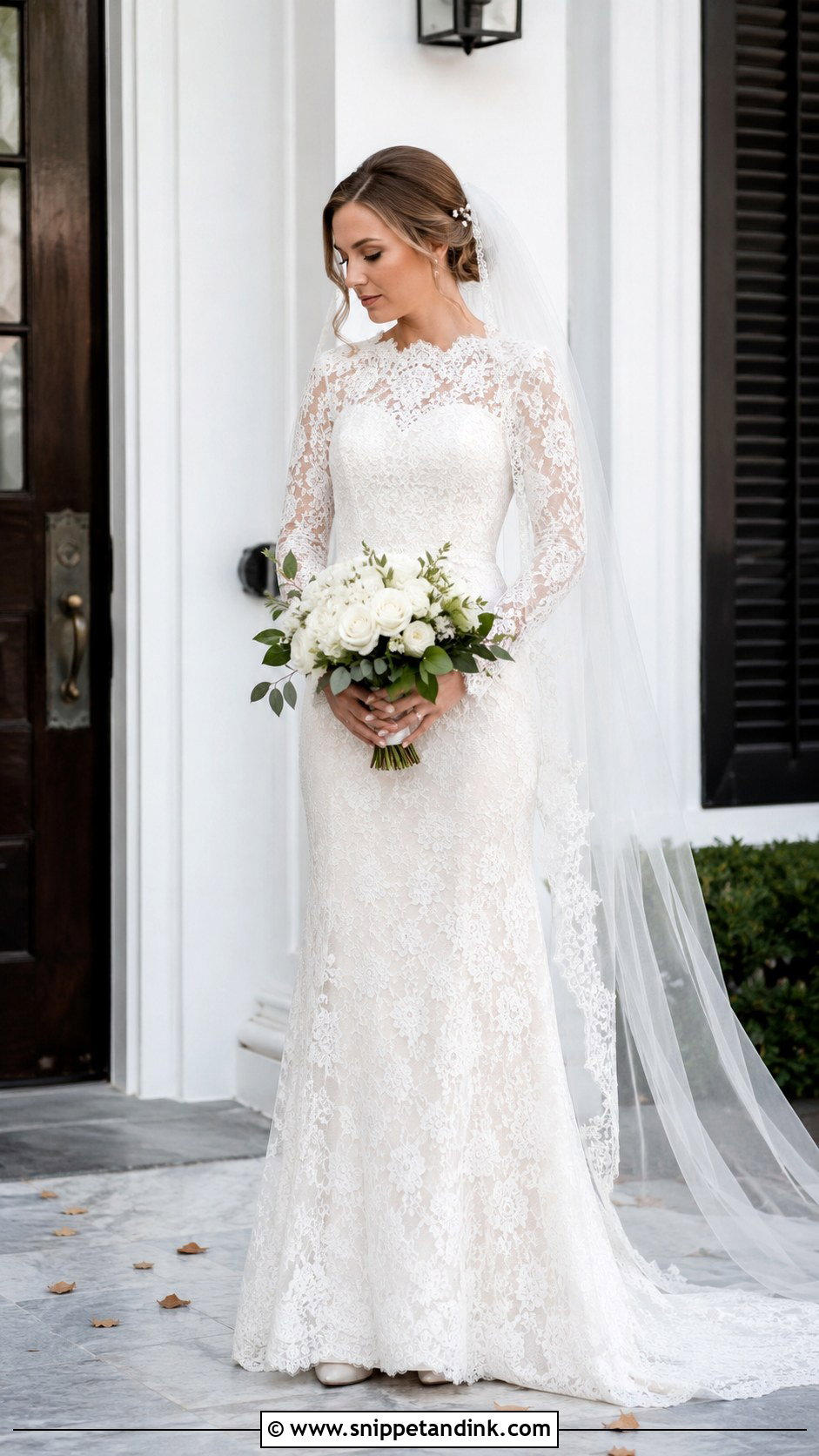
Long lace sleeves suit fall and winter weddings and formal venues where air conditioning runs cold. Sheer lace keeps them from looking heavy, and fitted cuffs add polish. The fitting point I care about most is the armhole: set too low, it pulls the whole bodice up when you raise your arms. A defined waist and soft skirt stop the coverage from feeling stiff. I’d style it with a low bun, pearl hair pins and a long veil, closed-toe ivory heels, and white flowers with deep green leaves for contrast.
7. Southern Strapless Wedding Dress
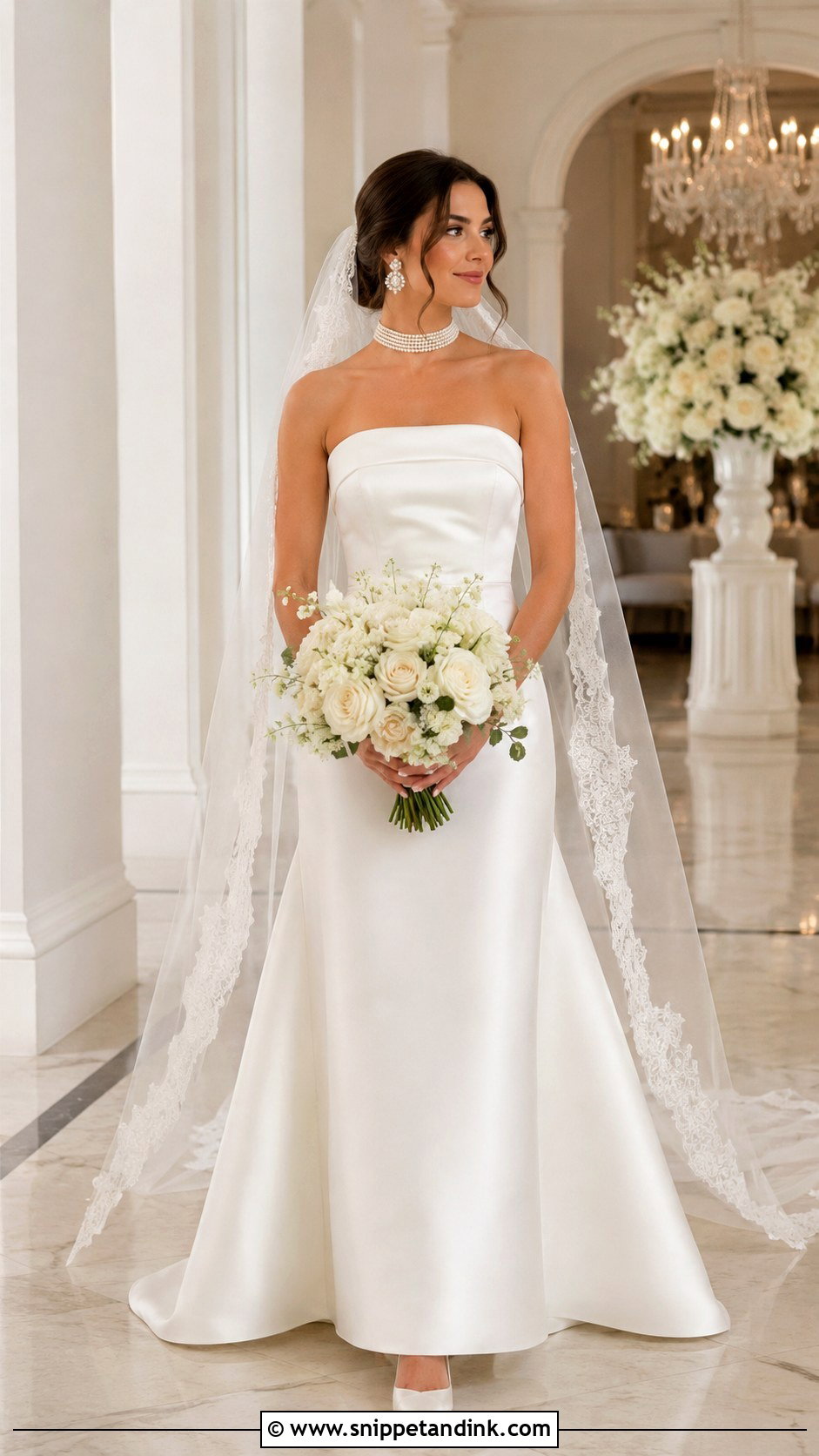
Strapless gowns rely entirely on their internal structure, so I check the bodice before anything else. Proper boning and a waist stay should hold it up without you tugging; if you’re hitching it in the fitting room, it will be worse after dinner. Satin suits formal spaces and tulle suits gardens. A pearl choker, statement earrings or a lace-trimmed veil adds interest to the bare neckline. Pointed pumps or block heels both work, and a neat updo keeps the shape clean. Bare shoulders also burn in Southern sun, so I keep outdoor portraits short or in shade.
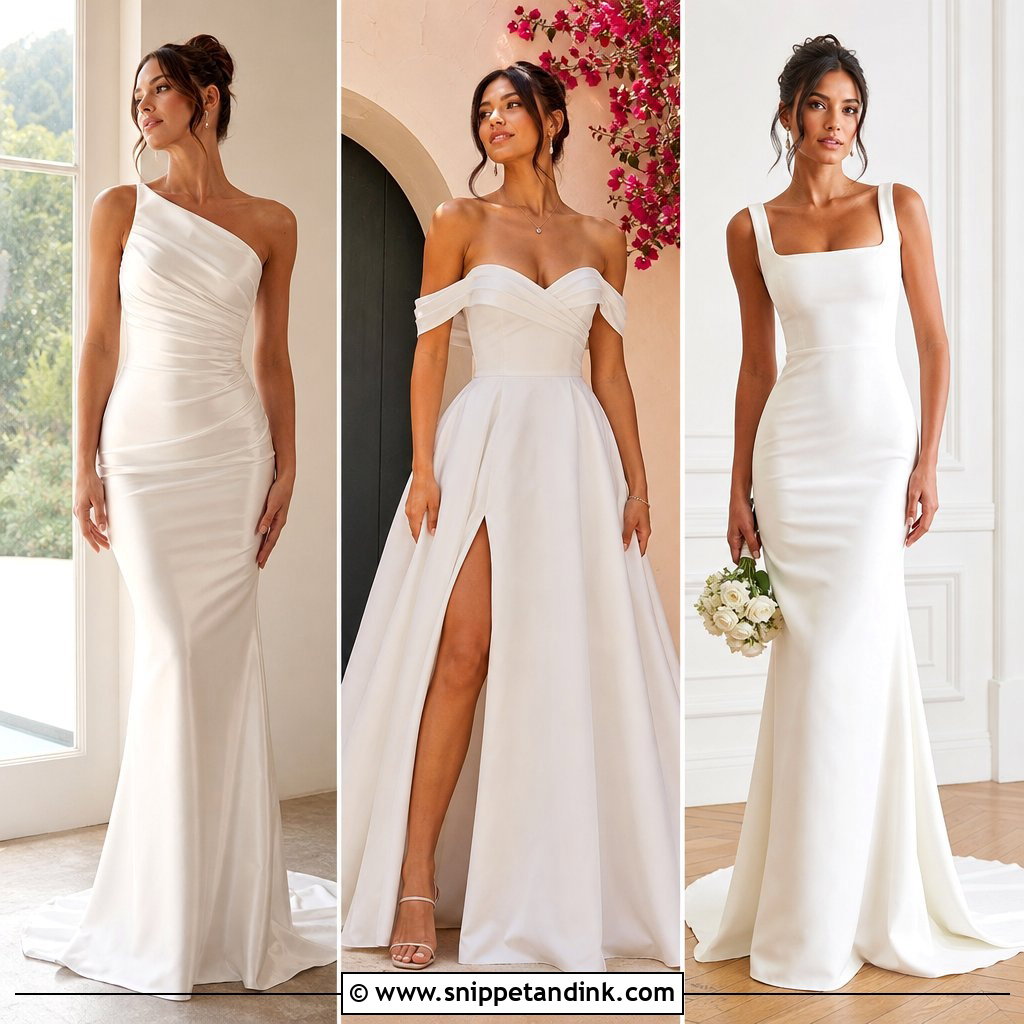
8. Southern Square Neck Wedding Dress
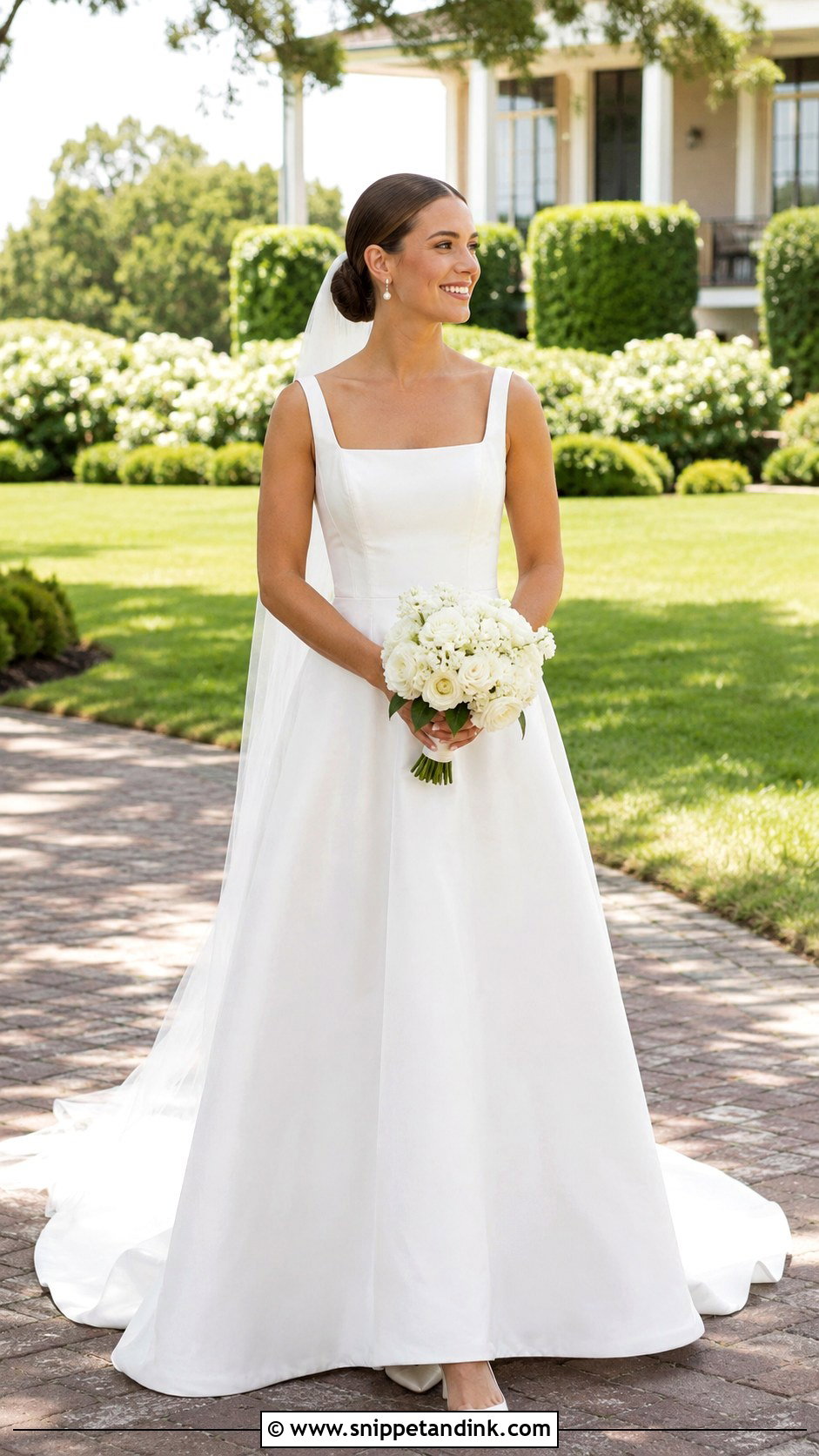
A square neckline gives structure without severity and sits well on most bust sizes, small or full. It has a quiet vintage feel that suits Southern settings. Pair it with an A-line skirt, a lace bodice or smooth satin. The detail I watch is gaping at the corners when you lean forward, which a good seamstress can fix with a small tuck. Pearl earrings, a sleek bun, a veil tucked low, plain ivory heels and a small structured bouquet keep it clean. It looks right at garden ceremonies and country club receptions.
9. Southern Sweetheart Wedding Dress
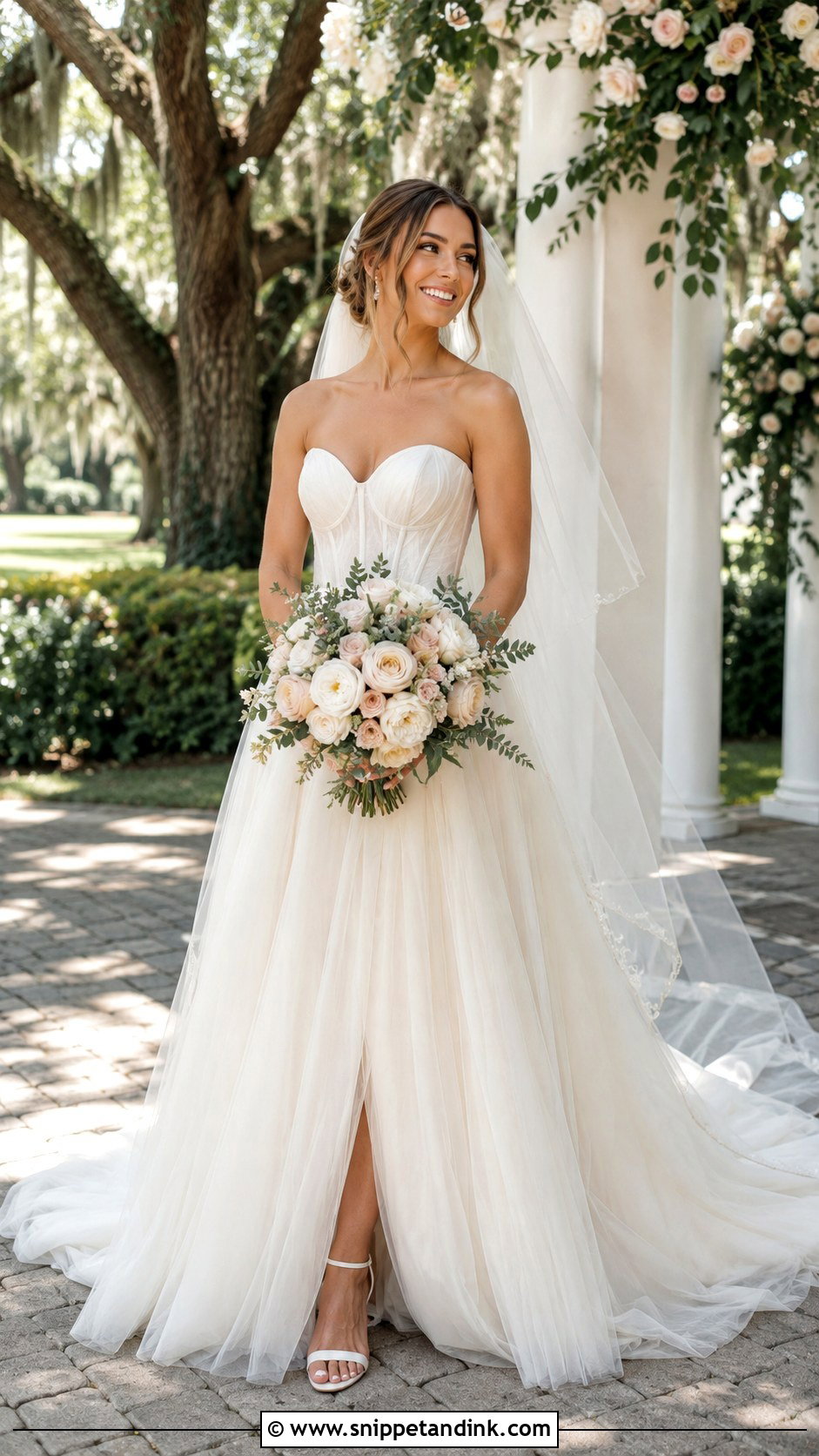
The sweetheart wedding dress has been a Southern staple for decades, and it pairs well with lace, satin or tulle. Light boning helps the neckline hold its curve, and the skirt should move freely. Drop earrings, a fingertip veil and heels with a comfortable strap suit it. For a church ceremony that expects more coverage, I add detachable lace sleeves or a sheer wrap, then remove them for the reception. Blush, ivory and greenery in the bouquet warm it up. It rarely looks overdone.
10. Southern Tea Length Wedding Dress
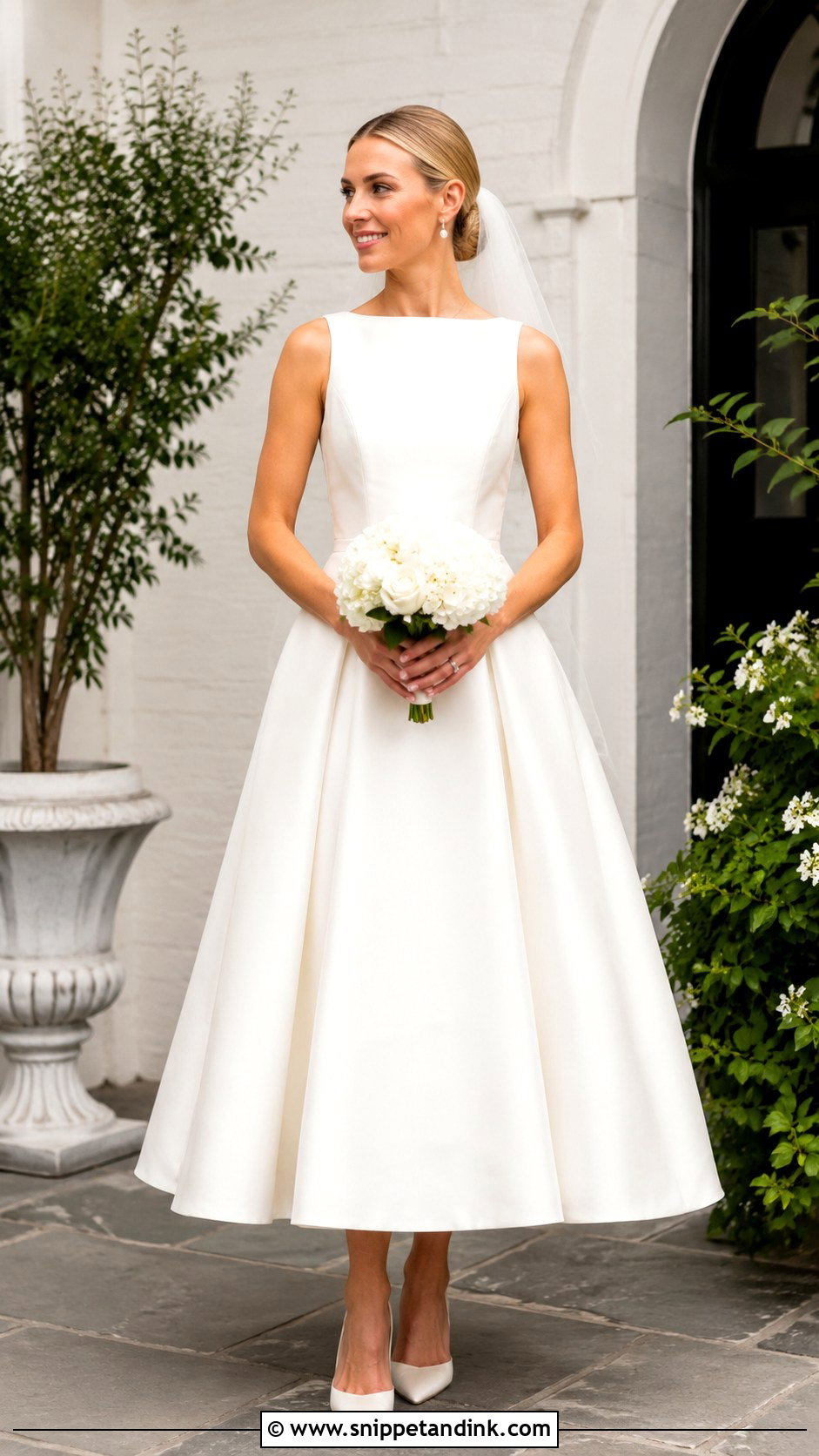
Tea length is the most practical hem on this list for lawns, patios and dance floors. Nothing drags, nothing collects grass. A structured bodice with a full skirt reads vintage; a sleek satin version reads modern. Because your shoes are on display all day, choose them with care: pointed pumps work, but break them in at home first. Pearl earrings and a short veil or bow hair accessory finish it. I suggest it most for courthouse weddings, garden receptions and smaller celebrations, and for any bride who hates hems.
11. Southern Chiffon Wedding Dress
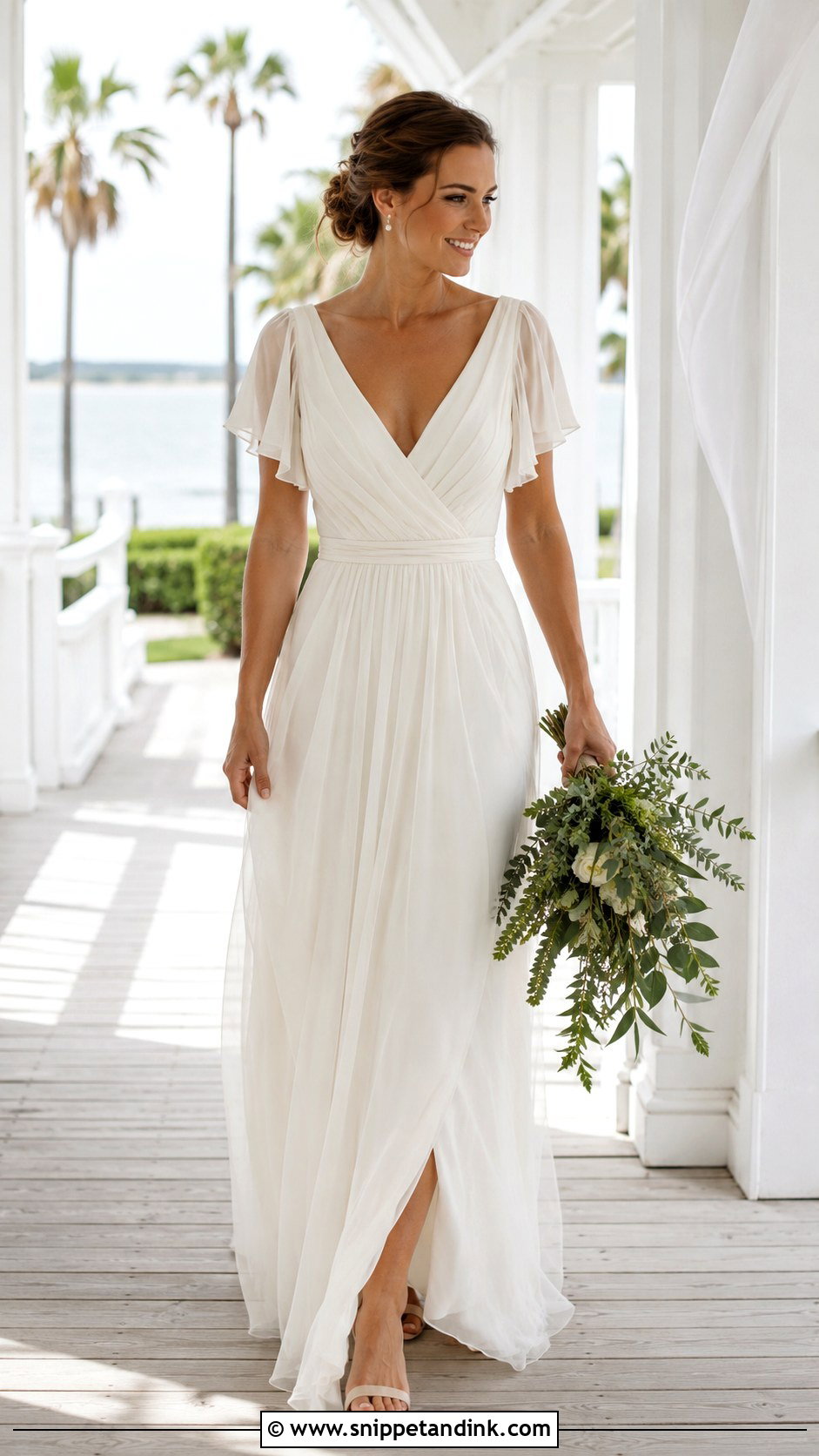
Chiffon is my first suggestion for a Southern summer. It is light, it breathes and it moves in a breeze. Flutter sleeves, a wrapped bodice or a soft A-line skirt all suit it. Delicate sandals, small pearl earrings and a veil that doesn’t swamp the fabric keep the balance. The downside: chiffon snags on heels, rough benches and bouquet wire, so I check the hem length against your shoes and keep the bouquet stems wrapped. A loose bouquet of greenery and white blooms matches its relaxed feel. Coastal and garden venues suit it best.
12. Southern Crepe Wedding Dress
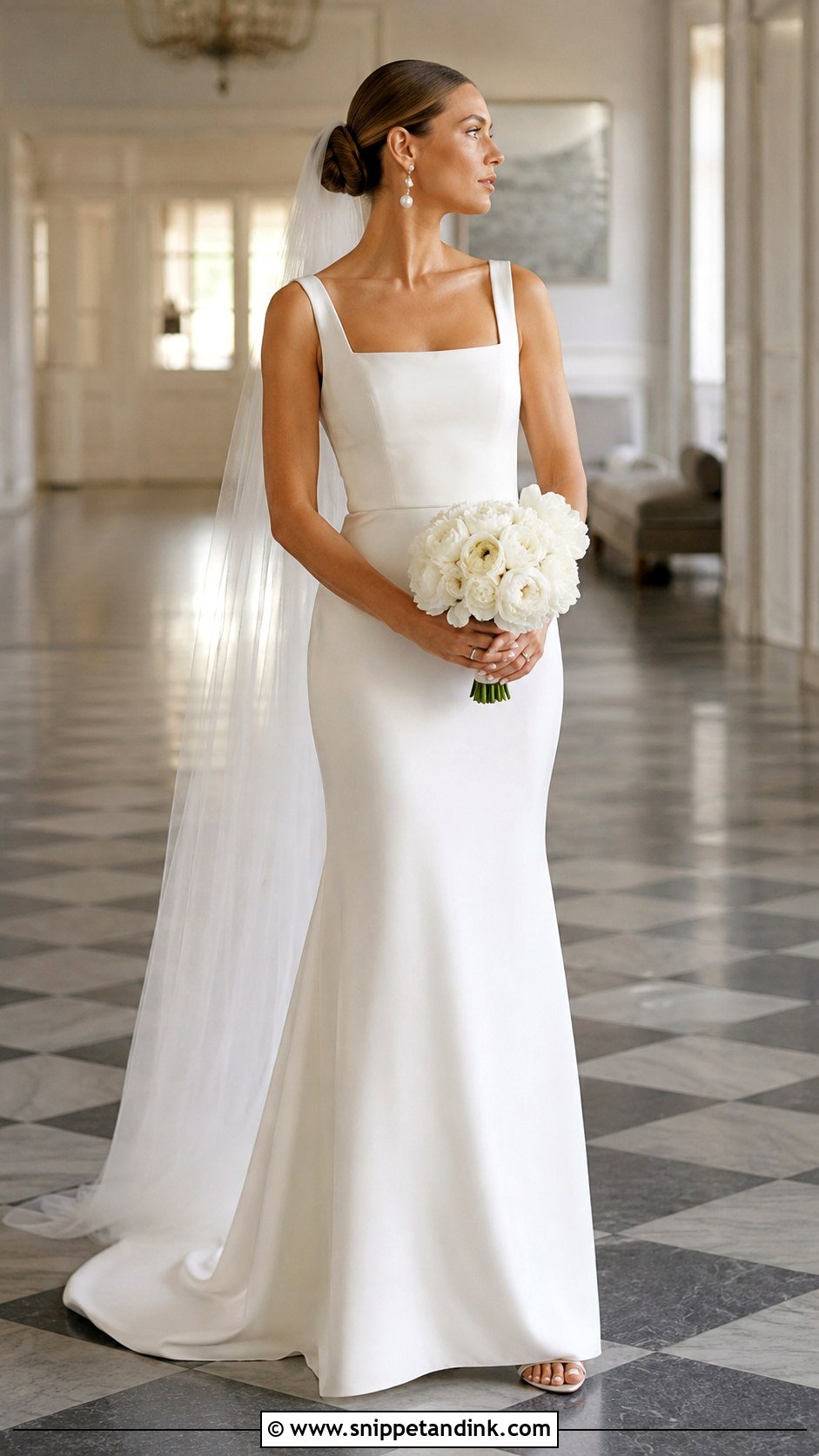
Crepe skims the body with no embellishment to hide behind, which is why it looks so clean and modern. It also shows every seam, line and undergarment, so I fit crepe gowns with the exact underwear and shapewear you’ll wear on the day. A square neck, low back or modest train suits a Southern setting. Sculptural pearl earrings, sleek heels and a polished bun keep the lines sharp; a long plain veil adds drama. White orchids, roses or calla lilies in a simple bouquet finish it. Heavy crepe is warm, so it belongs at formal, air-conditioned venues.
13. Southern Tulle Wedding Dress
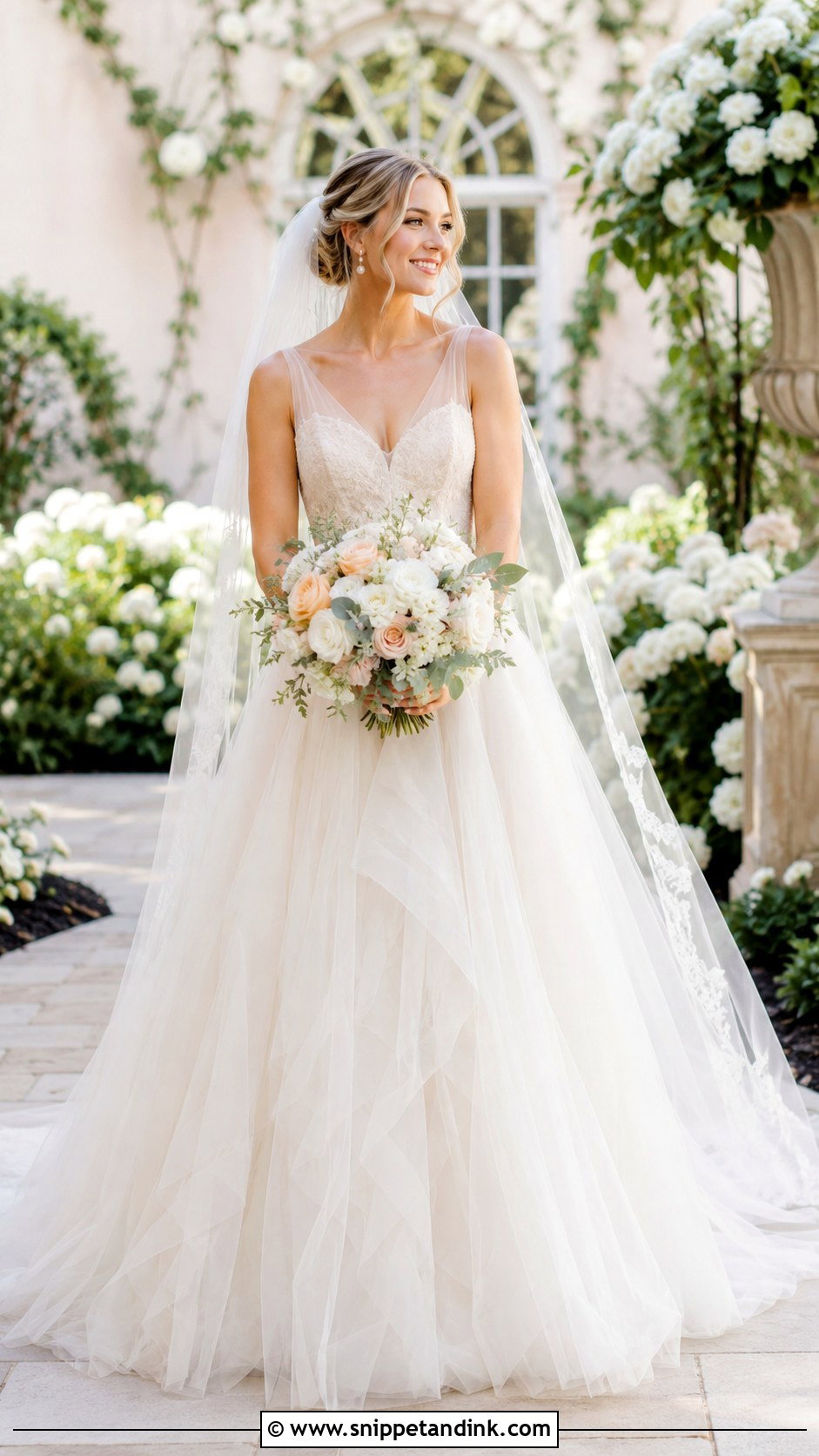
Tulle gives volume without the weight of a satin ball gown, as long as the layers are soft. Stiff, cheap tulle looks puffy and scratches; quality layers float. A fitted bodice with lace appliqué, small pearls or light sparkle suits it. A delicate veil, pearl earrings and comfortable heels hidden under the skirt are enough. Blush and ivory flowers match the mood. Tulle catches on rough garden benches and briars, so I keep a lint roller and a small pair of scissors in the emergency bag for stray threads. It works at gardens, estate lawns and formal receptions alike.
14. Southern Minimalist Wedding Dress
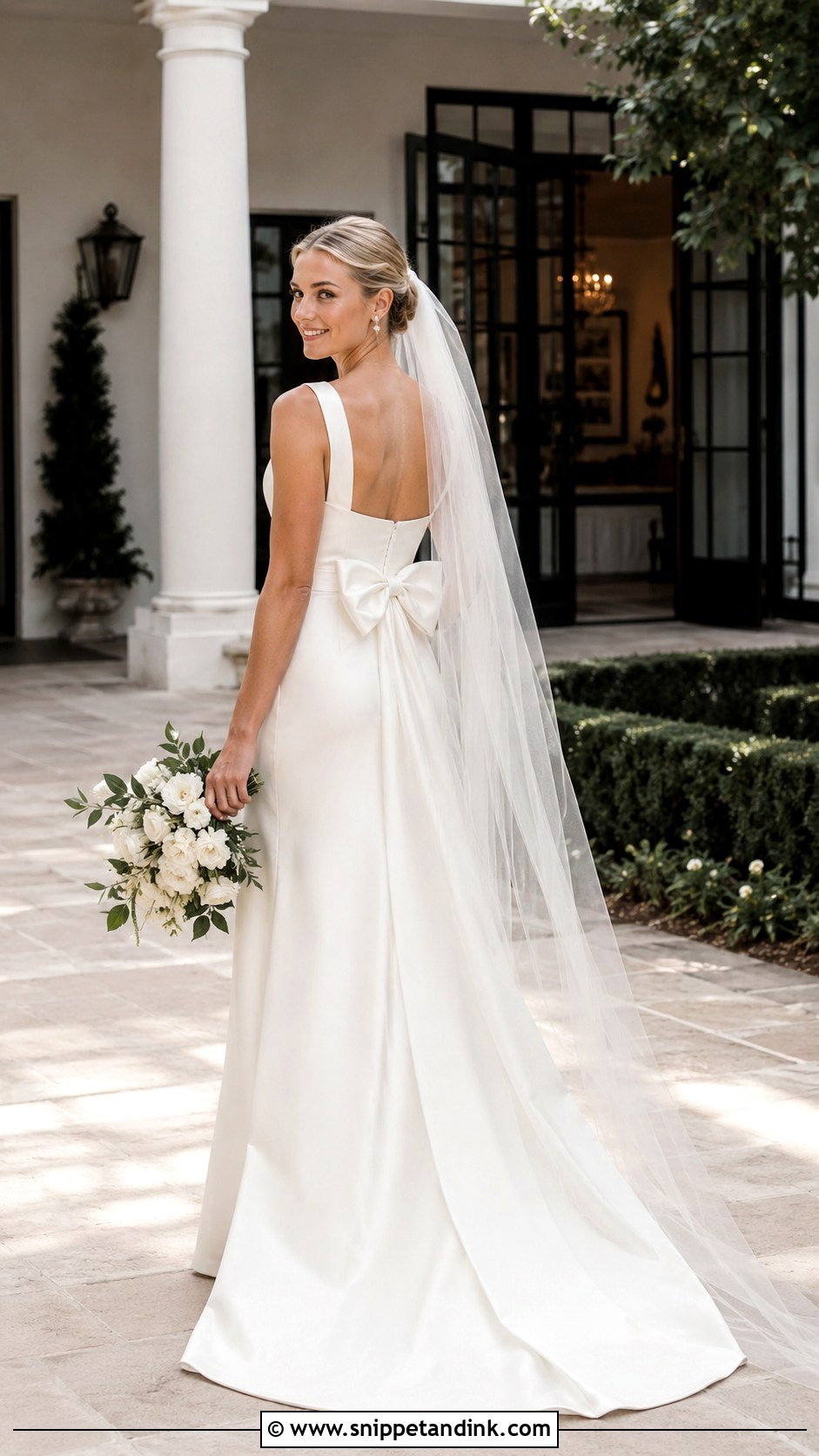
A minimalist gown still feels Southern if the styling is warm. I look for a clean satin, crepe or mikado with exactly one focal point, a square neck, a bow back or a long train, and build around that. Pearl studs, a smooth veil, classic heels and a neat bun or soft waves are plenty. The bouquet should be white with greenery so it doesn’t fight the simplicity. Brides who don’t want lace or sparkle tend to love this, but plain fabric shows every wrinkle and spot, so I bring a steamer and a stain pen.

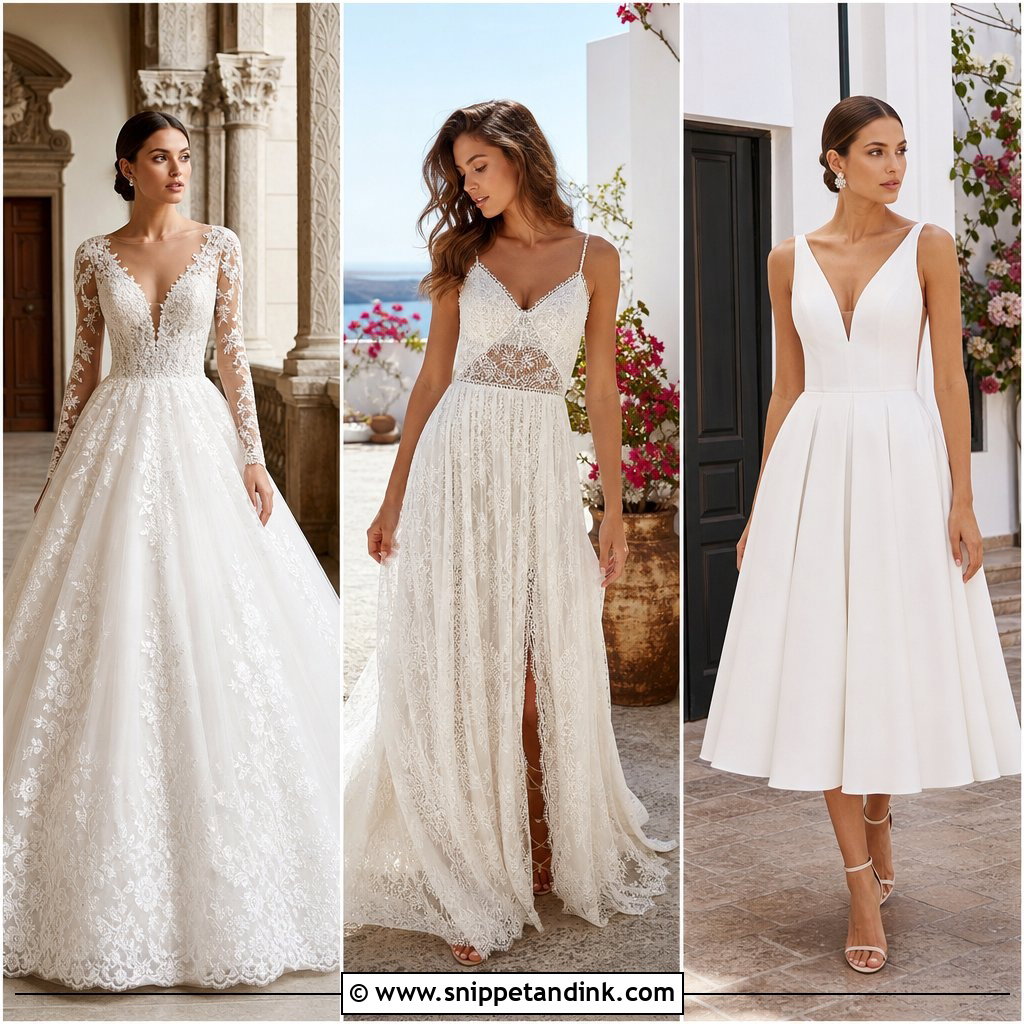

15. Southern Pearl Wedding Dress
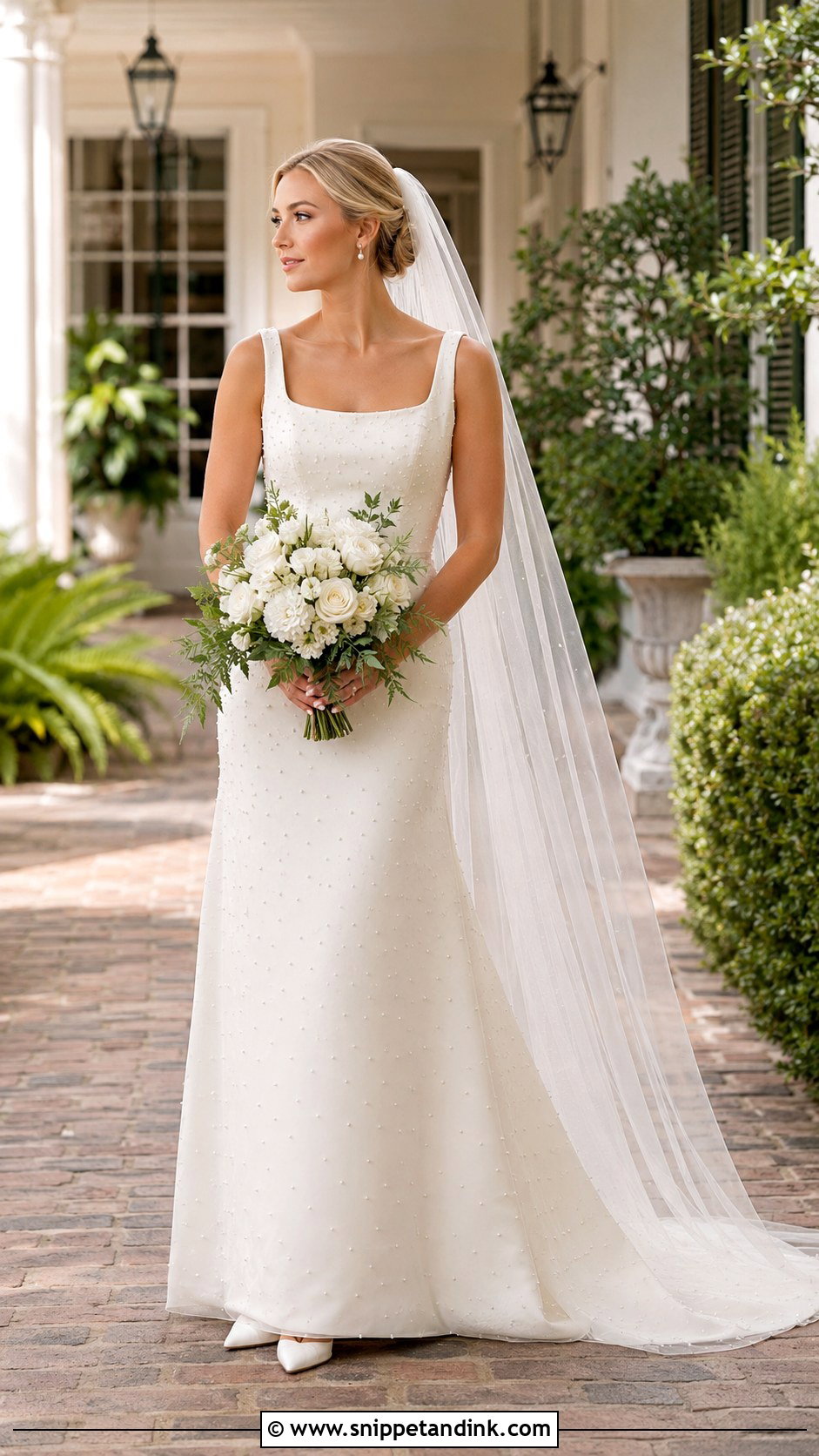
Pearl detail adds texture and a soft shine without the glare of crystals. Pearl beading on the bodice, scattered pearls across tulle or a row of pearl buttons down the back all suit a Southern feel. Keep accessories to pearl earrings, satin heels and a sheer veil. Pearl buttons look pretty but take a while to fasten, so I tell brides to plan five extra minutes and a patient helper with a crochet hook. A white bouquet with soft greenery keeps it fresh. It suits formal gardens, indoor receptions and evening weddings.
16. Southern Bow Back Wedding Dress
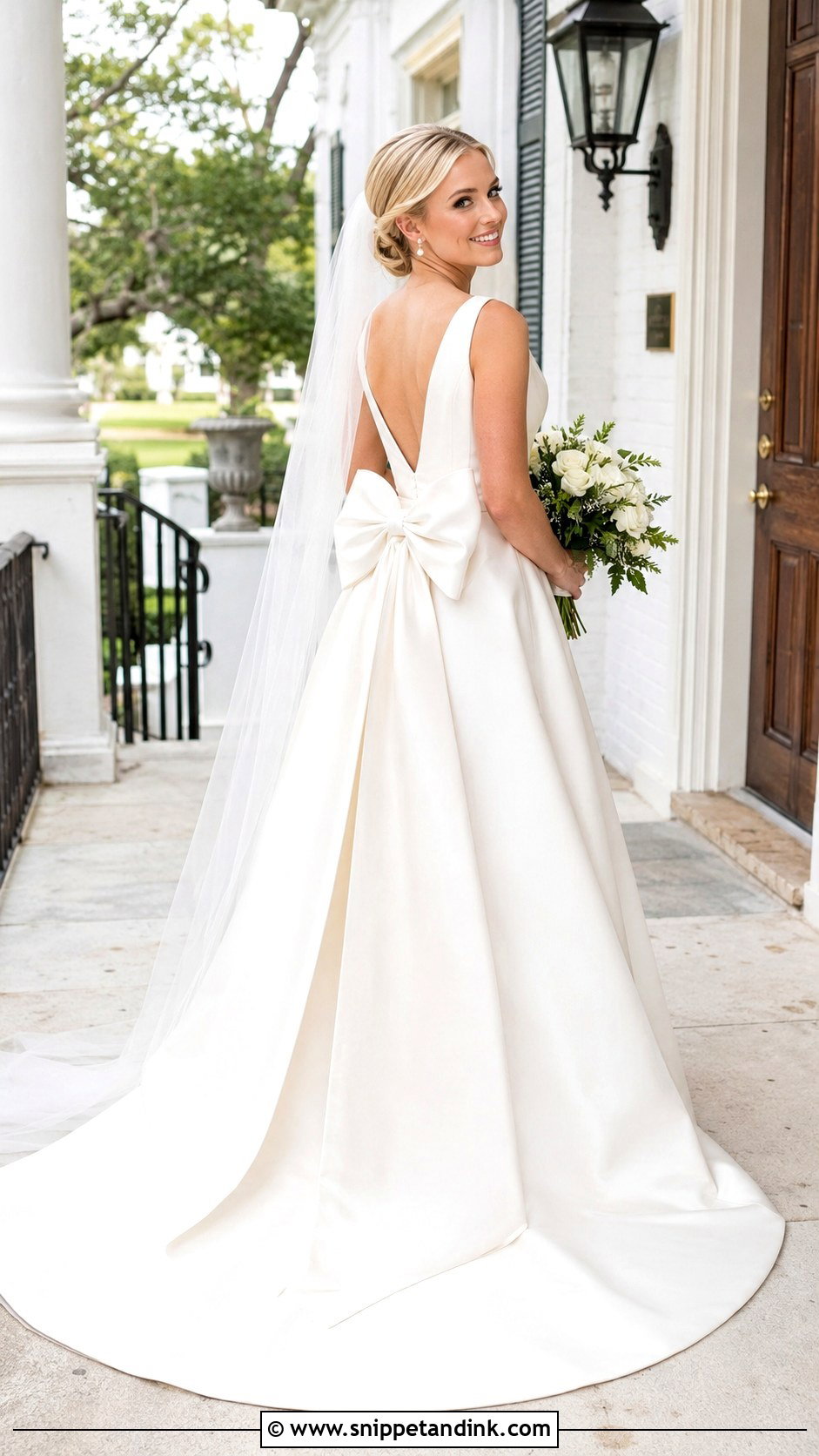
A bow back makes the back of the gown the main event, which matters because guests see your back throughout the ceremony. Satin or mikado holds a crisp structured bow; organza gives a softer one. The veil placement depends on the bow: I set it above the bow if it’s high on the back, or below the knot if the bow sits low. Pearl studs, a smooth updo and classic heels are enough, with a modest bouquet. Bows crush when you sit, so I fluff them by hand before the exit photos.
17. Southern Basque Waist Wedding Dress
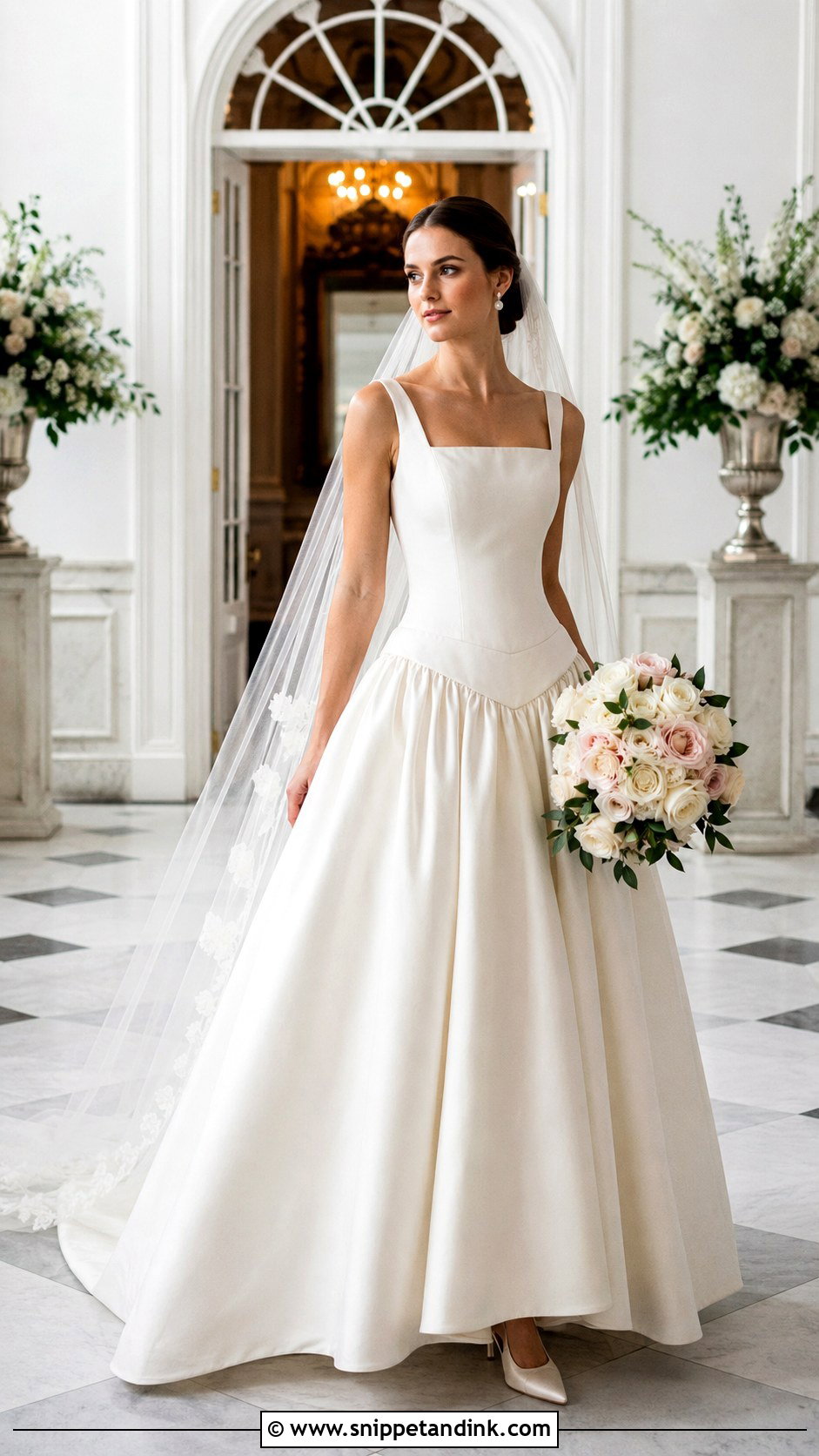
The basque waist wedding dress has a bodice that dips into a V just below the natural waist, which lengthens the torso. It has an old-world feel that suits historic Southern venues. A full skirt adds drama; a softer A-line moves more easily. Long veil, pearl earrings and refined heels finish it, with garden roses and greenery to soften the point. The dip has to land at the right spot on your body; even a small difference can look awkward, so this is one to try on, not buy from a photo.
18. Southern Drop Waist Wedding Dress
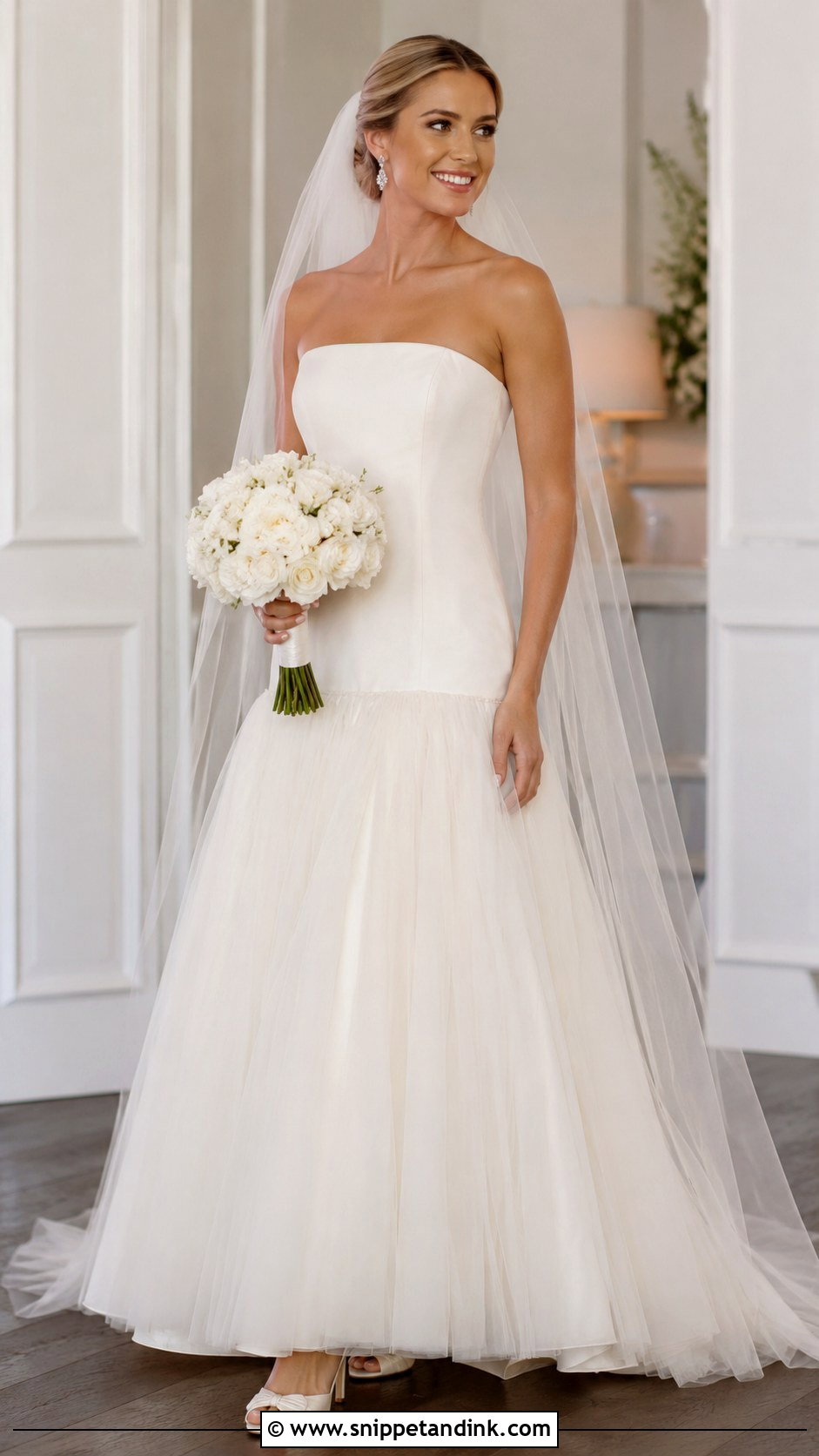
Drop waists lengthen the torso and give a sleek line before the skirt flares. Placement is everything here; if it sits too low it shortens the legs, too high and it looks like a mistake. I’d choose a softer drop in lace, satin or tulle rather than anything stiff. Delicate earrings, a long veil, simple heels and a neat bouquet keep the outfit balanced. It suits fashion-forward receptions and formal venues. I’d steer petite brides with short legs toward a gentler drop or a different shape altogether.
19. Southern Corset Wedding Dress
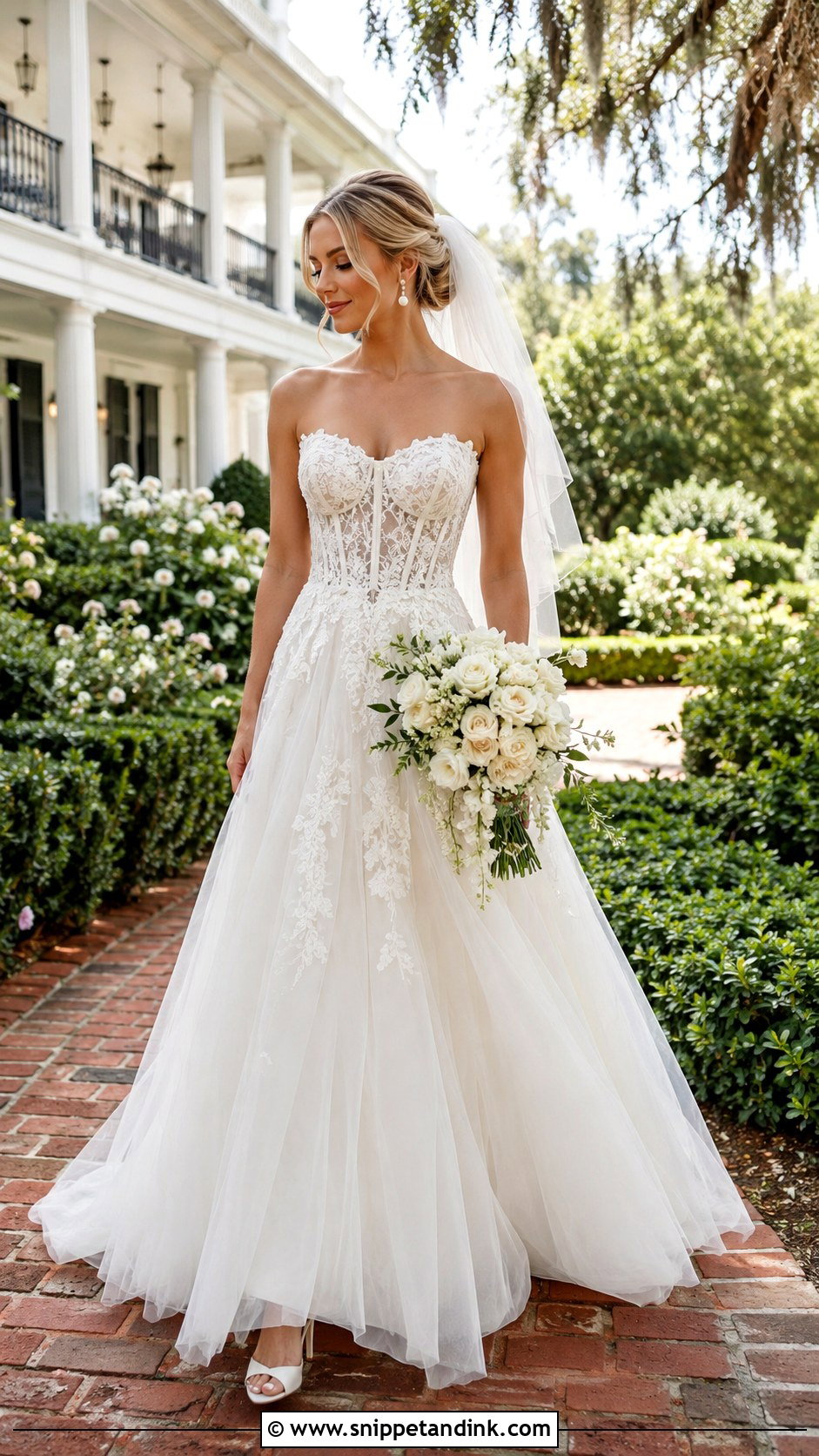
A corset bodice gives shape and support, but it should never restrict breathing. If you can’t eat dinner or bend to hug someone, it is too tight. Visible or hidden boning both work, with a skirt in lace, satin or tulle to balance the structure. Pearl earrings, a sheer veil and classic ivory heels keep it bridal. I keep hair polished and makeup soft so the bodice looks refined, not costume. White blooms and gentle greenery add romance. Lace-up backs can be adjusted through the day, which helps when the evening gets warmer.

20. Southern High Neck Wedding Dress
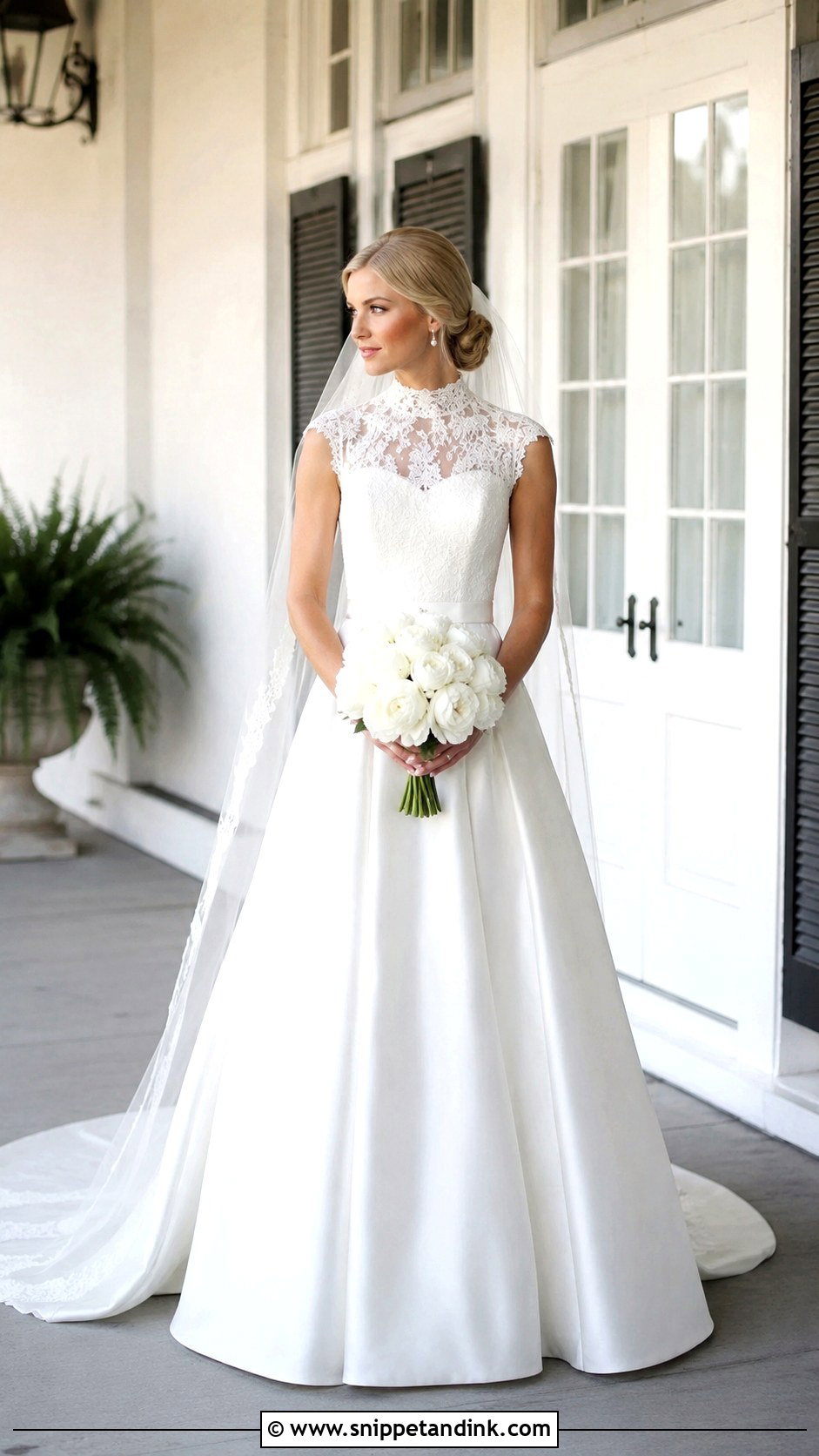
High necklines give coverage while still looking delicate, especially in lace or sheer fabric. To stop it feeling heavy in Southern heat, I’d pair the high neck with an open back, cap sleeves or a flowing skirt. The neck edge is where it can go wrong, since a stiff collar rubs by evening. Small earrings, an updo and a veil set low behind the head keep the neck clear. Closed-toe heels in cooler months, sandals in summer, and a simple white bouquet. It suits a bride who wants modest coverage and a clear silhouette.
21. Southern Halter Wedding Dress
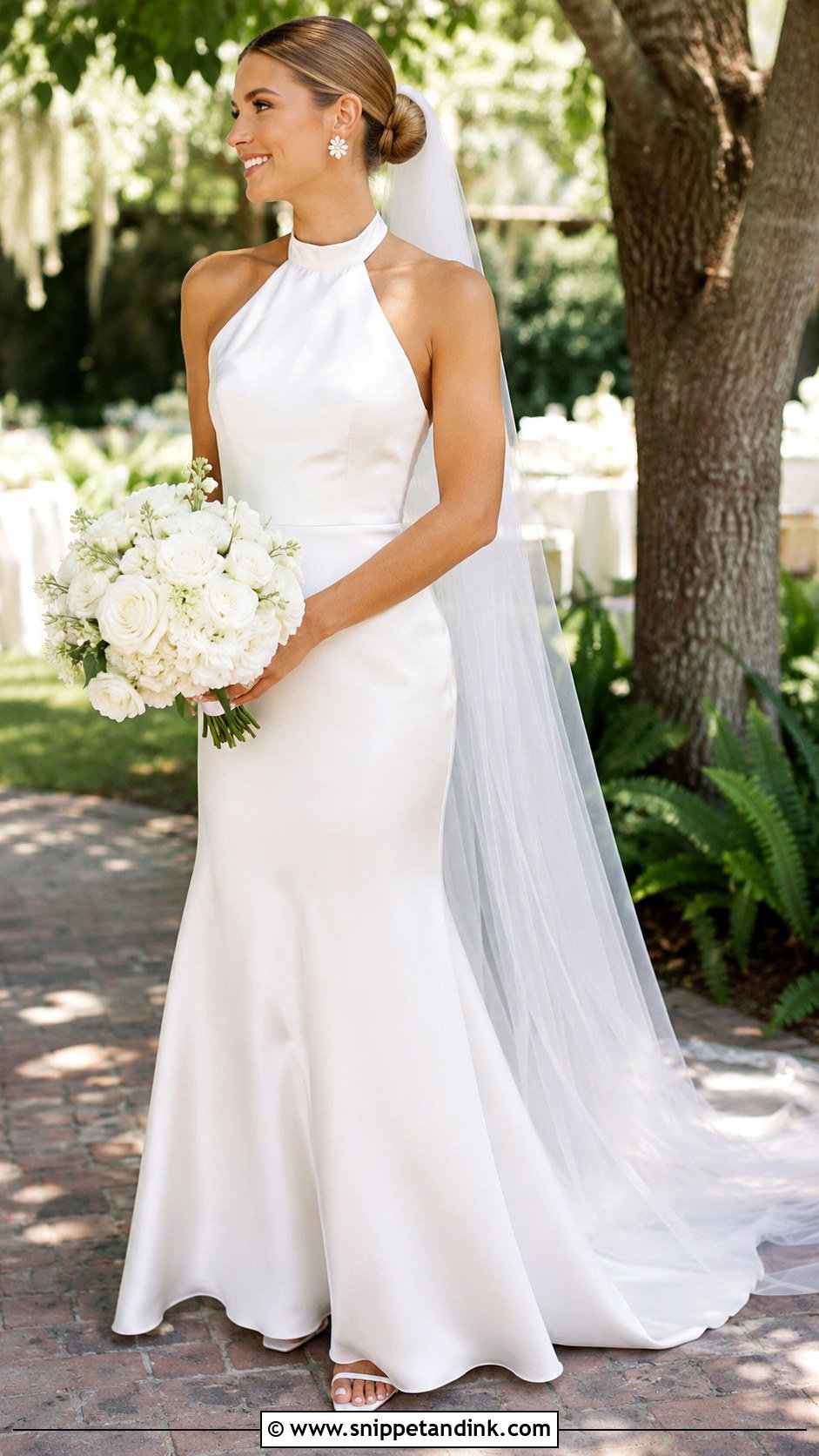
The halter wedding dress shows the shoulders while giving the bodice real support, which is why it works so well in warm Southern weather. Satin reads polished, lace romantic and chiffon relaxed. Statement earrings, a sleek bun and simple heels are enough; skip the necklace so the neckline stays clean. A long veil softens the strong top. The halter strap can dig into the neck if it carries too much weight, so I check that the bodice is supported from the side seams, not just the neck. Garden, coastal and modern venues suit it.
22. Southern Slip Wedding Dress
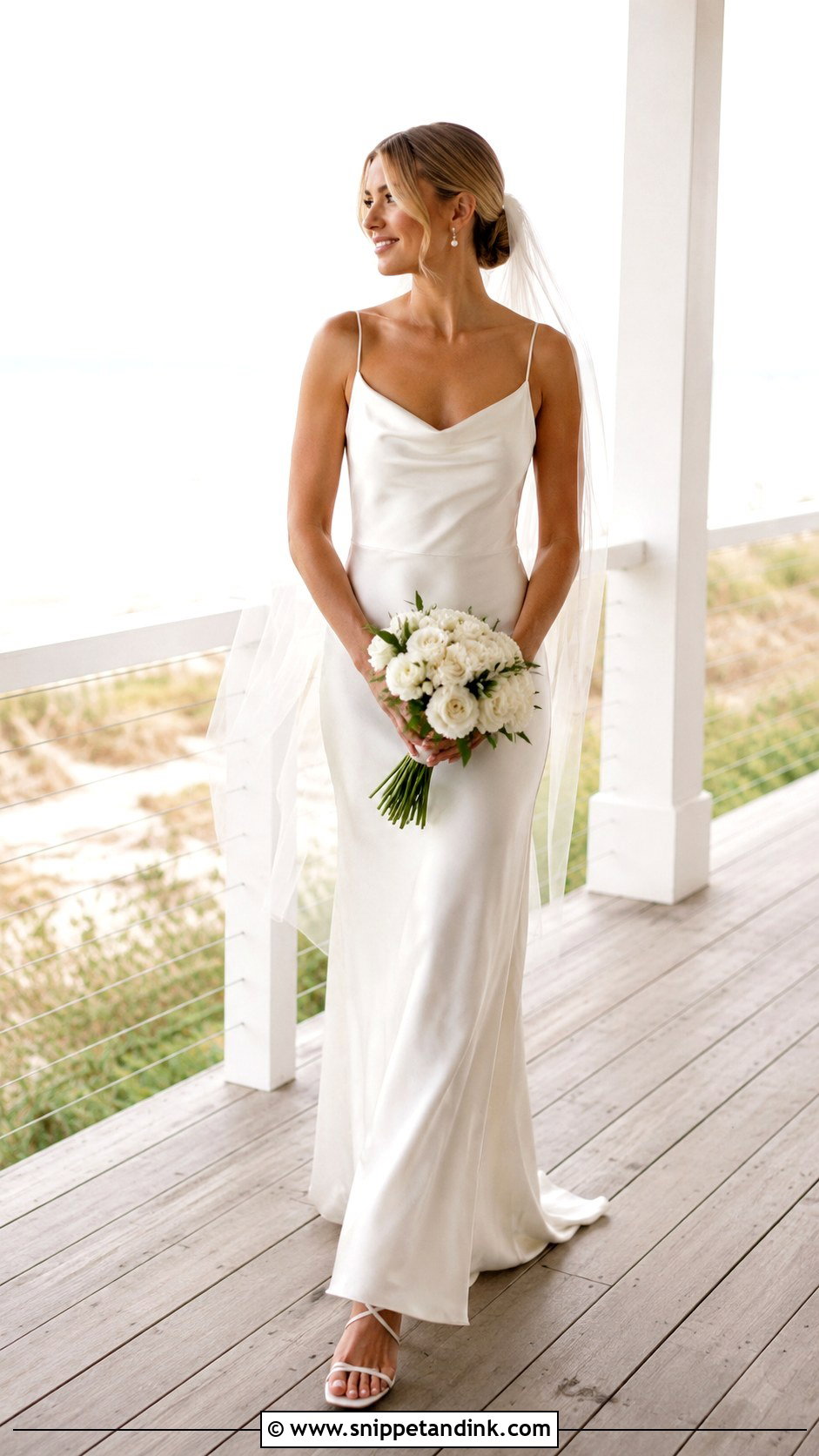
Slip dresses are as simple as bridal gets, so the fabric and cut carry everything. Silk, satin or soft crepe cut on the bias moves well, but bias-cut satin is unforgiving about seams and underwear lines. A light veil, strappy heels and small pearl or diamond earrings suit it, with a low bun or soft waves. For a church ceremony or cooler evening, I add a lace topper, sheer scarf or tailored jacket. A small white bouquet finishes it. It shines at intimate weddings, on the coast and at evening receptions.
23. Southern Bridal Jumpsuit
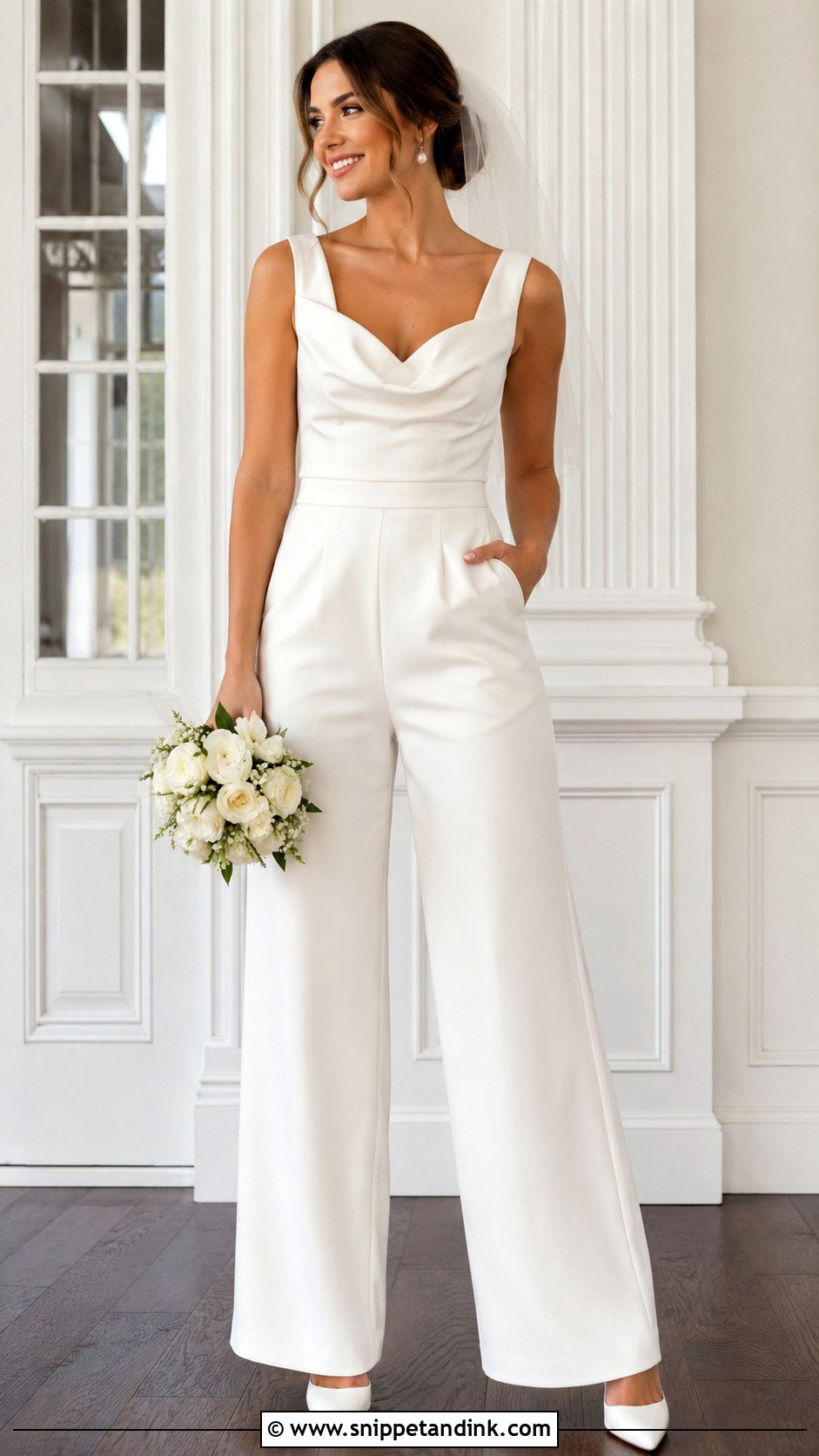
A bridal jumpsuit suits courthouse ceremonies, welcome parties or a reception change. White or ivory, a tailored waist, wide legs and a strong neckline are the essentials. Pointed heels, pearl earrings and a short veil or hair bow keep it clearly bridal. For a more formal ceremony, lace sleeves, satin fabric or a detachable overskirt help. The fitting point nobody mentions: the rise. Too short, and sitting becomes uncomfortable; I always ask a bride to sit and walk stairs in it. It is the easiest outfit to move in.
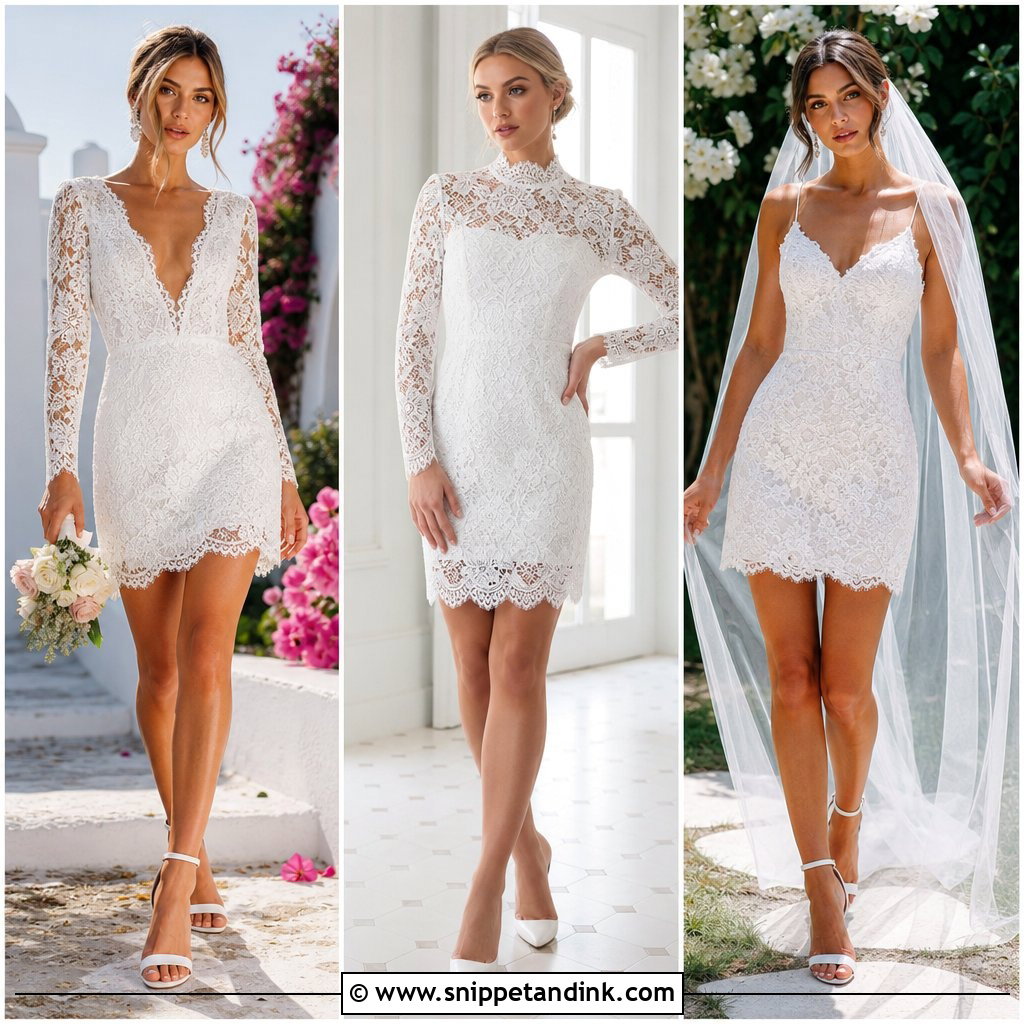
24. Southern Reception Mini Wedding Dress
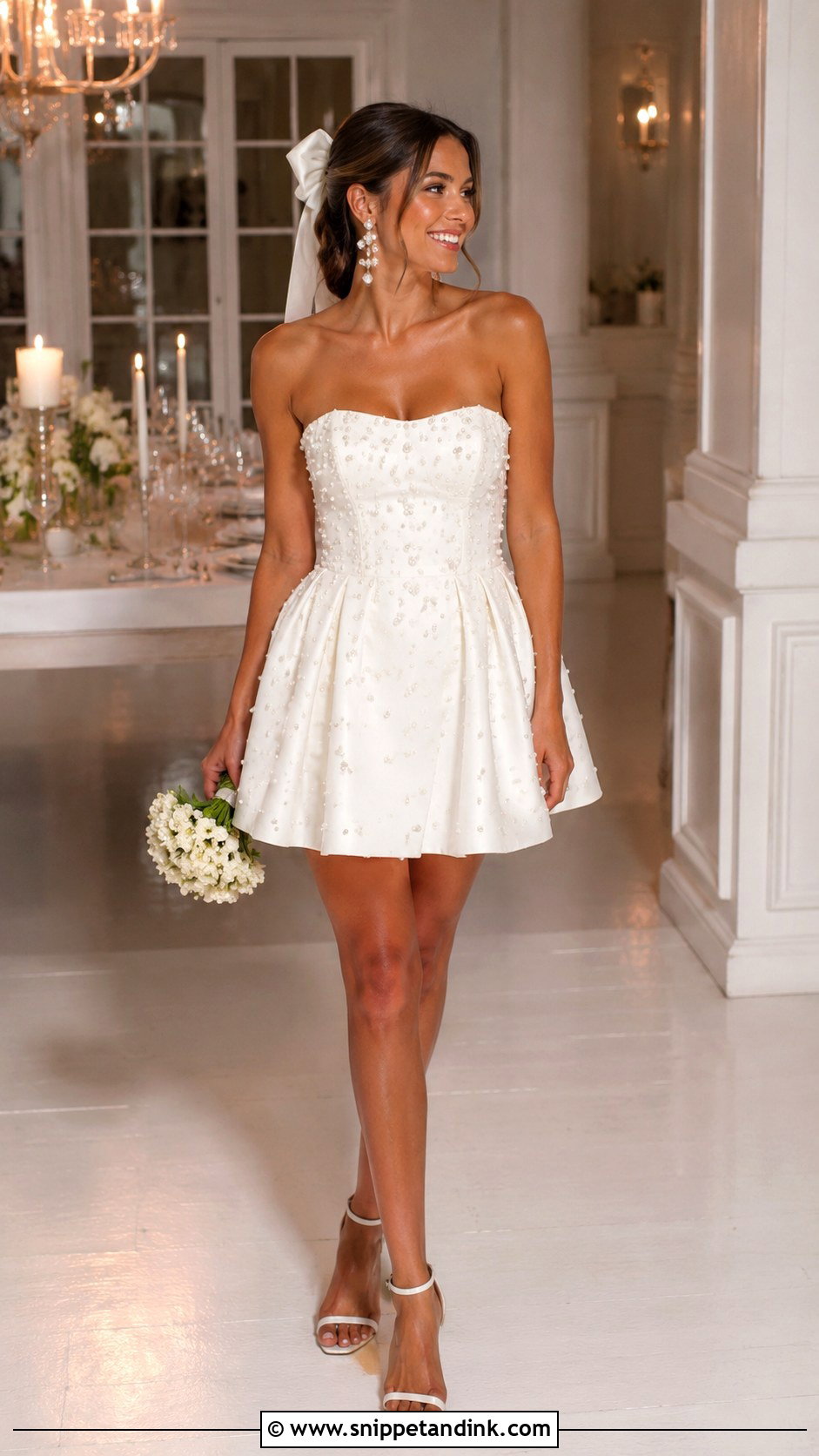
The reception mini is for dancing and greeting guests without a skirt to manage. I’d keep it structured, with pearls, lace, bows or a few feathers used with restraint. Comfortable bridal heels, statement earrings and a playful hair accessory work, and a short veil or satin bow keeps it bridal, not casual. A fitted sheath, A-line mini or tailored shift all suit. Plan the change: it takes about fifteen minutes with help, and the hairstyle should allow a dress to come off over the head or the zip to go down the side.
25. Southern Champagne Wedding Dress
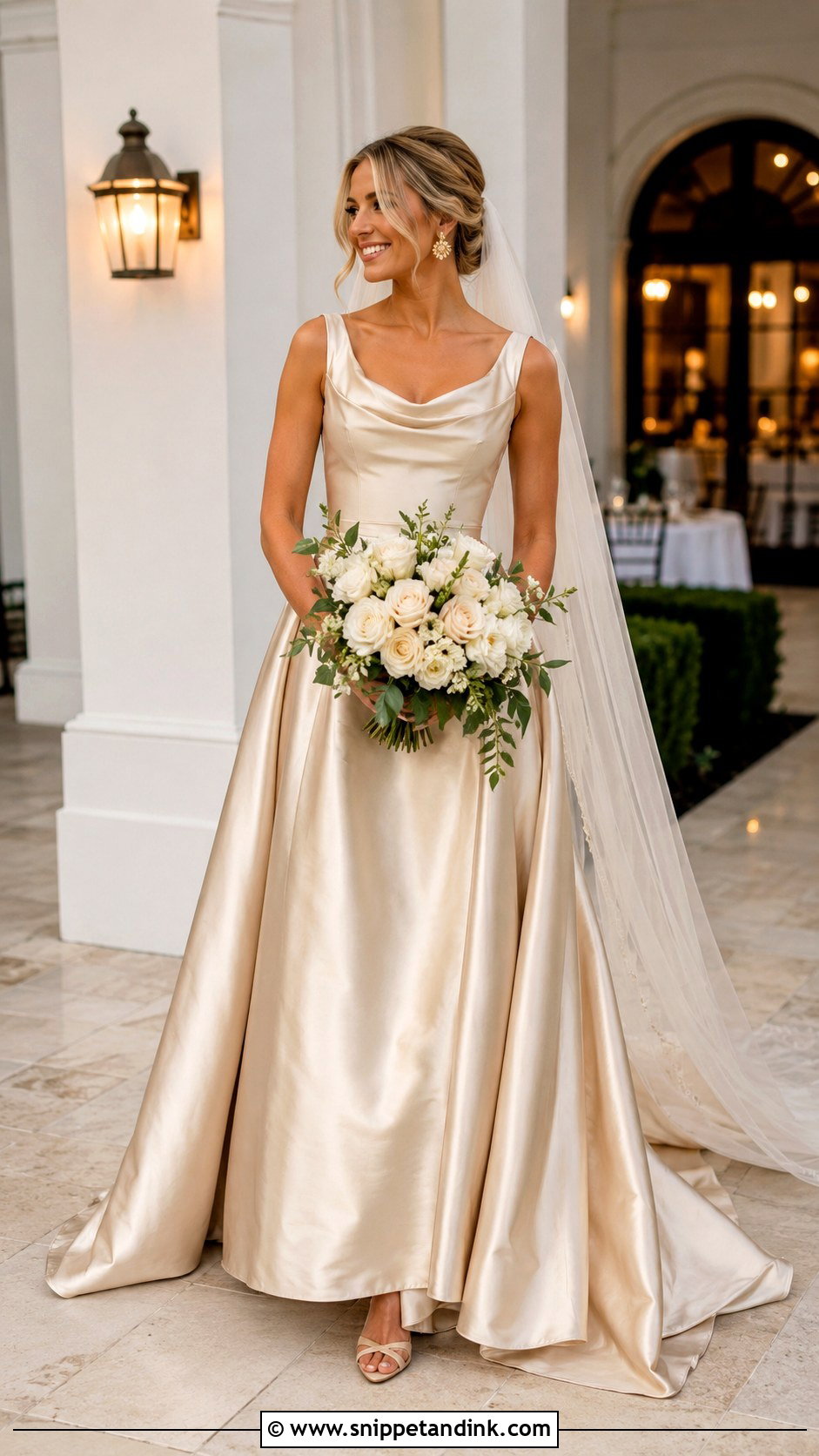
Champagne is the answer when bright white makes your skin look grey or the photos look stark. It’s warm and flattering in Southern sunlight. Champagne satin looks formal, tulle dreamy and lace vintage. Ivory or nude heels, gold-toned jewelry and a veil in the same soft shade keep everything in one family. A bouquet of cream flowers and greenery blends with it. I always check the colour in natural daylight, because some champagne gowns read almost nude in photos. It suits fall weddings, evening receptions and outdoor venues.
Lawns, Gravel and Long Trains
Many Southern weddings move from a garden ceremony to a tent or a barn reception, and the ground decides a lot about your hem.
Hems and heels
Bring your exact wedding shoes to every fitting. Hem length is set to your heel height, and switching shoes later leaves the hem dragging or too short. On grass, a block heel or heel protectors keep you from sinking. On gravel, flat sandals are kinder to your ankles and the hem.
Bustles
Any train longer than sweep length needs a bustle for the reception. An over bustle lifts the train with hooks onto the back of the skirt; an under bustle tucks it underneath with ties. I always ask the seamstress to show the person who will bustle you how to do it, at the final fitting, with photos on their phone. Colour-coded ribbons help.
Small kit for the day
A stain pen safe for silk, baby wipes, a lint roller, safety pins, clear nail polish for small snags, blotting papers and a fan. Grass stains on a white hem are best lifted with a dab of cold water and blotting, never rubbing; leave anything bigger to the cleaner after the wedding.
Will It Still Feel Good on the Dance Floor at Ten?
Fabric, neckline and silhouette are only half the decision. The other half is your day: the heat, the walking surface, the hours you’ll be wearing it and how much you plan to dance. Lace, satin, chiffon, pearls and bows can all look right in the South, but the gown I’d pick for you is the one you can move, eat and hug people in without adjusting it every ten minutes. Build the accessories around the dress, not alongside it, and test everything you’ll wear at the final fitting.
You'll Like These Ideas:






Leave a Reply