
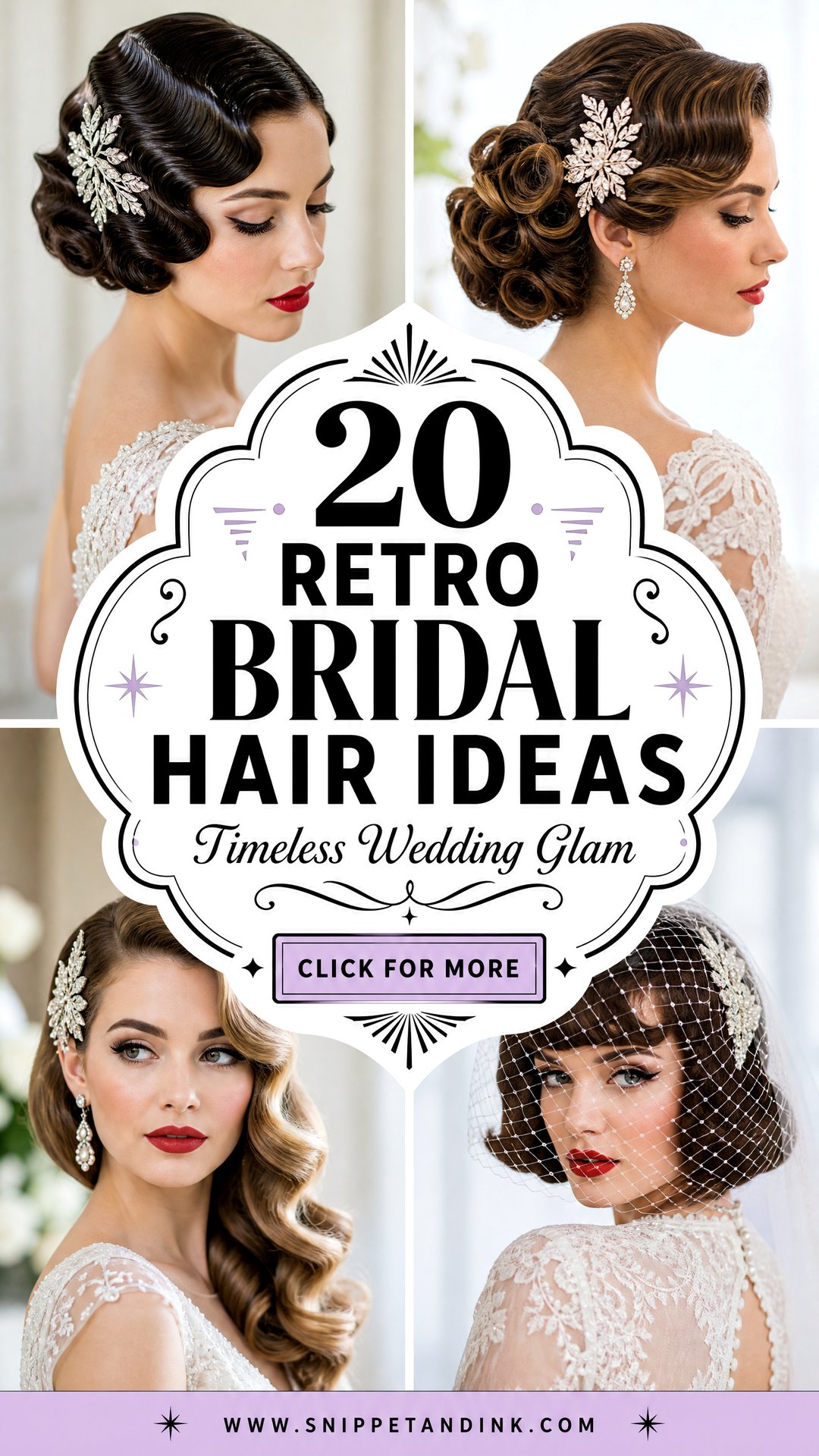
Vintage hair is built differently from modern bridal hair. The shapes in old photographs came from wet sets, rollers and pin curls that sat for hours, and that structure is why they still look polished at the end of a long day. Below are twenty retro looks, from 1920s finger waves to 1960s bouffants and soft 1970s blowouts, with notes from my chair on how each one is made, what length it needs and which dresses it sits well with.
Wet Sets, Rollers and the Hours Behind a Vintage Shape
Most of these styles start with a set, and the set decides how long the shape lasts. A curling iron alone gives curls that drop within a few hours; a set that is fully cooled or dried holds into the evening.
- Wet set: hair is damp with setting lotion, wound into pin curls or rollers and dried under a hood. It gives the firmest pattern but takes the longest, often an hour or more under the dryer.
- Hot rollers: quicker, and good for 1940s curls and 1960s volume. Each roller should cool completely before it comes out.
- Iron and pin: each curl is pinned flat while still warm. This is my usual choice on a wedding morning, as the pins can stay in while makeup is done.
Retro hair takes more time than modern styles, so I schedule the bride earlier in the morning and leave the brush-out to the end. If you can, wear your trial style for the rest of the day; that’s how you learn whether your hair needs a stronger set.
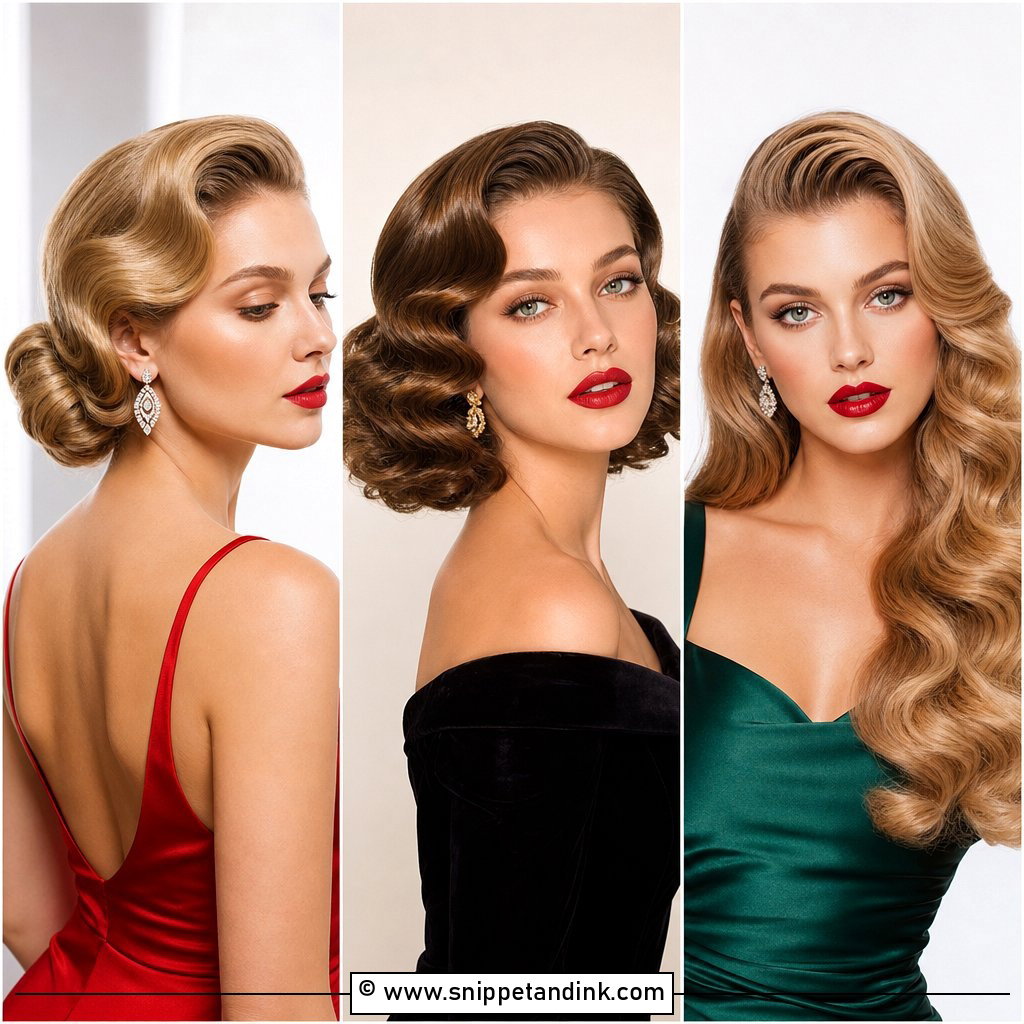
1. Old Hollywood Bridal Waves
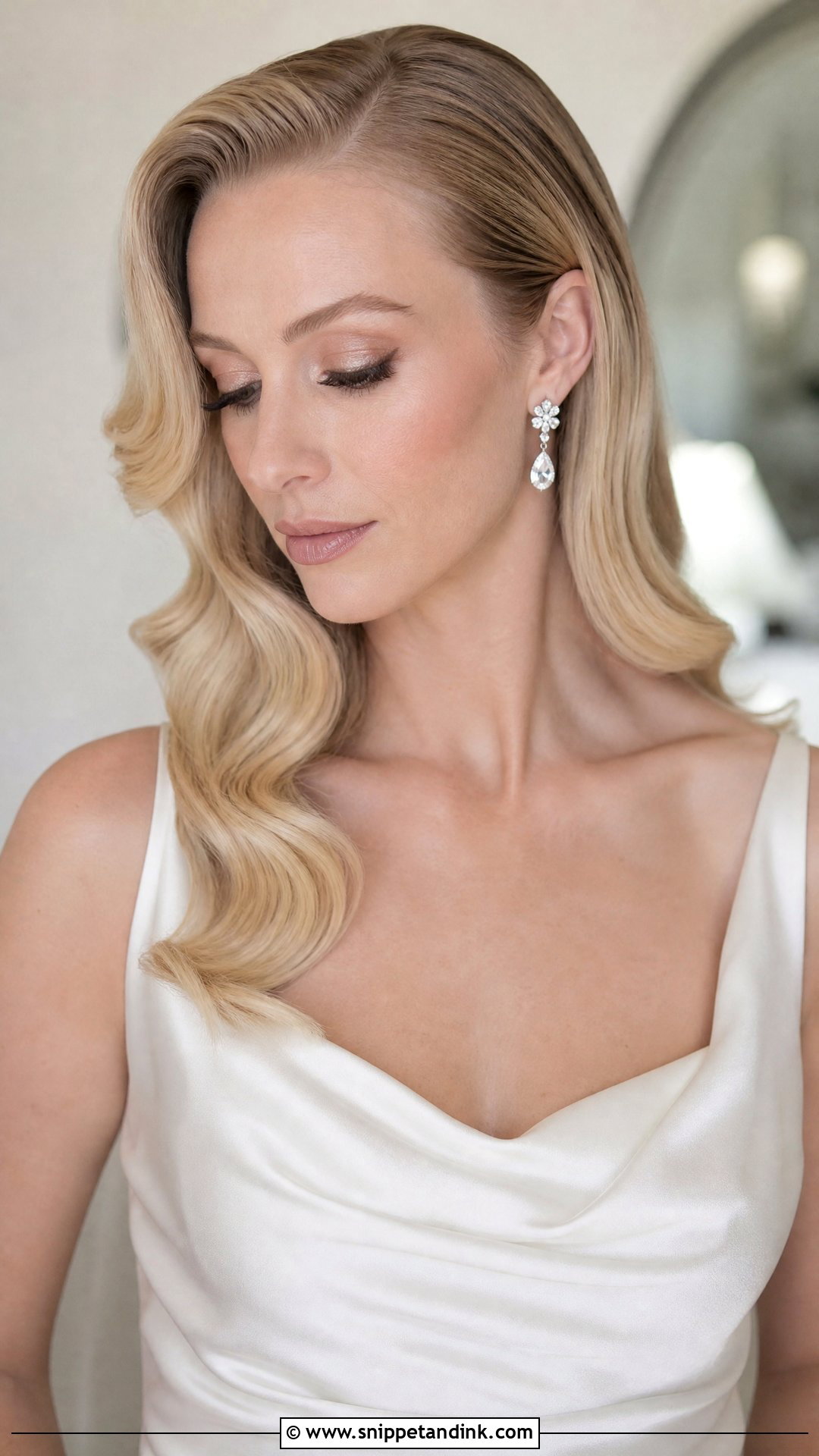
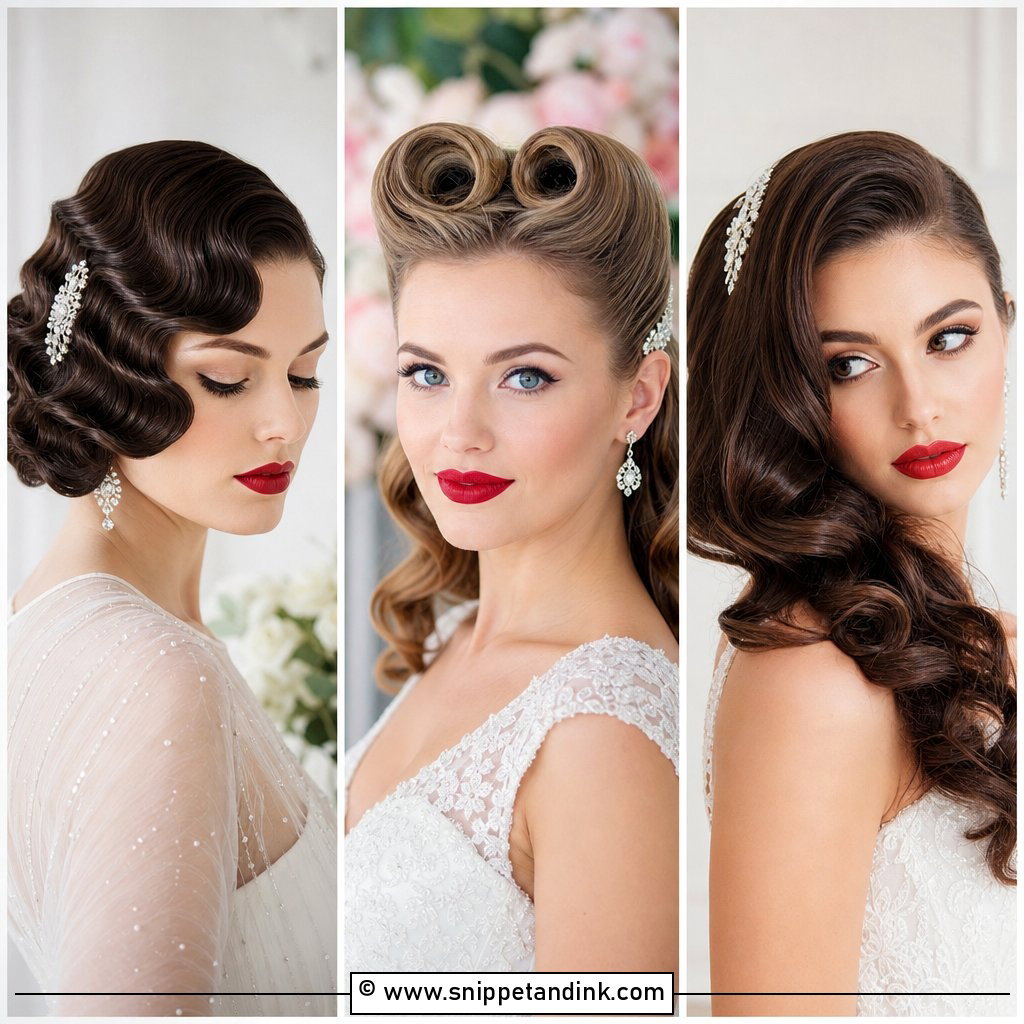
Old Hollywood waves are the retro look I set most often, and they are not loose beach waves. The pattern comes from curls set in one direction, pinned to cool, then brushed until the individual curls merge into a single S-shaped ripple. A deep side part gives the wave its sweep over one shoulder. I press the dips in with flat clips for a few minutes after brushing to sharpen them. They suit strapless and satin gowns well, and in humid weather I’d plan on a setting product with real hold rather than relying on hairspray at the end.
2. Finger Wave Bridal Bob
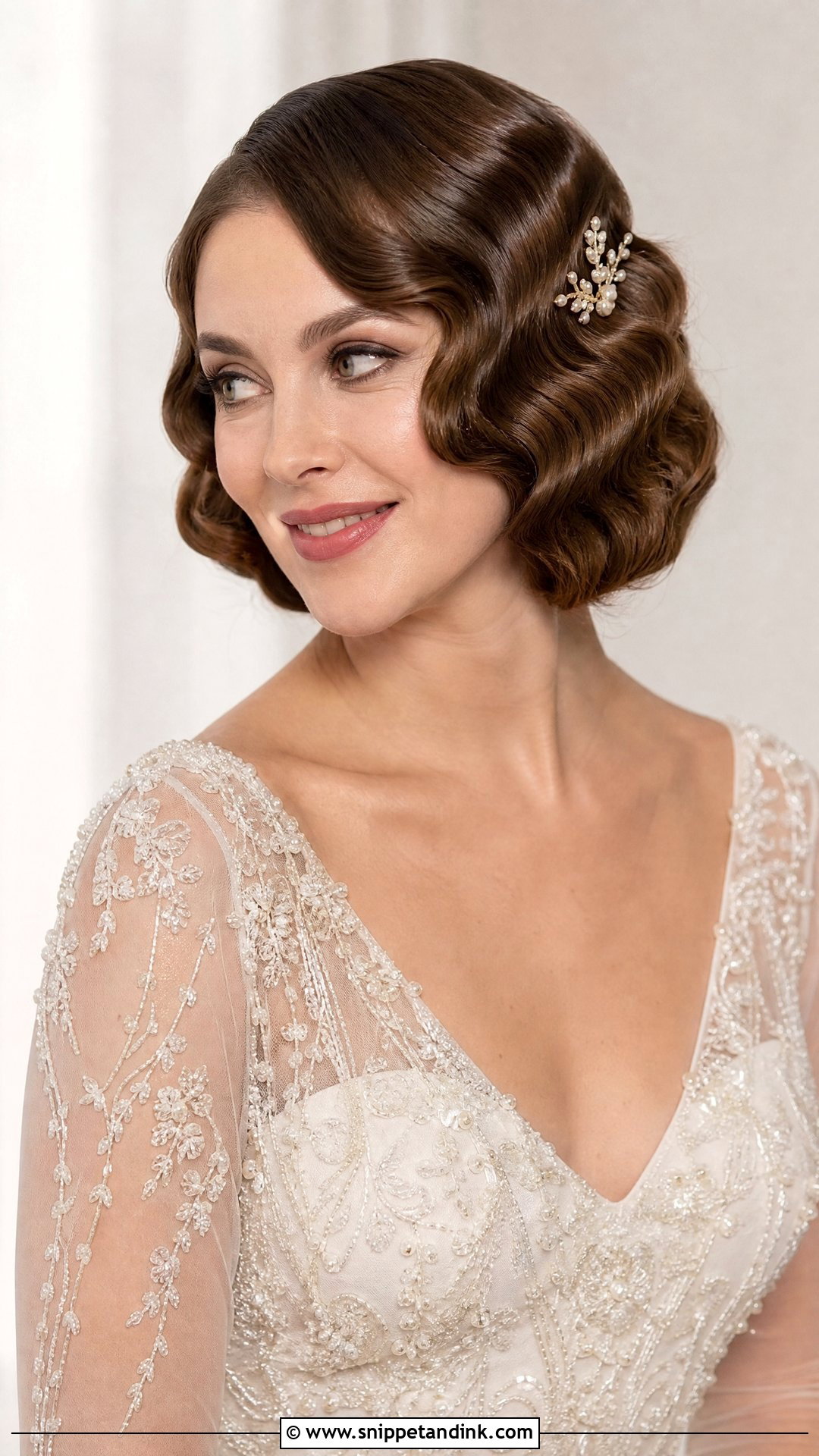
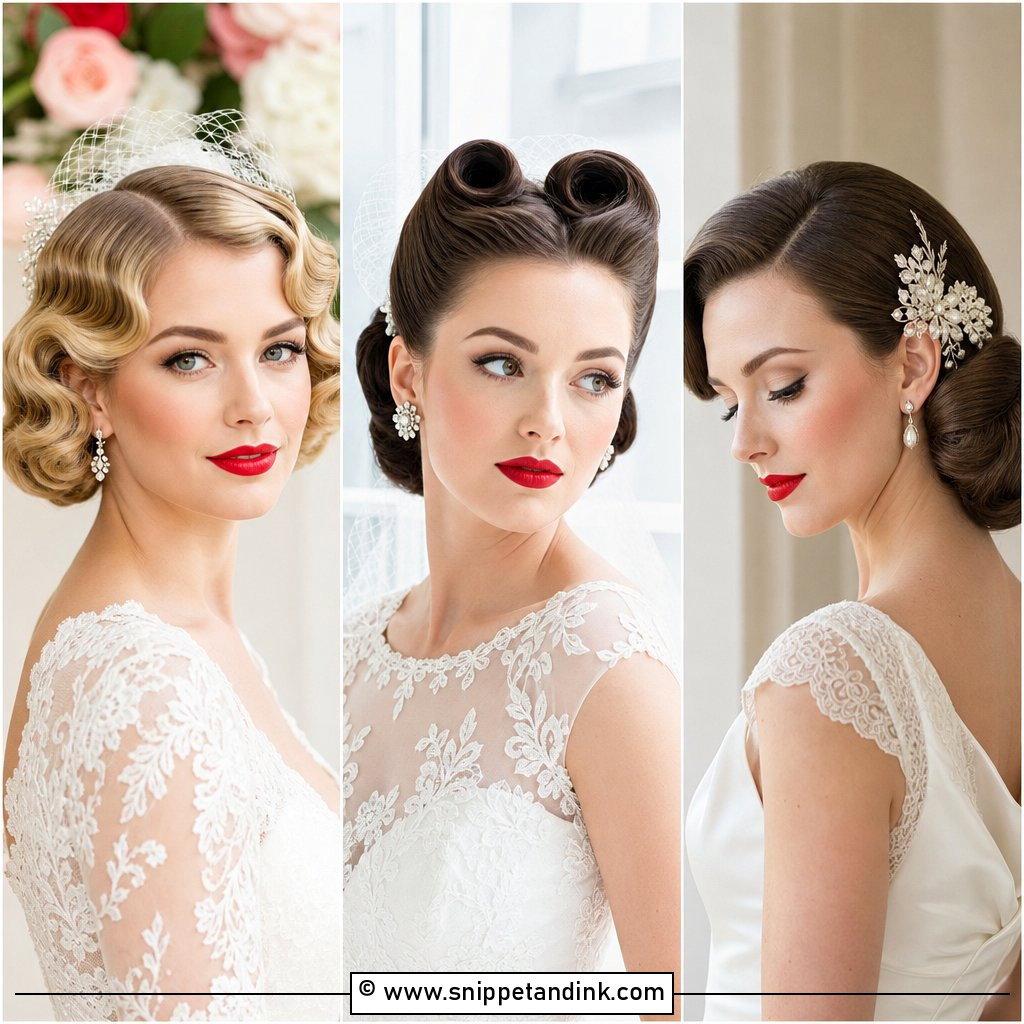
A finger wave bridal bob is the purest 1920s look on this list. The ridges are pushed into wet hair with fingers and a fine comb, then left to dry completely, which is why I usually ask chin-length brides to arrive with clean, damp-friendly hair rather than a fresh blowout. The S pattern sits close to the head, so it looks sharp under a beaded headpiece. Longer hair can be pinned under into a faux bob, though the bulk at the nape makes the shape slightly wider.
3. Vintage Bridal Chignon
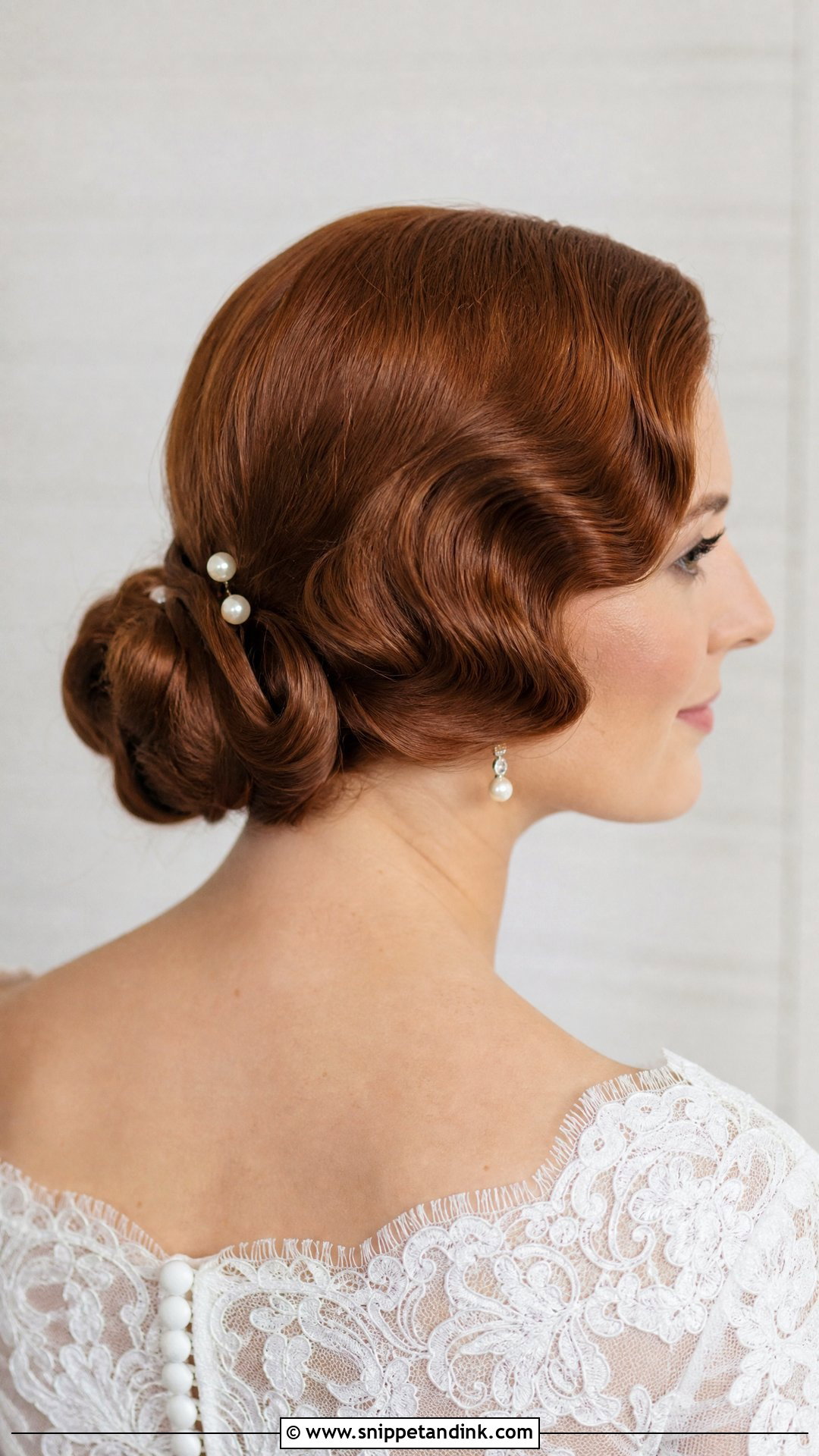
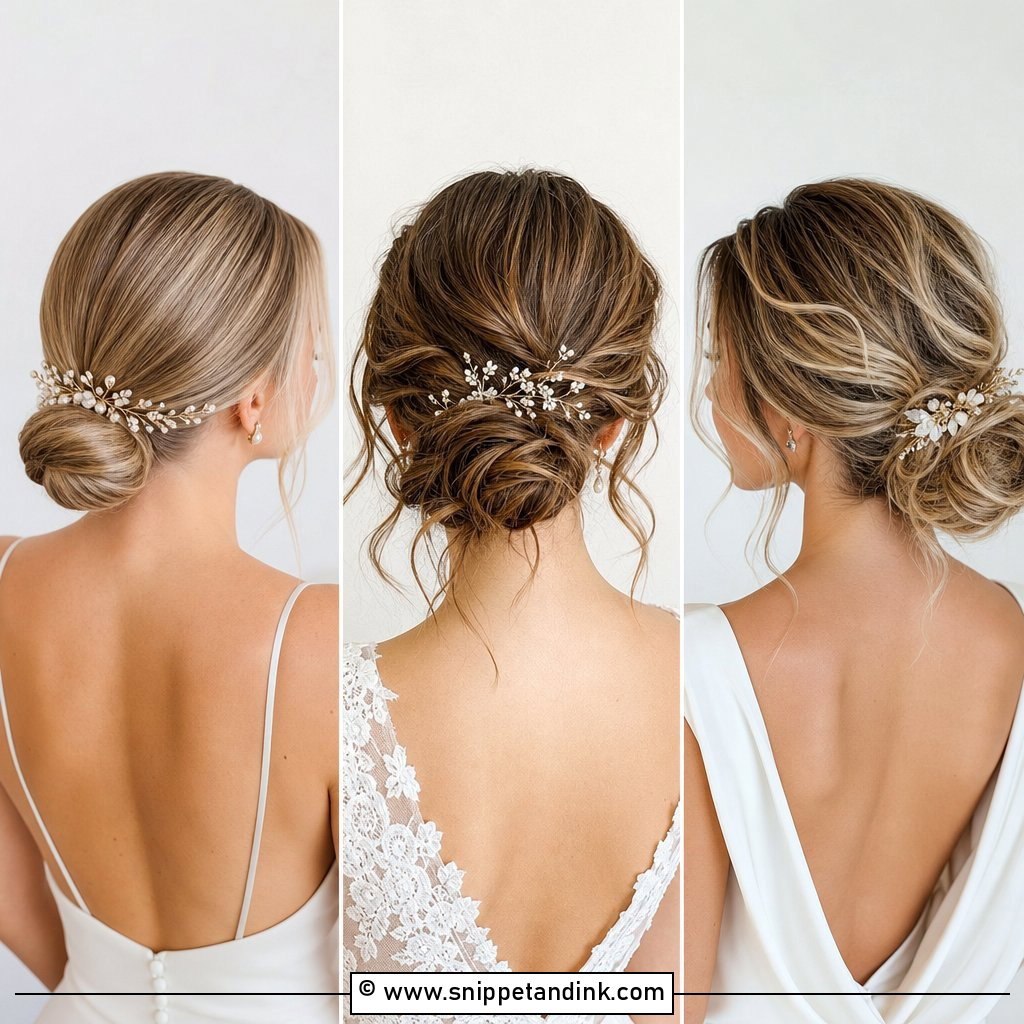
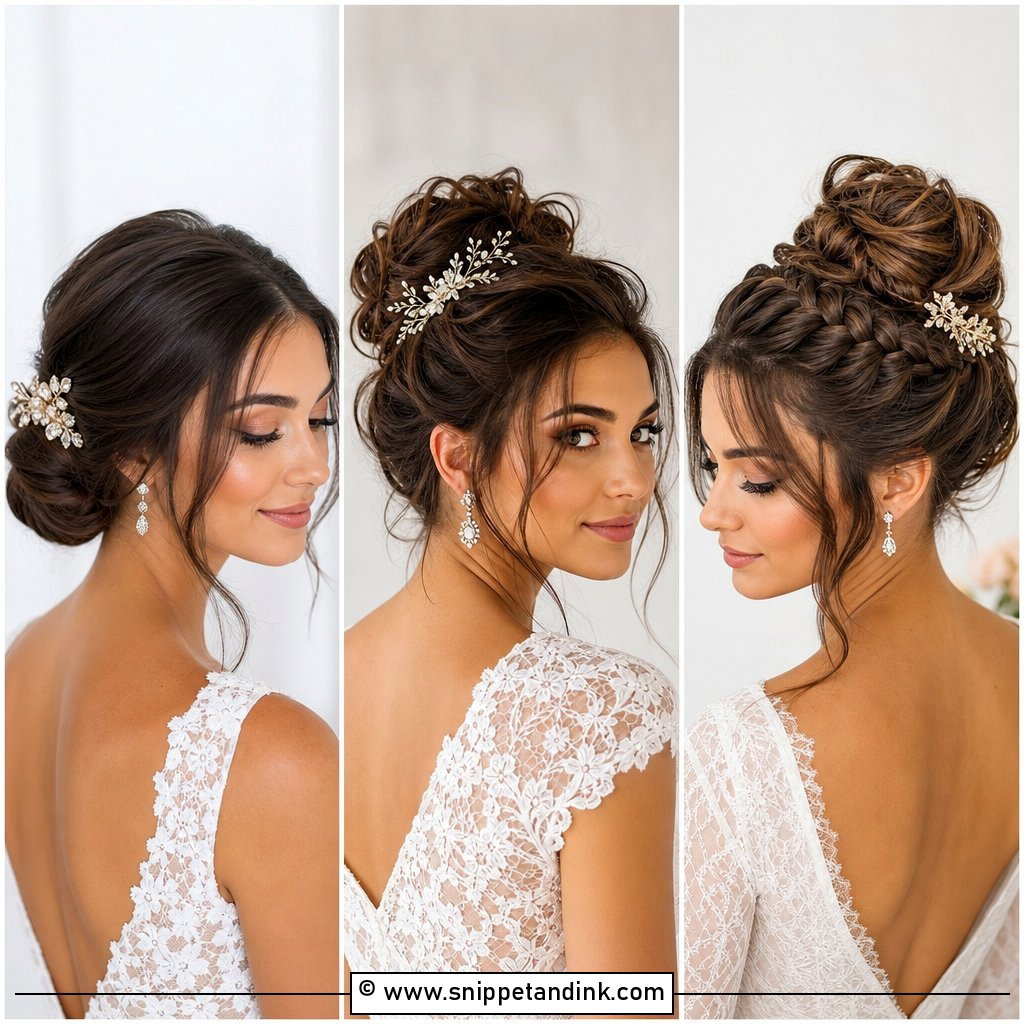
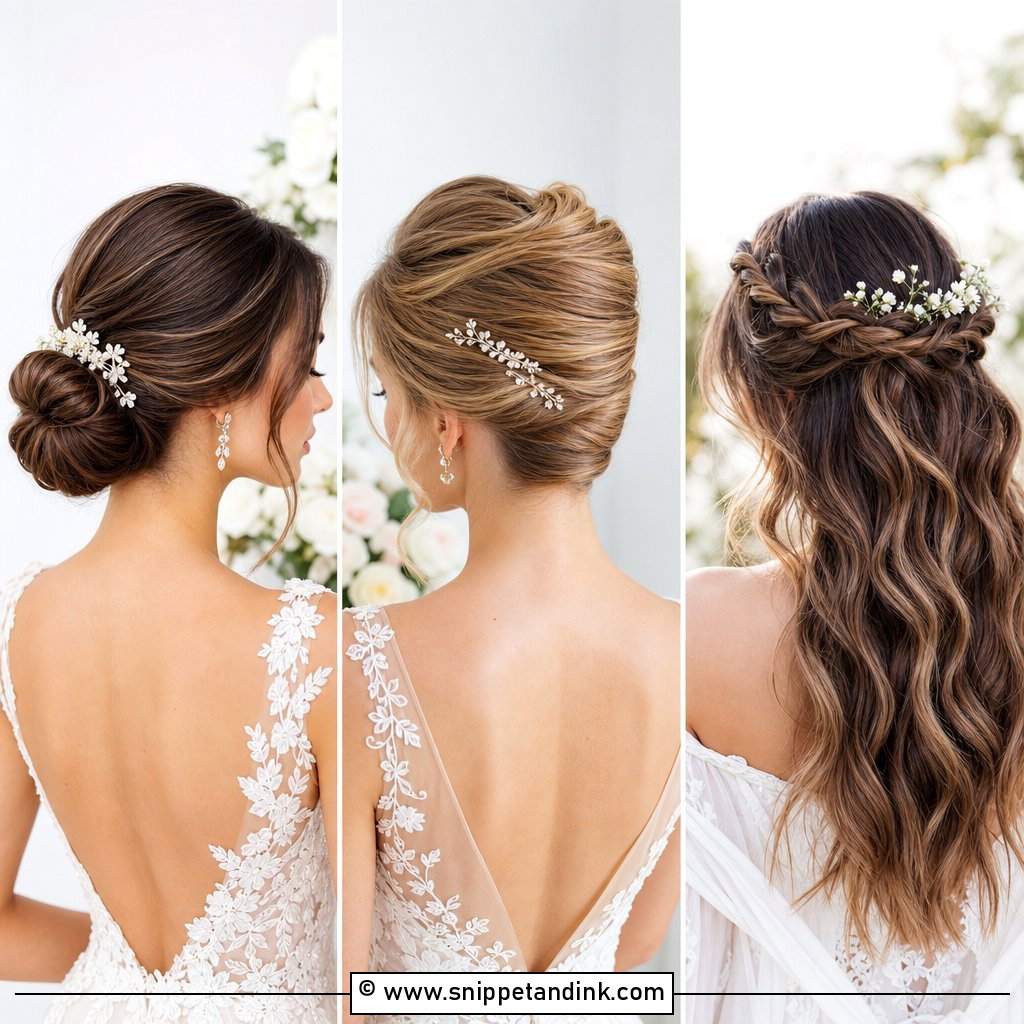
A vintage chignon sits low and smooth at the nape. What separates a retro chignon from a modern one is the front: a side part with a brushed wave or a small roll above the forehead. I place the knot just above the collar line so a high neckline doesn’t push it up. Lace gowns, long veils and heirloom jewelry all sit well with it, and it holds securely through the whole day on most textures, fine to curly.
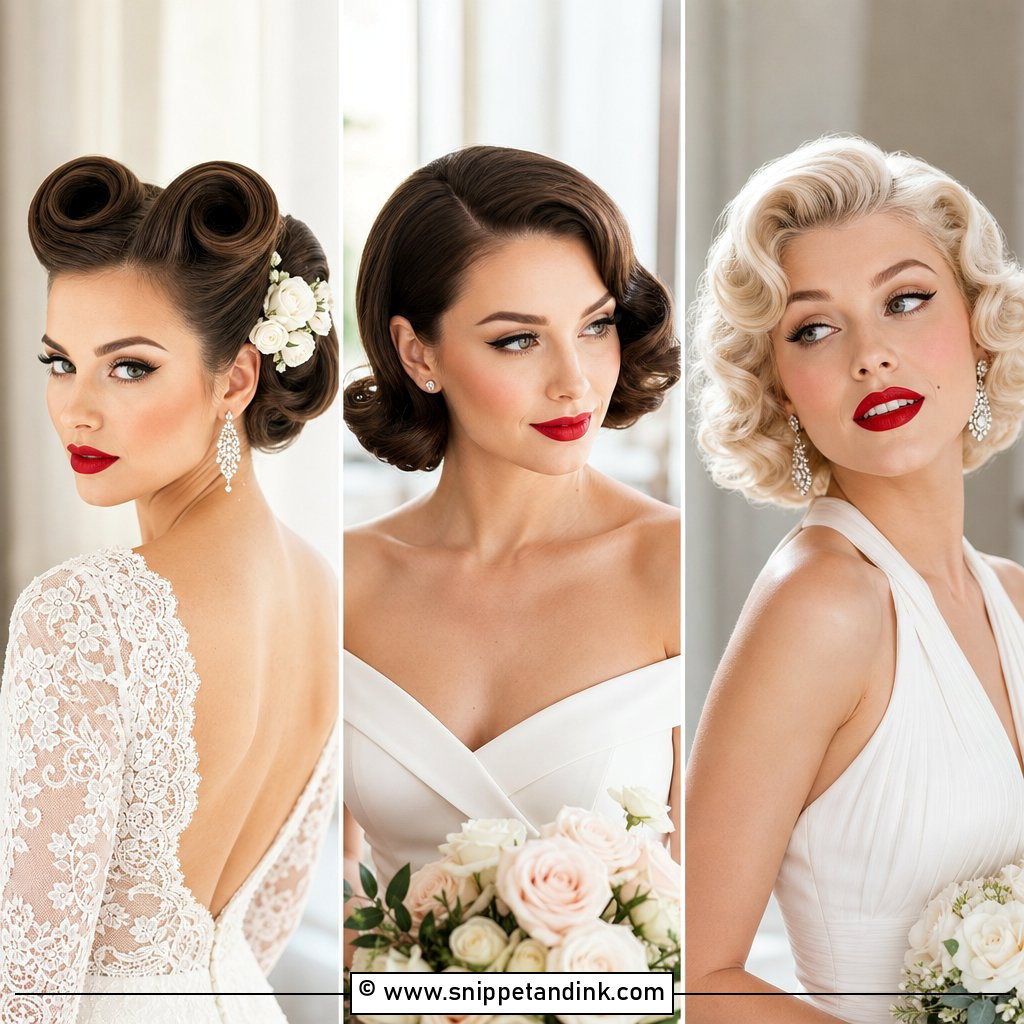
4. Victory Rolls Bridal Updo
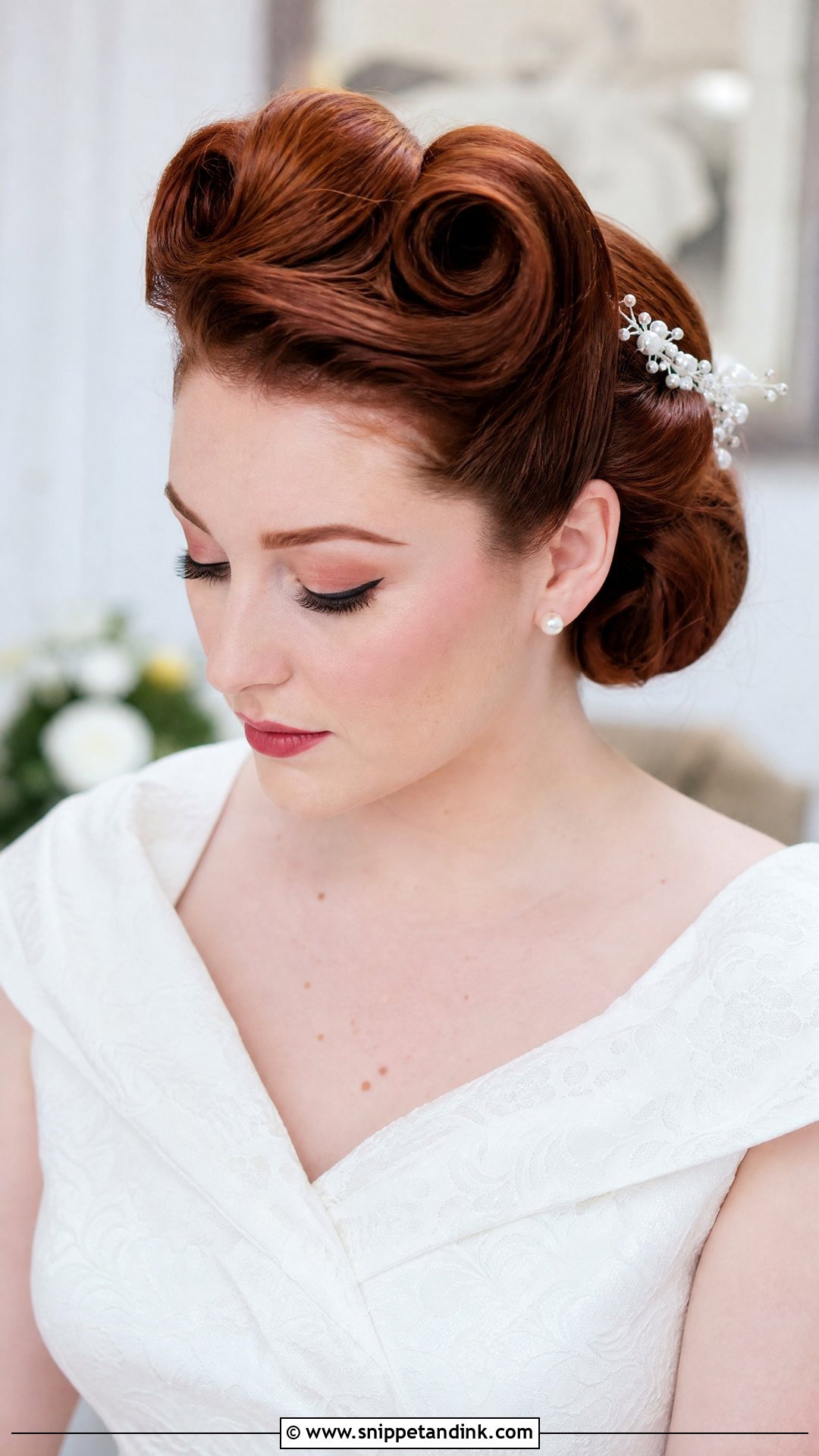
Victory rolls need the most engineering of anything here. Each roll is backcombed at the base, smoothed, wrapped around two fingers and pinned from inside so the pins disappear. If the sectioning is sloppy, the rolls come out different sizes and the whole look tips toward fancy dress. I’d keep them to two smooth rolls balanced with a low bun at the back. Tea-length dresses and a red lip suit them best; with a long, soft gown they can look out of place.
5. 1950s Bridal Ponytail
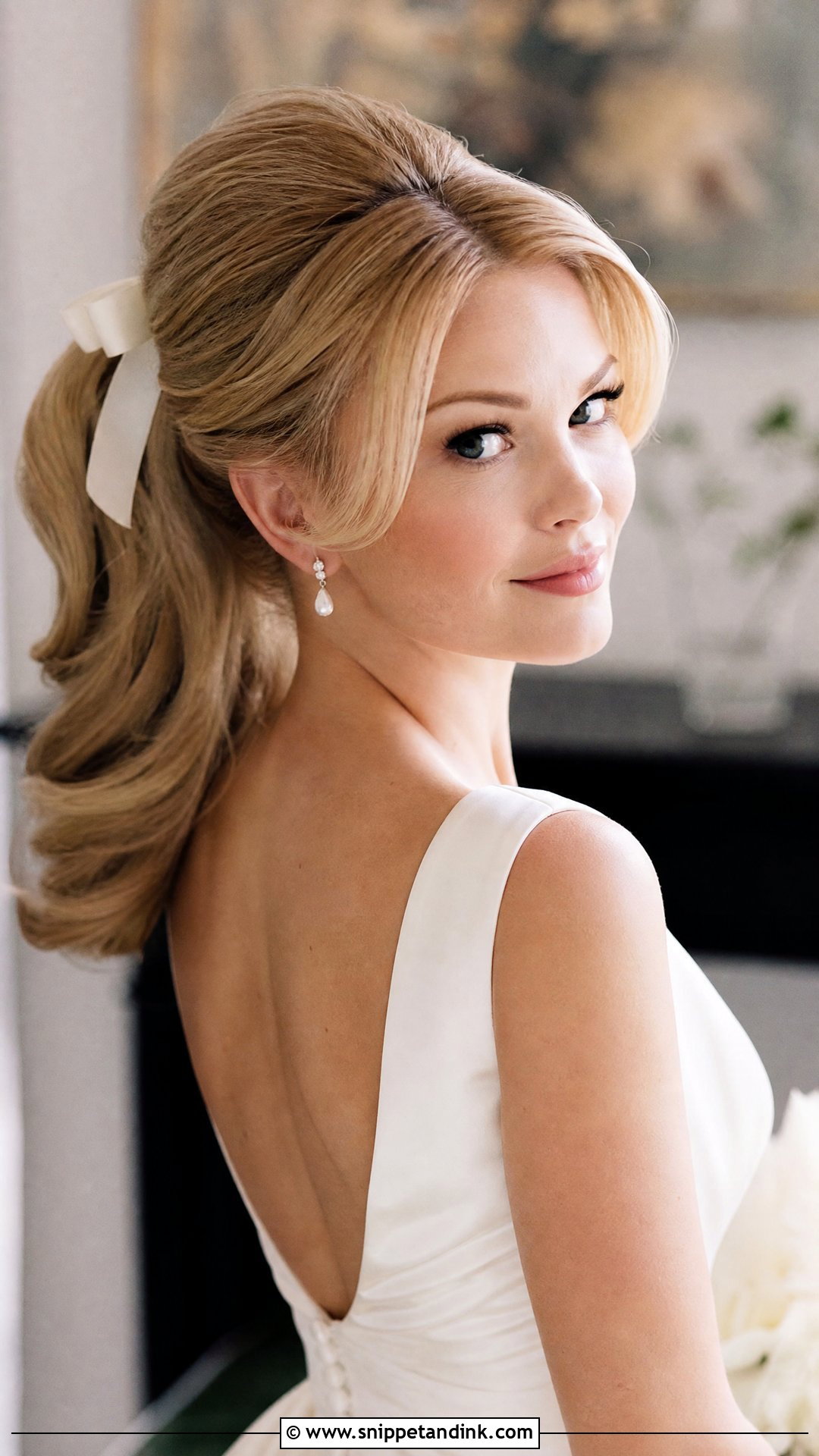
The 1950s ponytail is the most fun to wear. Lift at the crown comes from backcombing just behind the hairline, smoothed over, then the ponytail is set high enough to swing. Curled ends give it bounce. I wrap a section of hair round the elastic and add a ribbon or a small veil bow at the base. Expect it to hold well through dancing; it’s one of the few retro styles where movement is part of the look.
6. Beehive Bridal Updo
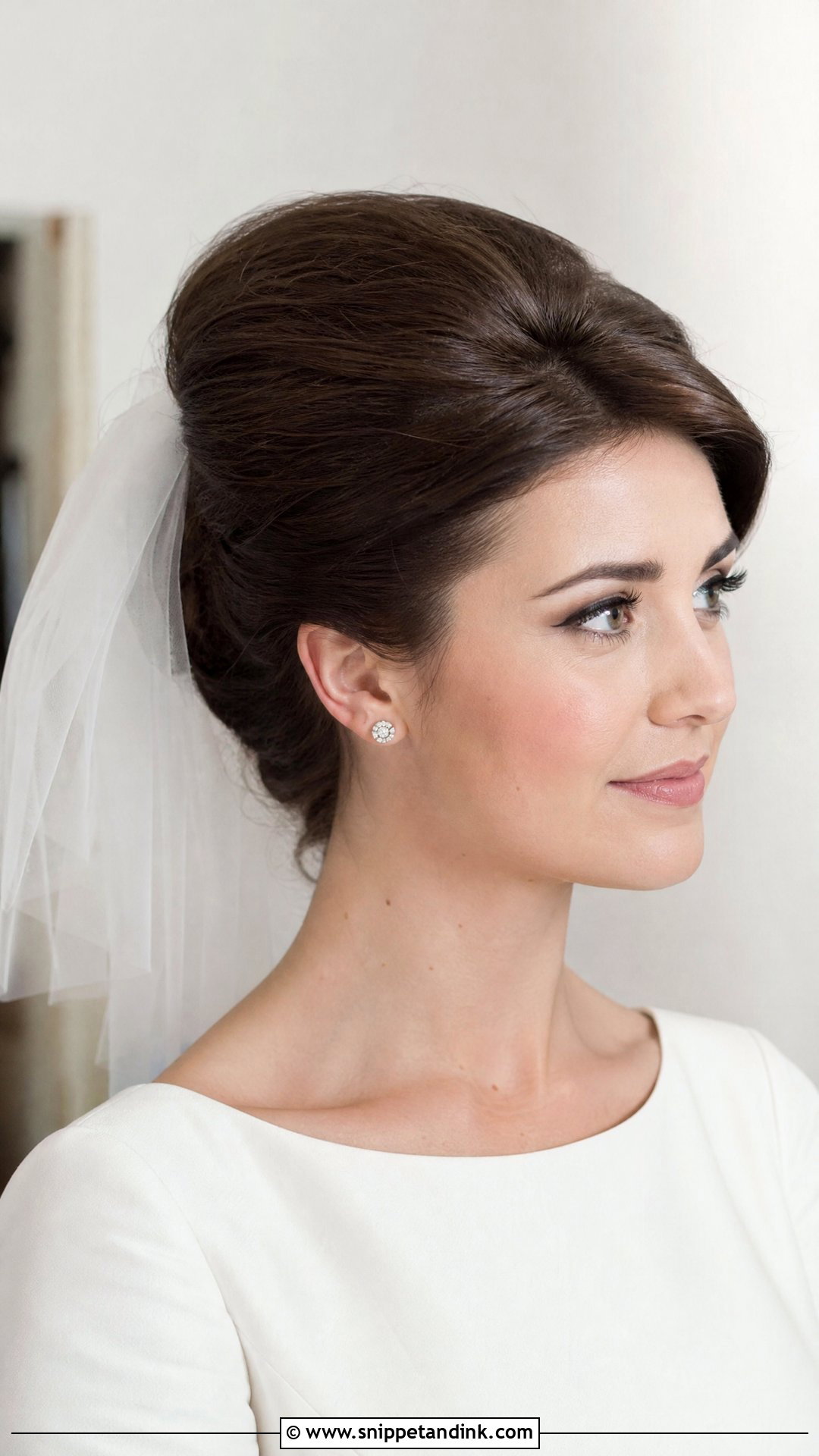
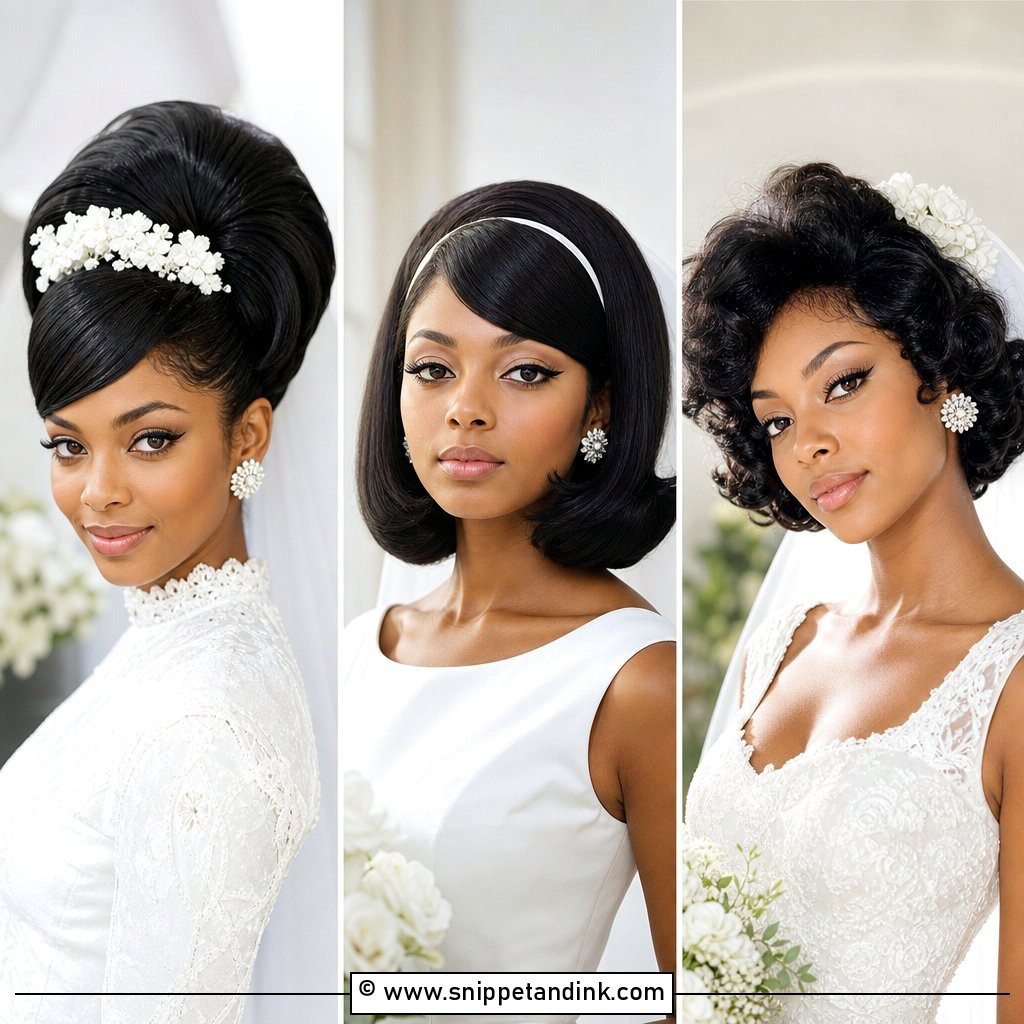
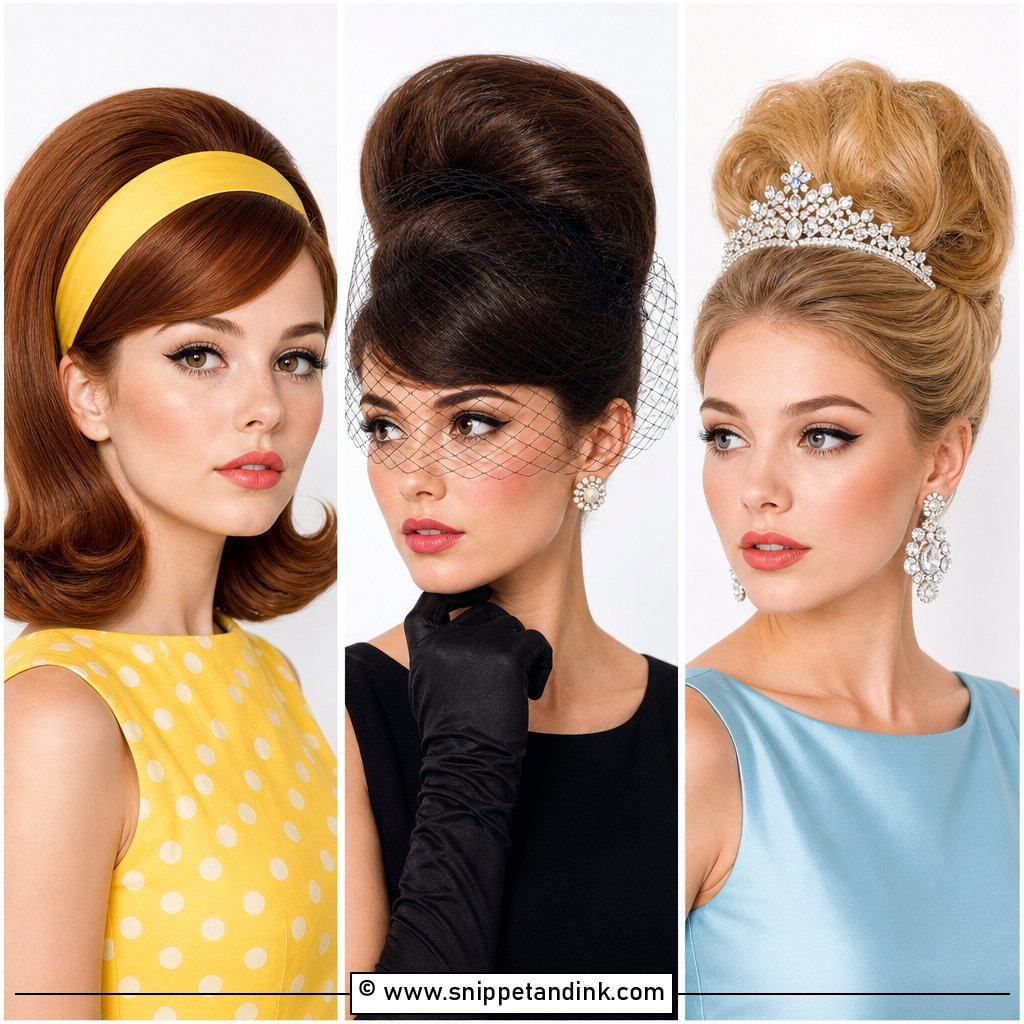
A beehive is all about height, and the danger is too much of it. A bridal version should sit a few centimetres above the crown, not half a foot. I build the volume with backcombing and, on fine hair, a small padding piece colour-matched to your roots. Thick hair has the opposite problem: it can look bulky at the sides, so I smooth and pin those flat. Cat-eye liner, pearl studs and bateau necklines all sit well with it.
7. Retro Bridal French Twist
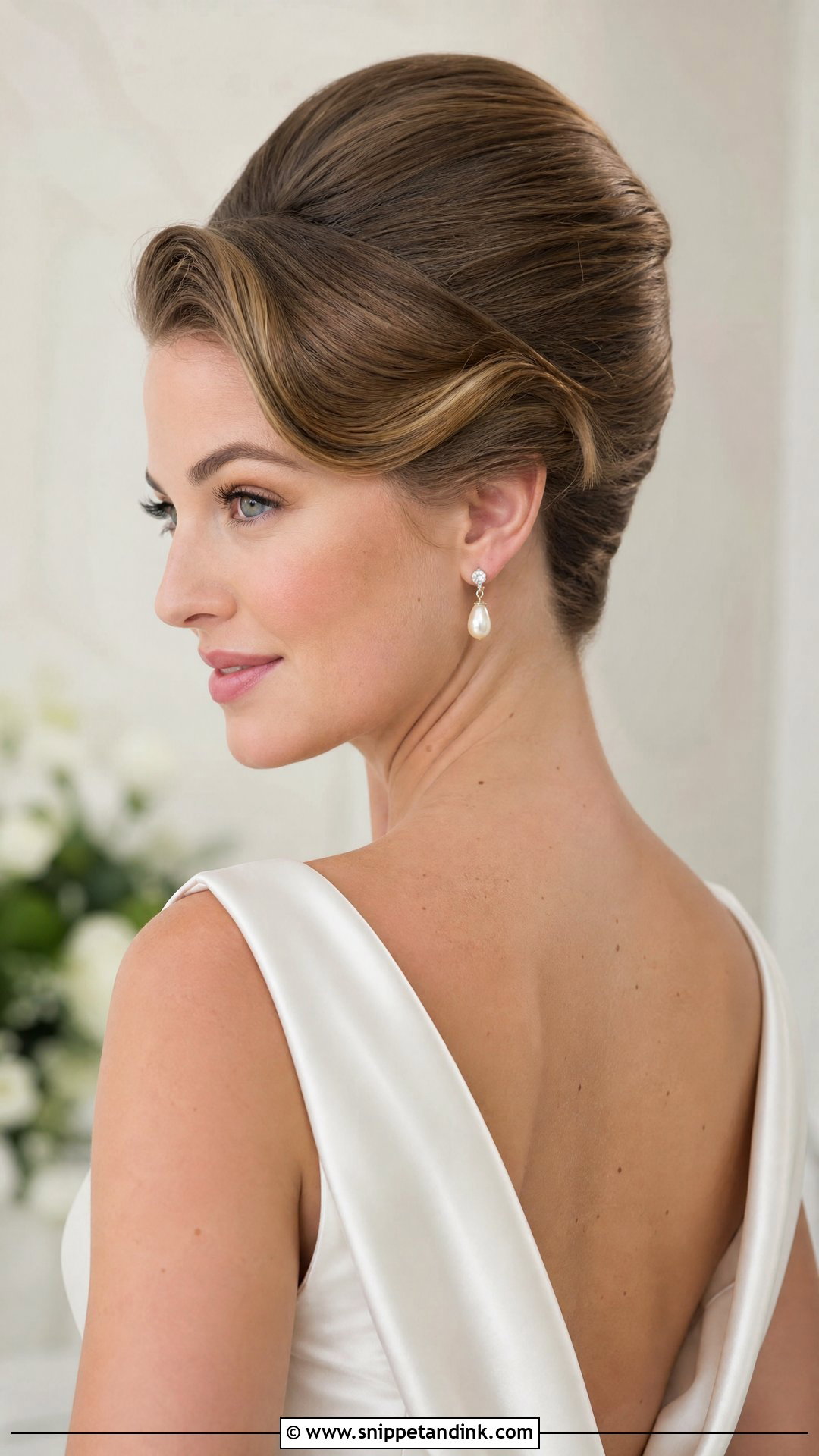
The French twist is the cleanest shape here, a vertical roll down the back of the head held by a row of pins hidden inside the fold. I prep the hair with a smoothing cream, because any kink shows in that line. Soft volume at the crown and a wave near the forehead give it a retro finish. It leaves the neck and shoulders completely open, which helps when a bodice has detail you want to show. If you’re wearing a veil, decide at the trial whether it sits above or below the twist, since that changes where I place the comb.
8. Pin Curl Bridal Updo
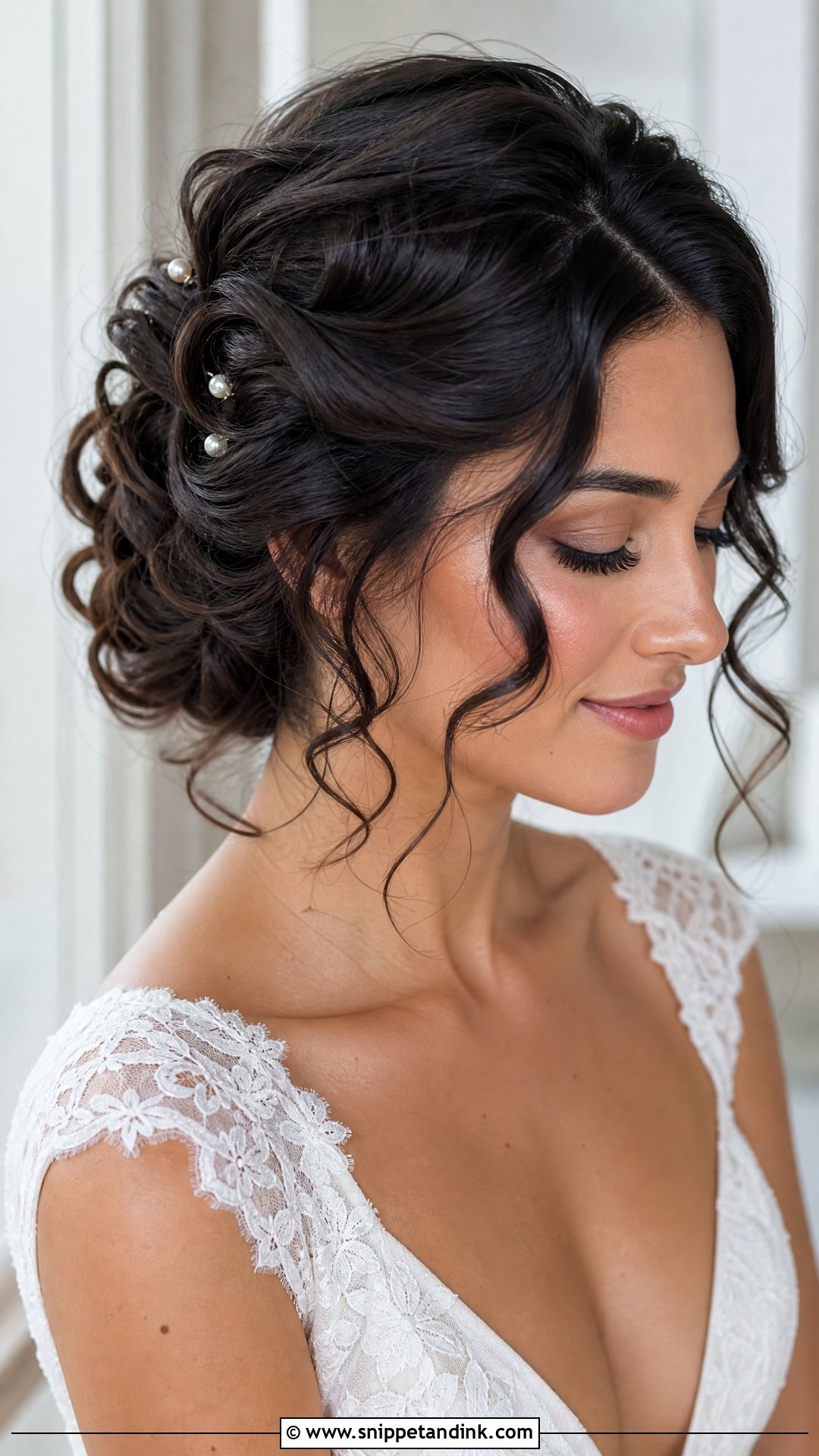
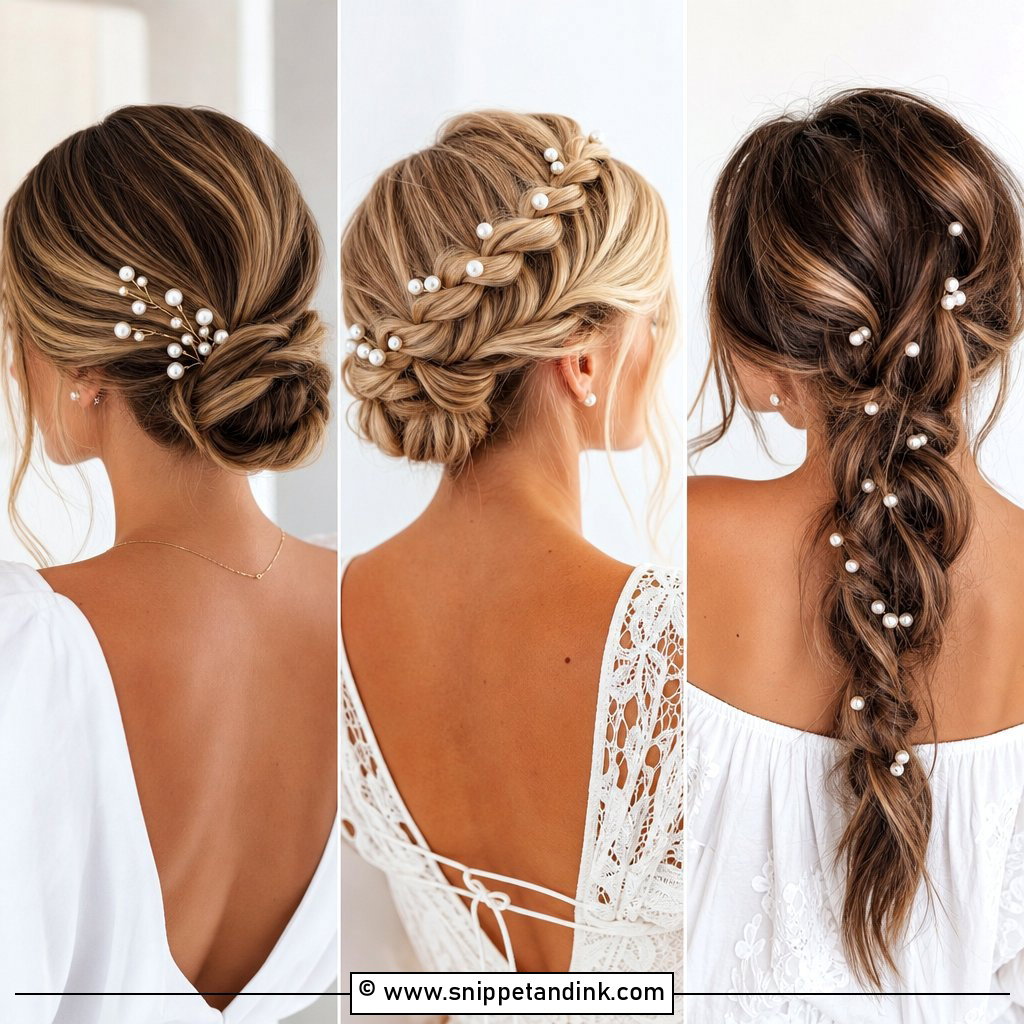
Pin curls set into an updo give more texture than any other retro style. Each curl is wound flat, pinned and set, then arranged into a sculpted shape rather than brushed out. It holds for hours on hair that takes a curl well; on very straight, slippery hair I’d set with a firmer product and allow more time. A lace veil or pearl pins should sit around the curls, not on top of them, so the pattern still reads in photos.
9. Retro Bridal Half Up Hair
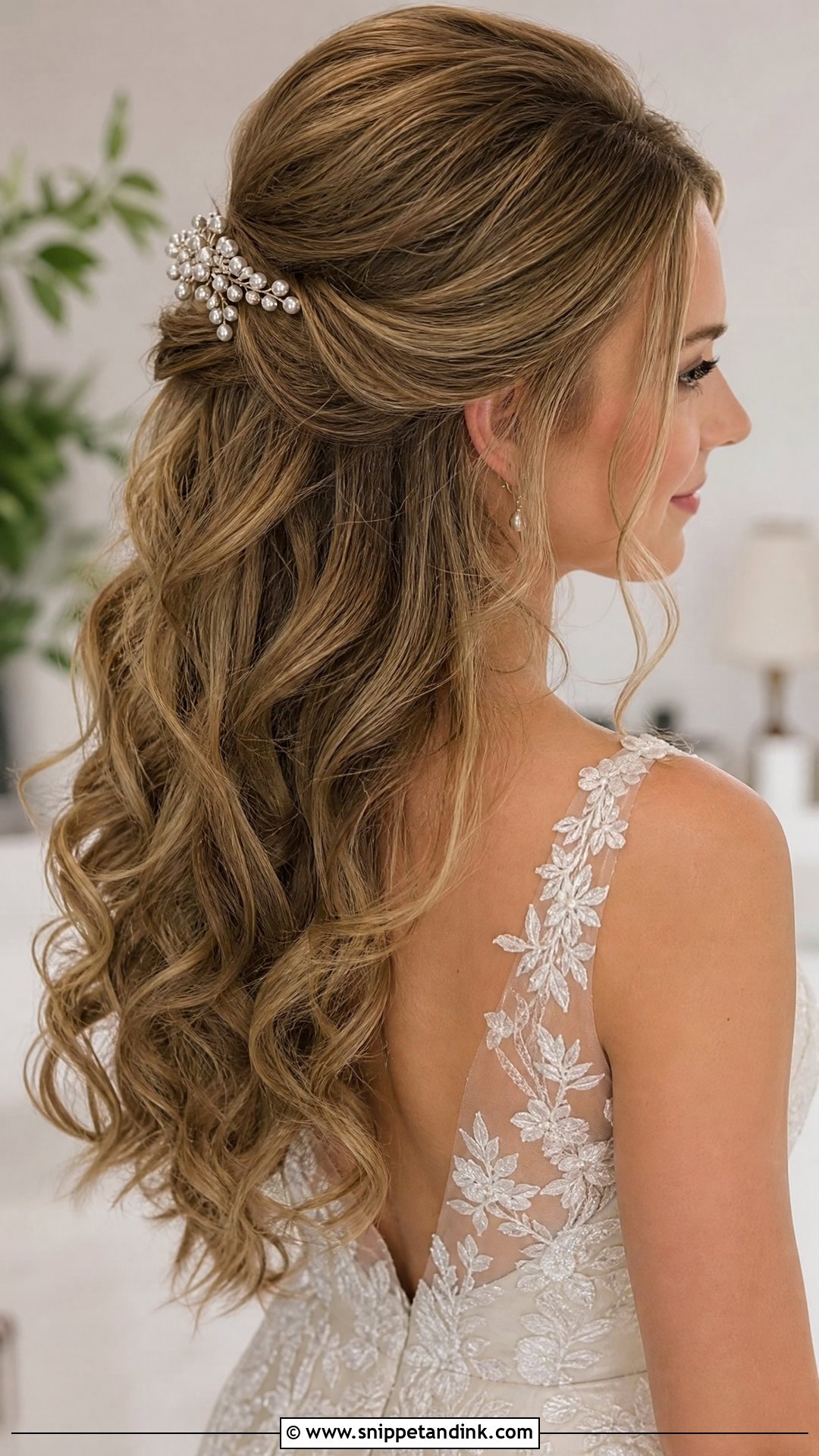
A retro half-up gives you lift at the crown and curls below. The 1960s version has a centre part, a smoothly backcombed top and flipped or curled ends. Layered cuts take this shape well because the layers help the flip. The crown section is pinned flat underneath, which keeps hair secure around the face. A bow, pearl comb or small floral pin finishes it, as long as you choose just one.
10. 1920s Bridal Waves
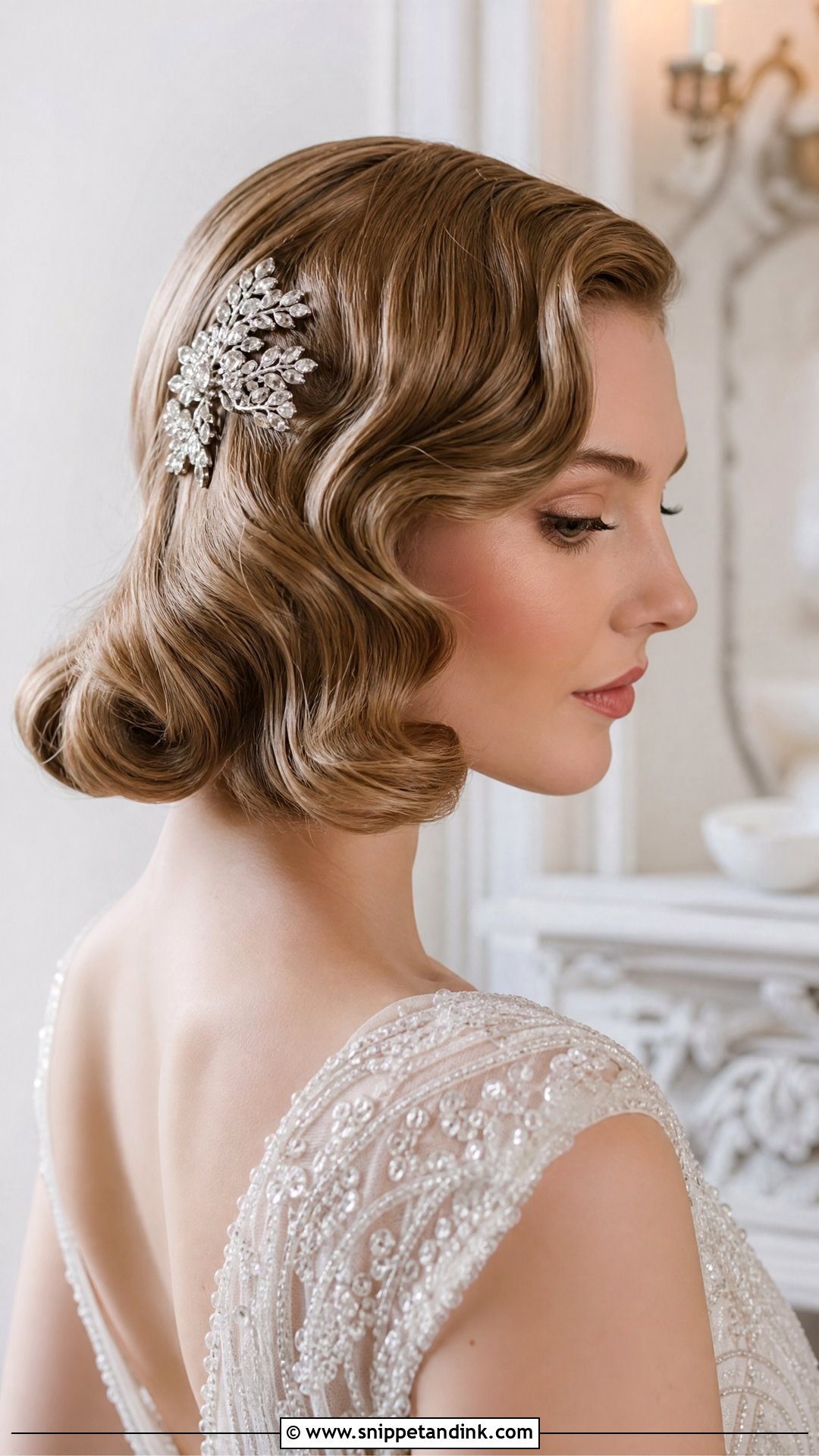
Gatsby-style waves sit sleek and close to the head with a deep side part. They’re easiest on short hair or a faux bob, where the waves run from part to nape. I sculpt them with a wet set and dry them under a hood when I can, because a curling iron alone gives a softer, less defined ridge. A beaded headpiece or crystal comb sits right on the wave, and clean-lined gowns with some shimmer balance it.
11. 1940s Bridal Curls
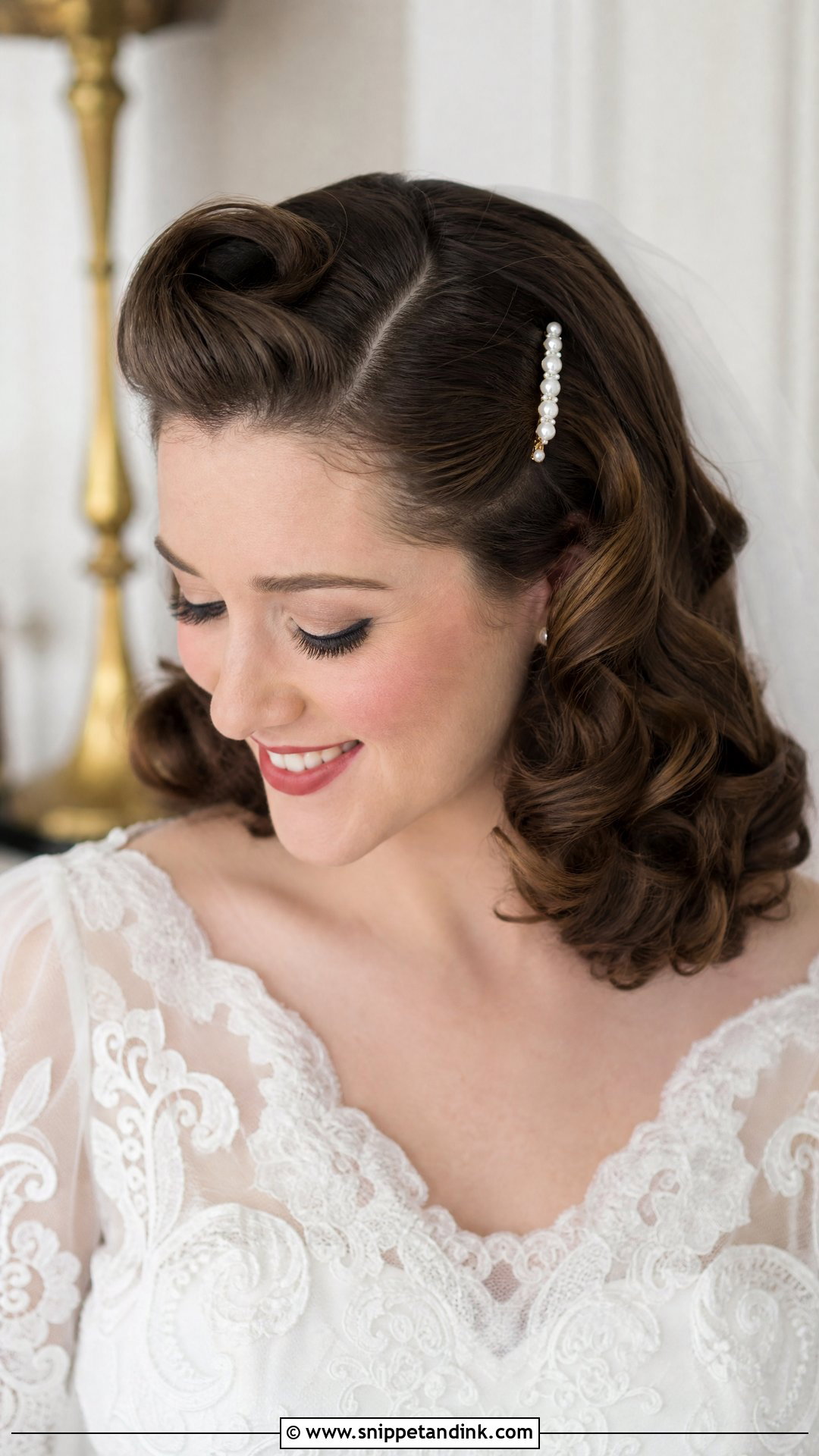
1940s curls are a step softer than finger waves, with rolled front pieces and curled lengths that stack around the shoulders. I set them with hot rollers, then brush the lengths lightly so they look touchable rather than separate. Layers help them sit properly. A simple veil, pearl barrette or small comb keeps the focus on the shape, and they’re an easy choice if you want a retro feel without wearing your hair up.
12. 1960s Bridal Bouffant
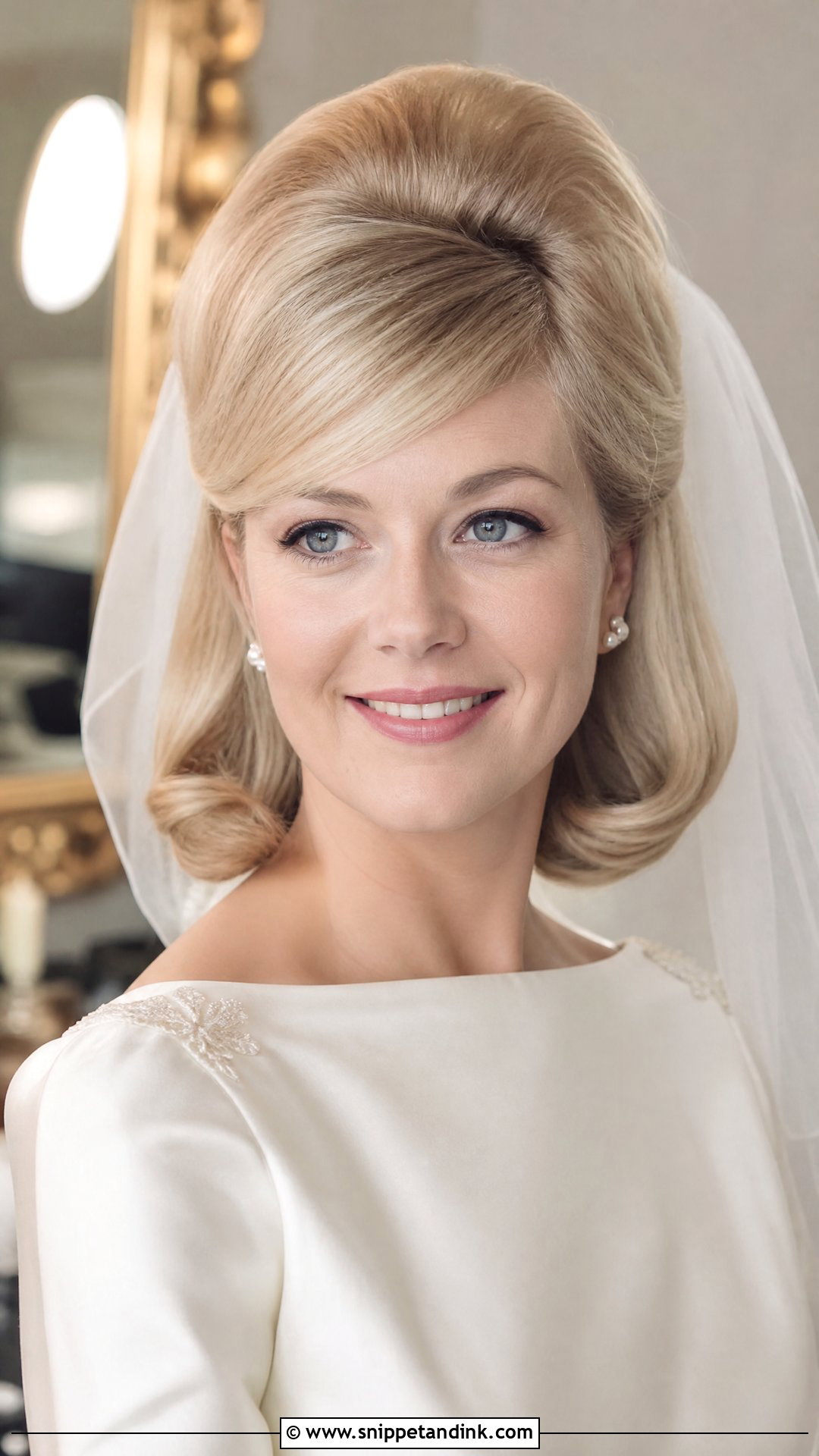
A 1960s bridal bouffant lifts the crown with less height than a beehive. The ends can be tucked, curled or left down. A veil comb has a natural seat in the backcombed volume, which makes this one of the steadiest shapes for a long veil. I keep the outer layer brushed smooth and the hold soft, so it moves a little. A stiff finish is what makes bouffants look dated.
13. Retro Bridal Low Bun
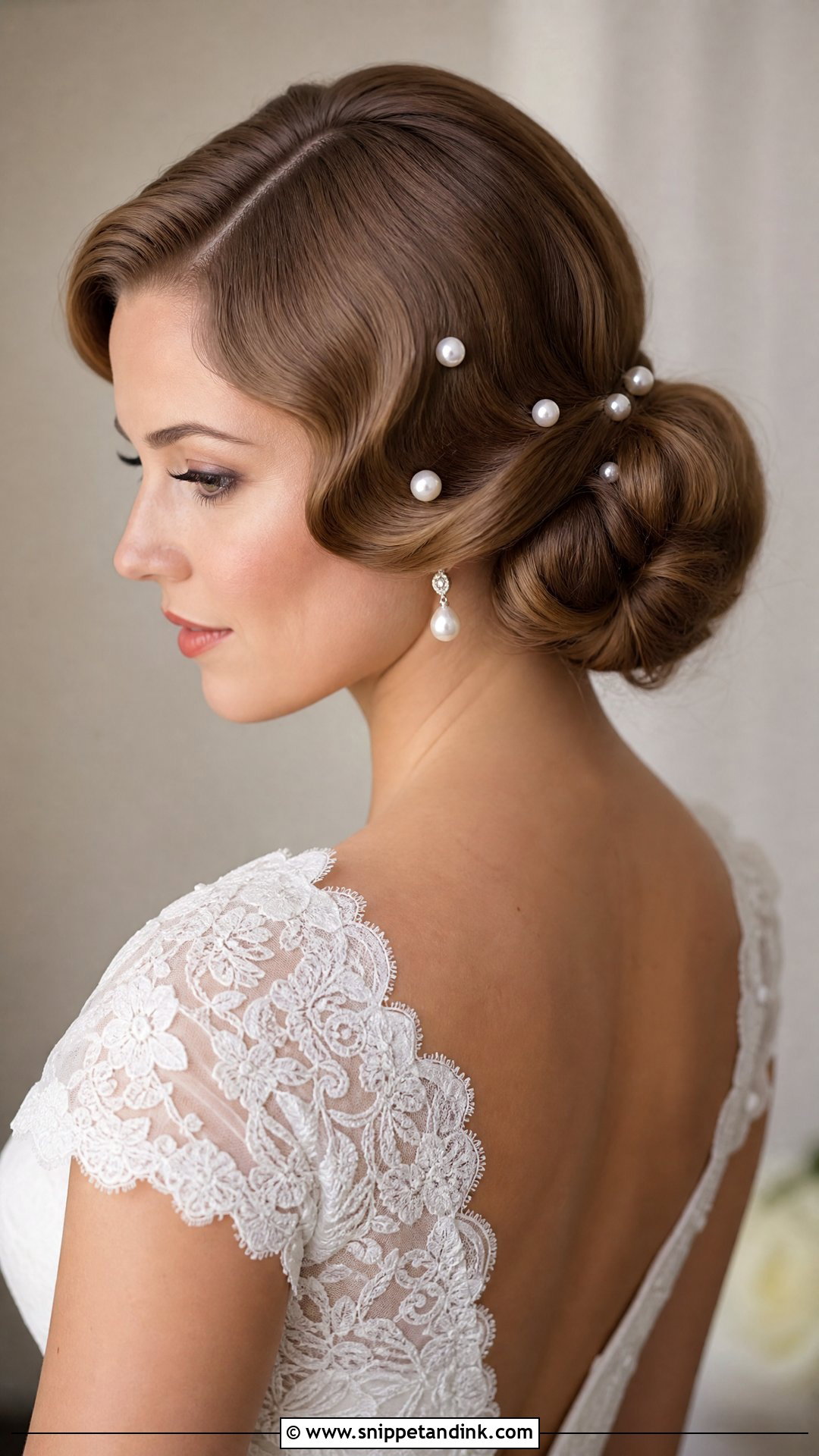
The retro low bun is the simplest vintage updo to wear. I add a deep side part and a sculpted wave or a tucked roll at the front, and keep the bun itself smooth. It holds veils, combs and pearl pins securely, and it keeps hair off a damp neck, which matters at a summer wedding. If you want vintage character without much drama, start here.
14. Retro Bridal Side Swept Hair
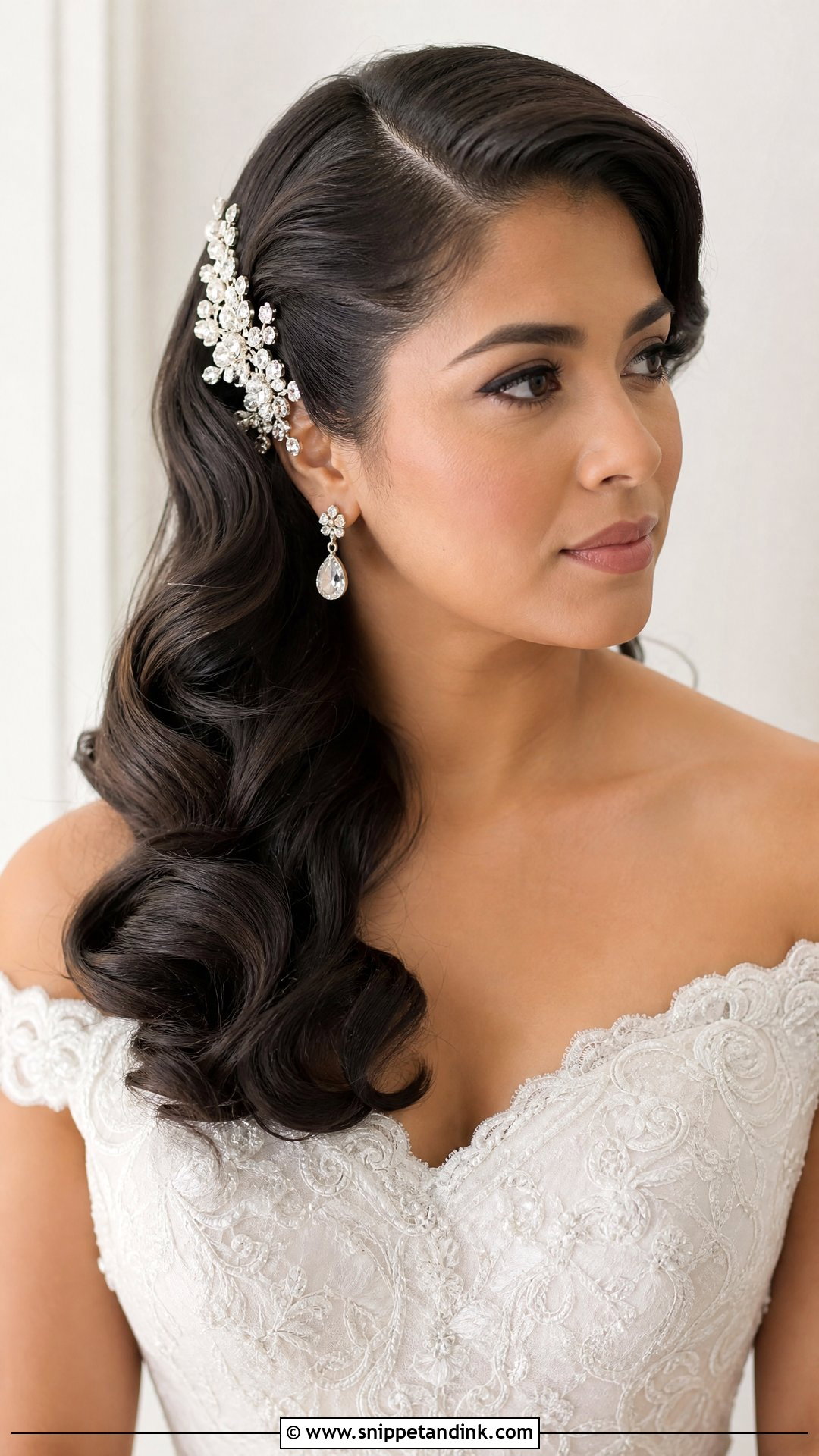
Side-swept retro hair takes long curls over one shoulder with a deep part. The vintage version is brushed into smooth waves, never left piecey. I anchor the bare side with a row of hidden pins behind the ear, so the hair doesn’t creep back. A jeweled comb at that line is both anchor and sparkle. It suits strapless and one-shoulder gowns, and lets you wear your hair down with a defined shape.
15. Vintage Bridal Short Hair
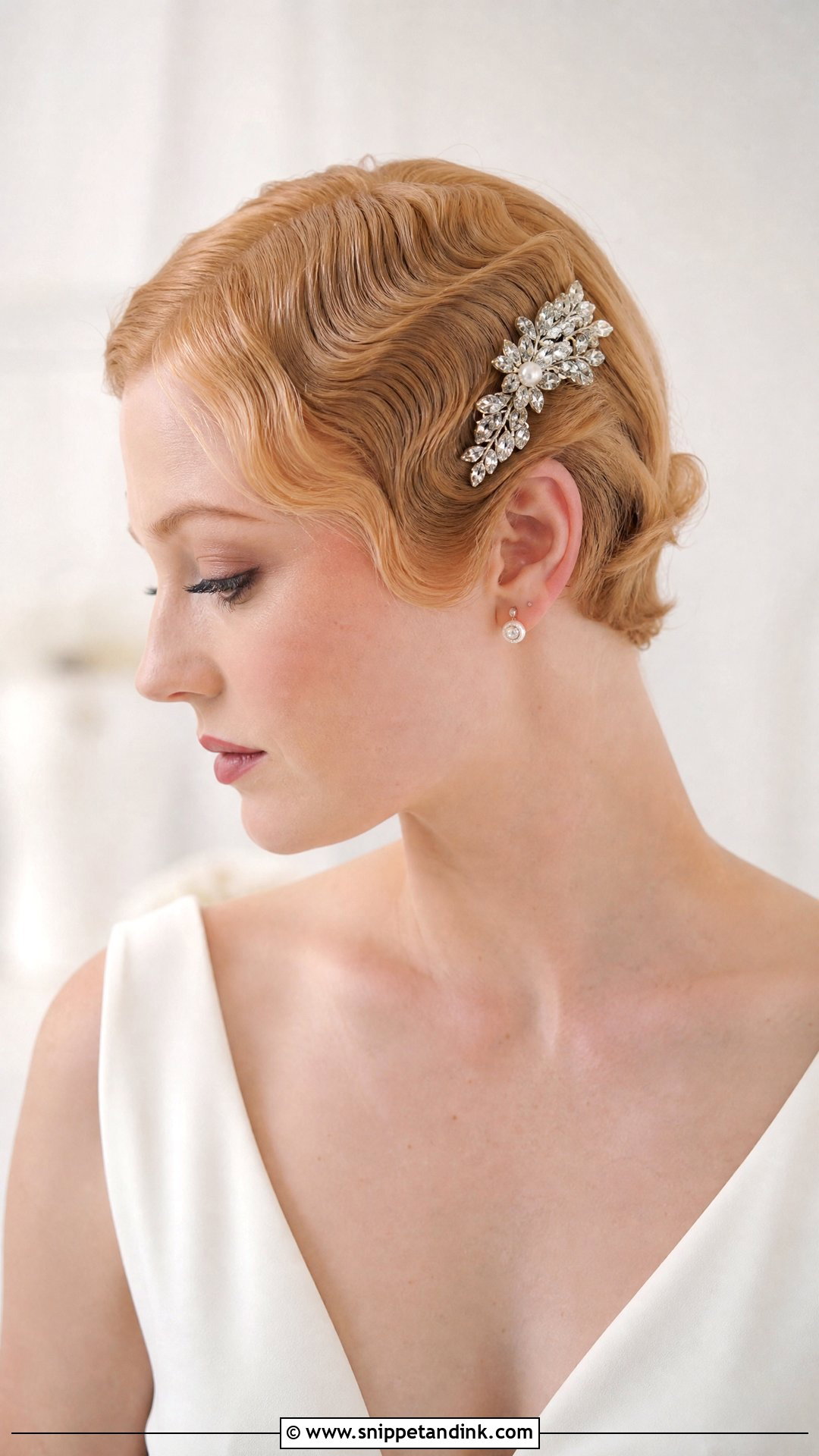
Short hair takes retro styling better than long hair does. A bob, pixie or crop can be set with finger waves, pin curls or a sleek side part, and every curve stays visible. That’s also the catch: there’s nowhere to hide a weak set, so shine and hold matter more. The beauty of short retro bridal hair is that small accessories, like a birdcage veil, crystal clip or satin bow, change the whole look. Plan your cut a few weeks ahead so the lines have softened by the wedding.
16. Retro Bridal Bob With Veil
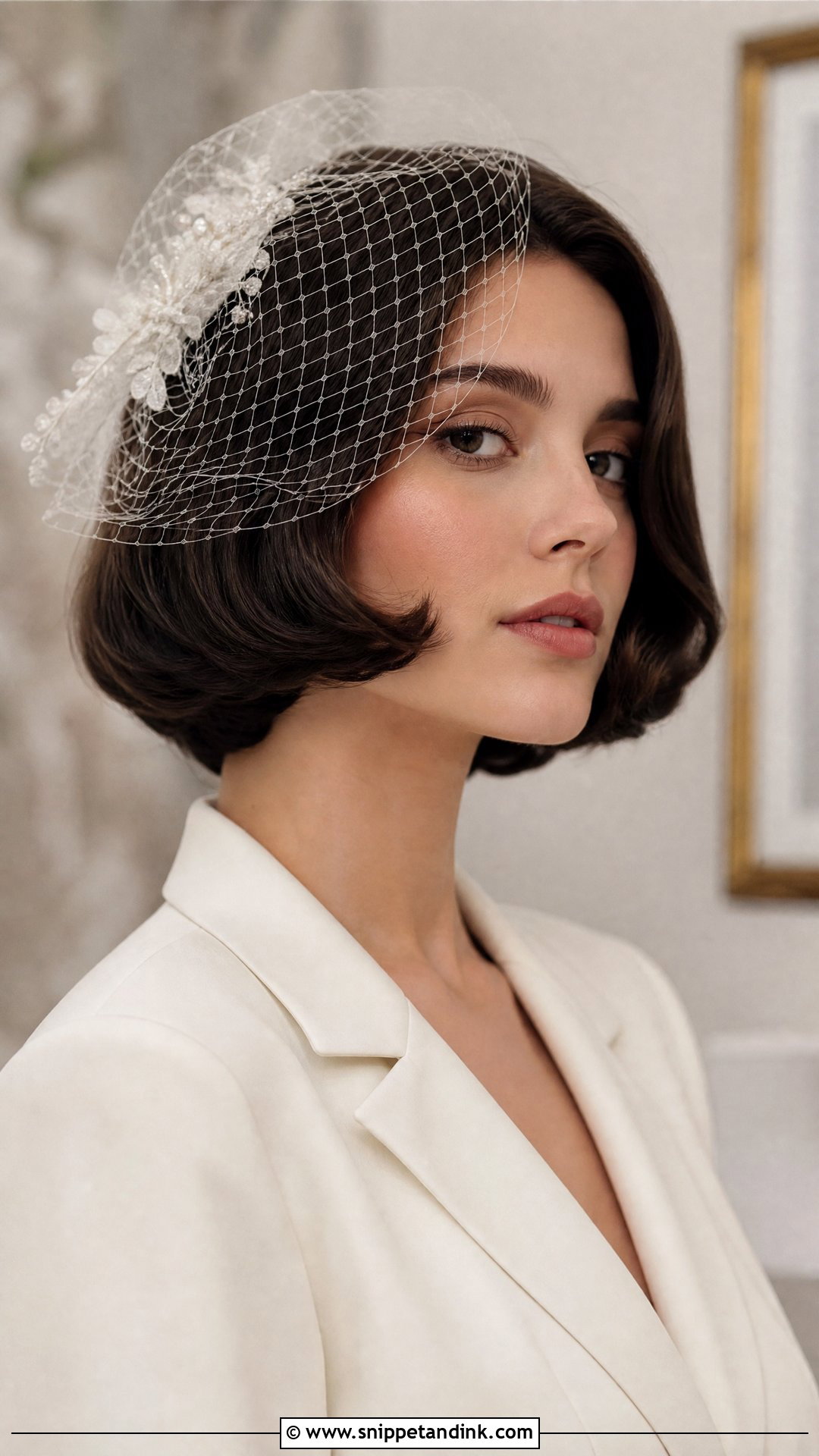
A bob with a veil needs the veil pinned before the final shaping, not after. I set the comb into the back, then smooth the bob around it so the ends sit evenly. A birdcage is the most traditional choice, though a shoulder veil or short blusher works too. A side part leans old Hollywood; a centre part with curled-under ends leans 1960s. Keep the ends glossy so the veil frames the shape.
17. Retro Bridal Headband Hair
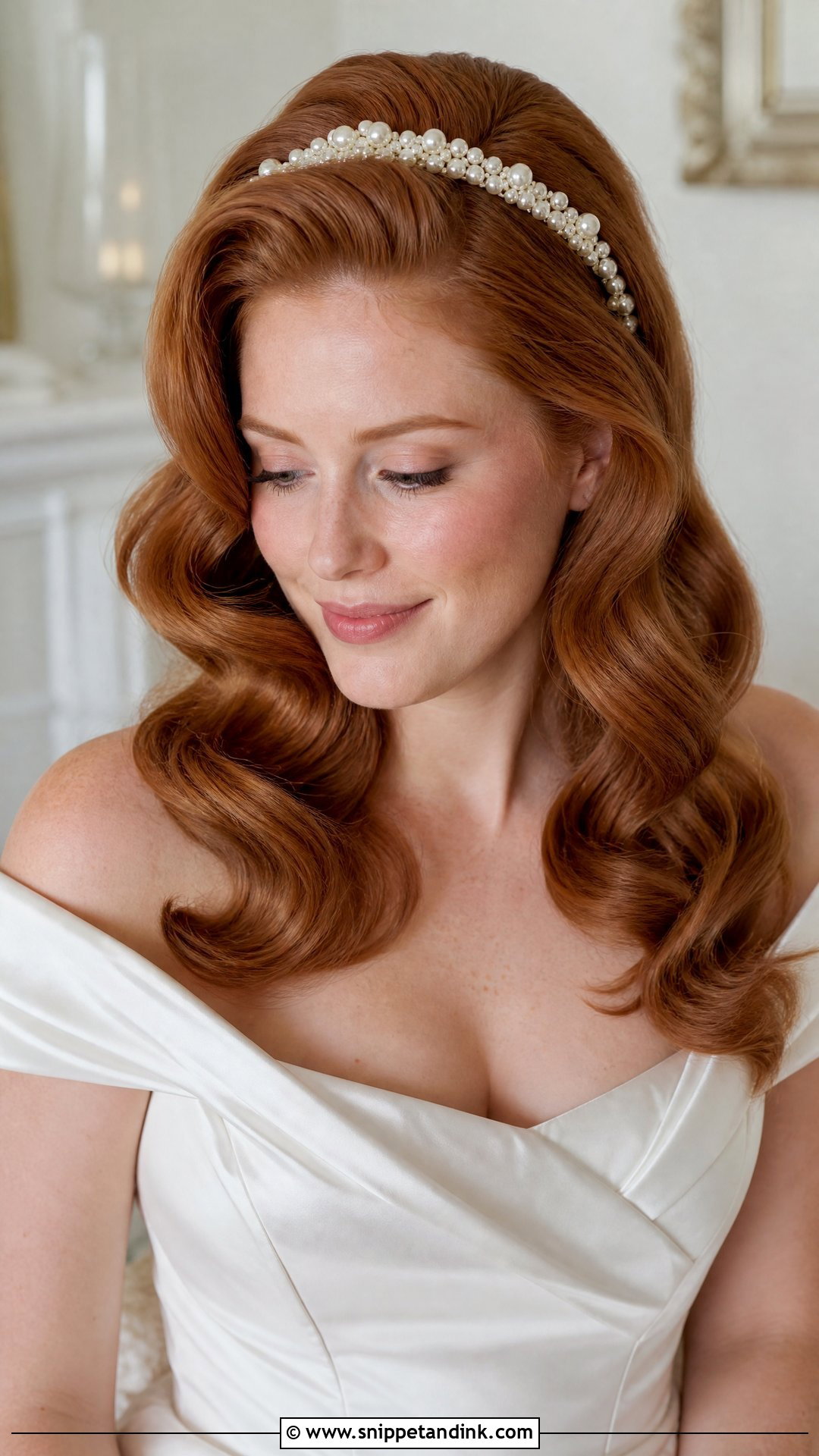
A headband gives a retro style a focal point and keeps the front tidy. Wear it with waves, a bun, a bouffant or a half-up shape; a pearl or padded band leans 1960s, a jeweled one leans 1920s. I set the band before backcombing the crown, otherwise it flattens the volume. Pick one that grips without pressing behind the ears, as a tight band gives many brides a headache by the reception.
18. Retro Bridal Hair With Birdcage Veil
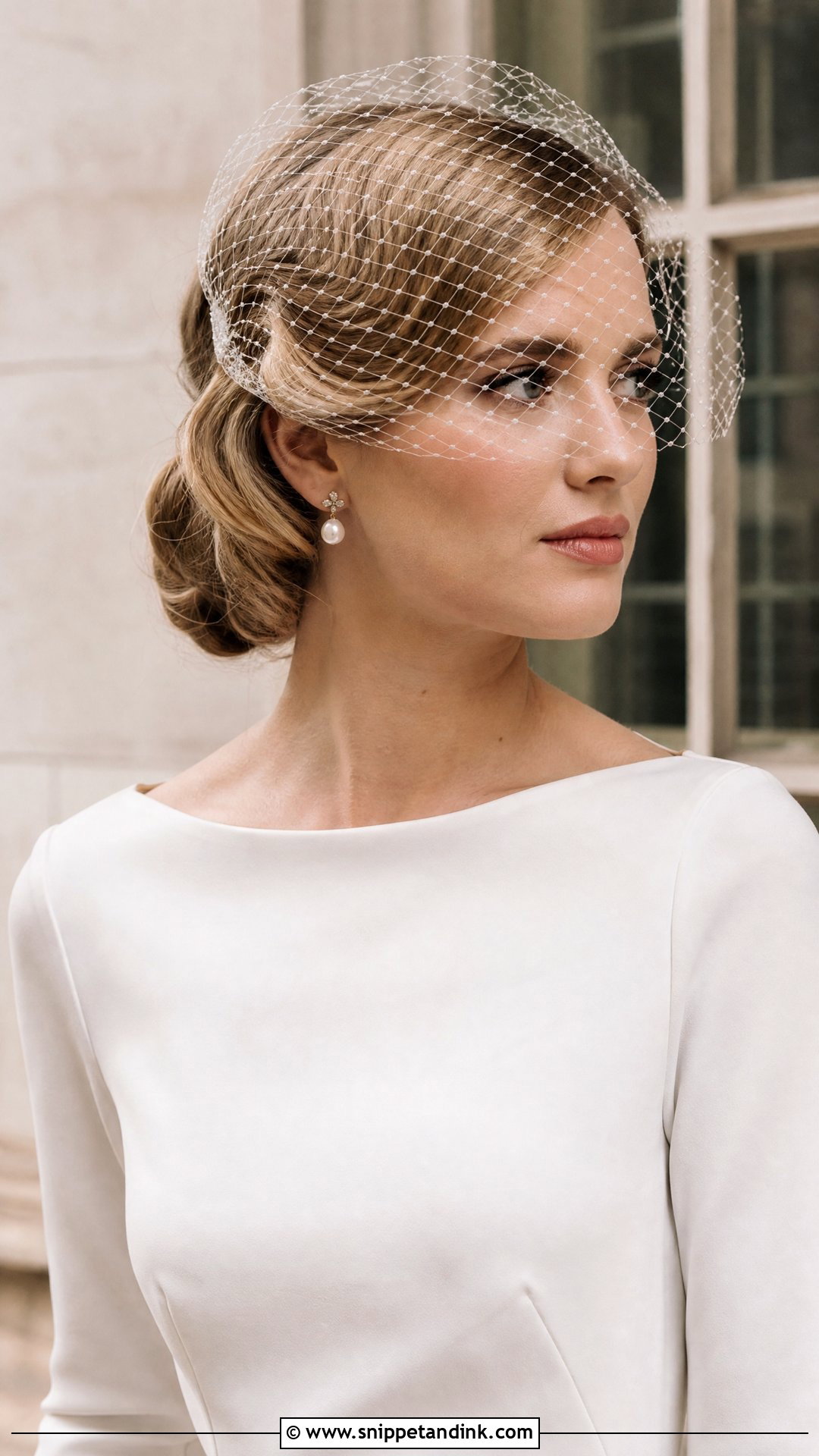
A birdcage veil covers part of the face, so the hair underneath has to be smooth and balanced on both sides. Finger waves, short bobs, French twists, low buns and side-swept curls all sit well under it. Placement matters most: I pin it so the net edge falls around the cheekbone and the eyes stay clear. It suits city, courthouse and second-look outfits well, and it’s easy to remove later.
19. 1970s Bridal Blowout
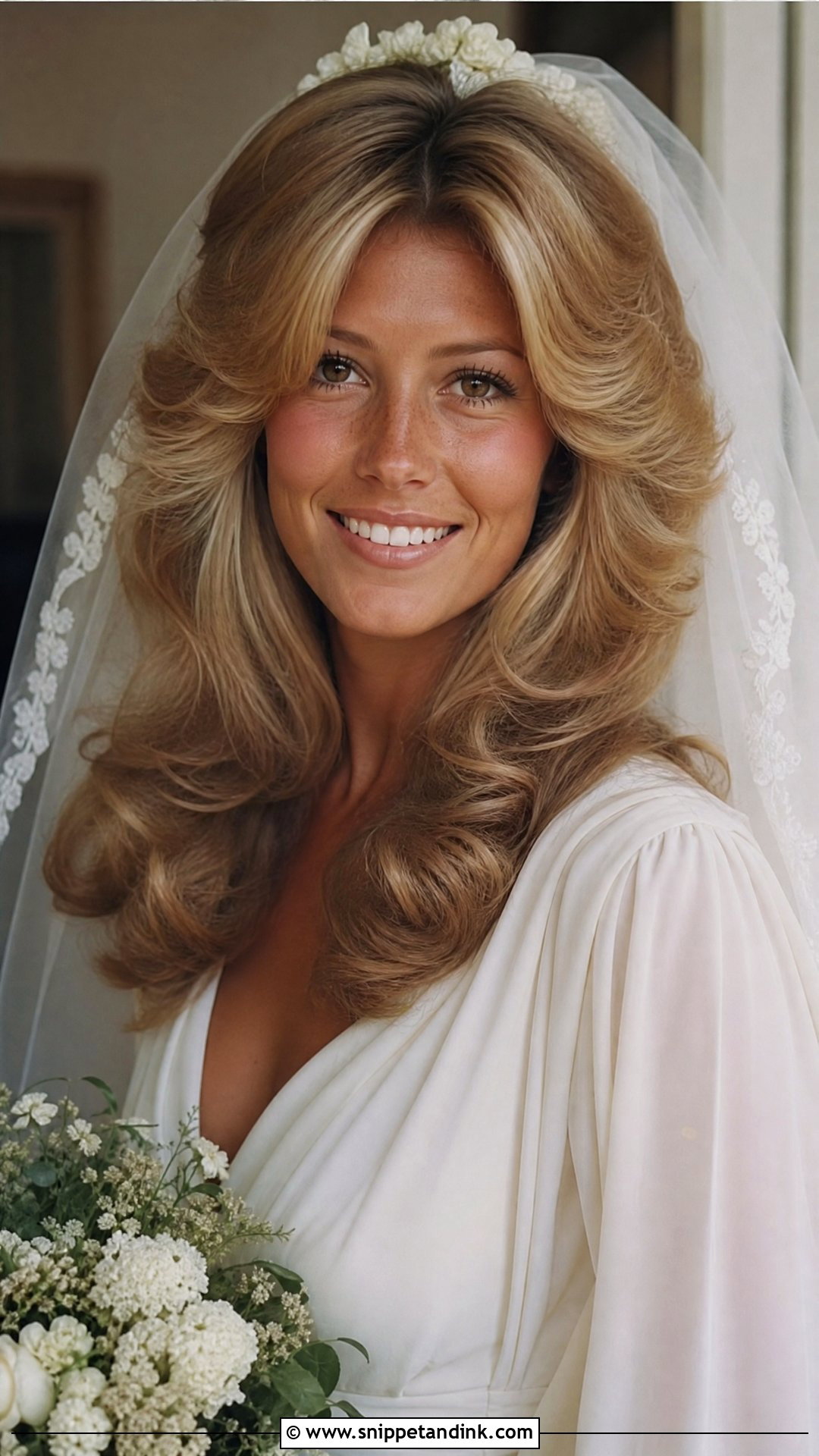
The 1970s blowout is the one retro look with no pins at all. Round brush sets or large velcro rollers give lifted roots and ends that flick away from the face. A centre part is classic. It needs layers to move properly; one-length hair just looks curled under. I’d use a lightweight spray rather than a strong one so it keeps its bounce, and warn you it will relax a little by evening.
20. Edwardian Bridal Updo
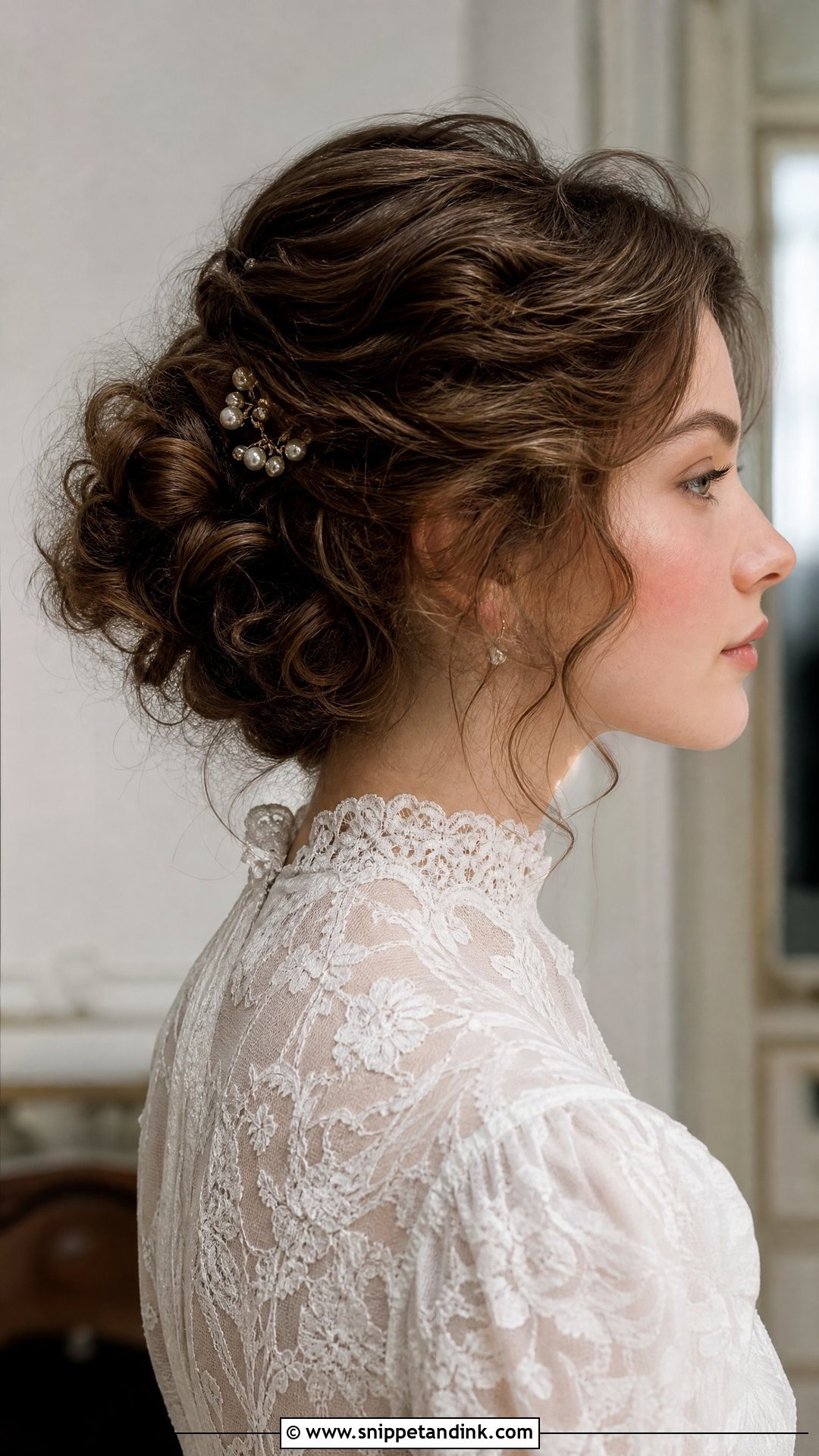
Edwardian bridal updo shapes are full and airy, the soft rolled pompadour you see in early 1900s portraits. I build the volume at the crown and nape with backcombing and a little padding, then let a few tendrils and soft waves frame the face. It’s less polished than a Hollywood wave and more refined than a messy bun. Lace gowns, high necklines and antique jewelry sit naturally with it, and garden or estate venues suit its mood.
Does the Decade of Your Hair Need to Match Your Dress?
Not exactly, but they should agree. A beaded drop-waist dress with victory rolls tends to look like two costumes; with finger waves it looks deliberate. I match on silhouette rather than year.
- Slim, bias-cut satin: Hollywood waves or a sleek low bun.
- Full skirt and fitted bodice: a 1950s ponytail, victory rolls or a bouffant.
- Lace with a high neck: a chignon, French twist or Edwardian updo, which keep the collar clear.
- Flowing boho gown: the 1970s blowout.
If your dress is modern and minimal, retro hair works best when the accessories stay modern too. One vintage element, the hair, reads as style; three or four start to read as a theme.
Looking After a Sculpted Set Until Last Dance
Sculpted styles don’t fall apart all at once. They soften. I give brides a few pins in the colour of their hair, a small comb and a travel hairspray for a quick press-down at the halfway point. Avoid touching the waves with your fingers; oil from your hands flattens them faster than humidity does. If a finger wave loses its ridge, press it back with two fingers and a mist of spray, and hold it for a minute.
Old Shapes, Modern Hold
Retro hair isn’t about looking dated. It’s about wearing a style with a real shape. Whether you love 1920s finger waves, 1940s curls, 1960s volume or a 1970s blowout, the set is what makes it last. Take photos of the style from the front and back to your trial, along with your dress and veil, and expect a longer appointment than a modern look would need.
You'll Like These Ideas:


Leave a Reply