
I love doing vintage wedding hair because every shape has a reason behind it. A 1920s wave was designed to sit flat under a cloche, a 1960s beehive was built to be seen from across a room, and 1970s curls were brushed out so they would move. When you understand where a style comes from, it’s much easier to wear it now without it feeling like fancy dress. The fifteen looks below cover the decades I’m asked about most, from finger waves to pearl-studded updos, and I’ve added what each one needs from your hair and your morning.
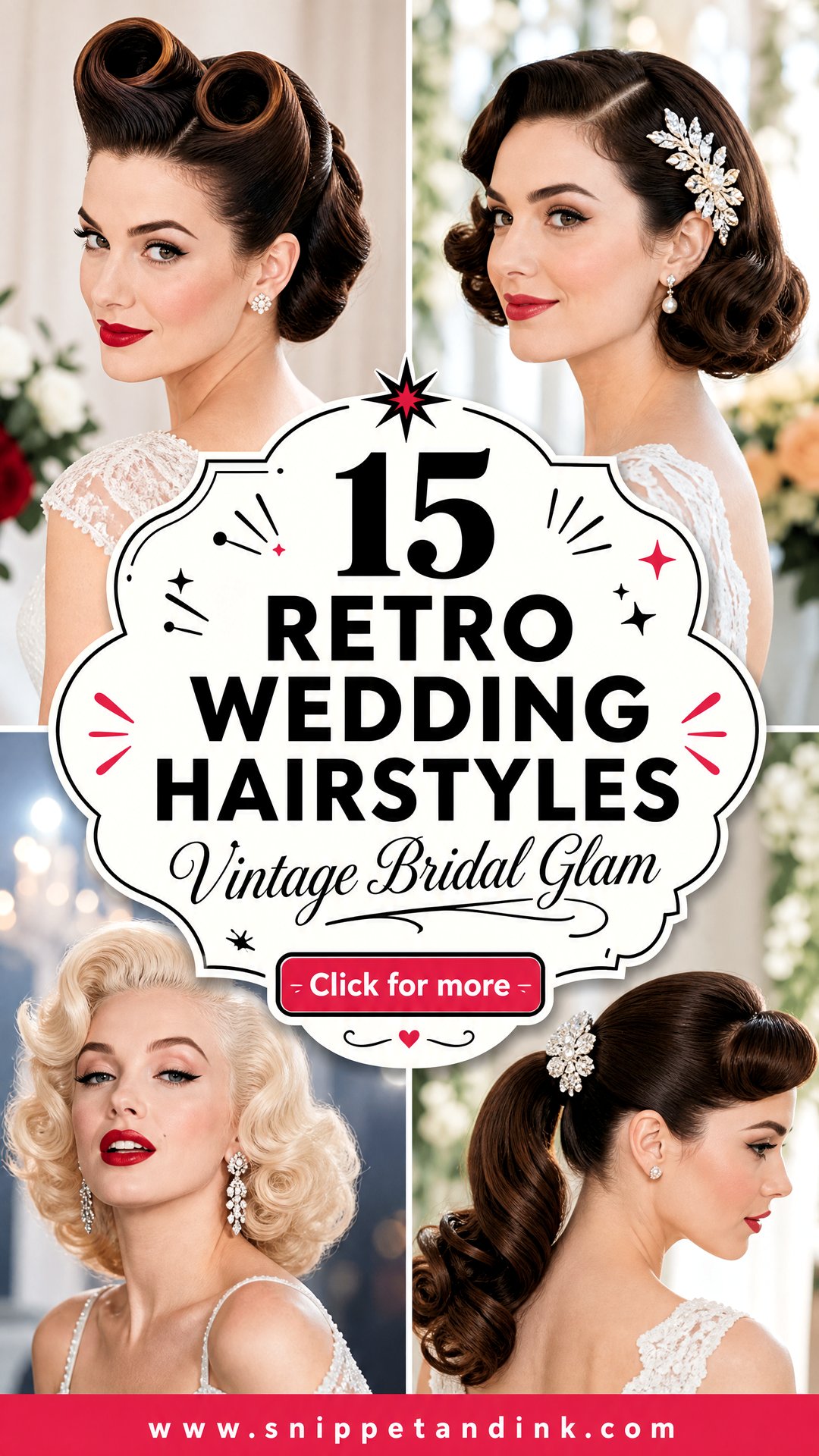
Real Bob or Faux Bob, and When to Decide
Several of these looks are built for short hair, so the first question I ask is whether you’d consider cutting. A real bob gives the crispest finger waves and Marilyn curls. A faux bob rolls long hair under at the nape and keeps your length, but it adds bulk at the back and takes longer to pin.
If you do want the cut, have it done several weeks before the wedding rather than days before. A fresh cut can look blunt, and the hair needs time to settle into its new line. Bring your hairstylist into the conversation early so the cut is shaped for the set, with the length at the jaw and minimal layering around the waves.
For long hair that you’re not willing to lose, look at Hollywood waves, the French twist, a Gibson tuck or the chignon. They give you the period feeling without asking you to change your hair at all.
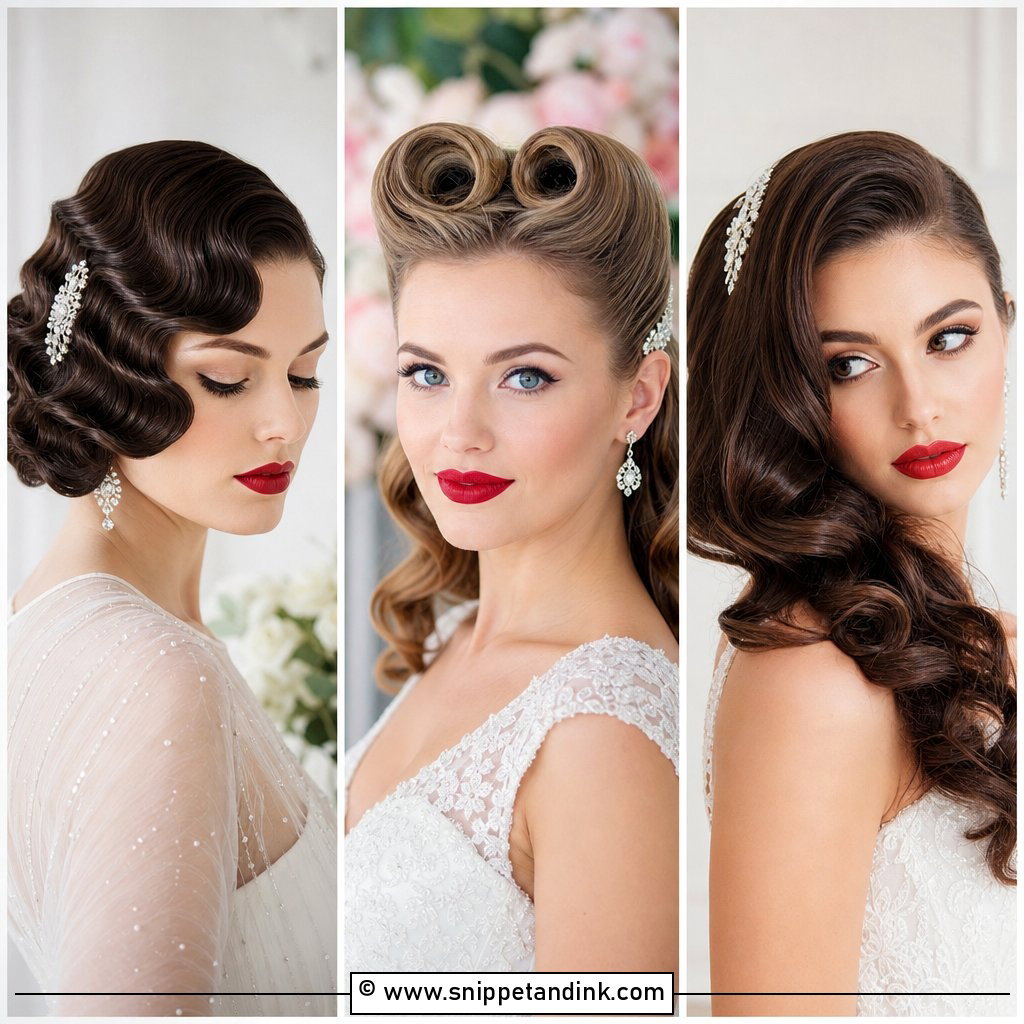
1. Old Hollywood Waves Wedding Hair
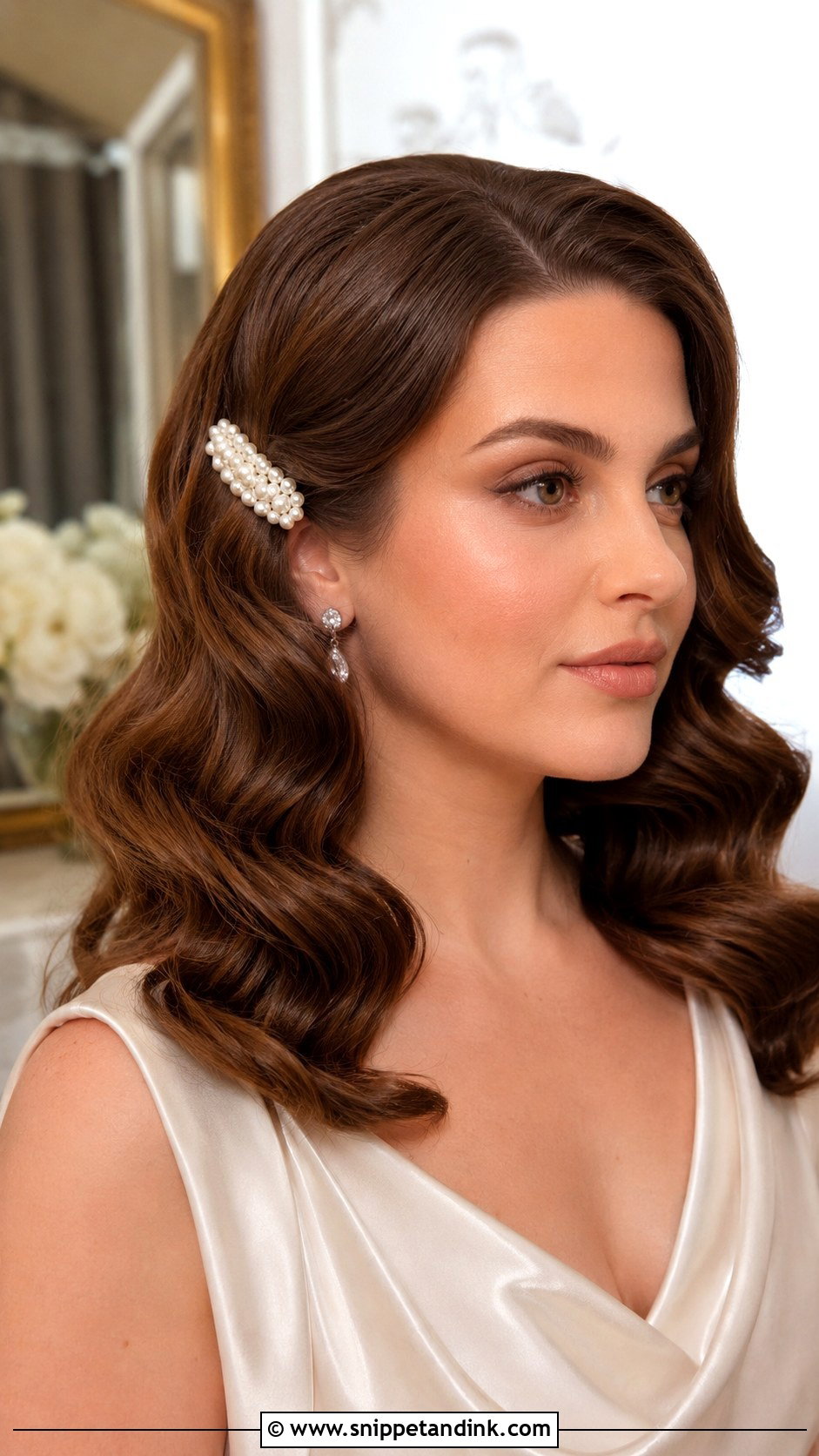
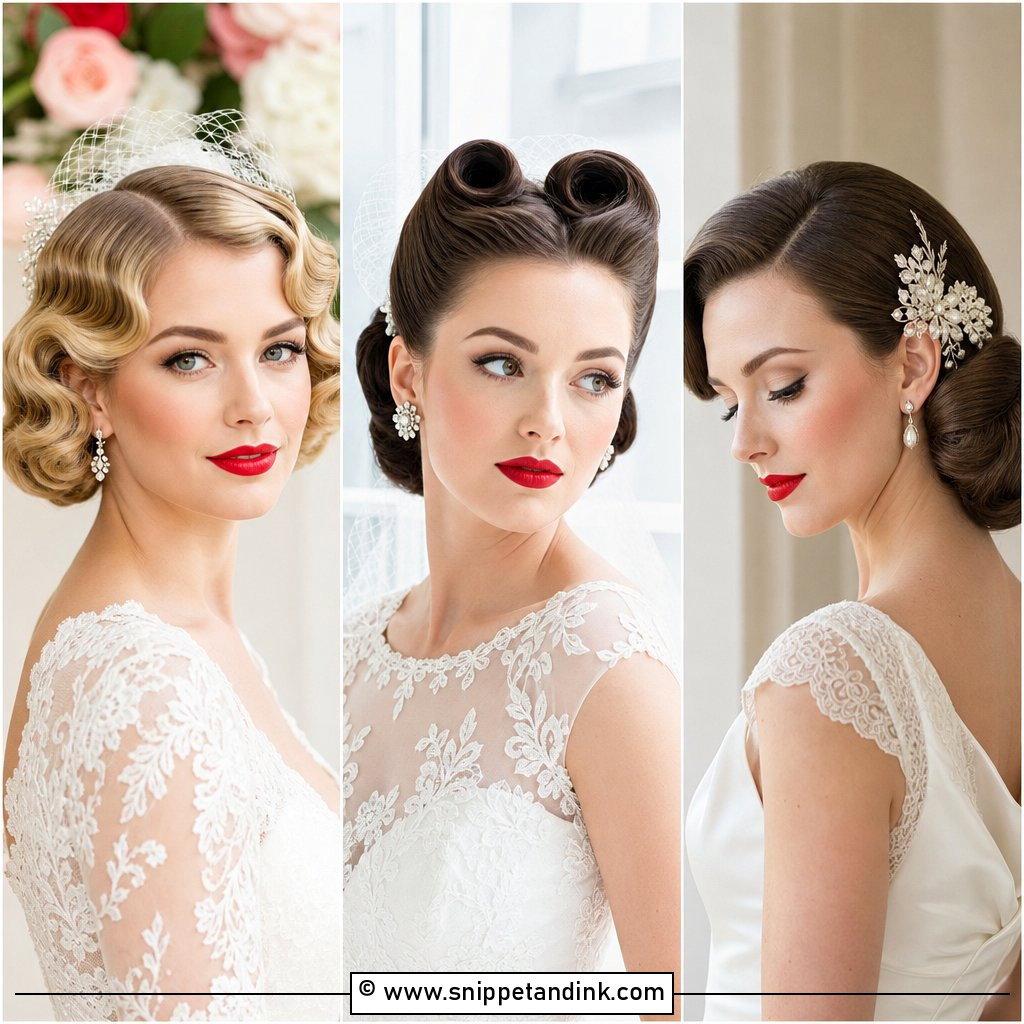
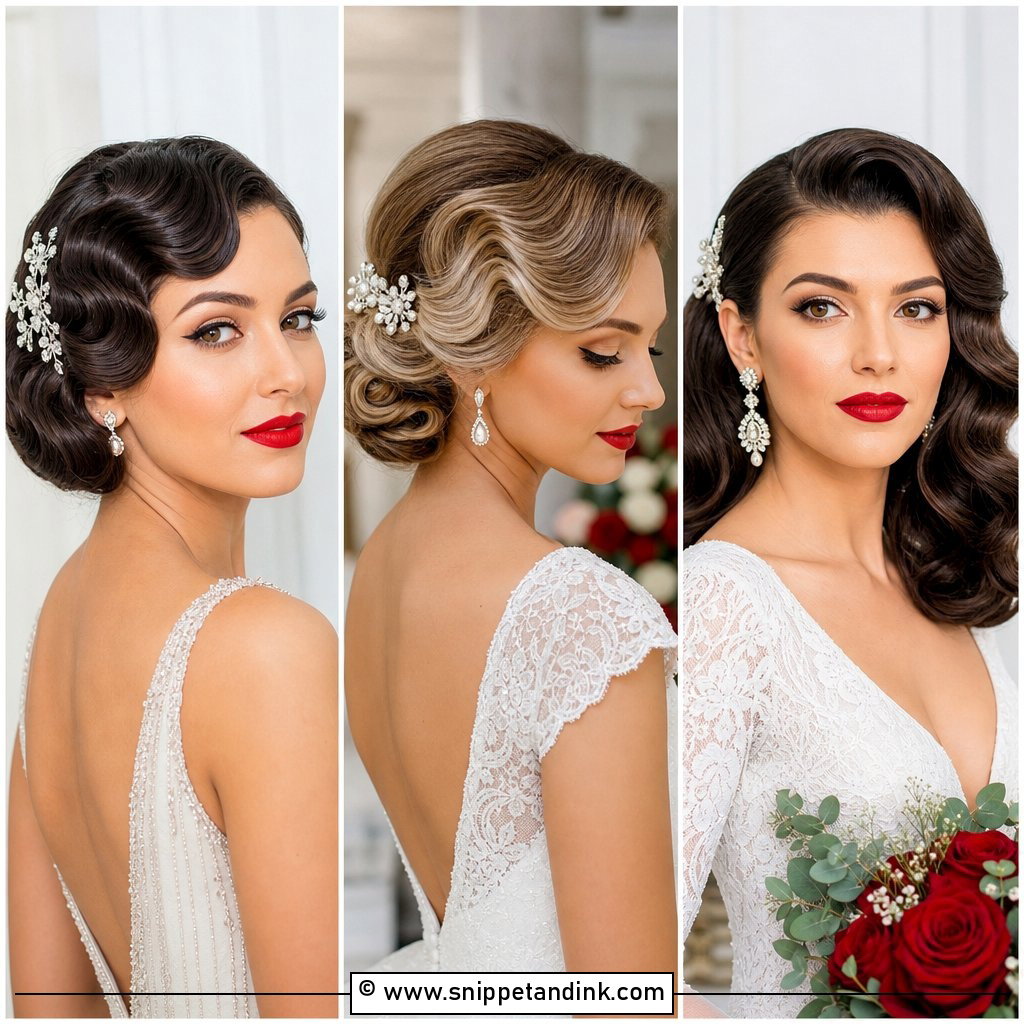
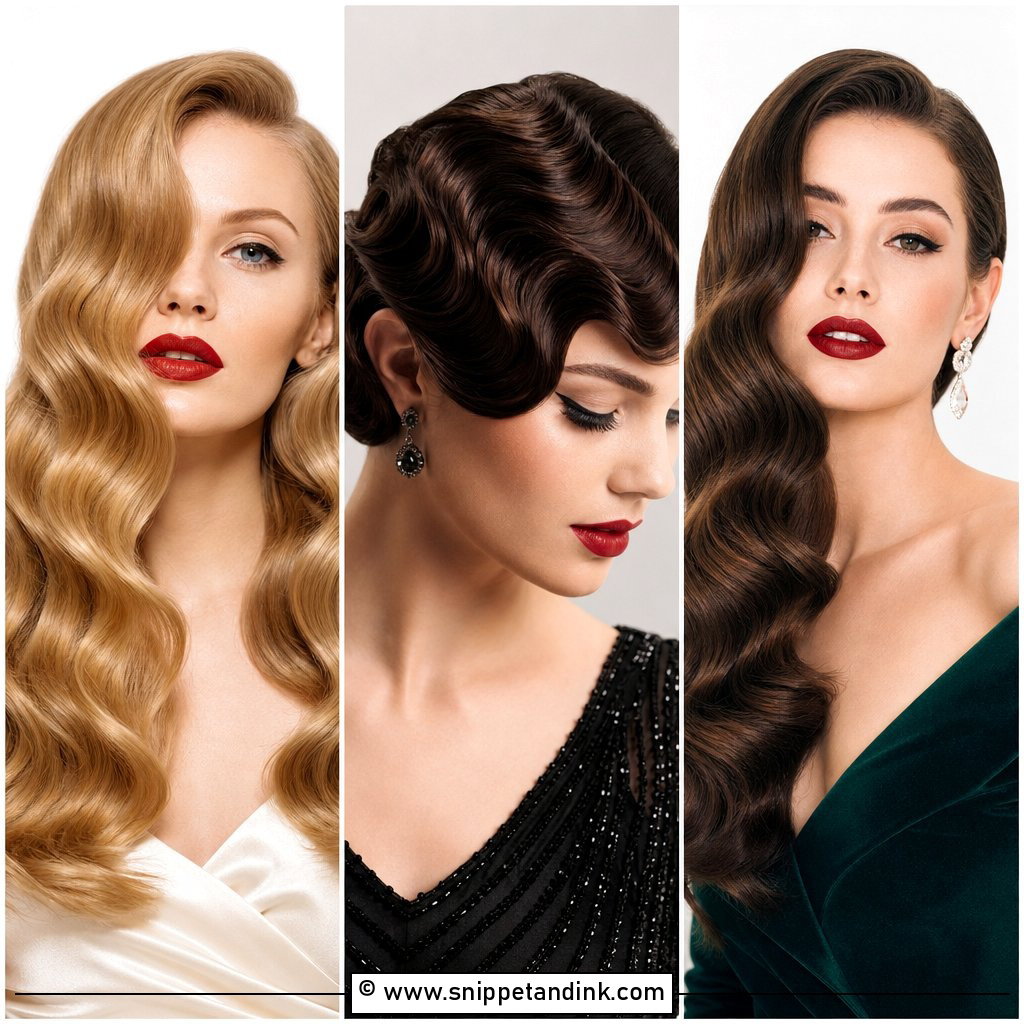
Old Hollywood waves come up at nearly every vintage consultation, and for good reason: one deep side part and a single wave travelling in the same direction changes the whole outfit. The curls are set, cooled in clips and brushed together until there are no gaps between them. Medium to long hair carries the pattern; satin dresses and simple necklines let it lead. I use shine spray sparingly at the end, because too much early on makes the waves slide apart. A pearl barrette on the short side of the part is all the decoration it needs.
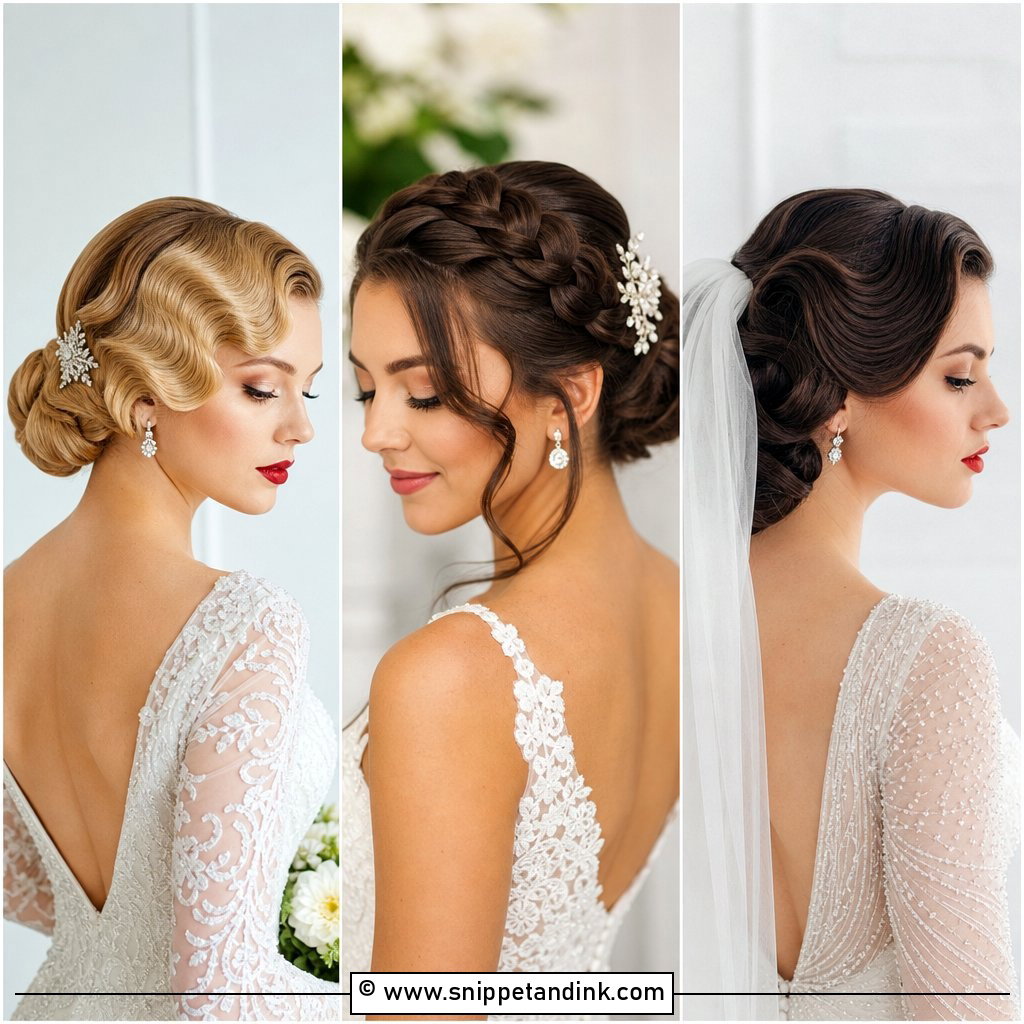
2. Finger Waves Wedding Hair
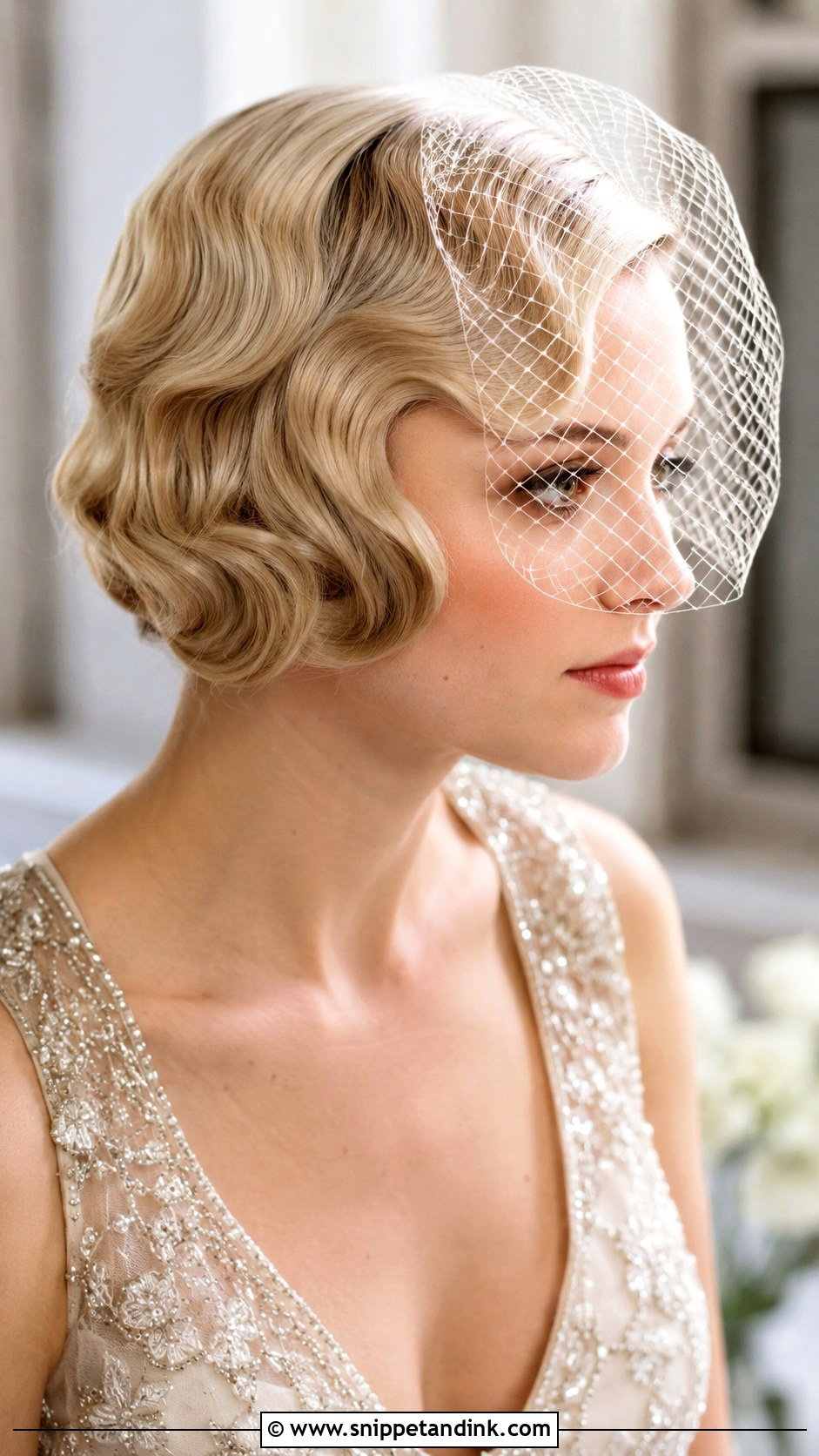
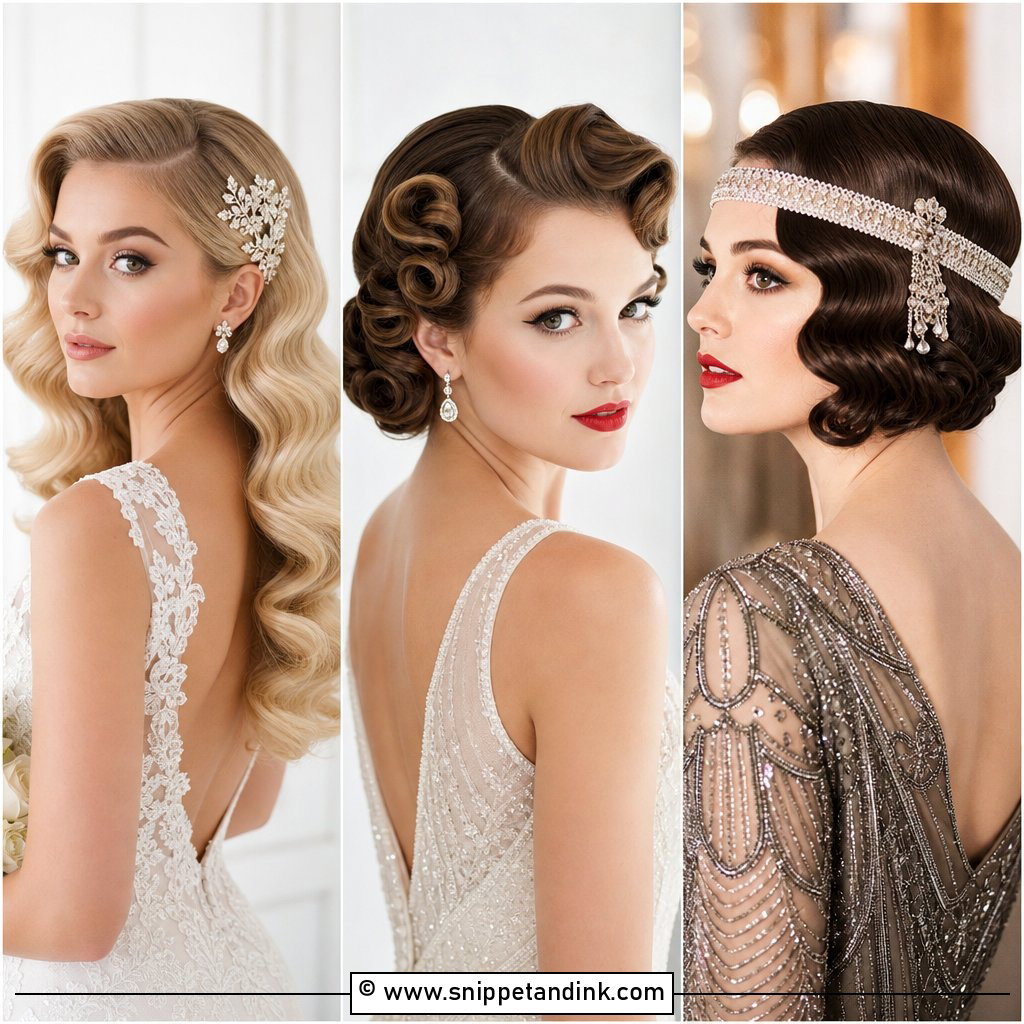
Finger waves are a 1920s technique, pressed into wet hair with the fingers and a comb, then left to dry flat against the head. Bobs, pixies and shoulder-length cuts take them best, though I can shape a few waves around the face on longer hair. The pattern should frame the forehead and cheekbone, so where the first ridge sits is a decision I make with the bride in the mirror. They pair well with drop earrings and beaded gowns. Book someone who has done them before; a setting lotion that dries too fast leaves uneven ridges.
3. Victory Rolls Wedding Hair
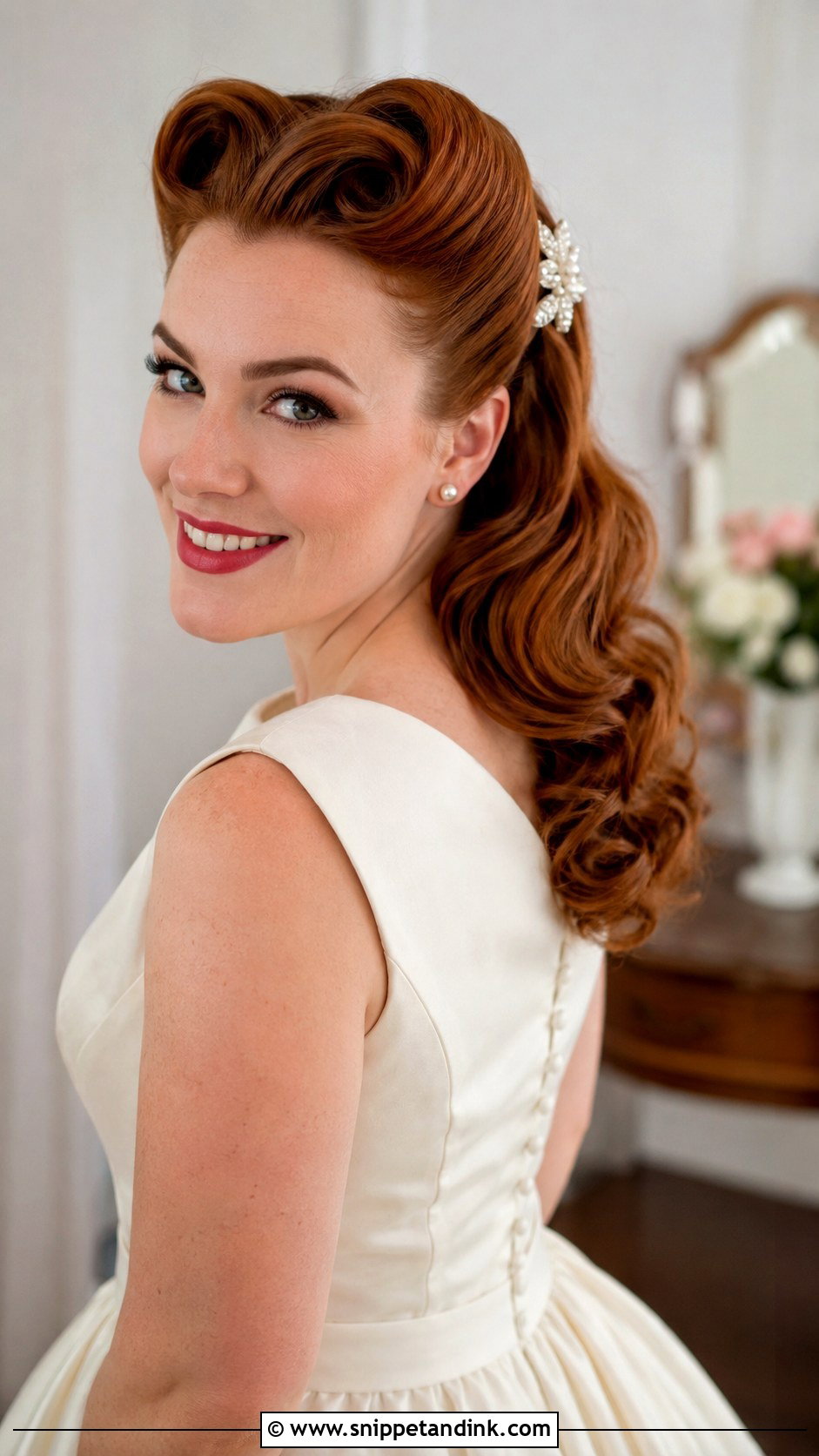
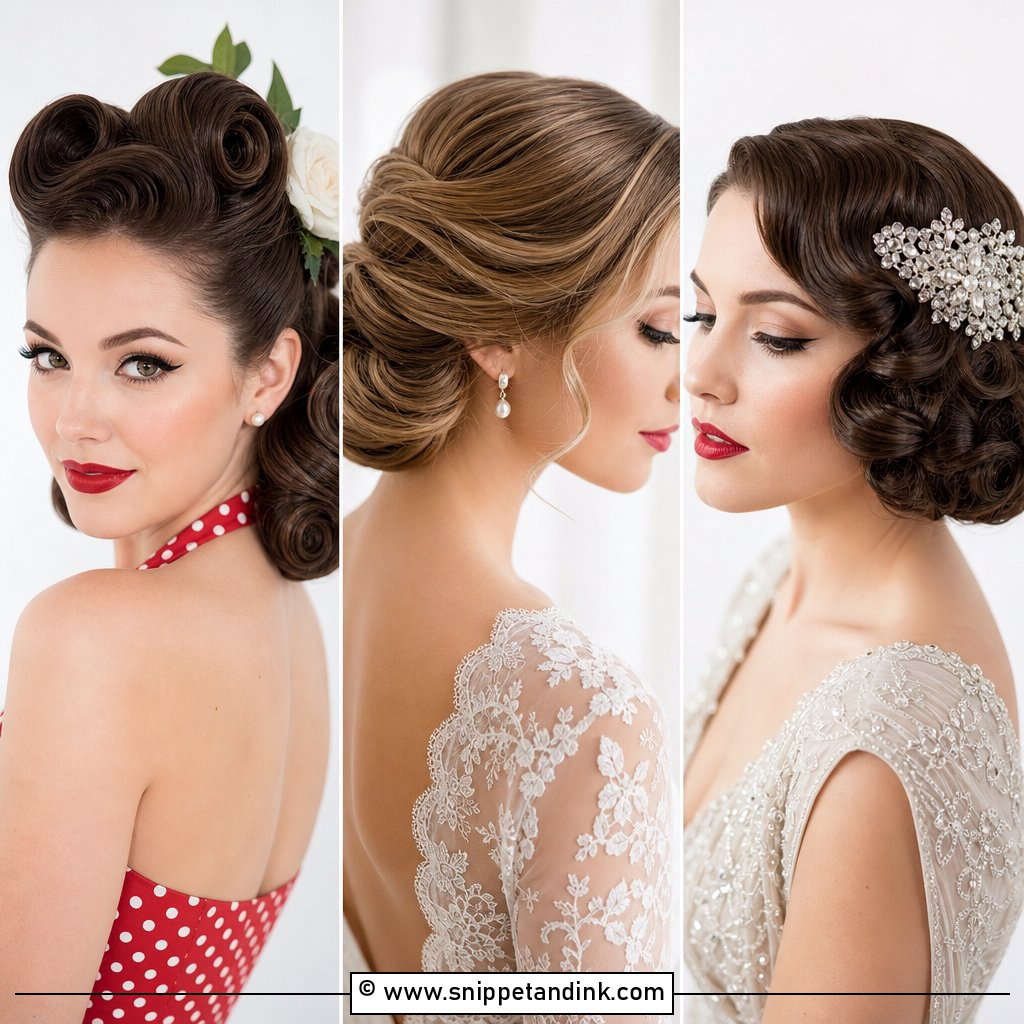
Victory rolls belong to the 1940s and they make the hair part of the outfit. The front sections are backcombed at the base, rolled over two fingers and pinned from inside the roll so no grips show. Behind them the hair can be curled, pinned or tucked into a low updo. Uneven rolls are the classic mistake, so I measure them by eye from the front and in a mirror from above. A birdcage veil and a tea-length dress suit them better than a cathedral train.
4. Beehive Wedding Hair
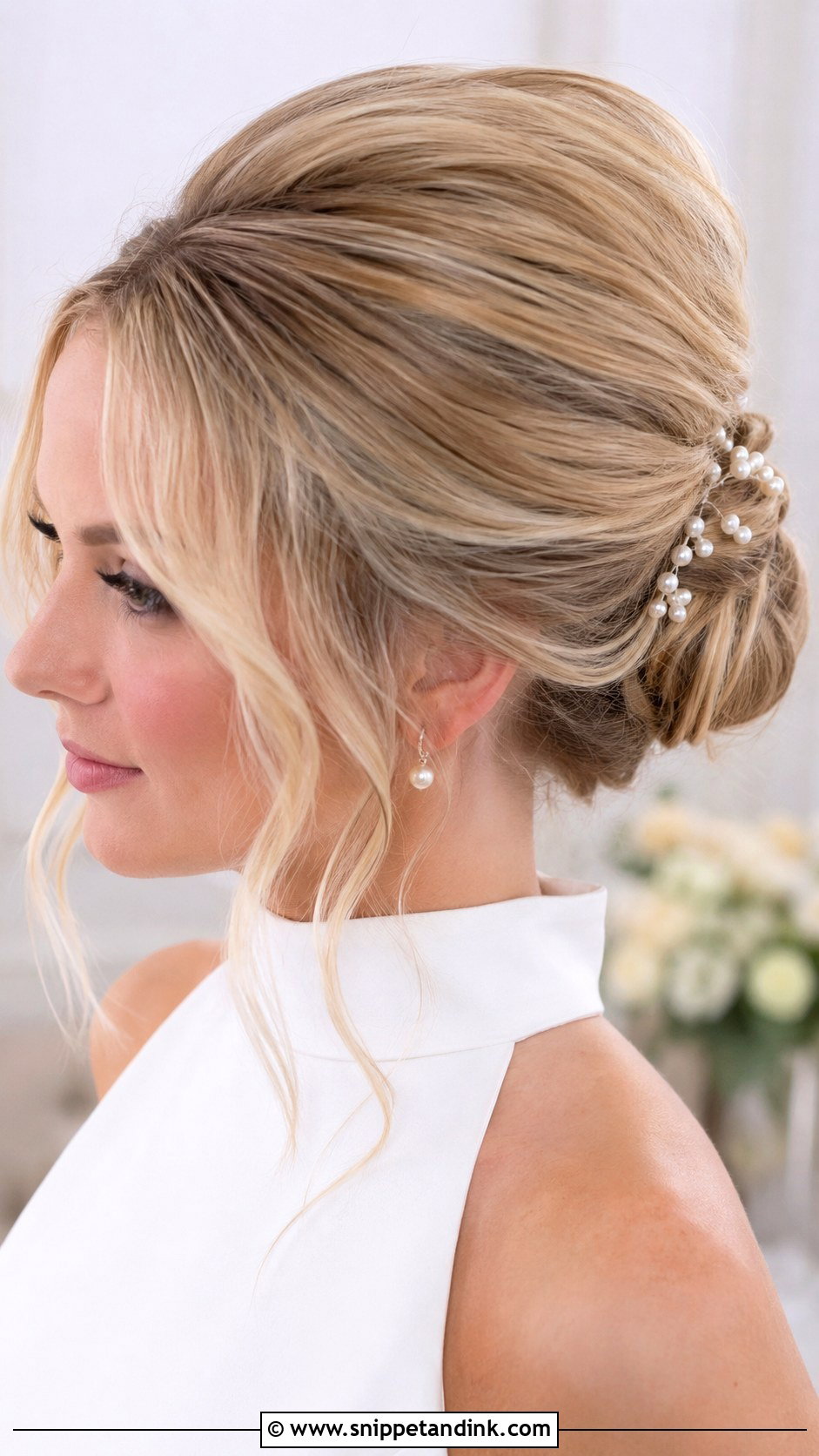
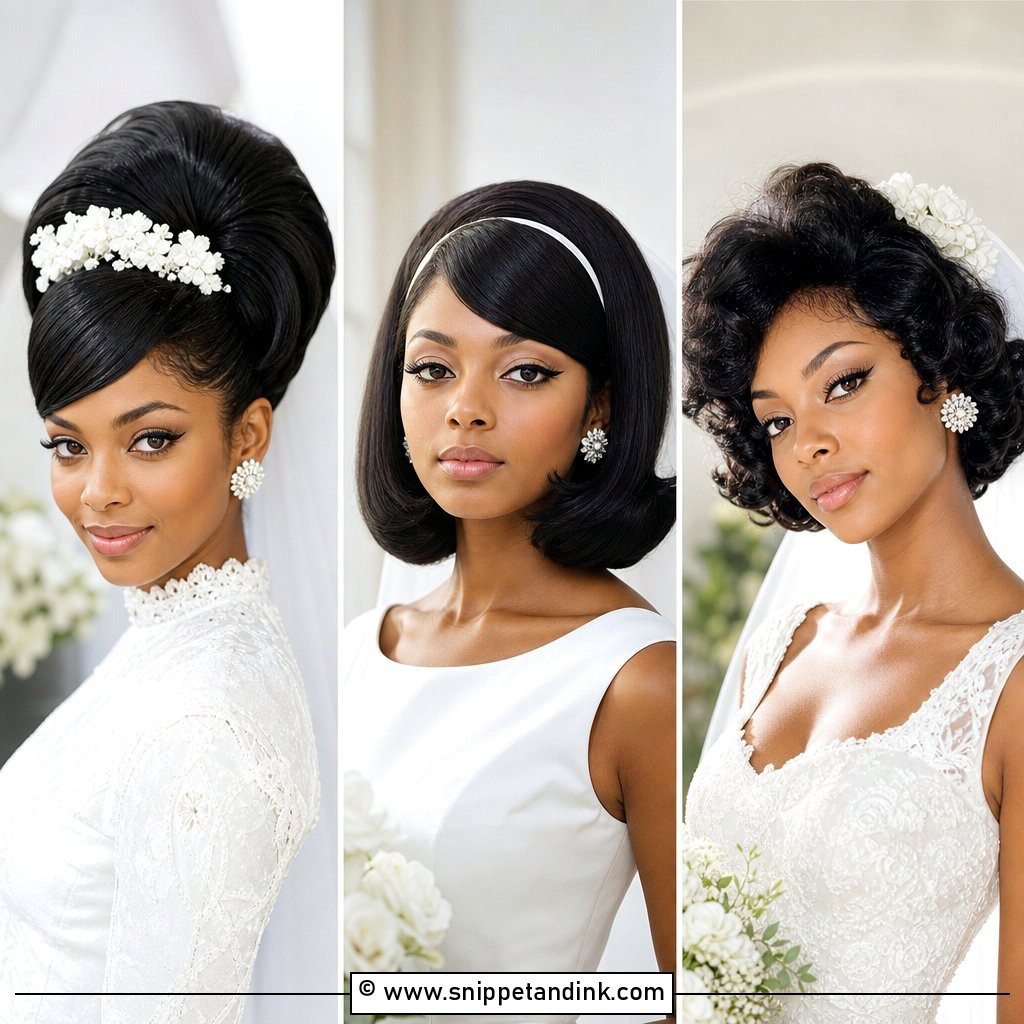
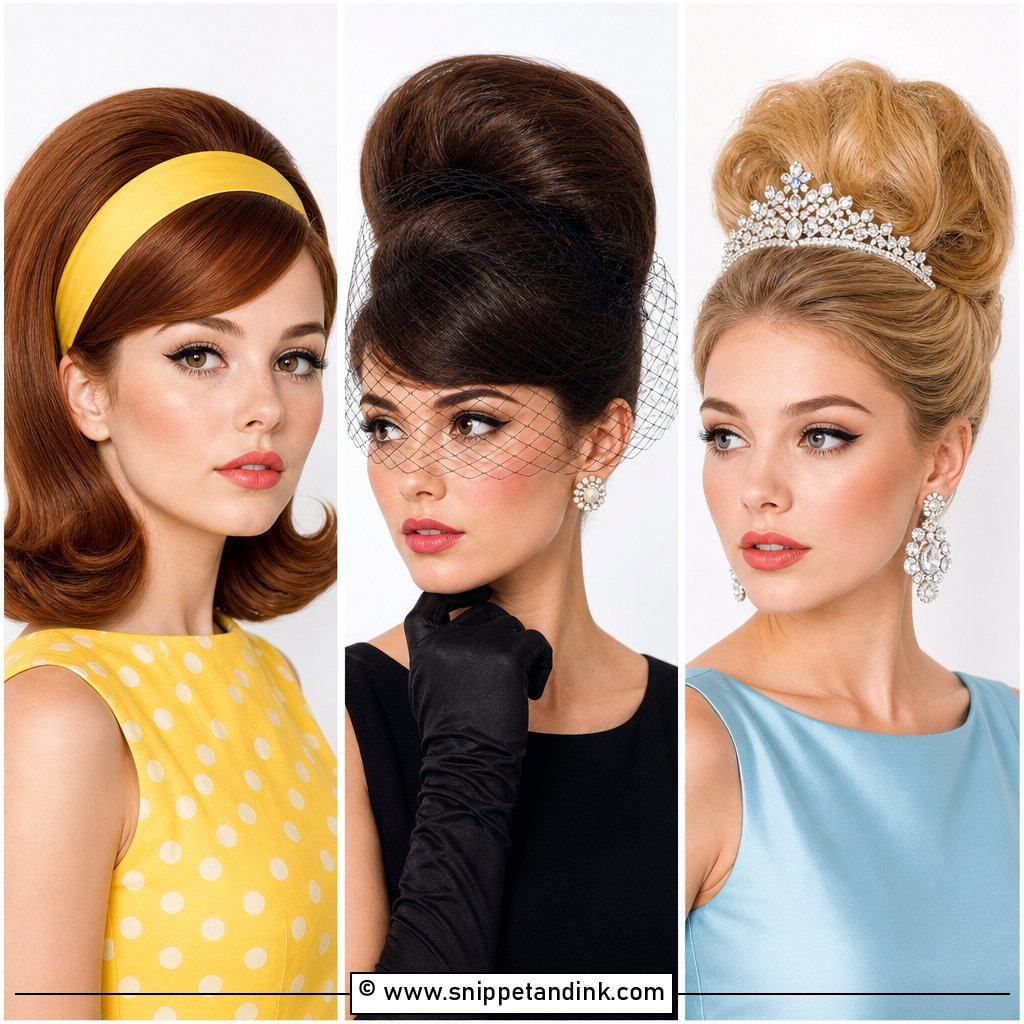
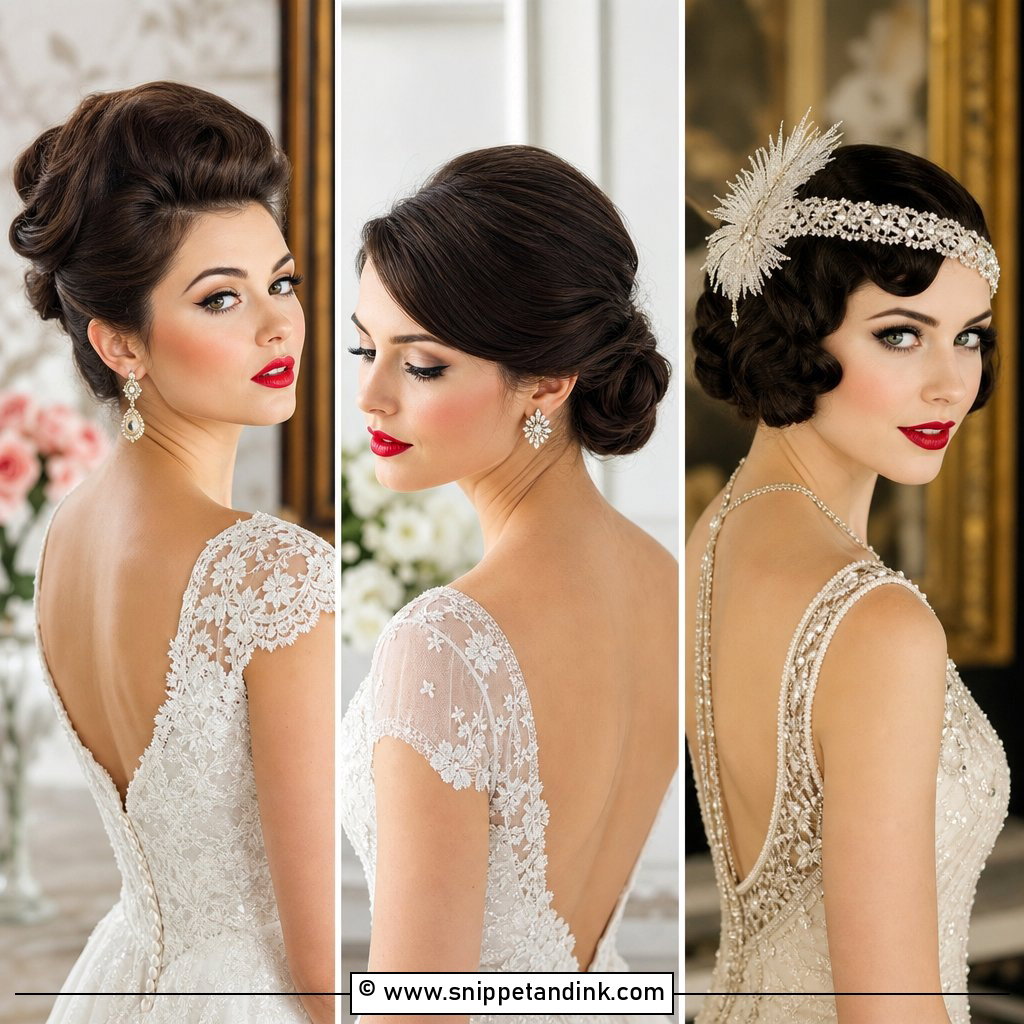
A beehive wedding hairstyle is all about the crown. I tease underneath in thin sections, then smooth the top layer over so the surface looks polished and the support stays hidden. The front can sweep back or soften with a few face-framing pieces. High necks and boat necklines balance the height nicely. If your hair is fine or freshly coloured and slippery, ask about a small padding piece; it’s lighter on the scalp than a mass of backcombing.
5. French Twist Wedding Hair
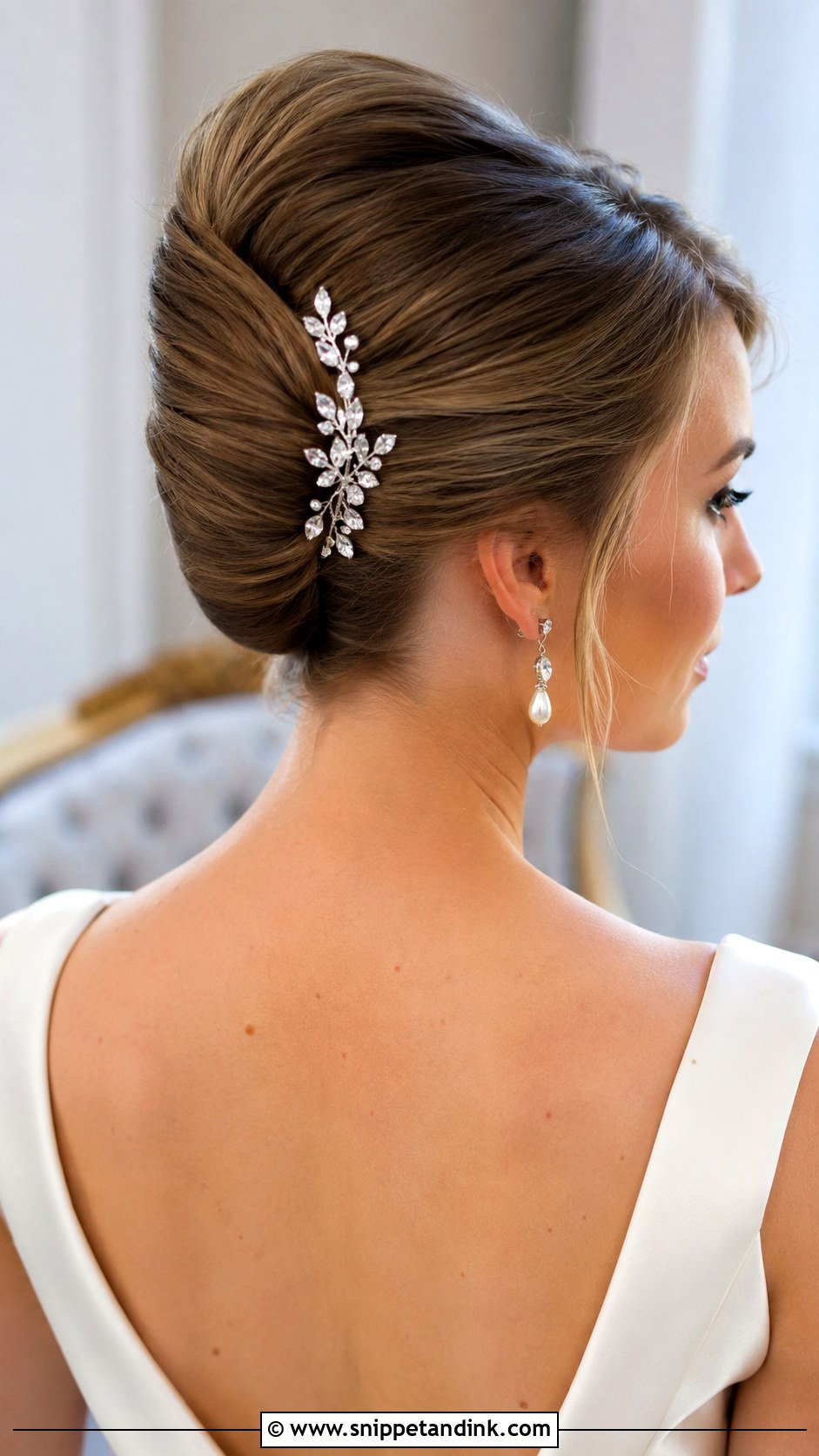
A French twist holds up through a long celebration better than most vintage looks because the pins run down a hidden seam. The hair is swept up and inward, leaving a clean vertical line at the back that shows earrings and gown detail. Medium to long hair works; very short layers tend to escape along the fold. I like a slightly soft version with a couple of pieces near the face for brides who worry it looks too formal. Pearl accents or a slim comb can follow the seam.
6. Bouffant Wedding Hair
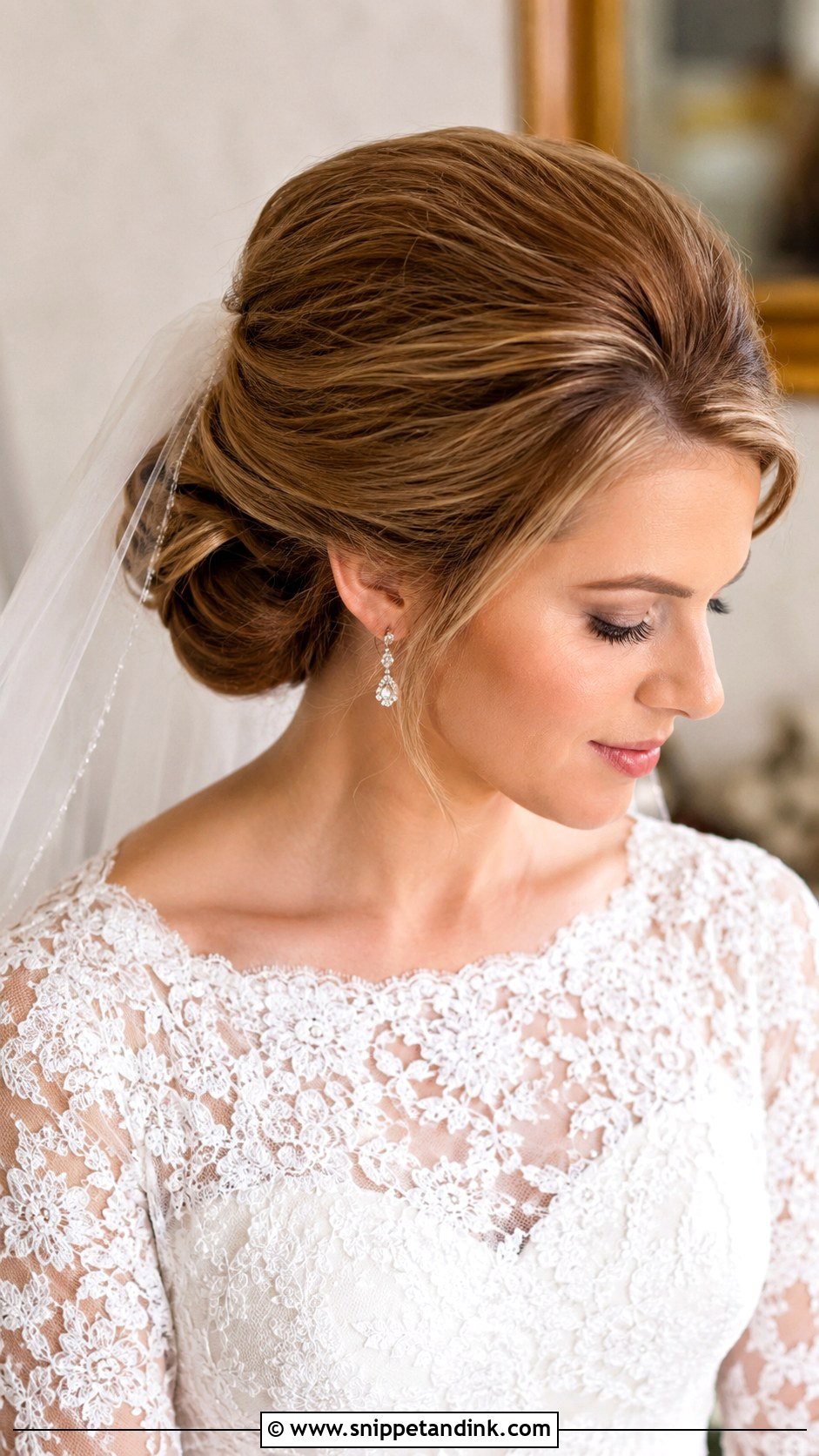
Bouffant hair gives a rounded crown without the full height of a beehive, which is why I suggest it to brides who want a hint of the 1960s rather than a costume. The back can drop into a low bun, a ponytail or loose curls. It’s also the friendliest base for a veil, since the comb grips the teased section underneath. Brush the outer layer smooth but not flat; a bouffant should look soft when you touch it.
7. Pin Curl Wedding Hair
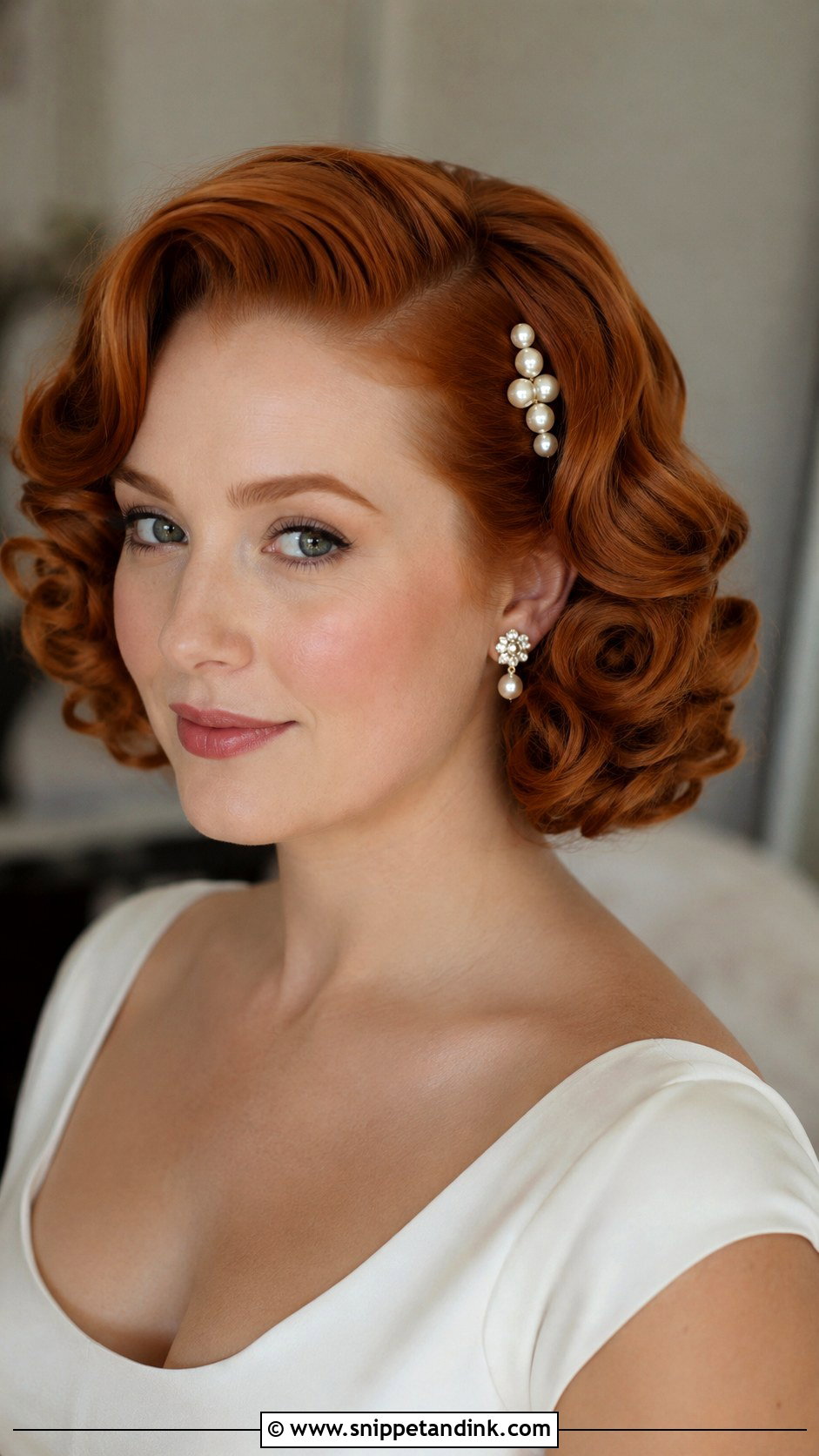
Pin curls are the set that much of the 1930s and 1940s look was built on. Small sections are wound into flat coils and clipped while they dry or cool, and that setting process is exactly why the curl lasts. On short hair they sit around the face in defined shapes. On long hair I brush them out into waves or gather them into a low updo. Ask for a set that’s fully cool before the clips come out, then add a small comb or veil.
8. Retro Bob Wedding Hair
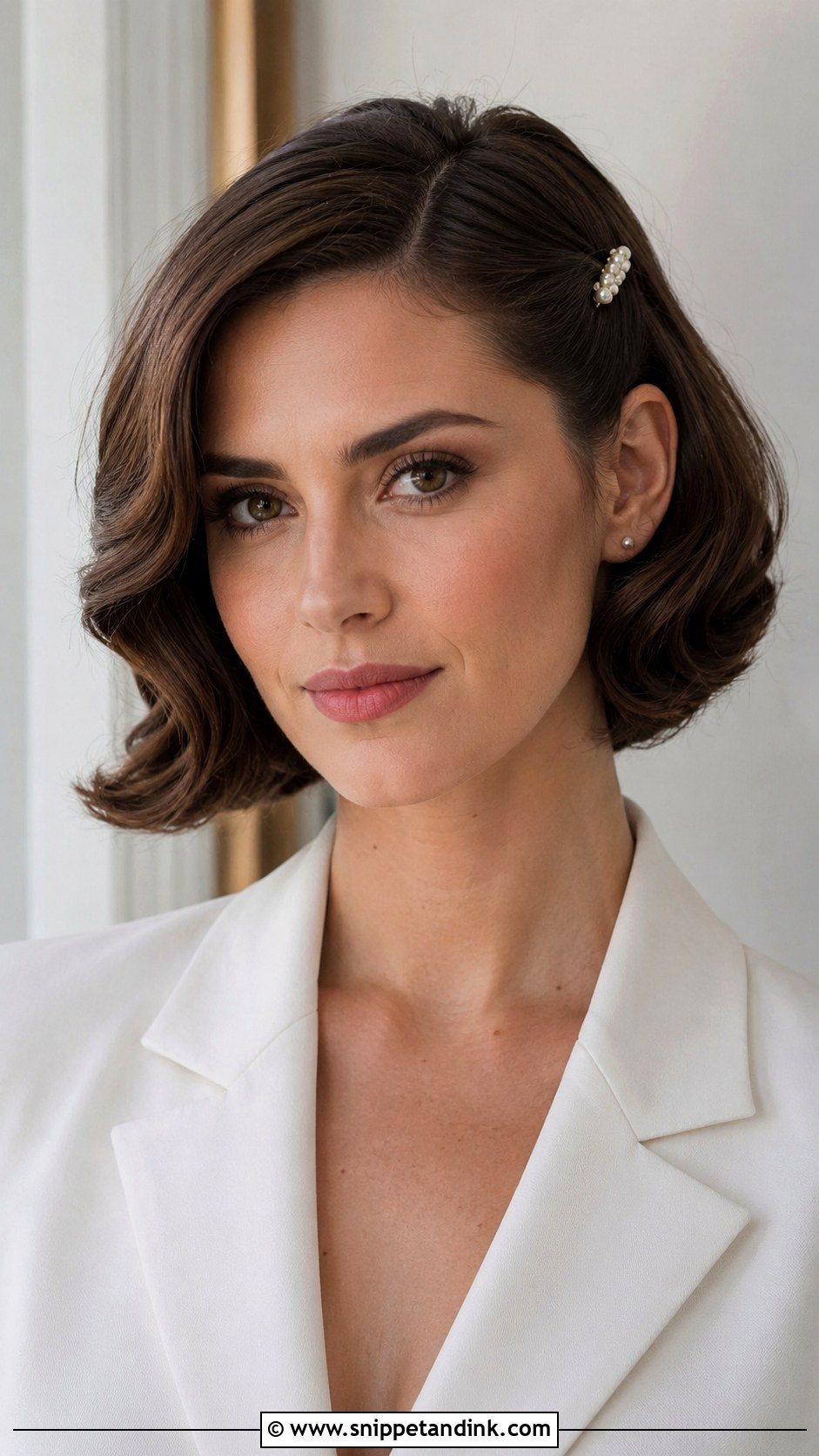
If you already have short hair, the retro bob wedding hairstyle needs no extensions and no faking. Finger waves, tucked ends or a deep side part all suit it. I look for smooth lift at the root and a clean line at the jaw, which is where a bob either reads as vintage or just as a haircut. Beaded dresses, slip gowns and courthouse suits all pair well. A tiny veil or crystal comb on the part side finishes it.
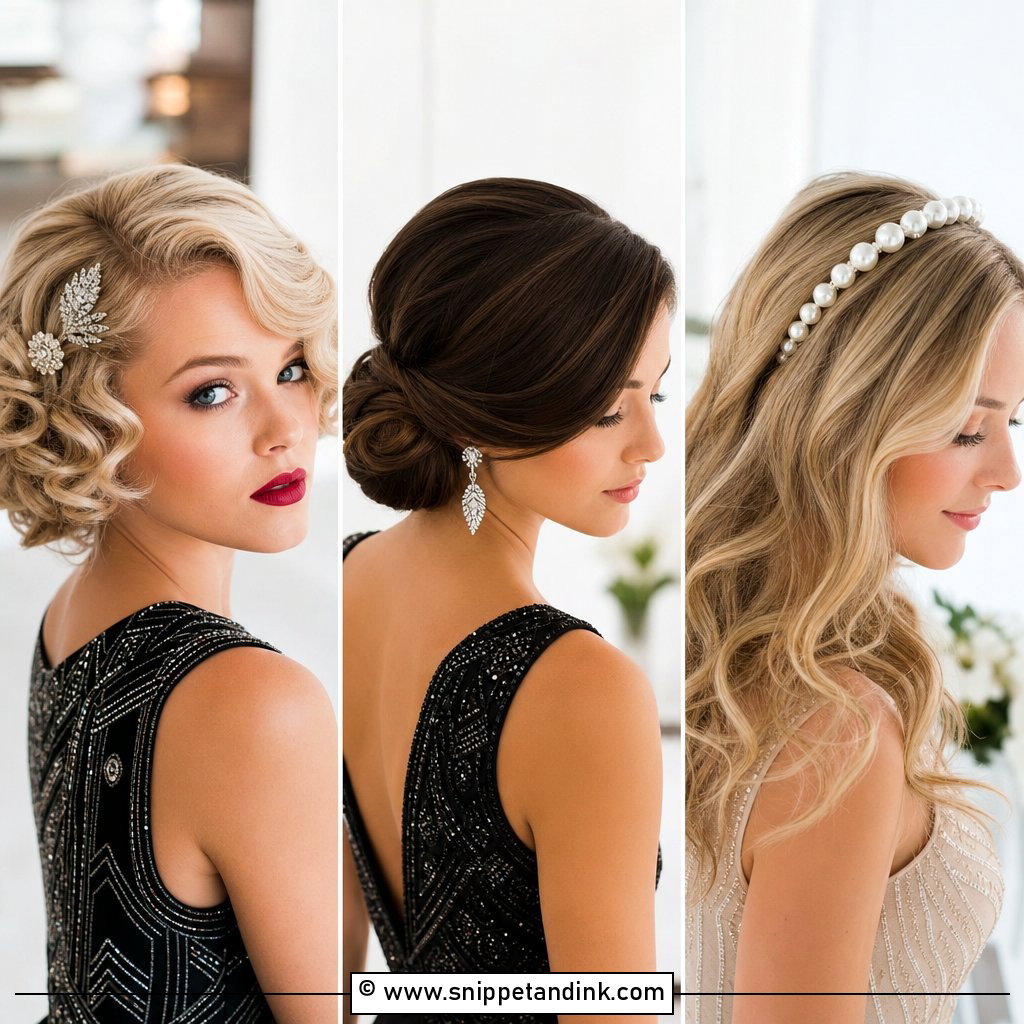
9. Vintage Low Chignon Wedding Hair
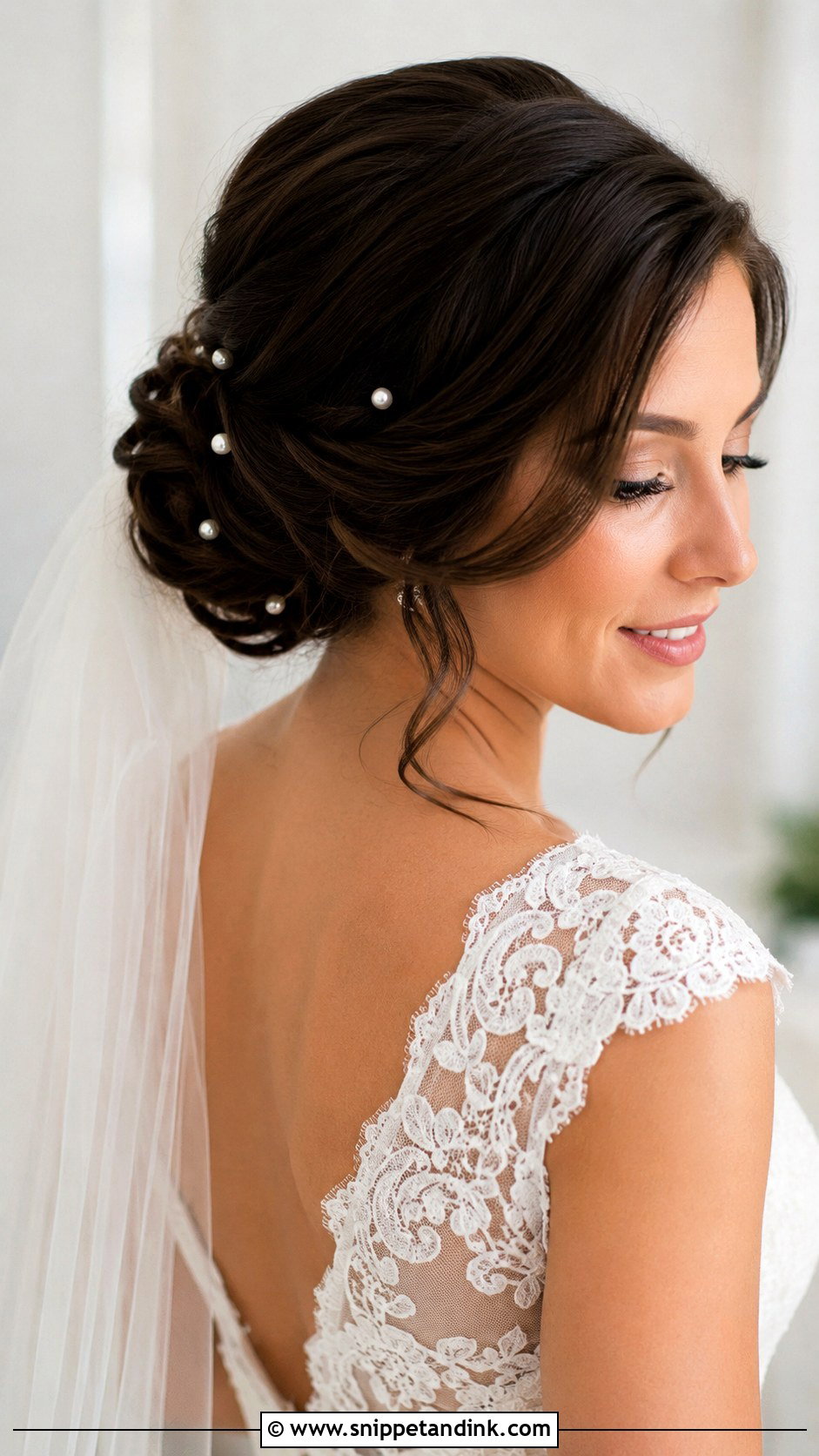
The vintage low chignon is my safe recommendation for long ceremonies. The bun sits at the nape and the retro character comes from the front: brushed waves, a side part or a gently rolled section. Leaving the front flat makes it look modern, so I always shape it. Lace gowns, long veils and pearl jewellery suit it well. Because the weight sits low, it rarely causes headaches across a full day.
10. Retro Half Up Wedding Hair
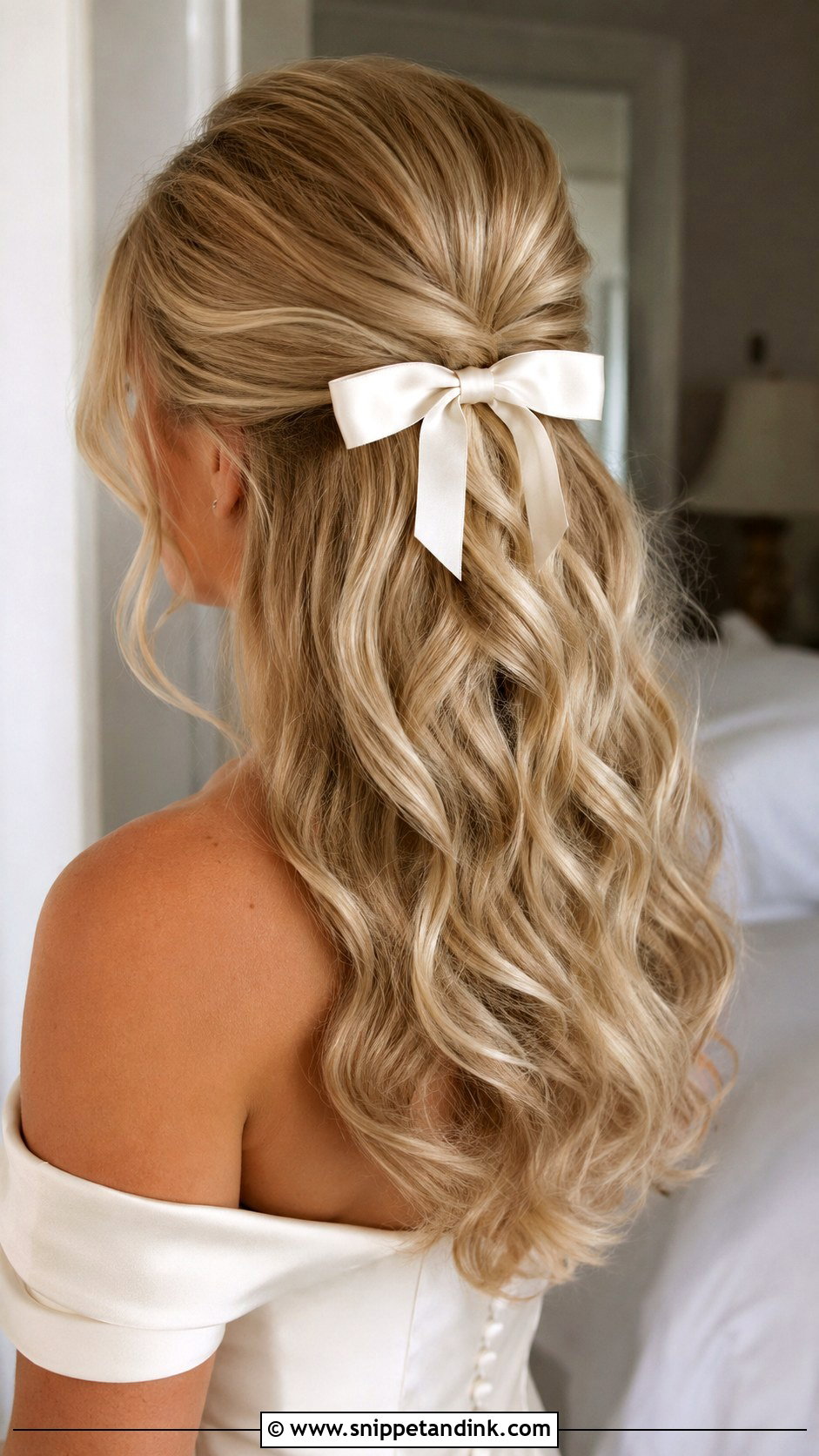
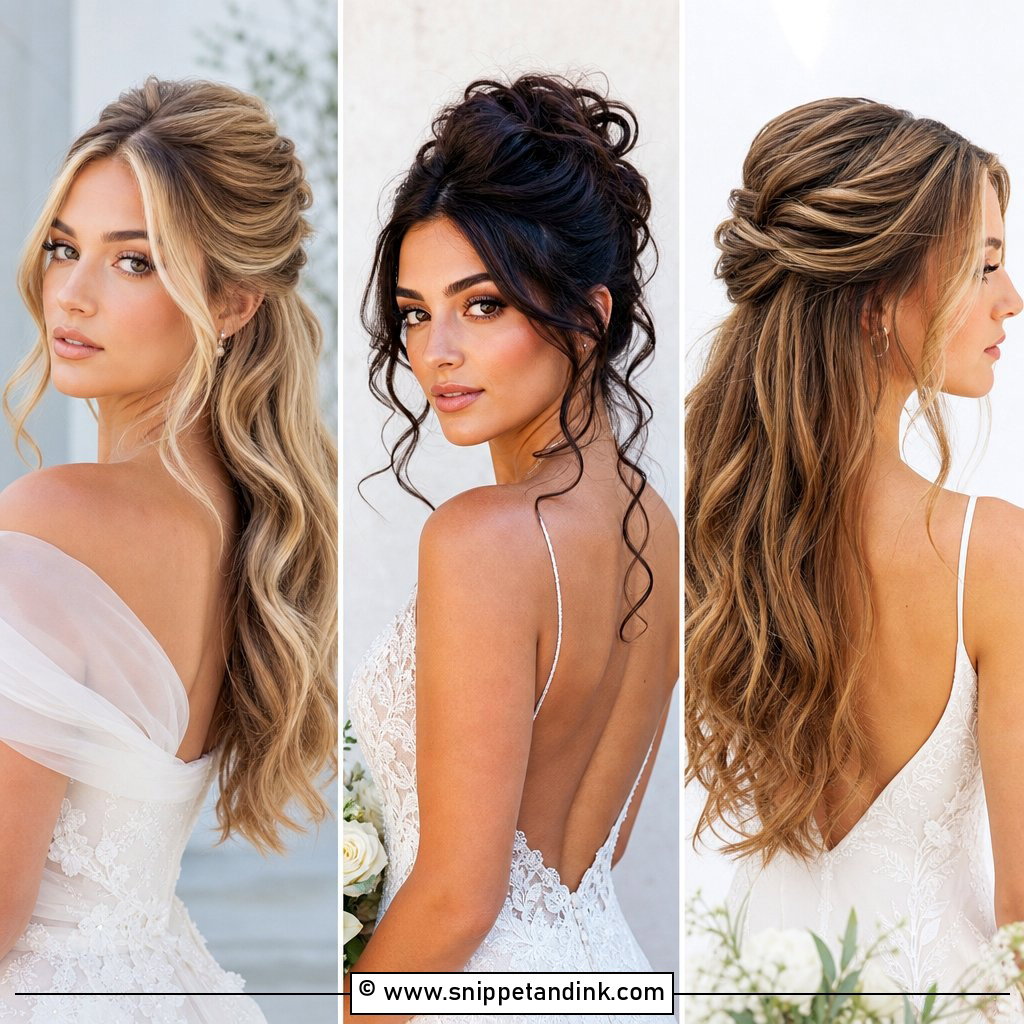
Retro half-up hair keeps 1960s lift at the crown while the rest stays down. The bouffant section is teased, smoothed and pinned with the sides drawn back, which opens up the face. The lengths can be polished waves or looser curls. My one warning: if your hair drops curl easily, the down section will relax first, so I set it a little tighter than you’d expect. A bow or veil at the pin point covers the grips.
11. Marilyn Monroe Curls Wedding Hair
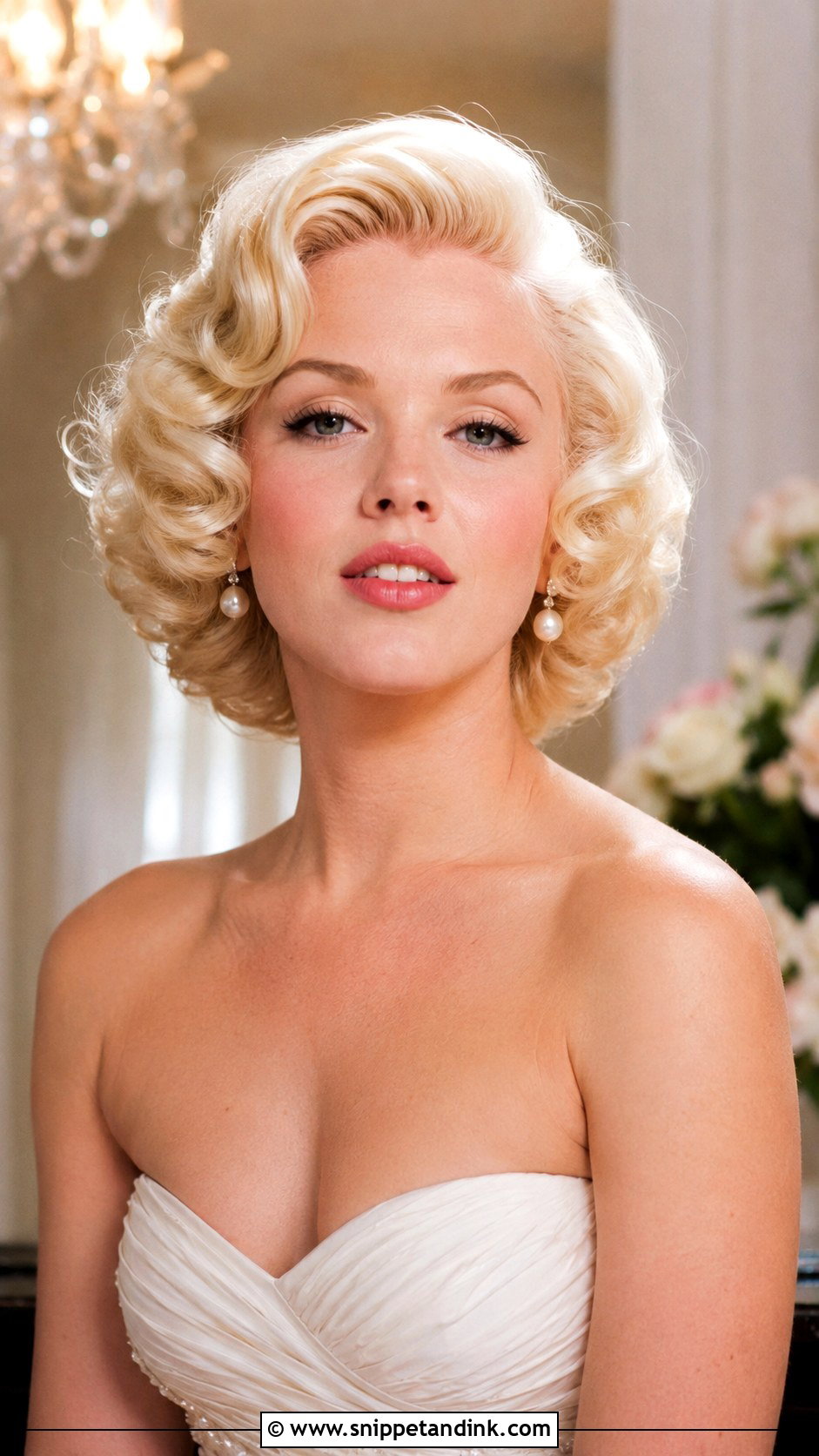
Marilyn curls are short, rounded and sculpted, quite different from today’s loose waves. They’re set tight, then shaped with fingers rather than brushed fully out, so each curl keeps its outline. Short to medium hair suits them; long hair struggles to hold that rounded bounce. A side part and some shine catch the light in photos. I’d steer you elsewhere if your hair is very coarse and humid days are likely, since the shape can go fuzzy.
12. Gibson Tuck Wedding Hair
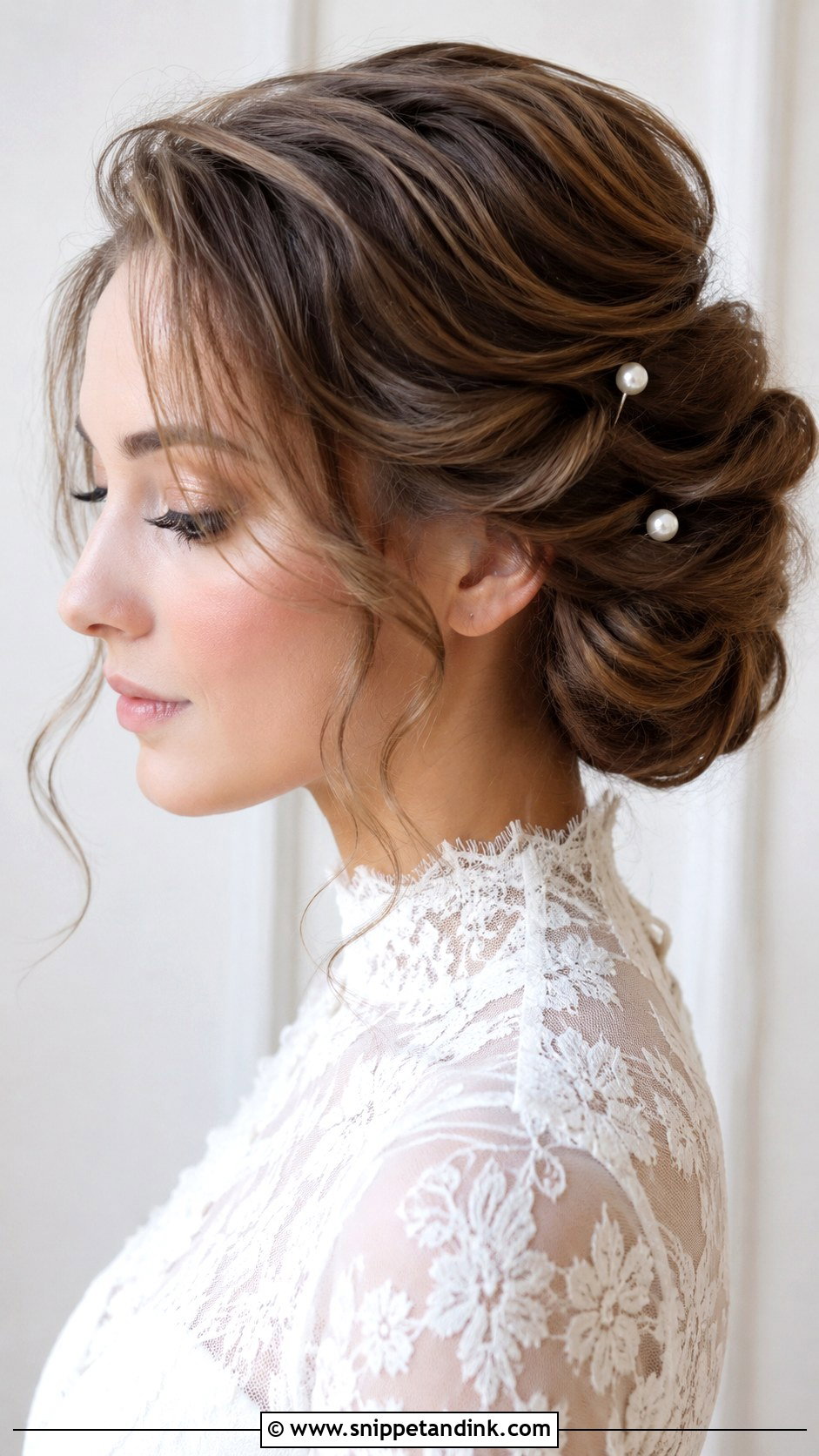
The Gibson tuck has an Edwardian-inspired feel and a gentler presence than the rolls and beehives above. The hair is rolled at the nape and tucked into itself, giving a soft, low shape that sits well with lace, high necklines and garden ceremonies. The mistake I see is rolling it too tight, which makes it look severe. I keep it slightly airy and secure the tuck with long pins that run along the roll.
13. Retro Ponytail Wedding Hair
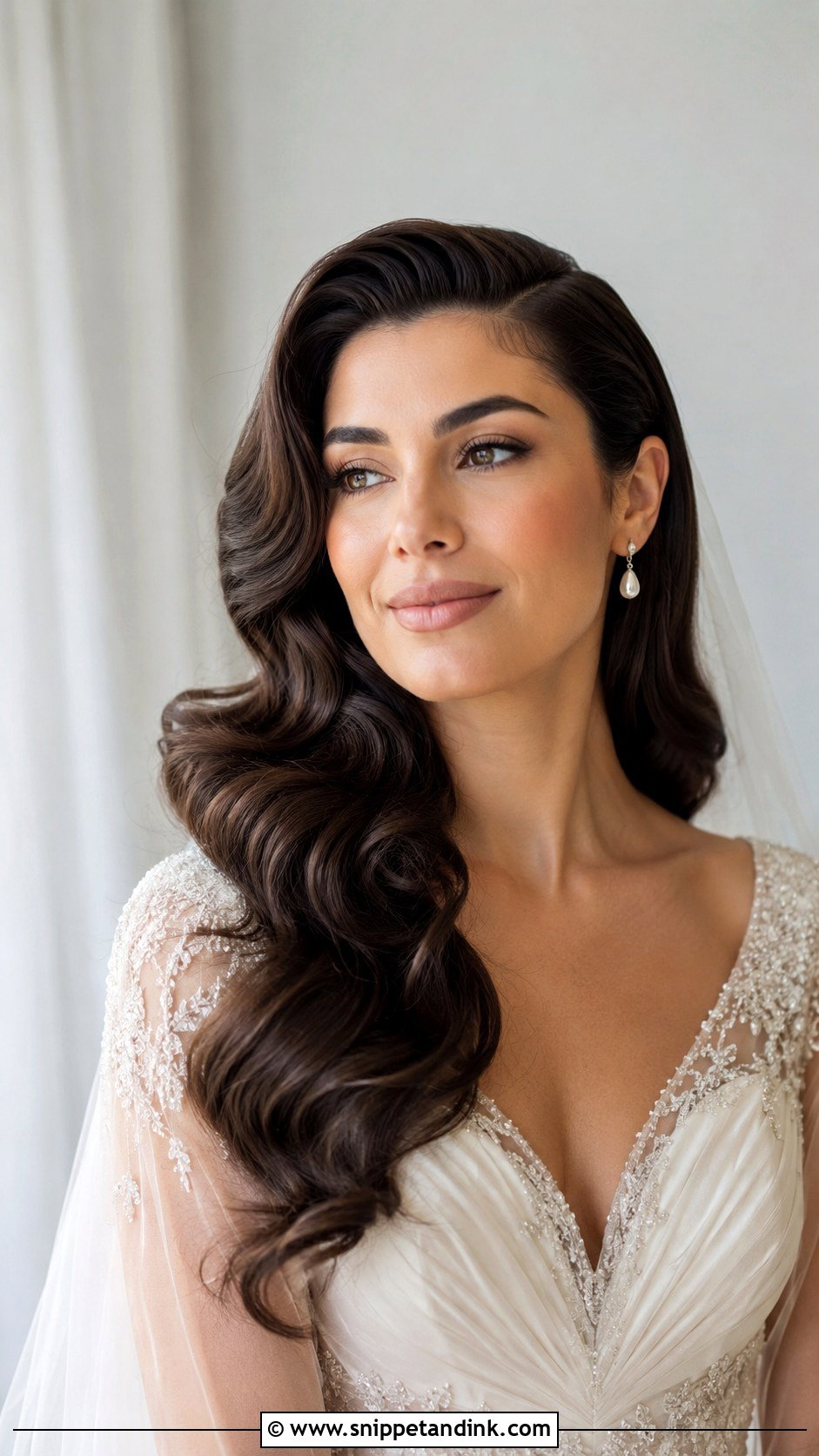
A retro ponytail can look surprisingly formal. The crown is lifted, the sides are smooth, and the ends are curled so they bounce rather than hang. Wrapping a section of hair around the elastic makes the biggest difference; a bare band reads as gym hair. It needs medium to long hair with some density. A pearl clip or satin bow at the base pushes it toward vintage.
14. Brushed Out Curls Wedding Hair
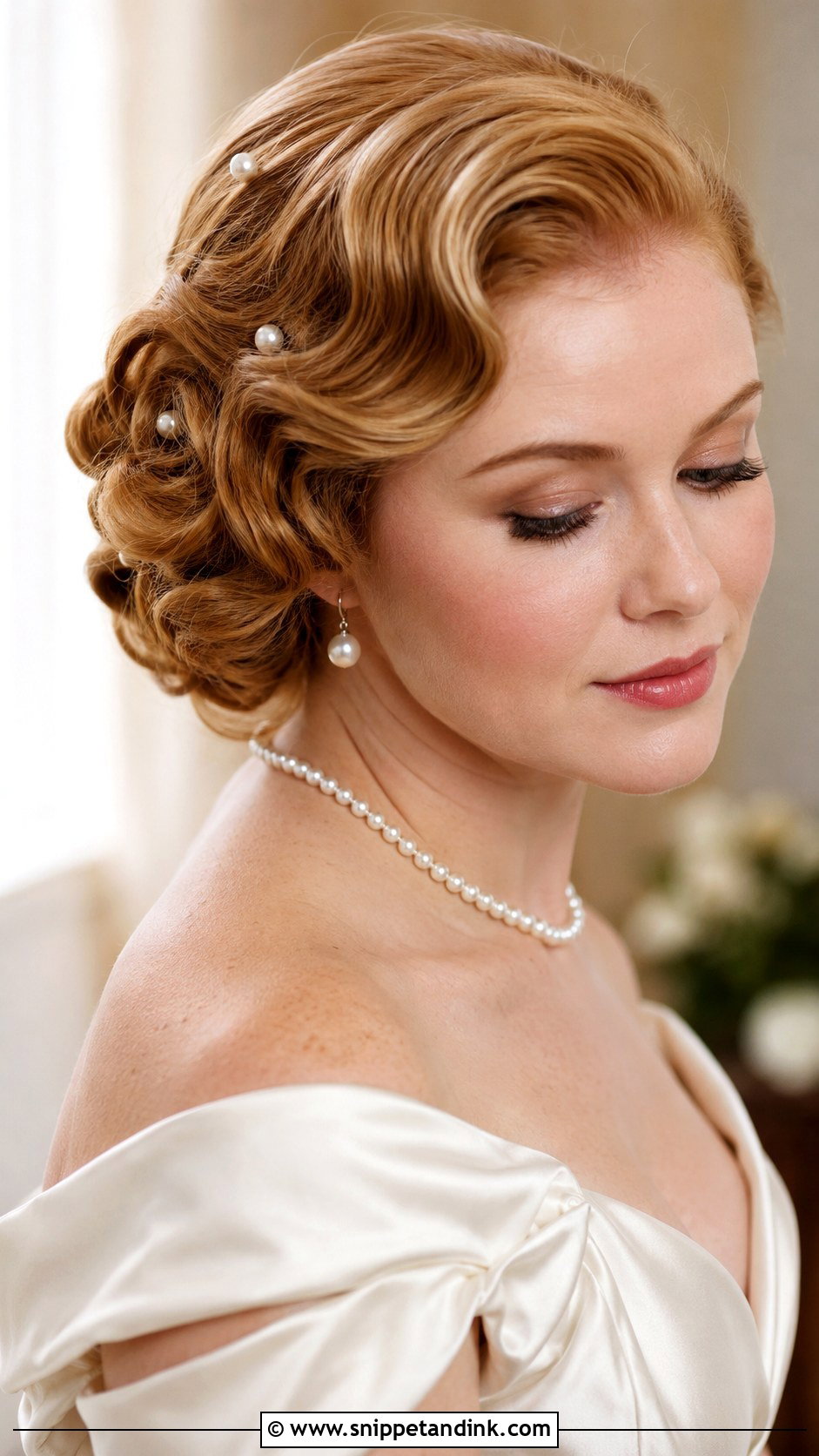
Brushed-out curls sit between modern waves and the sculpted looks earlier in this list. The curls are set, then brushed together until they become soft waves with air in them. Long hair shows the movement from crown to ends. A deep side part makes it more glamorous; a centre part feels more relaxed. Use a light hold spray only, because heavy product pulls the brushed waves back into separate ringlets.
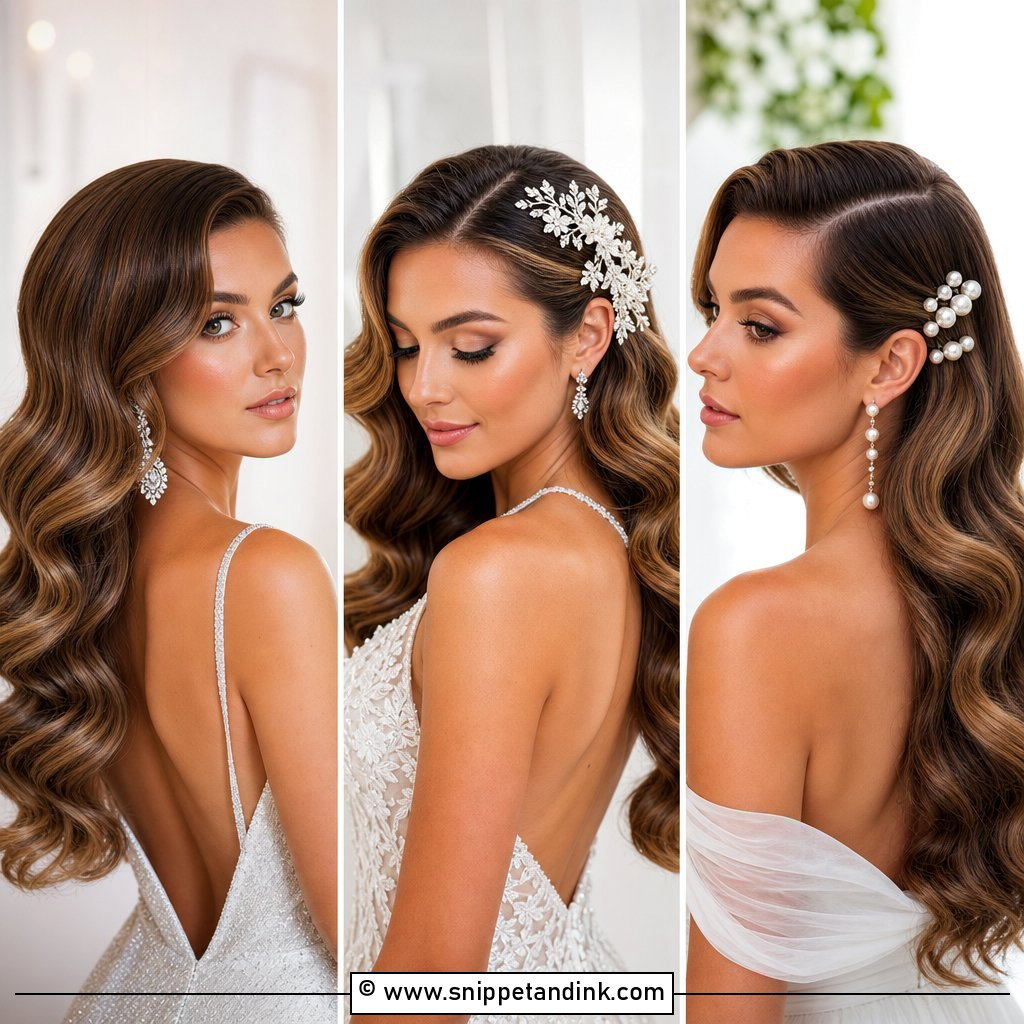
15. Vintage Bridal Updo With Pearls
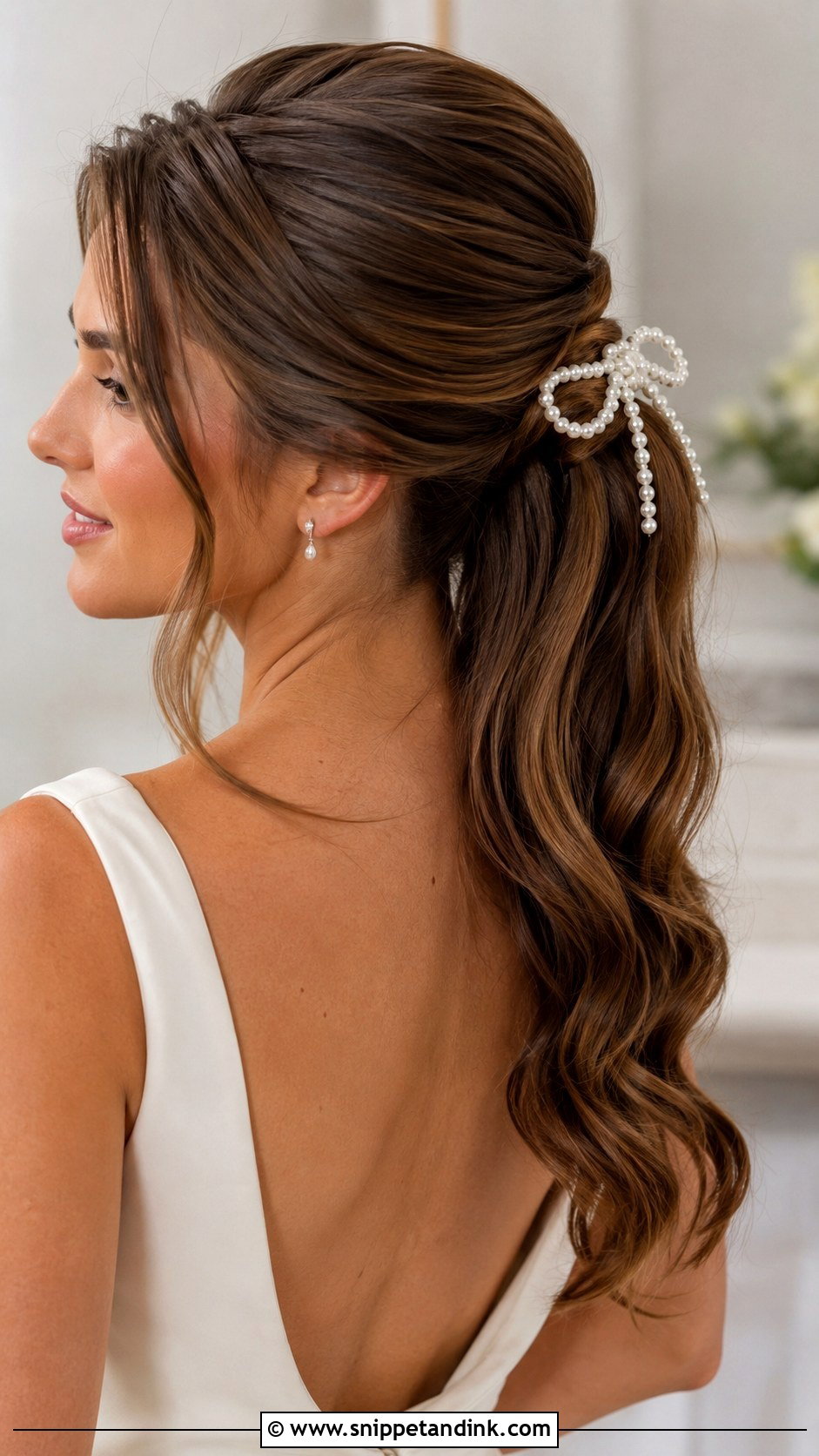
A vintage updo with pearls is really about placement. The base can be a low bun, a French twist, a chignon or a rolled updo, and the pearl pins follow its curves rather than scattering across the surface. I place them last, after the veil is in, so they don’t end up hidden under tulle. Odd numbers and uneven spacing look more natural than a straight row. Soft front waves make it romantic; a sleek front makes it formal.
Birdcage Veils, Combs and Pins on Sculpted Hair
Vintage accessories behave differently on set hair than on loose curls. A sculpted wave has no loose sections for a comb to grip, so I build a small anchor first: two crossed grips hidden under a wave or a tiny teased patch.
The birdcage veil
It usually sits on one side, angled across the opposite eye. I attach it on the side where the part sits, so the veil and the wave pattern move in the same direction. Try it at your trial with your glasses or lashes on; netting can catch on long lashes.
Combs and barrettes
Heavy jewelled combs drag finger waves out of shape within an hour. On sculpted styles, lighter metal or a slim barrette is safer. On updos like the chignon or Gibson tuck, a weightier comb is fine because the bun holds it.
Flowers
A single fresh bloom tucked at the side of a wave is very 1940s, but real petals wilt in warm rooms. I wire flowers on a small pin so they can be swapped or removed after photos without disturbing the set.
Old Shapes Still Need Modern Comfort
Retro hair works best when it belongs to the whole outfit, not just the head. Old Hollywood waves, a sculpted finger wave bob, a soft chignon and a beehive each point to a different decade and a different dress. At your consultation, talk through the neckline, the veil, your hair length and how much tension your scalp tolerates. Then do a trial and keep the style in for the afternoon. Vintage shapes rely on hold and balance, and the only way to know they’ll last is to wear them.
You'll Like These Ideas:


Leave a Reply