
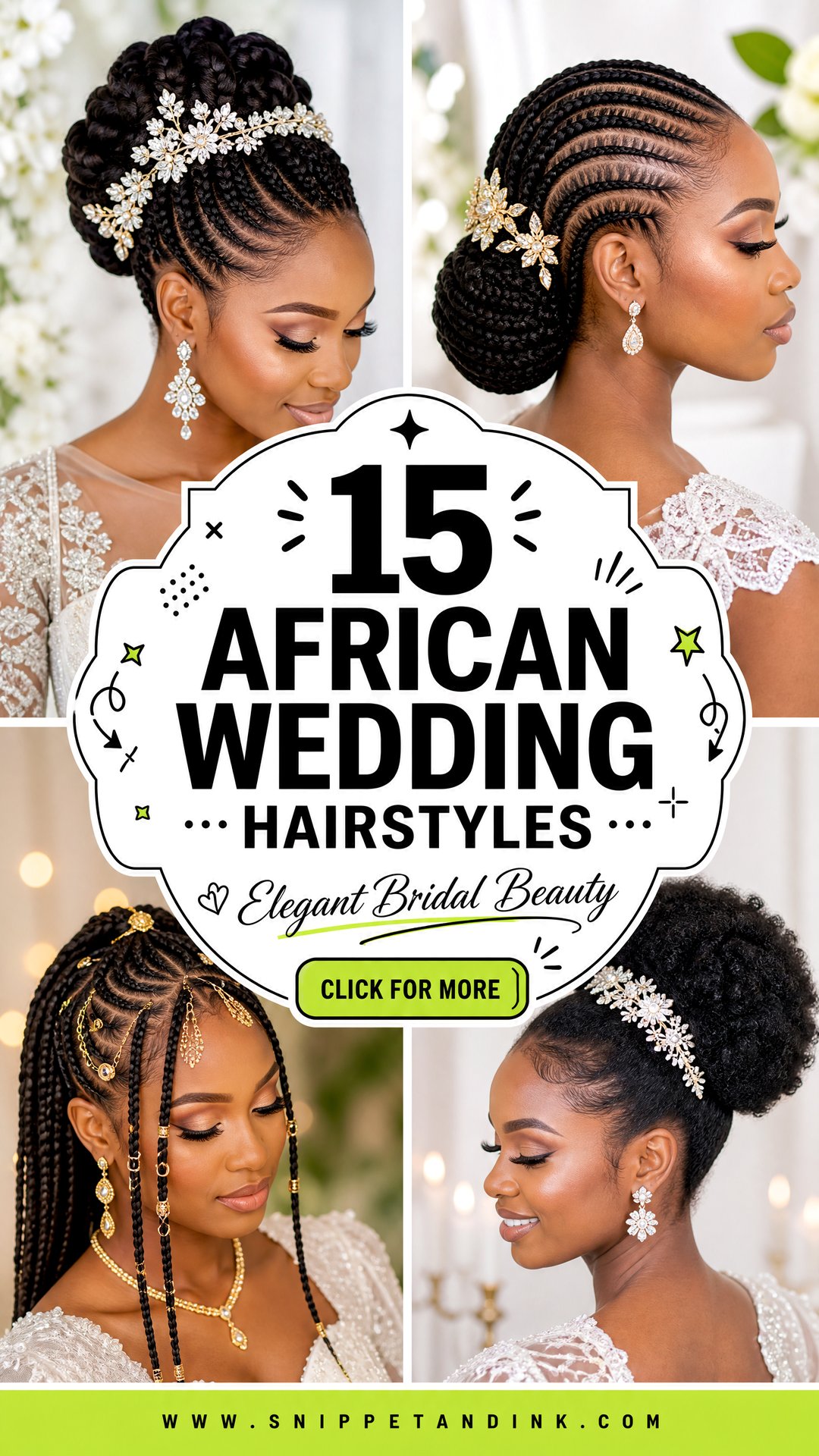
African bridal hair carries a lot at once: meaning, family expectation and the practical job of lasting through a very long day, sometimes two or three. A wedding style can be soft or sculptural, traditional or modern, protective or freshly set, and often several of those together. Before I agree to any photo a bride shows me, I ask what has to sit on or around it: a veil, a gele or headwrap, beads, a crown, heavy earrings, the neckline, the weather. Braids, locs, twists, natural curls, buns and ponytails all have a place here. The fifteen styles below show how each can look polished and still let you move, dance and sit comfortably.
One Hairstyle, Two Ceremonies
Many African weddings include a traditional ceremony and a white wedding, either on the same day or a few days apart. That usually means a headwrap, gele or traditional headpiece for one part and a veil or bare styled hair for the other. The hair underneath has to work for both, and the two looks pull in different directions.
A gele is tied around the head and needs a fairly flat, low base to sit on. A high puff, a tall goddess braid crown or a top bun will push it up and make it slip. Low buns, cornrows into a nape bun, flat twists and halo braids go under a headwrap cleanly and still look finished when it comes off. If you want height for the white wedding, I’d pin a bun on after the traditional ceremony rather than building it in from the start.
Ask the person tying your gele to come to part of your hair trial, or send them photos of the base. Adjusting a bun’s height in advance is far easier than retying a headwrap three times on the morning.
1. African Bridal Braided Updo
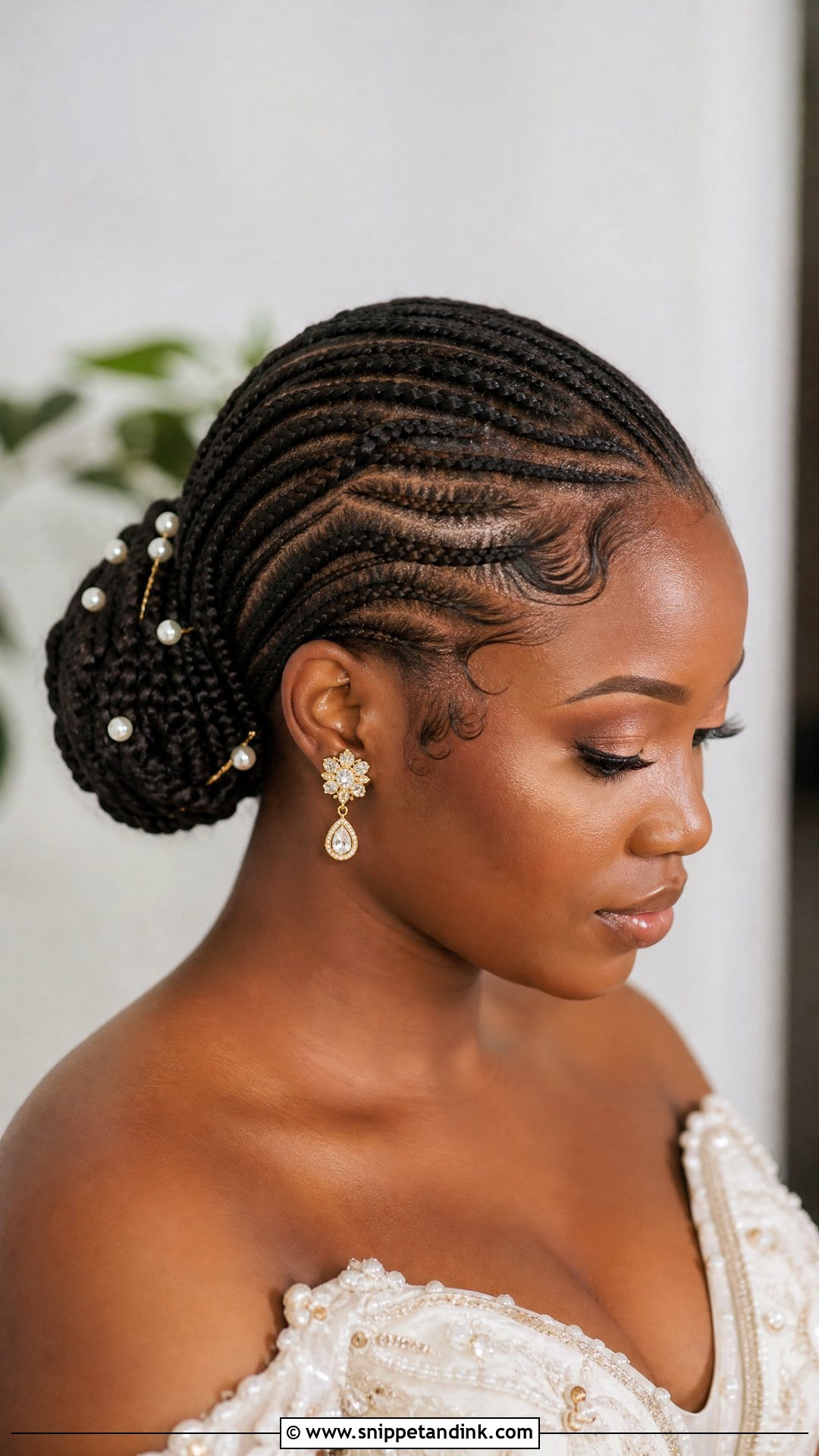
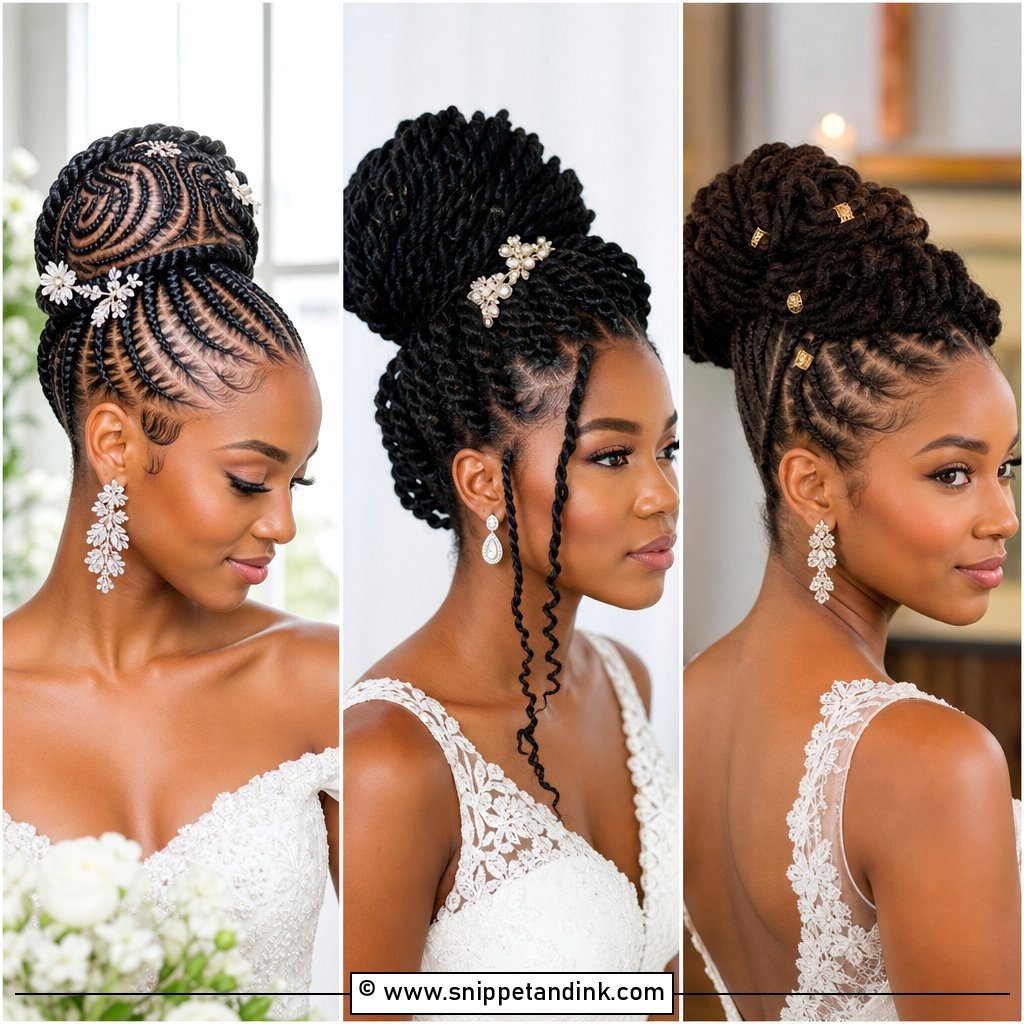
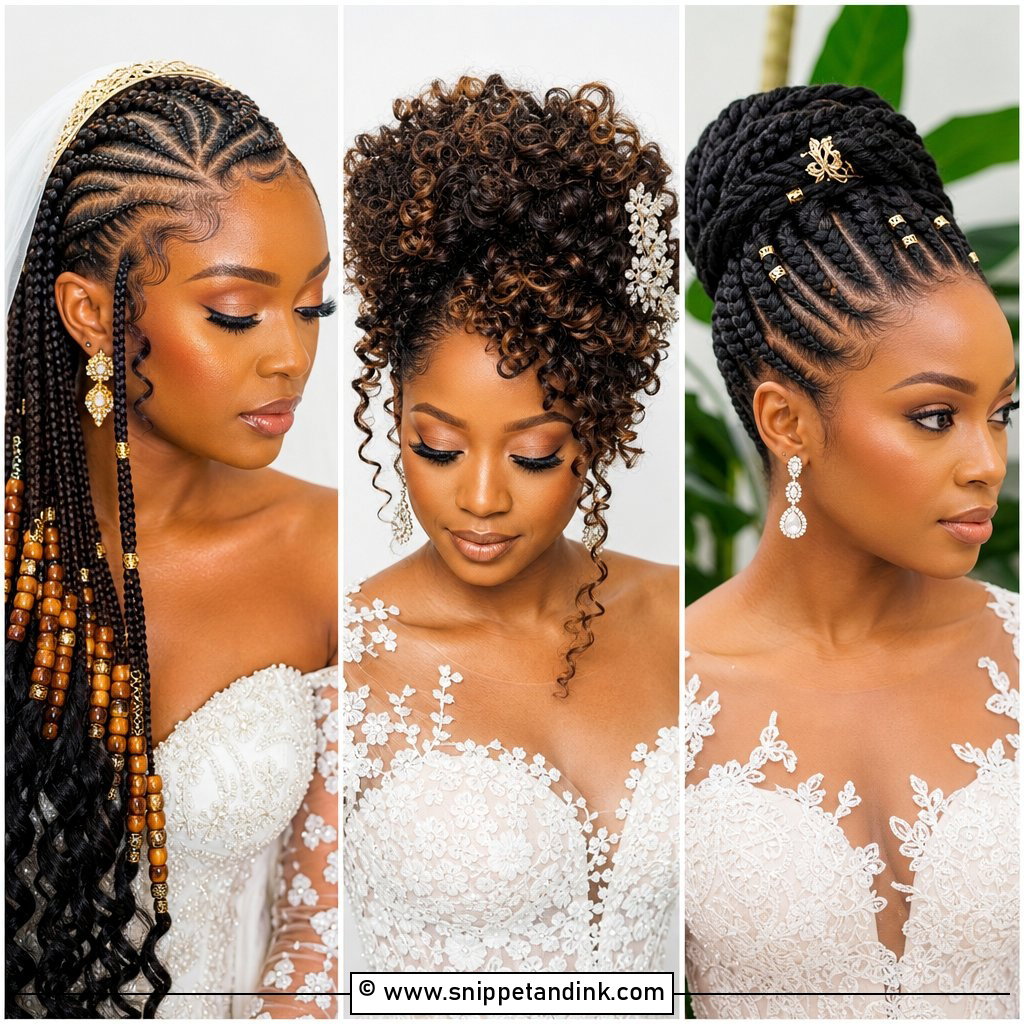
Cornrows, stitch braids or medium braids shaped into a bun, crown or twisted knot give a lifted, detailed style that keeps the face open. That openness is why it takes veils, gold pins, pearls, beads and traditional jewelry so well. It’s also protective, and it holds its shape from the morning photos to the last dance. The bun size is my main check at a trial: too small and it disappears behind a veil; too large and it overpowers a narrow face. Ask for soft, unstrained edges.
2. African Wedding Cornrow Bun
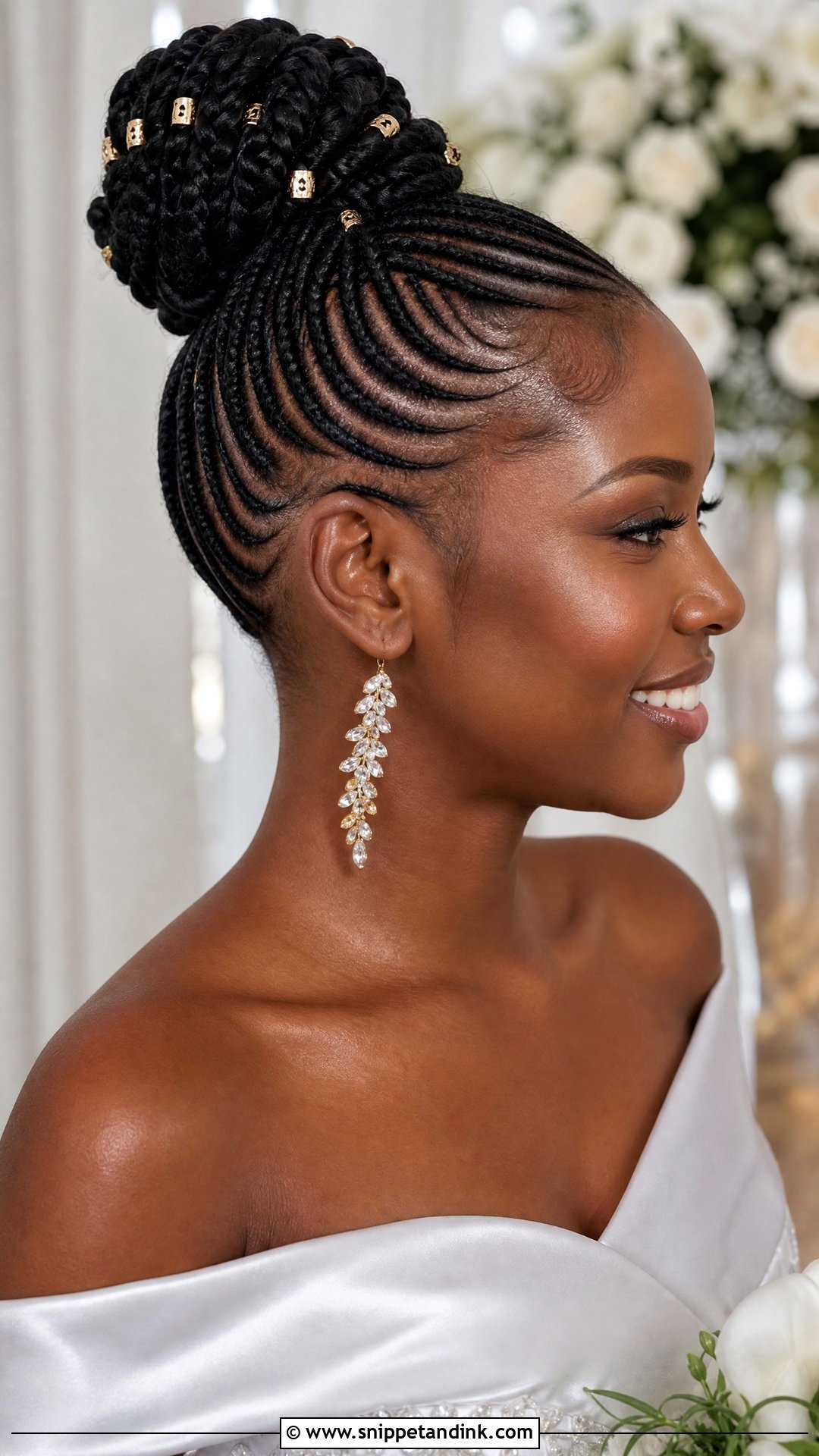
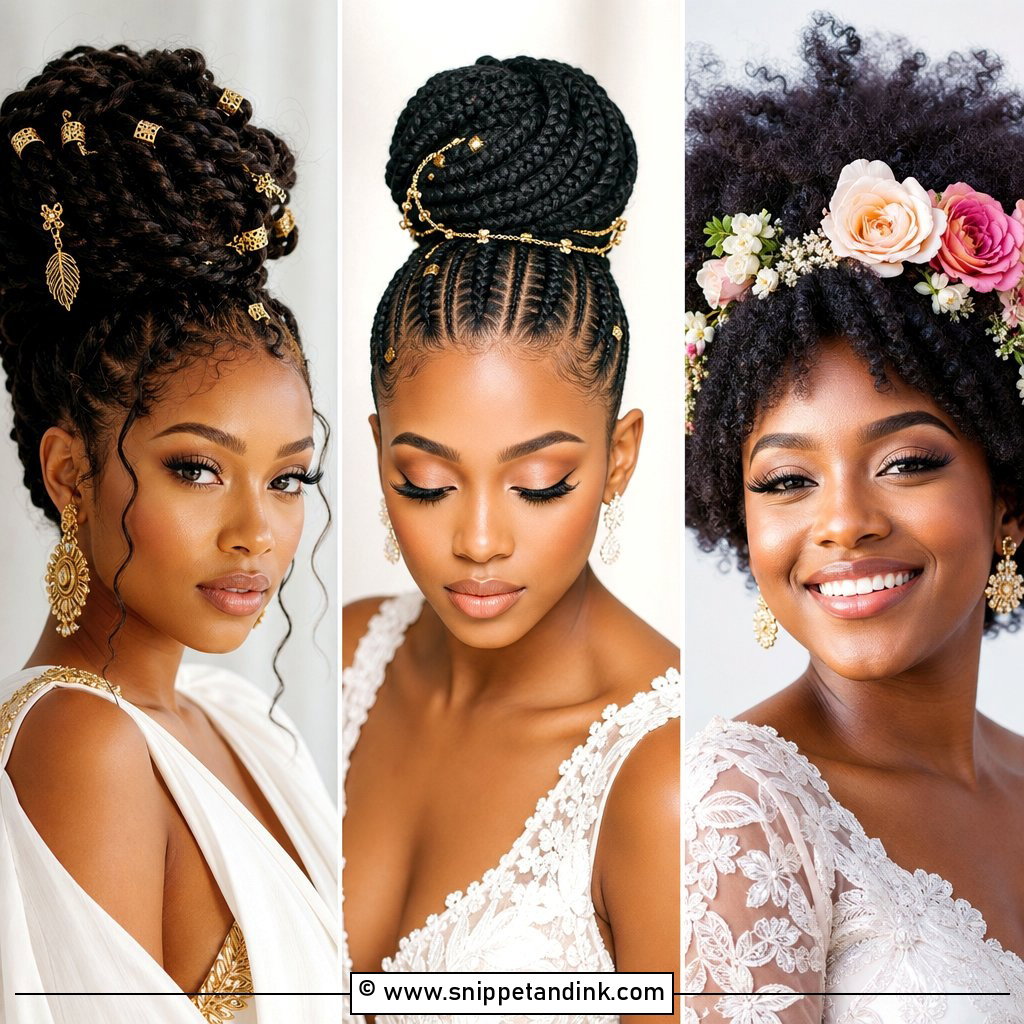
Cornrows can run straight back, curve, sweep to the side or form a heart, swirl or goddess pattern before meeting in a low or high bun, so the braiding itself becomes the decoration. With every strand off the shoulders, it’s a cool, comfortable choice for heat and outdoor ceremonies. Statement earrings, beaded accessories and a structured neckline all sit well beside it. A few small gold cuffs or pearl pins soften it. Tension is the thing to speak up about while it’s being braided, not after: a pattern pulled too tight at the hairline is sore by evening and can damage edges over time.
3. African Wedding Box Braids
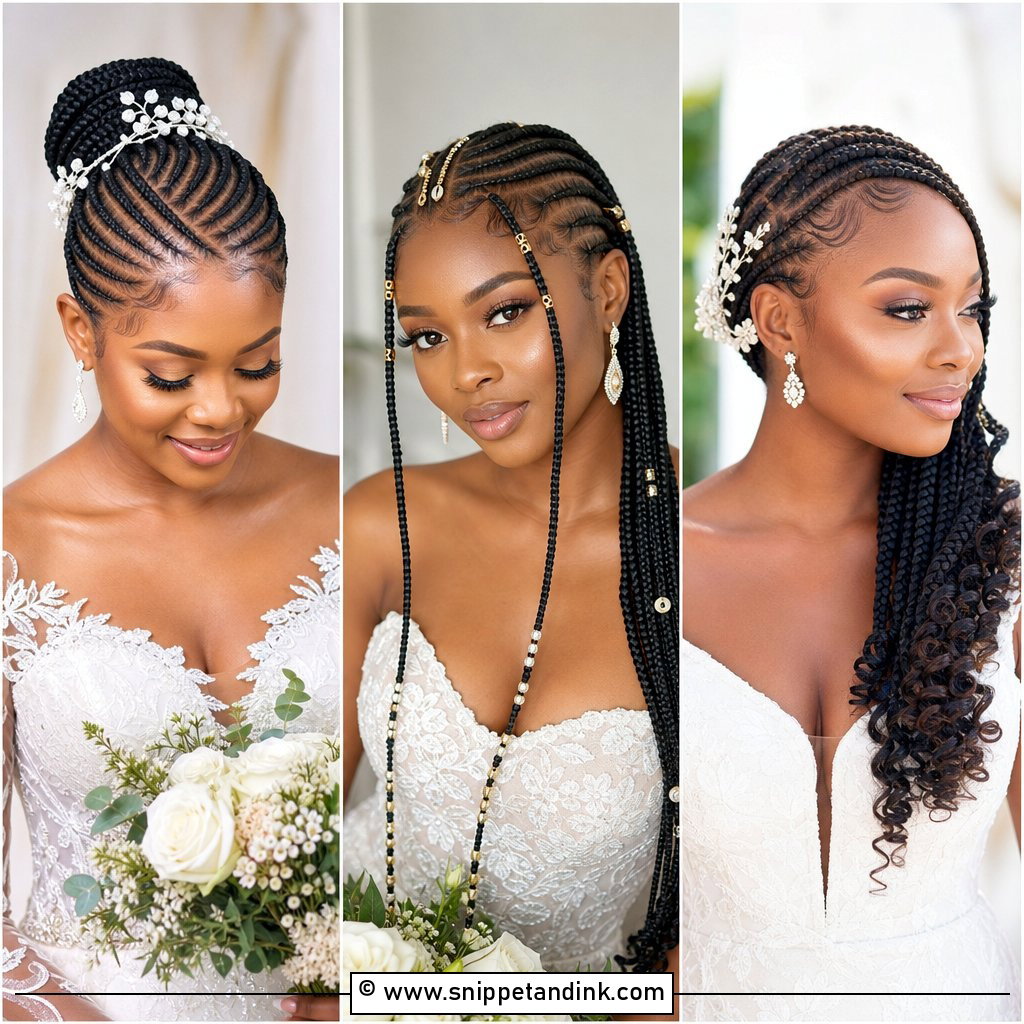
Length, movement and freedom to restyle are what African wedding box braids offer. They go up into a high or low bun, half up, swept to one side or left long and cascading. Smaller braids read more delicate and formal; medium braids give more volume in photos. Because they’re installed before the wedding week, your mornings are freed for fittings. Clean, even parts and sealed ends separate a bridal set from an everyday one, and I check both in daylight. Beads, cuffs, pearls or a jeweled comb finish it.
4. African Wedding Fulani Braids
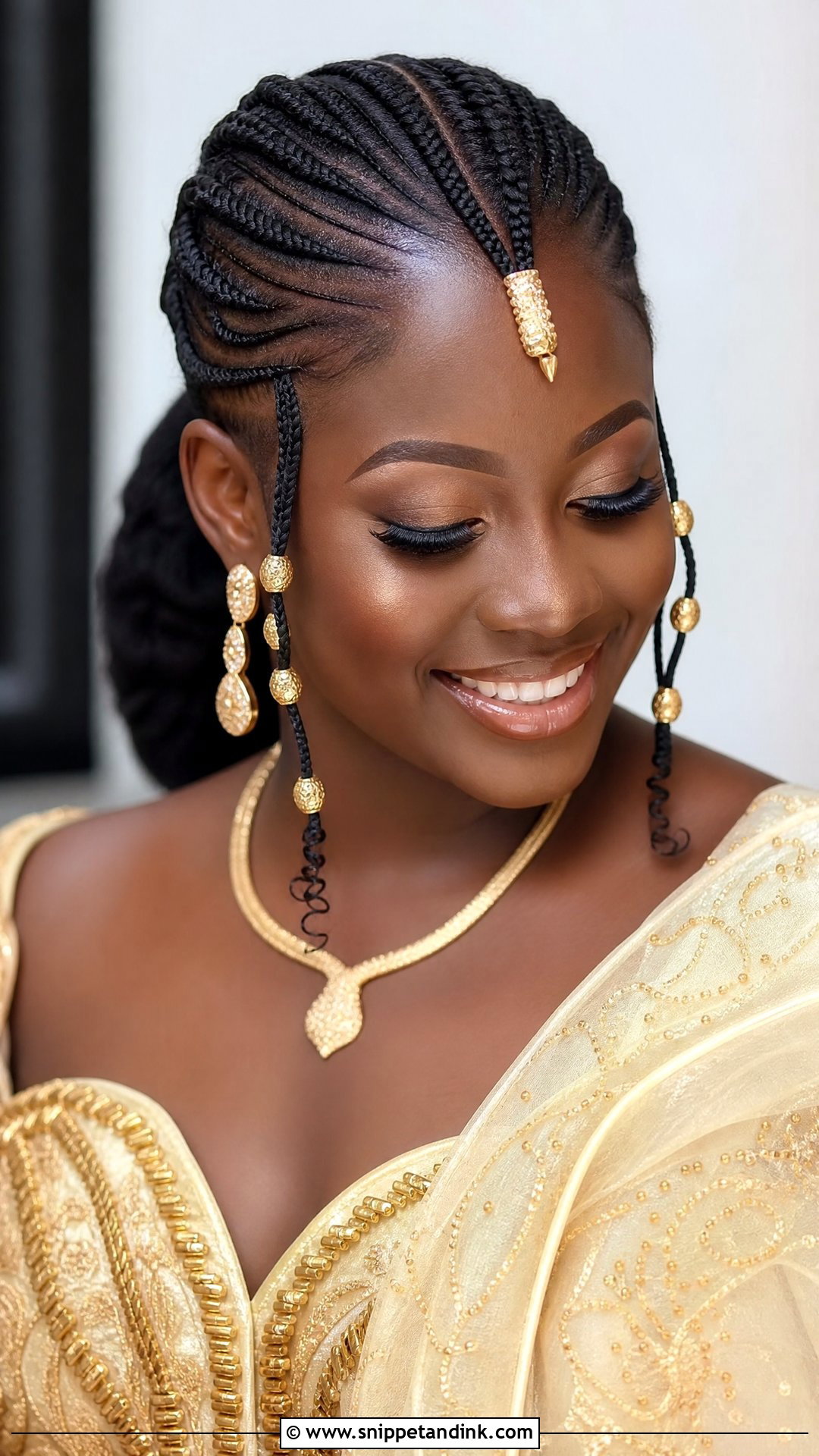
Center braids, side braids, beads and face-framing detail give Fulani braids their character, a cultural look that still reads modern. The length can hang down the back, gather into a braided ponytail or sit in a low bun. Beads in gold, pearl, clear or ivory can echo the dress and jewelry. The pattern frames the face, so it’s strongest in front-facing portraits. My one caution is weight at the temples: I’d keep beads light near the hairline and choose lightweight extensions, since that’s where a long day pulls first.
5. African Wedding Goddess Braids
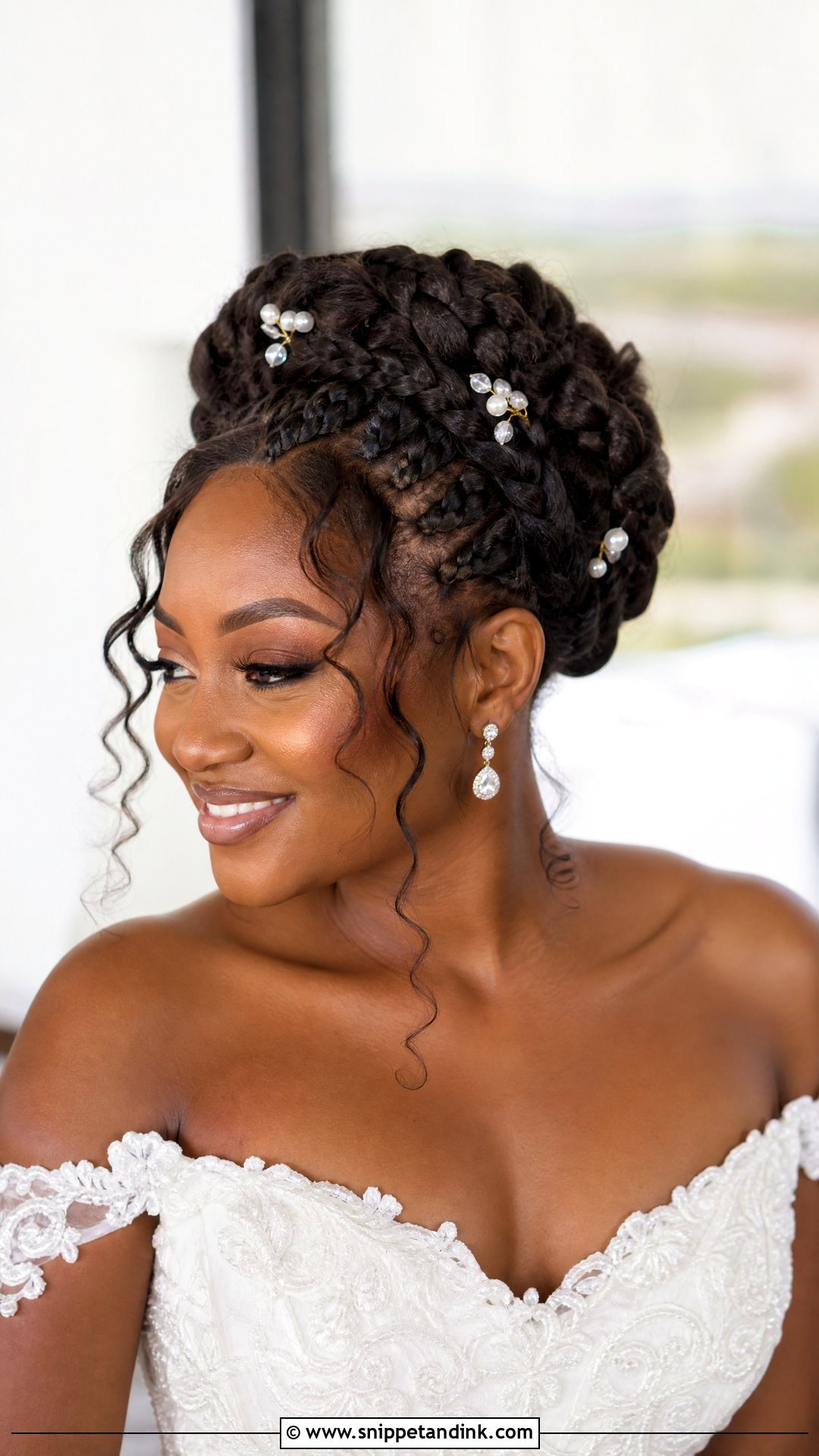
Goddess braids are larger braids, often with curly pieces worked in, shaped into a crown, updo, bun or side-swept design. They make an entrance on their own, so you need very few accessories. A goddess crown takes a veil set behind the braid, or small floral pins tucked along the curve. The finish depends on even braid sizing; one braid noticeably thicker than the rest shows immediately in a crown shape. Smooth, even and comfortably tight is the target, not rigid.
6. African Wedding Halo Braid
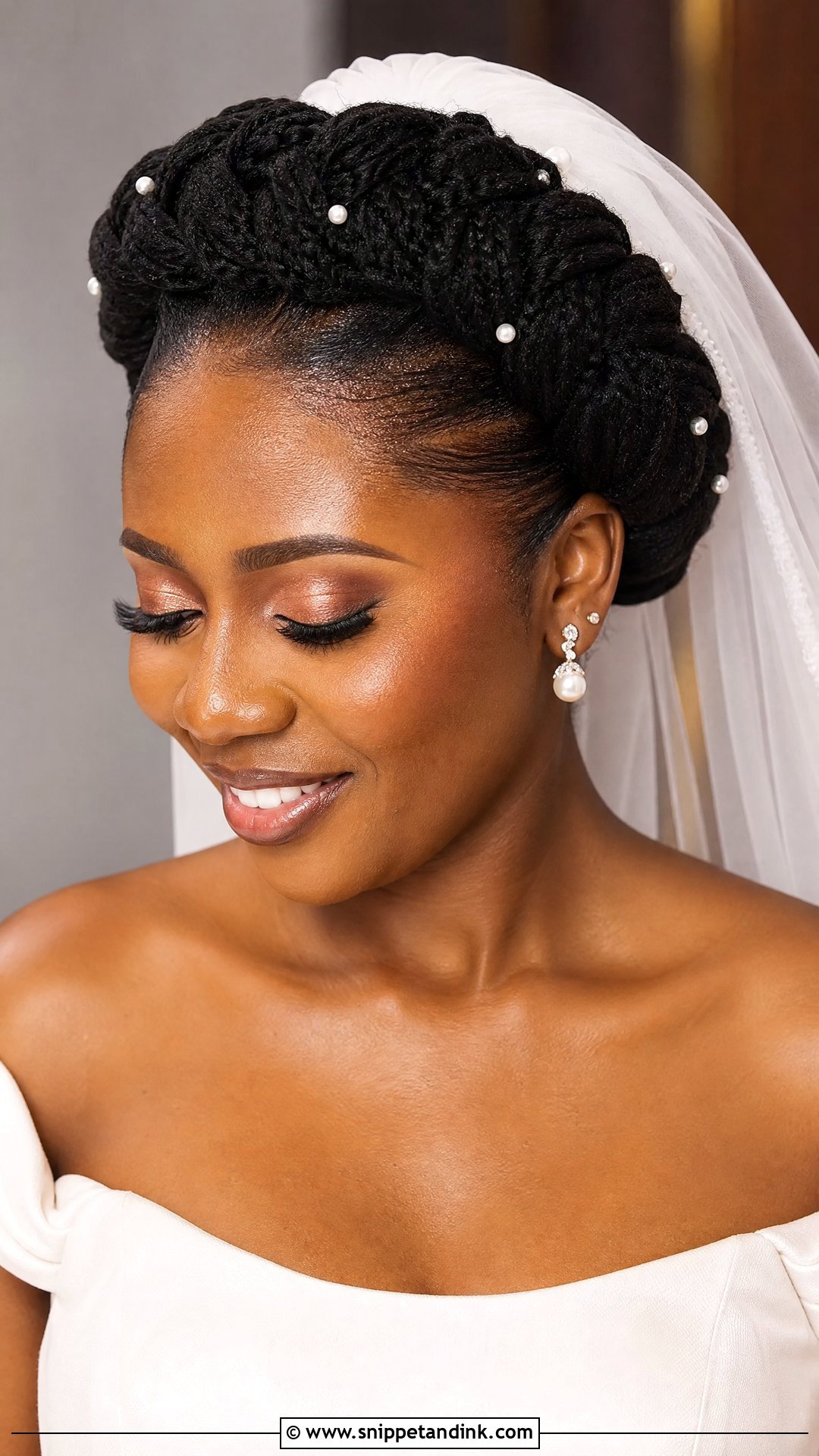
Wrapped around the head like a soft crown, a halo braid gives elegance without much height, which also makes it one of the easiest styles to wear under a headwrap later. It can be built from natural hair, added hair, or braids and twists combined. It shows off the cheekbones and earrings and stays secure all day. Lace gowns, off-shoulder dresses, high necklines and traditional fabrics all suit it. A few curled tendrils or tiny pearl pins soften it, and because it’s quick to wear and flattering on most faces, I often suggest it for bridesmaids too.
7. African Wedding Twist Updo
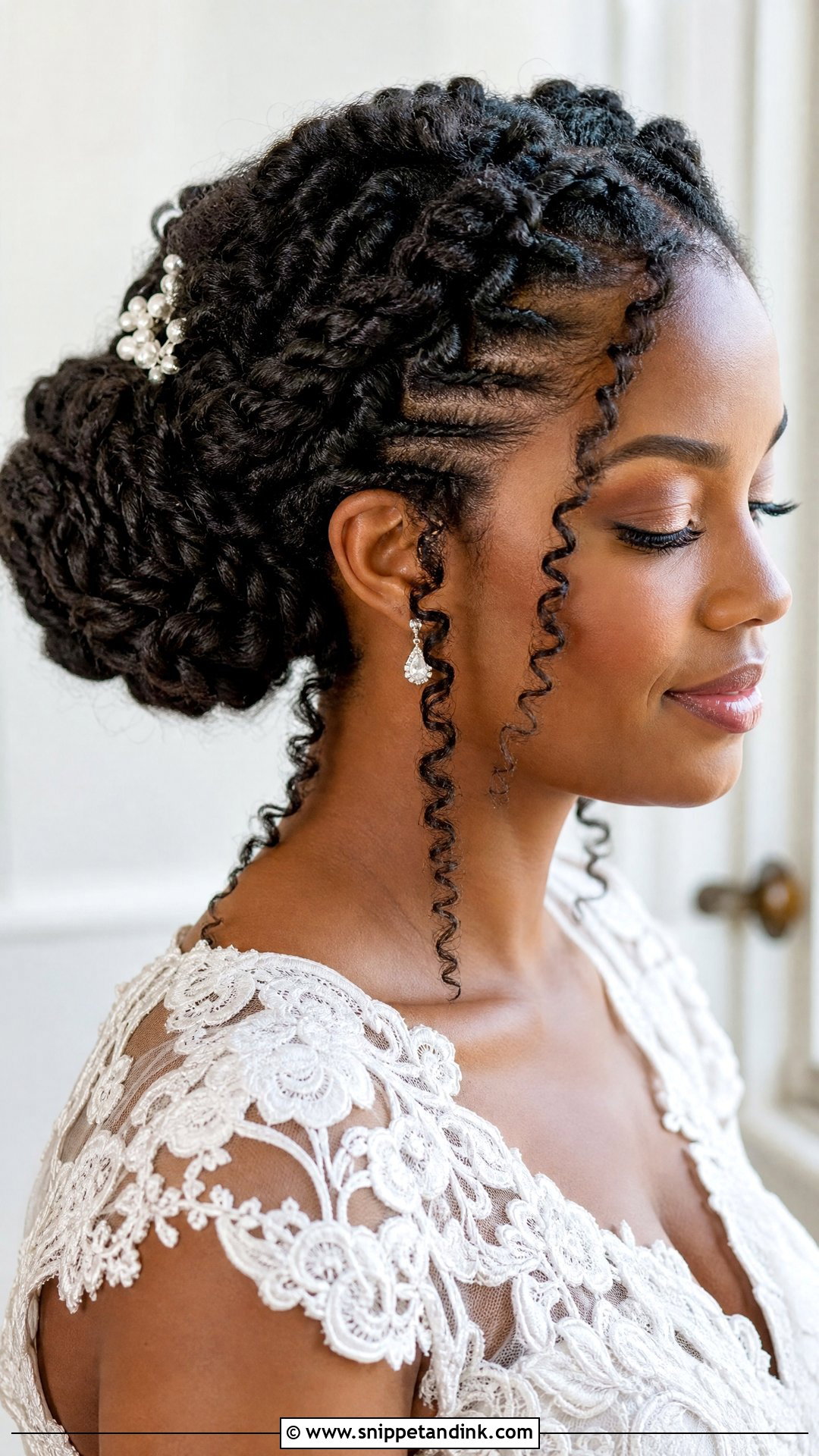
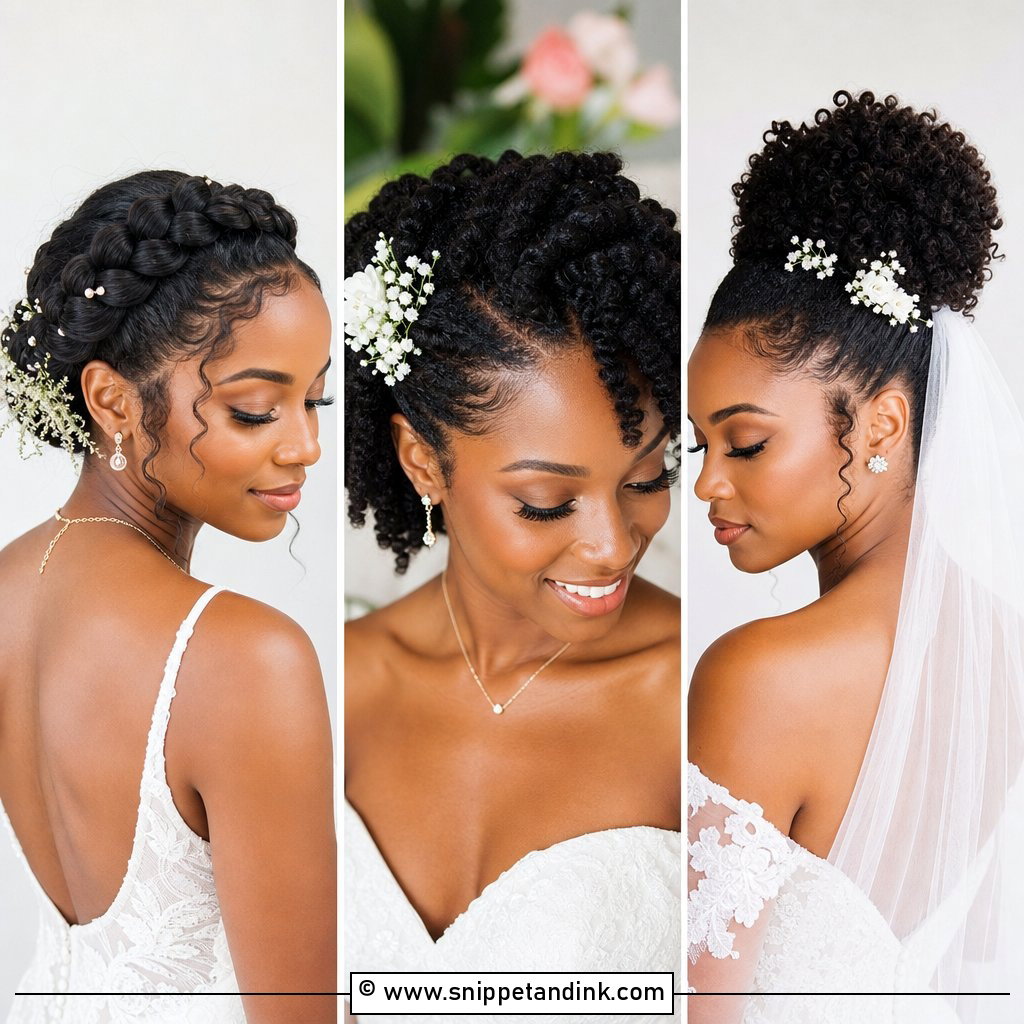
A twist updo is the softer cousin of a cornrow style: flat twists, two-strand twists, Marley twists or mini twists gathered into a bun or crown. It’s protective but less structured, with a plush texture that suits floral pins, combs or a simple veil. A low twisted bun feels classic; a high one is dramatic. I always walk around the chair before finishing, because wedding photographers shoot from behind and the side as often as the front, and twists show any lopsidedness.
8. African Wedding Natural Hair Updo
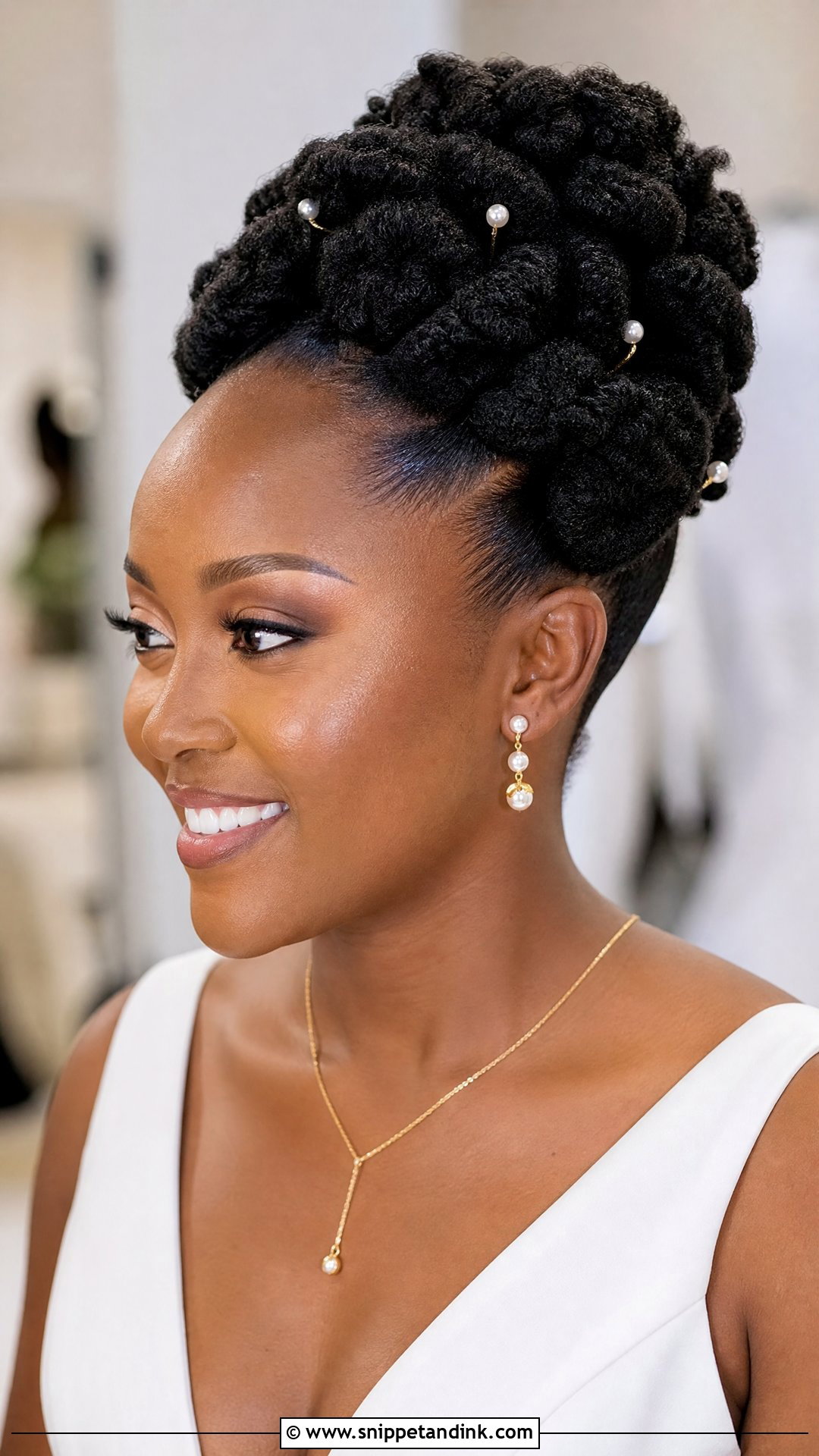
An African wedding natural hair updo makes your own coils the main feature, shaped into a puff, roll, tucked bun, faux hawk or sculpted crown. Defined coils, stretched hair and twist-out texture all work. Pearl pins, a bridal comb or a delicate headpiece add detail if you want it. Prep decides how it holds: I moisturize and seal, then use a finishing product that controls frizz without setting hard, because stiff natural hair cracks and flakes when you hug people.
9. African Wedding Afro Puff
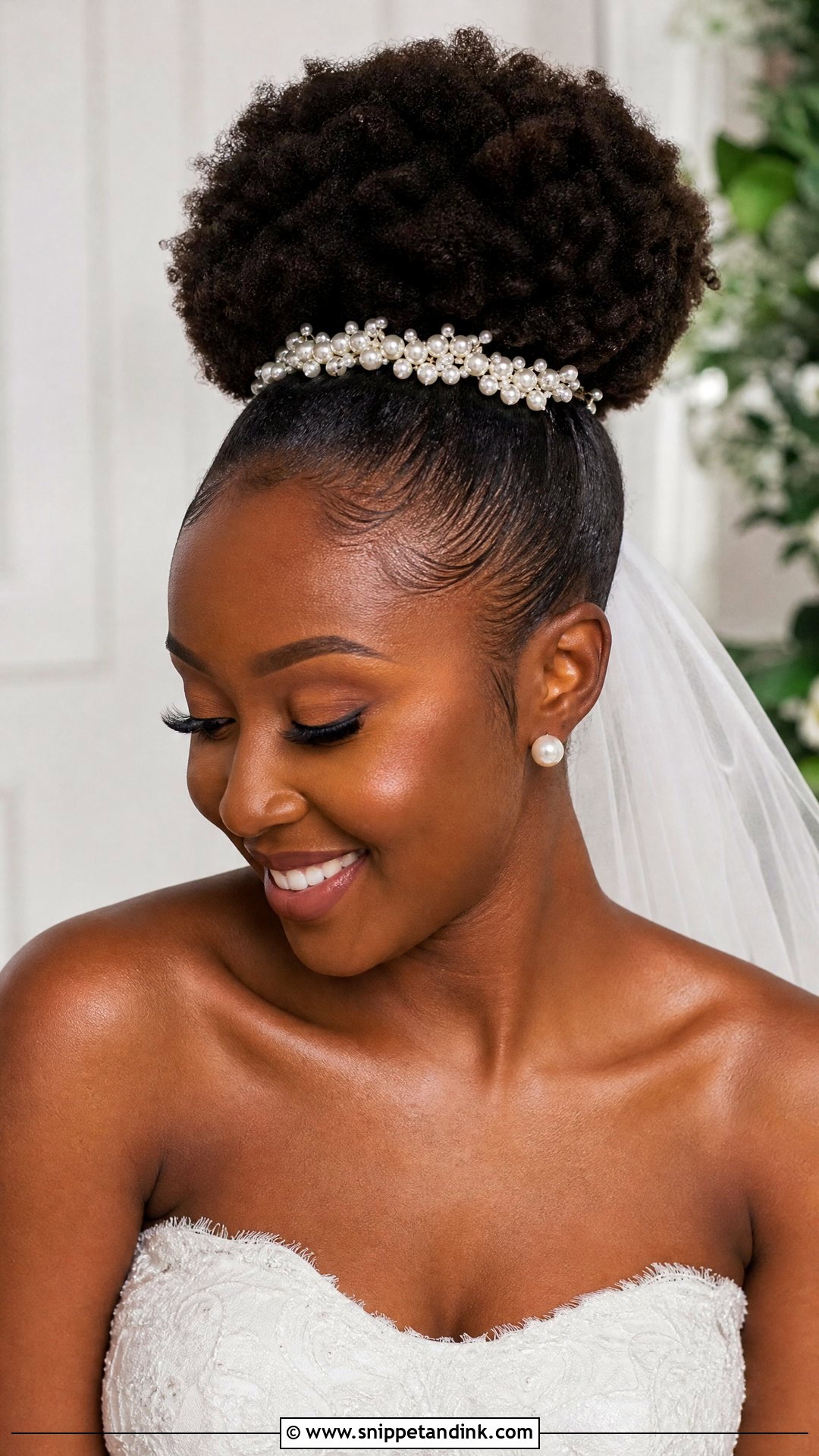
High, it’s bold and gives height; low, it’s softer and more romantic. The afro puff is one of the easiest ways to show natural hair without an installation. I like a sleek base with full texture at the top, which gives a clean bridal contrast. A tiara, veil, floral comb or gold cuffs around the base all suit it. Define the shape and keep the edges smooth but not strained. Gathering with a fabric band rather than a tight elastic spares the hairline.
10. African Wedding Loc Updo
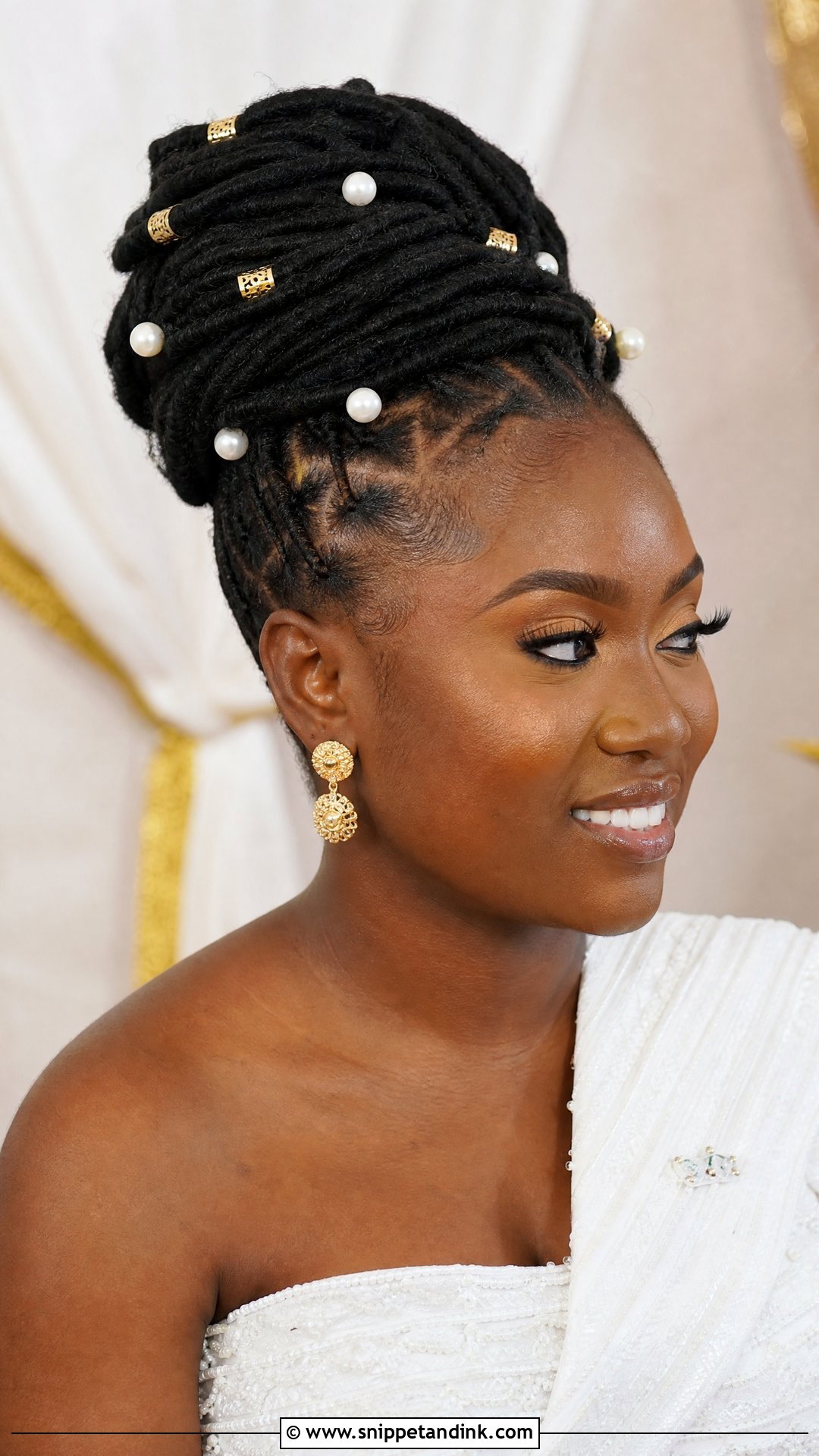
Locs wrapped into a high bun, barrel roll, crown, chignon or sculptural shape make an African wedding loc updo with rich dimension even before accessories. Gold cuffs, shells, pearls or a jeweled pin add a ceremonial touch without hiding the pattern. Locs hold their shape all day, which makes this very practical. Long, mature locs are heavy, though, and a high bun puts that weight on the crown for hours. Work with someone who understands loc tension and placement; I’ll often sit a large loc updo slightly lower for comfort.
11. African Wedding Loc Ponytail
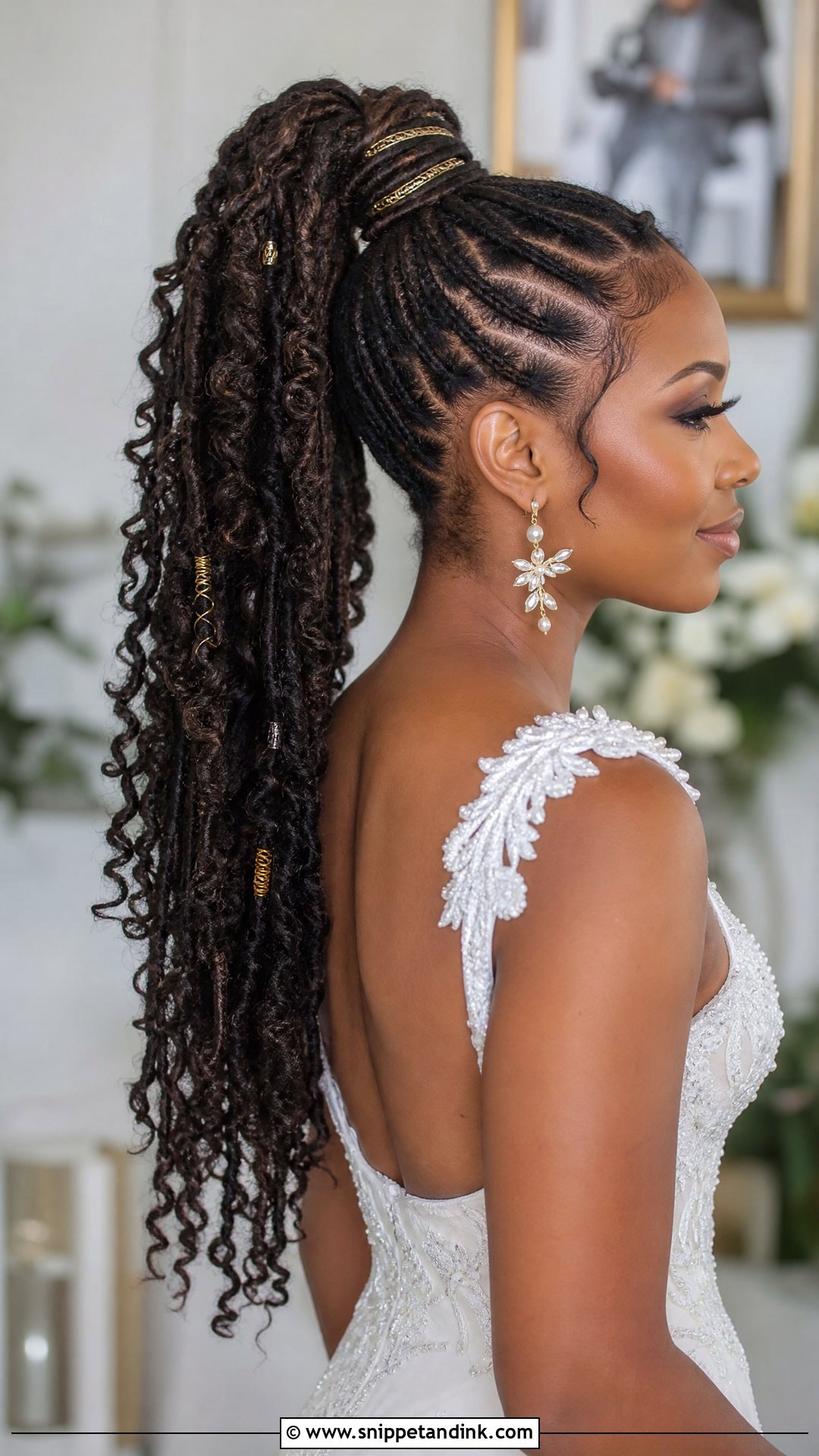
An African wedding loc ponytail keeps the face open while showing off length and movement. The locs gather high, low or to the side, wrapped at the base for a finished look. Long locs, sisterlocks, faux locs and goddess locs all suit it, and gold wire, pearls, cuffs or a hair vine dress it up. High reads glamorous; low reads sleek. With thick or long locs, I secure the base with more than one tie and a couple of anchoring pins, since the swing of the ponytail works a single band loose.
12. African Wedding Bantu Knot Updo
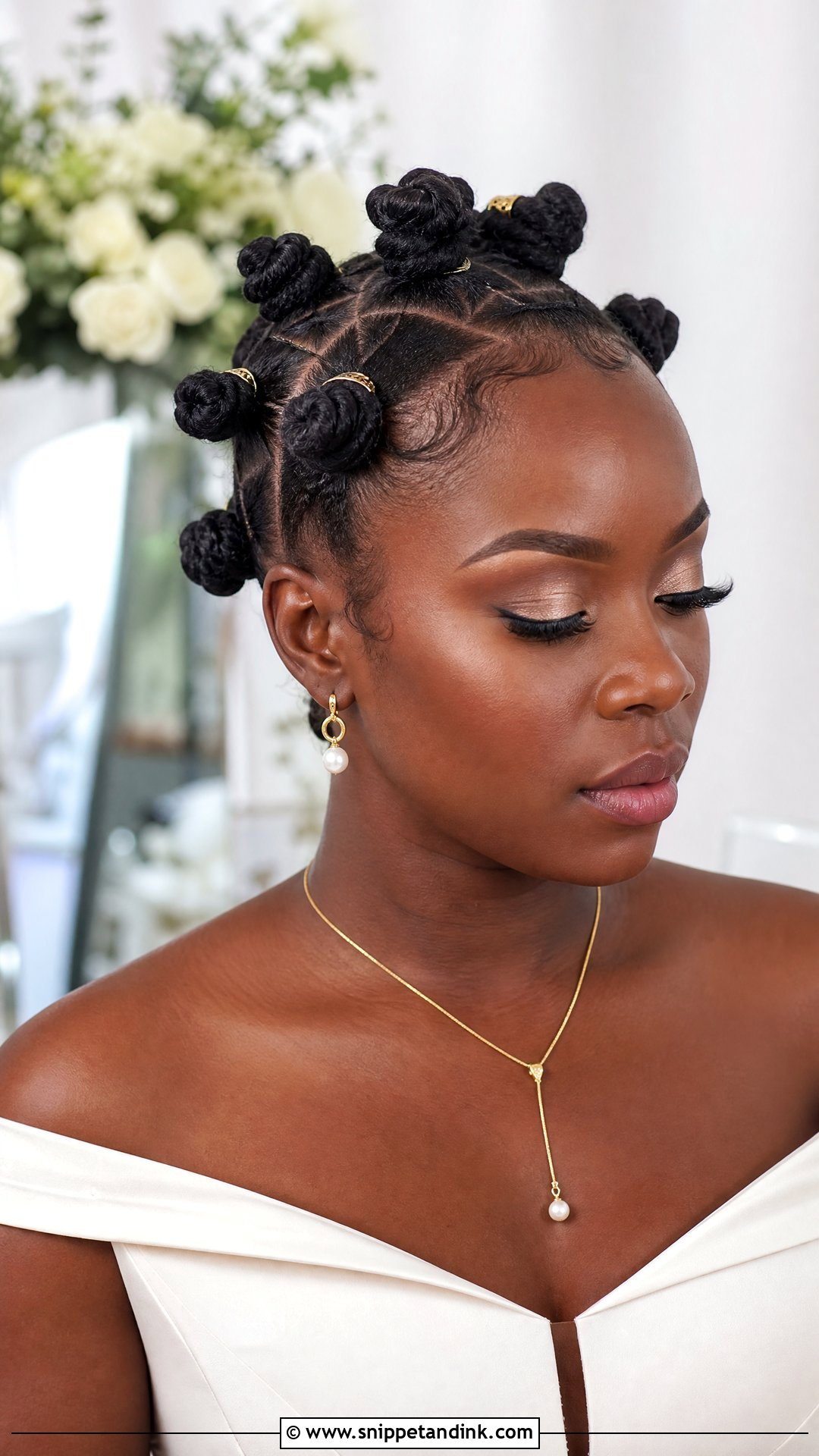
Bantu knots arranged across the crown, along one side or mixed with flat twists and braids make an African wedding Bantu knot updo that is artistic and unmistakably cultural. Small knots create a fine pattern; larger ones bring height and drama. Gold cuffs, pearl pins or subtle beads make it bridal. Because the scalp and parting are on show, I measure sections carefully before knotting anything, and finish with a light oil so the parts look moisturized rather than dry in close-ups.
13. African Wedding Low Chignon
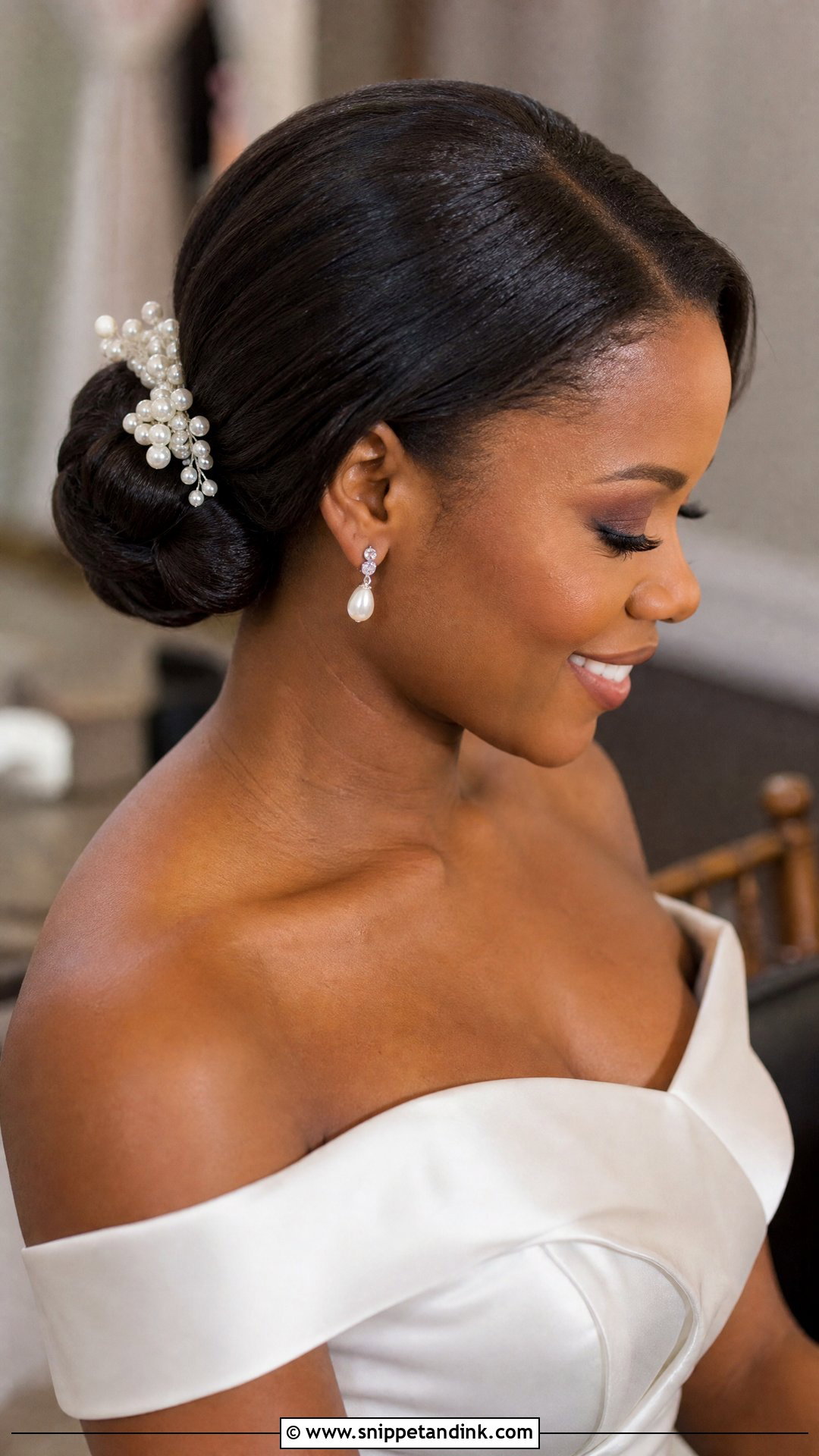
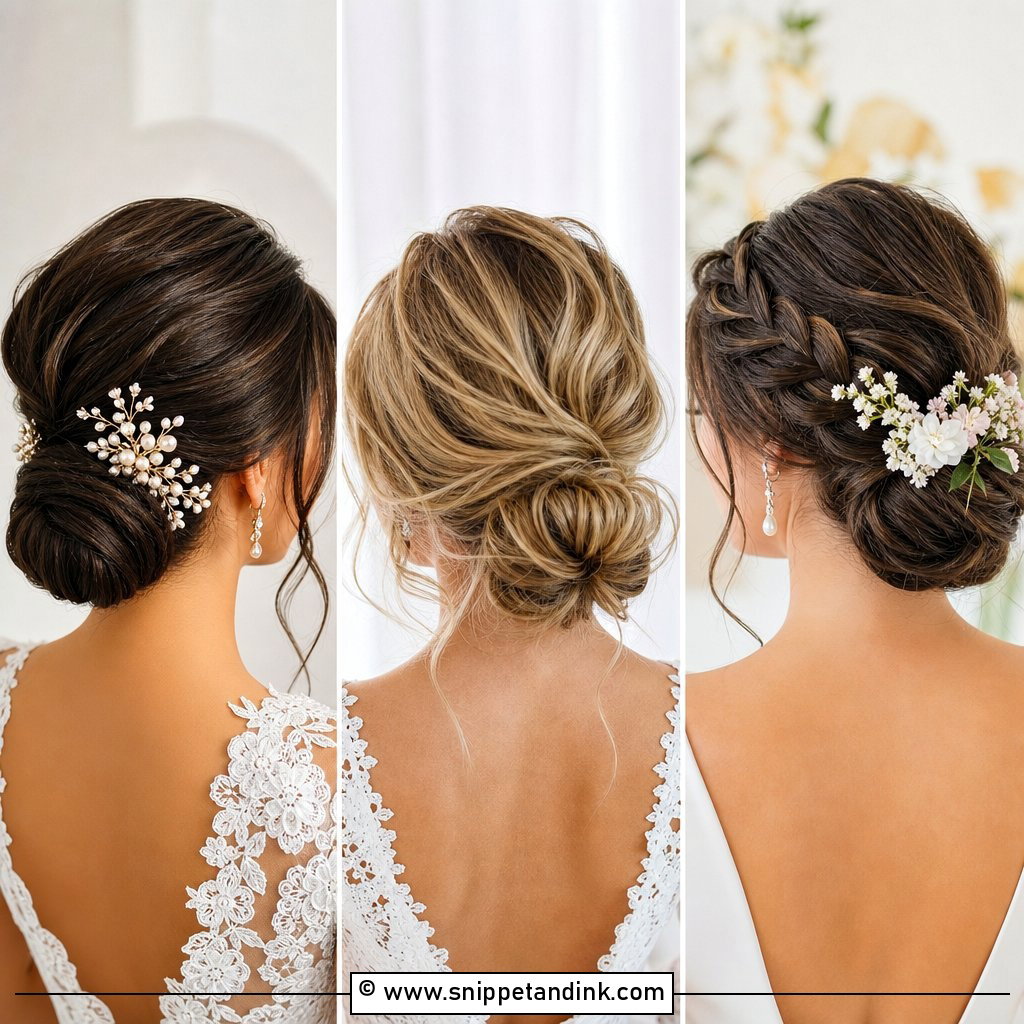
A low chignon gathers the hair at the nape into a bun, roll or tuck, the classic silhouette. Relaxed hair, silk-pressed natural hair, textured hair, braids, twists and locs can all be shaped into one. It sits well with veils, lace gowns, pearl earrings and traditional attire, and the weight rests low instead of pulling at the crown. On silk-pressed hair, humidity is the risk; I’d use a humidity-resistant finish and keep the chignon tight to the head so reverting edges don’t show. A side part or soft face-framing adds romance.
14. African Wedding Sleek Ponytail
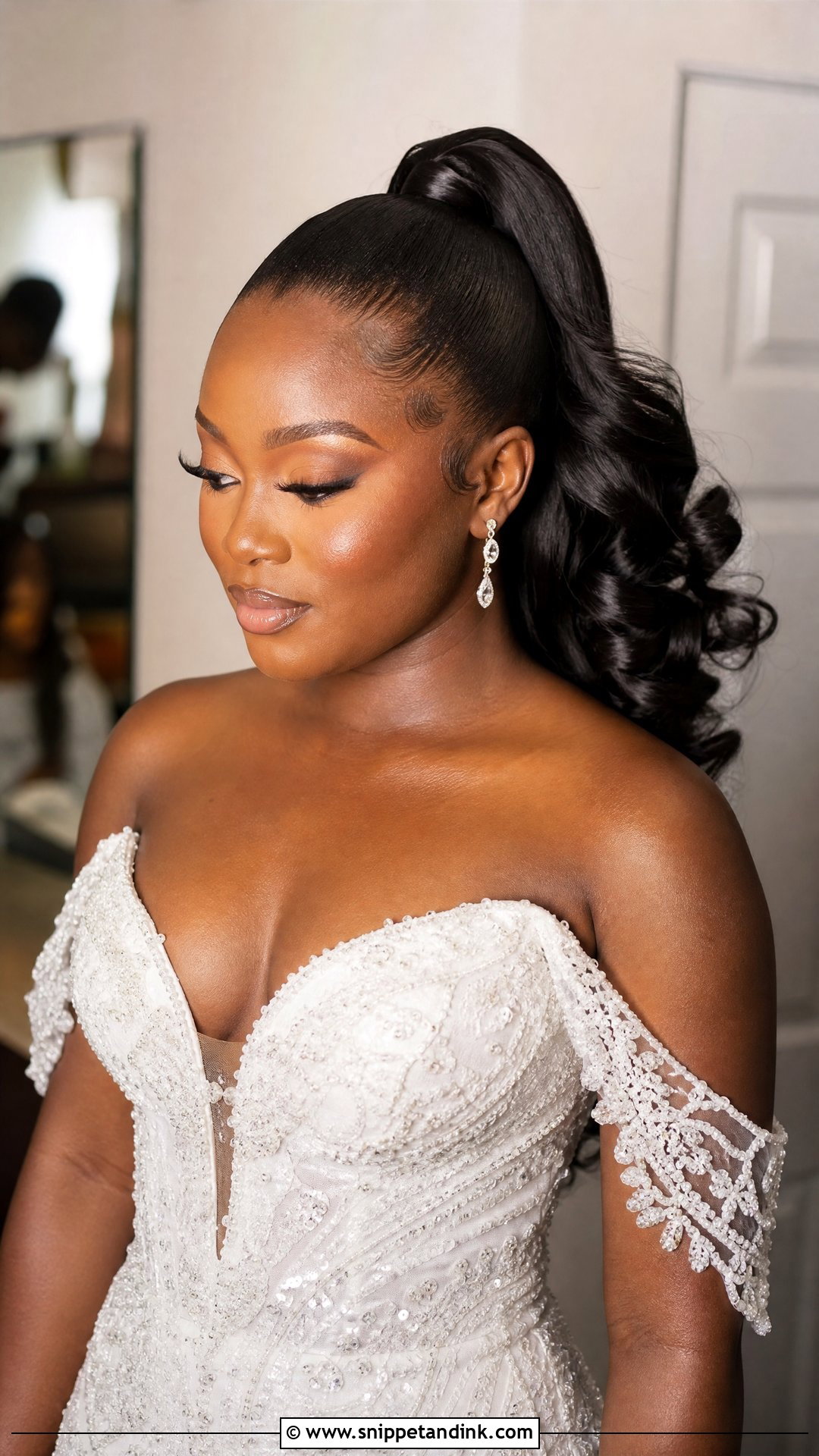
Smoothed into a high, mid or low ponytail and finished with waves, curls, braids or straight extensions, a sleek ponytail is clean and modern. It lets a dramatic neckline, detailed bodice or bold jewelry take the attention. The base stays polished while the length moves in photos. Wrap the base with hair or add a pearl clip. Outdoors, use humidity-resistant products. A sleek base is the style most likely to strain edges, so I lay the hairline with a soft brush and minimal gel rather than scraping it back.
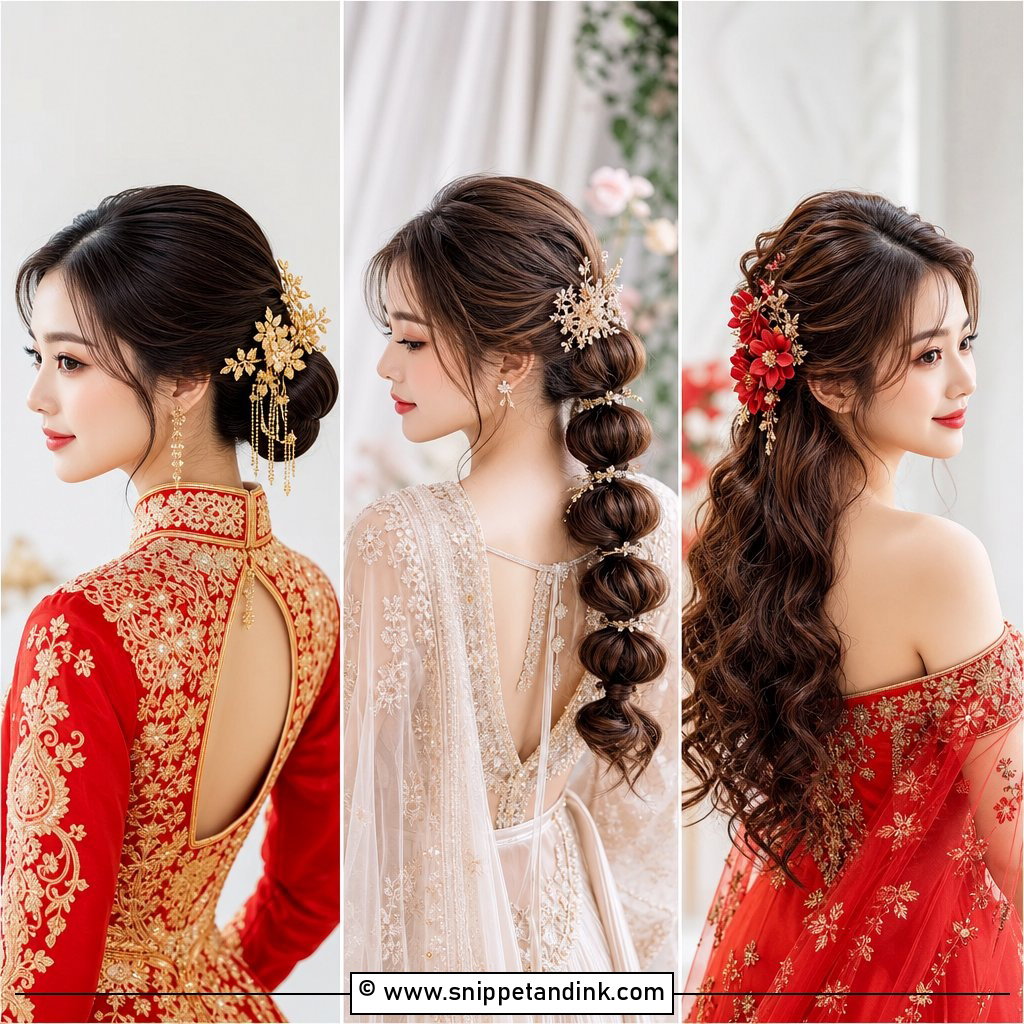
15. African Wedding Half Up Half Down Braids
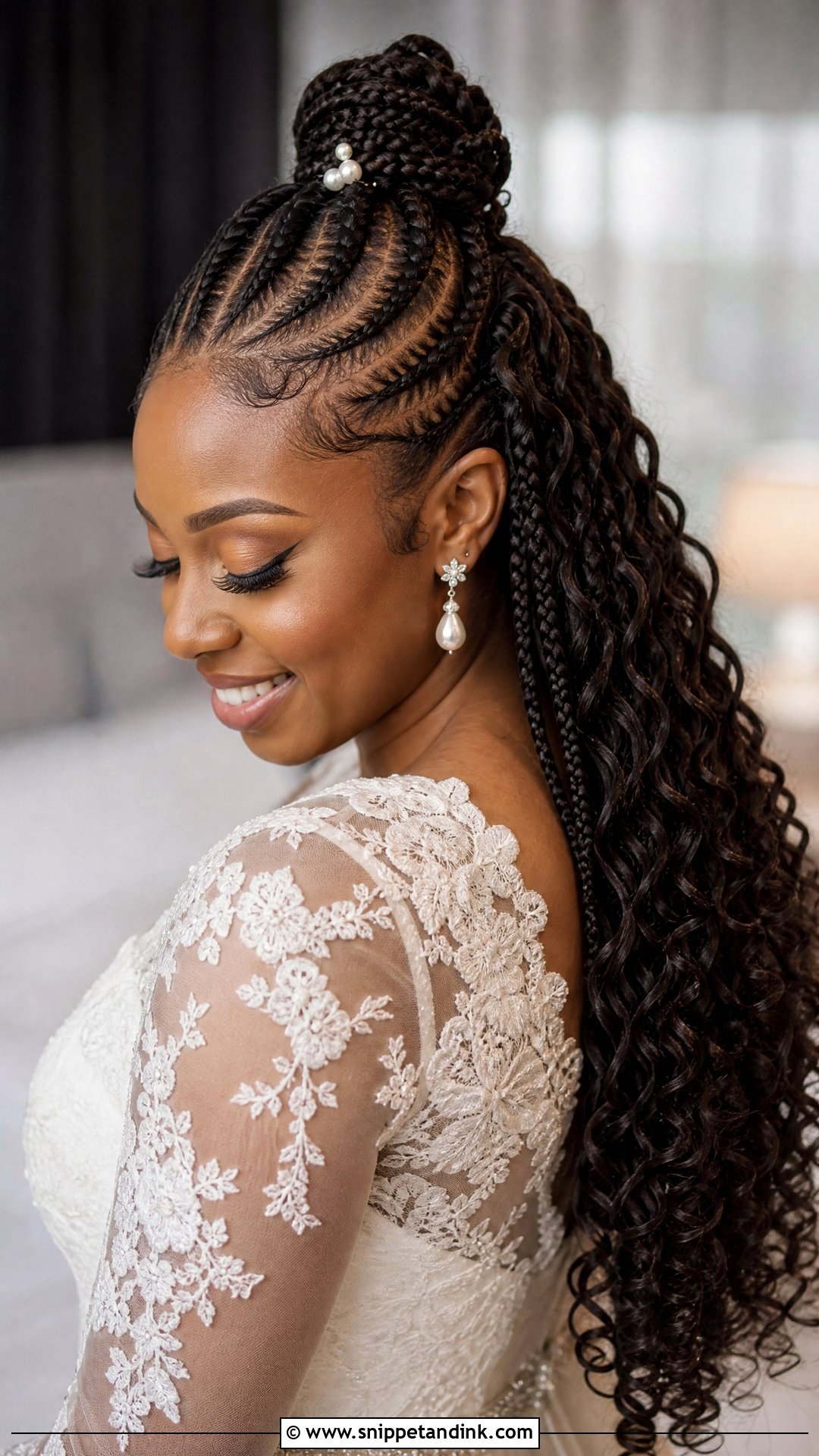
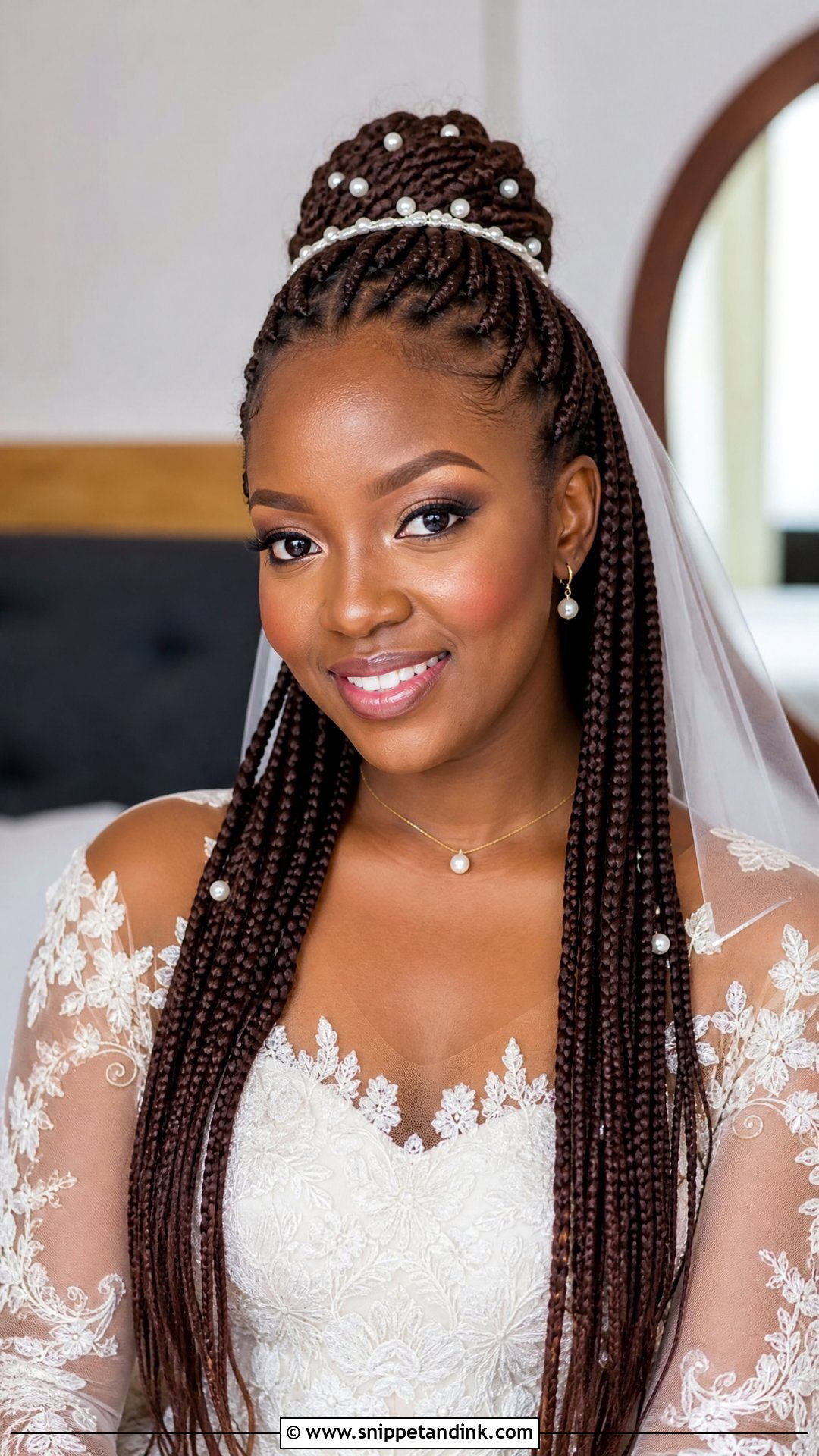
Half up braids give detail at the crown and length down the back. The top can be cornrows, flat twists, box braids or a braided bun, with curls, braids, twists or natural texture falling below. It’s romantic and still secure for a full day. A veil tucked under the top section or small pearl pins scattered through the braids suit it. I’d steer you here if you want softness around the shoulders but need the front to stay neat for close portraits.
How Long You’ll Really Spend in the Chair
Braided bridal styles are a serious time commitment. Long, small knotless or box braids can take most of a day. Fulani braids, larger goddess braids and cornrow designs are usually quicker, and a loc retwist with an updo quicker still. Your stylist can give a real estimate once she knows your length, density and the braid size you want.
Install early, but not too early
I usually put braids in a few days before the wedding. That gives a tender scalp time to settle and leaves room to fix a loose braid, without the style looking a week old in photos. Don’t schedule an all-day install the day before your rehearsal dinner; you’ll be exhausted, and your scalp may still be sore.
Watch the weight
Long extensions, heavy beads, metal cuffs and a crown add up. Each feels light in your hand; together they pull on your neck and hairline after a few hours of greeting guests. If you’re planning a lot of accessories, go a size up on the braids or a little shorter on the length, keep heavier beads away from your edges, and wear the full set at home for an evening before the wedding.
Will It Sit Under a Gele and Still Look Finished?
The right style here suits you, your story and the shape of your celebration. A braided updo, a halo braid, a loc ponytail, a natural puff, a Bantu knot updo and a sleek chignon all hold up well when they’re planned around the day you’re actually having. Bring clear photos to your stylist, do a trial if you can, and bring every veil, crown, bead and headwrap with you so nothing is a surprise. Then picture the last hour of the night. If the style still feels secure, light and like you by then, you’ve got it right.
You'll Like These Ideas:



Leave a Reply