
Most of the brides who sit in my chair with natural hair are planning two looks, not one: a traditional ceremony and a white wedding, sometimes on the same weekend. That changes how I think about every style here, because a braided base has to sit under a gele in the morning and still look intentional with a veil at night. Below are 20 stunning African bridal hairstyles, from cornrow updos to beaded Nigerian crowns, with my honest notes on how each one wears, what it asks of your hair, and where it tends to go wrong.
When to Install Braids, Twists or Locs Before the Wedding
The most common problem I see with braided bridal styles isn’t the design. It’s the timing. Braids put in the day before look tight and shiny at the scalp, and braids put in three weeks before look fuzzy at the roots. The window depends on the style.
- Knotless braids, box braids and Senegalese twists: about five to seven days before, so parts relax and the roots look natural.
- Cornrows and Ghana braids: two to four days before. Clean rows are the whole point, and they loosen faster.
- Flat twists, twist outs and Bantu knot outs: set one or two days ahead, then take down on the morning itself.
- Locs: retwist one to two weeks before so the new growth has time to soften.
Book your trial far enough ahead to change your mind. I like a trial six to eight weeks out, with the actual beads, cuffs and gele fabric in hand, because accessories change how the base has to be built. Wash, deep condition and stretch your hair a couple of days before the install, not on the same day, so your stylist is working on dry, detangled hair.
1. Braided Goddess Updo for Brides
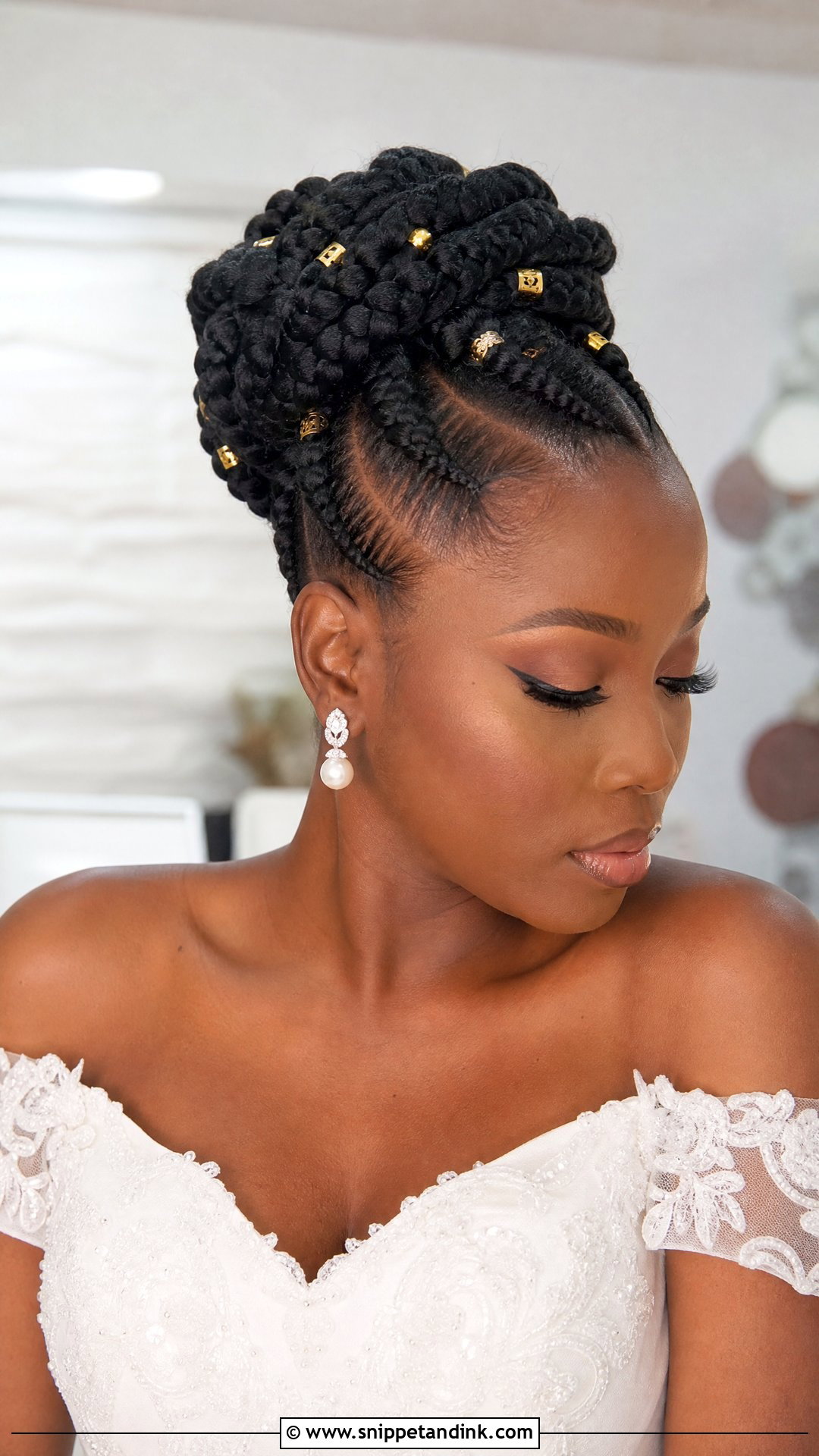
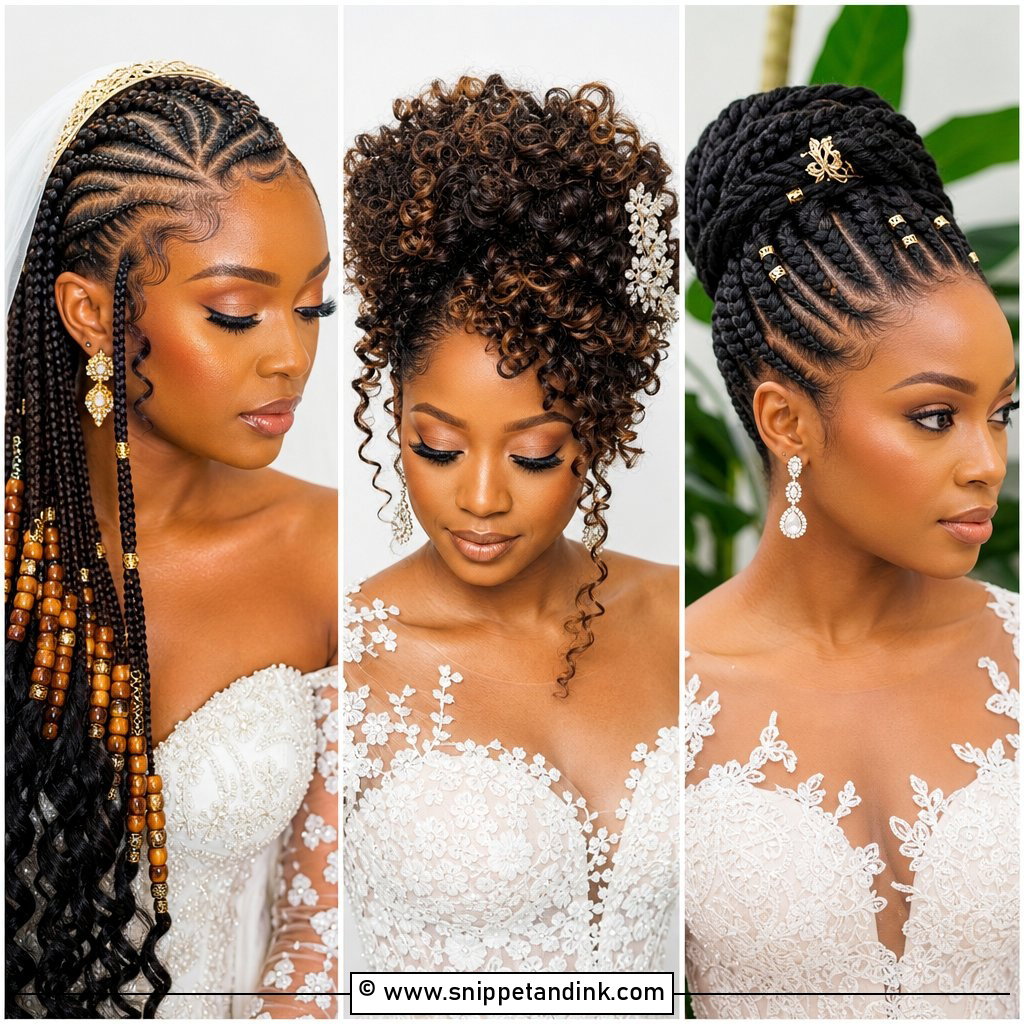
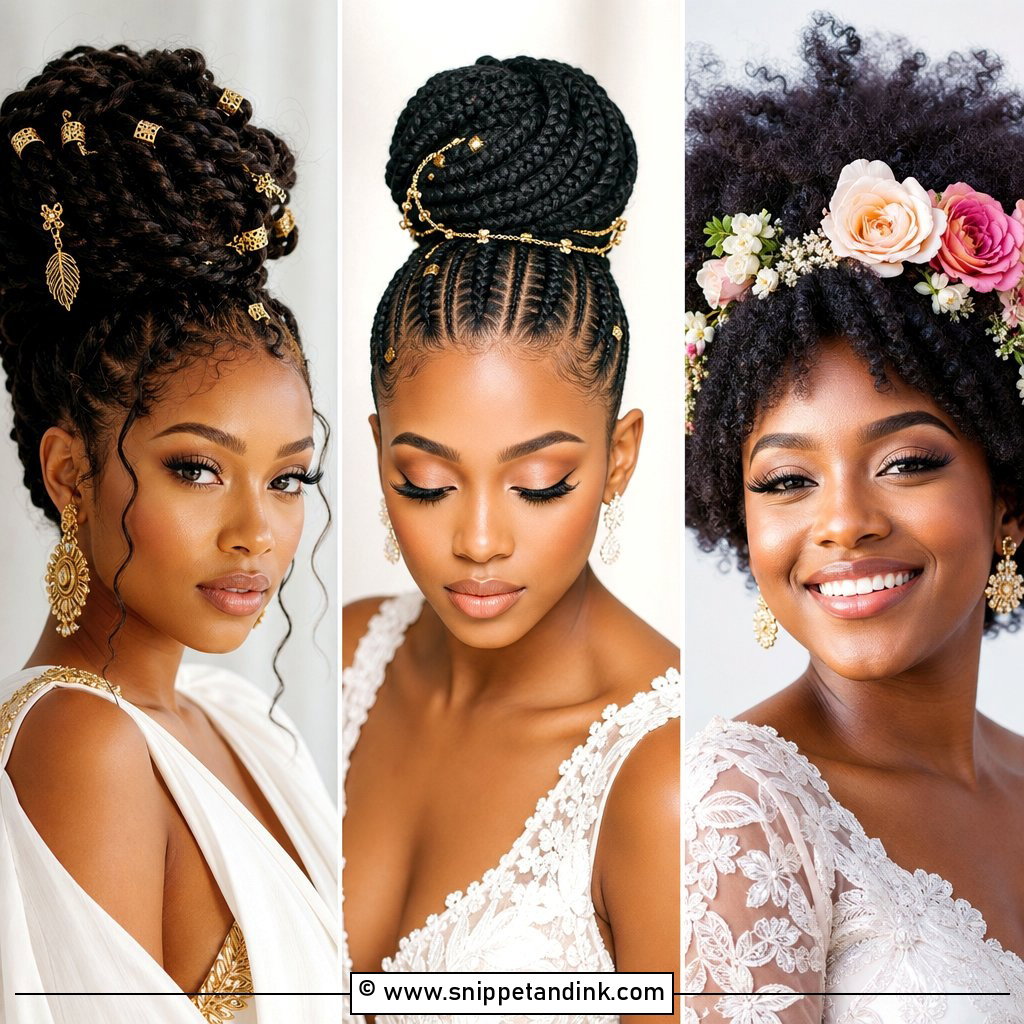
Chunky goddess braids wound into a sculpted bun at the crown or nape give you height and a clean outline from the side. The thing I watch with this one is weight: if the braids carry a lot of added hair, the bun pulls on the hairline by evening, so I keep the braids slightly smaller near the temples and let the bulk sit in the bun itself. Baby hairs soften the front. Gold cuffs and pearls sit well in the grooves between braids, where they can be pinned rather than balanced.
2. Bantu Knot Updo Wedding Style
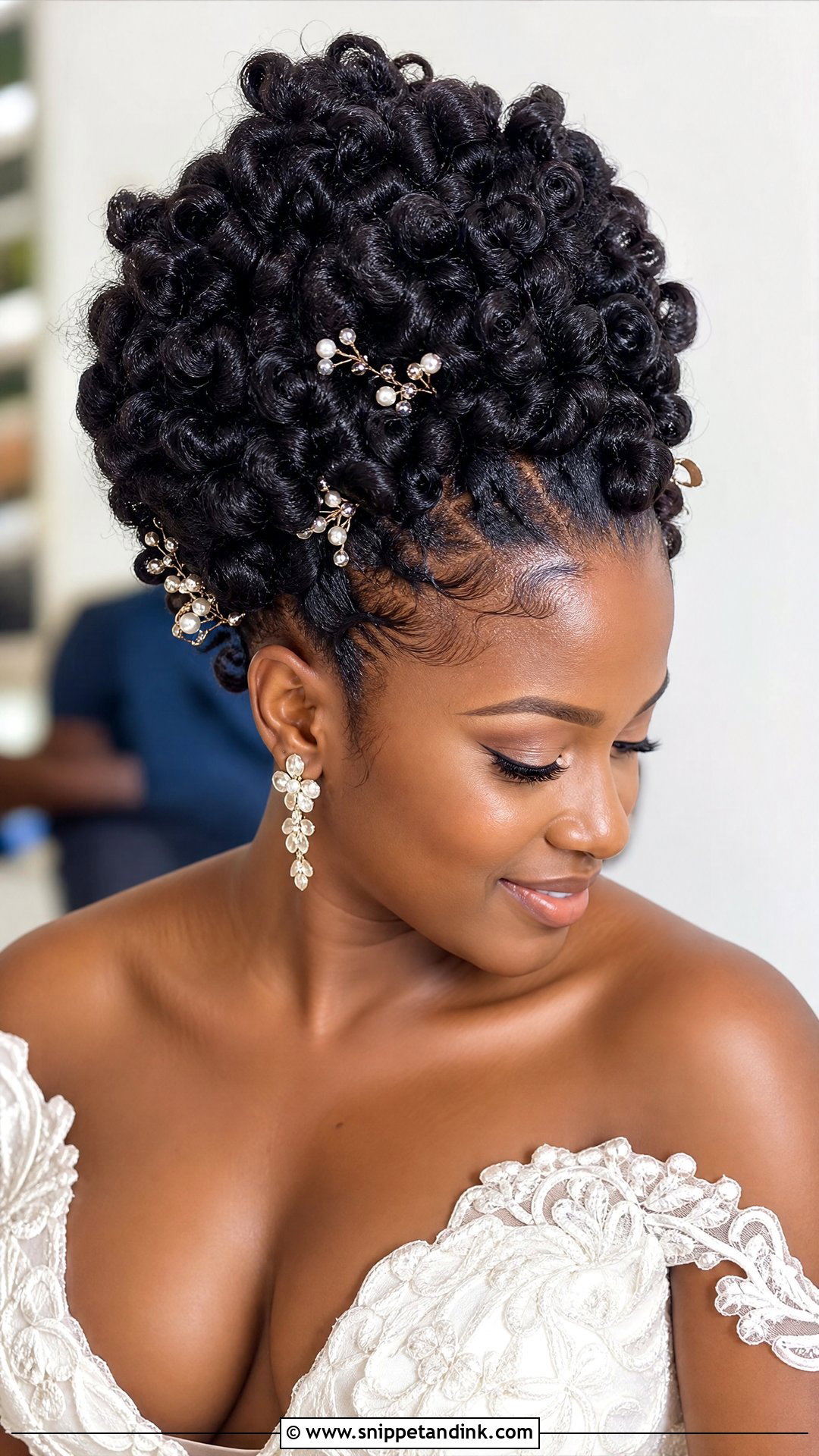
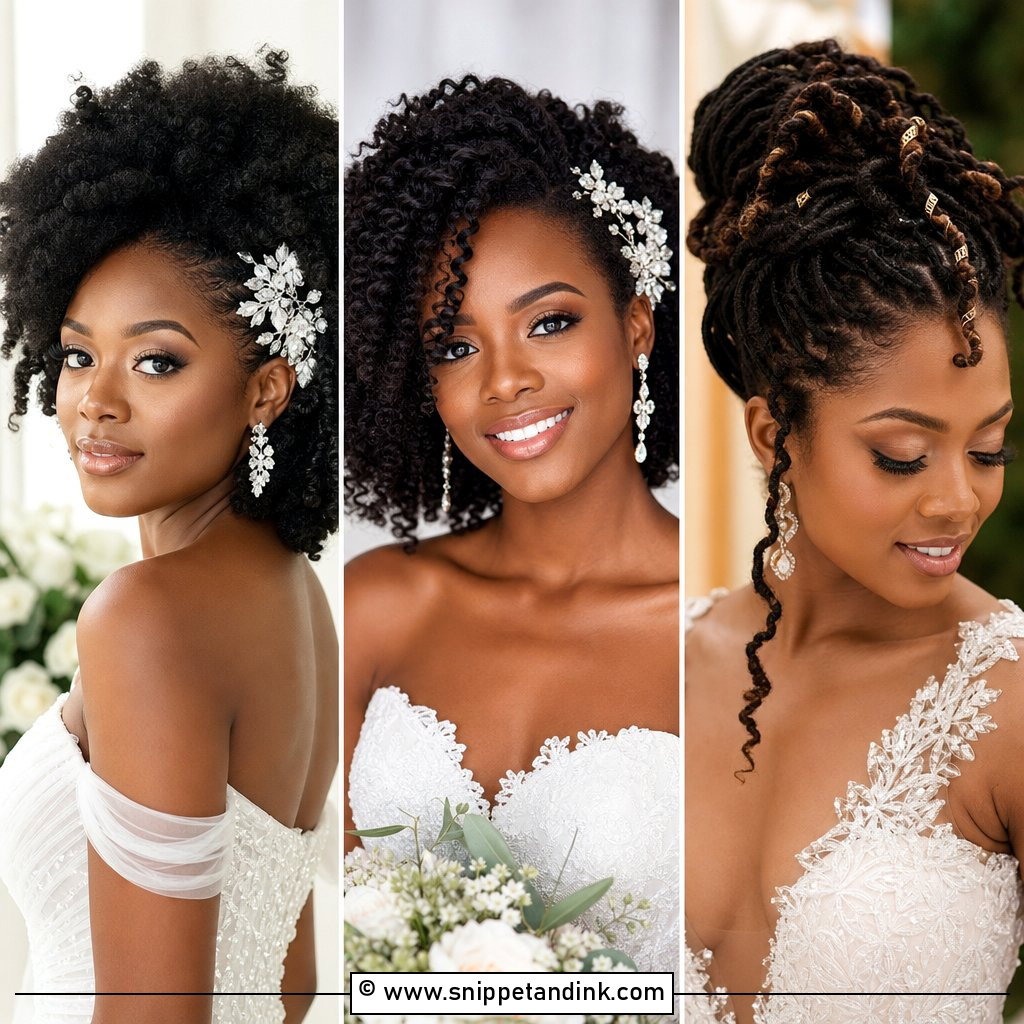
Bantu knots work two ways for a bride. Worn as knots, they are a proud, graphic look. Set overnight and unravelled, they give you springy, defined curls I can pile into a textured updo. The knot-out only works if the hair is fully dry when you take the knots down; damp centres turn to frizz the moment you separate them, so I ask brides to set them a day ahead, not the night before, if their hair is thick. Separate the curls with oiled fingertips, never a comb, and add beads or hairpins once the shape is pinned.
3. Afro Puff Ponytail for African Brides
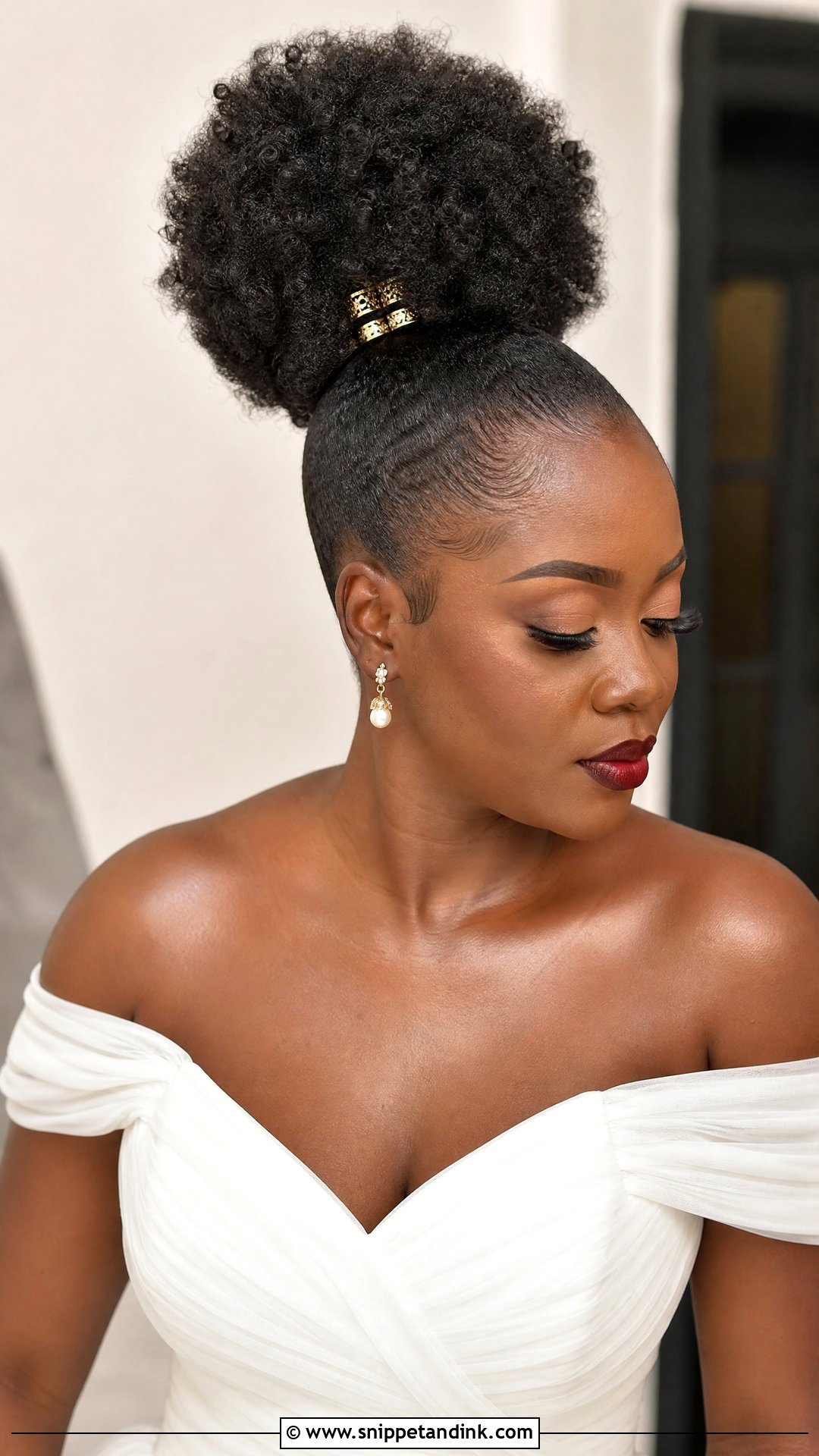
An afro puff is the fastest style on this list and one of the hardest to get perfectly round. Kinky-coily hair gathered high adds real height, and placed low it reads calmer under a veil. I use a soft stretch band or a looped shoelace rather than an elastic, because a tight band snaps fragile hair at the exact point where it bends. Smooth or wispy edges both suit it. Statement earrings and a bold lip balance the volume, and a gold cuff or a few blooms at the base hide the tie.
4. Nigerian Traditional Bride Hairstyle With Beads
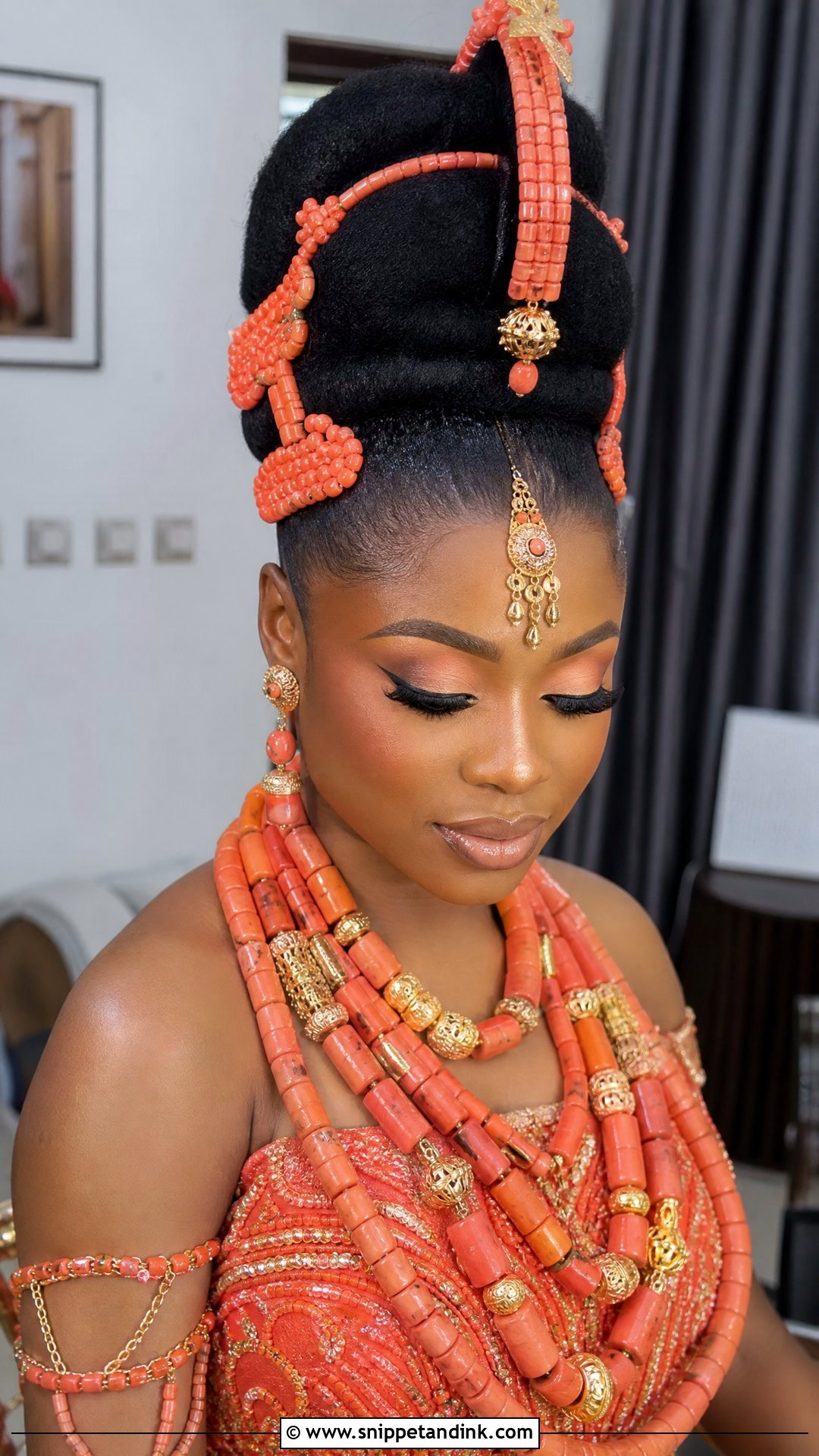
A sculpted Nigerian traditional bridal hairstyle, the kind worn by Eastern Nigerian brides at the traditional ceremony, is built up into tall, structured shapes and dressed with coral and beads. The beadwork usually echoes the bride’s coral jewellery, so I ask to see the beads before I design the base; heavy coral strands need anchor points braided in, or they slide. These shapes take time and a stylist who has built them before. Paired with a gele or a coral crown, nothing else in the outfit has to work hard.
5. Cornrow Updo for Black Brides
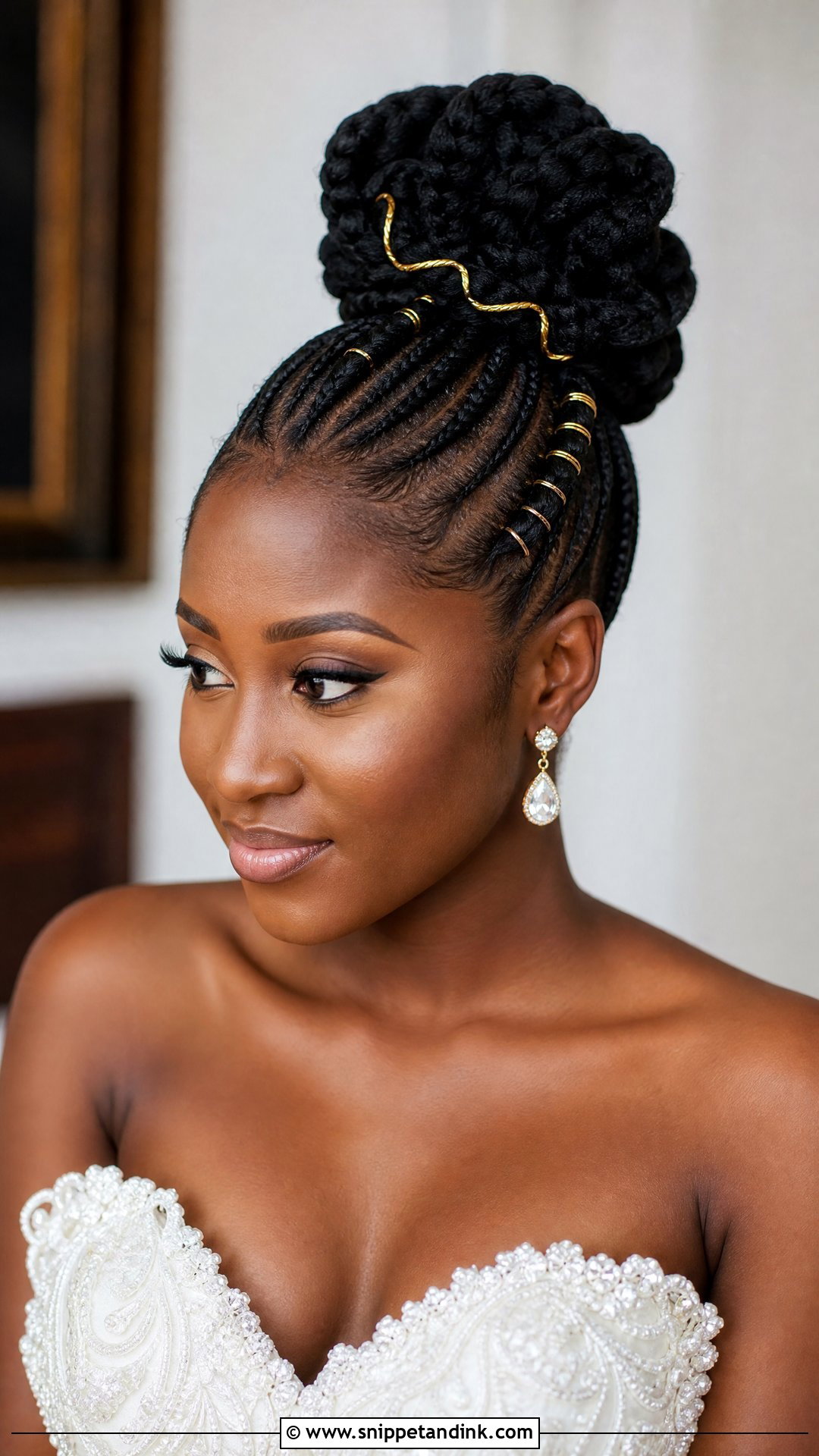
Neat cornrows gathered into a high bun or crown give you clean lines across the scalp and show the jawline. Cornrow updos are protective and comfortable for a long day, but only if they were not braided too tight. If you feel tenderness or see small bumps along the hairline the day they go in, they are too tight, and that does not settle by the wedding. Simple straight-back rows or swirling patterns both work; gold thread and small beads add sparkle without weight.
6. Senegalese Twist Bridal Updo
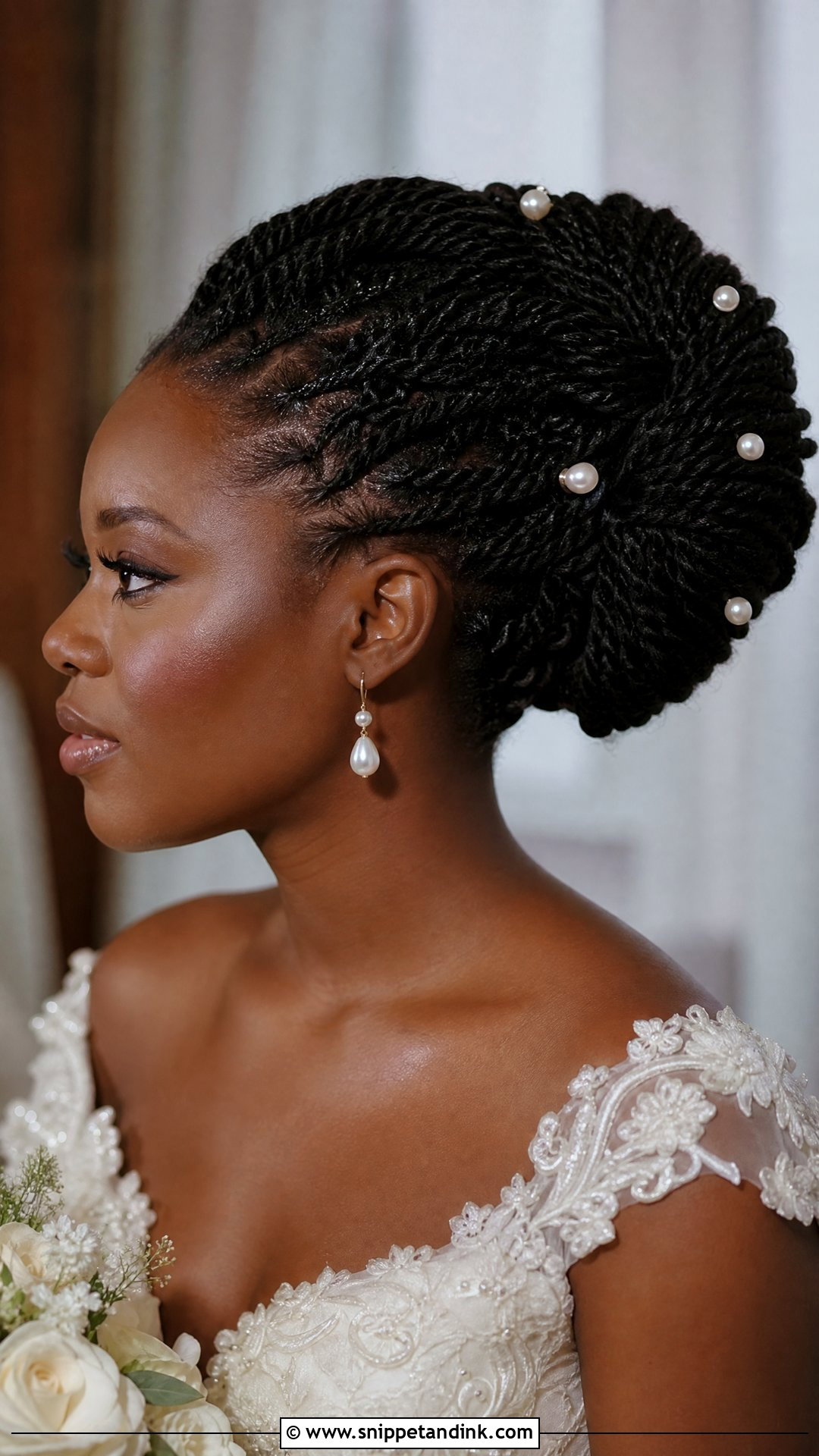
Senegalese twists have a smooth, rope-like surface that catches light, which is why they look polished in an updo. Their length is the advantage and the problem: waist-length twists folded into a chignon get bulky fast, so I often hide some length inside the bun or trim the ends a few inches before shaping. A half bun keeps some length moving. Pearls and gold cuffs slide onto individual twists easily. The style holds its shape for weeks, so it survives a ceremony and a long reception without touch-ups.
7. Gele Headwrap With Bridal Hairstyle
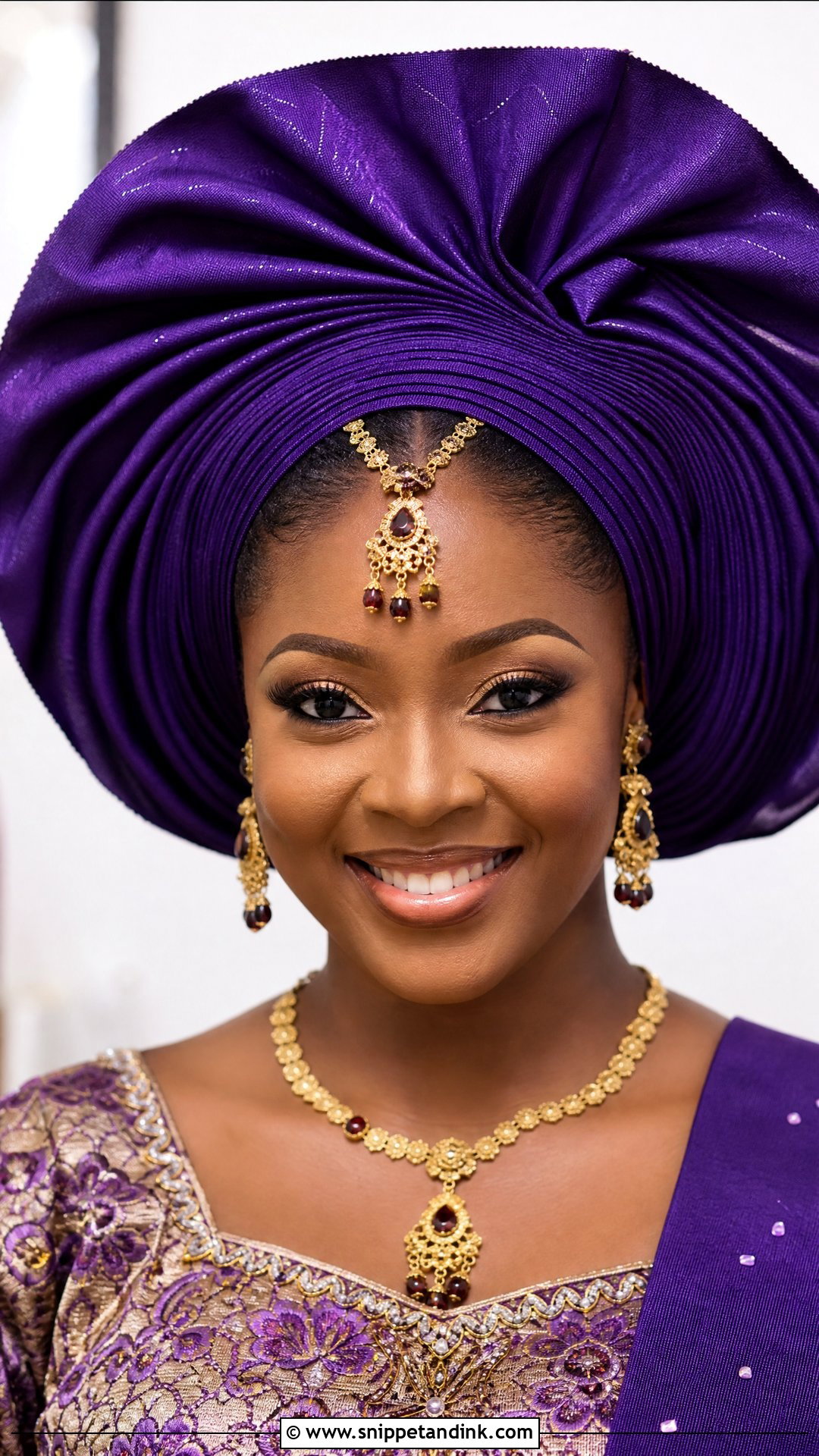
The gele turns a simple bridal base into a sculpture, and the base matters more than people expect. I keep the hair in a flat, low bun so the wrap sits level; a high bun pushes the gele forward and it starts to tip by mid-afternoon. Stiff aso-oke ties sharper pleats than softer fabrics, while metallic and jewel-toned materials crease faster. Have the gele tied by someone experienced on the day, then leave it alone. For an outfit built around the gele headwrap, the hair underneath should be comfortable for hours, not elaborate.
8. Fulani Braids for Wedding Day
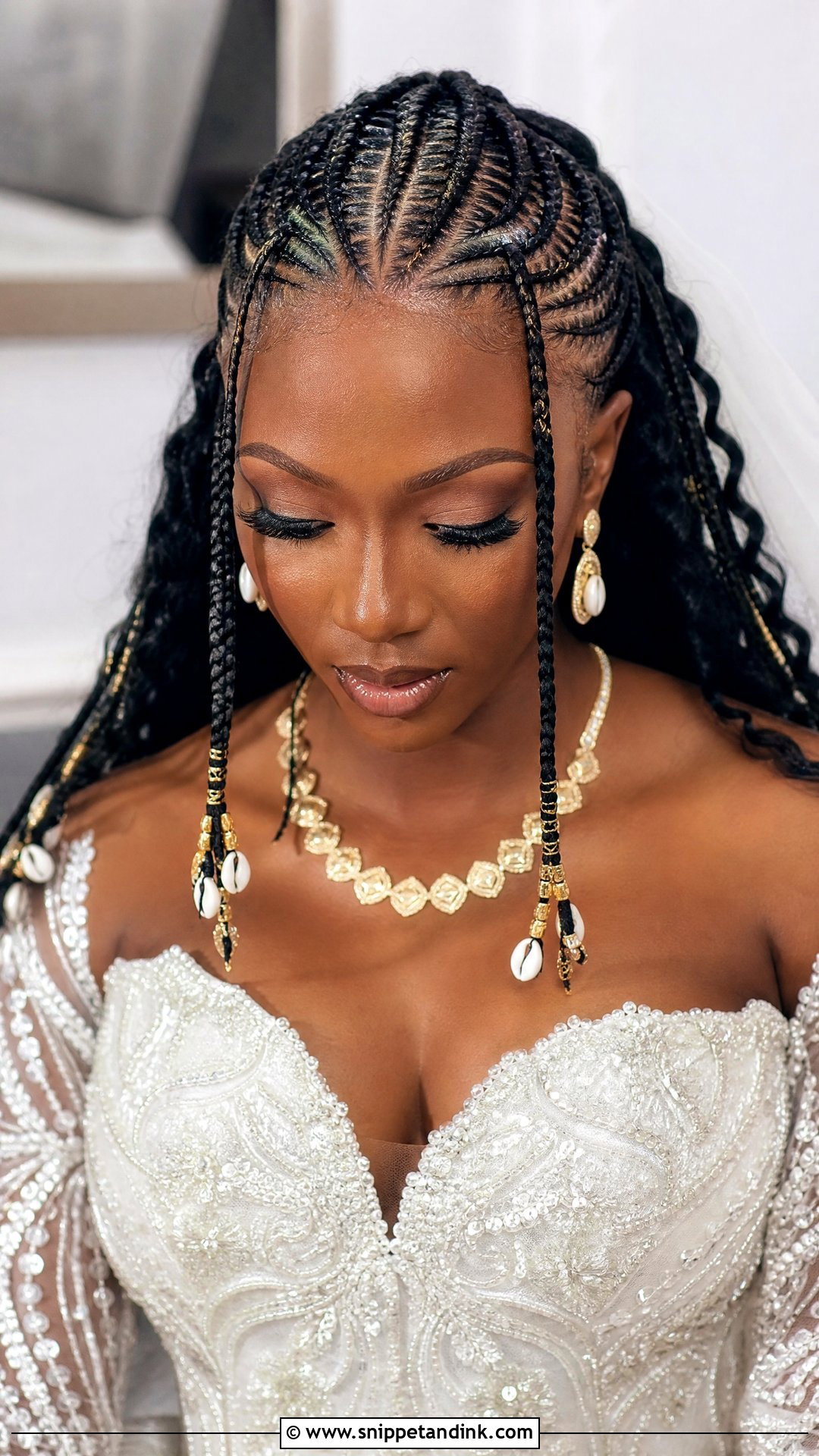
Fulani braids combine forward-facing cornrows, a centre braid running front to back, and loose braids hanging at the sides and back. It’s a detailed style, so I plan it around the face: the side braids should fall in front of the ears in proportion to the jaw, not just wherever they land. Beads along the loose braids add movement and a soft click as you walk. They can be gathered into an updo for the reception. Add cowrie shells or gold cuffs at the ends rather than at the roots, where they pull.
9. Goddess Braids Half Up Half Down
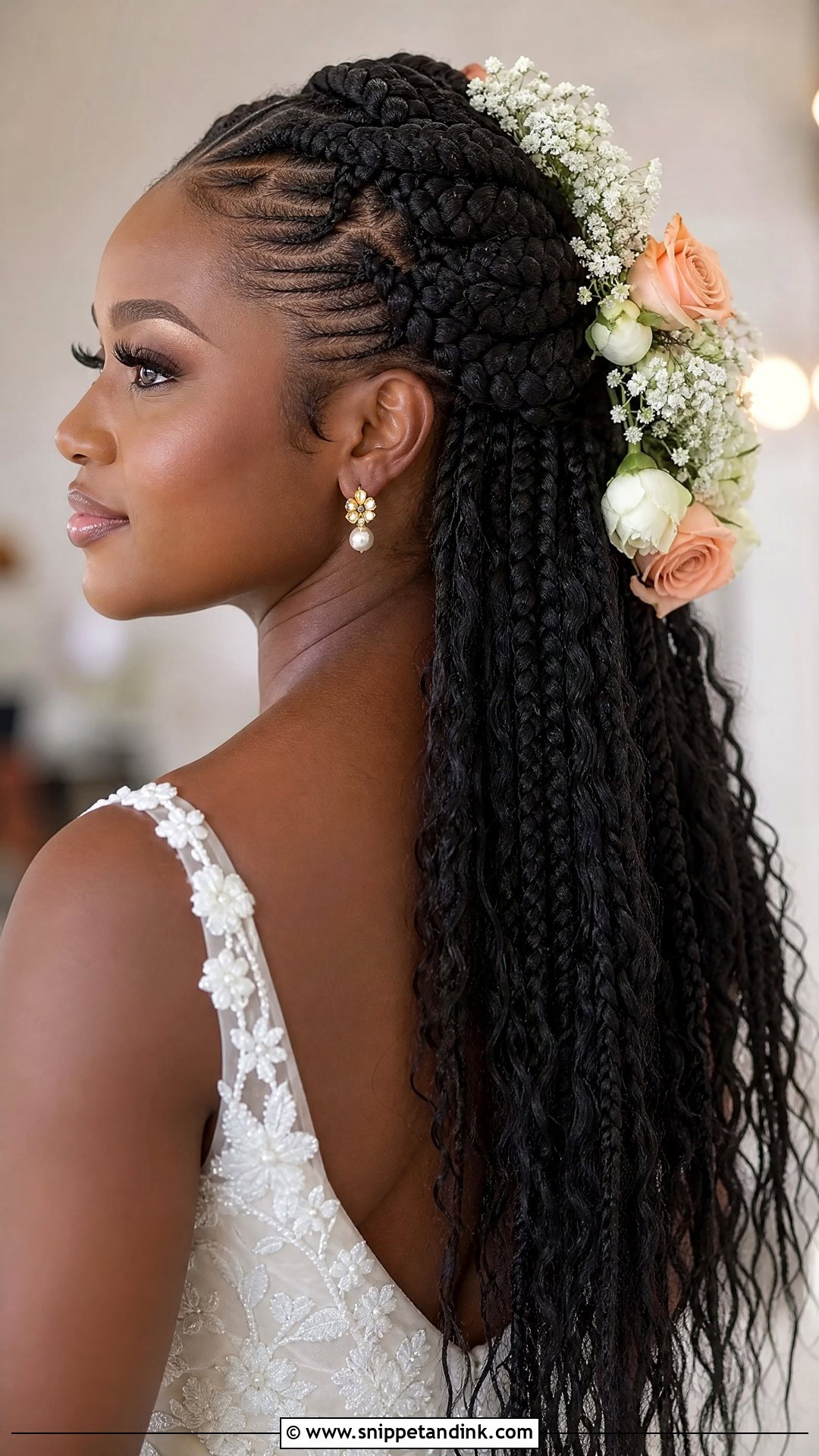
Can’t decide between length and an updo? Half up, half down with goddess braids gives you both. Thick braids frame the crown and meet at the back; the rest falls as braids or loose curls. The joining point is what I look at hardest, because it’s where pins and the veil comb compete for space. I build a small flat braid platform there so the comb grips braid rather than sliding off loose curls. Flowers or jewelled pins can cover that join.
10. Knotless Braids Bridal Updo
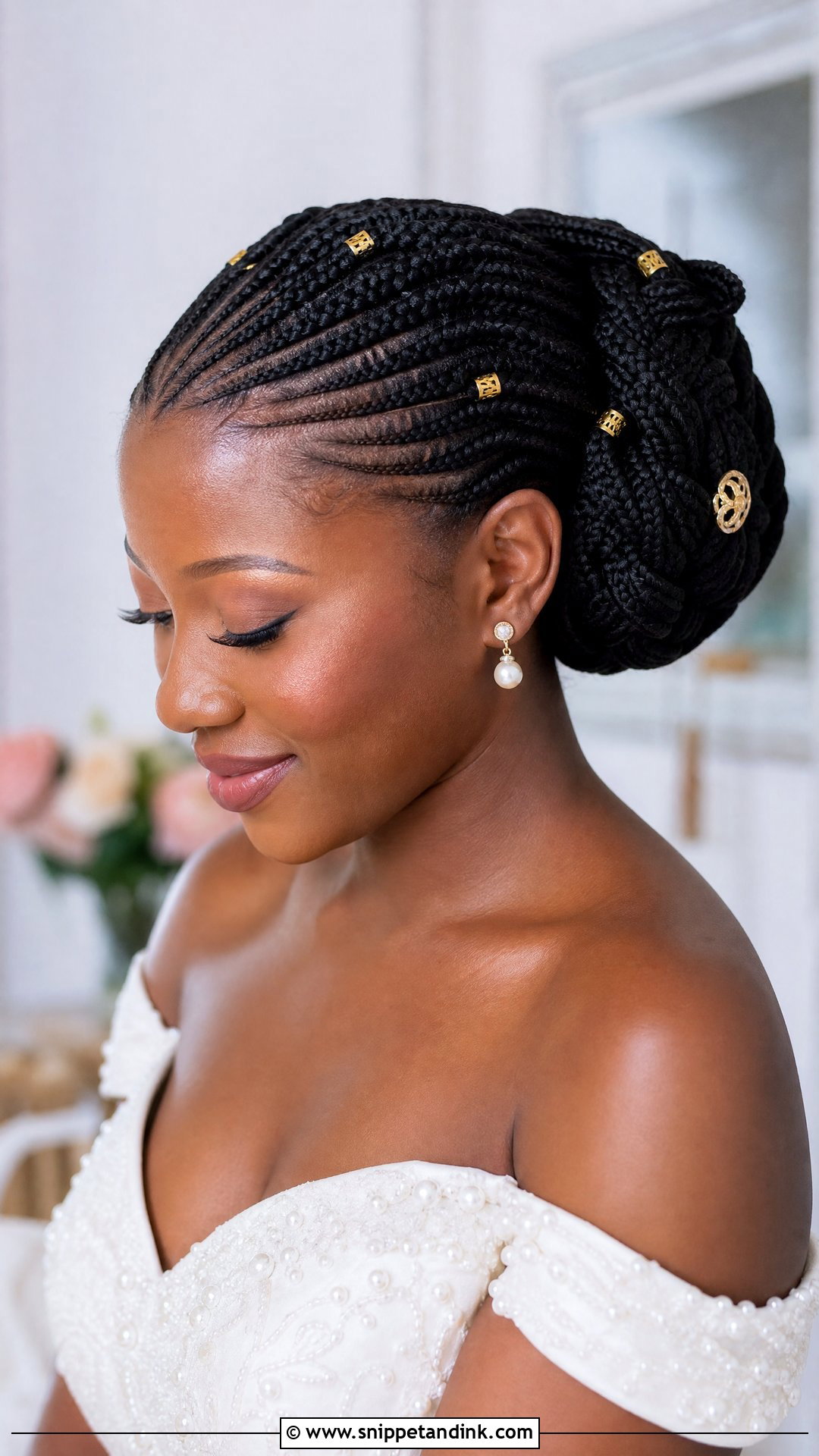
Knotless braids start with your own hair and feed in extensions gradually, so there is no hard knot at the root and far less tension on the scalp. That flat base makes them easy to sweep into a high bun or a low chignon without the root lifting. Because they are lighter, an updo of knotless braids is one of the few styles brides happily wear for twelve hours. I’d install them about a week before the wedding so the parts settle and any frizz can be smoothed. Small gold beads and pearls sit well along the length.
11. Flat Twist Updo for African Brides
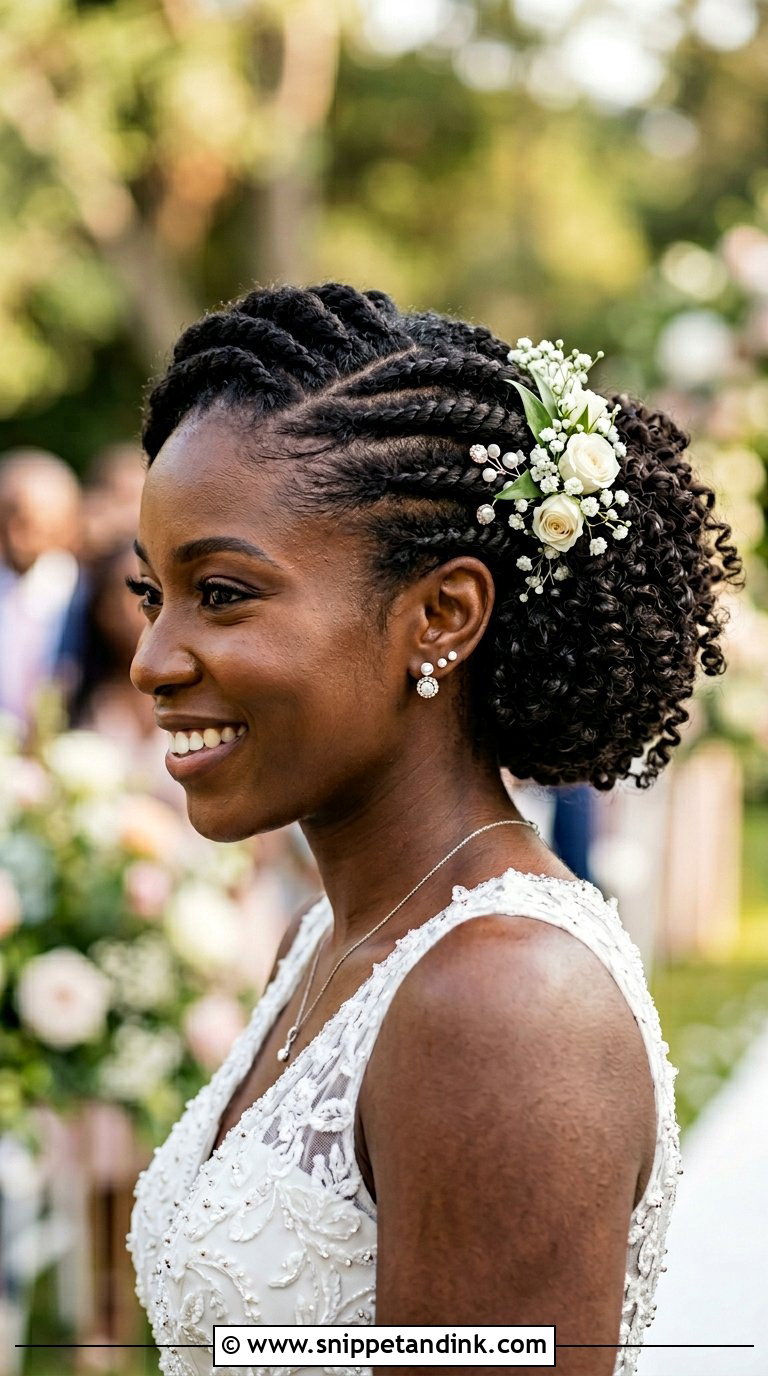
Flat twists are softer than cornrows and kinder to hair that dislikes tight braiding. Two strands are twisted flat to the scalp in curving lines, then the ends are gathered into a textured bun. The trade-off is lifespan: flat twists loosen sooner than cornrows, so I install them closer to the date, usually two or three days before. Curving lines suit a round face better than straight-back rows. Finish with a few pins or flowers where the twists meet the bun.
12. Crown Braid Wedding Hairstyle
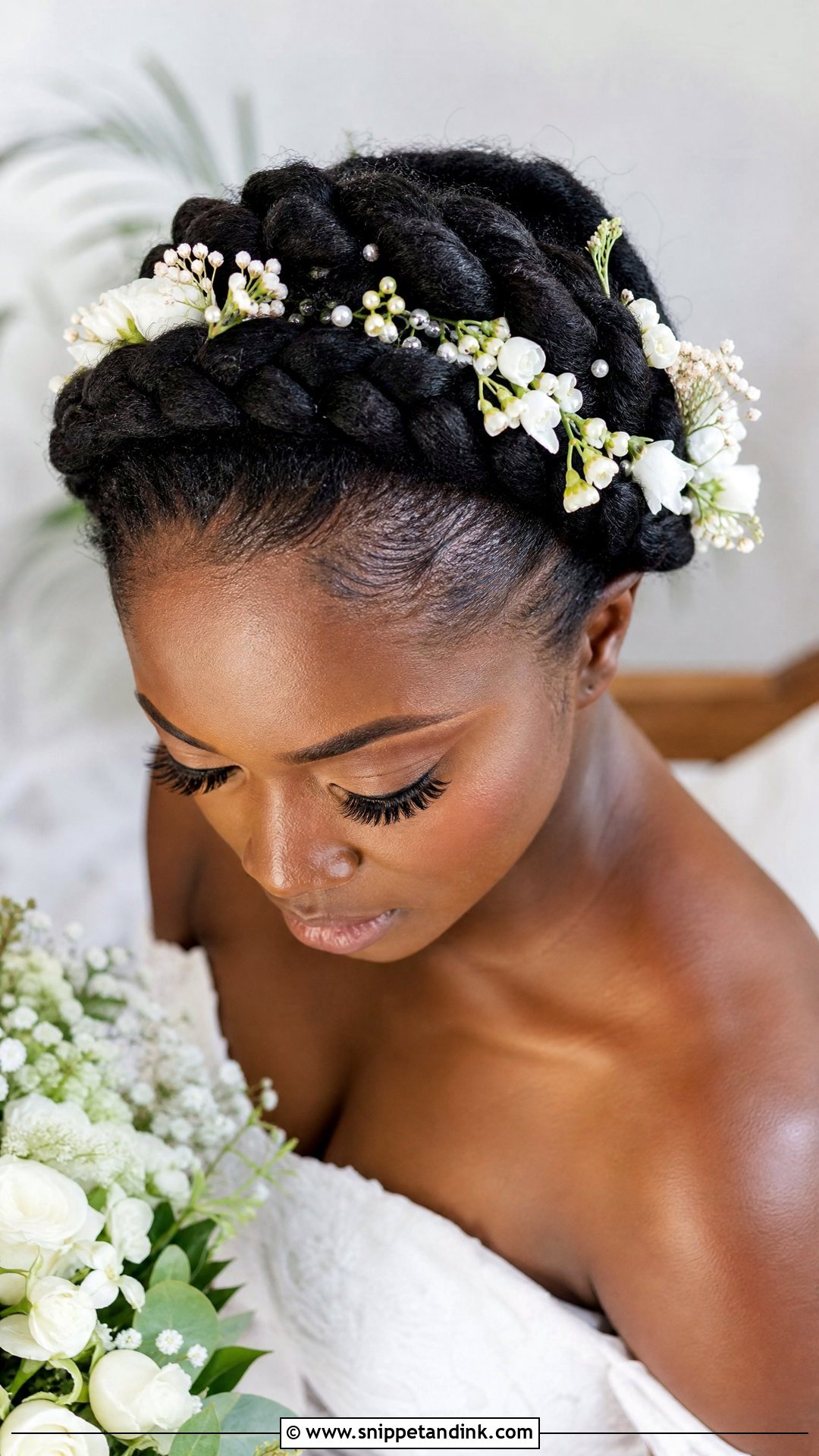
A crown braid circles the head like a halo, and it is one of the most secure styles for dancing because the weight is spread evenly instead of hanging from one point. On natural hair I usually braid it with extensions for a fuller, even band, since your own hair tends to taper as the braid travels around. Pulling out a few soft pieces at the front relaxes it. Pearls, gold thread and fresh blooms tuck neatly into the outer edge of the braid.
13. Ghana Braids Bridal Updo
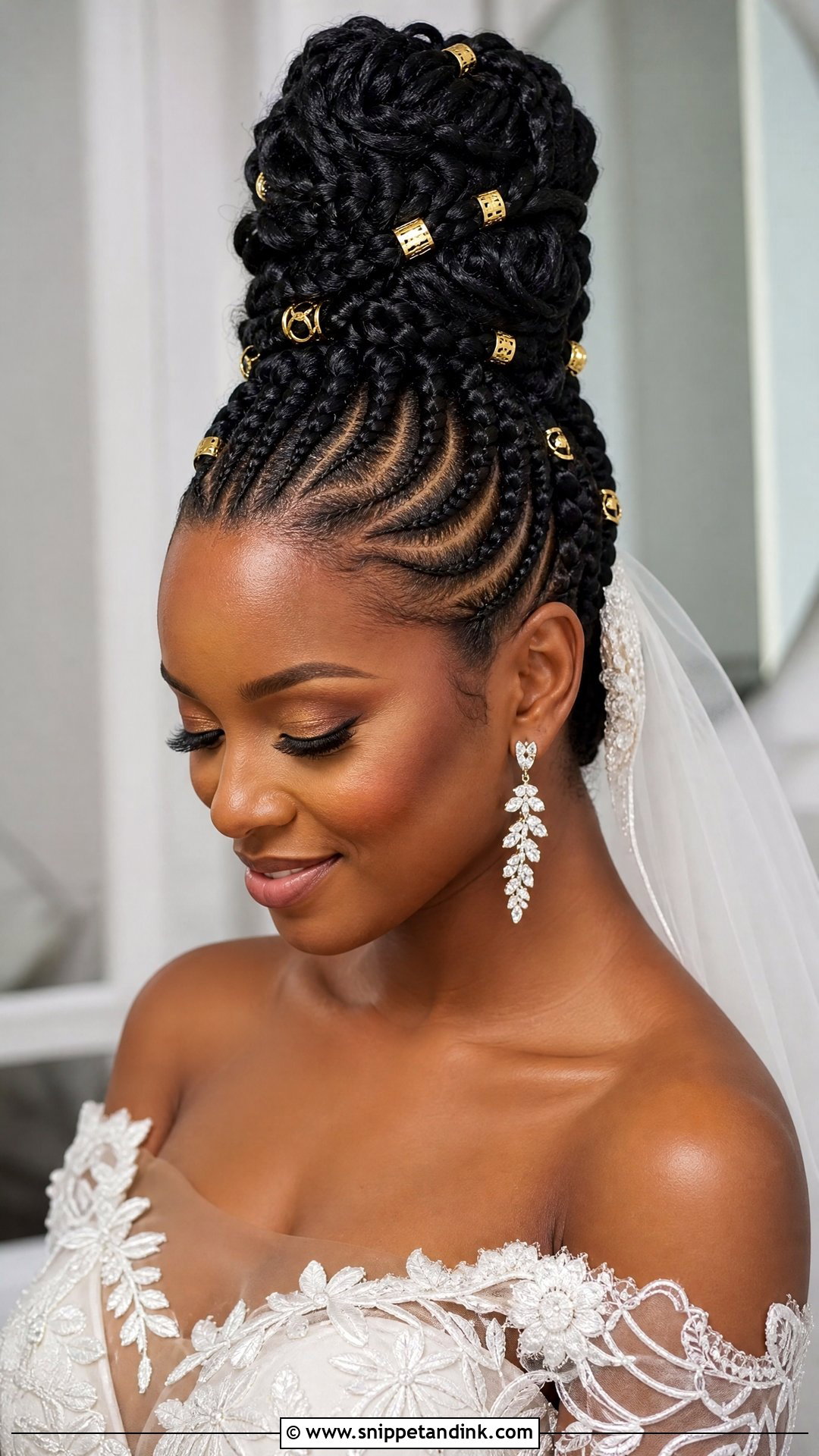
Ghana braids, also called banana braids, are feed-in cornrows that start thin at the hairline and thicken toward the back. That graduated shape is why they look so sculpted in an updo. The feed-in method also keeps tension lower at the edges than a full-thickness braid would. I map the parting with the bride sitting upright and looking straight ahead, because a pattern that looks symmetrical lying back often tilts when she stands. For a high bun or a low knot, Ghana braid updos take gold cuffs and beads well.
14. Twist Out Wedding Hairstyle
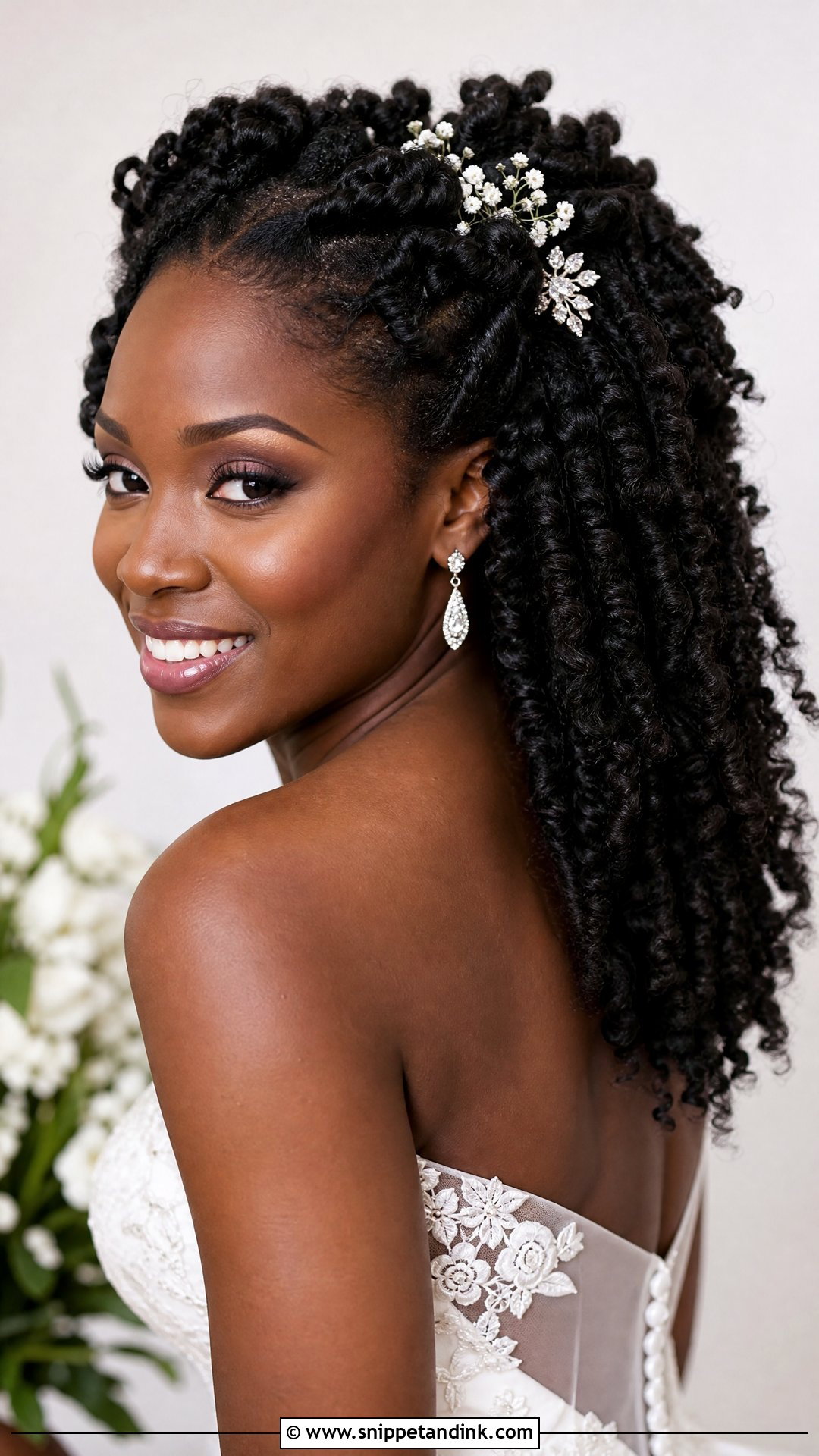
A twist out starts as two-strand twists set overnight, then unravelled into defined, bouncy curls. No heat, and the texture is entirely yours. The weak spot is humidity: in a damp climate the curls expand and lose definition by evening, so for summer or outdoor weddings I set the twists on a slightly firmer holding product and keep the finished style half up. Separate gently with oil on your fingers. Flowers, sparkling pins or a light tiara all sit well in curls this full.

15. Cornrow and Curly Updo Combination
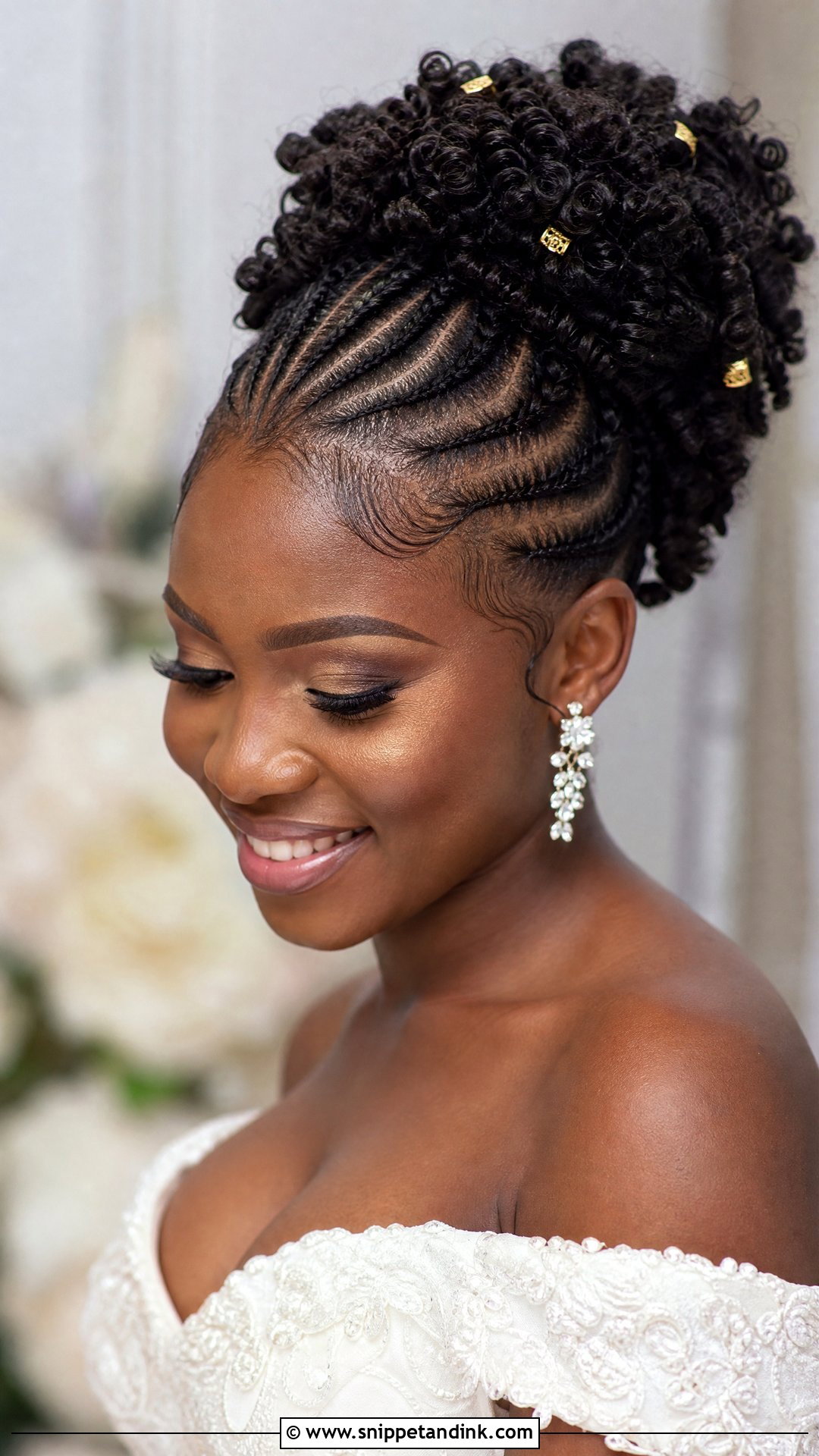
Cornrows at the front and a cluster of defined curls on top give you neat edges and soft volume in one style. The cornrows keep the face clean while the curls do the dramatic work at the crown. The curls on top are almost always added hair; I match curl pattern carefully, because a looser bought curl next to your own tighter texture shows up clearly in close photos. Beads or gold accents along the rows tie it back to tradition. It suits a traditional outfit and a white gown equally well.
16. Beaded Braids for African Brides
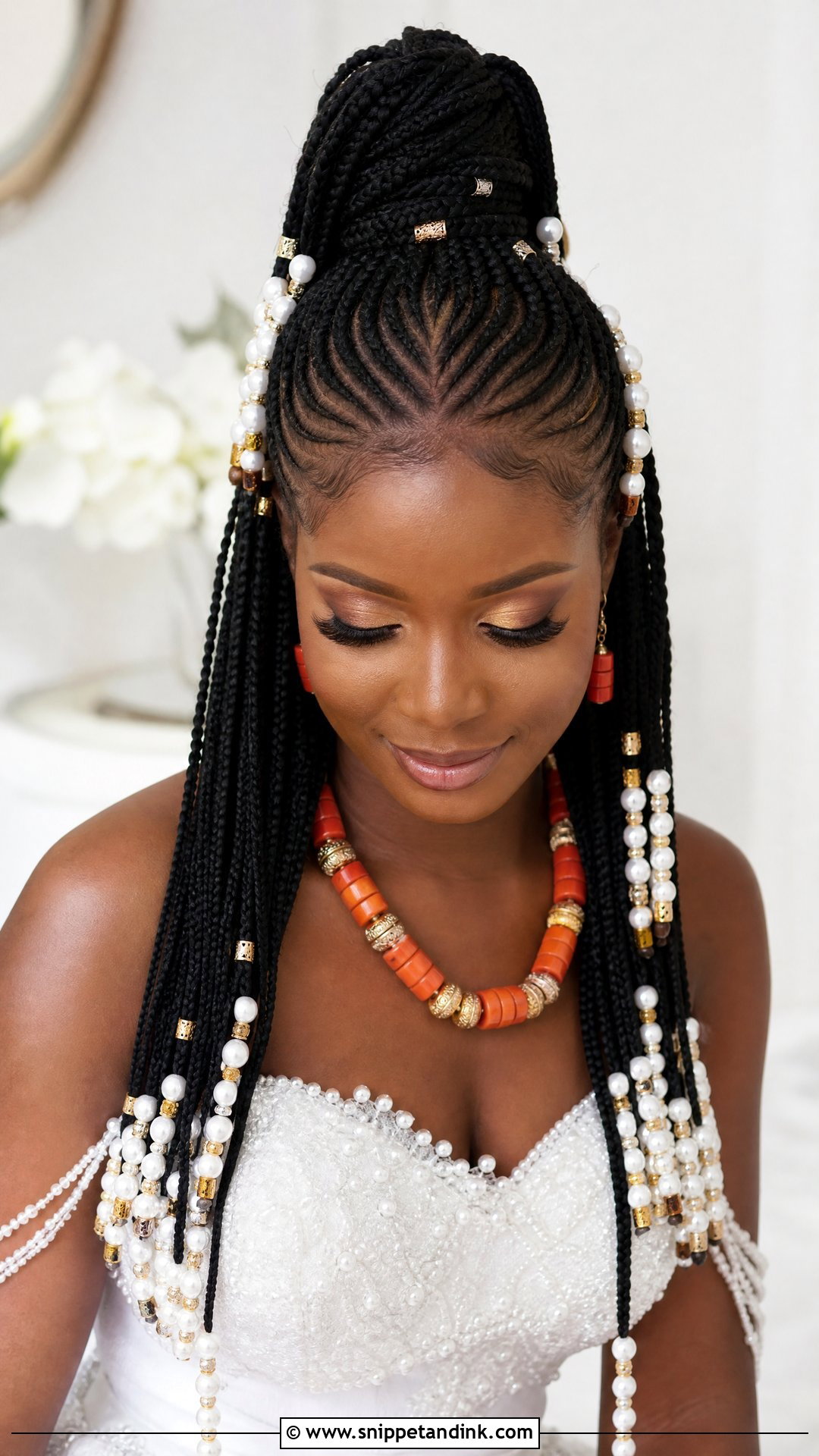
Beads threaded along your braids catch light and make a gentle sound as you move, a detail African adornment has used for centuries. Worn long or gathered into an updo, the weight of beads adds up quickly; dozens of metal beads on fine braids will pull, so I limit heavy beads to the lower third. Gold, pearl, and coral beads suit most bridal outfits. Secure the last bead with a small knot or a tiny elastic so none come loose on the dance floor.
17. Low Bun Bridal Hairstyle for Natural Hair
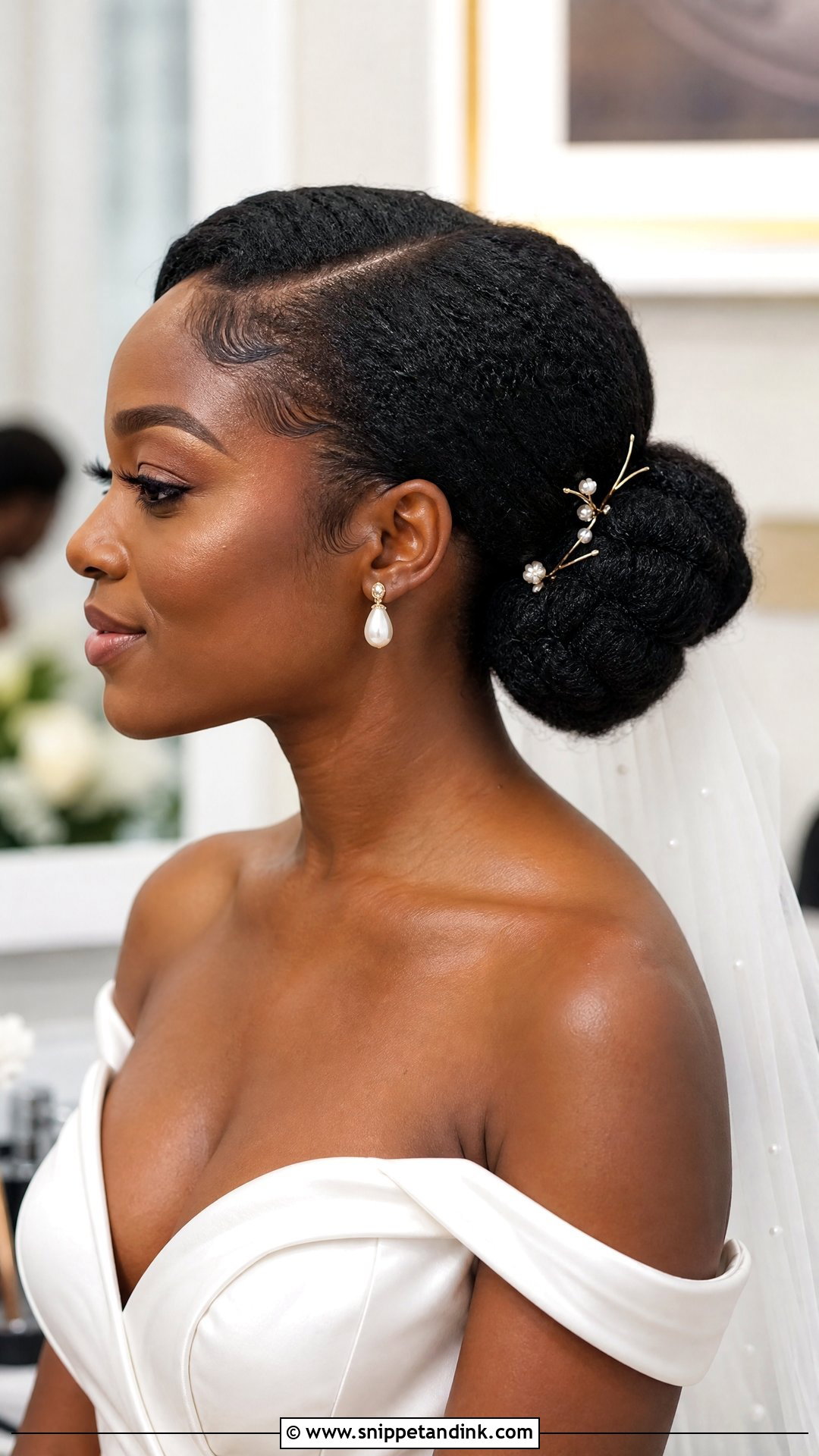
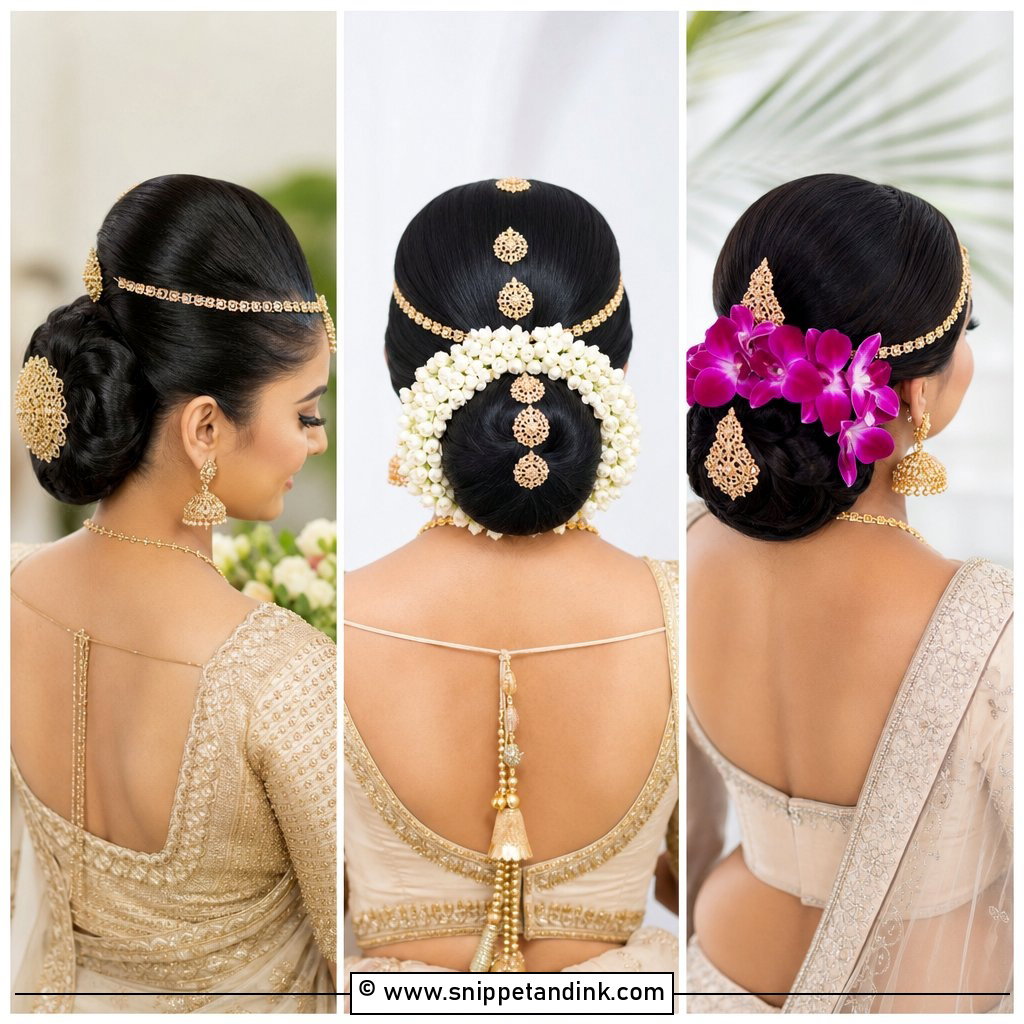
The low bun is the style I trust most when a bride wants a veil and a gele on the same day. Natural hair gathered at the nape into a sleek knot sits flat under a wrap and leaves a clean line for a comb. Sleek edges or soft baby hairs both suit it. I stretch the hair first, by blow-drying on low heat or banding overnight, so the bun has a smooth surface instead of fighting shrinkage. Pearls, gold pins and fresh flowers are easy additions.
18. Cowrie Shell Braids Wedding Look
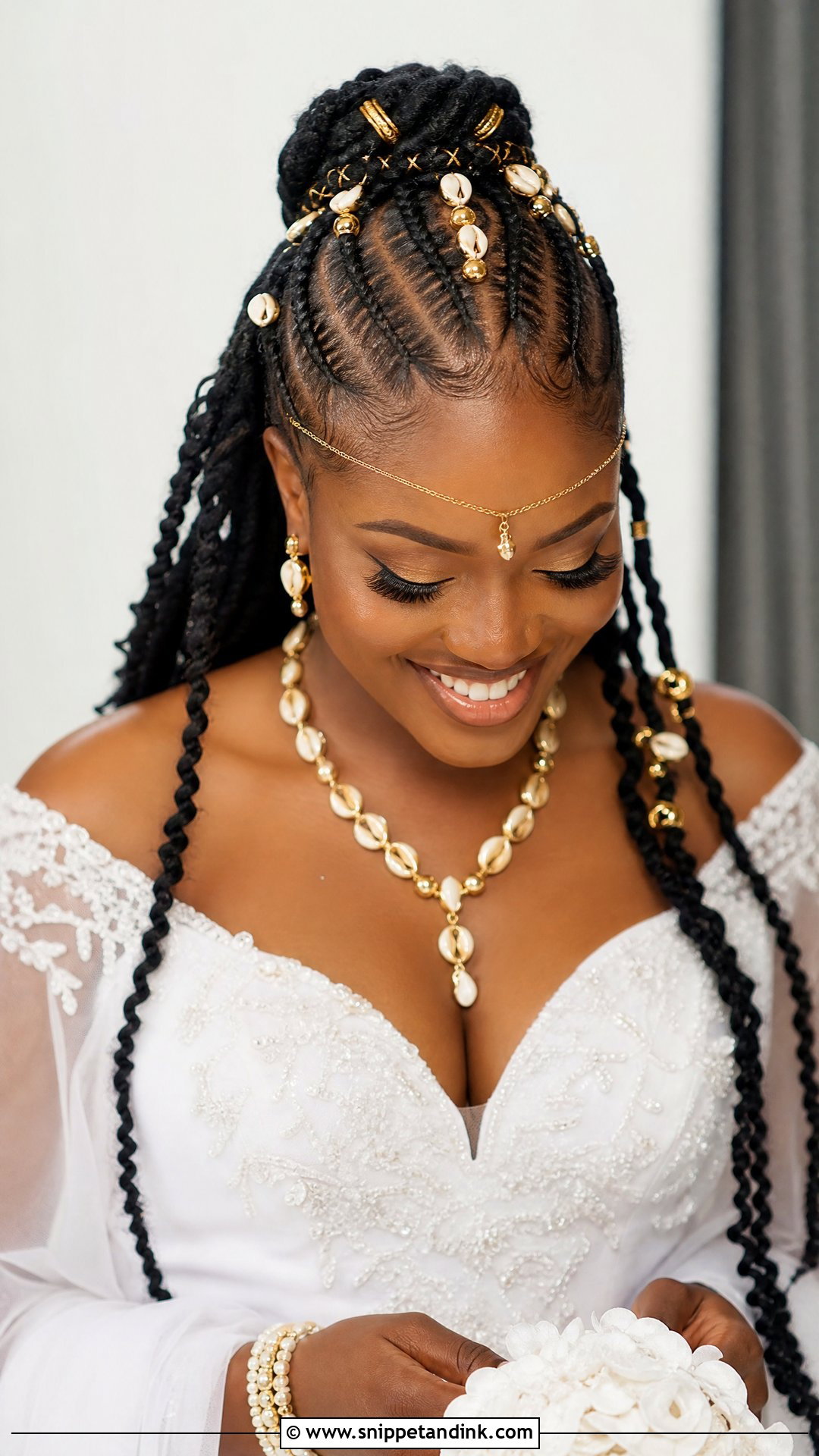
Cowrie shells have long stood for beauty and prosperity, and woven into braids they bring an earthy ivory accent. Real shells vary in size, so I sort them before the appointment and place the larger ones toward the ends, where they hang rather than pull at the root. They pair naturally with gold accessories and traditional attire. Long, half up or in an updo, cowries need a small drilled hole or a cuff to stay put, so check how yours attach before your appointment.
19. Mohawk Braided Updo for Brides
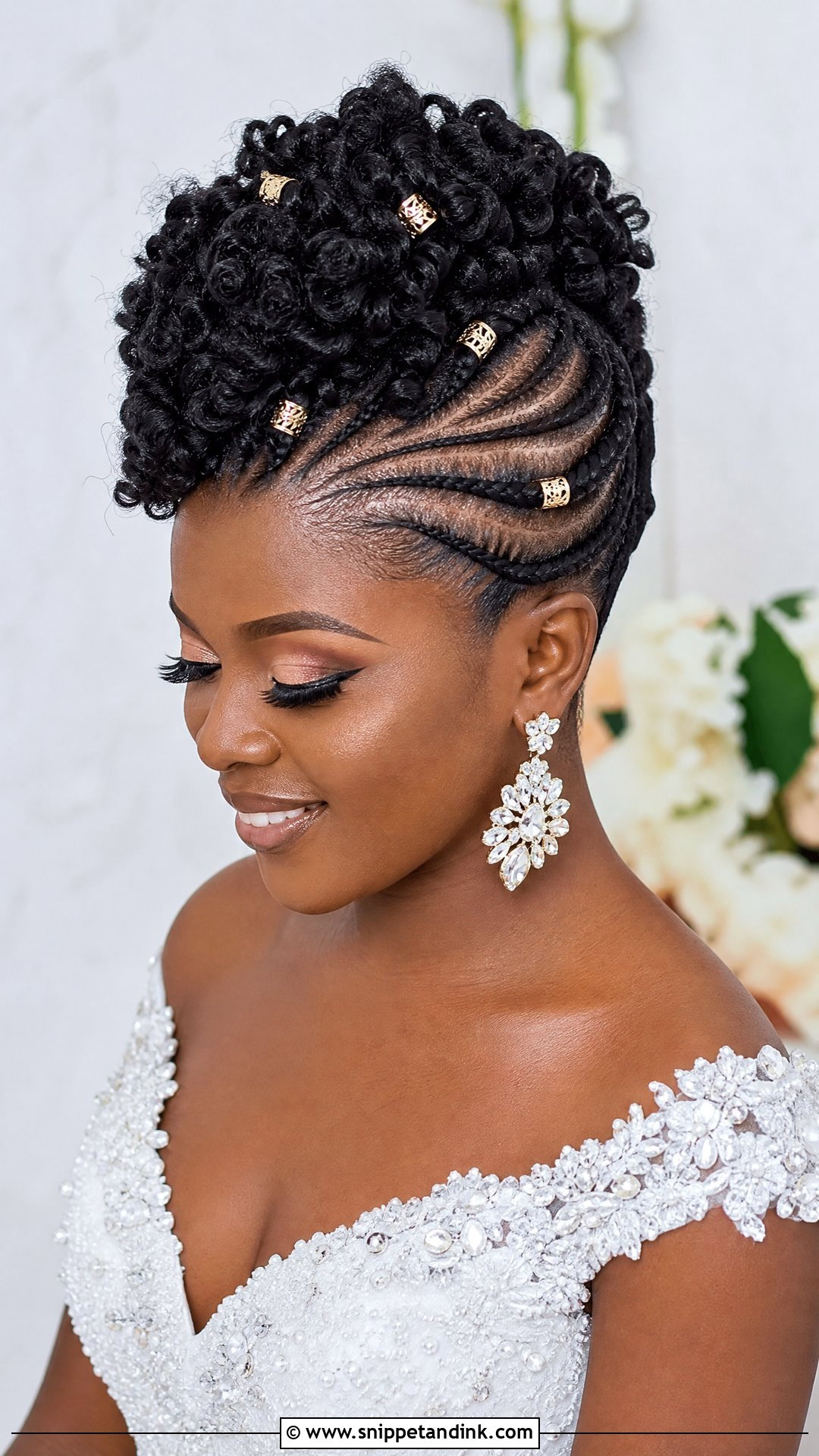
A braided mohawk is the boldest shape here: tight braids along both sides, with a raised strip of curls or twists down the centre. The contrast between flat sides and a full centre creates real dimension in photos taken from the side. My caution is the veil, since there is nowhere obvious to anchor it. A comb set at the back of the centre strip works, or skip the veil and add beads, cuffs or flowers along the braided sides instead.

20. Locs Updo Bridal Hairstyle
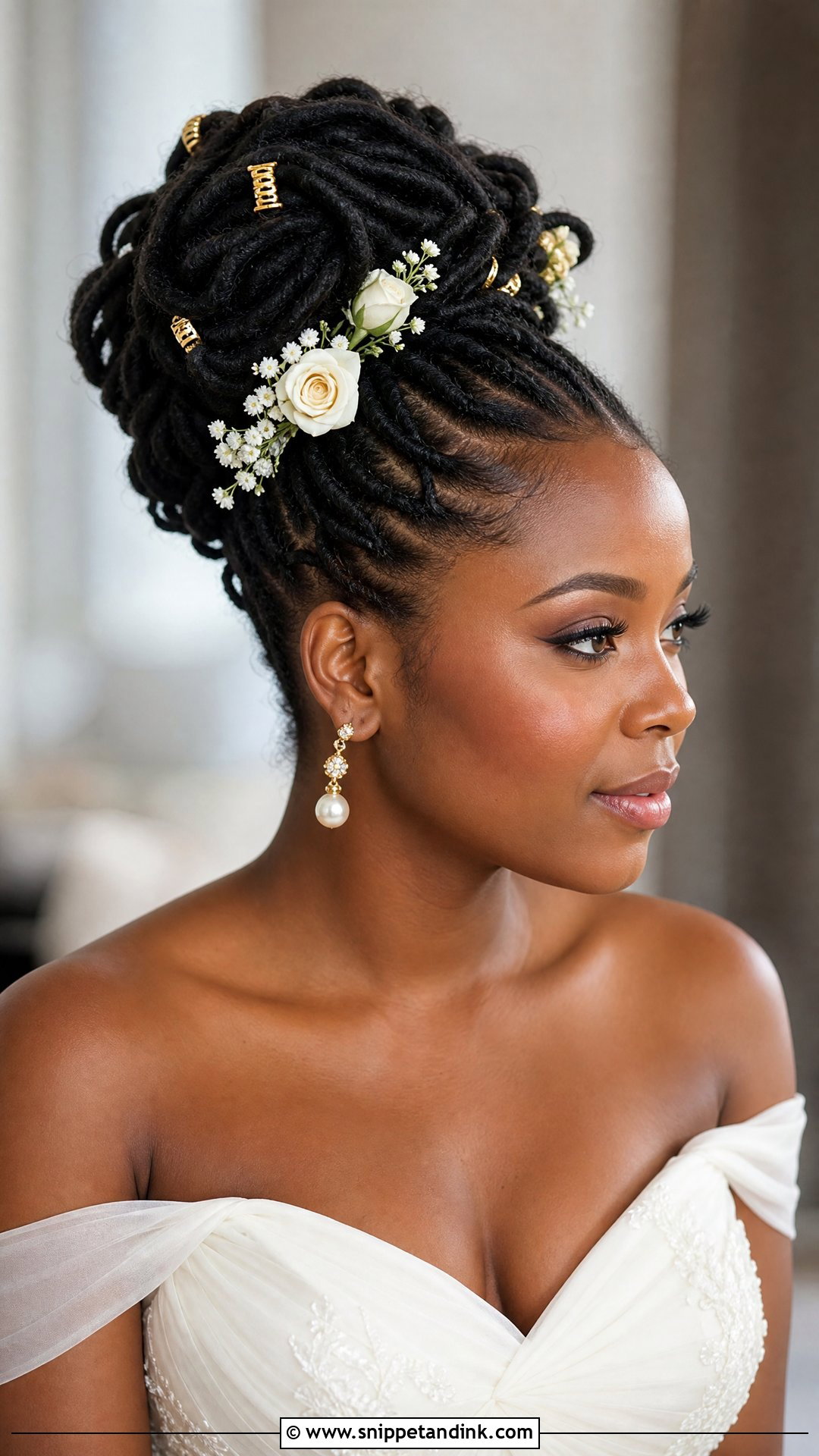
Locs carry years of growth and personal meaning, which is why I never treat a loc updo as just another bun. Long locs can be gathered into a sculpted bun, a twist or a crown, but heavy locs need support underneath, and I pin them to a braided or banded base rather than relying on pins in the locs alone. Retwist the roots a week or two before, not the day before, so the new growth isn’t tight and shiny. Gold cuffs, beads and flowers all slide onto locs easily.
Protecting Your Hairline Through a Long Celebration
Traction alopecia starts at the edges, and wedding styles are notorious for it: tight braids, heavy extensions and a gele tied firmly for ten hours all pull on the same fragile hair at the temples. A few things make a real difference.
- Speak up during the install. Stinging, headache or small white bumps mean the braids are too tight. Ask for them to be redone, not soothed with oil.
- Keep extension hair proportionate to your own. Thick braids on fine edges hang from very few strands.
- Tie the gele over a soft scarf or a satin band so the pleats grip fabric instead of hair.
- Plan your exit. Take braided styles down within six to eight weeks, and let heavy updos down the night of the wedding if your scalp feels sore.
On the day, keep a satin scarf for changing outfits between ceremonies, and sleep in a satin bonnet if you have a second event the next morning. Edges laid with gel will flake if you keep re-laying them, so set them once and leave them.
One Braided Base for the Trad and the White Wedding
Your bridal hair carries heritage as much as style, and natural hair, braids, twists and locs can all be shaped into something regal. A goddess updo, beaded Fulani braids or a sculpted Nigerian traditional look each start with the same questions: how much tension your edges can take, how many ceremonies the style must survive, and what will sit on top of it. Bring your accessories to the trial, choose a stylist who works with your texture every week, and plan the install date as carefully as the look.
You'll Like These Ideas:





Leave a Reply