
Locs give a bride more styling room than almost any other texture. They hold a pin, keep a curl set for days, and can be folded into shapes that loose hair simply won’t stay in. The style I build for a loc bride starts with three questions: how long and how heavy her locs are, what the neckline of her dress is doing, and how she normally wears her hair on an ordinary Saturday. The most complicated updo isn’t always the right answer. Below are twenty shapes I’d consider, with notes on what each one needs from your locs and where each tends to struggle.
Retwist, Wash and Dry: Your Locs in the Two Weeks Before
Most of what makes wedding locs look good happens before I ever pick up a pin. The timing of the last retwist and the last wash matters as much as the style itself.
When to retwist
I ask brides to get their final retwist about one to two weeks before the wedding. Right after a retwist, roots can look stiff, a little shiny from product, and the scalp can feel tender. A week or so later the roots have relaxed into place but still look neat. Ask your loctician to go light on heavy waxes or gels, since buildup shows as white flecks in close-up photos.
When to wash
Locs hold water for a long time, and thick or long locs can take many hours to dry all the way through. Locs left damp inside an updo can develop a musty smell. I recommend washing two or three days before the wedding, then drying fully with a hooded dryer or plenty of air time. Don’t wash on the morning itself.
The night before
Sleep in a satin bonnet or scarf to keep lint off the locs and the curl set intact. If we’re setting curls, this is usually when the rods go in, so plan an early night and bring the bonnet to the hotel.
1. Wedding Loc Updo
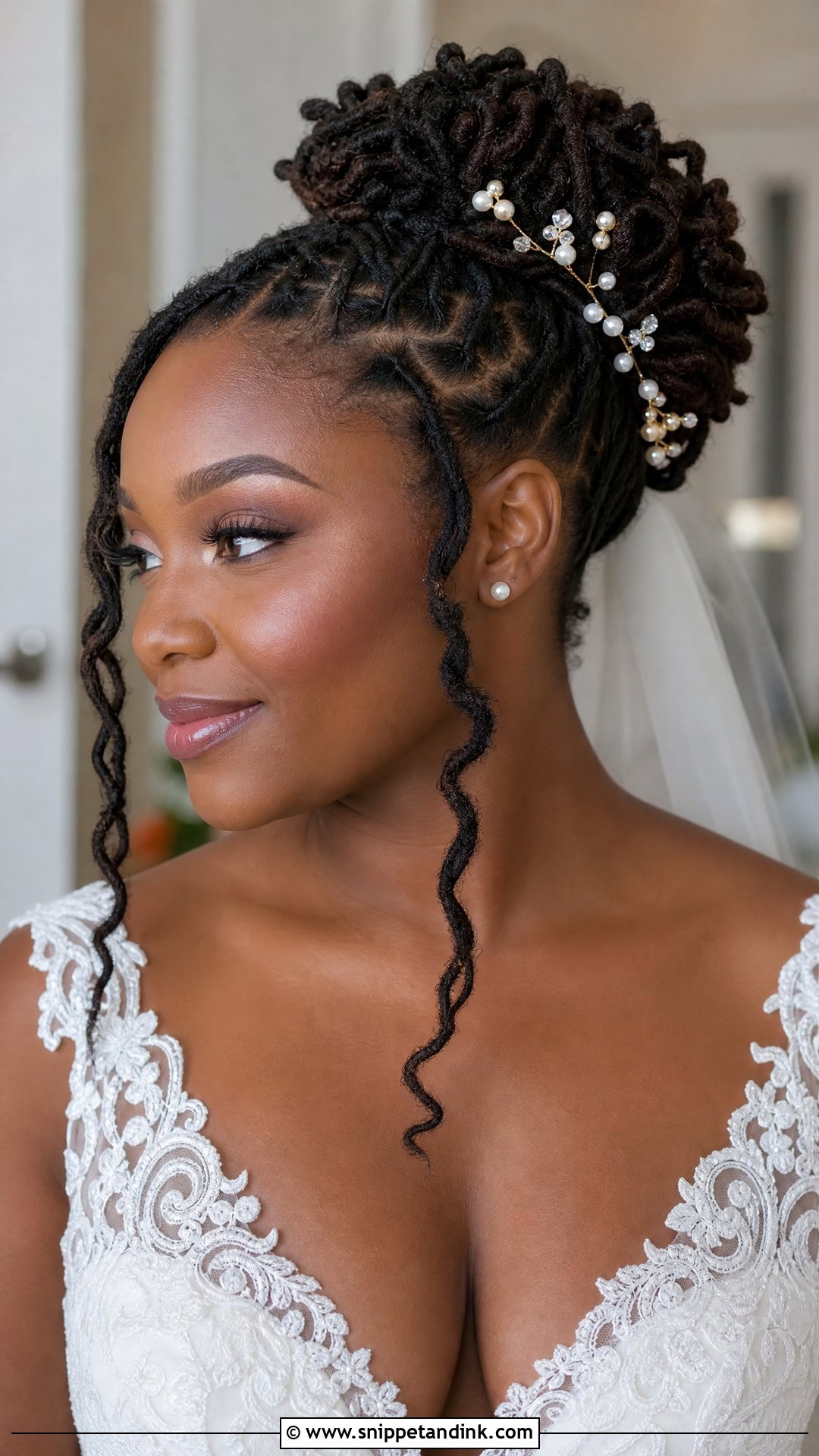
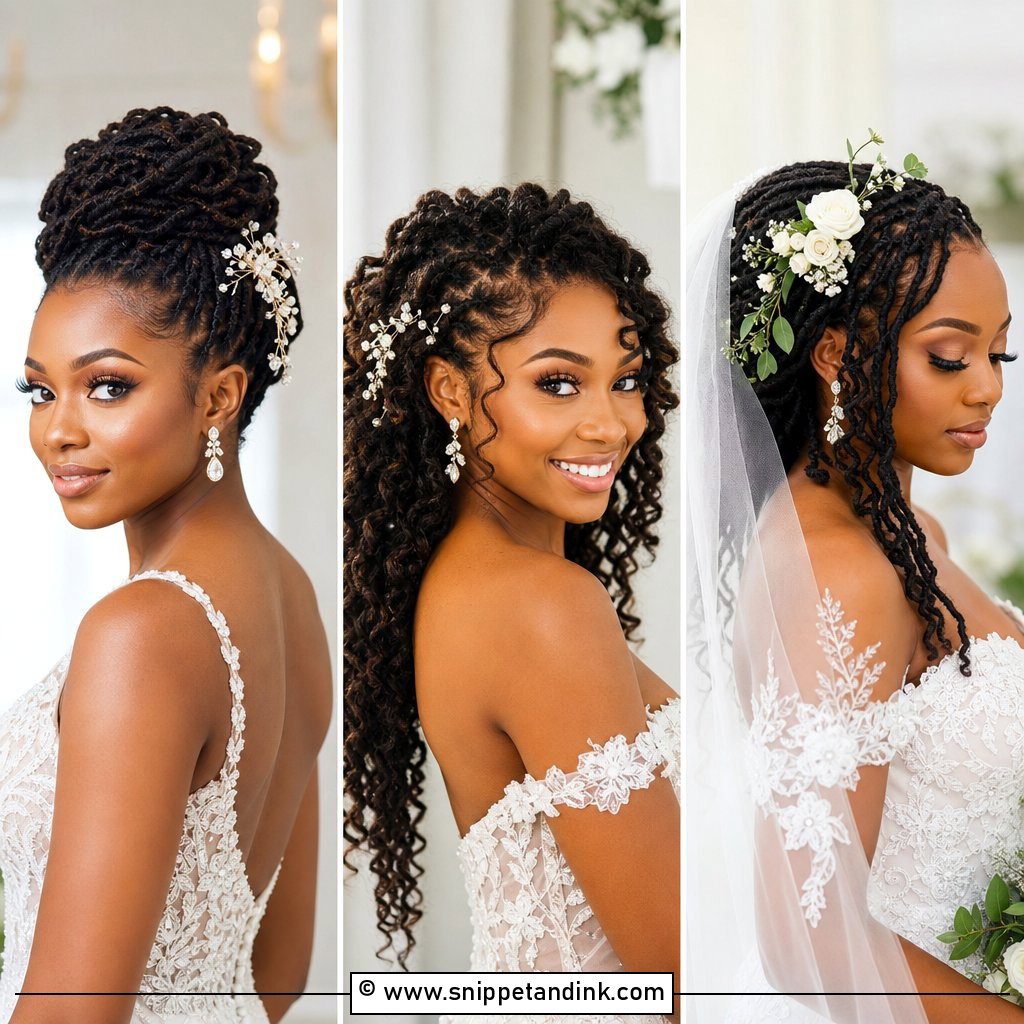
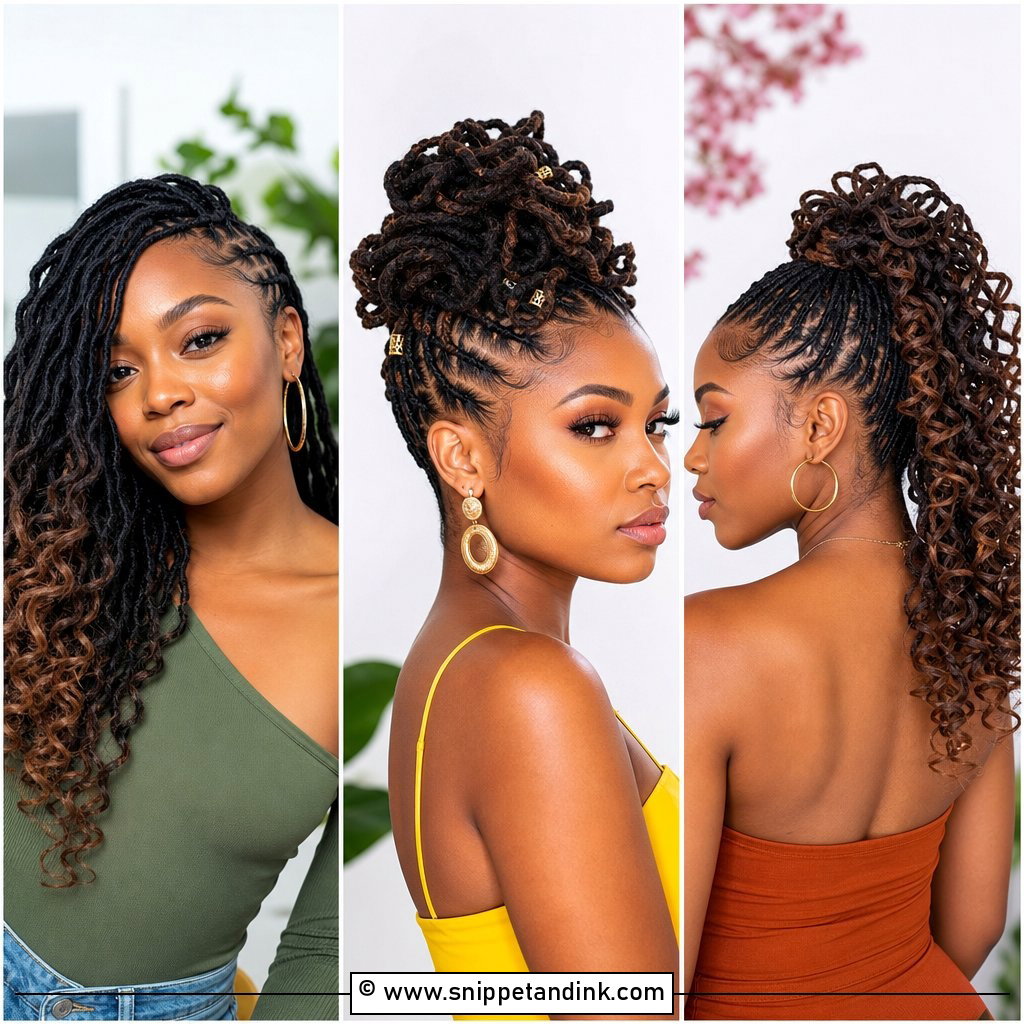
An updo lifts everything off the neck and keeps it there from the ceremony through the last song. I need medium to long locs for this, enough length to fold back on itself and pin into a rounded crown or bun. For heavy locs I use large U-shaped pins rather than small bobby pins, because bobby pins slide straight out under that weight. A high neckline, a lace back or detailed shoulders all show better with the hair up. I always leave the hairline soft and loose at the edges, both for the look and to avoid pulling on the edges for twelve hours.
2. Wedding Loc Bun
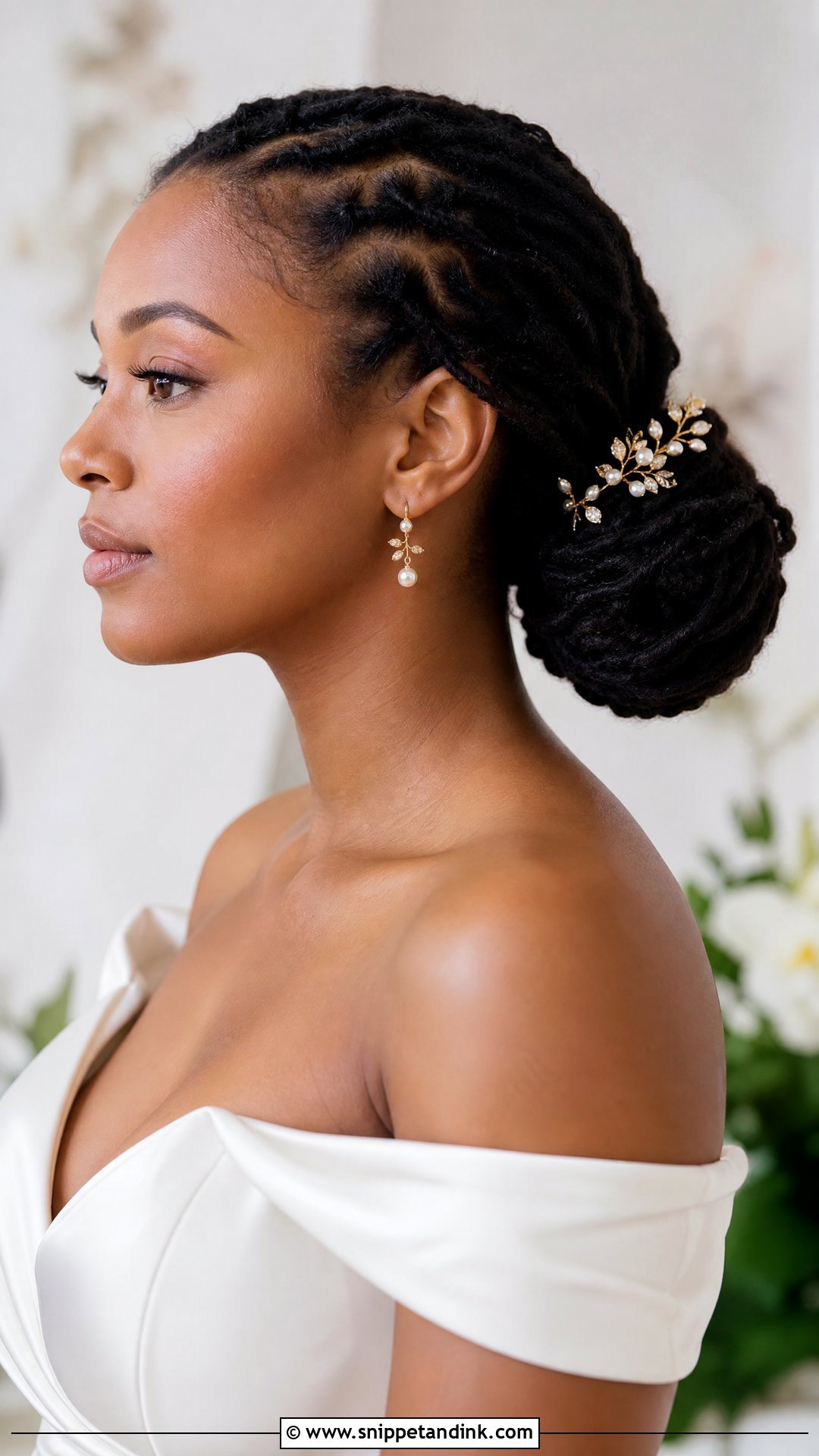
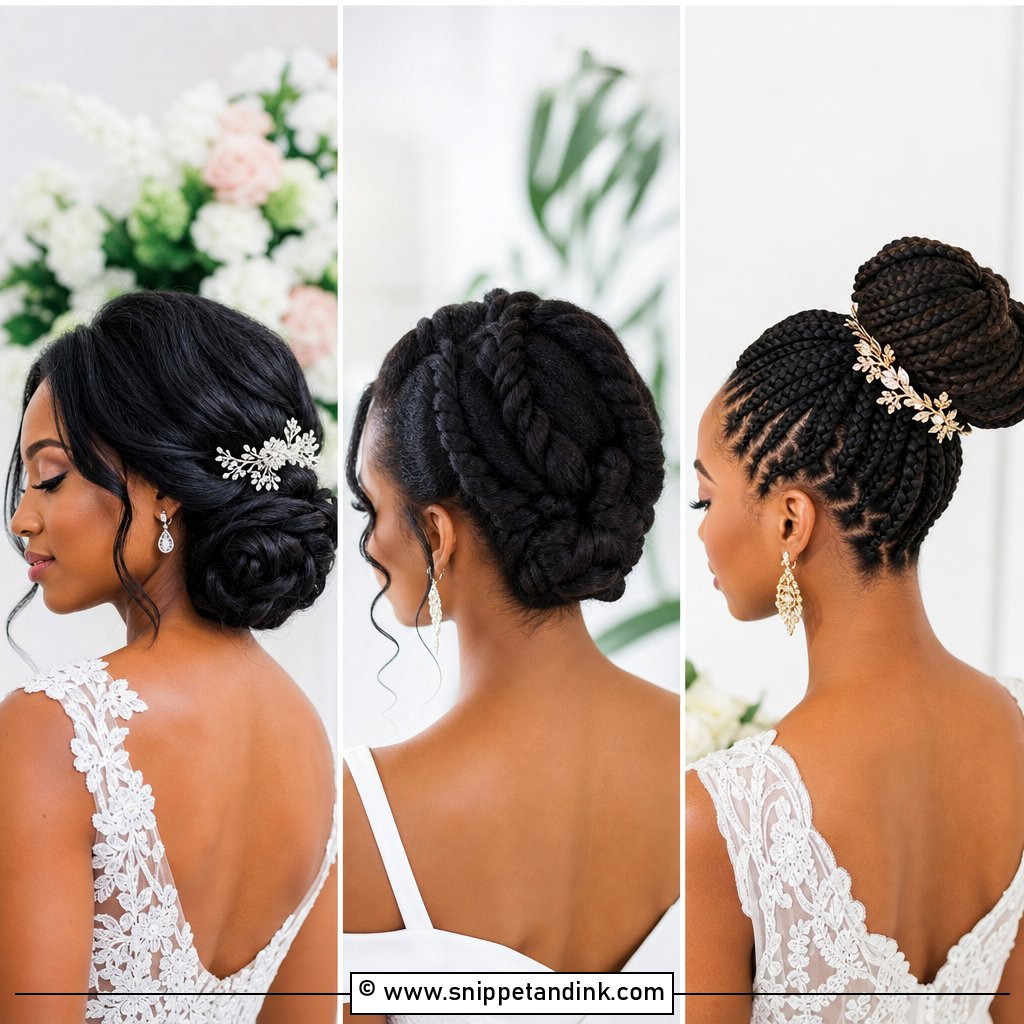
A wedding loc bun is the shape I recommend most to brides who want little fuss. Low at the nape reads quiet. Higher on the crown gives lift. Freshly retwisted locs hold a bun cleanly because the roots are firm, so I time the retwist with the wedding in mind. A smooth low bun leaves room to tuck a veil comb above it, while a fuller bun can carry pearls or gold cuffs alone. In summer heat it keeps the neck clear, which brides tend to appreciate by the time the photos start.
3. Wedding Loc Ponytail
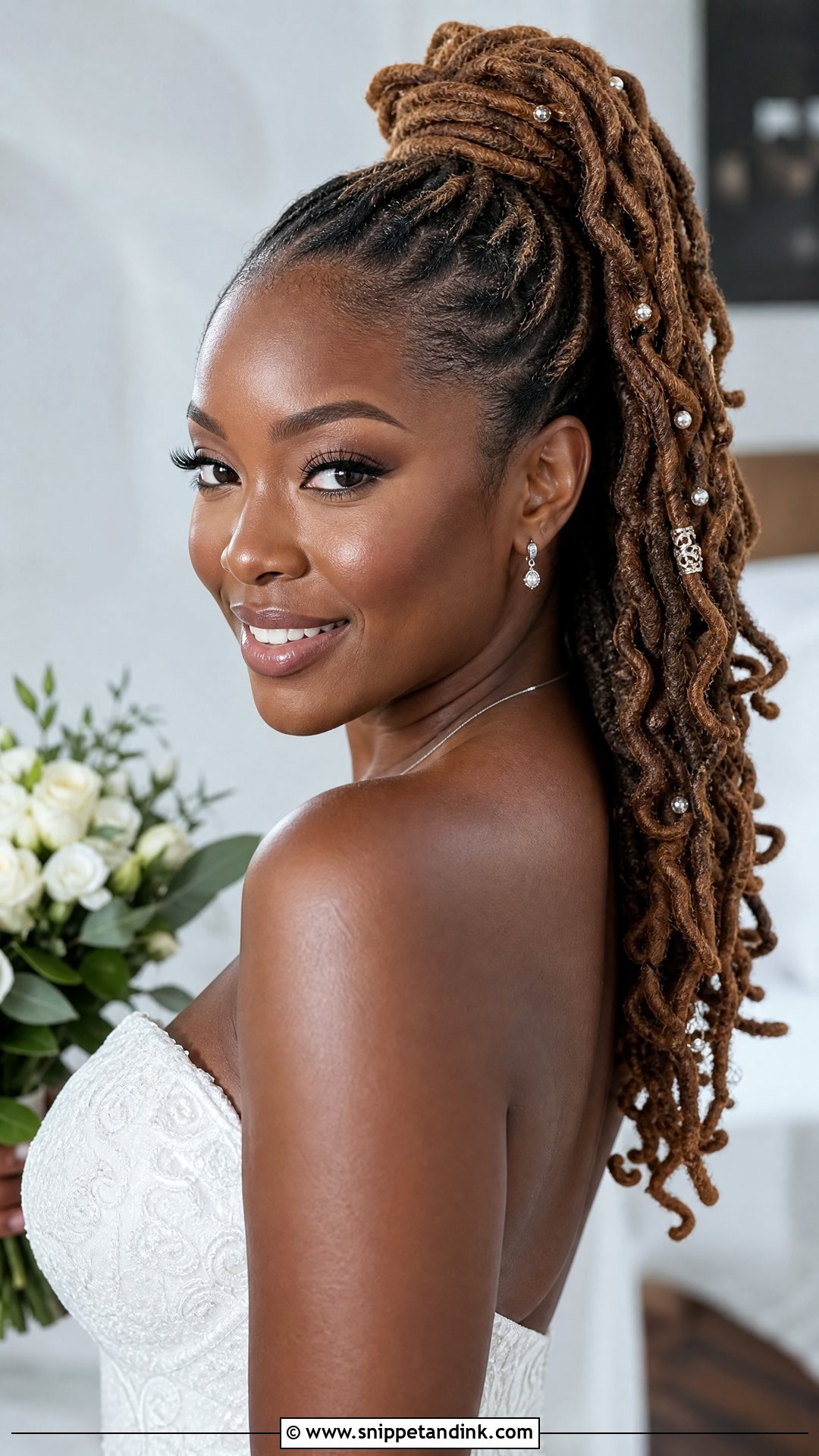
Brides who usually wear their locs down often feel most like themselves in a wedding loc ponytail. It opens the face for photos but keeps the length moving. I wrap a single loc around the base to hide the elastic, which makes it look finished rather than gym-ready. The base can be sleek with locs falling straight, or the lengths can be curled. A high ponytail on very long locs gets heavy by the evening, so for those brides I place it at the middle of the head rather than the crown. It suits strapless gowns and bridal suits especially well.
4. Wedding Loc Half Up Half Down
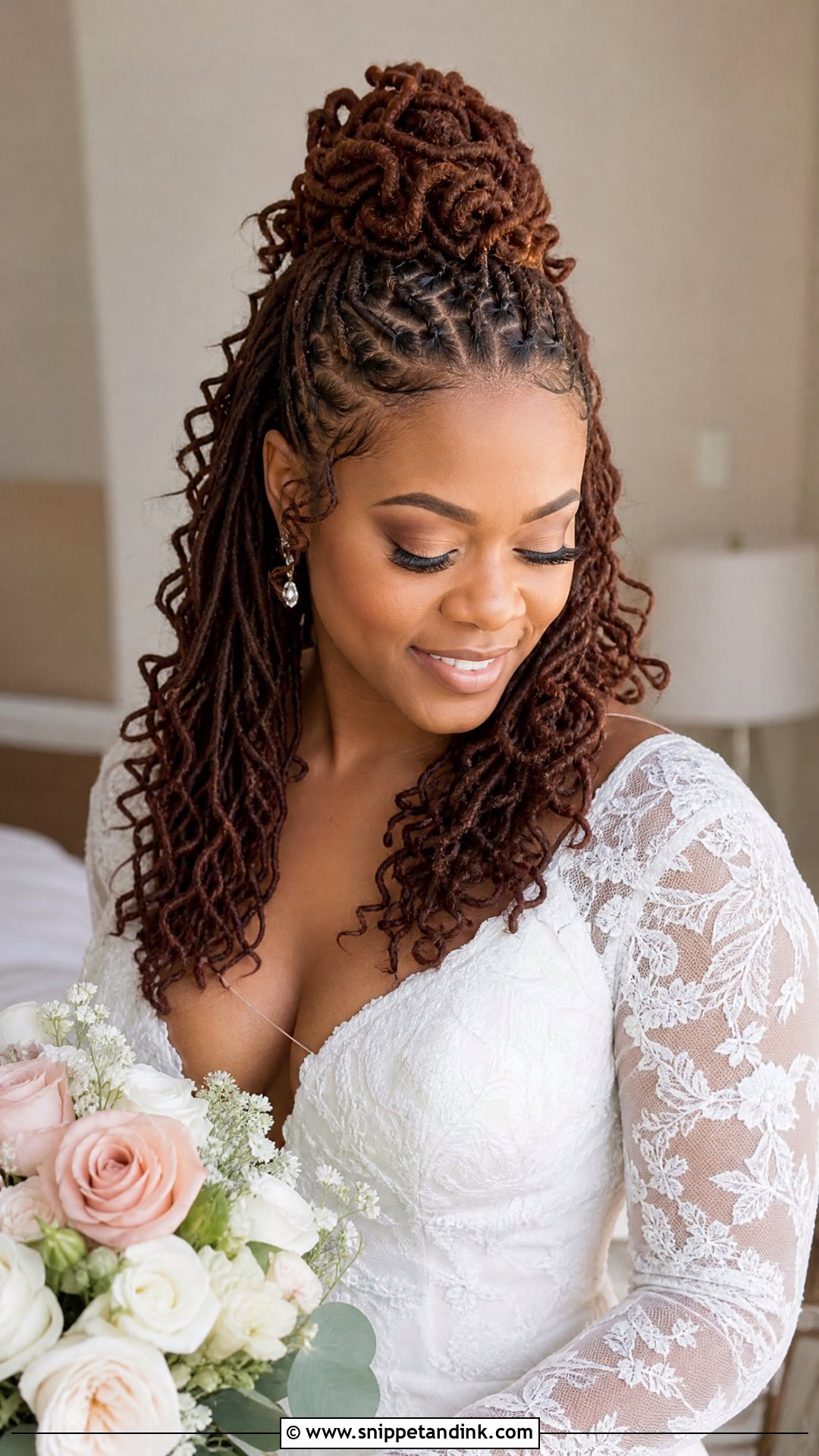
Half up, half down keeps the hair off the face while the lower locs fall over the shoulders. I lift the top section into a small bun, twist or braid, and set the loose lengths with rods or leave them in their natural texture. The thing to watch is the anchor point. The top section carries a veil comb if there is one, so I pin it into a flat, firm base rather than a loose twist. Brides with very short layers at the back may find the lower section looks thin, and a full updo might suit them better.
5. Wedding Loc Petal Bun
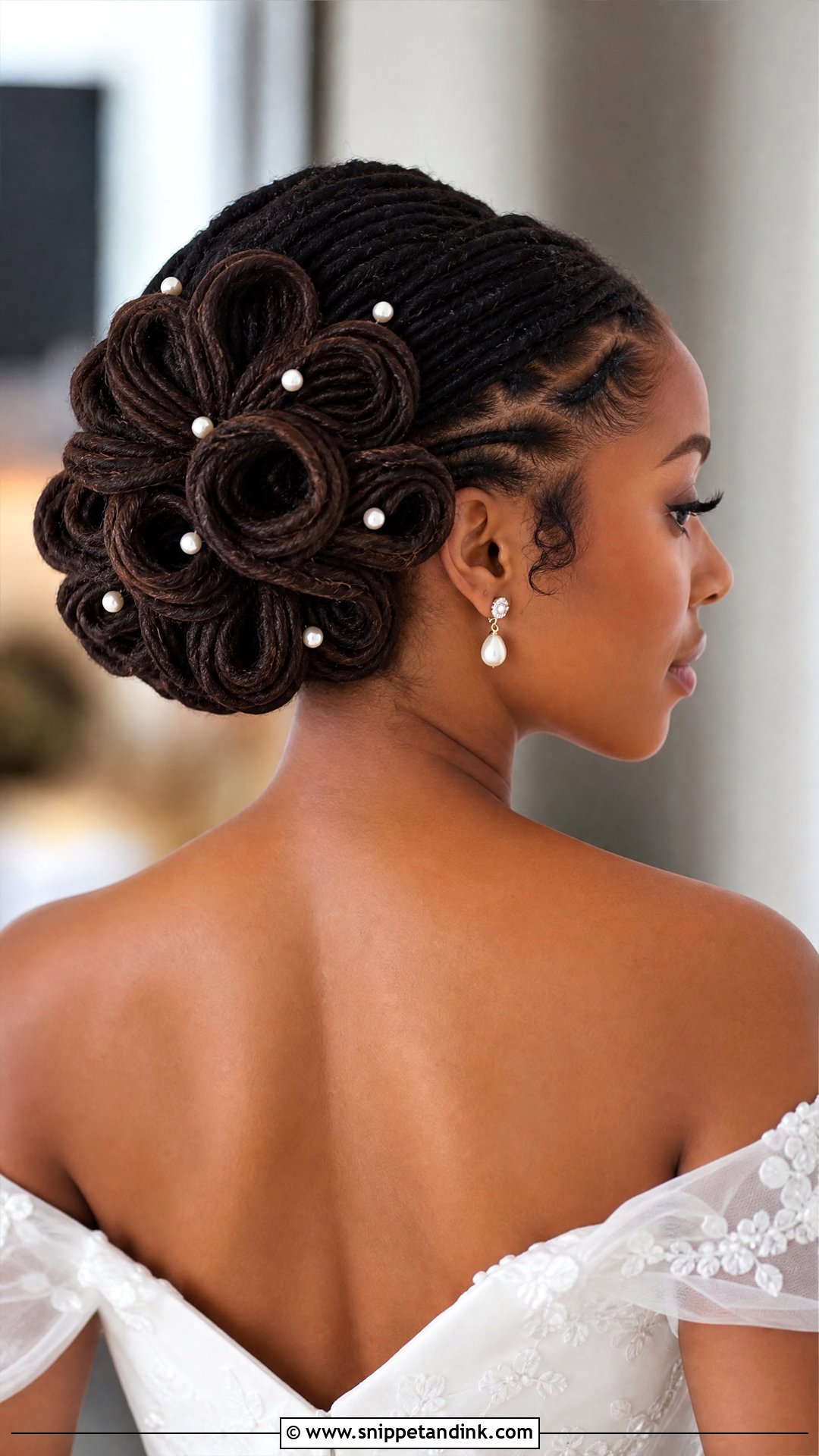
A wedding loc petal bun is sculpture. I loop each loc into a petal and pin it at the base so the bun reads like a flower from behind. It needs medium to long locs, and I’d plan an extra half hour in the chair, because each loop is pinned individually. The back view is the point here, which suits aisle and portrait shots. A few pearl pins in the center of the petals are enough. Too many accessories hide the shape you just spent all that time building.
6. Wedding Barrel Twist Locs
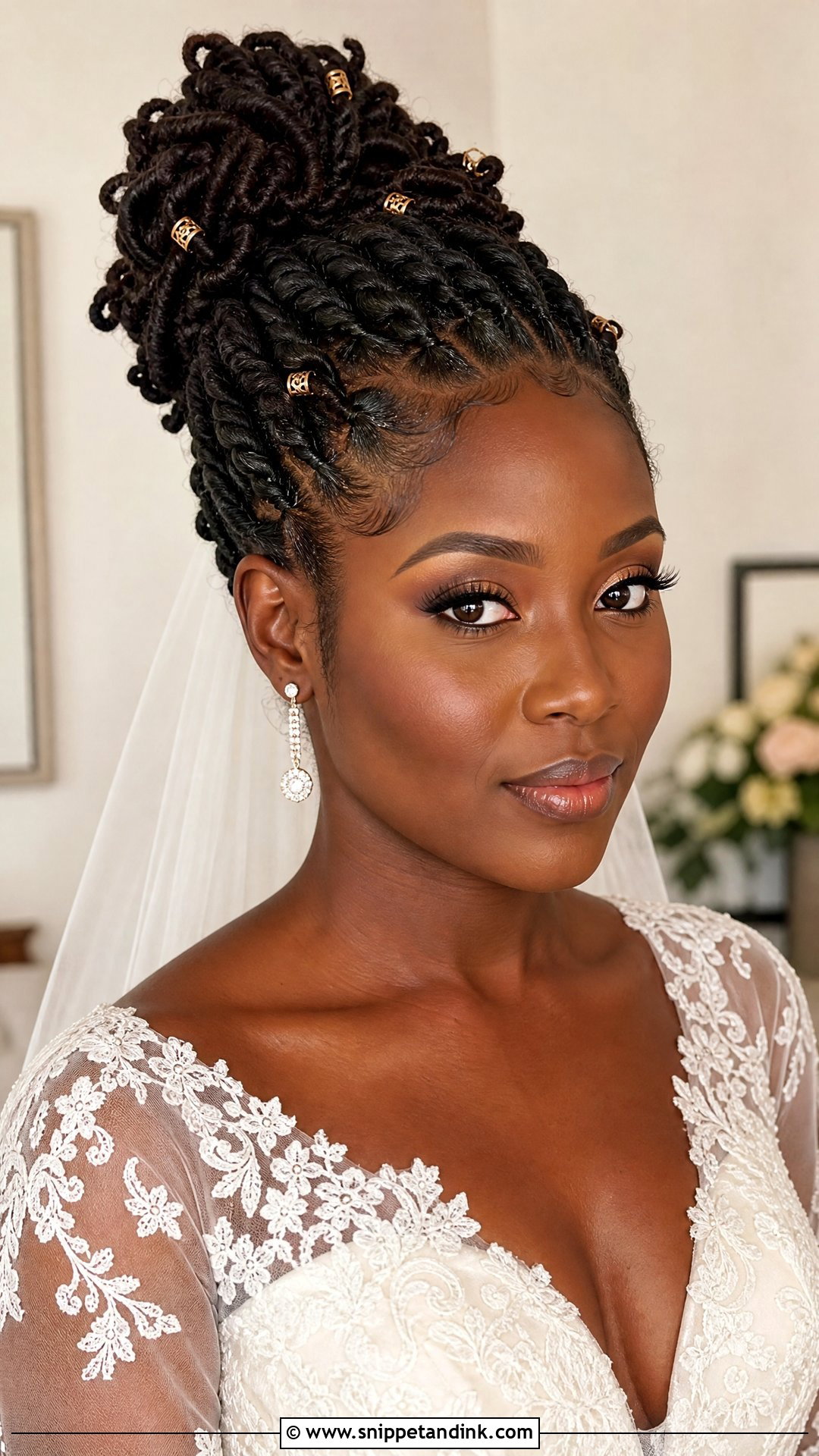
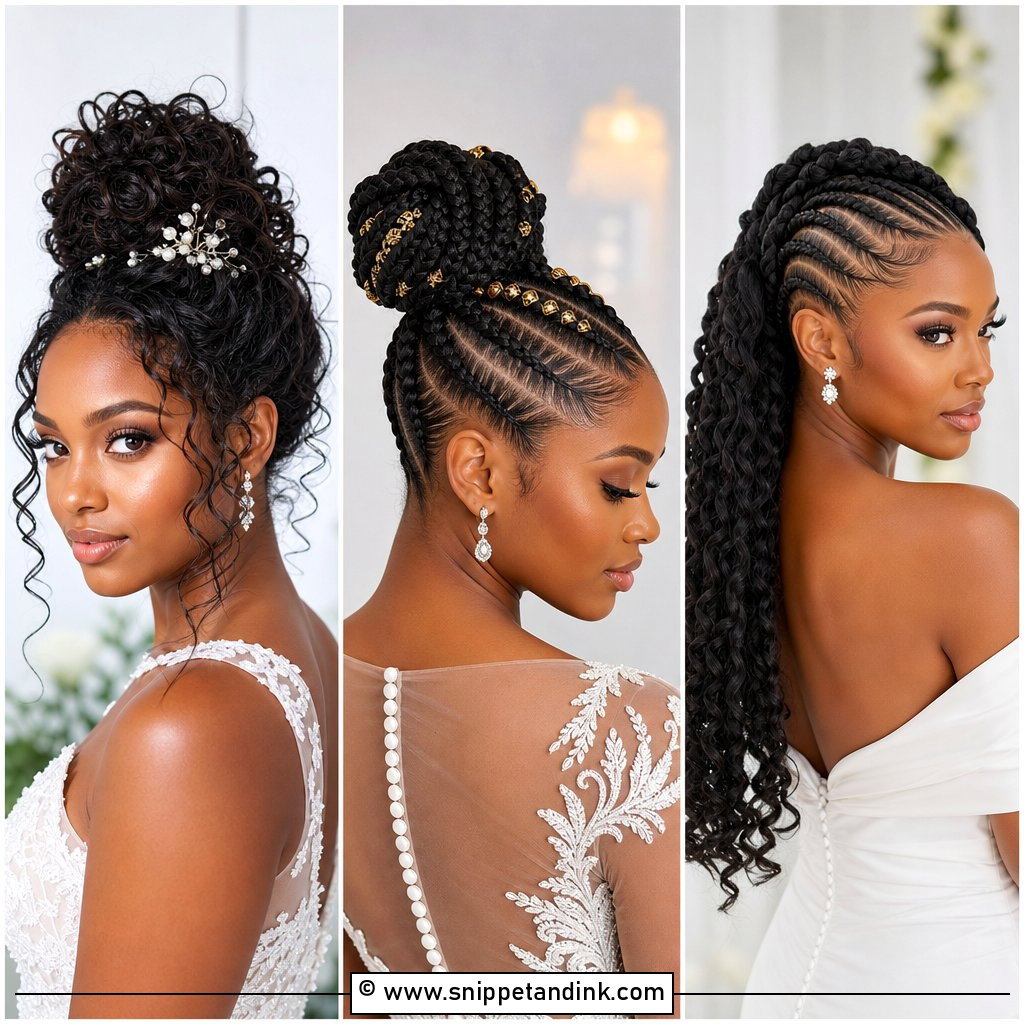
Barrel twists turn sections of locs into rounded rolls that lead into a bun, ponytail or crown. They look neat and detailed in close-up photos, and they hold locs firmly away from the face, which matters outdoors in wind. The common mistake is twisting too tightly. Tension on the scalp starts to ache by the reception, so I keep the twists firm but never painful at the root. Gold cuffs or curled ends soften the structure for a bridal finish.
7. Wedding Loc Chignon
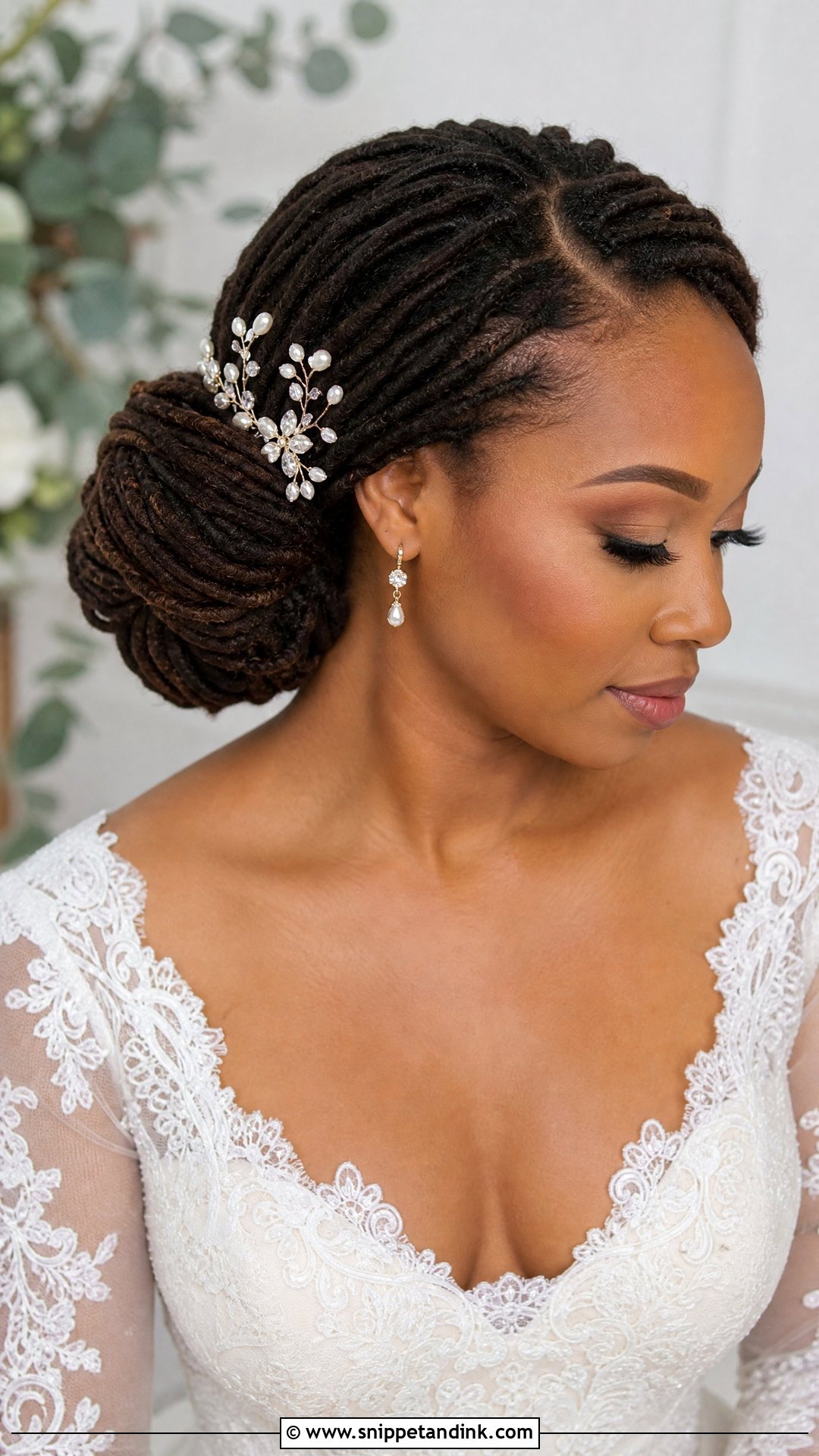
A chignon sits low at the nape and suits classic, vintage or quietly romantic weddings. I fold the locs into a smooth oval, or pin them more loosely so the texture shows. Because it’s low, the weight rests close to the neck, which makes it one of the most comfortable shapes for long, heavy locs. It pairs well with a veil, a pearl comb or lace. Brides who want height should look elsewhere. For brides who don’t, I secure the core of the chignon firmly and keep the front soft.
8. Wedding Side Swept Locs
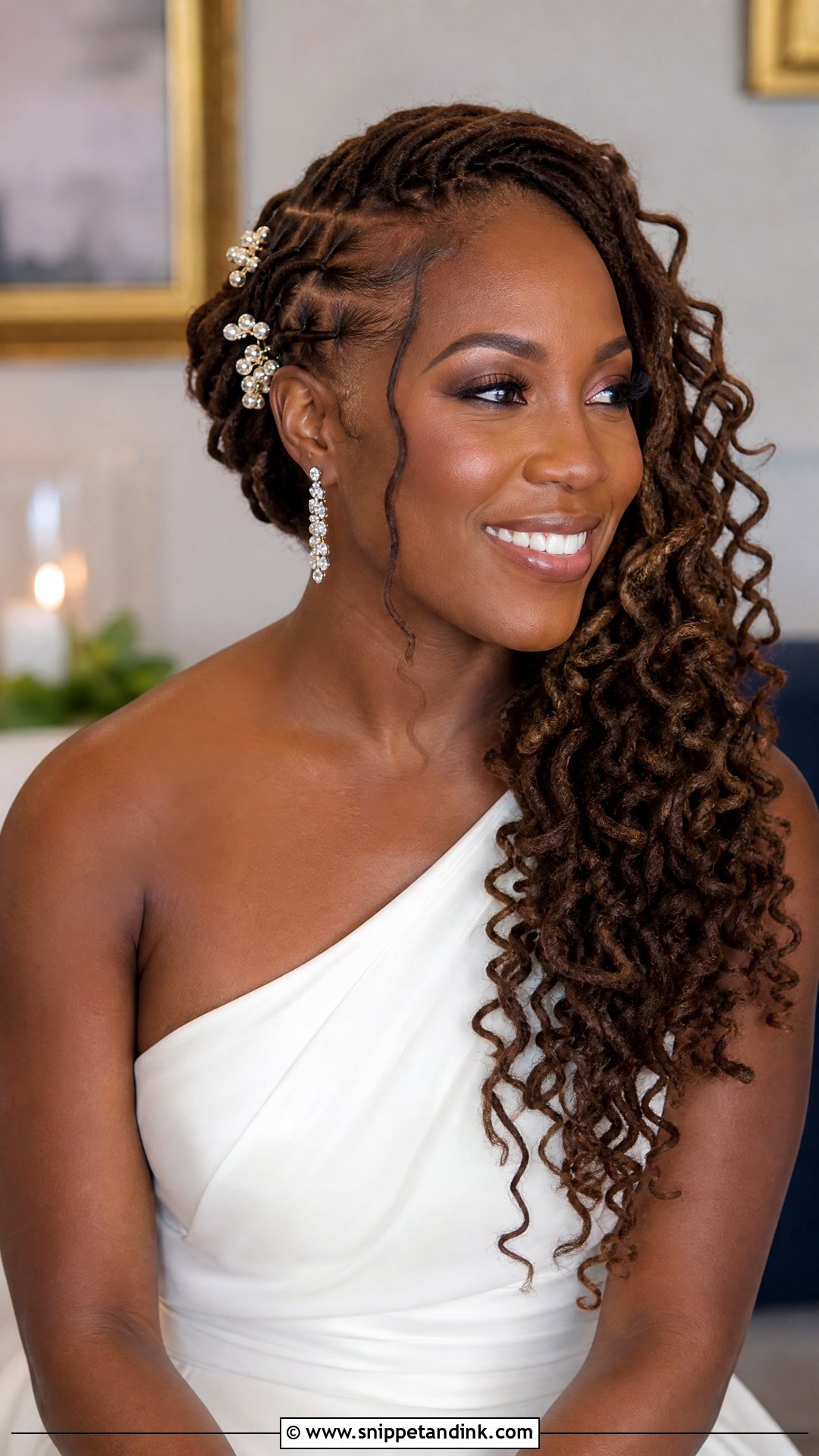
Side swept locs give you a down style with more control. I gather the locs over one shoulder and pin, twist or braid the opposite side flat so nothing creeps back across during the day. Curled ends soften it further. This shape is a natural partner for one-shoulder gowns, with the locs falling on the bare side. Expect to adjust it occasionally, since leaning down to hug guests pulls everything forward. A small comb or pearl cluster on the pinned side hides the anchor.
9. Wedding Curly Locs
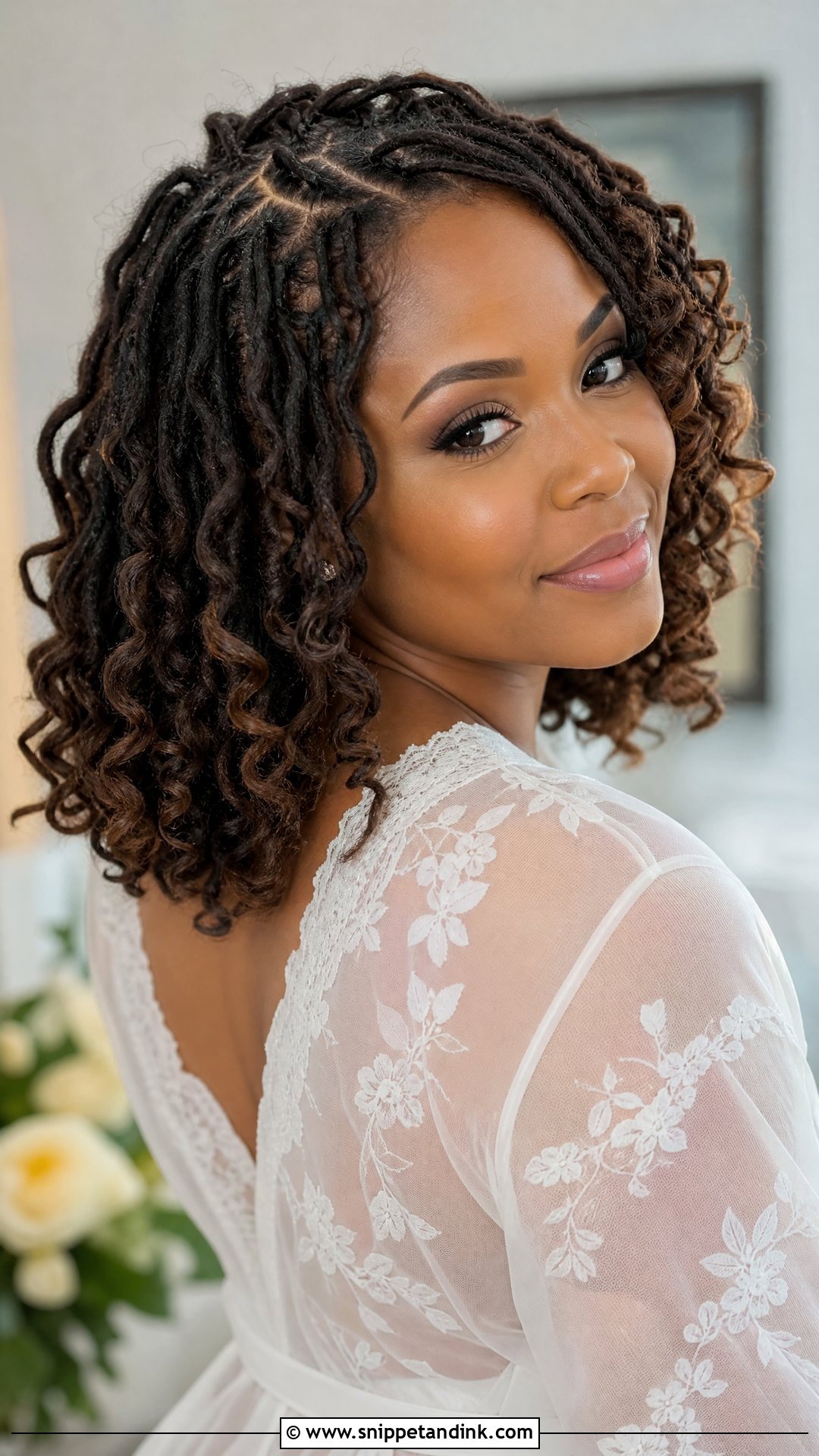
Curling locs adds movement and volume without a heavy updo. Pipe cleaners, perm rods, flexi rods and braid-outs all work, and the tool decides the result: small rods give tight defined curls, larger rods give a loose wave. I set them on damp locs and let them dry completely, which can take a full night, so curl sets are often done the evening before. Locs hold a curl for days, so there’s little risk of it dropping. A fresh retwist keeps the roots tidy against all that movement at the ends.
10. Wedding Loc Crown
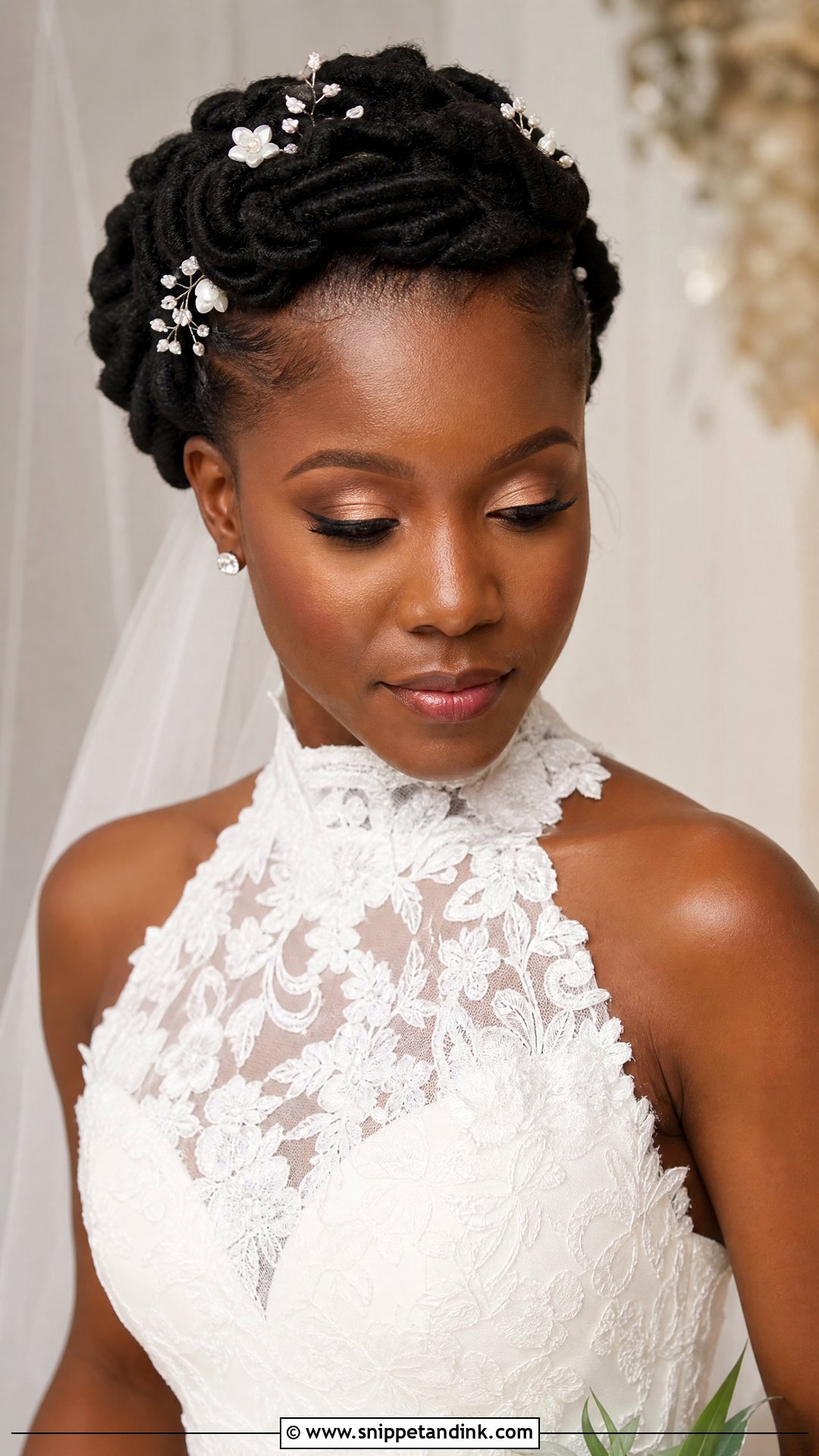
A loc crown wraps around the head like a halo and lifts the face without loose pieces everywhere. I wrap and pin it in sections so the weight is spread evenly around the head instead of hanging off one point. It can be polished or left a little textured. Pearls, small florals or a simple veil tuck into the wrap easily. This shape needs enough length to circle the head, so it’s usually not an option for locs shorter than the shoulders.
11. Wedding Loc Mohawk Updo
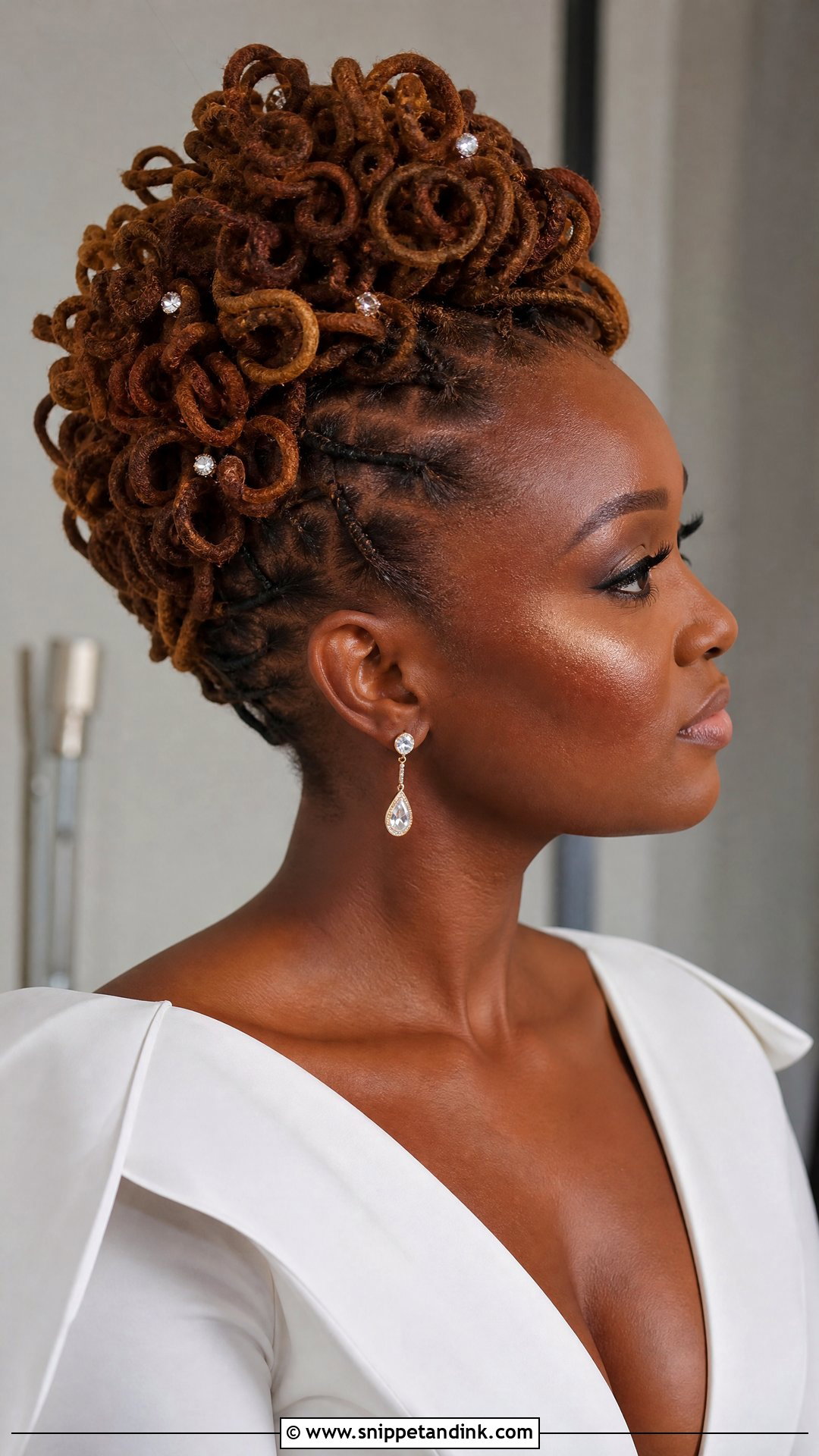
A wedding loc mohawk updo brings height and attitude. I flat twist or pin the sides upward, then build the center with curls, rolls or stacked loops. It lengthens the face and shows off earrings and neckline. The risk is tension at the temples, where the sides are pulled up hardest, so I check with the bride twice while I’m pinning. Keep accessories refined. Heavy pieces on top of a tall shape make it look top-heavy in photos.
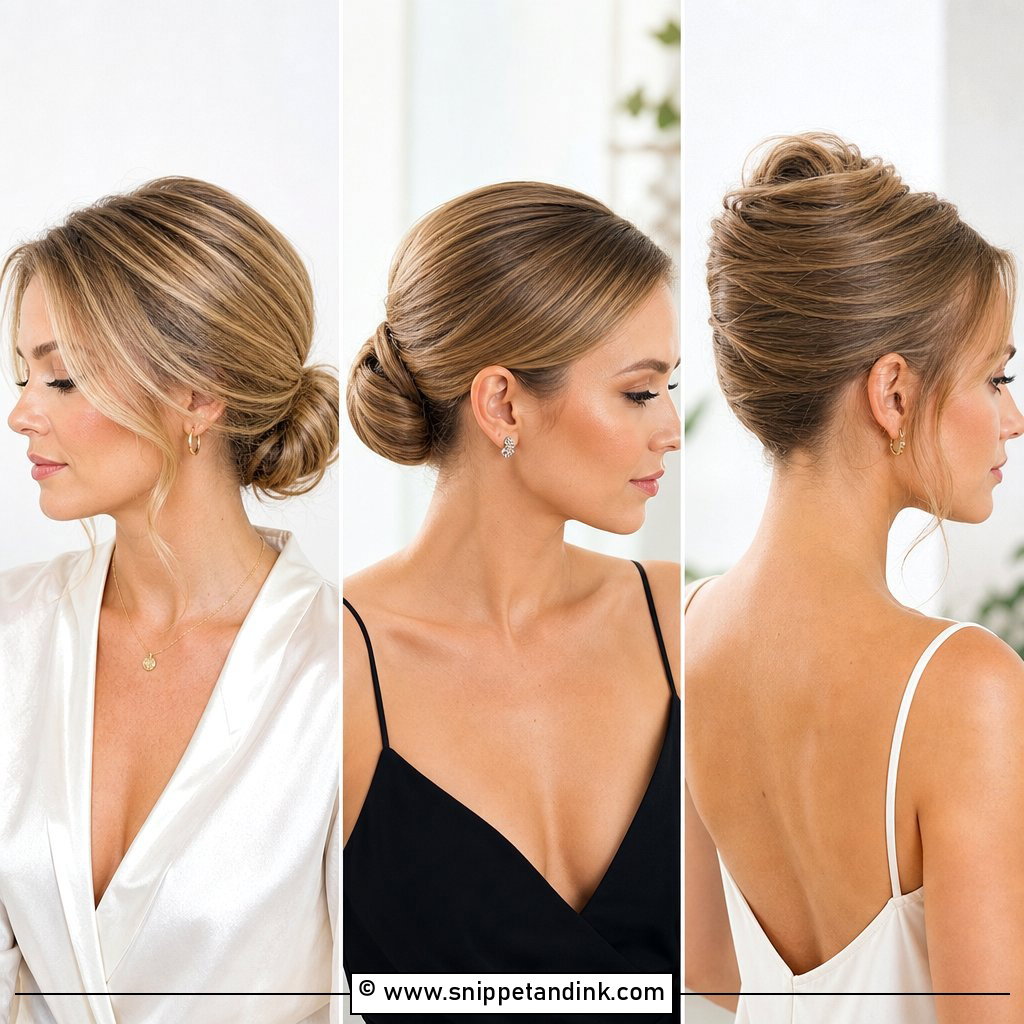
12. Wedding Loc French Roll
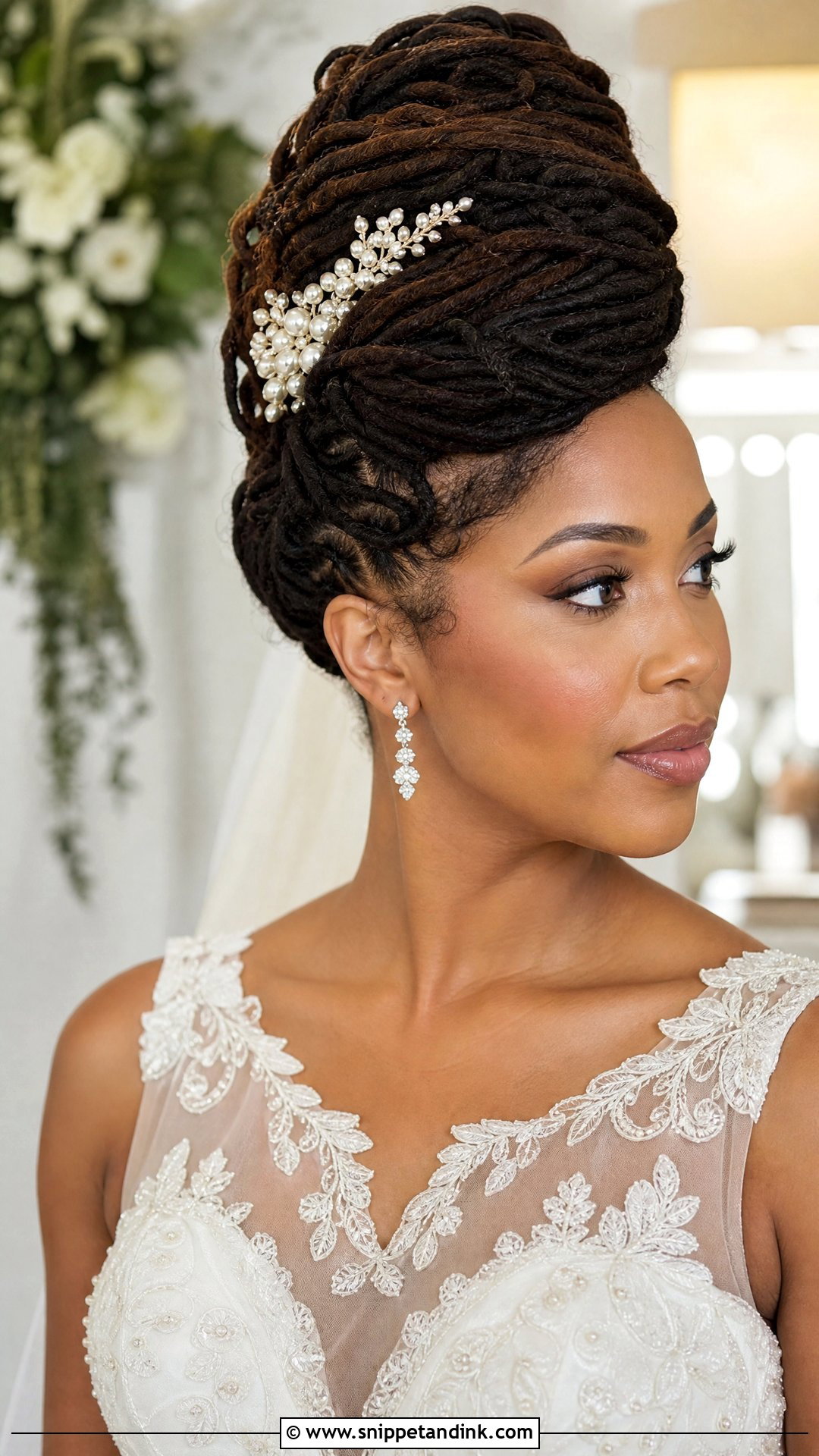
A wedding loc French roll sweeps the locs up and tucks them into a vertical roll along the back of the head. It’s a vintage shape that loc brides don’t always think of. Medium locs roll most easily. Longer locs can be folded inside the roll, though very thick lengths make it bulky, and a chignon is often neater for them. A side part or soft front sweep keeps the face from looking severe, and a pearl comb on one side gives the bridal accent.
13. Wedding Loc Bob
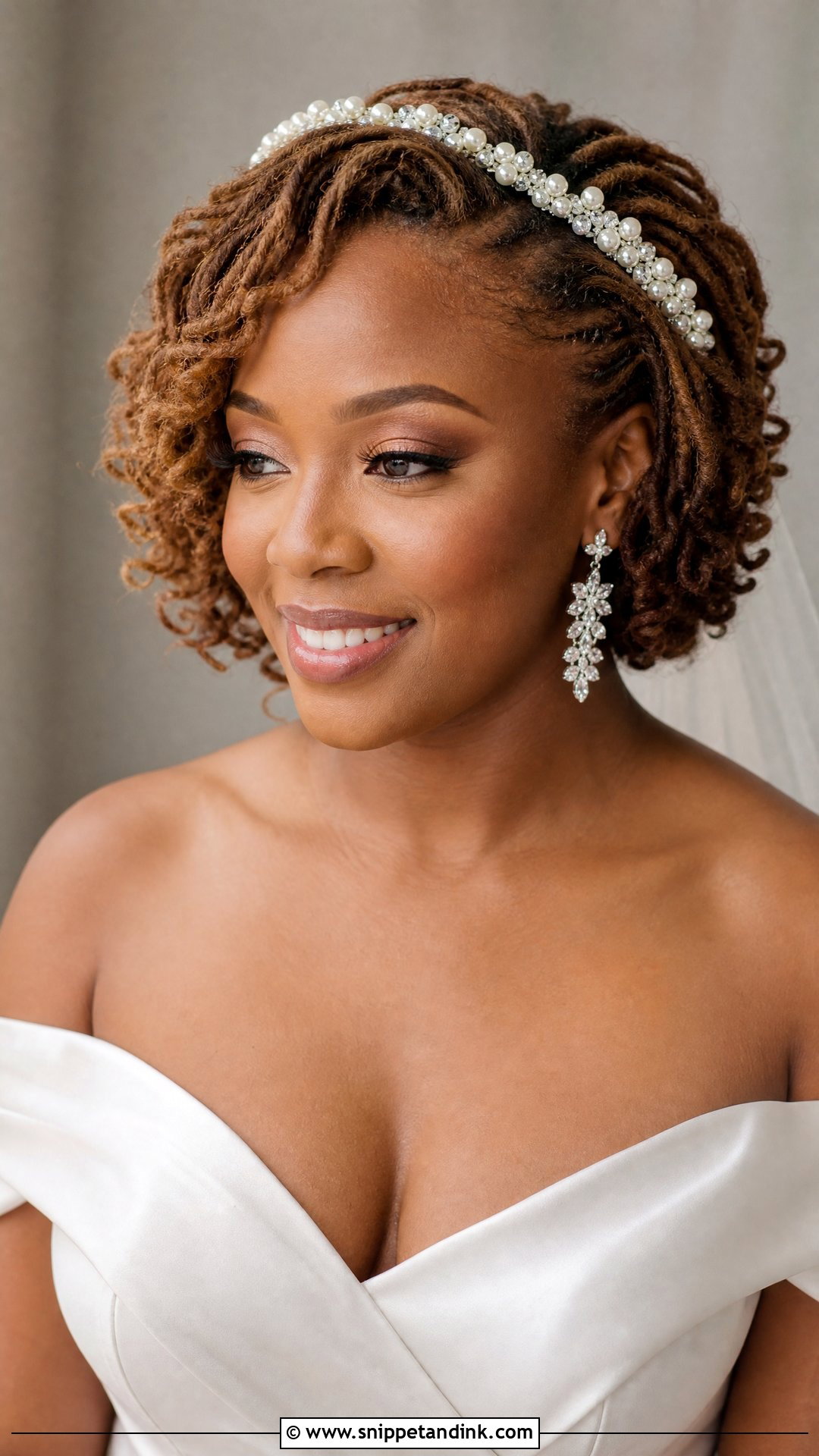
Short locs can absolutely carry a wedding look, and a bob is the most direct way to do it. I curl the ends under or tuck them, and use a side part to frame the face. Chin-length and shoulder-length locs both respond well to a soft curl for extra volume. Birdcage veils and pearl headbands suit this length better than long cathedral veils, which have nothing to anchor into. The appeal is that it looks finished in the morning and still looks finished at midnight with almost no upkeep.
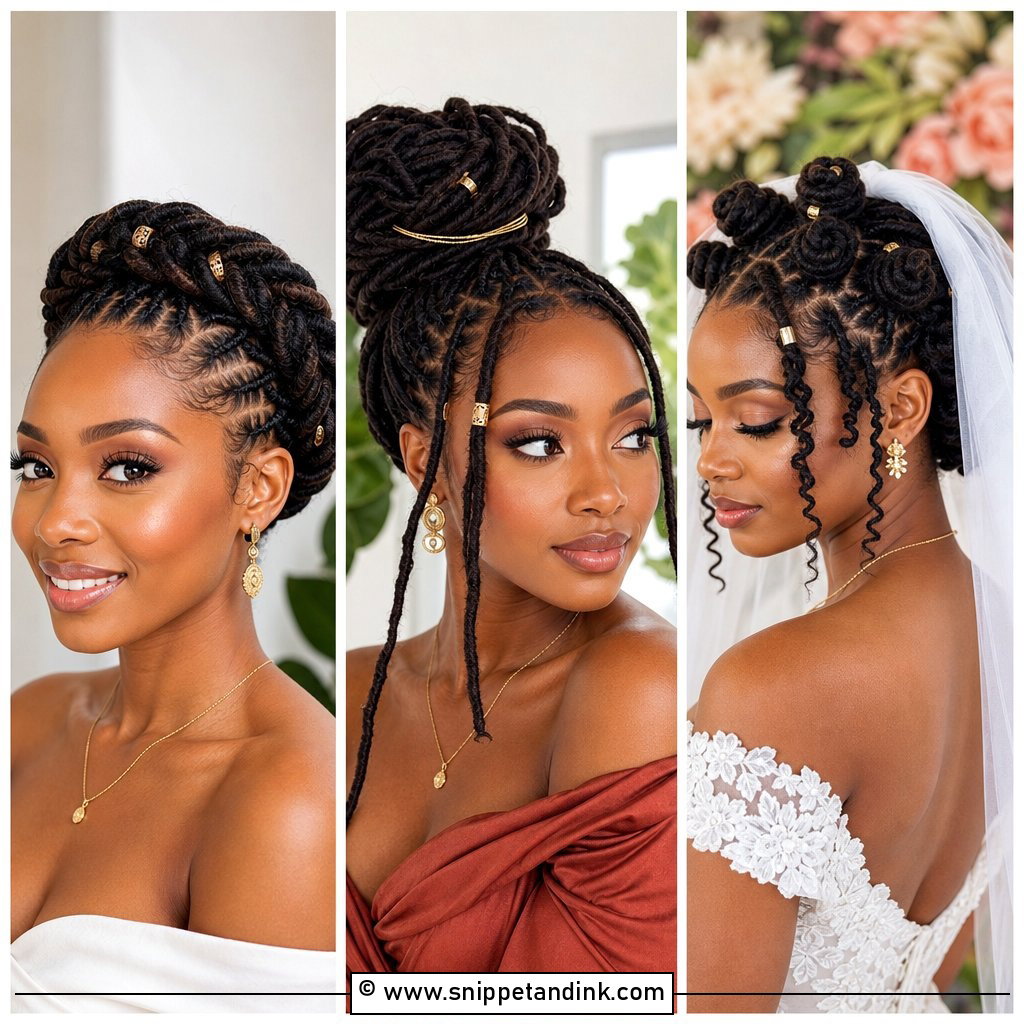
14. Wedding Microlocs Updo
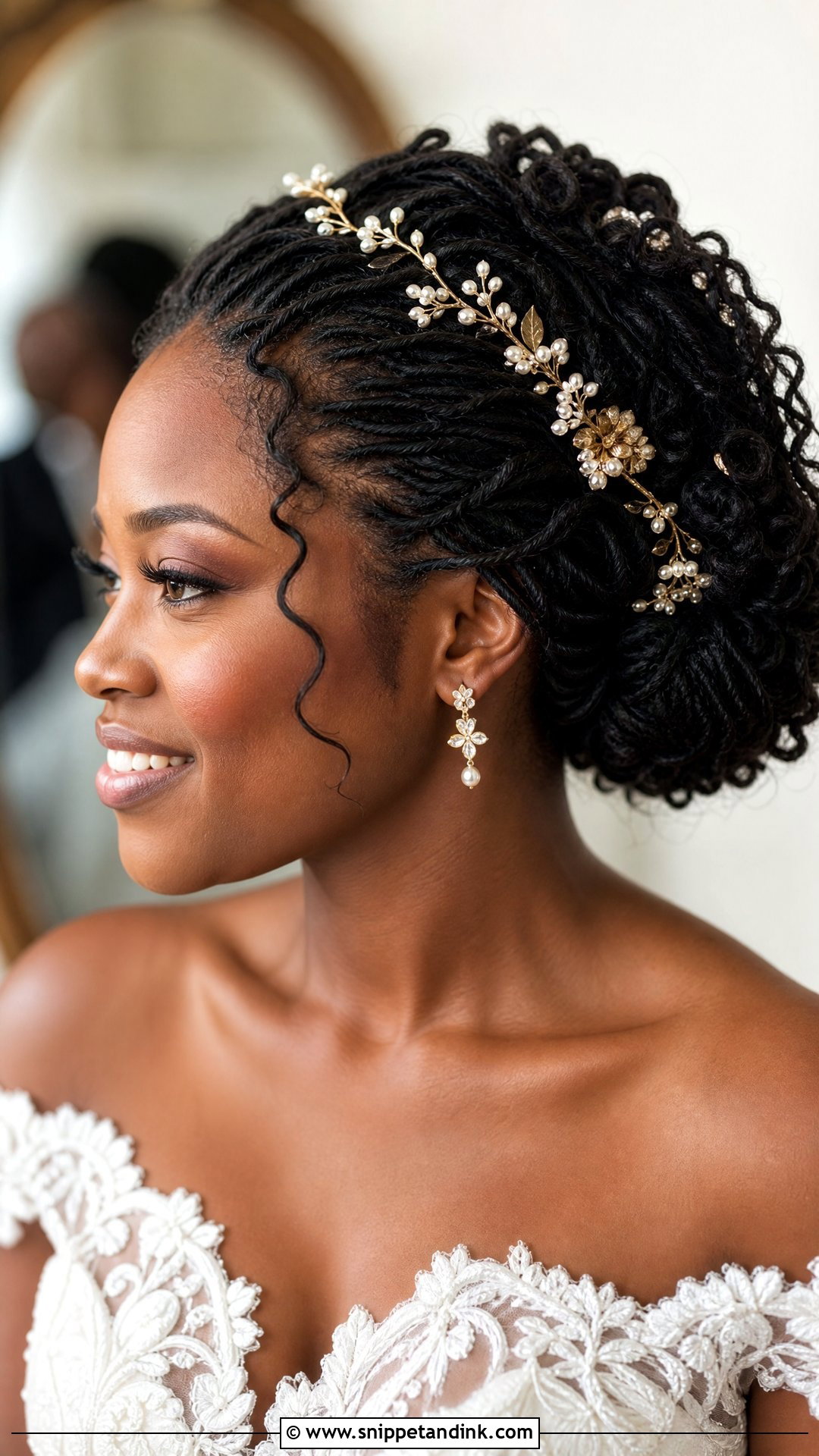
Microlocs behave closer to loose natural hair than larger locs do, so a wedding microlocs updo can take on very detailed shapes. I can twist them into a low bun, braid a crown, or pin them into curls. The finer the locs, the more pins I need, since each one carries less weight to hold itself in place. Dainty accessories suit them: tiny pearls, thin cuffs and fine hair vines sit in proportion with the texture. I keep the shape soft around the face.
15. Wedding Sisterlocks Bun
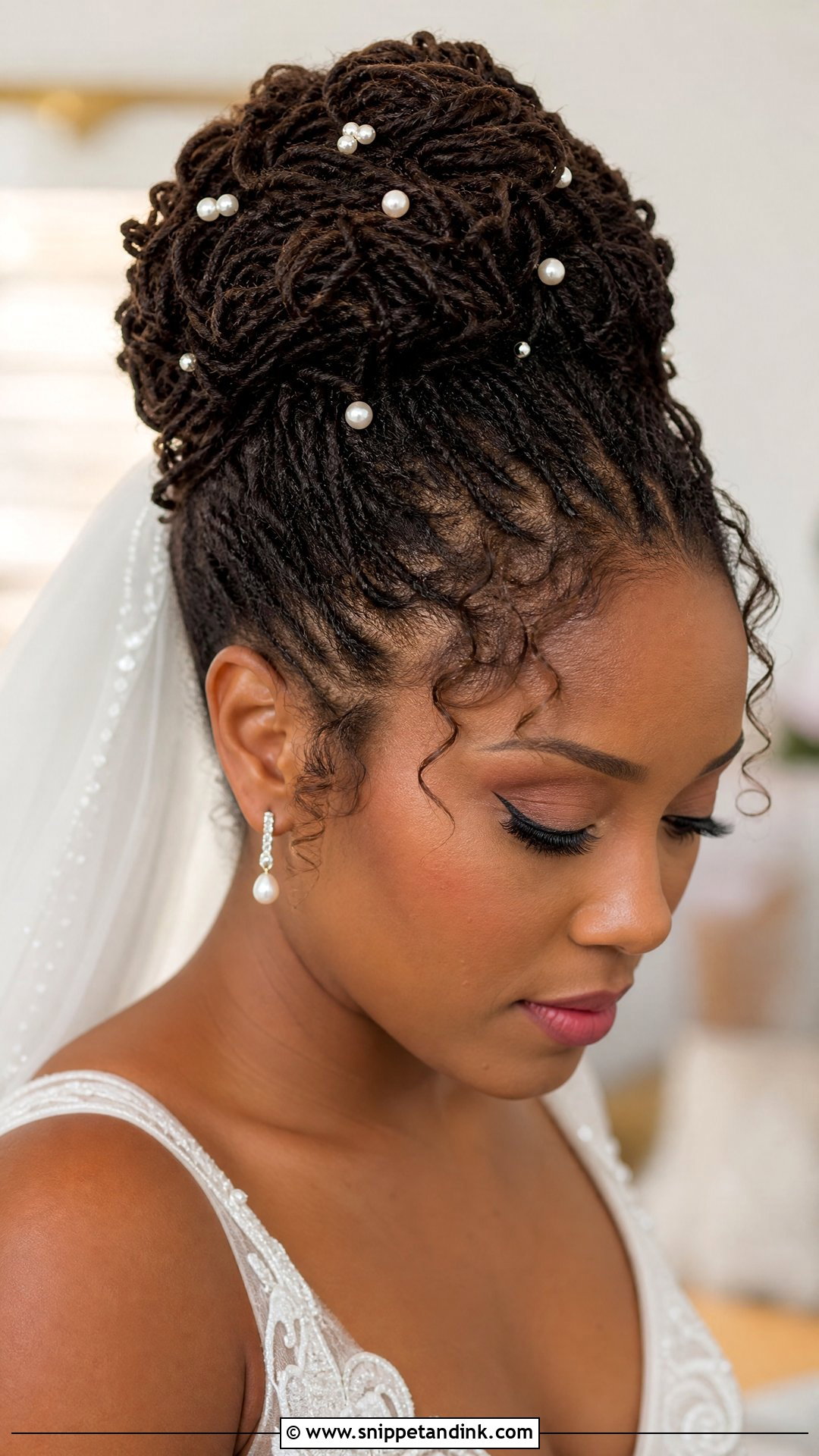
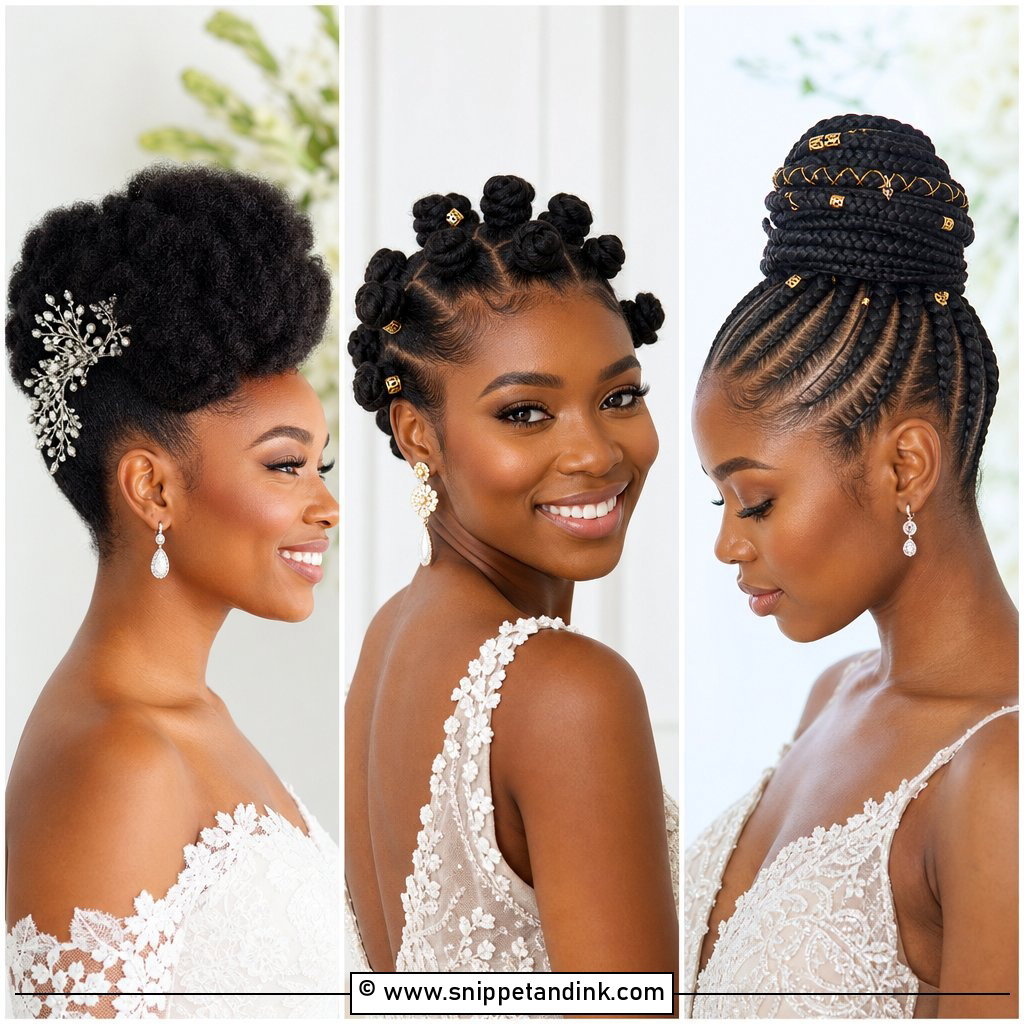
Sisterlocks are small and flexible, and a bun shows off that fine texture well. I gather them smooth, curl them before pinning, or layer them into a fuller updo. A low bun reads classic and a high one gives more drama. The veil can sit above or below the bun depending on the dress. Pearl pins scattered through the bun catch light against the texture. If the wedding is close to a scheduled retightening, I’d talk to your loctician about timing so the roots look settled rather than freshly tightened in close-ups.
16. Wedding Faux Locs Updo
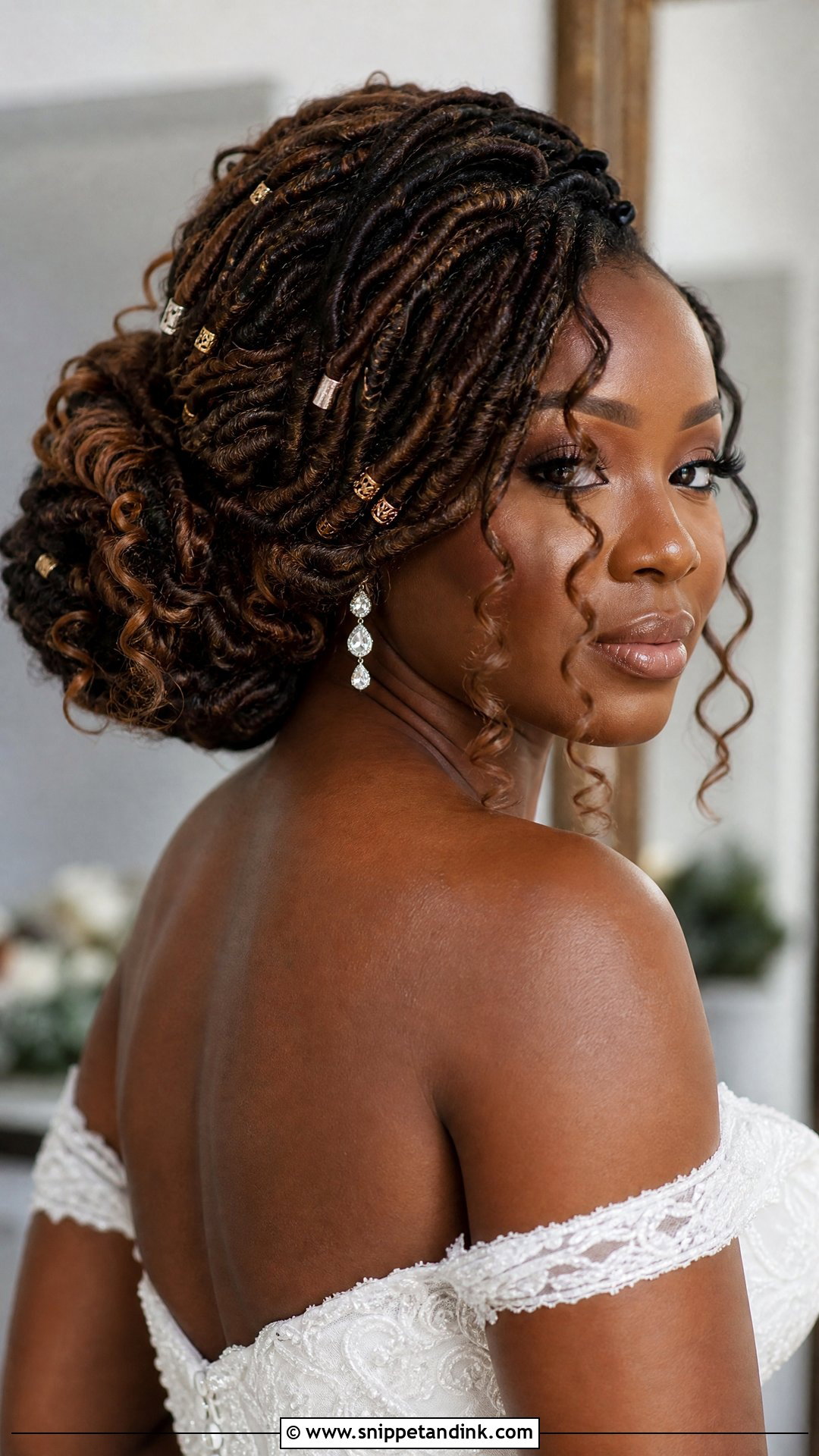
A faux locs updo lets you wear the look without committing to permanent locs. I’d check the weight first. Faux locs add length and fullness, but a full head of long synthetic locs pinned high can pull on the natural hair underneath, so I ask for lightweight, shorter installs. Install them a few days ahead so any tightness at the scalp eases before the wedding. Bridesmaids can wear this too, since installation happens ahead of time and styling on the day is quick.
17. Wedding Locs With Veil
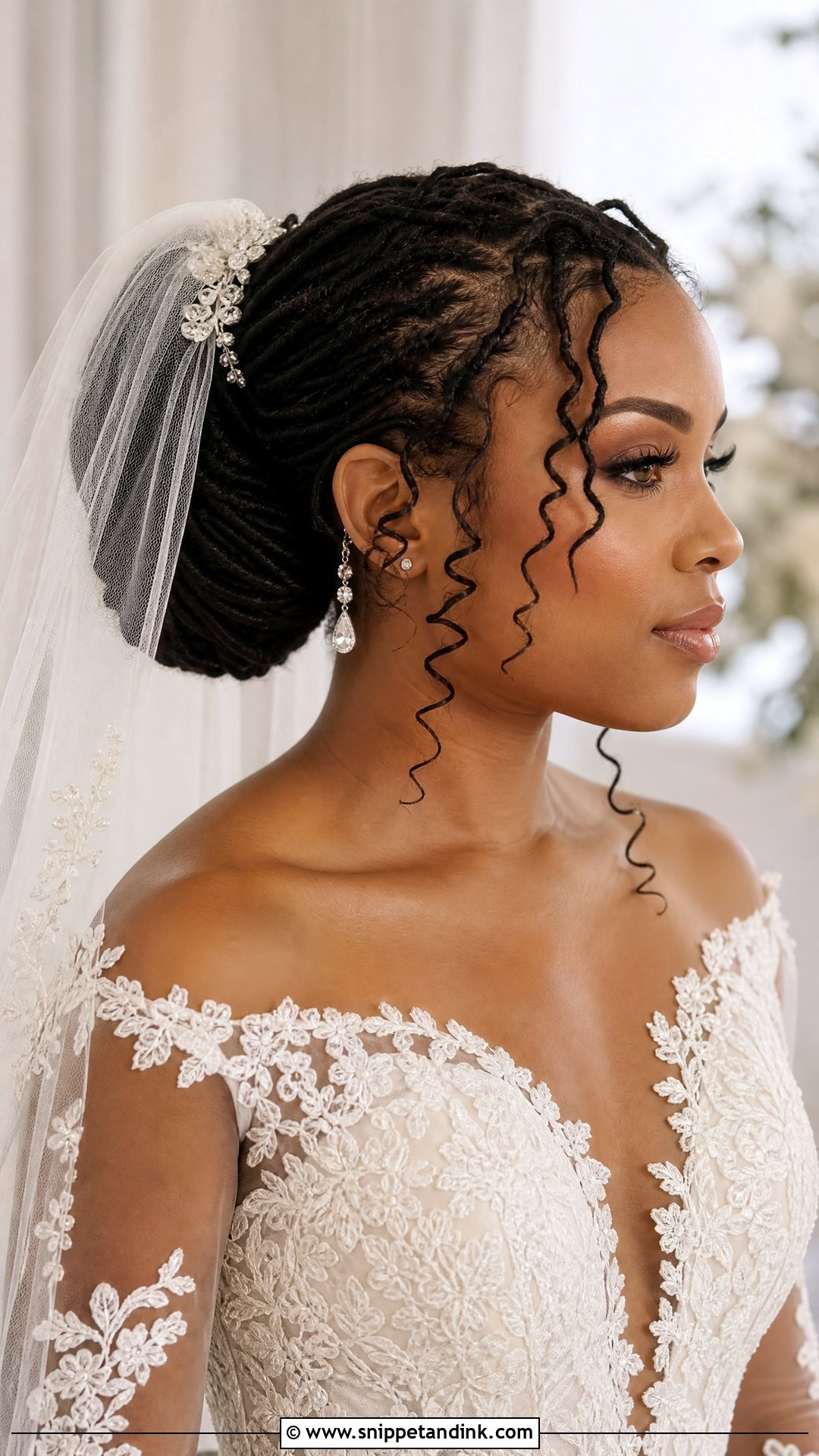
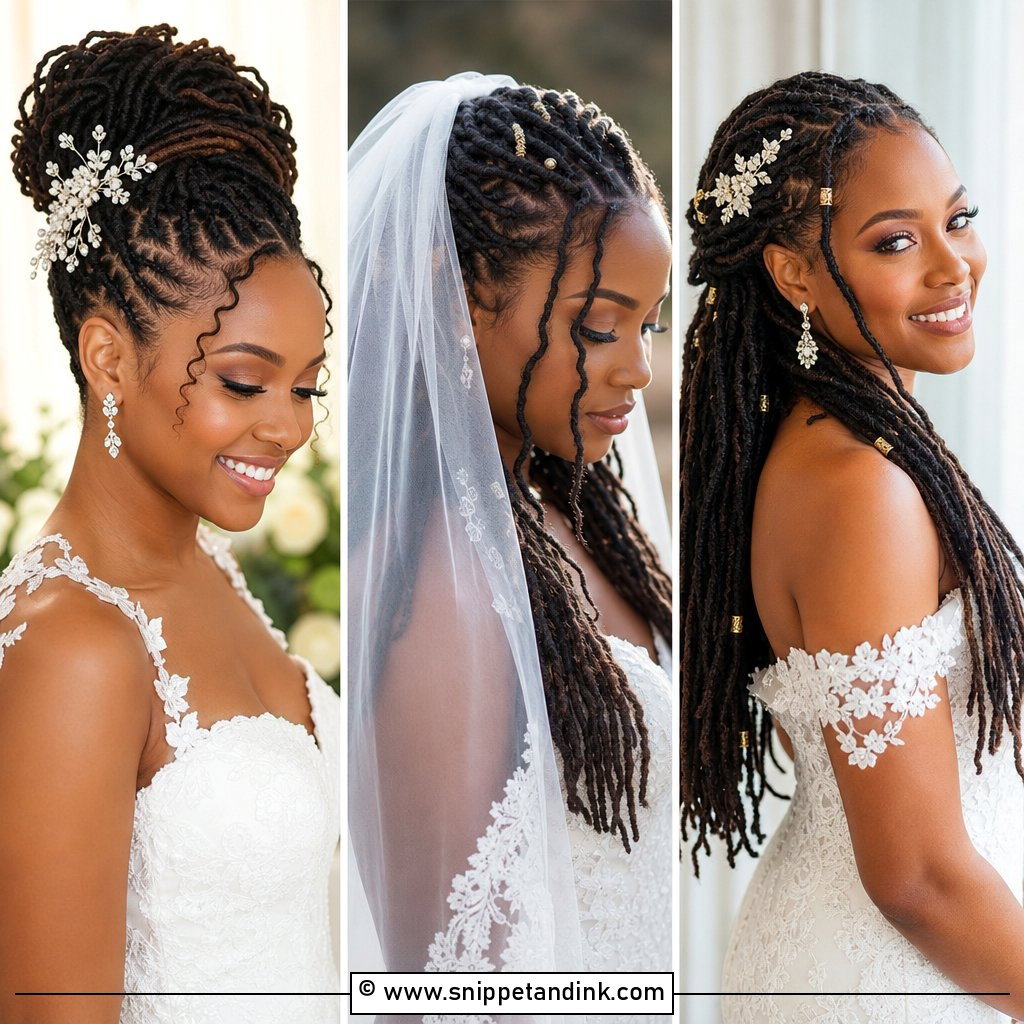
A veil adds weight and wind resistance to whatever it’s pinned into. The comb needs a stable base, which is why low buns, chignons, half up styles and crowns carry a veil most reliably. For locs worn down, I build a small hidden anchor of pinned locs at the crown for the comb to grip. Please bring your actual veil to the trial. A long veil pulls backward with surprising force, and we need to know where it sits before the morning of.
18. Wedding Locs With Pearls
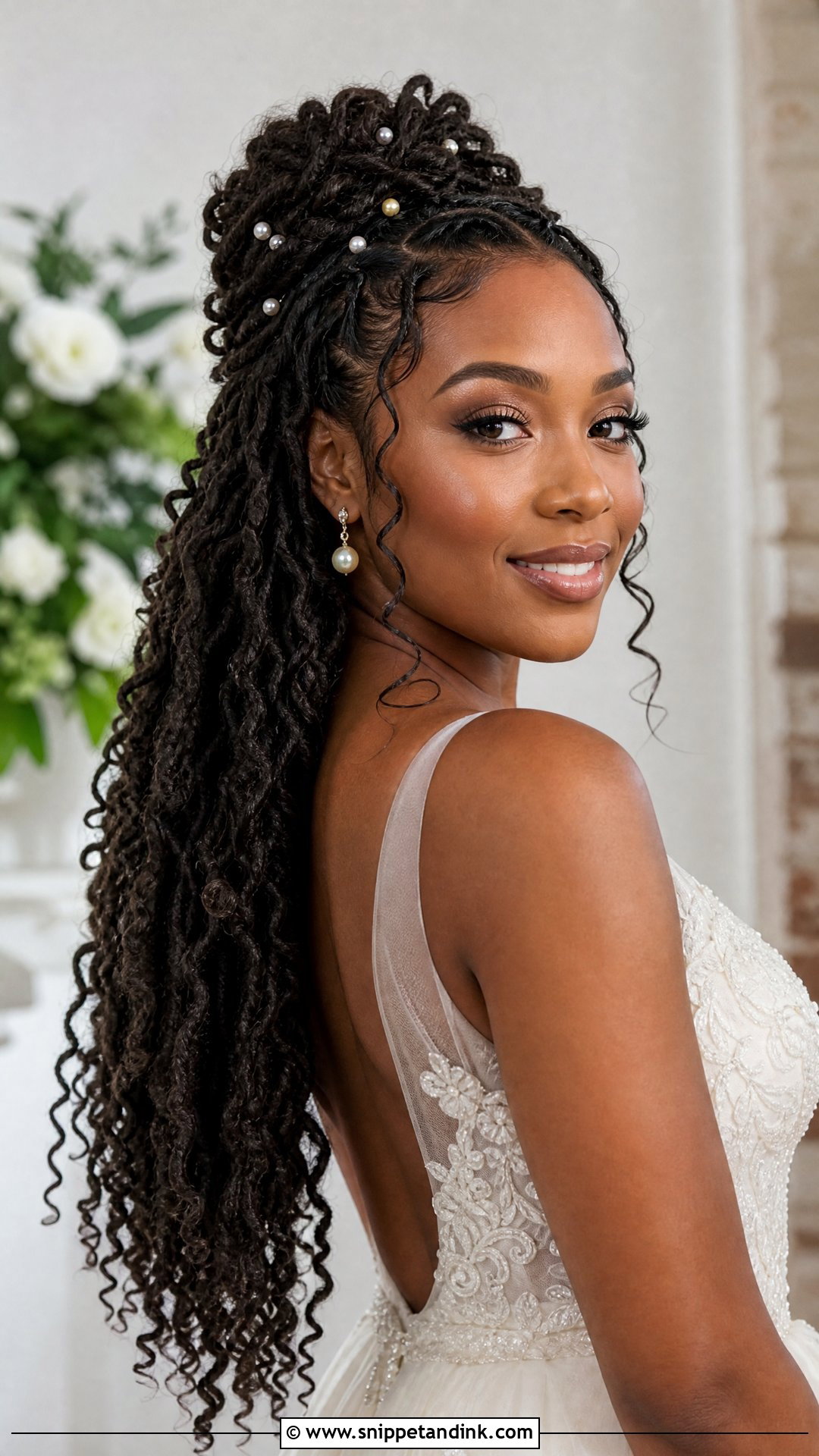
Pearls are one of the easiest accents to add to locs. Pins, cuffs, clips or tiny scattered beads all work, and they show clearly against dark brown, black and honey brown locs. I mix pearl sizes instead of lining them up in a pattern, which looks more modern and less like a costume piece. Balance matters more than quantity. I place pearls where the eye travels: around the bun, along the part, or near the face. Check the clips before buying, since some grip loose hair well but slide off a smooth loc.
19. Wedding Locs With Flowers
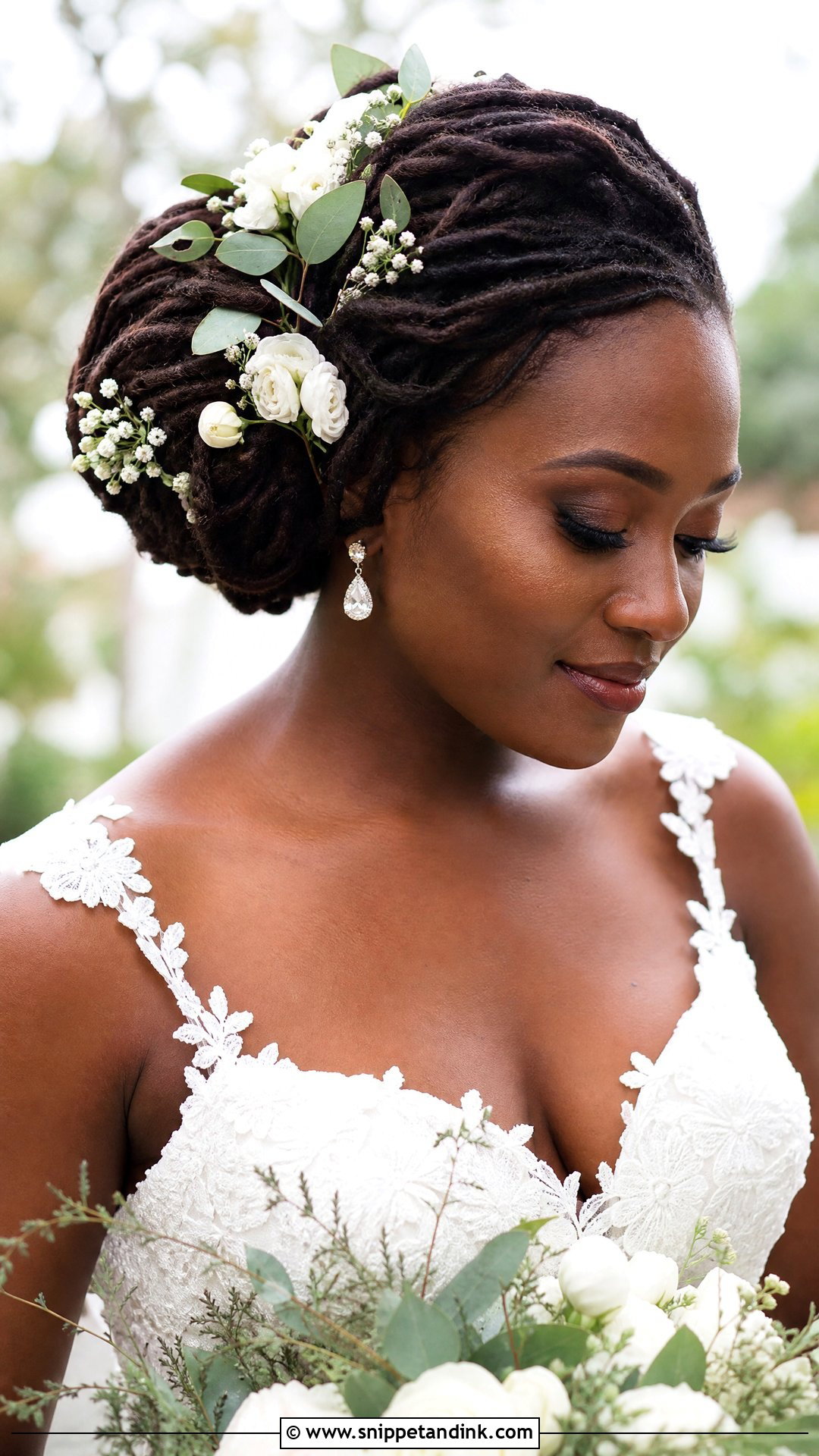
Flowers suit garden, beach and spring weddings. Fresh blooms, silk flowers and small floral pins can all go into a bun, crown, side sweep or half up style. Small flowers sit better in locs than large heavy ones, which droop and drag pins loose. Baby’s breath, small orchids and sprigs of greenery hold up well. If they’re fresh, I like the florist to deliver them wired and kept cool, and I add them last so they spend as little time out of water as possible. Matching them to the bouquet ties the look together.
20. Wedding Locs With Gold Cuffs
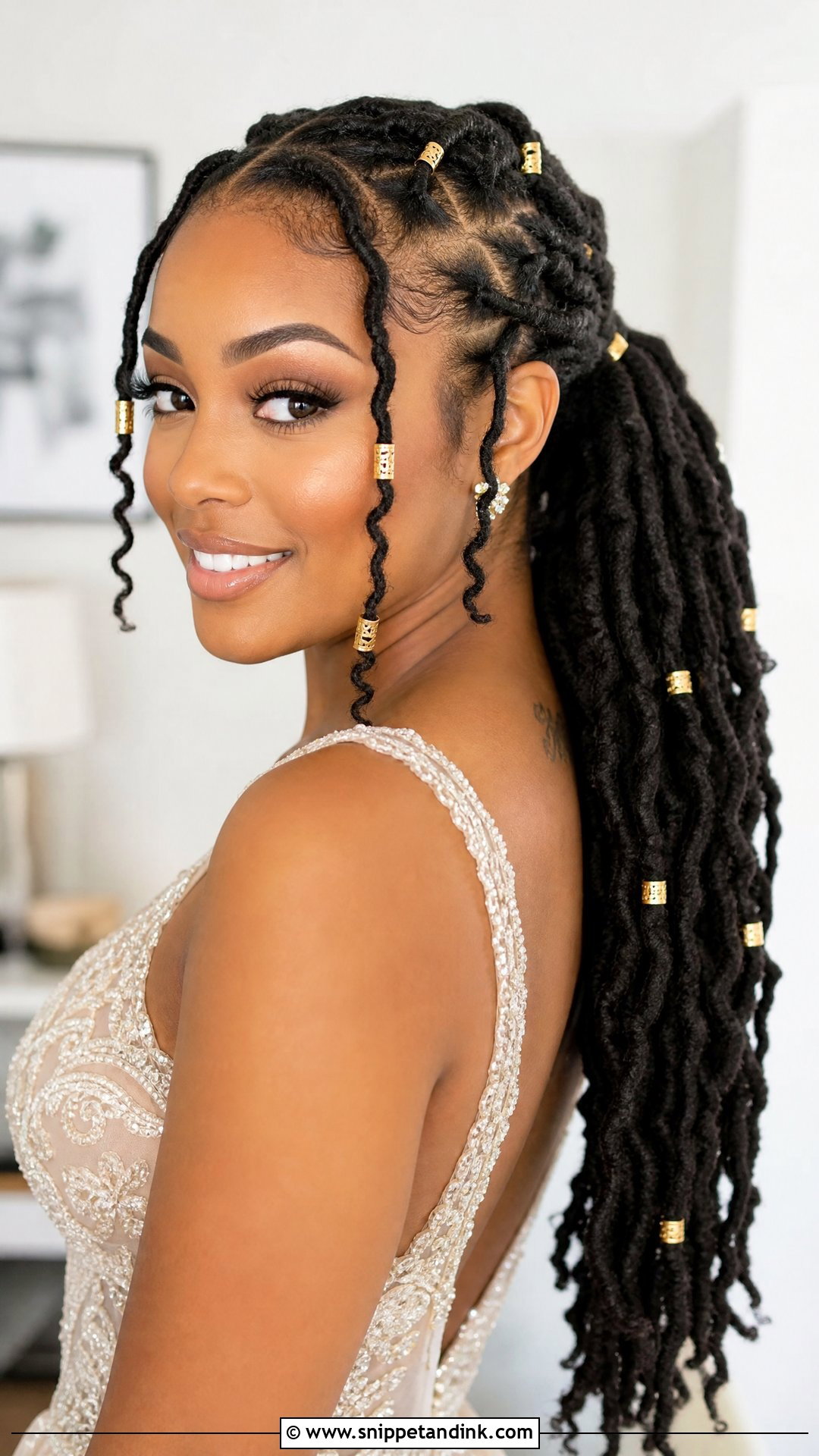
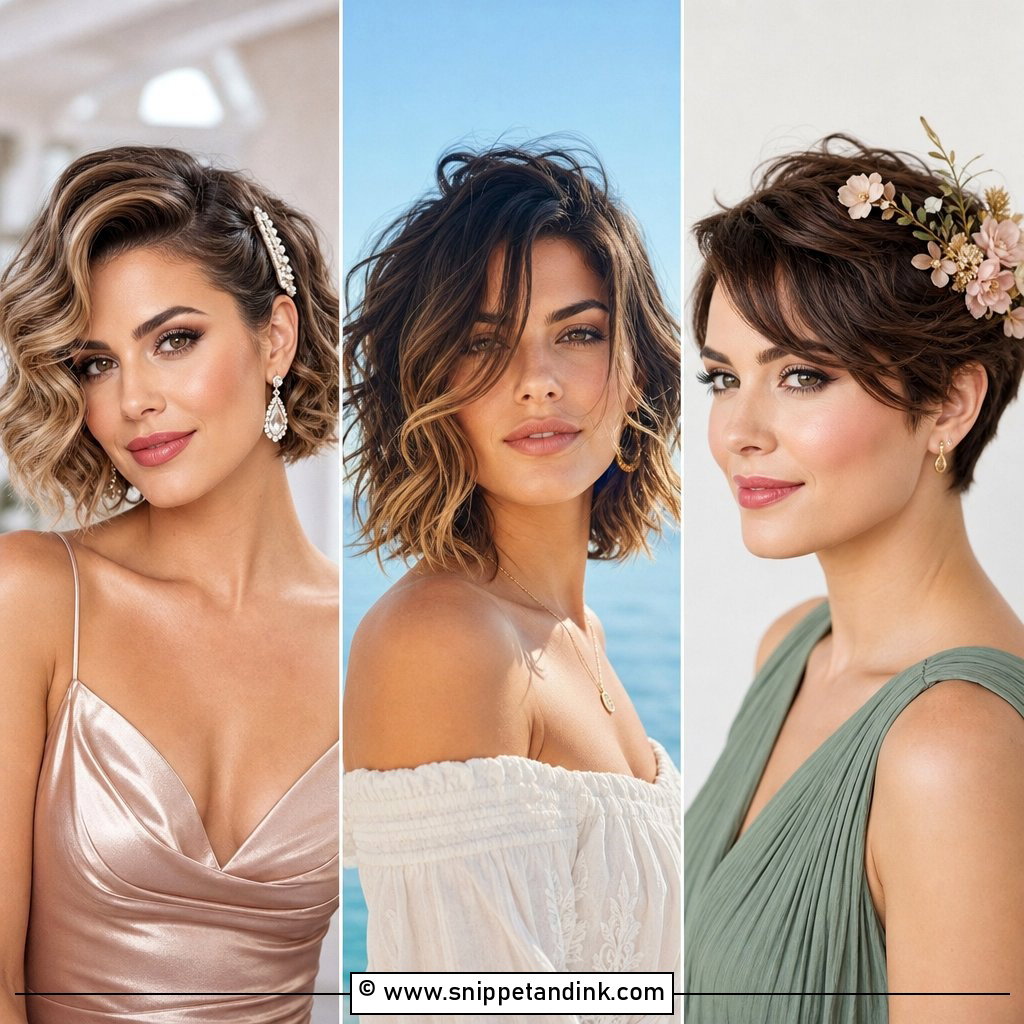
Gold cuffs add warmth and shine, and for many brides they also carry cultural meaning. I place them along a few face-framing locs, tuck them into a bun, or space them down a ponytail. They sit naturally with ivory, champagne and blush palettes. The mistake is crowding. Five well-placed cuffs look intentional, while thirty start to look like costume. Check that the cuff diameter fits your loc size before the day, because a cuff that’s too tight is hard to remove without pulling.
How Heavy Locs Feel by Hour Ten, and What I Do About It
Mature locs can be heavy, especially when they’re long and thick. In a high updo, all of that weight hangs from the pins and the scalp underneath them. A style that feels fine at nine in the morning can give you a headache by the time dinner is served.
I deal with it in a few ways. I spread the weight across more anchor points instead of stacking everything on one bun. I use larger U-shaped pins, which grip locs securely without pinching. And I keep the edges and hairline loose, because constant pulling at the hairline is the fastest way to damage it.
- At your trial, wear the finished style for at least two hours before deciding. Comfort problems rarely show up in the first twenty minutes.
- If your locs reach past your waist, consider a low chignon or a crown rather than a high bun.
- Ask your stylist to show a bridesmaid which two or three pins can come out at the reception to take pressure off, without the whole shape collapsing.
- Take the style down slowly that night, removing pins one by one rather than pulling the locs loose.
When a bride tells me her head is aching during the trial, I change the plan. A slightly lower or looser shape that you can wear happily all day will always photograph better than one you’re counting the hours in.
Your Length Decides More Than Any Photo Does
Start with what your locs can do comfortably: their length, weight and texture. If you usually wear them down, a half up or side swept look will feel most familiar. If you need a shape that won’t move all day, a bun, chignon, crown or barrel twist updo gives the most security. Book a trial, bring the veil and every accessory, and photograph the result from the front, sides and back. The style you choose should still be comfortable when you’re dancing at the end of the night.
You'll Like These Ideas:


Leave a Reply