
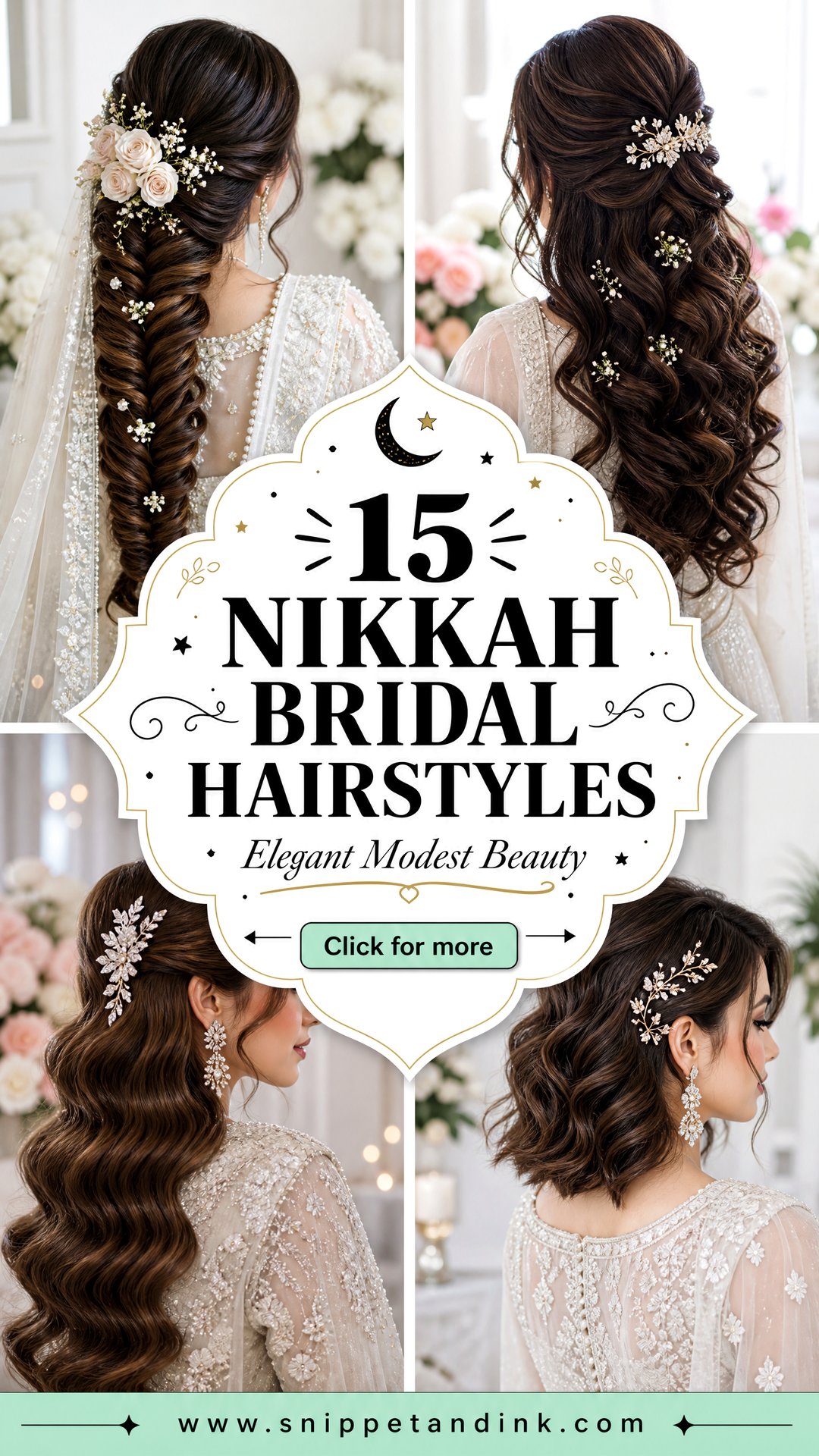
Hair for a Nikkah has a different brief from most bridal hair. It has to sit comfortably under fabric, carry jewellery that hangs from the parting, and still look composed when the dupatta, veil, hijab, tikka, jhoomar and earrings are all on at once. When I plan one, I start with the dupatta: how heavy it is, where it will rest, and whether it comes off for photos later. Neckline, hair length and how much coverage you want during the ceremony come next. The styles below run from neat buns to open waves and a hijab under-style, each with the practical detail that makes it work.
Dupatta Weight and the Hairstyle Underneath
Bridal dupattas vary enormously. A light chiffon dupatta can rest on open waves without disturbing them, while a heavily embroidered one with a thick border can pull a style backward and leave you with a headache by the end of the ceremony. So the first thing I ask is to see, or at least hold, the dupatta itself.
How I set a heavy dupatta
- Build anchor points into the hairstyle first: the bun, a hidden twist at the crown, or a small braid behind each ear.
- Pin the dupatta into those anchors with long bobby pins or small safety pins through the fabric’s edge, never into loose hair alone.
- Spread the weight. One pin at the crown carries nothing; three or four across the back and sides share the load.
- If the border sits on the tikka, fold it back slightly at the forehead so the jewellery isn’t pressed into your skin.
A light dupatta needs only two or three pins, and it leaves you much freer to choose open hair or waves.
1. Nikkah Bridal Low Bun
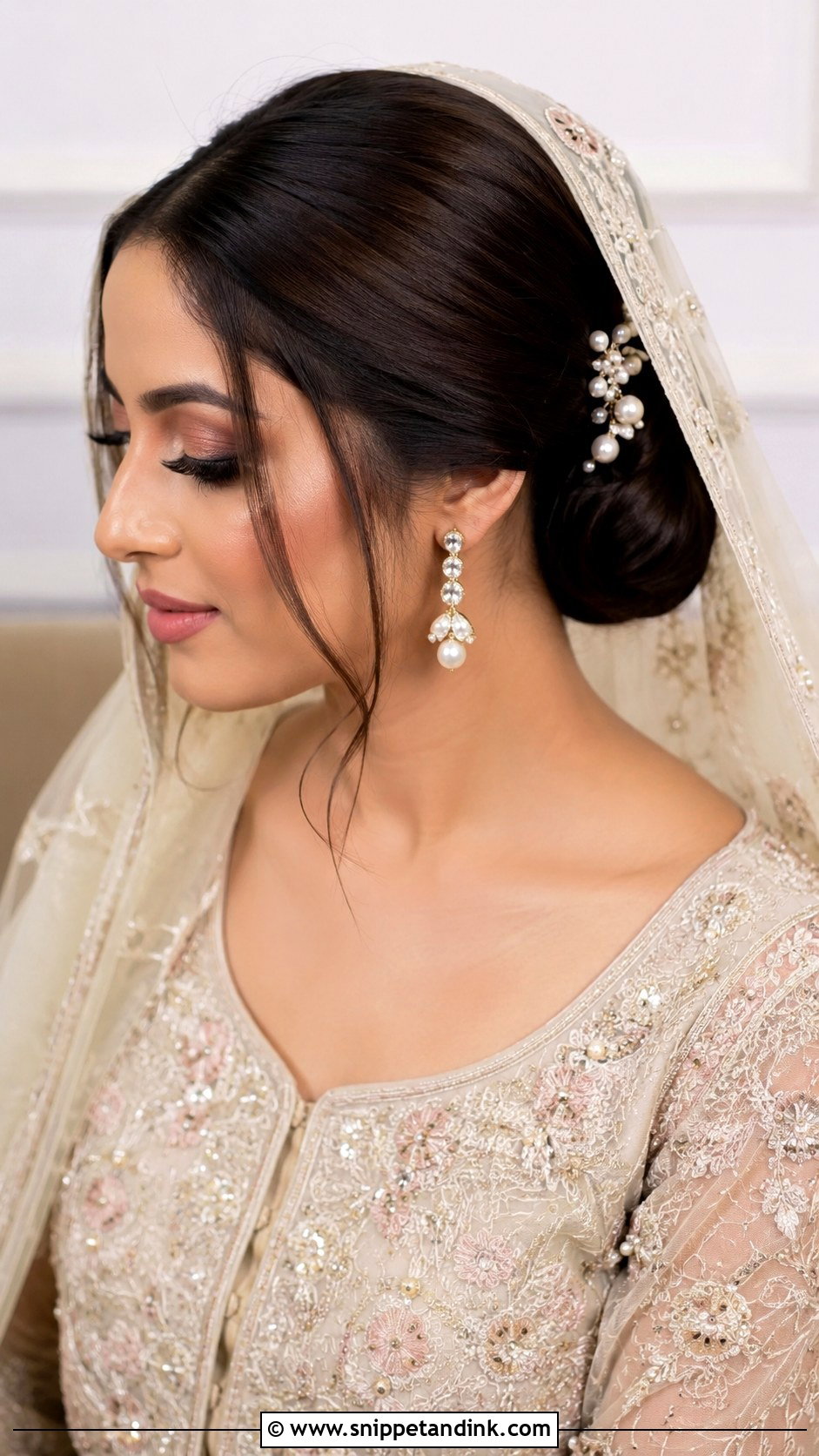
If I had to pick one style for a Nikkah with a heavy dupatta, it would be a low bun. It sits at the nape, which is exactly where a dupatta draped over the head needs something firm to pin into, and it gives me a solid base for a tikka chain or a few fresh flowers. Keep the front smooth if your outfit is heavily embroidered, so the hair doesn’t compete with the work on the fabric. A couple of face-framing pieces suit a simpler outfit. The bun stays put through a long ceremony and doesn’t shift when the dupatta is adjusted.
2. Nikkah Bridal Sleek Bun
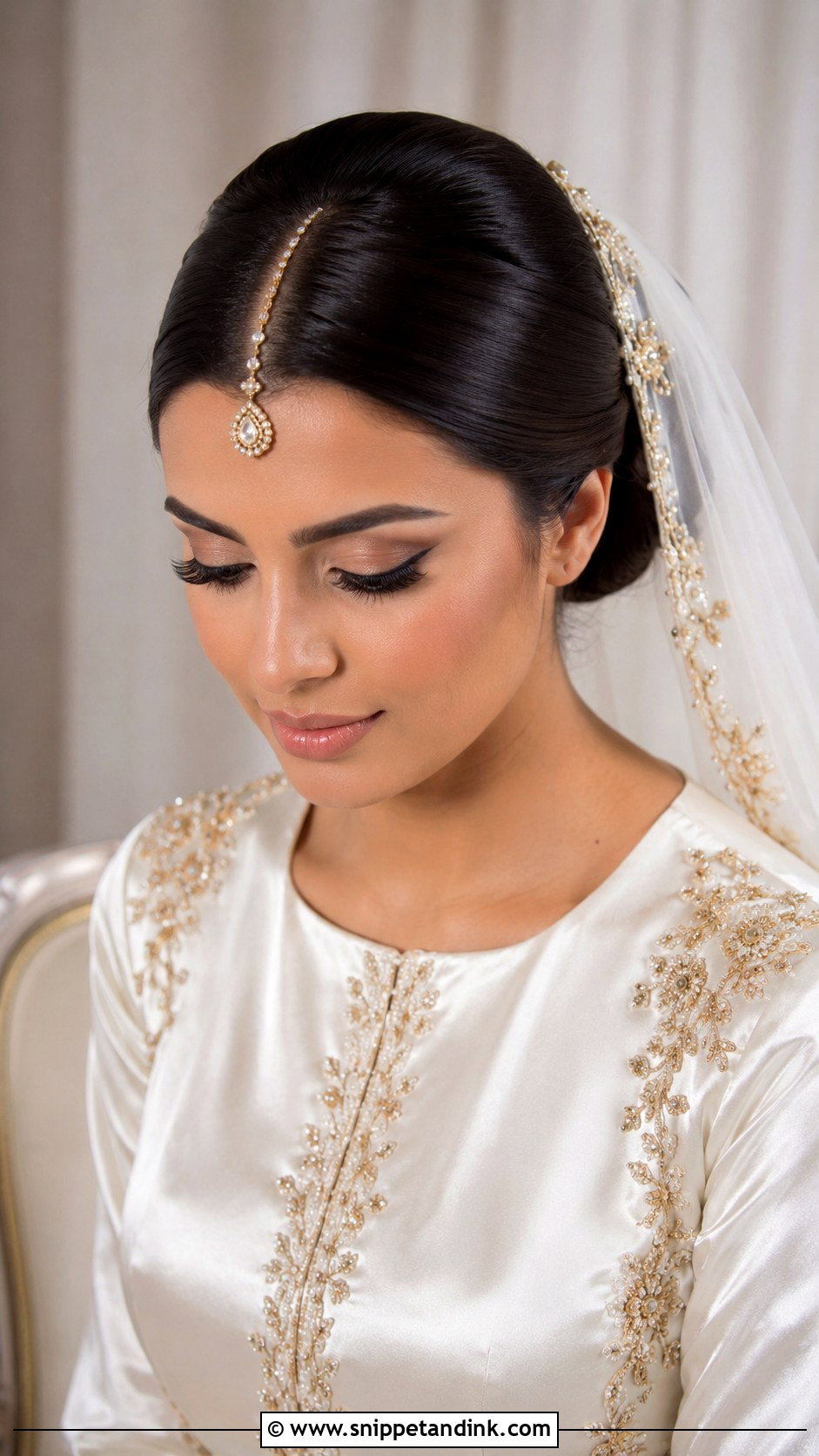
A sleek bun clears the stage for jewellery and makeup, and it suits modern outfits, silk dresses, ghararas and structured dupattas. Smooth hair shows every bump, so I blow-dry it straight first and brush it back while it’s still warm. A middle part reads classic; a side part softens it. Serum goes on sparingly, a drop warmed in the palms, because more than that turns greasy under the heat of a dupatta. It copes well with humidity, but it’s unforgiving if your hair frizzes, so test it at the trial in similar weather if you can.
3. Nikkah Bridal Braided Bun
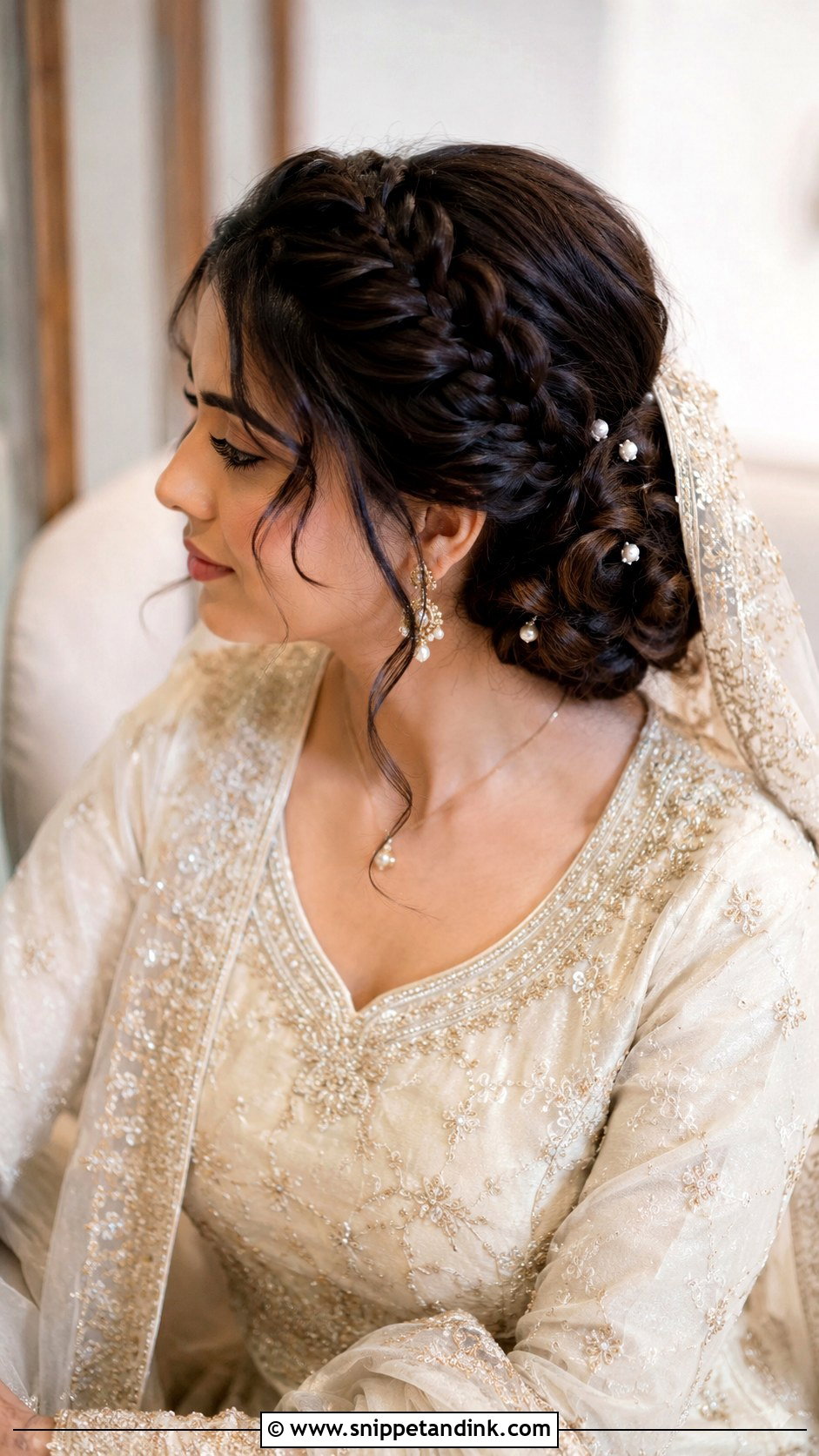
Braiding into a bun does two jobs on thick hair: it controls the weight and it gives the dupatta pins something to catch on. The braid can wrap around the bun or run across the crown before joining it. I pull the braid loops gently apart for volume after it’s pinned, not before, so the core stays firm. Fresh jasmine pressed into the braid smells wonderful but wilts in a hot hall within a few hours, so I add it just before the ceremony. Small gold clips last longer.
4. Nikkah Bridal Side Braid
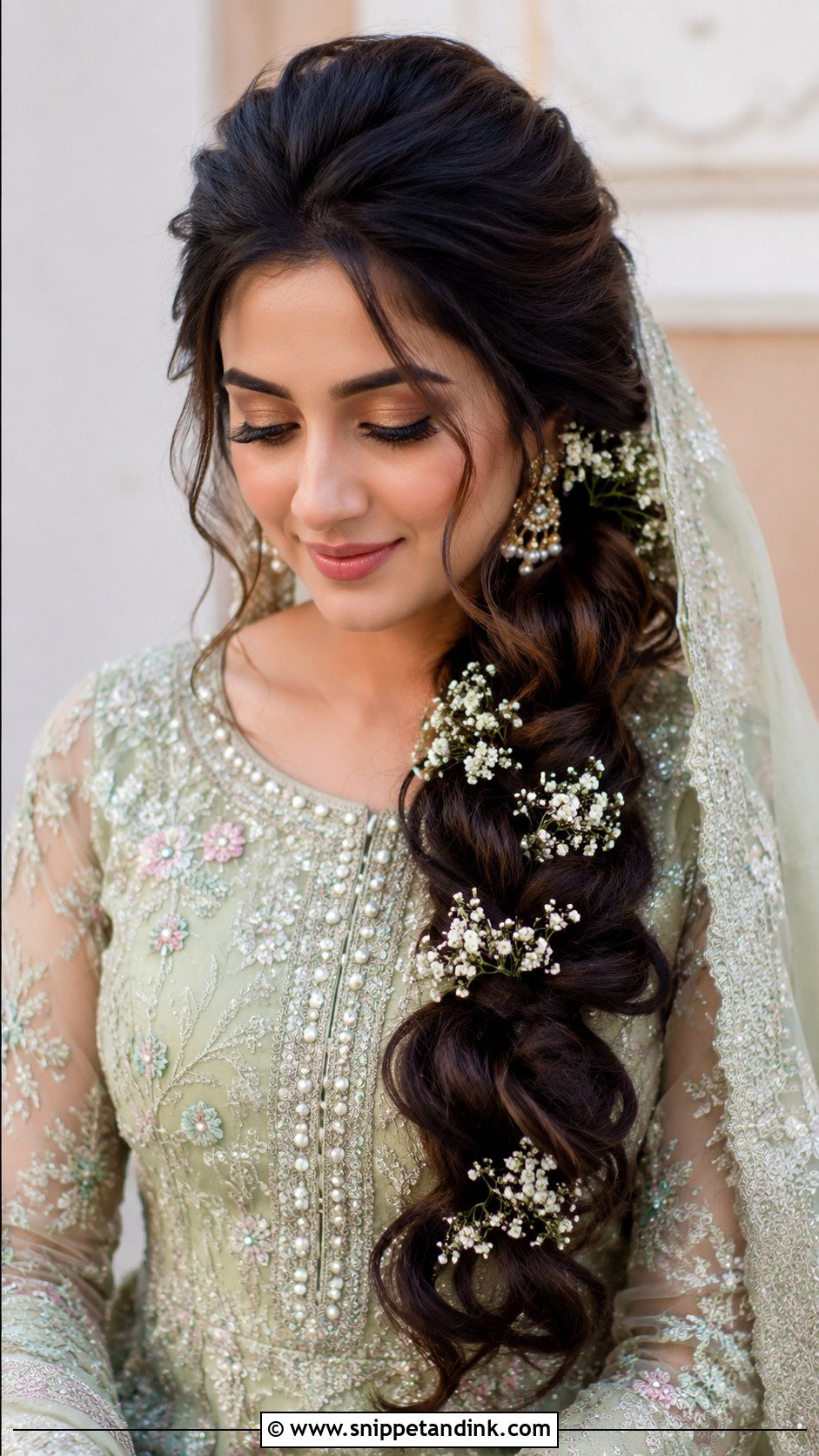
A side braid keeps your hair visible in front-facing photos, and it needs a lighter dupatta that sits back on the head rather than covering the shoulders. Check that before you commit, because a heavy dupatta draped over both shoulders hides the braid entirely. I lift the crown slightly before braiding so the top doesn’t look flat once fabric rests on it. A simple hair chain along the braid shows well. On very long hair, the braid also stops the length tangling in embroidery.
5. Nikkah Bridal Fishtail Braid
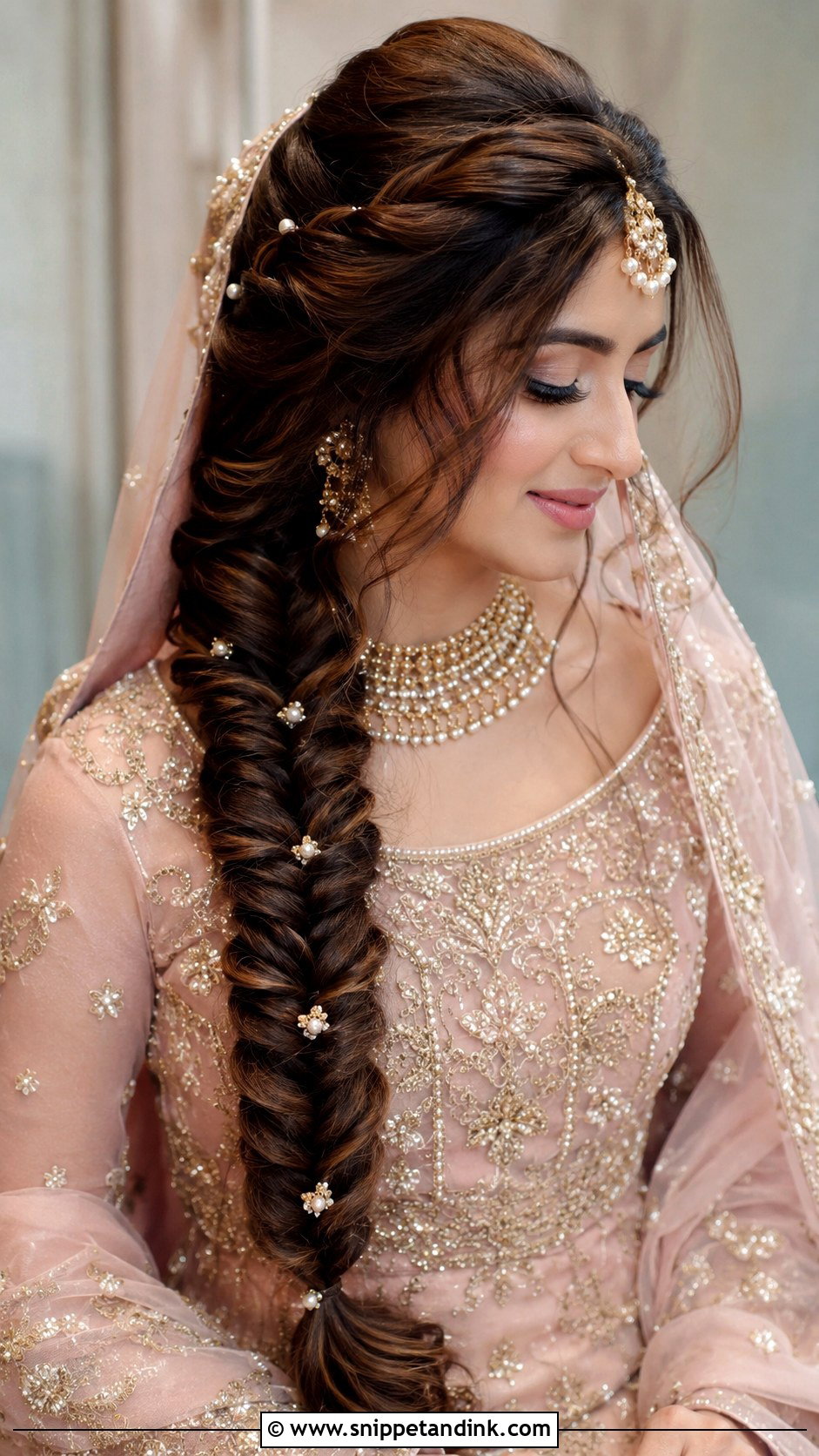
A fishtail’s tight weave shows colour better than any other braid, so if you have highlights or balayage, this is the one that shows them off. It takes longer than a three-strand plait and needs medium to long hair to look full. Place it according to the dupatta: over one shoulder if the dupatta sits back, down the back if it covers the shoulders. I secure the crown with a small hidden section of pins first, because a dupatta’s weight pulls on the top of a loose braid. Loosen the edges gently afterward for a softer finish.
6. Nikkah Bridal Half Up Curls
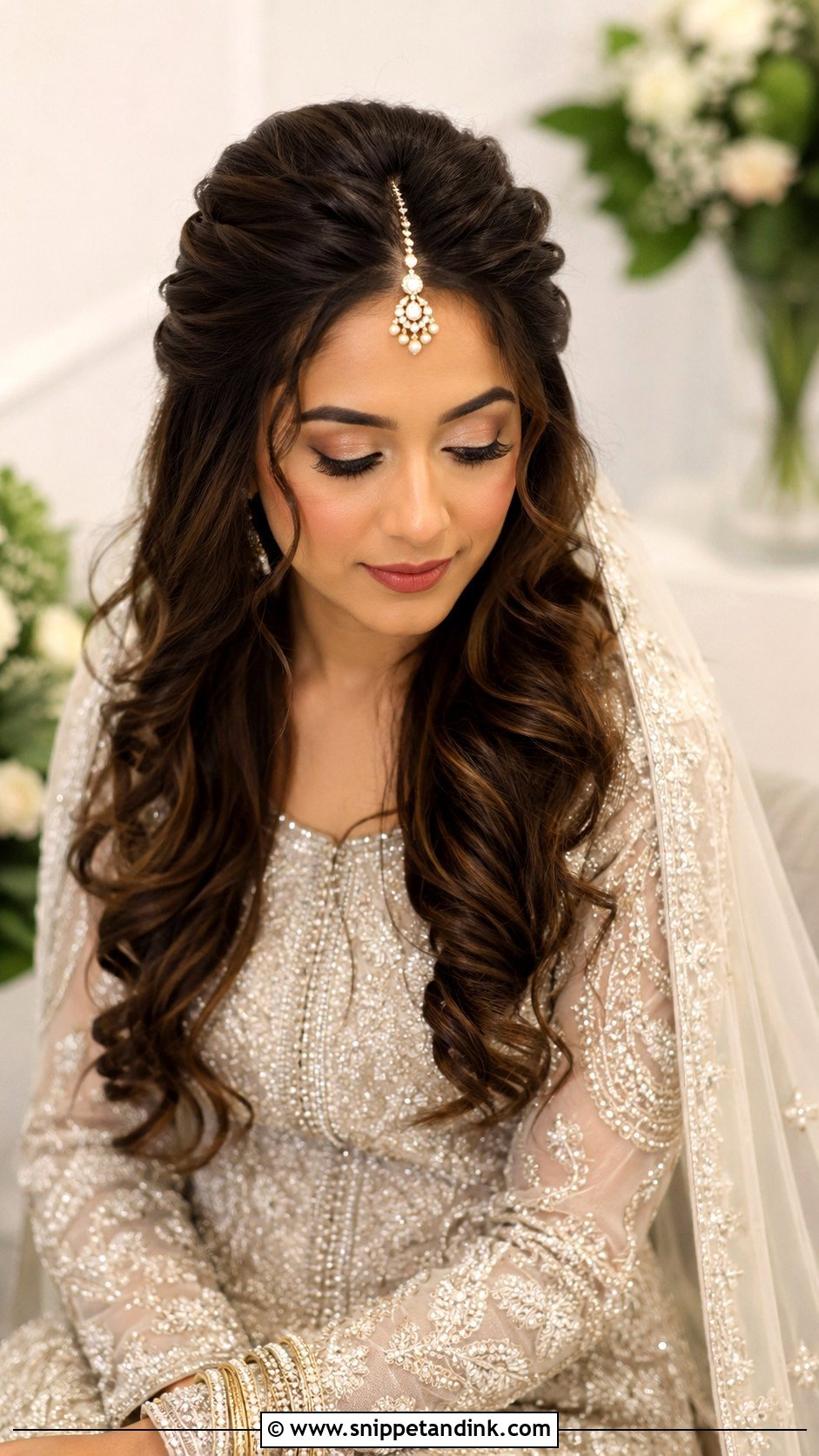
Half up curls give you open hair plus a pinned section where the tikka chain and dupatta can be anchored, which is why I often suggest them to brides who don’t want a bun. The pinned top also keeps hair from falling forward while you sign the nikah nama. Lift at the crown suits round, oval and heart-shaped faces alike. Ask for brushed curls rather than tight ringlets if you want a softer, modern finish. Curls compress under a dupatta, so I curl a little tighter than the final look you’re after.
7. Nikkah Bridal Hollywood Waves
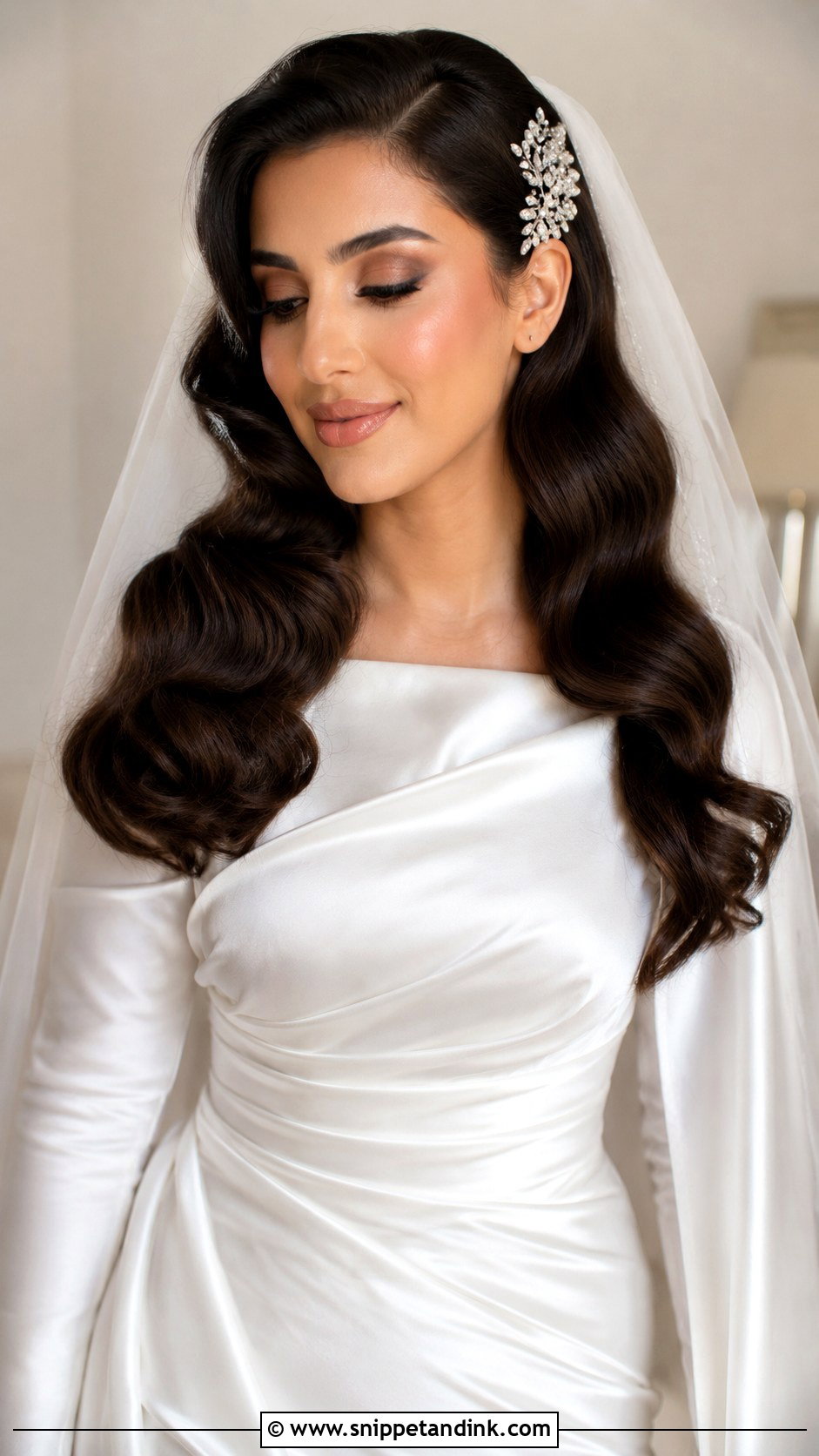
Hollywood waves need to be seen, so they belong with a dupatta worn lightly at the crown or off the shoulders. Under a heavy draped dupatta the ridges flatten and you lose the point. The waves are curled in one direction, brushed into a single pattern, and shaped with clips while they cool. They sit especially well with satin, organza, chiffon and heavily embellished outfits, where the hair’s shine echoes the fabric. Use a flexible spray so they stay touchable. A small jewelled clip on the parting side is enough.
8. Nikkah Bridal Soft Curls
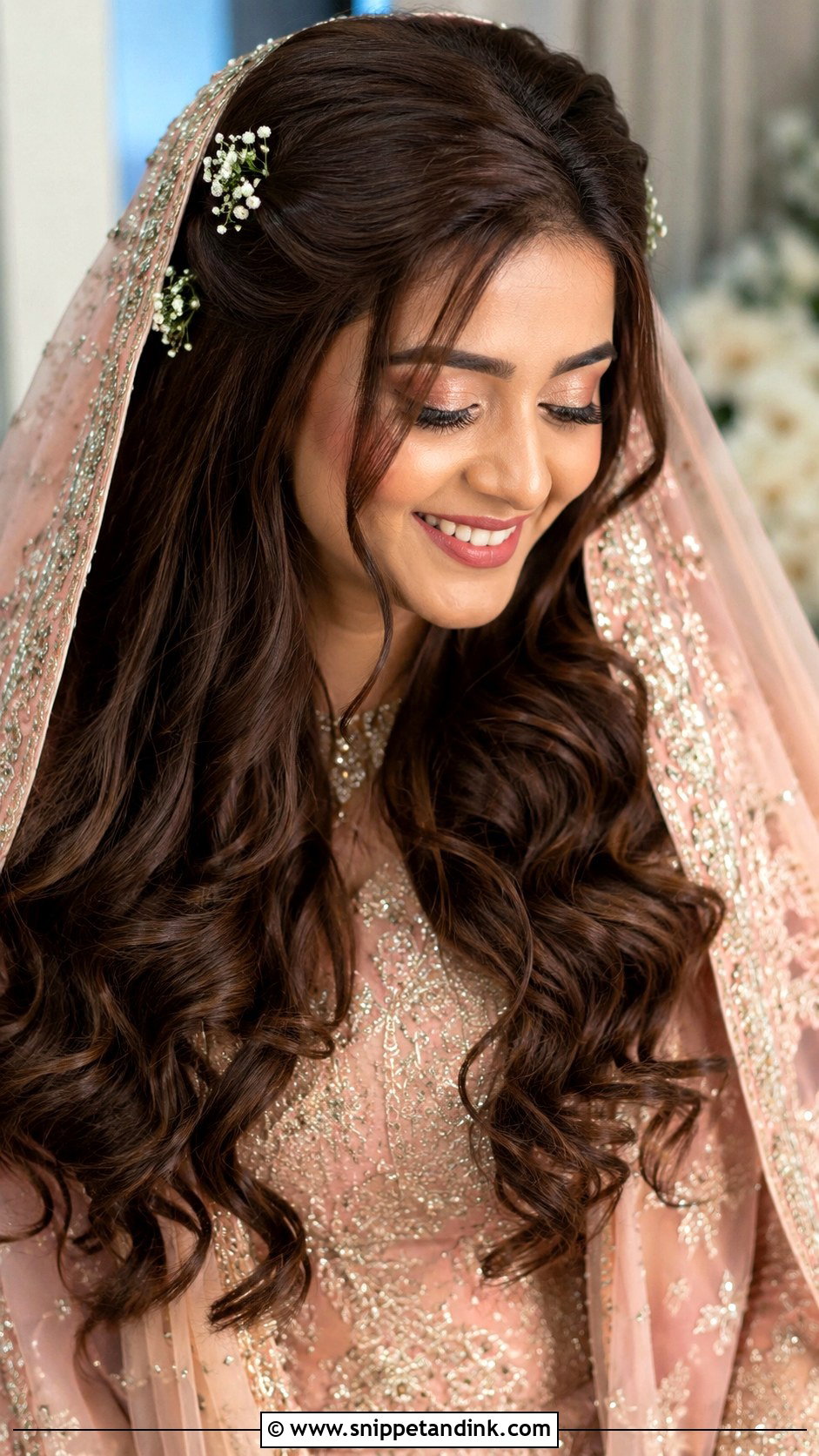
Soft curls look simple and drop faster than people expect, especially in a warm hall full of guests. If your hair loses curl quickly, ask your stylist to prep with mousse, pin each curl while it cools, and finish with a humidity-resistant spray. Aim for full curls rather than tight ones, with enough movement to frame the face. They suit pastel outfits and delicate dupattas best. Pin the front lightly so the dupatta has a clean line to sit on.
9. Nikkah Bridal Front Puff Bun
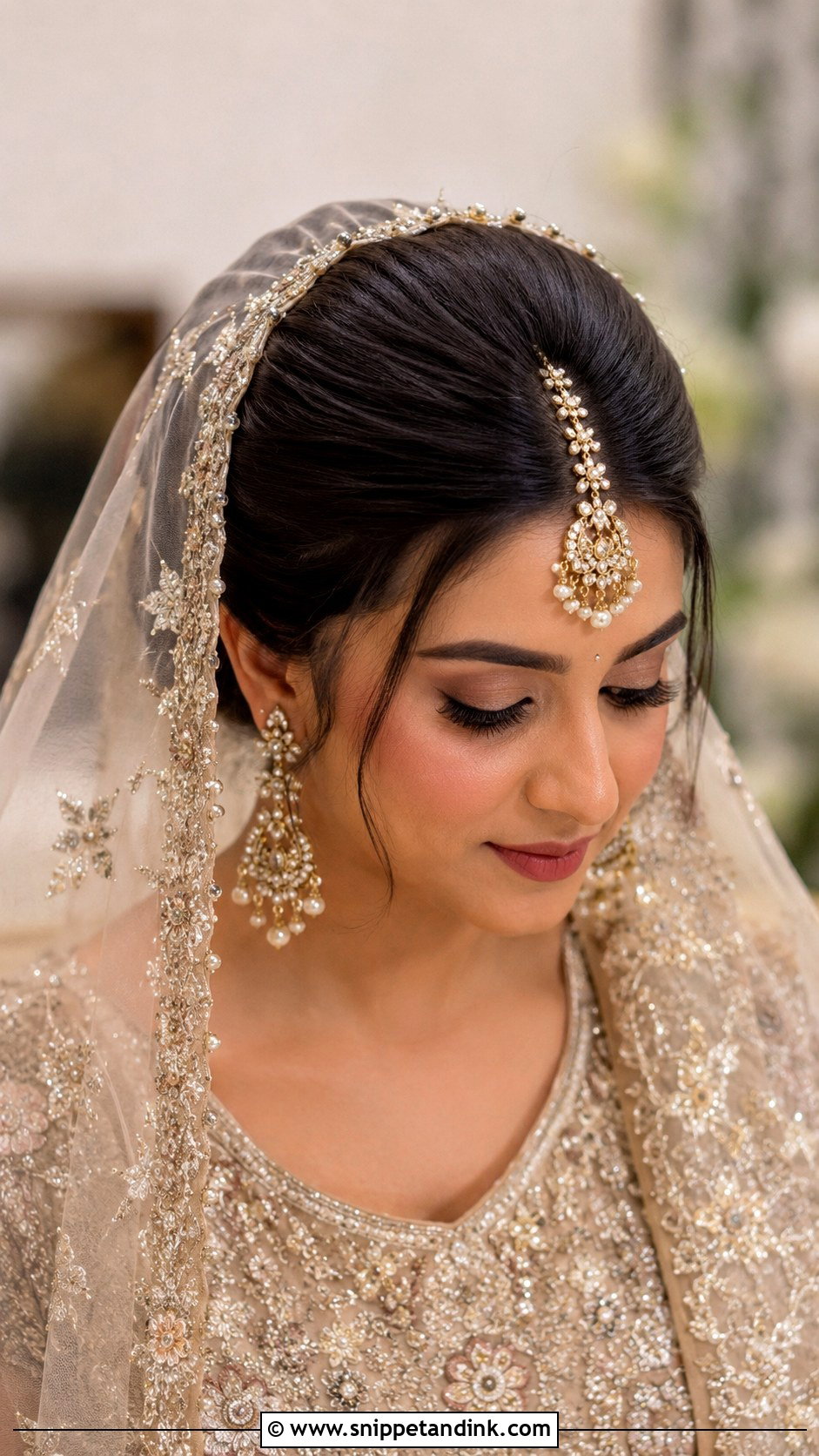
A front puff bun solves a specific problem: a heavy dupatta or high neckline can make the face look hidden, and a little height at the crown fixes that. For a Nikkah I keep the puff subtle. Too much height pushes the dupatta up into an odd peak. The puff is backcombed gently at the roots, smoothed on top, and held with crossed pins so it doesn’t collapse under the fabric. It also gives a firm base for a tikka or matha patti hook.
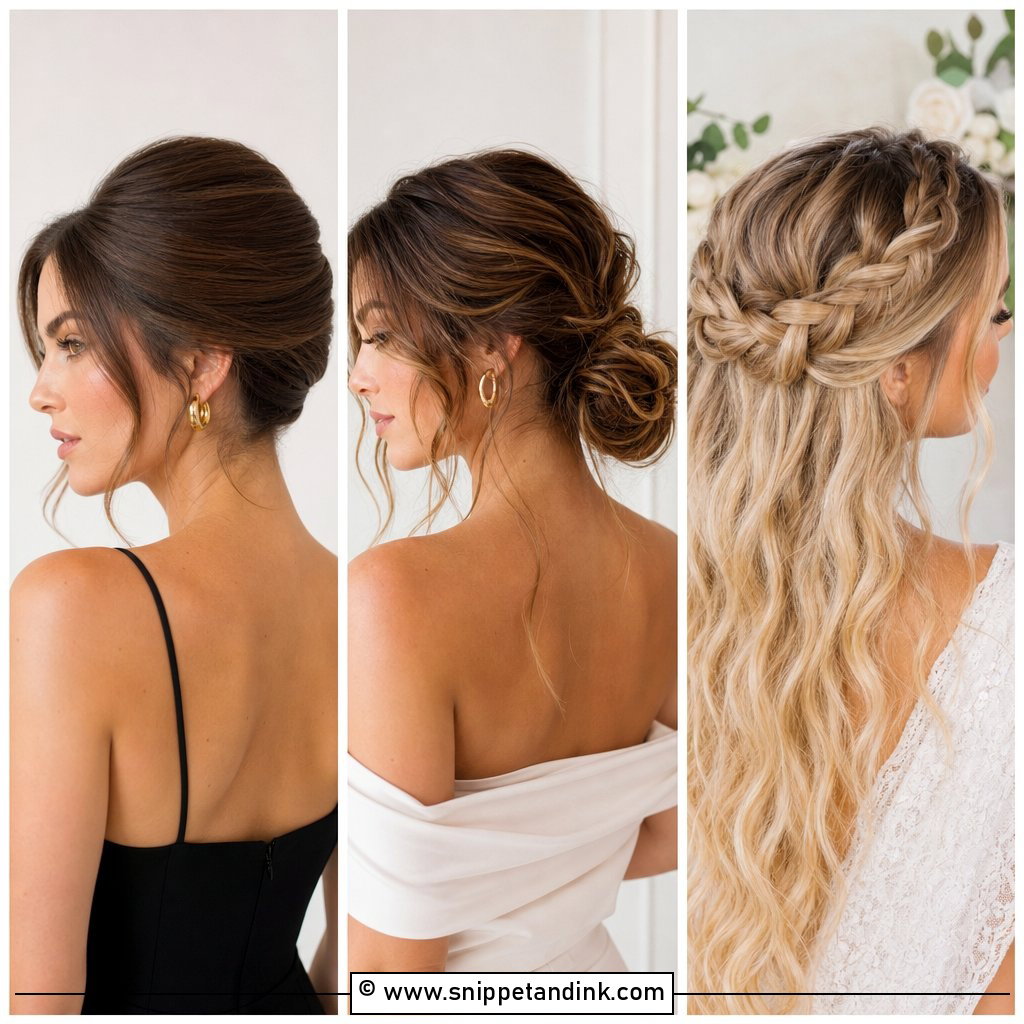
10. Nikkah Bridal Middle Part Bun
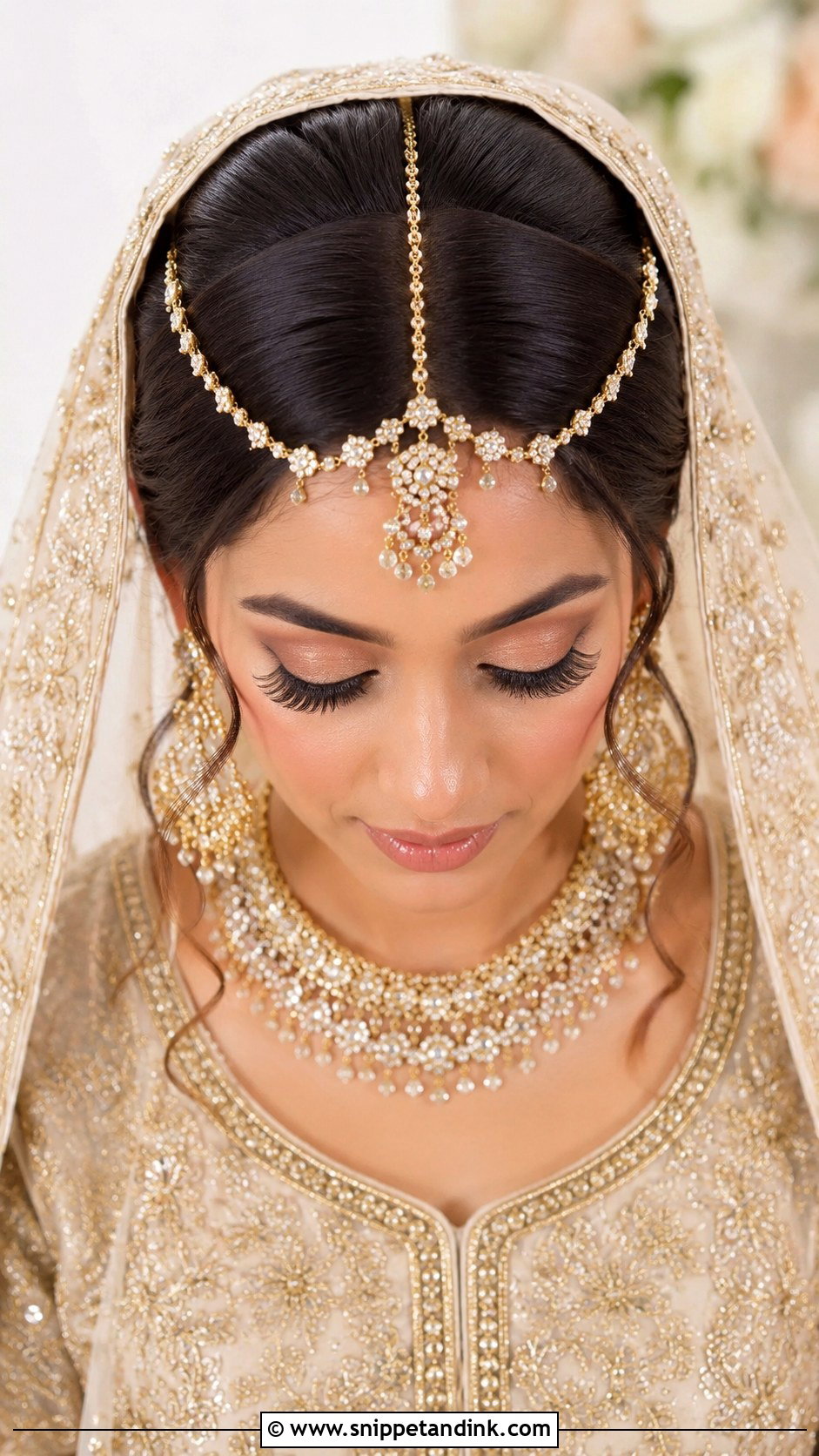
A middle part gives each piece of jewellery a clear home. The tikka sits right on the parting, and a matha patti, tikka, jhoomar set all hang from it in balance, which is why traditional brides keep coming back to this style. I check the parting is truly centred with the jewellery on, because a slightly crooked part makes the tikka look off in every frontal photo. Keep it sleek, or add a couple of fine tendrils at the temples. The bun height should follow the dupatta: lower for a heavy one.
11. Nikkah Bridal Side Part Bun
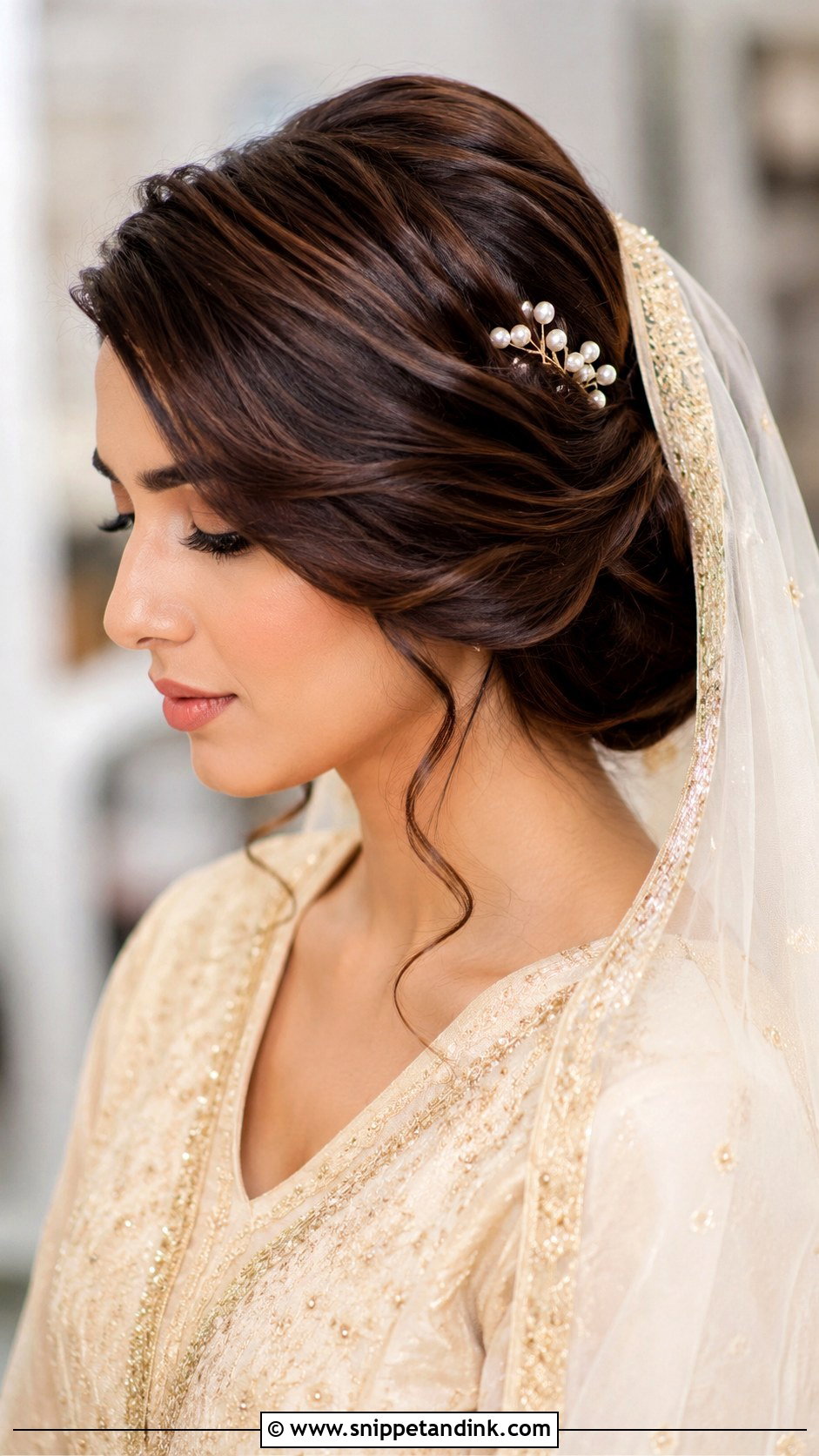
A side part softens a strong face shape and balances heavy jewellery worn on one side, such as a jhoomar. It works naturally with a dupatta draped over one shoulder, since hair and fabric then flow the same way. The side section can be waved or lightly twisted on its way into the bun. I’d suggest it for an intimate Nikkah at home, where a polished but relaxed shape fits the setting. A small jewelled comb above the bun finishes it.
12. Nikkah Bridal Loose Updo
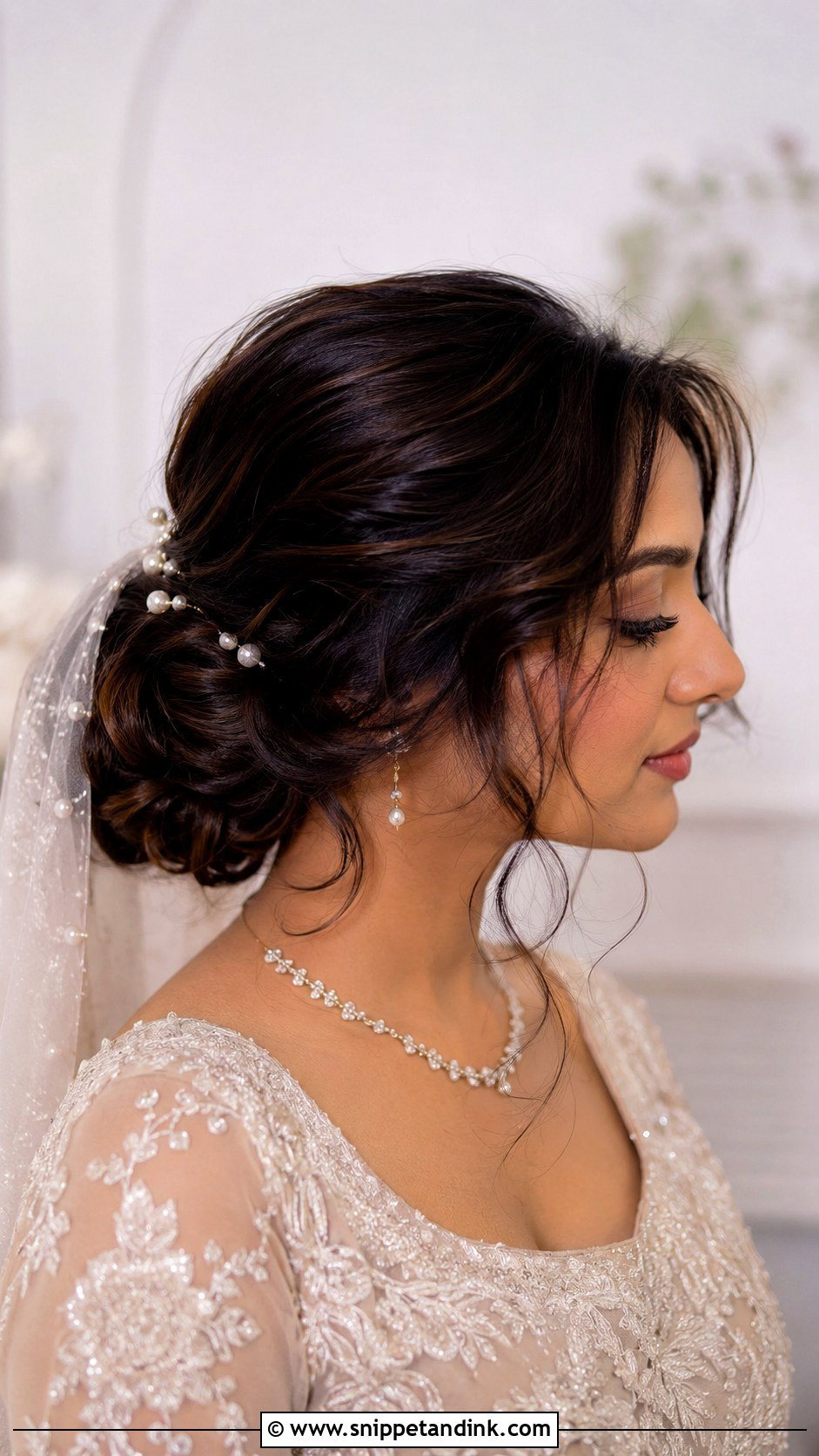
A loose updo has more hidden structure than a sleek bun, not less. The airy shape needs a firm core underneath, usually a small pinned ponytail or tight mini bun, with the soft sections pinned around it. It suits lace, chiffon and net outfits. Height depends on the dupatta: low for full coverage, slightly higher if the dupatta sits back. Ask your stylist to secure the core properly, otherwise the dupatta’s weight can slowly drag the whole shape down during the ceremony. Pearl pins tucked between sections add the detail.
13. Nikkah Bridal Open Hair With Dupatta
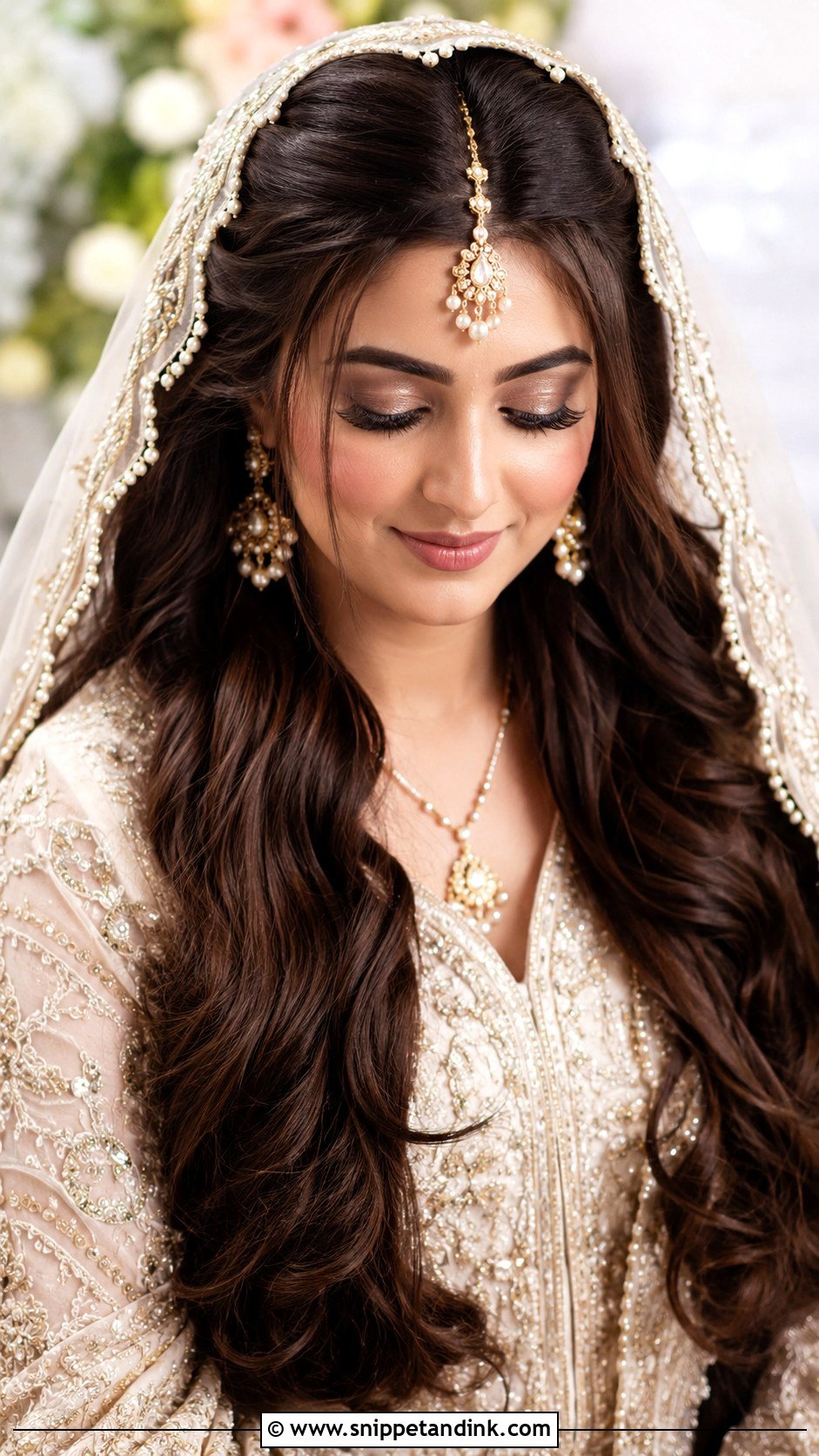
Open hair under a dupatta needs more control than it looks. The fabric rubs against the hair every time you move, so soft waves hold up better than loose curls, which frizz under friction. I pin the front slightly at the sides and place a few hidden pins exactly where the dupatta will be fastened, so it has something to hold. Volume at the roots keeps the crown from flattening. Choose this with a light dupatta or veil; a heavy one will press the whole style flat.
14. Nikkah Bridal Hijab Hairstyle
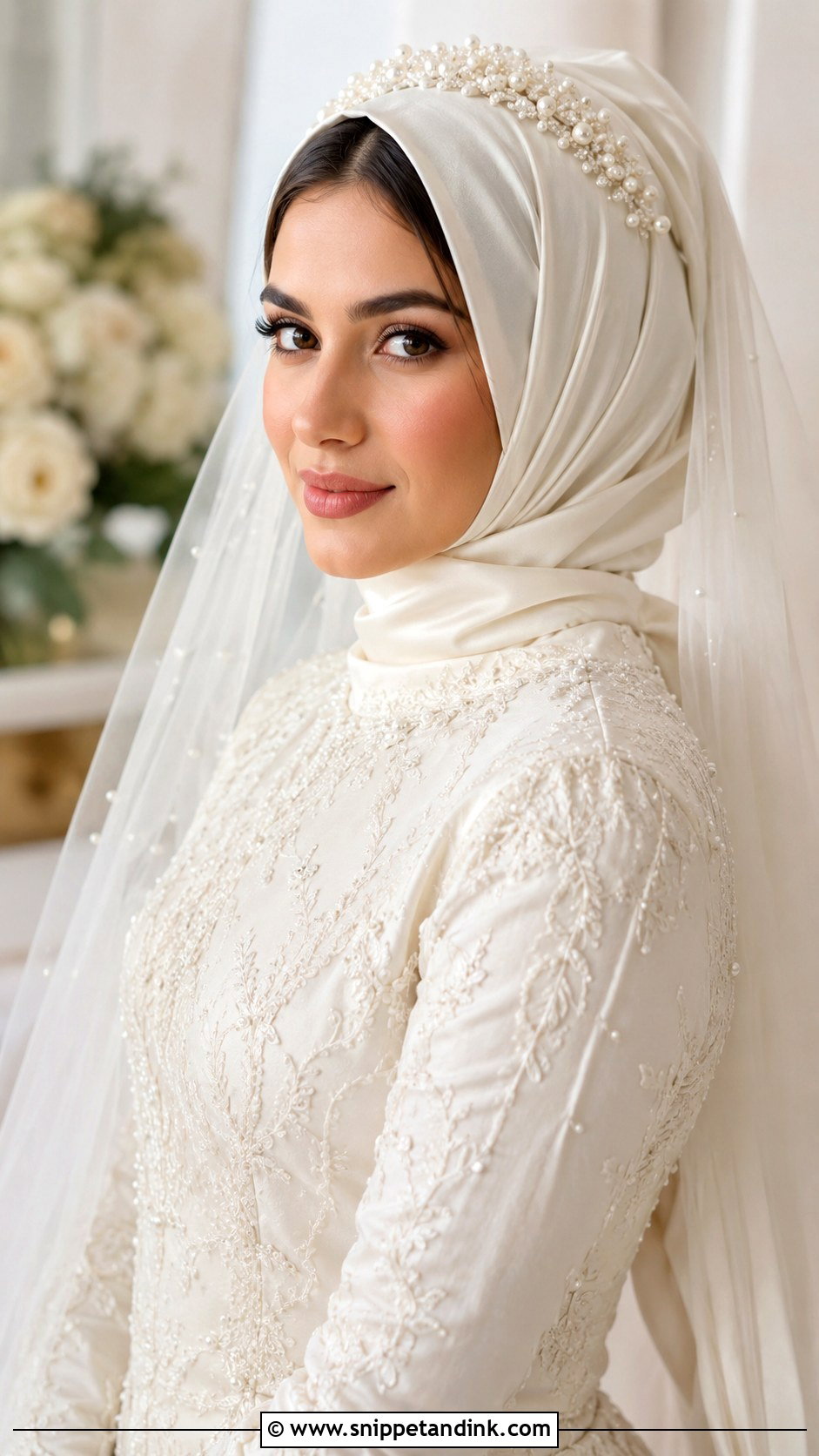
The hairstyle under a bridal hijab matters even though nobody sees it. A low flat bun or a braid pinned close to the head gives a smooth shape without lumps, while a high bulky bun creates tension and makes the hijab sit unevenly. The hijab is then wrapped softly, with volume where it flatters your face. Breathable fabric and fewer layers make a long ceremony far more comfortable. A hijab bridal look can carry a tikka-style headpiece, pearl pins or a small side brooch and look every bit as detailed as an uncovered style.
15. Nikkah Bridal Short Hair Waves
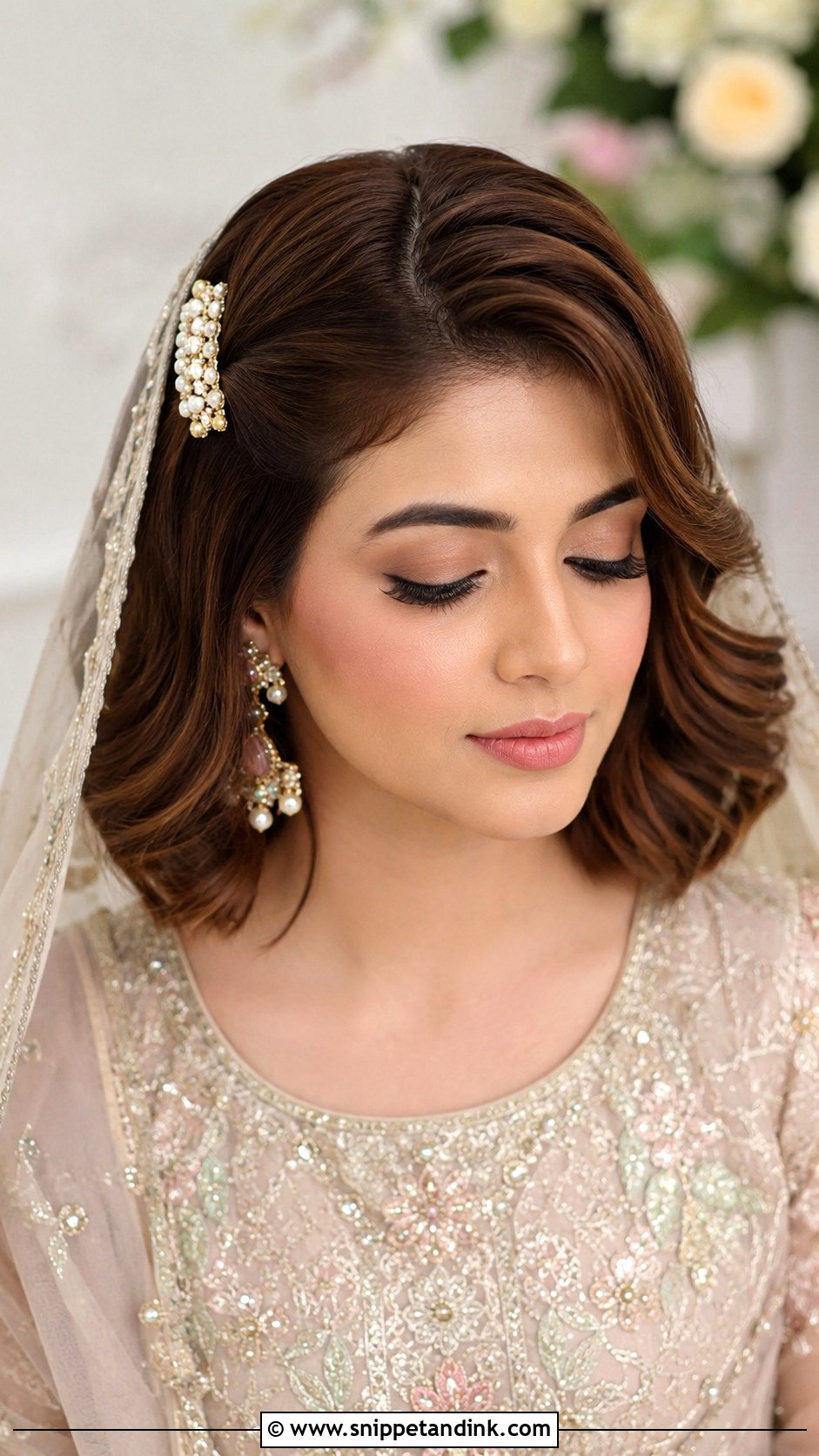
Short hair is easy under a dupatta, because there’s no bulk at the back pushing the fabric out. On a bob, lob or shoulder-length cut I wave with a smaller barrel and keep the waves in proportion. Tucking one side behind the ear shows the earrings. The one limitation is anchoring: a heavy dupatta needs a pinning point, so I build a small hidden twist at the crown even on short hair. Texture spray stops the waves looking flat once the fabric settles.
Lifting the Dupatta for Photos Without Flattening Everything
Many brides keep the dupatta over the head during the ceremony and lower it afterward for portraits or for the rukhsati. If that’s your plan, the hairstyle has to look finished both ways. Fabric presses the crown, so a style that looks right covered can look flat the moment it’s uncovered.
I deal with this by building a little more root volume than the covered look needs, and by choosing one person, a sister or a close friend, to do the unpinning. She should know where every pin is, because pulling a dupatta off without unpinning tears out whole sections. Give her a tail comb, a few spare pins and a small shine spray for a quick lift at the crown.
A Flat Base for a Bridal Hijab
For brides who cover, the under-style decides comfort. I prefer a low bun or a braid lying flat against the head, with an under-scarf on top to give the hijab grip. Pins go into the under-scarf and the hijab, angled away from the scalp. Skip bulky volumisers that build a high bump, since they can cause tension headaches over a long day. If you’re wearing jewellery over the hijab, agree its position with your stylist before wrapping, so the tikka or brooch has a planned place rather than being squeezed in at the end.
The Dupatta Decides More Than You Think
A Nikkah hairstyle supports the whole look: the dupatta’s weight, where your jewellery hangs, the neckline, and how many hours it needs to last. Buns give secure coverage and an anchor for pins. Braids add detail and control thick hair. Half-up curls and open waves suit lighter dupattas, a hijab look depends on a flat and comfortable base, and short hair needs only polished waves and a small hidden anchor. Bring the real dupatta and jewellery to your trial, then go with the style you feel calm in.
You'll Like These Ideas:



Leave a Reply