
Hair for a Chinese wedding often has to do two jobs: carry heavy traditional ornaments for the morning ceremonies, then look lighter and more modern for the banquet. A bride might start in a Xiuhe robe, change into a fitted red qipao, and finish in a Western gown. The styles below range from phoenix crowns and dynasty-inspired buns to soft low knots with flowers and gold pins. For each one I’ve noted what it takes to build and wear, because a style that looks regal in a photo can be hard work by the fourth hour if the foundation is wrong.
Wearing Heavy Ornaments for Hours Without a Headache
Phoenix crowns, tall dynasty buns and full sets of gold hairpins are much heavier than a veil or a comb. The difference between a crown that feels fine and one that gives you a headache by noon is almost always the base.
- The weight should rest on a firm bun or padded form, not on the scalp. I build the base first and test it by pressing down on it before any ornament goes on.
- Ornaments are secured to the base with long pins crossed in different directions, not just pushed into the hair.
- Hair that was washed the morning of the wedding is slippery; for heavy pieces, wash the evening before so there’s a little grip.
- Wear the actual crown or ornaments at the trial for at least an hour. If anything pinches, there’s time to adjust the base.
If your crown is rented or borrowed, ask how it attaches and bring it to the trial. Some have combs built in, others need to be pinned through loops, and your stylist needs to know which before the day.
1. Traditional Phoenix Crown Updo
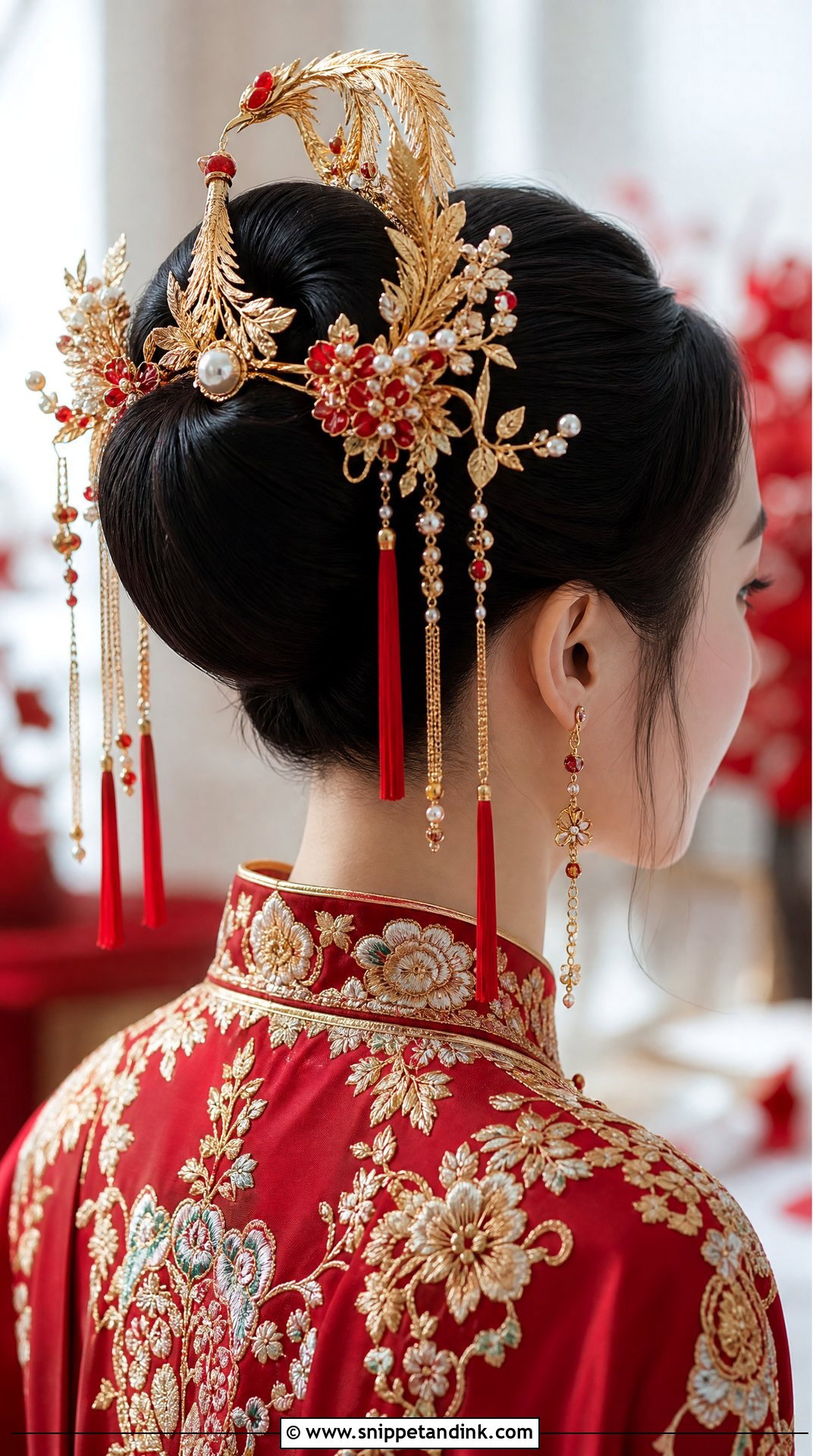
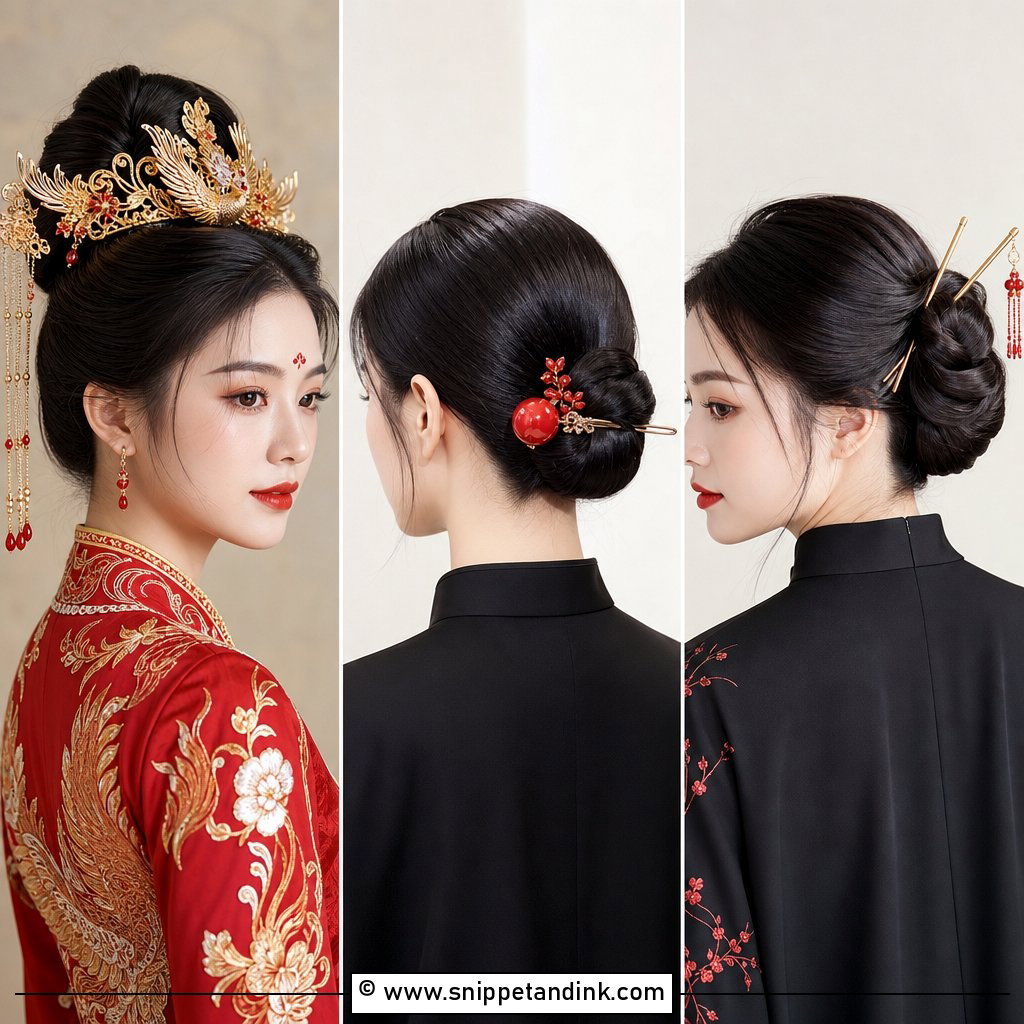
The phoenix crown, or fengguan, is the grandest Chinese bridal headpiece, and it’s heavy. Everything depends on the base underneath: I build a firm, tightly secured bun at the back of the head, often over a padded form, so the crown has something solid to rest against instead of pressing on the scalp. The crown sits high, with pearls, red tassels and gold phoenix details framing the face. It belongs with a Xiuhe or Ming-style robe. For a full heritage moment at your tea ceremony it’s unmatched, but wear it at the trial for at least an hour so you know how it feels.
2. Sleek Low Bun for Qipao
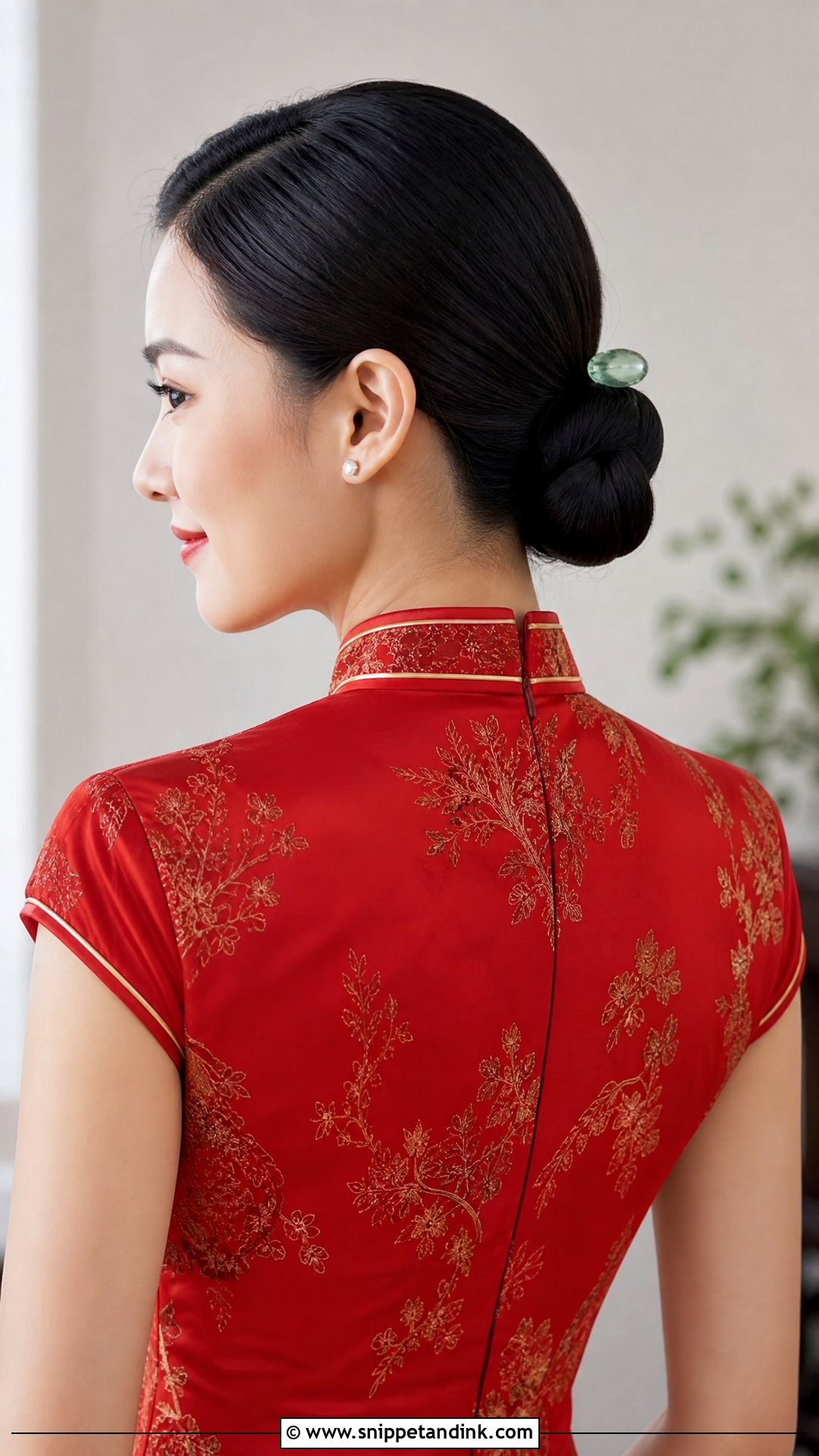
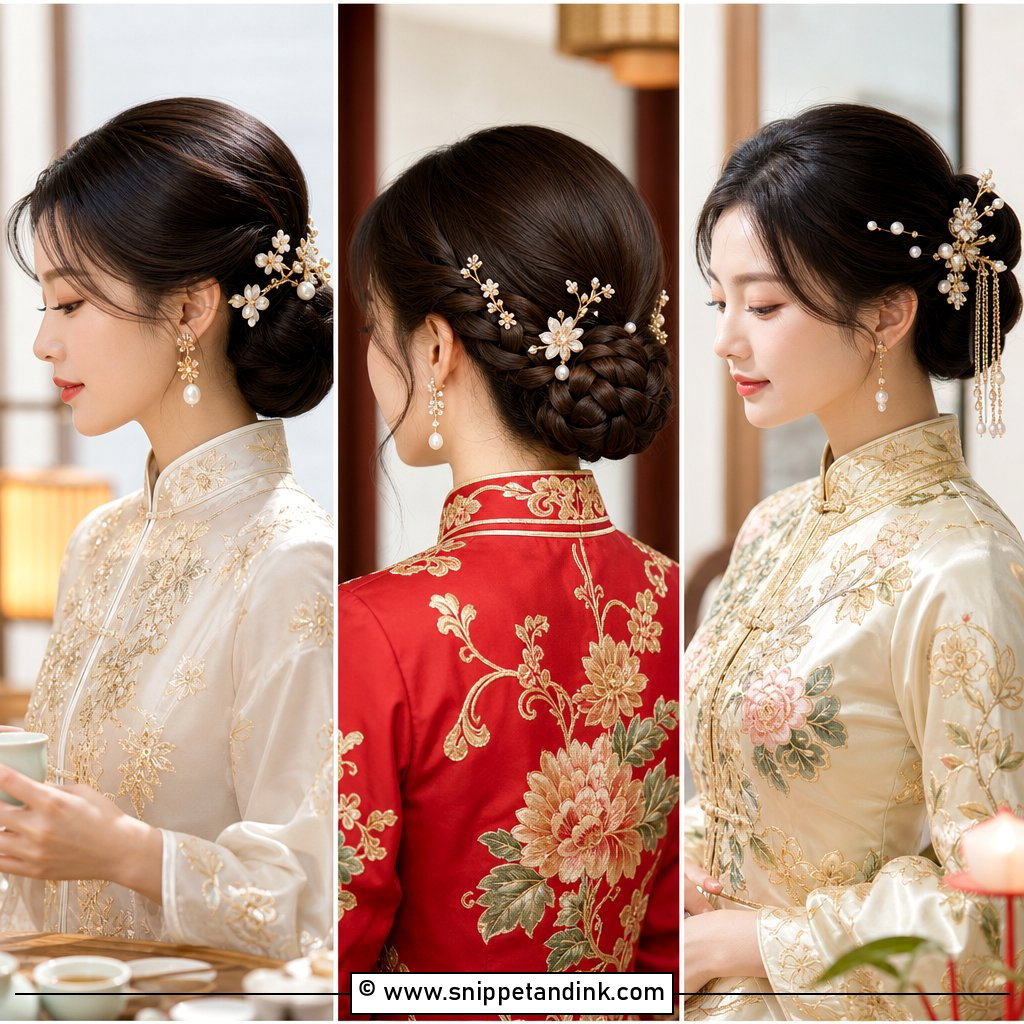
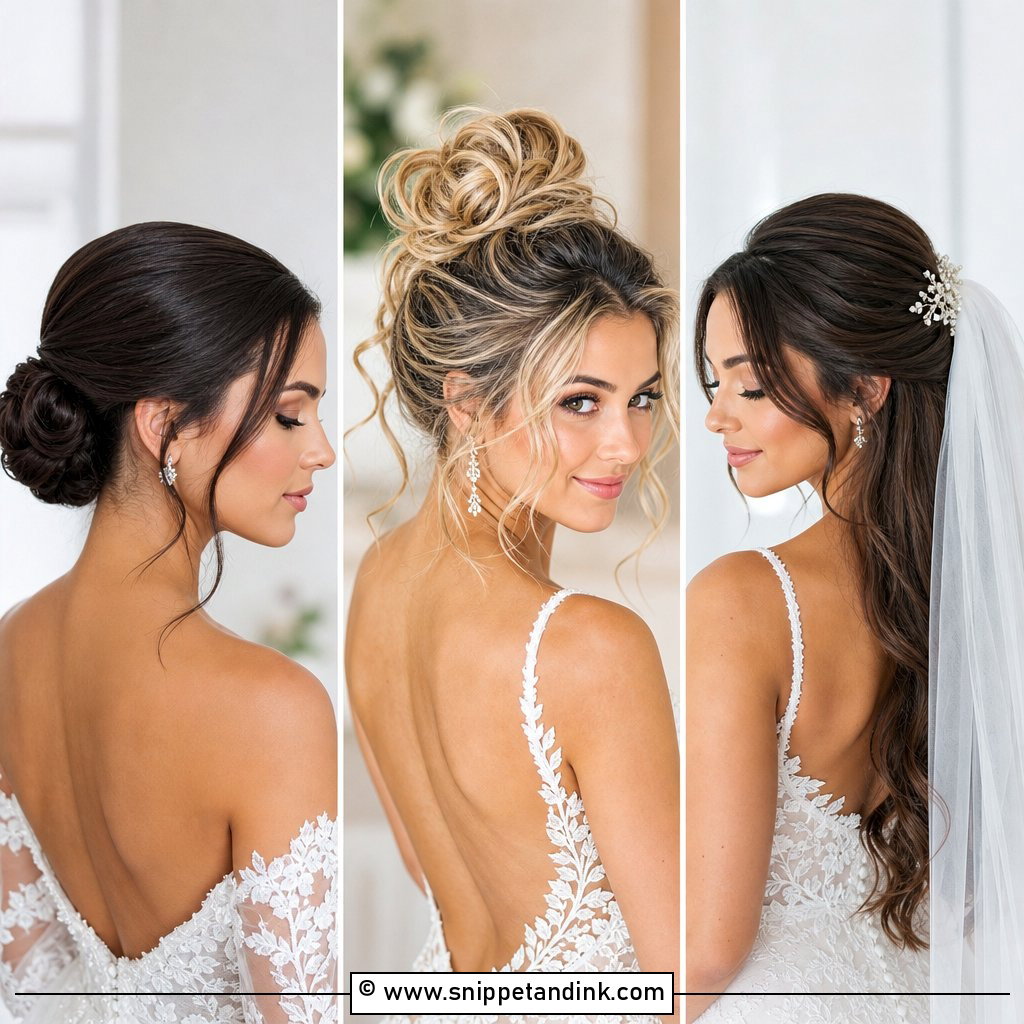
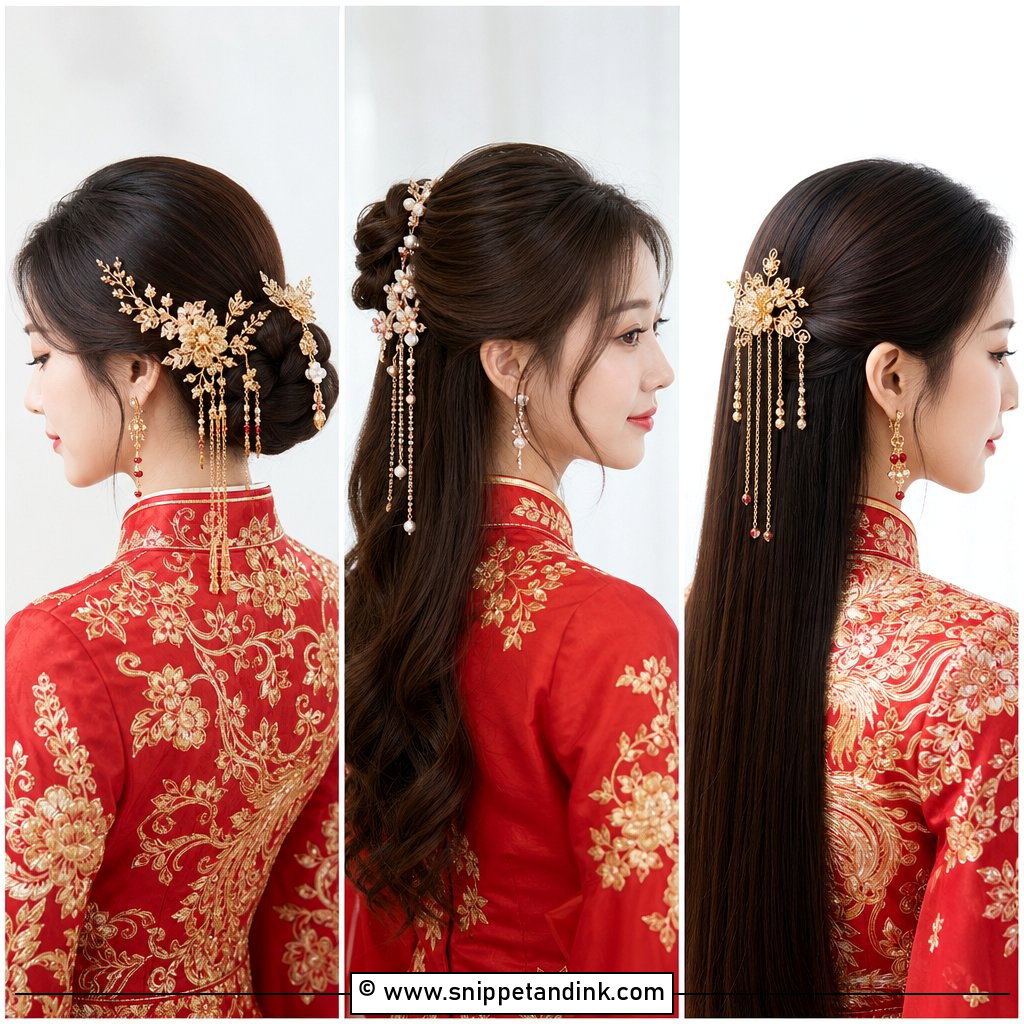
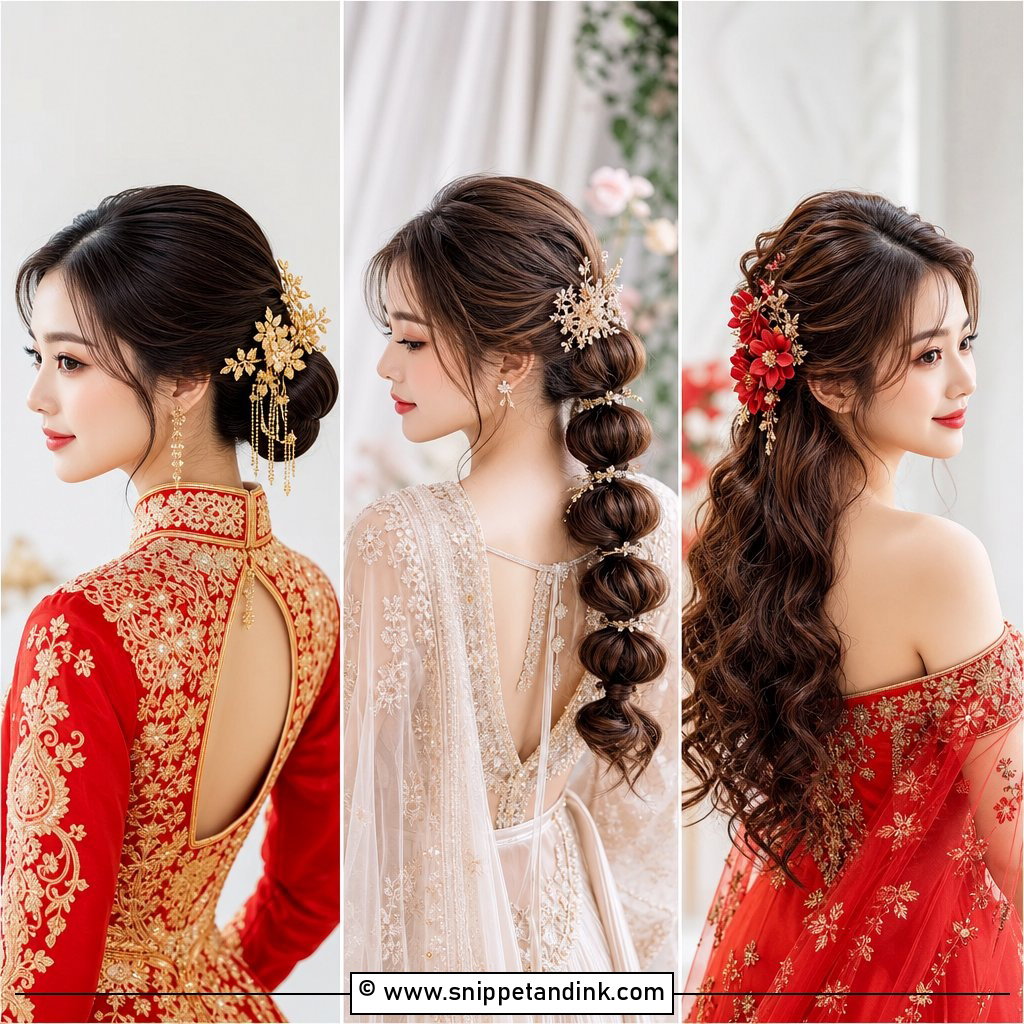
A high mandarin collar leaves no room for hair at the neck, so with a fitted qipao I pin the bun just above the collar line rather than right at the nape, where it would rub against the fabric. A center part gives a balanced frame. I smooth the hair with a light cream and pin the bun flat so it doesn’t push the collar out. One jade or gold hairpin is enough decoration. It suits most face shapes and stays neat for hours.
3. Old Shanghai Finger Waves
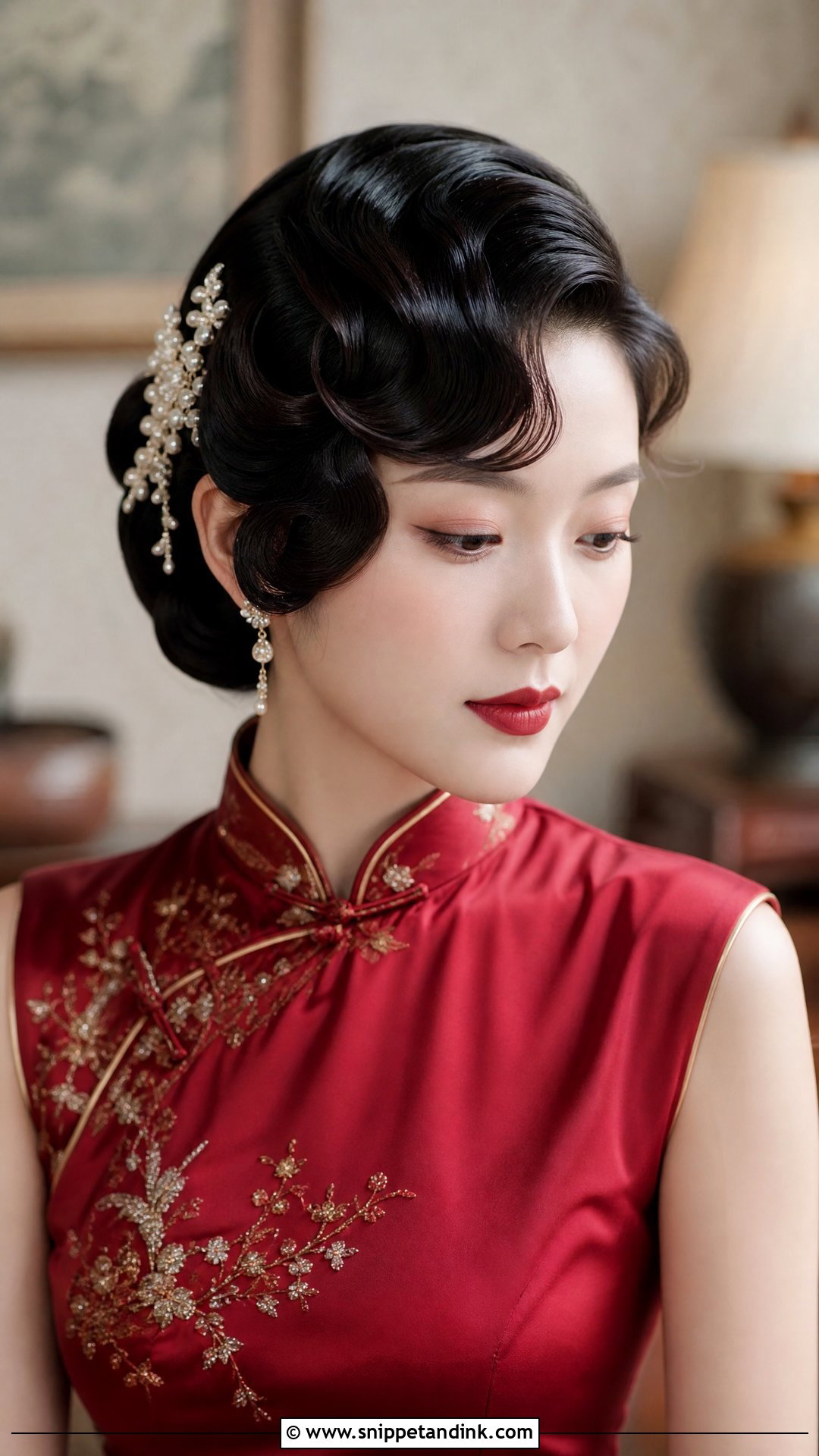
Finger waves are a 1930s technique, and they’re set wet, not curled. I comb setting lotion through damp hair, push each ridge into an S-shape with my fingers and a comb, clip it, and let it dry completely before removing the clips. Done properly, the waves hold all day; rushed, they fall flat by lunch. They sit close to the side of the face, sometimes with a short soft fringe, and suit a satin qipao in deep red or emerald. The back can go into a low knot, or the whole look can be worn on a short bob. A side comb finishes it.
4. Half-Up Curls With Floral Pins
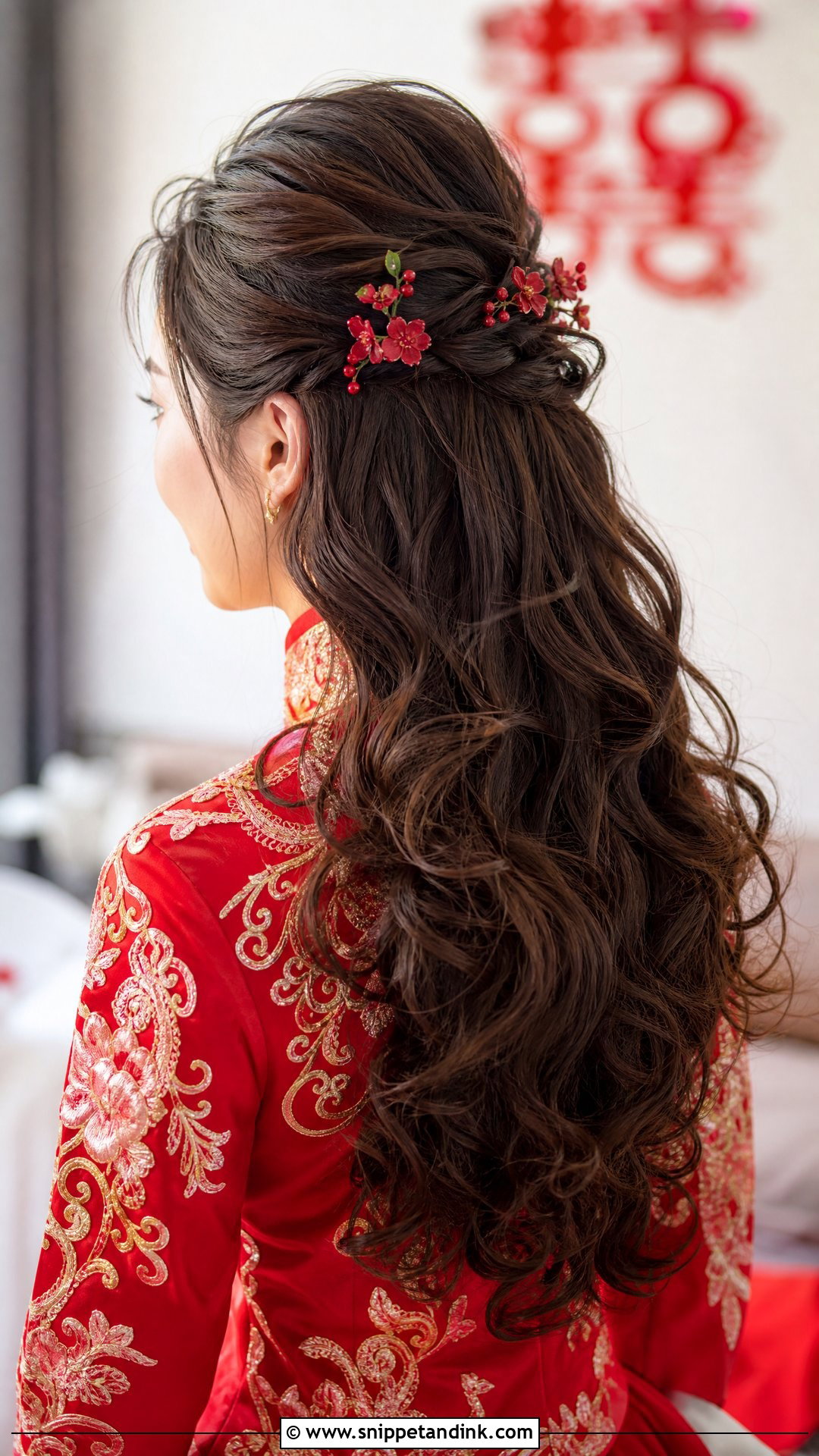
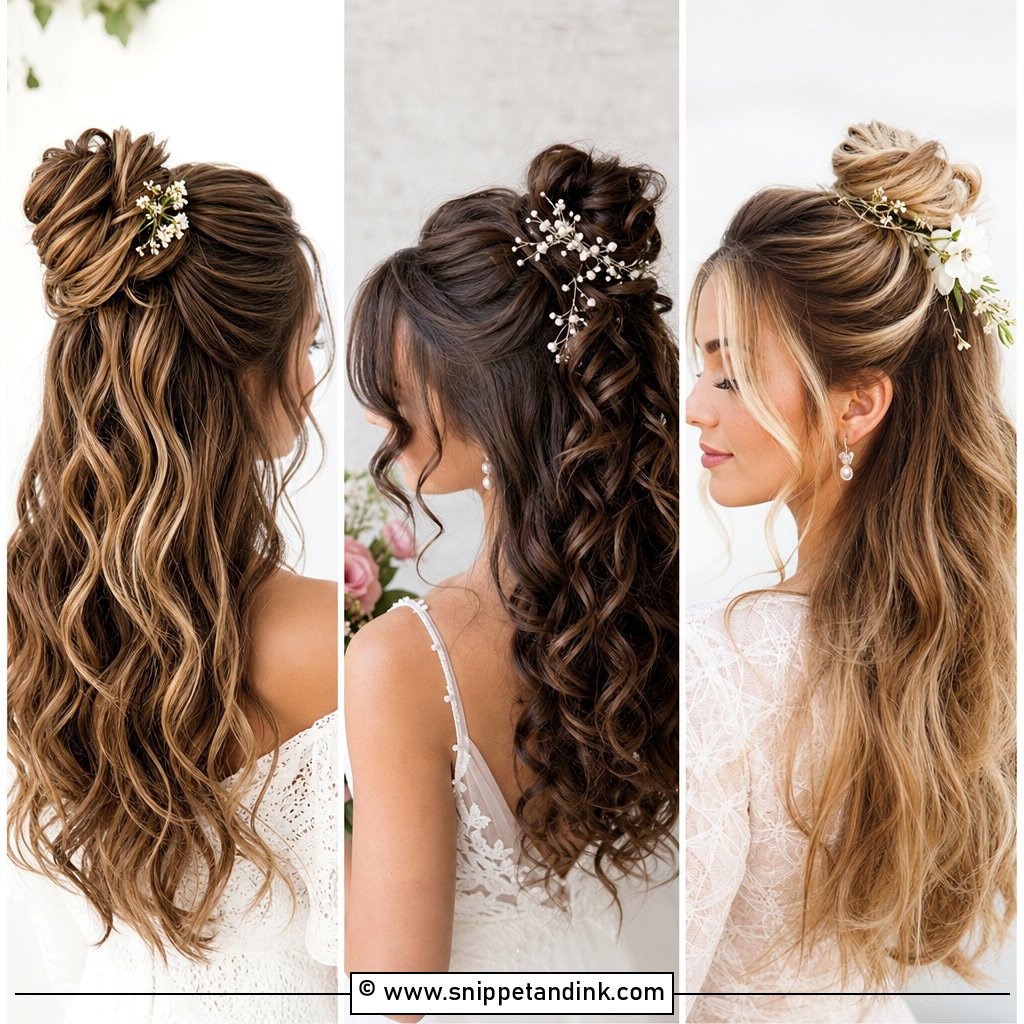
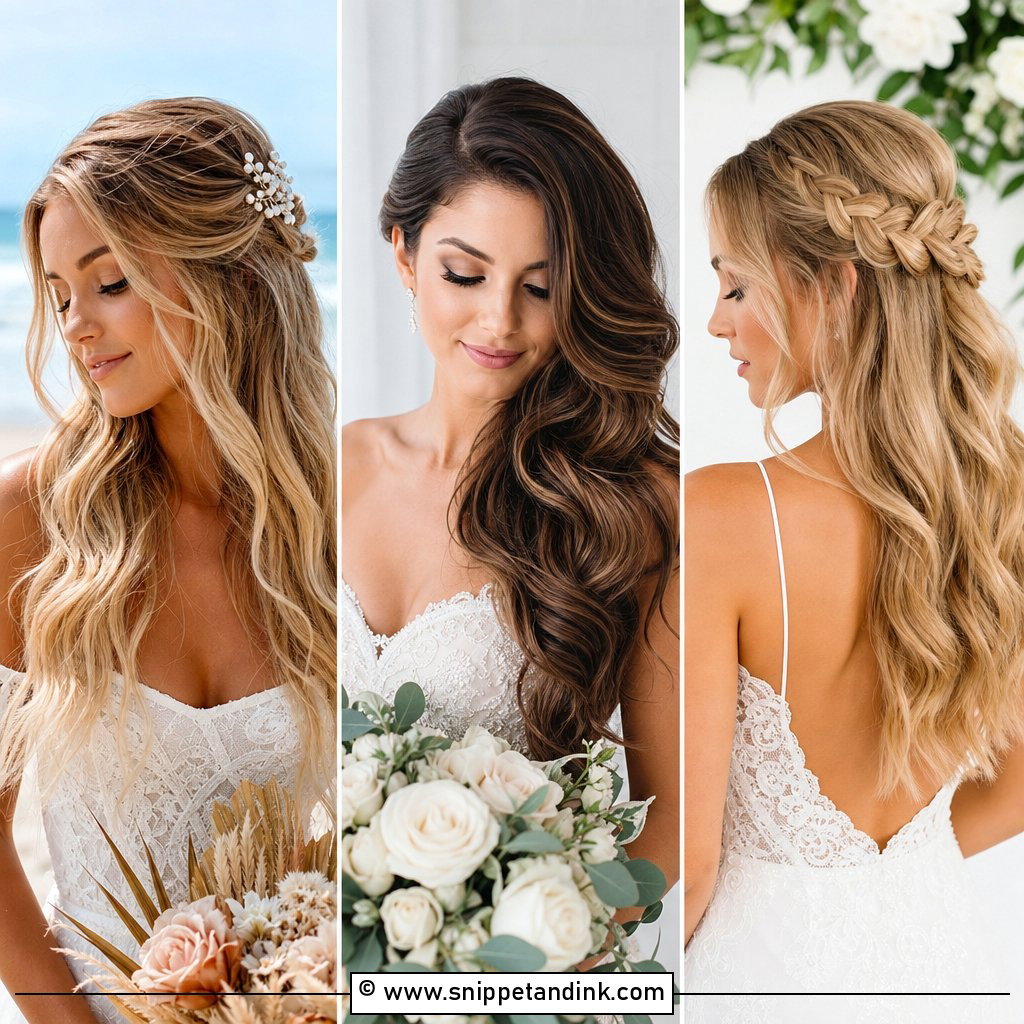
Half up is the choice when you want your hair down but out of your face during tea pouring and bowing. I pin the top sections back with a hidden anchor first, then brush out the curls through the lengths. Small floral pins or red blossoms go where the sections meet. It moves easily between a qipao and a reception gown. On very straight, heavy hair, curls can drop within a few hours, so I curl smaller than the finished look; there’s more on that further down.
5. Ming Dynasty Inspired Bun
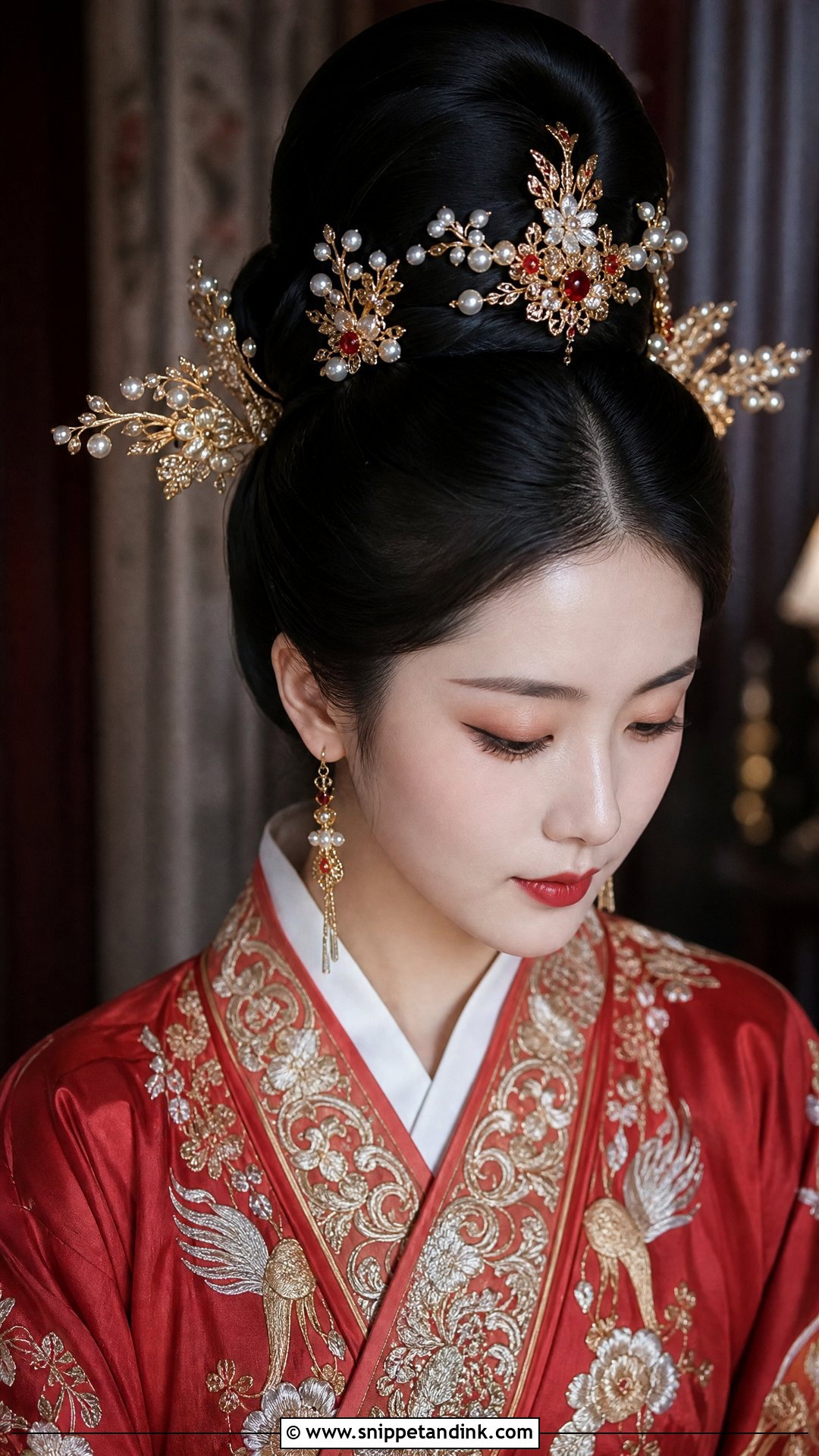
A Ming dynasty-inspired bun sits tall and structured, the shape once worn by noblewomen. I build height with a hair form underneath, then smooth the hair over it into a rounded shape that gives the gold and pearl ornaments a clean base. Decorative hairpins fan out from it. It pairs naturally with a Hanfu wedding robe. The structure means the bun barely moves all day, but it also means a lot of pins, so if you have a sensitive scalp, mention it at the trial.
6. Romantic Low Chignon With Flowers
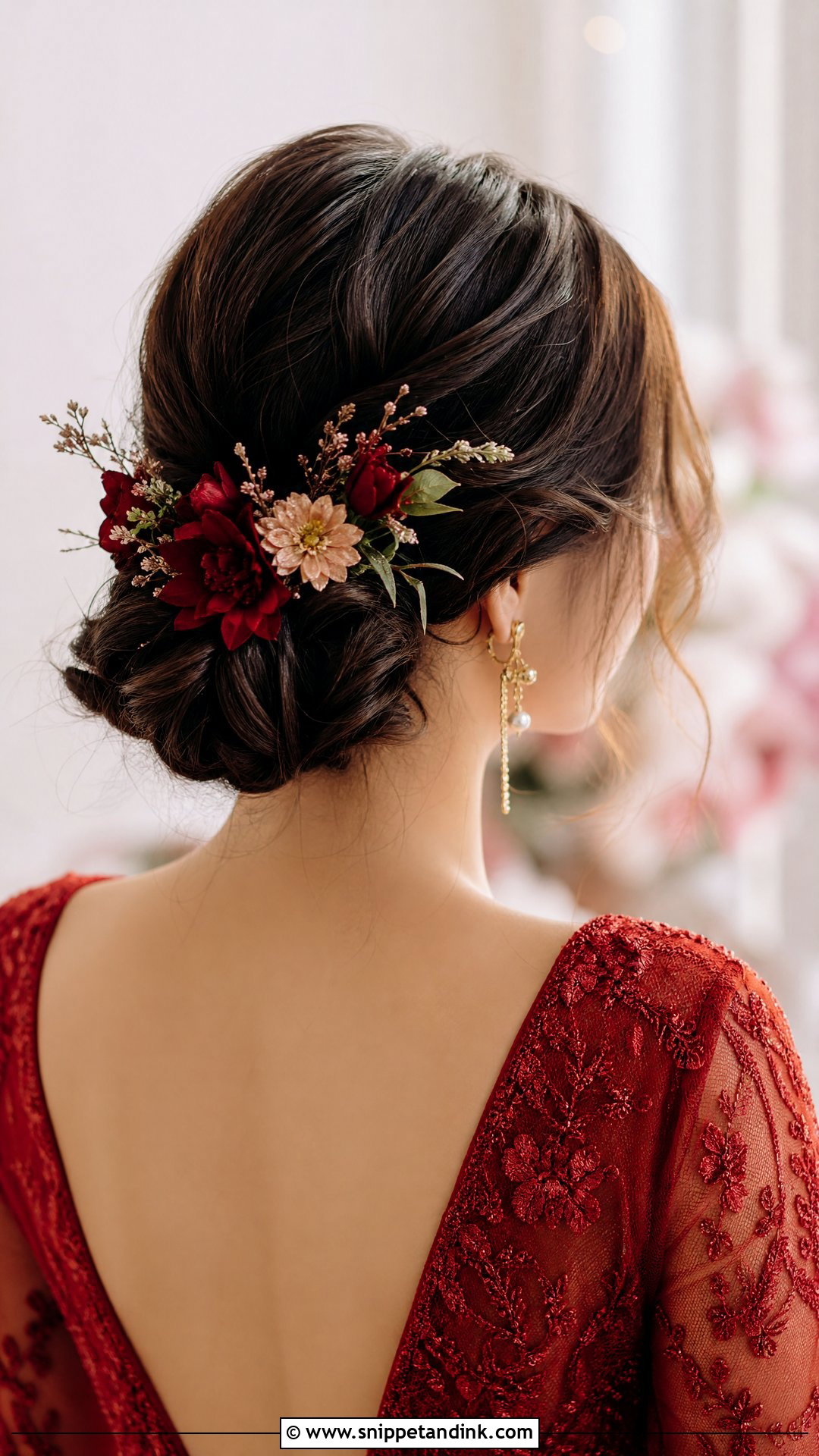
A loose chignon at the nape brings warmth to a look that can otherwise feel very formal. I gather the hair into a textured knot, leave a few tendrils at the face and tuck small flowers through it. It sits comfortably for a tea ceremony and an outdoor reception, and it makes younger brides look less severe than a sleek bun would. Fresh flowers wilt in heat, so I wire them onto pins and add them as late as possible.
7. High Bun With Tassel Hairpins
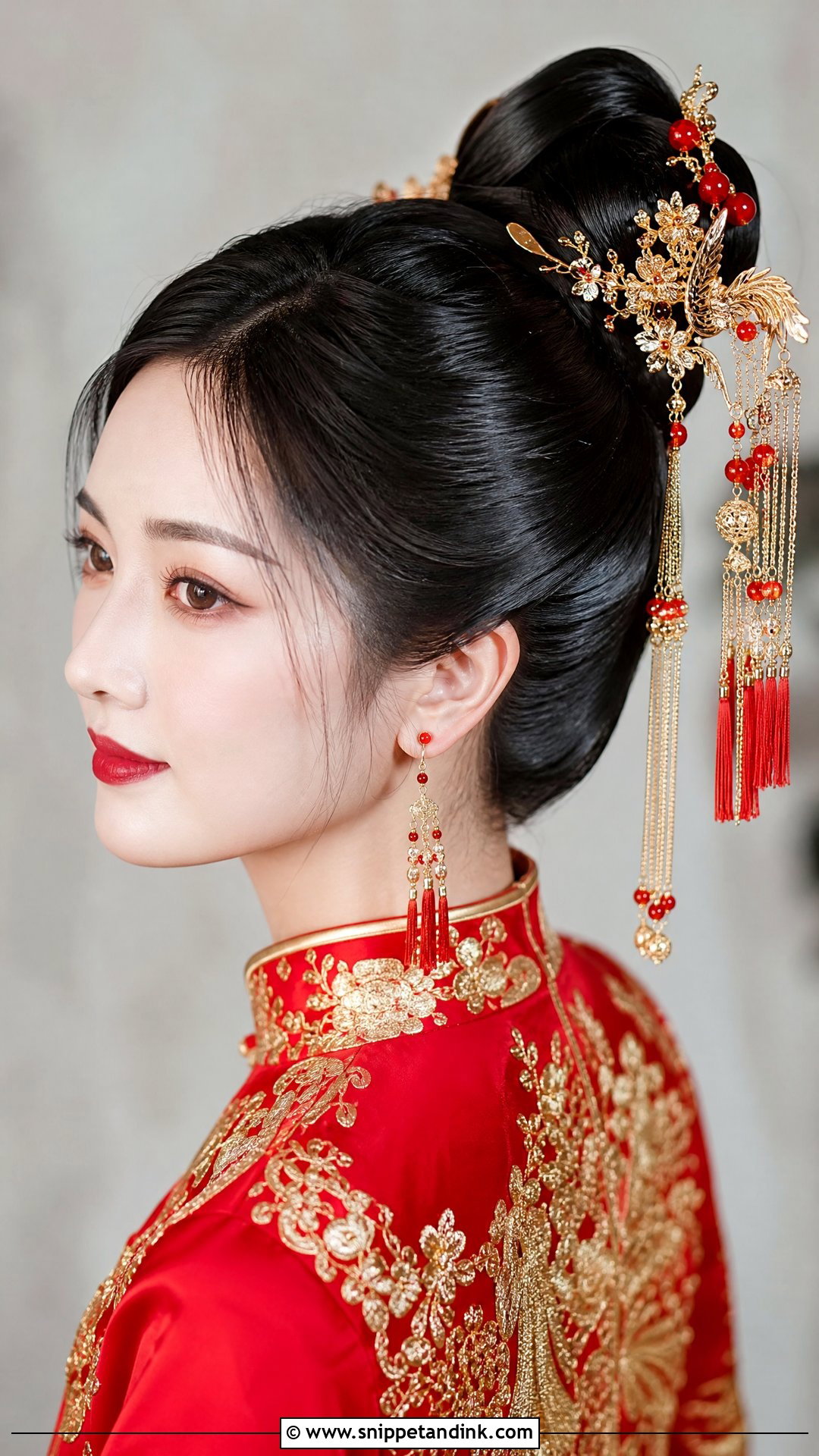
A high bun near the crown lengthens the silhouette, and long red or gold tassel hairpins hanging from each side add movement and a sense of celebration. Tassels symbolize blessings and happiness in Chinese weddings. I pin the bun firmly enough that the weight of the tassels doesn’t tilt it. It suits brides with longer necks and goes well with a high-collared qipao. Watch the tassel length: if they hit the shoulders, they tangle in the collar and earrings.
8. Sleek Middle-Part Bun With Jewelry
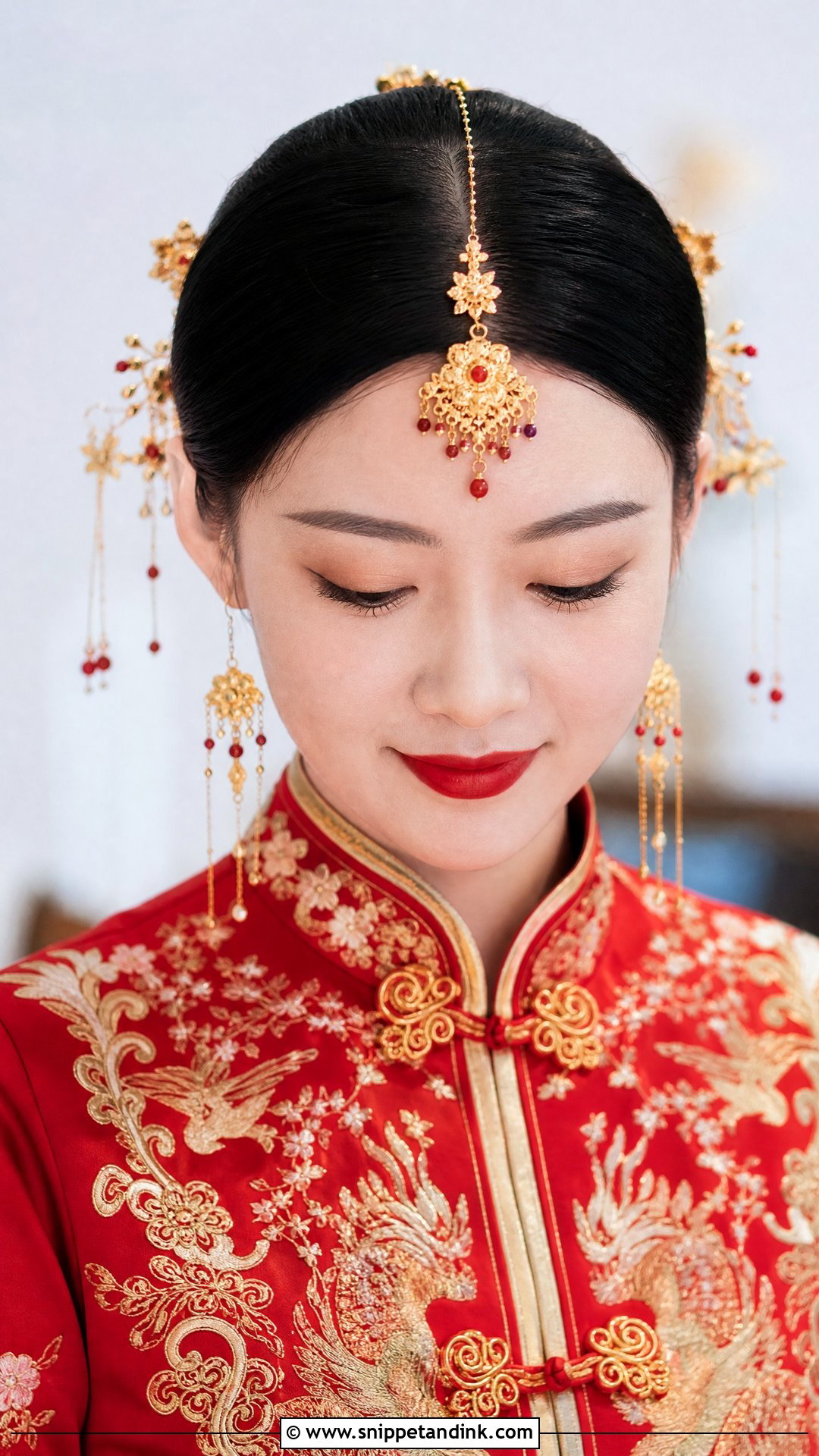
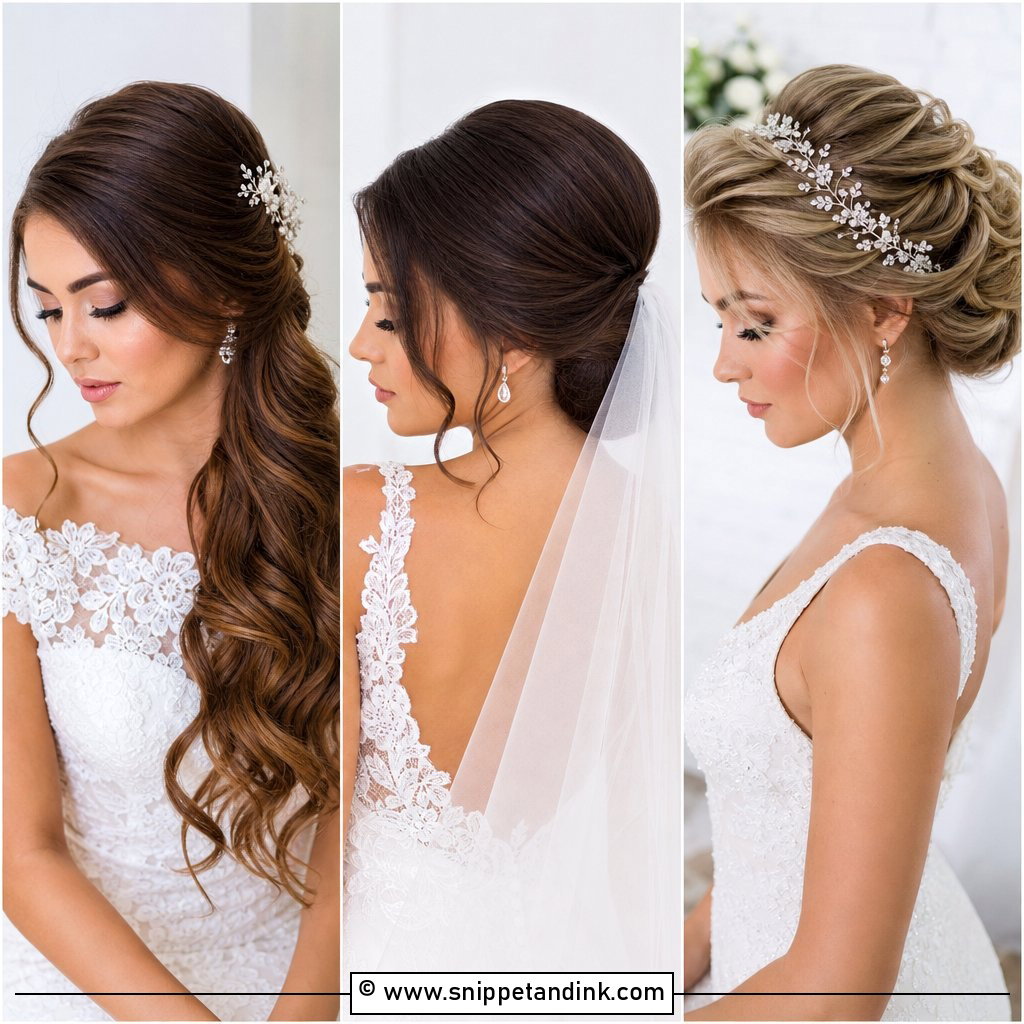
When the jewelry is the star, a sleek middle-part bun is the quiet base it needs. A clean center part, both sides pulled smoothly into a low bun at the nape, and nothing else. Ornate headpieces, forehead pendants and earrings get the attention. This is the style I suggest when brides have invested in heirloom gold or jade pieces for the tea ceremony. The calm lines keep the look composed in photos; just be aware that a perfectly sleek finish shows every flyaway, so prep with a smoothing cream.
9. Soft Waves With a Side Comb
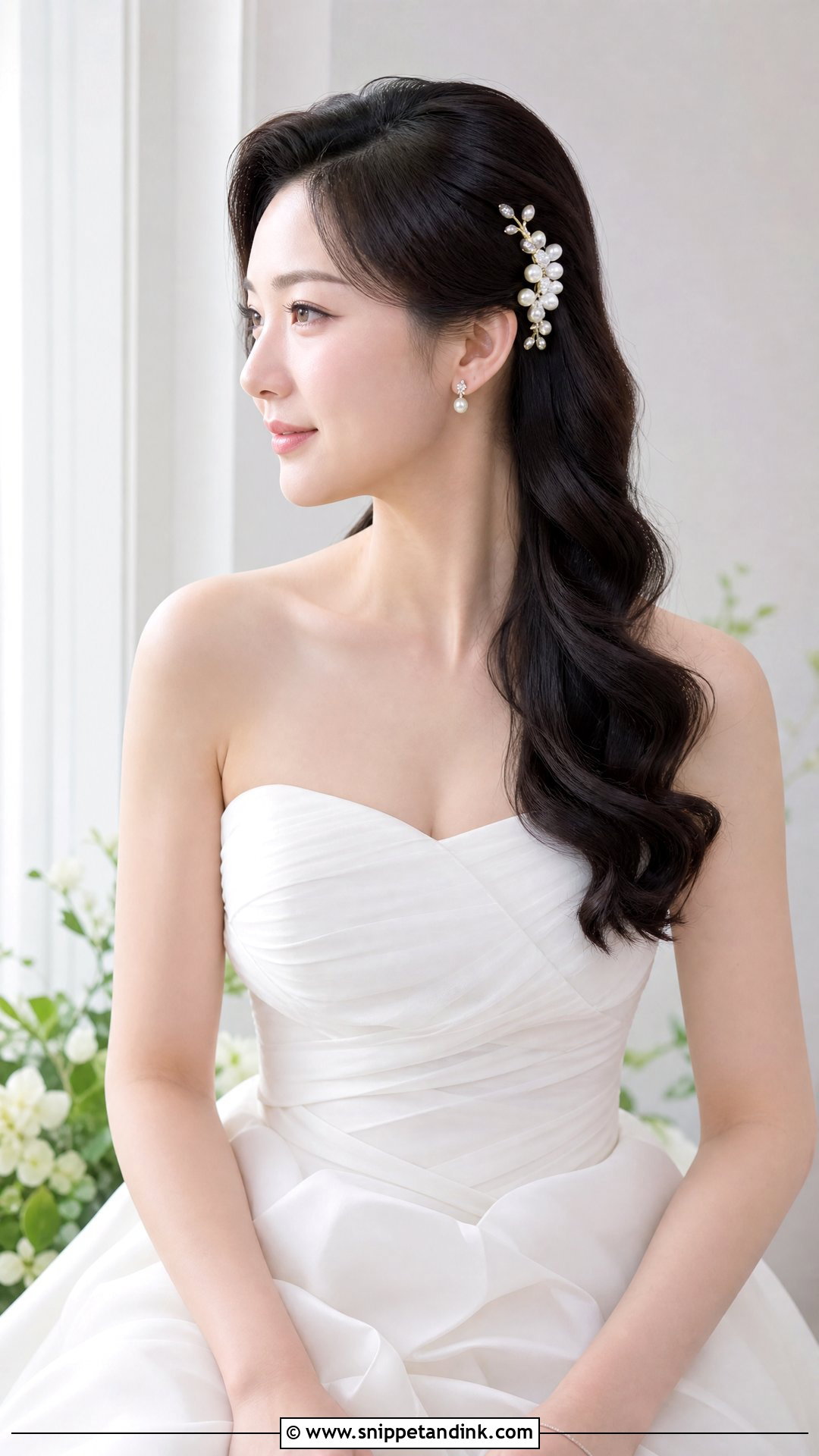
Soft waves are the down style for brides who don’t want an updo. I brush out curls into a smooth cascade, then sweep one side back and secure it with a decorative comb, setting crossed pins underneath first so the comb has something to grip. A pearl or floral comb adds a little sparkle. It pairs with both a qipao and a flowing white gown, and suits long or medium hair. Heat and humidity are the enemy here, so I set the curls with a firm-hold spray.
10. Braided Updo With Pearl Accents
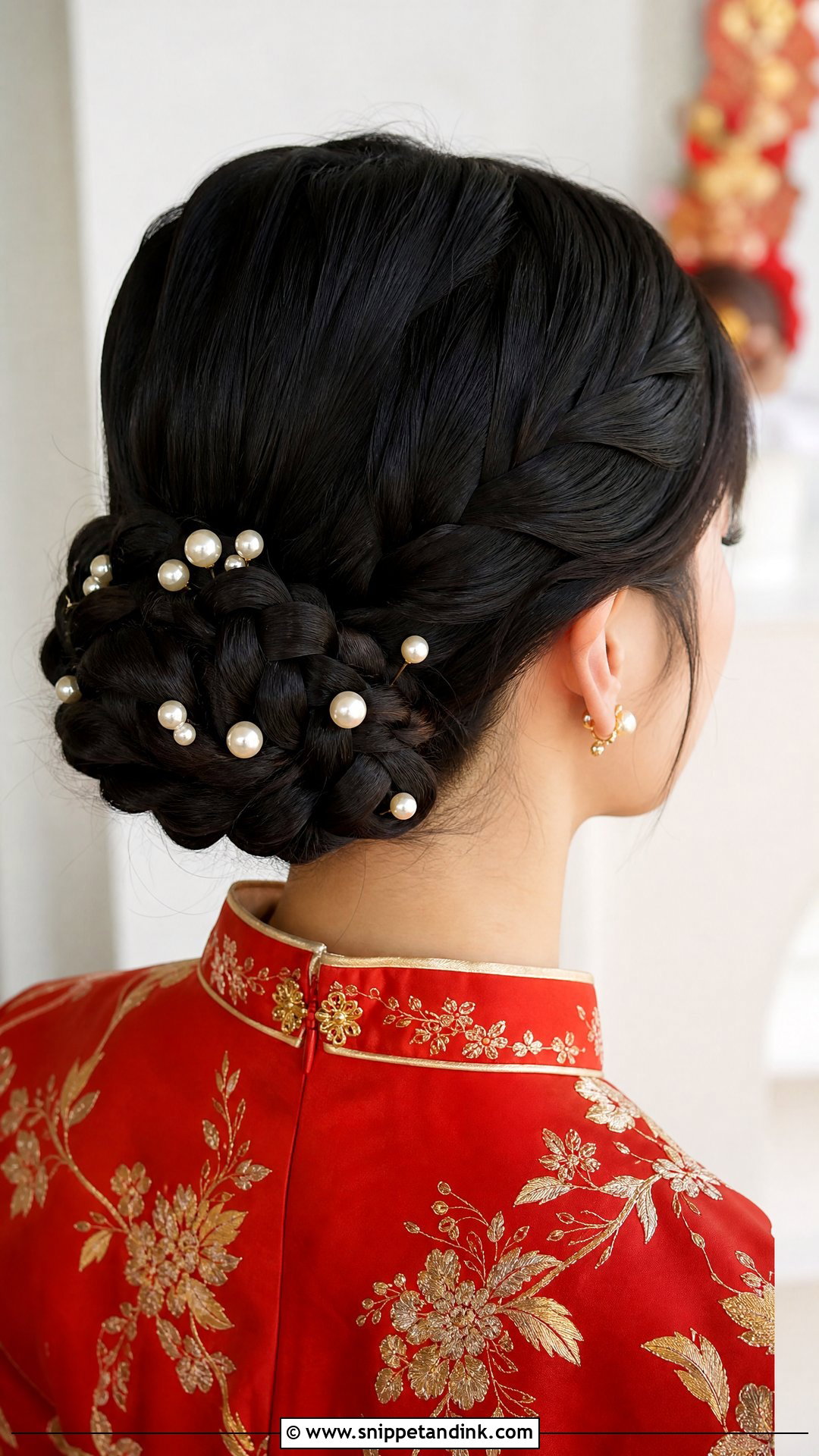
Braids give an updo detail that rewards a closer look. I weave sections into braids, gently loosen them for dimension, then tuck them into a low bun or twist them into a soft knot. Pearl pins scattered through the braids catch the light. Braided updos are among the most secure styles I do, which makes them a good choice for a long day with a lot of bowing and hugging. Thick hair braids especially well.
11. Classic Guan Bun for Tea Ceremony
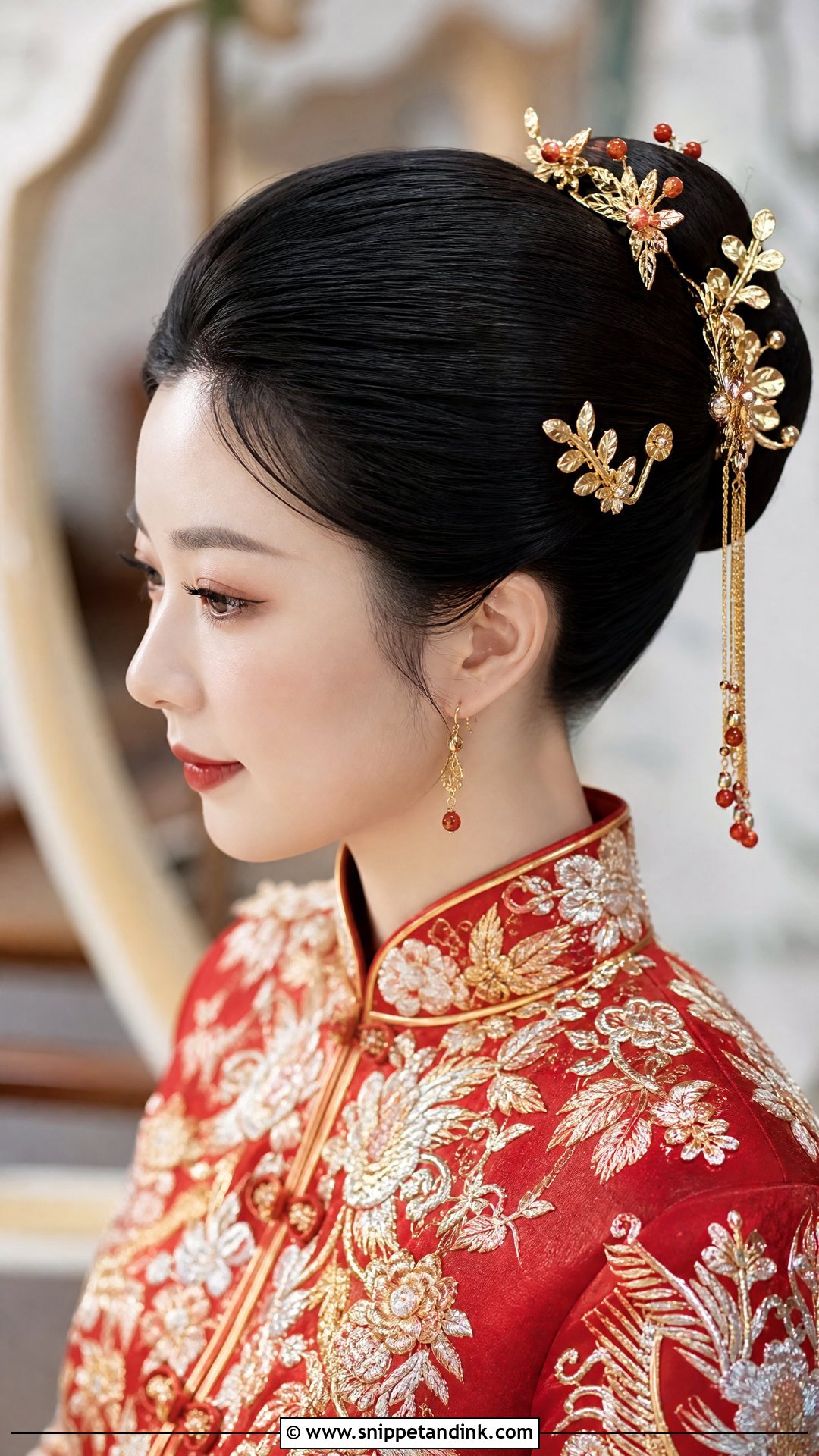
The Guan bun is a symmetrical, rounded bun at the back of the head, and its calm shape suits the tea ceremony, where tradition leads. I keep the front sleek and pulled back for a clean, respectful look, then add a few gold hairpins or a small phoenix ornament. The symmetry is the whole point, so I check it from behind with a mirror before pinning the last section. It looks grounded and authentic, and it gives ornaments a steady base.
12. Modern Twisted Updo for Reception
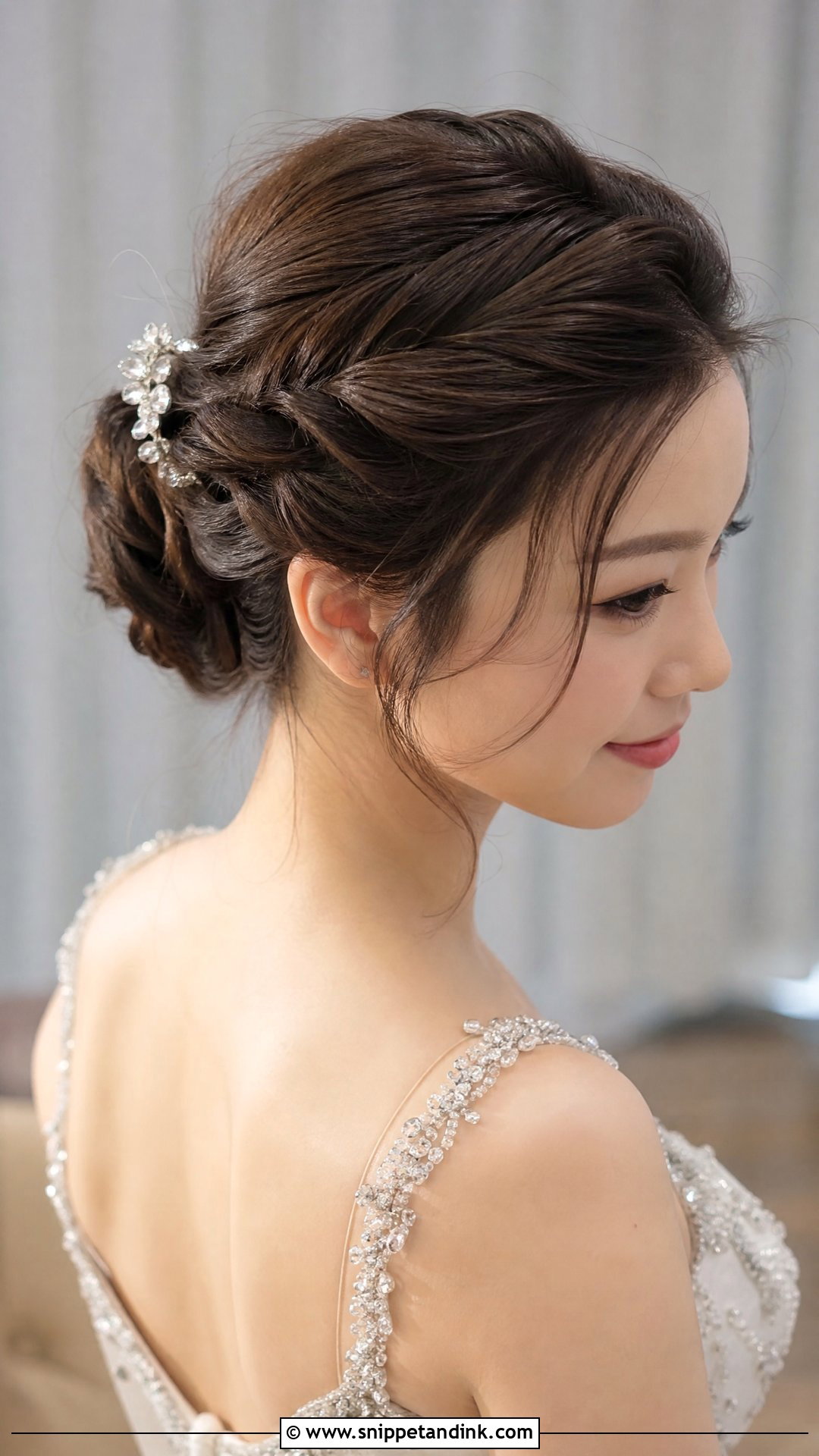
A twisted updo is how I often finish the day: it’s polished but relaxed enough for dancing. I twist sections back and pin them into a sculpted shape, which holds well and can be built on hair that’s already been in a traditional style earlier, since the bends from the morning give it grip. It goes with a white gown or evening dress, and a sparkling clip or a few crystals add shine. It stays secure all night.
13. Hanfu-Inspired Loop Bun
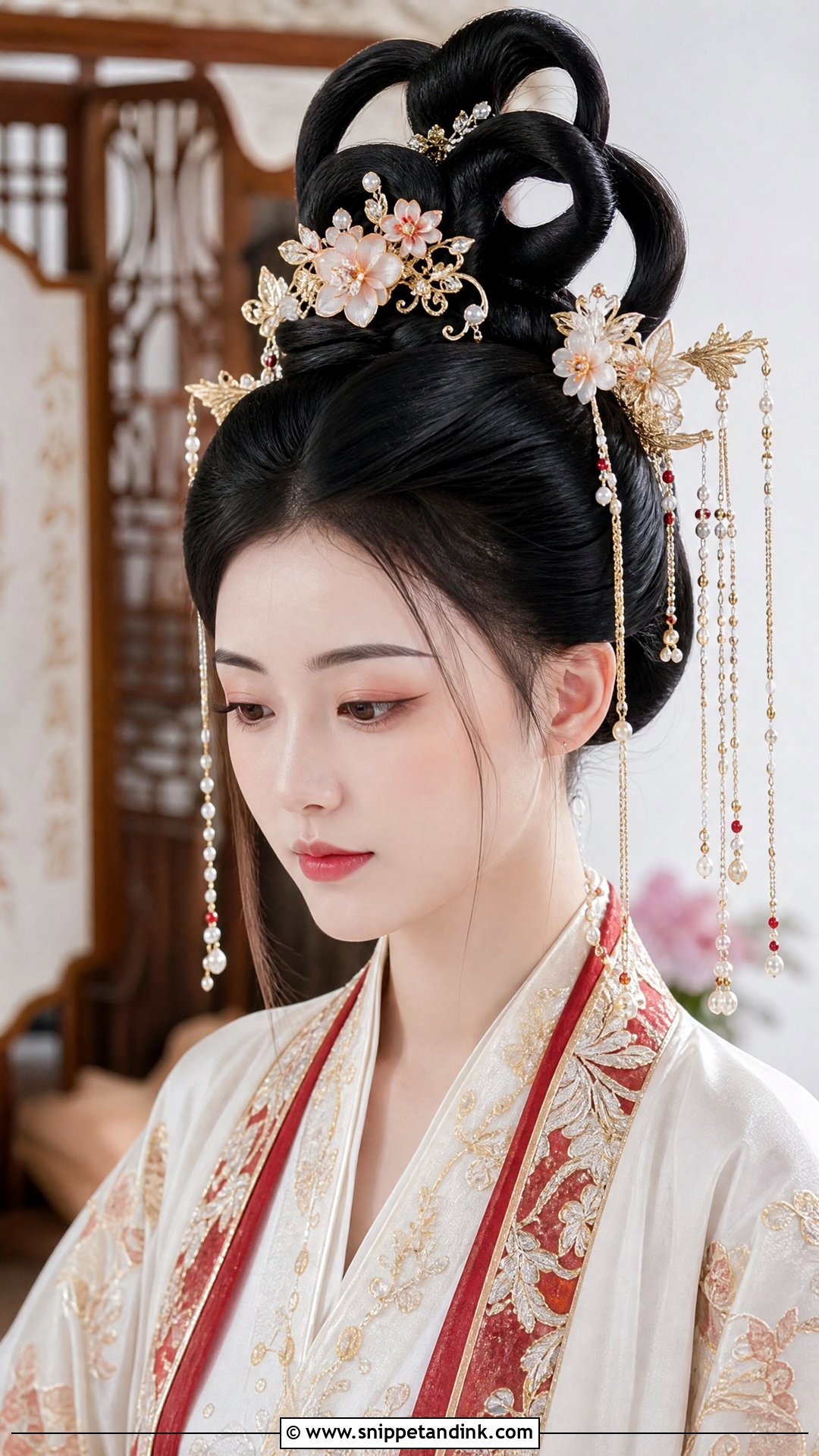
A loop bun draws on historical hairstyles, shaping the hair into rounded loops on top of the head. Building it needs length or added hair, and I often use small padded forms inside each loop so they keep their shape. Hanging hairpins, flowers or gold ornaments decorate it. It’s made for a flowing Hanfu wedding robe, and brides who love a dynasty-era look tend to choose it. It’s not quick to build, so plan extra chair time on the morning.
14. Low Bun With Baby’s Breath
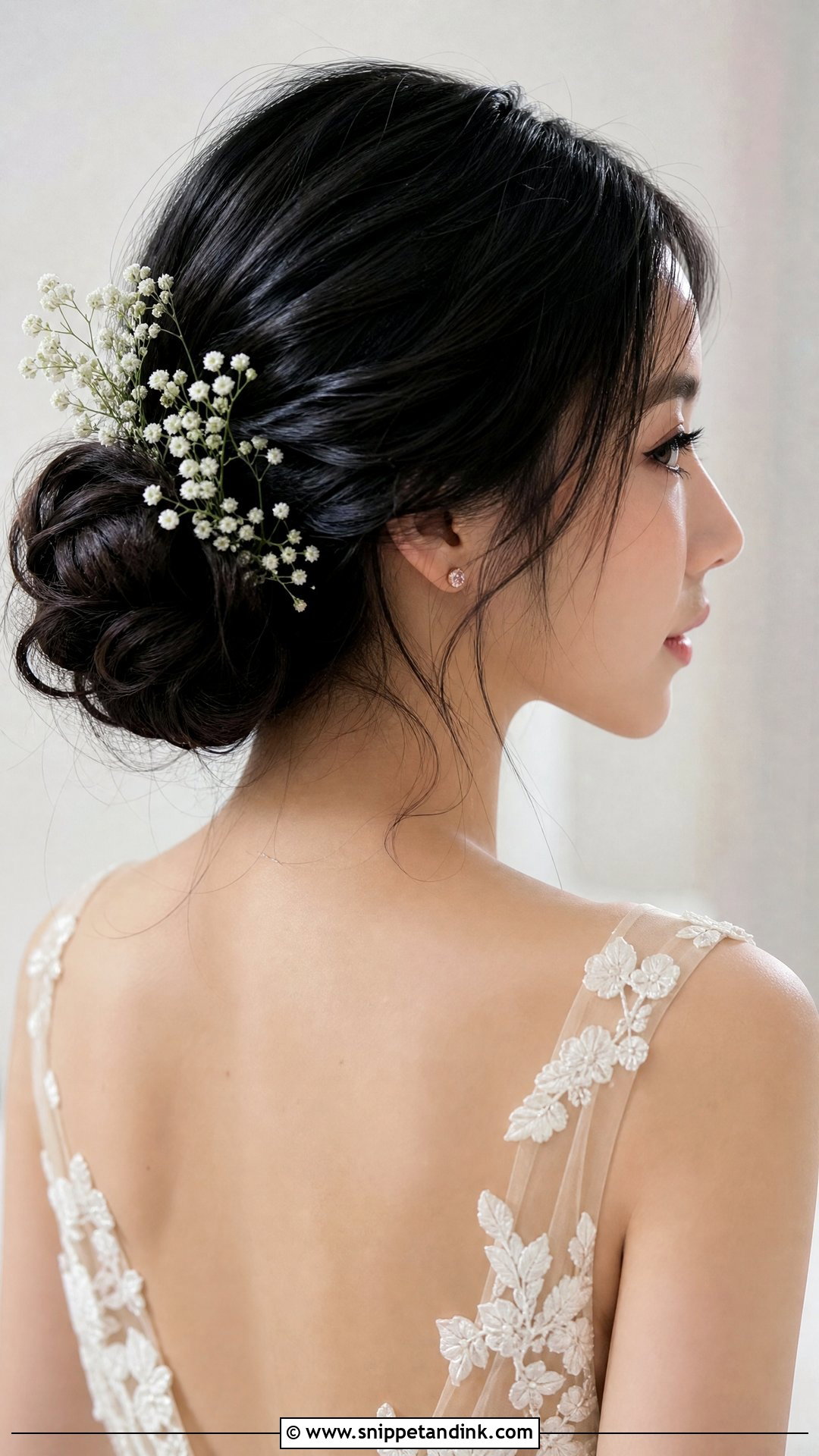
Baby’s breath is one of the hardiest flowers I use in hair; it holds up for hours without wilting, unlike gardenias or roses. I gather the hair into a loose bun at the nape with a few tendrils at the face, then tuck small clusters around the bun. White against dark hair shows up clearly in photos, even from a distance. It suits traditional and modern settings, and especially outdoor celebrations.
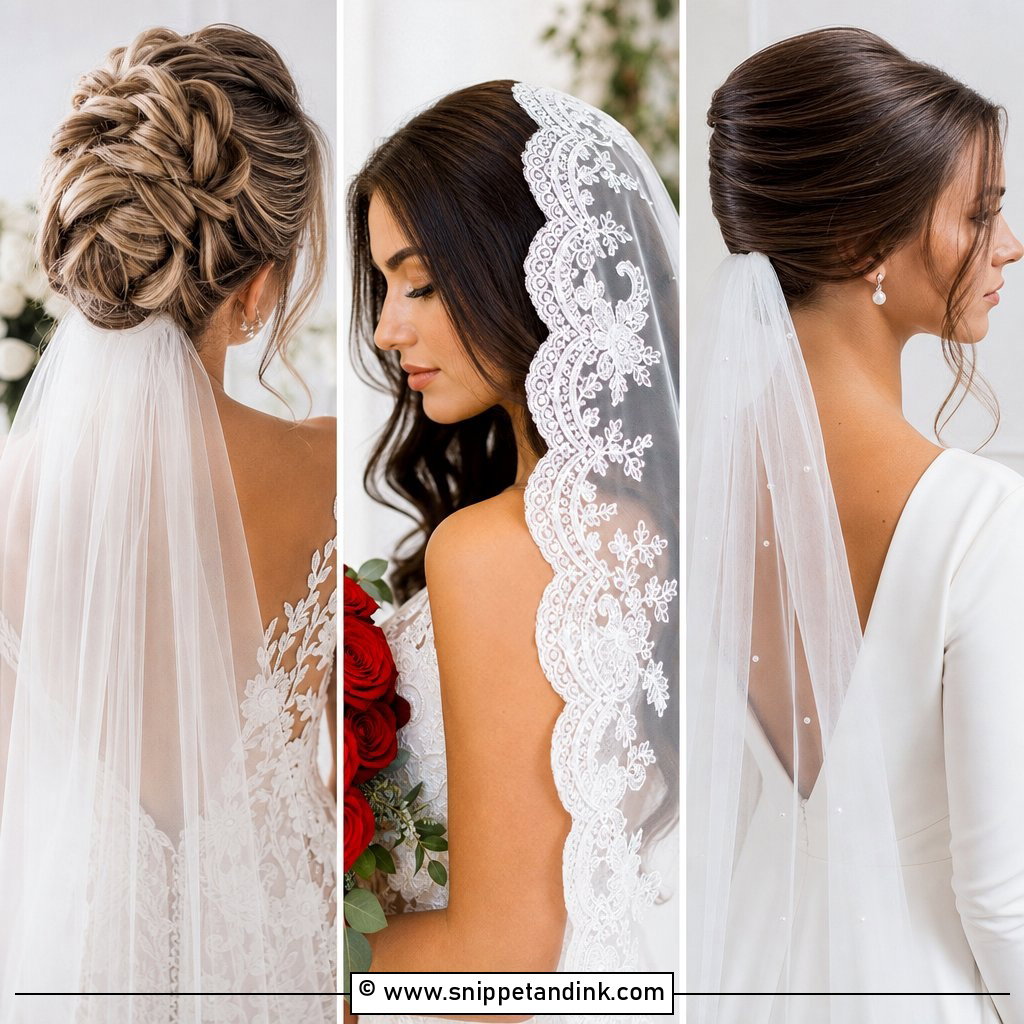
15. Sleek High Ponytail With Hairpiece
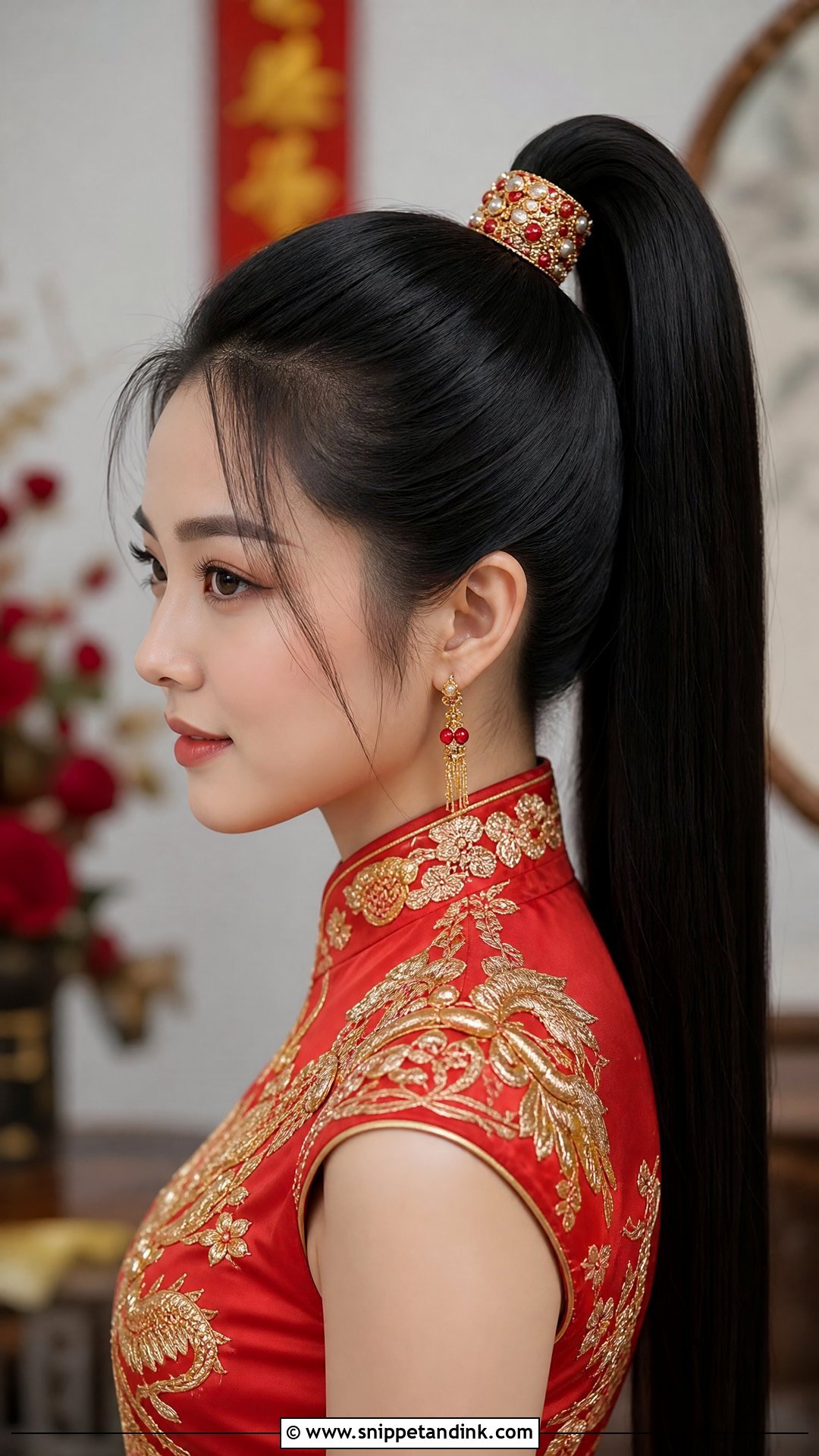
A sleek high ponytail gives Chinese bridal styling a modern, sharp edge. I smooth the hair to a glossy finish and secure it high, then wrap the base with hair or a jeweled hairpiece. It lengthens the neck and shows off earrings. Be honest with yourself about comfort: a high ponytail pulls on the scalp after several hours, so it often works best as the reception change rather than the all-day style. It goes well with a fitted qipao or a sleek gown.
16. Wavy Bob With Vintage Pins
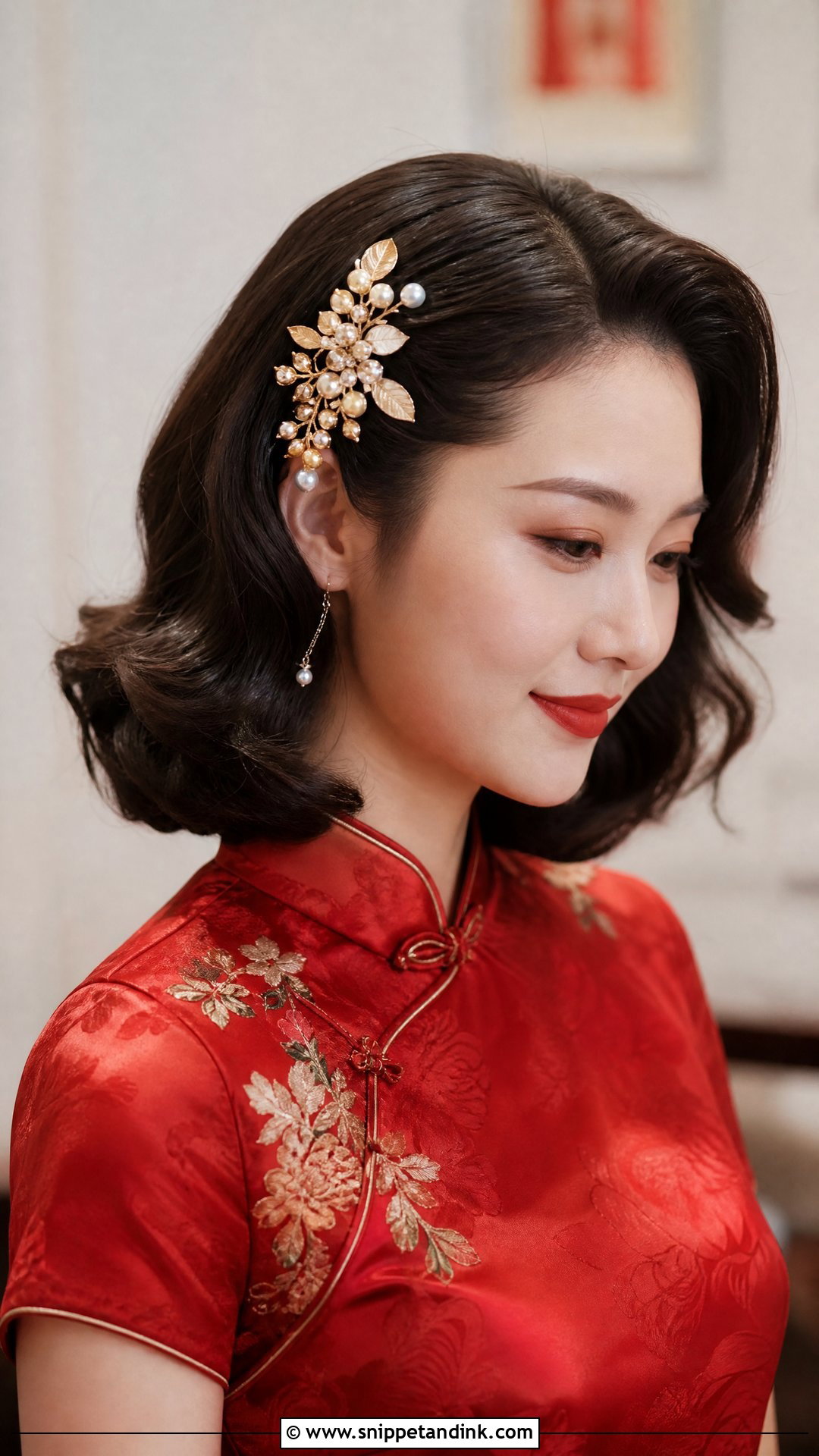
A short cut can carry bridal styling just as well. I add soft waves to a chin- or shoulder-length bob, then tuck a few decorative pins, such as gold leaves or pearl clips, along one side to keep it neat. With a qipao, it gives a retro Old Shanghai feel. Short hair doesn’t need to grow out for the wedding; it just needs a trim two or three weeks before, so the shape is crisp but not freshly cut. It’s low-maintenance and full of personality.
17. Updo With Hanging Step Shake Hairpins
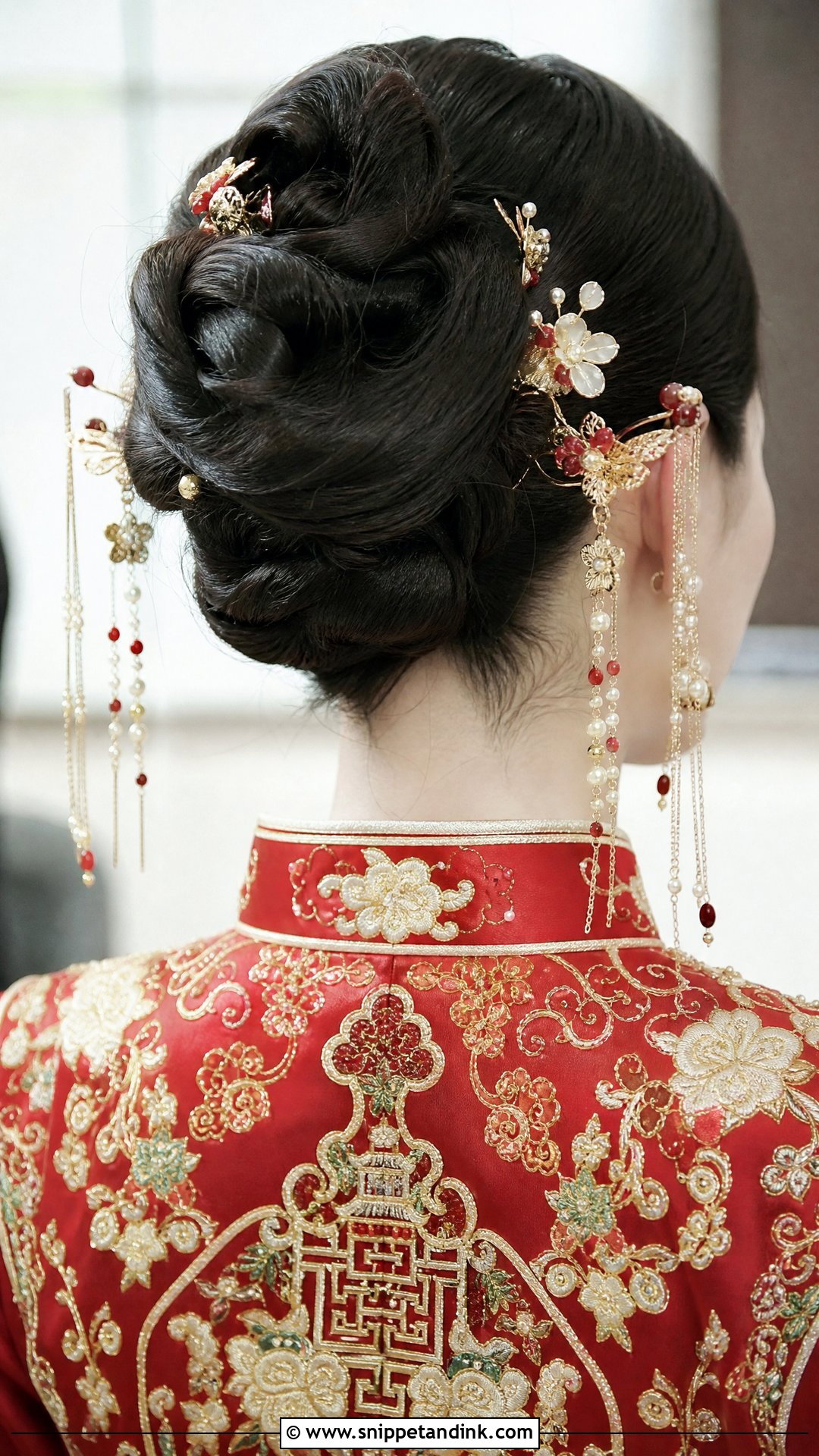
Buyao, or step-shake hairpins, dangle and sway as you move, which is where the name comes from. I place them into a smooth bun or twisted shape so the beaded strands fall along the sides. They need to go into a firm base, because the movement loosens them over time. They look delicate and very traditional with a Hanfu or Xiuhe robe. Before the ceremony, practice turning your head and bowing at home; you’ll quickly learn how much movement the strands make.
18. Half-Up Knot With Curtain Bangs
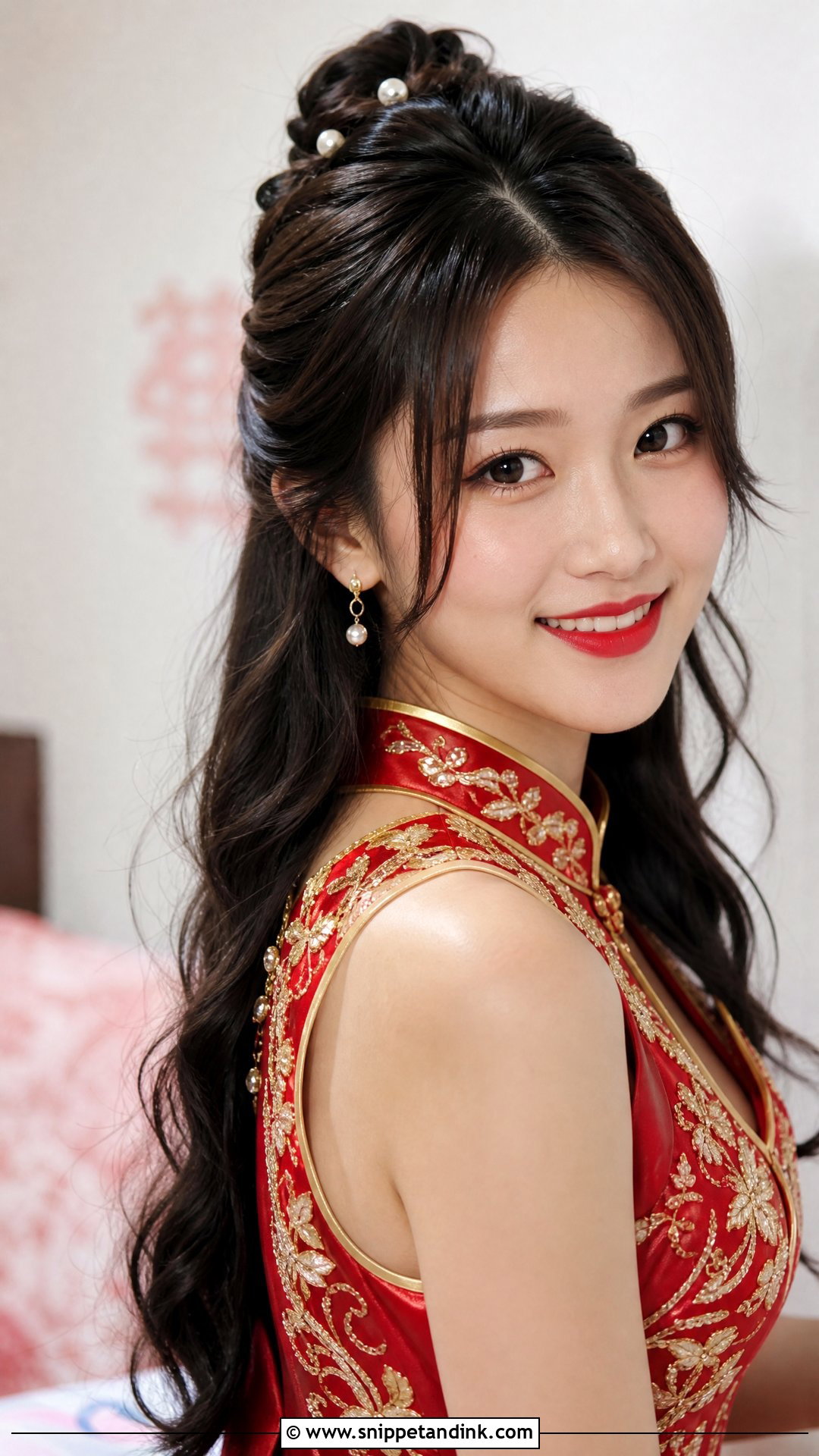
Curtain bangs part gently in the middle and sweep to each side, softening the face while keeping hair out of it. With a small twisted knot at the back of the crown and loose waves underneath, the look feels current. Bangs need styling with a round brush on the day; they’re the first thing to separate in humidity, so I set them with a light spray. Small floral or pearl pins add a bridal touch, and it works with traditional and Western dresses.
19. Elegant French Twist With Ornaments
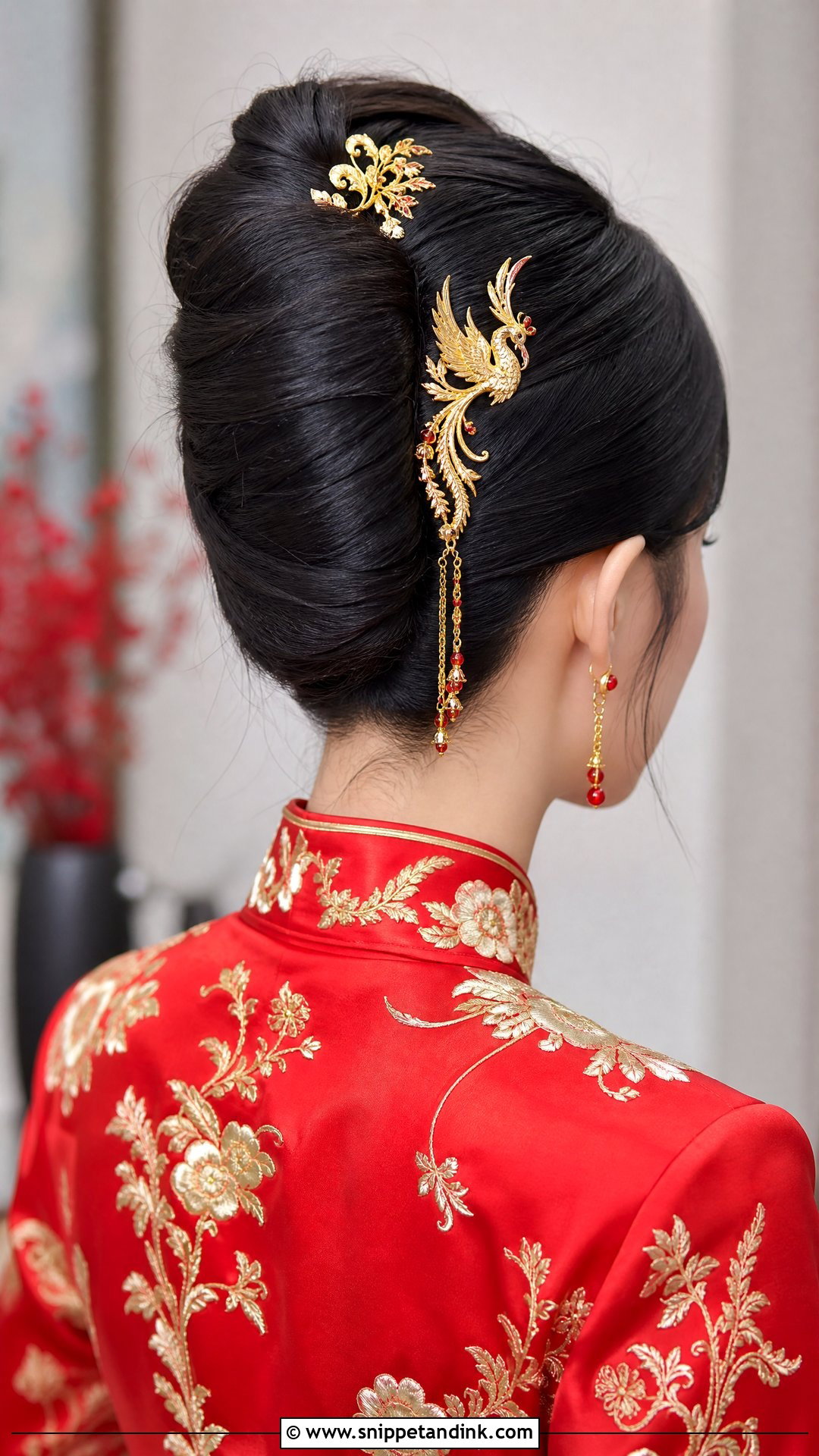
A French twist is a vertical roll up the back of the head, and it holds very well over a long day. I sweep the hair to one side and roll it upward, pinning it along the seam from the inside. It lengthens the silhouette. To add Chinese bridal flair, I decorate it with gold ornaments, pearl pins or a small phoenix accent placed along the roll. It pairs naturally with a high-collared qipao or an evening gown.
20. Loose Romantic Updo With Tendrils
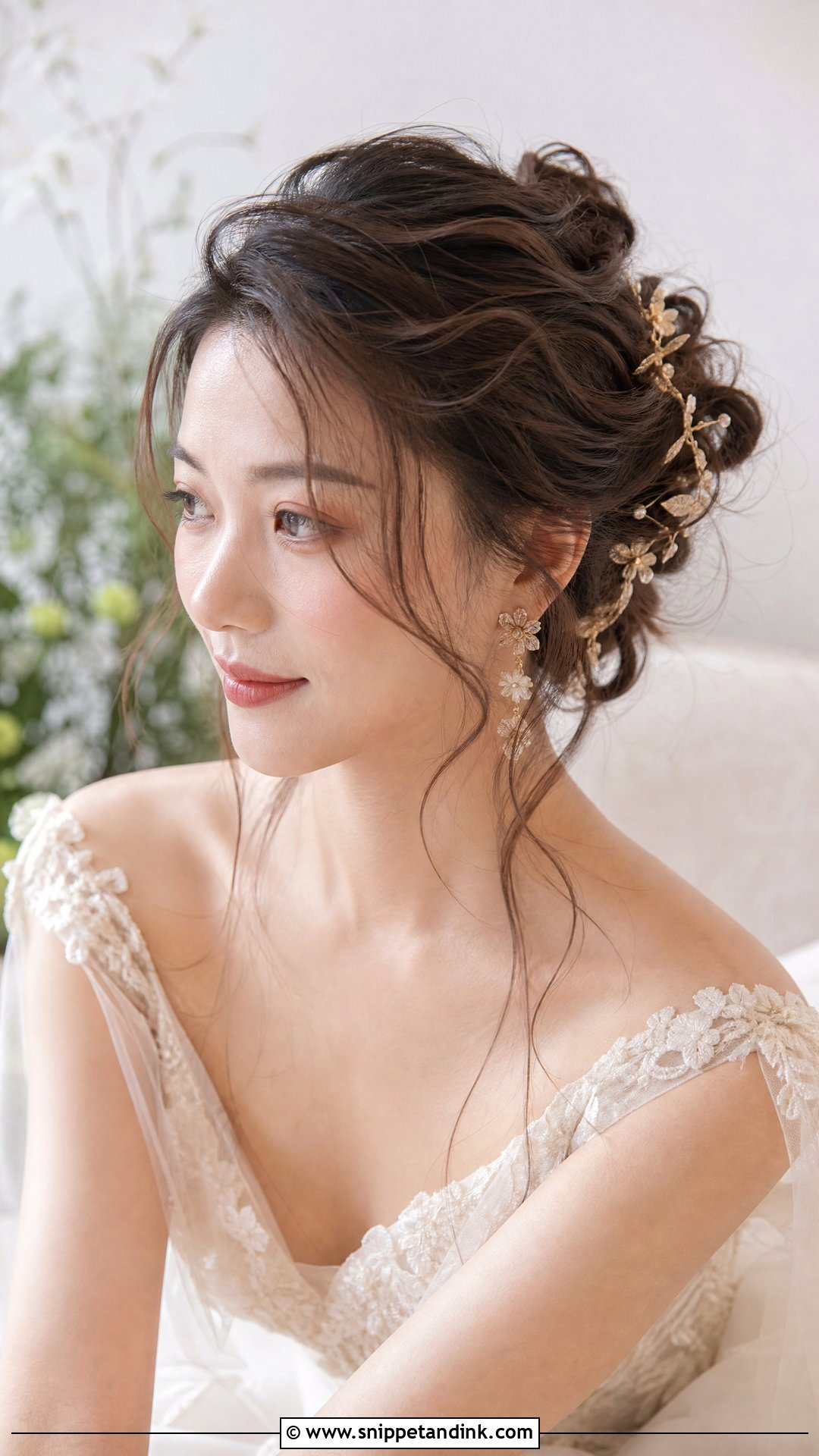
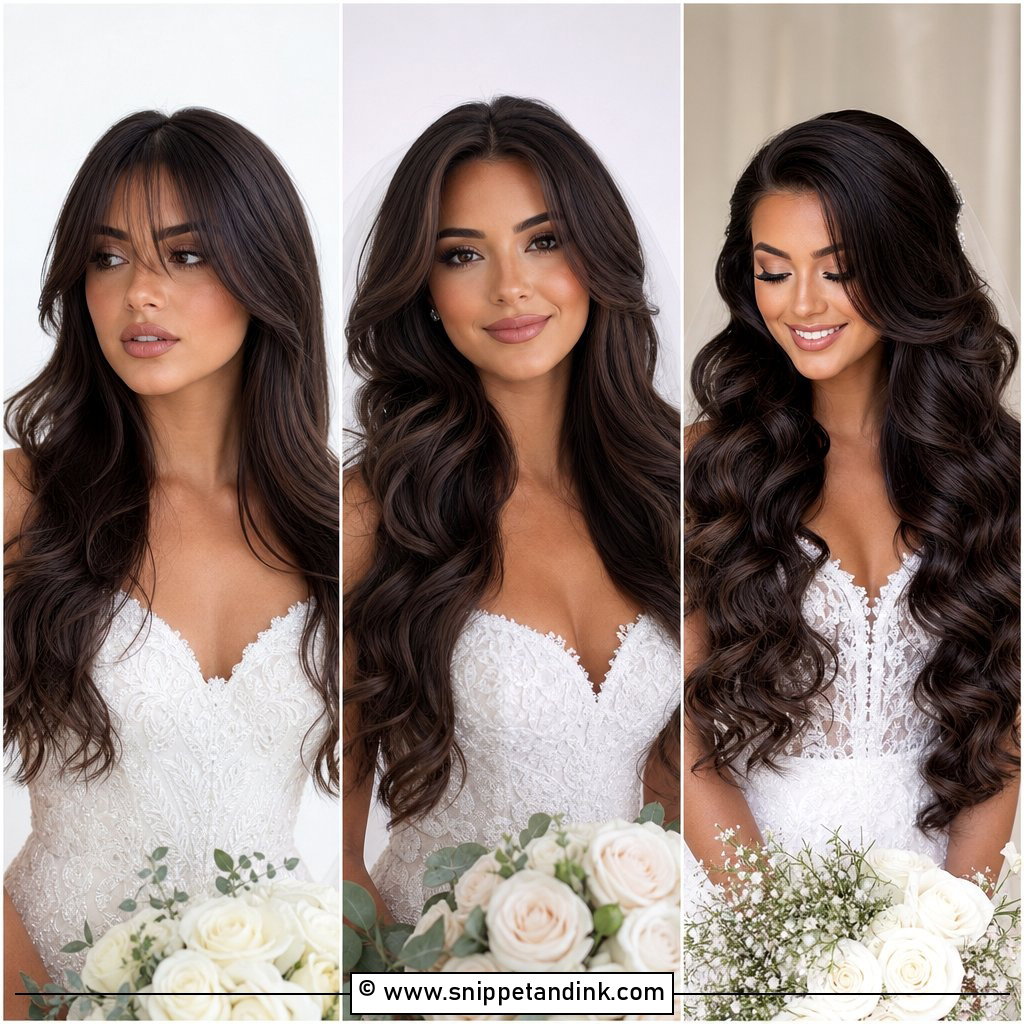
A loose updo with tendrils is the softest look here. I gather the hair into a slightly tousled bun and pull out a few wispy strands around the face. The pieces at the front are what make or break it: too long and they look unfinished, too curled and they look dated. Fresh flowers, pearl pins or gold accents decorate it. It works for the tea ceremony and a garden reception, and suits brides who’d feel stiff in a sleek updo.
Getting Curls to Hold in Straight, Heavy Hair
Many Chinese brides have thick, straight, glossy hair. It looks wonderful sleek, but curls often drop out of it within an hour or two because the weight pulls them straight. That doesn’t mean you can’t wear waves; it means the prep has to be different.
I start with a light mousse or heat protectant that gives grip, curl in small sections with a smaller iron than the finished look needs, and pin each curl in a coil to cool completely before brushing out. Skipping the cooling time is the most common reason curls fall. A firm hairspray goes on before brushing, not just at the end. For humid venues or long days, consider a half-up or updo; loose curls in heavy hair are the first style to give up.
Switching From Ceremony Hair to Banquet Hair
If you wear a phoenix crown or heavy ornaments in the morning and want a lighter look for the banquet, plan the change at the trial. The easiest switches keep the same base and change the decoration: remove the crown and add flowers or a sparkling clip. A full restyle takes longer, often thirty to forty-five minutes, so make sure it fits the timeline and that your stylist is booked to stay.
From Fengguan to French Twist, Which One Tells Your Story?
Your wedding hair can carry cherished Chinese traditions and still feel like you. Start with the outfits and the ceremonies you’re holding: a phoenix crown or Ming bun belongs with a traditional robe, a sleek low bun with a fitted qipao, loose curls with a reception gown. Then think about the accessories that mean something to you, such as tassel hairpins, jade combs or flowers. Choose the style that you’ll feel comfortable wearing for the whole day.
You'll Like These Ideas:


Leave a Reply