
Doing hair for a Nigerian bridal train means planning for a very long day: a traditional ceremony with gele, sometimes a church service, then a reception where the dancing doesn’t stop. The bridesmaids need hair that stays neat through all of it without pulling focus from the bride. Most of what I do for a train is coordination with asoebi, lace, satin, Ankara or whatever fabric the bride has chosen, across girls with very different hair. Sleek buns, braided updos, ponytails, locs, wigs and gele-friendly bases all have a place. Below are fifteen I’d happily put on a train, with what each one asks of the hair and the schedule.
Coordinating Eight Different Heads of Hair
A bridal train rarely shares one hair type. One girl is relaxed, one is 4C natural, one has locs and another lives in wigs. Trying to force all of them into the identical style usually ends with someone uncomfortable. What I do instead is choose one shared element and let the rest flex.
- Same height and placement, different method. A low bun can be a slicked natural bun on one bridesmaid and a braided bun on another, and they still line up in the photo.
- Same finish, different length. Everyone sleek, or everyone with soft curls, reads as coordinated even if the lengths vary.
- One shared accessory, such as gold cuffs or pearl pins, ties together hair that is otherwise different.
Timing matters as much as the style. Braids, twists and faux locs should go in two to four days before the wedding, so the scalp has settled and the edges aren’t sore. Wigs need fitting and laying a day ahead. Silk presses and sleek natural styles are best done the day before or that morning. Give the bride’s planner this list, because a train of eight cannot all be styled from scratch on the wedding morning.
1. Bridal Train Sleek Low Bun
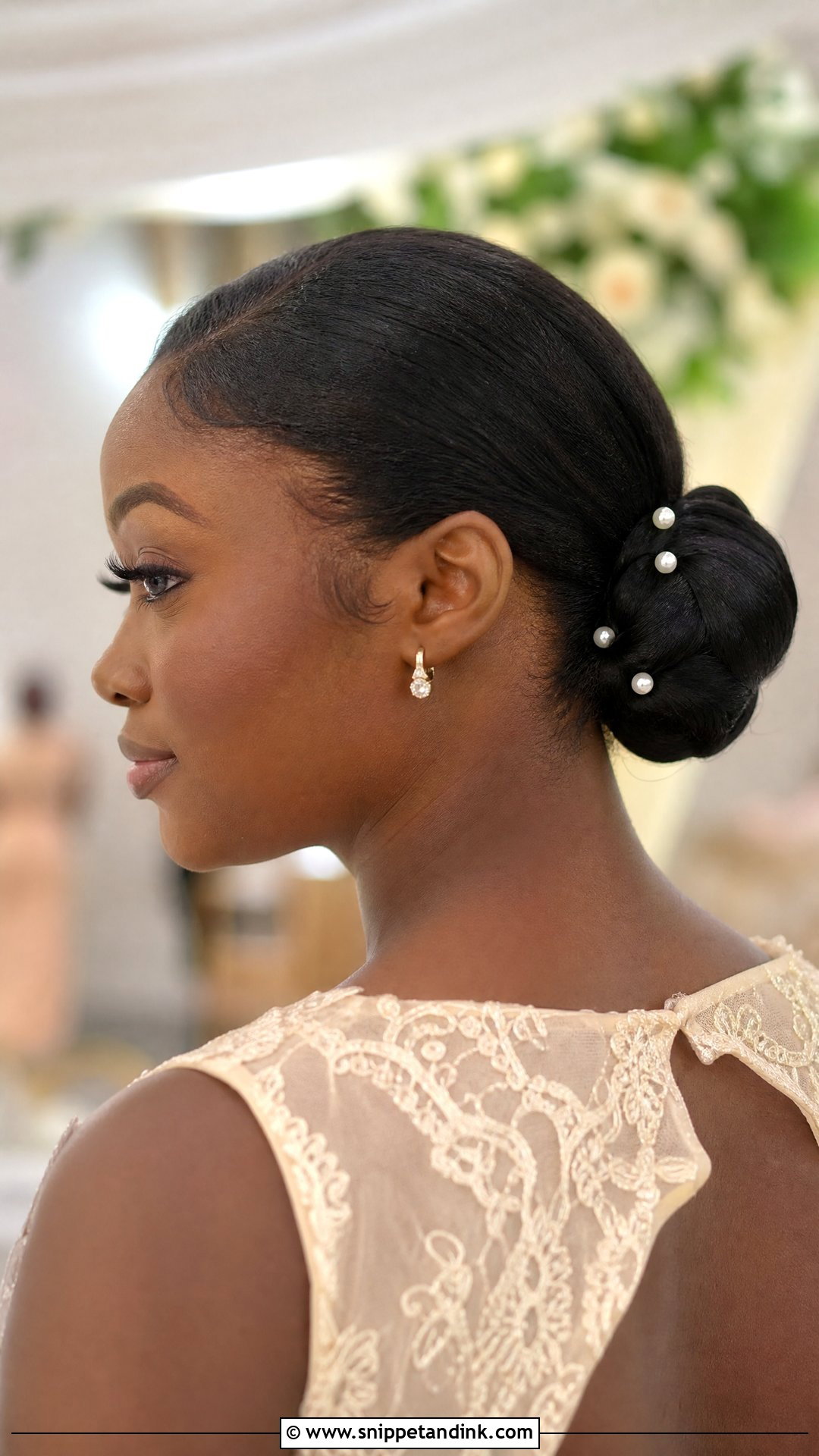
I start most bridal train discussions with the sleek low bun, because it lines up perfectly across a row of bridesmaids in photos. The hair is smoothed back from a centre or side part and gathered at the nape. It sits well with off-shoulder gowns, high necks, lace sleeves and coordinated asoebi outfits, and leaves room for earrings or a small hairpiece. Its real advantage shows at the traditional ceremony: a low, flat bun sits under a gele without forcing the tie up at the back. On 4C hair, I get the smooth surface with a firm gel set under a scarf for twenty minutes, not with heat.
2. Bridal Train High Bun
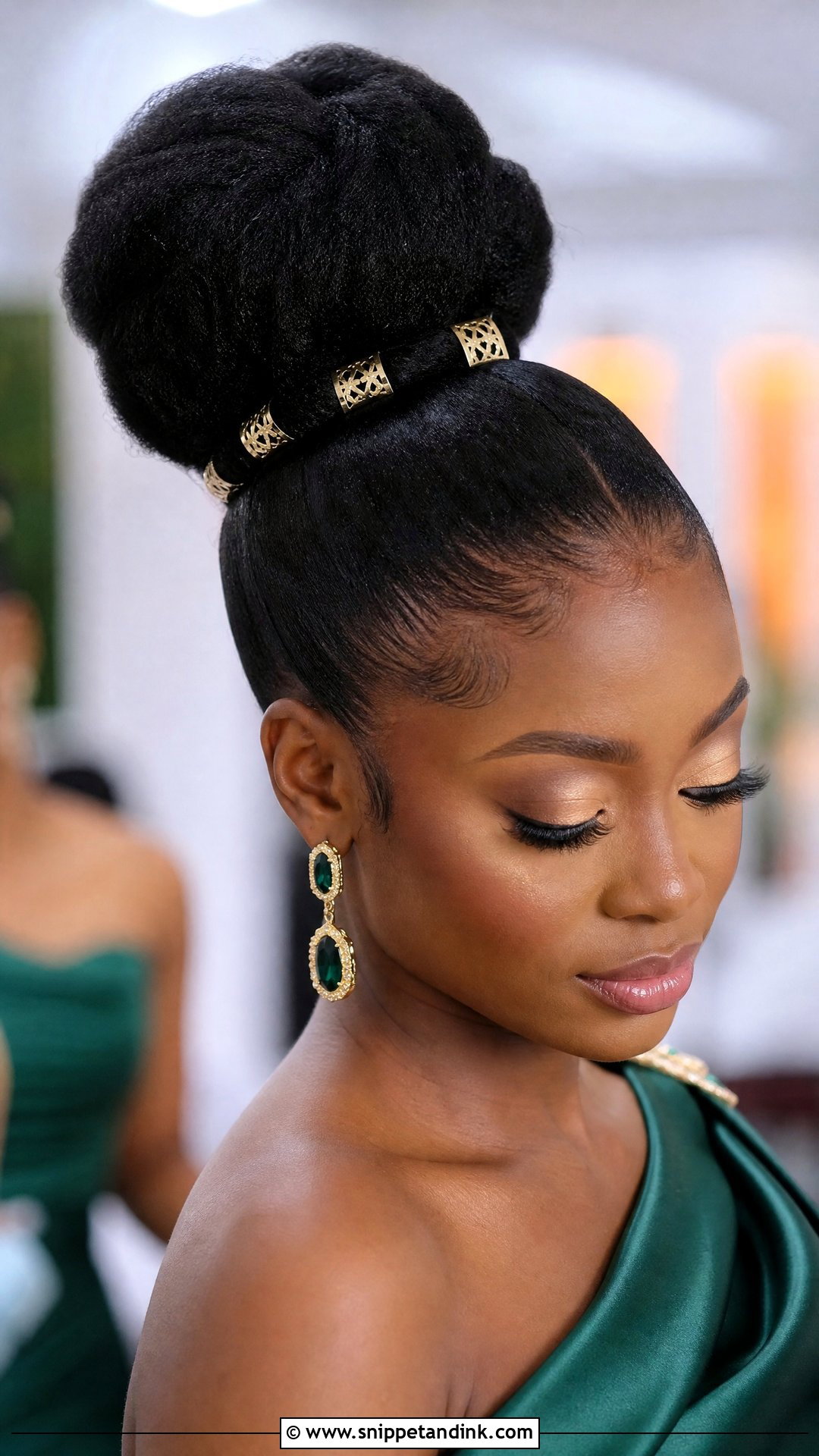
A high bun keeps hair off the neck, which counts for a lot at an outdoor reception in the afternoon heat. It can be smooth, curly, braided or built around extensions for fullness. Statement earrings and detailed bodices show well underneath. For a train, I set every bun at the same height and only change the parting to suit each face, which keeps the group shot tidy without making everyone identical. The limit is the gele: a high bun and a head tie don’t mix, so plan this for the reception or the white wedding only.
3. Bridal Train Braided Bun
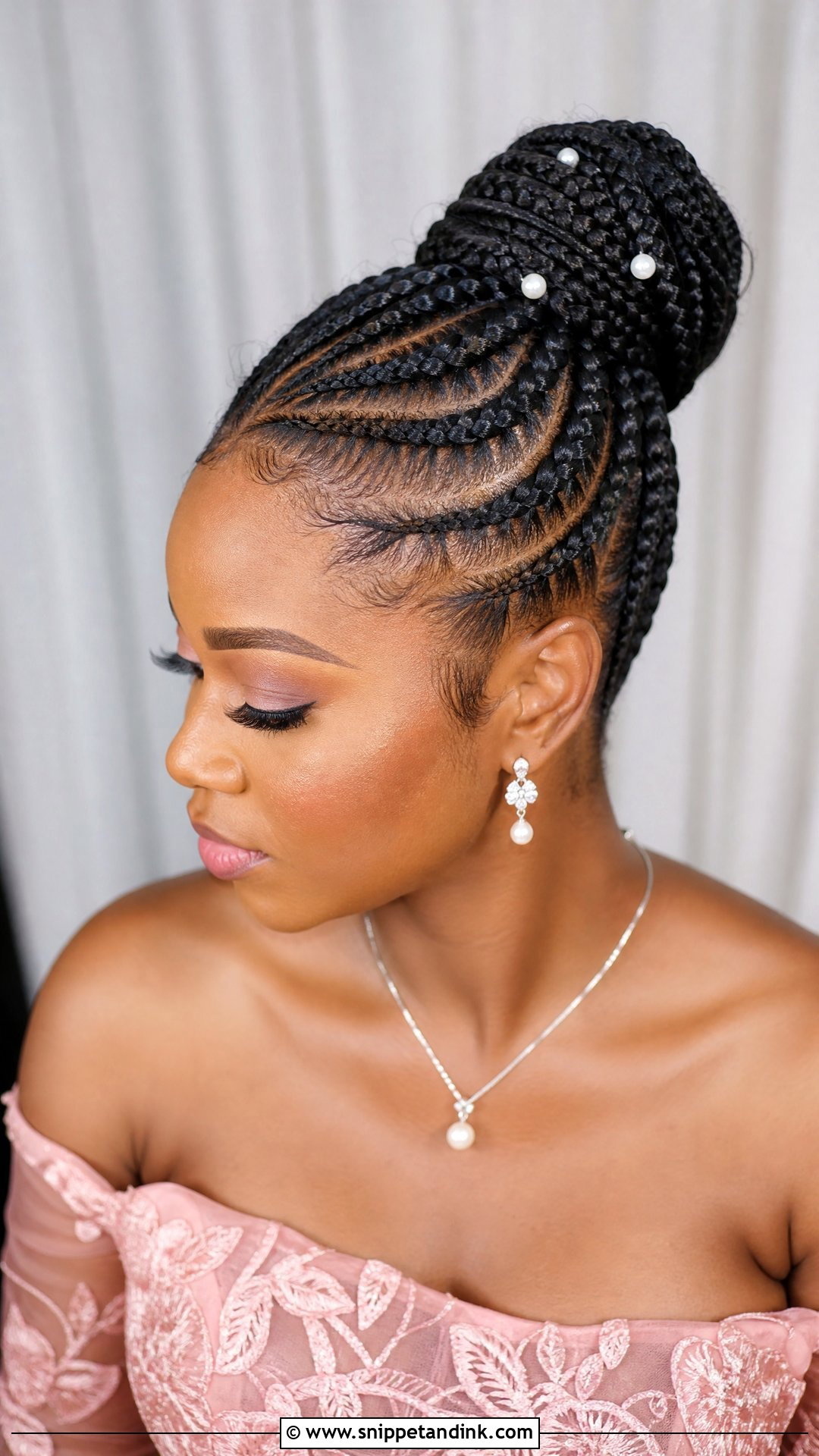
Braided buns are the hairstyle I’d trust most for a bridesmaid who will be on her feet from early morning to the last dance. The hair is cornrowed upward or braided in small sections, often with extensions, then wrapped into a bun. Because it’s installed ahead, there’s nothing to fix on the day. It sits with lace asoebi and beaded jewellery, and it gives a bride who wants her train coordinated but not uniform some room to play. My advice is to have braids installed two or three days early, so any tension at the hairline has eased before the photos.
4. Bridal Train Low Ponytail
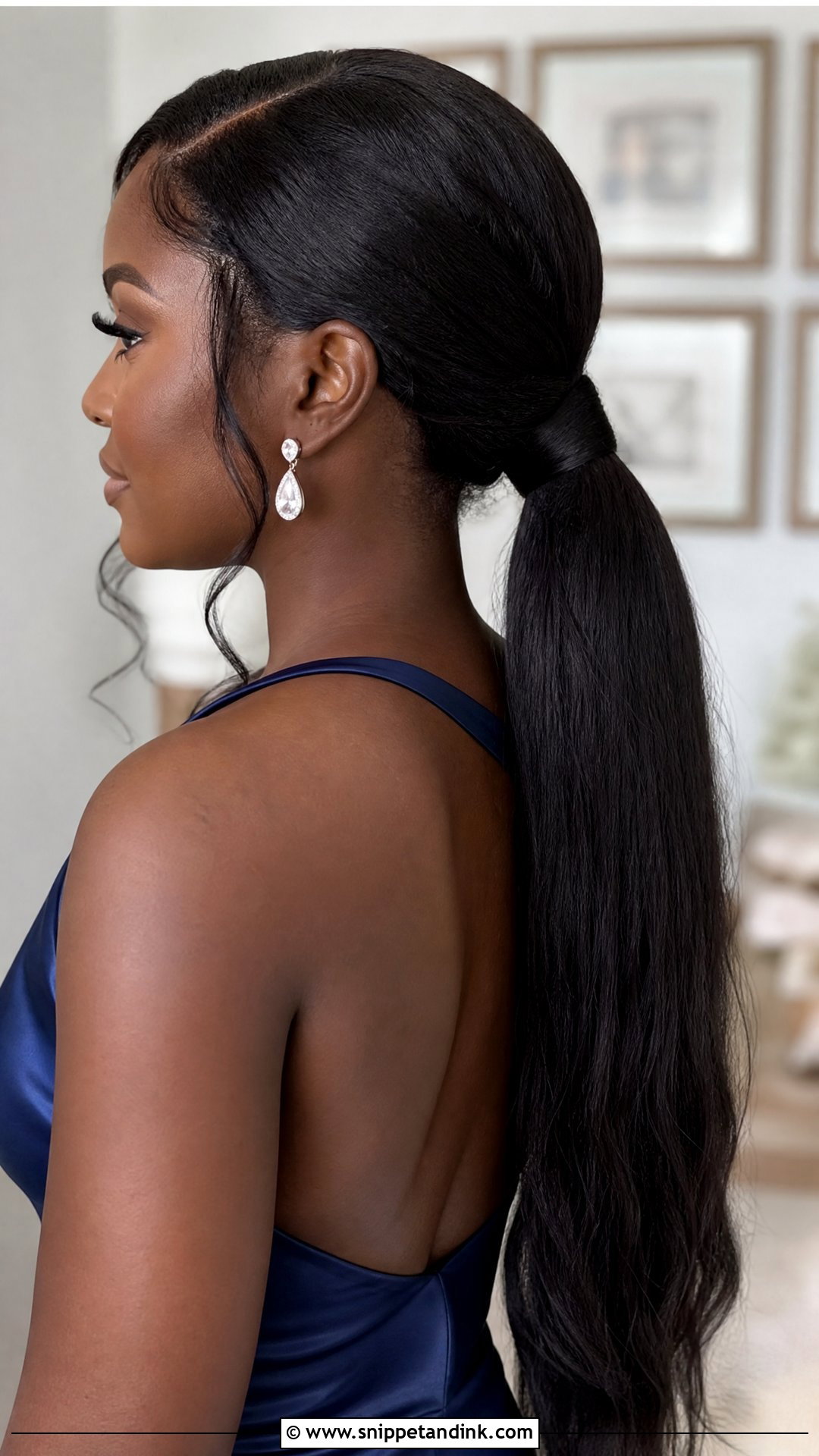
A low ponytail is quick, which matters when one stylist has eight bridesmaids to finish. The top can be sleek with a middle part, a soft side part or no part, and the ponytail itself can be straight, wavy, curly or kinky textured. Fitted gowns and dresses with open backs suit it because the hair moves without covering the detail. I wrap the base with a strand of hair to hide the elastic. Of everything on this list, it’s the easiest to refresh at the reception: a quick brush and a dab of gel at the edges.
5. Bridal Train Curly Ponytail
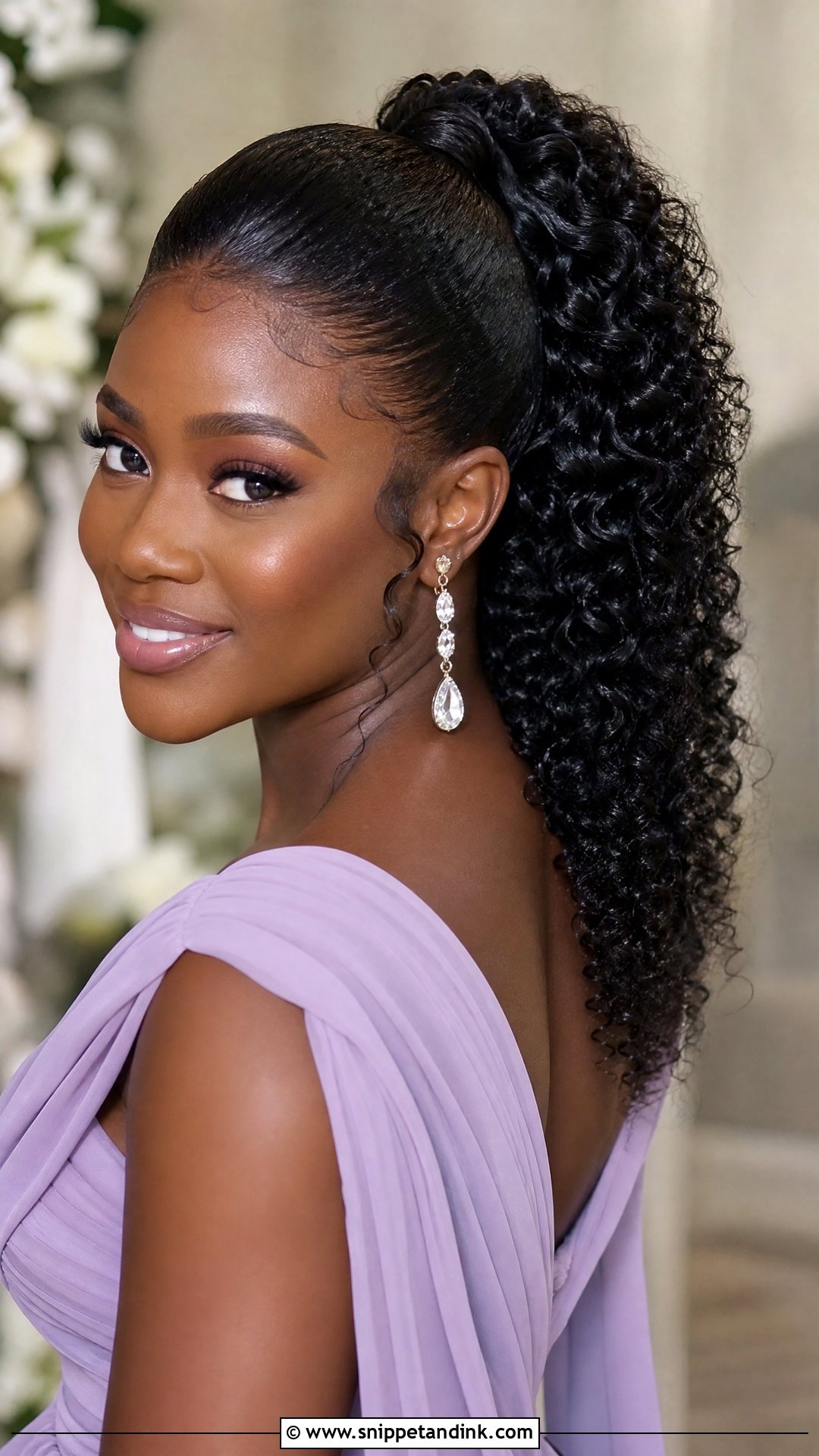
The curly ponytail is slicked at the crown and finished with a full ponytail of curls, short or long. Curls add width beside the face, so it flatters long and narrow face shapes in particular. In group photos, a row of these beside matching satin or chiffon gowns looks festive. I’d warn anyone using a clip-on curly piece to check it against her own texture in daylight, since a mismatch shows up more in photos than in the mirror. A few loose curls at the front soften the line.
6. Bridal Train Half Up Half Down
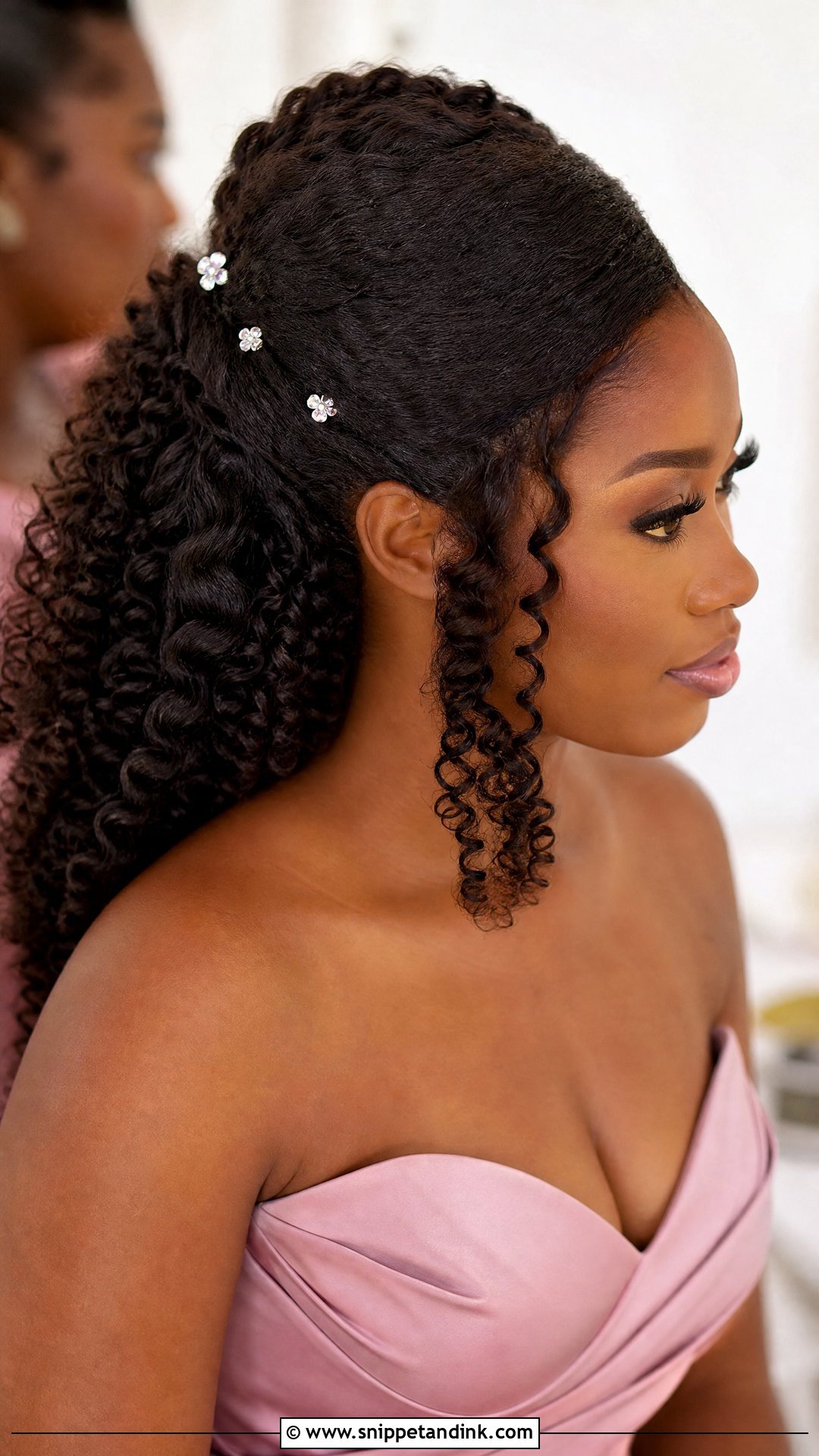
Half up, half down suits church weddings and garden receptions better than traditional ceremonies, since loose length and a gele don’t sit well together. The top section is pinned, twisted or braided back while the rest falls in curls. I set the curls early and let them cool fully before the ceremony, because curls that are still warm drop the moment the bridesmaids step outside. Sweetheart and V-necklines show it at its best, with small pins rather than big accessories.
7. Bridal Train Side Part Waves
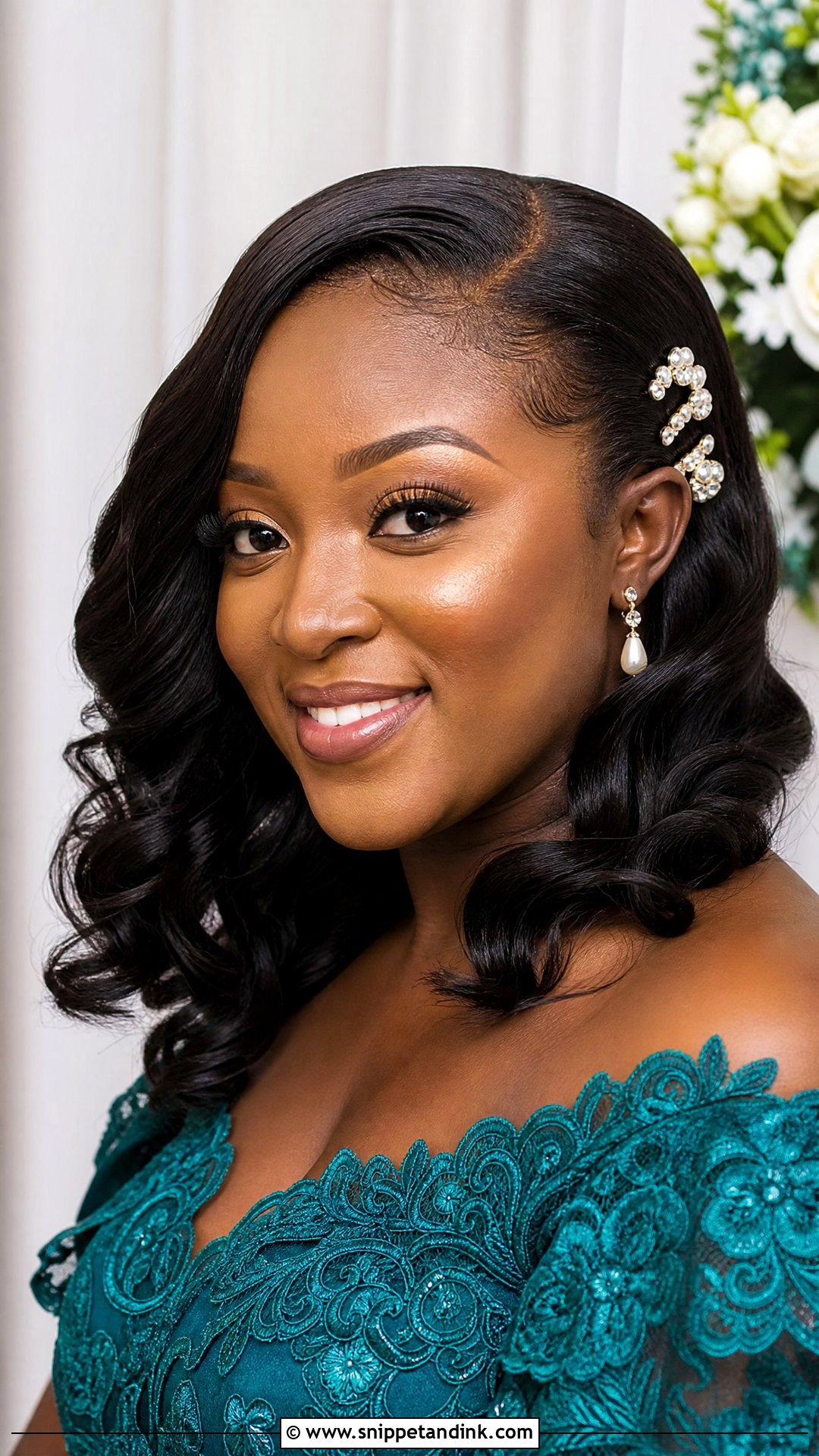
Side part waves are the easiest loose look to match across a whole group, since the deep part does most of the work. I’d suggest them for bridesmaids in simpler gowns, where the hair can carry the glamour without heavy accessories, or for a reception change when the train wants to drop the bun. The waves need a light hold spray. A heavy one leaves them stiff and crunchy, and in humid weather they’ll still soften by evening, so I set them a little tighter than the final shape.
8. Bridal Train Cornrow Updo
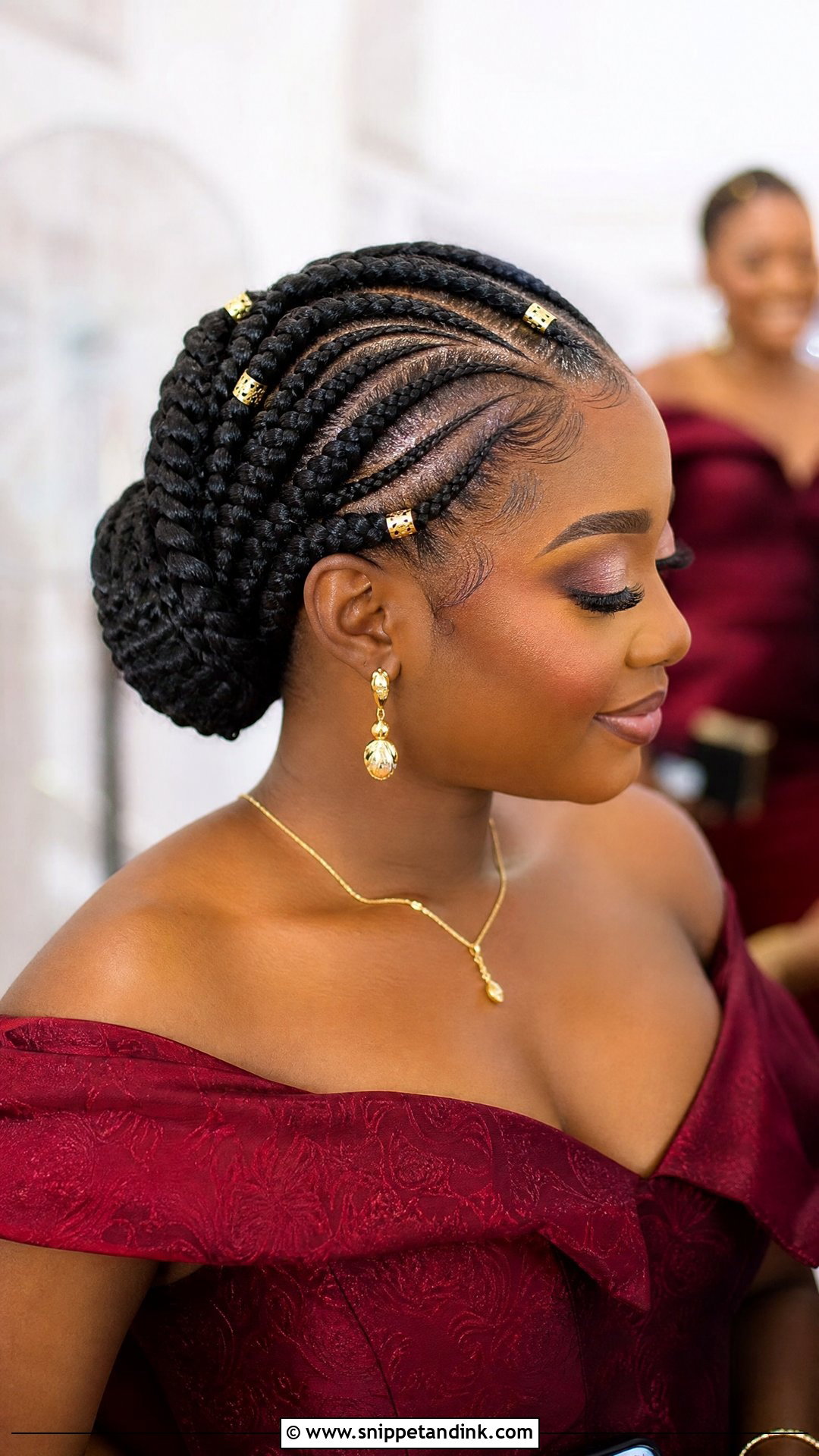
A bridal train cornrow updo is low-maintenance once it’s in, and it won’t fall apart however hard the train dances. The cornrows can run straight back, curve, or use feed-in patterns before gathering into a bun or tucked updo. If it sits low or medium, it goes under a gele without trouble. Gold cuffs, pearl pins or small beads finish it. What I check before installation is the hairline: tight cornrows at the edges hurt and can cause breakage, so I’d rather see neat, firm rows than painfully tight ones.
9. Bridal Train Goddess Braids
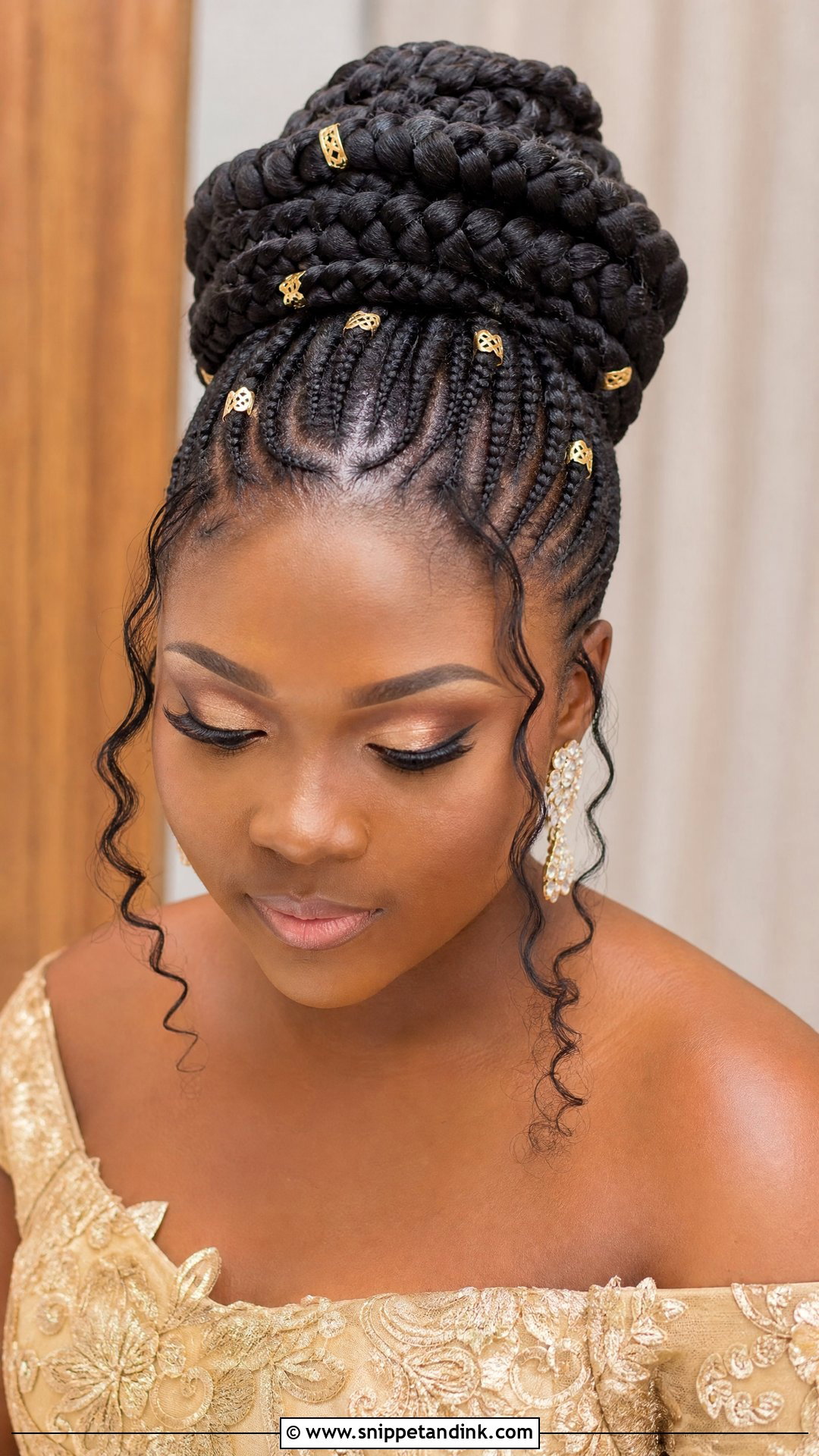
Goddess braids are thicker and smoother than standard box braids, often with curly ends left out, and they shape well into a crown, a low bun or an updo. They suit traditional ceremonies especially, sitting with beads, bold earrings and rich asoebi fabrics. Nothing needs heat, which natural hair appreciates before a long event. Two things I watch: neat edges around the hairline, and the weight of the finished updo, because long goddess braids piled high can feel heavy by evening.
10. Bridal Train Natural Hair Puff
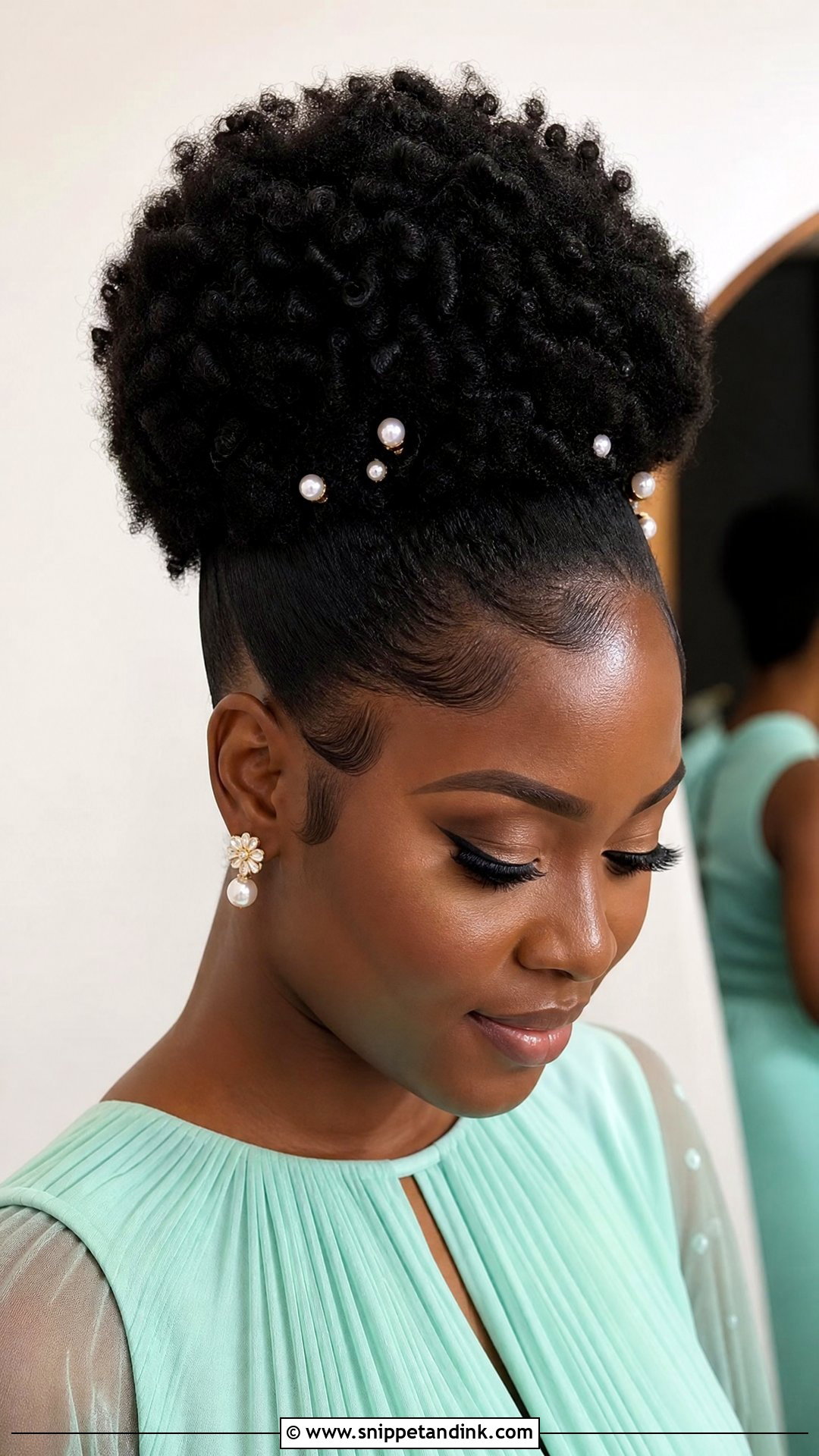
A natural hair puff lets a bridesmaid wear her own texture formally. The hair is gathered into a high or low puff, the sides smoothed down and the curls picked out for volume. 4B and 4C hair suits it particularly well because the fullness looks controlled. A slim headband or a couple of gold clips dress it up. I stretch the hair the night before with a twist-out or band method, so the puff has shape without shrinking up tight in the heat.
11. Bridal Train Twisted Updo
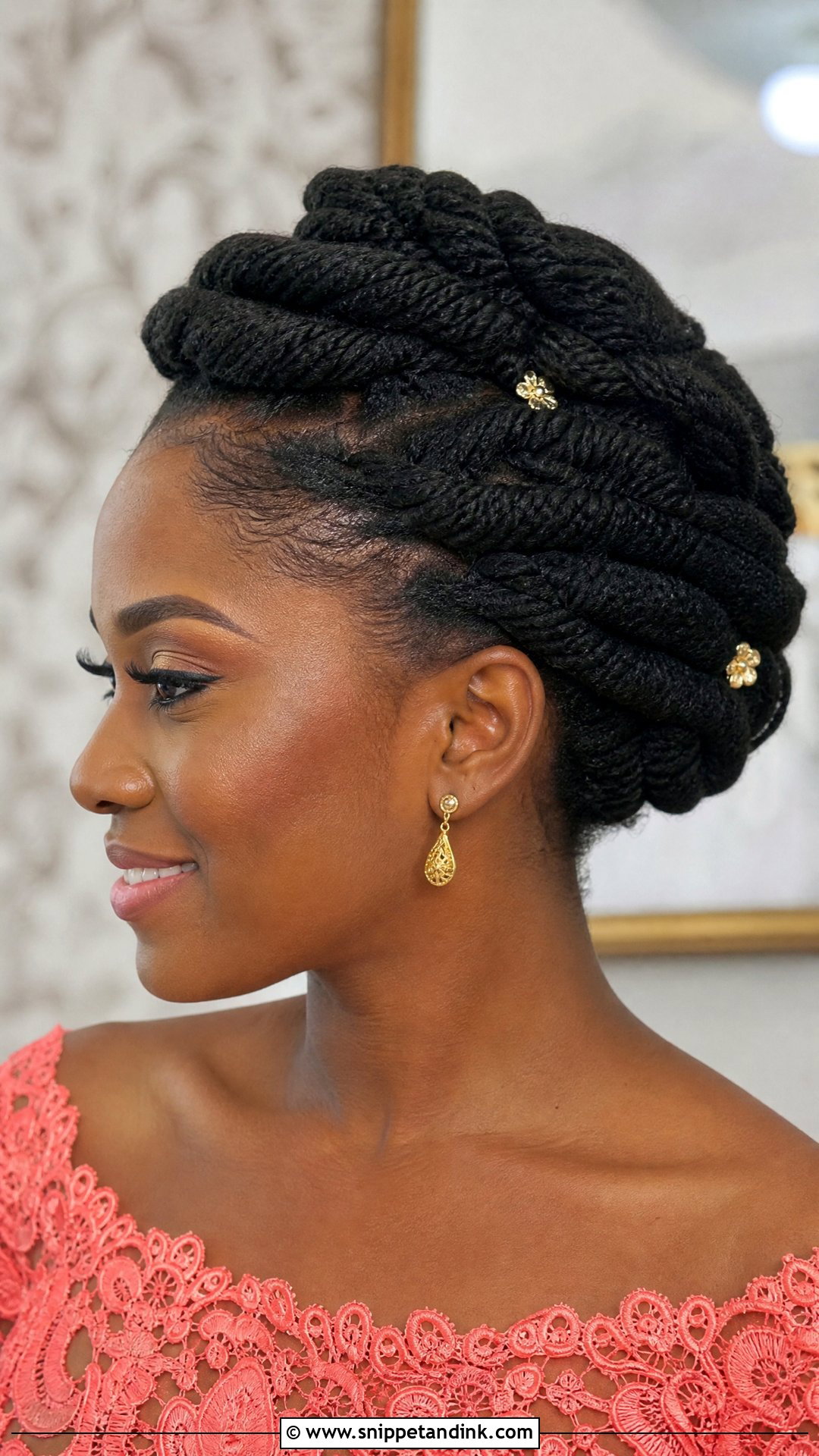
Twisted updos give a sculpted shape with texture. The hair can be flat twisted, rope twisted or combined with kinky extensions, then pinned into a bun or crown. It’s protective and holds for hours, so it covers a traditional ceremony, a service and a reception without touch-ups. The twist pattern shows from front, side and back, which helps in photos taken from every direction. I keep accessories to one or two pieces here, or the shape gets lost.
12. Bridal Train Faux Locs Updo
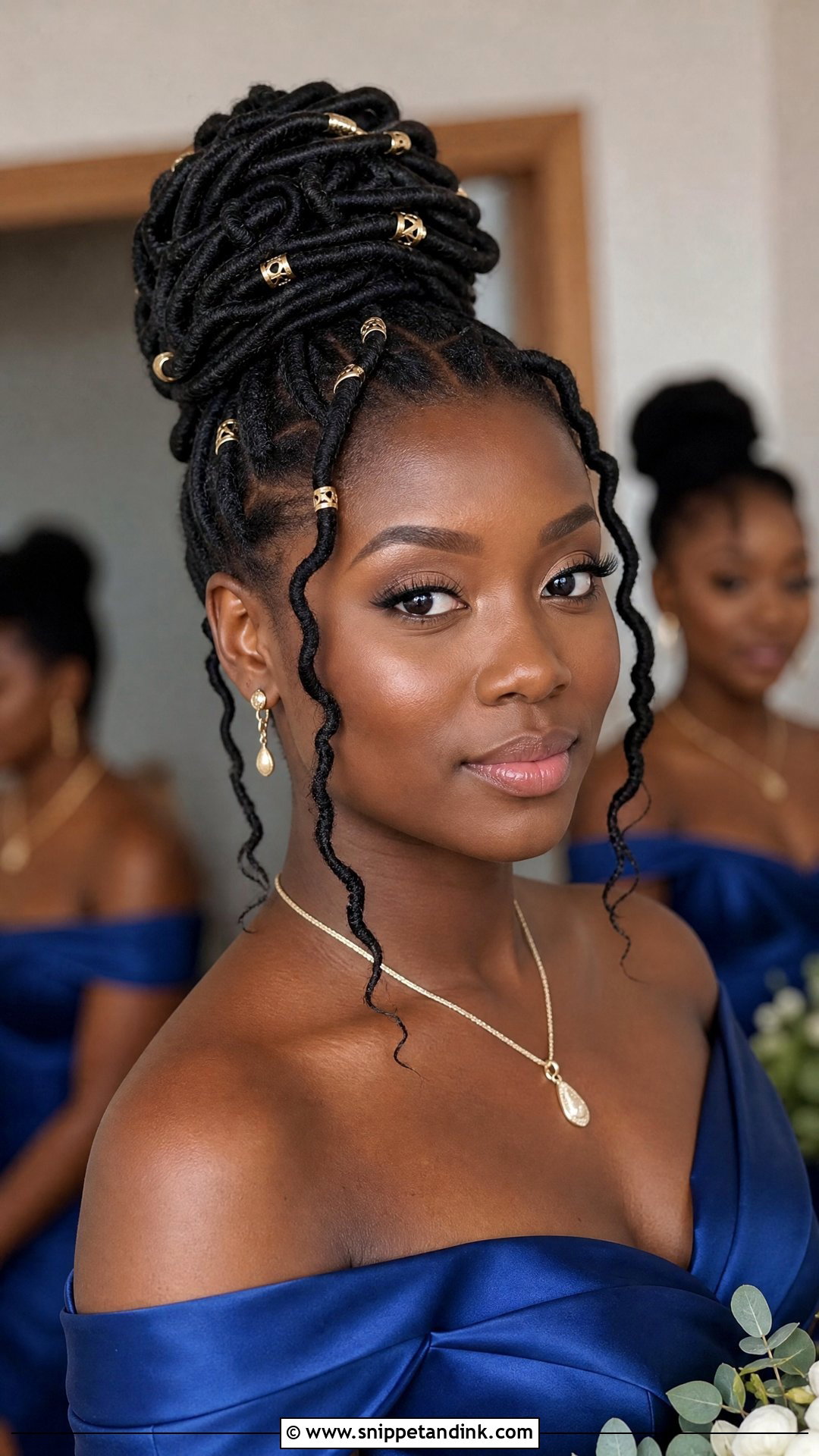
A bridal train faux locs updo is an easy win for a bridesmaid who already has locs installed. They gather into a high bun, a low bun or a half-up shape, depending on the dress. Gold string, cuffs or small pearl accents wrapped around a few locs dress them for the occasion. Locs hold their shape outdoors without brushing or curling, which is why they cope well with heat. My one note: very long locs in a high bun get heavy, so I keep the bun low for anyone wearing them all day.
13. Bridal Train Bob Wig
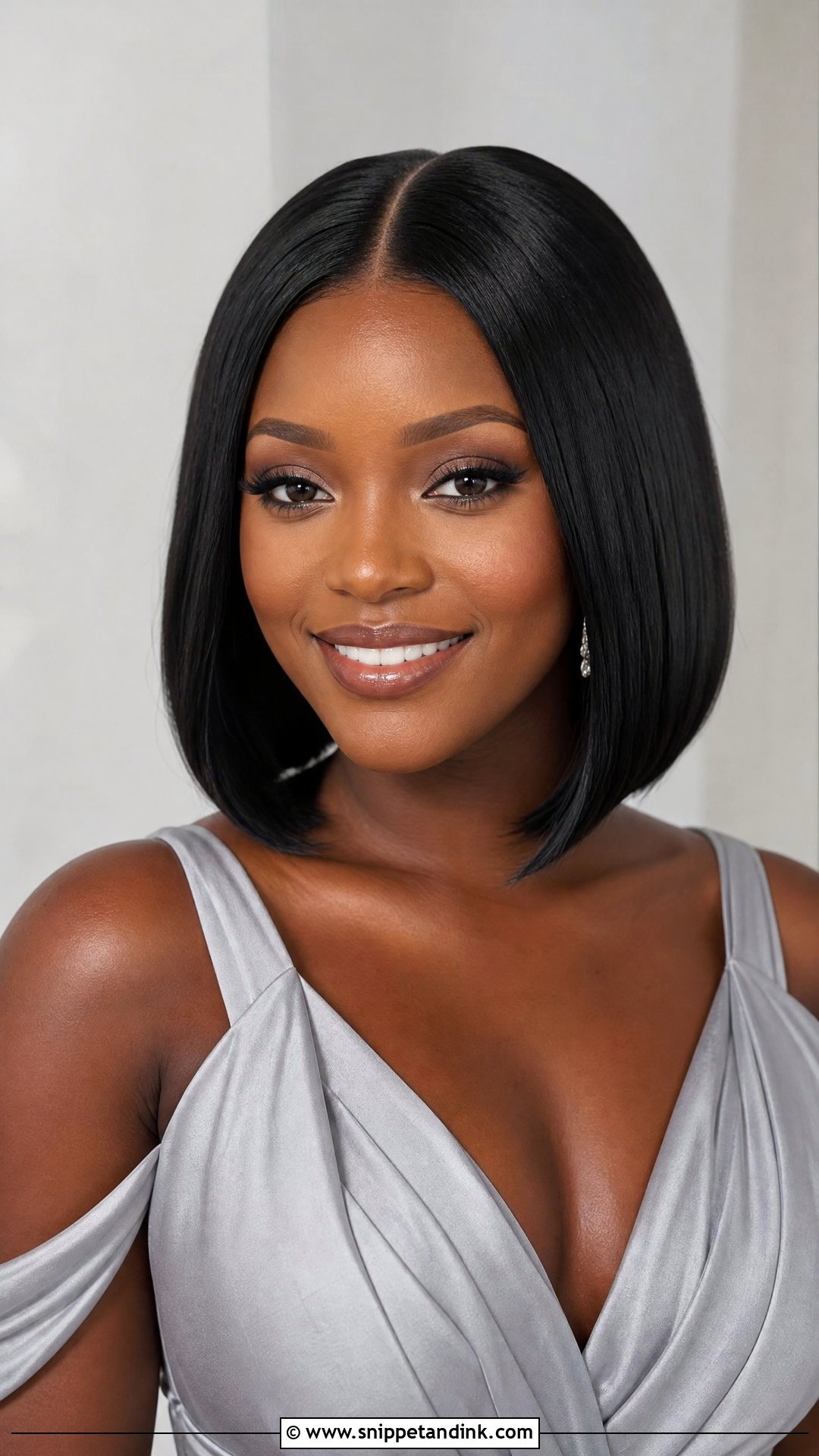
A bridal train bob wig is my fix when the bride wants a uniform look and the girls have completely different hair lengths. The bob can be blunt, side-parted, curled under or lightly waved. Chin or shoulder length keeps the neckline clear for beaded gowns and statement collars. The work is in the install: I’d want each wig fitted and laid at least a day before so the hairline and parting can be adjusted, not discovered at seven on the wedding morning.
14. Bridal Train Frontal Ponytail
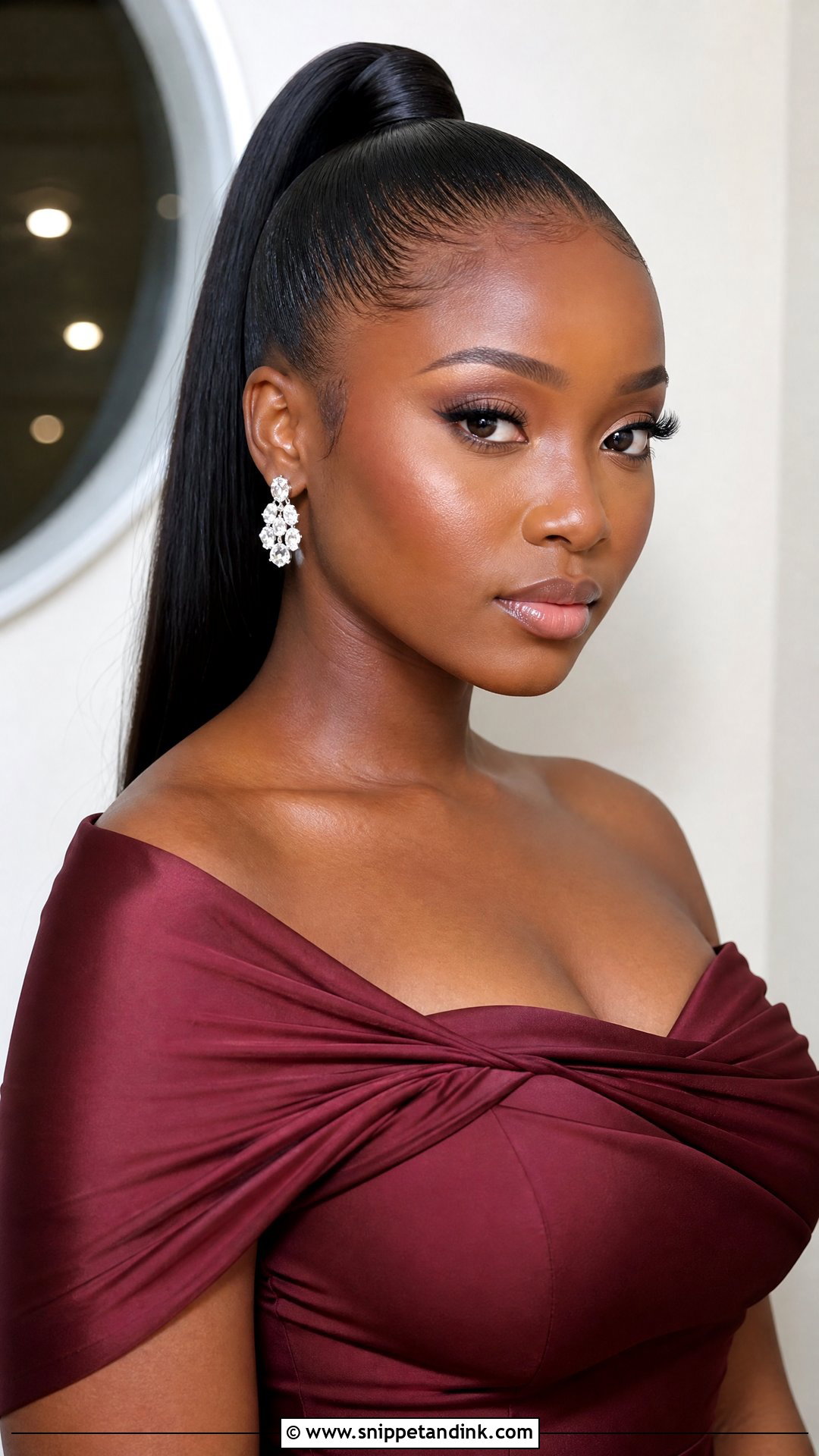
A frontal ponytail gives a smooth hairline and lots of length, and it suits white weddings and receptions with fitted gowns and corset dresses. High reads bold; low reads softer. The practical issue is weight. A long, dense ponytail pulls on the base and the frontal over a full day, so I keep the length moderate and secure the base with an elastic band plus pins rather than glue alone. A wrapped base and clean edges finish it.

15. Bridal Train Gele Hairstyle
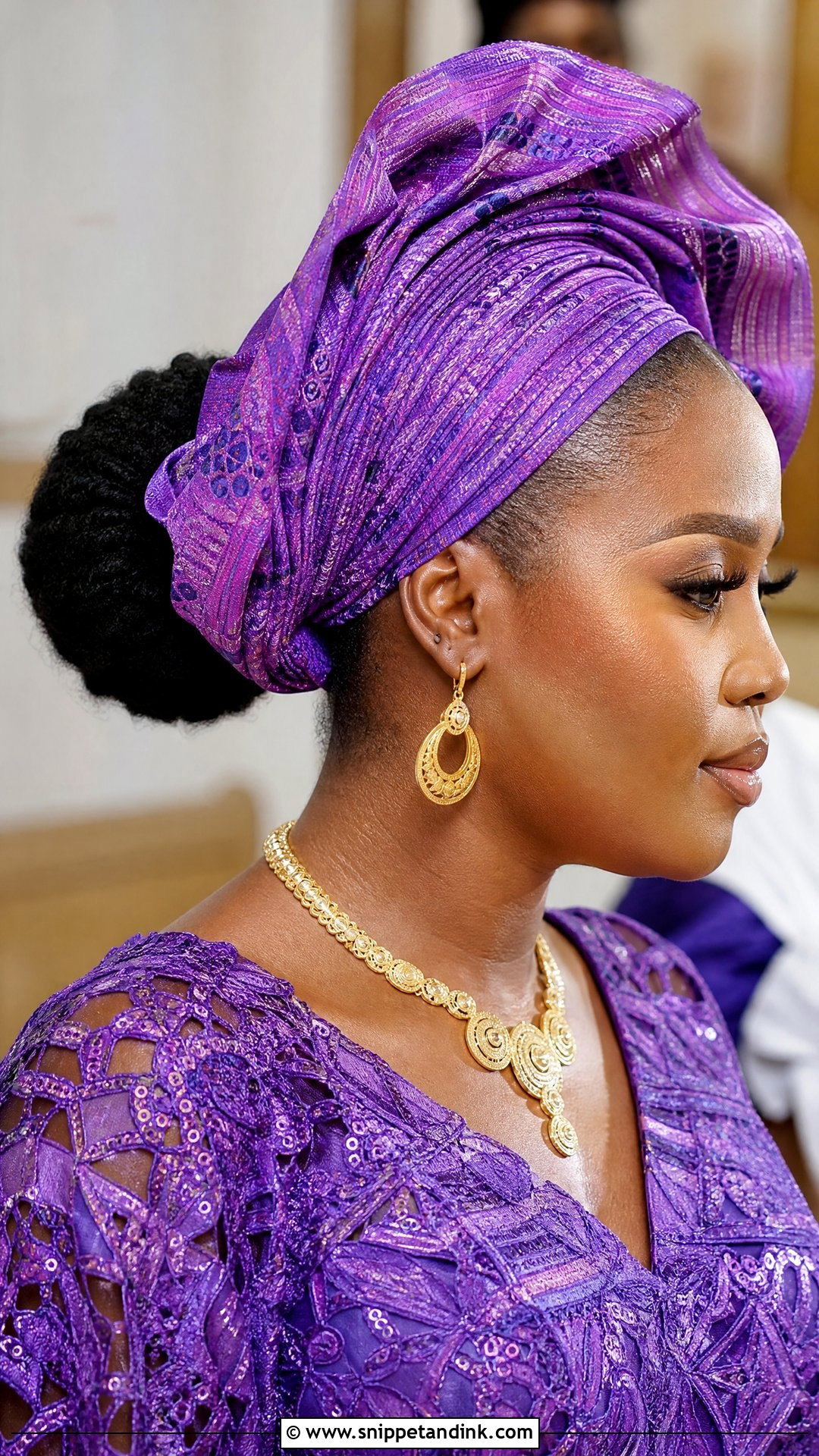
The hair under a gele should be planned around the tie, not the other way round. Low buns, flat cornrows, small braided buns and slicked-back ponytails make the best bases because they leave no bumps for the fabric to sit on. This matters most when the whole train wears matching asoebi and coordinated gele. I also think about what happens later: if the gele comes off for the reception, the hair underneath should still look finished. A soft low bun with clean edges usually covers both.
Laid Edges in Thirty-Degree Heat
Heat and sweat are what undo bridal train hair at Nigerian weddings, and the edges go first. Edge control that looked perfect at the start of the day can turn white and flaky once it mixes with sweat, especially if it was layered on thickly.
So I use a thin layer of one product, lay the edges, then tie an edge scarf over them for ten to fifteen minutes while makeup is being done. That sets the shape far better than adding more gel. Each bridesmaid should carry a small scarf, a toothbrush or edge brush and a little gel for a touch-up before the reception entrance.
Wigs need the same attention. Glue softens in heat, so if the day is long and outdoors, I prefer a wig secured with an elastic band and pins, or a glueless fit, over a lace that depends on adhesive alone. And if the gele comes off halfway through, give the hair underneath five minutes and a mirror before walking back in.
One Train, Many Textures, a Single Look
The right bridal train hair matches the wedding, flatters each bridesmaid and lasts until the end of the night. A sleek bun suits a formal church wedding, while goddess braids, cornrow updos and gele-ready buns carry a traditional ceremony. Ponytails, waves, bob wigs, puffs and faux locs add variety without breaking the coordination. I’d settle the style once the asoebi and gele are confirmed, then plan it around necklines, weather and each girl’s texture. Get that right and the whole group looks like one train in the photos.
You'll Like These Ideas:






Leave a Reply