
Locs give me more to work with at a wedding than almost any other hair. They hold a shape without heat or hairspray, they take pins well, and they can be coiled into structures loose hair simply won’t keep for ten hours. The trade-off is weight, and that shapes nearly every decision I make with a loc bride. This collection of dreadlock wedding hairstyles runs from buns and half-up styles to petal designs, braided crowns and looks built around cuffs, beads and flowers. With each one I’ve noted who it suits, how it sits with a veil or neckline, and what I watch for when I’m actually pinning it.
Retwist Timing and the Weeks Before a Loc Wedding
The most common mistake I see with loc brides is a retwist booked for the day before the wedding. A fresh retwist can feel tight and tender at the roots, and then I’m pinning an updo on a sore scalp for hours. I’d schedule maintenance about one to two weeks out. The new growth looks neat, the scalp has calmed down, and any frizz from the retwist has settled.
- Four to six weeks before: trial with your dress neckline, veil and accessories. Check how heavy the style feels after a couple of hours.
- One to two weeks before: retwist or interlock, and a deep clean if you have product buildup.
- Two or three days before: wash if needed, so the locs have time to dry completely.
- The day before: any curl set on rods or pipe cleaners, on locs that are already dry inside.
Drying is the part people underestimate. Locs hold water in their core long after the outside feels dry, and locs that stay damp for days can start to smell musty. If your hair is long and thick, wash earlier than you think and sit under a hooded dryer if you can.
1. High Bun Updo for Locs
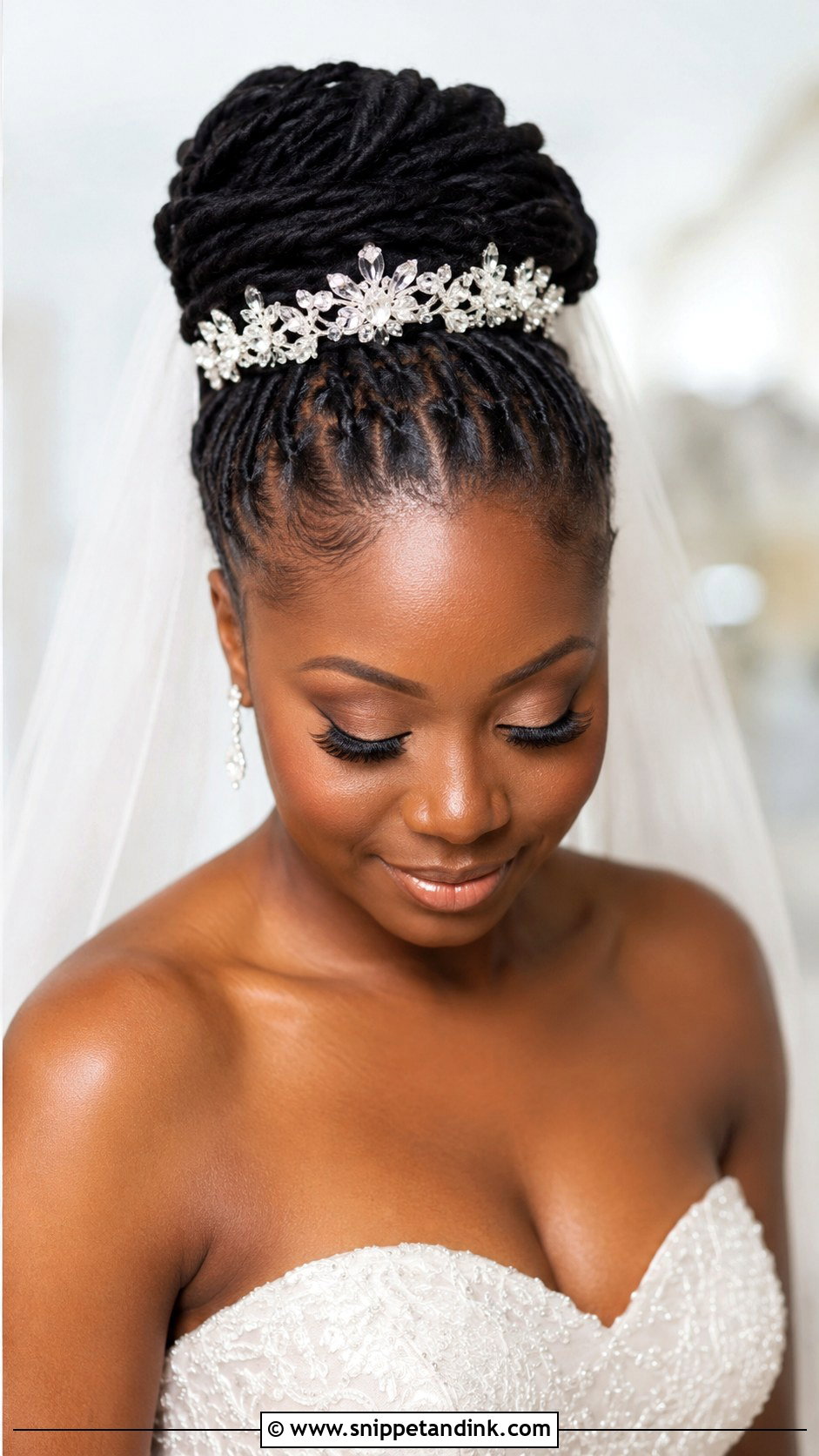
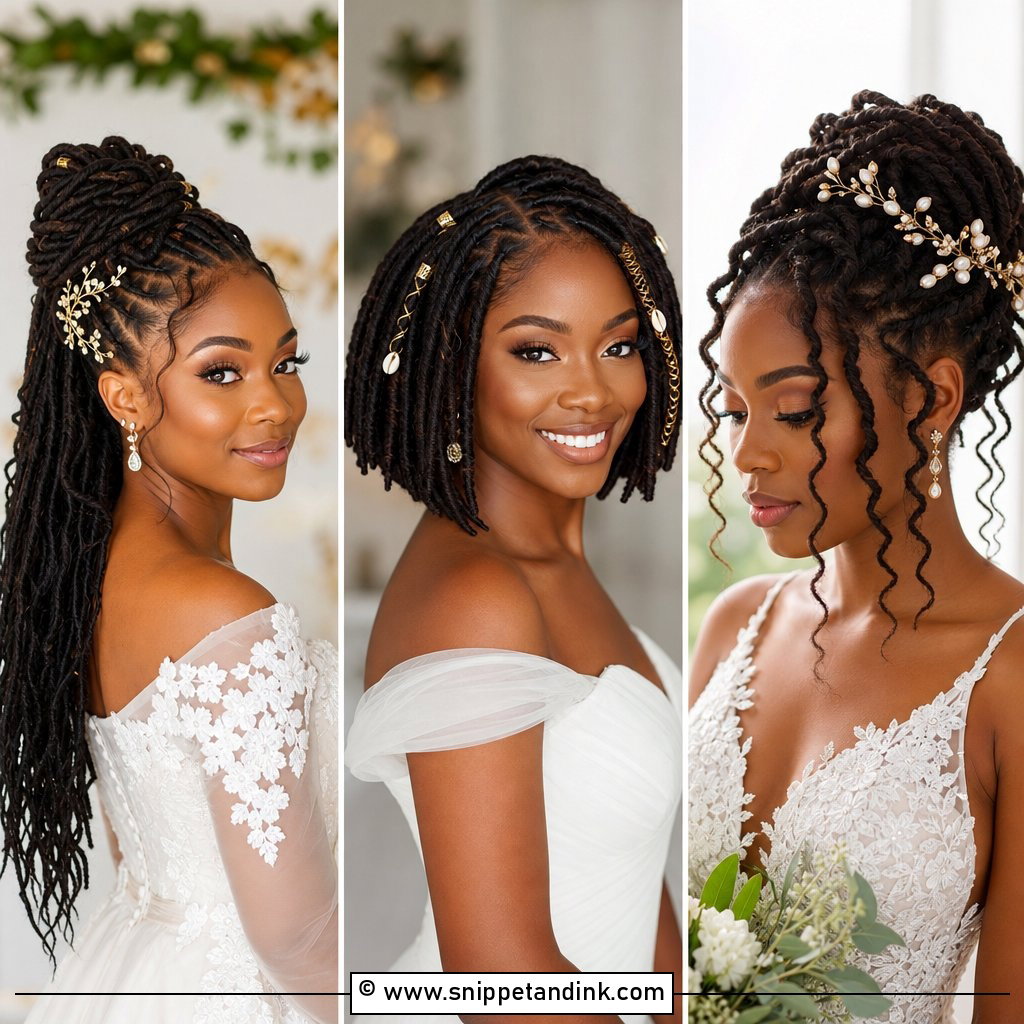
A high bun puts all the attention on the face and neck, which is why it pairs so well with strapless gowns and big earrings. I gather the locs at the crown, twist them into a rope and coil it into a round shape, then pin through the coil into the base rather than just around the edge. Here’s the honest catch: the weight of a high bun pulls on the hairline and nape for hours. On long, thick locs I’ll make it slightly lower than the client’s photo and split the coil into two smaller ones pinned together, which spreads the load. A tiara or pearl pins finish it.
2. Half-Up Half-Down Loc Style
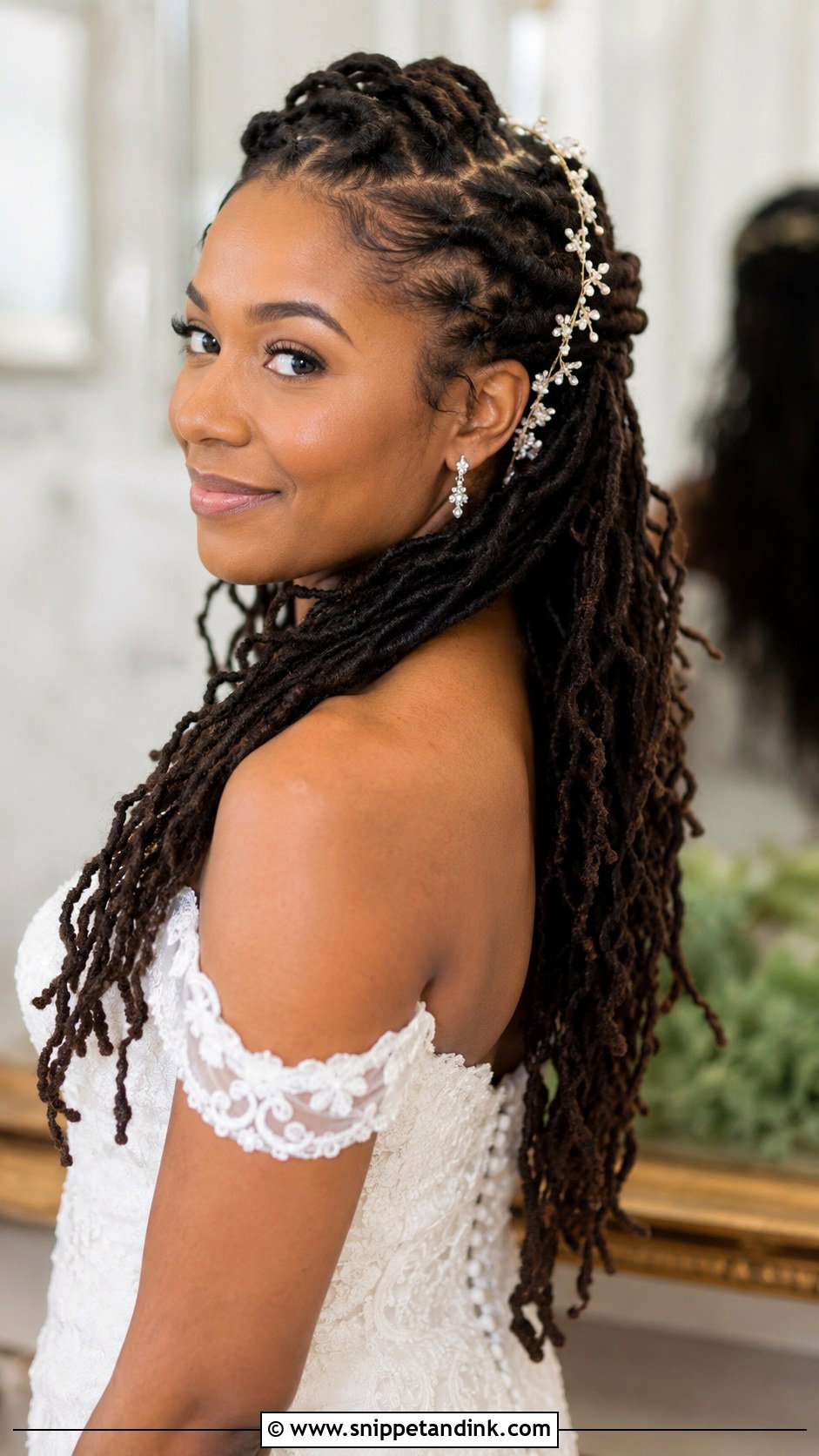
Half-up is the answer when a bride can’t let go of her length but wants her face clear. I pull the top section back into a soft knot or twist and let the rest fall down the back. It frames the face and shows texture, and it’s comfortable because only part of the weight is lifted. The knot should sit just behind the crown; set too high, it looks like a casual weekend style rather than bridal. Hair vines, fresh flowers or gold cuffs dress up the gathered section for a garden or boho wedding.
3. Side Swept Loc Ponytail
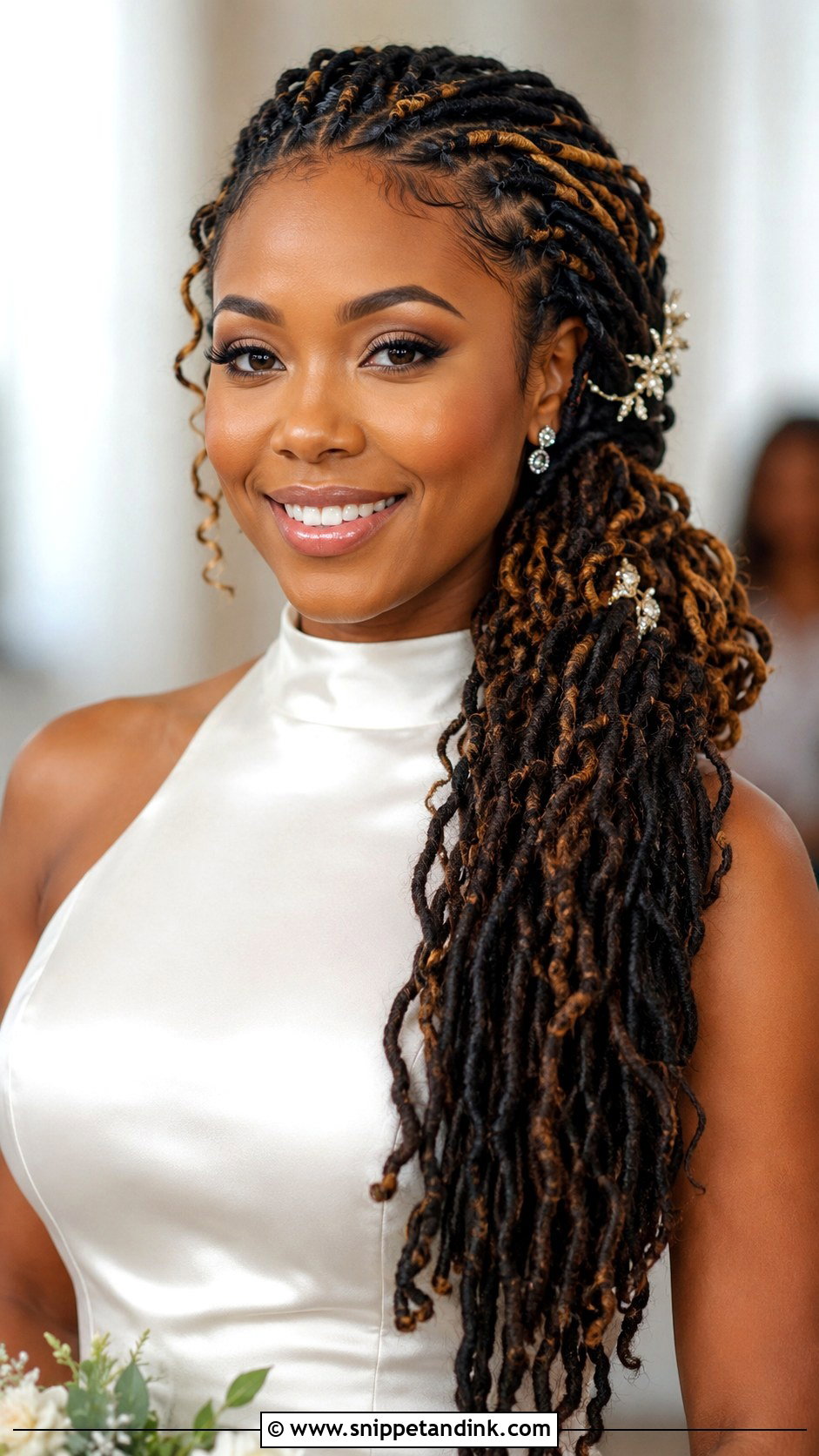
A side ponytail gathers everything low near one ear and drapes it over the shoulder, which has an old Hollywood feel and shows off two-toned or highlighted locs well. I wrap a single loc around the base to hide the tie and pin its end underneath. Because all the weight hangs from one side, I always anchor the ponytail with crisscrossed pins at the base, or it slowly slides toward the back of the neck over the evening. It suits high-neck gowns and sleek jumpsuits and keeps hair out of the face while you eat.
4. Loc Petal Bun
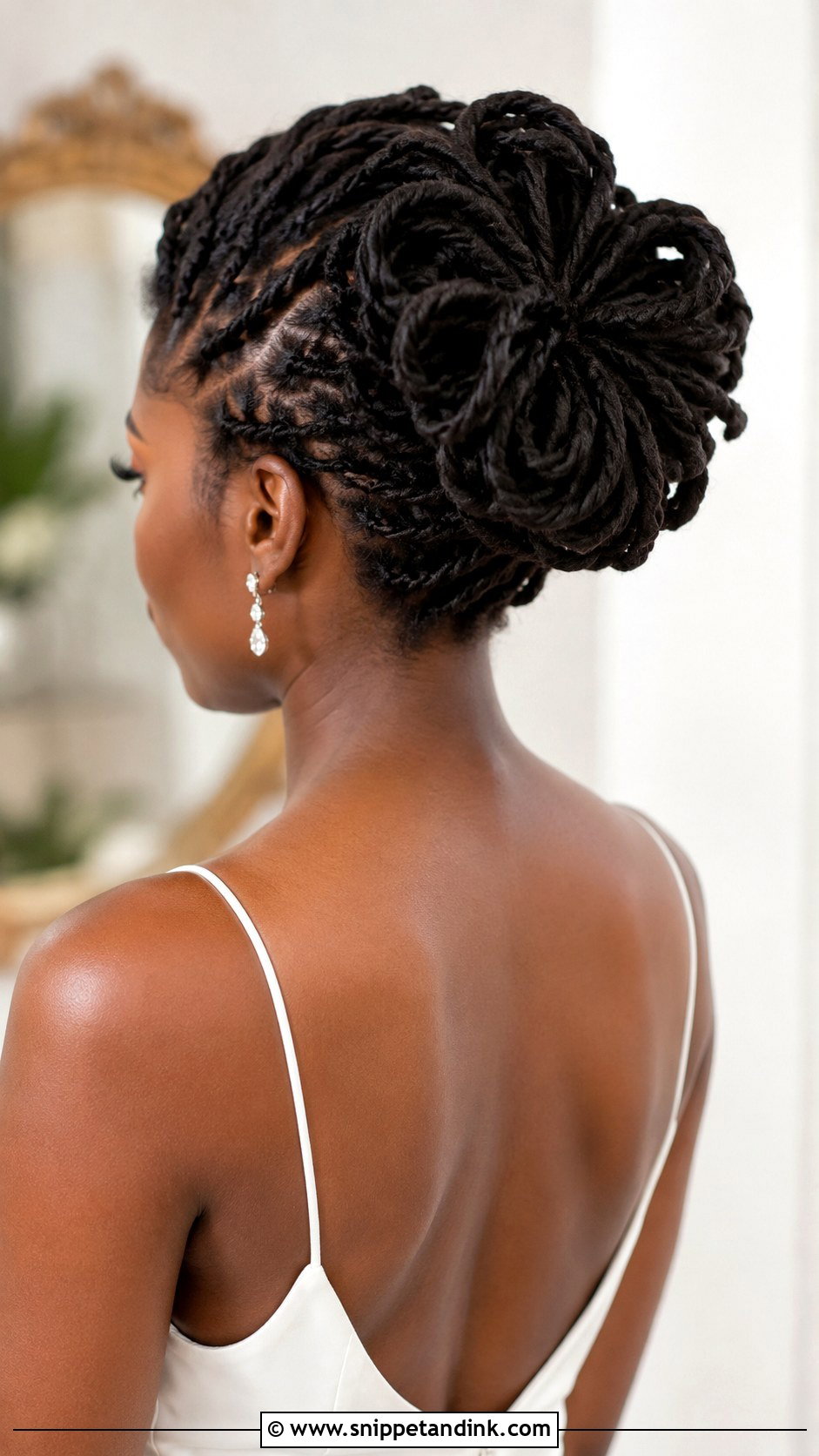
The loc petal bun is made by looping small sections of locs and pinning each loop flat so they radiate out from a centre like petals. It needs length and fairly slim, flexible locs; thick or very mature locs resist bending and the petals come out lumpy. I place it at the back crown or the nape depending on the neckline, and I’d plan an hour for it on the day. Next to a minimal gown it does all the talking, and it reads well from the back during the ceremony.
5. Loose Romantic Loc Waves
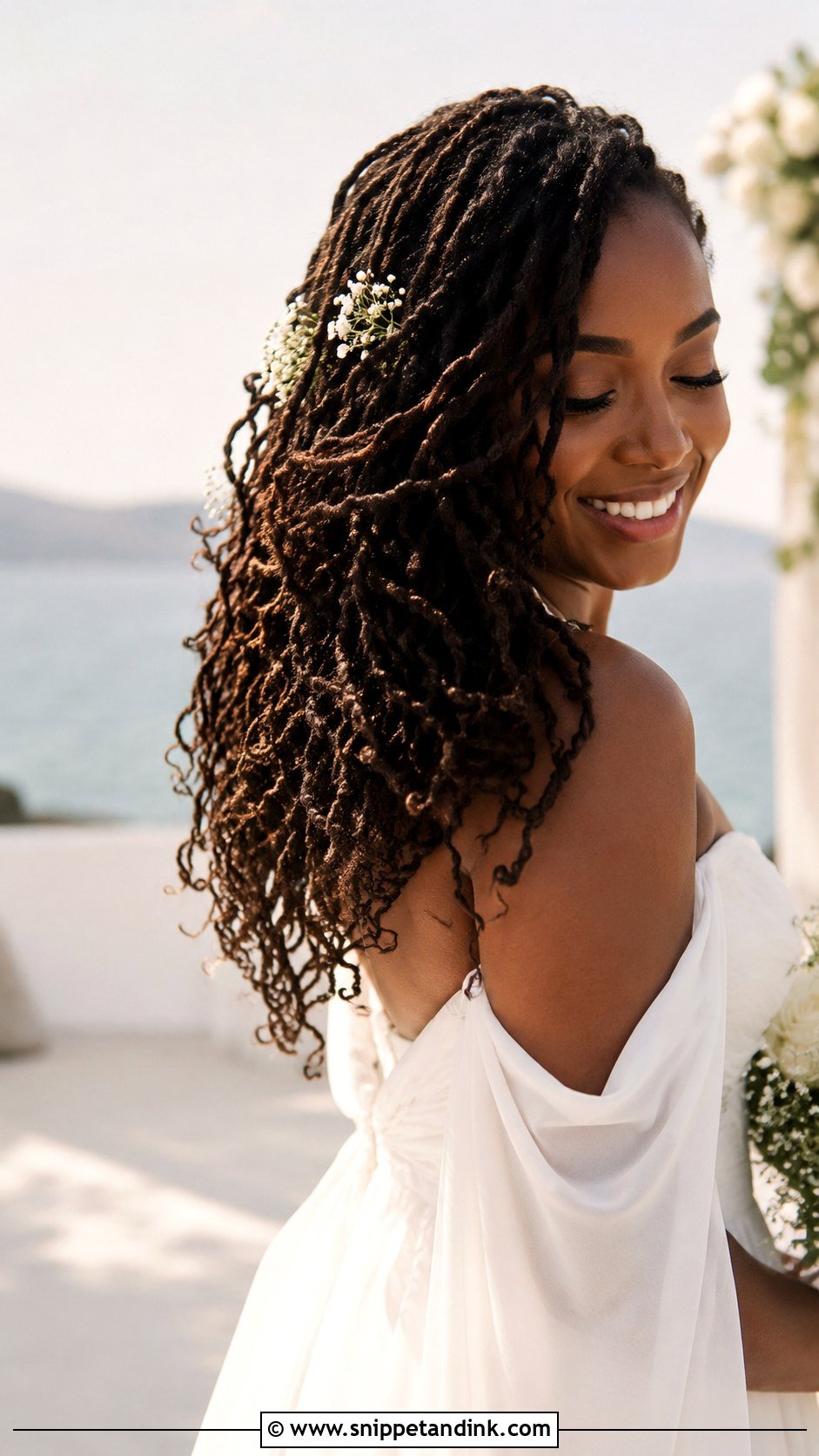
Loose waves let locs move. I set them a day or two ahead on pipe cleaners, flexi rods or with a braid-out on damp locs, and they must dry completely before the set comes out. That’s the step people rush, because locs hold water deep inside and can take many hours to dry; set them too close to the wedding and they’re still damp on the morning. A few face-framing locs left forward, plus small flowers or a simple headband, suit beach and outdoor weddings.
6. Braided Loc Crown
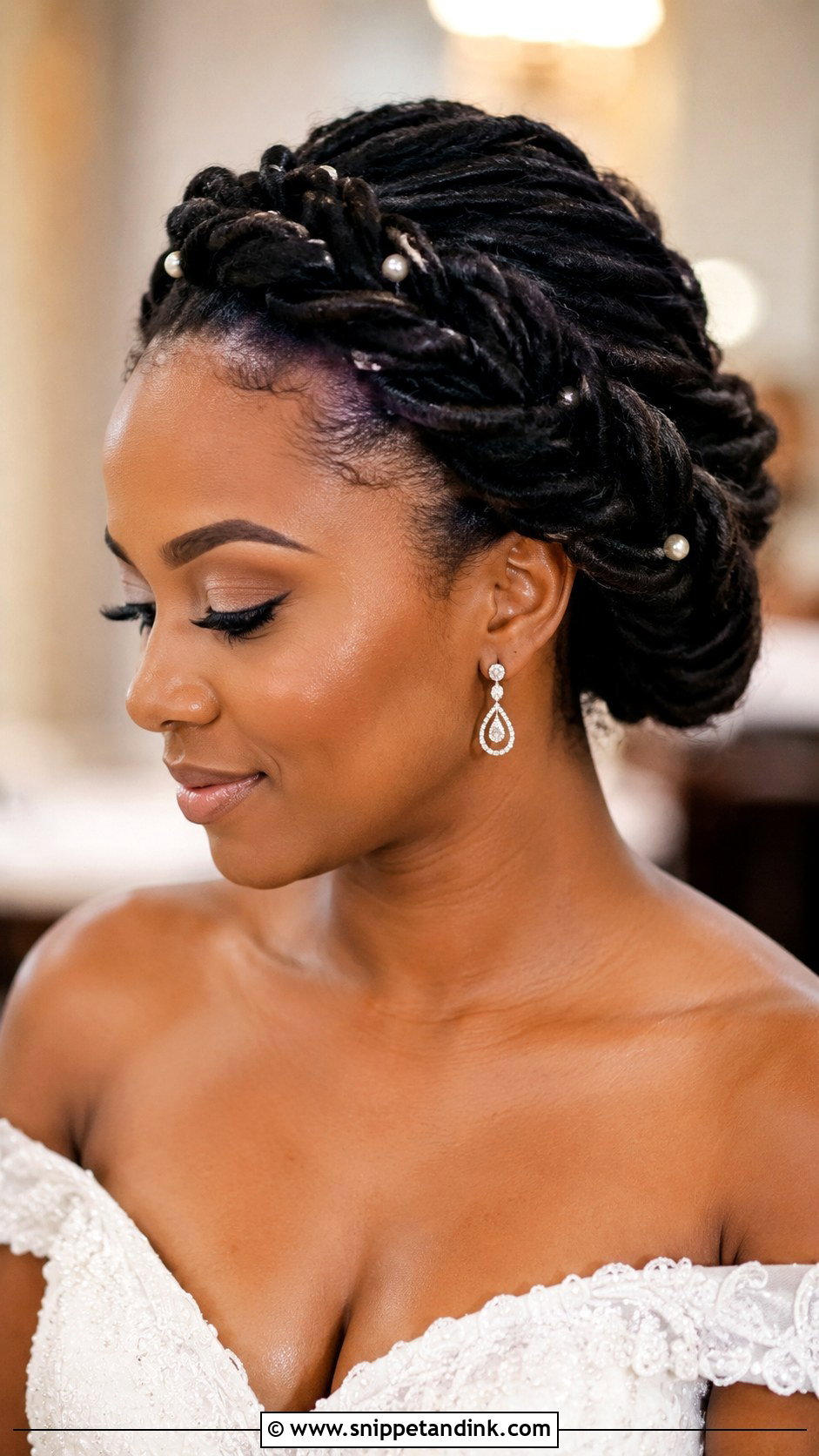
A braided crown wraps sections of locs, braided together, around the head like a halo. It’s one of the most secure styles on this list because the braid itself grips, and very little hangs down. I braid with three or four locs per strand depending on thickness, then pin the braid along a line just behind the hairline so it doesn’t sit on the forehead. Tiny flowers or pearl pins can be tucked in. It adds height to round and heart-shaped faces and suits off-shoulder gowns.
7. Low Bun With Locs
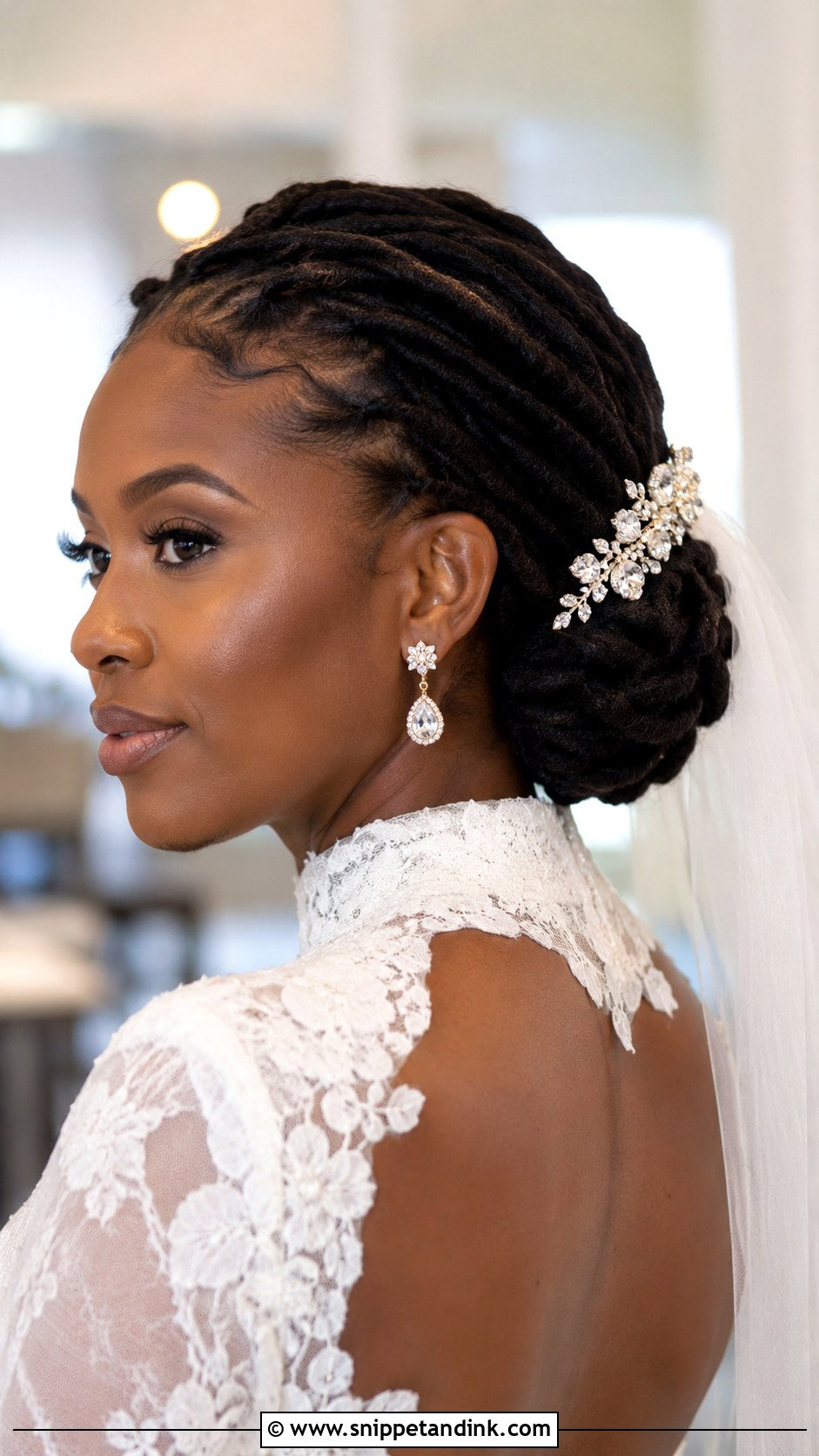
A low bun at the nape is the style I trust most for a long day, because the weight sits close to the neck instead of levering off the crown. I smooth the locs back, coil them just above the neckline and pin in a circle. It works under a veil, with a high neckline and with chandelier earrings. If the bride has a high-collared dress, I check the bun position with the dress on, since a bun sitting on the collar pushes the dress forward. A jewelled pin or a thin gold thread wrapped around it adds a little shine.
8. Top Knot Loc Style
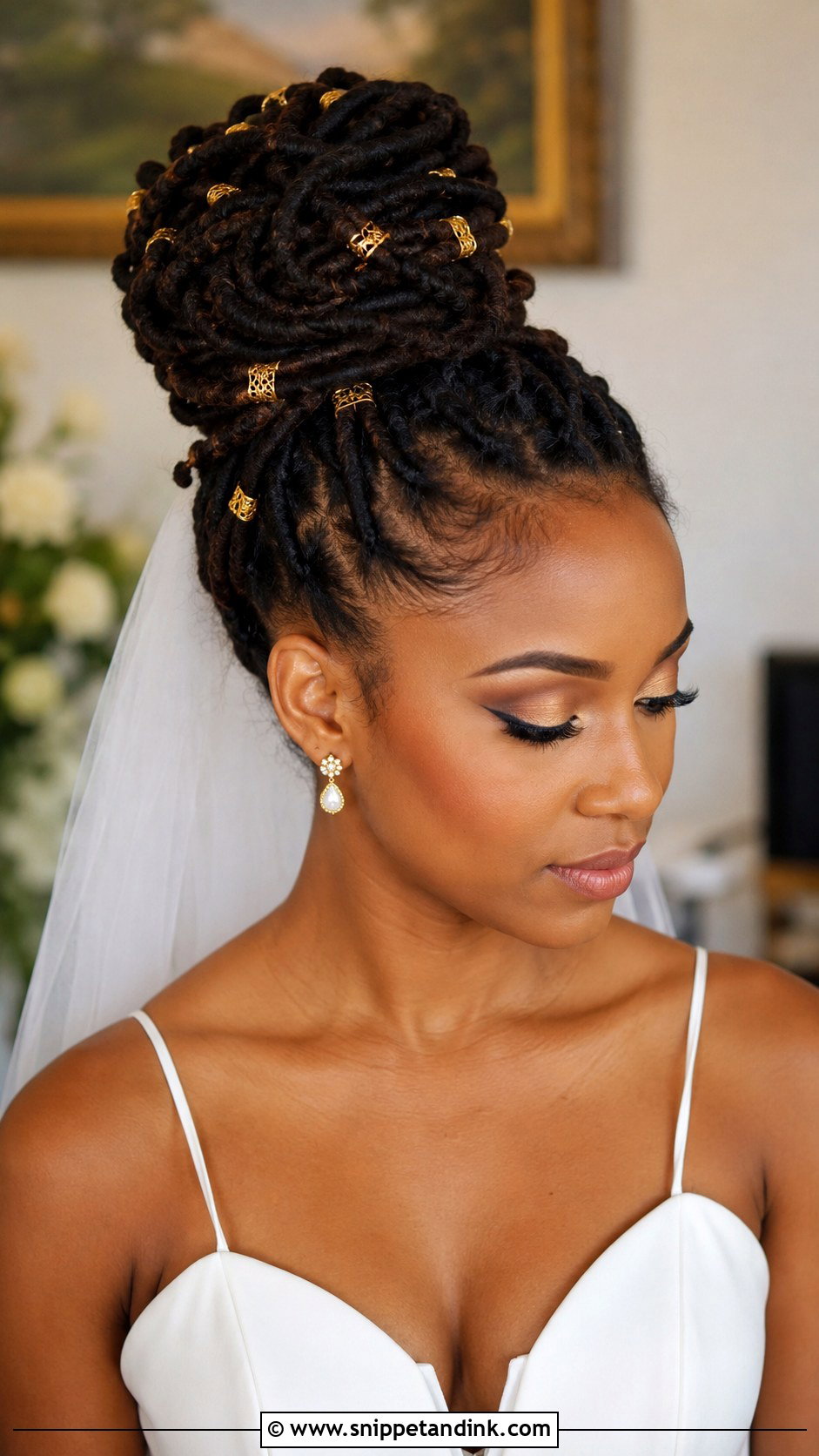
A top knot is all the locs gathered high and twisted into a round knot. It has a modern, confident feel for a city wedding and lengthens the neck with bold earrings and a clean-lined gown or jumpsuit. It’s quick to do, but it’s also the heaviest-feeling style on this list for many brides, so I only suggest it when the locs are medium length or shorter. A knot that’s too big for the head tips backward by the evening. Gold cuffs or a single sparkly pin are enough decoration.
9. Half Braided Loc Look
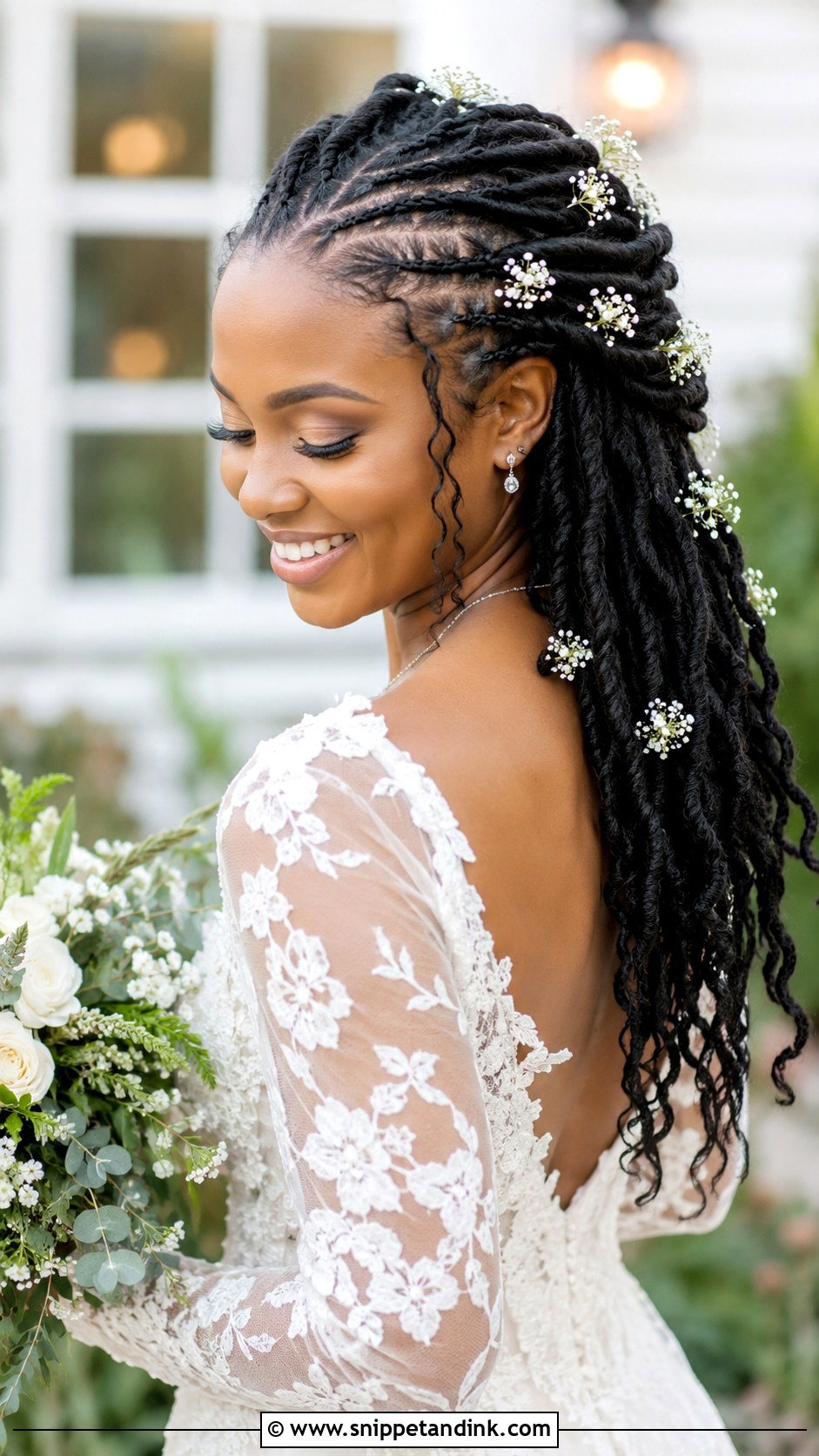
Braiding the top section back and leaving the lower locs loose gives detail near the crown and length below. The braids hold the front neatly for photos, while the free locs move when you turn. I’d use this on medium to long locs; on shorter locs the braided part eats most of the length and the loose section looks thin. Beads, cuffs or tiny flowers along the braids suit boho and garden weddings.
10. Loc Updo With Tiara
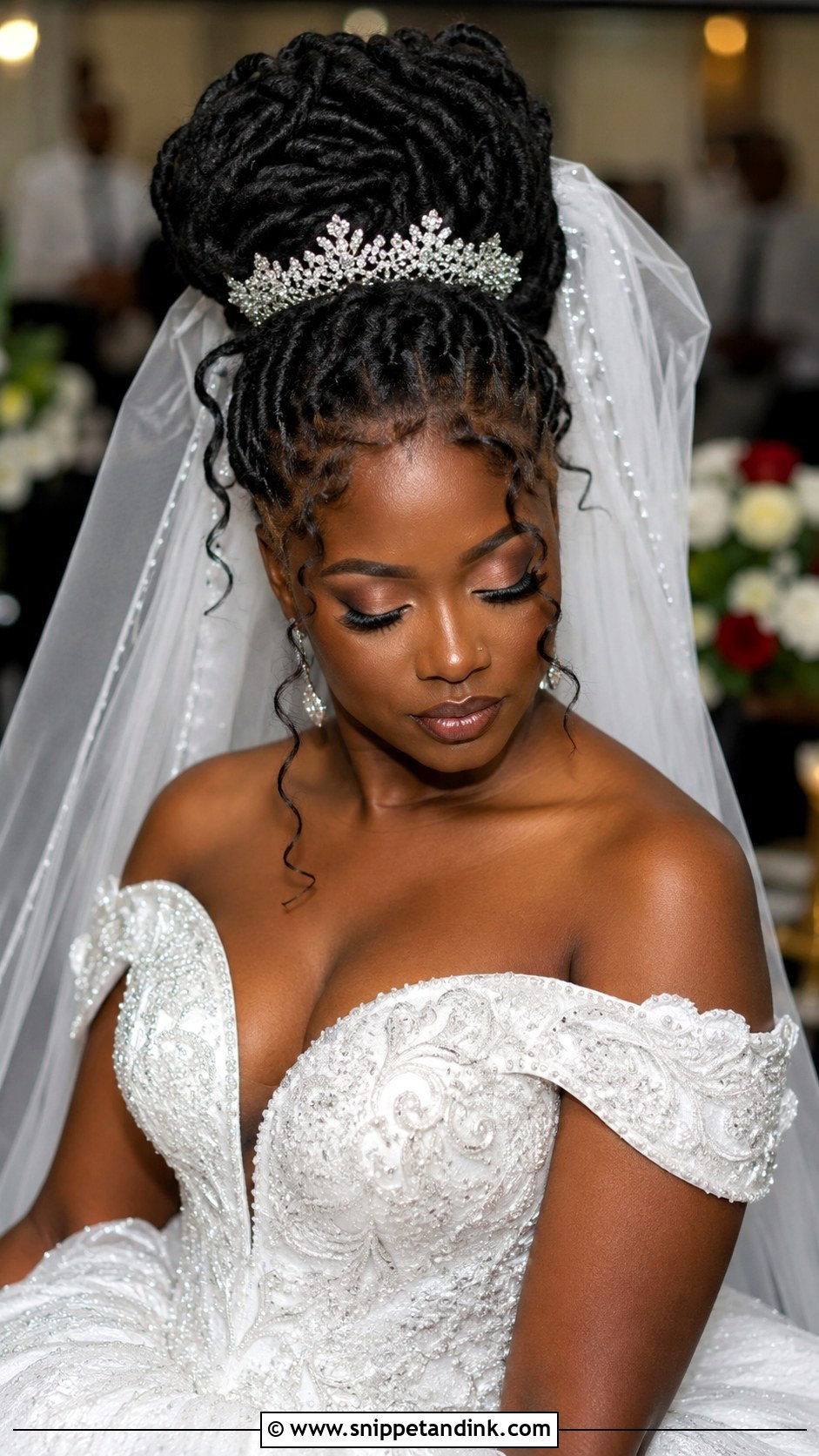
A sculpted updo with a tiara is the formal, ballroom version of loc bridal hair. I twist and pin the locs into a tall upswept shape, then set the tiara in front of the highest point and pin its combs into the base so it doesn’t float. A full-length veil can go behind it. Leave a few soft tendrils loose around the face to keep the whole thing from looking severe. Try the tiara at the trial; some sit very differently on loc texture than on smooth hair.
11. Wrapped Side Ponytail Locs
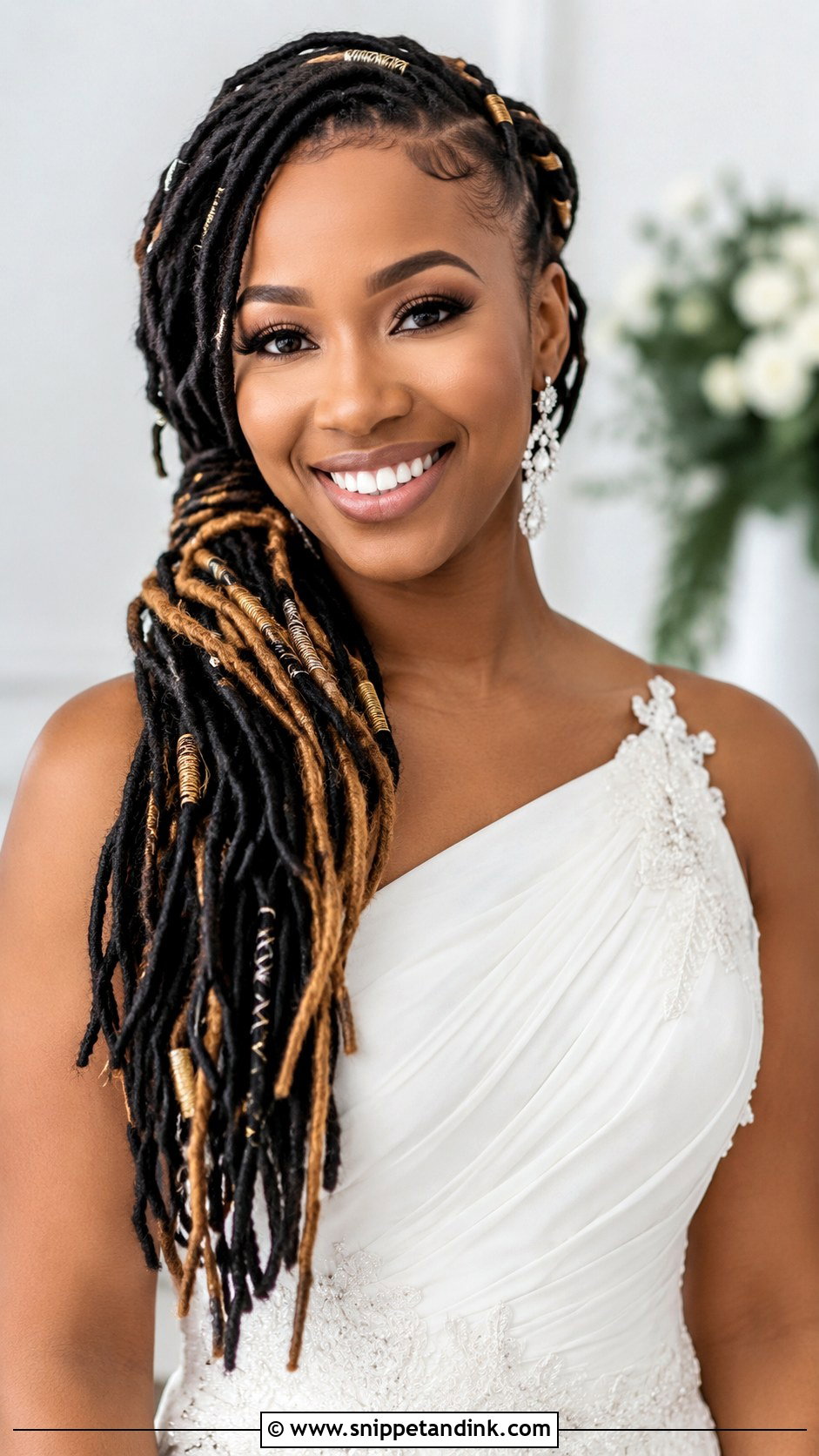
This is the side ponytail’s sleeker cousin. The locs are gathered to one side, tied low, and a loc is wrapped around the base so no elastic shows. It shows full length and colour and drapes neatly over one shoulder, which makes it work with one-shoulder and backless dresses. On angular faces and long necks it looks especially sharp. I use a fabric-covered elastic rather than a rubber band, because rubber grabs loc fibres and tears them on removal.
12. Loc Bun With Fresh Flowers
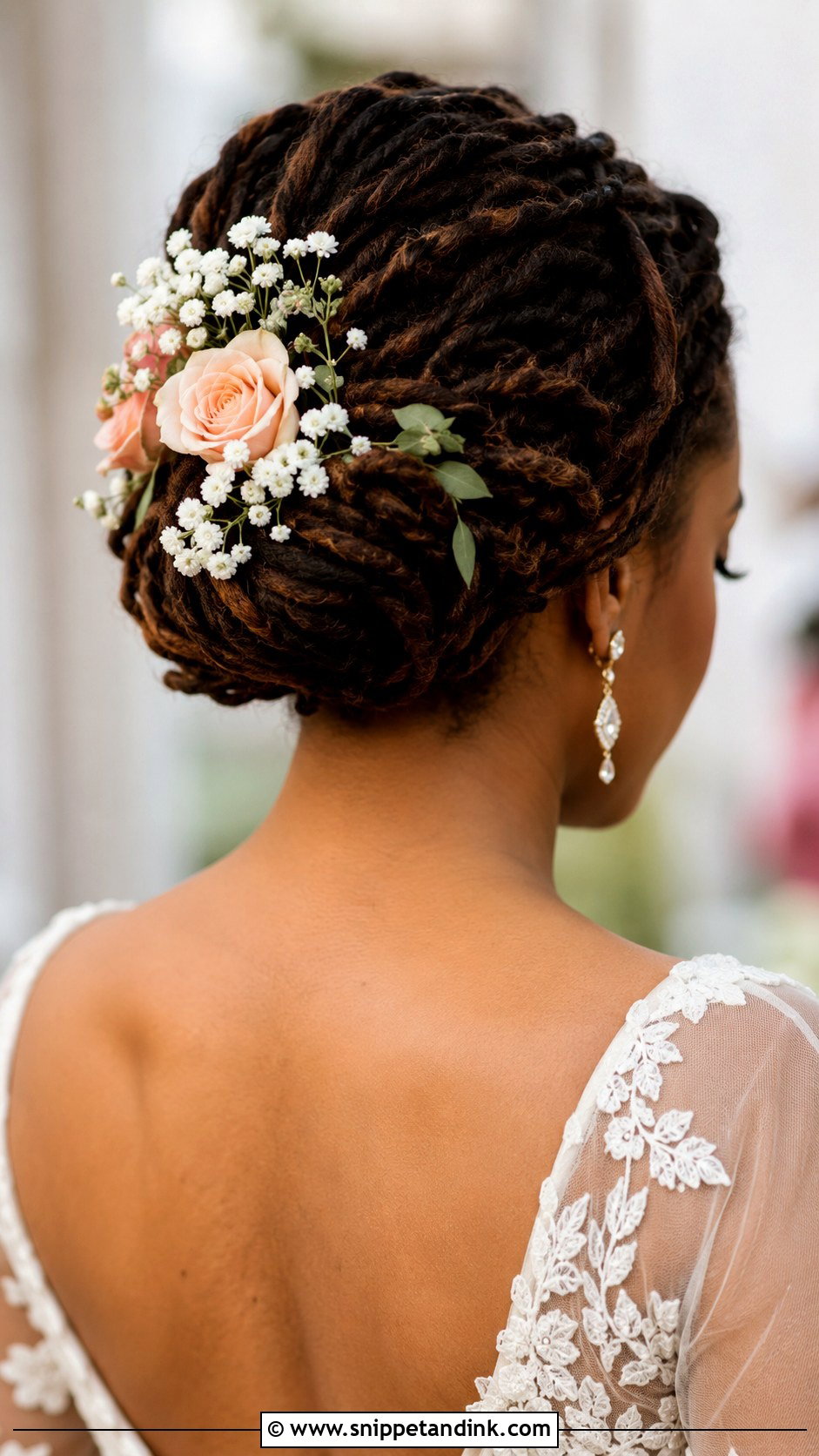
Fresh flowers sit wonderfully in locs because the texture holds stems without much help. I coil a soft bun at the crown or nape and tuck in sturdy blooms; baby’s breath, spray roses and orchids last well, while delicate flowers wilt within a couple of hours out of water. Ask your florist for wired, taped stems so nothing sharp or wet presses into the locs. Matching the bouquet ties the look together for a spring or outdoor wedding.
13. Goddess Loc Updo
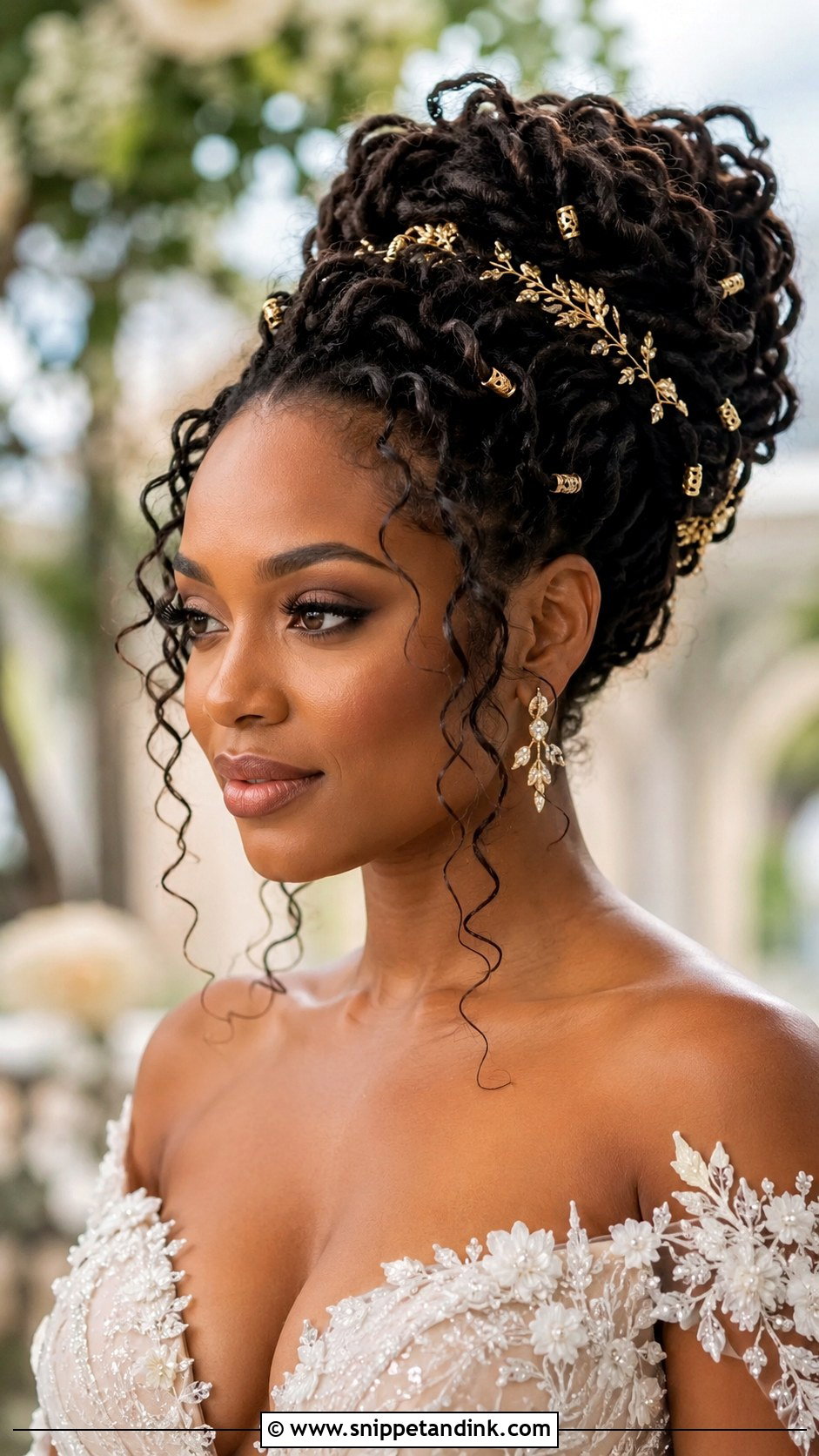
Goddess locs are usually faux locs installed with curly ends, which gives a softer, wavier finish than mature natural locs. I sweep them into a loose updo and let some curly ends escape. Because they’re installed, they’re lighter than natural locs of the same length, so they’re forgiving for long wear. Have them installed about a week before the wedding so the scalp has settled. A flower crown or delicate gold pieces suit ethereal and destination weddings.
14. Basket Weave Loc Style
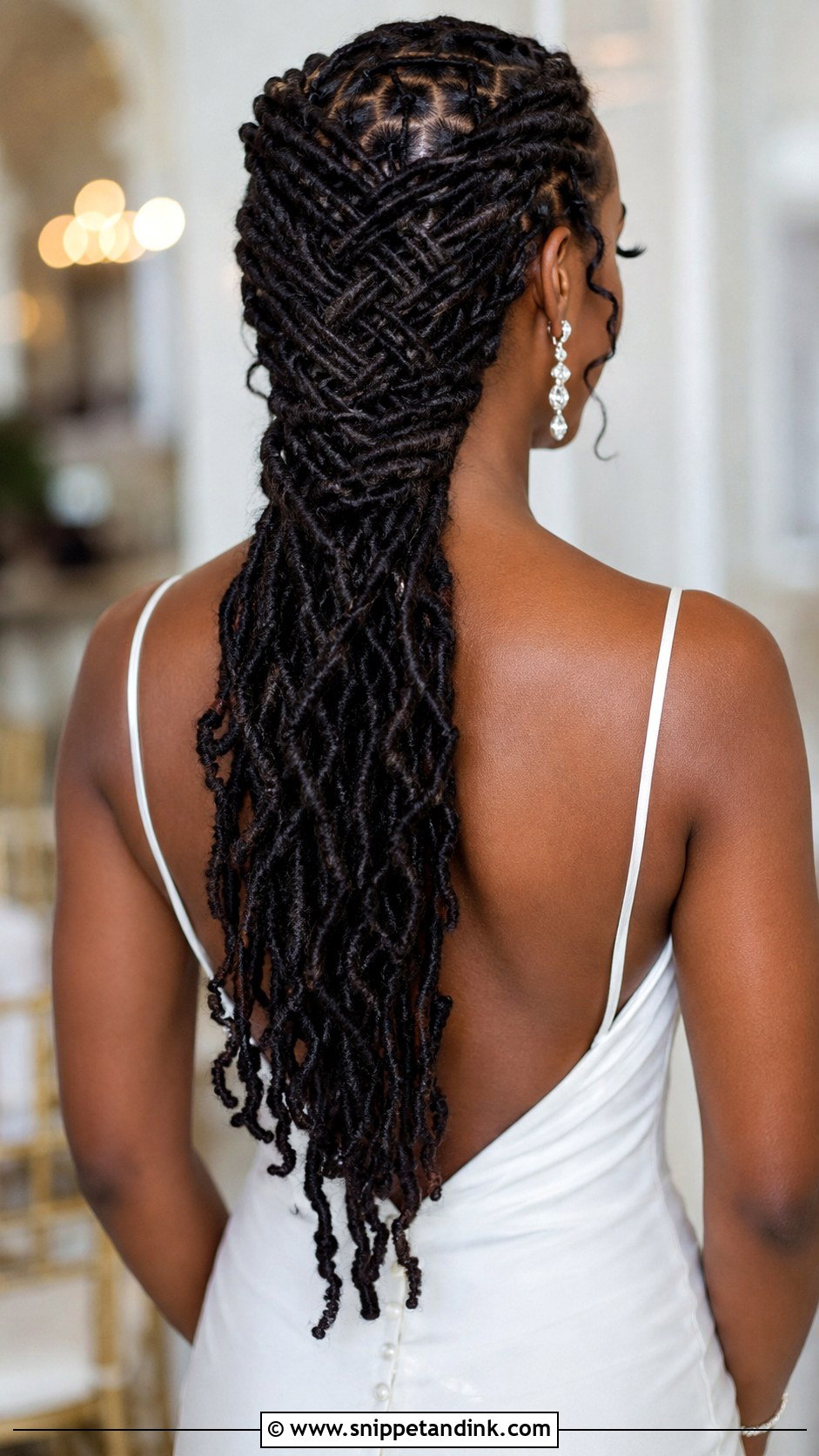
Basket weave crisscrosses long locs into an interlaced pattern over the back or crown. It’s slow work, often two hours or more, and needs long, flexible locs; short or very stiff locs can’t make the turns. I map the weave on the trial day and photograph it from the back so it can be repeated exactly. A simple gown suits it best, because the hair is the detail. Book a stylist who has done it before, not someone attempting it for the first time on your wedding morning.
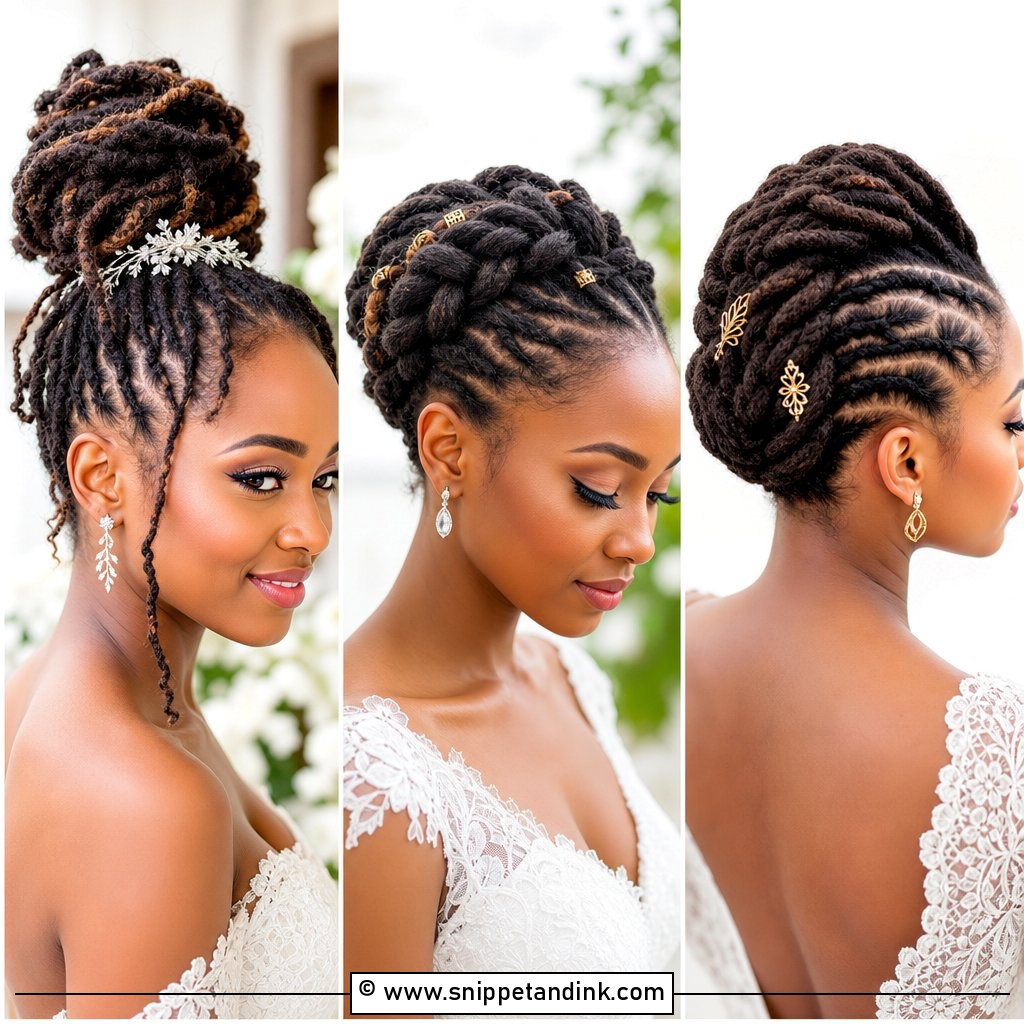
15. Loc Chignon
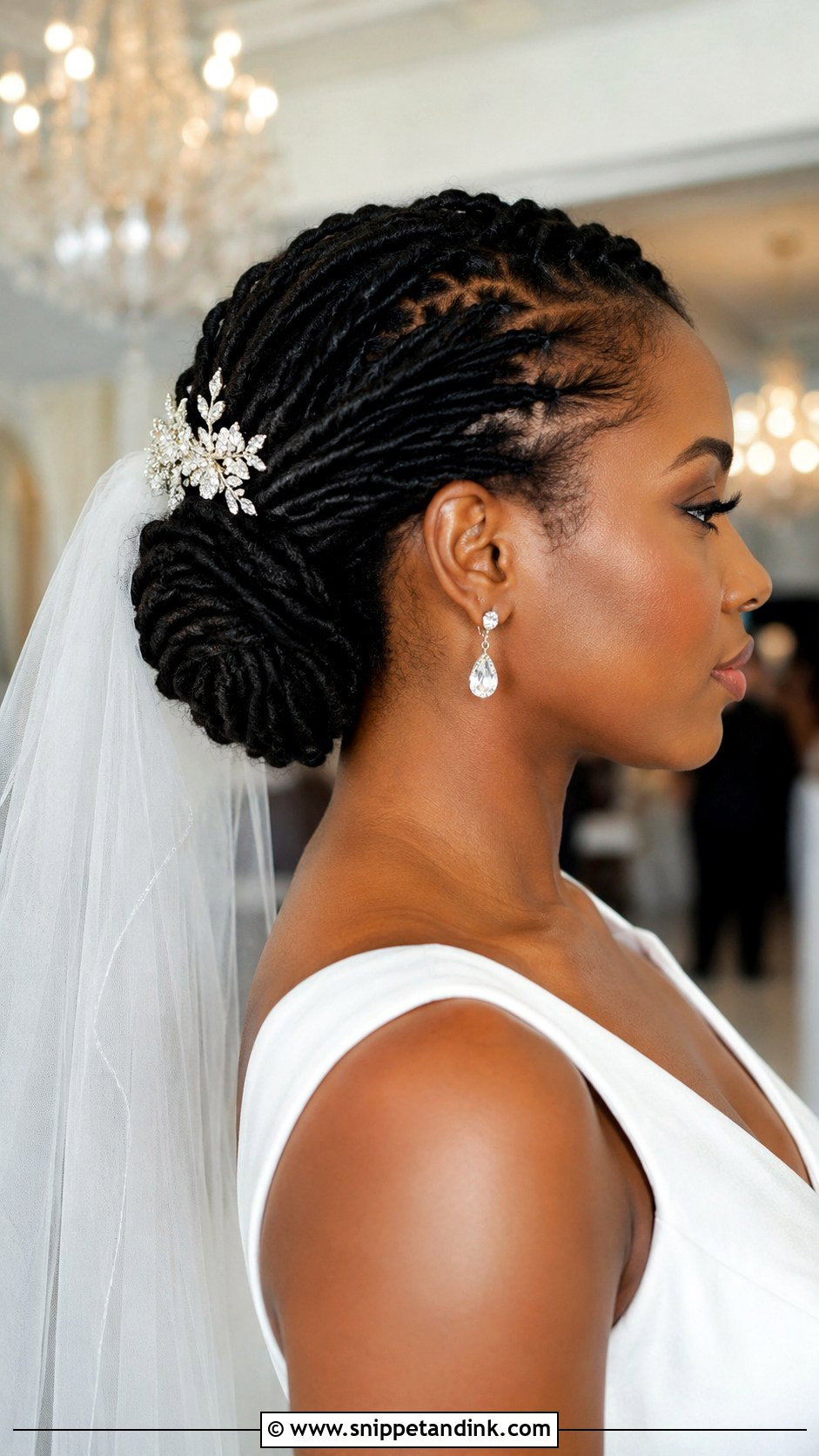
The chignon is a low, rounded knot at the nape, smooth and controlled. In locs it’s a little fuller than in straight hair, which makes it look generous rather than tight. I coil it and then roll the edges under so no ends poke out. It suits veils, pearl earrings and structured gowns for formal weddings. A jewelled comb or a few small flowers on one side are plenty of decoration.
16. Top Knot With Hanging Locs
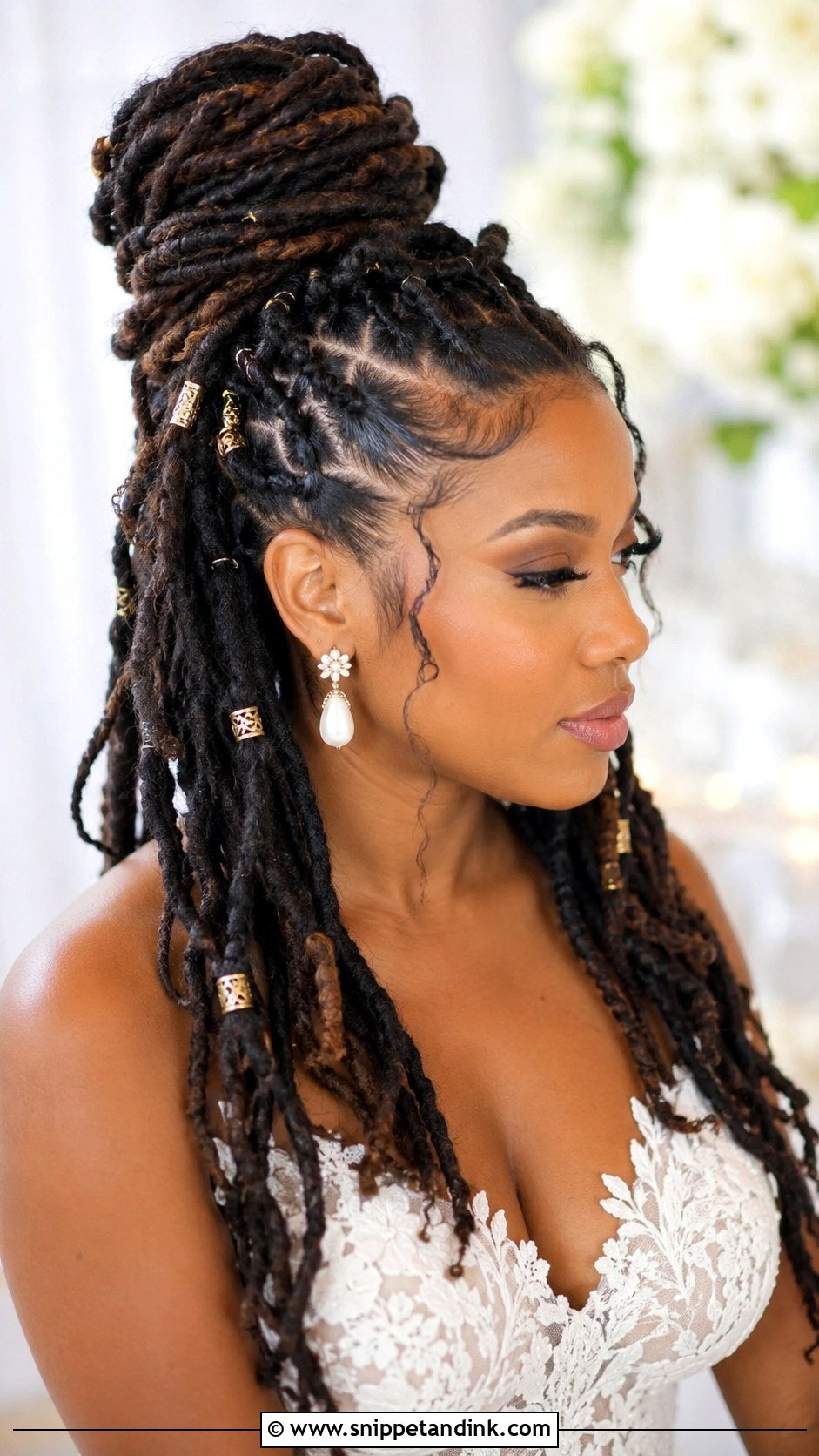
Pulling some locs into a high knot and leaving the rest hanging gives you height and movement in one style. The balance matters: I take roughly the top third for the knot, so it’s not so heavy that it tips, and so the hanging locs still look full. Gold cuffs or a fine vine can wrap the knot. It shows off length on long faces and suits modern, boho and outdoor weddings. The top knot with hanging locs also lets you take down the knot for the reception without redoing anything.
17. Loc Updo With Pearl Accessories
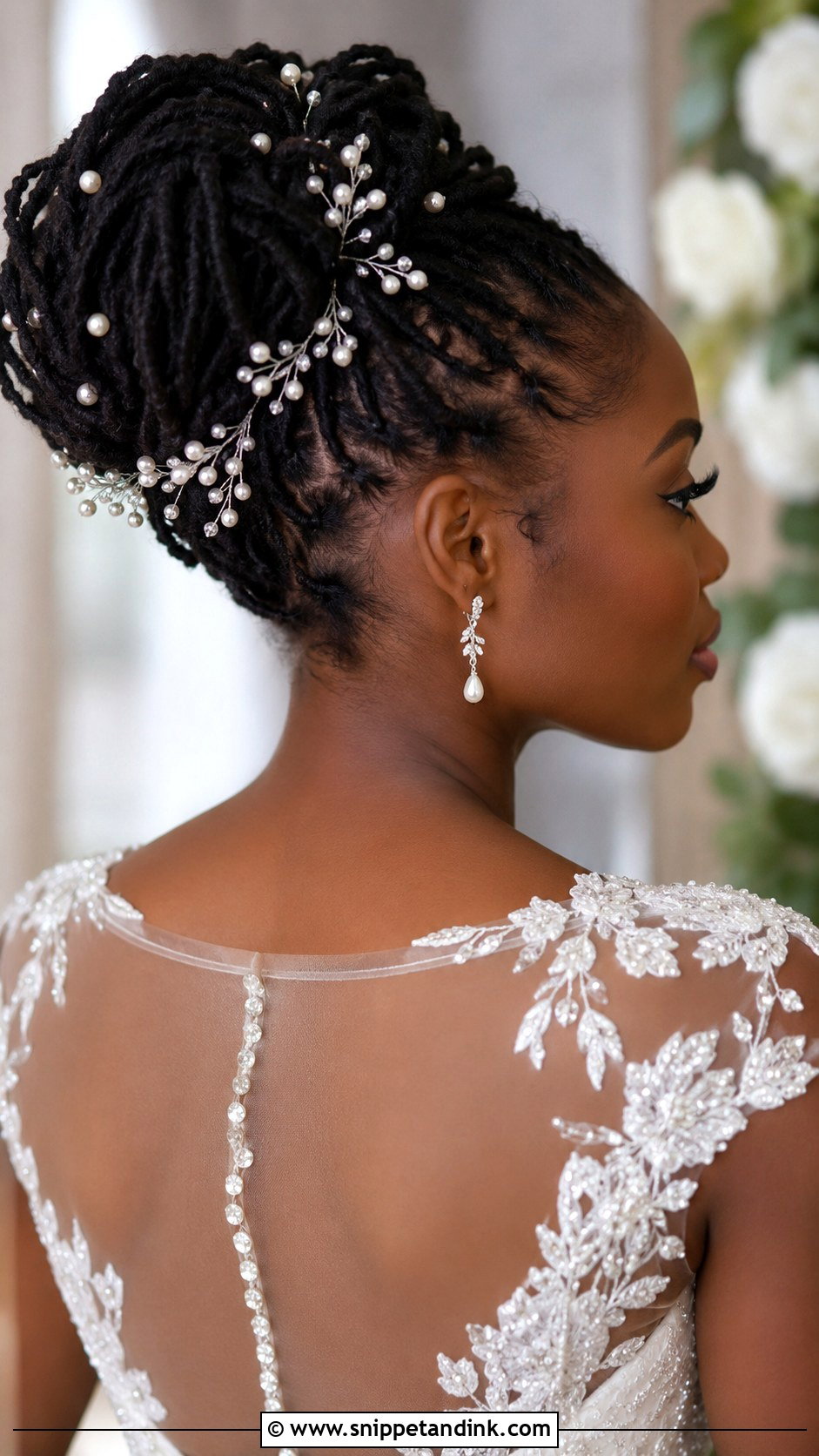
Pearls and locs suit each other because the round, glossy pearl sits against matte loc texture and both show up. I sweep the locs into a soft updo, then add pearl pins or thread pearl strands through the shape. Clustered pearls feel more modern; evenly spaced ones look more classic. Push pins right into the loc rather than just through the surface, otherwise they work loose when you hug people. It suits classic weddings, delicate gowns and statement earrings.
18. Side Swept Braided Locs
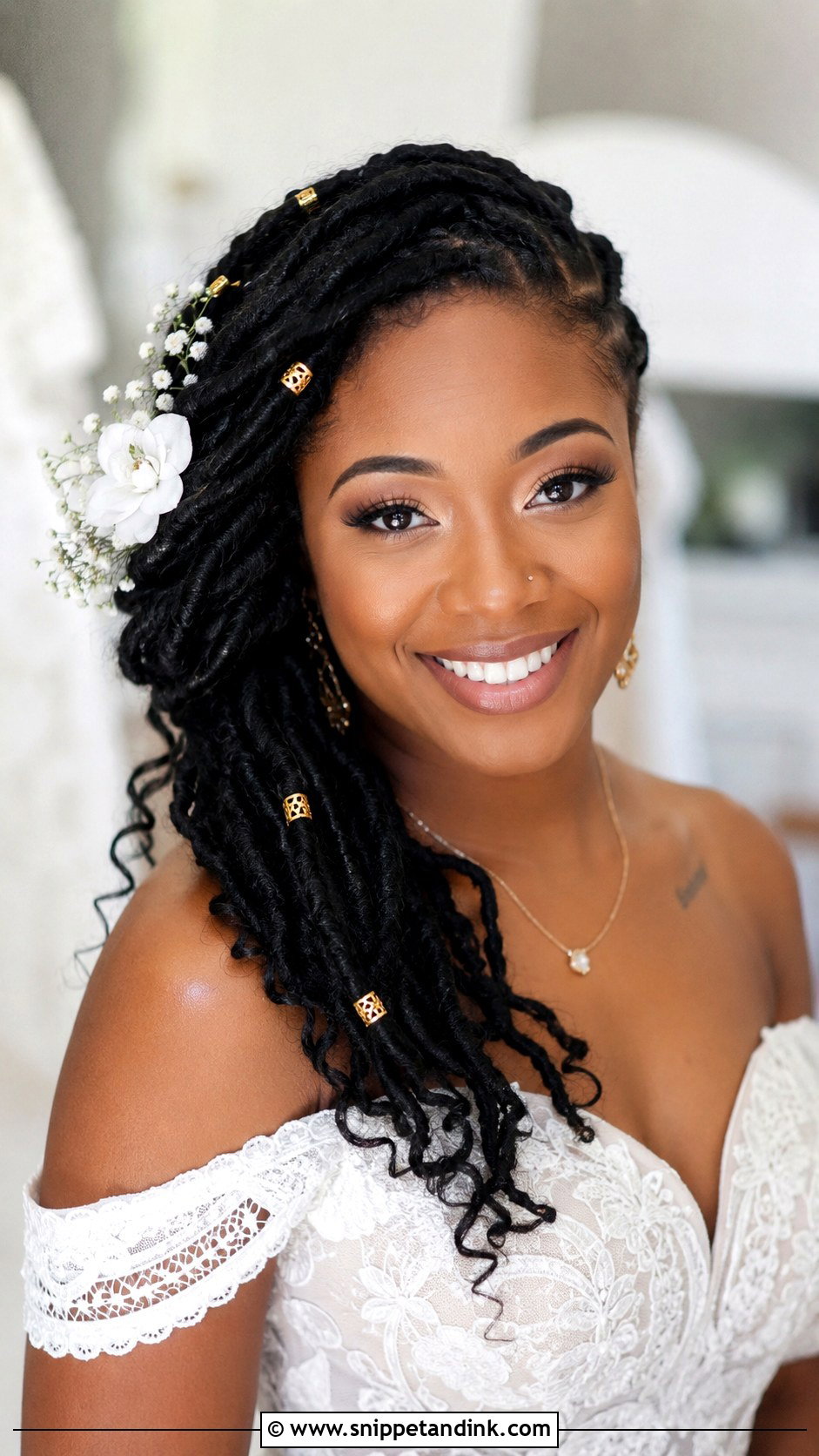
Braiding sections of locs and sweeping them over one shoulder gives an asymmetrical style with plenty of texture. I braid the sections loosely so they don’t pull the scalp, then pin the gathered braids behind the ear on the opposite side to stop them sliding. It suits one-shoulder and off-shoulder gowns at outdoor weddings. Flowers or beads can be tucked into the braids. On oval and heart-shaped faces the asymmetry looks especially flattering.
19. Loc Faux Hawk
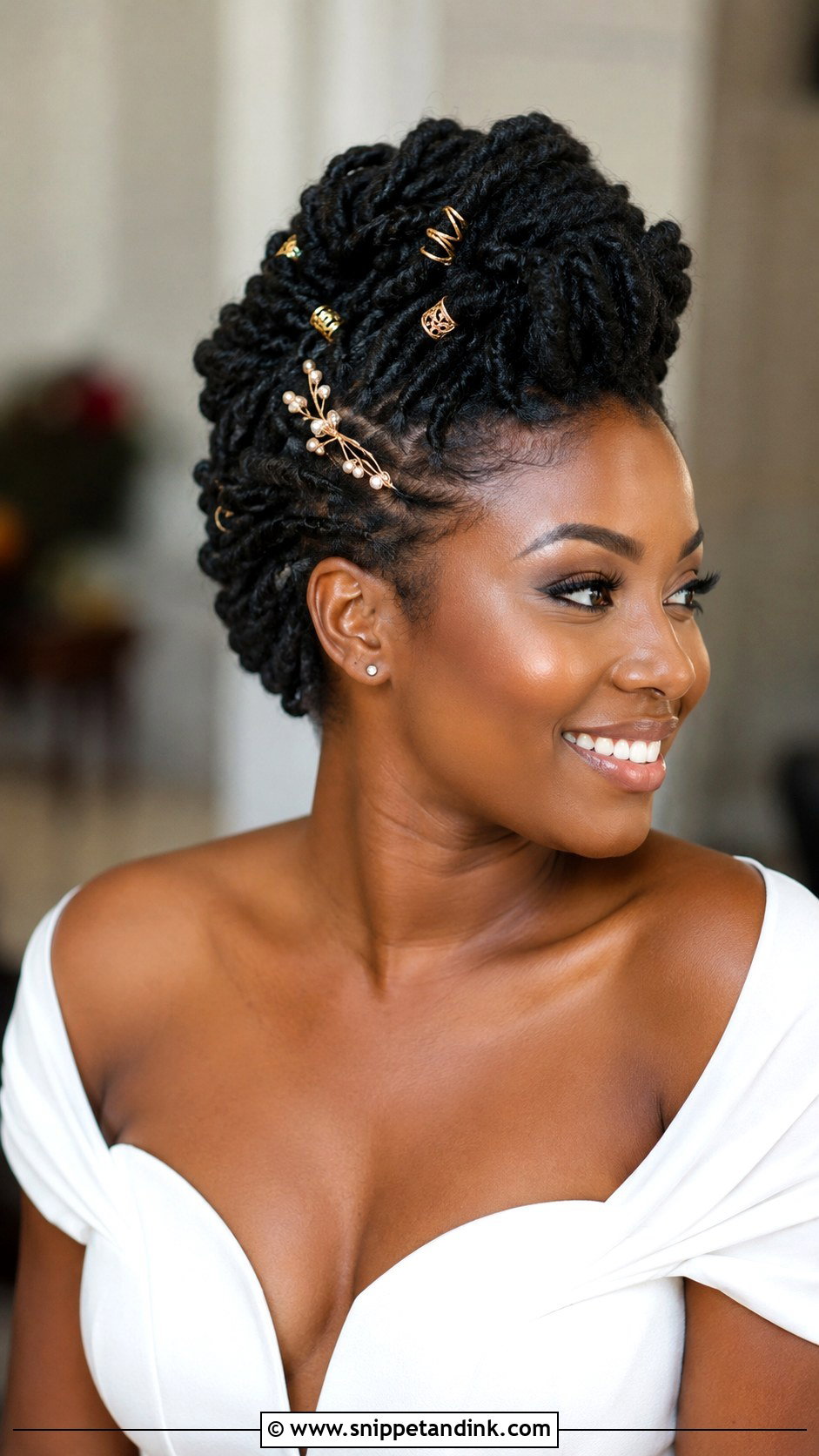
The faux hawk pins the side locs inward and leaves a raised strip down the centre. It’s for a bride who wants attitude: city venues, alternative weddings, sleek gowns or jumpsuits. The sides need to be pinned flat and tight to the scalp so the centre stands out, which means plenty of pins and some tension, so I’d skip this one if your edges are fragile or tender. Gold cuffs or a single side accessory finish it.
20. Loc Bun With Gold Cuffs
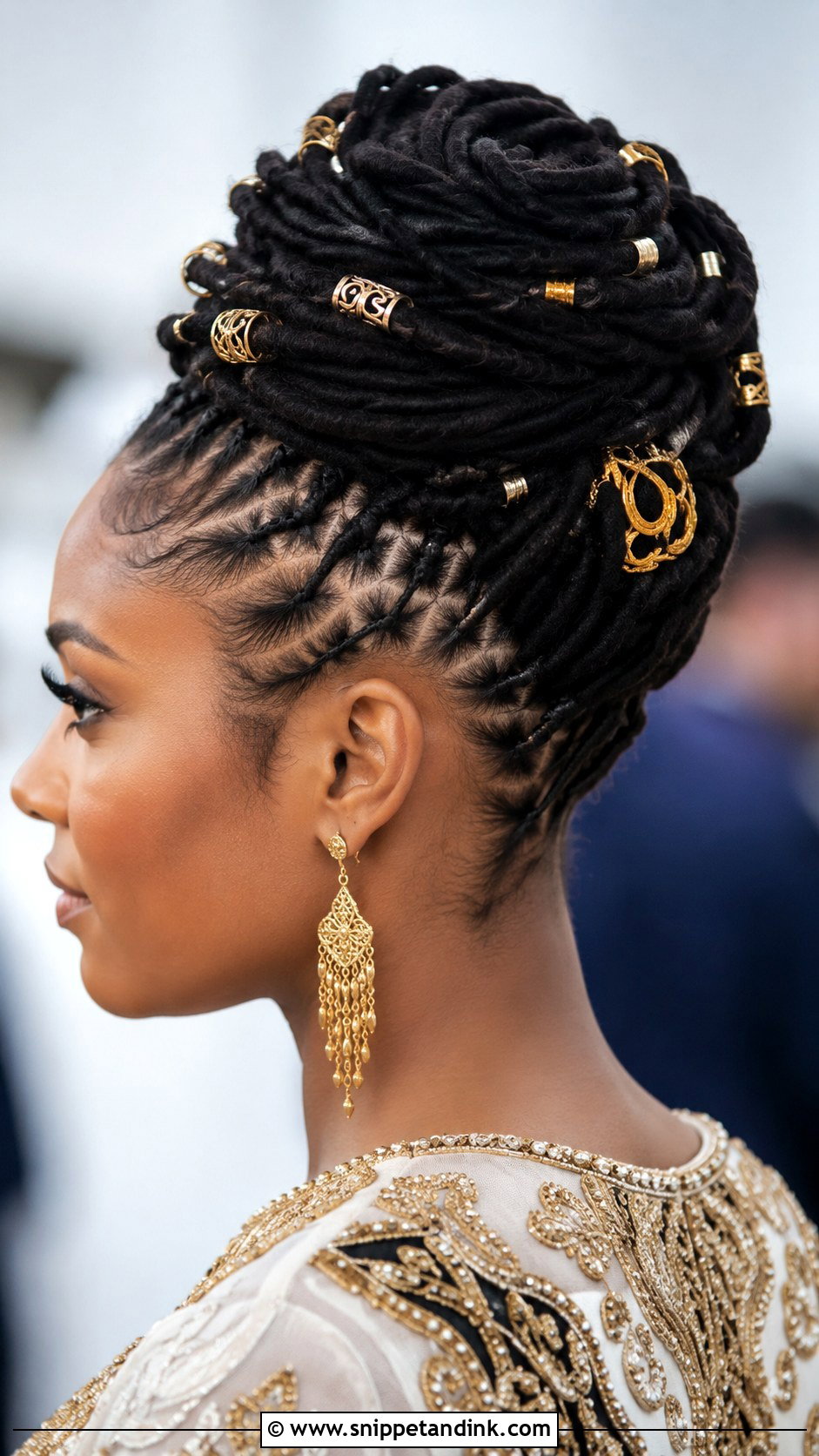
Gold cuffs slide onto individual locs, so I’d measure your loc thickness before buying; cuffs that are too tight snag, while loose ones slip off by the reception. Coil the locs into a smooth bun, high or low depending on the neckline, then add cuffs to the locs at the edge of the bun where they’ll catch the light. Gold reads warmly against deep skin tones. For many brides the cuffs carry family or cultural meaning, which makes them more than decoration.
21. Flowing Loc Half Updo With Veil
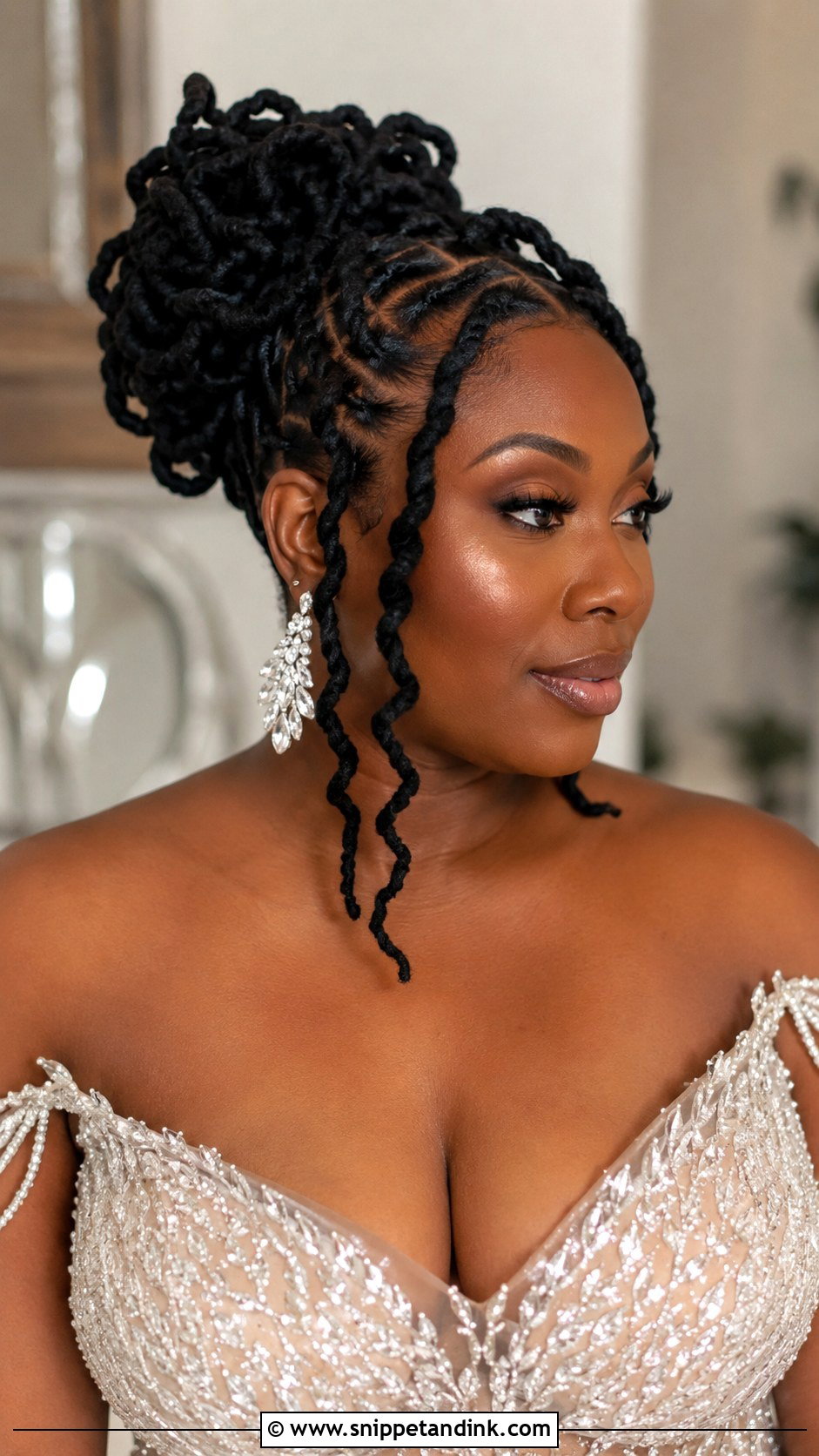
Locs actually grip a veil comb better than smooth hair does, which makes a half updo with a veil one of the more secure ceremony looks. I pull the top section back loosely, make a small pinned base, and slide the comb into that base, often crossing two bobby pins over the comb’s teeth for extra hold. The rest of the locs flow down the back under the veil. It suits church and formal ceremonies, and the veil lifts out easily for the reception.
22. Twisted Loc Updo
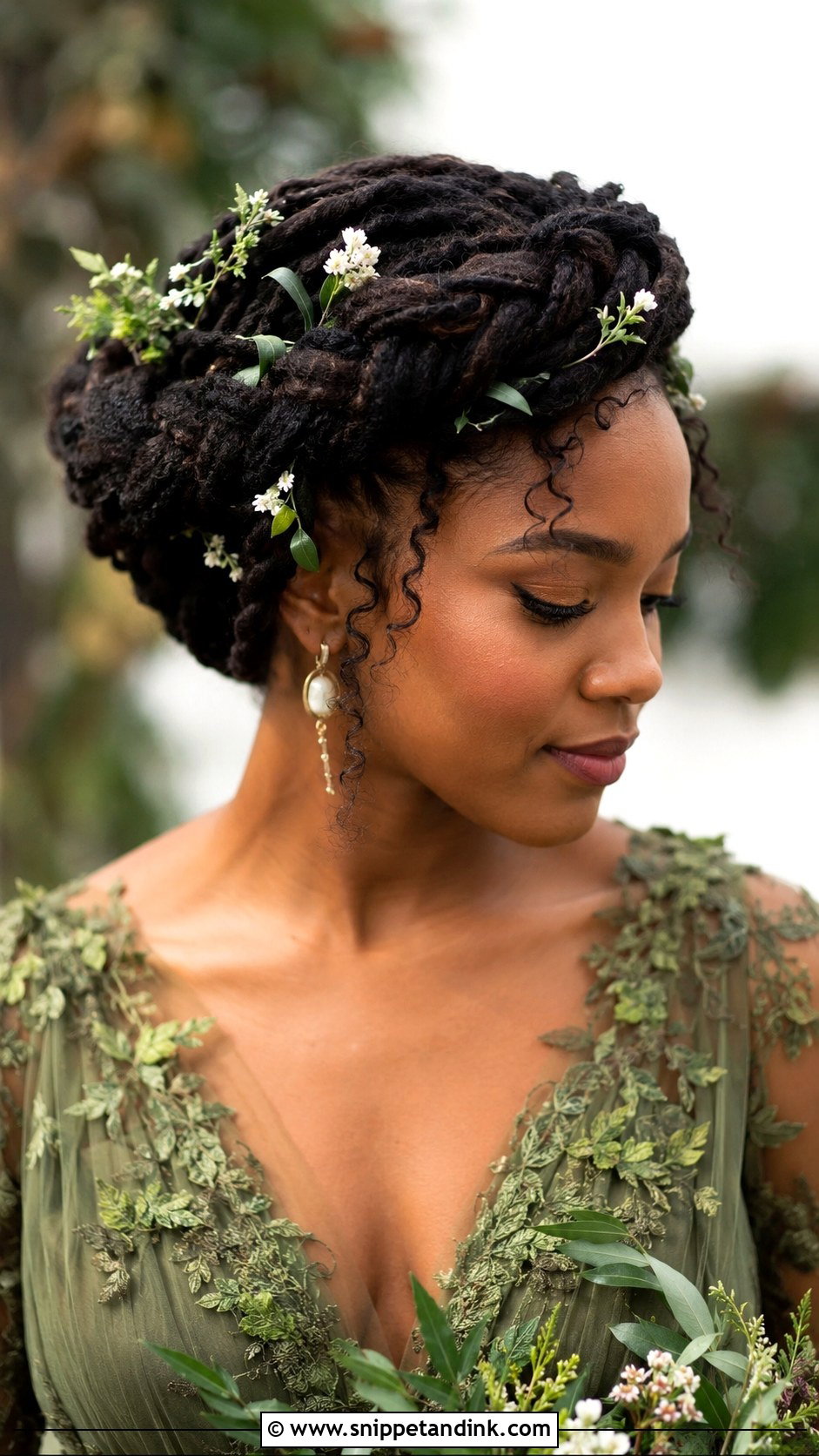
Twisted updos swirl sections of locs into coils and loops pinned into an upswept shape. The look depends on varying the size of the twists, so it feels sculpted rather than uniform. I pin each twist as I go instead of placing everything and pinning at the end, which keeps the structure stable. A few face-framing locs soften it. It suits glamorous weddings, statement gowns and medium to long locs.
23. Loc Ponytail With Curled Ends
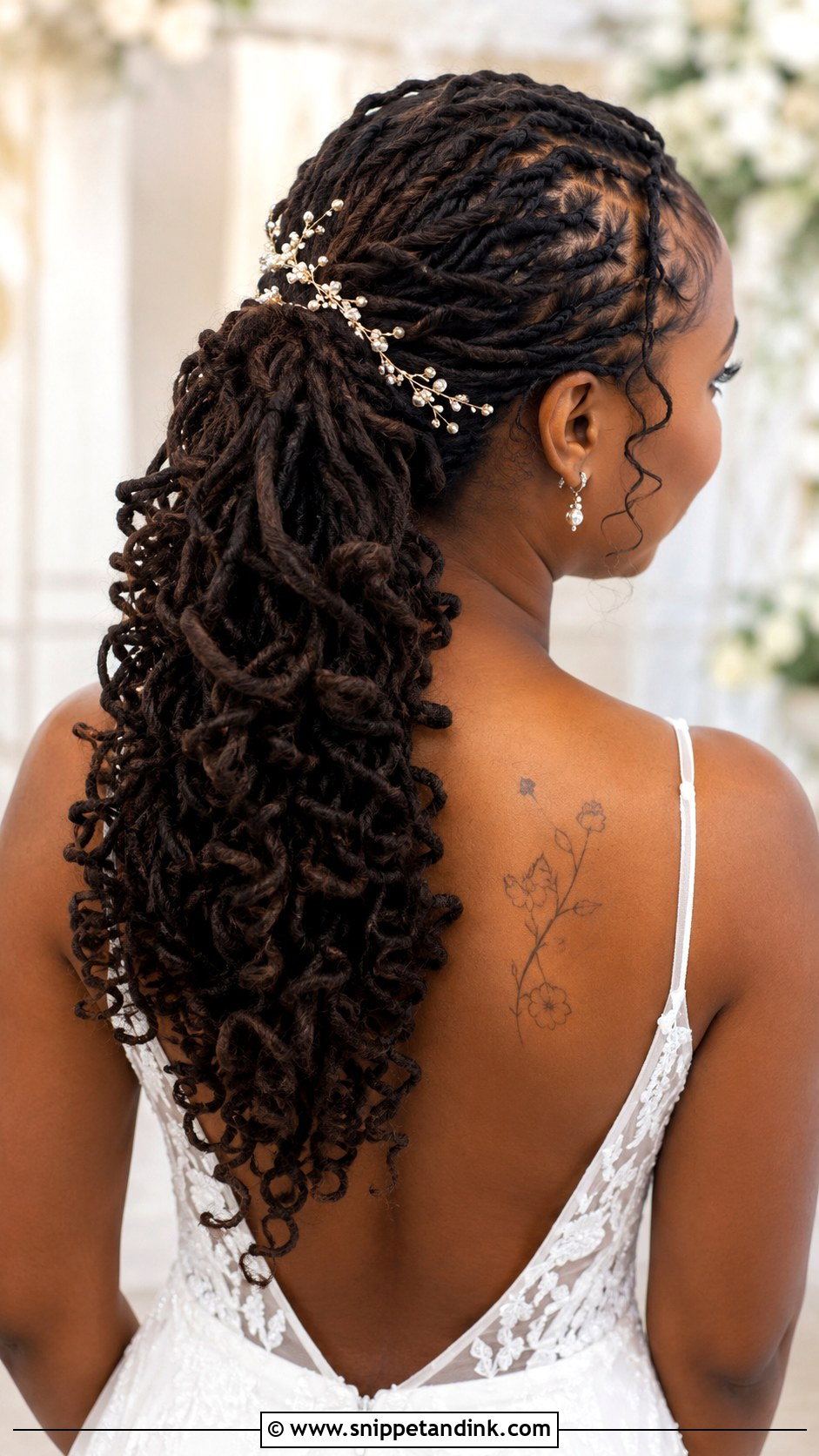
A ponytail with curled ends is neat at the base and playful below. I set the ends on small rods or pipe cleaners the day before so they curl without heat, then gather the locs high or low and wrap one around the base. Curled ends add volume, which helps if your locs are on the thinner side. It keeps hair off the shoulders all evening and suits modern and boho weddings alike.
24. Bohemian Loc Crown Braid
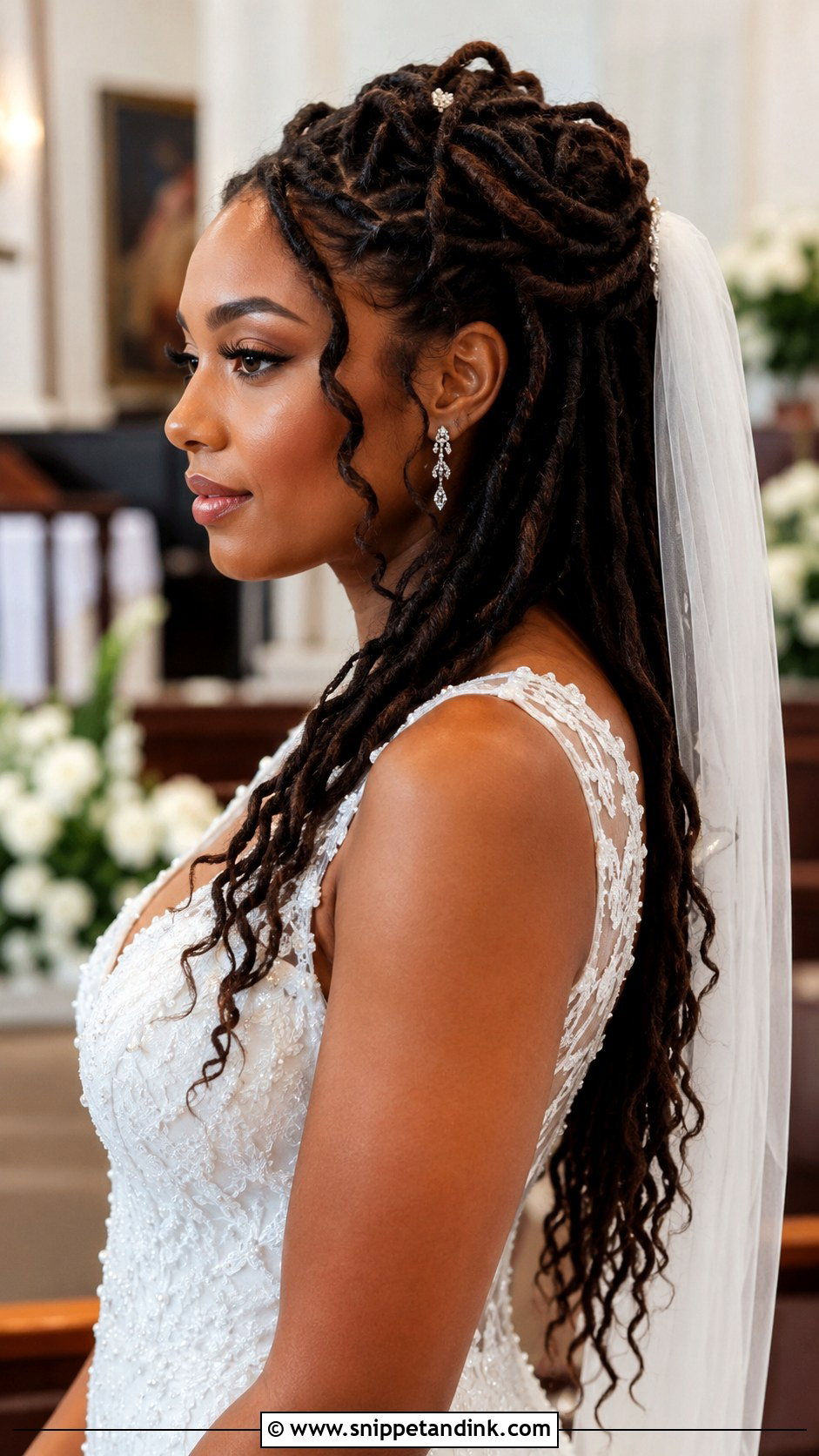
A boho crown braid is the looser, more decorated version of the braided crown: braids wrapped around the head with tiny flowers, leaves or beads woven through. Pulling the braid gently after pinning makes it look softer and wider. It suits garden, forest and festival weddings with flowy gowns and minimal jewellery. Because it’s wrapped, it stays put even when the dancing starts, which makes it practical as well as pretty.
25. Sleek Loc Bun With Baby Hairs
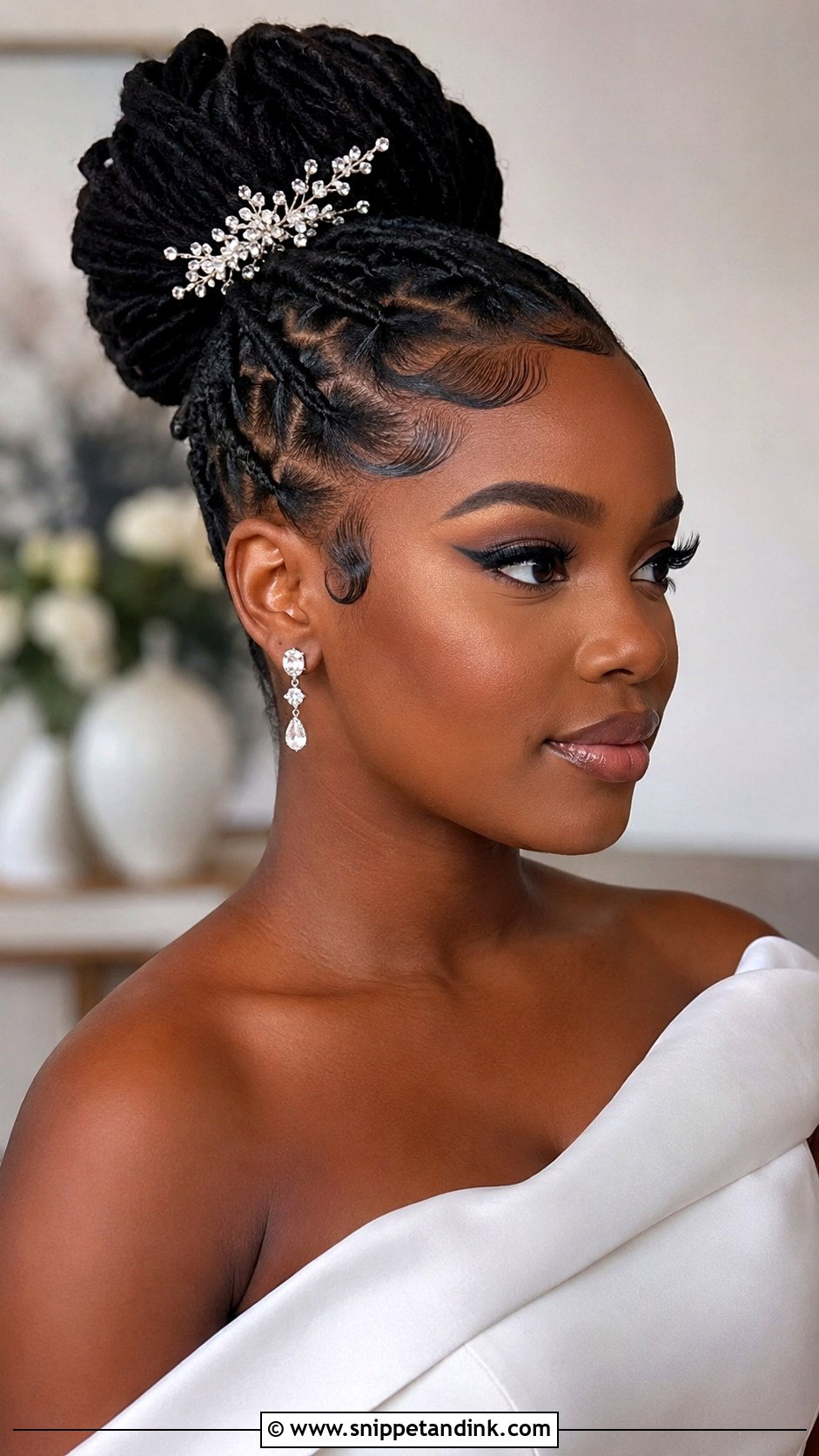
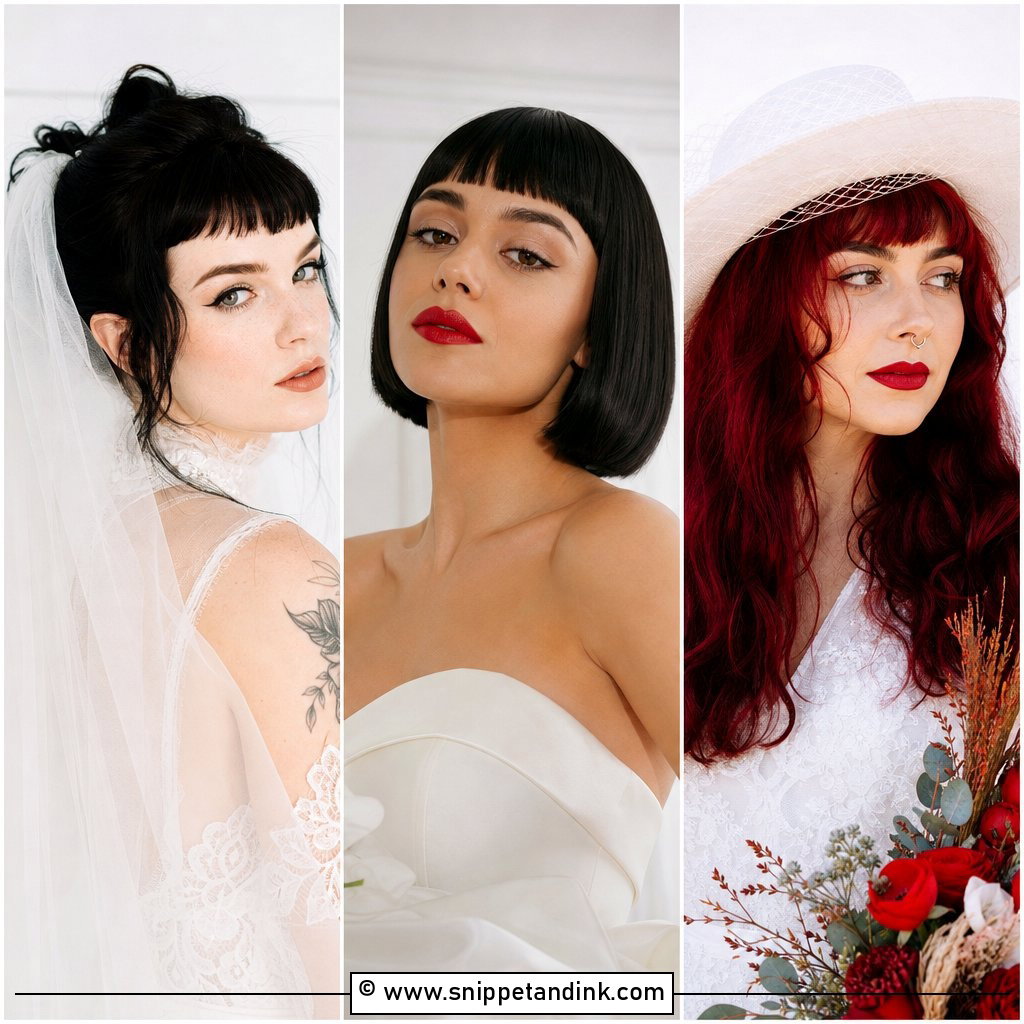
A sleek bun with laid edges depends on two things: smooth locs at the hairline and well-placed baby hairs. I smooth the locs back and coil a neat bun, then lay the edges with a light edge control and a soft brush into swirls. I’m careful with tension at the hairline here; edges that are pulled hard every time they’re styled can thin over time, and a wedding is not worth that. A jewelled pin or thin headband adds sparkle with sleek gowns and bold jewellery.
26. Loc Updo With Hair Vine
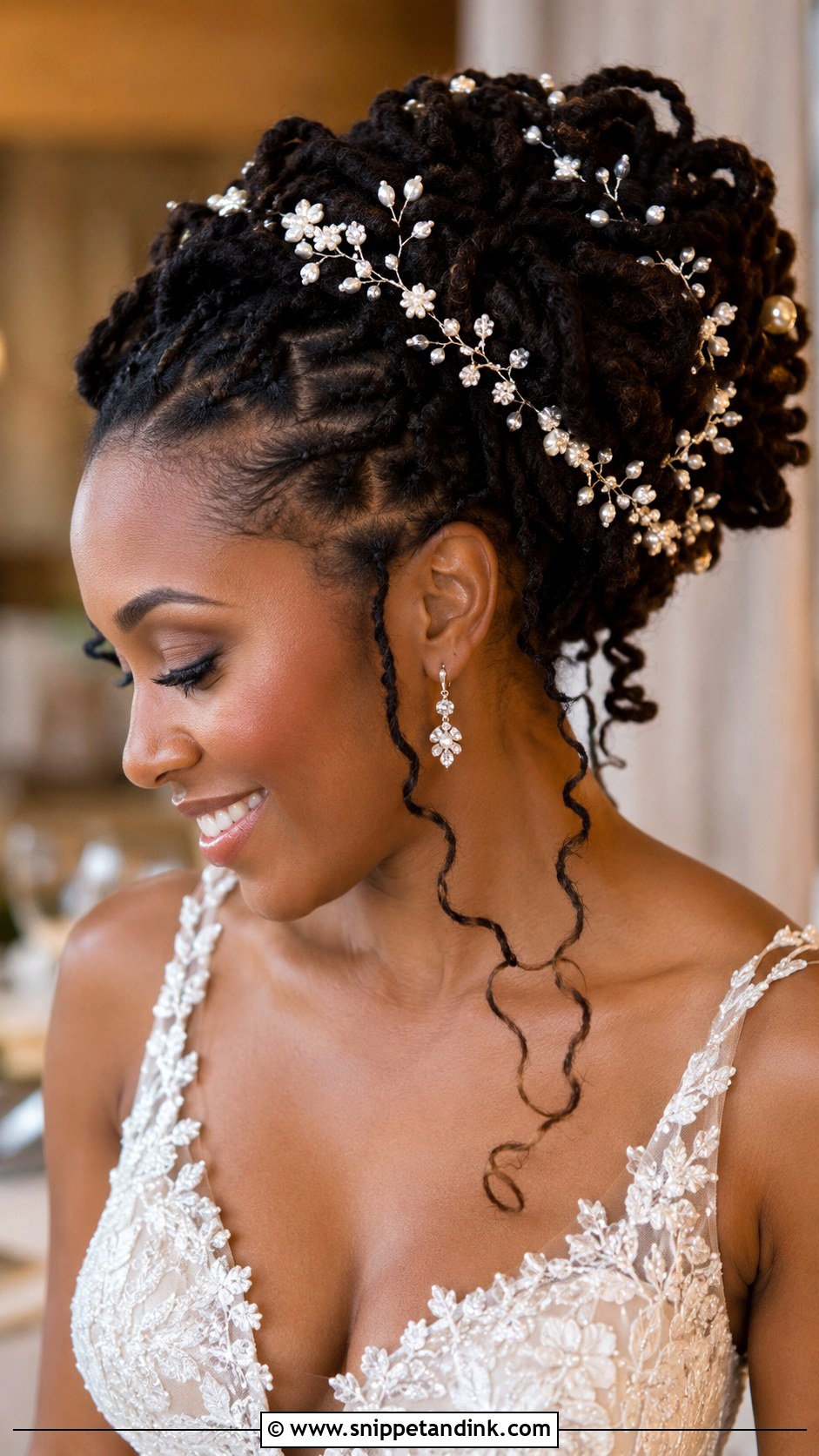
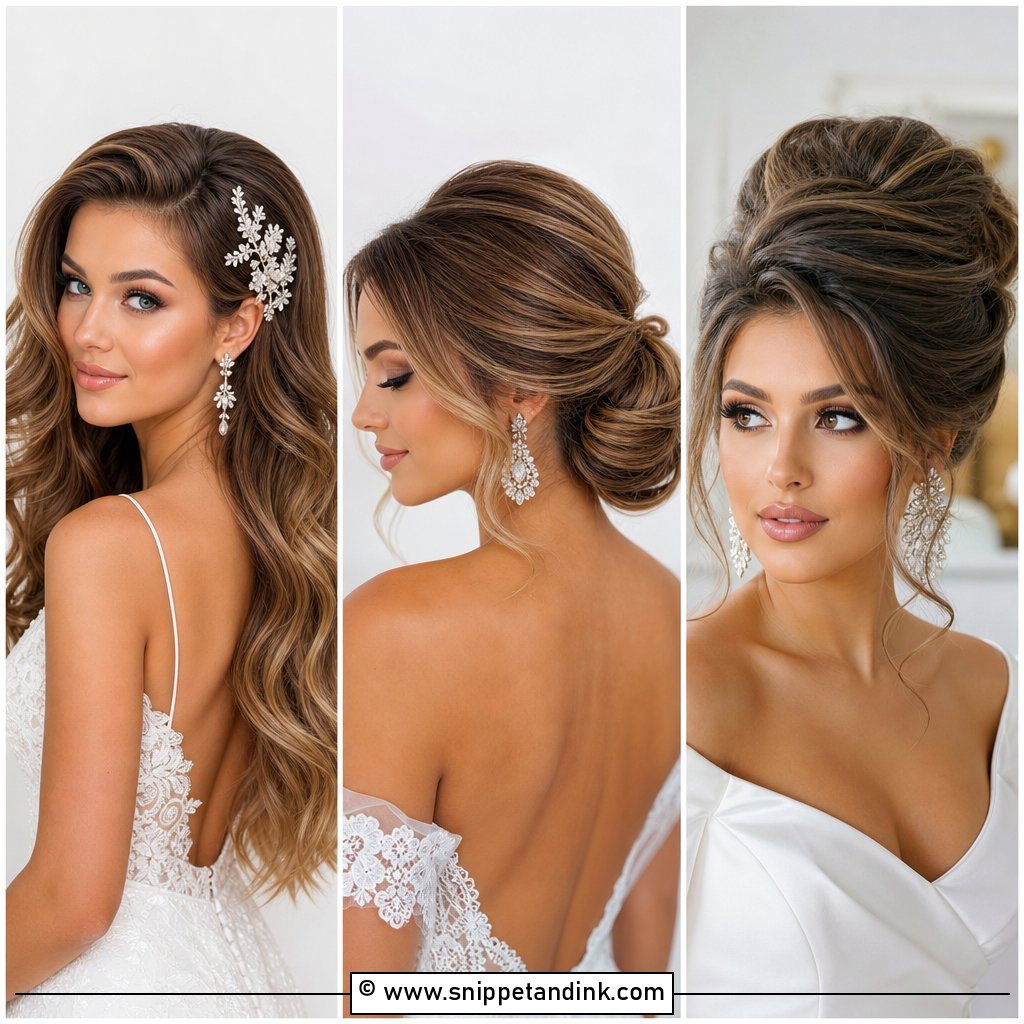
A hair vine is a flexible wire strung with beads, crystals or small flowers, and threaded through a loc updo it catches the light as you move. I sweep the locs into a soft upswept shape, then weave the vine through and secure each end with a small pin. Ask for a vine with fine wire; thick wire is stiff and pokes out of the style. A few loose tendrils suit garden and vineyard weddings with a flowy gown.
27. Double Loc Buns
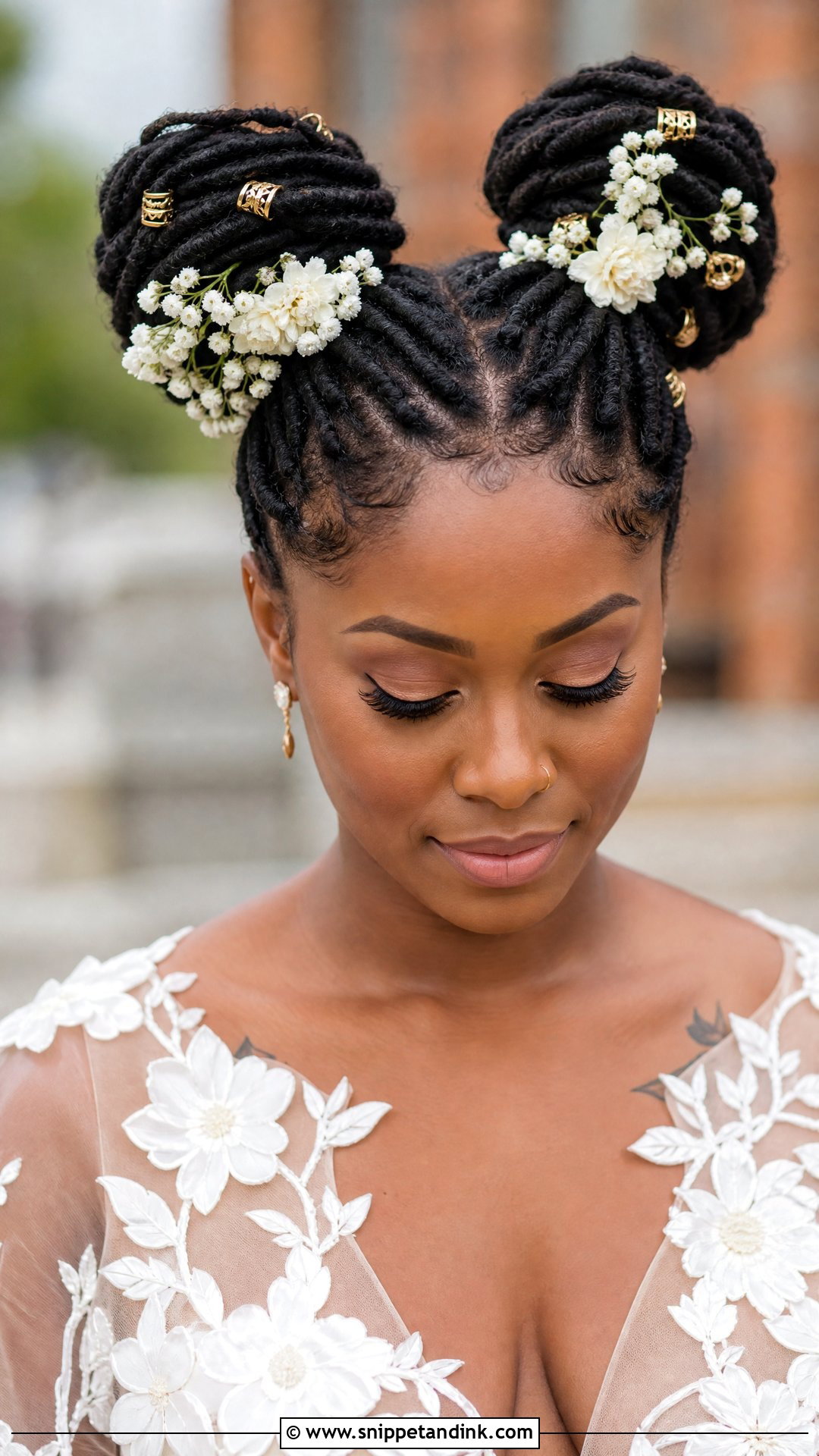
Double buns split the locs into two sections and coil each one into a round bun placed symmetrically on the head. It’s playful and suits festival, relaxed and fashion-led weddings with a modern gown or a jumpsuit. Splitting the hair actually distributes the weight better than one big bun, which surprises people. I check the part line carefully because it shows in every photo from behind. Cuffs, flowers or pins on each bun complete it.
28. Loc Mohawk Updo
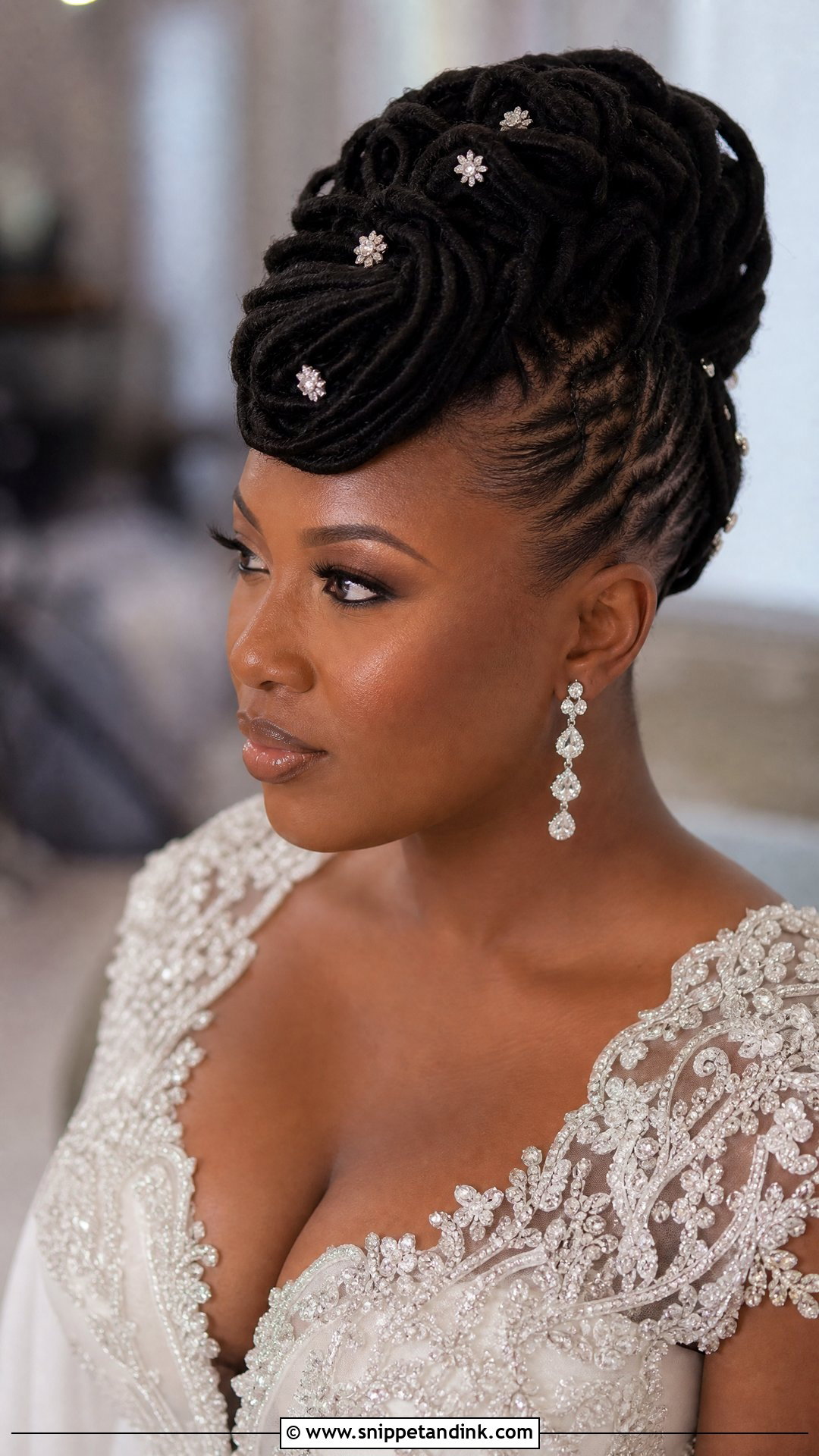
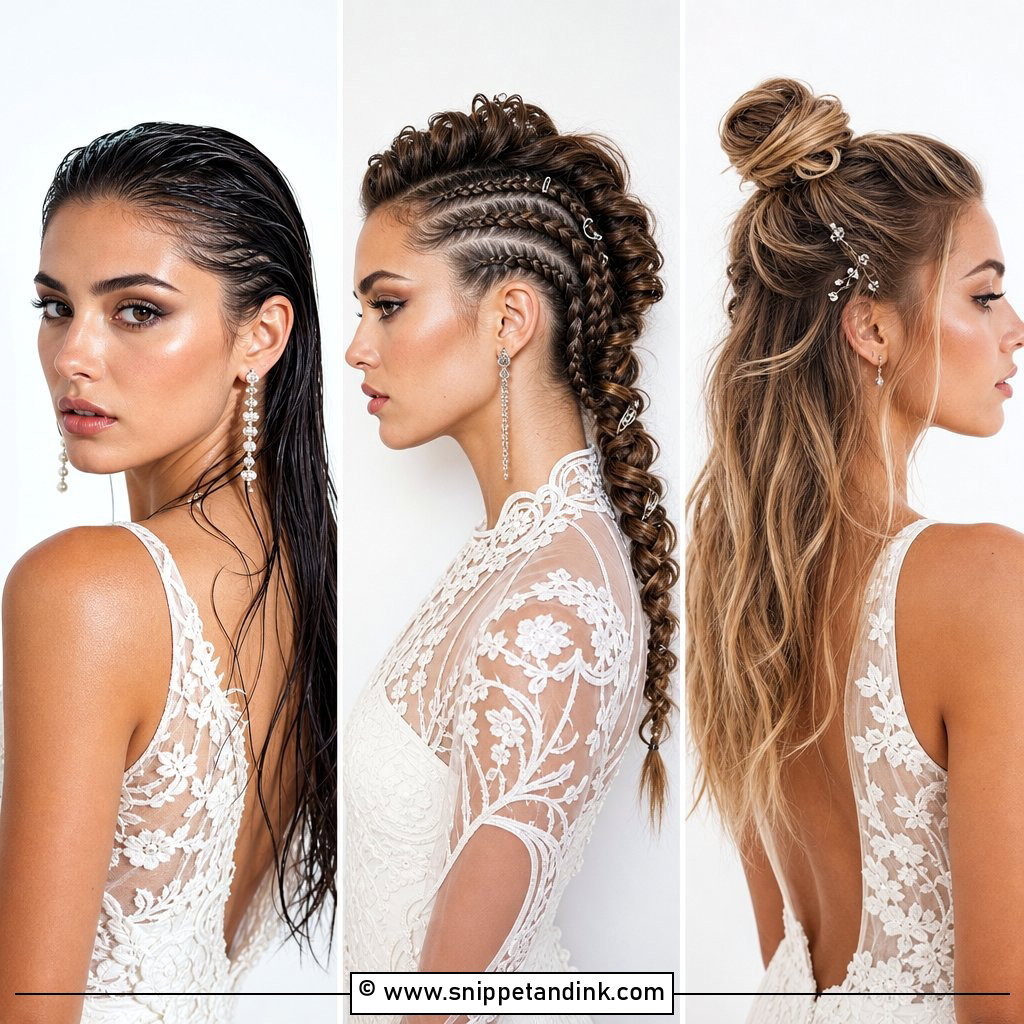
Unlike the faux hawk, the mohawk updo rolls and tucks the locs along the centre, giving a softer, sculpted ridge from front to back. I pin the sides up and inward first, then build the centre in sections. It’s a strong look for alternative and glam weddings with a statement gown and bold earrings. Jewelled pins along the ridge add sparkle. If you wear glasses, try them on at the trial, as tight sides can press the arms of the frame into your head.
29. Loc Updo With Beaded Accents
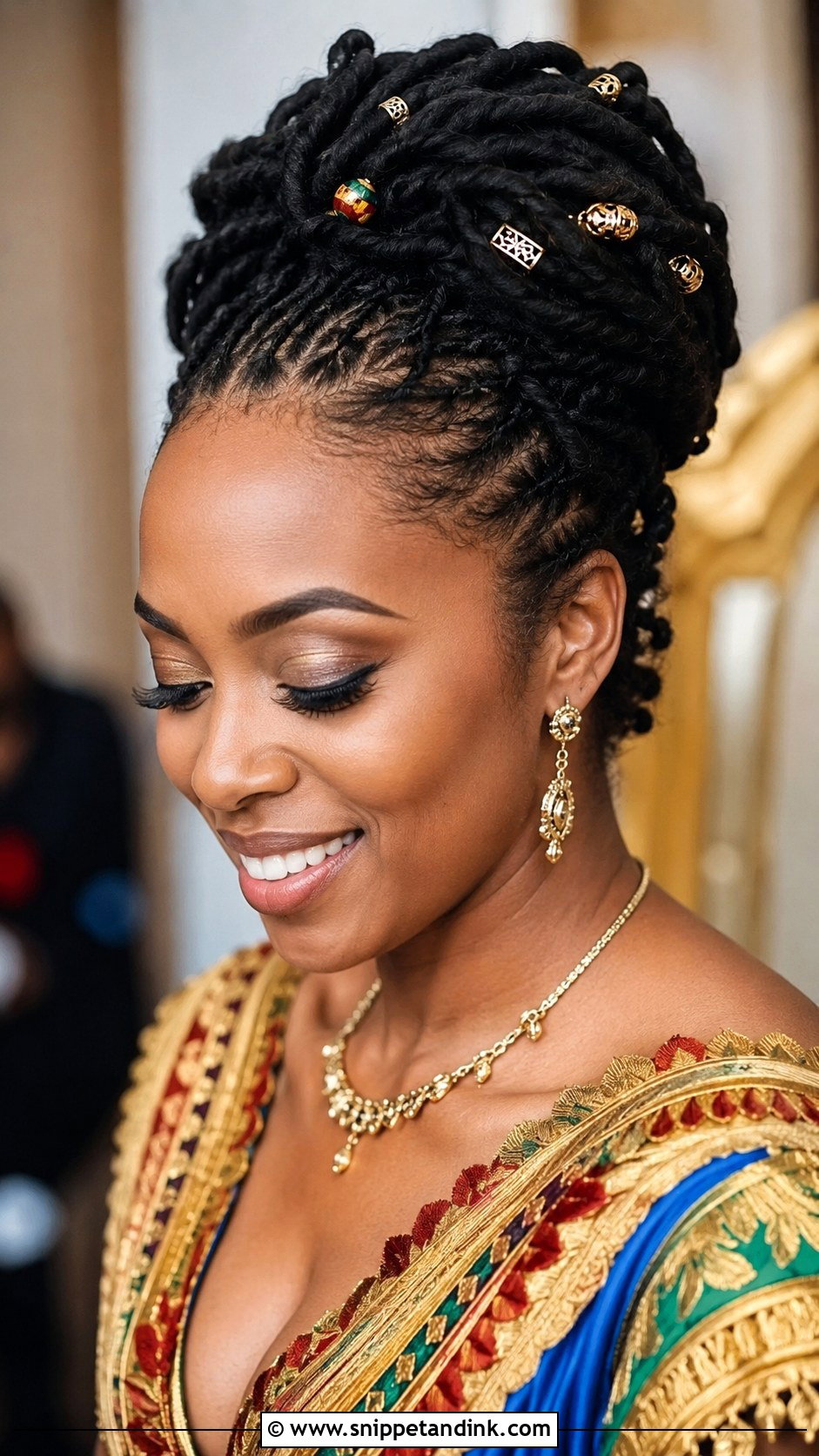
Beads carry colour, texture and often family tradition. I sweep the locs into an upswept style, then thread beads onto individual locs, either clustered in one area or spaced through the design. Check the bead holes before the trial: beads that fit your locs snugly stay put, while large holes let them slide off. Heavy metal beads add weight quickly, so I use lighter ones for an all-day updo. They suit rich fabrics and traditional or modern weddings.
30. Long Flowing Locs With Floral Headband
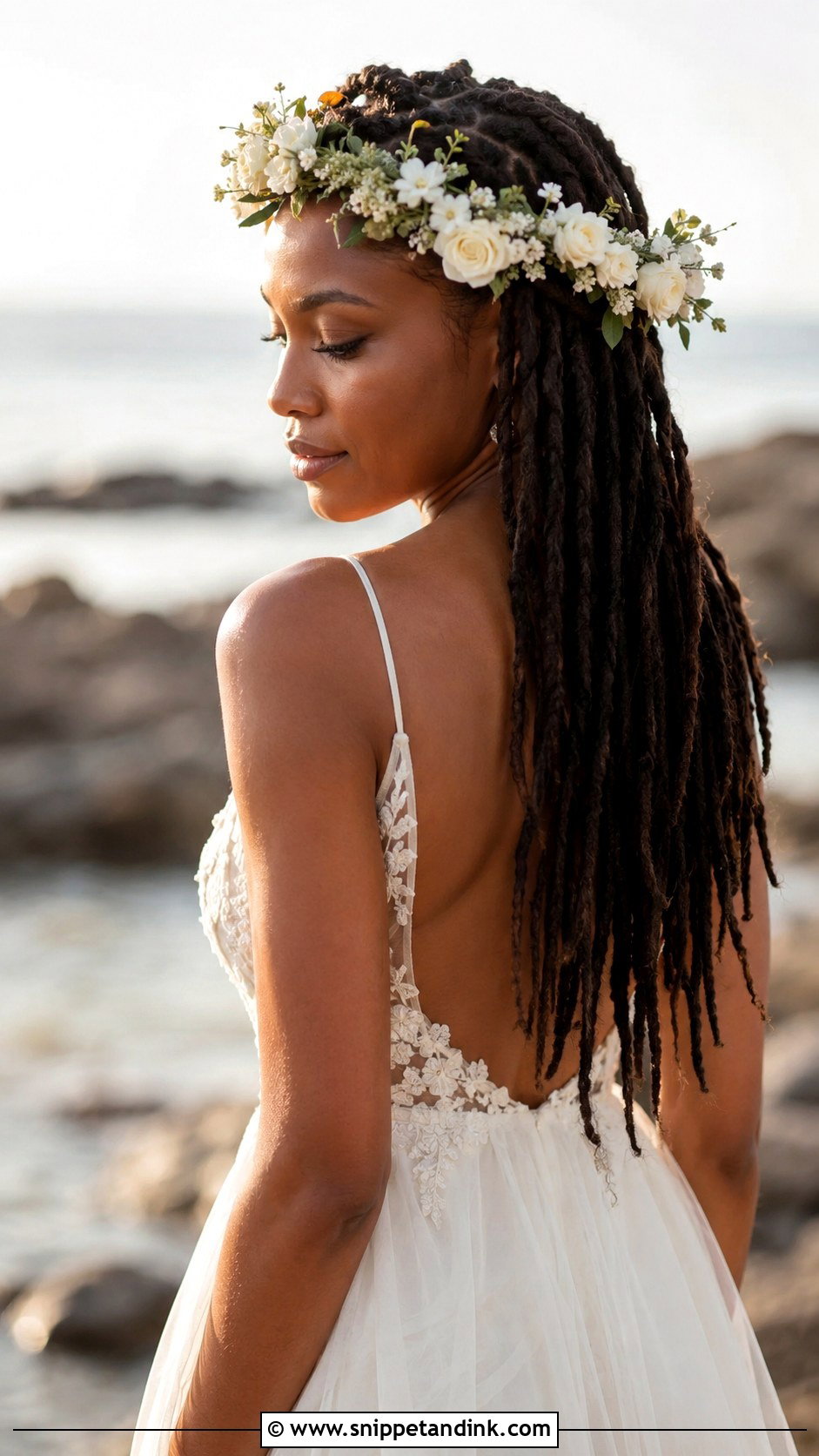
Sometimes the right answer is to leave the locs down. Long locs flowing down the back with a floral headband or crown celebrates their length without any pins at all, which also makes it the most comfortable choice for a long day. I secure the headband with small pins hidden underneath so it doesn’t slide back when you laugh. It suits beach, garden and boho weddings. Matching the flowers to the bouquet ties the picture together.
If the Updo Starts to Ache by the Reception
Long, mature locs can be genuinely heavy, and a high updo levers that weight off a small area of scalp. Some brides feel fine all day. Others get a headache or tender edges by the speeches. I’d rather plan for that than pretend it won’t happen.
How I build in relief
- Spread the anchor points. Two smaller pinned sections hold weight more comfortably than one tight base.
- Keep the edges loose. Tension at the hairline is what hurts first and what does lasting damage if it happens often.
- Design a second look. A high style can often drop into a low bun or a half-up shape in ten minutes if I plan which pins come out.
- Pack a small kit: bobby pins, a fabric elastic, a wide-tooth comb and a silk scarf for the ride home.
At the end of the night, take pins out slowly and in reverse order, and don’t rip at a stuck pin; wiggle it free. Sleep on a satin pillowcase or in a scarf, and give your scalp a gentle massage the next morning. A day off from any tension style afterward goes a long way.
Your Locs, Your Neckline and Ten Hours of Wear
Locs give a bride options that loose hair can’t: sculpted buns, petal designs, braided crowns, waves set without heat, and plenty of room for flowers, pearls, cuffs and beads. A ballroom and a barefoot beach call for different shapes, and so do different dress necklines. Bring the dress, the veil and any jewellery to your trial, tell your stylist honestly how your scalp feels after a long day in an updo, and build the style around that. Comfort is what lets you enjoy the evening.
You'll Like These Ideas:


Leave a Reply