
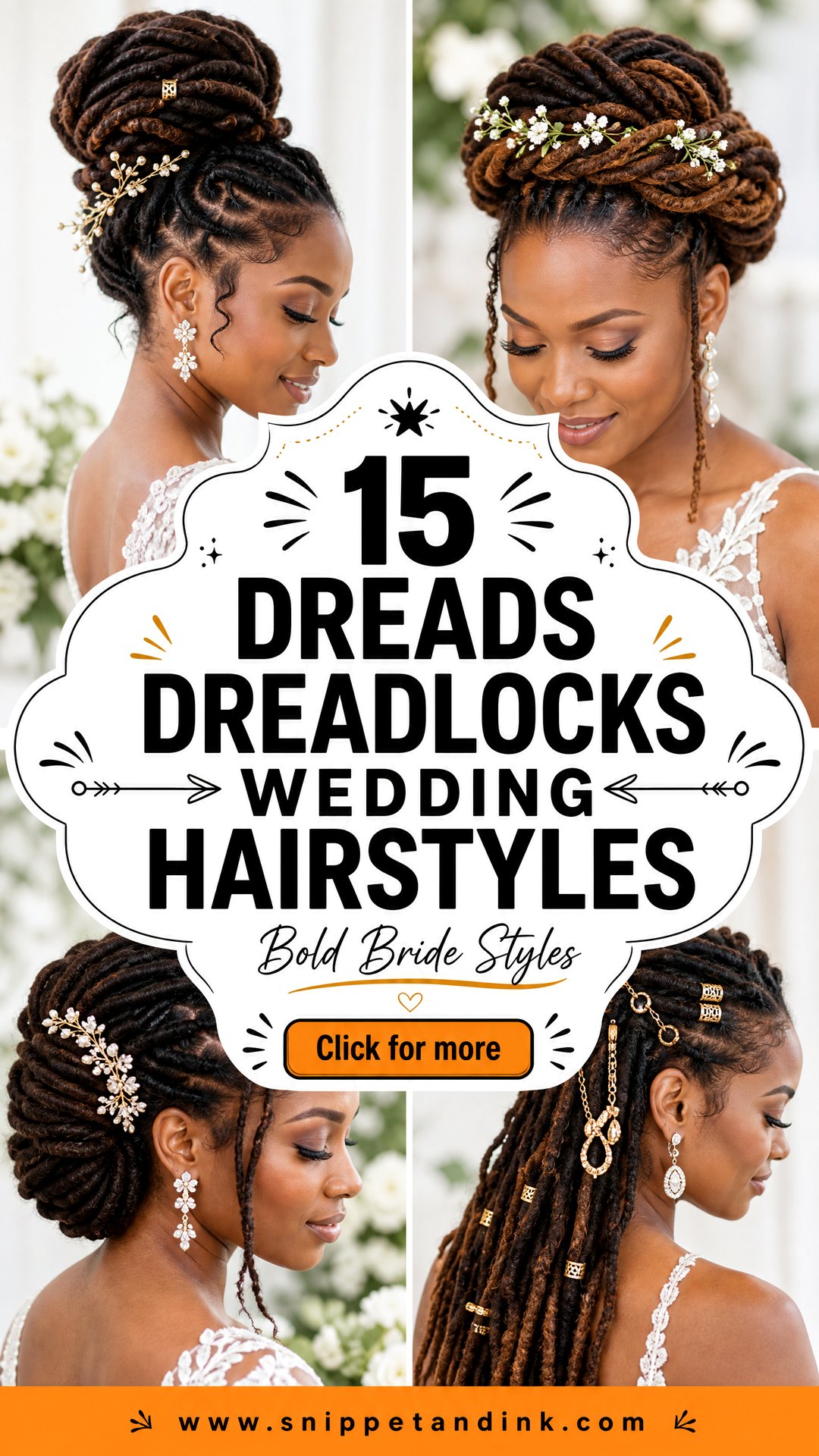
Locs are one of the easiest textures I get to make bridal, because they already hold a shape and they already look like the person wearing them. Bride, bridesmaid, guest or mother of the bride, you can take them sculptural or loose without hiding what makes them yours. In my chair, the deciding factors are rarely the photo you saved. They’re your neckline, your veil, the venue and how many hours of pin weight your scalp can handle. I’ve kept these dreadlocks wedding hairstyles practical as well as pretty, so you can picture each one at hour eight, not just in the first portrait.
Retwist Date Matters More Than the Style
The regret I hear most from loc brides isn’t about the updo. It’s a retwist done two days before the wedding, which leaves the scalp tender and the roots so tight that every pin pulls. A fresh retwist can also look a little shiny and flat at the root in close-up photos.
This is the calmer schedule I suggest, though your loctician knows your hair better than any rule:
- Retwist or interlock roughly one to two weeks out, so tension eases and the parts still look clean.
- Wash at least two or three days before. Thick or long locs can take a full day to dry inside, and damp locs pinned up for hours can start to smell musty.
- Skip heavy waxes and thick creams that week. They pick up lint, dull the color under flash and make pins slide.
- If you want curled ends, set them the night before and sleep in a satin bonnet once they’re completely dry.
Loctician, Bridal Stylist, or Both
A loctician understands your roots and how far your locs will bend. A bridal stylist understands veils, timings and the getting-ready schedule. My preference is for the loctician to handle maintenance and for the bride to send me clear photos of the back and sides before the trial. Ask any stylist outright whether they’ve pinned locs before and how they plan to anchor a comb in them.
1. Dreadlocks High Bun Wedding Hairstyle
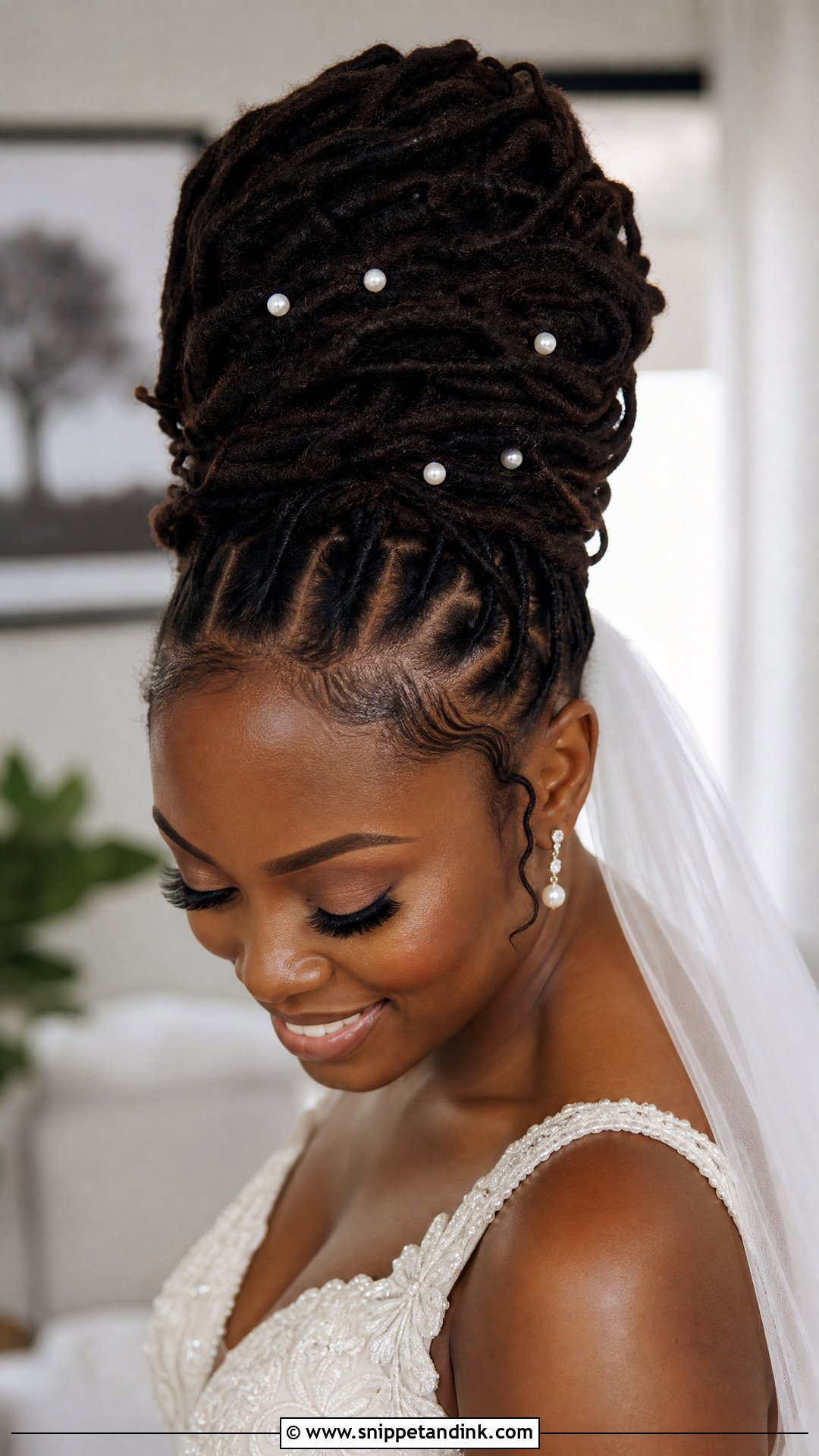
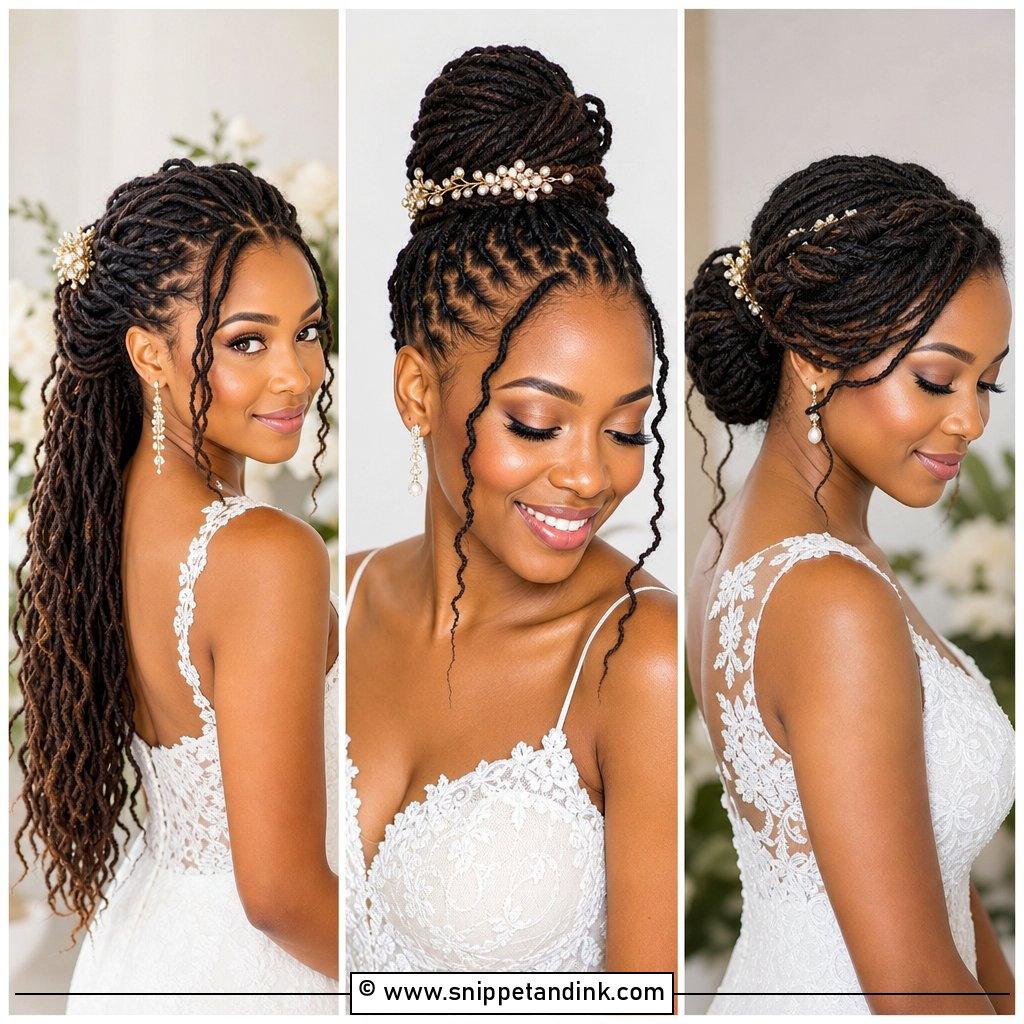
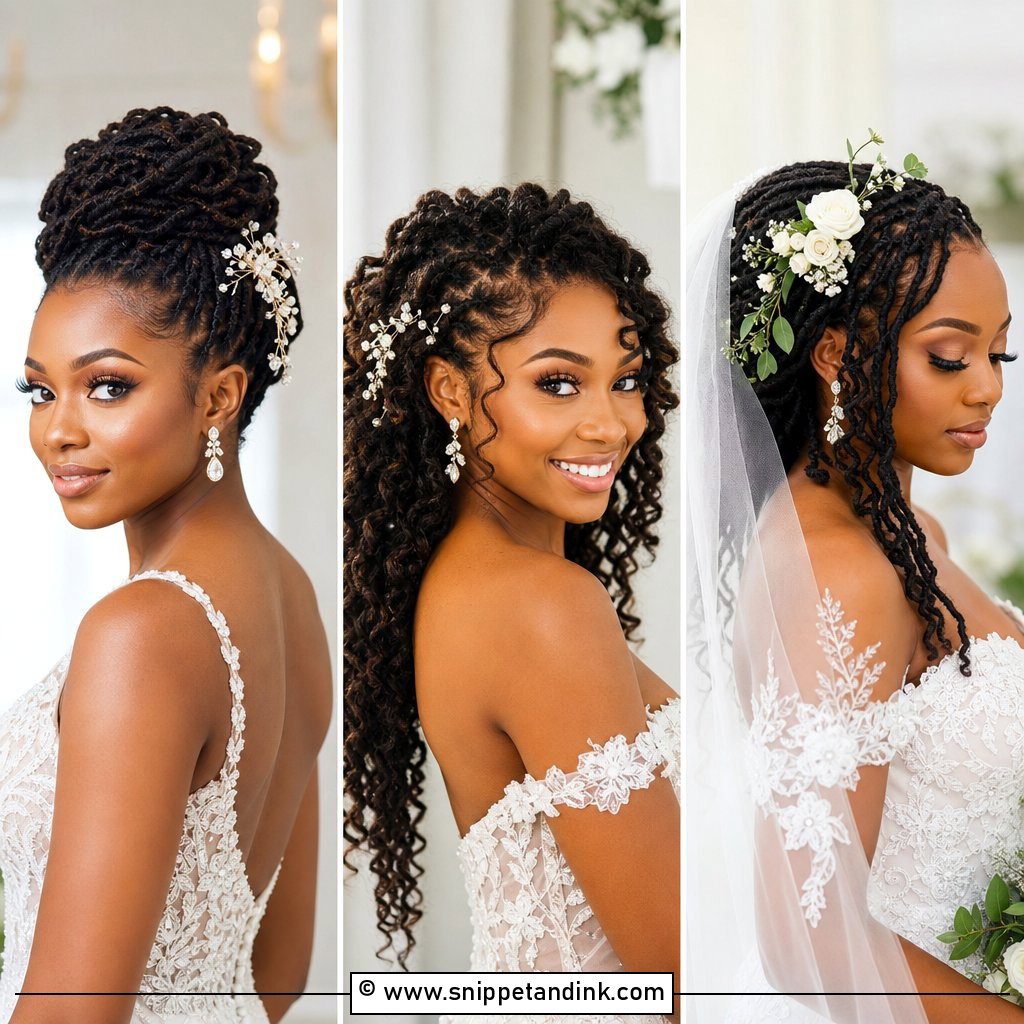
A high bun clears the neck and shoulders completely, which is why I reach for it with strapless, halter and high-neck gowns or with earrings you actually want seen. Wrapped smooth and round, sculpted tall, or left textured and full, the shape depends mostly on length and density. The catch is weight. All of it sits at the crown, so I build it on two or three anchored sections rather than one tight base, or your hairline will tell you about it by the speeches. Pearl pins or gold cuffs dress it, and a veil comb slides in just under the bun where it has something solid to grip.
2. Dreadlocks Low Bun Wedding Hairstyle
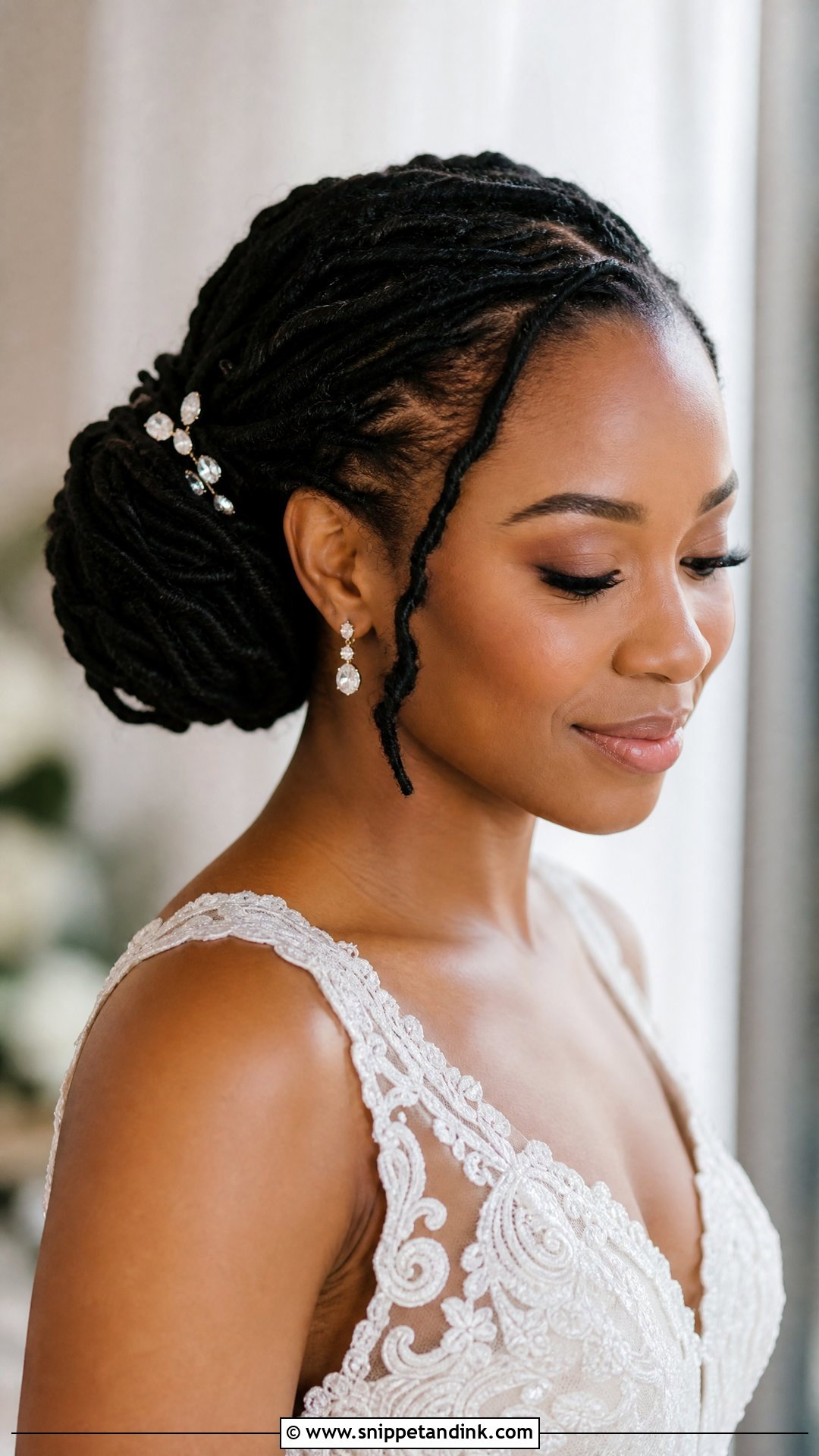
This is the updo I recommend most to brides who are nervous about tension. Sitting at the nape, it doesn’t drag on the crown, and it gives a veil comb the most stable spot on the head. Long locs fold into a rounded chignon; medium locs tuck into something more compact with decorative pins doing the finishing. I’ll keep it neat for a formal ceremony or pull a few locs looser for a garden one, and it suits backless and lace gowns because nothing competes with the back detail.
3. Half Up Half Down Dreadlocks Wedding Hairstyle
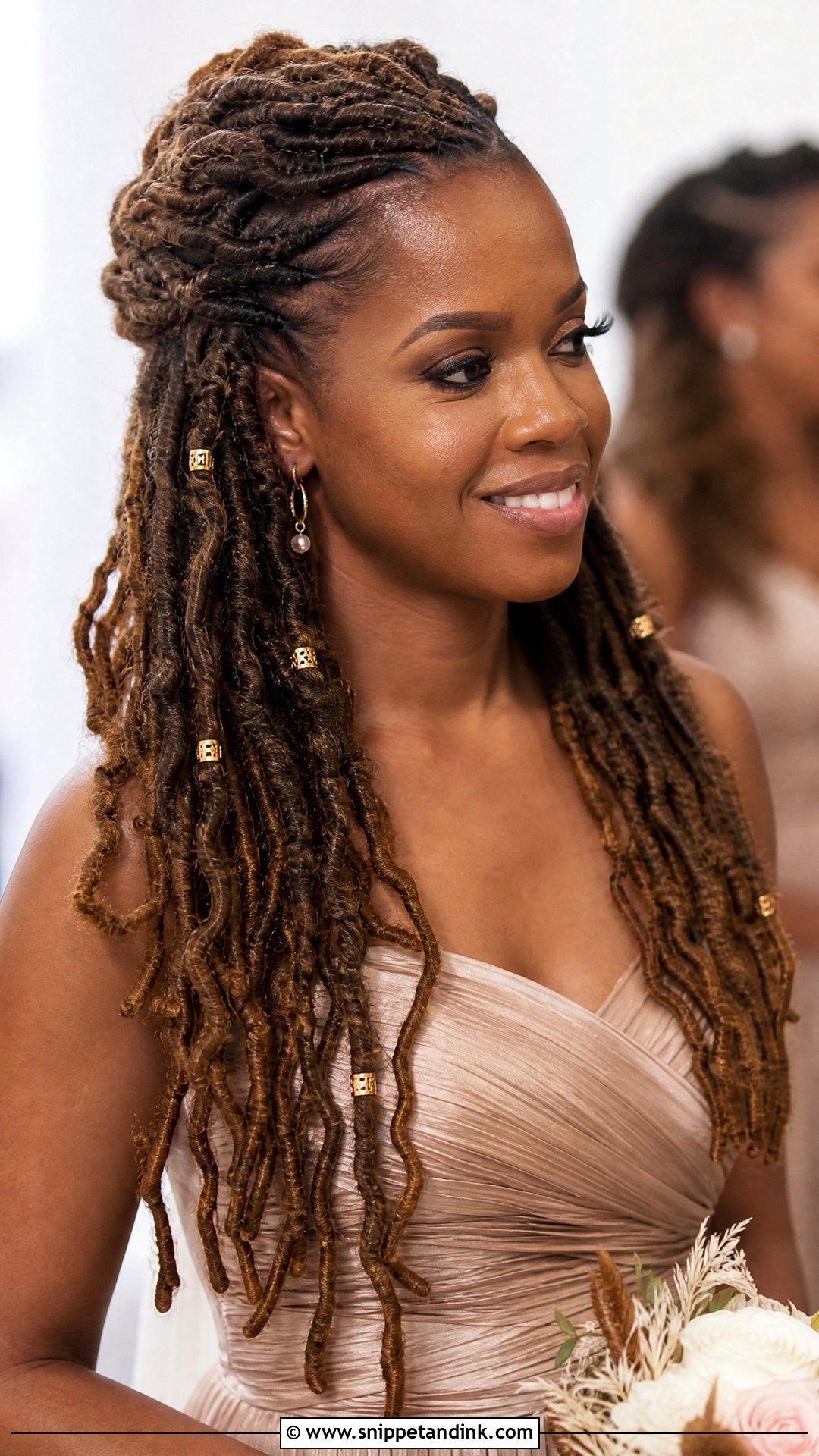
Half up gives you the length without locs swinging across your face during vows. I twist, braid or simply pin back the top section, and the rest falls over the shoulders or down the back. The thing I check at the trial is weight distribution: if the top section is heavy and pinned in one spot, it sags by evening, so I usually split it into two anchors behind the ears. Bridesmaids tend to like this version because it reads coordinated without feeling like a full formal updo. Small flowers, crystal pins or cuffs go along the pinned line, where the camera will find them.
4. Dreadlocks Crown Braid Wedding Hairstyle
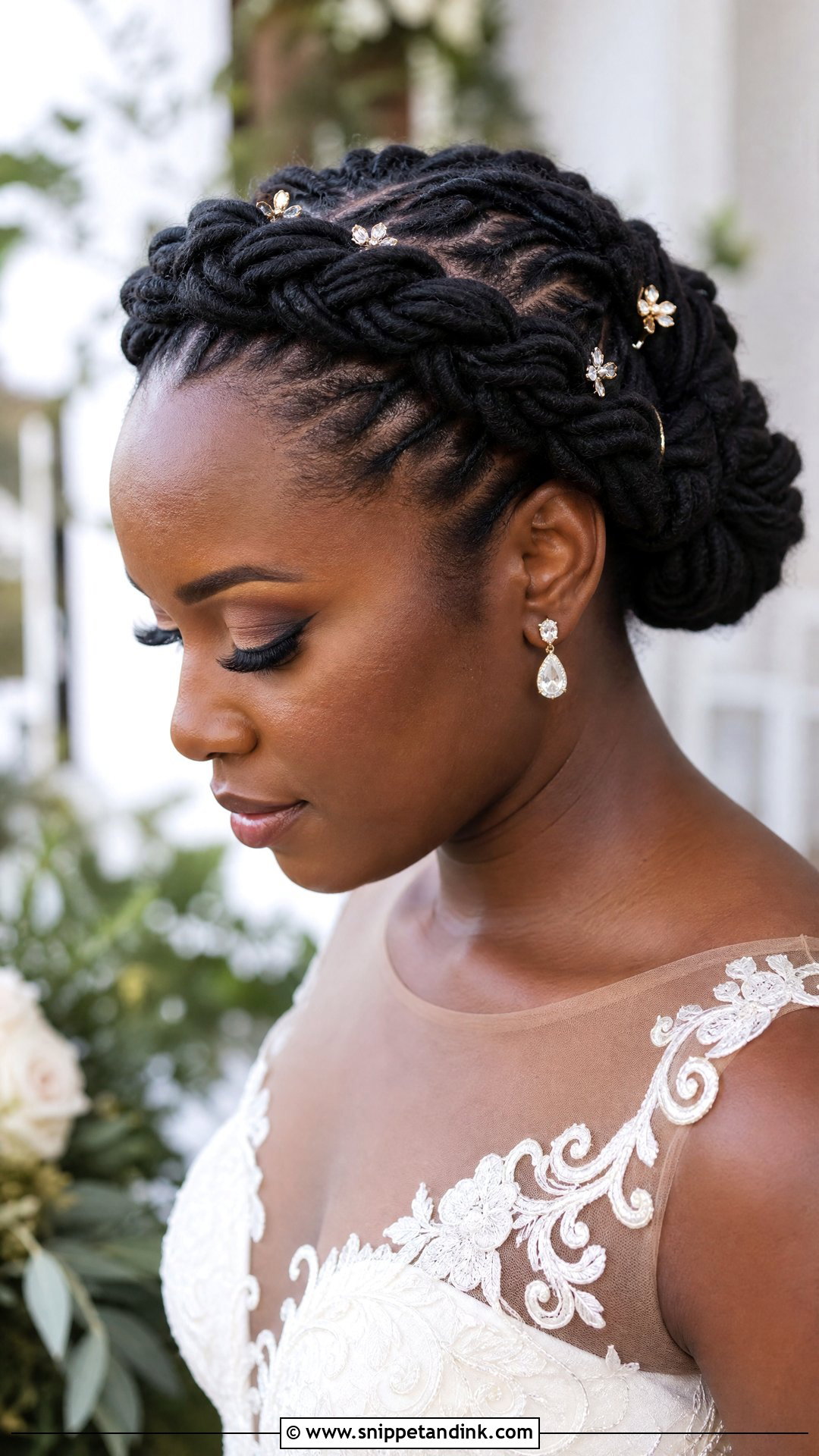
A crown braid makes locs into a halo, and on the right length it’s one of the most secure styles on this list because the braid pins flat against the head all the way round. It can circle the whole head or sit across the front like a headband. You need enough length for the locs to cross over the top, and very thick locs can make the braid wide and heavy, so I sometimes braid with fewer, grouped locs instead. Because the hair is already doing a lot, I’d pair it with a plain gown and quiet jewelry. A few slim locs left loose by the face softens it.
5. Dreadlocks Side Swept Wedding Hairstyle
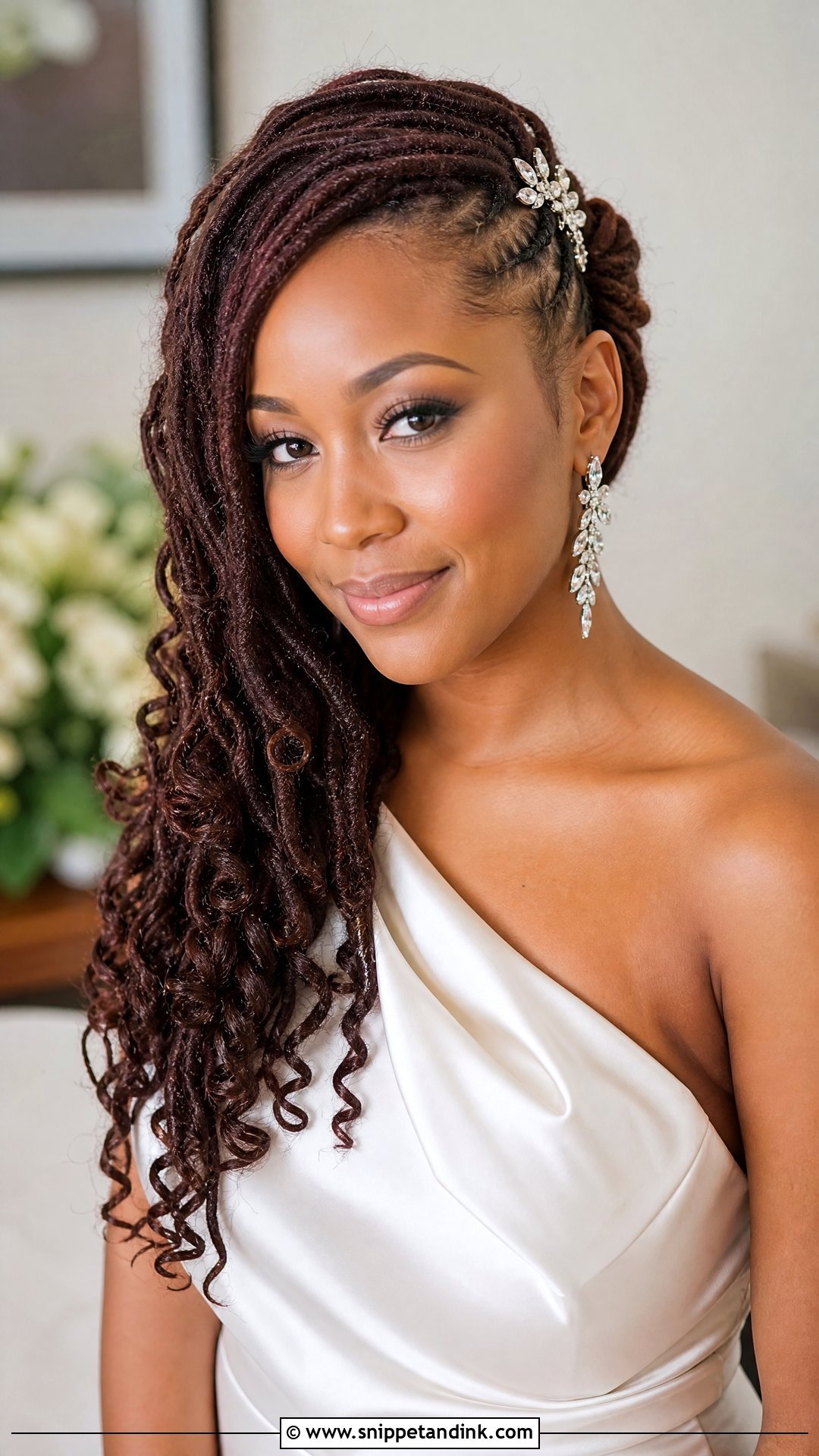
Sweeping everything over one shoulder gives drama without stacking weight on top of the head. It works with one-shoulder gowns, deep necklines and dresses with a detailed back, because one side stays completely clear. I always pin or flat-twist the side behind the ear firmly; that anchor is what stops the whole mass sliding back over the shoulder every time you hug someone. Curled ends, a metallic cuff or a comb on the pinned side finish it. Remember that one shoulder carries all the length, which matters if you’ll be wearing it under a heavy beaded strap.
6. Dreadlocks Barrel Roll Wedding Updo
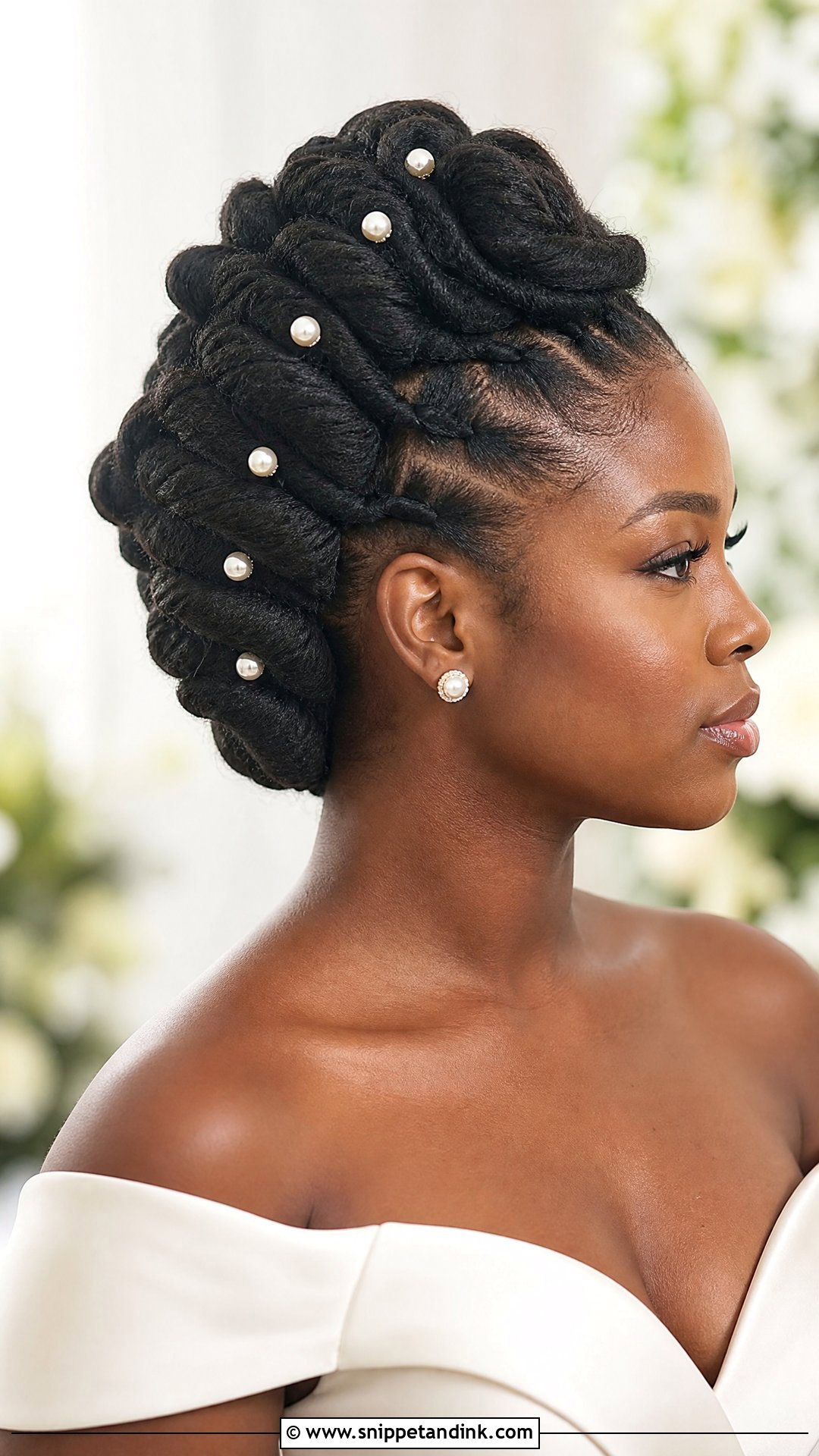
Barrel rolls are where locs really show off what they can do. Each section is rolled and pinned close to the head, so the shape looks deliberate from the front, the sides and the back. It’s my pick when a bride asks for a formal updo with texture rather than a smooth bun. The dreadlocks barrel roll wedding updo needs medium to long locs and some patience at the trial, since getting the rolls even takes time. Built high at the crown or low near the nape, it holds well because every roll is its own small anchor. Pearl pins tuck between the rolls nicely.
7. Dreadlocks Petal Bun Wedding Hairstyle
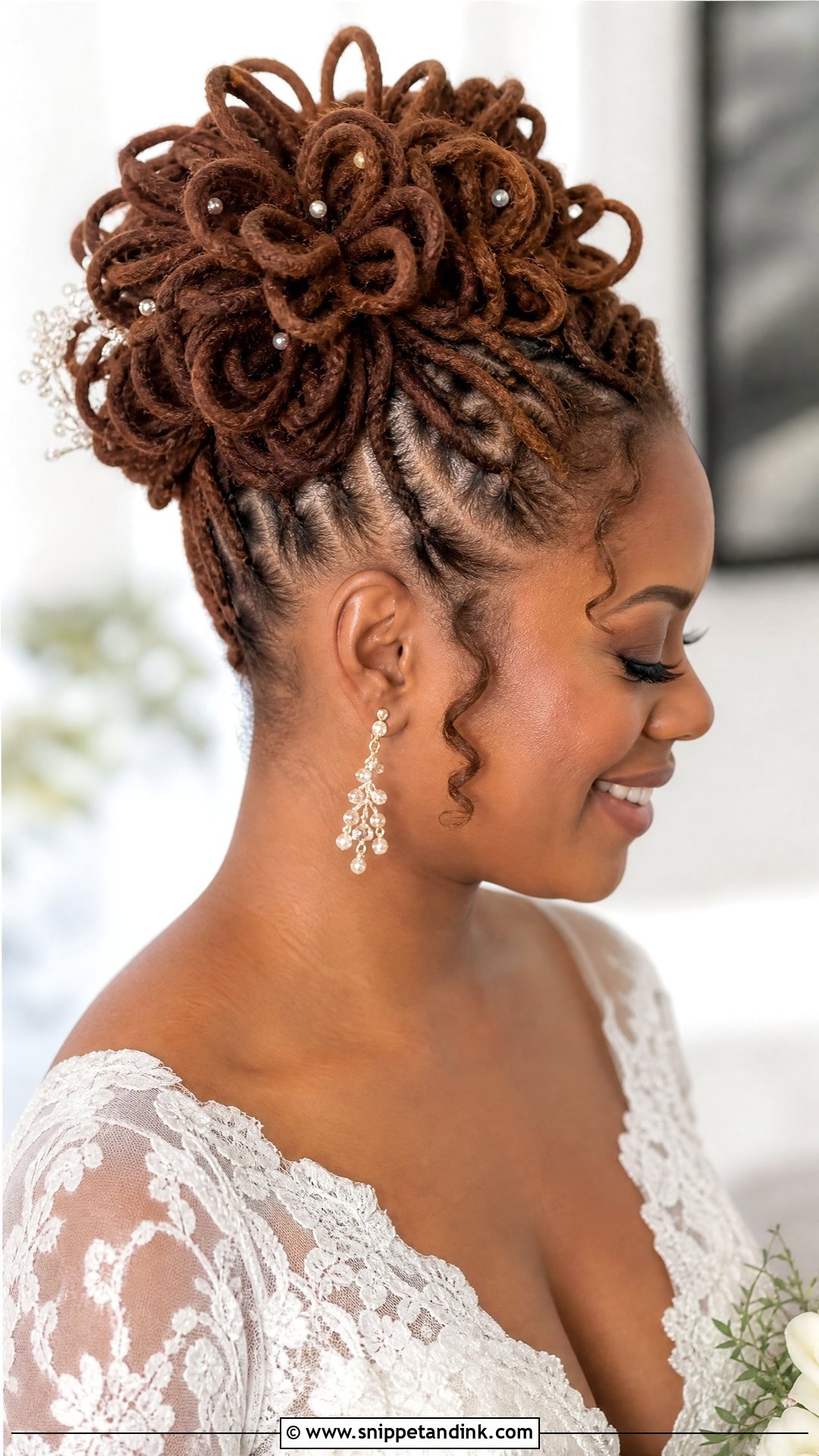
The petal bun is the most detailed style here and the one that needs the most length. I loop and fold each section into a petal and pin them together so the whole bun reads like a flower from the back. Medium locs can manage a smaller version, but short ones simply won’t bend into loops. Expect the trial to run longer than usual. The dreadlocks petal bun wedding hairstyle can sit high, low or off to one side, and a few small pearls set inside the petals give depth without cluttering it.
8. Dreadlocks French Roll Wedding Hairstyle
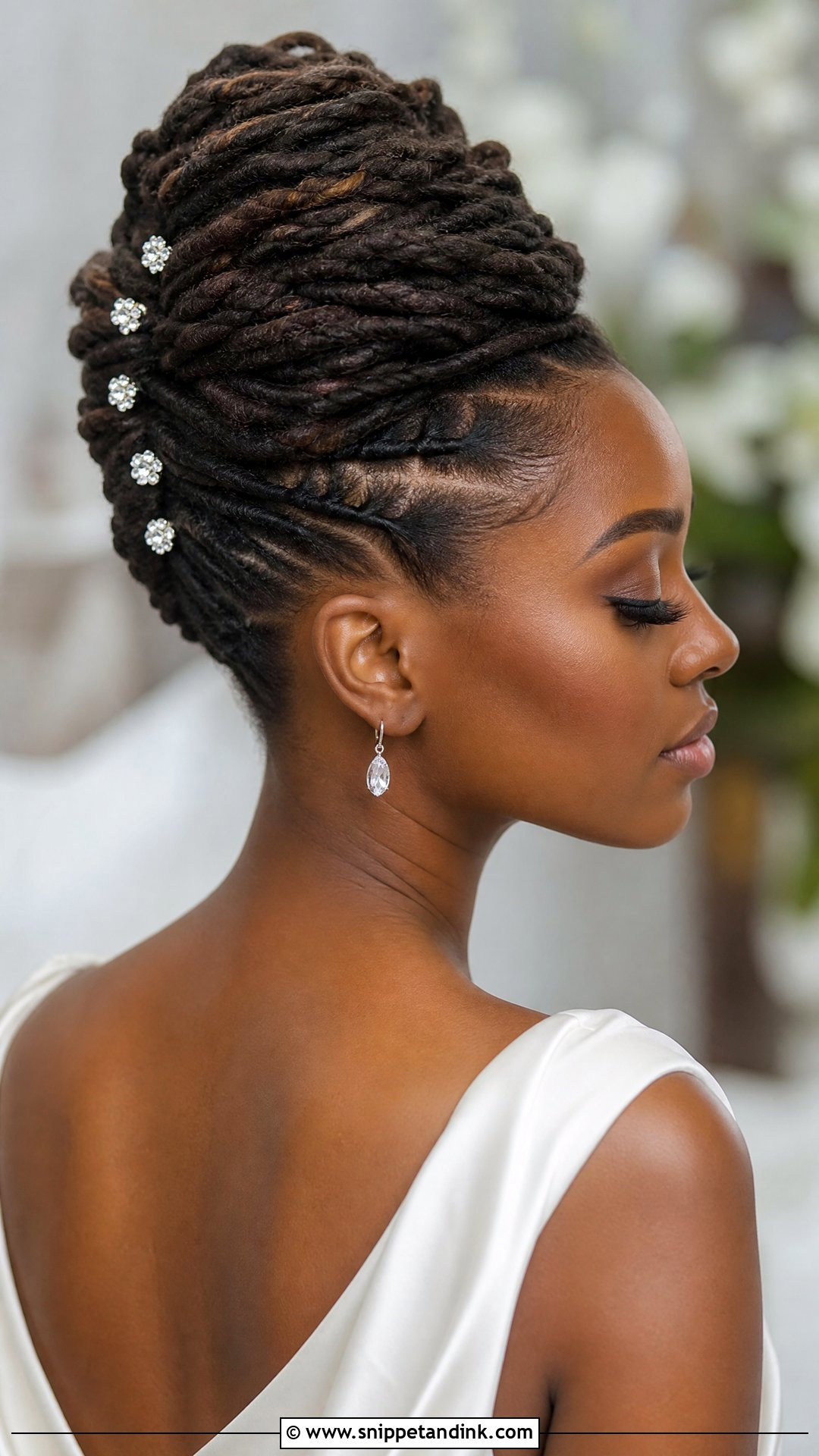
A vertical roll controls a lot of length neatly, which makes it my go-to for long locs under a structured satin gown or for a courthouse ceremony where you want polish over volume. Locs sweep up and tuck into a seam at the back. The roll is easy to make, but the front is where it lives or dies: smooth, side-parted or lightly twisted, I decide that with the bride looking at her face in the mirror, not from a picture. A veil goes above or below the roll, and crystal pins sit well along the seam.
9. Dreadlocks Ponytail Wedding Hairstyle
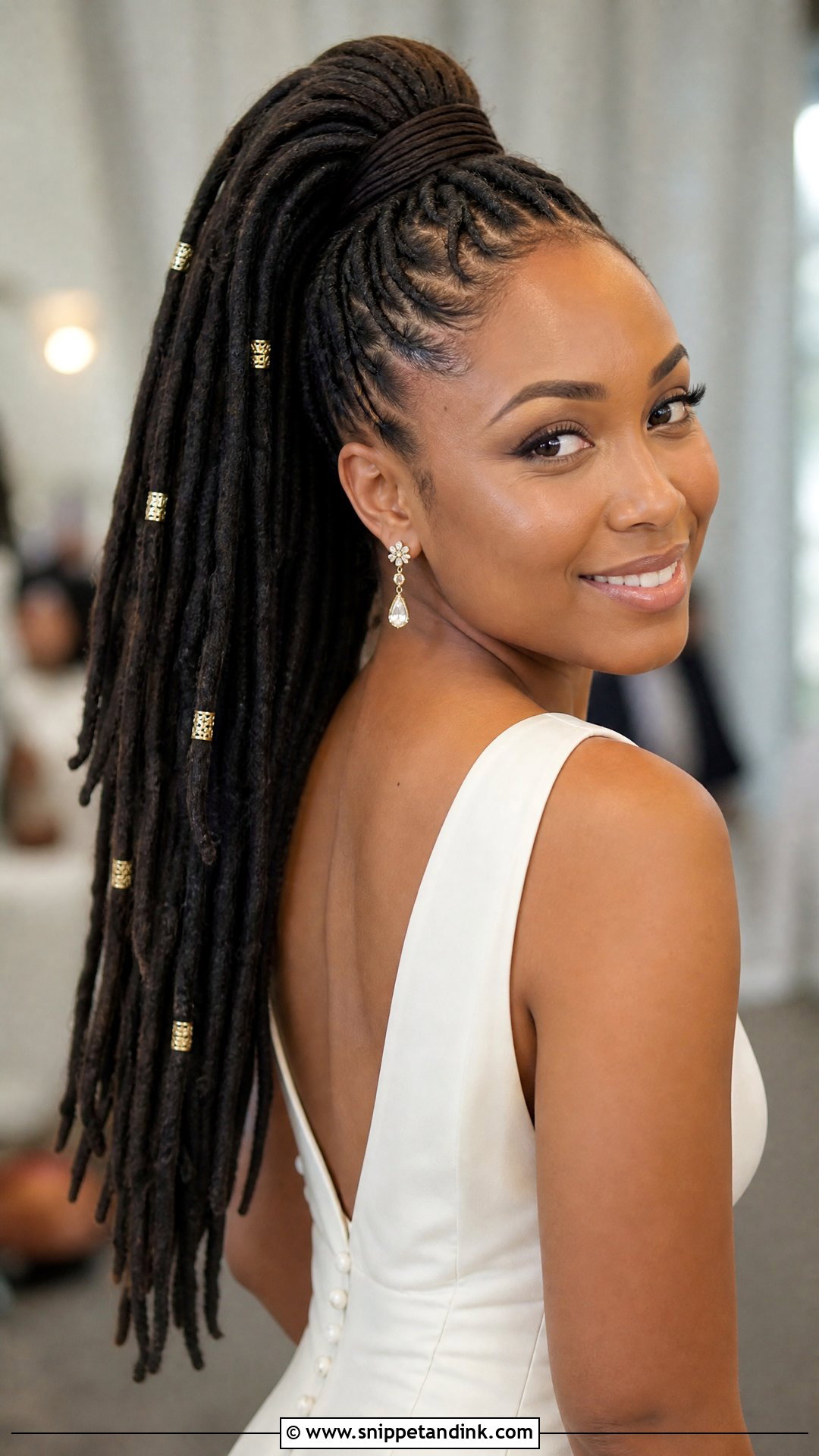
Ponytails look simple, but with long locs the base takes real strain. I wrap a loc around the elastic to hide it and then secure it with a pin, because a cuff alone will slide down under that much weight. High gives height and drama; low is gentler and kinder on the scalp over a long day. Bridesmaids and guests often prefer this over a full updo. A few twists at the crown before securing adds detail, and curled ends give the length some movement.
10. Curly Dreadlocks Wedding Hairstyle
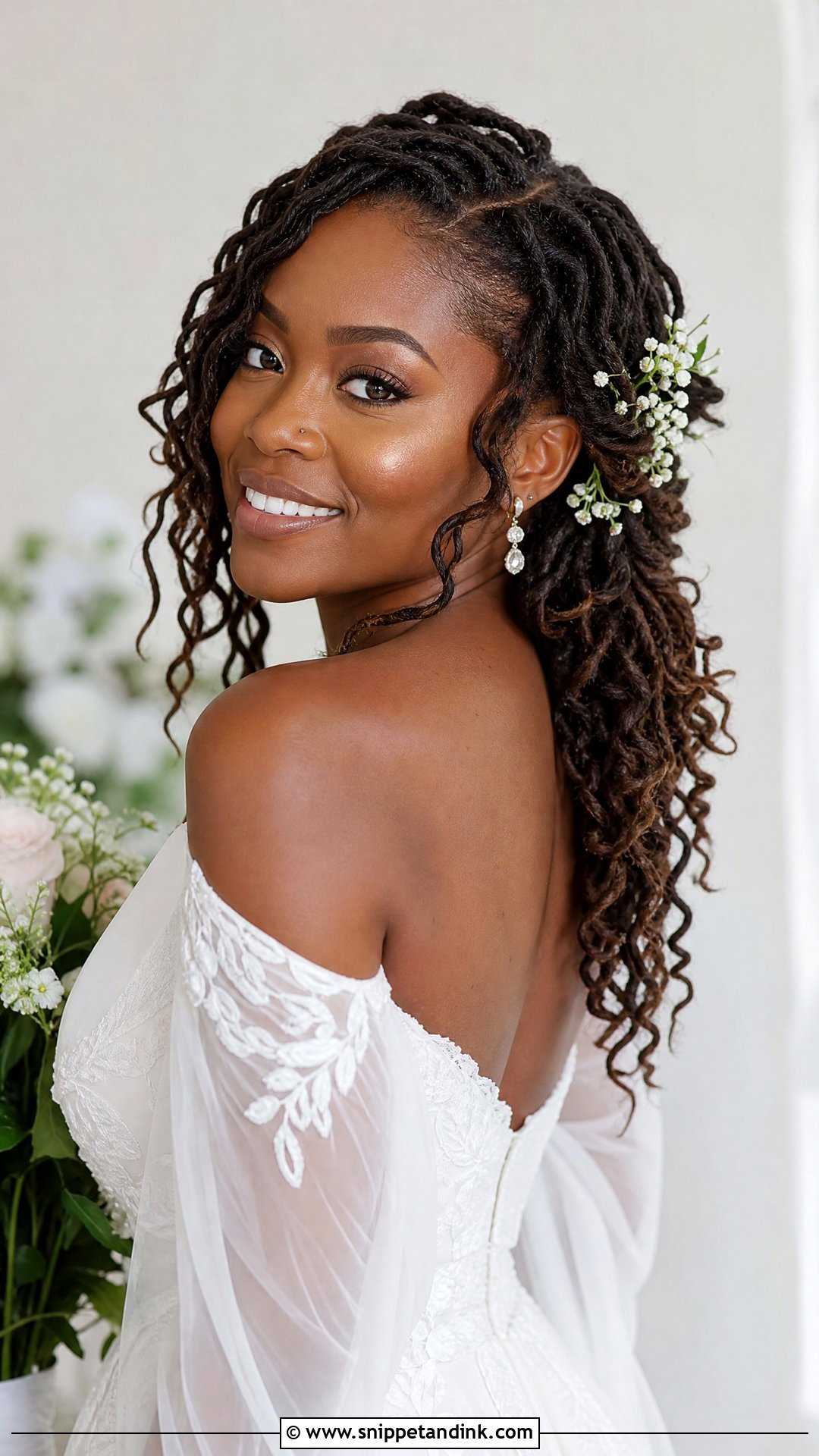
Curling locs softens them a lot, especially around the face. I set curls on flexi rods or pipe cleaners the night before and let them dry completely, since locs hold water far longer than loose hair and a damp set falls flat. You can curl just the ends, the full length or only the front pieces. This one suits outdoor, garden and boho weddings, though humidity at a beach will relax the curl a little through the evening. Worn down, half up or pinned loosely to one side, it moves well on the aisle. Keep accessories small so the curl stays the point.
11. Short Dreadlocks Wedding Hairstyle
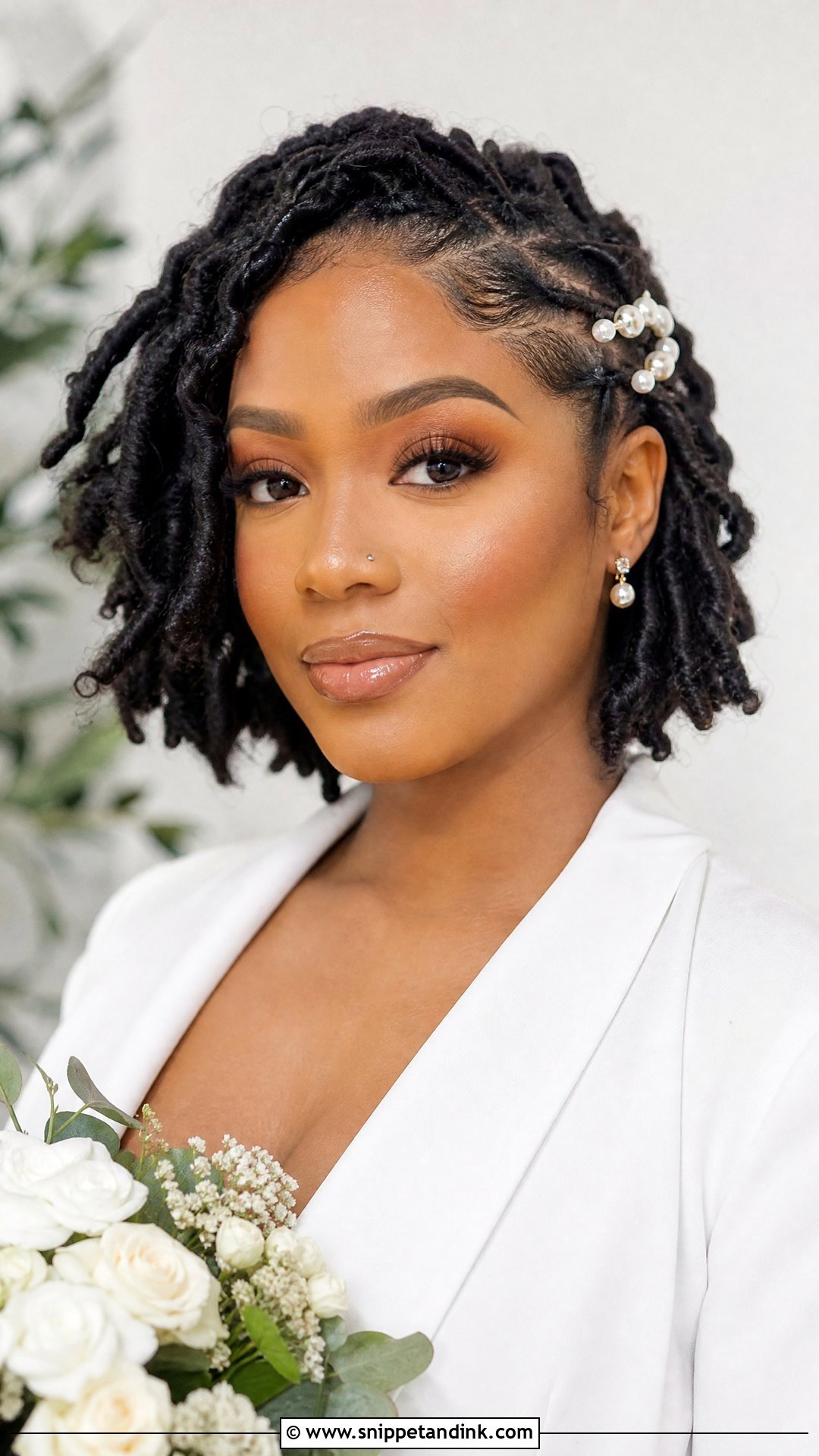
Short locs don’t need to fake length to feel bridal. Short locs can be curled, finger-shaped, pinned to one side or gathered into a small updo at the crown, and they leave the face, earrings and neckline fully on show. Starter locs are softer and can loosen if you pin them hard, so I use clips and decorative pins with a light hand there. Clean parts matter more at this length because everything is visible. If you want a retwist, time it so the roots have settled by the wedding.
12. Long Dreadlocks Wedding Hairstyle
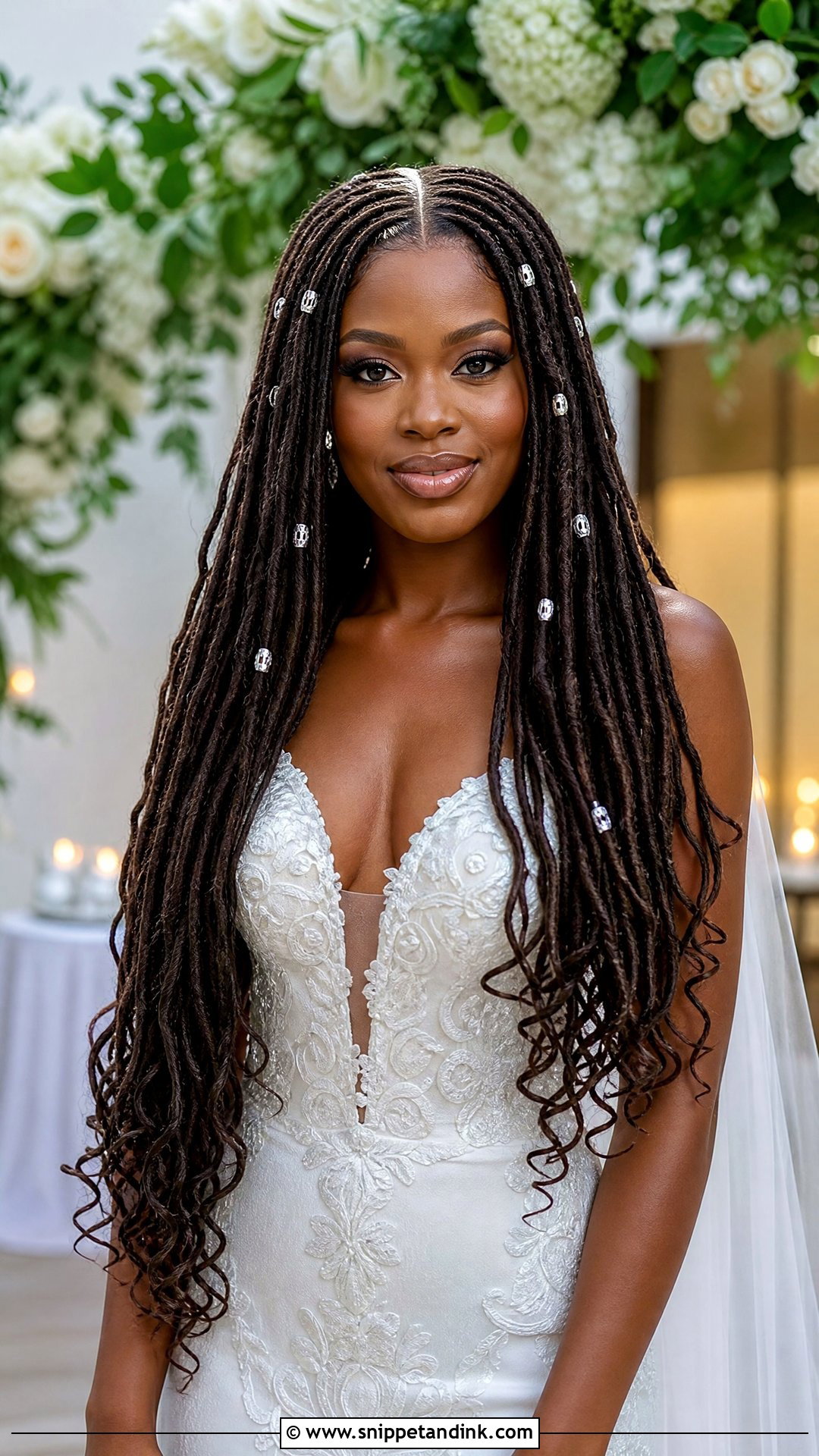
Very long locs are a statement on their own, worn loose, curled at the ends, gathered into one large braid, swept over a shoulder or pulled half up. The honest issue is weight. Loose long locs are comfortable, but put that length into a pinned style and the strain adds up, so I use fewer, bigger pins spread over several anchor points. Cuffs spaced down the length catch light as you move. And think about where you’ll sit: long loose locs trapped behind a chair back get tugged all evening.
13. Dreadlocks With Veil Wedding Hairstyle
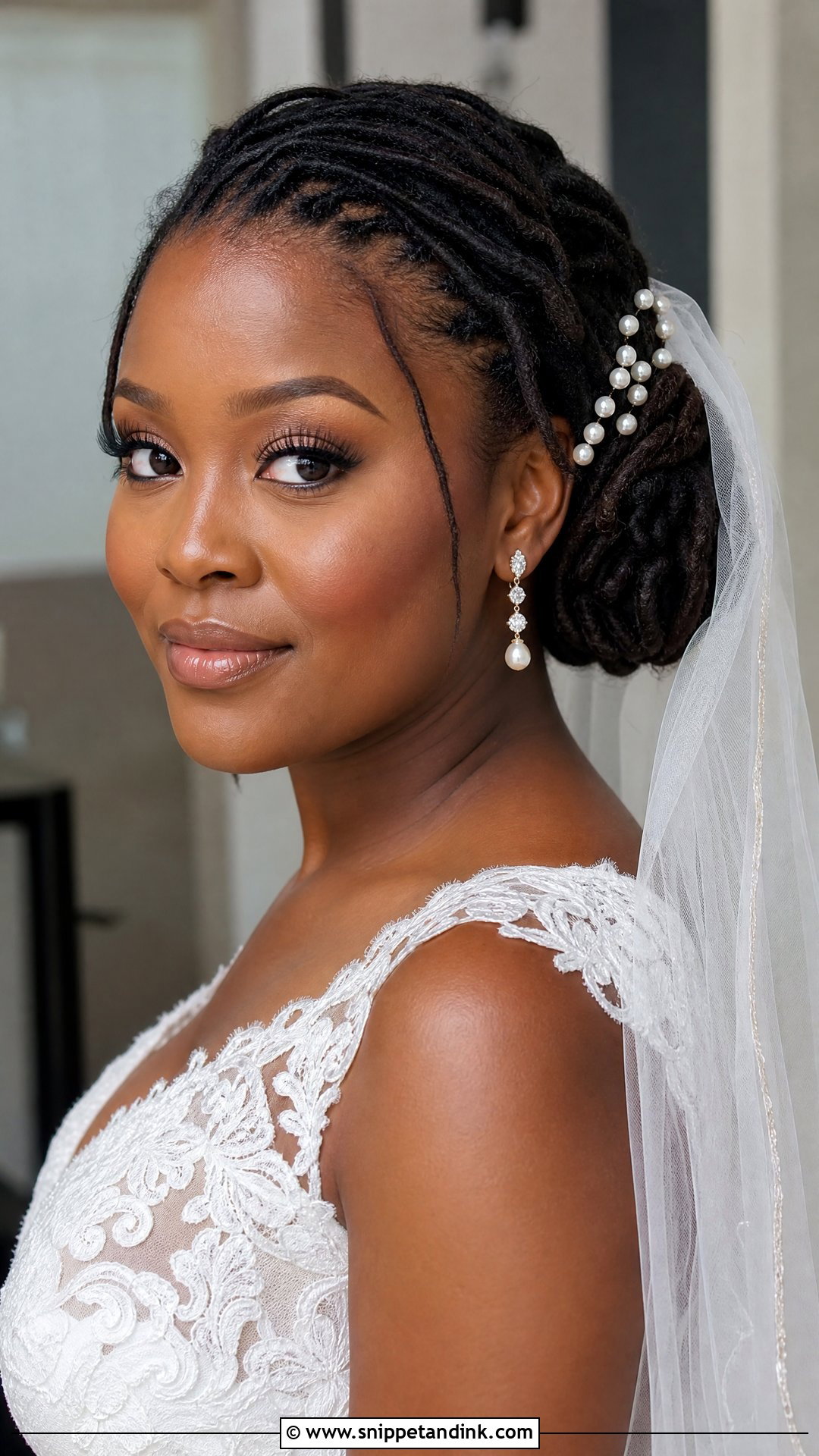
With locs, I plan the veil before I plan the hair. A comb needs something firm to grip, so it goes under a high bun, above a low one, behind a crown braid or into a pinned half-up section, never into loose locs where it just slides out. I avoid placing it right on top of the style because it flattens the shape you paid for. Heavier cathedral veils need a low bun or barrel roll underneath for support. Bring the actual veil to the trial; a borrowed sample won’t weigh the same.
14. Dreadlocks With Flowers Wedding Hairstyle
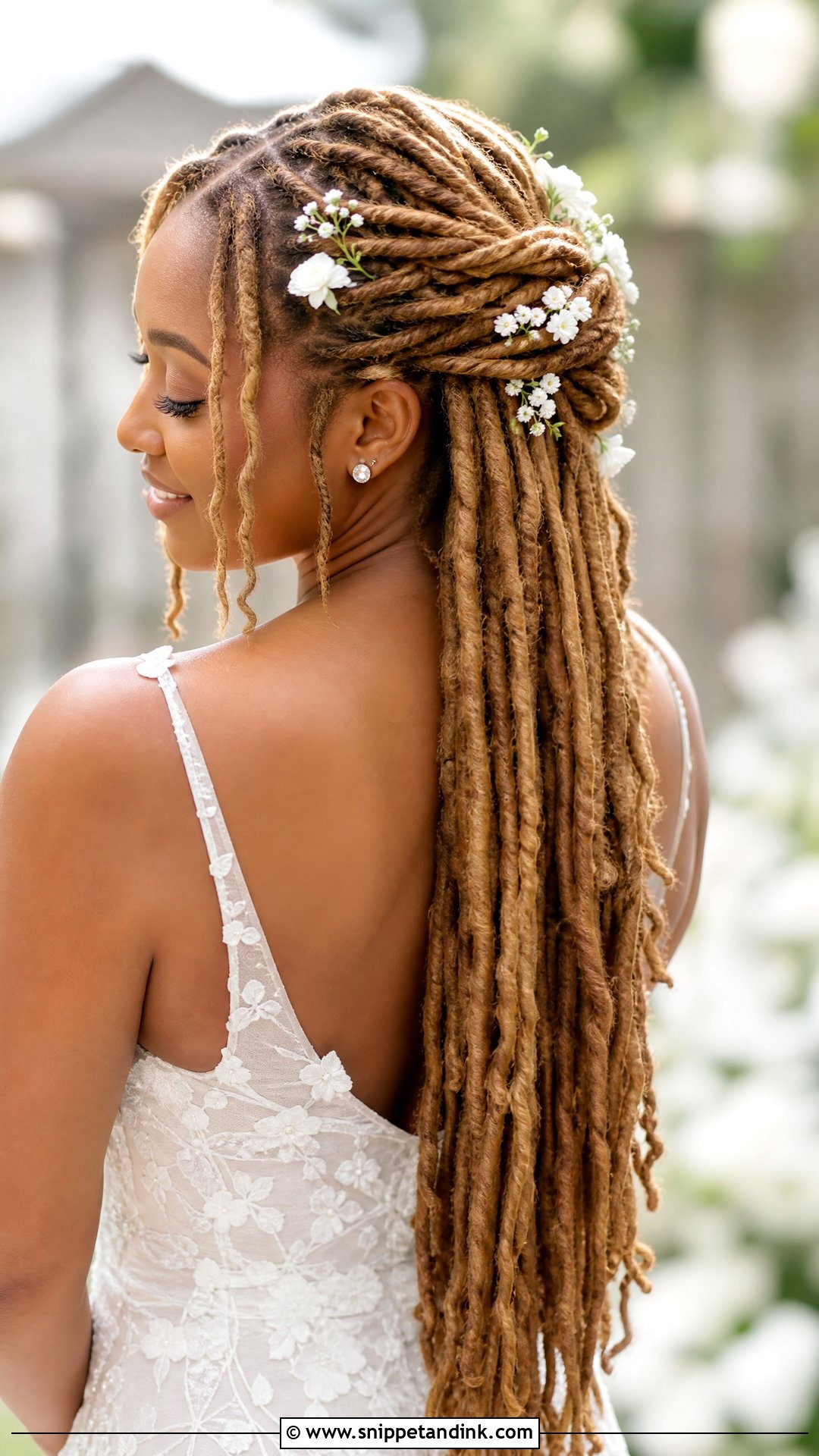
Flowers suit locs well because the texture gives stems something to hold onto. Tuck them into a low bun, scatter them through a half-up style, line a crown braid or cluster them on a side sweep. Small blooms read better than large ones, which compete with the locs and the dress. Baby’s breath, orchids, roses and little dried flowers each set a different mood. Fresh flowers wilt in heat, so I ask the florist for wired, conditioned stems and add them last, after the hair is finished. Dried ones are the safer pick for a summer outdoor wedding.
15. Dreadlocks With Hair Jewelry Wedding Hairstyle
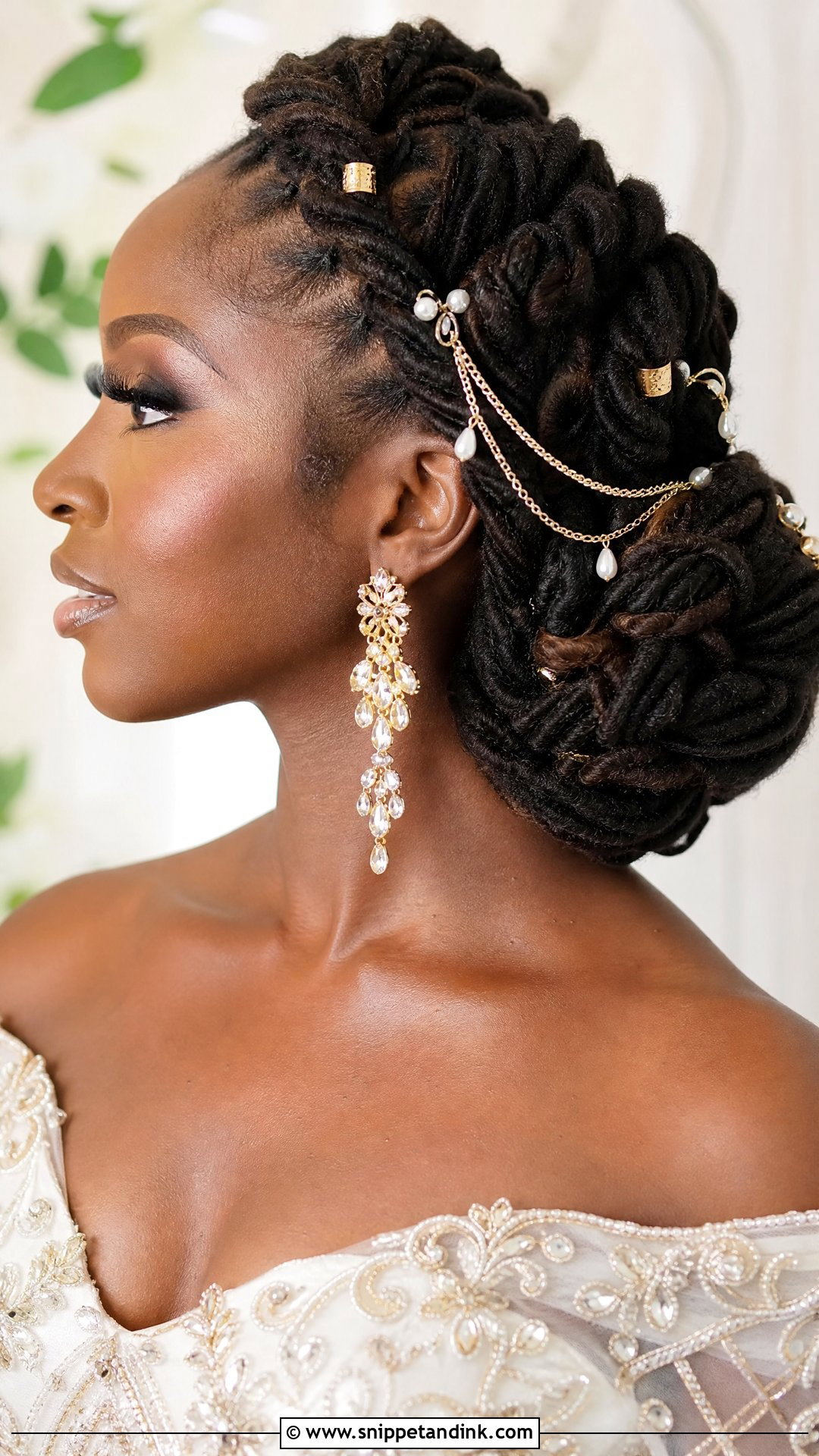
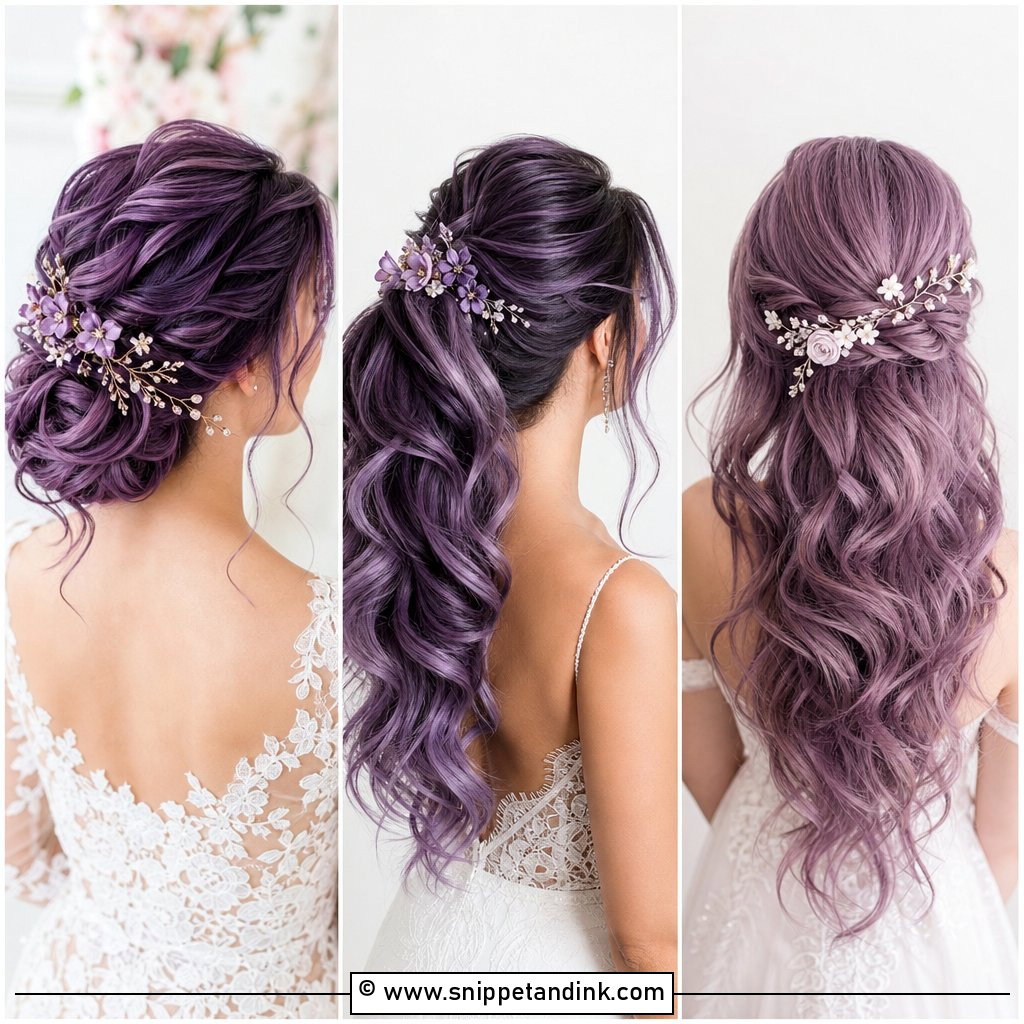
Hair jewelry adds shine without changing the shape of the locs at all. Gold cuffs, silver rings, pearls, crystal pins, chains and combs all work through buns, braids, ponytails or loose locs. My rule is a few strong accents rather than a cuff on every loc, which starts to look busy in photos. Test cuff sizes on your real locs before the day. Ones made for thin locs won’t close on thick ones, and clamp-style rings that grip too hard leave dents. High buns, crown braids and half-up styles show jewelry best.
Heavy Updos Pull, So Plan Some Relief
Long, dense locs are heavy, and stacking all of that at the crown for twelve hours is where headaches start. A high bun that felt fine at ten in the morning can feel like it’s pulling from the hairline by the reception. That’s not a reason to avoid updos. It’s a reason to build them with weight in mind.
- Spread the anchor points. Several smaller pinned sections hold better and pull less than one tight base.
- Use large U-pins and loc-friendly coils rather than lots of thin bobby pins, which snag fibers and leave lint.
- Wear the trial version around the house for a few hours, not just through the mirror check.
- Ask for an easy release: a style where two or three pins come out and the bun drops into a low ponytail for the dance floor.
Taking It All Out Afterward
I count the pins at the trial so the bride knows roughly how many to hunt for that night. Remove them slowly, shake out petals and glitter, and give your scalp a light rinse a day or two later rather than another heavy wash straight away.
Your Locs Already Carry the Look
A crown braid, a petal bun, loose curled ends, a plain low ponytail: none of these ask your locs to be anything other than locs. Let length, density and your outfit shorten the list, then be honest about how much weight you’re happy to carry on your head all day. Brides often go for the sculpted options, while bridesmaids tend to be happier in a low bun or side sweep they can forget about. Flowers, cuffs and the veil add the bridal note. If I get the anchors right, the rest mostly takes care of itself.
You'll Like These Ideas:


Leave a Reply