
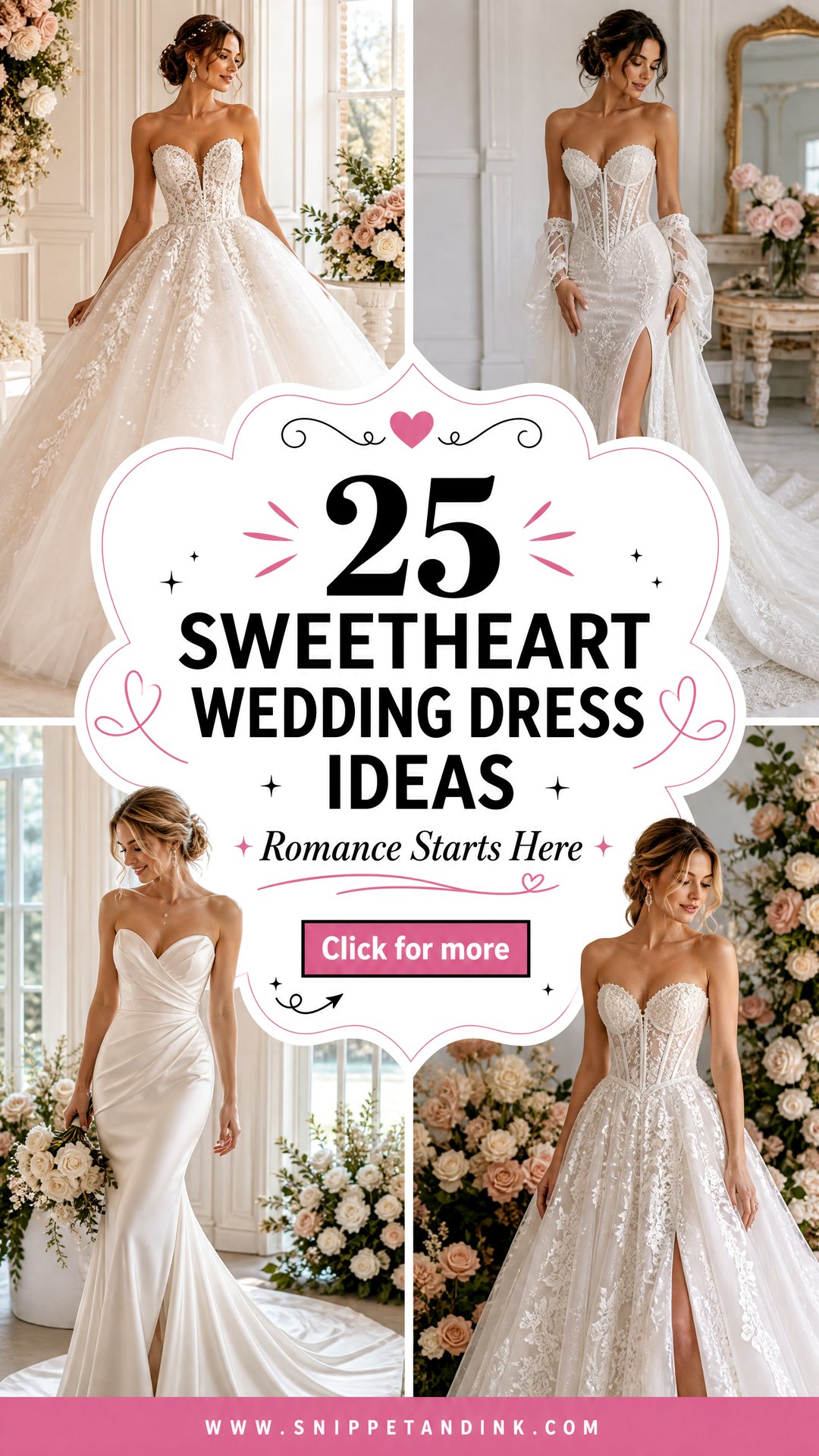
A sweetheart neckline is the one I reach for most often when a bride says she wants romance but doesn’t want lace up to her chin. The curved top edge dips at the centre and rises over each side of the bust, so it draws a soft line across the collarbone and sits just as happily on a strapless bodice as on one with sleeves. You’ll find it on structured satin ball gowns, lace mermaids, airy tulle skirts, corset bodices and slim reception dresses, and its mood changes with the fabric far more than with the cut. Below are the twenty-five versions I’d show a bride at a first appointment, along with what I actually check on each one before she commits.
The Fitting-Room Tests a Sweetheart Bodice Has to Pass
A sweetheart neckline looks simple on a hanger, but its curved top edge is one of the hardest lines in bridal wear to fit. It has to follow the bust without gaping, and on a strapless gown there’s nothing above it to hold it in place. These are the checks I run on every bride before a single pin goes in.
- The bend test. Lean forward as if signing the register. If the centre dip or the sides of the curve pull away from your skin, the bodice needs taking in at the top edge, not just at the waist.
- The hug test. Raise both arms and hug someone. A strapless top that slips more than a finger’s width needs a firmer waist stay or more boning.
- The sit test. Sit on a hard chair for a couple of minutes. Boning that digs into your ribs or hips now will feel far worse by dinner.
- The cup check. Built-in cups should match your bust shape. Ask whether they can be swapped or reshaped; it’s routine alteration work.
- The side view. Look at the top edge in profile. It should lie flat against you, with no ridge of skin pressing over it.
Bring the exact shoes and undergarments you plan to wear to every fitting, and expect two or three fittings for a structured bodice. Most seamstresses like to have the gown in hand two to three months before the wedding, which leaves room for a last check close to the date, after any change in weight or training routine has settled.
1. Sweetheart Ball Gown Wedding Dress
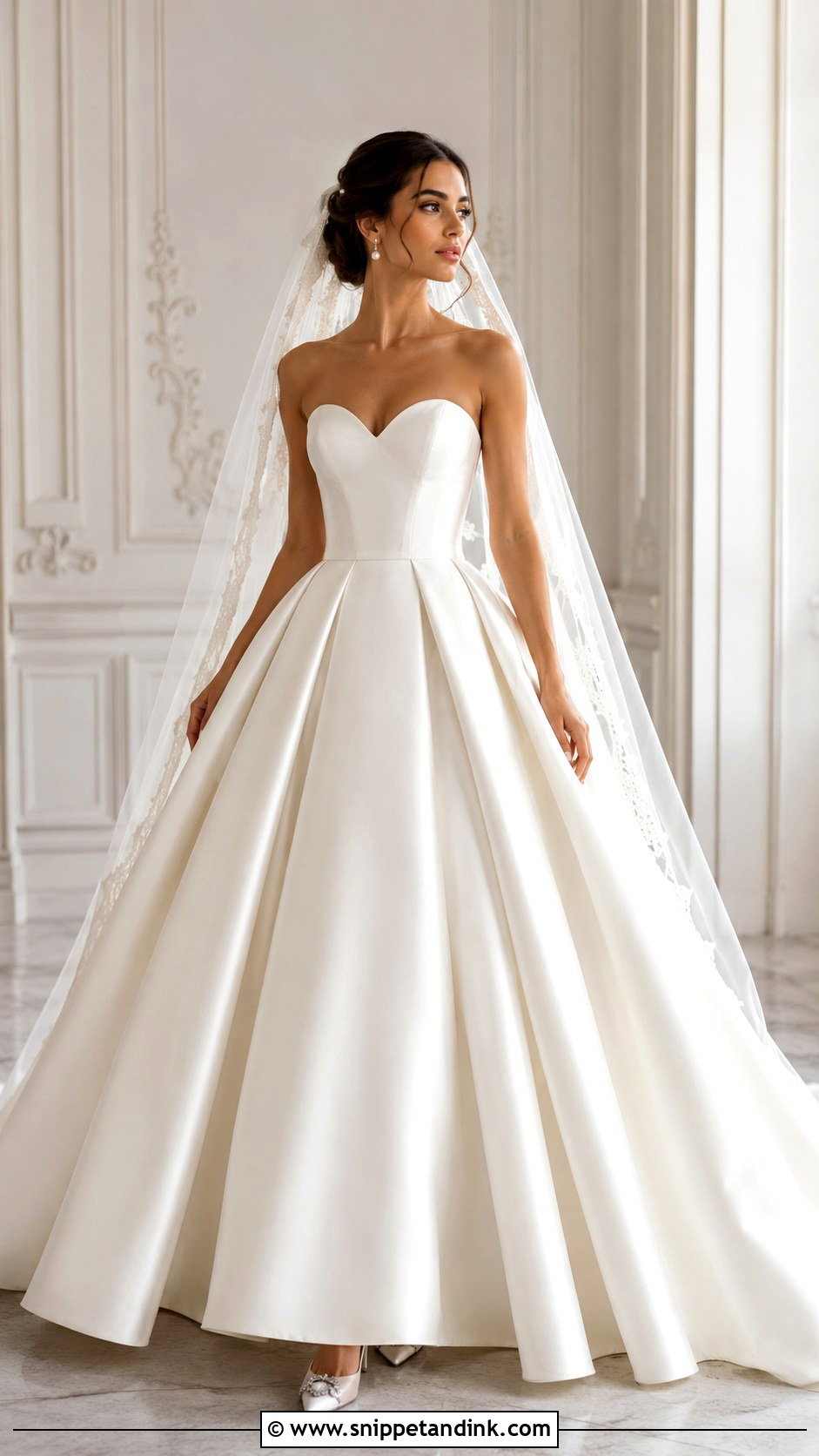
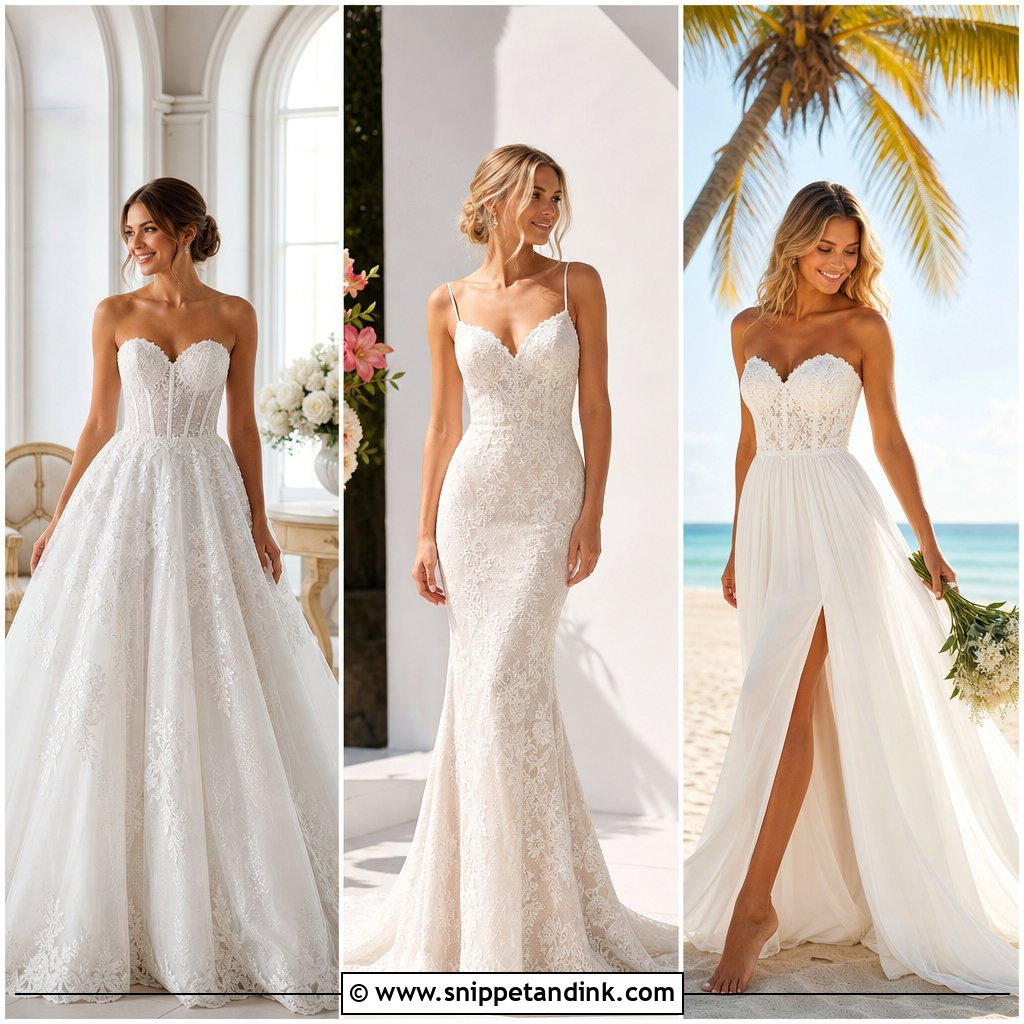
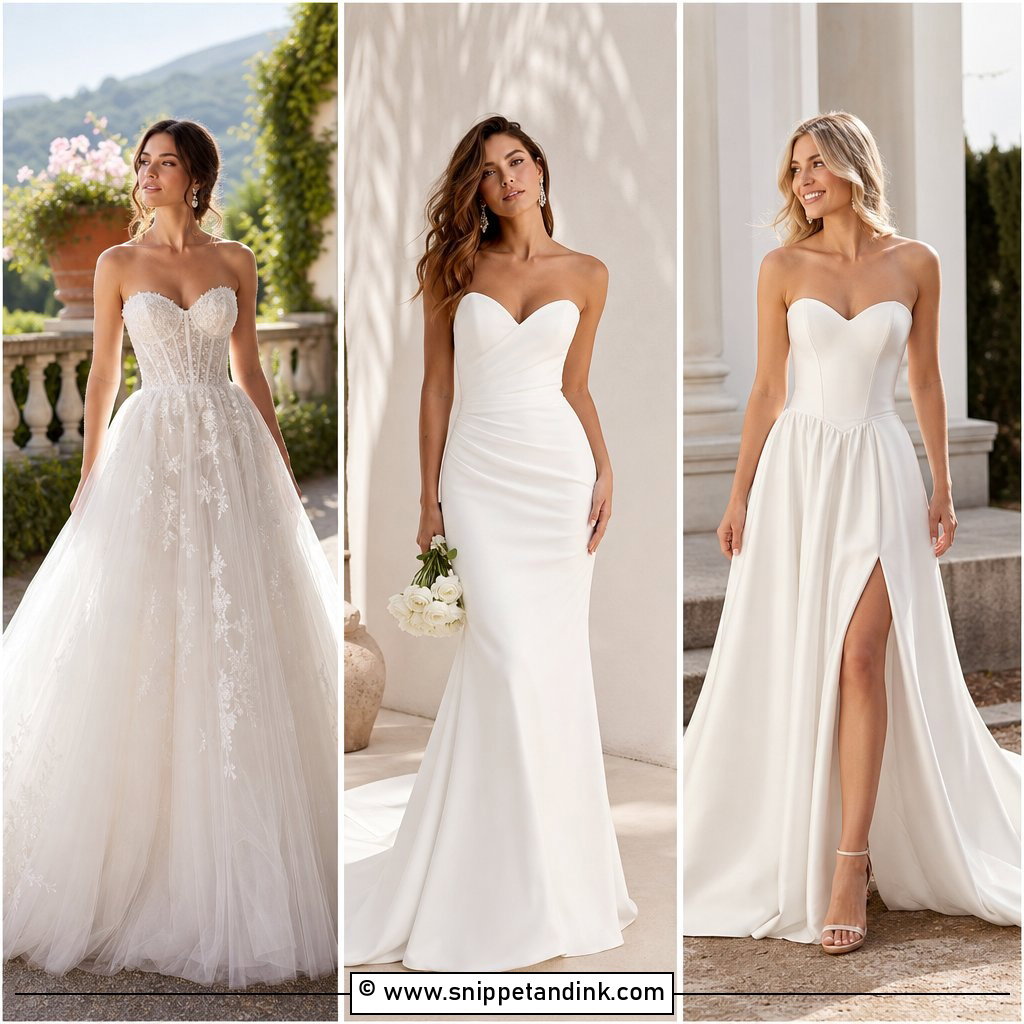
The ball gown is the classic grand entrance: fitted bodice, full skirt, and a waist that looks narrow simply because of the volume below it. I steer brides toward satin, mikado or organza here because those fabrics hold the skirt out on their own; softer fabrics need extra petticoat layers, which adds weight at the hips. Try it on with the hoop or crinoline the shop intends to sell you, because the skirt width decides how you get through doorways and into a car. Pair it with a cathedral veil and a low bun, then pick secure, plain heels. Nobody will see your feet under that skirt, and you’ll be standing on them for hours.
2. Sweetheart Lace Wedding Dress
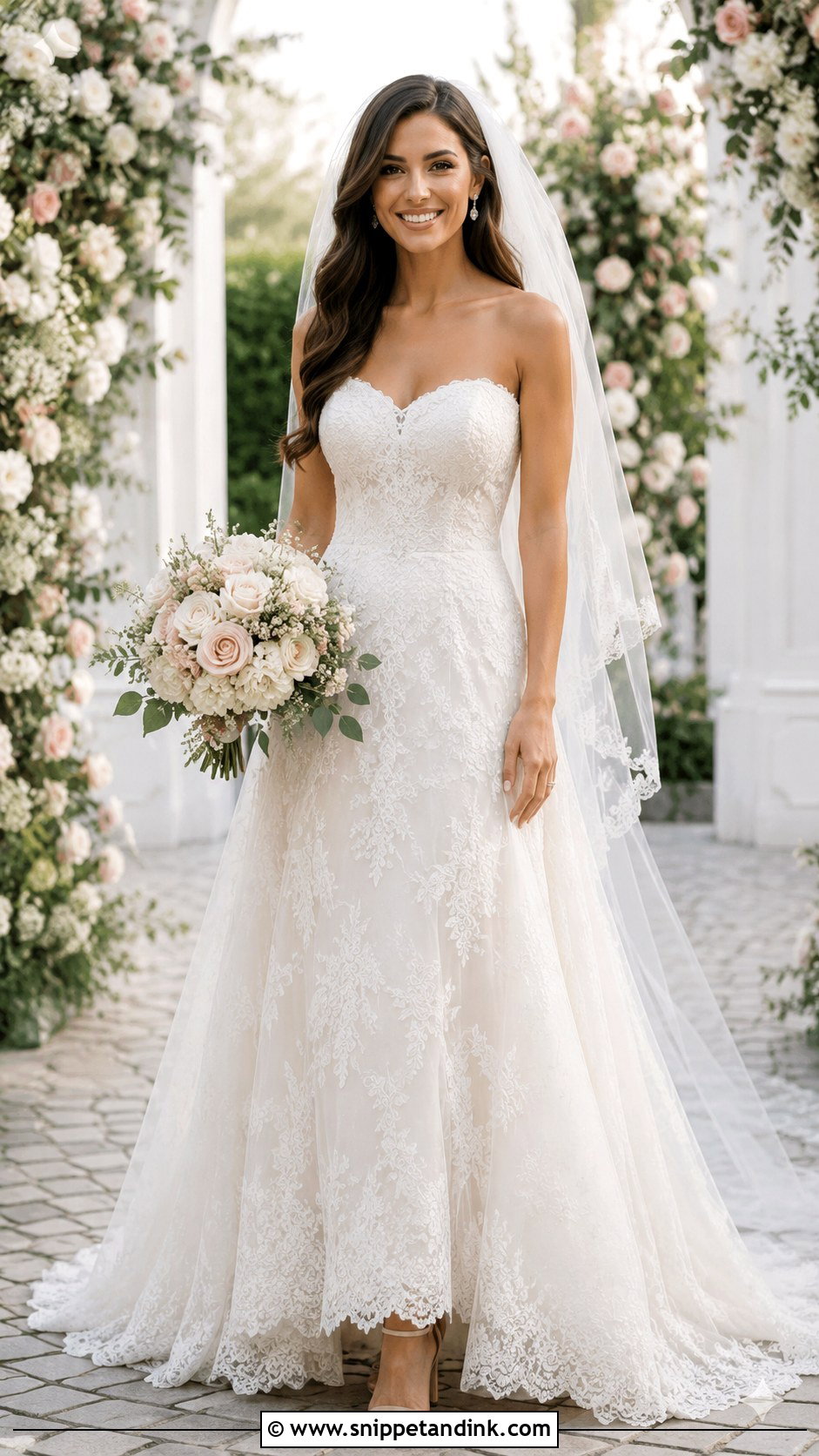
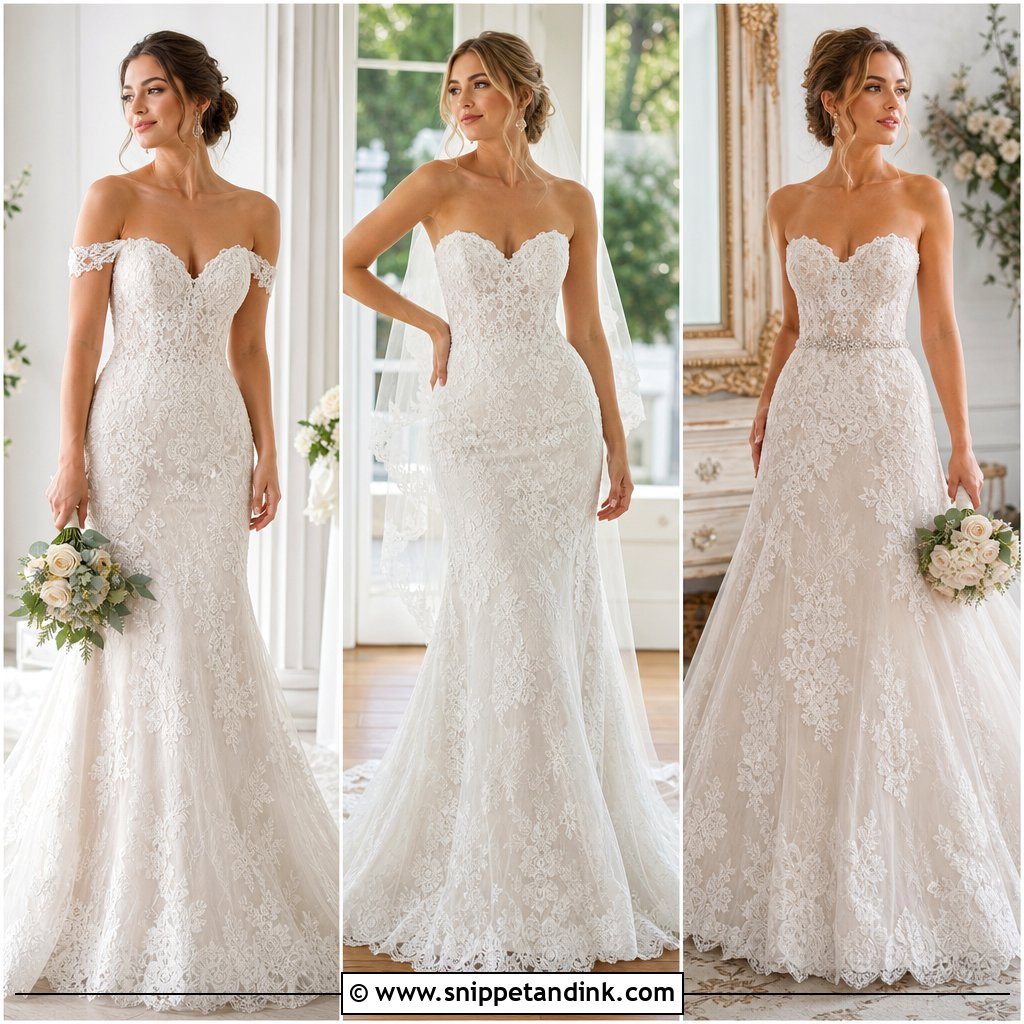
Lace changes a sweetheart bodice more than any other fabric, because the scalloped edge can follow the curve of the neckline itself. When I look at a lace gown, I check whether the scallops along the top were placed by hand or simply cut off straight; a cut edge scratches and snags on a veil. Allover lace reads traditional, while appliqué floating on tulle feels lighter. Garden and estate weddings are its natural home. Keep the rest quiet with a veil with a thin lace trim, small drop earrings and soft waves, so the texture stays the main event.
3. Sweetheart Mermaid Wedding Dress
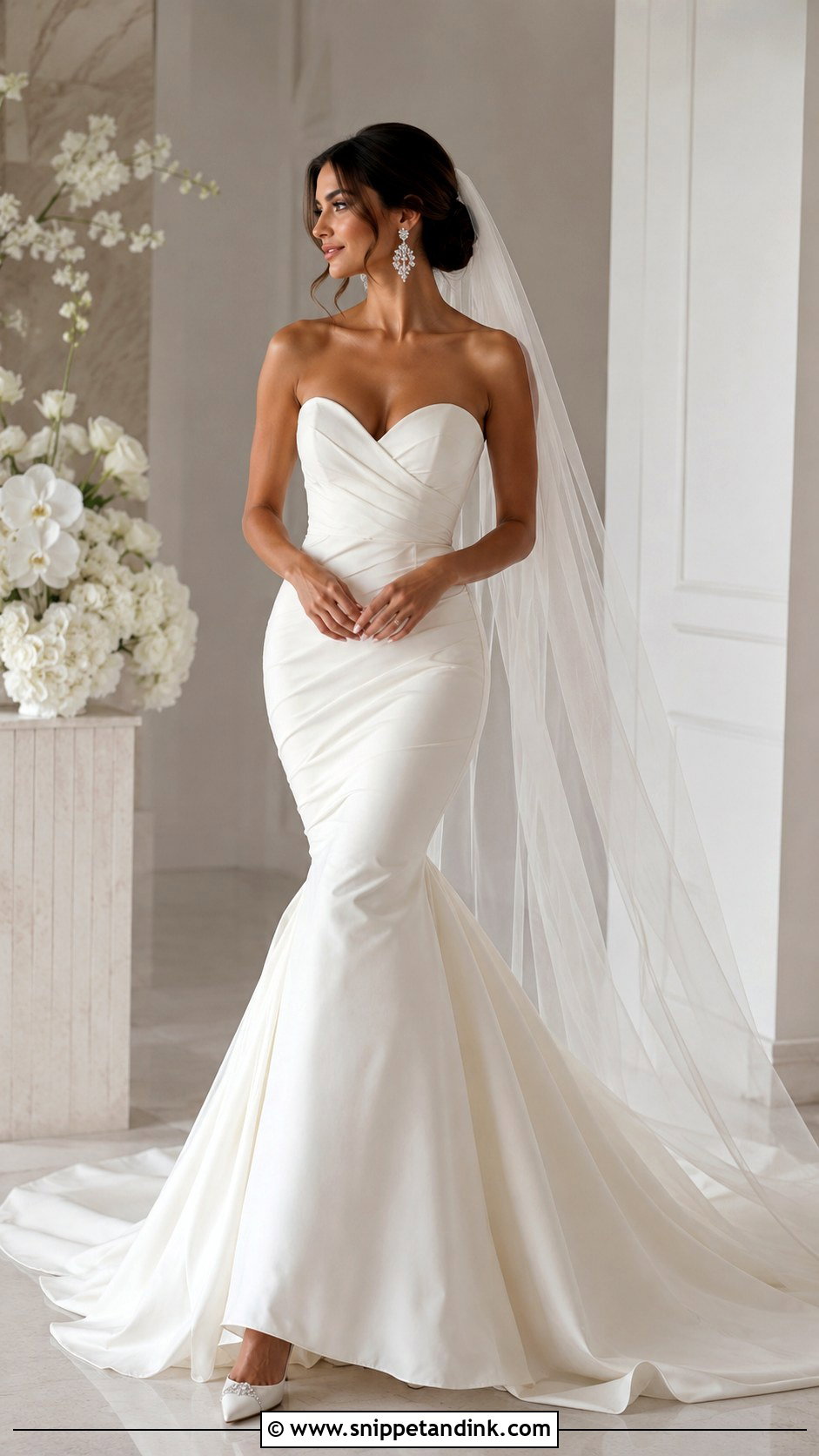
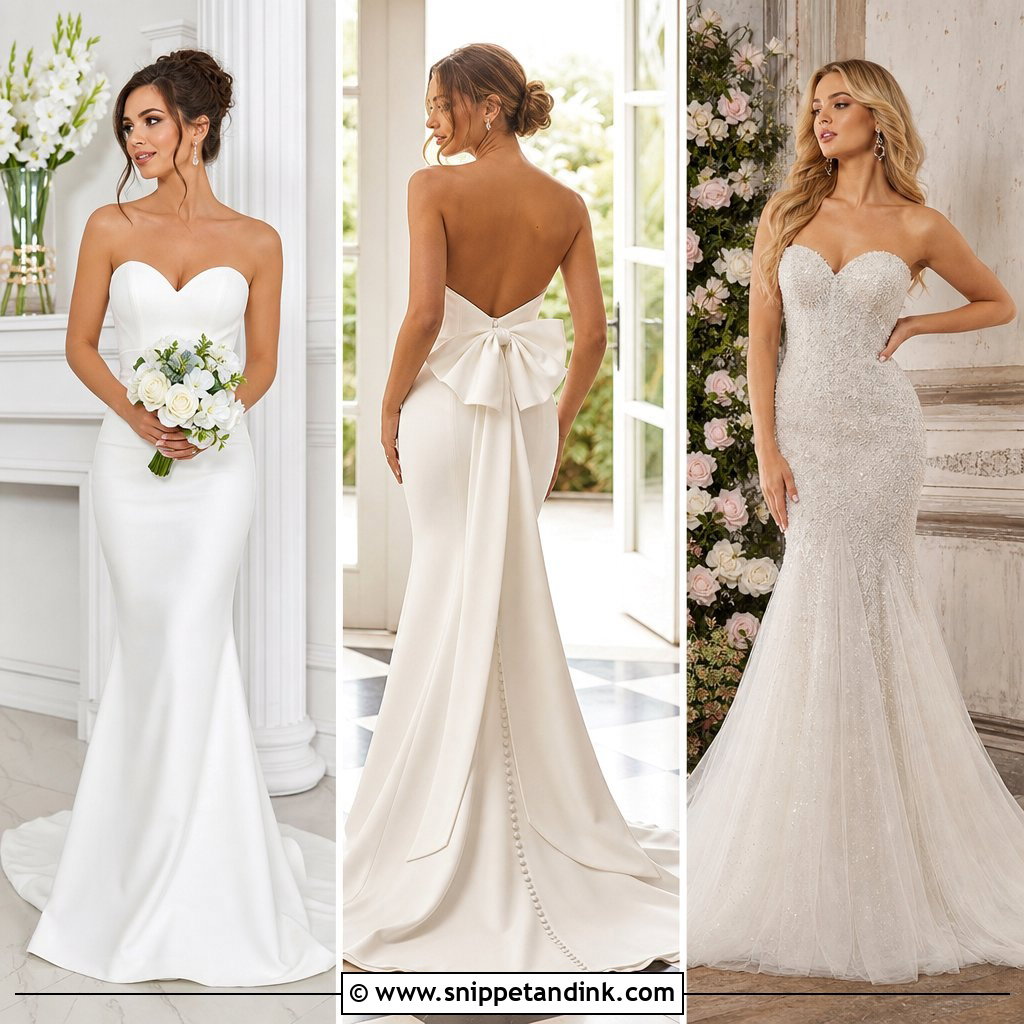
A sweetheart mermaid wedding dress follows you closely through the bust, waist and hips before the skirt kicks out around the knee. Where that flare starts matters more than anything else. Too high and you look shorter; too low and you’ll shuffle up the aisle. I always ask a bride to climb a step and sit on a chair in the fitting room before the hem is touched. Stretch crepe forgives far more than beaded tulle, which has almost no give, and the sweetheart curve softens all that close fit at the chest. Statement earrings, a slim veil and the actual heels you’ll wear for the hem measurement finish it.
4. Sweetheart A Line Wedding Dress
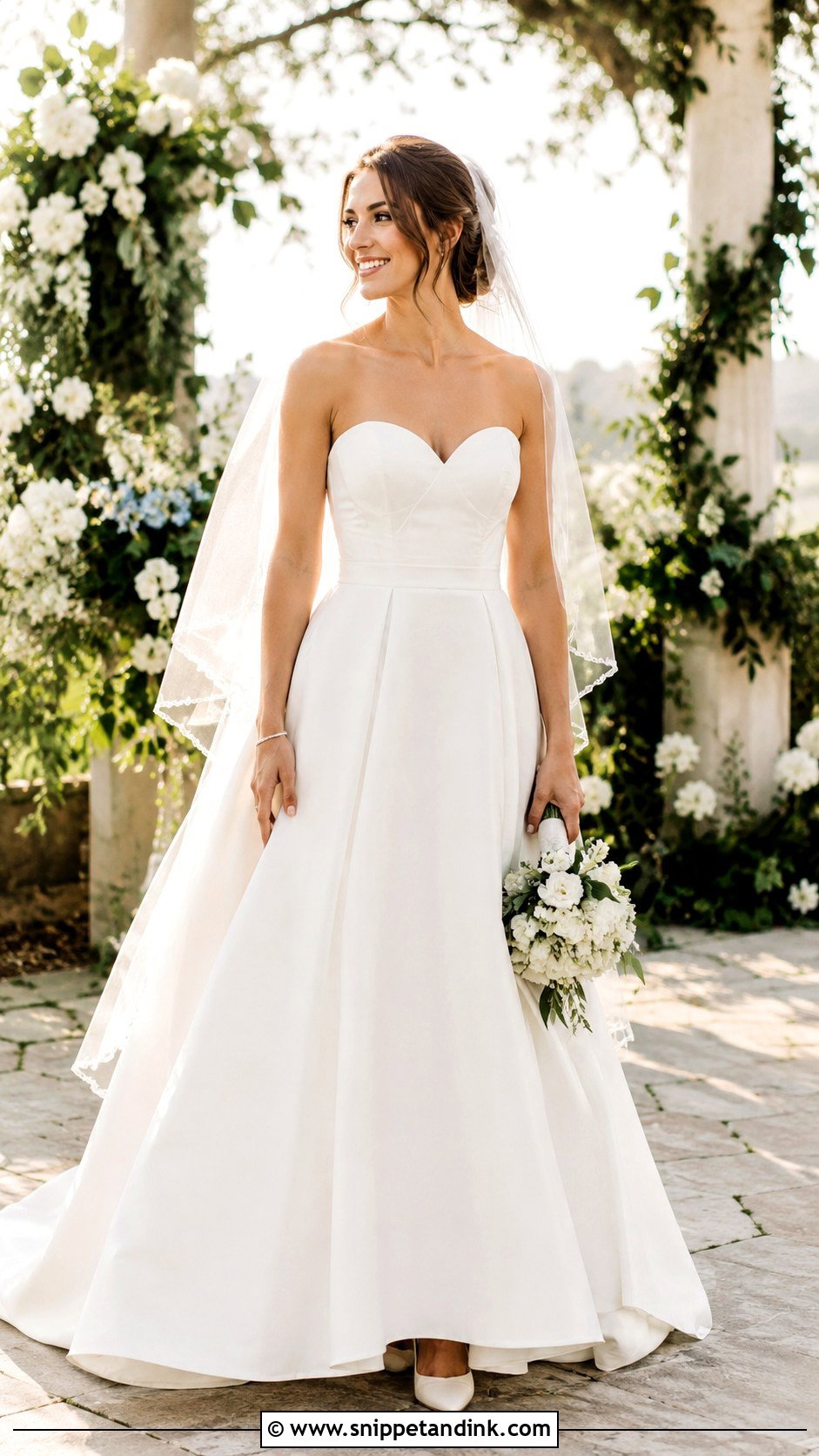
If a bride can’t decide, the A-line is usually the next dress I pull, because it suits nearly every shape. The bodice marks the waist and the skirt falls away from the hips without needing a hoop, so sitting at dinner and dancing later both feel normal. Chiffon moves the most, satin looks crisp, and tulle gives a little floating volume. Watch the waist seam: if your natural waist is higher or lower than the sample’s, a good seamstress can move it, but only when there’s seam allowance to work with. A fingertip veil and block heels round it off.
5. Strapless Sweetheart Wedding Dress
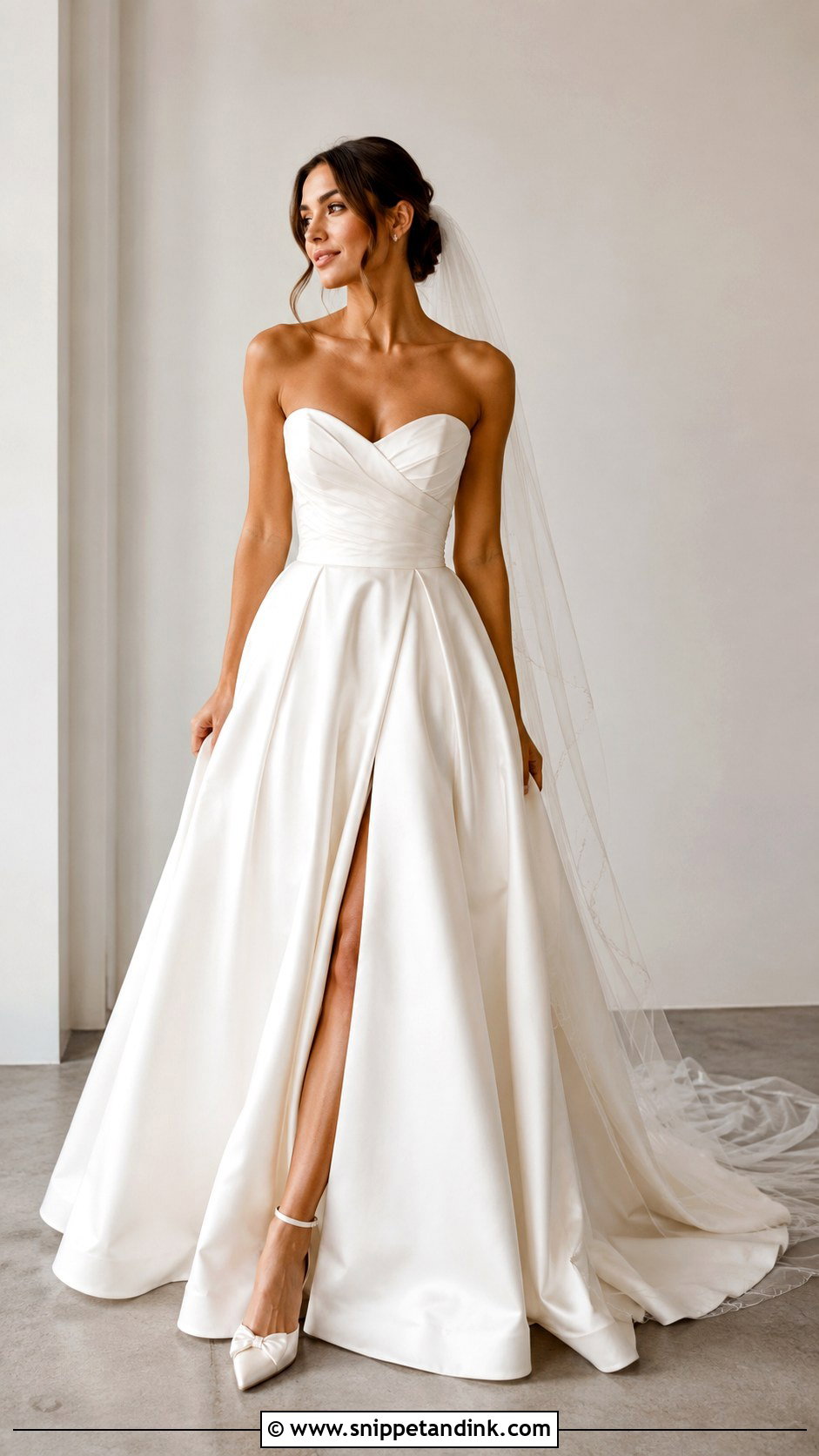
Everything in a strapless sweetheart depends on what’s hidden inside it. Ask to see the inside of the bodice. I want to find boning in the side seams and front panels, plus a waist stay, a strip of grosgrain that fastens around your waist and carries the weight so the top edge isn’t doing all the work. Without that structure you’ll be hitching it up all night. Satin looks minimal, lace looks romantic, and crepe sits between them. With a bare collarbone, let either a fine necklace or your earrings lead, not both. A cape, gloves or detachable sleeves can cover you for the ceremony and come off later.
6. Sweetheart Corset Wedding Dress
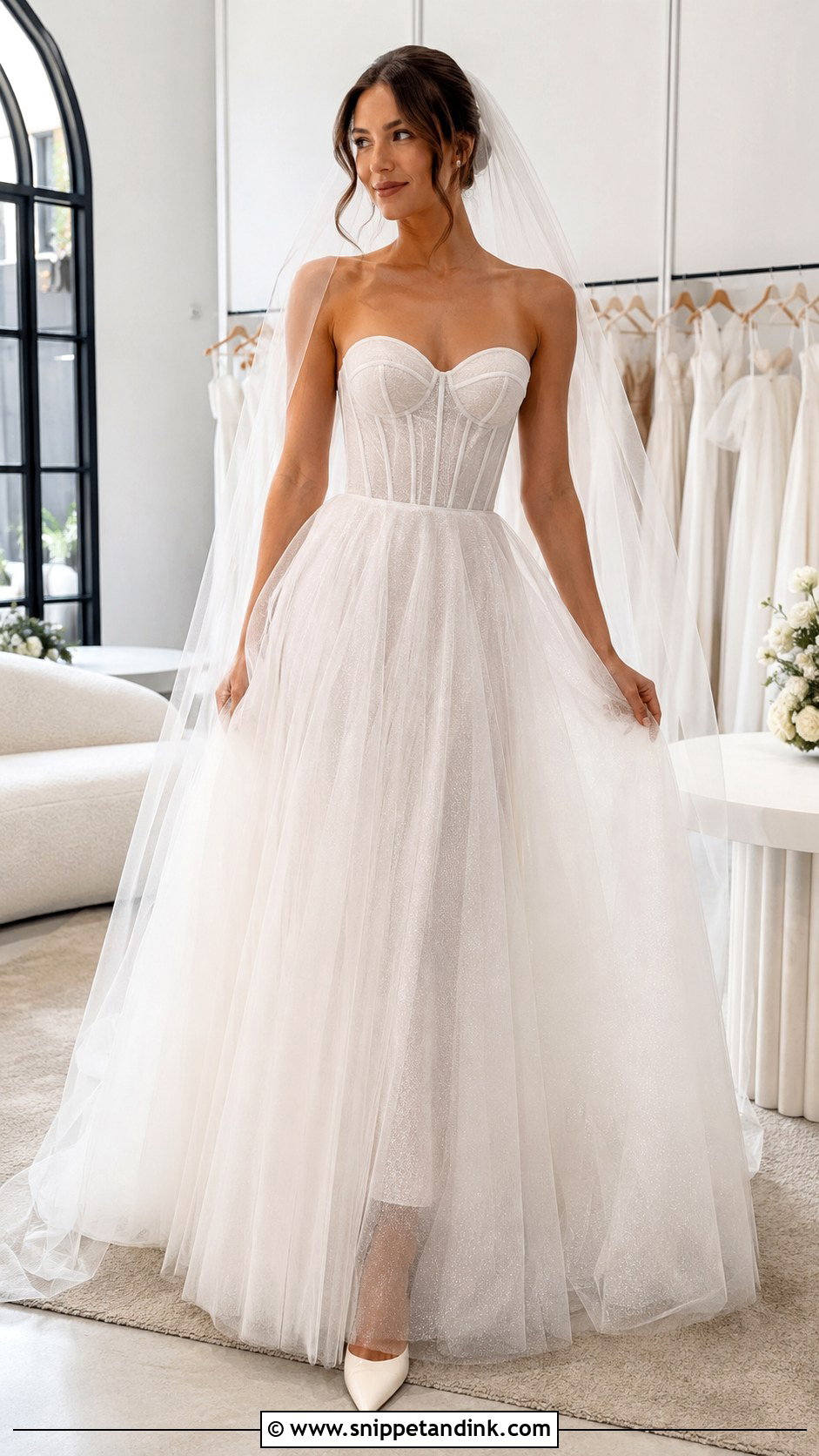
A corset bodice gives the most shaping of any sweetheart style, and it’s the one I’d suggest to brides with a fuller bust who still want to go strapless. Visible boning has a fashion edge; boning hidden under satin gives a smoother line. What surprises people is how a true corset changes the way you sit and eat, so book at least one fitting after a proper lunch. A tulle skirt adds drama, satin keeps it formal and crepe makes it cleaner. Pearl studs and a plain veil are enough. It should hold you firmly without leaving red marks after an hour.
7. Sweetheart Satin Wedding Dress
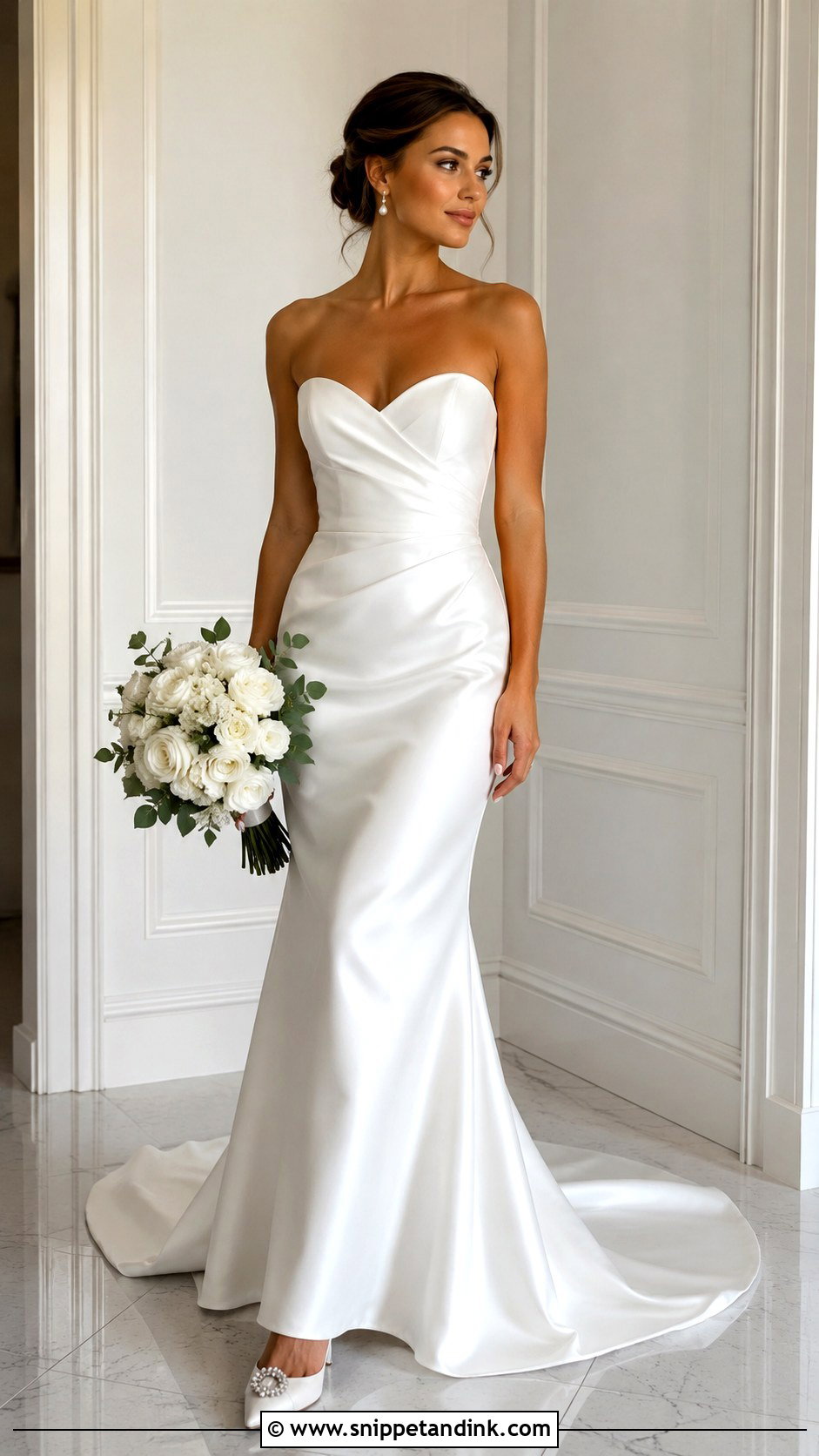
Satin is honest fabric. It shows every seam, ripple and undergarment line, which is why a sweetheart satin gown looks so polished when it’s fitted well and so obviously off when it isn’t. The sheen picks up light along the curve of the neckline, so even a plain column or A-line shape looks finished. Expect it to crease in the car; I tell brides to have it steamed at the venue rather than at home. Smooth, no-line underwear in your skin tone isn’t optional here. After that, a long veil, pearl earrings and a structured bouquet are all it needs.
8. Sweetheart Tulle Wedding Dress
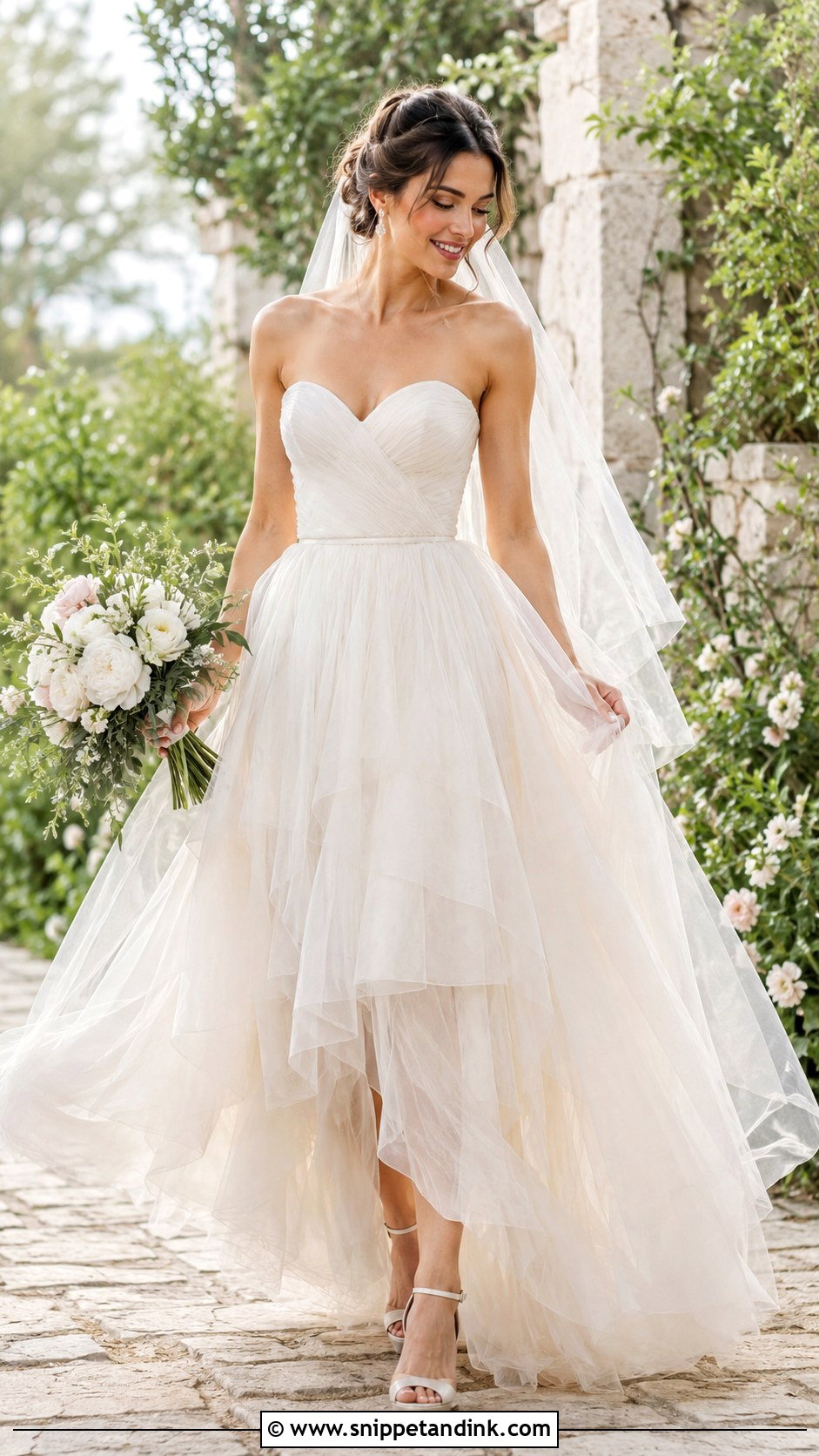
Tulle is the fabric I’d pick for a bride who wants volume she can still lift. Several layers move with every step and catch the breeze outdoors, and they weigh far less than satin of the same fullness. The trade-off is snagging. Bracelets, rough stone paths and bouquet wire all pull threads, so I ask where she’ll walk and what she’ll carry before she falls for it. The bodice can be plain, corseted, lace or beaded. Spring and summer garden ceremonies suit it best, with a sheer veil and comfortable flats or low heels.
9. Sweetheart Off Shoulder Wedding Dress
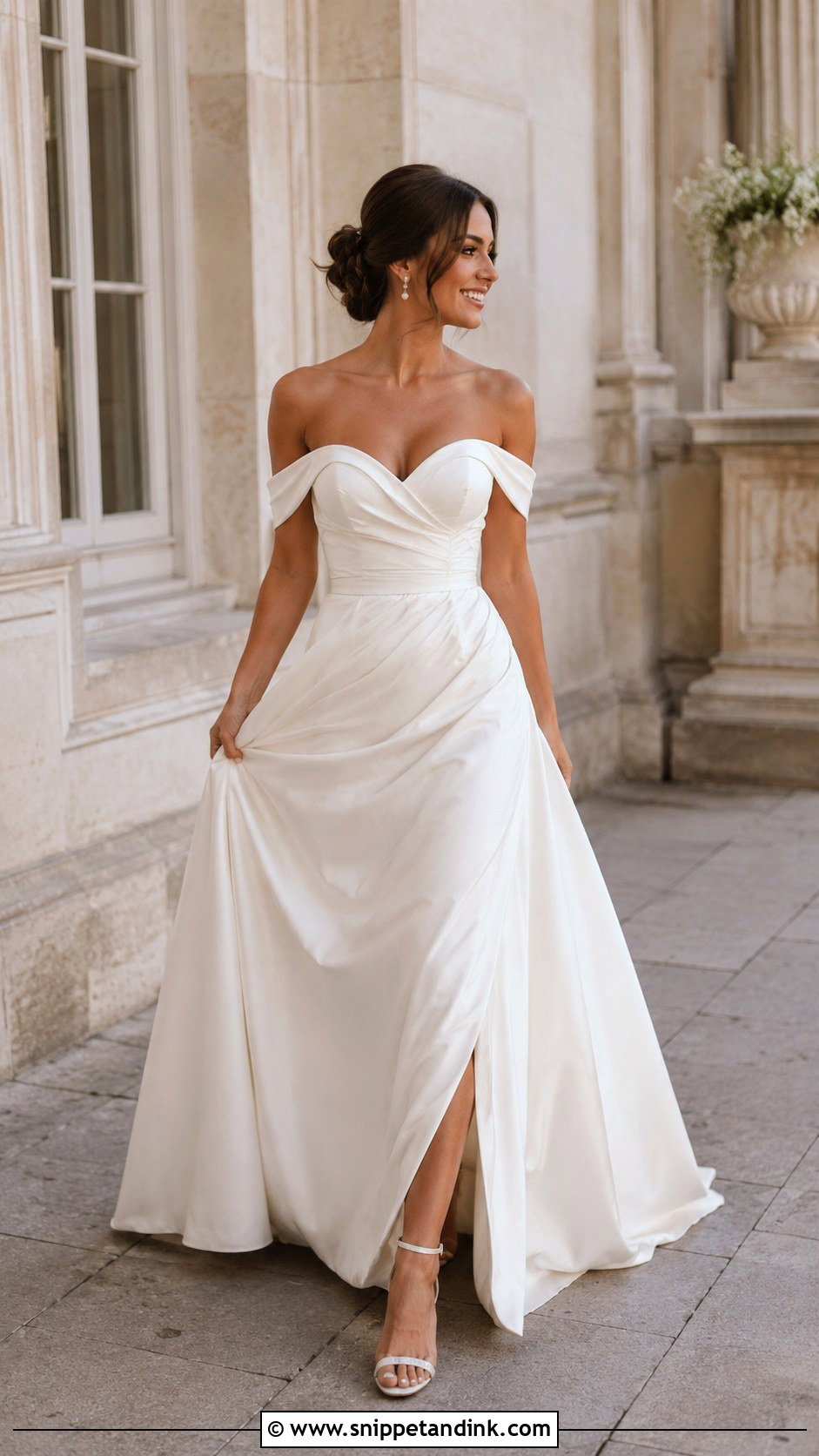
Off-shoulder bands sit across the upper arm, framing the collarbone while the sweetheart dip keeps the centre soft. My caution is movement. Snug bands can stop you lifting your arms above shoulder height, and that matters for hugging, tossing a bouquet and dancing, so I have every bride wave both arms high in the mirror. Draped sleeves give more freedom than fitted ones. The neckline already carries the look, so keep jewelry to earrings and sweep your hair back or into a low bun so the shoulder line stays visible.
10. Sweetheart Long Sleeve Wedding Dress
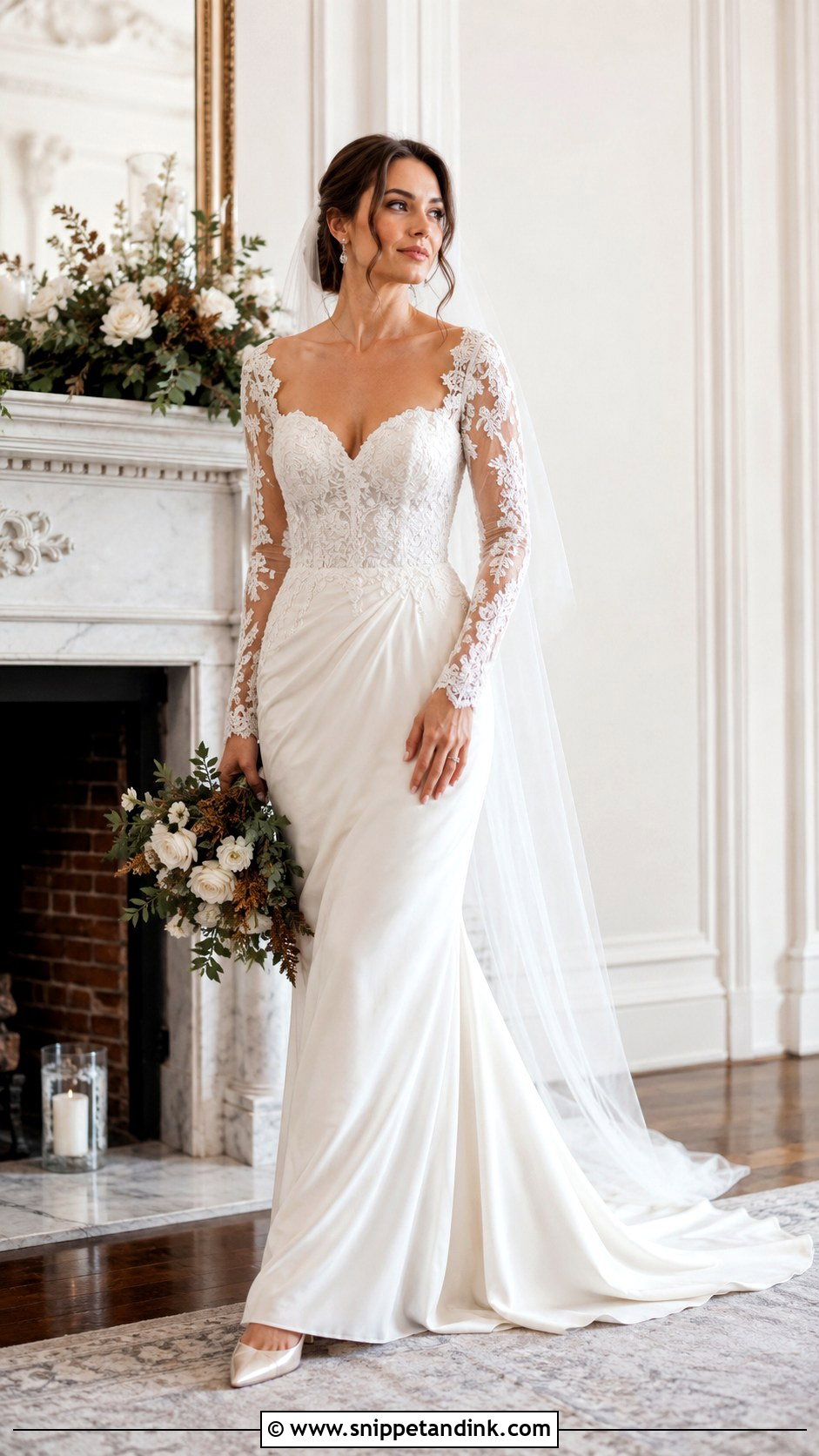
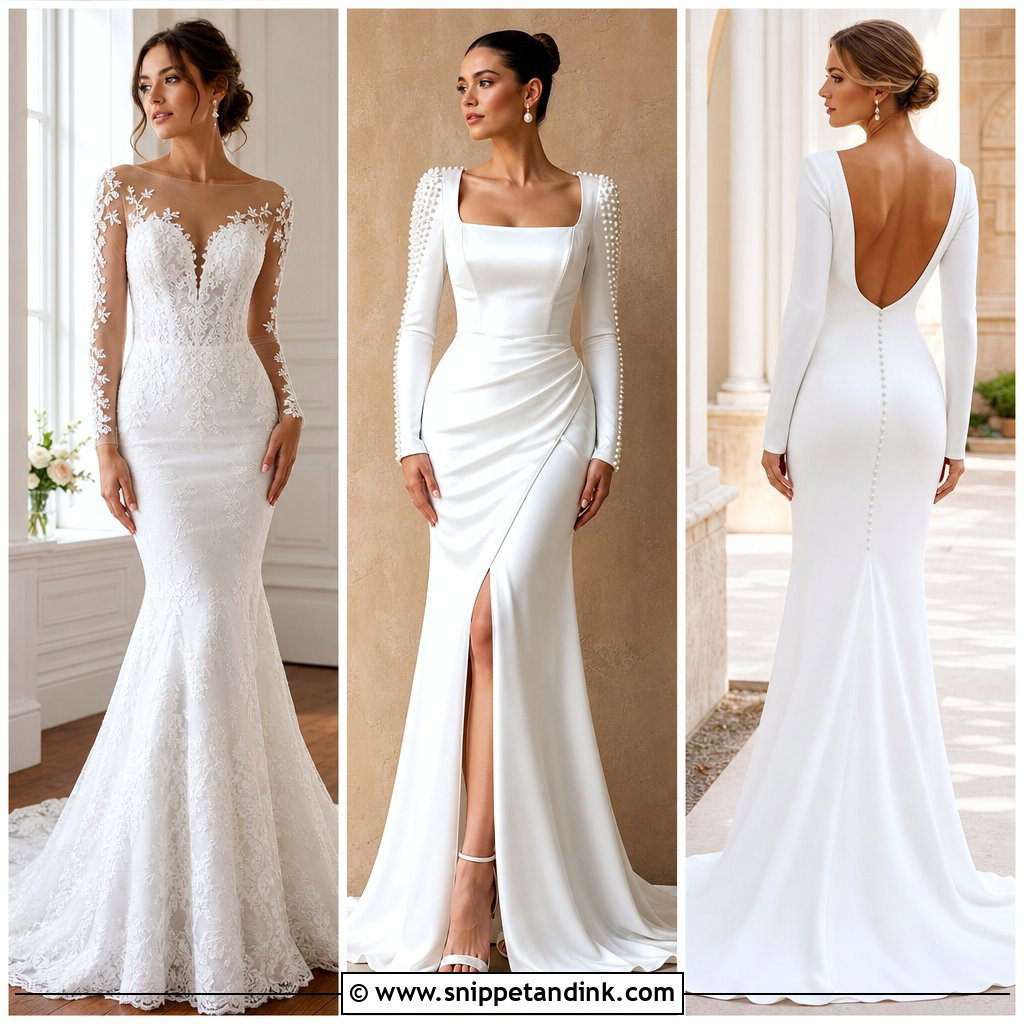
Long sleeves with a sweetheart neckline cover the arms while keeping the chest open, which stops a full-sleeve gown from feeling heavy. Sheer lace sleeves look delicate; satin or crepe sleeves look sharper. Check the cuff. A sleeve that ends exactly at the wrist bone rides up every time you reach forward, so I usually ask for a slightly longer finish or a small loop over the middle finger. Autumn, winter and formal indoor weddings are where these make the most sense. If the sleeves are embellished, keep earrings small.
11. Sweetheart Wedding Dress With Detachable Sleeves
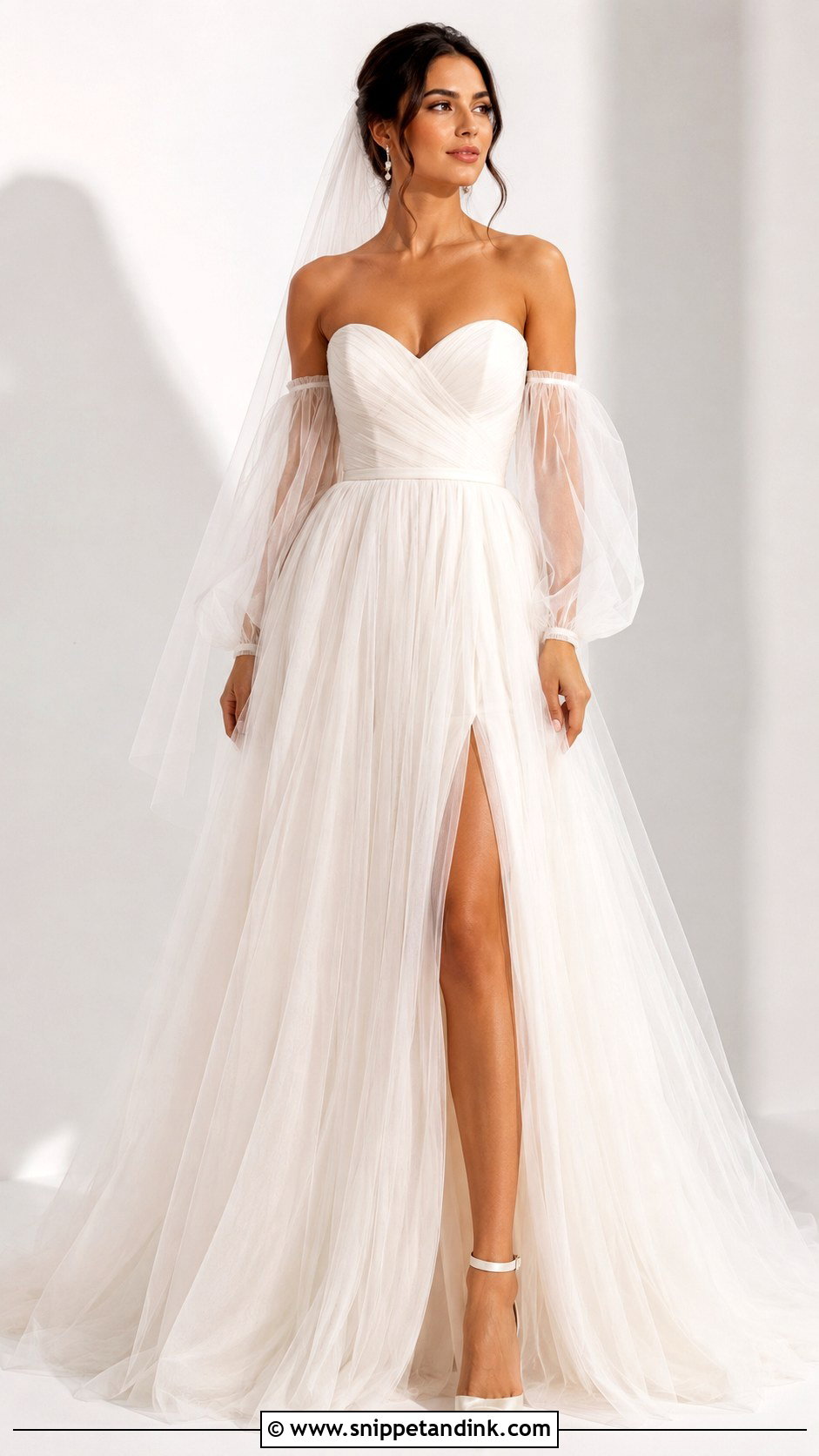
Detachable sleeves give you two looks from one gown: on for the ceremony and portraits, off for dancing. They can be puffed, fitted, lace, tulle or off-shoulder, and they fasten to a strapless sweetheart base with small hooks, buttons or elastic. Practise taking them off with whoever will be helping, because fiddly hooks under the arm are hard to undo in a hurry. Once they’re off, switch to bolder earrings or add a bracelet. It’s a cheaper route to variety than buying a second dress.
12. Sweetheart Wedding Dress With Basque Waist
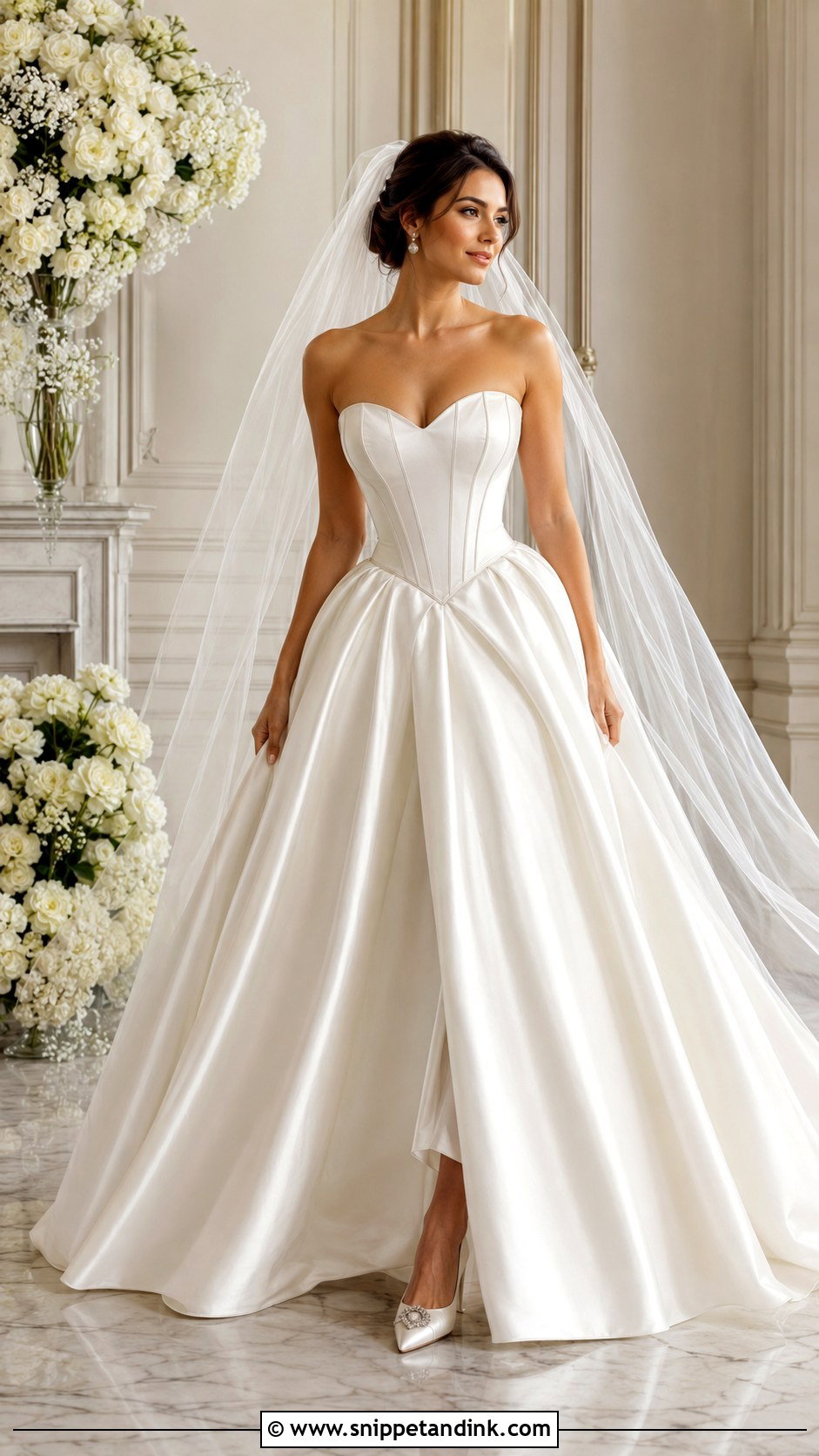
A basque waist dips into a soft V at the front, lengthening the torso and echoing the sweetheart curve above it. You’ll mostly see it on corset bodices, satin ball gowns and full tulle skirts. Point placement is everything: I want the tip of the V just below the natural waist, not halfway down the hips, or it shortens the legs. Brides drawn to princess-inspired gowns who want a more modern line often settle here. Add a long veil, pointed-toe heels and classic earrings, and give the tailoring the time it needs.
13. Sweetheart Wedding Dress With Slit
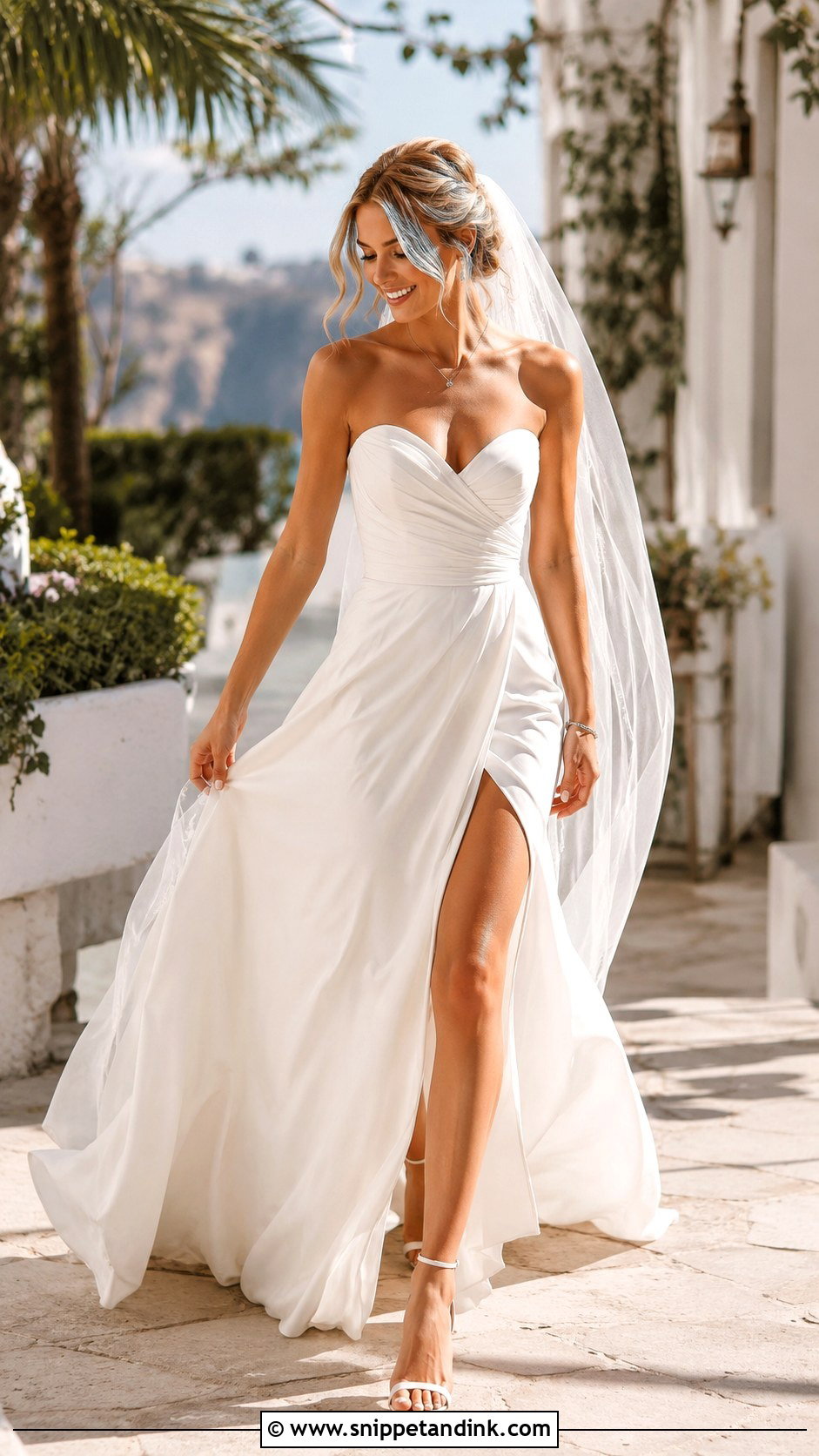
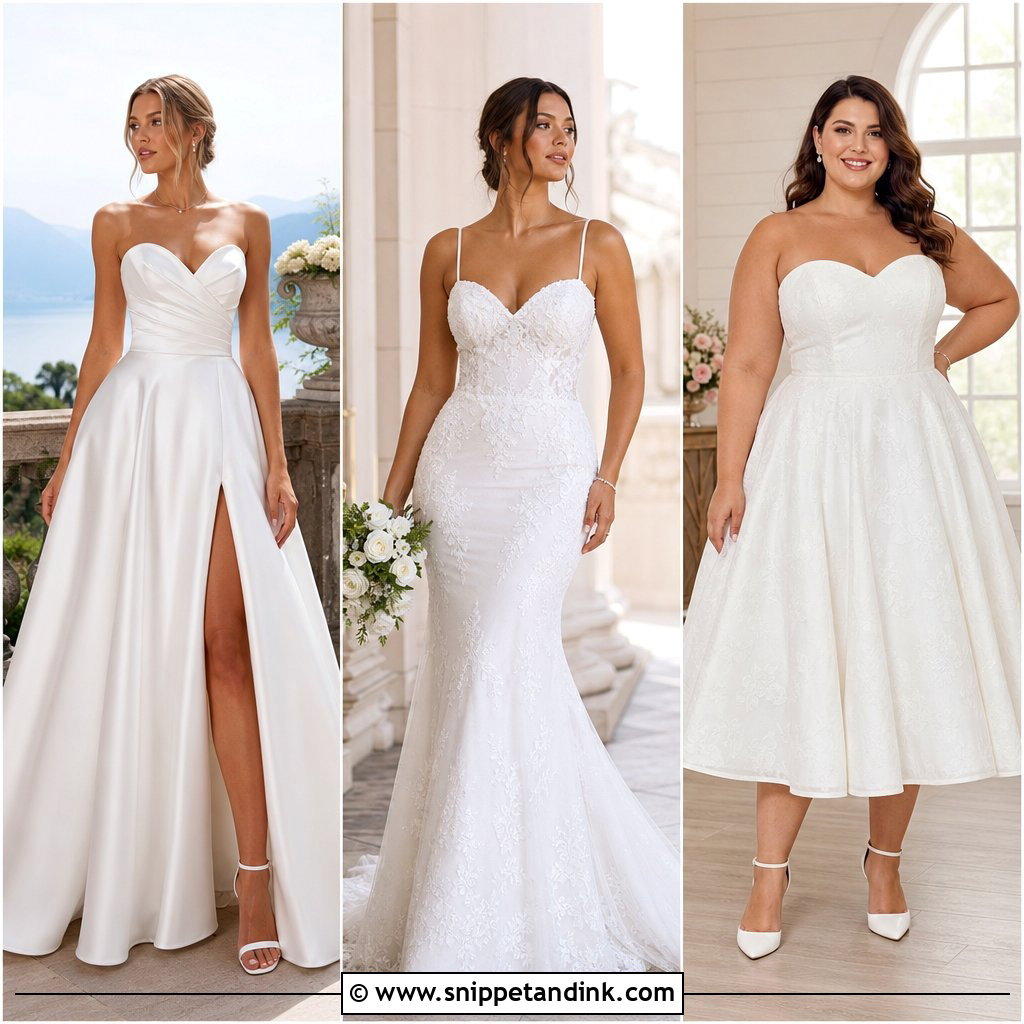
A slit makes a fitted sweetheart gown easier to walk in and gives satin, crepe or chiffon a little swing. I run a simple test at every fitting: sit down, cross your legs, then climb two stairs. If the slit opens higher than you’re comfortable with in any of those, ask for a modesty panel or a few stitches to drop it an inch or two. Warm-weather and beach weddings are made for it, and it’s a good excuse for strappy heels. Keep jewelry minimal and choose a soft veil so the top and skirt stay in balance.
14. Sweetheart Crepe Wedding Dress
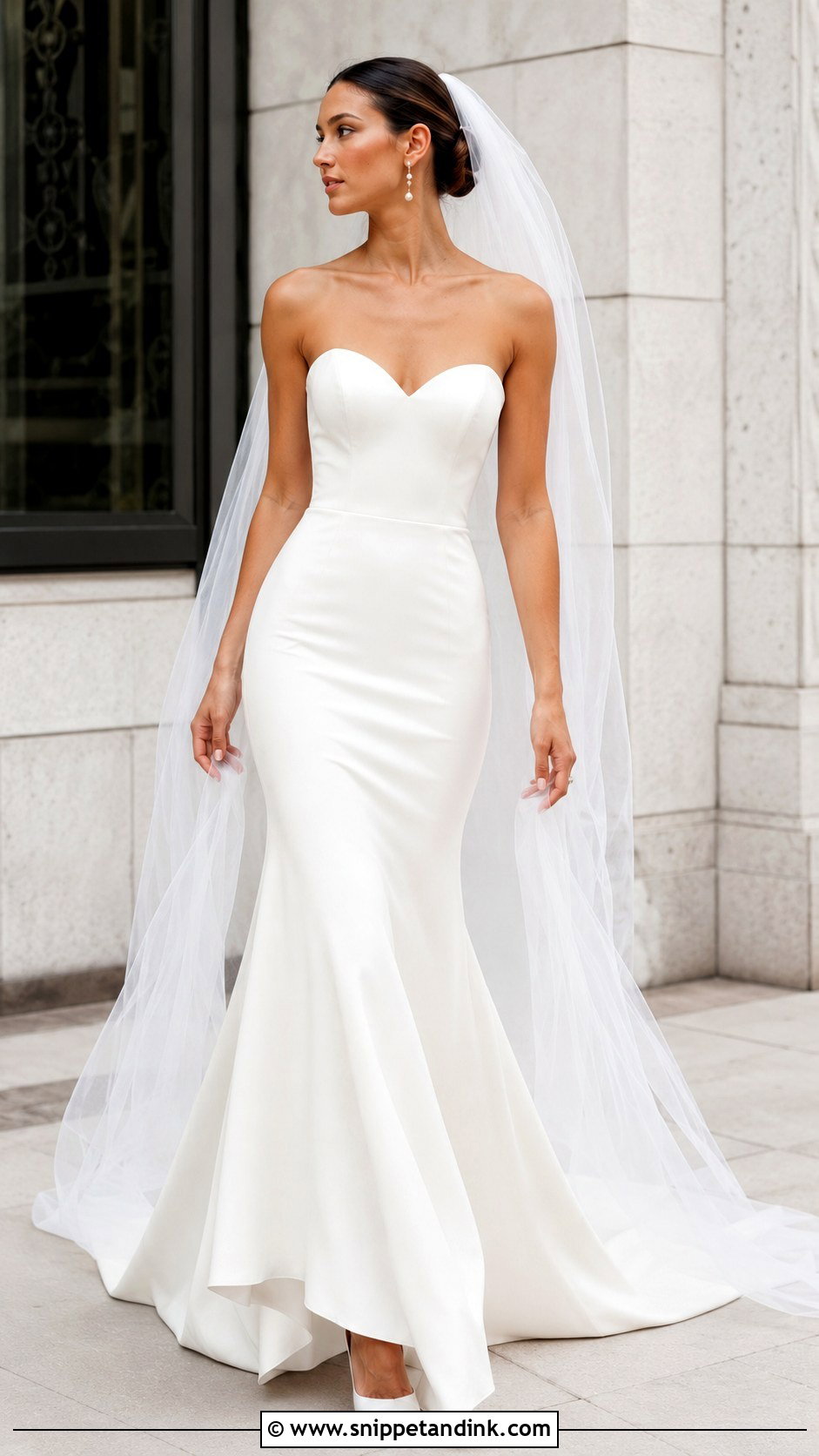
Crepe has enough weight to skim the body rather than cling to it, which is why I like it for column and fit-and-flare shapes. It has no shine and no texture to hide behind, so a sweetheart neckline in crepe relies entirely on the cut. Bodice seams and the zip must lie flat, and you’ll want shapewear chosen before the first fitting. A sleek bun, pearl drops and a long plain veil suit it. Modern venues, city halls and minimalist receptions are where it looks most at home.
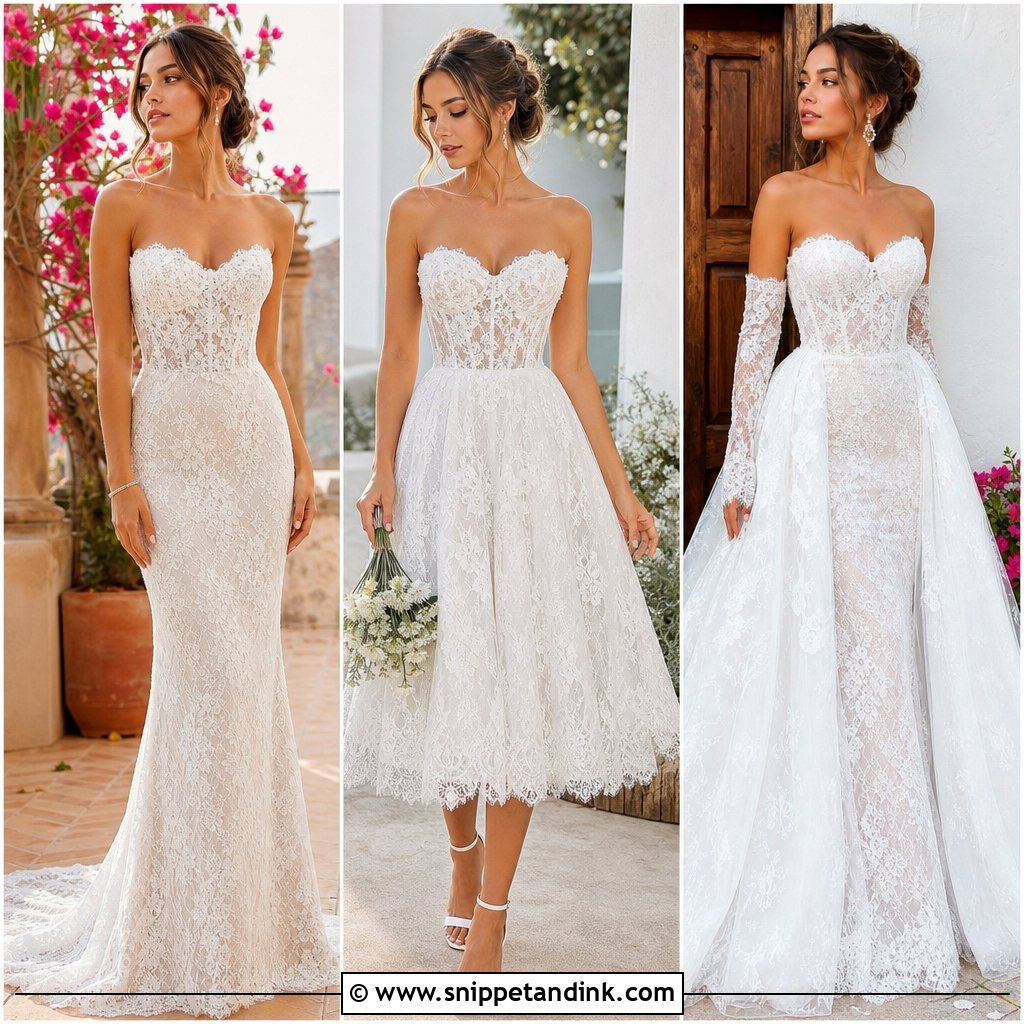


15. Sweetheart Beaded Wedding Dress
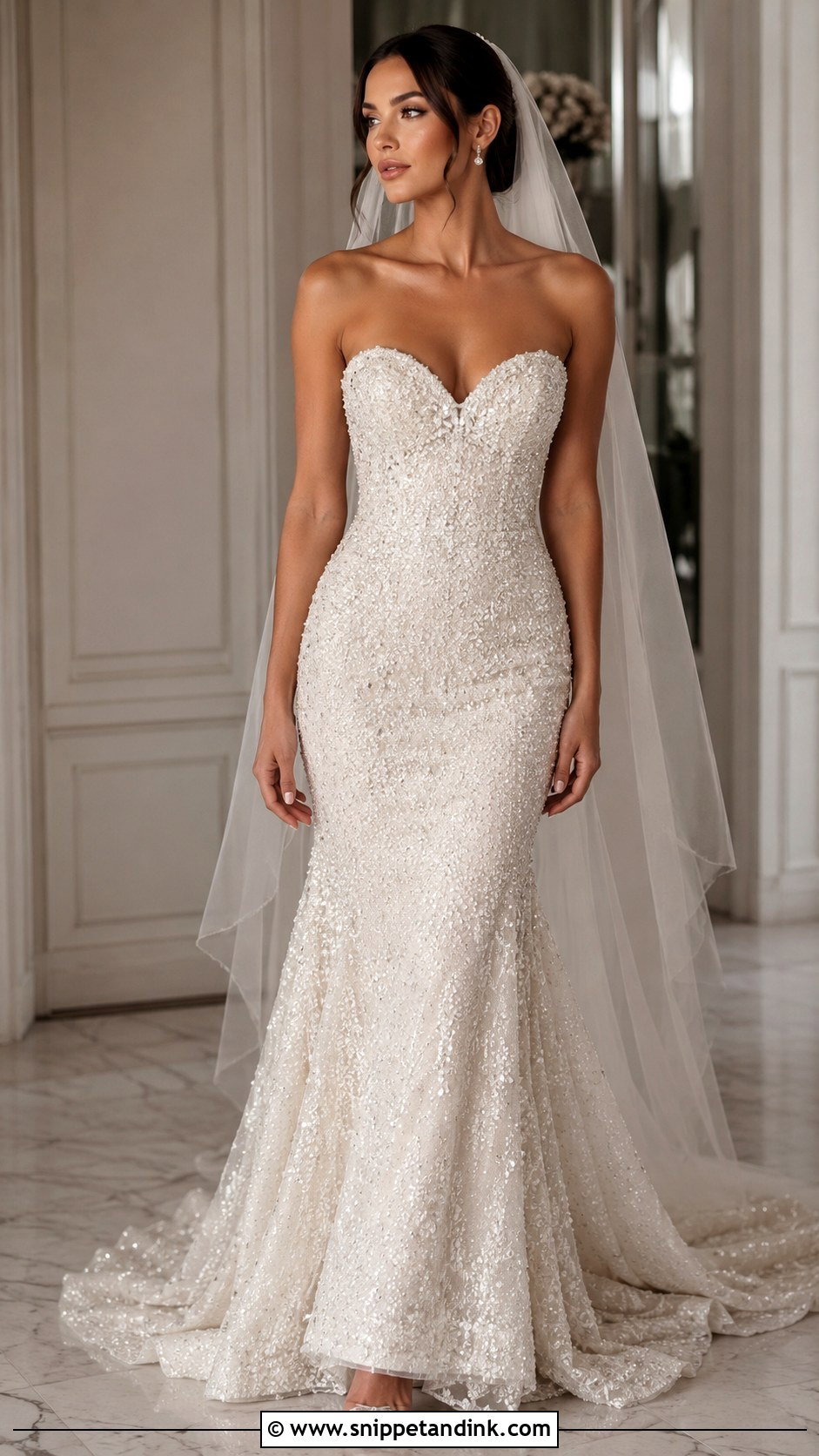
Beading along a sweetheart bodice catches light right where the camera focuses in close portraits. Weight is the part nobody mentions. Heavily beaded bodices can drag the gown down at the front, so the internal structure has to be stronger than in a plain dress. I also run a hand along the inside to check for loose threads, since one missed stitch can drop a whole line of beads during the evening. Evening ceremonies and formal receptions show it off best. With heavy beading, stop at small earrings; with lighter work, a crystal comb is fine.
16. Sweetheart Floral Applique Wedding Dress
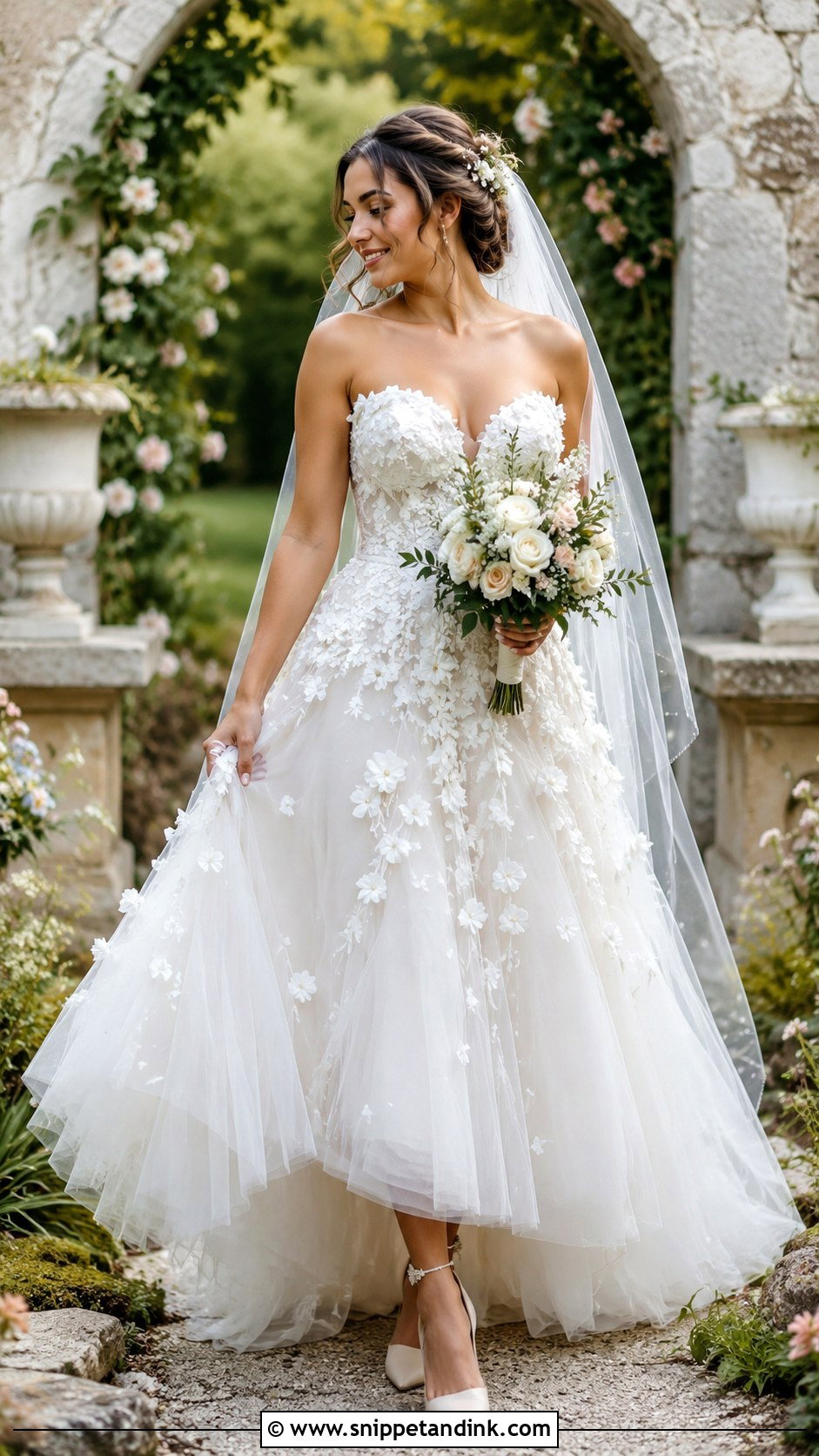
Floral appliqués can stay scattered on the bodice or travel down the skirt, and on a sweetheart neckline they often climb along the curved edge. Three-dimensional flowers need care: they crush when you hug people and flatten in a packed garment bag, so hang the dress and never fold it. Outdoor and estate weddings in spring and summer suit them. A sheer veil lets the flowers show through, while heavy jewelry just competes with them. For brides who find full traditional lace too formal, this is the softer route.
17. Sweetheart Minimalist Wedding Dress
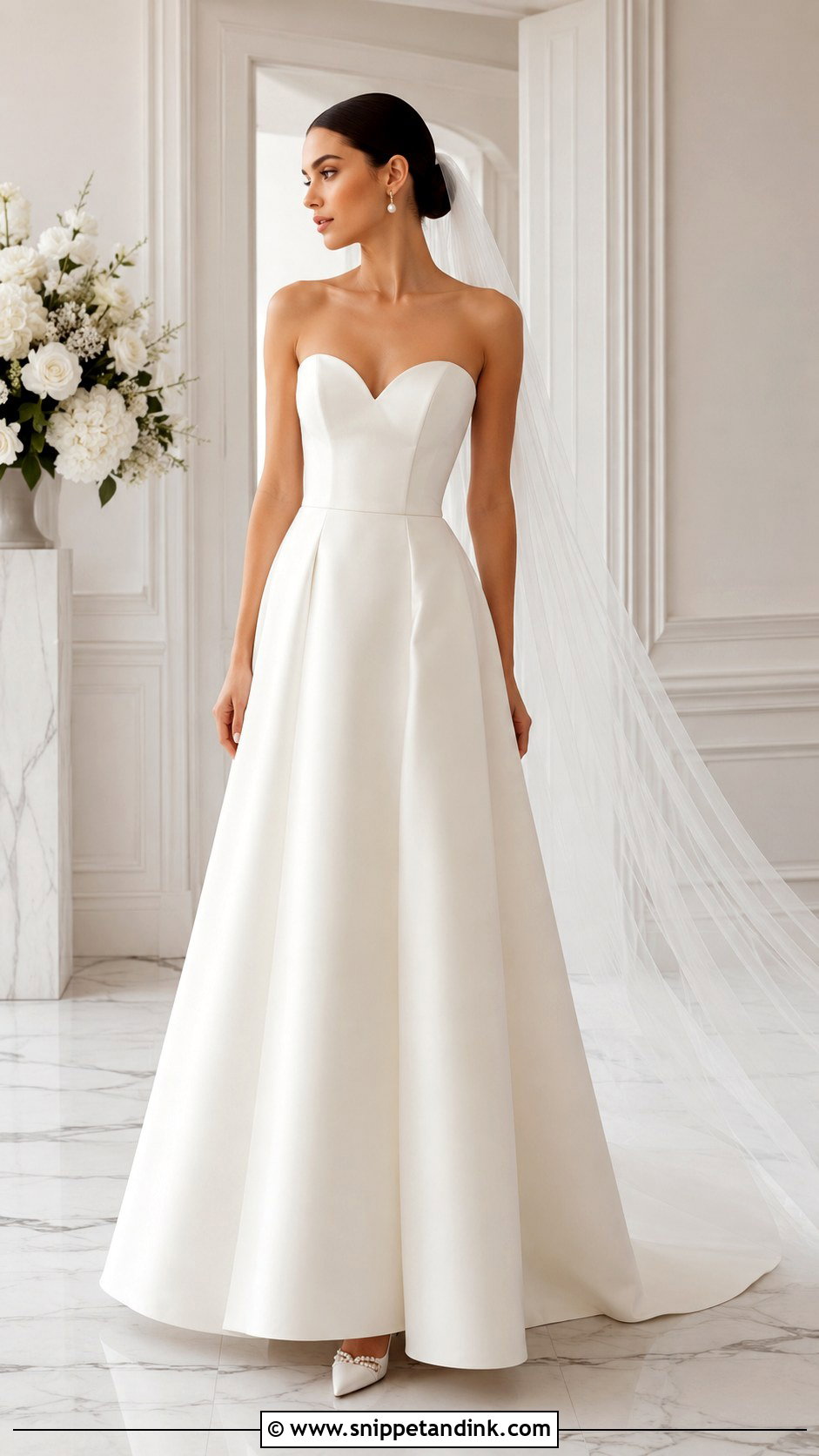
With a minimalist sweetheart gown, the fit is the design. Clean satin, crepe or mikado leaves nothing to distract the eye, so the top edge has to sit flat, the side seams have to run straight and the hem has to fall evenly. I’d rather a bride put her alteration budget here than into extra embellishment. Pearl earrings, a sleek veil and a structured bouquet are enough, and gloves or a cape add an editorial note for the ceremony. City weddings and modern venues are its natural setting.
18. Sweetheart Vintage Wedding Dress
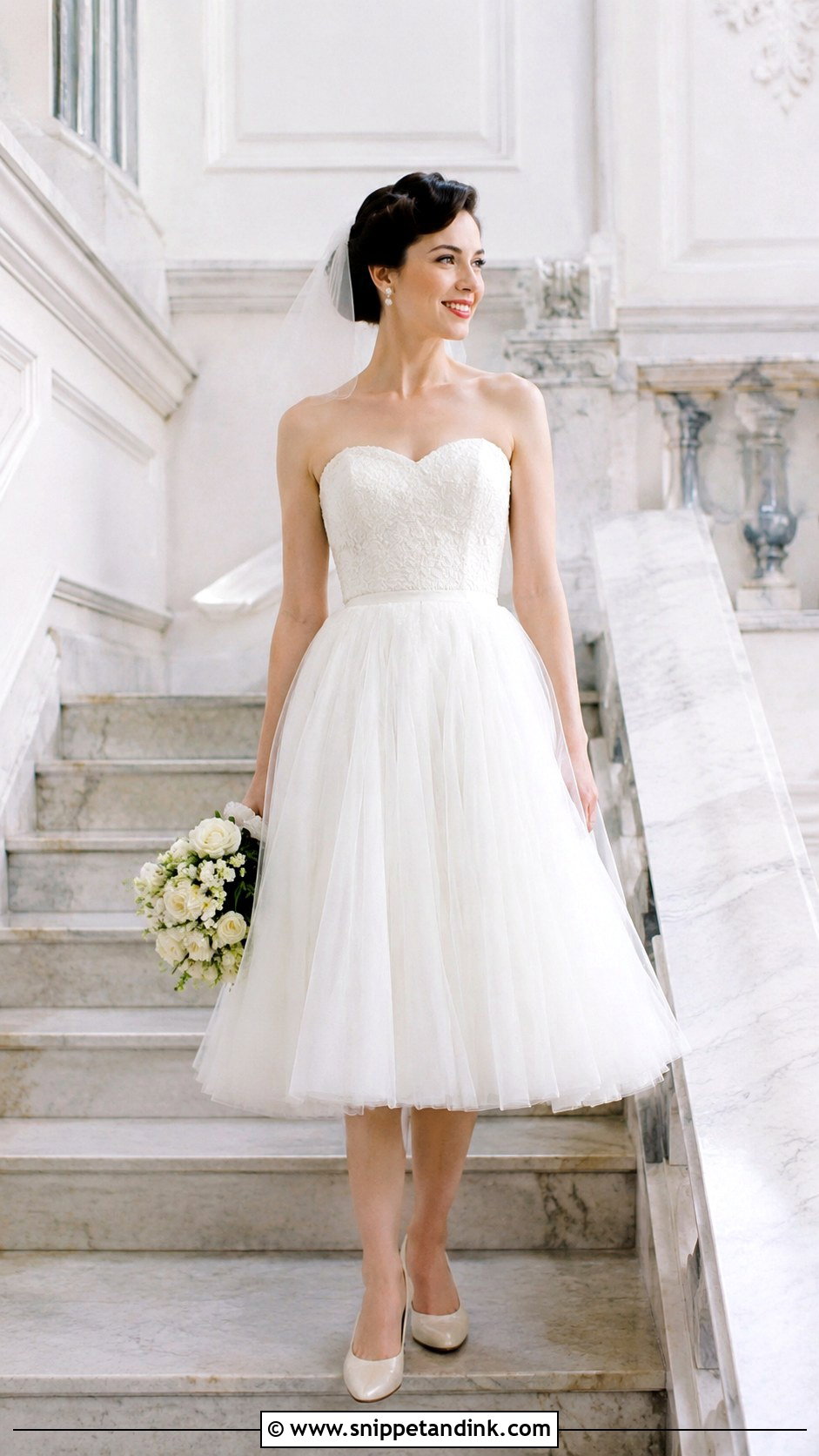
Vintage-inspired sweetheart gowns borrow lace sleeves, basque waists, satin-covered buttons and tea-length skirts. My one rule is restraint. Pick one or two of those details and let the rest stay modern, or the look tips into costume. Historic venues, gardens and small celebrations suit it. A birdcage veil, pearl earrings and soft set curls give the retro touch without overdoing it. If you’re wearing a genuine vintage gown, have a specialist check the fabric for weak seams before any alterations begin.
19. Sweetheart Boho Wedding Dress
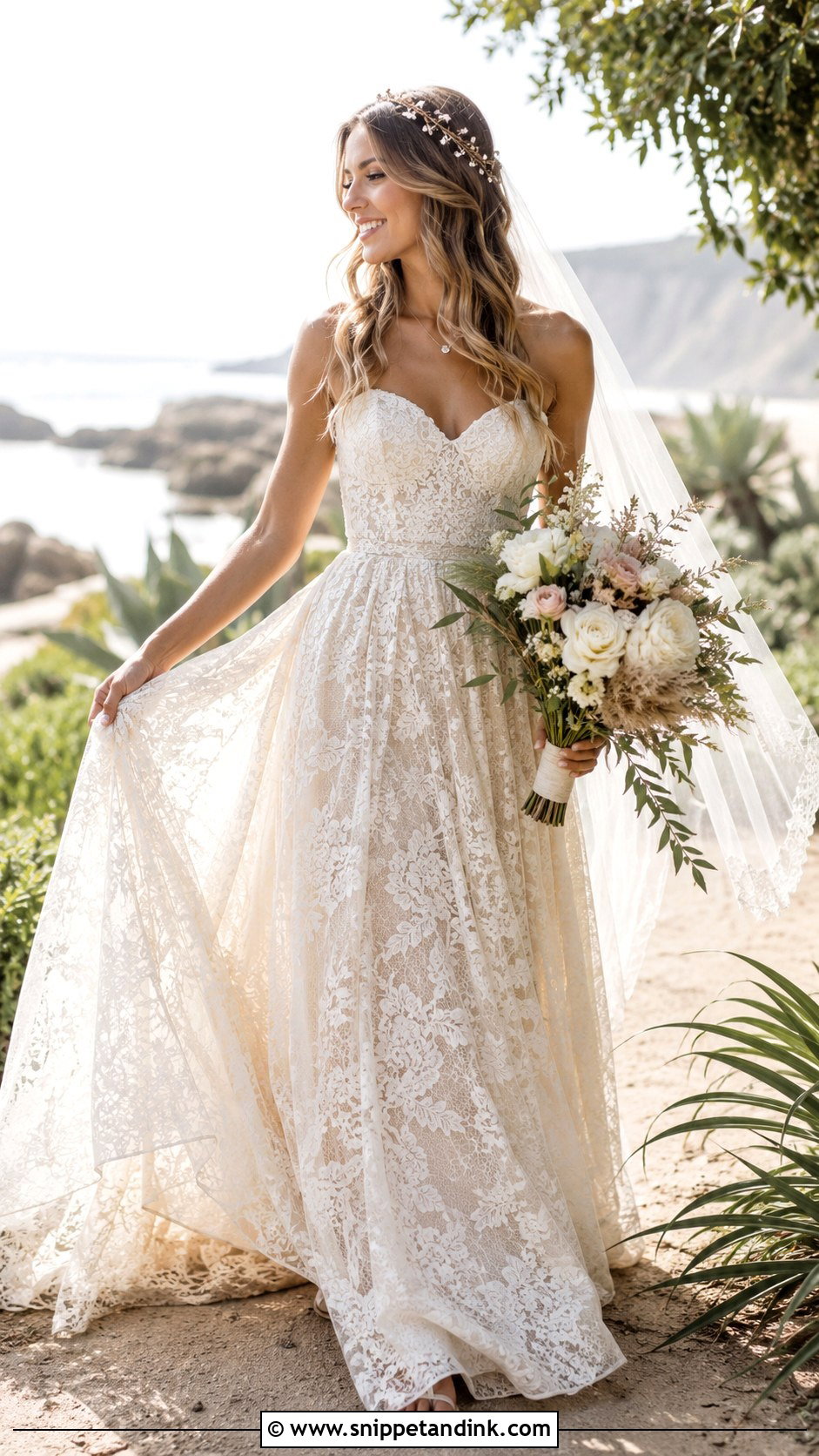
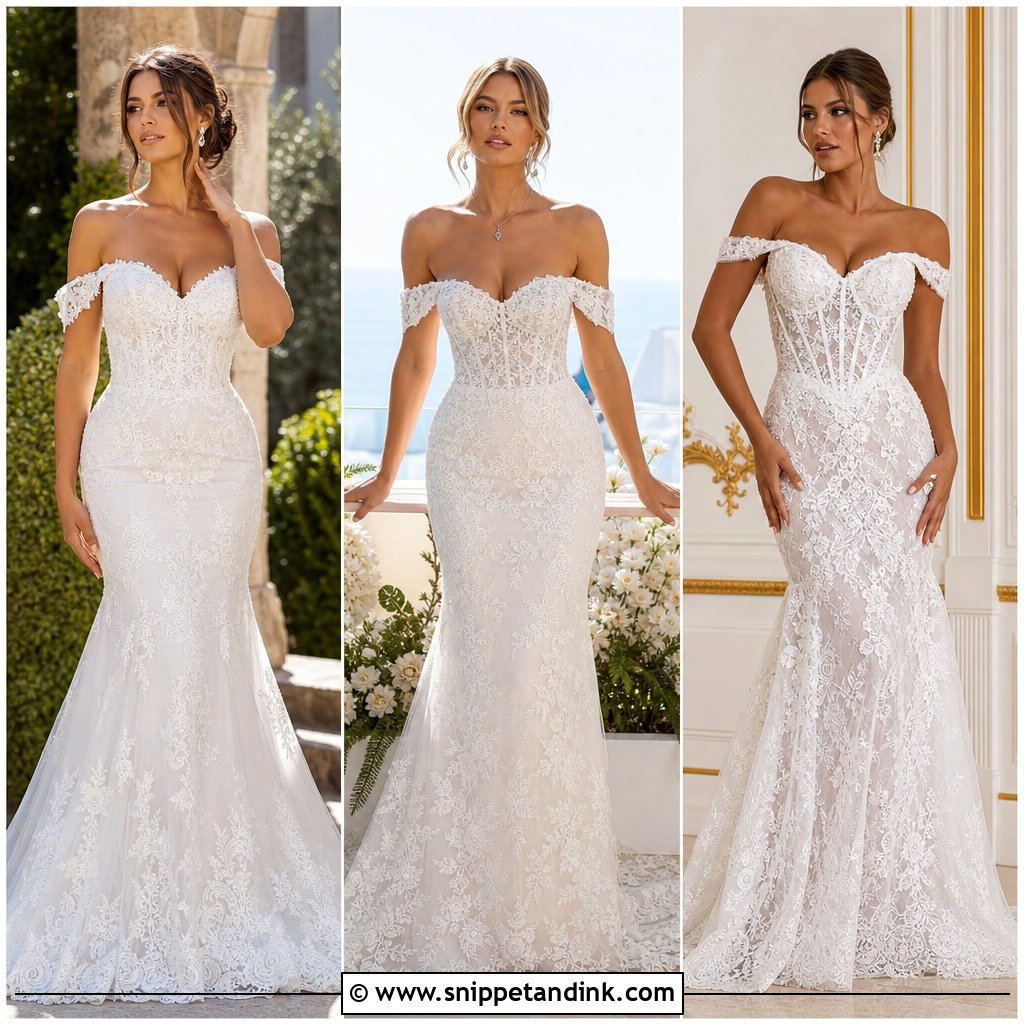
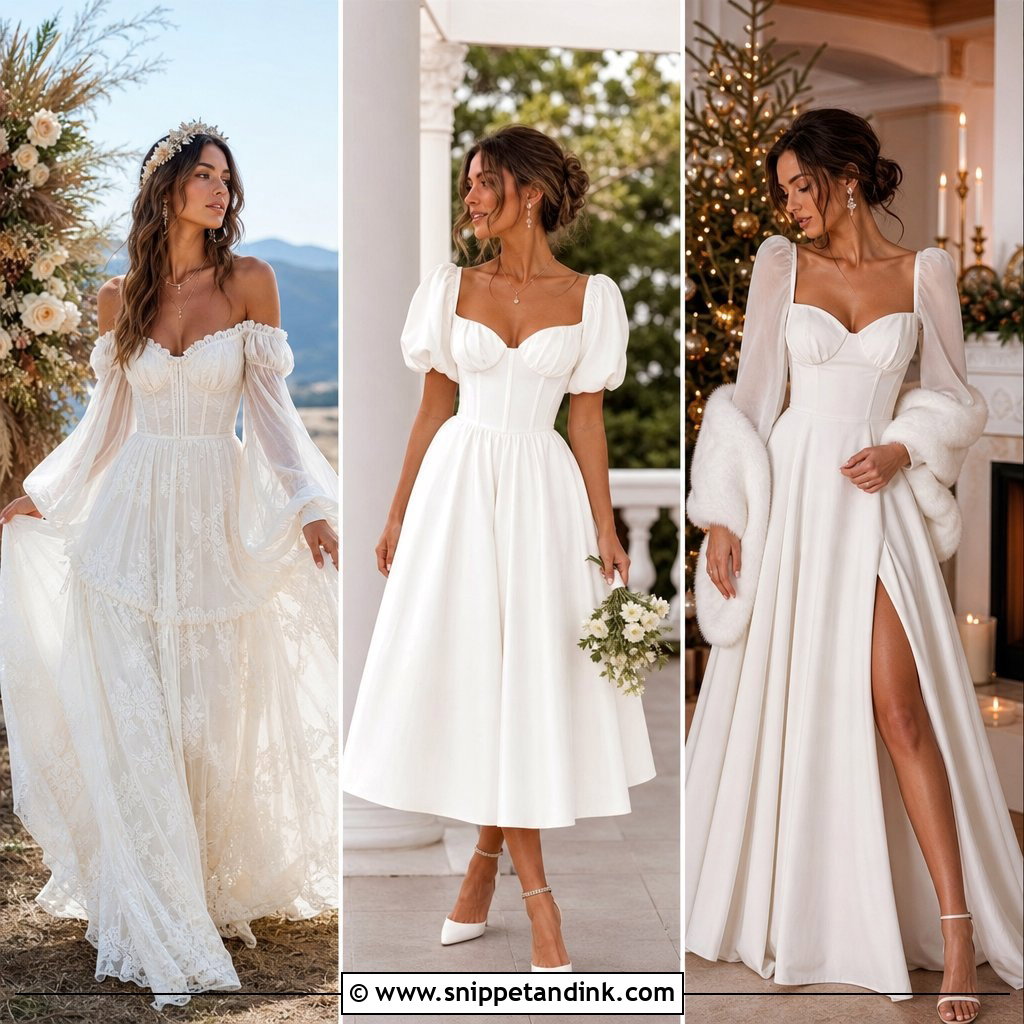
A sweetheart boho wedding dress uses the neckline for shape while everything below it stays loose: soft lace, light tulle, chiffon, crochet-style trims and flowing skirts. Unlined lace can look sheer in direct sun, so I hold these up to a window during a fitting. Beach, desert and garden weddings are where it belongs. Loose waves, sandals or block heels and a veil that moves in the breeze finish it, and a thin hair vine usually looks more current than a full flower crown.

20. Sweetheart Plus Size Wedding Dress
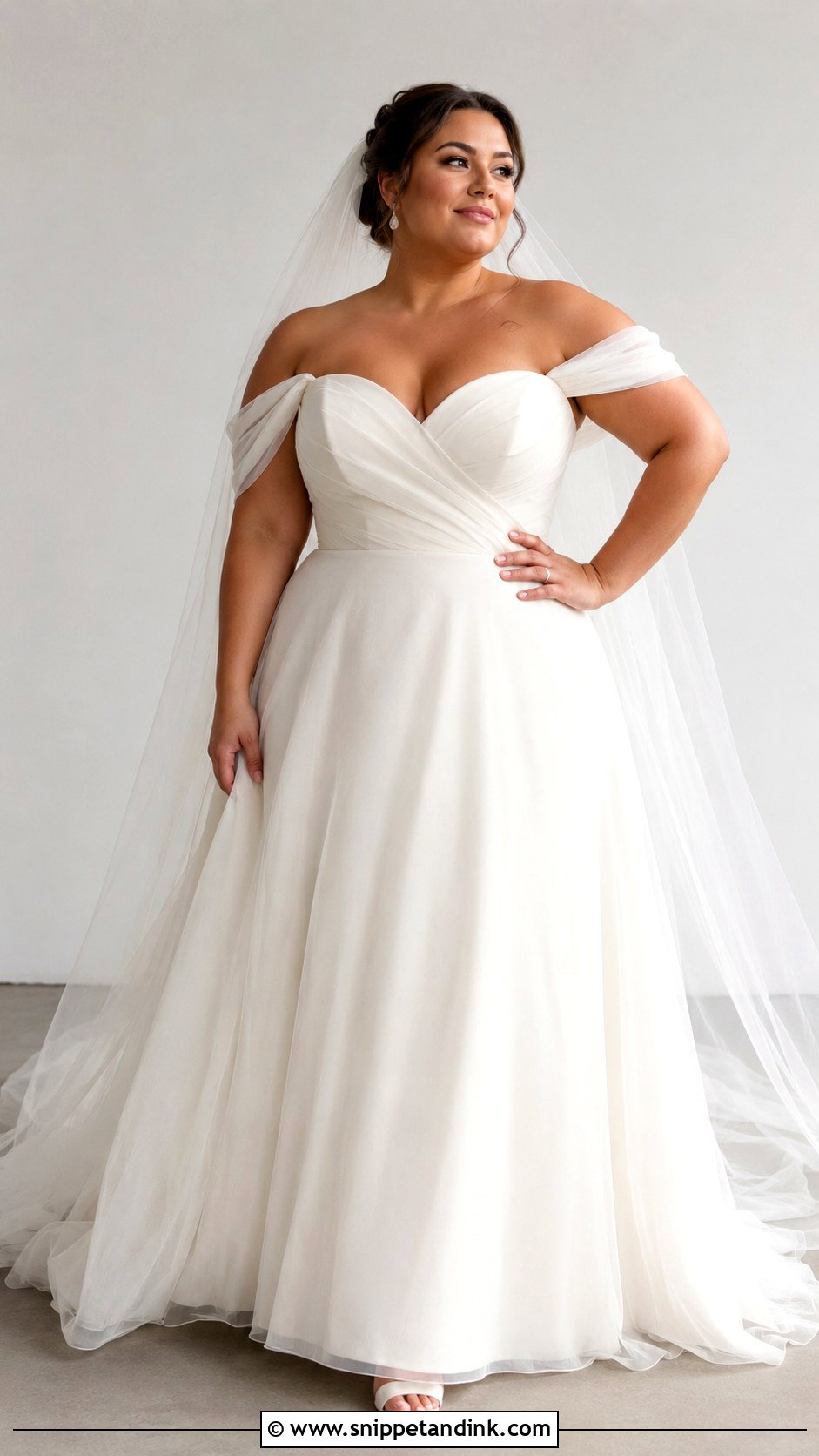
For a plus size bride in a sweetheart gown, the construction matters more than the silhouette. I look for strong boning, a wider back panel, a proper waist stay and fabrics heavy enough to hold their own shape, because thin satin shows every pull. A-line, ball gown, fit-and-flare and corset styles can all work; the deciding factor is how secure you feel when you move. If you want extra support, ask about detachable straps, off-shoulder sleeves or illusion mesh. Bring your chosen undergarments to every fitting. The dress should hold you, not hide you.
21. Sweetheart Petite Wedding Dress
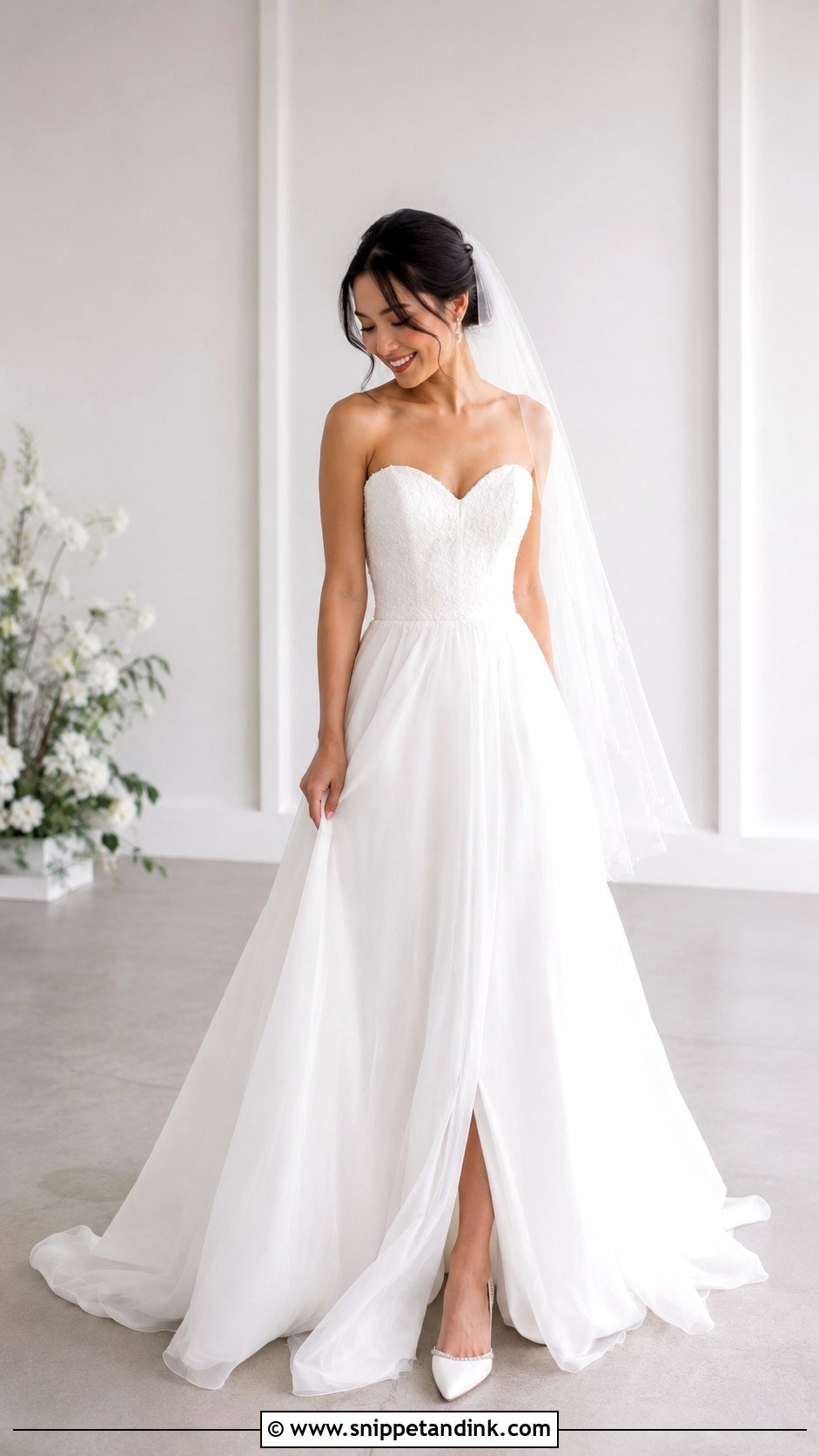
Petite brides are often handed a sample made for someone several inches taller and told the hem will fix it. It won’t fix a waist seam that sits too low or a bodice point that lands at the hip. A-line, sheath, fit-and-flare and softer ball gowns with controlled volume work well, and the sweetheart dip draws the eye upward and lengthens the upper body. Vertical lace patterns and a slightly raised waist help too. I’d steer away from skirts with many heavy layers. Pointed-toe heels and a veil cut to your height keep the proportions right.
22. Sweetheart Beach Wedding Dress
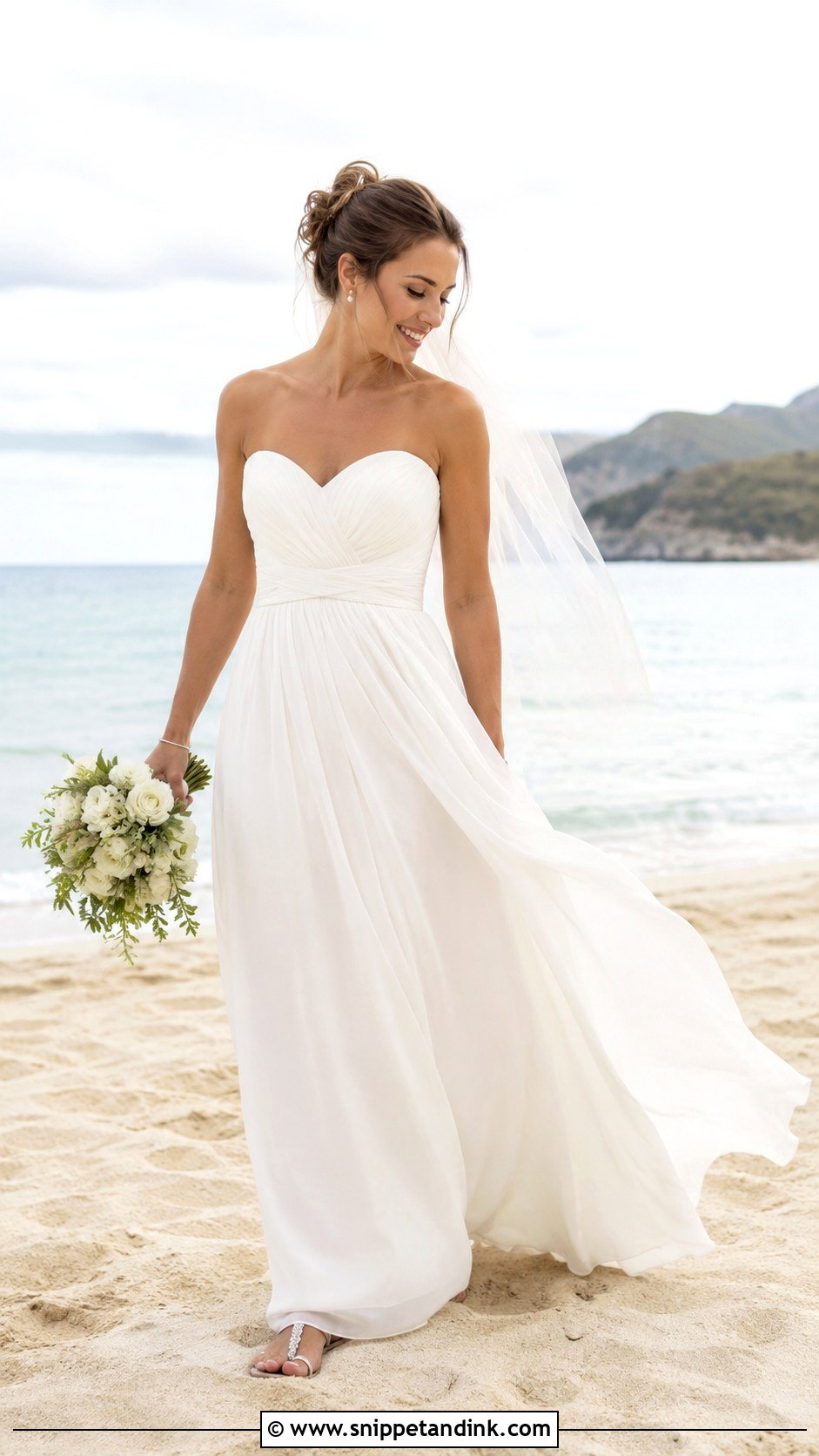
On sand, a dress has to cope with wind, heat and uneven footing. Chiffon, soft tulle, light lace and lightweight crepe breathe and move, and the sweetheart neckline gives shape without straps. A-line, sheath and loose fit-and-flare cuts let you walk; a tight mermaid makes the aisle miserable. I’d skip a long train or plan to bustle it straight after the ceremony, because sand and seawater mark a hem fast. Flat sandals, pearl studs and a comb that grips well in wind complete it.
23. Sweetheart Short Wedding Dress
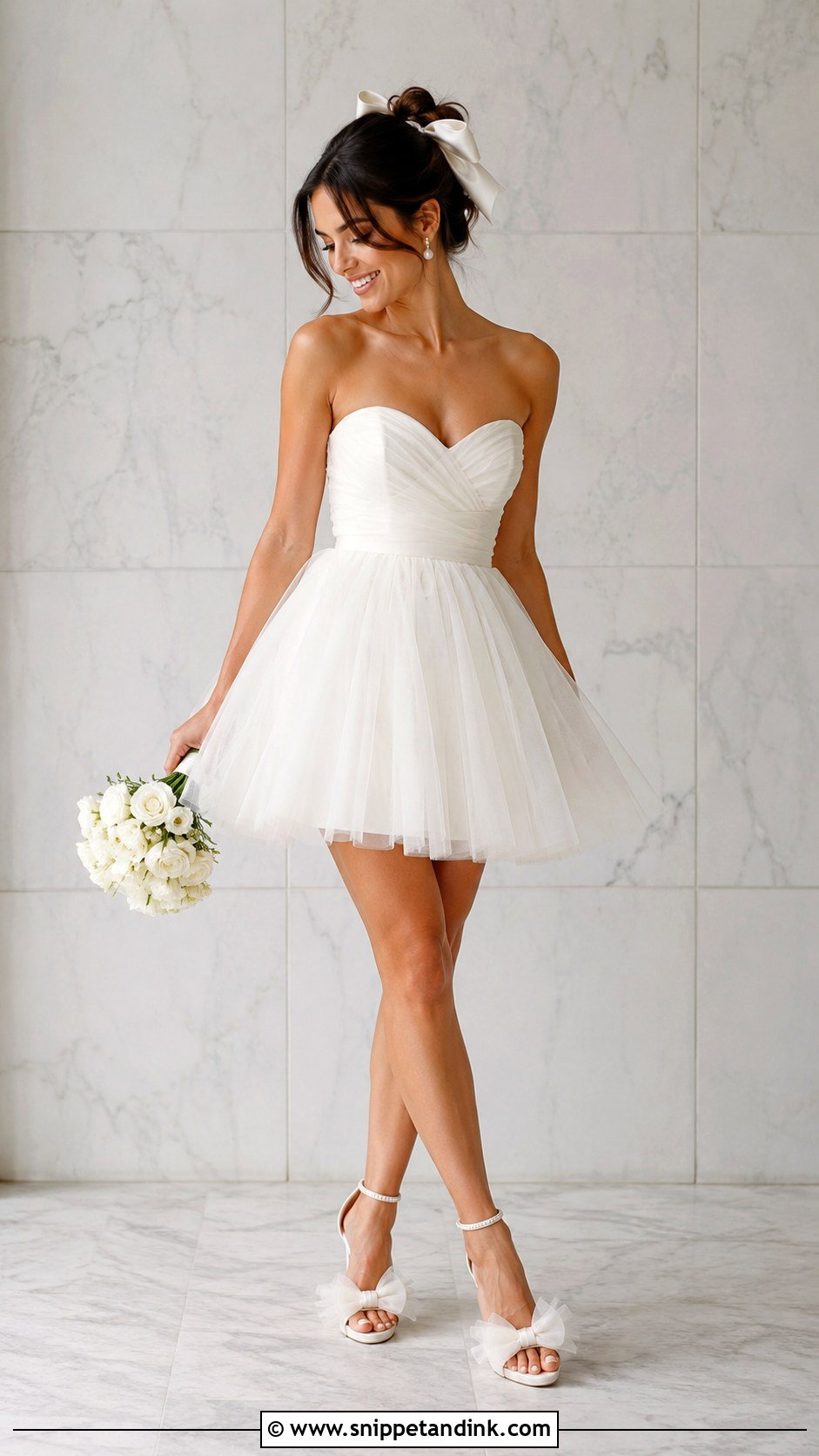
A short sweetheart dress is the easiest one to dance in, and it suits a courthouse ceremony, a bridal shower or a second look. The shorter hem puts your shoes on show, so choose them first and fit the hem around them. Options run from a structured mini to tea-length tulle or a satin midi, and the neckline keeps it reading as bridal even when the hem is playful. If it’s your second dress, repeat one detail from the ceremony gown, such as the fabric or a bow, so the full bridal wardrobe feels connected rather than random.
24. Sweetheart Wedding Dress With Cape
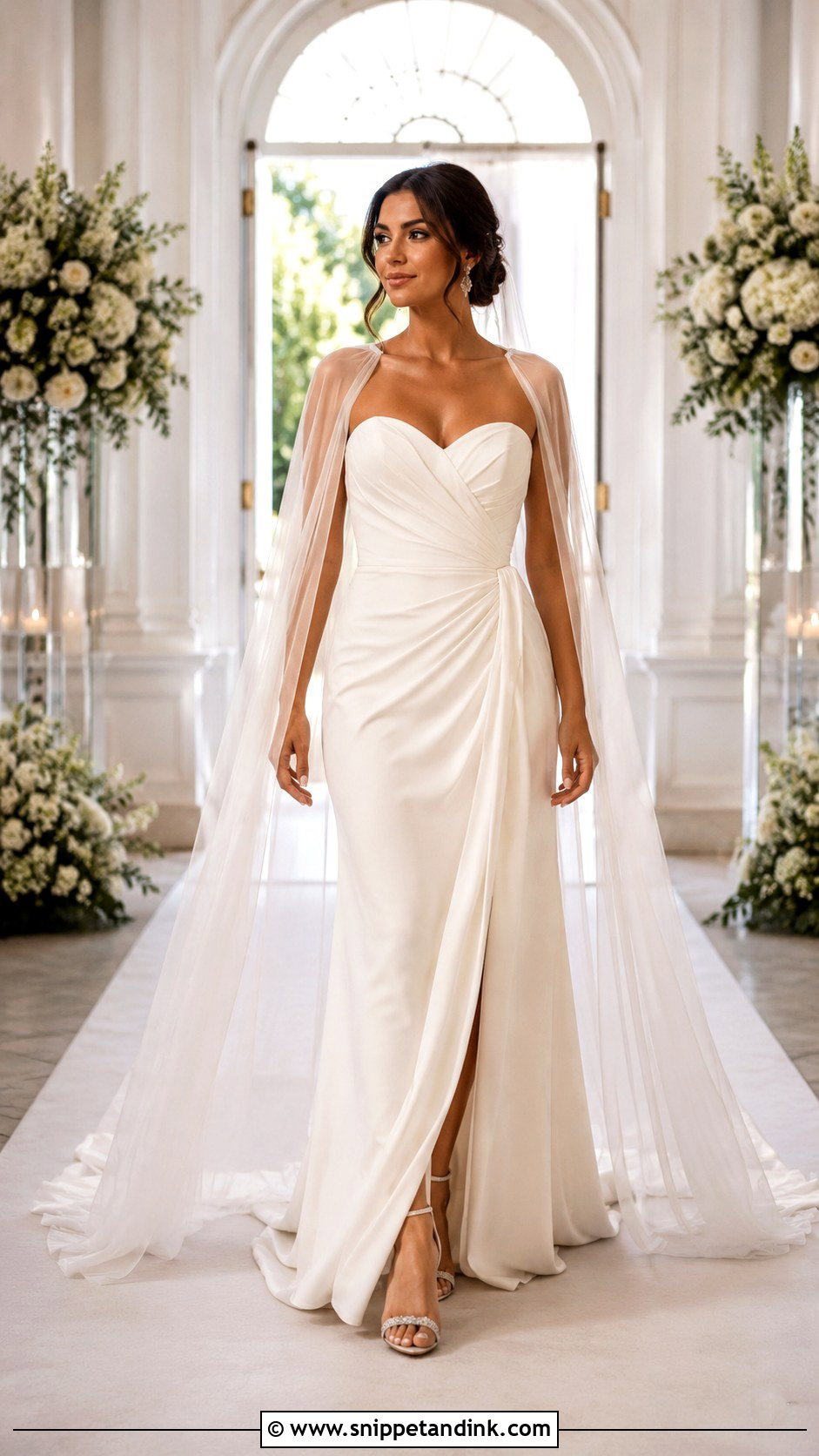
A cape over a strapless sweetheart dress adds movement and covers the shoulders while the neckline stays visible underneath. Sheer tulle or chiffon floats behind you; lace or satin gives more structure. Plenty of brides wear one instead of a veil. Check how it fastens. Capes that hook at the shoulder can slide back and tug at the bodice, so I prefer ones that attach to the bodice itself or clip at the neck. Take it off after the ceremony for a cleaner reception look, and keep jewelry small while it’s on.
25. Sweetheart Reception Wedding Dress
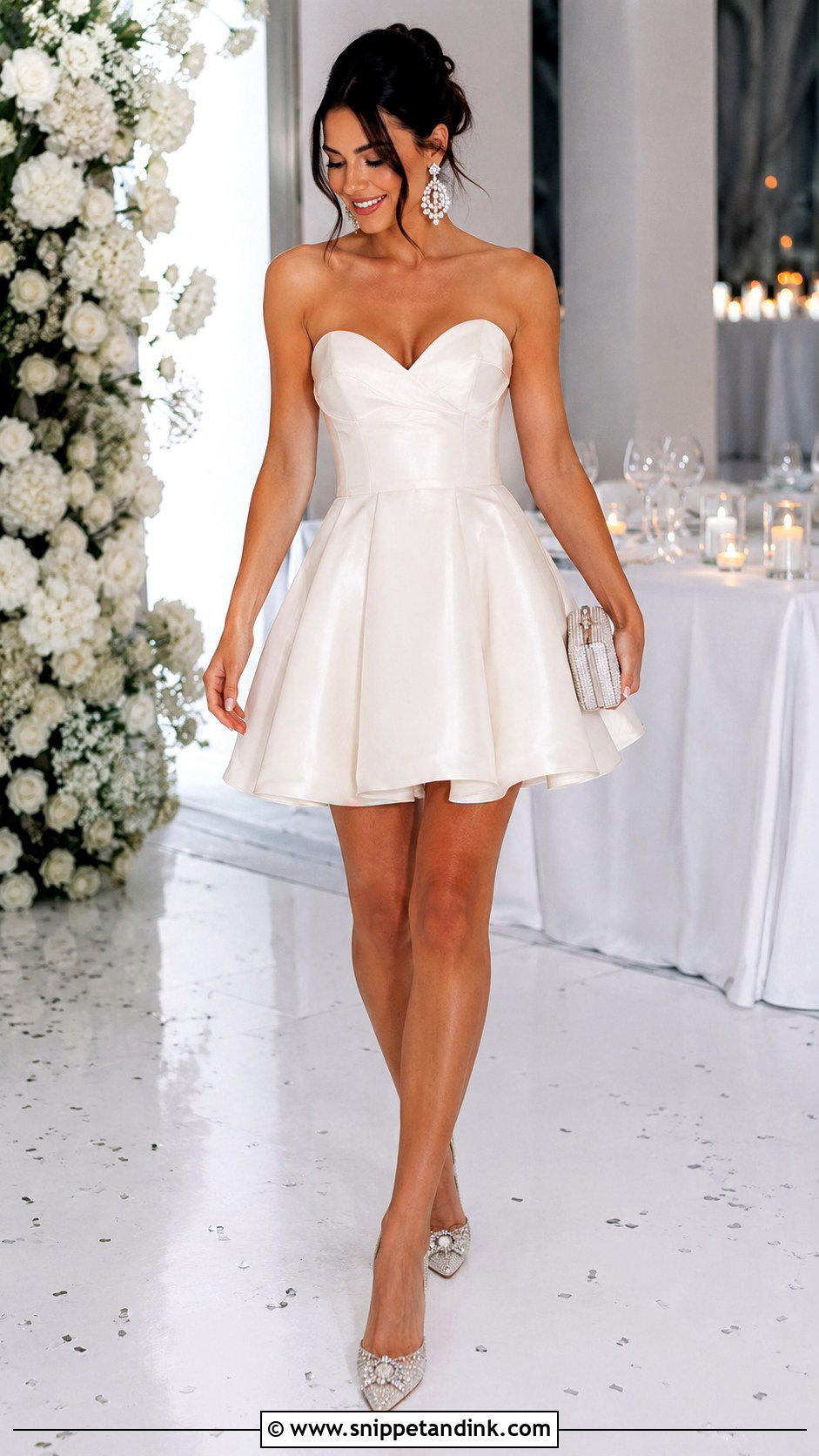
The reception dress should let you move, eat and dance without managing a train. A fitted satin midi, short tulle dress, crepe mini or slim column all carry a sweetheart neckline well. I usually suggest contrast: if the ceremony gown is dramatic, go simpler; if it was minimal, add sparkle, feathers or a bow. Plan where you’ll change and who will help, because getting out of a corseted gown takes longer than anyone expects. Statement heels, a small clutch and earrings that catch the light finish it.
Living in a Strapless Sweetheart From First Look to Last Dance
A gown can pass every fitting test and still wear you out by the evening if nobody planned for the hours in between. I talk brides through the day in order, because each part of it asks something different of the bodice.
In the car and at the ceremony
Satin and crepe crease wherever you sit, so have someone with a handheld steamer at the venue rather than steaming at home. Stand for as long as you can before walking in. If your arms will be raised for a while, for photos or a handfasting, a quick tug at the side seams beforehand settles the top edge flat.
At dinner and on the dance floor
Ask for the bustle to be shown to your maid of honor or a family member at the final fitting, and have them practise it twice. A train left down gets stepped on within minutes of dancing. If the bodice starts to slide, the fix is usually tightening the waist stay or the lacing, never pulling at the top edge, which only stretches it.
What I pack for the bodice
- Double-sided fabric tape for a top edge that starts to lift.
- Safety pins and a needle already threaded in the dress colour.
- Blotting papers, because powder brushed onto a satin neckline is hard to remove.
- A clean white cloth and cold water for any spill near the neckline.
A Sweetheart Neckline Is Only as Good as Its Bodice Fit
The sweetheart neckline stays popular because it adapts. It can be soft or structured, classic or modern, and it sits on almost any silhouette from a satin ball gown to a short reception dress. What decides whether it’s right for you is fit. A bodice that grips without digging, a waist seam in the correct place and undergarments sorted early do more for the finished look than any trim. Think about how you’ll move at your venue, budget for alterations, and try your favourite on once more before you sign. You’ll know it’s the one when you stop adjusting it in the mirror.
You'll Like These Ideas:





Leave a Reply