
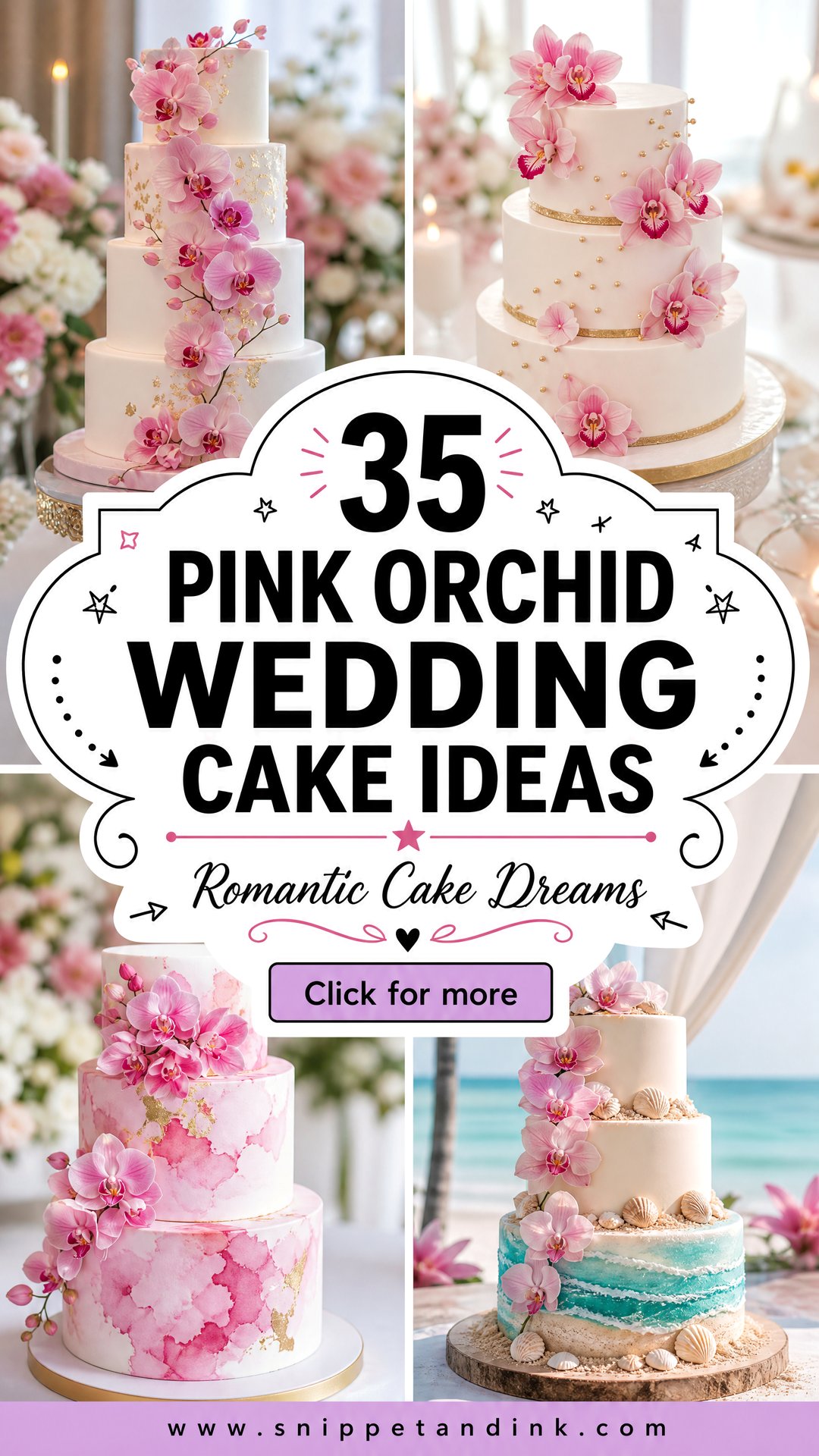
Orchids are one of the easiest flowers I put on a cake. Their long sprays fall naturally down a tier, their petals hold their shape for hours out of water, and a single bloom has enough structure to decorate a plain cake on its own. Pink ones span a wide range, from barely-there blush to deep magenta, so they sit happily with white, ivory, pearl, gold and modern square tiers. One stem can finish a small cake; a full cascade can carry a whole dessert table. Garden, beach, ballroom and outdoor receptions all suit them. Below are 35 ways I’d use them, with notes on what each one asks of the baker and the florist.
Real Stems or Sugar Petals on the Tiers?
The first thing I settle with a couple who wants orchids is what the orchids are made of, because it changes the price, the timeline and who is responsible on the day.
Fresh orchids
Orchids are a good fresh flower for cakes. Phalaenopsis and dendrobium sprays stay firm out of water through a long reception, and their sprays already grow in the falling line a cascade needs. The catch is that florist orchids are grown as decoration, not food, and may have been treated. I only put fresh stems on a cake when the florist confirms they’re pesticide-free, and even then the stems are wrapped and set into food-safe picks, and the blooms are removed before cutting.
Sugar orchids
Gum paste orchids are shaped petal by petal, wired, dried and dusted with colour, so the pink can match anything and nothing wilts. They take real time, so I need several weeks’ notice for a full spray, and they cost more for that reason. They’re also fragile and soften in damp air, so they shouldn’t go in a fridge. Many couples keep them afterwards as a keepsake.
Wafer paper orchids
Wafer paper is lighter and quicker than gum paste and gives very thin, delicate petals. It reacts badly to moisture, though, so it isn’t the right choice on soft buttercream or at a humid beach venue.
1. Pink Orchid Wedding Cake
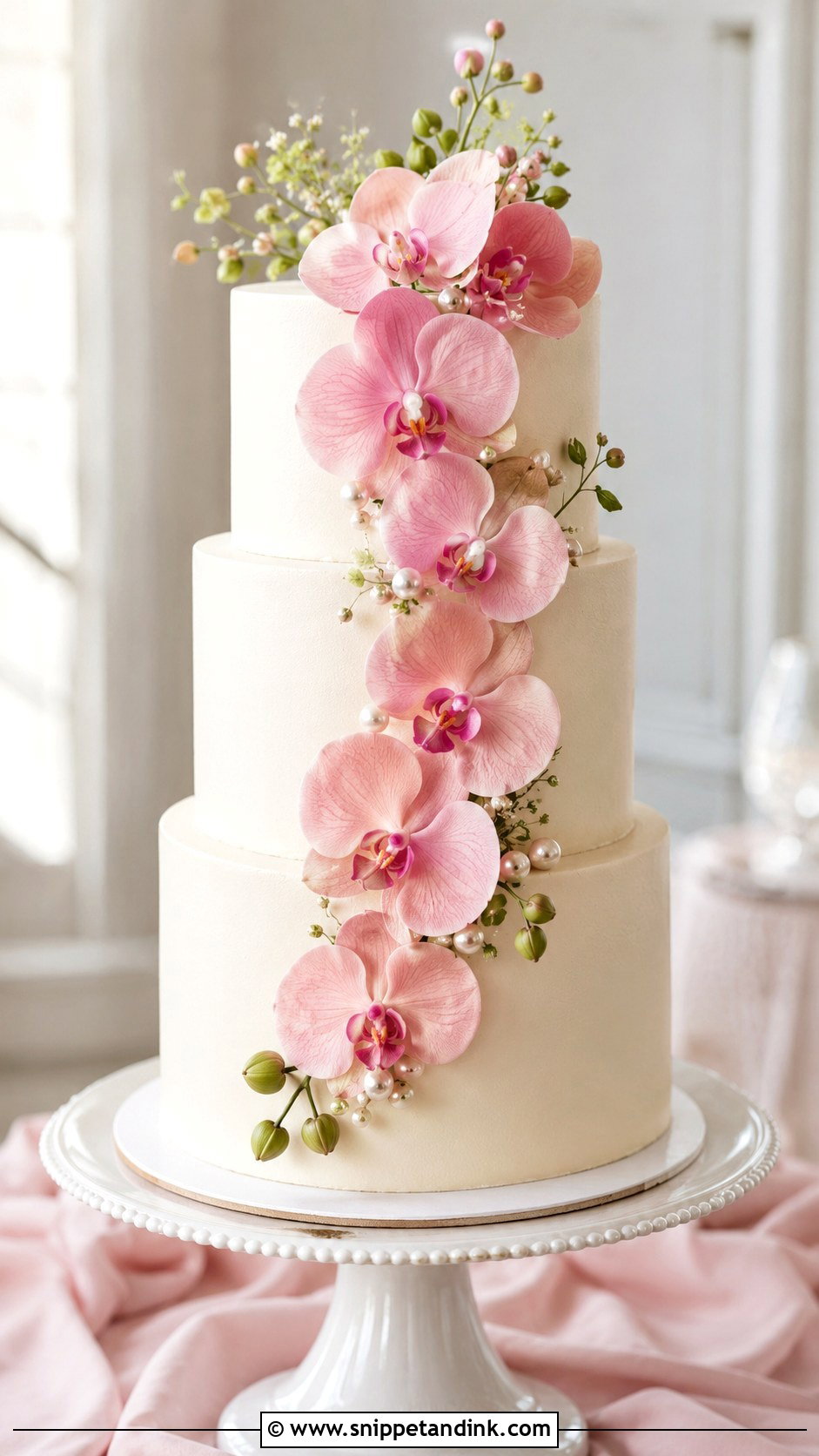
Smooth ivory or blush buttercream and a line of pink orchids along the front of the tiers: that’s the classic version, and it rarely needs more. A three-tier round cake gives the sprays room to fall naturally. I’d keep everything else quiet, perhaps tiny pearls, light piping or a satin ribbon at each base, and let the flowers carry it. Vanilla bean, almond, coconut or lemon sponge suits the light, floral feel.
2. Blush Pink Orchid Wedding Cake
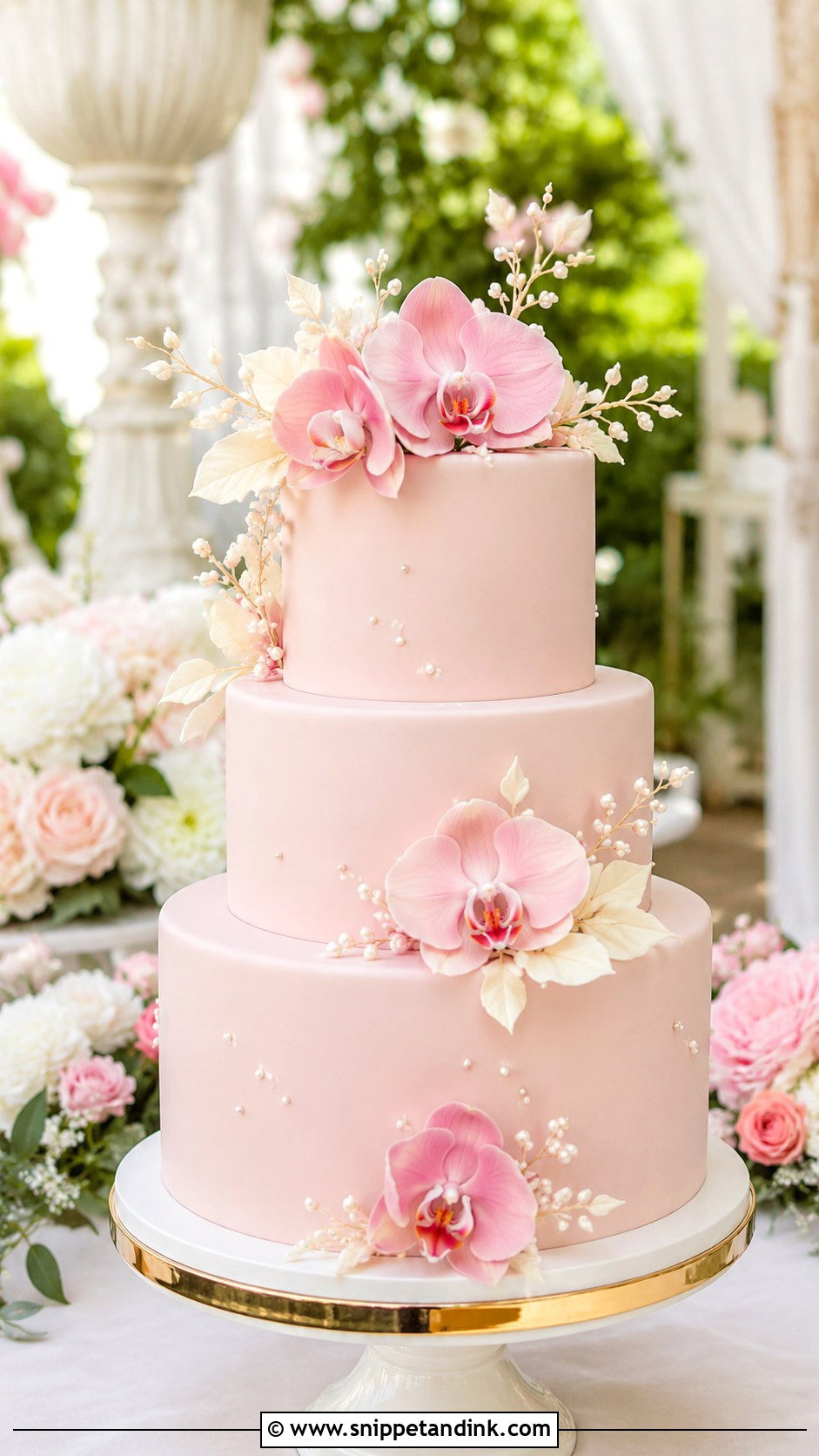
A blush base gives the cake warmth without turning it sugary. Fondant or silky buttercream both work, with pale pink orchids in small clusters around the edges. The trick I use is varying the shade slightly within each cluster, from almost white to a deeper rose centre, which is how real orchids grow and why it looks natural rather than dyed. Ivory leaves, pearl dots or thin gold edging can add detail. Spring and garden venues suit it.
3. White Wedding Cake With Pink Orchids
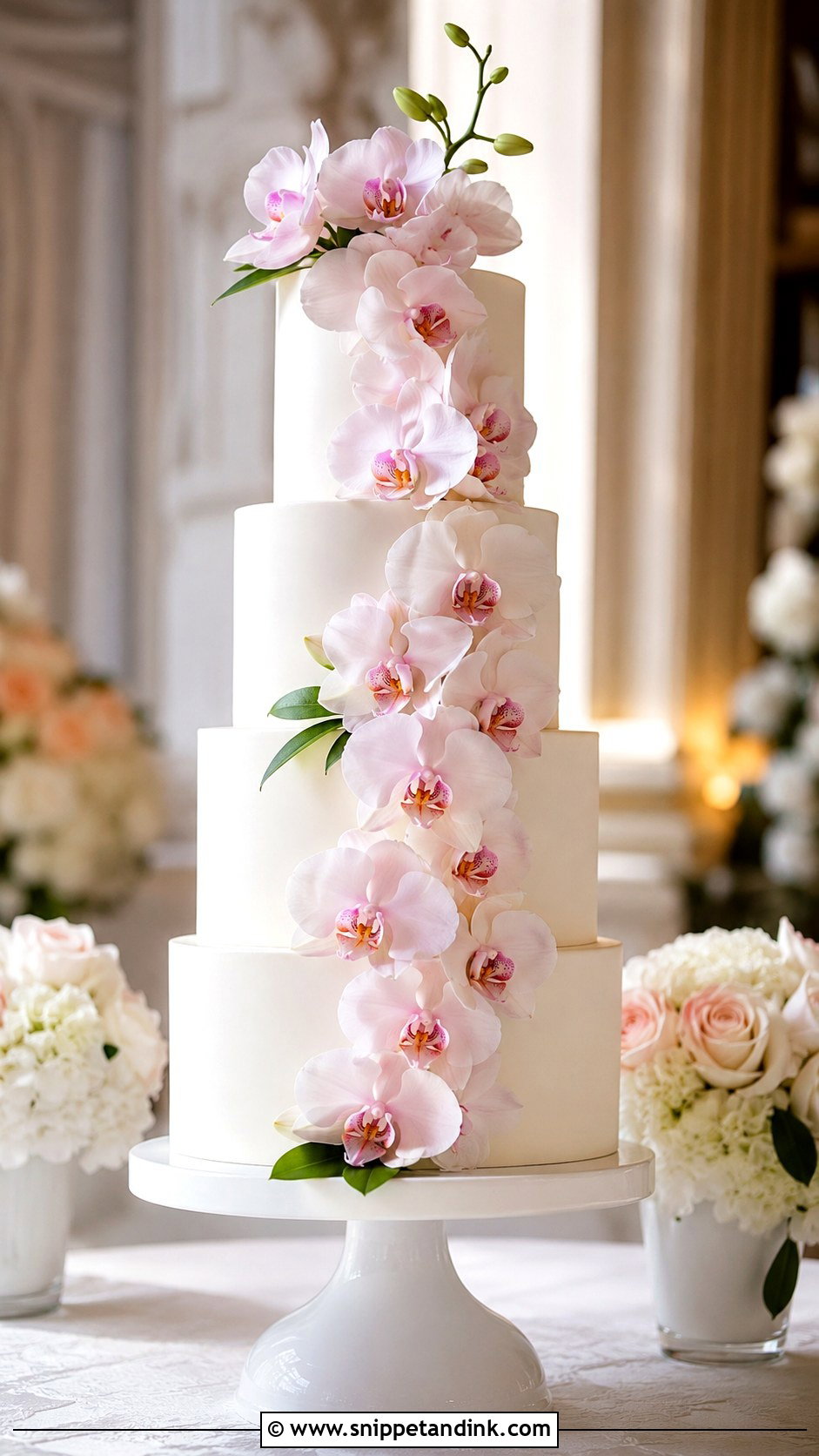
White tiers give the strongest contrast, so the pink reads clearly from across the room. Smooth white fondant, white buttercream or a soft texture all work, with the orchids trailing from the top tier down one side and only a few green leaves. Formal receptions suit it because nothing else is needed. One thing to know: buttercream made with real butter is naturally ivory, so if you want true white, ask your baker how they’ll achieve it.
4. Three Tier Pink Orchid Wedding Cake
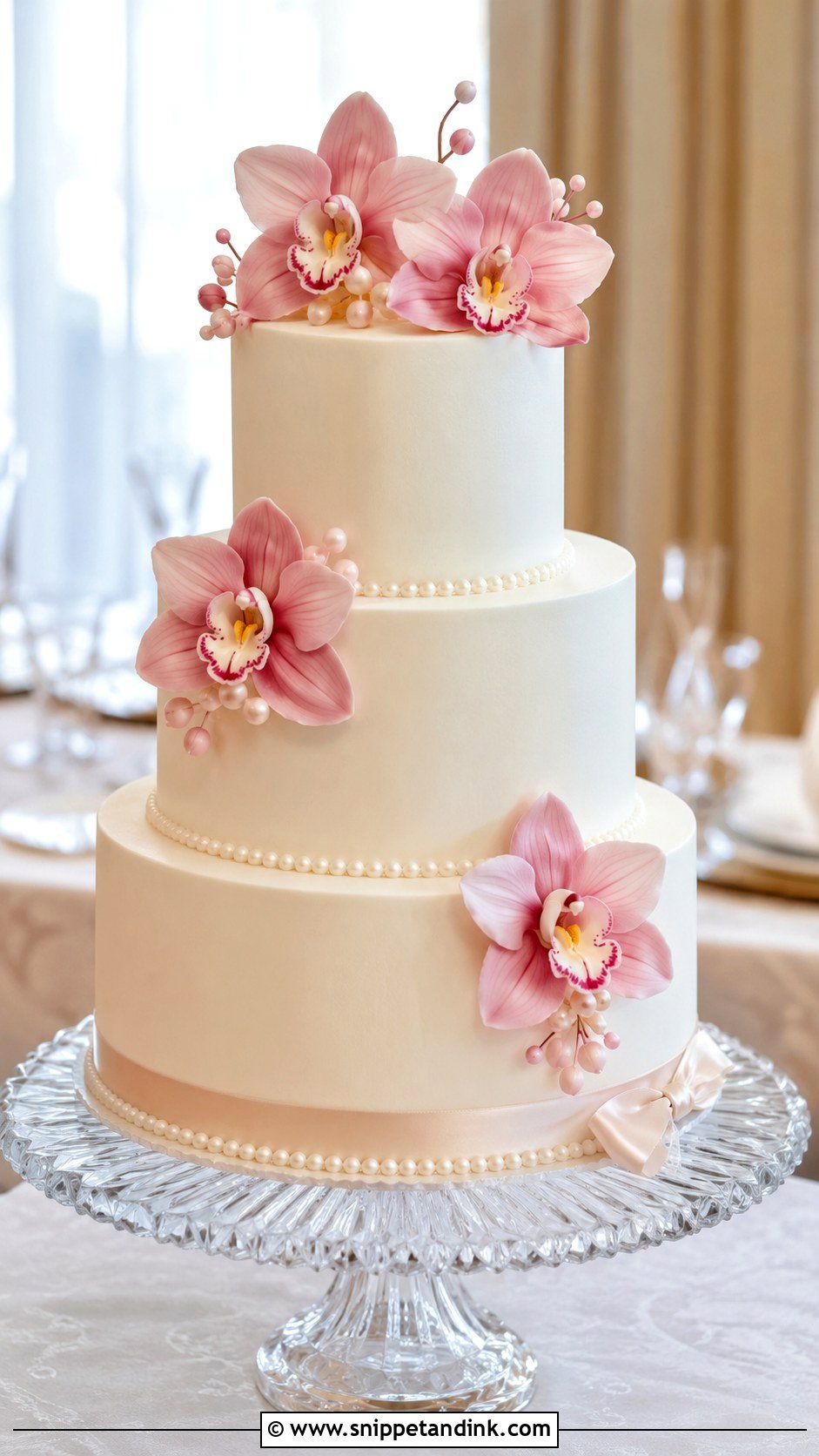
Three tiers give height and room for one strong floral moment. I’d put a neat orchid topper on the top tier, leave the middle clean, and give the bottom tier a wider arrangement, which stops the cake looking crowded. Round tiers read romantic, square ones modern. Blush, ivory or pale pink frosting all work, and subtle buttercream ridges or light fondant embossing add texture if you want it. Each tier needs its own supports inside, so flower placement gets planned around where the dowels go.
5. Two Tier Pink Orchid Wedding Cake
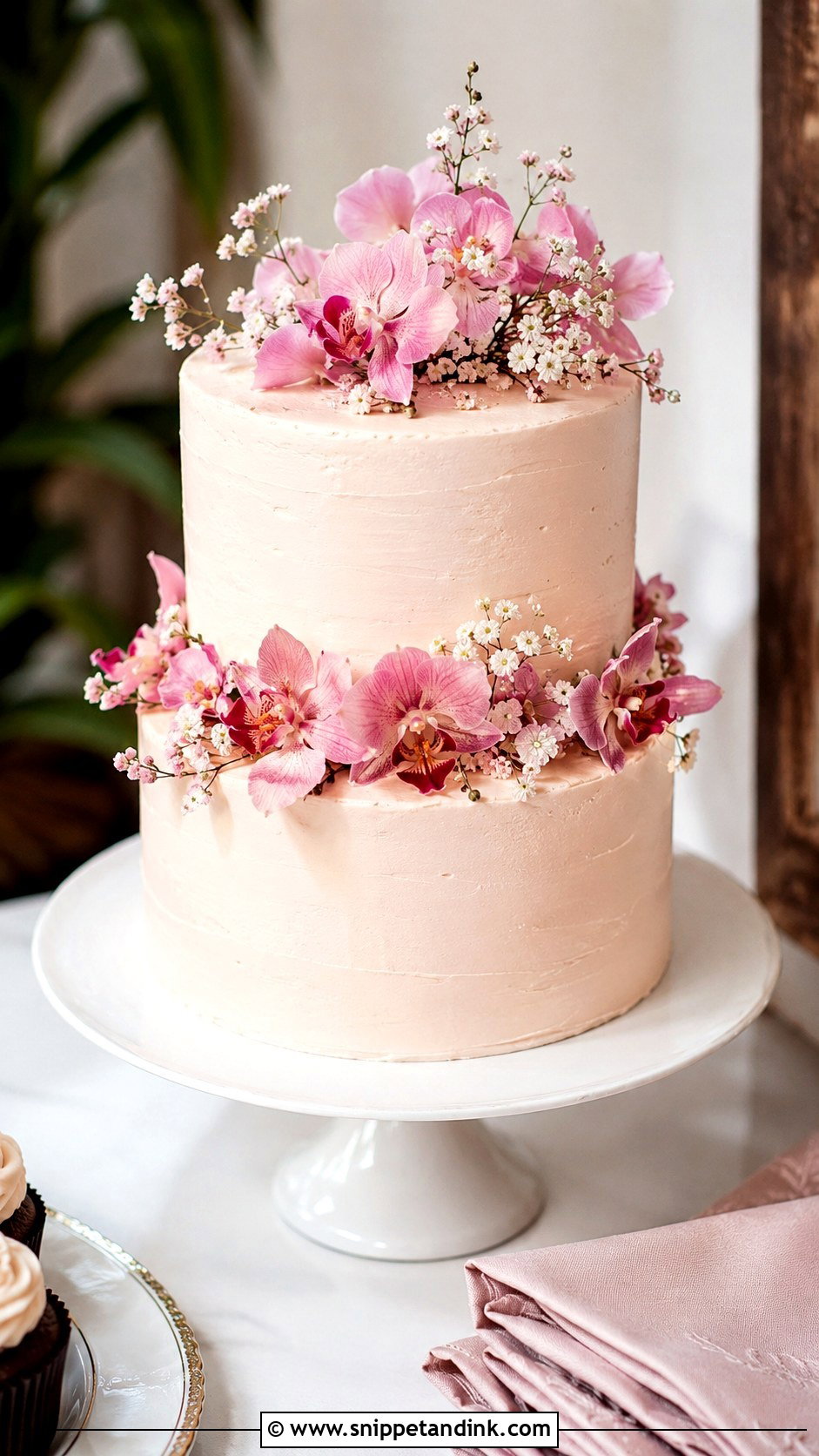
Two tiers suit smaller weddings, brunches and intimate receptions, and they’re easier to display and cut. A smooth white or blush base, one larger orchid cluster between the tiers and a smaller accent on top keeps it balanced. Pearl borders, a thin ribbon or a gentle watercolour wash can add detail. Raspberry vanilla, lemon, almond or coconut sponge all match. Ask for actual portion counts; two tiers feed fewer people than most couples expect.
6. Pink Orchid Buttercream Wedding Cake
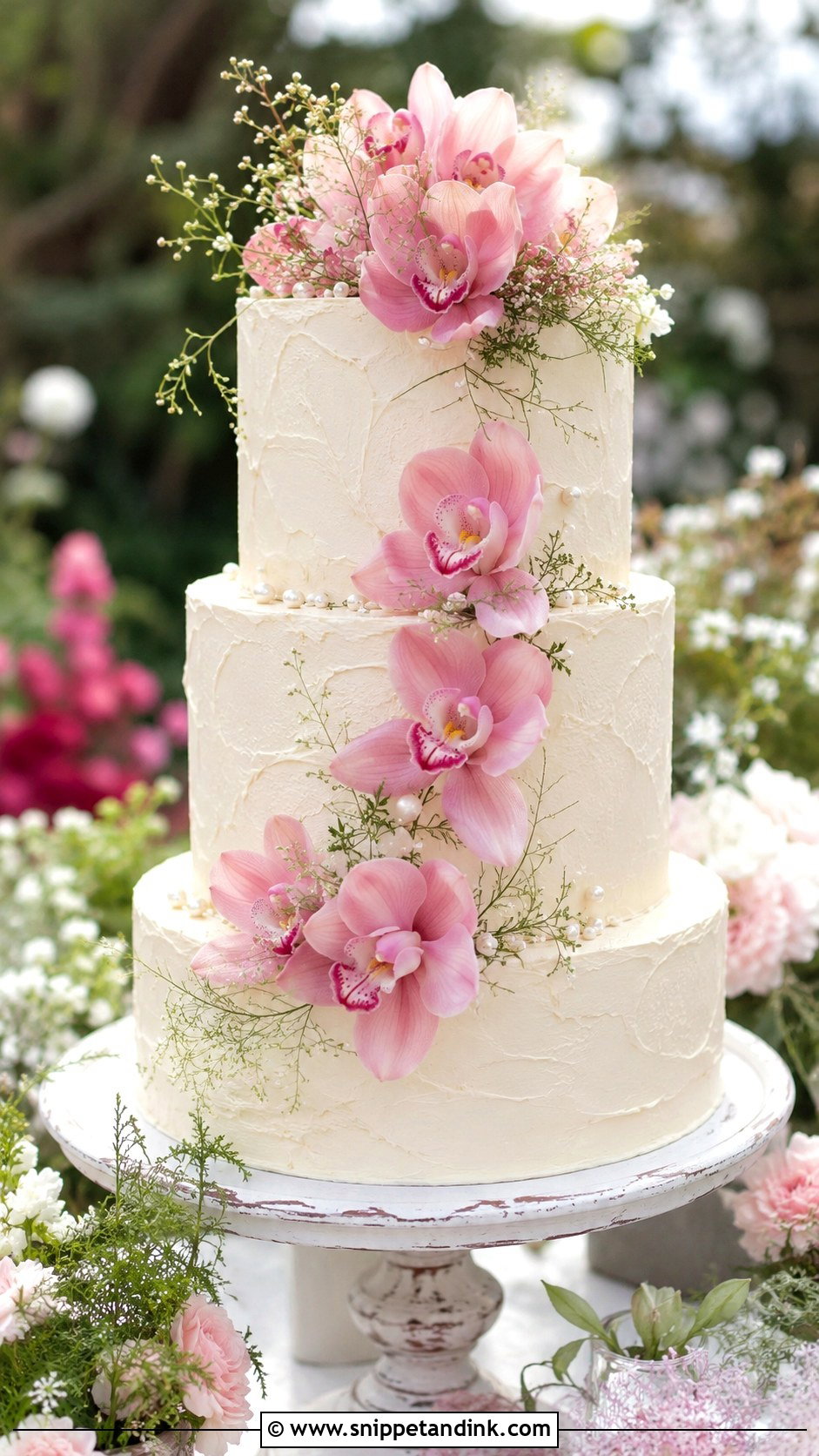
Buttercream gives a creamy, handmade finish that looks inviting next to the waxy sheen of an orchid petal. Choose smooth for a clean look or lightly textured for a relaxed garden style, in ivory, blush or pale rose. Loose cascades and blooms tucked between tiers both suit it. It’s softer than fondant, though, and in a warm tent buttercream starts to slump within a few hours, so I’d keep an outdoor buttercream cake in the shade and cut it early.
7. Pink Orchid Fondant Wedding Cake
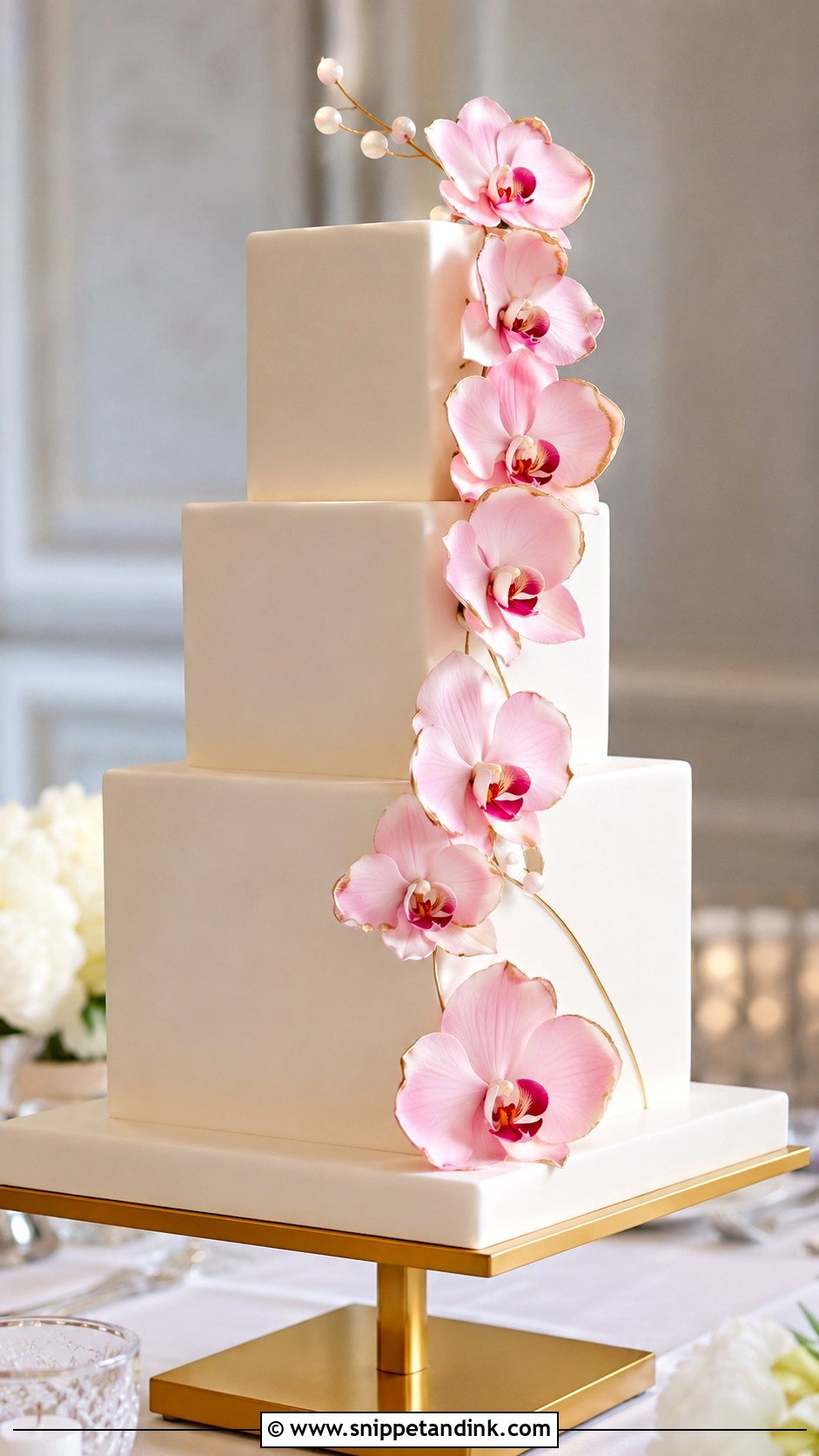
Fondant gives sharp edges and a smooth surface, so the orchids look almost sculptural against it. One cluster on the side keeps it modern; orchids crossing several tiers make it romantic. White, ivory or soft blush fondant all work, and thin gold trim, embossed lace or pearls make it more formal. Fondant also handles heat better than buttercream, which is why I lean on it for summer and outdoor dates.
8. Pink Orchid Cascade Wedding Cake
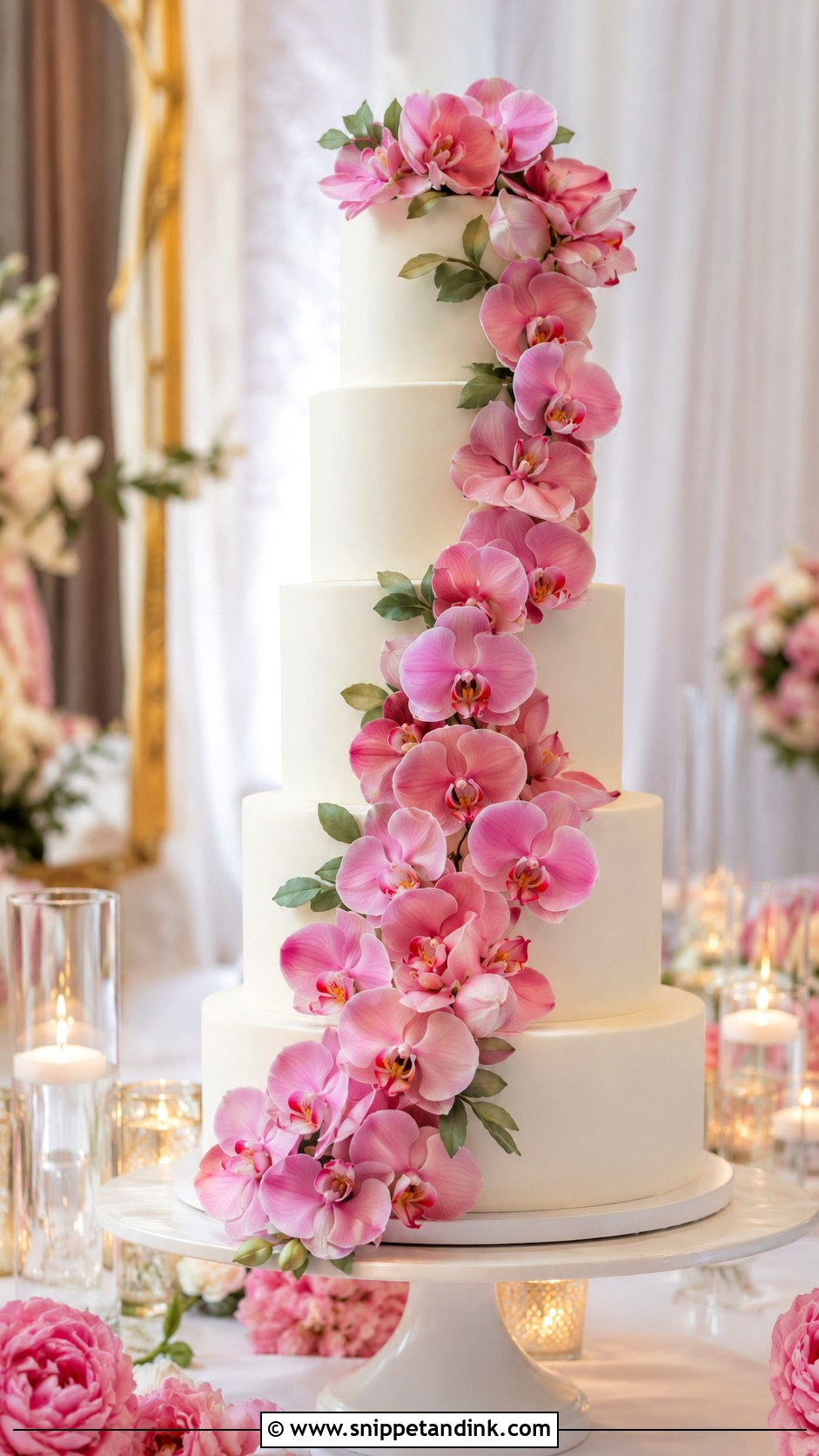
A cascade lets the orchids pour from the top tier down one side, and orchid sprays are made for it, since they already grow in a falling line. Taller cakes give it room to travel. I mix bloom sizes so it looks grown rather than placed. White or ivory keeps it elegant, blush softens it. A full cascade is heavier than it looks, so it has to be anchored into the supported parts of the cake, not just the soft sponge. Skip other decoration; the cascade is enough.
9. Simple Pink Orchid Wedding Cake
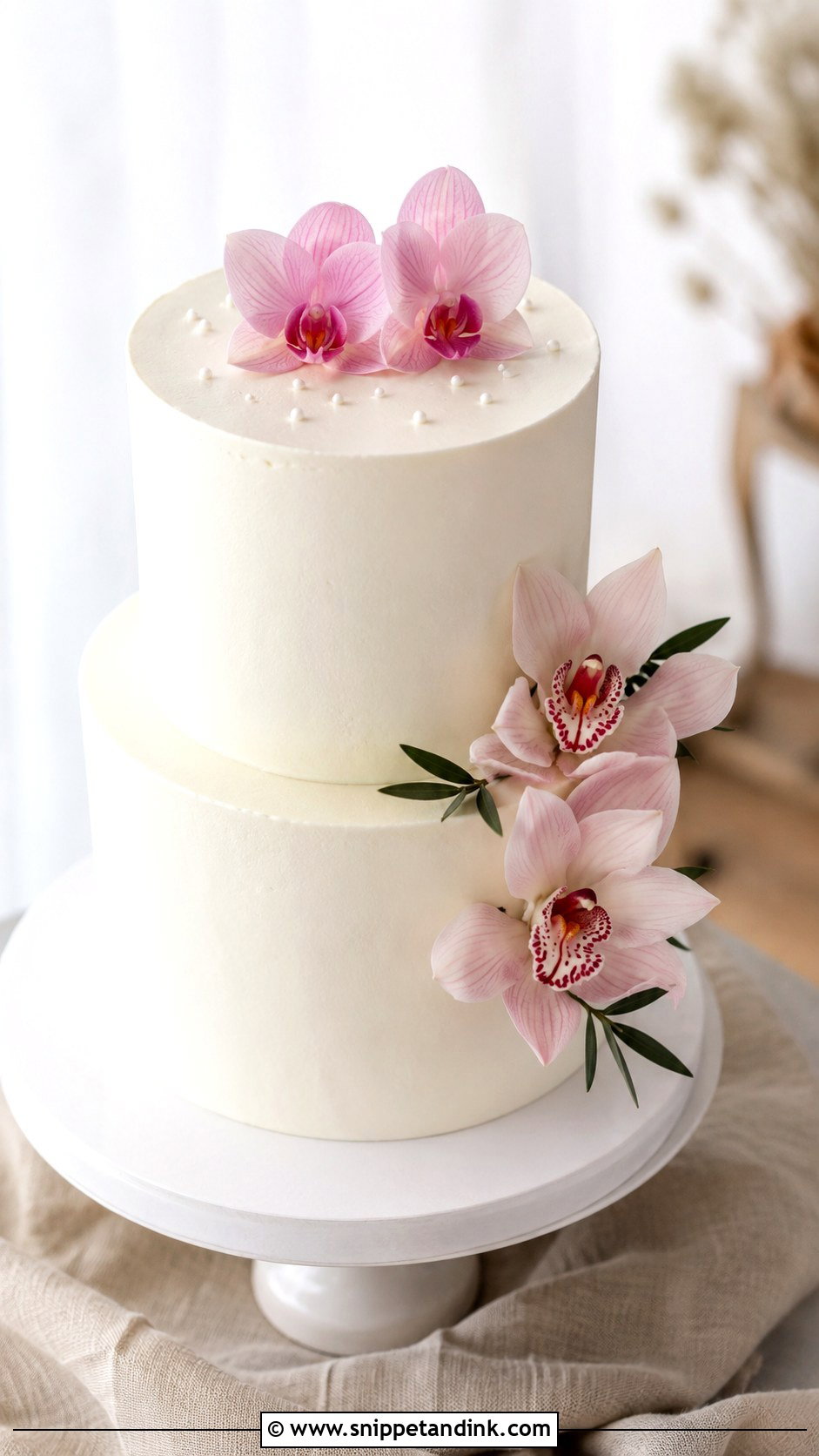
One good detail is enough on a simple cake. Clean two or three tier, smooth buttercream or fondant, a small group of orchids on top, on the side or between tiers. Keep the palette to white, pale blush and maybe a touch of green. With so little decoration, the finish has to be flawless, because every bump and lean shows. It suits minimalist couples and venues that already have strong decor.
10. Modern Pink Orchid Wedding Cake
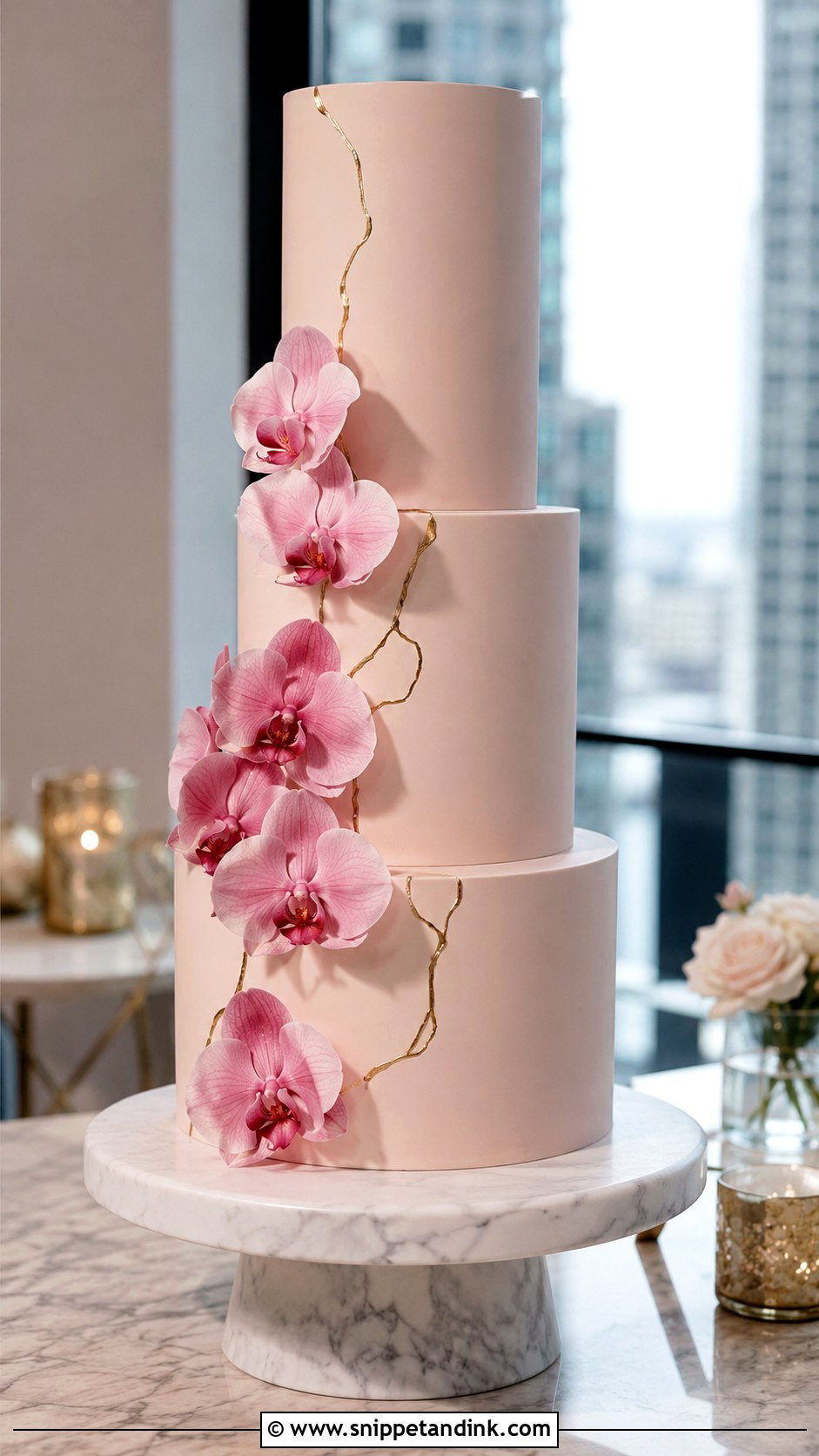
Modern orchid cakes rely on sharp edges, clean tiers and one bold cluster on an asymmetrical shape: square, tall cylinder or offset tiers. White, nude blush, pale pink or soft ivory frosting keeps it calm, and a thin metallic line adds polish without fighting the flowers. City weddings and gallery venues suit it. I’d choose orchids with a strong silhouette, like a single phalaenopsis spray, rather than lots of small blooms.
11. Pink Orchid Square Wedding Cake
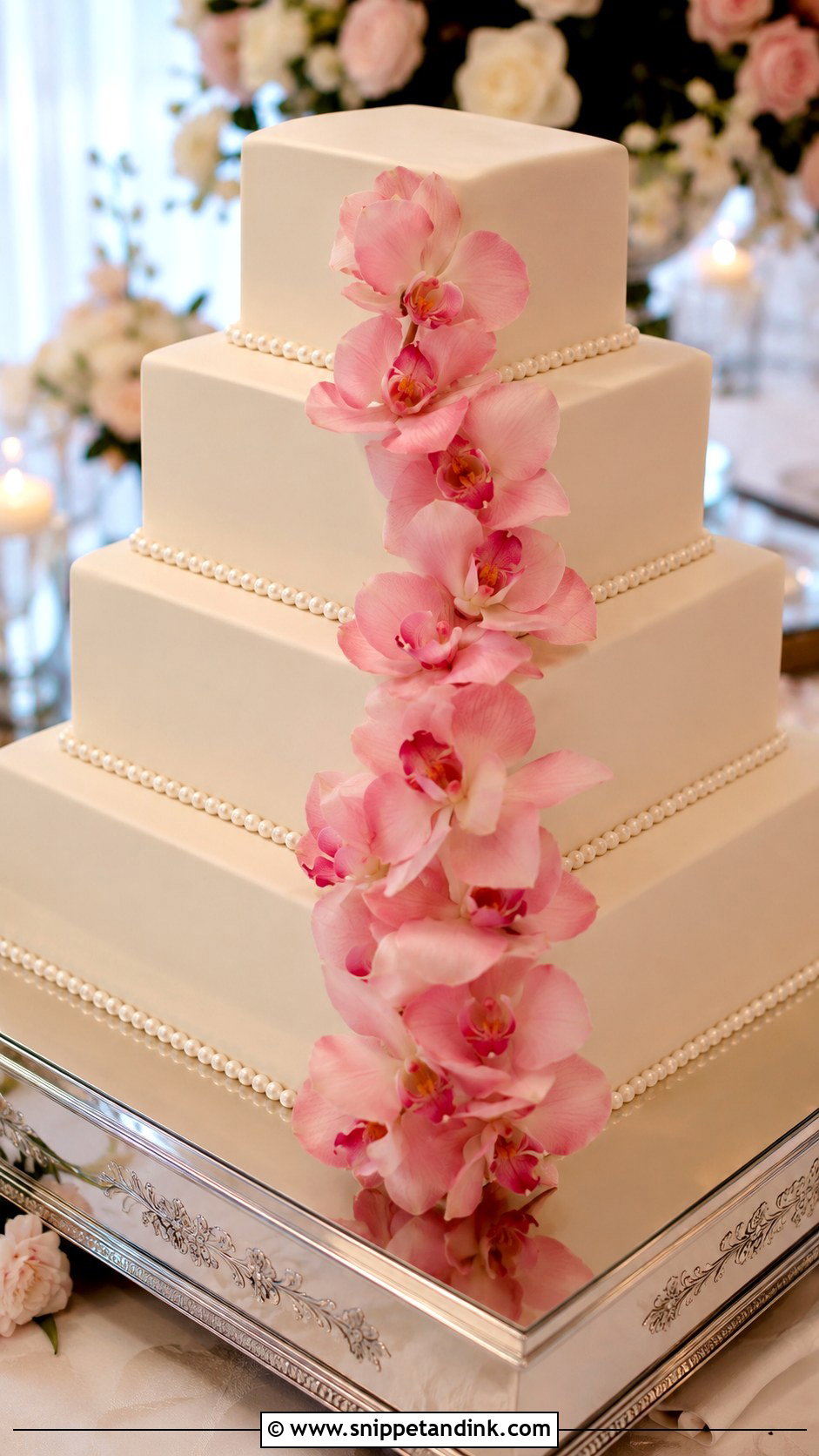
Square tiers give structure, and the orchids soften the corners, which is where the contrast comes from. Stack white or blush fondant squares and run the orchids down one corner in a neat line. Thin ribbon, pearl accents or a light quilted texture add depth. Square cakes are less forgiving than round ones; a corner that isn’t crisp shows straight away, so I’d only choose this if your baker shows you sharp square work. Hotel weddings and formal receptions suit it.
12. Pink Orchid Round Wedding Cake
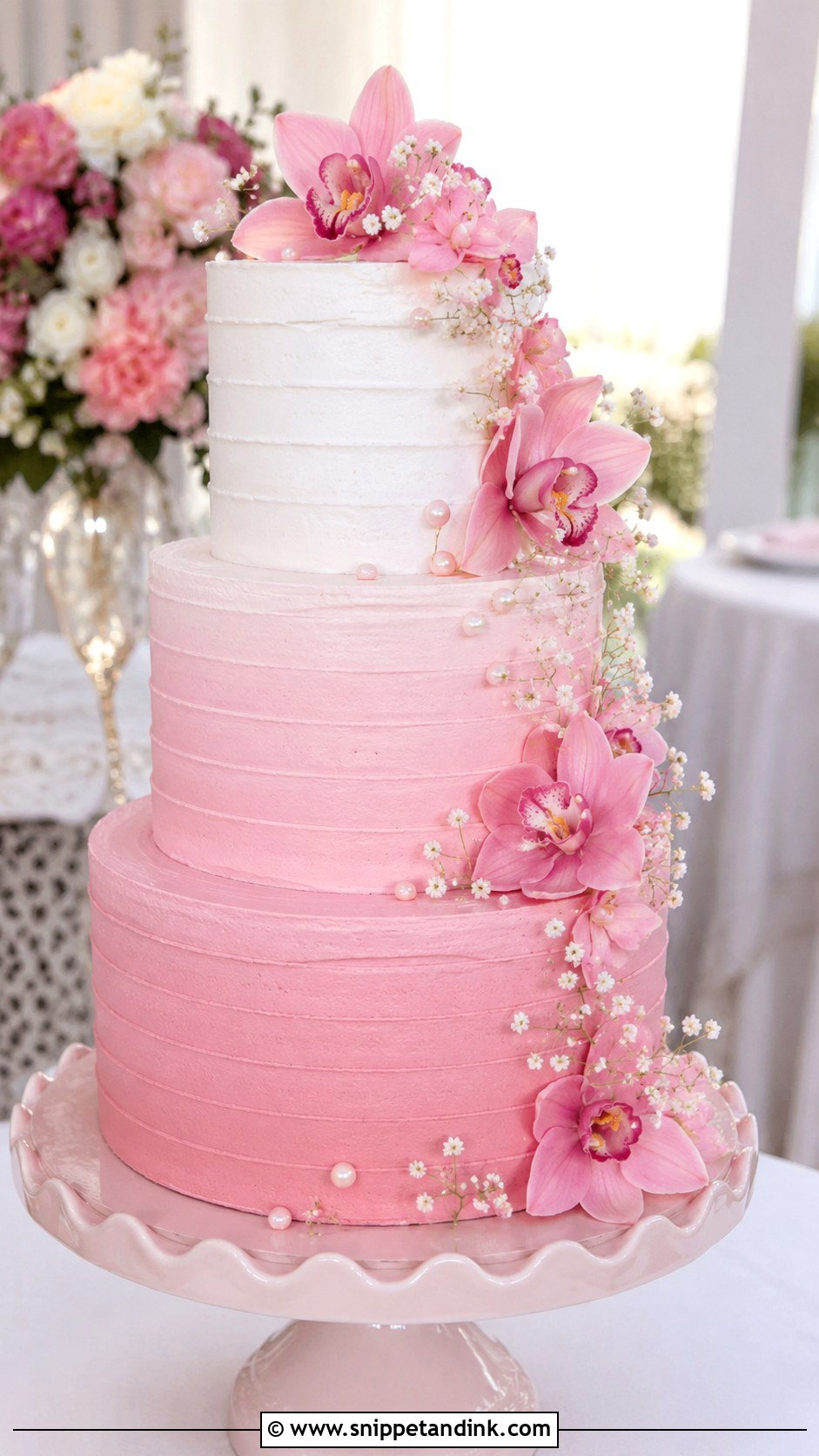
Round tiers let the orchids curve around the cake naturally, whether as a diagonal cascade, a ring at the base or a topper. A blush or ivory buttercream finish keeps it light, with piped dots, lace patterns or small sugar pearls if you want detail. It’s the shape most bakers make every week, so it’s usually the safest choice for consistent results. Garden and spring weddings suit it.
13. Pink Orchid And Rose Wedding Cake
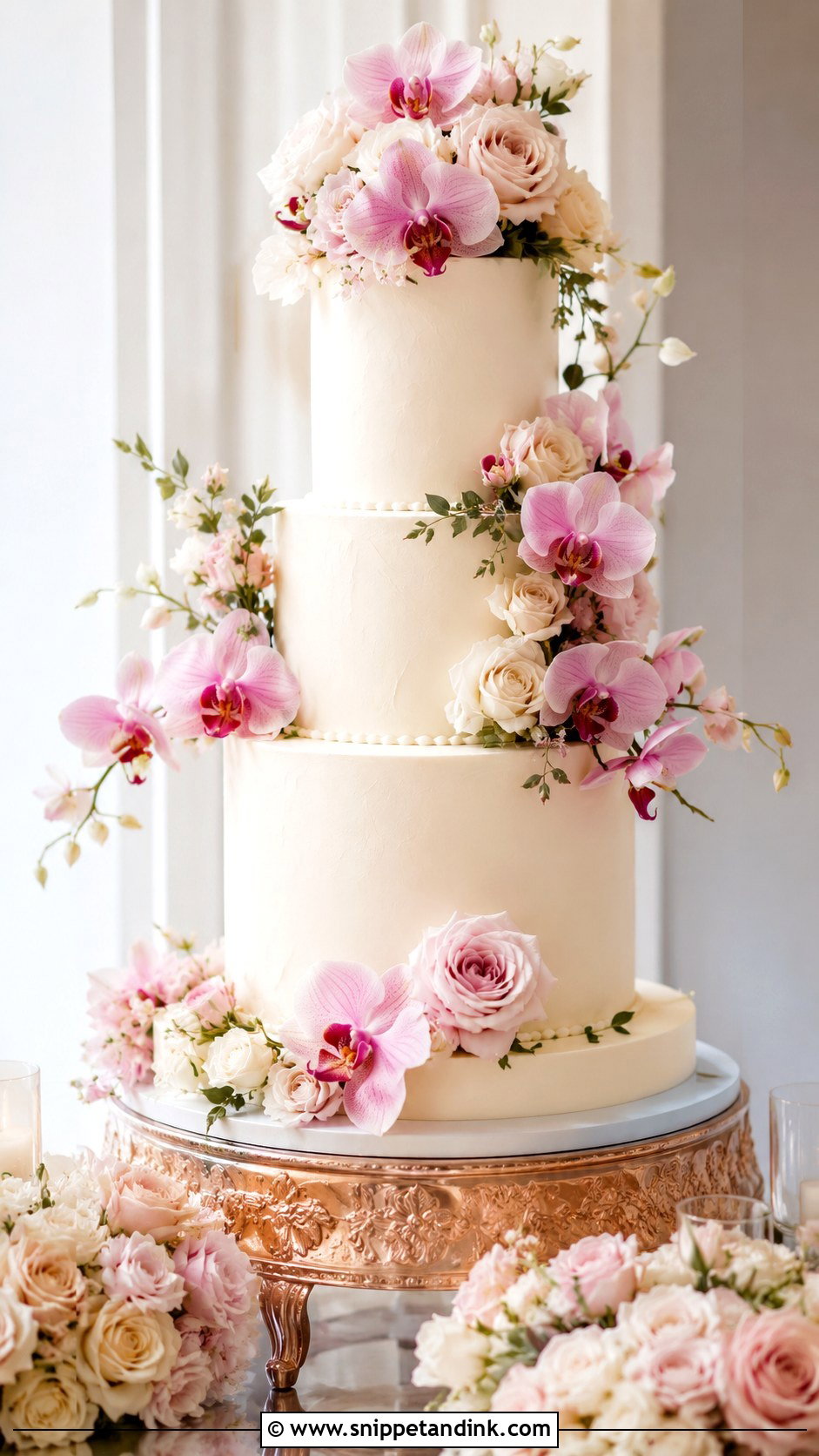
Orchids bring line and movement, roses bring softness and fullness, and together they balance each other. I put pale pink roses in the larger clusters and let brighter pink orchids stretch outward from them. Ivory, blush or white frosting all work, kept plain so the flowers stay clear. Fresh roses are one of the safer cut flowers near food if they’re grown without pesticides, though I still wrap every stem. Vanilla, almond or strawberry fillings suit it.
14. Pink Orchid And Peony Wedding Cake
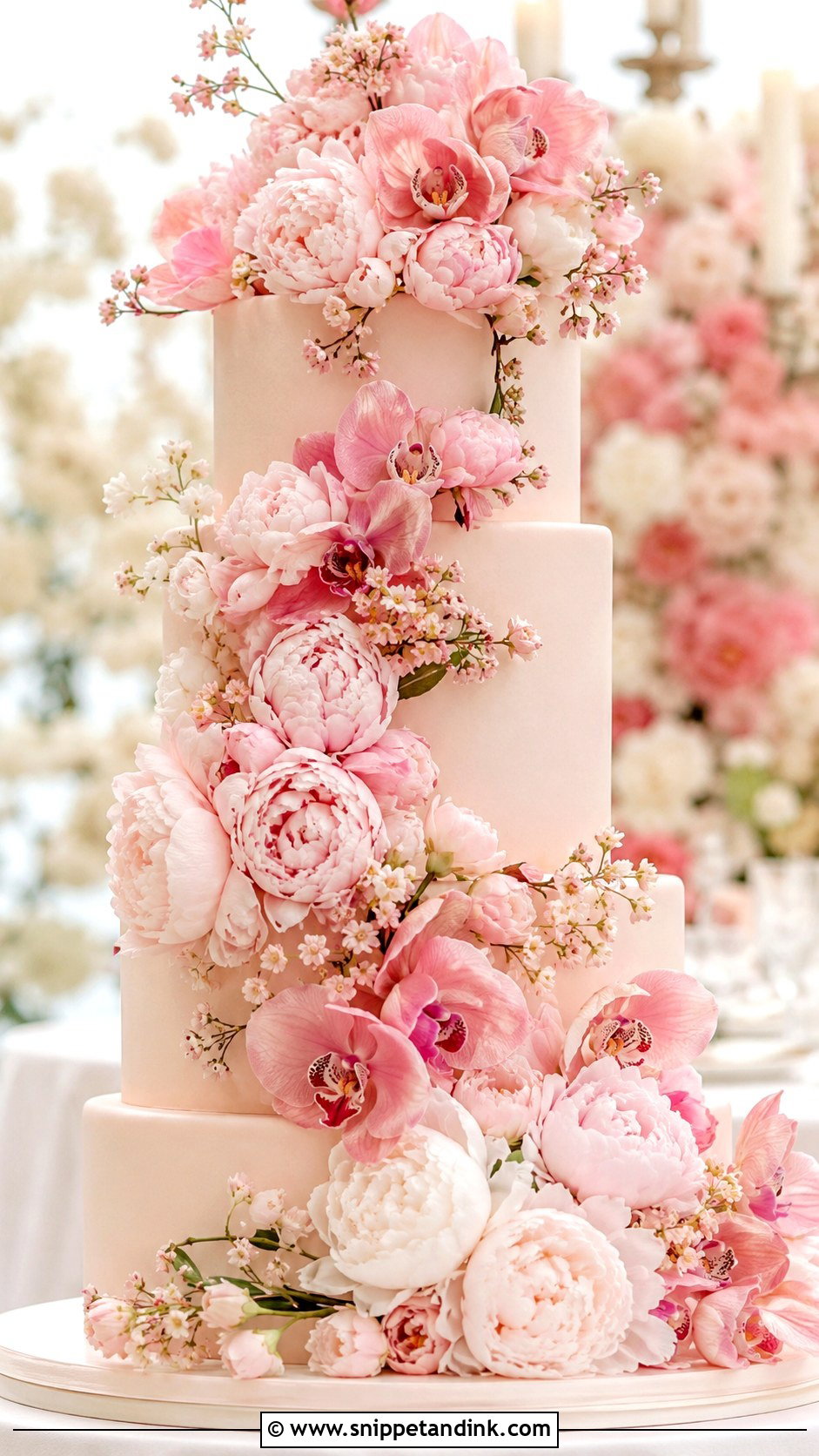
A pink orchid and peony wedding cake looks lush, with big soft peonies next to elegant orchid shapes. Blush, ivory and soft rose keep it cohesive. Peonies need space, so three or four tiers suit it best. Fresh peonies are only in season for a few weeks in late spring and early summer and open fast in a warm room, so outside that window I make them in sugar. A few small fillers or leaves finish the arrangement.



15. Pink Orchid And Gold Wedding Cake
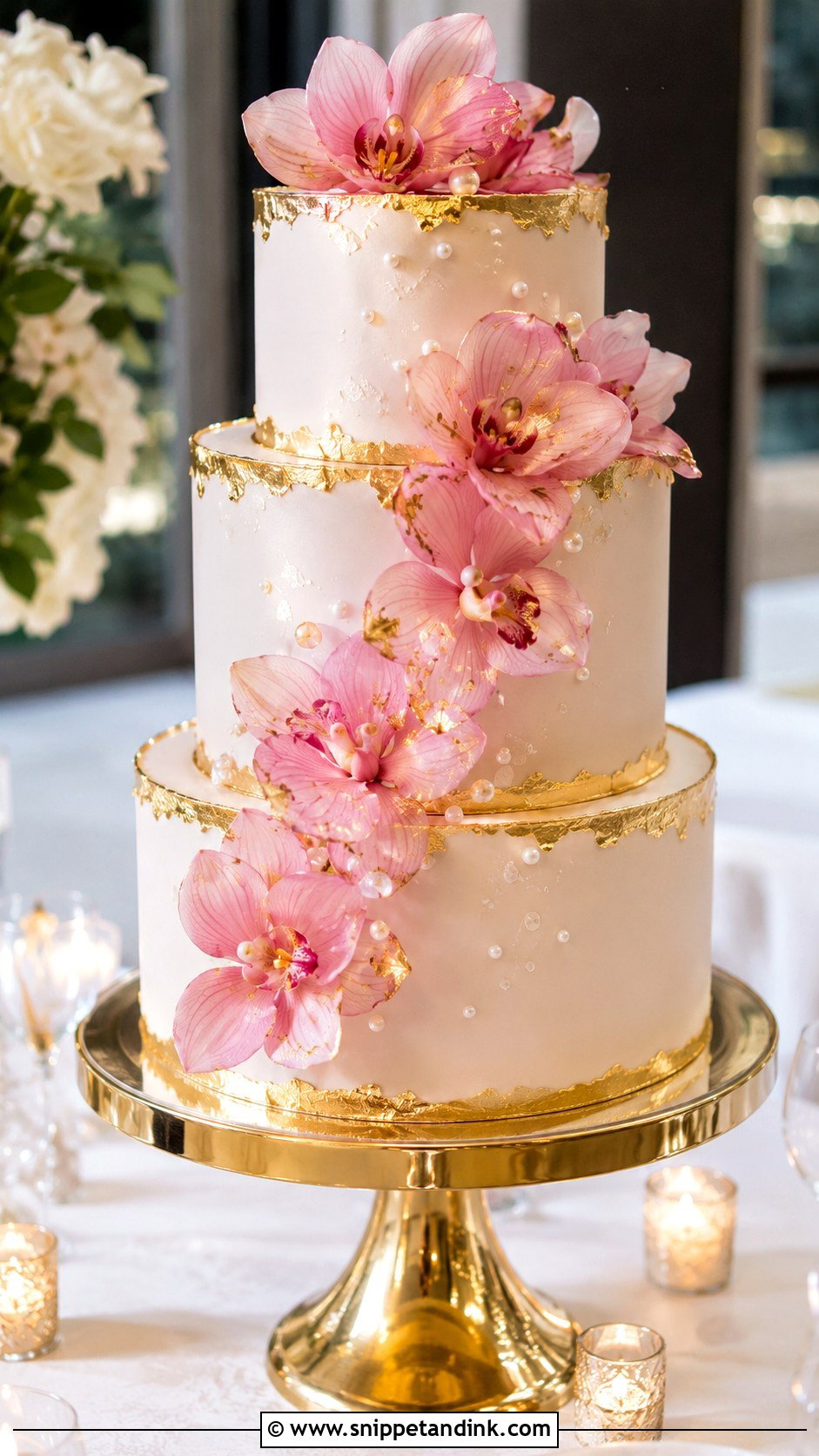
Gold should be the highlight, not the main act. Thin painted edges, brushed metallic tiers, gold leaf patches or a gold ribbon all work on a white or blush base, as long as the orchids stay soft and natural beside them. Candlelit and formal receptions suit it. Not every gold dust sold for cakes is edible; some are labelled non-toxic for decoration only, so I’d ask your baker which they’re using on surfaces that get eaten.
16. Pink Orchid And Pearl Wedding Cake
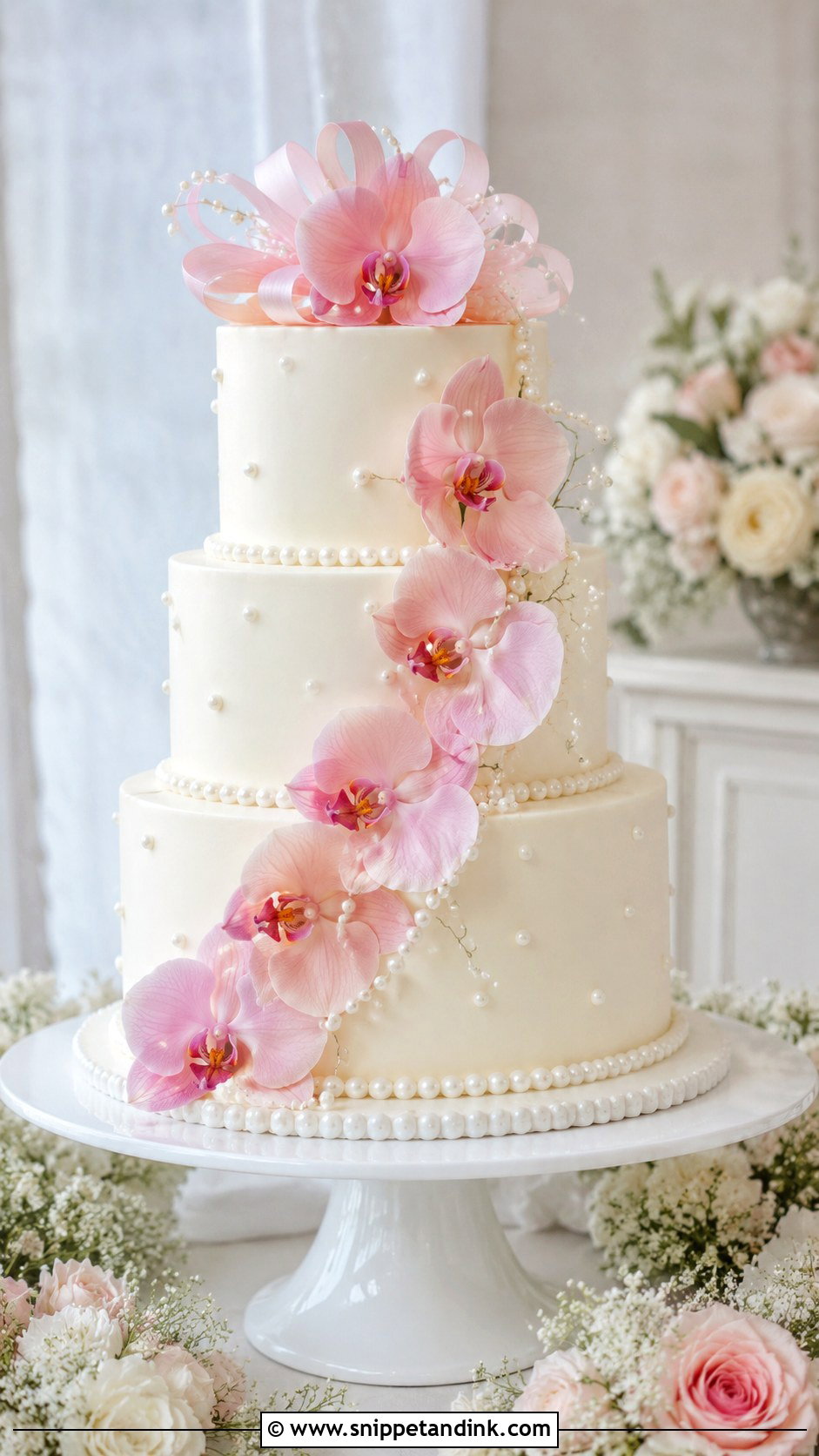
Pearls add texture without weight. Cover one tier in tiny pearl dots, add pearl borders, or set them around the orchid clusters, on smooth ivory or pale pink frosting. Classic and vintage-leaning weddings suit it. I place the orchids last and carefully, so they frame the pearl work instead of covering it, because those dots take far longer to pipe than the flowers take to arrange.
17. Pink Orchid Lace Wedding Cake
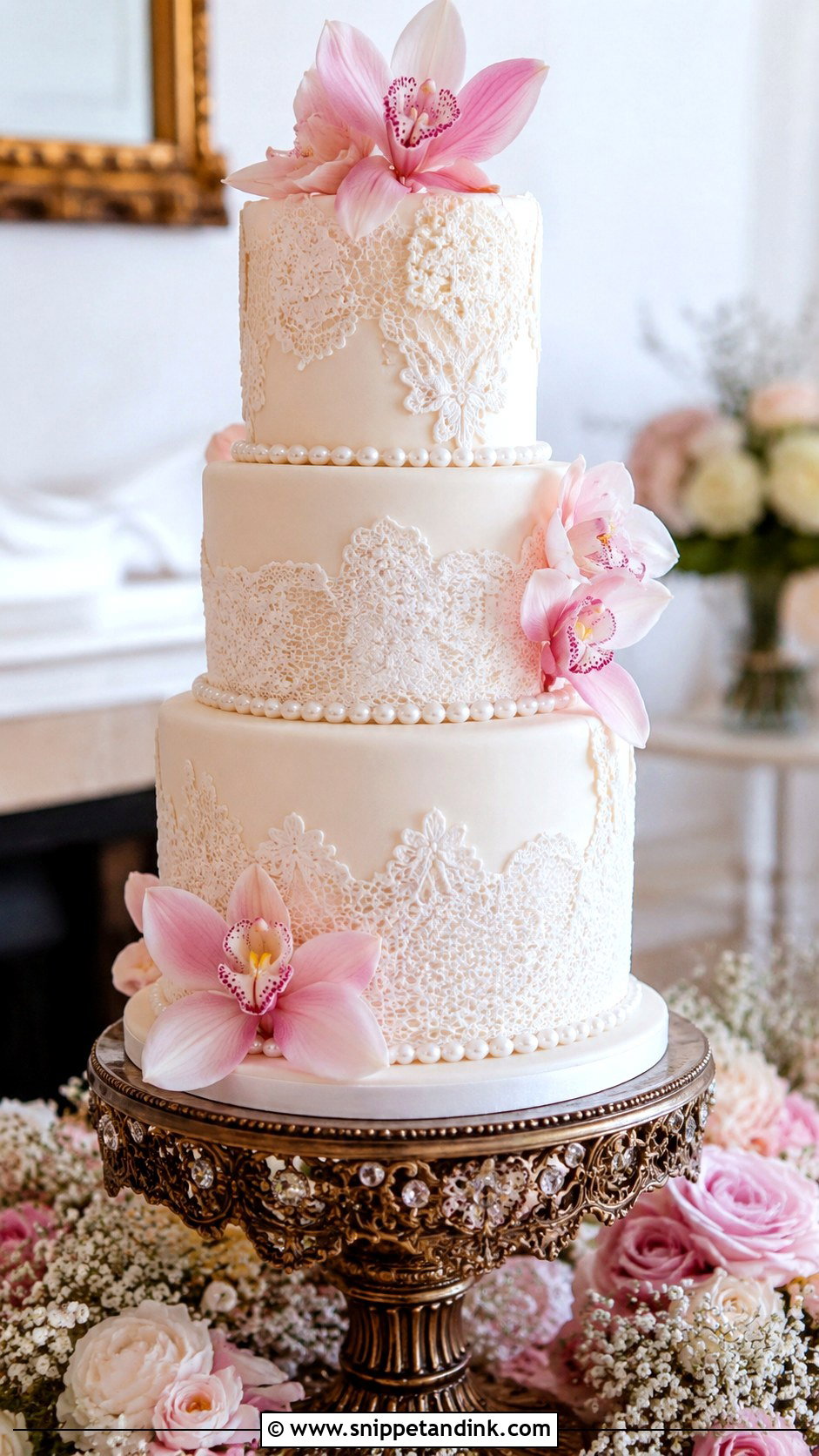
Lace can be fondant appliqué, piped royal icing or edible lace sheets. I’d keep it white or ivory, use it on one or two tiers rather than all of them, and let pink orchids bring the colour. That way the flowers still matter. A blush ribbon or pearl border ties it together. Edible lace sheets soften in humidity, so for a summer or outdoor date, piped lace is the more reliable route. Estate venues and vintage-inspired weddings suit it.
18. Pink Orchid Watercolor Wedding Cake
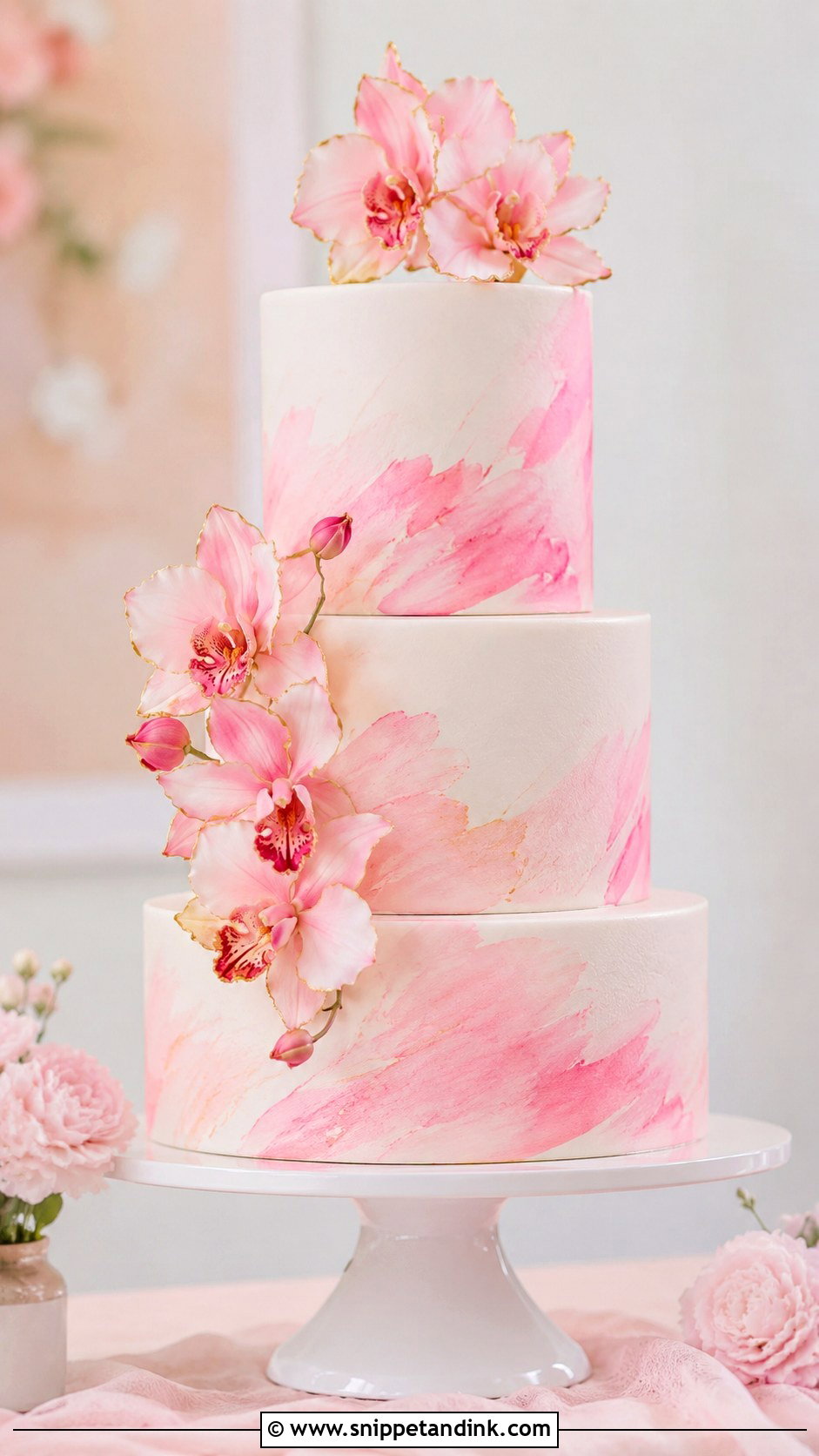
A watercolour cake has soft pink brushstrokes fading into white or ivory, like painted paper. Orchids in similar tones sit where the wash is lightest, so they stand out. Sugar orchids keep it fully edible; fresh ones need to be prepared safely by your baker. A little gold edging refines it. The wash looks best on fondant or very smooth buttercream, since brushstrokes over a bumpy surface look muddy.
19. Pink Orchid Ombre Wedding Cake
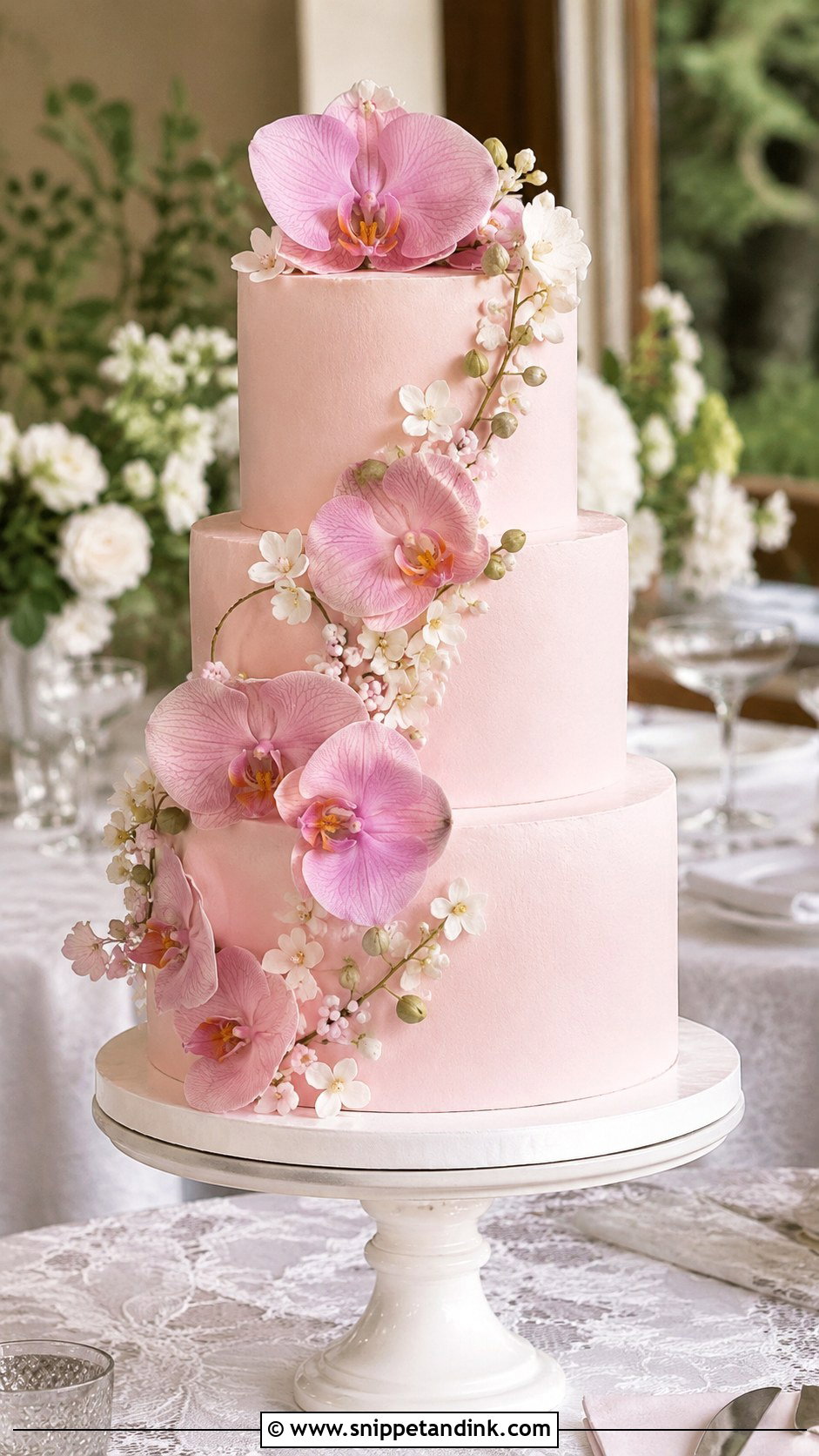
Ombre frosting fades from white at the top to blush, rose or deeper pink at the base, with orchids adding texture over the gradient. Buttercream blends most smoothly. Matching the orchid shades to the ombre keeps it cohesive; deeper flowers on the lighter tiers make it bolder. Pink colouring can fade under strong sunlight or bright venue lights, so I’d keep an ombre cake out of direct sun until it’s cut.




20. Pink Orchid Ruffle Wedding Cake
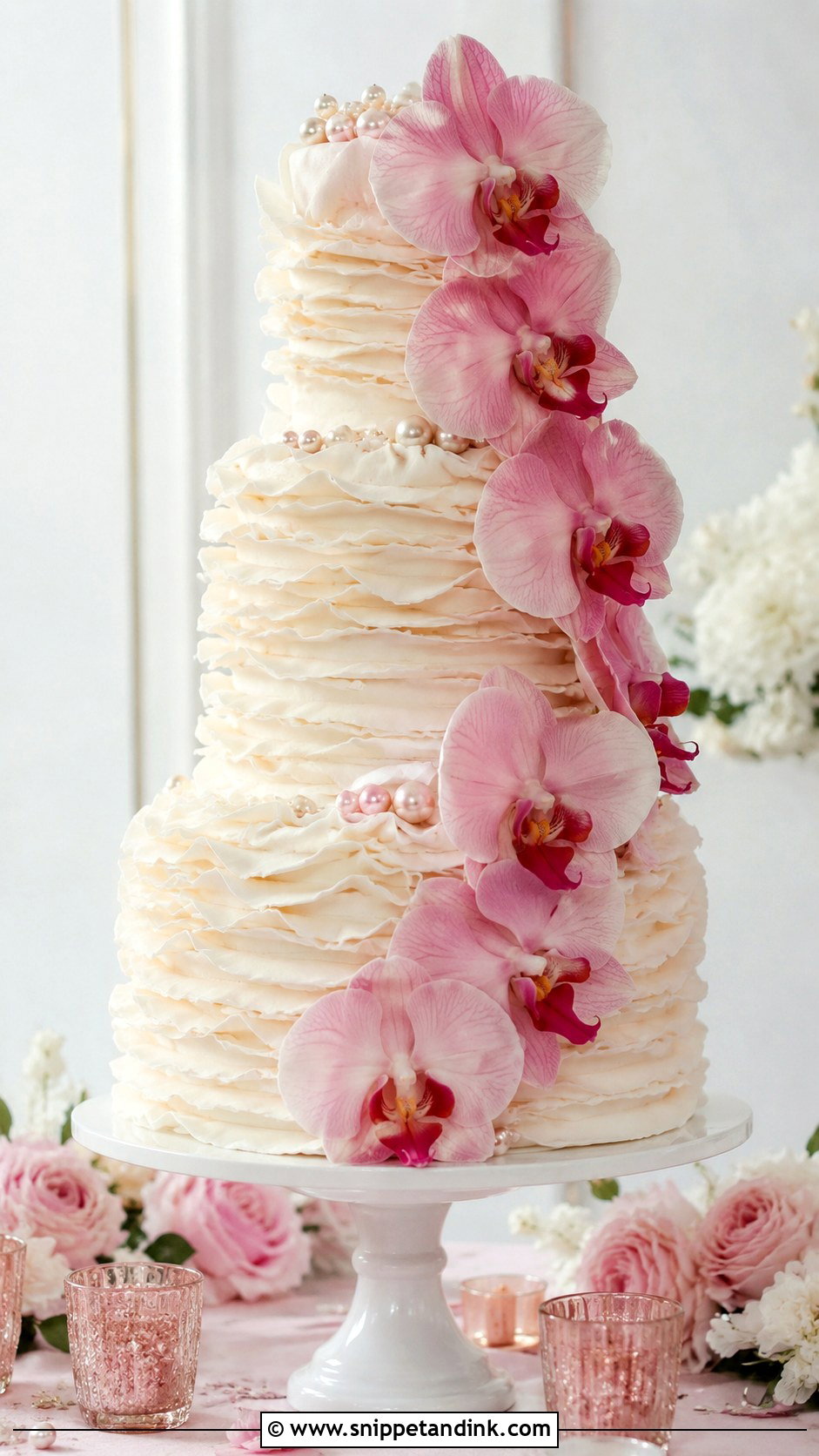
A pink orchid ruffle wedding cake has movement built into the frosting, like the hem of a gown. Ruffles can be fondant or buttercream, on one tier or the whole cake. Ivory ruffles with blush orchids look refined; pale pink ruffles with white accents look sweeter. Since the ruffles already bring volume, I keep the orchids to the top and one side. Fondant ruffles hold their shape far better than buttercream ones on a warm day.
21. Pink Orchid Drip Wedding Cake
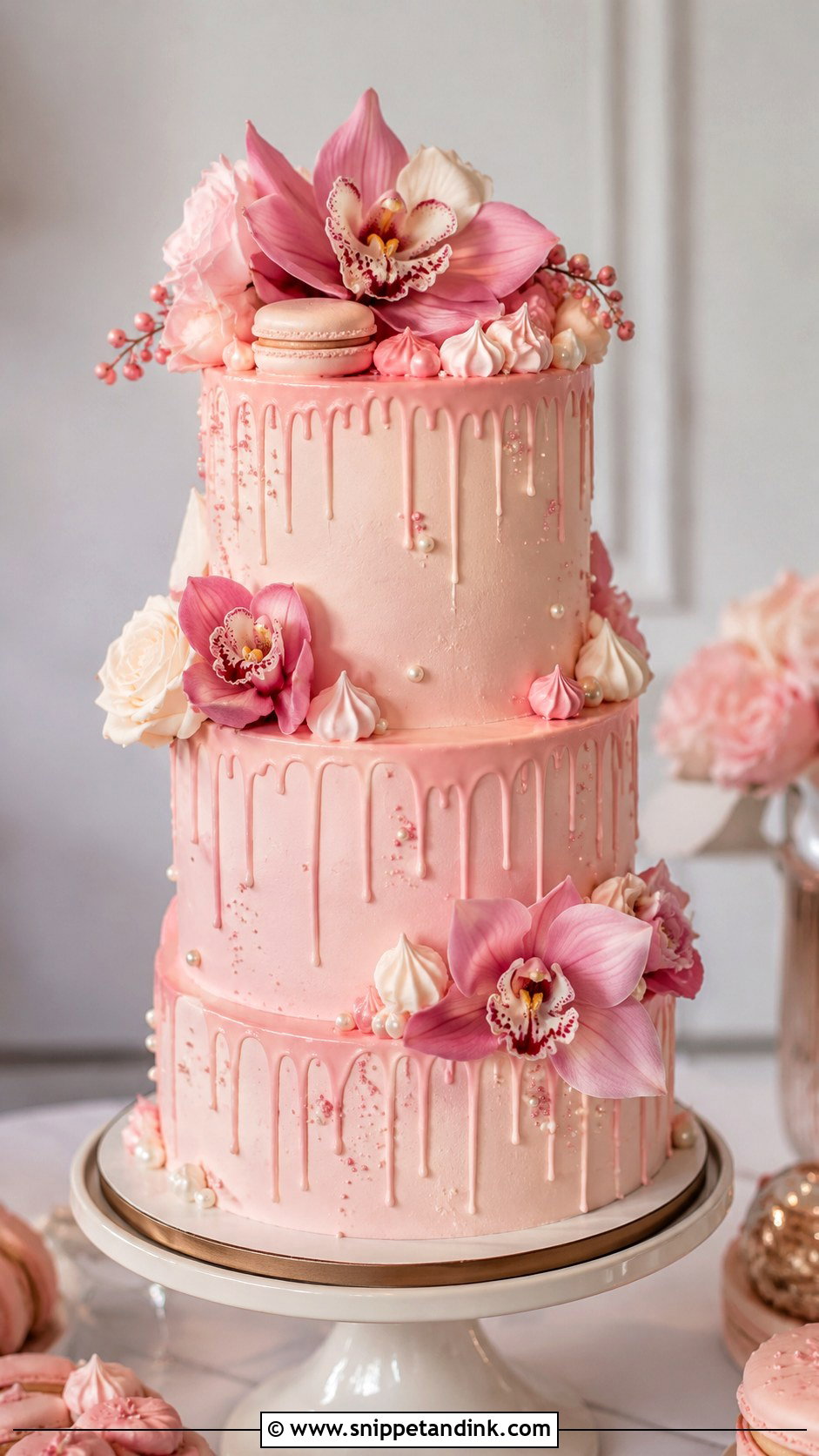
A drip cake brings a modern dessert-table feel. White or blush buttercream, a thin pink or white chocolate drip around the top edge, orchids on top trailing a little down one side. I keep the drip short and tidy so it still looks like a wedding cake rather than a birthday one. Macarons, small meringues or pearl sprinkles add texture. It suits relaxed receptions, and the drip has to go on a well-chilled cake or it runs too far.
22. Pink Orchid Naked Wedding Cake
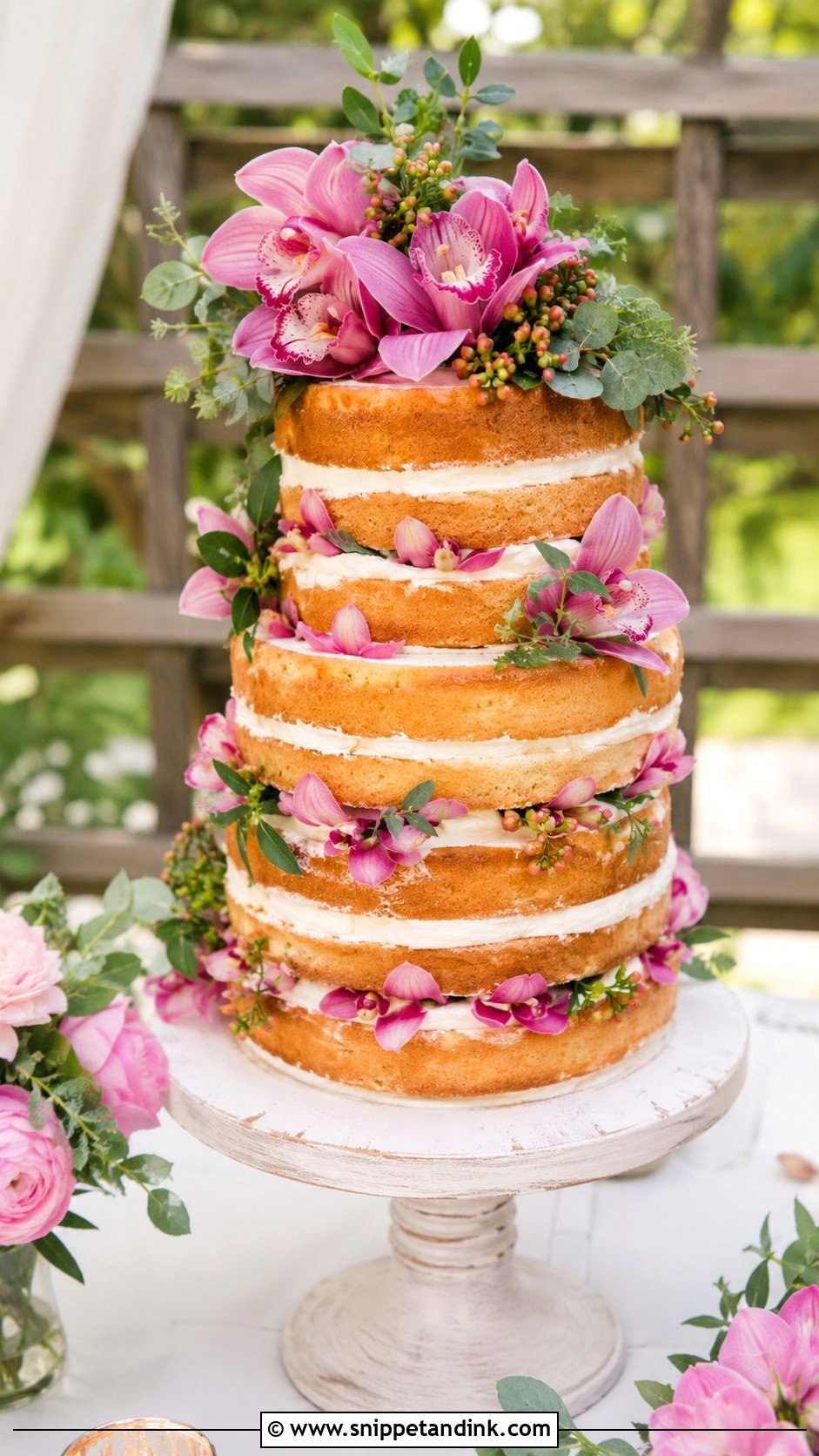
A naked cake shows its layers, so the sponge has to look good: vanilla, almond, lemon or coconut with thin, even buttercream between each layer. Orchids between the tiers and on top, perhaps with a few berries or small leaves, make it special. Exposed sponge dries out faster than a frosted cake, so I assemble naked cakes as late as possible and brush the layers with syrup. Outdoor ceremonies and garden receptions suit it.
23. Pink Orchid Semi Naked Wedding Cake
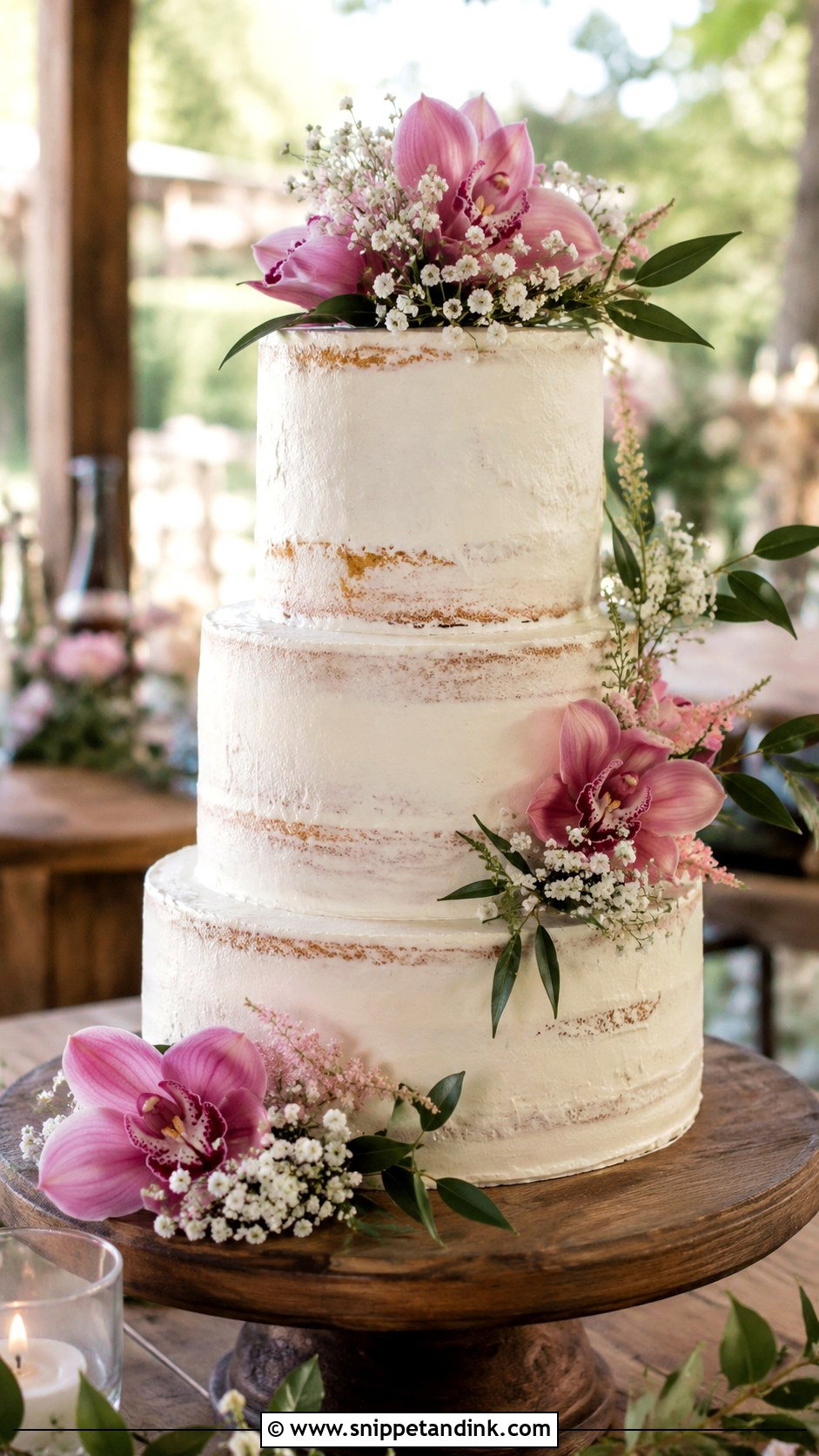
Semi-naked cakes get a thin scrape of buttercream that softens the layers while still letting some sponge show. Orchids tucked between tiers add romance. Pale vanilla or almond sponge lets the soft frosting and flowers stand out, and fresh greenery, small white blossoms or a dusting of icing sugar finish it. That thin coat protects the sponge a little better than a fully naked finish, which helps at barn and outdoor venues.
24. Pink Orchid Beach Wedding Cake
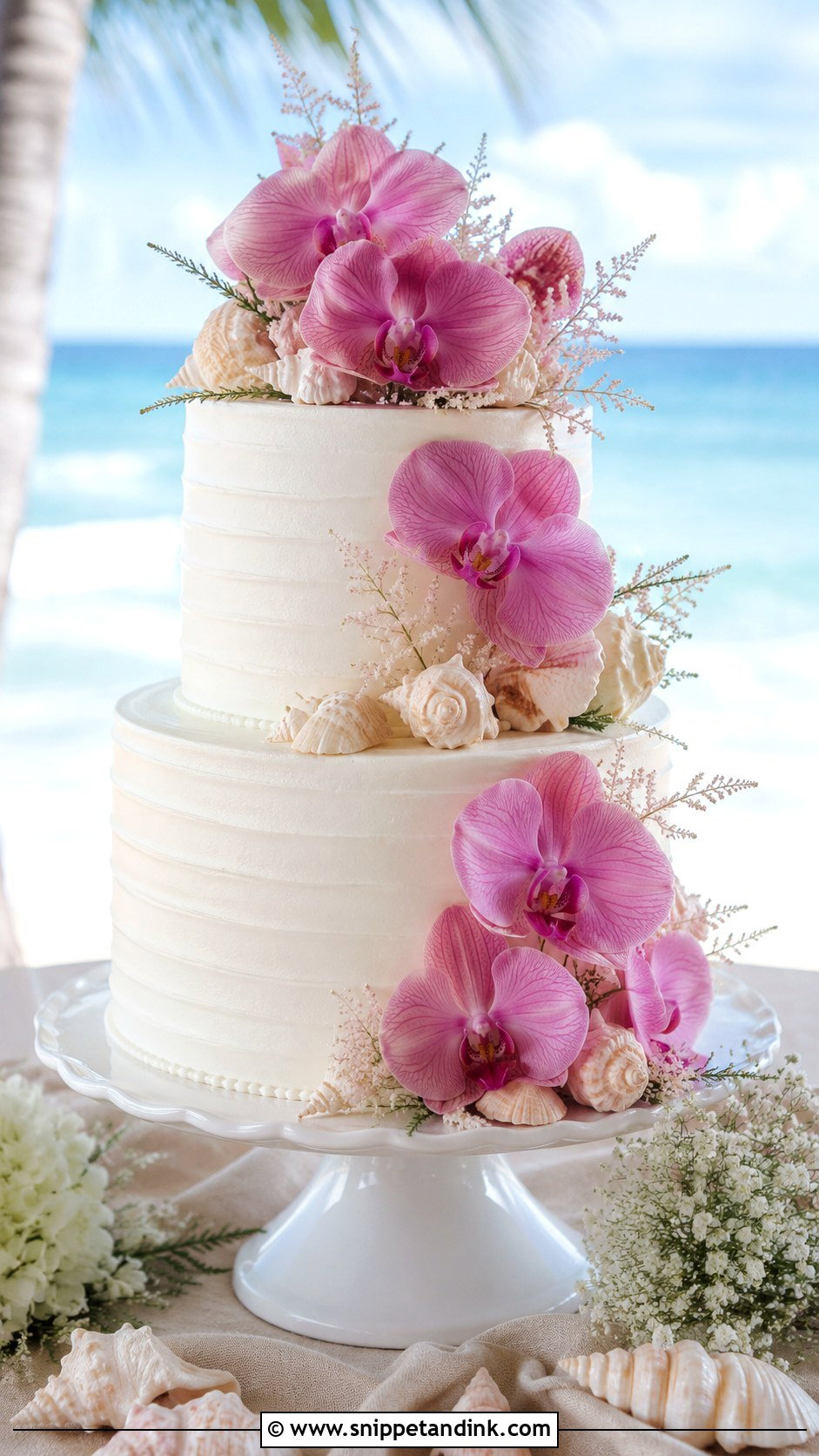
Orchids already look tropical, so a beach cake doesn’t need much more. White or ivory frosting, orchids with soft greenery and perhaps a few edible shells, kept restrained so it doesn’t tip into a theme. Two or three tiers suit a beach reception. Coconut, lime, vanilla or passion fruit fillings match the setting. Sea air and sun are hard on buttercream, so I’d use fondant or a firm ganache under it and keep the cake indoors until the last minute.


25. Pink Orchid Tropical Wedding Cake
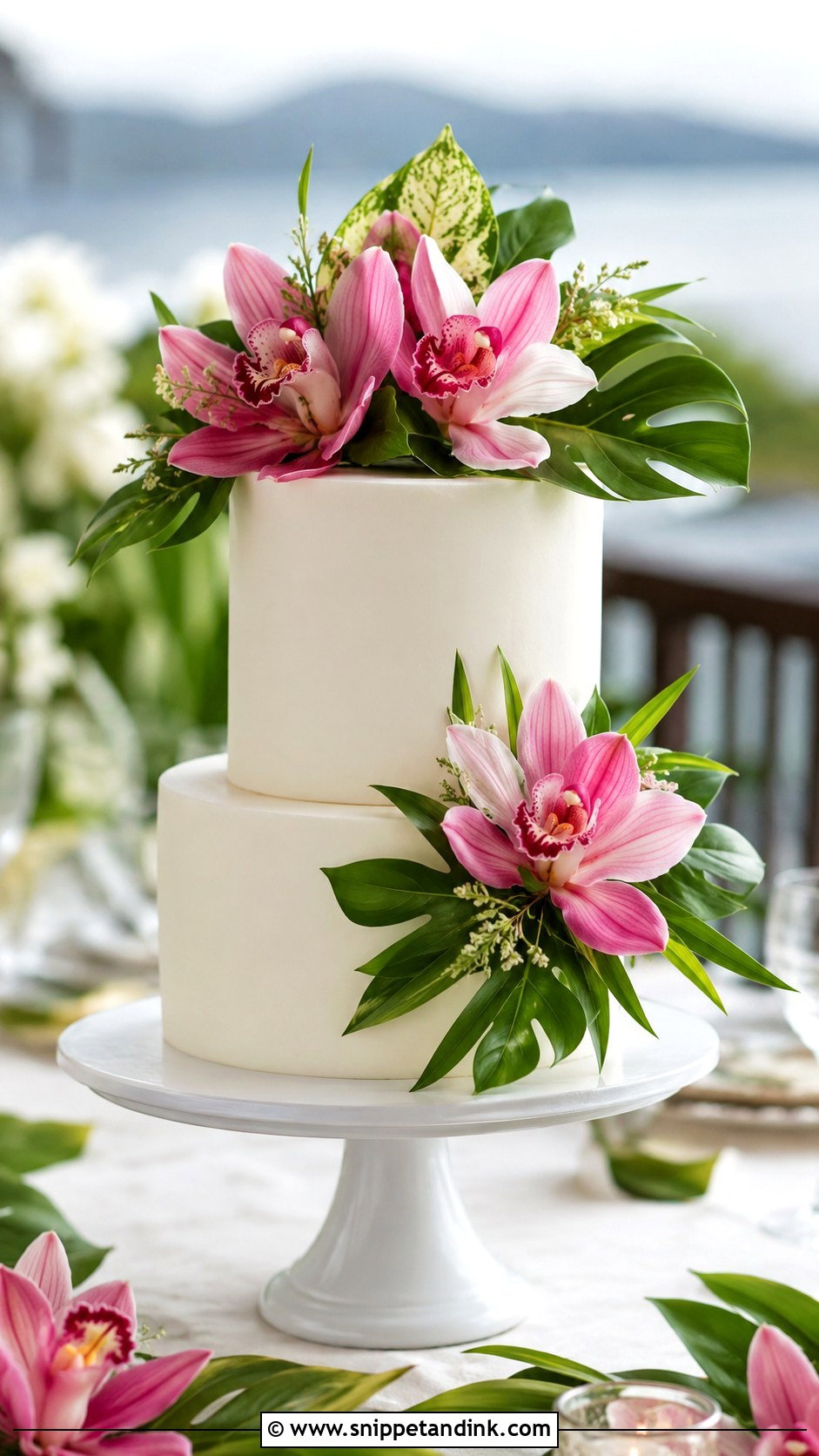
Tropical cakes can be bright and still elegant. Pink orchids lead, glossy green leaves give contrast, and a white or pale blush base keeps it wedding-like. Go tall and dramatic or keep it to one bold cluster. For flavour, think coconut sponge, mango filling, lime curd or pineapple buttercream. Big tropical leaves like monstera aren’t food-safe, so they need a barrier or should sit around the cake rather than on it.
26. Pink Orchid Garden Wedding Cake
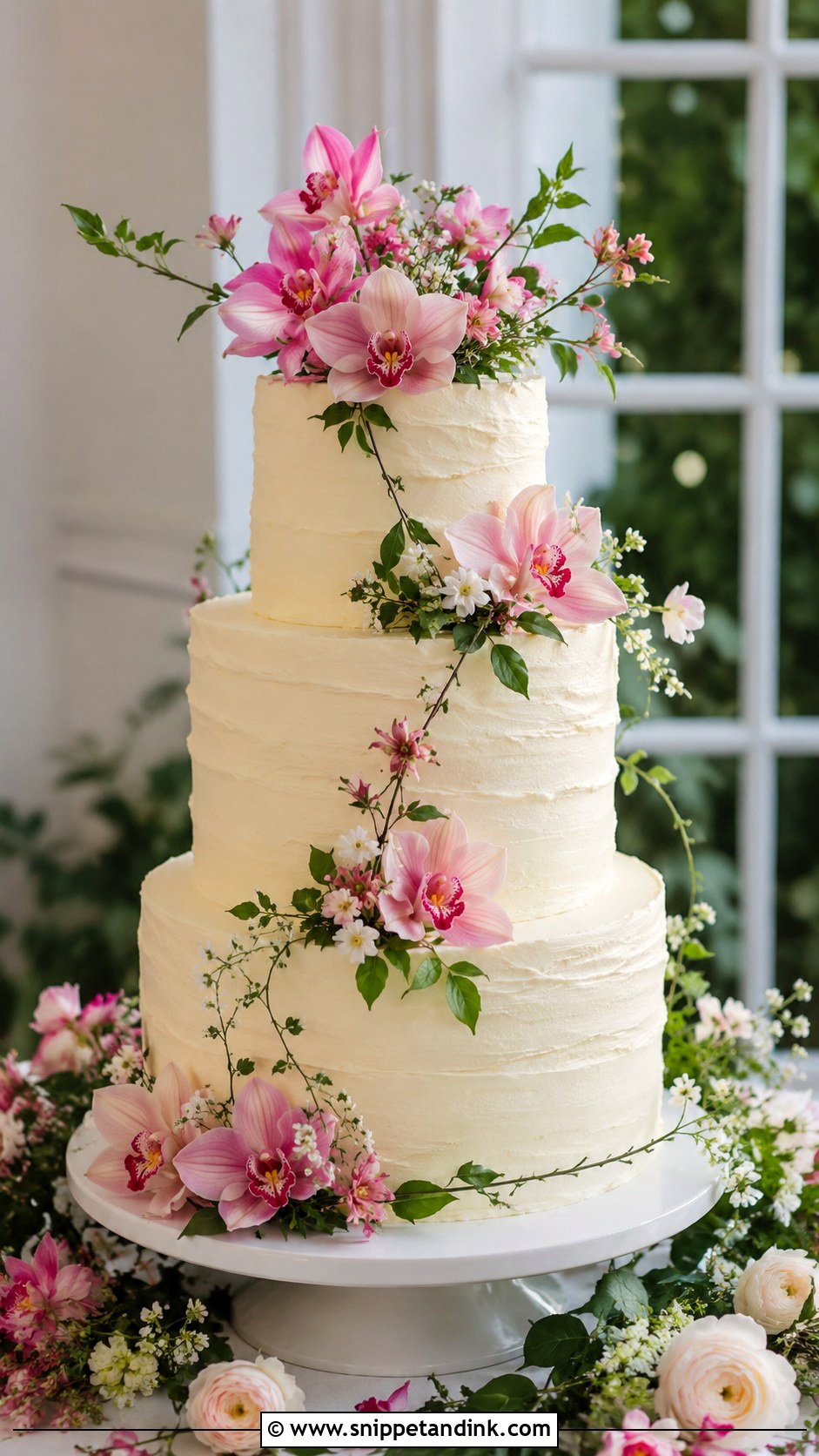
A garden cake should look at home among greenery and soft outdoor light. Ivory, blush or barely-pink buttercream, pink orchids with small garden flowers, fine vines and leaves. The arrangement can be loose, but the cake shape must stay clean, otherwise it looks messy rather than relaxed. A three-tier round suits it. Lemon elderflower, vanilla raspberry or almond cream match the mood. Spring weddings and greenhouse venues are where it shines.
27. Pink Orchid Vintage Wedding Cake
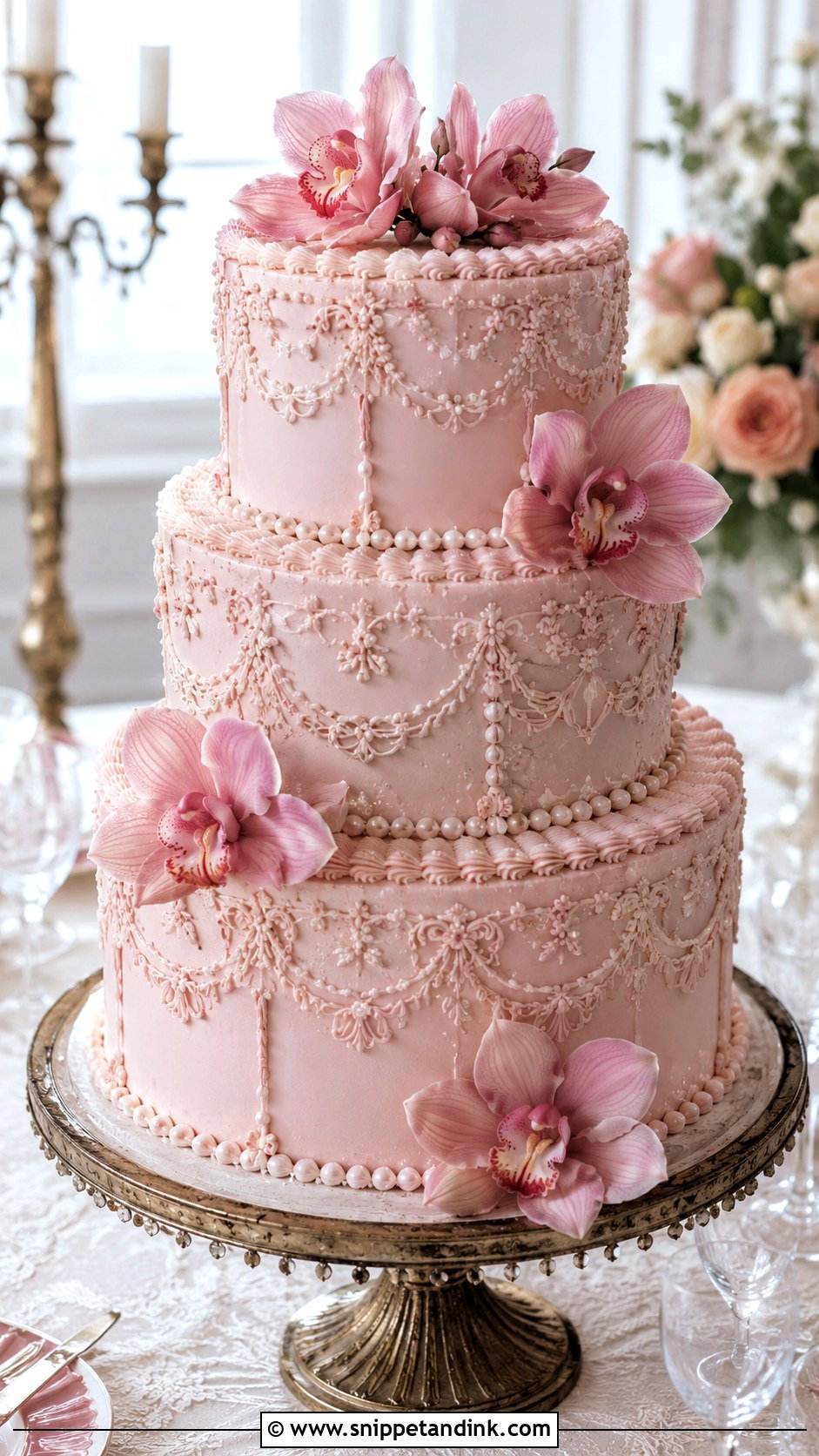
Vintage cakes combine soft colour with old-fashioned piping: Lambeth-style swags, pearl borders and lace-like details on ivory or blush frosting. Orchids sit on top or cascade gently down one side, placed so they don’t hide the piping. Round, slightly taller tiers suit it. A raspberry or strawberry cream filling can make the inside match. The piping is the expensive part in time, so if budget is tight I’d pipe one or two tiers and keep the rest plain.
28. Pink Orchid Minimalist Wedding Cake
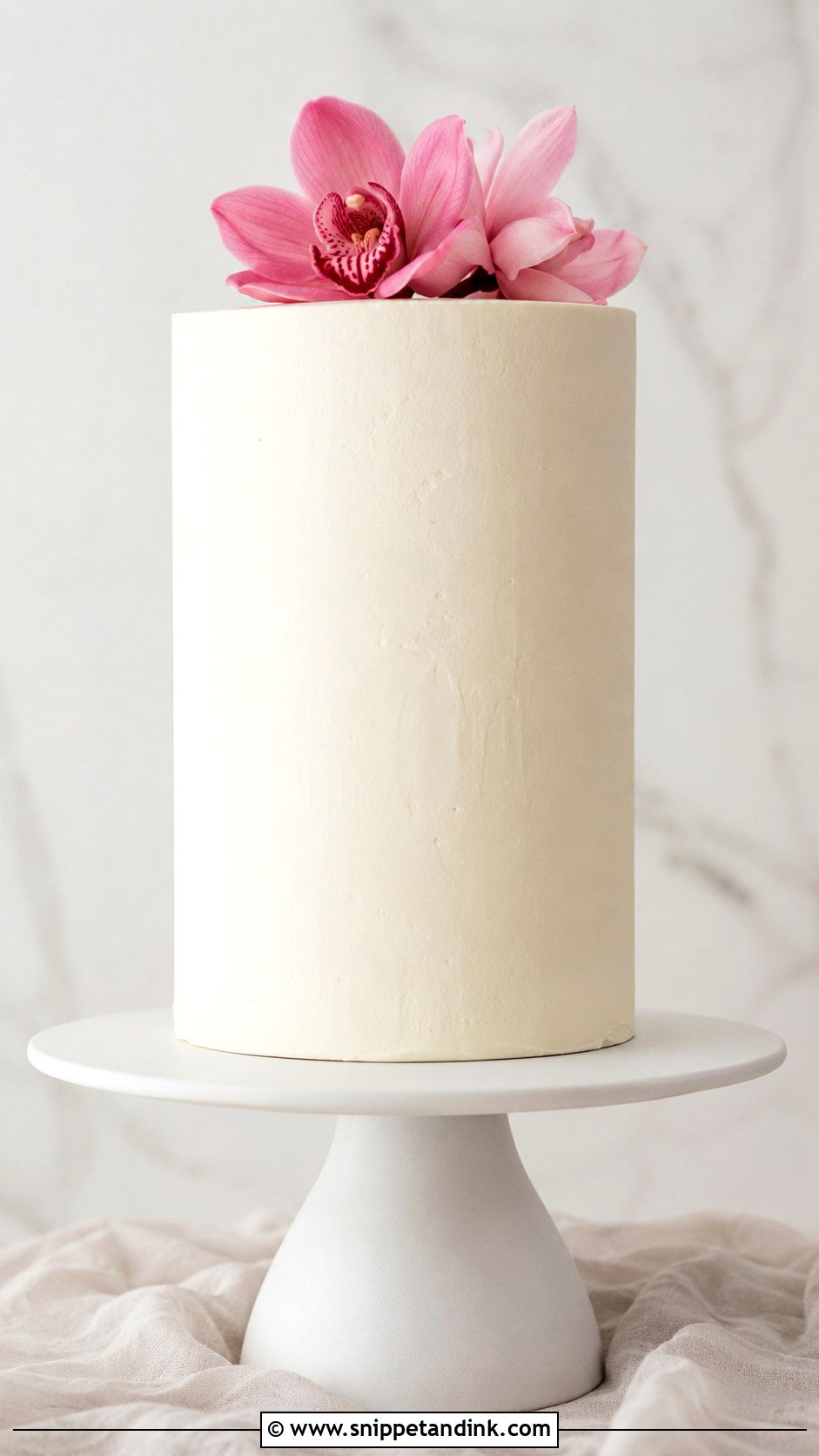
Minimalism here means space, shape and one strong floral detail. Smooth white or ivory frosting with sharp edges, then one or two orchids on the side or top, and no heavy piping or large borders. A tall single tier or small two-tier looks especially modern. Keep the stand and table simple too. Vanilla bean, almond or lemon sponge keeps it light. With so few flowers, each one has to be a perfect bloom, so I’d ask to see the stems before they go on.
29. Pink Orchid Tall Wedding Cake
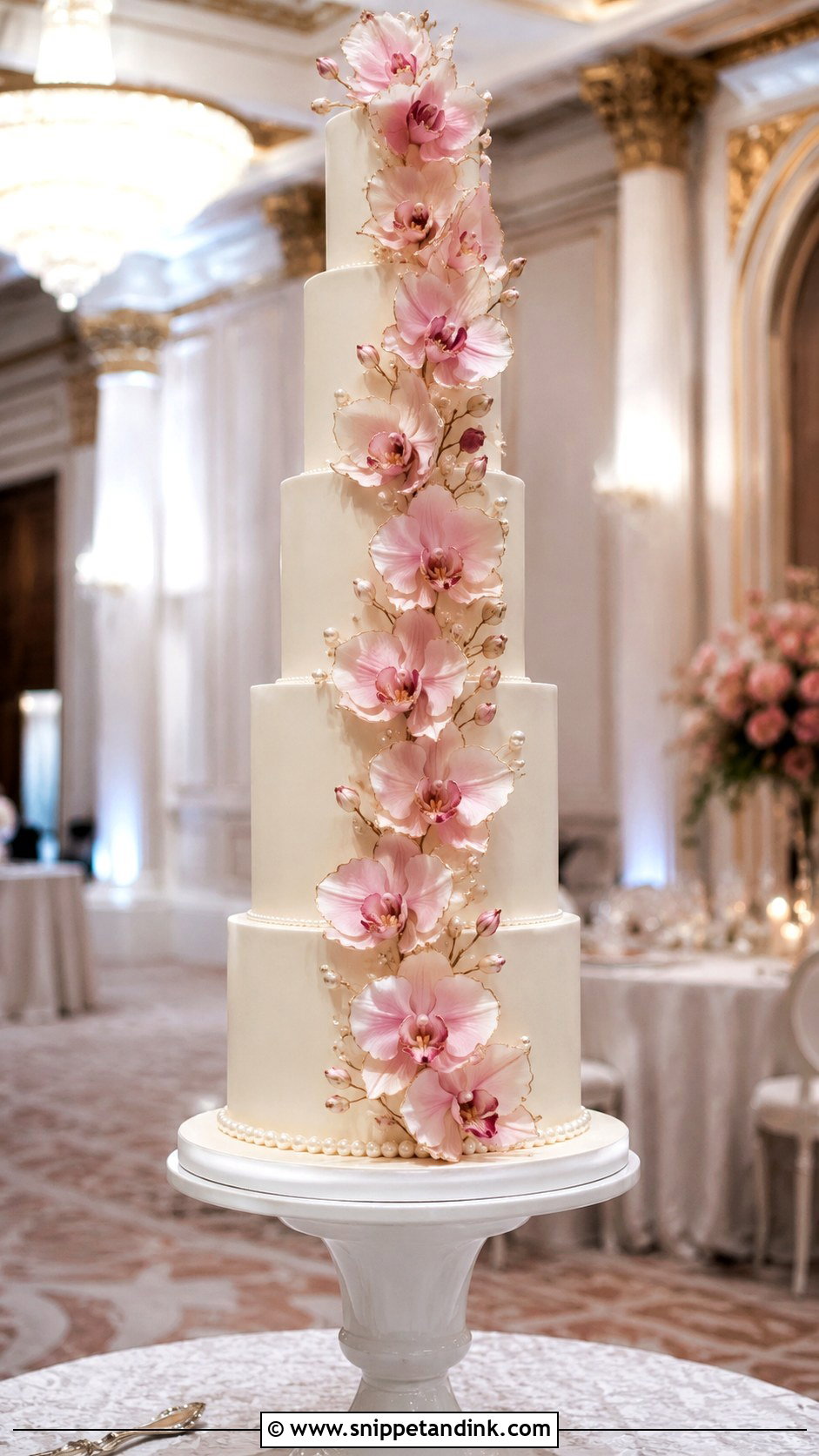
Tall tiers create height without needing much decoration, and pink orchids placed in a vertical line follow that height and make the cake look even longer. Smooth fondant or buttercream in white, ivory or blush. In a large reception room, a tall cake doesn’t get lost on the table. Extra-tall tiers need extra internal support and a level, sturdy table, so mention the height early. Thin gold edging or tiny pearls are optional.
30. Pink Orchid Single Tier Wedding Cake
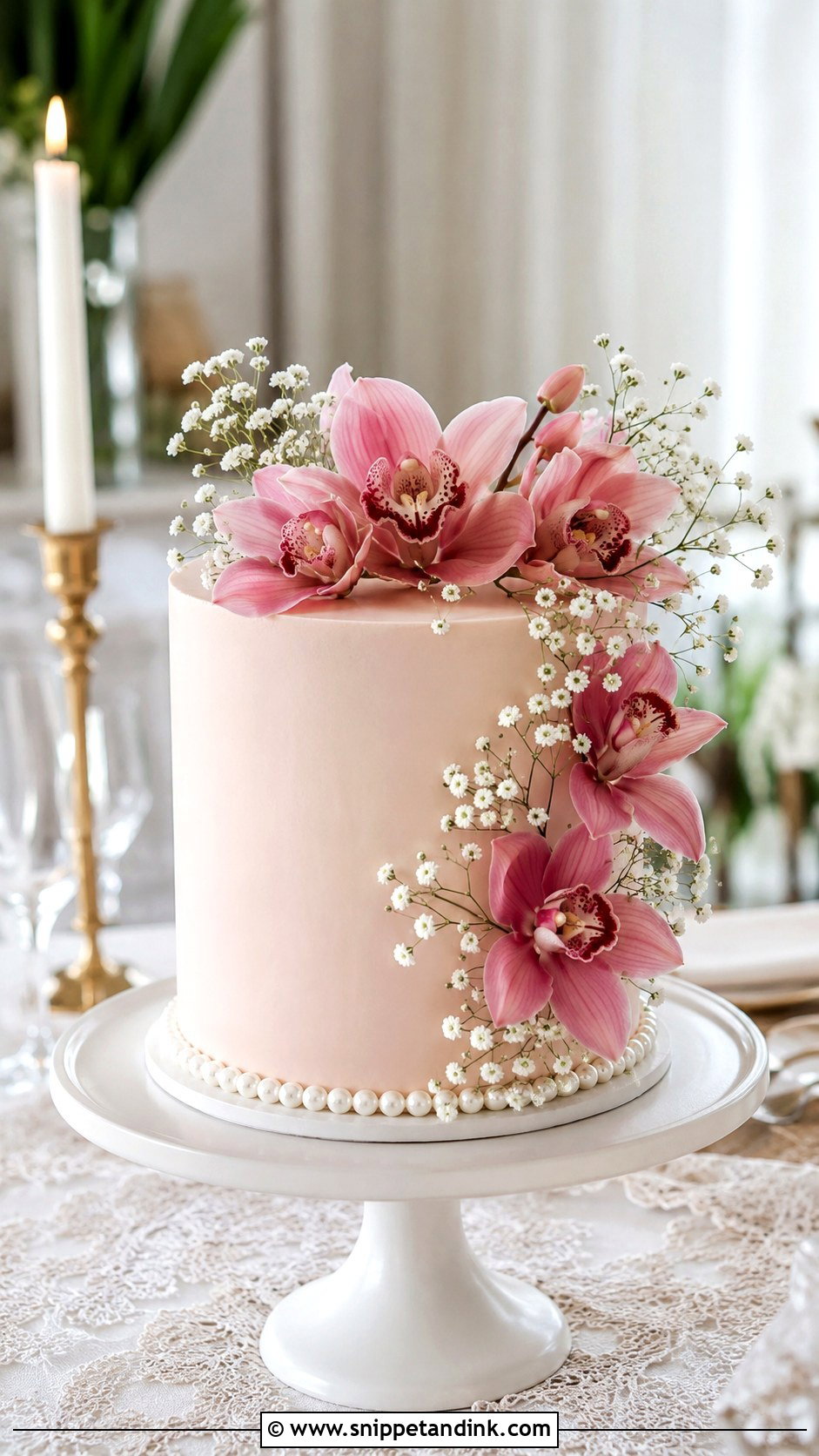
One tier suits micro weddings, elopements and display cakes paired with other desserts. Choose a taller single tier so it has presence, smooth white or blush buttercream as the base, a small cluster on top and a few blooms along the front edge. A pearl border or thin ribbon adds detail. It’s one of the most budget-friendly ways to have a real wedding cake, and it’s the easiest one to make entirely edible with sugar orchids.
31. Pink Orchid Heart Wedding Cake
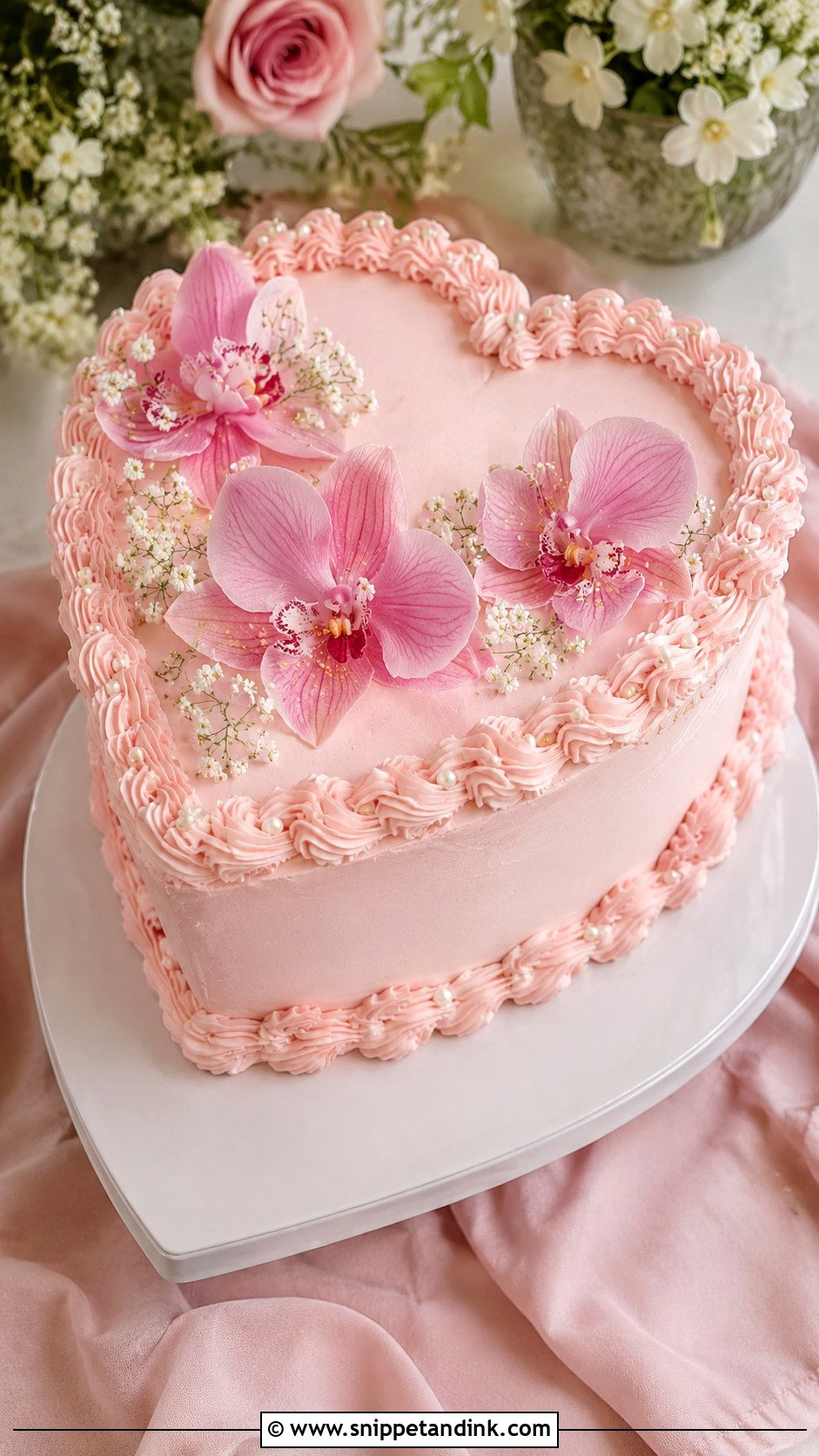
A heart shape already has personality, so keep the decoration soft: blush or white buttercream, smooth sides or vintage piping along the edges, orchids across one side or a small cluster near the top curve. Elopements, bridal luncheons and small receptions suit it. Hearts cut into awkward portions, so for more than a handful of guests I’d pair one with a sheet cake. Strawberry vanilla, raspberry almond or classic vanilla sponge match it.
32. Pink Orchid Sheet Wedding Cake
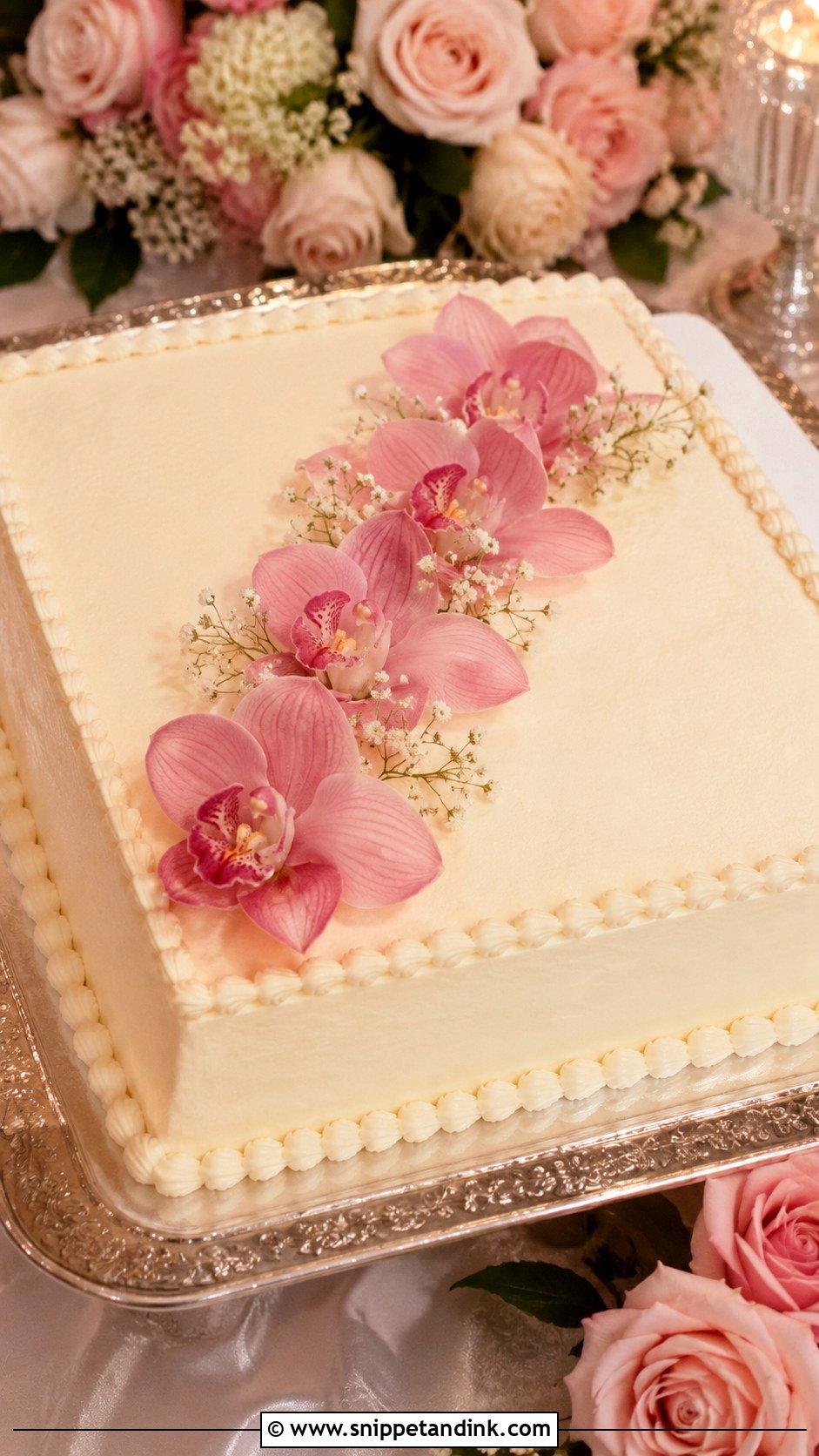
A sheet cake is practical for feeding a crowd and still looks good if the top is decorated with care. Smooth ivory, pale pink or white buttercream, with orchids in one corner, along the border or across the centre in a soft diagonal. Piped edges, pearl dots or a short message finish it. Many couples pair a small display cake on the table with sheet cakes in the kitchen; it’s quicker to cut and usually costs less per slice.
33. Pink Orchid Cupcake Wedding Cake
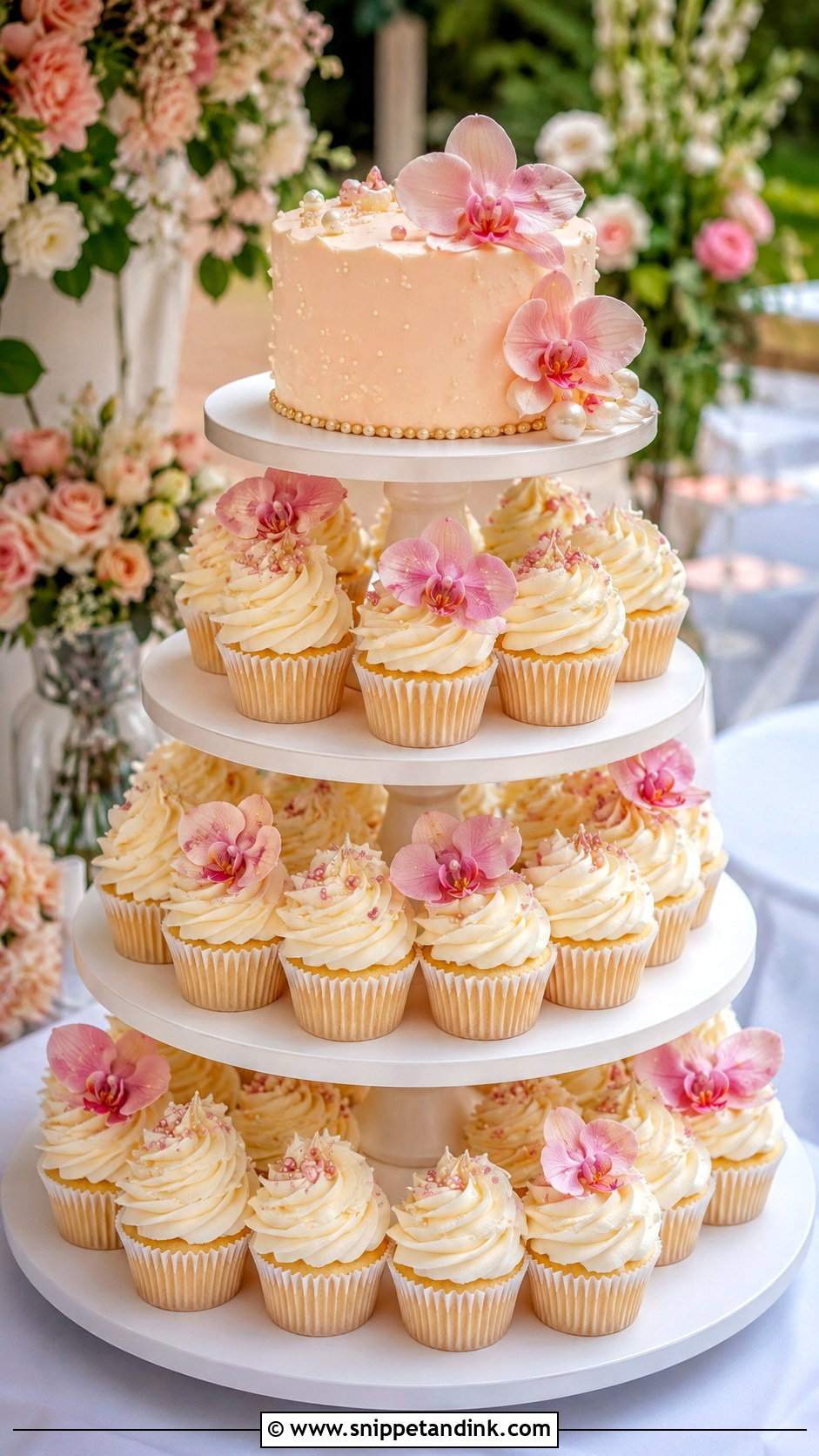
Cupcakes on a tiered stand give the shape of a wedding cake with easy serving. Blush, ivory or white buttercream swirls, with small sugar orchids on selected cupcakes and a small cutting cake on top carrying a larger arrangement. Guests can choose between vanilla, lemon, coconut or raspberry. Cupcakes have less mass to hold the cold than a big cake, so they soften faster in a warm room; I’d deliver them as late as the venue allows.
34. Pink Orchid Macaron Wedding Cake
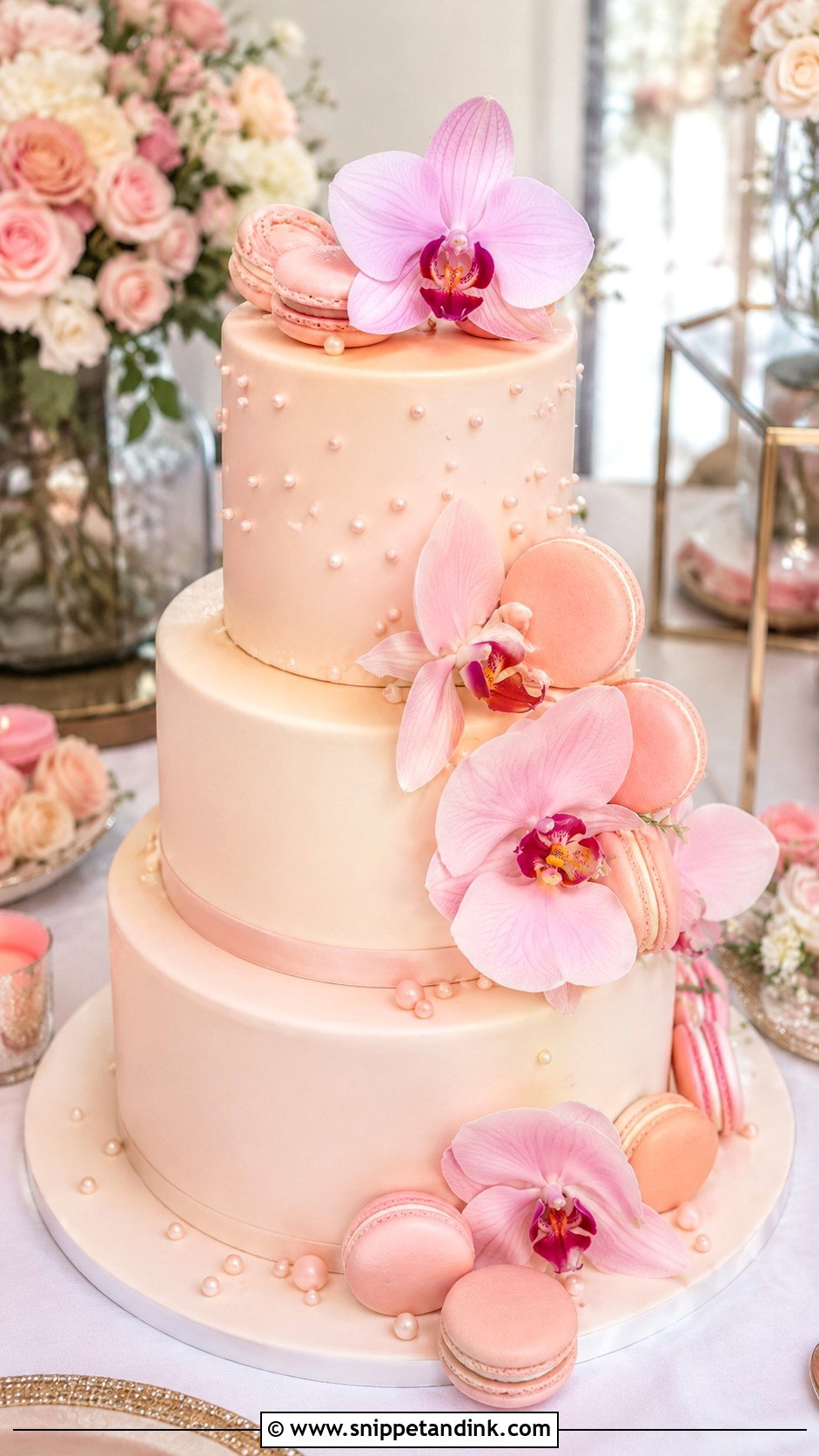
Macarons add colour and texture around the tiers or in small clusters near the orchids. Match them to the floral palette: blush, rose, ivory or pale mauve. The orchids give height, the macarons sweetness. Macarons go soft when they sit against moist buttercream for hours, so I attach them as close to the event as possible. Keep the arrangement balanced so it doesn’t look crowded.
35. Pink Orchid Dessert Table Cake
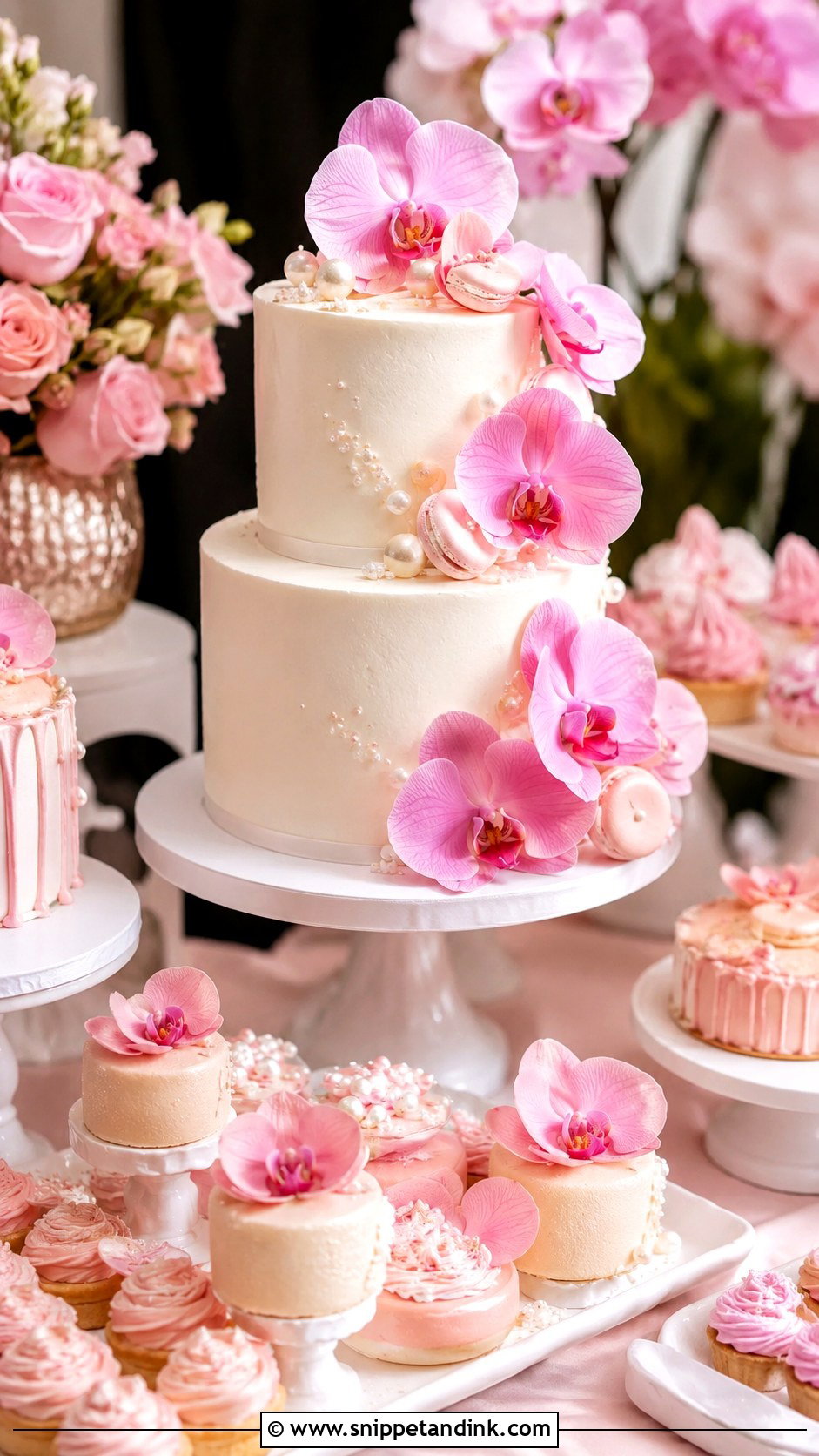
A pink orchid dessert table cake anchors the whole sweets display. A two or three tier blush or white cake with orchids cascading down one side, with the same pink repeated through cupcakes, cookies, mini cakes or macarons around it. Light linens and stands keep the flowers noticeable. I’d ask whoever styles the table to keep loose fresh orchids away from uncovered desserts, and to leave room in front of the cake for the cutting.
Matching Orchid Pink Across Bouquet, Cake and Camera
Pink orchids come in a much wider range than people expect. Some are close to white with a pink lip, many phalaenopsis are a strong magenta, and cymbidiums can lean peach. If the bouquet is one pink and the cake another, it shows in every photo where they appear together. A few things I’d sort out early:
- Put your florist and baker in touch. Ask the florist for the variety name and a photo of the actual stems, taken in daylight, not a catalogue image.
- Agree who places fresh flowers on the cake and when. Usually it’s done at the venue after the cake is set up, so someone needs to be there with the stems.
- If the frosting itself is pink, ask for a colour sample. Pink colouring can fade under strong light, and it can look warmer or cooler on camera than in person.
- Keep the cake away from windows and spotlights until it’s cut, for the colour and the frosting both.
- Tell your photographer if the cake has sugar flowers. Close-ups are when sugar work looks its best, and the cake is often moved or cut before anyone thinks to take them.
With sugar orchids, I match the dust to a petal or a fabric swatch, so bring one to the tasting. It’s the easiest way to make the cake look like it belongs to the same wedding as the flowers.
How Much Orchid Does Your Cake Need?
Orchids can be styled soft, modern, tropical, classic, simple or dramatic, and the cake around them decides which. Balance is what I keep coming back to: let the orchids lead, then build frosting, colour and detail around their shape. Smooth buttercream, fondant, pearls, gold, watercolour and garden flowers all sit well with them. A small single tier suits an intimate wedding; a tall cascade suits a grand reception. At any size, settle the flower type and the exact pink early, and the rest falls into place.
You'll Like These Ideas:







Leave a Reply