
Long hair and fresh flowers can work together for twelve hours, or they can fall apart before the cake is cut. The difference is rarely the style itself. It comes down to which stems you pick, how they are wired, and where they sit in relation to the veil and the weight of your hair. Below are fifteen looks I’d happily build on long hair, each with the detail I watch for when I add the blooms. Silk and preserved flowers come up too, because some days are simply too hot for anything that was alive yesterday.
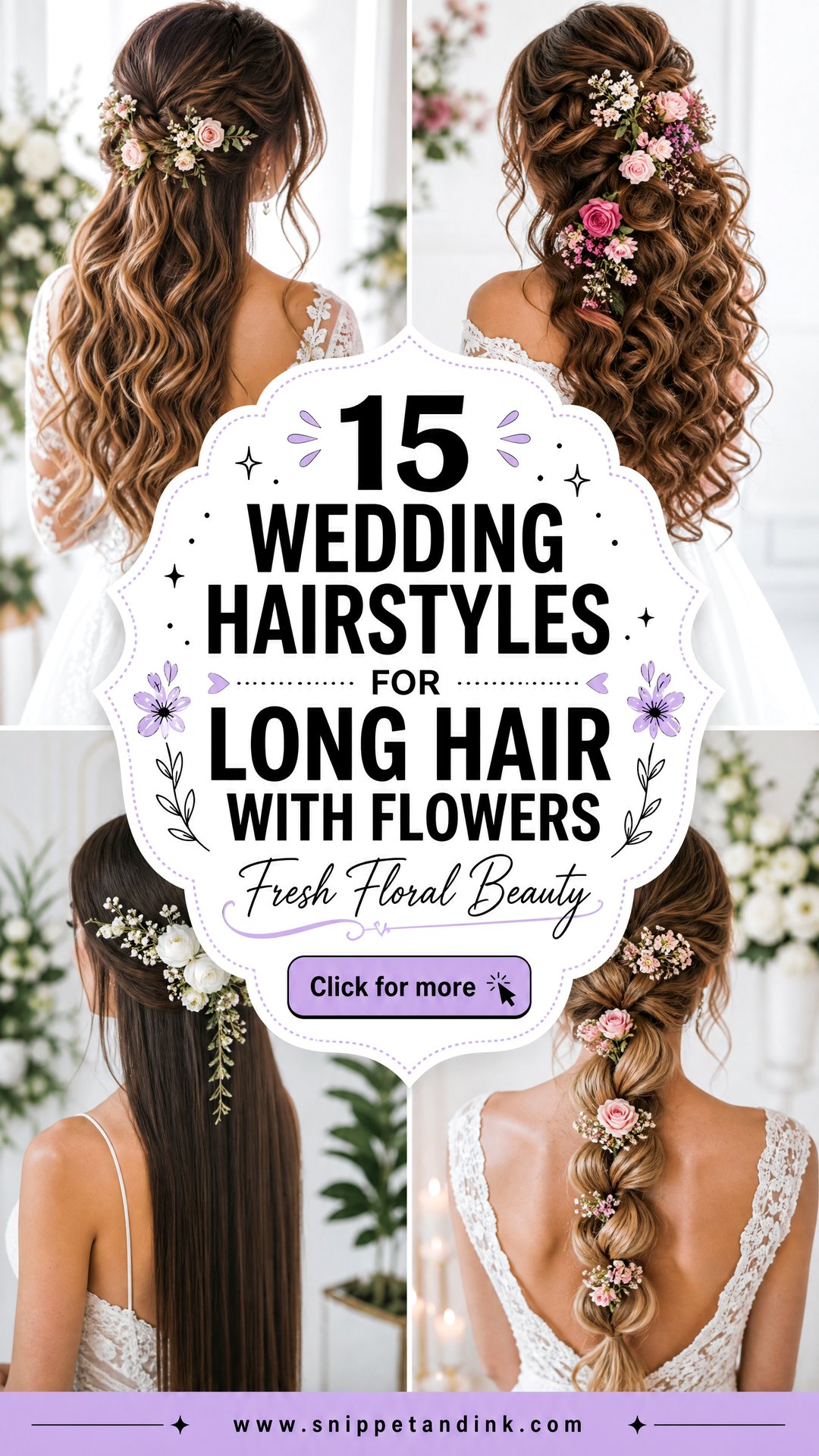
Spray Roses Last, Gardenias Bruise: Picking Stems for Hair
Not every flower that looks good in a bouquet survives in hair. A bouquet stem sits in water until the last minute; a hair flower is cut short, wired and pressed against a warm scalp for hours. I always ask the florist which stems they would trust out of water, then build the look around those.
- Reliable for a long day: spray roses, waxflower, dendrobium orchids, hypericum berries, statice and most greenery. They hold their shape even when slightly warm.
- Short-lived: gardenias and magnolias bruise brown wherever fingers touch them, and jasmine and sweet peas wilt fast in heat. Lovely for the ceremony, tired by the toasts.
- Heavy for their size: full garden roses, peonies and large hydrangea heads. One is fine near the nape. Several near the crown will drag a style down.
- Baby’s breath lasts well but has a noticeable smell up close, which some brides only discover at the trial.
Ask for hair pieces to be wired and taped by the florist, with stems cut short, and delivered in a cool box. Pins slide through a taped wire leg cleanly. A raw, soft stem bends and tears.
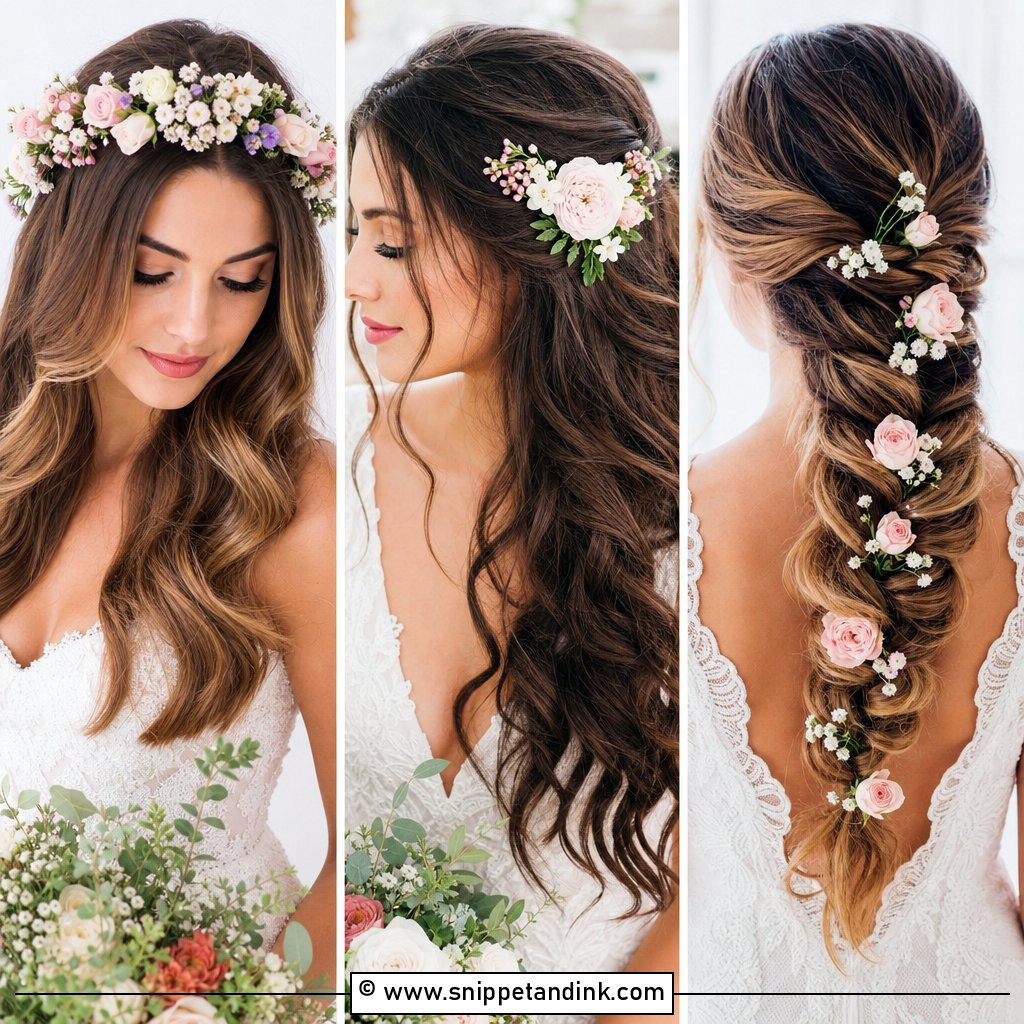
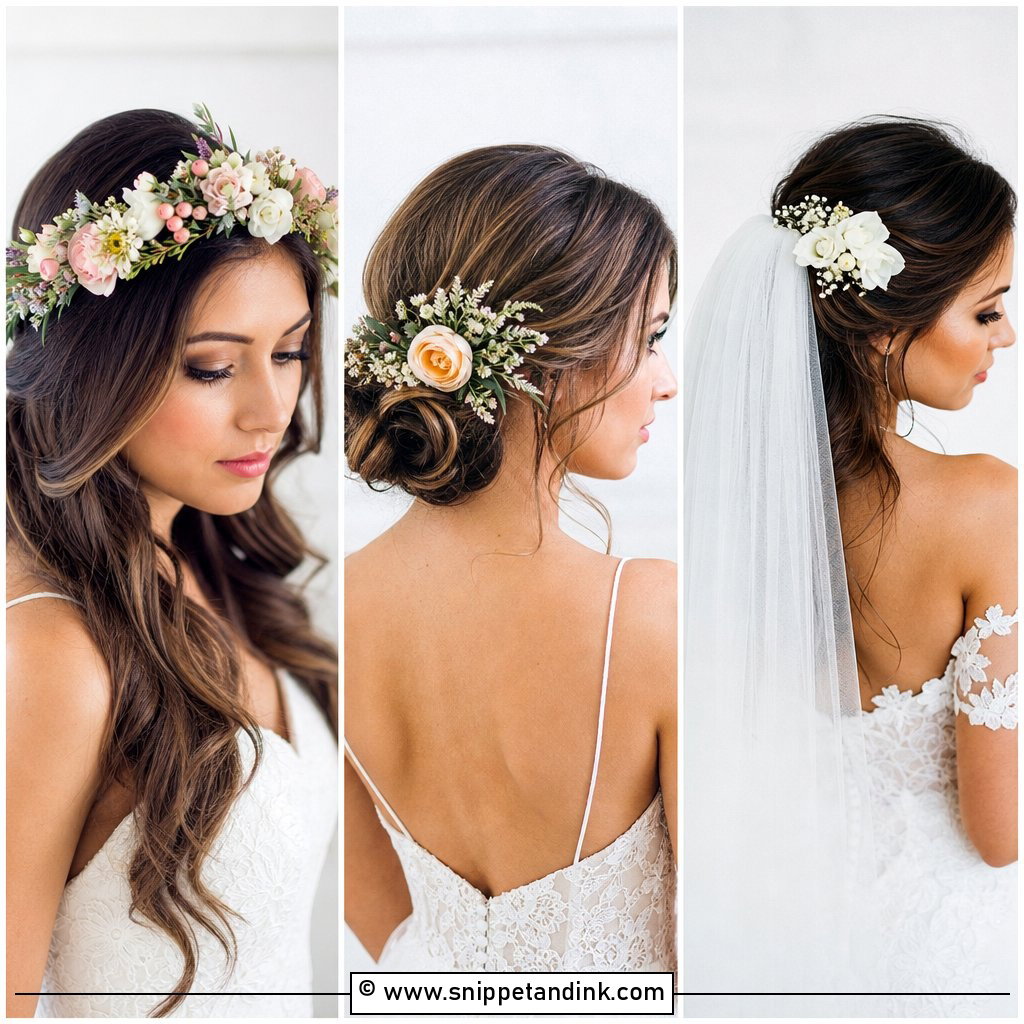
1. Long Wedding Waves With Flower Crown
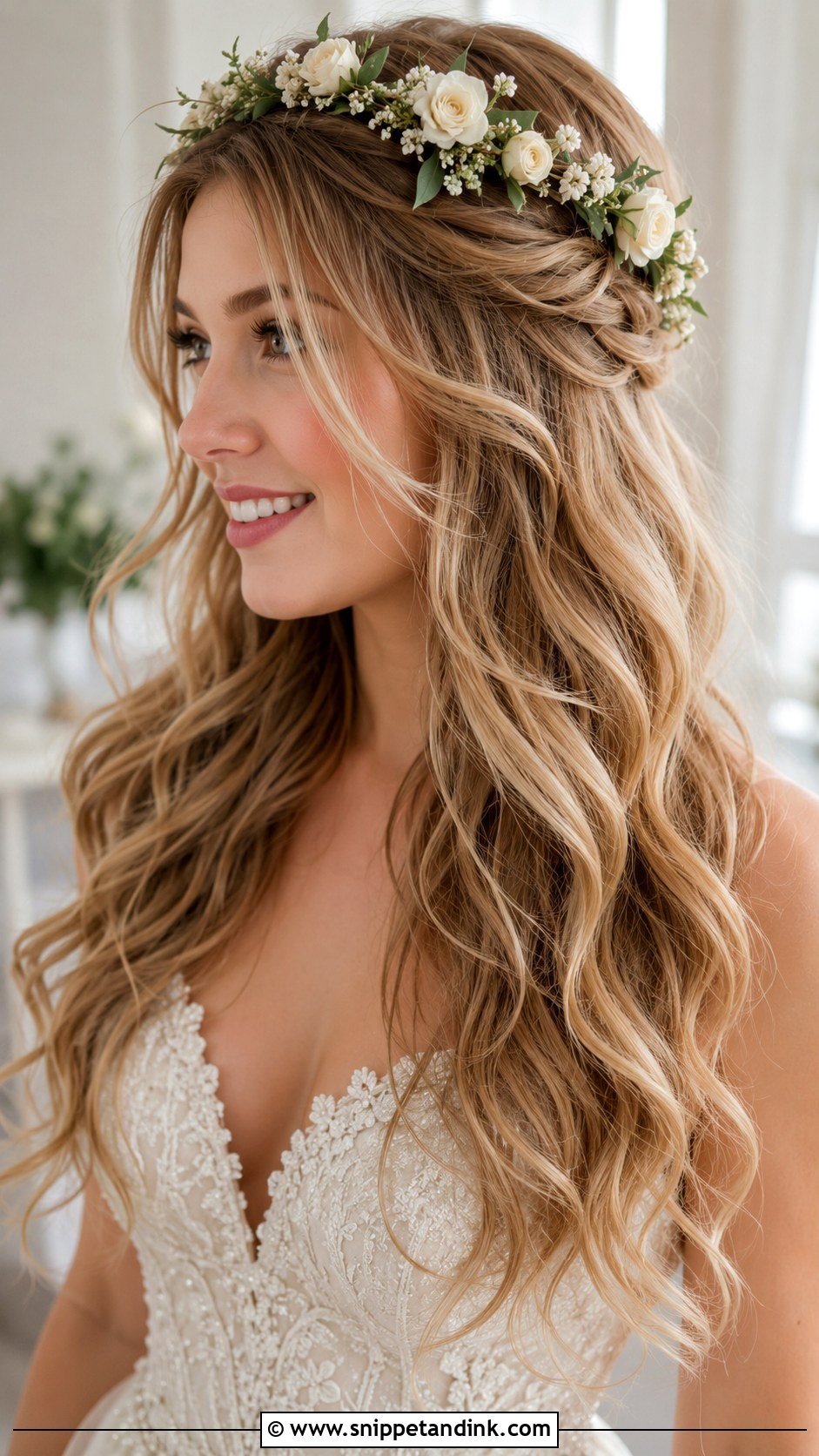
A crown sits on waves without hiding any length, which is why it stays popular. I brush the curls out an hour before the crown goes on, so they relax into a looser shape instead of looking freshly tonged under it. Ask your florist for tiny roses, baby’s breath and a little greenery on a thin wire base, not a stiff band. I anchor it with two crossed pins behind each ear, just above the hairline, and it barely moves. The one thing I’d avoid is a heavy crown with a long veil; the comb and the crown end up fighting for the same spot.
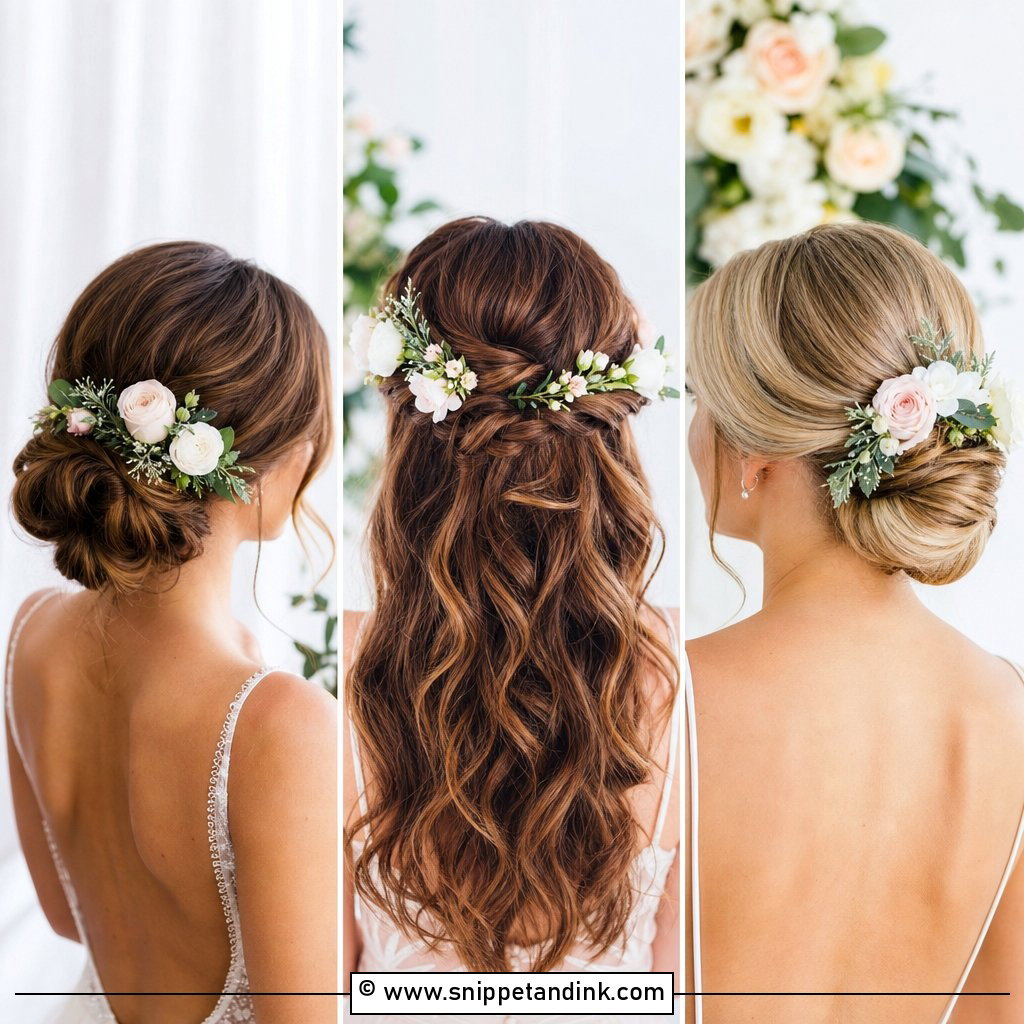
2. Half Up Wedding Hair With Flowers
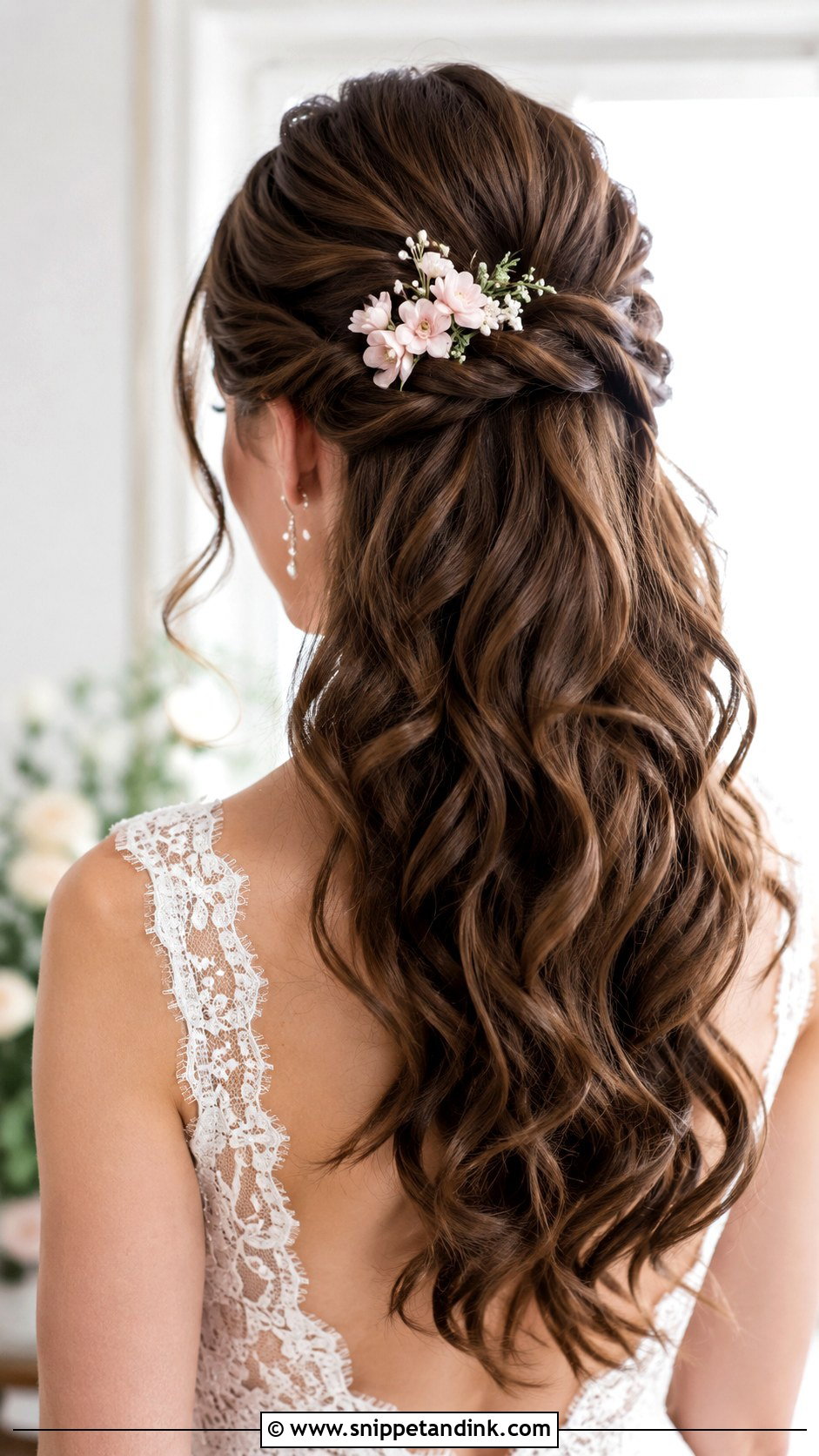
Half up is my default suggestion when a bride wants her length on show but hates hair in her face. The top section is pinned on a hidden anchor, usually a small twist or a few backcombed roots, and that anchor is exactly where the flowers go. Pinned there, they cover the join and get the most support. Keep the cluster light. Two or three wired spray roses are plenty; a big arrangement drags the crown flat by the reception.
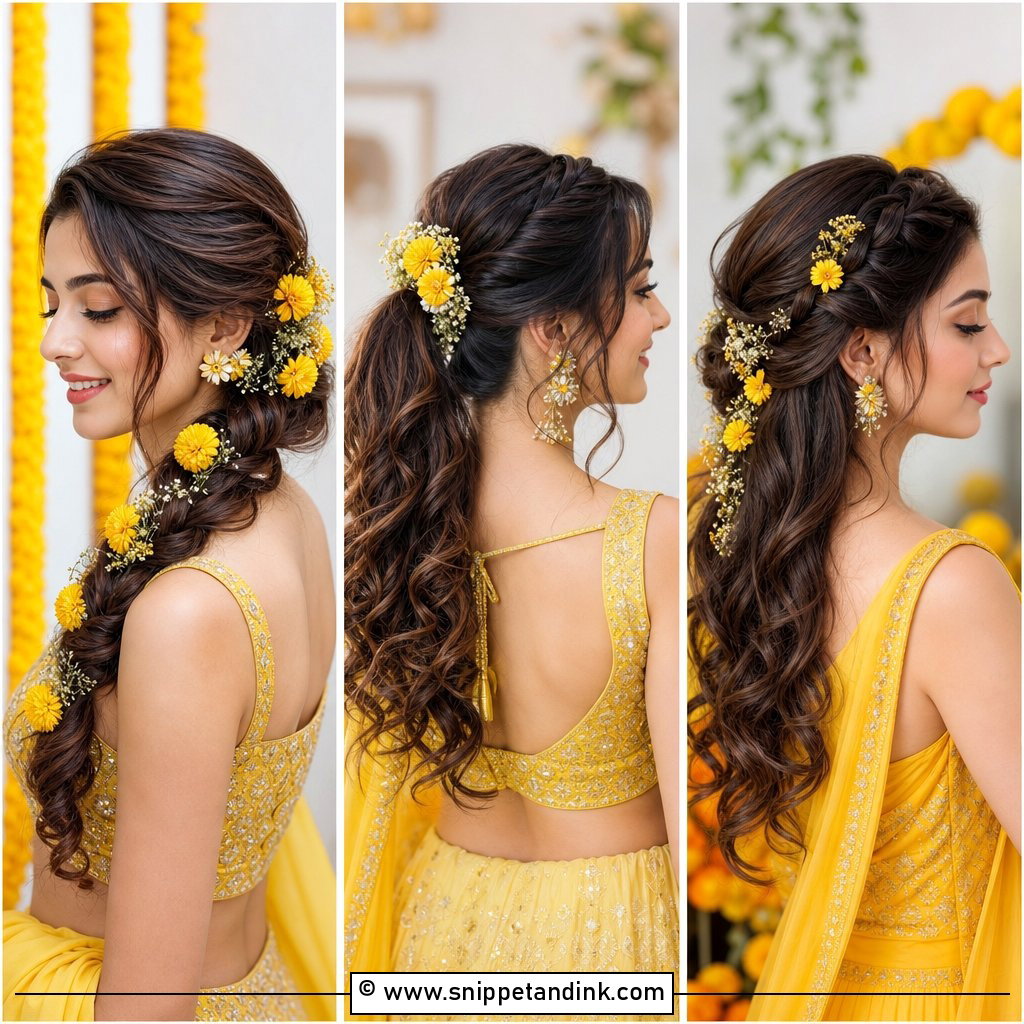
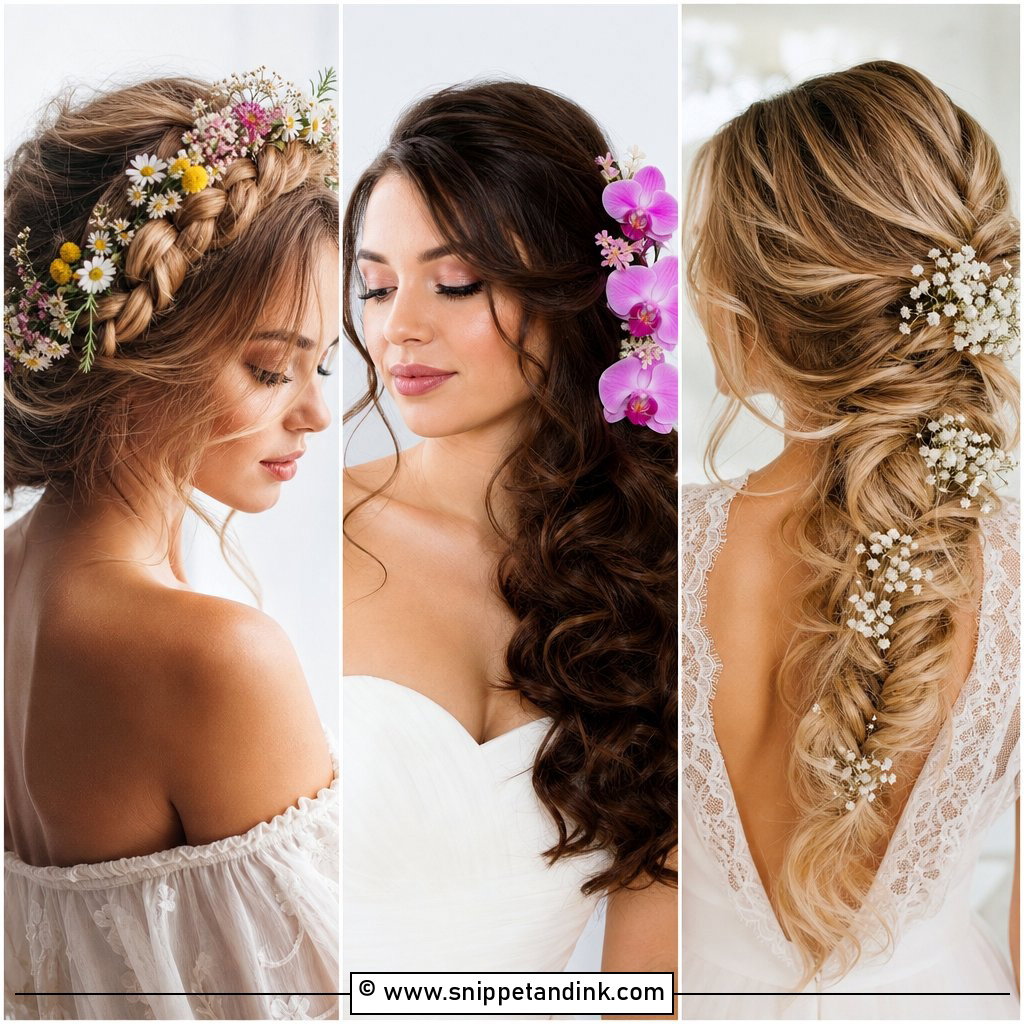
3. Long Braided Wedding Hair With Flowers
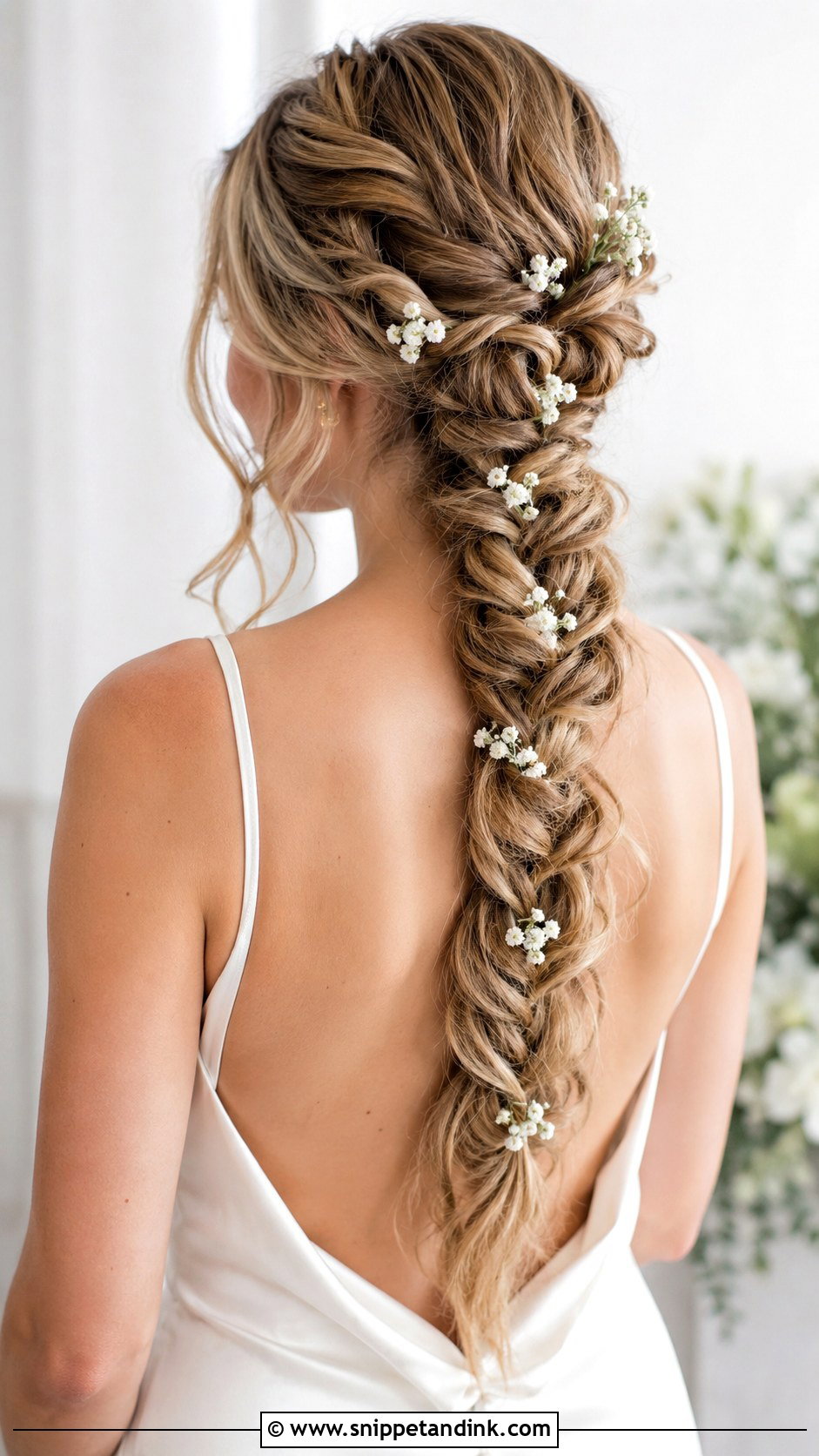
Braids are the most forgiving base for fresh flowers because every crossover is a natural pocket. I’ll start a loose three-strand or pull-through braid near the crown and tuck stems in as I go, rather than poking them in afterwards, so each one is gripped by the hair itself. Thick hair and extensions suit this best. Very fine hair can still do it, but the braid needs a little texture spray first or the flowers slide out of the sections. Outdoors, this holds its shape far longer than loose curls.
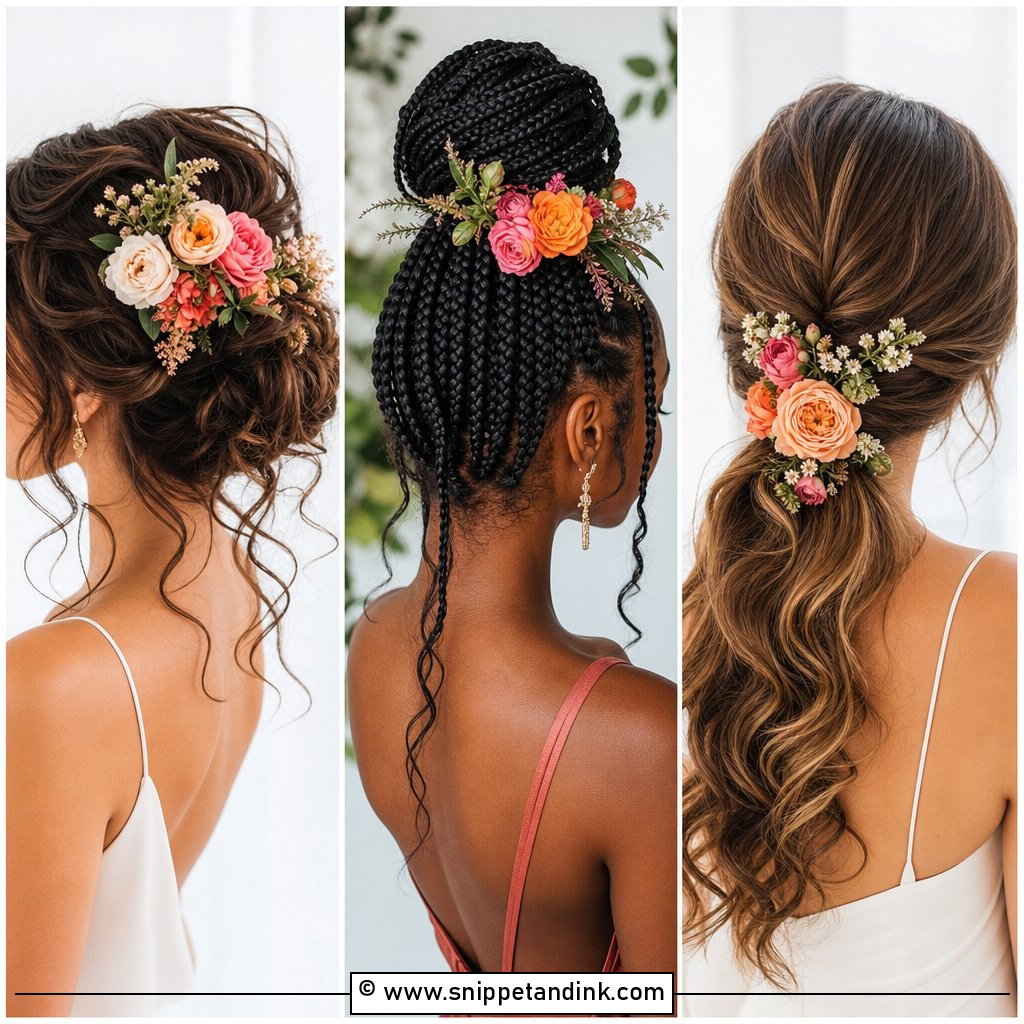
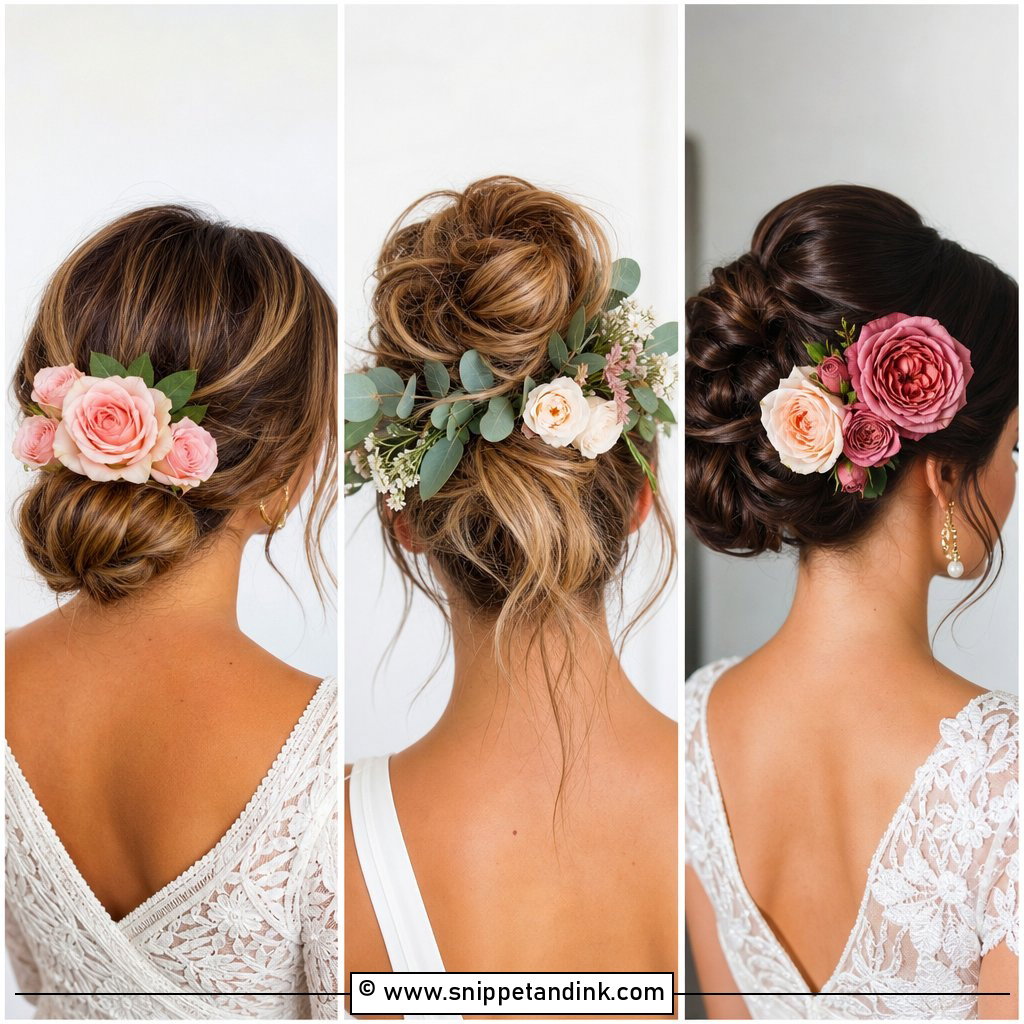
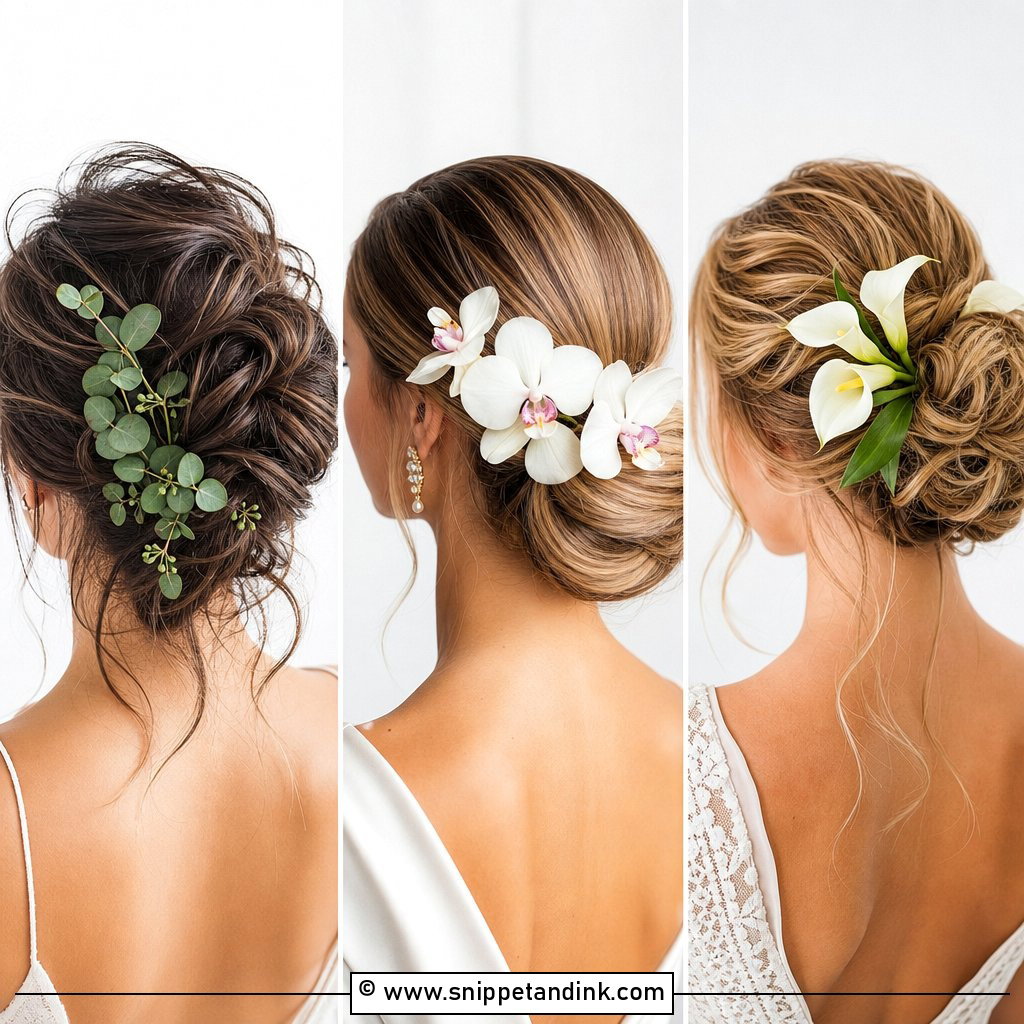
4. Low Bun Wedding Hairstyle With Flowers
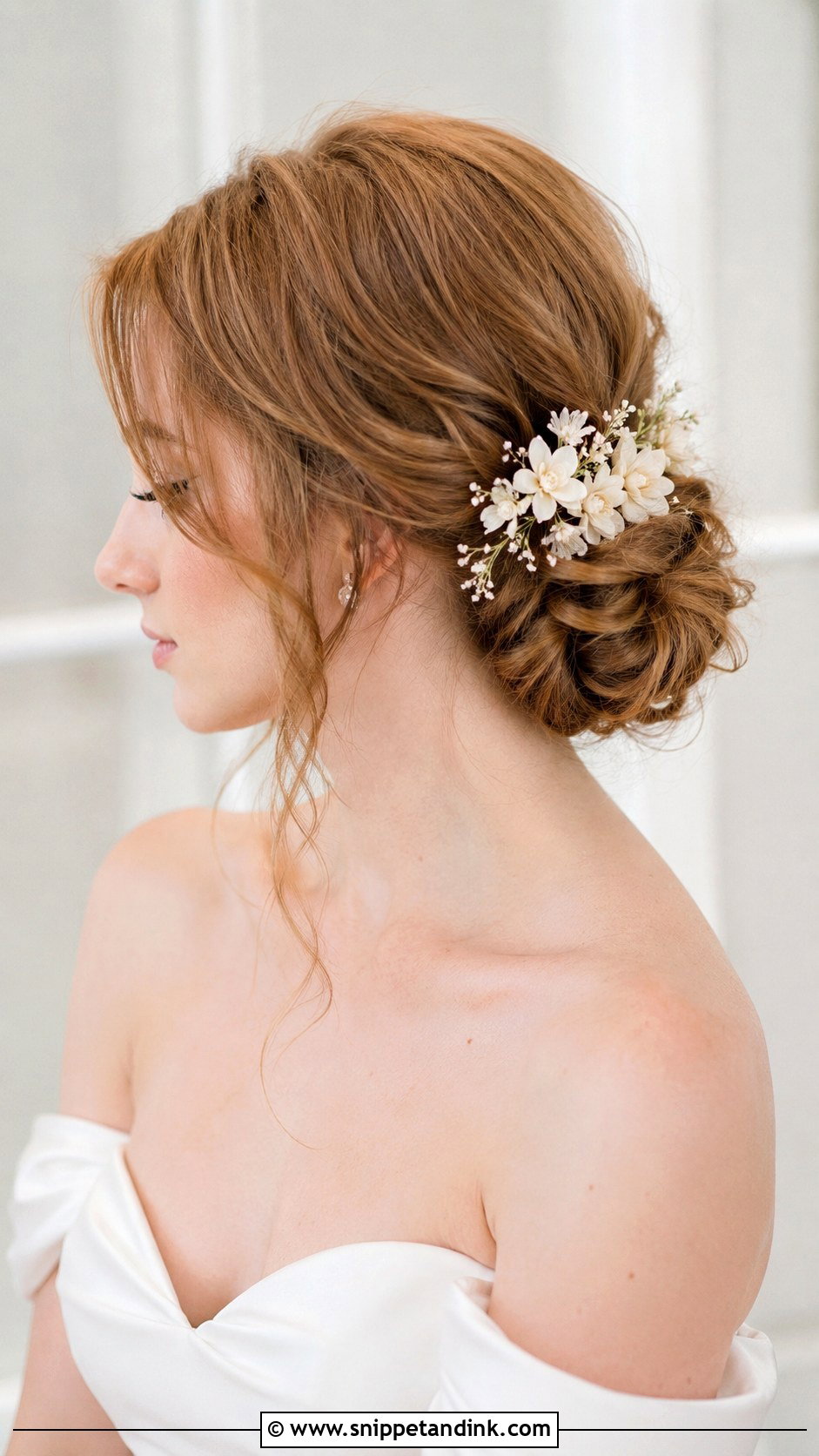
A low bun is the style I trust most on a hot, long day. The weight sits at the nape, nothing touches the neck, and the veil comb slides in just above it without disturbing anything. Flowers look most balanced off to one side of the bun or cupped around the base. I place them after the veil is tested, because a cluster above the bun can push the comb out. Small ivory or pale blush blooms keep it quiet if your earrings are doing the talking.
5. Boho Wedding Braid With Flowers
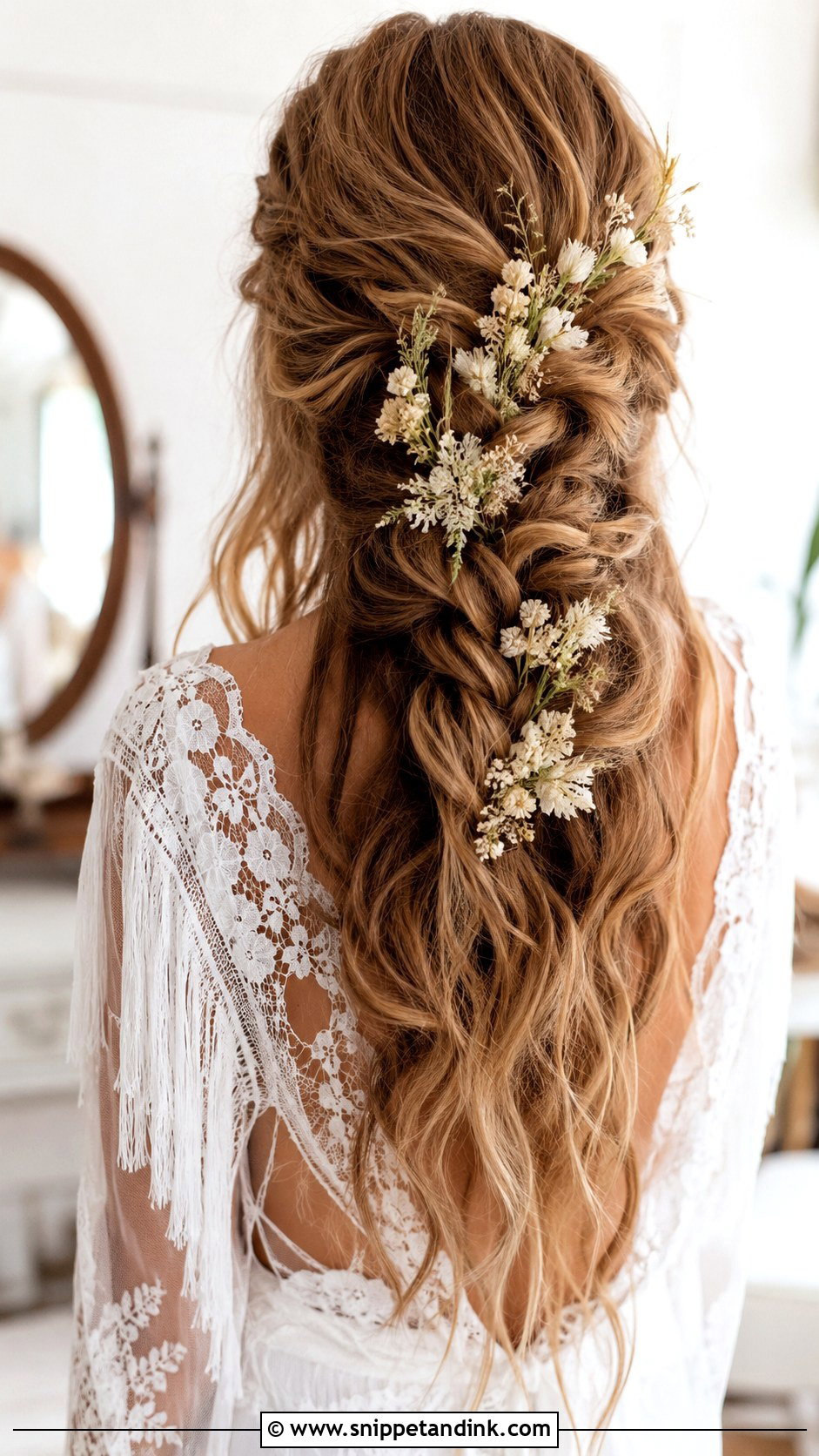
The boho braid is wide and deliberately loose, built over waves rather than straight hair. That looseness is its weakness too: it can unravel if it is only held by a clear elastic, so I lock the end with a pin pushed back up into the braid. Dried flowers and sprigs of rosemary or olive work brilliantly here because they don’t wilt at all, which matters at a desert or backyard wedding in full sun. Leave a couple of face-framing pieces out and you’ll have something to tuck behind your ears all evening.
6. Side Swept Wedding Hair With Flowers
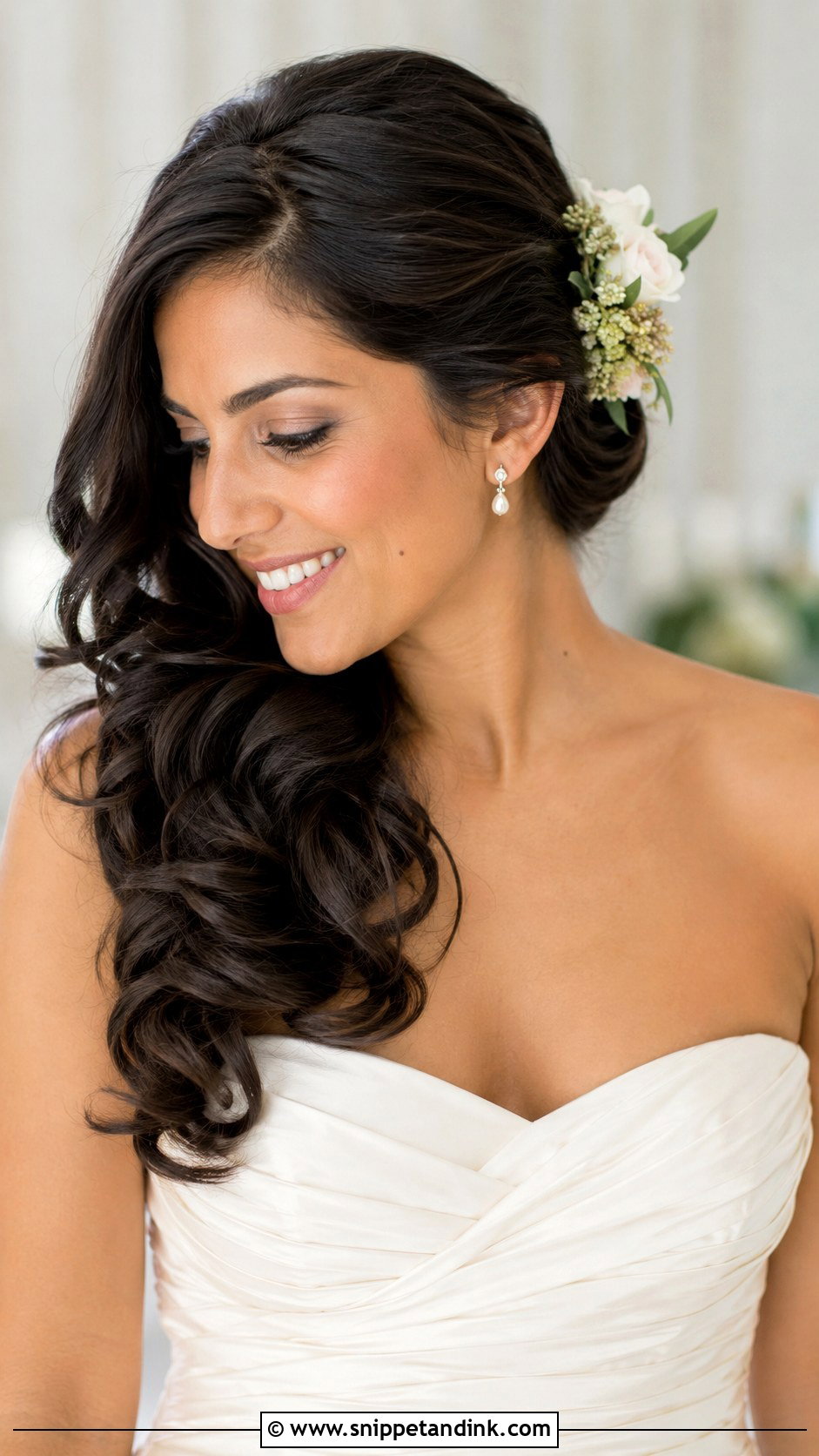
Sweeping everything over one shoulder looks dramatic, but the pinned side carries all the tension. I build a tight criss-cross of pins behind the ear on that side before any curls are moved over, otherwise the whole thing slowly migrates back by dinner. Flowers go right over that pin work to hide it. Strapless and one-shoulder gowns are the natural match. Keep the blooms small near the temple; anything heavy there tips forward when you look down at your vows.
7. Long Curly Wedding Hair With Flowers
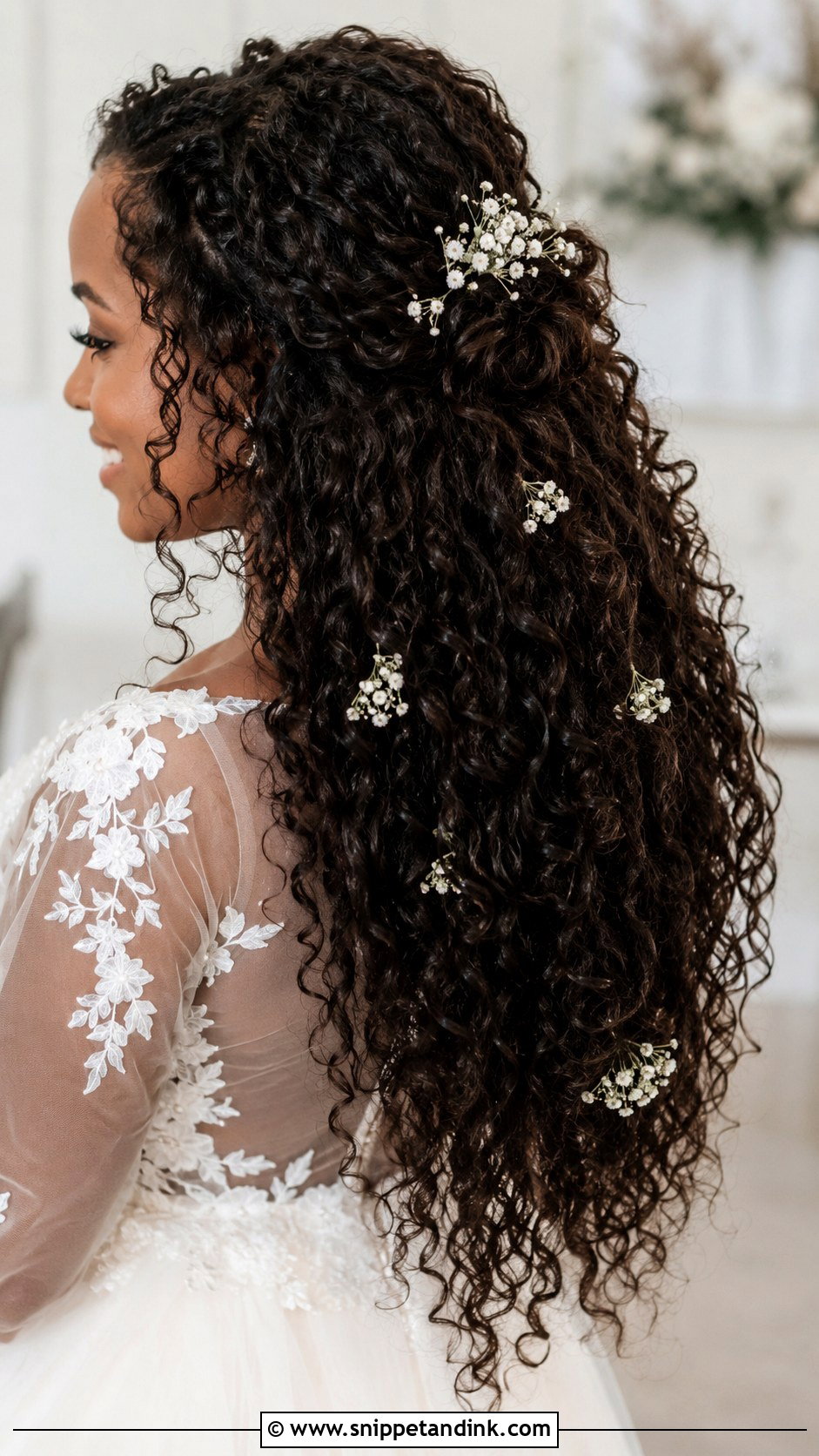
Natural curls need flowers that adapt to them, not the other way round. I define the pattern with a cream and let it dry fully before anything goes in, because pinning into damp curls leaves flat spots that never recover. Floral pins with a short wire leg work better than big combs, which drag through curls and cause frizz. Scatter them, or gather them where a half-up section gives extra grip. If your curls are very tight, I’ll often skip pins altogether and nestle stems directly into the hair.
8. Loose Wedding Updo With Flowers
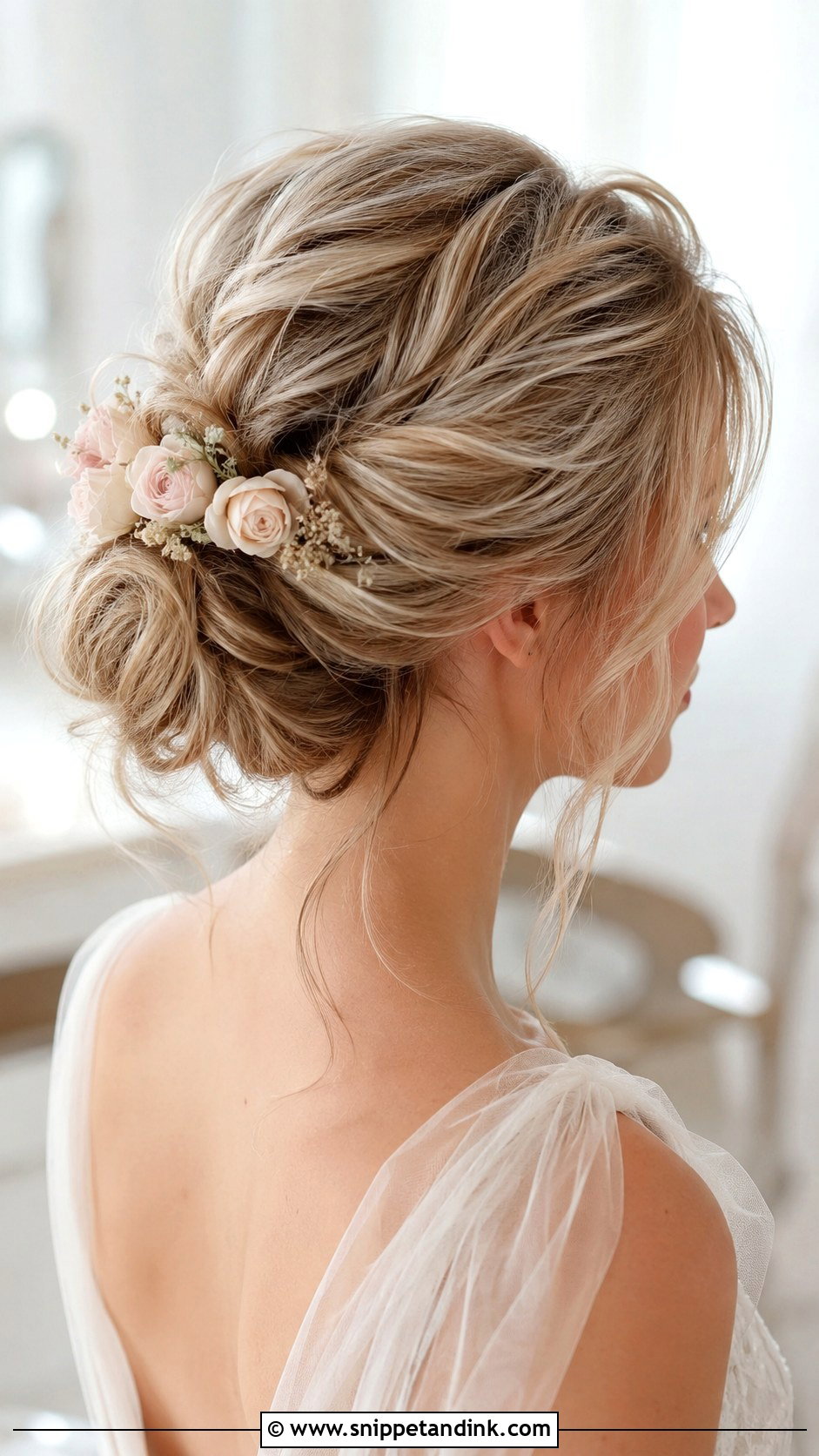
Thick long hair often feels heavy worn down for a full day, and a loose updo is the relief. The look is meant to be soft, but there is nothing casual about the structure underneath. I usually build it on two small anchor ponytails and pin the twists into those, so it stays airy without collapsing. Flowers can frame the back or tuck along one side. Lace and tulle suit it. It’s less forgiving on very fine, slippery hair, which tends to separate around the pins by evening.
9. Fishtail Wedding Braid With Flowers
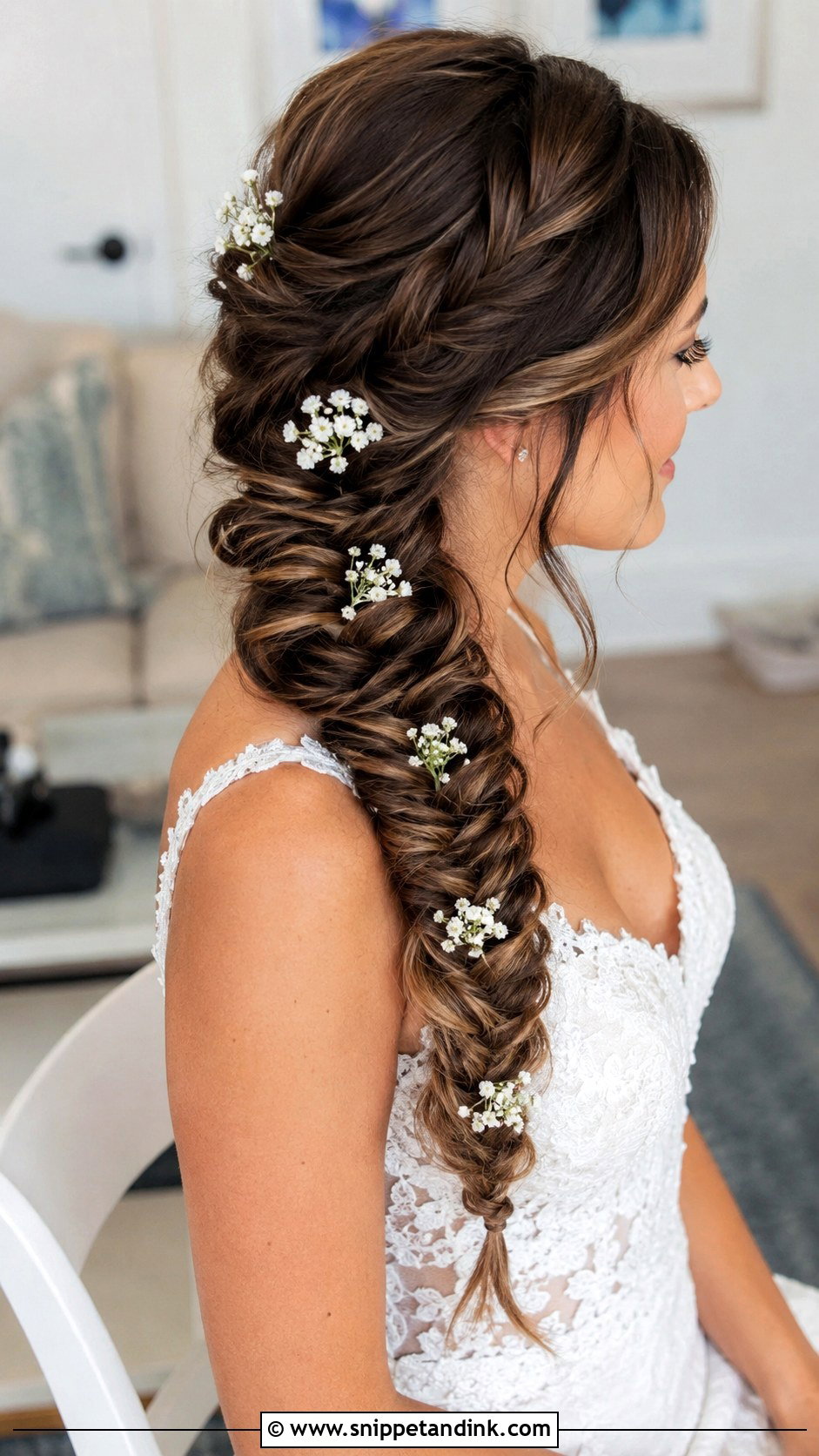
A fishtail has many small sections, so it shows tiny flowers better than any other braid. Pancaking it, gently pulling the edges outward, gives you width and creates little gaps that hold stems. I keep the flowers evenly spaced and fairly small; too many and the woven pattern disappears, which is the whole reason to choose a fishtail. Down the back works for a sleeveless dress. Over the shoulder is lovely, but check that it won’t rub against beading or lace on the bodice.
10. Waterfall Braid Wedding Hair With Flowers
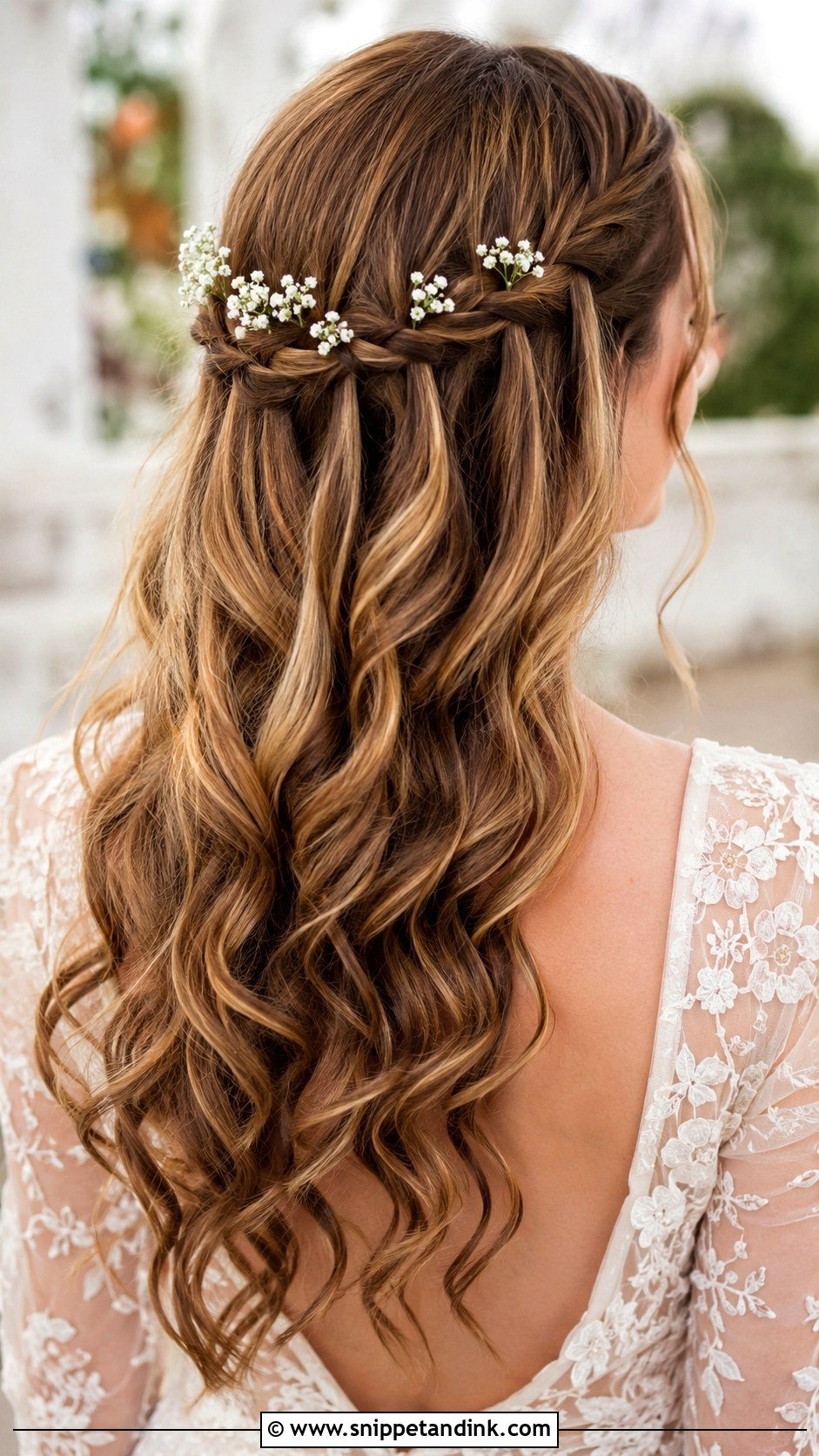
Waterfall braid wedding hair keeps your length down while adding one detailed band across the back. Highlighted or balayage hair shows the woven pattern clearly, while one-colour dark hair can make it look flatter in photos, so I’ll sometimes add a little shine spray to define it. It needs curl or wave to fall through; on poker-straight hair the dropped sections just hang. Pin a few small flowers along the braid line, not below it, or they pull the falling pieces out of shape.
11. Sleek Low Ponytail Wedding Hair With Flowers
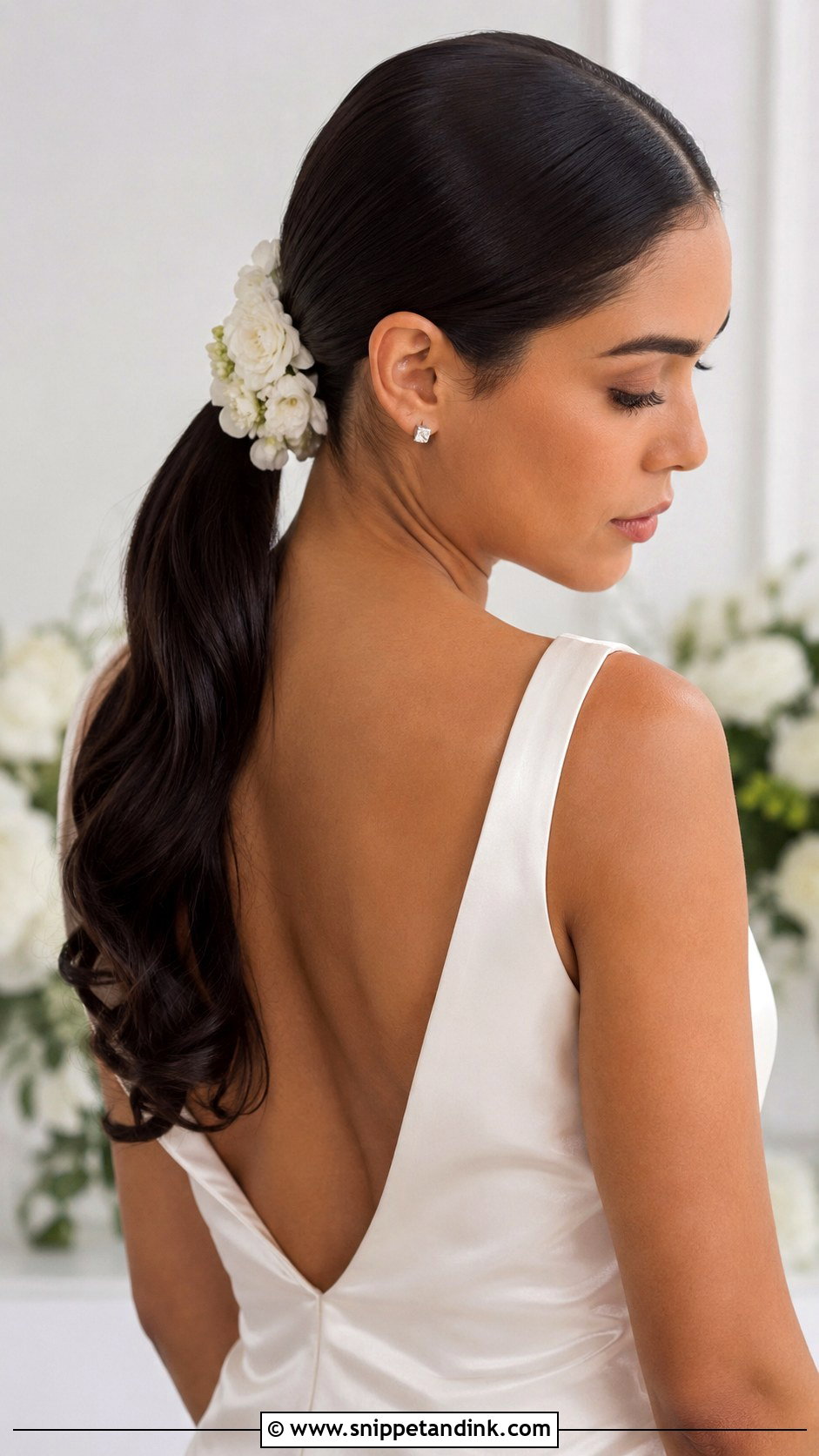
Sleek styles depend on preparation more than finishing. I blow-dry the hair smooth with a paddle brush first, then tie the ponytail low at the nape with a strong elastic and wrap a section around it to hide the band. Flowers wrapped around the base sit securely because the elastic gives them something to grip. It’s a good partner for a detailed neckline or an open back. Humid weather is its enemy, though, so I’d steer you away from it at a beach wedding unless you’re happy with a slightly fluffier finish.
12. Romantic Wedding Chignon With Flowers
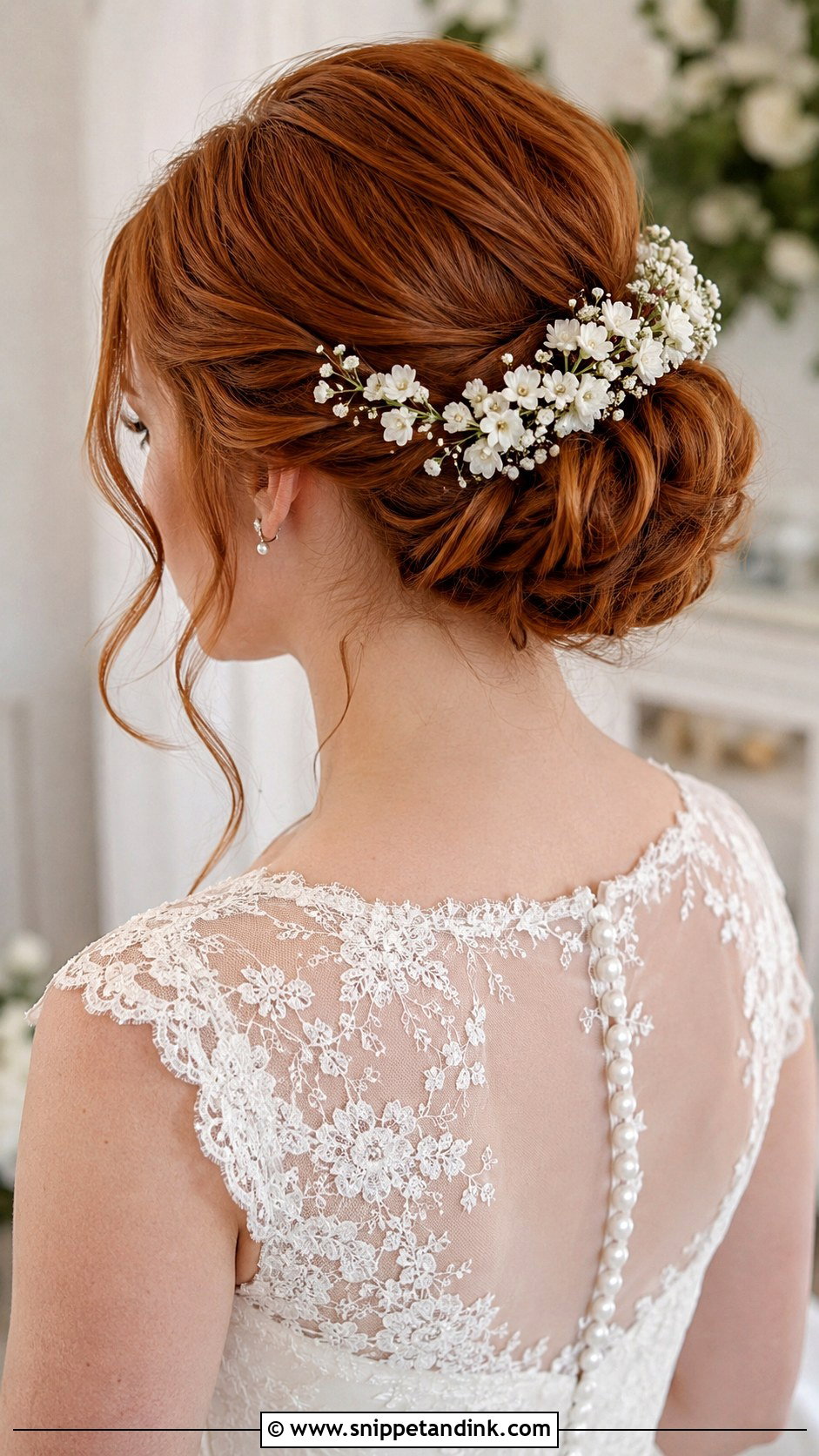
The chignon is my answer when a bride wants classic but not stiff. It is built low with soft twists from each side meeting at the nape, then tucked into a rounded shape. Flowers can follow its curve or sit in a small crescent shape above it. Because it is low and compact, a cathedral veil anchors well right on top. I leave the twists a touch loose; pulled too tight, a chignon reads as a dance-recital bun.
13. Long Straight Wedding Hair With Flowers
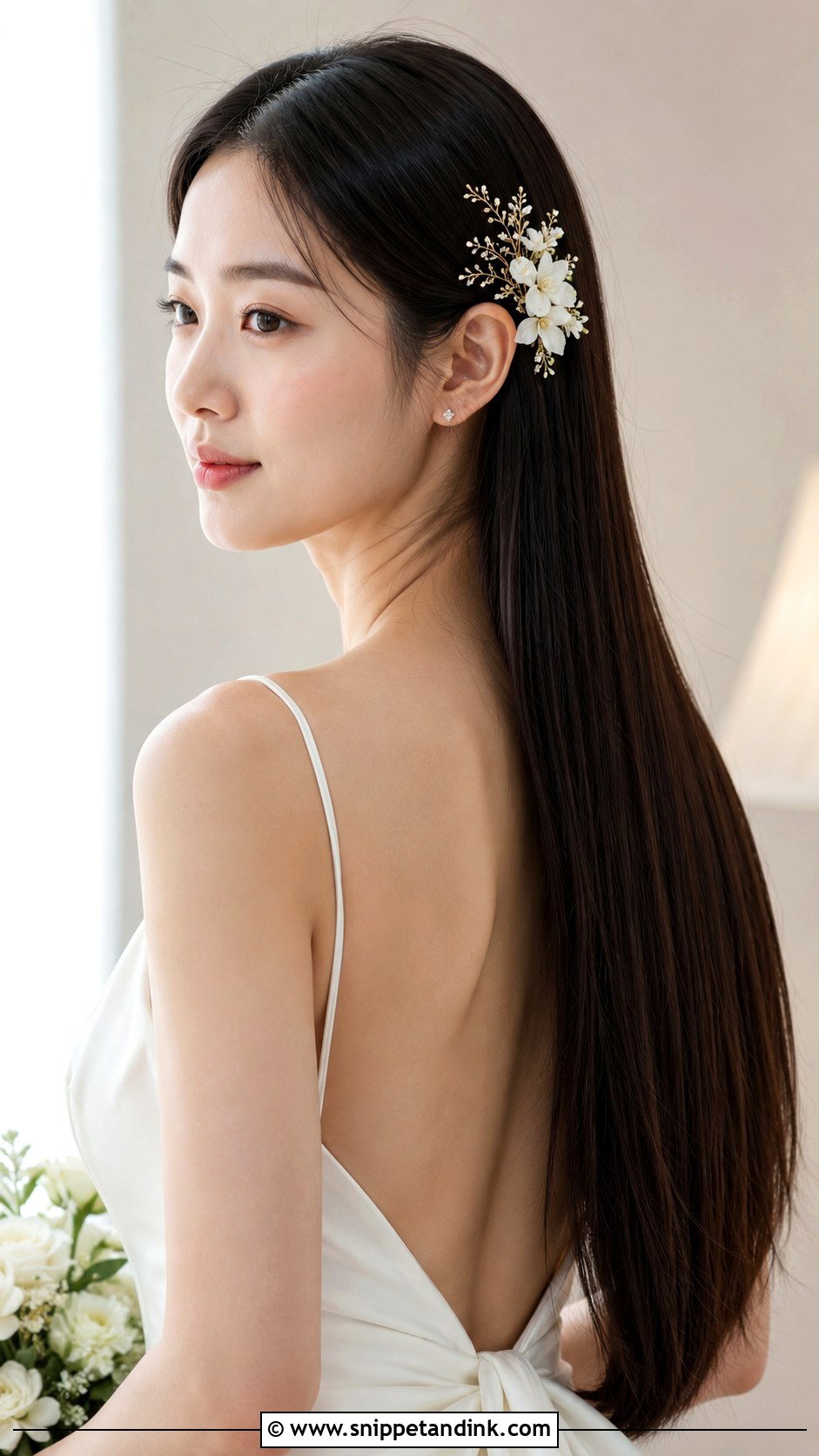
Straight hair looks simple, and it’s harder than it seems. Every kink shows, so I flat-iron in small sections and bend the ends very slightly to stop them looking blunt. Flowers need a firm grip here, since straight hair is slippery: a slim floral comb set into a small side twist holds better than a single bloom behind the ear. A center part reads more modern. Keep blooms delicate, or they overwhelm the clean line.
14. Bubble Braid Wedding Hair With Flowers
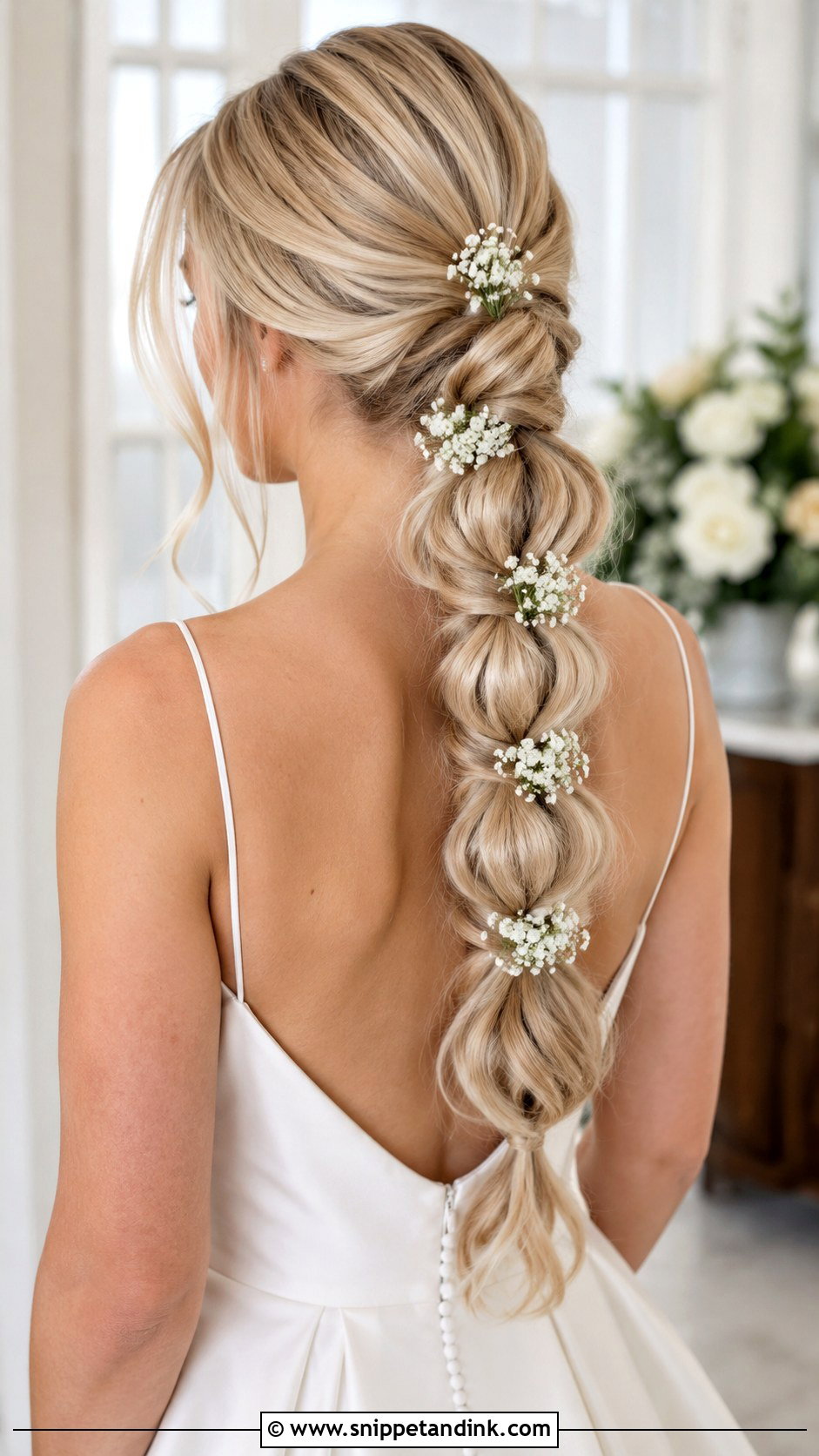
Bubble braid wedding hair is one of the few trend styles that genuinely survives a dance floor, because every bubble is locked by its own elastic. I use clear elastics and pull each bubble open only after all the bands are in, to keep them even. Tiny flowers slip neatly between the bubbles where the elastics sit, and they hide the bands at the same time. Don’t over-pull the sections. Big, puffy bubbles can look childish against a formal gown.
15. South Indian Wedding Braid With Flowers
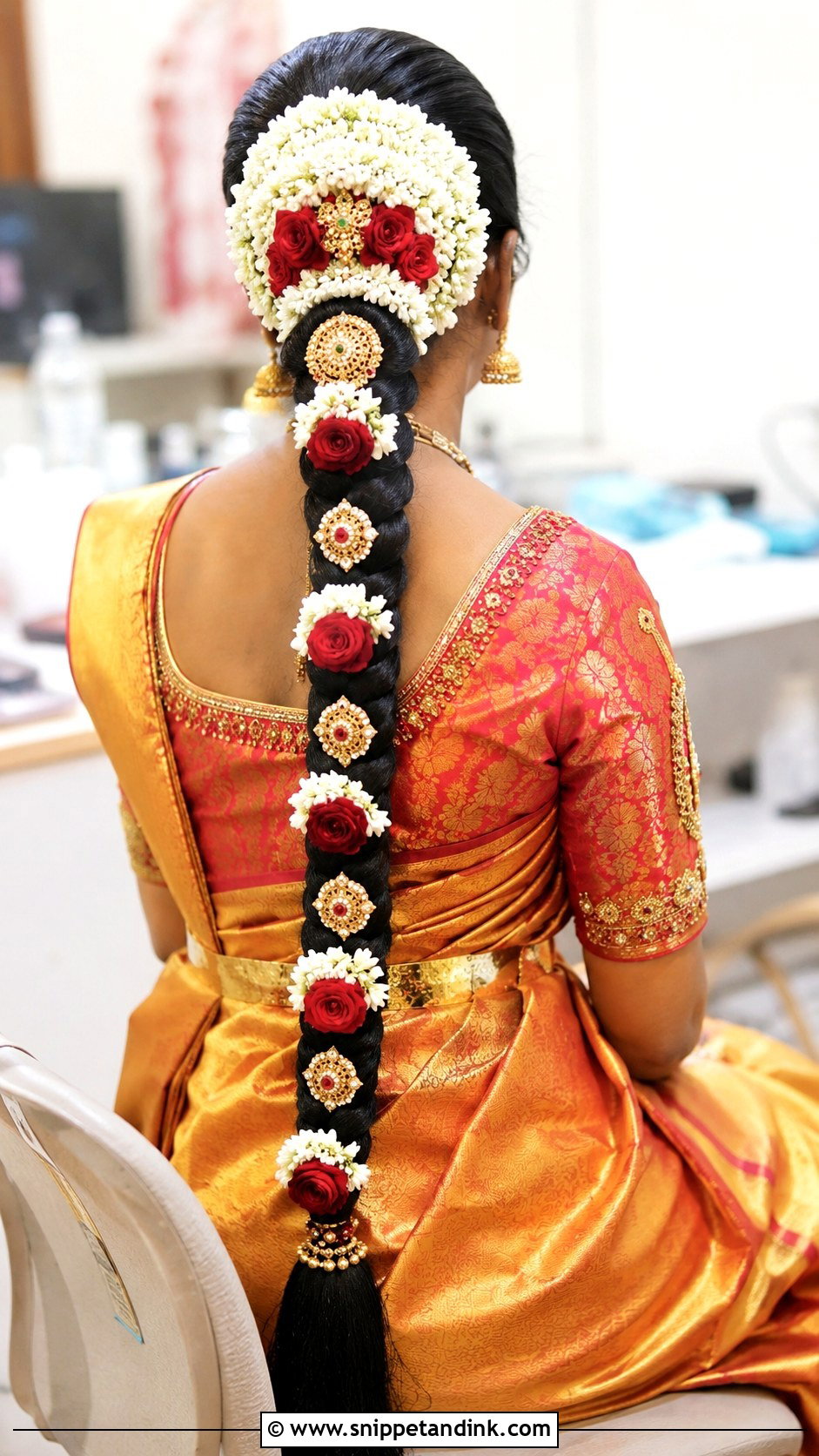
A South Indian wedding braid carries real weight, especially with fresh jasmine strings, gold ornaments and layered flowers. That weight is why I secure the braid at the crown with a firm base before any decoration starts, and why the flowers are stitched or pinned from the top down. Extensions are common and help the braid hang evenly. Jasmine browns and loses its scent within a few hours in heat, so I ask families to bring it as close to the ceremony as possible and keep it wrapped in damp cloth until then.
Crown Space Gets Tight Once a Veil Joins the Flowers
Long hair gives you more room for flowers, but the space behind the crown fills up quickly. The veil comb, the support pins and the floral cluster all want to sit roughly there, and if they’re stacked on top of each other, something pops out by mid-afternoon.
Agree on the order at the trial
At the trial I place the veil first, then decide where flowers go around it. Usually that means the blooms sit just below or to one side of the comb, so taking the veil off for the reception leaves the flowers intact. If you plan to remove the veil, tell me then. I’ll set its comb on separate pins so it lifts out without pulling anything else loose.
Plan for the afternoon, not the photos at noon
Fresh flowers start to soften after a few hours against the head, especially outdoors. I keep a small kit of spare stems in the cool box with a few pins, so anything that wilts or drops during the portraits can be swapped quietly before dinner. If you would rather not think about it at all, mix fresh stems at the front with preserved or silk ones at the back. Hardly anyone can tell the difference in photos.
Fresh Blooms Go In Last, Right Before You Walk
Every look above can go soft, boho or formal depending on the flowers and where they sit. Match the blooms to the length of your day: on a long or warm one, sturdy stems, preserved flowers or good silk ones are the safer bet. If you want real fresh flowers, have them added in the last half hour of getting ready, not at the start. Most of all, trial the style with flowers the same size as the real ones, so nothing surprises you on the morning.
You'll Like These Ideas:



Leave a Reply